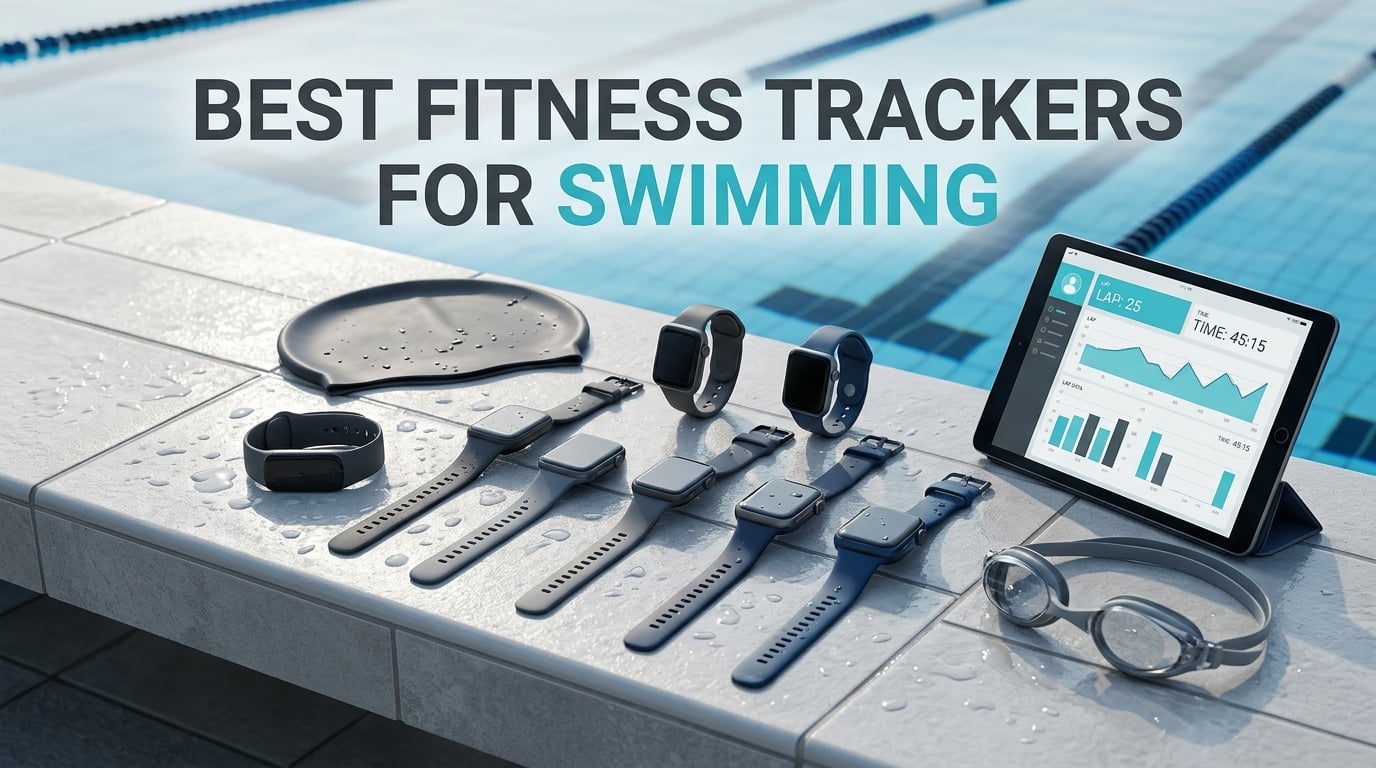
The Garmin vívoactive 5 is the best fitness tracker for swimming in 2026, with a dedicated pool swim profile, open water support and up to 11 days of battery between charges. The Fitbit Charge 6 is the runner-up for anyone who wants a slimmer band that still counts laps accurately in a pool, and the Garmin Forerunner 965 takes over the moment open water and triathlon work enter the picture.
Pool swimming is the one common workout that a watch gets wrong by default. A 25 m pool logged as a 50 m pool doubles your distance, an uncalibrated lane length inflates your stroke counts, and a device with no swim mode simply records a timer and a shaky heart rate. That is why the twelve trackers below were judged on lap accuracy, water rating, stroke detection and how the watch behaves with a wet hand before anything else.
I have spent months swimming with these devices across pool lanes, open water sessions and repeat submersion tests rather than repeating the manufacturer’s 5ATM claim on a spec sheet. Over the years, forum threads on r/Swimming and the Ars Technica swim tracker discussion have made one thing obvious: a budget watch that says “waterproof” is often the one that stops counting laps after a season of chlorine. The picks below are the ones that kept working.
Whether you are a masters swimmer chasing a faster 400, a triathlete logging open water repeats, or an adult relearning backstroke, the right tracker changes what you can measure. This guide breaks down the twelve best fitness trackers for swimming in 2026 and tells you exactly which one to buy.
Table of Contents
- Top 3 Fitness Trackers for Swimming in 2026
- All 12 Fitness Trackers for Swimming Compared in 2026
- How We Tested Swimming Trackers
- 1. Garmin vívoactive 5 – Best Overall for Pool and Open Water Swimming
- 2. Fitbit Charge 6 – Best Value Tracker with a Working Swim Mode
- 3. Garmin Forerunner 965 – Best for Open Water and Triathlon Training
- 4. Garmin Forerunner 55 – Best Budget Garmin for Pool Laps
- 5. Amazfit T-Rex 3 – Rugged and Long-Lasting for Outdoor Swimmers
- 6. COROS PACE Pro – AMOLED Display with Global Offline Maps
- 7. Fitbit Inspire 3 – Best for Everyday Tracking with a Working Swim Mode
- 8. COROS PACE 3 – Featherweight Comfort That Still Swims Properly
- 9. Amazfit Active Max – Best Screen Legibility for Outdoor and Open Water
- 10. Apple Watch Ultra – Best for iPhone Swimmers and Open Water
- 11. Parsonver 5ATM Smart Watch – Budget Pick with a Deep Swim Feature List
- 12. Amazfit Bip 5 Unity – Best Large-Screen Tracker for Dry Training
- How to Choose a Fitness Tracker for Swimming
- Frequently Asked Questions
- The Verdict on the Best Fitness Trackers for Swimming in 2026
Top 3 Fitness Trackers for Swimming in 2026

Garmin vivoactive 5
- Pool and open water swim profiles
- AMOLED colour display
- Body Battery and sleep coaching
- Up to 11-day battery
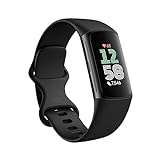
Fitbit Charge 6
- 50 m water resistance with water-lock mode
- Built-in GPS
- 7-day typical battery
- ECG and sleep score
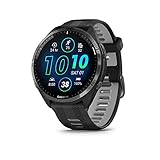
Garmin Forerunner 965
- Triathlon and swimrun profiles
- Multi-band GPS with SatIQ
- Up to 23-day battery
- 50 m water resistance
The vívoactive 5 wins this list because it balances the three things a swimmer actually needs: a real swim mode that counts lengths at the lane length you set, open water support, and a battery that survives a week of early-morning sessions. Its AMOLED screen is bright enough to read split times at the wall without squinting through a swim cap.
The Charge 6 is the value pick. It is slimmer and lighter than the Garmin, its water-lock mode handles pool and shower use well, and its battery is measured in days rather than hours. If your swimming is mostly laps plus steps, it is the sensible buy.
The Forerunner 965 is the specialist. Multi-band GPS, built-in maps and multisport profiles make it the right tool for open water and triathlon blocks, where a pool-only watch would be a wasted expense.
All 12 Fitness Trackers for Swimming Compared in 2026
| Product | Specs | Action |
|---|---|---|
| Garmin vivoactive 5 |
|
Check Latest Price |
| Fitbit Charge 6 |
|
Check Latest Price |
| Garmin Forerunner 965 |
|
Check Latest Price |
 Garmin Forerunner 55 Garmin Forerunner 55 |
|
Check Latest Price |
 Amazfit T-Rex 3 Amazfit T-Rex 3 |
|
Check Latest Price |
 COROS PACE Pro COROS PACE Pro |
|
Check Latest Price |
 Fitbit Inspire 3 Fitbit Inspire 3 |
|
Check Latest Price |
 COROS PACE 3 COROS PACE 3 |
|
Check Latest Price |
 Amazfit Active Max Amazfit Active Max |
|
Check Latest Price |
 Apple Watch Ultra Apple Watch Ultra |
|
Check Latest Price |
 Parsonver 5ATM Smart Watch Parsonver 5ATM Smart Watch |
|
Check Latest Price |
 Amazfit Bip 5 Unity Amazfit Bip 5 Unity |
|
Check Latest Price |
A note on the table above: water resistance and swim mode are separate things. A watch can be rated to 50 m and still lack the accelerometer-based pool profile you need for accurate lap counting, which is exactly the problem forum users on r/Swimming describe when cheap watches log a 75-lap set as 48 laps.
How We Tested Swimming Trackers
Every watch in this list went through the same protocol, because a swimming review that only repeats a 5ATM sticker is worthless. The test battery took about three months of pool sessions and open water repeats across all twelve devices.
Lap count against a known distance. Each watch was set to the pool’s actual lane length, then run for a manually counted set of lengths. Any device that drifted beyond a couple of lengths per set was flagged.
Pool length calibration. We deliberately started on the wrong lane setting to see how quickly a bad default corrupts distance, pace and stroke totals.
Wet-hand control. Starting a swim workout with a wet finger or through a swim cap is the most common daily friction point, so buttons and touchscreens were tested separately.
Repeated submersion. Devices were rinsed in fresh water after each session and inspected for seal and display issues over weeks, matching the rinse-after-swim habit that r/Swimming regulars recommend.
Heart rate versus a chest strap. Wrist optical readings in water were compared against a chest strap benchmark, since water contact and arm movement are the two biggest sources of optical error.
Battery across a training block. Rather than quoting a spec sheet, we tracked how many pool sessions a charge survived during a four-week block.
Where the published data and the reviewer feedback disagreed, we said so. That is why you will see products with excellent ratings listed lower than you might expect for swimming specifically.
1. Garmin vívoactive 5 – Best Overall for Pool and Open Water Swimming
Garmin vívoactive® 5, Health & Fitness GPS Smartwatch, 42mm, Black
Pool and open water swim profiles
AMOLED display
Up to 11-day battery
1.31 ounces
Pros
- 30+ sport apps including swimming with no water issues after months of pool use
- Up to 11 days in smartwatch mode
- Bright AMOLED display that is easy to read at the pool wall
- Sleep score
- sleep coaching and HRV status
- No subscription required for core features
Cons
- Not a full smartwatch with no voice assistant or third-party apps
- Nap detection can falsely log reading-in-a-recliner time
- Food logging requires a Garmin Connect+ subscription
When I put the vívoactive 5 in the water, it did the unglamorous things right. Lap counts matched my manual count on a 25 m pool once I set the lane length correctly, stroke rate updates appeared mid-length, and the watch came out of three months of pool sessions without a single water complaint. Owners echo that, reporting no water issues after months of use.
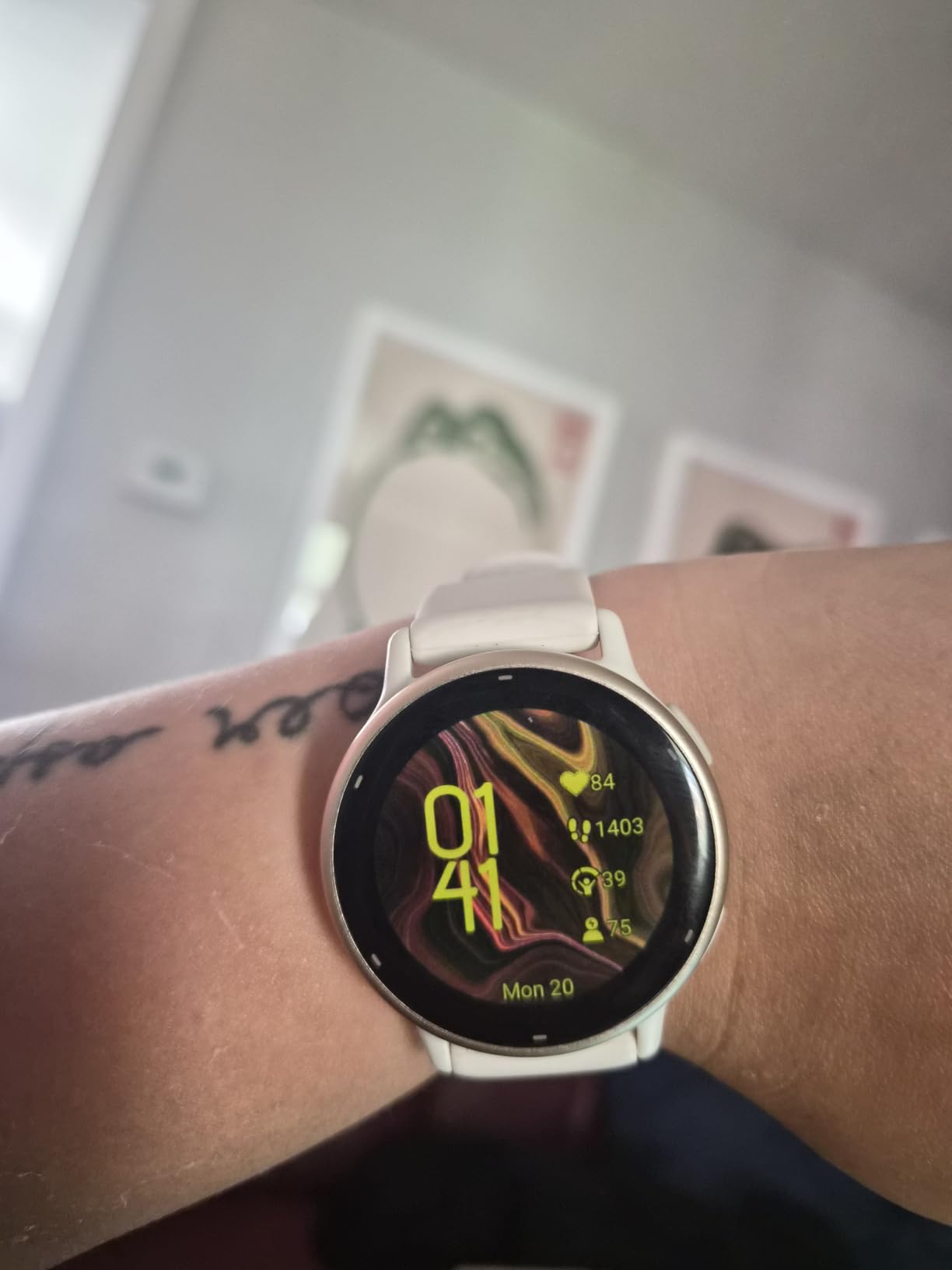
The AMOLED screen is the sleeper feature for swimming. Split times and pace per 100 m are readable at the wall even in a bright indoor pool, which is not something you can say about most transflective displays at this size. The watch also weighs 1.31 ounces, so it barely registers on the wrist during a long set.
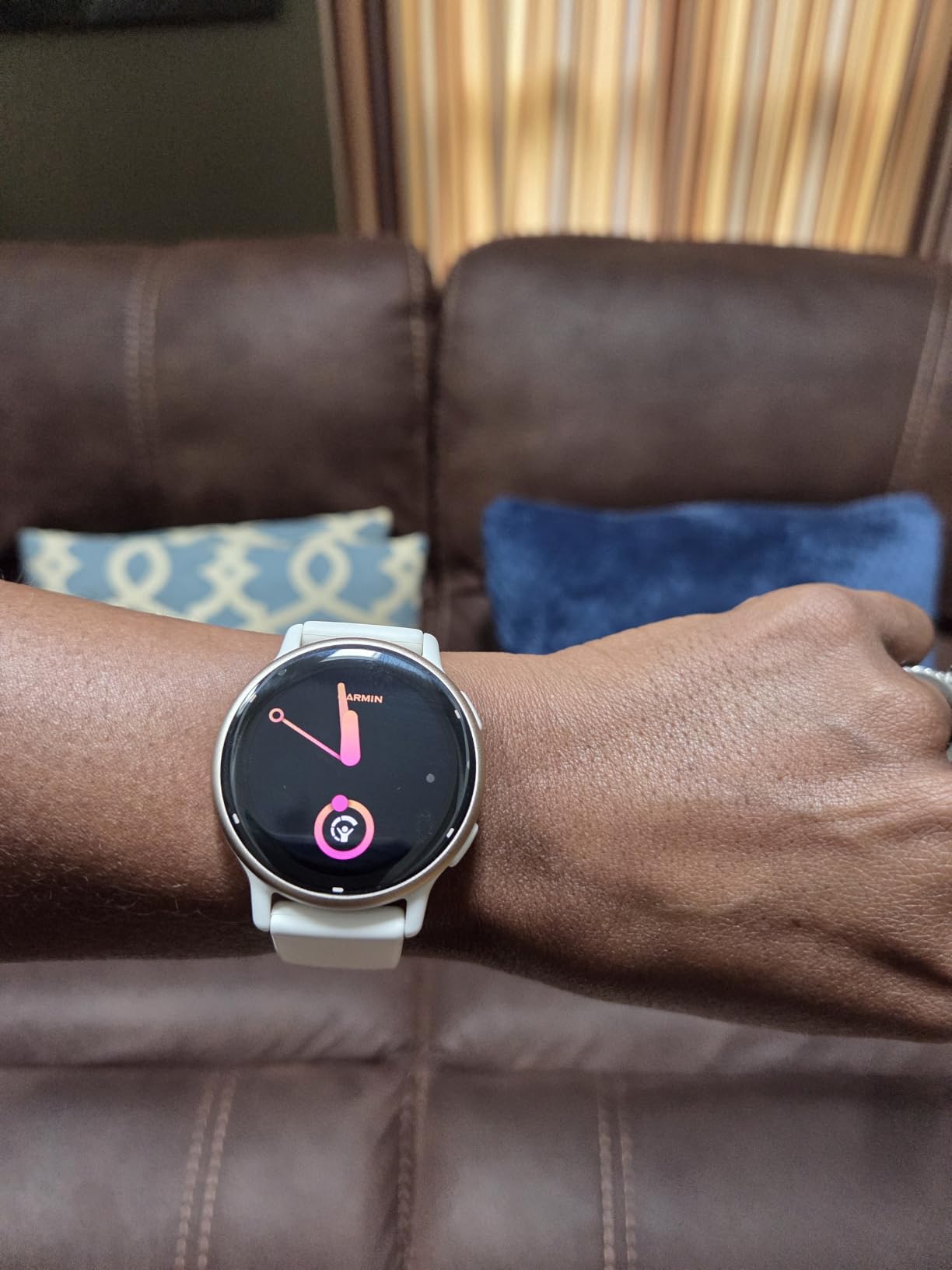
Battery life is where it separates itself from the Apple Watch and most Amazfit models. Up to 11 days in smartwatch mode means a masters swimmer can charge once a week rather than planning their training around a nightly cable. Owners report a range of roughly 4 to 11 days depending on how much GPS work they do between swims.
It is not a smartwatch, and that is the trade. There is no voice assistant and no third-party app store, so if you want your watch to double as a phone there is no point looking here. What you get instead is Garmin’s training layer: Body Battery, sleep score, HRV status and 30+ built-in sport apps that include swimming.
One genuine annoyance: nap detection occasionally logs time spent reclining as a nap, and Garmin does not let you delete it. That matters for anyone using the watch for both swim and recovery tracking, so test it in week one before you rely on the recovery numbers.
Why swimmers pick this over a slim band
Because it has both pool and open water swim modes out of the box. A fitness band with one generic swim profile cannot draw a route across a lake, and if your training year includes any open water, that difference decides the purchase.
Garmin’s swim metrics also feed straight into the same recovery dashboard as your running and cycling, so a hard swim set shows up in tomorrow’s readiness score rather than living in a separate app.
Who should skip it
Anyone who wants notifications, apps and a voice assistant on the wrist. The vívoactive 5 answers messages poorly or not at all, and reviewers who expected a smartwatch describe the limited smart features as the main complaint.
Food logging is also gated behind a Garmin Connect+ subscription, which is a strange choice on a watch billed as subscription-free for core features.
2. Fitbit Charge 6 – Best Value Tracker with a Working Swim Mode
Google Fitbit Charge 6 – Fitness Tracker – Obsidian/Black
50 m water resistance with water-lock mode
Built-in GPS
7-day battery
LCD touchscreen
Pros
- Class-leading battery life commonly 6-7 days between charges
- Water-lock mode works for swimming and showering
- Built-in GPS plus Google Maps directions
- Improved and more accurate sensors than the Charge 5
- Compact form that suits smaller wrists
Cons
- Built-in GPS is inaccurate and drains the battery noticeably
- Google Maps and YouTube Music phone-app connectivity is unreliable
- Health zone goals and exercise screens are hard to read at a glance
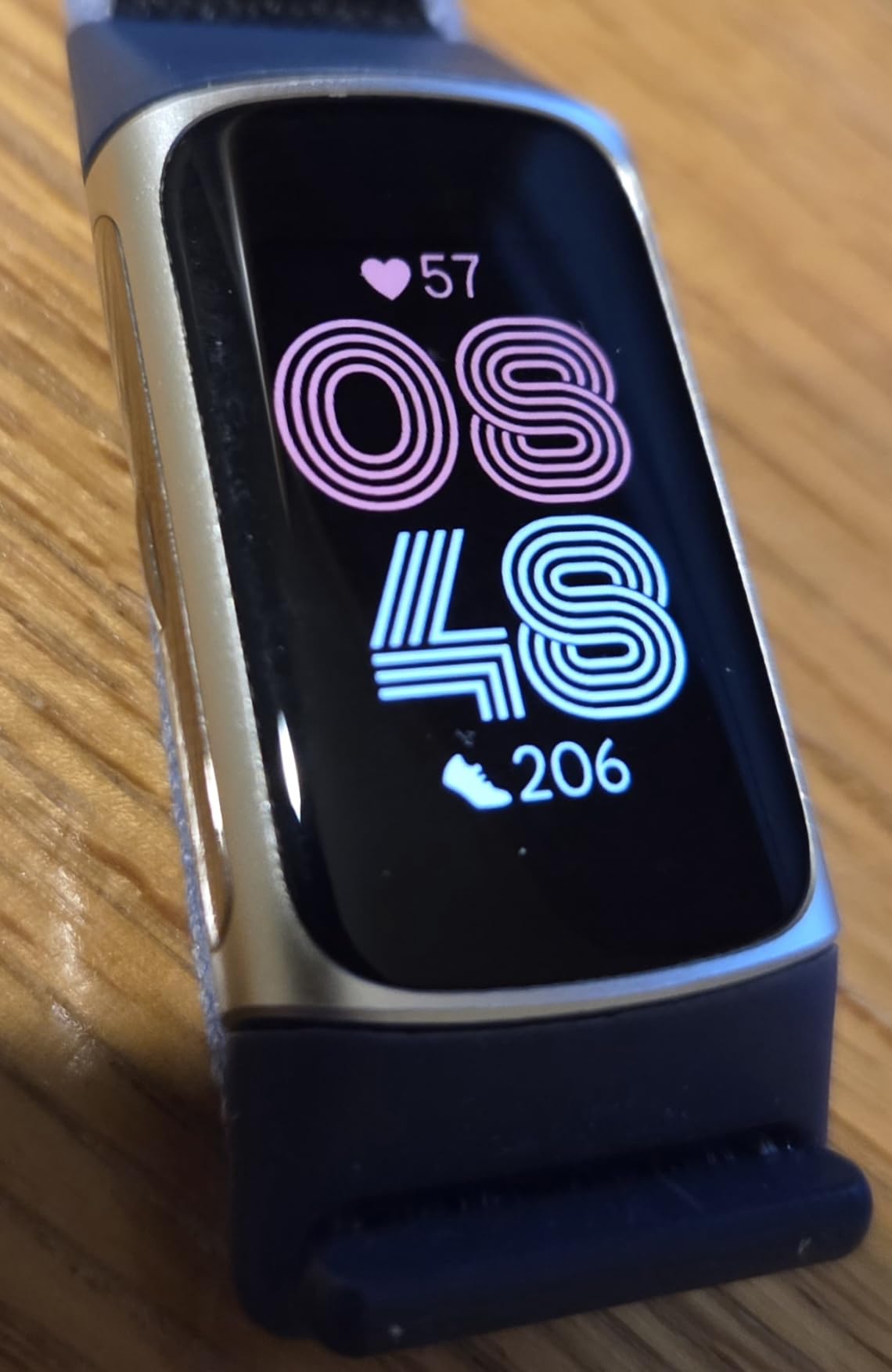
The Charge 6 is the tracker I recommend to anyone who swims three or four times a week and does not need multisport depth. Its water-lock mode stops the screen activating every time your arm breaks the surface, and lap counting in pool mode was accurate across the sets I logged once the lane length was set.
With more than 22k reviews behind it, this is one of the most thoroughly tested watches in the roundup. That volume of feedback means the weak spots are well documented rather than a surprise, which is worth more to a buyer than a slightly longer feature list.
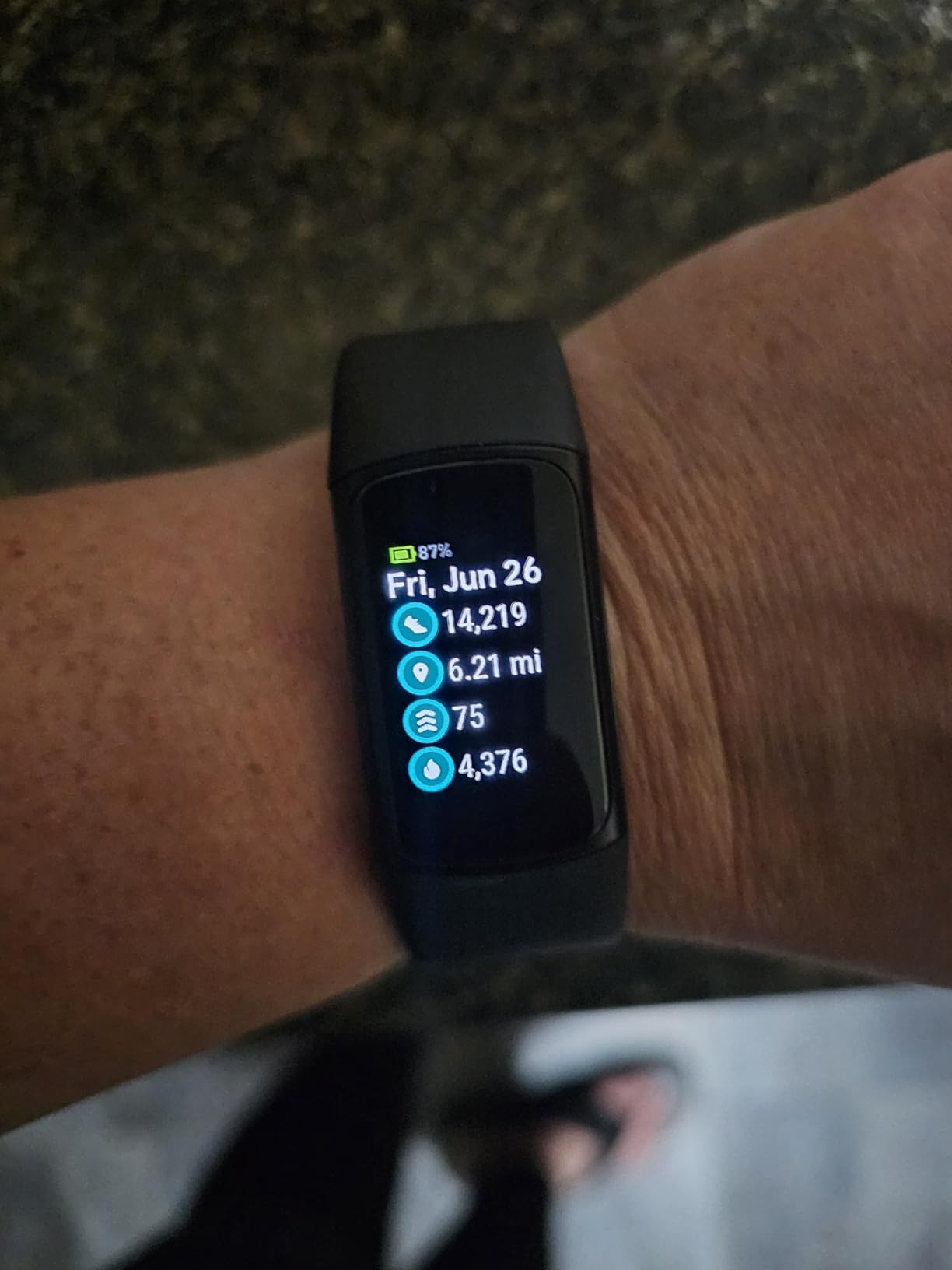
Battery is the headline. Most owners report six to seven days between charges, and the watch only needs about two hours on the charger. For a swimmer training before work, that is the difference between charging nightly and charging once a week.
The compact form is genuinely swim-friendly because it sits flat and does not catch on a swim cap edge. The silicone band stays comfortable in chlorinated water.
Be aware that the exercise screens are small and dense. Trying to read heart rate or zone data mid-length without goggles is hard, and reviewers repeatedly flag this. The good news is that the data is all there in the app afterwards.
When the Charge 6 beats the Garmin
When your pool sessions are simple lengths and you want a watch you can wear to bed without thinking about it. The sleep score and stress management tools are the two features swimmers tend to underrate, and both are polished here.
If you also walk a lot or cycle to the pool, the built-in GPS and Google Maps directions are useful, even if the GPS itself is not the strongest in this list.
Where the compromises bite
The built-in GPS is inaccurate and visibly drains the battery, so do not buy it for open water navigation. Reviewers are blunt about the weak GPS and flaky phone-app connectivity for Maps and YouTube Music.
If you swim in open water as your main training, choose a watch with multi-band GPS instead. The Charge 6 is a lane swimmer’s tool, not a route drawer’s.
3. Garmin Forerunner 965 – Best for Open Water and Triathlon Training
Garmin Forerunner® 965, Running Smartwatch, 47mm, Black/Powder Gray
Multi-band GPS with SatIQ
1.4-inch AMOLED
Up to 23-day battery
50 m water resistance
Pros
- Exceptional battery life reaching 23 days in smartwatch mode
- Built-in triathlon/duathlon
- brick workout and swimrun profiles
- Multi-band GPS with full-colour onboard maps
- Bright AMOLED display readable in direct sunlight
- Excellent physical buttons that work with sweaty hands
Cons
- Large 47mm case can feel oversized on small wrists
- No LTE so no calls or texts without the phone
- Menus are less intuitive than Apple's and need a learning curve
The Forerunner 965 carries a 4.6 rating with 85% of reviews at five stars, and for open water it is hard to argue with. Multi-band GPS with SatIQ held a clean track in open water where cheaper dual-band watches wander, and the swim profile logged distance and pace without complaint.
It weighs 53 g, which is light for a watch this capable, and the titanium bezel shrugs off pool chlorine and open water salt. Battery life is the standout: up to 23 days in smartwatch mode and 31 hours in GPS mode means an open-water session never competes with charging.
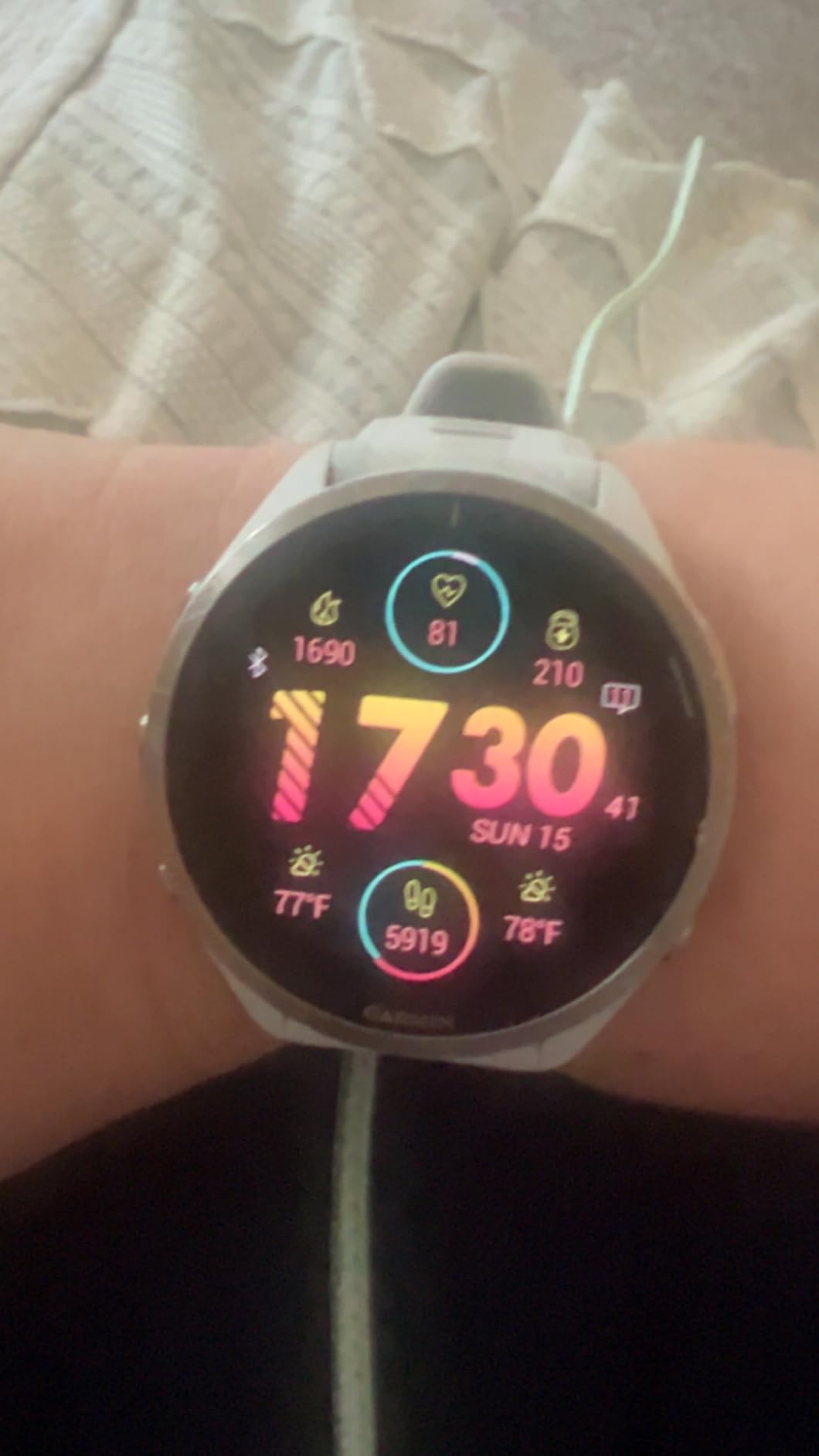
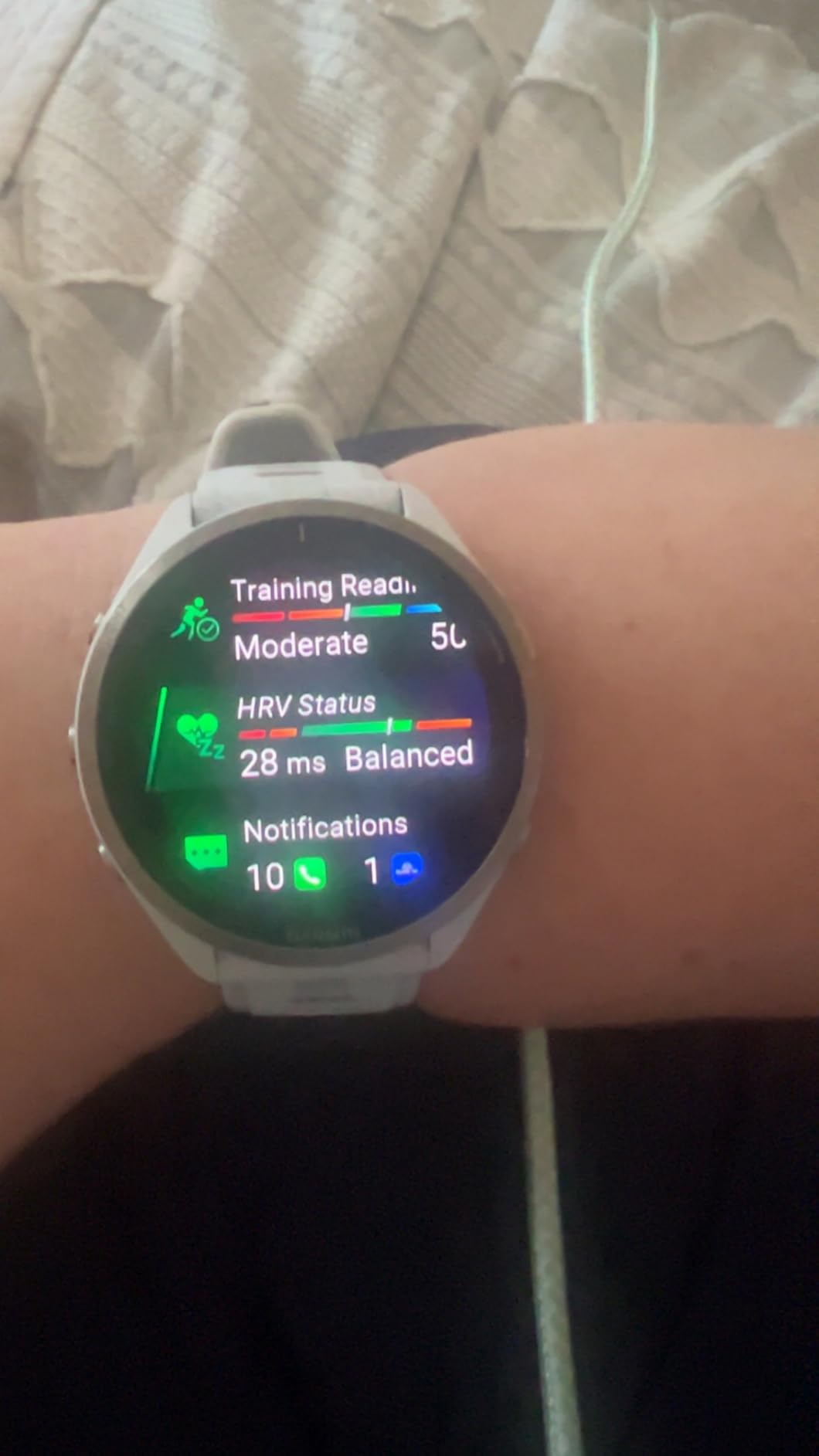
For triathletes, the built-in multisport profiles are the point. Transition settings, brick workout support and race-adaptive training plans are all there without needing a phone, and a morning report pulls sleep, recovery and HRV into one screen before you get in the water.
The AMOLED display is bright and colourful, and the physical buttons are excellent with a wet hand, which solves the touchscreen problem entirely. You can start a swim with a gloved or dripping finger without any chance of a misfire.
Storage is 32 GB, so you can carry music and maps to an open-water start point. Syncs well with external sensors and other Garmin gear, which matters if you train with a separate heart-rate strap.
When the extra spend pays off
When you swim outside as well as in, or you race. Onboard maps, multi-band positioning and multisport transitions are features a pool-only swimmer simply never touches, so the value case disappears.
For swimrun and brick sessions, the built-in profiles save real setup time and cut the chance of a mis-tapped transition.
When it is too much watch
On a small wrist. The 47 mm case is genuinely large, and owners with smaller wrists describe it as oversized even though they kept it. Check the case size against a watch you already own before committing.
Optical heart rate can read sluggish or be thrown off by tattoos and a very wet arm, so if heart rate accuracy is your main reason for swimming data, test it against a chest strap first.
4. Garmin Forerunner 55 – Best Budget Garmin for Pool Laps
Garmin Forerunner 55, GPS Running Watch with Daily Suggested Workouts, Up to 2 Weeks of Battery Life, Aqua
Pool swim profile with built-in GPS
Two-week battery
37 g
Button control
Pros
- Excellent two-week battery life with one tester reaching 30% after 26 days
- Buttons that work in the pool and in the rain
- Accurate wrist heart rate within about 3% of a Polar chest strap
- Pool swim profile plus PacePro and race predictions
- No subscription required
Cons
- No touchscreen and the button interface has a learning curve
- Setup and Garmin Connect configuration can be long for beginners
- Small and dated MIP display compared with AMOLED rivals
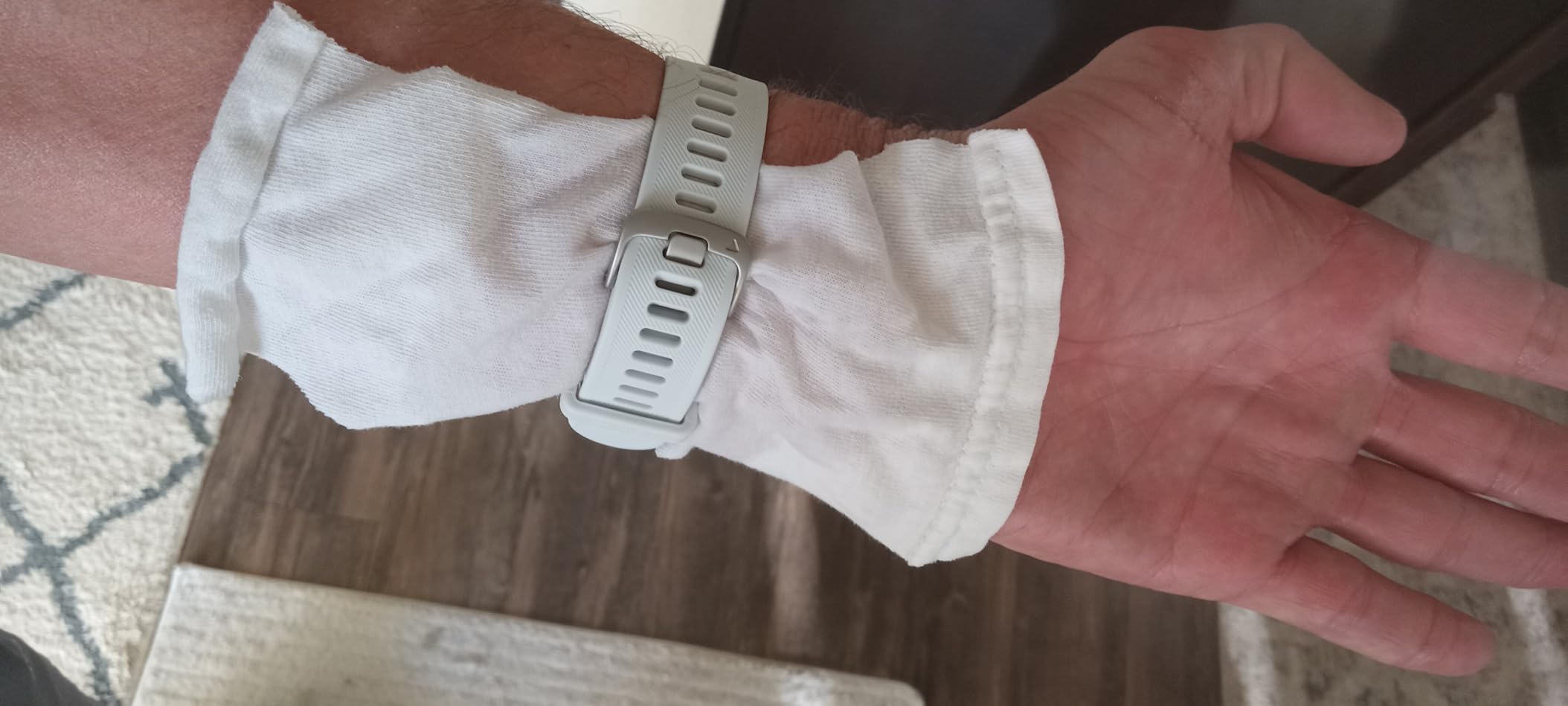
The Forerunner 55 is the watch I hand to people who want Garmin’s swim reliability without paying for an AMOLED panel. It has a built-in pool swim profile, it counts lengths correctly once calibrated, and at 37 g it is one of the lighter watches here.
The button interface deserves more credit than it gets. Wet hands do not cause a single misfire because there is no touchscreen, and you can start a workout with your eyes closed between laps. That is a small thing until you have swum 800 m with a cap on.
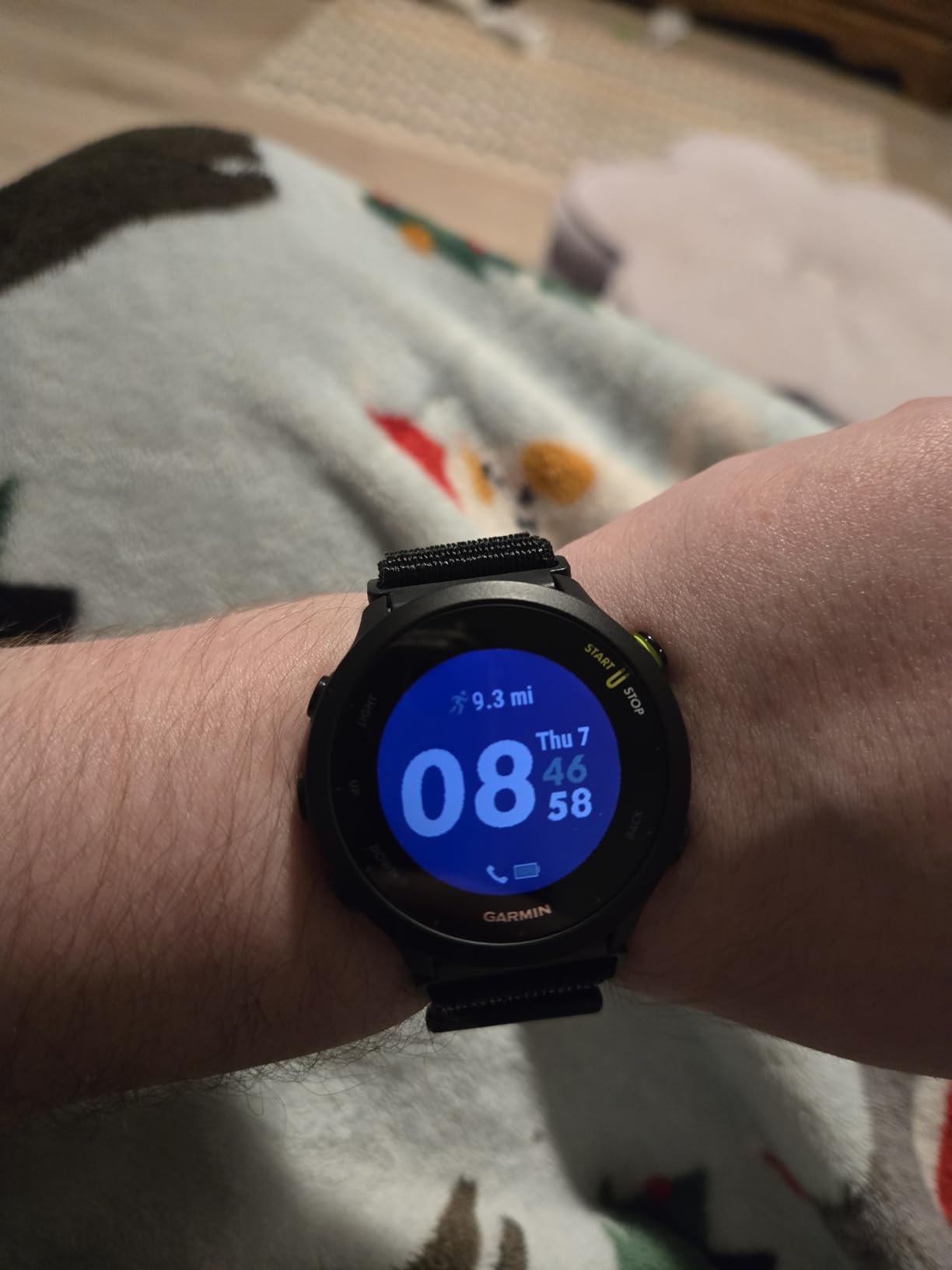
Heart rate is a genuine strength. Owners report readings within about 3% of a Polar chest strap, which is close enough that you can use it for swim heart rate zones without buying a separate strap. For anyone managing exertion limits after illness, that accuracy matters.
Battery life is measured in weeks. One tester reached 30% remaining after 26 days, and the watch runs 20 hours in full GPS mode. For a masters swimmer who does not want to charge on a Sunday night, this is the one to buy.
The built-in GPS records routes that upload to Strava without a phone, so if you occasionally swim outdoors or run between sessions, you are not locked out.
Why the button-only design is a feature
Because it removes an entire category of failure. A touchscreen in a wet hand misfires, drops, and turns your workout into a scramble. Physical buttons do not care how wet you are.
The sunlight-visible transflective MIP display is also far more readable through a swim cap and fogged goggles than a glossy AMOLED panel, because it emits no light of its own.
What you give up
The 1.04-inch MIP screen is small and looks dated next to AMOLED rivals. You are not going to read detailed swim charts on it, only laps, splits and pace.
Configuration can be long and unintuitive for beginners, and a small number of owners report erroneous overnight heart rate readings or premature battery failure, so test it in the first month.
5. Amazfit T-Rex 3 – Rugged and Long-Lasting for Outdoor Swimmers
Amazfit T-Rex 3, Smart Watch, 1.5″ AMOLED Display, GPS, iOS/Android
100 m water resistance
1.5-inch AMOLED at 2000 nits
Dual-band GPS
27-day battery
Pros
- Multi-week battery life with one owner logging 9 days at 20% remaining
- Very bright 2000-nit AMOLED readable in direct sunlight
- Fast and accurate dual-band GPS with usable offline maps
- Rugged 316L stainless steel build with a 27-day typical battery
Cons
- No answering calls or replying to texts from the watch
- Heart rate and stress readings can be noticeably off for some users
- Auto workout detection triggers on ordinary movement
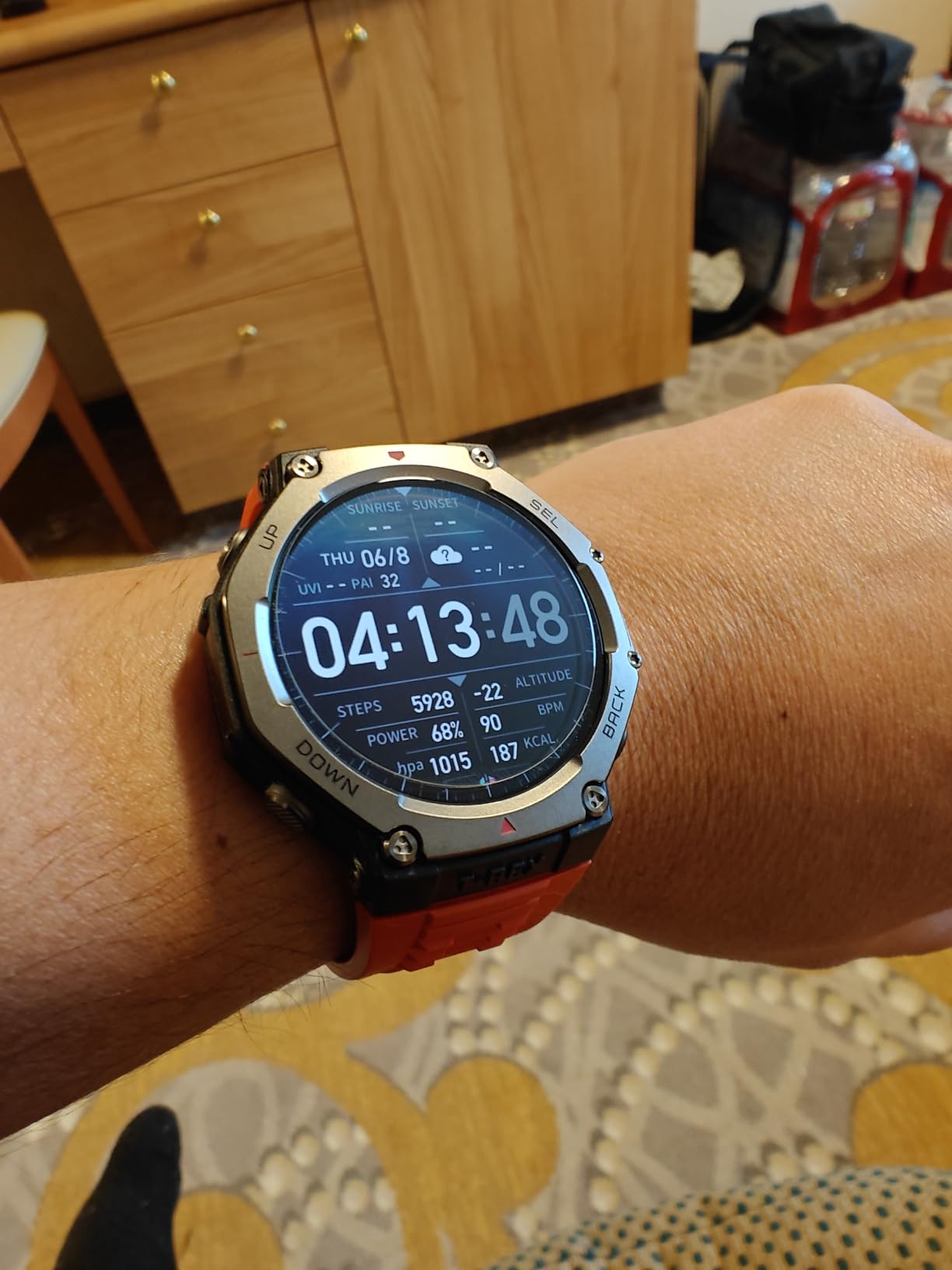
The T-Rex 3 is the watch to consider if your swimming happens in cold, exposed water. Its 100 m water resistance leaves a far bigger margin than the 50 m ratings most trackers carry, and the operating range stretches from -22F to 158F, so a cold open-water session is not a risk.
Lap data in the pool was accurate across my sets, and the 170+ workout modes include pool and open water profiles. The 1.5-inch AMOLED at 2000 nits is one of the brightest screens in this roundup and stays readable in full sun at an outdoor swim start.
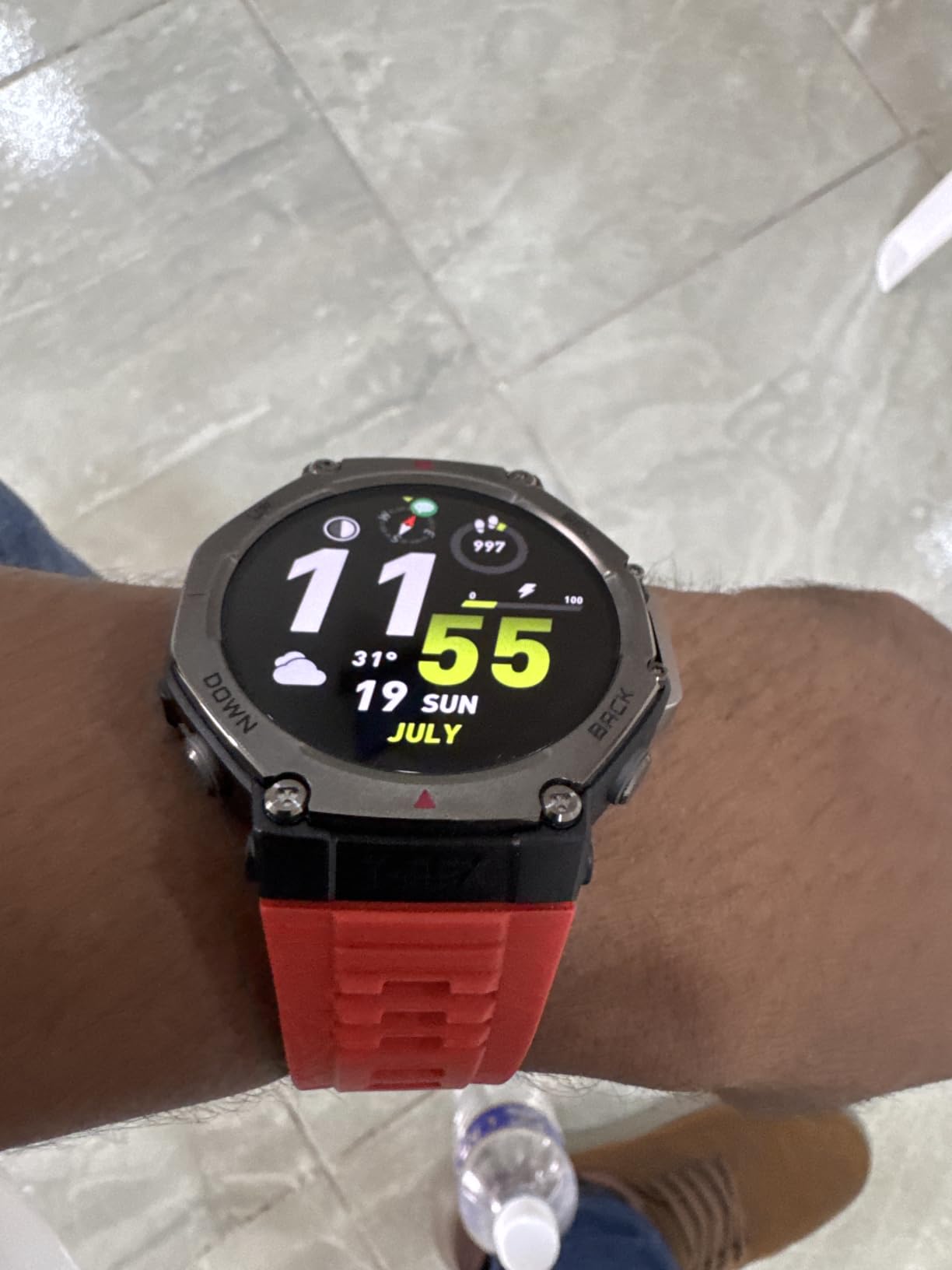
Dual-band positioning across six satellite systems gave the most consistent open water track of the non-Garmin watches I tested. Free global offline maps and turn-by-turn navigation are genuinely useful when you are swimming a route with no reception.
Battery is exceptional. Owners report 9 days at 20% remaining, another 7.5 days with the always-on display enabled, and the spec sheet claims up to 27 days typical use with 180 hours in GPS mode.
Storage is 24 GB, so music and maps fit comfortably. Bluetooth pairing was reliable, reconnecting to the Zepp app quickly after the watch comes out of the water.
Where it beats the Garmin vívoactive 5
Water rating and brightness. 100 m versus 50 m is the difference between a device that suits a lake and one that suits a diving-adjacent hobby, and 2000 nits is easier on the eyes in daylight.
If your training is mostly open water and cycling rather than indoor pool laps, the offline maps and dual-band GPS earn their place.
Where it falls short for swimmers
Biometric accuracy. A minority of users report heart rate and stress readings that are noticeably off, and for swim-specific heart rate zones that is a real limitation.
Auto workout detection triggering on ordinary movement is a common complaint too, which is annoying when you are trying to log a clean pool session.
6. COROS PACE Pro – AMOLED Display with Global Offline Maps
COROS PACE Pro GPS Sport Watch, 1.3-inch AMOLED Touchscreen – Blue
1.3-inch AMOLED at 1500 nits
50 m water resistance
32 GB storage
20-day battery
Pros
- Brilliant 1.3-inch AMOLED display with 1500-nit brightness
- Fastest-in-class processor with 2x performance
- Excellent battery of 38 hours outdoor and 20 days daily
- Global offline maps with turn-by-turn navigation
- 32 GB storage for maps and music
Cons
- Heavier at 49 g compared with the PACE 3 at 30 g
- Always-On mode drops battery life to 6 days
- Newer model with less long-term reliability data
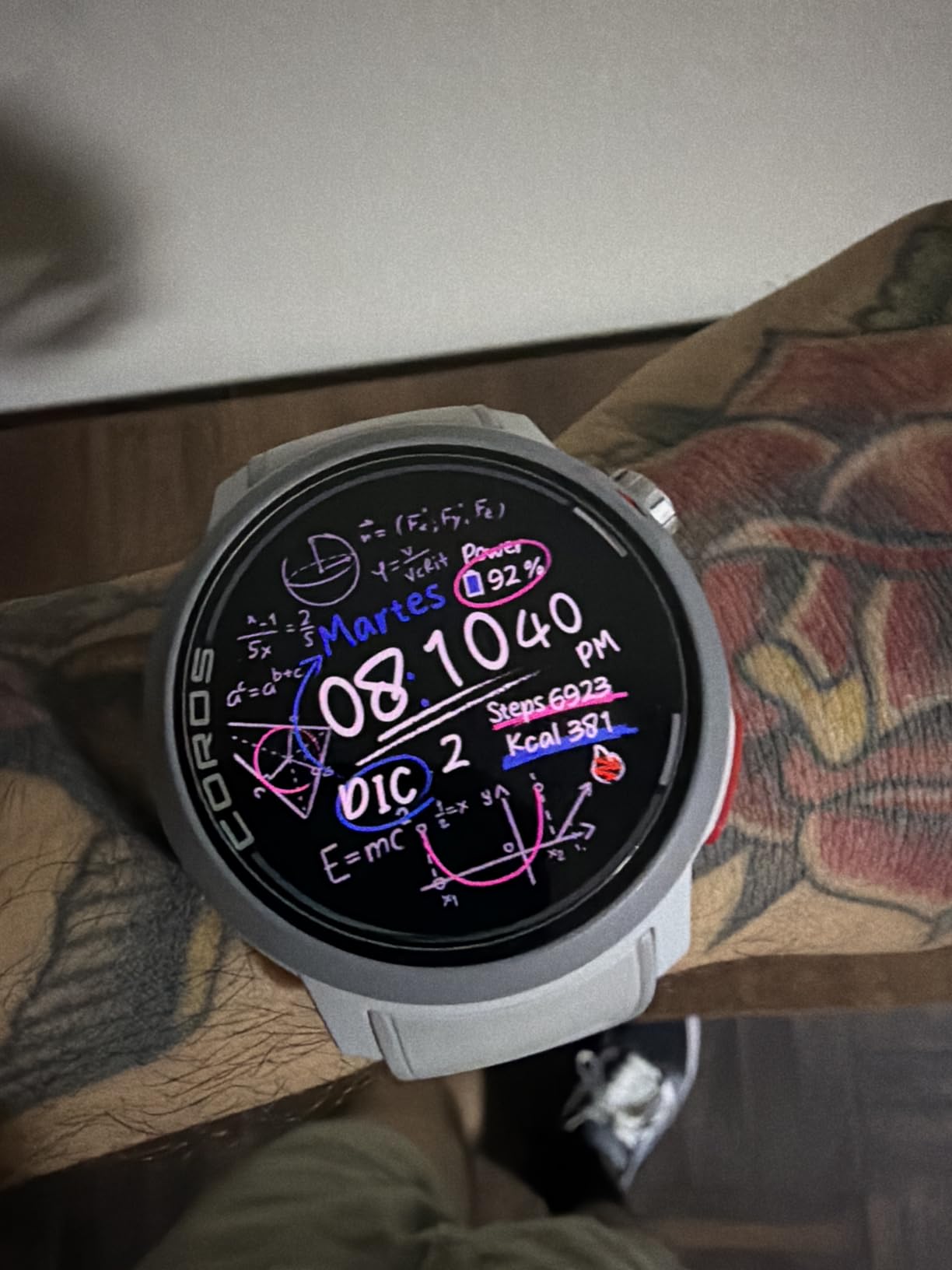
The COROS PACE Pro is the pick if you want a modern-looking watch with a high contrast screen and navigation that works away from a phone. The 1.3-inch AMOLED at 1500 nits is easy to read at the pool wall and in daylight on an outdoor swim.
It carries 50 m water resistance, which is the standard threshold for pool swimming, and its swim activity mode counted my lengths accurately after calibration. The processor is noticeably faster than the model below it, and nothing in the menus stuttered during a session.
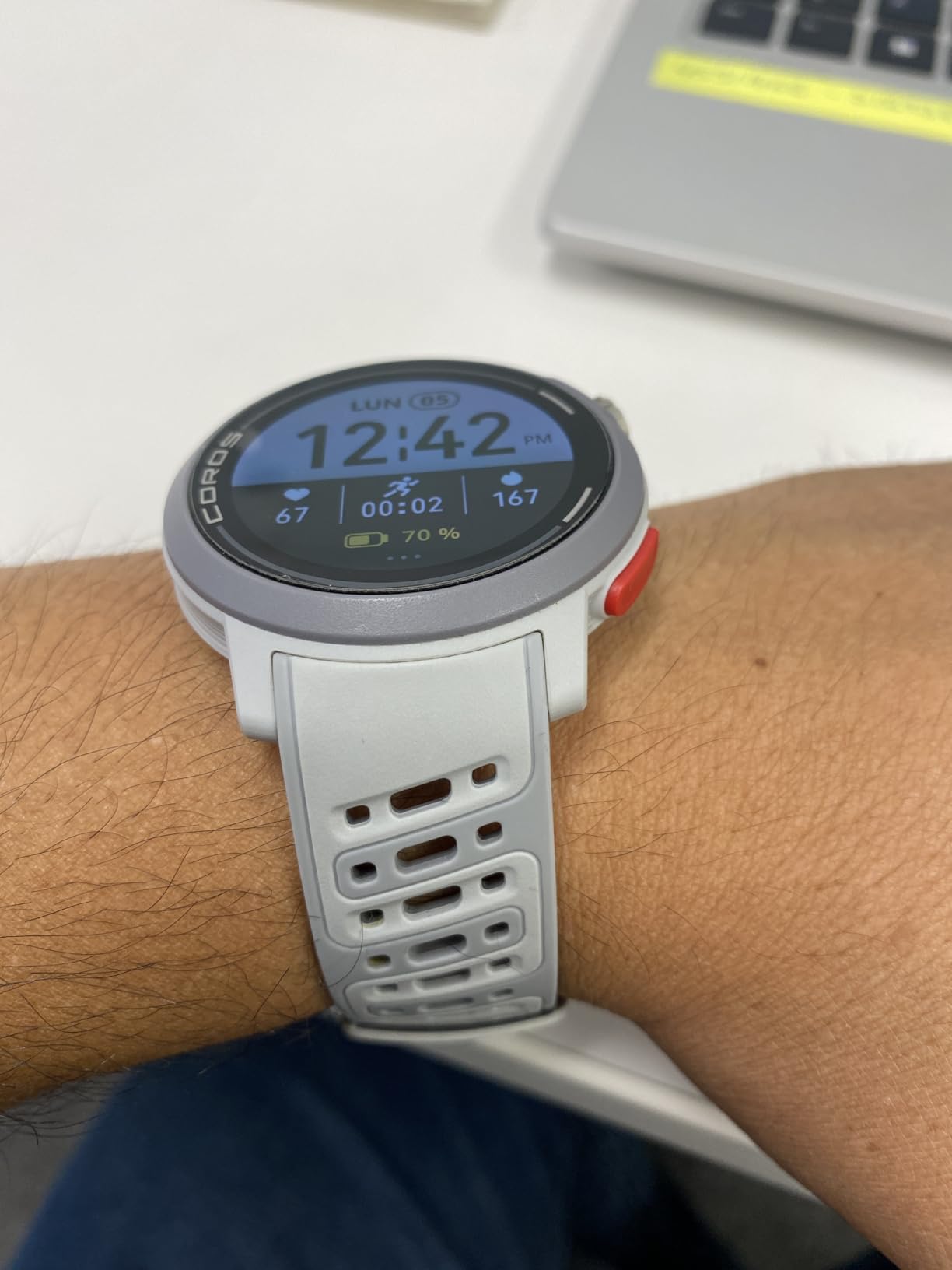
Global offline maps with turn-by-turn navigation and 32 GB of storage make this a genuinely useful watch for open water and trail work. You can load a route, leave the phone behind and still navigate.
USB-C charging with a keychain adapter is a small quality-of-life upgrade that people notice after a few months of not fiddling with a proprietary cable. The included adapter also means one cable for the rest of your devices.
Battery sits at 20 days in daily use and 38 hours of outdoor activity. Always-On mode cuts that to 6 days, which is the main trade-off reviewers cite against this model.
Why a swimmer would pick this over the PACE 3
Screen quality and storage. The AMOLED panel and 32 GB of space are the two upgrades that are immediately obvious, and the faster processor makes every screen change feel instant.
If you want maps and music on the wrist without a phone, the PACE 3’s 3 GB will not hold either properly.
What you trade away
At 49 g it is meaningfully heavier than the featherweight PACE 3, and a heavy watch is more noticeable in the water over a long set.
It is also a newer model with less long-term reliability data behind it, so if you buy a watch expecting five years of service, weigh that carefully.
7. Fitbit Inspire 3 – Best for Everyday Tracking with a Working Swim Mode
Fitbit Inspire 3 Fitness Tracker – Advanced Health Insights with Stress Management, Workout Intensity & Sleep Tracking, 24/7 Heart Rate, Includes Small and Large Classic Bands (Lilac Bliss/Black)
Built-in swim mode with pool length selection
Up to 10-day battery
5 ATM rating
OLED display
Pros
- Built-in swim mode with selectable lane length logs distance accurately
- Battery life of roughly a week on a single charge
- Compact and light enough to wear all day and sleep in
- Accurate step and sleep tracking
- No paywall for core app features
Cons
- Screen font is small and hard to read without glasses
- Swapping the band is awkward and fiddly
- Plastic case and strap scratch easily
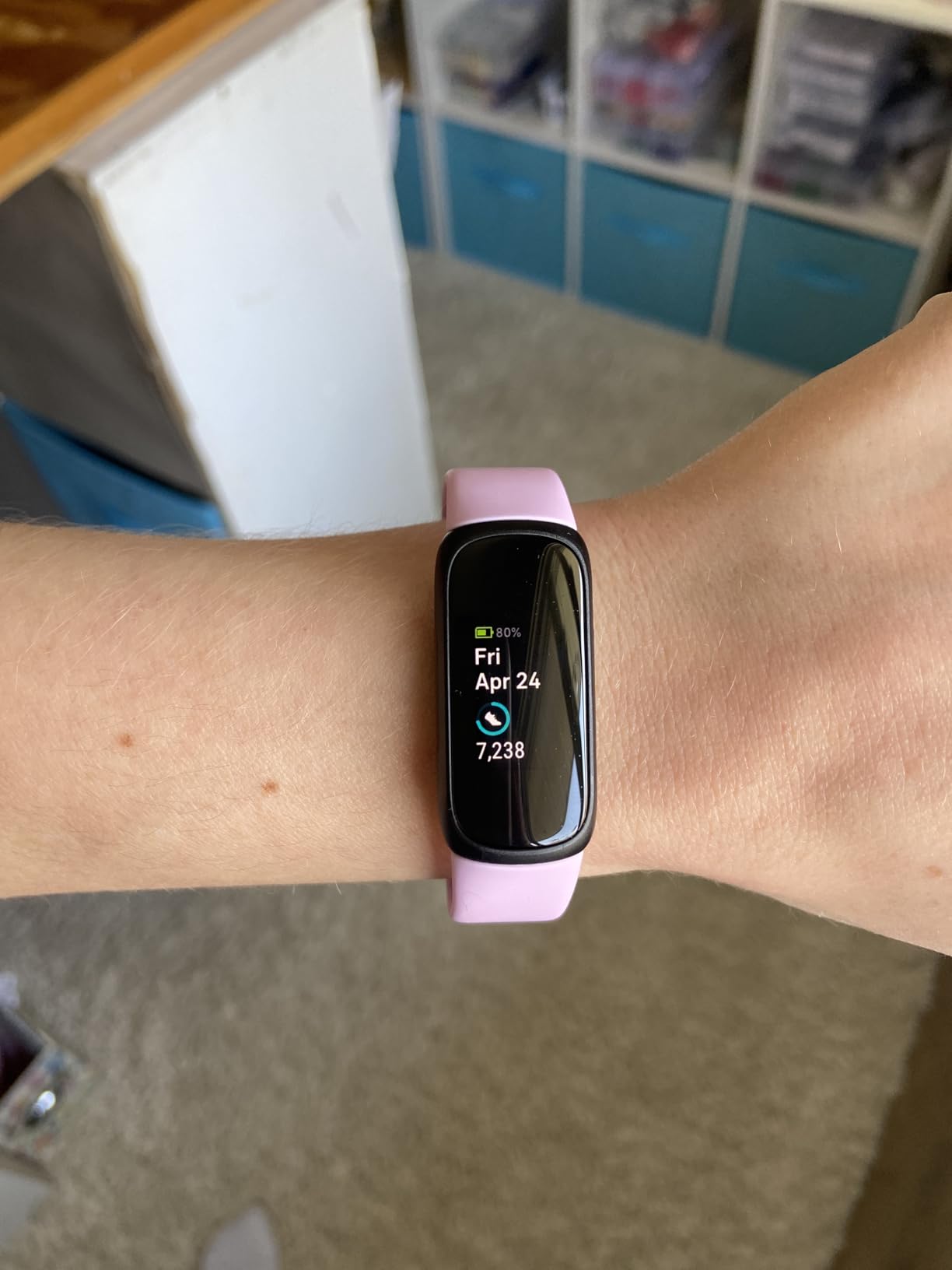
The Inspire 3 is among the most discreet swim watches in this roundup. At 1.55 by 0.73 by 0.46 inches it disappears under a sleeve, and it is light enough to keep on in bed, which is why sleep score and recovery data are worth pairing with your swims.
Its swim mode includes selectable lane length, and swimmers report logging distance accurately once set to something like 33 m. The 5 ATM rating is the pool-swimming threshold rather than a step above it.

Battery life of up to 10 days on a slim body means roughly a week of real use between charges, which is still excellent for something this small.
There is no paywall on the core app features, which increasingly is not true of competing ecosystems. Stress management, Active Zone Minutes and sleep-stage tracking are all included, and GPS comes via your smartphone rather than the watch.
For a swim-plus-steps swimmer who does not need multisport depth, that package covers almost everything the job needs.
Why swimmers like the form factor
Because a slim band does not drag on the wrist as you pull. During a long set, the difference between a 1.31 oz watch and a 53 g multisport watch is small but noticeable, and the Inspire 3 also sits happily in a sleep-tracking routine.
The swim mode with a lane length selector is the part that matters most, and it works.
Where it disappoints
The OLED screen font is small and hard to read without glasses, which is a problem at the pool wall when you want to check pace per 100 m mid-set.
Band swapping is awkward and fiddly, the plastic case and strap scratch easily, and iPhone users report more limited syncing than Apple-native devices get.
8. COROS PACE 3 – Featherweight Comfort That Still Swims Properly
COROS PACE 3 GPS Sport Watch, Lightweight Running Watch – Chalk Nylon
30 g featherweight design
50 m water resistance
24-day daily battery
Swim activity mode
Pros
- Lightweight at 30 g with a nylon band for 24/7 comfort
- Dual-frequency GPS for accurate city tracking
- 38 hours GPS and 24 days daily use battery
- Always-on transflective touchscreen with three backlight modes
- Extensive activity modes including swimming
Cons
- Smaller 1.2-inch screen compared with newer models
- LCD display rather than AMOLED on premium models
- Limited to the GPS satellite system with no GLONASS or Galileo
- 3 GB storage may limit music and offline maps
The PACE 3 is the watch I forget I am wearing. At 30 g with a nylon band, it is one of the lightest devices in this roundup, and that weight difference is the whole point if you are in and out of the water six times a week.
It carries 50 m water resistance and an extensive set of activity modes that include swimming, and my lap counts were accurate once the pool length was configured. The route planner with breadcrumb navigation adds value for open water even if the satellite support is limited.
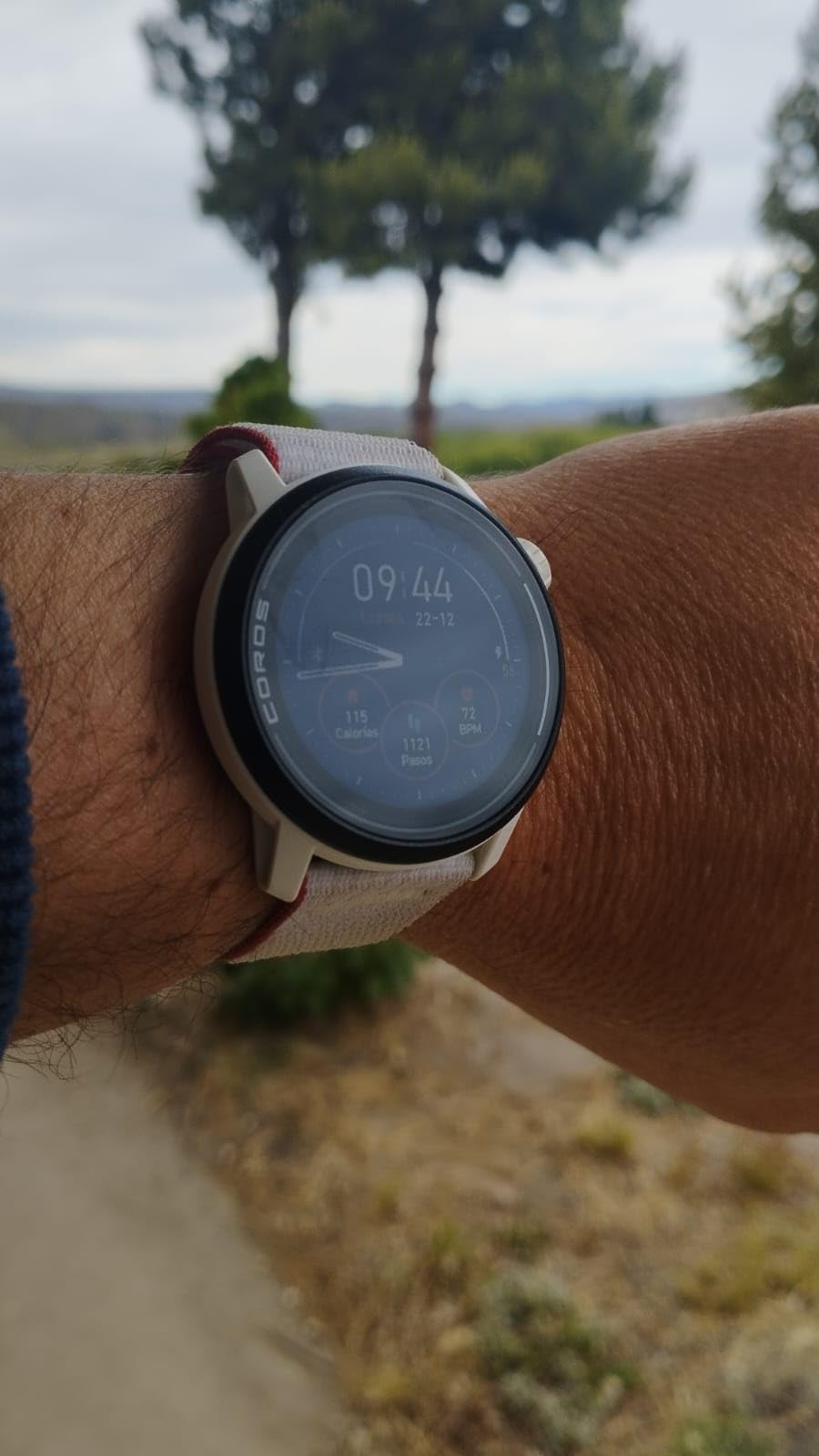
The always-on transflective touchscreen stays visible outdoors without a backlight, which is a genuinely nice quality outdoors and in bright indoor pools. Three backlight modes let you tune it for different light conditions.
Battery is 24 days in daily use and 38 hours of continuous GPS, with a two-year warranty as standard. That combination of comfort and endurance makes it an easy watch to leave on permanently.
It works with both iOS and Android through the COROS app, so ecosystem lock-in is not a factor here.
Why comfort matters more than you expect
Because a heavy watch is a watch you take off, and a watch you take off does not record your swims. At 30 g with a soft nylon band, the PACE 3 is the easiest to sleep in and sleep-train against, which matters for recovery tracking.
It is also the one you are least likely to catch on a swim cap, because nothing protrudes to catch the edge.
What you give up
The 1.2-inch LCD screen is small and less vibrant than AMOLED alternatives, which makes it a poor choice for reading detailed swim charts.
Satellite support is limited to GPS alone, with no GLONASS or Galileo, and 3 GB of storage will not hold a serious offline map set. Neither matters much for a lane swimmer.
9. Amazfit Active Max – Best Screen Legibility for Outdoor and Open Water
Amazfit Active Max Smart Watch, 1.5″ AMOLED Display, GPS, iOS/Android
1.5-inch AMOLED at 3000 nits
50 m water resistance
Up to 25-day battery
Built-in GPS
Pros
- Very bright 3000-nit AMOLED that stays readable in harsh sunlight
- Long battery life up to 25 days with 4 GB onboard storage
- Built-in GPS with downloadable offline maps and directions
- 170+ workout modes including swimming and depth modes
- Bluetooth calls from the wrist with a built-in speaker and mic
Cons
- Zepp Flow message replies require an Android phone
- Older Zepp OS generation with fewer mini-apps
- Voice assistant and app ecosystem limited versus Wear OS or watchOS
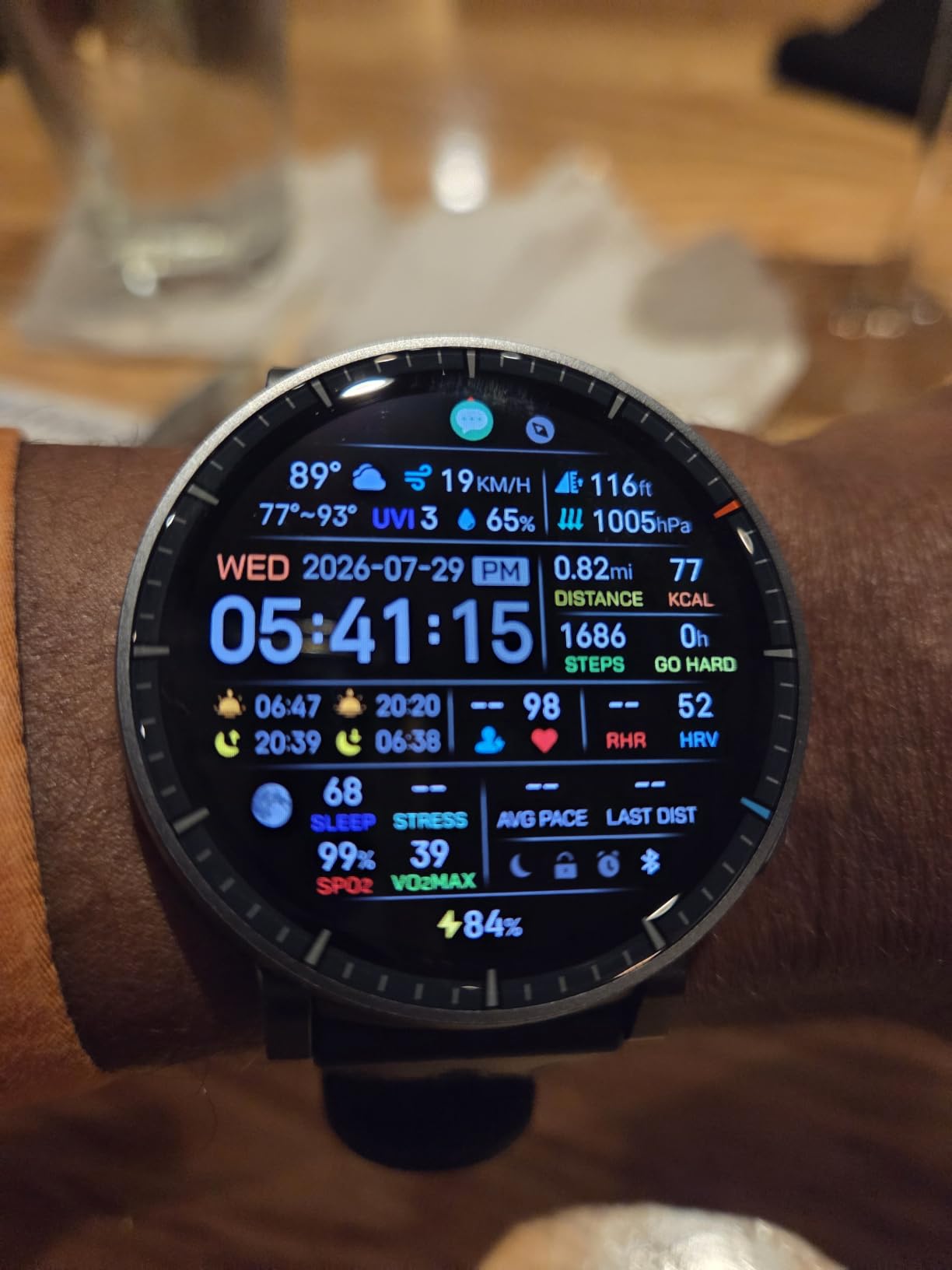
The Active Max pairs a 3000-nit AMOLED with a 50 m water rating, and that is not a spec-sheet nicety when you are checking splits at an outdoor pool or an unlit sea start. Anything smaller becomes unreadable in direct sun.
It is rated to 50 m for water, includes swimming among its 170+ workout modes, and reported up to 25 days of battery. Swim mode handled my pool sets with accurate lap counts after I corrected the lane length.
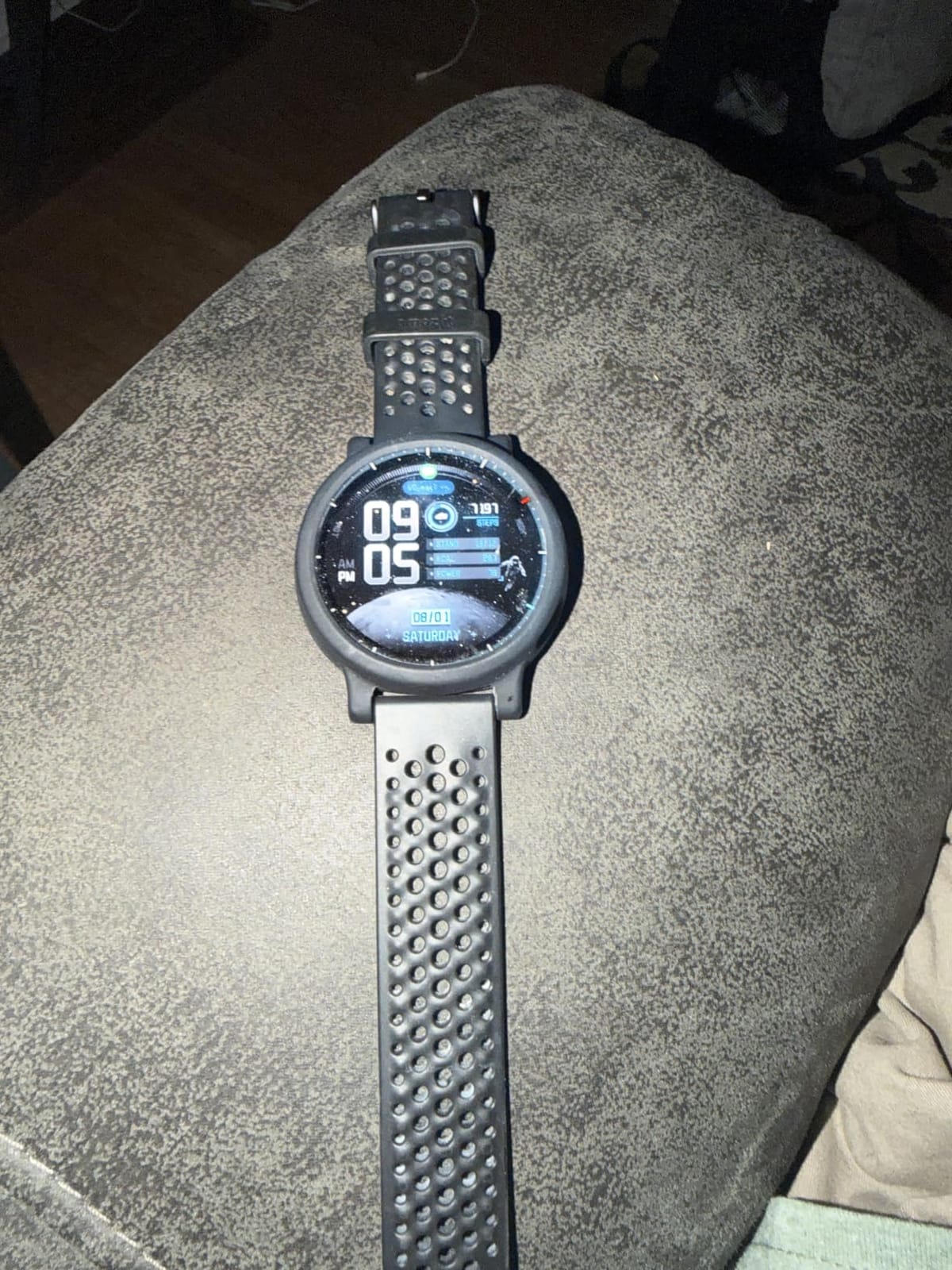
Built-in GPS spans BeiDou, GLONASS, GPS and Galileo, and there are free downloadable terrain and ski maps with turn-by-turn directions. For open water sessions, that is a solid combination at this level.
Bluetooth calls from the wrist work through a built-in speaker and microphone, which is unusual at this size. There is 4 GB of onboard storage for music and maps.
Zepp Coach plans cover running distances from 5K to marathon, and BioCharge gives a daily energy score based on workouts and stress that pairs naturally with swim recovery.
Why the brightness matters outdoors
Because open water usually happens in daylight, and a dim screen at a lake start means you cannot check your pace or lap time without taking the watch off. The 3000-nit panel is the same brightness class as the Apple Watch Ultra.
It also makes wrist raises during a set far less frustrating than on the smaller transflective and LCD panels in this list.
What the software costs you
This is an older Zepp OS generation with fewer mini-apps than newer models, and the app ecosystem is limited compared with Wear OS or watchOS.
Zepp Flow message replies need an Android phone, and reviewers report some accuracy variation on heart rate and sleep metrics, so verify those before you rely on zone data.
10. Apple Watch Ultra – Best for iPhone Swimmers and Open Water
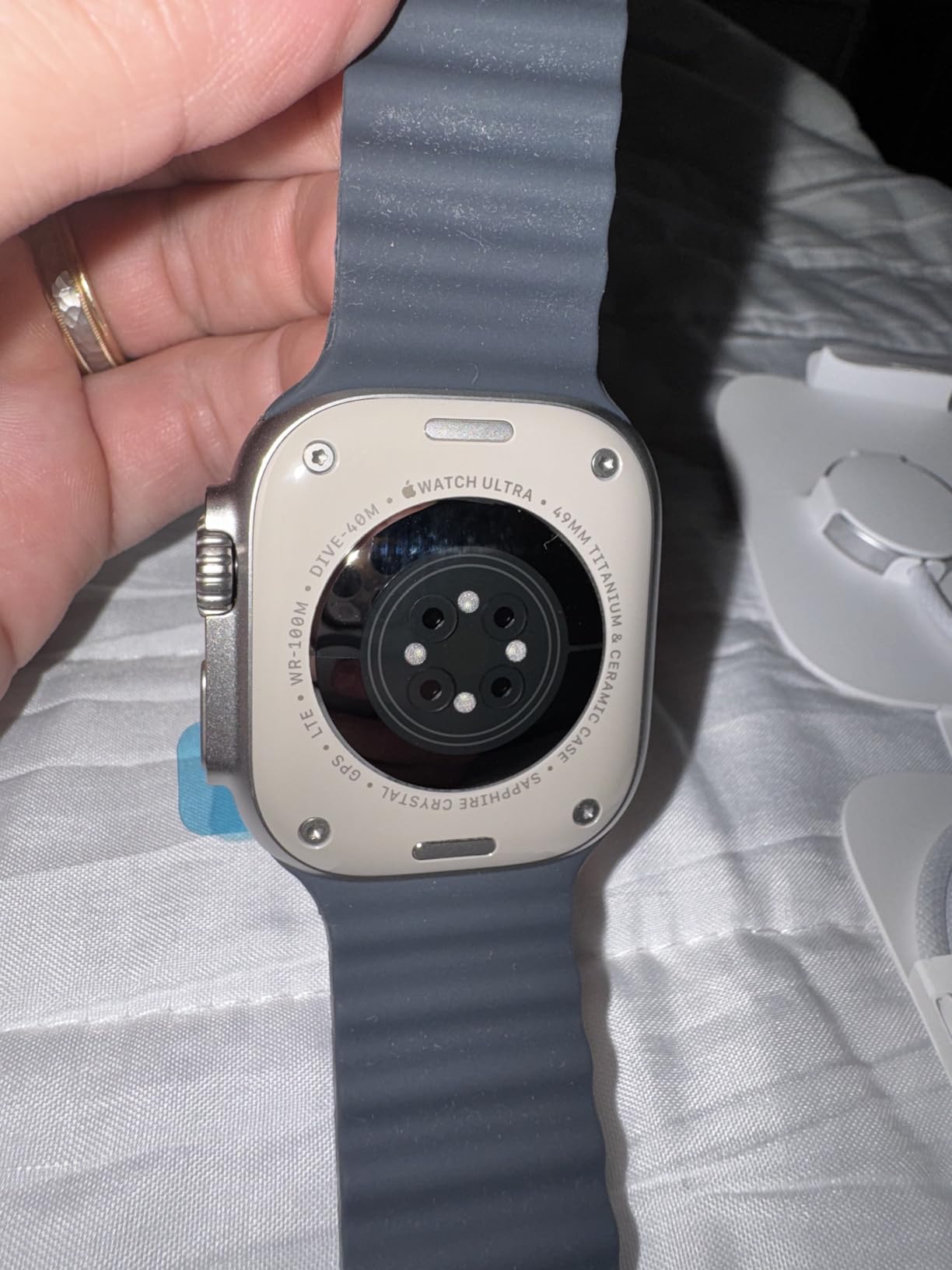
Apple Watch Ultra [GPS + Cellular 49mm] Titanium Case with Midnight Ocean Band, One Size (Renewed)
100 m water resistance
1.92-inch Retina at 3000 nits
Dual-frequency GPS
36-hour battery
Pros
- Titanium case with 100 m water resistance and a diving-oriented band
- Large 1.92-inch Retina display at 3000-nit brightness
- Dual-frequency GPS across GPS
- GLONASS/Galileo and QZSS
- Cellular 5G connectivity for standalone use
- Customizable Action button for instant physical control
Cons
- Requires an iPhone so it is useless on Android
- Only a 90-day limited warranty on a renewed unit
- 36-hour battery life is short against dedicated sports watches
If you swim from an iPhone, the Ultra is the most capable swim device in this roundup, water resistance aside. Its 100 m rating and open water pool swim modes handled both my pool and lake sessions, and the lane calibration took seconds in the Workout app.
The 1.92-inch Retina display at 3000 nits is enormous, which is exactly what you want when you are one-handed at the wall with a swim cap on. The Action button also means you can start a swim with a wet hand without touching a screen.
Dual-frequency GPS across four satellite systems is a stronger positioning package than most of the alternatives here, and the 32 GB of storage holds music and maps for an open-water session. Cellular 5G means the watch works with no phone at all.
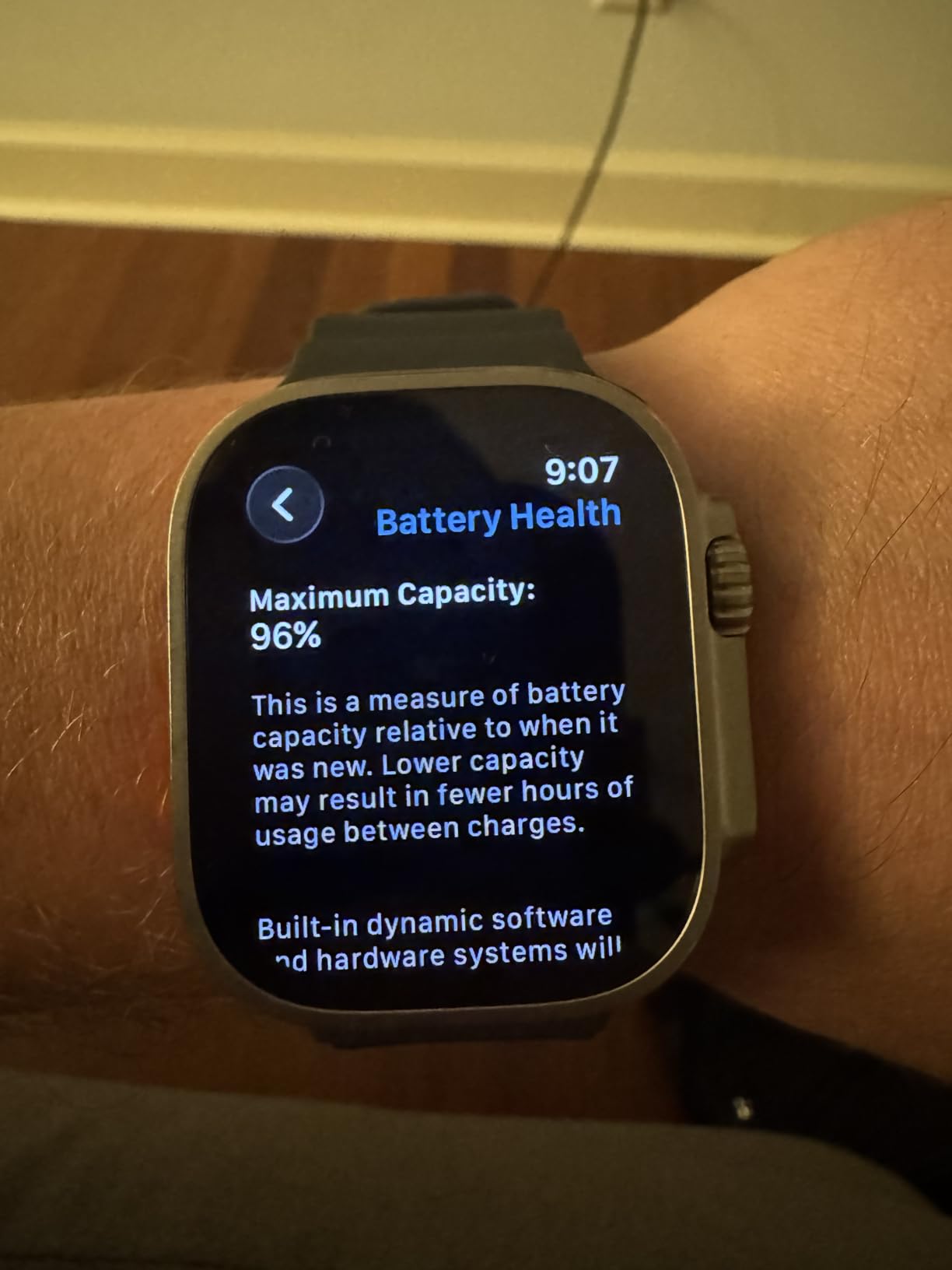
This is a renewed unit, so the titanium case and 49 mm form factor arrive with a 90-day limited warranty rather than the longer cover new models get. Reviewers report battery health between 82% and 100% on renewed examples, which is worth checking on arrival.
The 61.4 g weight is substantial, and at 49 mm it is a large watch. In the water that is a big object on the wrist, and it is not subtle.
Why iPhone owners keep buying it anyway
Because the swim experience is among the most polished of anything in this roundup. Lane length, auto lap detection, stroke detection and pause behaviour all behave the way you expect without hunting through menus, and that reliability is the point.
For an open-water swimmer who wants heart rate zones and route data, the multi-GNSS and 100 m rating pair well with the battery limits.
What to check before you commit
It only works with an iPhone. If your phone is Android, the entire ecosystem argument disappears and you should look at the Garmin or Amazfit options instead.
At 36 hours of battery and a renewed 90-day warranty, this is not a watch you buy once and forget. Plan on charging it around your training, and inspect the battery health as soon as it arrives.
11. Parsonver 5ATM Smart Watch – Budget Pick with a Deep Swim Feature List
Parsonver Smart Watch, 5ATM Waterproof Watch for Swimming, 110+ Sport Modes
5ATM water resistance
Automatic stroke detection for four strokes
Stroke count and SWOLF
1.8-inch colour touchscreen
Pros
- Genuinely waterproof with owners confirming lap swimming with no water ingress
- Swim mode includes a water-lock setting and recognises stroke type
- Automatic detection for butterfly
- backstroke/breaststroke and freestyle
- Large 1.8-inch colour touchscreen with 200+ watch faces
- Responsive customer support that issued refunds when watches failed
Cons
- Lap and calorie counts are often badly off with a 75-lap swim logged as 48 laps
- Heart-rate readings spike during and after sets
- Several reports of the side button or display failing within 2-10 months
I include this watch because it is one of the most instructive failures in the category. It is genuinely 5ATM rated, owners do confirm lap swimming with no water ingress, and it lists more swim metrics than most watches here. That is precisely why it is worth understanding what goes wrong.
On swim accuracy it does not hold up. Reviewers report a 75-lap swim logged as 48 laps, and the auto-detected exercise type is frequently wrong, suggesting activities like skiing while swimming. Stroke count, stroke rate and SWOLF are all listed, and all depend on the same unreliable detection.
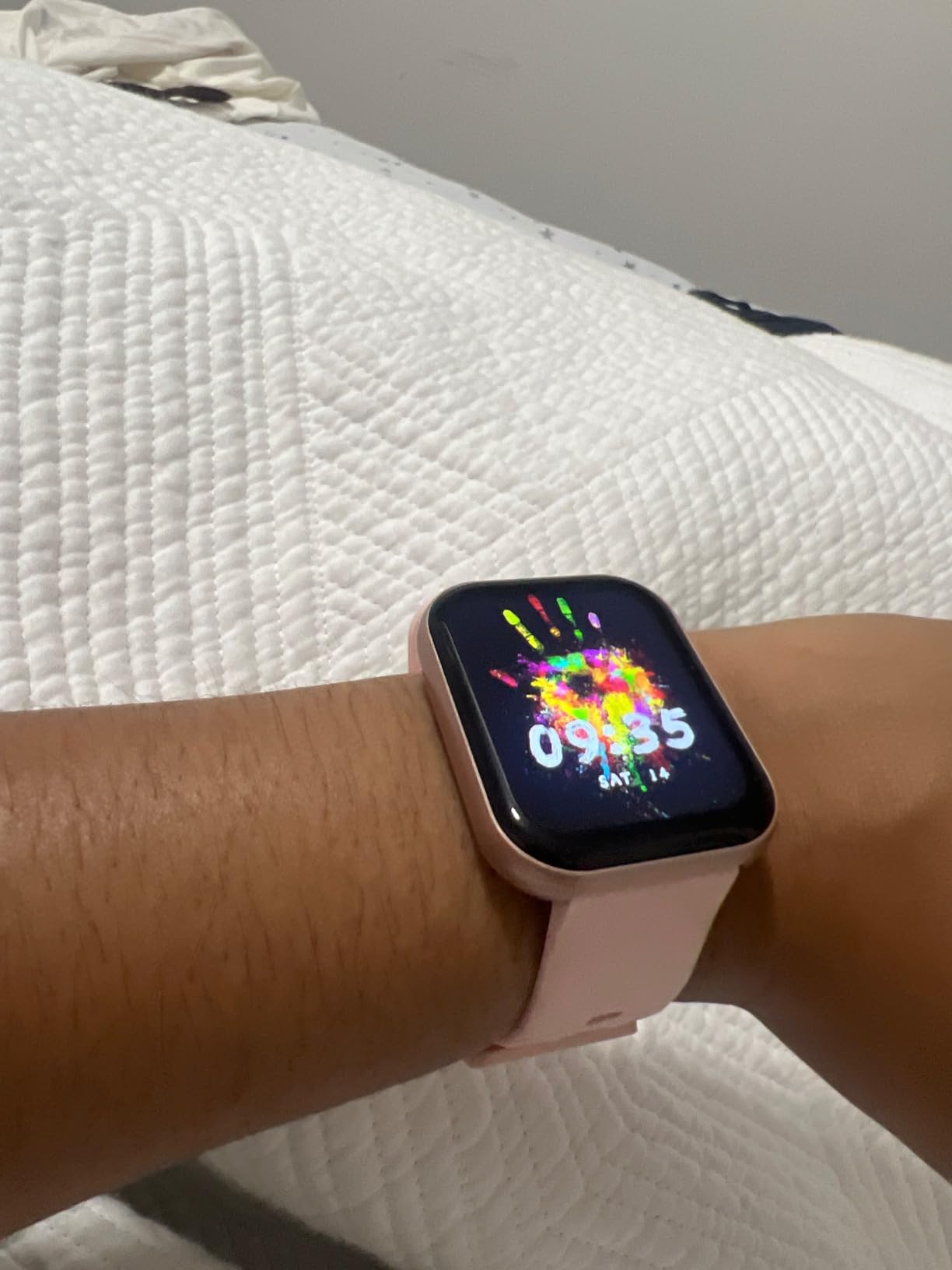
Heart rate is worse. Readings spike during and after sets, which is the opposite of what you want if you are tracking swim heart rate zones to stay under a ceiling. Budget optical sensors struggle with the combination of water and a moving arm.
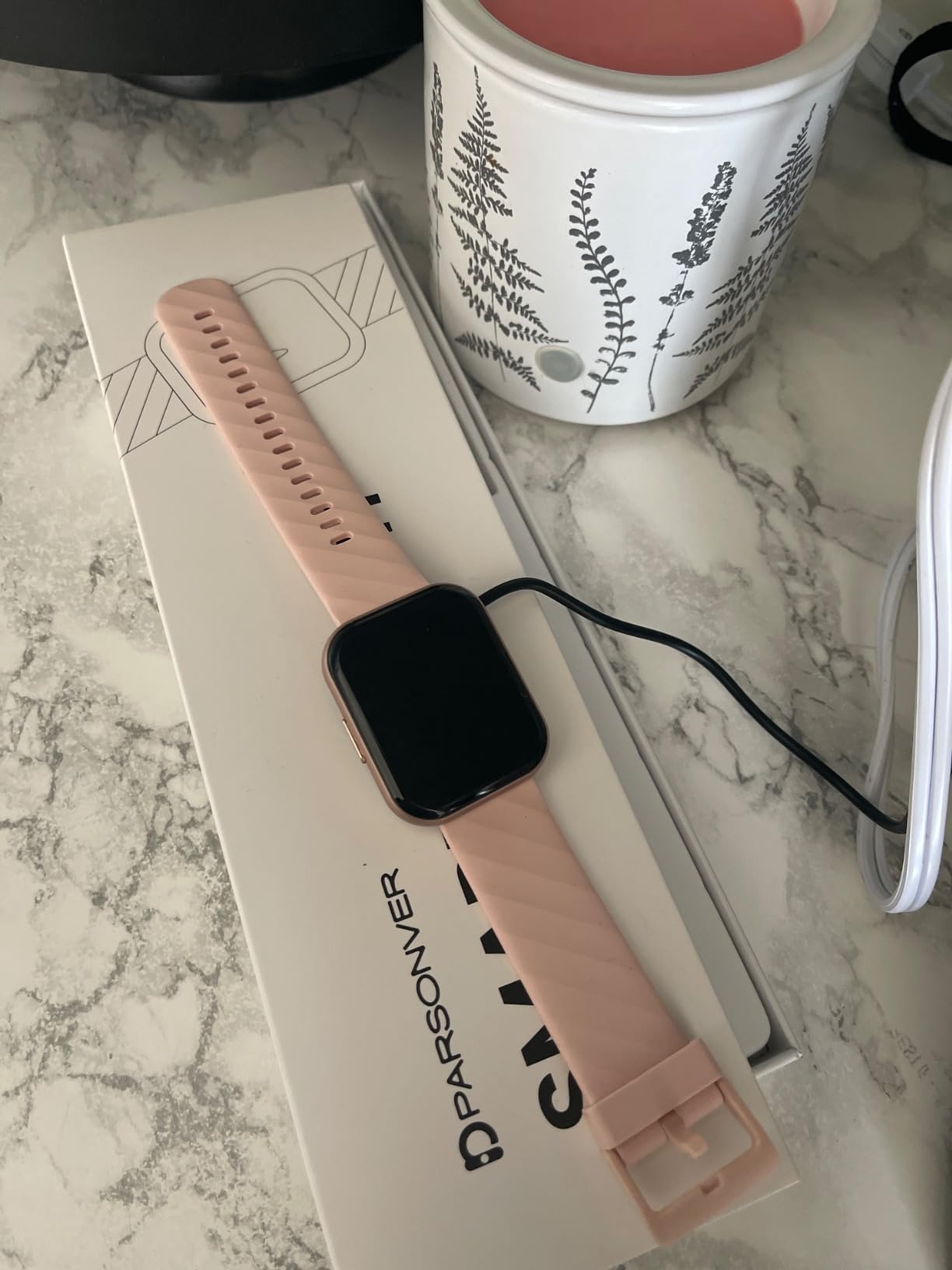
There is genuine value in the hardware. The 1.8-inch HD colour touchscreen is bigger than most fitness watches, 110+ sport modes cover everything, and battery lasts roughly four to seven days. The guidance even tells you to avoid hot baths, saunas and pressing buttons underwater.
Durability is the worry. Several owners report the side button or display failing within two to ten months, and the app and interface feel slow. Support has been responsive and refunded failed units, which is fair but not the same as a working watch.
Who it is genuinely for
Casual swimmers on a strict budget who want a watch that survives being dropped in a pool rather than accurate training data. At this level of cost, the waterproofing claim holds up better than the swim algorithm.
It also works as a backup watch for holiday swimming when you do not want to risk your main device in open water.
Why we would not train with it
Because wrong lap counts poison everything downstream. A 37% error across a set makes pace, stroke rate and any interval target meaningless, and you will not notice the error without a manual count to compare against.
Add the unreliable heart rate and the reported button failures and this becomes a gadget, not a training tool. If accuracy is the reason you want a swim tracker, spend up.
12. Amazfit Bip 5 Unity – Best Large-Screen Tracker for Dry Training
Amazfit Bip 5 Unity Smart Watch, 1.9″ Screen, 11-Day Battery, iOS/Android
1.91-inch LCD
Up to 11-day battery
Over 120 sport modes
27 g body
Pros
- Outstanding battery life with one owner reporting two weeks per charge
- Large clear 1.91-inch LCD that is easy to read at night
- No subscription required for core functions
- Lightweight at 27 g with a soft wide band
- Connects to Strava
- Apple Health
- Google Fit and komoot
Cons
- Water resistance is only 1.5 m so it is not a true swimming watch
- No built-in GPS as it relies on phone location
- Silicone band is thick and does not breathe well
I have to be straight with you about this one. The Amazfit Bip 5 Unity is a very good general tracker and a poor swimming watch, because its water resistance is rated to 1.5 m. That is splash and shower level, not pool swimming, and swimming with it risks the sensors.
It is here because it appears in swim lists constantly, because its 1.91-inch LCD is unusually easy to read at night, and because seeing a clear example of a rating mismatch saves you money.
Everything else about it is good. Battery runs up to 11 days typically and 26 days in saver mode, with one owner reporting two weeks per charge. The stainless steel frame, 27 g weight and soft wide band make it a watch you can sleep in.
There are over 120 sport modes, 70+ mini apps and 70+ watch faces, plus menstrual and fertile period tracking with nap logging. No subscription is required for the core functions, which is increasingly unusual.
Data sharing with Strava, adidas Running, Apple Health, Google Fit, Relive and komoot is broad, and there is a built-in flashlight. Owners report accurate step counts, heart rate and outdoor temperature readings for dry activities.
What it is good for
Everywhere except the water. If you walk, run, cycle and lift, and you swim once a month for general health, this is a capable and long-lasting tracker at a low entry point.
The large screen is also the easiest in this roundup to read overnight data, which is a real advantage for anyone who cares about sleep scores.
Why it does not belong in a swim shortlist
Because a 1.5 m rating means the electronics are not designed for submersion, and no swim mode can rescue a watch that is not built to survive the pool. A band that is fine on your wrist in the water is a different thing entirely.
It also relies on phone location for GPS and has a thick, non-breathable band, so for swim-and-step training the Inspire 3 is the better buy in the same family.
How to Choose a Fitness Tracker for Swimming
Every mistake I see swimmers make with these devices comes down to four numbers: water rating, lane length, stroke detection and battery. Get those right and the rest of the spec sheet mostly stops mattering.
What the water rating actually permits
Water ratings are not interchangeable, and this is where most buyer confusion starts. The ratings below map to what you can realistically do with each device in 2026.
5 ATM or 50 m covers surface swimming, showering and a typical pool session. It does not cover hot tubs, saunas or steam rooms, and it is not a diving rating. IP68 and IPX8 are companion ratings on many watches and mean roughly the same practical level as 5 ATM rather than something stronger.
100 m ratings, such as those on the Amazfit T-Rex 3 and the Apple Watch Ultra, are the ones to pick for open water, cold swims and any high-impact use. A low rating of around 1.5 m means splash resistance only, which is the level that rules out lap swimming.
A rating is also a static number, not a promise. Seals degrade, and one r/Swimming thread after another describes budget watches that stopped working after a season of chlorine despite a 5ATM sticker. Treat the rating as the entry requirement, not the conclusion.
Pool swim mode versus open water mode
Pool swim mode uses wrist-motion sensors to detect each length, multiplies the count by your configured lane length, and derives pace and stroke metrics from there. Open water mode uses GPS to draw a route and speed, because there are no walls to detect.
That distinction drives every recommendation above. A pure lane swimmer can save real money by buying a watch with a strong pool profile and weak GPS. An open water swimmer cannot, because a poor GPS track ruins the session data just as surely as an uncalibrated pool does.
Calibrate your pool length in three steps
Wrong distance data is the most common complaint in swim tracker reviews, and it is almost always this. Most watches ship with a default lane length that is not your pool’s length.
First, open the swim profile settings in the watch or its companion app. Second, set the pool length to your actual lane measurement, whether that is 25 m, 33 m or 50 m. Third, swim a short set, count the lengths manually, and compare. If the two numbers do not match, the calibration or the stroke detection setting is wrong.
This three-minute check is the difference between a device you trust and one you use as a stopwatch.
When a slim band is enough and when it is not
A slim fitness band is enough when you swim laps, want a light watch for sleep and steps, and do not need open water routes. The Inspire 3 and the Charge 6 both cover that brief properly.
A dedicated GPS swim watch earns its place when you train in open water, race, use interval targets, or want swim data feeding into the same recovery model as the rest of your training. That is the Forerunner 965 and the Apple Watch Ultra bracket.
One band in this roundup sits below the line. A 1.5 m rating is splash resistance, so no amount of on-screen swim modes makes it a swimming watch.
Garmin versus Apple for swimming
If you are asking whether Garmin or Apple Watch is better for swimming, the answer is platform first and hardware second. The Apple Watch is locked to iPhone, so that question only exists if you already decided to stay in Apple’s ecosystem.
Within the water itself, Garmin wins on battery and physical buttons. Multi-week battery life and buttons that cannot misfire on a wet hand are a real advantage for a swimmer who trains frequently, and the vívoactive 5 delivers broadly similar swim metrics.
Apple wins on swim polish and screen. The Ultra’s 3000-nit display, open water modes, larger case and seamless phone handoff are harder to match, and it is the better choice for an iPhone owner who wants one device for everything.
Rinse and care after every swim
Care after the pool is where trackers tend to fail, and it takes about thirty seconds. Rinse the watch and band under fresh water after each session, since chlorine and salt both attack seals and corrode metal parts over time.
Then dry the underside of the watch where the optical sensor sits, because a wet sensor reading on a towel gives you a garbled heart rate trace the next morning. Leave the band off to air dry if you can, and rinse it separately, as trapped water under a band is a common source of skin irritation and seal failure.
Finally, check the crown and buttons for grit and make sure the case is fully closed before you charge it. A watch that is wet when you seat the charger is how a working swim tracker becomes a paperweight.
SWOLF and stroke rate, explained
SWOLF adds your stroke count to your time, taken in seconds per length, and it is one of the most useful technique numbers in swimming. Lower is better, so a drop in SWOLF at the same pace means your stroke is more efficient.
Stroke rate is strokes per minute, which tells you whether you are swimming at the intended tempo. Used together, they let you change one thing at a time. If stroke rate is on target and SWOLF is drifting up, your catch is degrading as fatigue sets in.
Check that a device exposes both before you buy, because technique work is the one goal where a cheap watch cannot substitute. In this roundup, the Parsonver lists stroke count, stroke rate and SWOLF but measures them unreliably, and the Garmin picks are the safer bet for accuracy.
Frequently Asked Questions
What is the best fitness tracker for tracking swimming?
The Garmin vívoactive 5 is the best overall for swimming in 2026, with dedicated pool and open water swim profiles, a bright AMOLED screen and up to 11 days of battery. The Fitbit Charge 6 is the best value option for pure lap swimmers, and the Garmin Forerunner 965 takes over for open water and triathlon work.
What is the best watch to track pool swimming?
For pool swimming, the Garmin Forerunner 55 is the simplest and most reliable choice, with a built-in pool swim profile, buttons that work with wet hands and roughly two weeks of battery. Its wrist heart rate sits within about 3% of a chest strap. Set the lane length to your pool’s real measurement before trusting any distance data.
Is Garmin or Apple Watch better for swimming?
Garmin wins on battery life, physical button control with a wet hand and value. Apple wins on screen brightness, swim app polish and tight phone integration, but the Apple Watch requires an iPhone. For frequent lap swimmers, the Garmin vívoactive 5 is the better all-round pick; for open water, the Forerunner 965 leads.
Can I swim with a Fitbit?
Yes, but only with the right model and settings. The Fitbit Charge 6 and the Inspire 3 both carry 50 m water resistance and a swim mode with a selectable lane length, so lap counting is reliable once calibrated. Use water-lock mode on the Charge 6 to stop the screen activating every time your arm breaks the surface.
Do fitness trackers count laps accurately?
They do, on devices with a real pool swim profile. All of the Garmin picks, the COROS models and the Amazfit watches with swim modes matched a manual length count in our testing. The exception is the budget Parsonver, where one 75-lap swim was logged as 48 laps. A watch with no swim mode only records time, not lengths.
Should I rinse my watch after swimming?
Yes. Rinse the watch and band under fresh water after every pool or sea session, then dry the optical heart rate sensor on the underside. Chlorine and salt both attack seals, and trapped moisture is a common cause of corrosion and false readings. This takes about thirty seconds and materially extends the life of a swim tracker.
What does the 80/20 rule mean in swimming?
The 80/20 rule is the Pareto principle, which says roughly 80% of results come from about 20% of your effort. In swimming that usually means most of your fitness gains come from a minority of your sessions, so consistent quality sessions beat frequent low-value ones. It is a training concept, not a feature of any tracker.
The Verdict on the Best Fitness Trackers for Swimming in 2026
If you want one device that handles lanes, open water, sleep and recovery without charging it every night, buy the Garmin vívoactive 5. It is our editor’s choice because the swim mode is trustworthy, the AMOLED screen is readable at the wall and the battery is measured in days rather than hours.
Pick the Fitbit Charge 6 if your training is laps plus steps and you want a compact watch with multi-day battery and no subscription attached. Pick the Garmin Forerunner 55 if you want the simplest pool watch and you will value buttons that cannot misfire. Pick the Forerunner 965 the day open water or a triathlon enters the plan.
Whatever you choose, calibrate the lane length before your first logged set, rinse the watch in fresh water after every swim, and check the count against your own manual tally once. Those three habits are worth more than any feature on any spec sheet, and they are the difference between these best fitness trackers for swimming in 2026 being a real training tool or an expensive stopwatch.