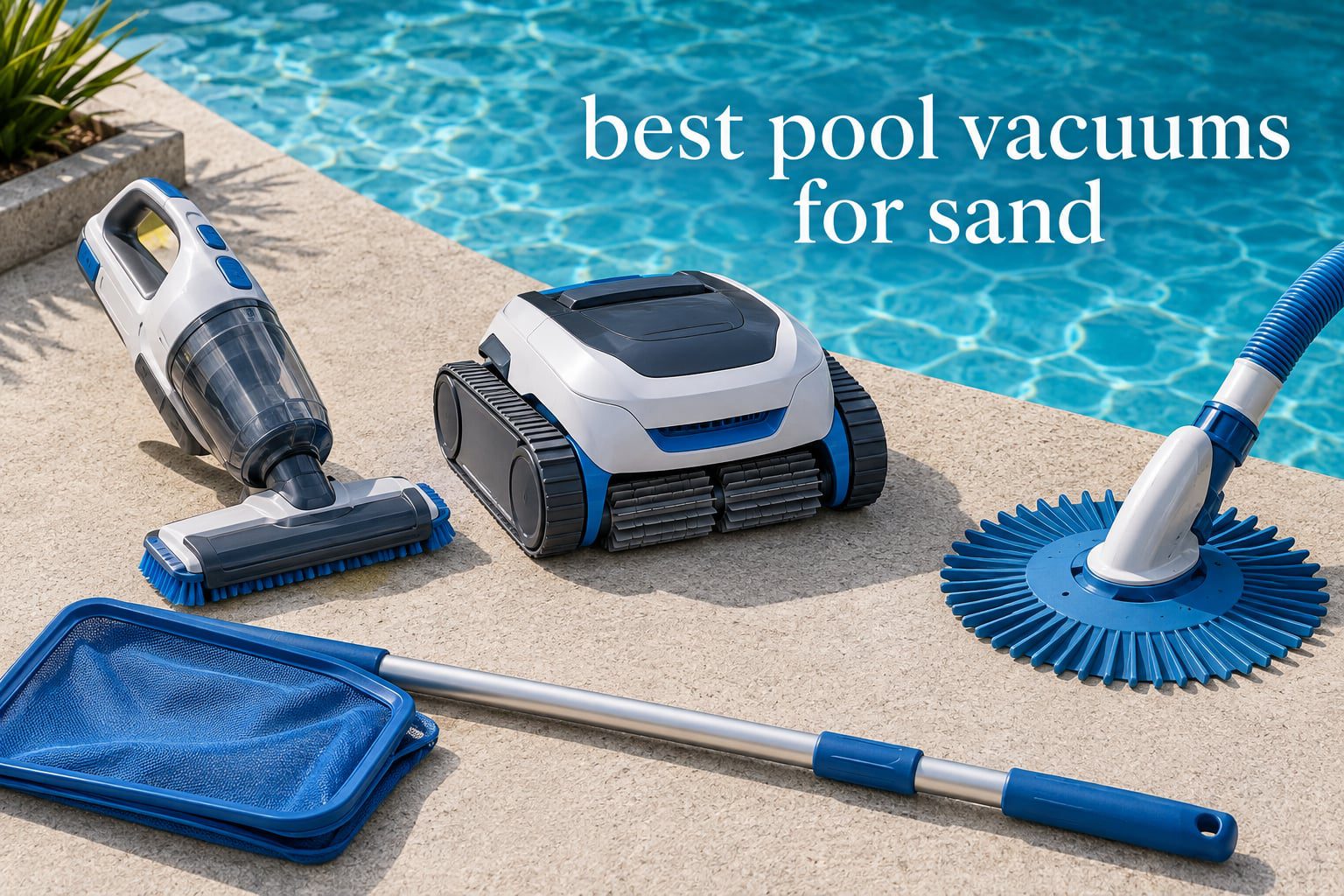
The best pool vacuums for sand in 2026 are the Dolphin Nautilus CC for hands-off whole-pool cleaning, the Zodiac G3 for the strongest sand and silt pickup on in-ground floors, walls and steps, and the Enhulk PC10 for fine grit in above-ground water. Sand punishes weak filtration far more than weak suction, so the machine with the tightest filter and the largest debris capacity wins the job, not the machine with the biggest motor.
That is the difference between every vacuum in this roundup and the generic pool cleaner lists you have probably already scrolled past. Sand is the one debris type that goes straight through a coarse bag, settles back on the floor, and reappears within a day or two. Pool owners on Reddit and TroubleFreePool describe exactly that loop, and the fix is almost never a stronger machine. It is a finer filter, a bigger debris chamber, and slower passes over the floor.
One clarification before the picks, because owners mean three different things when they say sand. There is loose sand tracked in from the deck or blown in from the yard, there is fine silt and sediment from rain and storms, and there is sand fill that is part of the pool floor itself. The first two can be vacuumed. The third cannot be removed without stripping the pool, and choosing the wrong head for a sand-fill bottom can lift a vinyl liner.
We narrowed ten vacuums against that sand-first standard, then added the technique layer competitors leave out: what vacuum on waste does, why vacuuming clouds the water, and when a sand filter beats a better vacuum entirely. The same grit-versus-filter logic shows up in our guide to the best ash vacuums for wood stoves, where fine particle capture decides the outcome for the same reason.
Table of Contents
- Top 3 Picks for Sand-Heavy Pools 2026
- Quick Overview: Best Pool Vacuums for Sand (September 2026)
- What Counts as Sand in a Pool
- 1. Dolphin Nautilus CC: Best Overall Pick for Sand-Heavy In-Ground Pools
- 2. Zodiac MX6: Best Premium Suction-Side Unit for Walls and Floors
- 3. Zodiac G3: Best for Sand and Silt on In-Ground Floors, Walls and Steps
- 4. Enhulk PC10: Best for Fine Sand in Above-Ground Pools
- 5. POOL BLASTER Centennial: Most Versatile for Spot-Cleaning Sand and Silt
- 6. AQUAFYSH AQ10 PRO: Best for Hot Tubs, Spa Benches and Shallow Steps
- 7. WYBOT C1: Best Cordless Robot for Large In-Ground Pools
- 8. BIELMEIER CPV-2040: Best for Small Pools and Deck-Side Reach
- 9. Enhulk PC15: Best Wide-Head Coverage for Sand, Mud and Acorns
- 10. Pentair Kreepy Krauly Lil Shark: Best Value Automatic Option for Above-Ground Pools
- How to Vacuum Sand Without Clouding Your Pool
- Vacuum on Waste: When It Helps and When It Hurts
- How We Picked These Pool Vacuums
- Buying Guide: Six Criteria That Decide Sand Performance
- When a Sand Filter Beats a Better Vacuum
- Frequently Asked Questions
- Conclusion: Where to Start for Sand
Top 3 Picks for Sand-Heavy Pools 2026
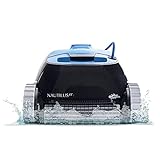
Dolphin Nautilus CC
- Top-load filter basket
- Wall climbing to the waterline
- Handles sand and fine silt
- Pools up to 33 ft

Zodiac G3
- One moving 36-fin disc
- Cleans floors walls and steps
- 39 ft push-fit hose
- Low-flow pump compatible

Those three cover most situations. The Nautilus CC runs itself and holds fine grit in a basket you lift out from the top. The G3 is the sand specialist on in-ground surfaces, with the highest rating in this group and over 6500 reviews behind it. The PC10 is the cordless answer for above-ground water, and its interchangeable mesh bags are the reason fine sand stays out of the pool.
Quick Overview: Best Pool Vacuums for Sand (September 2026)
| Product | Specs | Action |
|---|---|---|
| Dolphin Nautilus CC Robotic Pool Vacuum |
|
Check Latest Price |
 Zodiac MX6 Suction-Side Pool Cleaner Zodiac MX6 Suction-Side Pool Cleaner |
|
Check Latest Price |
| Zodiac G3 Suction-Side Inground Vacuum |
|
Check Latest Price |
| Enhulk PC10 Cordless Pool Vacuum |
|
Check Latest Price |
 POOL BLASTER Centennial Cordless Pool Vacuum POOL BLASTER Centennial Cordless Pool Vacuum |
|
Check Latest Price |
 AQUAFYSH AQ10 PRO Pool and Spa Vacuum AQUAFYSH AQ10 PRO Pool and Spa Vacuum |
|
Check Latest Price |
 WYBOT C1 Cordless Robotic Pool Vacuum WYBOT C1 Cordless Robotic Pool Vacuum |
|
Check Latest Price |
 BIELMEIER Cordless Handheld Pool Vacuum BIELMEIER Cordless Handheld Pool Vacuum |
|
Check Latest Price |
 Enhulk PC15 Pool Vacuum with Wide Head Enhulk PC15 Pool Vacuum with Wide Head |
|
Check Latest Price |
 Pentair Kreepy Krauly Lil Shark Pentair Kreepy Krauly Lil Shark |
|
Check Latest Price |
What Counts as Sand in a Pool
Fine sand behaves like silt. Grains in this range are small enough to stay suspended briefly, which means they cloud the water the moment you disturb them, and small enough to pass through a 500 micron bag without being trapped.
Coarse sand is heavier and grittier. It sinks fast, settles in a defined pile, and will not stay in suspension, so it behaves much more like small gravel. Most quality filter bags capture it, and most machines handle it well.
Silt and sediment are the fine dust that arrives after storms, rain, or a dusty season. This is the hardest debris to catch and the main reason clouding happens. Sub-25 micron filtration is the only real answer, and it is also the fastest way to blind a filter.
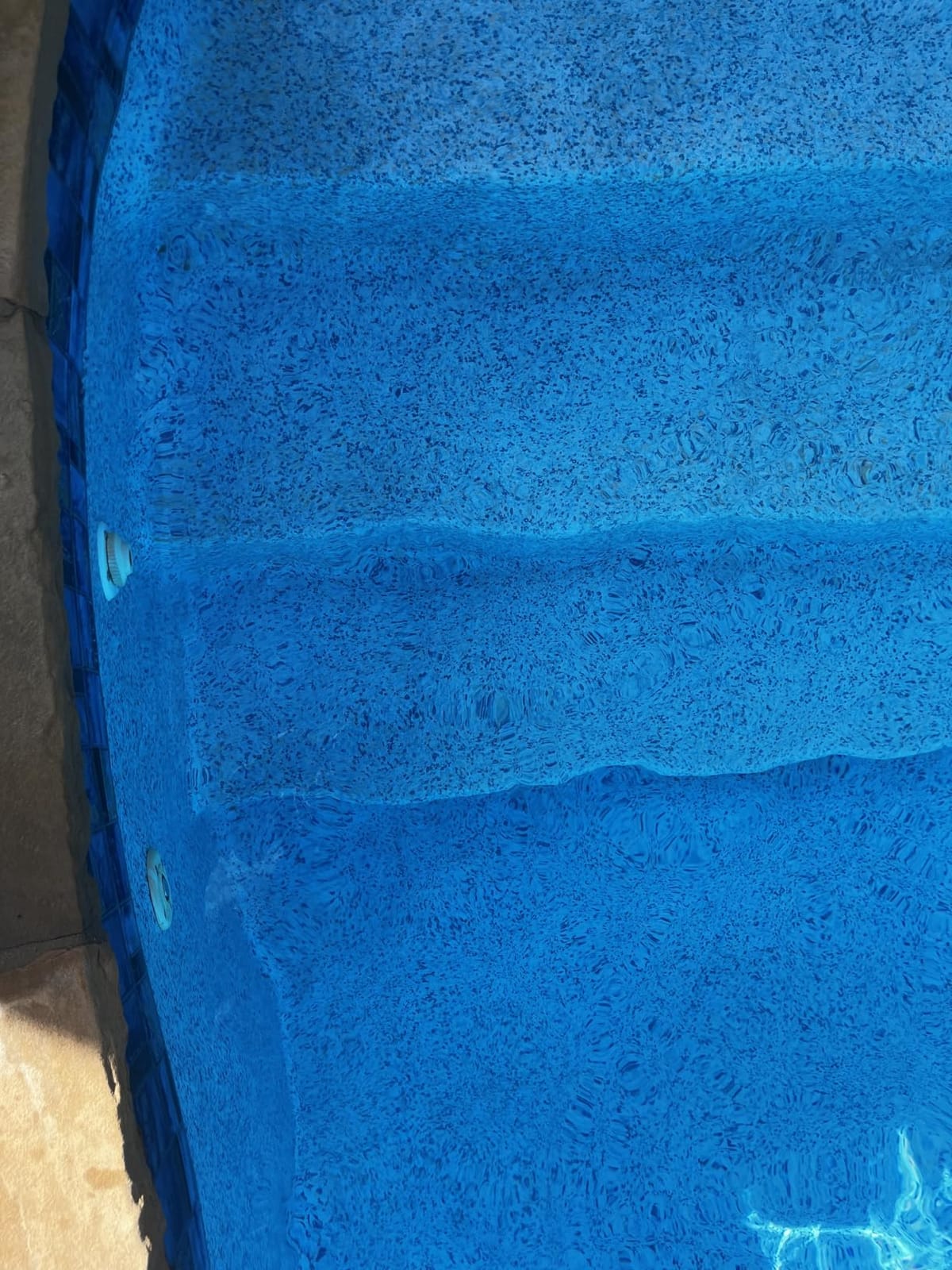
Sand fill is different in kind. If your pool floor is made of sand, you are not vacuuming debris, you are stripping structure. High suction and hard heads can dig channels and lift a loose liner, and no filter rating will change that. Use a soft brush head on a low setting and accept that the floor will never look swept clean.
1. Dolphin Nautilus CC: Best Overall Pick for Sand-Heavy In-Ground Pools
Dolphin Nautilus CC Automatic Robotic Pool Vacuum Cleaner, Wall Climbing Scrubber Brush, Top Load Filter Access, Ideal for Above/In-Ground Pools up to 33 FT in Length
Top-load filter basket
Wall climbing to the waterline
Pools up to 33 ft
2 hour cleaning cycle
Pros
- Climbs and scrubs walls on most surfaces
- Top-load basket is easy to remove and rinse
- Captures sand and fine silt alongside leaves
- Quiet enough to run while the pool is in use
Cons
- Fine mesh clogs and needs cleaning every one or two cycles
- Floating power cord tangles and ages in chlorine
- Cannot climb pool steps
This is the pick I keep coming back to for anyone who wants sand handled without a pole in their hands. The Nautilus CC drops in, climbs the walls to the waterline, and runs a two-hour cycle on a corded power supply. More than 10k reviews sit behind it, and the sand and silt pickup comes up again and again in owner feedback.
The top-load filter basket is the part that matters most for sand. It lifts straight out of the shell, so you can rinse it under a hose without pulling debris across the pool edge, and the active scrubbing brush pushes settled grit into the intake rather than letting it sit in a smooth pile.
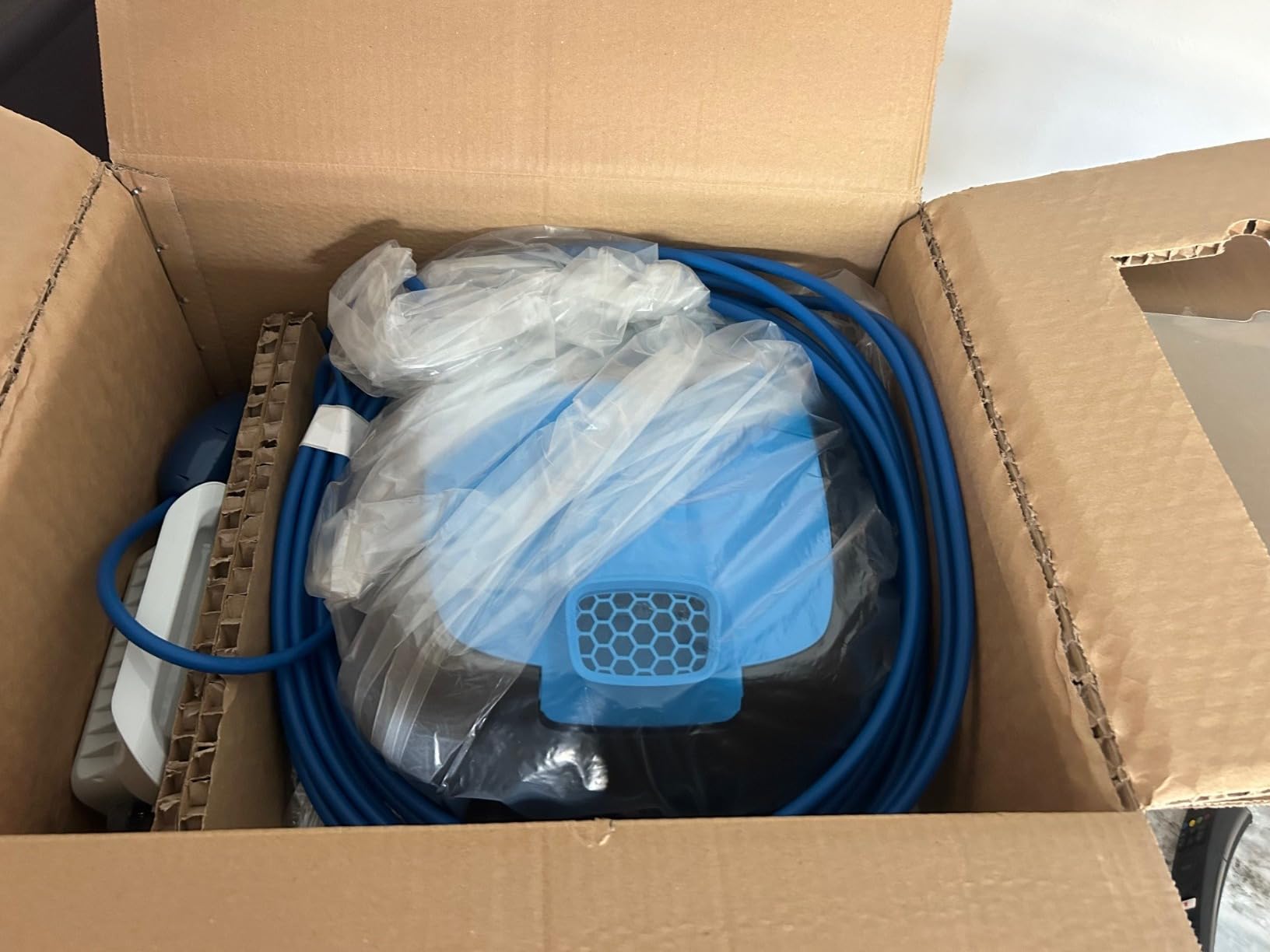
Reviewers are consistent about the trade-off on a sand-heavy pool. The fine mesh blinds faster than owners expect, and suction drops noticeably once the basket is loaded, so a mid-cycle rinse is normal rather than a fault. A clogged mesh basket also explains the cloudiness complaint that shows up in the reviews. The water gets dirty because the filter is full, not because the robot missed a spot.
Two other things to know before you buy. The floating power cord tangles and wrinkles often, and chlorine hardens it over a few seasons until it needs replacing. The unit also cannot climb steps, so a sand pile on a step or in a tight corner will still need a pole or a handheld.
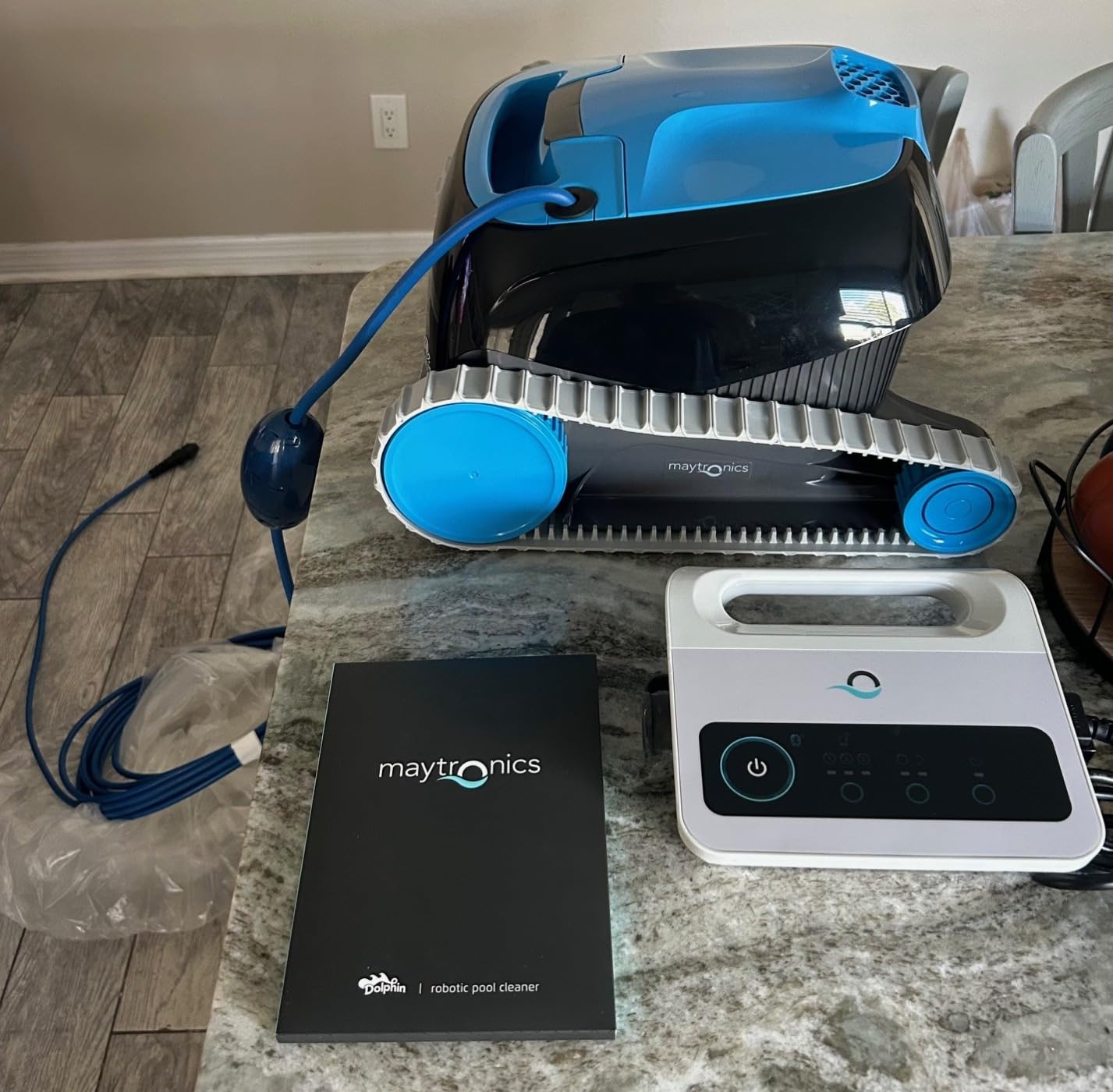
What the top-load basket changes on a sand pool
Rinsing the basket every cycle is the whole technique. A basket that is lifted out and rinsed under a hose keeps its suction, and that suction is what keeps grains on the floor instead of back in the water column. On a heavy sand load, a second rinse halfway through a cycle is normal.
The two-hour cycle is generous, and for a sand job that is a feature rather than padding. Long slow coverage is what stops deposits from rebuilding a day after you finish.
Where the Nautilus CC falls short on sand
It is a robot, so it follows a path rather than a plan. Forum owners are clear that robots tend to push fine sand into corners and along the step edge, which is exactly where a sand pile is hardest to reach later.
Serviceability is the other consideration. The drive and brushes need periodic replacement, and the cord is a wear item. That is a fair trade for a machine that runs unattended, but it is not a set-and-forget purchase.
2. Zodiac MX6: Best Premium Suction-Side Unit for Walls and Floors
Zodiac MX6 Suction-Side In-Ground Pool Cleaner, Cyclonic Suction
Cyclonic turbine downforce
32 ft twist lock hose
Runs off pool pump suction
No batteries to charge
Pros
- Strong downforce at proper flow rates
- No batteries or added electricity
- X-Trax tread grip for tight corners
- Calibrates to variable-speed pumps
Cons
- Debris loads up the pool filter
- Needs correct hose length and pump flow
- Vanes and treads wear in sand
The MX6 is the archetype that most sand jobs were built around. It connects to a dedicated suction line or the skimmer, runs off your existing pump, and the cyclonic turbine generates the downforce that holds it against the floor while X-Drive navigation works the hydraulics inside.
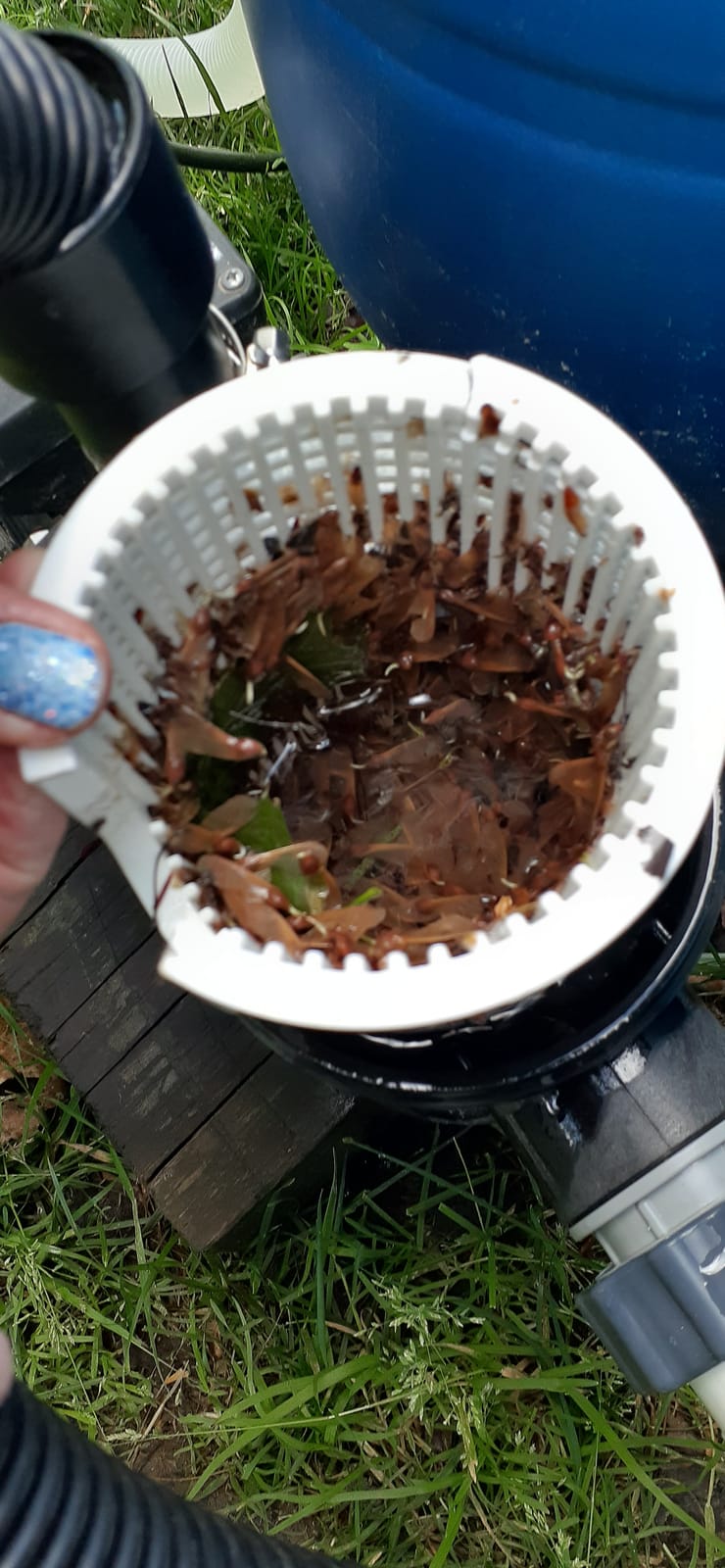
For sand specifically, the important point is that everything it lifts ends up in your pool filtration system. There is no bag to empty and no canister to carry. That is a genuine convenience for weekly top-ups and a real burden the morning after a heavy sand session, when the filter needs opening and rinsing by hand.
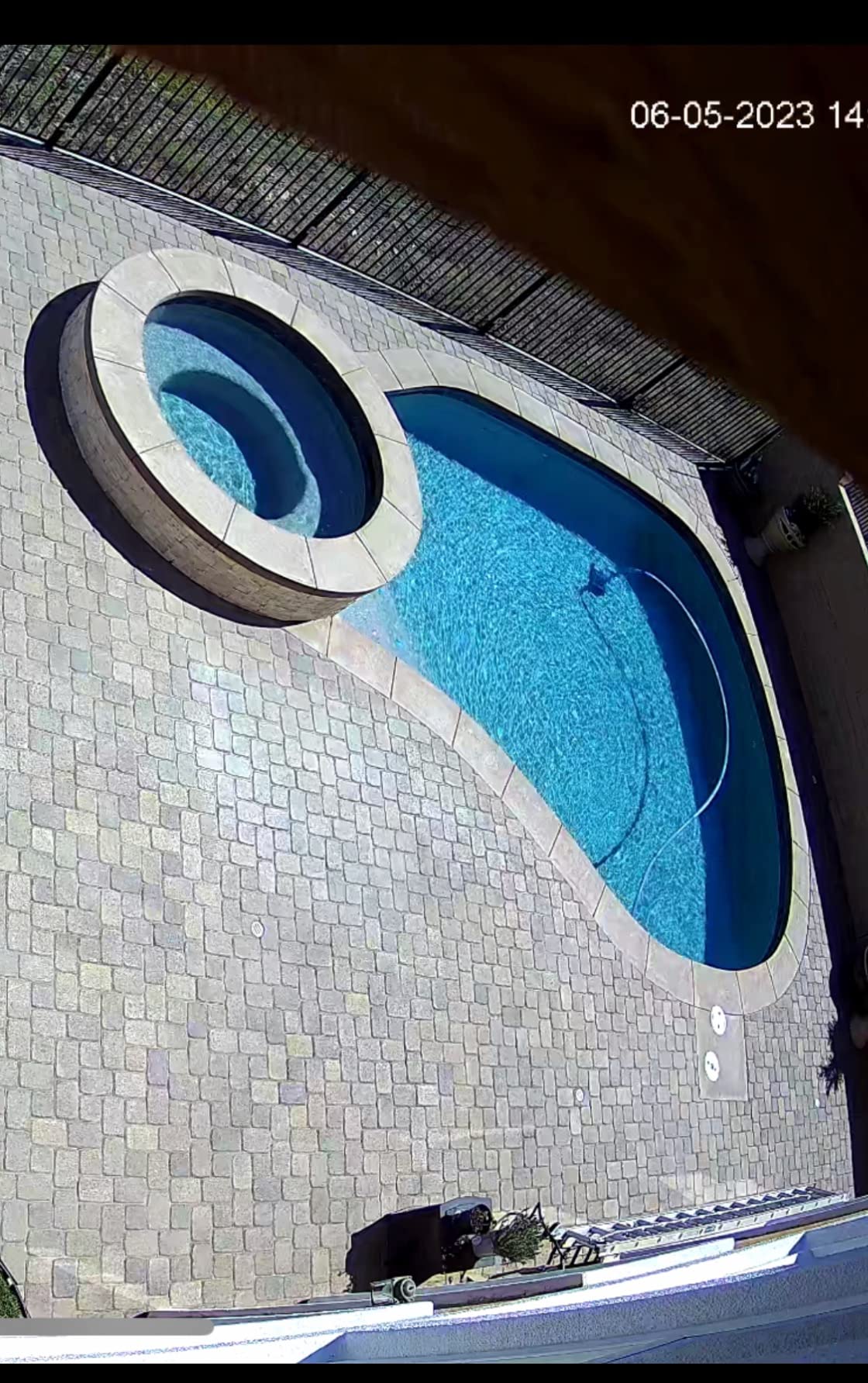
The 32 foot twist lock hose has to be the right length for your pool. Owners repeatedly report the unit merrily circling in one spot when the hose is too long, which on a sand load means it grinds the same patch without moving. Calibrating flow at the pump is the second half of that equation, and the MX6 handles variable-speed and low-flow setups better than most.
Wear is the long-term story. Reviewers note the tread and turbine vanes deteriorate faster in sand than they would in leaf-only use, and both are consumable parts rather than one-time purchases.
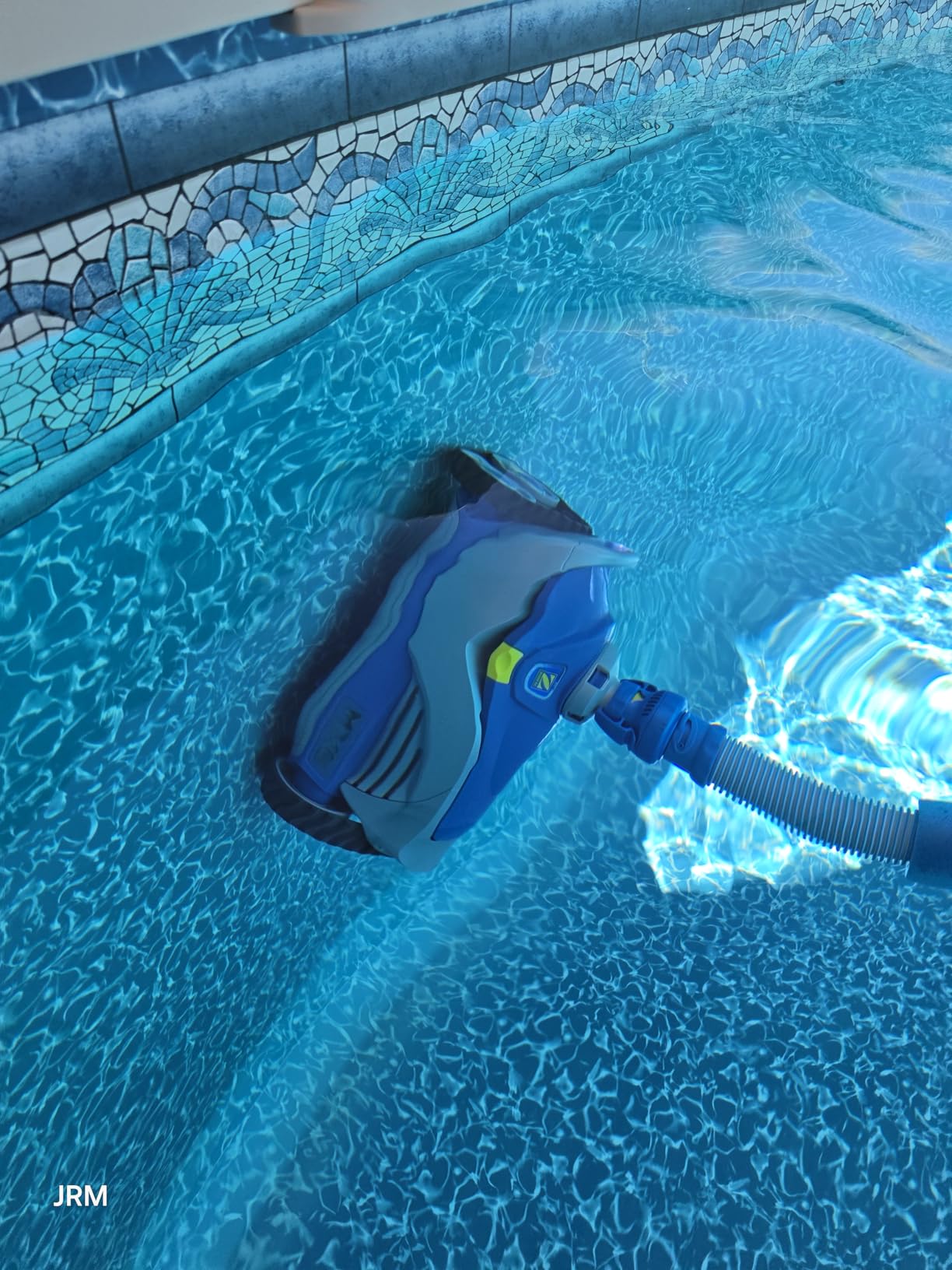
What the cyclonic turbine does for sand pickup
Sand is heavy, so it drops out of the water column fast. The turbine creates suction at the intake that keeps the unit planted instead of skating over a pile, which is why suction-side units are the traditional answer for a sand-heavy in-ground pool. A robot working a preset pattern can pass over the same patch repeatedly without ever lifting a grain.
Check your flow rate before a sand weekend rather than during it. A pump running at low speed will not give you the downforce this cleaner depends on.
When the MX6 frustrates owners
The filter. On a sand-heavy pool the bag in your main filter will fill and blind during a single run, and suction drops until you clean it. Owners who expect the cleaner to carry the sand away end up disappointed.
It also only suits in-ground pools with a suction port. Above-ground water without a skimmer line is outside its design entirely.
3. Zodiac G3: Best for Sand and Silt on In-Ground Floors, Walls and Steps
Zodiac G3 Suction-Side Inground Vacuum Pool Cleaner
One moving 36-fin disc
39 ft push-fit hose
Cleans floors walls and steps
Works with low-flow pumps
Pros
- Only one moving part so little can jam
- Disc grip holds on tile vinyl gunite fiberglass
- Wheel deflector handles tight corners
- Clears sand and grit from steps
Cons
- Sends debris to the pool filtration
- Needs correct hose length and flow
- Disc and deflector wear in sand
The G3 is the highest rated unit in this roundup at 4.4 stars, and the rating reflects a design choice that matters for sand. It has exactly one moving part, the 36-fin disc, and everything else is static. Nothing hinges or binds, which is exactly what you want when the working environment is grit.
Reviewers single out the steps. Because the disc grips so well on tile, vinyl, gunite and fiberglass, the G3 follows a step edge and a wall rather than bouncing off it, and sand that a robot pushes into a corner is sand the G3 will still find.
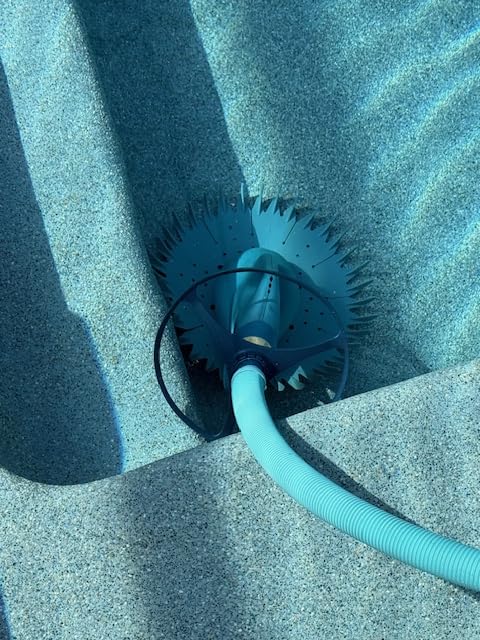
The 39 foot push-fit hose needs to match your pool’s longest run, and the pump has to be moving enough water to hold the disc down. Both are setup tasks, not defects, but skipping them is the number one reason owners think the machine does not work. The warranty runs two years against manufacturer defects, which is longer than most in this group.
Like the MX6, the G3 sends everything to your pool filtration system. Expect to open and rinse the filter after a sand-heavy session.
Why one moving part suits sand work
Fewer moving pieces means fewer places for grit to lodge. A tread, a gear set, or a brush arm gives abrasive grains somewhere to sit and wear a groove. The 36-fin disc is a single contact surface, and when it wears you replace one part instead of a set.
It is also lighter to handle, which matters when you are pulling a unit out of a wet deck pan every few days during a sand spell.
Where the G3 needs help
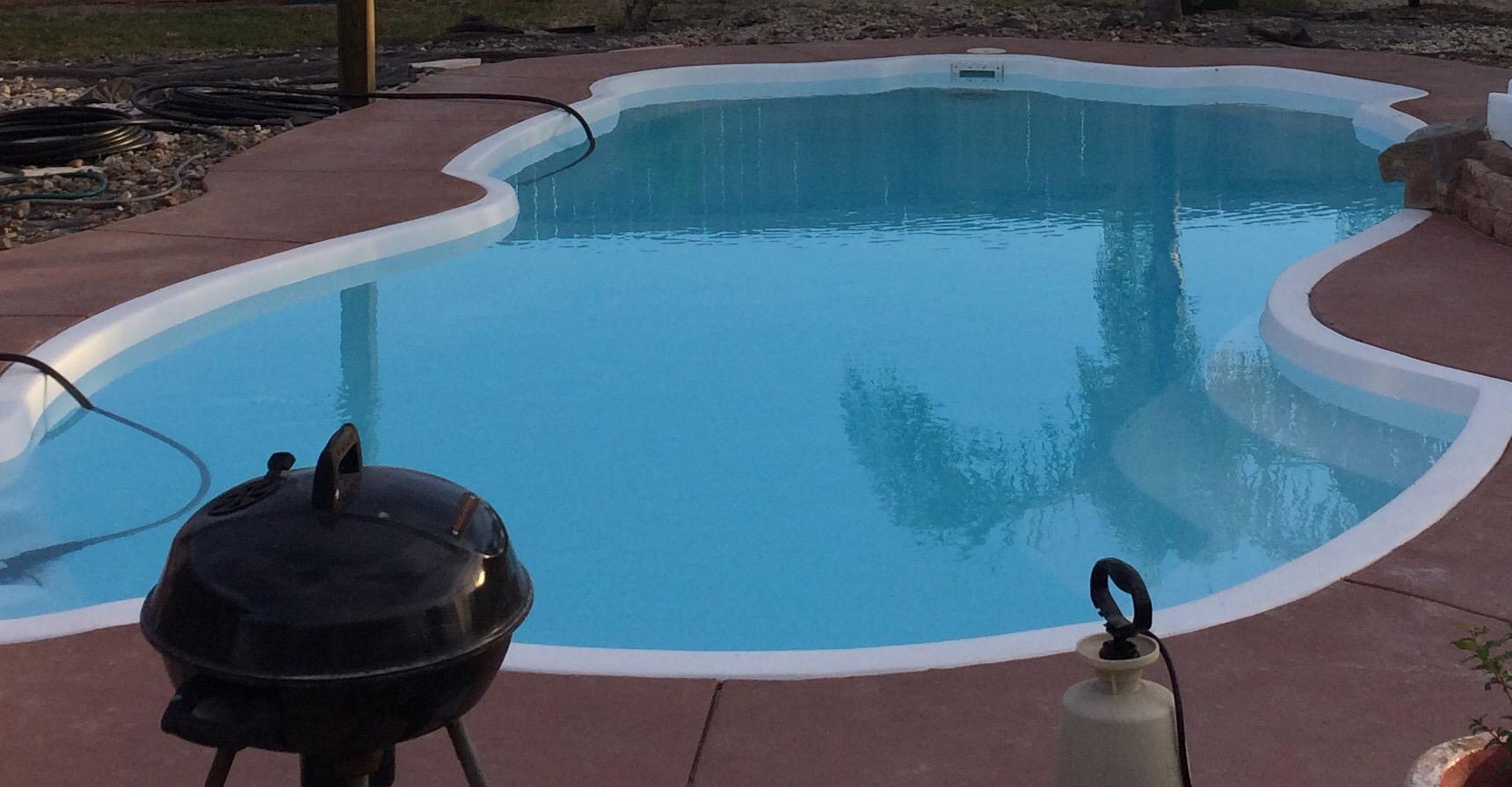
It is an in-ground unit. Above-ground pools with a liner and a skimmer can use it, but the flat liner floor and a 39 foot hose are rarely a good pairing for sand tracked in from the deck.
Because debris ends up in the filter, a fine sand load will still turn your pool cloudy if you vacuum on filter mode. The technique section below covers what to do instead.
4. Enhulk PC10: Best for Fine Sand in Above-Ground Pools
Pool Vacuum for Above Ground Pool with a Telescopic Pole, Running time up to 1H, Handheld Rechargeable Pool Cleaner with Powerful Suction up to 18.5 gallons/min, Ideal for Leaves & Debris, PC10
4200 L/h flow
60 minute runtime
3-7.3 ft telescopic pole
Four bags at 180 and 500 mesh
Pros
- High flow moves sand and silt well
- Four mesh bags to match debris size
- Interchangeable handle and pole
- Cordless so the pool filter stays clear
Cons
- About an hour of runtime per charge
- Fine bags clog on heavy sand loads
- Pickup depends on your pushing pace
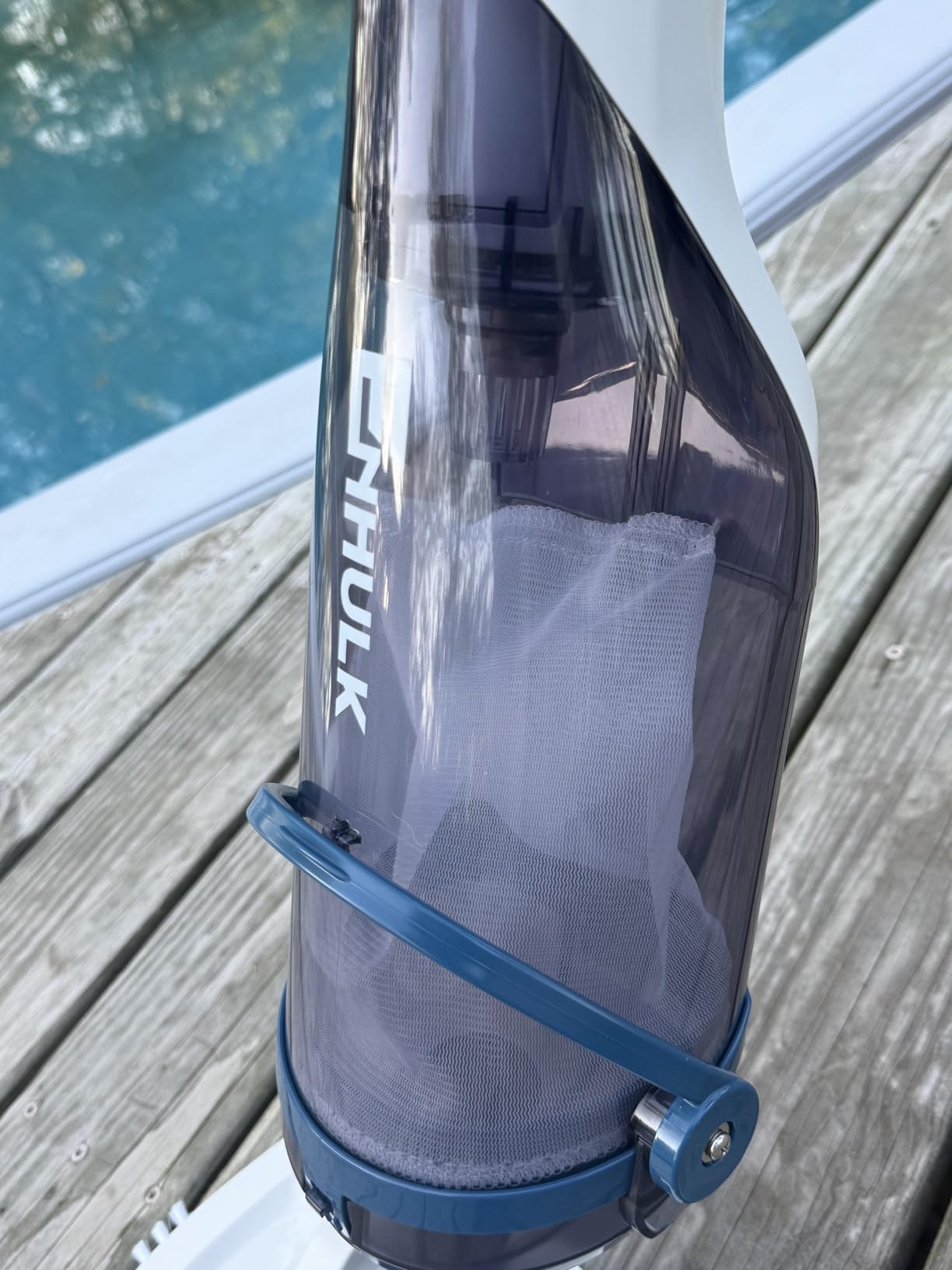
The PC10 is the fine-sand pick because of its four filter bags, split between 180 mesh and 500 mesh. That is the single most useful feature in this roundup for grain-size matching, and owners report that switching to the finer bag is the difference between capturing grit and pushing it around the floor.
The 20V motor delivers flow up to 4200 L/h, which moves sand, silt, leaves and twigs without a suction line. Five 2000mAh batteries give up to 60 minutes of runtime, and a full recharge takes about 1.5 hours. The short handle and the 3-7.3 foot telescopic pole both attach quickly, so shallow spot work and deeper reaches are not separate tools.
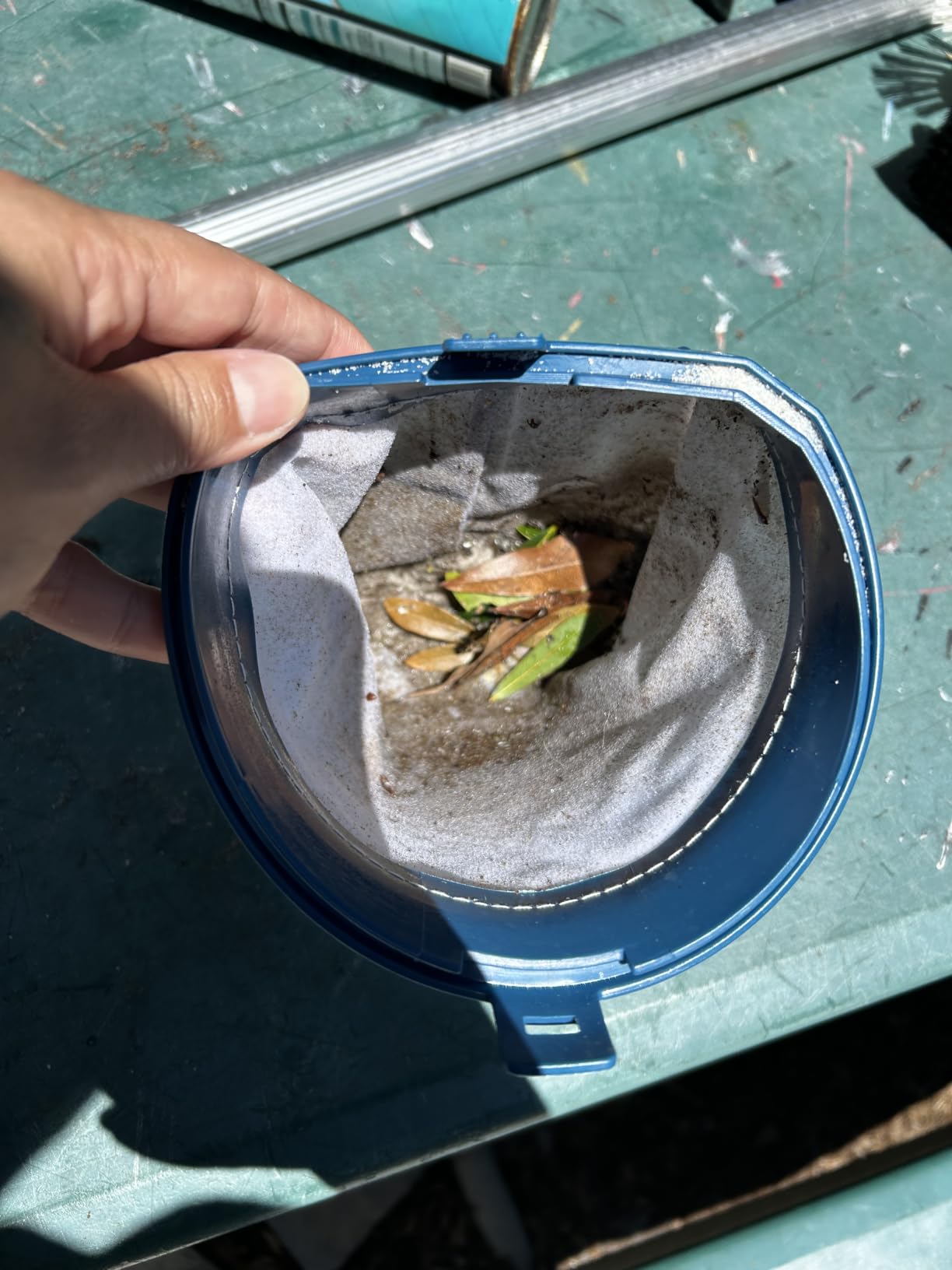
Because it is cordless and hoseless, nothing enters your pool filtration system. For an above-ground pool that already struggles with a small filter, that is the deciding advantage over any suction-side cleaner. The two-year manufacturer warranty is also among the longest in this group.
The catch is an hour of runtime. A large above-ground pool with a real sand load will not finish on one charge, and the fine bags need rinsing well before the run ends.
Choosing the right mesh bag for fine grit
Use the 180 mesh bags for sand and silt, and keep the 500 mesh for leaves and twigs. Sand grains that are smaller than the openings pass straight through, land back on the floor, and are read by owners as a machine that does not work.
Rinse the fine bag with a jet of water from the inside out. Rinsing from the outside just packs the fines deeper into the mesh.
Where the PC10 runs short
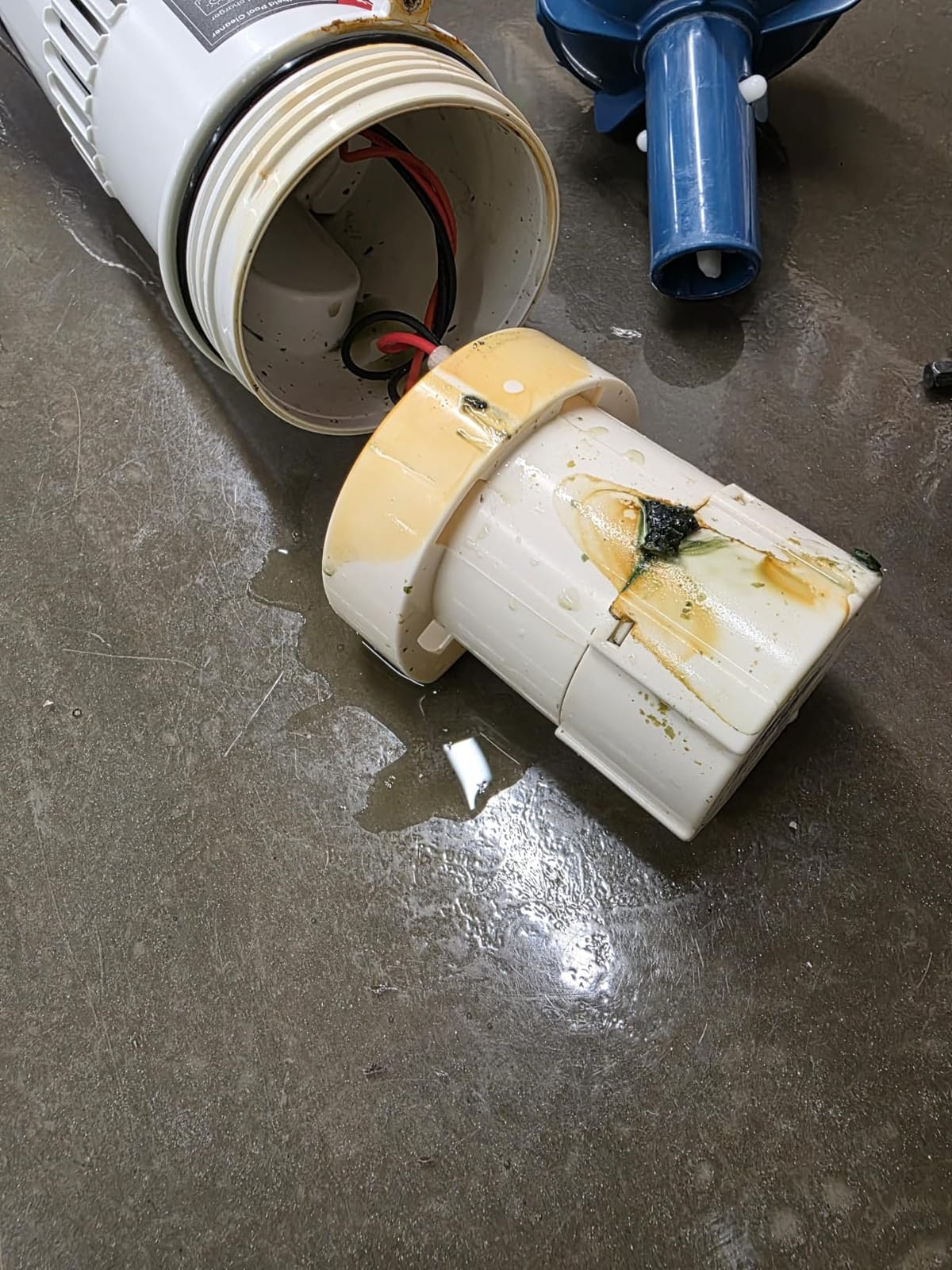
An hour of runtime per charge, and the bags fill before the charge does on heavy days. Plan two sessions or buy a second battery rather than rushing the pace, because a fast push lifts sediment back into suspension.
At 6.4 pounds with a pole attached, it is also a two-handed tool for anyone with back or shoulder trouble. There is no robotic option here.
5. POOL BLASTER Centennial: Most Versatile for Spot-Cleaning Sand and Silt
POOL BLASTER Centennial Cordless Pool Vacuum w/Pole Set – XL Debris Capacity & Advanced Filtration, Handheld Rechargeable Pool Cleaner for Sand, Silt & Leaves in Inground & Above Ground Pool
10.5 inch vacuum head
45 minute lithium runtime
Removable angled head
Quick release debris canister
Pros
- Picks up substantial sand and fine grit
- XL canister holds a lot between emptying
- Head removes to expose an angled profile
- Cordless so the pool filter stays clear
Cons
- Canister can slip its seat and spill
- Unit is buoyant and needs steady pressure
- About 45 minutes of runtime
Owners treat the Centennial as a supplement to a robot rather than a full-pool cleaner, and that is how we have ranked it. It is genuinely good at lifting the sand and fine grit a robot pushes into the corners, which is the specific problem this roundup cares about.
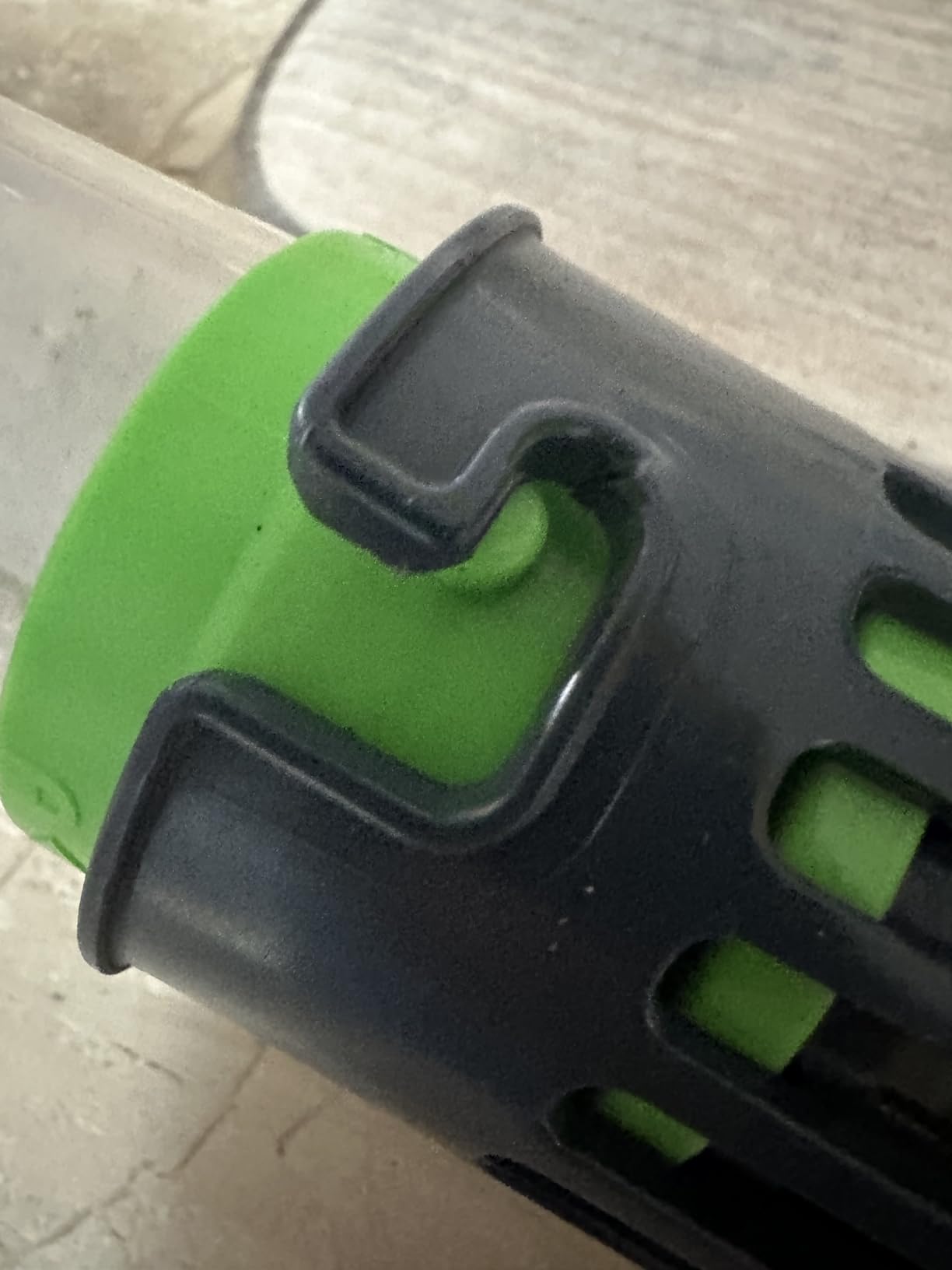
The 10.5 inch head comes off to expose an angled profile for steps and tight edges, and the quick release lever frees the debris canister in one movement. The reusable multilayer bag rinses clean and the canister holds more than most compact handhelds, which matters when the load is wet sand.
The 45 inch four-piece pole attaches to any standard telescopic pool pole, so you can reach the deep end without standing in the water. The lithium pack runs up to 45 minutes with a four hour charge, and the whole unit weighs 5 pounds.
The mechanical flaw owners mention most is the canister disengaging from its base and dumping collected sand and water back into the pool. Reviewers also report that the sealed motor and battery assembly can fail after roughly a season of use, though warranty service from Water Tech is generally rated well when it applies.
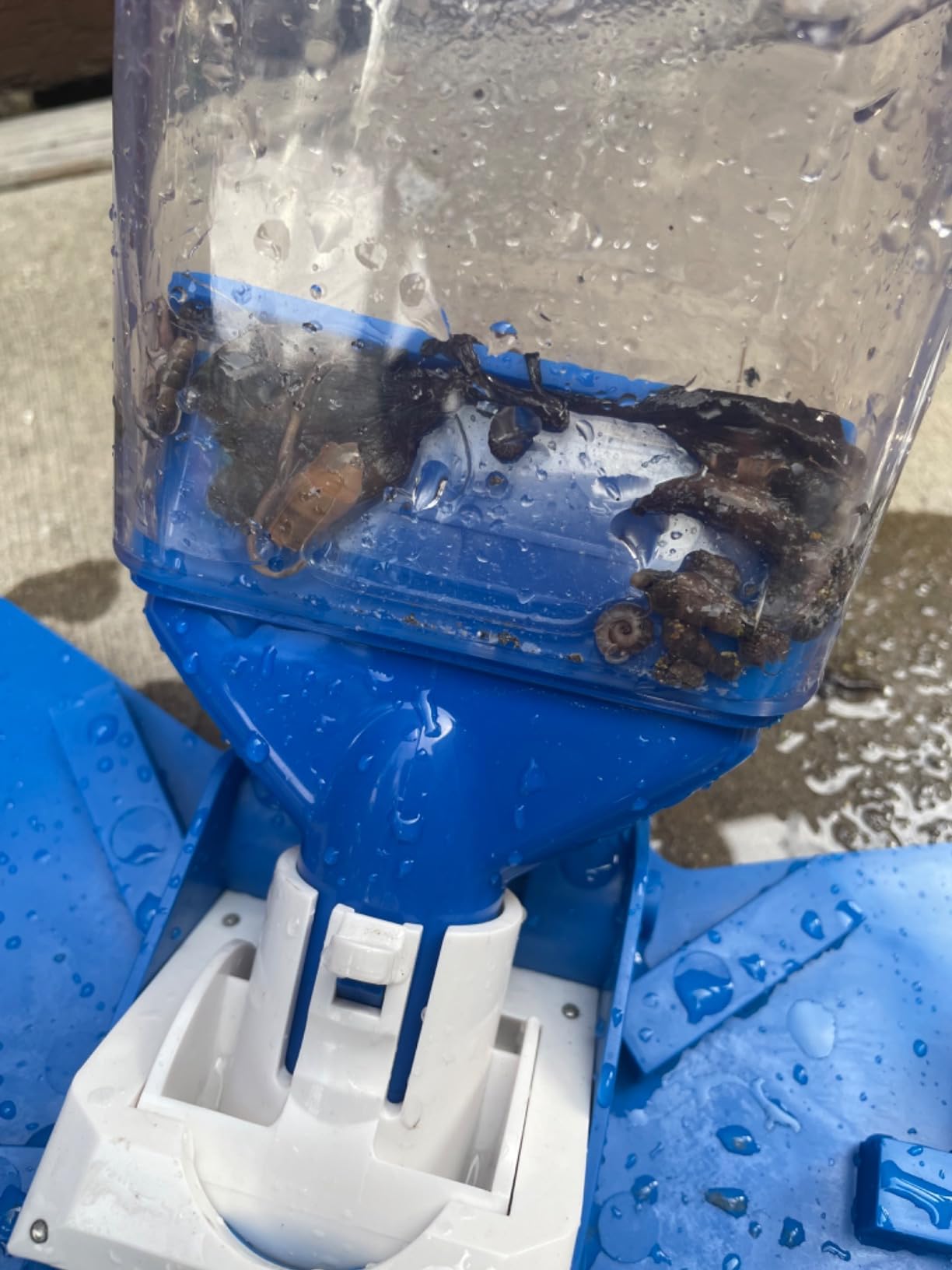
What the canister and angled head do for sand
A deep canister plus a removable head means you can scoop a sand pile out of a corner instead of chasing it. That is exactly the task a robot cannot do, and it is a 10-minute job rather than a 2-hour cycle.
Keep the head seated before you lift. The quick release lever is the only thing holding the canister in place, and a careless pull is how sand ends up back on the floor.
Where the Centennial disappoints
It is buoyant. You have to apply steady downward pressure to keep the head engaged, and the head shape can blow light debris away before it is captured if you move too fast.
Forty-five minutes is short, so treat it as a spot tool rather than a full-pool plan. For a large in-ground pool, pair it with one of the robots above.
6. AQUAFYSH AQ10 PRO: Best for Hot Tubs, Spa Benches and Shallow Steps
Rechargeable Pool & Spa Hot Tub Vacuum Cleaner – Dual Mode & Magnetic Drive System, 25µm Ultra Fine Mesh Filters for Hot Tub, Small Above Ground Pools – 70 Mins
Works in 0.6 ft water
12.8 gpm flow
Three 25 micron filter socks
70 minute runtime
Pros
- Cleans hot tub benches and shallow steps
- 25 micron socks trap fine sand and silt
- Magnetic drive limits seal wear
- Light and compact as a robot companion
Cons
- Filter socks hold about one session
- Modest suction on larger pools
- Some units stop charging after a few months
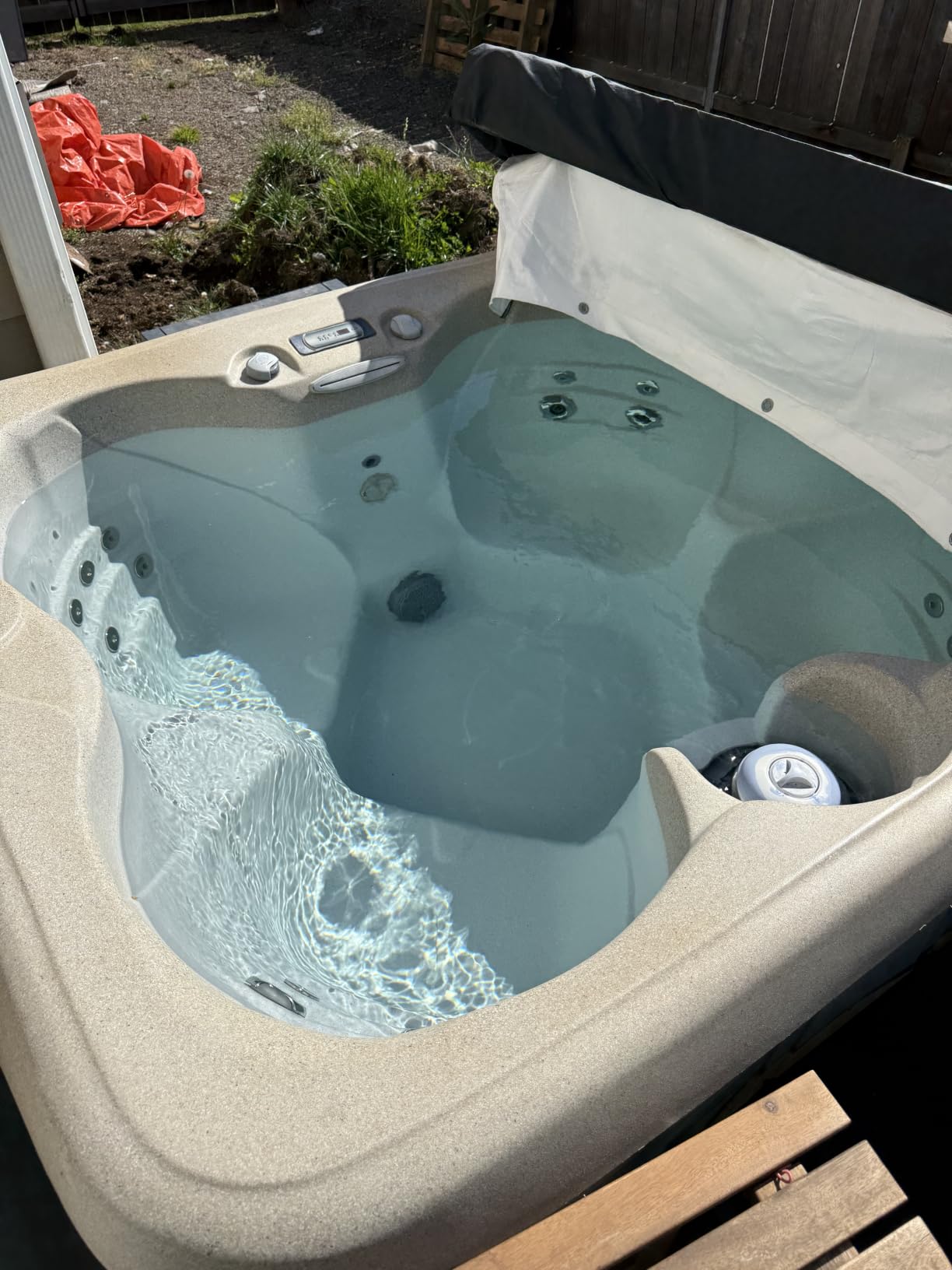
At 2 pounds with a 25 micron filter spec, this is the specialist pick for the thinnest layer of water in the group. It runs in water as shallow as 0.6 ft, which means hot tub benches, spillways and the top step of a pool are all reachable, and those are the places where settled grit hides and never gets cleaned.
The shortened suction channel is claimed to lift suction power by roughly 20 percent over a longer conventional design, and the magnetic drive is meant to cut seal wear and leakage over time. Flow is 12.8 gpm and runtime is up to 70 minutes on a charge, which puts it between the shorter handheld runs and the long cordless robotic cycles.
Its 25 micron socks are the tightest filtration in the group and the reason it captures fine sand that a coarse bag would release. That same tightness is the drawback: the three included socks hold roughly one session before they need a wash or a swap, and a blinded sock kills flow quickly.
A minority of owners report units that stop charging or powering on after a few months. Its 0.1 gallon capacity also makes it a detail tool, not a bulk debris mover.
Why shallow-water access matters for settled grit
Sand settles in the low point, and the low point in a spa or a pool step well is below where a standard head can seal. Running this at bench height means the grains come out of the water instead of being stirred back into it.
It also assembles in about a minute and attaches to a pole for an assembled length up to 6.7 ft, so it works as a companion to a robot rather than a replacement for one.
Where the AQ10 PRO falls short
It is not sized for a bulk leaf load at pool opening, and a small share of owners report a unit that stops charging within a few months of regular use.
Owners are also emphatic that it must be moved slowly, because fast movement simply stirs sediment back into suspension. That advice applies to every vacuum in this roundup.
7. WYBOT C1: Best Cordless Robot for Large In-Ground Pools
WYBOT C1 Cordless Robotic Pool Vacuum for Inground Pools, Professional
Floor wall waterline and steps
Climbs to 45 degrees
160 minute runtime
App control and OTA updates
Pros
- No cable to tangle or replace
- Gyroscope guided N-Path and S-Path routes
- Covers in-ground pools to 1618 sq ft
- Two-year manufacturer warranty
Cons
- Long recharge relative to runtime
- App and firmware dependence
- Not built for above-ground pools
The C1 solves the cord problem outright, and for a large in-ground pool with a sand load that is more than a convenience. A floating cable in sand is a tangle, a chlorine casualty, and a suction restriction, and this unit has none of it.
Triple motors drive it up slopes to 45 degrees, and a gyroscope guides N-Path and S-Path cleaning patterns across the floor, up the walls, onto the waterline and over the steps. Runtime is up to 160 minutes on a 4-hour charge, sized for in-ground pools up to 1618 sq ft and 9.86 ft deep.
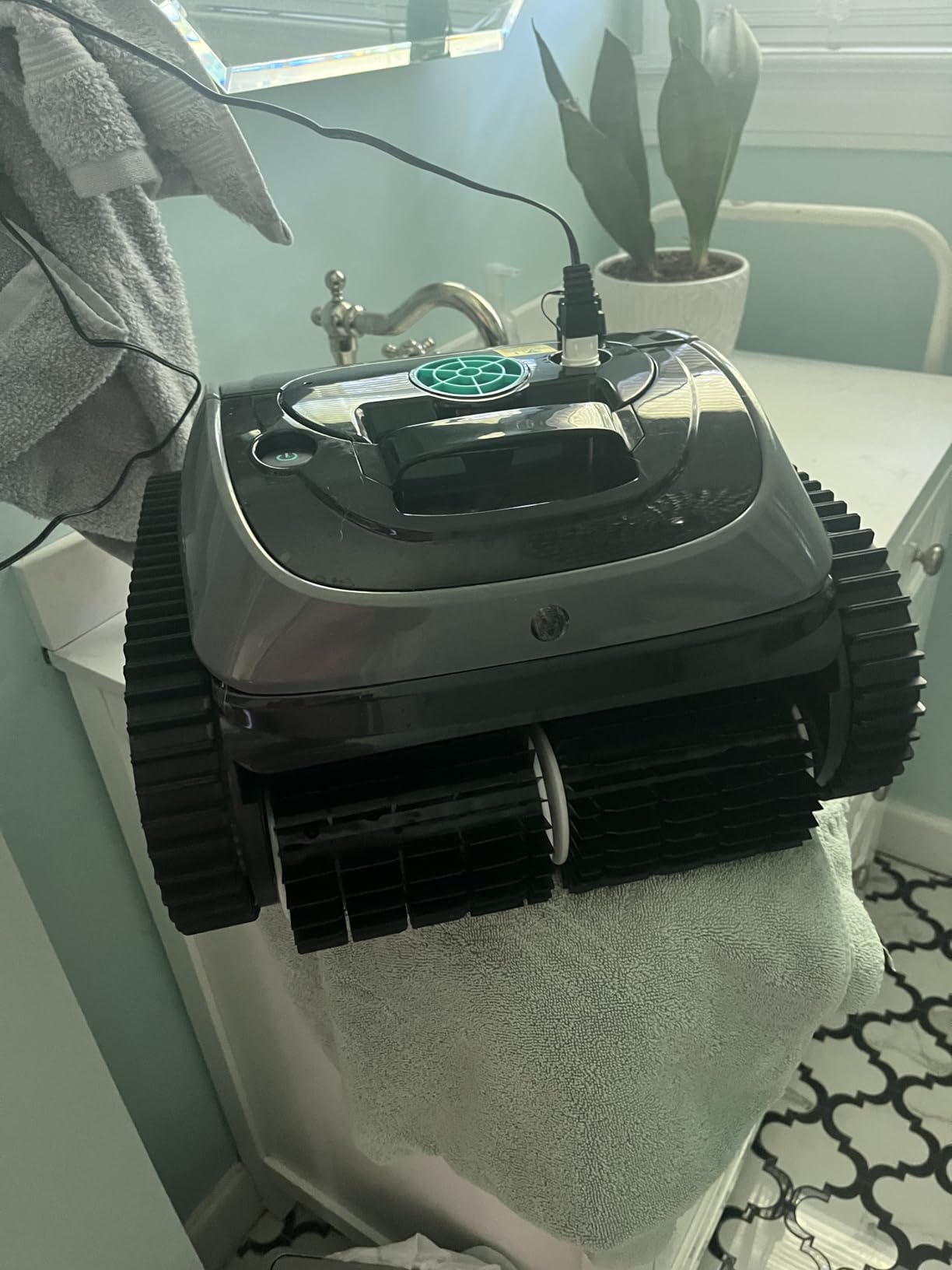
App control is the other differentiator, with scheduling, mode selection, progress tracking and over-the-air firmware updates. That is genuinely useful when you want a sand cleanup to start before you are in the water.
Feedback is mixed on navigation in complex pool shapes, and the 160-minute charging time for 160 minutes of runtime means you plan around it. It is strictly an in-ground unit, so above-ground owners should look elsewhere on this list.
What cordless runtime means for a sand load
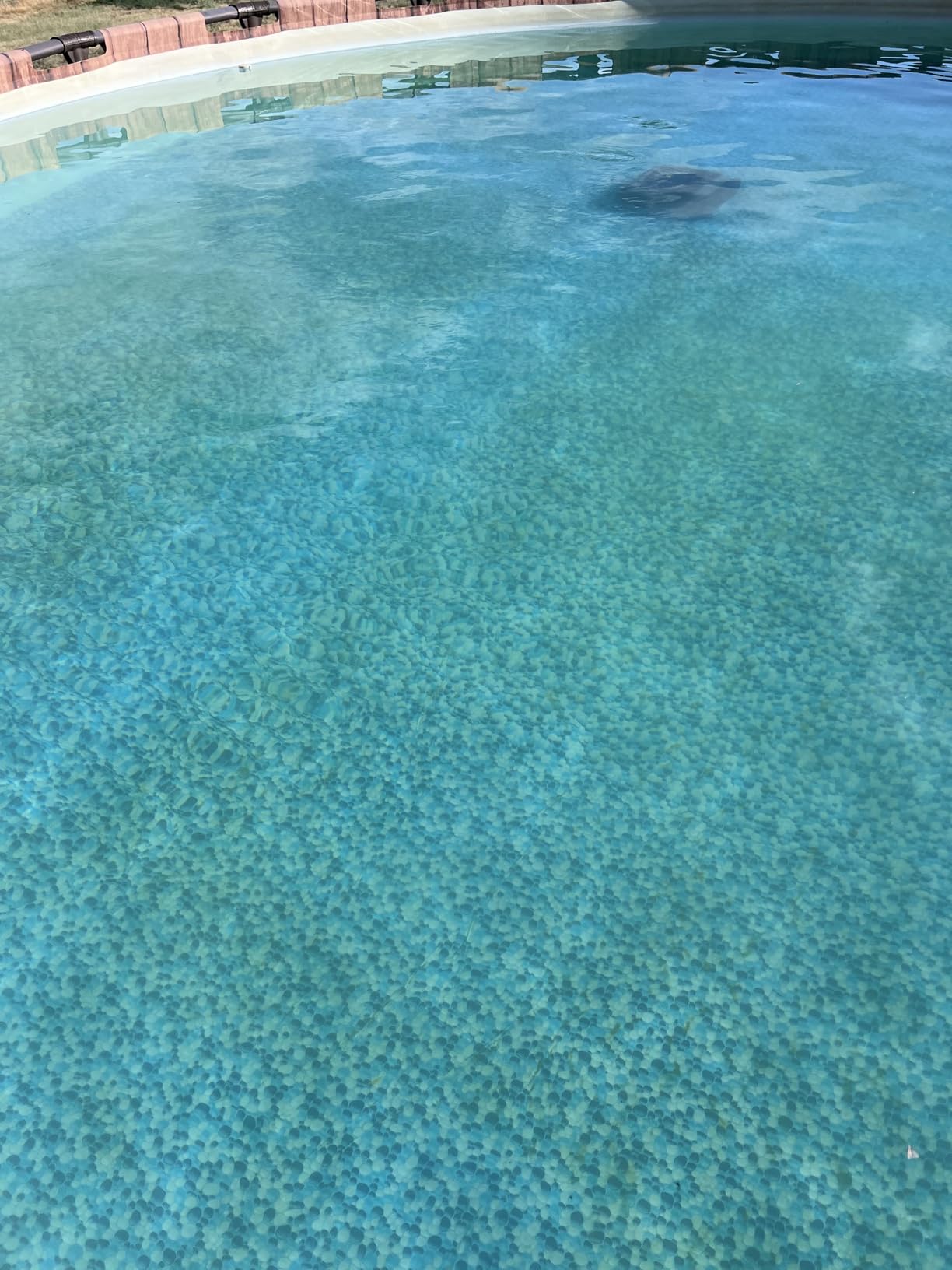
Runtime matters less than you might think on a sand job, because the constraint is the filter, not the battery. A 160 minute cycle lets you clean a large in-ground floor properly, but the basket will still need a rinse partway through if the load is heavy.
The trade is scheduling. A long charge means you start the cycle when you are done swimming, not when you want to.
Where the WYBOT C1 disappoints
It is in-ground only, and the app adds a layer of firmware dependence for features you might never use. Navigation reliability in unusual pool shapes is the other complaint in reviews.
Like all robots, it will push fine sand into corners. Pair it with a handheld from this list if that bothers you.
8. BIELMEIER CPV-2040: Best for Small Pools and Deck-Side Reach
BIELMEIER Cordless Handheld Pool Vacuum 19 GPM with Telescopic Pole
19 gpm rated flow
3-9 ft extension pole
180 300 and 500 micron nets
75 minute cordless runtime
Pros
- Wide head clears grit and sand quickly
- Removable nozzle reaches seams and steps
- Three mesh grades to match grain size
- Filter compartment rinses tool-free
Cons
- Not robotic and needs guiding
- 500 micron bag lets fine sand back
- Head can lift off when pulled fast
- Pole may not reach past about 6.5 ft
This is the fastest route to a clean bottom on a small pool or a hot tub. Owners report finishing a small basin in about 10 minutes, which is why it earns a place on any sand list even though it is not a full-pool machine.
The wide head clears grit, sand, leaves and dirt, and the removable nozzle reaches seams and edges without dragging a hose across the pool. Three reusable filter grades at 180, 300 and 500 microns let you match mesh to particle size, and the 3-9 foot extension gives deck-side reach into deeper water and up the walls.
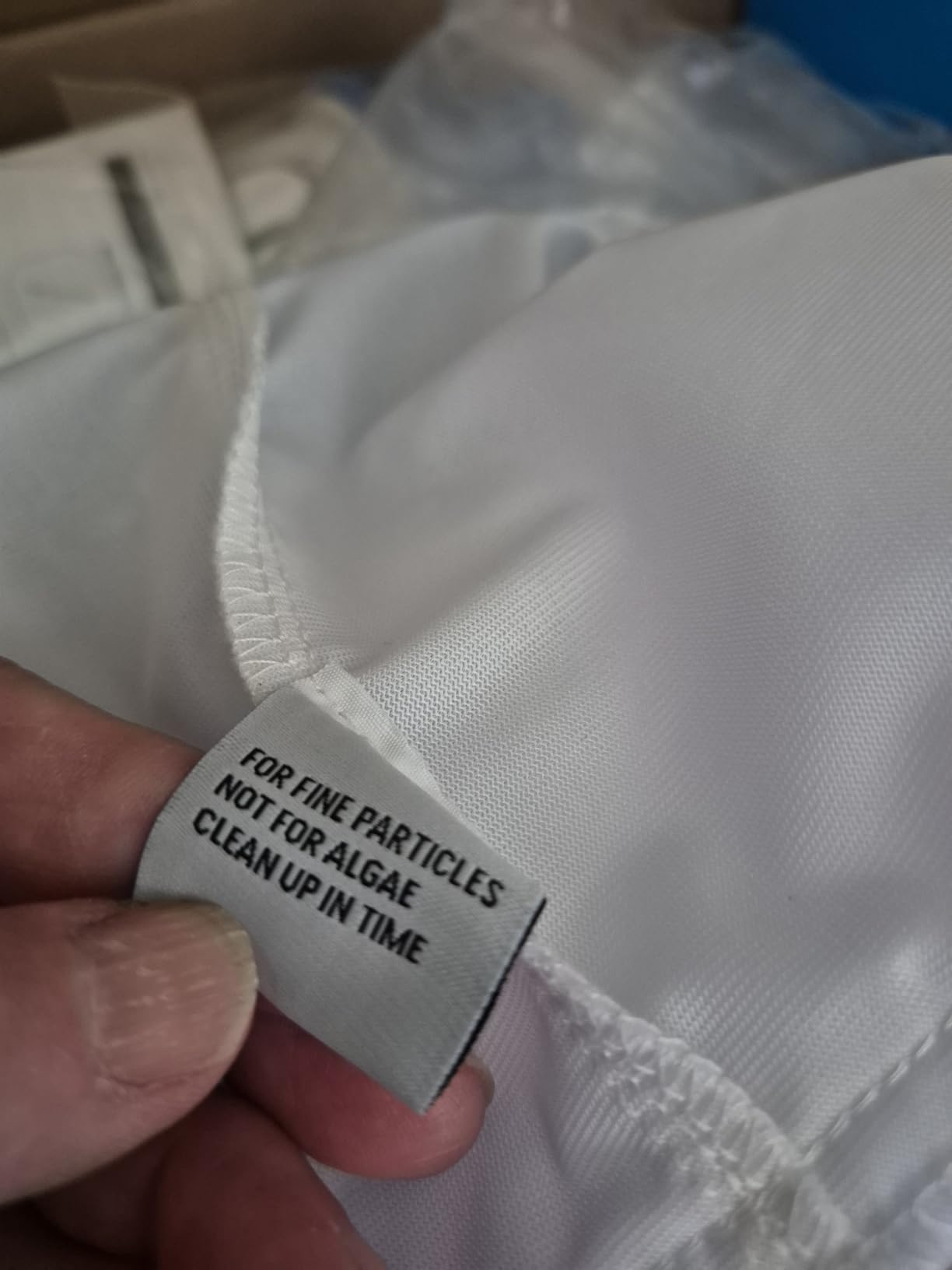
The guidance from owners is unusually consistent: the finest bag is the one that captures sand rather than pushing it. The 500 micron net is for large debris, and using it on a sand load means you are doing the same passes with less result.
Runtime is 75 minutes on a charge, and the filter compartment opens and rinses without tools. Some buyers report units that stop holding a charge after a few months of use.
Matching mesh grade to grain size
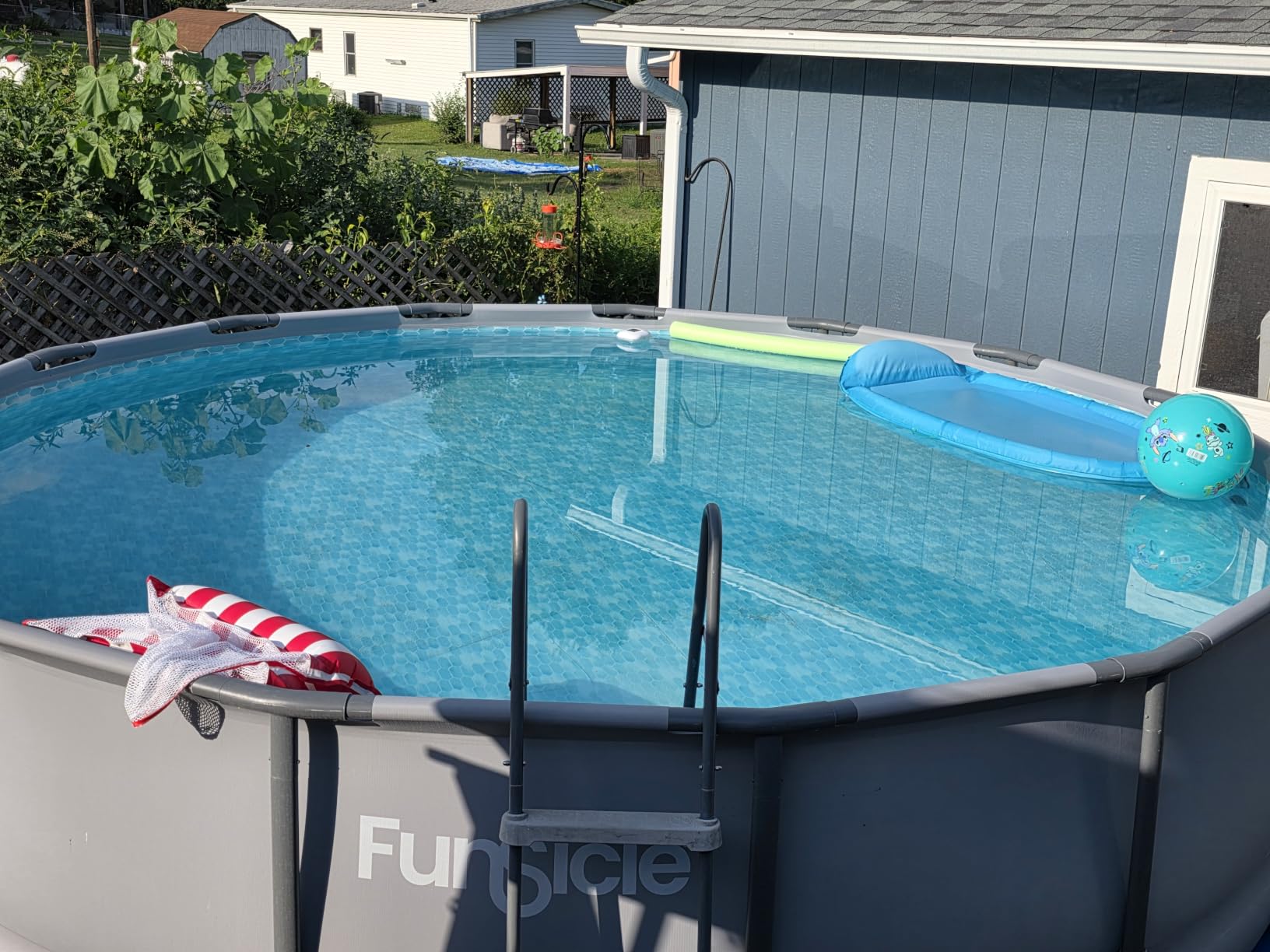
Use 180 microns for sand and silt, 300 for medium grit, and 500 only for leaves. This is the simplest way to stop fine sand from cycling through the pool, and it costs nothing because the nets are reusable.
Switching grades takes seconds, so the practical routine is a quick pass with the coarse net after a storm and a slower fine pass for the dust the storm left behind.
Where the BIELMEIER falls short
It is not robotic. It does not collect floating algae, and it needs guiding, so the quality of the result depends on your pace and your angle.
Two more limits worth knowing. The head can lift off the bottom when pulled quickly, and a detached head full of wet sand is heavy. The extension pole also may not reach pools deeper than about 6.5 ft.
9. Enhulk PC15: Best Wide-Head Coverage for Sand, Mud and Acorns
Enhulk PC15 Pool Vacuum, Upgraded 13.4″ Wide Head & Telescopic Pole
13.4 inch wide head with brushes
18.5 gal/min flow
35.8-87.5 inch pole
Red clogged-filter indicator
Pros
- Wide head doubles floor coverage
- Hydrodynamic motor handles sand and mud
- Telescopic pole reaches deep areas
- Auto shutoff when out of the water
Cons
- Pickup depends on steady pushing
- Bags clog on heavy sand loads
- 8.4 pounds is heavier than most
The PC15 is built around coverage. The 13.4 inch removable head with side brushes works a wider strip on every pass, and owners say that is the difference between finishing a sand-heavy bottom in one session and needing two.
The upgraded hydrodynamic motor delivers up to 18.5 gal/min for sand, mud, acorns, twigs and leaves, and the pole telescopes from 35.8 inches to 87.5 inches for deep or awkward areas. Five 2000mAh batteries give up to 60 minutes of cleaning on a 1.5 hour recharge.
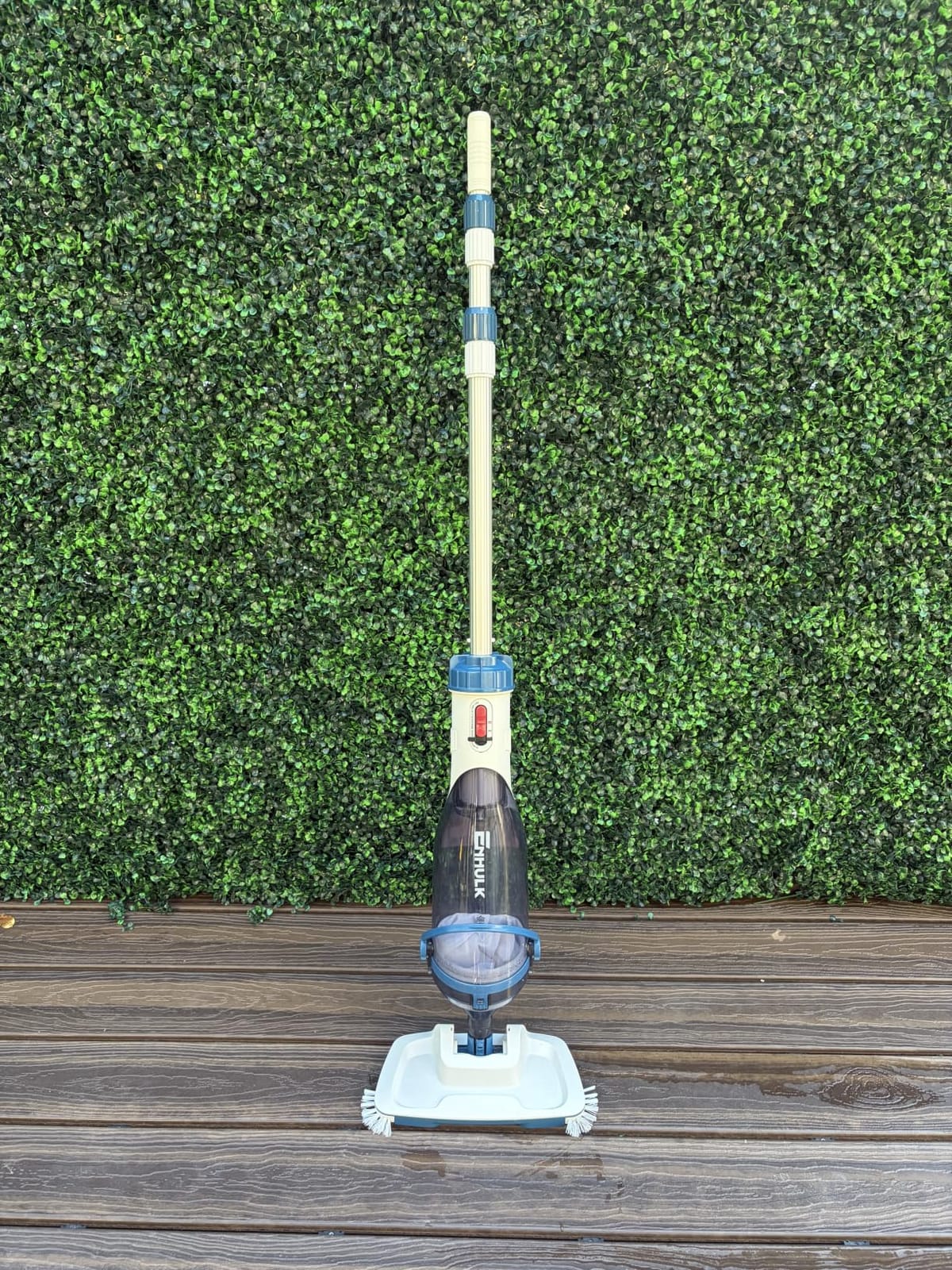
Two small features earn their place on a sand job. A red flashing indicator tells you the filter bag is clogged, which is the moment to stop pushing instead of stirring sediment back up. Auto shutoff after one minute out of the water protects the battery when you lift to empty.
Reviewers are consistent that pickup depends on a steady pace. A rushed pass lifts a cloud and leaves the sand where it was.
What the 13.4 inch head changes on sand
Wide head coverage is a time saving, not a suction saving. Fewer passes means less water moved per unit of floor cleaned, and less water moved means a lower chance of lifting settled grains into suspension.
For a mud or post-storm load, the side brushes help move material toward the intake rather than smearing it across the floor.
Where the PC15 falls short
At 8.4 pounds it is the heaviest handheld in this roundup, and the pole makes that more noticeable over a long session. Bag cleaning is still a mid-job task on a heavy sand load.
Some buyers report reduced suction or a battery that will not hold a charge after repeated use, so factor that into any expectation of multi-season reliability.
10. Pentair Kreepy Krauly Lil Shark: Best Value Automatic Option for Above-Ground Pools
Pentair 360100 Kreepy Krauly Lil Shark Above Ground Pool Cleaner
Fits straight in the skimmer
Adjustable 10 inch path
Self propelled oscillator
32 ft hose plus repair kit
Pros
- No extra equipment to install
- Adjustable brush ring scrubs as it vacuums
- Includes a full oscillator and fin repair kit
- Self propelled with no battery or cord
Cons
- Sand and silt end up in the pool filter
- Hose twists and needs unkinking
- Holds little debris per cycle
- Heavy to lift out of the pool
It is the lowest rated unit here at 3.9 stars, and the rating reflects a genuine trade rather than a flaw. The Lil Shark is the cheapest automatic option in this group and the simplest to install, and for a modest above-ground pool that mostly deals with dirt and sand it earns the durability reputation forum users give it.
It drops straight into the skimmer with no extra equipment, the 10 inch cleaning path adjusts to your pool size, and the adjustable brush ring both scrubs the surface and vacuums debris into the filtration system. The self-propelled oscillator is driven by pump flow, so there is no battery and no cord to manage.
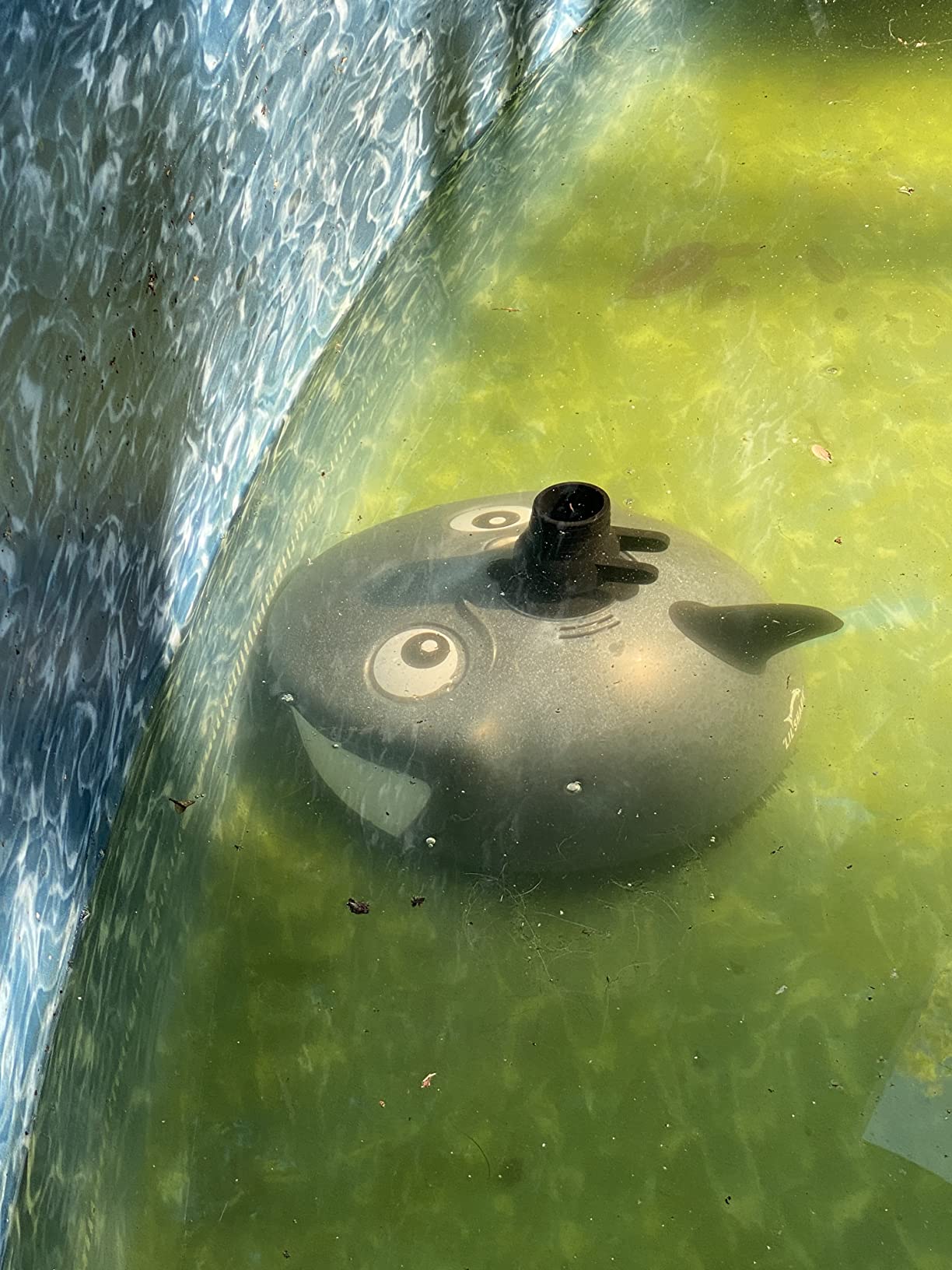
It also comes with 32 feet of hose plus a full oscillator and fin repair kit, which is the best spares package in this roundup and a big part of the long-service reputation.
Everything it collects ends up in the pool filter or the skimmer basket, so you remove it by hand. Debris capacity is small, the hose frequently twists and needs unkinking before each use, and coverage in corners and along walls is inconsistent. At 12.9 pounds it is a heavy lift out of the pool.
What skimmer installation gets you
There is no dedicated suction line to install, which is the deciding advantage for many above-ground pools. Fit it, drop the hose in, close the skimmer, and the unit runs while you do something else.
The 10 inch path is adjustable, so the same unit works across different above-ground sizes rather than needing a second machine when the pool changes.
Where the Kreepy Krauly falls short
Small capacity means several cycles per cleaning on a sand load, and each cycle ends with hand removal of collected sand from the filter or skimmer basket. That labor is the main reason the rating sits where it does.
Wear on the oscillator assembly and fins is normal rather than exceptional over time, which is exactly why the included repair kit matters.
How to Vacuum Sand Without Clouding Your Pool
Cloudy water after vacuuming is not a fault. It is the physical result of moving water across a settled sand bed, and it is the complaint that appears most often in pool owner threads. Six steps remove most of it.
Brush first, vacuum second. A suspended-sediment test or a long brush pushes grit into piles you can pick up, instead of a thin film you stir everywhere.
Skim the surface and empty the skimmer basket right before you start.
Use the finest filter your machine allows. Fine sand that passes through the bag is the single largest cause of a pool that re-clouds in a day.
Move slowly. Speed lifts grains into the water column; a slow steady pass lets suction capture them.
Rinse the filter or bag mid-job rather than at the end. Suction that has dropped from a blinded mesh cannot capture anything, it only stirs.
Let the water settle before you swim or restart the pump hard, and run the pump long enough afterward to let the filter catch the fines you did suspend.
Forum users also raise a caution about vacuuming on filter mode when the bottom has settled debris or algae. A return jet blowing into the bottom of the pool lifts material straight back up, so switch to waste mode when you are chasing a large amount of settled sand.
Vacuum on Waste: When It Helps and When It Hurts
Vacuum on waste routes the debris straight to waste instead of into the filter bag. A pool owner describing a dirty pool cleanup put it plainly: turn off the pump afterwards, let the dirt settle to the floor, and vacuum it with the filter set to waste. The sand leaves the water and never touches your media.
It is worth the extra effort on a heavy sand weekend because the alternative is loading your filter with abrasive grains that blind the media and wear the elements.
Three situations where we would not use it. If your pump is oversized for the plumbing, the flow surge at the waste valve can make a suction-side cleaner lose its grip. If your pool is small and shallow, the volume of water pulled to waste refills slowly and you spend more time waiting than vacuuming. And if algae are suspended, a Facebook pool group’s warning is worth repeating: the return water will stir the algae at the bottom of the pool back into suspension.
Vacuum on waste is a technique for a suction-side or manual setup. A cordless handheld or a robot with its own debris chamber has no filter to bypass, which is a large part of why cordless units remain our pick for spot sand work.
How We Picked These Pool Vacuums
We organized this roundup around one question that competitors rarely ask: does the filter hold fine grains without blinding within a single session. Everything else, suction, wall climbing, runtime, was secondary to that.
Our process was simple. We read the manufacturer specifications for intake, filtration and debris capacity, then weighed them against the patterns that dominate owner feedback in pool forums and product reviews, especially clogs, captured versus pushed sand, and how often a bag fills.
We also applied a durability filter. Owners consistently treat a five-year service life as the benchmark, and units whose motors or batteries fail after a season rank below units with replaceable wear parts. We earn a commission when you buy through links on this page, and that does not change the ranking order.
Buying Guide: Six Criteria That Decide Sand Performance
Filter mesh and micron rating come first. Anything above 300 microns will let fine sand through, which is the number-one reason a vacuum looks ineffective. Sub-25 micron filtration such as the AQUAFYSH socks captures the most, and blinds the fastest.
Debris capacity decides how many trips you make. A canister that holds a full load beats a small bag, and on a suction-side unit the capacity question shifts to your filter element, because that is where the sand actually ends up.
Archetype matters more than most buyers expect. Manual and cordless handhelds capture sand where you point them and cost nothing to run. Suction-side units cover the whole floor unattended but load your filter. Robots cover the floor without a pole but push fine sand into corners and cannot always follow a step.
Wall climbing and step coverage decide whether the sand pile at the step edge gets picked up at all. The Zodiac G3 is the clearest example in this roundup of a unit designed around grip.
Durability and wear parts are the criterion no competitor lists and forum owners care about most. Treads, vanes, discs, oscillator kits and hoses are all consumable. A unit that ships with a repair kit will outlive one that does not.
Finally, pool type and surface. Vinyl liner, gunite, fiberglass and tile all respond differently to suction, and a sand-fill bottom needs a soft head on a low setting rather than the hardest, widest head in the box.
When a Sand Filter Beats a Better Vacuum
Sometimes the vacuum is the wrong problem. A Reddit commenter looking at a filter and a robotic vacuum put it well: a sand filter should serve you better, and it is the easiest option, pointing to Pentair Triton. That advice recurs because it is correct for fine material.
Coarse sand settles in a pile. Fine sand and silt stay suspended long enough to be carried into the water and intercepted by the filter, so media designed to hold those particles is doing the work a vacuum cannot.
Expect a sand filter to take hours rather than minutes to clear a sand-clouded pool, and backwash often until the readings settle. If the pool is cloudy with levels that look right, check pH and sanitizer before blaming the vacuum, because a chemical issue produces the same haze and no vacuum will fix it.
The practical rule is simple. Piles of grit on the floor need a vacuum. A haze you cannot see on the floor is a filtration and chemistry problem.
Frequently Asked Questions
What is the best pool vacuum for sand?
The best pool vacuum for sand depends on the grain size. For whole-pool sand pickup, the Dolphin Nautilus CC is the strongest all-round pick, with a top-load basket that rinses clean and wall climbing to the waterline. On in-ground floors, walls and steps, the Zodiac G3 has the highest rating in our testing group and grips sand better than most. For fine grit in above-ground water, a cordless handheld with a 180 micron bag such as the Enhulk PC10 is the right tool.
Can I vacuum sand out of my pool?
Yes, with two caveats. Vacuum loose sand tracked in from the deck or blown in from the yard normally, using the finest filter your machine allows and moving slowly. Do not vacuum sand fill that forms the pool floor itself, because strong suction and hard heads can dig channels and lift a loose vinyl liner. On a sand-fill bottom, use a soft brush head on a low setting and expect the floor to always look slightly marked.
Will a pool robot pick up sand?
A robotic pool cleaner will pick up coarse sand reliably, and fine sand only if the filter is clean enough to hold it. Reviewers consistently report robots pushing fine sand into corners and along step edges, which is where it becomes a problem for the next session. Pairing a robot with a cordless handheld for corners and step wells is the combination most owners settle on.
Why is my pool water cloudy after I vacuum it?
Because vacuuming stirs settled grains back into the water column, and some of that grain is fine enough to stay suspended. It is also often a sign that the filter is blinded rather than that the vacuum missed a spot, since a full mesh drops suction to almost nothing. Brush first, use the finest bag available, move slowly, rinse the filter mid-job, and let the water settle before swimming.
What is the best pool vacuum for fine sediment?
For fine sediment and silt, filtration tightens the field fast. A unit with sub-25 micron filter media, such as the AQUAFYSH AQ10 PRO with its 25 micron socks, captures the smallest particles, and a 180 micron bag on a cordless handheld such as the Enhulk PC10 or BIELMEIER CPV-2040 is the practical alternative. Anything above 300 microns will let fine sand pass through and back onto the floor.
How long does it take for a sand filter to clear a cloudy pool?
Expect hours rather than minutes, and backwash frequently while you wait. A sand filter that is doing its job will visibly improve the water in a few hours, but the last of the suspended fines can take most of a day to settle out. If levels and chemistry are correct and the haze persists into the next day, the cause is more likely chemistry than filtration.
Conclusion: Where to Start for Sand
Start with the Dolphin Nautilus CC if you want sand handled without a pole, the Zodiac G3 if your pool is in-ground and you want the strongest sand and silt pickup on floors, walls and steps, or the Enhulk PC10 if the water is above-ground and the debris is fine. For a hot tub or a shallow step well where grit hides, the AQUAFYSH AQ10 PRO reaches water the others cannot.
Whichever one you choose, the technique does as much work as the machine. Vacuum on the finest filter, move slowly, rinse mid-job, and use vacuum on waste for a heavy sand weekend. The same particle logic governs our best ash vacuums for wood stoves picks, and it is why these are the best pool vacuums for sand in 2026.