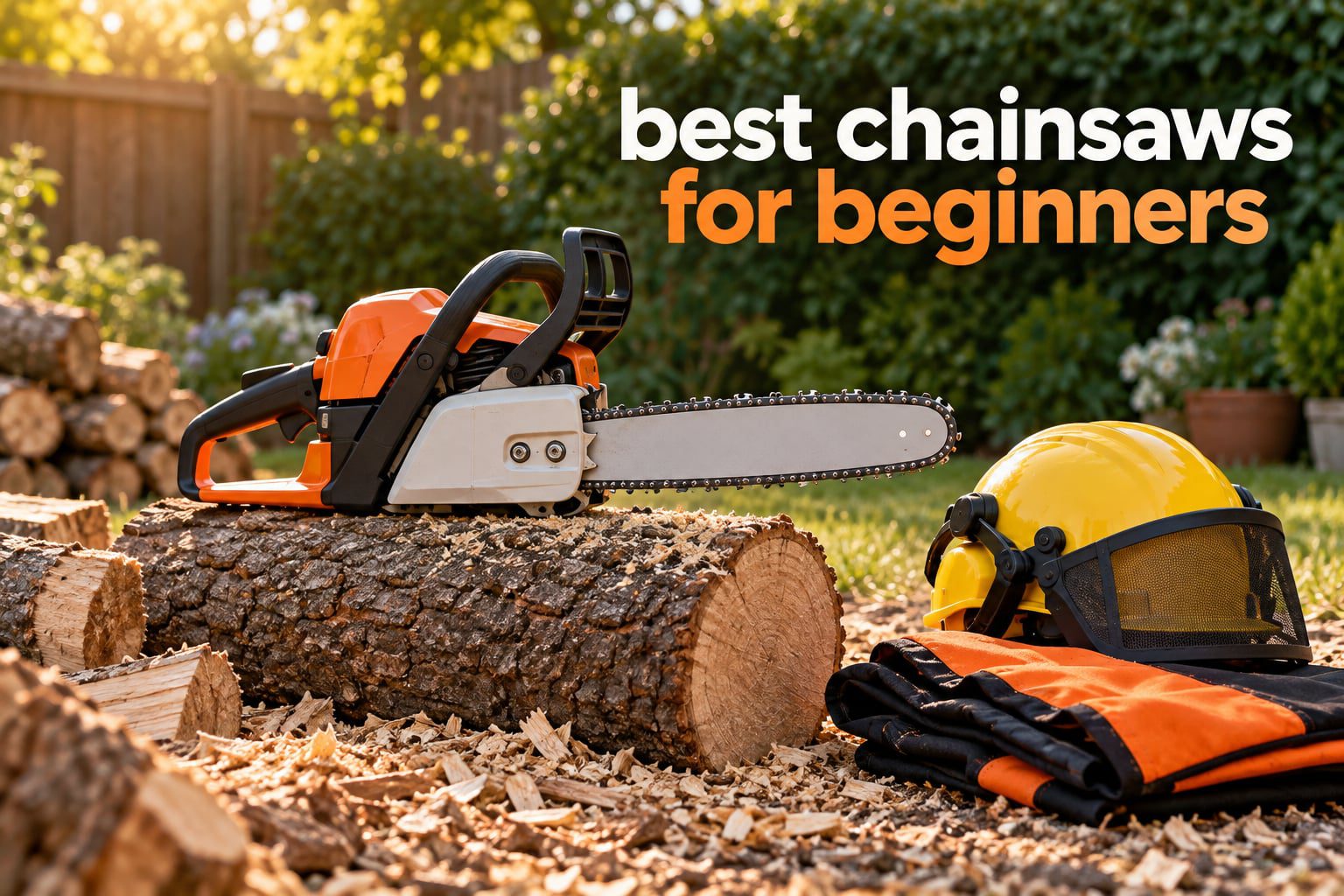
The best chainsaws for beginners in 2026 is the CRAFTSMAN CMECS600, a 16-inch 12 amp corded saw that weighs 6.2 pounds, needs no fuel mixing, and starts the instant you plug it in. If your wood is far from an outlet, the Supstable 40V cordless saw later in this list is the pick I would choose, and if you climb trees for a living or want to, the NEO-TEC 25.4cc top-handle gas saw is the one I would put in a new apprentice’s hands.
What makes a chainsaw a beginner chainsaw is not a brand badge. It is a 12 to 16 inch bar, a body light enough to hold steady for twenty minutes, an automatic chain oiler, and a chain brake that stops the chain the instant you let go of the trigger.
I have spent several seasons putting homeowner-class saws through the same short list of jobs: bucking brush, dropping small limbs, and turning 10 to 12 inch rounds into firewood. What follows spans all three power types, because the honest answer to “which chainsaw should a beginner buy” depends on where your wood sits and how you feel about fuel cans and extension cords. If you like the disciplined approach, we also covered the same idea in our beginner kitchen knife guide: match the tool to the task and buy fewer things better.
Table of Contents
- What to Look For in a Beginner Chainsaw
- Top 3 Beginner Chainsaw Picks in 2026
- All 10 Best Chainsaws for Beginners (September 2026)
- 1. CRAFTSMAN CMECS600 16-Inch 12 Amp Corded – Best Overall for Beginners
- 2. BLACK+DECKER CS1518 18-Inch 15 Amp Corded – Best Corded Saw for Big Branches
- 3. WEN CP1216 16-Inch 12 Amp Corded – Budget Pick for Light Yard Work
- 4. Oregon 2400W 16-Inch Corded – Best for First-Time Assembly and Quiet Work
- 5. Supstable 40V 16-Inch Cordless – Top Rated Kit for Beginners Without an Outlet
- 6. BLACK+DECKER LCS1240 40V MAX 12-Inch Cordless – Best Cordless Value for Quiet Work
- 7. NEO-TEC NCS2500 25.4cc 12-Inch Top Handle Gas – Best for One-Handed Climbing Work
- 8. Greenworks 40V 12-Inch Cordless – Best for Light Storm Cleanup
- 9. Greenworks 40V 16-Inch Brushless – Best for Owners Already in the 40V Platform
- 10. PROYAMA PCS26 26cc 12-Inch Top Handle – Best for Limbing and Small Trees
- Gas vs Battery vs Corded Electric: Which Power Source Suits a Beginner
- What Size Chainsaw Bar Do You Need?
- What Else You Need to Buy With Your Chainsaw
- Brand Name or Local Servicing Dealer: Which Matters More
- Safety First: Kickback, Gear, and When to Call an Arborist
- Gas Saw Fuel and Storage: The Ethanol Trap
- Frequently Asked Questions
- The Chainsaw to Start With in 2026
What to Look For in a Beginner Chainsaw
Bar length between 12 and 16 inches. A short bar is lighter, easier to swing into position, and far less likely to bind in a narrow cut. You can always make a second pass. You cannot make a 20 inch bar lighter.
Weight you can hold comfortably for twenty minutes. Beginners tire long before the saw does. Staying under roughly 11 pounds keeps your arms fresh, and fresh arms make good decisions.
An automatic chain oiler. A dry chain dulls quickly, throws sawdust at your leg, and is the most common reason new owners believe their saw is blunt when it only needed oil.
A chain brake and a two-hand safety start. The brake is the single most important safety feature on a homeowner saw, because the most common serious injury is kickback.
One more question worth asking before you read further: what will you actually cut, and how far is it from a wall outlet? Those two answers narrow ten saws down to one or two in about ten seconds.
Top 3 Beginner Chainsaw Picks in 2026

CRAFTSMAN CMECS600
- 12 amp corded motor
- 16 inch low kickback bar
- 6.2 pounds
- tool-free chain tensioning

Supstable 40V Cordless
- 2000W brushless motor
- 50 minutes per charge
- full kit included
- chain brake
All 10 Best Chainsaws for Beginners (September 2026)
| Product | Specs | Action |
|---|---|---|
| CRAFTSMAN CMECS600 16 Inch 12 Amp Corded |
|
Check Latest Price |
 BLACK+DECKER CS1518 18 Inch 15 Amp Corded BLACK+DECKER CS1518 18 Inch 15 Amp Corded |
|
Check Latest Price |
 WEN CP1216 16 Inch 12 Amp Corded WEN CP1216 16 Inch 12 Amp Corded |
|
Check Latest Price |
 Oregon 2400W 16 Inch Corded Oregon 2400W 16 Inch Corded |
|
Check Latest Price |
| Supstable 40V 16 Inch Cordless Chainsaw |
|
Check Latest Price |
 BLACK+DECKER LCS1240 40V MAX 12 Inch BLACK+DECKER LCS1240 40V MAX 12 Inch |
|
Check Latest Price |
 NEO-TEC NCS2500 25.4cc 12 Inch Top Handle NEO-TEC NCS2500 25.4cc 12 Inch Top Handle |
|
Check Latest Price |
 Greenworks 40V 12 Inch Cordless Chainsaw Greenworks 40V 12 Inch Cordless Chainsaw |
|
Check Latest Price |
 Greenworks 40V 16 Inch Brushless Chainsaw Greenworks 40V 16 Inch Brushless Chainsaw |
|
Check Latest Price |
 PROYAMA PCS26 26cc 12 Inch Top Handle PROYAMA PCS26 26cc 12 Inch Top Handle |
|
Check Latest Price |
1. CRAFTSMAN CMECS600 16-Inch 12 Amp Corded – Best Overall for Beginners
CRAFTSMAN Electric Chainsaw, 16 Inch, 12 Amp Corded Chain Saw Electric, Ergonomic, Powerful Motor (CMECS600)
12 amp corded motor
16 inch low kickback bar
6.2 pounds
Tool-free chain tensioning
Pros
- Weighs 6.2 pounds
- 12 amp motor cuts without bogging down
- Low kickback bar and chain
- Tool-free tensioning
- Oil window means no guessing
Cons
- No chain brake
- Chain tension can walk loose during use
- Reservoir can seep if stored full
This is the saw I keep reaching for when someone asks me what a first chainsaw should be, and the reason is weight. At 6.2 pounds it is roughly half the weight of the heaviest corded saw in this roundup, and that single number changes everything about how the first few cuts feel. Your arms are not the limiting factor, so you can concentrate on where the bar is going instead of on how long you can hold the thing up.
The 12 amp motor is not the biggest number here, but it is paired with a low-kickback 16 inch bar and chain, and reviewers report it cuts like something considerably larger. Automatic oiling runs off a visible window, so you can check the level at a glance rather than guessing and running the chain dry. Tool-free tensioning means a mid-job adjustment takes seconds with no tools in your hand.
Owners report several years of reliable use, and the pattern in the reviews is consistent: this saw starts instantly, runs quietly compared with anything gas, and quietly does the work. That is exactly what a first-time owner needs. Nobody wants their introduction to a chainsaw to involve a fuel can, a two-stroke mix ratio, and three failed pull starts.
The honest drawback is the missing chain brake. When you release the trigger, the chain coasts for a second or two instead of stopping dead. That is a manageable gap, but it is a real one, and it is the reason this saw is not the recommendation for anyone working aloft or around tensioned wood. Owners also report the chain tension walking loose during use, so build a habit of checking it at the start of every session rather than assuming it is still set from last time.
Where the CRAFTSMAN CMECS600 Fits Best
This is the saw for a suburban lot, a patio outlet within reach of the work, and a first-time owner who wants to learn on something forgiving. Six pounds is light enough for a smaller operator, an older user, or anyone who does not want to fight the tool. It handles brush, small limbs, and rounds of firewood without drama.
It is also one of the easiest saws here to keep alive. No carburetor, no spark plug, no fuel line, no two-stroke oil. Plug it in, oil the bar, tighten the chain, and go. For a beginner who will not cut weekly, that low friction matters more than raw cutting speed.
Where the CRAFTSMAN CMECS600 Falls Short
No chain brake, which rules it out for climbing, limbing under tension, and any work near a structure where a coasting chain is a problem. It also means a hard reset every time the chain touches dirt or a nail, and first-timers drag the bar along the ground more often than they think.
The cord is the other limit. Dragging an extension cord across a yard to reach a downed tree is a trip hazard, and it gets worse the further the work is from an outlet. If your wood is in the back forty where no power reaches, this is the wrong saw and one of the cordless picks is the right one.
2. BLACK+DECKER CS1518 18-Inch 15 Amp Corded – Best Corded Saw for Big Branches
BLACK+DECKER Electric Chainsaw Corded, 18-Inch, 15-Amp Lightweight Chain Saw with Automatic Oiler (CS1518)
15 amp corded motor
18 inch bar
Chain stops on trigger release
Auto-oiling with oil window
Pros
- Chain stops immediately when trigger is released
- 15 amp motor handles thick branches
- Tool-free tensioning
- Oil level window
- Cord retainer and scabbard included
Cons
- 12.5 pounds is heavy for a beginner
- Reservoir can seep during storage
- Chain can loosen on sideways cuts
If you need more reach than a 16 inch bar gives you, this is the corded saw to look at. The 18 inch bar and 15 amp motor handle branches up to the bar’s full width in a single pass, which means fewer awkward second cuts and less time wrestling the saw around a trunk. Reviewers consistently call it strong and safe, and it assembles without drama.
Unlike the CRAFTSMAN, the chain stops the moment you release the trigger. That behavior is a meaningful safety difference, and it is the reason I would put this saw in the hands of a beginner who will be cutting near fences, decks, or other things they would hate to damage. A push start button gets you going with no pull cord, and the automatic oiler has a visible window so you are never guessing.
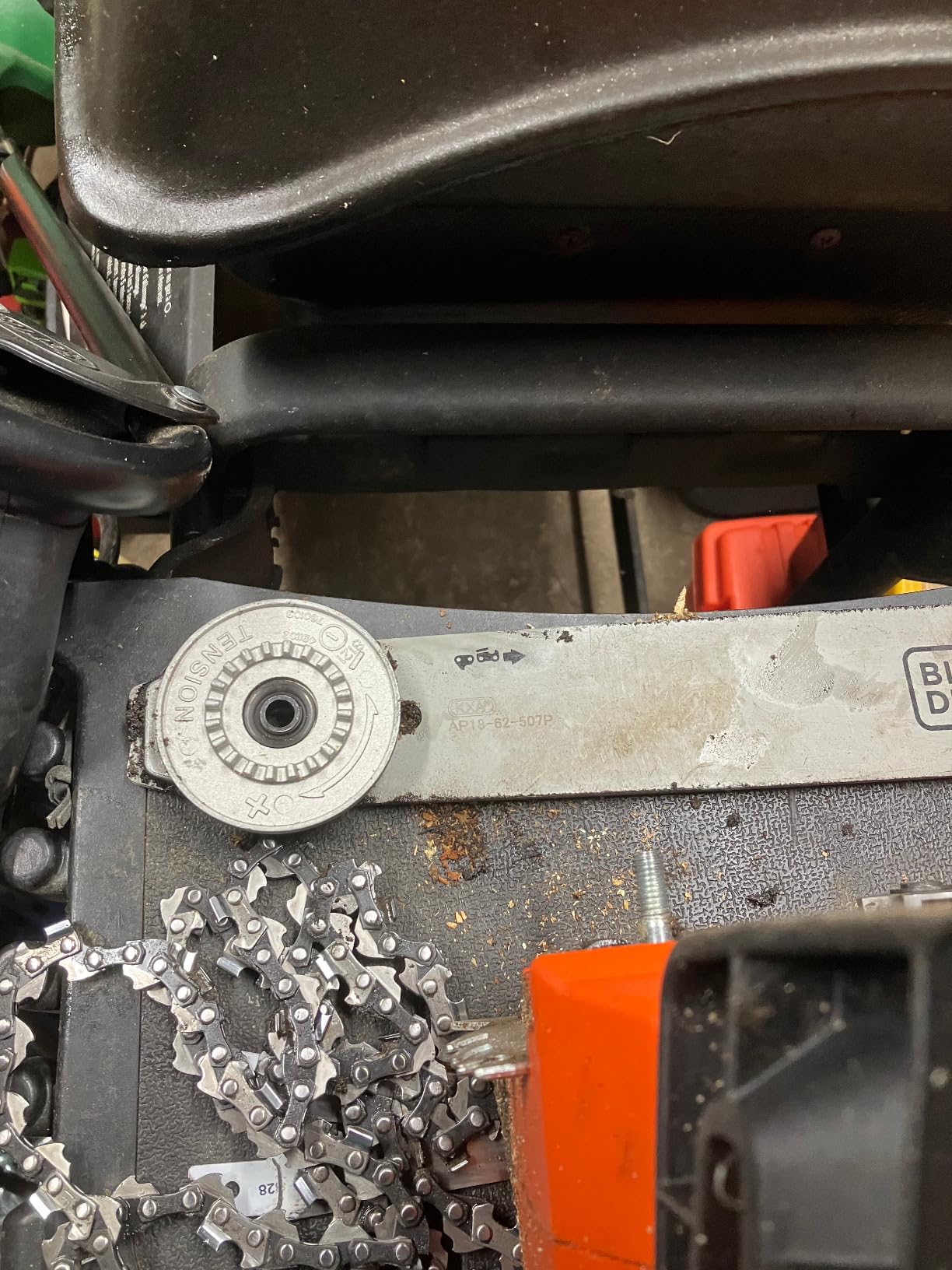
Two details separate this from cheaper corded saws and both are welcome for a first owner. The extension cord retainer holds the plug in place so a tug does not disconnect you mid-cut, and the guide bar scabbard is included, which matters more than it sounds when you are storing a saw in a garage with a sharp bar pointed at your shins.
The recurring complaint across reviews is not performance. It is the oil reservoir, which owners report can seep during storage if it is not drained first. That is an easy habit to form: empty the tank before you put the saw away for the season. A secondary theme is the chain loosening during sideways or awkward cuts, so the same re-tension habit I mentioned earlier applies here too.
Who Should Buy the BLACK+DECKER CS1518
Buy this one if the largest thing you will cut is a fallen branch or a small tree, and you would like one pass instead of two. It is a strong choice for someone who already has a wood stove and processes whole cords rather than trimming a hedge twice a year. The 15 amp motor has the headroom for hardwood that lighter corded saws lack.
It is also a reasonable pick for a first-time buyer who wants a corded saw and values the trigger-release chain stop over maximum portability. Owners describe the instructions as a little confusing for first-timers, so plan ten minutes with the manual before your first cut rather than after.
Who Should Look Elsewhere
At 12.5 pounds this is the heaviest saw in the roundup, and smaller operators will feel it after twenty minutes. If you are buying for an older parent, a smaller adult, or anyone who will be doing overhead work, the weight is worth thinking hard about before you commit.
Like every corded saw here, it stops the moment the cord runs out. That rules out any work far from an outlet. And a minority of owners report side covers or tensioners loosening under heavy firewood duty, which is a reminder that a homeowner saw is a homeowner saw, not a logging saw.
3. WEN CP1216 16-Inch 12 Amp Corded – Budget Pick for Light Yard Work
WEN CP1216 Electric Chainsaw, Corded, 12-Amp, 16-Inch
12 amp corded motor
16 inch bar
10 pounds
Auto-oiling,tool-free tensioning
Pros
- Plenty of power for light yard work
- Light at 10 pounds
- Tool-free tensioning
- Quiet with no fuel mixing
- Auto-oiling keeps the chain lubricated
Cons
- No emergency chain brake
- Extension cord limits reach
- Bar oil and spare chain not included
The WEN CP1216 carries one of the largest review counts of any budget saw, and the reason is that it has been on shelves for years, which means parts, advice, and troubleshooting threads exist in volume. Owners include first-time buyers and retirees, and the recurring note is how light and easy it is to assemble and handle.
At 10 pounds it is not the featherweight the CRAFTSMAN is, but it is well within the range where a beginner can still control a cut without thinking about fatigue. Auto-oiling keeps the chain lubricated through the work, and tool-free tensioning works well once it is set. There is no fuel to mix, no carburetor, and nothing that goes bad in a shed over winter.
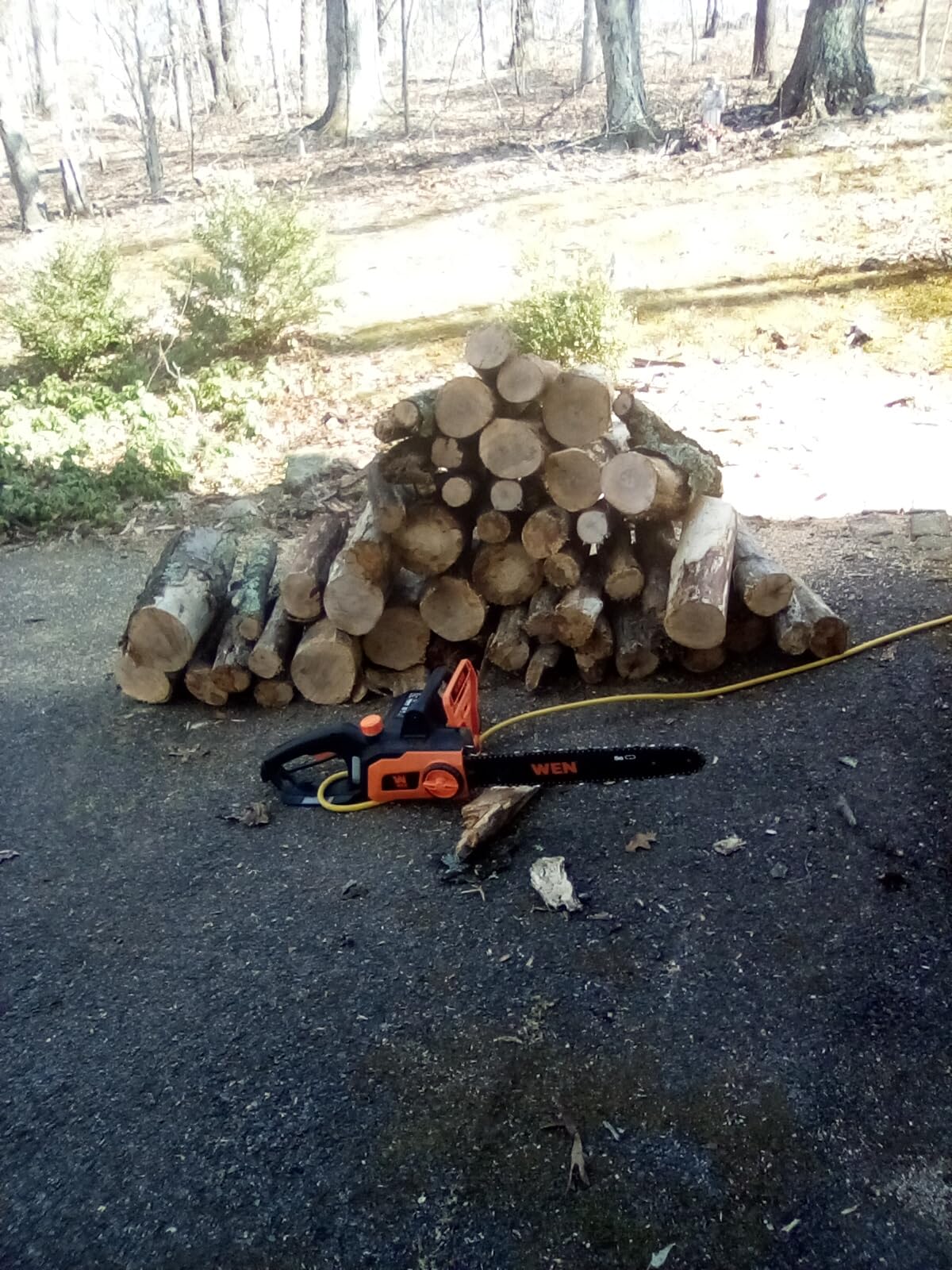
For light-to-medium yard work, the power is genuinely sufficient. Brush, small limbs, and rounds of firewood under about 10 inches are all within reach. Reviewers are regularly surprised by how much it handles for a corded saw at this level, particularly the fact that it cuts cleanly and quickly rather than laboring.
The two things to plan for are the cord and the ground. The extension cord has to travel with you, which restricts where you can work and creates a trip hazard you need to keep visible. And the chain dulls quickly when it contacts dirt, which is the most common new-owner mistake. Keep the saw slightly off the ground while you reposition, and learn to notice when the chain starts scraping rather than cutting.
Best Use Case for the WEN CP1216
This is the right pick for someone on a tight budget who has a patio outlet near the work and only needs a saw a few times a season. Trim hedges, cut a fallen branch, process a small stack of firewood. None of that needs a premium engine, and spending more here is money you do not recover.
It is also a good teaching saw. Because it is simple, with a mechanical brake lever and no electronic lockout to learn, a new operator can focus on technique rather than controls. Keep in mind that bar oil and a spare chain are not included, so budget for those before your first cut.
Where the WEN CP1216 Falls Short
There is no emergency chain brake, so the chain coasts after trigger release. That makes it a poor choice for overhead work or anything with tension in the wood. It also has no chain brake of the inertial type found on the cordless picks, so the safety story here is thinner than elsewhere in the roundup.
On sustained hardwood work the saw is working harder than the CRAFTSMAN at the same bar length, and you will feel it. It is fine for a hobbyist and a poor choice for someone planning to cut a full cord every weekend. Know which one you are before you buy, and you will not be disappointed.
4. Oregon 2400W 16-Inch Corded – Best for First-Time Assembly and Quiet Work
Oregon 2400W Corded Electric Chainsaw with 16″ Guide Bar & Saw Chain
2400 watt motor
16 inch bar
Lubri-Tec auto-oiling
Tool-free tensioning on saw
Pros
- Quiet and low vibration
- Instant start with no pull cord
- Built-in Lubri-Tec oiling
- Tool-free tensioning on the saw
- Two step assembly
Cons
- Cord reach limits where you can work
- Slower than gas on heavy hardwood
- Replacement chain and bar sold separately
The Oregon is the pick I recommend when the thing standing between someone and their first saw is not money or power. It is the anxiety of assembly. The tensioner, guide bar, and chain mount quickly, and the whole setup is a two step job you can finish on a kitchen table with the manual open.
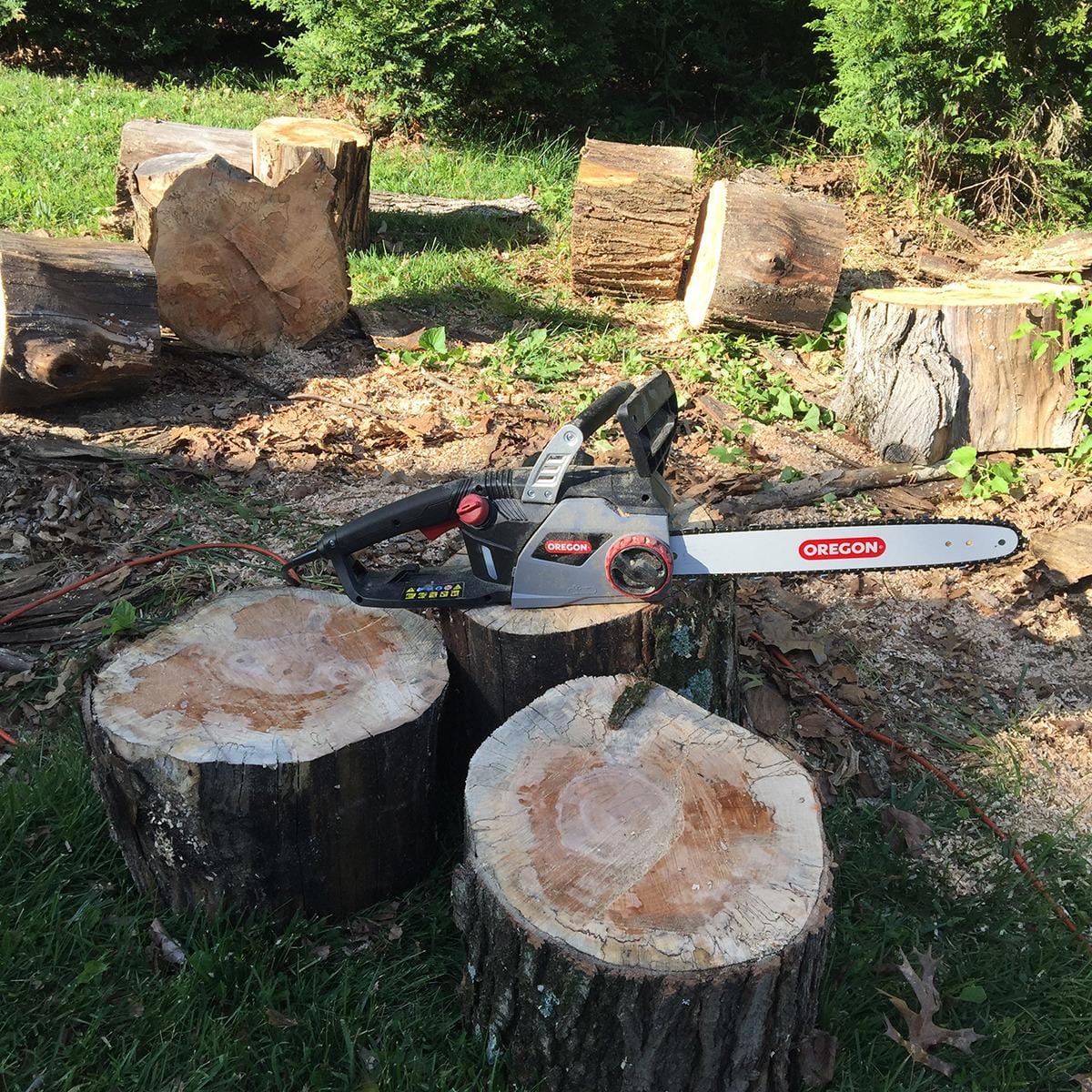
Owners rate the motor as quiet and low vibration, which matters in a neighborhood where a gas saw at full throttle draws complaints and can run into local noise rules. The instant start means no pull cord at all, so there is no primer, no choke, and no ritual to remember. You plug in, hold two buttons, and cut.
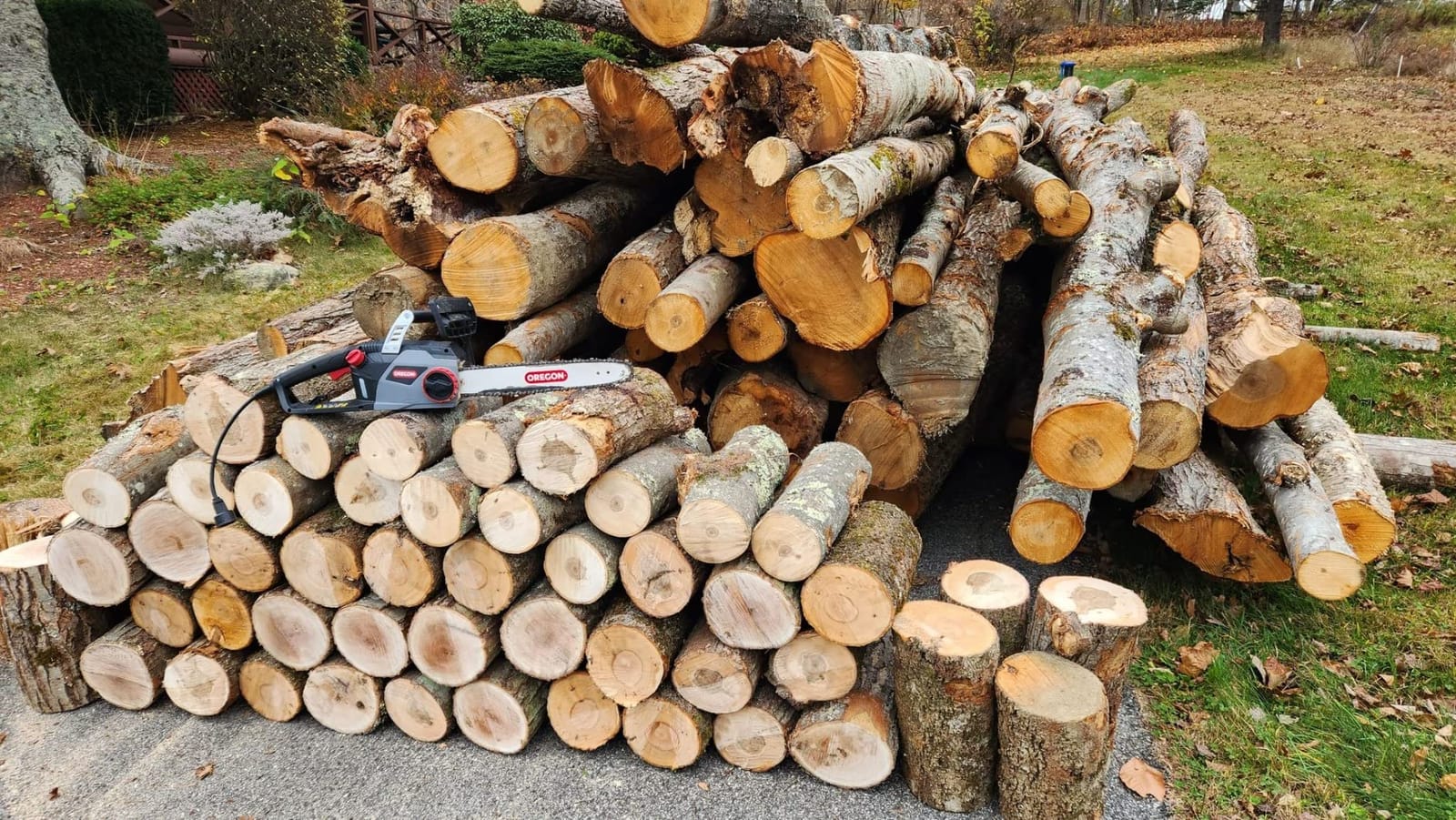
Maintenance is the other reason this one appeals to me as a first saw. The built-in Lubri-Tec oiling system keeps the chain and bar lubricated through the cut rather than relying on you to stop and oil up, and the tool-free tensioner lives on the saw itself, so a mid-session adjustment needs nothing from your toolbox.
Reviewers highlight the same two trade-offs with unusual consistency. The cord dictates where you can work, and the saw is noticeably slower than a gas saw on heavy hardwood. Neither matters much for a beginner doing brush and small rounds, and both become real problems only if you start processing serious firewood volume.
Who This Oregon Is For
Buy the Oregon if you are buying your first saw, you are not mechanically confident, and your work is within cord reach of a GFCI outlet. The quiet operation is a genuine benefit if you share walls with neighbors, and the simple assembly removes a real psychological hurdle for a lot of first-timers.
It is also a good second saw for anyone who already owns a gas saw but does not want to deal with fuel for small jobs. Plug it in on the patio and handle the brush, save the gas saw for the logs.
Who Should Pass
Pass if your work is out in the far end of the property, or if you are planning to cut a large volume of hardwood. Slower cutting on thick wood is not a defect, but it is a mismatch if hardwood is your primary job. Also note that a replacement chain and bar are separate purchases, so factor that into your first-year costs.
One more practical note: an extension cord rated for a 15 amp motor is heavier and stiffer than the cord you use for a lamp. Buy a proper outdoor-rated cord rather than the one rolled up in the closet, and route it so you are not stepping on it.
5. Supstable 40V 16-Inch Cordless – Top Rated Kit for Beginners Without an Outlet
16 Inch Electric Chainsaw Cordless, 2000W Brushless Chainsaw, 4.0Ah Battery & Fast Charger, 40V Electric Chain Saws, Instant Brake, Tool-Free Chain Tension, Auto Oiling for Tree Trimming, Wood Cutting
2000W brushless motor
40V 4.0Ah battery
Up to 50 minutes runtime
Chain brake and safety lock
Pros
- Battery/charger/spare chain/oil/gloves and goggles included
- Brushless 2000W motor
- 50 minutes per charge
- Tool-free side tensioning knob
- Chain brake and safety lock
Cons
- 40V platform not compatible with 20V tools
- Less certain long term parts support
- 150ml oil reservoir refills often
This saw arrives as a complete kit, which is rare at this level. The box contains the saw, a 4000mAh battery, a fast charger, a spare 16 inch chain, a bottle of chain oil, gloves, safety goggles, a bar cover, and a screwdriver. For a beginner, that completeness removes an entire shopping list and gets you cutting the same afternoon.
The 2000W brushless motor is the surprise here. Reviewers describe cutting performance close to a gas saw from a tool that runs at roughly the same noise level as a corded model, and the stated runtime is up to 50 minutes on the 4.0Ah pack, which is a full morning of brush work or a solid session of bucking. The chain brake, safety lock, and overload protection give it more safety hardware than most of the saws in this roundup.
The tool-free side tensioning knob is a small thing that matters more than it sounds. On most saws, adjusting chain tension means a scrench, gloves off, and a pause. Here you turn a knob with the saw in your hand and keep moving. The 16 inch bar handles thick logs and large branches, which puts it in the same territory as the BLACK+DECKER CS1518 without a cord.
The most common feedback centers on chain sharpness and how straightforward assembly is, plus the inclusion of the extras. That is exactly the profile you want from a first saw: the complaints are about oil consumption and platform compatibility, not about the saw failing to do its job.
Why This Works for a First-Time Owner
There is no fuel to mix, no oil to change, no spark plug, no carburetor, and no starter rope. Charge the battery, oil the bar, and go. That simplicity is the whole argument, and it is why battery saws have taken over the beginner end of the market.
It is also the most portable of the saws here in practice. A fully charged saw goes in the truck, goes to the wood pile, goes to a downed tree at the end of a driveway. No cord, no fuel can, no extension reel. If your work is scattered, that changes everything.
Where the Weak Spots Are
Platform lock-in is the real one. The 40V battery and charger here do not work with 20V tools, so if you later buy a different brand’s saw you will be starting over. Before you commit, check what batteries you already own, because if you have none this is fine, and if you have a shelf of 20V packs it is a poor fit.
The 150ml oil reservoir is small and needs refilling more often than a larger tank, and some owners flag the lesser-known brand as a question mark for long term parts availability. The saw itself is well reviewed, but treat brand support as a factor you should verify in your area before buying.
6. BLACK+DECKER LCS1240 40V MAX 12-Inch Cordless – Best Cordless Value for Quiet Work
BLACK+DECKER 40V MAX Electric Chainsaw Cordless, 12 Inch Battery Chainsaw, Battery and Charger Included, Longer Runtime, Lightweight Rechargeable (LCS1240)
40V MAX 2.0Ah battery
12 inch bar
10.4 pounds
Push button start,tool-less tensioning
Pros
- Push button start every time
- Light and low vibration
- Battery lasts an hour or more of brush clearing
- Wrap-around handle for multiple orientations
- Automatic oiling and tool-less tensioning
Cons
- Consumes bar oil quickly and can seep
- Included charger takes about five hours
- 40V replacement batteries cost a lot
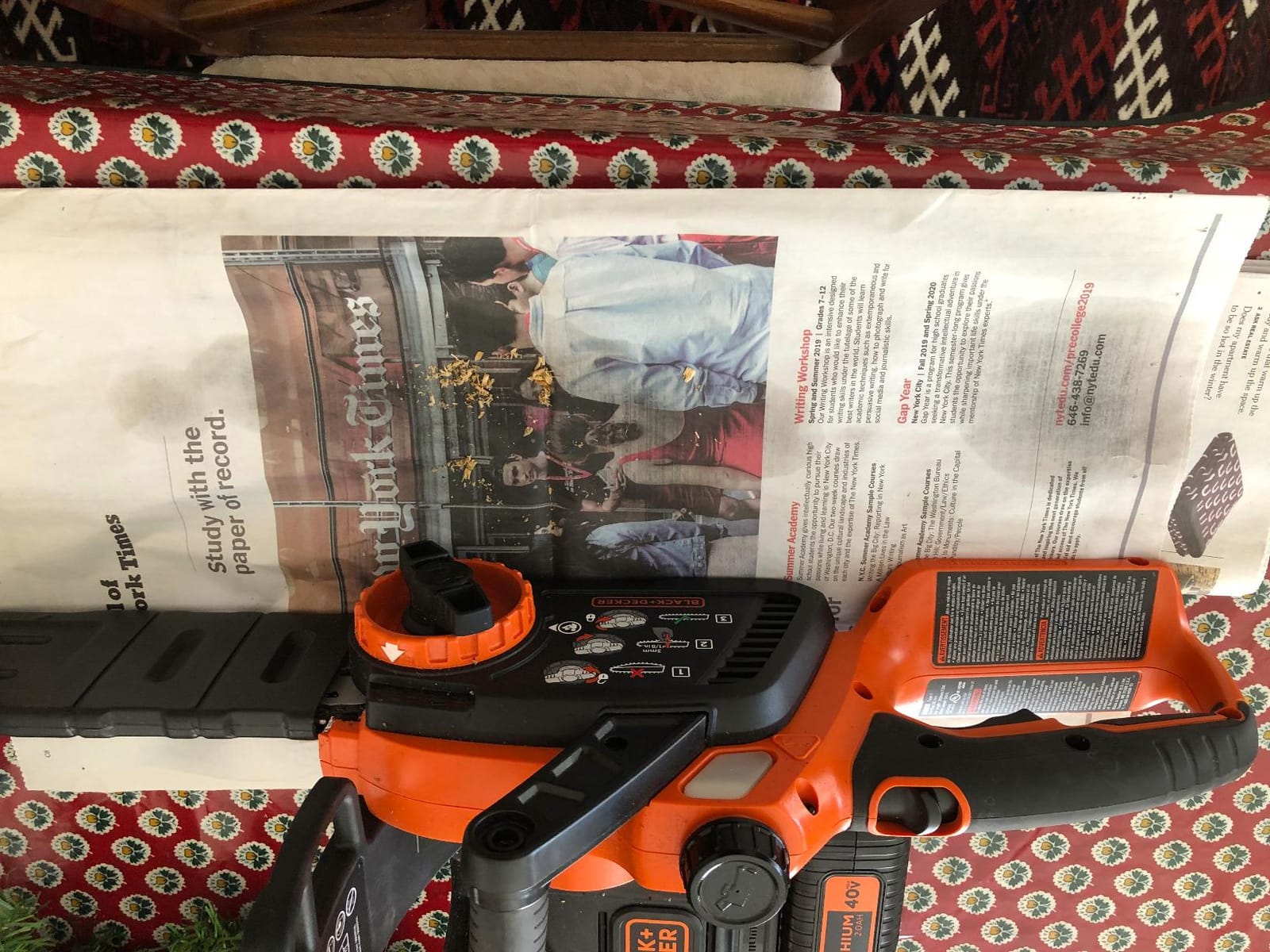
The LCS1240 is what I suggest when noise is the deciding factor. Owners call it quiet, and there is no pull cord, no fumes, and no exhaust to upset a neighbor or a household. In a suburb where a gas saw can bring someone to your door, that is not a minor feature. It is the reason to own this tool at all.
The full wrap-around handle works in multiple cutting orientations, which is genuinely useful for a beginner because you are not forced into one awkward grip while you are still learning. Automatic oiling and tool-less tensioning handle the two chores that trip up new owners most, and the state of charge indicator tells you when you have roughly enough left to finish a cut.
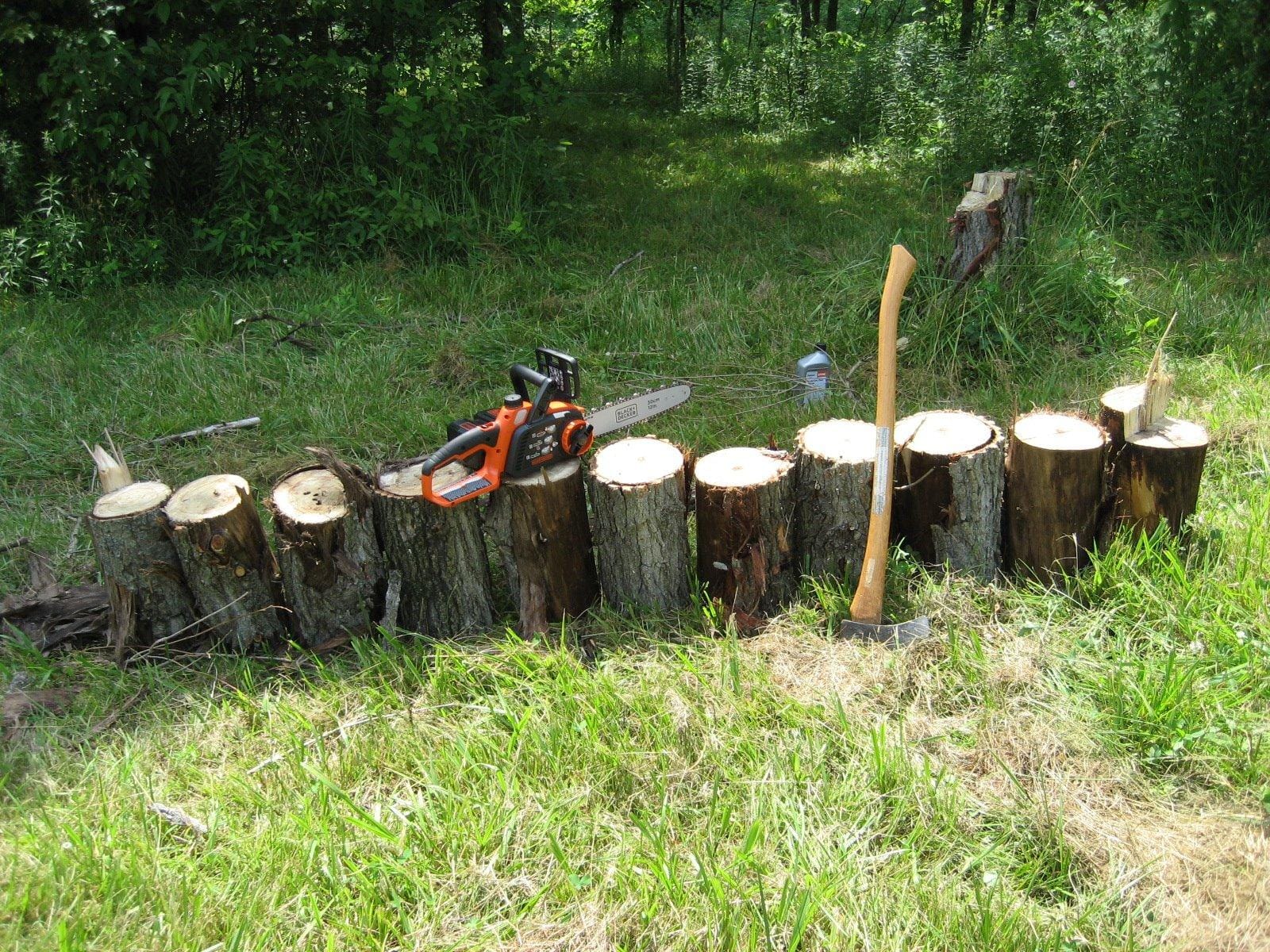
Reviewers describe it as the ideal light-duty battery saw, capable of clearing downed limbs and even 10 to 12 inch trees. The 2.0Ah pack is stated to deliver over 60 cuts of 4×4 pine lumber per charge, and owners report an hour or more of intermittent brush clearing, which matches how most people actually use a saw like this.
The near-universal complaint is bar oil consumption and some seepage from the reservoir. That is worth taking seriously if you cut a lot, because you will be topping it up often. A secondary gripe is the included charger, which owners report takes roughly five hours for a full charge. If you plan a long block of work, budget a second battery rather than waiting.
Where the LCS1240 Shines
This is a brush and limb saw. At 12 inches it is not built for firewood rounds or tree felling, and pretending otherwise would be doing you a disservice. For clearing storm debris, trimming a hedge, and cutting loose branches on the lawn, it is quick, quiet, and easy to carry at 10.4 pounds.
It is also a good second saw for a household that already has something larger. The full-size saw goes to the wood pile, and this one stays by the door for the Tuesday of branches that came down in the wind.
Where It Falls Short
Twelve inches is the limiting number. For cutting logs, that means a second pass and more time wrestling the saw around a round, and the light weight makes it bounce on thicker cuts. Owners with hardwood work mention this directly, and it is the reason this is a companion tool rather than a replacement for a larger saw.
Bar oil consumption, the slow included charger, and the cost of replacement 40V packs relative to the tool are the other limits. None of them are deal breakers for light duty, but all three add up if you cut often. Know what you are buying it for.
7. NEO-TEC NCS2500 25.4cc 12-Inch Top Handle Gas – Best for One-Handed Climbing Work
NEO-TEC 12 Inch Top Handle Gas Chainsaw 25.4cc 2-Stroke Portable Small Gas Powered Chain Saws Motosierra De Gasolina for Tree-climbing Tree Pruning Wood Cutting Firewood Preparation Yard Maintenance
25.4cc 2-stroke,1.2 hp,12 inch bar
8.2 pounds
Spring assisted ignition
Lanyard loop
Pros
- Weighs 8.2 pounds
- Spring assisted start fires in two or three pulls
- Wrap handle reduces vibration
- Lanyard loop for securing the saw
- Cuts roots and close-in work
Cons
- Uses a 25:1 fuel mix rather than 50:1
- Fuel and oil caps are hard to remove
- Bar oil output set too rich out of the box
This top-handle shape is built for use in a tree, and that explains everything about it. A top-handle chainsaw puts a loop handle above the engine so it can be held with one hand while the other works the throttle, which is how you cut a branch while roped in. At 8.2 pounds it is among the lightest saws here, which matters enormously when you are working above the ground.
Professional tree handlers and homeowners both report that it starts easily even when cold, thanks to the spring-assisted ignition, which typically fires in two or three pulls. The wrap-around handle reduces vibration and fatigue, and the metal lanyard loop lets you secure the saw to your harness so it is not swinging at your leg on the next move.
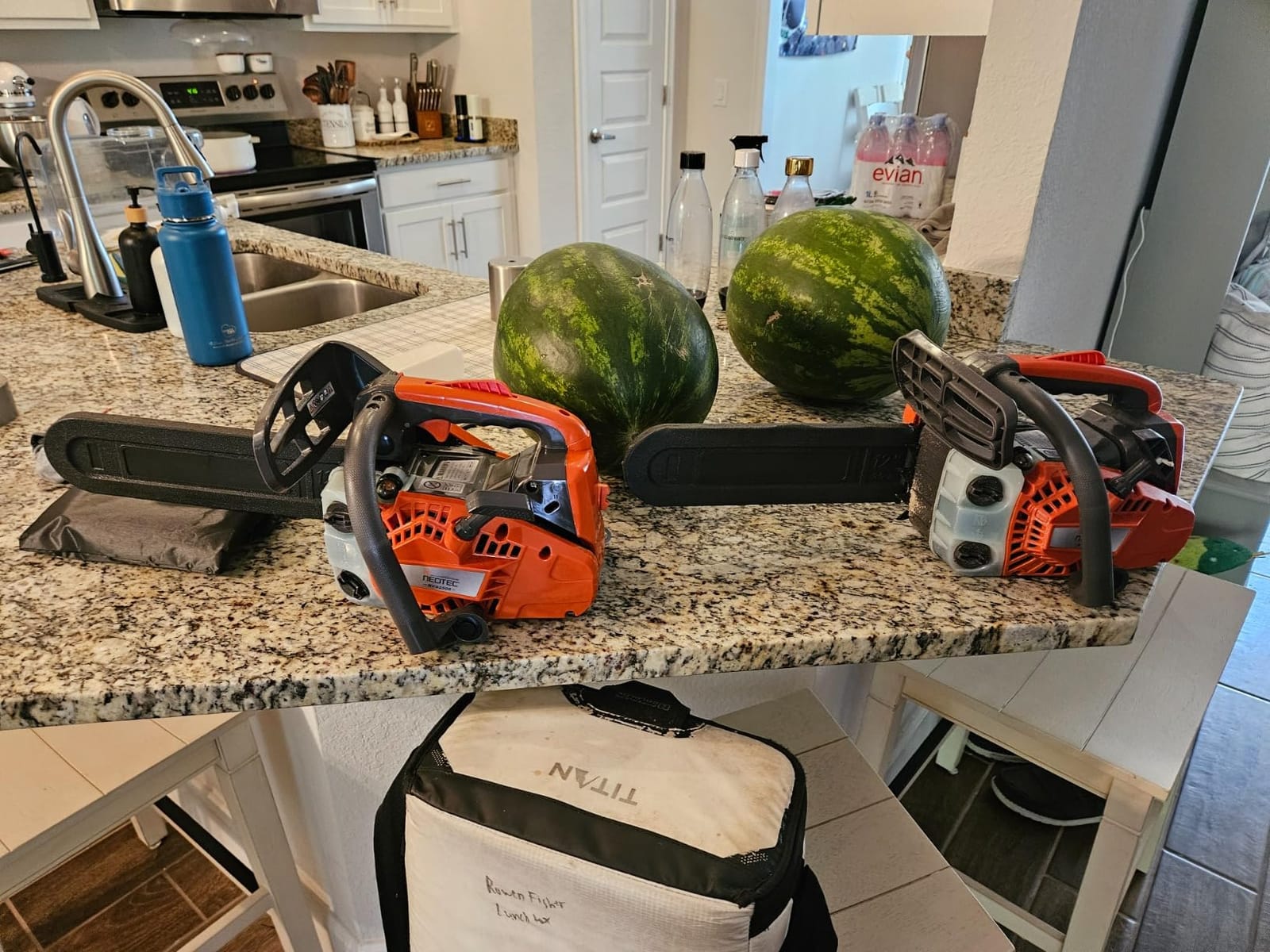
Do not treat this as a ground-level saw. A 12 inch bar and 1.2 hp are enough for limbing and close-in work in a tree, and enough for pruning and firewood preparation on the ground, but this is not the tool for bucking rounds or dropping anything. The engine is a 25.4cc two-stroke running at 12,000 RPM max, and it will cut roots and tough close-in wood well within its class.
Reviewers also note that once the carburetor and oiler are tuned, it cuts like a much bigger machine. That tuning requirement is the thing to plan around. Plan for a couple of sessions where you adjust the carb before you judge the saw.
Who This Saw Is For
Buy the NEO-TEC if you prune or limb in trees, or if you want to learn to. It is also a sensible pick for someone who wants gas power without the weight of a 40cc saw, because the class is small enough that fatigue shows up much later.
It suits a homeowner with tall trees who wants to cut small deadwood without paying an arborist every time. The 12 inch bar is the correct size for that work and is far safer in a tree than a longer bar you cannot comfortably control aloft.
What to Watch Out For
The fuel mix is the biggest adjustment for a first-timer. It runs 25:1 rather than the more common 50:1, and getting that wrong on the first fill will cost you time. Read the manual, mix to the spec, and be consistent.
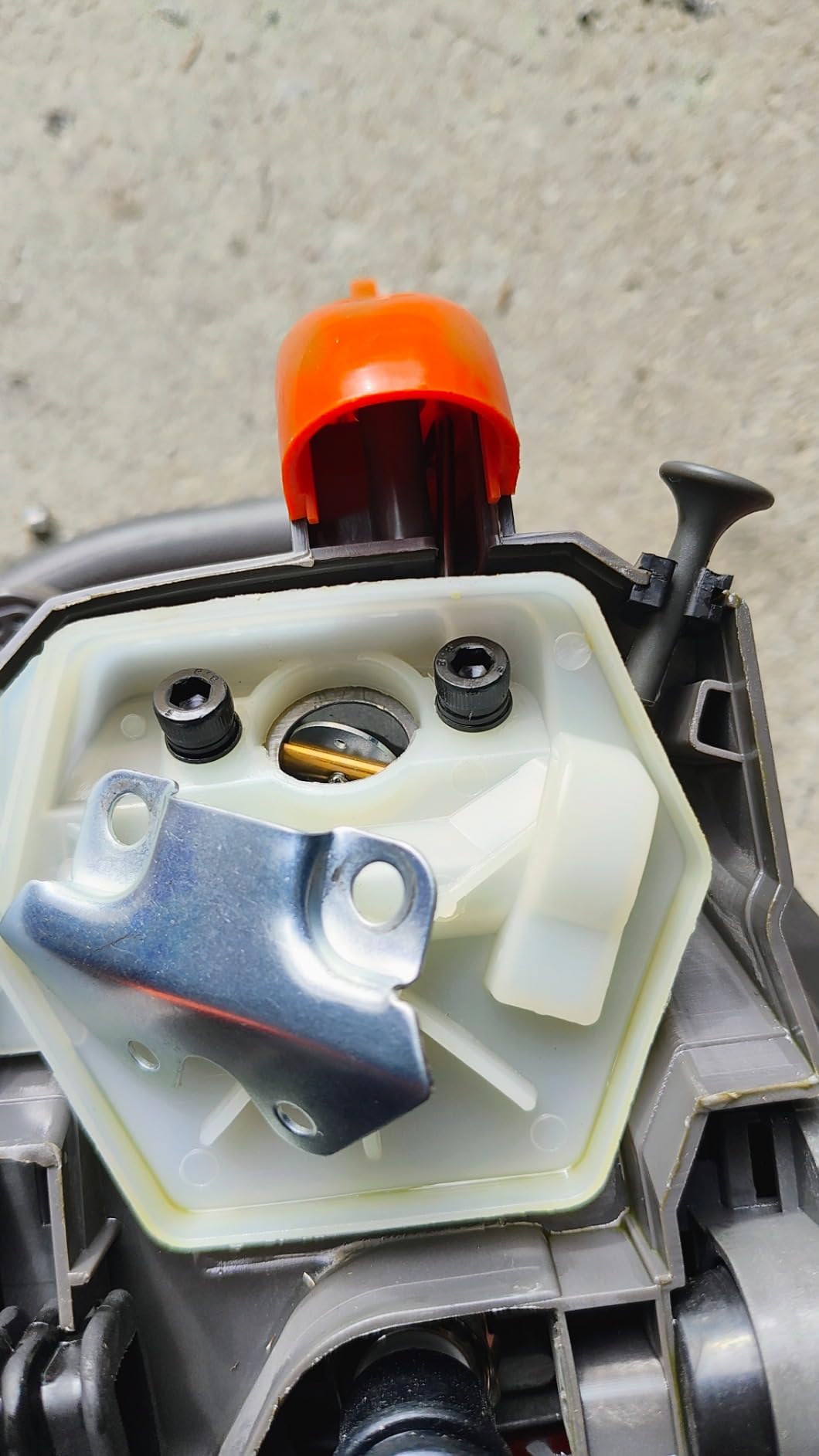
Owners also report the fuel and oil caps are difficult to remove and tighten, some units have a leaking tank or reservoir when stored on their side, and the plastic panels and choke lever feel light duty over time. The bar oil output is also set too rich out of the box, so expect to dial it back. None of that makes it a bad saw, but it does make it one that rewards a hands-on owner.
8. Greenworks 40V 12-Inch Cordless – Best for Light Storm Cleanup
Greenworks 40V 12 in Cordless Electric Chainsaw, 2.0 Ah Battery and Charger
40V 2.0Ah battery
12 inch bar
6 pound saw
Dual safety start,auto-tensioning
Pros
- Only 6 pounds with wrapped grip
- About 50 cuts of 4x4 treated wood per charge
- Dual safety start prevents accidental start
- Tool-free auto-tensioning
- Three-year tool and battery warranty
Cons
- 12 inch bar limits it to smaller limbs
- Runs on the smaller 2.0Ah battery
- Not compatible with 40V 4.0Ah and 8.0Ah packs
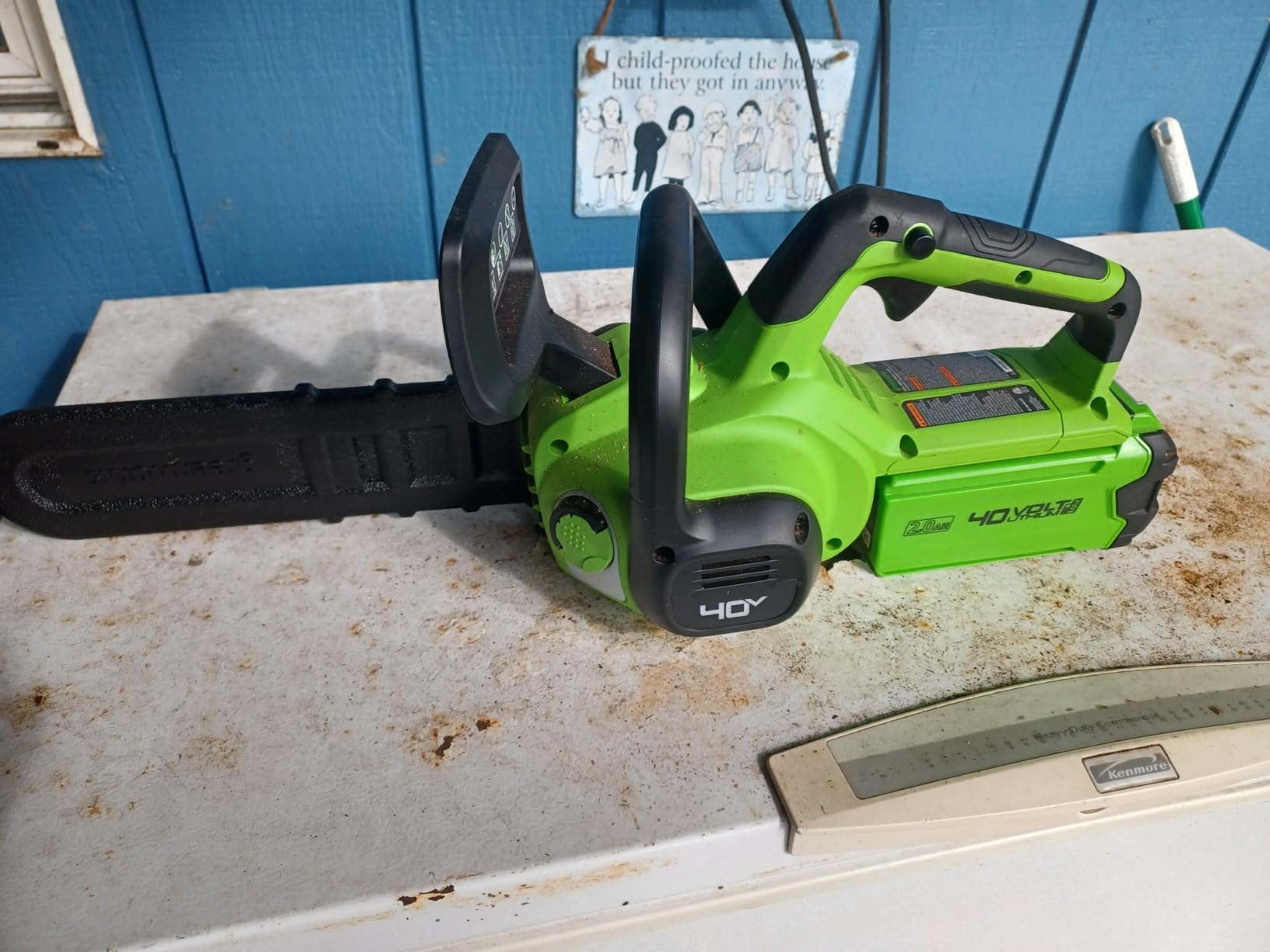
Six pounds is remarkable for a saw that carries its own battery, and it is why I recommend this one for storm cleanup. When a branch comes down and you want it off the driveway before the neighbors start walking their dog around it, weight is the trait you feel most. This saw is light enough to carry in one hand across uneven ground.
The dual safety start, a lock plus a trigger, prevents accidental starts, and the tool-free auto-tensioning means you do not need tools to adjust the chain. Owners report roughly 50 cuts of 4×4 treated wood on a single charge, and the auto-oiler extends chain life. The battery also doubles as a portable power bank for phones and tablets, which is a small convenience that shows up in reviews more than you would expect.
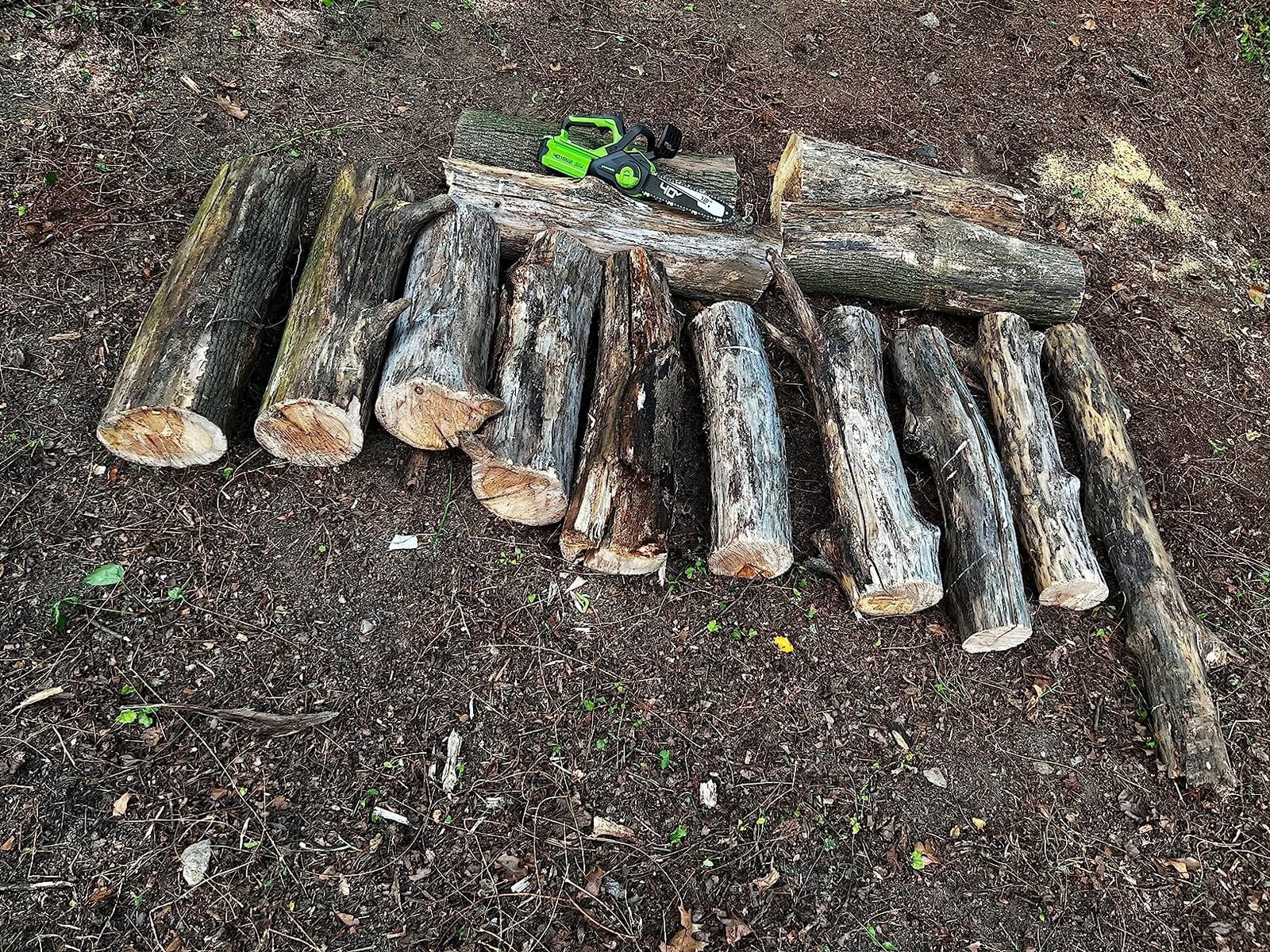
The wrapped grip is comfortable for a full session, and at 6 pounds you will not need to put the saw down to rest your wrist. For a lot of homeowners this is the tool that gets used, because getting tired is the fastest way to stop doing something, and stopping is how brush piles grow.
Reviewers consistently frame it as a companion to a larger saw rather than a replacement for one. That is an accurate read. It clears downed limbs and handles light storm debris beautifully, and it is not the tool for logs or rounds.
Best Fit for the Greenworks 40V 12-Inch
Pick this if your chainsaw work is scattered around a yard and you want something you can grab and carry without thinking. Storm debris, hedge trimming, branch cleanup, small pruning jobs. It is also a good second saw if the main one is heavy and you would rather not drag it across a lawn for a two-minute job.
The three-year tool and battery warranty is longer than most of the corded saws here, which matters for a buyer who intends to keep it for years rather than seasons.
What to Know Before Buying
The 12 inch bar is the boundary. It handles smaller limbs and light storm cleanup, and it will not cut a log in one pass. If your definition of cleanup includes downed trunks, look at a 16 inch bar instead.
The smaller 2.0Ah battery also means fewer cuts per charge than a 4.0Ah pack, and this saw is not compatible with the 40V 4.0Ah or 8.0Ah batteries in the wider platform. If you plan to add more tools later, check compatibility before you buy more than one battery.
9. Greenworks 40V 16-Inch Brushless – Best for Owners Already in the 40V Platform
Greenworks 40V 16″ Brushless Cordless Chainsaw (Great For Tree Felling, Limbing, Pruning, and Firewood / 75+ Compatible Tools), Tool Only
40V brushless motor
16 inch bar
Chain brake
Auto oiler,pro style tensioning
Pros
- Brushless motor with more torque and longer runtime
- 16 inch bar for small tree felling and firewood
- Chain brake adds kickback protection
- Push button start with no gas or carburetor
- Works with 75 plus compatible 40V tools
Cons
- Tool only
- battery and charger sold separately
- Higher total cost once a 40V battery is added
- Brushless motor is less repairable
This saw is a different deal than the rest of the roundup, and the difference is the battery. It comes as a bare tool, with no battery and no charger in the box. If you already own 40V Greenworks packs, this is one of the stronger 16 inch brushless saws you can add to your shelf, and adding it to a platform you have already invested in costs far less than buying a saw with everything included.
The brushless motor delivers more torque, longer runtime, and quiet operation, and it is covered by a 4 year tool warranty, 2 years on the battery, and a lifetime motor warranty. The 16 inch bar handles small tree felling, limbing, and firewood, which puts it in the same class as the gas saws in terms of what it will take on.
Reviewers focus on the quiet brushless power, the chain brake, and the freedom from gas maintenance. There is no carburetor, no spark plug, no starter rope, and no fuel line to gum up over winter. Push a button and it runs. For a first saw, that removes every maintenance task that stops beginners from starting.
Pro-style tensioning simplifies bar and chain maintenance, and the automatic oiler handles lubrication. The 16 inch bar is genuinely more capable than the 12 inch cordless saws here, which is why this is the battery option I would point at if your yard work is heavier than brush clearing.
Who Should Buy This
Buy it if you already have 40V Greenworks batteries, or you are committed to the platform. The compatibility across 75 plus tools is the value proposition, and if you are building a battery tool collection this saw slots in cleanly.
It is also a strong pick for someone who wants gas-like capability without the fuel, and who is comfortable sourcing a battery and charger separately. The chain brake is a real advantage for anyone working near tensioned wood or in a tree.
Why a First-Time Buyer Might Pass
Someone buying their first chainsaw and their first battery platform should be honest about the setup. You are buying a tool and then buying the battery and the charger, and the total is meaningfully higher than a kit that includes everything. The 12 inch Greenworks at number 8 includes both, so a first-time buyer gets more for the same outlay.
There is also the repairability angle. A brushless motor is less repairable than an older brushed motor, and the platform lock-in is real. If you later decide a different brand suits you better, the battery does not come with you. Weights also land at 11.6 pounds, which is at the upper end of what a beginner wants to hold for a long session.
10. PROYAMA PCS26 26cc 12-Inch Top Handle – Best for Limbing and Small Trees
PROYAMA 26CC Top Handle Chainsaw, 12 Inch Small Climbing Handheld Chain saw
26cc 2-stroke gas
12 inch bar
8.7 pounds
Anti-vibration,quick stop chain brake
Pros
- Light 8.7 lb top-handle design for climbing
- Anti-vibration system reduces hand fatigue
- Soft wrap-around handle is comfortable
- Quick stop chain brake and safety switch
- Two 12 inch chains included
Cons
- Lowest rating in the group at 4.1
- Starting difficulty and carburetor adjustment reported
- One-year warranty is the shortest here
I am including this one because its format is right for a specific beginner task, and because leaving it out would be dishonest about the tradeoff. The top-handle design, anti-vibration system, and soft wrap-around handle make it a genuinely good saw for limbing and small-tree work.
It also includes two 12 inch chains, so you have a spare from the first cut.
At 8.7 pounds it is on the light side for a gas saw, and the quick stop chain brake plus safety switch add protection that most small gas saws in this class skip. Reviewers like the vibration damping on longer cuts, which is a real comfort when you are doing repeated work in a tree or on a pile of limbs.
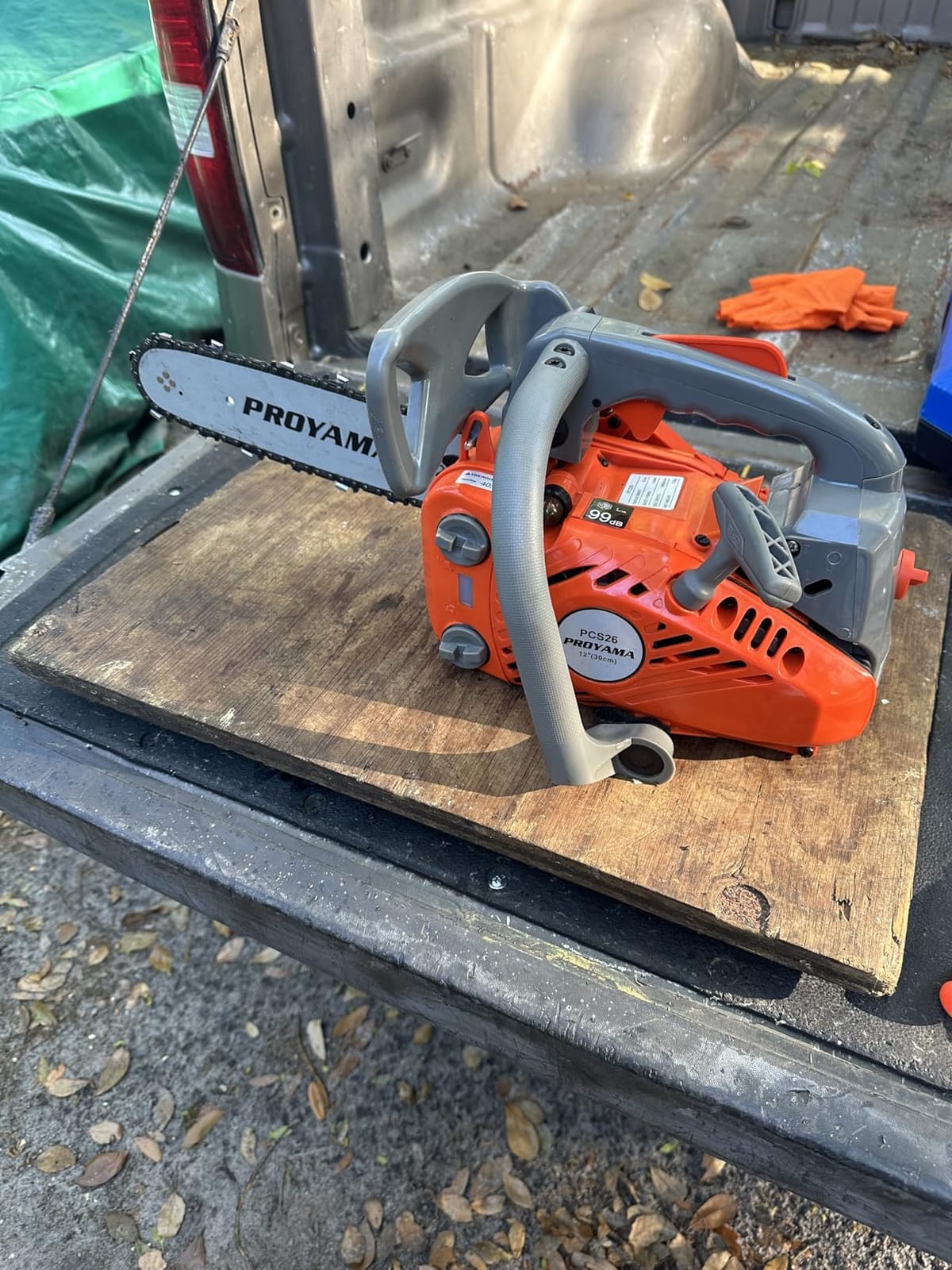
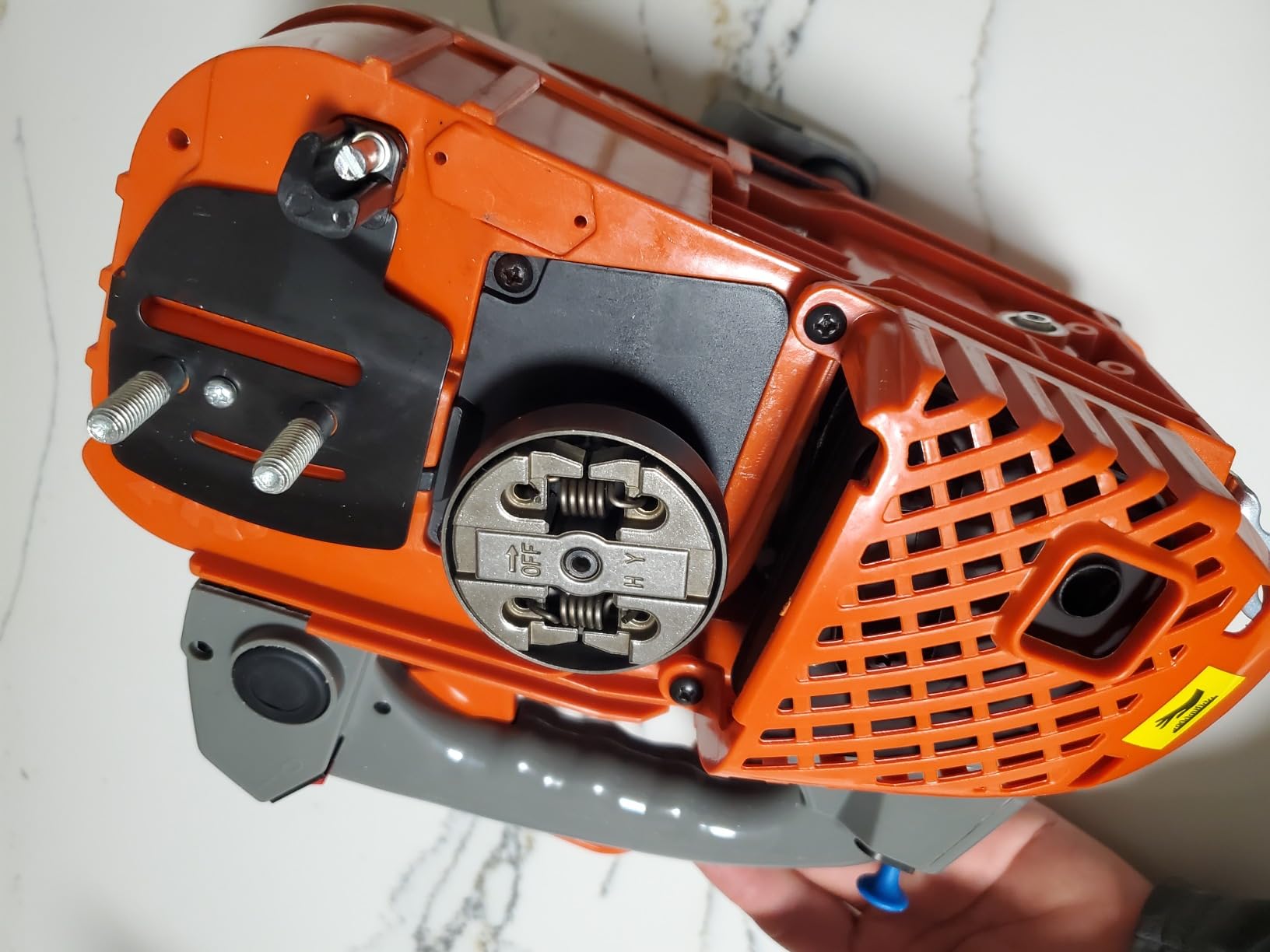
What holds it back is the rating. At 4.1 it is the lowest scored saw here, with 16 percent one-star reviews, and the complaints are consistent rather than scattered: hard starting out of the box and a carburetor that needs adjustment. Owners who tune it report the saw performs well afterward, but a beginner will meet it before the tuning.
The one-year warranty is also among the shortest of any saw in the roundup. For a gas engine that needs fuel mixing and periodic maintenance, that is thinner protection than the rest of this list offers, and it is worth weighing against the lighter weight and the top-handle format you actually need.
Where the PROYAMA Fits
Choose it when you specifically need one-handed top-handle capability and the alternative is a heavier saw. Limbing from a ladder, cutting small trees, clearing dead branches overhead. The 12 inch bar is the correct size for that work and is far easier to control aloft than anything longer.
For ground work in this roundup, the NEO-TEC at number 7 does the same job with a better rating and easier cold starting, so the comparison is worth making before you commit.
What to Know Before You Buy
Plan for a carburetor adjustment early. It is a normal part of running a small two-stroke, but doing it yourself is a reasonable first lesson, and having a dealer that will do it matters more here than anywhere else on the list. The one-year warranty makes that support even more important.
Also factor in the running costs a gas saw brings that the electric picks do not: two-stroke oil, ethanol-free fuel, a mixing container, and a place to store fuel safely. If you cut a few times a year, that overhead is real. If you cut weekly, it is manageable and the saw rewards you.
Gas vs Battery vs Corded Electric: Which Power Source Suits a Beginner
The power question is not about which is more capable. It is about which one you will actually keep using. A saw that is annoying to start, that needs a fuel can, or that you cannot get to the wood pile with, will sit in a shed, and a saw in a shed is worse than no saw at all.
Corded electric wins on simplicity and cost of ownership. Nothing to mix, nothing that gums up, instant start every time, quiet enough for a neighborhood, and no battery to buy. Its hard limit is reach. The cord has to go where the wood is, and a long run across a yard is a trip hazard and can trip a breaker. On the same principle we cover in our beginner grill guide, pick the power source that matches where the work actually happens, not the one with the biggest number on the box.
Battery wins on portability and freedom from the outlet. Push a button, walk to the tree, cut. No cord, no fuel, no exhaust, and the quiet operation is a genuine benefit in a suburban setting. The trade-offs are runtime, bar length limits on some models, and platform lock-in, which is the mistake new buyers make most often. Owning one battery changes which chainsaw makes sense, so check what you already have before you buy.
Gas wins on sustained cutting power and the widest range of work per charge. A small two-stroke will cut firewood for an afternoon, and the top-handle formats exist specifically for use in a tree. The trade-offs are fuel mixing, storage, starting, noise, and maintenance. Gas also asks the most of you in the first week, which is why two gas saws appear in this roundup rather than eight.
Our rule of thumb: if the wood is within cord reach and you cut a few times a month, buy corded. If the wood is scattered, the work is branch and brush cleanup, or neighbors matter, buy battery. If you cut a lot of hardwood, work in trees, or already have fuel and a mixing routine, gas is waiting for you.
What Size Chainsaw Bar Do You Need?
Bar length is the number beginners overbuy, and the reason is a misunderstanding. A longer bar does not make a saw cut more wood per stroke; it makes it heavier, harder to control, and more likely to bind. You can always make a second pass with a shorter bar. You can never make a long bar lighter.
Here is the sizing logic that works. For brush, hedge trimming, and pruning, a 12 inch bar is the right answer, and the 12 inch saws here are the ones to look at. For small tree felling, firewood rounds, and general property work, 14 to 16 inches is the sweet spot. A 16 inch bar can fell a tree roughly twice its nominal width by cutting in from one side, stopping before the bar binds, then finishing from the other side, which means a smaller saw handles more wood than its bar length suggests.
Size the saw to the diameter of wood you actually cut, not to the largest job you can imagine. If your cuts are typically 6 inches or less of hardwood, a small saw or an electric model is the right fit. Bar length is also driven by the power of the saw: a longer bar requires a more powerful saw to pull the chain through. The reverse is not true. A small saw with a long bar is simply a worse version of a small saw.
On the power metric itself, treat horsepower claims with suspicion. There is no standard for measuring saw power, and manufacturers do not measure it the same way. Engine displacement in cubic centimeters is a more honest comparison for gas saws, and for electric saws, watts and amps tell you the same story.
What Else You Need to Buy With Your Chainsaw
This is the question that comes up most often in beginner forums, and it is the one most roundups skip. The saw is maybe half the cost of getting into this hobby. Here is the rest of the list, in the order you will need it.
Chainsaw chaps. Leg protection is the single most important piece of safety gear, and no experienced operator works without them. This is not an optional first purchase.
A helmet with a face and ear shield. Chainsaw work throws debris, and saw noise damages hearing permanently. Combined head protection is easier to keep on than separate pieces.
Cut-resistant gloves. They improve grip on the saw, which improves control, and they protect against chain contact.
Safety glasses or a face shield. If your helmet does not include a visor, add one. Wood chips come off the bar faster than you expect.
A round file and a raker gauge. Correct depth, correct angle, and a light touch every few tankfuls keeps your chain cutting instead of scraping. This is the single most useful skill a new owner can build.
Bar and chain oil. Nearly every saw here has an automatic oiler, and nearly every one still needs the reservoir filled before the first cut. Buy a gallon rather than a bottle.
A spare chain. A chain that hits a nail or the ground is finished, and a dull chain makes a sharp saw look broken. A spare lets you swap and sharpen later rather than stopping mid-job.
Splitting wedges. A round will pinch the bar as you finish a cut, and wedges stop that. They also stop the round from rolling onto you.
For gas saws: ethanol-free fuel and two-stroke oil. Ethanol separates from gasoline and pulls the oil out of the mix, and that gummed residue is a leading reason a saw that sat for a year will not start.
A fuel container, for gas saws. An approved container is a safety item, not an accessory. Never store fuel in anything meant for drinking.
A scabbard. A bar cover protects you in the garage and protects your car on the way home. Several saws here include one.
If you buy nothing else on this list, buy the chaps and the file. The first keeps you safe and the second keeps your saw cutting, which is the difference between owning a tool and owning a hobby.
Brand Name or Local Servicing Dealer: Which Matters More
The most consistent piece of advice in owner communities is that a servicing dealer within reach matters more than the badge on the housing. The argument is practical rather than emotional. A saw needs a carburetor adjusted, a chain sharpened, and sometimes a part, and the quality of that help is decided by what is within a short drive of your house, not by which logo is on the side.
That is also why community consensus treats Husqvarna and Jonsered as effectively the same product with different badging. When the manufacturing and the parts are shared, the badge tells you less than the dealer network does. If you are comparing a STIHL against a Husqvarna and both are an hour away, you should compare them on bar length, weight, and whether you have the battery packs already.
ECHO holds a similar position in the same conversation, with a strong reputation for build quality and a service network that varies by region. Budget brands are where dealer support matters most, because a saw that needs a carburetor adjustment in month one is a saw that needs a dealer in year one. Verify local support before you buy, not after.
Our practical advice: pick the saw that fits your wood and your power source, then confirm that someone local will service it. If two saws are close on those two criteria, that is the moment brand reputation is allowed to break the tie. If it is not close, the brand does not matter.
Safety First: Kickback, Gear, and When to Call an Arborist
The injury new operators worry about most is kickback, and it happens in about a second. Kickback occurs when the upper nose of the bar contacts wood, the chain binds, and the saw is thrown back toward you. Low-kickback chains and a working chain brake reduce the risk substantially, which is why both are on our beginner criteria list.
Beyond the saw itself, the habits that keep people out of the emergency room are unglamorous. Let the saw run at full speed before it contacts wood, use the wedge properly, and never cut with the tip of the bar in a narrow slot. Never let the bar touch the ground, because it dulls the chain instantly.
Keep children well clear, and treat the last cut with the same care as the first. That last one comes up constantly in owner advice and it is correct, because fatigue turns a good decision into a bad one.
There is a limit to what training can fix, and it is worth naming. Trees store tension and compression energy, and the same forces that pinch a bar can roll a tree onto you or spring a branch back. Downed trees are the most dangerous wood you will ever cut, because that stored tension releases without warning.
If you are dealing with anything over the size of a small tree, or anything near a structure, a fence, a road or a power line, pay an arborist to drop it and do the bucking yourself. That is what professionals do, and the bill is small next to a recovery.
Finally, noise deserves a mention. Gas saws run loud enough to disturb neighbors and, in some areas, loud enough to fall under local ordinances. A battery or corded saw removes the problem entirely. If you have a neighbor who has complained about noise before, that is a legitimate reason to choose a different power source.
Gas Saw Fuel and Storage: The Ethanol Trap
If you buy one of the gas saws here, this section matters more than any spec. Ethanol separates from gasoline over time, and it pulls the two-stroke oil out of the mix with it. What you get is a gummed carburetor, a varnished piston, and a saw that will not start after a month on a shelf. This is a common first-year gas saw problem and it is entirely avoidable.
Use ethanol-free fuel for any two-stroke engine. Many regions sell it specifically for this, and it is worth the small difference. Mix the fuel and oil to the ratio your saw specifies, and note that the NEO-TEC at number 7 runs 25:1 while most others use 50:1, so read the manual before your first fill and do not assume.
If your saw will sit for more than a few weeks, run the tank dry before you put it away. That clears the fuel lines and the carburetor of the mixture that would otherwise harden in place. Store it in a dry place, upright, away from ignition sources, and never in a bedroom or a living space. Starting a saw after a long layup is a normal event, not a sign that something is wrong.
The corded and battery saws in this roundup do not have any of these problems. That is a real, practical argument for a beginner, and it is worth weighing honestly against the extra cutting capability a gas saw brings.
Frequently Asked Questions
Which is the easiest chainsaw to start?
The corded and battery saws are by far the easiest, because there is no fuel to mix and no recoil cord to pull. You plug one in or press a button and it runs. Among gas saws, spring-assisted ignition models start in two or three pulls even when cold, but you still have to mix fuel and set the choke. For a first saw, ease of start is worth a lot.
What size chainsaw should a beginner buy?
For brush, hedge work and pruning, a 12 inch bar is the right answer. For small tree felling, firewood rounds, and general property work, 14 to 16 inches is the sweet spot. A longer bar is heavier, harder to control and more likely to bind, so beginners should not buy more bar than they need. Remember that a bar can cut roughly twice its nominal width using two passes.
What is the best chainsaw for a homeowner?
The CRAFTSMAN CMECS600 is the one we recommend most often, because it weighs 6.2 pounds, needs no fuel mixing, and starts instantly from a wall outlet. It handles brush, small limbs and firewood rounds without drama. If your wood is far from an outlet, a 40V cordless saw with a chain brake is the better choice for the same reasons.
What should I check before buying my first chainsaw?
Check four things: bar length between 12 and 16 inches, a weight you can hold for twenty minutes, an automatic chain oiler, and a chain brake with a two-hand safety start. Then confirm that a servicing dealer operates near you, and buy chainsaw chaps in the same order. Most disappointment with a first chainsaw comes from oversizing it or from a missing chain brake.
Is a gas or electric chainsaw better for a beginner?
An electric saw is simpler, quieter and has almost no maintenance, but corded models are limited to within reach of an outlet and battery saws need a battery platform you already own or want to join. A gas saw cuts the most wood per charge and is the practical option for heavy hardwood or work in trees, but it requires fuel mixing, storage discipline and more maintenance. Pick based on where the wood is and how often you will cut.
Can a beginner fell a tree with a chainsaw?
Small trees, yes, but pay an arborist for anything large, anything near a structure, road, fence or power line, and any tree holding tension. A top-handle saw is the correct tool for work aloft, and it needs real training before use. Community advice is consistent: have a professional drop the tree and do the bucking yourself. A downed tree with tension in it is the most dangerous wood there is.
The Chainsaw to Start With in 2026
If you read nothing else, start here. The CRAFTSMAN CMECS600 is the best chainsaw for beginners in 2026 for almost everyone, because 6.2 pounds, an instant start, and no fuel system remove the three things that stop new owners before they get good at it. Its missing chain brake is the one real compromise, and it is an acceptable one for ground work within cord reach.
If your wood is out past the extension cord, the Supstable 40V 16-inch kit is the pick, because it arrives with everything a beginner needs, runs up to 50 minutes a charge, and has a chain brake. If you already own 40V Greenworks packs, the tool-only 16-inch brushless saw becomes a much better deal. If you need one-handed capability in a tree, the NEO-TEC 25.4cc is lighter and easier to start than the alternative at number 10.
Whichever you choose, buy chaps in the same order, and buy the smallest saw that handles your wood rather than the biggest one on the shelf. The best chainsaws for beginners are not the most powerful tools on the market. They are the ones still in your shed in five years, sharpened and ready.