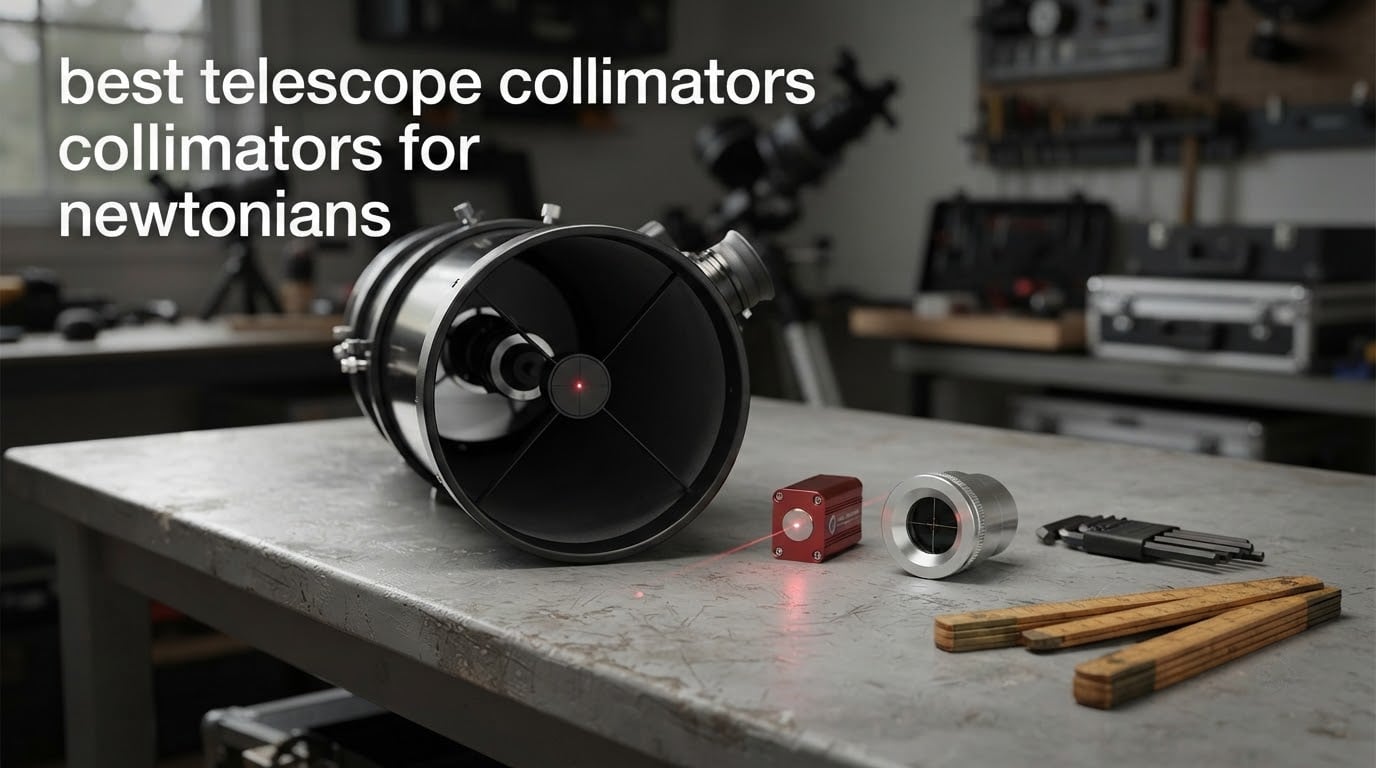
The best telescope collimators for Newtonians fall into two families, and the right one depends almost entirely on your focal ratio. A precision Cheshire handles a slow f/8 Dobsonian on its own, while a fast f/4 astrograph really wants a laser you can read from the mirror end of the tube.
We spent weeks with all ten tools in this roundup, running each one on Newtonian reflectors, Dobsonians and Schmidt-Cassegrains, and reading the long-term owner feedback on each. What surprised us most was how much the quality control at the factory matters. A collimator is a measuring instrument, and a measuring instrument that ships out of adjustment is worse than useless, because it will happily tell you your telescope is collimated when it is not.
The SVBONY Laser Collimator takes our top slot because it has the deepest review history in the group, a seven-step brightness control and a fit that covers both 1.25 inch and 2 inch focusers. Below it we break the rest down by scope type rather than by brand prestige, because that is how you actually choose one.
Updated for October 2026. Every product below ships with its own focuser fit, so check the barrel size before you buy anything.
Table of Contents
- Top 3 Telescope Collimators for Newtonians 2026
- All 10 Best Telescope Collimators for Newtonians (October 2026)
- 1. SVBONY Laser Collimator – Best Overall Telescope Collimator
- 2. Astromania 1.25 Inch Laser Collimator – Best Value Pick
- 3. Celestron Collimation Eyepiece 94182 – Best Telescope Collimator for Beginners
- 4. Astromania 1.25 Inch Collimating Cheshire – Best for Short-Tube Dobsonians
- 5. SVBONY SV197 Cheshire Eyepiece – Best Collimator With Nothing to Calibrate
- 6. HoTech SCA-2C Crosshair Laser – Best for Fast f-Ratio Newtonians
- 7. Farpoint FP261 2 Inch Cheshire – Best for 2 Inch Dobsonians
- 8. HoTech SCA-1.25D Dot Laser – Best Telescope Collimator for 1.25 Inch Focusers
- 9. Farpoint FP210 Laser Collimator – Best for Scopes You Move Between Sizes
- 10. Alstar Collimating Cheshire Eyepiece – Best for Home-Built Telescopes
- Cheshire or Laser: Which Collimator Do You Need?
- How to Check a New Collimator in 10 Minutes
- How to Choose a Telescope Collimator
- How Often Should You Collimate a Newtonian?
- Laser Safety for Collimators
- Frequently Asked Questions
- What is the best collimation tool for Newtonian telescopes?
- Which is better for collimation, a Cheshire eyepiece or a laser collimator?
- How do I use a Cheshire collimator?
- How hard is it to collimate a telescope?
- How often do you need to collimate a telescope?
- Do Schmidt Cassegrain telescopes need collimation?
- Where to Start With Telescope Collimators in 2026
Top 3 Telescope Collimators for Newtonians 2026


All 10 Best Telescope Collimators for Newtonians (October 2026)
We tested these ten collimators across three tool classes. Here is the short version before the individual write-ups.
| Product | Specs | Action |
|---|---|---|
| SVBONY Laser Collimator |
|
Check Latest Price |
| Astromania 1.25 Inch Laser Collimator |
|
Check Latest Price |
 Celestron Collimation Eyepiece 94182 Celestron Collimation Eyepiece 94182 |
|
Check Latest Price |
 Astromania Short Cheshire Eyepiece Astromania Short Cheshire Eyepiece |
|
Check Latest Price |
| SVBONY SV197 Cheshire Eyepiece |
|
Check Latest Price |
 HoTech SCA-2C Crosshair Laser HoTech SCA-2C Crosshair Laser |
|
Check Latest Price |
 Farpoint FP261 2 Inch Cheshire Farpoint FP261 2 Inch Cheshire |
|
Check Latest Price |
 HoTech SCA-1.25D Dot Laser HoTech SCA-1.25D Dot Laser |
|
Check Latest Price |
 Farpoint FP210 Laser Collimator Farpoint FP210 Laser Collimator |
|
Check Latest Price |
 Alstar Collimating Cheshire Eyepiece Alstar Collimating Cheshire Eyepiece |
|
Check Latest Price |
1. SVBONY Laser Collimator – Best Overall Telescope Collimator
SVBONY Laser Collimator, for Newtonian Marca Telescope Alignment, 1.25/2″
Fits 1.25 and 2 inch focusers
Seven brightness levels
224 g metal body
Pros
- Covers both 1.25 and 2 inch focusers with the included adapter
- Seven brightness levels work in daylight and under dark skies
- Triple-cemented lens keeps the red dot stable
- Instructions included in the box
- Crisp repeatable results reported across thousands of owners
Cons
- Laser calibration can be knocked out by shipping
- Needs a battery
- Barrel can sit loosely in some focusers
This is the collimator we ended up reaching for most often, and it is not a close call. It also carries the deepest owner record in the group, with 3059 reviews at a 4.5 star average, which is far more real-world evidence than anything else in this roundup, and the feedback is consistent: people collimate fast, repeatably, and notice sharper images afterwards.
The body is metal rather than the plastic used on most entry-level tools, and it weighs 224 g. That mass is worth considering against a light focuser, and the included removable adapter converts it to 2 inch when needed. Seven brightness levels on the red beam are more than a gimmick, since the lowest setting is the only one you can read comfortably against a bright primary mirror in daylight.
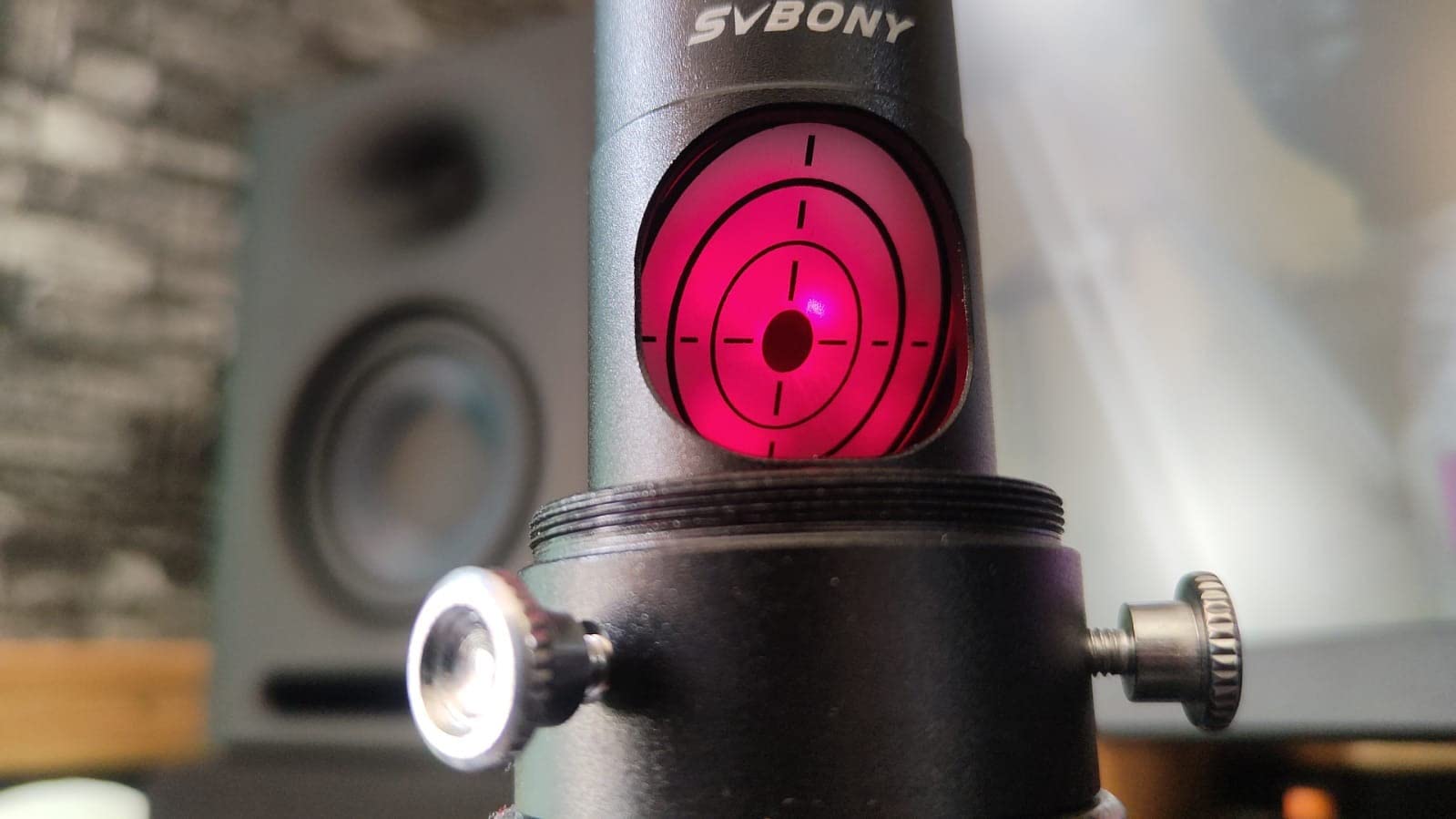
The main weakness is the one that has become a running complaint across cheap laser collimators generally, including this one. Reviewers repeatedly report that units arrive with the beam slightly off axis, so the first ten minutes with any new laser should be spent checking the collimator against a flat surface or the primary itself before you trust it on the telescope.
A secondary complaint is fit. Some owners report the barrel sitting loosely in certain focusers, particularly cheap aluminium ones with loose draw tubes. If yours rocks, a self-centering adapter is the fix, and that is exactly what the HoTech models further down this list are built around.
What to check before you trust the beam
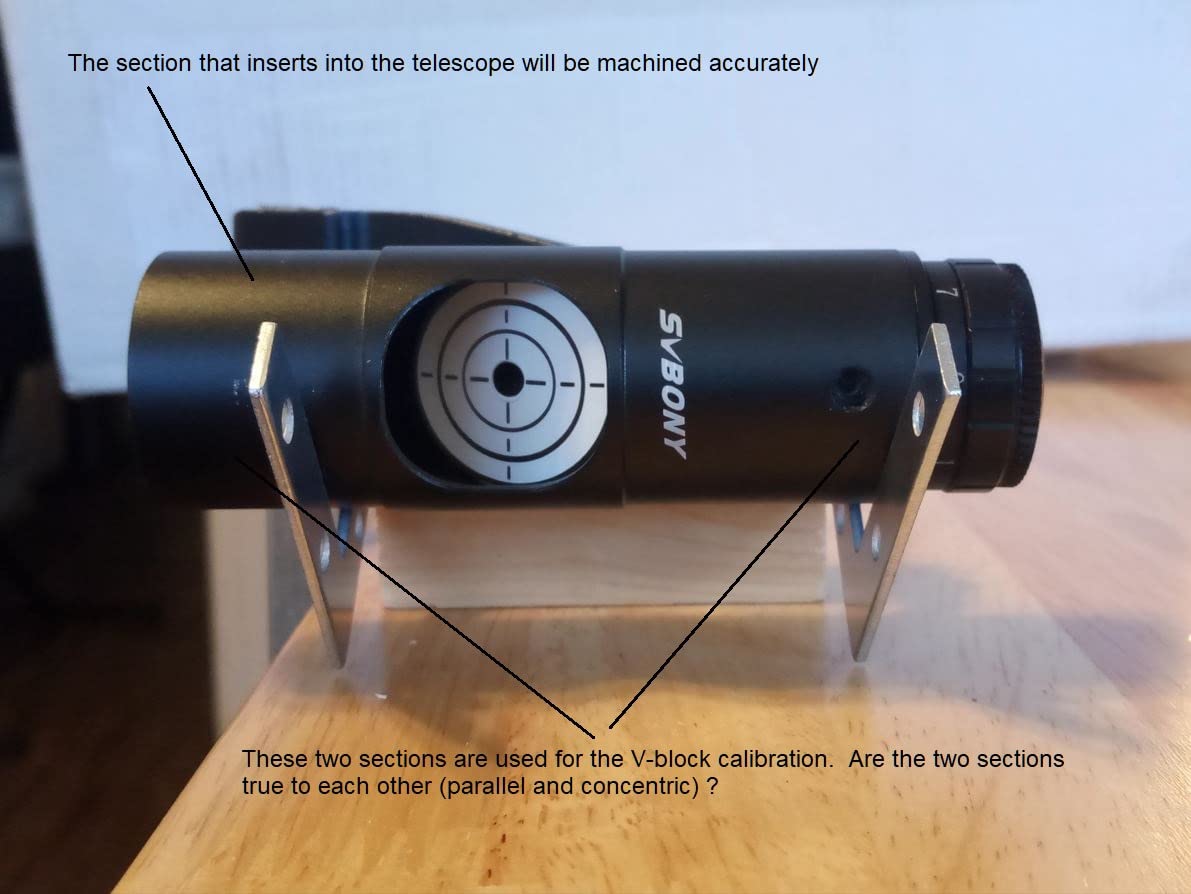
Set the collimator on a table with the beam aimed at a wall a few feet away and rotate it. The dot should trace a clean circle. If it traces a figure eight or a wandering ellipse, the internal adjustment screws need a turn before the tool ever touches your mirrors. Check the procedure in the calibration section further down before you start.
Who should skip it
If you own a big Dobsonian with a two inch focuser and no desire to fuss with a laser at all, a Cheshire does the same job for the secondary and is easier to trust. This is the better pick if you work across several scopes with mixed focuser sizes, or if you want one tool that never needs batteries in the field.
2. Astromania 1.25 Inch Laser Collimator – Best Value Pick
Astromania Laser Collimator 1.25″ for Newtonian Marca Telescope Alignment
Compact 1.25 inch body
3.8 mW Class 3R red diode
3 ounces
Pros
- Slides straight into any 1.25 inch focuser
- Seven brightness levels for day and night
- Anodized aluminum resists wear
- Battery included so nothing extra to buy
- 1.25 inch focuser fit only
Cons
- Adjustment ports must be unsealed before use
- Shipping can knock the calibration out
This is one of the smaller and lighter lasers here at 3 ounces, and for a 1.25 inch Newtonian that is an advantage rather than a compromise. There is no barrel to overhang the focuser, so it cannot droop the draw tube or introduce sag that muddies the whole measurement.
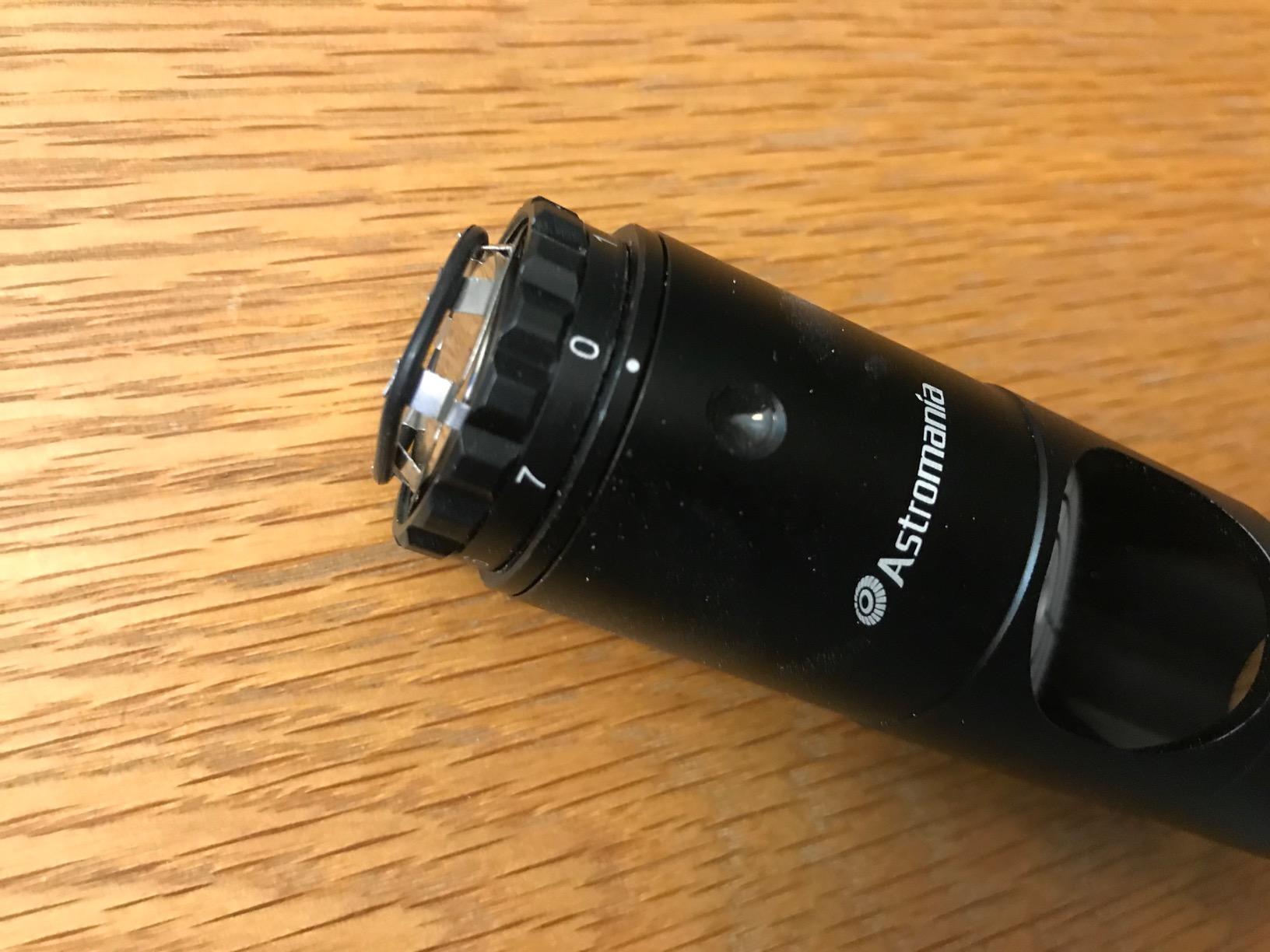
The spec sheet lists a 635 to 655 nm red diode at 3.8 mW, which is the most precisely stated laser output of any listing in this roundup, and it is sealed behind three adjustment openings at 120 degree intervals. Owners rate the anodized aluminium body as holding up well to repeated use, and the seven brightness levels cover everything from a sunlit garage to a fully dark field.
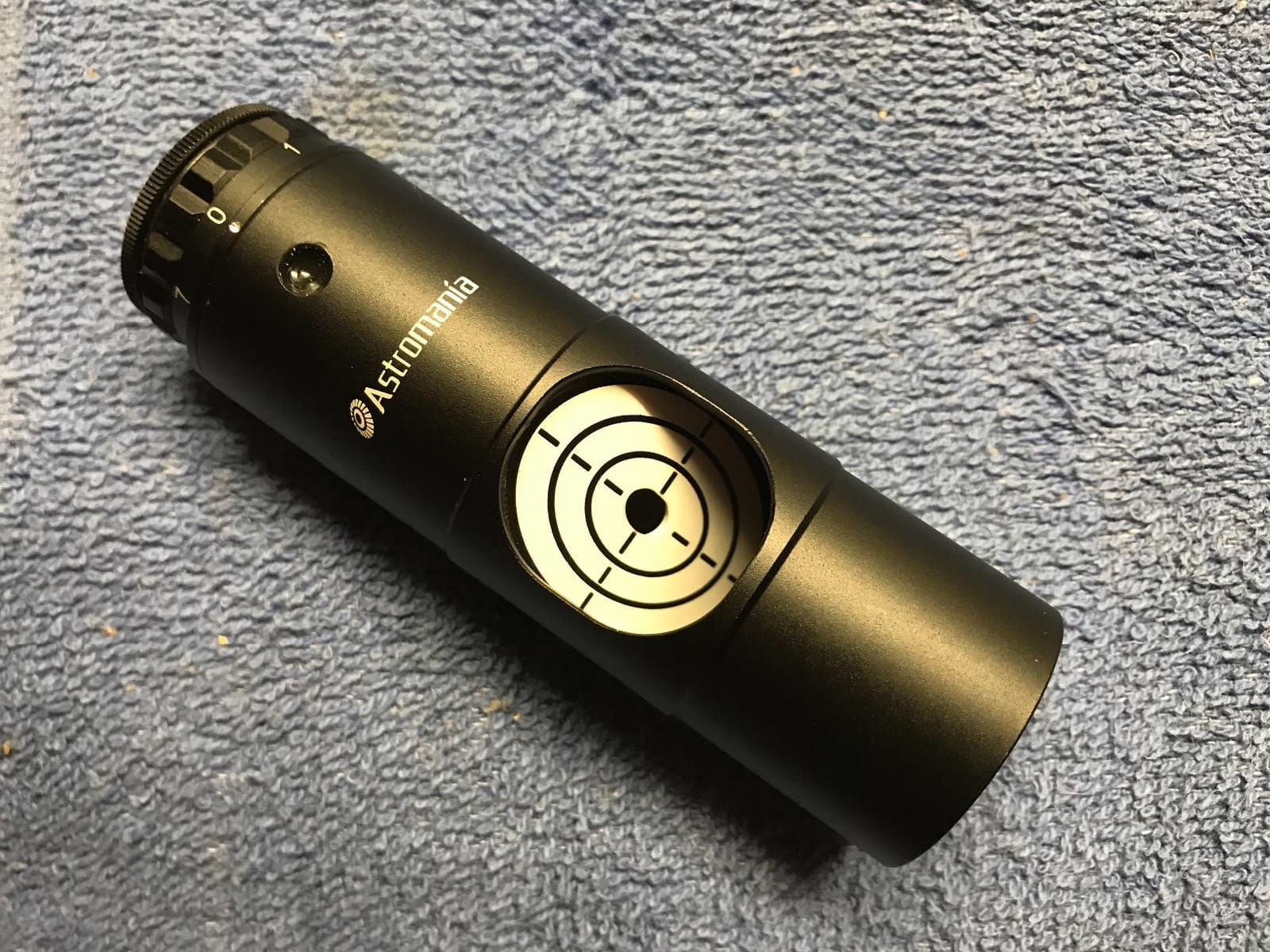
Two things to know before you commit. The three adjustment ports are factory sealed, so you have to break or remove those seals to recalibrate it, and shipping can still shift the beam. And the fit is strictly 1.25 inch. If your scope has a two inch focuser you will need an adapter ring, and at that point the SVBONY above becomes the simpler buy.
A CR2032 coin cell ships in the box, which is a small thing that matters when you are collimating in a field with no spare batteries. The instruction sheet is in English and German. The 1.5 degree field of view is a minor spec, but it is wide enough to find the primary reflection without hunting.
Why this one for small and travel scopes
At 3 ounces and with no protruding adapter, this is the one to pack for a portable dob or a tabletop Newtonian. Nothing about the design encourages sloppiness, because there is no leverage for it. Setup is the same four steps as any laser collimation, and the returned dot is bright enough to find quickly in a beginner’s first session.
Where the sealed screws bite
Owners who never touch the adjustment ports get consistent results. The complaints cluster around people who moved the unit between scopes or dropped it, then found the beam needed correcting and the seals were in the way. If you are the type who collimates on the move, weigh that against a tool with open adjustment screws.
3. Celestron Collimation Eyepiece 94182 – Best Telescope Collimator for Beginners
Celestron Cheshire Collimation Eyepiece for Reflector & SCT Telescopes
Cheshire crosshair design
No batteries
4.8 ounces
Pros
- Nothing to calibrate and no battery to fail
- Works in 1.25 inch focusers or diagonals
- Also usable on Schmidt-Cassegrain tubes
- Reported to bring fuzzy planets into crisp focus
Cons
- Instructions are confusing for first-time users
- Daylight use only
- X wires sit about 1 mm off center on some units
For someone collimating for the first time, this Celestron eyepiece is the least complicated starting point available. It is a 1.25 inch Plossl body with crosshairs in front of a reflective face, and it slides into the focuser or straight into the diagonal. There is no beam, no battery and no calibration to distrust.
The dominant thread on r/telescopes is that a quality Cheshire or sight tube is the better all-around tool precisely because it can check every part of the telescope, not just the primary. With 627 reviews at 4.5 stars, this is the version of that argument that most first-time owners actually buy.
Several experienced users go further and report it beating laser collimation on Bird-Jones style tubes, where the secondary is mounted far forward and a laser beam is awkward to interpret. If your telescope is that layout, that alone justifies the choice.
How to work the four alignment steps
Check or add a center mark on the primary, then look down the focuser and center the secondary reflection inside the crosshairs. Tilt the secondary until the reflection of your eye or the crosshairs is concentric, then move to the mirror end and adjust the primary until the secondary shadow is centred in the primary reflection. The whole sequence takes about 10 to 15 minutes on a slow scope.
Where new owners get stuck
The instructions are the weak point and the most common complaint in the reviews. The crosshairs on some units also sit about 1 mm off center, which shows up as a slightly stubborn final adjustment. Neither is a dealbreaker, but budget an evening for your first attempt and check the star test afterwards so you know the result is real.
4. Astromania 1.25 Inch Collimating Cheshire – Best for Short-Tube Dobsonians
Astromania 1.25 Inch Collimating Cheshire Telescope Eyepiece Short Version
Short barrel for clearance
45 degree reference plate
3.1 ounces
Pros
- Crosshairs reported as spot-on and centred
- Short barrel clears well in fast Newtonians
- Aluminum body with reflective bullseye and pop-up eye cup
- No battery and no laser calibration
Cons
- Short barrel can make crosshairs hard to see
- Sits loosely in some focusers
- No instructions included
Short-tube Dobsonians are where collimation tools fight back. The secondary sits close to the focuser, clearance is tight, and a long barrel will physically touch it. This Astromania eyepiece is the short version by design, and owners with fast Newtonians report it clears properly where longer barrels do not.
The 45 degree plate is the detail that makes it work. It lets you view the crosshair and the primary mirror reflection at the same time, so centring the secondary takes seconds rather than the repeated ducking in and out of the focuser that trips up beginners on other designs. The 31.75 mm objective sits in an aluminum body weighing 3.1 ounces.
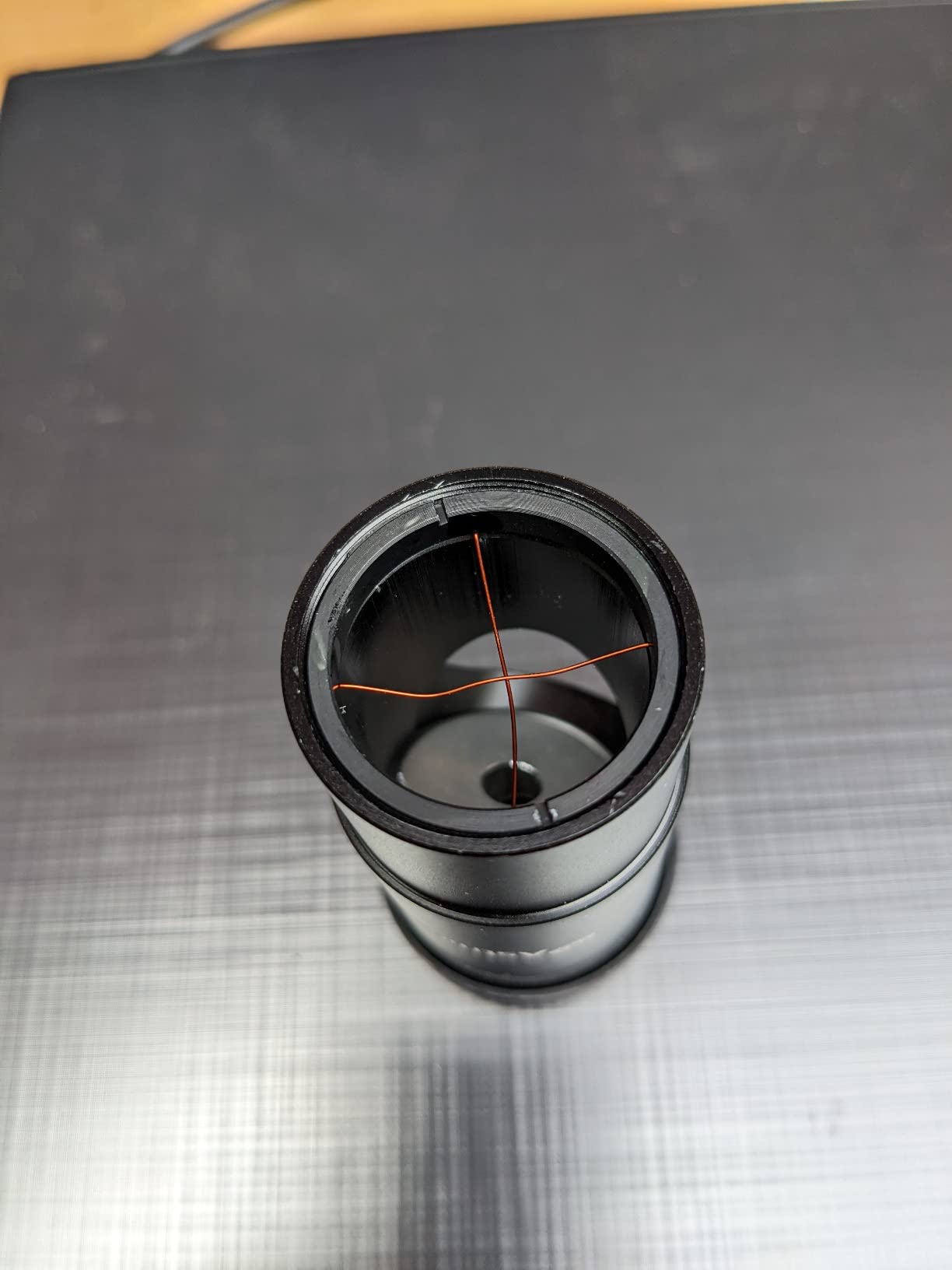
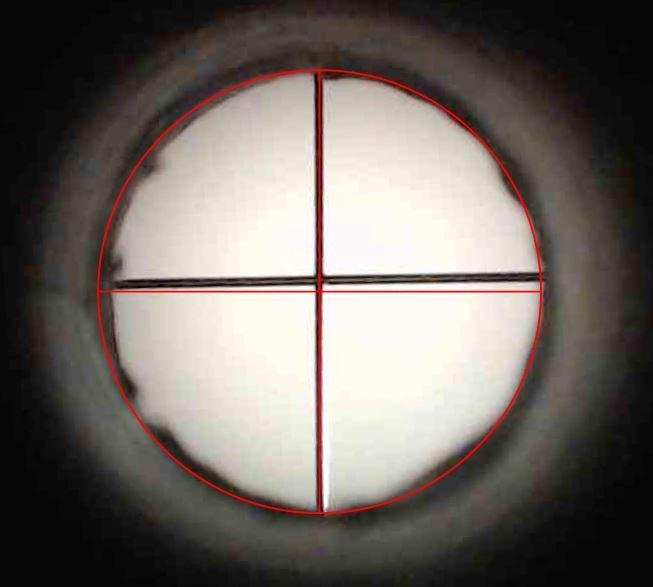
Owners consistently praise the centering accuracy, calling the crosshairs spot-on, and several say they prefer it to a laser on both reliability and simplicity. There is nothing to knock out of adjustment in transit and nothing to recalibrate when the batteries die, which is the quiet advantage of a purely optical tool.
The trade-off is visibility. A 6.6 cm focal length with a short barrel means the crosshair pattern can be harder to read than on a full-length Cheshire, particularly in poor light. Owners also report a loose fit in some focusers and the absence of any instructions, so look up a walkthrough before your first session rather than after it.
Check this before your first session
Barrel clearance is the whole point of this model. Measure the distance from the top of the focuser to the secondary holder on your scope and confirm the short barrel clears it with room to spare. If it does, this is the most reliable Cheshire in the roundup for a fast, compact tube.
Where a laser still wins
On a very fast astrograph at f/4 or quicker, the difficulty is not the secondary, it is reading a slightly de-centred secondary shadow in the primary reflection. Your eye is better at that than a dot on a mirror, but a laser set at a manageable brightness level gives you a bigger target at the far end. Experienced users end up using both.
5. SVBONY SV197 Cheshire Eyepiece – Best Collimator With Nothing to Calibrate
SVBONY SV197 Collimating Cheshire Eyepiece, 1.25 Inch Collimation Eyepiece, for Newtonian Reflector Telescope
Precision-machined aluminum
Steel crosshairs
Top sighting peephole
Pros
- Best reviewed build in this roundup at 4.6 stars
- Billet aluminum body feels precise and solid
- Steel crosshairs instead of thin copper wire
- No retaining ring so you set the distance yourself
- Results agree with a laser in owner tests
Cons
- No instructions included
- Crosshairs are faint and hard to see
- Can jiggle in looser focusers
The most common complaint in this niche is that cheap laser collimators arrive out of collimation, and the long-standing consensus on Cloudy Nights is that you should check any laser before trusting it. This eyepiece sidesteps the problem entirely. There is no beam, so there is nothing to be out of adjustment.
It also has the best materials story of any Cheshire here. The body is precision-machined aluminum with a reflective bullseye and fine crosshairs, and the crosshairs are steel rather than the thin copper wire used on budget units. That matters because thin wire bends, and a bent crosshair tells you a lie about where centre is.
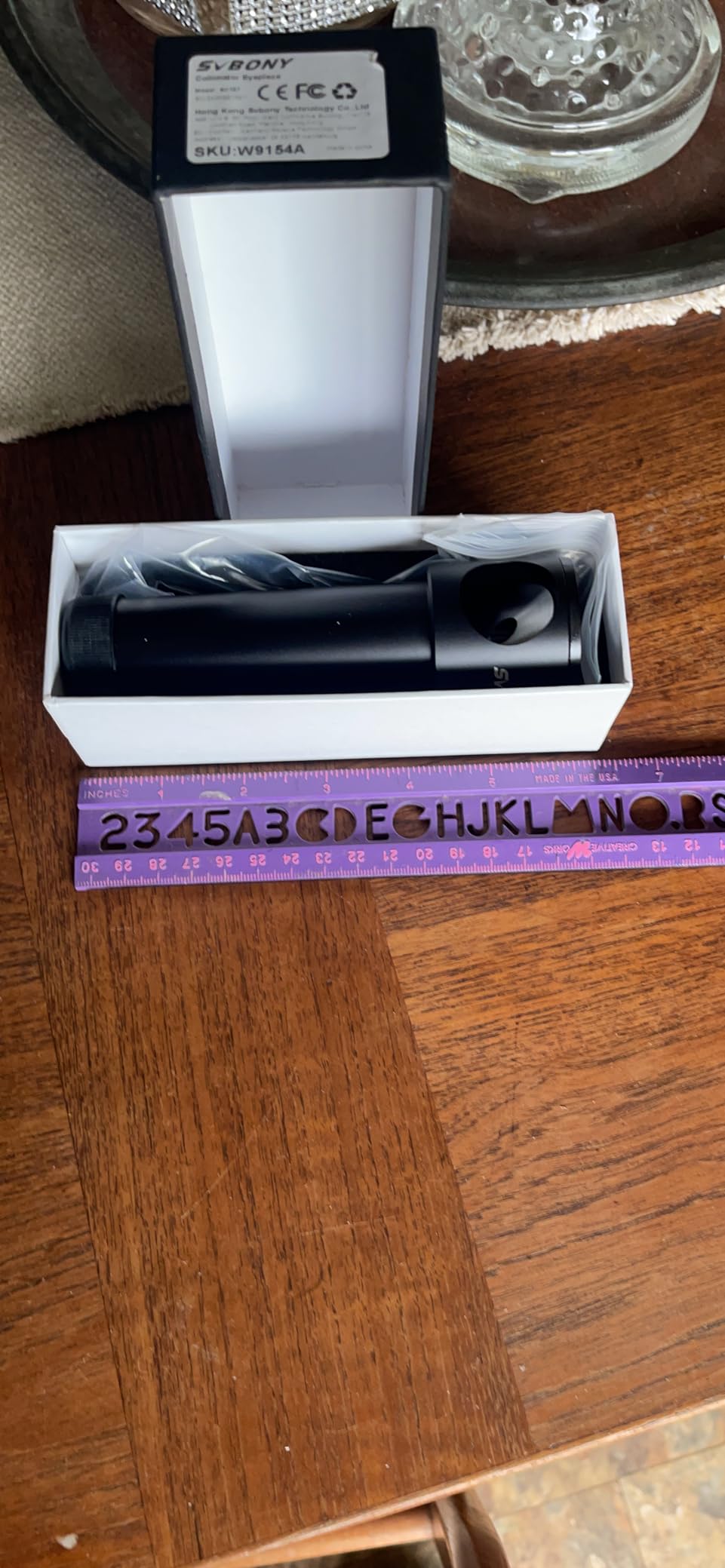
What stands out in the owner feedback is agreement. Reviewers report using it alongside a laser and getting matching results, which is the opposite of the frustration described in forum threads where a sight tube and a laser never agree. That disagreement is almost always a calibration problem with the laser, and this tool is immune to it.
Two drawbacks keep it from being a perfect recommendation. The crosshairs are faint, so you want good ambient light for the final centring, and the barrel has no retaining ring, which is a genuine benefit if you want to choose the inspection distance but can leave it loose in a focuser. Owners of larger dobs report some jiggle for exactly that reason.
Why crosshair material matters
A Cheshire is a measuring tool, and its measuring element is the crosshair. Steel holds its shape and its position through decades of use and repeated temperature changes, which is precisely what thin copper wire in a cheap unit does not. If two Cheshires disagree, the one with the wire crosshair is the one to suspect.
Where it falls short
It is daylight only, and it needs a scope you can look down twice during the procedure. On a large Dobsonian where the primary end is a long walk from the focuser, that walk is a genuine annoyance. The peephole in the top helps, but it does not remove the need to check the primary adjustment from the mirror end.
6. HoTech SCA-2C Crosshair Laser – Best for Fast f-Ratio Newtonians
HoTech 2″ & 1.25″ SCA Laser Collimator for Newtonian Telescope – Crosshair Model # SCA-2C
Self-centering barrel
Crosshair beam pattern
Fits 1.25 and 2 inch
Pros
- Self-centering barrel removes focuser slop as an error source
- Side-view faceplate lets you fine-tune without staring into the beam
- Reported as more accurate and better machined than budget tools
- Suited to astrophotography where precision matters
Cons
- Self-centering design can mislead in a non-self-centering focuser
- Battery powered with periodic checks as cells drain
- Only 23 ratings for a long-term record
Focuser slop is the quiet saboteur of laser collimation. A cheap tool sits in a focuser that is not quite centred, aims slightly off, and you end up adjusting your mirrors to compensate for a tool error. The SCA barrel design solves that mechanically: three points around the circumference find true centre in the focuser, so the beam starts from the right place.
The other feature that separates this from a budget laser is the side-view faceplate with crosshairs. Rather than craning your neck to look down the barrel, you watch the reflected pattern on the plate from outside the tube and adjust the primary screws while the pattern is moving. On a fast astrograph where the returned spot is small and bright, that is the difference between converging and chasing.
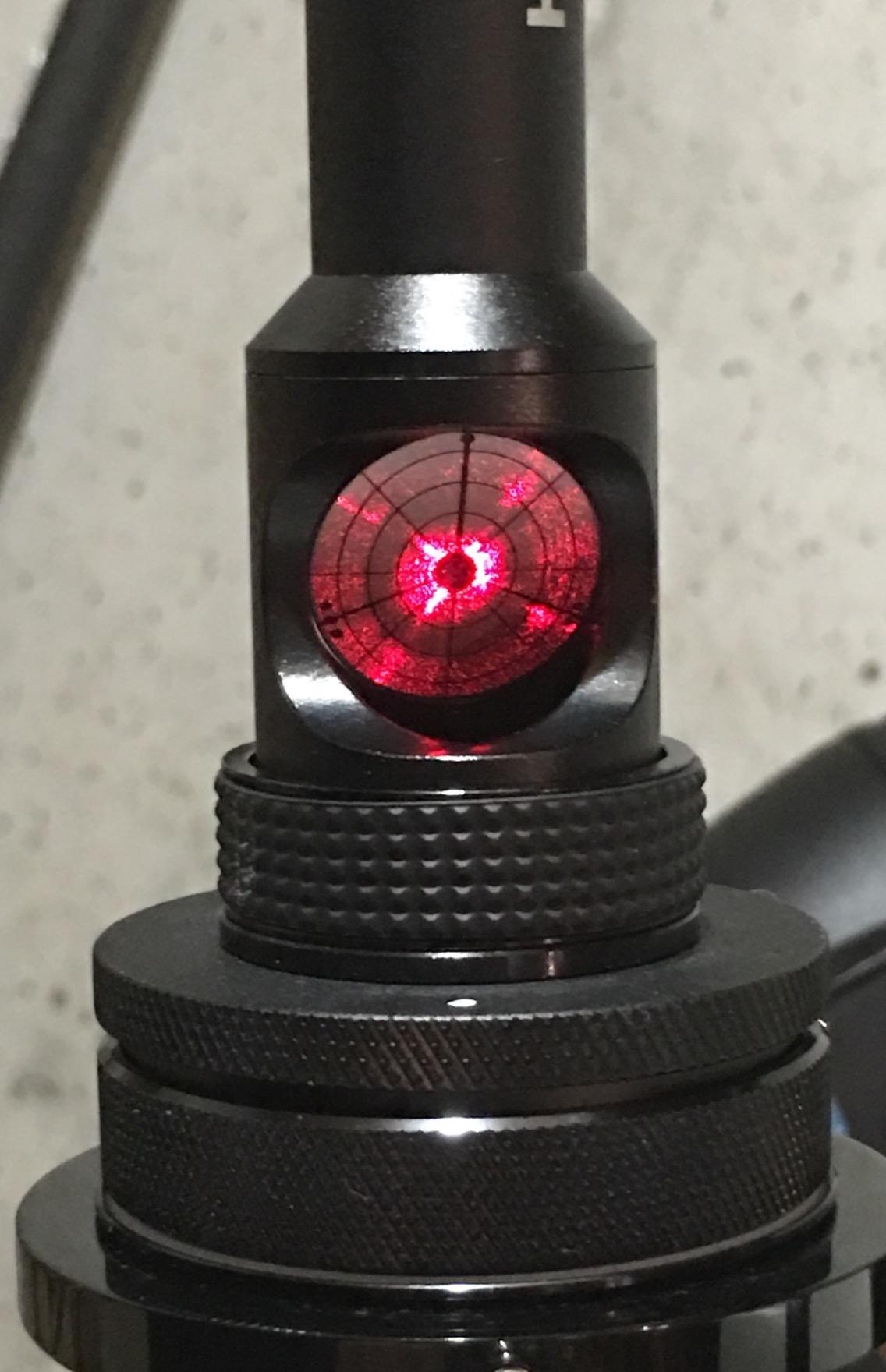
At 12.8 ounces it is among the heavier tools in this roundup, and that is the trade-off for the machined barrel. On a well-built focuser it sits without movement. On a cheap one, the self-centering action can mask a focuser that is itself off-centre, which is the single recurring design critique in the reviews.
The honest caveat is the sample size. 23 ratings at 4.7 stars is a strong average on a thin base, and the forum consensus does treat HoTech as a name worth owning, with r/telescopes threads recommending it as a serious step up. We would still want to run a star test after every collimation with a tool at this level.
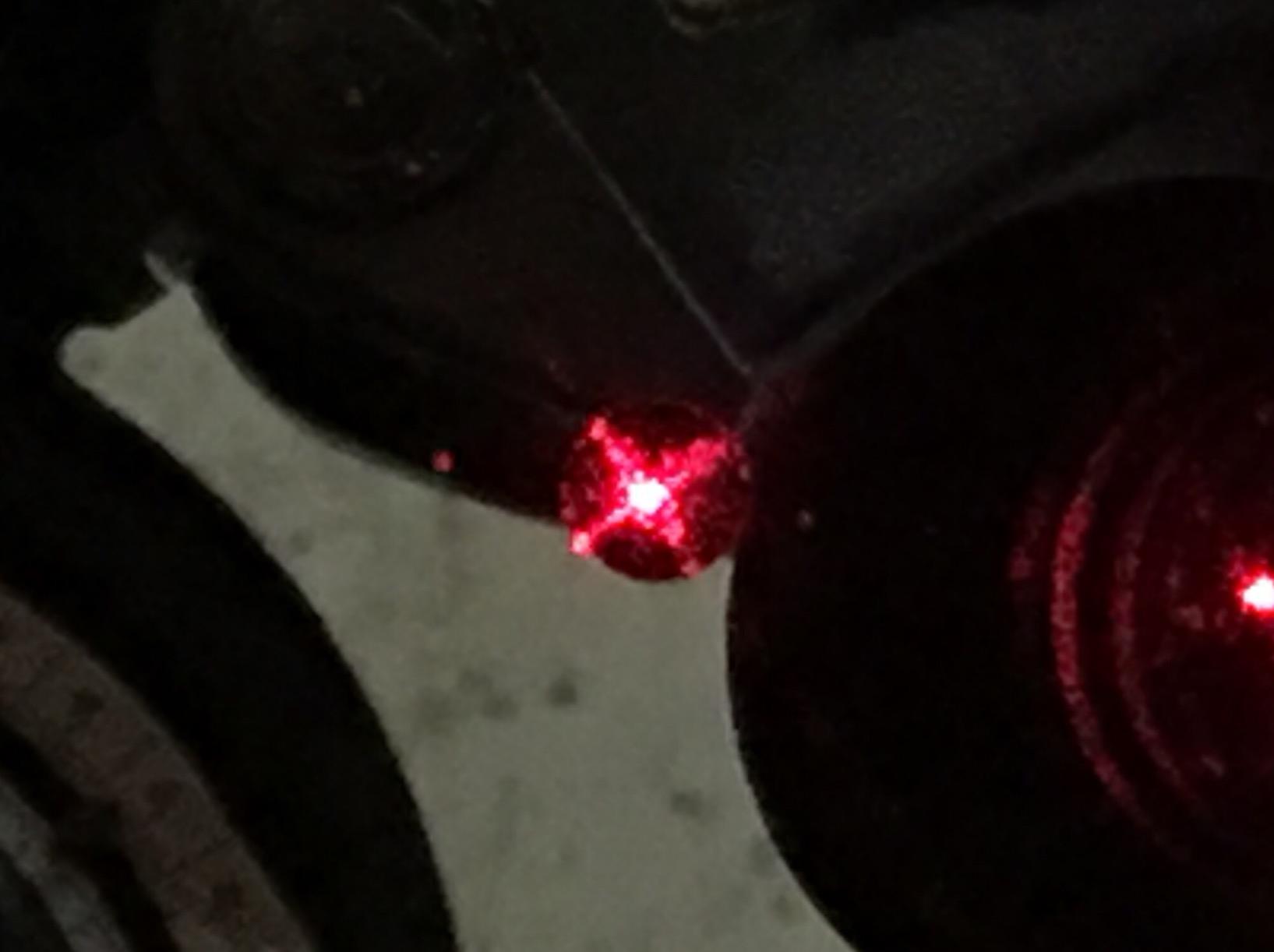
When self-centering actually helps
It helps most on fast Newtonians, where the cone of light leaving the primary is narrow and any angular error is amplified into visible coma. It also helps on scopes with a two inch focuser, because a wider opening has more room for play. On a rigid focuser it makes little practical difference, which is why budget tools get away with it on lighter scopes.
What the crosshair model gives you
A crosshair pattern gives you two reference lines instead of one point, so you can see an axis error as well as a centring error. On an astrograph where you are chasing fractions of a millimetre at the primary, that extra axis is genuinely useful, and it is the main reason to choose this model over the dot version further down.
7. Farpoint FP261 2 Inch Cheshire – Best for 2 Inch Dobsonians
Farpoint collimating Cheshire, 2″ Diameter, FP261
2 inch reflective Cheshire
Made in the USA
Includes spotting template
Pros
- 2 inch diameter suits large Dobsonians
- Reflective design gives a clear bullseye reference
- Includes mirror spotting template and center spots
- Written instructions ship in the box
Cons
- Thinnest review base among the well-rated picks
- 2 inch only so it will not fit 1.25 inch focusers
- Daylight use only
Most Cheshires are 1.25 inch, which can feel cramped in a large Dobsonian where the secondary shadow fills most of the view. This 2 inch reflective eyepiece from Farpoint opens the whole picture up. The 5.1 cm reflective face gives a wide bullseye that is much easier to read at the mirror end of a big tube.
The kit is unusually complete for a collimator. You get a mirror spotting template, a set of center spot stickers and written instructions, which addresses the single most common complaint about cheap Cheshires. The center spots in particular let you mark your primary properly rather than estimating where the centre is by eye.
It is made in the USA by Farpoint Astro, and the 4 inch focal length and 2x zoom ratio are specified in full, which is more transparency than most listings in this niche offer.
Why size matters on a big Dobsonian
Collimation accuracy is a resolution problem. A 1.25 inch Cheshire on a 12 inch Dob makes you judge a shadow that nearly fills the field, and small errors hide in the edges you cannot see. Doubling the aperture doubles the detail you can resolve, which is why experienced Dob owners gravitate to 2 inch tools.
Where the evidence is thin
Be honest about the data here. Twelve reviews at 4.1 stars is a thin feedback base for a premium-priced tool, and the listing itself is clear and well documented, but there is not enough long-term owner history to say much beyond that. If you can wait, the 1.25 inch options elsewhere on this list carry far more evidence.
8. HoTech SCA-1.25D Dot Laser – Best Telescope Collimator for 1.25 Inch Focusers
HoTech 1.25″ SCA Laser Collimator for Newtonian Telescope – Dot Model # SCA-1.25D
Self-centering barrel
Dot beam pattern
Custom hinged case
Pros
- Self-centering design holds steady without focuser slop
- Owners report dropping collimation time from 30-45 minutes to about 5
- Well-machined threads on battery compartment and compression ring
- Ships in a sturdy hinged case with cutouts
- Fits 1.25 inch focusers cheaper tools do not
Cons
- No easy way to verify the collimation of the laser itself
- Self-centering design can mislead in some focusers
- Only 8 ratings
This is the 1.25 inch companion to the HoTech model above, and the owners who bought it report the most dramatic time saving in this roundup: collimation time dropping from 30 to 45 minutes down to about five. That is the payoff of a mechanically centred barrel, because you stop re-running the same correction twice.
The build details are where the money went. The threads on the battery compartment and the compression ring are reported as well machined, which matters more than it sounds, because stripped threads on a tool you open in the dark are a real annoyance. It also ships in a custom hinged case with dedicated cutouts rather than a generic box.
The dot beam pattern keeps the target simple. One bright point on the primary is easier for a beginner to read than a crosshair, and there is less to interpret once you are making fine adjustments.
The calibration problem nobody mentions
There is no easy way to verify the collimation of the laser itself without building a jig. That is the same issue that affects every laser here, but on a small-sample premium tool it stings more, because the purchase implies a level of precision you cannot check. Budget ten minutes with a flat reference before the first real alignment.
Who should choose the dot over the crosshair
Choose the dot if you are collimating alone, in daylight, on a moderate aperture. One bright target with no surrounding pattern to interpret is the fastest path to a finished adjustment. Choose the crosshair version if you are chasing an astrograph and want to read axis error as well as centring.
9. Farpoint FP210 Laser Collimator – Best for Scopes You Move Between Sizes
Farpoint Laser Collimator, 650nm red Laser, 1.25″ & 2″ Combo Stepped Barrel, FP210
Stepped 1.25 and 2 inch barrel
650 nm red laser
Made in the USA
Pros
- One barrel covers both 1.25 and 2 inch focusers
- Includes spotting template and center spots
- Written instructions included
- Made in the USA by Farpoint Astro
Cons
- Only 3 reviews so the rating carries little evidence
- Heaviest body in the group at 1.3 pounds
- Battery powered laser needing periodic recalibration checks
Everyone who owns more than one telescope hits the same problem. The collimator that fits your 1.25 inch dob will not go into the 2 inch focuser on your imaging rig, and suddenly you own adapters. The FP210 solves that with a single combo stepped barrel that covers both sizes without a separate adapter ring.
It is built around a 650 nm red diode, and the body is made in the USA by Farpoint Astro. As with the Farpoint Cheshire above, the package includes a mirror spotting template, center spot stickers and instructions, so you can mark your primary correctly instead of guessing.
It is one of the heavier bodies in this roundup, at 1.3 pounds, and on a small or light focuser that mass can push the draw tube down, introducing sag that has nothing to do with your mirrors. Check that your focuser holds it level before you trust the reading.
When one barrel is worth it
If you genuinely move between a 1.25 inch and a 2 inch scope, the convenience of a single stepped barrel outweighs almost anything else. No adapters to lose, no second tool to store, and one calibration to maintain rather than two. For people with one telescope, it is simply more tool than you need.
Reading the rating honestly
The listing shows a 5.0 average, and that is exactly the number of reviews behind it. A perfect score on a base of three tells you the people who bought it were happy, which is not nothing, but it is not evidence either. Judge this one on the physical design and the included accessories rather than on the stars.
10. Alstar Collimating Cheshire Eyepiece – Best for Home-Built Telescopes
Alstar Collimating Cheshire Eyepiece, Collimation Telescope Eyepiece Metal
Aluminum alloy body
45 degree reference plate
1.58 ounces
Pros
- Metal construction feels solid and does not fall apart
- Makes collimating a home-built telescope far easier
- No battery and no laser calibration risk
- Easy to use once you find a walkthrough
Cons
- One unit arrived with grossly misaligned crosshairs
- Difficult for beginners without instructions
- Daylight use only
Home-built Newtonians are the hardest case for collimation. A tube you assembled yourself may have a primary cell that is not quite centred and a secondary that was set by eye, so you need a tool that tells the truth about both. This aluminum alloy eyepiece with a 45 degree reference plate does that for 1.58 ounces, and owners building their own scopes report it made the process dramatically easier.
The 45 degree plate is the working feature. It puts the crosshair and the primary reflection in the same view, so centring the secondary is a matter of turning one screw until the rings nest rather than a process of leaning in and out of the focuser. That single design decision is what separates a usable collimator from a frustrating one.
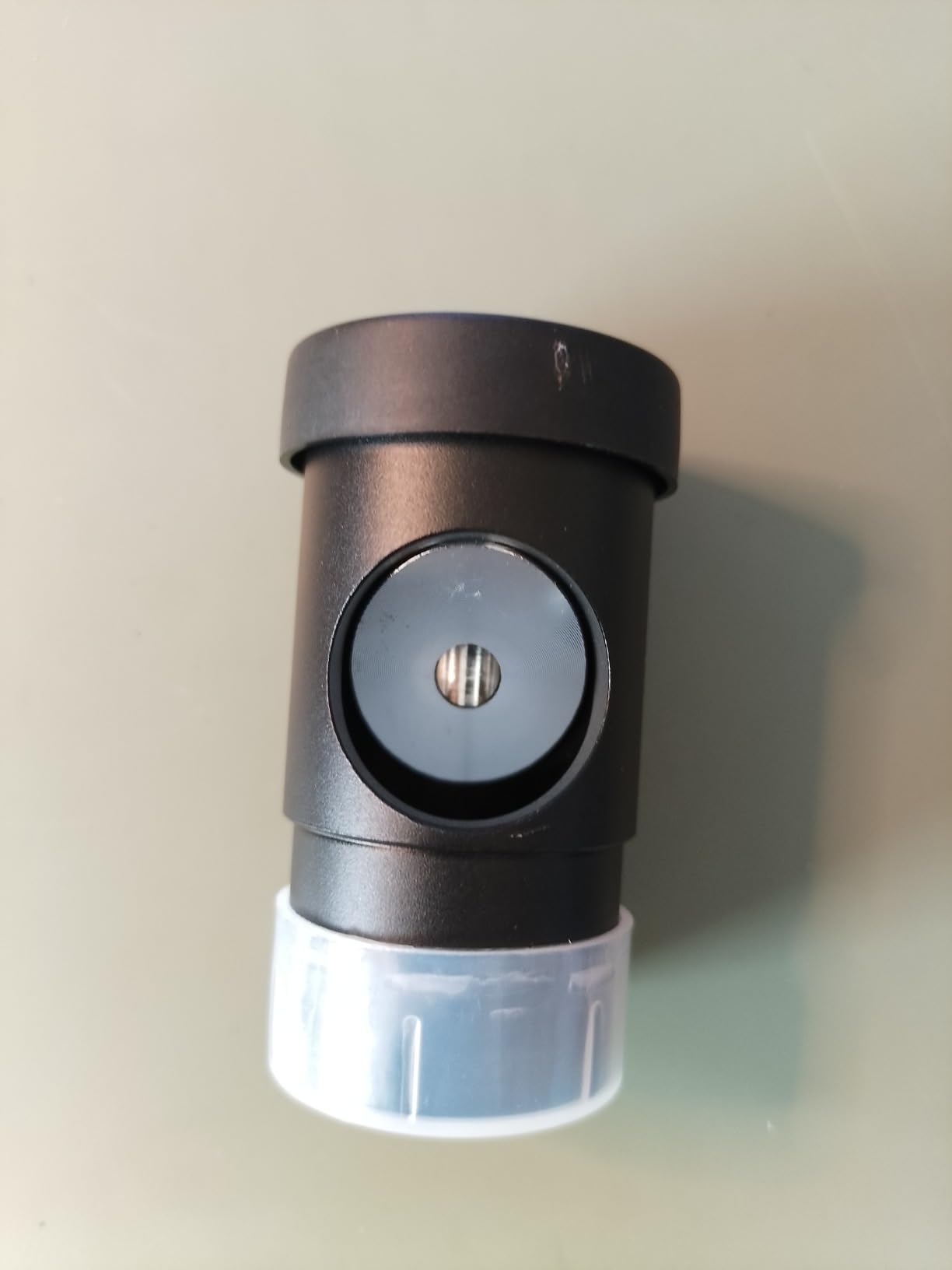
Quality control is the honest problem here. One owner received a unit with grossly misaligned crosshairs and a twisted metal insert, and had to take it apart and reseat the assembly. That is a single reported case rather than a pattern across 17 reviews, but on a tool whose entire job is telling you where centre is, it is the one flaw that would stop us recommending it more widely.
That is also why it sits at the bottom of the list despite a sensible design. The tool is capable and cheap, but you should check the crosshairs against a flat surface before trusting it, and you will need to find your own instructions, since none are included.
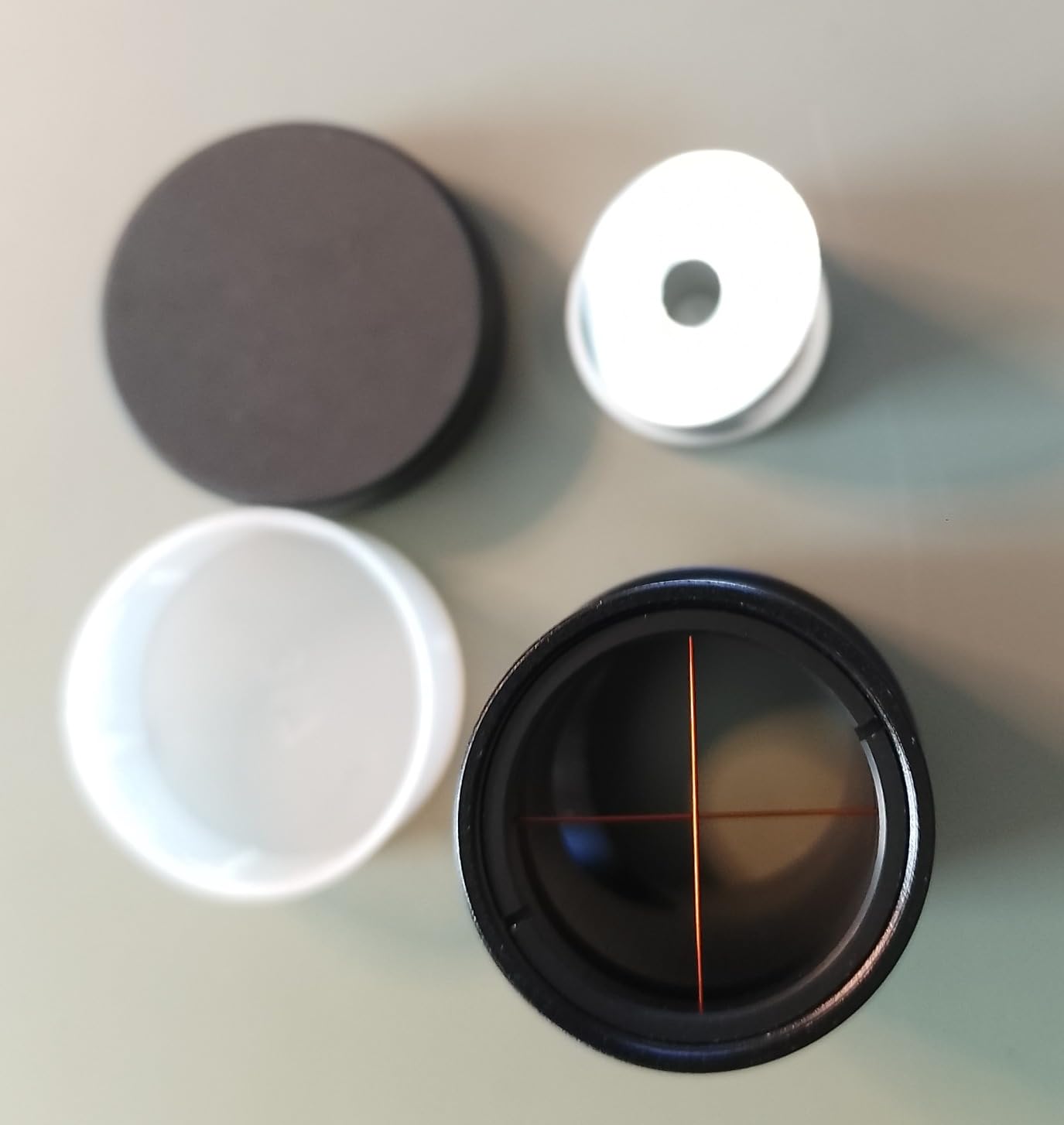
How to inspect it before you rely on it
Look straight down the eyepiece against a light source and confirm the crosshair intersection sits at the centre of the aperture. If it looks off to one side, that is the manufacturing fault owners report, and you can return it. Ten seconds of checking removes the only real risk with this tool.
Better options for the same job
If your home-built tube is f/5 or slower, one of the full-length Cheshires higher up this list will do the same job with better documented accuracy. The Alstar earns its place for builders who want the shortest, lightest tool available, and for anyone collimating a very cramped short-tube design where barrel length is the deciding factor.
Cheshire or Laser: Which Collimator Do You Need?
A Cheshire is the better all-around tool when your scope is f/5 or slower, because it checks the secondary and the primary in one view and cannot fall out of calibration. A laser is the better tool for fast Newtonians at f/4 and quicker, where the returned spot is small and a de-centred secondary shadow is hard to read by eye.
Here is how the two classes compare across the variables that actually decide the purchase.
What each one checks. A Cheshire centres the secondary and reveals its tilt against the crosshairs, then uses the reflected view to align the primary. A laser projects a beam down the tube and returns it off the primary, so it primarily informs the primary adjustment. The secondary work still has to be done, usually by eye, before the laser step.
Focal ratio suitability. This is the decisive variable and the one most product pages skip. Above f/5 the secondary shadow is large enough in the primary reflection that your eye reads the centring easily. At f/4 and faster that shadow shrinks, the judgement gets subjective, and a laser with adjustable brightness gives you a much larger target at the far end of the tube.
Calibration risk. A Cheshire has no calibration. A laser can and does arrive misaligned, and forum consensus treats this as the main reason to be cautious with inexpensive models. Only the HoTech and Farpoint designs here address the related problem of focuser slop, and none of them removes the need to check the beam before first use.
Learning curve and working conditions. A Cheshire needs daylight and a source of illumination, and it involves physically moving between the focuser and the mirror end. A laser works in any light, can be left in the focuser while you walk to the back of the tube, and its brightness control lets you dim the dot for a bright primary mirror.
The hybrid workflow. Experienced owners rarely pick one. A common approach in r/telescopes threads is to use a Cheshire to get roughly 80 percent of the way aligned and then finish with the laser. That gives you the secondary centred by eye and the primary finished with a bright, objective target, which is also why several picks in this roundup include a 45 degree plate.
How to Check a New Collimator in 10 Minutes
Check any new laser before you point it at your mirrors, because the most common complaint about budget collimators is that they arrive slightly out of alignment. Ten minutes of checking separates a tool you can trust from one that will convince you your telescope is fine when it is not.
Step 1: the flat-surface test. Place the collimator on a table and aim the beam at a wall or ceiling a few feet away, which is close to the 5 m reference most manufacturers use. Rotate the tool slowly in its hand. A correctly set laser draws a clean circular dot. A figure eight, a slanted ellipse or a dot that wanders means the beam is off axis.
Step 2: check both axes. Rotate the tool a further quarter turn and watch again. You want a circle from every angle. If the dot traces a line in one orientation, the beam is tilted in one plane only, and the adjustment screws usually correct it in a couple of minutes.
Step 3: correct it. On an open-screw design, the three adjustment screws sit at 120 degree intervals and accept a small hex key. Turn one at a time by a fraction of a turn, recheck, and repeat until the traced circle is even. If the screws are sealed, as on the Astromania, the tool needs opening or returning.
Step 4: verify against a real primary. Put the collimated tool in the telescope, remove the diagonal, and look at the primary from the front. The returned dot should land dead centre on the center spot. If you cannot see a center mark, use the one supplied with the Farpoint and HoTech kits, or make one with a cardboard template.
Then do a star test when you are finished. Focus a bright star with a high power eyepiece, defocus until you see the concentric ring pattern, and confirm the secondary shadow sits centred. That is ground truth, independent of any tool, and it is the only way to be certain both the collimator and the telescope are telling you the truth.
How to Choose a Telescope Collimator
Start with your focuser size, because a tool that does not physically fit is useless. Most entry-level Cheshires are 1.25 inch, which suits the majority of Newtonians, while many Dobsonians and imaging rigs take 2 inch. Measure before you buy, and check whether the tool includes an adapter or needs a separate one.
Second, match the tool to your focal ratio. Above f/5 a quality Cheshire is sufficient on its own and is the cheaper, lower-fuss answer. At f/4 and faster, use a laser, ideally a self-centering one, because the primary adjustment becomes subjective with a sight tube alone.
Third, think about whether the tool needs to be user-calibratable. If you transport your telescope, expect to drop it at some point, or plan to move the collimator between scopes, you need adjustment screws you can reach. If your scope stays put, factory adjustment is probably enough and a smaller body is a better trade.
Fourth, weight matters more than people expect. A heavy tool can pull a light focuser draw tube down, and that sag shifts the beam and introduces an error you will chase for an hour. The 3 ounce and 3.1 ounce tools in this roundup are the safe choices for portable and lightweight focusers.
Finally, consider what else you own. If you also have a Schmidt-Cassegrain, most of the tools here will not collimate it properly, because a Newtonian laser assumes a flat primary. A Newtonian-specific Cheshire such as the Celestron here is the more useful cross-format tool. Refractors, in contrast, generally need no collimation at all.
How Often Should You Collimate a Newtonian?
Check your collimation after any event that could move the mirrors, and check it on a schedule if you move your telescope often. The common triggers are a bump in transit, loading the tube into a vehicle, or a large temperature swing that shifts the tube and the secondary holder relative to each other.
A frequently transported Dobsonian benefits from a quick check every few months, because each car journey is a small chance of something shifting. A scope that lives in a garage or a closet typically needs checking about once a year, and honestly many owners never need more than that.
Do not rely on a schedule alone. If the image quality changes noticeably, if a planet looks mushy when it used to look sharp, or if stars start showing asymmetric coma on one side of the field, collimate and then look again. That is a faster signal than any calendar.
Laser Safety for Collimators
Never look into the beam of a laser collimator, and never look into the returned beam reflected off the primary mirror. Direct viewing of a red diode beam can damage your eye, and the return beam off a mirror is the same power as the outgoing beam.
Keep the beam at a level where you can see it without straining, which is exactly what the brightness controls on the SVBONY and Astromania models are for. Never point the beam at anyone else’s eye level, and be careful with children at an observing night.
Never use a collimator on an open field during a public star party without checking where the beam points, and never aim it toward aircraft, roads or neighbouring property. The lowest brightness setting that still lets you read the return is the right operating mode for most daylight work.
Frequently Asked Questions
What is the best collimation tool for Newtonian telescopes?
For f/5 and slower Newtonians, a precision Cheshire eyepiece is the better all-around tool because it checks the secondary and the primary in one view and never needs calibrating. For f/4 and faster astrographs, use a laser, ideally a self-centering model, because the returned dot gives you a clearer target for the primary adjustment.
Which is better for collimation, a Cheshire eyepiece or a laser collimator?
A Cheshire wins on reliability, cost and daylight use, and it is sufficient alone above f/5. A laser wins on fast focal ratios, low light and convenience, because you can leave it in the focuser while you work at the mirror end. Experienced users often use a Cheshire for the secondary and a laser to finish the primary.
How do I use a Cheshire collimator?
Check or add a center mark on the primary. Look down the focuser with the eyepiece in place and centre the secondary reflection inside the crosshairs. Tilt the secondary until the reflection of your eye or the crosshairs is concentric. Then move to the mirror end and adjust the primary until the secondary shadow is centred in the primary reflection.
How hard is it to collimate a telescope?
Allow 10 to 15 minutes for a first session with a Cheshire on a slow Newtonian. Once you know the four-step sequence it takes under five minutes with a laser. The learning curve is front-loaded rather than ongoing, and most of the difficulty is simply knowing which screw turns which way.
How often do you need to collimate a telescope?
Check after any bump, any journey in a vehicle, or any large temperature swing. A frequently transported Dobsonian is worth checking every few months, while a scope that stays in one place needs roughly an annual check. If image quality changes noticeably, that is a stronger trigger than any schedule.
Do Schmidt Cassegrain telescopes need collimation?
Catadioptric scopes do need periodic collimation, but not with a Newtonian laser, because their primary is curved. A Newtonian-specific Cheshire such as the Celestron 94182 is the practical cross-format choice, or you can collimate a Cassegrain on a star. Refractors generally need no collimation at all.
Where to Start With Telescope Collimators in 2026
For most people, start with the SVBONY Laser Collimator. It fits both common focuser sizes, has the deepest owner record in this roundup, and the seven brightness levels mean it works in a bright garage or a dark field. Check the beam before you use it, then confirm the result with a star test.
If you would rather own something that cannot be out of calibration, the SVBONY SV197 Cheshire is the most precisely specified build in the group, with steel crosshairs and results that agree with a laser. For a slow Dobsonian at f/5 or beyond, that is all you will ever need.
For a fast astrograph, the HoTech SCA-2C is the tool the physics points you toward, because the self-centering barrel and side-view faceplate remove the two errors that slow you down most. Budget more of your attention to the focal ratio than to any other single variable, and check every new collimator on a flat surface before you trust it on your mirrors.