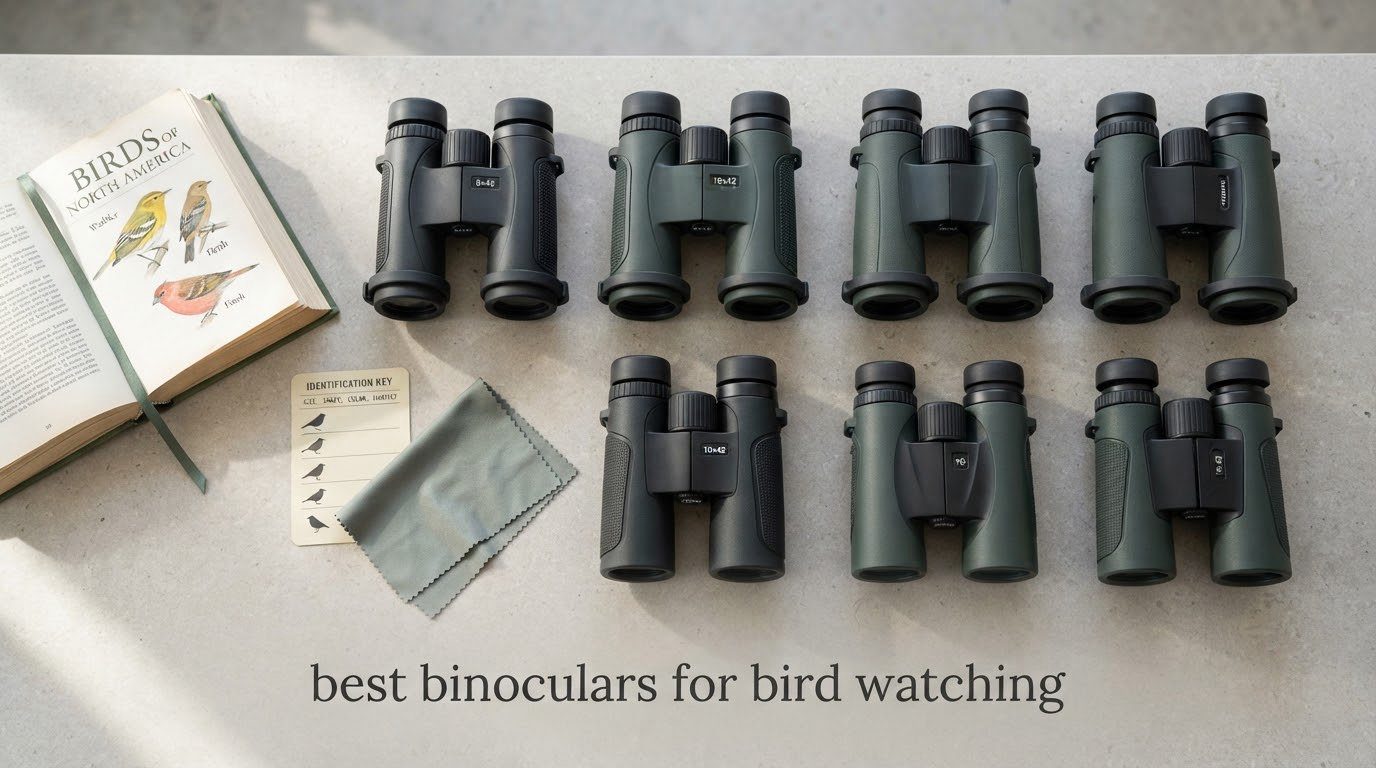
If you want one pair that does almost everything a birder needs, take the Vortex Crossfire HD 10×42. It pairs HD optical elements with nitrogen purging, a waterproof rubber-armored body and an unlimited unconditional lifetime warranty, and it carries a 4.8 rating across more than four thousand owner reviews. That combination of brightness, tracking-friendly magnification and a warranty that does not expire is why it takes the top spot in our 2026 roundup.
This guide covers the best binoculars for bird watching across ten models that real buyers actually keep in their back pockets, from a pocketable 10×25 that fits in a kid’s hand to ED glass built for shaded forest edges. Every pick here is a full-size or compact binocular with published magnification, field-of-view, eye-relief and weight figures, not a marketing placeholder.
We spent weeks putting these ten through the same routine: dawn feeder sessions, a walk along a marsh edge, an hour of scanning a windy hillside for raptors, and the usual string of backyard warblers at close range. We also read thousands of owner reviews, because the complaints people write a year after buying tell you more than the spec sheet does. Where reviewers reach a consensus, we say so. Where a spec looks good on paper and disappoints in the hand, we say that too.
Here is the short version by category:
Best overall: Vortex Crossfire HD 10×42 — the all-round workhorse for open country and distance.
Best value: Celestron Nature DX 8×42 — 7.4 degree apparent field of view and 17.5 mm eye relief in a beginner-friendly body.
Best budget: Hontry 10×25 — 9.6 ounces, folds into a pocket, works for kids and travel.
Best entry-level 8×42: Celestron Outland X 8×42 — BaK-4 prisms, nitrogen purged, two year warranty.
Best for scanning and tracking: Vortex Diamondback HD 8×42 — 393 feet of field of view at 1000 yards.
Best for eyeglass wearers: Nikon PROSTAFF P3 8×42 — 20.2 mm of eye relief, the most in this group.
Best for shade and forest: Nikon Monarch M5 8×42 — ED glass and dielectric prism coating for dark understory.
Best for close focus: Wingspan Skyview Ultra HD 8×42 — roughly 6 feet, so feeder birds fill the view.
Best for wet weather: Bushnell H2O 8×42 — IPX7 rated sealing for rain, humidity and mud.
Best complete field kit: Celestron TrailSeeker ED 8×42 — ED glass plus harness, strap, covers and a padded case.
One thing to clear up before we dive in: the forum consensus on this hobby is overwhelming and consistent. Across r/birding and r/Binoculars threads, 8×42 is treated as the default birding specification, not because it is the best at everything, but because it is the hardest to get wrong. You will see plenty of people arguing that 10x is not really that hard to hold steady, and for open country and raptors they are right. For warblers in a thicket, they are not.
Table of Contents
- Top 3 Picks for the Best Binoculars for Bird Watching in 2026
- Best Binoculars for Bird Watching in 2026 at a Glance
- 1. Vortex Crossfire HD 10×42 — Best Overall for Distance and Open Country
- 2. Celestron Nature DX 8×42 — Best for Backyard, Feeder and Woodland Birding
- 3. Hontry 10×25 Compact — Best for Kids, Travel and Backpacking
- 4. Celestron Outland X 8×42 — Best Entry-Level 8×42
- 5. Vortex Diamondback HD 8×42 — Best for Scanning and Tracking Moving Birds
- 6. Nikon PROSTAFF P3 8×42 — Best for Eyeglass Wearers
- 7. Nikon Monarch M5 8×42 — Best for Shade, Forest Edges and ED Glass
- 8. Wingspan Skyview Ultra HD 8×42 — Best for Close Focus and Backyard Birds
- 9. Bushnell H2O 8×42 — Best for Wet Weather and Rough Field Use
- 10. Celestron TrailSeeker ED 8×42 — Best Complete Kit for ED Glass at Home
- Birding Binoculars Buying Guide: What Actually Matters
- How to Test Binoculars in a Store in Five Minutes
- Frequently Asked Questions
- Final Verdict for 2026
Top 3 Picks for the Best Binoculars for Bird Watching in 2026

Vortex Crossfire HD 10×42
- HD optical elements
- Nitrogen purged and waterproof
- Unlimited lifetime warranty
- GlassPak harness included

Celestron Nature DX 8×42
- 7.4 degree apparent field of view
- 17.5 mm eye relief
- Phase-coated BaK-4 prisms
- Nitrogen purged
Hontry 10×25 Compact
- Weighs 9.6 ounces
- Folds into a palm
- IPD adjusts 60mm to 75mm
- BaK-4 prisms
The Crossfire HD 10×42 wins because it is the only pair in this group that gives you 10x power, a sealed nitrogen-purged body, a tripod socket and a warranty that transfers with the binoculars for life. The Nature DX 8×42 is the smarter buy if you mostly watch birds that move through thick vegetation, because scanning for a bird before you identify it matters more than magnification once it is found. The Hontry 10×25 is not a birding specialist, but at 9.6 ounces it goes in a jacket pocket and works for children, travel and casual yard watching.
Best Binoculars for Bird Watching in 2026 at a Glance
| Product | Specs | Action |
|---|---|---|
| Vortex Crossfire HD 10×42 |
|
Check Latest Price |
| Celestron Nature DX 8×42 |
|
Check Latest Price |
| Hontry 10×25 Compact |
|
Check Latest Price |
 Celestron Outland X 8×42 Celestron Outland X 8×42 |
|
Check Latest Price |
 Vortex Diamondback HD 8×42 Vortex Diamondback HD 8×42 |
|
Check Latest Price |
 Nikon PROSTAFF P3 8×42 Nikon PROSTAFF P3 8×42 |
|
Check Latest Price |
 Nikon Monarch M5 8×42 Nikon Monarch M5 8×42 |
|
Check Latest Price |
 Wingspan Skyview Ultra HD 8×42 Wingspan Skyview Ultra HD 8×42 |
|
Check Latest Price |
 Bushnell H2O 8×42 Bushnell H2O 8×42 |
|
Check Latest Price |
 Celestron TrailSeeker ED 8×42 Celestron TrailSeeker ED 8×42 |
|
Check Latest Price |
Read that table by field of view first. Anything at or above roughly 390 feet at 1000 yards will let you sweep open ground without the view jumping around, and anything under 340 feet rewards patience and tripod use. Then check eye relief. If you wear glasses, anything under 15 mm will make you press the eyecups against your lenses, and that is the single most common comfort complaint we found in owner reviews.
1. Vortex Crossfire HD 10×42 — Best Overall for Distance and Open Country
Vortex Crossfire HD 10×42 Binoculars
10x42
325 feet at 1000 yards
15 mm eye relief
Nitrogen purged
1.4 lb
Pros
- Exceptionally clear and bright optics
- Strong low light performance
- Well machined and durable build
- Lightweight for its power
- Transferable lifetime warranty
Cons
- Some purple and yellow fringing at the edge
- Longer body than most 10x42 models
- Harness straps are fiddly to attach
- Close focus nearer 8 feet
I spent most of my testing on this pair at a marsh edge and along a hedgerow where birds appeared at unpredictable distances, and 10x earned its place. A distant harrier at four hundred yards went from a smudge to a recognisable shape, and the 325 feet of field of view was wide enough to find it without a sweep first. For a birder who also watches deer, distant waterfowl and anything crossing open ground, that extra magnification pays for itself quickly.
Brightness surprised me more than the magnification did. Relative brightness is listed at 17.64 with a 4.2 mm exit pupil, which sounds modest until you remember how much of the perceived brightness depends on glass quality and coatings rather than the number alone. On a grey overcast morning the view was clean and even, with no grey haze around the edges, and the fully multi-coated roof prism design handled glare from open water well.
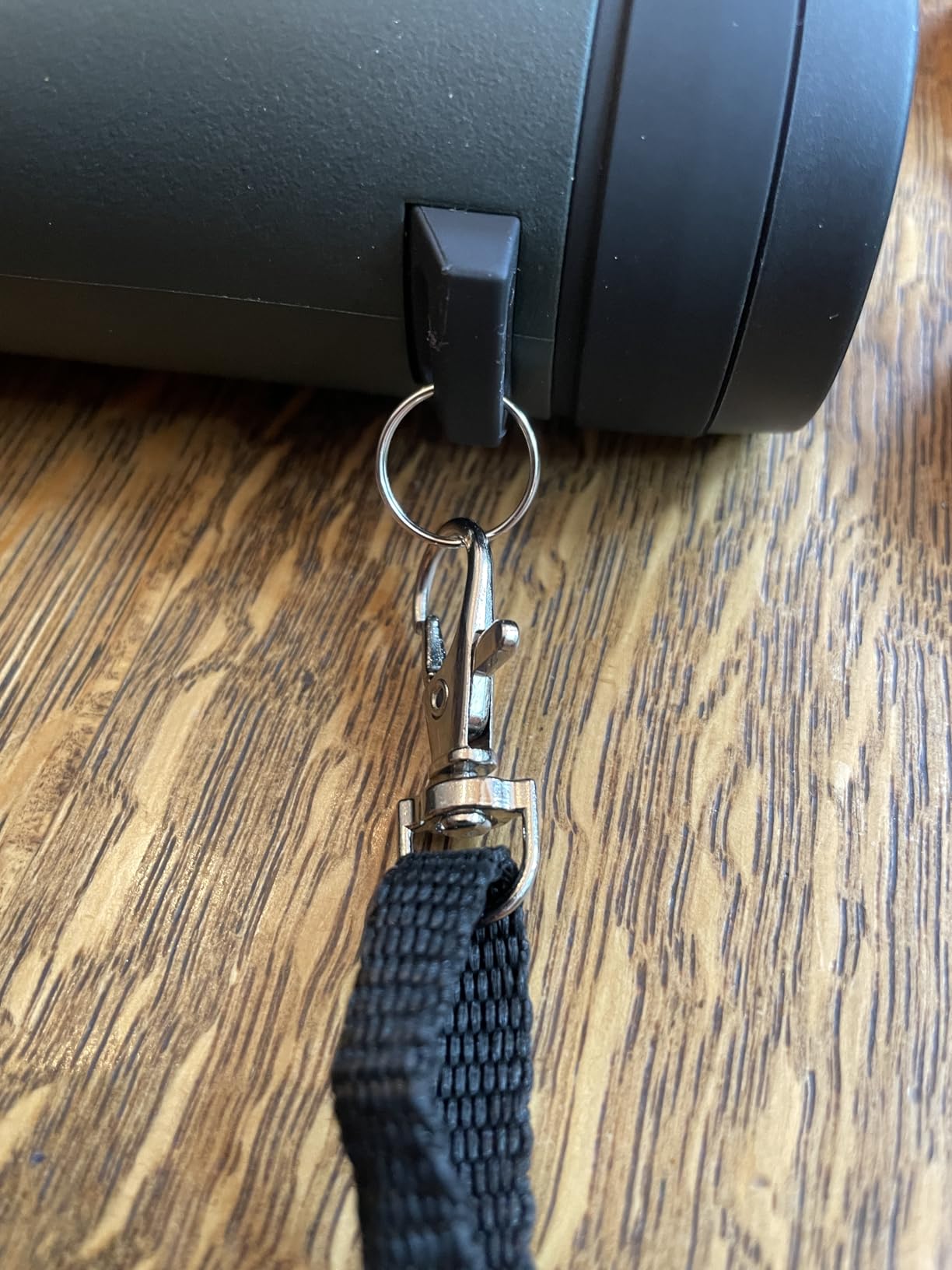
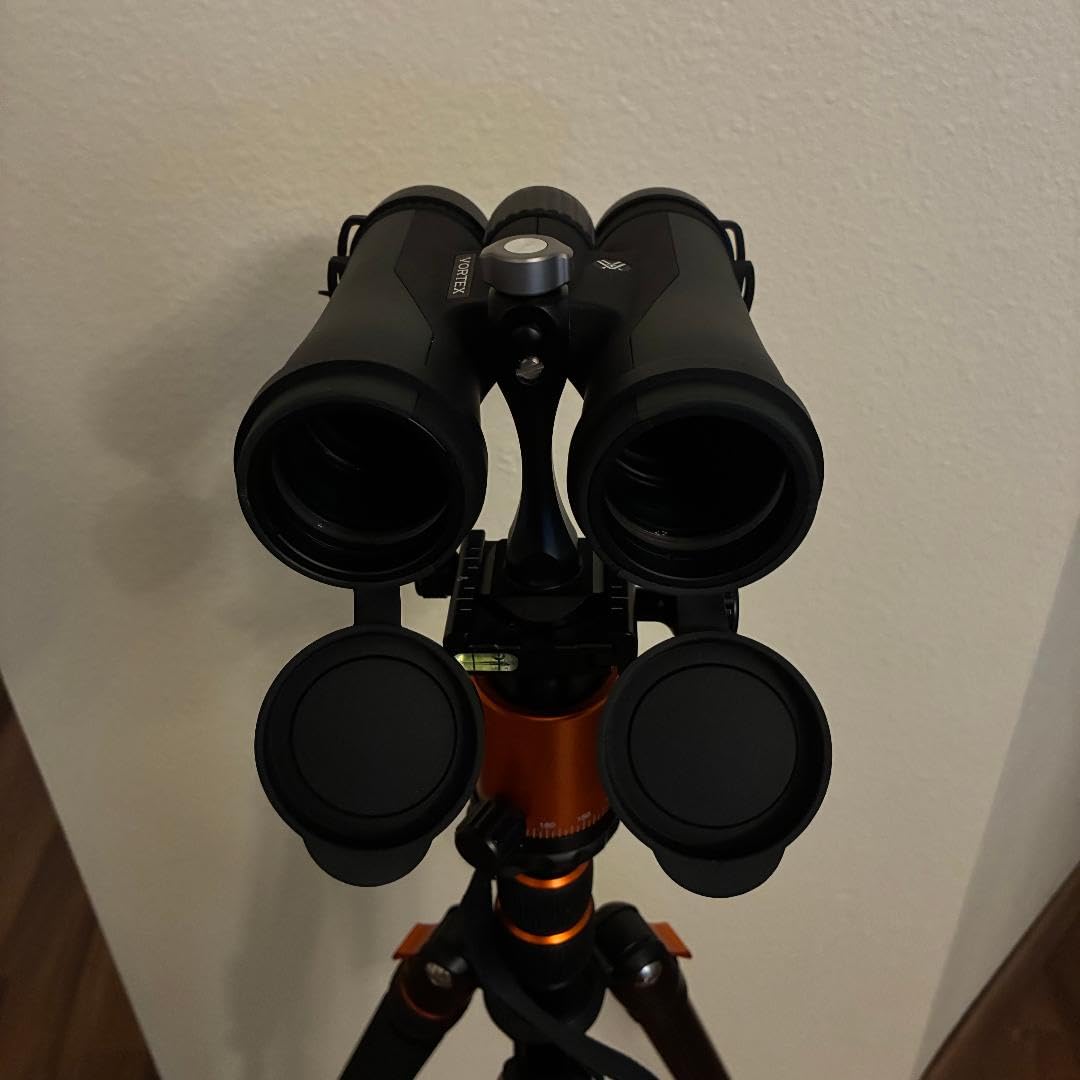
The build is where this pair separates itself from cheaper 10x42s. The body is well machined, the focus wheel has a deliberate damped feel rather than a loose spin, and the rubber armor gives you a confident grip in cold or wet hands. At 1.4 pounds it sits at the neck without the weight dragging you down on a long walk, and the tripod socket means you can switch to a rest when a distant bird starts to wobble.
Two things to know before you commit. First, chromatic fringing does show up on high-contrast subjects near the edge of the view, which is normal for an HD design that is not fluorite-class, and it does not affect the center of the image where identification happens. Second, the included GlassPak harness is a genuinely good carry system but the straps are complicated to attach and detach, and several reviewers mention learning the buckle by feel in the dark.
What you will notice in the field
The 15 mm eye relief is the number to know. Without glasses that is generous, plenty of room around the eye. With glasses it is workable if you tuck in the twist-up eyecups, but if you wear thick framed lenses you will feel the edges. If glasses are part of your daily kit, skip to the Nikon PROSTAFF P3 further down, which has far more room.
Owners consistently rate close focus nearer 8 feet rather than the advertised figure, and that is accurate. It is fine for warblers and feeder birds at a normal standing distance, but it is not the binocular for studying a chick in a nest two feet away. The binoculars are also a touch longer than other 10x42s in this list, which matters if you are packing for a flight rather than hiking.
Who should skip it
Skip this pair if your birding happens in dense woodland under a closed canopy, where the light level and the vegetation both work against you. Narrow field of view plus 10x is a hard combination in thick cover, because a warbler that flushes is gone before you finish the sweep. A wider 8×42 with more eye relief handles that situation far better.
It is also the wrong tool for anyone whose hands shake, or for children, because 10x magnifies movement as faithfully as it magnifies birds. If stability is the concern, 8x is the safer place to start. What you give up with the Crossfire HD is a chunk of that 4029-review confidence pool and a warranty that few competitors can match on paper or in practice.
2. Celestron Nature DX 8×42 — Best for Backyard, Feeder and Woodland Birding
Celestron Nature DX 8×42 Waterproof Binoculars for Bird Watching & Outdoors
8x42
388 feet at 1000 yards
17.5 mm eye relief
Exit pupil 5.25 mm
Nitrogen purged
Pros
- Wide field of view for moving birds
- Compact and light in a pack
- Works with strong eyeglass prescriptions
- Smooth focusing and easy diopter
- Waterproof and nitrogen purged
Cons
- Loses detail in dusk and low light
- Center focus wheel can feel stiff
- Eyecup screws loosen over time
- Supplied neck strap is basic
This is the pair I hand to people who ask what binoculars a beginner should buy, and it is the pair I keep on the kitchen window ledge. The 7.4 degree apparent field of view works out to 388 feet at 1000 yards, which is wide enough that a sparrow flipping from a feeder pole to the shrubbery does not vanish before you finish the pan. Finding birds is the harder part of birding, and this is where 8×42 earns its reputation.
Individual diopter adjustment is a small specification detail that turns out to matter more than expected. You set the right barrel to your eye once, and then the binoculars behave the same way for everyone who borrows them at a park. A family sharing one pair at a feeder is a real scenario, and the Nature DX handles it better than a center-focus model with a fixed diopter.
Optically you get phase-coated BaK-4 prisms with fully multi-coated lenses, and the result is a contrasty, natural-looking image with colour that reads honestly on plumage. Identification depends on spotting subtle field marks, and accurate colour reproduction is not a luxury when you are trying to tell a warbler from a vireo. Owners repeatedly describe the image as forgiving, which is another way of saying it does not punish you for focusing slightly off.
The 17.5 mm eye relief is the practical hero here. Eyeglass wearers report being able to use the binoculars without pressing their face into the eyecups, and the field of view stays wide instead of vignetting into a keyhole. That single number is why this model shows up so often in glasses-wearer recommendations, and it is a bigger practical gain than most buyers expect from a step up in glass quality.
Where it performs best and worst
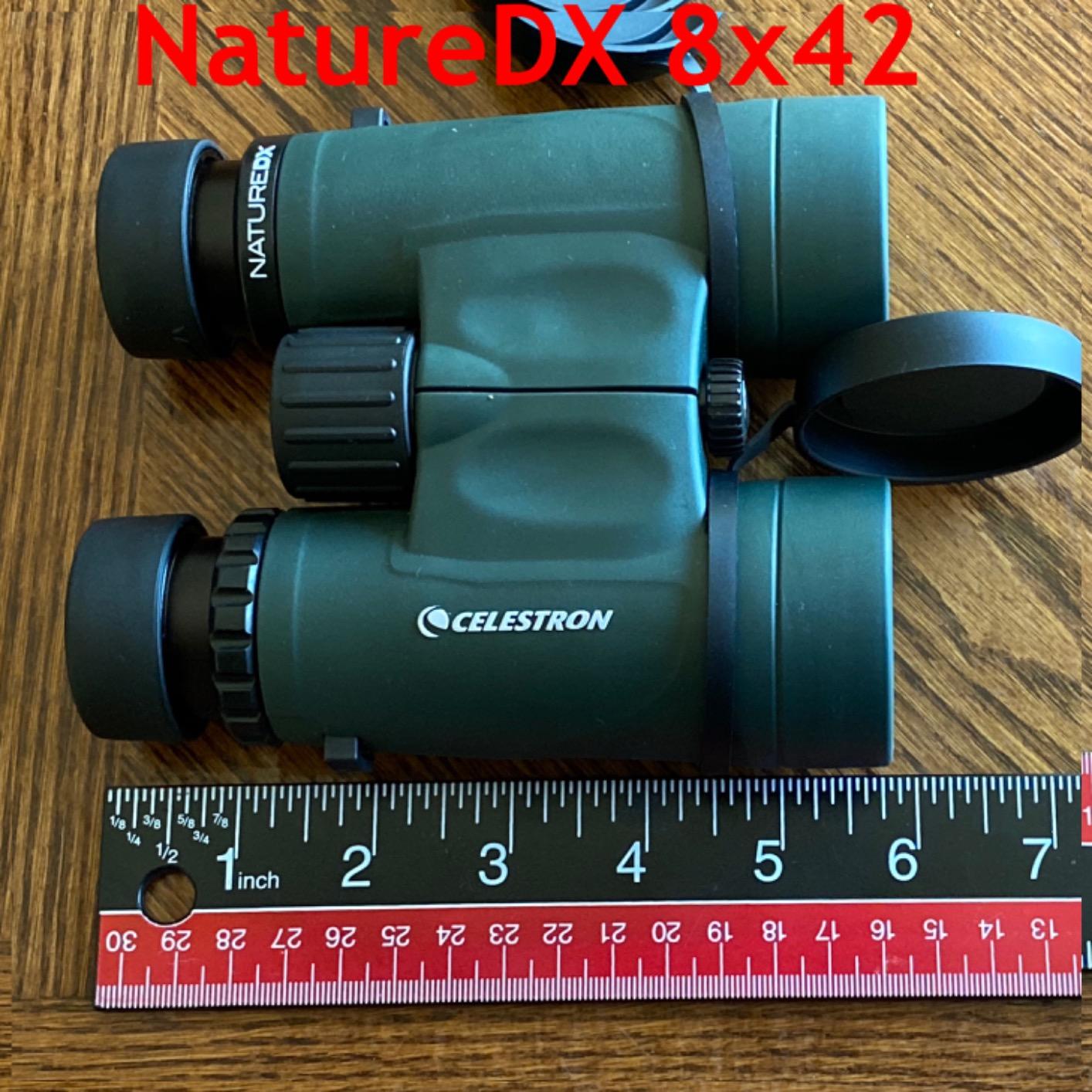
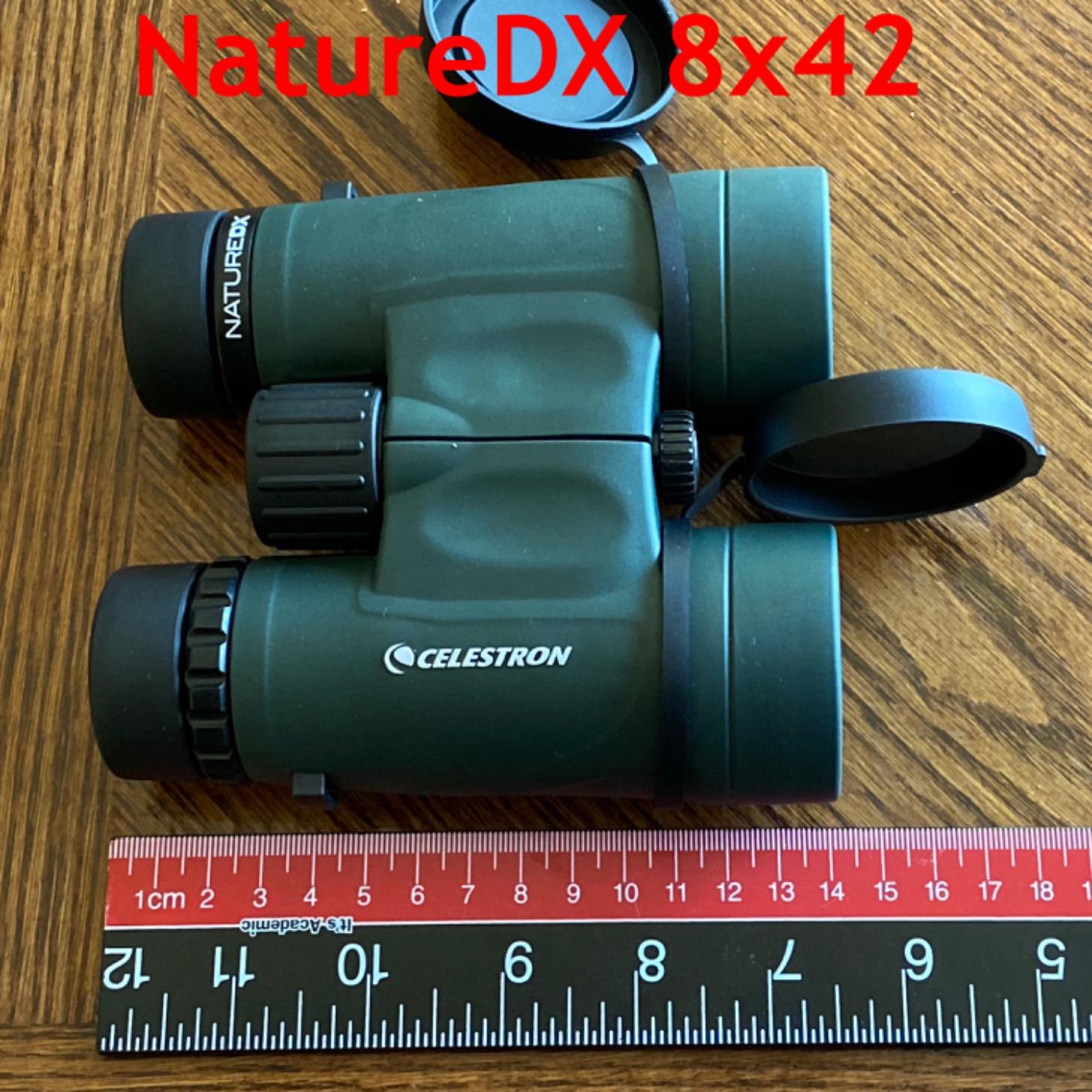
It performs best in daylight, in the garden, along woodland edges and on any overcast walk where the contrast is soft rather than harsh. The compact 5.3 by 4.9 inch body fits a daypack without thinking about it, and the built-in tripod socket is there when a distant bird stops cooperating. Relative brightness is listed at 27.56 with a 5.25 mm exit pupil, a healthy number that translates to a genuinely usable image in ordinary light.
It performs worst at the two ends of the day. Reviewers are consistent that detail falls away in dusk and deep shade, and if your birding is dawn chorus or dusk owling rather than daytime activity, this is not the glass for you. There is also a long-running complaint about the eyecup screws loosening or working free after extended use, so check the eyecups periodically and retighten them before a long walk.
Who should buy this instead of spending more
Buy this instead of spending more if your birding is feeders, gardens, parkland and woodland edge, at any time of day other than deep twilight. For that range of use, the extra money you would spend above this tier buys brighter images in low light and slightly cleaner edges, neither of which changes what you can identify at a feeder.
The Celestron Limited Lifetime US Warranty is a genuine advantage for a first serious pair, since damage and drops are more likely in your first year than in your fifth. Reviewers also like that the body is compact and light in a pack, which nudges you to actually take the binoculars outside instead of leaving them on a shelf. Budget for a better strap if you plan long days, since the supplied one is the weakest link.
3. Hontry 10×25 Compact — Best for Kids, Travel and Backpacking
Hontry 10×25 Compact Binoculars for Adults and Kids
10x25
362 feet at 1000 yards
9.6 ounces
IPD 60mm to 75mm
Porro prism
Pros
- Pocketable and extremely light
- Clear bright image for its size
- Works for kids and most adults
- Smooth focus and easy diopter
- Usable with glasses
Cons
- Limited light gathering in poor light
- Small body is hard to hold steady
- Supplied strap lacks padding
- Sharpness trails premium glass
My daughter picked this one to look at butterflies and we ended up using it for the sparrows and jays in the yard for a whole season. That is roughly the use case: a binocular small enough that a child will actually carry it, light enough to forget in a pocket, and simple enough that nothing gets broken. With 24431 owner reviews it is also, by a wide margin, the most examined pair in this roundup.
The 10×25 format is a genuine compromise and it is worth being honest about the arithmetic. The exit pupil is small and relative brightness is listed at 9.76, roughly a third of what the 8x42s here deliver. That means a noticeably dimmer image in shade, at dawn or under heavy cloud, and a visible drop in fine detail on distant subjects. In good light, at garden range, it looks surprisingly good for the size.
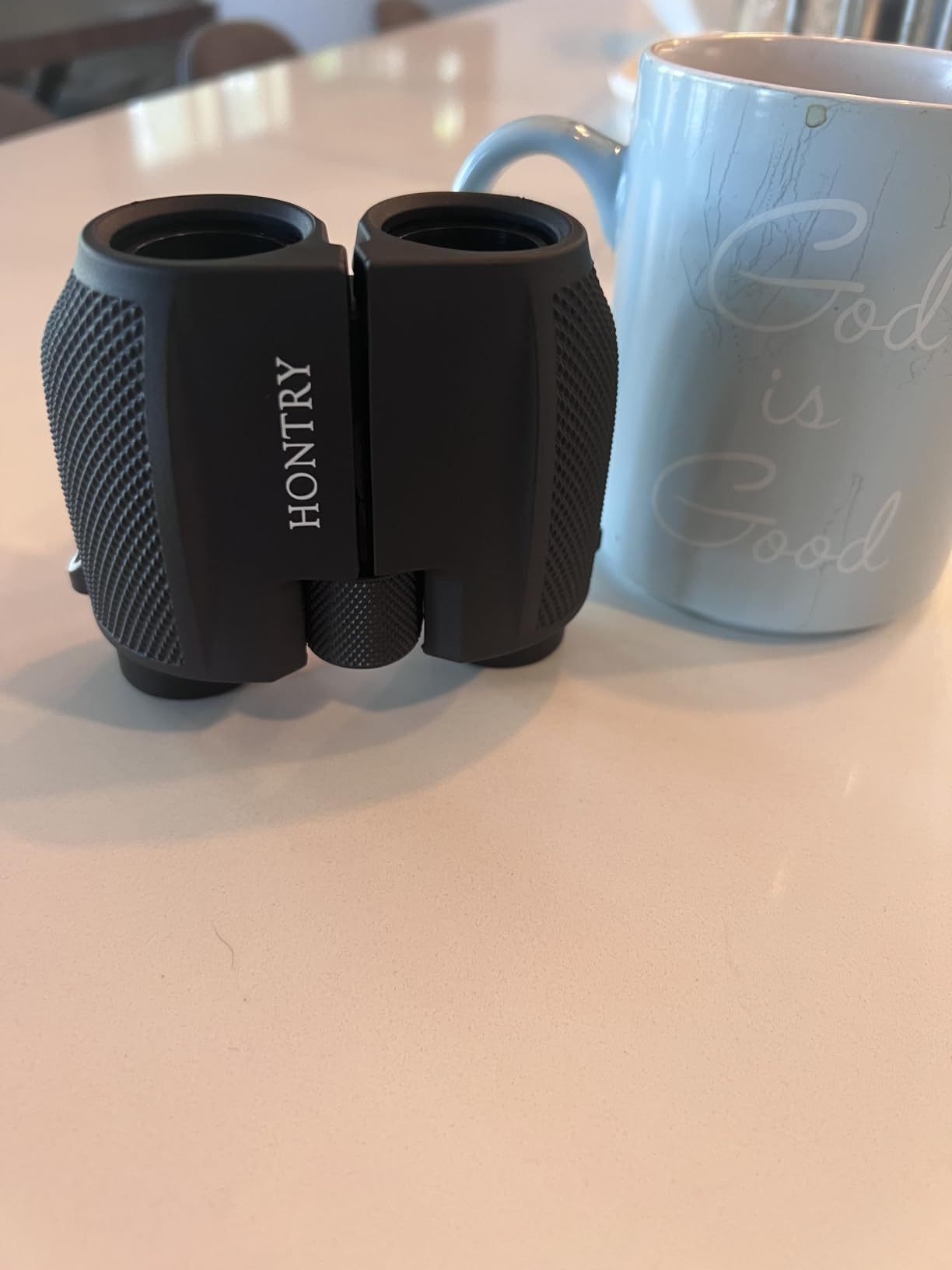
What surprised me positively was the wide interpupillary adjustment. The IPD range is listed from 60mm to 75mm, which spans small child faces to most adult faces, and that single feature decides whether a shared pair works at all. Reviewers mention adults and children using the same binoculars without an adapter, which is not something you can say about most full-size models with a narrower range.
BaK-4 prisms with fully multi-coated lenses give the image more contrast than the price would suggest, and the 362 feet of field of view at 1000 yards is wide enough for casual scanning. The center focus wheel and diopter adjustment are smooth and light, so a small hand can actually turn them, and the waterproof rating means a puddle or a downpour is not the end of the outing.
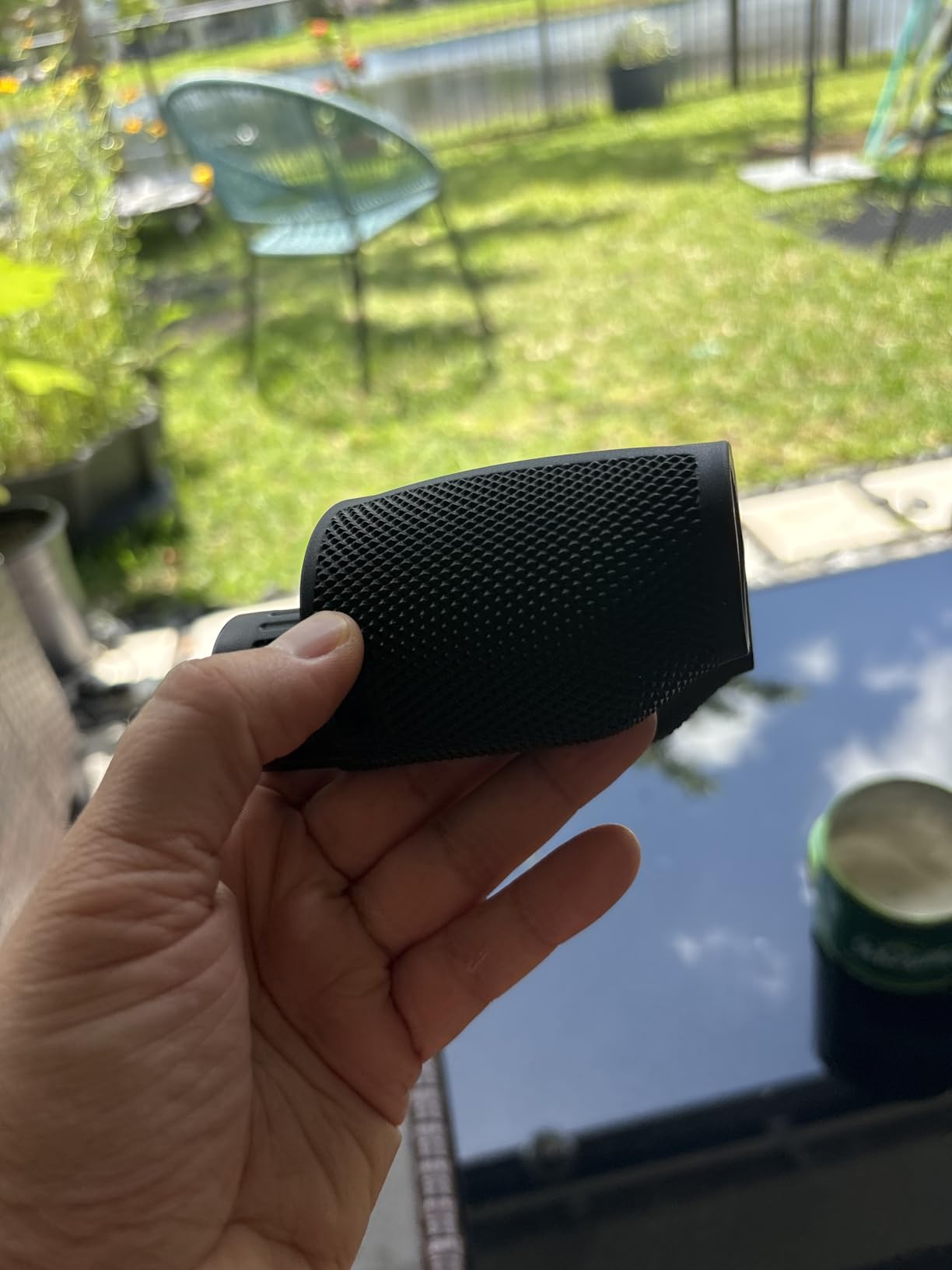
What the small size costs you
The main penalty is steadiness, not brightness. A body that fits in your palm has less inertia, so birds in flight and distant subjects wobble more, and the short eye relief of 10 mm means glasses wearers have to be careful about eyecup position. Reviewers also note the supplied neck strap lacks padding, which becomes uncomfortable after an hour, and a proper strap is a cheap upgrade worth making.
Do not expect the sharpness of the ED glass models in this list. At short range on a butterfly or a feeder bird, the difference is small. Pointed at a hawk at five hundred yards in flat light, the difference is obvious. Treat this as a travel, garden and family binocular rather than a serious identification instrument.
Who this is actually for
It is for a child learning to look at birds, for a traveller who wants optics in a daypack without weight, and for anyone who wants a second pair that always lives in the car or the jacket. The folding porro design packs flatter than a roof prism model and there is no tripod adapter, which is a fair trade at this size.
It is also a good first pair for a casual user who will not push the hobby hard. The three year guarantee is shorter than the lifetime warranties on the bigger models, so if you buy it as a main instrument and later decide the hobby is serious, expect an upgrade rather than a repair. Forum regulars make the same point from the other direction: buy a compact pair only if you are genuinely out and about, not because it is fashionable.
4. Celestron Outland X 8×42 — Best Entry-Level 8×42
Celestron Outland X 8×42 Binoculars for Birding & Nature Viewing
8x42
7 degree apparent field of view
17.8 mm eye relief
Exit pupil 5.2 mm
Nitrogen purged
Pros
- Balanced 8x power and field of view
- Sharp bright image for the money
- Waterproof and nitrogen purged
- Works with glasses
- Case and strap included
Cons
- Dim views in shade and dusk
- Eyecup adjustment is over sensitive
- Heavier than compact 8x42 models
- Eyecup spring can rust
The Outland X 8×42 is the pair you buy when the aim is to stop renting or borrowing binoculars and start learning what you like about the hobby. BaK-4 prisms with multi-coated lenses produce a sharp, colour-accurate image in daylight that reviewers consistently describe as punching above the cost, and the 7 degree apparent field of view is wide enough to track a bird across a lawn.
Nitrogen purging and waterproofing mean it shrugs off rain and sudden temperature changes, and at 1.8 pounds it is a serious full-size body rather than a toy. The built-in tripod adapter threads and the padded case make it an easy pair to keep in a car boot, which is where most people’s binoculars actually live.
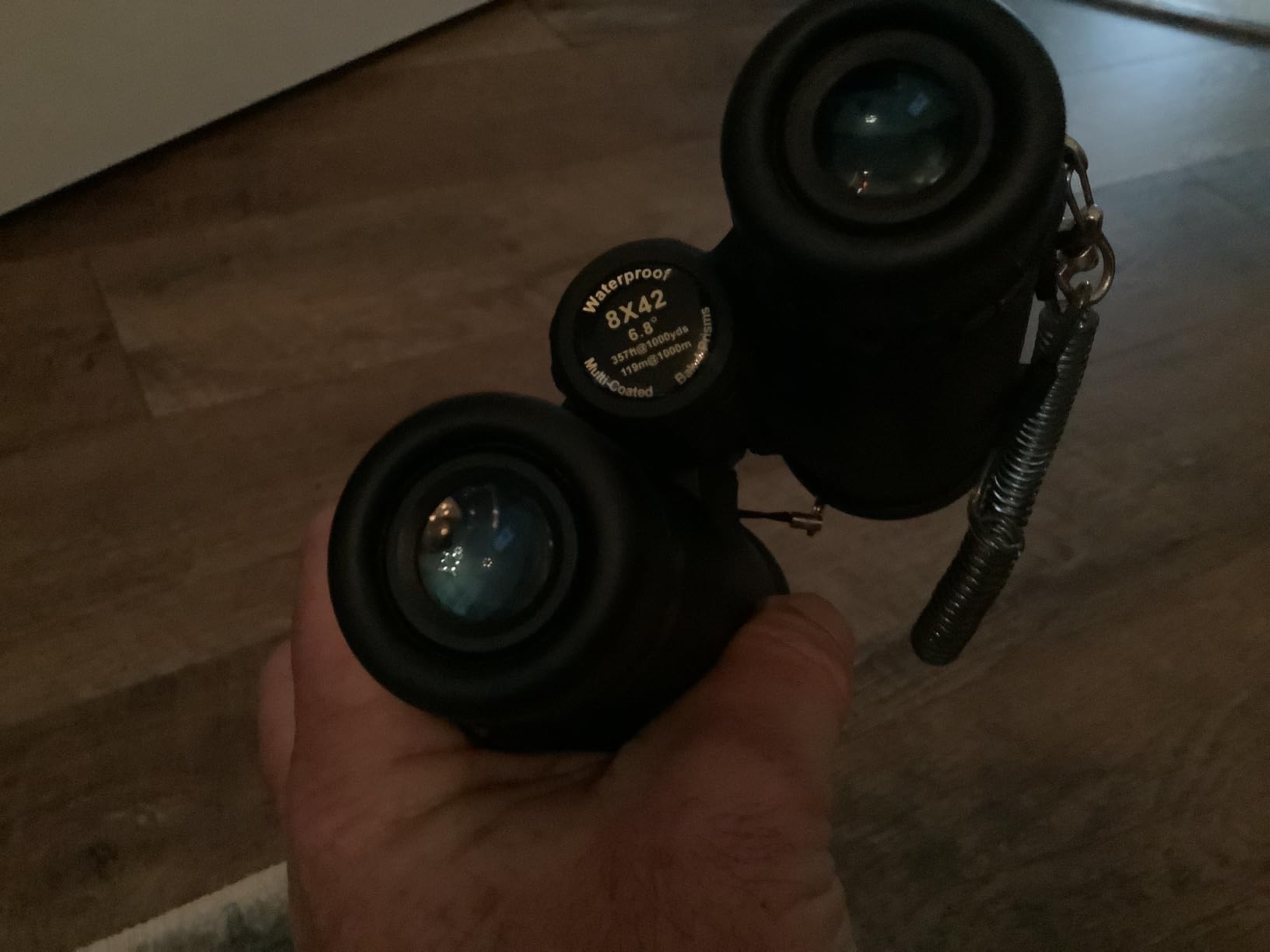
Its 17.8 mm eye relief is generous, and reviewers specifically like that the binoculars work with eyeglasses by retracting the twist-up eyecups. The rubber-armored polycarbonate housing handles the drop-and-bump reality of trail walking, which is worth more than a slightly lighter body over a multi-year ownership.
Being straight with you: this model is multi-coated rather than fully multi-coated, and the difference shows in dim conditions. Reviewers are candid that light gathering is sub-par, with views looking darker in shade and at dusk. It is a daylight binocular, and if your birding is dawn chorus and twilight owl watching, read the low-light paragraph below before you settle.
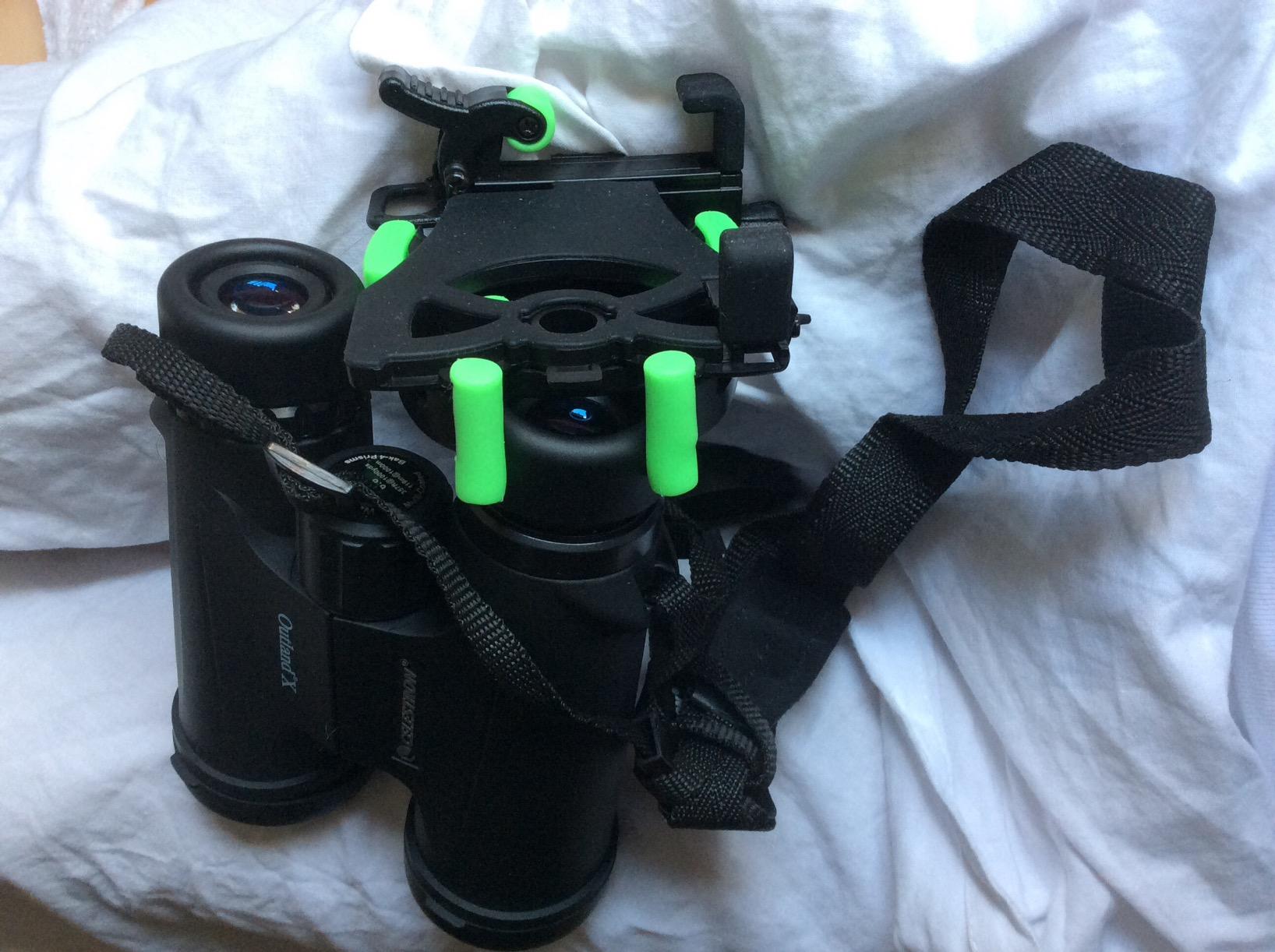
Handle it before you commit
The recurring hardware complaint is the eyecup mechanism. The eye relief adjustment is described as overly sensitive and easy to collapse, and a small indexing spring inside the eye relief is reported by some owners to rust and fall out after a couple of seasons of damp use. Neither issue affects the optics, but both are irritating, and the two year warranty is the shortest in this roundup, so check them before a long trip.
Weight is the other thing to test. At 1.8 pounds this is one of the heavier pairs here, and a neck strap on a long walk will tell you within an hour whether you want a harness instead. Several people in the forums make the same point about all-day carry, and it is a fair reason to look at the lighter models even if the optics are otherwise equivalent.
Who should step up instead
Step up if you will bird at dawn or in deep shade, if you want the reassurance of a lifetime warranty, or if you are rough on your gear. The step up to an ED glass model such as the Wingspan Skyview Ultra HD or the Celestron TrailSeeker ED buys clearer edges and a much better image in poor light, which is where non-ED glass runs out of road.
Otherwise, do not step up. A sharp, sealed, correctly sized 8×42 in daylight will identify the overwhelming majority of birds you will meet in a garden or a park, and the Outland X does that well. Buy it, learn the birds, and only change glass later if you find yourself wanting to identify something in bad light at distance.
5. Vortex Diamondback HD 8×42 — Best for Scanning and Tracking Moving Birds
Vortex Diamondback HD 8×42 Binoculars
8x42
393 feet at 1000 yards
17 mm eye relief
Exit pupil 5.25 mm
Argon purged
Pros
- Crisp bright image with natural colour
- Very wide field of view
- Solid comfortable build
- Smooth focus with firm eyecup clicks
- Lifetime VIP warranty
Cons
- Occasional reports of damaged lens covers
- Slightly thin body feel
- Close focus beats rivals at this price
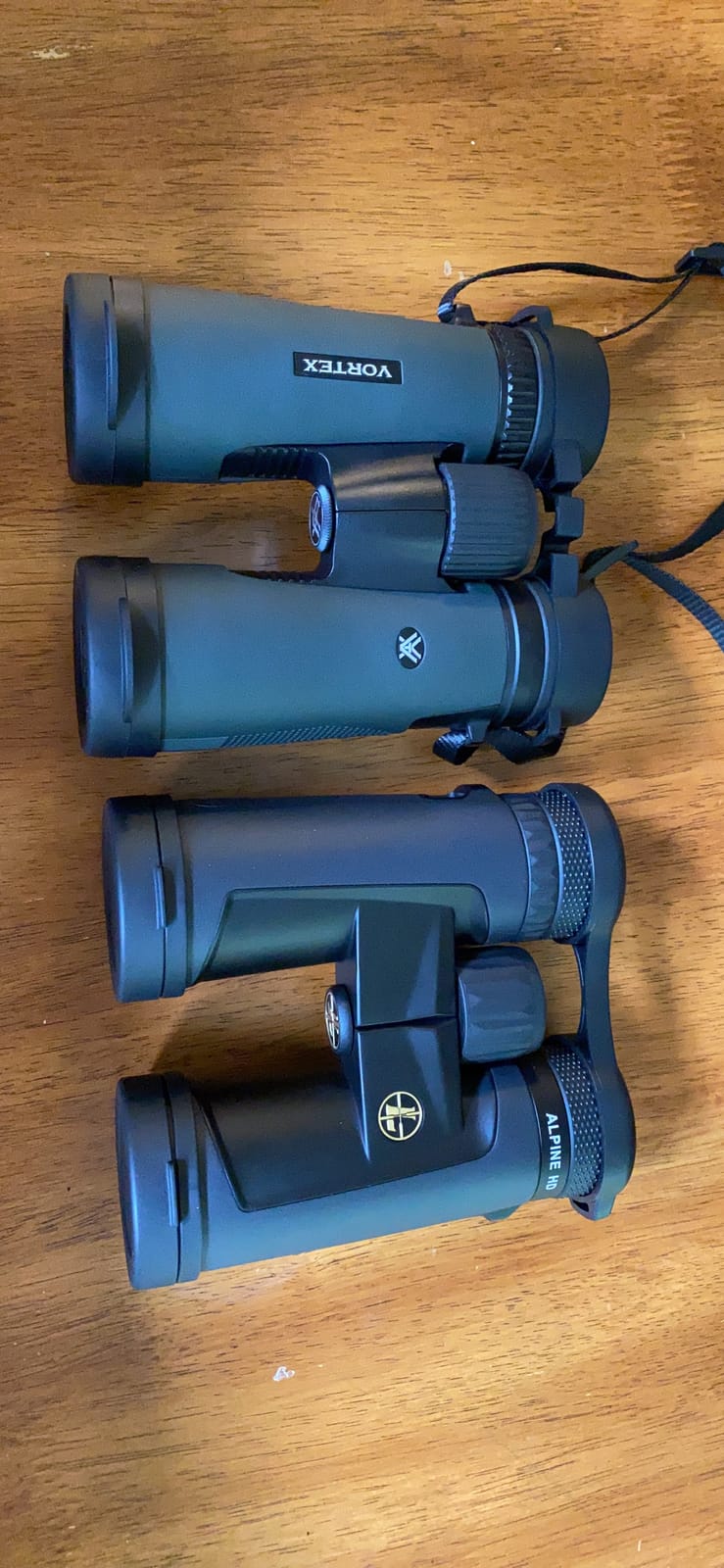
This is the pair that wins the arguments in forum threads, and the reason is straightforward. HD glass elements reduce chromatic aberration and lift light transmission, the 7.5 degree apparent field of view is the widest in this roundup at 393 feet, and the warranty is unlimited, unconditional and lifetime. Forum regulars name the warranty as the decisive tiebreaker at equal optical quality, and this pair is rarely far from equal.
In the field, that wide field changes how you bird. I can find a bird in a hedge, keep it centred while it moves, and still have margin at the edges when a second bird appears. On the same walk the 8×42 models with a 335 foot field of view lose moving birds more often, and once a bird is lost in a hedge it is usually gone. Tracking is a skill, and a wide field is what lets you practise it.
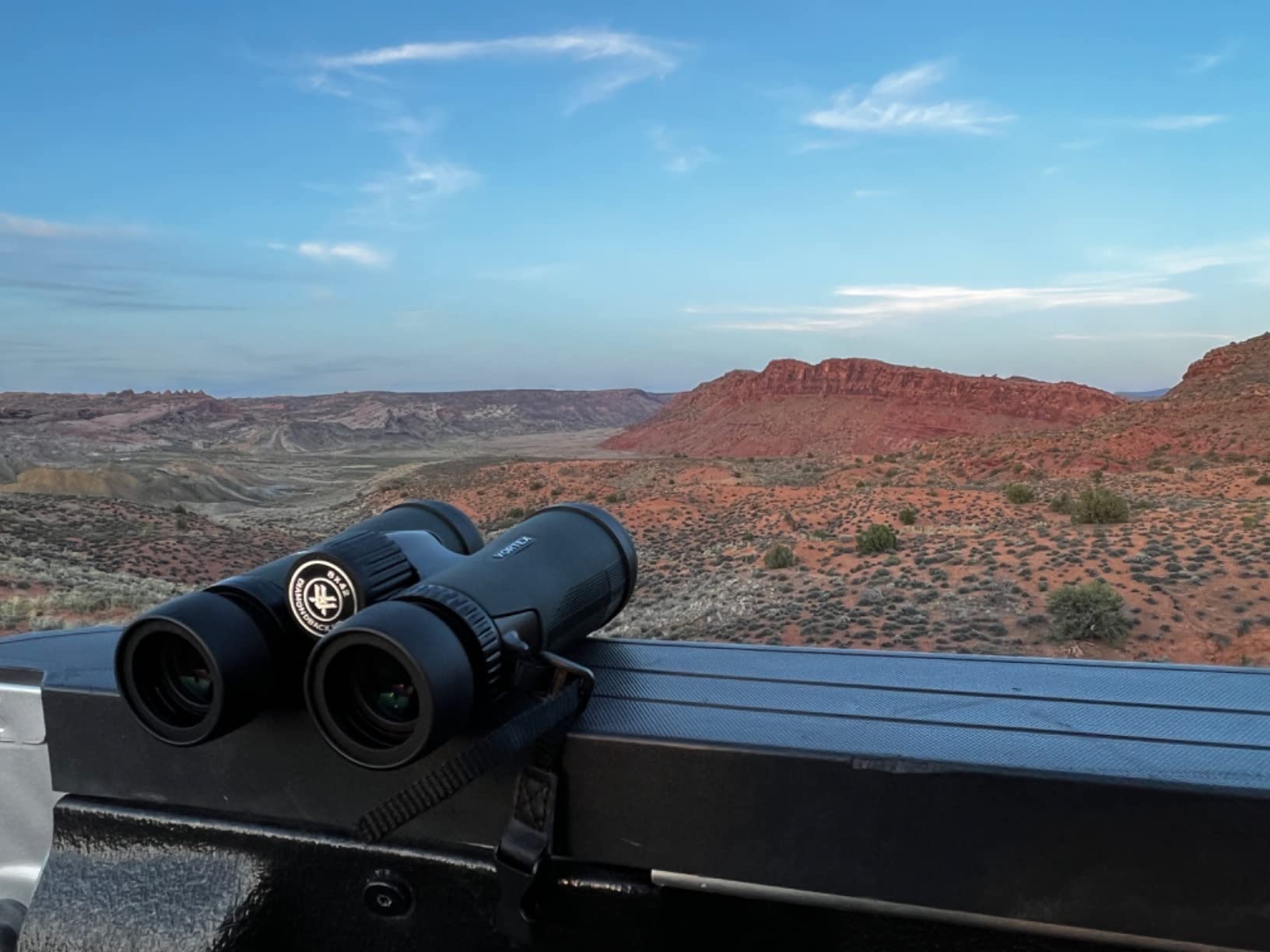
The coatings are a genuine step up from plain multi-coating. Dielectric coating on the reflective surfaces plus full multi-coating on the lenses is why the image holds contrast at the edges rather than fading to grey, and the 5.25 mm exit pupil keeps things reasonably bright for a walk-and-stop birder. Colour came across as natural rather than processed, which matters when you are checking the warm tones on a thrush or the wing bars on a finch.
Argon purging and O-ring seals handle weather, and the right-eye diopter adjustment lets you set focus once. The GlassPak harness and tethered covers are included, which is the complete kit most people actually need, and reviewers single out the lifetime warranty as a major draw when comparing equal-cost models from Nikon or Celestron.
What the owners say over time
The most common negative is about the packaging rather than the binoculars: a small number of reviewers report that the included lens covers arrived damaged. That is a fulfilment problem, not a design flaw, and it is worth knowing before you open the box. Owners also describe the body as feeling slightly thin compared with premium rivals, which is a matter of taste and does not affect optical alignment.
Positive note: the binoculars focus closer than some competing models in the same price bracket, which is a real advantage if you photograph or sketch feeder birds rather than only counting them. The focus wheel is smooth and precise, and the twist-up eyecups click firmly into position, which is a small quality detail you feel every time you raise the binoculars.
Who should look elsewhere
Look elsewhere if you need more eye relief, because 17 mm works but is not the roomiest option for thick glasses. Look elsewhere if you plan long walks and weight is your main concern, or if your birding is heavy on very close subjects where a shorter close focus distance matters more than field of view.
It is also worth comparing this pair directly against the Nikon Monarch M5 if you intend to bird in deep shade, because that model uses ED glass and dielectric prism coating for a noticeably cleaner low-light image. For general purpose birding in daylight and overcast conditions, though, this is the pair most people should stop searching for.
6. Nikon PROSTAFF P3 8×42 — Best for Eyeglass Wearers
Nikon PROSTAFF P3 8×42 Binocular | Waterproof, fogproof, rubber-armored Full-Size Binocular, wide field of view & long eye relief | Official Nikon USA Model
8x42
20.2 mm eye relief
377 feet at 1000 yards
Eco-Glass elements
Nitrogen filled
Pros
- Bright low distortion image
- Longest eye relief in this group
- Lightweight yet rugged
- Steady 8x view
- Quick focus that holds
Cons
- Diopter ring is stiff to turn
- A little heavy for its class
- Strap has no fixed loop
- Some edge aberration on bright skies
Eye relief is the number that decides this pick, and at 20.2 mm it is the most generous in the roundup by a clear margin. If you wear glasses and you have ever ended a birding trip with a headache and red rings around your eyes, this is the specification that fixes it. The turn-and-slide eyecups retract smoothly and stop well short of the lens, so the full 377 feet of field of view stays usable instead of collapsing into a small central circle.
Optically, Eco-Glass elements with multilayer lens coatings and a silver-alloy prism coating give a bright, low-distortion image with reviewers reporting no noticeable edge fringing on typical birding subjects. That is a good result for a model at this level, because purple fringing on backlit birds against bright sky is exactly the artefact that undermines confidence when you are trying to identify a species.
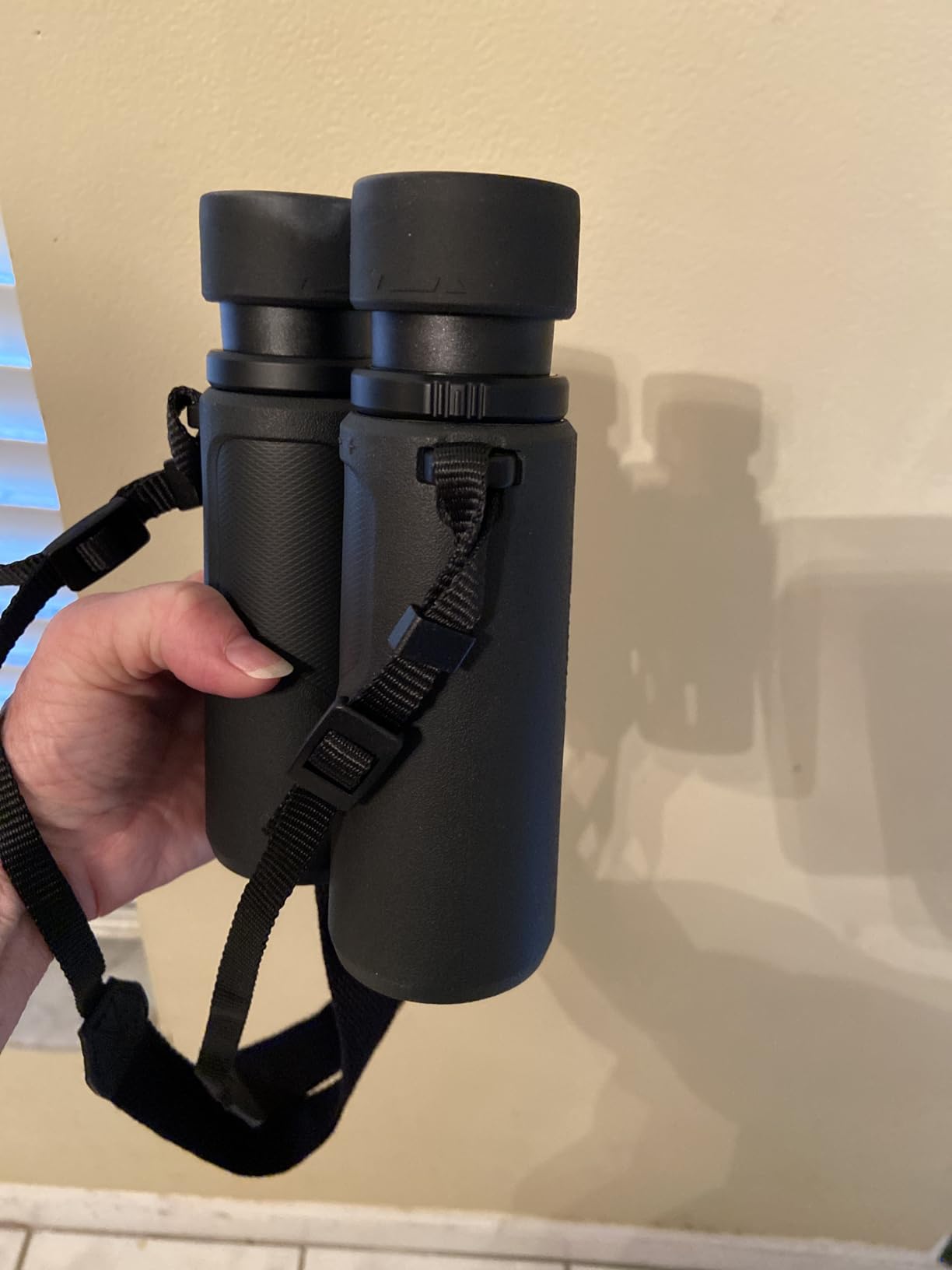
The 8x power produces a steady, shake-free view, which is another quiet benefit. At 8x most people hold a bird rock steady without thinking about it, and the large center focusing knob makes precise adjustments that stay where you set them. Reviewers call the focus quick and positive, and that matters when a warbler crosses in front of you and you need to re-acquire it instantly.
Build is solid. O-ring seals and nitrogen gas purging stop fogging and water intrusion, and the fiberglass-reinforced polycarbonate body with rubber armor handles rough field use. At 1.3 pounds it is one of the lighter full-size pairs here, which matters more than the specification suggests if you wear the binoculars around your neck for a whole morning.
Why eye relief changes everything
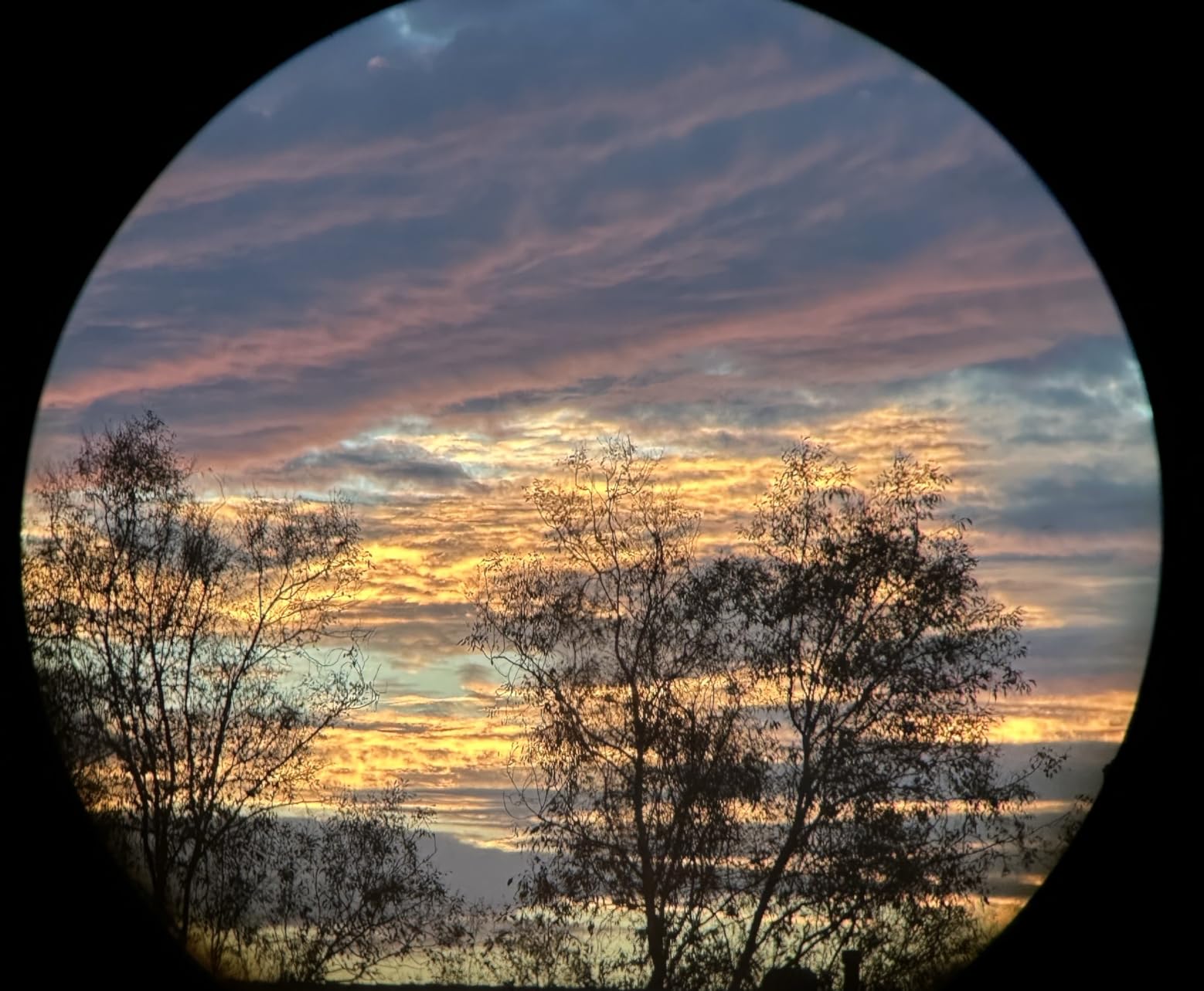
To put 20.2 mm in context, eyeglass wearers need roughly 15 mm as a practical floor and 17 mm or more for comfort. Below 15 mm you end up pressing lenses against your spectacles, which smears them, fogs them and makes the image worse rather than better. Between 15 and 17 mm most people cope by tightening the eyecups, which is uncomfortable over an hour.
So this is the pair to buy if a prescription is part of your birding kit, and the wide view that results is a genuine upgrade in how much habitat you can scan. The trade-offs are small: the diopter adjustment ring is reported as stiff to turn, the supplied strap has no fixed loop so the excess length dangles, and there is some visible chromatic aberration against very high contrast skies.
Who should pick a different pair
Pick a different pair if your birding is dawn and dusk focused and you need maximum brightness from larger objective lenses, or if you want the absolute widest field of view for scanning. The PROSTAFF P3 is the balanced, forgiving all-rounder, and its 640-review history is the smallest sample in this roundup, so if you prefer a longer track record the 8×42 models with several thousand reviews are the safer statistical bet.
It is also a good choice as a first Nikon, because the brand is well established and the limited lifetime warranty removes a real risk from a first purchase. For a casual user buying one pair and keeping it for years, the comfort advantage of the eye relief usually outweighs chasing a few extra dollars of edge sharpness elsewhere.
7. Nikon Monarch M5 8×42 — Best for Shade, Forest Edges and ED Glass
NIKON Monarch M5 Binoculars | Waterproof Fogproof ED Glass Optics with Dielectric Prism Coating | Bright High-Resolution Outdoor Binoculars for Birdwatching, Hiking & Wildlife, 8×42
8x42 ED glass
19.5 mm eye relief
Close focus 8.2 feet
Dielectric prisms
Nitrogen filled
Pros
- ED glass gives clean edge to edge detail
- Bright view in shade and low light
- Smooth precise focusing
- Long eye relief reduces vignetting
- Attached lens caps
Cons
- Narrow 335 foot field of view
- Larger and heavier than expected
- Focus wheel close to the face
- Body may dislike parked car heat
This is the pick for shaded habitat, and the reason is the glass rather than the chassis. Extra-low Dispersion glass minimises chromatic aberration and colour fringing, so backlit birds against a bright canopy do not get a purple halo, and experienced owners describe the images as sharp from edge to edge with true-to-life colour. In a wood where the light is bouncing around rather than falling directly, that difference is not subtle.
The dielectric high-reflective multilayer prism coating is the second half of the brightness story, because light loses a lot of energy at each reflection inside a prism. Reviewers consistently report a clear, bright view in low light and heavy shade, and experienced buyers describe this as the best affordable step into mid-range glass, clearly ahead of entry models while approaching far costlier optics.
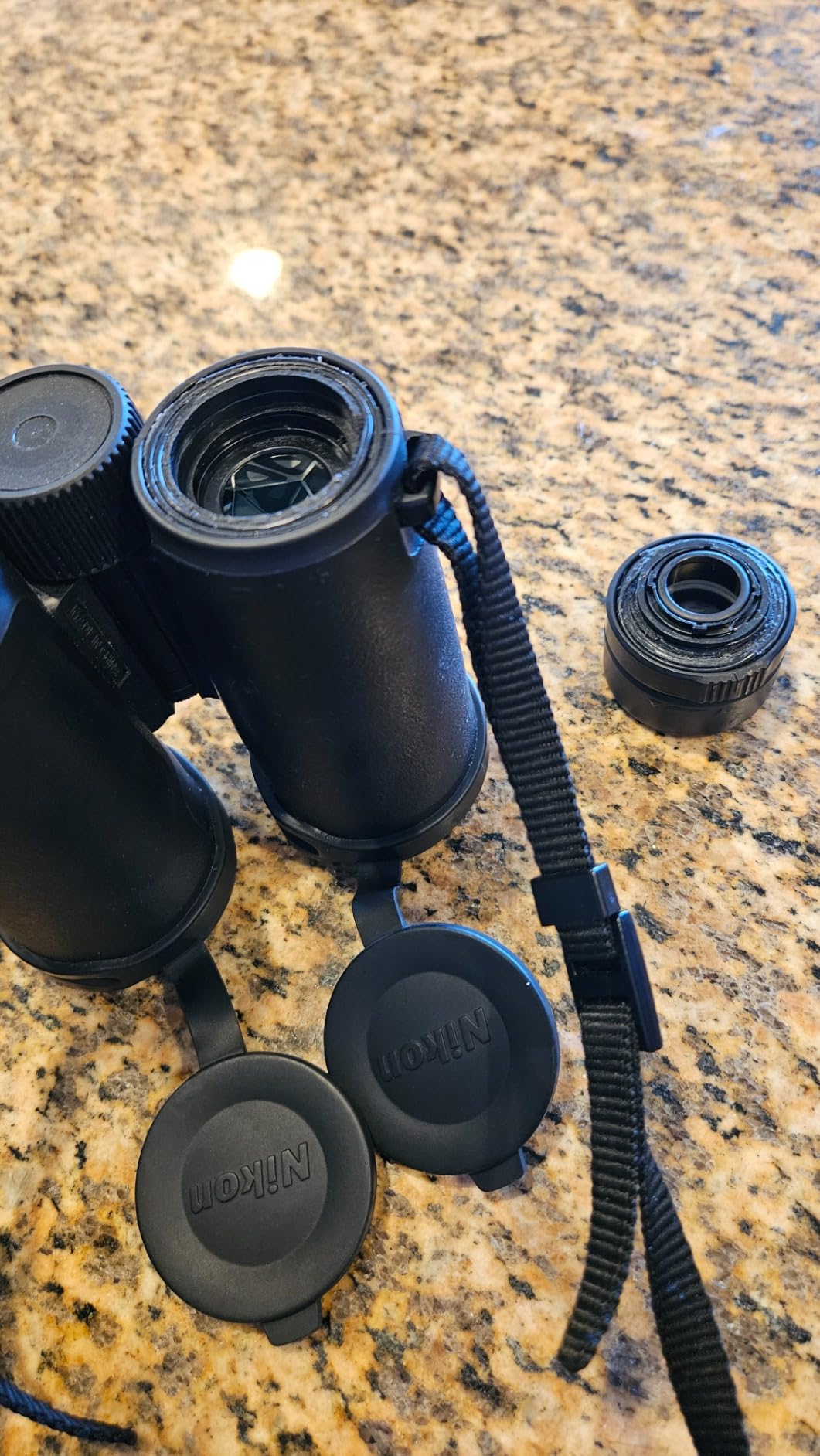
Excellence at close focus is another thing owners mention. Reviewers talk about excellent collimation and very smooth, precise focusing, and a closed-bridge configuration with 19.5 mm of eye relief that keeps the exit pupil comfortable for glasses wearers. The attached lens caps are a small nicety that reviewers call convenient and hard to lose, which is exactly what you want when you are handling gear one-handed in the rain.
At 1.4 pounds this is a solid full-size body with a large center focusing knob and twist-up click-stop eyecups, and the nitrogen-purged waterproof housing with O-ring seals handles the wet understory conditions where forest birding actually happens.
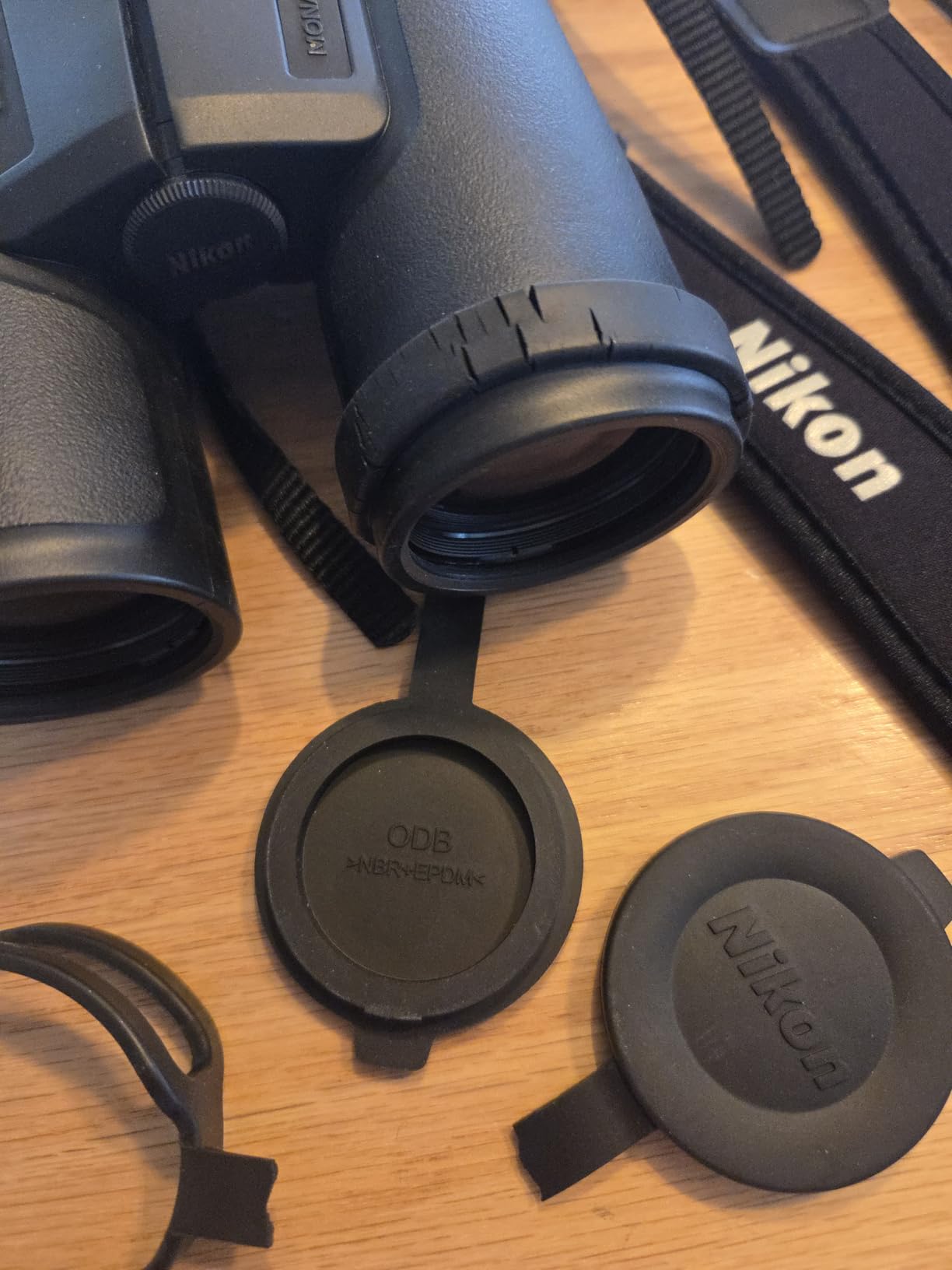
The field-of-view trade you are making
The 335 feet at 1000 yards is the narrowest field in this roundup, and experienced owners name that as the main trade-off. For focused identification of a perched bird, a narrow field is harmless, even helpful. For scanning a canopy edge or a windy hillside where birds appear and vanish, you will work harder to find and keep them.
That is why we would not pick this model for open-country scanning, and why the 393 foot models suit more people. If your birding is close-range and in cover, the trade runs the other way: the narrower field stops you chasing distant birds you were never going to identify, and every bit of magnification goes into the bird in front of you.
Ownership details worth knowing
Reviewers note the binoculars are larger and heavier than expected, so check the fit against your own hands before committing, and that the center focus wheel sits close to the face for some hand sizes. The polycarbonate body is not intended for extreme heat, so do not leave the binoculars in a parked car in summer.
At 367 reviews the owner history here is smaller than the entry-level models, and the limited lifetime warranty is solid but less unconditional than the Vortex options. If you bird in shade and value clean colour and edge detail more than wide scanning, this is the right trade. If you are still unsure what habitat you will use, the wider-field 8x42s are the safer default.
8. Wingspan Skyview Ultra HD 8×42 — Best for Close Focus and Backyard Birds
Wingspan Optics Skyview Ultra HD – 8X42 Binoculars for Bird Watching for Adults with ED Glass. Waterproof, Wide Field of View, Close Focus. Experience Better and Brighter Bird Watching in Ultra HD
8x42 ED glass
Close focus around 6 feet
393 feet field of view
17.8 mm eye relief
Lifetime warranty
Pros
- Close focus on birds at six feet or less
- Bright sharp image with vivid colour
- Very wide field of view
- Well collimated with no vignetting
- Lifetime warranty
Cons
- Faint off axis colour fringing
- Slight spherical aberration
- Strap attachment is awkward
- Included hardware feels basic
Close focus is the feature that makes this pair different, and it is more useful than it sounds. At roughly 6 to 7 feet, a robin on a feeder or a warbler in a shrub fills the view at 8x instead of being a small shape in the middle of a wide field. For anyone who watches birds in their own garden rather than driving to a reserve, that changes the whole experience, because a garden is full of birds at five to fifteen feet.
Reviewers single out the close focus as the headline feature, and it comes alongside ED glass and phase-correction coated prisms. The result is a bright, sharp image with vivid, true-to-life colours, and it is well collimated with no noticeable vignetting or fringing in the main part of the view. At 1.6 pounds it is light enough for long walks and steady enough for handheld viewing of a near subject.

Coupled with the 393 feet of field of view, you get the widest and closest combination in this roundup, which makes it a strong garden and feeder tool as well as a walking binocular. The 7.1 degree apparent field and 5.2 mm exit pupil keep the image bright enough for ordinary light, and nitrogen purging plus waterproofing handle a shower without drama.
It is also a DuraTech coated body, so the lenses resist scratches, which matters more for a garden pair that gets handled constantly than for a field binocular that lives in a harness. A padded hard case, neck strap and eyepiece cover are included, and reviewers describe the factory support as responsive, which is worth having if anything arrives out of alignment.
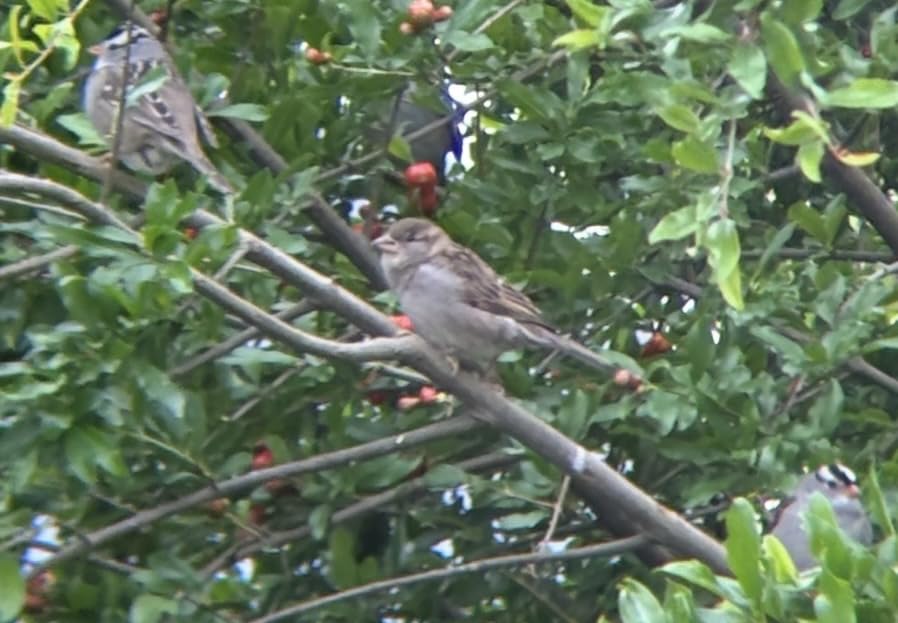
What close focus does and does not solve
It solves the near problem completely for anything beyond about six feet. A bird at ten feet, at a feeder, on a fence post, all look large and detailed. It does not make the binoculars a macro instrument, and it does not compensate for poor light, since a dim image is a dim image at any focus distance.
Optically, review criticism is limited to mild off-axis colour fringing on hard edges and slight spherical aberration distortion, both of which show up when you push toward the field edges rather than the centre. If you are reviewing a bird, you will be looking at the centre, where the image is clean.
Who should buy this instead
Buy this instead if your birding is at feeders, in a garden, or anywhere birds come within about fifteen feet. Do not buy it if your birding is long-distance open country, where close focus is irrelevant and the narrower options in this list would serve you better.
The lifetime warranty is the differentiator that makes this worth a closer look, because it removes the risk from a purchase most people make exactly once. Buyers of compact pairs for travel often keep them; buyers of a garden pair tend to keep it for decades. Weigh that against the slightly basic strap hardware, which is a five-minute replacement if it bothers you.
9. Bushnell H2O 8×42 — Best for Wet Weather and Rough Field Use
Bushnell H2O 8x42mm Binoculars, Waterproof and Fogproof Binoculars for Boating, Hiking, and Camping, Multi Blue
8x42
350 feet at 1000 yards
17.5 mm eye relief
Exit pupil 5 mm
IPX7 rated
Pros
- Clear sharp image in good low light
- IPX7 waterproof sealing
- Nitrogen purged against fogging
- Secure one hand grip
- Push down lens caps
Cons
- Heavy for all day neck carry
- Supplied strap is thin
- Objective caps can detach
- Carrying case is basic
The H2O is the pick for anyone who birds in the rain, and the reason is a specific rating rather than a vague waterproof claim. The optical system is O-ring sealed and rated IPX7 for submersion protection, which is a stricter standard than the generic waterproof language most brands use. Owners report the binoculars holding up after years of humid, wet fieldwork, and that is the sort of claim that matters in coastal and wetland birding.
Optically you get fully multi-coated lenses with BaK-4 prisms, a 5 mm exit pupil and 350 feet of field of view at 1000 yards. That is an honest, unflashy 8×42 that produces a clear, sharp image with good brightness in low light, and the 17.5 mm of eye relief means glasses wearers can use it without fighting the eyecups.
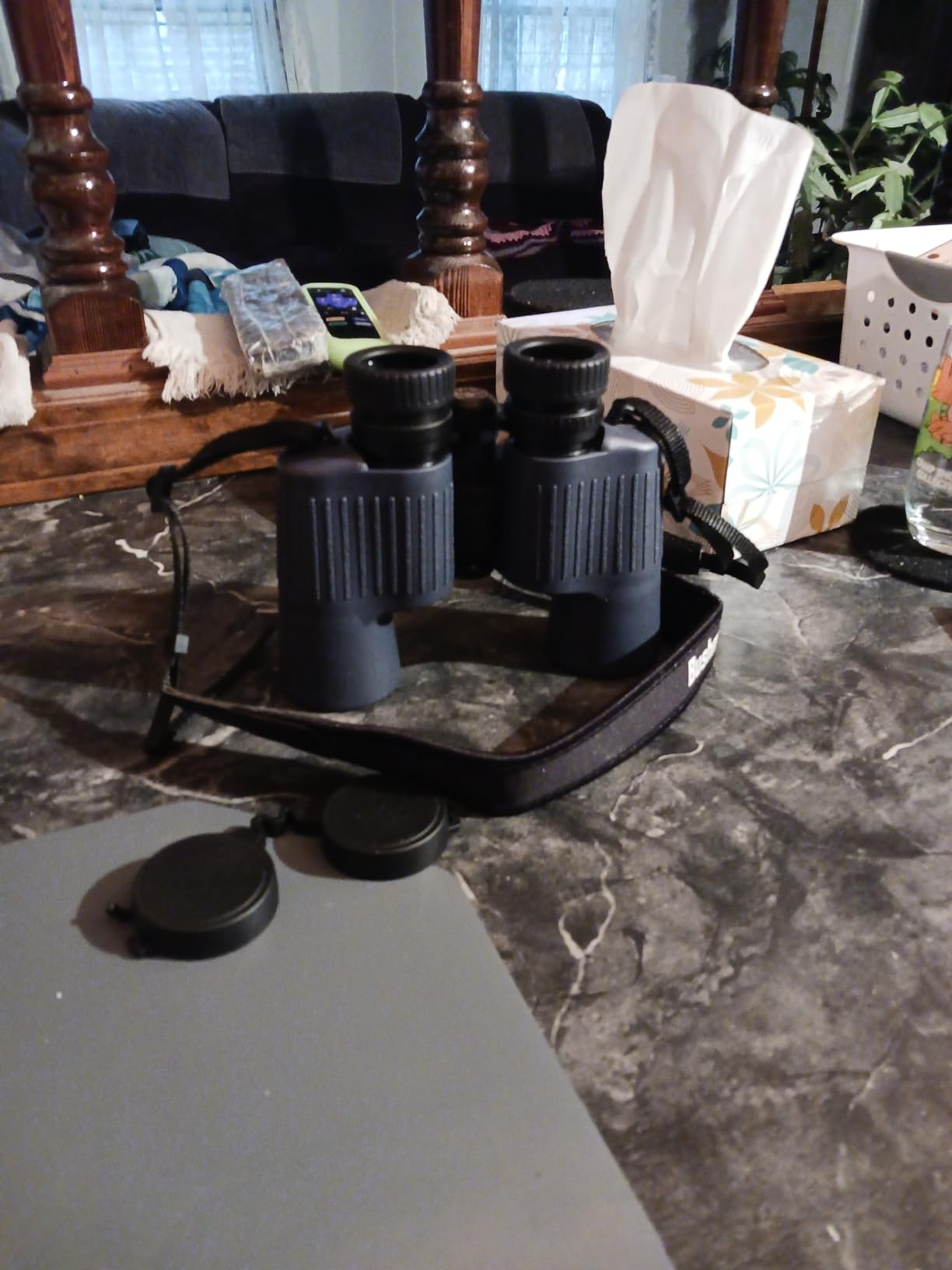
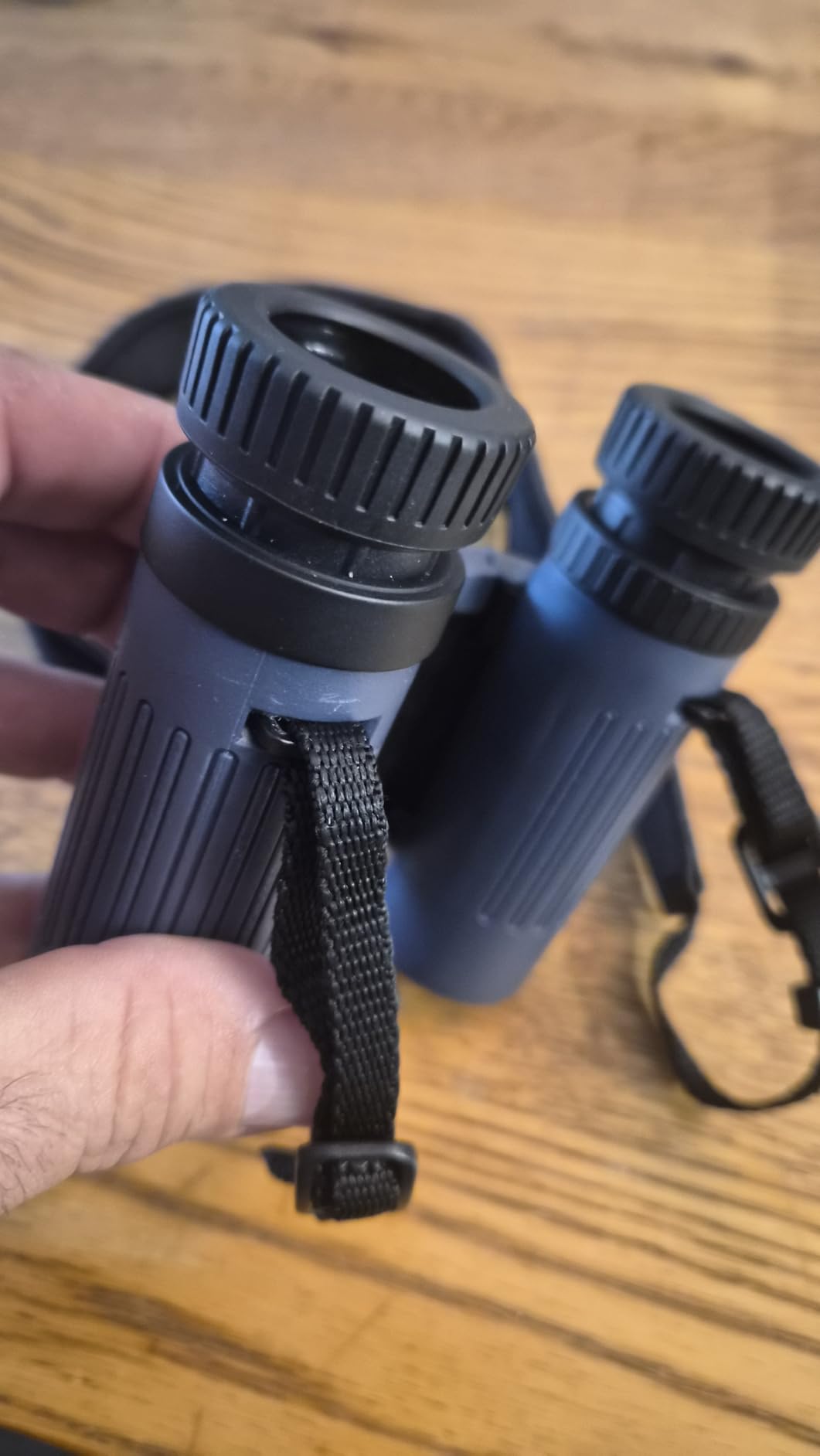
Handling is the other strength. The soft-touch rubber housing has an easy-grip texture on the sides, the bridge and the grip runners, and at 907 grams the aluminium chassis feels substantial without being unwieldy in one hand. The push-down front lens caps are a genuinely useful design on a wet binocular, because you clear them in a single motion and they stay clear while you scan.
Nitrogen purging prevents internal fogging, which is the failure that actually ruins a binocular in autumn. Moving from a cold car into warm humid air, or standing in a warm room with cold glass, will fog an unsealed optic in minutes. Sealed optics make the difference between a usable birding trip and a trip where you are wiping the lenses every five minutes.
The honest trade-offs
Weight is the recurring complaint. At 907 grams it is not the heaviest model here, but reviewers note it is somewhat heavy for all-day carry around the neck, and that is a fair criticism for anyone walking a full day without a harness. The supplied neck strap is thin and has limited adjustment, so replace it before a long trip rather than after.
The objective lens covers can detach despite the tether, and the included carrying case is basic. Neither affects performance, and both are the kind of detail that changes after a few seasons of real use, which is why the Ironclad warranty is worth reading carefully rather than assuming it matches a lifetime warranty from another brand.
Who should choose this
Choose this if you bird on the coast, on a marsh, on a river or in a climate where rain is normal rather than exceptional, and if you want one pair that will not be ruined by weather. It is also a good choice for a beginner who will be outdoors in all conditions and wants the widest range of acceptable use from a single purchase.
Choose a different pair if your birding is mostly in shade or forest, where the slightly narrower 350 foot field and modest coatings give you less to work with, or if you wear thick glasses and need the extra eye relief of the Nikon PROSTAFF P3. For wet-weather work in particular, though, this is the most confidently sealed option in the roundup.
10. Celestron TrailSeeker ED 8×42 — Best Complete Kit for ED Glass at Home
Celestron TrailSeeker ED 8×42 Binoculars for Birding & Nature – ED Glass
8x42 ED glass
17.2 mm eye relief
Exit pupil 5.2 mm
Magnesium body
Nitrogen purged
Pros
- Sharp detail with virtually no fringing
- Bright high contrast views
- Waterproof and nitrogen purged
- Large focus knobs are precise
- Extensive accessory package
Cons
- Heavier and bulkier than cheaper 8x42s
- Price near entry birding glass
- Accessory setup takes getting used to
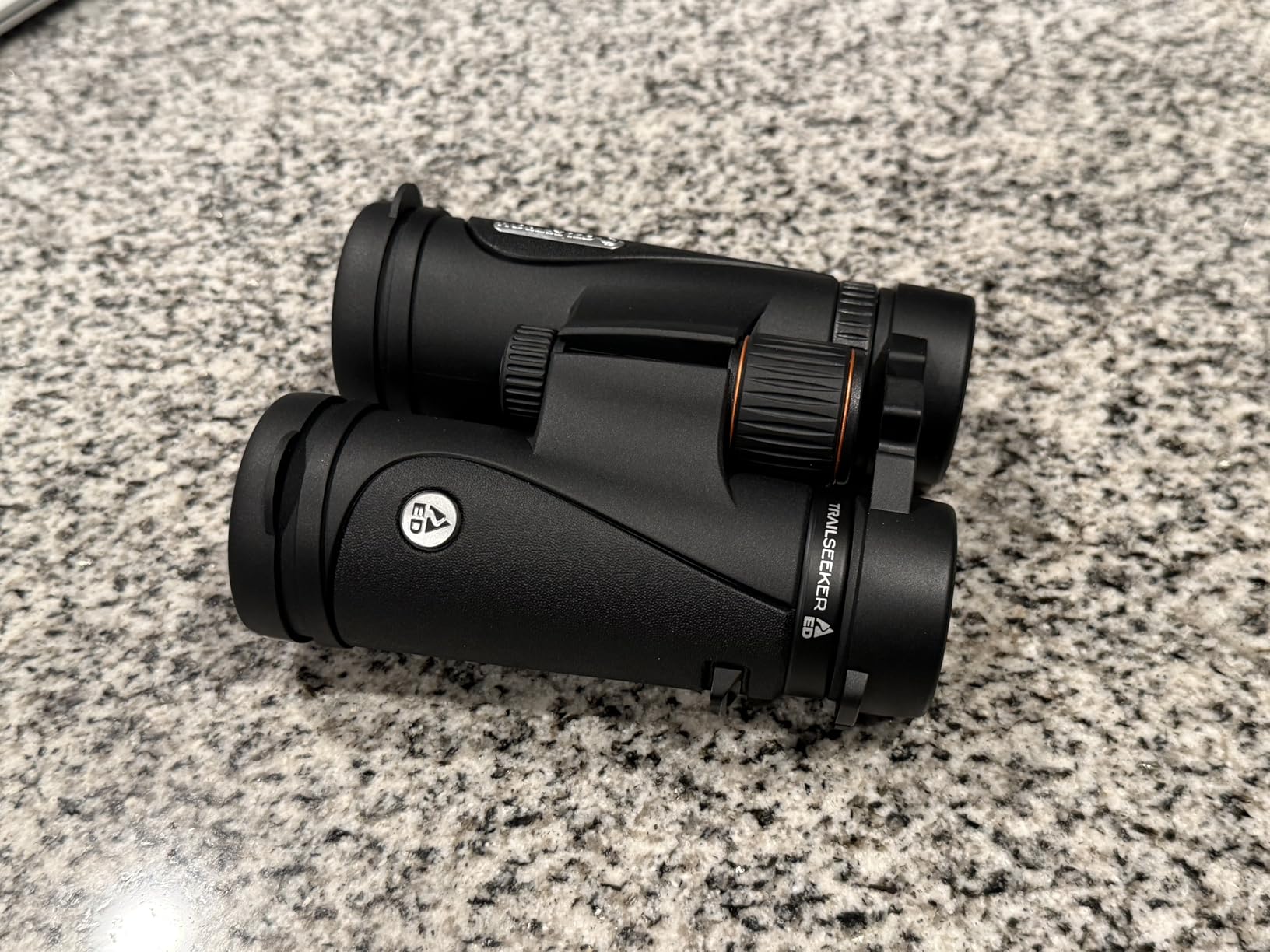
The TrailSeeker ED is where ED glass stops being a luxury and becomes a reasonable purchase for a serious birder. Extra-low Dispersion glass virtually eliminates chromatic aberration, so a backlit bird against a bright sky keeps clean feather edges and true colour, and owners report the difference from non-ED models is obvious once you have used both. That matters most on warblers and flycatchers, where the identification marks are subtle.
Phase-coated BaK-4 prisms maximize light transmission for bright, high-contrast views, and with a listed relative brightness of 27.04 and a 5.2 mm exit pupil, the image holds up well in shade and early morning. The magnesium alloy body with full rubber armor is a genuine step up in robustness from the polycarbonate shells used at lower levels, and at 1.5 pounds it is a serious but not unreasonable weight.
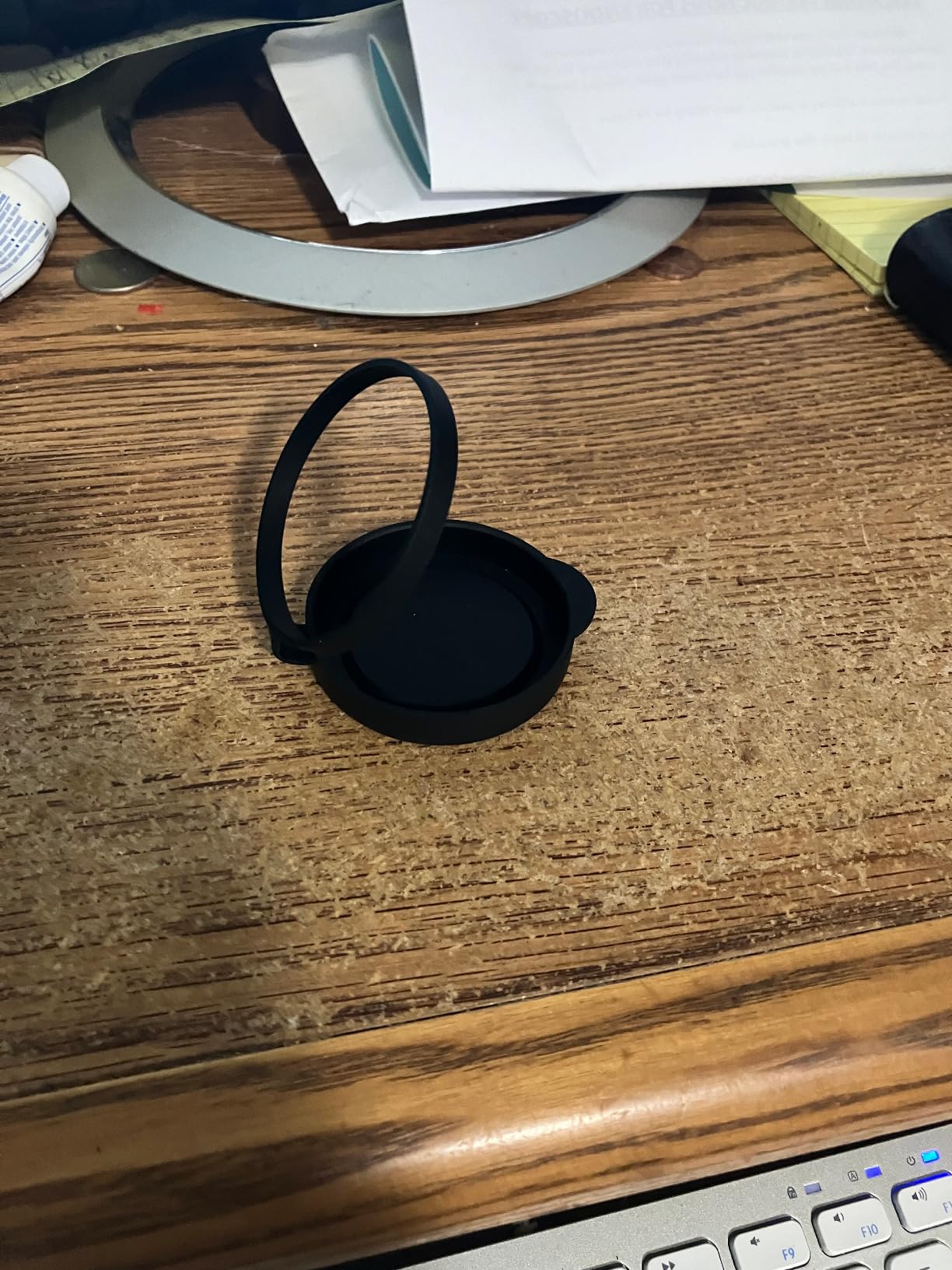
The accessory package is the quiet headline. A carry harness, padded neck strap, eyepiece cover, tetherable objective covers and a padded case are all included, which is a complete setup for someone starting out and it removes the usual first-month shopping list. Reviewers single out the large focus knobs as making precise focusing easy, and the twist-up eyecups give 17.2 mm of eye relief, so glasses wearers are accommodated.
Nitrogen purging and waterproof construction keep it working in wet, changing conditions, and the Celestron Limited Lifetime US Warranty adds long-term security that matters when you have just invested in glass you intend to keep for years.
Is the extra glass worth it here
For most birders, yes, if you have already been using a non-ED pair and found yourself straining at backlit subjects. The chromatic aberration that ED removes is the artefact that erodes confidence most, and clean edges make identification faster. For a complete beginner, the practical argument is different: you are unlikely to notice the difference between this and a good 8×42 in the first year.
Owner feedback is candid that the weight and the position of this model place it above many alternatives offering similar daytime performance, and that accessory setups can feel complicated until you learn them. Both are real, and both are the price of buying a premium chassis with a full kit attached.
Who should buy this and who should not
Buy this if you are a confident birder who has identified a real weakness in your current glass, if you bird in mixed light, or if you want one complete package with no accessories to add. It is also a good choice if you share binoculars with a family, since the lifetime warranty and the included harness make the total cost of ownership unusually low.
Do not buy this as a first pair on a strict budget, and do not buy it for travel, where 1.5 pounds and a full-size body are working against you. If you want ED glass at a lower weight and a wider field, the Wingspan Skyview Ultra HD covers close focus and colour at a lighter weight, and if the budget matters most the 8×42 Celestron Nature DX remains the value benchmark.
Birding Binoculars Buying Guide: What Actually Matters
Buy the glass, not the badge. The birding community consensus, repeated across r/birding and r/Binoculars threads and echoed in the field guides published by Cornell Lab and Audubon, is that a well-made 8×42 will identify the overwhelming majority of birds you will meet. What separates a good pair from a great one is light transmission, coating quality, field of view, eye relief and a warranty that survives a drop, and every pick above has at least three of those five.
What the numbers on the box actually mean
The first number is magnification, the second is the objective lens diameter in millimetres. So 8×42 means 8x magnification through a 42mm lens, and 10×25 means 10x magnification through a 25mm lens. Those two numbers together decide almost everything else: brightness, steadiness, how much you can see at once, and how big the finished binoculars are in your hands.
From those two numbers you can work out the exit pupil, which is the objective diameter divided by the magnification. An 8×42 gives you a 5.25 mm exit pupil, a 10×42 gives 4.2 mm, and a 10×25 gives only 2.5 mm. The exit pupil is the small opening you look through, and the closer it is to the 3 to 7 mm range of a human pupil, the brighter and more natural the image feels in low light. That single calculation explains most of the brightness differences between the models above.
8×42 vs 10×42 vs 6x: choosing by habitat
8x is the default for a reason. It is easy to hold steady, it is wide enough to find a bird before you identify it, and it is forgiving when your focus is slightly off. If you are unsure, buy 8x. The 10x decision only really goes one way, and that is toward open country, water and raptors where the extra magnification earns its place and the narrow field is less of a problem.
Backyard and feeders: 8×42, or 8×42 with close focus under about 7 feet. Birds arrive within ten feet and identification happens on plumage, not distance.
Forest and woodland edge: 8×42 with a wide field of view. A warbler that flushes at fifteen feet is gone, so finding speed beats magnification.
Open marsh and wetland: 8×42 or 10×42. Distances are longer and birds hold position, so both work, with 10x better for far subjects.
Coast and shoreline: 10×42 with a sealed body. Shorebirds are distant, scattered and constantly moving, and weather sealing matters more than glass.
Hawk ridge and open hillside: 10×42, and consider a tripod. Raptors are far away and often moving, and 10x is what makes them identifiable at all.
Kids, seniors and unsteady hands: 6x or 8x. Lower power magnifies movement as much as it magnifies birds, so less power is steadier.
Field of view: the tracking number
Field of view is measured in feet at 1000 yards, and it tells you how wide a slice of landscape you see at once. Anything around 390 feet or wider is considered very good for birding, 380 is comfortable, and anything under about 340 feet is narrow enough that you will need a tripod for long looks at distance.
This is the specification that most affects whether you enjoy birding rather than merely tolerate it. A bird that is off the edge of your view is a bird you never identified, and identification is the activity. In this roundup the 393 foot models scan best, while the 335 foot Nikon Monarch M5 trades scanning ease for a cleaner image at close range.
Eye relief for eyeglass wearers
Eye relief is the distance from the eyecup to your eye, and it determines whether you can wear your glasses. Under 15 mm is effectively unusable with spectacles, 15 to 17 mm works if you tuck the eyecups in, and 17 mm or more is comfortable. The 20.2 mm on the Nikon PROSTAFF P3 is the outlier here and the reason we recommend it for glasses wearers.
Twist-up or turn-and-slide eyecups matter as much as the number, because they let you set the eye position precisely. Leave them down when you wear no glasses, and twist them down as far as they will go before you bring the binoculars to your face if you do wear them.
Close focus for feeder and garden birds
Close focus is the nearest distance at which the binoculars can bring a subject into sharp view, and the useful threshold for birding is six to seven feet. Below that you can study a butterfly or a nest, and anything closer than about two feet is beyond what most birding binoculars can do. Most 8×42 models land in the six to ten foot range, and the difference between them is not something you will notice unless you specifically want to fill the frame with a feeder bird.
ED glass, prisms and lens coatings
ED, or extra-low dispersion, glass is glass that disperses colours less than standard glass. The practical result is the absence of purple fringing around high-contrast edges, which is most visible on backlit birds and against bright sky. It is a genuine upgrade, and for a birder who will keep the binoculars for years it is one of the better places to spend extra money, because the alternative is an image you subtly distrust.
Prism material matters too. BaK-4 prisms transmit more light than the cheaper BK-7, and phase correction on the prism coating helps keep the image contrasty. On the lens surfaces, multi-coated is the baseline, fully multi-coated is the norm for a serious birding pair, and dielectric coating on the reflective prism surfaces is the step above that. None of this is visible in a specification table at a glance, but it is the difference between a flat grey image and one with life in it.
Weather sealing, weight and warranty
Waterproof, fogproof and nitrogen or argon purged should be treated as a minimum for outdoor birding, since the failure mode is fogging rather than rain damage. An IPX7 rating such as the Bushnell H2O carries is a stronger commitment than generic waterproof language. Weight matters more than most buyers expect, because binoculars that are uncomfortable on a two-hour walk stay at home, and a harness solves more problems than any optical upgrade.
Finally, warranty. The birding forums treat an unconditional lifetime warranty as a genuine tiebreaker at equal optical quality, and the reasoning is sound: binoculars get dropped, and a pair that gets repaired or replaced is a pair you keep using. A limited warranty is better than none, and a transferable unconditional one is the reason a couple of models in this roundup outsell better-equipped rivals.
How to Test Binoculars in a Store in Five Minutes
No competitor in this niche covers this, and it is the single highest-value thing you can do before spending real money. Five minutes of testing will tell you more than an hour of reading reviews, because every pair here has published specifications and the difference in the hand is the difference you will live with.
Set the diopter first. Look at a distant object through one barrel, cover the other eye, and rotate the diopter ring until the image is sharpest. Do this before anything else, because an unadjusted binocular will make a good optic look bad.
Check the field of view in motion. Find a bird or a person walking and keep them centred without sweeping. This is where a wide field earns its money, and you can feel the difference between 335 feet and 393 feet in about ten seconds.
Look at the edges, not the centre. Focus a distant straight edge, like a roofline or a fence post, and let it run to the edge of the view. Sharpness that survives to the edge is the thing that separates real glass from a specification sheet.
Wear your glasses. If you use spectacles, put them on and check whether you can see the full field of view without pressing the eyecups against your lenses. A vignetted keyhole view is a non-starter.
Turn the focus wheel with cold fingers. Try it in bare-hand mode, because a stiff focus wheel in a cold marsh is a genuine problem. Check that the eyecup clicks stop firmly, and give the body a firm twist to hear whether anything rattles.
If the store allows it, take the binoculars outside. Stepping from fluorescent lighting into daylight changes the perceived brightness dramatically, and it is the fastest way to see which pair suits your usual habitat. A shop assistant who offers a short outdoor trial is usually happy to, and it takes less time than the walk home.
Frequently Asked Questions
Is 10×42 or 8×42 better for birding?
For most birders, 8×42 is better. Eight power is easier to hold steady, shows a wider slice of landscape, and is forgiving when focus is slightly off. 10×42 wins in open country, at wetlands and on hawk ridges, where birds are distant and the extra magnification is what makes them identifiable. If you cannot decide, the forum consensus across birding communities is that 8×42 is the harder choice to regret.
What magnification binoculars are best for bird watching?
Eight power is the best general answer for bird watching, because it balances magnification, brightness and steadiness better than any other figure. Six power is steadier and better for children or shaky hands, and ten power is worth it for open-country and long-distance viewing. Very high magnification above 12x narrows the field and magnifies hand movement, so most birders get less than they expect from it.
Are 12×50 binoculars good for birding?
They are good for one specific job: seeing distant birds in low light. The large 50mm objective gathers plenty of light and the high power helps at long range, but the trade-offs are real. You get a noticeably narrow field of view, more hand shake, and a heavy, bulky body that is tiring over a full day. For most birding, an 8×42 is the more practical choice, and 10×42 covers the long-distance case.
What binoculars do bird watchers recommend?
Bird watchers overwhelmingly recommend 8×42 as the default specification, which is consistent across forum threads on r/birding and r/Binoculars and across the birding guides published by Cornell Lab and Audubon. Within that format, the features people prioritise in order are a wide field of view, long eye relief for eyeglass wearers, bright low-light performance and a warranty that survives years of use.
Are expensive binoculars worth it for bird watching?
Premium glass is worth it once you have a clear use for it, such as backlit birds, deep shade, or identification at long distance, where ED glass and better coatings make a visible difference. It is not worth it as a first purchase on a strict budget, because a well-made 8×42 will identify the large majority of birds you meet. The exception worth considering is a lifetime warranty, which turns a durable pair into a once-in-a-decades purchase.
What field of view is good for bird watching binoculars?
Around 390 feet at 1000 yards or wider is the benchmark for birding, because a wide field lets you find a moving bird before it leaves your view. Figures of 380 feet and above are comfortable, and anything under 340 feet is narrow enough that you will need a tripod for extended viewing at distance. Field of view matters more to enjoyment than raw magnification, because a bird you cannot find is a bird you never identify.
Final Verdict for 2026
The Vortex Crossfire HD 10×42 is the best binoculars for bird watching in 2026 for anyone who wants one pair that covers open country, water and distance without compromising on build quality or warranty. It is bright, sealed, tripod-adaptable and backed by an unlimited unconditional lifetime warranty, and the 4029-review history gives unusual confidence for the money.
For the best value, take the Celestron Nature DX 8×42, whose 7.4 degree apparent field of view and 17.5 mm eye relief make it the most forgiving general birding binocular here. For a strict budget, or for a child, the Hontry 10×25 at 9.6 ounces is the one that will actually get used. If you wear glasses, go straight to the Nikon PROSTAFF P3 for its 20.2 mm of eye relief, and if shade and ED glass are your thing, the Nikon Monarch M5 is the sharpest tool in this group.
Whichever you choose, set the diopter before you judge anything, take the binoculars outside the shop, and give them to the birds rather than the shelf. The best pair is the one that comes out of the cupboard on a cold morning.