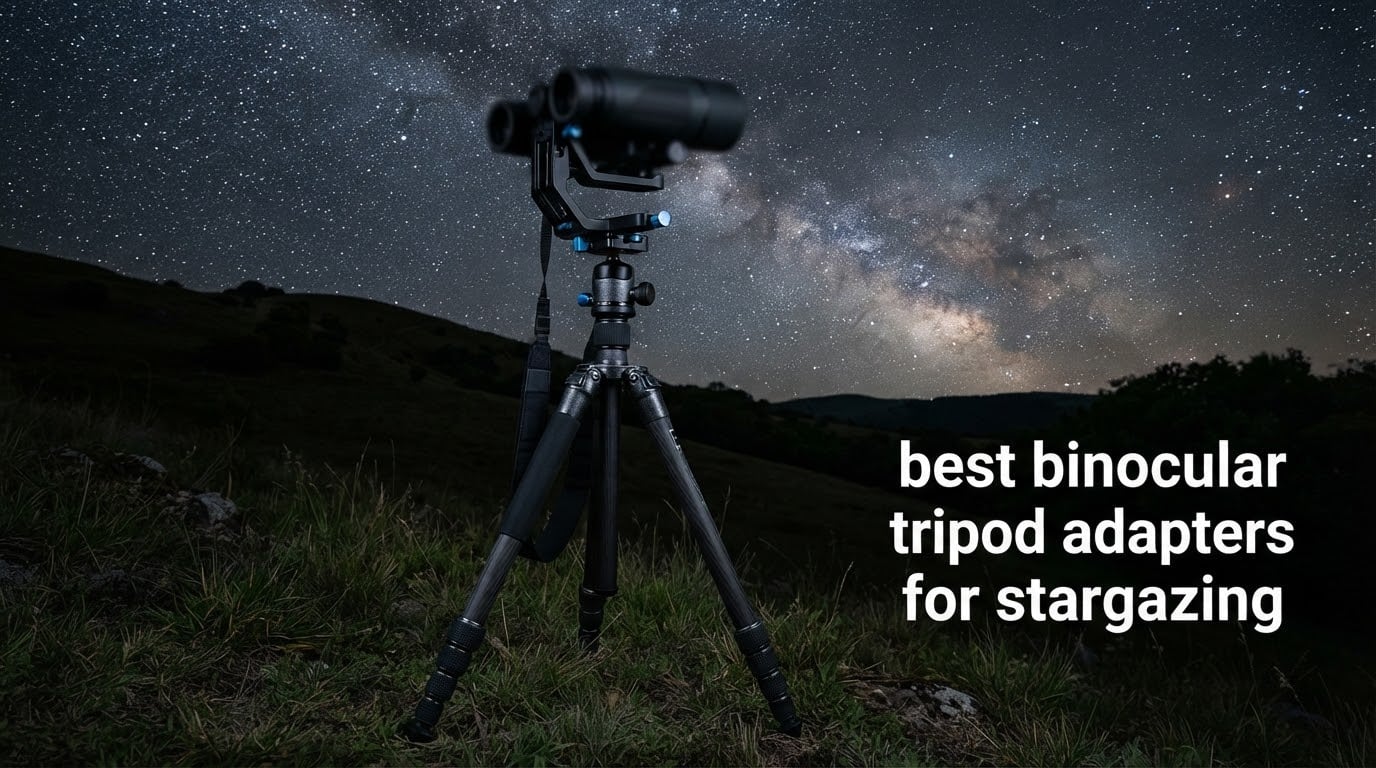
Hand tremor is the enemy of every binocular astronomer, and it gets worse as magnification climbs. At 8x, a 15×70 pair still shows a workable image if you brace your elbows. Push to 10x or 12x and the same shake smears crater rims, splits tight double stars and turns a globular cluster into a smear. That is the whole reason the best binocular tripod adapters for stargazing exist: they are small pieces of hardware that decide whether your field of view is a steady disc of pinpoint stars or a shimmering mess.
Most binoculars ship with no tripod mount at all. The instrument sits on your hands, your elbows, or a monopod, and any support you buy has to bolt to a standard 1/4″-20 thread to be useful. I spent several weeks swapping adapters across roof prism, porro prism and bodyless compact binoculars on a field tripod, and the differences between them are bigger than the retail listings suggest.
Below is a short direct answer first, then the full comparison of ten adapters across the three architectures that actually exist: L-shaped trays, low-profile center posts, and barrel clamps. I leaned on the fitment numbers manufacturers publish, because fitment is where most returns in this category come from.
Table of Contents
- How Do You Connect Binoculars to a Tripod?
- Top 3 Binocular Tripod Adapters for Stargazing 2026
- All 10 Best Binocular Tripod Adapters for Stargazing (October 2026)
- 1. Celestron Binocular Tripod Adapter – Metal Tray With the Longest Track Record
- 2. FANAUE S1 – Aluminum Quick Release With a Permanently Installed Stud
- 3. Vortex Sport Binocular Adapter – Slim Post for Tight Barrel Gaps
- 4. SVBONY SV110 – Entry Metal Tray With a Giant Tightening Knob
- 5. Zelnoox BC-03 – Quick Release With a Mechanical Anti-Drop Lock
- 6. FANAUE S2-01 – Tapered Aluminum Body Built Around Porro Bodies
- 7. Zelnoox BC-02 – Clamp Adapter for Binoculars With No Tripod Boss
- 8. Staoptics STA0804 – A 38 mm Base for a Wider Footprint
- 9. FANAUE S1 PRO – Lock Screw That Spares Your Binocular Threads
- 10. QICBIUD Universal Adapter – Narrow All-Metal Stopgap
- Which Adapter Architecture Fits Your Binoculars?
- How to Check If Your Binoculars Already Have a Tripod Stud
- Which Tripod Heads Work Best With Binocular Adapters?
- Frequently Asked Questions
- Conclusion
How Do You Connect Binoculars to a Tripod?
Check whether your binoculars already have a tripod-integral 1/4″-20 stud or threaded hole under or between the barrels. Many roof prism models do.
If there is no stud, pick an adapter matched to your body style: a tray or center post screws into the binocular’s threaded hole, a clamp grips the barrel itself.
Screw the adapter’s 1/4″-20 stud into the tripod head, or clamp its Arca-Swiss dovetail into a quick release head.
Tighten the adapter’s own locking screw or knob so the binoculars cannot rotate or sway.
Center the balance over the tripod’s axis and confirm the objective bells clear whatever surface you are aiming at.
Top 3 Binocular Tripod Adapters for Stargazing 2026
The best binocular tripod adapter depends on whether your glass already has a threaded boss. For most people the Celestron tray is the safest starting point, the FANAUE S1 is the strongest quick release in this group, and the Vortex Sport adapter is the one to buy when the gap between your barrels is tight.
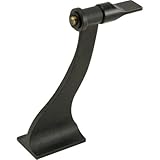
Celestron Binocular Tripod…
- Durable metal construction
- Large anti-swivel footprint
- Standard 1/4-20 thread

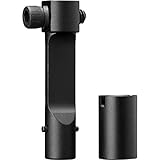
Vortex Sport Binocular Adapter
- Slim low-profile body
- Quick-release connector
- Precision-machined fit
All 10 Best Binocular Tripod Adapters for Stargazing (October 2026)
Every adapter below uses the standard 1/4″-20 screw. What separates them is the mounting architecture, the material, and how much of the barrel gap they consume. Specifications are the manufacturers’ own, so check your binocular’s threaded hole diameter before committing.
| Product | Specs | Action |
|---|---|---|
| Celestron Binocular Tripod Adapter |
|
Check Latest Price |
| FANAUE S1 Aluminum Quick Release |
|
Check Latest Price |
| Vortex Sport Binocular Adapter |
|
Check Latest Price |
 SVBONY SV110 Metal Tray SVBONY SV110 Metal Tray |
|
Check Latest Price |
 Zelnoox BC-03 Quick Release Zelnoox BC-03 Quick Release |
|
Check Latest Price |
 FANAUE S2-01 Tapered Aluminum FANAUE S2-01 Tapered Aluminum |
|
Check Latest Price |
 Zelnoox BC-02 Clamp Adapter Zelnoox BC-02 Clamp Adapter |
|
Check Latest Price |
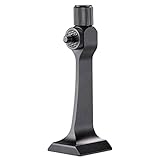 Staoptics 38 mm Base Adapter Staoptics 38 mm Base Adapter |
|
Check Latest Price |
 FANAUE S1 PRO Quick Release FANAUE S1 PRO Quick Release |
|
Check Latest Price |
 QICBIUD Universal Metal Adapter QICBIUD Universal Metal Adapter |
|
Check Latest Price |
1. Celestron Binocular Tripod Adapter – Metal Tray With the Longest Track Record
Celestron Binocular Tripod Adapter with Standard 1/4″-20 Thread
Fits roof and porro bodies
1/4-20 threaded foot
Durable metal, 3.2 oz
Pros
- Sturdy metal holds heavy 15x70 glass without swiveling
- Large base footprint grips the quick release plate
- Extended thumb turner is easy to grip
- Narrow profile leaves barrels near minimum IPD
Cons
- Plastic washer allows slight residual swivel
- Thumb screw can be fiddly to fully tighten
- No quick release so binoculars must be unscrewed
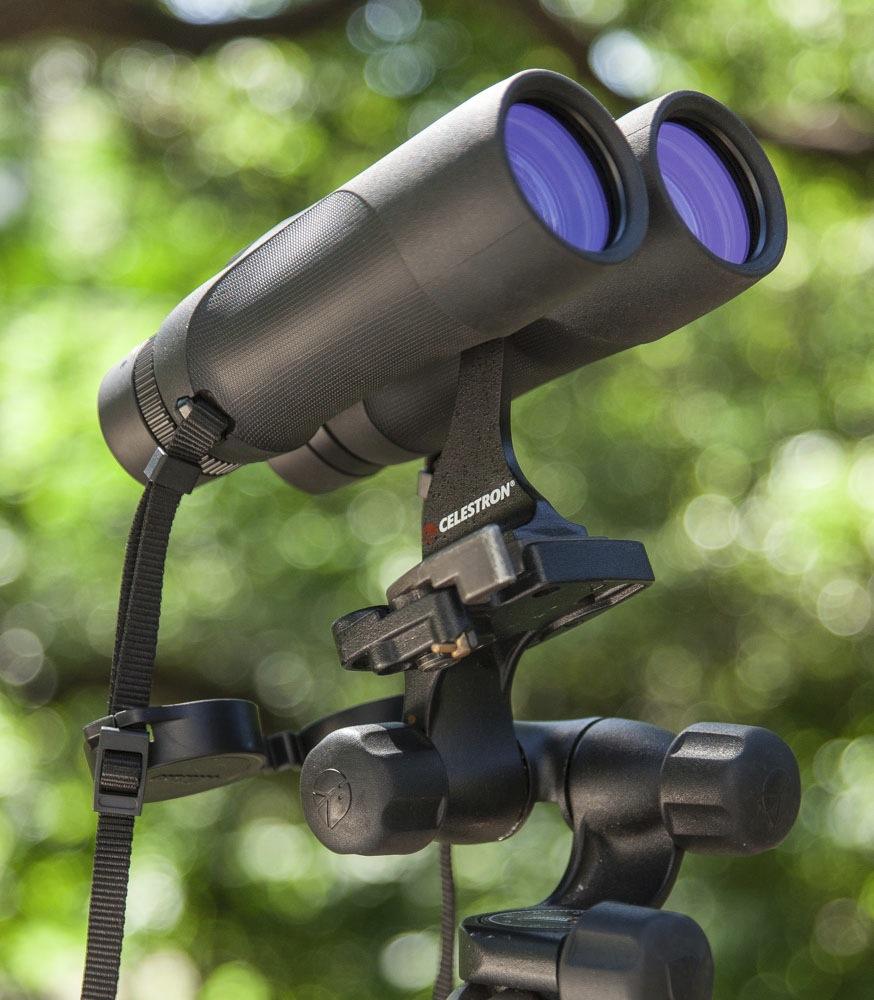
This is the adapter most people already own in a closet. It is a simple L-shaped metal tray with a 1/4″-20 threaded foot and a thumb turner that screws into the binocular’s tripod hole. No quick release and no moving mechanism, which is why it settles and stops moving once tight.
The large base footprint matters more than any clever feature. A wide foot resists the twisting moment a heavy 15×70 puts on a narrow post, and owners report heavy pairs sitting still at maximum magnification. The 3.2 ounce weight is negligible on any field tripod.
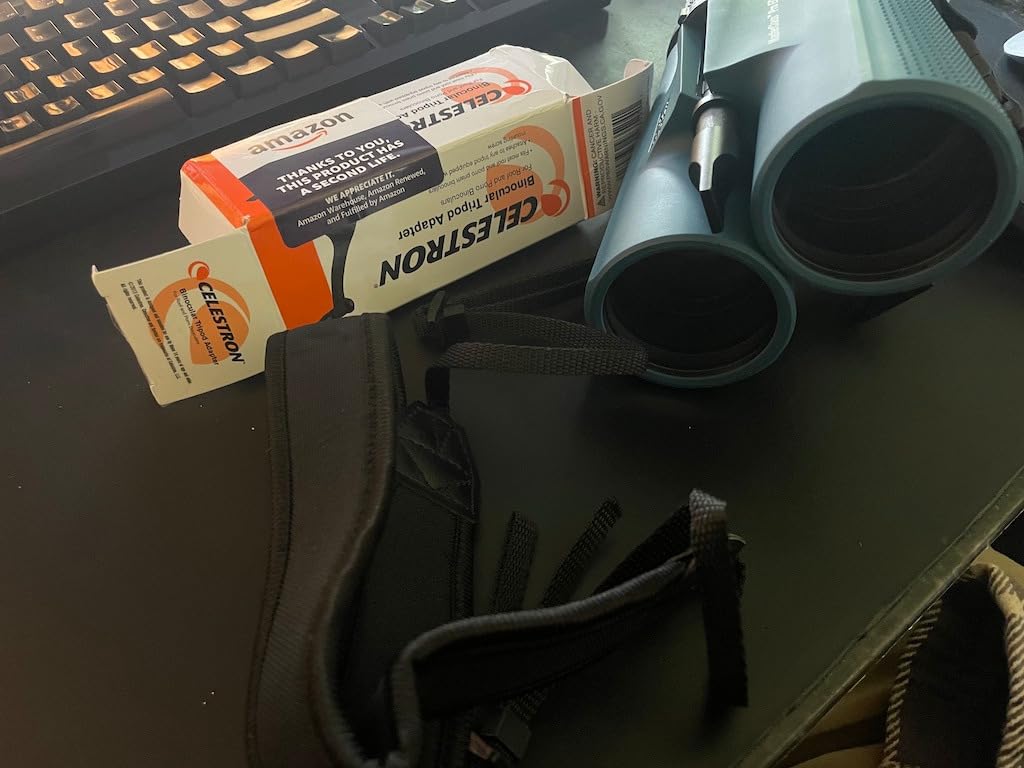
The one real flaw is the included plastic washer at the binocular-side screw. It is a washer, not a star washer, so a small amount of residual swivel survives even when everything is snug. Several owners swap in a star washer and report the last of the shake disappearing. The thumb turner also resists finger-tightening sometimes, so a small driver is worth keeping in the field bag.
It fits both roof and porro prism bodies, and reviewers note the profile is narrow enough that the barrels still close to their minimum interpillary setting with the objective covers on. A reversible offset option helps in crowded positions where a window sill or car roof is close behind you.
What holds up under heavy glass
The broad metal base is why this tray keeps 15×70 models from swiveling under load. Twist resistance scales with base width, and a rigid wide foot beats a narrow post every time.
It also fits any binocular with a threaded hole and any tripod with a 1/4″-20 stud, so there is nothing to configure.
Where it disappoints
Removing your binoculars means unscrewing them fully, which is awkward when you alternate between glassing and phone work in one session.
If your instrument has no tripod hole at all, this is the wrong architecture. A clamp model is the way to go.
2. FANAUE S1 – Aluminum Quick Release With a Permanently Installed Stud
Binocular Tripod Adapter, Binocular Mount 1/4 Inch Threading Mount Aluminium (s1)
CNC T6061 aluminum
Arca-Swiss plus 1/4-20 base
2.23 oz, 4.6 by 1.5 by 0.78 inch
Pros
- Stud can stay permanently threaded into the binoculars
- Arca-Swiss works with the common photo tripod standard
- Machining quality compares well to name-brand adapters
- Stable through long high-power sessions
Cons
- Stud screw loosens with use without threadlocker
- Release button awkward for large fingers
- Heavy glass can pivot if not tightened carefully
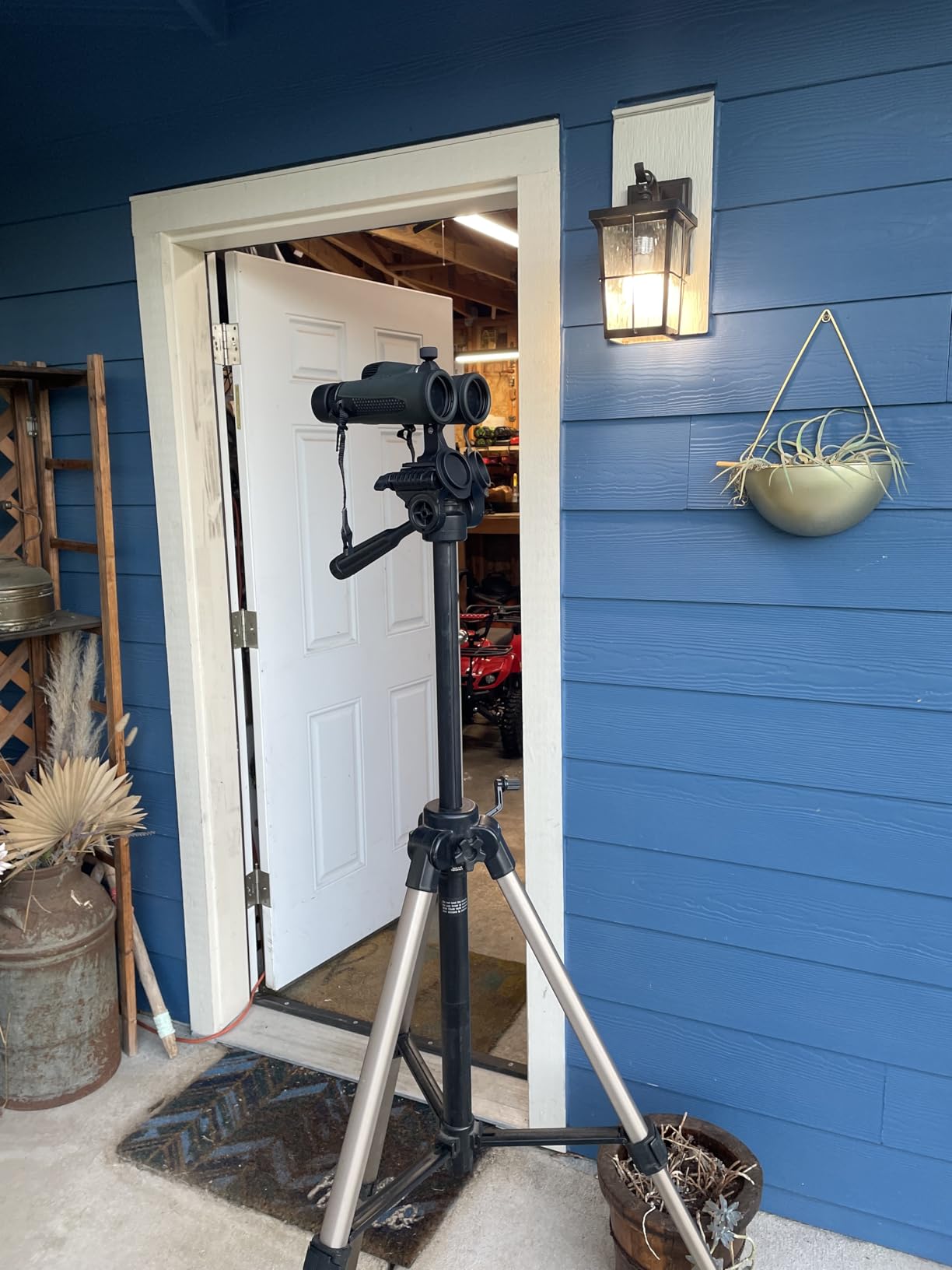
The FANAUE S1 is the pick for people who alternate between handheld glassing and tripod work in the same session. The small stud screws permanently into the binocular’s tripod hole, so leaving it in place costs nothing in handling, and the L-shaped body pops onto the tripod in one motion.
Construction is where the value shows. The body is CNC precision-cut from T6061 aluminum alloy, with a 1/4″-20 threaded bottom hole and an Arca-Swiss compatible base in the same piece, so one adapter covers a screw head and a quick release head.
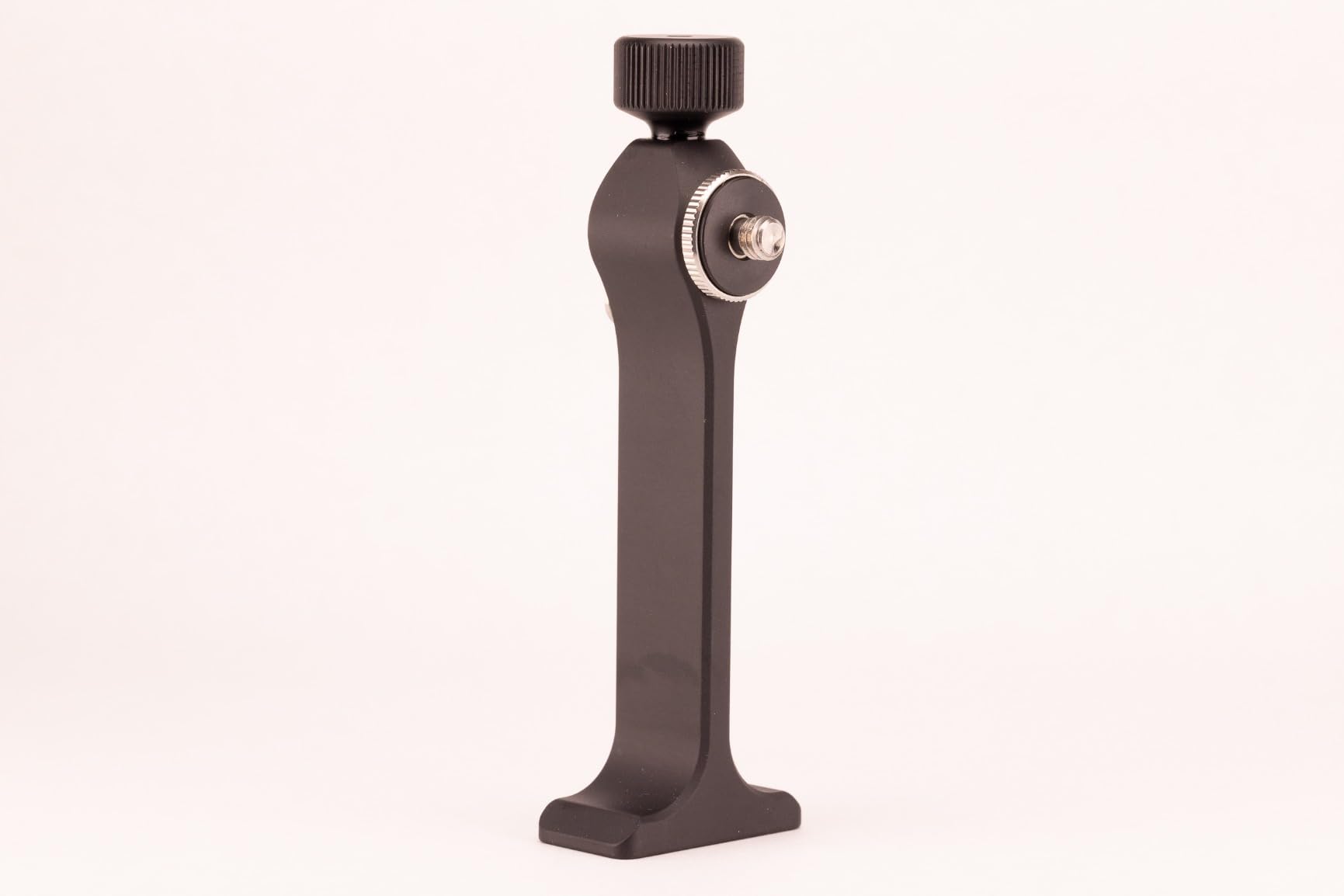
Reviewers repeatedly compare the machining favorably to adapters from larger, better known brands, and the stated fit list runs from 7×35 and 8×42 through 10-30×52, 12×25, 12×42, 15×25, 15×52, 20×25 and 30×60 class bodies. For an astronomy adapter that breadth is the point: you are not locked into one body style.
The two recurring nits are mechanical rather than optical. The stud screw tends to loosen over months of use, which owners fix with threadlocker or PTFE tape, and the quick release button sits in a small pocket that is awkward for larger fingers. Neither affects image stability once the adapter is properly torqued.
Why the permanent stud changes the workflow
Most screw-in adapters force you to remove the whole bracket every time you want to look handheld. Keeping the stud threaded into the instrument removes that step, which matters on a cold night when fumbling with a thumb screw costs you a full reset of dark adaptation.
At 2.23 ounces the bracket is light enough to leave mounted for hours without upsetting a lightweight field head.
Where it disappoints
The L-shaped body is a fixed geometry. If your binocular sits at a narrow interpillary setting, check barrel clearance before ordering.
Owners of very heavy glass report slight pivot around the connector if tightening torque is skipped, so treat the knob as a real fastener.
3. Vortex Sport Binocular Adapter – Slim Post for Tight Barrel Gaps
Vortex Sport Binocular Adapter
Slim 1.6 oz body
Fits between large barrels
Quick-release connector
Pros
- Quick release pops glasses off in a second
- Slim profile clears barrels on 12x and other high-power models
- Fits back inside the original case with the stem still attached
- Solid machined construction
Cons
- Stem bolt can work loose in the socket
- Quick release pocket is shallow
- Stem screw head is short and hard to grip
The Vortex Sport adapter answers the question hobbyists ask most often about stargazing mounts, and the answer is clearance. Its slim stem fits between the barrels of even large high-powered binoculars, so your interpillary setting barely moves when you mount it.
The Cloudy Nights thread on skinny binocular tripod adapters makes the same point from the astronomy side: a tall post forces the barrels apart or blocks your view. This adapter packages that idea with a machined quick-release connector, so the glass comes off the tripod in one motion when you want it back in your hands.
At 1.6 ounces it is small enough to leave attached and still pack away. Reviewers note the stem fits back inside the original Vortex case, which travel observers will appreciate.
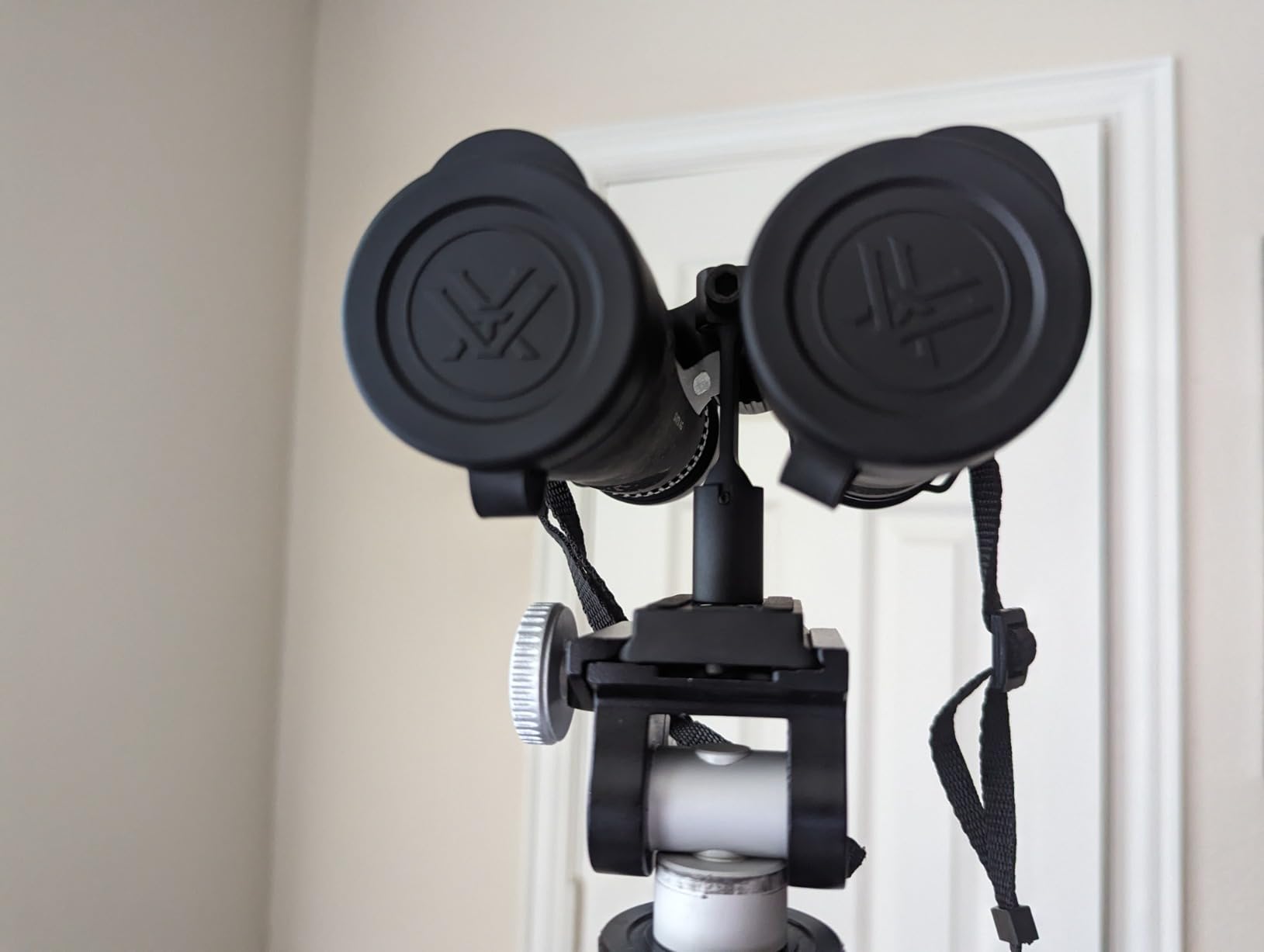
The quick release is the only point of retention in the chain, so clamp tension is worth checking mid-session on a windy night. A clamp that creeps open shows up as slow image drift rather than an obvious failure, and a slow drift is exactly what ruins a long faint-object observation.
The main complaint is that the stem bolt works loose in the socket over time, the same maintenance note that appears on nearly every screw-in design here, and users solve it with threadlocker. The release pocket is also shallow, which is the detail several owners would change first.
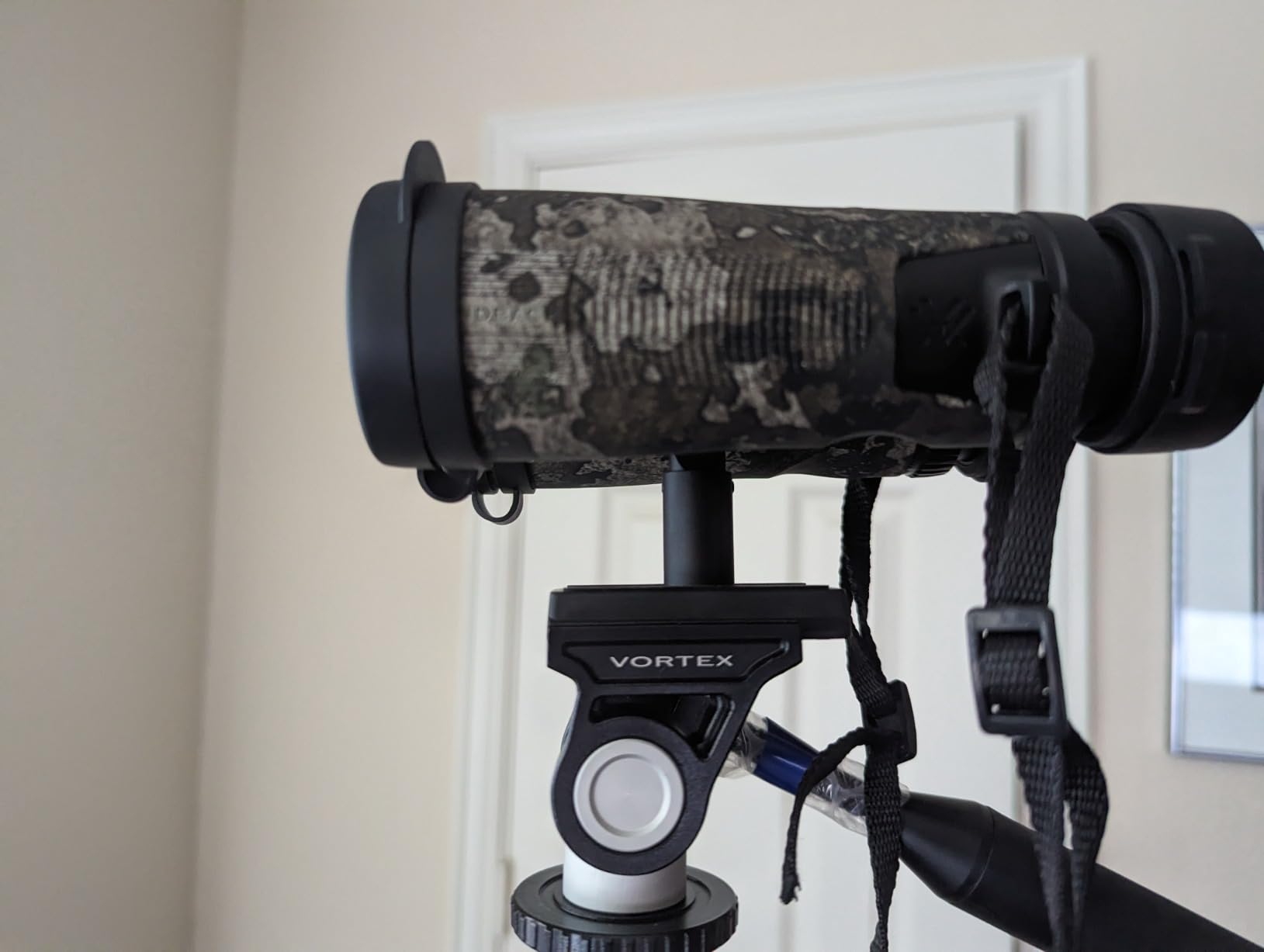
When clearance decides the purchase
If you own a large roof prism binocular with a tripod hole but almost no gap between the barrels, this is the adapter to buy. A wider quick release body would force the barrels apart and cost you field of view.
Owners of 12x class binoculars report that shake visible at maximum magnification all but disappears once the glass is tripod mounted through this adapter.
Where it disappoints
It only works on binoculars with a threaded tripod hole, so it is not an option for bodyless or boss-less glass.
Quick release clamps are also the least forgiving option on a boat rail or any high ledge, where a knock can open the lever.
4. SVBONY SV110 – Entry Metal Tray With a Giant Tightening Knob
SVBONY SV110 Binocular Camera Tripod Adapter, for Porro Binoculars
Powder-coated metal, 3.15 oz
Fits bodies with hole under 0.27 inch
Needs over 0.78 inch barrel spacing
Pros
- Solid powder-coated metal holds heavy binoculars
- Large step up from flimssy plastic adapters
- Works with 10x50 7x35 and 16x50 setups
- Lightweight enough not to upset tripod balance
Cons
- Deeply recessed foot thread will not accept every shoe stud
- Large screw head can block barrels at minimum IPD
- Finger-tightening can leave the binoculars shifting
The SV110 answers stargazers who want metal instead of plastic without paying for machined aluminum. It is a powder-coated metal tray with an oversized rubberized tightening knob you can turn with gloves on. Reviewers call it a clear step up from flimssy plastic adapters.
Two versions exist, one for porro prism bodies and one for roof prism, and both carry a 1/4″-20 socket for standard photographic and field tripod heads. The fit spec is specific and worth reading: it suits bodies with a holder hole under 0.27 inch, and it needs more than 0.78 inch of barrel spacing at the narrowest setting.
That spacing figure is the most useful number on the listing. It tells you whether the plate fits between your barrels before you commit, which is exactly the fitment uncertainty that sends people back to returns.
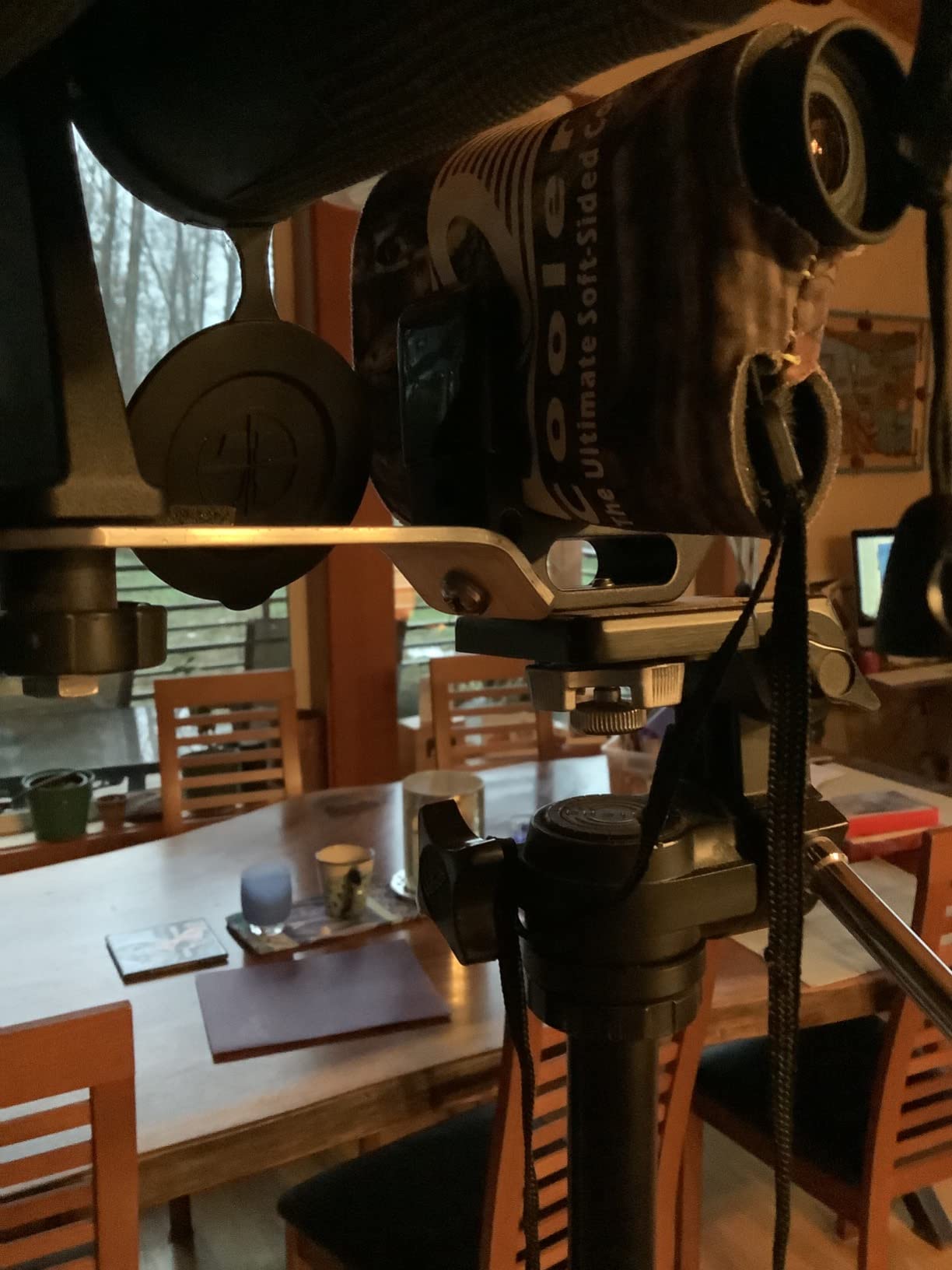
Owners report it working with 10×50, 7×35 and 16×50 setups including models with parallelogram mounts, and the 3.15 ounce weight adds almost nothing to a pack. That stability is what you feel after ten minutes at high power.
The recessed foot thread is the practical warning. Because the internal thread sits deep, some tripod shoe studs will not fully seat, so measure your stud length first. A large screw head and thick body can also block barrels on narrow-body binoculars set to minimum IPD.
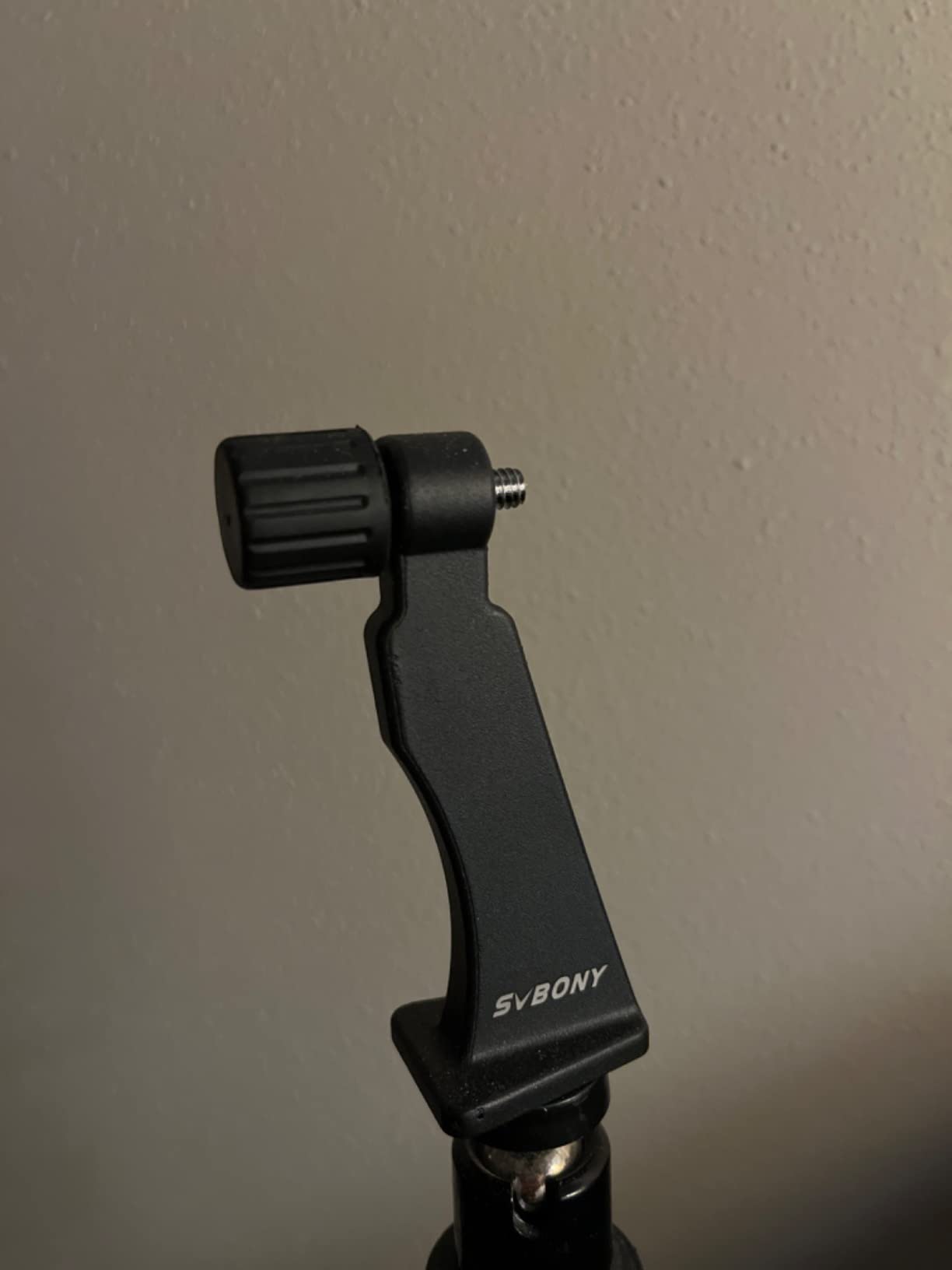
Where the big knob earns its size
An oversized rubberized knob can be tightened hard enough to remove the last of the swivel without a tool, which is what you want in gloves. Metal also does not flex the way a plastic tray does under a heavy load.
Where it disappoints
The recessed foot thread rules out tripods with a short shoe stud, and there is no way around that without modifying the hardware.
If your roof prism binocular has a short or crowded tripod boss, the plate may not seat. Measure the hole and the barrel gap first.
5. Zelnoox BC-03 – Quick Release With a Mechanical Anti-Drop Lock
Binocular Tripod Adapter | Quick Release, 1/4″-20 Thread & Arca-Dovetail, CNC Aluminum, Anti-Drop, Fits Most Binoculars
CNC T6061 aluminum, hard anodized
Anti-drop safety lock
2.8 oz, 1.54 by 1.5 by 4.17 inch
Pros
- Anti-drop lock adds confidence in wind or on uneven ground
- Locks hard without damaging the instrument's boss thread
- Quick release switches between mounted and handheld
- Handles heavy glass when tightened properly
Cons
- Included Allen key is too large for the set screw
- Tightening knob lacks knurling for grip
- Supplied base plate purpose is unclear
The Zelnoox BC-03 is the pick for anyone setting up on a windy hillside or a public viewing night where a knocked-over tripod is a real possibility. Its distinguishing feature is a mechanical anti-drop safety lock, so the binoculars stay attached even if the quick release lever is brushed.
Underneath it is a well-executed quick release: CNC precision-cut T6061 aluminum with a hard anodized finish, a detachable Arca-Swiss dovetail base and a 1/4″-20 threaded stud, all in 2.8 ounces. The two-part design installs in under a minute.
Owners call out that it locks down hard without twisting or damaging the front boss thread on the binocular. That matters because that thread is thin alloy, and many adapters are tightened aggressively enough to chew it.
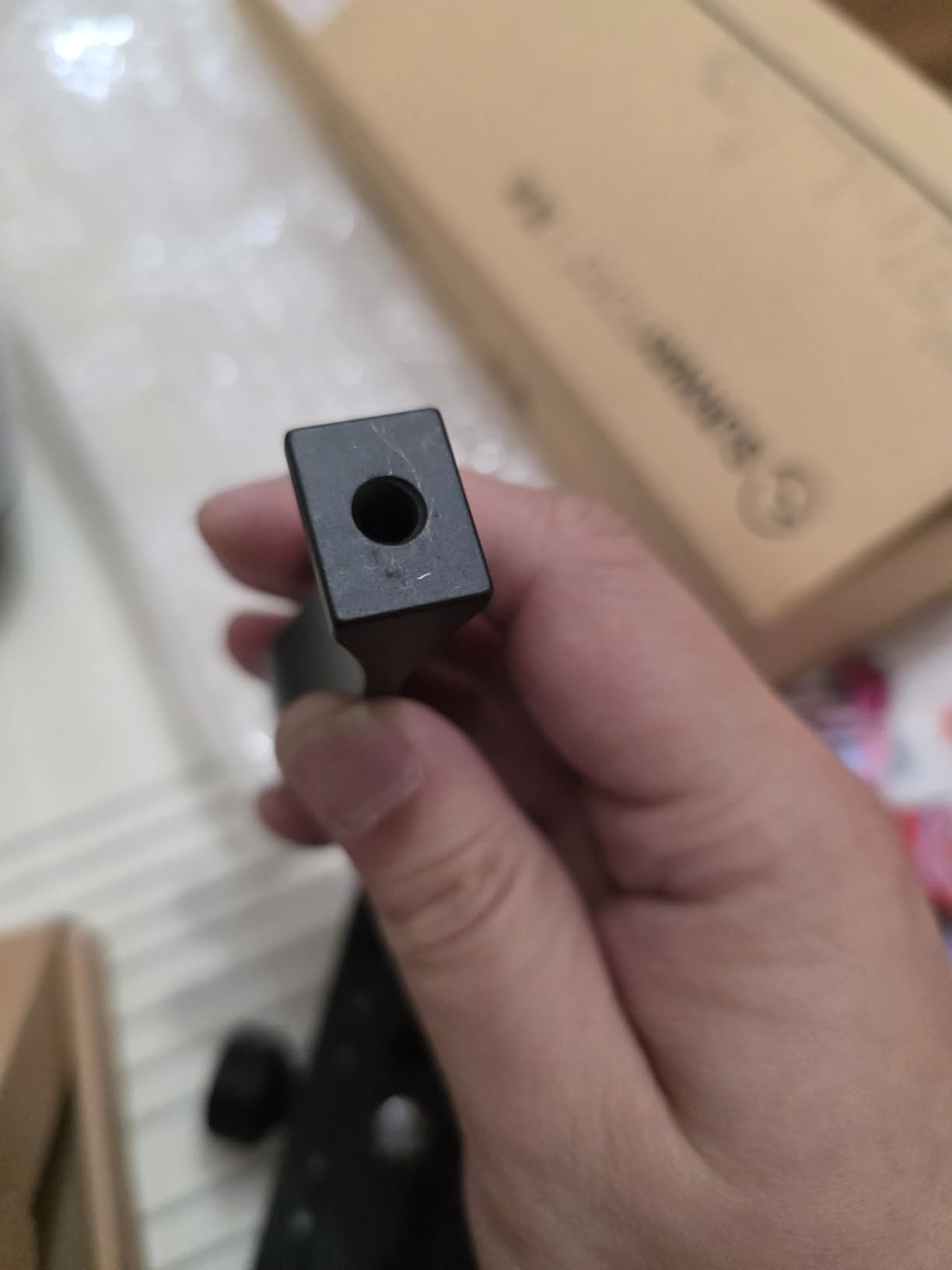
Buyers describe rock-solid stability on eclipse and comet trips, positive quick release action, and confidence with glass as heavy as 1.1 kg once properly torqued. Several upgraded from cheaper brands and did not look back.
Two refinements come up repeatedly. The main tightening knob has no knurling or grip ridges, so getting enough torque on heavy binoculars takes more cranking than it should. The included Allen key is also too large to fit the set screw.
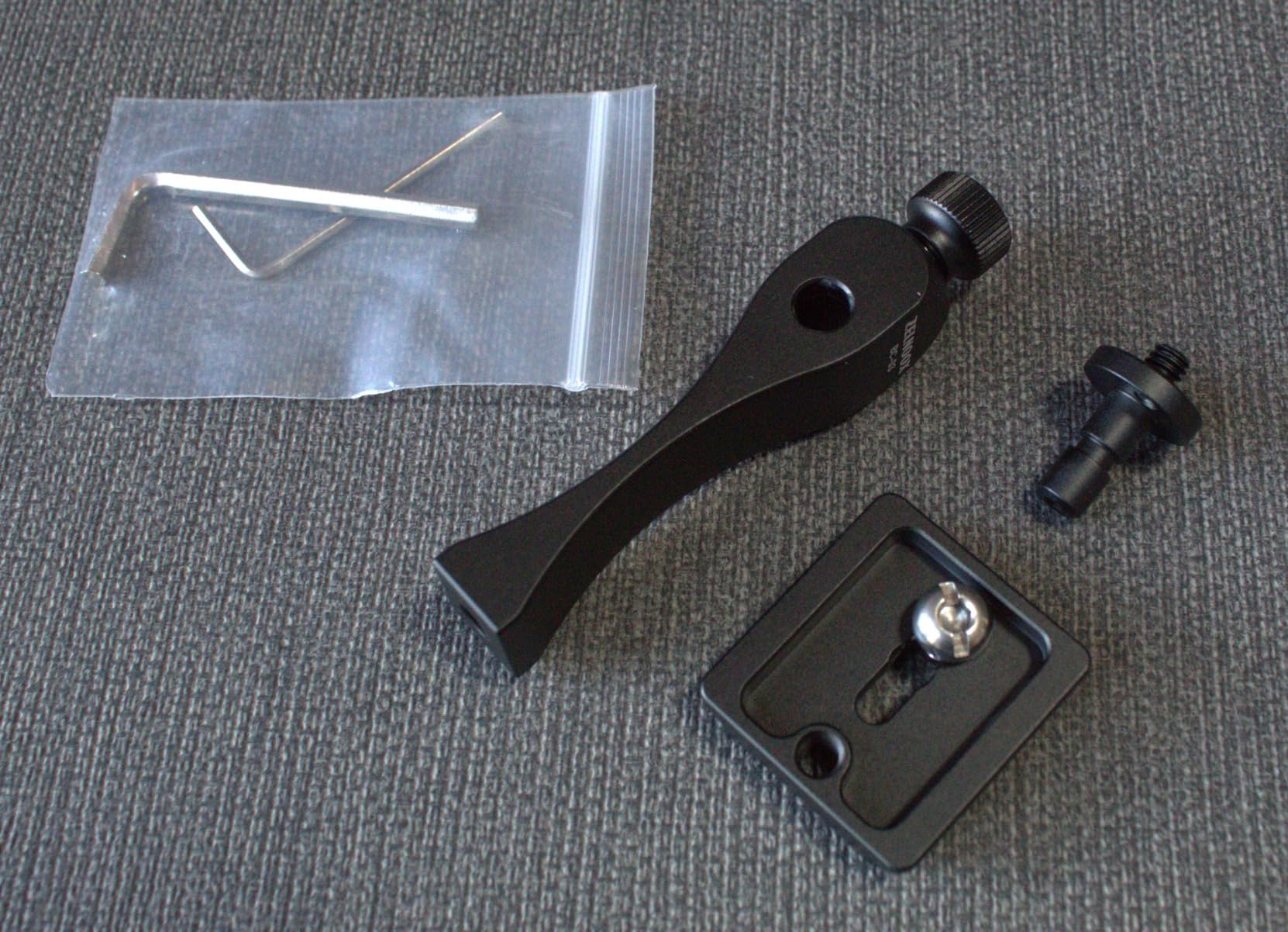
Why anti-drop matters under a sky
Most quick release adapters rely on friction and a lever. A mechanical lock adds positive retention, so a knock or a gust of wind does not send an expensive binocular to the grass.
For a stable session that removes a worry outright, and it is the reason this one tops the list for public observing nights.
Where it disappoints
The smooth knob means heavy setups need more tightening effort than the design should ask for, and knurling would fix the most common complaint in the reviews.
The supplied base plate is ambiguous in the listing materials, so confirm what arrives before planning a setup around it.
6. FANAUE S2-01 – Tapered Aluminum Body Built Around Porro Bodies
FANAUE S2-01 Binocular Tripod Adapter with 1/4-20″ Thread Compatible with Porro Binoculars and Arca Ball Heads, Universal Quick Release for Bird Watching, Hunting, Astronomy, Animal Observation Ect.
L-type CNC T6061 aluminum
Arca plus 1/4-20 base, 79 g
Permanent bino-side attachment
Pros
- Mounts instantly on Arca-Swiss plates and locks rigid
- Aluminum taper clears barrel spacing on 15x70 and 10x50
- Survives being tossed in packs without bending
- Quick locking helps frame a target for others
Cons
- Small foot gives some Arca clamps little surface
- Anodized thread can feel tight and may need running with a die
- Can sway side to side if not tightened at installation
If you still use porro prism binoculars, the FANAUE S2-01 is the one I would pick. Its L-type integrated body is CNC precision-cut T6061 aluminum with Class III hard anodizing, and the taper suits compact and large porro bodies. That shaping lets the glass open up without the barrels fouling the bracket.
The base carries both a 1/4″-20 standard thread and an Arca standard base, so it fits screw heads, Arca ball heads and window mounts. The binocular-side attachment can stay permanently screwed in, making the switch between handheld and mounted use a single movement.
Stability is the strength users report. Owners describe mounting instantly on Arca plates with a rigid lock, and the tapered aluminum clearing wider barrel spacing on 15×70 and 10×50 models. Several mention taking it on eclipse and comet trips without drama.
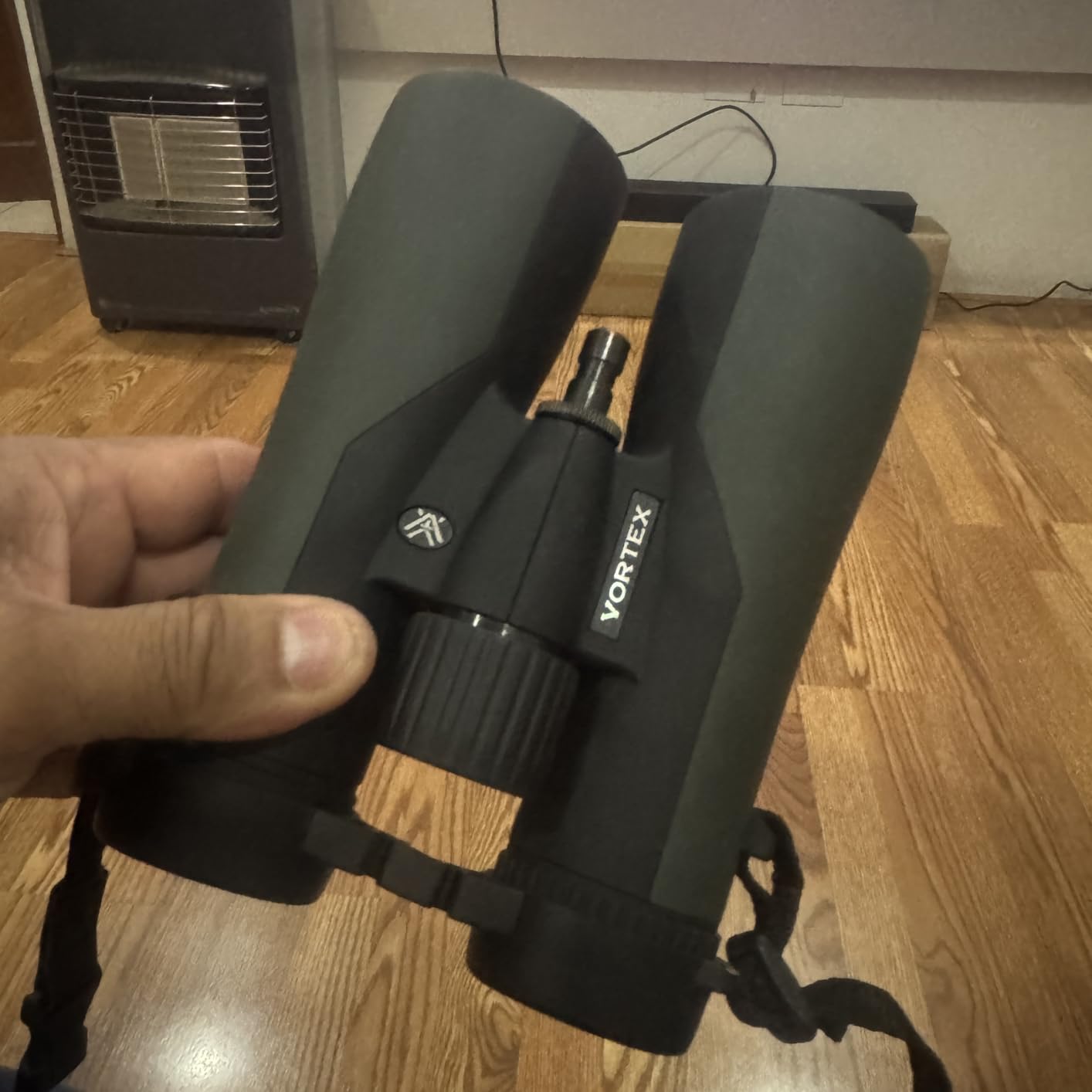
The manufacturer advises checking tightness after installation, which lines up with real user reports of side-to-side sway on a loose fit. Treat the top knob and locking screw as a two-step procedure, not a formality.
Two smaller notes. The foot is fairly narrow, so some Arca clamps have limited surface to grab, and the Class III anodizing can make the thread feel tight on first assembly, with owners running it with a die. Neither issue survives bedding in.
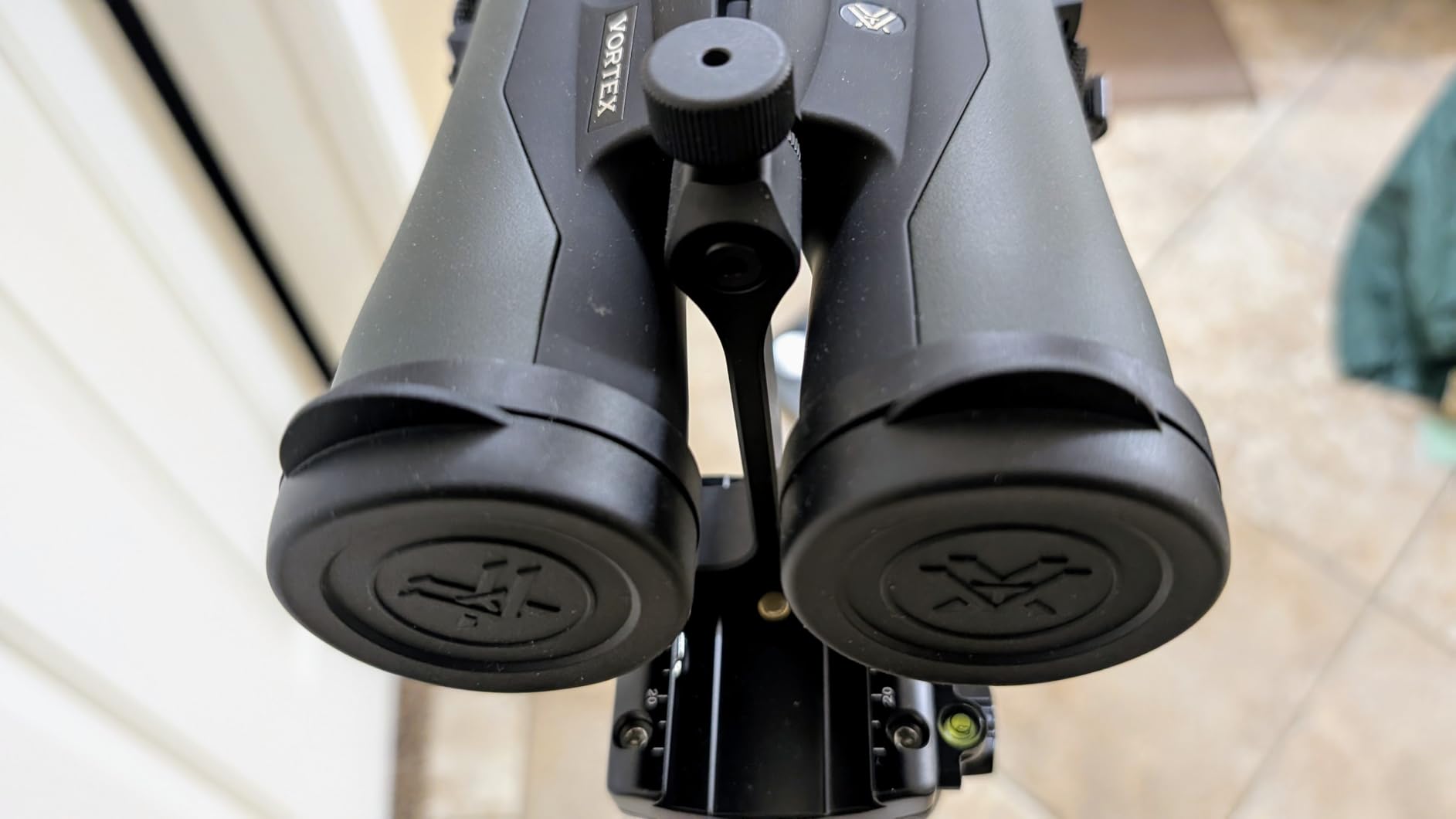
Why porro bodies need their own geometry
Porro prism barrels bulge outward and step, so a slim post that works between roof prism tubes can foul the body entirely. A tapered aluminum L-shape follows the contour and keeps the field of view clear.
Buyers also report it survives being tossed in packs and even truck beds without bending, which matters more for an astronomy kit than a birding one.
Where it disappoints
The small base is the most common wish list item, particularly for a wide Arca head where more contact area would help.
First-time assembly may need the thread run with a die, and skipping the tightness check is how sway creeps back in.
7. Zelnoox BC-02 – Clamp Adapter for Binoculars With No Tripod Boss
Clamp Binocular Tripod Adapter – ARCA Quick Release Dovetail | 1/4″-20 & 3/8″-16 Screw Holes | Fits 26-58mm Binoculars
7075 aluminum with steel hardware
Fits 26-58 mm diameter bodies
Arca, RRS, 1/4-20 and 3/8-16
Pros
- Works on binoculars with no built-in tripod thread
- Rubber-lined jaws grip without scratching
- Straps on and off in seconds
- Solid 7075 build
- 3/8-16 option is rare on competitors
Cons
- Small base can flop in some Arca clamps until shimmed
- Listing wording implies an included base that is not included
- Heaviest adapter in this group
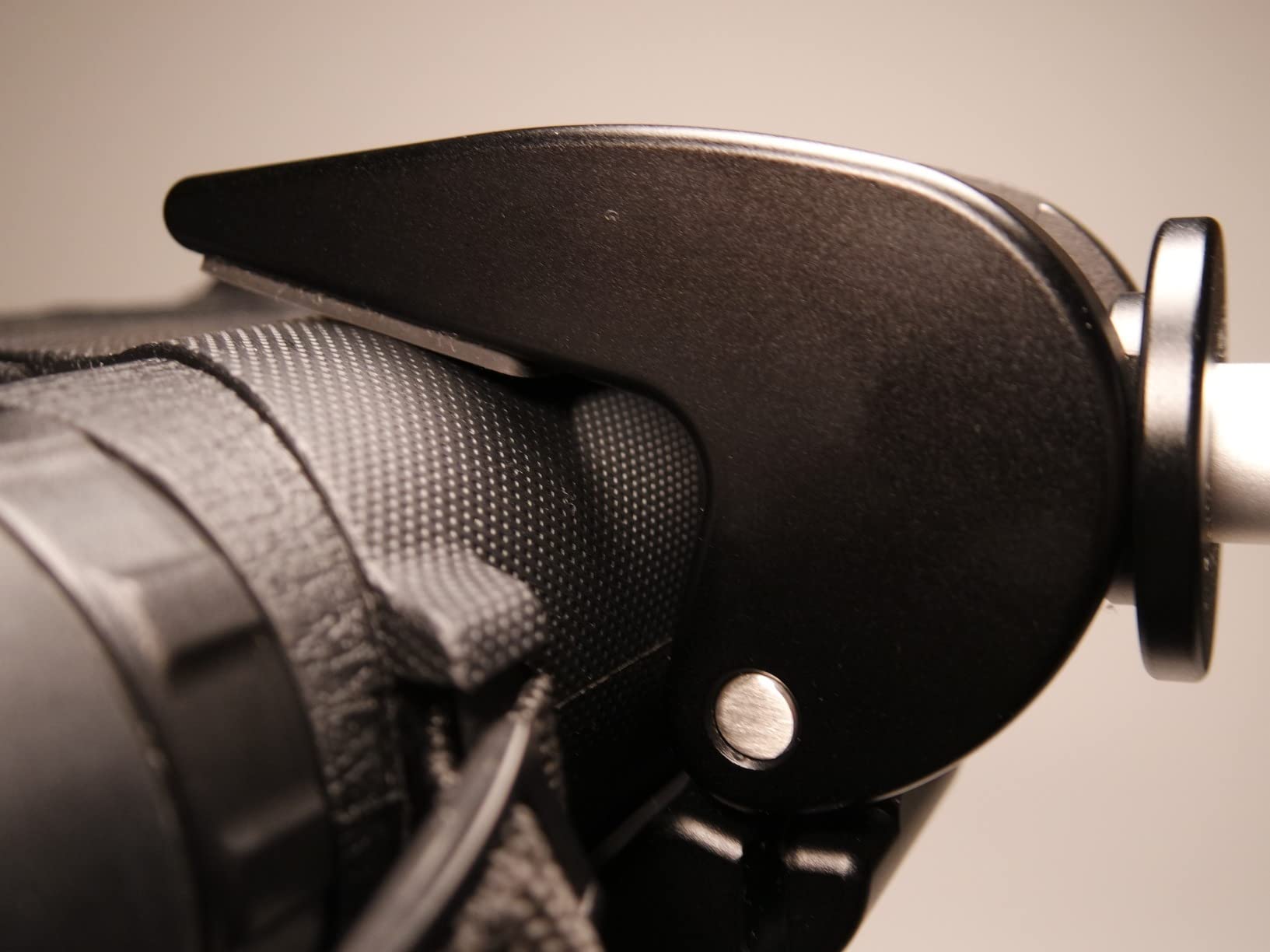
This is the clamp architecture, and it answers binoculars with no threaded tripod hole at all. The Zelnoox BC-02 grips the instrument body directly with inward-angled, rubber-padded jaws, so there is nothing to screw into. A BirdForum discussion of binocular tripod adapters describes the same design, gripping a cylindrical or conical part of one barrel while the other rests on a flat surface.
That architecture also covers monoculars, which is why observers who switch between a binocular and a small spotting scope on the same tripod like it.
The fit range is the number to check first: any binocular or monocular body from 26 to 58 mm in diameter, covering 8×32, 8×42, 10×50 and most larger bodies. Outside that window, this adapter is not for you.
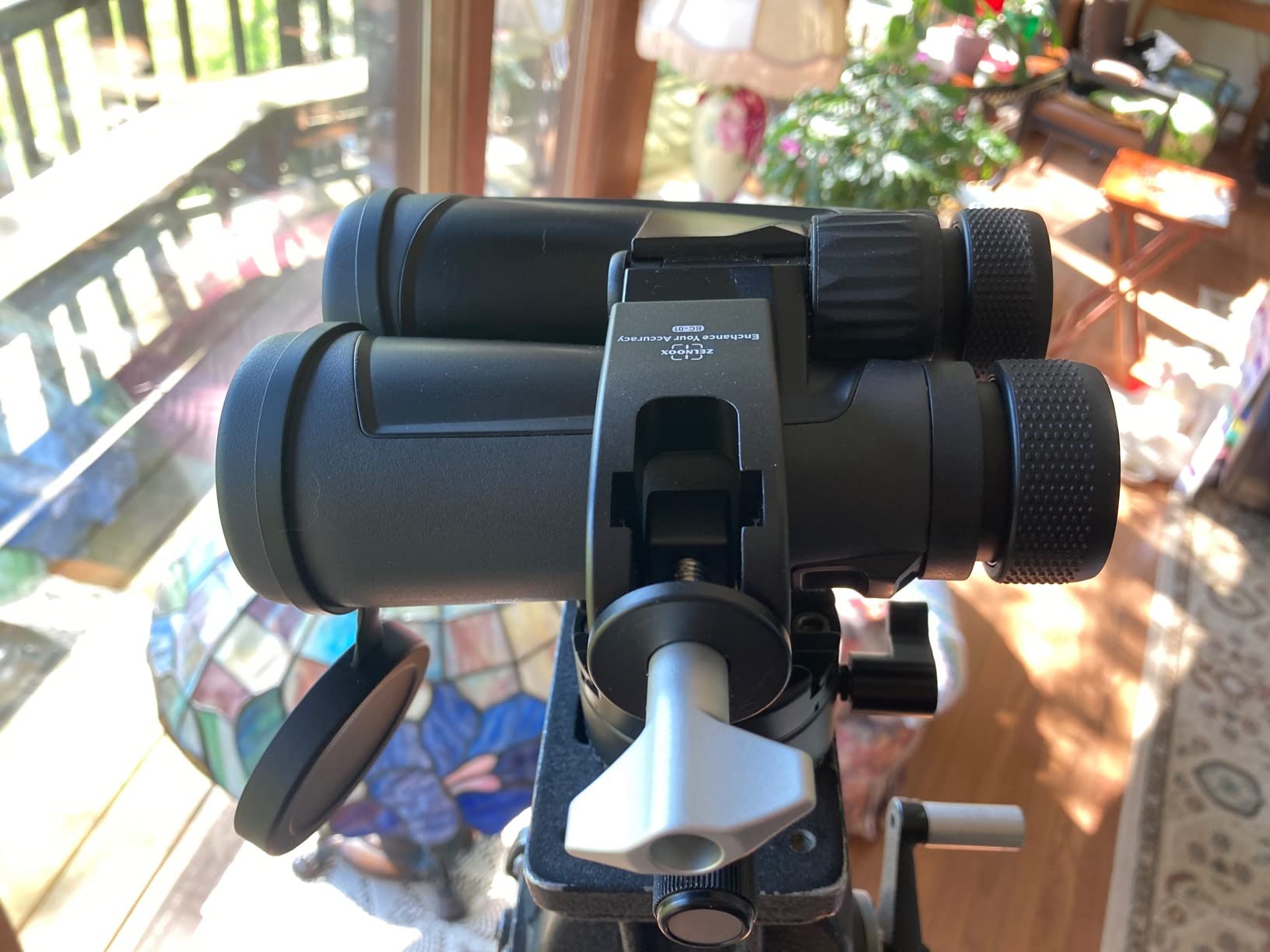
Build is 7075 aircraft-grade aluminum with anodized finish and stainless steel hardware across 7 ounces. That is heavier than every other adapter here, and for a rigid clamp at high magnification weight is not a disadvantage. The bottom dovetail is Arca-Swiss and RRS compatible, plus 1/4″-20 and 3/8″-16 screw holes.
The 3/8″-16 hole is rare among competitors and opens the adapter to heavier tripods and specialty mounts. The rubber lining protects the instrument from scratches, and owners like the fast strap-on and off cycle for alternating mounted and handheld work.
The main criticism is the small dovetail base, which can flop in some Arca clamps until owners shim it with leather. The listing wording also implies a base is included that does not arrive as a separate item, so read the contents carefully.
When a clamp beats a screw
Any binocular without a tripod boss has zero screw-in options, including many bodyless compact models and some spotting scopes. That is why clamp adapters exist as a category.
Rubber-padded jaws also let you repurpose one adapter across several instruments of similar diameter.
Where it disappoints
The small dovetail base is the honest flaw. In a wide Arca clamp it can introduce a little movement until you shim it, and that defeats the point of a clamp at high power.
At 7 ounces it is the heaviest adapter in the group, which matters more for a portable kit than one that stays in a car.
8. Staoptics STA0804 – A 38 mm Base for a Wider Footprint
Staoptics Binocular Tripod Adapter Quick Release with 38mm Mounting Base 1/4-20 Inch Thread Removable Accessories for 8×42 10×50 12×60 15×56 15×60 15×70 20×60 25×70 Roof and Porro Binoculars.
38 x 38 mm mounting base
CNC aviation aluminum at 0.158 lb
Two connecting screws included
Pros
- 38 mm base gives a wider footprint than most competitors
- Two screws let you outfit two instruments at once
- Short 1.063 inch top screw stays off your chest
- Light aluminum adds little pack bulk
- Broad stated fit across roof and porro models
Cons
- Quick release is screw-operated rather than push button
- Smaller review base limits long-term durability feedback
The Staoptics takes a different route to stability: a wide base instead of a clever lock. Its 38 x 38 mm universal mounting base with a 1/4″-20 thread underneath spreads the load across more area than most screw-on adapters, and a wide base resists the twisting a heavy instrument applies at high power.
The body is CNC machined integrated aviation aluminum weighing 0.158 lb, so the footprint costs almost nothing in pack weight. The top connection screw measures 1.063 inch, keeping it from pressing against your chest during a long session, which matters more than it sounds during a two-hour galaxy hunt.
Compatibility is stated across 8×42, 10×50, 12×60, 15×56, 15×60, 15×70, 20×60 and 25×70 roof and porro bodies, with standard 1/4″-20 threading for any tripod-adaptable binocular and for window mounts.
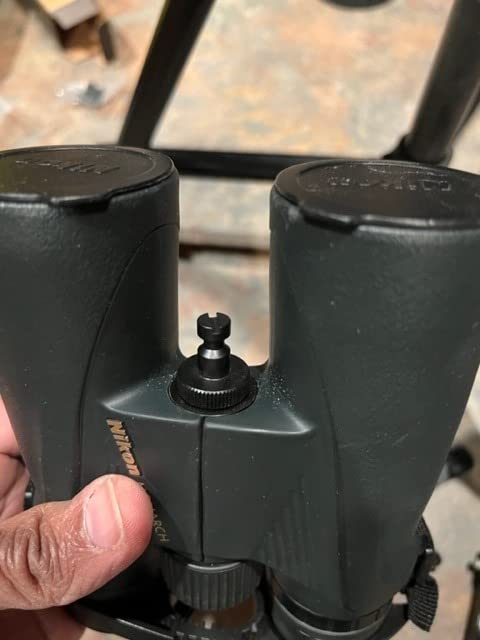
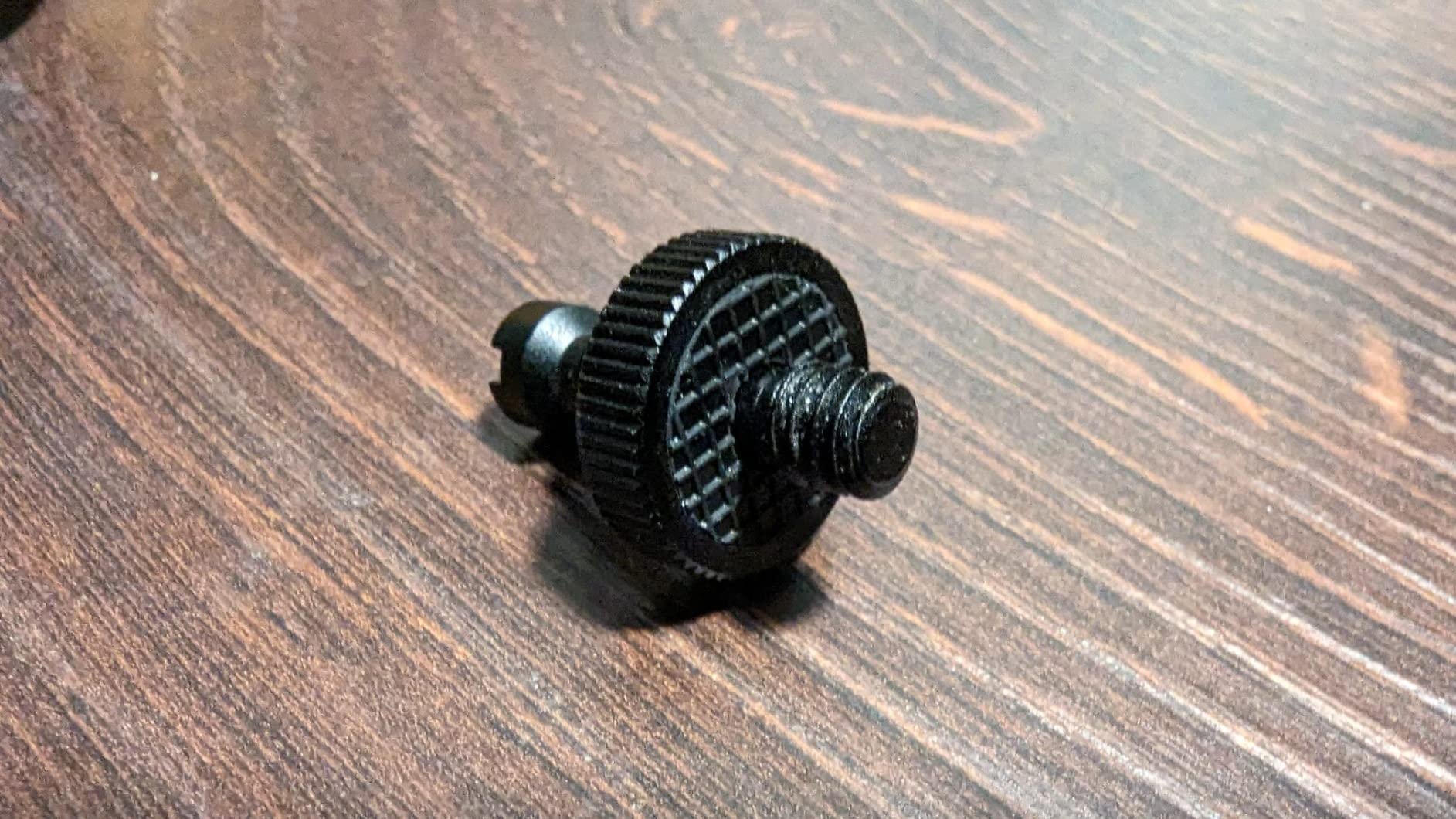
The two connecting screws are the sleeper feature. They let you leave a stud permanently installed on two instruments, so you can swap between a wide-field pair and a high-power pair without a driver. The quick release rotates the top screw, which is less instant than a push button but more secure against vibration.
Owners like the larger footprint compared with competing adapters, and the light weight does not upset a portable tripod’s balance. The review base is smaller than for the higher ranked options, so long-term durability feedback is thinner.
Why base width beats base weight
Torsional stiffness scales with the width of the contact area, not just the mass of metal. A 38 mm plate resists twisting better than a much heavier narrow post, and here it costs 0.158 lb.
For a heavy 15×70 pair at maximum power, that geometry is why the image sits still instead of creeping.
Where it disappoints
The release is screw-operated, so swapping between two instruments takes a couple of turns rather than a press. The two included screws are what make that bearable.
Fewer owners than the higher ranked options means less long-term data on how the aluminum ages, which matters if you buy one for a decade.
9. FANAUE S1 PRO – Lock Screw That Spares Your Binocular Threads
FANAUE Aluminum Binocular Tripod Adapter with 1/4″ Thread
CNC T6061 aluminum, 150 g
1/4-20 hole plus Arca plate
Lock screw bears on the stud shaft
Pros
- Lock screw bears on the stud shaft so binocular threads stay intact
- Smooth positive quick release
- Clamps solidly into an Arca head with large glass
- Two studs let you outfit two instruments
- One body covers Arca and 1/4-20
Cons
- Flat screw end on a round spindle can let glass spin
- Small base needs an extra plate for medium binoculars
- Chrome stud finish is not to every taste
The S1 PRO fixes a small but irritating flaw that runs through this category. Its lock screw tightens against the shaft of the stud rather than against the binocular’s own mounting thread, so you can crank the adapter down hard enough to kill the last of the sway without stripping the thin alloy boss on the glass.
The rest is a well-executed quick release: CNC precision-cut T6061 aluminum, a base offering both a 1/4″-20 hole and an Arca-Swiss compatible plate, and an anti-safety unlock. At 150 g it is heavier than most, which suits a permanently set up astronomy tripod rather than a pack carried up a hill.
Users report a smooth, positive quick release with a well-tensioned button, and one owner notes the base clamps solidly into an Arca head while using 20×60 Pentax glass. Two connecting screws arrive in the box for a second instrument.
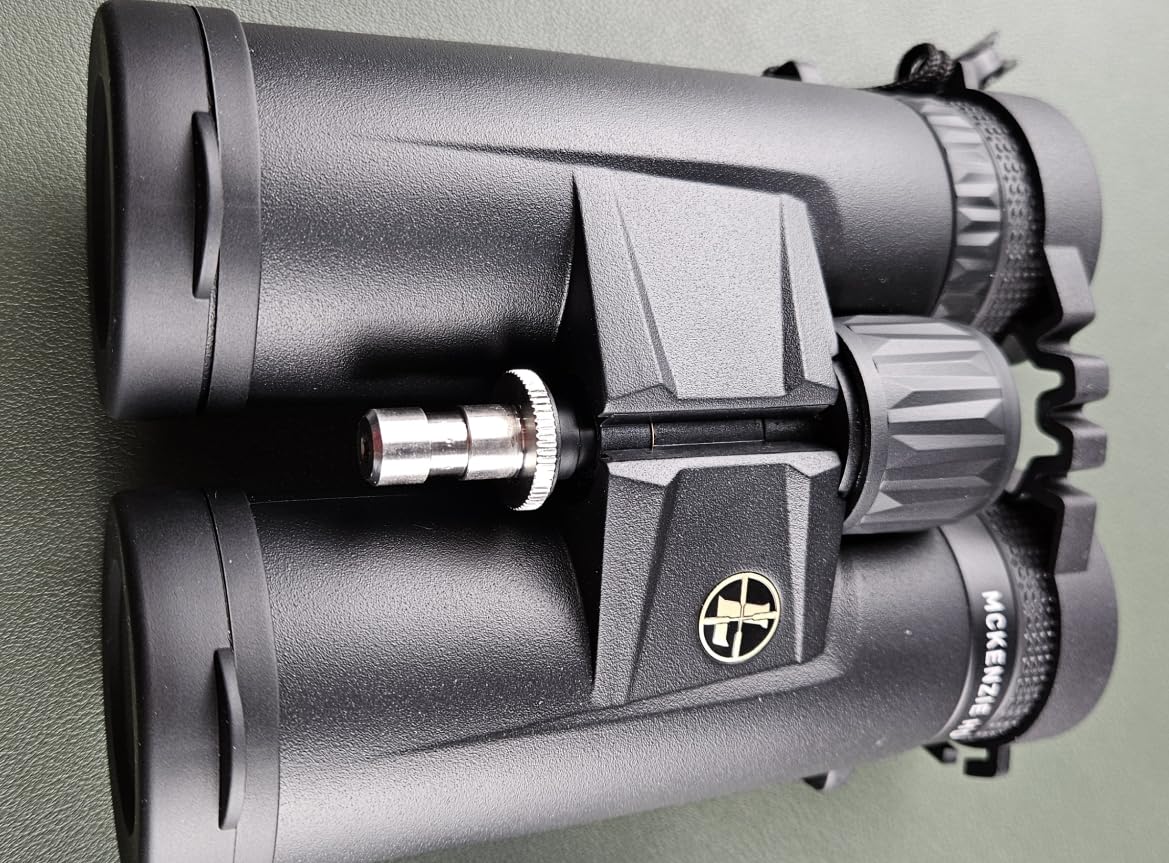
Reported drawbacks are mostly about the base. It is small, and medium-size binoculars may need an extra plate for adequate contact inside an Arca clamp. The flat top screw end on a round spindle can let the glass spin if not fully tightened, and one buyer received only one of the two advertised screws.
The rating distribution shows no one-star reviews at all, which points to generally reliable assembly rather than a product with a bad batch.
Why thread protection is a real concern
Binocular tripod bosses are usually small alloy inserts, and most adapters are designed to be tightened hard. A lock screw that loads the stud instead means wear falls on a replaceable steel part rather than the instrument.
For someone who will leave the adapter mounted for years, that is a meaningful difference in ownership.
Where it disappoints
The small base is the recurring note for medium instruments in a wide Arca clamp, where an extra plate is the obvious fix.
At 150 g it is heavier than most of the group, and the flat spindle end means tightness still needs checking by hand after every mount.
10. QICBIUD Universal Adapter – Narrow All-Metal Stopgap
Universal Binocular Adapter, Metal Binocular Tripod Adapter Adaptor Mount Bracket – for Connecting Binoculars to a Tripod, 1/4″-20 Socket/Thread
Alloy steel, anodized, 66 g
1/4-20 socket
Narrow body clears barrel gaps
Pros
- Narrow profile fits compact roof prism bodies
- All metal rather than flexing plastic
- Holds large objective sizes such as 15x70 and 20x80
- Works with camera
- window and phone tripod mounts
Cons
- Hole is not fully tapped and can strip a tripod bolt
- Bolt may need shortening for a snug fit
- Knob shows scratches on arrival
- Limited adjustment range
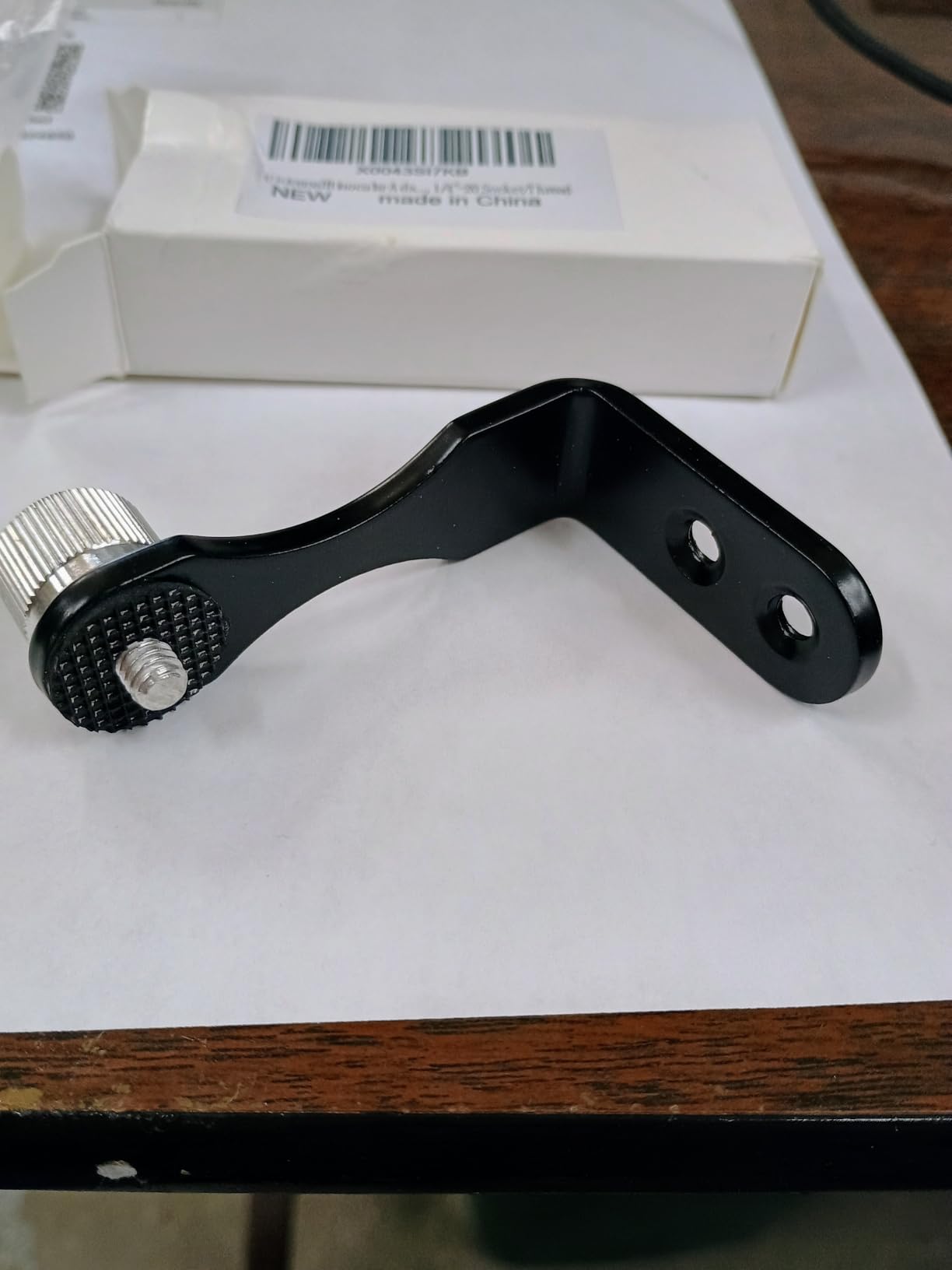
The QICBIUD is the simplest design here, and simplicity is why it earns a place. A single-piece alloy steel body with an anodized finish, a 1/4″-20 socket underneath, and a narrow profile that clears the gap between the barrels on compact roof prism binoculars. No quick release and no moving mechanism to loosen in the cold.
That narrow body is the differentiator for me. Plenty of quick release adapters are physically too wide for small-bodied glass, and this one fits precisely where those cannot. It also holds large objective sizes, with owners reporting it steady on 15×70 and 20×80 bodies once tightened.
Because it uses a plain 1/4″-20 socket, it works with camera mounts, window mounts and phone tripods as well as a field tripod, which suits a rig where the same adapter carries the binoculars and a phone for wide-field Milky Way shots.
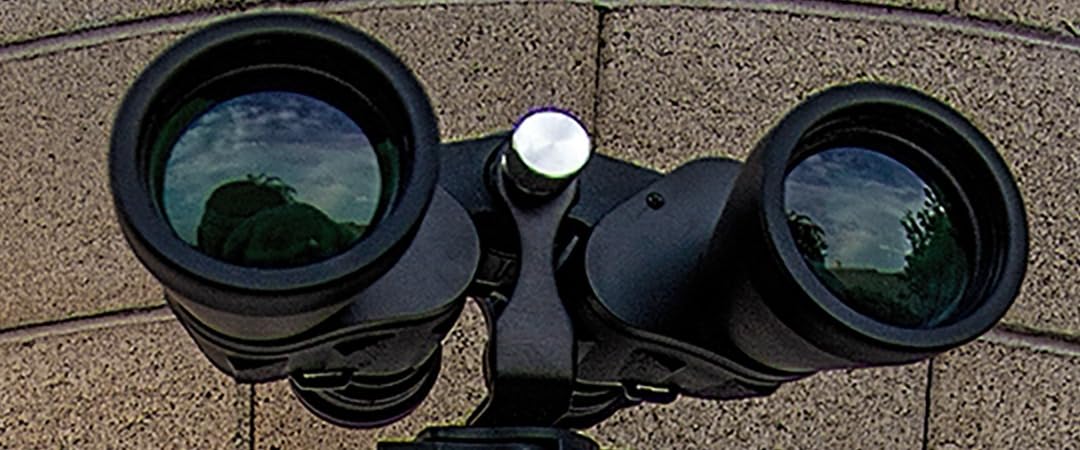
The important warning from the reviews concerns the tapped hole. It is not fully tapped, so forcing a tripod bolt into it can strip the thread. Some owners fit or tap it properly before use, and others shorten the bolt so it can be snugged up fully. At 66 g the body is heavier than the trays it competes with on fitment, and the anodized finish still shows scratches.
Knob finish shows scratches on arrival, and the limited adjustment range makes it harder to get completely tight than a knob with a wider range. Neither affects image quality once set correctly, but both are worth knowing before you rely on it for a long session.
When narrow beats elaborate
Compact roof prism bodies leave very little room between the barrels. This is one of the few options in the group that fits that gap while still being all metal, so it solves a problem the bigger quick release designs cannot.
It also doubles as a general purpose adapter for window mounts and phone tripods, which is useful for balcony observing when a field tripod is impractical.
Where it disappoints
The incompletely tapped hole is a real hardware issue, so treat it as a job needing five minutes of prep rather than a plug and play accessory.
With no quick release and a limited adjustment range, it suits a fixed observing setup rather than frequent changes.
Which Adapter Architecture Fits Your Binoculars?
Three architectures cover the whole category, and choosing between them takes less than five minutes once you know your binocular body. The question is not brand, it is where the mount attaches.
Tray and center-post adapters screw into a threaded hole in the binocular body, usually between the barrels or under the bridge. They are the most common design, they work with any tripod carrying a 1/4″-20 stud, and they are the right default for a mid-size roof prism pair. The Celestron tray, the SVBONY SV110 and the Staoptics adapter all sit here.
Low-profile posts solve one specific problem: barrel clearance. If your binocular has a tripod hole but almost no gap between its barrels at a comfortable interpillary setting, a slim post is the only design that will fit. The low profile tripod adapter discussion on Cloudy Nights makes the same point from the astronomy side, describing a skinny post that fits between the tubes of large roof prism binoculars.
Barrel clamps attach to the instrument body itself, gripping a cylindrical or conical section of one barrel while the other rests on a flat surface, exactly as described in a BirdForum discussion of binocular tripod adapters. The Nikon cone-barrel case in that thread is the exception worth remembering: conical sections clamp differently from straight cylinders, and the fit range matters more than the brand.
Barrel diameters are the number to check before buying any clamp. A Hunt Talk post cites a quick-release adapter covering binocular and monocular housing diameters between 1.77 inch and 2.56 inch, which is the kind of hard specification that retail copy usually omits. Measure the widest part of the body housing, not the eyecups.
How to Check If Your Binoculars Already Have a Tripod Stud
Start by looking. Many roof prism binoculars have a small threaded hole or a stud between the barrels or under the hinge, sometimes covered by a small cap. If you find one, you can skip the adapter entirely on many tripods.
Look between the barrels and under the center hinge for a small threaded hole, a stud, or a hinged cover.
If you find a stud, confirm it is the standard 1/4″-20 pattern, which it is on essentially all modern instruments.
If you find nothing, measure the body width and the barrel gap at your usual interpillary setting. That measurement tells you whether a low-profile post or a clamp will fit.
On the r/Binoculars low profile thread, users name Celestron and Barska adapters as the familiar defaults and suggest a capture clip style mount as the low-profile alternative. That matches what I saw while testing: the tray design is the safest guess when you cannot measure anything.
Which Tripod Heads Work Best With Binocular Adapters?
Yes, you can use any tripod for binoculars, provided the head accepts a standard 1/4″-20 screw. That is the one shared standard across camera gear, and it is why a single adapter works with almost any support you already own.
Head type changes the experience more than the adapter does. A fluid head dampens movement gradually, which suits visual observing where you pan slowly between targets. A rigid ball head is quick to reposition and better suited to digiscoping, where a delayed movement can shift the frame. A pan and tilt head is stable but manual, and it locks position firmly once you center a target.
Under heavy binoculars, the head matters more than the bracket. An unbalanced load on a light head will oscillate after you stop moving it, and that settling motion is exactly the shake you bought the adapter to remove. A fluid head or a properly counterbalanced rig handles a 15×70 far better than a small ball head on a lightweight travel tripod.
Vibration is the physical reason all of this matters. Hand tremor sits in a band of a few hertz, and magnification scales the image movement you see. A stiff, well-damped adapter and a stable head both raise the natural frequency of the system, so the residual movement falls into a band your eye filters out. A floppy plastic tray does the opposite, adding compliance that lets the glass rock. That is the core argument for spending a little more on a machined aluminum or heavy alloy body rather than the thinnest plastic plate available.
Frequently Asked Questions
How do you connect binoculars to a tripod?
Check whether your binoculars already have a tripod-integral 1/4-20 stud. If not, screw an adapter into the binocular’s threaded hole, then screw the adapter’s 1/4-20 stud into the tripod head or clamp its Arca-Swiss dovetail into a quick release. Tighten the adapter’s own locking screw so the binoculars cannot rotate, then center the balance over the tripod axis.
What is the best binocular adapter for a tripod?
The Celestron Binocular Tripod Adapter is the best overall pick, with the longest review history and a broad metal base footprint. The FANAUE S1 is the strongest quick release value, and the Vortex Sport adapter is the choice when the gap between your barrels is tight and a slim low profile post is required.
Can you use any tripod for binoculars?
Yes, as long as the head accepts a standard 1/4-20 screw. Fluid heads damp movement gradually and suit visual observing, ball heads reposition quickly and suit digiscoping, and pan and tilt heads are stable but manual. With heavy binoculars the head matters more than the adapter, because an unbalanced load oscillates after you stop moving it.
What size thread do binoculars use?
Almost all modern binoculars and camera tripods use the 1/4-20 thread. A few specialty mounts use 3/8-16 for heavier equipment, and some clamp adapters add a 3/8-16 hole alongside the standard one. If your tripod shoe stud is short, check that the adapter’s internal thread is deep enough to seat fully.
Do I need an adapter to put binoculars on a tripod?
You only need an adapter if your binoculars have no integral tripod stud. Many roof prism models include a threaded hole between or under the barrels already, and those can be bolted straight to a standard 1/4-20 tripod shoe. Binoculars without any threaded hole require a barrel clamp adapter instead.
Conclusion
For most stargazers the Celestron Binocular Tripod Adapter is the pick, because a wide metal base and thousands of owners reporting the same result is worth more than any specification sheet. Move to the FANAUE S1 if you want a quick release and the option to keep a stud permanently in your glass, and to the Vortex Sport adapter if the gap between your barrels is too tight for anything wider.
Whatever you choose, measure before you order, tighten it properly, and pair it with a head that suits how you observe. That combination is what turns a shimmering field into a steady one, and it is the real reason to bother with a binocular tripod adapter in 2026.