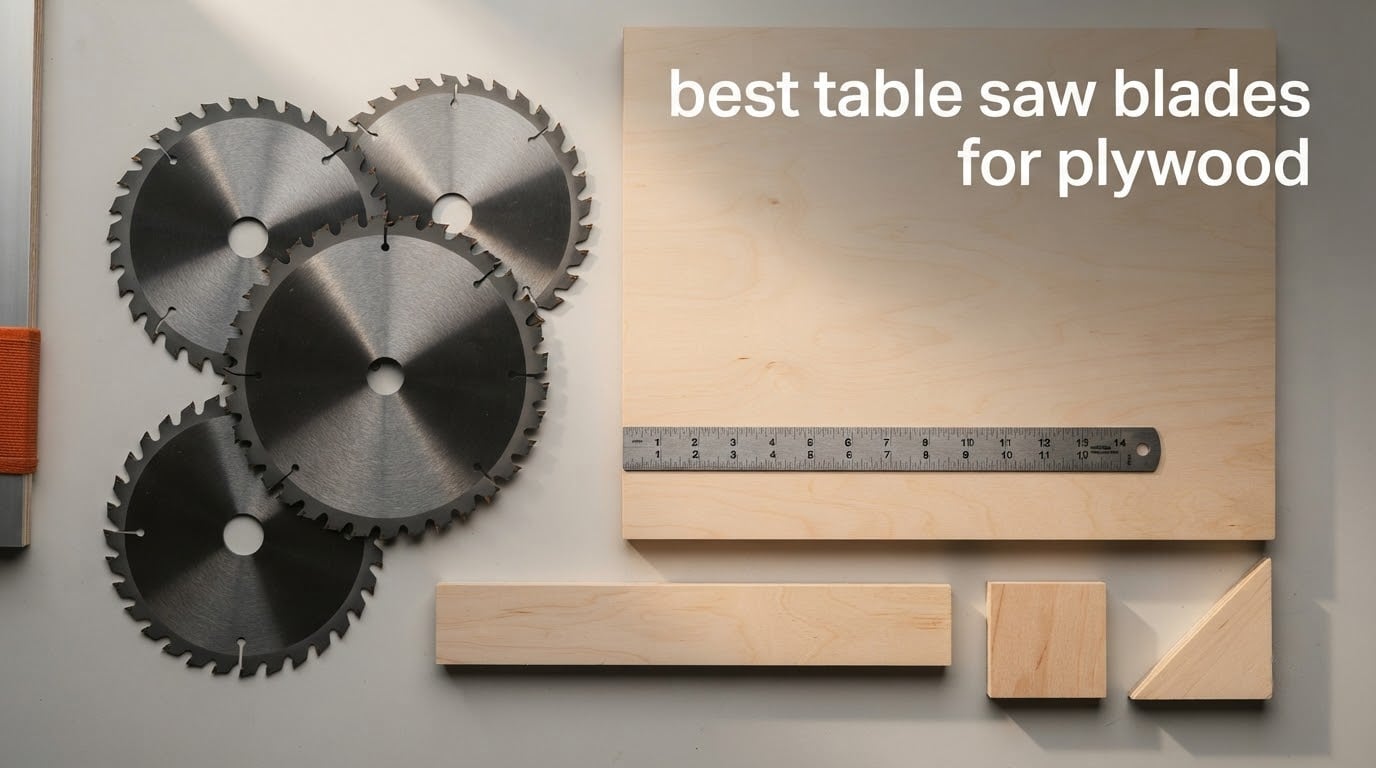
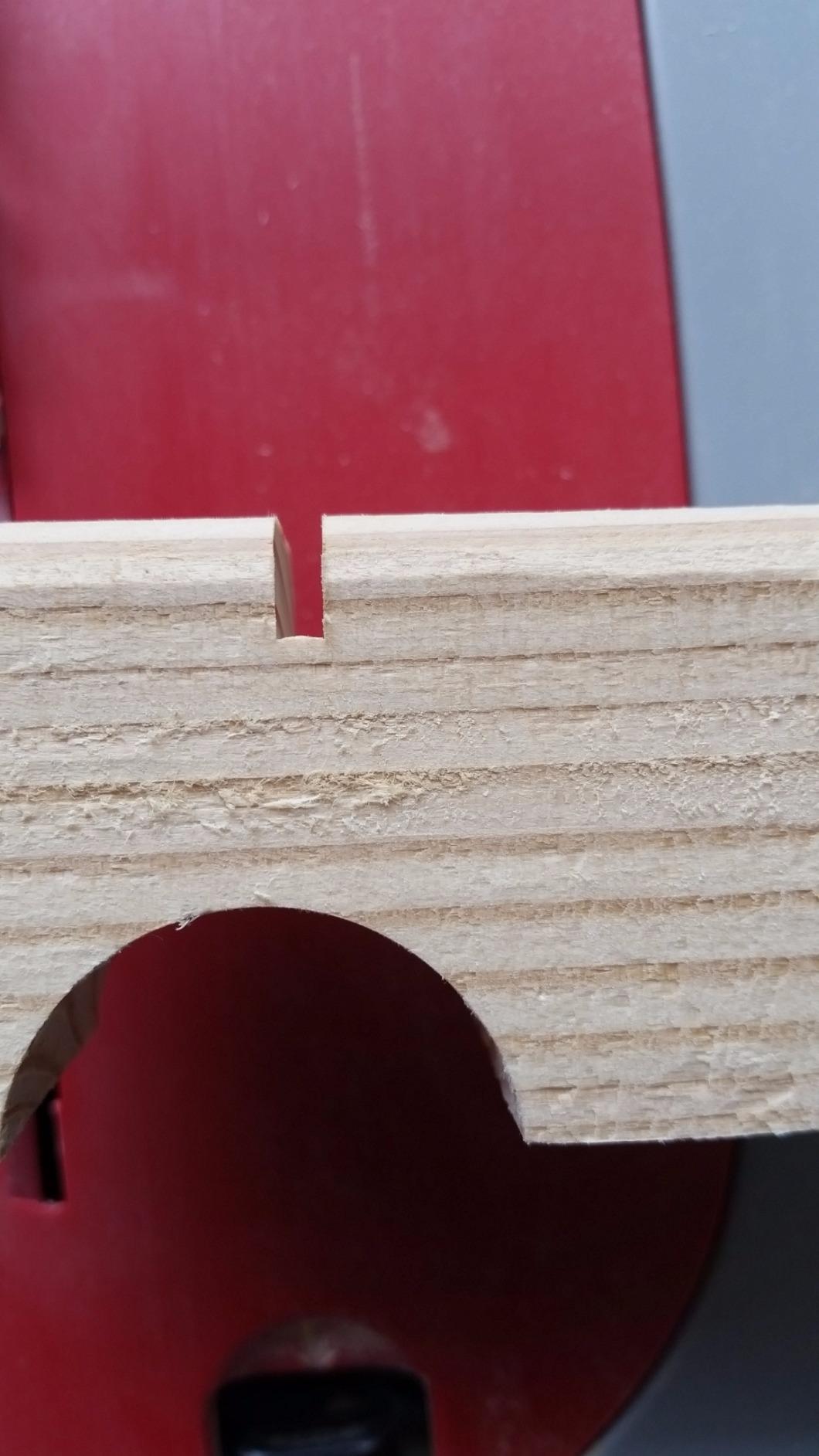
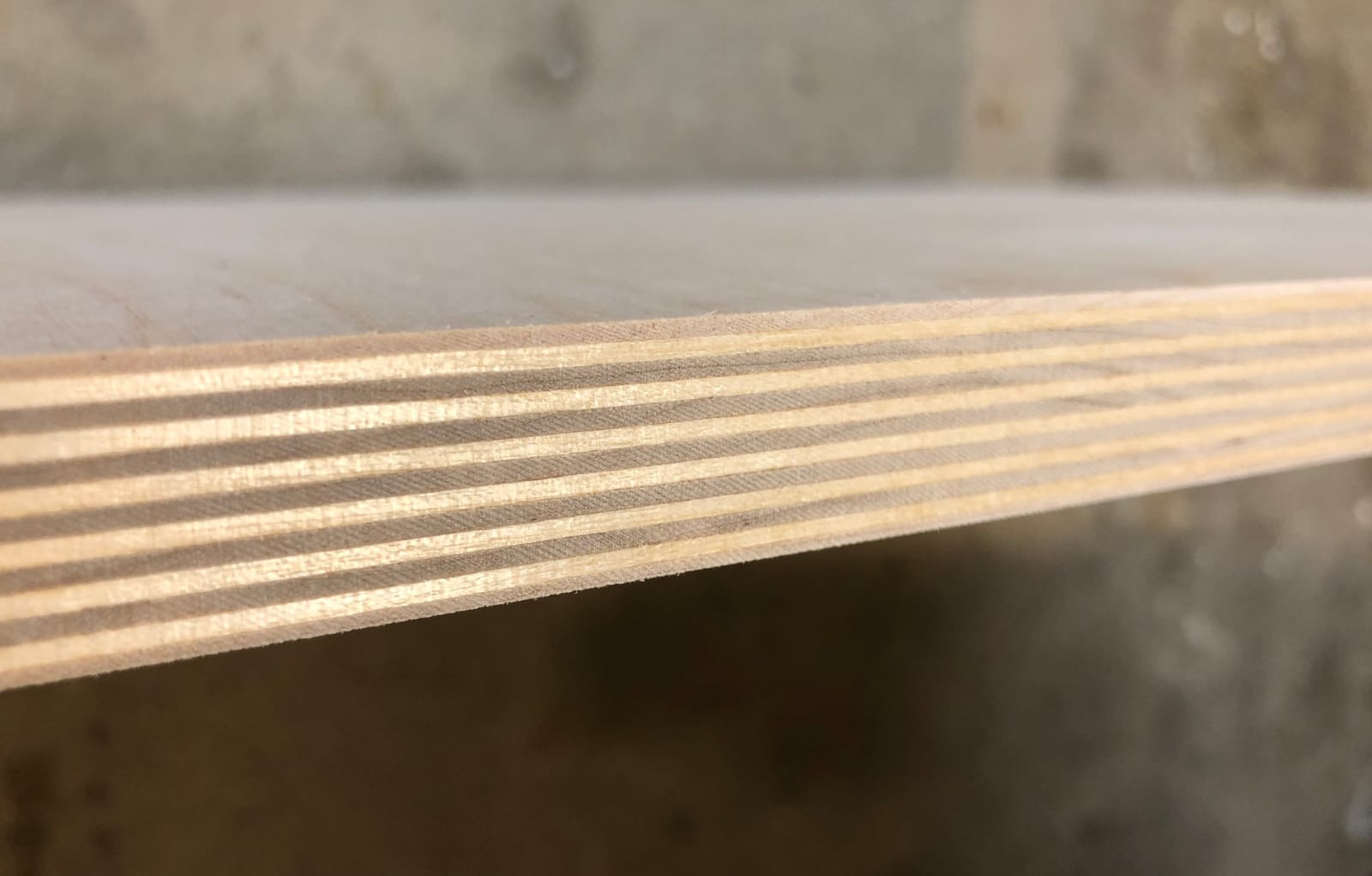
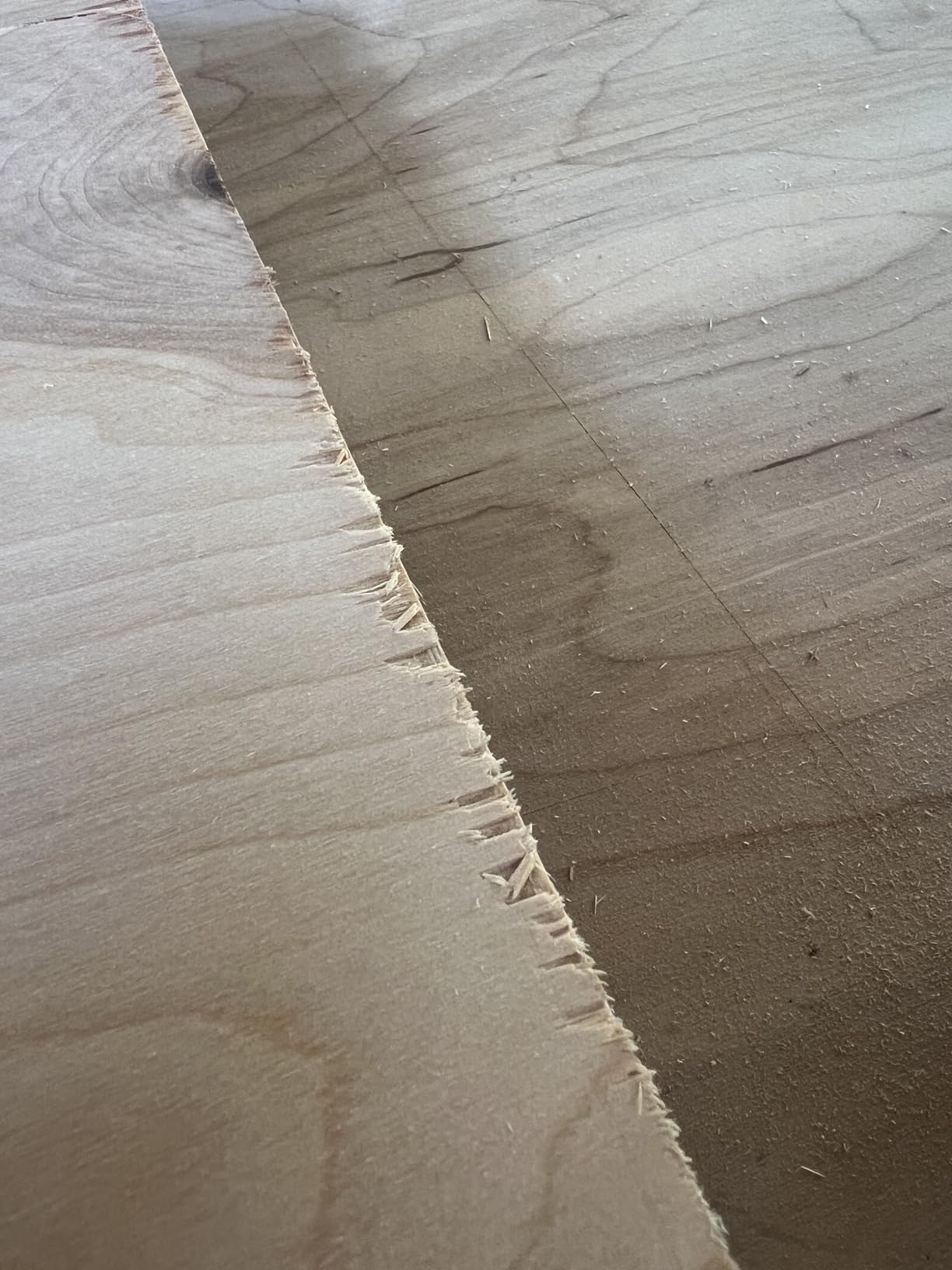
Plywood lies. That is the first thing anyone who has cut a full sheet on a table saw learns, usually the hard way. The sheet enters the blade, the blade is sharp, the fence is dead straight, and the bottom half of the panel comes out looking like it was pulled apart by hand. The cross-grain veneer on the exit side gets pushed down instead of sliced, and you are left sanding a fuzzy edge on an expensive panel.
The fix is not more sanding and not a sharper blade. It is a different tooth geometry. The best table saw blades for plywood use a high tooth count with a Hi-ATB or ATB grind, which shears the thin veneers apart rather than tearing them, and most of them pair that with a thinner kerf so you waste less of the sheet. We spent weeks running these blades through birch, walnut-veneer cabinet panels, melamine and construction ply on a benchtop saw and a contractor saw to see which ones actually deliver a clean bottom face.
What follows is our full ranking of twelve blades, from an inexpensive all-rounder to a dedicated plywood specialist, plus the specs that matter when you are matching a blade to a saw. If you are new to sharpening or keeping edges true, our guide to knives with hard Damascus blades covers the same edge-retention basics in a different tool.
One quick answer before we get into the list: for most people cutting veneered or cabinet grade plywood on a 10 inch saw, an 80 tooth blade with a Hi-ATB grind and a thin kerf is the right starting point. Everything else on this list is a variation on that idea, tuned for a different saw, budget, or material.
Table of Contents
- Top 3 Picks for Best Table Saw Blades for Plywood (October 2026)
- Best Table Saw Blades for Plywood in 2026 at a Glance
- 1. Diablo 50-Tooth Combination Blade – the Best All-Round Plywood Blade
- 2. DEWALT DWA11040 40-Tooth Blade – Best for Beginners
- 3. WEN BL1080 80-Tooth Blade – Best Value for Clean Veneer Cuts
- 4. FOXBC 80-Tooth Ultra Finish Blade – Best for Budget Crosscuts
- 5. Freud LU84R011 Combination Blade – Best All-Round Combination Blade
- 6. Freud LU80R010 – the Specialist Blade for Plywood and Melamine
- 7. CMT 255.080.10 Ultra Finishing Blade – Best for Fine Veneer Edges
- 8. CMT 221.060.10 – Best for OSB and Construction Sheet Panels
- 9. Amana 610800C Prestige Trim – Best for Cabinetry Trim Work
- 10. CMT 285.624.10 Ripping Blade – Best for Dados and Rip Joints
- 11. TOMAX 80-Tooth Fine Finish Blade – Best Low-Cost 80-Tooth Option
- 12. Bosch DCB1080 Edge Blade – Best for Melamine and Laminate
- How to Choose a Plywood Blade
- Why a Zero-Clearance Insert Matters More Than Most Blade Upgrades
- Blade Maintenance and Resharpening Basics
- Frequently Asked Questions
- What type of blade is best for cutting plywood?
- How many teeth should a table saw blade have for plywood?
- Is a 140 tooth blade good for plywood?
- Does kerf thickness matter for chip-free cutting?
- Why is a zero-clearance insert important for plywood?
- Can I use a combination blade for plywood?
- Can I use a table saw blade on a miter saw?
- Final Verdict: Which Plywood Blade to Buy in 2026
Top 3 Picks for Best Table Saw Blades for Plywood (October 2026)
These three cover the range. The Diablo is the one we reach for most, the WEN is the value pick that surprises everyone, and the Freud is the specialist you buy when veneer quality is the whole point of the project.

Diablo 50T Combination Blade
- 50 teeth
- 5/8 arbor
- .098 inch kerf
- TiCo carbide
- Perma-Shield coating

WEN BL1080 80-Tooth Blade
- 80 carbide teeth
- 1/10 inch ultra-thin kerf
- 6000 RPM rating
- 5/8 arbor
Freud LU80R010 Plywood Blade
- 80 teeth
- Hi-ATB grind
- 2 degree hook angle
- .126 kerf
- anti-vibration slots
Best Table Saw Blades for Plywood in 2026 at a Glance
Every blade below is a 10 inch model with a 5/8 inch arbor unless noted, which covers the overwhelming majority of benchtop, contractor and jobsite table saws. The tooth count, kerf and grind in each row tell you how the blade behaves in a cut, and those three numbers matter far more than the label on the box.
| Product | Specs | Action |
|---|---|---|
| Diablo Combination Saw Blade 50T |
|
Check Latest Price |
 DEWALT DWA11040 40-Tooth Blade DEWALT DWA11040 40-Tooth Blade |
|
Check Latest Price |
| WEN BL1080 80-Tooth Blade |
|
Check Latest Price |
 FOXBC 80-Tooth Ultra Finish Blade FOXBC 80-Tooth Ultra Finish Blade |
|
Check Latest Price |
 Freud LU84R011 Combination Blade Freud LU84R011 Combination Blade |
|
Check Latest Price |
| Freud LU80R010 Plywood Blade |
|
Check Latest Price |
 CMT 255.080.10 Ultra Finishing Blade CMT 255.080.10 Ultra Finishing Blade |
|
Check Latest Price |
 CMT 221.060.10 Sheet Panel Blade CMT 221.060.10 Sheet Panel Blade |
|
Check Latest Price |
 Amana 610800C Prestige Trim Blade Amana 610800C Prestige Trim Blade |
|
Check Latest Price |
 CMT 285.624.10 Ripping Blade CMT 285.624.10 Ripping Blade |
|
Check Latest Price |
 TOMAX 80-Tooth Fine Finish Blade TOMAX 80-Tooth Fine Finish Blade |
|
Check Latest Price |
 Bosch DCB1080 Edge Blade Bosch DCB1080 Edge Blade |
|
Check Latest Price |
1. Diablo 50-Tooth Combination Blade – the Best All-Round Plywood Blade
Diablo Combination Saw Blade – 10″ Dia., 50-Teeth, 5/8″ Arbor, .098″ Kerf
10 inch,50 teeth
5/8 arbor
.098 inch kerf
TiCo carbide,Perma-Shield
Pros
- Sharp TiCo carbide out of the box
- Thin .098 inch kerf saves expensive sheet material
- Noticeably quieter than a factory blade
- Smooth faces that need little sanding
Cons
- 50 teeth leave a rougher edge than an 80-tooth finish blade
- Not the right choice for thick solid lumber
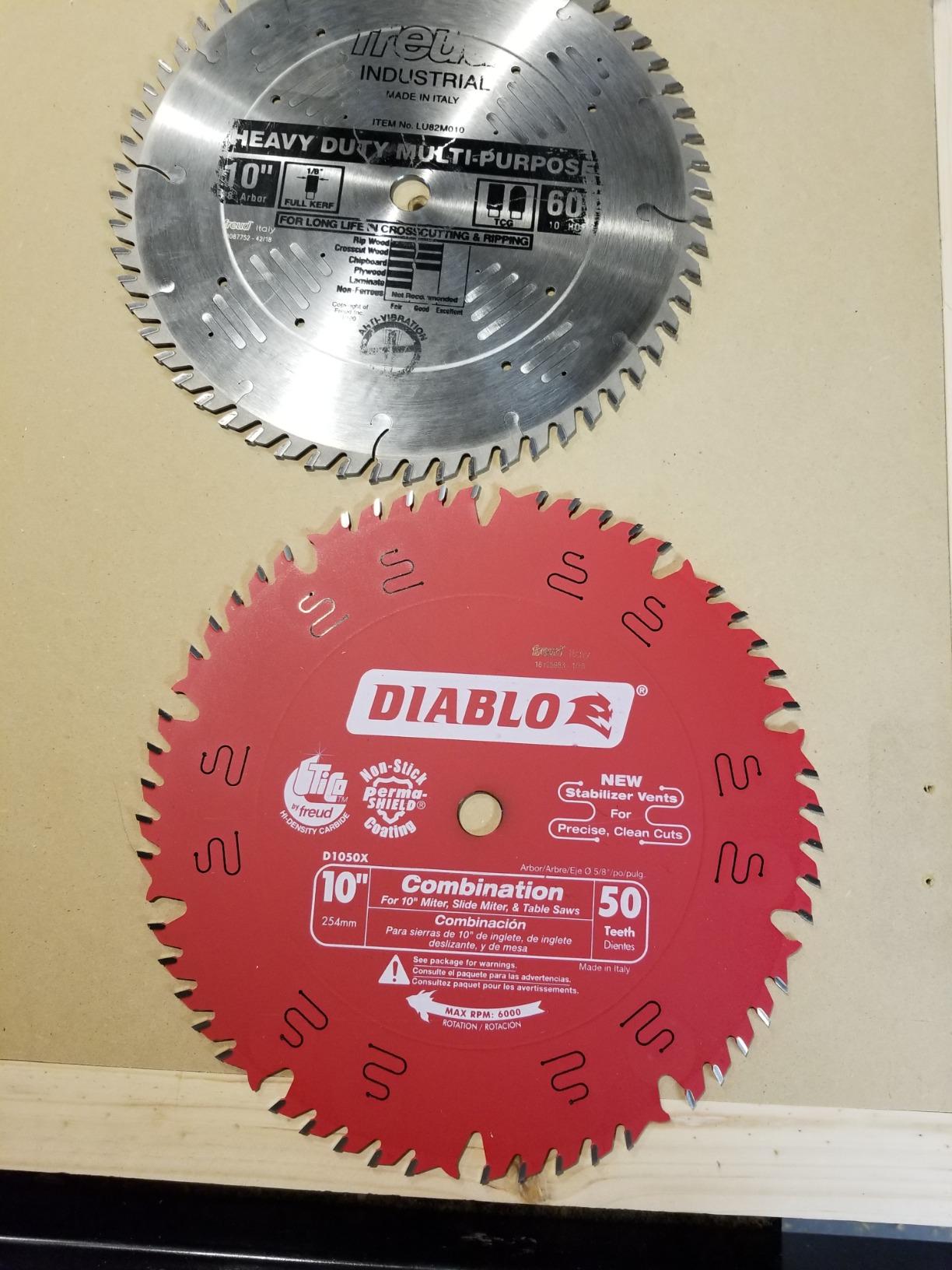
This is the blade we kept reaching for. The Diablo is a combination design, so it handles rips and crosscuts on the same setup, and the .098 inch laser cut kerf means noticeably less waste when you are breaking down a full sheet of cabinet grade ply. Owners consistently report that it cuts hardwood with less effort than the blade that came with their saw, which tells you the factory blade was leaving performance on the table.
The carbide is a TiCo grade rather than a premium high-density blend, and at 50 teeth it is not the chip-freest option here on veneered panels. What it does give you is a well balanced plate, a Perma-SHIELD coating that resists heat and gumming, and tri-metal brazing that helps the tips survive the odd hidden fastener.
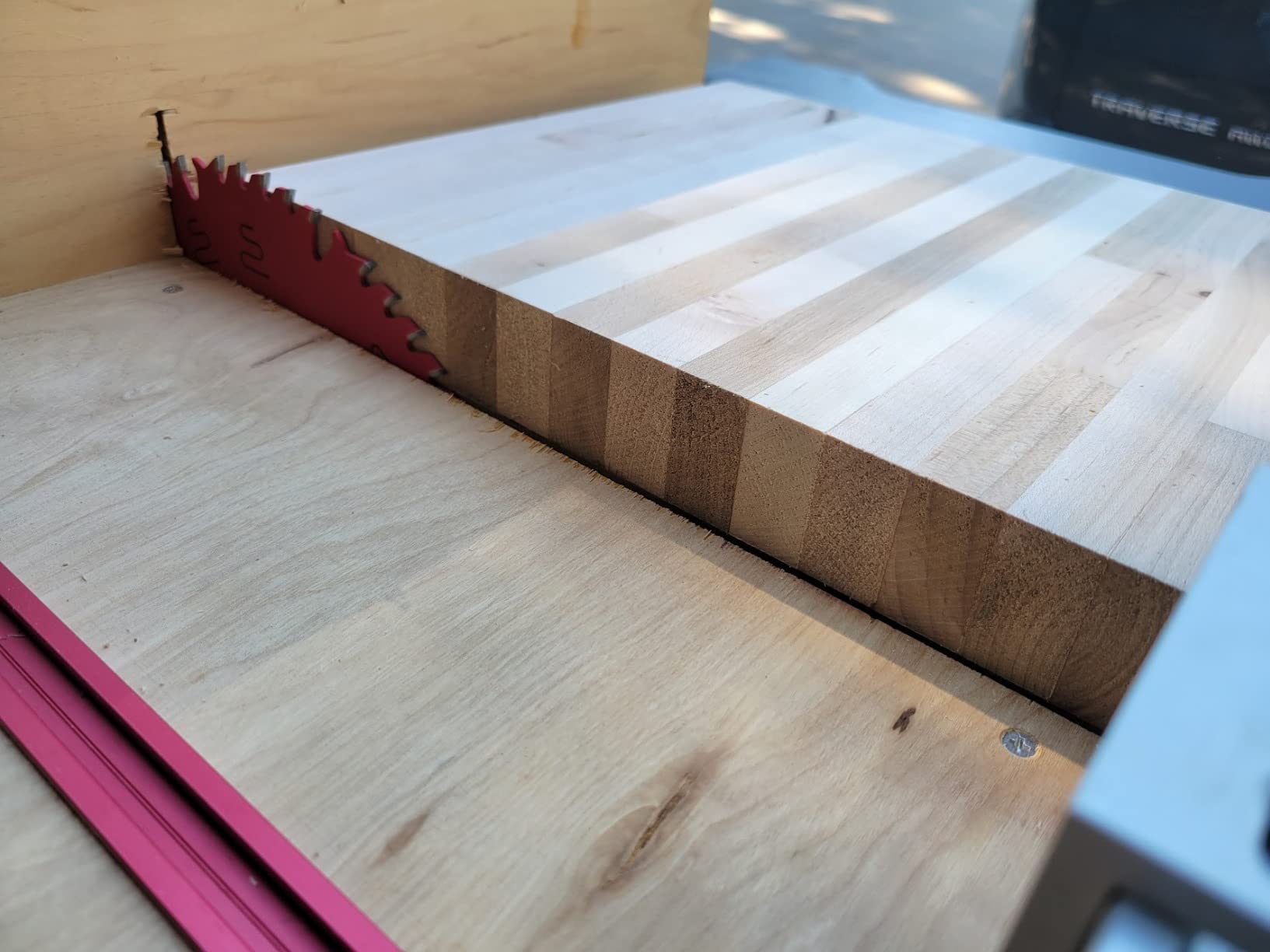
The .098 inch kerf is the quiet hero here. When you are cutting a stack of birch ply and every sixteenth of an inch adds up across the sheet, a thin kerf straightens your racking and reduces the load on the motor. It is also one of the reasons this blade feels lighter to push than a full kerf blade of the same diameter.
Cut quality is smooth and clean on the face side, and the coating keeps pitch from building up when you are working through glue layers. Sanding after the cut is minimal on softwood ply and only moderate on walnut veneer, where an 80 tooth blade would do better.
Who this blade suits
If you cut a mix of materials and do not want to swap blades between jobs, this is the sensible pick. It rips solid wood acceptably, crosscuts panel goods cleanly, and the thin kerf is kind to smaller saws. It is also the safest recommendation for a first upgrade because the geometry is forgiving.
Owners report that it holds its edge well and can be resharpened when it finally dulls, which matters if you cut ply with visible glue lines that chew through teeth faster than plain wood does.
Who should pass on it
If your work is cabinet grade veneer where the bottom face has to look perfect without hand sanding, a higher tooth count will serve you better. The 50 tooth geometry rips harder and crosscuts a little more aggressively than an 80 tooth finish blade.
Thick solid lumber is also outside its comfort zone. For stock ripping you want a dedicated flat-top rip blade with far fewer, larger teeth.
2. DEWALT DWA11040 40-Tooth Blade – Best for Beginners
DEWALT Table Saw Blade, 10″, 40 Tooth, with Fine Finish, Ultra Sharp Carbide (DWA11040)
10 inch,40 teeth
5/8 arbor
optimized tooth geometry
ultra sharp carbide
Pros
- Optimized tooth geometry for accuracy
- Sharp carbide teeth that hold up to repeat use
- Well balanced and easy to install
- Large review base for consistent quality
Cons
- 40 teeth give a coarser edge on fine plywood
- Alloy steel body is lighter than a heavy carbide plate
The DEWALT is the factory upgrade that comes out of the box on a lot of new saws, and it is a genuinely capable blade rather than a placeholder. Reviewers describe it as a clean, accurate upgrade that needs minimal finishing, and the optimized tooth geometry is designed for accuracy as much as speed.
At 40 teeth it is closer to a general rip and crosscut profile than a finish blade. On birch or construction ply it works, but on walnut or oak veneer you will be reaching for sandpaper afterwards where an 80 tooth blade would not.
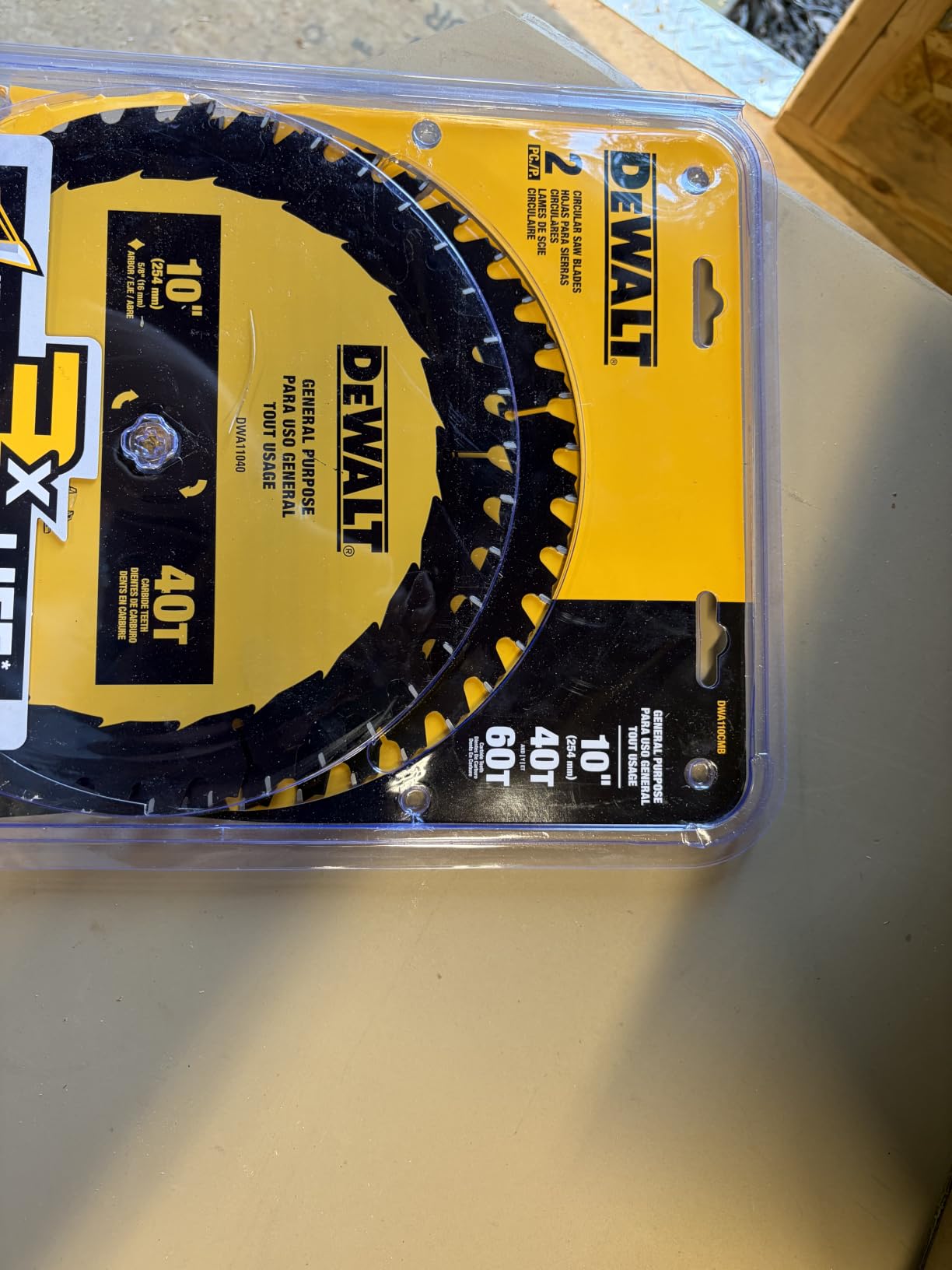
The steel body is an alloy steel rather than the thicker carbide-heavy plates used on premium blades, which keeps the blade light and easy to spin up on a smaller saw. That is a real advantage if you are running a jobsite saw and swapping blades often.
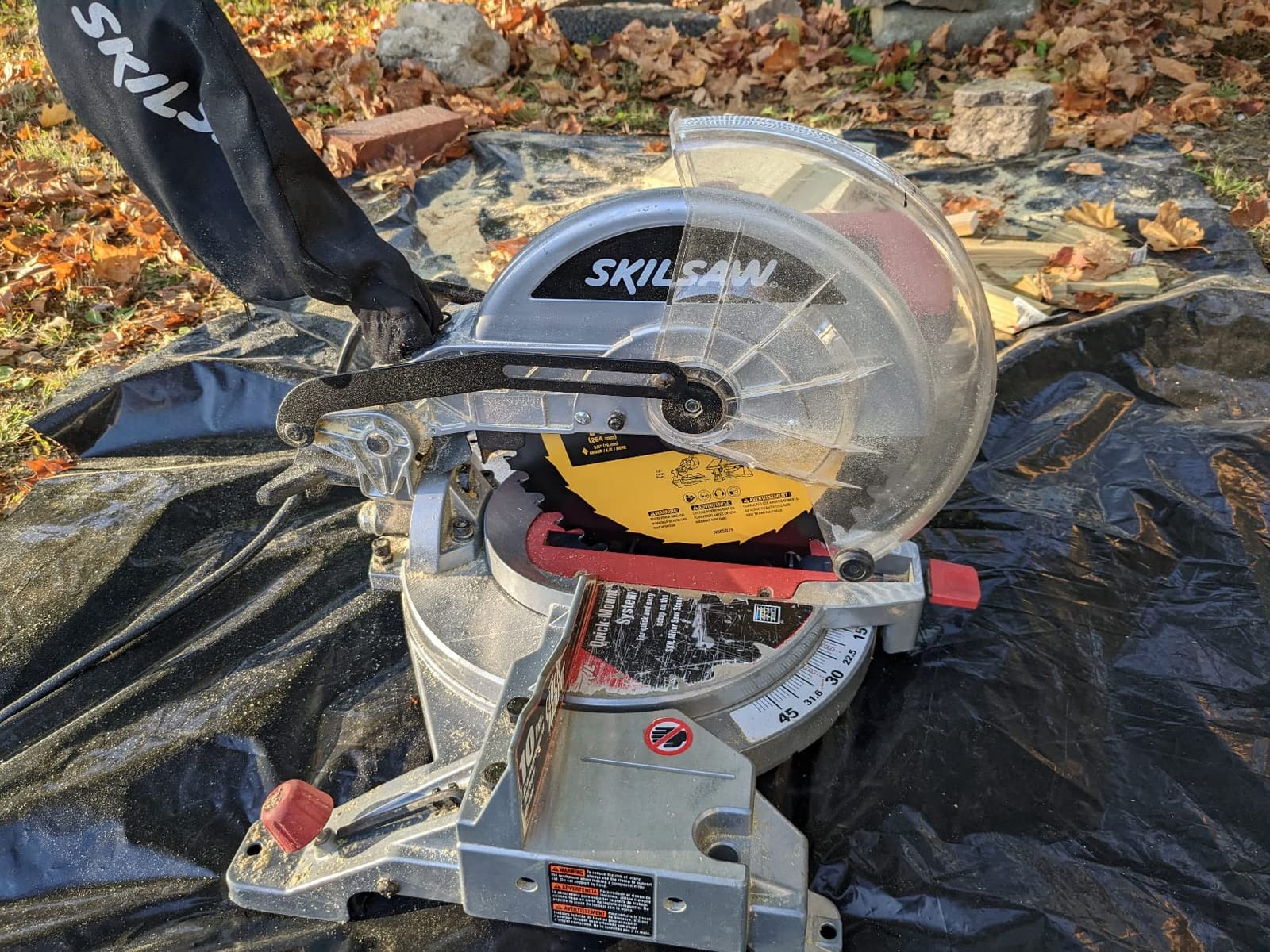
Edge retention comes up well in reviews. Owners using it repeatedly on sheet goods report that the carbide teeth stay sharp through multiple projects, which is more than a lot of blades in this class manage.
Who this blade suits
If your plywood cutting is occasional, if you are breaking down sheets for a renovation rather than building furniture, or if you want one blade that will not punish a smaller motor, this does the job at a modest cost. The large body of owner feedback gives you a long track record of consistent quality to lean on.
It is also a good choice if you mostly rip plywood and are not chasing a mirror finish on the cut face.
Who should pass on it
Cabinetmakers and anyone chasing edge work on veneered panel goods will find 40 teeth too coarse. The difference shows up most on the exit face of a crosscut, which is exactly the surface that gets left visible on a cabinet end panel.
If you plan to move into fine furniture work later, spend the extra money on an 80 tooth blade now rather than replacing this one later.
3. WEN BL1080 80-Tooth Blade – Best Value for Clean Veneer Cuts
WEN BL1080 10-Inch 80-Tooth Carbide-Tipped Ultra-Fine Finish Professional Woodworking Saw Blade for Miter Saws and Table Saws
10 inch,80 teeth
1/10 inch kerf
rated to 6000 RPM
5/8 arbor
Pros
- Exceptionally smooth splinter-free plywood cuts
- 1/10 inch kerf cuts faster and wastes less
- Well balanced with minimal vibration
- Quiet operation
- Fits most 10 inch miter jobsite and table saws
Cons
- A few owners report more runout than expected
- Can bog down on wet or treated lumber
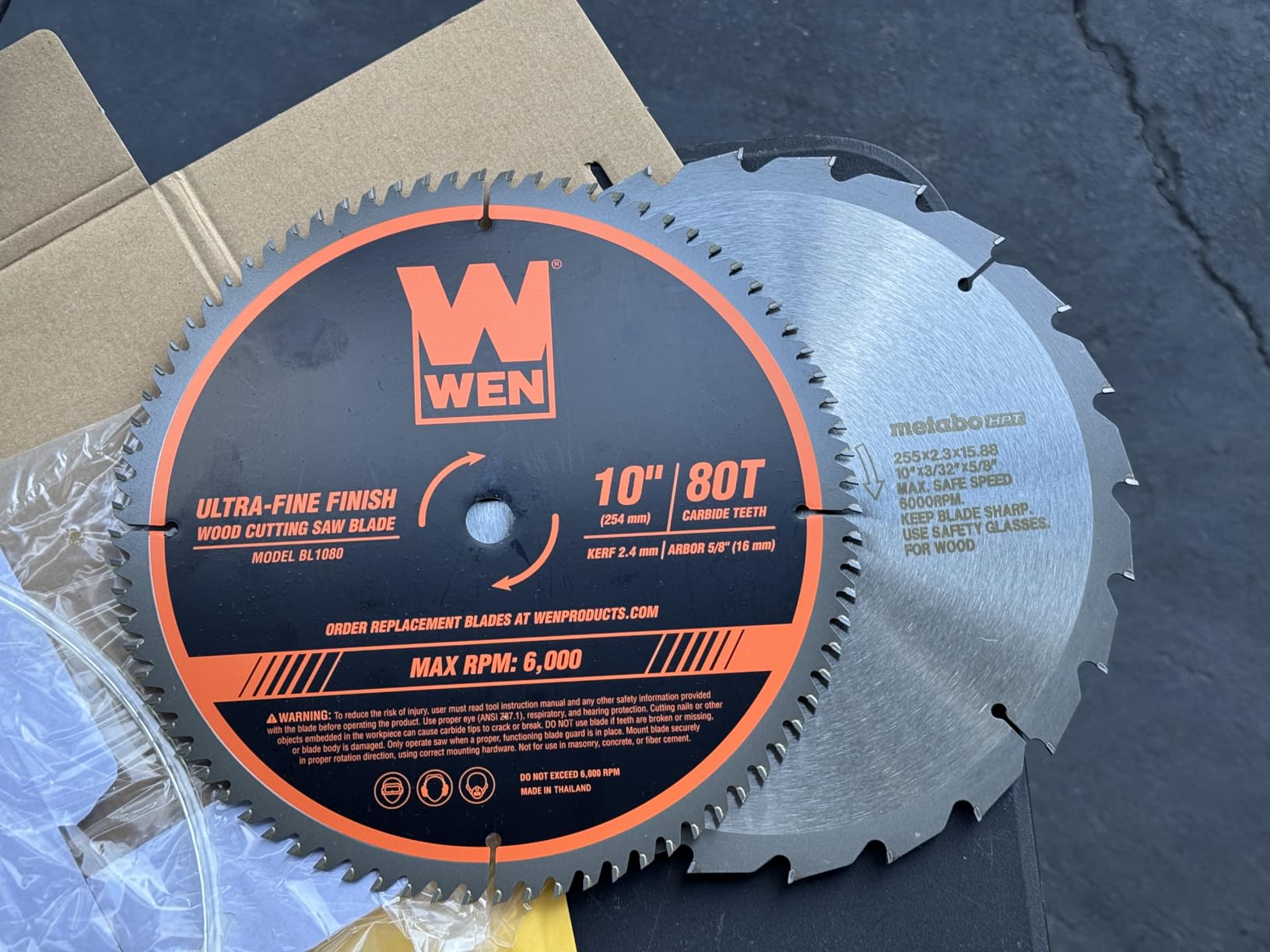
The WEN is the blade that makes people double check the spec sheet. Eighty carbide tipped teeth at a 1/10 inch kerf is a finish blade spec, and users report edges on plywood, MDF and hardwoods that often need no sanding at all. One owner ripped a stack of 3/4 inch plywood and reported the blade was still sharp afterwards.
The ultra-thin kerf is what makes it work on lighter saws. Less material to remove means less motor load, which is why thin kerf blades such as this one show up so often in advice for 110 volt jobsite saws.
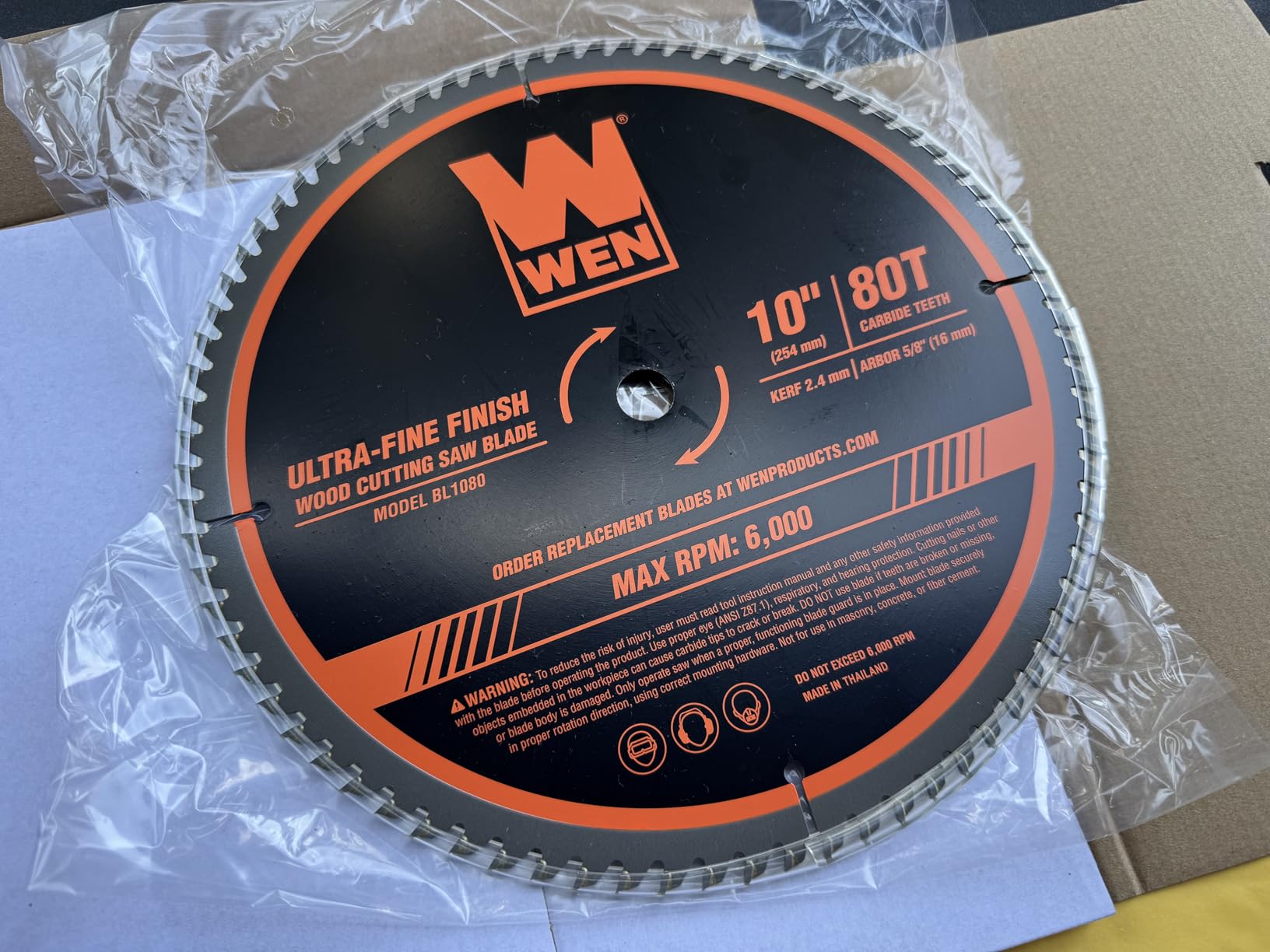
Balance and quiet running come up repeatedly in reviews, and both matter more than most buyers expect. A blade that runs true at 6000 RPM does not wander on a cut and does not rattle, so your measurements stay honest.
The carbide is described as carbide tipped for ultra-fine finish cutting, and the blade handles both hard and softwoods. For melamine and veneered ply it produces the kind of edge you would expect from a blade costing several times more.
Who this blade suits
This is the one to buy if you want 80 tooth finish quality without a premium spend. It suits a home shop that cuts a lot of sheet goods on a mid-size table saw, and it handles jobsite work because of the thin kerf and the low weight.
If you cut a mix of plywood and hardwood trim, the wide tooth range gives you more flexibility than a dedicated sheet goods blade.
Who should pass on it
A small number of owners report slightly more runout than they expected, so if your saw has a known runout problem, a heavier plate may serve you better. The blade also struggles with wet or treated lumber, where a more open gullet pattern would clear chips better.
If you make a habit of running dado or groove cuts, the ATB style geometry here is not the right shape for a flat bottom kerf.
4. FOXBC 80-Tooth Ultra Finish Blade – Best for Budget Crosscuts
FOXBC 10-Inch Table Saw Blade, 80-Tooth, Ultra Finish Wood Cutting, 5/8-Inch Arbor
10 inch,80 teeth
0.098 inch kerf
ATB grind
high-density tungsten carbide
Pros
- Smooth quiet cuts in oak pine melamine and plywood
- Minimal vibration and accurate results
- Thin kerf and thin plate cut fast
- Low tear-out on melamine in early cuts
Cons
- Thin kerf advantage over a factory blade is hard to see
- Long term edge retention is not established yet
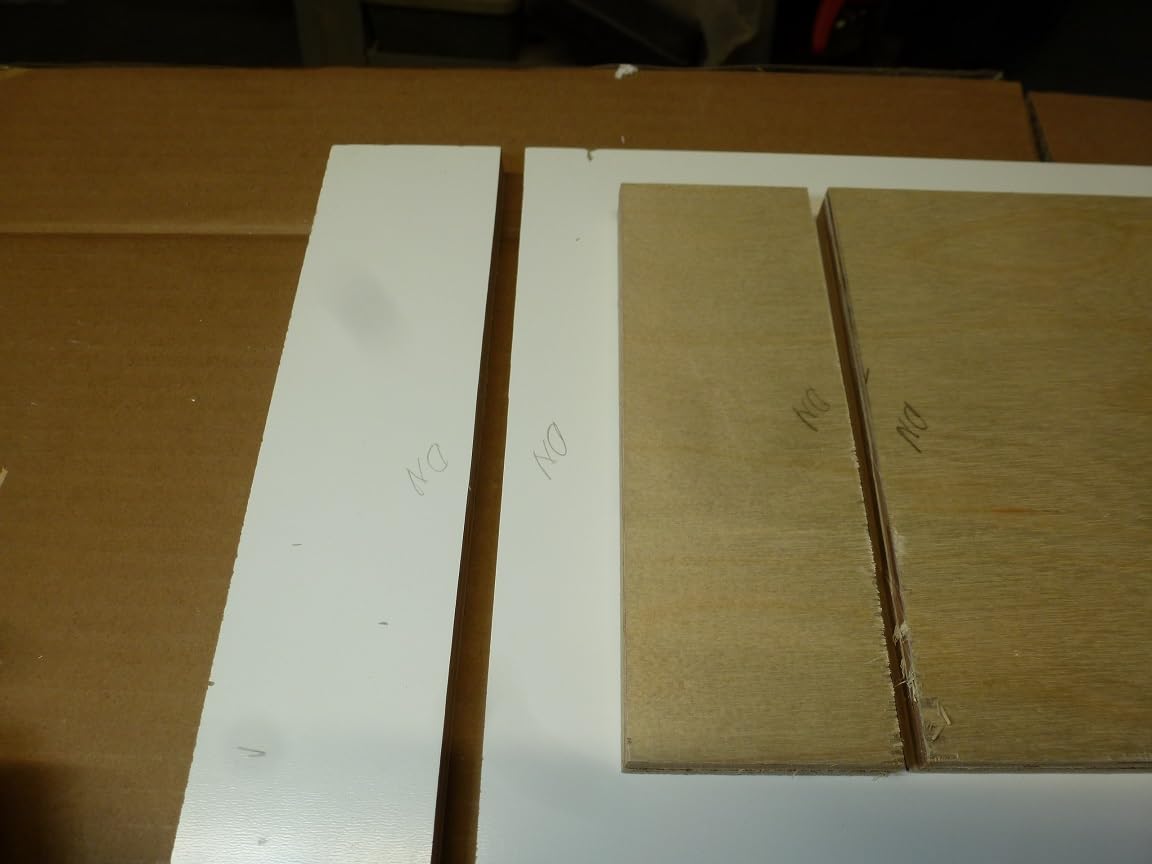
The FOXBC is listed for crosscutting oak, pine, melamine, plywood and moulding, and that list matches what owners report. Buyers describe chatter-free, quiet crosscuts on panel goods and several note performance comparable to premium blades, which is not a small claim for this tier.
The carbide is high-density tungsten, which is a toughness and wear resistance grade rather than the premium blend used in the top tier blades. In practice it behaves like a solid mid-range finish blade rather than a bargain-bin one.
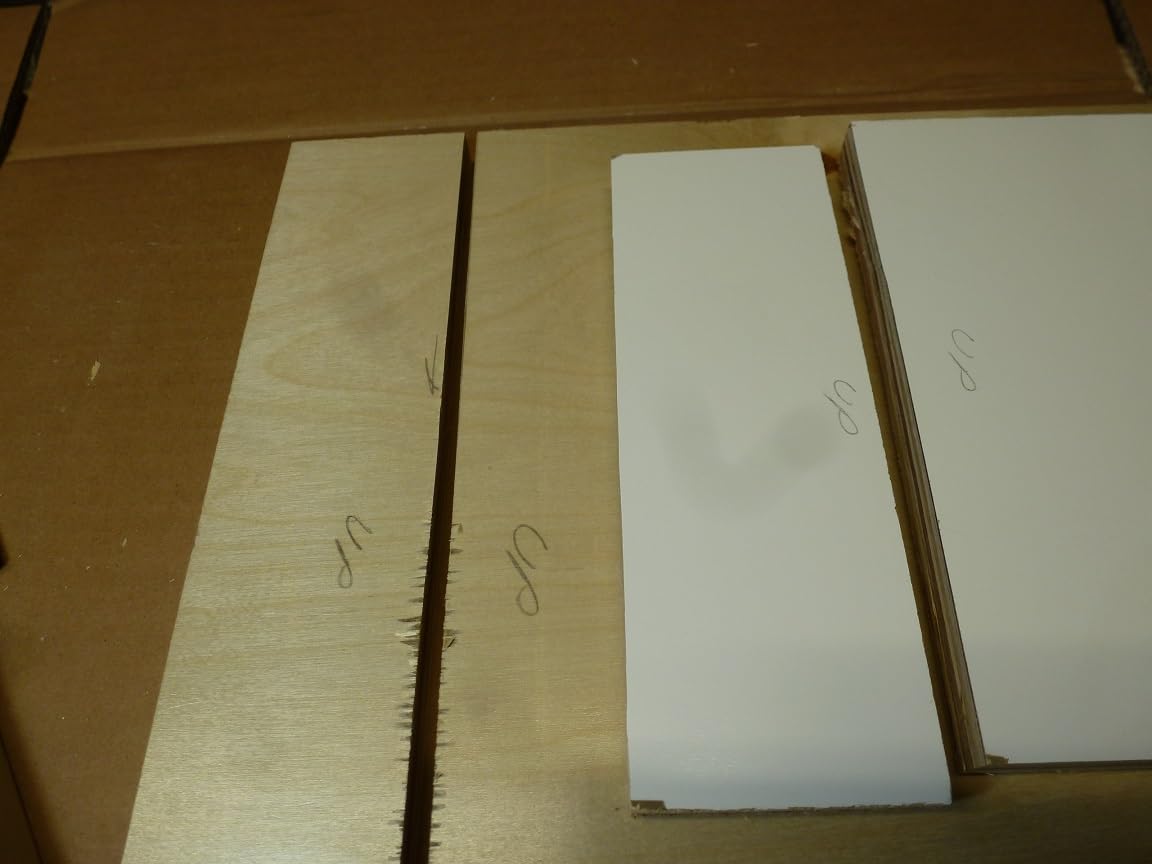
The thin kerf and thin plate combination is what reduces vibration and noise here. A thinner plate flexes less, which keeps the cut more accurate on long crosscuts of full sheets, where blade deflection shows up as a dimensional error across the panel.
Compatibility is broad: it fits DeWalt, Skil, Metabo and Makita 10 inch miter saws as well as table saws, with the standard 5/8 inch arbor.
Who this blade suits
If you want a dedicated crosscut blade for sheet goods and you are working to a tight budget, this is a reasonable pick. It suits someone who mostly breaks down panels and rarely rips, and it performs well on melamine.
It is also a sensible second blade to keep on hand, since it is optimized for a different job than a rip blade.
Who should pass on it
Some buyers say the advertised thin kerf is not obviously thinner than a comparable factory blade they already own, so do not expect a dramatic material saving over a blade you already run. The review base of a few hundred also leaves long term durability less well documented than the bigger names.
If you are cutting thick solid lumber as well as panels, you still need a proper rip blade.
5. Freud LU84R011 Combination Blade – Best All-Round Combination Blade
Freud Combination Saw Blade with Premium Tico Hi-Density Carbide Combination Blend for Maximum Performance – 10″ Diameter, 50 Teeth, Comb Grind – LU84R011
10 inch,50 teeth
combination grind
TiCo high-density blend
anti-vibration slots
Pros
- Handles ripping and crosscutting without a blade change
- Laser-cut anti-vibration slots cut down movement
- Coating resists pitch and resin
- Large gullets clear chips in engineered wood
Cons
- Not as refined as a dedicated 80-tooth finish blade on veneer
- Sits at the premium end of the range
This is Freud’s combination answer to the plywood problem, and the tooth layout is the point: one flat-top raker tooth for ripping followed by four alternate top bevel teeth for crosscutting. The consensus among owners is crisp, low-vibration cuts in engineered wood with the convenience of never changing blades.
The premium TiCo high-density carbide blend is a step above the carbide in entry-level combination blades, and it is what lets this one stay sharp through glue-heavy panel goods.
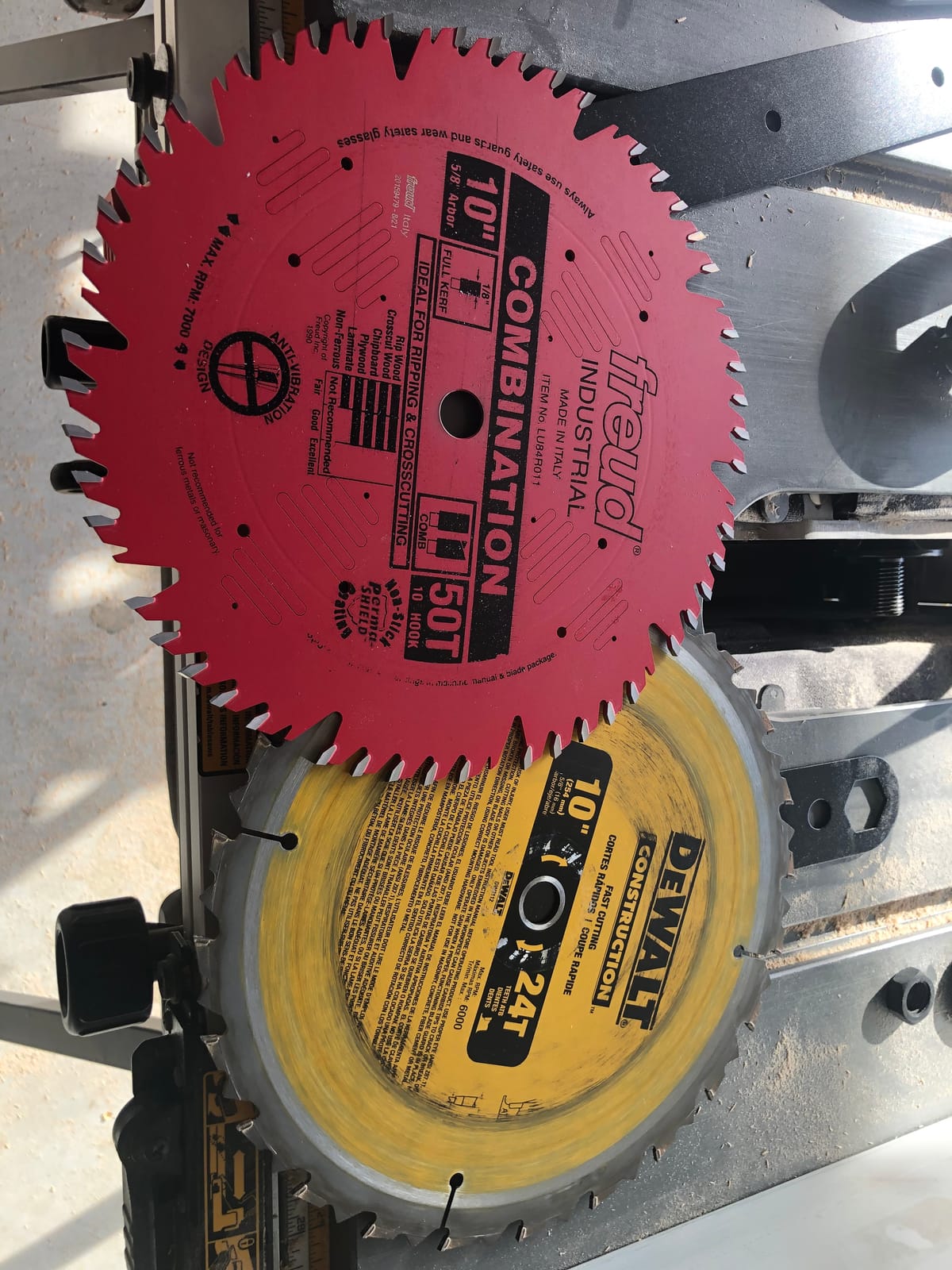
The laser-cut anti-vibration slots are worth understanding. They are expansion slots that let heat dissipate and reduce sideways movement, which extends blade life and improves the finish. Reviewers notice the difference in noise level and in how straight the cut stays.
Large gullets sit in front of the raker teeth, which keeps resin and chip buildup down. On plywood that matters because glue residue is abrasive and dulls teeth faster than clean wood fiber.
Who this blade suits
Shop owners who move between ripping solid stock and crosscutting panels all day will like never having to swap. Cabinet installers cutting a mix of birch ply and solid trim on the same saw get the same benefit.
It is also a good blade to hand to someone who wants one blade and does not want to think about grinds.
Who should pass on it
If your priority is a perfect exit face on walnut veneer, a dedicated 80 tooth Hi-ATB blade will get closer. Combination teeth trade a little finish quality for the ability to rip.
The cost also sits well above the entry tier, so buyers who cut a few sheets a year get more value from a thinner blade.
6. Freud LU80R010 – the Specialist Blade for Plywood and Melamine
Freud LU80R010: 10″ Ultimate Plywood & Melamine Blade
10 inch,80 teeth
Hi-ATB grind,2 degree hook
.126 kerf, .087 plate
anti-vibration slots
Pros
- Chip-free splinter-free cuts on oak veneer and prefinished ply
- Very quiet and vibration free
- Beats costlier 80-tooth Hi-ATB blades on sheet goods
- Still cutting well after heavy melamine use
Cons
- Not intended for ripping or flat-bottom groove work
- .126 kerf wastes more panel than a thin kerf blade
This is the blade owners describe as the definitive plywood and melamine choice, and for good reason. The Hi-ATB grind combined with a 2 degree hook angle shears veneers cleanly instead of pushing them down, which is precisely the failure mode that ruins a panel. Reviewers report razor-straight, chip-free edges on oak veneer, maple and prefinished plywood.
Operation is quiet and vibration free, and the laser-cut anti-vibration slots reinforce the plate. One owner reported it was still cutting well after a heavy run of two-sided melamine, which is a fair test of an ATB blade.
The specs are the ones to note: 5/8 inch arbor, 10 inch diameter, Hi-ATB grind, 2 degree hook angle, .126 inch kerf and .087 inch plate with 80 teeth. That hook angle is shallower than most finish blades, and a shallower hook means less downward pull on the fibers.
The Perma-Shield coating reduces drag and protects against pitch build-up and corrosion. The Freud limited tooling warranty also applies, which matters if you buy on a long timeline.
Who this blade suits
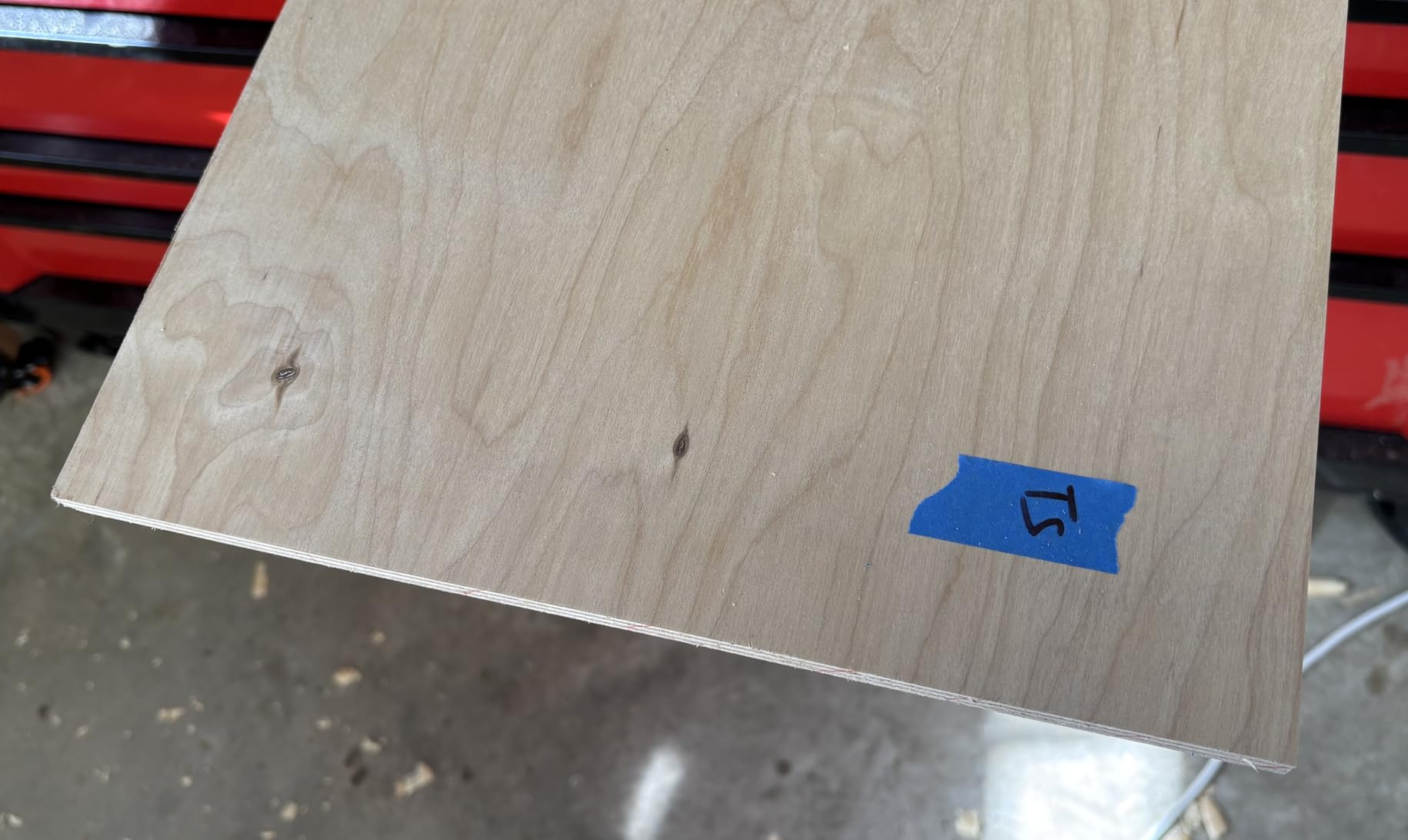
Cabinetmakers and furniture builders breaking down veneered panel goods, where the exit face is visible and the cost of a rejected panel is high. Anyone cutting melamine will find the same quality. It suits a dedicated cabinet saw with the power to handle a full kerf blade.
If you only cut a little plywood, the thin kerf options deliver a similar face with less material waste.
Who should pass on it
The ATB geometry is not meant for ripping or for flat-bottom groove and dado work, and owners warn explicitly against using it that way. A slight ridge can also appear on non-through groove cuts.
The .126 inch kerf is a full kerf, so on expensive panels you are removing noticeably more material than a thin kerf blade removes.
7. CMT 255.080.10 Ultra Finishing Blade – Best for Fine Veneer Edges
CMT Orange Tools 255.080.10 – Ultra Fine Finishing Saw Blade D=10 B=5/8 ß=Hi-ATB 30 K=0.110 P=0.071 a=5
10 inch,80 teeth
0.110 kerf,0.071 plate
Hi-ATB 30 degree
5 degree hook
Pros
- Ultra-fine finishing geometry for veneer edges
- 0.110 inch kerf cuts fast and wastes little
- Crisp splinter-free edges on melamine
- Free replacement warranty from CMT
Cons
- ATB grind cannot do flat-bottom rip or groove work
- Shallow 30 degree bevel needs careful alignment
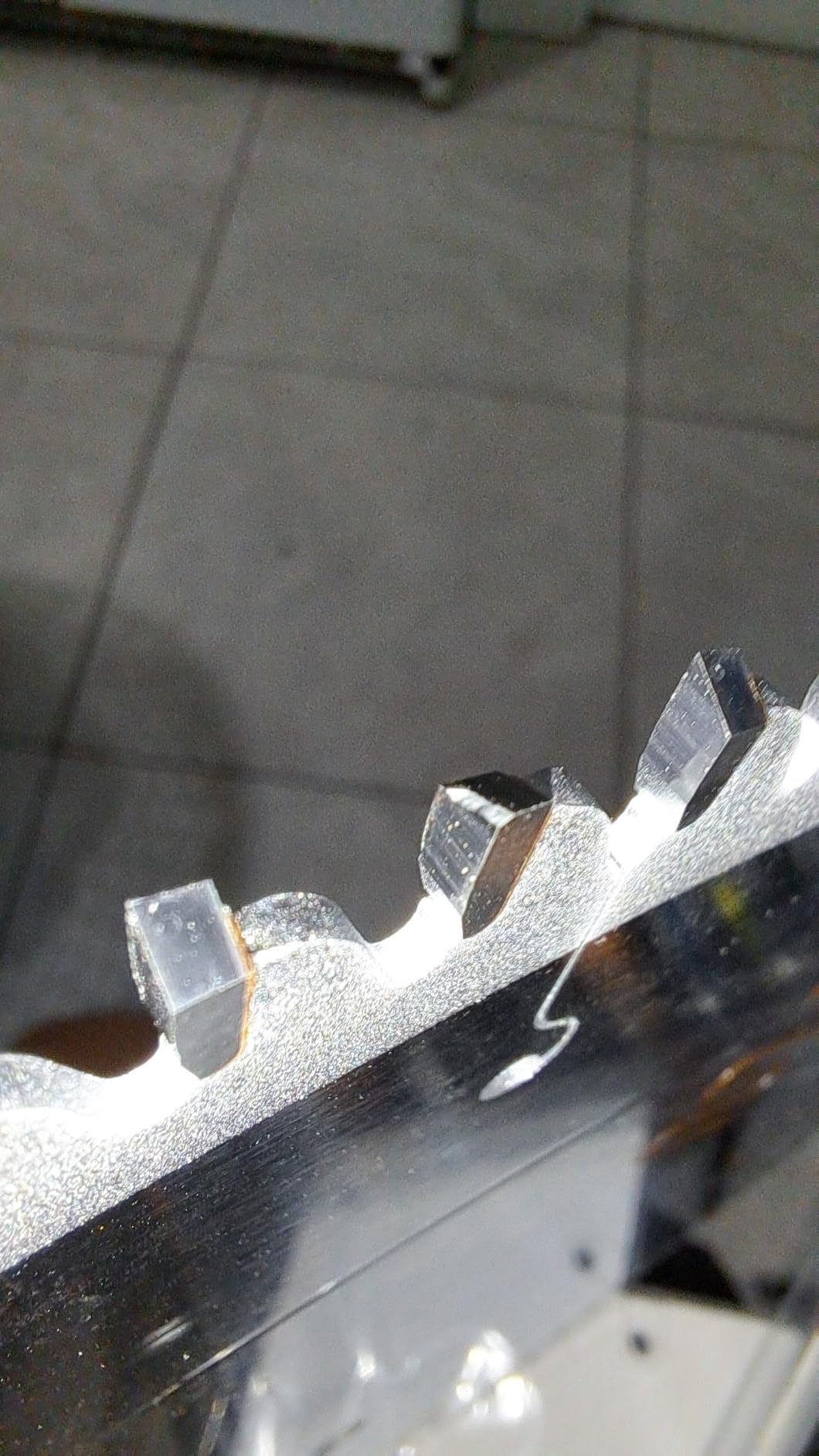
CMT builds this one for ultra-fine finishing, and the numbers show it: a 0.110 inch kerf on a very thin 0.071 inch plate, a 5 degree hook angle and a 30 degree Hi-ATB bevel. That combination produces low-tearout edges on plywood, melamine and veneer while cutting easily and wasting little material.
The plate thickness deserves a note. A thinner plate is lighter and less prone to deflection, which on a full sheet crosscut translates into a straighter edge along the length of the cut.
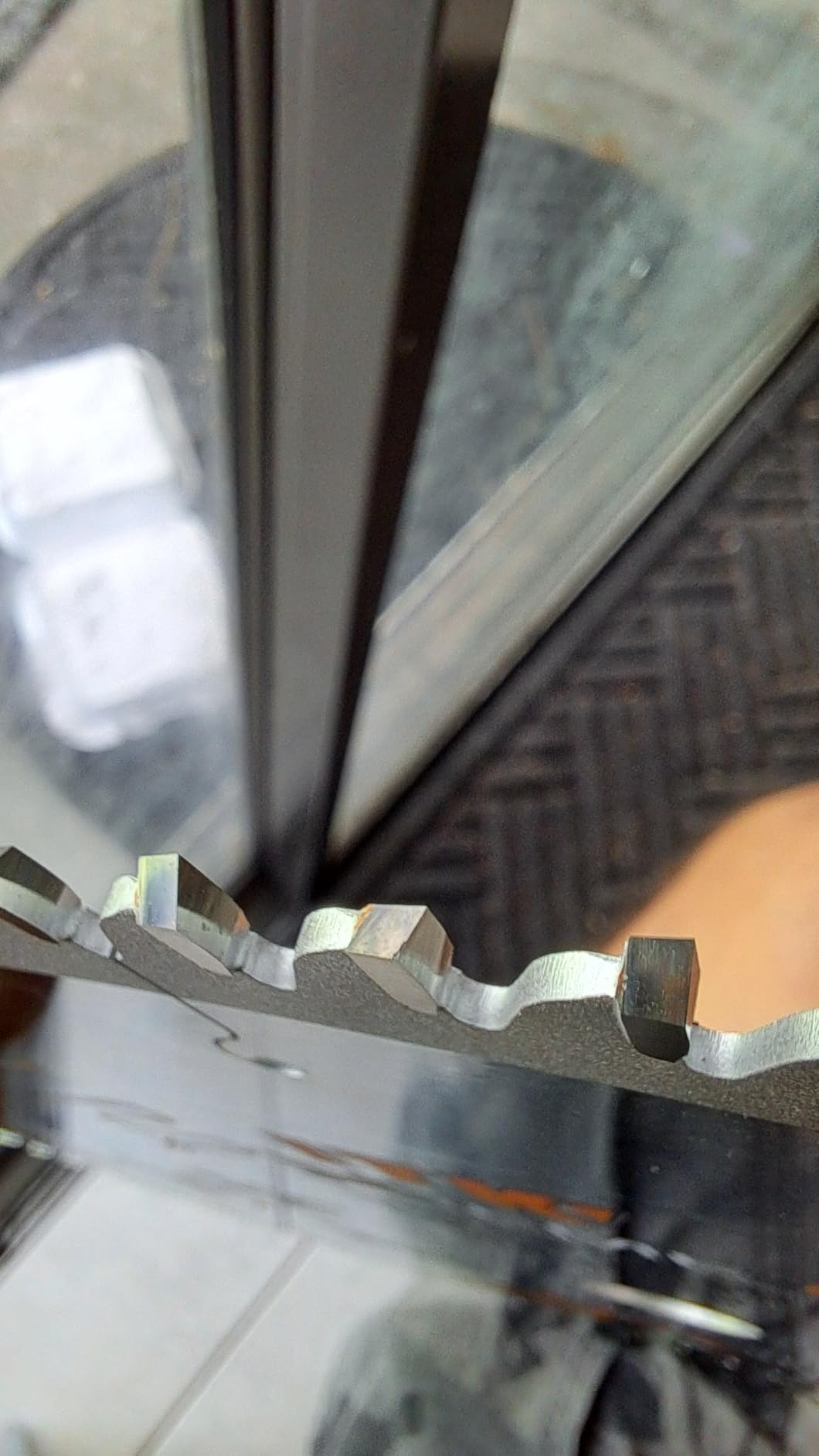
CMT backs the blade with a free replacement warranty when it is used as recommended, which is unusual at this tier and reduces the risk if you hit a staple hidden in a sheet. That risk is real, and it is the main way good blades get destroyed.
Owners consistently highlight the finish rather than the speed. This is a blade you feed carefully to get a perfect edge, not one you push hard to move a lot of material.
Who this blade suits
Anyone cutting thin veneer faced panel where the edge is seen. It suits a cabinet shop with a table saw that can hold a steady feed rate, and it pairs well with melamine work as well as plywood.
The mid-range kerf is a sensible middle ground if you want less waste than a full kerf blade without the very thinnest profile.
Who should pass on it
The ATB grind makes it unsuitable for flat-bottom rip or groove work, so it cannot replace a rip blade in your lineup. The 30 degree bevel angle is shallow, so alignment has to be precise for the cleanest result.
If you break down a lot of rough construction ply, the ultra-fine geometry is not where your time is best spent.
8. CMT 221.060.10 – Best for OSB and Construction Sheet Panels
CMT Orange Tools 221.060.10 – Laminated&Chipboard Circular Saw Blade HW D=10 B=5/8 Z60 K=0.126 P=0.087 a=10
10 inch,60 teeth
0.126 kerf
laser-cut dampening slots
PTFE coating
Pros
- Purpose-built for OSB plywood chipboard and laminate
- Laser-cut sound dampening slots keep noise down
- 60 teeth balance crosscut speed and edge quality
- PTFE coating reduces resin buildup
Cons
- 60 teeth leave a coarser edge than an 80-tooth blade on veneer
- Average rating sits below the Hi-ATB CMT blades
This CMT is aimed at sheet panel work rather than finish work. It is listed for chipboard, laminate, melamine, OSB, plywood and softwoods, and it runs on miter saws, radial arm saws, stationary table saws and vertical panel saws, which makes it a broad shop blade.
Owners find it a solid, quiet crosscutter for engineered panels, with good chip clearance coming from the laser-cut plate and its expansion and sound dampening slots.
Industrial chrome carbide with precision mirror finish sharpening is the carbide spec here, and tri-metal brazing plus a tensioning ring support durability. The non-stick PTFE coating helps with the resin and glue that make panel work abrasive on teeth.
At 60 teeth it feeds faster than an 80 tooth blade while still giving a decent edge, which is the trade you want when you are cutting through a stack of sheets rather than trimming a single panel.
Who this blade suits
Renovation work, sheathing, subfloor offcuts and OSB, where volume matters more than a mirror finish. It is also a good panel blade for a shop with a vertical panel saw in the mix.
Anyone who finds 80 tooth blades too slow on thick sheet goods will like the faster feed here.
Who should pass on it
On veneered cabinet grade ply, 60 teeth leave a slightly coarser edge than an 80 tooth finish blade, so expect a little sanding. The average rating also sits below the Hi-ATB CMT blades, mostly on finish consistency.
If your visible surfaces are all panels, this is the wrong place to save money.
9. Amana 610800C Prestige Trim – Best for Cabinetry Trim Work
Amana Tool 610800C Carbide Tipped Prestige Trim 10 Inch D x 80T ATB, 10 Deg, 5/8 Bore Circular Saw Blade
10 inch,80 teeth
ATB grind
10 degree hook angle
5/8 inch bore
Pros
- 80-tooth ATB geometry for fine trim edges
- Carbide tipped construction for durable wood cutting
- Suited to cabinetry and precision trim work
- 10 inch diameter with 5/8 inch bore
Cons
- ATB grind limits it to crosscutting and trim
- 10 degree hook not designed for flat-bottom grooves
- Small review base limits long-term feedback
The Prestige Trim is aimed squarely at cabinet work: 80 teeth, ATB grind, a 10 degree hook angle and a 5/8 inch bore on a 10 inch body. Owners rate it highly for fine, precise finish cuts in wood and for trim applications where small errors show.
Carbide tipped construction is what you would expect at this tier, and the tooth count is the right number for crosscutting finished trim and cabinet parts.
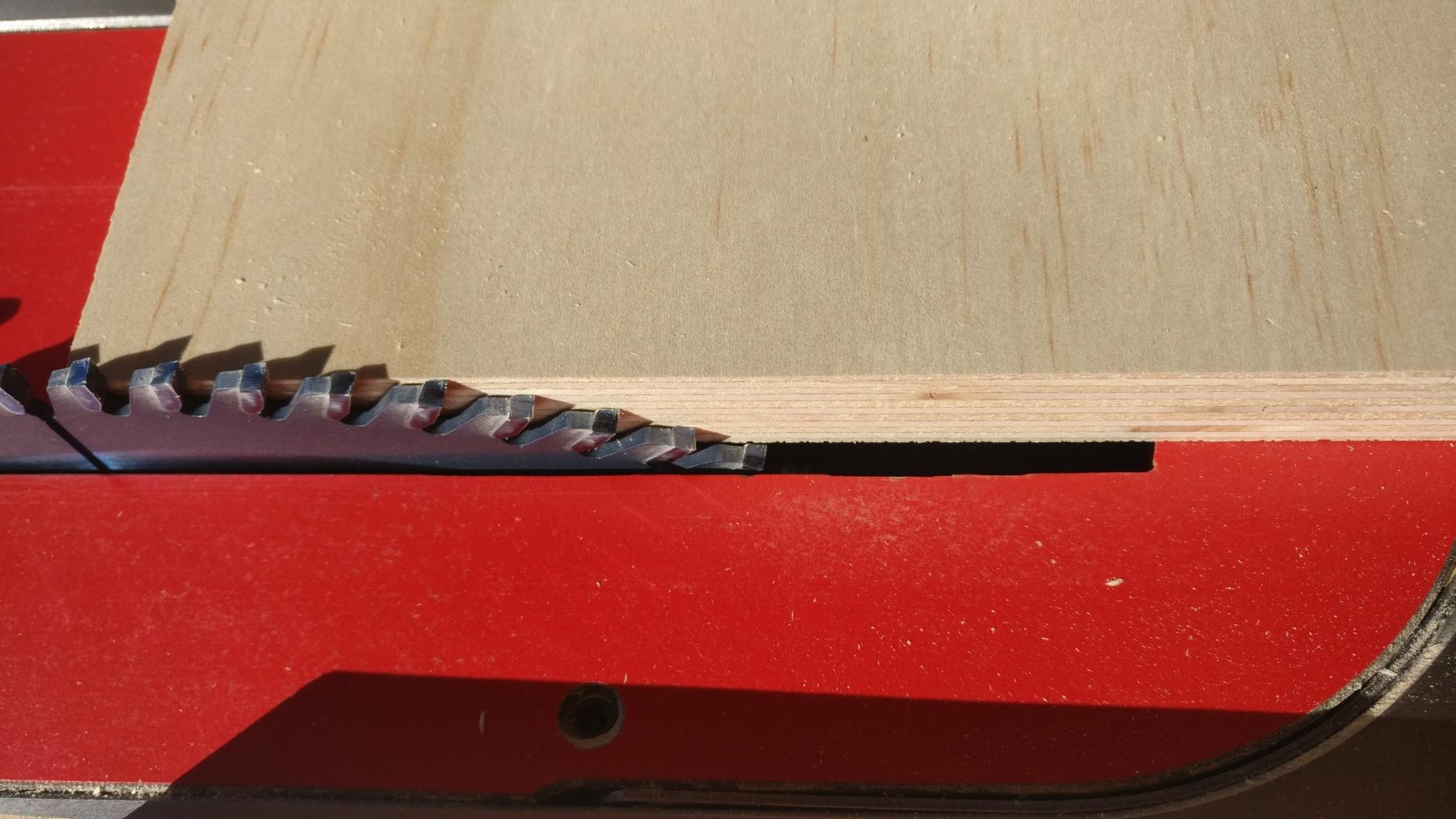
The 10 degree hook angle is steeper than the plywood specialist blades on this list. A steeper hook bites harder and holds the cut better on hardwood trim, but it pushes veneer fibers down more than a shallow hook would, so this is not the blade for very thin face veneer.
For edge trimming on cabinet boxes and finished wood parts, the geometry works in your favor.
Who this blade suits
Cabinet installers and trim carpenters who cut a lot of finished hardwood parts on a table saw and want a fine crosscut edge. It suits a workflow where crosscutting dominates and rips are handled by another blade.
If you want a single blade for trim across several wood types, the tooth count suits that well.
Who should pass on it
ATB geometry means this blade cannot handle flat-bottom rip or groove work. It also costs noticeably more than other 80 tooth blades on this list for comparable tooth count, and the review base is small enough that long term durability feedback is limited.
For thin veneer faces, pick a shallower hook and a Hi-ATB grind instead.
10. CMT 285.624.10 Ripping Blade – Best for Dados and Rip Joints
CMT Orange Tools 285.624.10 – Ripping Saw Blade HW D=10 B=5/8 Z24 K=0.126 P=0.087 a=15
10 inch,24 teeth
flat-top grind
0.126 kerf,0.087 plate
15 degree hook angle
Pros
- Flat-top grind leaves a truly flat bottom kerf
- Clean burn-free rips in 4/4 and thicker hardwood
- Easier rip setup than thin-kerf blades
- Plenty of carbide for long service life
Cons
- 24-tooth geometry is not for crosscutting or finish work
- Needs more power than some jobsite saws provide
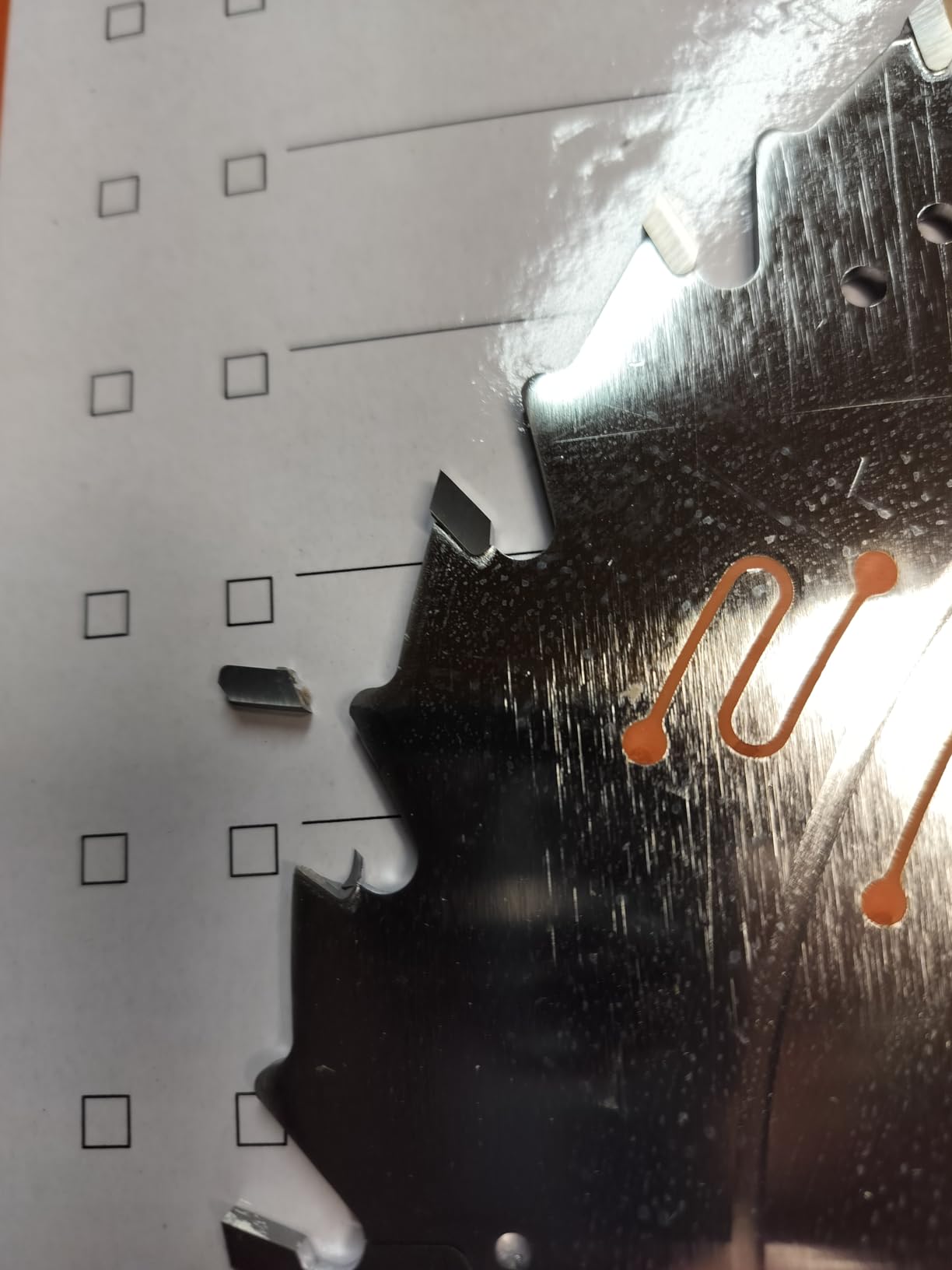
This is the blade your saw needs next to the plywood blade. With 24 flat-top teeth it is built for ripping solid wood, and the flat bottom kerf is the reason to buy it: it produces a truly flat surface for dados, rabbits and glue-line rips.
Owners report fast, burn-free cuts through hard maple, oak and walnut, and a very high share of top ratings across the review base is a good signal for a rip blade.
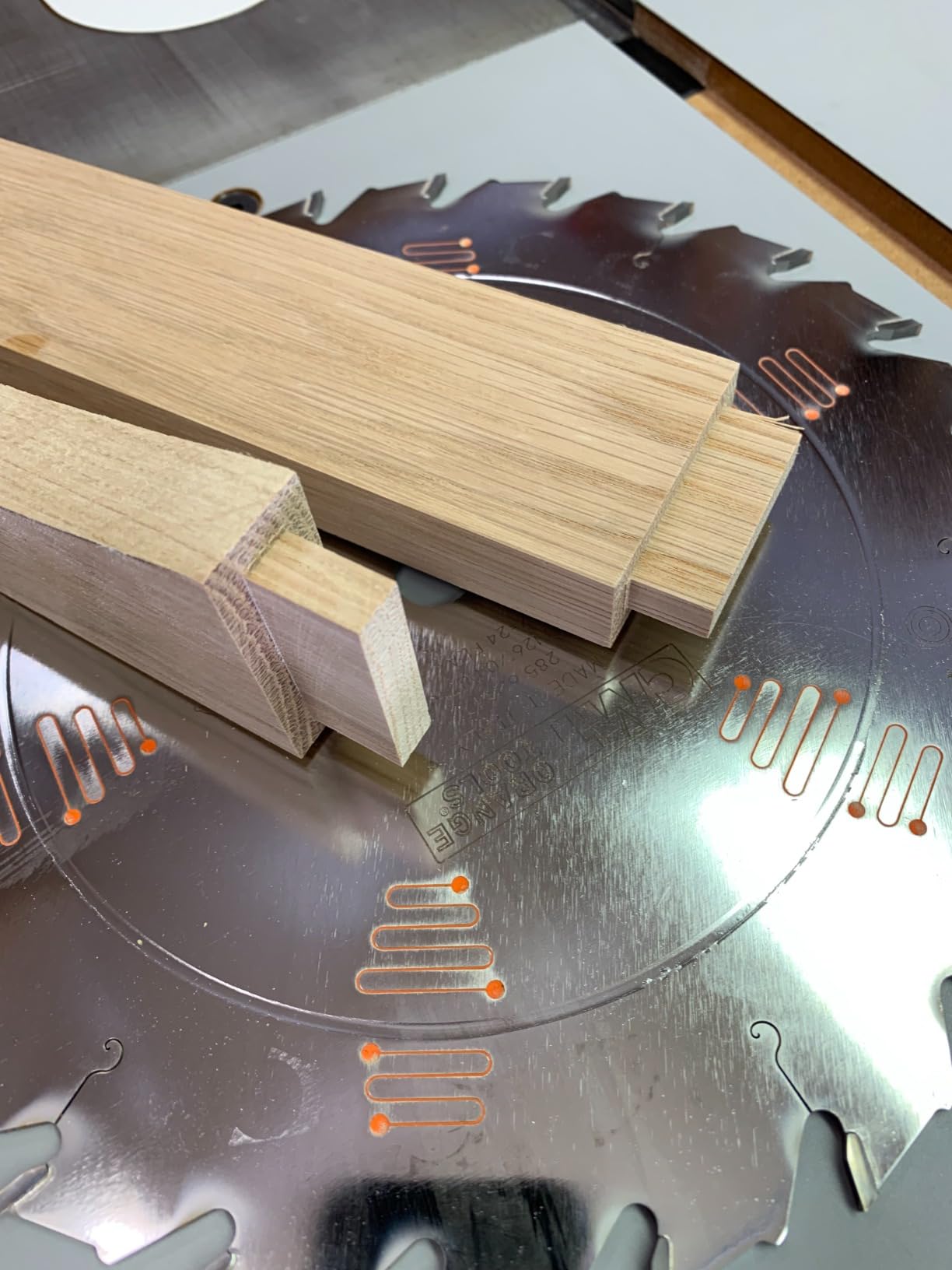
The full 0.126 inch kerf and 0.087 inch plate at a 15 degree hook angle make rip setup easier than working with a thin kerf blade. You are removing more material per pass, which means the cut is more stable and less likely to wander on a wide rip.
Because ATB blades leave a ridge in the bottom of a non-through groove, a flat-top rip blade is the correct tool for joinery. Having both blades in your shop covers plywood faces and glue lines properly.
Who this blade suits
Anyone building furniture with dados, rabbets or glue-line rips. It suits a cabinet or furniture saw with enough power to push a full kerf blade, and it pairs naturally with an 80 tooth plywood blade as a two-blade setup.
If you rip hardwood regularly, this will outlast several thin-kerf finish blades.
Who should pass on it
It is not a crosscut or finish blade, and using it on plywood faces will produce exactly the tear-out you were trying to avoid. It also needs more power than some smaller jobsite saws have, so check your saw before committing.
For a shop that only breaks down sheet goods, this blade earns nothing.
11. TOMAX 80-Tooth Fine Finish Blade – Best Low-Cost 80-Tooth Option
TOMAX 10-Inch 80 Tooth ATB Fine Finish Saw Blade with 5/8-Inch Arbor
10 inch,80 teeth
ATB fine finish layout
5/8 arbor
electrophoretic coating
Pros
- 80-tooth ATB layout gives smooth low tear-out cuts
- Electrophoretic coating slows rust and corrosion
- Low cost for an 80-tooth carbide finish blade
- Limited lifetime warranty from TOMAX
Cons
- Cut quality sits below ultra-fine blades on tough veneer
- Uses construction grade carbide rather than a premium blend
The TOMAX gives you the two things that matter most for plywood, an 80 tooth count and ATB geometry, without moving up to a premium tier. Buyers report good clean cuts on wood and say it holds its edge, with the coating helping resist corrosion over storage.
It is intended for miter saws and table saws with the standard 10 inch, 5/8 inch arbor fit-up, so it drops into most saws without adapters.
Who this blade suits
A first dedicated finish blade, a rental shop, or anyone who wants an 80 tooth crosscut blade for plywood at the low end of the range. It suits a weekend project budget where a 40 tooth blade was leaving edges rougher than you wanted.
The limited lifetime warranty adds a little confidence for buyers who cut plywood regularly.
Who should pass on it
The carbide is construction grade rather than a premium blend, so on tough or figured veneer the finish is a step below the ultra-fine blades here. Expect some sanding on walnut face veneer.
If your visible edges drive the project, the gap between this and a dedicated plywood blade will show.
12. Bosch DCB1080 Edge Blade – Best for Melamine and Laminate
BOSCH DCB1080 10 in. 80 Tooth Edge Circular Saw Blade for Extra-Fine Finish for Melamine and Finished Plywood
10 inch,80 teeth
5/8 inch bore
ATB geometry
thinner kerf, speed coat
Pros
- Smooth clean edges on melamine and finished plywood
- Little visible chip-out on cabinet panels
- Thin kerf and rigid body reduce deflection
- Extra-hard steel body resists bending
Cons
- A few users report chipping on veneer-faced plywood
- Cut quality on veneer falls short of dedicated plywood blades
The Bosch is built for edge cutting, and its own material list includes melamine and finished plywood. Owners like the clean, smooth edges on melamine, laminate and cabinet panels, along with the thin kerf and the rigidity of the blade body.
The Brute Carbide C3/C4 micro grain formulation is designed for impact resistance, and the speed coat antifriction finish is intended to prevent burning or melting on the coated face of melamine.
Who this blade suits
Shoppers who cut melamine and laminate more than they cut birch ply, and anyone upgrading from a factory Bosch blade on a Bosch table saw. The extra-hard steel body resisting bending is useful on long crosscuts where deflection shows up as a taper.
The thinner kerf also helps if you are working with a lighter saw.
Who should pass on it
A minority of owners report chipping on veneer-covered plywood, which is a fair warning given the name on the box. If plywood is your main material, choose a blade listed for plywood with a Hi-ATB grind rather than relying on the general edge designation.
The review base is also modest, so long term durability feedback is thinner than for the higher rated blades here.
How to Choose a Plywood Blade
How many teeth do you need for plywood?
For plywood on a 10 inch table saw, 60 to 80 teeth is the range most people should shop. Sixty teeth moves faster and handles OSB and rough panels well, while 80 teeth give the smoother exit face you want on veneered and cabinet grade material. Above 100 teeth the blade starts to feed slowly and heat builds up, which dulls carbide faster.
Does the grind matter as much as the tooth count?
Yes. Alternate top bevel grinds bevel one side of each tooth, then the other, which lets the tooth shear across the grain instead of pushing fibers down. Hi-ATB alternates the bevel left and right across four teeth in a repeating pattern, which follows the grain direction more closely and gives the cleanest result on veneer. Triple chip grind flattens the top of each tooth for rip strength and durability, but on veneer it will not give you the finish you are hoping for.
Should you choose thin kerf or full kerf?
Match the kerf to your saw’s power. Thin kerf blades around 0.098 to 0.110 inch cut faster, waste less sheet material and put less load on the motor, which makes them the safer choice for smaller jobsite saws. Full kerf blades around 0.126 inch are more stable on a dedicated cabinet saw, hold a straight line on wide rips and are the better choice for joinery work such as dados.
What do hook angle and plate thickness change?
The hook angle is the angle the tooth pulls the material into the blade. A shallow hook, such as the 2 degree on the Freud LU80R010, reduces downward pressure and is gentler on veneer. A steeper hook, such as 10 degrees on the Amana, grips harder for hardwood trim. Plate thickness affects deflection: a thinner plate flexes less and stays accurate on long crosscuts, while a thicker plate is more stable under heavy ripping loads.
Do carbide grade and coating really change results?
Carbide grade decides how long the edge holds. TiCo high-density blends and Brute Carbide C3/C4 formulations resist wear and impact better than construction grade carbide. Coatings such as Perma-Shield, PTFE and electrophoretic finishes reduce friction, slow corrosion and keep pitch and resin from sticking, which matters on glue-laden plywood because built-up resin dulls a blade faster than clean wood.
Why a Zero-Clearance Insert Matters More Than Most Blade Upgrades
A zero-clearance insert is a thin plate with a slot cut into it so the blade passes through with its thickness matching the opening almost exactly. Stock inserts are sized for a full kerf blade, so when you fit a thin kerf blade the blade has room to wander sideways in the slot and the cut edge drifts.
That drift is the hidden cause of tear-out on the bottom face. Even a sharp Hi-ATB blade will leave a fuzzy edge if it is free to deflect, so fitting the insert to match your kerf is often the single biggest improvement you can make. Shop owners consistently rank it above a blade swap for the amount of change it delivers.
Matching it is simple: measure the kerf of the blade you plan to run, then set the insert opening to that measurement. Undersized is not the goal, and you should not force a blade into a slot that is too tight, because heat expansion and a dirty table can cause binding.
If your saw has a dado-style multi-blade setup, the same matching rule applies to each blade. On those setups every blade in the stack should share the same kerf, or the cut will wander from slot to slot.
Blade Maintenance and Resharpening Basics
Most blades do not die of use, they die of neglect. Glue and resin from plywood build up on the carbide and on the plate face, the cutting edge dulls faster, and the saw starts to strain. A cleaner blade cuts the same way at lower effort.
Clean the blade after every sheet goods session with a blade cleaner formulated for pitch and resin, then wipe it dry and store it flat or on edge away from concrete floors where moisture gets to it. Never store a blade flat on a bench with another blade on top of it, because the teeth take the load. The same cost-per-use logic shows up in our tested snow plow blades for ATVs, where blade geometry and material choice drive the same kind of buying decision.
Run the blade slowly through sacrificial material like scrap ply to break the edge in, and never force a dull blade through a full sheet. The faster you overload a blade, the quicker the carbide tips chip.
On the sharpening question, carbide blades can usually be sharpened more than once depending on how much carbide is on the tip, so check that before replacing. A blade that has been chipped by a hidden staple or screw is usually finished, because the tip itself is damaged. Sweeping a sheet for fasteners before it goes on the saw is cheaper than any sharpening service.
Frequently Asked Questions
What type of blade is best for cutting plywood?
An 80 tooth blade with a Hi-ATB or ATB grind is the best general choice for plywood on a 10 inch table saw. The alternating bevel shears the thin veneers apart instead of tearing them, which is what causes fuzzy edges on the exit face.
How many teeth should a table saw blade have for plywood?
Between 60 and 80 teeth for most table saw work. Use 60 teeth for fast cutting of OSB and rough panels, and 80 teeth for a smoother finish on veneered and cabinet grade plywood.
Is a 140 tooth blade good for plywood?
A 140 tooth blade gives an extremely fine finish, but it feeds slowly and generates heat that dulls carbide faster. On a table saw, 80 teeth usually gives the best balance of finish, cut speed and blade life for plywood.
Does kerf thickness matter for chip-free cutting?
Yes. A thin kerf of 0.098 to 0.110 inch wastes less sheet material and puts less load on the motor, while a full kerf of 0.126 inch is more stable for rips and joinery. Chip-free results also depend on a zero-clearance insert matched to your kerf.
Why is a zero-clearance insert important for plywood?
A standard insert is sized for a full kerf blade, so a thin kerf blade can wander in the slot and deflect sideways. That deflection pushes veneer fibers down and causes tear-out on the bottom face, so matching the insert to your blade kerf can change cut quality more than a blade upgrade.
Can I use a combination blade for plywood?
Yes. A combination blade with 50 teeth handles both rips and crosscuts of plywood, though a dedicated 80 tooth finish blade leaves a smoother edge on veneered panel goods.
Can I use a table saw blade on a miter saw?
Often yes, as long as the diameter and arbor match and the blade speed does not exceed the saw rating. Most 10 inch blades here carry a 6000 RPM rating and a 5/8 inch arbor, which fits many miter saws.
Final Verdict: Which Plywood Blade to Buy in 2026
Our pick for the best table saw blades for plywood overall is the Diablo 50-tooth combination blade, because the .098 inch kerf saves sheet material, the plate runs quiet and balanced, and one blade covers rips as well as crosscuts. For the cleanest possible face on veneered panel goods, the Freud LU80R010 is the specialist, with its Hi-ATB grind and 2 degree hook angle shearing veneers instead of tearing them.
If you want the premium finish without the premium spend, the WEN BL1080 is the value pick most shops should start with, especially on lighter saws where the 1/10 inch kerf matters. CMT covers the specialist cases, with the 255.080.10 for ultra-fine veneer edges and the 285.624.10 rip blade for flat-bottom dados, so a two-blade setup gives you both the panel face and the glue line.
Whatever you choose, fit a zero-clearance insert that matches your kerf, keep the blade clean of pitch, and check sheets for fasteners before they go on the saw. Those three habits decide how good your cuts actually look in 2026.