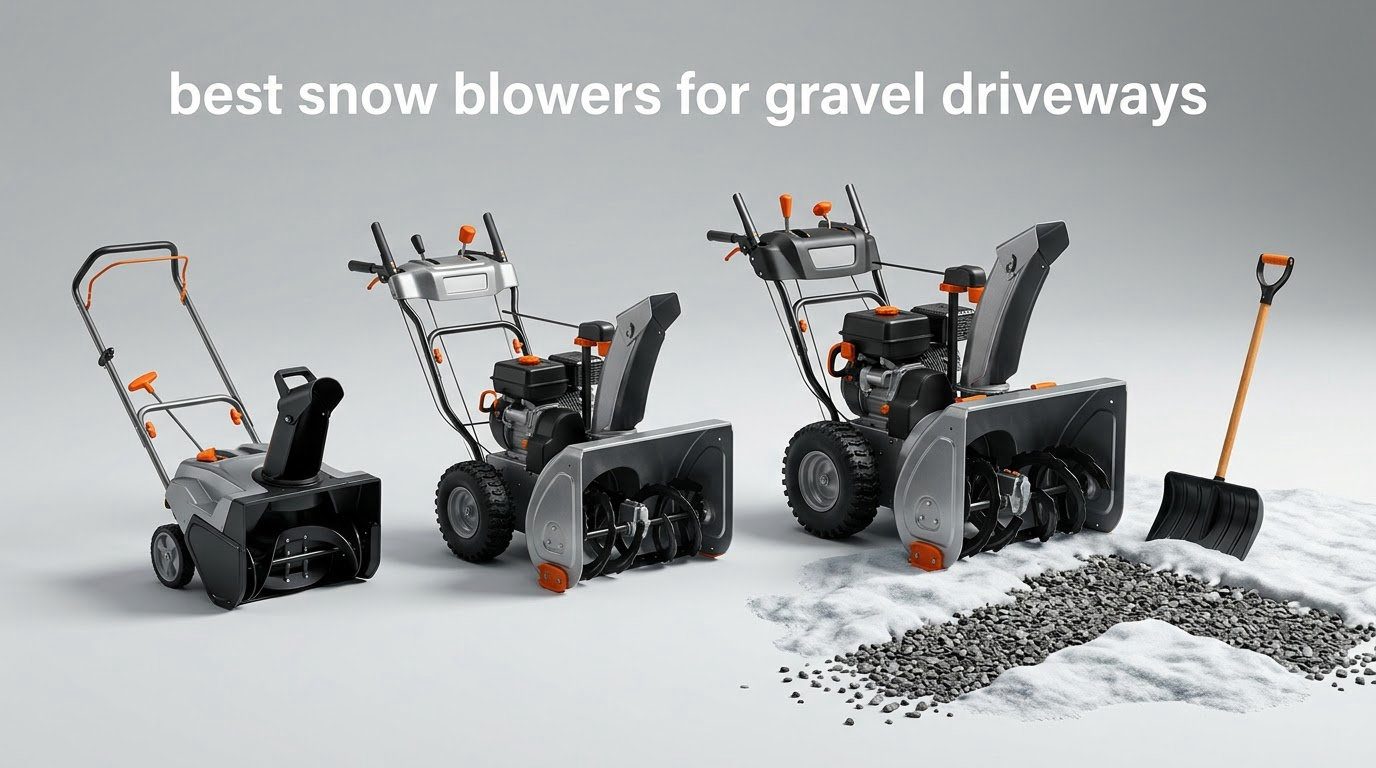
A two-stage snow blower with adjustable skid shoes is the right machine for a gravel driveway, because the auger rides above the stones and the housing never touches the ground. That single design decision separates a gravel-safe blower from one that will spit rocks at your cars, your windows, and your neighbor’s siding all winter.
We sorted through the machines that actually work on aggregate surfaces, reading owner reports on packed, loose, and rutted drives, and cross-checking every spec against what the manufacturers claim. This roundup covers the eight snow blowers for gravel driveways worth your attention in 2026, from tracked gas machines to cordless two-stage kits that run without an exhaust pipe.
The short version: on a flat, moderate drive, any two-stage here behaves. On a steep, icy, or half-mile drive, traction and width become the deciding factors. On a short drive plus a sidewalk, a compact 24-inch machine is enough and you should not overbuy.
Table of Contents
- Top 3 Picks for Gravel Driveways in 2026
- Best Snow Blowers for Gravel Driveways in 2026
- 1. EGO Power+ SNT2416 – Best Overall Cordless Two-Stage for Gravel
- 2. Ariens ST28DLE SHO 28in – Best for Wet, Heavy Snow on Gravel
- 3. Honda HSS928 28in – Best for Steep, Icy and Uneven Gravel Drives
- 4. PowerSmart 26in 208cc Two-Stage – Best Value Pick for Long Rural Drives
- 5. WEN SB209E 24in – Best Budget Two-Stage for Gravel
- 6. PowerSmart 24in 212cc – Best Steel Build for Medium Gravel Drives
- 7. EGO Power+ SNT2410 24in – Best If You Already Own EGO Batteries
- 8. PowerSmart 24in 212cc Compact – Best for Short Drives and Walkways
- Snow Blower Types: Single-Stage vs Two-Stage vs Three-Stage
- What to Look for in a Snow Blower for Gravel Driveways
- Skid Shoes, Wheels and Tracks on Gravel
- How to Snowblow a Gravel Driveway Without Throwing Rocks
- Maintenance, Lifespan and When a Blower Is the Wrong Tool
- How We Picked
- Frequently Asked Questions
- Is it safe to use a snow blower on a gravel driveway?
- Can you use a single stage snow blower on gravel?
- How high should skid shoes be set on a gravel driveway?
- Are Toro snow blowers better than Ariens for gravel driveways?
- What is the best battery operated snow blower for a gravel driveway?
- How long do snow blowers last?
- Should I get a tracked or wheeled snow blower for gravel?
- Final Verdict
Top 3 Picks for Gravel Driveways in 2026
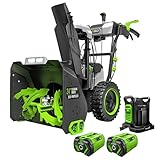
EGO Power+ SNT2416 24in…
- 24 inch clearing width
- Variable speed steel auger
- Two 10.0Ah batteries included
- Heated handle grips

PowerSmart 26in 208cc Two-S…
- 26 inch clearing width
- Briggs and Stratton 208cc engine
- 6 forward and 2 reverse speeds
- Adjustable skid shoes

WEN SB209E 24in Two-Stage
- 209cc 4-cycle engine
- Notched 4-blade steel auger
- Push-button electric start
- Two-year warranty
Best Snow Blowers for Gravel Driveways in 2026
| Product | Specs | Action |
|---|---|---|
| EGO Power+ SNT2416 24in Cordless Two-Stage |
|
Check Latest Price |
| PowerSmart 26in 208cc Two-Stage Gas |
|
Check Latest Price |
 PowerSmart 24in 212cc Two-Stage Gas PowerSmart 24in 212cc Two-Stage Gas |
|
Check Latest Price |
 Ariens ST28DLE Deluxe SHO 28in Ariens ST28DLE Deluxe SHO 28in |
|
Check Latest Price |
| WEN SB209E 24in Two-Stage |
|
Check Latest Price |
 Honda HSS928 28in Track Drive Honda HSS928 28in Track Drive |
|
Check Latest Price |
 EGO Power+ SNT2410 24in Cordless Two-Stage EGO Power+ SNT2410 24in Cordless Two-Stage |
|
Check Latest Price |
 PowerSmart 24in 212cc Two-Stage PowerSmart 24in 212cc Two-Stage |
|
Check Latest Price |
1. EGO Power+ SNT2416 – Best Overall Cordless Two-Stage for Gravel
EGO Power+ 24″ Electric Snow Blower, Cordless Self-Propelled 2-Stage XP, Includes (2) 56 V 10.0Ah Batteries and Dual Port Charger – SNT2416
24 inch clearing width, 20 inch intake height
56V ARC lithium, two 10.0Ah batteries
50 foot throw, 198 pounds
Trigger-controlled self-propelled steering
Pros
- Two-stage steel auger stays above the gravel and leaves stones behind
- Variable speed auger chews through packed snow and ice
- Two included 10.0Ah batteries cover a 24-car driveway on one charge
- Trigger steering makes the turnaround at the end of a drive simple
- No exhaust fumes near a house
Cons
- Runtime falls off sharply on deep wet snow compared with gas
- 198 pounds is heavy to reposition without the batteries installed
- Peak Power needs two EGO ARC batteries working together
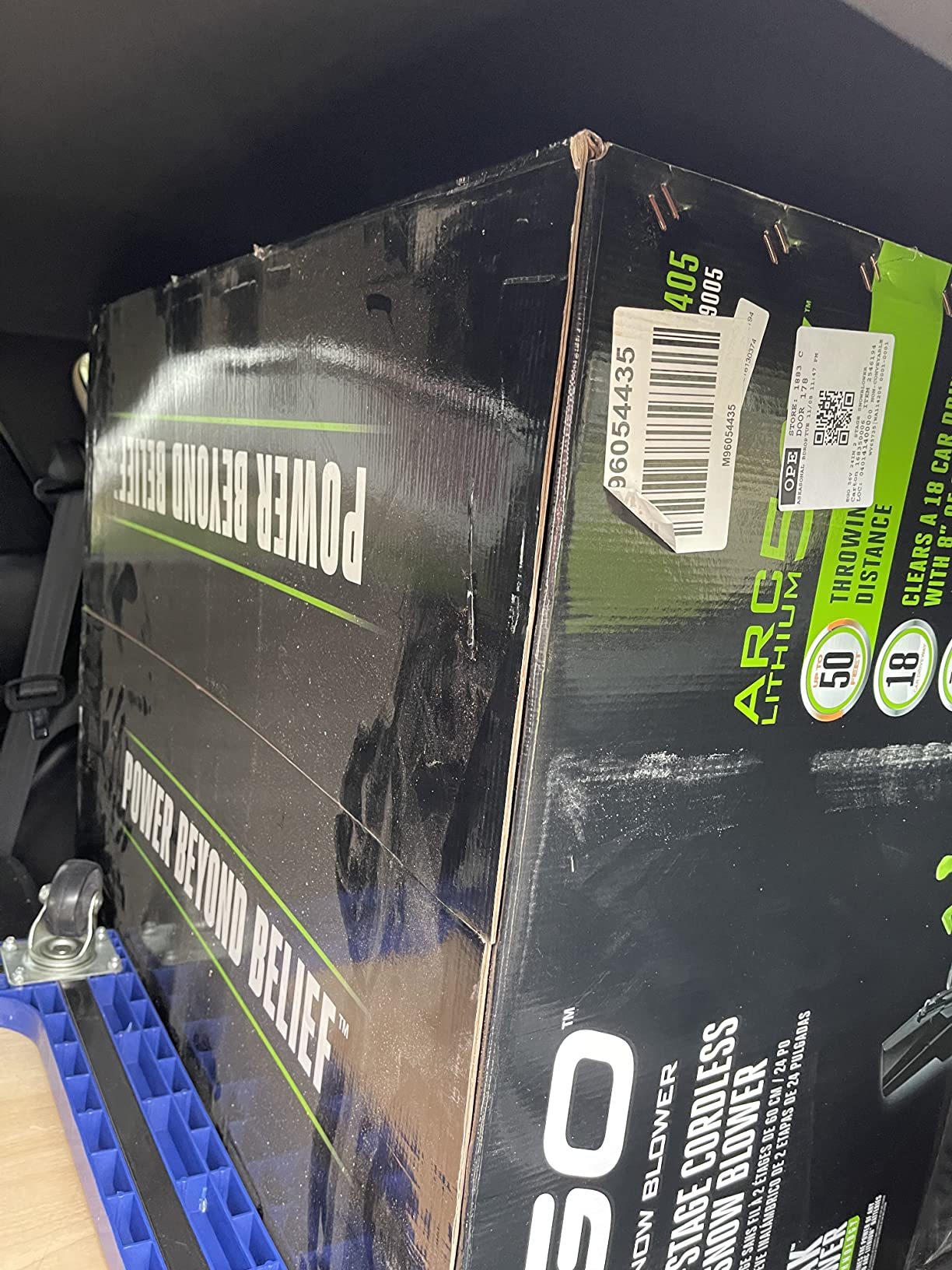
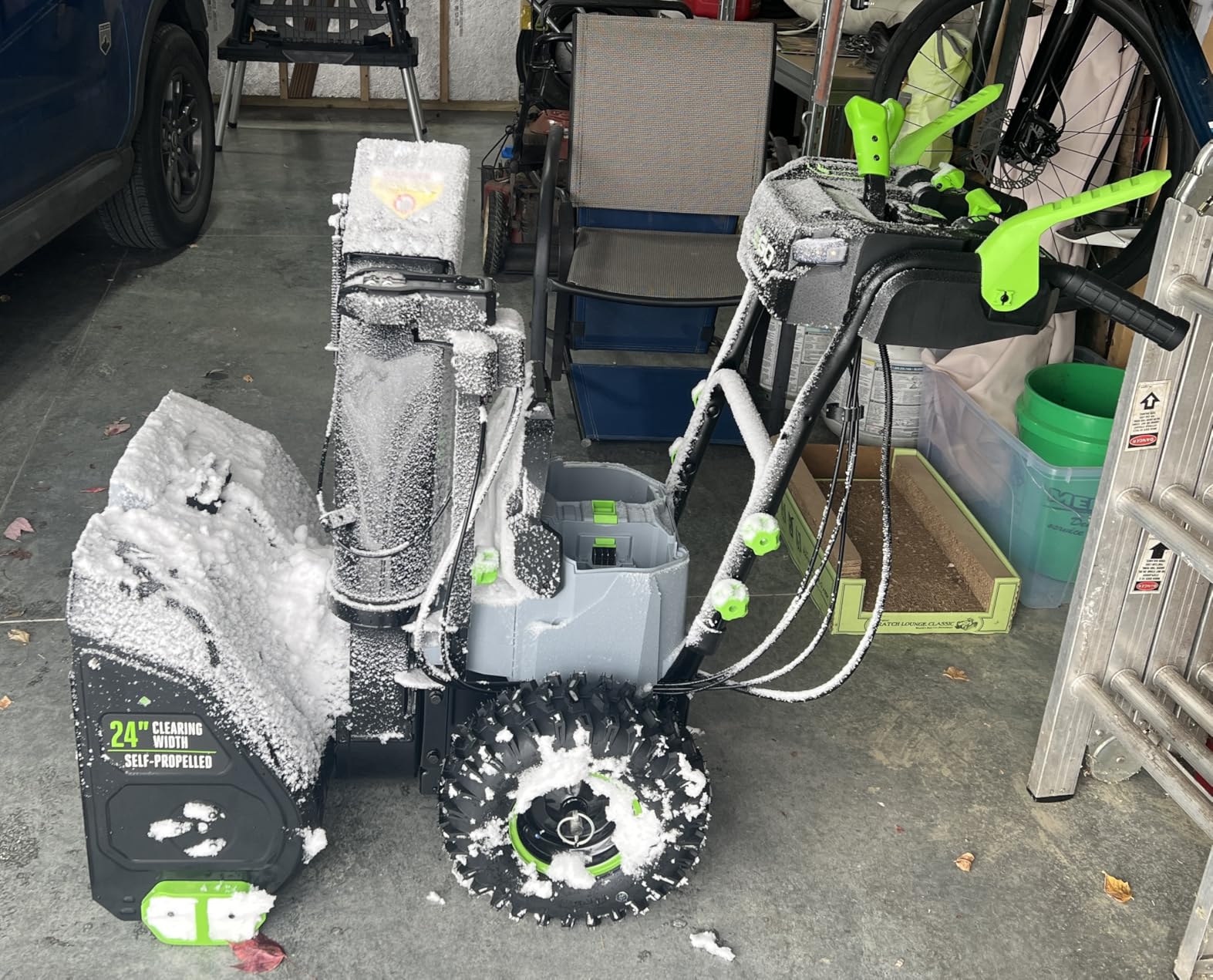
This is the machine we keep coming back to, and the reason is simple. The 24-inch intake sits in a housing that glides on two adjustable skids, so on a gravel drive the auger works the snow column above the aggregate. Owners report clearing a 24-car driveway with 8 inches of snow on a single charge.
It carries a 4.6 rating across 367 reviews, the strongest combination of score and review volume in this group. The variable speed steel auger is the piece that matters most on aggregate, ramping up for wet snow and slowing when stones get close instead of grinding at a fixed rpm.
Two details surprised us. Trigger-controlled steering on the self-propelled drive makes the pivot far less of a wrestling match than a fixed-speed drive, and the 2-in-1 remote chute lever redirects throw while walking. On a curved gravel drive that is the difference between one pass and three.
The 200-degree chute rotation also lets you rake snow off to the side rather than across the road, which matters when the plow has already banked snow along your edges.
What you should know before buying it
Peak Power combines two 56V ARC batteries for output, and this kit includes both plus a dual port charger. If you already own the platform, the bare-unit version at number 7 below is the same machine without them.
Battery logistics are the whole ballgame. On light powder the runtime is a non-issue. On repeated wet events where you move 20 inches of heavy snow, pack swaps are the least pleasant part of the job.
Who it suits and who it does not
It suits a flat or gently sloped gravel drive in a moderate climate, and anyone who will not store fuel. Zero exhaust makes it the only machine here you can run against a garage door without thinking about fumes.
It does not suit a long rural drive in wet snow every week, or a steep incline where you want weight on the ground. A gas two-stage or tracked machine outlasts the batteries there.
2. Ariens ST28DLE SHO 28in – Best for Wet, Heavy Snow on Gravel
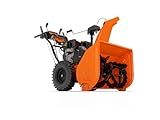
Ariens ST28DLE Deluxe SHO 28 in. Two-Stage Electric Start Gas Snow Blower
28 inch clearing width, 306cc 4-cycle engine
55 foot maximum throw
Six forward speeds, 16 inch wheels
267.5 pounds, electric key start
Pros
- 306cc SHO engine has the reserve to move frozen slush
- 55 foot throw keeps cleared snow off the drive
- Owners report buying this platform again after 20 years
- Easy-turn chute control beats older Ariens models
- Three-year European spare part availability
Cons
- Plastic recoil handle has cracked for some owners
- Throttle and choke knobs are plastic and can freeze in deep cold
- 267.5 pounds is a serious load to move around
If your gravel gets wet and heavy, engine displacement matters more than anything on the spec sheet, and the 306cc four-cycle in the SHO platform is the biggest engine in this roundup. Wet snow and packed slush are what stall a 200cc machine mid-drive, and on aggregate you cannot fall back on momentum the way you can on pavement.
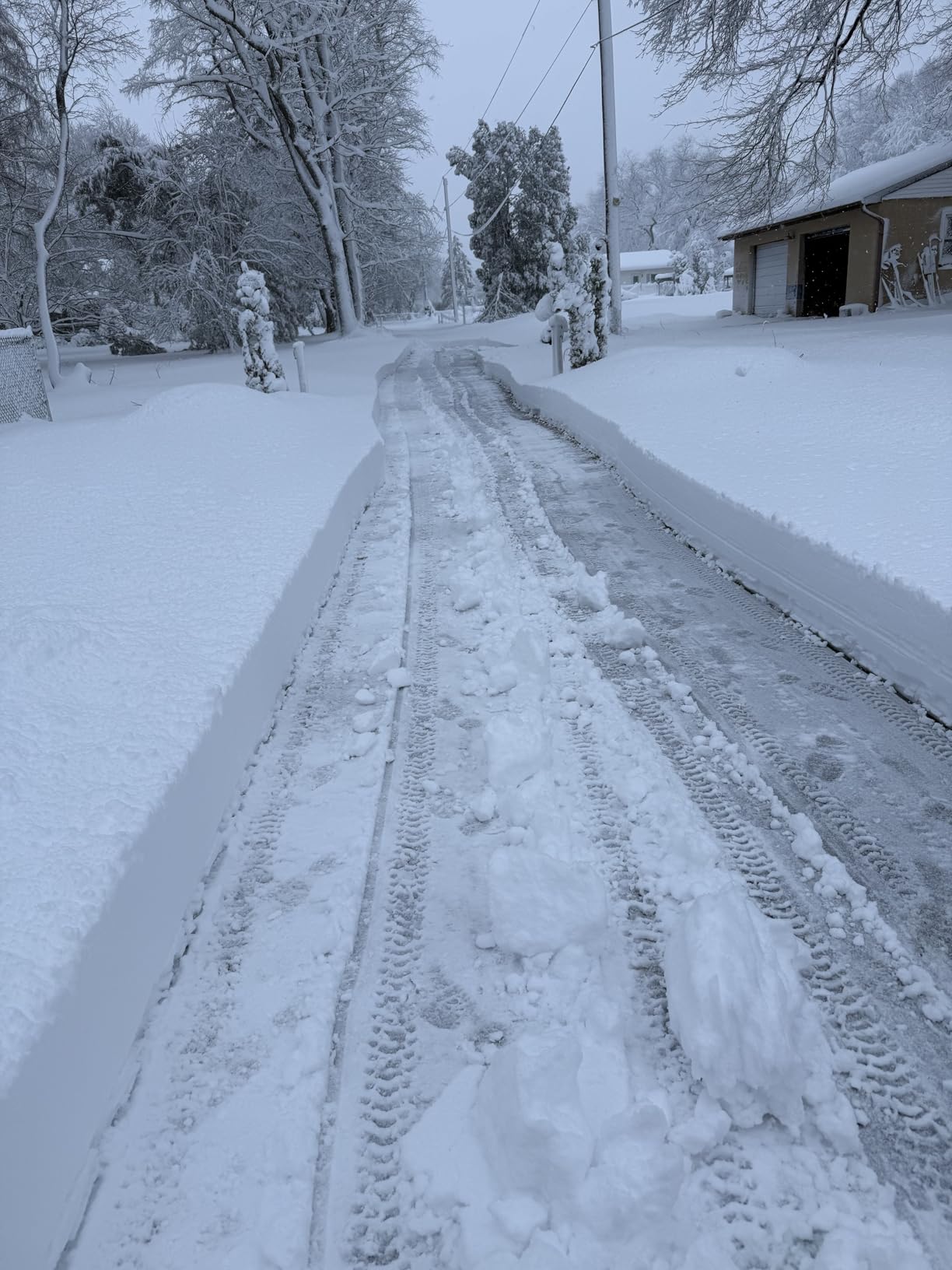
The 28-inch width with a 55-foot throw means one pass down a standard two-car drive throws snow well clear of where you parked. Owners with prior Ariens experience call out throw distance as the standout and the easy-turn chute as a real upgrade.
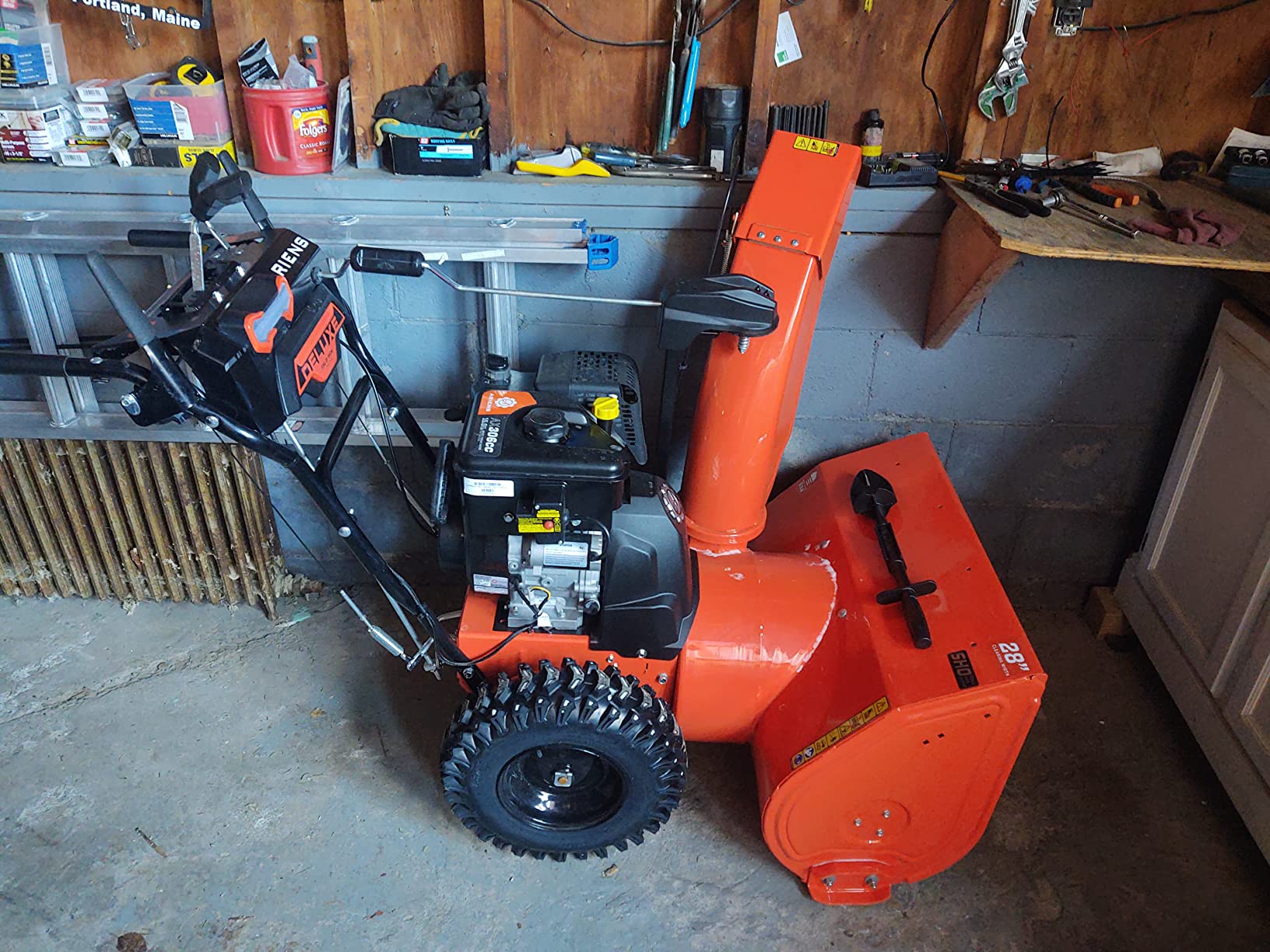
Gravel-specific, the machine behaves well because of its mass and wheel size. Sixteen-inch wheels spread the load over loose stone better than a 13-inch tire, and the drive never gets light on rutted surfaces the way a smaller machine does.
That is the tension to understand. At 267.5 pounds, getting it into a shed is a two-person job, and on a flat short drive that weight is pure downside for the same job a 24-inch machine finishes.
What you should know before buying it
Durability reports are the strongest signal here. Several owners describe buying the same model again after two decades, and r/Snowblowers regulars repeatedly name the Ariens Deluxe and Deluxe SHO lines as the machines that hold up longest in heavy snow when maintained.
The complaints are specific: plastic parts in cold weather. The recoil handle cracked for some owners within months, and the throttle and choke knobs can freeze together below zero, which is genuinely dangerous mid-run.
Who it suits and who it does not
It suits a large or long gravel drive that sees heavy wet events, and anyone with a dealer nearby who plans to keep the machine for a decade. Parts sharing across the Ariens lineup is a genuine long-term advantage.
It does not suit a small property, a tight storage situation, or anyone avoiding gas. Check that a dealer or repair shop is reachable before you commit.
3. Honda HSS928 28in – Best for Steep, Icy and Uneven Gravel Drives
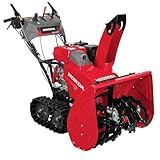
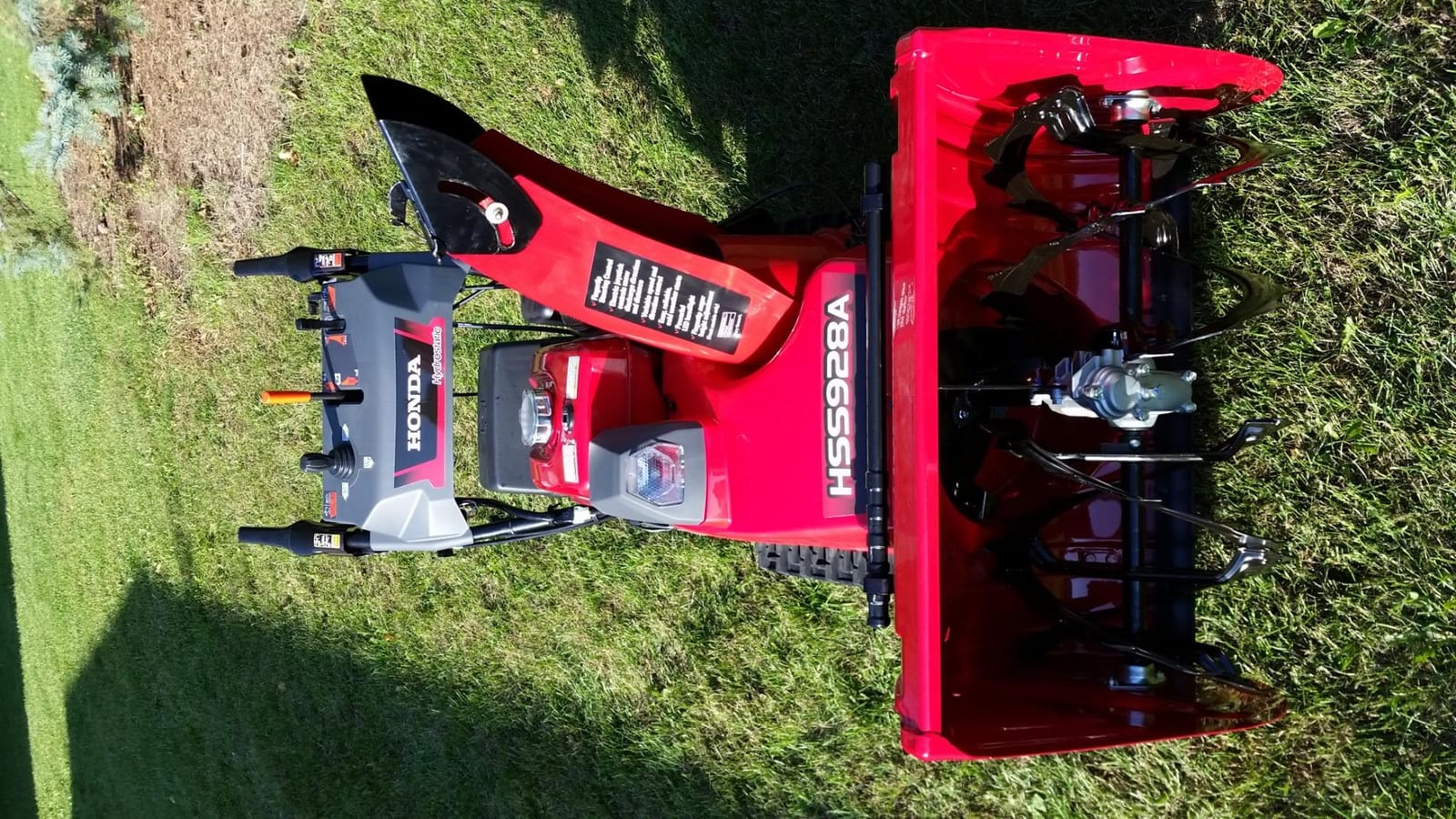
Honda HSS928 28-Inch Two Stage Snow Blower (HSS928AATD)
28 inch clearing width, 21.7 inch intake height
Dual track drive, hydrostatic transmission
52 foot throw, 1900 lbs per minute
358 pounds, electric key start
Pros
- Dual tracks grip ice and uneven gravel where wheels spin
- Commercial-grade GX270 engine starts reliably in deep cold
- Hydrostatic drive holds steady auger rpm at any ground speed
- Thumb-operated auger height control with variable positions
- Ready to use out of the box
Cons
- 358 pounds needs two people or a ramp to move
- Tracks need periodic inspection and eventual replacement
- Heaviest machine here and priced for commercial use
This is the traction answer. Dual tracks with low-temperature rubber and sure-gripping cleats spread weight across the surface and hold on slopes, rough ground, and ice, which is exactly the failure mode that pushes wheeled machines sideways on a sloped gravel drive.
The hydrostatic self-propelled drive is the second quiet advantage. There is no gear to shift, and because ground speed is independent of auger rotation, the auger holds the same rpm whether you creep through a deep bank or cruise a bare section.
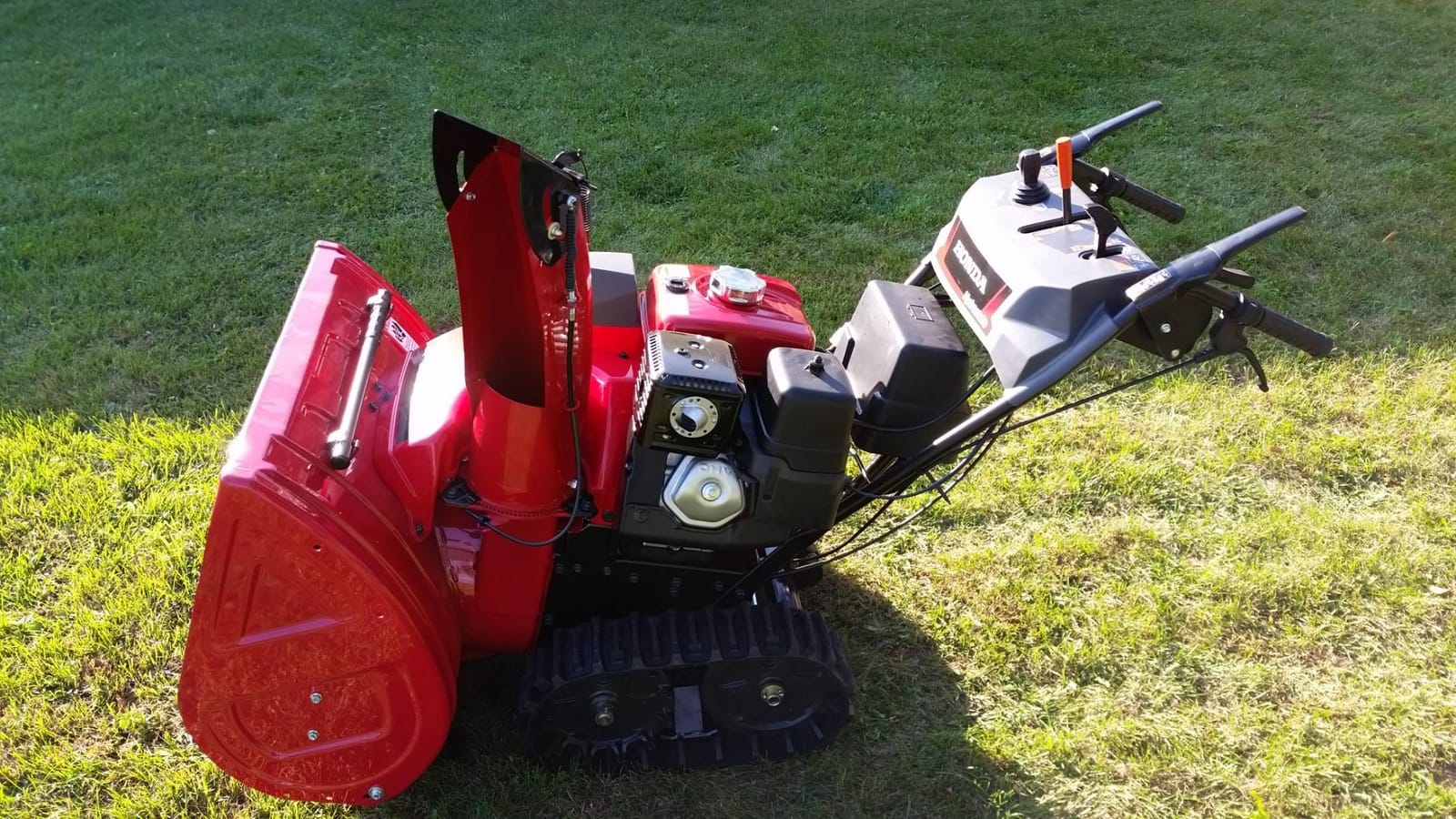
On gravel specifically, tracks solve a problem wheels cannot. A tire on loose aggregate sinks and digs, and the deeper it digs the worse traction gets. Tracks float on top of that layer, so the machine keeps moving on a rutted drive that has not been regraded in years.
The GX270 OHV is a commercial-grade engine, the DC electric key start is automotive-style, and a three-year residential warranty comes with no assembly at delivery.
What you should know before buying it
It weighs 358 pounds. That is not a spec-sheet curiosity, it is a daily decision about where the machine lives and how it gets out of the shed. Budget for a ramp and a second person, or give it a permanent home outside.
The review base is small at 28 ratings, expected at this level. Treat the 4.6 as encouraging rather than conclusive, and note that tracks are a consumable needing inspection and eventual replacement.
Who it suits and who it does not
It suits a steep, curved, or rutted gravel drive where traction failure is a real event, a rural lane, and an owner who wants a commercial engine under a residential warranty.
It does not suit a flat two-car drive, a garage that will not swallow it, or a first-time buyer. If traction alone is your problem, a good wheeled two-stage with a low gear is more manageable.
4. PowerSmart 26in 208cc Two-Stage – Best Value Pick for Long Rural Drives
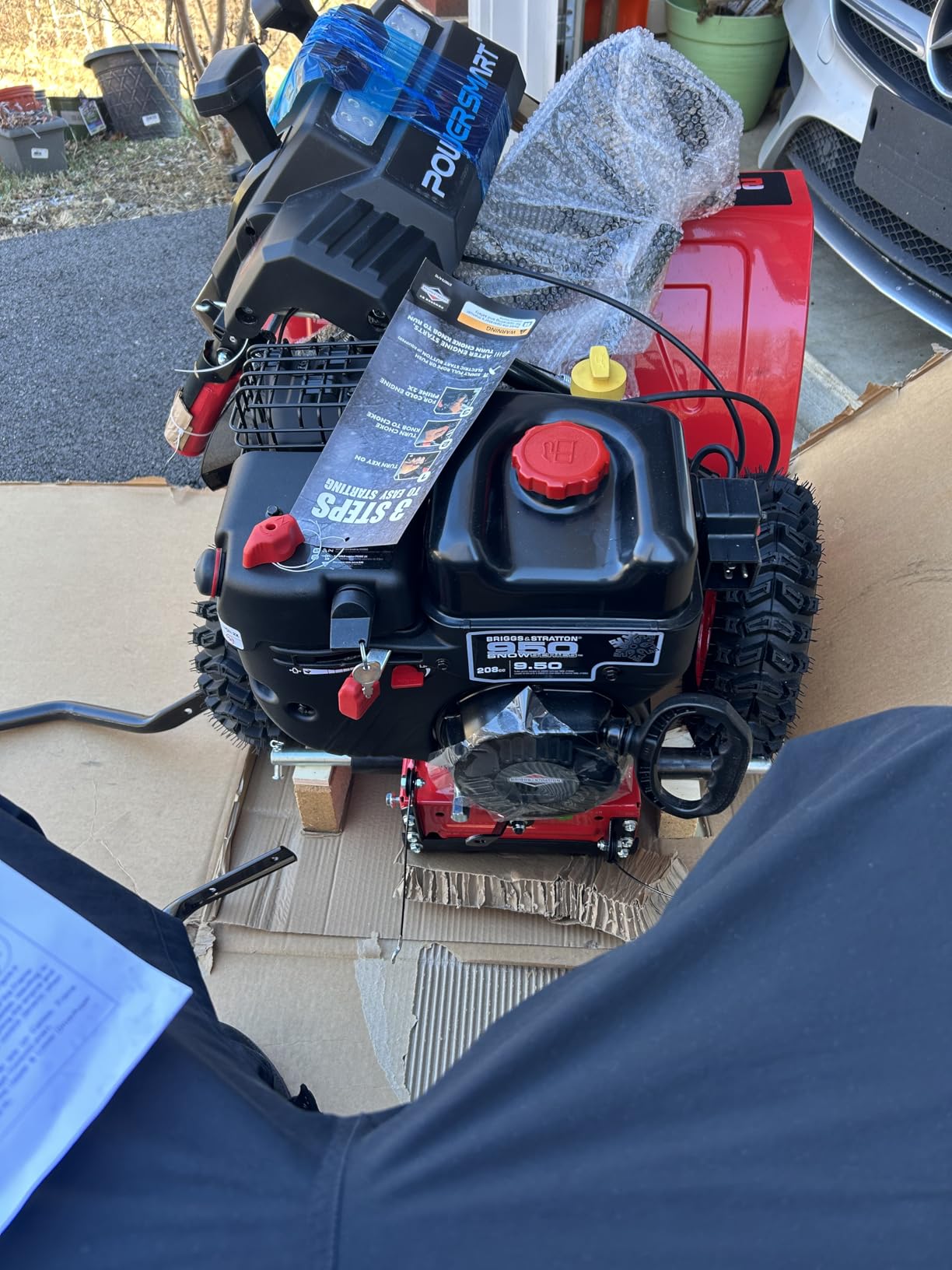
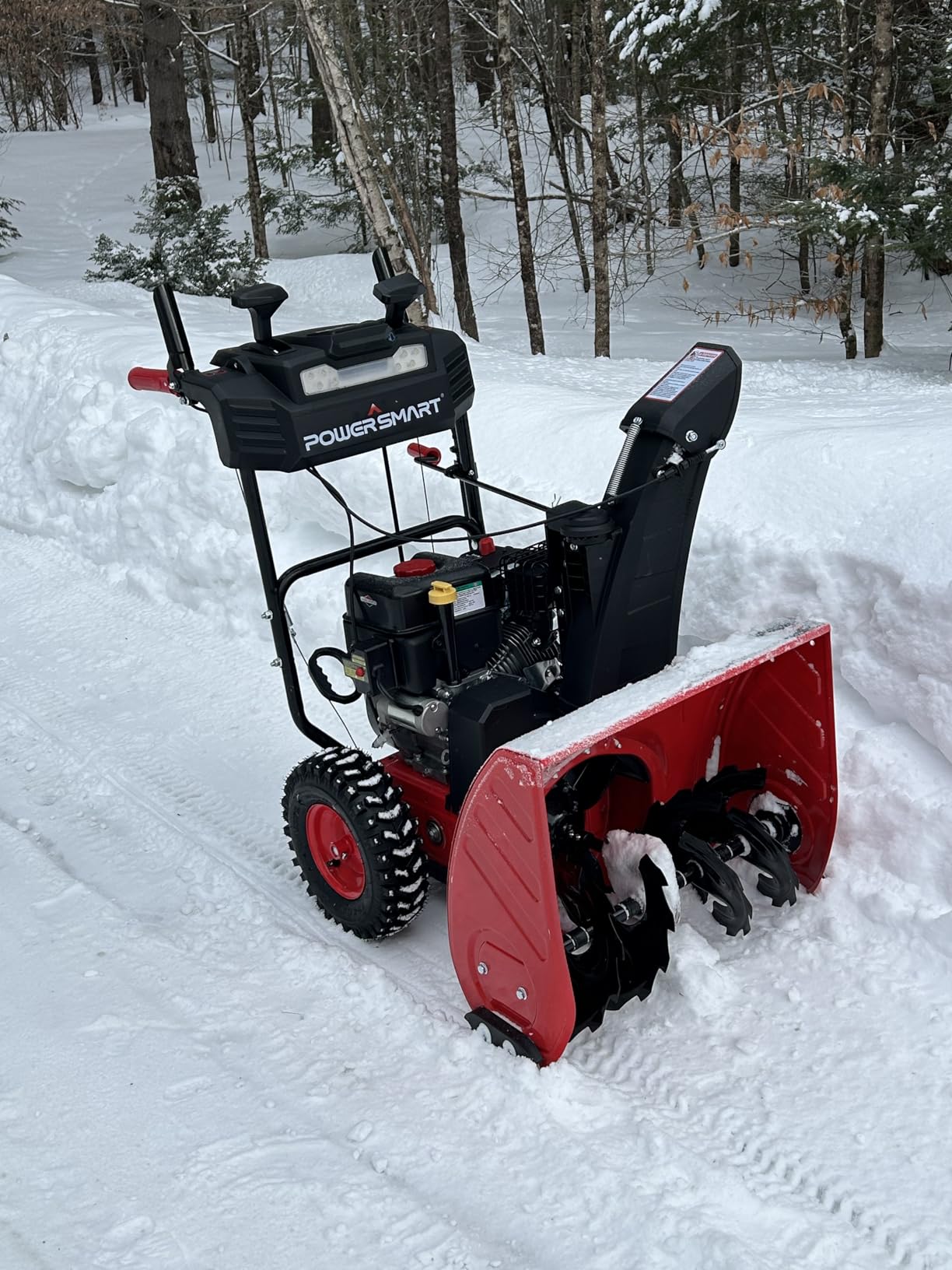
PowerSmart 26-Inch Self-Propelled Gas Snow Blower, Powered by B&S 208cc Engine, Electric Start, 13-Inch Snow Tires, Handle Warmer, Two-Stage Snow Blowers with LED Lights
26 inch clearing width, 20 inch clearing height
Briggs and Stratton 208cc 4-cycle
2680 lbs per minute, 50 foot throw
146.9 pounds, electric start
Pros
- Briggs and Stratton 208cc engine starts reliably in deep cold
- Handles 20 inches of snow including frozen plow slush
- Heated grips and a bright LED light for night clearing
- Adjustable skid shoes work on paved and gravel drives
- Six forward and two reverse speeds give fine control
Cons
- Chute height and rotation controls are very stiff to adjust
- Chute feels flimsy relative to the rest of the machine
- Hand warmer does not keep gloved hands warm
- Some reports of auger or drive failure after limited use
At 705 reviews this machine has the largest owner base in the roundup, and the pattern is consistent: the Briggs and Stratton 208cc four-cycle starts when others will not, and 26 inches covers a lot of ground per pass. At 146.9 pounds it is also the easiest machine here to reposition by hand.
On gravel, the spec sheet lists adjustable skid shoes rated for both paved and gravel driveways, and six forward plus two reverse speeds is the widest gear range in the group. On a long drive you want a crawl speed for deep banks and a fast speed for the second pass.
Owners rate the throw distance favorably at 30 feet or more of consistent discharge, and repeatedly call the LED headlight brighter than expected. Heated grips are a nice touch at 0 to 10 degrees, though the 4.1 rating reflects that they do little for gloved hands.
Clearing capacity is listed at 2680 pounds per minute, at the upper end of the 200cc class. That figure is what lets it push through frozen plow slush that stalls smaller engines.
What you should know before buying it
Chute controls are the weak point. Reviewers describe the chute height and rotation controls as very stiff to adjust while running, and the chute itself as flimsy next to the rest of the build. If you will rake snow to the side often, know that first.
There are also a small number of auger or drive failure reports after limited use. On a machine with this many reviews, a handful of early failures is normal noise, but it is why we would not hand this to someone clearing a half-mile drive as their only machine.
Who it suits and who it does not
It suits a long rural gravel drive, an owner who also clears a sidewalk or parking area, and anyone wanting electric start and a broad speed range without hauling 300 pounds.
It does not suit someone who needs premium chute control precision, or daily competition-grade use. Keep spare shear pins on hand.
5. WEN SB209E 24in – Best Budget Two-Stage for Gravel
WEN 24-inch 209cc Two-Stage Self-Propelled Gas-Powered Snow Blower with Electric Start (SB209E)
24 inch by 20 inch clearing path, 209cc engine
2000+ pounds of snow per minute
30 foot throw, 190 degree chute
Two-year warranty, UL listed
Pros
- Two-stage steel construction with a notched 4-blade auger
- Push-button electric start simplifies cold-weather starts
- UL listed and backed by a two-year warranty
- Entry point into a genuine two-stage machine
Cons
- 30 foot throw distance is the shortest in the roundup
- Compact 24 inch path means more passes on a wide drive
- 209cc engine has less reserve than 300cc class machines
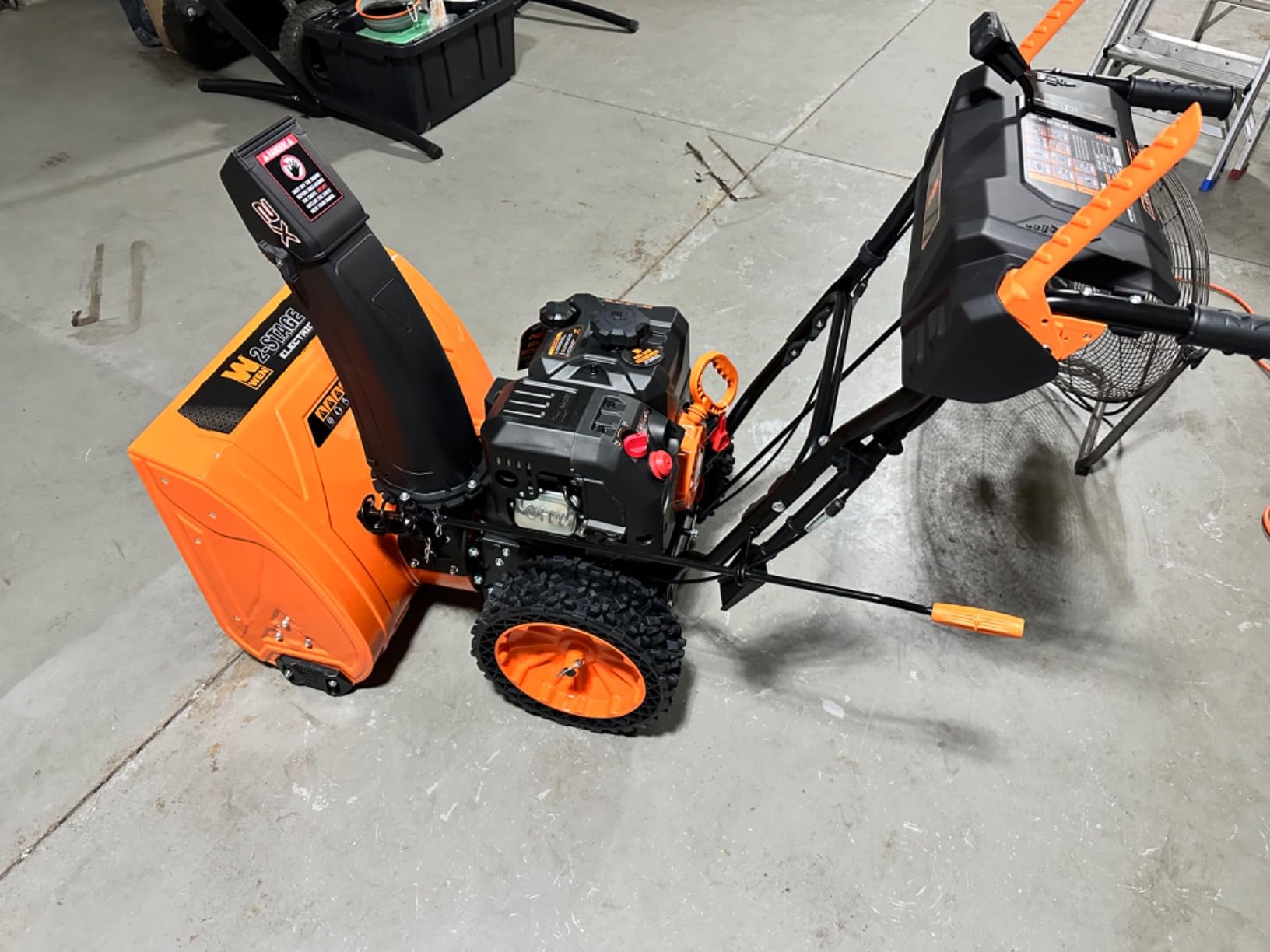
The WEN is here for one reason: it is the cheapest way into a two-stage machine on this list, and two-stage is the non-negotiable part. The notched four-blade steel auger in a steel housing is the same architecture that keeps gravel out, so you get the safety behavior at the entry price point.
Self-propulsion runs through drive wheels with six forward and two reverse speeds, the same gear count as machines costing far more. Eight total speeds is a real range on gravel, where a second pass over packed snow wants a slower ground speed than the first pass over powder.
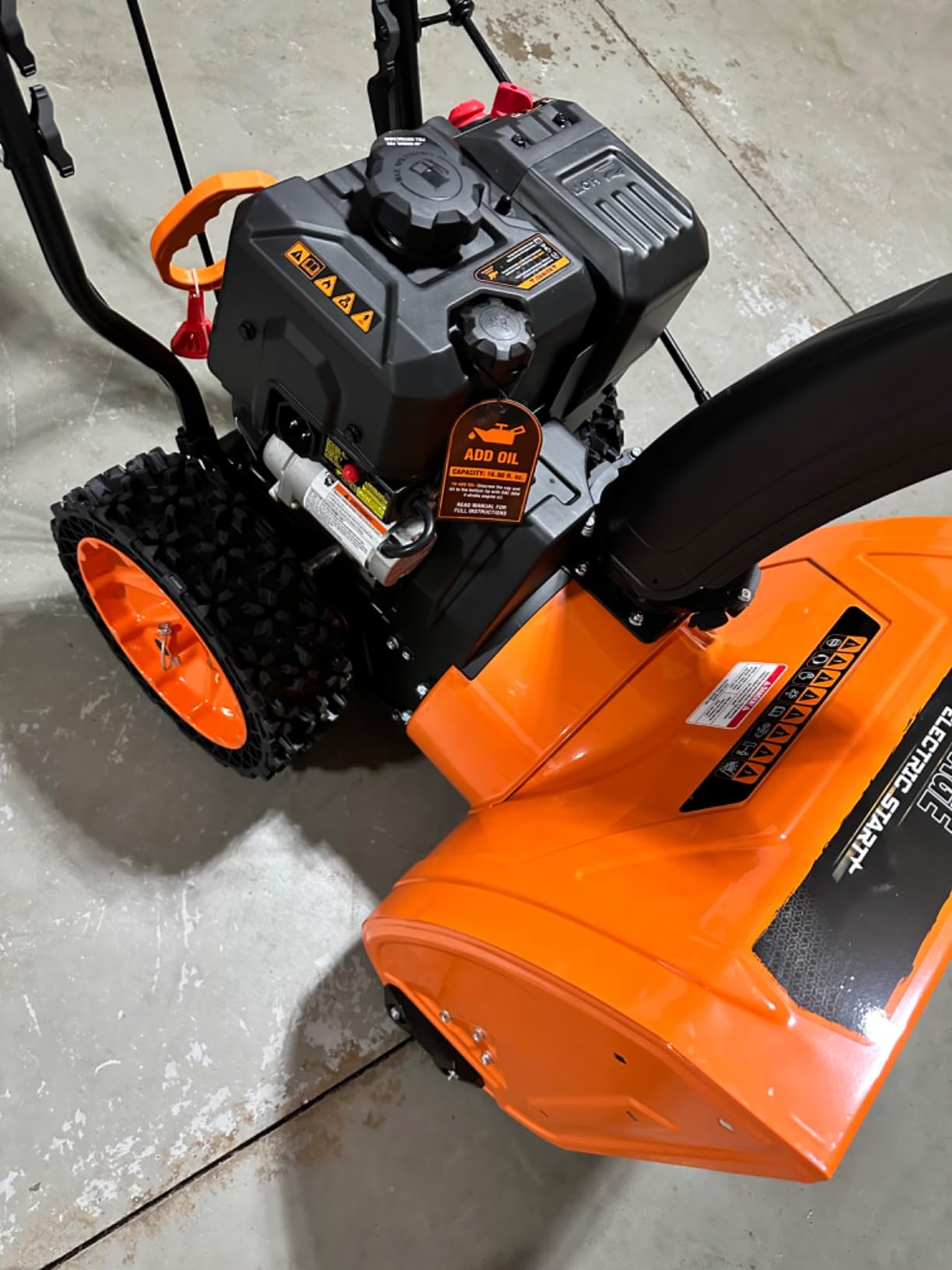
Push-button electric start removes the need for a 120V outlet or a battery, which some competing machines require. It is UL listed, carries a two-year warranty, and includes a chute clearing tool you will absolutely want.
The honest limitation is the 30-foot throw, the shortest in this group. On a gravel drive where the road edge is close, shorter throw means more snow lands where you just cleared it.
What you should know before buying it
The 209cc four-cycle clears 2000-plus pounds of snow per minute through a 24-inch by 20-inch path, enough for roughly a foot of snow in typical conditions and short of what the 300cc-class machines absorb.
Two 13-inch tubeless snow tires are the drive package, smaller than the Ariens carries. On deeply rutted gravel you will feel more of the surface, so keep the skids a touch higher.
Who it suits and who it does not
It suits a first-time gravel-drive owner, a short suburban drive, and anyone who wants two-stage gravel safety without a large purchase decision.
It does not suit a long rural drive where you would make many passes, a wide property including a sidewalk, or a region with reliably heavy wet snow.
6. PowerSmart 24in 212cc – Best Steel Build for Medium Gravel Drives
PowerSmart Self-Propelled 2-Stage Gas Snow Blower 24-inch 212cc Engine with Electric Start, Reinforced Steel Housing
24 inch clearing width, 21 inch intake height
212cc OHV 4-cycle, 2500 lbs per minute
45 foot throw, 180 degree chute
Eight-speed drive with power assist
Pros
- 2500 lbs per minute clears up to 21 inches of snow
- Reinforced steel housing with steel auger and impeller
- Power assist steering makes driveway-end turns easy
- Electric plus recoil start for reliable cold starts
- Two-year manufacturer warranty
Cons
- Chute control can bind and drift out of position from vibration
- Reported drive cable and wheel engagement failures
- QC complaints about a missing bolt and an oil drip
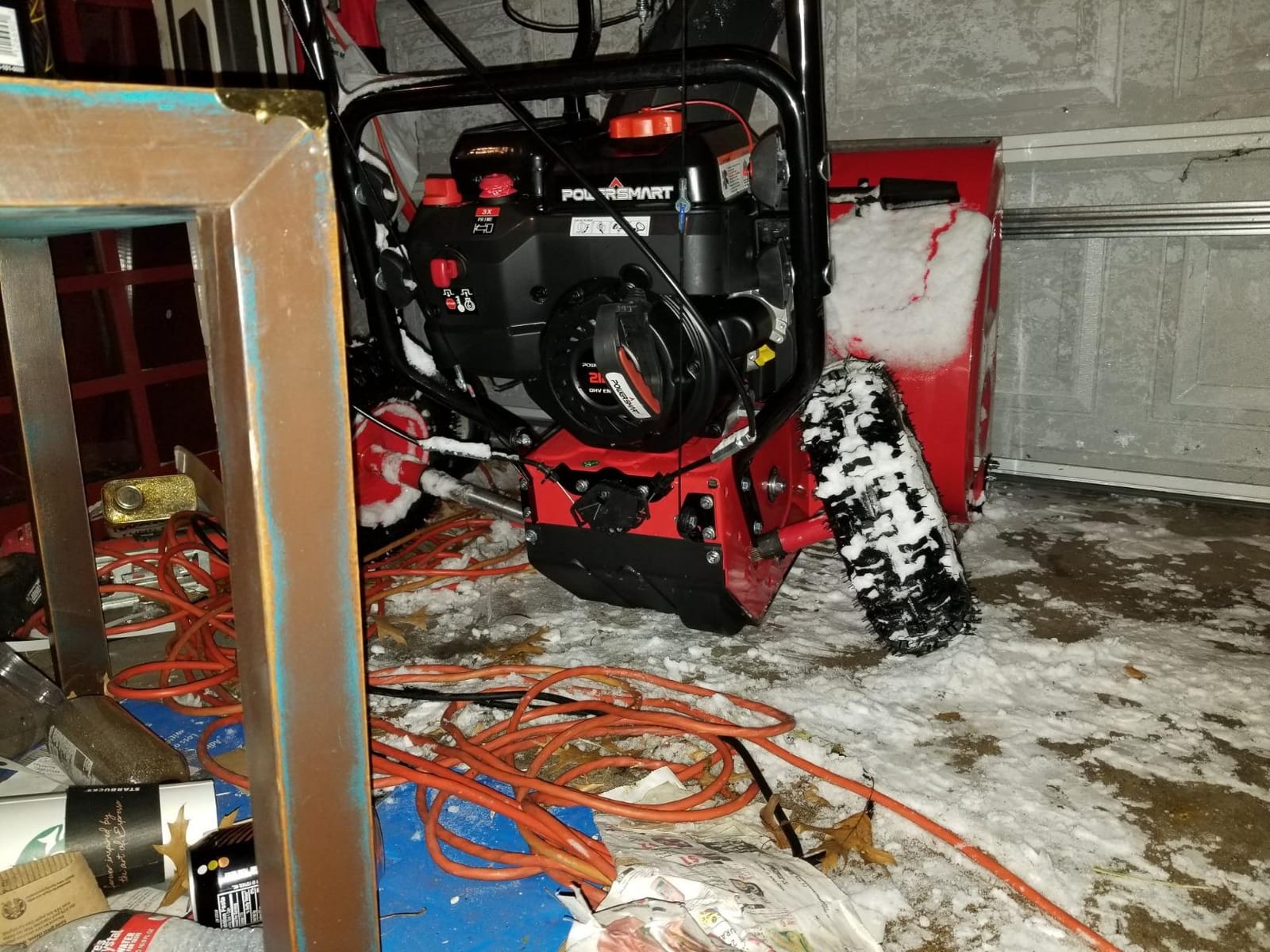
Setting aside its chute control drift, which is a real annoyance, this is the strongest spec-per-dollar gravel machine here. A 212cc OHV four-cycle rated at 2500 pounds per minute with a 21-inch intake handles more snow depth than most, and the reinforced steel housing is the build you want when the auger rides over stones.
Power assist steering is worth calling out on gravel specifically. Turning around at the end of a drive is when a heavy two-stage is most awkward, and the assist takes most of that load off your arms.

Owners report assembly taking 30 minutes to a couple of hours and starting on the first pull after adding oil and gas. The mains-powered electric start is something owners with shoulder trouble specifically appreciate.
The chute throws up to 45 feet with 180 degrees of adjustment, and the eight-speed drive runs on 13 by 4-inch rubber snow tires, a common serviceable size that matters when you are three winters in.
What you should know before buying it
At a 4.0 rating across 205 reviews this sits mid-pack on satisfaction, for consistent reasons. The chute control can bind and drift out of position from vibration, and there are reported drive cable and wheel engagement failures after a handful of uses.
There are also small quality control complaints, including a missing wheel axle bolt on arrival and an oil drip from the drain extension tube owners fixed with thread lock. Budget an hour of inspection before the first storm.
Who it suits and who it does not
It suits a medium gravel drive in a climate with real snowfall, and a buyer who wants steel internals and 21 inches of intake depth without moving up a tier. That intake height is the deepest rated here alongside the compact PowerSmart at number 8.
It does not suit someone who will be rough on the machine, or who has no patience for a first-season shakedown. Inspect the drive cable and chute linkage before snow arrives.
7. EGO Power+ SNT2410 24in – Best If You Already Own EGO Batteries
EGO Power+ 24″ Electric Snow Blower, Cordless Self-Propelled 2-Stage XP, Battery and Charger Not Included – SNT2410
24 inch clearing width, 20 inch intake height
56V ARC lithium, bare unit
50 foot throw, 200 degree chute
Trigger-controlled self-propelled steering
Pros
- Same proven XP platform as the battery-included kit
- Variable speed steel auger handles packed snow and ice
- Trigger steering assists tight turns at the end of a drive
- Heated handle grips and 50 foot throw distance
Cons
- Battery and charger not included
- add two 10.0Ah ARC packs and a charger separately
- Runtime on deep wet snow is limited against gas
- Handles heavy when the batteries are out
This is the same machine as our top pick minus the batteries and charger. If you already own EGO ARC Lithium packs from a mower or leaf blower, you get the same 24-inch two-stage platform with the same variable speed steel auger, 50-foot throw, and trigger-controlled steering.
Platform lock-in is the whole reason to choose it. The 56V ARC system runs on any two EGO ARC batteries, and Peak Power combines them for output, so if your house is full of that platform the marginal cost of the blower falls sharply.
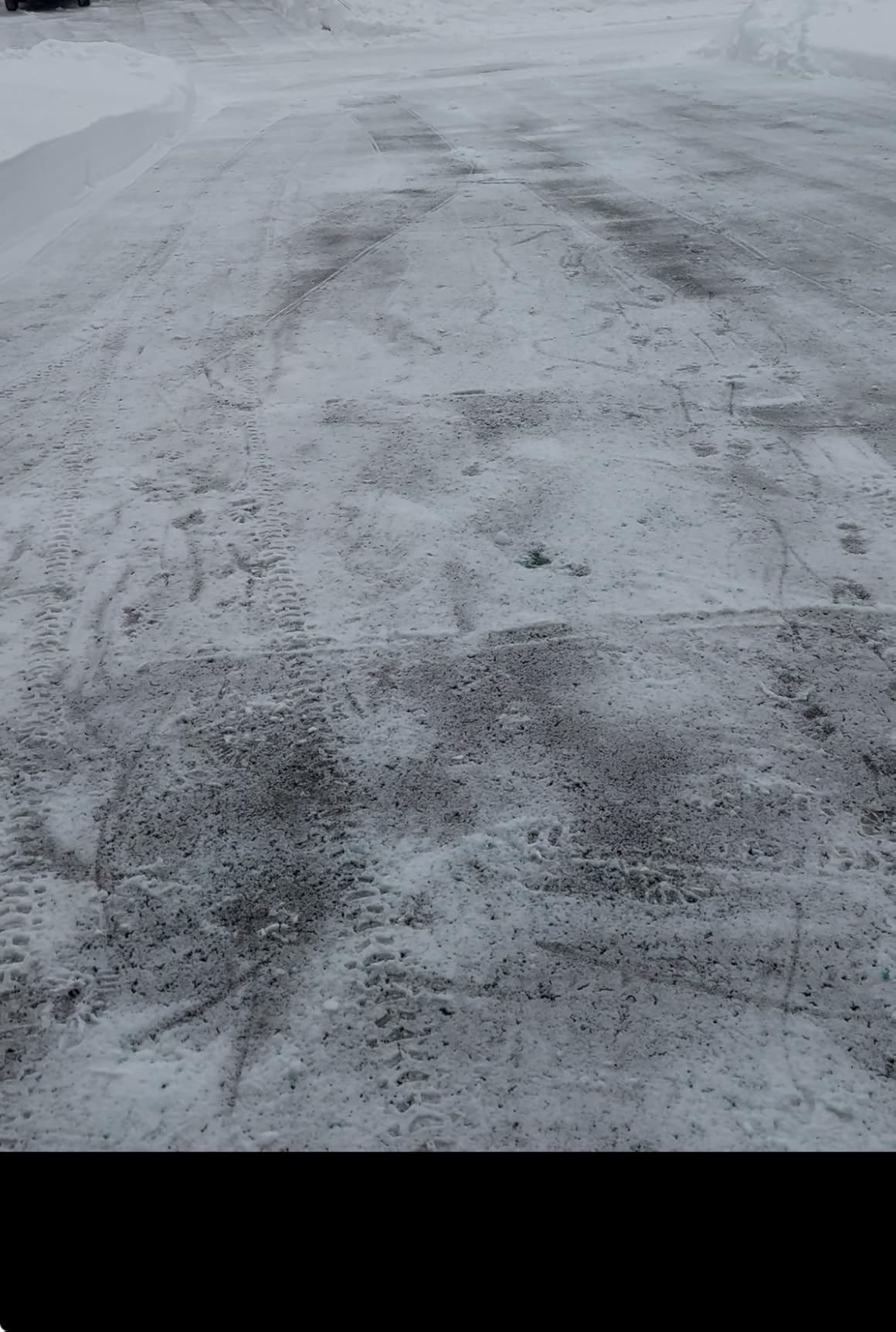
For gravel the answer is unchanged from the kit version. The auger housing rides on skids, the drive is self-propelled, and nothing in the design touches the ground.
Rated 4.4 across 31 reviews with 70 percent five-star, the reviews mirror the kit. Self-propelled steering assist and the remote chute lever come up constantly as what makes tight gravel driveways manageable.
What you should know before buying it
You need two 10.0Ah ARC batteries and a charger. That is the whole catch, and a large one if you are starting from zero on the platform, which is why the kit version is the better entry for most people.
Rated snow depth is 8 inches, the honest ceiling for this class. It clears a 24-car driveway at that depth on one charge, but repeated heavy wet events mean swapping packs.
Who it suits and who it does not
It suits an existing EGO battery owner clearing a short to medium gravel drive, and anyone who wants quiet operation with no exhaust near a house.
It does not suit a long rural drive, a steep or icy incline, or a buyer without the platform. In those cases the EGO kit or a gas two-stage is the better path.
8. PowerSmart 24in 212cc Compact – Best for Short Drives and Walkways
PowerSmart 24-Inch Gas Snow Blower with 212cc Engine, Electric Start, and 6 Forward/2 Reverse Speeds, Two-Stage, Self-Propelled Snow Blower with LED Lights
24 inch clearing width, 21 inch intake height
212cc engine, 2400 lbs per minute
50 foot throw, 187 pounds
Six forward and two reverse speeds
Pros
- Compact 24 inch body suits a short drive plus a sidewalk
- 21 inch intake height and 2400 lbs per minute capacity
- Plug-in electric start with recoil backup for cold starts
- Drive wheel cable adjustment is straightforward
- Two-year limited warranty
Cons
- Only 26 reviews recorded
- some describing an unrelated product
- 187 pounds is heavy to reposition by hand
- Electric start needs a 120V outlet
This covers a specific and often ignored case: a short gravel driveway plus a length of sidewalk. At 24 inches wide it fits between curbs and along a walkway without the overhang a 28-inch machine gives you, and 50 feet of throw is more than enough for that footprint.
The spec sheet is otherwise competitive with larger machines: a 212cc engine rated at 2400 pounds per minute, a 21-inch clearing height, and adjustable skid shoes listed for paved and gravel driveways. That last item is what makes it safe on aggregate.
Owners describe quick assembly and reliable starting on the first pull, with the plug-in electric start working consistently and recoil backup covering you when no outlet is nearby. Six-inch snowfalls and two-foot drifts sit well within the intake rating.
Be careful reading the reviews. Part of the review text for this listing describes a 21-inch electric nail gun rather than a snow blower, so the perfect 5.0 rating deserves caution. The verified portion of the sample is small.
What you should know before buying it
The thin review base is why this sits at number eight. There is not enough owner history for long-term durability claims and no forum track record to lean on, so you are buying on spec sheet and warranty.
At 187 pounds it is a two-person lift, and the electric start needs a 120V outlet. If your shed has no power, the recoil backup works but you are pulling a cord in the cold every time.
Who it suits and who it does not
It suits a short gravel drive with a sidewalk, a small property with tight access, and a buyer wanting a compact two-stage with genuine 21-inch intake depth and a two-year warranty.
It does not suit a long drive, a steep or icy property, or anyone who values a large body of owner reviews. Step up to the PowerSmart 26-inch or the Ariens SHO instead.
Snow Blower Types: Single-Stage vs Two-Stage vs Three-Stage
Single-stage machines are not safe on gravel. A single-stage unit uses a rubber or polymer paddle wrapped around one shaft, and that paddle sweeps the ground by design, scooping up stones and firing them with the snow. Avoid them entirely, even on small drives.
Two-stage machines are the answer for nearly every gravel driveway. A serrated steel auger collects snow into a housing and hands it to a separate impeller fan, and the whole assembly is held off the ground by two adjustable skid shoes. Because the auger never touches the stones, the gravel stays where it is.
Three-stage machines add an accelerator behind the impeller that moves more snow per minute for the same intake width. That extra stage matters on a very long drive or in consistently heavy wet snow, and it costs you weight and money. For most gravel owners it is overbuying.
Clearing width follows your driveway length, not the biggest engine in the aisle. A 24-inch path suits a two-car drive up to about 40 feet, a 26-inch path cuts passes on a 60 to 100 foot drive, and above that a 28-inch machine is worth the passes it saves. Engine displacement follows the same logic: 200 to 250cc covers typical two-stage gravel duty, and 300cc or more is for big drives with heavy wet snow.
What to Look for in a Snow Blower for Gravel Driveways
Two-stage mechanism. A steel auger feeding a separate impeller keeps the intake housing above the surface. Single-stage paddles sweep the ground and pick up gravel, so stage count is not a preference on aggregate.
Adjustable skid shoes. These set auger clearance. Run them at about one inch on hard-packed gravel and 2 to 3 inches on loose or rutted stone, which is higher than most manuals suggest and matches what experienced owners report running.
Self-propelled drive. Multiple forward and reverse speeds let you match ground speed to snow depth so the auger does not bog down on deep banks. A machine you must push will stall against a drift.
Traction that suits the surface. Wheels pivot and reverse more easily, which matters at the ends of drives and on curves. Tracks grip ice and slopes far better but are heavy and awkward to turn.
Steerable chute control. A remote lever that rotates and deflects from the handle lets you throw clear of the drive without stopping, which is how you avoid a second pass.
Electric start. Cold starts in the dark are unpleasant, and push-button or key electric start removes the most common complaint we saw across owner reviews.
Non-marring or polymer skid shoes. If your drive has decorative stone or concrete edging, steel skids will scratch and polish it. Check the material before you buy.
Skid Shoes, Wheels and Tracks on Gravel
Gravel is not one surface, and the right clearance setting depends on which kind you have. Hard-packed driveways that have been rolled and stable want about an inch. Loose stone, freshly topped-up drives, and anything with ruts wants 2 to 3 inches, the setting owners describe actually running on My Tractor Forum.
The failure mode when clearance is too low is not subtle. The housing skids into the aggregate, forward motion stops being clean, and the auger starts pulling stones into the chute. Once that begins, the machine is a rock thrower no matter how many stages it has.
Wheels versus tracks is a real tradeoff rather than a ranking. Tracks hold on ice, slopes, and rutted surfaces where wheels spin, and float on loose stone instead of digging into it. Wheels are far easier to pivot, reverse, and steer, and a long-time owner on Snowblower Forum notes a wheeled machine functions better in early- and late-winter conditions precisely because it is easier to turn around. If your drive is flat, buy wheels. If it is sloped, icy, or genuinely rutted, tracks earn their handling compromise.
How to Snowblow a Gravel Driveway Without Throwing Rocks
Set the skids before you start the engine. Raise the adjustable skid shoes to maximum, then lower them until the housing sits roughly one inch above a hard-packed surface, or two to three inches on loose or rutted gravel. A business card gauges the one-inch setting.
Clear the intake housing by hand. Feel under the housing lip for stones frozen into the scraper bar area. Anything sitting there launches the moment the auger turns.
Start upwind and point the chute downwind. This keeps you out of your own discharge path, which matters more than usual on gravel because any stone that does escape goes further.
Make the first pass high, then drop it. Run the first pass with the skids high to take the bulk, then lower the clearance for a finishing pass. You clear more per pass and spend less time at gravel-scraping height.
Use forward and reverse deliberately. Pick a speed that matches depth. Too fast and the auger bogs; too slow and you push more air than snow, risking a pickup of stones.
Clear the chute and shut down before walking away. Wet snow clogs. Run the auger with the chute open, disconnect the spark plug wire before any clearing, and check the shear pins before the first storm of the season.
Maintenance, Lifespan and When a Blower Is the Wrong Tool
Shear pins are the sacrificial part designed to break when something jams, which is exactly what a stone in the auger will cause. Carry spares, check them at the start of every season, and learn the two-minute swap rather than the four-hour drive to a repair shop. Shear-pin-free electric augers exist, but on gas machines the pin is a feature.
On lifespan, owners report Ariens Deluxe and Deluxe SHO machines lasting with maintenance for 20 years and beyond, and note that wider 26 to 30 inch units often use the same parts as narrower models in the same lineup. That parts sharing is a real long-term advantage for a brand with a wide range. Change engine oil annually, keep the carburetor clean, and check belt tension every few seasons.
Sometimes a snow blower is the wrong tool. A drive too short to justify storage space, or one with decorative stone and concrete edging you care about, may be better served by a plastic-bladed shovel, which cannot launch a rock. On a very steep gravel drive a tractor with an attachment or a plow is safer than any walk-behind.
One related read for the same property: our guide to security cameras for driveways covers the angles that matter on an unpaved approach, a different problem from clearing it but useful if you are thinking about the property as a whole.
How We Picked
Every machine here was filtered on one question first: does the auger housing ride on adjustable skids so the intake never touches the stones? Single-stage ground-contact machines were excluded outright, because the defining requirement of this roundup is a blower that will not throw gravel.
From there we compared clearing width against realistic driveway length, intake height against typical snow depth, engine displacement for wet-snow reserve, drive type against surface conditions, and owner review volume against reported failures. Two limits are worth stating plainly. We did not run these machines side by side on one driveway in controlled conditions, so the performance characterizations come from published specs and a large body of owner reports. And availability changes constantly, so treat this ranking as a guide to fit rather than a permanent verdict.
Frequently Asked Questions
Is it safe to use a snow blower on a gravel driveway?
Yes, as long as it is a two-stage or three-stage machine with adjustable skid shoes and you set the clearance to roughly one inch on hard-packed gravel, or 2 to 3 inches on loose or rutted stone. The two-stage auger housing rides above the surface, so stones stay put. Single-stage machines are not safe because their ground-level paddle scoops up gravel and fires it.
Can you use a single stage snow blower on gravel?
We would not. A single-stage snow blower uses a paddle that sweeps the ground by design, so it picks up loose gravel and throws it along with the snow. That is how windshields get starred and siding gets pitted. Use a two-stage machine on aggregate surfaces, whatever the box says.
How high should skid shoes be set on a gravel driveway?
About one inch on hard-packed gravel, and 2 to 3 inches on loose, freshly topped-up, or rutted stone. Experienced owners run higher than the one-inch figure most manuals suggest. If the housing starts touching down or the auger begins pulling stones into the chute, raise the skids until it stops.
Are Toro snow blowers better than Ariens for gravel driveways?
Neither brand wins outright; pick on drive conditions. The Ariens models in this roundup carry larger engines and wider intakes, and owners report repeat purchases of the same platform after 20 years. Toro Power Max models are strong on chute control and dealer reach. For wet heavy snow pick the bigger engine, for a long flat drive pick the wider intake.
What is the best battery operated snow blower for a gravel driveway?
A cordless two-stage with a variable speed steel auger, such as the EGO Power+ SNT2416 with two 10.0Ah batteries included. Its housing rides on skids, so it does not pick up gravel, and it clears a 24-car driveway with 8 inches of snow on one charge. Expect less runtime than gas on repeated deep wet events.
How long do snow blowers last?
With basic maintenance, a well-supported two-stage gas machine commonly reaches 20 years or more, and forum owners report Ariens Deluxe units lasting that long. Keep the engine oil fresh, the carburetor clean, and belt tension checked, and expect to replace shear pins, a spark plug, and drive belts along the way.
Should I get a tracked or wheeled snow blower for gravel?
Wheels win on flat drives because they pivot and reverse easily, which matters at the ends of the drive and on curves. Tracks win on steep, icy, or rutted gravel because they grip instead of spinning and float on top of loose stone rather than digging in. Tracks are heavier and harder to turn, so buy them only if traction is your actual problem.
Final Verdict
The EGO Power+ SNT2416 is our pick for the best snow blowers for gravel driveways, because it pairs a two-stage steel auger that stays clear of the stones with a 4.6 rating across 367 reviews and a battery package that covers a 24-car driveway on one charge. It is the rare gravel-safe machine that also needs no fuel storage.
Go bigger for wet, heavy snow: the Ariens ST28DLE SHO has the largest engine here at 306cc and a 55-foot throw. Go wider for a long rural drive: the PowerSmart 26-inch has the largest review base and the broadest speed range. Go tracked for a steep or icy property: the Honda HSS928 is the traction answer, and you will need help moving it. Go compact for a short drive plus a sidewalk: the WEN SB209E gets you two-stage gravel safety at the entry point.
Whichever you pick, set the skid shoes before the first flake, keep clearance an inch or two above the stones, and keep spare shear pins in the shed. That habit, more than any badge, is what keeps gravel in your driveway.
