
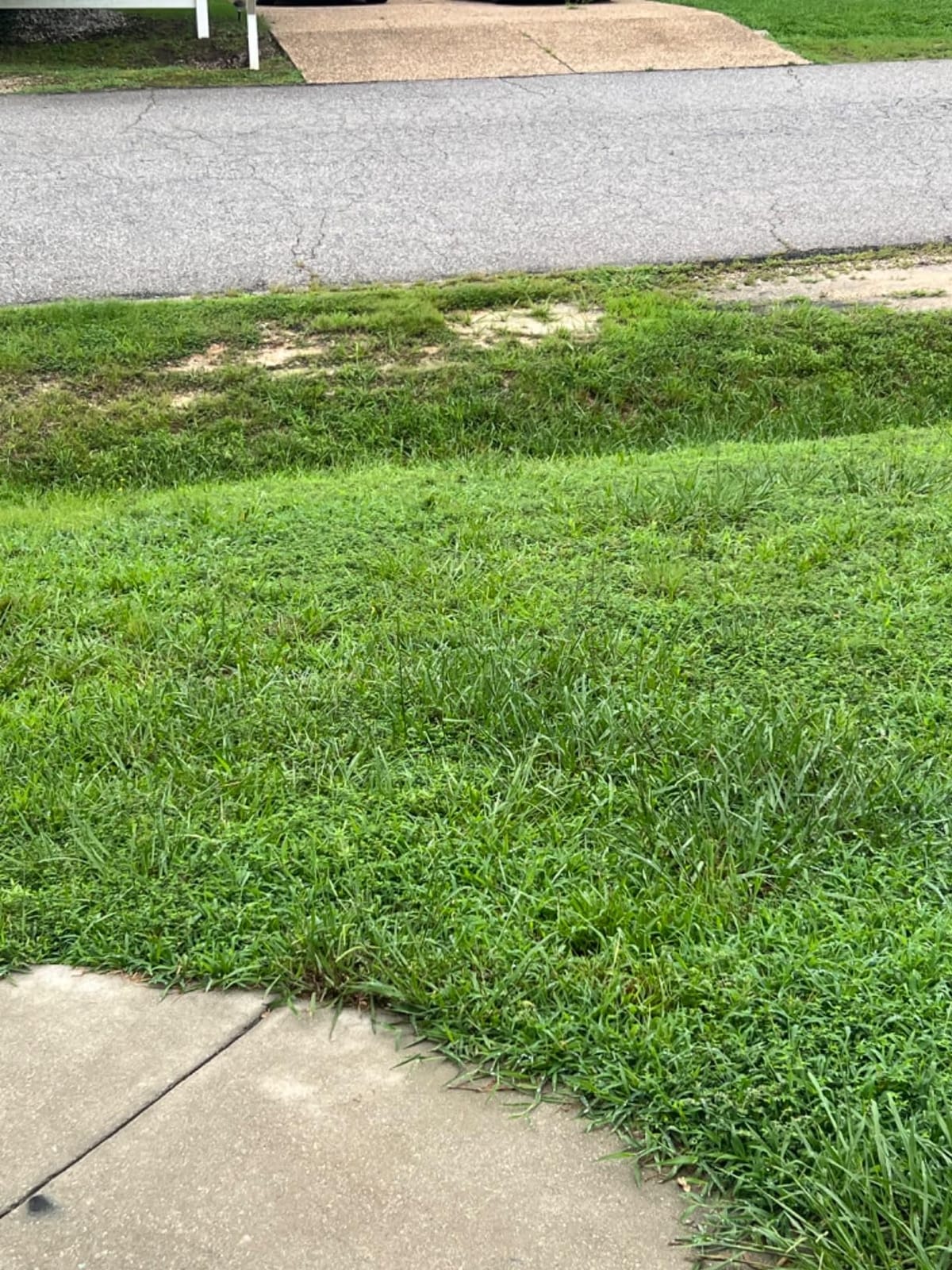
A lawn that looked fine in June can look like a war zone by late July. Puffy dirt cones push up through the turf, and raised ridges trace lines across the grass where something has been tunneling just under the surface. That damage almost always points to moles, and finding the best mole repellers for lawns is where most homeowners start.
Moles are the reason lawn damage looks so strange. A single mole can push through more than 100 feet of tunnel in a night, and those tunnels rip through seedbeds, bulbs, irrigation lines and the roots of young trees. The tunnels also open the door for other pests, so a mole problem rarely stays a mole problem.
This roundup covers 12 mole repellers and mole deterrents for lawns, sorted into the three families you will actually find for sale: castor oil concentrates you dilute and spray, natural scent balls and pouches you push into the soil, and solar-powered ultrasonic stakes that pulse on a timer. Every pick below includes coverage, power source, real reviewer feedback and the situations where it fits best. I update the list for 2026 and revisit it every season.
Table of Contents
- Top 3 Picks for the Best Mole Repellers for Lawns (October 2026)
- Do mole repellers actually work?
- All 12 Mole Repellers at a Glance in 2026
- 1. Natural Elements Mole and Vole Repellent – Best Overall Castor Oil Concentrate
- 2. Baar MolEvict Castor Oil for Lawns – Best Value Concentrate
- 3. LEBMP Mole Repellent Natural Scent Balls – Top Rated No-Fuss Option
- 4. Ariie Solar Ultrasonic Mole Repeller 8 Pack – Best Budget Stakes
- 5. Fretech Solar Ultrasonic Spike 8 Pack – Best for Large Lawns
- 6. PetraMax Castor Oil Mole Repellent – Best for Targeted Tunnel Treatment
- 7. Kopplvn Natural Repellent Balls 12 Pack – Best for Small Properties
- 8. ALOUYH Solar Ultrasonic Stake 8 Pack – Best for Quiet Yard Use
- 9. KQCWKH Natural Repellent Balls 16 Pack – Best for Whole-Lawn Coverage
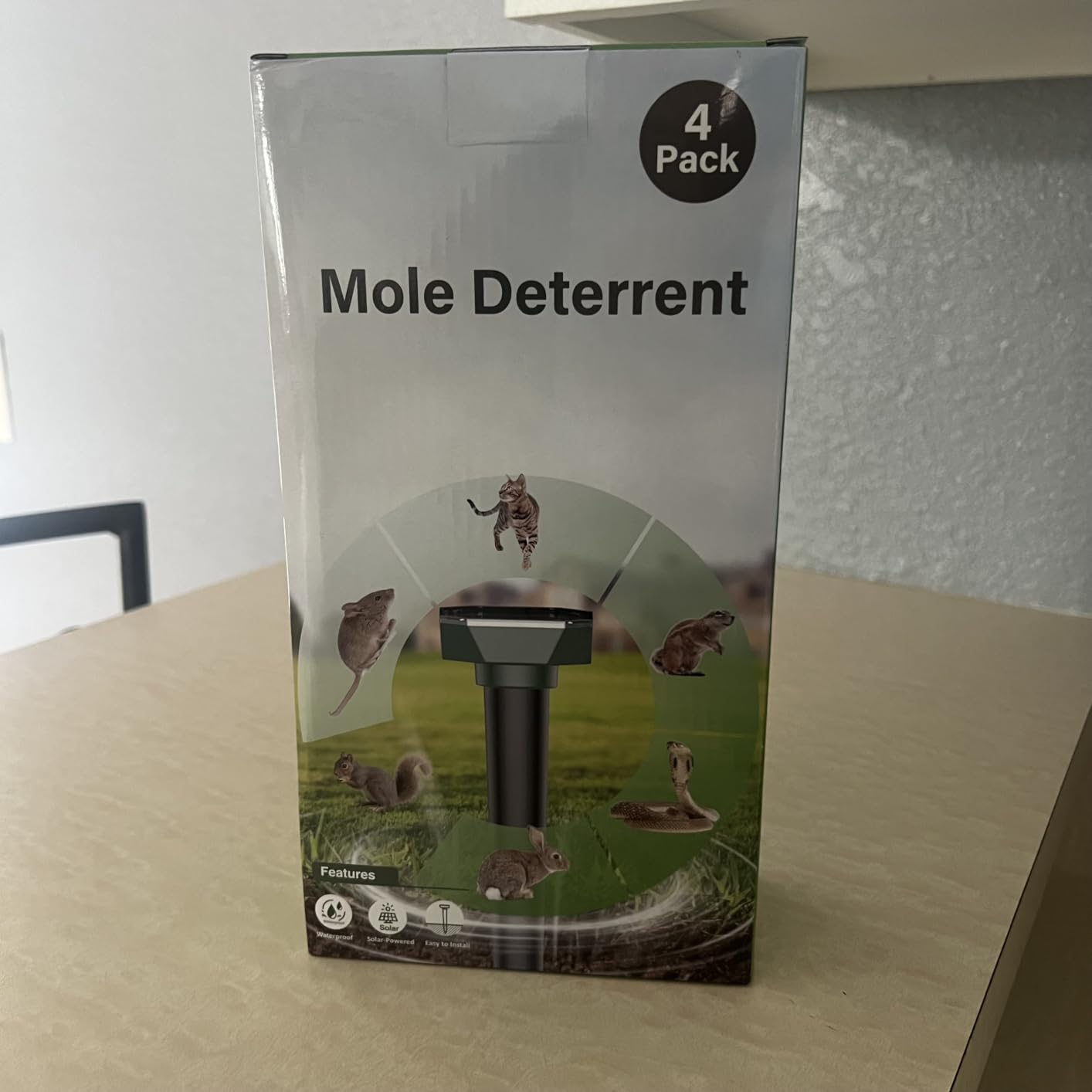
- 10. Cvtayn Solar Ultrasonic Deterrent 4 Pack – Best for Multi-Pest Protection
- 11. Jiermadun Solar Sonic Spike 8 Pack – Best for Battery Life
- 12. Migdracy Peppermint Oil Repellent 10 Pack – Best Scent-Based Alternative to Castor Oil
- How to Choose a Mole Repeller That Survives Your Yard
- Frequently Asked Questions
- The Best Mole Repeller Strategy for Lawns in 2026
Top 3 Picks for the Best Mole Repellers for Lawns (October 2026)

Natural Elements Castor…
- 100% castor oil formula
- Covers up to 20
- 000 sq ft per gallon
- Biodegradable and pet safe

Baar MolEvict Castor Oil 32 oz
- Covers 5
- 000 sq ft per bottle
- Targets moles voles gophers armadillos
- Simple hose and sprayer routine

LEBMP Natural Repellent 8 Pack
- No mixing or batteries
- Up to 60 days per placement
- Safe around pets and children
Do mole repellers actually work?
Mole repellers do work for many lawns, but not for the reason most sellers imply. They do not kill moles and they rarely push them off your property. They make your lawn an uncomfortable, noisy or unfamiliar place to live, and a mole that is uncomfortable enough eventually relocates. Expect to see fewer new tunnels in two to four weeks, not overnight.
Two mechanisms account for most real results. Castor oil concentrates make the soil and the insects moles feed on smell and taste wrong, which attacks the food supply directly. Ultrasonic and sonic stakes send a low-frequency vibration through the soil every 20 seconds or so, which startles moles working near the surface. A handful of repellers on the market also use peppermint or other plant-based scents that irritate a mole’s sensitive nose.
The honest caveat is habituation. A constant, unchanging stimulus eventually becomes background noise, and a constant scent eventually fades. That is why almost every successful lawn in our reader reports used two methods at once and repositioned the units every few weeks. Repellers also work best where moles travel, which is usually the lawn edge, a hedgerow or a recently disturbed bed, rather than in the middle of an untouched lawn.
It also helps to know what these products are regulated as. Ultrasonic repellers are sold as devices rather than as EPA-registered pesticides, which means no agency has verified the coverage claims on the box. Treat the stated coverage area as a starting point for spacing rather than as a promise. The product data on this list shows advertised coverage ranging from about 120 sq ft per scent ball to 7,000 sq ft per solar stake pack, so read the numbers as very different claims rather than as a common standard.
All 12 Mole Repellers at a Glance in 2026
| Product | Specs | Action |
|---|---|---|
| Natural Elements Castor Oil Concentrate 128 oz |
|
Check Latest Price |
| Baar MolEvict Castor Oil 32 oz |
|
Check Latest Price |
| LEBMP Natural Repellent Balls 8 Pack |
|
Check Latest Price |
 Ariie Solar Ultrasonic Stake 8 Pack Ariie Solar Ultrasonic Stake 8 Pack |
|
Check Latest Price |
 Fretech Solar Ultrasonic Spike 8 Pack Fretech Solar Ultrasonic Spike 8 Pack |
|
Check Latest Price |
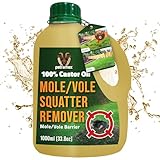 PetraMax Castor Oil Concentrate 33.8 oz PetraMax Castor Oil Concentrate 33.8 oz |
|
Check Latest Price |
 Kopplvn Natural Repellent Balls 12 Pack Kopplvn Natural Repellent Balls 12 Pack |
|
Check Latest Price |
 ALOUYH Solar Ultrasonic Stake 8 Pack ALOUYH Solar Ultrasonic Stake 8 Pack |
|
Check Latest Price |
 KQCWKH Natural Repellent Balls 16 Pack KQCWKH Natural Repellent Balls 16 Pack |
|
Check Latest Price |
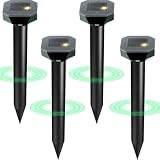 Cvtayn Solar Stake 4 Pack IP65 Cvtayn Solar Stake 4 Pack IP65 |
|
Check Latest Price |
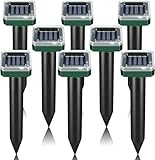 Jiermadun Solar Sonic Spike 8 Pack Jiermadun Solar Sonic Spike 8 Pack |
|
Check Latest Price |
 Migdracy Peppermint Oil Repellent 10 Pack Migdracy Peppermint Oil Repellent 10 Pack |
|
Check Latest Price |
1. Natural Elements Mole and Vole Repellent – Best Overall Castor Oil Concentrate
Natural Elements Mole and Vole Repellent – 100% Castor Oil Formula – Lawn and Yard Treatment – Covers Large Areas – 128 oz (1 Gallon)
100% castor oil concentrate
Up to 20,000 sq ft per gallon
Biodegradable and pet safe
Pros
- Most reviewed mole repellent in this roundup with 3460 ratings
- Covers up to 20000 sq ft per gallon
- Biodegradable formula with no chemical odor
- Works on both moles and voles
Cons
- Must be mixed with dish soap and water before use
- Concentrate sprayed on turf can leave grass slick
- Needs reapplication after heavy rain
This is the product I keep coming back to when someone asks which single option covers the most ground. One gallon of concentrate is mixed down with water and dish soap, and the label coverage figure is up to 20,000 sq ft, which is far more ground than any stake pack on this list covers in a single pass. With more than 3,400 ratings behind it, it also has the deepest review record of the twelve, and that matters when you are deciding whether a formula approach is right for your lawn.
Reviewers who follow the label ratio, roughly one cup of castor oil concentrate to a half cup of dish soap per gallon, tend to report mole and vole activity dropping within one to three weeks. That ratio is the single biggest predictor of success in the reviews. The low ratings come from two mistakes: spraying the concentrate straight onto grass, and applying it once and expecting the problem to disappear permanently.
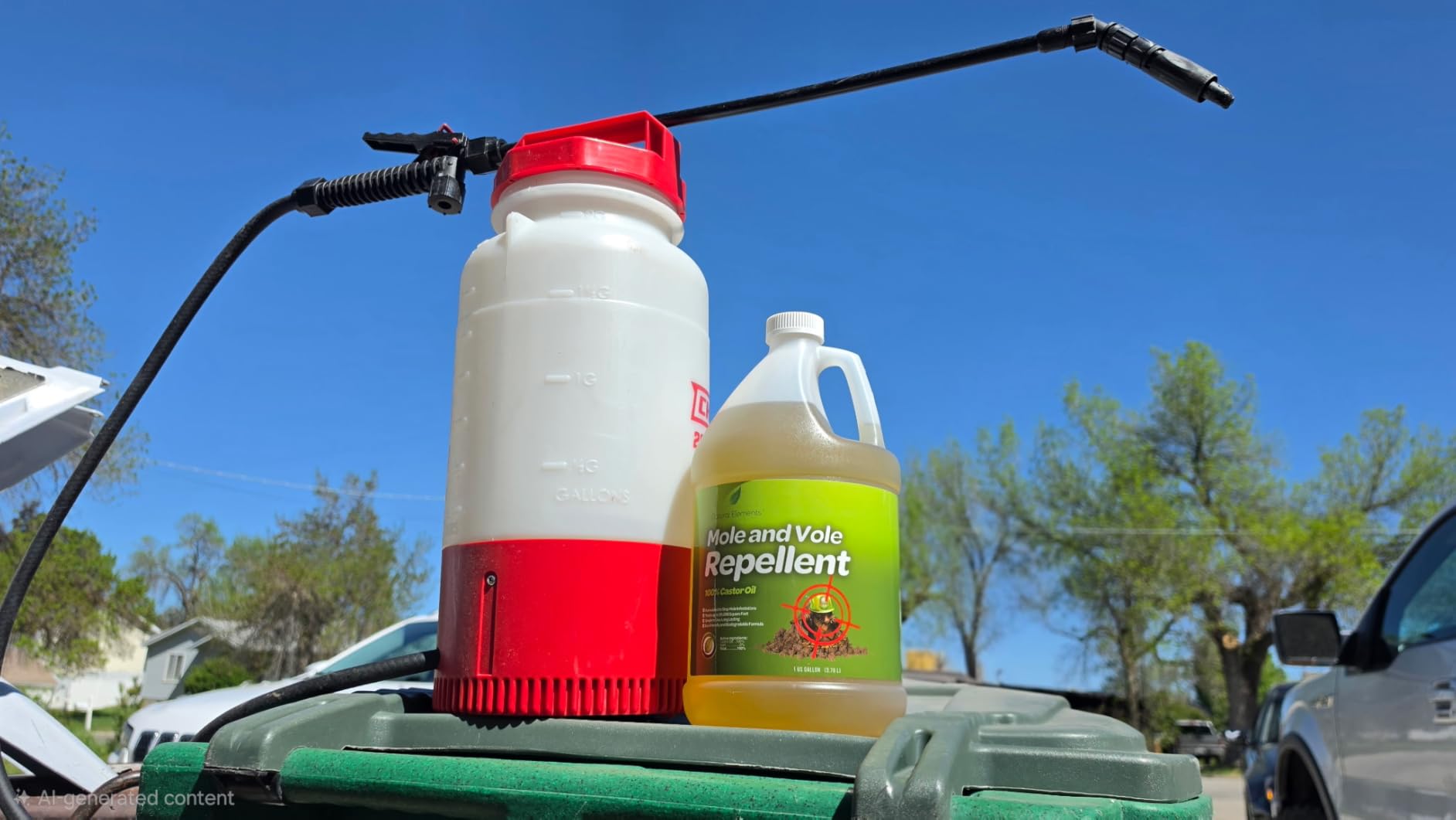
The pet-safety story is straightforward here because there is no synthetic active ingredient, just castor oil. Buyers consistently mention no odor, no staining and no worry about kids or dogs on treated turf. The biodegradable claim also makes it a comfortable choice near storm drains and vegetable beds, where runoff is a genuine concern.
Where it falls short is labor. Treating a large lawn means locating tunnels, digging, pouring, and refilling, and the label calls for periodic reapplication, especially after heavy rain. Reviewers also note that moles frequently relocate to an untreated corner of the same yard rather than leaving the property, so coverage of the whole lawn matters more here than with a stake you can move in seconds.
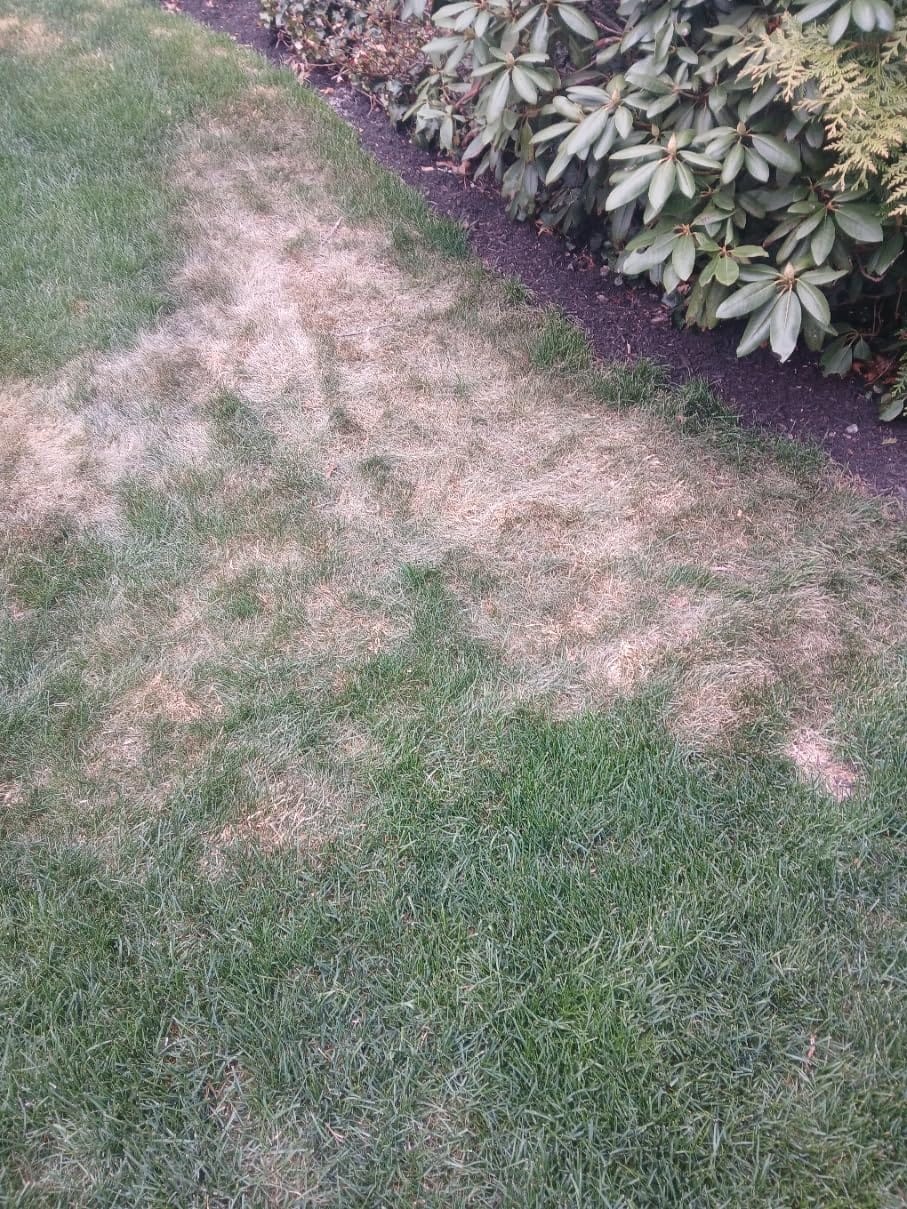
Check the mixing ratio before you buy a concentrate
Every castor oil concentrate on this list shares the same weak point, and it is not the formula. It is the dilution. If you skip the dish soap, the castor oil separates in the sprayer tank and the active scent never carries into the soil, and you will read that as a failed product rather than a failed technique.
Look for a listing that states the exact ratio, and expect to mix a fresh batch rather than saving leftovers. Several buyers mention sellers who walk them through application ratios for their own sprayer type, which is a good sign that the manufacturer expects careful dilution.
Who should skip it
If your lawn is larger than a quarter acre and you do not have a hose-end sprayer, this becomes a weekend project rather than an afternoon one. It is also the wrong tool if your main goal is a visible result inside 48 hours, because the effect here builds gradually over weeks.
For people with a small urban yard, a vegetable bed, or a newly seeded section that needs protecting quietly while the grass comes up, the concentrate is still the most controllable option available. Just budget time for the application schedule rather than treating it as a one-time fix.
2. Baar MolEvict Castor Oil for Lawns – Best Value Concentrate
Baar MolEvict Castor Oil for Lawns, 32 oz, Covers 5,000 Sq Ft
Castor oil spray concentrate
5,000 sq ft per 32 oz bottle
Twice monthly application
Pros
- Simplest application routine in the concentrate group
- Covers moles voles gophers and armadillos
- Long-standing listing with 2459 ratings
- Available in 32 oz 1 gallon and 5 gallon sizes
Cons
- Must be diluted before spraying
- Effects build gradually over multiple applications
- Twice monthly label schedule
Baar MolEvict is the entry point most people should start with if they want to try castor oil treatment without committing to a large lawn project. A 32 oz bottle covers 5,000 sq ft, and the application method is about as simple as lawn care gets: dilute it, attach it to a hose-end or pump sprayer, and walk the lawn.
What makes this one appealing in practice is the breadth of pests on the label. Mole damage is often blamed on moles when the real culprit is a vole or a gopher, and this formula is marketed against all three along with armadillos. The 2,459 ratings averaging 4.0 stars also make it one of the better-established listings in the category, which is useful when you want a product with a long track record rather than a new listing with three reviews.
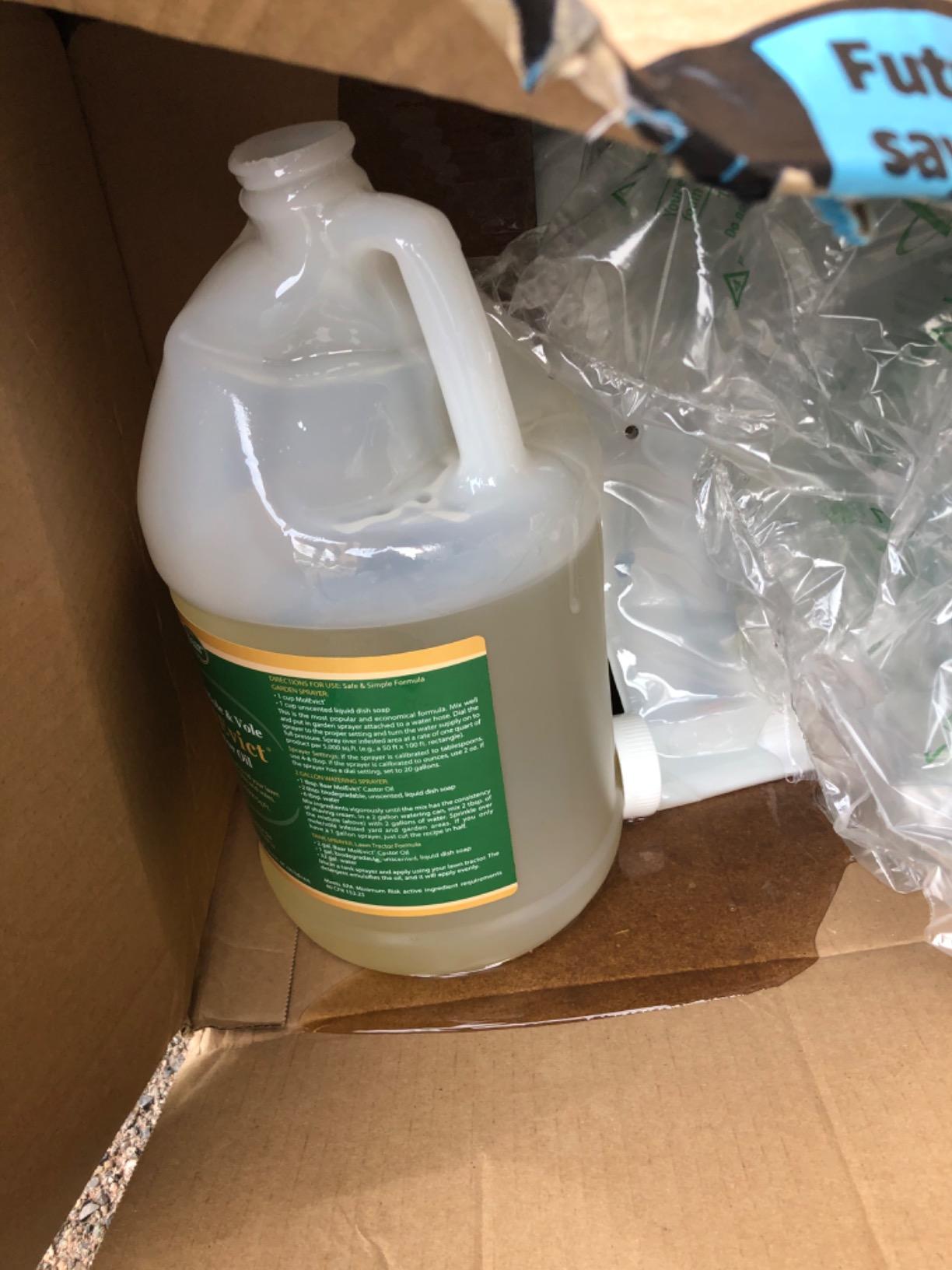
The label schedule is the main commitment. The directions call for application twice per month at first, then as needed for maintenance, and reviewers are candid that they see incremental improvement rather than an instant fix. Buyers who treat it as a routine spring and early-summer task report the best results, and buyers who apply it once report nothing at all.
Because it is a concentrate, the same safety and dilution notes apply as with any castor oil product. Keep pets off the lawn until the spray has dried, do not spray the concentrate undiluted onto turf, and follow the label ratio exactly. The formula is 100 percent natural, which is the reason most people choose it in the first place.
When a smaller bottle is the right call
If you have a single problem area rather than a whole-lawn infestation, the 32 oz bottle is plenty and it forces you to concentrate the treatment where the moles are actually active. Targeted spraying along lawn edges, hedgerows and around garden beds works better than a blanket application across healthy turf.
The larger sizes make more sense for a property with several zones or for anyone who would rather do a full property treatment in a single weekend. Either way, the routine is the same, and the routine is what decides whether this works for you.
What you give up compared with the top pick
The trade against larger castor concentrates is coverage per container. Five thousand sq ft per bottle means more refills on a big property, and more refills means more chances to skip a scheduled application. Reviewers also point out that effects are gradual, so expectations set at the one-gallon level will not match what one bottle delivers.
It is also worth noting that the strongest results in this group come from people who spray active tunnels rather than the whole lawn at once. If you can find and open the runs, this is a solid, low-effort way to treat a contained problem.
3. LEBMP Mole Repellent Natural Scent Balls – Top Rated No-Fuss Option
LEBMP Mole Repellent, Gopher Repellent, Groundhogs Repellant Outdoor-8Pcs
Pre-formed scent repellent balls
Natural plant-based ingredients
Up to 60 days per placement
Pros
- Nothing to mix measure or carry except a trowel
- Reported tunnel and ridge reduction within one to two weeks
- Safe around pets and children
- Scent holds through moderate rain
Cons
- Scent can wash out after one heavy rainfall
- Small coverage per ball means many placements
- Needs repositioning every couple of weeks
The appeal of the LEBMP 8-pack is that it removes every step between you and treatment. No dilution, no sprayer, no batteries, no charging in the sun. You dig a small hole near an active run, drop a ball in, cover it, and walk away. Each placement is rated at up to 60 days of activity, and the balls work on moles, voles, gophers, armadillos and groundhogs.
The 4.6 average across 993 ratings is the strongest established rating in the natural scent group here, with 87 percent of ratings at five stars. Buyers most often describe finding fewer fresh tunnels and ridges within one to two weeks of placing the balls along the runs. For anyone who does not want a project, that is the strongest result-to-effort ratio in the roundup.
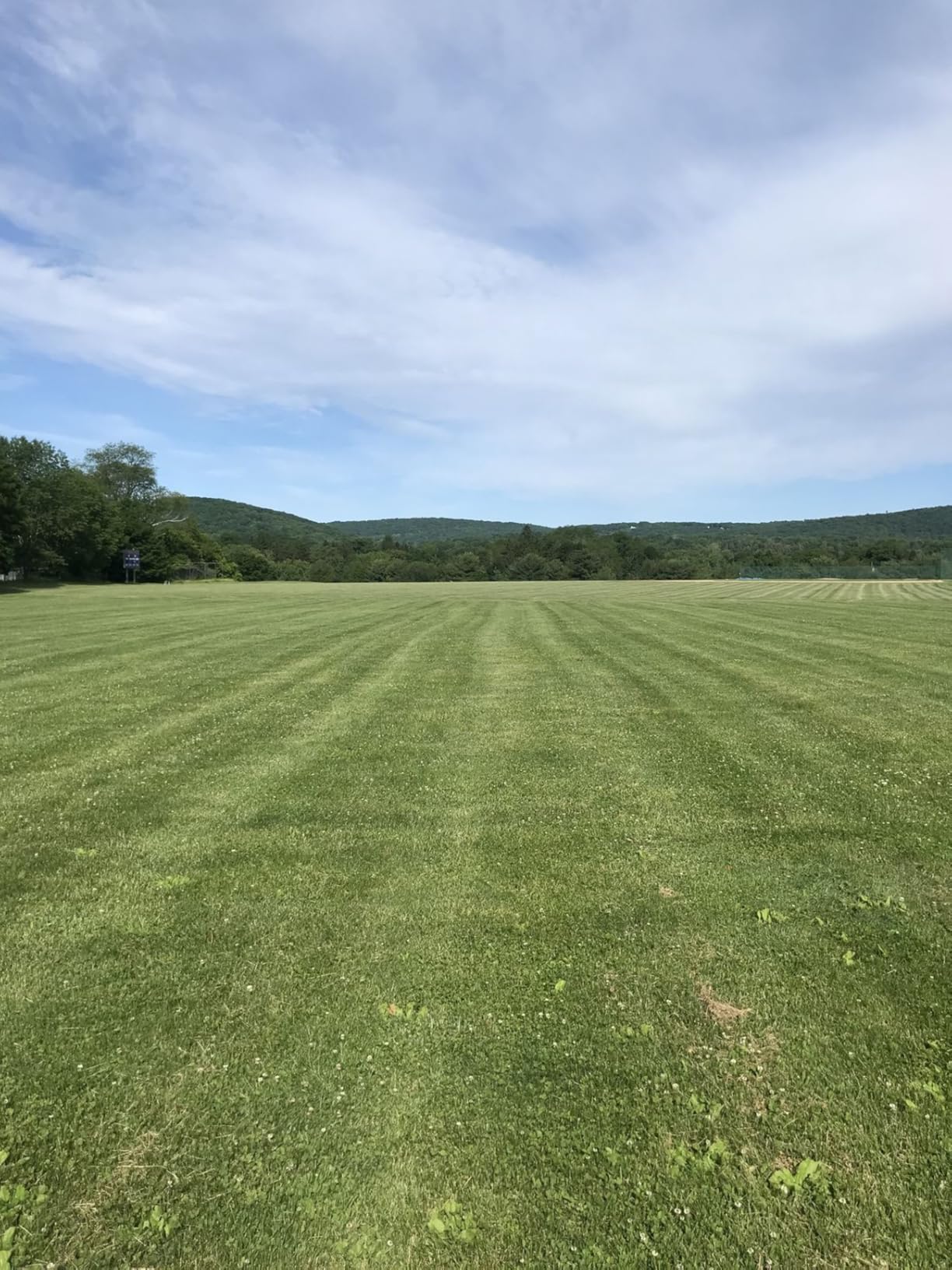
Real-world coverage is far smaller than the packaging suggests. Each ball is rated at up to 120 sq ft, so a 5,000 sq ft lawn needs a lot of placements, and that is the single most common complaint from buyers who check the math. A handful of one-star reviews also report that gophers ignored the balls completely, which fits the pattern of scent products performing inconsistently against gophers in particular.
Rain is the other weak point. Several buyers report that a single heavy rainfall washed the scent out and cut the working life well short of the 60-day claim. The workaround is simple and worth doing: rotate placements every couple of weeks and keep a few spare balls on hand rather than trusting one placement to last two months.
Placement is the whole strategy with scent balls
These products do not fill a yard with fragrance, they irritate a nose that passes nearby. That means placement along the edges of active runs, at the boundary between lawn and bed, and near the point where tunnels enter the property is where the value sits.
Buyers who place one ball in the middle of a lawn and wait report disappointment. Buyers who place a line of them along a run report results within two weeks. The math of how many balls you need is really a question of how many runs you have.
What to know before you buy a full pack
Confirm the coverage figure per unit before ordering more than one pack, because the per-ball number is small and the pack count is generous. Buyers describe the price as steep for eight small balls, which is fair criticism, but the absence of any equipment cost offsets much of that.
This is a good pick for protecting seedbeds, vegetable rows, and flower beds where you cannot spray anything and cannot run a cord. It is also a good companion to a concentrate, since the balls work at the edges while the spray handles the tunnels.
4. Ariie Solar Ultrasonic Mole Repeller 8 Pack – Best Budget Stakes
Mole Repellent Ultrasonic Solar Powered Animal Repellent for Outdoor Lawn Garden for Snakes, Moles, Gophers, Groundhogs, Voles and Other Burrowing Rodents (8 Pack)
Solar powered ultrasonic stake
400 Hz pulse every 20 seconds
About 40 ft diameter per stake
Pros
- No batteries or wiring at all
- Lowest entry cost in the stake group
- Solar charging holds up through overcast days
- Ships with 60-day money-back support
Cons
- Audible buzzing near the house
- Real range is roughly half the advertised diameter
- Mowers and trimmers can crack the stakes
The Ariie 8-pack is the cheapest way into solar ultrasonic staking, and it publishes the most honest specification on the list: a 400 Hz sonic pulse every 20 seconds with roughly 40 ft of diameter per stake, which works out to about a dozen stakes per acre. Most competing stakes advertise a coverage number without defining whether it means per stake or per pack, so this one is easier to plan around.
Buyers who succeed with these stakes follow a specific pattern. They push the stakes in until only the cap shows, bury them deeper when the buzzing becomes annoying, and then move the line of stakes outward toward the property edge each week. Under that approach, several buyers report chipmunks, gophers and moles abandoning treated areas in about a week.
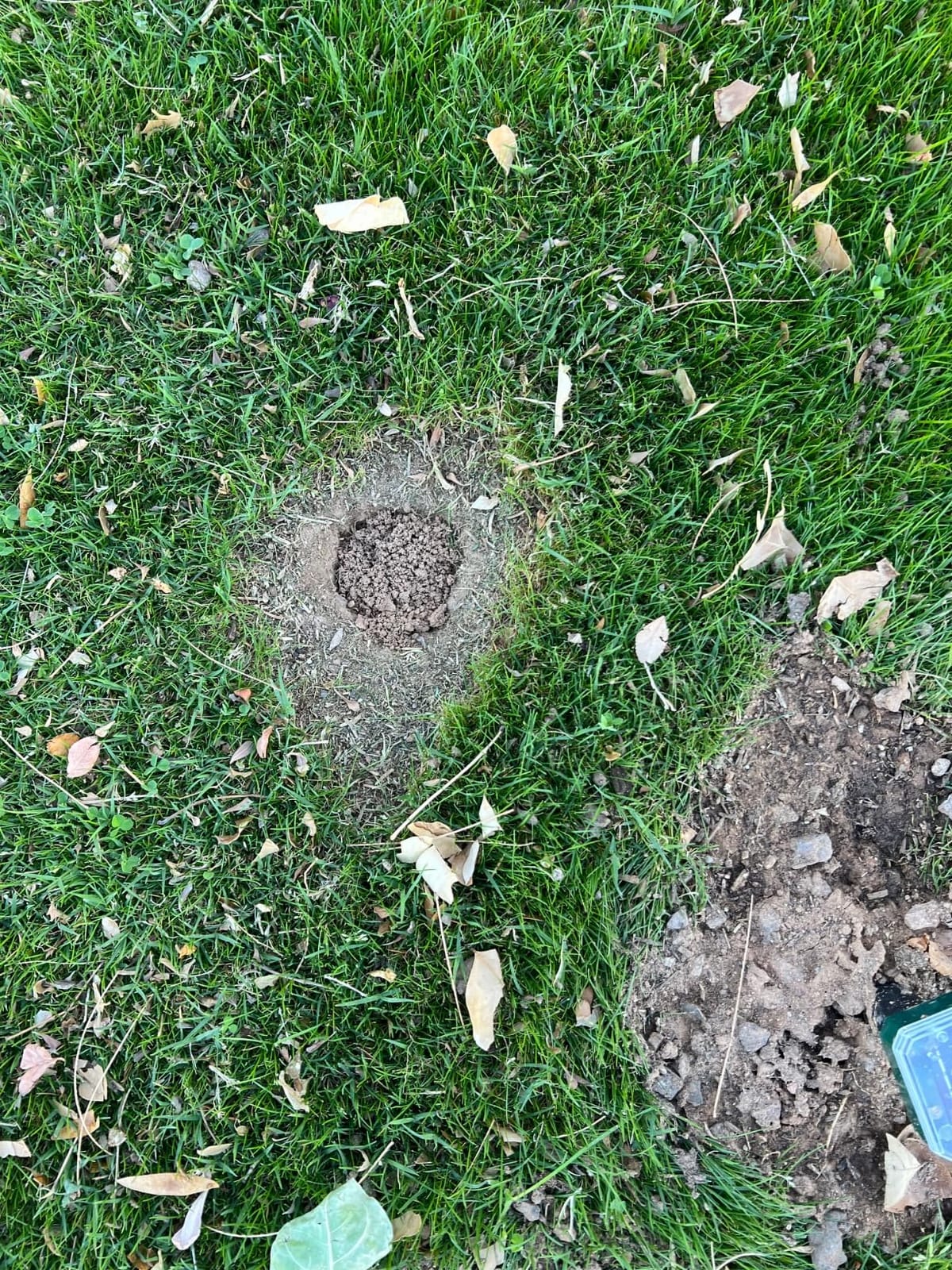
The split in reviews is honest enough to plan around. Effective range comes in at roughly half the advertised diameter in several accounts, and a number of buyers saw no effect on squirrels, chipmunks or snakes despite the long pest list on the listing. Coverage claims in this category are marketing numbers rather than measured ones, and this listing at least tells you what to divide by.
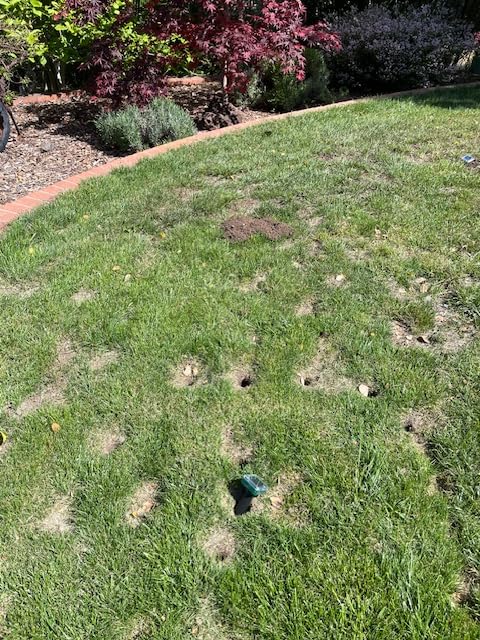
Two practical warnings. The stakes buzz audibly, so if your patio or window sits near the treated area, bury them deeper or expect a constant low hum. And because the caps stand proud of the soil, mark where they are so your mower and weed trimmer do not find them first.
How to space these stakes
Work from the middle of the active area outward rather than spacing them evenly across the whole lawn at first. Moles travel existing tunnels, so a stake on top of a known run does more than four stakes spread over open turf.
The listing suggests no more than 3 inches of insertion, but burying the cap lower than that is the single best tip for reducing noise complaints. If the stake disappears below grade, the soil damps the sound noticeably.
Where this falls short
This is a budget stake, and it shows in the durability story. Buyers report cracked housings after contact with a mower or trimmer, and one reviewer received a unit that did not work at all. The 12-month replacement warranty and 60-day money-back support are the safety net here, and they are worth having on a stake with no moving parts to fail.
It is also not fully sealed against prolonged submersion, so do not install these in a bed that floods regularly. For a normal lawn with a full day of sun, the tradeoff is a fair one.
5. Fretech Solar Ultrasonic Spike 8 Pack – Best for Large Lawns
Mole Repellent for Lawns – Gopher Repeller Ultrasonic Solar Powered Vole Repellent Outdoor Waterproof Rat Deterrent Spikes Repellent Snake,Chipmunk,Groundhog,Sonic Mole Stakes for Garden,Yard
Solar panel spike stake 8 pack
Up to 7,000 sq ft claimed coverage
Waterproof ABS and PC body
Pros
- Eight stakes give good spacing across a large lawn
- Waterproof housing rated for rain snow and sun
- No batteries wiring or mixing needed
- Two days of direct sun charges before install
Cons
- Higher cost than comparable 8-packs
- Coverage varies between treated and untreated lawn sections
- A noticeable share of one-star reviews report no reduction
When you are covering more than a quarter acre, stake count matters more than any other specification. The Fretech 8-pack pairs a high-efficiency solar panel with a waterproof ABS and PC body and a claimed 7,000 sq ft, which gives you enough points to overlap coverage across a real lawn rather than spot-treating a corner.
Buyers consistently praise build quality and weatherproofing on this one, and the installation requirement is sensible: charge the stakes in direct sunlight for two days before you put them in the ground. That detail is easy to skip and it is the reason some new solar stakes disappoint in the first week of use.
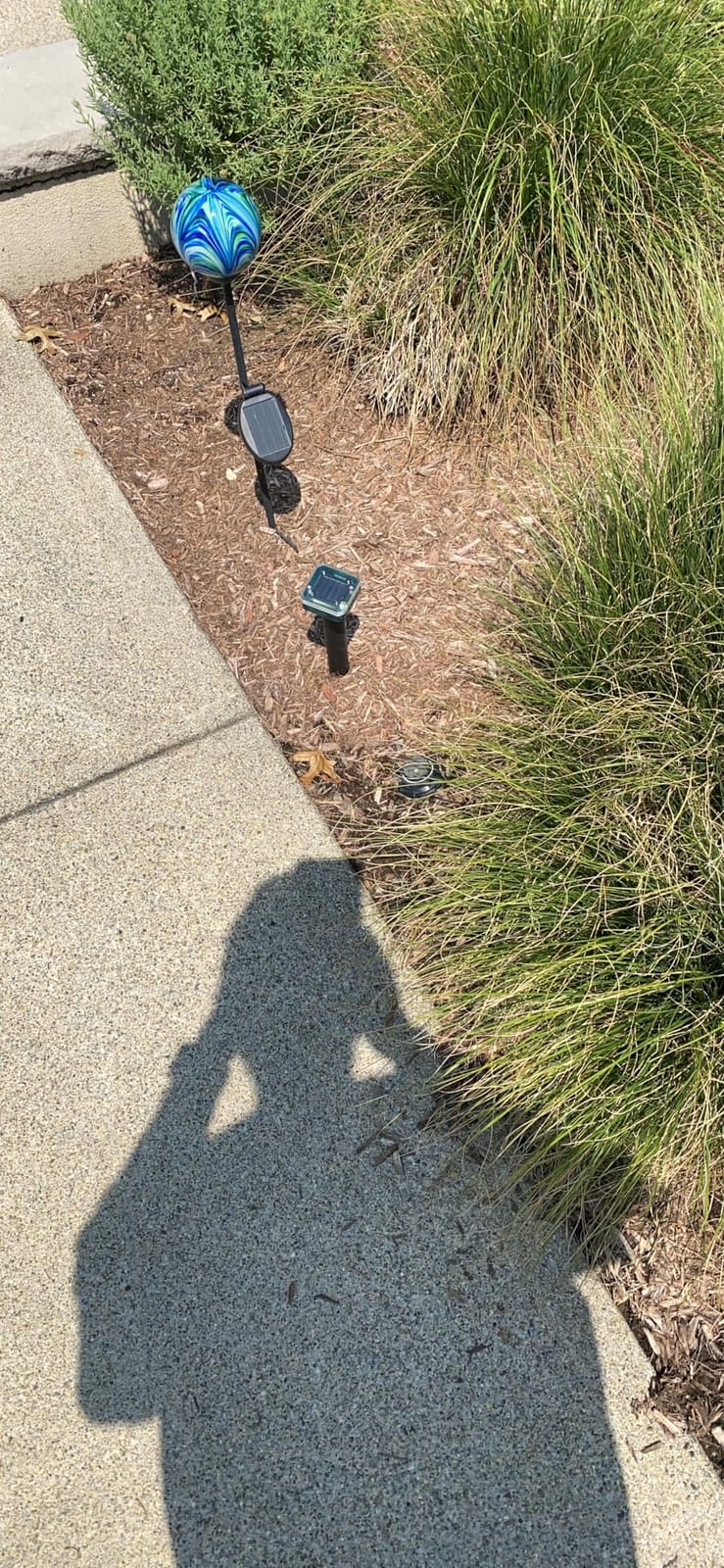
Effectiveness reviews split cleanly by yard. Some owners report mound and tunnel activity stopping in treated zones within a couple of weeks, and others in the same listing report the same treatment doing nothing. That pattern is worth taking seriously, because it usually means the activity was coming from a run outside the treated area rather than from a run the stakes were sitting on.
It also carries a higher cost than comparable 8-packs of solar stakes in this roundup, so it earns its place through the waterproof housing and the charging panel rather than through the entry price. Buyers note that the casing holds up to sun and rain without fading or cracking, which matters for a device meant to stay in the ground all season.
Coverage claims versus real yards
Plan spacing on a fraction of the stated figure. Treat the 7,000 sq ft as the total area the eight stakes can touch, and space them so their individual ranges overlap across the runs you have identified rather than at even intervals across the full lawn.
Buyers who report uneven results describe activity continuing in sections with no stake nearby, which is the expected outcome of trusting a headline coverage number without walking the lawn first.
How long these last through a season
The ABS and PC body is rated for rain, snow and sun, and the no-battery design removes the usual winter failure point. Since there is nothing to replace, end-of-season maintenance is limited to pushing the stakes back down after mowing and keeping them clear of snow that blocks the panel.
For a large property where you would need three or four smaller packs to get enough spacing, buying one of these is the simpler plan and the one most owners report being happier with.
6. PetraMax Castor Oil Mole Repellent – Best for Targeted Tunnel Treatment
PetraMax Castor Oil Mole Repellent for Lawns – Best Anti Mole and Vole Repellent of Outdoor Space – How to Get Rid of Moles in My Yard, Garden Or Lawn, Safe and Effective Vole Deterrent (33.8 fl oz)
Castor oil liquid concentrate 33.8 fl oz
Mix 1/2 cup with dish soap and one gallon
Pet safe and biodegradable
Pros
- Specific mixing ratio stated on the label
- Pet safe and biodegradable formula
- Responsive customer service reported by buyers
- Several buyers saw mole and vole activity drop
Cons
- Lowest average rating in the concentrate group at 3.9
- Some buyers reported more tunnels after use
- Lid is difficult to open
PetraMax is the one to pick when you have already found the runs and want to treat them directly rather than spraying an entire lawn. The mixing instructions are unusually specific: half a cup of concentrate to half a cup of dish soap in one gallon of water, which is the kind of clarity that separates results from disappointments in this category.
It is also the honest weak link in the roundup at a 3.9 average across 672 ratings. Positive reviews describe gradual mole and vole reduction along with fast, responsive customer service, particularly when buyers had trouble with the cap. Negative reviews report no change or, in a few cases, more tunnels after use, which is why we placed it as a targeted tool rather than a property-wide solution.
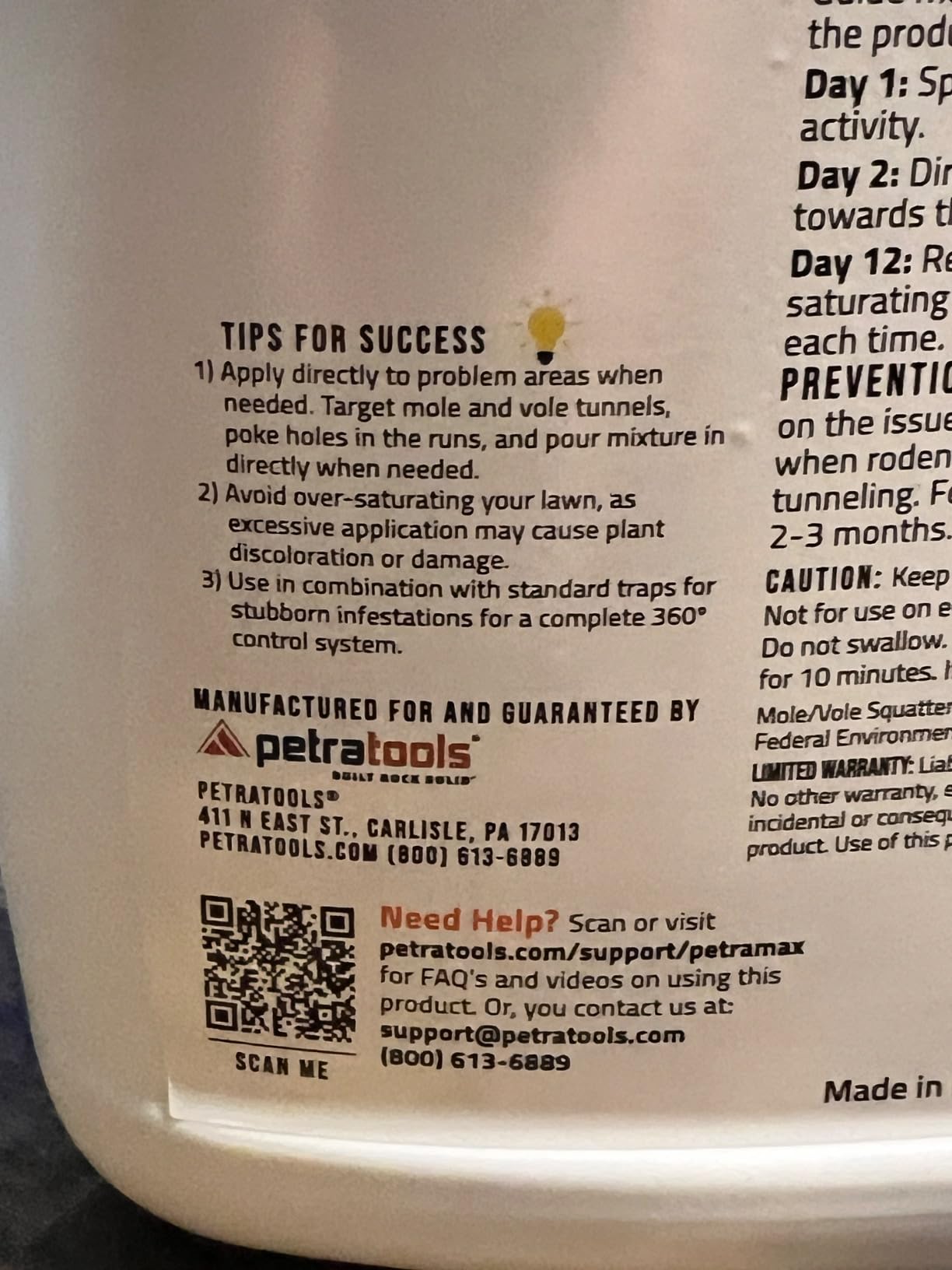
The company is a family-owned business based in Carlisle, Pennsylvania, and the product is marketed as biodegradable, pet safe and free of harsh odor. All of that matters if you are spraying near a vegetable garden or a dog run, and it is a reasonable alternative to stronger-smelling formulas.
Two practical issues come up repeatedly in the reviews. The lid is genuinely hard to open, so plan for that before you are mid-application with wet hands. And the bottle may arrive in a bubble envelope rather than a protective box, which is a shipping detail that has nothing to do with performance but does affect how the product feels on arrival.
Why results here depend on the schedule
Buyers who saw declines describe applying it on the label schedule and treating the same runs repeatedly. Buyers who saw increases typically applied it once, often over the whole lawn, and then judged the product by a single week of activity.
Because castor oil works by making an area unappealing, one application rarely holds a line of tunnels. Plan on a repeated schedule and give it the full two to four weeks before you decide whether it has failed.
Choose a different concentrate if
If you want a single pass across a large property with a gallon of coverage, another concentrate on this list covers more ground per container. If your main concern is a stubborn cap, be aware of it before you start. And if you have never identified a live run, this is the wrong tool, because spraying an inactive area is the most common reason castor oil treatment appears to fail.
7. Kopplvn Natural Repellent Balls 12 Pack – Best for Small Properties
Kopplvn Mole Repellent, Gopher Repellent for Lawn, Groundhog Deterrent-12P
Natural repellent balls 12 count
Up to 2 months per placement
Plant based and pet safe
Pros
- 91 percent five star ratings
- the cleanest distribution in the roundup
- No mixing spraying or daily maintenance
- Scent holds up in rain without resetting
Cons
- Only 120 sq ft of coverage per ball
- A handful of buyers saw no reduction at all
- Better suited to problem spots than whole-lawn coverage
Kopplvn posts the highest five-star share of any product here at 91 percent, and the review text behind that number is consistent. Buyers describe fewer new tunnels and easier lawn maintenance after placing the balls along active runs, and they single out the fact that the scent survives rain without needing to be reset immediately.
That rain resistance is the practical difference from similar scent products. Placement lasts up to two months per ball according to the listing, and unlike the weaker scent options, users report the effect holding through wet spells. No tools, mixing or daily attention are involved at all.
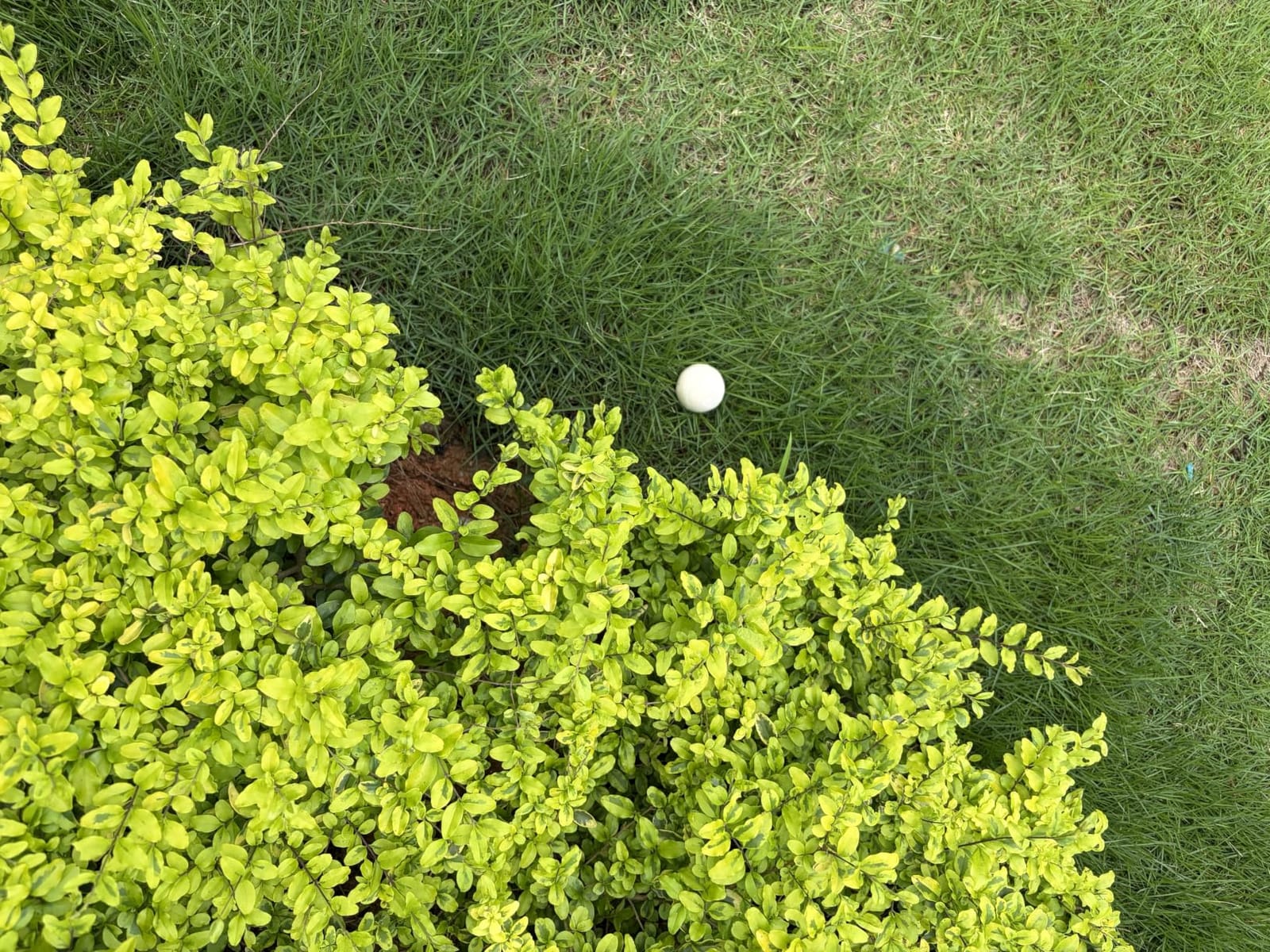
The constraint is scale. At up to 120 sq ft per ball, a small urban yard is exactly the right size for this product, and a property above a quarter acre is not. A small minority of reviewers saw no reduction in mole activity at all, which is a normal failure rate for scent-based deterrence and a reminder to place them where the moles are moving rather than where you wish they were not.
The pack count of 12 gives you a workable line of placements along a hedgerow, a bed edge, or a run that enters from a neighbor’s yard. Variants in 11 and 16 counts exist too, which is useful if you need to adjust the spacing without wasting units.
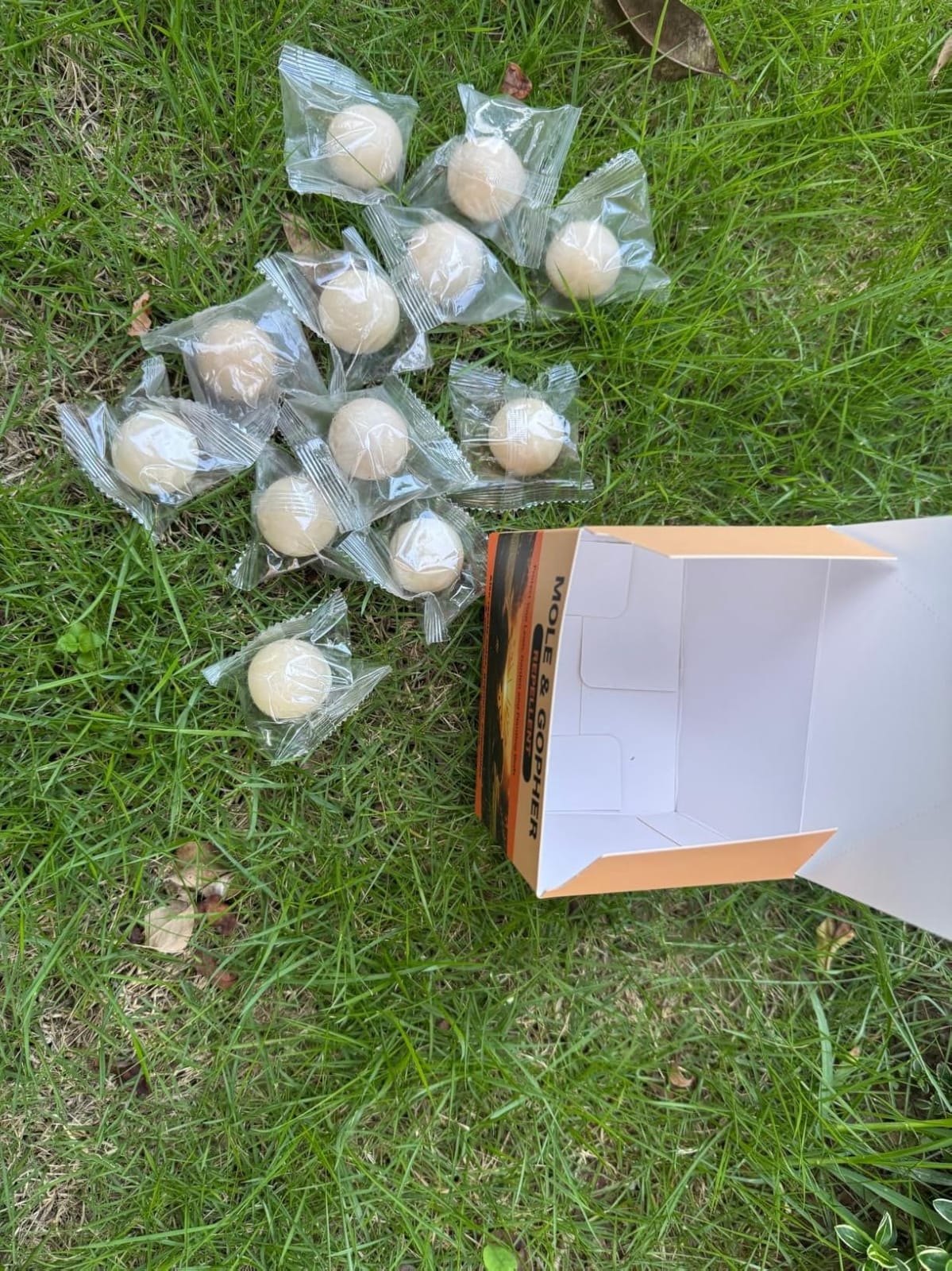
Counting placements before you open the pack
Measure the length of the runs you have found and add a placement every few feet along them, then check that number against the coverage figure. Twelve balls sounds like a lot until you map them onto a 40 ft run plus a bed border and realize the coverage per unit is doing more work than the pack count suggests.
Buyers who succeed treat placement as a line rather than a scatter, and they place the first balls where the grass is visibly pushed up rather than in the center of the lawn.
Is a scent ball enough on its own
On a small yard with a light problem, yes. Reviews describe lawn ridges settling back down and no new mounds appearing over a few weeks. On a property with heavy activity or with moles arriving from a neighboring yard, a scent ball alone is a weak perimeter, and pairing it with a solar stake line or a targeted castor oil treatment covers more ground.
8. ALOUYH Solar Ultrasonic Stake 8 Pack – Best for Quiet Yard Use
Mole Repellent Solar Powered, 8 Pack Upgrade 2026 Waterproof Ultrasonic Gopher Vole Repellent Outdoor, Rat, Squirrel, Skunk, Repellent for Yard Lawn
Solar powered stake 8 pack
About 7,000 sq ft coverage
Waterproof corrosion resistant ABS
Pros
- Tool free install with no battery changes
- Waterproof housing rated for low temperatures rain and snow
- Green housing blends into planting
- Good spread across a yard with eight pieces
Cons
- Some reviews describe plug-in indoor repellers rather than these solar stakes
- Needs full sun exposure to hold a charge overnight
The ALOUYH 8-pack carries a 4.8 average, the highest in the roundup, with 91 percent five star ratings and no one-star reviews at all. Buyers describe fast, tool-free installation, a housing that blends into planting, and fewer rodents roaming the treated areas of the yard.
We treat that number carefully. A meaningful share of the reviews describe plug-in indoor repellers rather than the solar stakes that ship in this pack, which is a common problem with newer listings that inherit reviews from sibling products. So the rating says owners are happy with the unit they received, but it is thinner evidence of mole-specific performance than the score alone implies.
The installation guidance is specific and worth following: charge the stakes in sunlight for at least one day before installation, push them into the soil until the cap sits about 2 inches above ground, and press the ON/OFF button. Buyers who skip the first-day charge are the ones most likely to describe a unit that stopped working in week two.
Reading a 4.8 rating with few reviews
With 174 ratings, the average is meaningful but small, and the mixed-review-content issue means you should treat it as a build quality signal rather than an effectiveness signal. A waterproof ABS housing rated for low temperatures, rain and snow tells you more about durability than a star count does.
Read the reviews that specifically mention a solar stake in a yard, and disregard the ones describing an indoor plug-in unit. Buyers who do the former report good setup and solar convenience and quiet appearance.
What to check after one month
Solar stakes have a predictable failure signature: the unit goes quiet, and the cause is usually charge rather than hardware. Press the ON/OFF button, look for the indicator, and if there is no response, move the stake into full sun for a day before assuming it is defective.
The bigger question to ask at the one-month mark is whether the treated zone has stopped producing fresh mounds. If it has, the unit is working. If activity continues along an untreated run, the answer is spacing rather than the stake.
9. KQCWKH Natural Repellent Balls 16 Pack – Best for Whole-Lawn Coverage
KQCWKH Mole Repellent, Gopher Repellent, Groundhog Repellent Outdoor 16P
Natural repellent balls 16 count
Up to 2 months per placement
Plant based and pet safe
Pros
- Largest pack in the scent ball group for full-lawn placement
- No mixing spraying or batteries
- Buyers report tunnels stopping and ridges settling
- 711 ratings averaging 4.6 stars
Cons
- Effectiveness varies by location
- Needs scent refresh every few weeks in wet weather
- Low coverage per ball means many placements
Where the 12-pack suits a small urban lot, the KQCWKH 16-pack is built for covering a whole lawn without ordering twice. Each ball is rated at up to 120 sq ft and up to two months of protection per placement, and the listing is aimed at lawns, flowerbeds, vegetable gardens, orchards and farms, so the pack count makes sense the moment you look at the acreage in the coverage table.
With 711 ratings at a 4.6 average and 85 percent five stars, this is one of the better-evidenced scent products available. The common report from buyers is a calm, even lawn surface within a couple of weeks of placing balls along active tunnels and borders, which is exactly the outcome a lawn owner wants to see.
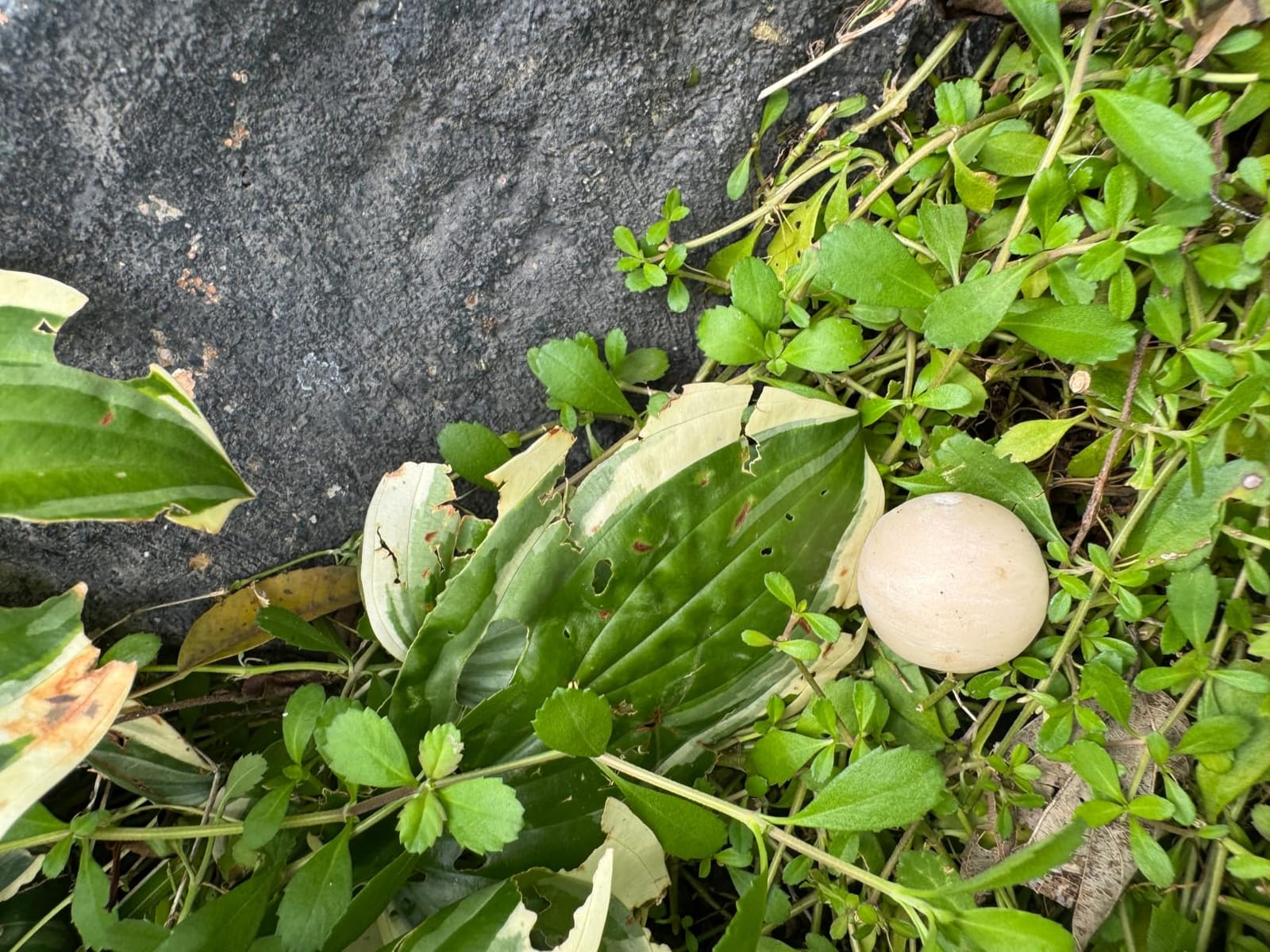
The two recurring caveats are price per ball and rotation. Because each unit covers so little ground, a large property needs many balls and the per-ball cost becomes noticeable, and in wet weather the scent typically needs refreshing every few weeks even though the listing claims two months.
A minority of buyers report that pests ignored the balls entirely, which is consistent with what we see across scent products: results depend on whether moles are passing near a placement. Nothing about a scent ball forces a mole to relocate; it only makes one spot unpleasant.
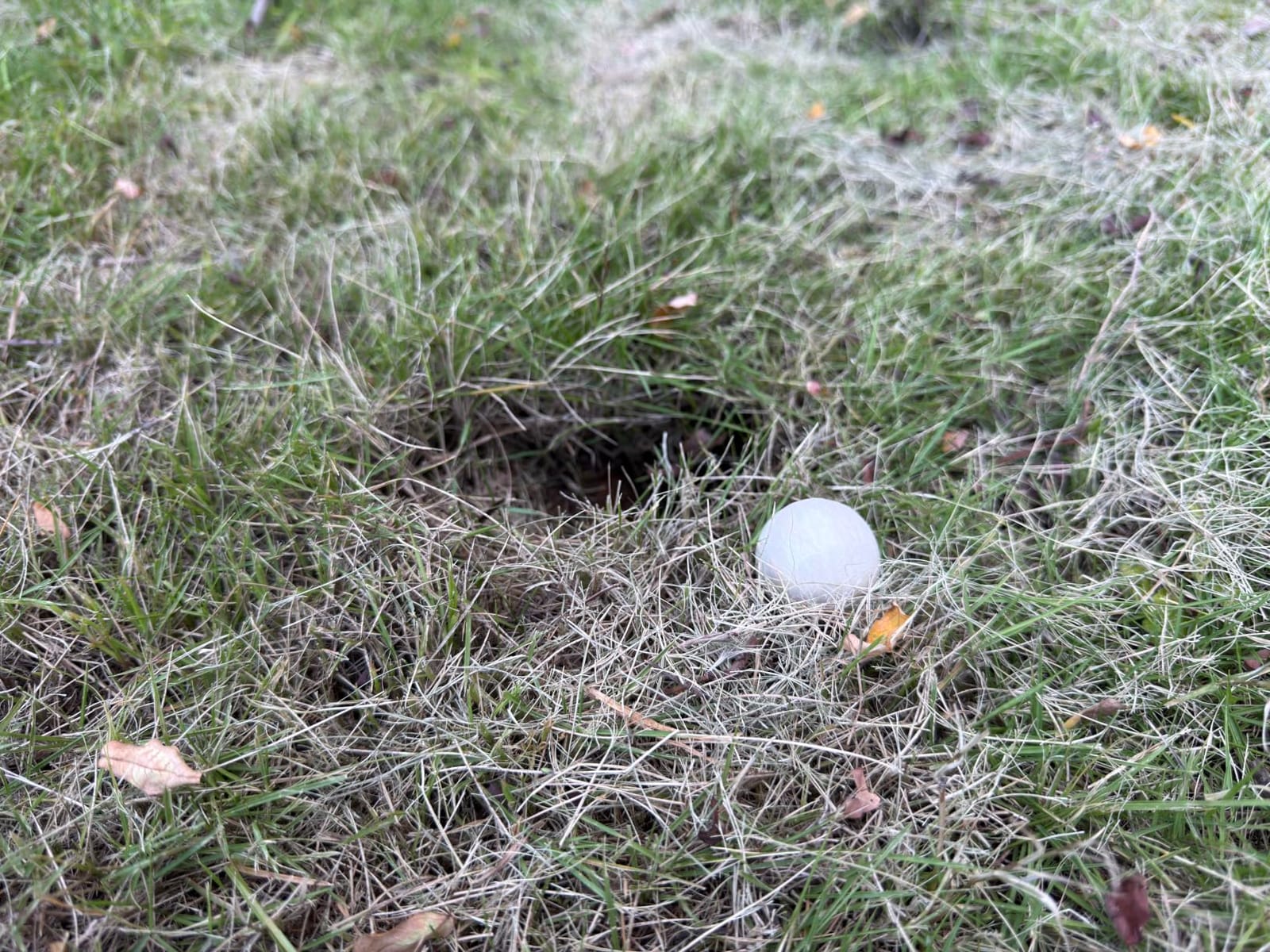
Why pack size is the deciding factor here
For a small yard, more units in a pack is wasted money and for a large lawn it is the difference between covering the property and covering one corner. Measure the total run length you want to protect before choosing between an 8, 12, and 16 count.
Variants in 8, 12 and 16 counts also exist, so if your needs sit between sizes you can match the pack to the run rather than stretching or wasting placements.
Best used as a perimeter
Rather than blanketing the lawn, the strongest reported results come from forming a line of placements along the property border where moles enter, along hedgerows, and around the base of new plantings. That is where scent-based deterrence earns its keep and where a pack this size actually delivers coverage.
10. Cvtayn Solar Ultrasonic Deterrent 4 Pack – Best for Multi-Pest Protection
Snake & Mole & Rabbit & Skunk Repellent Solar Powered, Upgraded Ultrasonic Deterrent, IP65 Waterproof, Gopher Groundhog Chipmunk Raccoon and Vole Repellent & Deterrent for Lawn & Garden, 4 Pack
Solar stake 4 pack IP65
Ultrasonic plus vibration with frequency shift
50 ft radius per stake
Pros
- Widest pest coverage in the roundup at 20+ species
- IP65 waterproof rating for year round placement
- Silent operation compared with buzzier stakes
- Dynamic frequency modulation to slow pest adaptation
Cons
- Only 43 ratings behind the 4.8 average
- Four stakes for a claimed acre of coverage
- Little feedback isolates mole performance specifically
If moles are only part of your problem, this is the stake to look at. The pest list covers moles, gophers, voles, snakes, skunks, rabbits, chipmunks, raccoons and squirrels, which reflects a very common real situation in a suburban yard where several burrowing species share the same space. It operates on both ultrasonic and vibration pulses between 400 and 1,000 Hz every 20 seconds.
Two features stand out technically. The IP65 waterproof rating is a specific, testable standard rather than a marketing phrase, and dynamic frequency modulation shifts the output so pests cannot settle into the pattern as quickly. It also runs quietly, which addresses the noise complaint that appears in nearly every other stake review on this list.
The evidence base is the thinnest in the roundup at 43 ratings. That 4.8 average and the 92 percent five-star share are impressive, but reviewers almost never separate mole or vole results from the other species, so you are buying a specification sheet with a good rating attached rather than a proven mole deterrent. Only four stakes ship in the pack against a claimed acre of coverage, which means overlapping zones rather than even spacing.
Installation takes about three seconds per stake: push it into the soil and switch it on, with no chemicals, traps or poison involved. That makes it a fast add-on for a yard that already has a scent ball line along the border.
When multi-pest coverage justifies fewer stakes
Four stakes are thin for mole coverage alone but workable for a ring around a house where you are also losing garden beds to chipmunks and squirrels. If moles are your only target, buy a larger pack of the same style instead of stretching this one across the property.
The frequency modulation is the argument for paying for this model over a cheaper stake: it slows the habituation problem that ends most ultrasonic results within a few weeks.
How to judge results on a small sample
With 43 ratings, give the product a fair month before judging it, and watch a specific sign rather than a general impression. Count new mounds each week in the treated ring. A drop in new mounds, even if old tunnels remain visible, tells you the deterrence is working.
If activity simply moves to a nearby untreated area, that is a spacing problem you can solve by adding two more stakes along the new route rather than a product problem.
11. Jiermadun Solar Sonic Spike 8 Pack – Best for Battery Life
Mole Repellent Solar Powered 8 Pack Sonic Mole Deterrent Spikes, Snake Gopher Vole Repellent for Lawn Garden & Yard Gopher Deterrent, Groundhog Repellent
Solar spike with rechargeable battery
4 hours of sun gives up to 7 days
Ultrasonic plus vibration pulses
Pros
- Longest stated runtime in the roundup at 7 days per charge
- No zero-star reviews in the distribution
- No harmful ingredients and described as safe for kids and pets
- Works in any weather around the clock
Cons
- Several reviews describe shipping tape rather than the product
- Effect builds slowly over one to two weeks
- Seven days runtime still drops in heavy cloud
The defining spec on this 8-pack is runtime. Four hours of sun charge gives up to seven days of operation, which is the longest stated battery life of any solar stake here and the closest thing these products get to a set-and-forget install. That matters in late summer and fall, when a stake with a weaker panel goes quiet after a couple of overcast days.
Operation uses both sound and vibration pulses on a 20-second interval, and the manufacturer recommends continuous use for one to two weeks for the best result, which fits what we would expect from a device that works by making a location feel hostile over time. Eight stakes per pack gives usable spacing across a mid-size lawn.
The 4.7 average needs a caveat. A noticeable share of the reviews describe packing tape and boxes rather than the stakes, and there is no one-star rating in the entire distribution, which is unusual enough to be worth noting. Buyers who do address the product describe safe, chemical-free operation and good solar battery life, but few describe mole results in detail.
What seven days of runtime really buys you
It buys you the ability to forget about charging during a stretch of cloudy weather, and that is the main failure mode for the smaller solar stakes in this roundup. It does not buy you all-season independence, because a stake that spends a week without sun still ends up flat on the fourth day.
Install these where they get direct sun rather than in a shaded border, and the stated runtime becomes realistic rather than theoretical.
Running it long enough to judge
Because effect builds over one to two weeks, set a reminder to evaluate at the two-week mark rather than the three-day mark. Count fresh mounds, do not judge on the old ridges that are already there, and move the stake line outward if new mounds keep appearing in a consistent direction.
Manufacturer part number RIV001, eight pieces, recommended for gardens, yards, farms, orchards, parks and chicken coops, so the form factor is not limited to turf.
12. Migdracy Peppermint Oil Repellent 10 Pack – Best Scent-Based Alternative to Castor Oil
10 Pack Mole Repellent, Outdoor Gopher Repellent for Lawns, Peppermint Oil to Repel Moles, Gophers, Groundhog, Armadillo, Mole Deterrent for Lawns, Gardens, Yards, Farms and Orchards, Outdoor Use
Peppermint oil repellent pouches 10 count
30 to 60 days of scent per placement
No batteries or mixing
Pros
- Peppermint oil avoids the castor oil smell
- Long scent life means infrequent replacement
- Ten units spread across several lawn zones
- Safe for people pets gardens as directed
Cons
- 19 percent one-star reviews
- the highest in the roundup
- Several verified buyers report no effect at all
- Requires digging small placement holes
Peppermint oil is the mechanism here rather than castor oil, and that is a genuine alternative for anyone who dislikes the castor smell or wants a different scent profile in a lawn where they also want to keep pets. The pouches are rated for roughly 30 to 60 days of scent per placement, and the amount can be adjusted to the size of the area being treated.
Placement is a dig-and-cover job. You cut a small hole, drop the pouch in, add water or let rain do it, and cover. There is no mixing, no sprayer, and no power source, and the listing states the product is safe for people, pets, gardens and the environment when used as directed.
This is the pick we are least confident in, and the review data explains why. At 35 ratings with 19 percent one-star feedback, the highest negative share in the roundup, two verified buyers say it did nothing and one suspects it attracted gophers. Many of the positive reviews come from buyers who had not yet tested the product, so treat the 4.1 average as an intention score rather than a result score.
When peppermint scent is worth trying
It makes sense as a trial on a small, contained area, particularly if castor oil is already part of your routine and you want a different mechanism rather than more of the same. The ten-unit pack is flexible enough to test along a border without committing a large amount.
Watch for the opposite response as closely as the desired one. If gopher activity increases in the treated area after a week, remove the pouches, because a strong scent that does not deter can occasionally concentrate activity rather than disperse it.
How to read very small review counts
With only 35 ratings, individual experiences dominate the average, and the verified-buyer reviews in this listing skew negative. Compare it to the Kopplvn or LEBMP scent balls, which have far more ratings and a cleaner distribution, before choosing peppermint oil as your main approach.
If you do try it, keep the placements along runs and borders rather than scattering them, and give it a full month before drawing a conclusion. Do not buy a second pack in that month unless the first one showed a visible change in activity.
How to Choose a Mole Repeller That Survives Your Yard
Confirm you have moles before you buy anything
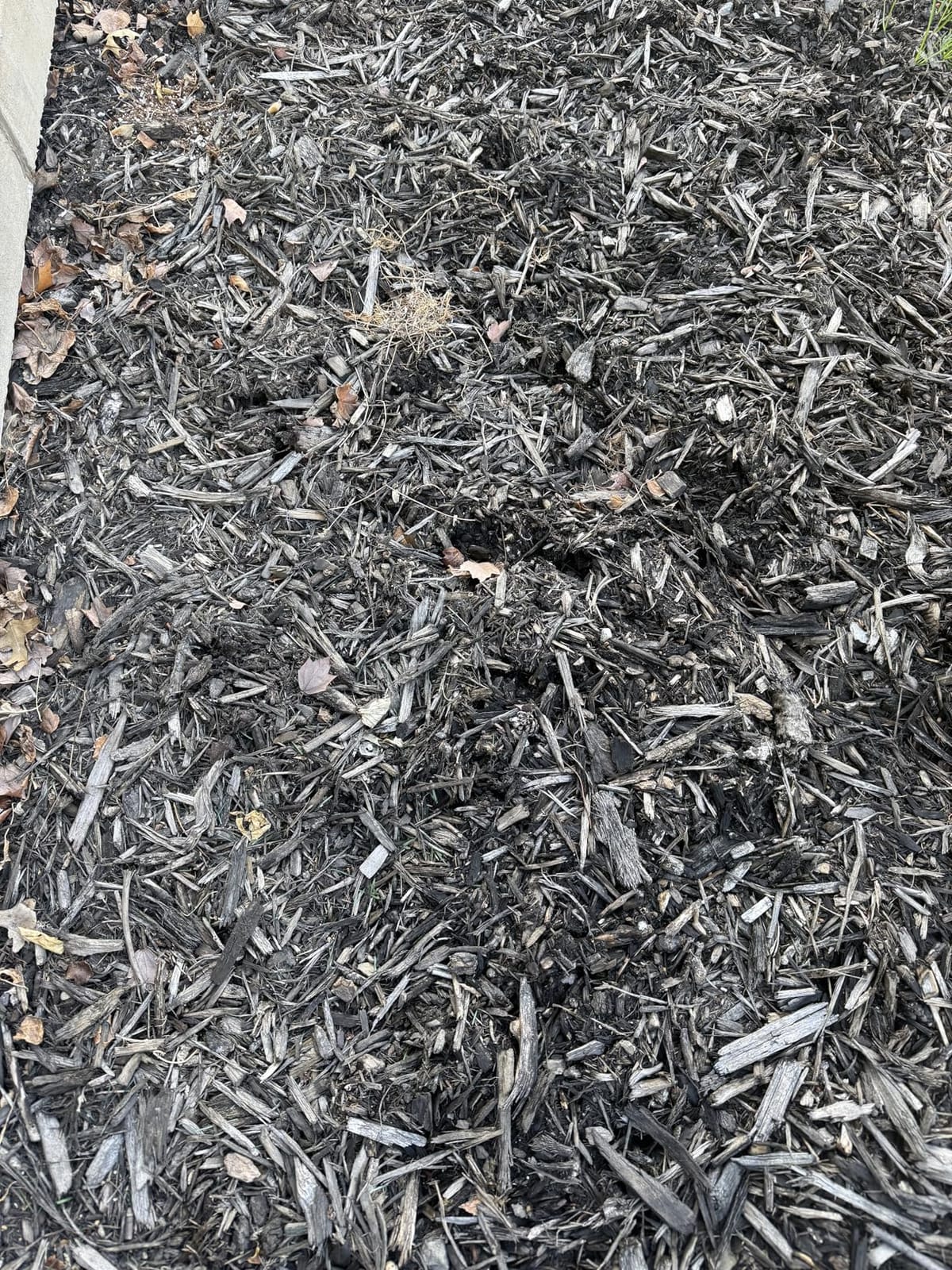
Wrong-pest misdiagnosis is the most common reason a mole repeller appears to fail. Moles make raised surface ridges and heaped conical mounds, often spaced roughly 6 ft apart along a main run, because they push soil upward from a shallow feeding tunnel. Gopher mounds are smaller, fan-shaped with a crescent-shaped opening, and sit much closer together because a gopher works in short segments. Voles make 2 in wide tunnels that are open at the surface, and they eat plant stems at ground level rather than tunneling deep.
If the tunnels are open and the grass above them is dying in patches, you likely have voles, and castor oil concentrates are the better fit because the scent disperses through treated soil. If you see heaped mounds, you are dealing with moles, and a stake line along the runs makes more sense than a blanket spray.
Work out the coverage math yourself
Advertised coverage in this category is not comparable across products, so the useful exercise is converting each claim into a spacing decision. Scent balls claim up to 120 sq ft each, which for a circular area works out to a radius of roughly 6 ft, so a 50 ft run needs placements every few feet rather than a scattering across the lawn.
Solar stakes claim anywhere from about 40 ft of diameter each up to 7,000 sq ft for an entire 8-pack. Plan on overlapping those individual ranges along the runs you have mapped, and add units rather than stretching the spacing when you are covering more than a quarter acre. Concentrates are the opposite problem: a single gallon claims up to 20,000 sq ft, so the limiting factor is the time it takes to walk and treat that area.
Place mole repeller stakes in five steps
Walk the lawn and mark every fresh mound and ridge, plus the point where tunnels cross the property line.
Place stakes on the runs first rather than on open turf, since moles travel existing tunnels.
Push each stake down until the cap sits just above the soil, and bury it deeper if the pulse is audible from the house.
Give solar stakes a full day of direct sun before installation so the panel is charged.
Move the line outward toward the property edge each week, since activity shifting in one direction tells you where the remaining run is.
Understand the castor oil safety picture
Castor oil concentrates are marketed as pet safe and biodegradable, and the manufacturer claims on these listings support that when label directions are followed. The honest qualification is that concentrated castor oil is a GI irritant if ingested, so the practical rules are: never let a pet drink from treated water or puddles, keep pets off the lawn until the spray has dried, store the concentrate out of reach of curious dogs, and do not over-concentrate a batch.
The same caution applies to the homemade version. A common DIY mix is three parts castor oil to one part dish soap at about four tablespoons per gallon, sprayed into opened tunnels. It works, and it is cheap, but it is a raw concentrated mixture applied straight into soil a pet can reach, so treat it with more caution than a labeled, diluted product.
What professionals actually use
Golf courses and commercial landscapers rarely rely on repellers alone, because the economics of repeated mole damage make prevention the priority. The common professional approach is layered: a granular or liquid castor oil treatment applied to active runs on a schedule, trapping at the main tunnels for the remaining population, and yard management that removes the food supply. Compacted, well-drained soil and careful irrigation matter too, since moles follow damp ground where earthworms are concentrated.
Sound and stake devices appear in professional setups as a supplementary perimeter tool, not as the primary control. That tells you something useful about expectations for a home lawn.
Your four-week escalation plan
If nothing has changed after four weeks of correct use, escalate rather than buying a second device. First, re-check the pest identification, because a good share of apparent failures are vole or gopher damage treated with a mole product. Second, move your treatment to the property line, since moles entering from a neighbor’s yard will return from that direction. Third, add a second method, pairing a castor oil treatment with a stake line rather than replacing one with the other.
Fourth, if fresh mounds continue to appear weekly after all of that, repellers have told you the lawn is attractive to moles, and trapping or a licensed wildlife control operator is the next step rather than a bigger stake pack.
Winter care for solar stakes
Solar repellers fail in winter for one reason: the panel cannot recharge, and the answer is not a bigger battery. Clear snow and leaf cover off the panel after storms, keep the stakes in a spot that gets winter sun rather than one shaded by an evergreen, and press the ON/OFF button to confirm the unit is still active before the first deep freeze.
If a stake goes flat and a full day of sun does not bring it back, it is finished for the season, and the season is when moles tunnel deeper anyway. A practical alternative is to remove the stakes in late fall, treat the lawn with a castor oil concentrate before the ground freezes, and reinstall the stakes in early spring when the surface runs return.
Frequently Asked Questions
Do mole repellers actually work?
They work for many lawns, but indirectly. Moles are not driven off a property; they are made uncomfortable enough to relocate. Castor oil concentrates make tunnels and food sources smell and taste wrong, and solar stakes send a low-frequency vibration through the soil every 20 seconds. Expect fewer new tunnels in two to four weeks, and combine two methods because a single constant stimulus fades over time.
What is the most effective mole deterrent?
The most effective approach is layered rather than a single product. A castor oil concentrate applied to active tunnels on a schedule, combined with ultrasonic or scent stakes placed along the property line and run entrances, outperforms any one product alone. The concentrate attacks the food supply, the stakes make the ground uncomfortable, and the combination reduces the habituation that ends most single-method programs after a month.
Do ultrasonic mole repellents actually work?
Results are mixed and depend on placement. Moles that travel near a stake may relocate within one to two weeks, but coverage claims often overstate the real range, and a constant tone can fade as animals habituate. Frequency modulation, deeper installation to mute the sound, and moving the line of stakes outward each week all improve results. Treat ultrasonic units as one layer in a combined approach rather than a complete solution.
What is the best ultrasonic mole repellent?
Among the solar stakes reviewed here, the best results come from units with a genuine waterproof rating, frequency modulation, and enough stake count to overlap coverage along active runs. The Fretech and ALOUYH 8-packs cover the most ground per pack, while the Cvtayn 4-pack is the only one with an IP65 rating and it also targets 20+ pest species. A stake pack with too few pieces cannot cover a large lawn no matter how good the electronics are.
Will Dawn dish soap get rid of moles?
Dish soap is not a repellent on its own, but it is a carrier that makes a castor oil spray work. A common mixture is about three parts castor oil to one part dish soap at roughly four tablespoons per gallon, poured into opened tunnels. The soap breaks the oil up and carries it into the soil. Keep in mind that concentrated castor oil is a gastrointestinal irritant, so keep pets off treated areas until the spray dries and store mixes out of reach.
How many mole repellers do I need for my lawn?
Count your runs, not your square footage. Scent balls cover up to 120 sq ft each, so place them every few feet along each active run. Solar stakes with about 40 ft of diameter each need roughly a dozen per acre, and 8-packs claiming 7,000 sq ft are better used with overlapping ranges along the runs you have mapped. A castor oil concentrate covering up to 20,000 sq ft per gallon limits you by application time, not by coverage.
Why is my solar mole repeller not working in winter?
Winter failures are almost always charge, not hardware. A snow-covered or shaded panel cannot recharge the battery, and a stake that runs flat stays flat until it gets several hours of direct sun. Clear snow and leaves off the panel, move the stake to the sunniest available spot, and press the ON/OFF button to confirm it is active. A stake that will not recover after a full day of sun is finished for the season.
The Best Mole Repeller Strategy for Lawns in 2026
If you want one product to start with, the Natural Elements castor oil concentrate is the most reviewed and most flexible option in this roundup, and it covers the largest area per container. It suits anyone who can spend an afternoon mapping tunnels and spraying them, and its review record tells you what to expect: a one to three week timeline when the label ratio is followed, and nothing at all when it is not.
For a low-effort approach on a small yard, the LEBMP and Kopplvn natural scent balls are the better fit, and the 16-pack covers a whole lawn if you are willing to place units along the border. For larger properties, the Fretech or ALOUYH 8-packs give you enough stake count to overlap coverage along the runs, and the ALOUYH pack is the quietest option if your patio sits next to the treated area.
Whichever you choose, the best mole repellers for lawns in 2026 are the ones used as one layer of a layered plan: treat the tunnels, protect the entry points, refresh the scent or reposition the stakes every few weeks, and keep the lawn drained and unflooded. If fresh mounds keep appearing weekly after four weeks of correct use, the next step is trapping rather than a bigger repeller.