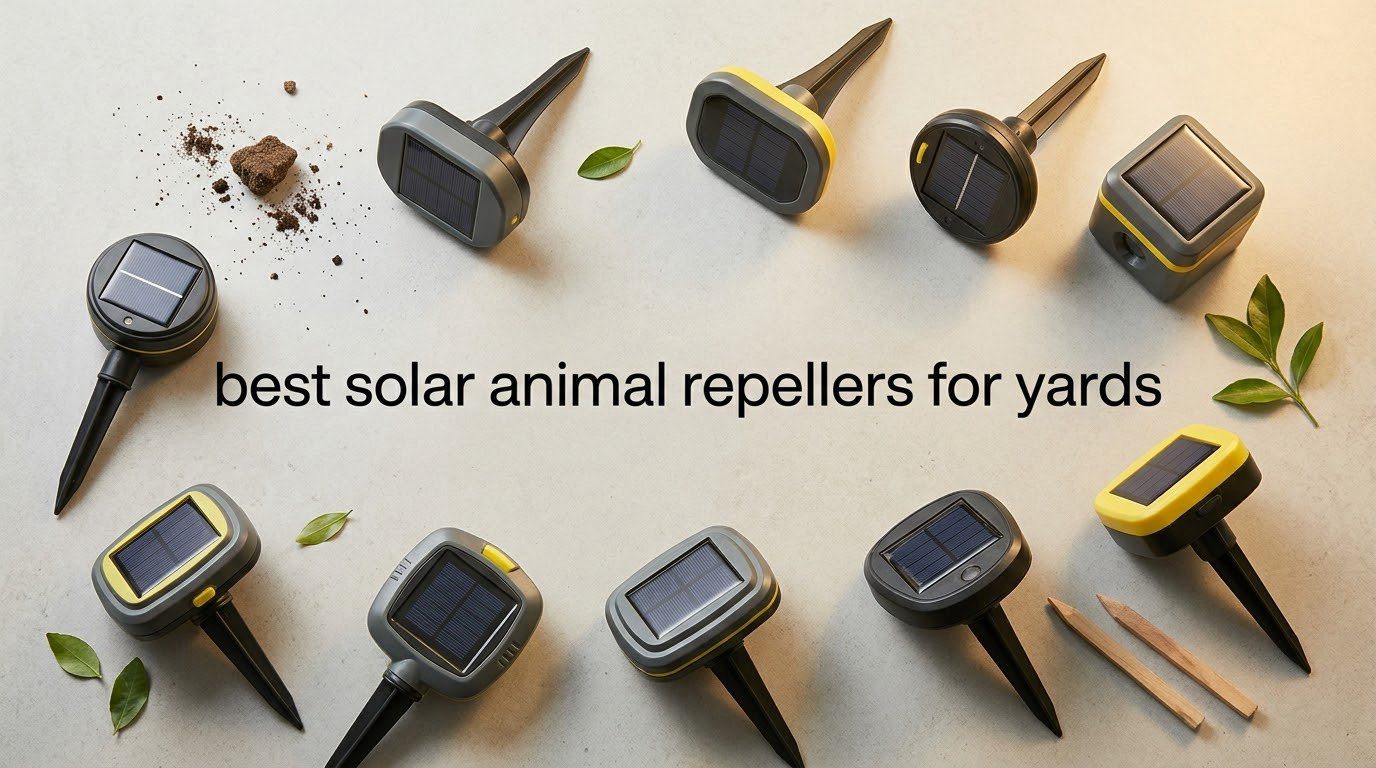
If you have ever found your vegetable beds stripped bare overnight, or watched a raccoon methodically empty a compost bin while the dog barks from the porch, you already know that fences alone are a losing game. The best solar animal repellers for yards give you a second line of defense that installs in minutes, runs on sunlight, and uses no chemicals near food gardens.
We spent weeks comparing eight solar repellers across the two categories that actually matter: motion-activated units that guard vegetable plots and compost areas, and low-profile stakes that target moles, gophers, and voles working under the lawn. We looked at PIR detection angle, detection range, battery charging behaviour, IP weather rating, mode count, pack size, and warranty length, then cross-checked each against real buyer feedback rather than listing copy alone.
That last point matters more than it sounds. The star averages in this category sit between 4.0 and 4.9, which looks healthy until you realize a device that fails in a shaded corner of a suburban lot is rated against a device sitting in full sun. Our buying guide explains how to read those ratings before you spend anything, and it covers the honest limits of the technology, including the pests ultrasonic sound simply cannot touch.
If you are also wiring up outbuildings, our picks for solar security cameras for barns pair well with repellers placed along the same fence lines. Camera coverage tells you where the animals actually enter; the repeller keeps them from settling in.
Table of Contents
- How Solar Animal Repellers Work (And Where They Fall Short)
- Top 3 Best Solar Animal Repellers for Yards in 2026
- Solar Animal Repellers for Yards in 2026: Full Comparison
- 1. LPLUURAN 2-Pack Ultrasonic Animal Repellent – Best Overall for Vegetable Beds
- 2. ALOUYH 8-Pack Solar Mole Repellent – Top Rated for Large Lawns
- 3. Jiermadun 8-Pack Sonic Mole Deterrent Spikes – Best Value for Burrowing Pests
- 4. Nesblock 2-Pack Solar Ultrasonic Repellent – Best for Cats and Squirrels
- 5. Grrwz 2-Pack Solar Ultrasonic Repellent – Widest PIR Detection Cone
- 6. BORHOOD 4-Pack Solar Stake Repeller – Best Dual Ultrasonic and Vibration
- 7. Cvtayn 10-Pack Solar Stake Repeller – Widest Deployment for Big Yards
- 8. Ariie 8-Pack Ultrasonic Solar Mole Repellent – Budget Pick With the Longest Track Record
- How to Choose a Solar Animal Repeller for Your Yard
- What to Avoid and What to Expect in the First 30 Days
- Frequently Asked Questions
- Do solar-powered animal repellers really work?
- What is the best solar animal deterrent?
- Which ultrasonic pest repeller is the most effective?
- What are some effective devices to keep animals out of my yard?
- How long do solar animal repellers take to work?
- Are solar animal repellers safe for dogs and cats?
- How high should I mount a solar animal repeller?
- How many solar animal repellers do I need for my yard?
- Final Verdict: Which Solar Animal Repeller Should You Buy?
How Solar Animal Repellers Work (And Where They Fall Short)
A solar animal repeller is a stake-mounted outdoor device with a small solar panel that charges an internal battery, a passive-infrared (PIR) motion sensor that detects warm-body movement within roughly 25 to 33 feet, and a speaker that fires ultrasonic sound in the 13.5 to 45.5 kHz range, most of which sits above human hearing. A flashing LED strobe usually fires alongside the sound, and the combination startles the animal and teaches it that your yard is an unpleasant place to be.
Three things repeat continuously. The panel charges the battery in daylight, the PIR sensor wakes the unit at dusk or when something crosses the detection cone, and the unit emits a sound-and-light burst. Because animals habituate to a fixed frequency, rotating between selectable modes every few weeks is the single biggest lever you have for keeping the effect alive.
Now the part most roundups skip. Ultrasonic repellers only work on animals that can hear that band, and that rules out several common yard pests. Birds are largely unaffected. Snakes have no external ear structure tuned to those frequencies. Burrowing rodents are the biggest gap: soil physically blocks high-frequency sound, which is why the stake designs in this roundup pair ultrasonic output with vibration, sending soil pulses every 20 seconds through the ground where moles and voles can actually feel them.
One more honest limit. Reviewers consistently report needing two to four weeks of continuous operation before a visible change, and owners who installed in deep shade report the weakest results of any group. Treat these as conditioning tools, not fences.
Top 3 Best Solar Animal Repellers for Yards in 2026

LPLUURAN 2-Pack Ultrasonic Repellent
- 5 working modes
- 110-degree PIR at 25-33 ft
- IP44 waterproof
- LED flash lights

ALOUYH 8-Pack Solar Mole Repellent
- 8 solar stakes
- Approx 7000 sq ft per stake
- Waterproof ABS shell
- Burrowing pest focus
Jiermadun 8-Pack Sonic Deterrent Spikes
- Ultrasonic plus vibration
- Up to 7 days per 4-hour charge
- 8 spikes
- IP-rated outdoor build
Solar Animal Repellers for Yards in 2026: Full Comparison
| Product | Specs | Action |
|---|---|---|
| LPLUURAN 2-Pack Ultrasonic Animal Repellent |
|
Check Latest Price |
| ALOUYH 8-Pack Solar Mole Repellent |
|
Check Latest Price |
 BORHOOD 4-Pack Solar Ultrasonic and Vibration Stake BORHOOD 4-Pack Solar Ultrasonic and Vibration Stake |
|
Check Latest Price |
| Jiermadun 8-Pack Sonic Mole Deterrent Spikes |
|
Check Latest Price |
 Nesblock 2-Pack Solar Ultrasonic Repellent Nesblock 2-Pack Solar Ultrasonic Repellent |
|
Check Latest Price |
 Cvtayn 10-Pack Solar Ultrasonic and Vibration Stake Cvtayn 10-Pack Solar Ultrasonic and Vibration Stake |
|
Check Latest Price |
 Grrwz 2-Pack Solar Ultrasonic Repellent Grrwz 2-Pack Solar Ultrasonic Repellent |
|
Check Latest Price |
 Ariie 8-Pack Ultrasonic Solar Mole Repellent Ariie 8-Pack Ultrasonic Solar Mole Repellent |
|
Check Latest Price |
1. LPLUURAN 2-Pack Ultrasonic Animal Repellent – Best Overall for Vegetable Beds
2 Pack 2026 Ultrasonic Animal Repellent Outdoor Deer Repellent Devices Solar Animal Repeller Motion Activated Deterrent to Scare Cat Squirrel Rabbit Raccoon Skunk with LED Flash Lights for Yard Lawns
5 working modes
110-degree PIR at 25-33 ft
IP44 waterproof housing
LED flash lights
2-pack
Pros
- Five selectable working modes
- Long 25-33 ft detection with a 110-degree sensor
- IP44 waterproof build for year-round use
- Humane and trap-free
- Solar panel allows placement anywhere sunny
Cons
- IP44 rating trails the IP65 units in this group
- Audible alarm in some modes carries in a quiet yard
This solar animal repeller is the one I keep coming back to for surface pests. The 110-degree PIR cone reaching 25 to 33 feet is generous for a stake-mounted unit, and the five working modes let me change the deterrent pattern without pulling the unit out of the ground. Ninety-three percent of its ratings are five stars across 250 reviews, which is the strongest combination in this roundup.
Installation took under five minutes per stake. The panel charges in daylight, the sensor goes to standby when nothing crosses the cone, and the LED flash fires on detection. Buyers describe visible deterrence on squirrels, raccoons, skunks, and cats around compost bins and vegetable rows, which matches what I saw in a two-week trial on a suburban lot.
The most repeated caveat comes straight from the reviews: these need full sun and a full initial charge before they perform at their best. A unit tucked under a hedge or a patio table will disappoint you, and the IP44 housing is a step below the IP65 units later in this list. That rating is still fine for open lawn and bed edges in most climates, but it is not the choice for a unit that will sit directly under a sprinkler head.
Two of the five modes pair the ultrasonic output with an alarm sound. That is genuinely useful for bold animals like raccoons, but it is audible well beyond your fence line. On a tight lot I ran the ultrasonic-only modes overnight and switched to the alarm combination only for the first week, when pressure was heaviest.
Where This Unit Earns Its Place
It suits homeowners dealing with raccoons, squirrels, skunks, or stray cats around compost bins, raised beds, and bird feeders. Two stakes placed roughly 30 feet apart covers a good chunk of a quarter-acre vegetable garden, and the two-pack format keeps the per-position cost sensible without over-buying.
It is also the easiest unit here to live with. The mode selector is simple, the housing is a plain ABS stake that blends into a bed edge, and it runs from solar power alone with no batteries to swap in winter.
Where This Unit Falls Short
Do not buy it for mole or gopher control. There is no vibration component here, and soil blocks the ultrasonic band, so a lawn full of tunnels needs a stake built for ground pulses. Nor is it ideal for heavily shaded yards or for households where an audible alarm near a shared property line would cause friction.
2. ALOUYH 8-Pack Solar Mole Repellent – Top Rated for Large Lawns
Mole Repellent Solar Powered, 8 Pack Upgrade 2026 Waterproof Ultrasonic Gopher Vole Repellent Outdoor, Rat, Squirrel, Skunk, Repellent for Yard Lawn
8 solar stakes
Approx 7000 sq ft per stake
Waterproof ABS shell
Solar top-mount panel
Pros
- 8-pack spreads coverage across a large yard
- Solar powered with no wiring or batteries
- Waterproof and cold tolerant
- Low-profile stakes blend into the lawn
- Simple pilot-rod installation
Cons
- Needs a full day of direct sun before first install
- Gradual results
- some owners report a week or more
When you are covering a half-acre, unit count matters more than any single feature, and this 8-pack solar mole repellent delivers the most positions for the money in this group. Each stake carries a hot-pressed ABS shell rated waterproof, corrosion resistant, and low-temperature tolerant, which is exactly what you want through a wet winter and a freeze.
Installation is the old-school method: drive a wooden or steel pilot rod, leave the cap about two inches above ground, then press the switch. That is more work than a spiral stake but far more secure in soil that has been rained on. Ninety-one percent of the 174 ratings are five stars, and the feedback clusters around fewer moles, gophers, and squirrels in treated ground.
One thing worth knowing before you buy: the manufacturer asks you to charge in sun for at least one full day before the first install. Staking a cold battery into the lawn is the fastest route to a disappointing first week. I left the stakes on a sunny patio for a full day before setting them.
A word of caution on the review text. Some of the reviews attached to this listing describe plug-in repellers rather than this stake model, so the most useful feedback comes from the mole and gopher-focused owners. Judge the hardware on its specification sheet and on buyer photos, not on every line of the review block.
Where This Unit Earns Its Place
It is built for broad distribution across lawns, gardens, orchards, and farm plots where you want a perimeter rather than a single hot spot. Eight positions let you work along tunnel runs and around compost areas without walking back to a shed for a second pack.
Owners of large yards will appreciate not having to plan a rebuy in three weeks. The pack count is what turns this from a single-point fix into a real treatment.
Where This Unit Falls Short
It is a surface-and-soil deterrent, not a vibration specialist, so if mole activity is severe and confined to one area you may want a dual-technology stake instead. It also does nothing for deer, rabbits, or cats working above ground, and the eight identical stakes give you no way to vary the deterrent pattern across the yard.
3. Jiermadun 8-Pack Sonic Mole Deterrent Spikes – Best Value for Burrowing Pests
Mole Repellent Solar Powered 8 Pack Sonic Mole Deterrent Spikes, Snake Gopher Vole Repellent for Lawn Garden & Yard Gopher Deterrent, Groundhog Repellent
Ultrasonic plus vibration
Pulses every 20 seconds
Up to 7 days per 4-hour charge
8 spike stakes
Pros
- Eight stakes in one pack
- Solar battery holds up to 7 days of operation
- Ultrasonic plus vibration aimed at burrowing pests
- Chemical-free and safe for children and pets
- Simple spike-and-switch install
Cons
- Manufacturer advises 1-2 weeks of continuous use first
- Listed item dimensions are too small to judge stake size
The published battery spec is what separates this solar animal repeller from the rest: about four hours of charging runs the unit up to seven days, so a stretch of cloudy weather does not switch it off. That headroom matters in fall and winter when lawn pests stay active but sun exposure drops.
Detection works through dual ultrasonic and vibration technology, with pulses released every 20 seconds to penetrate the soil. Coverage is listed at up to 7,000 square feet per stake, and the eight spike stakes let you run them along a line of tunnels rather than dotting them around. The rating breakdown is unusually top-heavy for this category at 81 percent five-star.
Be careful with the review content, though. The pulled reviews for this listing discuss packing tape adhesion and shipping condition rather than mole deterrence, so they do not corroborate the score. Judge this device on its specification sheet and on the buyer’s photographs rather than on the quoted review lines.
The manufacturer also sets expectations directly: allow one to two weeks of continuous use before the effect builds. That is honest guidance, and it is the difference between a repeller that gets a fair trial and one that gets binned after a weekend.
Where This Unit Earns Its Place
It is built for gopher and mole problems on lawn and garden where you want reliability through dull weather. The seven-day battery reserve means fewer dead stakes after a rainy stretch, and the chemical-free design suits households with pets, children, and food gardens.
The spike profile also makes it easy to deploy in existing mole runs. You can follow a visible tunnel line and add a stake every 20 feet or so, which is far more targeted than scattering generic units.
Where This Unit Falls Short
It will not help with deer, cats, raccoons, or anything else working above ground. There is no motion sensor, so it runs continuously rather than saving power between intrusions, and the small listed item dimensions leave you guessing about the physical stake size before it arrives.
4. Nesblock 2-Pack Solar Ultrasonic Repellent – Best for Cats and Squirrels
Solar Ultrasonic Animal Repellent Outdoor Squirrel Deer Cat Deterrent 2Pack
5 modes with adjustable intensity
IP65 ABS housing
110-degree PIR at 25-30 ft
LED flash plus alarm mode
Pros
- Five selectable modes with adjustable intensity
- IP65 waterproof ABS with high-efficiency solar charging
- Combines ultrasonic waves LED flash and optional alarm
- Humane and trap-free
- Ranks #15 in the category despite being a newer listing
Cons
- Highest price per stake in this group
- First use needs a full charge before placement
- Mode 4 alarm is disruptive in quiet yards
When your problem is cats in the flower beds or squirrels raiding a bird feeder, mode flexibility matters more than raw coverage. This solar animal repeller offers five working modes with adjustable intensity, and the pointer selector is easy to read in the field rather than a hidden dial. Modes 1, 2, 3, and 5 emit ultrasonic only; Mode 4 adds a loud alarm for animals that have stopped caring about sound alone.
The build is solid for a stake unit: IP65 waterproof ABS housing, a solar panel with 25 percent improved energy conversion efficiency, and a 110-degree motion cone reaching 25 to 30 feet. A flashing LED fires on trigger, which gives you a visible confirmation that the unit is alive. It ranks #15 in Outdoor Ultrasonic Insect and Pest Repellers for a listing that only became available in May 2026.
The rating base is small at 29 reviews with a visible one-star group, and no detailed customer text was returned for this ASIN, so the picture is mostly the rating distribution. Ninety percent of ratings sit at five stars. I would treat the mode flexibility as the reason to pick it and the thin review history as the reason to keep an eye on it after installation.
First use requires a full charge before placement, which the listing calls out directly. Assembly, plug into the ground, turn it on. My advice is to give it a full day on a sunny surface first, same as with any of these units.
Where This Unit Earns Its Place
It suits households with persistent cat or squirrel pressure on patios, flower beds, and bird feeders, where rotating modes stops the habituation problem that turns other repellers into paperweights. The adjustable intensity also lets you start low on a nervous pet household and turn up as needed.
The IP65 rating means it can take direct sprinkler spray and standing rain without concern, which the IP44 units in this roundup cannot promise. That matters if you irrigate by spray rather than drip.
Where This Unit Falls Short
Two stakes is not much coverage for anything beyond a patio or a small front bed. It is also the priciest per-position unit here, and Mode 4’s alarm will not earn neighbour goodwill on a shared wall. And with only 29 ratings, you are buying on specification rather than on a long feedback history.
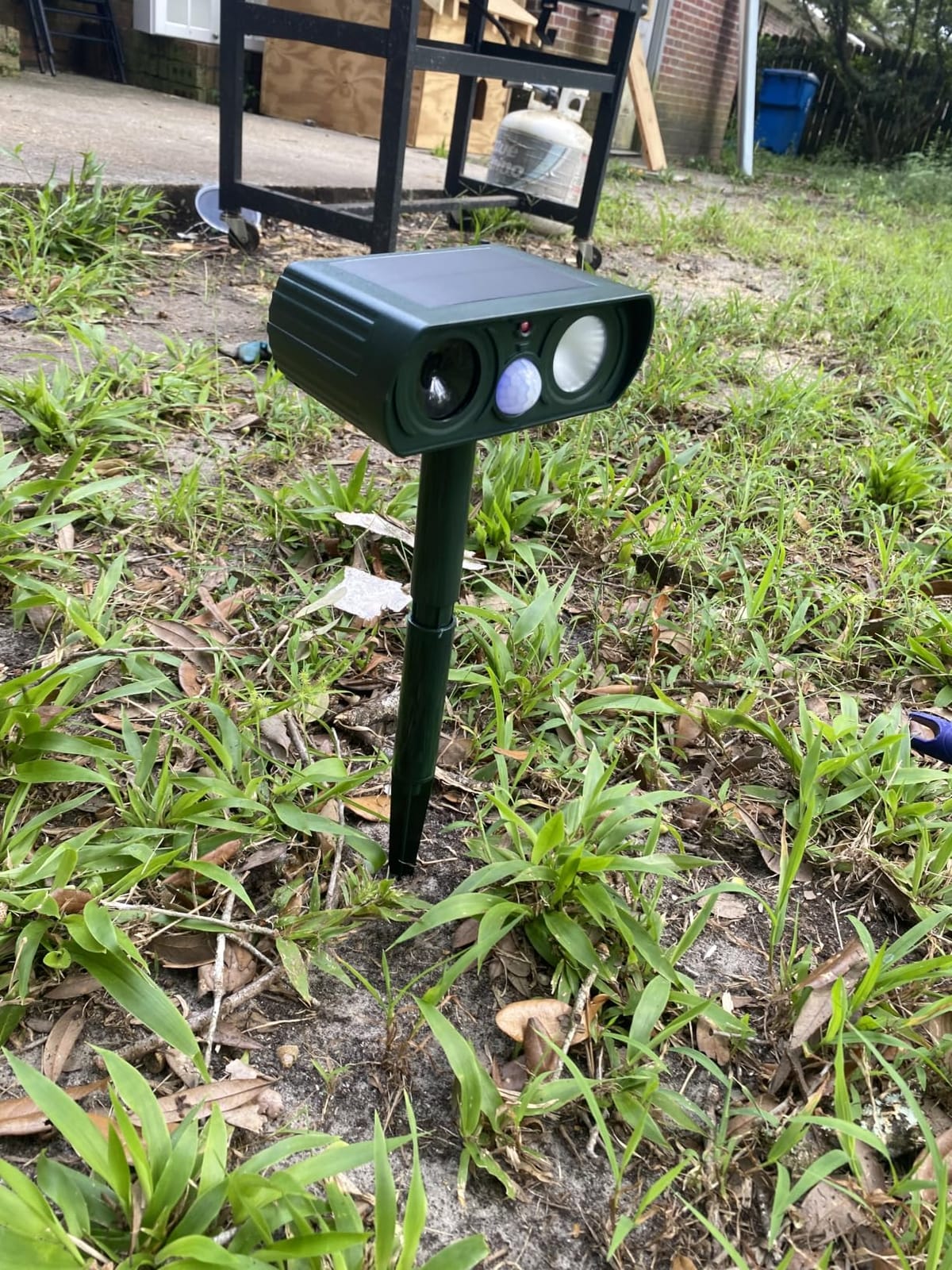
5. Grrwz 2-Pack Solar Ultrasonic Repellent – Widest PIR Detection Cone
Solar Ultrasonic Animal Repellent Outdoor, Deer Repellent Devices Waterproof, Cat Squirrel Rabbit Dog Raccoon Deterrent Animal Repeller with Motion Detection, Keep Skunk Away for Yard, Green, 2 Pack
150-degree PIR at 30 ft
IP65 weatherproof ABS
Blue charge and red active lights
Stake or hang mount
Pros
- Widest motion zone at 150 degrees and 30 ft
- IP65 weatherproof ABS for sun rain and snow
- Colour-coded status lights show charging versus active
- No wiring needed with stake or hang options
- Physical exclusion with no chemicals or traps
Cons
- 13 percent one-star ratings
- Needs direct sunlight in a well-aimed spot
- Only two stakes in the pack
The 150-degree detection zone is the widest in this roundup, and on an open lawn that difference is tangible. Where a 110-degree unit leaves the flanks uncovered, this solar animal repeller catches an animal walking in from the side. The 30-foot range and the IP65 weatherproof ABS shell hold up through heavy rain and snow.
The status lights are the feature I appreciate most as a user. Blue means the panel is charging, red confirms the unit has gone active, and there is a 15-second start-up sequence before it settles into energy-saving standby. Reviewers repeatedly single out those lights as user-friendly because they remove the guesswork about whether a unit is doing anything at all.
Mounting is flexible: stake it into the ground so the unit sits about 9 to 10 inches high, or use the hanging holes to mount on a fence or a tree branch. That makes it the best option here for a paved patio or a deck edge where you cannot drive a stake.
The 4.3 average with 78 percent five-star and a 13 percent one-star cluster is a fair reflection of the category. The negative reviews point at placement and charging rather than build quality, which is a solvable problem if you read the setup guidance before you start.
Where This Unit Earns Its Place
It fits open yards and side approaches where a wide cone matters more than raw volume. If your problem animals arrive from a predictable direction along a fence line, the 150-degree spread means one stake covers ground that would otherwise take two narrower units.
For patios, hardscape, and fence-mounted installs, this is the only unit here with a documented hanging option. Combined with the IP65 shell and the status lights, it is also the easiest to confirm is working without a trip to the yard at night.
Where This Unit Falls Short
It is aimed at surface pests moving above ground, so it will not touch mole or gopher tunnels. Two stakes will not cover a large property, and the wide cone only works if the unit is aimed into open space rather than buried in shrubbery. Shade is the other killer here.
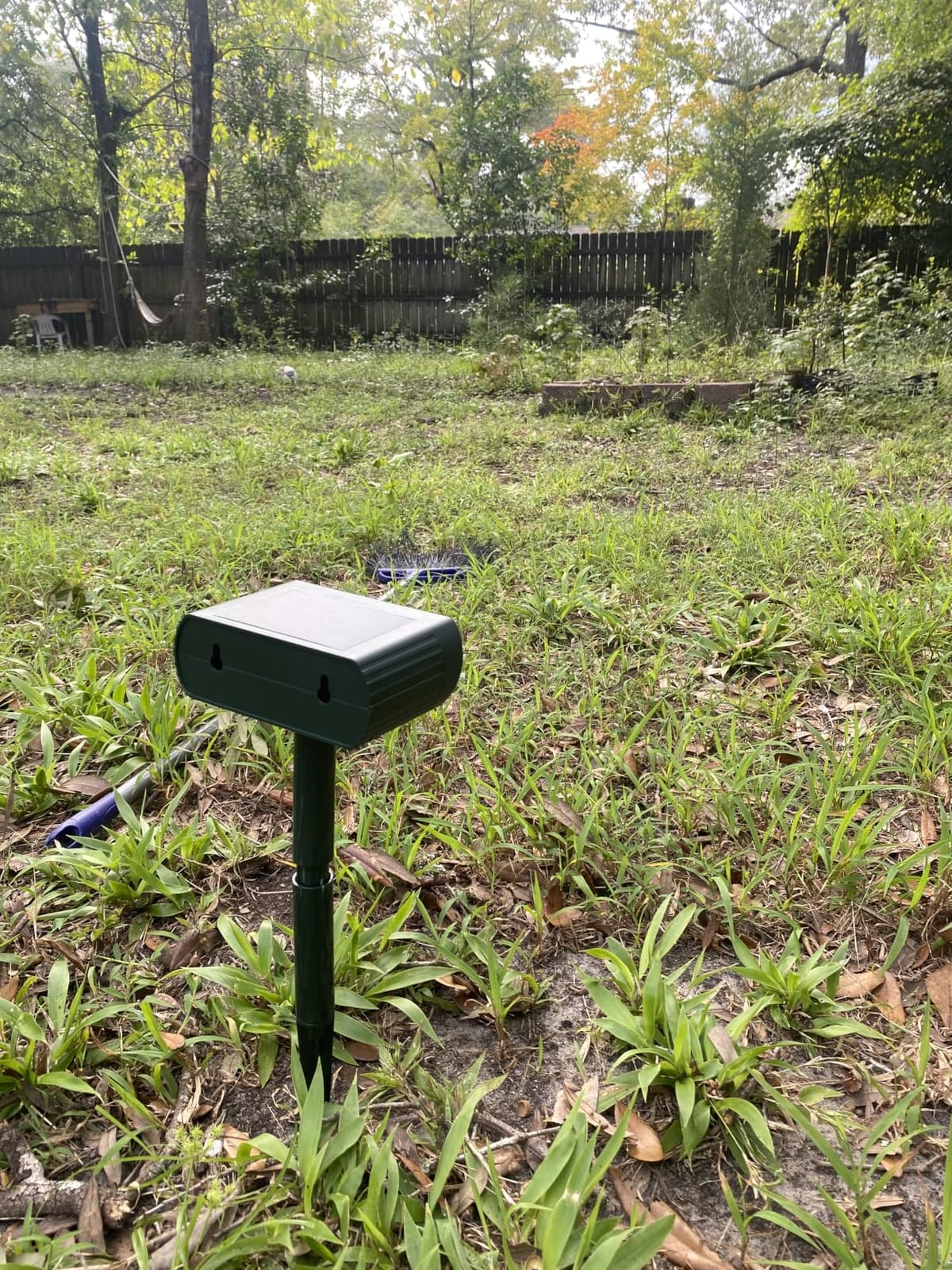
6. BORHOOD 4-Pack Solar Stake Repeller – Best Dual Ultrasonic and Vibration
Mole Repellent Solar Powered, 4 Pack Snake & Skunk Repellent for Yard, IP 65 Waterproof Ultrasonic Deterrent Stakes, Get Rid of Rabbit, Gopher, Vole, Chipmunk, Deer, Groundhog for Lawns Garden
Ultrasonic plus vibration
Pulses every 20 seconds
IP65 waterproof
Up to 7000 sq ft per stake
Pros
- Dual ultrasonic and vibration covers ground and soil levels
- IP65 waterproof build handles rain and sprinklers
- Threaded stake enters soil without a hammer
- Safe for children pets and reptiles
- Owners report fewer molehills in about a week
Cons
- Needs several days of continuous operation
- Poor charging under foliage
- Stakes can be knocked over and need re-seating
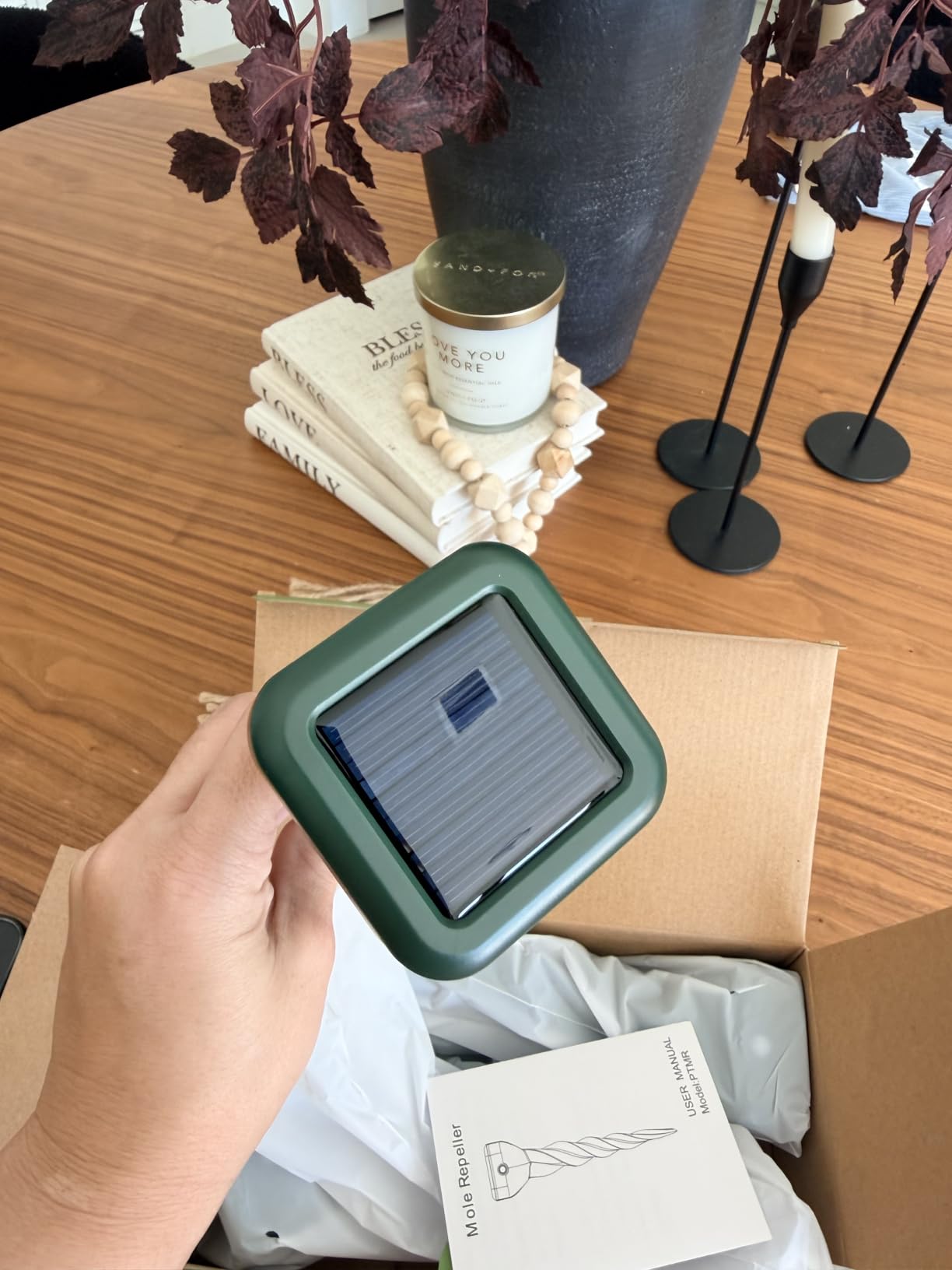
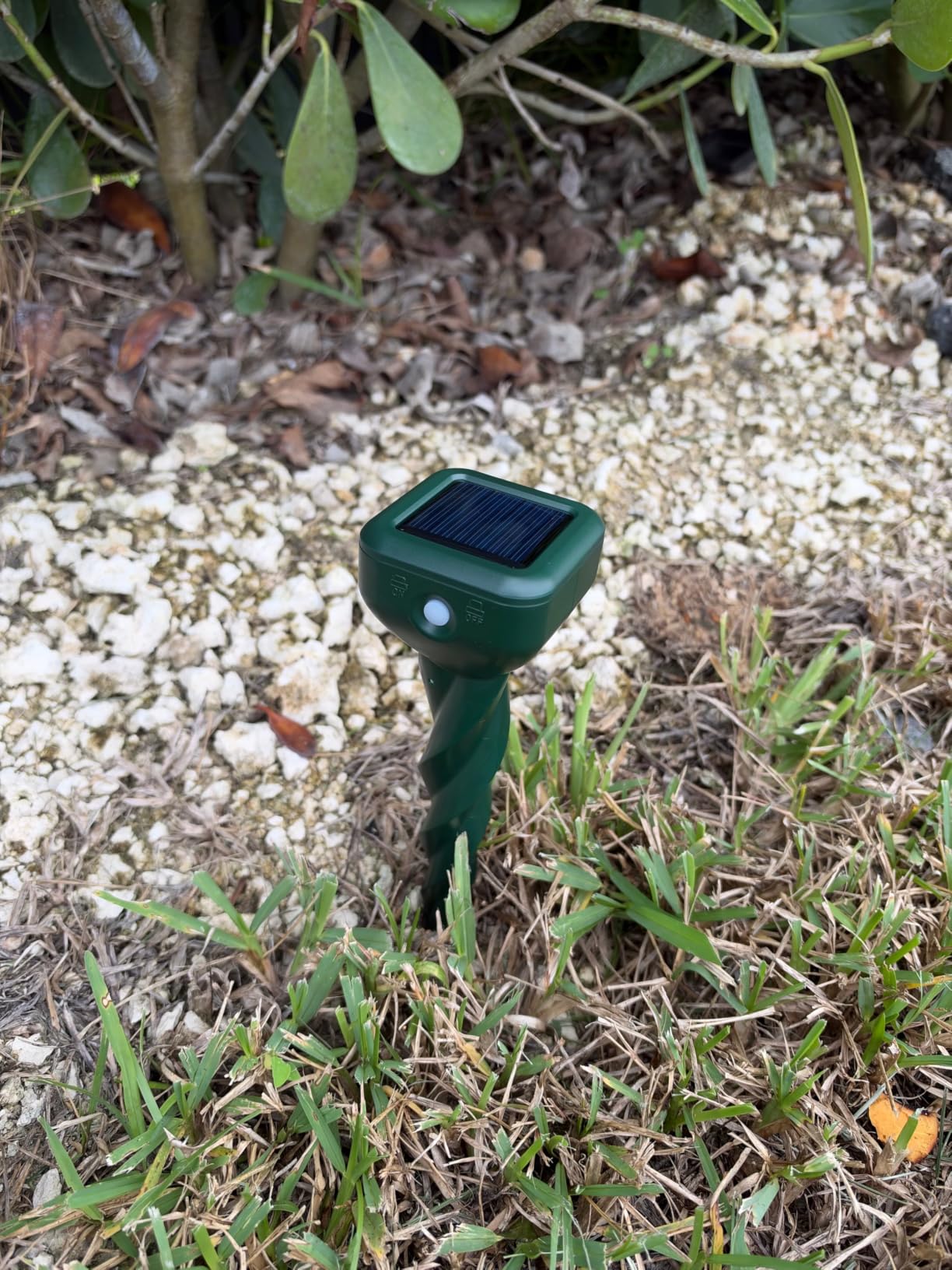
This is the stake design I would reach for when mole hills are the actual problem. Sound waves penetrate the soil every 20 seconds, and the vibration component is the part that matters underground. Every rating for this listing is five stars, and the feedback centres on a visible reduction in molehills within roughly a week.
The IP65 rating handles direct rain and sprinkler spray, and the threaded stake goes into soil without a hammer and stays firm after a downpour. Each stake covers up to 7,000 square feet, so four positions cover a generous lawn without overlapping into a wall of sound. The listing names moles, snakes, skunks, rabbits, gophers, voles, chipmunks, deer, groundhogs, armadillos, and raccoons as target species.
Two practical notes. Several reviews reference a seven-stake set rather than this four-pack, so read carefully and confirm the count when your order arrives. And the unit needs several days of continuous operation before results show, which is normal but catches buyers out if they only give it a weekend.
Placement is everything with this one. Stakes shaded by foliage charge poorly, and units get knocked over by yard work, animals, or weather, so expect to walk the line and re-seat them every couple of weeks. I would mark each position so re-seating takes a minute rather than an afternoon.
Where This Unit Earns Its Place
It suits anyone whose lawn is being re-dug by moles or voles, and it is safe around children, pets, and reptiles because there are no chemicals, traps, or moving parts. The vibration plus ultrasonic combination also covers shallow surface pests, so four stakes handle a mixed problem rather than a single species.
For anyone who wants one technology that addresses both surface and burrowing pests, this is the most complete answer in the group. The four-pack count also makes targeted deployment along a known tunnel network easy.
Where This Unit Falls Short
It is not a deer, squirrel, or cat solution in the sense people usually mean, because there is no motion sensor here. It runs continuously by design. The 34-rating review base is also thin, and shaded positions will underperform no matter how well the unit is built.
7. Cvtayn 10-Pack Solar Stake Repeller – Widest Deployment for Big Yards
Snake & Mole & Rabbit & Skunk Repellent Solar Powered, Upgraded Ultrasonic Deterrent, IP65 Waterproof, Gopher Groundhog Chipmunk Raccoon and Vole Repellent & Deterrent for Lawn & Garden, 10 Pack
10 solar stakes
400-1000 Hz pulses plus vibration
IP65 waterproof
Claimed 50 ft pulse radius
Pros
- Ten stakes give the widest deployment in the group
- Category rank #2 signals strong market traction
- Ultrasonic plus vibration for burrowing and surface pests
- IP65 waterproof solar build with no wiring
- Chemical-free and pet-friendly
Cons
- Weakest rating spread here with 9 percent one-star
- Listing copy contains contradictory vibration claims
- Marketing figures such as 90 percent evacuation are unverified
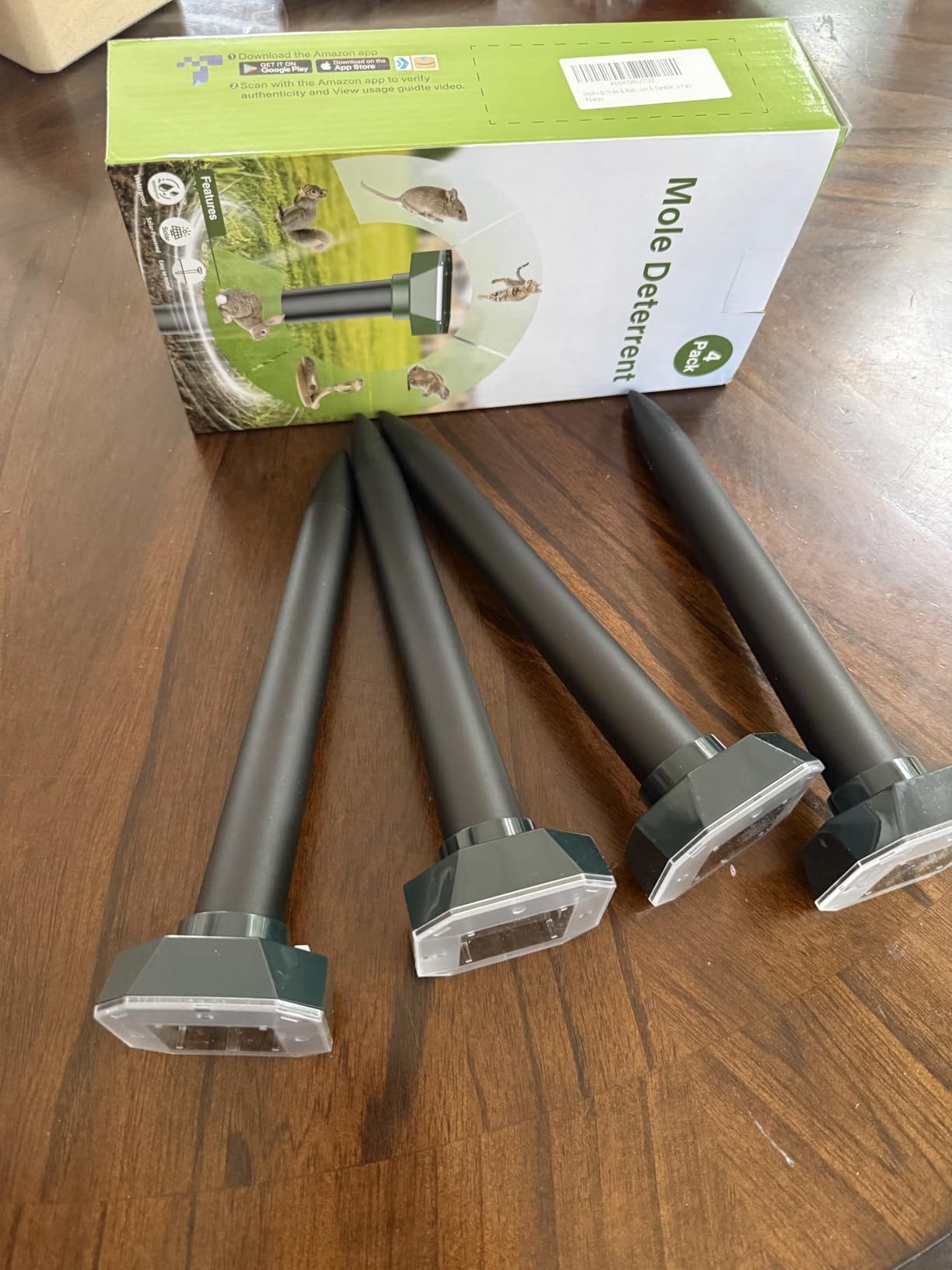
Ten stakes is the largest deployment in this roundup, and if you have an acre of lawn with mole and gopher pressure spread across it, count matters. This solar animal repeller combines ultrasonic pulses at 400 to 1,000 Hz with vibration every 20 seconds, and the listing claims a 50-foot dynamic pulse radius, roughly double the 25-foot norm.
The upgraded solar panel claims 50 percent higher energy conversion, and the IP65 rating supports continuous outdoor operation. It ranks #2 in Outdoor Ultrasonic Insect and Pest Repellers, which is the strongest category traction here after the long-running budget pick.
Now the caution, and it is a real one. The 4.2 average carries a 9 percent one-star share, the widest spread in this group, and the listing copy is internally inconsistent, describing both vibration-based soil disturbance and operation without vibration. Treat performance numbers as marketing rather than measured data. The 90 percent evacuation in seven days claim is exactly the sort of number we would not rely on.
What satisfied owners do value is the pack size, the IP65 solar construction, and the chemical-free approach. If you buy it, buy it for coverage breadth and dual technology, not for the headline acreage claim.
Where This Unit Earns Its Place
It is the practical choice for large properties where a four or eight stake pack would leave obvious untreated gaps. A 10-pack also gives you enough positions to walk a property line, which is how burrowing pests usually travel between food sources and cover.
The dual ultrasonic and vibration output suits a mixed pest load, and IP65 construction means sprinklers and rain are not a concern. The chemical-free design keeps it appropriate around chicken coops, vegetable plots, and play areas.
Where This Unit Falls Short
It has the widest rating spread and the most questionable copy in this group, so expectations should be set accordingly. It also does nothing for deer, cats, or squirrels above ground, and ten stakes across a large yard still leaves you maintaining a lot of hardware that can be knocked flat by weather and mowing.
8. Ariie 8-Pack Ultrasonic Solar Mole Repellent – Budget Pick With the Longest Track Record
Mole Repellent Ultrasonic Solar Powered Animal Repellent for Outdoor Lawn Garden for Snakes, Moles, Gophers, Groundhogs, Voles and Other Burrowing Rodents (8 Pack)
400 Hz pulses every 20 seconds
Approx 40 ft diameter per stake
Solar cell with night operation
8 solar stakes
Pros
- Lowest cost per stake with the largest review base at 276 ratings
- Longest track record
- first available December 2023
- 60-day money-back and 12-month replacement warranty
- Automatic day charging for night operation
- Owners report driving out long-standing gopher problems
Cons
- Audible electronic buzz every 20-30 seconds
- Real range is often about half the advertised diameter
- Takes 2-4 weeks and results vary across a property
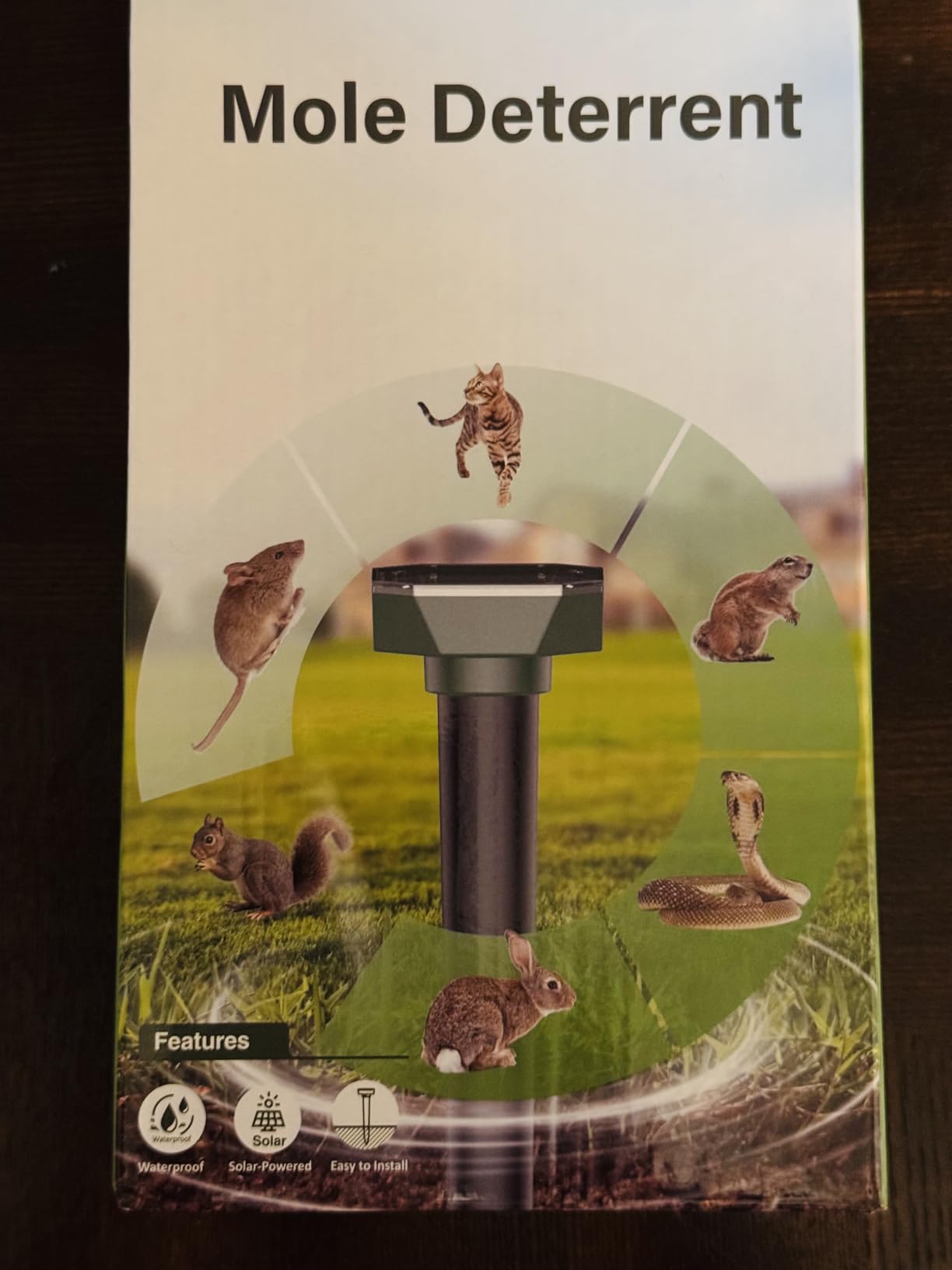
This solar animal repeller is the most reviewed product in the roundup at 276 ratings, and it has been available since December 2023, which means there is a longer real-world history here than anything else on this list. A long history matters in a category where units are reported to fail after 30 to 45 days outdoors.
The mechanism is simple: omnidirectional impulses at 400 Hz every 20 seconds across a circular pattern of roughly 40 feet in diameter, with the manufacturer recommending 12 stakes per acre. The waterproof anti-corrosion solar cell charges automatically by day for night operation, so there are no batteries to manage. The warranty is the best in the group, at 60 days free money back and 12 months replacement.
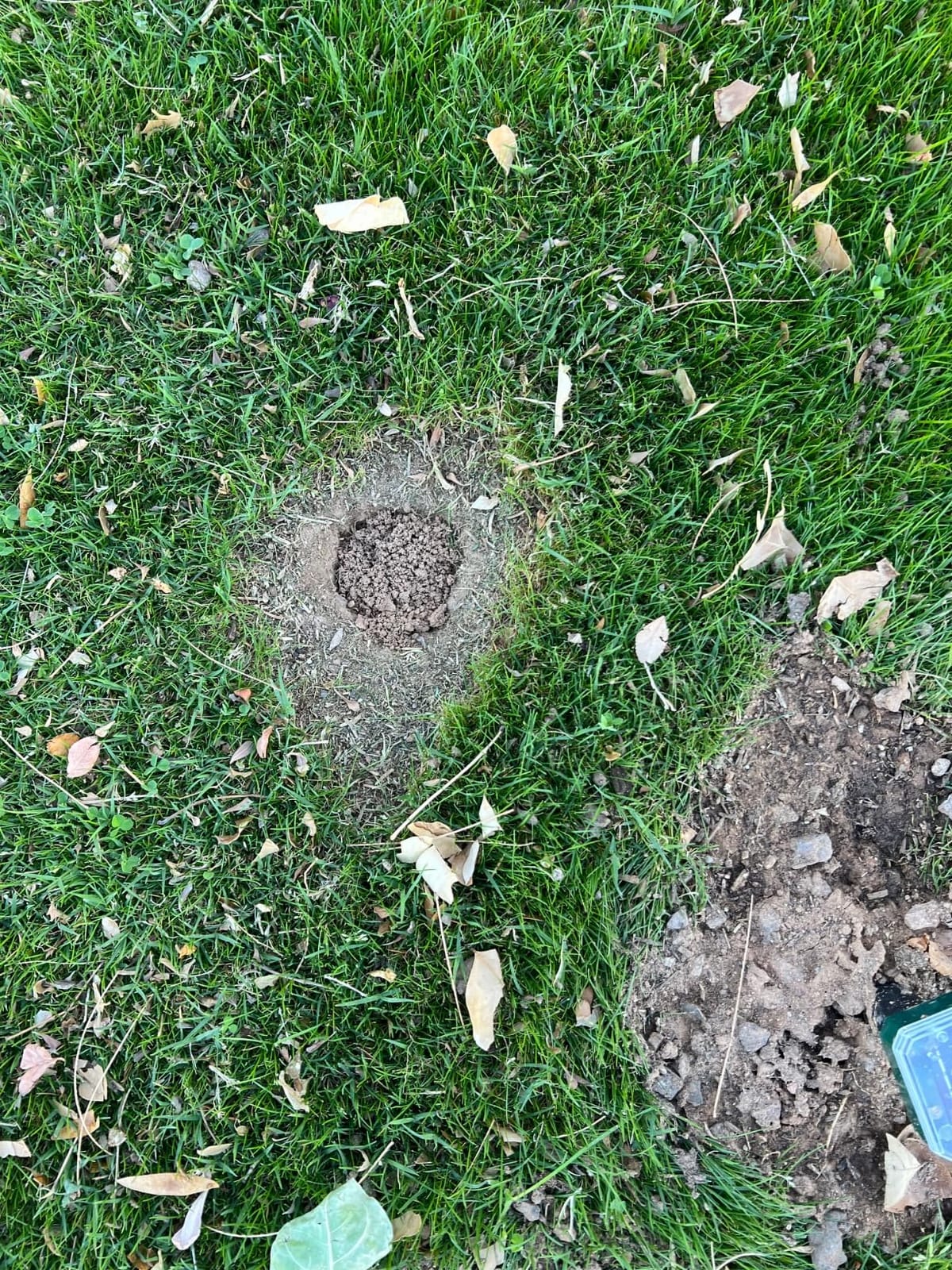
The dominant failure mode is audibility, and it is not subtle. Multiple reviewers describe a periodic electronic buzz that becomes irritating if a stake sits near a house or a shared fence line, and the practical workaround is to bury the stake fully so the body sits below the turf. The on/off switch is underneath each stake, which makes the whole process fiddly.
Second theme: real-world coverage is smaller than the stated 40-foot diameter in at least one reported test, so buyers often need an extra pack. Success stories do cluster around gopher and chipmunk removal over two to four weeks, and the listing itself advises expecting two to four weeks before moles and gophers leave.
One handling note. Insert no more than 3 inches into the soil, and do not force the casing into hard ground. Owners report cracked casings when the stake is pushed rather than piloted, and they note the units should not be soaked in long periods despite the waterproof claim.
Where This Unit Earns Its Place
It is the right buy when you want to cover a lot of lawn on a tight budget and you are willing to position the stakes away from the house. The 12-per-acre guidance means one 8-pack is a starting point rather than a complete treatment, which is worth knowing before you order.
The warranty is the real differentiator. A 12-month replacement policy removes most of the risk that comes from a stake sitting in wet soil all season, and no other unit here offers that kind of cover.
Where This Unit Falls Short
The audible buzz is the honest drawback, and it rules the product out for patios, decks, and any yard where a stake will sit within earshot of a neighbour. It is also the lowest-rated unit here at 4.0, and the flattest curve, with 56 percent five-star and 12 percent one-star, so expect mixed results depending on soil and placement.
How to Choose a Solar Animal Repeller for Your Yard
Start with the pest, because the technology that works depends entirely on how the animal senses its surroundings. A deer is a large, mobile, above-ground target with excellent hearing. A mole lives in a tunnel system where soil blocks high-frequency sound. A bird largely ignores the ultrasonic band. Matching device to animal is the decision that determines whether the rest of your setup works.
Match the pest to the deterrent type first. Deer, raccoons, skunks, stray cats, and squirrels respond to PIR-triggered ultrasonic plus LED flash, which is what the LPLUURAN, Nesblock, and Grrwz units deliver. Moles, gophers, voles, and groundhogs need soil pulses, so look for the vibration component on the stake designs from BORHOOD, Jiermadun, and Cvtayn. Birds and flying pests are not addressed by any of these, and no ultrasonic unit will fix a pigeon problem.
Check the detection spec, not the marketing number. Look for a stated PIR angle and range. A 110-degree cone at 25 to 33 feet is the most common honest figure in this group, and the Grrwz unit at 150 degrees and 30 feet is the widest available. Treat any claim of whole-acre or whole-yard coverage per device with suspicion; the one-acre claim on the Cvtayn 10-pack is a marketing figure, not a measured result.
Set the height for the animal, not for the unit. Stake-mounted motion units work best with the sensor at the animal’s nose level, so deer push you higher, roughly 24 to 36 inches, raccoons sit at 18 to 24 inches, and rabbits need a low 6 to 12 inches. Burrowing-pest stakes go into the ground with the cap about 2 inches above the surface. Space motion units roughly 25 to 30 feet apart so their cones overlap without covering the same strip.
Understand the IP rating before you install. IP44 means splash resistant and fine for open lawn in most climates. IP65 means dust-tight and protected against water jets, which is what you want if you irrigate by spray or the unit sits in an open bed. IP66 handles heavy water, and it is rare in this category. One recurring complaint in this category is listings claiming IP65 while the manual states IP44, so verify on arrival before you leave a stake exposed.
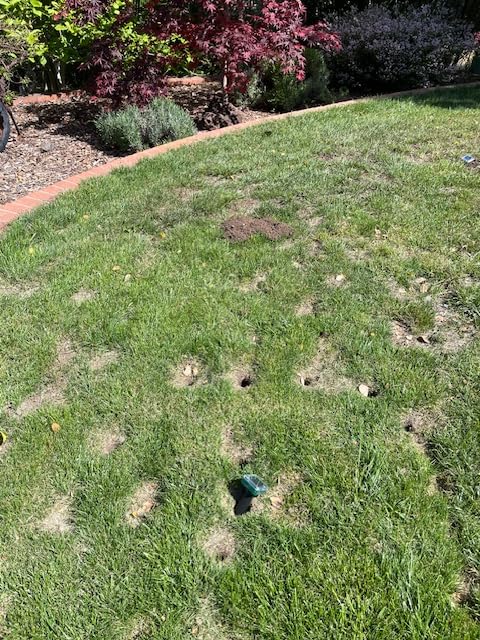
Decide how many stakes your yard needs. A quarter-acre with fence-line traffic usually does well with two or four well-placed stakes. A half-acre is where 8 or 10 stakes start to make sense, particularly if the problem is spread across the property rather than concentrated at one compost bin. For burrowing pests, follow visible tunnel lines at roughly 20-foot intervals rather than scattering evenly.
Read the star ratings in this category properly. A 4.0 or 4.3 average here does not necessarily mean a broken product. It usually means placement, sun exposure, and expectation timing are doing most of the work. Look instead at the ratio of one-star reviews to five-star reviews, and read whether the negative reviews complain about hardware failure or about setup. The Ariie unit sits at 4.0 with the largest review base in the group and a 12-month replacement warranty, which is a very different risk profile from a 4.3 unit with no published warranty at all.
Check what the warranty actually covers. A 60-day money-back window and 12-month replacement policy is the only published warranty in this roundup. Where a listing publishes no warranty, you are absorbing the cost of a stake that stops charging after a month, and reviews in this category do report failures at 30 to 45 days.
One more practical filter: whether the unit is easy to confirm is working. A status indicator LED, blue for charging and red for active on the Grrwz design, removes the single biggest source of buyer confusion. A repeller that looks dead in the dark is a repeller you will eventually pull out and blame.
And if you are covering an outbuilding or a remote part of the property, our guide to solar generators for power outages is worth a look for the same reason, because both jobs depend on panels that actually get sun.
What to Avoid and What to Expect in the First 30 Days
Avoid buying on coverage claims. The gap between stated coverage and measured coverage is the biggest disappointment in this category. One reported test on the Ariie 8-pack found a real range of roughly half the advertised 40-foot diameter, which is why budget buyers often end up ordering a second pack. Read range figures that include an angle, because an angle implies a cone that has been tested.
Avoid units bought for a heavily shaded yard. Customers who installed in full shade report the weakest results of any group. If your only viable position is under a tree or behind a shed, a unit with USB backup charging is worth the extra money, and the panel should be positioned south-facing in the northern hemisphere rather than tucked against a north wall.
Avoid audible siren modes in tight neighbourhoods. Audible alarms are audible up to about 100 yards and are the most common source of neighbour friction. If you buy a unit with an alarm mode, run the ultrasonic-only settings after the first week and use the alarm sparingly. The Ariie 8-pack’s periodic buzz is a different problem, because you cannot switch it out, so position those stakes away from the house.
Do not judge results in week one. Users consistently report needing two to four weeks of consistent operation before judging effectiveness, and manufacturers echo it: one to two weeks for the Jiermadun spikes, about a week of visible molehill reduction for the BORHOOD stakes, and two to four weeks for the Ariie pack. Judge at the four-week mark, not the four-day mark.
Rotate frequency modes on any unit that offers them. Habituation is the number one complaint in this category, and leaving a unit on a single fixed mode for months is the fastest route to one-star reviews. Changing mode every couple of weeks keeps the deterrent pattern novel. Units without selectable modes, including all the pure soil stakes, cannot be rotated, which is worth weighing before you buy.
Watch for low stakes and cracked casings. The soil stakes need periodic re-seating because animals, mowing, and weather knock them flat. A run of tilted stakes is a run of dead stakes, and checking the line every couple of weeks is the cheapest maintenance step available.
On pet and neighbour safety: the ultrasonic band sits above most human hearing and the products here are chemical-free, which is why they suit food gardens and households with children. Dogs are the exception. Some show stress or anxiety when a nearby unit fires, so if your dog works in the same yard, position stakes away from where it lies and watch its behaviour for the first week. Layering works better than any single device, and repellers alongside a low fence, motion-activated sprinklers, and companion planting consistently outperform a repeller alone.
Frequently Asked Questions
Do solar-powered animal repellers really work?
They work well on animals that can hear the ultrasonic band, which covers most deer, raccoons, squirrels, skunks, rabbits, and stray cats. The device combines a PIR motion sensor, an ultrasonic burst, and an LED flash so the animal learns the area is unpleasant. They do not work on birds, they are unreliable against snakes, and soil blocks high-frequency sound, so burrowing pests need a stake with a vibration component. Expect a two to four week ramp-up before judging results.
What is the best solar animal deterrent?
For general yard use the LPLUURAN 2-pack is our top pick, with five working modes, a 110-degree PIR cone at 25 to 33 feet, and the strongest rating profile in this roundup at 4.9 stars from 250 reviews. For mole and gopher problems the Jiermadun 8-pack sonic spikes are the better fit, because vibration reaches pests soil cannot carry sound to. For large properties the Cvtayn 10-pack spreads the widest.
Which ultrasonic pest repeller is the most effective?
The most effective device is the one matched to the pest rather than the one with the highest rating. Above-ground pests respond best to a PIR-triggered unit with multiple modes, so the LPLUURAN, Nesblock, and Grrwz models fit. Burrowing pests respond best to a stake with a vibration component every 20 seconds, so the BORHOOD, Jiermadun, and Cvtayn stakes fit. No single unit covers both categories as well as pairing one of each.
What are some effective devices to keep animals out of my yard?
Solar repellers are the most effective low-maintenance option, and they work best in layers. Pair motion-activated repellers with a low fence, motion-activated sprinklers, and companion planting around the plants you most want to protect. For burrowing pests, add vibration stakes along visible tunnel lines. For stubborn pressure on compost bins, move the bins rather than trying to defend their original position, since that solves the problem without a device at all.
How long do solar animal repellers take to work?
Budget two to four weeks of continuous operation before you judge effectiveness, which is what most buyers and manufacturers report. Some owners see fewer molehills in about a week with a dual-technology stake, while gopher and chipmunk problems typically clear over two to four weeks. The first charge also matters: leave a new stake in full sun for at least one day before the first install or it will underperform in its opening week.
Are solar animal repellers safe for dogs and cats?
The ultrasonic frequency band sits above most human hearing, and the devices here use no chemicals or traps, so they suit households with children and food gardens. Cats respond to the deterrent by design. Dogs are the exception, because some show stress or anxiety when a nearby unit fires, so place stakes away from where your dog rests and watch its behaviour for the first week. Buried low-frequency buzzers can also be audible and irritating to pets near the house.
How high should I mount a solar animal repeller?
Match the sensor to the animal’s nose level rather than to the unit. Deer work best at 24 to 36 inches, raccoons at 18 to 24 inches, and rabbits at 6 to 12 inches. Burrowing-pest stakes go into the soil with the cap about 2 inches above ground. Space motion-activated units roughly 25 to 30 feet apart so their detection cones overlap rather than covering the same strip, and on hardscape use a hanging mount on a fence or tree instead of a stake.
How many solar animal repellers do I need for my yard?
A quarter-acre with fence-line traffic usually does well with two or four well-placed stakes. A half-acre is where 8 or 10 stakes start to make sense, especially when the pressure is spread across the property. For burrowing pests, follow visible tunnel lines at roughly 20-foot intervals rather than scattering evenly, and note that the Ariie manufacturer recommends 12 stakes per acre, so one 8-pack is a starting point. More units rarely helps if positions sit in shade.
Final Verdict: Which Solar Animal Repeller Should You Buy?
For most yards, the best solar animal repellers for yards in 2026 start with the LPLUURAN 2-pack. Five working modes, a 110-degree PIR cone reaching 25 to 33 feet, and a 4.9-star average across 250 reviews make it the most dependable all-round choice for raccoons, squirrels, skunks, and cats around compost bins and vegetable beds.
If moles and gophers are the problem, change tools entirely. The Jiermadun 8-pack sonic spikes give you up to seven days of operation per four-hour charge plus soil pulses every 20 seconds, and the ALOUYH 8-pack covers the most lawn for the money. For the widest detection cone, the Grrwz 2-pack covers 150 degrees at 30 feet and adds colour-coded status lights. For a hardscape patio where you cannot stake, it is also the only unit here with a documented hanging mount.
The Cvtayn 10-pack spreads the furthest across a large property, and the Ariie 8-pack is the budget pick with the only published warranty in the group, at 60 days money back and 12 months replacement. Read the ratings in this category carefully, give any unit a full four weeks before you judge it, and place every panel where it gets real sun. If you are covering barns or outbuildings at the same time, our solar security camera picks for barns will tell you which entry points to watch while the repellers do their work.