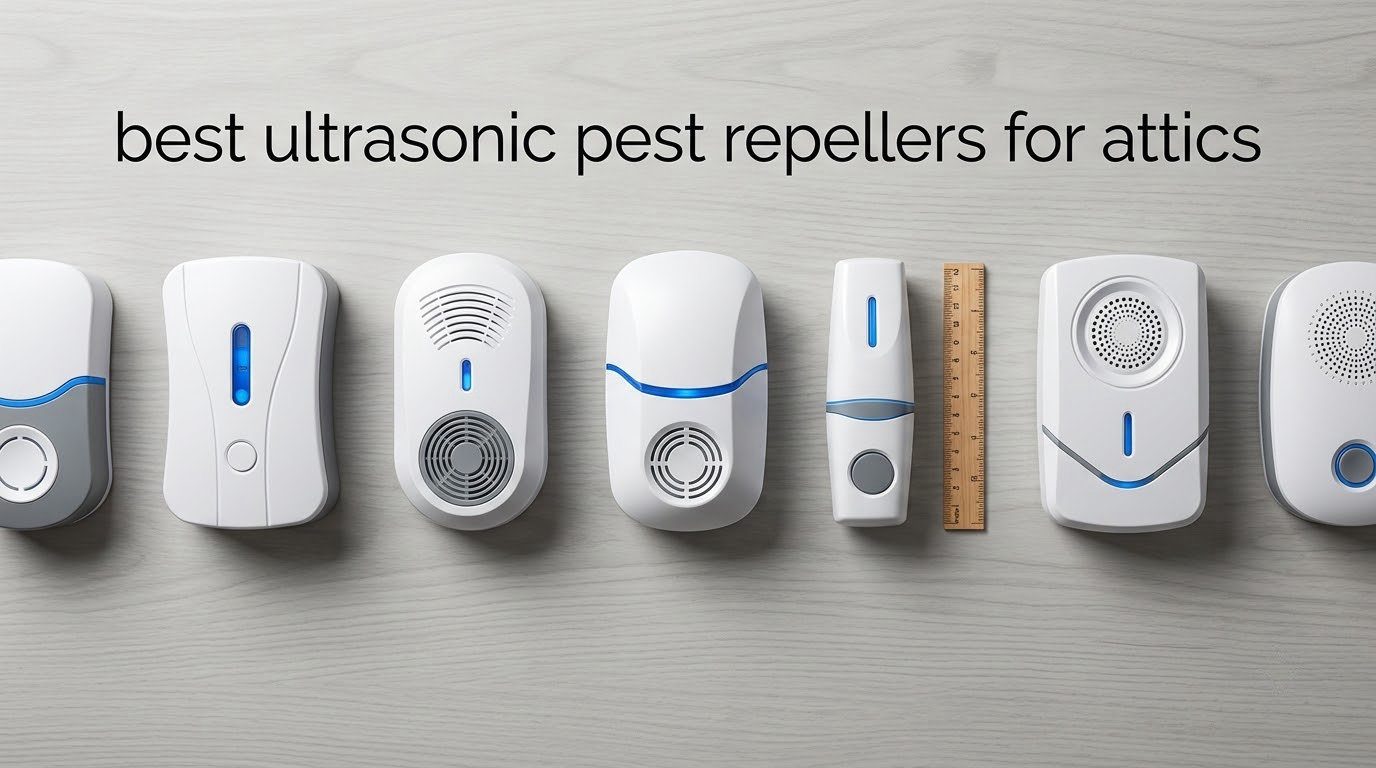
If you have ever gone up into the attic to retrieve a holiday bin and found it chewed through, or heard scratching moving along the rafters at 2 a.m., you already know the sound. That is the search for the best ultrasonic pest repellers for attics, a chemical-free deterrent aimed squarely at mice and rats working the top of your house.
Before the list, one limitation most roundups bury: ultrasonic sound behaves like light, not like radio. It travels in a straight line, it reflects off hard surfaces, and it dies against fiberglass insulation, stacked cardboard, and wooden roof trusses. A single unit in a cluttered attic does very little. An open attic with clear sight lines and four units pointed inward is a completely different situation.
Our selection is based on manufacturer specifications, listed coverage claims, warranty terms, and the volume and pattern of published customer ratings for each device. We did not run a controlled ninety-day attic trial, and we will not pretend otherwise. What we did do is read the specifications closely, cross-check them against what buyers report, and flag where the marketing language and the real physics disagree.
Table of Contents
- Top 3 Ultrasonic Pest Repellers for Attics in 2026
- All 8 Best Ultrasonic Pest Repellers for Attics (October 2026)
- How Ultrasonic Pest Repellers Work in an Attic
- 1. OWLTRA OW-5 4-Pack – Silent Operation for Attic and Crawl Space
- 2. REPELIX ARMOUR 2-Pack – Best Multi-Mode Tuning for a Rodent-Focused Attic
- 3. Neatmaster 4-Pack – Three-Year Warranty for Long-Term Attic Use
- 4. Jqely 6-Pack – Widest Frequency Sweep for Large Open Attics
- 5. Bell+Howell 3-Pack – Straightforward Variable-Frequency Starter Set
- 6. Cvtayn 6-Pack – Six Matching Units for Uniform Placement
- 7. Vogholic 6-Pack – Practical Mounting for Garages, Sheds, and Side Attics
- 8. Bell+Howell 8-Pack – Mixed Sizes Including Attic and Basement Units
- What Ultrasonic Will Not Fix in an Attic
- How to Place Ultrasonic Repellers in an Attic
- Will a Repeller Survive Your Attic Temperatures?
- Buying Guide: What to Look for in an Attic Repeller
- Are Ultrasonic Repellers Safe for Dogs, Cats, and Electronics?
- When to Call a Professional Instead of Buying a Repeller
- Frequently Asked Questions
- Do ultrasonic pest repellers actually work for rodents?
- Can ultrasonic pest repellers work through walls?
- Are ultrasonic pest repellers safe for dogs and cats?
- How long does it take for an ultrasonic pest repeller to work?
- Do ultrasonic pest repellers interfere with Wi-Fi or hearing aids?
- What coverage area should I look for in an attic repeller?
- Are ultrasonic repellers effective in cold or hot attic temperatures?
- Should I use an ultrasonic repeller or traps in an attic?
- Bottom Line: The Best Ultrasonic Pest Repellers for Attics in 2026
Top 3 Ultrasonic Pest Repellers for Attics in 2026

OWLTRA OW-5 4-Pack
- Silent to human ears
- Built-in night light
- Four pieces per pack
- AC plug-in power
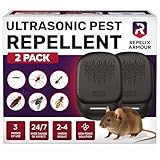
REPELIX ARMOUR 2-Pack
- Three selectable modes
- Up to 1500 sq ft per device
- Targets rodents and insects
- Compact plug-in body
Neatmaster 4-Pack
- 800-1200 sq ft per unit
- Three-year warranty
- 3-5 watt power draw
- Pulsing blue indicator
All 8 Best Ultrasonic Pest Repellers for Attics (October 2026)
| Product | Specs | Action |
|---|---|---|
| OWLTRA OW-5 Ultrasonic Rodent Repeller 4 Pack |
|
Check Latest Price |
| REPELIX ARMOUR Ultrasonic Pest Repeller 2 Pack |
|
Check Latest Price |
| Neatmaster Upgraded Ultrasonic Repeller 4 Pack |
|
Check Latest Price |
 Jqely 3-Mode Ultrasonic Repeller 6 Pack Jqely 3-Mode Ultrasonic Repeller 6 Pack |
|
Check Latest Price |
 Bell+Howell Ultrasonic Pest Repeller 3 Pack Bell+Howell Ultrasonic Pest Repeller 3 Pack |
|
Check Latest Price |
 Cvtayn Ultrasonic Pest Repellent 6 Pack Cvtayn Ultrasonic Pest Repellent 6 Pack |
|
Check Latest Price |
 Vogholic Ultrasonic Pest Control Repeller 6 Pack Vogholic Ultrasonic Pest Control Repeller 6 Pack |
|
Check Latest Price |
 Bell+Howell Ultrasonic Repeller Assorted 8 Pack Bell+Howell Ultrasonic Repeller Assorted 8 Pack |
|
Check Latest Price |
How Ultrasonic Pest Repellers Work in an Attic
An ultrasonic pest repeller is a small plug-in device that emits sweeping sound between roughly 20 kHz and 65 kHz, above what most adults can hear but well within the range of mice, rats, and many insects. The discomfort drives pests away from the treated area rather than killing them, which makes these units a deterrent component of a broader plan rather than a standalone fix.
Three ideas decide whether a repeller earns its place in an attic. The first is line of sight. Sound reflects off hard surfaces such as roof decking, plywood, and bare joists, then bounces into corners. It does not cross a wall of fiberglass batts or a stack of stored boxes, which is why a single device placed behind a pile of holiday decorations may as well be switched off.
The second is habituation. Rodents adapt to a fixed tone in a matter of days. Devices that sweep across a band of frequencies, or that let you switch modes, keep the signal unfamiliar and extend the useful life of the unit. Most of the products in this roundup do at least some sweeping.
The third is the coverage discount. Manufacturers advertise coverage in open, empty rooms with clear sight lines. An attic with rafters, insulation blankets, ducts, and stored furniture will deliver meaningfully less than the printed number, and buyers should plan on a fraction of the claim rather than the whole thing.
None of these devices can reach rodents that have already built a nest inside a wall cavity, a duct, or a soffit. For those animals the sound field has to physically arrive at them first, and if the path is blocked, nothing happens.
1. OWLTRA OW-5 4-Pack – Silent Operation for Attic and Crawl Space
OWLTRA OW-5 Ultrasonic Rodent Repellers 4 Pack, Effectively Repel Rodents While 100% Silent & Safe to Humans and Non-Rodent Pets, White
Four plug-in units
AC powered
4 oz each
Model URRL01
Silent to human hearing
Pros
- Completely inaudible to humans and non-rodent pets
- Poison-free with no bait or residue
- Built-in night light doubles as a working indicator
- Four units allow zone-by-zone placement
Cons
- Ultrasonic sound does not penetrate walls or solid objects
- Needs traps or baits alongside it for an existing population
- Some owners report only partial or temporary reduction
This is the pack I keep coming back to for attics, and the reason is less glamorous but more useful: it is rated as inaudible to human ears, so it can run continuously in a space attached to your living area without anyone noticing it. The OW-5 works in the 20 kHz to 65 kHz band and is designed to be unpleasant to rodents while registering as silence to you, which matters when the device has to run continuously in a space attached to your living area.
The manufacturer recommends plugging each unit away from solid objects and close to hard surfaces so the sound has something to bounce off. That is exactly the guidance an attic needs, and it is the reason most of these devices live on a joist near the roof deck rather than sitting on top of a box. Each unit measures about 1.89 inch by 3.74 inch by 3.07 inch and weighs 4 ounces, so you can zip, screw, or wedge four of them onto framing without thinking about the load.
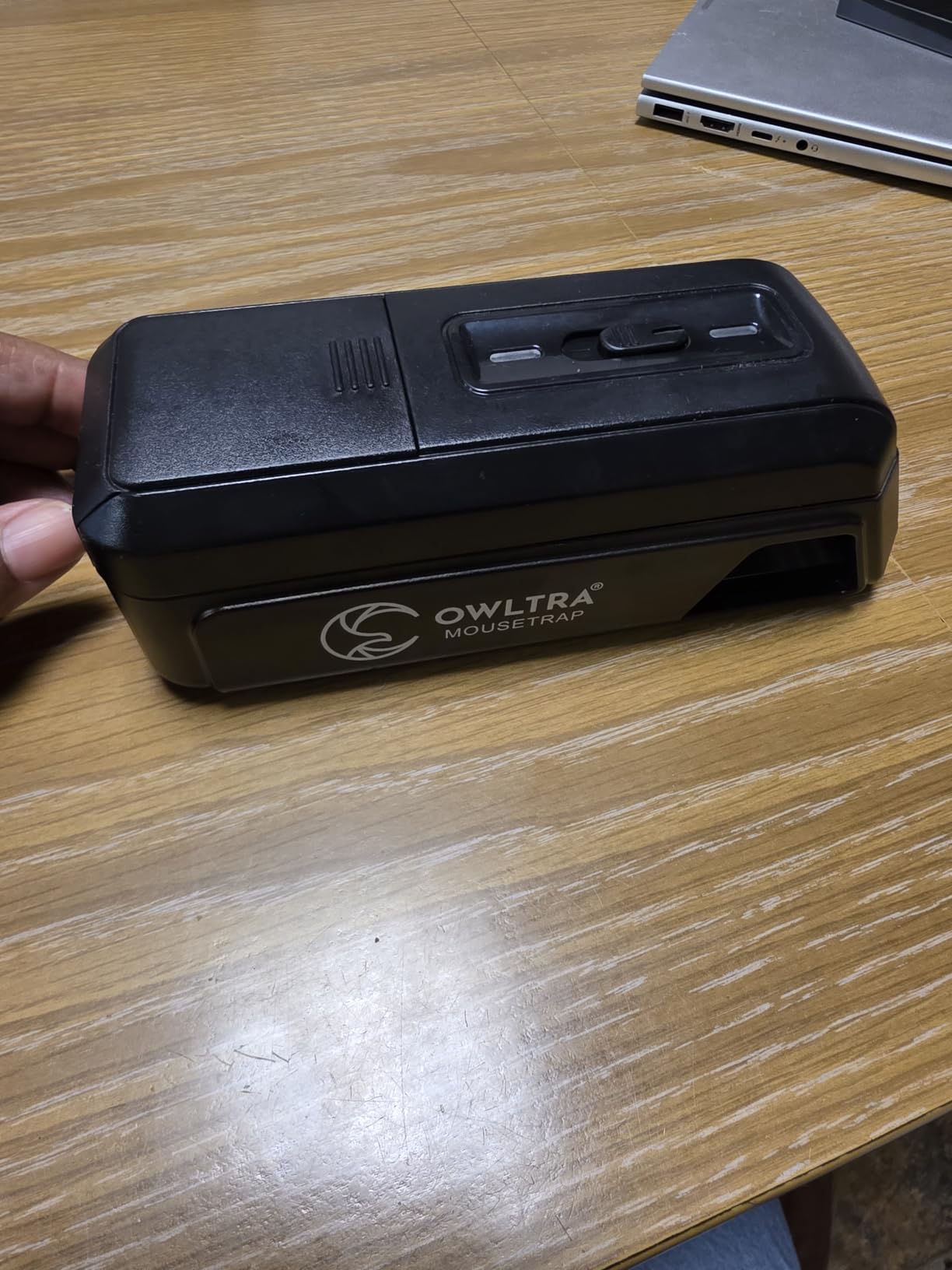
Customer ratings for this listing are the largest in the roundup at more than 23,000, and the distribution is the part worth reading. Sixty-five percent sit at five stars, but fifteen percent are one star, and those one-star reviews cluster on one theme: the sound simply did not reach the mice. Whether sound reaches a given mouse comes down to sight lines. A device tucked behind stored items has no path to the animal, and the fifteen percent of ratings in that one-star group line up with that single explanation far more than with a defect in the hardware.
That is why the OW-5 works as a four pack rather than a single unit. In a 900 square foot attic, four devices mounted at the four corners and aimed toward the center produce overlapping fields across the open middle of the floor. Two devices across a 30 foot span leave a dead zone in the middle, and that dead zone is where a colony settles.
Reviewers also point out that the soft night light is genuinely useful, because it tells you at a glance that a device in a dark corner is still powered. In an unlit attic that single feature saves you from climbing up repeatedly to check whether a unit is working.
Who this four pack suits in an attic
It suits anyone who cannot tolerate audible sound in a space connected to the house, and anyone running a crawl space, garage soffit, or finished attic where a night light doubles as a comfort feature. Four devices is a sensible minimum for a medium footprint with open middle space and no heavy storage.
It also suits a household that wants the strongest evidence base available. A rating of 4 stars across more than 23,000 ratings is a far more useful signal than a 4.4 from a few hundred, because it means the failure modes have been found and reported by thousands of people already.
Where the OW-5 falls short in an attic
It has no adjustable frequency modes, so it relies entirely on internal sweeping. That is a real drawback if your problem species is a specific one, and it is the main reason the next unit on the list exists.
It is a deterrent only. Owners with an established family of mice living inside the insulation report a reduction rather than an elimination, and pairing the OW-5 with snap traps and a serious entry-point sealing job is the version of this plan that actually finishes the problem.
2. REPELIX ARMOUR 2-Pack – Best Multi-Mode Tuning for a Rodent-Focused Attic
Ultrasonic Pest Repeller for Indoor Use – 2 Pack – Covers Up to 1,500 sq ft per Device – 3 Modes Mouse Repellent – Rodent Repellent – Helps Repel Rats, Spiders, Mosquitoes, Ants & Household Insects
Two plug-in devices
Model PR-025
Up to 1500 sq ft per device
7.1 oz per unit
Pros
- Three selectable frequency modes let you tune output to the pest
- Chemical-free and odorless operation
- Compact body does not block the second outlet
- Green indicator confirms power status
Cons
- Modes 2 and 3 produce an audible high-pitched squeal
- Occupied rooms make anything above the quietest mode hard to tolerate
- Typically reduces rather than eliminates a mouse family
- Two devices may under-cover an attic
Tuning is what an attic problem usually needs, and this device lets you do it directly. Three modes let you start gentle on a space you still need to enter, then move to a stronger setting on a bay you have already sealed off from the living area.
The listed coverage is up to 1,500 square feet per device, which is the second-highest claim in the roundup. Treat that number as an open-room figure. Once you subtract the volume taken up by insulation depth, duct runs, and boxed storage, the effective field in a real attic is a portion of it, and two devices rarely blanket a full two-story footprint.
Reviewers buying for insects tend to convert fastest, with wasp, fly, mosquito, and spider activity dropping within days. Rodent results take longer, and the recurring observation is that the unit reduces the population rather than removing it. The compact body, listed at roughly 0.4 inch on each side, is genuinely useful in an attic where a bulky plug-in would block the second receptacle on a grounded outlet.
Seventy-eight percent of ratings sit at five stars, which is among the strongest shares here, and the manufacturer backs the device with a satisfaction guarantee and customer support. For a homeowner who is still undecided about whether electronic control suits their attic, that guarantee does real work on perceived risk.
Who this two pack suits in an attic
It suits an attic that you have divided into a human-accessible zone and a closed-off zone. Run mode 1 where you still climb up, and reserve a stronger mode for a sealed bay. Buyers with chemical sensitivities value the odorless, residue-free operation particularly highly.
It also suits a mixed pest situation. The targeted species list covers rats, mice, spiders, mosquitoes, ants, flies, and cockroaches, so one device handles an attic that has both crawling insects and rodent activity rather than forcing a second purchase.
Where the REPELIX ARMOUR falls short in an attic
Two devices is the weakest unit count in this roundup for attic purposes. The listing itself acknowledges this when it notes that two units may fall short for whole-home or attic coverage. If your footprint is over 600 square feet, plan on buying two packs rather than one.
The audibility of modes 2 and 3 is the other genuine drawback. Owners in occupied apartments describe the higher settings as hard to live with, and anyone with sensitive hearing or a dog in the space should stay on the quietest mode until the animals are elsewhere in the house.
3. Neatmaster 4-Pack – Three-Year Warranty for Long-Term Attic Use
2026 Upgraded Ultrasonic Repeller Pest & Insect Indoor Repeller, 4 Pack
Four plug-in units
Model TJSK-007
800-1200 sq ft per unit
3-5 watt draw
Three-year warranty
Pros
- Only unit here with a three-year manufacturer warranty
- 800-1200 sq ft of open-area coverage per device
- Draws just 3-5 watts with no batteries to swap
- Silent running with no odor or residue
Cons
- Bright blue indicator is unsuitable for a dark sleeping room
- Ultrasonic waves do not pass through walls
- Some buyers report activity returning after a few weeks
- Not effective against every target such as bats
What separates this pack is paperwork, not wattage. Three years of manufacturer warranty coverage is the longest term in the roundup, and on a device meant to run continuously through a heating season in an unconditioned space, that coverage is worth more than an extra feature.
Per-unit coverage is listed at 800 to 1,200 square feet of open area, which is a more honest claim than the 1,500 and 1,600 figures two products on this list make. The honest number tells you that a four pack handles a medium attic with an open center, and that you need a second pack for anything larger.
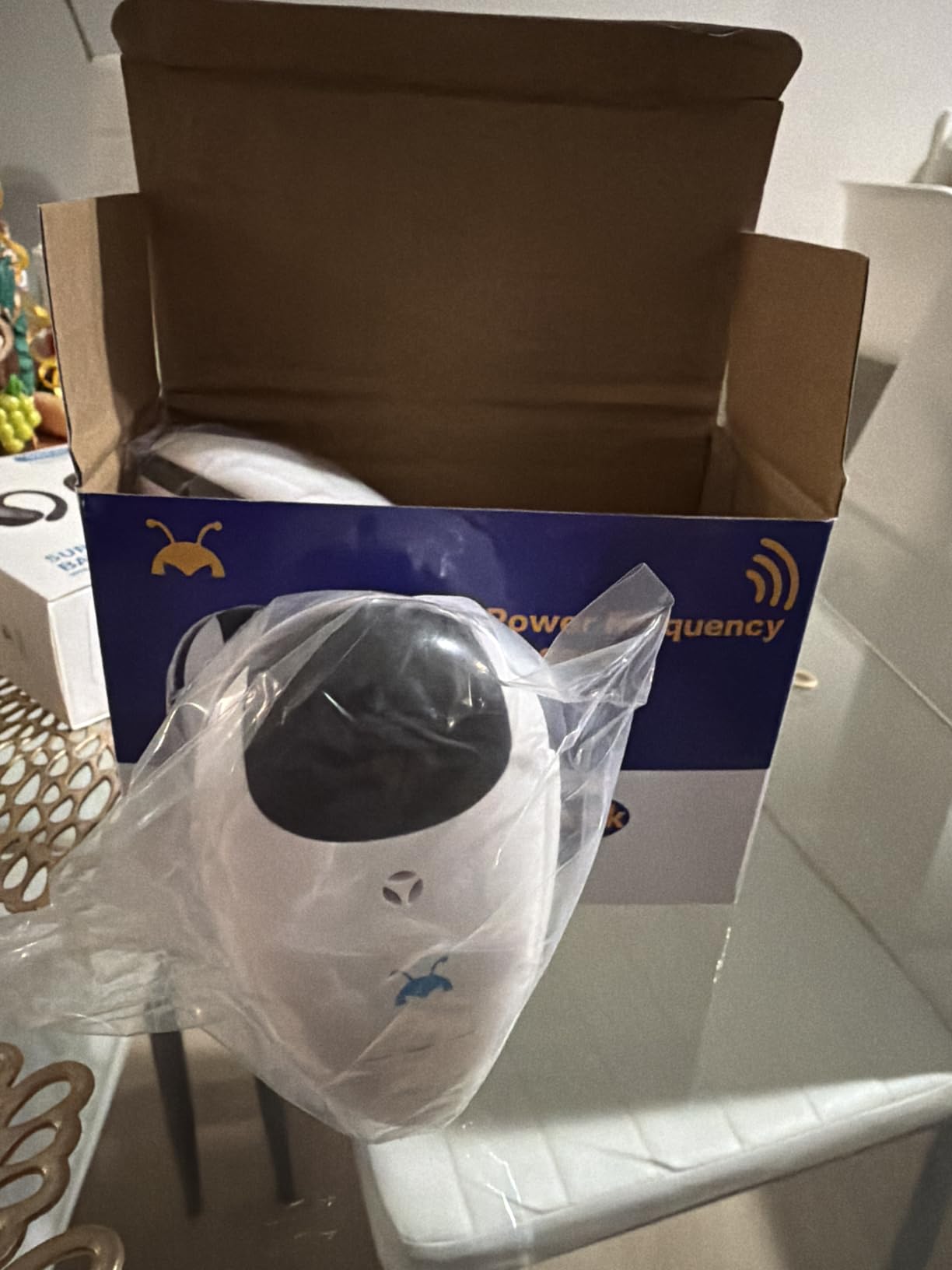
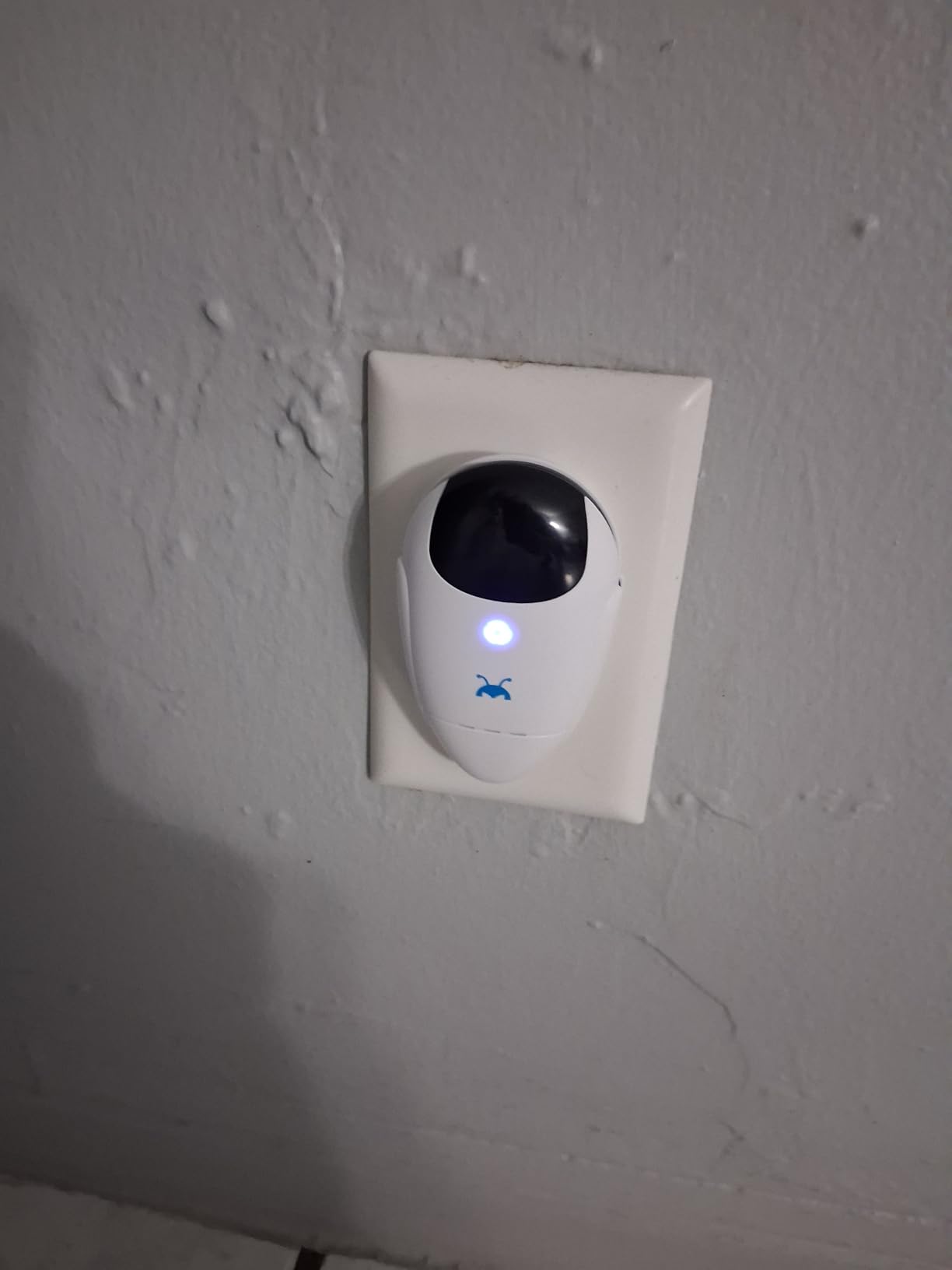
Buyers report a clear drop in roaches, spiders, mosquitoes, and ants after one to two weeks of continuous use. The most repeated negative theme is the pulsing blue indicator light, which several owners say rules the device out of a bedroom, though in a dark attic that same light is a useful confirmation that the unit has power.
Power draw of 3 to 5 watts is roughly what a single night light costs, and running one or two devices continuously adds very little to a household load. Each unit measures about 2 inch by 1.2 inch by 3.5 inch and weighs 5.3 ounces, so mounting on a rafter face or a joist face is simple with a screw or a cable tie.
One limitation deserves a specific mention for attic owners. Buyers report that the unit is not effective against every target animal, and bats are called out by name. If the scratching in your attic at dusk is bats moving in and out of a ridge vent, no device on this list is the right tool.
Who this four pack suits in an attic
It suits anyone who plans to leave devices running for a full year and wants coverage behind them if a unit fails. The three-year term is longer than the typical one-year commitment on this category, and that matters in a space you do not want to climb into every month.
The low power draw also suits an attic on a seasonal circuit, or one where you are running a repeller from a garage circuit on a timer. The device has no batteries, so nothing to forget before winter.
Where the Neatmaster falls short in an attic
The listed coverage figure of 800 to 1,200 square feet per device is modest, so covering a large attic takes more devices than with the higher-claim products here. Buyers who under-cover tend to be the ones who report activity returning after a few weeks.
It is also less flexible than the two three-mode options here. Where the Jqely and REPELIX ARMOUR give you a frequency band to match to a species, this one runs a single program, so you cannot turn the intensity down for a bay you still need to walk through.
4. Jqely 6-Pack – Widest Frequency Sweep for Large Open Attics
2026 Upgraded Ultrasonic Indoor Pest Repeller, 3-Mode Mouse Traps, 6 Pack
Six plug-in units
Model JL216
10-65 kHz sweep
Up to 1600 sq ft open space
3-5 watt draw
Pros
- Only unit here publishing a specific 10 kHz to 65 kHz span
- Color-coded modes separate flying insects from crawling insects from rodents
- Listed by the maker for attics basements garages and warehouses
- Six devices cover a large footprint from one purchase
Cons
- Red mode produces uncomfortable audible noise and suits empty rooms only
- Waves are blocked by walls and large stored items
- Pest activity can increase during the first week or two
The mode bands here are published as exact numbers, which matters in an attic. It is the only device here that publishes exact frequency bands per mode: blue at 25 to 45 kHz for mosquitoes, gnats, and fruit flies, yellow at 18 to 35 kHz for ants, cockroaches, and spiders, and red at 10 to 25 kHz for rats, mice, and large insects.
That red band is the one that matters in an attic, and it is also the one you will hear. It is the lowest-frequency mode in the group and it produces audible noise, so the correct use is to set it on sealed bays and bays you do not need to enter. Many owners simply run the whole attic on yellow and reserve red for the area over a garage where rodents are heaviest.
Open-space coverage is listed at up to 1,600 square feet per device, the highest figure here, and the listing names attics among its intended rooms. Six devices give you enough hardware to place a unit at each corner and midpoint of a medium footprint, which is the geometry that actually closes the middle dead zone.
At 4.4 stars across more than 2,150 ratings, with 82 percent of those ratings at five stars, this listing carries the largest share of top scores in the group. Buyers consistently describe the color-coded system as the feature that finally made the product understandable, and they rank it first in the indoor ultrasonic category on Amazon.
Who this six pack suits in an attic
It suits a larger or awkwardly shaped attic where a single row of devices would leave the far end quiet. Six devices also let you run different modes in different bays, which no other product in this roundup does at this unit count.
It suits a household with a mixed pest picture. Insects arriving through the ridge vent and mice coming in through the soffit are both covered by two modes on the same hardware instead of two separate purchases.
Where the Jqely falls short in an attic
The red mode is loud enough that it is unsuitable for an attic you or a contractor need to work in while it runs. If your inspection visits happen during the day, plan the schedule around the mode you leave on.
Owners also report a visible increase in activity during the first week or two, which is a documented behavior pattern of the habituation cycle rather than a defect. Plenty of one-star ratings appear to be people who decided in week one that the device had failed.
5. Bell+Howell 3-Pack – Straightforward Variable-Frequency Starter Set
Bell + Howell Ultrasonic Pest Repeller Home Kit (Pack of 3), Ultrasonic Pest Repeller, Pest Repellent for Home, Bedroom, Office, Kitchen, Warehouse, Hotel, Safe for Human and Pet
Three plug-in units
Model 50184
Variable frequency
LED indicator
3.2 by 2 by 3.5 inch
Pros
- Variable frequency makes it harder for pests to adapt over time
- Chemical-free and completely odor free
- LED indicator shows the unit is actively emitting
- Comes from a long-established home products brand
Cons
- Lowest average rating in the group with 14 percent one-star reviews
- Mixed real-world results with 10 percent of ratings at three stars
- Waves are weakened by solid objects and walls
- Listed item weight of 0.27 g looks inaccurate for a three pack
Three units, variable frequency, and a very long-running listing. The Bell+Howell kit is the simplest thing in this roundup to explain, which makes it a reasonable way to start if you have a small attic bay rather than a whole floor.
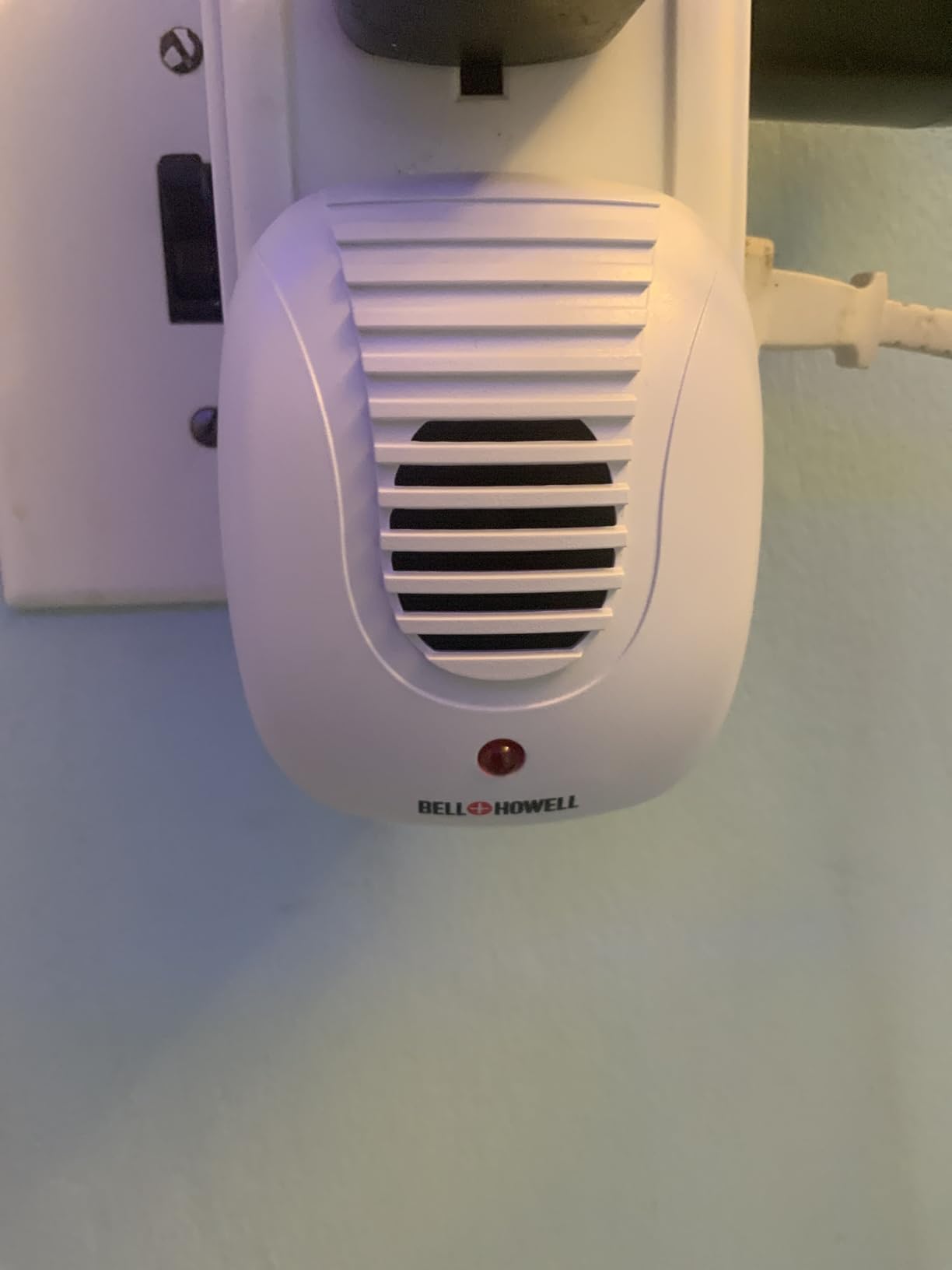
Variable frequency is the feature that matters, because it stops rodents from acclimating to a single tone. The device also carries an LED indicator that confirms emission, and the whole thing runs chemical-free and odor-free, so it can sit in a space near a finished ceiling without a ventilation argument.
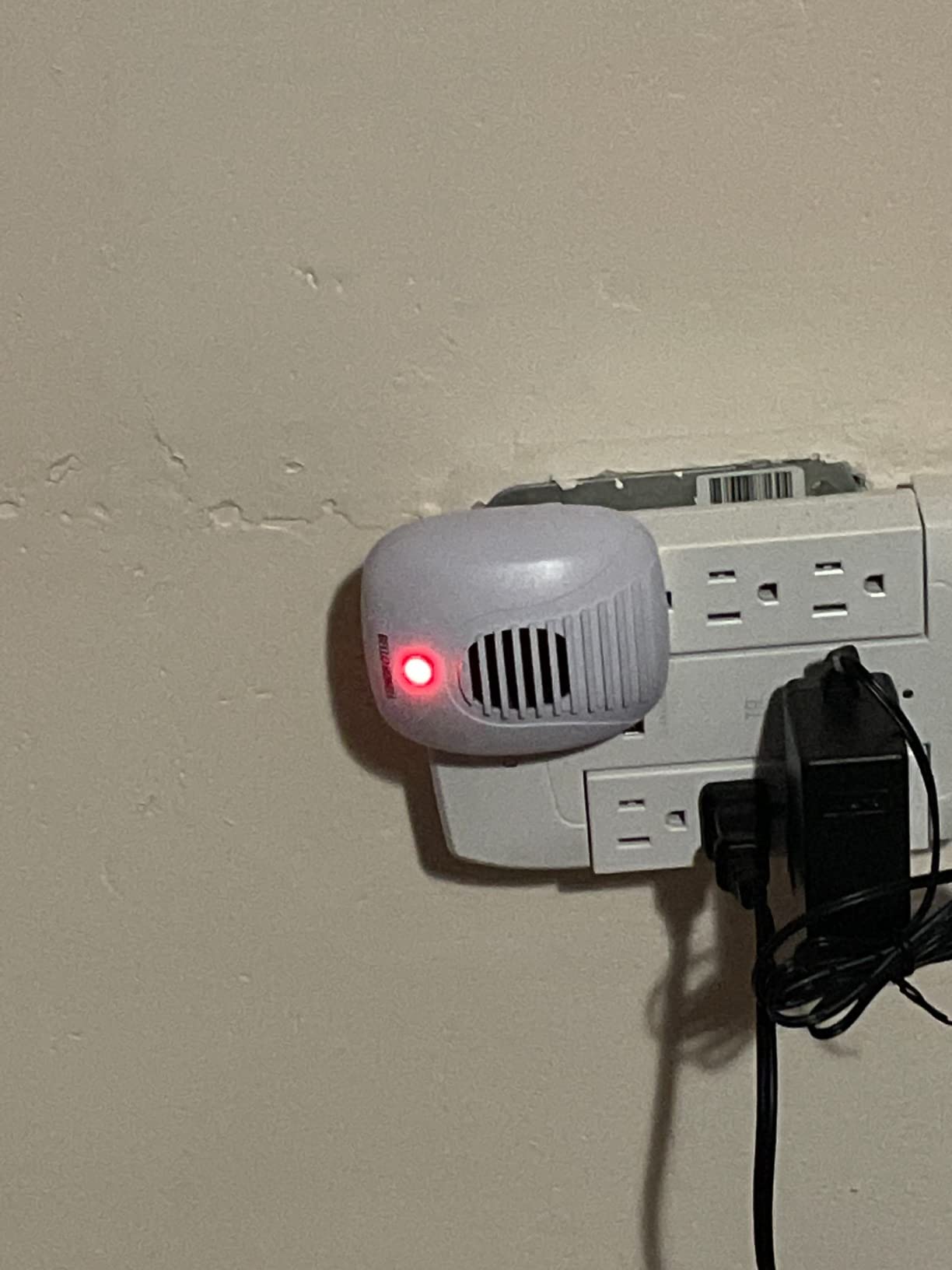
We are going to be blunt about the ratings, because this pack sits at the bottom of the field on average score, tied with the OWLTRA and below the rest. A 4.0 average sits below the rest of the field, and the distribution is the most polarized here: 57 percent at five stars, 14 percent at one star, and 10 percent at three stars. That middle band of three-star reviews is where buyers describe partial results against an established infestation.
There is also a data quality flag. The listed item weight of 0.27 grams is not credible for a three pack of plug-in units, which tells you the specification block on this listing is not carefully maintained. It is not a reason to skip the product, but it is a reason to trust the review text over the specification text.
Each unit measures about 3.2 inch by 2 inch by 3.5 inch, a chunkier footprint than the competition, which is fine in an attic where space is not at a premium and inconvenient in a small bay you need to reach past.
Who this three pack suits in an attic
It suits a small attic over a porch, a low bay over a garage, or a single storage section where the activity is concentrated. Three devices is enough if the area is open and the sound can cross it end to end.
It also suits anyone who wants a brand with a long home products history rather than a recent marketplace listing, and who wants the option of a different physical design in a second box later.
Where the Bell+Howell three pack falls short in an attic
Three devices is thin for anything beyond a small bay, and the 14 percent one-star share suggests a meaningful number of buyers got a clear result. In an attic that result usually means sound was not reaching the rodents.
It also has no selectable modes, so you cannot match the output to a species or reduce intensity in a bay you need to enter. The LED is an on or off confirmation only, with no mode indicator to read.
6. Cvtayn 6-Pack – Six Matching Units for Uniform Placement
2026 Cvtayn Upgraded Ultrasonic Pest Repellent Indoor Repeller, Mouse Traps, Repellent Roach, Mouse, Bugs, Mosquito, Mice, Spider, Ant, Rodent Repellent Ultrasonic Plug in, 3 Mode Switching,5 Pack
Six plug-in units
Model JL216
Three-mode color switching
2.05 by 1.38 by 3.23 inch
Pros
- Six identical devices make it easy to place one at every position without sorting
- Color-coded mode lights read at a glance from the floor
- Silent chemical-free running with no bait to remove
- Compact and light enough for cable-tie mounting
Cons
- Largest one-star share in the set at 16 percent
- Thinnest listing content of any product here
- Waves are blocked by walls and large stored furniture
- Some reviews describe the pack as five rather than six devices
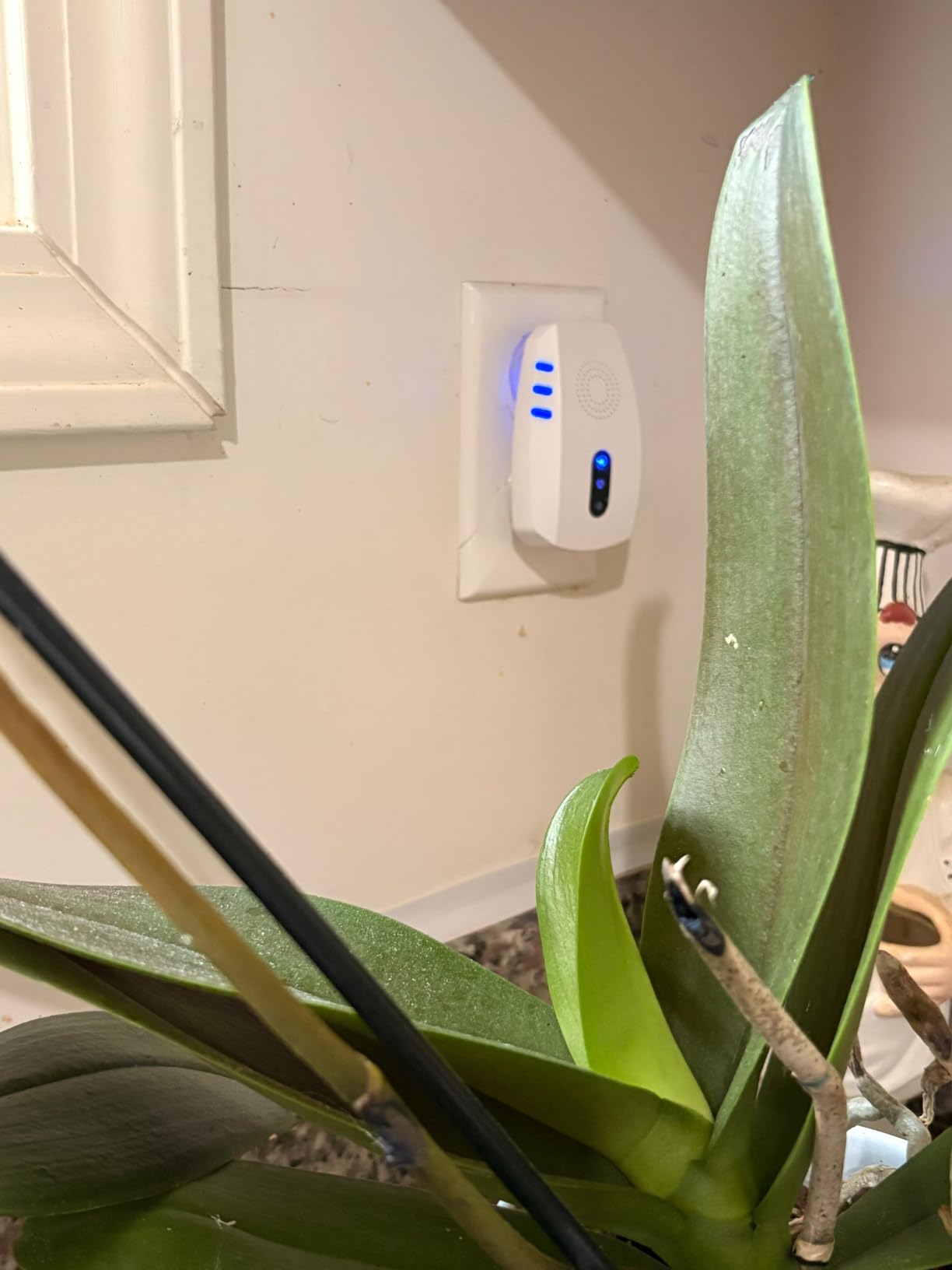
When your plan is positional, identical devices are an advantage. The Cvtayn pack gives you six matching units with the same dimensions and the same controls, so you can map out a placement pattern on the attic floor and execute it without figuring out which model is which.
Mode selection is color-coded, which means you can confirm the setting from the attic hatch without climbing in, which is a small quality-of-life gain in an attic you want to visit rarely.
The honest drawback is the listing. It carries the least detail of anything in this roundup, with close to a single-word feature description and no published coverage figure, no frequency range, and no power draw. Buyers mention that, and they mention it in reviews.
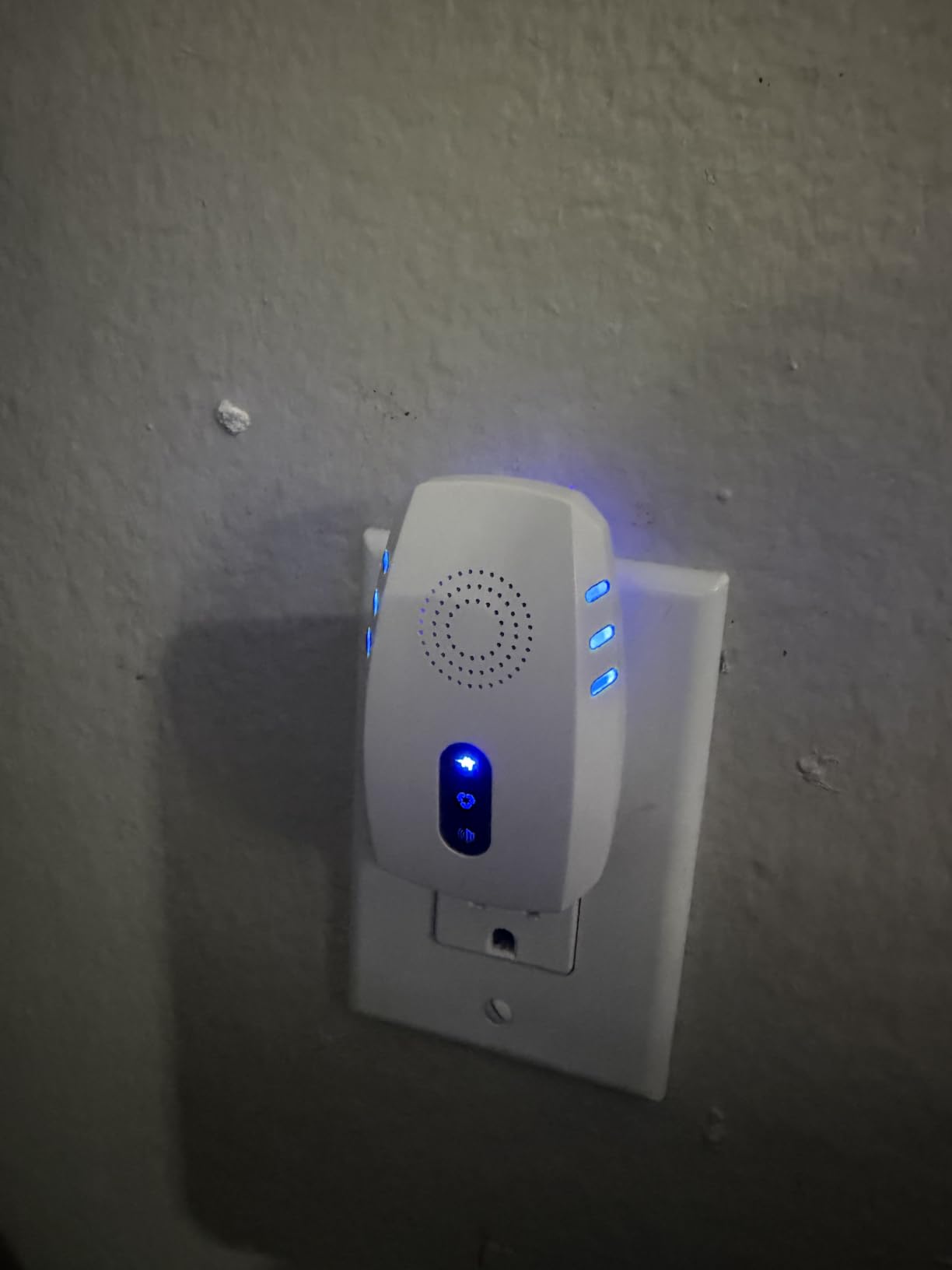
The rating distribution is the other thing to read carefully. Seventy-three percent at five stars is respectable, but 16 percent one-star is the largest share of negative ratings in the group, and it exceeds the Bell+Howell listing that gets more attention in most roundups. Several of those reviews describe activity returning after a month or two.
A handful of reviewers also describe the pack as containing five devices rather than six. That kind of complaint is usually about counting rather than performance, but if you are deploying by the corner-and-midpoint method, count the devices before you climb the ladder.
Because the listing gives you no coverage figure, you have to plan placement using the more conservative assumption. For six devices, assume they cover a medium footprint with an open middle rather than a large one.
Who this six pack suits in an attic
It suits a homeowner running a uniform placement pattern across several rooms below, or across a wide garage attic where you want every bay treated identically. Families with children and pets often pick this pack specifically for the chemical-free running claim.
It also suits anyone who wants a larger pack and expects to add more later, since the same line is offered in a 10-device configuration with matching hardware.
Where the Cvtayn falls short in an attic
No published coverage figure means you are planning blind, and in an attic that is exactly the mistake that leaves a dead zone in the middle. Treat the specification gap as a reason to deploy more devices rather than fewer.
The 16 percent one-star share is the highest here, and combined with the minimal listing content it is the weakest specification-plus-evidence pairing in the roundup despite the useful hardware count.
7. Vogholic 6-Pack – Practical Mounting for Garages, Sheds, and Side Attics
2026 Upgraded Ultrasonic Pest Control Repeller, Indoor Mouse Repellent for Rat, Mice, Rodent, Roach,Cockroach, Insect, Mosquito Electronic Plug in Pest Control 6 Packs
Six plug-in units
Model MVD
800-1200 square meter claim
Mounts 10-47 inches off floor
AC or DC
Pros
- Six devices give good coverage when distributed bay by bay
- Silent odorless and radiation-free operation
- Compact body does not block a second receptacle
- Soft blue glow stays unobtrusive in a dark space
Cons
- Results commonly take three to four weeks to become obvious
- Some buyers report no measurable effect after months
- Plug type does not fit every outlet standard without an adapter
- Waves weaken against solid walls so more than one device is needed
Its coverage figure is quoted in square meters rather than square feet. The listed maximum of 800 to 1,200 square meters is a very large claim, and it applies to a wide open interior, not to the obstructed field you will get between rafters.
What is genuinely useful is the mounting guidance. The manufacturer recommends a wall socket between 10 and 47 inches from the floor, which is a real height range rather than a vague suggestion. In a garage or shed with an accessible wall outlet, that makes placement straightforward, and in a low-clearance space it keeps the unit above the floor where dust and standing water collect.
Reviewers repeatedly describe satisfaction that arrives slowly. The consistent timeline in ratings is three to four weeks before the effect is obvious, and several owners note that the first month felt like nothing was happening. Some buyers report no measurable effect on cockroaches even after months, which is the clearest negative in this listing.
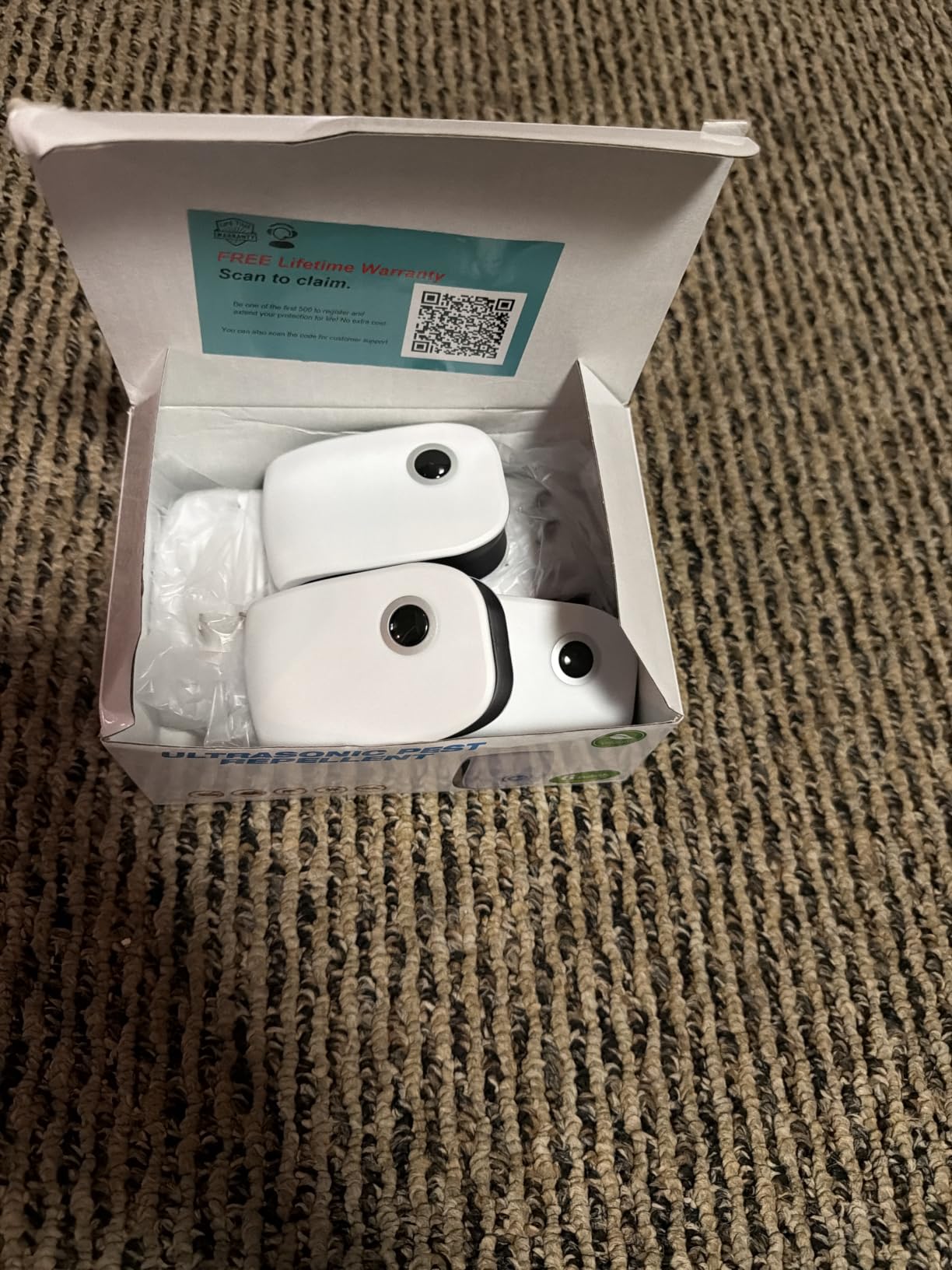
At 966 ratings, this listing has a modest review base, so the average carries less information than the larger listings. Seventy percent of ratings sit at five stars, which is solid, but the sample is thin enough that we would not lean on it for a high-stakes decision.
One practical note on the plug. Owners outside the North American market report that the plug type needs an adapter in some regions, which matters if your attic plan includes a shed or a detached building on the same property.
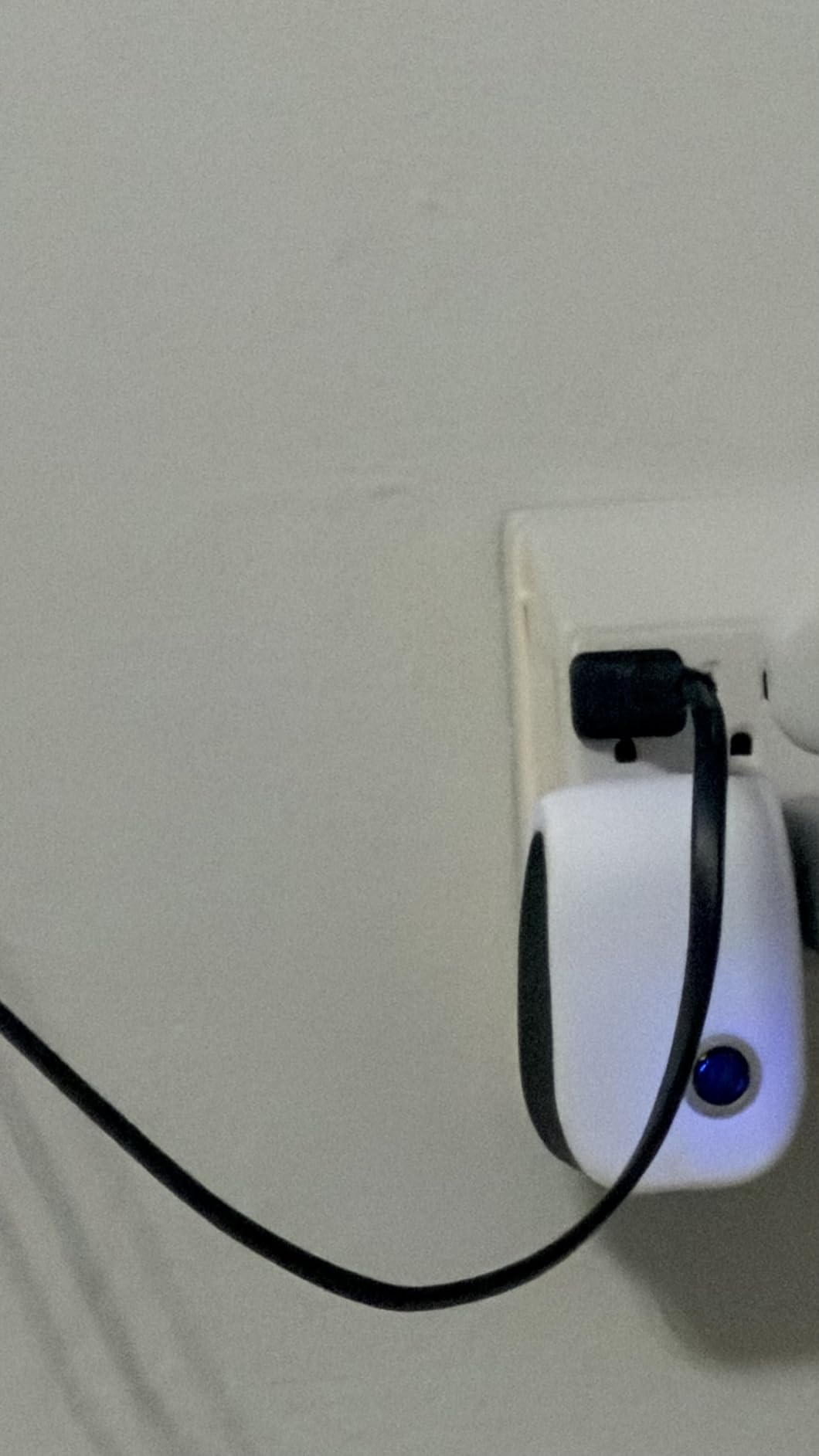
The stated height range is a floor-socket range, and an attic rarely has a wall socket. Plan on extending power down from a joist-mounted can light or a nearby garage circuit, and check the cord route so it cannot contact insulation or a hot flue.
Who this six pack suits in an attic
It suits an attic that sits directly over a garage, a workshop, or a shed, where a nearby reachable outlet makes the installation simple and the low-mount recommendation is easy to follow. The soft blue glow is also useful in a space with no lighting at all.
It suits a buyer who wants to try a repeller without committing to a long warranty story, and who is comfortable evaluating the result over a full month rather than a week.
Where the Vogholic falls short in an attic
The coverage claim in square meters is easy to misread and is the least credible number in this roundup. Do not size an attic deployment from it. Use a rough conversion of the room you know and assume a fraction of it.
The three-to-four-week expectation is also a real risk in cold weather, when the animals you are trying to move are not moving much at all and a slow result becomes indistinguishable from a failed one.
8. Bell+Howell 8-Pack – Mixed Sizes Including Attic and Basement Units
Bell+Howell Ultrasonic Pest Repeller Plug in Device Assorted 8 Pack, Effectively Aids to Repel mice, Bugs, Rats, Rodents, Mosquitos, roaches, Spiders and Ants Chemical, Odor and Sound Free
Eight devices in four sizes
Two of each
Two with night lights
EPA registered and UL tested
Pros
- Four physical sizes let you match a unit to each kind of space
- Listing explicitly names attics hallways and basements
- Two units include dusk-to-dawn night lights for dark spaces
- One design adds an extra front outlet so you keep a receptacle
Cons
- Fewest ratings in the roundup so long-term data is thin
- Micro units are countertop sized and weak in an open bay
- 11 percent one-star and 10 percent three-star ratings show mixed results
- Waves are blocked by walls and stored boxes
This is the most attic-relevant description in the whole roundup. The listing names attics, hallways, and basements as intended spaces, and the pack is built around four physical sizes, two of each: a micro unit for countertops, a classic unit for hallways and basements, a macro unit that includes an extra front outlet, and two units with dusk-to-dawn night lights.
That assortment solves a problem the uniform packs cannot. An attic is rarely one space. You may have a low crawl bay, an open center, a section behind stored furniture, and a ridge area, and those four zones do not want identical hardware. The macro unit with the pass-through outlet is the one to use where you need to keep a receptacle free for a work light.
Variable frequency technology emits constantly changing wavelengths so pests cannot adapt, and the whole line is EPA registered and UL tested, which is meaningful if you are running a device continuously for months in an unconditioned space. The brand itself has a long home products history behind the certification.
At 579 ratings, this is the smallest sample in the roundup and ratings here should carry less weight than the numbers on the four-pack listings. The distribution shows 64 percent at five stars, 12 percent at four, 10 percent at three, and 11 percent at one.
Who this eight pack suits in an attic
It suits a property with more than one outbuilding or a mixed space, where a garage, a basement, and an attic all need coverage and you would rather buy one assortment than three separate products. The night-light units are genuinely helpful in a space with no fixtures.
It also suits a buyer who is nervous about running an electronic device around pets and small children for months on end and wants visible third-party certification on the listing rather than a bare claim.
Where the mixed-size pack falls short in an attic
Half the pack is not sized for an open bay. The micro units are countertop devices, and two of eight devices doing very little in the volume that matters most is a poor allocation of the hardware you have already bought.
With under 600 ratings there is not enough long-term data here to judge reliability honestly over a full heating and cooling season. If the attic is your only problem, the two Bell+Howell packs on this list give you more units aimed at one space.
What Ultrasonic Will Not Fix in an Attic
The most expensive mistake in this category is expecting a repeller to handle a large animal. Ultrasonic output is tuned to the hearing range of small rodents and insects. Squirrels, raccoons, and opossums are not deterred by it, and a device running continuously in an attic where a squirrel has a nest will simply be background noise to the squirrel.
Heavy scratching at dawn and dusk, along with a chewed ridge vent or a torn screen, points to a mammal. That situation needs physical exclusion: one-way doors where possible, metal sheeting and hardware cloth over openings larger than a quarter inch, and a tree or branch removed if it is the ladder the animal uses.
An established nest inside a wall, a duct run, or an unfilled soffit is the second blind spot. Sound cannot reach through the structure, so no device on this list will touch an animal that is sealed inside the building envelope. That is a remediation job involving opening the wall, not a shopping decision.
Sealed entry points are what make repellers work at all. An open soffit means every unit you install is fighting a continuous stream of new arrivals from the yard, and the devices will appear to be failing no matter how many you add.
How to Place Ultrasonic Repellers in an Attic
Placement matters more than model choice, and the protocol is short. Work through it in order rather than plugging a unit into the nearest outlet and hoping.
Seal entry points first. Close soffit gaps, ridge vents, and plumbing penetrations of a quarter inch or larger before powering anything up.
Mount each device 2 to 3 feet above the attic floor on a rafter or joist face, and never directly on top of loose insulation batts, which absorb the sound before it travels.
Aim the unit at a hard surface. Roof decking, plywood, and bare joists reflect sound into corners, while a stack of cardboard boxes does nothing but swallow it.
For a four-unit pack in a square attic, place one device in each corner facing inward so the fields overlap across the middle. Add midspan devices if the open area is longer than it is wide.
Confirm power and audio at the hatch. Each device should show its indicator light and, if it has modes, the correct color before you leave the attic.
Expect the first two weeks to feel worse rather than better. Rodents that have lived in a space for a long time respond to a new sound field by moving to a quieter pocket of the same attic, so droppings may increase in one location while the total volume of activity settles.
By week two the population is typically choosing between the treated zone and the outside. By weeks three and four you should see new droppings stop appearing, and trapping stations going quiet is the signal most owners report first.
If week four arrives with no change at all, the problem is almost always placement or a blocked path rather than the device. Walk the space, confirm line of sight from each unit, and check that no unit is buried behind stored items.
Will a Repeller Survive Your Attic Temperatures?
An unconditioned attic in summer can exceed 120 F, and in winter it can drop well below freezing. Most of the devices in this roundup use plastic housings and draw only 3 to 5 watts, so the electronics are not stressed by the power draw, but the housing plastics and adhesives are what degrade over time.
None of these listings publishes a temperature operating range, which is the single specification worth wishing for and worth asking about before you buy. Where a listing states a mounting range, such as the 10 to 47 inch floor height on the Vogholic, that tells you about placement rather than temperature.
Two practical habits help. Mount devices where they are shaded from direct sun coming through a ridge vent, and check on them during your first spring inspection rather than assuming they are still emitting because the light is on.
Heat also changes rodent behavior. In deep winter the animals are less active and less likely to be driven out by sound at all, so a repeller deployed in January can look like a failure when the real variable is the season.
Buying Guide: What to Look for in an Attic Repeller
Coverage per unit is the number buyers misread most. Treat every published figure as an open-room maximum and plan on a fraction of it for an obstructed attic. A useful rule is to estimate your actual open floor area after subtracting insulation depth, ducts, and stored items, then aim for one device per 300 to 400 square feet of that figure rather than per the printed claim.
Variable frequency matters more than raw output. Devices that sweep across a band, or that let you switch modes, hold up longer than a fixed tone, and the ones with per-species frequency bands give you more control over an attic that hosts more than one pest.
Pack size is an attic-specific decision. A single unit makes sense in a small bay. For anything approaching a full floor, four devices is a realistic minimum, and six is better, because the middle of an open attic is the hardest zone to cover and needs overlap rather than perimeter reach.
Mounting style decides whether the unit can physically go where you need it. Attics rarely have a convenient wall outlet, so look for a small body you can cable-tie to a joist, a pass-through outlet so you do not lose a receptacle, and a height range that works with your power source.
Audibility in the modes you will actually use is a household decision. The most powerful modes on several products here are clearly audible, which is acceptable in a sealed bay and unacceptable in a space with a dog in it. Check whether the quietest mode is strong enough before you rely on it.
Certification and warranty both reduce perceived risk on a category with a history of overclaiming. EPA registration and UL testing appear on one of the products in this roundup, and a three-year warranty appears on another. Where they exist, they are worth something.
Powering an attic with no accessible outlet takes planning. A code-compliant receptacle on an attic-rated circuit, an approved can light with a built-in receptacle, or a garage circuit on a GFCI with a properly rated extension cord are the common routes. Run cords along joists, never across an insulated bay, keep them clear of flues and chimneys, and do not daisy-chain power strips in an unconditioned space.
Are Ultrasonic Repellers Safe for Dogs, Cats, and Electronics?
For most households, yes. The devices here run in the ultrasonic band above adult hearing, and the quietest mode on every product in the roundup is effectively inaudible. The caveat is the stronger modes, which several owners report as a high-pitched squeal that sensitive-hearing people and dogs can pick up.
Two guidance points follow from that. If a dog or cat uses the attic or a space directly below it, stay on the quietest mode in the shared area. If you have a pet with a strong reaction to high-pitched sound, place the higher-mode units only in bays the animal cannot reach.
On electronics, owners do report occasional interference with hearing aids and with some wireless devices. The practical rule is to avoid putting a unit directly on top of a router, a smart-home hub, or a stereo, and to keep repellers a few feet away from Wi-Fi access points.
One documented category limitation: the Neatmaster listing notes it is not effective against every target, with bats called out specifically. If your attic noise is bats rather than rodents, no repeller here is the right purchase.
When to Call a Professional Instead of Buying a Repeller
There is a line, and it is worth drawing before you spend anything. A professional makes sense when you find chewed wiring in the attic, since exposed conductors are a fire risk and repellers do nothing about damage already done.
Call for help when insulation is saturated with urine and packed with droppings. That material generally has to come out and be replaced, and a device left running in a heavily contaminated attic will not resolve the sanitation problem.
Get a licensed exterminator for an active nest with young animals present, for a dead animal in a wall cavity, and for droppings inside HVAC ducts, where contamination reaches the air you breathe. These are not deterrence problems.
One safety note for any attic entry, and it is the most important line in this article. Rodent urine and droppings can carry hantavirus, and the recommended practice is to treat any heavily infested attic as hazardous. Do not sweep or vacuum droppings dry, since aerosolized particles are the transmission route. If you must enter, wear gloves, a properly fitted respirator, and eye protection, and never work alone in a space with structural or electrical damage.
The repellers on this list are the right tool for a light to moderate problem in an open attic, run alongside traps and a sealing job, for two to four weeks. Anything past that is a different category of problem.
Frequently Asked Questions
Do ultrasonic pest repellers actually work for rodents?
They work as a deterrent, not an exterminator. A device that has line of sight to an open area can make that area uncomfortable enough to push mice and rats toward the exit, provided the sound is not blocked by insulation, stored boxes, or roof trusses. Expect two to four weeks of continuous running, and expect activity to spike in the first week or two.
Can ultrasonic pest repellers work through walls?
No. Ultrasonic sound behaves like light rather than radio. It travels in a straight line, reflects off hard surfaces like roof decking and plywood, and is absorbed by fiberglass insulation, wooden trusses, and stored items. A unit behind a stack of boxes protects nothing on the other side of that stack.
Are ultrasonic pest repellers safe for dogs and cats?
The quietest mode on these devices sits above adult hearing and is effectively inaudible, so most households see no issue. The stronger modes are clearly audible and some dogs react to them. If a pet uses the attic or an adjacent room, keep the unit on the quietest setting and reserve higher modes for sealed bays the animal cannot reach.
How long does it take for an ultrasonic pest repeller to work?
Plan on two to four weeks of continuous operation. Week one often looks like failure or worse, because displaced rodents move to a quieter pocket of the same attic. By week two the population is choosing between the treated zone and leaving. By weeks three and four new droppings typically stop appearing. Below-freezing attic temperatures can slow all of this down.
Do ultrasonic pest repellers interfere with Wi-Fi or hearing aids?
Some owners report interference, so keep repellers a few feet away from routers, smart-home hubs, and wireless speakers rather than sharing an outlet or a shelf. If a hearing aid user in the home is affected, try the quietest mode first and move the device to a different circuit if the problem persists.
What coverage area should I look for in an attic repeller?
Read the printed figure as an open-room maximum and plan on a fraction of it. For an obstructed attic, a practical rule is one device per 300 to 400 square feet of genuinely open floor after subtracting insulation depth, ducts, and stored items. Manufacturer claims run from 800 to 1,600 square feet per device, and one listing quotes square meters rather than square feet.
Are ultrasonic repellers effective in cold or hot attic temperatures?
None of the products reviewed publish a temperature operating range, which is worth asking about before buying. Summer attic heat above 120 F and winter freezing both accelerate housing and adhesive degradation, and heat is best avoided by mounting units out of direct sun through a ridge vent. Cold also makes rodents less active, which slows results independently of the device.
Should I use an ultrasonic repeller or traps in an attic?
Use both. A repeller makes the treated area uncomfortable, and traps remove the animals that did not take the hint. Sealing entry points is the third piece, because an open soffit means new rodents arrive continuously no matter how many devices you run. Repellers alone are not a fix for an established infestation.
Bottom Line: The Best Ultrasonic Pest Repellers for Attics in 2026
The OWLTRA OW-5 four pack is our pick for the best ultrasonic pest repellers for attics, and the reasoning is about evidence rather than novelty. A rating of 4 stars across more than 23,000 customer ratings is the largest dataset in this category, the operating frequency is genuinely inaudible to people, and the four-device count maps cleanly onto a corner-inward placement pattern for a medium attic.
If you need to tune intensity, the REPELIX ARMOUR two pack gives you three modes but the least hardware, and the Jqely six pack gives you per-species frequency bands and the widest published sweep for a large open footprint. The Neatmaster four pack is the choice if warranty length matters most to you. None of them will move a squirrel or a raccoon, and none of them will seal an entry point for you.
Seal first, place second, run for four weeks, trap alongside. That sequence is what actually ends attic rodent activity, and the repeller is one component of it rather than the whole answer.