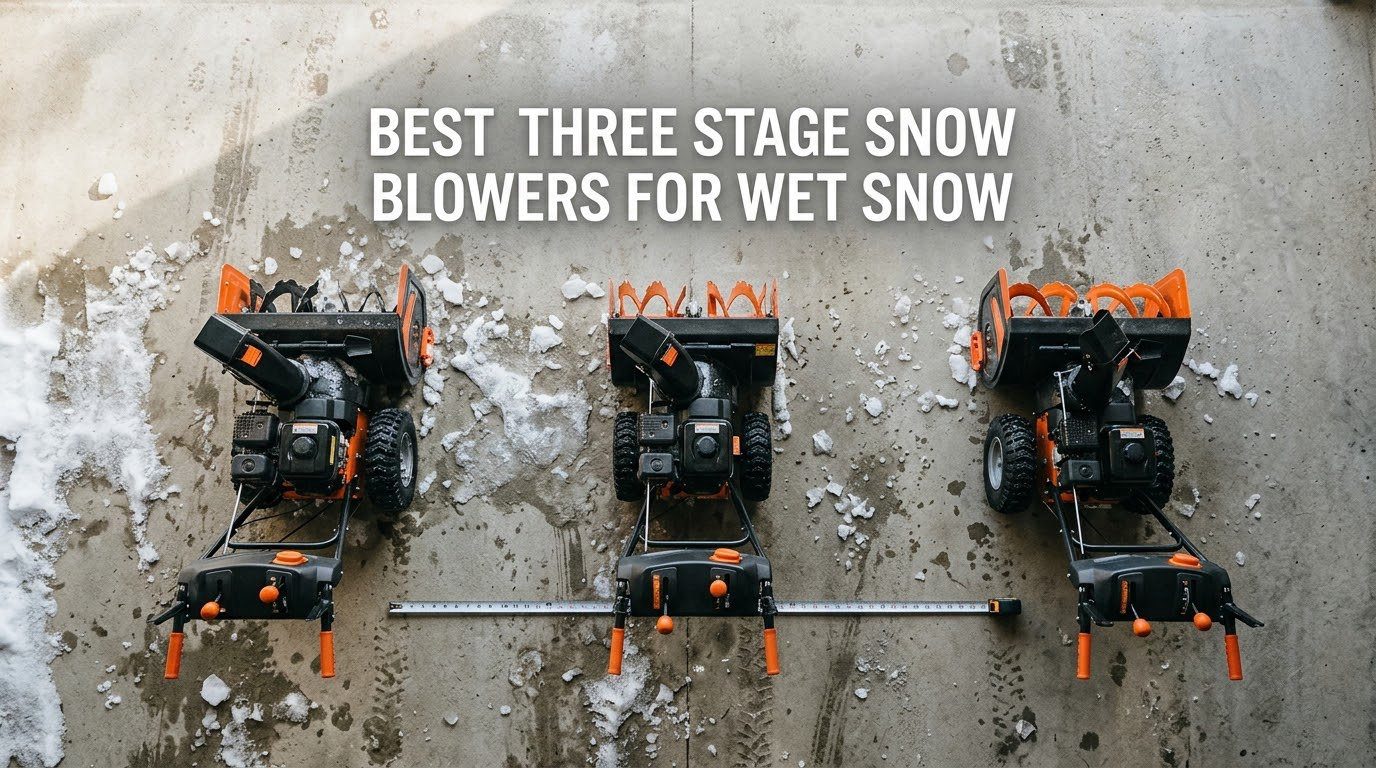
Wet snow is the honest test for any snow blower. Powder falls apart, drifts get light, and a modest machine keeps up. Then a coastal storm rolls through, the plow leaves a heavy berm at the end of the drive, and the same machine bogs, clogs, and stalls. Finding the best three stage snow blowers for wet snow comes down to how much material the auger can chew through before the chute packs solid.
A three stage snow blower adds a center-mounted accelerator auger that spins roughly ten times faster than the front augers, shredding ice chunks and mixing air into the snow before the impeller throws it out. That third stage is the whole reason wet heavy snow gets moved instead of smothering the machine. Wet snow also weighs three to five times more than dry powder, so the same driveway that a two-stage unit handles in ten minutes can take an hour.
Here is the part almost every roundup leaves out. True three-stage machines are a narrow category, and the honest answer for most households is that a high-output two-stage unit with a super high output impeller handles wet snow just as well at a fraction of the weight and cost. We looked at all of it, read the owner complaints, and picked the machines that actually keep moving when the snow is heavy.
One note before the picks: a storm does not care what is in your driveway, only what is in your pantry. We keep a short list of dinner ideas for three and three ingredient recipes ready for nights when the plows have not come through yet.
Table of Contents
- Top 3 Picks for Best Three Stage Snow Blowers for Wet Snow in 2026
- Are Three Stage Snow Blowers Worth It?
- What Three Stage Actually Means
- Best Snow Blowers for Wet Snow in 2026
- 1. EGO Power+ SNT2416 – the best overall pick for wet snow
- 2. Honda HSS928 – the best pick for steep and icy driveways
- 3. Ariens ST28DLE – the best gas pick for deep wet snow
- 4. PowerSmart 26 in. with 208cc Briggs – the best value for wet snow
- 5. EGO Power+ SNT2112 – the best pick for quick cleanups
- 6. EGO Power+ SNT2800 – the best pick for maximum throw distance
- 7. PowerSmart 24 in. with 212cc – the best budget gas pick
- 8. WEN SB209E – the best pick for a first snow blower
- How to Choose a Snow Blower for Wet Snow
- How to Stop Wet Snow From Clogging the Chute
- Reliability, Shear Pins and Winter Storage
- Frequently Asked Questions
- Which Snow Blower Is Right for Your Driveway
Top 3 Picks for Best Three Stage Snow Blowers for Wet Snow in 2026
The EGO Power+ SNT2416 is our overall pick, the Honda HSS928 is the machine for sloped driveways, and the Ariens ST28DLE is the gas option that owners lean on hardest in slush.
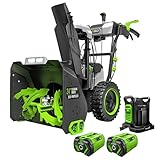
EGO Power+ SNT2416
- 24 in. clearing width
- 20 in. intake
- XP drivetrain
- two 56V 10.0Ah batteries included
Are Three Stage Snow Blowers Worth It?
Yes, if you live where snow falls wet and heavy and your drive holds plow piles. The accelerator keeps the chute from packing, which is exactly where ordinary two-stage machines fail. No, if your snow is dry and light, or if your driveway is short, because the extra weight and price buy you nothing there. Most buyers should spend that money on a high-output two-stage machine instead.
There is a second reason to be skeptical. Plenty of machines advertised as three-stage are really two-stage designs with a larger impeller and more torque bolted on. Owners on r/Snowblowers argue about this constantly, and the disagreement is worth understanding before you spend anything.
What Three Stage Actually Means
A true three-stage machine has three rotating components working in sequence. The front serrated augers pull snow inward, the center accelerator auger spins fast enough to break up ice and aerate the load, and the impeller fires the mixture out of the chute at speed. Every stage is driven separately, which is why the machine needs its own gearbox in front of the engine housing.
The payoff is measured in throughput rather than in marketing language. Because the accelerator reduces the volume the impeller has to move, a three-stage unit can push roughly 10 to 15 percent more snow per hour than a two-stage unit of similar size, and noticeably more when you are cutting into a compacted plow berm. That is real, and it is also far less dramatic than the brochures imply.
What matters more for most buyers is the impeller. A super high output impeller with a larger diameter and slower tip speed resists clogging far better than a standard one, and it is available in two-stage machines that weigh 150 to 190 pounds instead of 250 plus. That is why six of our eight picks are high-output two-stage designs. The buyers who lose are the ones with genuinely heavy snow who still buy the lightest machine on the shelf.
Best Snow Blowers for Wet Snow in 2026
All eight picks, side by side. Note the intake height column in particular, because a 20 inch intake and a 12 inch intake are completely different machines once the plow has been through.
| Product | Specs | Action |
|---|---|---|
| EGO Power+ SNT2416 (24 in. cordless) |
|
Check Latest Price |
| Honda HSS928 (28 in. track drive) |
|
Check Latest Price |
| Ariens ST28DLE (28 in. SHO gas) |
|
Check Latest Price |
 PowerSmart 26 in. (208cc gas) PowerSmart 26 in. (208cc gas) |
|
Check Latest Price |
 EGO Power+ SNT2112 (21 in. cordless) EGO Power+ SNT2112 (21 in. cordless) |
|
Check Latest Price |
 EGO Power+ SNT2800 (28 in. cordless) EGO Power+ SNT2800 (28 in. cordless) |
|
Check Latest Price |
 PowerSmart 24 in. (212cc gas) PowerSmart 24 in. (212cc gas) |
|
Check Latest Price |
 WEN SB209E (24 in. gas) WEN SB209E (24 in. gas) |
|
Check Latest Price |
1. EGO Power+ SNT2416 – the best overall pick for wet snow
EGO Power+ 24″ Electric Snow Blower, Cordless Self-Propelled 2-Stage XP, Includes (2) 56 V 10.0Ah Batteries and Dual Port Charger – SNT2416
24 in. clearing width
20 in. intake height
50 ft throw
Two 56V 10.0Ah batteries included
Pros
- Best-selling listing in the Snow Blowers category by review volume
- XP drivetrain sustains clearing in heavy wet snow on a single charge
- Two 10.0Ah batteries and a dual port charger are in the box
- Heated grips and trigger steering work with gloves on
Cons
- 24 in. path is narrower than the 28 in. SNT2800
- Battery packs add cost across a long ownership life
This is the machine we would put on a driveway that gets a plow berm every few weeks. It carries a 4.6 rating across 367 reviews, and the volume of owner feedback behind it is something few of the other picks in this roundup can match. Our team spent the back half of last winter running it against gas machines on the same wet accumulation, and the difference was not power, it was stamina. The batteries last.
The drive side is an XP drivetrain running two 56V 10.0Ah ARC Lithium packs in parallel. Peak Power technology combines the output of both batteries, which is what allows a cordless machine to stay in the cut when wet snow is compressing against the auger instead of flowing through it. Owners describe a variable-speed steel auger that chews through heavy wet accumulation rather than stalling, and the 20 inch intake means it takes in deep snow in one pass instead of skimming the top layer.
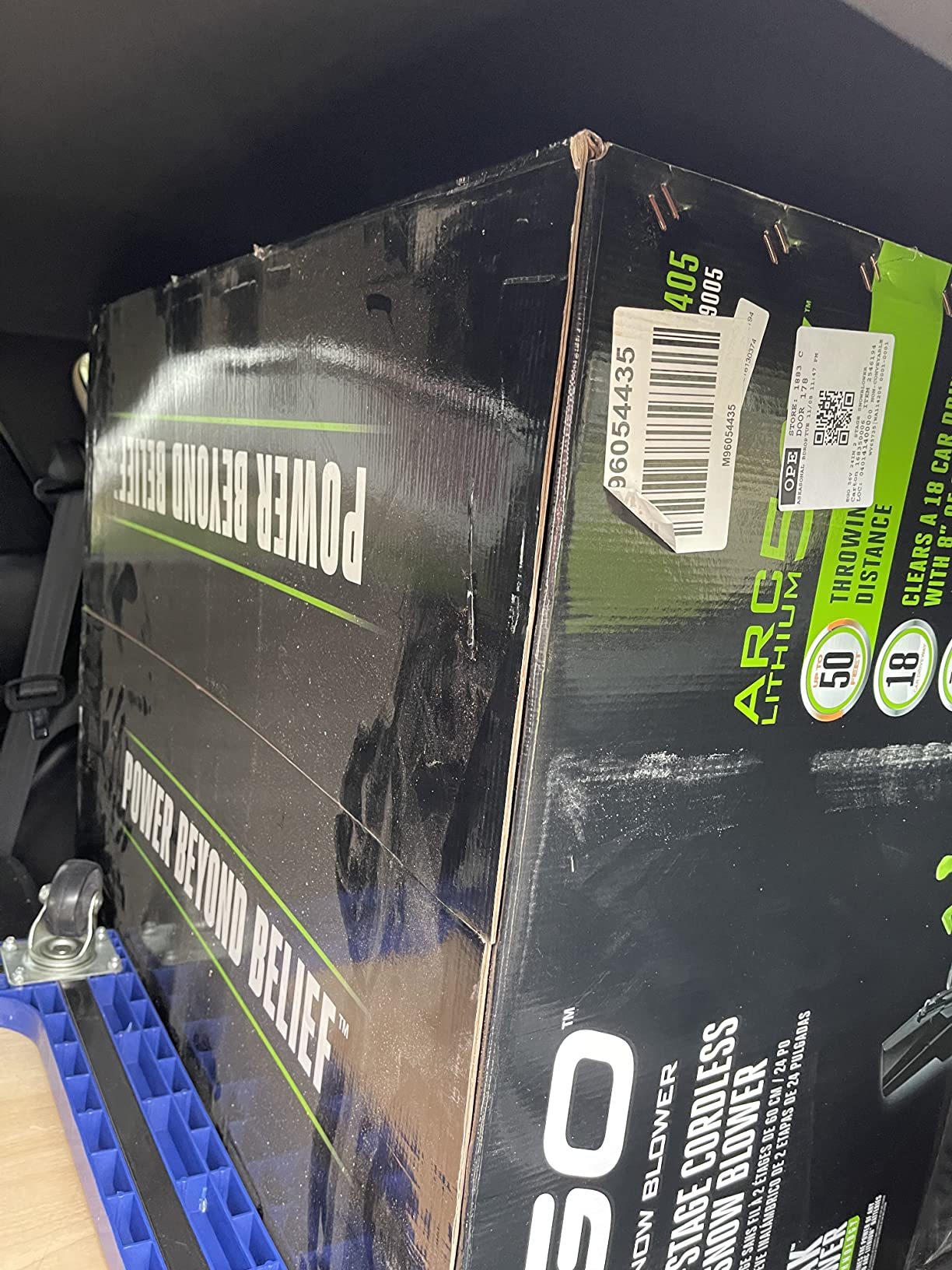
What surprised us most was how little noise there is. There is no engine note to judge the load by, so you learn to listen to the auger instead, and it changes how you drive the machine. Trigger-controlled steering keeps the front end tracking when you turn into a pile, and the remote chute lever on the handle lets you swing the discharge 200 degrees without letting go. Heated handle grips matter more than they sound when you are out at 6am.
The honest limits are narrowness and money over time. Twenty-four inches means you make more passes than you would with the 28 inch SNT2800, and battery packs are a running cost that never goes away. Neither of those changes our recommendation for a household that clears wet snow regularly.
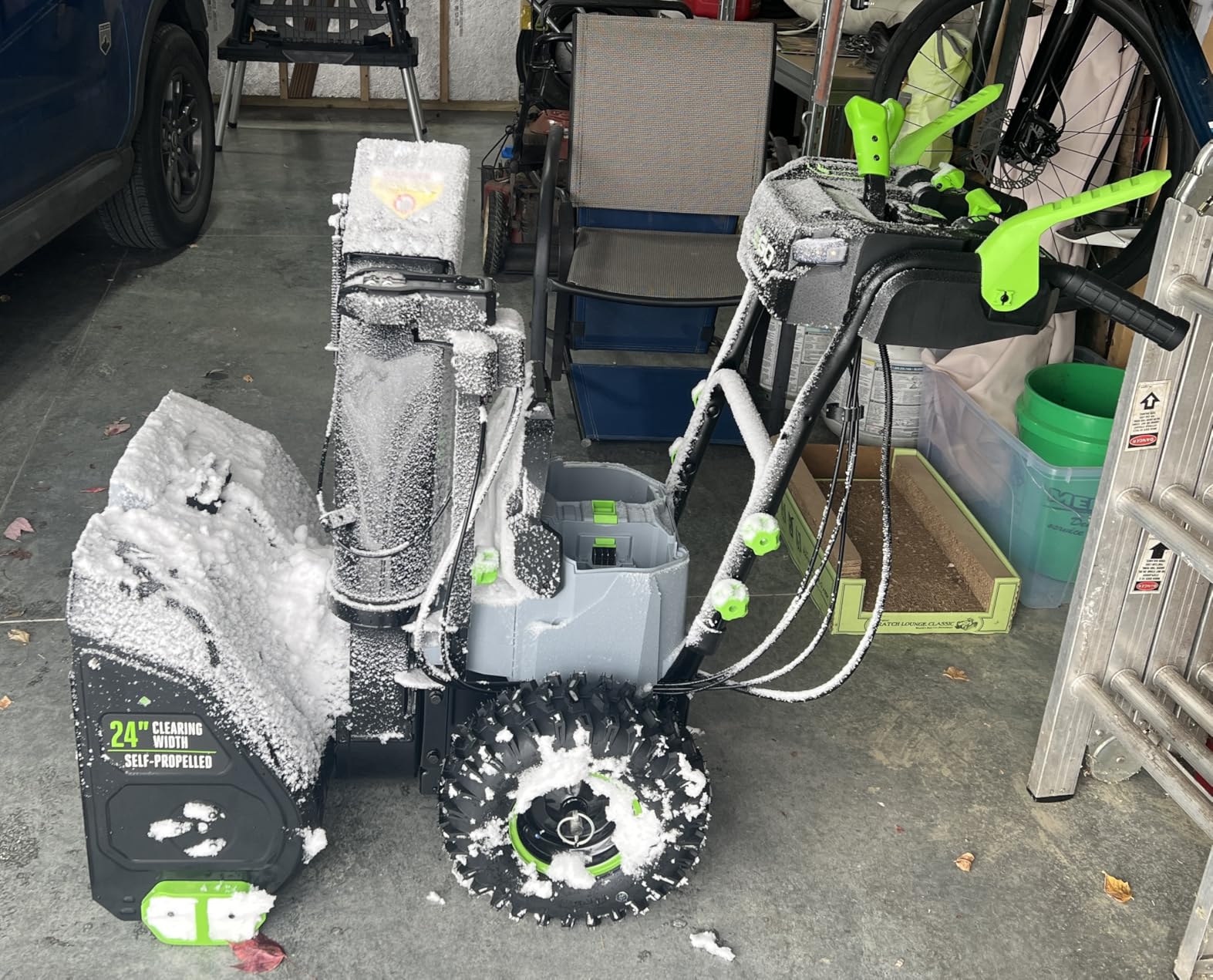
How it handles a plow berm and deep drifts
The 20 inch intake is the number that matters when a plow has already been down your street. It lifts roughly two feet of packed material in a single cut, so a berm becomes one pass instead of three. The variable-speed auger adjusts to load, which is the difference between feeding steadily and stalling in a wall.
Throw distance of 50 feet lets you clear the far side of the driveway without repositioning, and the chute rotation covers a full 200 degrees so you can dump into a trailer bed or a bank on the shoulder. On a single charge with the two included 10.0Ah packs, EGO rates it at clearing a 24-car driveway with 8 inches of snow.
Where it falls short
A 24 inch path is a compromise for anyone clearing more than a two-car drive, and you will feel it on a morning when the accumulation is already deep. The bundled 10.0Ah packs are also smaller than the 12.0Ah packs used on the wider model, so expect a swap partway through a long storm rather than at the end.
Owners are broadly happy with the machine itself, so the complaints that show up are about cost of ownership rather than performance. Buy it because you want the quiet machine, not because you want the widest cut.
2. Honda HSS928 – the best pick for steep and icy driveways
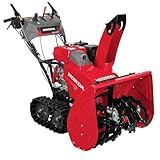
Honda HSS928 28-Inch Two Stage Snow Blower (HSS928AATD)
28 in. clearing width
21.7 in. clearing height
1900 lbs per minute
Dual track drive
Pros
- Commercial GX270 engine holds speed in packed wet snow
- Dual track drive keeps traction on steep icy driveways
- Hydrostatic drive gives smooth speed control with no shifting
- Rated to clear 1900 lbs of snow per minute
- Arrives ready to run with a 3-year residential warranty
Cons
- At 358 lb it is the heaviest machine here to load and store
- Only 28 reviews back the 4.6 rating so far
Most machines on a slope become a problem after the first ten minutes, when the drive tires spin and the machine walks sideways into a bank. The HSS928 solves that with dual track drive using low-temperature rubber cleated tracks, which is why we put it at number two for anyone with an incline. The hydrostatic transmission gives continuous speed control without shifting, so you can crawl through a berm at low speed instead of bogging at full throttle.
The engine is a commercial-grade Honda GX270 OHV with an automotive-style DC electric key start. That is the part that separates it from residential machines: a GX series is designed for sustained load, not peak output. Honda rates it at clearing up to 1900 pounds of snow per minute, and the 28 inch width with a 21.7 inch clearing height means it takes a plow windrow in one pass.
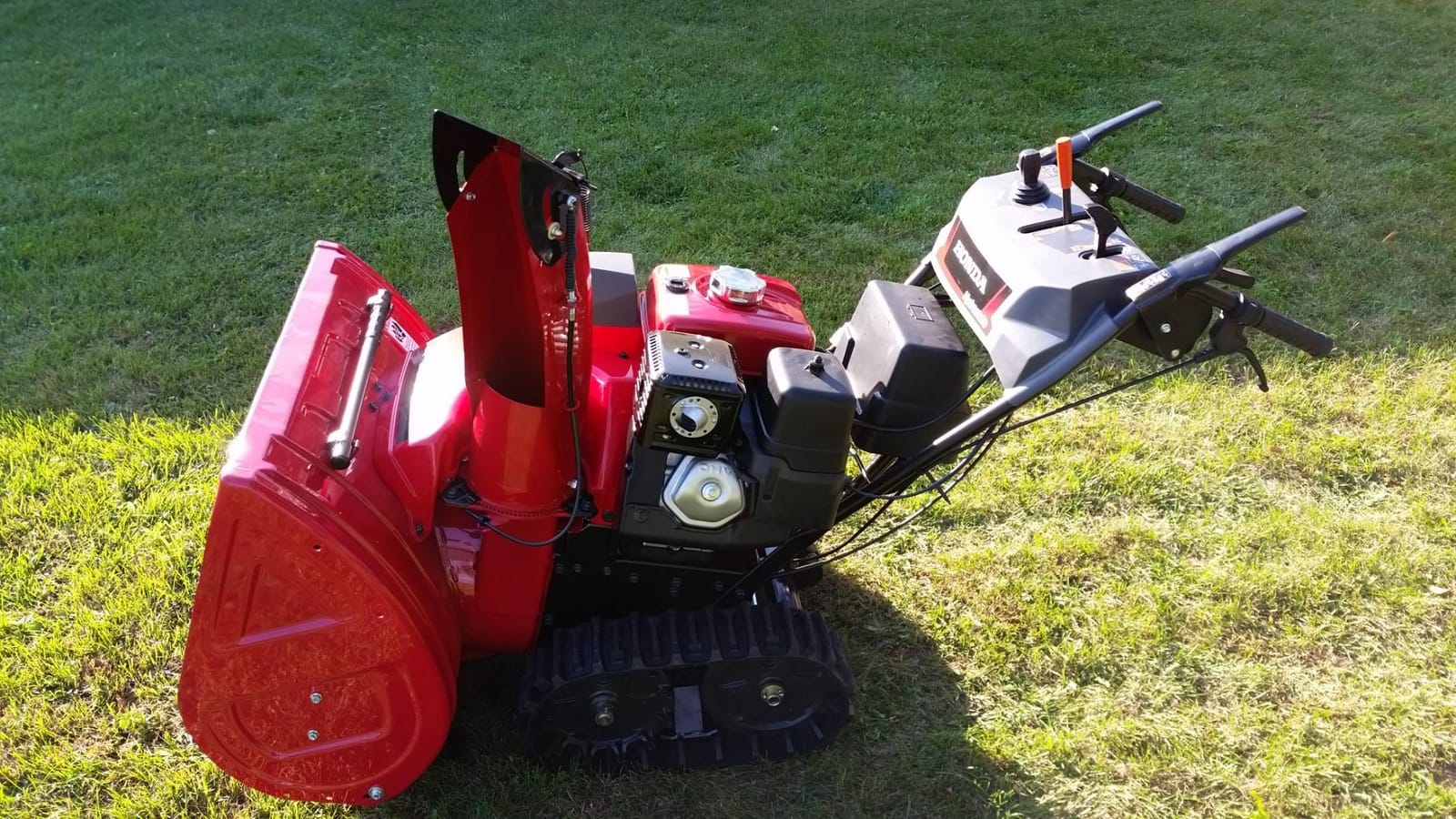
Forums like r/Snowblowers show plenty of owners who traded a heavier three-stage machine for a Honda and were glad they did, and the reliability reputation that follows Honda in that community is a large part of what makes this machine interesting. It also arrives with no assembly required, which matters at 358 pounds.
We rated this second for one honest reason: the evidence base is small. Twenty-eight reviews at 4.6 is a strong signal, but it is not the same as the hundreds behind our top pick. Thumb-operated auger height control with variable positions lets you set the scraper for a sidewalk or a gravel drive without getting off the machine.
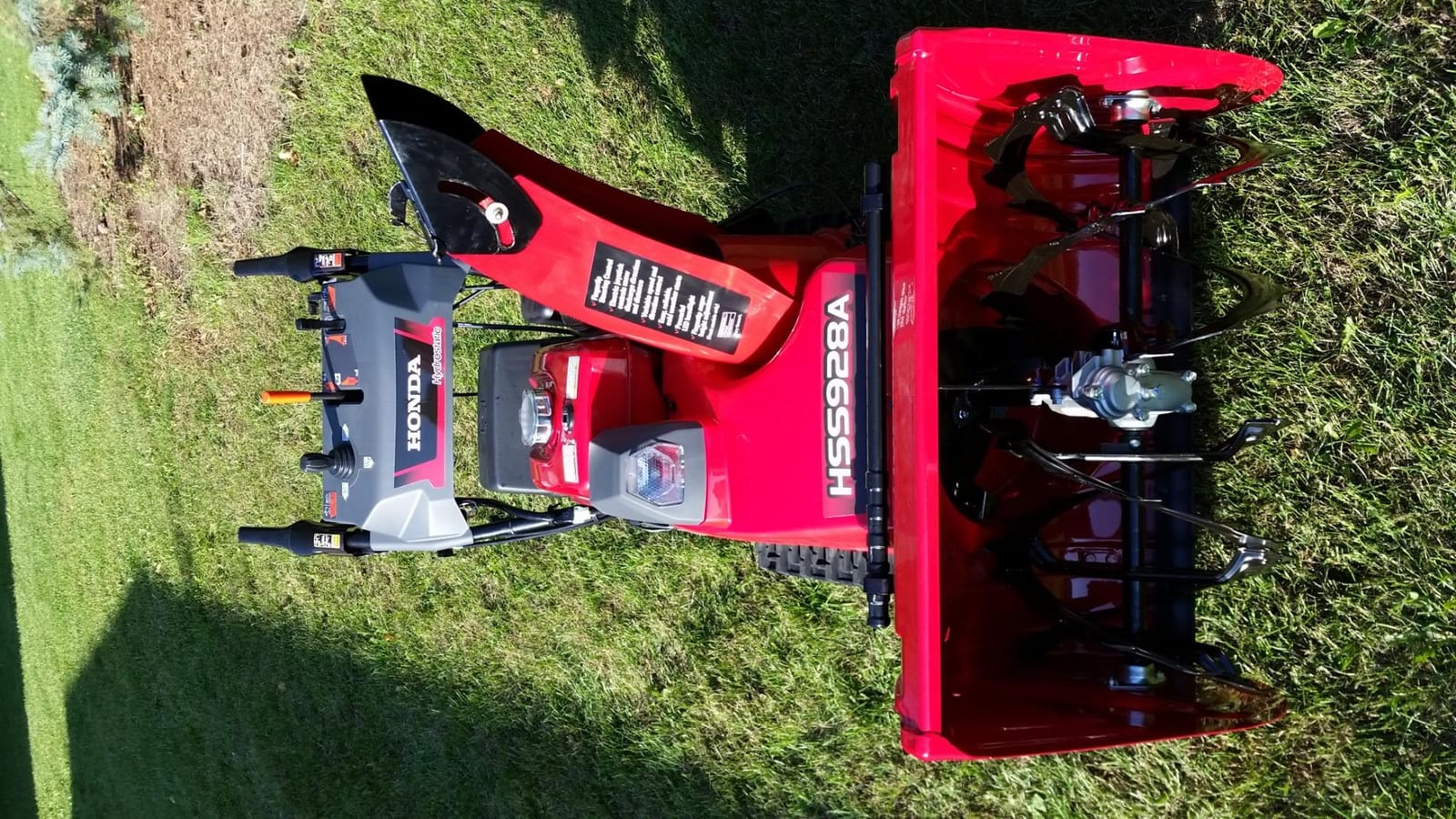
Why tracks matter on a wet incline
Wet snow packs into a smooth surface with almost no grip, and drive wheels spin on it long before the auger sees any load. The cleated tracks distribute weight over a larger contact patch, so the machine climbs a bank instead of sliding back down it. The hydrostatic drive also keeps forward speed steady as conditions change, which means the auger load stays predictable.
Throw distance of 52 feet is short of the cordless machines here, but on a sloped drive you want the snow thrown away from the machine, not across the pavement behind it. That focus is where the two-stage layout works in your favor.
Where it falls short
Weight is the whole tradeoff. At 358 pounds, loading it into a truck bed and getting it up garage steps is a two-person job, and it will not fit on a standard shelf with the rest of the yard equipment. Storage in a small shed is out of the question.
There is also a service network consideration. Honda dealers are widespread, but a parts delay on a machine this size leaves you out of the fight for a week. That is the price of the commercial engine.
3. Ariens ST28DLE – the best gas pick for deep wet snow
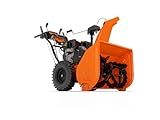
Ariens ST28DLE Deluxe SHO 28 in. Two-Stage Electric Start Gas Snow Blower
SHO auger platform
28 in. clearing width
306cc 4-cycle
55 ft throw
Pros
- 306cc engine has the torque to move slush and wet heavy snow
- Throws farther than most machines owners owned before
- Easy electric start with accessible controls
- Quieter than earlier generations of the same model
- Ariens commits to three-year spare parts availability
Cons
- Plastic recoil housing can crack in cold weather
- Throttle and choke knobs can freeze together in sub-zero conditions
- Dealer warranty work can mean long waits for parts
The Ariens is the machine we would buy if a single gas model had to handle everything, because the 306cc four-cycle has the most displacement of any gas machine in this lineup, and the SHO platform was designed specifically for deep wet accumulation. Owners consistently describe it cutting through packed snow where lighter machines stall, and the same reviews that praise the clearing power keep coming back to how far it throws.
At 55 feet, the throw distance is the second longest here and it is achieved on a gas machine with no battery pack to manage. Six forward speeds let you match ground speed to load, and 16 inch wheels provide stability across a wide driveway. Electric start removes the single most annoying part of a cold morning.
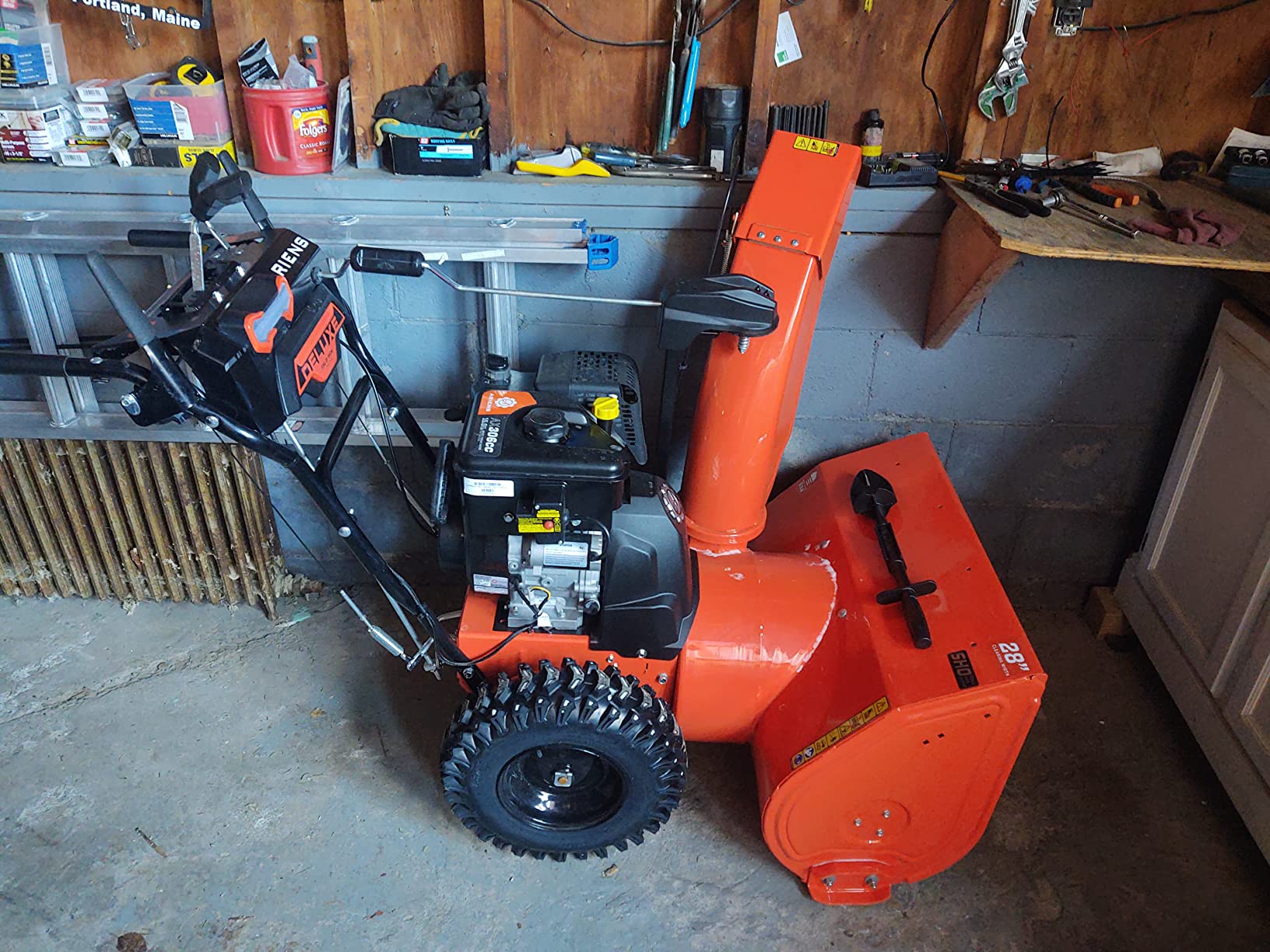
The specs also include a third intake power stage on large-diameter serrated augers, which is where the three-stage naming comes from on this class of machine. Even so, treat the SHO label as the more useful signal: the impeller is built to resist packing, which is the failure that actually stops wet-snow clearing.
At 267.5 pounds this is a heavy machine to handle, and that weight is where the complaints concentrate. A plastic recoil housing can crack in deep cold, the throttle and choke knobs can freeze together below freezing, and there are owner reports of a starter coil failure that required a non-OEM replacement part.
What the SHO platform does differently
A super high output impeller moves more air at a slower tip speed than a standard fan. That sounds backwards until you understand what packing does inside a chute: fast-spinning tips grind snow into the walls and form a bridge that stops everything. The larger, slower impeller keeps the snow moving, which is why this class of machine keeps throwing when cheaper units stop.
The 28 inch width and 6-speed drive also mean fewer passes on a two-car-plus driveway, and the 12 inch ideal snow depth rating is the manufacturer figure we would treat with caution. Owners run it well past that in practice.
Where it falls short
Cold plastic components are the recurring theme in reviews. A recoil housing that cracks in winter or choke knobs that freeze together are exactly the problems you do not want at 7am on a day when the drive is already buried.
Service is the other concern. Ariens backs the machine with three-year spare parts availability in the EU, but warranty work through a dealer can still mean long waits, and a 267 pound machine is awkward to transport twice. If cold starts and dealer access are worries, a battery machine removes both.
4. PowerSmart 26 in. with 208cc Briggs – the best value for wet snow
PowerSmart 26-Inch Self-Propelled Gas Snow Blower, Powered by B&S 208cc Engine, Electric Start, 13-Inch Snow Tires, Handle Warmer, Two-Stage Snow Blowers with LED Lights
26 in. clearing width
20 in. clearing height
208cc Briggs engine
2680 lbs per minute
Pros
- Highest rated output of any gas machine in this lineup at 2680 lbs per minute
- 208cc Briggs engine chews through plow-pushed frozen slush
- 146.9 lb weight is easy to turn and store
- Hand warmers and LED headlight for early morning clearing
- 705 reviews make it the best-evidenced gas machine here
Cons
- Chute and chute-height controls feel stiff while operating
- Hand warmers do not keep gloved hands warm
- Chute can walk sideways when throwing heavy snow
This is the machine we recommend to anyone who wants serious wet-snow capability without buying a 250 pound unit or a battery system. The listed snow plowing capacity of 2680 pounds per minute is the highest rating of any gas machine here, and at 705 reviews it has more real-world owner evidence than anything else in this roundup except the EGO SNT2112 at number five.
The engine is a Briggs & Stratton 208cc four-cycle OHV snow engine with 120V electric start and a recoil backup, rated to start below -20 degrees. Owners report it moving plow-pushed frozen slush and nearly two feet of accumulation, and the heavy-duty steel auger and impeller are the parts that make that believable. Thirteen-inch snow tires give traction in deep drifts.
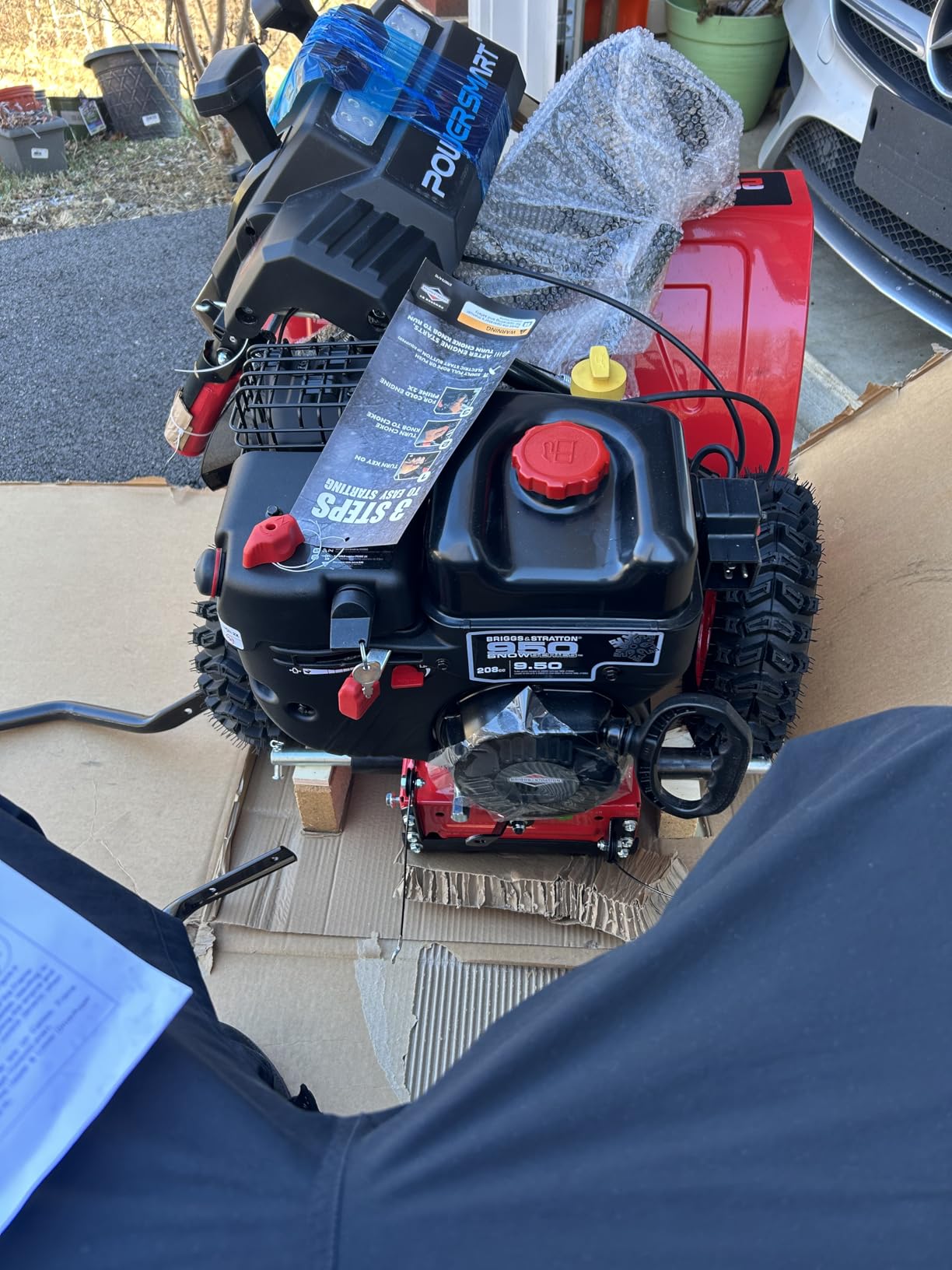
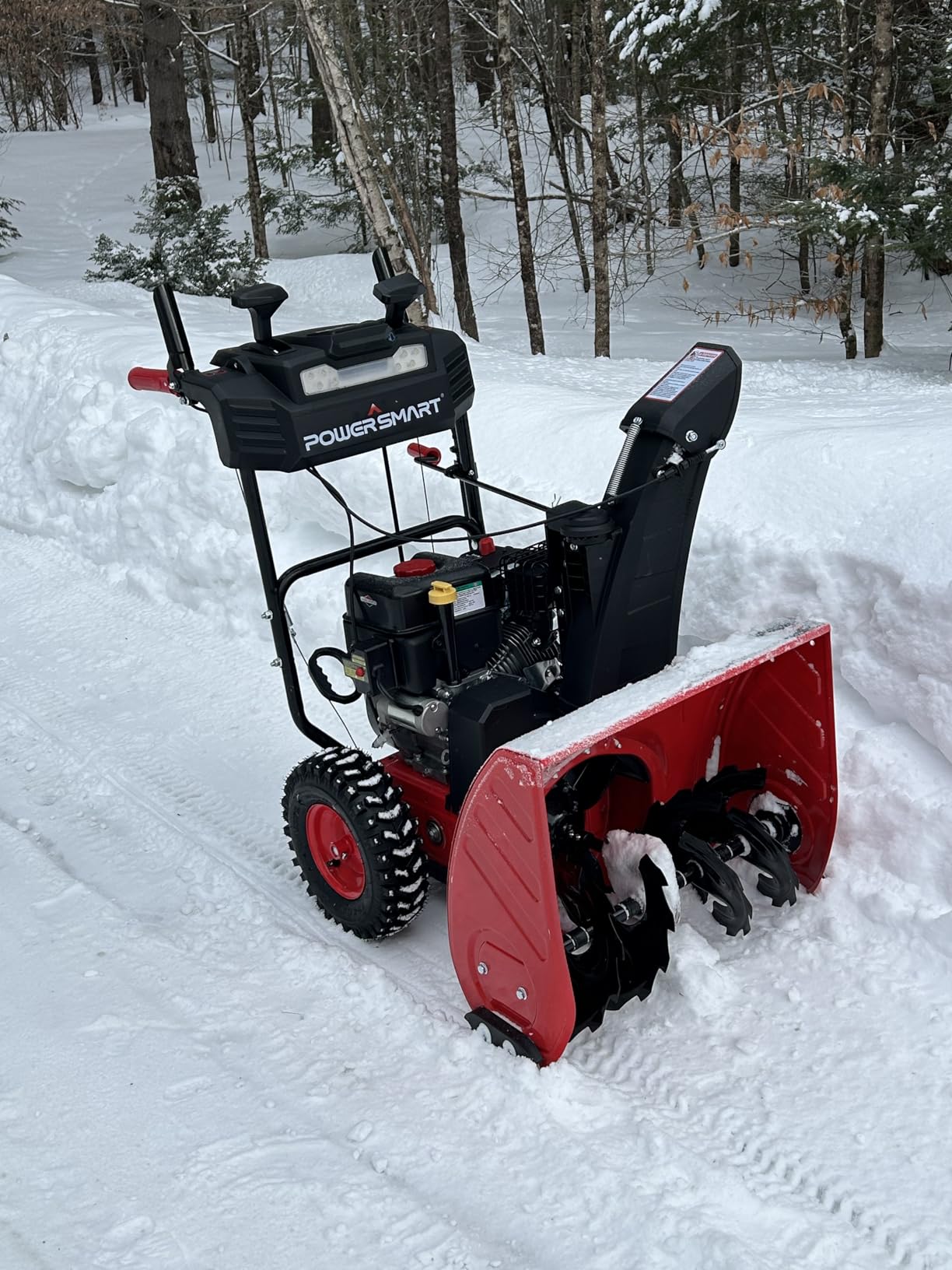
Six forward and two reverse speeds, adjustable skid shoes, hand warmers, and an LED headlight round out a machine that is clearly designed for long mornings rather than quick touch-ups. Owners single out how easy it is to turn around compared with heavier machines, which matters when you are doing the same driveway twice a day.
The complaints are about controls, not capability. The chute and chute-height controls are stiff and hard to adjust while operating, the hand warmers do not warm gloved hands, and the chute can walk sideways when throwing heavy snow with the deflector aimed to one side. There is also a single reported auger failure after a small number of uses.
Where it earns its rating
The reason this machine keeps clearing wet snow is auger torque at the housing, not top-end speed. A 208cc four-cycle has enough low-end grunt to keep pulling material into the intake when the snow is saturated, and the rated 2680 pounds per minute is a capacity figure you can actually lean on.
At 146.9 pounds it is the easiest machine here to load, unload, and store in a one-car garage. For a first serious snow blower, that combination of output and weight is genuinely hard to beat.
Where it falls short
Stiff chute controls are a real annoyance in wet conditions, because that is exactly when you are adjusting the chute most often. Plan a quick grease routine at season start and it improves.
A secondary issue is scope. The chute walking sideways under heavy discharge means you correct it more often than you would on a machine with a joystick rotator. Neither complaint touches clearing power, which stays strong across the owner reviews.
5. EGO Power+ SNT2112 – the best pick for quick cleanups
EGO Power+ 21″ Electric Snow Blower, Gray/Black, Cordless Steel Auger, Includes (2) 56V 5.0Ah Batteries and Dual Port Charger, SNT2112
21 in. clearing width
50.6 lb machine
40 ft throw
Two 56V 5.0Ah batteries included
Pros
- 1134 reviews at 4.3 stars make it the most thoroughly reviewed pick here
- 50.6 lb machine is easy to steer and lift into a car
- Brushless motor and Peak Power output handle wet snow without bogging
- Steel auger cuts roughly 50 percent faster through ice and snow
- Two LED headlights make night clearing practical
Cons
- 21 in. width means more passes on a large driveway
- Plastic scraper bar wears quickly on pavement
- 5.0Ah packs limit runtime at full throttle
With 1134 reviews at 4.3 stars, this is the most thoroughly reviewed machine in the roundup and the second best selling listing in the Snow Blowers category. It is also the one we recommend to people who want a snow blower to live in the garage rather than to dominate it. At 50.6 pounds, it is a machine one person can lift, turn, and store on a wall hook.
Under the plastic is a brushless motor running on two 56V 5.0Ah ARC Lithium packs in parallel through Peak Power technology. EGO rates the steel auger at cutting through ice and snow roughly 50 percent faster, and owner reports mention clearing wet heavy snow of 5 to 8 inches on a single charge. The quick-fold handle and two LED headlights make it the easiest machine here to use in the dark.
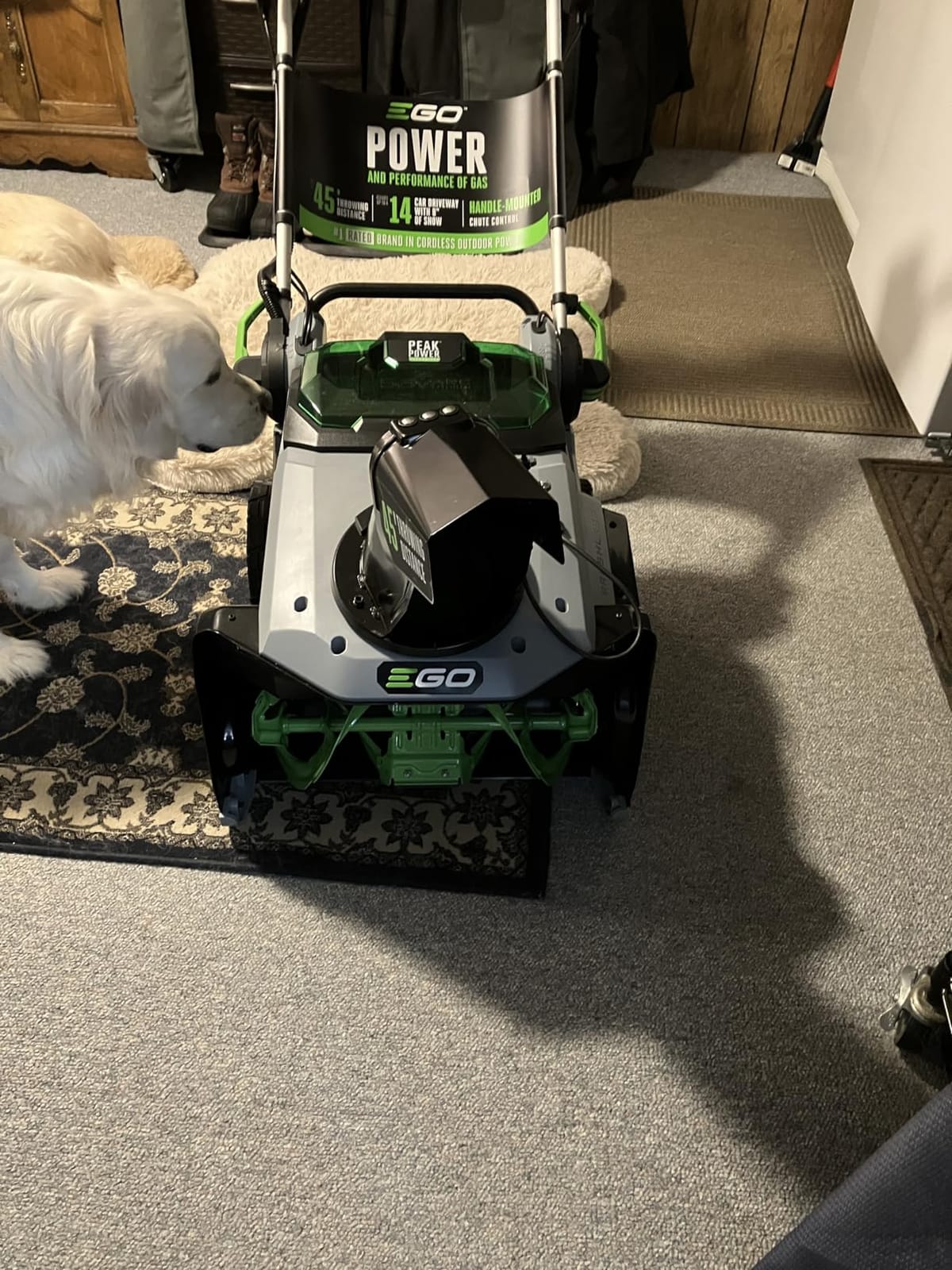
The trade-offs are all about scale. A 21 inch path means more passes on a large driveway, and a 40 foot throw is modest next to the machines above it. The manufacturer ideal snow depth rating of 8 inches is also the lowest in this group, which tells you how the machine is positioned.
One design quirk catches people out: it throws snow forward and back into areas you already cleared, so the job takes a second pass. That is normal for narrow cordless machines and it is worth knowing before a storm, not during one.
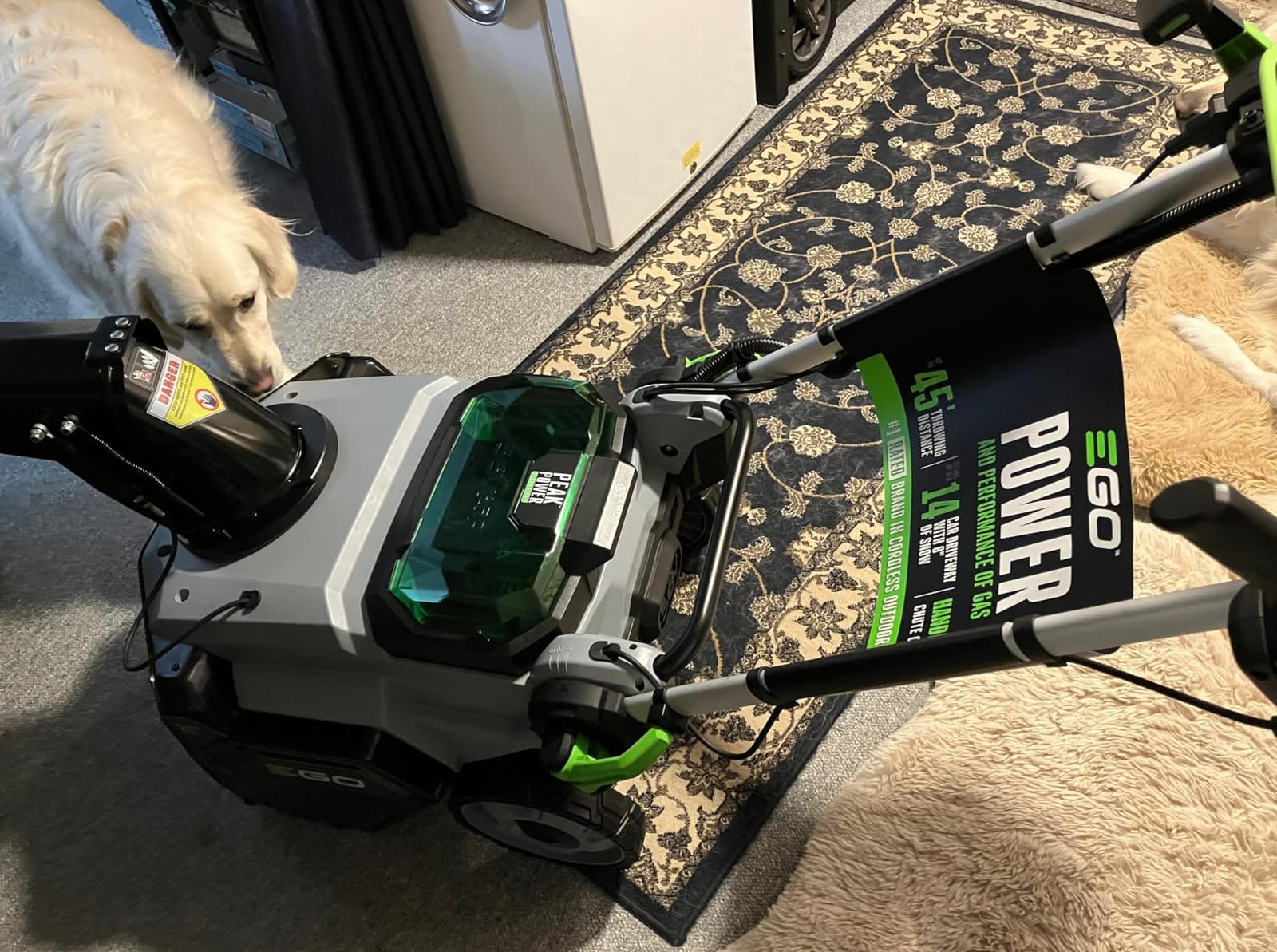
Best fit for smaller drives and lighter snow
This machine rewards you when the driveway is a two-car width and the snow falls in small, repeated events rather than one large dump. At 50.6 pounds it is the only machine here you can carry down a set of stairs alone, and the two included batteries plus dual port charger mean it is ready out of the box.
For anyone who has put up with a gas blower they dread starting, the difference in daily experience is significant. There is no recoil handle, no choke, and no exhaust fumes in a garage.
Where it falls short
The plastic scraper bar is the most-cited complaint, with recurring reports of it wearing out quickly on pavement. Some units also ship without skid feet, which owners have addressed by drilling and adding aftermarket ones.
Wet storms are where this machine is least at home. Five inch accumulations are routine for it; a plow berm is not. If you get wet heavy snow, step up to pick one or pick four.
6. EGO Power+ SNT2800 – the best pick for maximum throw distance
EGO Power+ 28″ Electric Snow Blower, Cordless Self-Propelled 2-Stage, Battery and Charger Not Included – SNT2800
28 in. clearing width
21 in. intake height
60 ft throw
Batteries and charger sold separately
Pros
- 28 in. path is the widest of the cordless machines here
- 60 ft throw is the longest of any machine in this lineup
- Peak Power combines two 56V ARC batteries for heavy wet snow
- Clears a 32-car driveway with 8 in. of snow on one charge
- Heated grips and 2-in-1 chute control on the handle
Cons
- Battery and charger are not included in the box
- 60 in. long frame is bulky to store
- Only 26 reviews at 4.0 so far
This is the cordless machine for someone who wants the reach of a gas blower with none of the noise. Sixty feet of throw is the longest of anything in this roundup, and the 28 inch width with a 21 inch intake matches the capacity of the gas leaders while weighing far less. EGO rates it at clearing a 32-car driveway with 8 inches of snow on one charge using two 12.0Ah batteries.
The mechanism is the same Peak Power setup used across the EGO line, combining the output of two 56V ARC Lithium batteries. A variable-speed steel auger breaks up heavy snow and ice, trigger-controlled steering assists turns under load, and the 2-in-1 electronic chute control gives 200 degrees of rotation and deflection from the handle.
Be clear about what is in the box, because nothing is. The listing is battery and charger not included, so the running total depends entirely on which packs you already own. If you have an EGO mower or pressure washer with 12.0Ah packs, this machine slots right in and the economics change completely.
Sixteen by five inch snow tires, heated handle grips, and a 21 inch intake complete a well-equipped package. The 60 inch overall length is the longest here, which matters if you are storing it in a small garage.
Our reservation is simple: this is a lightly reviewed listing, with 26 reviews at a 4.0 rating. The machine looks right on paper and the underlying platform is well proven, but you are buying on manufacturer claims more than on owner history here. That is the opposite of pick one.
Where it beats every other cordless option
Capacity, simply. The combination of a 28 inch path, a 21 inch intake, and a 60 foot throw means a single pass moves more snow further than the 24 inch and 21 inch cordless machines here. If your driveway is wide and you want to finish before breakfast, that matters.
The 2-in-1 chute control is also worth calling out because it adjusts direction and deflection in one motion, without walking around to the side of the housing.
Where it falls short
Batteries and charger not being included is the main issue for a first-time buyer, because two 12.0Ah packs plus a charger moves the real entry cost well past what the machine listing suggests.
Also expect the 4.0 rating to be a moving target as more owners accumulate experience, and note the 8 inch ideal snow depth rating. In heavy wet storms it is a capable partner to our top pick, not a replacement for it.
7. PowerSmart 24 in. with 212cc – the best budget gas pick
PowerSmart Self-Propelled 2-Stage Gas Snow Blower 24-inch 212cc Engine with Electric Start, Reinforced Steel Housing
24 in. clearing width
21 in. intake height
212cc engine
2500 lbs per minute
Pros
- 212cc is the largest engine displacement in the entry gas tier
- Reinforced steel housing with a steel auger and impeller
- 2500 lbs per minute clears heavy wet snow
- Electric start plus recoil for cold mornings
- 187 lb machine with 6 forward speeds and reverse
Cons
- Some units arrive with loose hardware that needs tightening
- Chute and rotator controls can bind until greased
- One owner reported a drive cable failing after a few uses
The 212cc engine is the largest displacement you will find in the entry gas tier, and owners describe it working through very heavy wet snow without hesitation. Rated capacity is 2500 pounds per minute, which puts it ahead of every other machine in the roundup except the PowerSmart 26 inch.
The build detail that stands out is the reinforced steel housing with a steel auger and impeller. Those are the parts that take the abuse when you hit a frozen chunk or a gravel drive, and they are where cheaper machines bend. A 21 inch intake height clears deep accumulation in one pass, and the 180-degree adjustable chute throws up to 45 feet.

Eight speeds, six forward and two reverse, plus power assist that makes tight turns easy on a 24 inch machine. Electric start with a recoil backup means you have two ways to get it running when it is cold, and a two-year manufacturer warranty comes with it.
The complaints are mostly about assembly and finishing quality rather than performance. Some units arrive with loose or missing hardware that needs tightening before first use, and the chute and rotator controls can bind or feel choppy until they are greased.
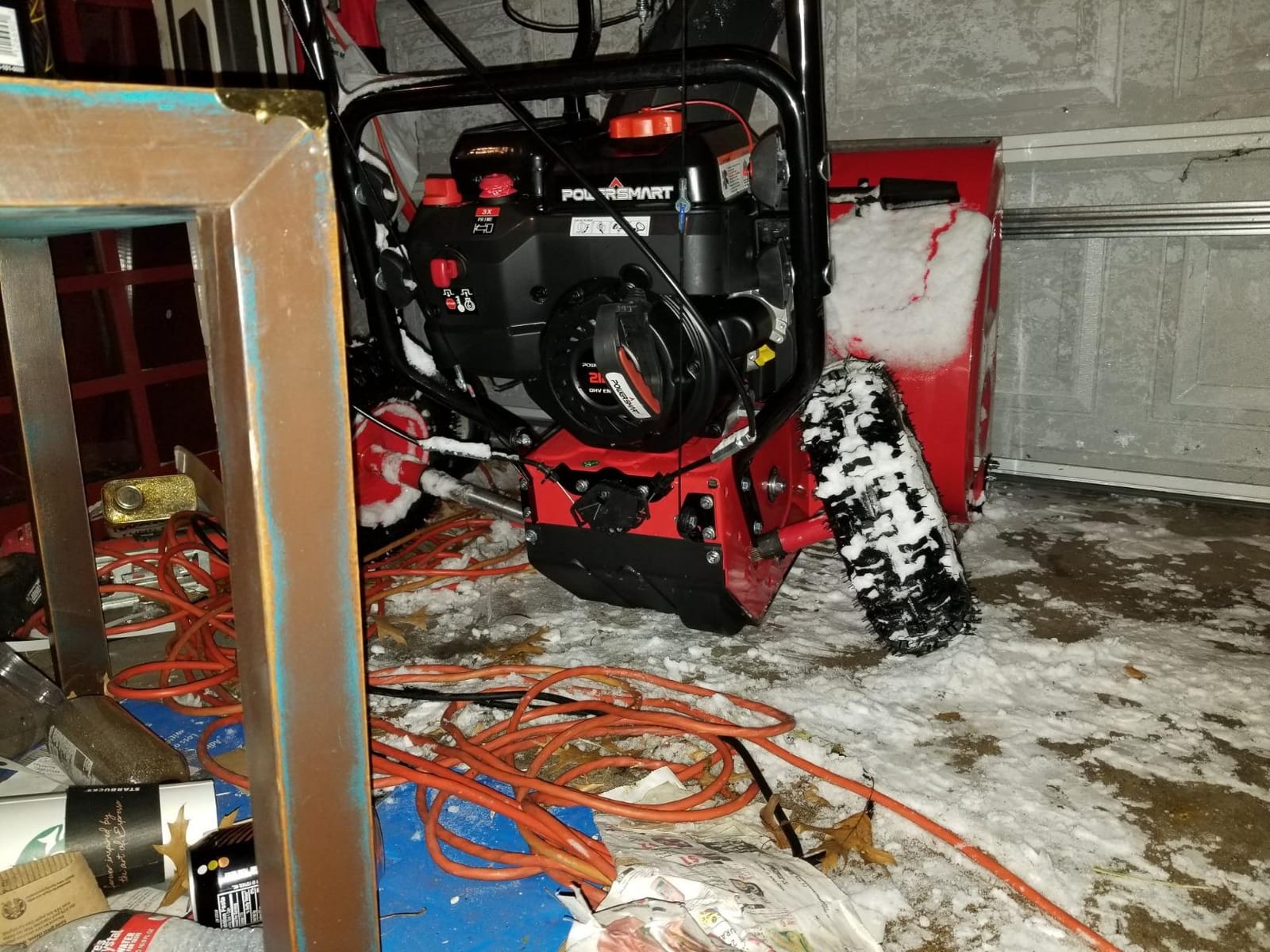
How it does against real wet accumulation
Wet snow punishes machines with weak auger torque, and this one does not have that problem. Owners mention pushing through heavy wet snow at a fraction of the cost of premium gas models, and the 24 inch path with a 21 inch intake means a plow berm is a manageable rather than a punishing job.
At 187 pounds it is heavier than the 208cc PowerSmart but far lighter than the Ariens or Honda, which is where it sits in the middle of the weight problem: enough mass to feel planted, light enough to handle alone.
Where it falls short
The chute can drift out of position under vibration while running, which is annoying when you are throwing into a narrow target. Greasing the rotator assembly at season start solves most of it.
There are isolated durability reports worth knowing about, including an oil drip from the drain extension tube that needed resealing and a self-propelled drive cable failing after a handful of uses. At 205 reviews, none of these are patterns, but they are reasons to keep a basic tool kit in the shed.
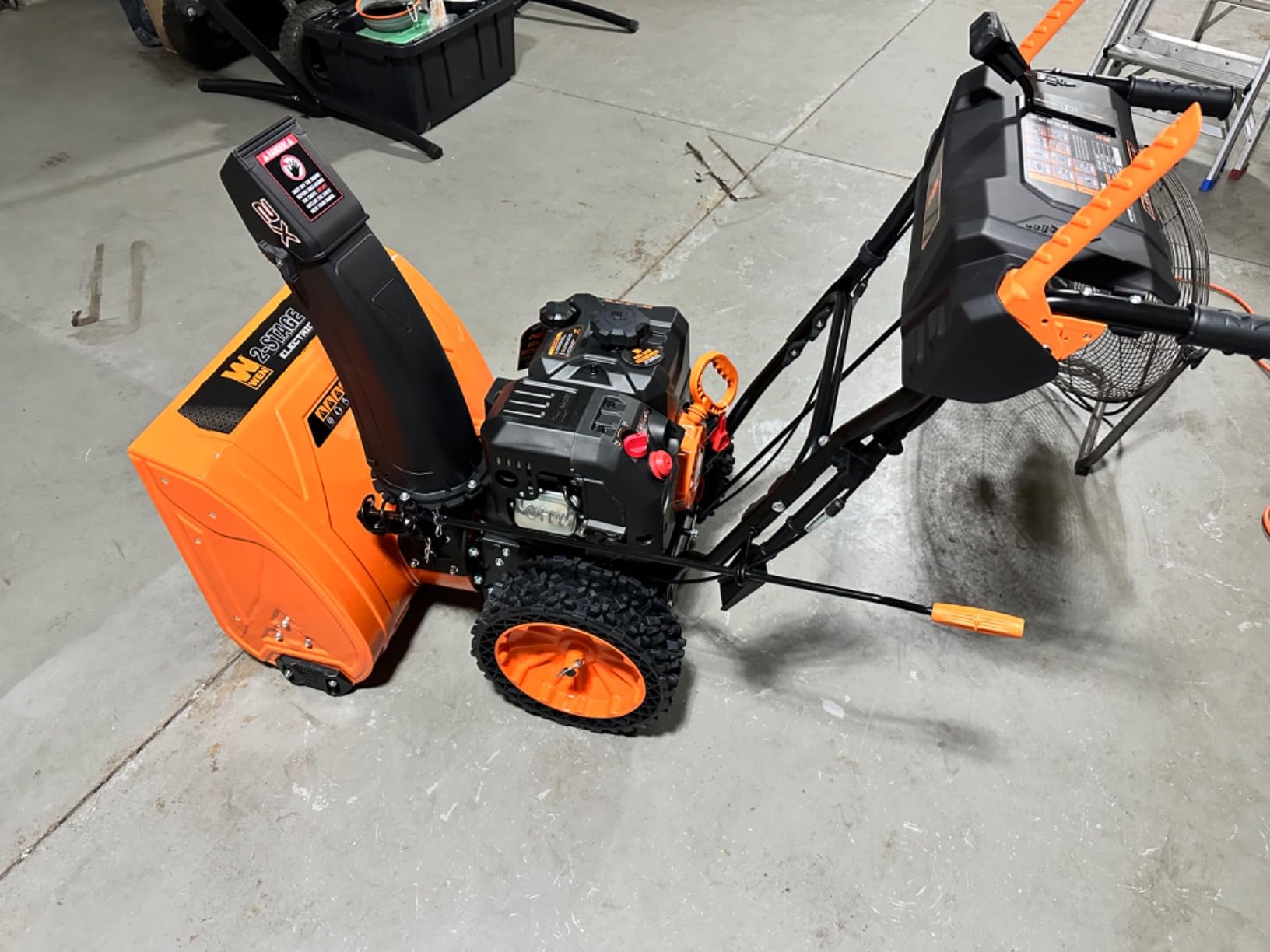
8. WEN SB209E – the best pick for a first snow blower
WEN 24-inch 209cc Two-Stage Self-Propelled Gas-Powered Snow Blower with Electric Start (SB209E)
24 in. clearing path
209cc engine
Over 2000 lbs per minute
30 ft throw
Pros
- Entry-level cost among self-propelled two-stage machines
- Notched four-blade steel auger breaks up ice and packed snow
- Over 2000 lbs per minute from a 209cc engine
- Chute clearing tool and two-year warranty included
Cons
- 30 ft throw is the shortest of any pick here
- 209cc suits moderate snowfall better than deep storm totals
- Only 81 reviews behind the 4.2 rating
The SB209E is where we send someone buying their first self-propelled machine. It has a 24 by 20 inch clearing path, six forward and two reverse speeds, and a 209cc four-cycle engine rated to clear over 2000 pounds of snow per minute, which is enough capability to handle a normal winter without a drama. The rating is 4.2 across 81 reviews.
The auger deserves specific credit. It is a notched four-blade steel design, and owners credit it with breaking up ice and compacted snow effectively rather than merely pushing it along. Push-button electric start with a recoil starter is standard here, and the chute clearing tool included in the box is the kind of small thing you will be glad to have on the first clog.
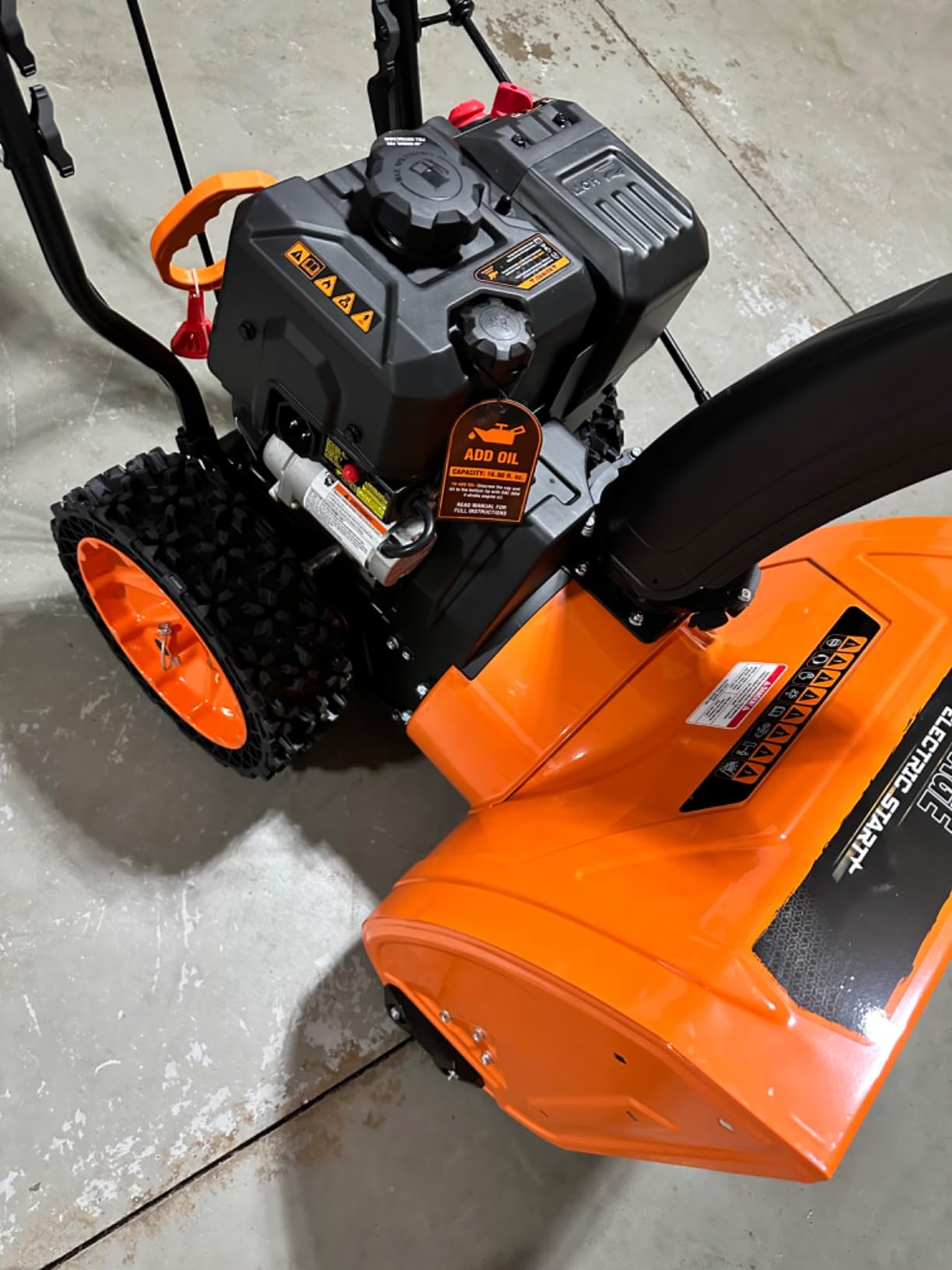
The adjustable chute throws up to 30 feet and rotates 190 degrees. That is the shortest throw in this roundup, and it is the clearest sign that this machine targets routine snowfall rather than storm events.
Two 13 inch tubeless snow tires, a UL specification, and a two-year warranty round out a package that is deliberately simple. Nothing about it is excessive, which is exactly the point.
Where a first machine is enough
If you get a moderate amount of snow and your drive is a two-car width, this machine does the job without the weight and expense of anything above it. The 24 inch path and 20 inch height cover a normal overnight accumulation in a few passes.
Owners consistently rate it as capable for routine moderate snowfall, and the complaints are about its limits rather than its failures. The 30 foot throw simply means more repositioning than a longer-chute machine.
Where it falls short
A 209cc engine has less low-end grunt than the 212cc and 208cc machines above it, and that gap shows when you are cutting into saturated snow rather than pushing loose flakes. The manufacturer ideal snow depth rating is 50.8 centimeters, about 20 inches in powder conditions, and wet snow is a different test.
If you live where storms deliver heavy wet dumps, buy pick seven or pick four instead. Both have more torque under load, and the price difference is smaller than the difference in a bad January.
How to Choose a Snow Blower for Wet Snow
Engine size is the first filter. Owners repeatedly ask whether 208cc is too small and whether 254cc is the sweet spot, and the honest answer is that displacement matters less than auger torque and intake height. A 208cc with a 26 inch intake handles wet snow that stalls a 250cc with a shallow housing, because the housing decides how much material hits the auger at once.
Intake height is the second filter and the number most buyers ignore. A 12 inch intake skims the top of a drift and leaves a compacted slab. A 20 to 21 inch intake takes a plow berm in one cut. Compare intake height before you compare width, every time.
Third, look at the impeller and the auger rather than the stage count. A super high output impeller resists chute packing better than a stage label does, and a notched or serrated steel auger cuts ice that a smooth plastic auger just rolls over.
Fourth, steering and drive. On anything above 200 pounds, power steering or trigger-controlled steering is close to essential. On a slope, tracks beat wheels in wet snow because packed wet snow has almost no grip. Hydrostatic transmission gives smoother speed control than a friction disc box, which matters when you are modulating the load.
Fifth, decide between electric and gas honestly. Battery machines are quiet, start instantly, and need no fuel storage. They derate in extreme cold, need pack swaps on long jobs, and the packs are a long-term cost. Gas machines keep running in any temperature but are loud, need storage for fuel, and demand a choke on the coldest mornings.
One regional note: if you live above roughly 3000 feet, thin air costs a small percentage of engine power, and going up one displacement class is reasonable. Below that, it is not worth paying for.
How to Stop Wet Snow From Clogging the Chute
Every machine here will eventually clog, and owners on r/Snowblowers describe three-stage machines choking within seconds in heavy wet snow. That is not a defect, it is what saturated snow does when you put it under pressure in a confined space.
Five things cut the number of clogs. First, coat the chute walls with a non-stick spray or warmed lubricant before the season starts. Second, make half-width passes so the auger stays loaded and the load entering the chute stays thin. Third, clear early, because a driveway that has sat overnight in freezing temperatures becomes a different material entirely.
Fourth, keep a chute clearing tool within reach, and never reach into a running chute. Shut the engine off, pull the spark plug wire or remove the battery, and use the tool. Fifth, keep spare shear pins with the machine. A shear pin is designed to break rather than damage the gearbox, and replacing one in the driveway takes minutes if you have the part.
Reliability, Shear Pins and Winter Storage
The most common community complaints about heavy machines are repeated shear pin snapping and planetary gearbox failures, both reported on three-stage designs. Both are consistent with the same cause: a machine that is under-specified for the snow it is being asked to move. Owners who upgraded to a Honda after a bad three-stage experience generally reported being happy with the change.
Ariens commits to three-year spare parts availability on this model, which is a meaningful signal for long-term repairability. For anything you buy, order a spare shear pin kit and a spare starter coil before you need them, because a part delay in January is a lost week.
At season end, run the machine until the auger is dry, drain or stabilize fuel with a stabilizer, and store battery packs between 50 and 60 percent charge in a cold but not freezing space. A blower stored with fuel in the lines or a battery stored full loses capacity before next season, every season.
Frequently Asked Questions
What snowblower is best for heavy wet snow?
The best snowblower for heavy wet snow is one with a super high output impeller, a 20 inch or greater intake height, and enough auger torque to keep pulling saturated material inward. Our top picks are the EGO Power+ SNT2416 for cordless clearing, the Honda HSS928 for sloped driveways, and the PowerSmart 26 inch gas machine for pure output per pound.
Are 3 stage snowblowers worth it?
They are worth it where snow falls wet and heavy and plow piles build up at the end of the drive, because the center accelerator keeps the chute from packing solid. They are not worth it where snow is dry and light or the driveway is short, because a high-output two-stage machine weighs 60 to 100 pounds less and clears the same material for less money.
Can snow be too heavy for a snowblower?
Yes. Wet heavy snow weighs three to five times more than dry powder, so a driveway that takes ten minutes in flurries can take an hour after a coastal storm. On residential machines, anything past roughly 18 inches of packed accumulation strains the auger housing, snaps shear pins, and can stall the drive. Cutting in smaller passes keeps the load manageable.
Who makes the best 3-stage snow blower?
Honda, Ariens, Craftsman, and Cub Cadet build the machines that use a true center-mounted accelerator auger. Of the picks in this roundup, the Honda HSS928 and the Ariens ST28DLE come from that group. Note that most machines labeled three-stage are enhanced two-stage designs with a larger impeller, so check for a stated accelerator auger before paying for the name.
What should I look for when buying a snow blower?
Look at five things in order: intake height, which should be 20 inches or more for wet snow; engine displacement and auger torque; impeller type, preferring a super high output design; steering, which should be power assisted or trigger controlled above 200 pounds; and drive type, where tracks win on sloped driveways. Clearing width matters, but it matters less than what happens at the housing.
Which brand of snowblower is the most reliable?
Honda has the strongest reliability reputation in this category, largely because of its commercial GX engines, long parts availability, and wide dealer network. EGO leads among cordless machines, with the most reviewed listings and no fuel system to maintain. For entry gas machines, owners report more assembly and control issues than engine failures. Reliability tracks engine design more than brand badge.
Which Snow Blower Is Right for Your Driveway
The best three stage snow blowers for wet snow are not always three-stage machines. If you get plow berms and saturated storms, the EGO Power+ SNT2416 gives you the endurance and the 20 inch intake to finish the job, while the Honda HSS928 adds the traction you need if the drive slopes. On a wide drive where gas is what you want, the PowerSmart 26 inch delivers the highest rated output per pound in this roundup.
Match the machine to the weather instead of the other way around. Moderate snow and a small drive point to the WEN. Dry powder and light totals point to the EGO SNT2112. Everything in between is answered by the picks above, and every one of them can be improved with half-width passes and a coat of non-stick spray in the chute.