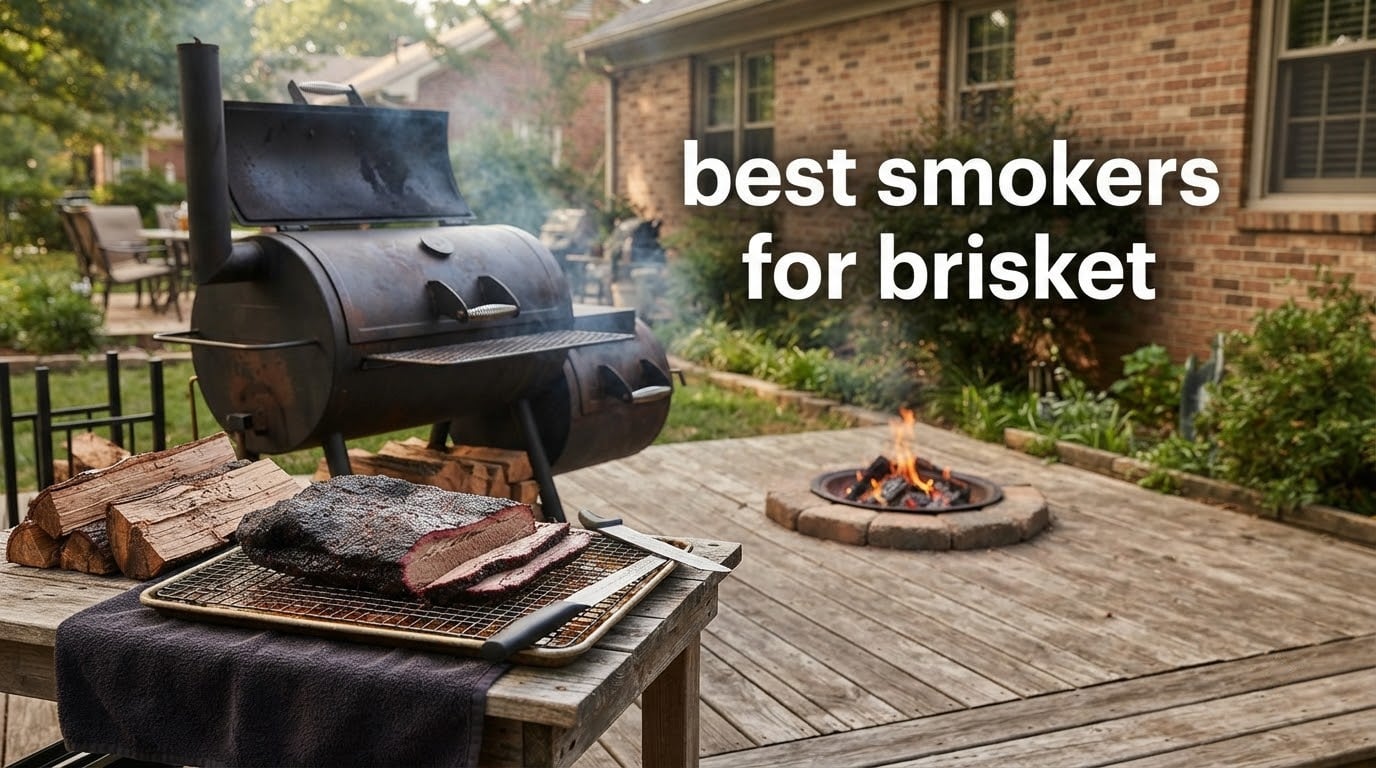
A wood-fired offset smoker gives you the deepest smoke flavor on a brisket, but a pellet smoker is the best choice for most backyard cooks because it holds temperature for twelve hours without a single visit to the firebox. Electric smokers win when you need zero tending and cold-weather reliability. That is the short version of the best smokers for brisket, and the rest of this guide breaks down which specific cooker fits which kind of cook.
Brisket is the least forgiving cook in barbecue. A large fatty cut needs roughly 45 to 60 minutes per pound at 225F, which means a 12-pound packer runs ten to fourteen hours. A smoker that swings twenty degrees or runs out of fuel mid-cook will stall or scorch the outside while the center stays raw, so heat retention, fuel capacity and grate space matter far more here than they do for ribs or pork butt.
We put twelve smokers through a brisket-focused evaluation, looking at usable grate area, temperature stability, fuel runtime and how much babysitting each cooker demands. If you are still working out the cuts, start with our 22 best brisket recipes for National Brisket Day so you know what you are aiming for before you buy anything.
Table of Contents
- Top 3 Best Smokers for Brisket (September 2026)
- Best Smokers for Brisket at a Glance (2026)
- How We Tested Smokers for a Full Brisket
- How Big of a Smoker Do You Need for Brisket?
- 1. Weber Smokey Mountain 18 Inch – Best Overall Smoker for Brisket
- 2. Masterbuilt 30 Inch Digital Electric Vertical – Best Value
- 3. Dyna-Glo Wide Body Vertical Offset – Best for Full Packers
- 4. Char-Griller AKORN 20 Inch Kamado – Best Kamado Value
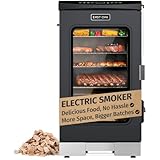
- 5. EAST OAK 30 Inch Electric Smoker – Best for Unattended Cooking
- 6. Kamado Joe Classic Joe I 18 Inch – Best Ceramic Durability
- 7. Traeger Ironwood 885 – Best Pellet Smoker for Brisket
- 8. Oklahoma Joe’s Longhorn – Best Offset for Beginners
- 9. Traeger Woodridge Pro – Best for Long Pellet Runs
- 10. Kamado Joe Big Joe I 24 Inch – Best Ceramic Capacity
- 11. Pit Boss 500 FB2 Series – Best Compact Pellet Smoker
- 12. Sophia and William Charcoal Smoker – Best for Windy Patios
- Offset vs Pellet Smoker for Brisket
- What to Look for When Buying a Smoker for Brisket
- Frequently Asked Questions
- Which Smoker Should You Buy?
Top 3 Best Smokers for Brisket (September 2026)
These three earned the highest combined ratings, review counts and brisket-specific capacity of the group.
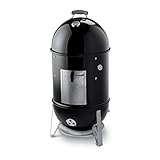
Weber Smokey Mountain 18 Inch
- Charcoal fuel for real wood smoke flavor
- Two 18.5-inch nickel-plated cooking grates
- Water pan and adjustable bowl and lid vents
- 10-year rust-through warranty on bowl and lid
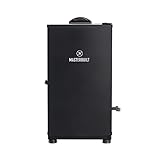
Masterbuilt 30 Inch Electric
- Digital control to 275F
- Patented side wood chip loader
- 711 sq in across four chrome racks
- Removable rear grease tray
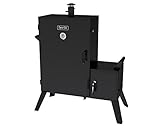
Dyna-Glo Wide Body Offset
- 1890 sq in on six adjustable grates
- Vertical offset charcoal chamber
- Sliding removable steel ash pan
- Adjustable flue smoke stack
Best Smokers for Brisket at a Glance (2026)
Every cooker below made the cut, grouped so you can match a fuel type and capacity to the way you actually cook.
| Product | Specs | Action |
|---|---|---|
| Weber Smokey Mountain 18 Inch |
|
Check Latest Price |
| Masterbuilt 30 Inch Electric |
|
Check Latest Price |
| Dyna-Glo Wide Body Offset |
|
Check Latest Price |
 Char-Griller AKORN 20 Inch Kamado Char-Griller AKORN 20 Inch Kamado |
|
Check Latest Price |
 EAST OAK 30 Inch Electric EAST OAK 30 Inch Electric |
|
Check Latest Price |
 Kamado Joe Classic Joe I 18 Inch Kamado Joe Classic Joe I 18 Inch |
|
Check Latest Price |
 Traeger Ironwood 885 Traeger Ironwood 885 |
|
Check Latest Price |
 Oklahoma Joe’s Longhorn Oklahoma Joe’s Longhorn |
|
Check Latest Price |
 Traeger Woodridge Pro Traeger Woodridge Pro |
|
Check Latest Price |
 Kamado Joe Big Joe I 24 Inch Kamado Joe Big Joe I 24 Inch |
|
Check Latest Price |
 Pit Boss 500 FB2 Series Pit Boss 500 FB2 Series |
|
Check Latest Price |
 Sophia and William Smoker Sophia and William Smoker |
|
Check Latest Price |
How We Tested Smokers for a Full Brisket
Spec sheets tell you very little about a smoker’s behavior on a twelve-hour brisket, so we scored every cooker on the same six criteria. Capacity came first, because a smoker that cannot physically fit the meat disqualifies itself. Grate area and door dimensions decide whether a full packer goes in whole or has to be butchered down.
Second was temperature stability at grate level rather than at the firebox, since that is where the meat actually sits. Third was fuel runtime, because a cook who has to reload at hour nine cannot leave the brisket alone overnight. Fourth was bark formation and smoke delivery, fifth was how well the unit holds its set point after the door opens, and sixth was cleanup, which matters more in year two than on day one.
Our protocol mirrors a real cook: preheat to 250F, load a trimmed packer, run unwrapped until the stall passes, wrap at roughly 160F internal, and pull between 194F and 203F depending on how much bark you want. We also tracked how many times we opened the door, because every opening on a water smoker or a kamado costs temperature and smoke.
How Big of a Smoker Do You Need for Brisket?
You need at least 400 square inches of usable grate space to smoke a full packer brisket whole. Most home cooks trim a 12-pound packer down to 8 or 9 pounds and can get away with less, but an untrimmed 16 to 18 pound packer standing on its side needs a grate at least 22 inches across and a door opening tall enough to clear a 26-inch-tall piece of meat.
For a trimmed flat at 8 to 10 pounds, roughly 300 square inches works. A full packer at 12 to 18 pounds wants 400 to 600 square inches, and a holiday cook for ten people means planning on 800 square inches or more so ribs and burnt ends fit alongside. The number that surprises most buyers is the door, not the grate. A 250 square inch kamado cooks beautiful brisket for one, but the round opening is the constraint that forces trimming.
Here is how the smokers in this guide line up on usable space. The Dyna-Glo wide body leads at 1890 square inches across six grates, and the Oklahoma Joe’s Longhorn follows at 1060. The Weber Smokey Mountain’s two 18.5-inch grates are narrower than most buyers expect, so aggressive trimming matters there. The Kamado Joe Classic Joe I is the tightest of the group at 250 square inches, which is fine for one trimmed brisket and nothing more.
Height is the second half of the math. Vertical smokers solve it naturally because racks stack, and a tall rack clearance is what lets a packer stand on its edge. Horizontal water smokers and offsets solve it with a wide door, which is why a 26-inch bowl can handle meat that a 22-inch vertical has to be trimmed for. Our smoked brisket with spicy rub guide covers the trim and seasoning side in detail.
1. Weber Smokey Mountain 18 Inch – Best Overall Smoker for Brisket
Weber® Smokey Mountain Cooker Smoker, 18″ Charcoal Smoker
Charcoal fuel
Two 18.5-inch nickel-plated grates
Water pan and adjustable vents
10-year rust-through warranty
Pros
- Holds temperature for 10-16 hour cooks with minimal tending
- Works with cheap briquettes plus wood chunks for real smoke flavor
- Simple to assemble and easy to learn
- Porcelain-enameled steel with a 10-year rust-through warranty
Cons
- Door gasket on some units needs shaping to seal out of the box
- Lid thermometer fogs and trails a remote probe
- Uses more charcoal per cook than a kamado
- Water pan sits low under a full charcoal load
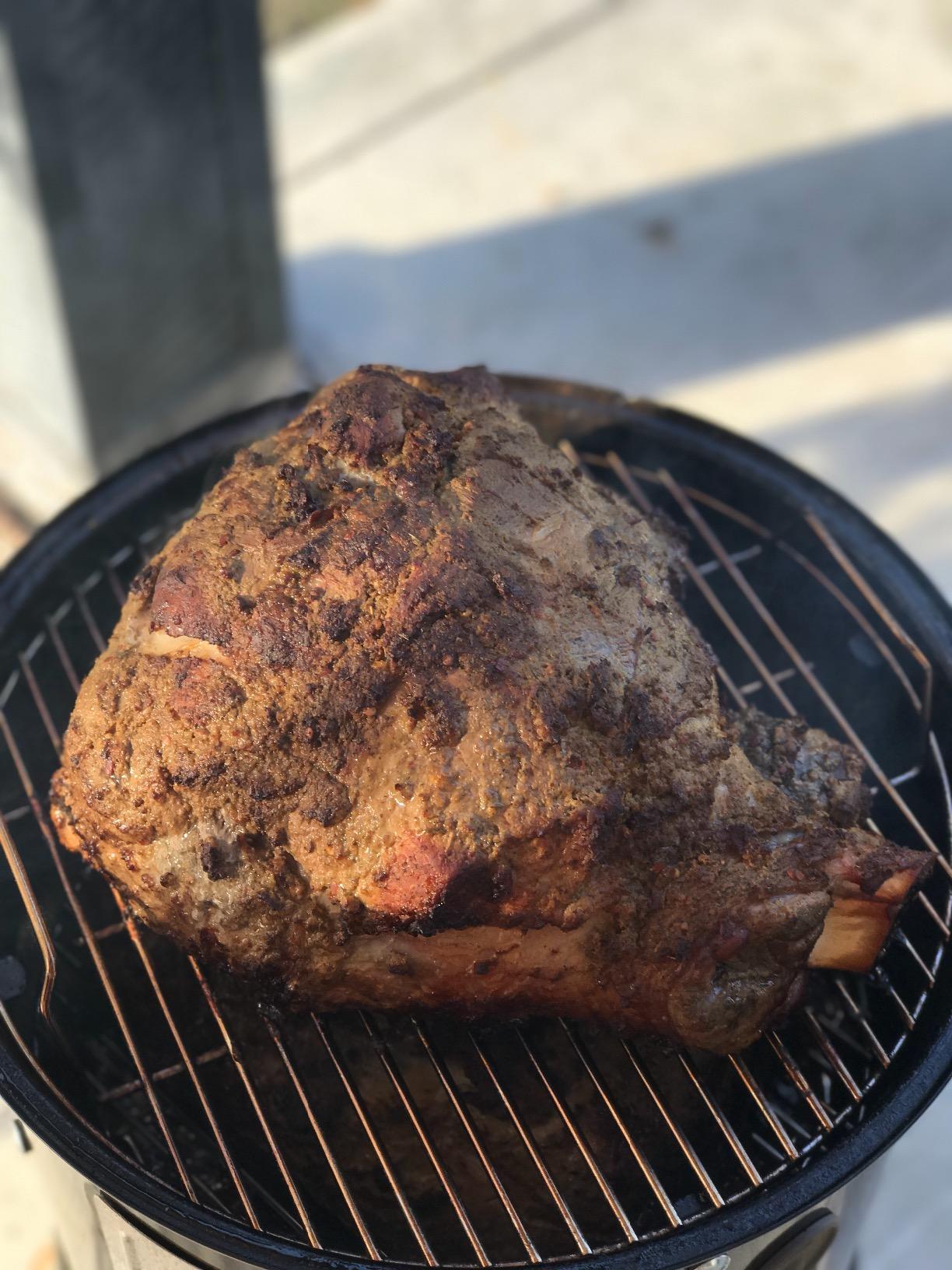
We ran several full packers through the 18-inch Smokey Mountain over the season, and the thing that stands out is how little attention it demands. Once the water pan is filled and the charcoal basket is lit, it held grate-level temperature for a full 16-hour cook without a reload.
Smoke flavor is the real draw. It burns cheap briquettes for the base heat and you add wood chunks on top, which gives the bark and ring a layer that a purely pellet-driven cooker struggles to match. Two nickel-plated 18.5-inch grates gave us plenty of room for a trimmed brisket plus a rack of ribs on the same cook.
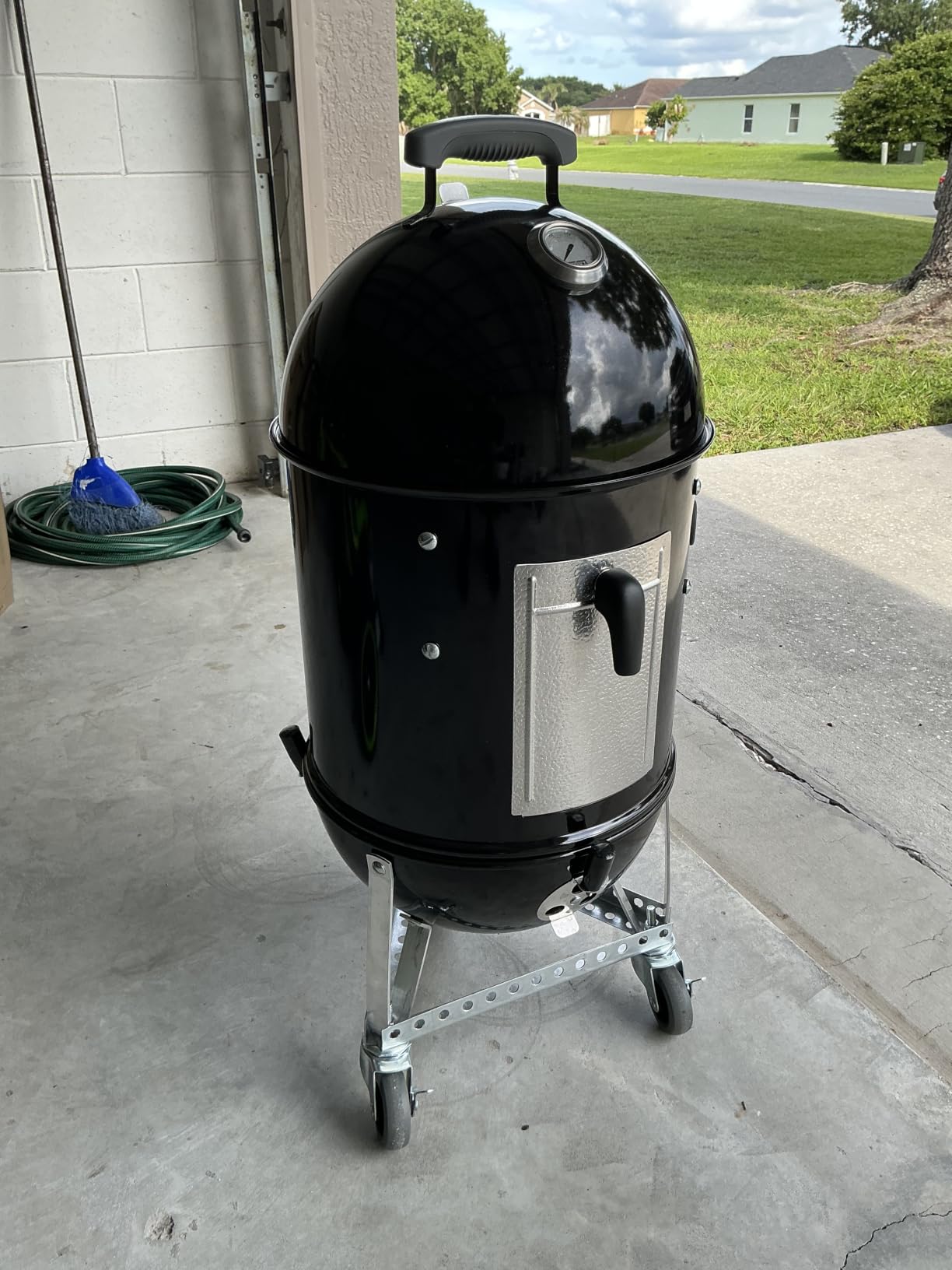
The stainless steel internals, porcelain-enameled exterior and 10-year rust-through warranty on the bowl, lid and center ring mean this is a cooker you can leave outside through several seasons. At 39.1 pounds it also moves easily when you want to smoke out of the wind.
The honest limitation is width. Two 18.5-inch grates is narrower than the 22-inch bowl, so a large untrimmed packer will not go in without cutting. Owners also report that the lid thermometer fogs during long cooks, which is a good reason to add a remote probe thermometer before your first long cook.
What brisket it handles best
This is the smoker for a trimmed 8 to 12 pound brisket cooked overnight by someone who wants genuine wood smoke flavor without an eight-hour fire management commitment. Owners routinely run competition-style results out of this bowl.
It also suits beginners unusually well. Charcoal is forgiving, the learning curve is short, and a miss costs you bark rather than the whole cook.
Where it falls short
If you routinely cook an untrimmed 16 to 18 pound packer, step up to the 22-inch bowl or a smoker with more grate width. And if charcoal consumption bothers you, note that this bowl burns through fuel faster than a comparable ceramic.
Budget an afternoon to reshape the door gasket on some units. It is a five-minute fix that pays back in temperature stability all season.
2. Masterbuilt 30 Inch Digital Electric Vertical – Best Value
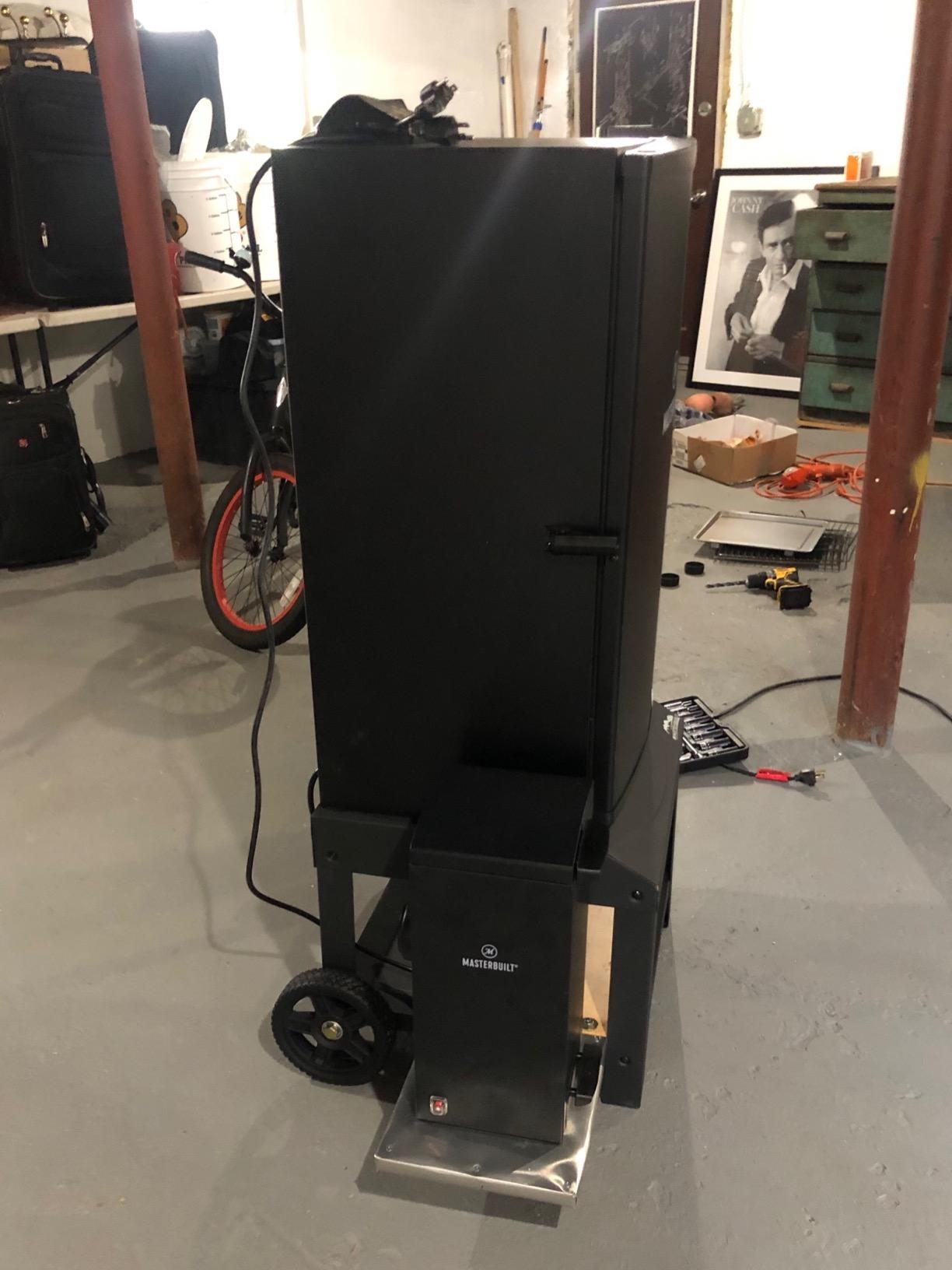
Masterbuilt® 30-inch Digital Electric Vertical BBQ Smoker with Side Wood Chip Loader, Chrome Racks and 710 Cooking Square Inches in Black, Model MB20071117
Electric to 275F
Patented side wood chip loader
711 sq in on four chrome racks
Removable rear grease tray
Pros
- Digital control holds target temperature with no fire tending
- Side chip loader adds smoke without losing heat
- 711 sq in fits four pork butts or multiple rib racks
- Under 46 pounds and easy to clean between cooks
Cons
- 275F ceiling limits searing
- Controller sets only time and temperature so you need a separate probe
- Plug-in controller and cabinet paint wear over time
- Requires an outdoor outlet and the chip tray is fiddly to clean
With more than eleven thousand reviews, the Masterbuilt 30-inch is the most proven cooker in this roundup, and for brisket it delivers the thing you are really buying: unattended holding. Set the panel to 250F, load the packer, and walk away.
Four chrome-coated racks across 711 square inches is the sweet spot for brisket. A trimmed packer fits with room on two other levels, and the vertical layout gives tall clearance so nothing has to be cut down to fit the footprint.
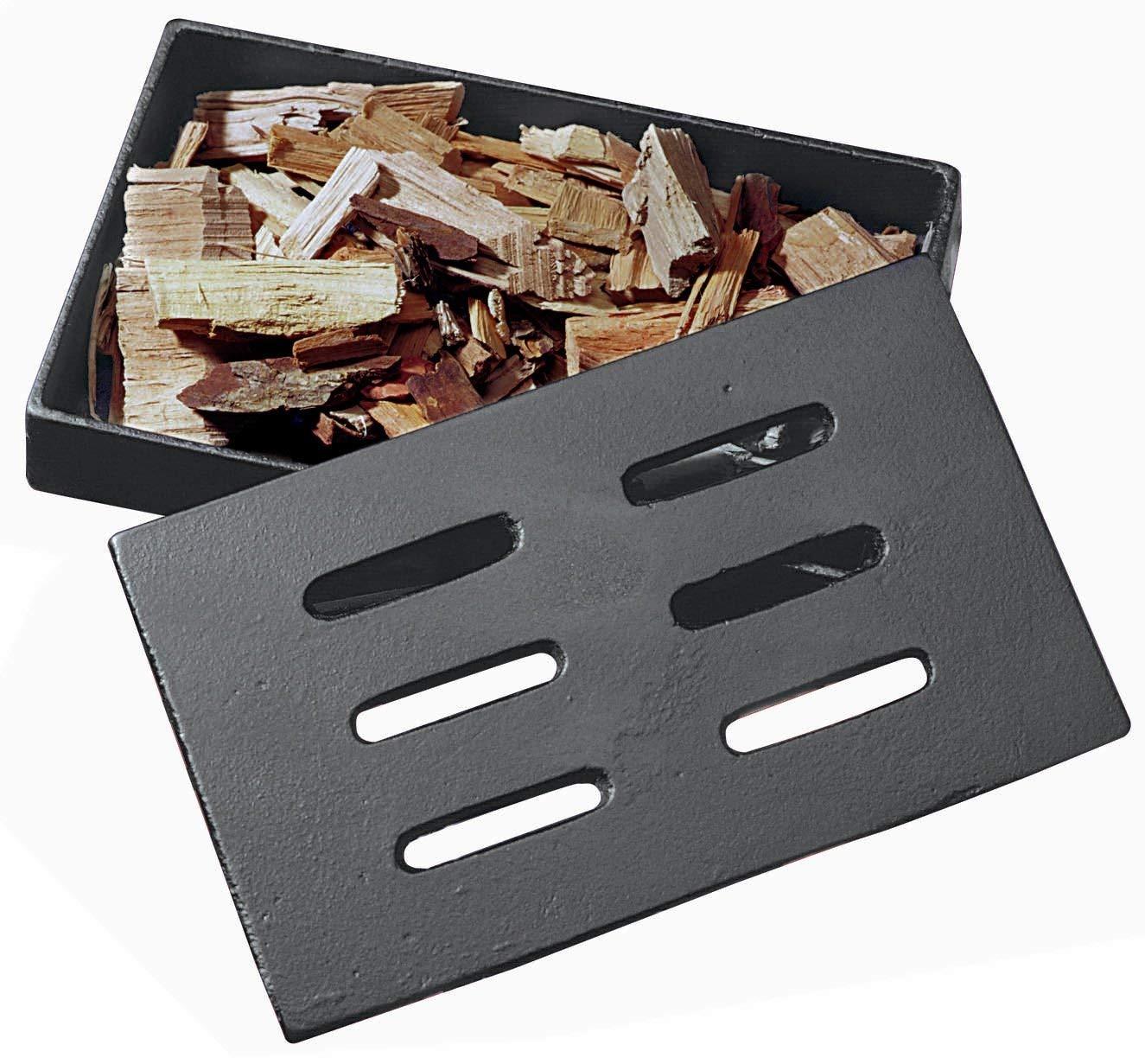
The patented side wood chip loader is the detail that separates it from a bare box electric. You can top up smoke without opening the main door, which on a vertical electric would cost you heat and interrupt the render. The removable rear grease tray and water bowl make the post-cook cleanup a ten-minute job.
At 45.9 pounds this is also one of the lightest smokers here, which matters if you are cooking in a driveway or a small patio rather than a built-out deck. The single-element design means you cannot sear, but brisket never asks you to.
What brisket it handles best
This is the pick for first-time brisket cooks and for anyone who works a full schedule. Twelve hours of hold with no firebox is exactly what the cut demands, and 711 square inches covers a full trimmed load.
It is also the best cold-weather option in the guide. Electric heat does not care about wind or ambient temperature the way a charcoal fire does.
Where it falls short
The 275F ceiling rules out searing and finishing, and the flavor profile sits closer to chip-smoked than true wood-fired. If you want a heavy smoke ring and deep oak character, this is not the machine.
You still need a separate probe thermometer. The panel handles the smoker, not the meat.
3. Dyna-Glo Wide Body Vertical Offset – Best for Full Packers
Dyna-Glo DGO1890BDC-D Wide Body Vertical Offset Charcoal Smoker,Black
Charcoal fired
1890 sq in across six grates
Sliding removable steel ash pan
Adjustable flue smoke stack
Pros
- 1890 sq in suits full packers and multiple racks
- Vertical offset layout gives efficient rising indirect heat
- Large sliding ash pan supports long maintenance-free burns
- Six adjustable grates stage food at different heights
Cons
- Bulky 83-pound cabinet that is awkward to reposition
- Needs airflow management on short cooks
- Built-in thermometer is less precise than a remote probe
- Painted steel and wheels need care in outdoor storage
When the question is simply how much brisket can you cook at once, the Dyna-Glo wide body is hard to argue with. Six height-adjustable grates total 1890 square inches, which is more than double most of the cookers in this guide, and each grate is rated for 25 pounds.
The vertical offset layout is the underrated part. Fire rises, so a brisket sitting low in the chamber gets the cleanest indirect heat, and the design lets you stage different foods at different heights on the same cook without fighting for temperature.
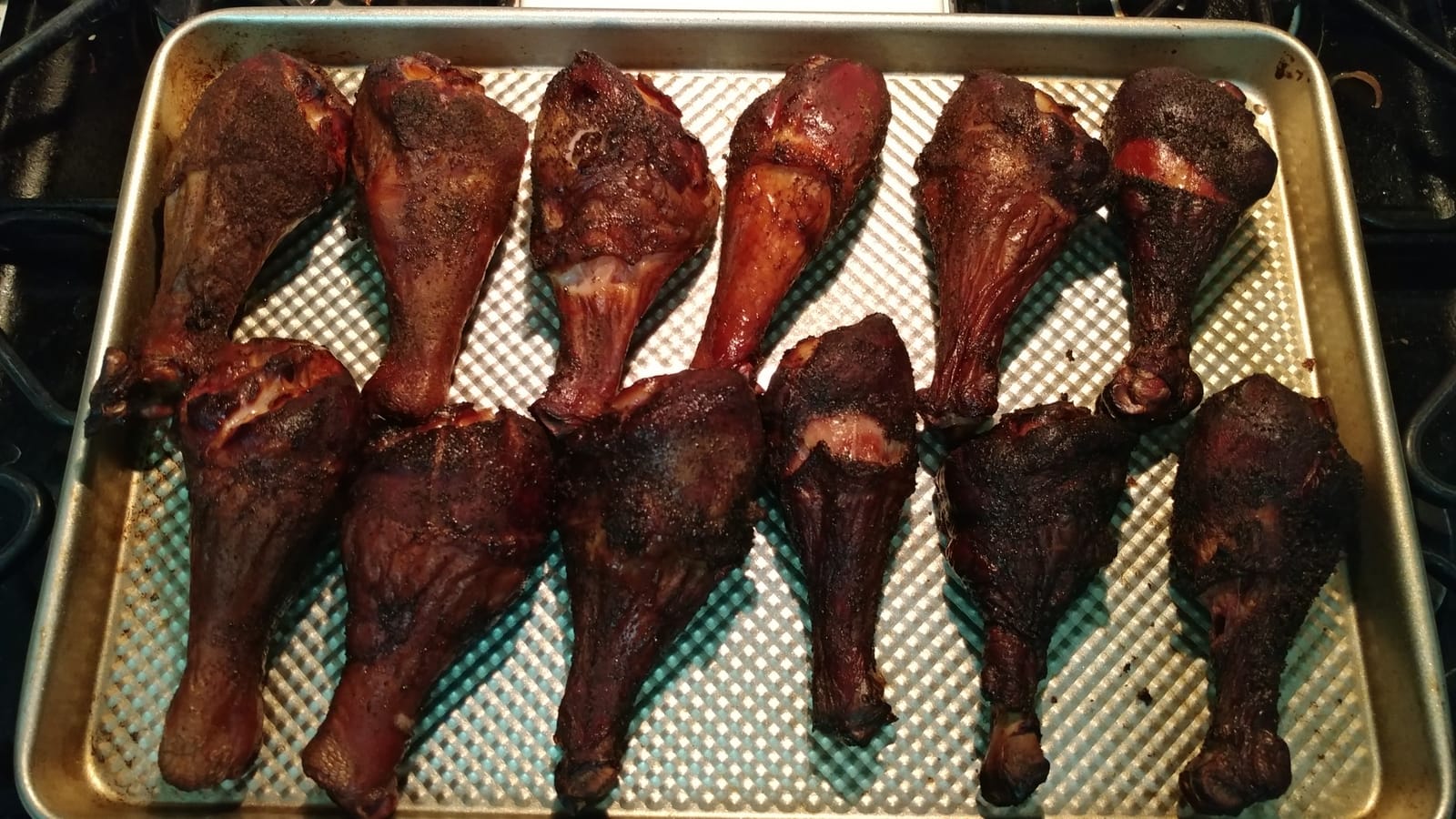
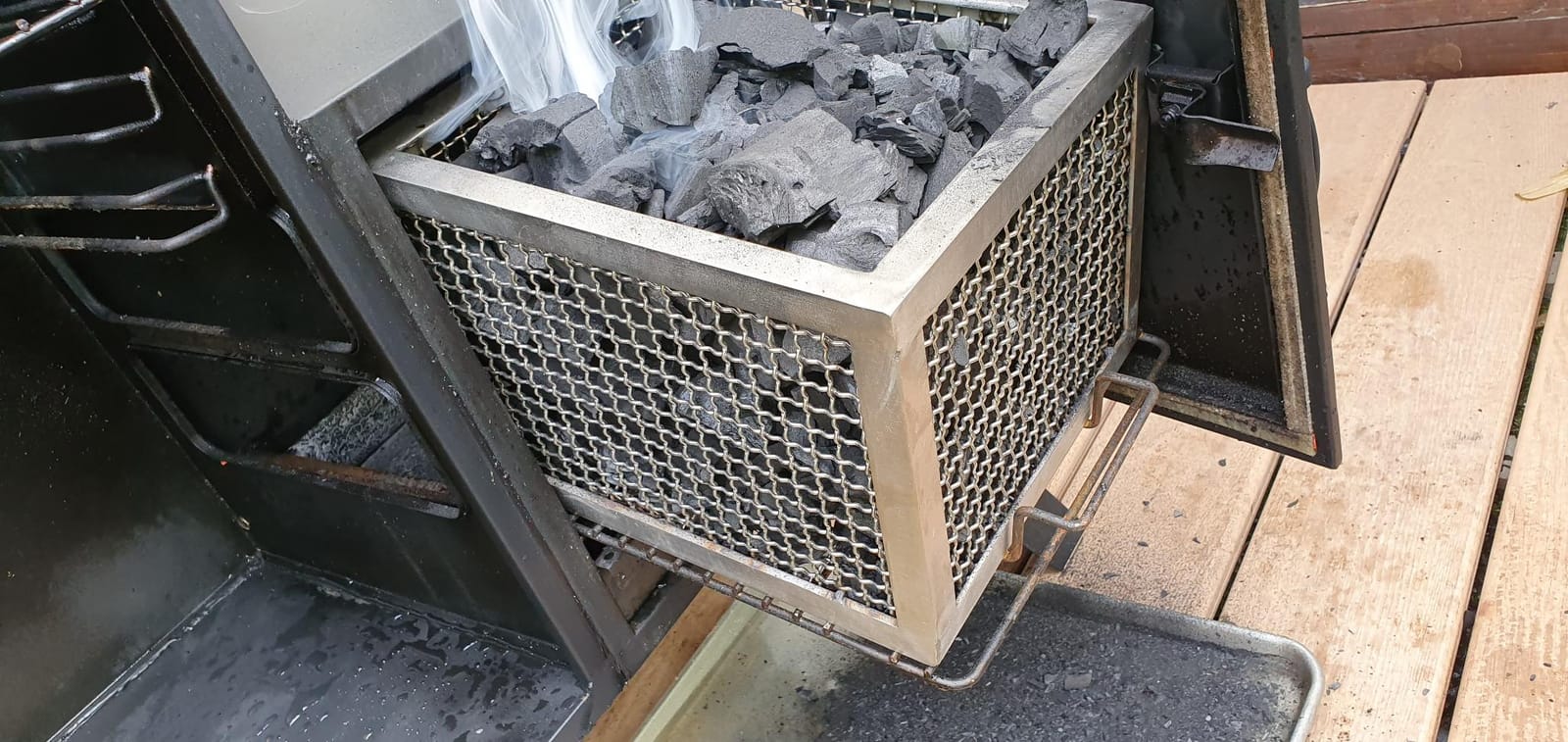
For a holiday feed or a competition practice run, the sliding steel ash pan and the vertical charcoal chamber designed to keep briquettes stacked tightly mean long stretches between firebox visits. The adjustable flue on the smoke stack gives you real control over draft and heat retention.
The porcelain-enameled steel chamber is a good sign for durability outdoors, and the built-in stainless thermometer includes a smoke zone indicator, which is more useful than a bare number on a cheap offset.
What brisket it handles best
Multiple full packers, or one large untrimmed packer plus ribs and a shoulder, all on one cook. Nothing else in this price range comes close on usable square inches.
It is also a strong fit for a cook who wants real charcoal and wood smoke flavor but does not want to babysit a horizontal offset firebox all night.
Where it falls short
At 83 pounds and 43 inches wide, this is a two-person move at best, and it needs real patio space behind it. The learning curve on the vertical airflow is real, and the built-in thermometer will not tell you what the meat is doing.
Treat the cabinet paint and wheels carefully if you store it uncovered through winter.
4. Char-Griller AKORN 20 Inch Kamado – Best Kamado Value
Char-Griller AKORN 20-Inch Kamado Charcoal Grill and Smoker, Triple-Wall Insulated Steel with Cast Iron Grates, Warming Rack and EasyDump Ash Pan, 445 Sq. In. Cooking Area, Graphite
Charcoal kamado
200F to 700F
445 sq in total area
Dual adjustable dampers
Pros
- Triple-wall insulated body holds steady low-and-slow heat
- Dual dampers and built-in gauge give tight control
- Casts from 200F to 700F for smoking then searing
- EasyDump ash pan and locking casters simplify cleanup
Cons
- 250 sq in of primary grate area is small for full packers
- No built-in meat probe
- Wind affects drafts on the smaller body
- Cast iron grates need seasoning to prevent rust
The AKORN is the most affordable way into kamado cooking, and for brisket the insulation is the whole story. Triple-wall steel holds low-and-slow temperatures steadily, which means less wood splitting and less frustration than a thin offset of similar size.
Owners consistently call it the best kamado flavor per unit of money. Once you learn the top vent, a 250F hold is almost automatic, and because it casts up to 700F you can sear the flat at the end of the cook without switching appliances.
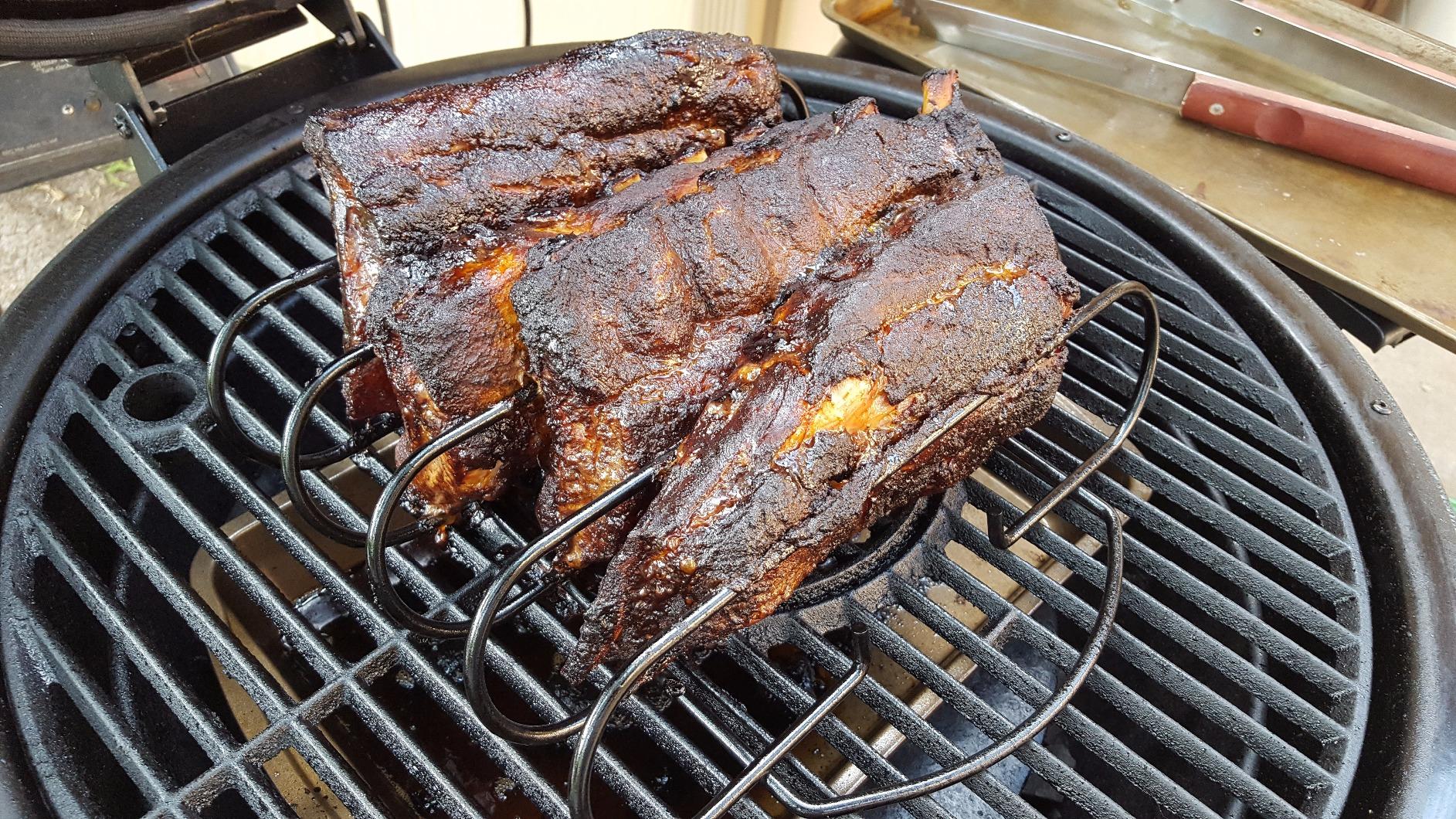
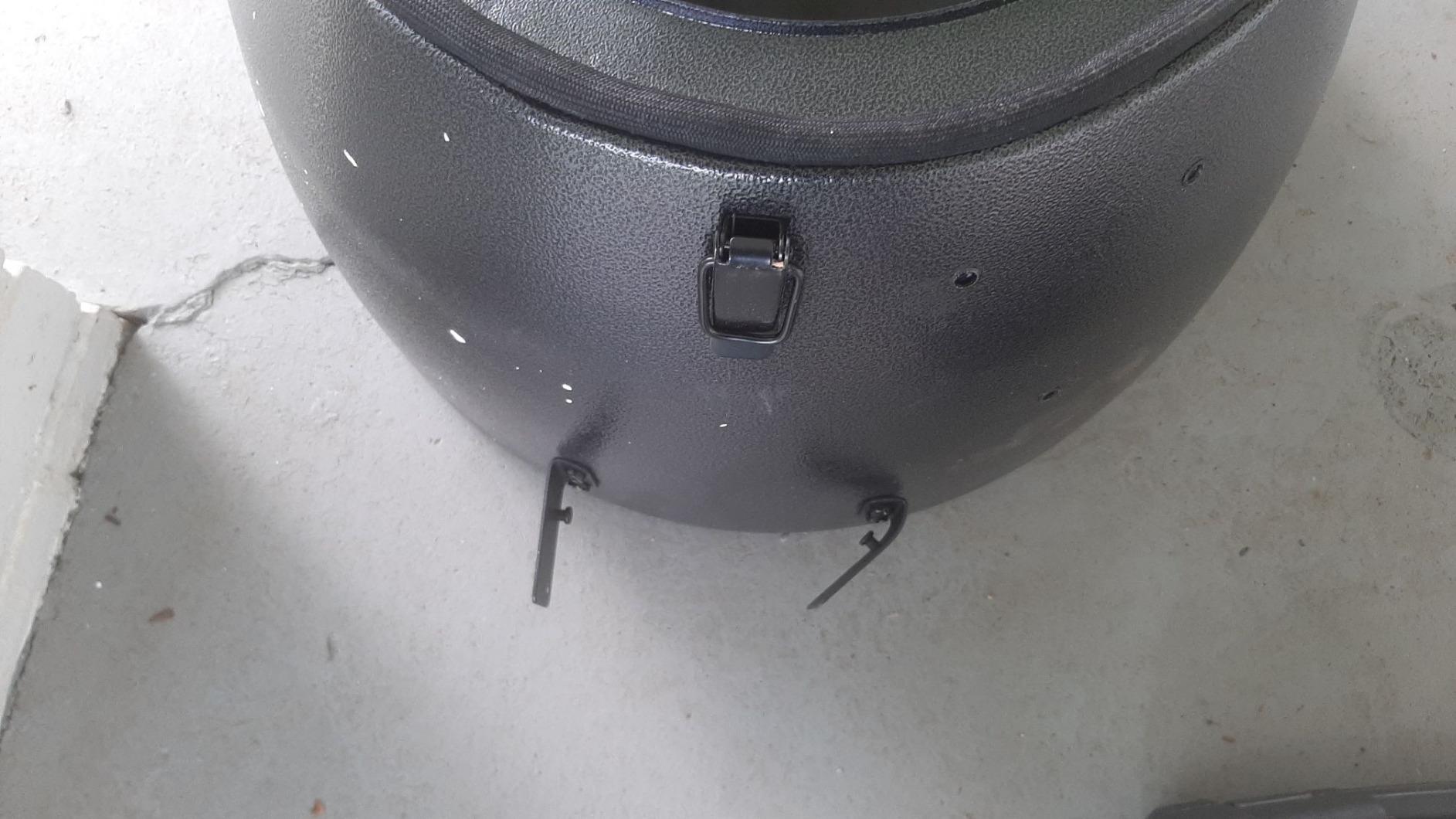
Total cooking area is 445 square inches across cast iron grates and a removable stainless warming rack, with a 20-inch cooking diameter. That is enough for a trimmed brisket flat or a modest trimmed packer, plus the EasyDump ash pan and 8-inch locking casters make it simple to reposition.
Because the primary grate area is around 250 square inches, plan on one brisket per cook. Crowd it and you lose the airflow that makes a kamado work in the first place.
What brisket it handles best
A single trimmed brisket flat or a well-trimmed 10-pound packer for a cook who wants ceramic-style flavor and searing capability in one vessel. It is also a strong first smoker because the physics are forgiving.
If you want to try the kamado approach without committing to a large ceramic, this is the low-risk way in.
Where it falls short
This is not the smoker for feeding a crowd brisket. The grate area is the limit, and a full packer will not fit comfortably. Wind is also more of a factor on a smaller kamado body than on a full-size ceramic.
There is no built-in probe, and the cast iron grates will surface rust if you leave them damp, so oil them after each cook.
5. EAST OAK 30 Inch Electric Smoker – Best for Unattended Cooking
EAST OAK 30″ Electric Smoker for Outdoors | Built-in Meat Probe & Clear Viewing Window | Side Chip Loader for 6x Longer Uninterrupted Smoking | 725 sq in Cooking Area for Bigger Batches, Night Blue
Electric
725 sq in
Built-in meat probe
Side chip loader for long smokes
Pros
- Built-in probe removes the need to open the door
- Side chip loader delivers roughly six times longer smokes per load
- 725 sq in fits brisket flats and multiple cuts
- Digital controls plus a clear viewing window
Cons
- Glass window fogs and dirties quickly
- Aluminized cabinet can surface rust if stored damp
- Element has no searing capability
- No Bluetooth or app connectivity
The built-in meat probe is what separates this from every other budget electric here. It tracks internal temperature and switches to keep-warm at your target, so a twelve-hour brisket does not depend on you remembering to check anything.
At 725 square inches across four removable racks, it has more cooking area than most of the electrics and verticals in this guide. A full packer fits on one level with headroom, and the tall door opening means you do not have to trim down to get it in.
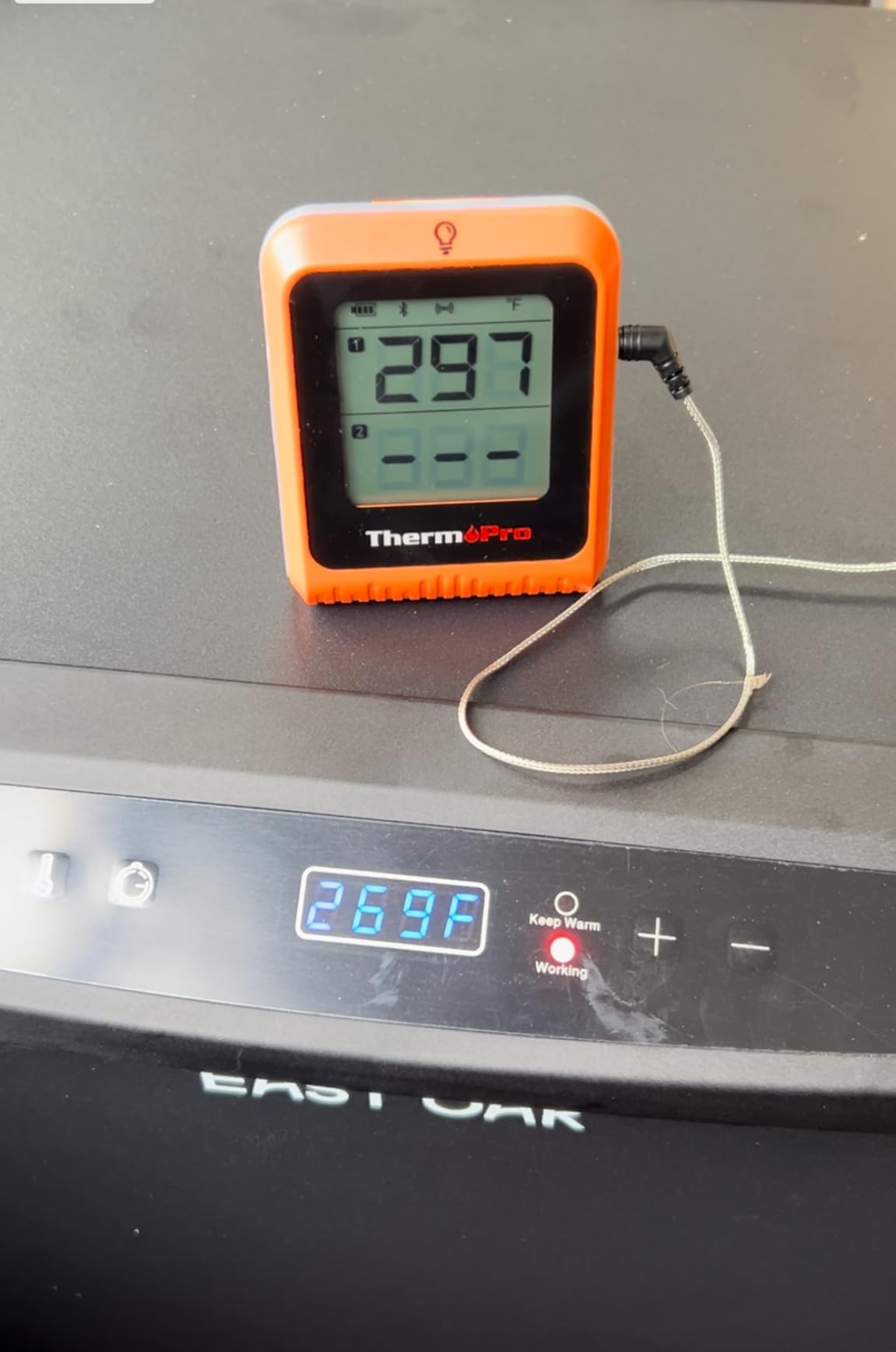
The side chip loader is the second feature worth knowing. Instead of opening the door every forty minutes to refill a tray, you push chips in from the side, and the marketing claim is roughly six times longer smoking per load. In practice that means most brisket cooks go the distance on one fill.
Owners rate this one of the highest-rated models here, and the pattern in reviews is consistent: the probe and the chip capacity are what make long unattended cooks reliable.
What brisket it handles best
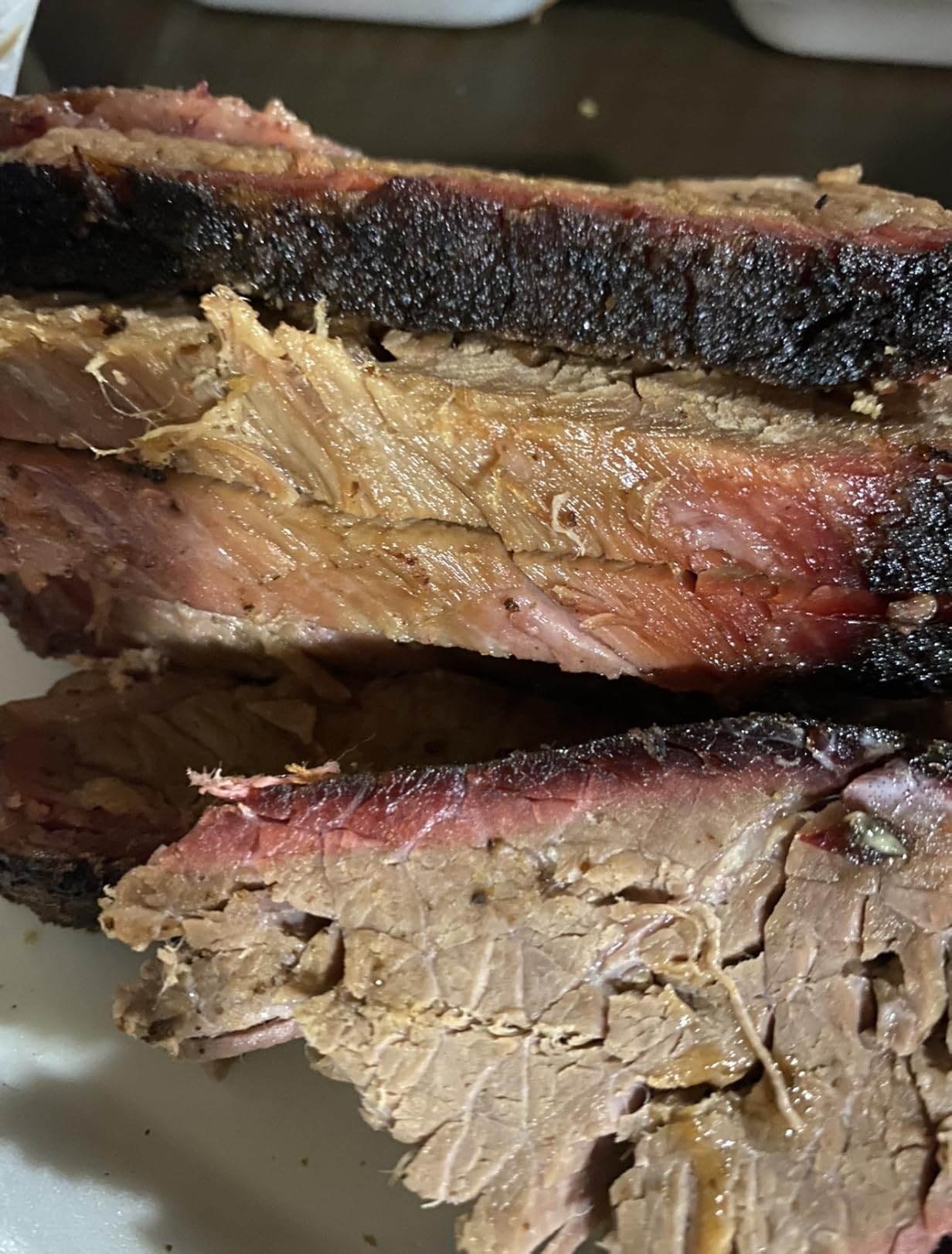
Cooks who are away during the day and want a full packer done without babysitting. The integrated probe makes overnight and early-morning cooks genuinely hands-off.
It is also a good cold-weather option for the same reason the Masterbuilt is, since electric elements ignore wind and ambient temperature.
Where it falls short
No app connectivity, so if you travel you are trusting the keep-warm logic rather than checking in remotely. The viewing window fogs quickly on long cooks, which makes it less useful than it sounds.
There is no high-heat element, and the aluminized cabinet needs to be stored dry between seasons to avoid surface rust.
6. Kamado Joe Classic Joe I 18 Inch – Best Ceramic Durability
Kamado Joe® Classic Joe™ I Premium 18-inch Ceramic Charcoal Grill and Smoker in Red with Cart, Side Shelves, Grill Gripper, and Ash Tool. 250 Cooking Square Inches, 2 Tier Cooking System, Model KJ23RH
Ceramic kamado
250 sq in
Divide and Conquer system
Lifetime warranty on ceramic
Pros
- Thick ceramic holds temperature and recovers fast after opening
- Divide and Conquer allows half direct and half indirect cooking
- Slide-out ash drawer simplifies cleanup
- Bundled with cart/shelves/plate setters and ash tool
Cons
- 188-pound vessel needs two or three people to lift
- 250 sq in limits you to one trimmed brisket
- Series I top vent shifts when the lid opens
- Built-in thermometer is hard to read standing up
The ceramic shell is the reason this cooker behaves the way it does. It recovers temperature almost instantly after a door opening, which means the long stall at 150F inside a brisket is a much shorter event here than it is in a thin steel smoker.
Temperature control runs from 225F for smoking up to 750F for searing through the Control Tower top vent. That range lets you finish a brisket flat with real char without moving to a second appliance.

The warranty is the standout detail: lifetime coverage on the ceramic and five years on metal parts. Long-time owners describe it as a lifetime cooker, and the accessory support around this platform is deeper than any other kamado in the guide.
The Divide and Conquer system is also more flexible than it gets credit for. Running one level direct and one indirect lets you sear a finished flat while a second brisket keeps rendering above it.

What brisket it handles best
One trimmed brisket for a cook who prioritizes consistency and finish quality over capacity. It is a poor match for a raw full packer, so plan to trim before you light it.
It suits people who also want to sear, roast and bake on the same cooker, and anyone who wants a single vessel that will still be there in fifteen years.
Where it falls short
At 188 pounds the vessel needs two or three people to lift into the cart, and that is true for every part of its life. The 250 square inch cooking surface is the smallest usable area in this guide.
Series I top vents shift position when you open the lid, so you have to re-set the vent every time you check the meat.
7. Traeger Ironwood 885 – Best Pellet Smoker for Brisket
Traeger Ironwood 885 Wood Pellet Grill & Smoker, 885 Sq In, WiFi
Wood pellet
885 sq in two tiers
165F to 500F
WiFIRE app control
Pros
- D2 controller holds set temperature within a few degrees
- WiFIRE app and Super Smoke Mode simplify long cooks
- 885 sq in with a full-size hopper
- Produces genuine wood-fired flavor
Cons
- Smoke intensity is milder than a wood-fired offset
- WiFIRE connectivity can fail on some mesh networks
- Pellet consumption is significant on long cooks
- No built-in light and only one probe included
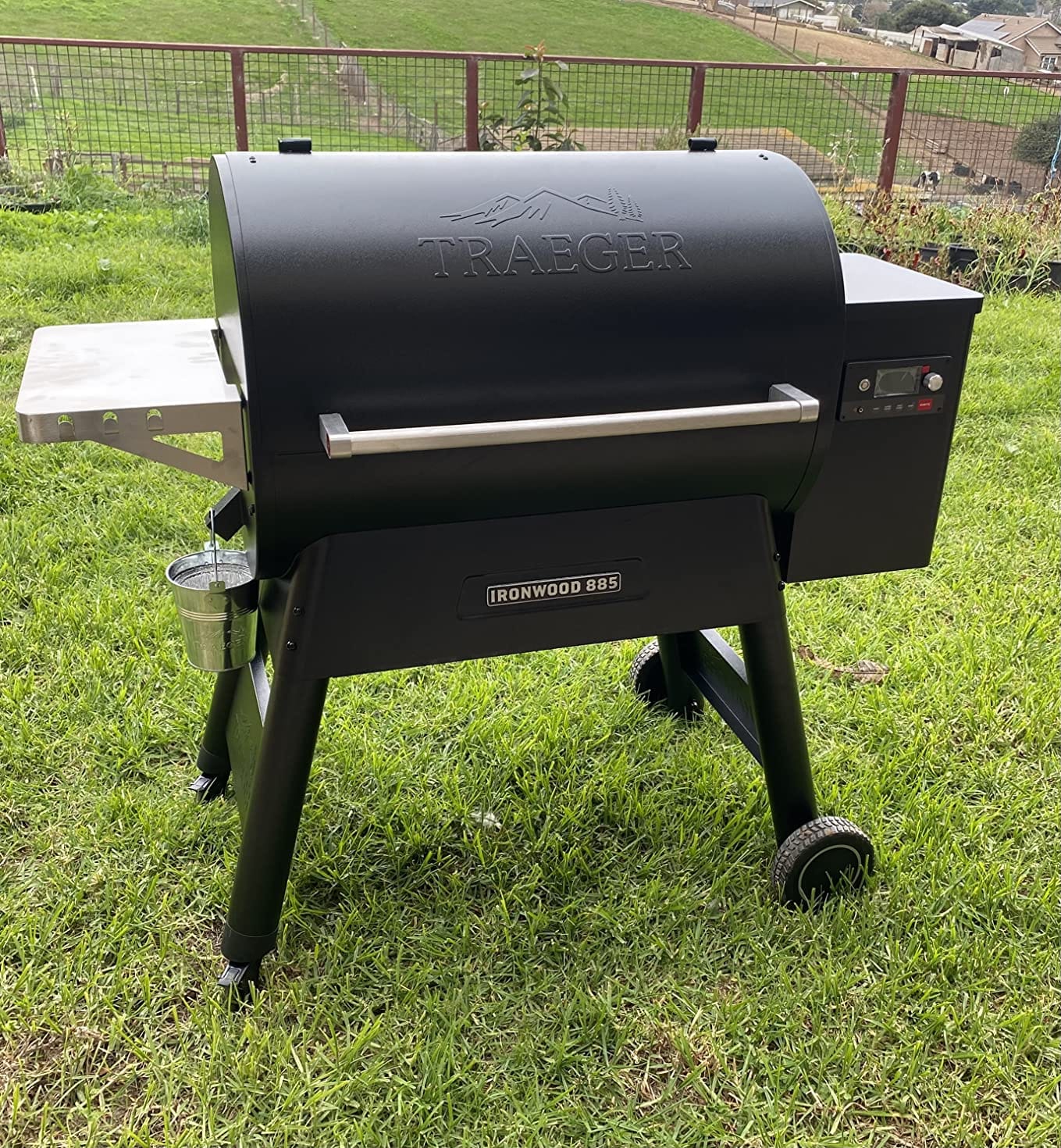
The Ironwood 885 is the pellet platform for someone moving over from charcoal and not ready to give up wood flavor entirely. Super Smoke Mode runs the auger at intervals to keep visible smoke coming, and reviewers credit it with restaurant-quality brisket results.
Two tiers of 885 square inches give you room for a full packer plus sides, and the D2 controller with double-wall insulation holds set point within a few degrees even after a lid opening. The full-size hopper means you are not refilling mid-cook.
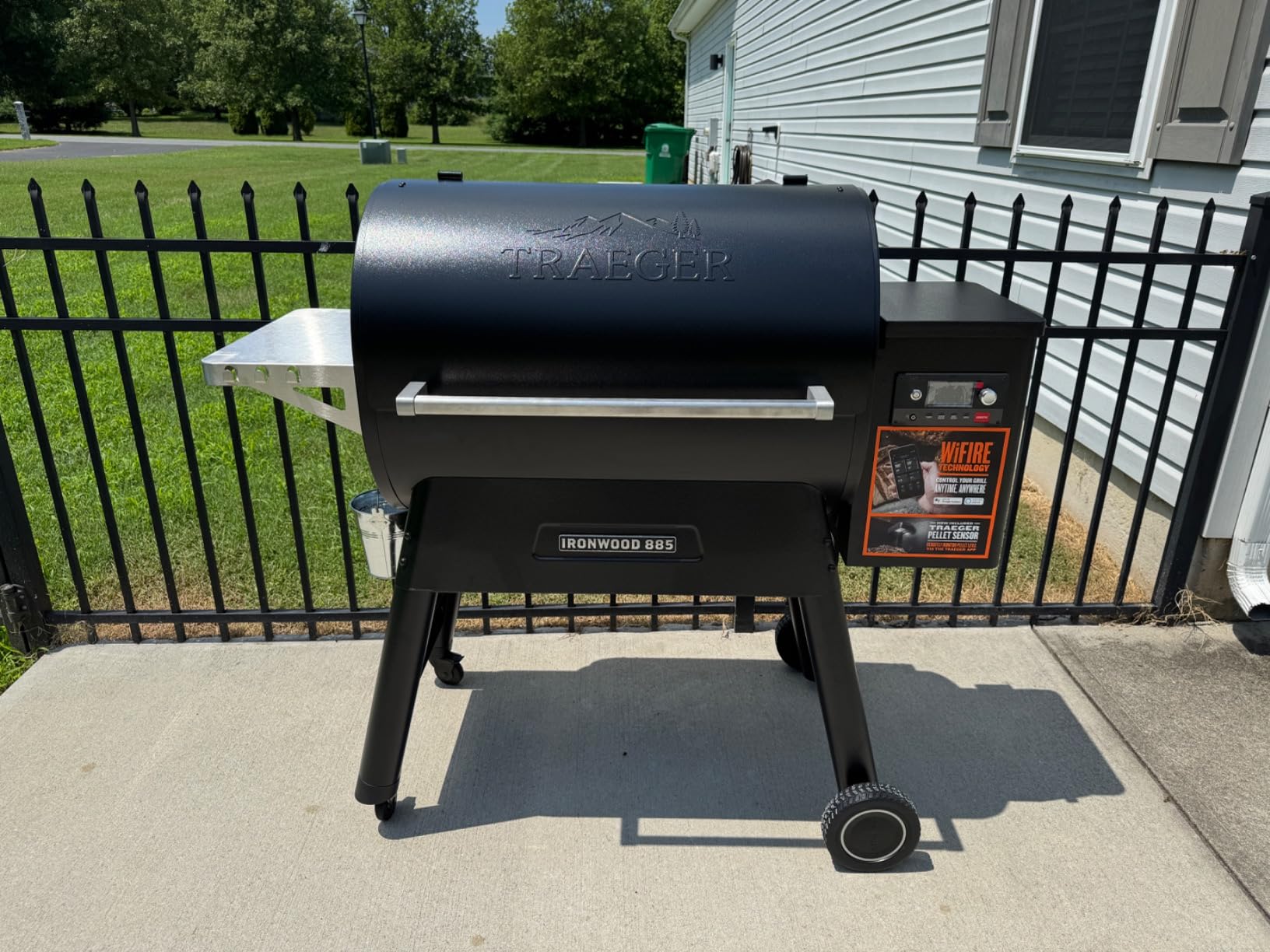
WiFIRE app control is the real time saver on a twelve-hour brisket. You get temperature alerts and remote adjustments from your phone, which is the difference between checking a smoker and managing one.
Owners converting from charcoal smokers consistently cite easy cleanup as a major upgrade. There is no ash to sift and no fire to bank, and the range from 165F to 500F means one appliance covers low-and-slow and searing.
What brisket it handles best
Working cooks who want wood flavor, remote monitoring and a smoker they can leave running overnight. The 885 square inches comfortably fits a full packer with room around it.
It is also the pick if you cook brisket and ribs on the same day and want one appliance for both without splitting your attention between a firebox and a controller.
Where it falls short
The smoke profile is milder than a traditional wood-fired offset. If a heavy smoke ring and deep bark are your goal, pellet is a compromise rather than an equal.
At 170.2 pounds the unit is heavy and the footprint is 53 inches wide, and pellet burn rates on a 14-hour brisket add up faster than most buyers expect.
8. Oklahoma Joe’s Longhorn – Best Offset for Beginners
Oklahoma Joe’s Longhorn Reverse Flow Offset Charcoal Smoker and Grill with 1060 sq. in. Cooking Area in Black
Reverse flow charcoal
1060 sq in
Four internal baffles
Large charcoal basket
Pros
- Reverse flow baffles hold heat even with under 10F differential
- 1060 sq in handles full-pack briskets
- Sturdy steel build with cool-touch handles
- Large basket supports long cooks with fewer wood loads
Cons
- Reverse flow baffles are hard to clean and build up carbon
- Firebox and ash door gaps leak smoke
- Factory paint peels under high heat
- 226-pound weight makes repositioning difficult
The Longhorn is a switchable smoker, and that is the feature that makes it approachable. Move the smokestack to the alternate location and it runs traditional offset; put it back and the baffles push heat and smoke past the meat from the firebox end.
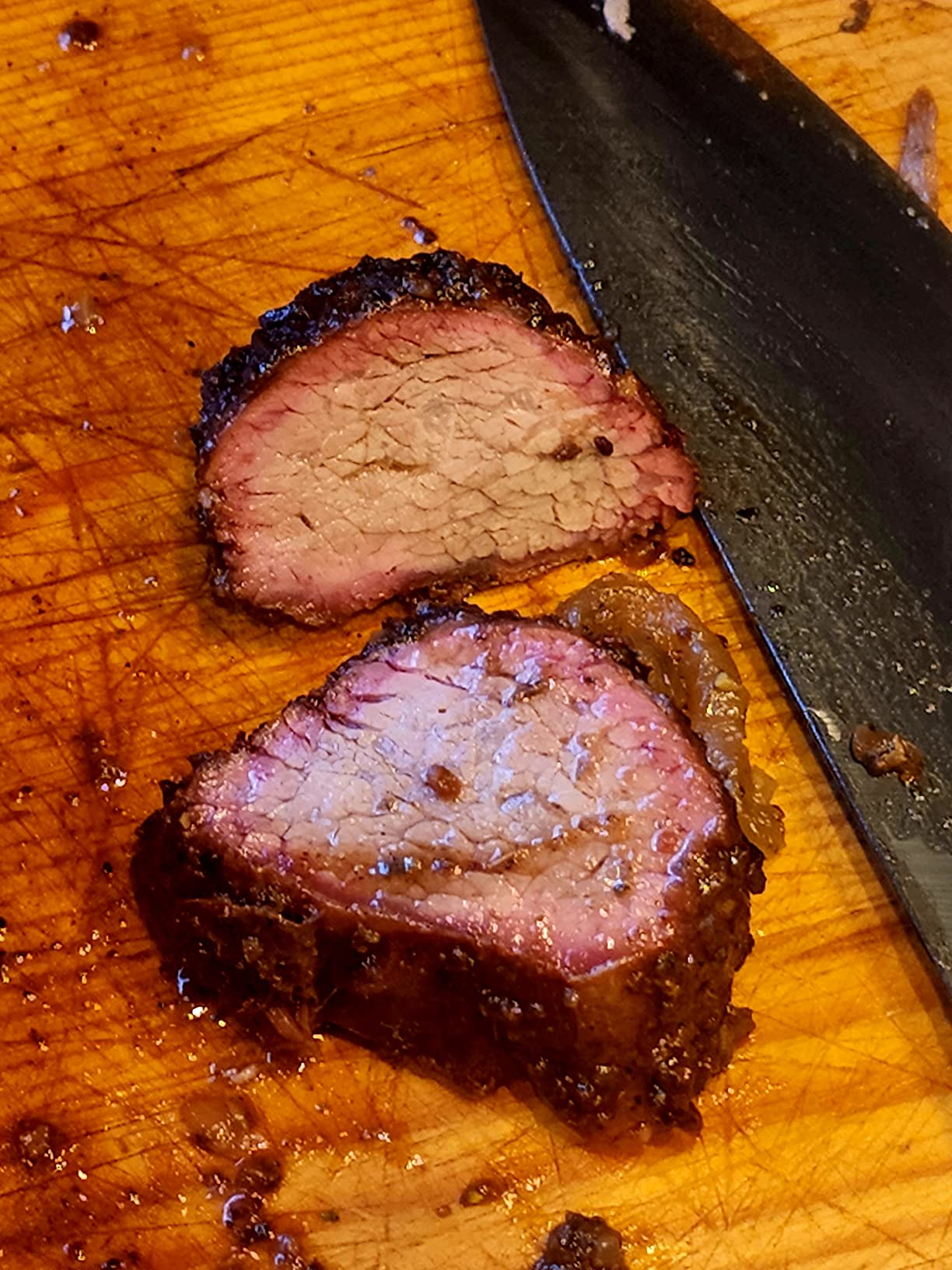
That reverseflow setup is where the even cooking comes from. Buyers who add a door gasket and a second thermometer report a less than 10-degree differential across the chamber, which is excellent for a brisket because it removes hot spots that bark unevenly.
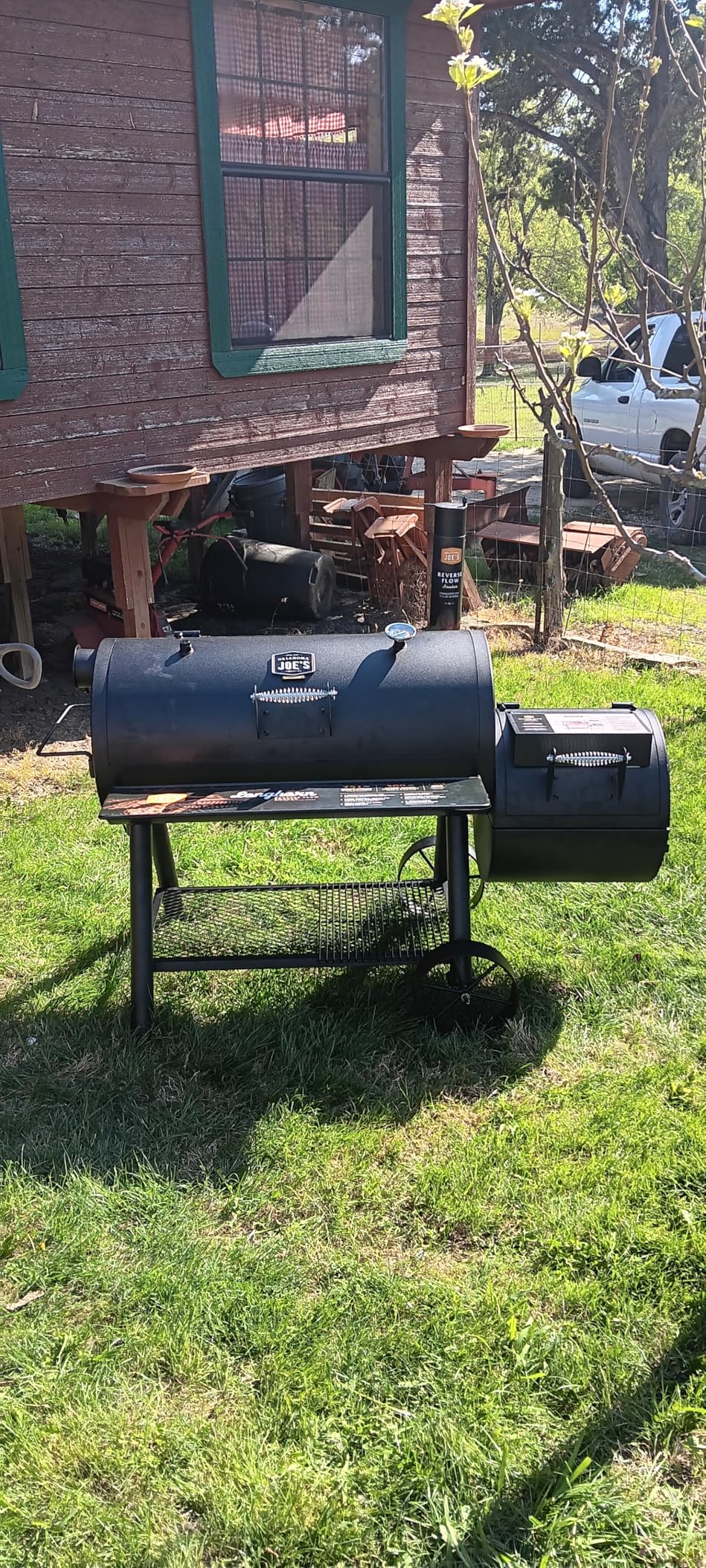
Capacity is generous at 1060 square inches, split between 751 square inches of primary space and 309 square inches of secondary firebox space when running in traditional mode. A full packer goes in whole, which is the whole point for a 226-pound smoker.
The large charcoal basket supports long cooks with fewer wood splits, and cool-touch handles plus wagon-style wheels make it manageable despite the weight.
What brisket it handles best
Full packer briskets on a proper wood fire, cooked by someone who wants the real offset experience but does not want reverse flow to be a second thing to learn. The switchable design lets you graduate into it later.
It is also frequently recommended as a first offset because the fuel basket and baffle layout are forgiving once you get the hang of the draft.
Where it falls short
The reverse flow baffles are genuinely difficult to clean and collect carbon over time. The firebox and ash door gaps leak smoke, and the factory paint peels if you run it hot.
Note the 90-day limited manufacturer warranty, which is shorter than the coverage on several competitors in this guide. A standard chimney also does not fit the firebox well.
9. Traeger Woodridge Pro – Best for Long Pellet Runs
Traeger Woodridge Pro Wood Pellet Grill & Smoker, 970 Sq In, WiFi
Wood pellet
970 sq in
24 lb hopper
WiFIRE app with pellet sensor
Pros
- PID controller holds steady temperatures end to end
- 970 sq in plus a 24 lb hopper with pellet sensor
- WiFIRE app sends remote alerts
- EZ-Clean grease and ash keg speeds cleanup
Cons
- Touch-pad and ignite buttons can be unresponsive
- Only one probe despite two ports
- 67-inch footprint uses substantial patio space
- Replacement parts service has frustrated some owners
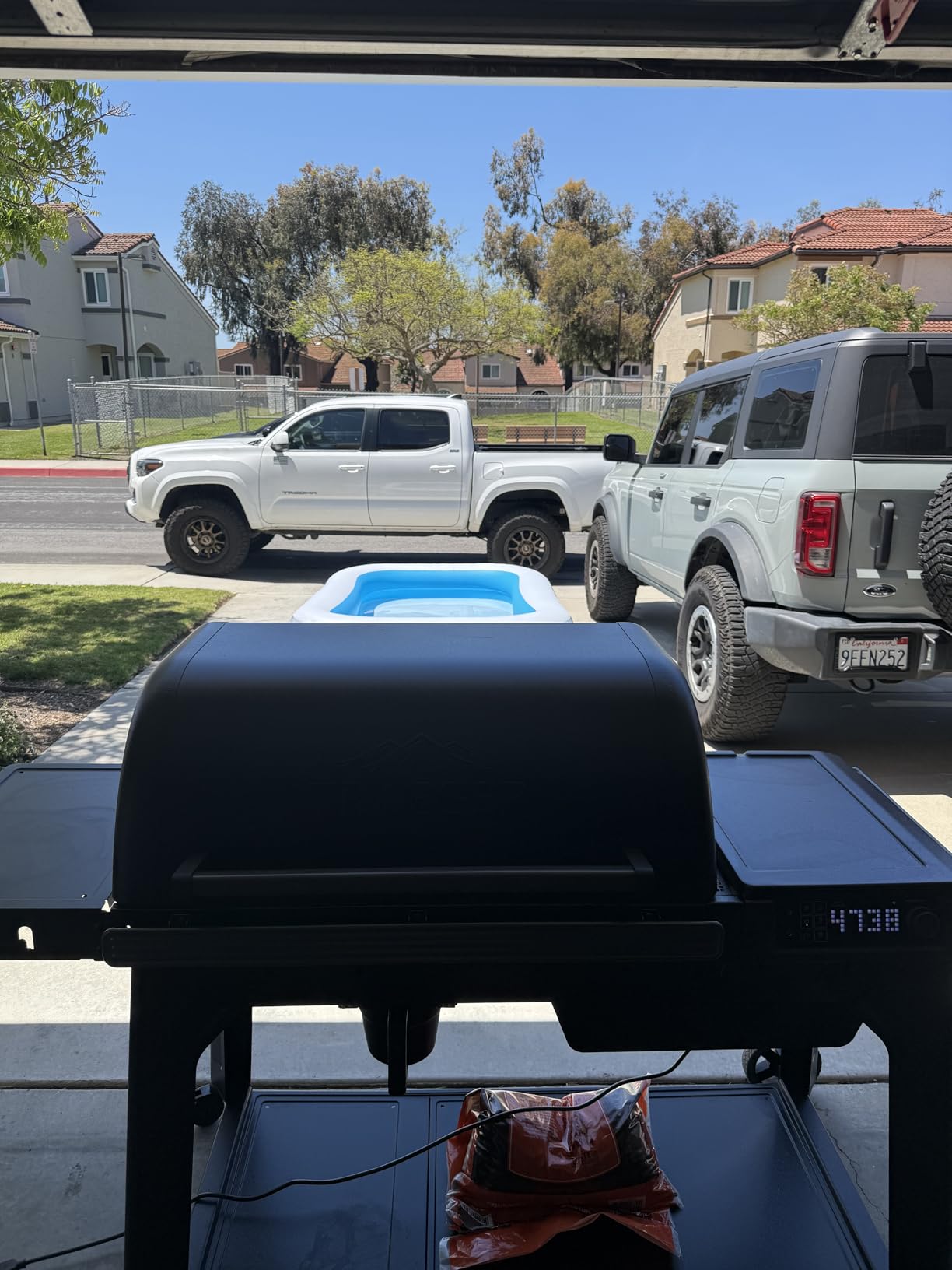
The 24-pound hopper is the headline here. On a brisket that runs twelve to fourteen hours, a large hopper with a pellet sensor means you start full and you do not think about it again, which is the main reason pellet smokers win for unattended cooks.
The PID controller is the other reason. Reviewers report rock-steady holds from low-and-slow through searing, and the digital pellet sensor will tell you through the app if fuel is running low before it becomes a problem.
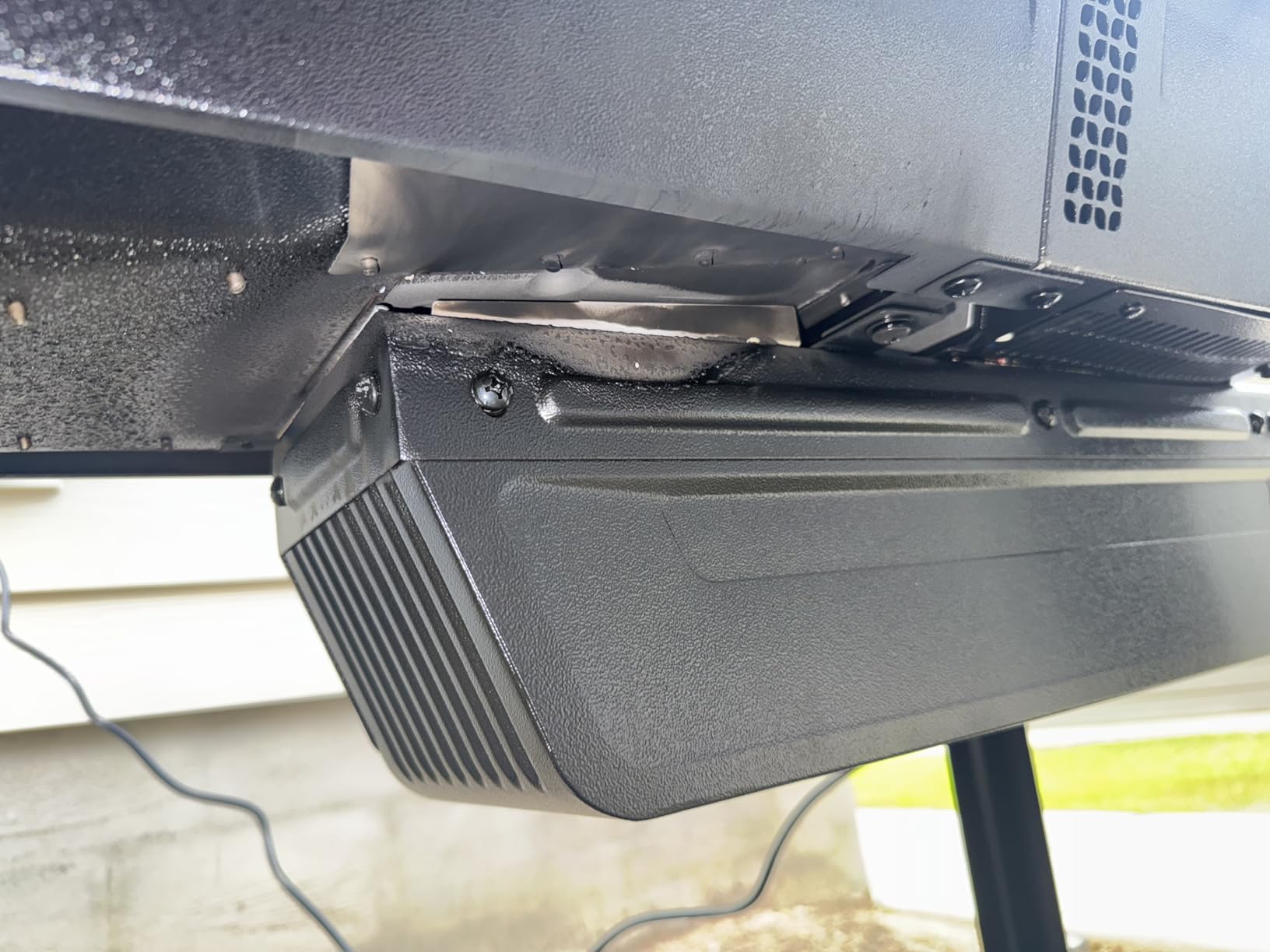
At 970 square inches this fits up to seven chickens, nine rib racks or seven pork butts, so brisket is never the constraint. WiFIRE connectivity adds remote monitoring and Keep Warm Mode, and the folding side shelf keeps the footprint reasonable when you are not cooking.
Super Smoke Mode adds extra wood-fired flavor on demand, and the EZ-Clean grease and ash keg makes the cleanup genuinely quick for a pellet unit.
What brisket it handles best
Long overnight cooks where nobody wants to check the smoker. The hopper capacity and sensor are built for exactly this, and the 10-year limited warranty is the longest in the pellet group.
It is also the pick for cooks who want pellet convenience alongside a large usable grate for feeding a group.
Where it falls short
Two probe ports with only one probe included is an odd omission for a controller this capable, and the touch-pad and ignite buttons draw repeated complaints about being unresponsive.
At 67 inches wide this needs a real section of patio, and some owners report frustrating experiences getting replacement parts.
10. Kamado Joe Big Joe I 24 Inch – Best Ceramic Capacity
Kamado Joe Big Joe Series I 24-inch Ceramic Charcoal Grill and Smoker with Cart, Side Shelves, Stainless Steel Grates and 450 Cooking Square Inches in Red, Model BJ24Rh
Ceramic kamado
450 sq in
2-Tier Divide and Conquer
Cast iron top vent
Pros
- 450 sq in fits ribs and brisket at the same time
- Ceramic dome holds temperature and tolerates lid opening
- 2-Tier system allows direct grilling above the coals
- Complete premium setup with cart and shelves
Cons
- 352.9 pounds needs two or three people to lift
- Consumes more charcoal than the 18-inch Classic
- Fragile ceramic with shipping damage reported
- Only a one-year manufacturer warranty
The Big Joe I is the answer for anyone who wants ceramic heat retention and enough grate area to actually feed people. At 450 square inches it is the largest ceramic in this guide, which is what makes it viable for a full packer plus a rack of ribs in the same cook.
Owners describe the dome as oven-like. It holds temperature through a lid opening without spiking, which matters on a brisket because the stall costs you bark and you do not want a second stall on the other side of the door.

The 2-Tier Divide and Conquer system lets you run direct heat a foot above the coals while a lower rack keeps smoking, and the cast iron top vent holds its setting when the dome opens. That vent behavior is the one clear upgrade over the Series I Classic.
The premium cart with locking wheels and folding side shelves is included, so you are not buying a stand separately. The patented ash drawer removes ash without pulling interior components.

What brisket it handles best
A full packer brisket with sides, cooked by someone who wants ceramic consistency and a real sear at the end. The grate area is the reason it works where an 18-inch kamado does not.
It also handles mixed cooks well, since you can render one rack and sear another at the same time.
Where it falls short
At 352.9 pounds, moving the vessel requires two or three people every single time. That is not a small inconvenience, it is a permanent feature of ownership.
Fuel consumption is noticeably higher than the 18-inch Classic, the ceramic is fragile enough that shipping damage gets reported, and the one-year warranty is short for a cooker at this level.
11. Pit Boss 500 FB2 Series – Best Compact Pellet Smoker
Pit Boss 500 FB2 Series Wood Pellet Grill & Smoker with Flame Broiler and LCD Digital Controller, 518-Sq. In. Cooking Space, 180°F to 500°F Temperature Range, Meat Probe, 5 lb. Pellet Hopper, Black
Wood pellet
518 sq in two tiers
180F to 500F
5 lb pellet hopper
Pros
- Affordable entry into pellet smoking with a 5-year warranty
- Holds temperature well in windy conditions
- Two-tier 518 sq in works for brisket and tri-tip
- Fan-forced convection gives repeatable results
Cons
- No Bluetooth or app connectivity
- Flame Broiler lever can bake shut with grease
- No convenient way to empty pellet ash
- Hopper lid is not well sealed
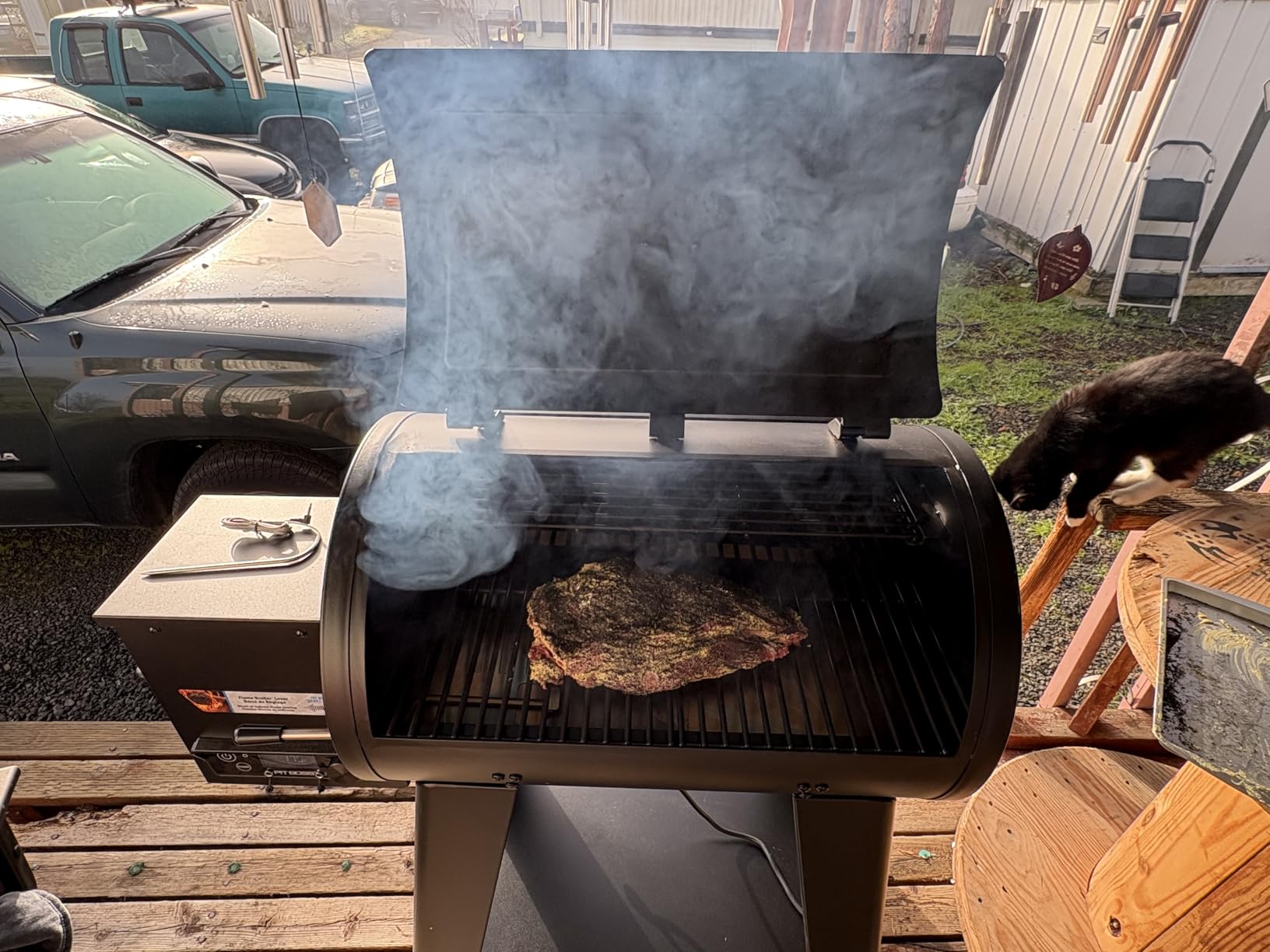
The Pit Boss 500 FB2 is a compact pellet smoker for patios that cannot take a 67-inch footprint. At 47 inches wide it still delivers 518 square inches across two tiers of porcelain-coated steel, which handles a trimmed brisket comfortably.
Digital control runs in 5-degree increments from 180F to 500F, and fan-forced convection keeps the box even. Owners specifically call out how well it holds temperature in wind, which is where cheaper pellet smokers tend to drift.
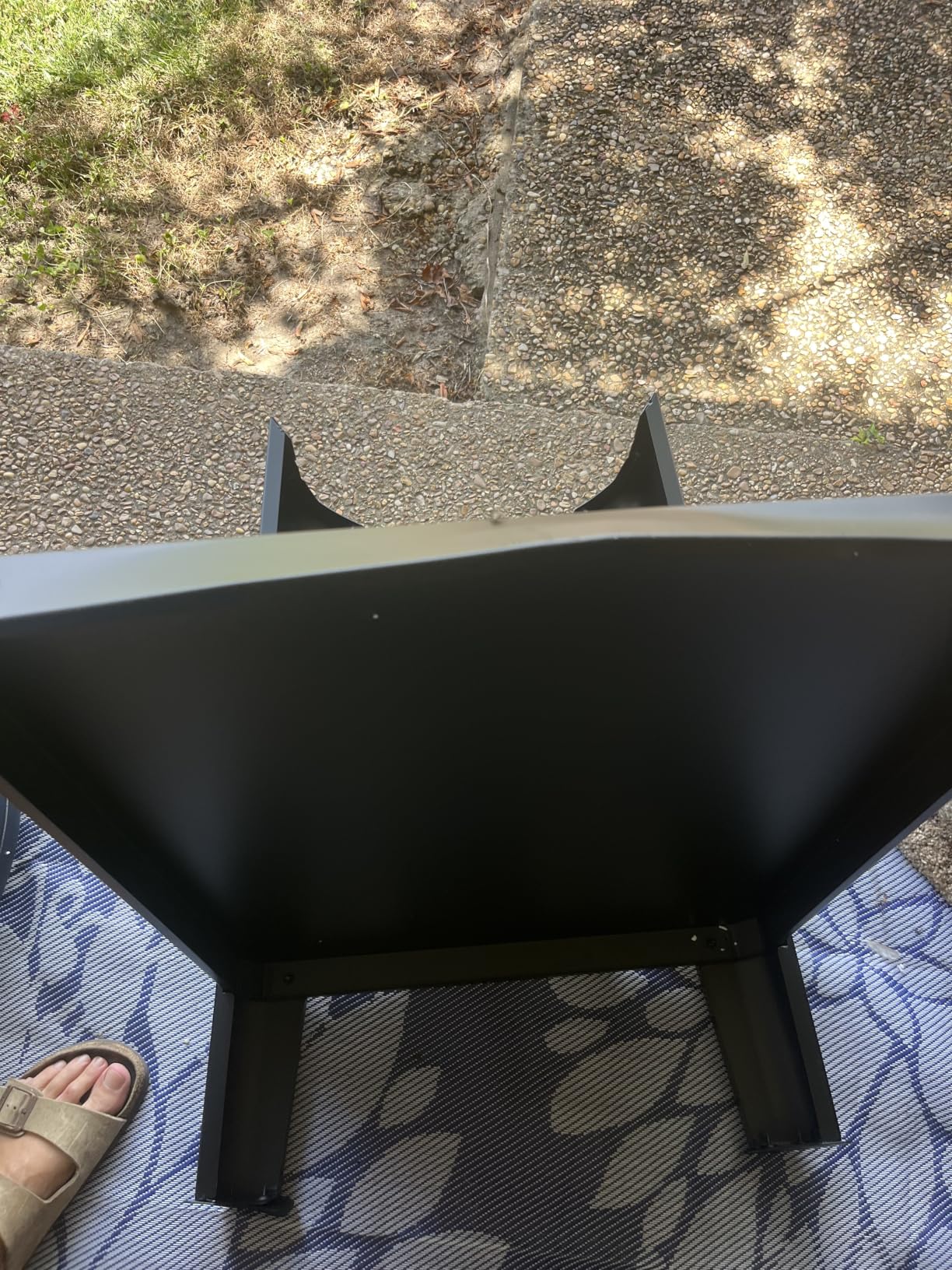
Two probe ports with one probe included let you monitor a brisket and a side at the same time, and the Flame Broiler lever adds direct searing up to 1000F if you want char on the flat at the end.
The five-year warranty stands out for this bracket, and the solid bottom shelf keeps pellets and tools within reach. At 136.6 pounds it is also lighter than most pellet smokers its size.
What brisket it handles best
A trimmed brisket on a small patio, or a first pellet smoker for someone who wants set-and-forget cooking without giving up grill capability. The five-year warranty makes it a low-risk first purchase.
It handles tri-tip and brisket together on the same cook, which is useful for a weekend cook who wants two cuts at once.
Where it falls short
There is no app or Bluetooth connectivity, so remote monitoring is not an option. The 5 lb hopper is small, which means you will be refilling during a long cook.
The hopper lid is not well sealed, so pellets need checking, and the Flame Broiler lever is reported to bake shut with grease after the first use.
12. Sophia and William Charcoal Smoker – Best for Windy Patios
Sophia & William Charcoal Grills with Smoker Large 941 SQ.IN. Cooking Area
Charcoal
941 sq in total
One-piece welded chamber
10-inch wheels
Pros
- One-piece welded chamber cuts heat and smoke leaks
- 941 sq in total across grates
- warming rack and offset chamber
- Functions as both a charcoal grill and offset smoker
- 10-inch wheels resist strong wind
Cons
- Lighter steel than ceramic or heavy plate offsets
- Budget finish and hardware with paint wear reported
- Longer warm-up and more temperature management
- Slimmer review base than big-name smokers
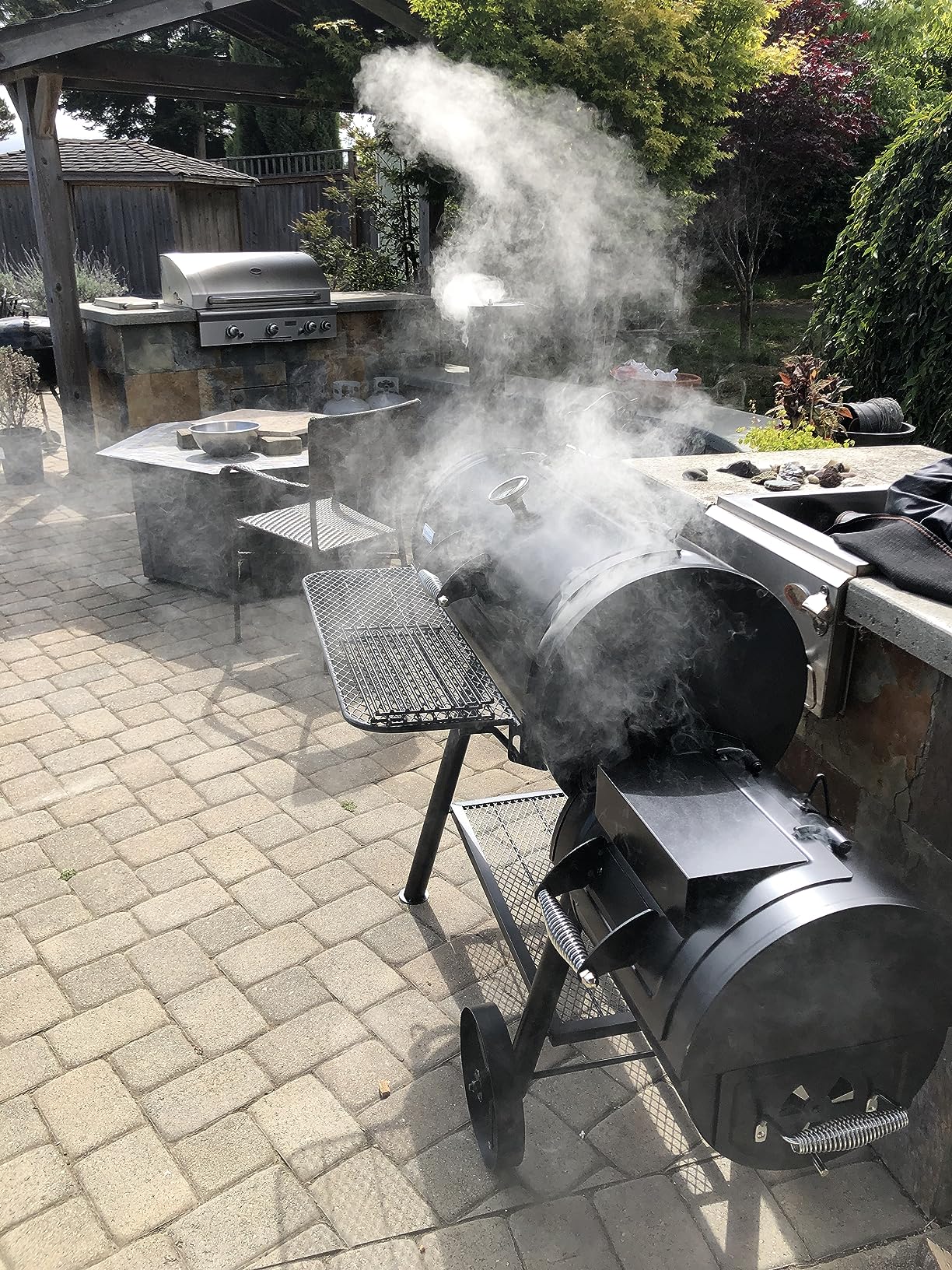
The one-piece welded smoker chamber is the detail that sets this unit apart from bolt-together offsets. Eliminating the seams removes the gaps where heat and smoke leak out, which is exactly what makes cheap horizontal smokers frustrating to hold at temperature.
Total cooking area is 941 square inches, split into 551 square inches of main grates, 198 square inches of warming rack and 192 square inches of offset smoker chamber. That is a real full packer setup in one box.
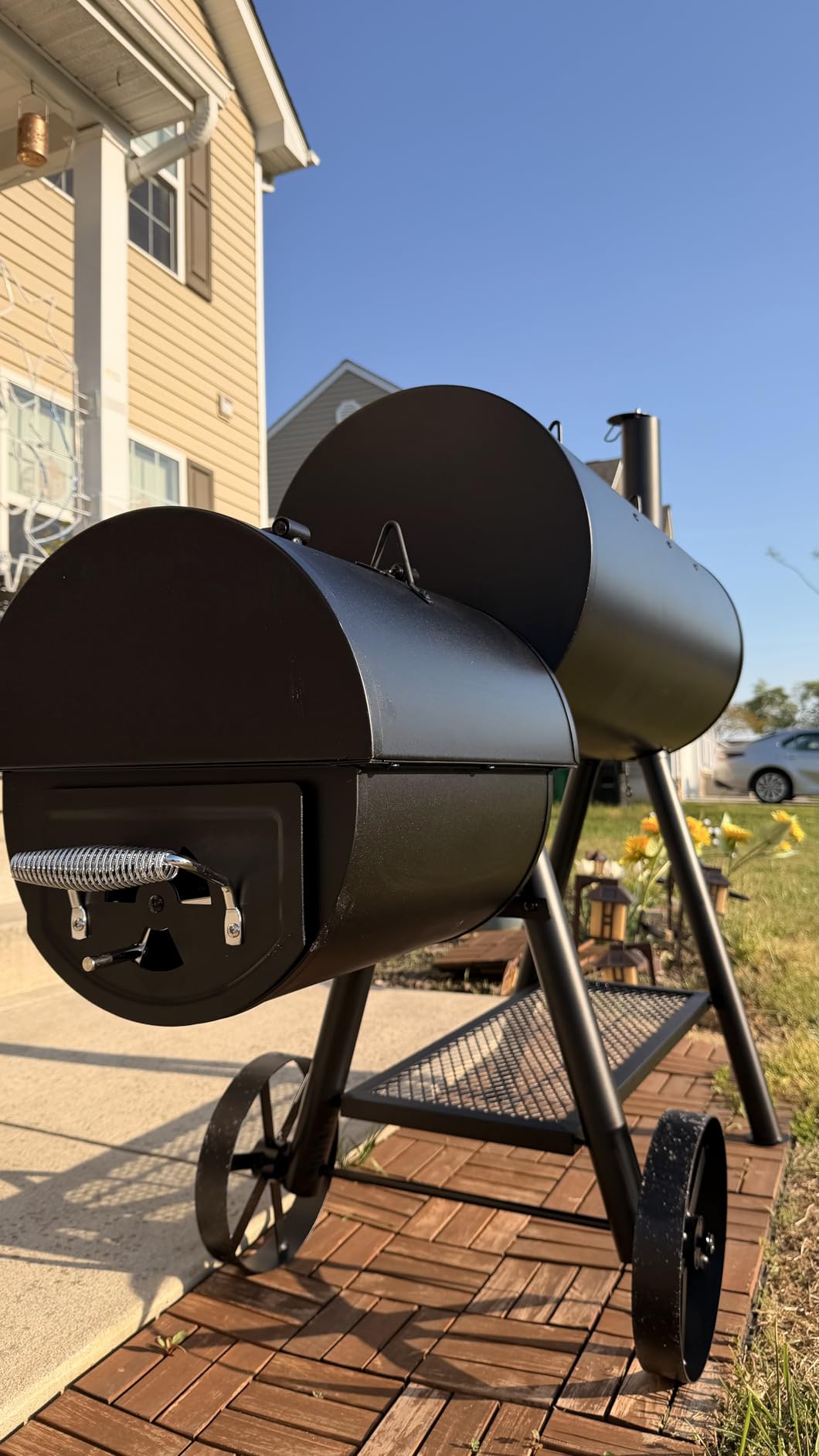
At 123 pounds with 10-inch wheels, it is easier to move than most offsets in this guide, and the large wheels are built to hold position in wind. The extra grates for the main chamber and side firebox mean you can run a two-zone cook.
Buyers consistently value the welded firebox and the cooking area for the money, while accepting that lighter steel means more tending than a ceramic or a heavy plate smoker.
What brisket it handles best
A full packer brisket for someone who wants a real wood fire and grill capability in one unit, and who values a sealed chamber over maximum insulation.
It is also a good fit for cooking a large load for a group, with the warming rack and offset chamber giving you three usable cooking zones.
Where it falls short
The steel is lighter than a ceramic kamado or a heavy plate offset, so expect a longer warm-up and more temperature management across a long cook. Budget finish and hardware are reported to wear, and some owners make modifications after a few cooks.
The review base is also thinner than the big-name smokers here, so long-term durability data is less available.
Offset vs Pellet Smoker for Brisket
Choose an offset smoker if smoke flavor is the priority and you are willing to manage a fire. Choose a pellet smoker if you want to load the brisket at midnight and check it at noon the next day. Everything else in this comparison is a detail inside one of those two statements.
An offset burns real wood logs with real airflow, which produces a denser smoke profile, a visible ring and a bark that tastes like barbecue rather than like a cooking appliance. That flavor gap is the entire reason to accept fire management. The cost is a firebox you have to feed, a chimney you have to watch and a grate-level temperature that drifts when the fire dies down.
A pellet smoker burns compressed hardwood through an auger, so temperature is a software problem instead of a fire problem. The controller holds set point within a few degrees, recovery after a lid opening is fast, and the hopper can run a full day. The trade-off is smoke intensity. Reviewers across this group repeatedly describe pellet flavor as milder than a wood-fired offset.
There is a middle path worth considering. The Weber Smokey Mountain in this guide gives you wood smoke and charcoal convenience on one machine, and the AKORN gives you ceramic insulation without a full-size ceramic price. Neither is a pure offset or a pure pellet, and for a first brisket either one is a defensible middle ground.
If you are still undecided, think about your schedule rather than your taste. A brisket takes ten to fourteen hours. Ask honestly how many of those hours you want to spend watching a fire.
What to Look for When Buying a Smoker for Brisket
Usable grate space and door dimensions come first. Anything under 300 square inches forces a trim, and anything under 400 makes a full packer impossible. Check the width of the grate against the length of your brisket and the height of the door against the piece standing on its side, not the marketing number on the box.
Second, look at steel gauge and whether the smoker is welded or bolted together. Heavy gauge welded steel is what separates a smoker that lasts a decade from one that warps and peels paint after two seasons. Factory paint on a thin offset will bubble and flake regardless of how careful you are, and that is normal rather than a defect.
Third, consider heat retention in the form of insulation. Ceramic walls and double-walled steel hold temperature through wind and through the stall without you adding fuel. A thin single-wall cabinet will need more attention across a fourteen-hour cook, and cold weather makes that gap wider. Users in northern climates repeatedly flag cold-weather performance as their deciding factor, and electric or insulated vertical designs handle it best.
Fourth, think about fuel runtime relative to cook length. A brisket runs ten to fourteen hours. A small hopper, a small charcoal basket or a small water pan that limits your fuel load all become problems at hour nine, not hour one. Large charcoal baskets, big pellet hoppers and refillable water pans exist for this reason.
Fifth, decide how much you will use the digital features. A controller that holds set point is close to mandatory for a pellet or electric smoker. App connectivity is genuinely useful for a working cook and largely irrelevant if you are home all day, and a built-in meat probe saves you from opening the door on a smoker with no remote thermometer.
Sixth, plan for cleanup honestly. Offset smokers need a firebox, an ash pan and often a grease drain cleaned after every cook. Verticals and electrics have removable grease trays and water bowls. If you will cook once a month rather than weekly, ease of cleaning matters more than the last few degrees of smoke flavor.
Finally, give real thought to size and weight before the delivery arrives. Several of the best smokers in this guide weigh between 170 and 350 pounds, and ceramic vessels need two or three people to lift onto a cart. Measure your patio, your gate and your route from the driveway before you order, not after.
One more thing worth adding: start with a pork shoulder before you commit a packer brisket to a new cooker. Most experienced cooks do, and it teaches you the smoker’s temperament without the stakes of a twelve-hour cook. When you are ready for the big cut, our oven-roasted brisket with vegetables and Korean-style brisket tacos recipes give you three ways to use the results.
Frequently Asked Questions
How big of a smoker do you need to smoke a brisket?
You need at least 400 square inches of usable grate space to smoke a full packer brisket whole. A trimmed flat at 8 to 10 pounds works in about 300 square inches, while an untrimmed 16 to 18 pound packer needs a grate at least 22 inches across and a door tall enough to clear a 26-inch piece of meat standing on its side.
Should I get a pellet or offset smoker?
Choose an offset smoker if wood smoke flavor is your priority and you are willing to manage a fire every hour or two. Choose a pellet smoker if you want to load the brisket and leave it overnight, since the controller holds temperature within a few degrees and the hopper runs a full day. Pellet smoke is milder, so flavor is the real trade-off.
How long does it take to smoke brisket at 225?
Plan on roughly 45 to 60 minutes per pound at 225F, which puts a trimmed 10 to 12 pound brisket at 10 to 14 hours including the stall. Wrap at about 160F internal and pull between 194F and 203F, then rest for at least an hour before slicing.
How long should I cook a brisket in a kamado joe?
Roughly the same as any other smoker, about 10 to 14 hours at 225F to 275F depending on weight and whether you wrap. Kamados hold heat tightly and recover fast, so the main adjustment is running the bottom damper closed to slow the burn and watching the internal probe instead of the lid thermometer.
Can a full packer brisket fit in a kamado or a water smoker?
A kamado with 250 square inches of grate space fits a trimmed brisket but not an untrimmed packer, because the round door opening is the limiting factor. A Weber Smokey Mountain fits a trimmed packer on its 18.5-inch grates, and you need aggressive trimming or a larger bowl for a full 16 to 18 pound packer.
What is the best smoker for smoking brisket?
The Weber Smokey Mountain 18 Inch is the best all-around smoker for brisket because it holds temperature for 10 to 16 hour cooks, burns real wood over charcoal for genuine smoke flavor, and has a 10-year rust-through warranty. If you want zero tending, the Masterbuilt 30 Inch Electric holds a full packer unattended at 711 square inches.
Which Smoker Should You Buy?
The Weber Smokey Mountain 18 Inch is our pick for the best smokers for brisket in 2026 because it balances the three things that decide a brisket cook: real wood smoke flavor, temperature stability across a 10 to 16 hour burn, and a build that survives being left outside. Its 4.7 rating across more than five thousand reviews is the strongest combination of satisfaction and volume here.
If you want zero tending, take the Masterbuilt 30 Inch Electric. If you are feeding a group an untrimmed packer, take the Dyna-Glo wide body for its 1890 square inches. If you want the deepest bark and do not mind a fire, take the Oklahoma Joe’s Longhorn or the Char-Griller AKORN depending on whether you want horizontal or kamado flavor.
Whichever you choose, measure the grate and the door before you order, and give it a pork shoulder cook first. The best smoker for brisket is the one you will actually use twice a month for the next ten years.