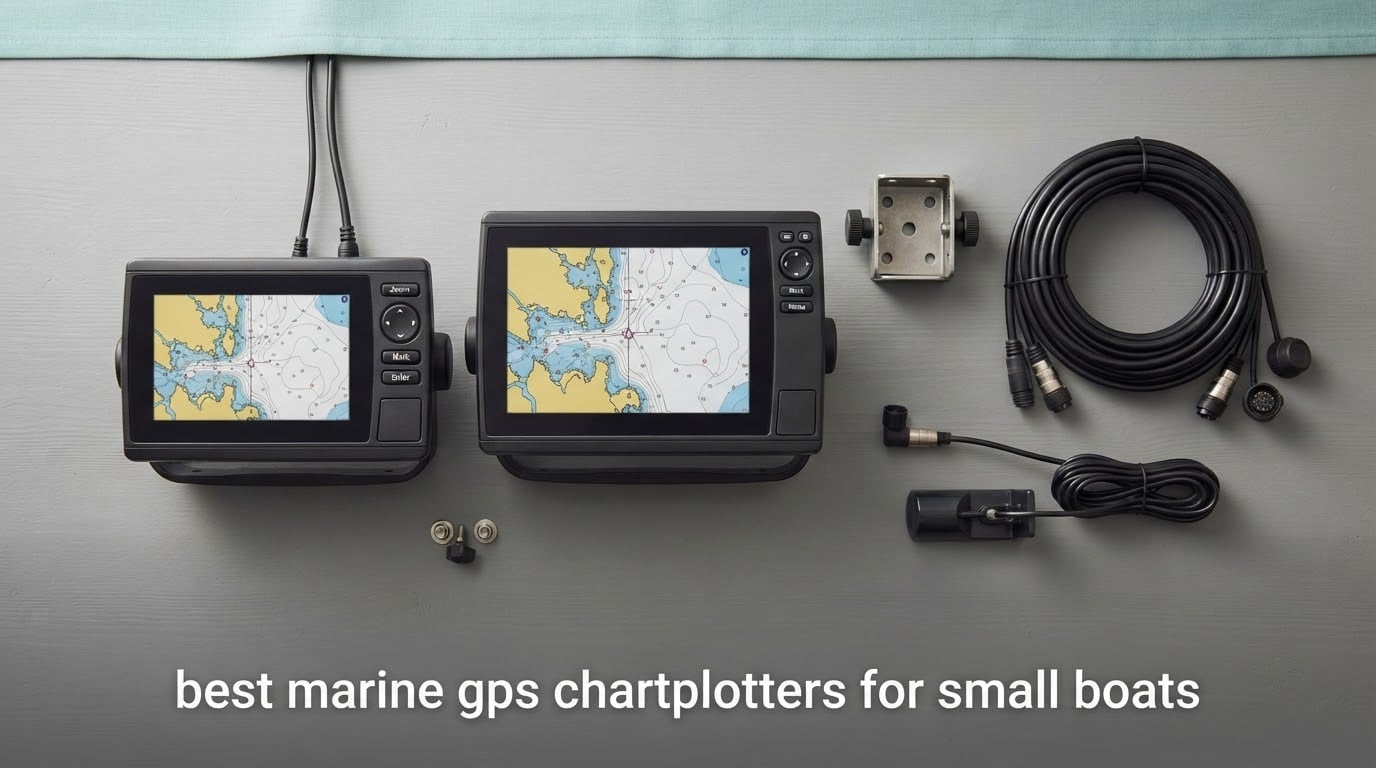
The Lowrance Elite FS 10 is the best marine GPS chartplotter for small boats in 2026 if your console can take a 10 inch screen, because it is the only unit in our roundup that pairs a large daylight-readable touchscreen with a 3-in-1 sonar transducer and preloaded C-MAP charts in one box. On a tighter console, the Humminbird Helix 5 G3 CHIRP is the smarter buy, and on a jon boat or kayak the Lowrance Eagle 4X does the job at a fraction of the size.
Most chartplotter guides on this topic were written for center consoles with a full instrument panel. A 16 foot skiff, a jon boat or a pontoon with a flat dash has none of that room, and the buying decision changes completely once you account for it. Three constraints decide the outcome on a small boat: how much console space you actually have, how much power your bank can spare, and whether a transducer is included or sold separately.
That last one catches people out more than any other. A head unit on its own is a map viewer. Without a transducer you get no depth reading and no fish finding, which is the whole reason most small-boat owners add one in the first place. Five of the six units below arrive with one in the box, and the sixth explicitly does not. We compared all six current-generation multifunction displays, read the owner feedback, and sorted them by what they actually do on a boat that is not a 30 foot bay boat.
Last updated for September 2026.
Table of Contents
- Top 3 Best Car GPS Navigation Units for Truckers (September 2026)
- Quick Overview: All 6 Chartplotters Compared
- What Is the Difference Between a GPS Plotter and a Chartplotter?
- How We Picked These Six Units
- 1. Lowrance Elite FS 10 – The Full-Featured All-Rounder
- 2. Humminbird Helix 5 G3 CHIRP – The Best Value Keypad Unit
- 3. Simrad GO 9 MFD – The Bright 9-Inch Touchscreen With Charts Included
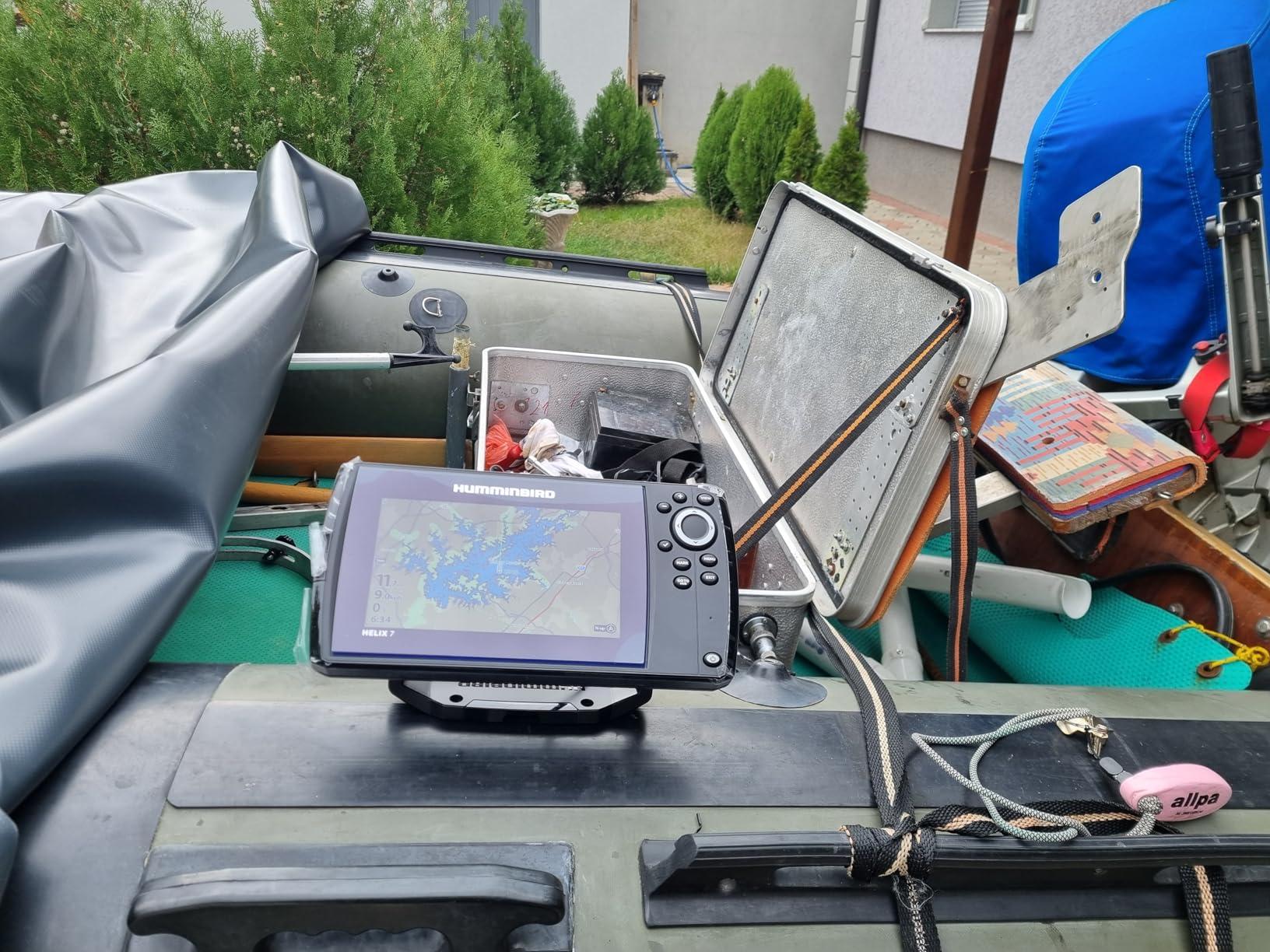
- 4. Humminbird Helix 7 G4 – The Side Imaging Sweet Spot
- 5. Simrad NSS12 Evo3S – The Premium 12-Inch Networked MFD
- 6. Lowrance Eagle 4X – The Smallest Unit That Still Navigates
- How to Choose a Marine GPS Chartplotter for a Small Boat
- Frequently Asked Questions
- What is the best marine GPS for small boats?
- What is the difference between a GPS plotter and a chartplotter?
- Do I need a separate transducer for a chartplotter?
- Is a 4 inch chartplotter too small?
- Which is better for a small boat, Lowrance or Simrad?
- Are marine navigation apps better than chartplotters for small boats?
- The Verdict: Which Small Boat Chartplotter Should You Buy?
Top 3 Best Car GPS Navigation Units for Truckers (September 2026)
Our top three cover the three most common small-boat setups: a dash with room for a bigger screen, a dash with a keypad-first layout, and a mid-size console that wants a touchscreen without the flagship weight.
Lowrance Elite FS 10
- 10 inch touchscreen
- 3-in-1 Active Imaging transducer
- C-MAP charts preloaded
- NMEA 2000 and Ethernet

Humminbird Helix 5 G3 CHIRP
- 5 inch Color TFT
- Dual Spectrum CHIRP
- Basemap with 10000+ lakes
- Transom transducer included

Simrad GO 9 MFD
- 9 inch touchscreen
- C-MAP Discover preloaded
- HDI CHIRP plus DownScan
- Wi-Fi and NMEA 2000
Quick Overview: All 6 Chartplotters Compared
Every unit below plots position, routes and depth on a small boat. The differences are screen size, control type, transducer inclusion and how much network headroom you get for a radar or an autopilot later.
| Product | Specs | Action |
|---|---|---|
| Lowrance Elite FS 10 |
|
Check Latest Price |
| Humminbird Helix 5 G3 CHIRP |
|
Check Latest Price |
| Simrad GO 9 MFD |
|
Check Latest Price |
 Humminbird Helix 7 G4 Humminbird Helix 7 G4 |
|
Check Latest Price |
 Simrad NSS12 Evo3S Simrad NSS12 Evo3S |
|
Check Latest Price |
 Lowrance Eagle 4X Lowrance Eagle 4X |
|
Check Latest Price |
What Is the Difference Between a GPS Plotter and a Chartplotter?
A GPS plotter shows one thing: where you are on a map. A chartplotter does that and adds depth contours, hazards, tides, currents, waypoint management and route planning, which is why every unit in this roundup is a chartplotter rather than a plain position indicator.
In practice the difference shows up in the two situations a small boat hits most. A skiff running a shallow creek into a bay needs the depth shading and contour lines on a chartplotter to know when to turn, and a phone running a navigation app cannot show a live depth picture from a sonar transducer at all.
Marketing blurs the terms, so treat any listing that says only GPS plotter with suspicion. If it cannot display depth and structure, it is a map reader, not a multifunction display.
How We Picked These Six Units
We scored each unit on five things that decide whether a chartplotter works on a small boat: physical footprint, whether a transducer is in the box, control type in rough water, chart coverage without an extra purchase, and network ports for adding equipment later.
Footprint came first because it is the hard limit. We use the same measure-your-space-first discipline we apply to compact kitchen appliance picks, where a few centimetres decides whether the thing fits the shelf or the counter. On a boat the measurement is the width of the flat dash plus the clearance above it for the bracket and sun cover.
Owner feedback carried the second half of the weighting. Two of these products carry review counts in the hundreds, so patterns in the reported problems are meaningful rather than anecdotal. Where reviews flagged a real recurring issue, such as transducer cable length, we called it out below instead of burying it.
We left out older generations on purpose. Several guides still on this topic recommend Simrad GO and Humminbird Apex hardware, and buying a superseded unit means shorter firmware support and a harder resale. Everything below is a current-generation product.
1. Lowrance Elite FS 10 – The Full-Featured All-Rounder
Lowrance Elite FS 7 Fish Finder (No Transducer) with Preloaded C-MAP Contour+ Charts
10 inch touchscreen
3-in-1 Active Imaging transducer
C-MAP charts preloaded
NMEA 2000 and Ethernet
Pros
- Bright 10 inch multi-touchscreen
- Active Imaging 3-in-1 sonar in the box
- FishReveal separates fish from structure
- Preloaded C-MAP DISCOVER charts
- Wireless plus NMEA 2000 and Ethernet
Cons
- Plastic mounting bracket feels cheap
- 10 inch width needs a real console
- Live sonar needs extra hardware
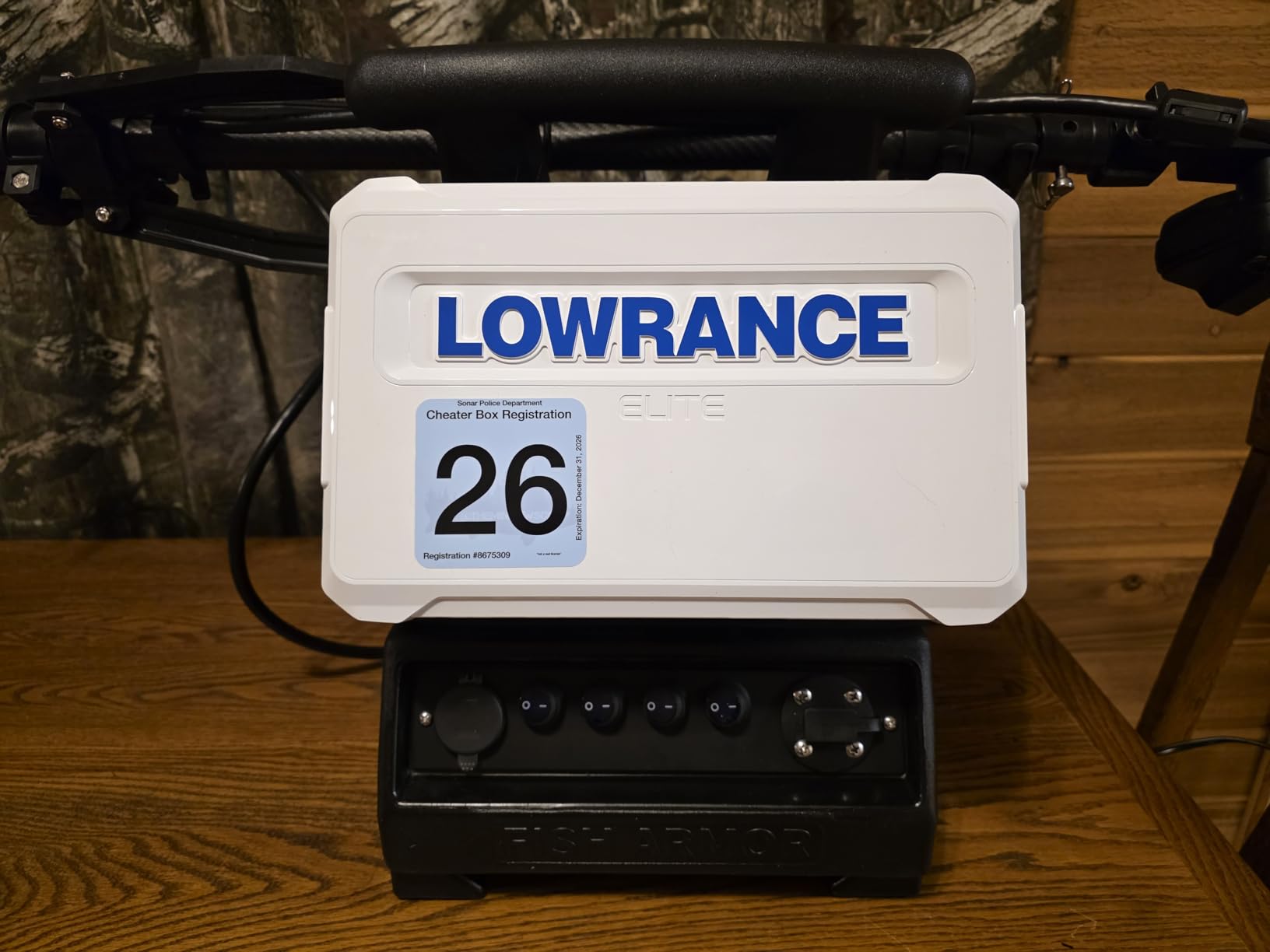
This is the unit we keep coming back to because it is the least compromise option in the list. The 10 inch multi-touchscreen is bright enough to read through polarized sunglasses at midday, which matters when your console has no hood over it. The Active Imaging 3-in-1 transducer is in the box, so there is no second purchase before the unit is useful.
For a small boat it is a size judgement, not a quality judgement. The head unit measures 12.81 inches long by 4.47 inches wide, which fits a bay boat or a pontoon console without trouble. On a 14 foot skiff you would be looking for that real estate first, and our compact-fit approach to small appliance picks applies: measure the dash before you fall for the screen size.
Sonar is the reason this unit rates highest in our list. The 3-in-1 transducer sends CHIRP, SideScan and DownScan from a single element, so you get a wide forward view, a side view and a bottom view from one unit of hardware. FishReveal processing is what makes that data readable rather than just busy, and the review pattern shows owners using it for structure rather than raw depth numbers.
Networking is where it outclasses the smaller units. Wireless, NMEA 2000 and Ethernet are all present, so adding a radar dome, an autopilot or engine data later does not mean replacing the head unit. It also carries a 1000 foot maximum measuring depth, and a two-year warranty instead of the one-year cover on the Humminbird units.
What You Get for the Money
More than any other unit here, you are buying headroom. C-MAP DISCOVER charts are preloaded, so there is no chart card on day one, and the ActiveTarget 2 live sonar path means a future transducer upgrade does not need new software. For a boater who expects to add a second piece of electronics in a few years, that is the argument that matters.
The recurring complaint in reviews is the mounting bracket. Owners describe the plastic as feeling cheap for a display of this class, and a few report button malfunctions on units that arrived in the box. A flush mount or a pod-style housing solves the first problem if your dash allows it.
Where It Falls Short
It is one of the biggest screens in a list that is supposed to be about small boats, and this particular head unit is only offered at 10 inches. If your dash measures under about eight inches of clear width, the 7 inch and 5 inch options below are the realistic buys.
Live sonar is a compatibility path, not a feature. Without a matching live-sonar transducer fitted, you are paying for a capability the unit cannot show. On a skiff used mostly for navigation and shallow-water awareness, that is money you could put into a hull-mounted transducer instead.
2. Humminbird Helix 5 G3 CHIRP – The Best Value Keypad Unit
Humminbird Helix 5 G3 GPS Fish Finder with Transducer & Dual Spectrum Chirp Sonar
5 inch Color TFT
Dual Spectrum CHIRP
Basemap with 10000+ lakes
Transom transducer included
Pros
- Keypad works with wet or cold hands
- Dual Spectrum CHIRP in wide and narrow modes
- Transom transducer included in the box
- AutoChart Live records your own mapping
- 488 owner reviews to draw on
Cons
- Basic feature set
- Basemap is not a full marine chart
- May need extra fuse and wiring
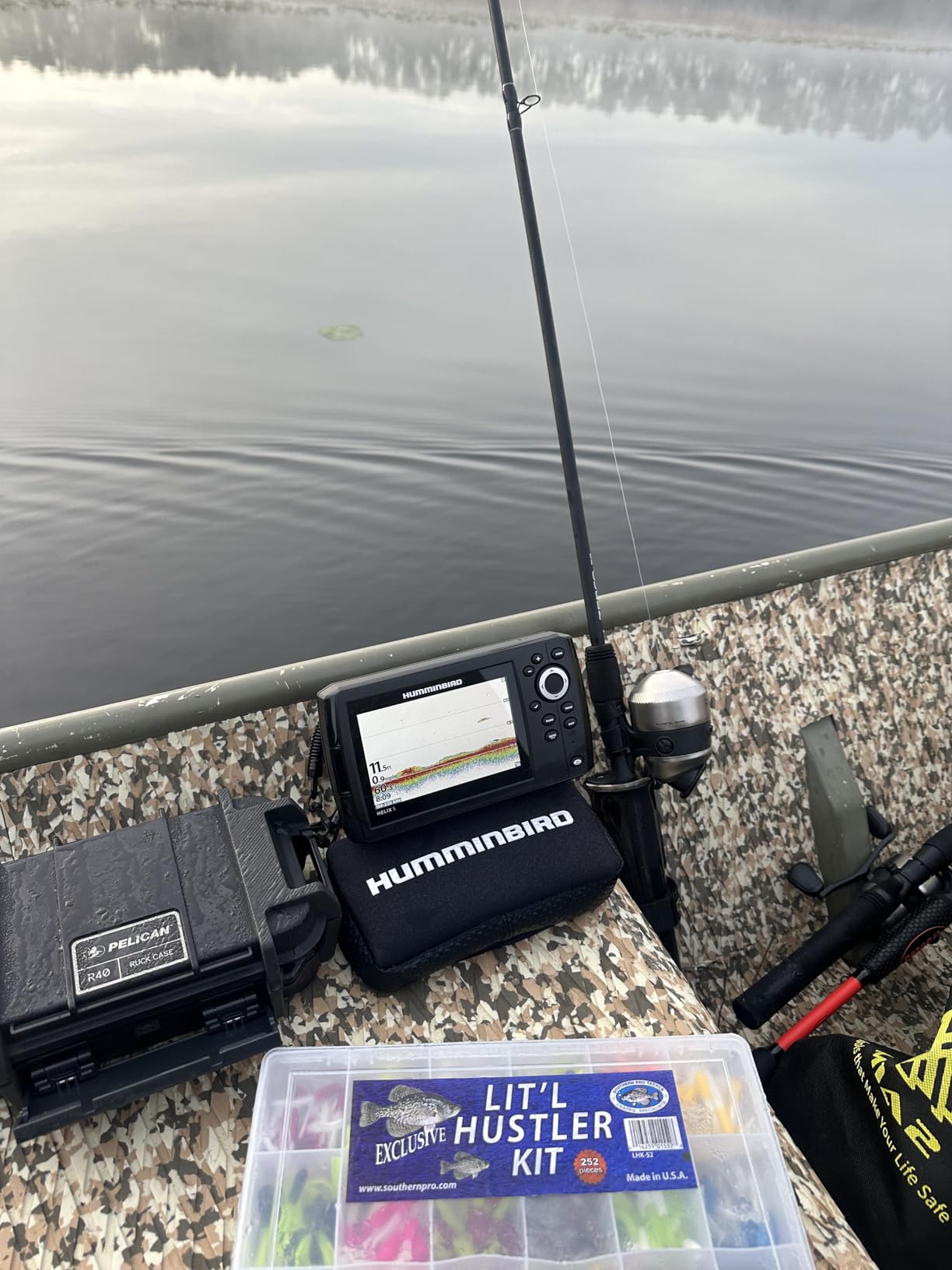
For most small boats this is the honest answer. The Helix 5 G3 weighs 2.1 pounds, measures 4.64 inches long and includes an XNT 9 HW T transom-mount transducer, so it goes from box to working fish finder without a second purchase. It is also the most-reviewed unit in this roundup, alongside the Elite FS 10, and that means the pros and cons below are patterns rather than impressions.
The keypad is the feature that wins over a touchscreen in real conditions. On a skiff in a chop with wet hands, a physical button that you can find by feel will always beat a capacitive panel that smears. Forum discussion about small-boat electronics keeps circling back to this same point, and it is why keypad-first units stay popular on open boats and RIBs.
Sonar quality is better than the price suggests. Dual Spectrum CHIRP runs in both a wide mode for coverage and a narrow mode for target separation, and the included low-Q transducer handles the 2D reading. The Humminbird Basemap covers more than 10000 lakes plus coastal areas, and it accepts LakeMaster, CoastMaster and Navionics cards if you want better detail on a specific lake.
AutoChart Live is the sleeper feature for a small-boat angler. It records up to eight hours of your own sonar data and turns it into a map you can save and return to, which is genuinely useful on a lake or river you fish but that no chartmaker covers well.
Why Keypad Owners Are Happy
Everything on this unit can be done without touching the screen, including zoom, gain and range. In cold weather with gloves on, that removes a whole category of frustration. It also means the unit is far less sensitive to a cracked panel or a failed capacitive layer, which is a real risk on a boat with a lot of hard edges and no hood.
Reviewers consistently call the setup easy and the display readable in bright sunlight. At 2.1 pounds and with a gimbal bracket in the box, it is also the easiest of the six to move between boats if you trailer more than one.
Where It Falls Short
Two practical install notes come up repeatedly. The transducer cable length may be short on a boat with an outboard bracket set well forward, and the supplied fuse and wiring are sometimes not enough for the run, so a few owners end up buying extra electrical parts before first power-up.
It is also a basic feature set. There is no side imaging on this generation, no networking to a radar, and the basemap is a fishing basemap rather than a full marine chart set. For inland and sheltered water that is fine. For coastal navigation you will want a Navionics card in the microSD slot.
3. Simrad GO 9 MFD – The Bright 9-Inch Touchscreen With Charts Included
Simrad GO9 XSE Chartplotter and Fishfinder with 83/200 Transom Mount Transducer and C-MAP Discover Chart Card, 9 Inch Screen, Black, 000-16293-001
9 inch touchscreen
C-MAP Discover preloaded
HDI CHIRP plus DownScan
Wi-Fi and NMEA 2000
Pros
- Preloaded C-MAP Discover charts
- Bright 9 inch touchscreen
- CHIRP and DownScan from the HDI transducer
- NMEA 2000 plus Wi-Fi and Ethernet
- Smartphone mirroring through the Simrad app
Cons
- SideScan may not work with the included transducer
- Waypoint loss reported by some users
- Suncover is awkward to remove
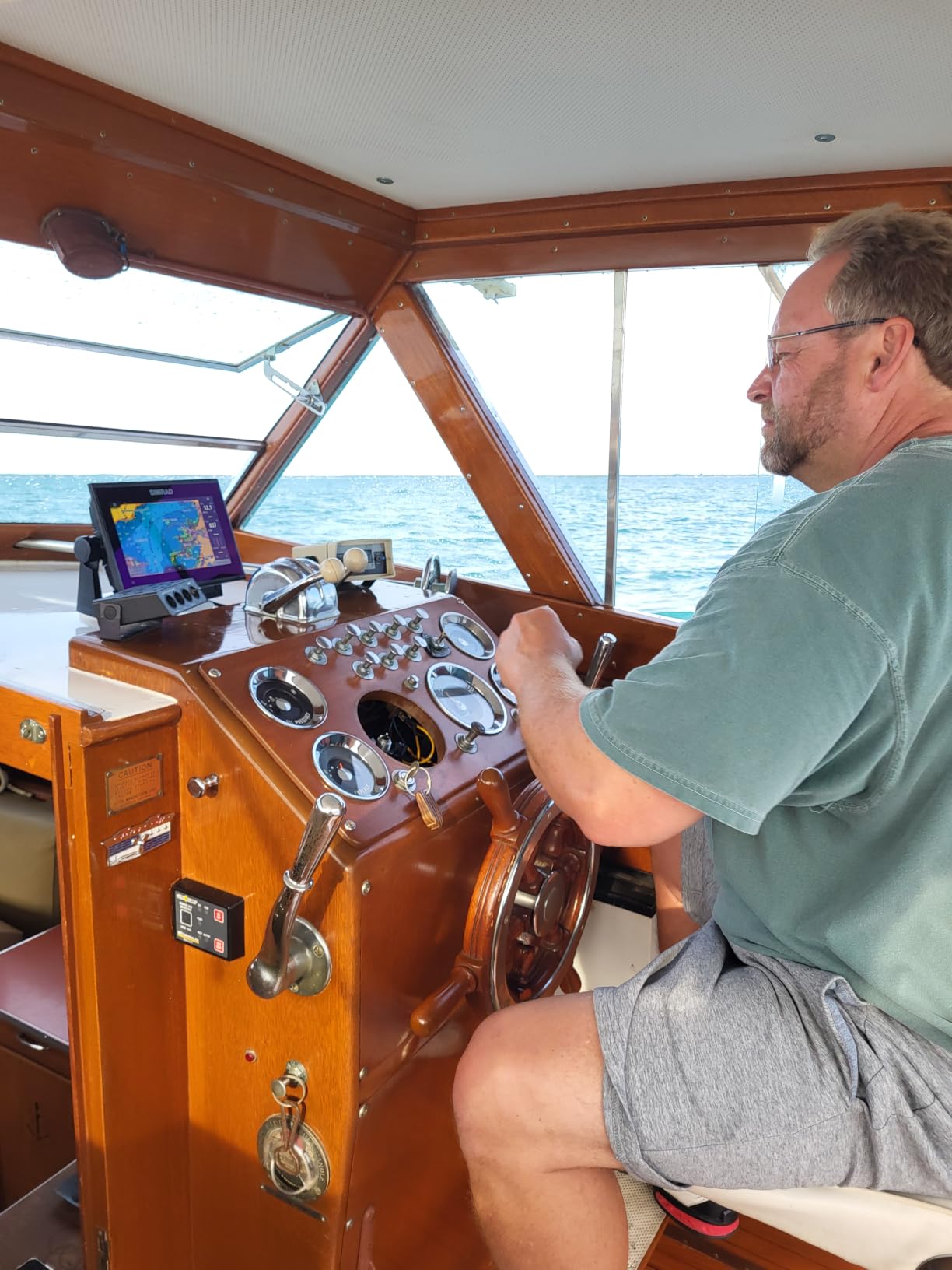
The Simrad GO 9 is the middle path between a keypad unit and a flagship MFD. It is a 9 inch capacitive touchscreen multifunction display, and the box contains the head unit, an HDI transducer, a gimbal bracket, a suncover, a power cable and a preloaded C-MAP Discover chart card. That chart card is the part that changes the calculation, because it covers North America out of the box.
Owners single out the display quality and the charting most often. The screen is bright and the C-MAP coverage is good enough that many skiff owners run it as a pure navigation unit without buying a subscription. Custom depth shading and tides and currents are included in that chart set, which is what you want for shallow-water awareness on an approach.
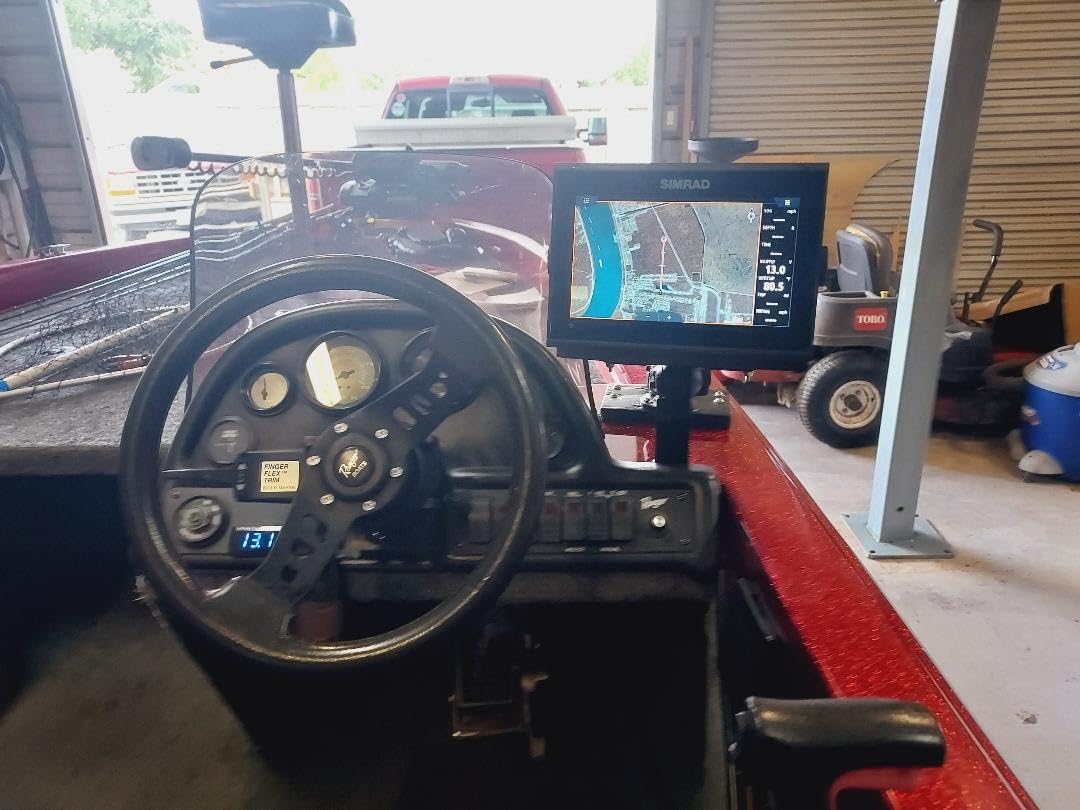
Connectivity is broad for a unit at this level. Built-in GPS, Wi-Fi, Bluetooth, Ethernet and NMEA 2000 are all present, and the unit can mirror a smartphone or tablet through the Simrad app. It is also compatible with a HALO radar dome later, so the upgrade path is real rather than theoretical.
One forum pattern is worth knowing about: buyers pairing a chartplotter with an older VHF often hit a SeaTalk-to-NMEA adapter requirement, and that bridge can be a surprise line item. If your existing electronics are NMEA 0183 or SeaTalk, plan for an adapter cable before you order.
What the HDI Transducer Does and Does Not Do
The included HDI element gives you CHIRP sonar plus DownScan, which is the down-and-behind view of structure and bottom contour. That covers navigation depth and general fish finding. It does not give you side imaging, and that is the most common report in reviews: owners expecting the side view from a unit at this level end up needing a different transducer.
The practical fix is straightforward. If side scan is a must, budget for a wider transducer separately rather than assuming the box contents cover it. The transducer cable length is also short enough that some owners report needing an extension on a larger console.
Where It Falls Short
There is a small cluster of reviews reporting waypoint or track loss after setup, and a few reporting the unit resetting to initial setup unexpectedly. This is not universal, and the overall rating holds up, but it is worth saving your routes and waypoints to a card as a habit on a unit used for navigation.
As a pure navigation display it is arguably the best-balanced of the touchscreen options here. As a fish finder for someone who reads side imaging, the Humminbird Helix 7 G4 below is a better target.
4. Humminbird Helix 7 G4 – The Side Imaging Sweet Spot
Humminbird Helix 7 G4 GPS Fish Finder with Transducer, MEGA Side Imaging
7 inch Color TFT
MEGA Side Imaging to 125 ft
Dual Spectrum CHIRP
Basemap and AutoChart Live
Pros
- MEGA Side Imaging to 125 ft each side
- MEGA Down Imaging to 125 ft
- 3x the detail of standard imaging
- XNT 9 HW MSI 150 T transducer included
- Keypad control for all-weather use
Cons
- Side imaging range capped at 125 ft
- Premium chart cards cost extra
- Highest price in the Humminbird pair
This is the unit to buy if you fish rather than cruise. The MEGA Side Imaging reaches 125 ft to each side and MEGA Down Imaging reaches 125 ft down, and reviews consistently describe the picture as roughly three times more detailed than standard imaging sonar. On a bay boat working a flat, that side view is the whole reason to own a display of this size.
It shares the Humminbird platform with the smaller unit above, so the keypad layout, the softkey interface and the basemap will feel familiar if you have used one. The 7 inch Color TFT screen is a good middle size: large enough to split chart and sonar, small enough for a 16 foot skiff console where a 9 inch will not mount cleanly.
Everything else in the feature list is the same DNA. Dual Spectrum CHIRP in wide and narrow modes, AutoChart Live recording for your own mapping, and the Humminbird Basemap covering more than 10000 lakes plus coastal US. The included XNT 9 HW MSI 150 T transom-mount transducer means the side imaging is usable on day one rather than after a second purchase.
Reviewers praise the keypad for working reliably in rough conditions, which is the same advantage that makes the Helix 5 popular. On a boat where you are standing to fish, a wet hand on a physical button is a fair reason to skip a touchscreen.
How MEGA Side Imaging Changes Small-Boat Fishing
Side imaging shows what is beside the boat rather than under it, so you can see a school, a rock ledge or a weed line off the hull without maneuvering over it. On shallow water that also doubles as a hazard check, which is a safety argument rather than only a fishing one.
The 125 ft limit on each side is the trade-off. It is plenty for a bay, a river system or an inshore flat, and it is not enough for open coastal structure. If you fish further out, that range is the number to check before you commit, along with the fact that imaging detail drops as the cone widens.
Where It Falls Short
You will need a premium chart card for detailed mapping, since the basemap is a fishing basemap. For navigation-heavy use on unfamiliar coastal water, add a Navionics card to the microSD slot rather than assuming the built-in map is enough.
It is also the more expensive of the two Humminbird units here, and at 2.1 pounds it is not a small-boat bargain the way the Helix 5 is. Choose it when the sonar is the reason you are buying, and choose the 5 inch when navigation is.
5. Simrad NSS12 Evo3S – The Premium 12-Inch Networked MFD
Simrad NSS9 evo3S – 9-inch Multifunction Fish Finder Chartplotter with Preloaded C-MAP US Enhanced Charts
12 inch SolarMax IPS
C-MAP US Enhanced
Keypad and rotary dial
Transducer sold separately
Pros
- 12 inch SolarMax IPS display
- Fast iMX 8 processor
- C-MAP US Enhanced charts preloaded
- Keypad and rotary dial plus touchscreen
- HALO radar and StructureScan 3D ready
Cons
- No transducer in the box
- 17.5 pounds needs a solid mount
- Highest cost in the roundup
The NSS12 Evo3S is the flagship here and the least of a small-boat choice, but it earns a place because it is the only unit with a true keypad-plus-rotary-dial control scheme alongside the touchscreen. That combination is the one serious owners on rough water ask for, and no other unit in this roundup offers it.
The display is a 12 inch SolarMax IPS high-definition panel, which is a different brightness and colour category from the TFT screens on the Humminbird units. The iMX 8 processor keeps menus and chart redraw responsive, which is what you notice when you are zooming a chart in a hurry. C-MAP US Enhanced charts are preloaded.
It lists a 3000 foot maximum measuring depth, though that number is theoretical until you fit a transducer to it. Maximum measuring depth on a small boat is not a deciding factor; transducer type and power are.
Why a Dual-Control Head Unit Still Matters
Physical controls give you a way to operate the unit when the touchscreen is unusable: wet hands, salt spray, a cracked panel, gloves in early season. The rotary dial scrolls lists and zooms without a multi-touch gesture, which is far more precise when the boat is moving.
Installation support is also part of the case. Units in this networked class are much easier to set up correctly with dealer help, and forum advice on small-boat electronics keeps favouring local installer support over online-only purchases for exactly that reason.
Where It Falls Short
No transducer is included. That single line changes the real entry cost of this unit more than any other factor in the roundup, and it is the most common misunderstanding in forum threads about budget chartplotters. Budget for a compatible sonar element separately, and confirm the connector type before you order both.
At 17.5 pounds it needs a solid mount, and 13.84 inches long it needs a real console. One owner also reported a GPS failure inside 30 days, which is a small number against 42 reviews but worth knowing if you are warranty-sensitive on a fixed install.
6. Lowrance Eagle 4X – The Smallest Unit That Still Navigates
Lowrance Eagle 4X Fish Finder with Bullet Transducer
4 inch IPS portrait
200 kHz Bullet Skimmer included
500 ft depth
2.8 pounds
Pros
- Smallest footprint in the roundup
- 200 kHz Bullet Skimmer transducer included
- IPS screen stays readable in sunlight
- Auto-Tuning removes manual sonar adjustment
- Light at 2.8 pounds
Cons
- No live sonar
- No side imaging
- Feature set is basic
The Eagle 4X answers the question a lot of small-boat buyers actually ask, which is whether 4 inches is too small. For a jon boat, a kayak or a 14 foot skiff with a flat dash, it is not. The portrait 4 inch IPS screen is the smallest footprint in this roundup, and the whole unit weighs 2.8 pounds, so it mounts almost anywhere without a pod or a cutout.
It is not a chartplotter in the full sense. It plots a position and shows depth and structure from the included 200 kHz Bullet Skimmer transducer, with a 44 degree beam that reviewers call well suited to small boats and kayaks. What you do not get is a marine chart set, side imaging or any network port for adding equipment.
The box is unusually complete for a unit this size. The listing includes the fish finder, bracket and knobs, power cable, transducer, locking collars, and a fuse with holder, so the install is a single afternoon with no extra parts.
What a 4 Inch Screen Genuinely Cannot Do
Split-screen chart and sonar is cramped to the point of being useless, and the small surface area means a route preview or a waypoint list needs several taps. If your main safety use is avoiding a grounding on a marked channel, a larger screen with proper depth shading on a real marine chart is a better tool for that job.
Reviewers also flag that fish size accuracy is uncertain, so treat it as a depth and structure tool rather than a species-identification tool. If your fishing is on structure, the 7 inch MEGA Side Imaging unit above is the step up that actually adds information.
Where It Falls Short
C-MAP charting is available as an option on this platform, but the chart capability is the shallowest of the six units here. It is a fish finder with a position display attached, and it is honest about that.
Auto-Tuning Sonar is the feature that compensates. It removes the manual gain and sensitivity adjustments that trip up new owners, and the twist-lock connector makes transducer changes quick. For a first electronics purchase on a small boat, that simplicity is worth more than a longer feature list.
How to Choose a Marine GPS Chartplotter for a Small Boat
Screen Size by Boat Type
Measure your dash before you measure your wish list. The useful number is clear width on the flat dash plus the clearance above it for the bracket and sun cover, not the screen diagonal. A 10 inch class unit needs roughly 13 inches of horizontal space in practice, a 9 inch about 10.5 inches, and a 5 inch unit fits where a 7 inch will not.
For a jon boat or a kayak, 4 to 5 inches is the right range. For a 14 to 16 foot skiff with a small console, 5 to 7 inches is the sweet spot, and a 7 inch is the largest that still mounts without crowding the wheel. For a bay boat, pontoon or center console, 9 inches and up becomes reasonable because the console is wider by design. The same fit-first logic shows up in our small pressure cooker picks, where the footprint decides the outcome before any feature list does.
Transducers: What Actually Ships in the Box
Five of the six units here include a transducer: the Lowrance Eagle 4X, the Humminbird Helix 5 G3, the Humminbird Helix 7 G4, the Simrad GO 9 and the Lowrance Elite FS 10. The Simrad NSS12 Evo3S does not, and that is the single largest hidden cost in this roundup.
Three mounting styles matter on a small boat. A transom-mount transducer screws to the transom and moves with the motor, which is easiest and cheapest but loses bottom detail at speed. A through-hull sensor is installed in the hull and reads accurately at any speed, at the cost of a hole. A shoot-through-hull element reads through the hull with no hole at all, but the hull must be thin and non-fiber-reinforced.
On saltwater, expect a transducer to last several seasons before it needs replacing, and rinse the connector and cable with fresh water after every trip regardless of which type you fit.
Charts and Cartography
Three charting families cover this category: Navionics, C-MAP and the manufacturer base maps. The Simrad units and the Lowrance Elite FS 10 ship with a C-MAP set preloaded, which means coverage on day one without buying a card. The Humminbird units ship with a fishing basemap covering more than 10000 lakes plus coastal areas, and all of them accept Navionics cards for more detail.
Treat the preloaded chart set as a real advantage if you want zero ongoing cost. Treat a subscription as a good trade if you move between regions, because a single annual Navionics or C-MAP plan covers the whole boat rather than one card per area. Neither brand’s charting is meaningfully better than the other for small-boat work; availability in your home water is what matters.
Touchscreen or Keypad and Rotary Dial
On a boat, physical controls win in rough water and with cold hands, and that is the single most consistent owner preference in forum threads about small-boat electronics. Every Humminbird unit here is keypad-driven, the Simrad NSS12 Evo3S pairs a touchscreen with a rotary dial, and the two touchscreen-first units in the list are the least suited to operating with wet hands.
The tradeoff is speed once you have learned the unit. A touchscreen with a well-designed menu gets you to a route change faster than a keypad, but only after practice, and only if you can hit the right target the first time in a heaving boat.
NMEA 2000 and the Navico Question
Garmin is the most common answer people expect, but the question buyers actually ask is which ecosystem to stay inside. The important thing most buyers do not realise is that Lowrance and Simrad are sibling brands under the same parent company, alongside B and G. They are not competing companies with unrelated networks; they share chart compatibility, the same mobile app ecosystem and a closely related NMEA 2000 backbone.
That has two consequences. First, a Lowrance head unit and a Simrad transducer or sensor are generally workable together, which is why a mixed-brand boat is not the dead end it looks like. Second, you still cannot mix ecosystems freely at the display level: a Garmin unit and a Simrad unit on the same boat need a bridge, and bridging legacy SeaTalk to NMEA 2000 is the most common install stumbling block people hit.
If you plan to add radar, autopilot or engine data, check for NMEA 2000 and an ethernet port before you buy. A unit with neither is a dead end for expansion and should be judged as a standalone display only.
Power Draw on a Small Boat’s 12V Bank
This is the constraint nobody in this niche covers, and it decides whether the install is pleasant or a weekend project. A head unit, a transducer and a NMEA backbone draw a meaningful amount of current compared with the rest of a small boat’s electrical load, and a single deep-cycle group on a skiff may be marginal once you add a VHF and a bilge pump.
Two practical rules. Fused switching power from the battery bank is more reliable than a cockpit accessory socket, which is often shared with a phone charger that drains the bank overnight. And size your bank for the whole load, not just the chartplotter, because a display that browns out at idle is a display that loses its waypoint log.
Chartplotter or Marine Navigation App?
Answering this fairly matters, because at least one editorial competitor on this topic sells an app and argues hardware is unnecessary. For a boat used on a lake you know well, with a charged phone in a sealed case, an app is genuinely adequate and costs nothing to start.
It fails in three situations. A phone in a sealed case cannot be read in direct sun, it has no live depth from a transducer, and it dies silently when the battery drops. If your concern is grounding avoidance in unfamiliar water, a hardwired display with a depth picture is a different category of tool from a phone screen.
New or Used?
A used unit can be sensible on a small boat if you accept three risks. Corrosion in the transducer and connectors is the most common, outdated firmware can limit what the unit will do, and you get no warranty. Adding a bridge cable to a legacy SeaTalk unit can also cost more in parts than the price gap saved.
Buy used only if you can power it up and confirm the GPS acquires satellites, read the transducer connector for corrosion, and confirm the brand still supports the unit with firmware updates. Otherwise, a current mid-range unit with a two-year warranty is the better value for a boat you actually go out on.
Frequently Asked Questions
What is the best marine GPS for small boats?
The Lowrance Elite FS 10 is the best all-round marine GPS chartplotter for small boats because it combines a bright 10 inch touchscreen, a 3-in-1 Active Imaging transducer in the box and preloaded C-MAP charts. If your console is smaller, the Humminbird Helix 5 G3 is the better fit, and the Lowrance Eagle 4X covers jon boats and kayaks.
What is the difference between a GPS plotter and a chartplotter?
A GPS plotter only shows your position on a map. A chartplotter adds depth contours, hazards, tides, currents, waypoint management and route planning, and it can display a live sonar picture when a transducer is fitted. Every unit in this roundup is a full chartplotter rather than a position-only plotter.
Do I need a separate transducer for a chartplotter?
It depends entirely on the model. The Lowrance Eagle 4X, Humminbird Helix 5 G3, Humminbird Helix 7 G4, Simrad GO 9 and Lowrance Elite FS 10 all include a transducer. The Simrad NSS12 Evo3S does not, so budget for one separately and confirm the connector type before ordering.
Is a 4 inch chartplotter too small?
No, not for a jon boat, a kayak or a 14 foot skiff with a flat dash. The Lowrance Eagle 4X shows position, depth and structure on a 4 inch portrait screen. It becomes cramped for split-screen charting and route editing, so a 7 inch unit is the better choice on a bay boat or pontoon.
Which is better for a small boat, Lowrance or Simrad?
Lowrance and Simrad are sibling brands owned by the same parent company, so they share chart compatibility, the same mobile app ecosystem and a related NMEA 2000 backbone. The practical difference is the product tier: Lowrance covers the entry and mid tiers, while the Simrad NSS Evo3S line targets larger networked installations.
Are marine navigation apps better than chartplotters for small boats?
For a familiar lake and a phone kept dry and charged, an app is a reasonable low-cost start. A chartplotter wins where safety matters: a hardwired display stays readable in direct sun, runs off the boat’s own power, and shows live depth from a transducer, which no phone app can do.
The Verdict: Which Small Boat Chartplotter Should You Buy?
For most small boats, the best marine GPS chartplotter in 2026 is the Lowrance Elite FS 10, because it is the only unit in this roundup that gives you a large daylight-readable screen, a 3-in-1 sonar element in the box, preloaded charts and a genuine network path for later upgrades. Buy the Humminbird Helix 5 G3 instead if your console is tight or you want physical buttons, and buy the Humminbird Helix 7 G4 if side imaging is the reason you are upgrading at all.
Measure your dash first, confirm whether a transducer is included, and only then compare screen sizes. Those two checks eliminate more wrong purchases than any spec sheet.
More compact-gear picking guides, including our small appliance roundups built around the same fit-first method, are worth a look if you are outfitting a small space on a budget.