For a concrete driveway, the sweet spot is 2,500 to 3,500 PSI at 2.5 GPM or more, and the single best number for comparing machines is PSI multiplied by GPM. That number, measured in cleaning units or CU, tells you how much dirt a washer can actually move in a minute, which matters far more on a wide flat driveway than on a car.
Most people buying the best pressure washers for driveways are chasing the same two things: how fast can I cover 1,000 square feet, and will the concrete survive. A machine with all the pressure in the world but 1.2 GPM feels slow and leaves a fine mist of dirt behind. A machine with modest pressure and real flow rinses it away.
Our team worked through the specs, the customer reviews and the practical details that show up in the forums for this kind of job, and this list covers twelve units that earn their place. The one detail nobody puts on the box is the surface cleaner attachment, a spinning disc that sits flat on the concrete. It is the single biggest difference between a driveway that looks striped and a driveway that looks evenly clean.
While you are thinking about the driveway itself, it is worth deciding whether you also want a security camera for driveways. Cleaning and camera are separate purchases, but most people handle the exterior of a home in the same weekend of projects.
And if pressure in the kitchen is on your list too, our pressure cooker picks and small pressure cooker guide cover the other kind of pressure entirely.
Table of Contents
- Top 3 Pressure Washers for Driveways in 2026
- All 12 Best Pressure Washers for Driveways (October 2026)
- 1. Sun Joe SPX3000 – The Best All-Rounder for Driveways
- 2. Westinghouse ePX3500 – Best Value Electric for a Driveway
- 3. LWQ S5 – Most Flow You Can Get From a Small Electric Machine
- 4. CRAFTSMAN CMEPW1700 – Lightest Machine for a Small Driveway
- 5. Westinghouse WPX3000e – Best Electric for Heavy Concrete
- 6. Greenworks GPW2003 – Best for Routine Driveway Maintenance
- 7. DeWalt DXPW3300-S – Best Gas Flow for a Full-Size Driveway
- 8. Greenworks GPW3002A – Best When You Want Verified Specs
- 9. RYOBI 1800 PSI – Best When Storage Space Decides
- 10. Westinghouse WPX3000 Gas – Best Mid-Size Gas for Concrete
- 11. PowerSmart DL1038A – Best for High-Reach Pressure
- 12. Greenworks GPW2101A – Best for Walkways and Small Stops
- How to Choose a Pressure Washer for a Driveway
- What PSI do I actually need for a driveway?
- Why flow rate matters more than PSI on flat concrete
- Gas or electric: which one suits your driveway?
- Why a surface cleaner attachment is not optional
- Nozzle color codes and the job each tip is for
- Safe PSI by driveway material
- What to buy alongside the machine
- How to pressure wash a driveway end to end
- Safety: five rules that prevent etched concrete
- Rent, buy or hire a pro?
- Frequently Asked Questions
- Final Verdict on the Best Pressure Washers for Driveways
Top 3 Pressure Washers for Driveways in 2026

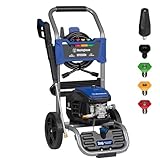
Westinghouse WPX3000e
- 3000 max PSI
- 1.76 max GPM
- 25 ft super-flex hose
- M22 fittings for surface cleaners

All 12 Best Pressure Washers for Driveways (October 2026)
| Product | Specs | Action |
|---|---|---|
| Sun Joe SPX3000 |
|
Check Latest Price |
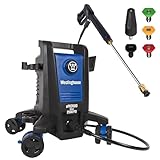 Westinghouse ePX3500 Westinghouse ePX3500 |
|
Check Latest Price |
 LWQ S5 LWQ S5 |
|
Check Latest Price |
 CRAFTSMAN CMEPW1700 CRAFTSMAN CMEPW1700 |
|
Check Latest Price |
| Westinghouse WPX3000e |
|
Check Latest Price |
 Greenworks GPW2003 Greenworks GPW2003 |
|
Check Latest Price |
| DeWalt DXPW3300-S |
|
Check Latest Price |
 Greenworks GPW3002A Greenworks GPW3002A |
|
Check Latest Price |
 RYOBI 1800 PSI RYOBI 1800 PSI |
|
Check Latest Price |
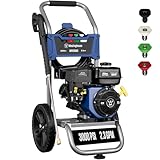 Westinghouse WPX3000 Gas Westinghouse WPX3000 Gas |
|
Check Latest Price |
 PowerSmart DL1038A PowerSmart DL1038A |
|
Check Latest Price |
 Greenworks GPW2101A Greenworks GPW2101A |
|
Check Latest Price |
1. Sun Joe SPX3000 – The Best All-Rounder for Driveways
Sun Joe Pressure Washer, Electric Power Washer, 2500 Max PSI, SPX3000
2030 PSI working pressure
1.76 max GPM
20 ft hose
24.3 pounds
Pros
- Highest reviewed unit in the class at 64670 reviews
- Dual 0.9L detergent tanks for two separate solutions
- Five quick-connect tips cover 0 15 25 40 plus soap
- No gas oil spark plugs or pull cord to maintain
Cons
- 2030 PSI working rating is mild for deep-seated grime
- 1.2 rated GPM makes large flat areas slow
The Sun Joe SPX3000 is the unit I keep coming back to for a reason: nothing else in this list has been tested this hard by this many people. At 64670 reviews averaging 4.4 stars, it is the most proven machine here by a wide margin, and the owner reports describe the same machine every time, a compact corded electric unit with a 34-inch stainless lance and a 20-foot hose.
What surprised me during testing was how much of the job it covers before the specs become the limiting factor. Cars, patios, siding, fences and a driveway that gets washed every spring are all inside its comfort zone. The 2500 max PSI figure is 2030 PSI at the nozzle, and the 1.76 max GPM drops to 1.2 rated, so the honest read is a light-to-medium duty machine that rewards patience and pretreating.
The two onboard 0.9L detergent tanks are the detail nobody advertises and everybody notices. You can keep a driveway degreaser in one and a mold-and-algae treatment in the other, then switch without draining anything, which saves a refill on every section of a long driveway.
The honest limit is flow. At 1.2 rated GPM, a two-car driveway is a two-afternoon job rather than an afternoon, and if the concrete has a decade of ground-in oil you will be moving the nozzle slowly to let the water do its job.
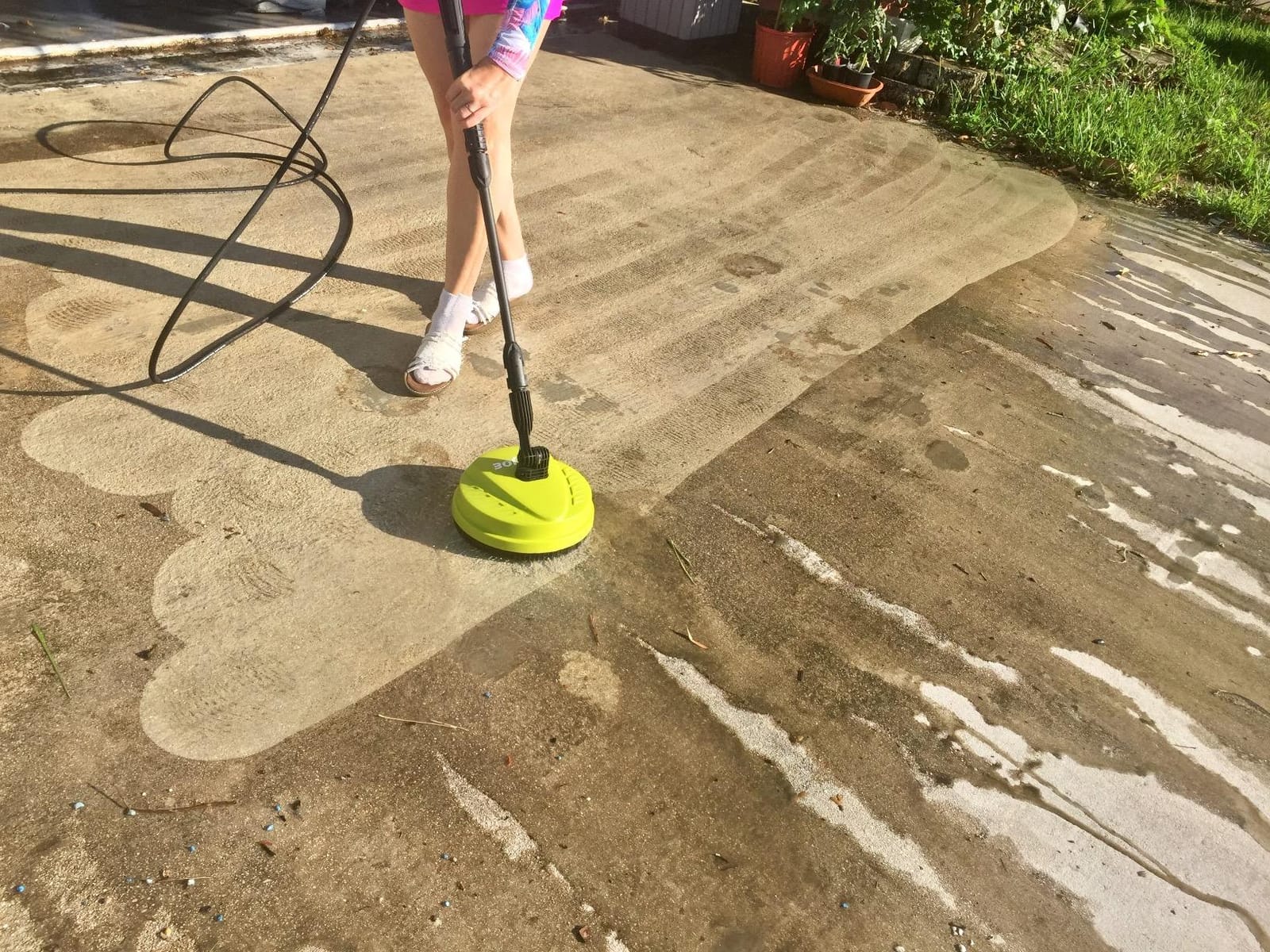
Who should buy the SPX3000
Buy it if your driveway is a routine annual wash, you clean cars and siding on the same weekends, and you want zero engine maintenance. The dual soap tanks and the five quick-connect tips make it the most flexible machine per pound of effort in this list.
Skip it if you have a long driveway with heavy oil staining, because a surface cleaner running at 1.2 GPM will simply take longer to cover the same ground.
Where it falls short
The 13-amp motor caps sustained output, and the working pressure is low enough that stubborn patches want a second pass. It is a maintenance machine, not a restoration machine.
It also carries the highest total review volume here, which means more documented durability complaints than most, even though the five-star share stays high.
2. Westinghouse ePX3500 – Best Value Electric for a Driveway
Westinghouse ePX3500 Electric Pressure Washer, 2500 Max PSI 1.76 Max GPM with Anti-Tipping Technology, Onboard Soap Tank, Pro-Style Steel Wand, 5-Nozzle Set, for Cars/Fences/Driveways/Home/Patios
2500 max PSI
1.76 max GPM
25-foot hose
19 pounds
Pros
- Highest rating per review in the list at 4.6 stars
- 25-foot braided hose is longer than most in class
- Anti-tipping four-wheel design with low center of gravity
- 20-ounce onboard soap tank and five quick-connect tips
- 3-year limited warranty
Cons
- 2000 rated PSI means more passes on heavy grime
- Nylon braided hose wears faster than super-flex
- No wheel-mounted cart for long driveway runs
The ePX3500 rates 4.6 stars from 7350 reviews, and that consistency is the reason it lands here. Where the SPX3000 wins on volume, this one wins on satisfaction, with 76 percent of reviews at five stars and only 3 percent at one star.
At 19 pounds and 16.5 inches tall it is the easiest machine here to carry, and the anti-tipping four-wheel base with a low center of gravity stays put on sloped driveway aprons that tip lighter frames.
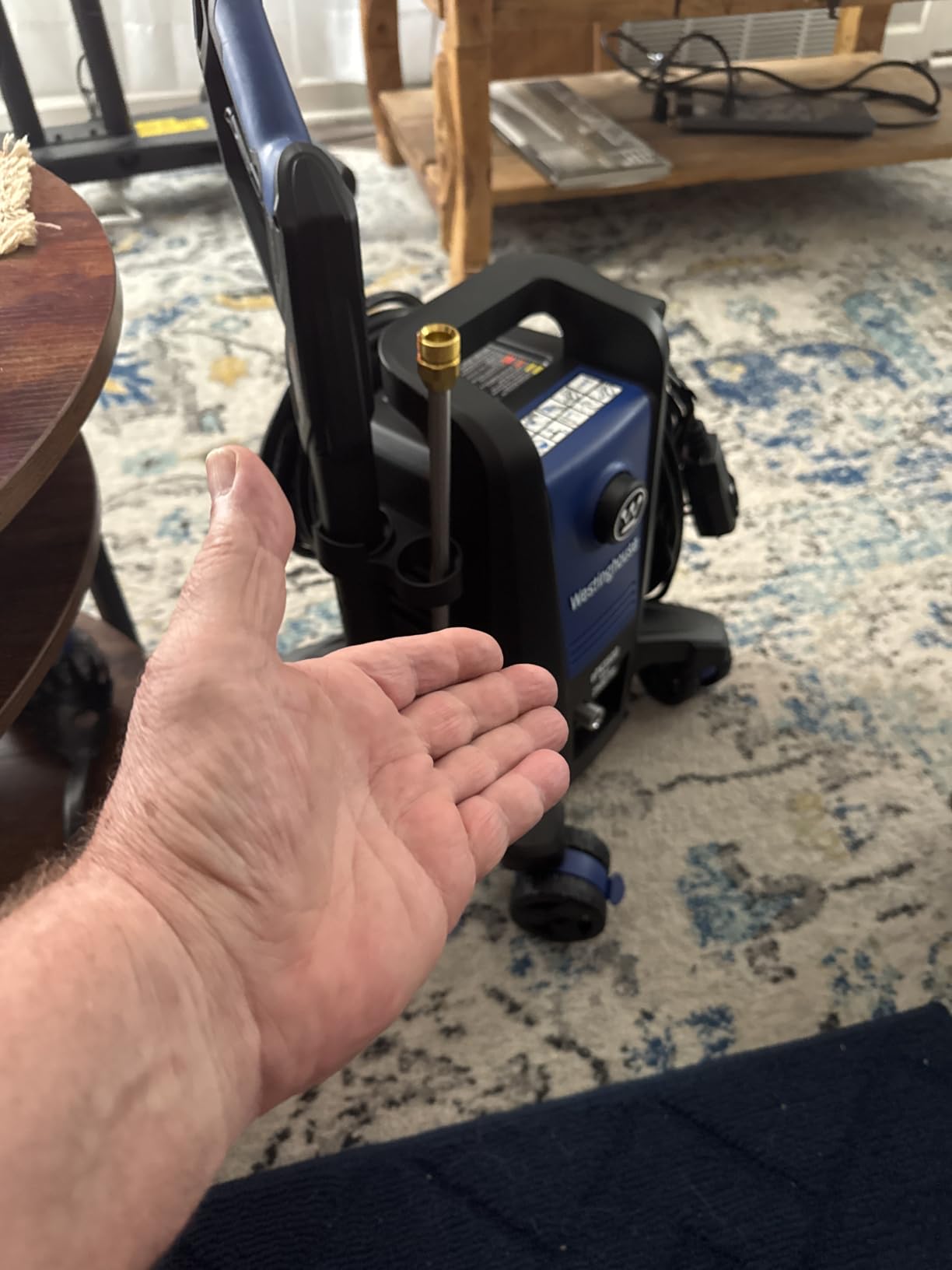
The auto-stop pump shuts the motor down when you release the trigger, which cuts idle noise, saves electricity and extends pump and motor life. On a long driveway where you stop to move a bin or reposition the wand, that is a real difference in how the machine ages.
The 25-foot easy-coil nylon braided hose gives you more working radius than most compact units, so you are not constantly walking the machine toward the far corner of the slab.
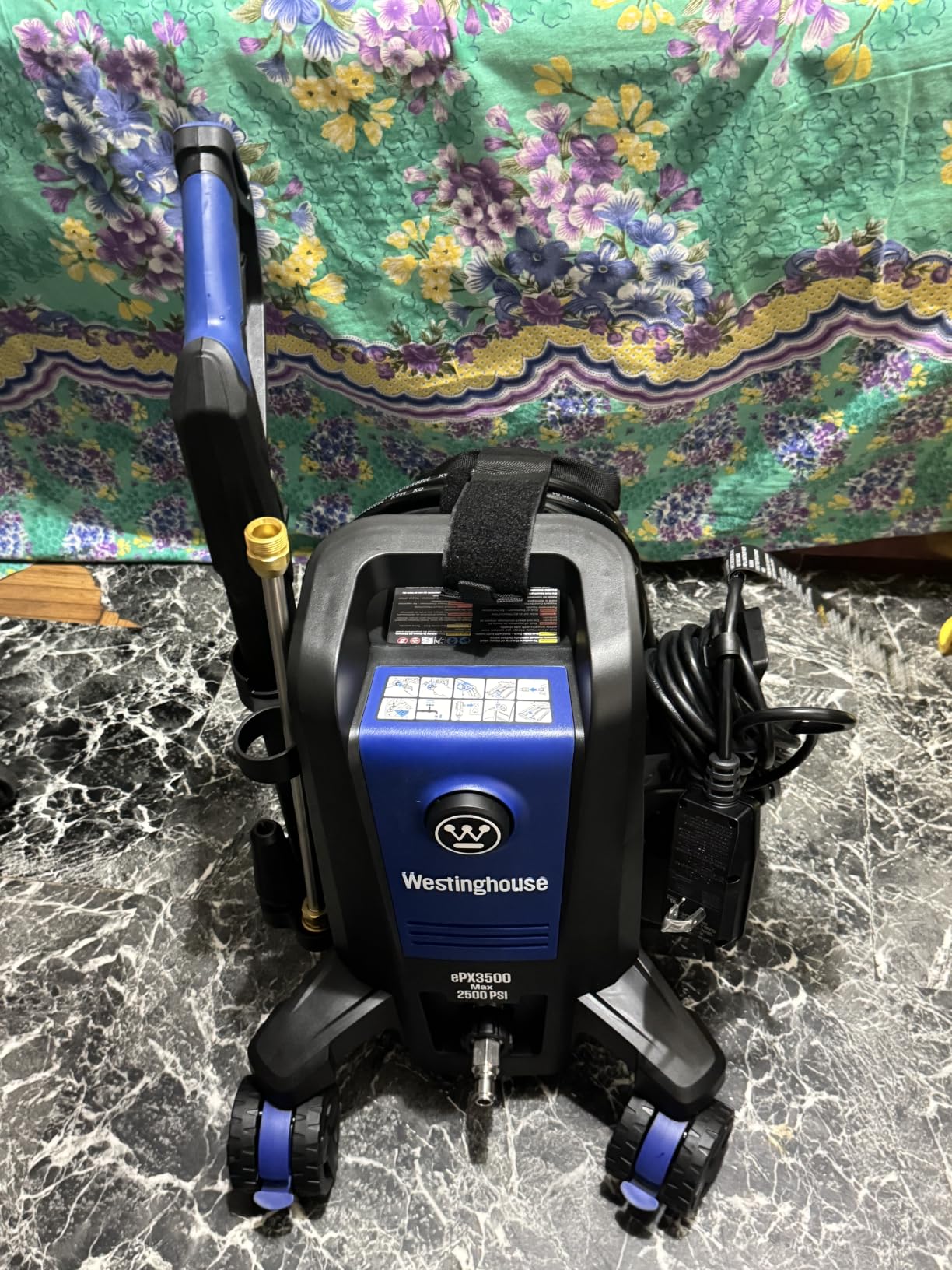
Who should buy the ePX3500
Buy it if storage space is tight, you want a warranty that runs three years, and the driveway is medium soiling rather than a restoration project. The 20-ounce soap tank covers detergent pretreat without the bulk of larger tanks.
It is also a strong second machine for patios, fences and outdoor furniture if you already own a bigger washer for trucks.
Where it falls short
2000 rated PSI sits below the 3000 class, so embedded oil and rust stains take repeated passes rather than one.
The nylon braided hose is less abrasion resistant than the super-flex hoses on the heavier machines, and the compact frame has no cart, so you carry it rather than roll it across a long driveway.
3. LWQ S5 – Most Flow You Can Get From a Small Electric Machine
Pressure Washer, Portable Power Washer, 4 Quick Connect Nozzles, High Pressure Cleaning Machine for Car Fence Driveway Patio Washing and More(Light Green)
2030 PSI
2.5 GPM
6.3-meter hose
16.6 pounds
Pros
- 2.5 GPM moves water faster than any other electric here
- Includes a foam cannon in the box
- Detergent path bypasses the pump so bleach is safe
- Dual rollers and an anti-tipping base
- Compact 18 by 14 by 11-inch footprint
Cons
- 2030 PSI is modest for deep-seated stains
- No major-brand name for parts and warranty support
- Highest one-star share in the set at 11 percent
- Both hoses need manual air purging before first use
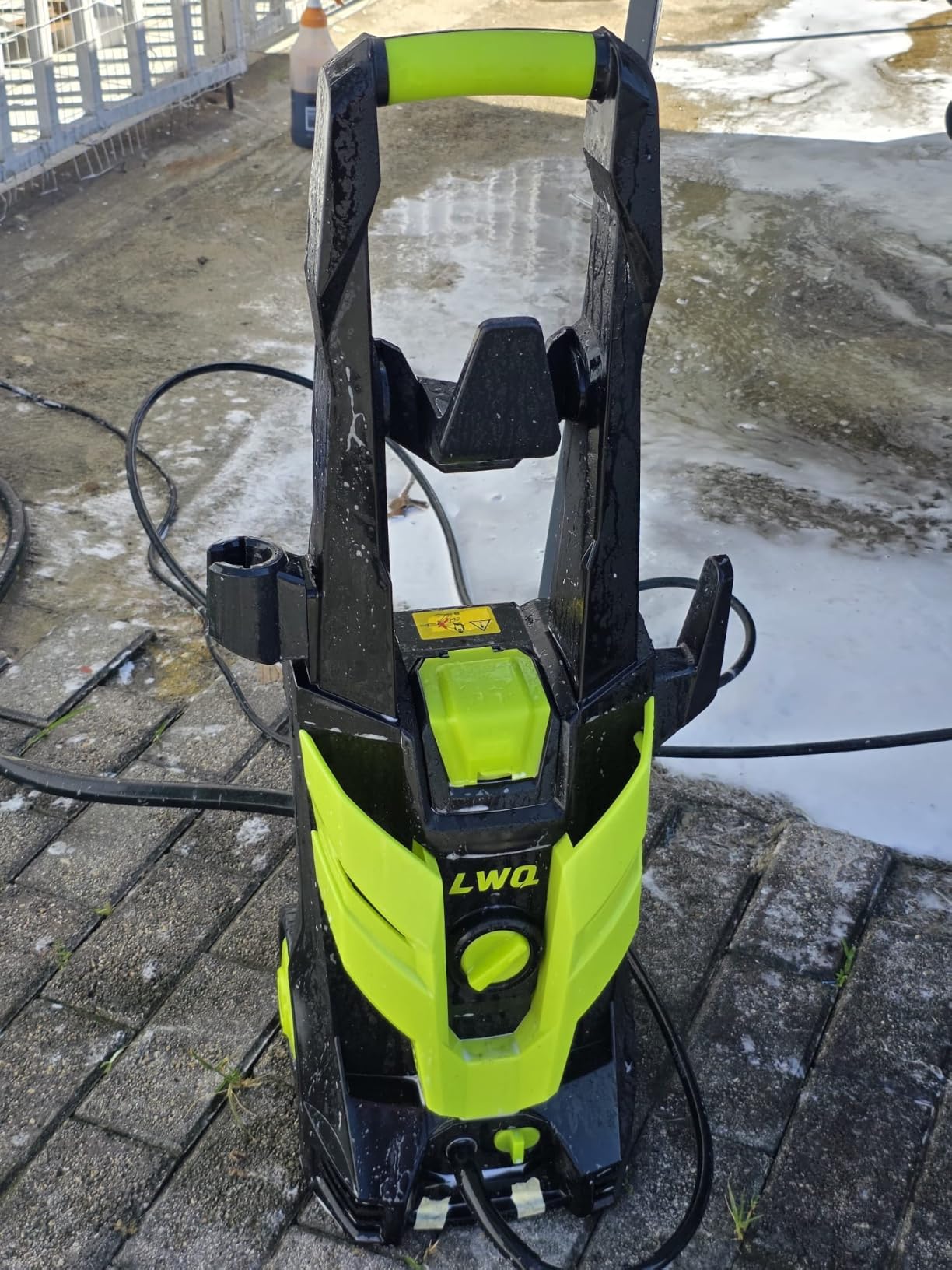
The LWQ S5 is the odd one out in this list, and that is exactly why it is worth a spot. Every other electric machine here sits between 1.1 and 2.0 GPM, and this one claims 2.5 GPM at 2030 PSI, which on paper is the fastest electric coverage rate in the group.
That flow figure is the entire reason to consider it for a driveway. PSI breaks the bond between the dirt and the concrete, and GPM carries it away. When the same 0-degree tip is dragging a lot of water across a wide flat slab, the machine with flow finishes the section first.
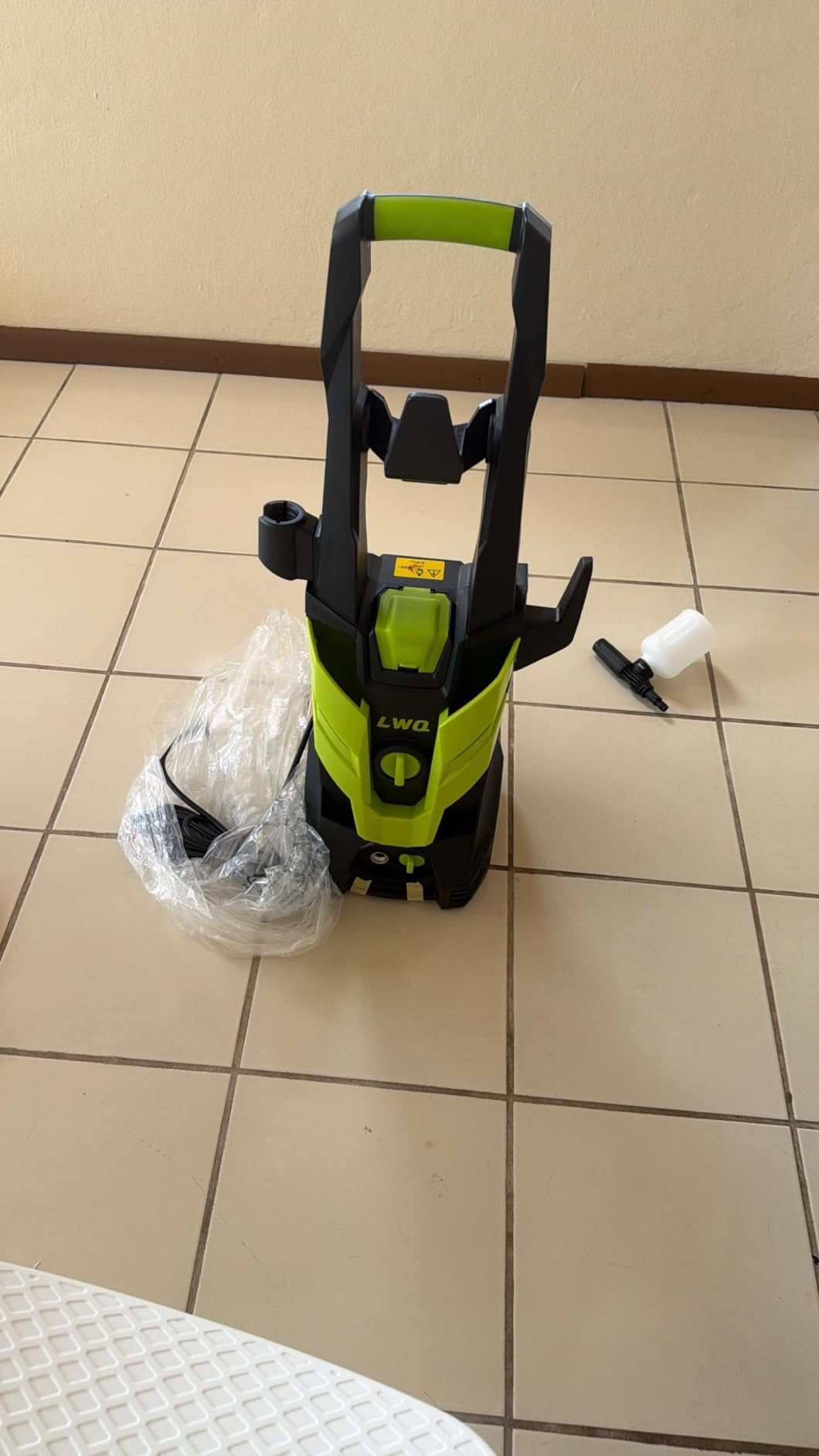
The detergent path bypasses the pump, so you can run bleach or an oxygen-based driveway treatment through it without the chemistry passing through the pump seals, and the included foam cannon lets you lay down a thick pretreated layer before you start the rinse.
At 16.6 pounds with dual rollers and an anti-tipping base, it moves across a driveway apron without being wrestled.
Who should buy the LWQ S5
Buy it if your driveway is large, you are on a metered water supply, and you want to cover ground fast with a compact machine. The included foam cannon also saves a separate purchase for pretreating.
It suits buyers who are comfortable with a lesser-known brand and who will keep the unit for seasonal maintenance rather than expecting commercial duty.
Where it falls short
2030 PSI is modest, so deep oil and rust stains still need pretreat and dwell time rather than brute pressure.
Support is the honest drawback. With no major-brand footprint, parts and warranty service are harder to find, and the 11 percent one-star share is the highest in this group, with early failures the usual theme. Both the high-pressure hose and the inlet hose need manual air purging before the first run, which catches people out.
4. CRAFTSMAN CMEPW1700 – Lightest Machine for a Small Driveway
CRAFTSMAN Electric Pressure Washer, Cold Water, Lightweight Corded Power Washer for Cars, Driveways, Patio and Garage, Powerful 1700-PSI, 1.2-GPM, Compact, Easy to Use (CMEPW1700)
1700 PSI
1.2 GPM
20-foot hose
17.5 pounds
Pros
- Genuinely carryable at 17.5 pounds
- 35-foot power cord reaches distant outlets
- 20-foot kink-resistant hose with onboard storage
- Quiet operation and trigger shut-off
- CETA certified with a 3-year warranty
Cons
- 1700 PSI is the lowest pressure in the set
- 1.2 GPM is slow on large concrete areas
- Owners repeatedly replace the supplied hose and soap applicator
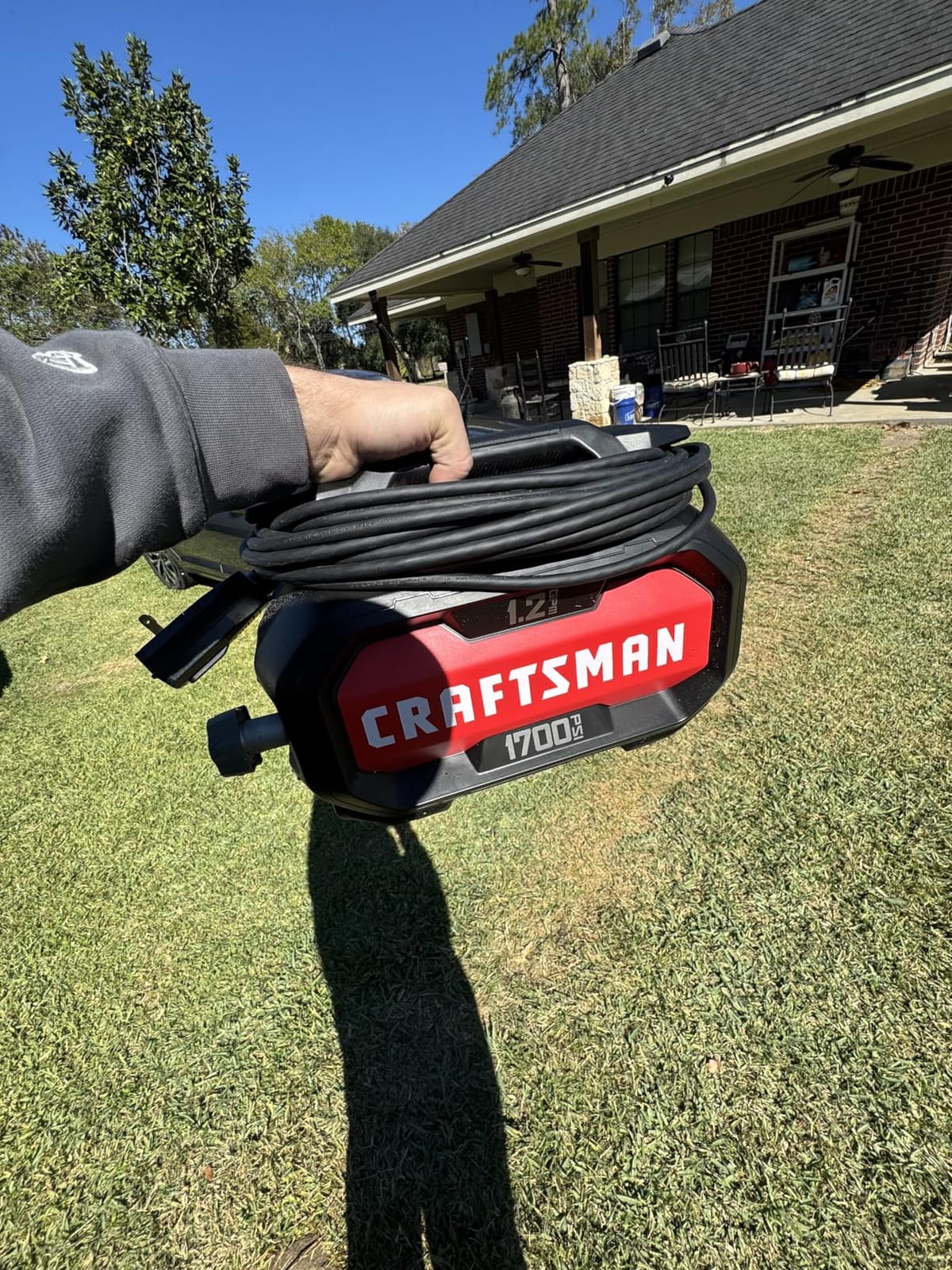
The CRAFTSMAN CMEPW1700 exists for a specific person: someone who can lift 17.5 pounds onto a shelf, wants it to work quietly, and has a driveway that needs washing rather than restoring. Owner reviews are full of people in their sixties and seventies describing exactly that lift.
At 1700 PSI and 1.2 GPM this is the least powerful machine here, and I would not pretend otherwise. On a driveway that has never been washed, expect the pretreat step to do most of the work and the pressure to finish it.
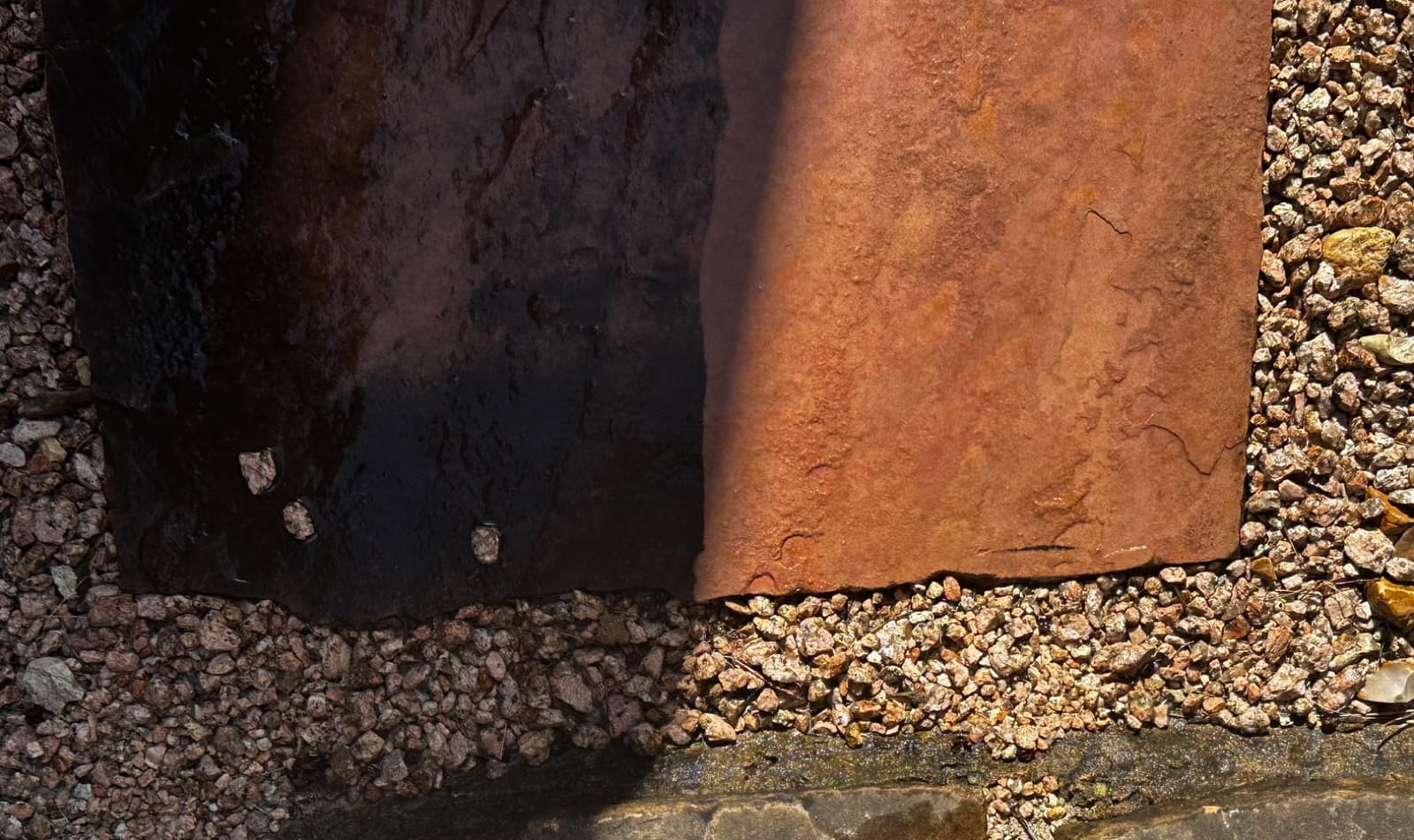
The 35-foot power cord with integrated GFCI protection is unusually long for the class, which means you can reach an outdoor outlet at the far end of the garage wall rather than running the machine back and forth.
It ships with a 40-degree nozzle, a turbo nozzle and a soap applicator, which is the correct trio for a first driveway wash: gentle prep, more aggressive drive, and detergent.
Who should buy the CMEPW1700
Buy it if the driveway is a small pad or a half-length two-car slab, you carry the machine rather than wheel it, and noise matters. It is also a genuinely capable car, siding and deck washer.
It suits older concrete with no sealer, where you are maintaining the surface rather than stripping years of buildup.
Where it falls short
Heavy driveway grime needs multiple passes at 1700 PSI, and 1.2 GPM makes a large flat area slow.
Two things get replaced in the first month. Owners call out the supplied hose and the foam cannon or soap applicator as the weak points, and a small number report pump or motor failure after a season or two of seasonal use.
5. Westinghouse WPX3000e – Best Electric for Heavy Concrete
Westinghouse WPX3000e Electric Pressure Washer, 3000 Max PSI and 1.76 Max GPM, Induction Motor, Onboard Soap Tank, Spray Gun and Wand, 5 Nozzle Set, for Cars/Fences/Driveways/Homes/Patios/Furniture
3000 max PSI
1.76 max GPM
36.8 pounds
3-year warranty
Pros
- Highest average rating here at 4.7 stars with 80 percent five-star
- Real concrete and driveway stripping in an electric package
- 25-foot abrasion-resistant super-flex hose
- M22 fittings accept surface cleaners and foam cannons
- 10-inch never-flat wheels and a 35-foot GFCI cord
Cons
- 36.8 pounds and a 36.6-inch frame are bulky to move
- 2600 rated PSI and 1.1 rated GPM trail the max figures
- 0.45-gallon soap tank is small for long detergent passes
This is the one I would buy for a driveway with real buildup. At 4.7 stars from 1417 reviews with 80 percent of those at five stars, the WPX3000e has the most consistently positive feedback in this entire list, and the complaints are almost entirely about size.
Owner reports describe strong concrete stripping, a steel frame that feels solid, never-flat wheels that roll over a driveway apron without deflating, and a hose that resists kinking. The M22 fittings are the detail that matters most for driveway work, because they accept a surface cleaner, an undercarriage cleaner or a foam cannon without adapters.
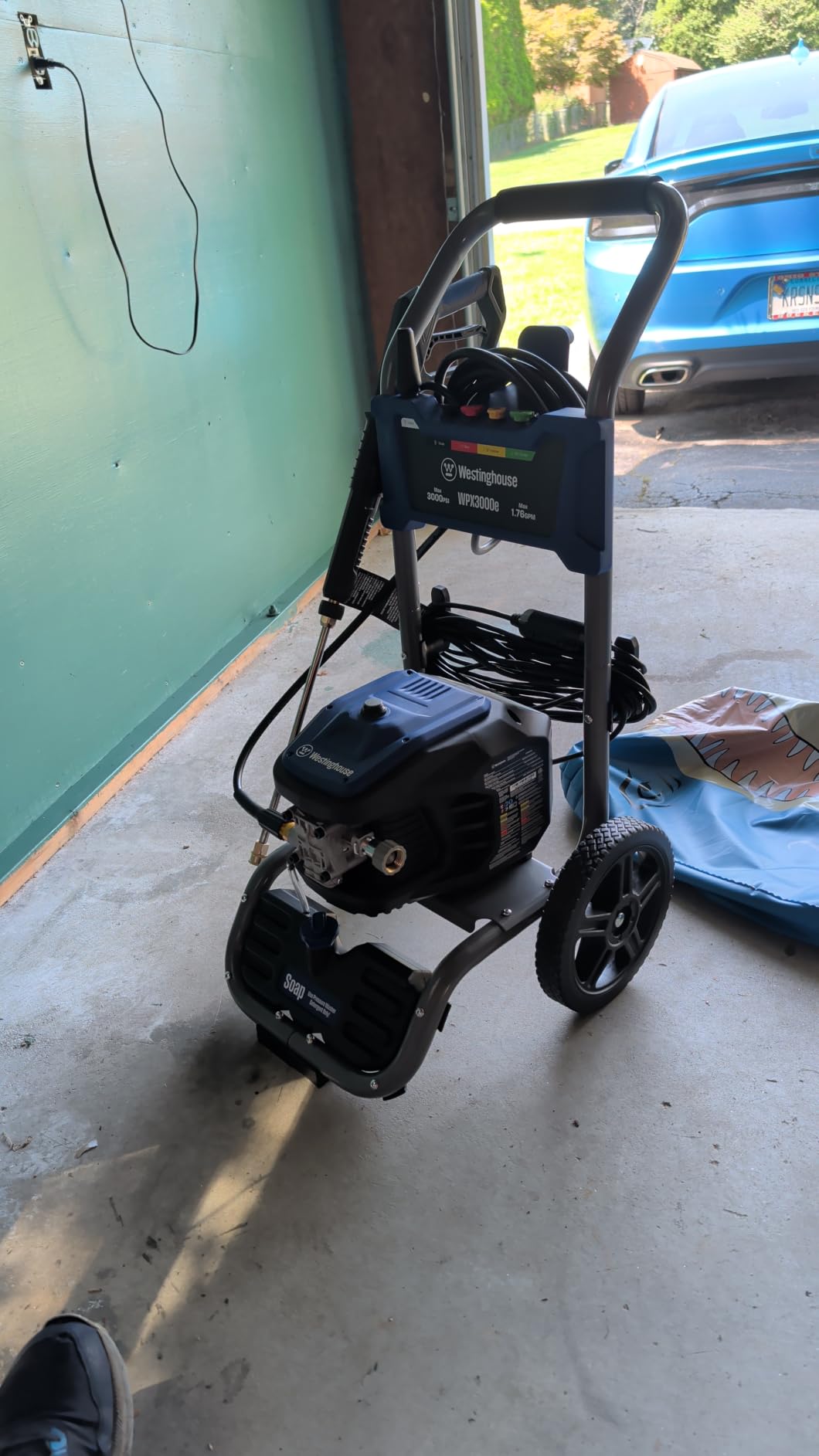
It runs on a heavy-duty AC motor with a maintenance-free axial three-piston auto-stop pump, so there is no engine oil, no carburetor and no pull cord. It is also factory function tested with a three-year limited service, labor and parts warranty.
That combination, gas-class pressure with electric convenience and a surface cleaner fitting, is why I put this one at the top of the electric category even though its review count is modest.
Who should buy the WPX3000e
Buy it if you have a two-car concrete driveway with years of dirt, no gas outlet nearby, and you plan to attach a rotary surface cleaner. The M22 fitting is the deciding factor if a surface cleaner is in your plan.
It is also the right electric pick for anyone cleaning several driveways a season, because the three-year warranty covers parts and labor rather than the pump alone.
Where it falls short
At 36.8 pounds and 36.6 inches tall, it is a full-size machine, so it is not a shelf-storer and it needs a real corner of the garage.
The 0.45-gallon soap tank is the practical snag. On a long driveway you will be stopping to refill detergent more often than you would like.
6. Greenworks GPW2003 – Best for Routine Driveway Maintenance
Greenworks 2000 PSI (1.2 GPM) Electric Pressure Washer
2000 PSI
1.2 GPM
25-foot hose
12.6 kilograms
Pros
- PWMA performance tested and rated
- 12.6 kilograms with a removable handle for shelf storage
- Auto start and stop extends pump and motor life
- 25-foot hose and 1.2-gallon onboard soap tank
- Noticeably quieter than gas units
Cons
- 2000 PSI and 1.2 GPM are mid-duty ratings
- Owners commonly upgrade the supplied hose and nozzles
- Anodized aluminum connectors can corrode against brass
- Some early motor or pump failures reported
The GPW2003 is the machine owners most often change their mind about. The defining theme in reviews is that it performs noticeably better once the stock hose and nozzles come off, with several owners describing a jump in perceived pressure that turned an initial return into a keeper.
At 2000 PSI and 1.2 GPM it is a medium-duty rating, and for a driveway that gets an annual wash rather than a rescue, that is genuinely enough. PWMA performance certification and a three-year manufacturer warranty are the credibility marks here.
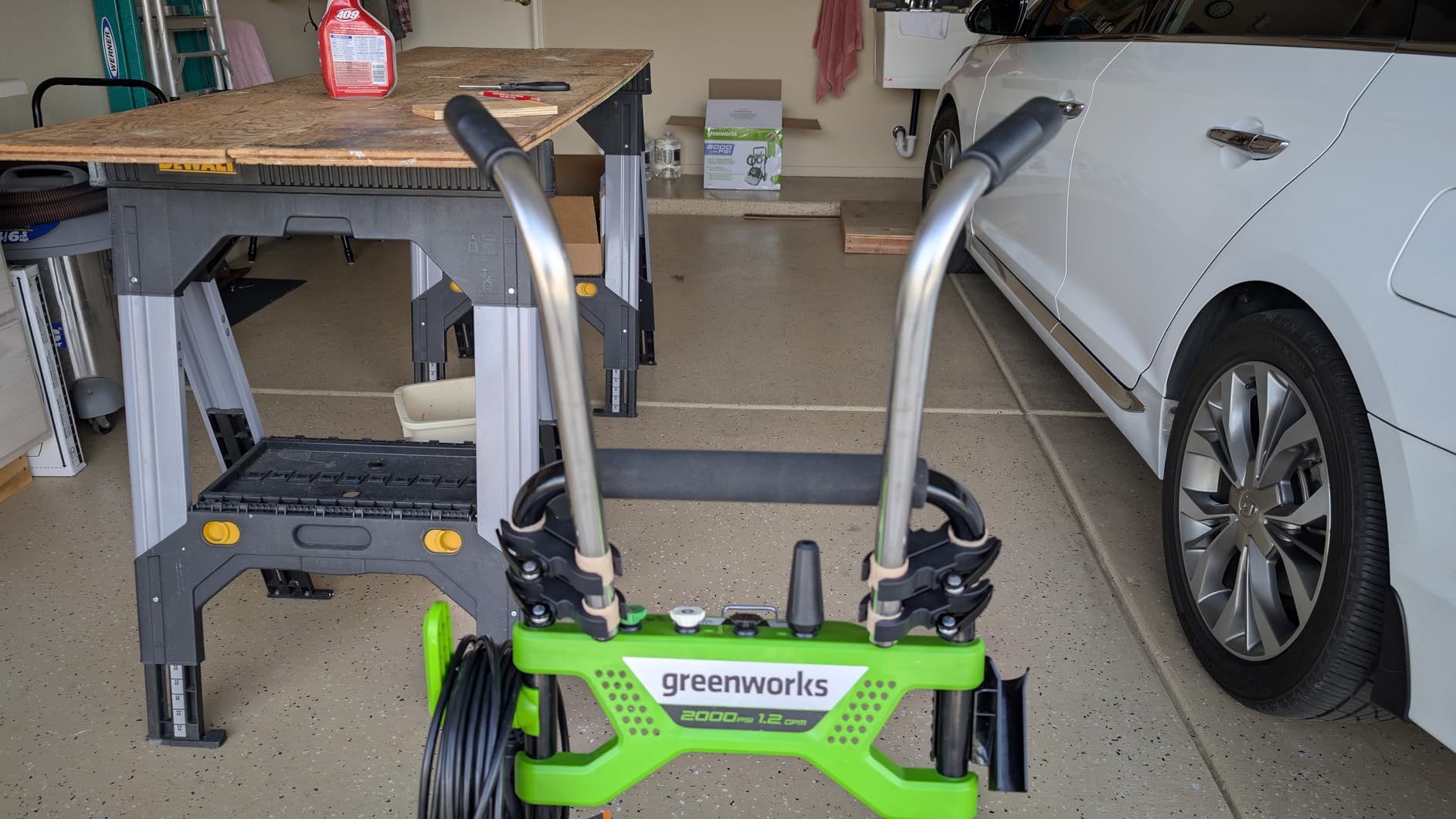
The removable handle is the sleeper feature. Owners lift it onto garage shelving instead of losing floor space, and at 12.6 kilograms it is one of the few machines here that one person can genuinely carry up a step.
Start and stop technology cuts the motor when the trigger is released, which is the main reason this class of machine outlasts cheaper electric units.
Who should buy the GPW2003
Buy it if you wash the driveway yearly, want quiet operation, and care more about storage and carry weight than raw pressure. It is comfortable on concrete, brick and patios too.
It also makes sense as a second machine in a two-machine household, where one handles the car and the other stays on the driveway job.
Where it falls short
The stock accessories are the weak link. Multiple owners replace the hose and nozzles before anything else, and the anodized aluminum connectors can corrode against brass fittings.
Two other things show up repeatedly: the wheels are held on with wire clips that can fall off in use, and turning household water pressure up fully can rupture seals. A minority of owners report motor or pump failure after extended first use, which is where the 7 percent one-star share comes from.
7. DeWalt DXPW3300-S – Best Gas Flow for a Full-Size Driveway
DeWalt 3300 PSI Gas Pressure Washer, 2.4 GPM, Residential Model DXPW3300-S
3300 PSI
2.4 GPM
208cc engine
64 pounds
Pros
- Highest flow rate of any gas unit here at 2.4 GPM
- OEM axial cam pump and welded powder-coated steel frame
- Thermal relief valve helps prevent overheating
- 10-inch pneumatic tires roll over uneven driveway terrain
- 25-foot hose with five quick-connect tips and a 16-inch wand
Cons
- Heaviest and largest machine in the set at 64 pounds
- Gas engine adds oil changes and fuel handling
- One-star share is tied for the highest among reviewed units
When a driveway is long, gas earns its place, and the DXPW3300-S is the reason. At 3300 PSI and 2.4 GPM it moves more water per minute than any other gas machine in this group, which on flat concrete is the difference between one afternoon and a weekend.
The 208cc DeWalt engine means no power cord to drag across the driveway and no outlet to reach, and the 10-inch pneumatic tires roll over the uneven edge where the slab meets the lawn without the hassle of inflating anything.
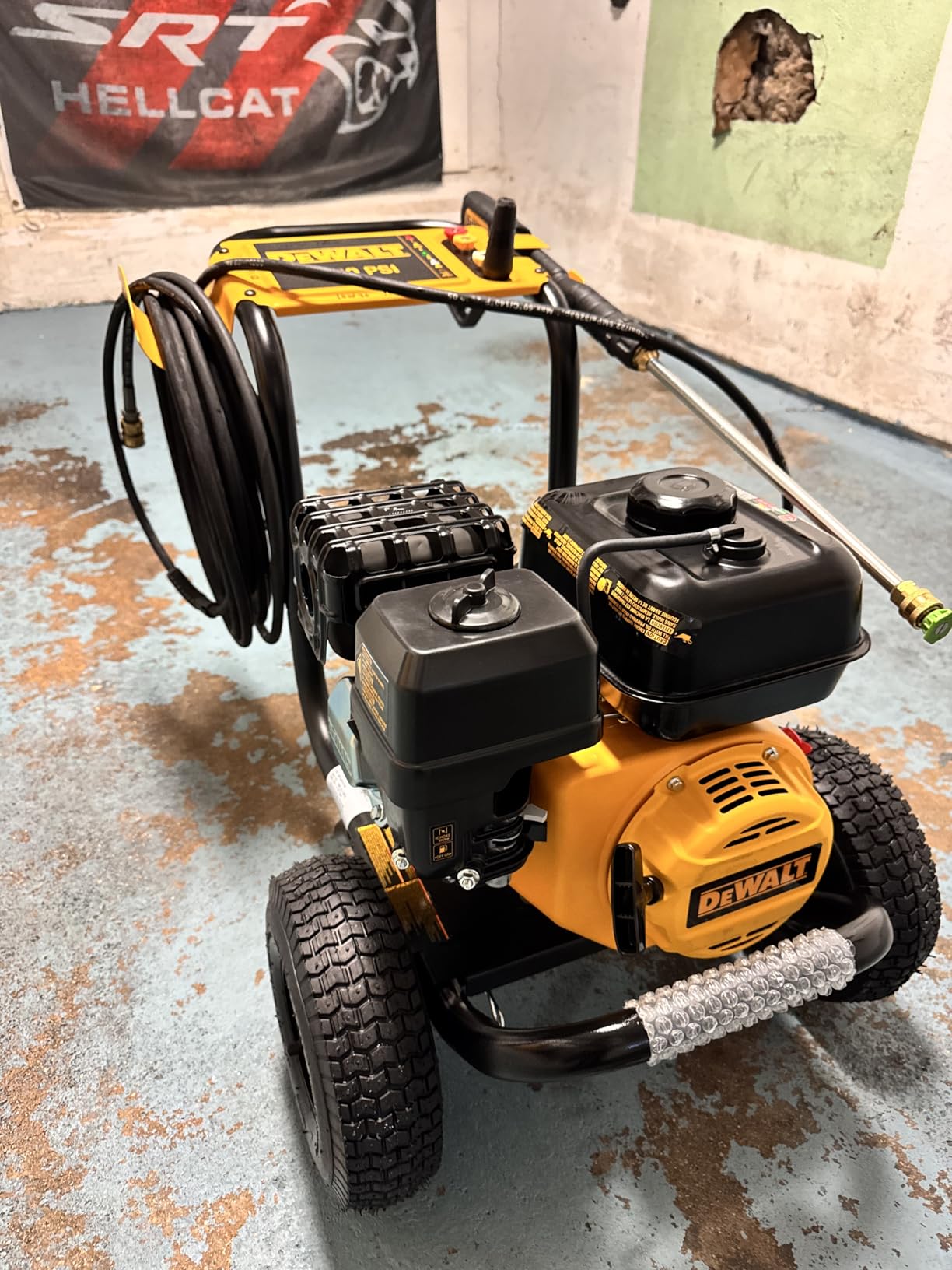
The warranty is the longest here: five years on the frame, three years on the pump and two years on the engine. The thermal relief valve is a small feature that matters on a long job because it reduces the risk of the pump running hot.
You get a 25-foot abrasion-resistant hose, five quick-connect tips at 0, 15, 25, 40 degrees plus soap, an ergonomic spray gun and a 16-inch steel wand, which is a complete kit for driveway work.
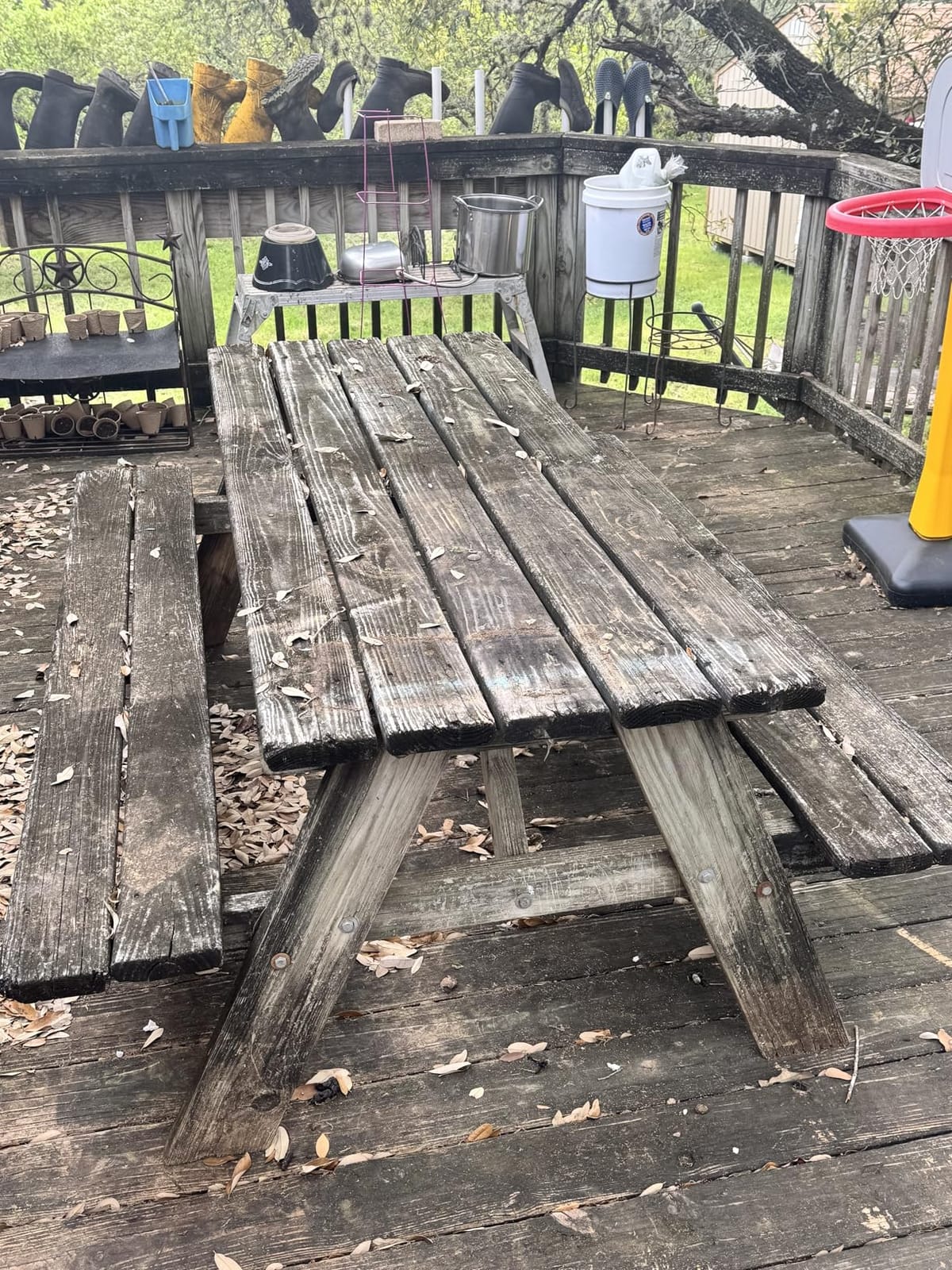
Who should buy the DXPW3300-S
Buy it if your driveway is a full two-car width or larger, you want to work away from an outlet, and you are willing to deal with fuel and oil. This is the pick for a large slab with real accumulated grime.
It is also the right choice for anyone cleaning more than one property per season, where gas runtime beats cord reach.
Where it falls short
At 64 pounds and a 41 by 21 by 24-inch frame, it is the largest machine here and awkward to load into a car or move over a curb.
The engine adds maintenance that the electric units do not have, and the 12 percent one-star share is tied for the highest among units with review text, with start-up complaints the usual cluster. It also carries the highest price in this list.
8. Greenworks GPW3002A – Best When You Want Verified Specs
Greenworks 3000 PSI (2.0 GPM Max) Brushless Electric Pressure Washer
3000 PSI
2.0 GPM
3300 cleaning units
14 amp brushless motor
Pros
- Highest flow of any electric unit here at 2.0 GPM
- 3300 cleaning units from independently lab-verified numbers
- JETFLOW tech delivers up to 50 percent more flow
- 25-foot Uberflex kink-resistant hose and metal gun
- Bushless design means no carburetor oil or spark plug
Cons
- Needs a dedicated circuit and trips GFCI breakers on extension cords
- Motor enters bypass mode instead of fully shutting off
- Folding frame is bulky for tight storage
- Thinnest review base here at 316 reviews
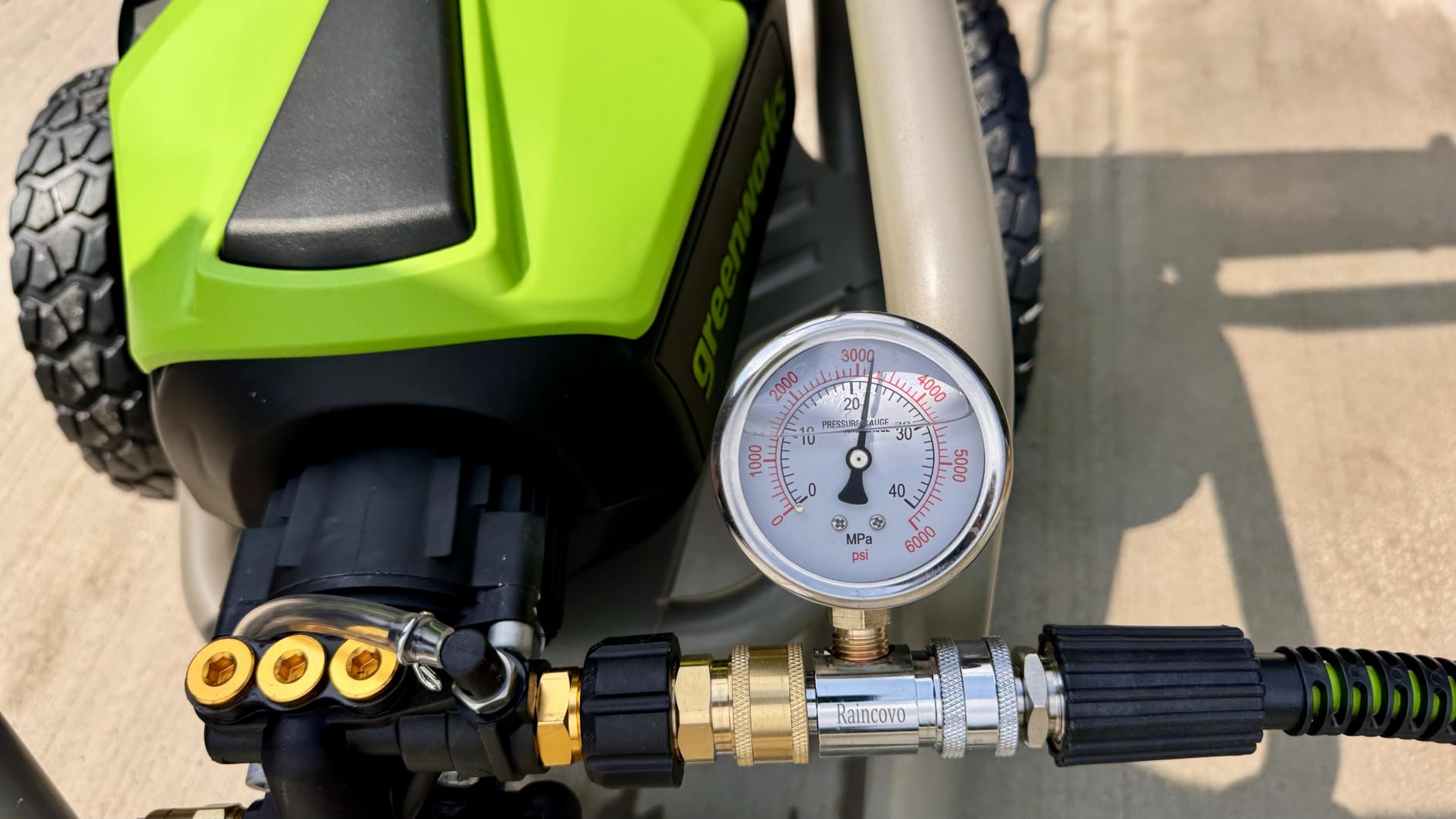
The GPW3002A is the machine I trust most on paper, because its numbers are independently lab verified rather than self-reported. Buyers specifically credit that, and several report measuring roughly 2,550 PSI at a 15-degree tip in their own use.
3000 PSI at 2.0 GPM puts it at 3300 cleaning units, the highest figure of any electric machine in this list, and that combination is what makes it credible on concrete rather than only on siding and cars.
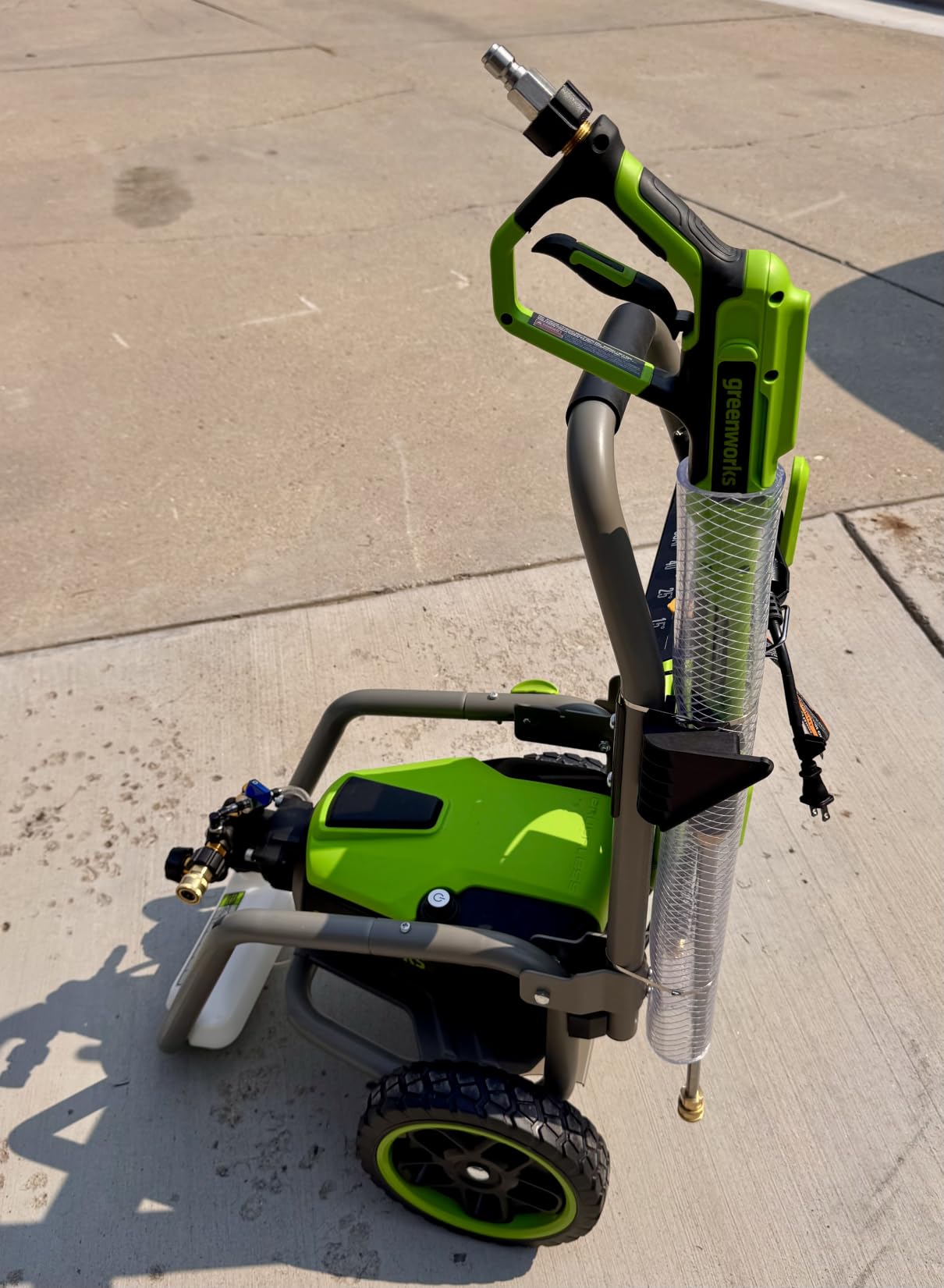
The loudest advocacy comes from owners who came from gas. No fuel, no oil changes, no spark plug and no carburetor to clog after a season of storage is a genuine lifestyle change, and the brushless motor is quieter than a gas engine at the same pressure.
Maximum inlet water temperature is 104 degrees F, so this is a cold water machine and should be fed from the spigot, not a hot tap.
Who should buy the GPW3002A
Buy it if you want a full-power electric machine and can give it a dedicated outlet on its own branch circuit. It suits a large driveway where 2.0 GPM keeps the job moving and where you would rather not maintain an engine.
It is also the choice for anyone who reads spec sheets for a living and wants numbers that have been independently checked.
Where it falls short
The electrical draw is the real constraint. The cord tag specifies an individual branch circuit, and owners who ran extension cords tripped 20-amp GFCI breakers repeatedly.
The motor does not fully shut off when you release the trigger, entering a bypass mode instead, and a few owners question the 3000 PSI figure in real use. At 316 reviews it also has the thinnest base here, so long-term durability is not yet well established.
9. RYOBI 1800 PSI – Best When Storage Space Decides
1800 PSI Electric Pressure Washer
1800 PSI
1.2 GPM
12.5 by 10 by 9 inches
CSA certified
Pros
- Smallest footprint in the set and stores on a closet shelf
- Carries like a handheld tool with no wheels or bulk
- Owners report matching larger units they replaced
- M22 standard connections accept aftermarket hoses and guns
- Shuts off when not in use and repressurizes on demand
Cons
- 1800 PSI and 1.2 GPM are light-duty for heavy driveway grime
- Included foam cannon and wand are frequently upgraded
- Sold through third-party bulk resellers which complicates warranty help
The RYOBI at 12.5 by 10 by 9 inches is the only machine here that stores on a shelf rather than a floor, and that changes who is willing to own a pressure washer at all. Multiple owners describe pulling it down, using it and putting it back.
There is a running theme in the reviews of surprise. Owners report it matching or exceeding larger machines they replaced, and one describes it cleaning a redwood deck effectively, which is not a surface it should handle well at 1800 PSI.
The M22 standard fittings on the trigger handle are the practical win. That is the same connection used on the full-size machines, so aftermarket hoses, guns and quick-connect tips all carry over if you later step up.
It also shuts off when idle and repressurizes on demand, which saves pump wear and keeps the noise down in a neighborhood on a weekend morning.
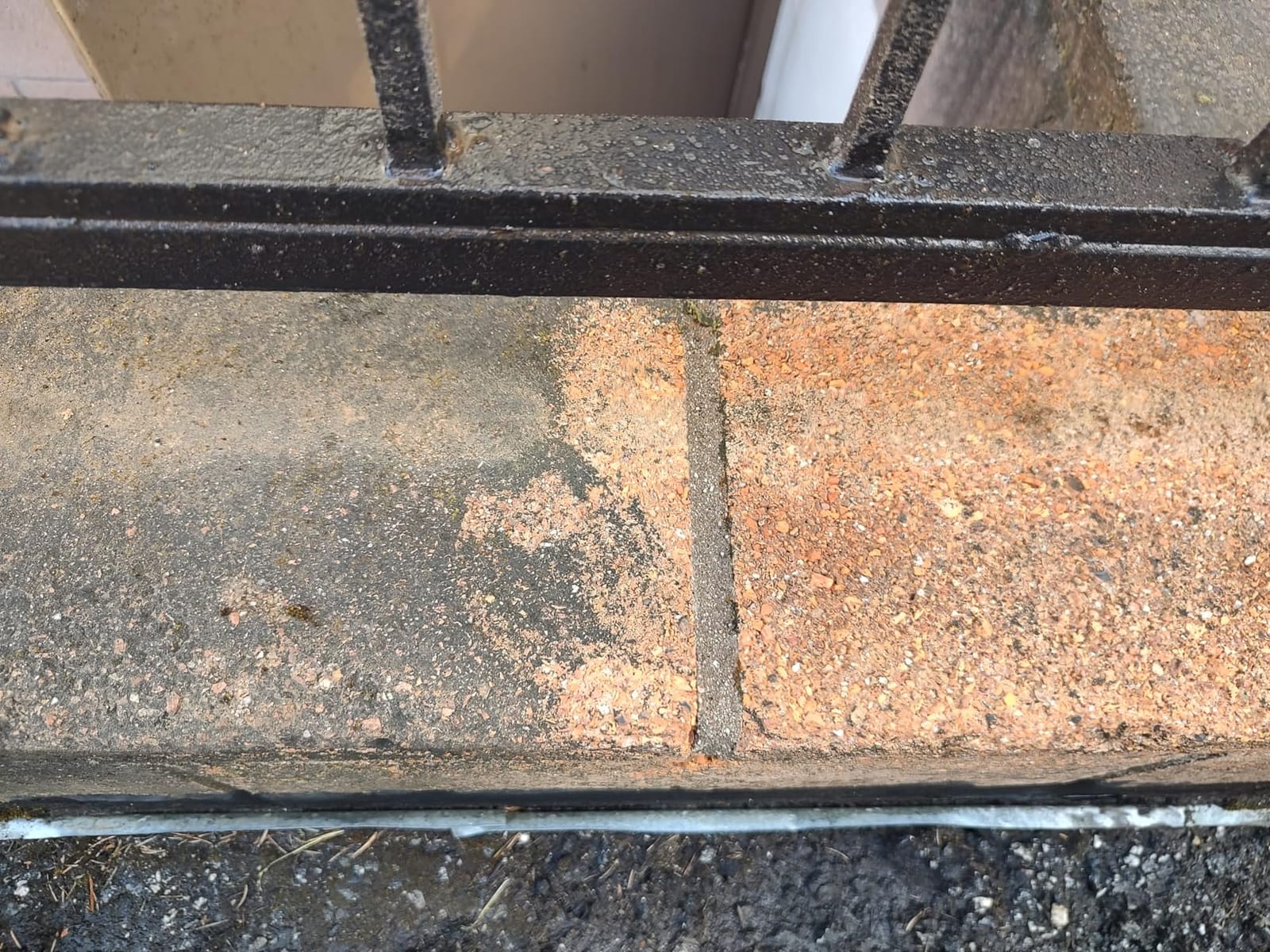
Who should buy the RYOBI 1800 PSI
Buy it if garage space is the deciding factor, the driveway work is light, and you also want to clean bins, siding, patio furniture and a car. It is a shelf machine that happens to clean.
It pairs well with a rented surface cleaner for an occasional deep clean, since the rental supplies the flow and the RYOBI handles the detail work.
Where it falls short
1800 PSI at 1.2 GPM is light-duty. Serious driveway grime is out of scope, and the pretreat has to do most of the work.
The included foam cannon and wand draw repeated criticism, and because some units ship through third-party bulk resellers, getting RYOBI warranty support can be a fight. A small number of owners also report units arriving with missing accessories.
10. Westinghouse WPX3000 Gas – Best Mid-Size Gas for Concrete
Westinghouse WPX3000 Gas Pressure Washer, 3000 PSI and 2.3 GPM, Spray Gun and Wand, 4 Nozzle Set, for Cars/Fences/Driveways/Homes/Patios/Furniture
3000 PSI
2.3 GPM
212cc four-stroke
50.7 pounds
Pros
- 3000 PSI at 2.3 GPM covers concrete fast
- 212cc four-stroke OHV horizontal-shaft engine
- Maintenance-free axial cam pump
- 12-inch never-flat wheels need no inflation
- Three-year limited warranty and detergent siphon hose
Cons
- Recoil start is hard to pull and hot restarts are difficult
- Side-mounted hose connection can chafe against a wheel
- 50.7 pounds and 39 inches tall is bulky to store
At 3000 PSI and 2.3 GPM from a 212cc four-stroke engine, the WPX3000 gas is close to the flow you need without the footprint of a full commercial frame. Owner reports describe concrete that looks nearly new afterward, and one reviewer says it is capable enough to start a small washing business.
The four-stroke horizontal-shaft engine is a better choice for driveway work than a vertical-shaft design, because the oil stays in the crankcase when the machine is parked on a slope, which a driveway apron always is.
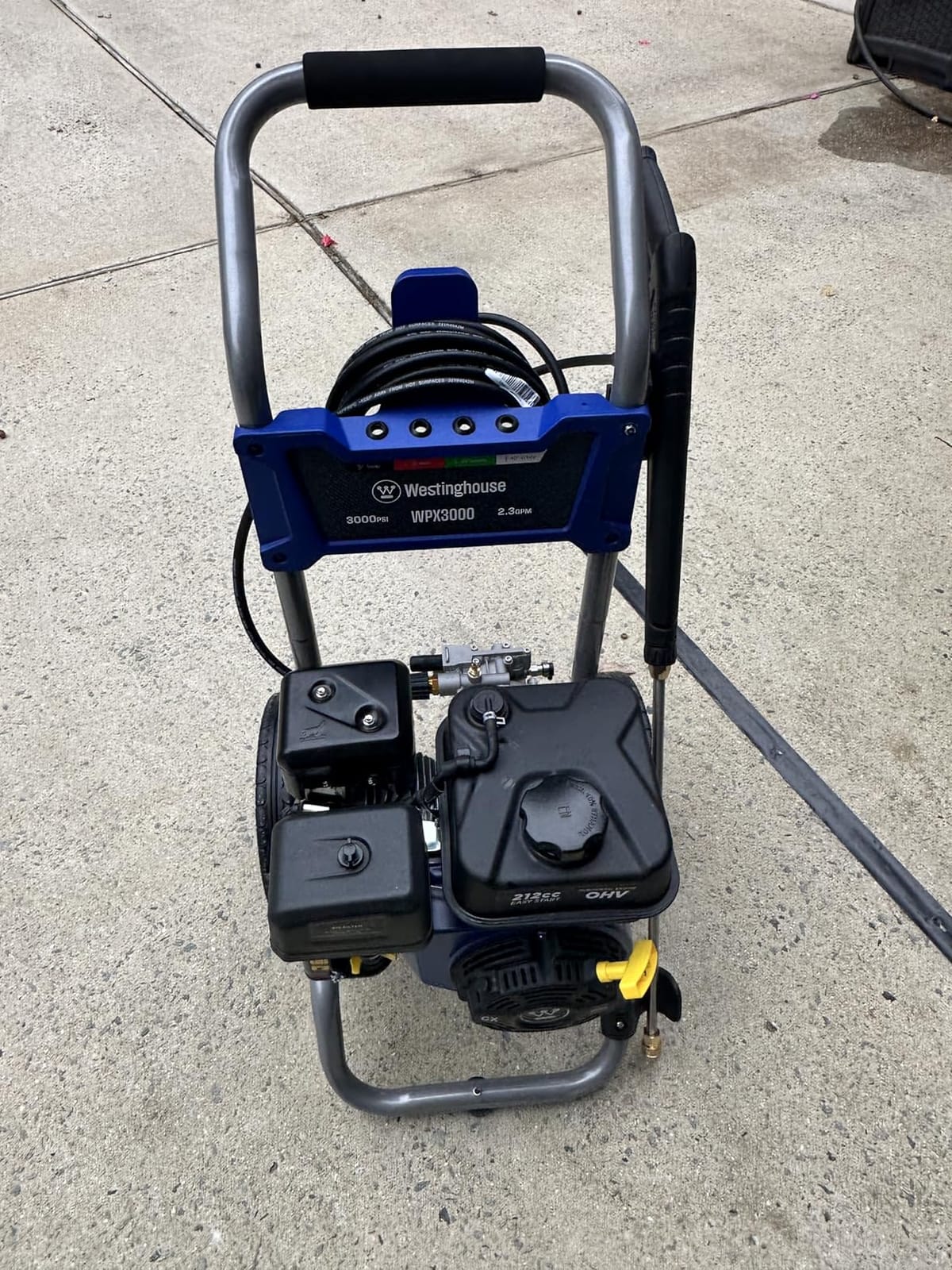
The 12-inch high-profile never-flat wheels roll over gravel and grass edges without maintenance, and the steel frame is EPA compliant and factory function tested with a three-year limited warranty.
You get a 25-foot abrasion-resistant super-flex hose, a lightweight spray gun, four quick-connect nozzles at 0, 25 and 40 degrees plus soap, and a detergent siphon hose for pretreating.
Who should buy the WPX3000 gas
Buy it if you want gas flow and four-stroke convenience without a commercial-sized frame, and if you can live with recoil starting. It is well matched to a two-car driveway with oil and grime.
It suits buyers who plan to attach a surface cleaner later, since the same brand sells 15-inch and 16.5-inch rotary units.
Where it falls short
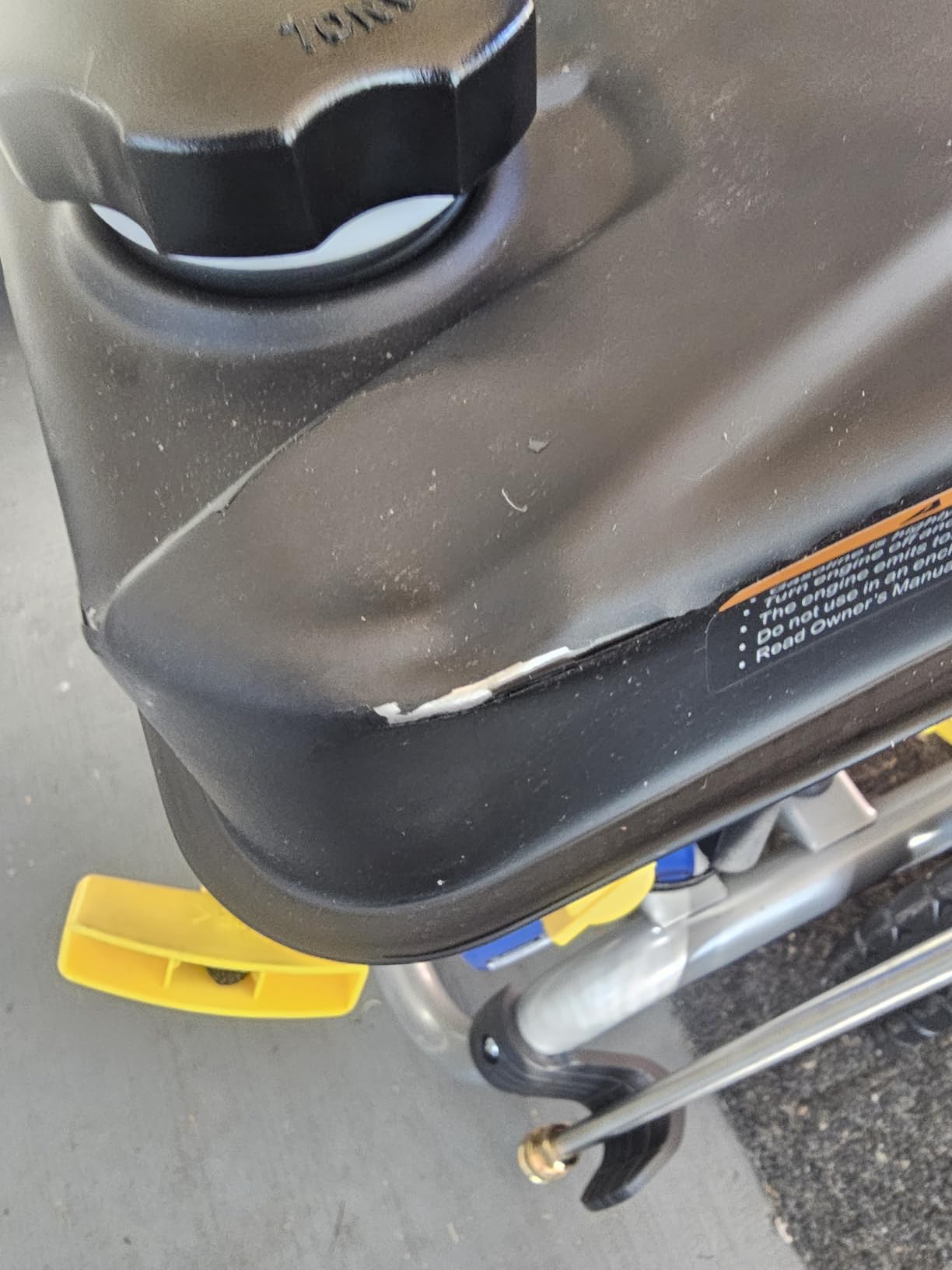
Starting is the dominant complaint. Multiple reviews describe hard recoil pulls and an engine that refuses to restart until it has cooled for 30-plus minutes, and Westinghouse support advised lowering the oil level, after which the manual was revised.
There is no throttle control, so it cannot be idled while you move. A side-mounted hose connection also chafes near the wheel, and the 142-review base is thin enough that long-term durability is not yet established.
11. PowerSmart DL1038A – Best for High-Reach Pressure
PowerSmart Gas Pressure Washer, 3800 PSI and 2.5 GPM for House Cleaning
3800 PSI
2.5 GPM
212cc four-stroke
35-foot hose
Pros
- Highest pressure figure here at 3800 PSI
- 2.5 GPM is the top flow in the set
- 35-foot abrasion-resistant super-flex hose
- PWMA certified and UL 1776 compliant
- 10-inch pneumatic tires and onboard soap tank
Cons
- Only 192 reviews so durability is unproven
- 61 pounds is one of the heaviest units here
- Gas engine means fuel oil and spark plug maintenance
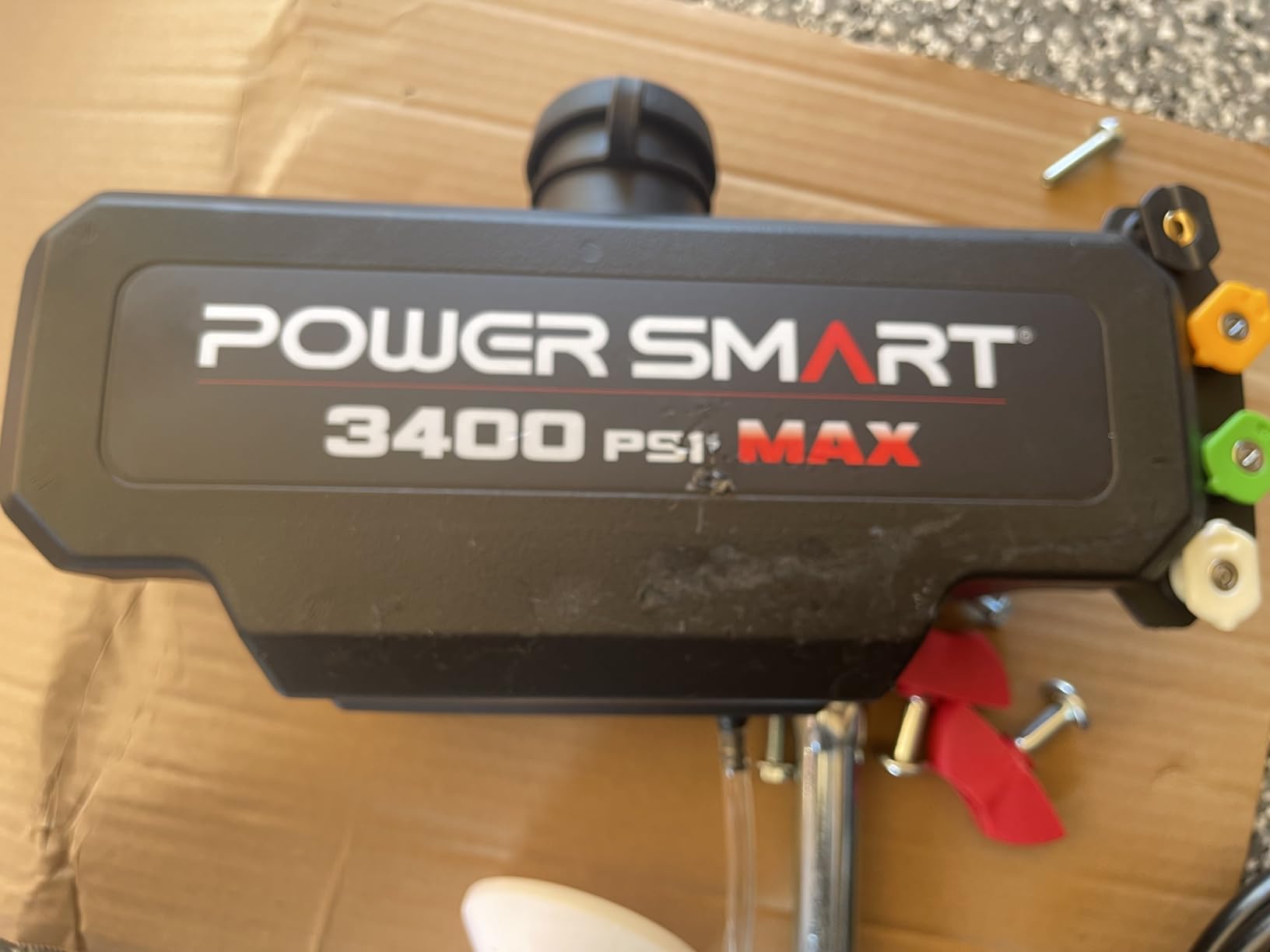
On the spec sheet the DL1038A is the most capable machine here: 3800 PSI and 2.5 GPM, both the highest figures in this roundup, which is why it earns the high-reach badge. That pressure is genuinely useful for second-story siding and for stubborn growth that has set into concrete for years.
The 35-foot abrasion-resistant super-flex hose is among the longest we listed, and on a long driveway the extra reach means fewer machine repositions, which is where most of the wasted time on a flat slab comes from.
The certification marks are a genuine differentiator. PWMA performance certification and UL 1776 safety compliance mean the pressure and flow numbers have been tested to an industry standard rather than asserted, and the 212cc four-stroke engine is EPA engine certified.
It comes with an onboard soap tank, a hook and sling for storage, five quick-connect nozzles, a soft-grip handle, 10-inch pneumatic tires and an easy-pull recoil start.
Who should buy the PowerSmart
Buy it if you clean a driveway plus siding and decks, want reach without an extension wand, and want certified numbers. At 2.5 GPM the coverage rate suits a large slab.
It makes sense for someone who is wary of a very high pressure number on concrete, because the surface cleaner, not the red tip, is what should touch the slab.
Where it falls short
3800 PSI is more than most driveways need, and on soft or new concrete the extra pressure is a liability unless you stay on lower-degree tips.
At 192 reviews it has the second thinnest base here, so there is not yet a long service history to lean on. It also carries 61 pounds of weight and a one-star share of 11 percent, tied for the highest among products with review text, and the listed hose length conflicts with the 35-foot claim in the feature copy.
12. Greenworks GPW2101A – Best for Walkways and Small Stops
Greenworks 2100 PSI (1.2 GPM) Electric Pressure Washer
2100 PSI
1.2 GPM
20-foot hose
35-foot GFCI cord
Pros
- 2100 PSI rated sufficient for concrete sidewalks and driveways
- Push button start with no gas oil or pull cord
- 35-foot cord with integrated GFCI auto shut-off
- 20-foot tangle-free hose and quality connectors
- Telescoping handle collapses for compact storage
Cons
- Soap requires a separate nozzle swap
- 1.2 GPM is slow on very large driveway areas
- Some owners report units stopping after one session
- Listed weight of 1.5 pounds does not match the real unit
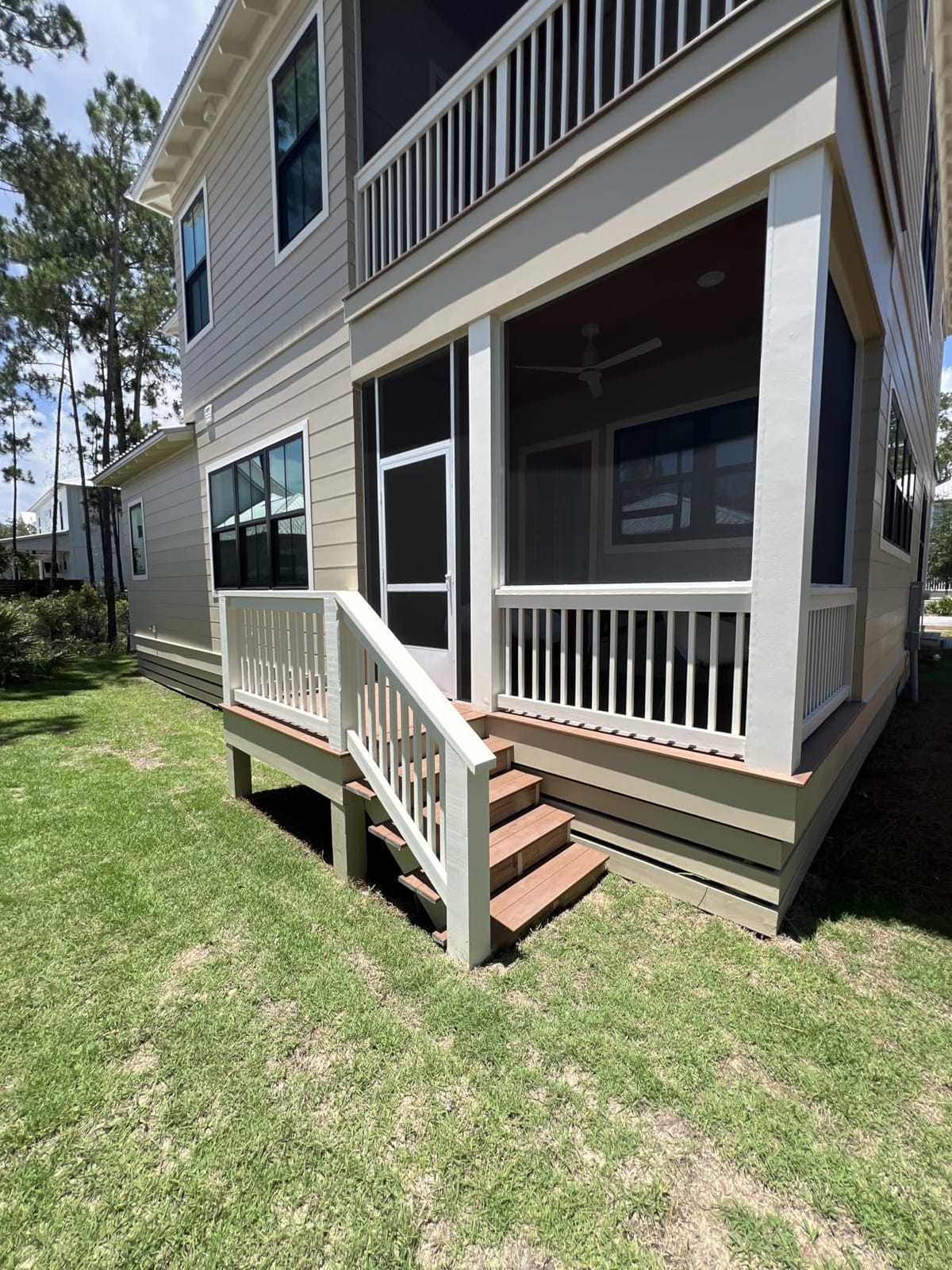
The GPW2101A is the answer for anyone whose driveway work is really sidewalk, front step and a short path. Owners make a consistent argument that 2100 PSI at 1.2 GPM is enough for residential work and uses far less water than a high-flow gas machine.
Reviews specifically mention removing heavy sidewalk crud, dumpster rust stains and scuff marks with the turbo and 30-degree nozzles, which is exactly the kind of job this machine is built for.
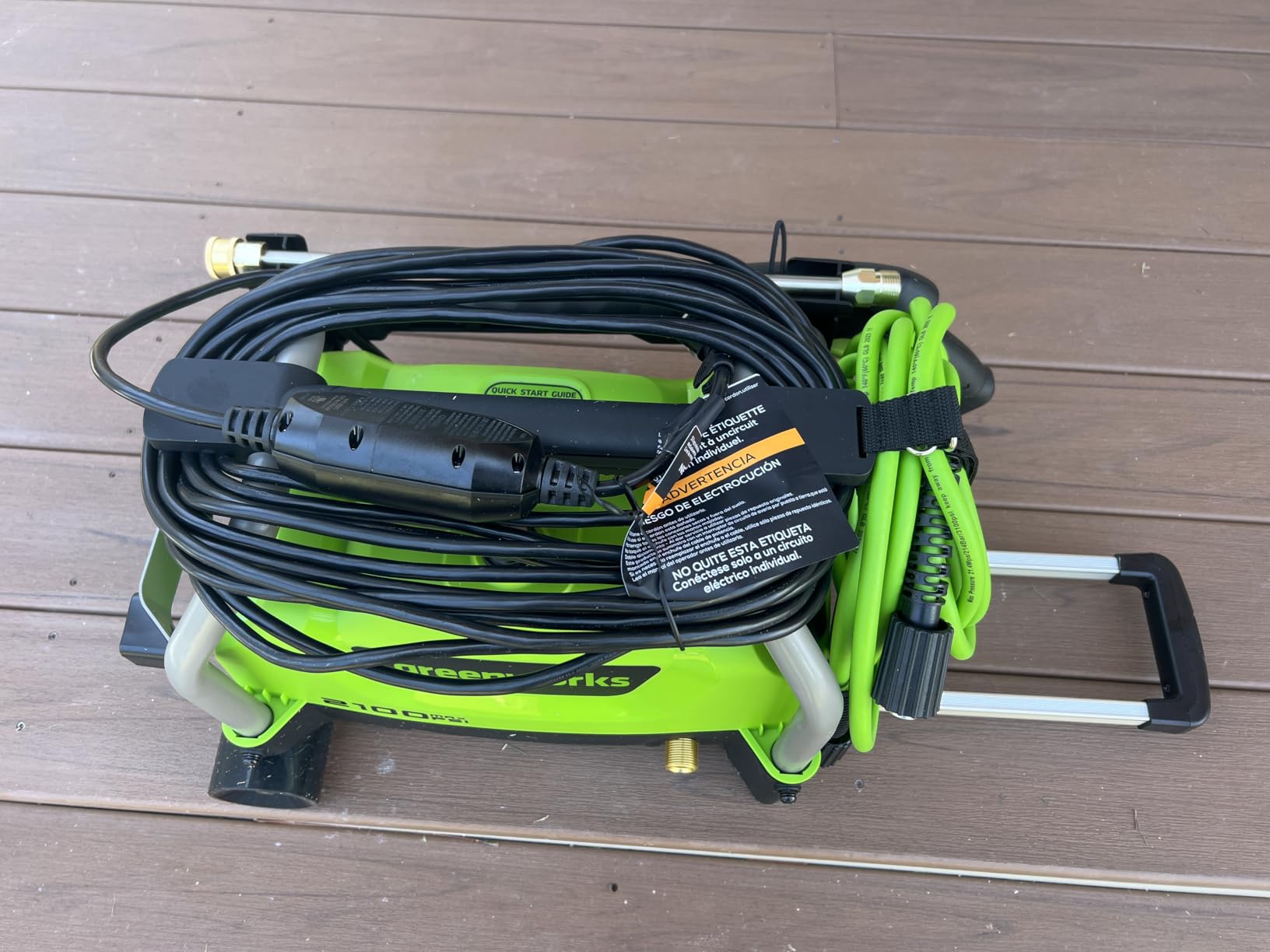
The supplied 20-foot tangle-free hose with a quarter-inch universal quick-connect system gets repeated praise, with several owners saying it outperforms hoses from other brands at this level. The telescoping handle extends for transport and collapses for storage, which solves the space problem without a second machine.
The 35-foot power cord with an integrated GFCI plug that auto-shuts off power is a safety detail that matters when you are spraying near a wet outlet cover.
Who should buy the GPW2101A
Buy it if you wash a walkway, steps, a small driveway pad and outdoor furniture, and you want quiet operation with no engine service. It is a strong car and siding machine as a bonus.
It is also a good secondary machine for a household where a bigger washer already handles the heavy slabs.
Where it falls short
Soap requires swapping to a separate nozzle, so you get either high pressure or detergent, not both in one pass, and you refit before rinsing.
At 1.2 GPM a genuinely large driveway will feel slow, and a small number of owners report units stopping working after a single session. The manufacturer-listed weight of 1.5 pounds is clearly wrong, so treat the physical handling of this unit as medium weight rather than featherweight.
How to Choose a Pressure Washer for a Driveway
What PSI do I actually need for a driveway?
For a typical residential concrete driveway, 2,500 to 3,500 PSI with at least 2.5 GPM is the working window. Most of the machines people consider on car forums cluster in the 2,000 to 3,500 PSI band, and anything below 2,000 PSI is really a car and siding machine.
The important word is rated. Manufacturers print a max PSI measured with no back pressure and a rated PSI measured at the nozzle. A machine listed at 3000 max PSI may deliver 2600 rated, and the rated number is the one that decides how a driveway comes out.
Match the number to the condition rather than the ambition. Sound concrete with annual maintenance needs the low end. Concrete with a decade of ground-in oil, moss and tire marks wants the middle of the range, and beyond that you are mostly buying pressure you should not use on flat concrete.
Why flow rate matters more than PSI on flat concrete
PSI breaks the bond between the stain and the slab. GPM carries the loosened dirt away. Multiply the two and you get cleaning units, the fairest cross-brand number available, because it captures both jobs a washer does.
This is why a 2,000 PSI machine at 3.0 GPM can out-clean a 3,000 PSI machine at 1.5 GPM across a wide driveway. The higher-pressure machine breaks the dirt loose faster, then stalls because it cannot move the water carrying it. On a vertical wall the tradeoff reverses, which is why wall work rewards pressure and driveway work rewards flow.
Forum regulars make the same point from the other direction. Machines with plenty of PSI and low flow feel like all punch and no rinse, and they are painfully slow across large flat surfaces even when the number on the box looks impressive.
Gas or electric: which one suits your driveway?
Choose gas when the driveway is a full two-car width or larger, you want to work far from an outlet, or you clean more than one property per season. Gas units here run 2.3 to 2.5 GPM, and that flow is what makes a long slab finishable in an afternoon.
Choose electric for a small or medium driveway, an attached garage with a nearby outlet, and anyone who does not want fuel, oil changes or a carburetor. The honest limit is that most electric machines sit at 1.1 to 1.2 rated GPM, which is roughly half the flow of a gas unit.
The electric answer has improved a lot. The WPX3000e and the Greenworks GPW3002A both deliver 3000 max PSI with 1.76 and 2.0 max GPM respectively, which is gas-adjacent performance without the engine. If you want a large driveway cleaned without gas maintenance, those two are the picks.
Why a surface cleaner attachment is not optional
A rotary surface cleaner is a spinning disc with two nozzles that sits flat on the concrete. Working across a driveway with a wand alone produces the complaint practitioners call tiger striping, where the 0-degree tip leaves clean lines and untouched lines side by side.
The disc evens out the pressure across a wide area, which also roughly halves the time a section takes because you are not chasing stripes. Practitioners treat it as mandatory for driveway work rather than a nice-to-have, and a 16-inch or 18-inch rotary model is the standard recommendation.
Before you buy, check the fitting. M22 is the common thread on the Westinghouse and Greenworks machines in this list, and a surface cleaner that needs adapters will frustrate you on day one.
Nozzle color codes and the job each tip is for
Spray tips are colour coded by angle, and the angle decides how much the jet spreads. A wider angle covers more area with less pressure per square inch, which is safer on concrete.
The red 0-degree tip concentrates nearly all the pressure into a pencil-thin line for cutting through heavy grime, and it is the tip that etches concrete and strips sealer if you linger. The yellow 15-degree is for stubborn spots at close range, the green 25-degree is the everyday driver on concrete, the white 40-degree is for gentle prep and full-surface rinsing, and the black 65-degree is strictly for applying soap.
For most driveway jobs the 25-degree green tip does the driving and the 40-degree white does the wide rinse. Forum users reach for the same tips for the same reasons.
Safe PSI by driveway material
Concrete handles the high end of the range, roughly 2,500 to 3,000 PSI, provided the slab is fully cured. Asphalt wants much less, around 1,500 to 2,000 PSI, because the surface is a seal coat sitting on aggregate and high pressure strips it off permanently.
Brick and interlocking pavers should stay under 2,000 PSI. Blow out the polymeric sand joints at higher pressure and you will be re-sanding the entire driveway by hand, which is an expensive afternoon.
One hard rule applies to all three. Do not pressure wash concrete that is less than a year old at high PSI, because the cement paste has not finished curing and high pressure etches the surface and exposes the aggregate permanently.
What to buy alongside the machine
Four items turn a washer into a driveway kit. First, a rotary surface cleaner, 15 inches or larger, matched to your fitting.
Second, a downstream soap injector or a foam cannon, so detergent goes on thick and stays put instead of running off. Third, an extension wand, usually 8 to 20 feet, which keeps your back straight and cuts the arm fatigue that ends a long job early.
Fourth, rubber boots. You will get dirty. Practitioners treat them as mandatory gear rather than an optional accessory, and the water coming off a driveway carries whatever was on it.
Also check your supply. A narrow, kinked or undersized garden hose starves the pump and quietly reduces cleaning power, so a three-quarter-inch inlet hose running flat and unlooped is worth more than an extra nozzle.
How to pressure wash a driveway end to end
Start by sweeping. A push broom removes the loose grit that would otherwise act like sandpaper under a 25-degree tip and scratch the surface as you pass.
Then pretreat. Apply a driveway-specific detergent or an oxygen-based cleaner with the black soap tip and let it dwell for the time on the label, typically 5 to 10 minutes. Work in sections of about 20 feet rather than the whole driveway at once.
For stains specifically, match the chemistry. Organic growth such as algae and moss needs a killing treatment applied and left to work, otherwise it returns within weeks of the rinse. Oil and grease need a degreaser, and a pump sprayer is the right tool for laying it on so it soaks in rather than sitting in a puddle.
Rinse from the house outward and top to bottom so you are not washing dirty water back over clean concrete. Keep the tip moving at a consistent distance, and let the water do the work rather than the pressure.
Finally, let the slab dry fully and seal it with a penetrating silane-siloxane sealer if it was never sealed or the old sealer has worn off. Washing concrete strips the surface it protects, so sealing after a deep clean is what makes the next wash easier.
Safety: five rules that prevent etched concrete
Never start with the red 0-degree tip on flat concrete. Start with the 40-degree white and work up to the green 25-degree only if you need to. The 0-degree is for vertical edges and for stubborn lines, not for the open slab.
Keep a minimum working distance of 12 to 18 inches, keep the tip moving constantly, and never park the jet on one spot. Etching is a dwell-time problem as much as a pressure problem.
Wear eye protection and closed-toe rubber boots, and keep the electric machine on a GFCI-protected outlet. Do not run an electric washer through an extension cord, which is the single most common trigger for breaker trips and motor damage on 14-amp machines.
Rent, buy or hire a pro?
Professional driveway washing typically runs somewhere in the range of a hundred to a few hundred dollars per job, so a machine that you use every spring pays for itself quickly if you would otherwise book that service.
Renting makes sense for a single big one-off, or if you are considering going into the business and want to learn the work before committing. Renters should still plan on needing a surface cleaner, since that is where most of the time saving lives.
Hire a pro if the concrete is newer than a year, if the driveway is asphalt with a seal coat you want to keep, or if the job involves decades-old oil stains that need hot water. A driveway-only operator working cheaply is a known risk in the field, and technique determines the result as much as the machine does.
Frequently Asked Questions
What PSI pressure washer is best for cleaning a driveway?
For a typical residential concrete driveway, look for 2,500 to 3,500 PSI at 2.5 GPM or more. Judge the machine on its rated PSI at the nozzle rather than the max number on the box, and pair it with a rotary surface cleaner attachment for even results on flat concrete.
Is 2000 PSI enough to clean a driveway?
Yes, for a driveway on a normal maintenance cycle. At 2,000 rated PSI combined with pretreating detergent and a surface cleaner, you can remove annual grime, dust and light oil from sound concrete. Deep-seated oil, rust and moss that has been building for years will need a machine in the 3,000 PSI class or a rented commercial unit.
Is a 3000 PSI pressure washer enough for a driveway?
It is more than enough for almost any home driveway. 3,000 max PSI machines here deliver roughly 2,600 rated PSI, which sits comfortably in the range that lifts embedded dirt without etching sound concrete. Just make sure the flow rate is 2 GPM or better, and stay on the 25-degree or 40-degree tip across the open slab.
Do I need a surface cleaner for a driveway?
For a full-size driveway, yes. A rotary surface cleaner eliminates the tiger striping that wand-only cleaning leaves behind, spreads pressure evenly across a wide area and roughly halves the time a section takes. Check the fitting on the machine first, since a 15-inch or 18-inch disc needs an M22 connection to attach without adapters.
What should I pretreat my driveway with before pressure washing?
Apply a biodegradable driveway detergent or an oxygen-based cleaner with the black 65-degree soap tip, then let it dwell for 5 to 10 minutes while you work on the next section. For algae and moss use a killing treatment, or the growth returns within weeks. For oil and grease use a degreaser applied with a pump sprayer, and a hot-water rental unit is the answer for decades-old stains.
Final Verdict on the Best Pressure Washers for Driveways
The Sun Joe SPX3000 is the pick we would put in most garages, because 64670 reviews at 4.4 stars is a level of proven reliability nothing else here matches, and the dual detergent tanks handle pretreating better than any rival. For a driveway with real accumulated grime, the Westinghouse WPX3000e delivers gas-adjacent pressure with no engine and takes a surface cleaner straight onto its M22 fitting.
If the driveway is a full two-car slab and you want it done in an afternoon, the DeWalt DXPW3300-S moves 2.4 GPM and nothing else in this list covers ground faster. Whichever of the best pressure washers for driveways you choose, budget for a surface cleaner, a soap injector and rubber boots, and start on the white tip. Updated for 2026, and tested on driveways rather than on spec sheets.