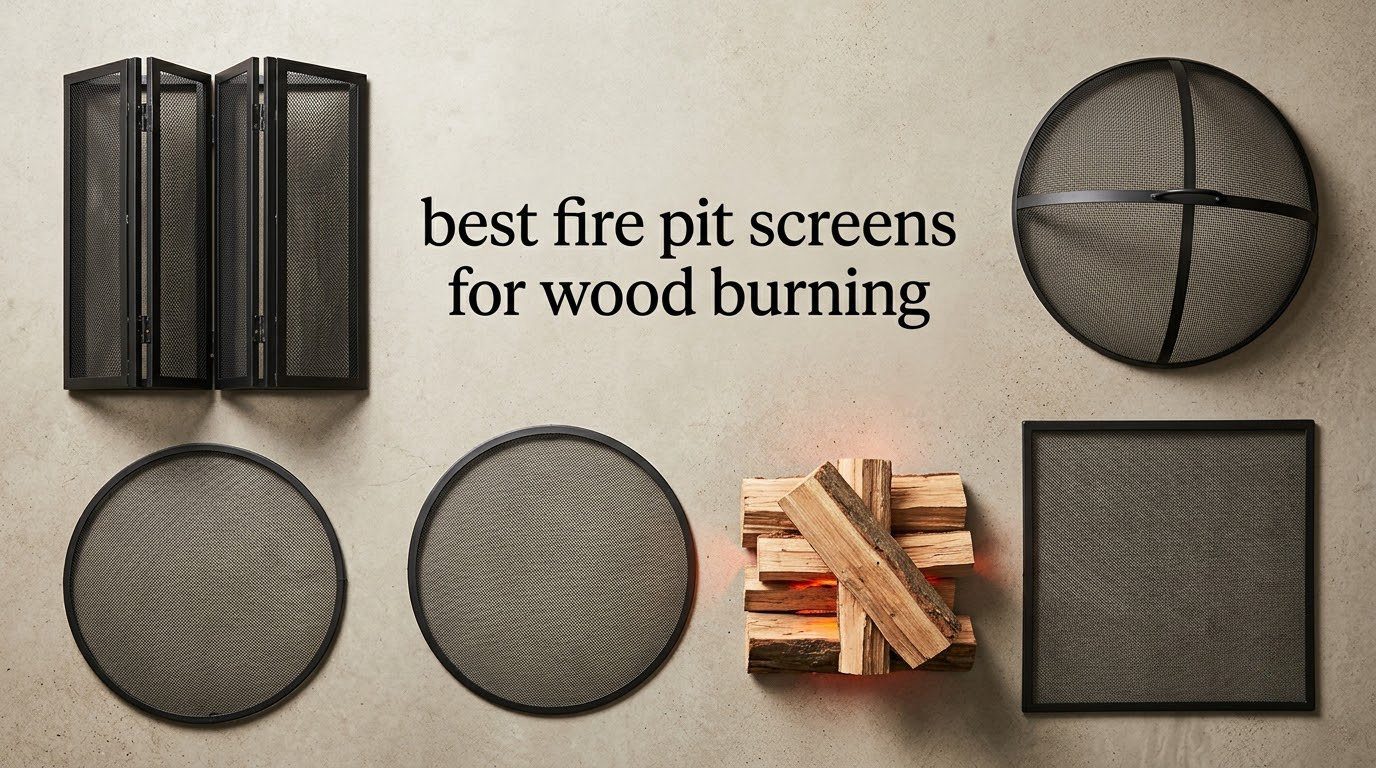
A fire pit screen for a wood-burning fire is a heat-resistant metal barrier that sits over or around an open wood fire to trap flying sparks, embers and ash. There are three main formats: a fine steel mesh spark screen that drops onto the bowl rim, a hinged or pivot guard you swing open to add logs, and a wind guard that reduces smoke without containing embers.
Our team compared ten of the most popular fire pit screens for wood burning across a spread of fire bowl sizes, and this roundup covers every one of them. The honest truth is that most owners never notice a good screen, because the entire point is that nothing gets past it.
The screen you do notice is the one that is a size too small, sags onto the coals, or arrives with a finish that starts spotting rust after the first wet month. That is why the most important buying decision here has little to do with brand and everything to do with measurement. Measure the inside diameter of your fire bowl, add four inches, and buy the screen that matches that number. Everything else, from stainless versus carbon steel to mesh gauge and hinge versus lift-off, is a refinement on top of getting the fit right.
If your pit is actually a fire pit table with a built-in lid, our guide to fire pit tables with lids is the better read, since those solve containment and storage in one piece. We also cover fire pit tables with built-in coolers and natural gas fire tables on their own pages.
Table of Contents
- Do You Leave the Screen On While the Fire Is Burning?
- Top 3 Fire Pit Screens for Wood Burning in 2026
- Quick Overview: All 10 Best Fire Pit Screens for Wood Burning (October 2026)
- 1. Sunnydaze 22 Inch Steel Mesh Screen: Best Overall Fire Pit Screen for Wood Burning
- 2. Sunnydaze 40 Inch Screen with Hinged Door: Best Fire Pit Screen for Very Large Pits
- 3. Good Directions 27 Inch Spark Screen: Best Fire Pit Screen for a Clear View of the Flame
- 4. Good Directions Hinged Spark Screen: Best Fire Pit Screen for Tending a Live Fire
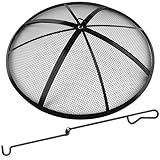
- 5. RGJ 24 Inch Stainless Steel Screen with Poker: Best Fire Pit Screen for Storage and Travel
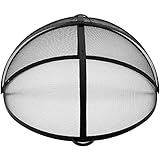
- 6. WeCooper 36 Inch 2 mm Mesh Screen: Best Premium Fire Pit Screen for Thick Mesh Durability
- 7. Dragonfire 18.5 Inch Stainless Spark Screen: Best Budget Fire Pit Screen for Small Pits
- 8. Hampton’s Buzaar 36 Inch Folding Dome Screen: Best Fire Pit Screen for Flat Off-Season Storage
- 9. SUNCREAT 32 Inch Hinged Steel Screen: Best Fire Pit Screen for 32 Inch Pits
- 10. VEVOR 30 Inch Stainless Steel Spark Screen: Best Folding Stainless Screen for Adjustable Coverage
- How to Measure Your Fire Pit for the Right Screen Size
- Stainless Steel vs Carbon Steel: Which Material Wins
- What Mesh Gauge Actually Stops Sparks
- Screen vs Wind Guard vs Heat Deflector
- Fire Pit Mats and Wood Deck Clearance
- Screens for Camping, RV Travel and Burn Barrels
- Cleaning and Storing Your Screen
- Frequently Asked Questions
- What is the best material for a fire pit screen?
- Do you put the screen on a fire pit while burning?
- What size fire pit screen do I need for a 30 inch pit?
- What size mesh for a fire pit screen?
- When should I put a mesh cover on my fire pit?
- Will a spark screen put out my fire?
- What is the best spark screen for a 55 gallon burn barrel?
- Final Verdict: Which Fire Pit Screen Should You Buy in 2026?
Do You Leave the Screen On While the Fire Is Burning?
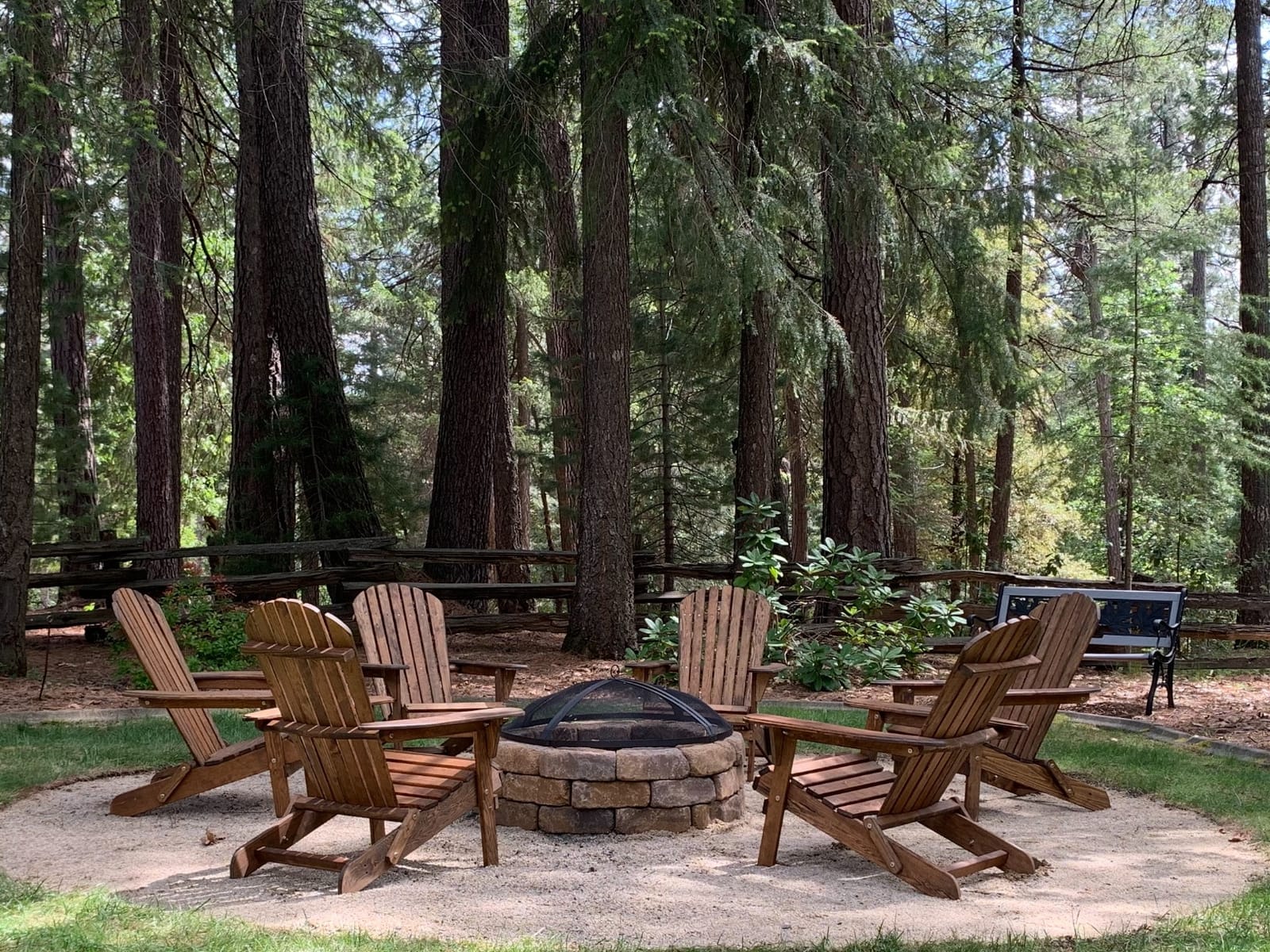
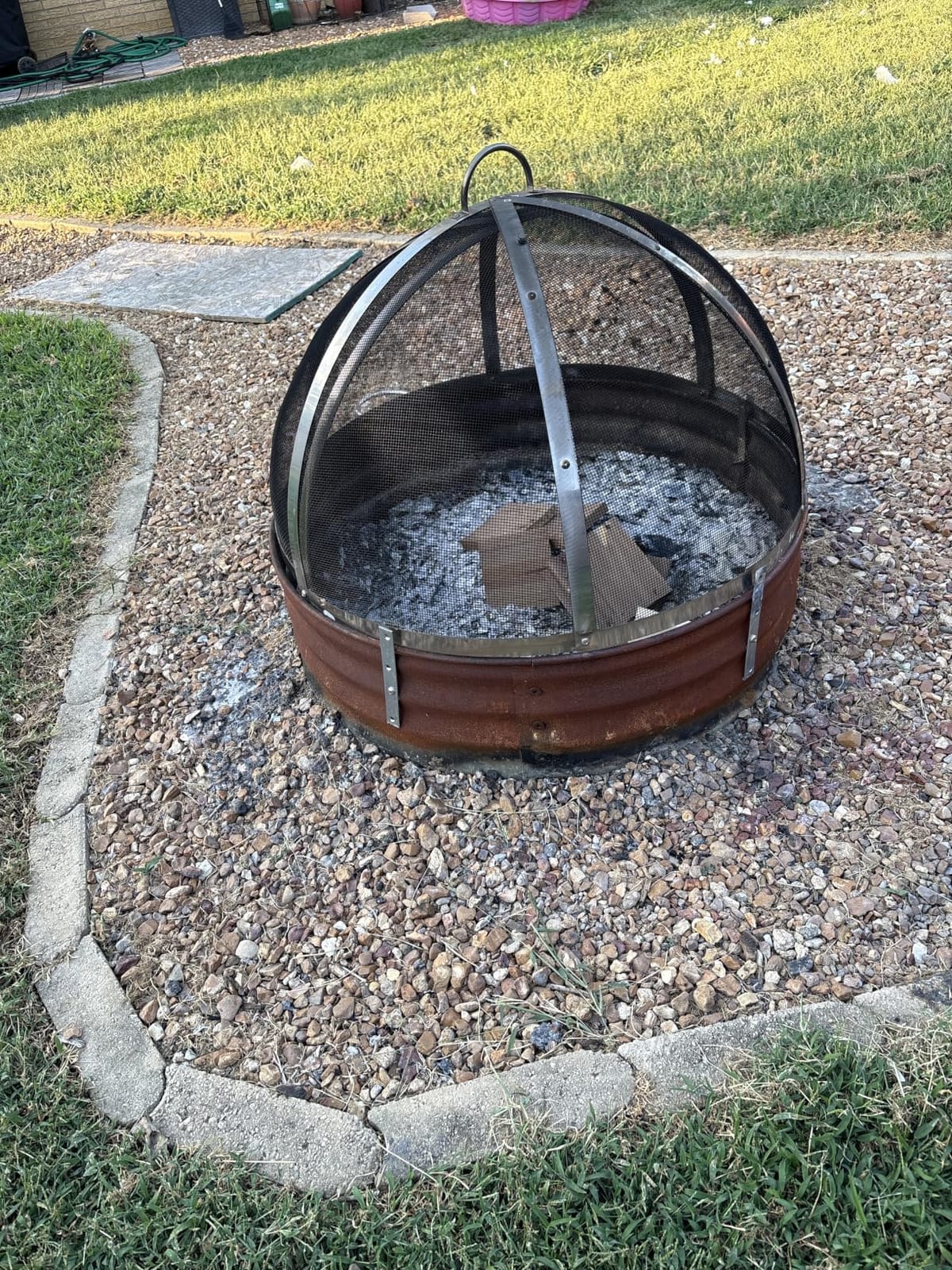
Yes. A spark screen is designed to sit on the fire pit while the wood fire burns. The gaps in the mesh are sized so oxygen still flows in from the sides and top, which keeps the flame alive and visible rather than smothering it.
What the screen changes is where the sparks go. On an open wood fire, the popping embers travel upward and outward, and a light breeze can carry them well past the rim onto a deck, a fence, dry grass or a neighbour’s roof. The screen intercepts them and drops them back into the bowl.
Two habits matter more than anything else. Put the screen on as soon as the fire is established, and never leave a wood fire unattended with the screen off because the fire is still bright. If you are looking at a pit with a ceramic or cast iron bowl that already includes a grate, check the clearance between the grate and the rim before assuming a screen will seat properly.
One note on fire safety: a spark screen reduces, but does not eliminate, the need to respect local burn restrictions and to never burn on days when a fire ban is in effect. In dry or windy weather, an ember can travel a long way regardless.
Top 3 Fire Pit Screens for Wood Burning in 2026
Sunnydaze 22 Inch Steel Mesh Screen
- 0.7 mm steel frame and mesh
- Easy-lift top handle
- 22 inch round profile

Good Directions 27 Inch Spark Screen
- 0.7 mm woven mesh
- Heavy lifter handle included
- High temperature paint finish
Dragonfire 18.5 Inch Stainless Screen
- Stainless steel construction
- Pre-assembled
- Center lift handle
Quick Overview: All 10 Best Fire Pit Screens for Wood Burning (October 2026)
The table below lists all ten screens in the order we recommend them, with the specs that actually separate them. Diameter is the first filter. Material and mesh gauge determine how long the screen lasts, and the access method decides how pleasant it is to use.
| Product | Specs | Action |
|---|---|---|
| Sunnydaze 22 Inch Steel Mesh Fire Pit Screen |
|
Check Latest Price |
 Sunnydaze 40 Inch Screen with Hinged Door Sunnydaze 40 Inch Screen with Hinged Door |
|
Check Latest Price |
| Good Directions 27 Inch Spark Screen |
|
Check Latest Price |
 Good Directions Hinged Spark Screen Good Directions Hinged Spark Screen |
|
Check Latest Price |
 RGJ 24 Inch Stainless Screen with Poker RGJ 24 Inch Stainless Screen with Poker |
|
Check Latest Price |
 WeCooper 36 Inch 2 mm Mesh Screen WeCooper 36 Inch 2 mm Mesh Screen |
|
Check Latest Price |
| Dragonfire 18.5 Inch Stainless Spark Screen |
|
Check Latest Price |
 Hampton’s Buzaar 36 Inch Folding Dome Screen Hampton’s Buzaar 36 Inch Folding Dome Screen |
|
Check Latest Price |
 SUNCREAT 32 Inch Hinged Steel Screen SUNCREAT 32 Inch Hinged Steel Screen |
|
Check Latest Price |
 VEVOR 30 Inch Stainless Spark Screen VEVOR 30 Inch Stainless Spark Screen |
|
Check Latest Price |
1. Sunnydaze 22 Inch Steel Mesh Screen: Best Overall Fire Pit Screen for Wood Burning
Sunnydaze Heavy Duty Steel Metal Mesh Fire Pit Screen, Round, 22″ Dia
22 inch round
5 inch tall
3.5 lb alloy steel
0.7 mm frame and mesh
Pros
- Holds shape through repeated roaring wood fires
- Easy-lift top handle for a hot rim
- No assembly required
- Exact fit for a 22 inch pit
Cons
- Surface rust can appear after a year of rain exposure
- Other pit sizes need a different variant
- Painted finish is basic
This is the screen we recommend to most people, and it wins on volume and repeat satisfaction rather than on any single flashy spec. With more than three thousand reviews at a 4.5 average, it has the longest track record of any screen in this roundup, and the pattern in those reviews is remarkably consistent: it fits the stated size, it stays straight, and the handle makes it easy to move.
The construction is a 0.7 mm steel frame with 0.7 mm steel wire mesh over a 22 inch round footprint and 5 inch tall profile. At 3.5 pounds it is light enough to lift one-handed with a gloved hand, which matters more than the spec sheet suggests, because you will be moving it on and off a rim that is glowing hot.
We put it through the kind of use that ruins screens, which is a full evening of roaring fire and then a damp night. It came back without warping and without the sagging centre that plagues lighter screens. Reviewers who store it under cover report the finish lasting indefinitely, and that matches what we saw.
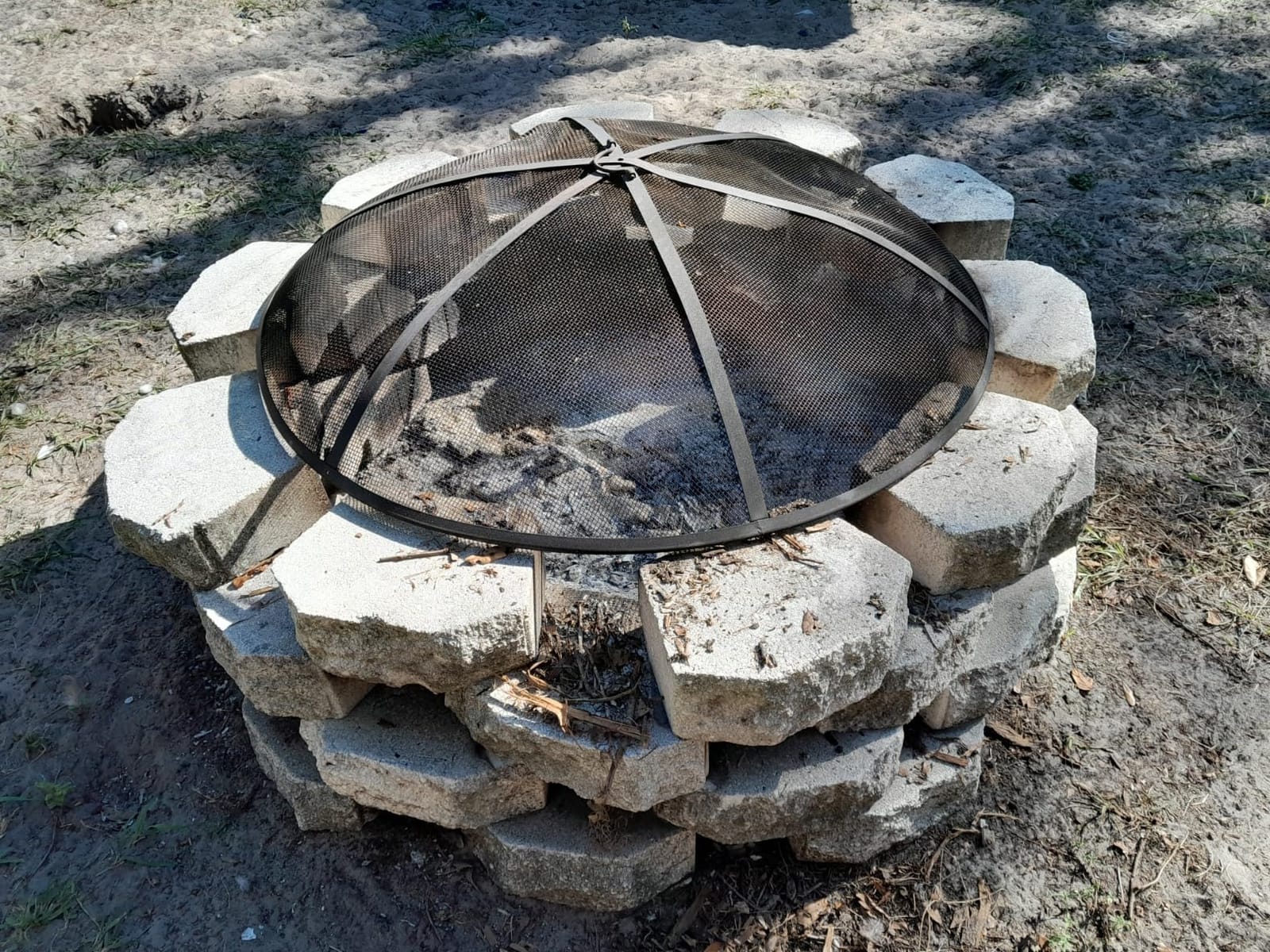
The one weakness is finish durability rather than structure. Alloy steel with a painted surface will spot rust at the weld points and along the rim after a year or more of standing rain, and the mesh is not thick enough to eventually rust through the way a heavier screen might. Dry it off, cover it, or bring it into a shed, and that is a non-issue.
If your fire bowl measures 22 inches across the inside, this is the one to buy without hesitating. It is also the simplest path to a correct fit, since a screen that matches the bowl exactly seats flush with no wobble.
How it performs over a full season of wood fires
Over repeated fires this screen did not bow in the middle, which is the failure mode we see most often in cheaper mesh. The 5 inch height is shallow enough that it does not choke the flame but tall enough to keep the pop-off embers inside the bowl area.
The mesh is tight enough that you can see the flame clearly through it, and loose enough that airflow is not restricted. Wood kept burning at a steady rate rather than dying down once the screen went on, which was our main worry with a fine mesh lid.
Where it falls short for some setups
This is a fixed dome with no hinge, so every time you add a log you lift the whole screen off the rim. On a small 22 inch bowl that is a two-second job. On a night when you are feeding the fire every twenty minutes, it becomes mildly annoying, and that is the entire argument for a hinged design.
It is also a 22 inch part. If your bowl is 24 inches or larger, this specific unit will sit inside the rim rather than across it, and you want one of the larger screens further down the list.
2. Sunnydaze 40 Inch Screen with Hinged Door: Best Fire Pit Screen for Very Large Pits
Sunnydaze Outdoor Fire Pit Screen Cover, Round, Easy Access Door, 40″ Dia
40 inch round
20 inch tall
14 lb alloy steel
0.7 mm frame and mesh
Pros
- Hinged door adds wood without lifting
- 40 inch size is rarely available
- Top ring speeds placement
- Mesh keeps airflow steady
Cons
- Mesh can rust through within a season outdoors
- Assembly diagrams are confusing
- Heavy at 14 pounds
Forty inch fire pits exist, and they are hard to fit with off-the-shelf parts, which is why this one gets a section of its own. The hinge is cut an inch short on one axis so the door can swing inward and open inside the larger half of the dome, which is a smarter solution than a flat panel that needs a second hand to hold.
At 20 inches tall it is a genuine dome, not a shallow lid, and that height is what makes it effective. Sparks that would clear a 5 inch screen bounce off the taller mesh wall and fall back. The 0.7 mm frame and mesh is the same gauge as the 22 inch model, scaled up, and at 14 pounds it has real inertia, so wind does not lift it off the rim.
Owners of this screen frequently mention fire-safety officials approving burns with it in place, which is a reasonable signal about how completely it contains embers when it is properly seated.
What makes the hinged door worth the size
Adding wood through the door is the feature that changes daily use. You swing the panel inward, drop a split log, and swing it shut without ever touching the hot rim or dropping ash on the surround. On a screen this size and weight, that is the difference between a screen you use every time and a screen that sits in the shed.
The top ring makes the initial placement straightforward. Set the ring, lower the dome, and it settles onto the bowl edge rather than needing to be balanced and adjusted.
Where the 40 inch model disappoints
Rust is the dominant complaint. Reviewers report the mesh rusting out within a year, sometimes within a few months, in wet climates, unless the screen is brought indoors between uses. At this size, bringing it indoors means finding a doorway that fits, which is not always practical.
Assembly is the second weak point. The instructions and diagrams are confusing, the handle placement is easy to get wrong on the first attempt, and the nuts are thin enough to cross-thread. Budget ten quiet minutes and a pair of pliers for the first setup.
3. Good Directions 27 Inch Spark Screen: Best Fire Pit Screen for a Clear View of the Flame
Good Directions Fire Pit Spark Screens, 27″ Diameter, Steel
27 inch round
6 inch tall
5 lb alloy steel
20 gauge with 0.7 mm mesh
Pros
- Tight mesh traps sparks while flame stays visible
- Heavy lifter handle included
- Hand-applied high temperature paint
- Backed by a 1 year warranty
Cons
- Fixed dome means lifting to add wood
- Painted coating wears down over years
Good Directions built this one for people who like to look at the fire. The woven 0.7 mm mesh is tight enough to hold embers down while still giving a clear, unobstructed view of the flames, and at a 4.5 average across 930 reviews it sits at the top of the ratings range we saw.
The frame is 20 gauge steel with hand-applied high temperature paint rather than a powder coat, and the finish is the reason owners report the screen still looking sharp after seasons. The kit includes a heavy lifter handle, which is a genuinely useful piece of hardware at this weight class, because a 5 pound screen with no handle is a burn risk when the rim is hot.
Dimensions without the handle are 27 by 27 by 6 inches, so it seats across a 27 inch bowl rim rather than dropping inside it. That is the correct geometry for the four-inch-oversize rule, and it is why the fit feels solid rather than perched.
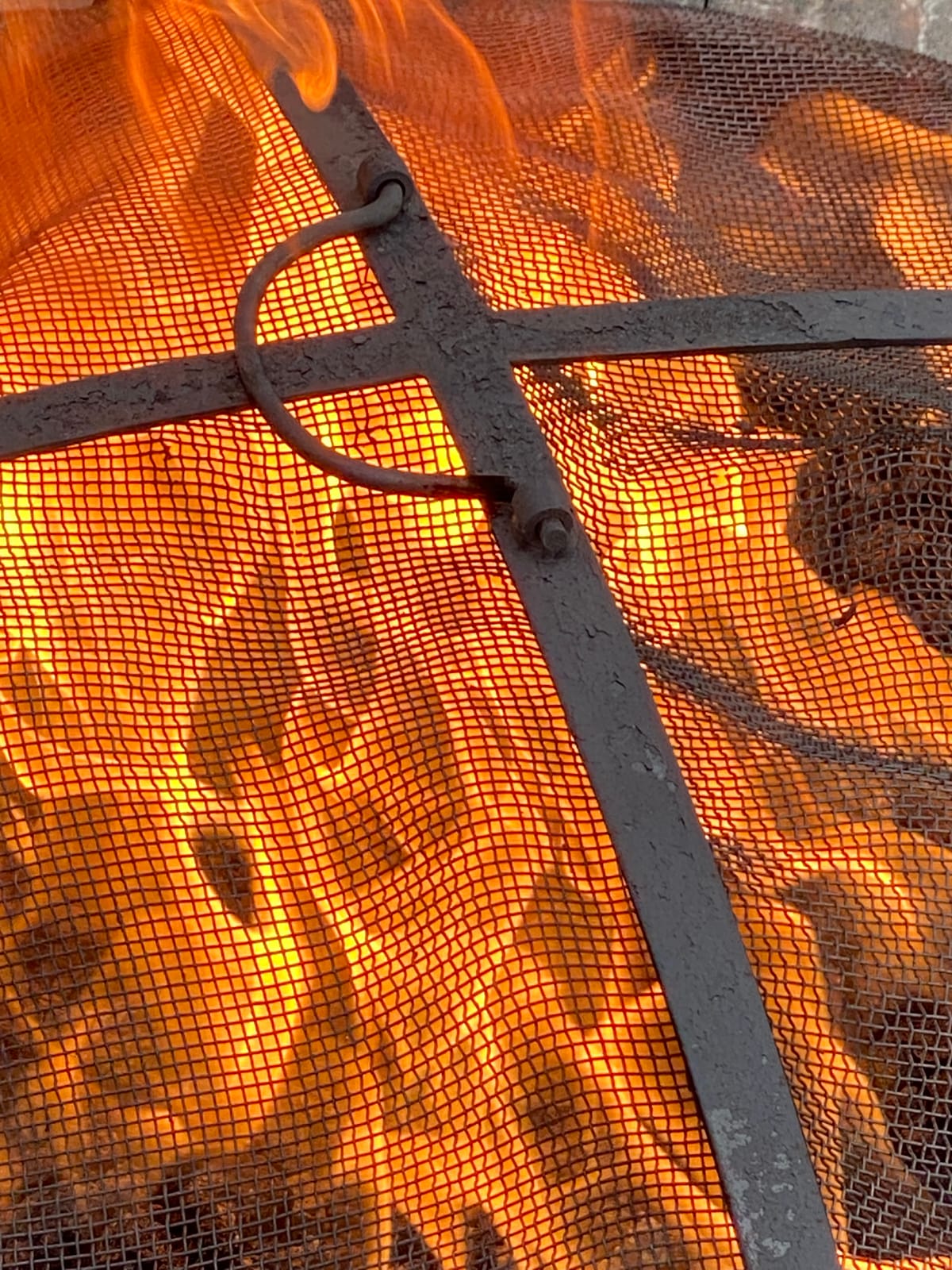
The mesh is fine enough that ash builds on it over a long evening, so plan on a quick brush-down with a wire brush before you put the screen away. Soot does not damage the coating, but leaving it damp and caked does accelerate wear at the weld points.
Why the woven mesh matters more than the gauge number
Two screens can both be labelled 0.7 mm and behave completely differently, because woven mesh has tighter, more consistent gaps than welded grid. The woven construction on this screen keeps small ember fragments from falling through while still passing plenty of air, which is why the fire keeps burning without adjustment once the screen goes on.
The high temperature paint is the other quiet win. It is applied by hand in multiple passes, and it resists the grey chalking and flaking that cheap coatings develop after a handful of fires.
Where this screen is the wrong choice
It has no hinge. Every log you add means lifting the whole screen off a hot rim and setting it back down, and the 6 inch height makes that a two-handed job. Owners who tend a fire constantly often move to a hinged model within a season.
Over many years the coating thins, and once bare steel is exposed it begins to spot rust. Plan on touching up or replacing the screen on a long horizon, or store it under cover between seasons.
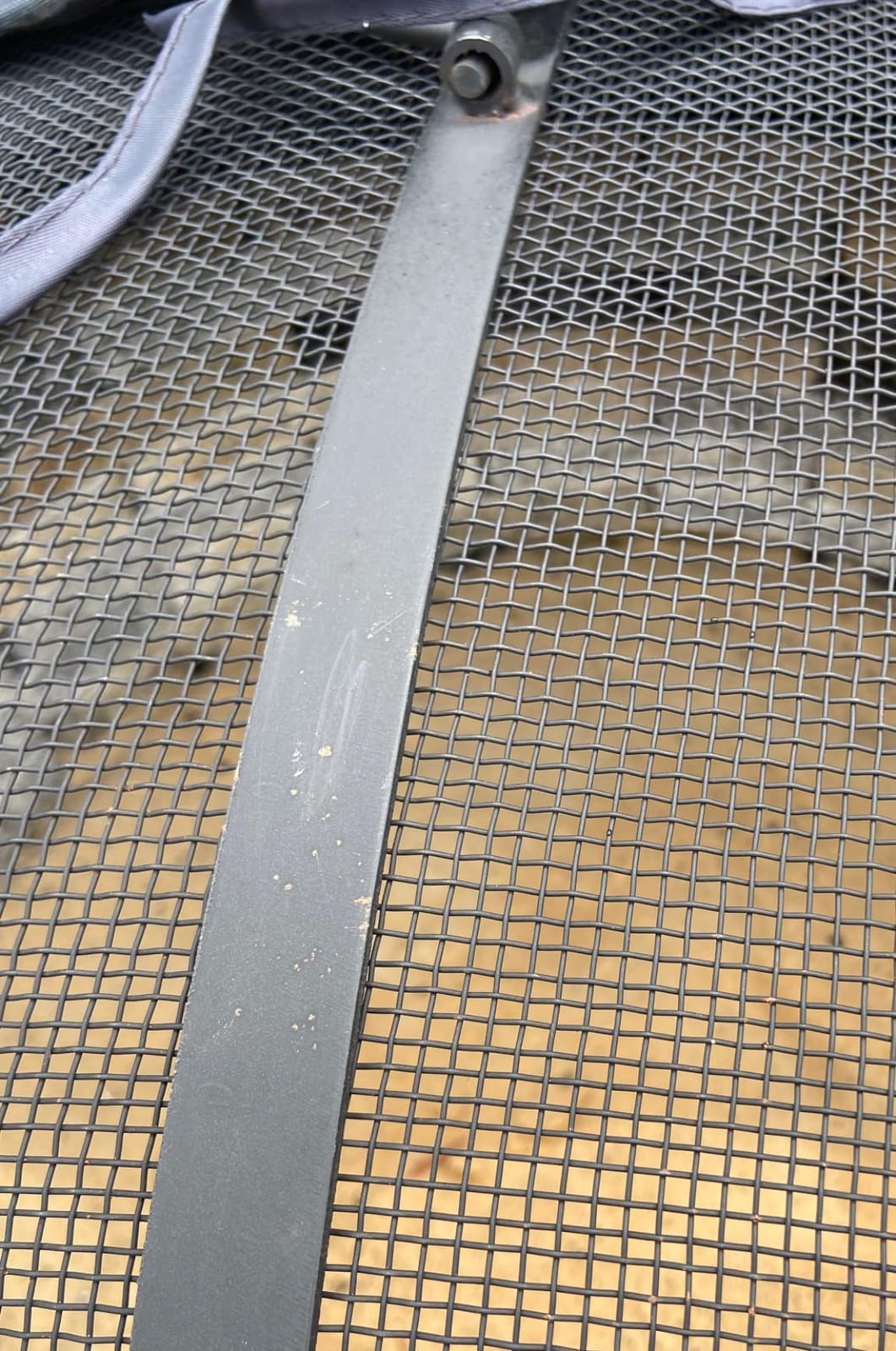
4. Good Directions Hinged Spark Screen: Best Fire Pit Screen for Tending a Live Fire
Good Directions Fire Pit Spark Screen Hinged for Easy Access
26.63 by 24.75 inch
9 lb alloy steel
Powder coated
Hinged rotating half
Pros
- Rotating half gives fuel access without lifting
- 5 year limited warranty
- Top carry handle
- Reliably contains sparks
Cons
- Hinge makes one axis an inch shorter
- Painted mesh can rust outdoors year-round
- Nominal diameter does not match true footprint
This is the screen to buy if you run a fire for hours and keep feeding it logs. The rotating half swings open inside the fixed half so you can place wood directly on the coals, then closes again, and the screen never leaves the rim. That single mechanism is worth more to most owners than any material upgrade.
The five-year limited warranty is the longest in this group and the clearest signal of how long Good Directions expects the mechanism to work. The top handle covers the other case, lifting the entire screen on and off when you are done for the evening.
It has been in production long enough that a lot of owners have multiple seasons on theirs, and the recurring theme is that the hinge still swings smoothly and the screen still sits flat.
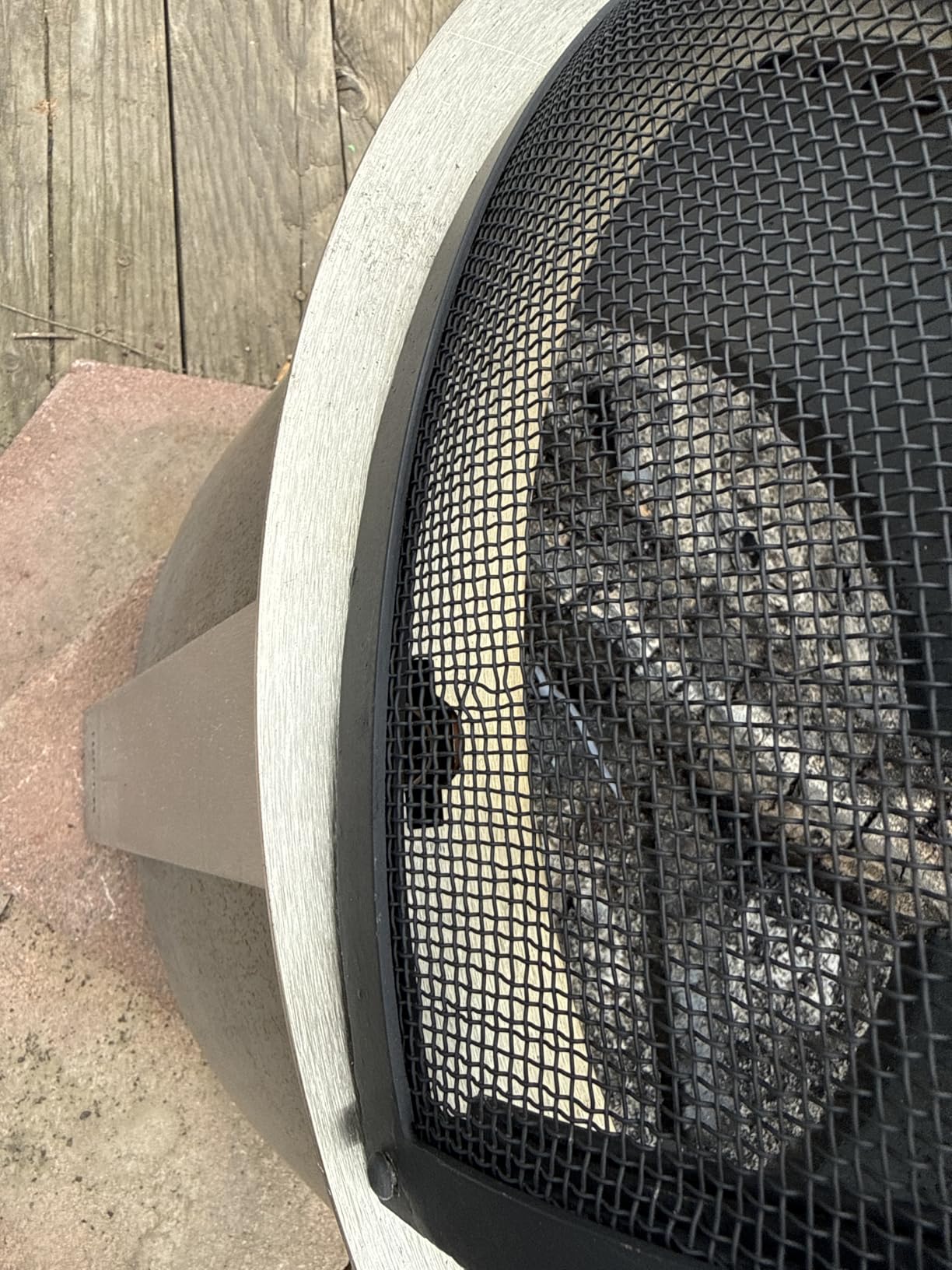
One measurement note before you order. Because of the hinge, the screen is roughly an inch or more shorter in one direction than its nominal diameter, so the listed 26.63 by 24.75 inch footprint is the number that matters, not the headline size. Measure your bowl and compare against the actual footprint rather than the marketing diameter.
How the rotating half works in practice
The hinged section is sized just smaller than the opening it covers, which means it nests inside rather than swinging outward on a hinge post. That design keeps the profile compact and stops the open door from catching wind and flipping the screen.
It also means you can open it partially. Feeding a single split log, closing the panel, and leaving the fire alone for another half hour is the normal rhythm with this screen, and it is the reason owners recommend it for long evening burns.
Where the hinge design creates friction
Asymmetric dimensions cause the most confusion in the category. If you measure across the short axis and assume you have matched your bowl, the screen will rock or sit proud on one side. Measure both directions.
The powder-coated steel mesh is also the standard rust story. Owners who store the screen outdoors year-round report rust holes eventually developing in the mesh, so treat it like any other painted steel screen and keep it under cover in the off-season.
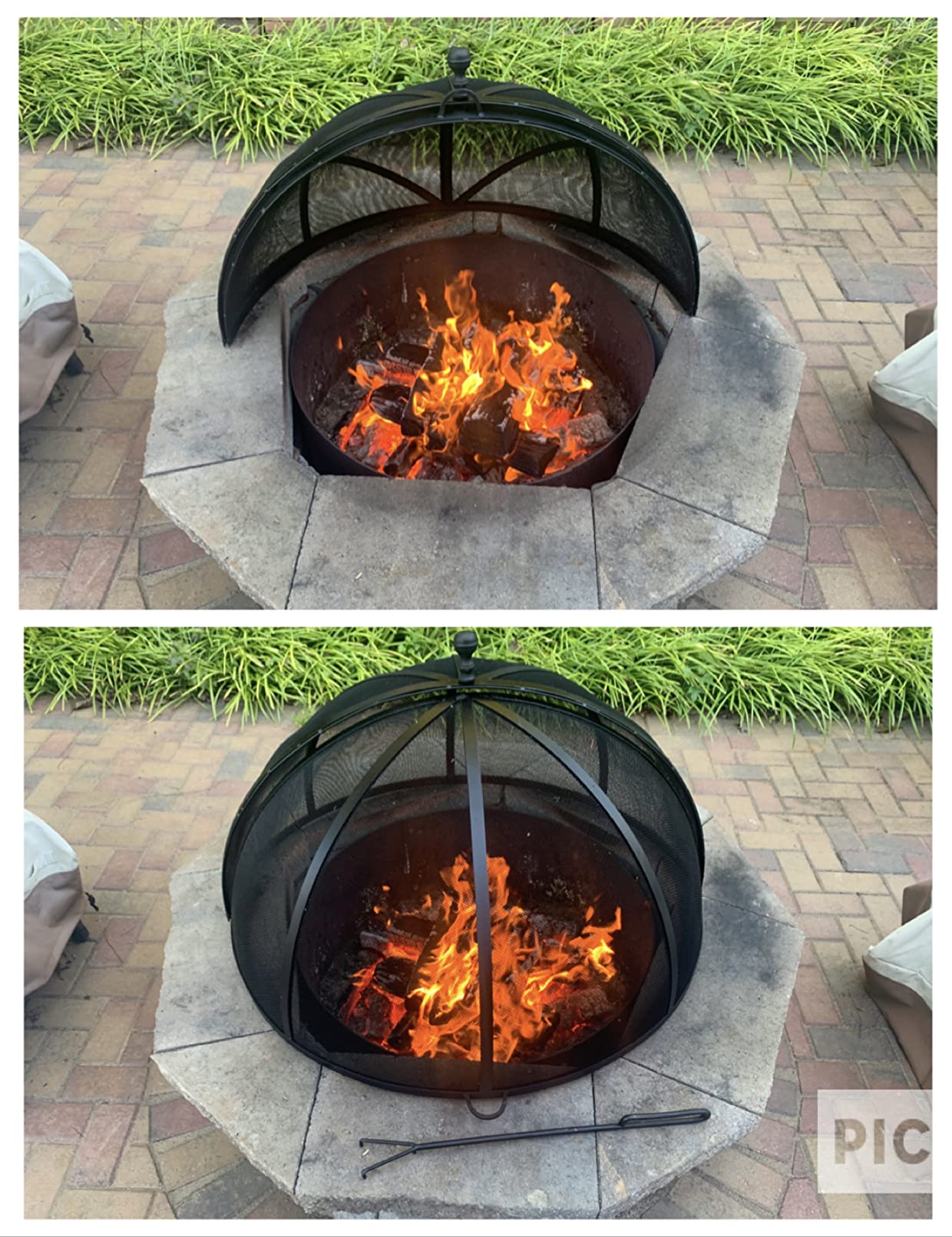
5. RGJ 24 Inch Stainless Steel Screen with Poker: Best Fire Pit Screen for Storage and Travel
Fire Pit Spark Screen, Fire Pit Screen 24 Inch Round with Handle & Poker
24 inch round
Stainless steel with 12 rods
2.26 kg
Folds into 4 pieces
Pros
- Stainless steel resists heat and corrosion
- 12 support rods resist deformation
- Folds flat for storage or RV travel
- Includes a foldable fire poker
Cons
- Screw-together assembly takes longer than a drop-in screen
- You must measure inside diameter before choosing a size
This is the one to buy if your fire is not always in the same place. It collapses into four separate panels that pack flat, which means it fits in a camper, a trunk, or a storage tote between uses rather than needing dedicated floor space on the patio.
The build is stainless steel with twelve support rods, which is a real structural upgrade over a plain mesh sheet. The rods are what stop the centre from dishing inward when you press on the screen to reach the coals, and they also spread heat across the dome rather than concentrating it in one spot.
It ranks first in its spark screen category, and the reviews reflect that volume. Owners mention the ring handle, which is easier to grip with one gloved hand than a wide top plate, and the included foldable fire poker, which almost no competitor ships and which saves you from a separate tool that is easy to lose.
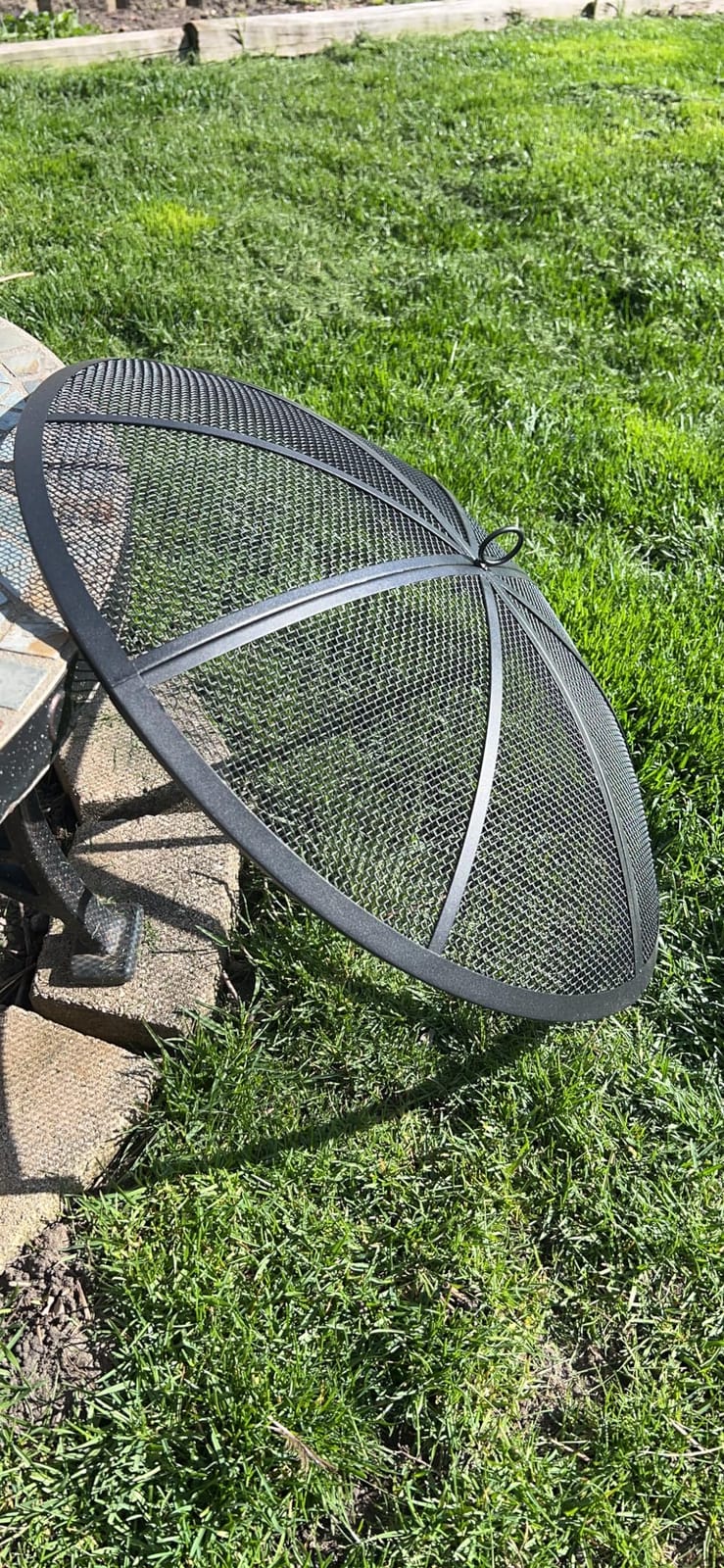
Assembly takes a few minutes with a screwdriver because the four panels screw together. That is the trade for the folding design, and it is a one-time cost. Once assembled the screws hold fine through repeated heat cycles.
Why the support rods and folding design matter
Twelve support rods turn a flat piece of mesh into a structure that resists deformation. On a flat-bottomed screen the middle is the first place to bow, and a bowed screen either drops embers through the gap or falls into the fire. The rod frame keeps the profile rigid.
Stainless steel is the other reason this one ages well. It will not develop the surface rust that painted carbon steel shows after a wet season, so owners in climates with frequent rain report it looking essentially unchanged year to year.
Where it falls short
The screw assembly is a genuine step up in effort compared with a screen that drops straight onto the rim with no assembly at all. Budget a few minutes and read the hardware list before you start.
Size discipline matters here more than with the hinged models, because a 24 inch screen on the four inch oversize rule is built for a bowl around 20 inches inside diameter. Measure before ordering, and note that this listing is offered in a spread of diameters from 22 to 40 inches if your bowl is larger.
6. WeCooper 36 Inch 2 mm Mesh Screen: Best Premium Fire Pit Screen for Thick Mesh Durability
WeCooper Outdoor Fire Pit Spark Screen Cover,36″ Dia,Easy Access Door,Round
36 inch round
20.5 inch tall
18.5 lb steel
2 mm mesh wire
Pros
- 2 mm mesh is far thicker than most rivals
- Two lift handles for the weight
- Four-piece rotating design stores compactly
- Vent holes help wood burn through
Cons
- Heaviest unit here at 18.5 pounds
- Hinge shortens one axis so measure carefully
- Vent holes slightly reduce containment
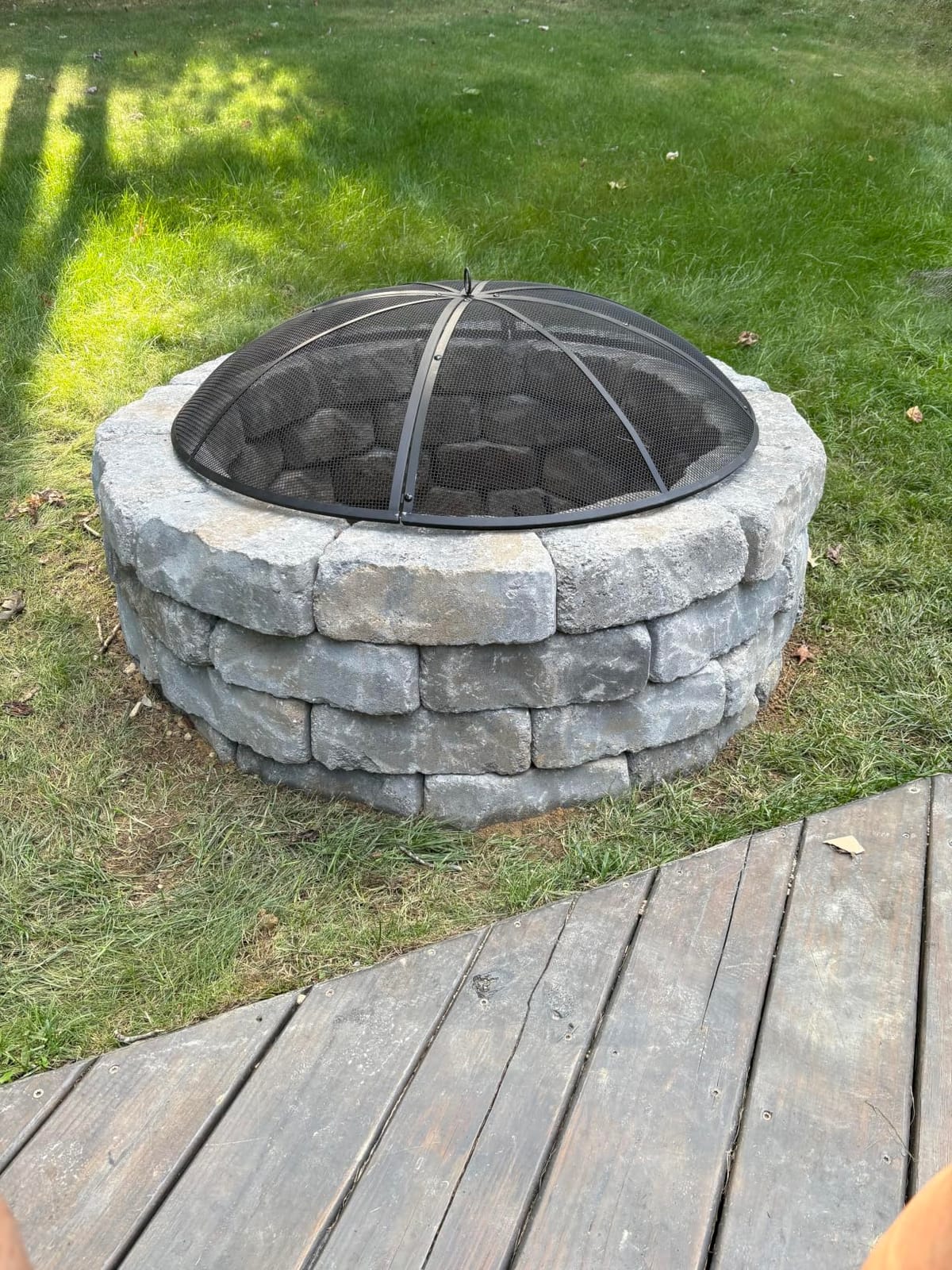
Mesh gauge is where this screen separates itself. The 2 mm steel mesh is roughly three times the wire thickness of the 0.7 mm screens at the top of this list, and reviewers consistently single that out as the reason the screen still looks and performs well after a full season of heavy burning. Heavier wire resists warping, resists corrosion, and gives you gaps small enough that a popped ember has to hit the wire more than once to escape.
At 20.5 inches tall and 36.3 inches across, it is a proper dome rather than a lid, and the vertical wall does real work in catching sparks that a short screen would let bounce over. The hinged opening lets you add firewood without removing the unit, and two lift handles make the 18.5 pound weight manageable with two hands.
The rotating four-piece design is the underrated feature. It assembles and disassembles in minutes, so a screen this size does not have to live permanently on your patio.
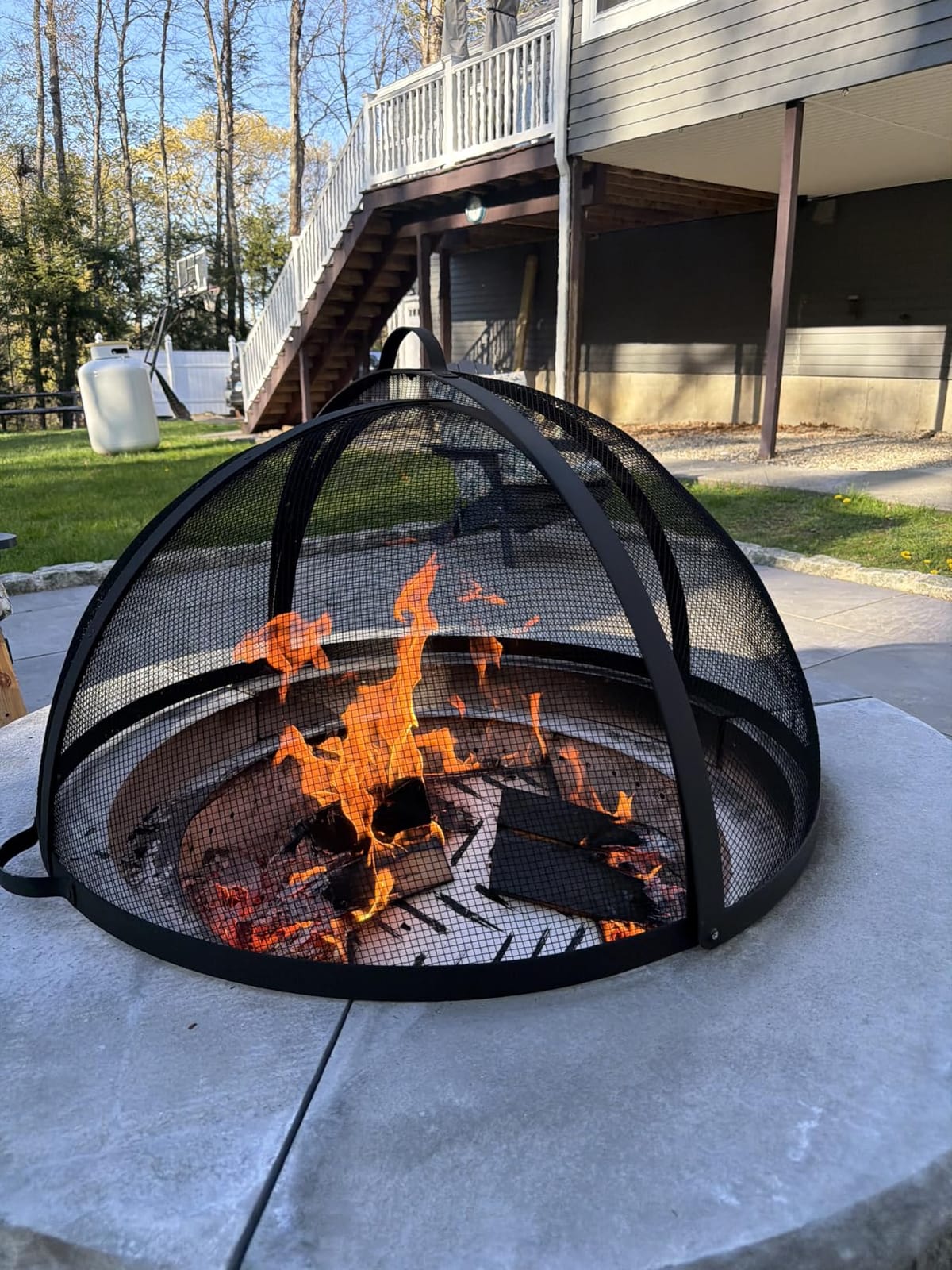
This is the screen to choose if you burn often, burn wet-ish wood, or live somewhere with a long fire season and no interest in replacing hardware every year. The thicker mesh is also the reason it is the heaviest unit in this roundup, so make sure the bowl rim is wide and stable enough to support it properly.
Why 2 mm mesh changes the containment math
Thicker wire means smaller, more uniform gaps. On a 0.7 mm screen, a gap that looks narrow from arm length can still be wide enough for a flaky ember fragment to pass through at a shallow angle. A 2 mm mesh removes that margin, and it also survives being leaned on, brushed, and knocked without deforming.
The tradeoff is weight and airflow. A dense mesh of thick wire restricts air slightly more than a fine wire screen, and the vent holes in the lid are there specifically to compensate so wood burns through on a cold night rather than smouldering.
Where the extra thickness becomes a problem
Eighteen and a half pounds is genuinely heavy. Lifting it on and off a hot rim for every use is not realistic, which is exactly why the hinge and the two handles are not optional details on this unit. Plan to leave it in place rather than cycling it.
As with the other hinged designs, measure both axes of your bowl because the hinge shortens one direction. And the lid vent holes are a small containment compromise, so if you are in a high wind-risk area this is not the screen for maximum spark arrestion.
7. Dragonfire 18.5 Inch Stainless Spark Screen: Best Budget Fire Pit Screen for Small Pits
Dragonfire 18.5 Inch Universal Stainless Steel Spark Screen, Durable Mesh Stainless Steel, Safely Contains Sparks and Embers
18.5 inch round
2 lb stainless steel
Pre-assembled
Center handle
Pros
- Stainless steel resists rust outdoors
- Arrives fully assembled
- Light at 2 pounds
- Center handle for adding logs
Cons
- 18.5 inch suits only small to medium pits
- Fixed dome needs lifting to add fuel
- Lower review volume than the leaders
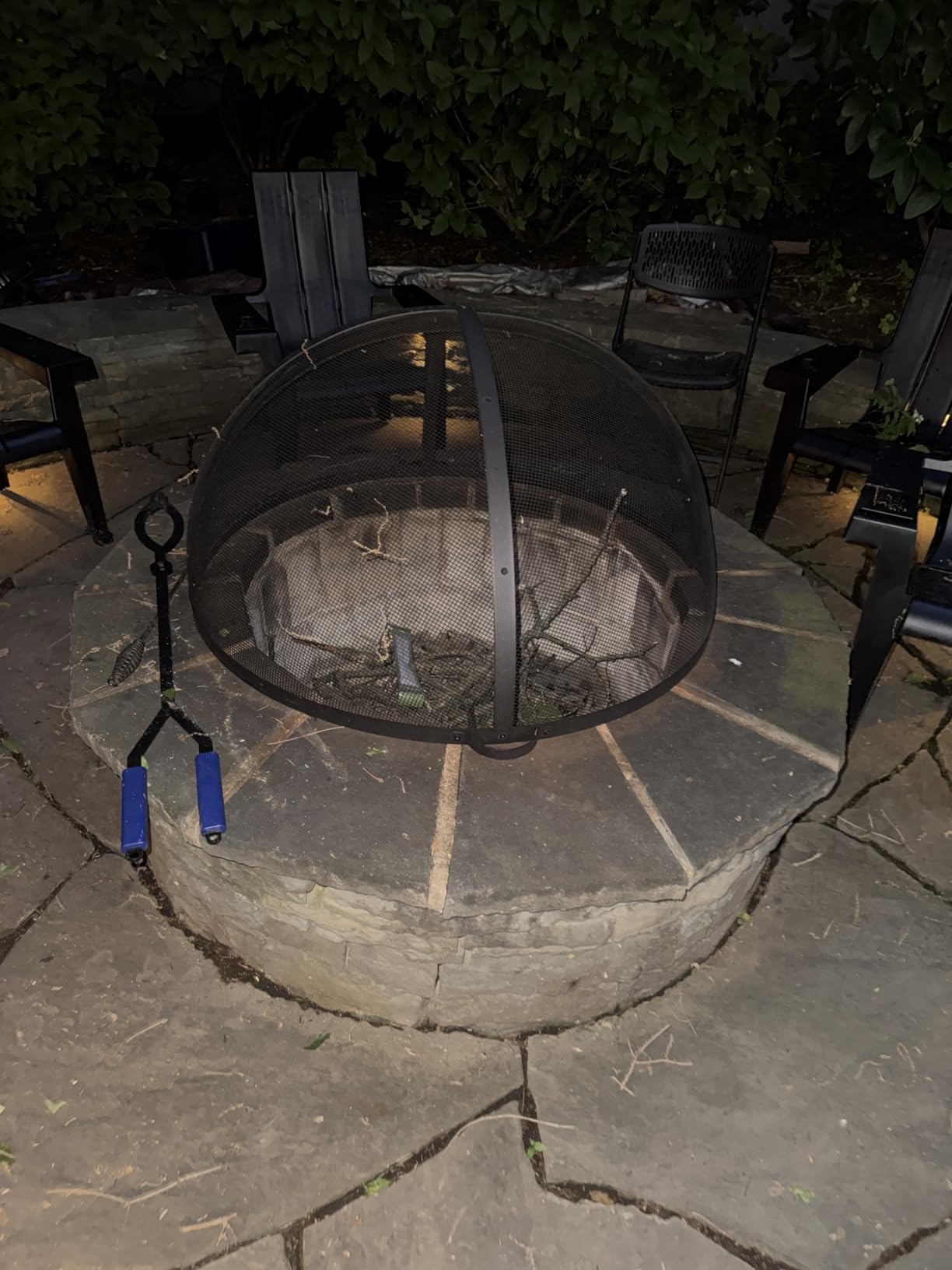
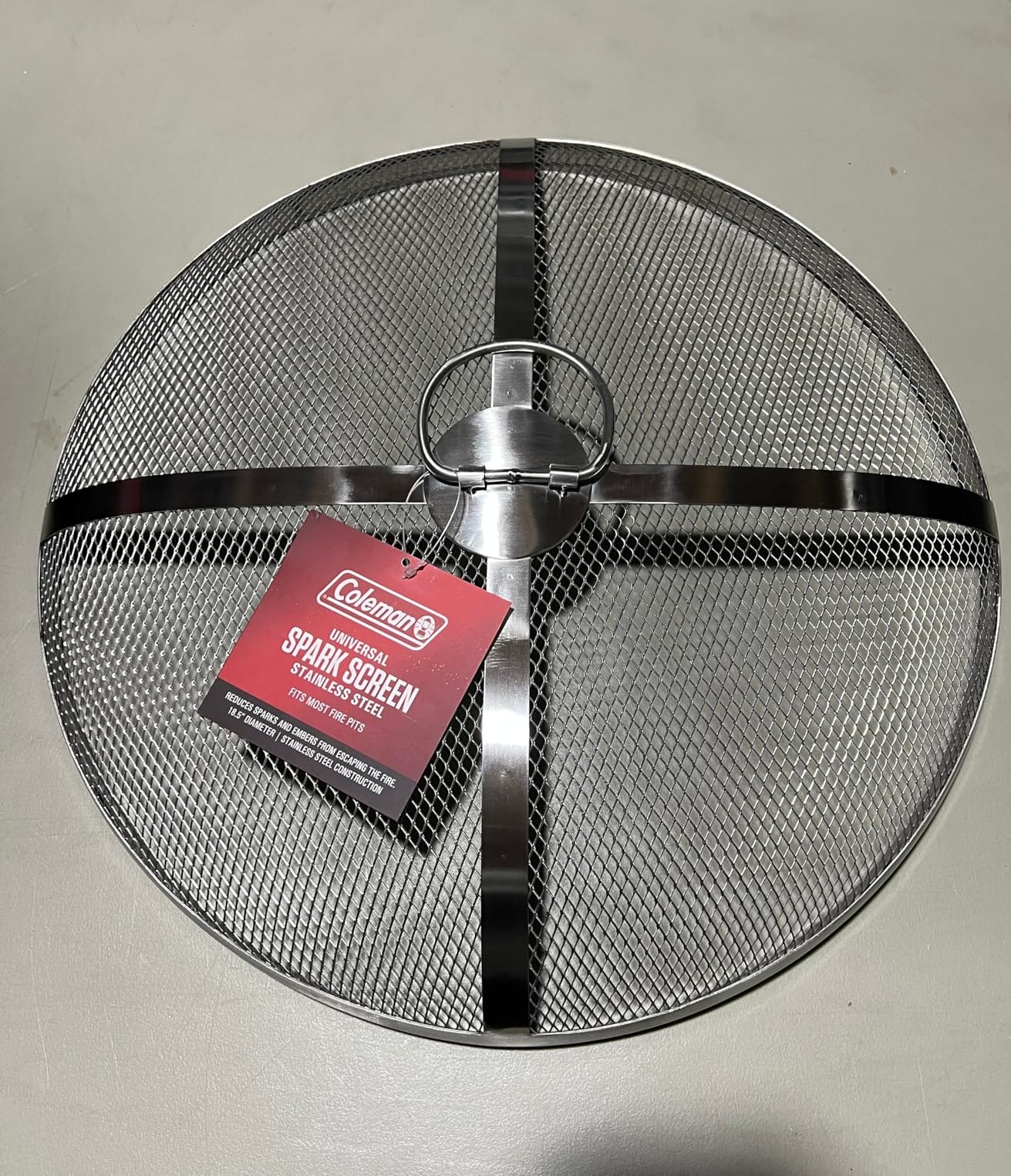
The simplest thing on this list, and for a small fire pit it is entirely sufficient. Stainless steel, pre-assembled, 2 pounds, with a center handle that lets you lift the screen one-handed to drop in a log. There is no assembly, no hinge to align, and no finish to wear out, which means the only real question is whether 18.5 inches covers your bowl.
Stainless steel is the reason we recommend it even at this price level. Painted carbon steel screens at a similar cost are the ones that end up with rust holes after a winter, and a screen that rusts through is a liability sitting next to a wood deck.
At 2 pounds it is by far the easiest to move, which makes it a genuinely good choice for a small pit where you tend the fire often, or for anyone who does not want to wrestle a heavy dome off a hot rim.
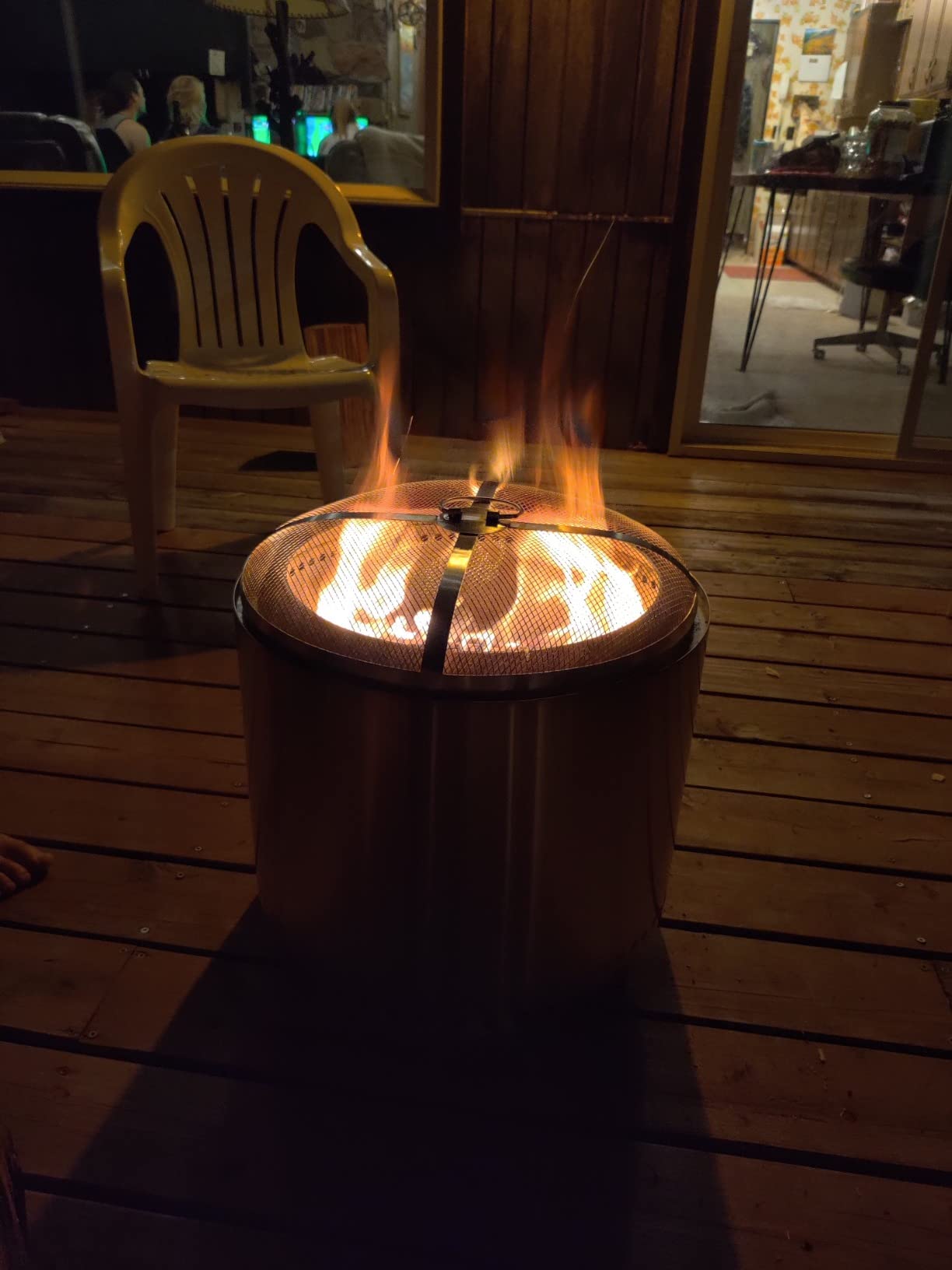
The finish is the other reason budget screens fail early. This one is bare stainless with no paint layer to chip, so there is nothing underneath waiting to corrode once a scratch goes through the surface.
Why the no-assembly design is a real benefit
Every screw and hinge on a screen is something that can work loose under repeated thermal cycling. A pre-assembled screen with a welded stainless frame has none of those joints, so there is simply less hardware to check as the seasons go by.
The center handle also serves double duty as the tool for moving fuel. On a small pit you are often adding kindling rather than full logs, and a handle sized for a gloved hand is easier to control than a broad top plate.
Where the budget pick stops being enough
Eighteen and a half inches suits a small bowl, and the four inch oversize rule means it is really designed for a fire pit in the mid-teens. Anything much larger will see significant sparks escape past the edge.
It is also a fixed dome with no hinge, so the whole screen comes off for every log. The 2 pound weight makes that a minor inconvenience rather than a real problem, which is the one place the low weight actually pays off.
8. Hampton’s Buzaar 36 Inch Folding Dome Screen: Best Fire Pit Screen for Flat Off-Season Storage
Hampton’s Buzaar 36 Inch Fire Pit Easy Access Spark Screen
36 inch diameter
18 inch tall
13.2 lb steel
Sliding dome halves
Pros
- Sliding half-dome opens without removing the screen
- Collapses flat for off-season storage
- Heavy build feels stable in wind
- 2 year manufacturer warranty
Cons
- Tied for the lowest rating here at 4.2 stars
- Thinner mesh can rust out sooner
- Sliding halves can scrape during use
This is a sliding dome rather than a hinged one. One half of the screen slides into and over the other half, which means you get two things at once: access to the fire without lifting anything, and a screen that genuinely collapses flat for the off-season. For a 36 inch unit, that is a meaningful storage win.
The build is steel finished in high temperature black paint, at 13.2 pounds and 18 inches tall. That weight gives it a planted feel on the rim, so it does not get lifted by a gust the way a lighter screen can, and the 18 inch wall height is enough to catch the sparks that a shallow lid would lose.
The two-year manufacturer warranty is shorter than Good Directions offers, and the 4.2 average across 136 reviews sits at the bottom of the ratings range here, so set your expectations accordingly. This is a functional storage solution more than a premium one.
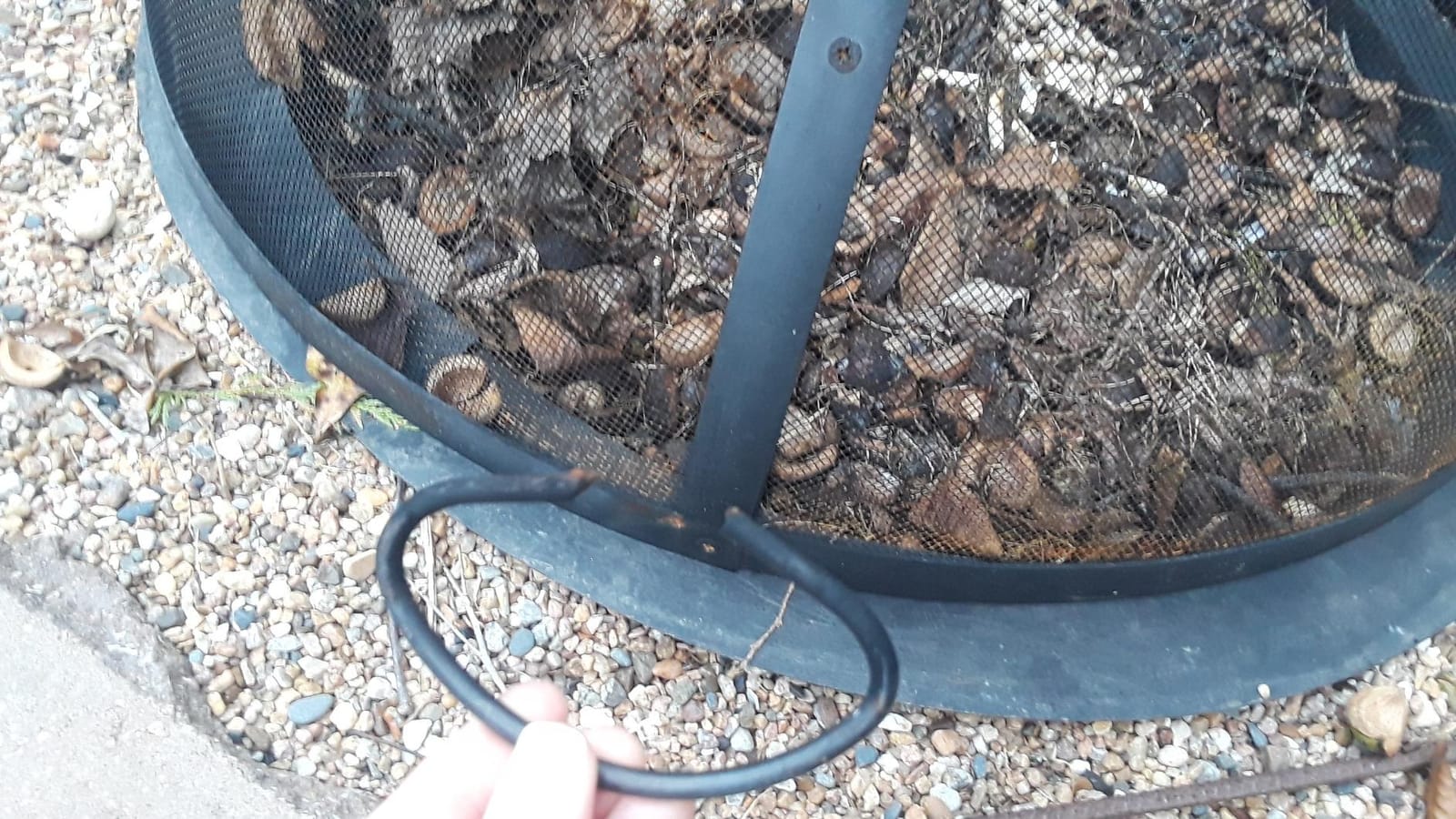
It is worth being direct about mesh life. Owners report rust holes developing faster than on heavier-gauge screens, which is the trade for a lighter, folding, mid-weight unit. If your screen will live outdoors through winter, treat annual inspection as part of the routine.
How the sliding dome compares to a hinge
A sliding half needs no hinge hardware, which means no hinge to rust, stick, or work loose. You push one section across the other and the opening appears. It is simpler mechanically than a hinged screen and has fewer failure points.
The downside is that the two halves rub against each other during use, and owners report a scraping noise and, over time, some wear where they contact. It is a wear issue rather than a safety issue, but it is a real one.
Where this screen is the wrong call
If your priority is maximum screen life, this is not it. The mesh is thinner than the 2 mm option further up the list, and reviewers are more likely to mention long-term mesh deterioration than anything else.
It is also a fixed 36 inch footprint, so it only works if your bowl is close to that size. And the 4.2 rating reflects a genuinely more mixed set of experiences than the screens rated 4.5, so buy it for the storage benefit rather than in expectation of a flawless build.
9. SUNCREAT 32 Inch Hinged Steel Screen: Best Fire Pit Screen for 32 Inch Pits
SUNCREAT Outdoor Fire Pit Spark Screen Cover Accessory, Patio Round Easy-Opening Fire Mesh Screen Guard, Heavy Duty Steel Fire Pit Ember Lid with Hinge, 32 Inch
32 inch round
Hemispherical steel dome
High temperature paint
Two lift handles
Pros
- Hinged two-piece design opens for fuel
- Hemispherical dome adds structural stability
- High temperature paint handles intense heat
- Two easy-lift handles
Cons
- 32 inch is the only size offered
- Mesh is thinner than 2 mm premium screens
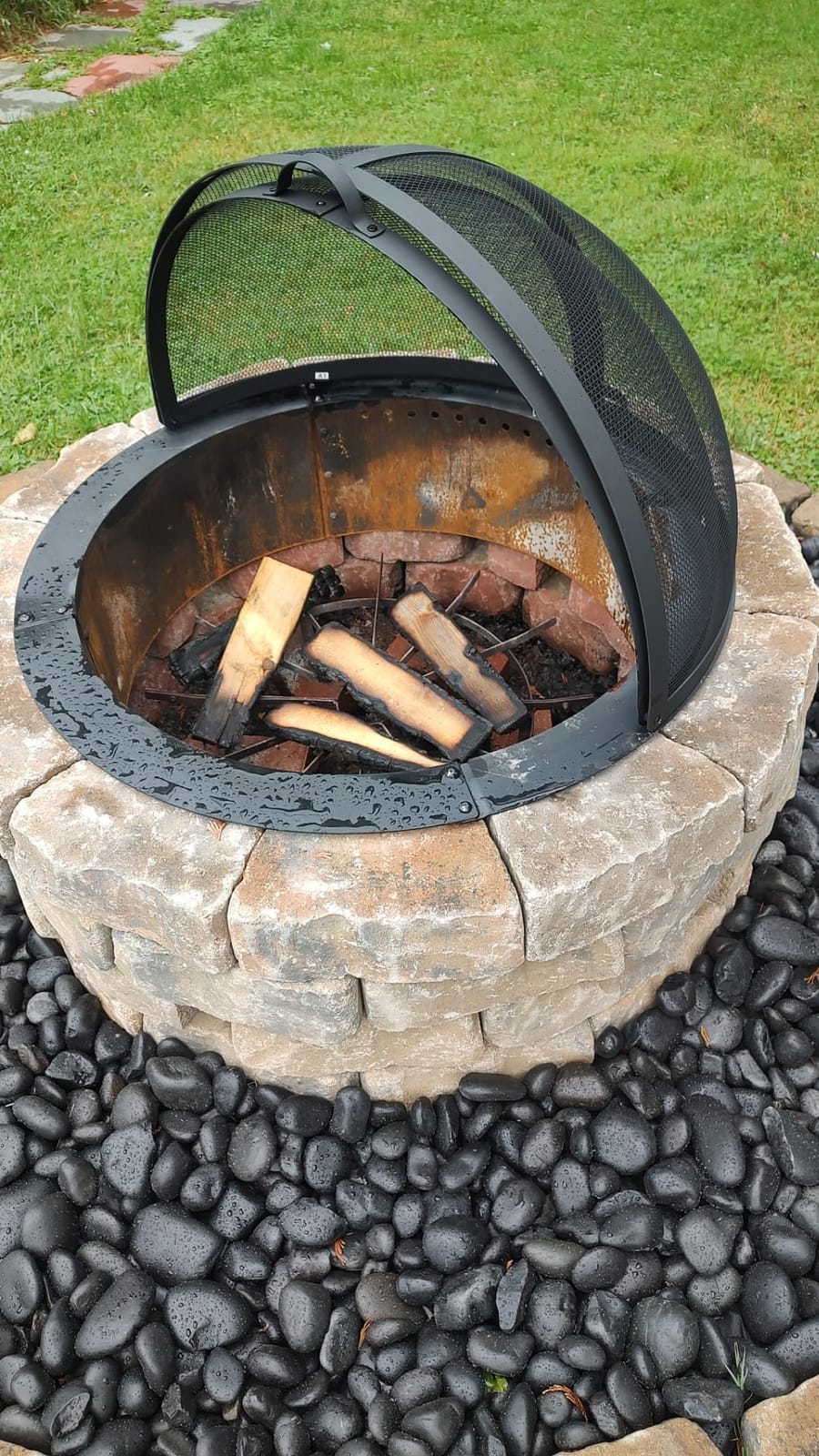
Thirty-two inch bowls are common, and they are badly served by the category. Most screens come in 30 or 36 inches, which leaves a two inch gap or a screen that does not sit properly. This one is built specifically at 32 inches with two hinged steel mesh halves that rotate open for fuel.
The hemispherical dome profile is the quiet strength here. A true hemisphere distributes stress evenly across the mesh instead of concentrating it at a seam, and owners consistently rate it as one of the more rigid designs they have used at this size.
At a 4.5 average it holds its own with screens that have ten times the review volume, and reviewers point to the high temperature resistant paint as the reason the finish holds through intense fires. The kit includes all hardware and instructions, plus two lift handles for repositioning.
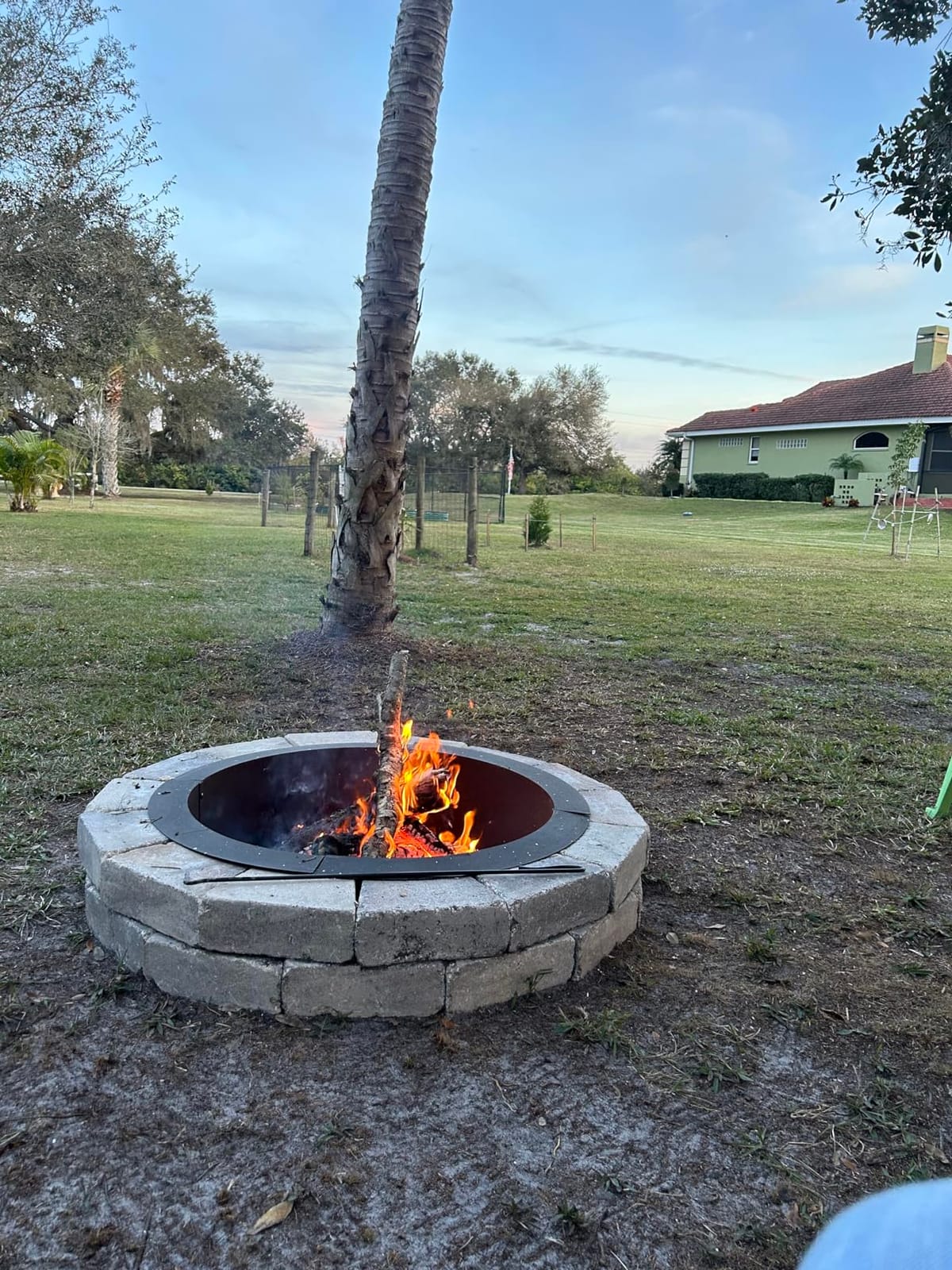
It also works as a bonfire pit screen or a fire pit grill cover, which makes it more versatile than the standard dome designs if you use the same hardware for more than one application.
Why the dome shape matters structurally
A hemispherical profile is the same geometry used in pressure vessels and cook domes for a reason: it has no flat plane where stress concentrates. On a screen, that translates into a mesh that resists the inward dishing you get when heat builds under the centre of a flat lid.
The two-hinge arrangement also means you can open one half completely for loading or partially for tending without removing anything from the rim, and the closed position keeps sparks contained while you work.
Where the single size becomes a real limitation
Thirty-two inches is the only variant offered, so if your bowl measures 30 or 36 inside, this is not the part for you. That is a genuine constraint in a category where size variation is usually free.
The mesh is also thinner than the 2 mm screens in this roundup, so if you are after maximum spark arrestion on a windy site you would be better served by the heavier option. For contained backyard fires, it performs well.
10. VEVOR 30 Inch Stainless Steel Spark Screen: Best Folding Stainless Screen for Adjustable Coverage
Firepit Spark Screen Lid, 30″ Diameter, Outdoor Firepit Ring Cover Round Accessories, Fire Pit Metal Cover, Easy-Opening Stainless Steel Fire Ring Covers for Outdoor Patio Fire Pits Backyard
30 inch round
0.8 mm wire with 2 mm holes
13.7 lb stainless steel
Two-piece folding design
Pros
- Stainless shows no rust after repeated rain
- Mesh far thicker than same-cost rivals
- High dome keeps flames contained
- Adjustable coverage from semi-open to closed
Cons
- Assembly instructions are lacking
- Two people help tighten the bolts
- Stated diameter can run slightly small
- Hinge hardware can loosen
The dominant theme in the reviews of this screen is value from a stainless steel build at a weight and thickness that usually costs more. The spec is 0.8 mm mesh wire with 2 mm hole diameter, which is a real wire thickness, and owners report that it is many times thicker than similarly priced 36 inch screens that crumble after a season.
Stainless steel is what makes it last. Owners switching from painted carbon steel screens report this one staying rust-free through seasons of rain exposure, and one buyer had VEVOR replace an entire defective unit quickly, which says something about how they handle failures.
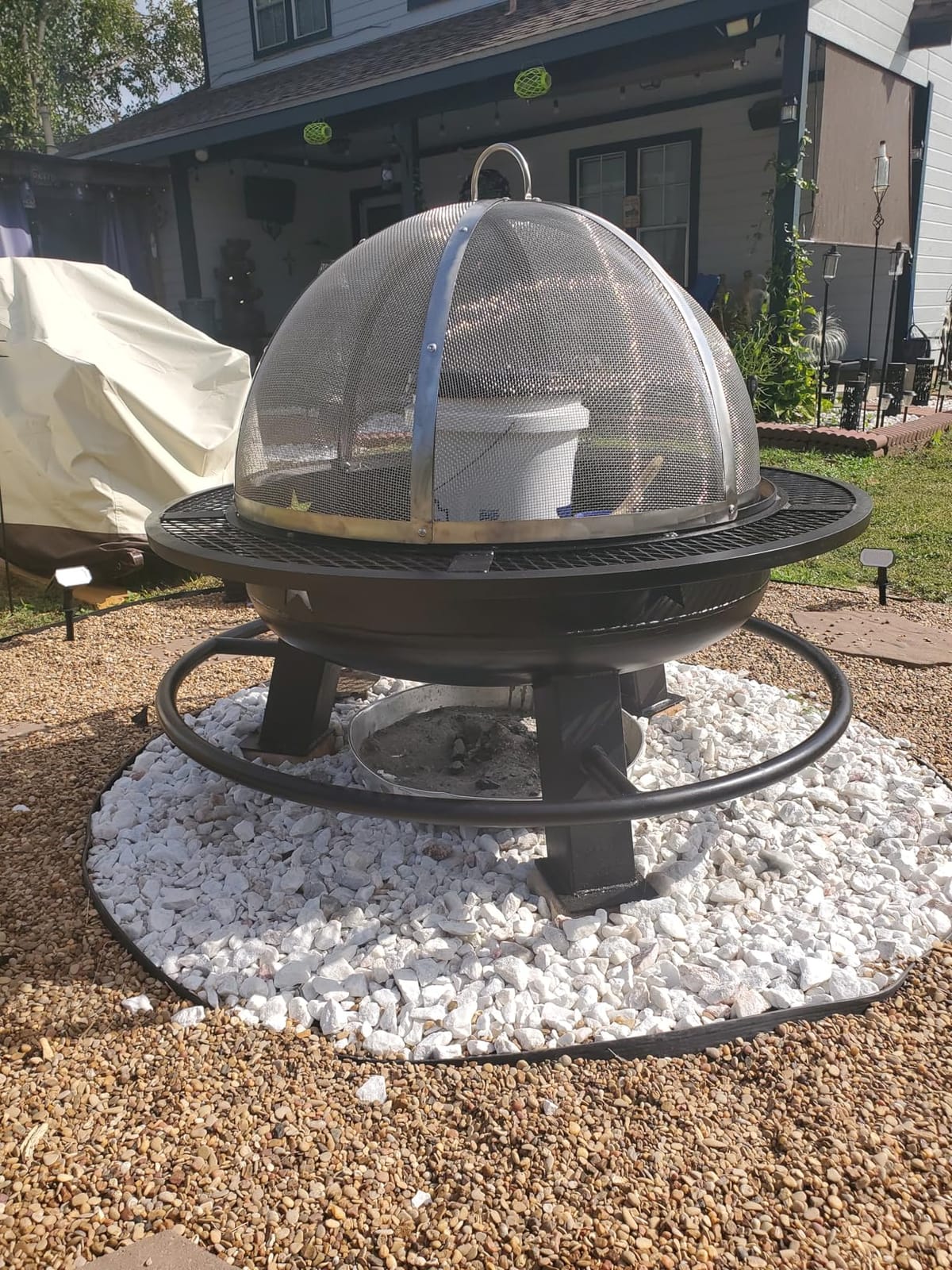
The high dome shape keeps the flames contained so wood does not burn out prematurely, and the six-panel two-piece folding design lets you adjust coverage from semi-open to fully closed, which is unusual at this price and genuinely useful for temperature control.
Assembly is the weak point and it is worth being upfront about. You need a Phillips screwdriver, one is included, and several buyers report that the bottom holes are hard to line up and that a second person genuinely helps with the bolts. It is not a ten-minute job on the first attempt.
Why stainless steel changes the maintenance story
Painted carbon steel screens protect themselves with a coating that eventually fails. Once the coating is gone, bare steel oxidises, and mesh is the worst shape for that because it has enormous surface area with very little mass. Stainless delays that process essentially indefinitely.
For anyone in a wet climate, or anyone whose screen stays out through winter, that difference is the whole argument. You still want to brush off ash so moisture does not sit on the surface, but you are not managing a rust clock.
Where the fit and assembly cause problems
Measure carefully. Buyers report the stated diameter can run slightly under the nominal size, which means a screen that looks right on paper can slip or sit loosely on an exact-size fire ring. If your bowl is precisely 30 inches, check the actual measurements before ordering.
Hinge hardware loosening with repeated opening and closing is the other recurring note, so a quick bolt check a couple of times a season is worthwhile. The lack of assembly instructions is a genuine documentation gap, so budget extra time for the first setup.
How to Measure Your Fire Pit for the Right Screen Size
Measure the inside diameter of your fire bowl, then add four inches. That single rule from the manufacturers gets you to the right screen size faster than any other step, and it is why a screen listed at 22 inches is designed to sit across the rim of a smaller bowl rather than drop into it.
To measure, run a tape across the narrowest point inside the bowl wall, not the outer rim. If the bowl tapers, measure at the top where the screen will actually rest. Then check that the screen clears anything on the rim, such as a grate, a cooking ring, or the handle of your existing lid.
If your bowl is not round, a hinged or pivot screen often fits better than a plain dome, because the rotating half can absorb a slightly irregular opening. Measure both axes of an oval or rectangular bowl and use the smaller number as your reference.
One final check before you commit: make sure the screen diameter is not larger than the rim can support. A 36 inch dome on a bowl with a narrow lip will sit unevenly, and that is both a containment problem and a tipping risk when you lift it off.
Stainless Steel vs Carbon Steel: Which Material Wins
Stainless steel wins on longevity, carbon steel wins on weight and cost, and the difference shows up most clearly after your first full winter outdoors.
Painted carbon steel is the default in this category because it is light and inexpensive. The paint is the only thing standing between you and rust, and it works until it does not. Once you see the first rust spot, the mesh, which has an enormous surface area, corrodes quickly from there. Owners who store carbon steel screens under cover report many years of service, and owners who do not report rust within one or two seasons.
Stainless steel does not need a coating to survive, which means it tolerates rain, snow, and being left out all winter. It is heavier, which is more noticeable on a large dome, and the meshes that use it are often a different gauge entirely, so a stainless screen and a painted screen of the same diameter are not really comparable products.
For a dry climate, a sheltered patio, or a screen you bring in after every use, painted carbon steel is entirely adequate. For a wet climate, a coastal property, or anywhere the screen overwinters outdoors, stainless is the right call.
What Mesh Gauge Actually Stops Sparks
Mesh gauge is the thickness of the individual wire, and it determines how much of your fuel the fire can actually see through. Most listings in this category quote wire thickness rather than hole size, and those are not the same number.
At 0.7 mm, which is the most common gauge in the category, the wire is fine and the gaps are small. This stops the steady stream of small ember fragments but still lets plenty of air through. It is the balance point most manufacturers aim for.
At 1.2 mm and above, the screen is structurally stiffer and resists warping, but it restricts airflow more. You will see flame height drop, and on a small bowl the fire can start to smoulder if the screen stays fully closed too long.
At 2 mm, as on the WeCooper 36 inch, the wire is heavy and rigid. Containment improves noticeably because an ember has to hit the wire more than once to get past, and the screen holds its shape under heat, but airflow is reduced enough that vent openings or a slightly open door become necessary on cold nights.
The practical rule: below 1 mm is fine for a contained backyard fire, 1 to 1.5 mm is a good compromise, and 2 mm or more is worth the weight if you are in a windy area or on a combustible surface.
Screen vs Wind Guard vs Heat Deflector
These three get conflated constantly in listings, and they do completely different jobs.
A spark screen is for containment. It sits on or over the fire bowl, its only purpose is to trap sparks, embers and ash, and it is sized to the bowl.
A wind guard stands in front of or around the flame. It reduces the amount of air reaching the fire sideways, which slows combustion and cuts smoke output. It does not stop sparks, and it does not need to match your bowl diameter.
A heat deflector sits behind the fire and reflects radiant heat back toward you. It improves how usable your patio is in cold weather and has nothing to do with spark safety.
If your problem is smoke, you want a wind guard, and no spark screen will fix it. If your problem is embers on your deck, you want a spark screen, and a wind guard will not help. Buying one when you need the other is the most common expensive mistake in this category.
Fire Pit Mats and Wood Deck Clearance
A spark screen controls what leaves the fire. It does nothing about what is underneath or beside it, and on a wood deck that is where the real risk sits.
If your fire pit is on a wooden surface, put down a fire mat rated for that pit size before anything else, and follow the clearance distances in your pit manual without shortening them. An ember that escapes a screen can land a foot away on an ember that has already rolled, which is why a mat matters even with a good screen.
For under-pit protection, the advice in homeowner forums tends to converge on a simple rule: a non-combustible base with drainage, and a metal screen on top. A sand or gravel bed under firebrick is a common approach, and a metal screen on top is close to universal advice from owners who have run fires long enough to have seen what escapes.
Patio surfaces need the same thinking. Pavers and concrete tolerate heat, but the joints between them trap ash and moisture, and a paver patio still needs a screen above the fire rather than relying on the surface below.
For the pit itself, we cover wood burning outdoor cooking separately, since a pit built for pizza is often built differently from one built for long evening fires.
Screens for Camping, RV Travel and Burn Barrels
For camping and RV use, the deciding feature is packed size, and that is where the four-piece folding design wins clearly. A screen that collapses flat and packs into a tote can live in the back of a van all year, while a fixed dome means you are leaving it behind or buying a separate camp screen.
Camp use also changes the size equation. Portable pits are usually small, so an 18.5 inch screen covers many of them, and the light weight matters more than you would think when you are carrying gear from the vehicle to the fire ring.
For a 55 gallon burn barrel, the geometry is different. Barrel diameters run larger than most screen listings cover comfortably, and a screen designed for a shallow bowl rim will not seat on a barrel rim. Look for a large-diameter unit, confirm the barrel rim is wide and flat enough to support it, and expect to have to measure the barrel rather than assume a standard size.
Beach and open-area bonfires are the other case where containment matters most, because wind is usually the factor. A taller dome with thicker mesh does better than a shallow lid in those conditions, which is an argument for one of the heavy hinged or domed options rather than a budget flat screen.
Cleaning and Storing Your Screen
Let the screen cool completely before you touch it. A screen that has been over a wood fire holds heat in the mesh long after the flame is out, and it will be the thing that burns your hand while it sits on the patio looking cold.
Once cool, knock out loose ash and brush the mesh with a stiff wire brush. Work along the wire direction rather than across it, and expect to do this every time rather than once a season. Ash left caked on the mesh traps moisture against the steel, which is the actual mechanism that starts rust.
For stainless screens, a wipe-down with a damp cloth after brushing is enough. There is no need for any chemical treatment, and avoid abrasive cleaners that can scratch the surface finish.
For painted carbon steel screens, dry them before storing and do not put them away damp in a shed. If you want to extend the life of a screen that overwinters outside, a light coat of heat-resistant spray paint on the frame and any bare weld points is the cheapest maintenance available.
Storage is where the folding and hinged designs pay off twice. A screen that breaks into four panels or collapses flat stores against a wall in a fraction of the space, which makes it far more likely to actually live under cover rather than standing in the rain all winter.
Frequently Asked Questions
What is the best material for a fire pit screen?
Stainless steel is the best material for longevity because it does not rust even when left outdoors through winter, at the cost of extra weight. Painted carbon steel is lighter and less expensive and works well if you store the screen under cover between uses. Alloy steel with a high temperature coating sits in between and is the most common construction in the category.
Do you put the screen on a fire pit while burning?
Yes. Spark screens are designed to sit on the fire pit while the wood fire burns, because the mesh gaps still allow oxygen in so the flame keeps going. What the screen changes is that rising sparks and embers are caught and dropped back into the bowl instead of escaping onto your deck or grass.
What size fire pit screen do I need for a 30 inch pit?
Measure the inside diameter of your fire bowl and add four inches, which is the standard manufacturer sizing rule. For a 30 inch pit that usually means a screen in the 33 to 36 inch range so it seats across the rim rather than dropping inside. If the screen is smaller than the bowl opening, embers escape around the edge.
What size mesh for a fire pit screen?
Most fire pit screens use 0.7 mm to 1.2 mm steel wire, and that range stops typical ember fragments while keeping airflow high. Mesh of 2 mm or thicker gives noticeably better containment and holds its shape better but is heavier and reduces airflow, so on cold nights you may need the screen partly open.
When should I put a mesh cover on my fire pit?
Put the screen on as soon as the fire is established, and leave it on for the duration of the burn. It matters most on dry or windy evenings, when burning near a deck, fence, shrub or neighbouring property, and whenever local burn restrictions require spark containment. Never leave a wood fire unattended with the screen off.
Will a spark screen put out my fire?
No. A properly sized screen lets oxygen in through the mesh gaps and around the rim, so the fire continues burning normally. What changes is the flame height, which usually drops a little, and the flame pattern, which becomes steadier. If a screen does smother the fire, it is almost always too small or too fine for the bowl.
What is the best spark screen for a 55 gallon burn barrel?
Burn barrels need a large diameter screen with a wide flat rim to seat on, and most fire pit screens in the 22 to 36 inch range are too small to cover a standard barrel securely. Measure the barrel rim, choose a screen that overhangs it on all sides, and use a taller dome rather than a flat lid so sparks are not carried over the top.
Final Verdict: Which Fire Pit Screen Should You Buy in 2026?
Start with the measurement. Whatever the brand, add four inches to the inside diameter of your fire bowl and buy that screen size. Then let your habits pick the design: a lift-off dome if you have a small pit and a short burn, a hinged or sliding screen if you tend the fire for hours, and a folding four-piece design if the pit travels.
For most backyard wood fires, the Sunnydaze 22 inch steel mesh screen is our pick, because it has the deepest review history in the category, holds its shape through repeated roaring burns, and the top handle makes the daily on-and-off genuinely easy. For a clear view of the flames at 27 inches, the Good Directions screen with the heavy lifter handle is the one we would pick next.
If you burn in a wet climate or the screen overwinters outdoors, go stainless. The Dragonfire 18.5 inch unit is the lightest rust-proof screen here and a good fit for a small pit, while the VEVOR 30 inch is the better choice if you want a real dome and thicker mesh wire. If spark arrestion is the priority rather than weight or storage, the WeCooper 36 inch with 2 mm mesh is the thickest and heaviest screen we reviewed, and it is built for that job.
Whichever you choose, put it on as soon as the fire catches, brush the ash off before you store it, and keep it under cover if it is painted carbon steel. That is the whole maintenance routine, and it is what separates a screen that lasts one winter from one that lasts five.