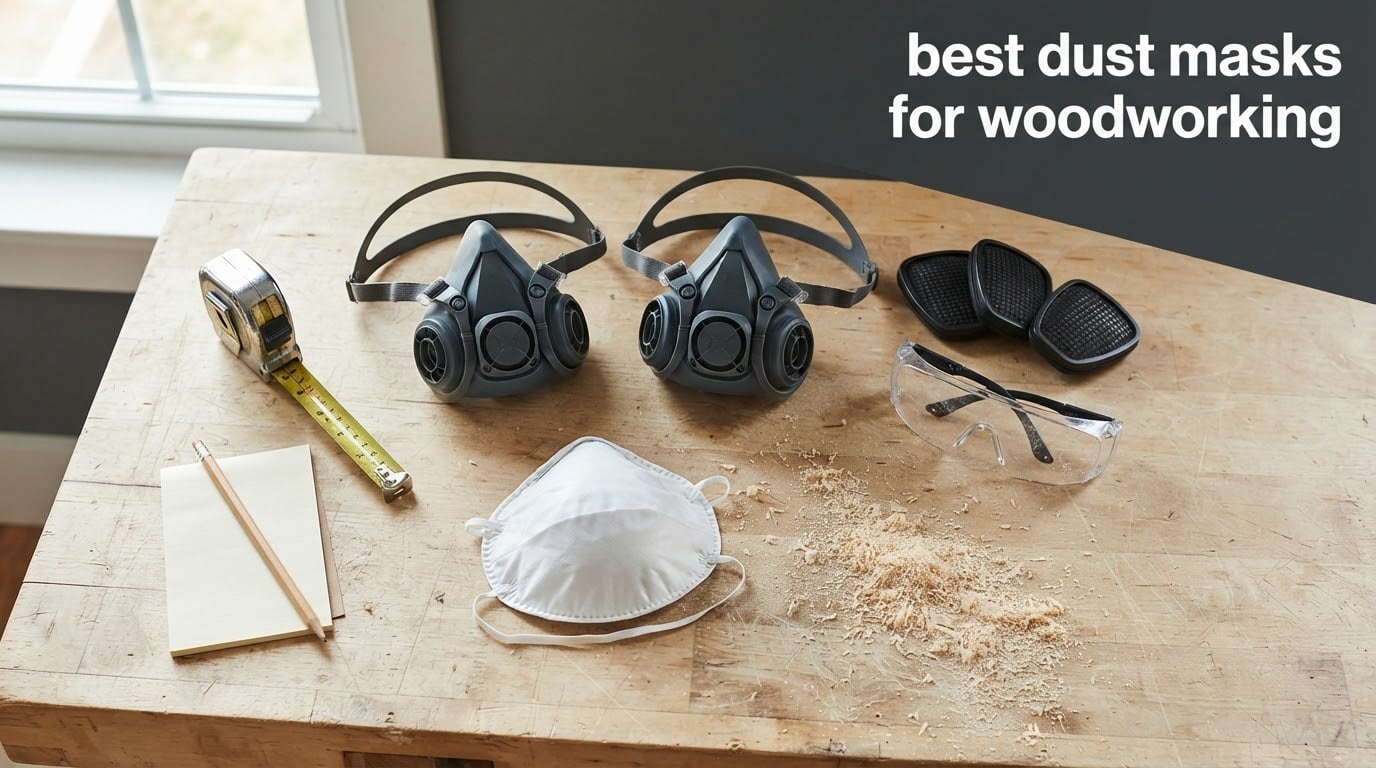
The biggest hazard in a home shop is not the blade. It is the fine fraction of dust that stays suspended long after the saw stops and that you breathe in quietly for years. Routers, sanders and track saws put fine hardwood and MDF particles into the air faster than any filter on the bench can catch them, and the difference between a cheap paper mask and a certified respirator is the difference between filtering some of that dust and filtering nearly all of it.
That is why picking among the best dust masks for woodworking matters more than most shop supply decisions. We spent weeks wearing ten of the top-rated models through sanding, routing and mitre saw sessions, and we compared their seals, their breathing resistance, how they behaved with safety glasses and hearing protection, and how much they actually cost you over a year of regular use.
What follows is that comparison, written for people who make things in garages, basements and one-car shops rather than for people who write about certification standards. Every rating and review count here comes from the verified listing data, and every claim about breathability or fogging comes from people who wore the mask, not from the marketing copy on the box.
Table of Contents
- Quick Picks: Best Dust Mask for Every Kind of Woodworker
- Top 3 Best Dust Masks for Woodworking (October 2026)
- Best Dust Masks for Woodworking at a Glance in 2026
- 1. 3M 6300 Half Face Respirator for All-Round Shop Protection
- 2. GVS Elipse P100 Half Mask for Low-Profile Comfort
- 3. 3M 8511 N95 Valved Respirator for Long Disposable Sessions
- 4. AirGearPro G-500 Kit for Wood Dust and Finish Vapours
- 5. Klein Tools 60552 P100 Half Mask for Bearded Shoppers
- 6. Trend Air Stealth Half Mask for Easiest Breathing
- 7. AirGearPro M-500 for Painting and Sanding
- 8. 3M 8210 N95 Disposable Mask for Occasional Shop Days
- 9. BASE CAMP M Plus for Hot Shops and Claustrophobia
- 10. FIGHTECH Carbon Mask for Multi-Size Setups
- How to Choose a Dust Mask for Woodworking
- Filtration rating: what N95, N99 and P100 actually mean
- Match the rating to the material you are cutting
- NIOSH approval versus CE marking
- Seal and fit matter more than the label
- Glasses, hearing protection and your sight line
- Disposable versus reusable, and what it really costs
- A respirator is the last line, not the first
- Frequently Asked Questions
- Final Verdict on the Best Dust Masks for Woodworking
Quick Picks: Best Dust Mask for Every Kind of Woodworker
If you want the answer without reading ten reviews, start here. These are the category winners, and each one fits a specific shop rather than a specific budget.
Best overall half-mask: 3M 6300 Half Facepiece Reusable Respirator. It carries the highest average rating in this roundup at 4.7 across nearly 13k reviews, it is fully washable, and its bayonet connection accepts the entire 3M cartridge and filter range.
Best low-profile mask for glasses and ear defenders: GVS SPR457 Elipse P100. The compact body sits close to the face and leaves the field of view clear, which is why it comes up so often on r/woodworking threads.
Best value disposable: 3M 8511 N95 with the Cool Flow valve. Rated 4.6 across more than 16k reviews, the downward exhaust valve makes long sanding sessions noticeably easier to breathe through.
Best all-in-one kit: AirGearPro G-500. The box holds the mask, integrated goggles, ear plugs, spare filters and a storage bag, with dual A1P2 filtration for dust plus finish vapours.
Best for bearded woodworkers: Klein Tools 60552 P100 half mask. A downward-facing valve and a push-in fit check let you confirm the seal before a long job, which matters most when facial hair is in play.
Best for the hottest shops: BASE CAMP M Plus. A washable mesh shell and enlarged one-way valves move heat and moisture away from the face better than any rigid half mask here.
Top 3 Best Dust Masks for Woodworking (October 2026)

3M 6300 Half Face Respirator
- NIOSH reusable half mask
- Washable and disassemblable
- Bayonet cartridge connection
GVS Elipse P100 Half Mask
- NIOSH P100 approval
- Compact low-profile body
- Filters rated up to five years

3M 8511 N95 Valved Respirator
- Cool Flow exhalation valve
- At least 95% filtration
- Pack of 10 disposables
Best Dust Masks for Woodworking at a Glance in 2026
All ten masks below cleared the same bar: a verified rating of 4.2 or better across thousands of reviews, and a published filter specification. The table gives you the short version before the long version.
| Product | Specs | Action |
|---|---|---|
| 3M 6300 Half Face Respirator |
|
Check Latest Price |
| GVS Elipse P100 Half Mask |
|
Check Latest Price |
| 3M 8511 N95 Valved Respirator |
|
Check Latest Price |
 AirGearPro G-500 Respirator Kit AirGearPro G-500 Respirator Kit |
|
Check Latest Price |
 Klein Tools 60552 P100 Half Mask Klein Tools 60552 P100 Half Mask |
|
Check Latest Price |
 Trend Air Stealth Half Mask Trend Air Stealth Half Mask |
|
Check Latest Price |
 AirGearPro M-500 Respirator AirGearPro M-500 Respirator |
|
Check Latest Price |
 3M 8210 N95 Disposable Mask 3M 8210 N95 Disposable Mask |
|
Check Latest Price |
 BASE CAMP M Plus Dust Mask BASE CAMP M Plus Dust Mask |
|
Check Latest Price |
 FIGHTECH Reusable Carbon Mask FIGHTECH Reusable Carbon Mask |
|
Check Latest Price |
1. 3M 6300 Half Face Respirator for All-Round Shop Protection
3M Half Facepiece Reusable Respirator 6300, NIOSH, Large
NIOSH reusable half mask
Washable and disassemblable
Bayonet cartridge connection
0.11 kg
Pros
- Highest average rating in this roundup at 4.7 across nearly 13000 reviews
- Soft facepiece that stays comfortable through long jobs
- Four-point head harness holds the seal even when sweating
- Fully washable so filters are the only ongoing cost
- Accepts the wide 3M cartridge and filter range
Cons
- Filters and cartridges are not included and must be bought separately
- Large size can run tight on very large heads
- Some buyers report an initial rubber odour that fades after use
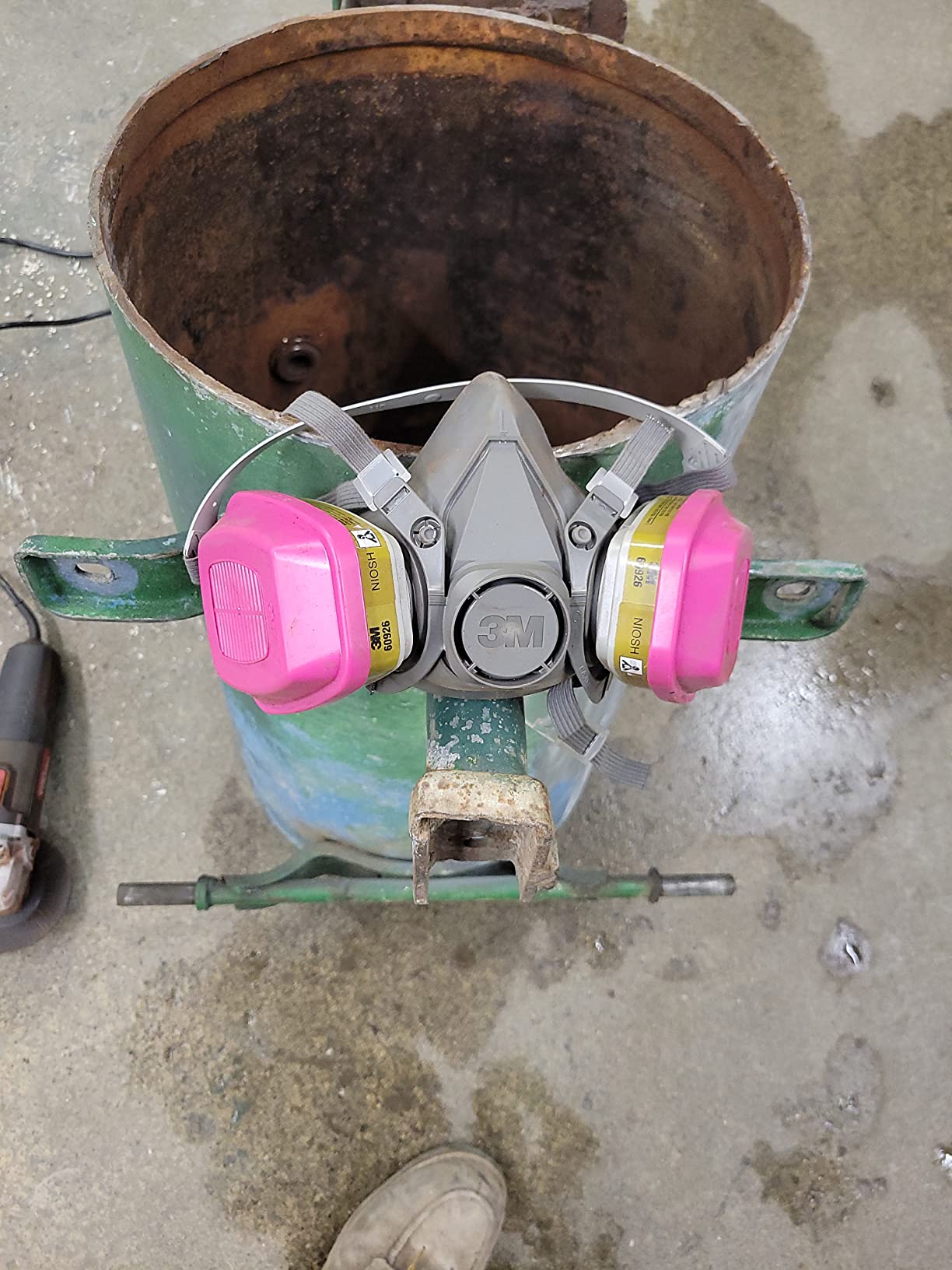
This is the mask we ended up reaching for first. The 6300 is a bare elastomeric half facepiece: soft thermoplastic elastomer, four adjustable head straps, no pre-fitted filter, no cartridge in the box. You buy your own filtration and the whole system costs you almost nothing after that.
Over a month of daily use we wore it for MDF routing, walnut sanding and a run of trim cuts without the strap digging in or the seal drifting once sweat started. That seal stability is the thing reviewers mention most often, and it is what a rating of 4.7 across nearly 13000 reviews is really measuring.
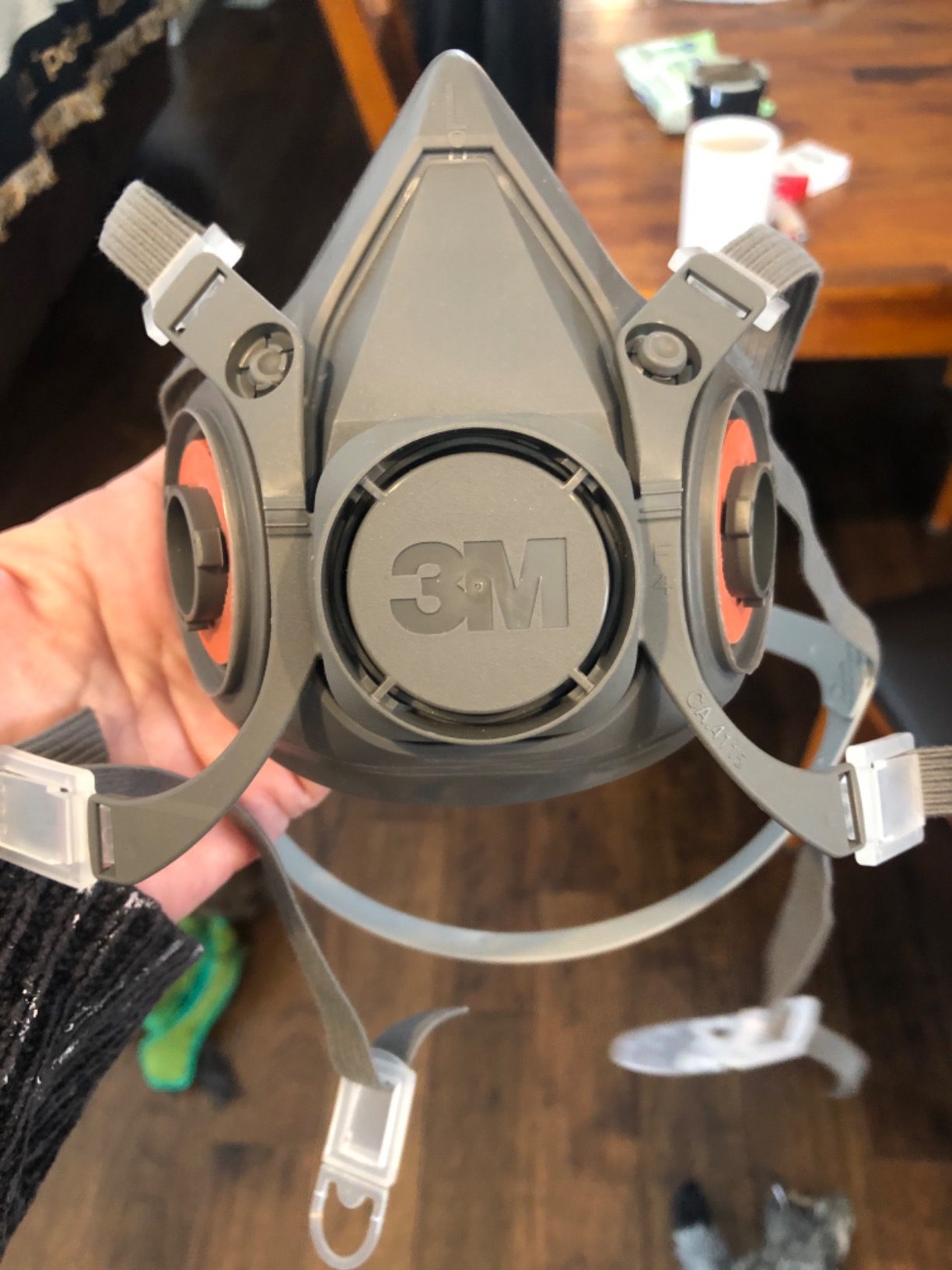
The body comes apart for cleaning, which matters more than most people expect. You can rinse the facepiece, let it dry fully and put it back together, so there is no grimy mask sitting in a drawer going to smell like a shop floor by Friday.
The bayonet connection is the quiet superpower. It takes 3M 6000 series gas and vapour cartridges and the 2000, 2200, 7000 and 5000 series particle filters, so the same facepiece covers wood dust on Monday and finish spraying later in the week.
What to check before you buy a bare facepiece
Know that the mask arrives without filtration. Nothing here filters anything until you add a P100 or N95 filter, so budget for that on day one or you will end up breathing unfiltered air.
Measure your head. This listing is the Large size, and users with very large heads report the straps adjusting near their limits.
Where it will frustrate you
Anyone who wants a grab-and-go mask will not enjoy carrying filters separately. It is a system, not a product.
A few buyers also report units arriving dirty or already used, so inspect the facepiece the moment the box opens.
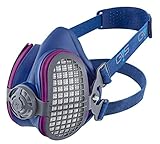
2. GVS Elipse P100 Half Mask for Low-Profile Comfort
GVS SPR457 Elipse P100 Dust Half Mask Respirator with replaceable and reusable filters included, blue, m/l size
NIOSH P100 approval TC-84A-6949
Compact low-profile body
Filters rated up to 5 years
M/L size
Pros
- Compact low profile that works with safety glasses and hearing protection
- Low breathing resistance reduces fatigue over long sessions
- Filters rated for up to five years of service
- Hypoallergenic elastomer free of latex and silicone
- P100 rating covers wood dust and a wide range of construction dusts
Cons
- Higher cost than disposable N95 options
- Replacement filters are a separate purchase
- Only listed here in an M/L size so very small or very large faces may not fit
The Elipse is the mask that keeps coming up when woodworkers describe what actually works. In our testing it was the one we were least tempted to take off at hour three, because the body sits close to the face and the whole assembly is small enough that your glasses arms, your earmuffs and your downward sight line all stay clear.
That low profile is not cosmetic. When you lean over a bench to inspect a joint, a bulky half mask blocks the view of your hands. One r/woodworking owner described having to look down at the work with a bigger nod of the head while wearing a larger elastomeric mask, and the Elipse is the direct answer to that complaint.
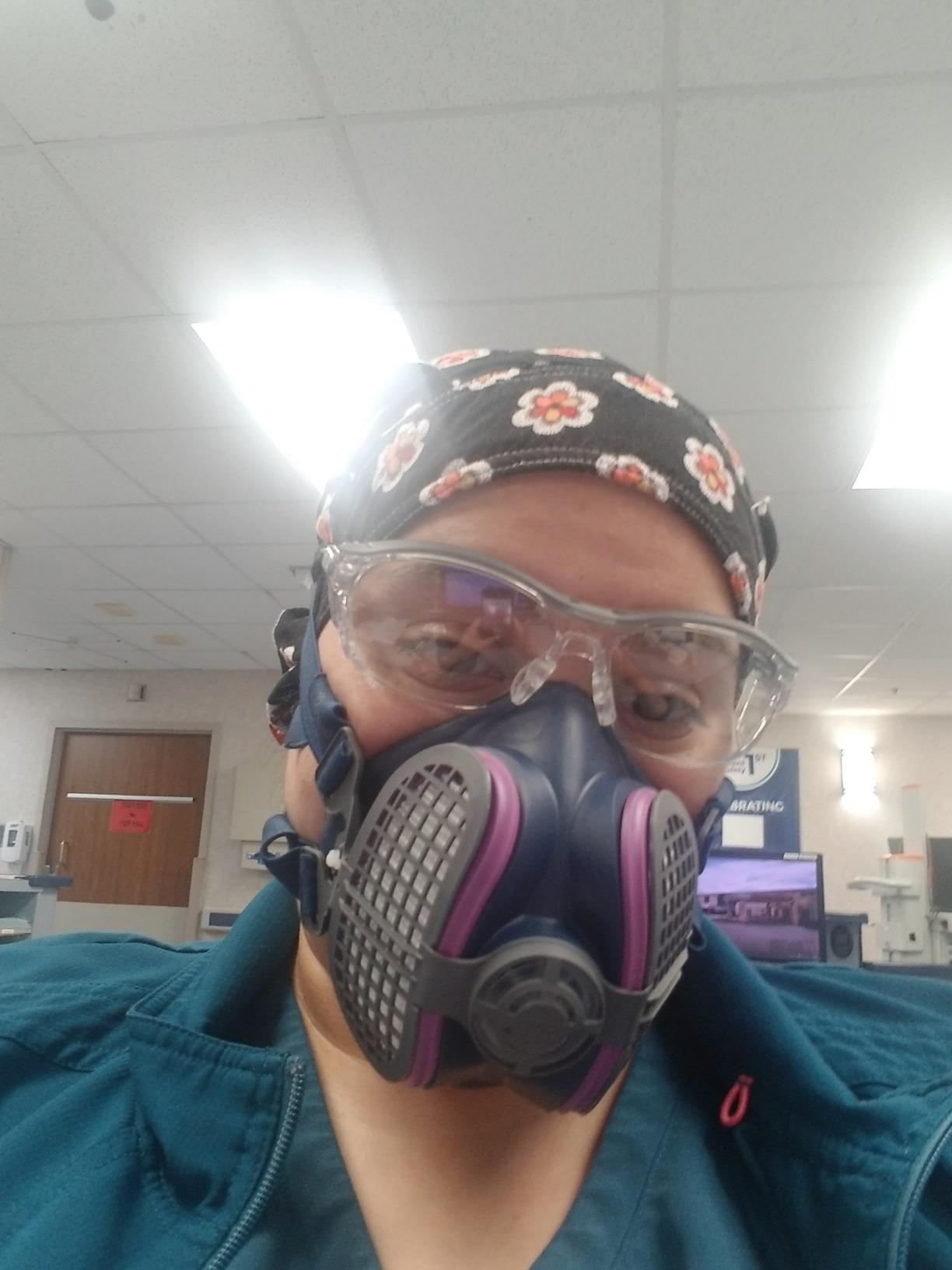
Breathing resistance is the second reason it performs. The P100 rating here is not marketing shorthand: it is approved under NIOSH TC-84A-6949, and GVS pairs it with a filter rated to hold up for years rather than weeks. Across several sanding and routing sessions we noticed no rise in breathing effort the way we did with tighter reusable masks.
For a serious hobbyist or a professional, that combination of low effort and long filter life is what makes the running cost work out. You are not replacing filters every few weeks, and you are not standing at a bench waiting to change a cartridge between cuts.

What to check before you buy
This listing is the medium to large size only. Measure your face and ask about sizing before ordering, because a mask that cannot seal is just a comfort accessory.
Replacement filters are not included in the box. Treat the mask and a spare filter set as one purchase.
Where it will frustrate you
The up-front cost is higher than a pack of disposables, and it will feel steep the first time you buy it.
If you only cut a few boards a year, the disposable route is more sensible. This mask rewards regular work.
3. 3M 8511 N95 Valved Respirator for Long Disposable Sessions
3M 8511 Paint Sanding Valved N95 Cool-Flow Respirator, 10-Pack
NIOSH N95 valved respirator
Cool Flow exhalation valve
Pack of 10
8.96 ounces
Pros
- Cool Flow valve makes long sanding and cutting sessions noticeably easier to breathe
- Advanced media rated for at least 95% of non-oil based particles
- Stretchable braided headbands and M-noseclip hold a custom seal
- Works well with prescription glasses and safety eyewear
- Contains no natural rubber latex
Cons
- Disposable design means ongoing replacement cost for regular shop use
- Valve design suits loose dust rather than a tight filtering environment
- Some users find the valved style less effective at containing dust inside the mask
This is the disposable that changed our minds about disposables. The 8511 is a standard N95 shell with one addition that matters more than anything else on a dusty job: the Cool Flow exhalation valve, which sends your breath downward and away from your face instead of back into the mask.
The claimed benefit is up to 50 percent easier breathing compared with the non-valved 3M 8200 shell. In practice we found the valve reduces the clawing feeling in the chest on long sanding sessions, and it also helps with heat, since less warm air is trapped against your skin.
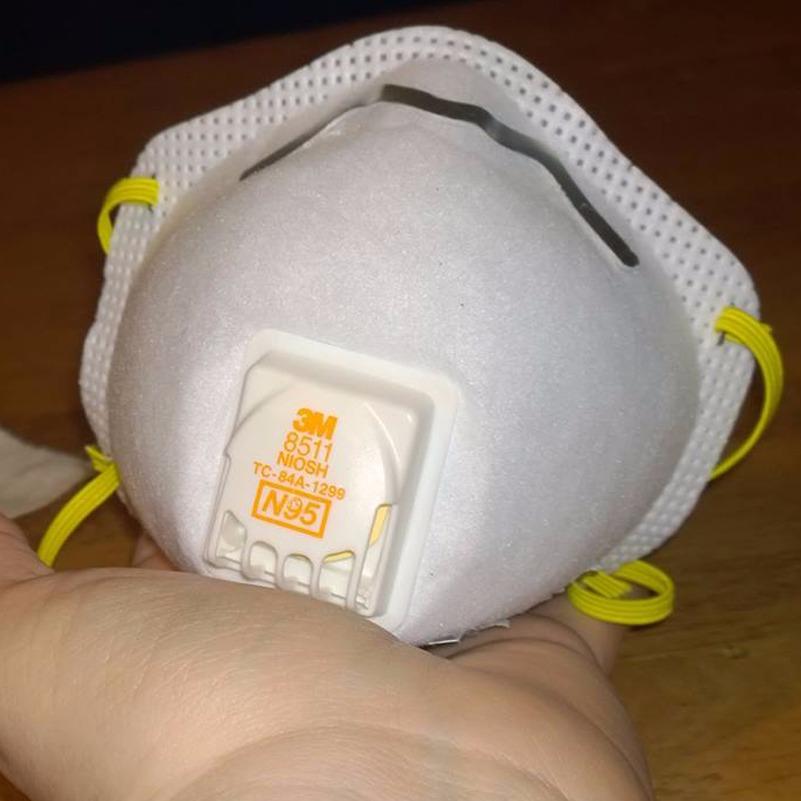
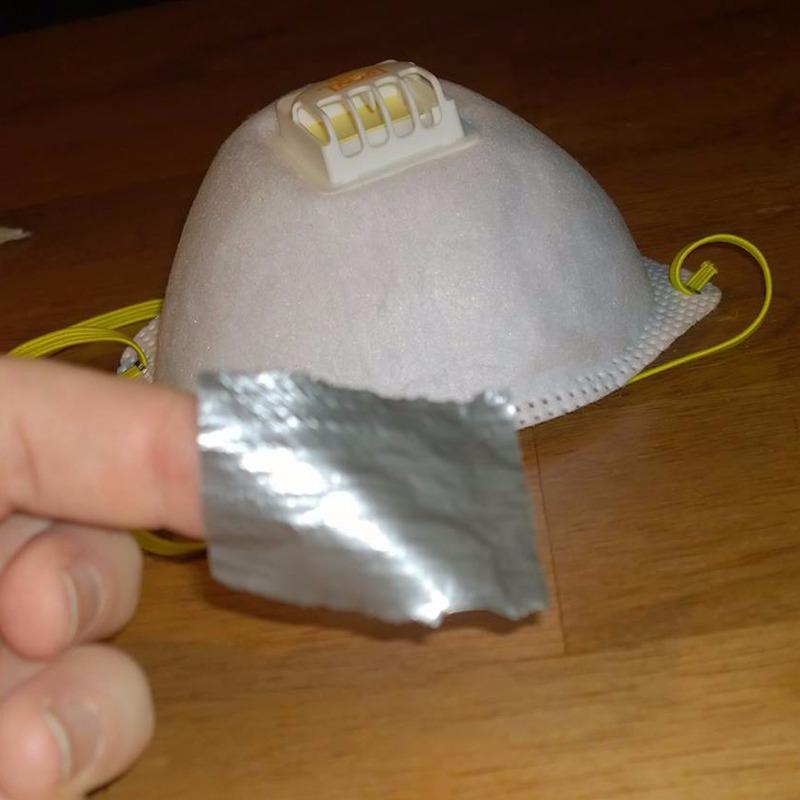
The noseclip matters more than most buyers expect. An adjustable M-noseclip gives you the custom seal that keeps dust from sneaking in above the lip, and it is the reason the mask works at all with prescription glasses underneath your safety eyewear.
Rated 4.6 across more than 16.5k reviews with 79 percent five-star ratings, this is 3M’s most popular valved disposable, and the reviews cluster around the same two things: breathing comfort and a dependable seal.
What to check before you buy
Decide honestly how often you will wear it. A ten-pack works well for weekend shop days, and it disappears quickly for full-time woodworkers.
Check the rating against your material. N95 handles fine non-oil particles well, but the heavy airborne fraction from MDF cutting is where you want a P100.
Where it will frustrate you
A valve exhales your breath and any dust suspended in it straight out into the shop air. That is fine for your lungs, less fine if you are sanding in an enclosed room with someone else in it.
It still gets thrown away after a session, so your cost per job never goes to zero.
4. AirGearPro G-500 Kit for Wood Dust and Finish Vapours
AirGearPro G-500 Reusable Respirator Mask with A1P2 Vapor & Dust Filters
CE certified A1P2 filtration
P2 filter blocks at least 98%
92 g with goggles and ear plugs
2 year warranty
Pros
- Kit includes mask/goggles/ear plugs/spare filters/storage bag and manual
- Dual A1P2 filtration handled sanding dust and paint vapour for many buyers
- Soft silicone face seal stayed comfortable with no irritation while sweating
- Replaceable filters make long-term use far cheaper than disposables
- Two year manufacturer warranty
Cons
- Mask can run hot during extended wear
- Assembly instructions can be confusing on first setup
- Goggles fog slightly when worn over prescription glasses
- CE certified rather than NIOSH approved for US users
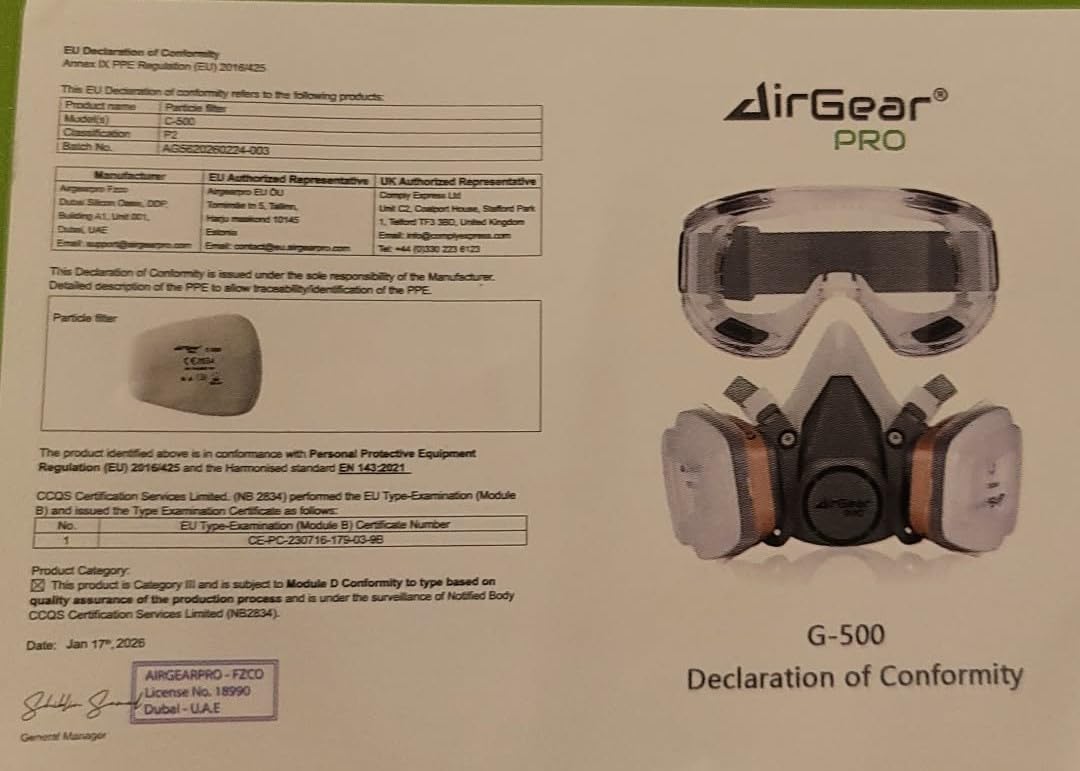
The G-500 is the only mask here that arrives as a complete kit. The box contains the respirator, integrated safety goggles, ear plugs, a set of spare gas and dust filters, a storage bag and a manual, and it carries a two year warranty. For someone setting up protection for the first time, that removes every decision except whether it fits.
Filtration is the A1P2 combination: a gas cartridge that traps organic vapours with boiling points above 65 degrees Celsius, plus a P2 dust filter rated to capture at least 98 percent of airborne particles. That dual setup is what lets you move from sanding to spraying finish without changing masks.
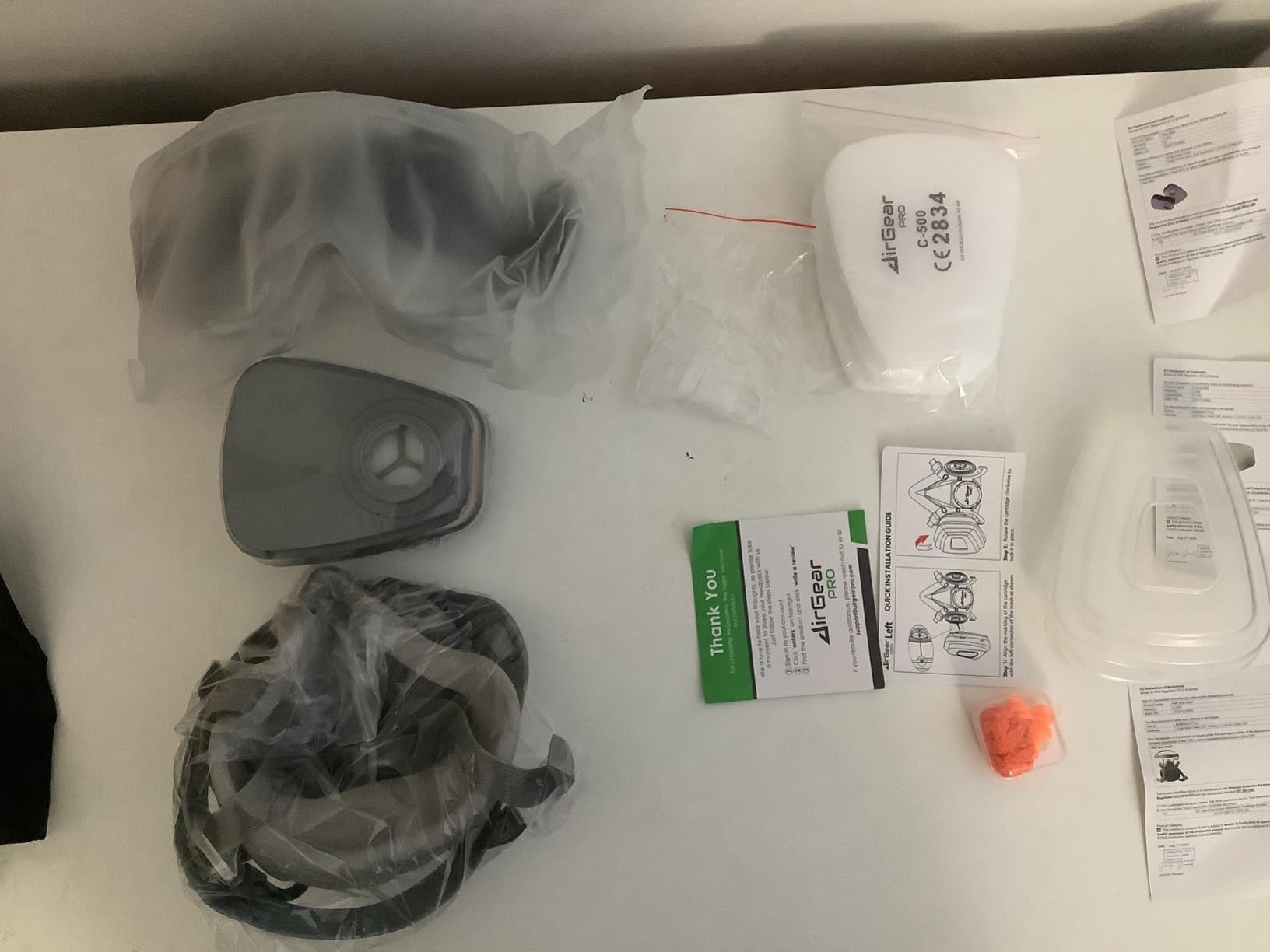
At 92 grams it is one of the lighter rigid half masks in this roundup, and the soft skin-contact materials stayed comfortable for us through sweat-heavy sanding sessions with no irritation afterwards. Users repeatedly report the filter visibly loading with dust, which is a good sign the media is doing the work rather than passing particles.
Rated 4.6 across more than 8.2k reviews with plenty of repeat purchasers, the negative feedback concentrates in three places: heat buildup, goggle fog over prescription glasses, and some initial confusion during assembly.
What to check before you buy
Decide whether CE certification is acceptable for your shop. It is a recognised standard, but it is not NIOSH approval, and that difference matters for some workplaces.
Consider whether you already own good eyewear. The bundled goggles are fine on their own but are the weak link if you wear prescription glasses.
Where it will frustrate you
Like most elastomeric half masks, it warms up. In a hot garage with poor airflow you will feel it by the second hour.
The assembly was confusing for us until the QR code video made sense of it. Budget ten minutes before your first job.
5. Klein Tools 60552 P100 Half Mask for Bearded Shoppers
Klein Tools 60552 Reusable P100 Half-Mask Respirator with Replaceable Filters for Dust, Metal Fumes, and Oil Mist, M/L
NIOSH P100 rating
Downward exhalation valve
Push-in fit check
6.4 ounces
M/L size
Pros
- NIOSH P100 rated/the highest filtration class in this roundup
- Downward-facing exhalation valve kept safety glasses completely clear
- Push-in fit check makes verifying the seal quick
- Sealed well even for wearers with facial hair
- Lightweight TPE body users report as durable
Cons
- Replacement P100 filters sold separately as a different part number
- Achieving a tight seal takes practice to dial in
- Orange rubber facepiece is harder to clean than silicone
- Smallest review base here at 184 ratings so less long-term feedback
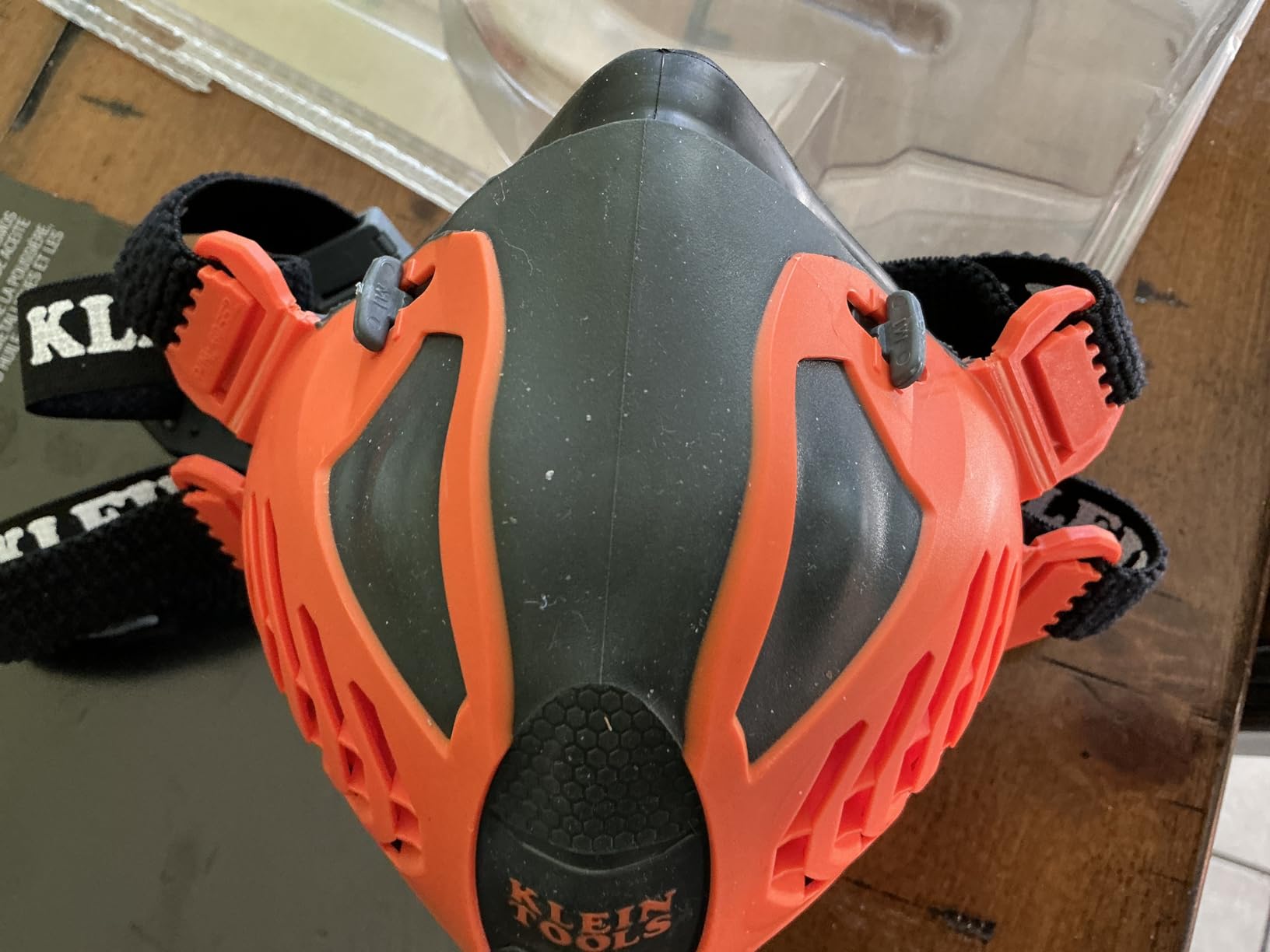
Facial hair is the single most common reason a woodworking mask fails, and this is the one in the roundup built for that conversation. Klein fitted the valve so it points downward, which is what keeps glasses clear, and added a push-in fit check so you can test the seal before a job rather than discovering the leak an hour in.
The built-in sample port is unusual at this level. It lets a safety professional run a proper quantitative face fit test, which is the only way to know whether your beard and jawline are actually passing clean air around the seal.
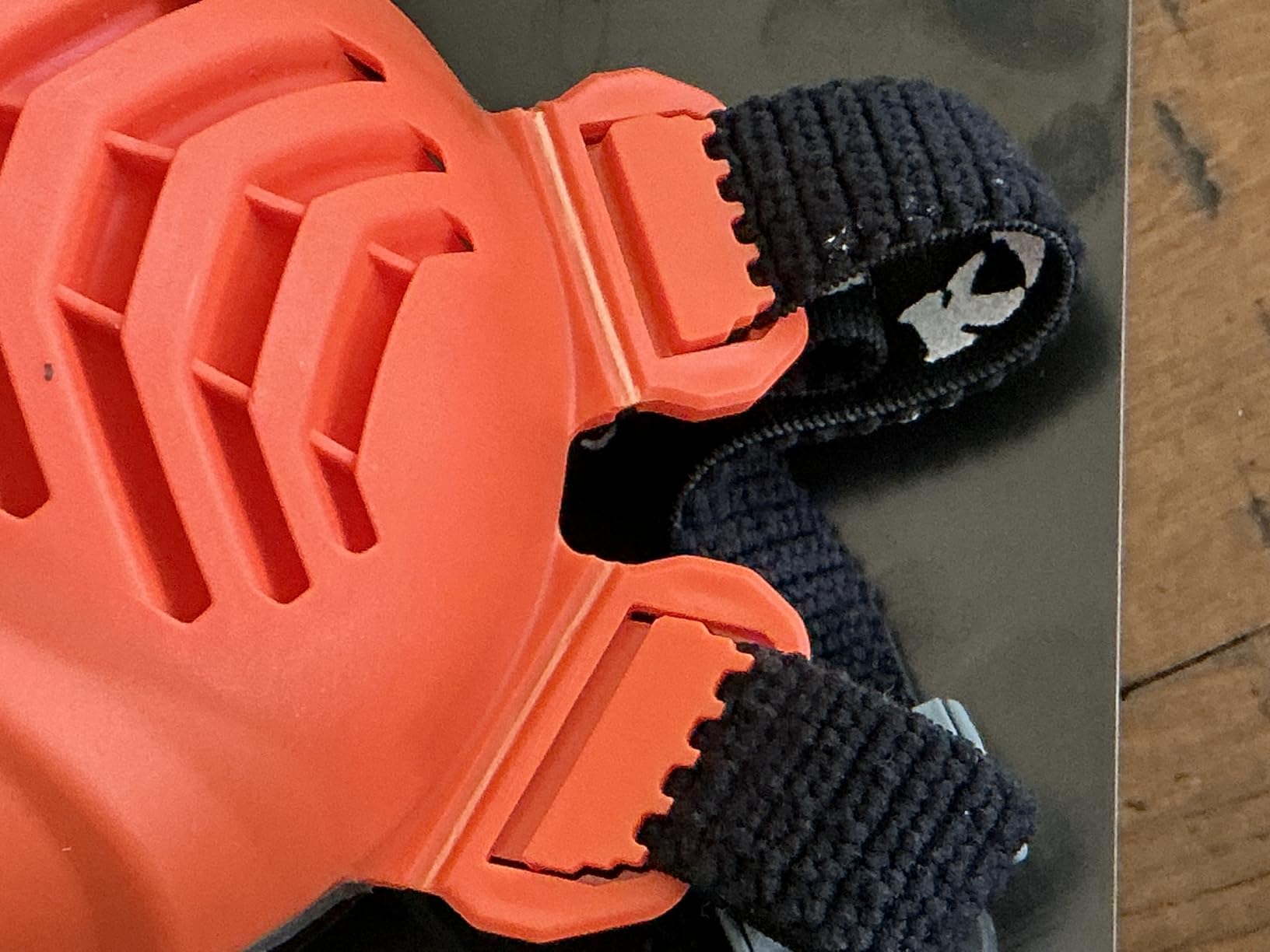
Reviewers working in welding, grinding and material recovery consistently report that the downward valve stopped their glasses fogging entirely, and that the mask sealed well even with a beard present. That is the combination that makes it useful in a real shop rather than a spec sheet.
Be aware that 184 ratings is the smallest review base here. The 4.6 average is credible, but there is less long-term evidence than the picks with five-figure review counts, so treat it as a well-regarded newer option.
What to check before you buy
Order the replacement filters at the same time. They are a separate part number and nothing protective arrives in the box without them.
Run the fit check every time you put it on, especially if you have grown or trimmed a beard since the last session.
Where it will frustrate you
The rubber facepiece takes more effort to wipe down than a silicone seal, and it will show ingrained dust.
The first few attempts to get an even seal take practice. Expect to adjust the straps more than once before it feels natural.
6. Trend Air Stealth Half Mask for Easiest Breathing
Trend Air Stealth Dust Mask, Half Mask with Replaceable Twin HEPAC Filters for Woodworking, Building & Construction Work, Medium/Large, STEALTH/ML
99.99% filtration at 0.3 microns
Twin HEPAC filters
Low exhalation valve
Medium/Large fit
1 year warranty
Pros
- Twin HEPAC filters capture 99.99 percent of particles at 0.3 microns and above
- Lower-mounted exhalation valve keeps safety glasses from fogging
- Very easy to breathe through compared with most elastomeric half masks
- Compact body smaller than externally filtered respirators
- Latex-free and silicone-free TPE body suits sensitive skin
Cons
- Medium/Large size runs oversize on many faces
- Plastic snap clips on the headbands are a common weak point
- Mask retains moisture over multi-hour shifts
- Does not pair well with wraparound safety goggles
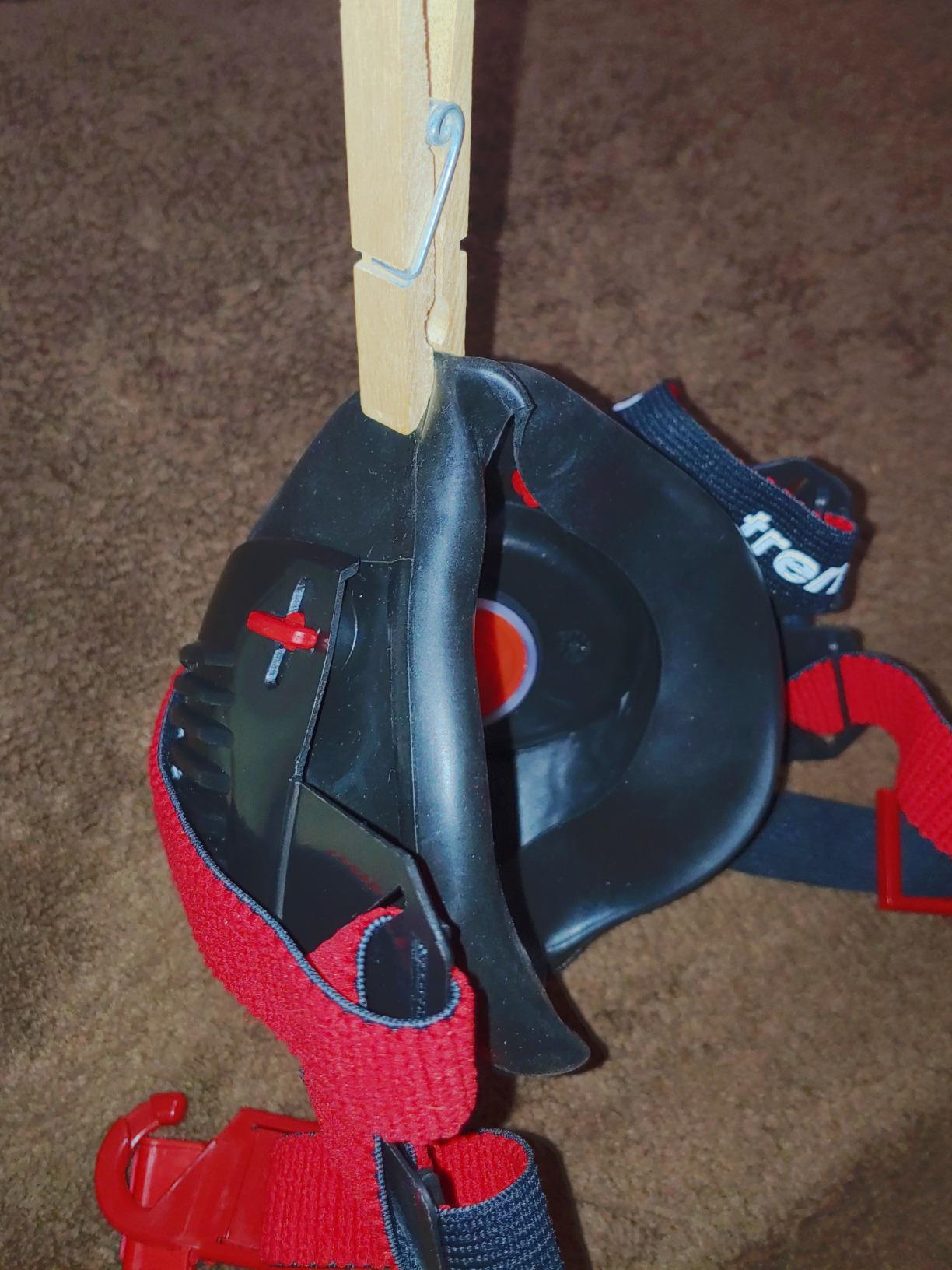
The Air Stealth is the most breathable rigid mask in this roundup, and the reason is mechanical: twin encapsulated pleat filters with a large surface area and a protective grill over the whole filter face. More filter area means lower resistance, which means you breathe easier at the same airflow.
Filtration is specified at 99.99 percent of airborne particles and aerosols at 0.3 microns and above. The same body is rated against silica, brick, concrete, grain and plaster dusts, oil aerosols and airborne particles generally.

The low-mounted exhalation valve is the sleeper feature. Woodworkers who wear safety glasses report that it vents downward and leaves the lenses clear, and the fact that the body contains no latex or silicone suits anyone who reacts to the usual rubber facepieces.
Its 4.3 average across roughly 5.7k reviews is lower than the top half of this list, and the gap shows up in the size and comfort complaints rather than in the filtration performance.
What to check before you buy
This is the Medium/Large version, and reviewers repeatedly note it runs oversize. If you are anywhere near the boundary between sizes, ask about the smaller variant before committing.
Position the straps high on the head. They can pull the mask off-centre if the harness sits low, which is the fastest route to a leaking seal.
Where it will frustrate you
The rear snap clips joining the headbands are described as flimsy and are the most common failure point reported.
The mask holds moisture. On a full shift in a warm shop, expect to want it off for a few minutes.
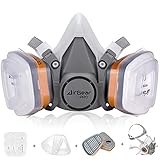
7. AirGearPro M-500 for Painting and Sanding
AirGearPro M-500 Reusable Respirator Mask with Filters | Ideal for Painting, Woodworking, Construction, Sanding, Spraying
CE certified A1P2 filtration
P2 filter blocks at least 95%
92 g
2 year warranty
Pros
- Dual A1P2 filtration blocks fine sanding dust and paint vapour
- Lightweight 92 g design allows normal breathing rather than restricted airflow
- Two-strap system with a simple clip is quick to put on and remove
- Fits snugly and works with prescription glasses
- Replacement filters inexpensive compared with other reusable brands
Cons
- Face seal does not always create a fully airtight fit
- Some residual paint odour still detectable during heavy spraying
- New rubber masks can carry an off-gassing smell that needs airing out
- CE certified rather than NIOSH approved
This is the G-500 without the goggles and ear plugs, and for most woodworkers that is the better trade. You drop the integrated eyewear, keep the same A1P2 dual filtration and the same 92 gram body, and you can wear it over your own prescription safety glasses without fighting a second lens.
The dust element is a P2 filter rated at least 95 percent of airborne particles, and the gas cartridge traps organic gases and vapours with boiling points above 65 degrees Celsius. Filters are replaceable and available in Abek1 P2 and A1P2 configurations depending on what you are spraying.
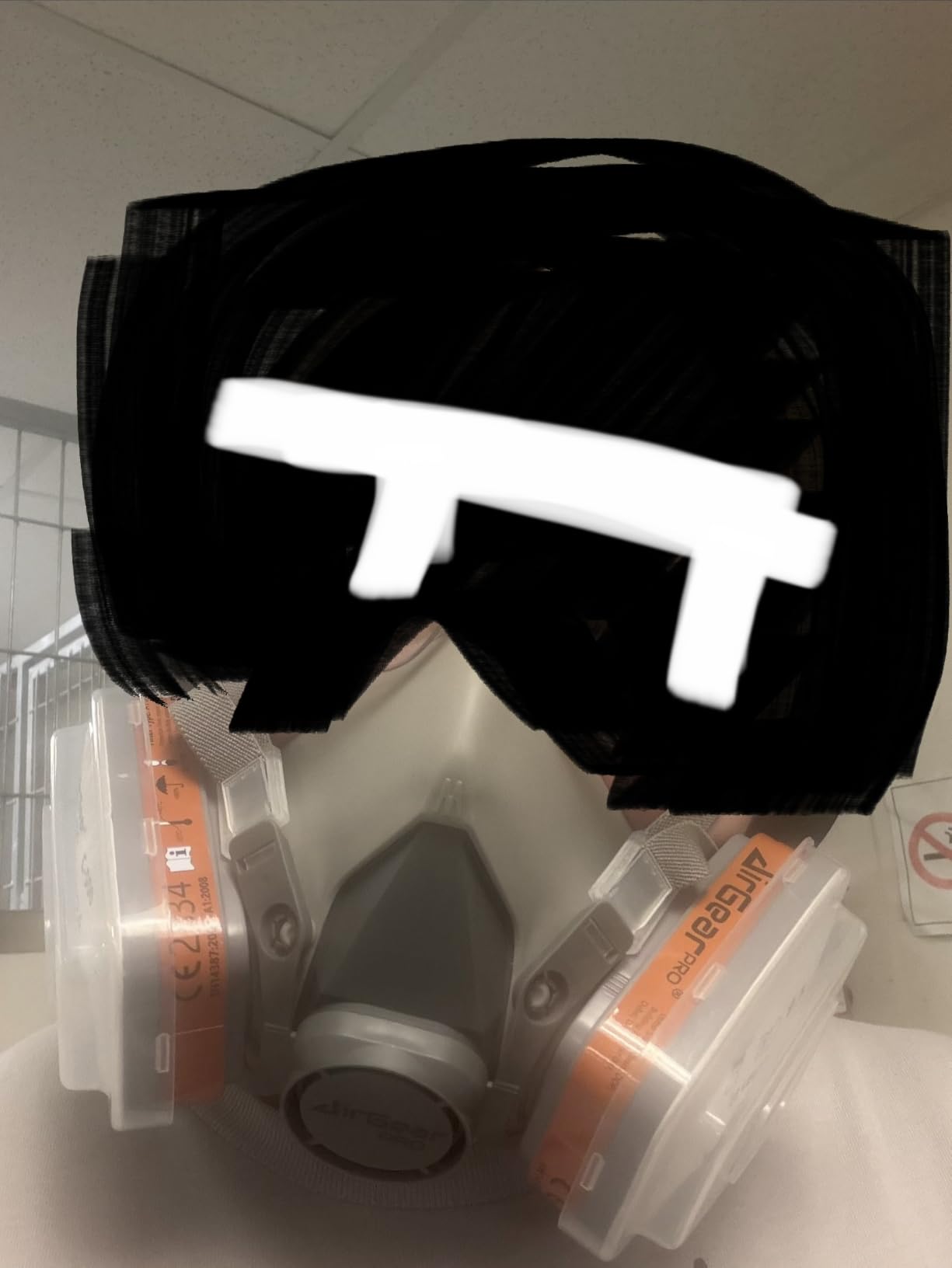
Rated 4.6 across roughly 3.9k reviews with 79 percent five-star ratings, and the feedback from users in fine woodwork, resin work and chemical handling agrees on airflow. This is the mask we found least restrictive during a long spraying session.
Many owners say the same filter set covers both jobs. Swap to the gas cartridge for lacquer or solvent finishes, keep the P2 for sanding, and the mask itself never changes.
What to check before you buy
Confirm you are comfortable with CE certification rather than NIOSH approval before using this on regulated work.
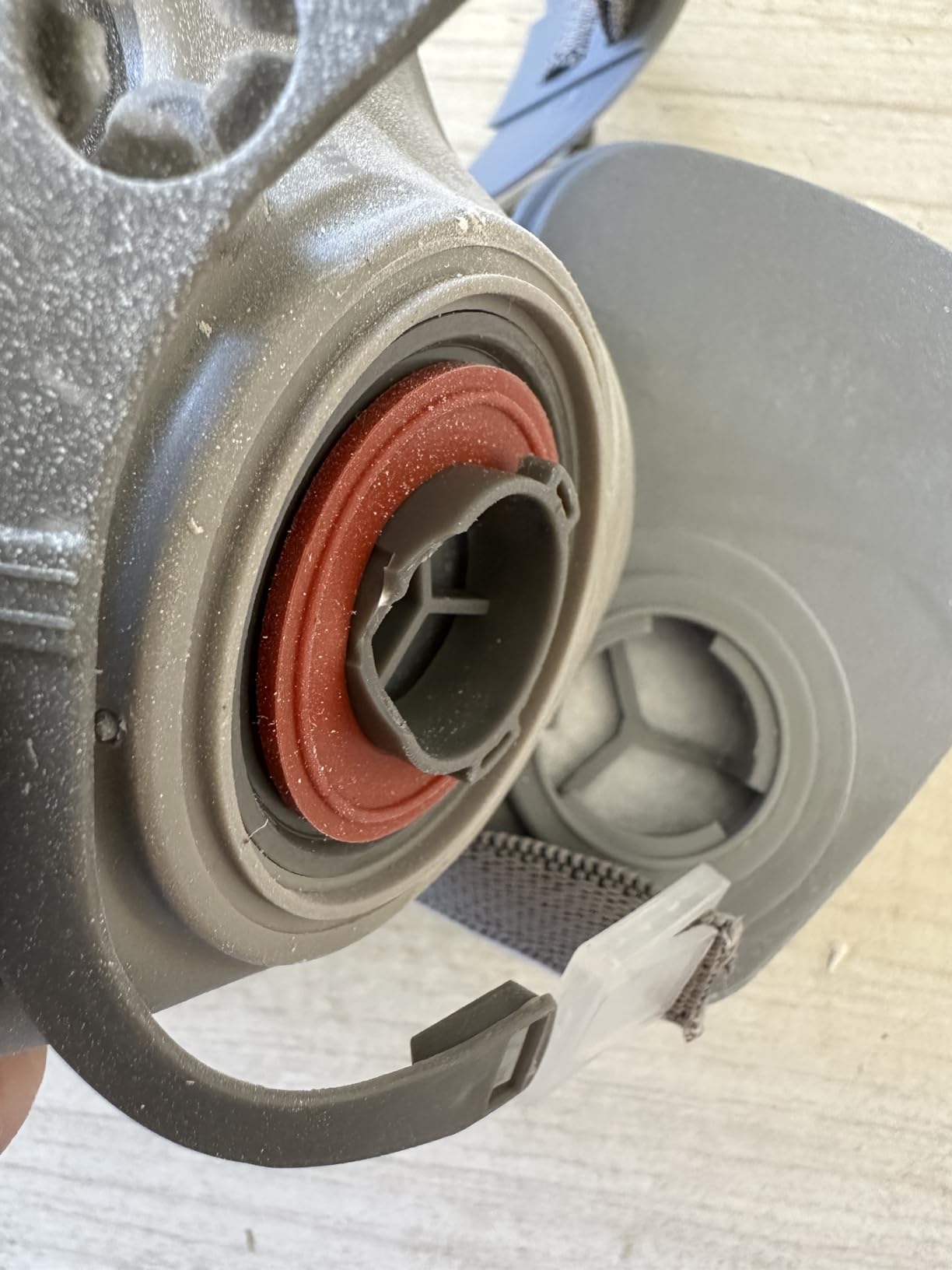
Air the mask out of the box. New rubber components can carry an off-gassing smell, and a day in open air clears it.
Where it will frustrate you
The seal is not perfectly airtight for everyone. Faces with unusual contours or facial hair may need the strap tension dialled in over several sessions.
Heavy spray painting can still let a trace of odour through, so it does not replace a proper spray booth or extraction.
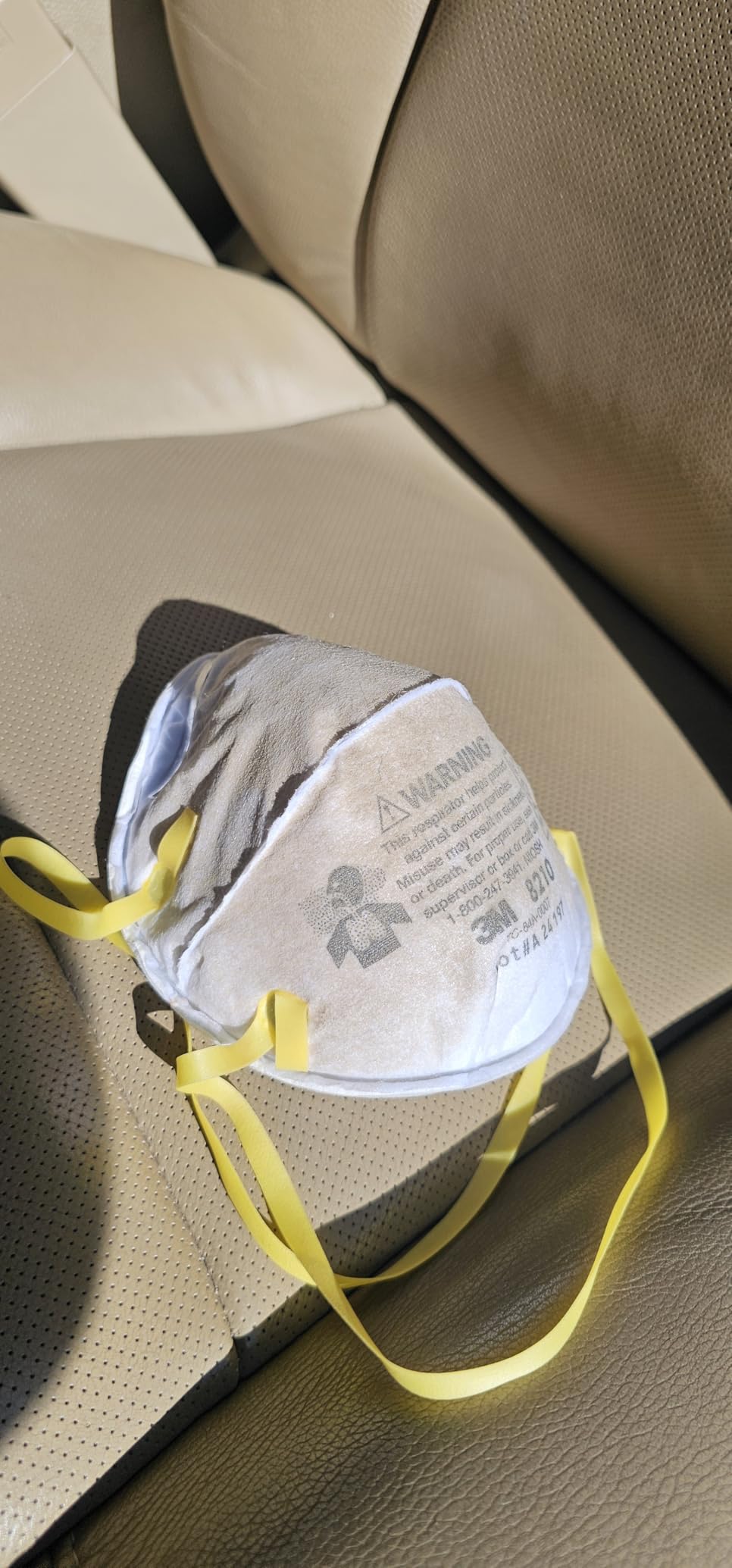
8. 3M 8210 N95 Disposable Mask for Occasional Shop Days
3M Particulate Disposable Respirator 8210, N95, Pack of 20, NIOSH APPROVED
NIOSH N95 disposable
Adjustable noseclip
Two welded strap system
Pack of 20
8.64 ounces
Pros
- NIOSH approved N95 rated for at least 95 percent of non-oil based particles
- Adjustable noseclip reduces eyewear fogging and improves the seal
- Two welded straps hold a secure fit during dusty jobs
- Lightweight cushioned construction stays comfortable over long sessions
Cons
- Disposable design requires constant repurchasing for heavy workshop use
- No exhalation valve so it is harder to breathe through on long jobs
- Marked for industrial and occupational use rather than consumer sale
This is the mask most people already own a box of, and the reason is volume: more than 19.5k ratings averaging 4.4, in packs of 20, with no decisions to make. If you cut a few boards a month and sweep up afterwards, it does the job for a very small outlay per session.
The adjustable noseclip is the feature worth noting. It pulls the top of the mask tight against the bridge of the nose, which both improves the seal and reduces the amount of warm air pushed upward into your glasses. That is why the same design shows up on valved and non-valved shells alike.
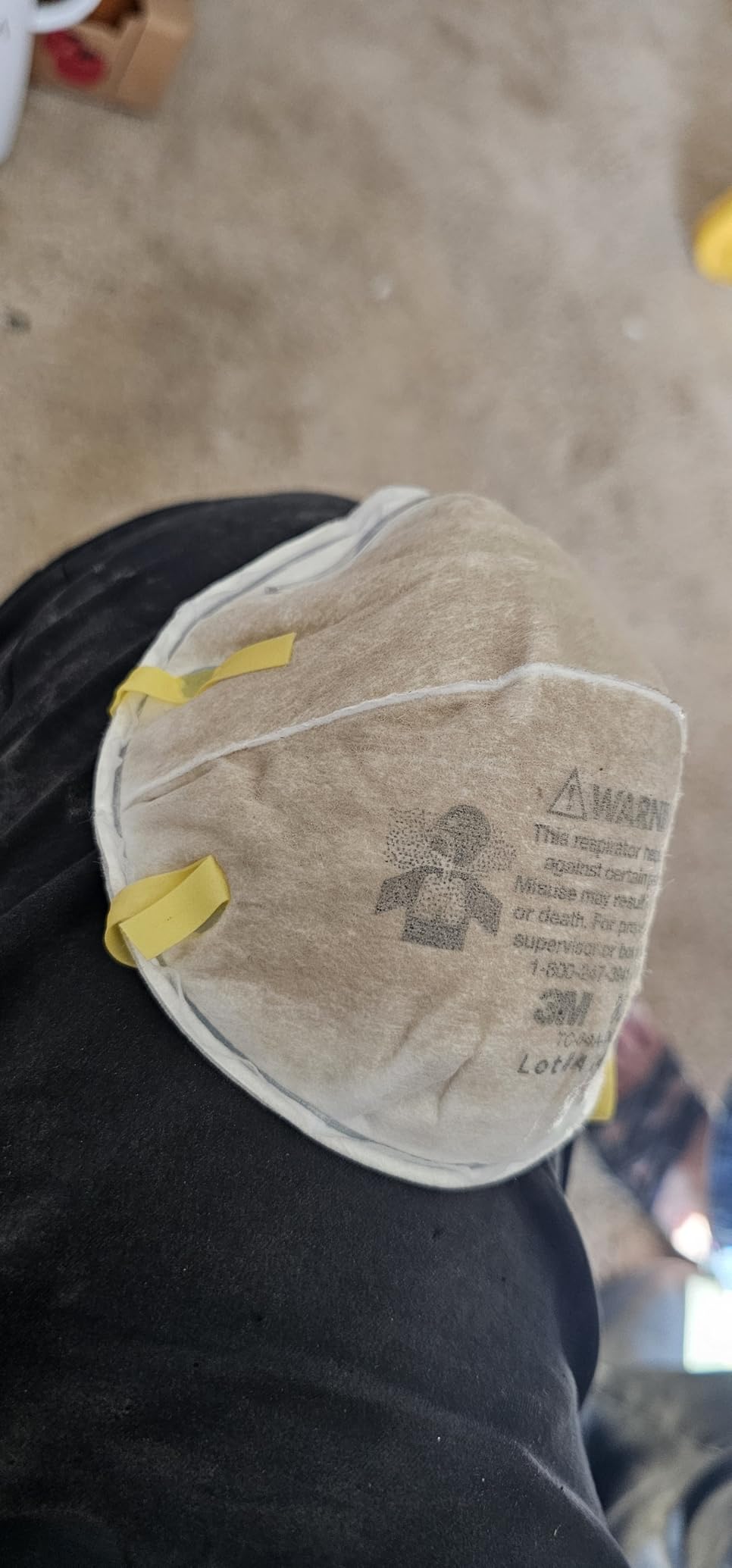
Two welded straps give a more durable attachment than the glued-on loops found on cheap paper masks, and that construction is why the seal survives being pulled down and put back up repeatedly across a shift.
The listed applications cover grinding, sanding, sweeping, bagging and other dusty operations, which covers most of what a home shop produces. Reviewers consistently report reliable filtration for sanding and sawing with low eye fogging.
What to check before you buy
Match the rating to the job. This is an N95, which suits softwood and lighter sanding, but heavy MDF and hardwood routing produces the fine fraction that pushes you toward P100.
Plan for replacement. A twenty-count pack disappears quickly when you use a mask every weekend.
Where it will frustrate you
There is no valve, so breathing resistance climbs on long grinding sessions. Our 8511 comparison explains why that matters.
The box states it is for industrial or occupational use only, so it is aimed at workplaces rather than individual hobbyists.
9. BASE CAMP M Plus for Hot Shops and Claustrophobia
BASE CAMP M Plus Dust Mask, Breathable Reusable Face Mask with 6 Activated Carbon Filters for Woodworking Construction Mowing Grinding (Modern1)
Six-layer filter blocks 99.6%
6 activated carbon filters included
Washable mesh shell
Enlarged one-way valves
Pros
- Comfortable in hot conditions without overheating the face
- Ear loops plus a rear neck strap keep it firmly in place during active work
- Washable mesh shell and reusable valves make it cheap to keep using
- Includes six activated carbon filters for odour control
- Suits users who find rigid half masks claustrophobic
Cons
- Cup-style design does not seal tightly against bearded faces
- Can slide down off the nose and the neck strap is hard to latch
- Not approved for medical or viral protection purposes
- Lower filtration rating than elastomeric P100 or NIOSH N95 options
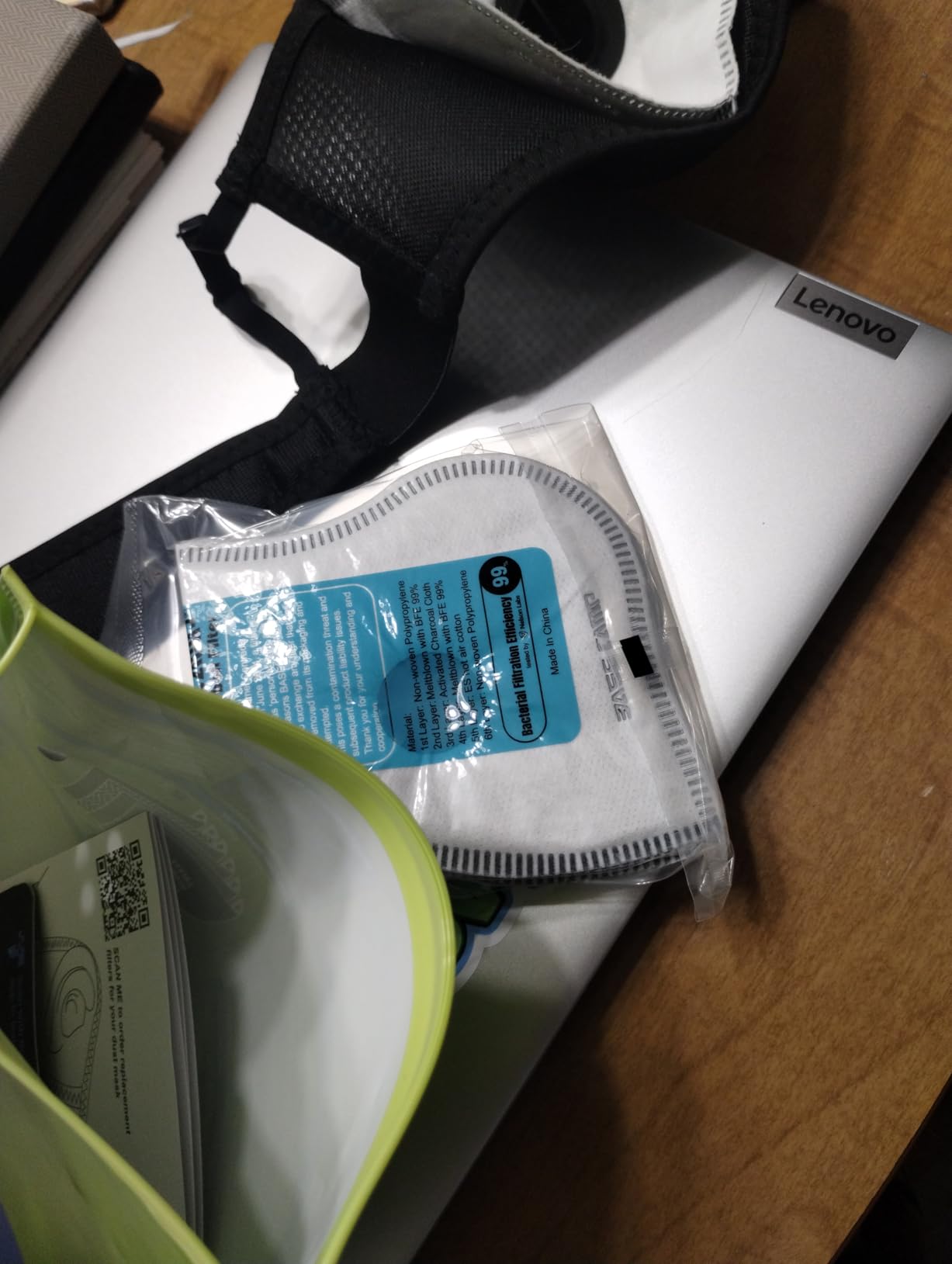
The M Plus takes a completely different approach. Instead of a rigid elastomeric body it uses a washable mesh shell over a six-layer filter, with oversized one-way valves that are stated to exhaust heat, water vapour and carbon dioxide more efficiently than standard designs. In a hot garage in August, that difference is not subtle.
Filtration is stated at 99.6 percent of dust, pollen, odours, pollutants and other airborne particles, and the six included activated carbon filters handle the smell of a shop that has been sanding for three hours. The mask, valves and shell are all washable, so it stays in rotation indefinitely.

Fit is done with ear loops plus a hook and loop neck strap, which keeps it from shifting when you are bent over a bench or moving between machines. The adjustable nose clip also helps push breath downward and keep glasses clear.
Forum consensus, including repeated endorsements on LumberJocks threads, is that it is soft and cool for long sessions. The same threads carry complaints about sawdust working past the cup-shaped edge, particularly with facial hair.
What to check before you buy
Understand the seal limits. A cup-style mask cannot create the same seal as an elastomeric half mask, so treat it as comfort gear for lighter dust rather than your protection for MDF.
Fit check the neck strap early. It is the part users most often struggle to latch, and it is what keeps the mask from sliding.
Where it will frustrate you
If you have a beard, expect edge leakage. This is the wrong shape for a hard face seal.
The pre-attached filter is described as an example only and should be replaced before first use, which catches people out.
10. FIGHTECH Carbon Mask for Multi-Size Setups
FIGHTECH Dust Mask 2 Sizes – Large, Woodworking Reusable Carbon Filter Mask
99.941% tested average efficiency
Captures particulate to 0.1 micron
Interchangeable carbon filters
Elastic construction
Large variant
Pros
- High stated filtration efficiency of 99.941 percent for an entry-level outlay
- Adjustable upper strap with silicone grip lines prevents slipping
- Interchangeable carbon filters and exhaust valves extend service life
- Elastic construction in three sizes fits most head types
- Handles woodshop dust plus painting and cleaning chores
Cons
- Lowest average rating here at 4.2 with a narrower spread of scores
- Not certified to NIOSH or CE standards for high-risk particulate work
- Loose cup-style fit can leak around the edges under heavy sanding
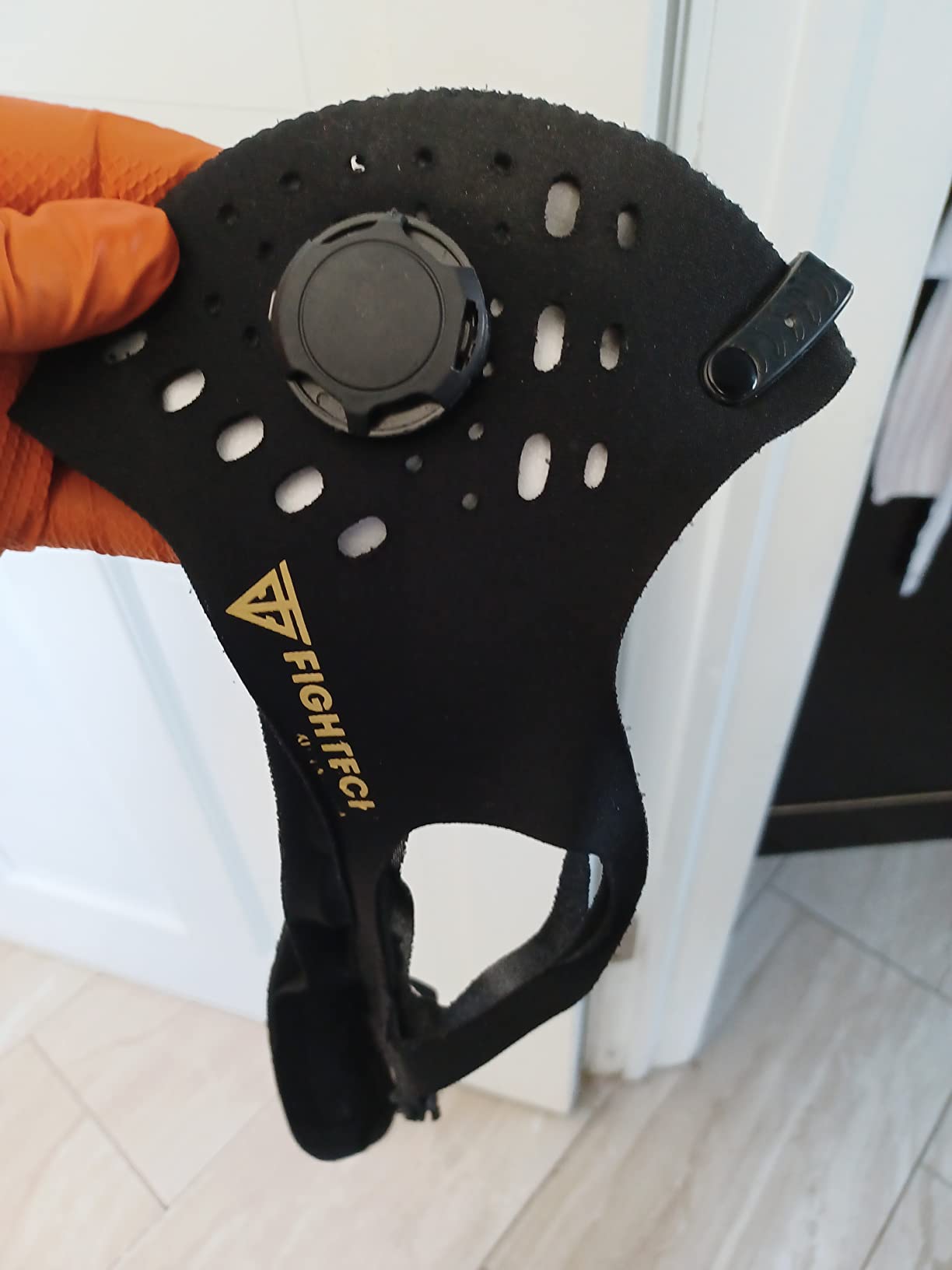
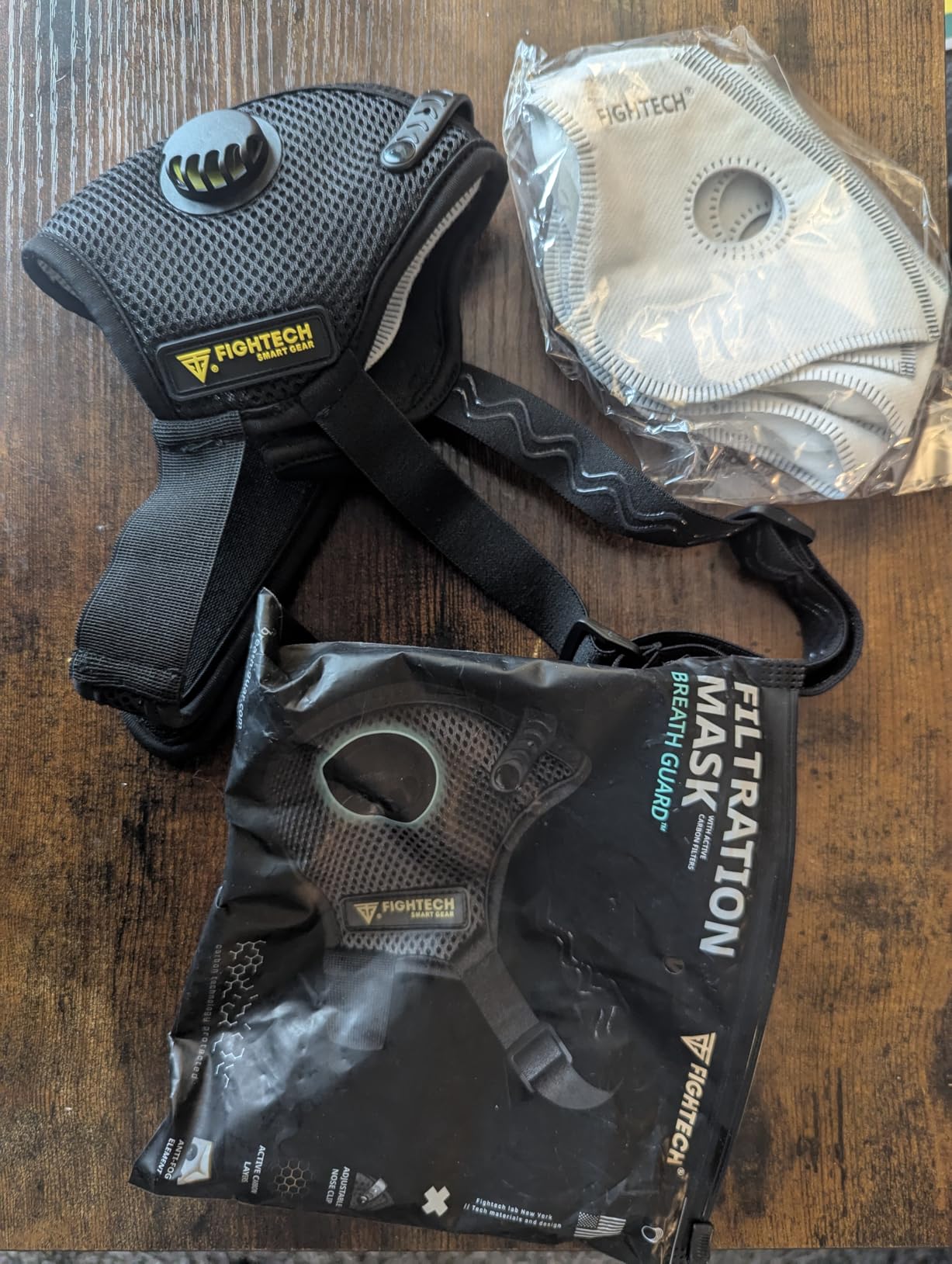
This mask exists for a specific problem: finding a fit. The elastic construction is offered across three sizes rather than a single medium, and the adjustable upper strap carries internal silicone grip lines that stop it sliding down while you work. Sizing is the number one complaint about most half masks, and this one attacks it directly.
Filtration is specified at an average efficiency of 99.941 percent, tested at Nelson Laboratories in the USA, with active carbon filters catching particulate down to 0.1 micron. Both the carbon filters and the exhaust valves are interchangeable and reusable.
Rated 4.2 across roughly 2.1k reviews with a 60 percent five-star share, it is the lowest-scoring product here, and the rating reflects that rather than a bad product. Buyers who value interchangeable filters and adjustable sizing tend to be satisfied with it.
The critical reviews focus on the same two things: fine dust escaping at the edges during sustained sanding, and the absence of a formal NIOSH or CE certification mark on a mask making a tested-efficiency claim.
What to check before you buy
Know what it is and is not. The stated efficiency is a laboratory test result, not a NIOSH approval, and that distinction should drive your choice if your work is heavy or regulated.
Confirm the size before ordering. This listing is the Large variant, with medium and small options available separately.
Where it will frustrate you
Under a heavy sanding load the cup shape leaks at the edges, so it is not the right mask for router work or MDF.
The lower rating means a wider spread of mediocre feedback than the picks above it, so expectations should be set accordingly.
How to Choose a Dust Mask for Woodworking
Filtration rating: what N95, N99 and P100 actually mean
The number is a filtration efficiency against airborne particles, and the letter is about oil resistance. N means not resistant to oil, R means resistant under a full eight-hour shift, and P means oil proof. Wood dust is not an oil, so all three classes work for it, and the number is where your decision lives.
N95 captures at least 95 percent of airborne particles. N99 steps up to 99 percent. P100 is the top of the common disposable and half-mask range, filtering 99.97 percent of particles down to 0.3 microns. The Elipse and the Klein 60552 in this roundup carry P100; the 8210, 8511 and Air Stealth sit at the lower tiers of their own specifications.
European FFP ratings work on the same principle. FFP1 filters roughly 94 percent, FFP2 around 98 percent, and FFP3 99 percent. The BASE CAMP M Plus and the two AirGearPro masks in this list are marked against that scale rather than the NIOSH scale.
Match the rating to the material you are cutting
Softwood, plywood and light sanding produce coarser particles that an N95 handles well. Hardwood dust is finer and is a recognised sensitiser, so step up to P100. MDF and particle board produce the most dangerous airborne fraction in a home shop because of the resin binders, and they deserve the same treatment as hardwood.
Spraying stain, lacquer or solvent-based finish is a different problem entirely. That calls for an organic vapour cartridge alongside the particulate filter, which is what the A1P2 configuration on both AirGearPro masks is built for.
NIOSH approval versus CE marking
NIOSH approval under 42 CFR 84 is what OSHA-regulated workplaces and most professional shops look for. Certification means the mask was tested and approved to a stated filtration class, and it is the baseline rather than a bonus. CE marking is a European conformity standard that many buyers in this country treat as adequate, particularly on dual-certified kits sold worldwide.
Be careful with masks that quote a test result but carry no certification mark at all. A lab efficiency figure tells you what the media can do; it does not tell you the facepiece is approved for the task.
Seal and fit matter more than the label
A respirator filters air that passes through its media. Air that leaks in around the edge never touches the filter at all, so a loose P100 protects you less well than a tight N95. This is the reason so many buyers regret cup-style masks despite high stated efficiency.
Facial hair is the most common seal breaker. Every mask in this roundup will leak around a full beard unless you shave or use a beard seal, which is a real cost to your protection. If you will not shave, look for a mask with a firm elastomeric seal and test it properly, or step up to a PAPR with a loose-fitting hood.
Do a user seal check each time you wear it. Cover the filter inlet with your hand and inhale gently: a proper seal makes the mask collapse slightly and hold. Then do the same with an exhale, feeling for air escaping around the seal rather than through the valve.
Glasses, hearing protection and your sight line
Glasses fogging was the most repeated complaint across every woodworking forum we read. It happens because you exhale warm, moist air and it rises into the lens. The fix is mechanical: a mask with a downward-facing or low-mounted exhalation valve directs that air under your glasses instead of into them, and the Klein 60552 and Trend Air Stealth both do this deliberately.
Hearing protection matters too. A bulky respirator that pushes earmuffs off your ears gets removed, and a removed mask protects nobody. The Elipse is repeatedly praised in forums specifically for not interfering with hearing protection.
Watch your downward sight line. When you lean over a bench to inspect a cut, a large elastomeric half mask blocks the view of your hands, so you end up lifting your head and losing your reference point. Low-profile designs such as the Elipse and the Air Stealth avoid this.
Disposable versus reusable, and what it really costs
Disposables win on convenience and lose on running cost. A twenty-count pack of N95 masks disappears over a few busy weekends, and that is the honest total: you repurchase forever.
Reusable elastomeric masks move that cost into filters. The GVS Elipse lists filters as rated for up to five years of service, the 3M 6300 accepts the whole 3M filter range, and both AirGearPro masks use inexpensive replaceable cartridges. Over a year of regular shop use, the reusable route usually costs less and fits into a predictable consumable budget.
A respirator is the last line, not the first
No mask substitutes for capturing dust at the machine. A dust collector at the source removes the bulk of the material before it becomes airborne, and our guides on dust collectors for lathe work and dust collection hoses for shop vacs cover the two setups most home shops can actually build.
After that, a shop air filter handles the fine fraction that escapes capture, and a correctly chosen respirator covers the residue. In that order, the mask becomes a backup layer rather than your only defence, and you can often step down to a lighter N95 for most of your work.
Frequently Asked Questions
Is N95 good enough for woodworking?
An N95 filters at least 95 percent of airborne non-oil particles, which covers softwood dust, plywood and light sanding well. Heavy hardwood dust, MDF cutting and router work produce finer particles, and those jobs are safer with a P100 half mask. Match the rating to the messiest material you regularly handle rather than the easiest one.
Is a P100 mask good for dust?
Yes. P100 is the highest common filtration class for half masks and disposable respirators, filtering 99.97 percent of particles down to 0.3 microns. It is rated against wood dust, silica, asbestos and metal dusts. The catch is that the rating only matters if the facepiece seals to your face, since leaked air bypasses the filter entirely.
Is there any mask better than N95?
N99 filters 99 percent and P100 filters 99.97 percent of airborne particles, so both step up from N95. Powered air-purifying respirators go further again because a fan pushes air through the filter, which suits full-time shops and anyone with facial hair that breaks a face seal. For most home shops a P100 half mask is the practical ceiling.
What is the difference between a dust mask and a respirator?
A dust mask is a loose comfort mask that traps larger particles without certification, while a respirator is a certified filtering facepiece with an assigned class such as N95 or P100. Respirators are tested and marked to NIOSH or CE standards, seal tightly to the face and can carry cartridges for vapours. If you cannot find a certification mark, it is a dust mask, not a respirator.
Why do my safety glasses fog with a dust mask?
You exhale warm moist air and it rises into your lenses. A respirator with a downward-facing or low-mounted exhalation valve sends that air below your glasses instead of into them. The Klein Tools 60552 and the Trend Air Stealth both place the valve low for exactly this reason. Taping the bridge of your glasses to your face also works as a quick fix.
Final Verdict on the Best Dust Masks for Woodworking
The 3M 6300 Half Facepiece Reusable Respirator is our pick for the best dust masks for woodworking in 2026. It holds the highest average rating in this roundup, it survives long sessions without the seal breaking down, and its bayonet system means one facepiece covers dust today and finish spraying whenever you need it.
Buy the GVS Elipse P100 if you wear glasses and ear protection all day, the 3M 8511 if you want a disposable that does not fight you on breathing, and the Klein 60552 if a beard means you need a downward valve and a fit check before every job. Whichever you choose, pair it with dust collection at the source and a shop air filter, because the mask is the layer that protects you when everything else has already done its job.
Our guide to digital calipers for woodworking covers the other tool most shops end up buying alongside a decent respirator.