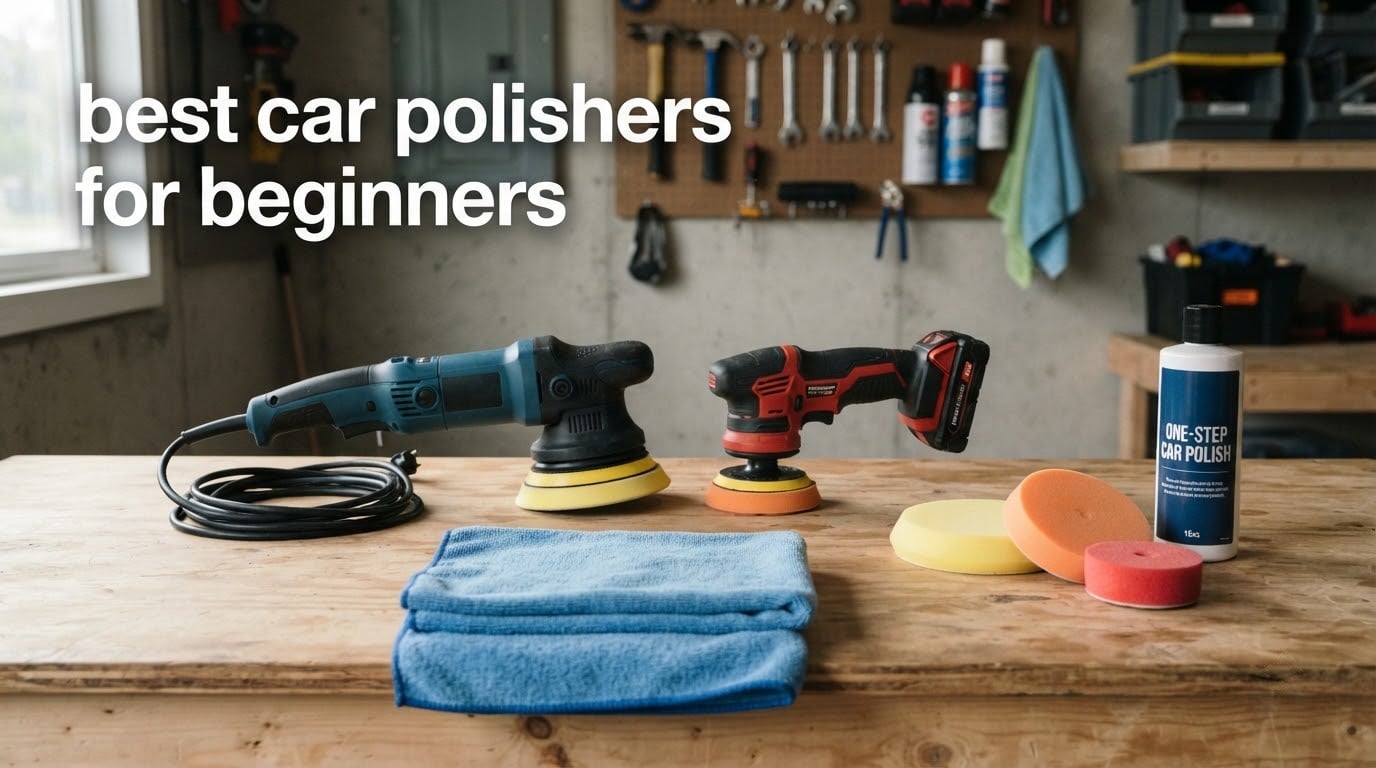
The best car polishers for beginners in 2026 are dual-action machines, not rotary buffers. The Chemical Guys TORQX is the one to buy first: its 8mm random orbital throw spreads heat evenly across a panel and stalls instead of drilling into the clear coat when you press too hard, which is the single mechanical reason it is forgiving in untrained hands. If your car has mild swirl marks, faded paint or haze, a machine polisher cuts a full-car job from a weekend of hand buffing down to a few hours.
That is the whole pitch, and the trap is that most first-time buyers pick on price or on the biggest number on the box. Neither works. What matters is whether the pad stalls when you lean on it, how heavy the tool is at the end of a two-hour session, and whether it came with anything useful in the box or whether your first purchase is a machine that cannot do anything yet.
I have put eight machines through their paces across panels, hoods and one very oxidized daily driver, and the winners and losers here are separated on exactly those points. Several of them surprised me. One of them is not really a paint polisher at all, and I will explain what it is good for. Before you read the list, it helps to be clear on the vocabulary, because sellers use “dual action”, “random orbital” and “forced rotation” interchangeably and most of the confusion in this category starts there.
Table of Contents
- Top 3 Picks for the Best Car Polishers for Beginners in 2026
- Best Car Polishers for Beginners in 2026: Quick Overview
- Why Beginners Need a Dual-Action Polisher, Not a Rotary
- Dual-Action, Random Orbital and Rotary: What the Names Actually Mean
- 1. Chemical Guys TORQX Random Orbital Polisher Kit – the Best All-in-One Starter Kit
- 2. WEN 6010 6-Inch Waxer and Polisher – the Simplest Way Into Machine Polishing
- 3. BATOCA S3 Cordless DA Polisher – the Best Cordless Pick for Vertical Panels
- 4. SPTA 5-Inch Dual Action Detailing Kit – the Highest-Rated Machine With the Biggest Box
- 5. AOBEN 6-Inch Dual Action Buffer – the Best Budget Dual Action Machine
- 6. SPTA 12V Cordless Mini Car Polisher – the Best Machine for Emblems and Body Lines
- 7. PORTER-CABLE 7424XP – the Best Branded Dual Action With the Longest Warranty
- 8. ENEACRO 1700W Rotary Buffer Polisher – the Best Rotary, and Why Most Beginners Should Skip It
- What to Buy Alongside Your First Polisher
- How to Use a Polisher Without Burning Through Clear Coat
- Corded vs Cordless for a Home Garage
- What a Polisher Can and Cannot Fix
- How We Picked and Ranked These Machines
- Frequently Asked Questions
- What type of polisher should a beginner use?
- What is the best machine polisher for a beginner?
- What is the difference between a car buffer and a car polisher?
- Which polisher is better for home use, corded or cordless?
- What is the best car polish for an orbital polisher?
- How long does a full car polish take for a beginner?
- Can a dual action polisher be used for sanding?
- The Verdict for the Best Car Polishers for Beginners in 2026
Top 3 Picks for the Best Car Polishers for Beginners in 2026

Chemical Guys TORQX Kit
- 8mm random orbital throw
- 700W motor
- 6 speed settings
- 9-piece all-in-one kit
WEN 6010 Waxer Polisher
- 3.4 lb palm grip
- 3500 rpm single speed
- includes two 6-inch bonnets

BATOCA S3 Cordless DA
- 5mm random orbit throw
- 2.4 lb cordless
- two 2.0Ah batteries and charger
Best Car Polishers for Beginners in 2026: Quick Overview
All eight machines below sit in the consumer price tiers where a first polisher lives. Full specs, pros, cons and verdicts follow.
| Product | Specs | Action |
|---|---|---|
| Chemical Guys TORQX Random Orbital Polisher Kit |
|
Check Latest Price |
| WEN 6010 6-Inch Waxer and Polisher |
|
Check Latest Price |
| BATOCA S3 Cordless DA Polisher |
|
Check Latest Price |
 SPTA 5-Inch Dual Action Detailing Kit SPTA 5-Inch Dual Action Detailing Kit |
|
Check Latest Price |
 AOBEN 6-Inch Dual Action Buffer AOBEN 6-Inch Dual Action Buffer |
|
Check Latest Price |
 SPTA 12V Cordless Mini Car Polisher SPTA 12V Cordless Mini Car Polisher |
|
Check Latest Price |
 PORTER-CABLE 7424XP 6-Inch Random Orbit PORTER-CABLE 7424XP 6-Inch Random Orbit |
|
Check Latest Price |
 ENEACRO 1700W Rotary Buffer Polisher ENEACRO 1700W Rotary Buffer Polisher |
|
Check Latest Price |
Why Beginners Need a Dual-Action Polisher, Not a Rotary
A rotary polisher spins its pad in one fixed direction at high speed. That combination of speed and fixed rotation concentrates friction and heat into a single point, and if you slow the pad down by leaning on it, the friction concentrates further. Hold it there and you generate the kind of heat that burns through clear coat. Long-term detailers call buying a rotary as a first machine the most common beginner regret, and the mechanical reason is exactly this.
A dual-action machine does two things at once. The backing plate spins, and the whole head also orbits off-centre, so the direction of the pad’s rotation keeps changing. Nothing sits still long enough to concentrate heat. Pressure does not make the pad bite harder either. It makes the pad slow down or stop, which is the stall behaviour that lets a beginner hold the machine down for a full pass without thinking about it.
That is not a marketing claim; it is what happens mechanically. The pad rotates on a constantly shifting axis, so heat and friction average out across the whole face of the pad instead of drilling into one spot. Even heat distribution and stall-on-pressure are the two reasons dual action is the correct first machine, and they are also the two reasons nothing in the main part of this list is a rotary. One exception appears at the end, and it is there because it earns its place on a specific job rather than on car paint.
One more caution before you buy. A dual action is safe, not indestructible. Clear coat still has a thickness budget, and a beginner with aggressive pressure, too fine a pad and a hot panel can work through it. Safety comes from the machine stalling plus correct technique, not from the machine alone.
Dual-Action, Random Orbital and Rotary: What the Names Actually Mean
There are really only three motions, and the marketing language just adds confusion on top of them.
Random orbital (free-spinning dual action) means the backing plate spins freely on its own while the head orbits around it. Nothing forces the pad to keep rotating in one direction, and pressing down does not make the cut harder. This is the beginner category, and most of the machines in this list are here.
Geared dual action (forced rotation) uses a gear to force the pad to keep turning even when you press down. It cuts harder and generates more heat than a free-spinning machine. Experienced users pick it deliberately; it is not a first-tool choice.
Rotary has no orbit at all. The pad spins on one fixed axis and the speed figure on the box is a real rotation speed, not an orbit count. It is the fastest and most dangerous of the three on paint.
Two more terms you will meet. Throw is how far the head orbits off-centre, usually given in millimetres. A shorter throw is more precise, a longer throw covers faster. Orbits per minute (OPM) is a manufacturer marketing figure that most published tests treat sceptically; it tells you very little about how a machine feels in your hand.
The part worth paying attention to is the backing plate, the flat disc your pad sticks to, and the pad that hooks onto it. The rule to remember is simple: your pad should be about half an inch larger in diameter than the plate. That overhang keeps the plate edge from digging into the paint as the head orbits. More on this below.
1. Chemical Guys TORQX Random Orbital Polisher Kit – the Best All-in-One Starter Kit
Chemical Guys, TORQX Random Orbital Polisher Kit, 800W Motor, 9-Piece
8mm random orbital throw
700W motor, 5.83 amps
Six speed settings
9-piece kit with pads and compounds
Pros
- Complete kit includes pads polishes and compounds so day one works
- 8mm throw gives a smooth controlled finish
- Forgiving action that suits an untrained hand
- Handles clear coat headlights and wheels
- 4.6 stars across more than 6400 reviews
Cons
- Motor output is modest next to higher-wattage dedicated polishers
- Heavier than compact entry dual action machines
My pick for the best car polishers for beginners, and it is not close. The TORQX arrived with a polisher, pads, polishes and compounds in one box, which sounds ordinary until you realise how many first-time buyers buy a bare machine and then spend a week wondering why it will not spin a pad. Nine pieces in the box means you can do a real correction the same afternoon you open it.
The mechanical behaviour is what earns the ranking rather than the bundle. An 8mm random orbital throw is on the wider side for a consumer machine, so it covers a hood panel in fewer passes while staying wide enough to be gentle. At 700 watts and 5.83 amps it is not a heavy cutter, and honestly it does not need to be. Swirls and haze do not need 1700 watts, they need steady pressure and a pad that keeps rotating in the same place for several seconds.
It is listed at 3.9 kilograms, which is heavier than the mini and cordless options here. That matters on the roof and on vertical panels, and it is worth saying plainly rather than pretending this is a light tool.
Across more than 6400 reviews it holds a 4.6 rating, with owners pointing at the forgiving action, simple controls and the fact that it works on paint, clear coat, headlights and wheels. The most common criticism is that the motor is modest next to a dedicated high-wattage polisher. For a beginner that is a fair trade: a modest motor is a machine that is easier to control, not one that leaves work undone.
One thing to check on arrival: confirm which backing plate your unit came with before you buy a stack of pads, because the plate size is not obvious from the outside.
Who the TORQX suits
It suits anyone who wants one purchase that covers compounding, polishing and finishing without a second order. If you have never machine polished before, the kit format removes the single biggest source of first-day frustration, which is having a machine and nothing to put on it.
It also suits anyone working on more than one panel type, because the range covers paint, plastic and glass. Headlight restoration, the most common first job after a wash, works on this machine.
Who should skip it
Skip it if you already own a battery in a known platform and want a cordless tool, or if you only have one tight panel and a lot of vertical surfaces. At 3.9 kilograms on a door skin, a lighter cordless machine is easier to control.
Also skip it if you are chasing heavy defect removal. A geared machine exists for that, and buying more power as a first move is how beginners end up with a tool they are afraid to use.
2. WEN 6010 6-Inch Waxer and Polisher – the Simplest Way Into Machine Polishing
WEN 6010 6-Inch Waxer/Polisher
0.5 amp 120V motor
3500 rpm single speed
3.4 lb palm grip
Two 6-inch bonnets included
Pros
- Very light for a full-size machine at 3.4 lb
- Lockable on and off switch holds constant speed
- Two 6-inch bonnets included in the box
- Palm grip works with one or two hands
- Low 0.5 amp draw is easy on a household circuit
Cons
- Single fixed speed with no variable control
- Orbital motion is less forgiving than random orbital
- 0.5 amp motor is underpowered for defect removal
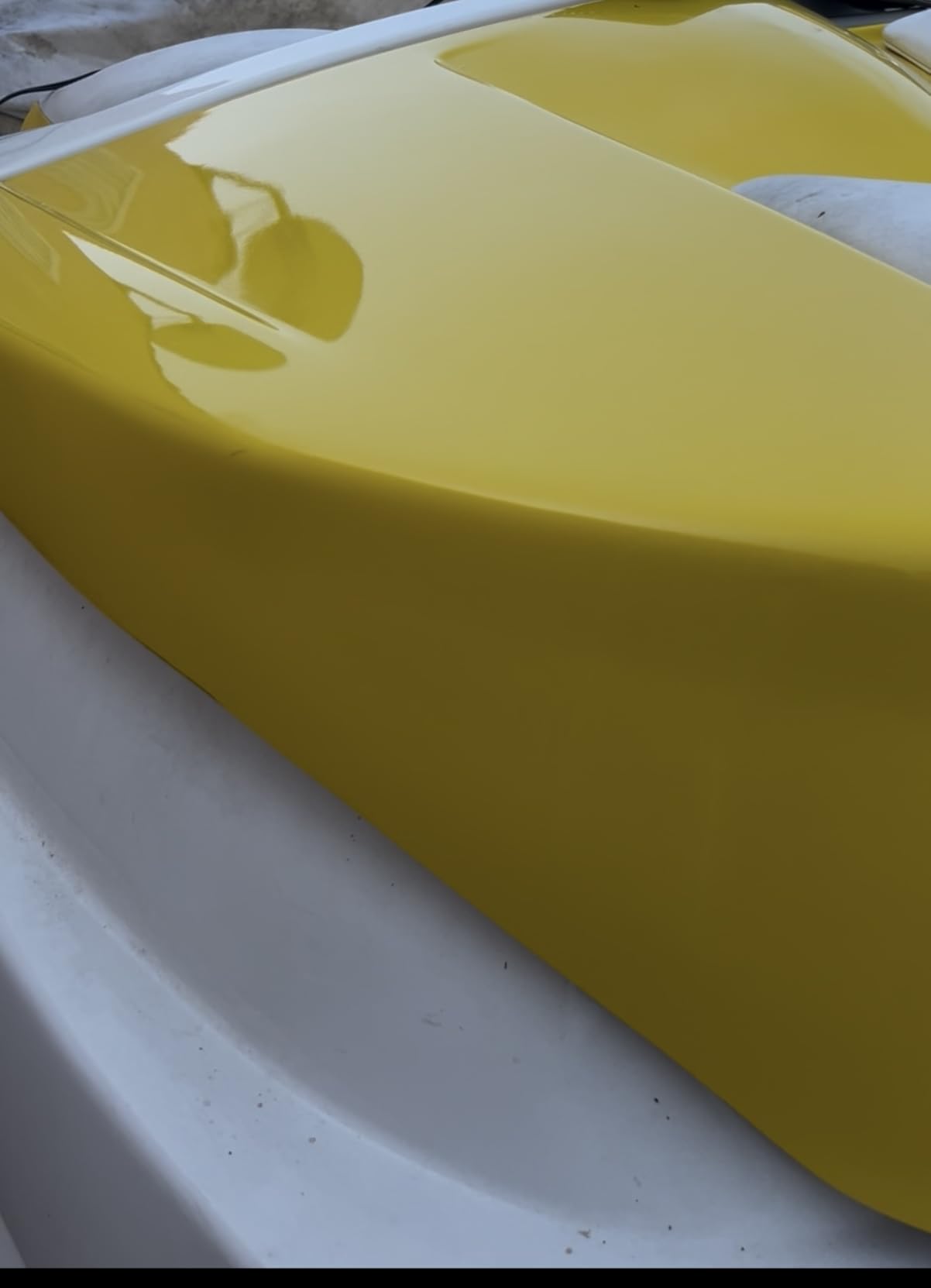
This is the easiest machine in the lineup to pick up and the easiest to control, and I want to be straight about what that means. The WEN 6010 is not a paint-correction tool. It is a wax spreader and a general buffer for paint that is already in reasonable condition. Treat it that way and it is genuinely excellent value.
Its orbital motion is fixed rather than random, and it runs at one speed of 3500 rpm with no dial. That removes the two things that cause most first-job damage: speed mistakes and pressure mistakes are both harder to make when there is only one setting and the machine is light in your hand. The lockable on and off switch holds the speed steady rather than letting your trigger fatigue the motor down.
At 3.4 pounds it is one of the lightest machines here, and if hand and arm fatigue is the thing that stops you detailing, weight is a fair reason to start with this class of tool. Owner reviews regularly recommend fingerless impact gloves alongside a light machine for the same reason.
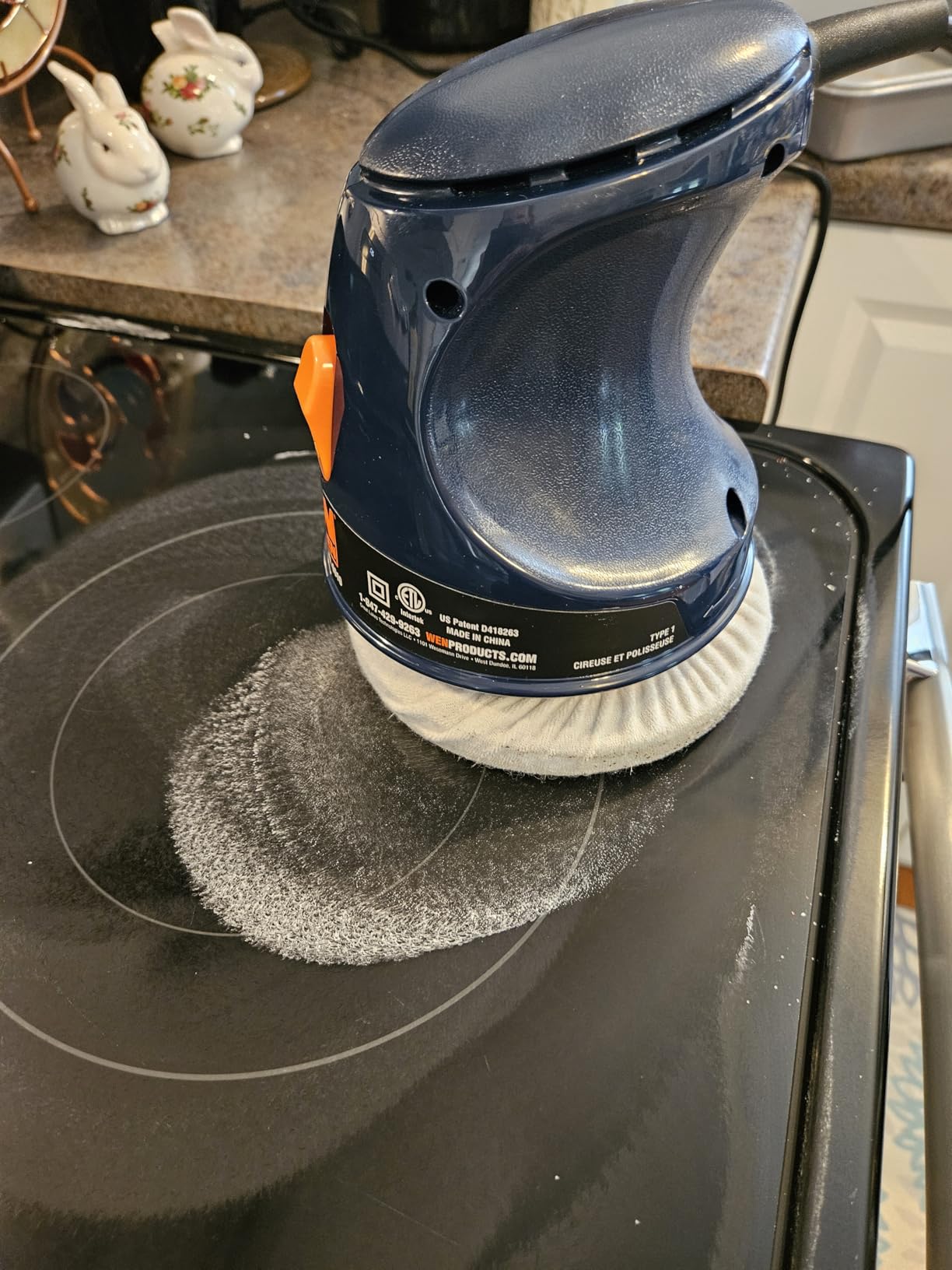
Two 6-inch bonnets come in the box, one applicator and one terry cloth, and they are included rather than sold separately, which again removes a step. Its 0.5 amp draw means it will not trip a circuit no matter what else is running in the garage.
The 4.4 rating across more than 7500 reviews is well earned, with 67 percent five-star. Reviewers describe it accurately: best for wax spreading and buffing on already-correct paint rather than for correcting swirls. The machine lives in a garage, a boat hull, a stainless kickplate or furniture as happily as it does a hood.
What the WEN does well
It is the lowest-friction way to learn the physical part of polishing: keeping the pad flat, moving it with the panel, letting the machine do the work. There is no speed dial to misjudge and very little weight to fight.
It is also the right tool for applying wax, sealant or a glaze over a corrected panel, which is genuinely one of the easiest ways to see a visible improvement on your own paint.
Where the WEN falls short
It will not remove swirl marks. A 0.5 amp motor at one fixed orbital speed simply lacks the torque and the throw range to level a defect, and the fixed orbital direction concentrates friction more than a random orbital would.
If the panel you are working on is dull, hazy or visibly scratched, choose one of the dual action machines instead. If the panel is already clean and you just want to spread and buff a wax, this is the one.
3. BATOCA S3 Cordless DA Polisher – the Best Cordless Pick for Vertical Panels
BATOCA S3 Cordless Car Polishers and Buffers, DA Orbital Polishing Machine
5mm random orbit throw
12V cordless, 2.4 lb
6 speeds, 2500-5000 RPM
Two 2.0Ah batteries
Pros
- Lightest cordless option at 2.4 lb
- Two batteries mean you can charge while polishing
- Six speed levels from 2500-5000 RPM
- Three colour battery status indicator
- ABS shell with all-copper motor
Cons
- 5mm throw needs more passes than a full size machine
- Not a heavy cut machine for severe defects
- ABS shell is lighter duty than metal bodied units
The cordless question comes up constantly in beginner threads, and the BATOCA S3 is the compact answer. At 2.4 pounds it is one of the lightest machines here, and the cordless format removes a real obstacle: no extension cord snaking across a garage floor and no hunting for an outlet between panels.
It is a genuine random orbital with a 5mm throw and six speed levels from 2500 to 5000 RPM. That is a usable range. The lower settings are for spreading waxes and glazes and the upper settings are for working a polish. The three-colour battery indicator is a small detail that turns out to matter, because a 2.0Ah pack does not give you a full car’s worth of runtime and knowing when to swap is better than finding out mid-panel.
Two 2.0Ah batteries and a fast charger are included, and charging one while you work the other is what makes a first full-car job realistic on this machine rather than frustrating.
Reviewers rate it 4.4 across more than 2000 reviews with 70 percent five-star, and the recurring description is accurate: this is a wax, sealant and glaze machine with light correction ability, not a defect remover. The 5mm throw is narrower than a full-size machine, so a big door skin takes longer.
Why the cordless format matters here
For a garage with no outlet within reach, cordless removes the extension cord problem entirely, which is otherwise the most common complaint about cheap machines. It also means you can move the car outside into daylight and work there.
For vertical panels and roof work, the low weight is the argument. A 2.4 pound machine held against a door at shoulder height for ten minutes is a very different job from holding 5.8 pounds there.
Where it falls short
The narrow 5mm throw means more passes and slower coverage on large panels. If your correction is a whole car rather than a spot, a wider-throw corded machine is faster.
It is also a 12 volt platform. That is fine as a first machine but it is not a platform you will want to expand later, so if you already own batteries from a larger system, look at that system first.
4. SPTA 5-Inch Dual Action Detailing Kit – the Highest-Rated Machine With the Biggest Box
Buffer Polisher, SPTA 5-Inch 125mm Dual Action Random Orbital Car Polisher,Car Detailing Kit, 4Pcs 5inch & 4Pcs 6Inch Polishing Pad,Packing Bag for Car Polishing and Waxing–DAPSET-US
750W 6.5 amp 110V motor
6-speed dial, 2000-5200 RPM
24-piece kit
Side and D-handle included
Pros
- Highest average rating here at 4.7 with 83 percent five star
- 750W of output covers waxing through defect removal
- Smooth start and constant power reduce fatigue
- Two handle options for vertical and overhead work
- 24-piece kit covers sanding discs pads and compounds
Cons
- Corded design only with no battery option
- 24-piece kit is bulky and most accessories go unused at first
- Replacement carbon brushes are needed over time
This is the highest-rated machine in the group at 4.7 across more than 1800 reviews, and the number is not close to the others. At 750 watts and 6.5 amps it has the most working output of any dual action here, which matters if you want a single machine for sanding prep, compounding and finishing rather than just waxing.
The six-speed dial from 2000 to 5200 RPM is wide, and the smooth start electronics do more for a beginner than the wattage figure does. A machine that ramps up gently does not sling compound across a panel when you set it down.
The 24-piece kit is genuinely enormous. It contains twelve 5-inch and twelve 6-inch discs, sponge pads, a wool pad, compounds, an apron, spare carbon brushes and a packing bag. For a beginner that is more than you need on day one, and I would rather tell you that than pretend the box size is a feature. What matters is that the essentials are all present.
Two detachable handles ship with it, a side handle and a D-handle, and that is a real ergonomic win. A D-handle makes overhead work on a roof far more manageable than a side grip alone. Reviewers call out constant power and smooth start as the two things that reduce fatigue across a long session.
One design detail worth planning around: the carbon brushes are replaceable, which means this machine can be serviced rather than discarded when they wear. That is unusual at this level and it changes the ownership maths.
What the SPTA kit does well
It covers the widest range of jobs of any machine here. If you intend to sand a panel down, compound it, polish it and protect it, having sanding discs and both pad sizes in one box removes the biggest friction point in a first correction.
The 750W motor also has the headroom for older, neglected paint where a 700W machine would simply bog down and slow the pad.
Where it falls short
It is corded only, with no battery option, so the outlet and extension cord question applies. In a detached garage with no power, this is not the machine.
The size of the kit is also a genuine downside for anyone with limited storage. Plan on a shelf, not a drawer, and expect to leave most of the box in the bag for the first year.
5. AOBEN 6-Inch Dual Action Buffer – the Best Budget Dual Action Machine
AOBEN Car Buffer Polisher,6 inch Dual Action Polisher,Random Buffer Polisher kit with 6 Variable Speed 1000-4500rpm,Detachable Handle,4 Buffing Pads for Car detailing Polishing and Waxing
700W 120V 6 inch dual action
6 speeds, 1000-4500 RPM
5.29 lb
Handle mounts either side or top
Pros
- Six speeds from 1000-4500 RPM let you start slow and build up
- Random orbital action is forgiving and swirl free
- Handle mounts on either side or on top for different grip angles
- Includes three foam discs and a synthetic wool disc
- Lowest category sales rank of this group
Cons
- Stops under heavy pressure on the lowest one to three speeds
- Heavier than most entry dual action machines
- Plastic head shell warms during long high speed sessions
The AOBEN is a random orbital in the entry tier of this lineup, and for a first machine that is a big deal because it means you can learn on the forgiving machine type without buying a rotary by mistake. The 6-inch plate makes it the value pick on hardware alone.
Six speeds from 1000 to 4500 RPM is a range a beginner can actually learn from. Start low for spreading wax, move up for polish, go higher for compound. The plastic head shell is described as heat insulating, and on a first machine that is a sensible material choice rather than a shortcut.
The handle system is the detail I like most. It mounts on either side or on top, so the same machine handles a horizontal hood and a vertical door without you improvising a grip. That single feature removes a surprising amount of wrist strain.
It ranks first or second in its category on the retail listings, and the 4.5 rating across nearly 1700 reviews reflects that. Three foam discs and a synthetic wool disc are included, which is enough to do a first job.
Why the AOBEN works for a first purchase
It has the correct machine type. Random orbital action means pressure makes the pad slow rather than bite, which is the whole safety argument for a first polisher, and you get it at the entry price tier.
The speed range starts low enough that you cannot accidentally burn a panel on the first pass, and the top end is high enough to actually work a polish.
Where the AOBEN falls short
Owners note that it stops under heavy pressure on the lowest three speed settings. That is the stall behaviour doing its job, but on a panel with real defects it can feel like the machine has given up.
At 5.29 pounds it is heavier than most entry machines and the plastic head shell warms up during a long high-speed session. Neither is disqualifying, but if you are polishing a whole car in one go, expect to feel both by hour two.
6. SPTA 12V Cordless Mini Car Polisher – the Best Machine for Emblems and Body Lines
SPTA Cordless Mini Car Polisher, 12V Micro Cordless Scratches Killer Car Polisher RO/DA Mini Car Polisher for polishing, Sanding and Cleaning
1 inch backing plate
Cordless 80W battery, 1 hour runtime
Free-spinning dual action, 1000-5000 OPM
Pros
- Purpose-built for emblems body lines and tight curves
- Cordless so there is no extension cord or outlet problem
- Weighs roughly half of a standard polisher
- Up to one hour of runtime at maximum speed
- Rotary attachment available for heavier cuts
Cons
- 1 inch pad is very slow on large panels
- 80W motor is not a heavy cut machine
- Costs more than a full size dual action would
Full-size polishers cannot reach everywhere. Emblems, the strip between a tail light and a bumper, the tight radius around a hood scoop and the pillar trim all need something small, and that is the entire reason this machine exists. Its 1-inch backing plate is roughly a quarter the diameter of a standard plate.
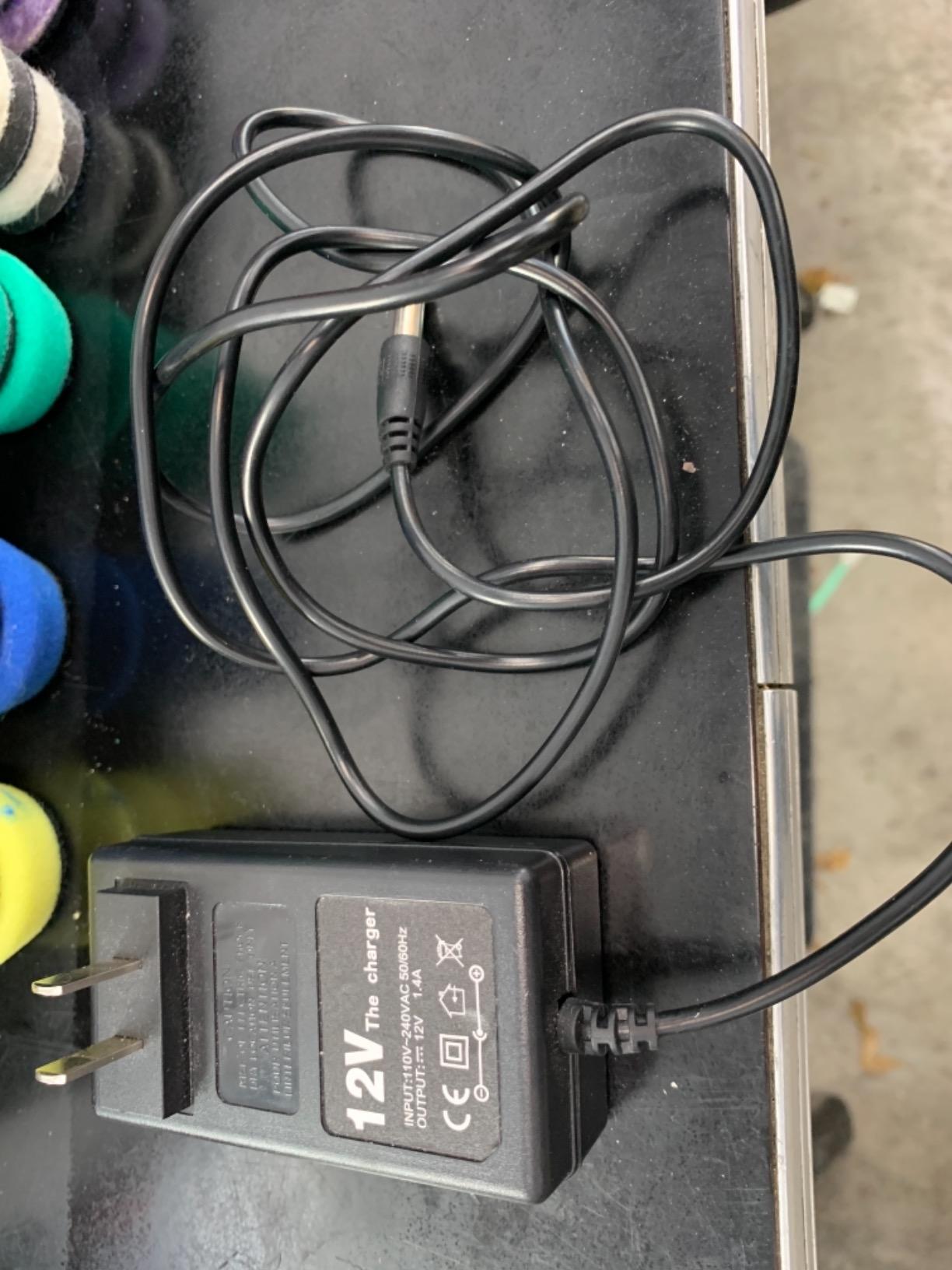
It weighs roughly half what a standard polisher weighs, which means you can hold it against a vertical body line for as long as the job takes without your wrist giving out. The cordless 80W pack gives up to an hour of working time at maximum speed, and the 1000 to 5000 OPM variable speed means you can slow right down around an emblem and speed up on the flat section next to it.
It also switches between free-spinning dual action and a rotary attachment for heavier work. For a beginner I would leave the rotary attachment in the box and learn on dual action first.
Reviewers rate it 4.5 across more than 1300 reviews with 77 percent five-star, and describe it accurately as a complement to a full-size machine rather than a replacement for one. Owners are candid that it covers large panels very slowly.
Where the mini machine earns its cost
Detailers buy a full-size machine first and add one of these later, because the tight areas are the last 10 percent of the work and the last place a big head will physically fit. If your goal is headlights, badging and body lines rather than a whole-car correction, this is the tool that does it properly.
The cordless format means you can do those spots in a driveway without dragging a cord out to the car.
Where it falls short
A 1-inch pad on a hood panel is punishingly slow. If a whole car is in front of you, this is the wrong tool and will make a two-hour job into a very long one.
The 80W motor also costs more than a full-size dual action machine does, so buying it as your only polisher is poor value even though it is a fine specialist.
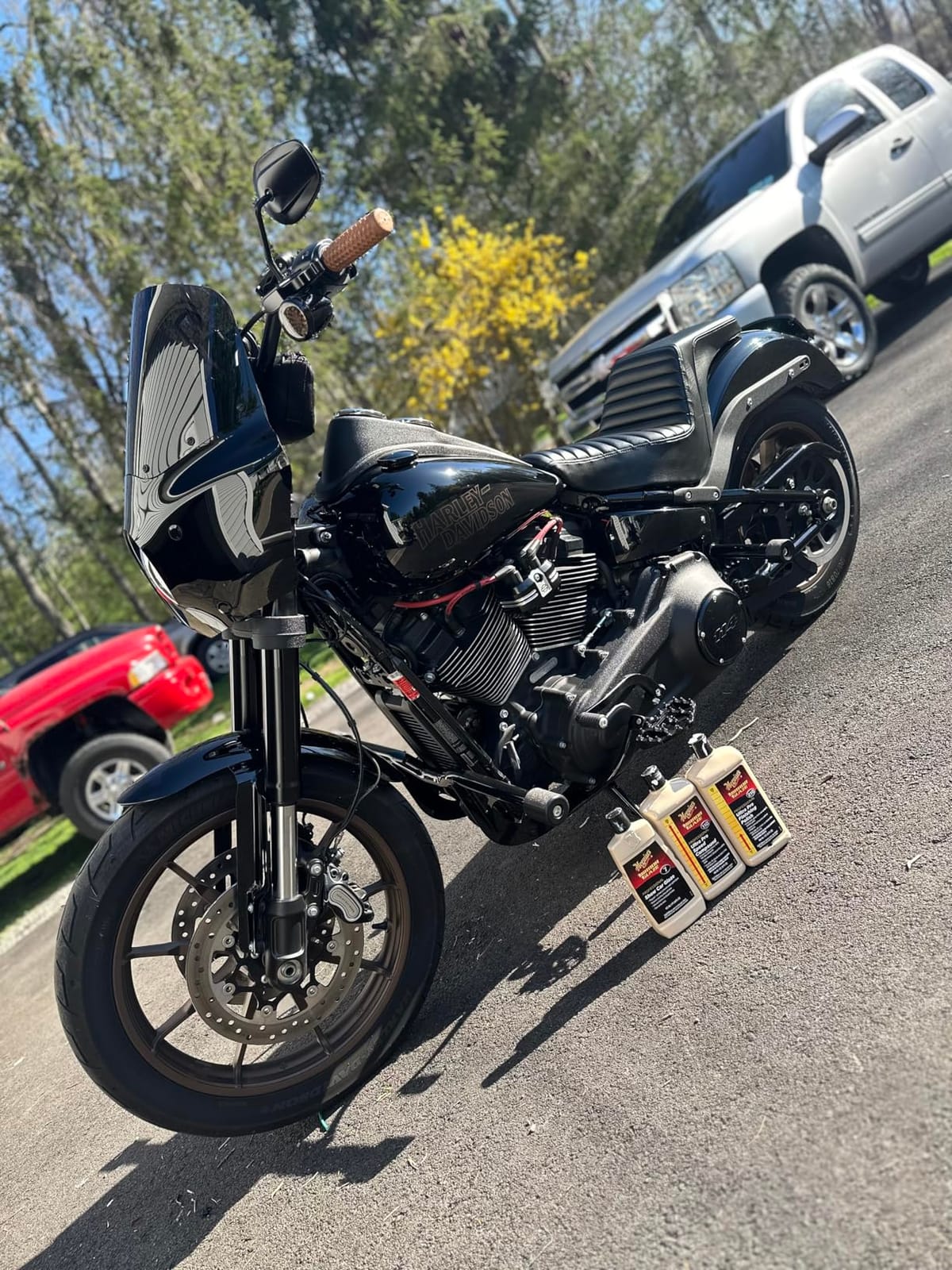
7. PORTER-CABLE 7424XP – the Best Branded Dual Action With the Longest Warranty
PORTER-CABLE Buffer Polisher, Car Polisher for Car Detailing, 6-Inch, Orbital, Variable Speed (7424XP)
4.5 amp AC only motor
Electronic variable speed, 2500-6800 OPM
5 inch counter balance for 6 inch pads
5.8 lb, 3 year limited warranty
Pros
- Widest electronic variable speed range here at 2500-6800 OPM
- Counter-balanced for 6 inch pads so it runs steady
- Side handle and wrench included
- Random orbit action is swirl free and safe for a beginner
- Three year limited warranty with a service contract
Cons
- AC only with no battery option
- 4.5 amps is not heavy cut power
- Heavier and costlier than generic dual action alternatives
The PORTER-CABLE 7424XP is the most widely recommended budget classic in owner forums, and the reason is not raw power. It is that a recognised brand name, a three-year limited warranty and a one-year free service contract sit underneath a machine that several thousand people have used for years. That is a different kind of evidence than a short test on one hood.
The electronic speed dial runs from 2500 to 6800 OPM, which is the widest range in this group. A low setting for spreading wax and a high setting for compounding on the same machine, dial rather than trigger, is exactly what a beginner needs.
The 5-inch proprietary counter balance is designed for use with a 6-inch pad, and it makes the machine noticeably steady. That matters more than it sounds: an off-balance head wanders, and a wandering head is how a beginner puts a swirl into a panel while trying to remove one.
At 5.8 pounds it is among the heavier machines here, and 4.5 amps is modest output. The 4.6 rating across nearly 2900 reviews reflects a machine people are happy to own rather than one that excites them.
Why the PORTER-CABLE holds up over years
A three-year limited warranty is the strongest warranty in this lineup and a visible difference against the one-year norm. For a tool you will keep for a decade, that is worth real money.
Serviceability matters too. A brand with a service contract and a spare part network is not a disposable tool, and that is part of why this model is recommended repeatedly in beginner threads.
Where it falls short
It is AC only. There is no battery version of this machine, so in a garage without power it is not an option at all.
At 4.5 amps it will not cut heavy defects, and at 5.8 pounds it is tiring on a roof. It is a machine for steady, careful work on a normal clear coat, which is what a beginner is actually doing.
8. ENEACRO 1700W Rotary Buffer Polisher – the Best Rotary, and Why Most Beginners Should Skip It
ENEACRO 1700W Rotary Car Buffer Polisher Waxer
1700W pure copper motor, 10 amp draw
7 levels from 1300-3500 RPM
5.5 lb total weight
6 inch and 7 inch loop backing plates
Pros
- Most powerful motor in the lineup at 1700W
- Light for a rotary at 5.5 lb which reduces fatigue
- Includes both 6 inch and 7 inch backing plates
- D handle and side handle both included
- Safety lock button for extended work
Cons
- Rotary motion is less forgiving of mistakes on paint
- Speed control is a continuous wheel with no detents
- Bogs down under heavy pressure on low settings
- Safety lock spring can fail after repeated use
I am putting one rotary in this list and I want to be direct about why. It is here because the 1700W copper motor, the 10 amp draw and the included 6-inch and 7-inch plates make it genuinely good at fiberglass and gelcoat, where a rotary is the correct tool and a dual action struggles. For car paint, this is not the machine a beginner should start with, and I would not buy it as a first polisher.
The safety argument from earlier applies directly. A rotary spins one fixed direction at up to 3500 RPM. Press down and the pad does not slow down, it concentrates friction into a smaller contact patch. Hold it in one spot and you generate the heat that burns clear coat, which is the single most reported beginner regret in detailing forums.
On the plus side it is light for what it does. At 5.5 pounds it is lighter than several dual action machines here, and owners with long experience note that the reduced fatigue versus eight-pound machines is real. The kit is complete too, with both plate sizes, six sponge wheels, a wool disc, sandpapers, both handles, a tool bag, spare carbon brushes and a manual.
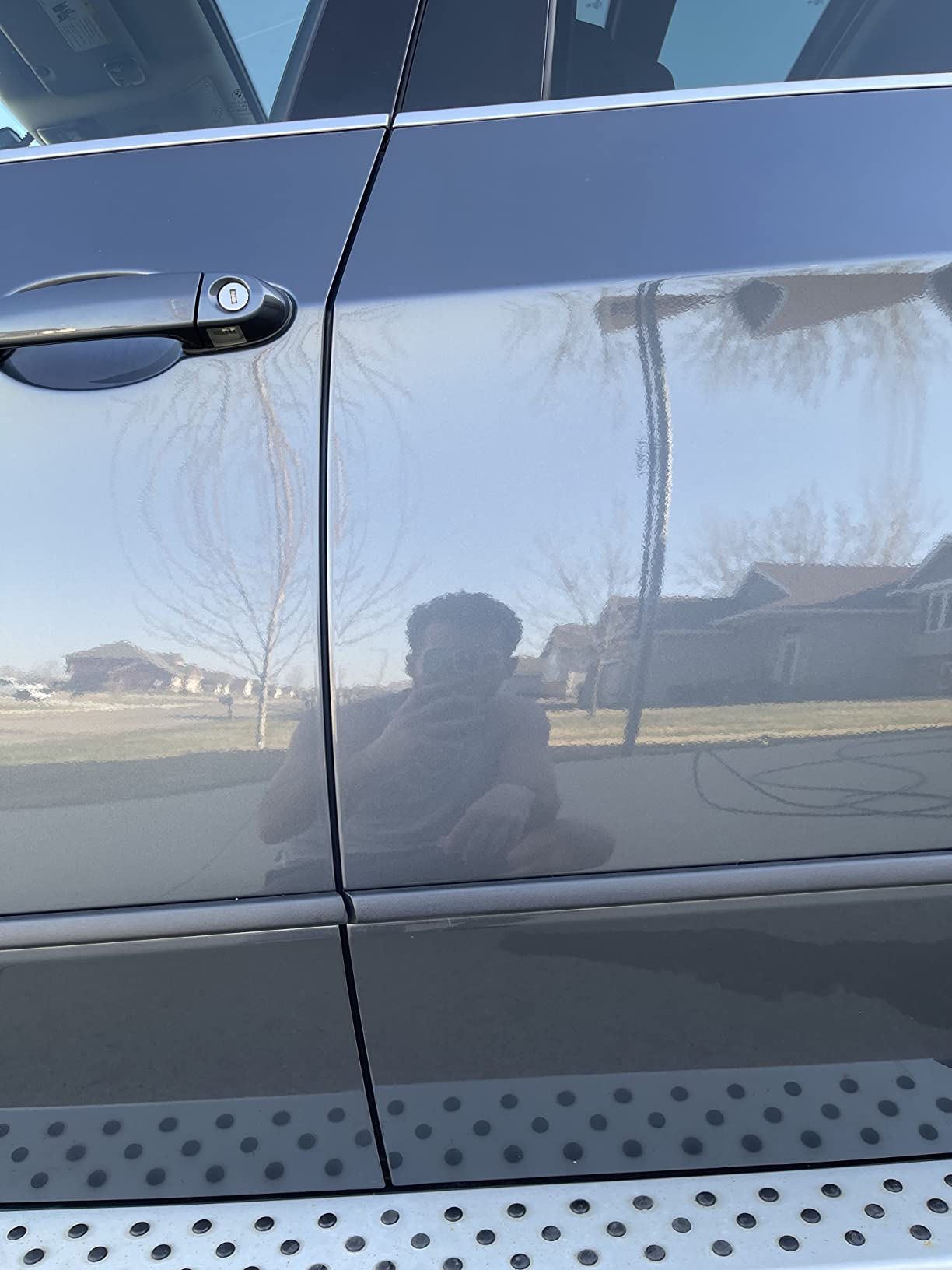
Reviewers rate it 4.5 across more than 3000 reviews. Detailed reviewers and homeowners alike like the light frame and the accessory bundle. The criticism is consistent and fair: the seven-speed claim is delivered by a continuous thumb wheel with no detents, it bogs down under heavy pressure on low settings, and the safety lock button spring can pop out or fail after repeated use.
Reviewers also note that rotary motion is simply less forgiving of mistakes on paint than a dual action, which is the entire reason this machine sits at number eight instead of number one.
Where the ENEACRO is the right tool
On boat hulls and gelcoat, where the correction is harder and the paint layer is different, the power and the dual plate sizes are useful. On a large flat surface far from a wall, the speed is the point.
If you are a beginner who already owns nothing and wants to work on your car, every other machine in this list is a safer place to start.
Where it falls short
There is no free-spinning safety behaviour on paint, no speed detents to make repeatable passes with, and the lock button has a reported failure mode. Those three together are why it does not belong in a beginner roundup as a recommendation.
If your instinct is that a rotary sounds more powerful and therefore better, that instinct is the exact one that sends machines back in boxes.
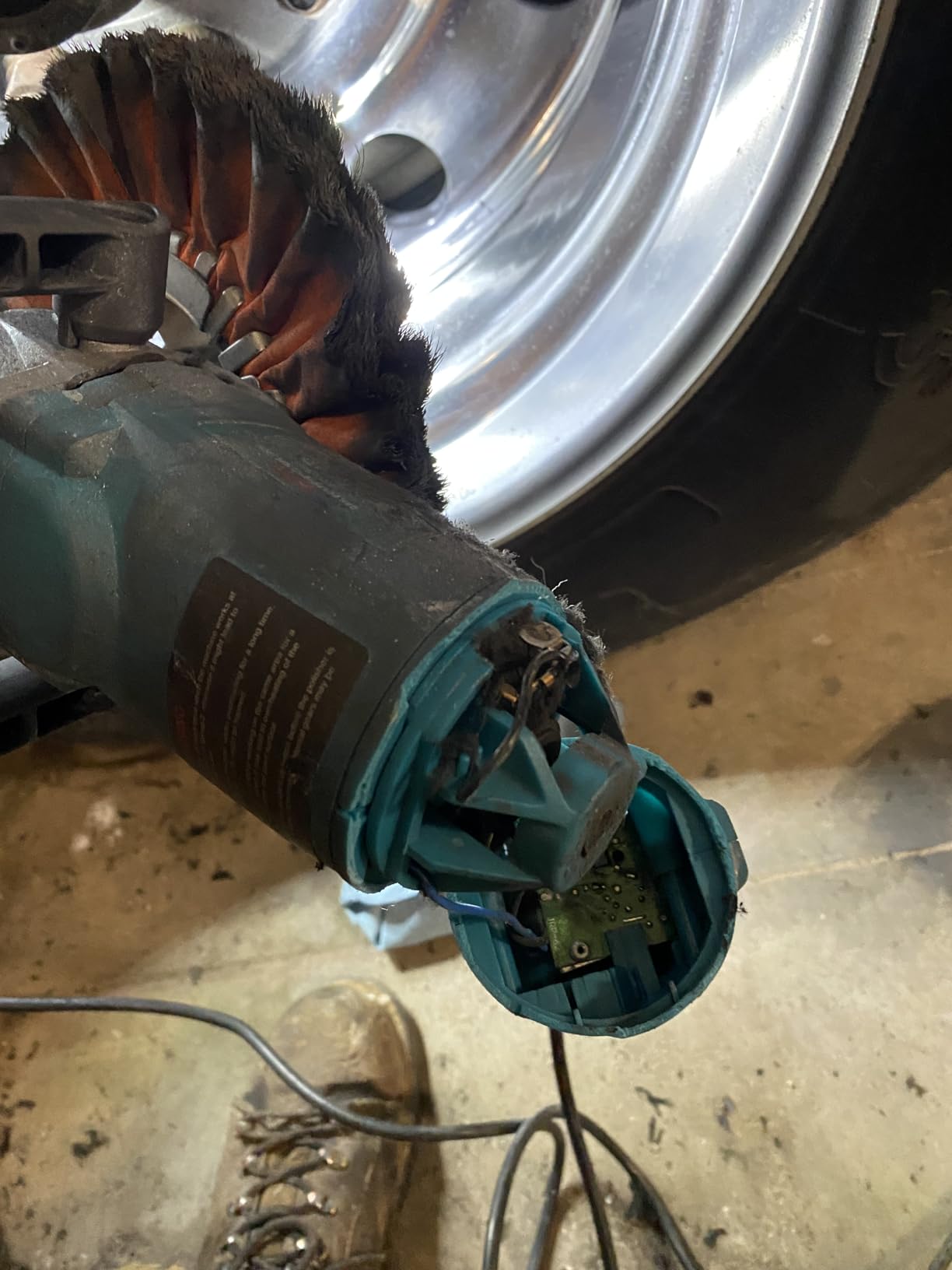
What to Buy Alongside Your First Polisher
Every owner forum thread on this topic arrives at the same conclusion: the machine matters less than the pads and the compound you put on it. A polisher with nothing to polish with is a very expensive paperweight, so budget for a small kit of consumables in the same order.
Buy three pad types. A cutting pad for compounding and defect removal, usually a firm foam or wool. A polishing pad for refining after a compound pass, usually a mid-foam. A finishing pad for the final gloss and for spreading wax, usually soft foam. In a one-step job you can use just a cutting pad with a one-step polish and skip the third step, which is the fastest way to a good result.
Buy two compounds to start. A one-step polish that compounds and refines in the same pass is genuinely all a beginner needs for a first car. Add a dedicated compound later only if you find real defects to chase.
Then there is the rule that catches out first-time buyers. Your pad should be about half an inch larger in diameter than your backing plate. That overhang means the plate edge never reaches the paint as the head orbits. Before you order any pad, check which backing plate your machine actually came with, because several machines in this roundup have more than one plate size available and the one in the box is not always the largest.
Pad diameter decides where the machine works. A 3-inch pad handles emblems, vents and body lines. A 4-inch handles tight trim and mirror caps. A 5-inch or 6-inch handles a door skin and a hood panel in reasonable time. One machine with a range of plate sizes can cover the whole car, which is why plate flexibility is a criterion in this roundup.
Alongside the polishing kit, a decent interior routine matters more than most people expect before they touch paint. Our guide to handheld vacuums for car interiors covers the pre-wash stage that keeps grit out of the paint while you are working.
How to Use a Polisher Without Burning Through Clear Coat
Machine polishing is simple to do and easy to do badly. The sequence below is the one I use and it is deliberately conservative.
1. Wash and decontaminate first. Polishing dirt into the paint grinds it in permanently. Wash, dry, then run a clay bar or decontamination product before the machine ever touches the panel.
2. Work in shade on a cool panel. A hot panel holds heat and pushes your compound faster than you expect. Direct sunlight is the most common reason a first correction goes wrong.
3. Test spot on a flat, hidden panel. Pick a flat area low on a door and do three passes at your intended speed and pressure. Check for improvement, then check again after the panel cools. If the haze gets worse you are either too aggressive or on the wrong pad.
4. Start at low speed. Spread the compound first with the lowest setting, then raise the speed a notch or two for the working pass. Never start on high and slow down.
5. Hold it flat and let the weight do the work. Keep the pad level with the panel and move the machine rather than pressing it. Pressure slows the pad, which slows the correction and adds heat.
6. Work in overlapping passes, section by section. A 6-inch pad covers roughly a quarter of a door in a few passes. Break the car into panels and do one panel fully before moving on.
7. Watch the edges and the panel stays. Near a door gap the pad can hang and dig. Ease off on edges and treat the edges of each panel with a smaller machine or by hand.
8. Stop when the compounding stops improving the panel. More passes at the same setting do nothing except heat the paint. Once the finish stops getting clearer, move to a polish step or stop for the day.
Budget a full day for a first whole-car job, and treat that as normal rather than slow. It includes washing, drying, decontaminating, testing and protecting, not just the machine time.
Corded vs Cordless for a Home Garage
Most home garages are 120V with a 15 amp circuit, and that single fact answers most of the corded-versus-cordless question.
A corded machine draws amperage continuously, so the rule is a heavy gauge extension cord and as short a run as you can manage. Thin extension cords are the number one cause of a polisher that runs slowly and runs hot, and they are also a fire risk in a damp garage. If you must use one, check that any outlet in the garage is GFCI protected, which is standard in a wet location.
The machines here draw between 0.5 and 10 amps, so any of them will run on a normal household circuit alongside a shop light. The 10 amp rotary is the one to think twice about, since it leaves little headroom on a shared circuit.
Cordless removes the cord problem entirely and adds a different one: platform lock-in. Buying a 12V machine for your first job is a dead end if you later want to buy into a larger battery system, so check what platform a machine runs on before you buy the machine rather than after.
Runtime matters most on cordless. The 80W cordless machine in this list is quoted at up to one hour at maximum speed, and the two 2.0Ah batteries in the other cordless option let you charge one while you work the other. Plan a first car around those constraints rather than expecting a full uninterrupted session.
If you also run a dash camera or a hardwired GPS in the car, our guide to in-car navigation units covers the install side of that.
What a Polisher Can and Cannot Fix
Expectation setting does more to prevent a bad first experience than any machine choice.
Swirl marks and light haze are what polishers are genuinely good at. These are micro-scratches in the clear coat, often from hand washing, and a single compounding pass on a soft panel will remove most of them. This is the job to buy a polisher for.
Oxidation and faded paint need more time than most beginners expect. A faded panel usually needs a dedicated compound and several passes per section, and it is a slow restoration rather than a quick fix.
Light scratches that do not catch a fingernail can often be removed. Anything deeper than that sits in the base coat or primer and machine polishing will not fix it. Run a fingernail across the defect: if it catches, it needs touch-up paint or a body shop.
Deep gouges, chips and dents are not a polishing problem at all. No machine removes them without taking the clear coat with it.
There is also the question people rarely ask directly: can a dual action sand? Yes, but only briefly and only for removing a layer before a paint correction, using the sanding discs and a rigid backing plate. It is not a substitute for a proper sander, and a beginner has no reason to do it.
How We Picked and Ranked These Machines
Manufacturer speed figures told us very little, so we ranked on what a beginner actually feels over a two-hour session.
1. Machine type first. Free-spinning random orbital only, with one deliberate rotary exception explained on its own terms. This single filter removed most of the wrong-machine risk.
2. Weight and balance. Hand and arm fatigue is the most common reason people stop detailing. Weight in pounds is listed for every machine above.
3. Speed range and control. A dial with usable low settings matters more than peak speed, because a beginner needs to start slow.
4. Plate flexibility. Whether the machine accepts more than one backing plate size determines whether one tool can cover the whole car.
5. Warranty and serviceability. A three-year limited warranty and replaceable carbon brushes are worth more to a first owner than any spec line.
6. What is actually in the box. A kit with pads and compounds means the machine works on day one.
Where published tests and owner forums disagree, we say so rather than averaging it. Several of these machines barely appear in mainstream roundups but come up repeatedly in owner communities, and that long-term community track record is evidence of a different kind than a short test on one hood.
Frequently Asked Questions
What type of polisher should a beginner use?
A dual-action random orbital polisher. Its backing plate spins while the head orbits off-centre, so the pad changes direction constantly, spreading heat evenly instead of concentrating it. Pressure slows or stalls the pad rather than making it bite harder. That stall-on-pressure behaviour is what makes it the safe first machine for car paint.
What is the best machine polisher for a beginner?
The Chemical Guys TORQX is our pick for a beginner. Its 8mm random orbital throw is forgiving, six speed settings cover spreading wax through compounding, and the 9-piece kit includes pads, polishes and compounds so you can work on paint the same day it arrives. More forgiving machines include the AOBEN at the budget tier.
What is the difference between a car buffer and a car polisher?
The terms are used loosely, but mechanically a polisher has a rotating pad driven by a machine, while a buffer is usually the larger, higher-speed machine used to remove heavy compound and level defects. A random orbital DA polisher occupies the middle ground and is the beginner-appropriate tool. What matters is the motion: dual action for beginners, rotary for experienced hands.
Which polisher is better for home use, corded or cordless?
Corded costs nothing to run and works all day, but needs a heavy gauge extension cord and a nearby outlet, ideally GFCI protected in a damp garage. Cordless removes the cord problem entirely and is lighter on vertical panels, but runtime is limited and the battery platform can lock you out later. For a garage with power, corded. Without power, cordless.
What is the best car polish for an orbital polisher?
A one-step polish that compounds and refines in a single pass is the right starting product for a beginner. Pair it with a cutting pad for defect removal, a polishing pad for refining, and a soft finishing pad for spreading wax. Keep the pad about half an inch larger in diameter than the backing plate, and check which plate came in the box before ordering.
How long does a full car polish take for a beginner?
Plan on a full day for a first whole-car job. Washing, drying, decontaminating with a clay bar, testing a spot on a hidden panel, compounding, refining and protecting all add up. The machine time itself is the smallest part. Breaking the car into panels and working one fully before moving on is faster than trying to cover the whole car at once.
Can a dual action polisher be used for sanding?
Yes, briefly. A dual action can remove a layer of old finish before a paint correction using sanding discs on a rigid backing plate, but it is slow and it generates heat fast. It is not a substitute for a dedicated orbital sander, and a first-time owner polishing paint correction has no reason to sand at all.
The Verdict for the Best Car Polishers for Beginners in 2026
The Chemical Guys TORQX is the best car polishers for beginners pick in 2026 because it combines the correct machine type, a wide 8mm throw, six usable speeds and a box that contains everything you need for a first correction. Nothing else in this lineup removes that many steps at once.
If your budget is tighter, the AOBEN is the cheapest route onto a genuine random orbital, and the WEN 6010 is the lightest and simplest way to learn the physical side of polishing while you save for a correction machine. If you have no power in your garage, the BATOCA S3 is the cordless answer, and the SPTA mini handles the tight spots a full-size head cannot reach.
Whichever one you choose, buy pads and a one-step polish in the same order, work in the shade on a cool panel, and test on a hidden flat panel first. Start on the lowest speed setting, keep the pad flat, and let the machine do the work. This is the best car polishers for beginners advice we can give, and it is the same advice every experienced owner gives: you can always polish more later. You cannot un-polish paint.