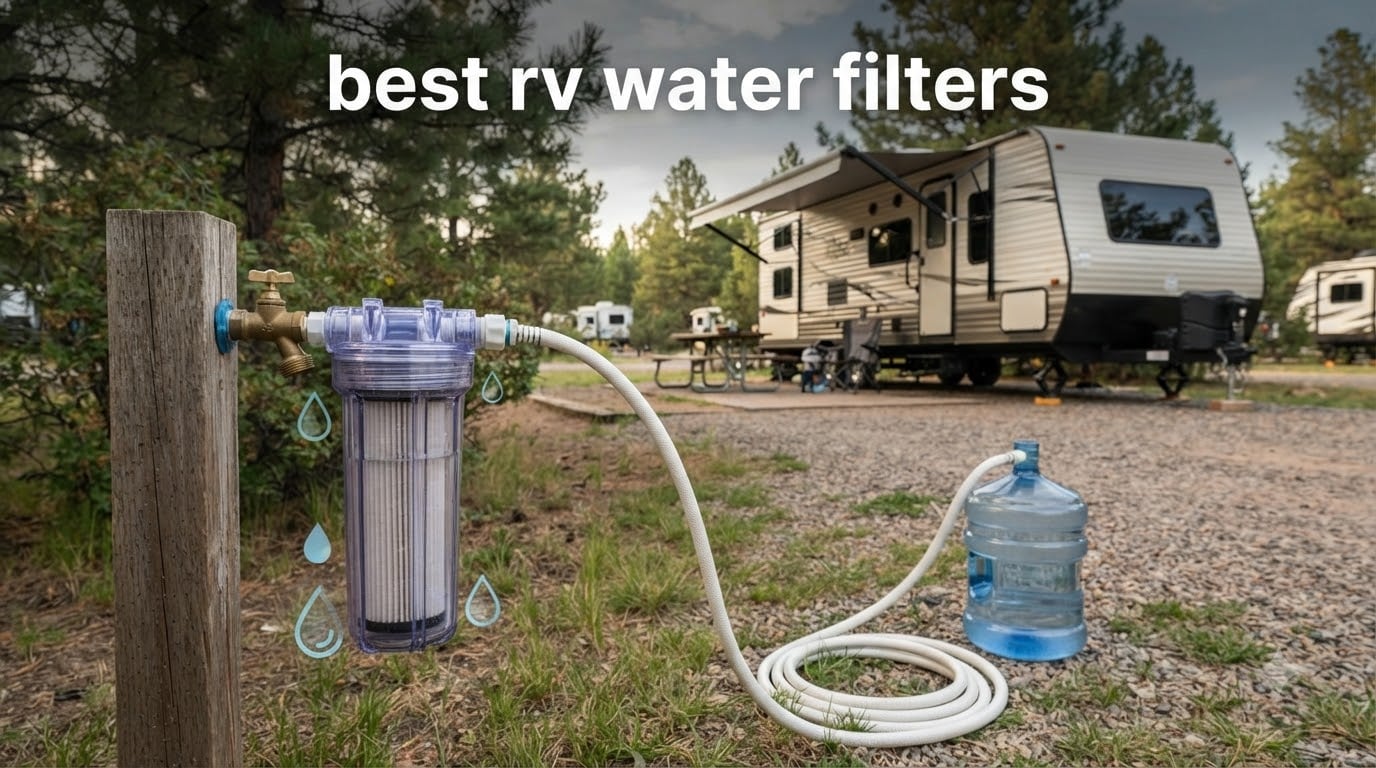
Campground spigots and travel-truck fill stations are the least regulated taps most RVers ever drink from. A municipal park in West Virginia, a county park well in Texas, and a casino stopover outside Reno can each hand you water that tastes fine straight from the tap and still carries chlorine byproducts, rust sediment, iron, or the cysts behind Giardia and Cryptosporidium. That is the gap the best rv water filters exist to close.
We put together this list after comparing ten inline and canister systems on the things that actually decide whether a filter works in the field: published micron rating, media type, third-party certification standard, service flow rate, cartridge capacity, and how owners describe the result after a season of use. All ten install in under ten minutes with no plumbing, and eight of them are screw-on inline filters you can carry in a pocket. The two canister systems mount to the fresh-water line or outside the rig, which buys finer filtration and more capacity in exchange for storage space.
Two things this guide will not do. It will not pretend a carbon filter makes unsafe water safe, because no carbon or sediment stage does that on its own. And it will not quote a price for you, because prices move daily and the buttons below are live. What we do instead is give you the specification, the certification, the capacity, and the honest complaints, so you can match the filter to your rig and your water source.
If you also filter at home, our guides to whole house water filters for city water and countertop water filters cover the fixed-installation side of the same problem at a much larger scale.
Table of Contents
- Top 3 Picks for Best RV Water Filters in 2026
- Best RV Water Filters at a Glance in 2026
- How We Picked These 10 RV Water Filters
- 1. Camco TastePURE 40043 – Best Overall Inline Filter
- 2. Waterdrop RV Inline 2-Pack – Best Value
- 3. RVGUARD Inline 2-Pack – Budget Pick
- 4. GLACIER FRESH RV/Marine 2-Pack – Best for High-Chlorine Water
- 5. Kohree RV Inline 2-Pack – Best for Well Water
- 6. BELVITA RV Inline Filter – Best for High-Iron Water
- 7. Bringpure RV Inline Filter – Best Certified Inline Pair
- 8. Lifefilter RV/Marine 2-Pack – Best for Sediment Control
- 9. Culligan RVF-10 External Canister – Best Warranty
- 10. Beech Lane External Dual Canister System – Best Dual-Stage Build
- What Actually Matters When You Buy an RV Water Filter
- Pick the format that matches your storage and your water source
- Understand what each media type actually removes
- Read micron ratings as a particle size, not a quality score
- Check the certification standard, not the word certified
- Match flow rate to what you actually do with the water
- Plan for replacement cost, not sticker cost
- Order a filter and a softener correctly
- Winterize the filter and sanitize the tank
- Know when a filter is not enough
- Frequently Asked Questions
- What is the best water filter system for a travel trailer?
- What is the best water filter for a motorhome?
- How effective are RV water filters?
- Do I need both a water filter and a water softener in my RV?
- How long does an RV water filter last before it needs replacing?
- Why does my RV water pressure drop when I attach a filter?
- The Best RV Water Filters for the Way You Travel
Top 3 Picks for Best RV Water Filters in 2026

Camco TastePURE 40043
- 6-step GAC and KDF filtration
- NSF/ANSI 42
- 53 and 372 certified
- 20-micron sediment protection
- Hose protector included

Waterdrop RV Inline 2-Pack
- NSF/ANSI 42 and 372 certified
- Coconut shell GAC with KDF
- Two hose protectors included

RVGUARD Inline 2-Pack
- IAPMO R&T certified to NSF/ANSI 42
- 0.5 gpm service flow
- 15000-gallon rated capacity
Best RV Water Filters at a Glance in 2026
Here is the short list in the category format the shopping results use, so you can scan it in about thirty seconds.
Best overall inline filter: Camco TastePURE 40043. The only filter in this group independently listed to NSF/ANSI 42, 53 and 372, with 6-step GAC and KDF media and a 20-micron sediment stage. It is the one most owners already have a replacement cartridge for.
Best value inline: Waterdrop RV Inline 2-Pack. Same KDF and coconut-shell GAC architecture as the big names, with an NSF/ANSI 42 and 372 listing and two anti-kink hose protectors in the box. Two filters means one is always ready.
Budget pick: RVGUARD Inline 2-Pack. IAPMO R&T certified against NSF/ANSI 42 for material safety and chlorine reduction, with the largest published capacity figure here at up to 15,000 gallons per filter. The plastic housing is compact and does not choke shower flow.
Best for high-chlorine park water: GLACIER FRESH RV/Marine 2-Pack. Lab-tested at 97.9 percent chlorine reduction, with GAC and KDF media that also cut fluoride. Rated for a full three-month camping season.
Best for well water and heavy metals: Kohree RV Inline 2-Pack. GAC and KDF media aimed at heavy metals, odor and fluoride, with 0.5 gpm service flow and a stated capacity of up to 1,057 gallons. Pair the two in series only if your pressure can take it.
Best for high-iron supply: BELVITA RV Inline Filter. Reinforced food-grade shell that trailer owners with iron-heavy hookups keep coming back to, and a two-pack so a spent cartridge never strands you.
Best certified inline pair: Bringpure RV Inline Filter. NSF 42 and NSF 372, a 20-micron rating, and threading that reviewers repeatedly praise for leaving no drips.
Best for sediment control: Lifefilter RV/Marine 2-Pack. A multi-layer structure with an internal screen that visibly traps rust and grit before it reaches your tank lines.
Best warranty: Culligan RVF-10 External Canister. Connects to the fresh-water line with a 1-foot hose kit and no tools, carries a 5-year limited warranty, and uses widely available D-15 carbon cartridges.
Best dual-stage build: Beech Lane External Dual Canister. A 5-micron sediment stage feeding a 0.5-micron carbon block, with lead-free brass fittings, a mounting bracket, and a lifetime manufacturer warranty.
| Product | Specs | Action |
|---|---|---|
| Camco TastePURE 40043 |
|
Check Latest Price |
| Waterdrop RV Inline 2-Pack |
|
Check Latest Price |
| RVGUARD Inline 2-Pack |
|
Check Latest Price |
 GLACIER FRESH RV/Marine 2-Pack GLACIER FRESH RV/Marine 2-Pack |
|
Check Latest Price |
 Kohree RV Inline 2-Pack Kohree RV Inline 2-Pack |
|
Check Latest Price |
 BELVITA RV Inline Filter BELVITA RV Inline Filter |
|
Check Latest Price |
 Bringpure RV Inline Filter Bringpure RV Inline Filter |
|
Check Latest Price |
 Lifefilter RV/Marine 2-Pack Lifefilter RV/Marine 2-Pack |
|
Check Latest Price |
 Culligan RVF-10 External Canister Culligan RVF-10 External Canister |
|
Check Latest Price |
 Beech Lane External Dual Canister Beech Lane External Dual Canister |
|
Check Latest Price |
How We Picked These 10 RV Water Filters
Our scores are editorial judgments built from published specifications and owner feedback, not an average of customer star ratings. Where a product has a rating and a review count, we reproduce them exactly as buyers see them, and we name the certification standard rather than repeating the word certified.
The forum consensus that shaped this list is simple and worth repeating: users on iRV2 generally agree that municipal city water at a well-run park needs nothing more than solid taste and odor filtration, while well water and mineral-heavy regional supplies push people toward fine filtration and sometimes a softener. One configuration came up again and again as a do-it-yourself build, a metal trap for iron and metals, then 1 micron sediment, then 0.5 micron carbon block.
We also read the negative reviews closely. Every product below carries at least two real complaints drawn from buyer feedback, including first-flush carbon dust, connector leaks, premature clogging, and cartridges that exhaust faster than their rating on iron-heavy water.
1. Camco TastePURE 40043 – Best Overall Inline Filter
Camco Tastepure RV Water Filter – GAC & KDF Filtration – Made in the USA
6-step GAC and KDF
20-micron sediment stage
NSF/ANSI 42, 53, 372
Made in the USA
Pros
- Highest rating in this group at 4.7 across more than 53k reviews
- Only filter here listed to NSF/ANSI 42;53 and 372
- Flex hose protector reduces fitting strain
- Wide-body design keeps flow up
- Made in the USA under US patent
Cons
- Manufacturer suggests replacing after roughly one camping season
- Carbon dust flushes out on the first fill
- US thread sizing does not fit European fittings
The 40043 pairs granular activated carbon with KDF media in a six-step arrangement, backed by a 20-micron internal sediment filter. It is the only filter here independently listed to NSF/ANSI 42 and 53, with CSA lead-free content certification to NSF/ANSI 372, and it weighs 16 ounces.
At just under 8 inches tall it disappears into a wet bay. Owners report the wide-body design keeps shower pressure intact, which is the complaint that kills most inline filters.
Taste and odor improvement comes up in review after review, and the included flexible connector stops the hose from kinking and pulling on the fitting. Buyers moving from no filter at all rarely go back.
The catches are small and predictable. Camco suggests replacing it after about one camping season, carbon dust flushes out on the first fill, and the standard US thread will not mate with European fittings.
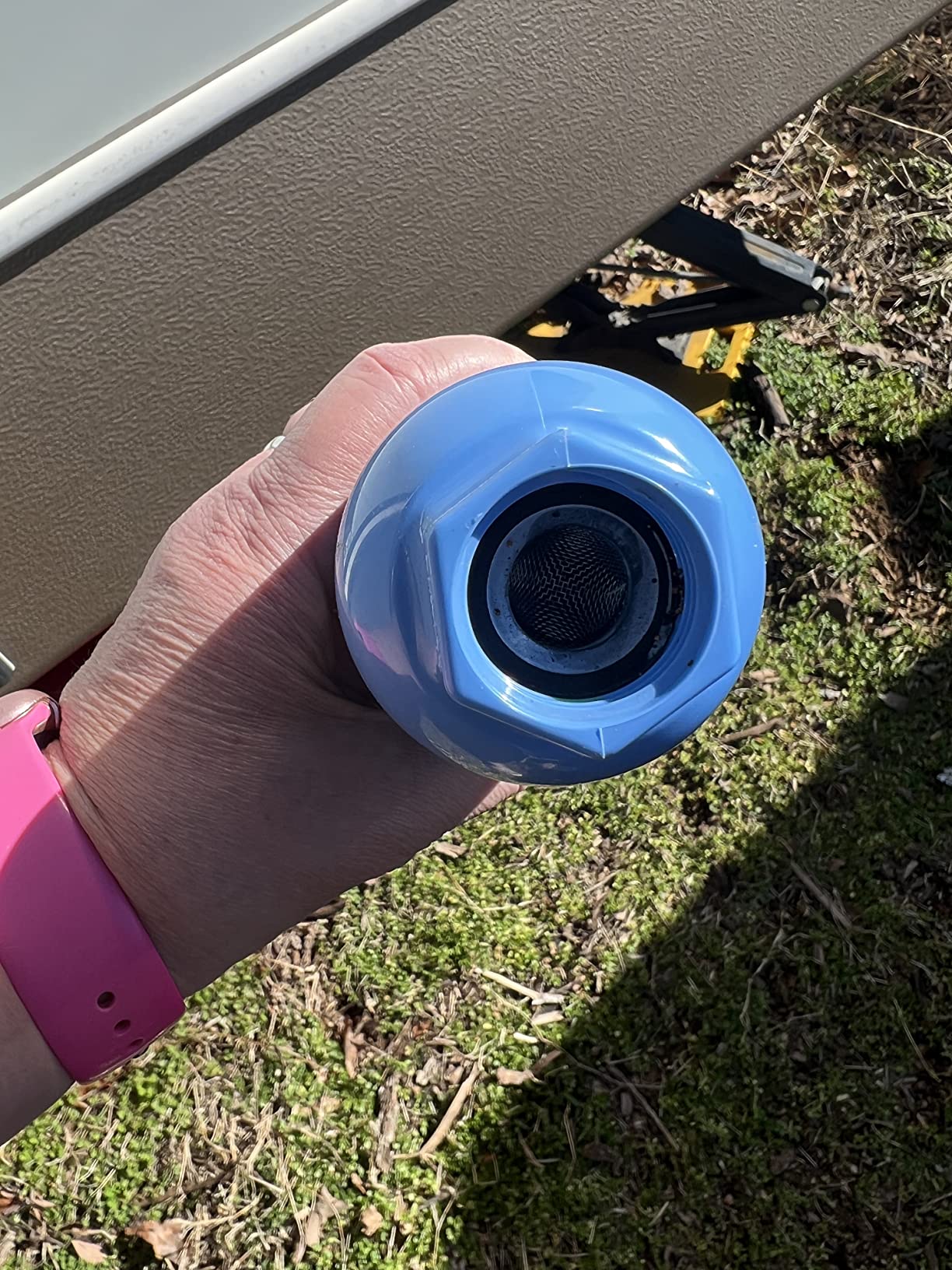
What owners notice in the first week
The change people describe is odor first and taste second. Chlorine smell that used to hit you the moment you filled a glass drops to near nothing, and coffee and ice makers show the biggest difference.
Where it falls short
The 20-micron stage is a coarse first line, not fine filtration, and on very mineral-heavy well water you are still one stage short of a proper multi-stage build. It also does nothing about hardness, which is a softener job.
2. Waterdrop RV Inline 2-Pack – Best Value
Waterdrop RV Inline Water Filter, Garden Hose and Camper Water Filter
NSF/ANSI 42 and 372
KDF with coconut shell GAC
360-degree rotatable hose
Two filters and two protectors
Pros
- NSF/ANSI 42 and 372 certification at a budget tier
- Coconut shell granular activated carbon media
- Tool-free install in about five minutes
- Two anti-kink hose protectors included
- Holds up in cold weather where other hoses cracked
Cons
- Included hose is narrower than standard 5/8-inch hose and cuts pressure
- Some units arrive with connectors that do not seal
- Occasional crooked threads on the tap connector
Waterdrop uses the same KDF plus granular activated carbon architecture as the established inline brands, with coconut shell carbon, and includes two 360-degree rotatable flexible hoses with anti-kink protectors plus a full NSF/ANSI 42 and 372 listing.
Rated life is one camping season, about three months, and installation is tool-free, finishing in about five minutes at the spigot.

Reviewers treat this as equivalent to the name-brand inline filters for less money, and the certification is the reason. The included flexible hoses are the standout feature, and a few mention the hose held up through winter cold where cheaper hoses cracked.
The most repeated complaint is hose diameter. It is narrower than a standard 5/8-inch hose, and on low-pressure supply that means a real drop at the shower. A smaller number report connectors arriving unsealed or with crooked threads.
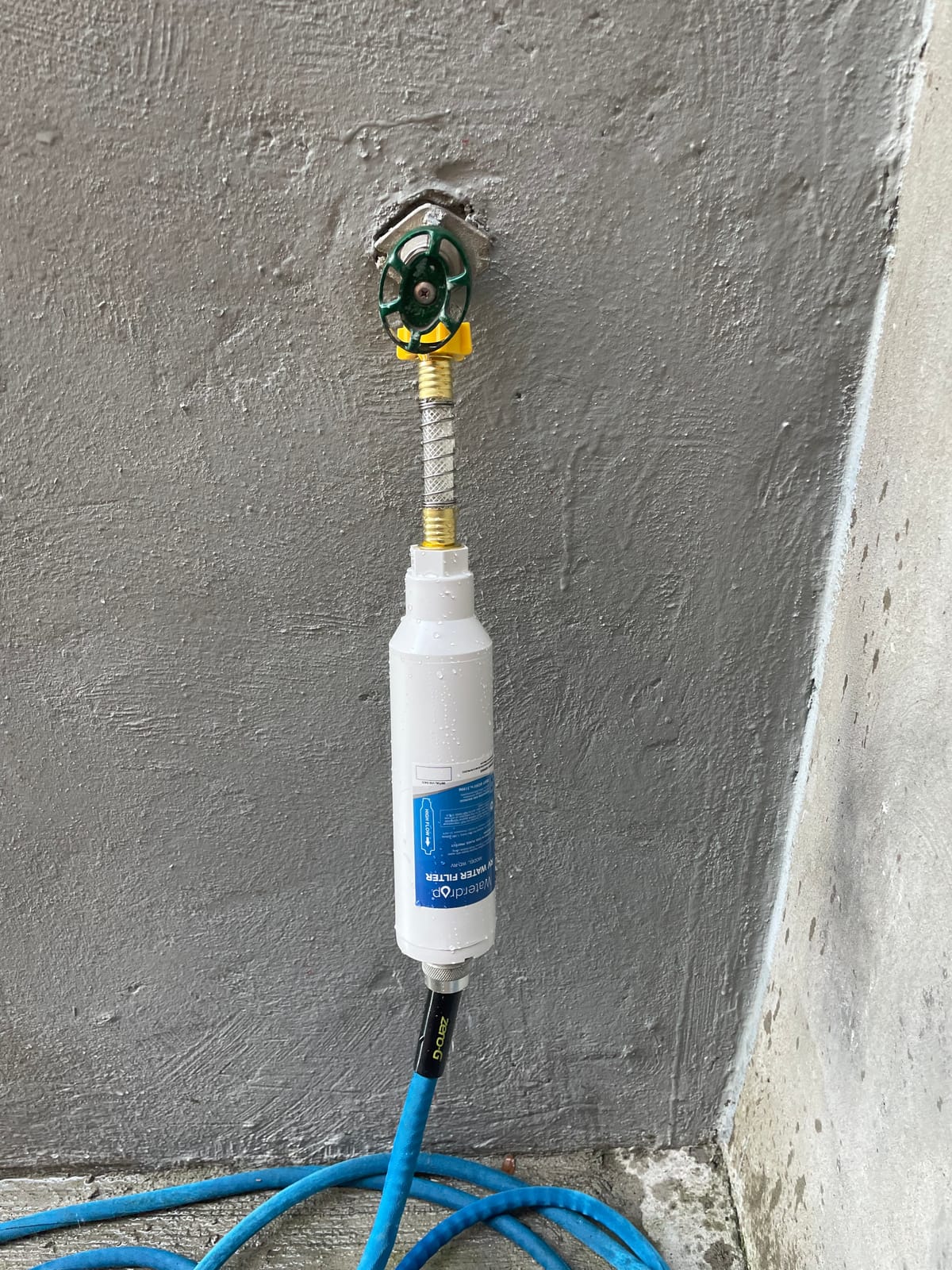
Why the certification matters here
NSF/ANSI 42 is a taste and odor standard, and NSF/ANSI 372 is a lead-free material standard. Together they mean a third party checked both the chlorine claims and the plastic that touches your water, which is more than most of the inline filters here offer.
Where it falls short
Two filters in the box tempt people to chain them in series, which cuts flow hard. The media is carbon-based only, so it does not address iron staining the way a sediment pre-stage would.
3. RVGUARD Inline 2-Pack – Budget Pick
RVGUARD Inline RV Water Filter, 2 Pack
IAPMO R&T certified to NSF/ANSI 42
0.5 gpm service flow
Up to 15000 gallons
60 psi maximum working pressure
Pros
- IAPMO R&T certification to NSF/ANSI 42
- Up to 15000-gallon published capacity
- Rated to 60 psi and 34F to 100F
- Compact housing with minimal flow restriction
- Reviewers switching from Camco cite sturdiness
Cons
- A minority of buyers report no perceptible change in taste or clarity
- Carbon flushes black on the first fill
- Some reviewers note a mild flow restriction
RVGUARD is the value play of this group, and the reason is the certification label. It is certified by IAPMO R&T against NSF/ANSI 42 for material safety and chlorine reduction.
It runs KDF with advanced GAC, a 20-micron media bed, a 0.5 gpm service flow, and a published capacity of up to 15,000 gallons per filter. Rated to 60 psi and 34 to 100 degrees Fahrenheit, it carries an 18-month manufacturer warranty.
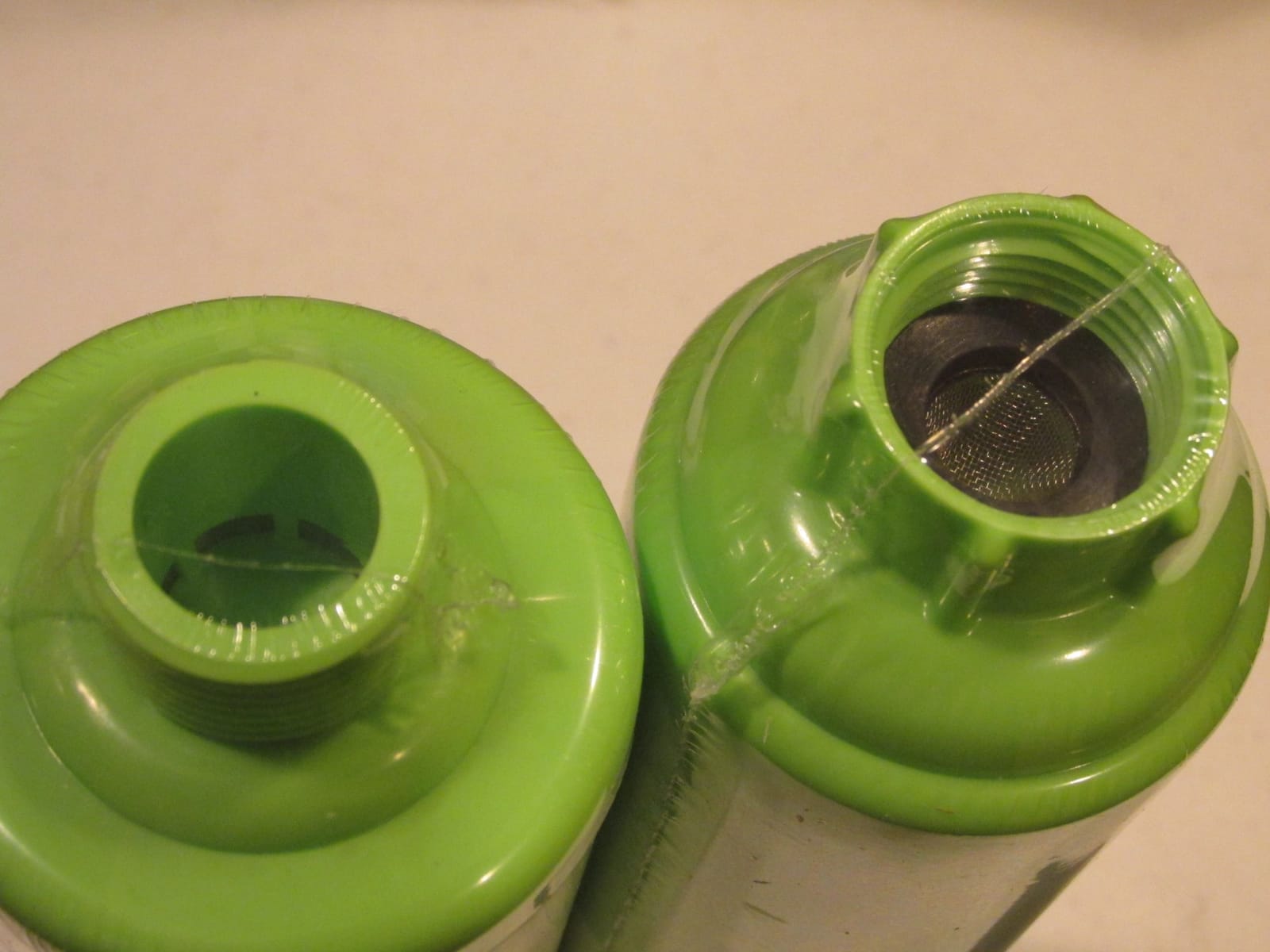
Many owners report a solid improvement in campground chlorine taste and odor, and some use it on livestock troughs and high-iron well water. Others came to it from Camco for a sturdier plastic housing.
A critical minority says plainly that they saw no measurable change in taste, color, or clarity. First use flushes black carbon, which is normal for GAC media.
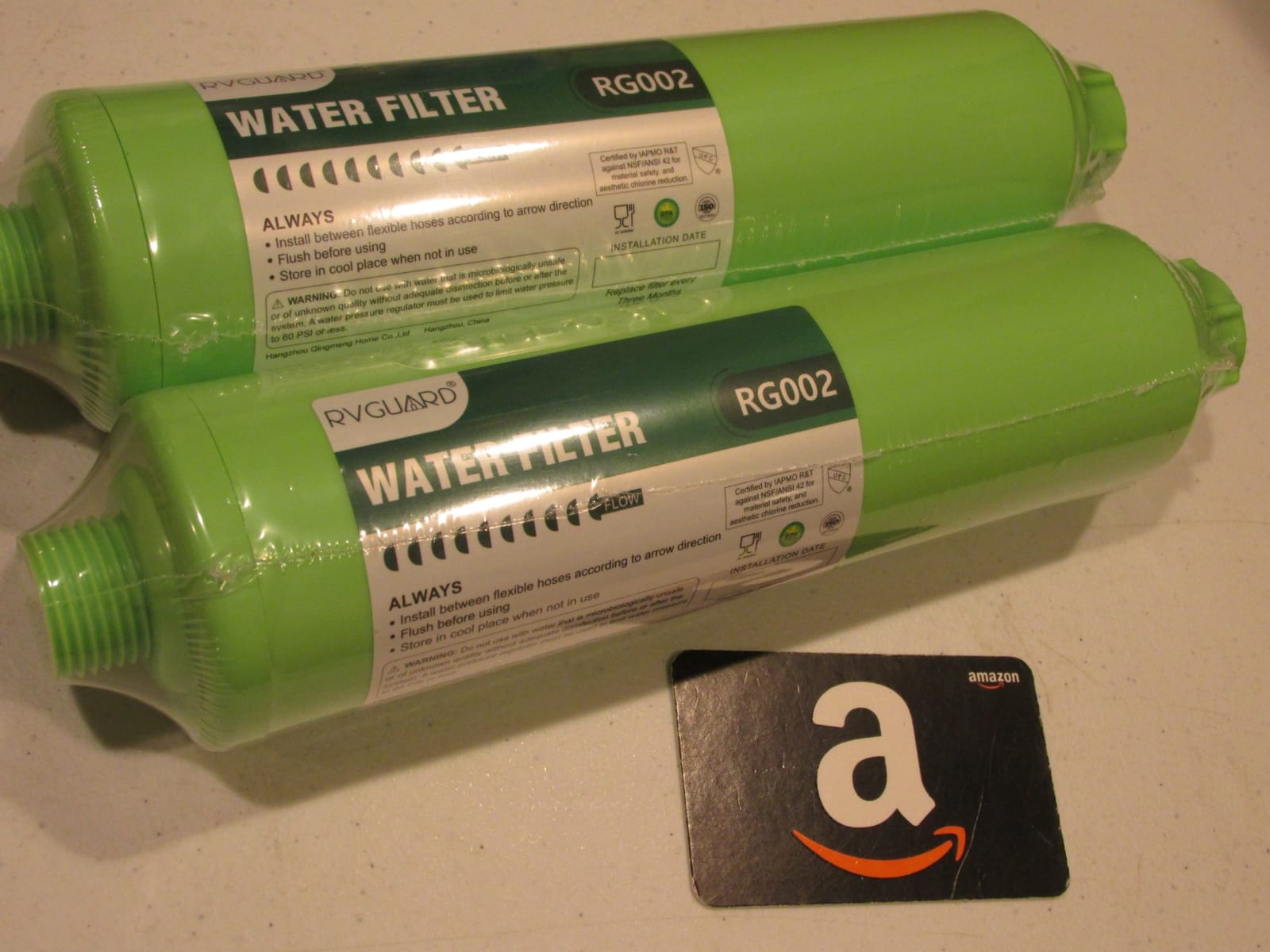
What the 15,000-gallon figure means for you
That is a laboratory capacity number. On clean municipal park water it is closer to a season or more, while on iron-heavy or heavily chlorinated supply owners swap far earlier. Read the figure as a ceiling, not a schedule.
Where it falls short
This is a taste and odor filter with no pathogen claim, no 53 certification for cyst reduction, and no UV stage. It also does not soften hard water.
4. GLACIER FRESH RV/Marine 2-Pack – Best for High-Chlorine Water
GLACIER FRESH RV/Marine Water Filter with 1 Flexible Hose Protectors 2 Pack
97.9 percent chlorine reduction
GAC and KDF media
20-micron filtration
Two filters per pack
Pros
- Lab tested at 97.9 percent chlorine reduction
- Larger capacity rated for a full camping season
- Good flow with shower and faucet output unchanged
- Reinforced housing resists bursting
- Two filters per pack
Cons
- Carbon particles flush out on first use
- No screw-on storage caps included for travel
- Some reviews call the certification claim generic
- Small group reports no noticeable change
GLACIER FRESH is the pick for parks where the water smells like a pool. The filter is independently lab tested to remove 97.9 percent chlorine, and the GAC with KDF media also targets fluoride.
The housing is lead-free and BPA-free food-grade plastic, the filtration rating is 20 micron, and each filter is rated for an entire three-month camping season.
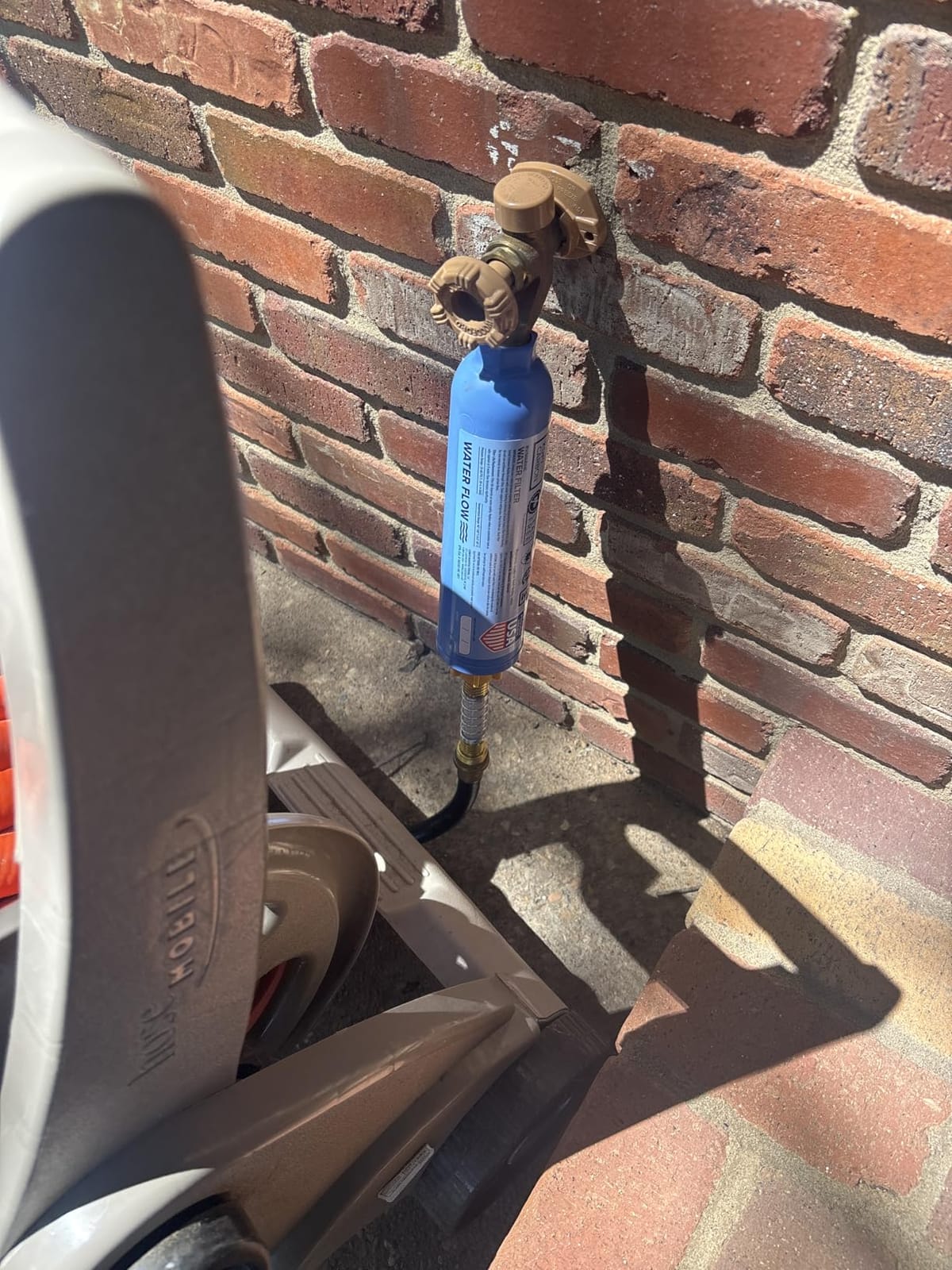
This filter ends up outside the RV box more than most. Reviewers use it for pools, pressure washing, gardening, and car washing, and the reinforced housing is praised for not bursting at a high spigot. Good flow is the other consistent theme.
It ships without screw-on storage caps, so you need a bag to keep the housing clean between trips. Some reviews also flag the certification language as generic rather than tied to a named standard.

Chlorine is the whole point on this one
Chlorinated municipal water is one of the easier problems to solve. If your complaint is a sharp chlorine nose the moment you run the tap, this is the filter whose stated test result speaks to that directly.
Where it falls short
A small group of one- and two-star reviews report no perceived improvement, usually on already-clean mountain supply. And there is no pathogen claim. It reduces taste and odor, it does not make unsafe water potable.
5. Kohree RV Inline 2-Pack – Best for Well Water
Kohree RV Water Filter, NSF Certified Inline Water Filter, BPA Free, 2 Pack
NSF certified BPA-free build
GAC and KDF for heavy metals
0.5 gpm flow
Up to 1057 gallons
Pros
- NSF certification at a budget price point
- GAC and KDF reduce heavy metals;odor and fluoride
- Up to 1057-gallon stated capacity
- Thick food-grade housing that resists cracking
- Clean leak-free threads
Cons
- Two filters in series cut flow by more than half
- Carbon dust flushes out dark on first use
- Media can exhaust in about a month on heavy chlorine
Well water trips people up, because rural park supply can carry metals, iron staining, and sediment that a 20-micron taste filter barely notices. Kohree targets that load with GAC and KDF media listed for heavy metals, odor, and fluoride reduction.
The published numbers are modest: 0.5 gpm service flow, up to 1,057 gallons of capacity, a 20-micron sediment filter inside a five-layer stack, and a manufacturer replacement interval of three to six months.
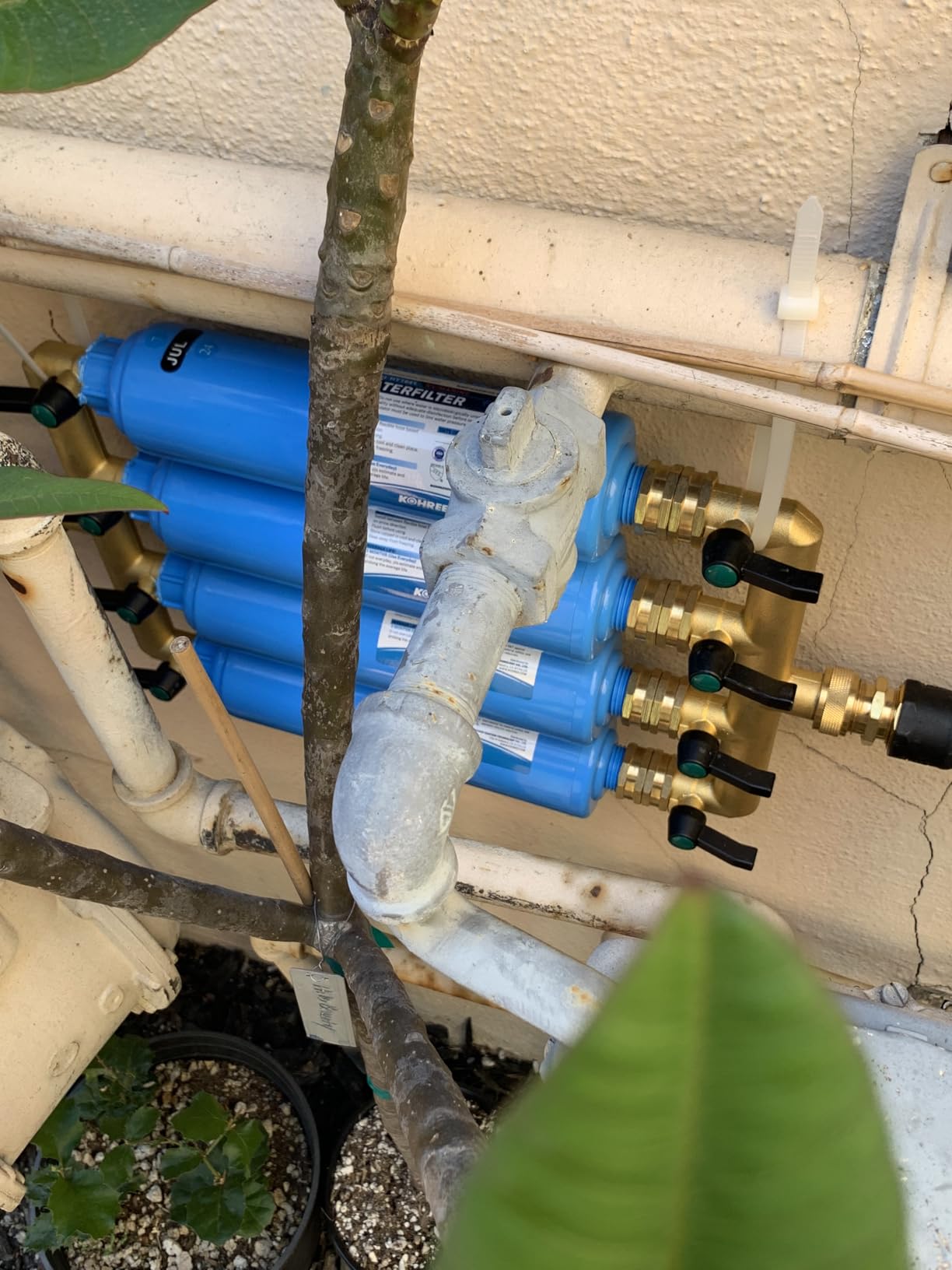
Owners call the threading the standout. It screws on tight and stays tight with no drip at the joint, and several mention better value than premium name-brand filters. There is also a recurring habit of chaining two units in series on heavily chlorinated water.
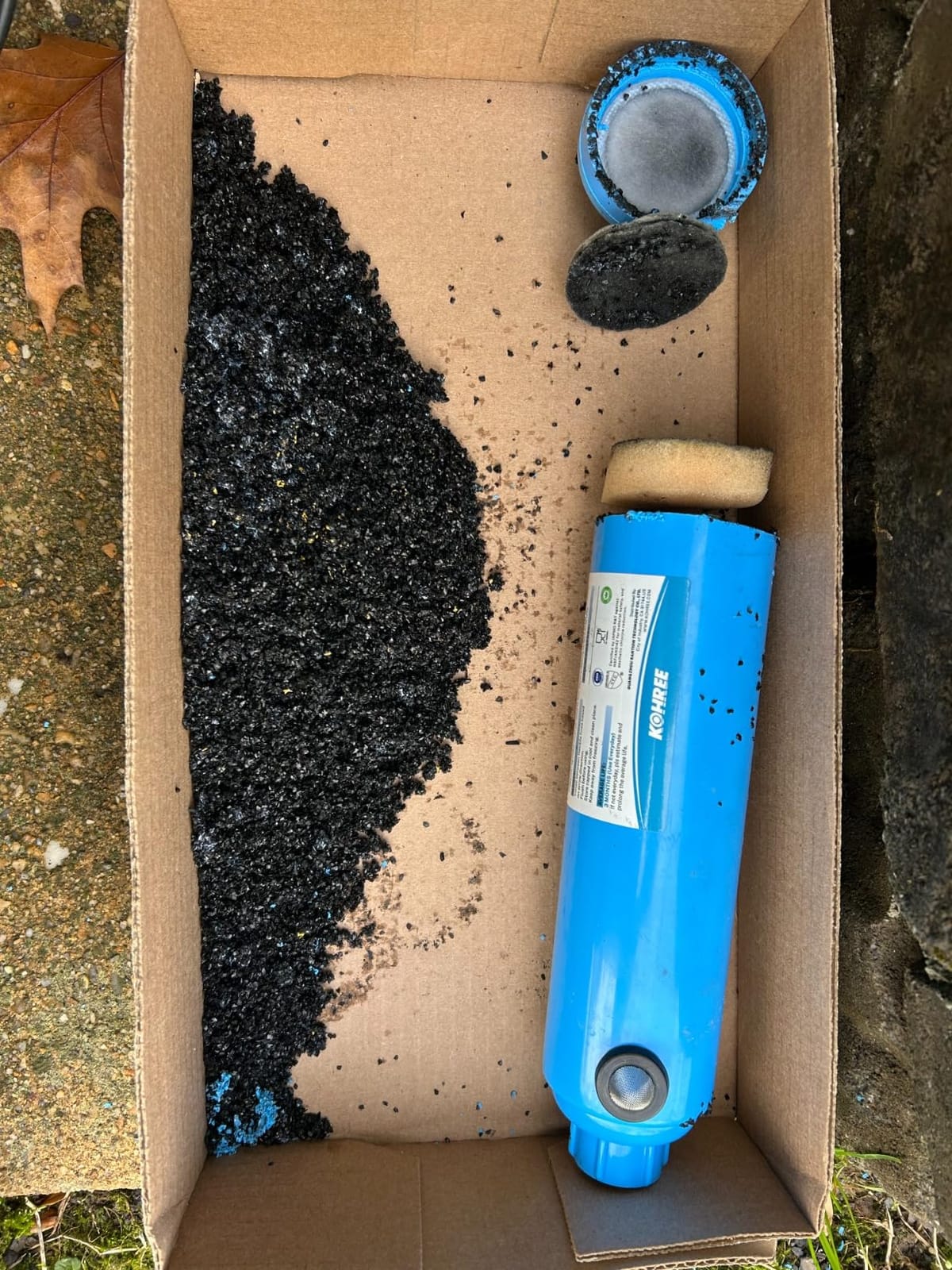
Filter life shortens sharply on high-chlorine supply. Multiple reviewers say the media is spent in about a month rather than three or six, and dark carbon dust on the first fill is universal across GAC inline filters.
How this behaves on a well hookup
Expect it to do real work on a rural supply. The internal 20-micron screen keeps sediment out of the fresh-water tank lines where it is much harder to clean later, and the burst-tested housing holds up on a park spigot with a stiff surge.
Where it falls short
The 0.5 gpm flow rate is the honest limit, fine for drinking and cooking but not for a shower, and doubling up two in series makes it worse. No named ANSI standard is attached to the NSF claim on the listing, so check the certification yourself.
6. BELVITA RV Inline Filter – Best for High-Iron Water
BELVITA RV inline water filter with Flexible Hose Protector
GAC and KDF media
Reinforced food-grade housing
Three-month rated life
Installs on 3/4-inch hose
Pros
- Repeat purchase by owners on high-iron water
- Keeps dirt and rust out of trailer water lines
- Reinforced shell resists dropping and cracking
- Two-pack leaves a spare on hand
- Installs on any standard 3/4-inch hose
Cons
- Media exhausted in about a month on high-iron supply
- Heavier housing can pull down on a trailer spigot
- Certification listed broadly rather than to a specific standard
BELVITA has one of the most enthusiastic owner bases among iron-water users, and trailer owners are overrepresented in the reviews. GAC and KDF media handle chlorine, taste, odor, and sediment, and the reinforced food-grade shell resists dropping and cracking.
Each unit is rated for about three months, and the pack includes two filters plus two anti-kink flexible hose protectors that install on any standard 3/4-inch hose.
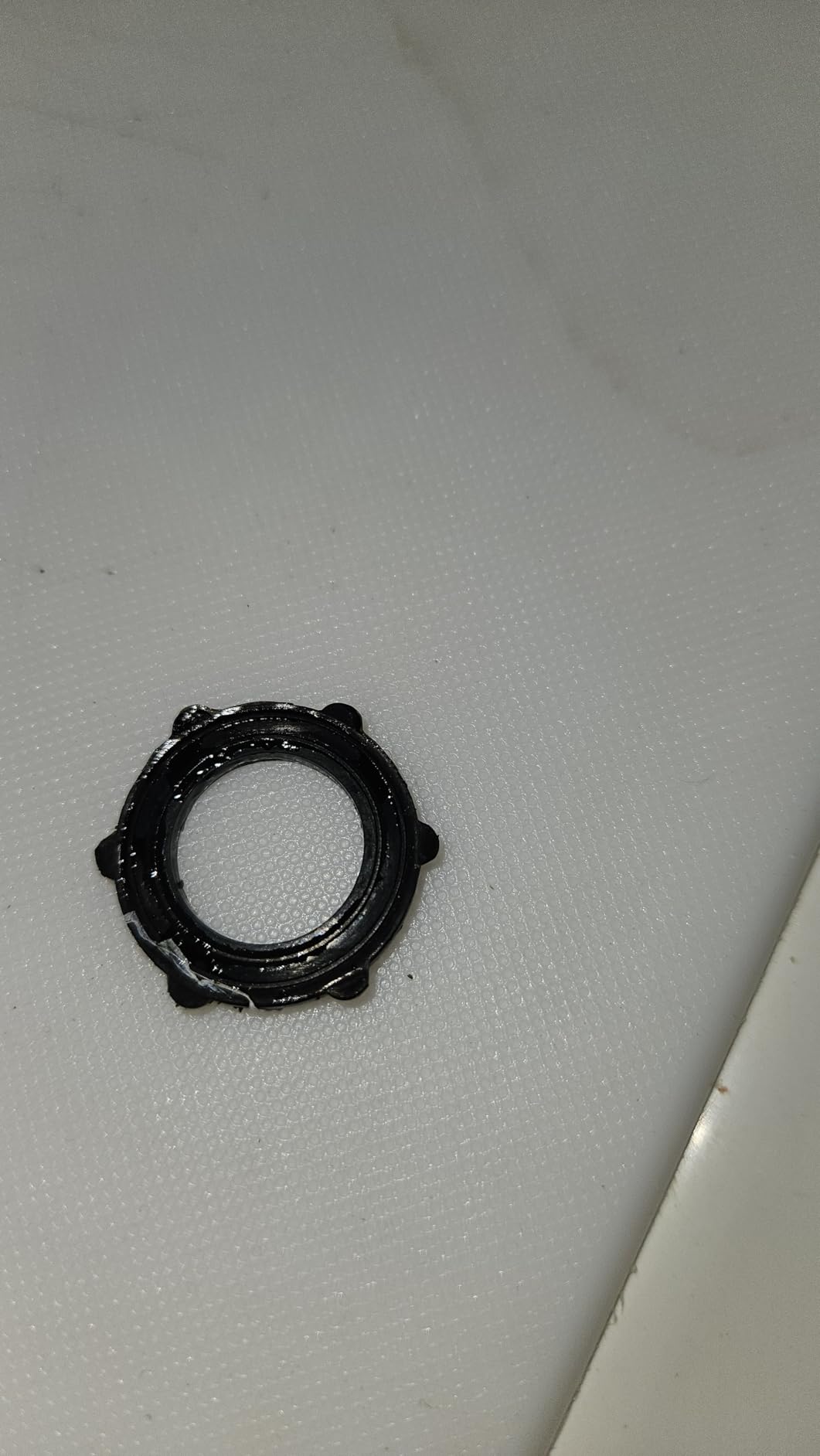
Real-world cartridge life is the honest weakness. On high-iron supplies owners report the media loading up in about a month rather than the rated three, so budget for more cartridges than the sticker suggests. Reviewers still buy it again.
Two other details. The housing is heavy enough that owners on a high trailer spigot recommend a bent adapter to take strain off the fitting, and the certification claims are listed broadly across several bodies without naming one specific standard.
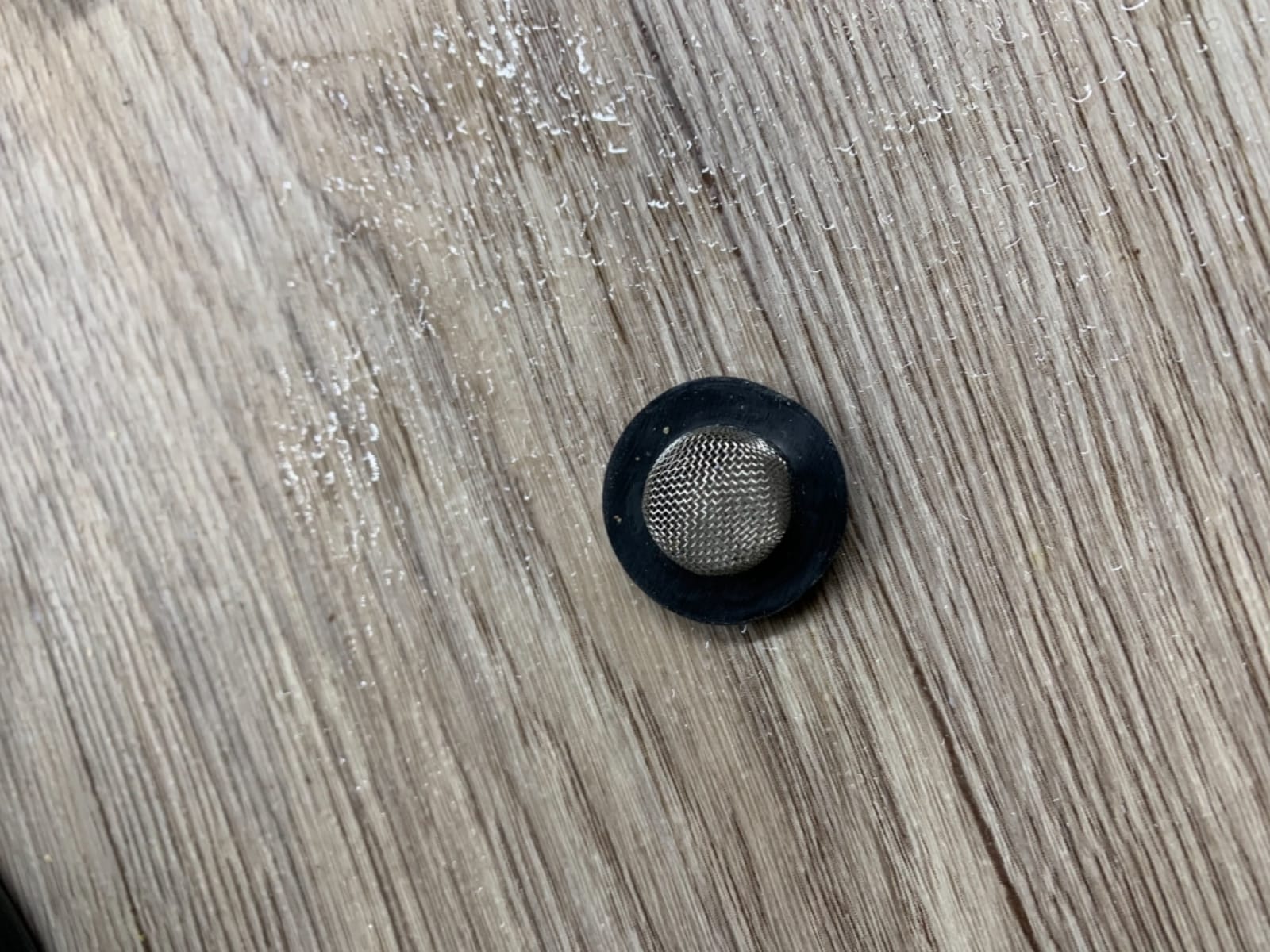
Iron is a different problem from chlorine
Chlorine is a taste and odor issue you solve with carbon. Iron is a staining issue you solve with media that binds the metal, and it will leave orange rings in a sink if you do not. Rust-colored water is also a supply-side problem, so cartridges lasting weeks means check the source first.
Where it falls short
On clean municipal water the extra metal-handling capacity is wasted. And the broad certification listing is a real gap, since we only credit a certification when the standard number is stated.
7. Bringpure RV Inline Filter – Best Certified Inline Pair
Bringpure RV Inline Water Filter with Flexible Hose Protector
NSF 42 and NSF 372
KDF and GAC at 20 micron
Reduces metals, fluoride, sediment, rust
Tool-free install
Pros
- NSF 42 and 372 with lead-free construction
- Tight thread fit that leaves no drips
- Good water pressure with no clogging
- Simple connection
- often without the adapter
Cons
- Occasional units barely pass water and need replacing
- Cartridge life varies widely with source quality
- Not suited to water temperatures beyond the inline range
Bringpure is one of the quietest performers in this group, and the reason is that the certification is specific. It is NSF 42 certified to reduce 97 percent chlorine along with odor and taste, and NSF 372 certified for lead-free material.
The media is KDF with advanced GAC at a 20-micron rating, listed against chlorine, heavy metals, fluoride, sediment, and rust. Installation needs no tools and rated life is about three months.
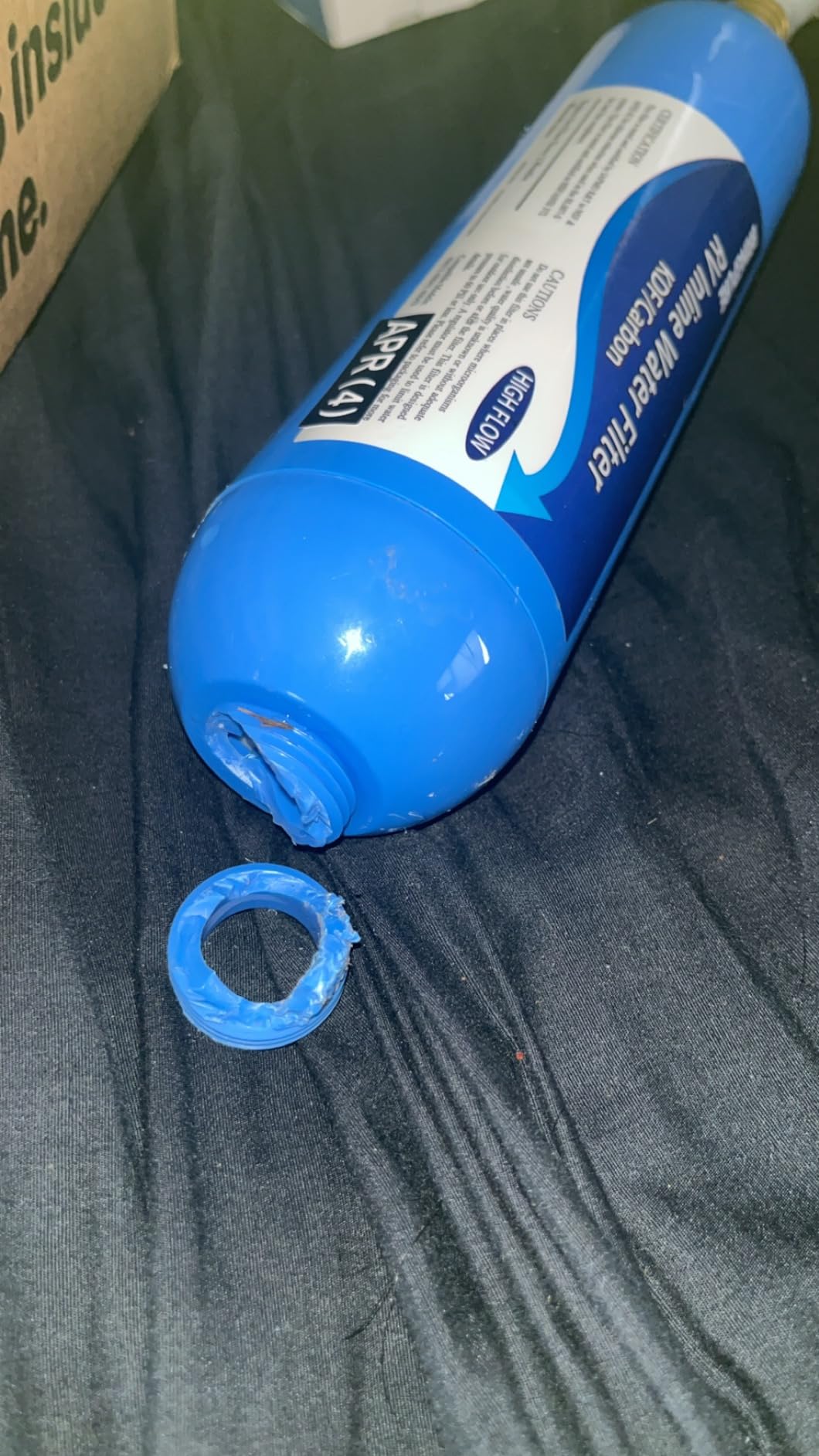
Reviewers repeatedly point at the threading as the difference. It fits tight and leaves no drips, several connect it without even using the included adapter, and there is a recurring report of good water pressure with no clogging.
The one recurring negative is defective units that barely pass water at all. Cartridge life also tracks source quality closely, so a full-time RVer on poor park water will change it more often than the rating suggests.
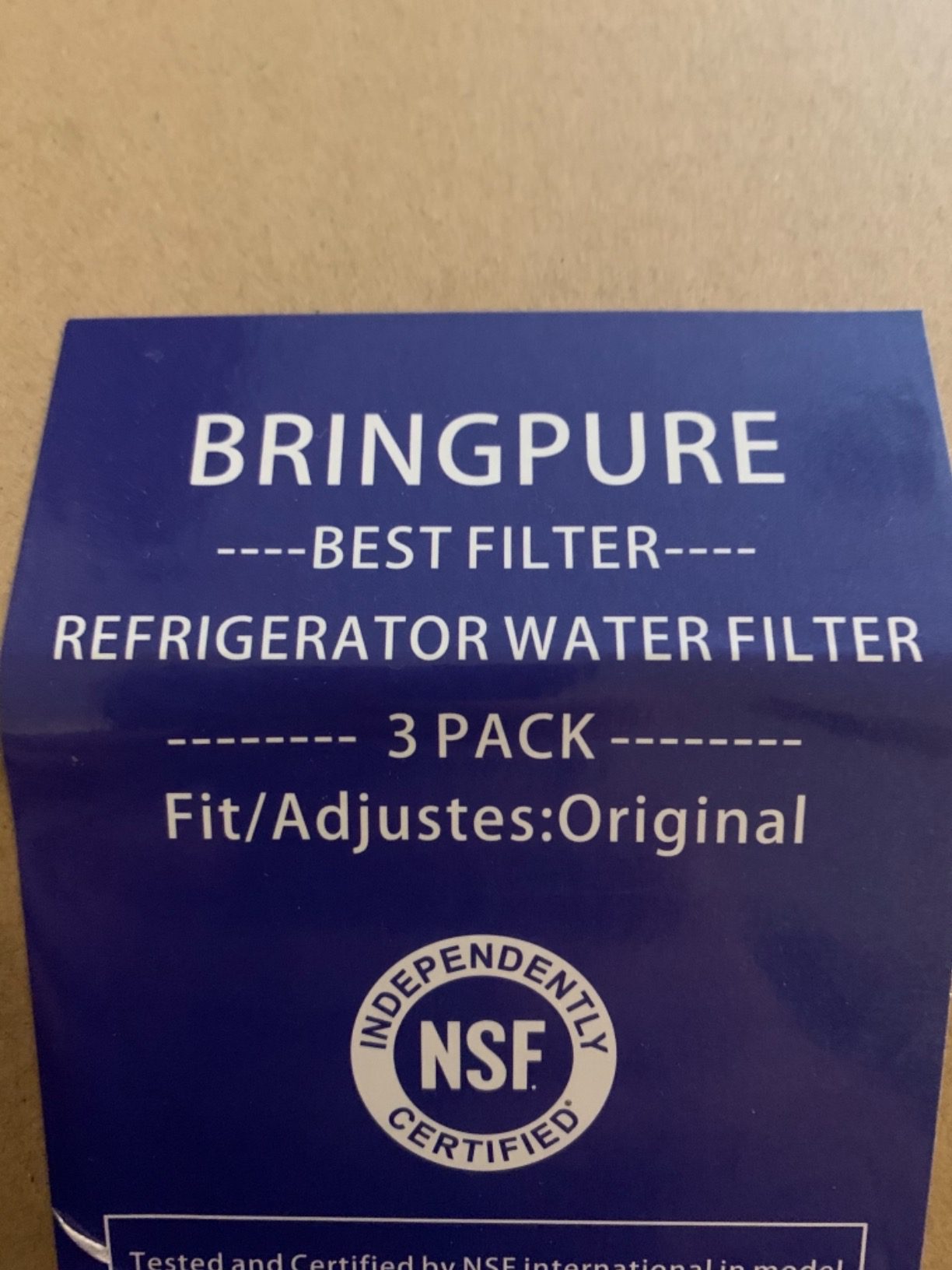
Why specific certification beats a logo
When a listing carries both standard numbers you can look them up yourself and confirm the product is genuinely listed, rather than taking a broad claim on faith. A lead-free housing is also not leaching metals into the same tank your family drinks from.
Where it falls short
It is a 20-micron carbon filter, so there is no cyst, bacteria, or virus claim and no UV stage. The operating range is the standard inline range, so do not leave it connected through a freeze.
8. Lifefilter RV/Marine 2-Pack – Best for Sediment Control
Lifefilter RV/Marine Water Filter with 2 Flexible Hose Protectors
GAC and KDF media
Multi-layer structure
Internal sediment screen
Three-month rated life
Pros
- Internal screen catches visible sediment and gunk
- Leak-free at the hose fittings
- Good water flow for RV use
- Everything needed to hook it up is in the box
- Repeat purchases across several seasons
Cons
- Can clog after short use in some water conditions
- One owner received a unit that would not pass water at all
- Cartridge life falls well short of three months in high-deposit water
Lifefilter is built for the problem most RVers underrate, which is dirt. The multi-layer structure combines GAC and KDF media with an internal screen that visibly traps sediment and grit, and the media deposits no harsh minerals into your tank.
Each filter is rated for about one camping season, and the housing measures just under 11 inches tall so it stores in a wet bay without drama.
Owners rate installation as the easiest part, with everything needed to hook it up in the box and leak-free fittings once connected. The internal screen is the feature people notice, because you can see the captured sediment instead of wondering whether it worked.
Premature clogging is the honest weakness. A few owners report the filter loading up quickly enough to restrict flow to a drip, and one received a unit that would not pass water at all.
Sediment is what destroys an RV plumbing system
A trailer’s fresh-water lines are narrow, and the water heater is worse. Sediment that gets past a screen is what clogs a shower valve and speckles a faucet aerator years later, and catching it at the spigot is far cheaper than pulling a shower valve apart in a parking lot.
Where it falls short
If the sediment load is heavy, the screen becomes a flow restriction rather than a feature. Reviews do not list a named certification standard, and like the rest of the inline group it addresses taste, odor, chlorine, and grit but not pathogens or hardness.
9. Culligan RVF-10 External Canister – Best Warranty
Culligan RVF-10 External RV Water Filter System – Hose Connector Kit, D-15 Replacement Cartridge Included – Reduces Chlorine Taste & Odor for Cleaner RV Water, 250 Gal
External canister for the fresh-water line
D-15 GAC cartridge
250 gallons or 3 months
1 gpm flow
5-year limited warranty
Pros
- Recognized water treatment brand with a 5-year limited warranty
- Connects to the fresh-water line with no tools or plumber
- Compact housing at under 12 inches tall
- Replacement D-15 cartridges widely available
- Leaves essential minerals in the water
Cons
- 250-gallon capacity is the smallest here
- Plastic housing rather than brass fittings
- 1 gpm is modest for showers and multiple fixtures
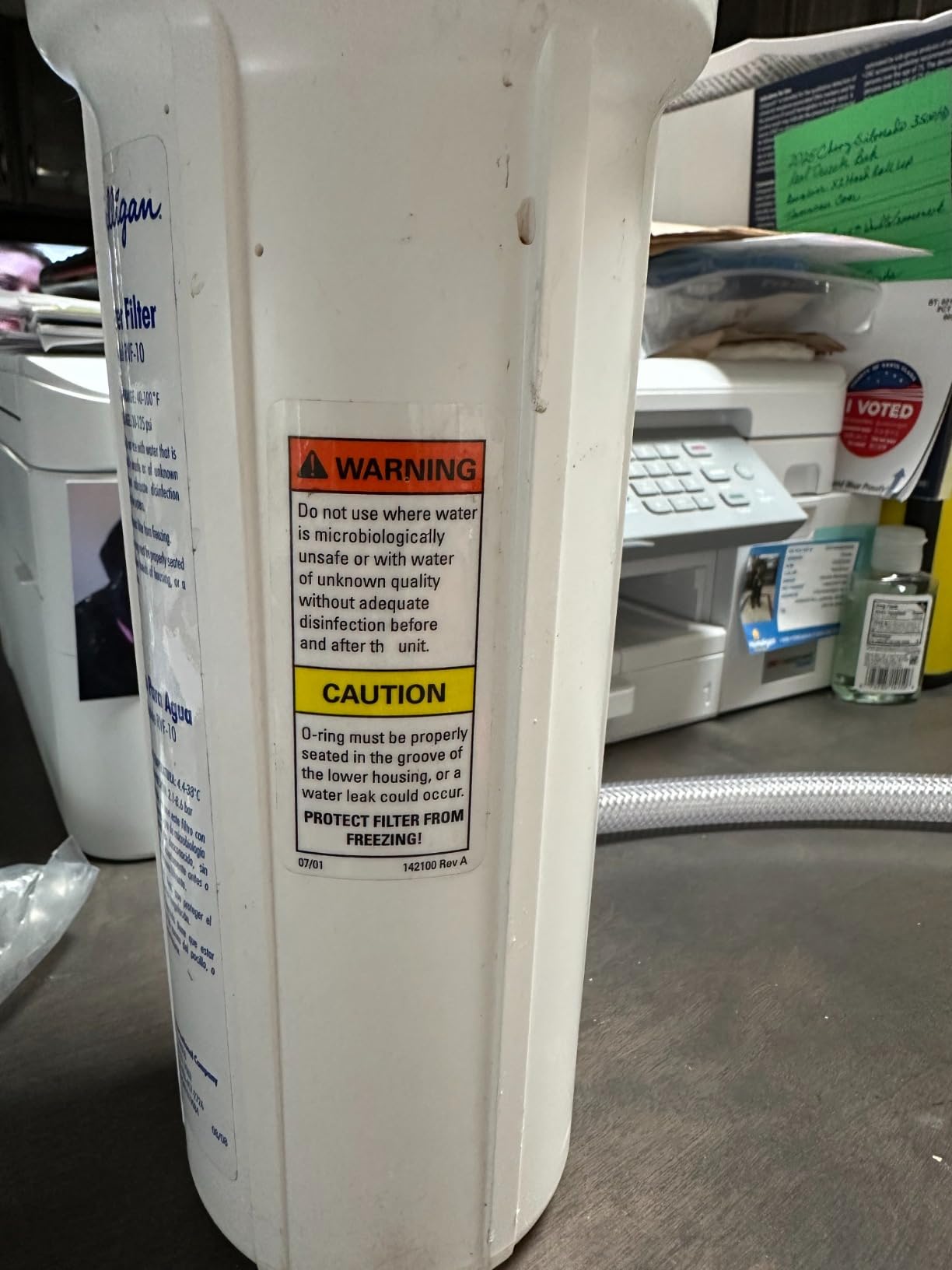
The RVF-10 is the one on this list that mounts to your plumbing rather than your hose. It connects to the RV fresh-water line, so it filters everything entering the rig, not just what you are drinking at the moment you fill a glass.
The included D-15 granular activated carbon cartridge targets chlorine taste and odor, rated for 250 gallons or three months, and it preserves essential minerals. The slim housing resists cracking and the kit includes a one-foot hose connector, so no tools or plumber are needed.
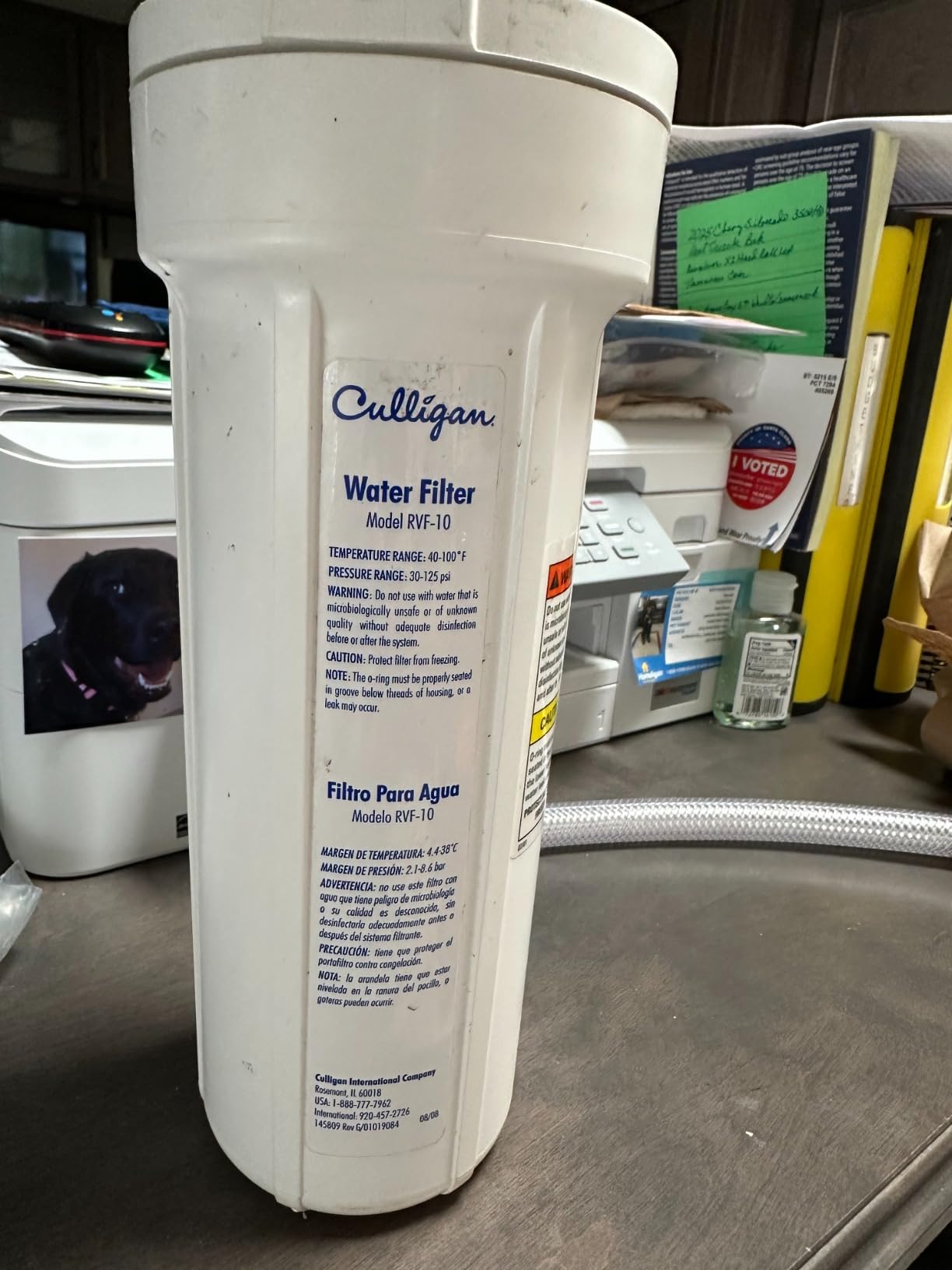
The 5-year limited warranty covers the housing rather than the cartridge, and D-15 replacement cartridges are easy to find. The compact footprint saves real space in a motorhome bay, and owners like that the hookup is genuinely tool-free.
Capacity is the catch. At 250 gallons per cartridge it is the smallest figure here, so full-time RVers will change it far more often than the inline models rated in the thousands of gallons. The plastic housing is also more prone to cracking over seasons than brass fittings, and 1 gpm is modest for a shower.
Whole-rig protection is the real advantage
An inline filter protects the water you are about to drink. A fresh-water-line canister protects everything downstream of it, so your ice maker, coffee maker, water heater, and every faucet get filtered water too. It is also the natural place to start if you plan to add a softener later.
Where it falls short
250 gallons disappears fast on a full-time RVer using water for showering, cooking, and drinking, and 1 gpm will not satisfy a shower alone. The D-15 is also a taste and odor cartridge with no sediment stage and no pathogen claim.
10. Beech Lane External Dual Canister System – Best Dual-Stage Build
Beech Lane External RV Dual Water Filter System, Leak-Free Brass Fittings, Mounting Bracket and Two Filters Included, Sturdy Construction is Built to Last
5-micron sediment plus 0.5-micron carbon block
Lead-free brass fittings
Mounting bracket and wrench
Lifetime warranty
Pros
- Only dual-stage build here pairing 5-micron sediment with 0.5-micron carbon block
- Lead-free brass fittings resist leaking far better than plastic
- Highest TDS tolerance at 2000 ppm
- Lifetime manufacturer warranty
- Works with any brand of equivalent cartridges
Cons
- Highest-priced system among the external options
- Requires physical mounting space outside the RV
- Larger and heavier than any inline filter
- Canister removal is a multi-step process
The Beech Lane BL-113 is the build to end on if you want real staged filtration and somewhere outside the rig to mount it. A 5-micron sediment canister feeds a 0.5-micron carbon block canister, the exact sequence that shows up repeatedly in owner-built rigs on iRV2.
The fittings are 3/4-inch lead-free brass, the biggest durability difference from every plastic-housing unit here. The canisters are thick-walled for outdoor exposure, the bracket and housing wrench are included, and the manufacturer warranty is for life.
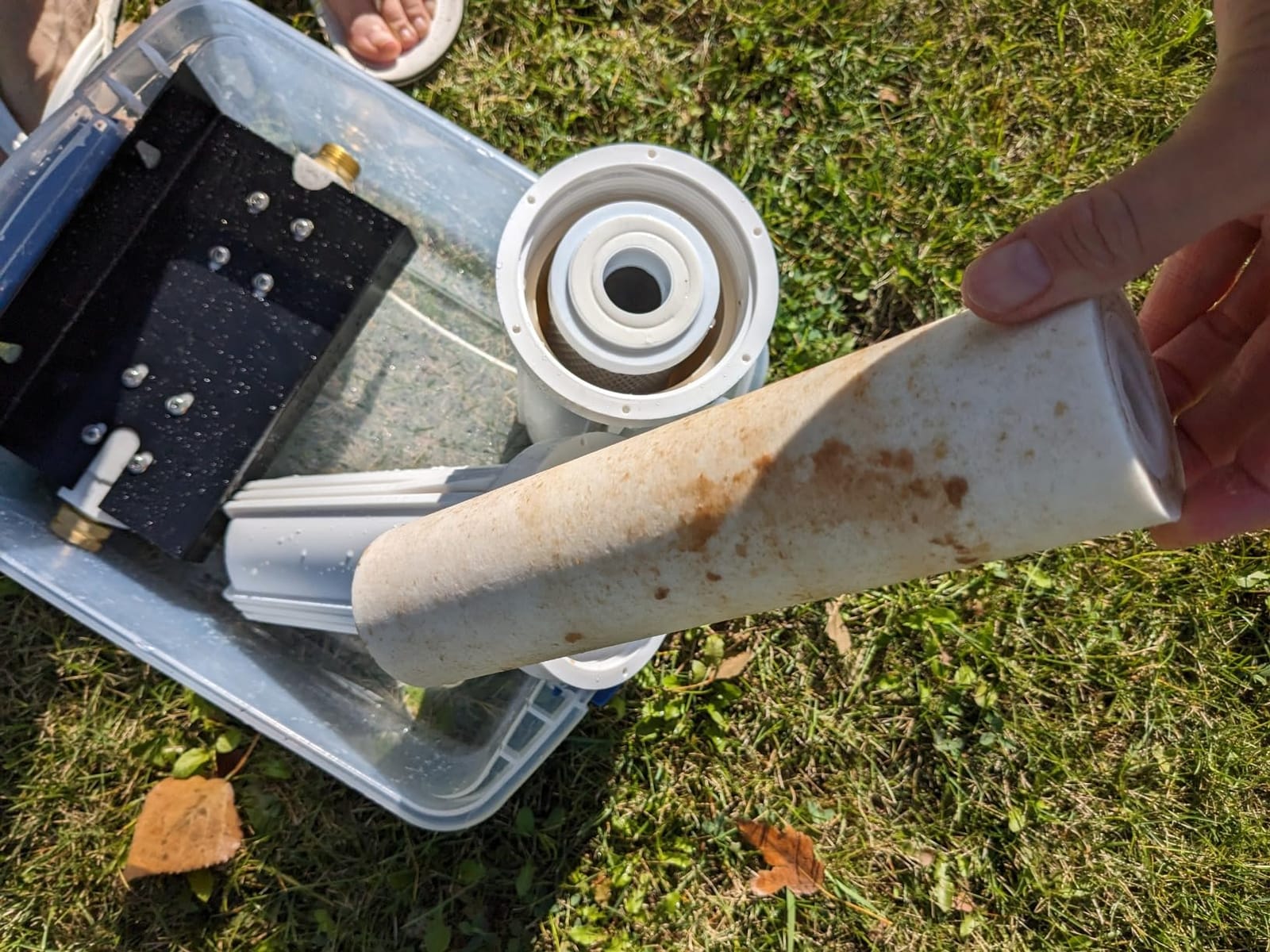
People who move up from an inline filter do it for two reasons, and reviews name both: the two-stage filtration and the brass fittings. The 0.5-micron carbon block gives noticeably more contact time than a 20-micron inline, which is what makes chloramine and heavier taste loads come out better.
The 2,000 ppm TDS tolerance is the highest figure among the canister options here. The trade-offs are physical: it is the heaviest and largest system on the list, it has to be mounted outside the vehicle, and swapping cartridges is a multi-step process.
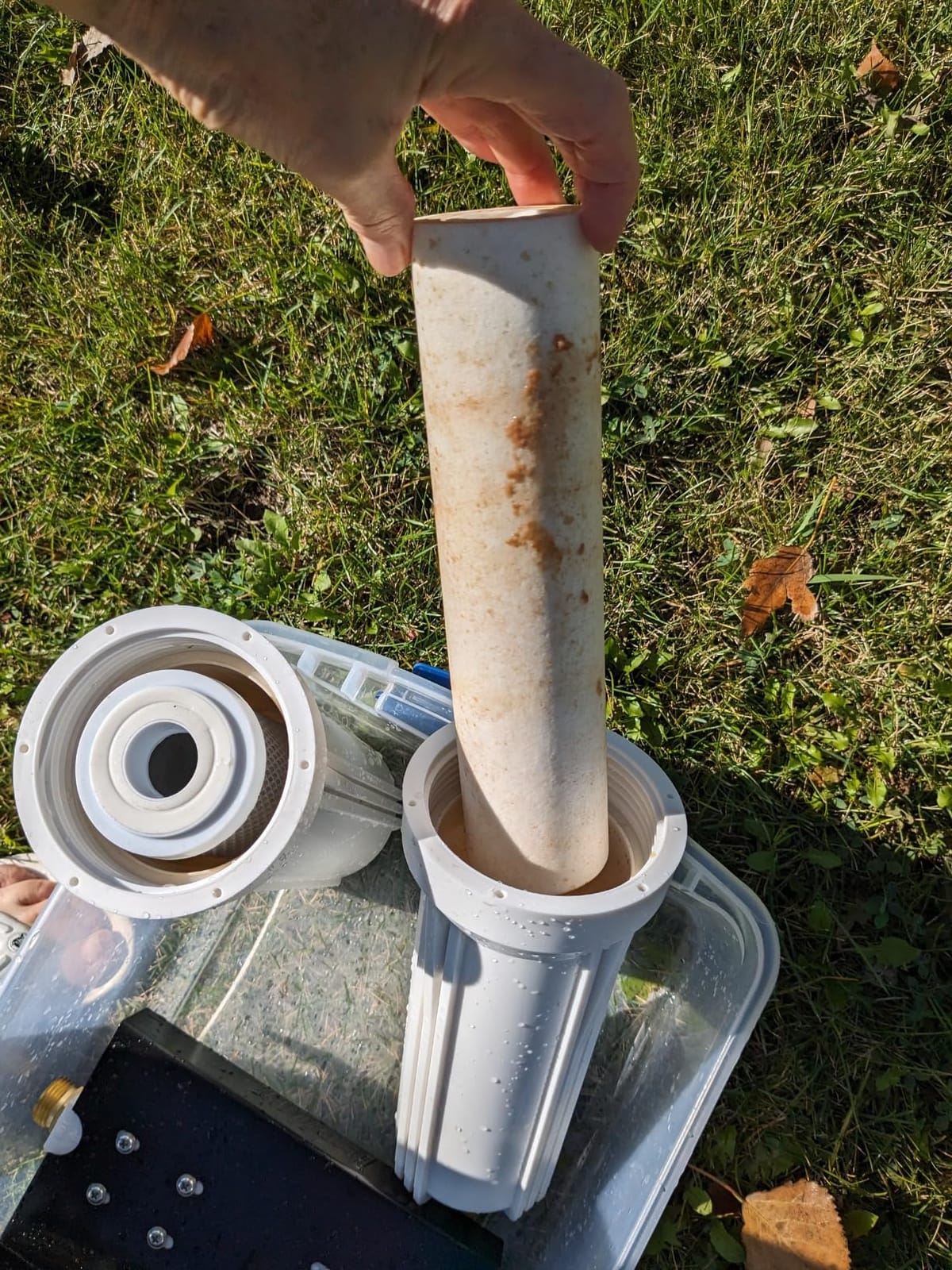
Why the sediment stage comes first
Order matters. A 5-micron sediment stage is upstream so it catches rust, grit, and iron particulate before that material can blind a carbon block. For harder water this arrangement also lets you add a softener downstream without the resin bed being fouled.
Where it falls short
Two canisters, a bracket, and a wrench is the most hardware on this list, which suits a motorhome more than a van with a crowded bay. At 0.5 micron it still makes no virus claim, and cysts and bacteria are a different piece of equipment.
What Actually Matters When You Buy an RV Water Filter
Pick the format that matches your storage and your water source
Inline screw-on filters are the default for a reason. They are small, they weigh almost nothing, they install at the spigot with no tools, and they are gone in ten seconds when you pull out of the site. They are the right answer for a travel trailer, a Class C van, and anyone who camps a few weekends a season.
External canisters mount to the fresh-water line and filter everything entering the rig, at the cost of space and a slightly more permanent install. Dual-canister builds add real staged filtration and brass durability, and they need an outside mounting point. If you full-time in a motorhome, the space is usually there. If you are working with a truck camper, it often is not.
Our more detailed breakdown of formats and cartridge media is in the guides to whole house filters for well water and under-sink filtration systems, where the same media trade-offs show up at a larger scale.
Understand what each media type actually removes
Granular activated carbon adsorbs chlorine, taste, odor, and a range of organic compounds. Carbon block is the same idea in a denser form, giving longer contact time and finer particle capture, which is why it handles chloramine and heavier taste loads better. KDF is a catalytic media added to carbon that targets iron, manganese, and heavy metals. Spun polypropylene is pure sediment filtration, catching grit and rust with no taste or odor benefit at all. Hollow fiber ultrafiltration reaches submicron ratings and catches cysts and bacteria physically. A UV stage inactivates whatever organisms survive the physical stages.
Almost every inline filter on this list is a carbon-plus-KDF formula, which means excellent taste and odor results and modest sediment capability. That is the right trade for municipal park water and the wrong one for a rusty well.
Read micron ratings as a particle size, not a quality score
A 5-micron sediment filter catches sand, rust flakes, and grit. A 1-micron filter catches finer sediment and some cysts. A 0.5-micron carbon block catches fine particulate and adsorbs taste compounds with more contact time. A 0.2-micron ultrafilter is fine enough to physically trap bacteria and protozoan cysts, and it will slow your flow noticeably while doing it.
Finer is not automatically better. Every step down in micron rating costs flow rate, and flow rate is what you feel in the shower. Most RVers are better served by one coarse stage and one carbon stage than by chasing the smallest number they can find.
Check the certification standard, not the word certified
NSF/ANSI 42 covers taste and odor and aesthetic reduction. NSF/ANSI 53 covers health-related claims, including cyst and Giardia reduction, and it is a harder standard to earn. NSF/ANSI 58 covers reverse osmosis. NSF/ANSI 372 is about lead-free material. When a listing says only that it is certified, that tells you almost nothing, and we will not repeat a claim we cannot trace to a standard number.
Match flow rate to what you actually do with the water
A 0.5 gpm inline filter is a drinking-water rate. It will serve a faucet, a coffee maker, and an ice maker. It will not serve a shower and a second fixture at the same time, and owners report the pressure drop as the single most common reason they end up swapping filters. An oversized canister protects shower pressure in a way an inline unit cannot.
If your park spigot is already weak, add a pressure regulator before the filter rather than buying a bigger filter to compensate. And if you find yourself wanting more flow mid-trip, the common owner upgrade is moving from a 0.5-micron cartridge to a 1-micron one, which is a real and reported fix.
Plan for replacement cost, not sticker cost
Inline filters on this list are rated between roughly three months and one camping season, and RVGUARD publishes a laboratory capacity figure up to 15,000 gallons. Treat every capacity number as a ceiling. Real cartridge life on iron-heavy or heavily chlorinated supply can be a fraction of it, which is the single most common complaint across the reviews here.
Two-packs pay off for anyone who camps a full season or splits the year between two trips, and they are the reason most of these products are sold as twin packs. The Culligan canister is the opposite case, where a small capacity number means frequent changes, and that is a fair trade for five-year warranty coverage and whole-rig filtration.
Order a filter and a softener correctly
These solve different problems. A filter reduces chlorine, taste, odor, sediment, and in higher specs metals and pathogens. A softener removes calcium and magnesium, which is the stuff that scales a shower head and a water heater. If your water is hard, no filter on this list will fix it, and we see that confusion more than any other in RV water.
When you run both, the order is fixed. Pre-filter first to protect the softener resin from sediment and chlorine, then the softener, then optionally a post-carbon stage if taste drops after ion exchange. Full-time RVers in hard-water regions who want a longer-range comparison are better served by our whole house filtration guides for larger households and city-water supplies, which cover the same media stack at scale.
Winterize the filter and sanitize the tank
Any inline filter left connected at a site through a freeze can split. Drain it, disconnect it at both ends, and store it inside between stays. Users also report filters freezing and splitting outdoors, so if you camp in cold months, the drain step is not optional.
Separately, filter your water but still sanitize the fresh water tank. A filter reduces what goes in, and it does not clean a tank that has been sitting through a season. Shock the tank on your normal schedule, and keep the two jobs described as what they are.
Know when a filter is not enough
Carbon and sediment filtration does not make unsafe water potable. Under a boil water advisory, or on flood-affected or contamination-affected supply, you need equipment with a specific pathogen claim, such as a UV stage or a certified submicron ultrafilter, and you need to follow that manufacturer’s maintenance and sanitizing instructions. We will not tell you a taste filter is something it is not.
Frequently Asked Questions
What is the best water filter system for a travel trailer?
For most travel trailers the answer is a screw-on inline filter with GAC and KDF media, because it installs at the spigot with no tools, stores in a wet bay, and disappears in seconds when you break camp. The Camco TastePURE 40043 is our pick because it is the only unit here listed to NSF/ANSI 42, 53 and 372. If your park water is visibly rusty, add a sediment-first canister system like the Beech Lane dual build instead, and budget for the extra storage space.
What is the best water filter for a motorhome?
Motorhomes have the space for an external canister, and that is the format we recommend. Mounting a unit on the fresh-water line filters everything entering the rig, not just drinking water, so your ice maker, coffee maker, and water heater all benefit. The Culligan RVF-10 is the simplest hookup with a 5-year limited warranty, and the Beech Lane dual canister is the stronger build with brass fittings and staged filtration.
How effective are RV water filters?
They are very effective at what they are certified to do and no good at anything else. Carbon media reliably reduces chlorine taste and odor, and a 5-micron sediment stage reliably removes rust and grit. None of the inline filters on this list remove viruses, and none soften water. Under a boil water advisory you need a UV stage or a certified submicron ultrafilter, not a carbon filter.
Do I need both a water filter and a water softener in my RV?
If your water is hard, yes. A filter handles chlorine, taste, odor, and sediment. A softener handles calcium and magnesium, which is what causes scale in your heater, shower head, and fixtures. Run them in series with the pre-filter first, the softener second, and optionally a post-carbon stage after, so the resin bed is not fouled by sediment or chlorine.
How long does an RV water filter last before it needs replacing?
Inline filters are commonly rated for one camping season, about three months, and the Culligan D-15 cartridge is rated at 250 gallons or three months. RVGUARD publishes a laboratory capacity figure of up to 15,000 gallons per filter, but read capacity as a ceiling rather than a schedule. On iron-heavy or heavily chlorinated supply, owners report media exhausting in about a month, so plan cartridges by season and judge by taste and flow.
Why does my RV water pressure drop when I attach a filter?
Because filters restrict flow, and the restriction scales with how fine the media is. The 0.5 gpm inline filters on this list are drinking-water rates, and showering through one at a low-pressure park spigot is where owners notice it most. The fix is either a larger high-flow canister or a coarser media choice, and the common owner upgrade is moving from a 0.5-micron cartridge to a 1-micron one.
The Best RV Water Filters for the Way You Travel
If you want one filter and one decision, take the Camco TastePURE 40043. It is the only unit here listed to three separate standards, it has the broadest owner history of anything on this list, and it will fit in the palm of your hand.
For a weekend trailer on clean municipal water, the Waterdrop or RVGUARD two-packs give you the same core carbon filtration and a spare. If the water at your usual parks is heavily chlorinated, go with GLACIER FRESH for its stated 97.9 percent chlorine reduction. For rusty well hookups, Kohree and BELVITA are built for the metal load, and BELVITA owners on high-iron supply are the most loyal group in the reviews.
Full-time RVers and motorhomes should look past inline entirely. The Culligan RVF-10 protects the whole rig and carries a 5-year warranty, and the Beech Lane dual canister is the build to beat if you have outdoor mounting space and want staged filtration with brass fittings. In a hard-water region, run a pre-filter, then a softener, in that order.
Whatever you choose, verify the certification standard yourself, buy a season of cartridges before you leave, and remember that no carbon filter on the market makes unsafe water safe. Those three habits will do more for your water than any brand name. We updated this guide for 2026, and we will keep the specifications honest as the lineup changes.