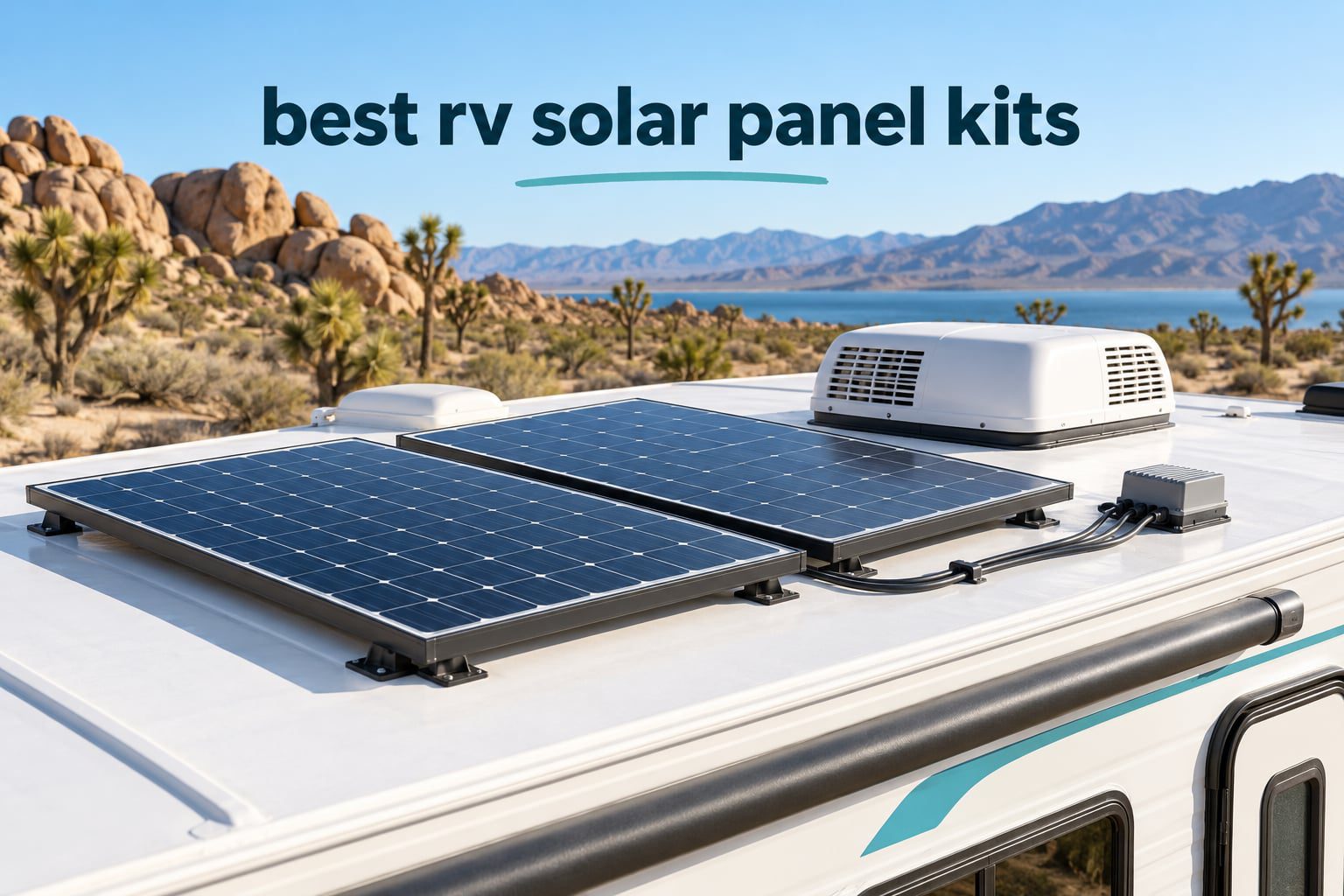
Choosing among the best RV solar panel kits comes down to one number: how many watt-hours your rig burns on a typical camping day. A weekend trailer running a 12V compressor fridge needs far less than a full-time motorhome running air conditioning, and most kits are sold in a fixed bundle that ignores that difference. We spent weeks reading owner reports, spec sheets and forum threads to separate the bundles that actually match a real RV electrical system from the ones that just look complete in a product photo.
What makes the best rv solar panel kits interesting right now is that panel technology has moved faster than the bundles have. Several kits still ship a PWM charge controller while pairing it with N-type cells that were designed to be paired with an MPPT controller. That mismatch quietly costs you a chunk of the panel’s rated output, and it is the single most common technical complaint in owner discussions.
Every kit in this roundup includes panels, a charge controller and mounting hardware. Almost none of them include a battery, an inverter or a battery monitor, which means the headline wattage is only half of the system you actually need. We flag that gap for each kit below, because the gap between a good RV solar kit and a complete off-grid system is usually several major purchases the box never contained. If you are also shopping for other gear for the rig, our picks for the best induction cooktops for RV use and the best solar powered trail cameras for long-term use cover the other side of life off the grid.
Our team compared ten kits across panel efficiency, controller type, cable length, warranty length, weight and owner satisfaction. We weighted review count heavily, because a four-star average across 3,800 owners tells you far more than a four-point-seven average across 100. Here is what we found for 2026.
Table of Contents
- Our Top Three Best RV Solar Panel Kits for 2026
- All Ten Best RV Solar Panel Kits (October 2026)
- 1. Renogy 100W 12V Starter Kit with 30A PWM Controller Is Our Top Pick
- 2. Renogy 100W Portable N-Type Foldable Kit Is the Best Low-Light Performer
- 3. Renogy 400W Premium Kit with 40A MPPT Controller Is the Best Full-Time Upgrade
- 4. ECO-WORTHY 200W 12V 24V Kit Is the Best Value Two-Panel Starter Array
- 5. ECO-WORTHY 200W Complete Kit Is the Best All-in-One Box
- 6. ECO-WORTHY 400W Premium Kit Is the Best for Bluetooth Monitoring
- 7. ACOPOWER 200W Portable Kit Is the Best for Boats and Tailgating
- 8. Go Power Overlander 200W Charging Kit Has the Longest Warranty
- 9. Topsolar 200W 12V 24V Off Grid Kit Is the Simplest Fixed Two-Panel Array
- 10. DOKIO 300W Foldable Kit Is the Most Versatile by Review Volume
- How to Size an RV Solar Panel Kit Before You Buy
- MPPT or PWM: Which Charge Controller Your Kit Needs
- What Your RV Solar Kit Still Needs
- Portable Panels or a Fixed Roof Array
- Installation, Maintenance and Lifespan
- Frequently Asked Questions
- Which RV Solar Panel Kit Should You Buy?
Our Top Three Best RV Solar Panel Kits for 2026
The three kits below cover the widest range of use cases, from a first roof install to a large fixed array. Each has a large body of owner feedback behind it, which matters more than any spec sheet when you are wiring something to a roof in the rain.

Renogy 100W 12V Starter Kit
- 100W monocrystalline panel
- 30A PWM controller
- MC4 and Z-brackets
- Expandable to 400W

Renogy 400W Premium MPPT Kit
- 4x 100W monocrystalline panels
- 40A MPPT Rover controller
- Bluetooth monitoring module
- Z-brackets and tray cable

DOKIO 300W Foldable Kit
- 300W foldable panel at 15.2 lb
- Separate PWM charge controller
- Dual USB ports
- SAE and XT60 connectors
All Ten Best RV Solar Panel Kits (October 2026)
The table below lists every kit we reviewed, with the specs that actually change how a kit performs on an RV roof. Note the controller column first, since that single component decides how much of the panel wattage you actually harvest.
| Product | Specs | Action |
|---|---|---|
| Renogy 100W 12V Starter Kit with 30A PWM Controller |
|
Check Latest Price |
 Renogy 100W Portable N-Type Foldable Kit Renogy 100W Portable N-Type Foldable Kit |
|
Check Latest Price |
| Renogy 400W Premium Kit with 40A MPPT Controller |
|
Check Latest Price |
 ECO-WORTHY 200W 12V 24V Mono Kit ECO-WORTHY 200W 12V 24V Mono Kit |
|
Check Latest Price |
 ECO-WORTHY 200W Complete Kit with Battery and Inverter ECO-WORTHY 200W Complete Kit with Battery and Inverter |
|
Check Latest Price |
 ECO-WORTHY 400W Premium Kit with 40A MPPT ECO-WORTHY 400W Premium Kit with 40A MPPT |
|
Check Latest Price |
 ACOPOWER 200W Portable Solar Panel Kit ACOPOWER 200W Portable Solar Panel Kit |
|
Check Latest Price |
 Go Power Overlander 200W Charging Kit Go Power Overlander 200W Charging Kit |
|
Check Latest Price |
 Topsolar 200W 12V 24V Off Grid Kit Topsolar 200W 12V 24V Off Grid Kit |
|
Check Latest Price |
| DOKIO 300W Portable Foldable Solar Panel Kit |
|
Check Latest Price |
1. Renogy 100W 12V Starter Kit with 30A PWM Controller Is Our Top Pick
Renogy 100W 12V Solar Panel Starter Kit with 30A PWM Controller
100W monocrystalline panel
30A PWM Wanderer controller
14.1 lb
MC4 and Z-brackets
Pros
- Highest owner satisfaction in the group at 4.7 stars across more than 4000 reviews
- Averages around 500Wh per day with 22.5 percent cell efficiency
- Every panel is electroluminescence tested before it leaves the factory
- Ten year material warranty plus 25 year power output plan
- Expandable to 400W with additional panels
Cons
- PWM control harvests less than an equivalent MPPT kit
- 100W is modest for full-time RV living
This is the kit we recommend first, and the reason is durability rather than peak numbers. Owners running these panels for years report consistent daily output, straightforward wiring and hardware that holds up to highway vibration. The 4.7 average across more than four thousand reviews is the largest and most settled sample in the category.
The kit includes one 100W monocrystalline panel, a 30A Wanderer PWM controller, MC4 connectors, a cable and a set of Z-brackets. Owners commonly report generating about 500Wh on a good day, which is enough to keep a battery bank topped up and run a 12V fridge plus LED lighting without touching the generator.
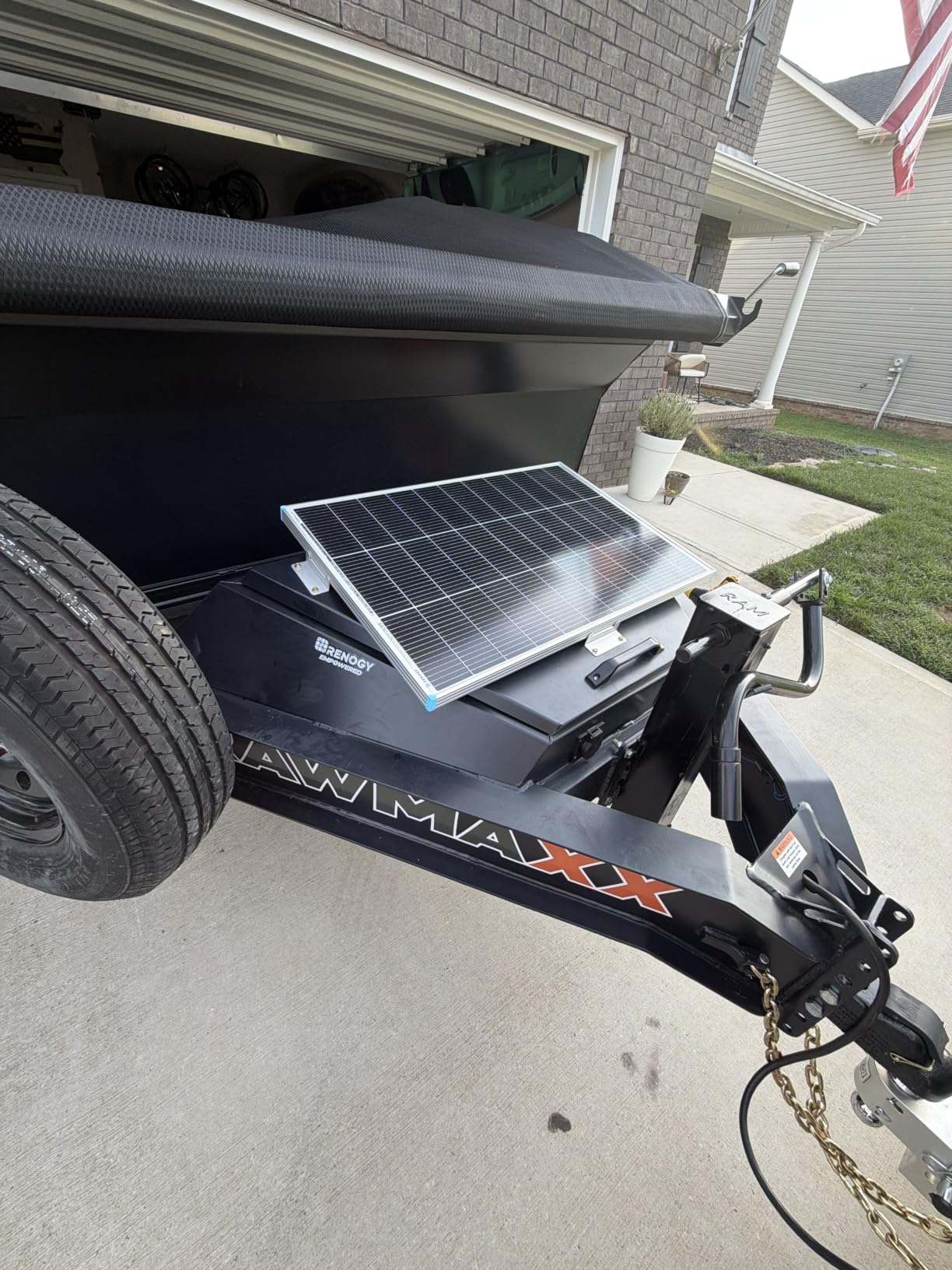
Build quality is where this kit separates itself. Every panel is electroluminescence tested before shipping, and the panel is certified to UL 61730, CSA and IEC with ratings for 2400Pa wind and 5400Pa snow loads. Those certifications matter on a motorhome roof at elevation, where a cheaper panel can delaminate after a few seasons of road vibration.
The controller accepts AGM, gel, flooded and lithium batteries, and the whole system expands to 400W by adding panels. The Wanderer controller has an RS232 Bluetooth port for phone monitoring, though the monitoring experience is basic compared with the app-based modules in newer kits.
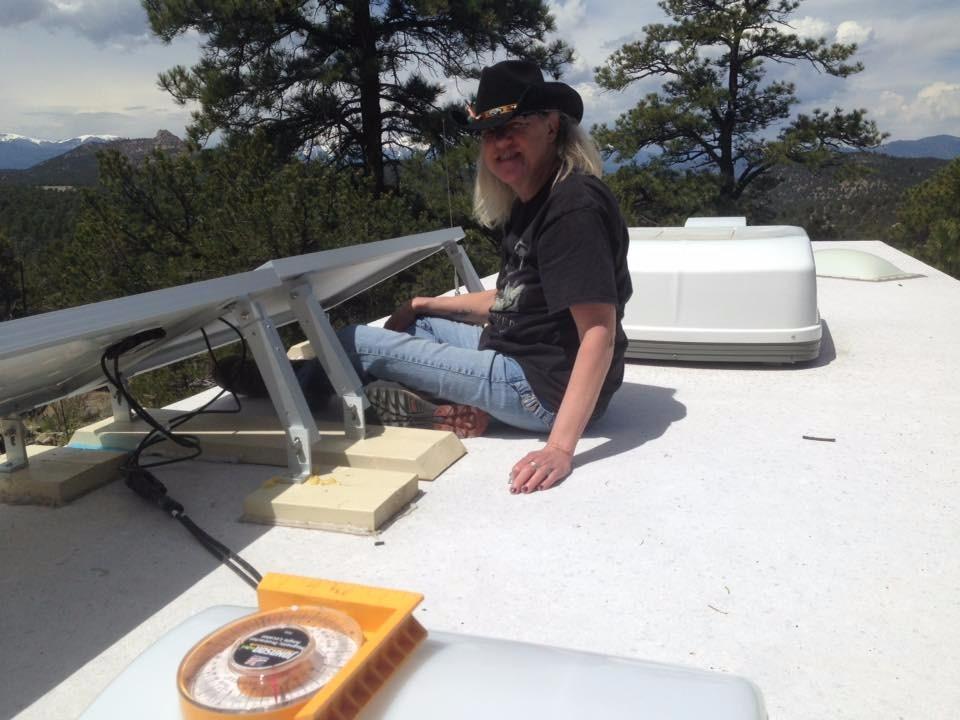
Who This Kit Works Best For
This suits weekend campers, travel trailers and anyone adding solar to an existing battery bank for the first time. Because it expands, you can start at 100W and add panels later without replacing the controller.
It is also the safest choice for a first install because the weight is manageable at 14.1 pounds for a single panel, so one person on a stable ladder can handle it. The Z-brackets, cable and connectors are all in the box.
Where This Kit Falls Short
The controller is PWM, not MPPT, and that is the honest weakness. On a single 100W panel the difference is measurable but modest, and it becomes much less significant because the panel is small enough that the controller is not the bottleneck.
At 100W, this kit will not carry a full-time RV living load. If you run air conditioning, a microwave or a CPAP machine every night, plan on 400W or more and a matching charge controller. It is also a maintenance solar kit rather than a boondocking workhorse.
2. Renogy 100W Portable N-Type Foldable Kit Is the Best Low-Light Performer
Renogy 100W Portable Solar Panel, 25% High Efficiency Solar Panel Kit with 20A Charger Controller for 12V Battery&Power Station, N-Type Foldable Solar Panels w/Tempered Glass for RV, Camping Off-Grid
100W N-type foldable panel
20A waterproof PWM controller
17.4 lb
25 percent cell efficiency
Pros
- N-type cells deliver up to 25 percent efficiency and hold up in low light
- Folds into a suitcase with an integrated adjustable kickstand
- Waterproof 20A controller with four stage charging
- Low-iron tempered glass with an IP65 junction box and bypass diodes
- Works with 12V power stations plus gel and lithium batteries
Cons
- Current limited to roughly 5 amps on a 12V bank so real input is well under 100W
- Heavier than expected at around 17 pounds
- Included cable is under 10 feet so an extension is often needed
Foldable suitcase panels get dismissed as weekend gear, but this one is genuinely useful for anyone who camps in shade or shoulder seasons. The N-type cells hold their output in low light better than conventional monocrystalline panels, which is the main reason to spend more here.
Long-term RV owners in the reviews report multiple units still performing after several years, typically pushing 5.5 to 7 amps in good sun. That real-world number is well under the 100W nameplate, and understanding why matters before you buy anything else in this list.
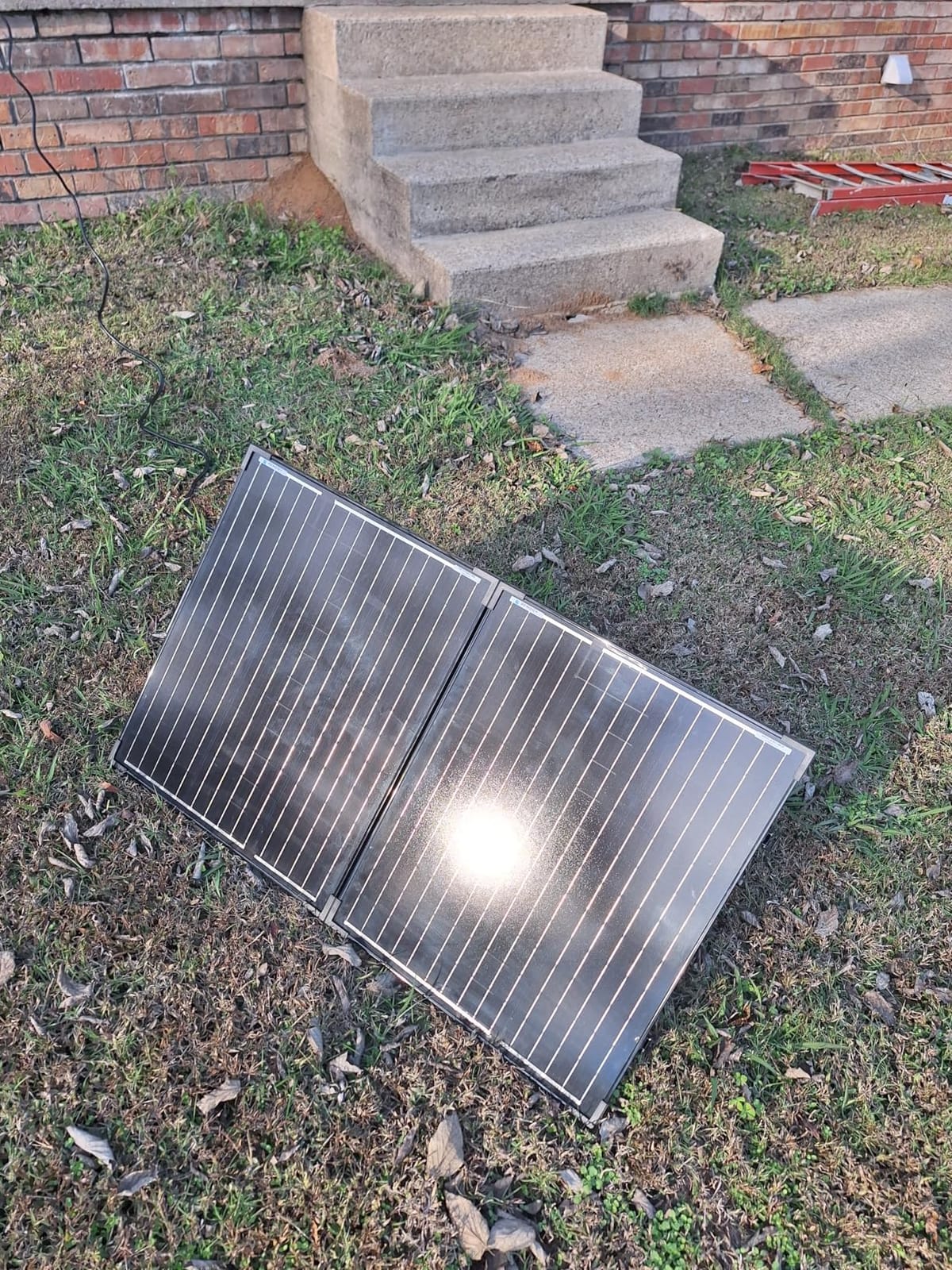
The controller is pre-installed to the panel and rated waterproof, so setup is genuinely plug-and-play. The panel folds down to 24.8 by 2 by 2.8 inches and the integrated kickstand lets you angle the face toward the sun without finding a prop. A 15A fused alligator clip cable is included.
The enclosure uses low-iron tempered glass, an anti-corrosion aluminum frame and an IP65 junction box, with bypass diodes that limit hotspot losses when part of the panel is shaded. Rated upper temperature is 149 degrees Fahrenheit, which covers desert parking lots in summer.
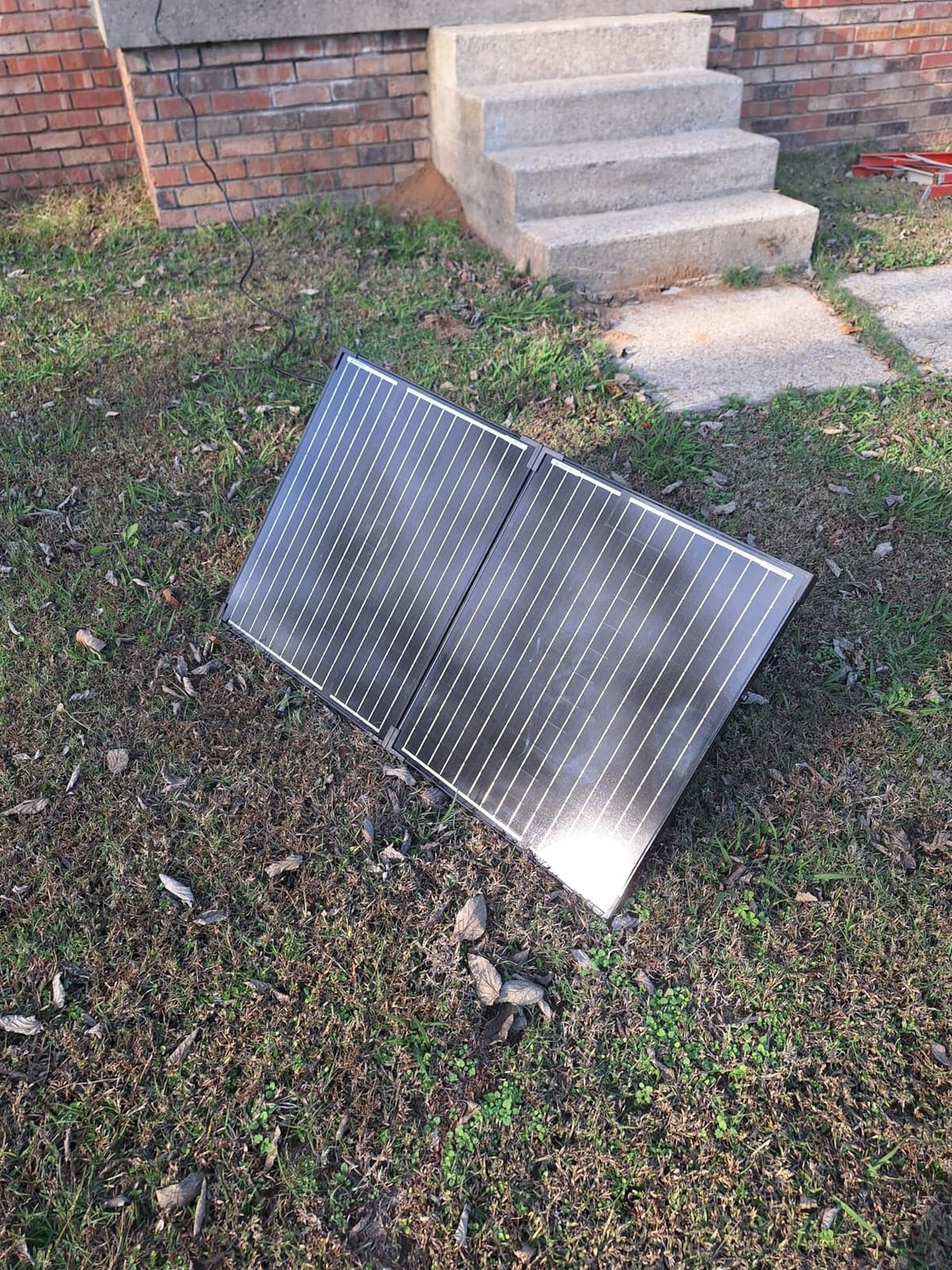
Who This Kit Works Best For
This is the pick for campers who move often, travel trailers that cannot carry a fixed array, and anyone camping under tree cover or in shoulder seasons. It pairs well with a portable power station, since the panel plugs into a 12V input directly.
If your rig already has a working rooftop array and you want a supplement to top up a bank during a week of overcast weather, this is a sensible second system. The folding format also means it stores in a storage bay rather than adding permanent roof load.
Where This Kit Falls Short
The single biggest trap is expecting 100 watts. On a 12V battery bank the panel is current limited to about 5 amps, which in practice means somewhere between 40W and 60W arriving at your battery. Budget your energy math on that lower figure.
At around 17 pounds for a 100W suitcase it is heavier than most competitors in its class, and the included cable is under 10 feet long. The latches and support arms are also light duty for frequent travel, so treat it as occasional-use gear rather than a permanent install.
3. Renogy 400W Premium Kit with 40A MPPT Controller Is the Best Full-Time Upgrade
Renogy 400Watt Premium Solar Kit with 40A MPPT Charge Controller
4x 100W monocrystalline panels
40A MPPT Rover controller
56.4 lb total
Supports 32V battery banks
Pros
- 400W of monocrystalline capacity with a 40A MPPT Rover controller for efficient harvesting
- Supports up to 32V maximum battery voltage for 12V or 24V bank flexibility
- Bluetooth module included for phone monitoring and adjustment
- Z-brackets and adaptor kit plus tray cable and fuse all included
- Five year material and workmanship warranty on the panels
Cons
- Heaviest kit in the group at 56.4 pounds so roof mounting needs a second person
- Requires meaningful roof area and wiring runs for four panels plus an MPPT controller
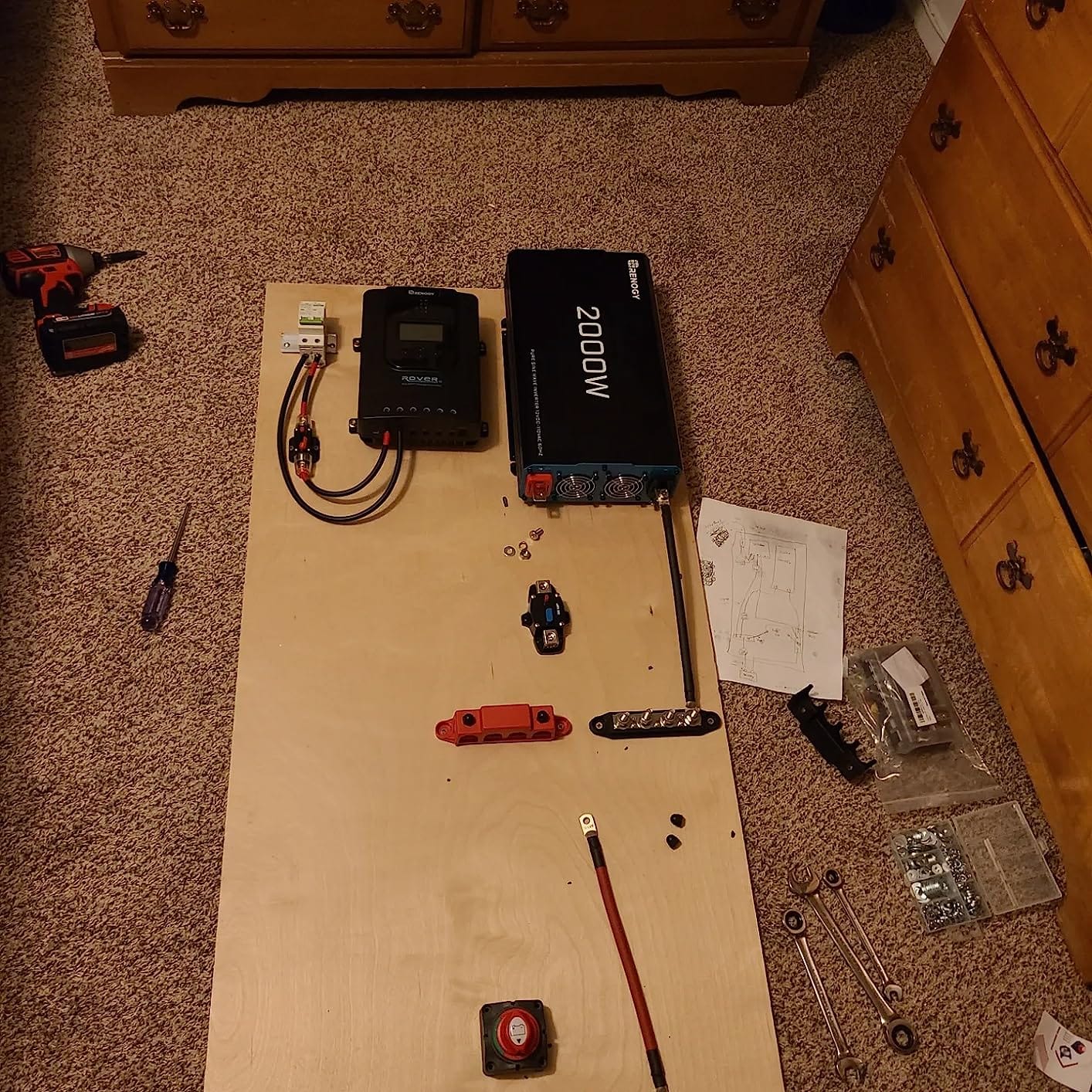
This is the kit we would put on a rig that sees real boondocking, and it is the only bundle in this roundup that pairs a proper high-voltage array with a matched MPPT controller. Four 100W panels in series feed a 40A Rover controller, which is exactly the configuration the technology was designed for.
Owners highlight the completeness of the bundle, the efficiency of the MPPT controller and the flexibility of the 32V controller ceiling for larger battery banks. Critiques in the reviews focus on installation logistics and weight rather than performance, which is the right balance of complaints for a kit at this level.
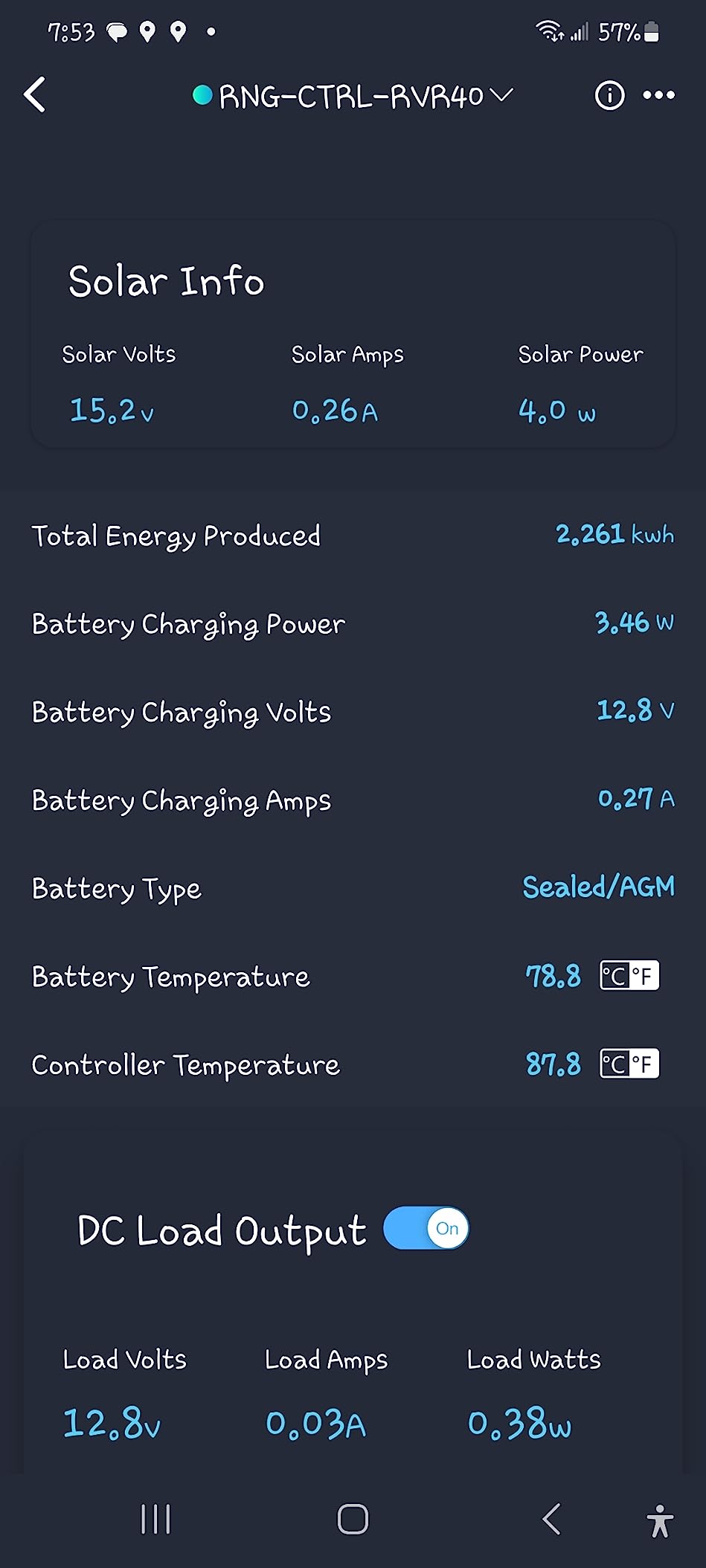
The box contains the panels, the MPPT Rover controller, a Bluetooth module, Z-brackets, an adaptor kit, a fuse and tray cable. The 32V maximum battery voltage is a genuinely useful spec: it means the array can charge a 12V or a 24V bank, so the kit survives a system upgrade later.
At 400W with five peak sun hours you are looking at roughly 1,600Wh per day, enough to run a 12V compressor fridge, device charging and lighting indefinitely on a boondock without a generator. It is still not enough to run a rooftop air conditioner on a sustained basis, which is a far larger load than most buyers expect.
Who This Kit Works Best For
This suits full-time RVers, serious boondockers and anyone moving from a small starter system to something permanent. The 32V ceiling means you can build toward a larger battery bank without replacing the controller, which is the single most expensive mistake in a solar build.
It is also the right call if you plan to add panels later. A 40A MPPT controller is sized for the array you will have eventually, not the one you have on day one, and the Bluetooth module lets you confirm charging without climbing onto the roof.
Where This Kit Falls Short
Weight is the real constraint. At 56.4 pounds for the four panels alone, this is a two-person roof job on a stable ladder, and on some rigs it means checking the roof load rating before you start. Smaller rigs with a soft fiberglass skin need that check more than larger motorhomes.
It also needs real planning. Four panels, an MPPT controller and a cable run to the battery is a wiring project rather than an afternoon swap, and the panel count plus controller means you need clear roof space away from vents, air conditioner shrouds and antennas.
4. ECO-WORTHY 200W 12V 24V Kit Is the Best Value Two-Panel Starter Array
ECO-WORTHY 200 Watts 12 Volt/24 Volt Solar Panel Kit with High Efficiency Monocrystalline Solar Panel and 30A PWM Charge Controller for RV, Camper, Vehicle, Caravan and Other Off Grid Applications
2x 100W monocrystalline panels
30A PWM controller
31.6 lb
Series or parallel wiring
Pros
- 200W of monocrystalline cells at up to 21.5 percent efficiency
- Produces roughly 800Wh per day in four hours of full sunshine
- Wiring configurable in series for 24V or parallel for 12V
- Aluminum alloy frame rated for 2400Pa wind and 5400Pa snow loads
- IP65 junction box with pre-drilled plug-and-play cables
Cons
- 30A PWM controller is less efficient than an MPPT alternative
- 31.6 pounds makes the two panels an awkward solo ladder job
- Warranty support listed as one year rather than a long product warranty
Getting two panels, a 30A controller, mounting brackets, 10 AWG cable and connectors in one bundle at this level is rare, and owners mention exactly that combination most often in reviews. The listing also ranks unusually well in the Solar Panels category, which is a useful signal of how much real installation volume it has seen.
Daily output is quoted at around 800Wh in four hours of full sunshine. That is a meaningful jump from a 100W kit, and it is enough to carry a 12V fridge and keep a bank healthy through a multi-day dry camp.
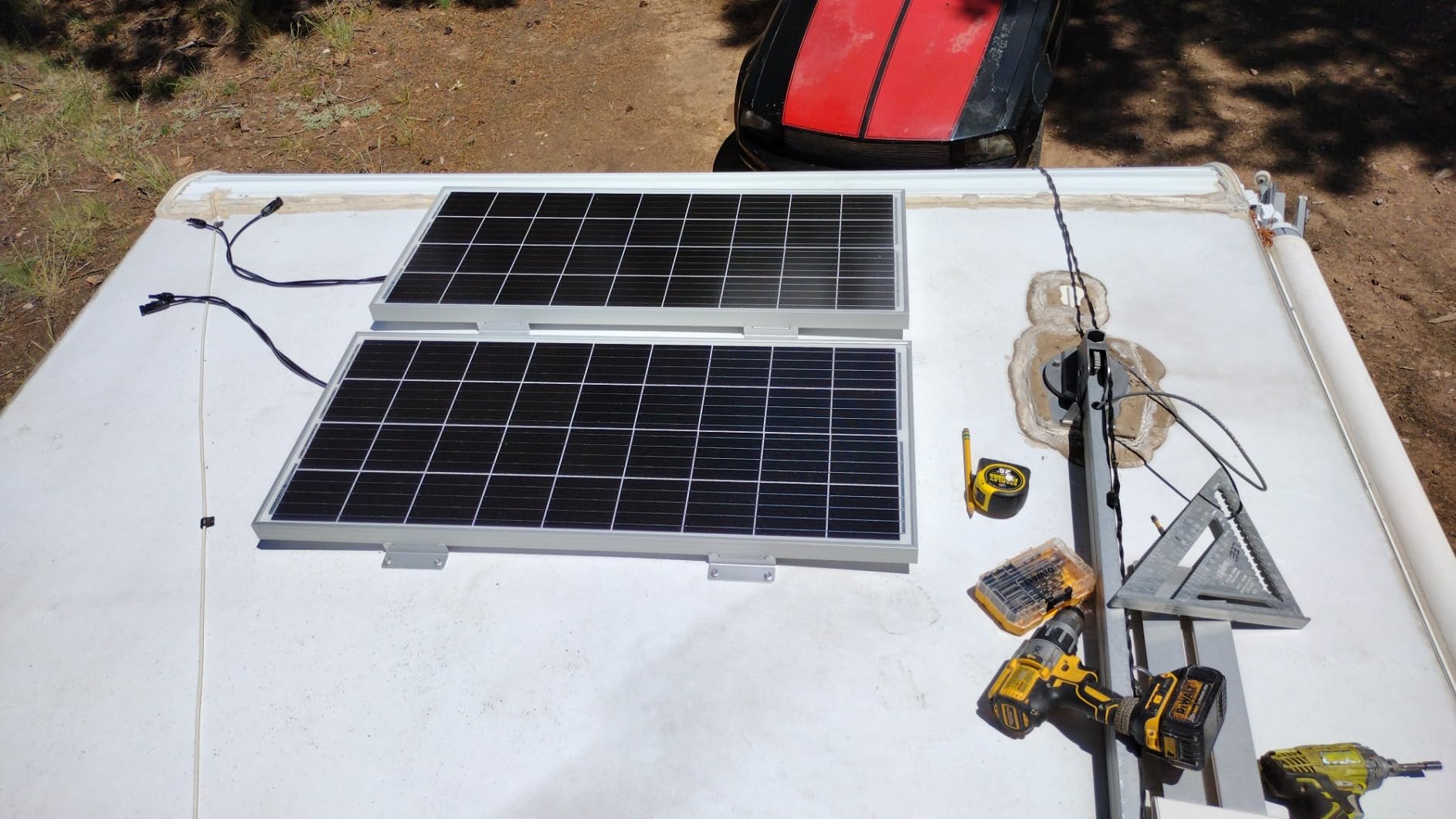
Both panels are monocrystalline with up to 21.5 percent efficiency, and you can wire them in series for a 24V bank or in parallel for 12V. The maximum voltage of 27.4 volts on the panel specification means a series pair is comfortably within the input range of a 30A PWM controller, which is why the bundle works at all.
The kit includes two sets of Z mounting brackets, a pair of 16.4 foot 10 AWG solar cables, a pair of two-in-one connectors and a pair of tray cables. The frames are corrosion-resistant aluminum alloy rated for 2400Pa wind and 5400Pa snow loads, and the junction boxes are IP65 with pre-drilled cables.
Who This Kit Works Best For
This is the pick for someone who wants a genuine two-panel roof array rather than a single panel with expansion potential. Boondockers who want to sit through a long stretch of weather without a generator are the natural fit.
The series or parallel flexibility also makes it a good bridge kit. If you are running a 12V bank now but may move to 24V later, the same panels work in either configuration once you have a controller that can handle it.
Where This Kit Falls Short
The 30A PWM controller is the compromise that makes this kit affordable. PWM harvests less than MPPT, so a matched MPPT bundle with the same panels will put more energy into the bank, particularly in warm or overcast conditions.
The 31.6 pound total weight is a genuine second concern, and a one year warranty with round-the-clock tech support is thin next to competitors offering five or 25 year terms. Neither of those is disqualifying, but both belong in the decision.
5. ECO-WORTHY 200W Complete Kit Is the Best All-in-One Box
ECO-WORTHY 200 Watt 12V Complete Solar Panel Starter Kit for RV Off Grid
200W N-type panels
600W pure sine inverter
50Ah LiFePO4 battery
30A LiFePO4 charger
Pros
- Only bundle here that arrives with panels and battery plus inverter and controller
- 600W pure sine wave inverter with a smart LiFePO4 charger and 20ms UPS switchover
- 12V 50Ah LiFePO4 battery rated for 4000 to 15000 recharge cycles
- 25 percent efficient N-type cells with dual-sided light capture
- Charging current adjustable from 5A to 40A by app or button
Cons
- Low rating for a kit with this much included
- Entry-level inverter limits high-draw appliances like a microwave or air conditioning
- XT60 interface capped at 30A input and output
Almost every kit in this roundup leaves you needing a battery and an inverter. This one includes both, which makes it the only genuinely complete off-grid box here and the easiest path for a first-time RV solar owner who does not want to research five components at once.
What arrives is 200W of 25 percent efficient N-type monocrystalline panels, a 600W pure sine wave inverter with a smart LiFePO4 charger and 20ms UPS auto-switch, a 12V 50Ah LiFePO4 battery, and a controller with adjustable charging from 5A to 40A. The XT60 port plus Type-C and USB output through the included adapter make it useful straight out of the box.
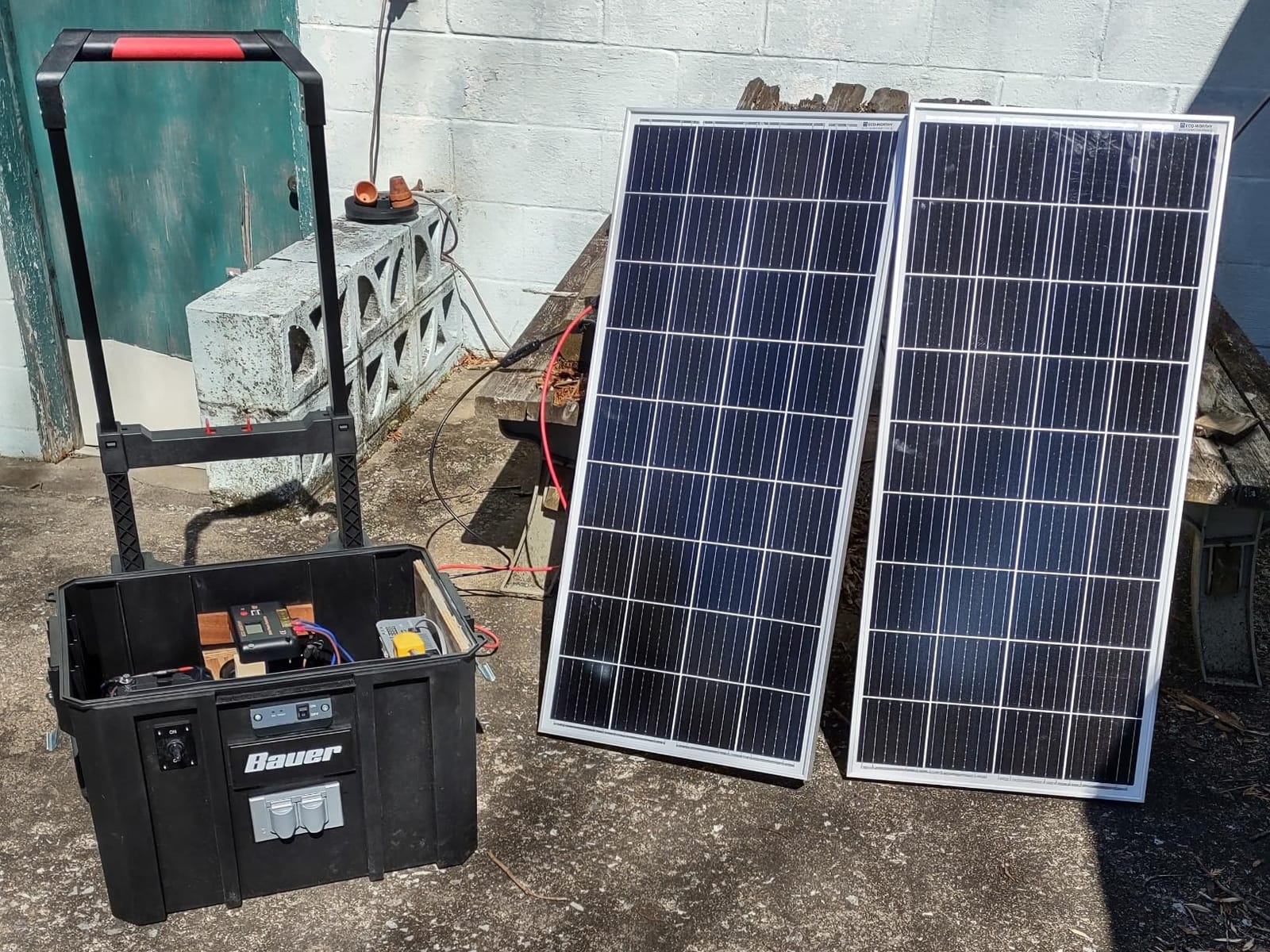
The panels use dual-sided light capture for up to 15 percent extra output, which is unusual at this level and genuinely useful on a reflective RV roof. The battery is rated for 4,000 to 15,000 deep cycle recharge cycles depending on depth of discharge, which is where LiFePO4 chemistry outclasses the flooded lead-acid batteries still common in RVs.
The 4.1 average across 341 reviews is the lowest in this group, and the distribution is much flatter than the others, with around 60 percent five-star but 10 percent one-star. Fans like getting everything in one box with no separate sourcing; critics are usually disappointed by what the 600W inverter can actually do relative to the whole package.
Who This Kit Works Best For
This is the right pick for new RVers building a first off-grid setup, and for anyone who wants to see the whole system working before committing to a larger build. It is also the easiest kit here to demo, since the battery, inverter and panels are already matched.
It works well as a weekend rig with a 12V fridge, phone charging, lighting and small electronics. The 50Ah lithium bank holds more usable energy than a group 27 lead-acid battery of the same nominal size, and it charges noticeably faster.
Where This Kit Falls Short
The inverter is entry-level. A 600W pure sine wave unit is fine for a fridge, a laptop and lights, but it will not carry a microwave, a hair dryer and an air conditioner together, and it should not be expected to.
Buyers also report a setup and battery management learning curve, and the XT60 connection is capped at 30A in and out. If your goal is full-time living with heavy loads, this is a starting point rather than a destination.
6. ECO-WORTHY 400W Premium Kit Is the Best for Bluetooth Monitoring
ECO-WORTHY 400 Watt 12 Volt Premium Solar Panel Kit :4pcs 100W Solar Panel+ 40A MPPT Charge Controller+ Bluetooth Module+ Mounting Z Brackets, 400W 12V Solar Power Off Grid System for Home, RV, Boat.
4x 100W monocrystalline panels
40A MPPT controller
BT-02 Bluetooth 5.0 module
32.66 kg
Pros
- 400W of 21 percent efficient panels averaging 1.6kWh per day
- 40A MPPT controller with 99 percent tracking efficiency and 98 percent peak conversion
- BT-02 Bluetooth module streams panel and battery data to a phone from up to 82 feet away
- 3.2mm low-iron glass with aluminum frames wider than typical competitors
- Bypass diodes pre-installed in an IP65 junction box
Cons
- Heavy at 32.66 kg so roof mounting needs help
- Small review base at 120 reviews so the long-term record is thin
- Requires substantial roof area and a wiring plan for four panels
The monitoring here is the standout feature. The BT-02 Bluetooth 5.0 module streams panel, battery and load data to a phone from up to 82 feet away, which means you can confirm charging from inside the cab without climbing onto the roof.
The controller is the other reason to look here. It is a 40A MPPT with 99 percent tracking efficiency and 98 percent peak conversion, and the listing puts the gain over PWM at roughly 40 percent, which is in line with what owners describe in practice on larger arrays.
The four panels are 21 percent efficient monocrystalline with an average daily output of 1.6kWh depending on sunlight. That figure assumes good conditions, so treat it as a fair-weather number rather than a promise, and it is consistent with the four-hour full-sun assumption other kits in this group use.
Panels use 3.2mm low-iron glass with aluminum frames that are 2 to 5mm wider than typical competitors, and bypass diodes pre-installed in an IP65 junction box on every panel. Each panel comes with a pre-drilled 35 inch, 16 foot cable fitted with Y-branch plug-and-play connectors, so there is no splicing at the roof.
Who This Kit Works Best For
This suits boondockers who want visibility into their system rather than a set-and-forget install. If you have ever wondered whether the panels are actually producing on a given day, the module answers that question in seconds.
It is also a strong choice for full-time RVers pairing an array with a larger lithium bank, since the MPPT controller is sized for expansion and the monitoring makes it easy to tune charge current as conditions change.
Where This Kit Falls Short
Weight is the first problem. At 32.66 kg for the kit, this is a two-person roof job, and the panel count means you need a clear area free of vents and air conditioner shrouds before you start ordering brackets.
The second is evidence. With 120 reviews, the 4.4 average is the least settled rating in this roundup, so treat the specification claims with more caution than the heavily reviewed kits. If long-term owner history is your top priority, the Renogy 400W bundle has a much deeper record.
7. ACOPOWER 200W Portable Kit Is the Best for Boats and Tailgating
ACOPOWER 200W Portable Solar Panel Kit, Waterproof 20A Charge Controller for 12V Battery and Solar Generator for RV, Camper Trailer& Marine Black
200W foldable monocrystalline panel
Waterproof 20A controller
11.61 kg
Adjustable kickstands
Pros
- 200W of foldable panel in a compact package with a built-in carrying handle
- Waterproof 20A controller with overcharge and overload plus short circuit and reverse connection protection
- Adjustable kickstands for stable positioning in the field
- Works with 12V batteries and portable power stations plus Anderson and universal solar connectors
Cons
- Smallest review base in the group at 103 reviews
- Low category sales rank indicates limited market traction
- 20A controller is undersized relative to a 200W panel feeding a 12V bank at high current
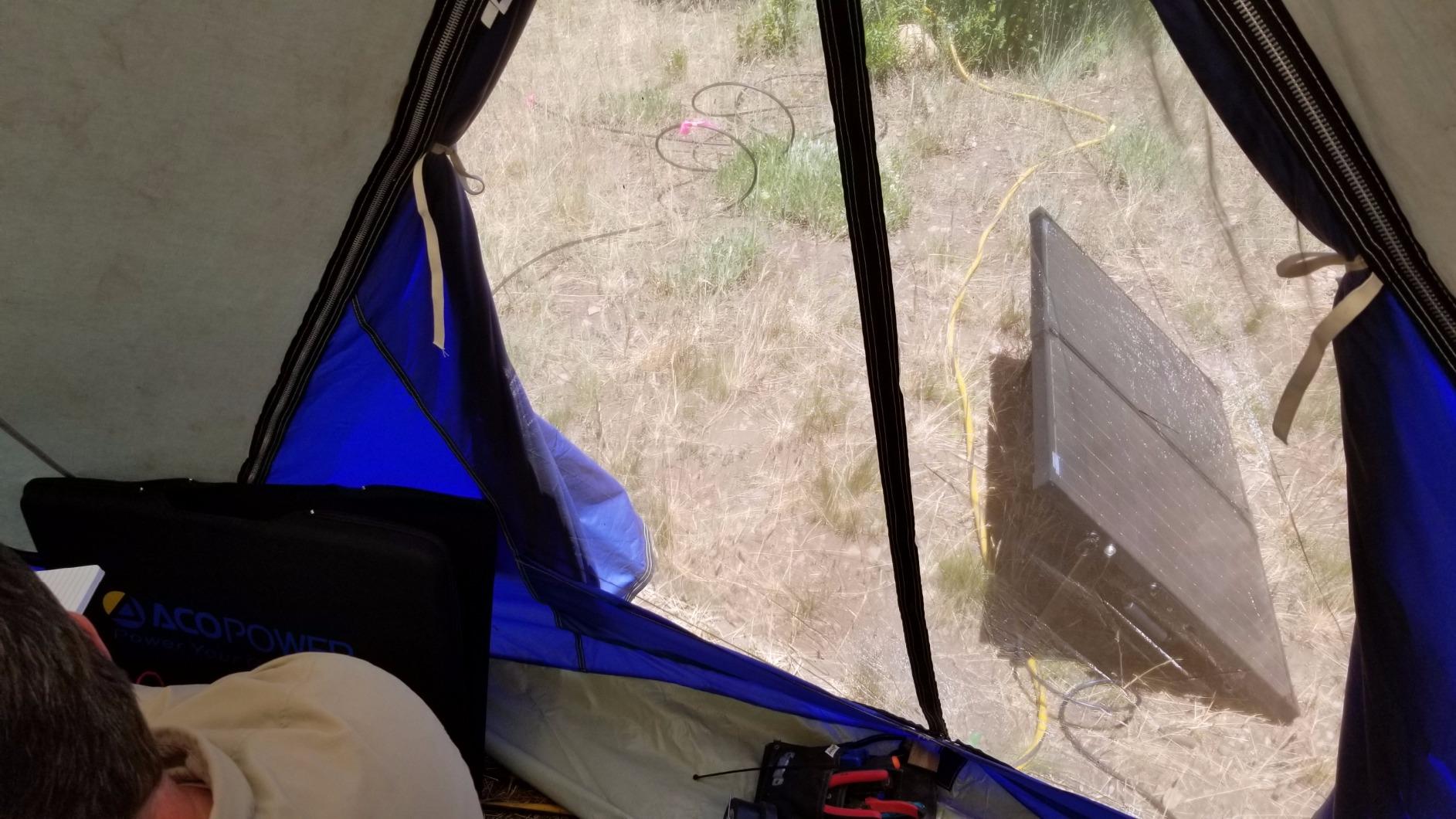
This is the kit to look at if your solar lives in a storage bay rather than on the roof. The 200W foldable panel has a built-in carrying handle and adjustable kickstands, so it goes from packed to generating in about a minute with no tools.
Owners are positive about portability, the included waterproof controller and the connector versatility. The 4.5 average is decent, but with 103 reviews the sample is small enough that a few experiences move the number noticeably.
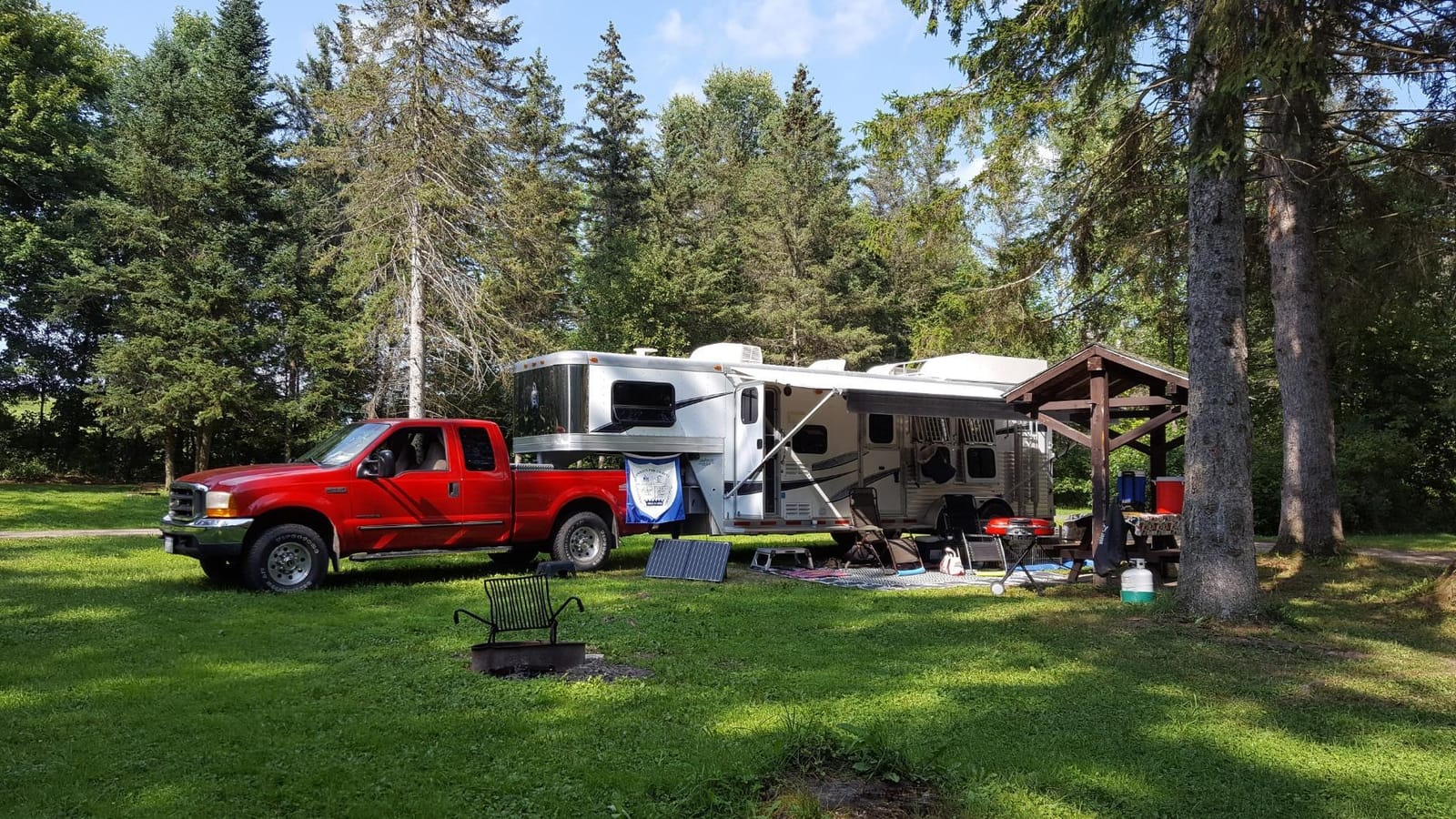
The controller deserves credit for its protection circuitry, which covers overcharge, overload, short circuit and reverse connection. On a portable kit that gets plugged and unplugged in the rain and moved around a lot, that list matters more than the wattage figure.
Connector compatibility is a genuine strength. It works with most 12V batteries, portable power stations, and both Anderson and universal solar connectors, which means it will adapt to whatever charge port your existing gear already uses without an adapter chain.
Who This Kit Works Best For
This is a good fit for boaters, tailgaters, overlanders and RVers who travel between shaded campsites and want to reposition the panel during the day. The handle and kickstands make it far easier to use than a fixed array when conditions change.
It also works as a supplemental system for a rig that already has a small rooftop panel, or as a primary array for a pop-up camper that cannot take permanent roof weight.
Where This Kit Falls Short
The 20A controller is undersized for what the panel can deliver. A 200W panel feeding a 12V bank can pull well over 20 amps in ideal conditions, so the controller is the limiting component in good sun, and it is another case where the nameplate overstates real output.
The 103-review base and a low category sales rank mean less proven field history than the Renogy and ECO-WORTHY kits. If you want a portable panel and want the deepest owner record, the Renogy suitcase in this roundup has nearly 1,700 reviews behind it.
8. Go Power Overlander 200W Charging Kit Has the Longest Warranty
Go Power Overlander 200W 12V Solar Panel Charging Kit
200W panel rated 9.6 amps
30A Bluetooth PWM controller
Two 25 ft number 10 cables
25 year warranty
Pros
- 200W panel delivering about 9.6 amps for battery maintenance on extended dry camping
- 30-amp Bluetooth PWM controller expands to 600W without replacing the controller
- Two 25 foot number 10 solar output cables included
- Backed by a 25 year limited solar panel output power warranty
- Manufacturer installation video and written instructions simplify a first install
Cons
- PWM rather than MPPT so it harvests less than an equivalent MPPT kit
- Bluetooth app is unreliable and needs frequent re-pairing
- No inverter included so AC appliances require a separate purchase
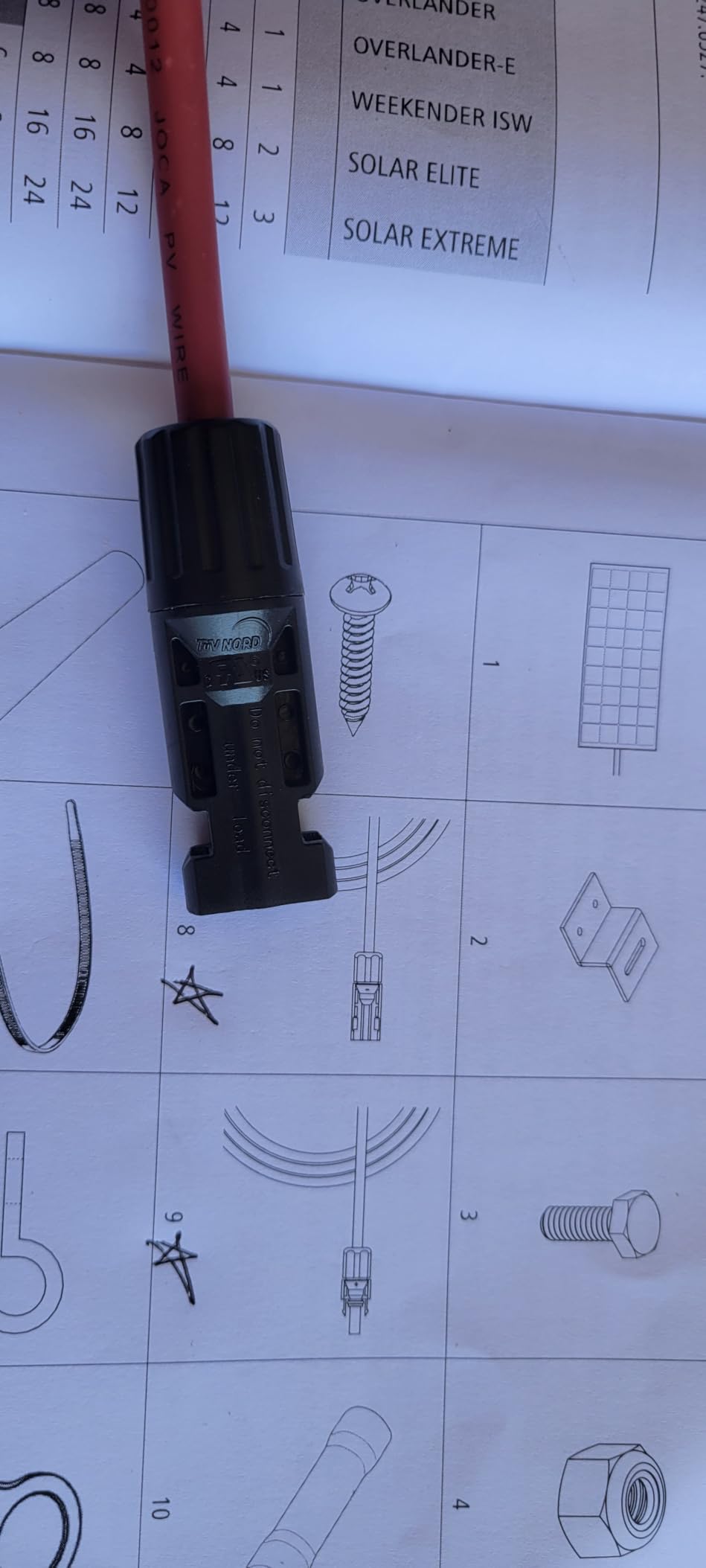
Go Power built this one specifically for RV roof mounting and dry camping, and the details reflect that intent. The 25 foot number 10 solar output cables in the box are far longer than the short leads most kits include, which removes the single most common cause of a poor first install.
The 4.6 average includes the highest share of five-star ratings in this group, and long-standing owners across multiple RV generations report the same experience: an easy self-install, batteries that stay topped off, and a generator that goes unused.
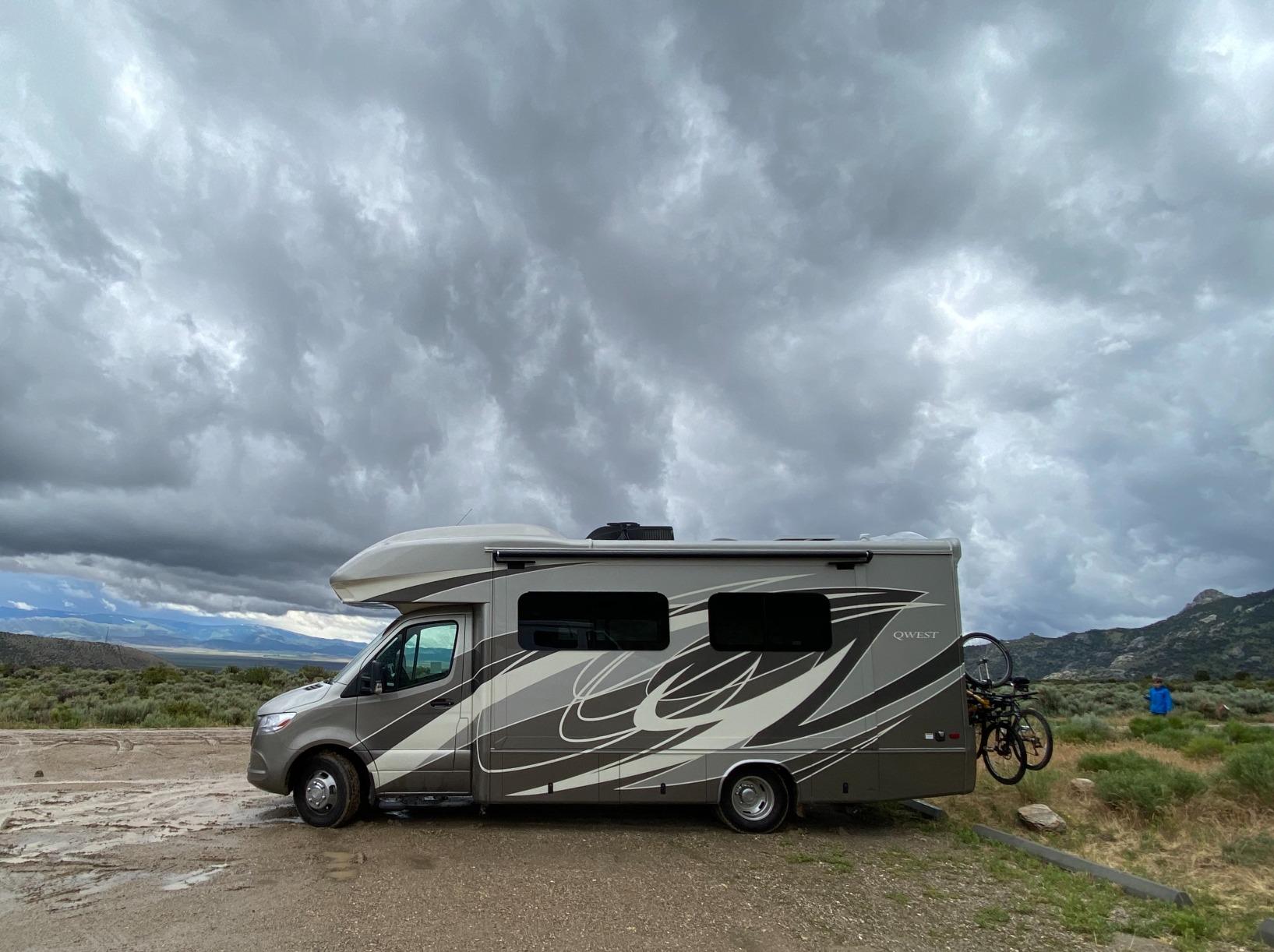
The controller is a 30A single-bank Bluetooth PWM unit that expands to 600W of solar using the same hardware, so the growth path does not require replacing the most expensive component. Long cable runs are exactly the situation where a length of usable 10 AWG cable matters, because thin or short leads quietly eat your output.
The 25 year limited solar panel output power warranty is the longest in this roundup, which matters if you plan to keep the rig for a decade. Manufacturer installation video and written instructions also make this the most approachable of the fixed-array kits for a first-time installer.
Who This Kit Works Best For
This suits dry campers who want battery maintenance rather than a full off-grid system. Keeping a 12V bank topped up through a long trip is a very different goal from running everything from solar, and this kit does the first one very well.
It is also a good match for anyone planning to grow the system over several seasons, since the controller scales to 600W. The long included cables make it forgiving of awkward roof layouts where the panel sits far from the battery.
Where This Kit Falls Short
The controller is PWM. On a 200W panel into a 12V bank the difference against MPPT is real, and buyers who later move to a larger array will feel it more, since the harvesting loss grows with array voltage.
The Bluetooth app is the most repeated specific complaint in owner feedback, needing frequent re-pairing. And no inverter is included, so anything that needs AC power means another purchase, which is the same gap most kits in this list share.
9. Topsolar 200W 12V 24V Off Grid Kit Is the Simplest Fixed Two-Panel Array
Topsolar Solar Panel Kit 200W(2 * 100W) 12V Monocrystalline Off Grid System
2x 100W monocrystalline panels
30A 12V 24V PWM controller
Series or parallel capable
Pros
- 200W of panels plus a 30A controller and mounting hardware at a low entry point
- Monocrystalline cells rated for up to 22 percent higher efficiency in sufficient light
- Rated for 2400Pa wind and 5400Pa snow loads with tempered glass and aluminum frames
- Panels can be wired in series for 24V or parallel for 12V
- Customer service has been reported as fast and warranty-friendly when a faulty controller is replaced
Cons
- Charge controller has a documented history of display failure while still charging at an unregulated 16V
- PWM rather than MPPT capping real-world efficiency
- Included solar cables are short so the two panels must sit side by side
This kit does the basic job with as few decisions as possible: two monocrystalline panels, a 30A controller, brackets, cables and two-in-one connectors. Daily output is quoted at around 800Wh under four hours of full sunshine, matching the other 200W bundles here.
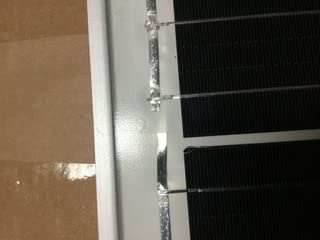
What holds it back is the controller. Owners report a documented pattern of the 30A controller’s display failing, sometimes while the system continued pushing an unregulated charging voltage to the battery bank, and that is a safety consideration rather than a convenience complaint.
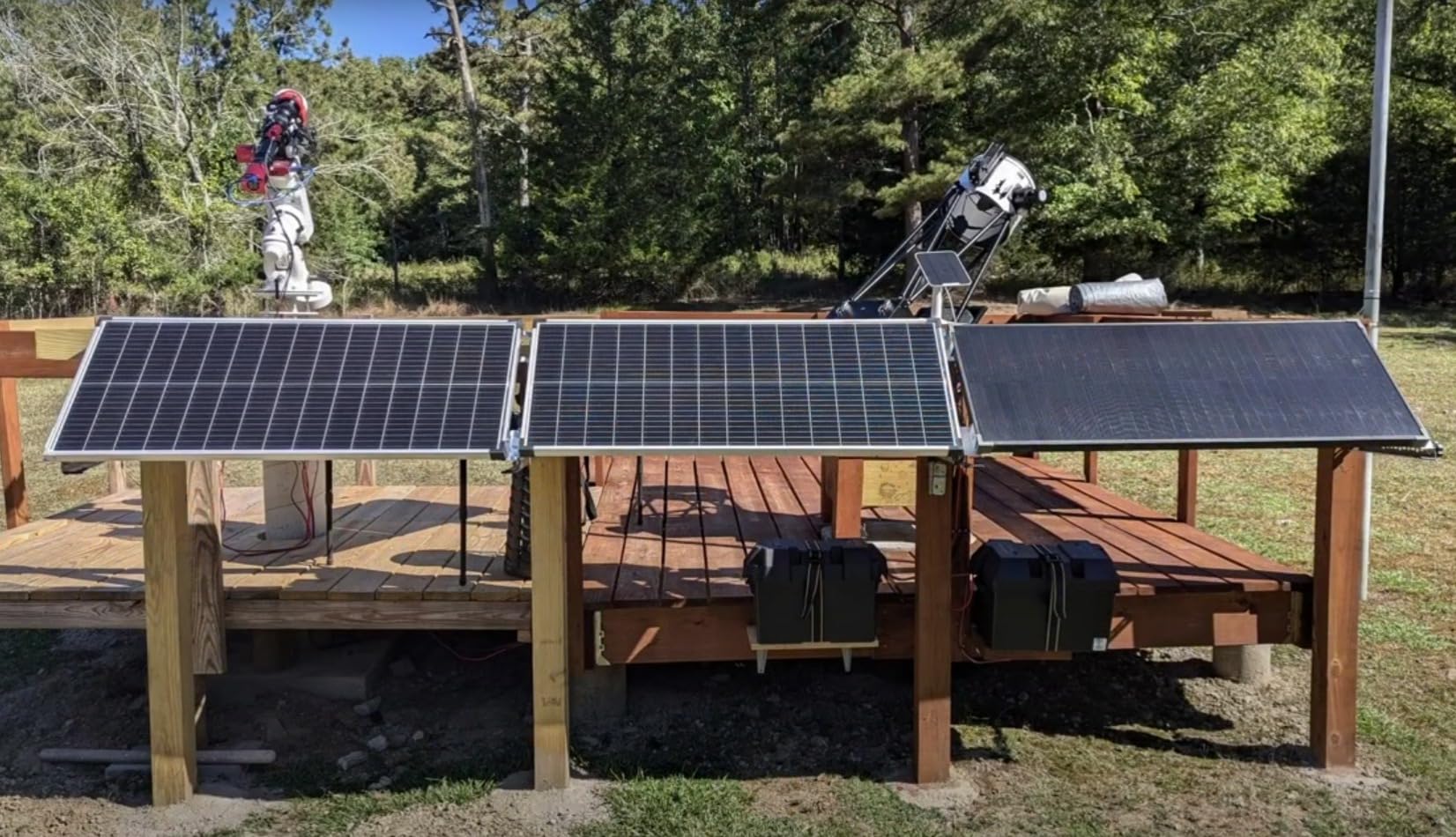
On the positive side, the panels carry a 2400Pa wind and 5400Pa snow load rating with tempered glass and aluminum frames, and they can be wired in series for a 24V bank or in parallel for 12V. The cell efficiency is quoted as up to 22 percent higher than baseline in sufficient light.
Buyer support has been reported as fast and warranty-friendly when the vendor steps in to replace a failed controller. That responsiveness matters more than usual here, because the controller is the component most likely to need replacing.
Who This Kit Works Best For
This suits budget-first buyers who want a fixed two-panel roof array and a straightforward 12V system, and who are comfortable monitoring the controller display themselves. The series and parallel options leave room to grow the bank later.
It is a reasonable weekend and seasonal-camping setup, and the frame and glass ratings suggest it will hold up to road vibration and ordinary weather without special care.
Where This Kit Falls Short
The controller display failure issue is the deal breaker to weigh, particularly the reports of an unregulated 16V continuing to charge the bank after the screen went blank. If you install this, check the controller output with a meter before you trust it.
The included solar cables are short, which forces the two panels to be mounted side by side or requires buying extension cables. There is also a report of a unit arriving with reversed lead colors, so verify polarity before connecting anything.
10. DOKIO 300W Foldable Kit Is the Most Versatile by Review Volume
DOKIO 300W Portable Foldable Solar Panel Kit with Charge Controller
300W foldable monocrystalline panel
15.2 lb
9.85 ft cable
SAE,XT60 and USB outputs
Pros
- 300W of foldable monocrystalline output in a 15.2 pound package that folds to 19.3 by 37.4 inches
- Separate standalone PWM controller can be replaced or upgraded later
- 9.85 foot cable lets the panel sit in full sun while the controller stays shaded
- Dual USB ports for phones and small devices
- Wide connector selection including SAE and XT60 plus alligator clips
Cons
- Many power stations cap solar input at 100 to 200W so the 300W rating goes unrealized
- Only a one year warranty which is the shortest in the group
- Fabric case should not be left in heavy rain or prolonged direct sun
- Output drops noticeably in overcast conditions and at low sun angles
Thousands of owners have bought this foldable panel, and that matters because portable panels are the category where real-world output most often disappoints. Seeing how it performs for so many owners is more useful than any efficiency claim.
The 300W foldable monocrystalline panel packs into a 19.3 by 37.4 by 1.1 inch package at 15.2 pounds, with a 9.85 foot cable that lets you place the panel in direct sun while the controller or power station stays in the shade. The separate controller can be swapped or upgraded later, which is unusual in a portable kit.
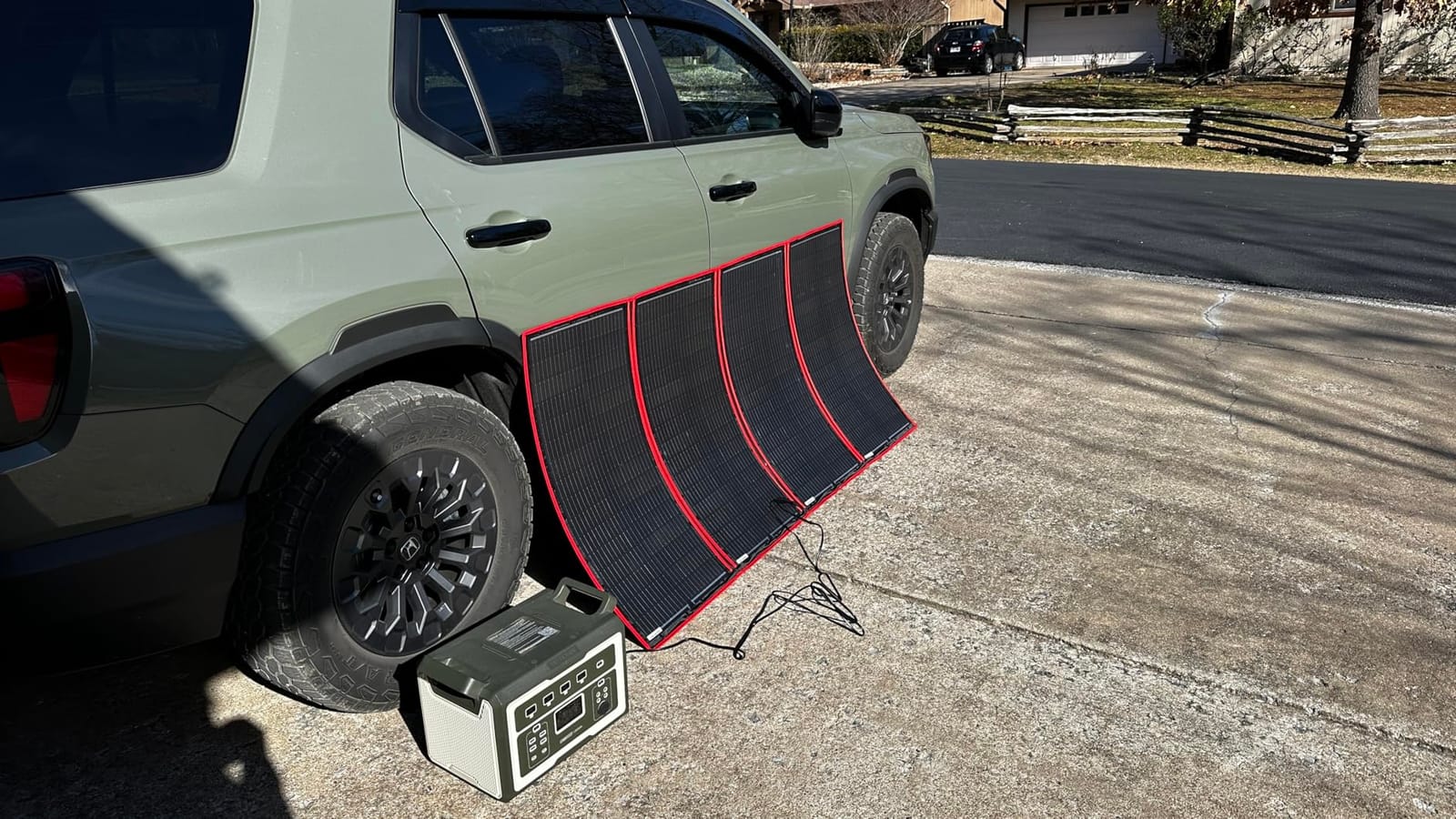
Dual USB ports let you run the panel directly for phones, lights and small devices, and in an emergency you can even top up a battery bank that way. The connector list is the broadest here, covering SAE, XT60, alligator clips and four DC barrel adapters, plus a storage bag and manual.
The controller includes reverse polarity, overcharge, overload and short circuit protection. That is a complete protection list for a kit that gets handled constantly, and it is the reason we would still consider this panel despite the flat rating.
Who This Kit Works Best For
This suits beginners, van and camper conversions, and anyone who wants a large folding panel without a fixed roof install. The 300W nameplate is generous for the weight, and the dual USB ports make it useful for device charging independent of any battery bank.
It is also a good travel companion alongside a portable power station, though check your power station’s solar input ceiling first. It works well as a second system for a rig that already has a small rooftop array.
Where This Kit Falls Short
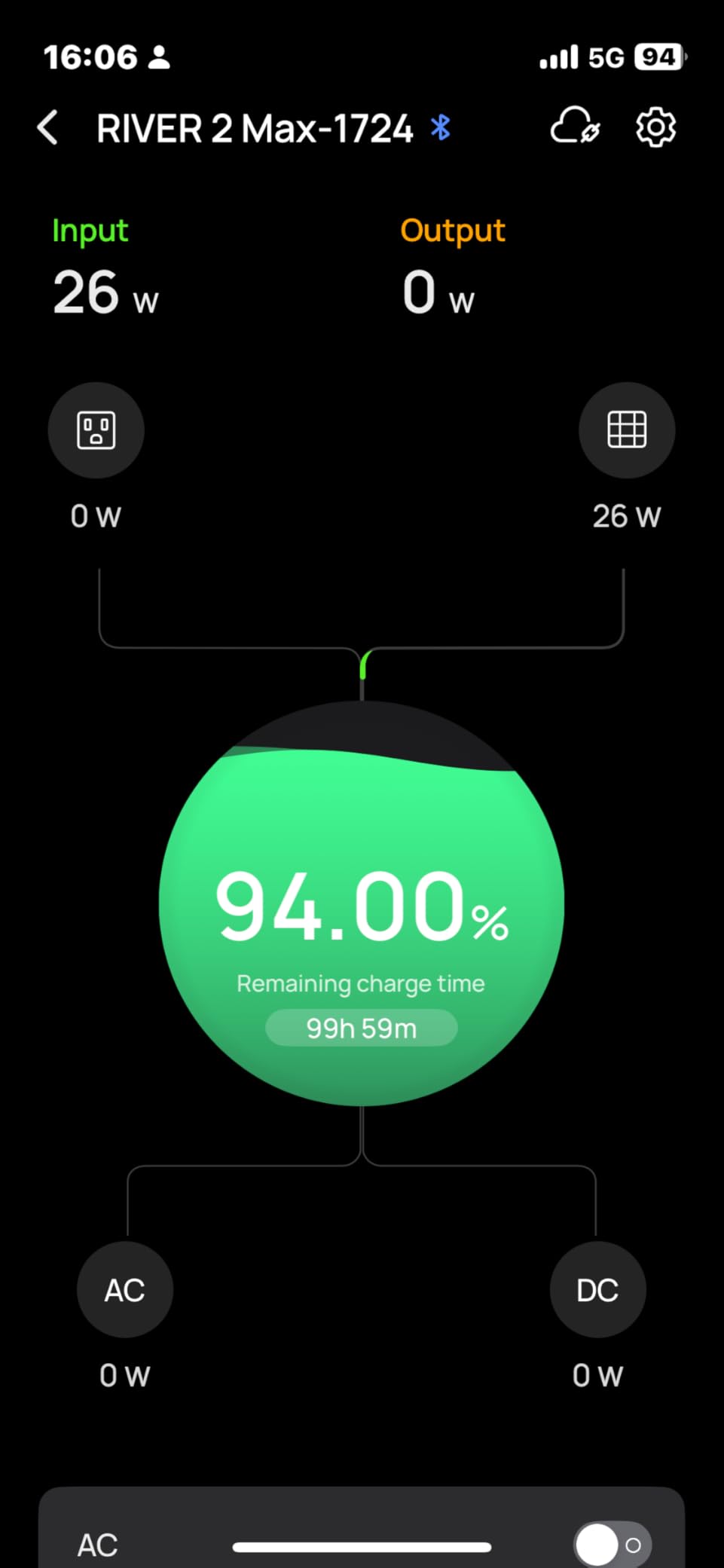
The most common complaint is expecting 300W from a power station that caps solar input at 100 to 200W. Verify your power station’s maximum solar input current before you buy, because the panel cannot deliver what the receiving device will accept.
Overcast and low-sun output drops noticeably, the one year warranty is the shortest here, and the fabric case should not be left in heavy rain or prolonged direct sun. Those limits make this a fair-weather supplement rather than a full-time power source.
How to Size an RV Solar Panel Kit Before You Buy
Size your kit by calculating daily watt-hours, not by picking a number that feels right. Add up the watts of everything you plan to run and multiply by the hours you expect to run it. A 12V compressor fridge averaging 45W running roughly 10 hours a day is about 450Wh, and that single number frames the whole decision.
Then divide by peak sun hours. Most of the US interior sees four to six good hours in summer and considerably fewer in winter, and northern winter trips are where undersized systems get discovered. A 200W array at five peak sun hours yields roughly 800Wh per day, while a 400W array at the same hours yields about 1,600Wh.
Match the battery bank to the array, not to the fridge. A 200W kit pairs reasonably with a 100Ah to 200Ah bank, and a 400W kit with 200Ah to 400Ah. LiFePO4 is the better choice at every level because it charges faster, tolerates deeper discharge and adds less weight for the same capacity, though AGM batteries that came with your rig will still work fine.
Finally, be honest about air conditioning. Running a rooftop air conditioner from solar is possible but far larger than most buyers expect, and owners on RV forums consistently describe boondocking with air conditioning as an expensive proposition rather than a routine one. Plan on the generator for compressor loads and let solar handle the constant draw: fridge, lighting, electronics and water pump.
MPPT or PWM: Which Charge Controller Your Kit Needs
MPPT is worth paying for when your array runs above a 12V battery’s charging voltage, and PWM is adequate below it. A single 100W panel sitting near 18 volts has very little to give an MPPT controller to recover, so a PWM controller costs you little there. Series-connected panels at 36 or 48 volts change the math completely.
This is why the two 400W kits in this roundup both pair MPPT controllers with four panels, while most 200W bundles use PWM. The controller is matched to the array, and the pairing is the whole point. Forum owners put it simply: MPPT controllers operate better with higher voltage panels, especially in overcast conditions.
Our practical rule: if you are buying a single panel of 200W or less and staying on a 12V bank, a PWM controller is fine and the savings are real. If you are buying two or more panels, plan to run them in series, or expect to expand the system, buy the MPPT kit from the start. Retrofitting an MPPT controller later means rewiring, and owners report adding higher-Voc panels to an existing array without a matched controller silently failing to charge.
Shade is the other reason to pay up. Bypass diodes help, but a panel running in series pushes the current of its weakest sibling, so partial shade from roof vents and air conditioner shrouds drags down the whole string. Multiple MPPTs or a parallel configuration with matched controllers handle shade far better than a single PWM channel.
What Your RV Solar Kit Still Needs
Battery first, always. This is the most common omission in the category, and the mistake we see most often is buying a beautiful 400W kit and then realizing there is nowhere to store the energy. Size the bank to the array as described above, and remember that a lithium bank needs a charge controller with a lithium profile, not just a lead-acid one.
An inverter comes next if you want to run anything that plugs into a household outlet. A pure sine wave inverter is the right call for sensitive electronics, laptops and CPAP machines. The 600W unit in the ECO-WORTHY complete kit is a reasonable starting point for small loads, but anything with a compressor needs considerably more.
A battery monitor matters more than most people expect. Without one you are guessing at state of charge, and a cheap shunt monitor is the difference between knowing your bank is at 40 percent and discovering it is at 10 percent on a cloudy morning. The Bluetooth modules on the newer Renogy and ECO-WORTHY MPPT kits cover panel and load data, but a dedicated monitor is still the better tool for the bank itself.
Finally, plan the cable entry and the fusing before you are on the roof. A proper cable entry gland with self-amalgamating tape is what keeps water out of the rig over a decade of road vibration, and a fuse close to the battery protects everything downstream. Undersized wire and missing fusing are the two mistakes that turn a solar install into a troubleshooting project.
Portable Panels or a Fixed Roof Array
Choose a fixed roof array if you camp in the same spot for long stretches, run a fridge overnight, or want the system to work while you are away from the rig. Rigid panels produce more per square foot of roof, carry better wind and snow ratings, and never need repositioning.
Choose a foldable portable panel if you move weekly, camp under heavy tree cover, split time between two vehicles, or have a roof with a load limit you would rather not test. The tradeoff is real: portable panels produce less for their rated wattage because they are often aimed poorly, angled wrong, or capped by the power station they feed.
There is a third path that suits many RVers. A small 100W to 200W rooftop array handles the constant background draw, and a foldable panel in the storage bay makes up the difference on sunny afternoons and cloudy weeks. Several owners in our research run exactly this combination.
Installation, Maintenance and Lifespan
Roof mounting is the part that scares people off, and the reason is usually weight. Panels in this roundup range from about 14 pounds for a 100W rigid panel to 56.4 pounds for a four-panel kit, and that load sits above your head every mile you drive. Check your rig’s roof load rating before ordering, and treat the four-panel kits as two-person jobs.
Measure your roof layout before ordering brackets, not after. Leave clearance around roof vents, air conditioner shrouds, antennas and roof edges, and sketch the panel positions with the cable run distance to the battery in mind. Short included cables are the reason several otherwise good kits need an extension purchase.
Expect a weekend, not an afternoon, for a four-panel install. The work is mounting brackets, running cable, installing a proper cable entry gland, fitting a fuse near the bank, and terminating at the controller. The wiring and fusing matter more than the panel mounting, and those are the steps worth getting right the first time.
On lifespan, the numbers in this category are strong. Panels carry output power warranties ranging from one year on portable kits to 25 years on the Go Power Overlander and the 25 year power output plan on the Renogy 100W, with a 10 year material and workmanship term on that same panel. Controllers and batteries are the shorter-life components, so a spare controller in the storage bay is cheap insurance.
Maintenance is mostly cleaning and periodic connector checks. Rinse road film off the glass a few times a season, keep an eye on the MC4 connections for corrosion, and check the controller display or app for abnormal charging voltage. If you are adding security cameras or trail cameras off the same battery bank, our guides to the best solar security cameras for barns and the best solar animal repellers for yards cover loads that pair well with a small rooftop array.
Frequently Asked Questions
What is the best solar panel kit for a motorhome?
The Renogy 100W 12V Starter Kit with a 30A PWM controller is the best first kit for most motorhomes because it has the deepest owner record in the category, with a 4.7 average across more than 4,000 reviews. Motorhomes that boondock regularly should step up to a 400W array paired with a 40A MPPT controller, such as the Renogy 400W Premium Kit.
Will a 200W solar panel run a 12V fridge?
Yes, in most camping conditions. A 200W array at five peak sun hours produces roughly 800Wh per day, and a 12V compressor fridge typically draws around 45W for 10 hours, or about 450Wh. That leaves headroom for lighting, phone charging and a water pump. Running a rooftop air conditioner at the same time is a different question entirely.
What is the most reliable solar panel brand for RV use?
Renogy has the most reliable overall record based on owner volume, with the 100W starter kit holding a 4.7 average across more than 4,000 reviews and panels that are electroluminescence tested and certified to UL 61730, CSA and IEC. Go Power backs its Overlander panel with a 25 year output warranty, which is the longest term in this group. Reliability on RV roofs comes down to certification, frame strength and warranty length rather than brand name.
What is the lifespan of an RV solar panel kit?
A well-built rigid panel is usually the longest-lived component, with output power terms ranging from 10 to 25 years among the kits reviewed here. Charge controllers typically last 5 to 10 years, LiFePO4 banks commonly run 5 to 10 years, and flooded lead-acid batteries are often the first thing to replace at 3 to 5 years. Portable foldable kits carry shorter panel terms, sometimes only one year.
Is a 400W solar panel enough for a campervan?
For most campervan use, yes. A 400W array at five peak sun hours yields about 1,600Wh per day, which covers a 12V fridge, lighting, device charging and a water pump indefinitely without a generator. It will not cover a rooftop air conditioner on a sustained basis. If you plan to run compressor loads regularly, budget for 800W or a portable power station backup.
What is the best MPPT charge controller for an RV?
The 40A MPPT controllers in the 400W bundles are the right choice for most RVers, because they accept a series array up to 32V and can be sized for future panel additions. On a single 100W panel feeding a 12V bank, a PWM controller loses very little because the panel voltage is close to the battery voltage. Buy MPPT when you have two or more panels, plan to wire them in series, or expect to expand.
Which RV Solar Panel Kit Should You Buy?
The Renogy 100W 12V Starter Kit with the 30A PWM controller is our pick among the best rv solar panel kits because it pairs the deepest owner record in the category with hardware that is individually tested and certified, and because it expands to 400W when you are ready. Start there if you are new to RV solar and your rig already has a working battery bank.
Move up to the Renogy 400W Premium Kit when boondocking is a regular part of your travel and you need real capacity, or to the ECO-WORTHY 400W MPPT bundle if phone-based monitoring matters to you. For a true off-grid setup with no separate sourcing, the ECO-WORTHY 200W complete kit is the only one here that includes a battery and inverter in the box.
Whichever kit you choose, add a battery, an inverter if you need AC power, and a battery monitor before you count the system as finished. The best rv solar panel kits are the ones matched to your daily watt-hour budget, your roof space and your battery bank, and that match matters far more than the wattage on the box.