Yes, a generator can run your RV air conditioner, but only if it is sized for the compressor’s startup surge rather than its steady running draw. For most 13,500 BTU and 15,000 BTU rooftop units, the sweet spot is an inverter generator in the 3,400W to 4,800W running class with a proper 30A RV outlet. Below that, the compressor stalls and the breaker trips; far above it, you are hauling dead weight.
We spent weeks reading owner reports, comparing published specs line by line, and matching each generator to the air conditioner it can realistically start. What follows is the best RV generators for air conditioners roundup for 2026, covering eight models that span the range from a 47-pound gas unit to an 8,000W dual-fuel machine built for two AC units and a 50A motorhome.
We also sized the numbers honestly. A 13,500 BTU AC typically pulls around 1,200W of running power and can surge to roughly 2,800W when the compressor kicks in, and a 15,000 BTU unit sits a little higher. Add the converter charger, since a 30A plug draws about 360W that most owners forget, and a 20 to 25 percent safety margin, and the answer becomes arithmetic rather than guesswork.
If you are also shopping for indoor cooling, our picks for the best portable air conditioners for bedrooms cover the plug-in side of the problem.
Table of Contents
- Top 3 Picks for Best RV Generators for Air Conditioners (October 2026)
- Best RV Generators for Air Conditioners at a Glance
- 1. WEN 56380i 3800-Watt RV-Ready Inverter – Best Overall for a Rooftop AC
- 2. Champion 201050 4000-Watt Dual Fuel RV-Ready – Top Rated Propane Runtime
- 3. PowerSmart HB5040DC 3800-Watt Dual Fuel Inverter – Most Versatile for Quiet Dual Fuel
- 4. WEN 56477i 4800-Watt Enclosed Inverter – Best for Larger Air Conditioners
- 5. Pulsar PGD40ISCO 4000W Inverter – Best for Carrying It Every Mile
- 6. AIVOLT VS8000411 8000W Dual Fuel 50A RV – Best for Two Air Conditioners
- 7. Oxseryn OXOG10 4400-Watt Inverter – Best for a Budget 30A Rig
- 8. Pulsar GD400BN 4000W Dual Fuel CARB-Compliant – Best for Fuel Flexibility
- How Big a Generator Does a 13,500 BTU RV Air Conditioner Need?
- Do RV Air Conditioner Soft Start Kits Really Work?
- Why Your RV AC Keeps Tripping the Generator Breaker
- 30A vs 50A RV Service: Which One Your Generator Needs
- Frequently Asked Questions
- Our Final Verdict for 2026
Top 3 Picks for Best RV Generators for Air Conditioners (October 2026)


PowerSmart HB5040DC Dual…
- 3300 running watts on gas
- Up to 24 hours on propane
- 30A L5-30R outlet
- 59 dBA Eco Mode
The WEN 56380i takes the top slot because it clears 3,400 running watts with a dedicated NEMA TT-30R receptacle, and 2,459 reviews at a 4.7 average give it the deepest owner history in the group. The Champion 201050 is the one to buy if propane matters more than pounds, since it runs up to 25 hours on a bottle. The PowerSmart HB5040DC is the sleeper pick that keeps coming up in owner reports for quiet Eco Mode operation and clean power.
Best RV Generators for Air Conditioners at a Glance
| Product | Specs | Action |
|---|---|---|
| WEN 56380i 3800-Watt RV-Ready Inverter |
|
Check Latest Price |
| Champion 201050 4000-Watt Dual Fuel |
|
Check Latest Price |
| PowerSmart HB5040DC 3800W Dual Fuel |
|
Check Latest Price |
 WEN 56477i 4800-Watt Enclosed Inverter WEN 56477i 4800-Watt Enclosed Inverter |
|
Check Latest Price |
 Pulsar PGD40ISCO 4000W Inverter Pulsar PGD40ISCO 4000W Inverter |
|
Check Latest Price |
 AIVOLT VS8000411 8000W Dual Fuel AIVOLT VS8000411 8000W Dual Fuel |
|
Check Latest Price |
 Oxseryn OXOG10 4400-Watt Inverter Oxseryn OXOG10 4400-Watt Inverter |
|
Check Latest Price |
 Pulsar GD400BN 4000W Dual Fuel Pulsar GD400BN 4000W Dual Fuel |
|
Check Latest Price |
The table sorts roughly by wattage class, not by price. The two WEN models bookend the sensible middle of the range, and the AIVOLT is the outlier for anyone running two air conditioners or a 50A motorhome.
1. WEN 56380i 3800-Watt RV-Ready Inverter – Best Overall for a Rooftop AC
WEN Super Quiet 3800-Watt RV-Ready Portable Inverter Generator with Fuel Shut-Off and Electric Start (56380i)
3400W rated, 3800W surge
NEMA TT-30R RV outlet
212cc engine, 99.2 lb
8.5 hr at half load
Pros
- Dedicated TT-30R plugs straight into a 30A RV
- 3400 rated watts clears a 13500 BTU AC
- Clean sine wave protects sensitive electronics
- Electric start with digital load and fuel display
- Deepest review base here at 2459 ratings
Cons
- Weighs 99.2 pounds
- usually a two-person lift
- 8.5 hour half-load runtime needs overnight refills
- Gasoline only with no propane option
Our first pick is the WEN 56380i because it does the one thing a 30A travel trailer with a 13,500 BTU rooftop unit actually needs: it starts the compressor without drama and holds 3,400 rated watts while doing it. The 212cc four-stroke engine produces 3,800 surge watts and 3,400 rated watts, which clears a 15,000 BTU compressor’s startup spike with margin to spare.
The NEMA TT-30R receptacle is the detail that matters most in practice. It is a proper 30A RV output, so you plug the trailer’s shore cord straight into the generator with no adapter and no fitting a household three-prong into a 30A socket. Owners consistently report powering a travel trailer rooftop AC from this unit without a single nuisance trip.
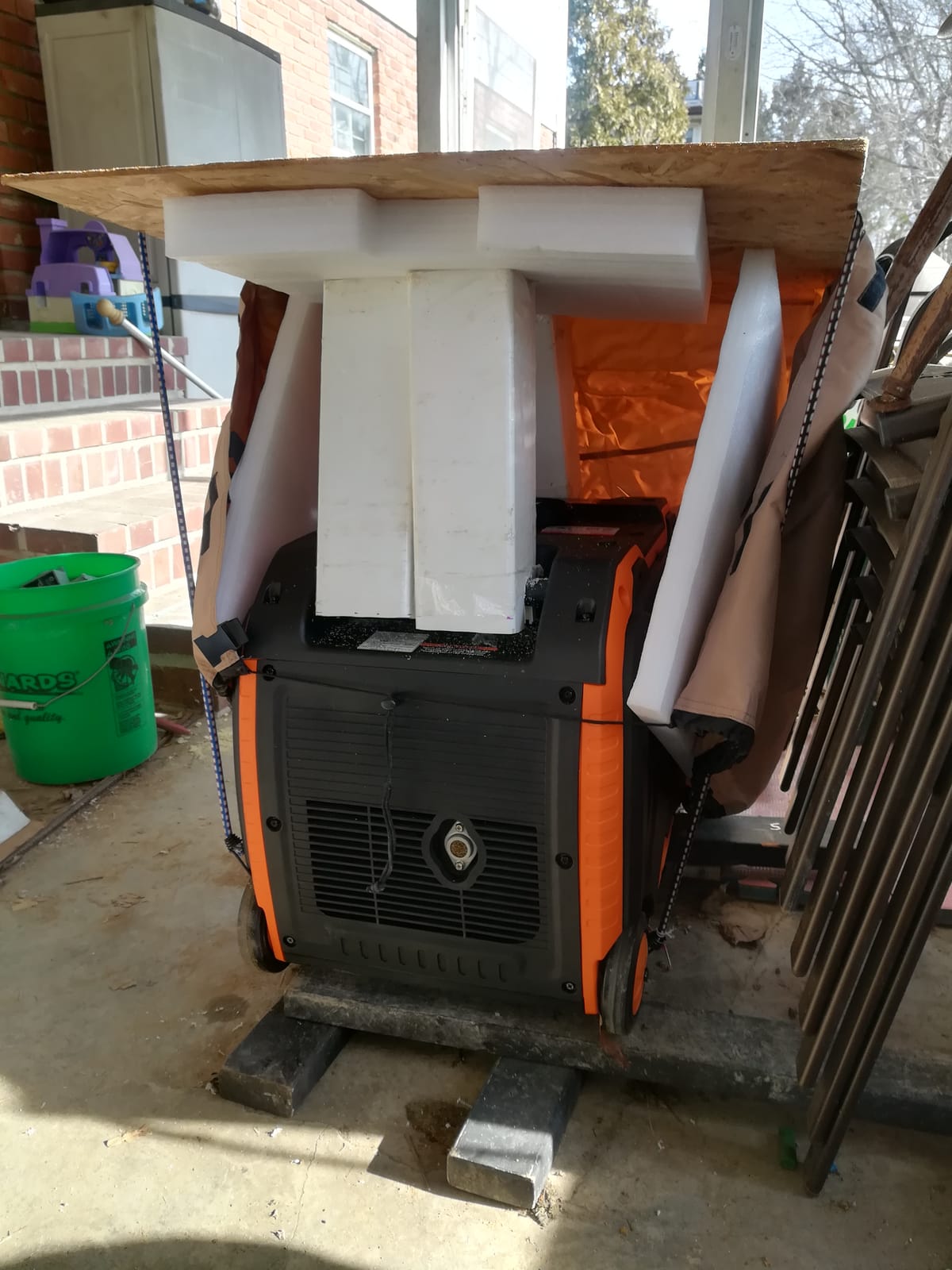
Inverter output is the second reason this lands at number one. Phones, tablets, laptops, and the sensitive electronics inside your RV get a clean sine wave rather than the stepped output of a conventional open-frame generator. The digital load and fuel display also removes the guesswork about how much headroom remains before you switch the microwave on.
Electric start is a genuine convenience at a campsite in the dark, and the fuel shutoff system burns off remaining fuel in the carburetor before shutdown, which is the single cheapest thing you can do to extend engine life. EPA III compliance keeps it legal in the 49-state parks where many RVers spend the summer.
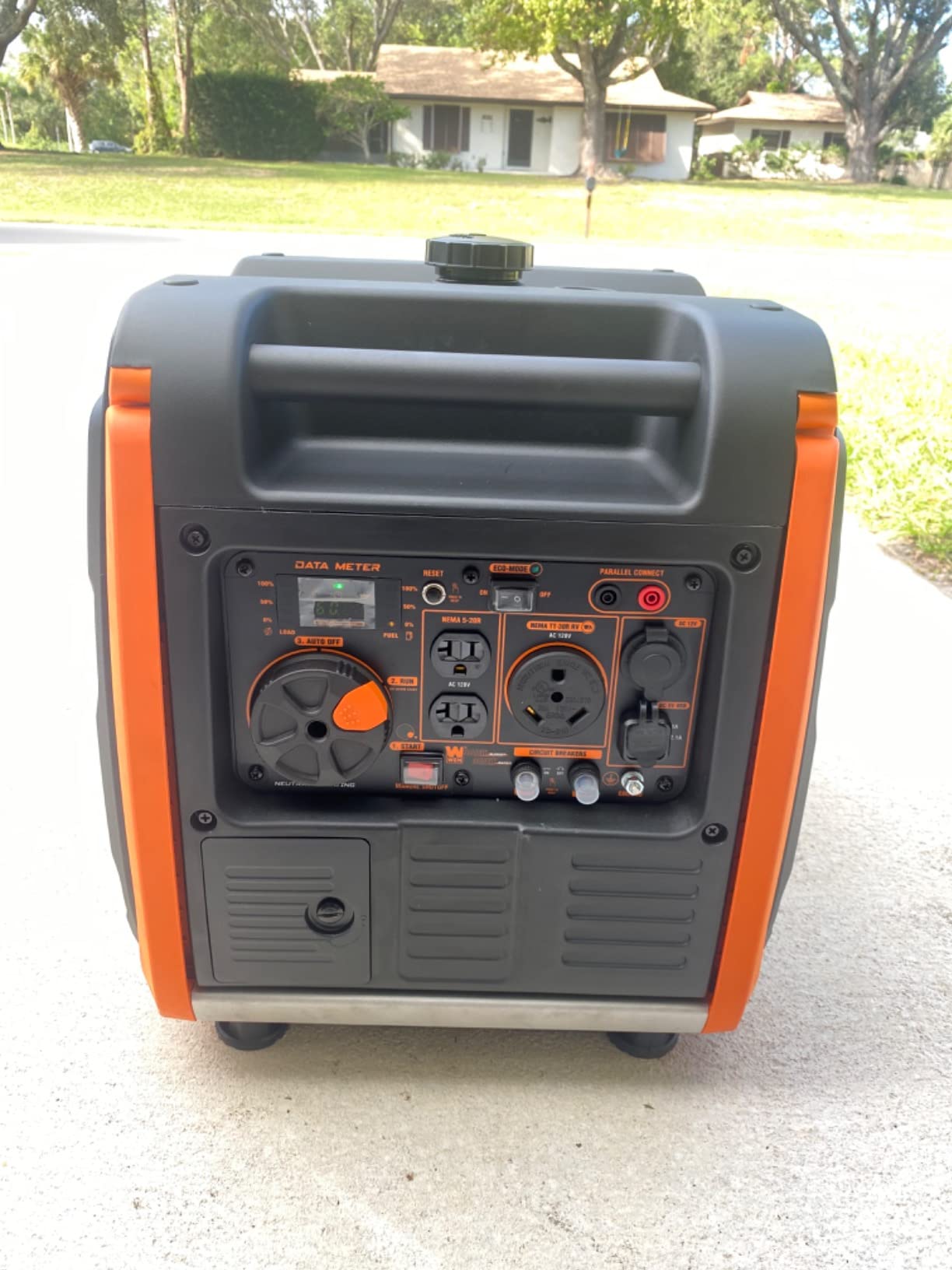
What 3400 rated watts means for a 15,000 BTU air conditioner
A 15,000 BTU rooftop compressor generally settles around 1,500W of running draw and can spike to roughly 3,300W at startup. Your 3,400 rated watts sit right at that edge with almost nothing spare, so if you plan to run a microwave alongside the AC, step up a tier rather than stretching this one.
What you can safely pair with the AC on this unit is low-draw gear: a 12V fridge, phone chargers, a TV, and the converter charger. Leave the microwave, hair dryer, and electric water heater for another power source.
Where this generator falls short
The honest drawback is weight. At 99.2 pounds, most owners need a second person or a folding cart to get it out of the vehicle, and that is a real problem for anyone who moves campsites weekly. It is also a gasoline-only machine, so propane flexibility is off the table.
Runtime of roughly 8.5 hours at half load covers a full day of AC in moderate weather. Run the compressor flat out in July heat and you will be refilling sooner, so plan fuel pickup around your route.
2. Champion 201050 4000-Watt Dual Fuel RV-Ready – Top Rated Propane Runtime
Champion 4000-Watt Dual Fuel RV Ready Portable Inverter Generator
3000W on gas, 4000W start
2700W on propane
25A TT-30R outlet, 64 dBA
51.8 lb dual fuel
Pros
- Up to 25 hours runtime on a propane bottle
- Dual fuel switches fuel types on the fly
- Light at 51.8 pounds for a 4000-watt unit
- Clean output under 3 percent total harmonic distortion
- CO Shield carbon monoxide auto shutoff
Cons
- 3000 running watts leaves no room for AC plus microwave
- 64 dBA at 23 feet is louder than enclosed rivals
- Recoil start only
The Champion 201050 is the one to buy when fuel logistics decide your trip. Run it on gasoline for 10 hours, or switch to propane for up to 25 hours, and it never asks you to find a gas station between boondocking spots. The trade-off is that propane output drops to 2,700 running watts, so the AC has less headroom on bottle than on tank.
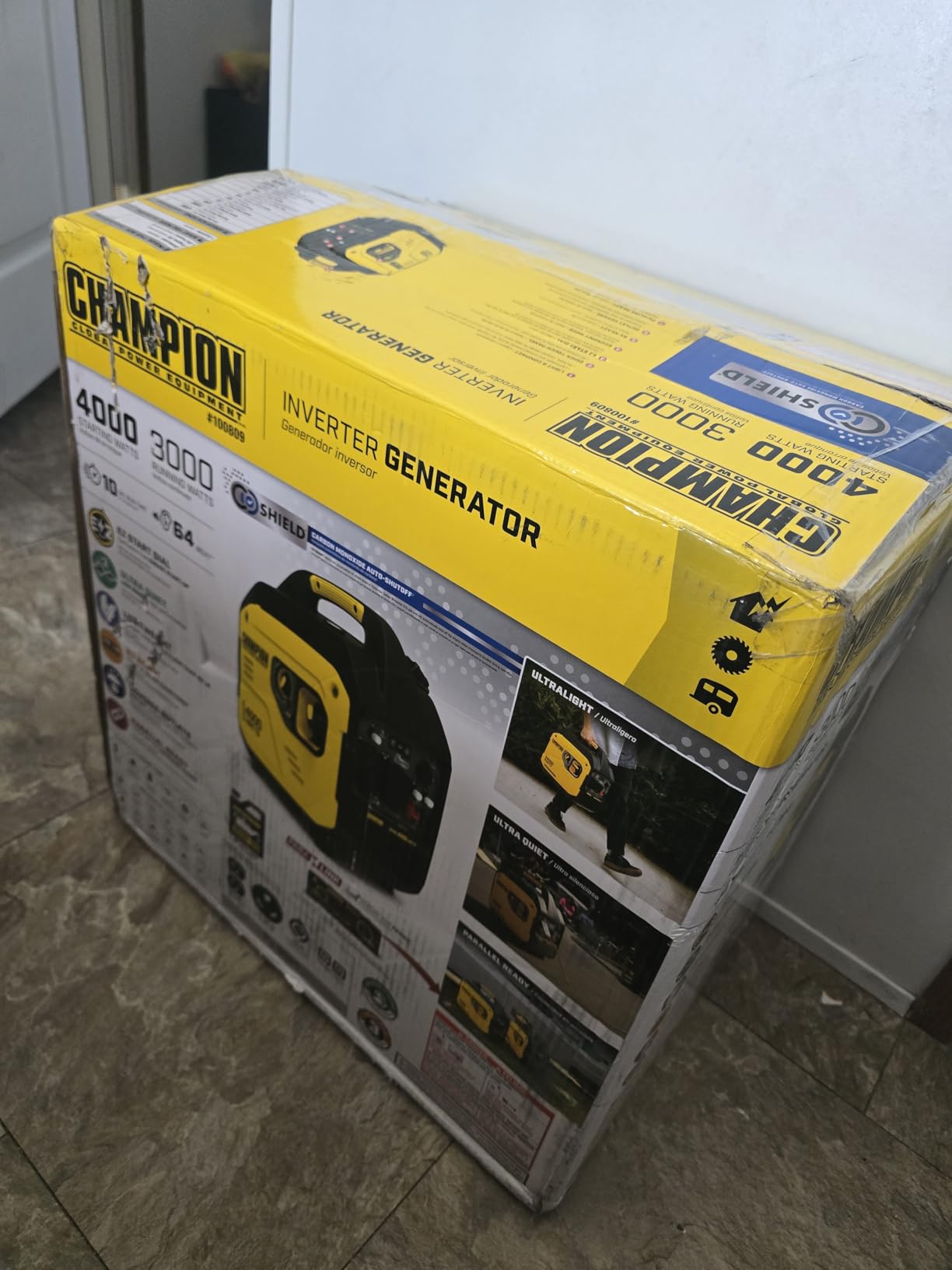
On gasoline you get 4,000 starting watts and 3,000 running watts from a 149cc four-stroke engine. Owners report starting a 15,000 BTU Dometic rooftop unit on this machine without difficulty, which is a strong result given the starting figure.
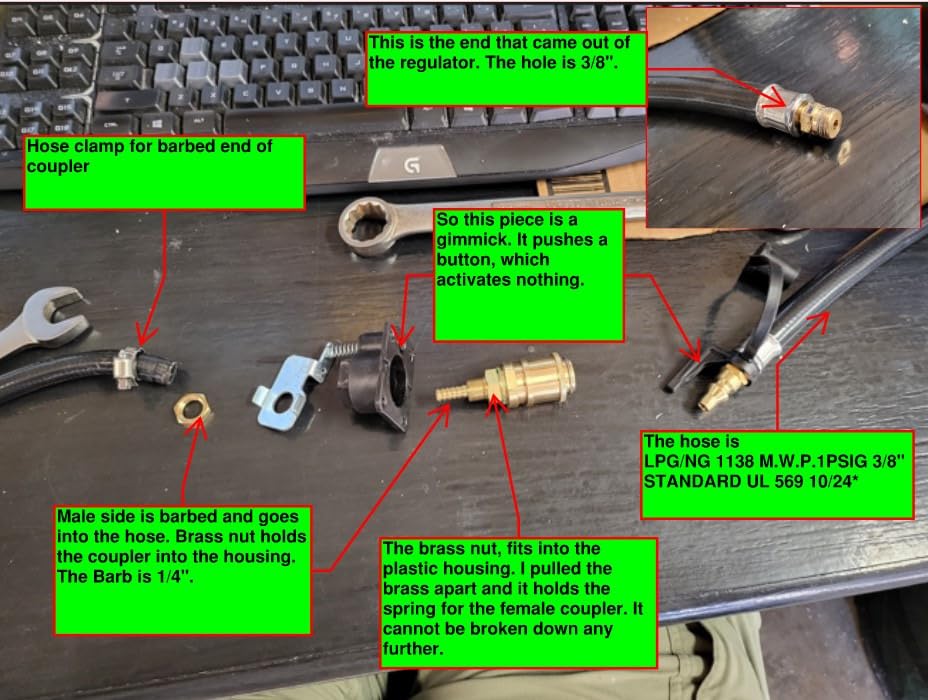
The 25A TT-30R outlet and a 20A household duplex give you both RV and appliance connections, and the measured total harmonic distortion stays under 3 percent, which is clean enough for sensitive electronics. Parallel outlets let you pair it with a second compatible Champion inverter or a power station when you need more than 6,000W.
At 51.8 pounds, it is roughly half the weight of the WEN 56380i while delivering comparable running watts. That is the practical reason it earns the value slot for anyone who loads and unloads by hand every few days.
Gasoline versus propane for running an air conditioner
The compressor cares about peak watts, not fuel type, and the difference is 300 running watts between the two. On gasoline you have 3,000 watts of headroom after the AC settles; on propane, 2,700. Both start a 15,000 BTU unit, but only the gasoline setting leaves room to run a coffee maker at the same time.
Propane is the smarter choice for overnight running because the burner is cleaner and the 25-hour figure means you can leave the AC going all night without a refill. Switch back to gasoline for the hottest part of the afternoon when compressor load climbs.
Who should skip this generator
If your plan is to run a 15,000 BTU AC plus a 1,500W microwave simultaneously, 3,000 running watts is not enough. Owners in RV forums describe a 3,400W dual-fuel unit running a 15,000 BTU AC as being about all it can handle once a start capacitor is fitted, and this sits in that same neighborhood.
Noise is the other reason to look elsewhere. At 64 dBA from 23 feet, and closer to 70 dBA under full load, it is a step louder than fully enclosed inverter units. Campgrounds with strict quiet hours will notice.
3. PowerSmart HB5040DC 3800-Watt Dual Fuel Inverter – Most Versatile for Quiet Dual Fuel
PowerSmart 3800 Watt Dual Fuel Inverter Generator for Camping or Home Use
3300W on gas, 3800W start
3100W on propane
59 dBA Eco Mode
50.7 lb, L5-30R 30A
Pros
- Up to 24 hours runtime on a 20 lb propane tank
- 59 dBA in Eco Mode is among the quietest here
- 30A L5-30R twist-lock plus household duplex
- CO sensor with low oil and overload shutdown
- Light at 50.7 pounds
Cons
- Service panels need a Phillips screwdriver
- 1.3 gallon tank limits gas runtime to about 8 hours
- A few owners report hard starting or stalling
With 1,125 reviews averaging 4.5, the PowerSmart HB5040DC is the most-reviewed mid-range unit we found, and the pattern in those reviews is consistent: owners call it the best value in the inverter class once they add a 30A outlet to the feature list. It delivers 3,300 running watts on gasoline and 3,100 on propane from a 149cc four-stroke engine.
The 59 dBA rating at 25 percent load in Eco Mode is the headline number for boondockers. Most generators in this wattage range measure in the low-to-mid 60s, and owners report the compressor cycling up and down without waking the neighbors. Clean, stable voltage comes out of it, which is what battery chargers and radios want.
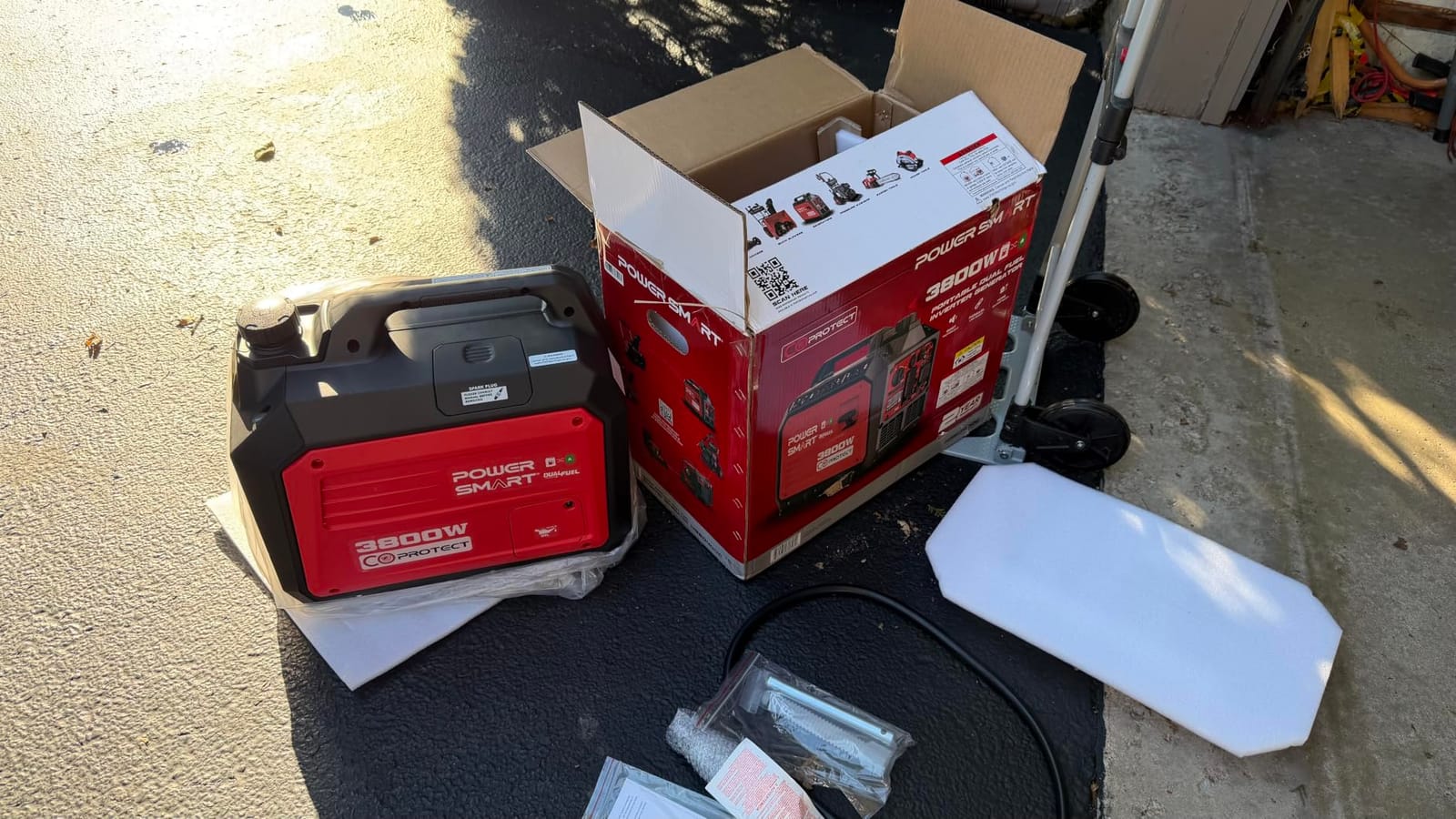
The outlet layout is unusually practical for RV use: a 30A L5-30R twist-lock, a 20A household duplex, a 12V 8A DC port, and dual 5V USB ports. Safety hardware includes a carbon monoxide sensor alongside overload, short circuit, and low oil shutdown, and the unit is certified to ANSI/PGMA G300 and ANSI/UL2201 standards.
It is also parallel ready, so two of them can be linked for roughly double the output when you want a 15,000 BTU AC plus a microwave without a bigger single machine. The 2-year limited warranty is shorter than the three years on the Champion and the enclosed WEN, and lifetime technical support is included.
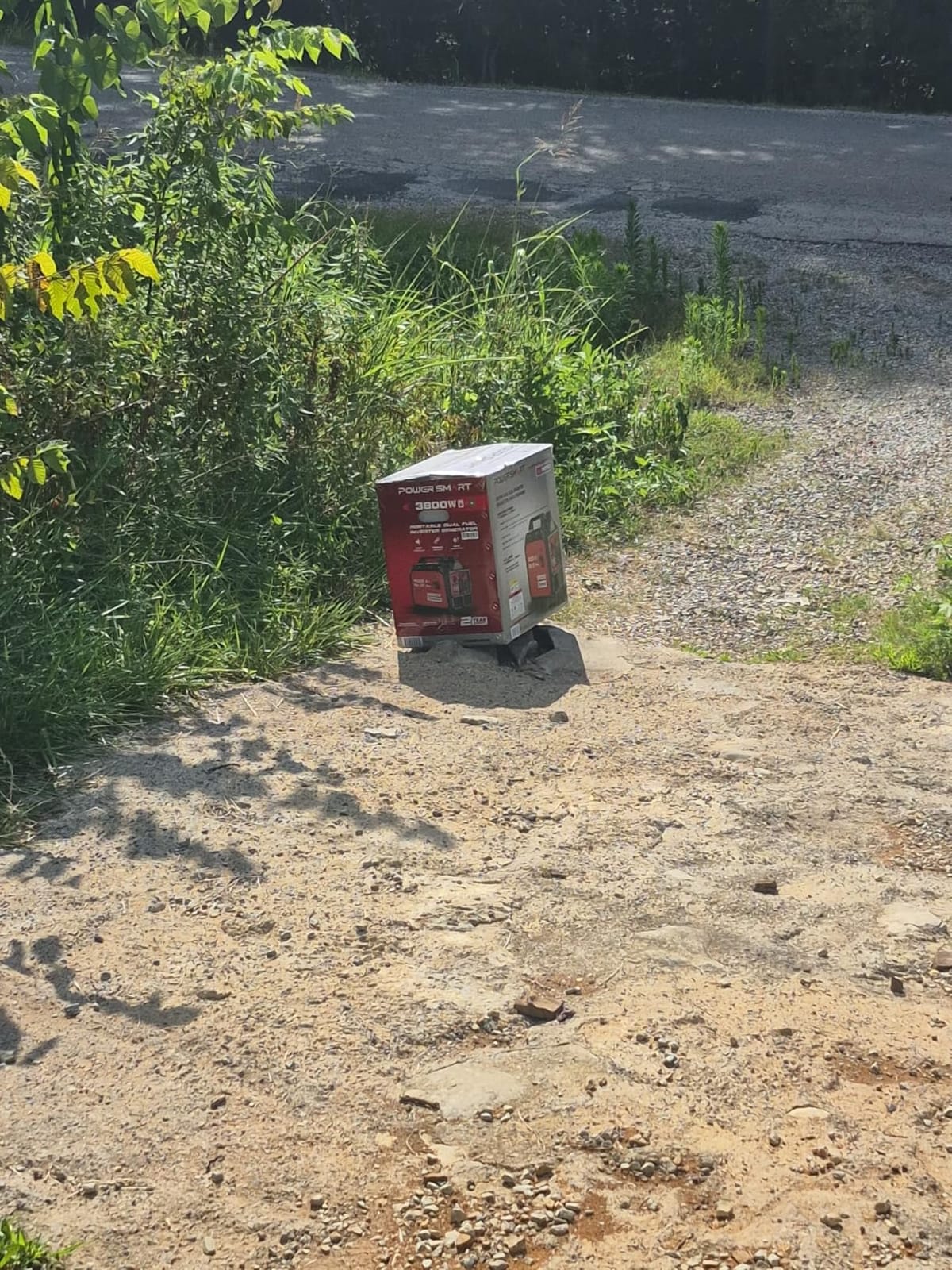
How the 24-hour propane figure holds up in practice
That 24-hour claim assumes a 20 lb propane cylinder running at reduced load with Eco Mode engaged. In real summer boondocking the AC is rarely the only load, so treat it as a ceiling rather than a promise. A 1.3 gallon gasoline tank gives you closer to 8 hours at 25 percent load.
For most RVers the practical routine is propane for overnight cooling and gasoline for the afternoon peak, using the same machine. That flexibility is why dual fuel keeps showing up as a top request in owner discussions.
Where the complaints concentrate
The most common criticisms are mechanical rather than electrical. Access panels and the oil fill door need a Phillips screwdriver, which is annoying in a dark truck bed. A smaller group report difficulty starting from cold or stalling after a short run, so the carburetor and fuel freshness deserve attention.
The L5-30R twist-lock outlet is a real difference from the TT-30R receptacles on the WEN and Champion models. If your trailer uses the older round TT-30 connector, plan on the right adapter rather than forcing a connection.
4. WEN 56477i 4800-Watt Enclosed Inverter – Best for Larger Air Conditioners
WEN Quiet and Lightweight 4800-Watt RV-Ready Portable Inverter Generator with Fuel Shut Off (56477i)
4000W rated, 4800W surge
224cc four-stroke engine
Fully enclosed quiet design
72.7 lb, TT-30R
Pros
- 4000 rated watts gives real headroom above a 15000 BTU AC
- Fully enclosed design runs quieter than open frames
- Watchdog CO Shutdown sensor adds family safety
- Onboard wheels and telescoping handle
- Three-year limited warranty
Cons
- Recoil start instead of electric on this variant
- About 7 hours runtime is short for the class
- No 50A output for a motorhome
The WEN 56477i is the answer for a 15,000 BTU unit plus anything else you want to run at the same time. Its 224cc four-stroke engine produces 4,800 surge watts and 4,000 rated watts, which is the only running figure in the mid-size class that leaves genuine headroom once the compressor has settled.
The fully enclosed design is the differentiator here. Where open-frame models like the Oxseryn spill sound in every direction, an enclosure contains it, and reviewers consistently call out the 4,000-watt capacity as the reason to move up from the 3,400-watt version.
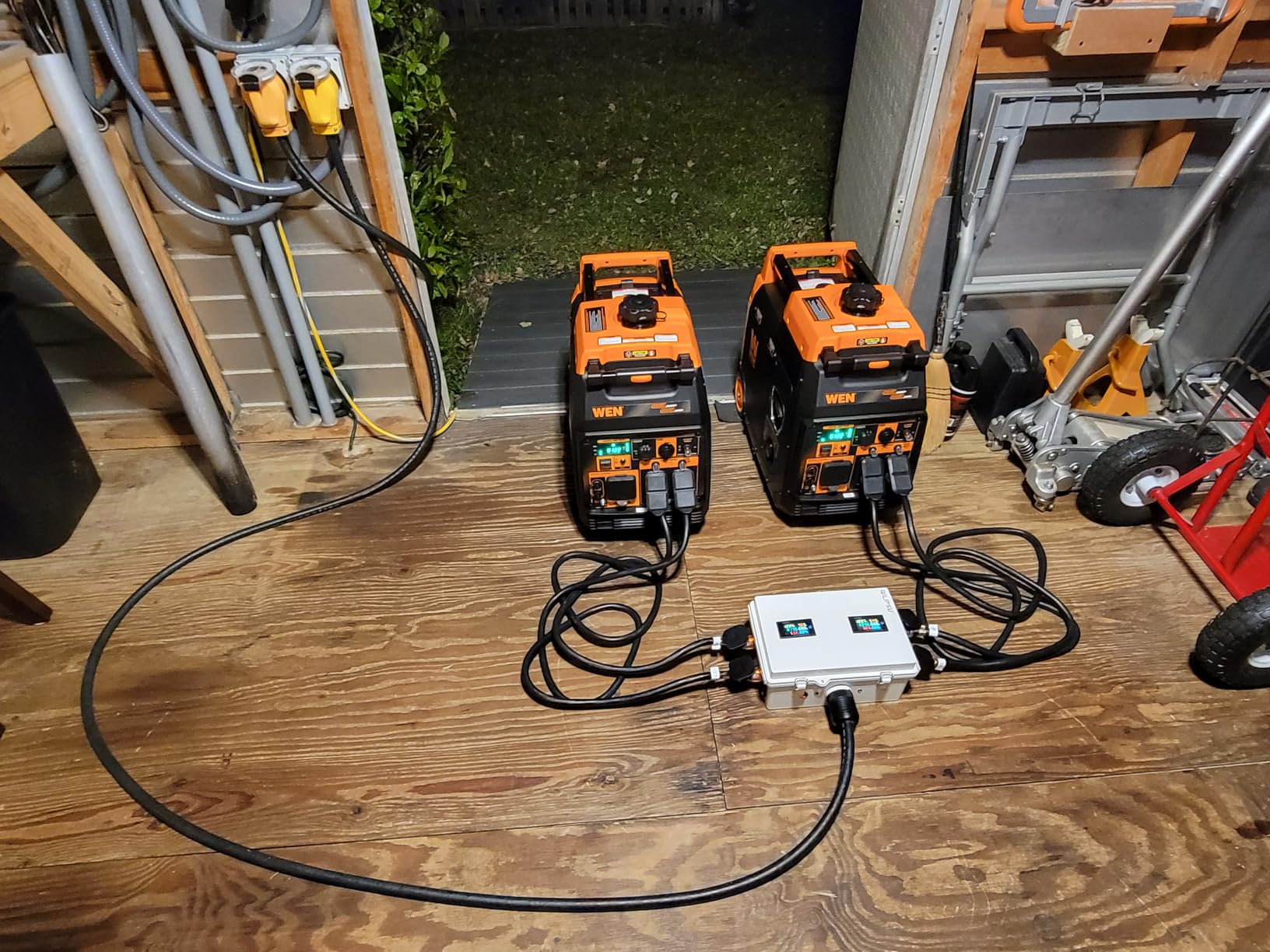
Safety hardware includes the WEN Watchdog CO shutdown sensor, which kills the engine when carbon monoxide climbs in an enclosed campsite. The outlet bank covers four three-prong 120V receptacles, a TT-30R RV receptacle, a 12V DC receptacle, and two 5V USB ports, which is enough to run the trailer and charge devices from one machine.
At 72.7 pounds with onboard wheels and a telescoping pull handle, it is a middle ground between the 47-pound Pulsar and the 99-pound WEN 56380i. The three-year limited warranty is the longest in this roundup alongside the Champion.
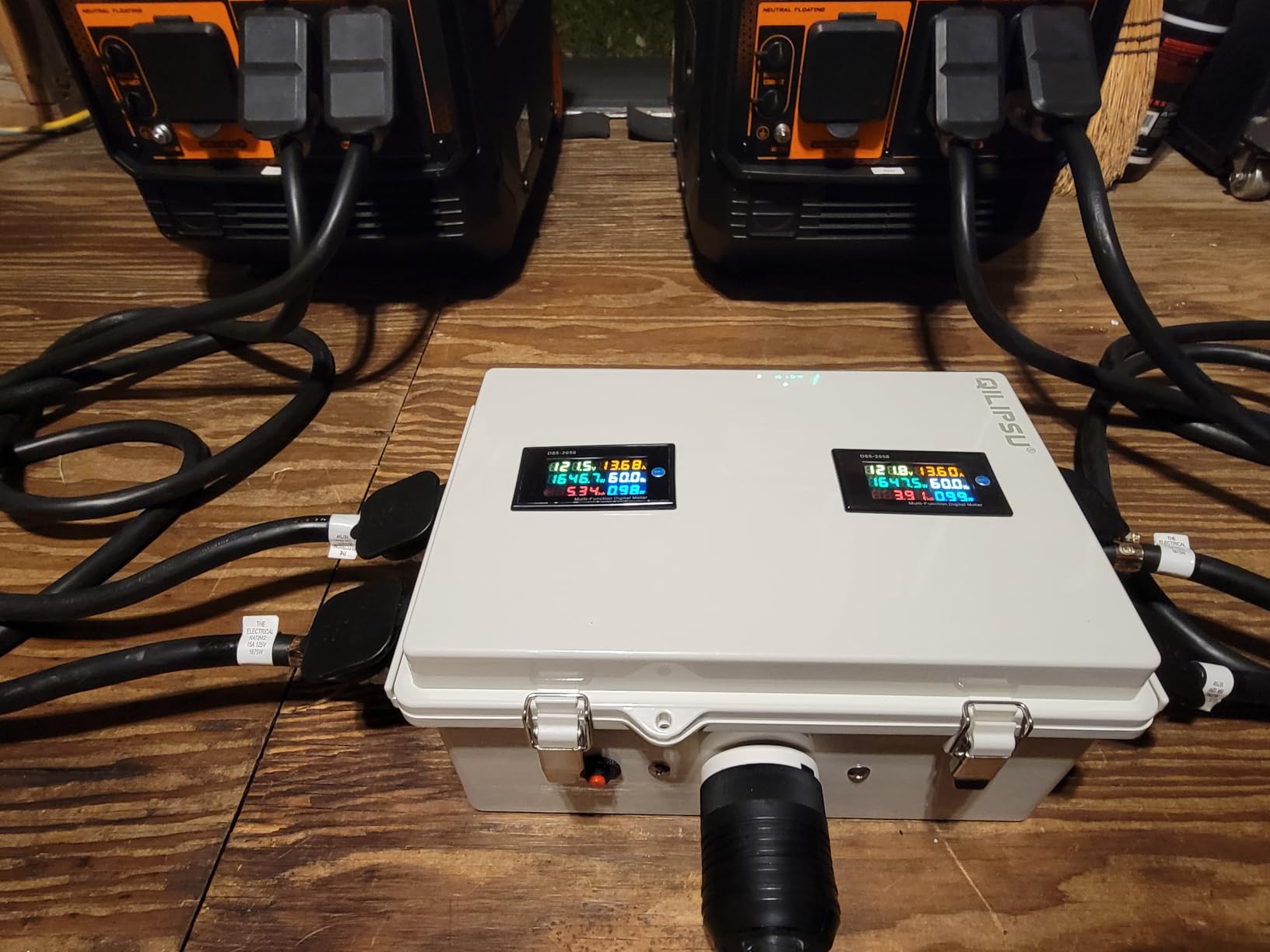
When 4,000 rated watts actually pays off
A single 15,000 BTU AC uses roughly 1,500W running. Add a 1,200W microwave and a 360W converter charger and you are at about 3,100W, leaving 900W of margin. On a 3,400-rated-watt machine that same combination is uncomfortably close to the ceiling on a hot afternoon.
This is the tier we recommend for Class C motorhomes, 30A travel trailers with two occupants who both run appliances, and anyone boondocking in sustained heat where compressor draw rises above nameplate.
Why it is not the top pick
This model uses recoil start rather than the electric start on the 56380i, which is a step back in convenience for a machine this heavy. Rated runtime of about 7 hours is also on the short side for the wattage class, so a longer run means carrying a second fuel can.
It tops out at 30A output. If you own a 50A motorhome with a second air conditioner, a 4,000-rated-watt generator is the wrong ceiling no matter how good the starting figure looks on paper.
5. Pulsar PGD40ISCO 4000W Inverter – Best for Carrying It Every Mile
Pulsar PGD40ISCO Ultra Light Quiet 4000W Portable Gas Inverter Generator, white
3200W rated, 4000W peak
145cc four-stroke engine
59 dB, 47.3 pounds
Rated to 13500 BTU AC
Pros
- Only 47.3 pounds in the 4000-watt class
- Manufacturer rates it for AC units up to 13500 BTU
- 59 dB operation is low for the weight
- Parallel ready to double output
- Three-year limited warranty
Cons
- One gallon tank gives about 4 hours at half load
- Gasoline only with no propane option
- 3200 rated watts leaves thin headroom
The Pulsar PGD40ISCO is the generator we would load by ourselves. At 47.3 pounds, it is one of the lightest 4,000-watt machines on the market, and it still delivers 4,000 peak watts with 3,200 rated watts from a 145cc four-stroke engine. For a boondocker who repacks every few days, that weight difference matters more than any spec sheet.
Pulsar rates this model for air conditioning units up to 13,500 BTU, which is a specific manufacturer claim worth noting rather than a generic watt number. If your rooftop unit is a 15,000 BTU, treat this as a step up in size rather than a match.
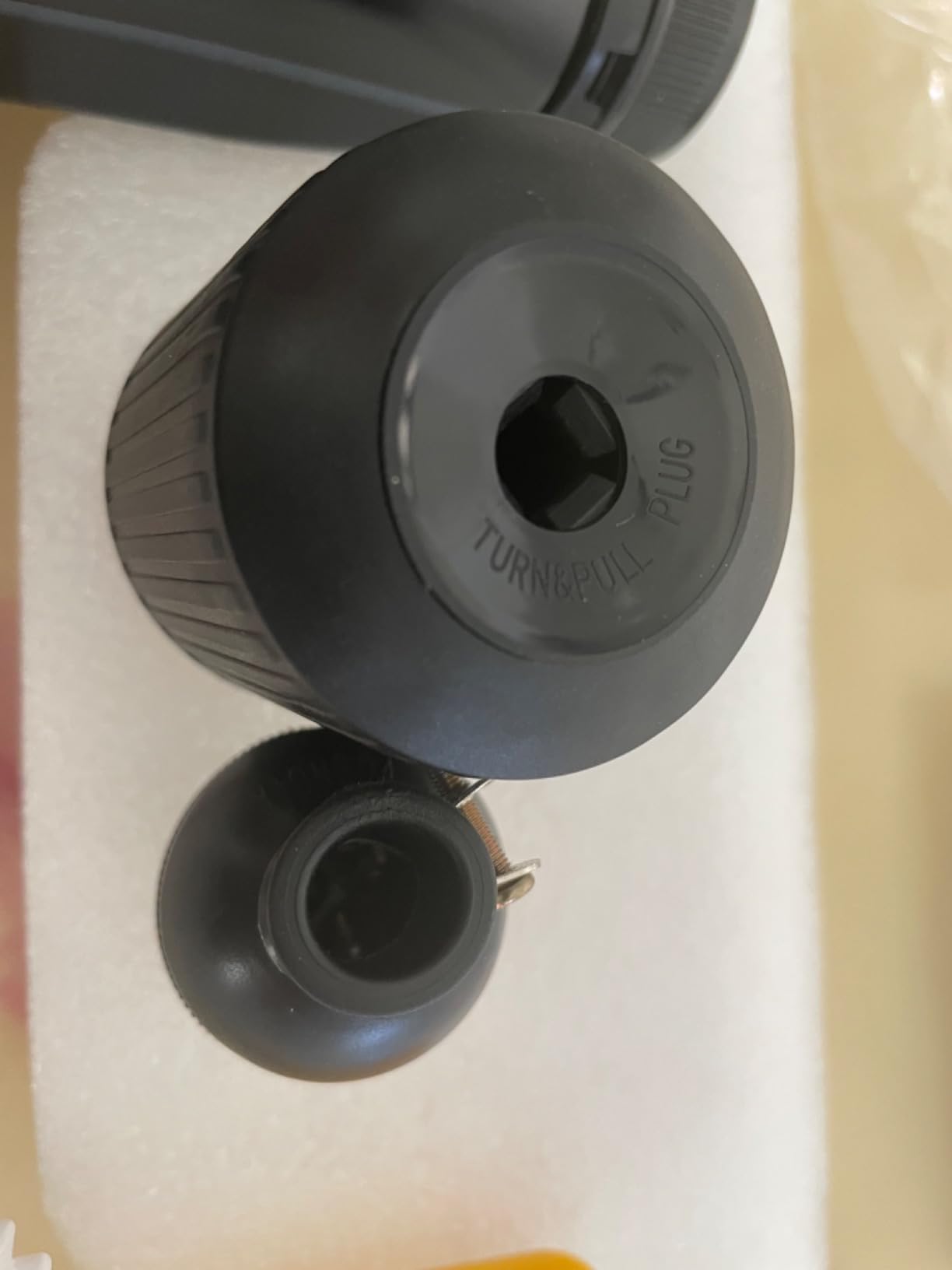
The 59 dB operating rating is genuinely low for a machine with this output, and reviewers connect that directly to campsite situations with neighbors sleeping nearby. Output is clean enough for laptops, phones, and televisions, and parallel capability lets you link a second unit when you need more.
Owners who are happy with it cluster around the same theme: it does the job for a 13,500 BTU AC, it is easy to carry, and it is quiet. The complaints concentrate on fuel, not function.
Is a 1-gallon tank a real limitation
Yes, and it is the first thing buyers mention. One gallon yields roughly 4 hours at half load, which is about as long as a 13,500 BTU AC cycle in mild weather and shorter in July. That means a nightly refill or a second approved fuel container.
The gasoline-only design compounds it. A propane-capable machine of similar weight would let you carry a small bottle and go three nights without touching a jerry can.
Who should pass on this one
Anyone running a 15,000 BTU unit, or anyone who wants to run a microwave alongside the AC, will find 3,200 rated watts too tight. It is a dedicated air-conditioner machine, not a whole-trailer power source.
Full-week boondockers in remote terrain should also weigh the small tank carefully. A gallon of gasoline does not carry as far as a 20 lb propane bottle, and refills are not always nearby.
6. AIVOLT VS8000411 8000W Dual Fuel 50A RV – Best for Two Air Conditioners
AIVOLT 8000W Dual Fuel Inverter Generator 50A RV Generator
6100W running, 8000W surge
322cc OHV four-stroke engine
50A RV capable, 62 dBA
Dual fuel, 130.7 lb
Pros
- Highest output here at 6100 running watts
- 50A RV capable output suits a motorhome
- Remote key fob starts it from inside the camper
- Dual fuel with automatic fuel switching
- Wheels and telescopic handle at 130.7 pounds
Cons
- Heaviest generator in the roundup at 130.7 pounds
- Lowest average rating here at 4.0
- Some owners report output below advertised watts
Only one generator here can honestly be described as powering two rooftop air conditioners, and it is the AIVOLT VS8000411. With 8,000 surge watts and 6,100 running watts from a 322cc four-stroke OHV engine, it sits a full class above everything else on this list. A 50A motorhome with dual 13,500 BTU units is the use case it was built for.
Real owners do report running a camper van rooftop AC plus accessories overnight on propane, which is exactly the scenario where a 3,200-rated-watt machine quits. The 50A RV-capable output removes the ceiling that limits smaller portable generators on larger rigs.
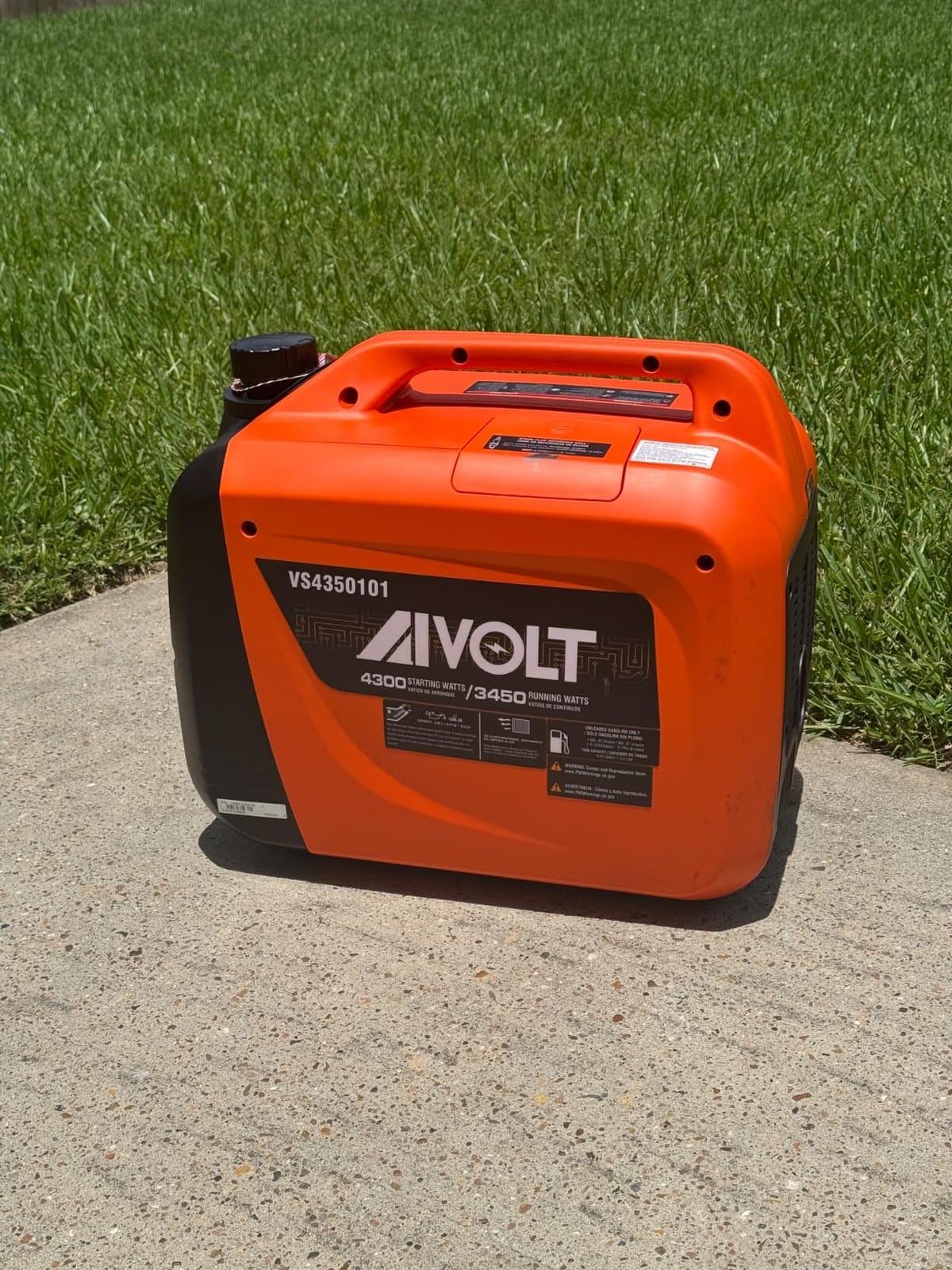
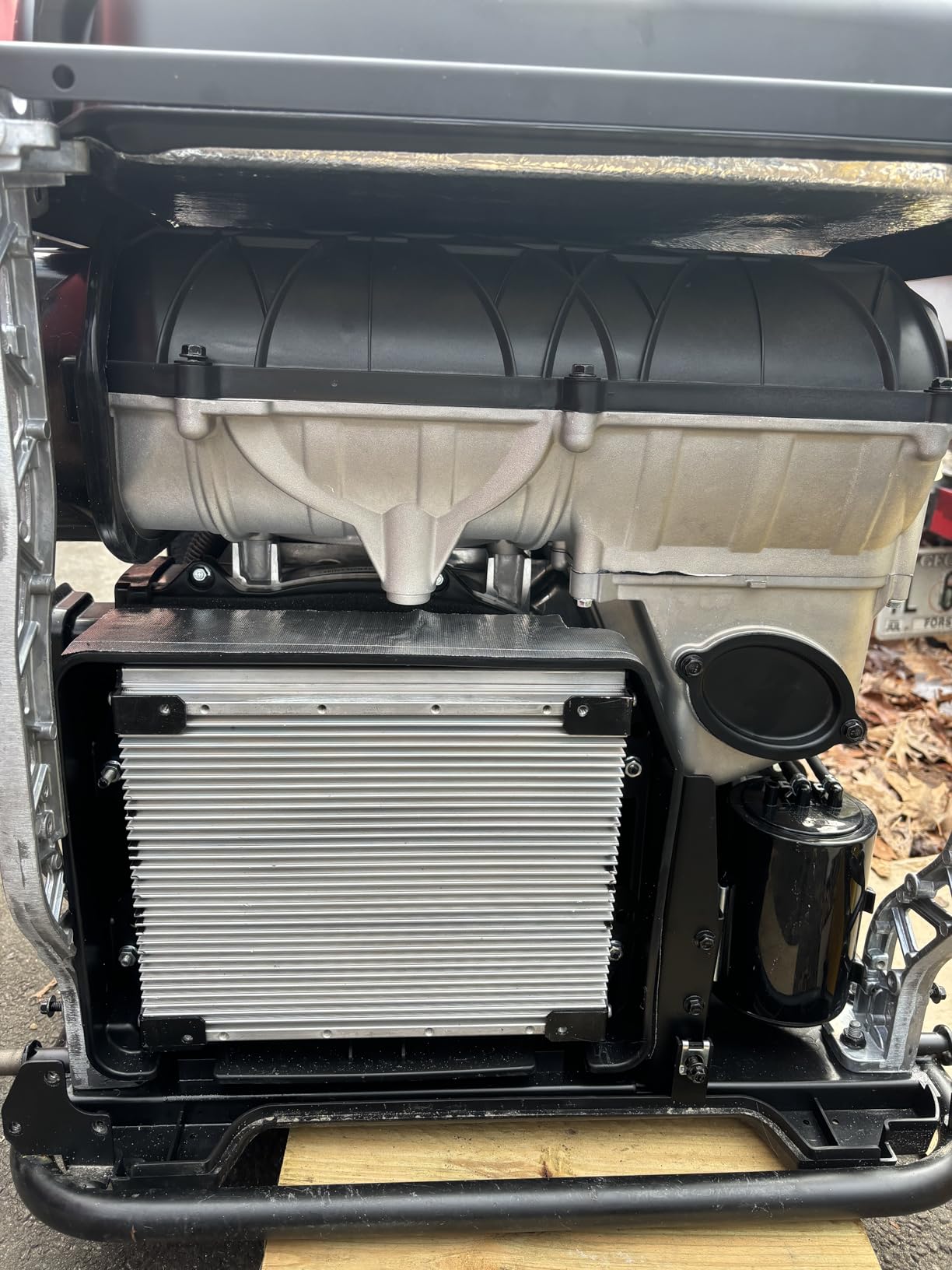
Convenience is strong for a machine this size. Electric start with a remote key fob means you can fire it up from inside the cab, the 5-in-1 LCD display shows fuel use, voltage, and runtime, and a telescopic handle with two 7 inch never-flat wheels makes the 130.7 pounds manageable across a campsite.
It is rated to operate from minus 4F to 140F thanks to an upgraded low-temperature lithium battery, and the CO Alert system shuts the engine down when carbon monoxide reaches unsafe levels. Four outlets, a 12V DC port, and dual USB adapters cover device charging.
What 6,100 running watts lets you do
Two 13,500 BTU rooftop air conditioners at roughly 1,200W each is about 2,400W running. Add both converter chargers at 360W apiece, a refrigerator, and a microwave, and you land near 4,600W. The 6,100 running watts leave a cushion that smaller units simply cannot produce, which is the whole point of this machine.
Its 3.6 gallon tank and more than 10 hours of runtime at 25 percent load make it a genuine multi-day proposition rather than a one-night machine.
The honest caveat on this one
This has the largest review base in the group at 1,332 ratings, and the 4.0 average reflects a real split rather than a rounding error. A core of owners are very satisfied; a smaller group report fuel system faults, output below the advertised running watts, and units arriving damaged or leaking at the carburetor.
Adding 130 pounds of generator to a vehicle already carrying a travel trailer changes the handling too. If you only have one 13,500 BTU unit, a 3,400 to 4,000-rated-watt machine does the same job for a fraction of the weight.
7. Oxseryn OXOG10 4400-Watt Inverter – Best for a Budget 30A Rig
Oxseryn 4400-Watts Inverter Generator, Open Frame Generator Gas Powered, Emergency Home Backup, RV Ready 30A Outlet, EPA Compliment
3400W running, 4400W peak
30A RV outlet plus two 120V
14 hrs at 25 percent load
57 lb, open frame
Pros
- Proper 30A RV-ready outlet at this price
- 3400 running watts with up to 14 hours runtime
- ECO mode and inverter output for electronics
- Cold start technology and low oil shutdown
- 57 pounds is manageable by one person
Cons
- One-year manufacturer warranty is short
- Open frame is louder than enclosed inverter models
- Some examples arrive with a fuel smell from testing
The Oxseryn OXOG10 is the value entry in this roundup, and the reason is the outlet. A dedicated 30A RV port on a 4,400-watt machine is not common at this level, and it removes the adapter gymnastics that come with a household three-prong plugged into a 30A socket.
Output is 4,400 peak watts and 3,400 running watts, which is the same running figure as our top pick. On a 13,500 BTU AC that is adequate, and the 2 gallon tank delivers up to 14 hours at 25 percent load in ECO mode, which is the longest stated runtime in the group.
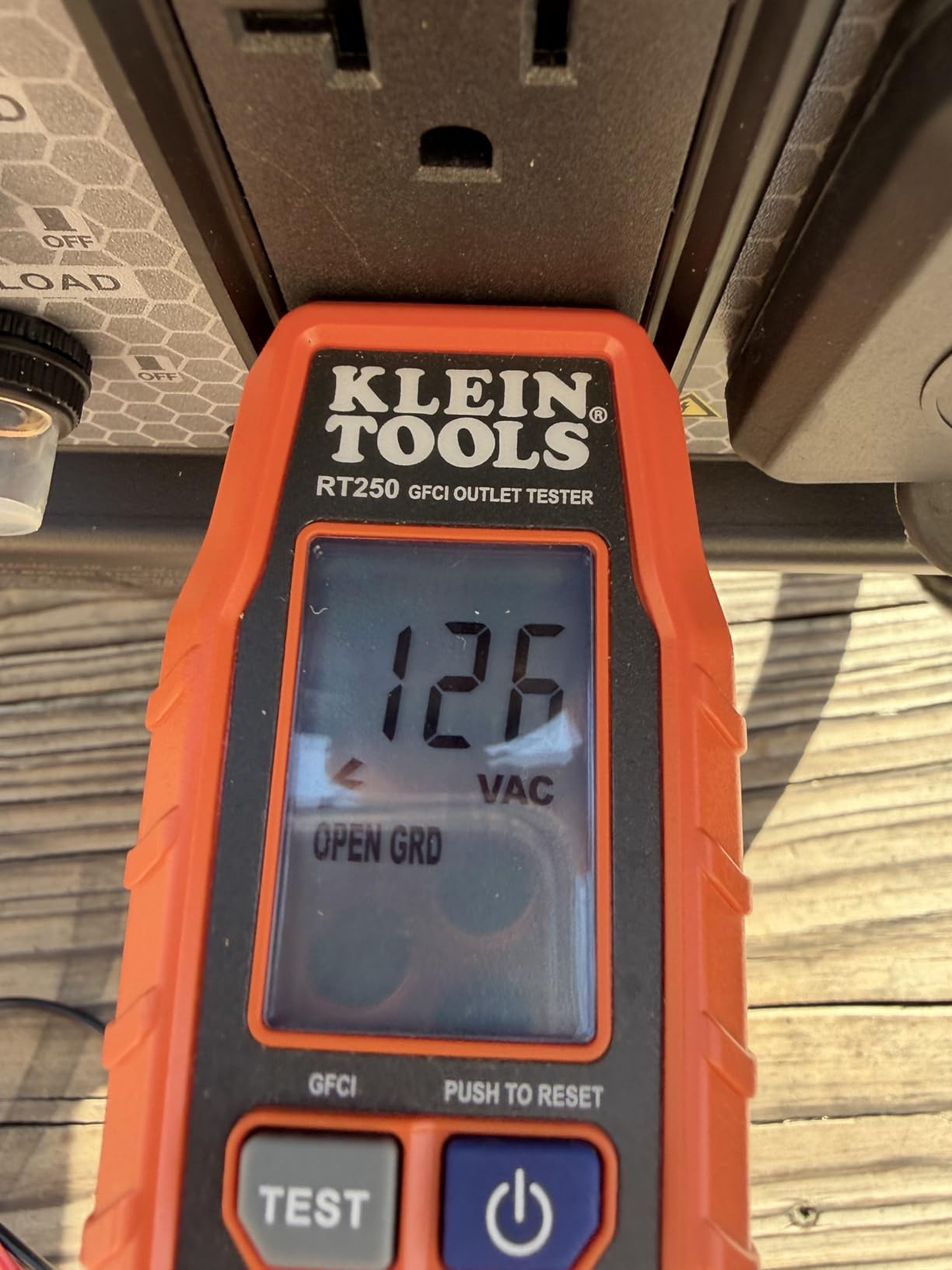
At 57 pounds, it is light enough for one person to manage despite the open frame, and the dimensions are compact enough to fit behind a Class C. Overload protection, low oil shutdown, and cold start technology are all present, along with two 120V household outlets and a 12V DC port for device charging.
Buyers consistently frame this as a good-value machine rather than a premium one. The 4.6 average across 417 reviews reflects genuine satisfaction, and the reservations cluster around noise and warranty length rather than whether it starts the compressor.
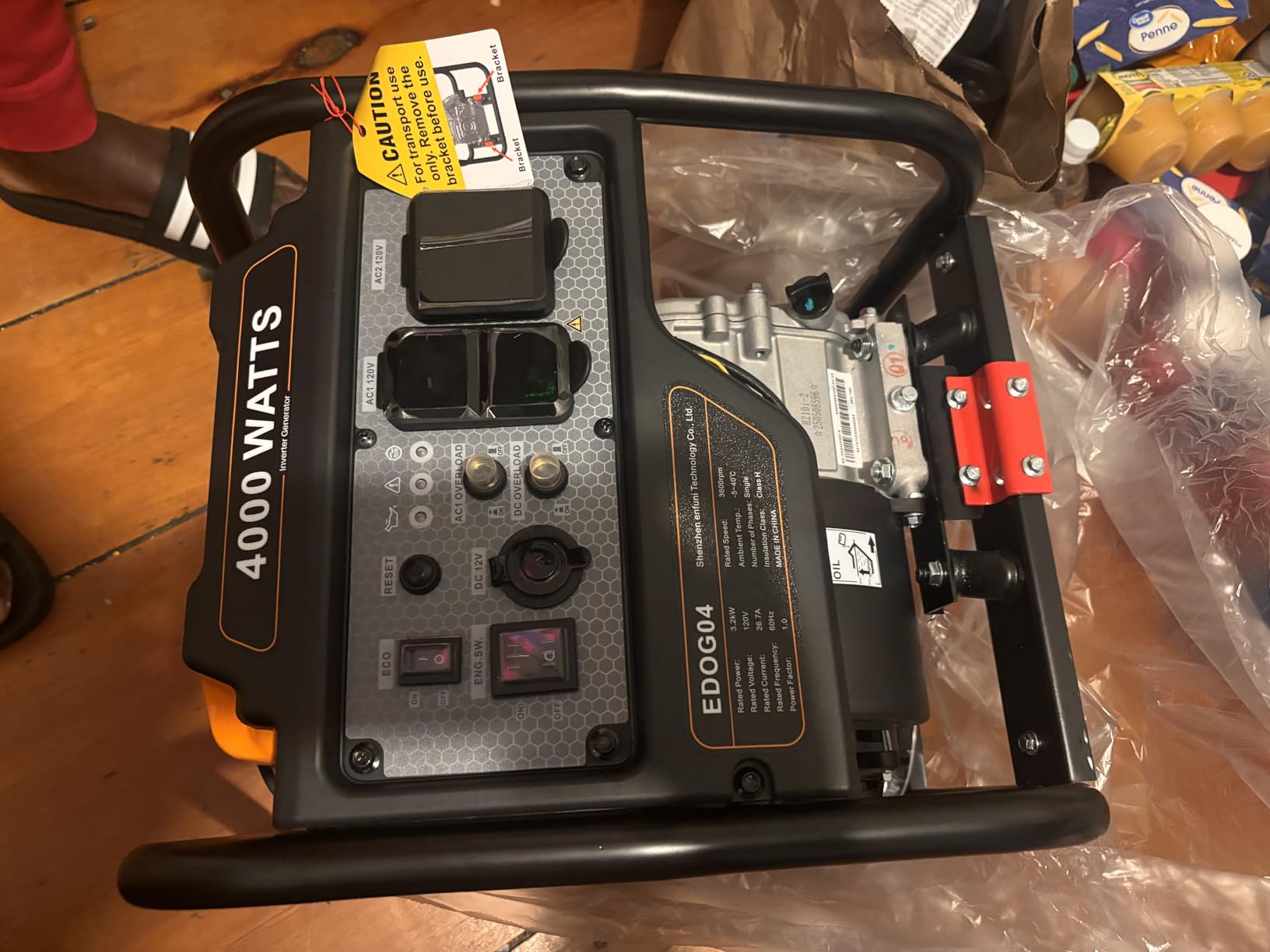
Is an open frame loud enough to cause problems
Yes, relatively speaking. None of the manufacturers in this roundup publish a comparable dBA figure for the OXOG10, but the open frame construction is exactly what makes the enclosed WEN and Champion models quieter. If you regularly camp in small sites with neighbors within 30 feet, expect a rougher sound profile than the 59 dBA class machines.
It is also gasoline only, so there is no propane option for extended boondocking.
What the one-year warranty means for you
A one-year manufacturer warranty is the shortest here, and it is a meaningful difference on a machine with a 4-stroke engine you expect to run for seasons. If a cylinder head problem appears in month 20, the Champion at three years or the WEN 56380i at two years absorbs far more of that risk.
Also expect a faint smell of gasoline when you first run it, which the manufacturer attributes to factory testing. It clears after a short run.
8. Pulsar GD400BN 4000W Dual Fuel CARB-Compliant – Best for Fuel Flexibility
Pulsar Products GD400BN, 4000W Portable super-quiet Dual Fuel & Parallel Capability, RV-Ready, CARB Compliant
3200W on gas, 2800 on propane
3600W peak watts on propane
RV-ready, CARB compliant
47.3 lb, 59 dB
Pros
- Dual fuel runs on gasoline or propane
- Only 47.3 pounds with dual fuel capability
- Around 59 dB at half load
- Parallel capability doubles output
- RV-ready and CARB compliant for all 50 states
Cons
- Propane output drops to 2800 running watts
- 1.1 gallon tank gives about 4 to 4.5 hours
- One-year manufacturer warranty
The Pulsar GD400BN solves a specific problem: dual fuel capability at 47.3 pounds. Very few machines that light run on both gasoline and propane, and for a boondocker carrying a small bottle for overnight cooling and gas for daytime use, that flexibility is worth planning around.
On gasoline you get 4,000 peak watts and 3,200 running watts. Switch to propane and that becomes 3,600 peak and 2,800 running, so the safe sizing decision for a 15,000 BTU unit is to run the AC on gasoline rather than bottle.
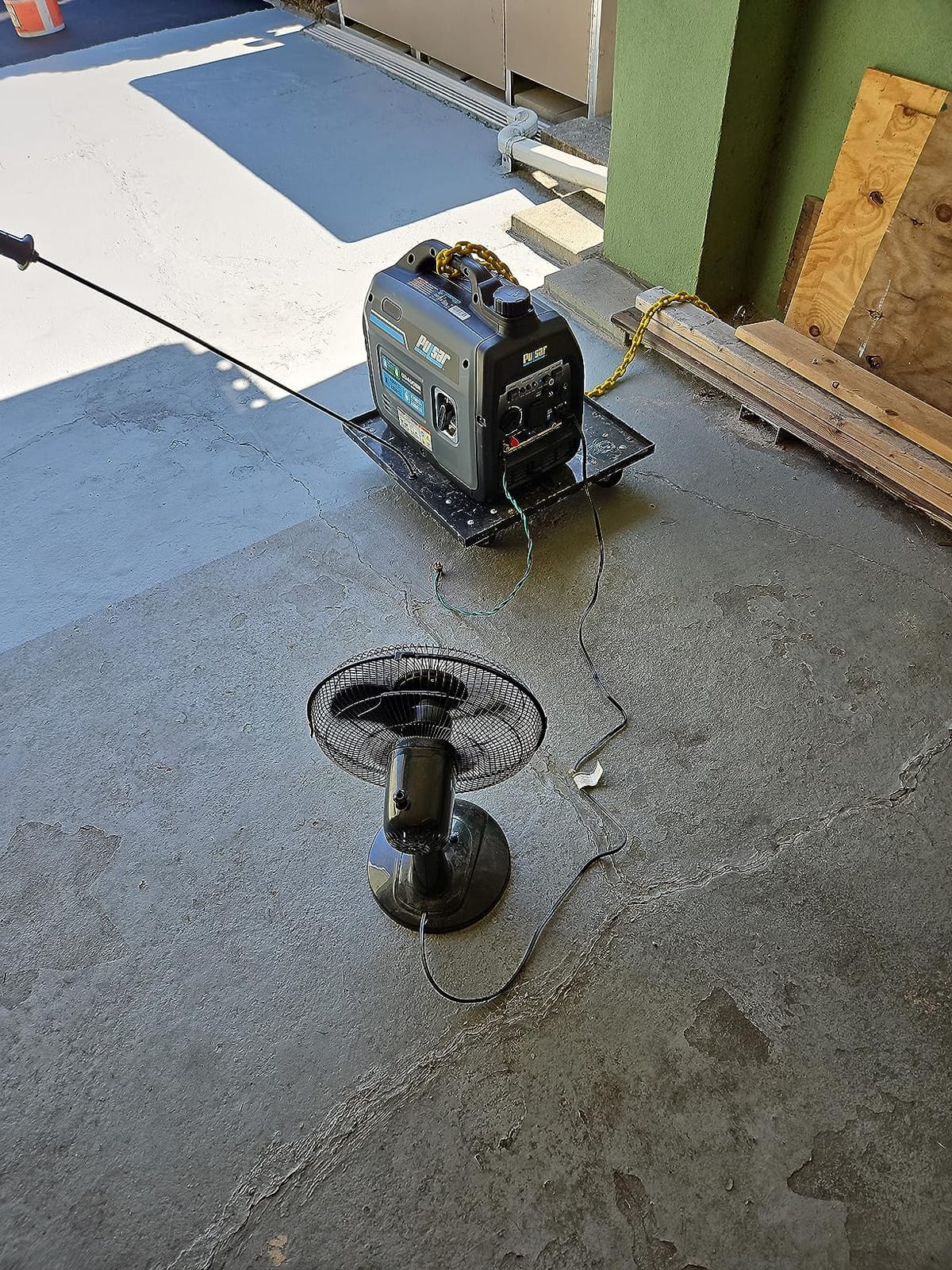
It is RV-ready and CARB compliant, which matters in California and for anyone planning a western route. Clean output is sufficient for televisions, phones, and laptops, and the parallel capability lets you pair it with a matching unit when one is not enough.
The 4.2 average across 446 reviews is the second-lowest here, and the complaints are consistent: reduced propane output and short runtime from the small 1.1 gallon tank. Owners who run on gasoline report far better experiences than those who lean on propane.
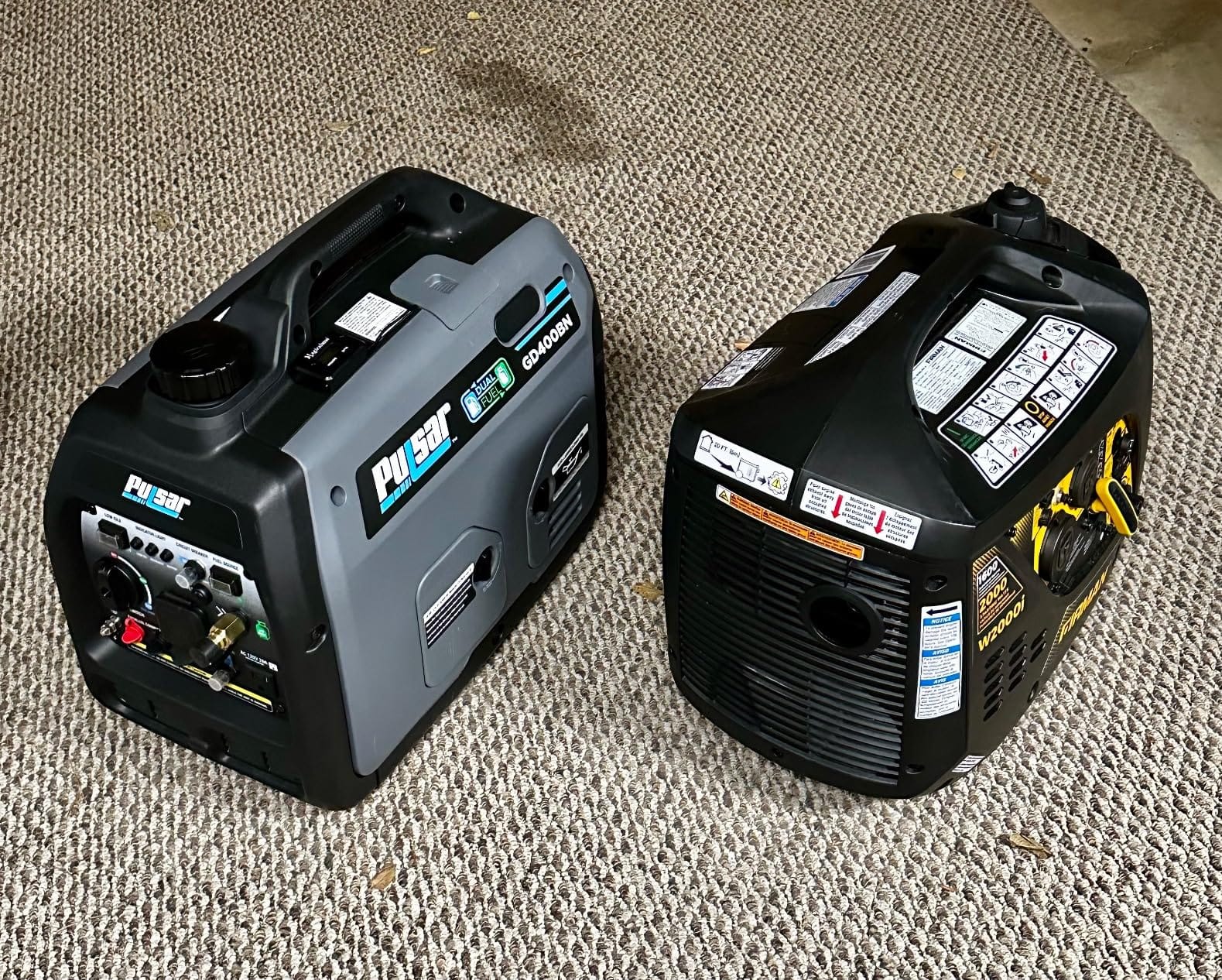
When dual fuel is worth the propane power drop
Dual fuel matters most when you camp away from gas stations. A 15,000 BTU AC on propane at 2,800 running watts is workable, but the compressor has less cushion, and adding any appliance risks a trip. The compromise most owners settle on is propane overnight at moderate temperatures, gasoline during the afternoon peak.
If your routes keep you near fuel, the gasoline-only Pulsar PGD40ISCO gives you 400 more running watts for the same weight. Dual fuel is a convenience decision, not a power decision.
Where this unit disappoints
Runtime is the weak point: 1.1 gallons yields roughly 4 to 4.5 hours at half load, which is the shortest sustained figure among the dual fuel machines here. The Champion 201050 runs ten times longer on a propane bottle for the same general use.
The one-year warranty is also the shortest offered on a machine in this class, and the 4.2 average is noticeably below the 4.5 to 4.7 cluster at the top of this list.
How Big a Generator Does a 13,500 BTU RV Air Conditioner Need?
A 13,500 BTU rooftop air conditioner needs a generator with at least 2,800 starting watts and 2,000 running watts to start reliably, and 3,000 to 3,400 running watts to run it with any margin. A 15,000 BTU unit pushes the starting requirement to roughly 3,300 watts. That is why the 2,200W class that many owners ask about struggles: it can start some 13,500 BTU units after a soft start install, but it leaves nothing for anything else.
The method matters more than the number. Add every load you intend to run simultaneously, add the AC starting surge on top, then add 20 to 25 percent for heat and altitude. A 30A plug delivers a theoretical 3,600W, and the honest usable figure is closer to 3,000W once the converter charger and an AC are already drawing. On the cooking side, our picks for the best induction cooktops for RV draw far less than a residential range, which is why they pair well with a mid-size generator.
Altitude and heat both shrink that margin. Above 3,000 feet, expect roughly a 3.5 percent output loss per additional 1,000 feet, and sustained temperatures above 90F cost another 10 to 15 percent. A generator that barely works at sea level in spring will disappoint you in the Rockies in July.
Do RV Air Conditioner Soft Start Kits Really Work?
Soft start devices reduce the inrush spike when the compressor motor kicks in, commonly cutting the surge requirement by half and shaving 1,500 to 2,000W off the generator you need. That is why owners on forums report running a 13,500 BTU AC on a much smaller inverter after installing one, and why a start capacitor is a popular first fix when a mid-size generator struggles.
The catch is warranty language. Airstream and Dometic owners report pushback on third-party kits such as the MicroAir EasyStart, and the concern among RVers is that an unrecognized component could complicate a compressor claim later. Install it, photograph the original wiring, and keep the paperwork from the AC manufacturer in the same folder.
Our take: a soft start is worth it if you are trying to keep a smaller, lighter generator. If you are buying a 3,400 to 4,000 rated watt machine anyway, you do not need one to make the AC start, and you avoid the warranty conversation entirely.
Why Your RV AC Keeps Tripping the Generator Breaker
Start with the hidden load. A 30A converter charger draws about 360W on its own, and owners on Forest River and iRV2 forums repeatedly identify it as the real reason a generator that should cope instead trips when the compressor starts. Sequence the loads: let the converter settle, then start the AC, then add appliances one at a time.
Beyond that, four causes account for most nuisance trips. Starting watts below the compressor surge means the generator never gets there. Running on propane with a lower rating means less headroom than the sticker suggests. A 30A trailer plugging into a generator through an adapter is a frequent culprit. And a hot engine in July air produces less power than its nameplate.
One misconception worth clearing up: you do not have to start the AC on shore power and then transfer it to the generator. Owners who have tested this report that starting directly on the generator works fine once the loads are sequenced properly, which removes a step people have been doing out of habit for years.
30A vs 50A RV Service: Which One Your Generator Needs
A 30A RV service is 3,600W theoretical, 120V at 30 amps, and typically uses an L5-30R or TT-30 connector. A 50A service is 12,000W across 120V and 240V using an L14-30R four-prong plug. Most travel trailers are 30A; most Class A and large Class C motorhomes are 50A.
Match the generator to the rig, not the other way around. A 30A trailer with one 13,500 BTU unit is well served by anything from 3,400 to 4,800 rated watts with a TT-30R or L5-30R outlet. A 50A motorhome with two air conditioners needs a machine in the 6,000 running watt class, and in practice that is where portable units stop and onboard generators begin.
On buying a home battery solution instead of a generator, our guide to the best solar generators for power outages covers the silent option, though note that most power stations need a separate soft start for a rooftop AC compressor.
Frequently Asked Questions
How big of a generator do I need to run RV AC?
For a single 13,500 BTU rooftop unit, look for at least 2,800 starting watts and 3,000 to 3,400 running watts. A 15,000 BTU unit needs closer to 3,300 starting watts. Add 20 to 25 percent margin for heat and altitude, plus whatever else runs at the same time.
Can I run my RV air conditioner with a generator?
Yes. RV air conditioners are compressor loads that draw a short startup surge and then settle. Any generator with enough surge capacity, enough running watts, and a proper 30A RV outlet will start and run a rooftop unit. The limit is your trailer’s 30A or 50A service, not the appliance.
What size generator do I need for a 13500 BTU RV air conditioner?
At least 2,800 starting watts and 2,000 running watts, but 3,000 to 3,400 rated watts is the practical target so you have room for a microwave or a second appliance. A 2,200W inverter can manage a 13,500 BTU unit after a soft start install, with no margin left over.
What is the quietest generator for an RV AC?
Among the units we reviewed, the PowerSmart HB5040DC and the Pulsar PGD40ISCO are the quietest, both rated around 59 dB, followed by the AIVOLT at 62 dBA and the Champion 201050 at 64 dBA. Fully enclosed designs such as the WEN 56477i contain noise better than open-frame models.
Why does my RV AC keep tripping the circuit breaker?
The most common cause is a hidden load, particularly a 30A converter charger drawing about 360W while the compressor starts. Sequence your loads so the converter settles first, confirm the generator’s running watts exceed your total demand, and check that you are not starting the AC on propane with reduced output.
Are RV AC soft start kits worth it?
They are worth it if you want to keep a smaller, lighter generator, since they cut the startup surge substantially and can reduce the required size by 1,500 to 2,000W. If you are already buying a 3,400 to 4,000 rated watt machine, you do not need one. Some AC manufacturers push back on third-party kits, so check your warranty terms first.
Our Final Verdict for 2026
The best RV generators for air conditioners depend on your roof unit and your trailer’s service. For most people running a single 13,500 BTU AC on a 30A rig, the WEN 56380i is the pick: 3,400 rated watts, a real TT-30R outlet, and the deepest owner history in the category. Add the PowerSmart HB5040DC if quiet operation and propane runtime matter more than fuel tank size, or the Champion 201050 if you want a three-year warranty at 51.8 pounds.
Step up to the WEN 56477i for a 15,000 BTU unit plus appliances, and to the AIVOLT only when a 50A motorhome with two air conditioners is the actual job. Whichever you pick, sequence your loads, keep the converter charger in mind, and check the connection type on your trailer before you buy. For adjacent reads, our best window air conditioners for apartments guide covers fixed cooling if you are planning an upgrade away from portable units.