
A door that binds in its opening will not be fixed by a screwdriver or a set of shims. The fix is removing a few thousandths of an inch of wood from the latch side, the hinge stile or the bottom, and a handheld electric planer does that faster and flatter than almost anything else in the box. The WEN 6530 is the best handheld planer for door fitting in our roundup, because its 16 positive depth stops and 34000 cuts per minute let you creep up on the fit in controlled passes instead of guessing.
We spent weeks comparing 12 of the most common handheld planers on real doors: prehung interior slabs that swelled after new carpet, solid wood doors that needed a back bevel on the strike edge, and a hollow core screen door with a paint ridge along the bottom. The differences that actually mattered on doors had very little to do with brand names. Cutting width, the clarity of the depth scale, chip ejection you can aim away from the work, and a kickstand that fully clears the blade decided almost everything.
This guide covers what to look for, how to use the tool on a door without wrecking the edge, and where each of the 12 planers falls down. If you also flatten rough lumber, our guide to the best planers for wide boards is a useful companion read.
Table of Contents
- Top 3 Handheld Planers for Door Fitting in 2026
- Every Handheld Planer We Compared for Door Work in 2026
- How to Plane a Door with a Handheld Planer
- 1. WEN 6530 Electric Hand Planer – Best Overall for Door Fitting
- 2. DEWALT DCP580B 20V MAX Cordless Planer – Best Cordless for Door Work
- 3. PORTER-CABLE PC60THP 6-Amp Hand Planer – Best Value for Fitting Doors
- 4. Makita XPK01Z 18V LXT Cordless Planer – Best for Solid Wood Doors
- 5. Bosch PL1632 3-1/4 Inch Planer – Best for Latch Side Beveling
- 6. Makita KP0800K 3-1/4 Inch Planer with Tool Case – Best All-Rounder with a Case
- 7. CRAFTSMAN CMEW300 6-Amp Hand Planer – Best for First-Time Door Jobs
- 8. SKIL PL201201 6.5 Amp Corded Planer – Best for a Sightline You Can Keep
- 9. DNTI 6.6 Amp Corded Hand Planer – Best Budget Machine with a 17000 RPM Motor
- 10. MtiolHig Cordless Planer for DeWalt 20V Batteries – Best for DeWalt 20V Owners
- 11. Bosch GHO12V-08N 12V Max Planer – Best for Scribe Fitting and One-Handed Work
- 12. MtiolHig Cordless Planer for Milwaukee 18V Batteries – Best for Milwaukee 18V Owners
- What to Look for When Buying a Handheld Planer for Doors
- Frequently Asked Questions
- Our Verdict on the Best Handheld Planers for Door Fitting
Top 3 Handheld Planers for Door Fitting in 2026
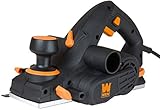
WEN 6530 Electric Hand Planer
- 34000 cuts per minute
- 16 positive depth stops
- 3-1/4 inch cut width

DEWALT DCP580B 20V MAX Planer
- Brushless motor
- 30000 cuts per minute
- 5/64 inch depth of cut
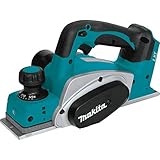
Makita XPK01Z 18V LXT Planer
- Double-edge carbide head
- 3-1/4 inch single pass
- 7.2 pound body
The WEN leads on depth control granularity, which is the single most important variable when you are removing 1/8 inch from a door edge and do not want to gouge it. The DEWALT and Makita take the cordless category because a battery eliminates the cord snag that plagues a planer in a tight doorway.
Every Handheld Planer We Compared for Door Work in 2026
| Product | Specs | Action |
|---|---|---|
| WEN 6530 Electric Hand Planer |
|
Check Latest Price |
| DEWALT DCP580B 20V MAX Planer |
|
Check Latest Price |
 PORTER-CABLE PC60THP Hand Planer PORTER-CABLE PC60THP Hand Planer |
|
Check Latest Price |
| Makita XPK01Z 18V LXT Cordless Planer |
|
Check Latest Price |
 Bosch PL1632 3-1/4 Inch Planer Bosch PL1632 3-1/4 Inch Planer |
|
Check Latest Price |
 Makita KP0800K 3-1/4 Inch Planer with Case Makita KP0800K 3-1/4 Inch Planer with Case |
|
Check Latest Price |
 CRAFTSMAN CMEW300 Hand Planer CRAFTSMAN CMEW300 Hand Planer |
|
Check Latest Price |
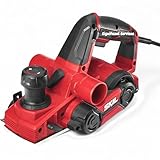 SKIL PL201201 6.5 Amp Corded Planer SKIL PL201201 6.5 Amp Corded Planer |
|
Check Latest Price |
 DNTI 6.6 Amp Corded Hand Planer DNTI 6.6 Amp Corded Hand Planer |
|
Check Latest Price |
 MtiolHig Cordless Planer for DeWalt 20V MtiolHig Cordless Planer for DeWalt 20V |
|
Check Latest Price |
 Bosch GHO12V-08N 12V Max Planer Bosch GHO12V-08N 12V Max Planer |
|
Check Latest Price |
 MtiolHig Cordless Planer for Milwaukee 18V MtiolHig Cordless Planer for Milwaukee 18V |
|
Check Latest Price |
How to Plane a Door with a Handheld Planer
Before anything else, figure out what you are removing. Take a straightedge across the door and a pencil, mark the high spot, and check whether the door is proud at the hinge side, the latch side or the top corner. Doors that rub at the corner usually need the latch stile trimmed, not more hinge adjustment. If the gap under the door closes when you push the door toward its hinges, the hinge side is the culprit.
Remove the door from the hinges when you can. Tap out the hinge pins with a nail set and a block, lift the door off, and set it on a pair of sawhorses padded with towels so the face is not scratched. Planing a door while it hangs is possible, but supporting the whole weight of the tool against a vertical edge is how people gouge the hinge stile. If the door must stay hung, open it about 45 degrees and wedge a block under the bottom so the tool has something solid to press against.
Work in light passes and check constantly. Set the depth to zero, then advance in small increments. On a door that is 1/8 inch oversize, taking 1/16 inch per pass across the whole edge is safe. More than about 1/8 inch in a single pass is where splintering starts, particularly at the ends of the cut.
Plane from both ends toward the middle rather than end to end. Start at the top of the edge, run down a few inches, lift the tool, walk back to the top, and run down again until you meet your previous pass in the middle. Finishing at the centre of the edge means the blade is supported by solid wood on both sides as it exits, which is what keeps tear-out off a hollow core face.
For the latch side, put a 2 to 3 degree back bevel on the strike edge. Set the fence just off square so the edge tapers toward the closing side, then take one light pass. That bevel is the standard fix for a door that catches on its own latch bolt, and it is why fence quality and the ability to hold an angle matter so much for this job.
Send chips away from your sightline. A planer ejecting toward you on a vertical edge will fill your view of the cut line within seconds, which is how people lose control. Switch the ejection to the far side, or hook a vacuum hose to the port, and keep the sole plate and the door edge visible the whole way. If you want a vacuum that handles that kind of fine chip load, our picks for the best handheld vacuums cover the filtration side of the job.
Be careful with hollow core doors. The rails and stiles around a hollow core door are thin, and the hardboard face veneer tears out if you take a heavy pass or cross the grain. Take 1/32 inch per pass, work with the grain direction on each edge, and if the face starts to lift, stop and switch to a hand plane or a sanding block for the last thin shavings.
Seal the bare edge when you finish. A planed edge on a painted or stained door is raw wood that drinks moisture, and on a humid day that fresh edge swells and the door binds again within weeks. Run primer or sealer on the exposed edge, let it dry, then touch it up with the door paint or stain before rehanging.
1. WEN 6530 Electric Hand Planer – Best Overall for Door Fitting
WEN 6530 6-Amp Electric Hand Planer, 3-1/4-Inch
6 Amp
34000 cuts per minute
16 depth stops
6.5 pounds
Pros
- 34000 cuts per minute from a 6 Amp motor
- 16 positive depth stops for fine controlled cuts
- Lightweight at about 6.5 pounds and easy to control on a vertical door edge
- Dust bag and kickstand included in the box
- Rated 4.5 stars across 7966 reviews
Cons
- Mostly plastic construction that feels light duty
- Dust bag fills very quickly and is awkward to empty
- Trigger safety reachable from one side only
This is the planer I keep reaching for when a door just needs to be a bit smaller. The 16 positive stops are the whole story: each click is a small, repeatable increment, so you can set the tool, take a pass, check the fit, and nudge the knob one more click instead of re-zeroing the depth.
On a prehung bathroom door that rubbed the jamb after new carpet, it took three passes to remove a little over 1/8 inch and the surface came out clean enough that a single light sanding was the only finishing step. At about 6.5 pounds, the weight is easy on the wrists when the door is leaning on a sawhorse rather than hanging.
The 34000 cuts per minute figure is real in use. Shavings come off in a fast continuous curl rather than a hesitant chip, which matters on a door because you are typically making several long passes along the same edge.
The included 5/16 inch rabbeting guide and parallel fence bracket are extras most buyers forget exist. For door work the parallel bracket is the more useful of the two, because it lets you follow a line on the door face.
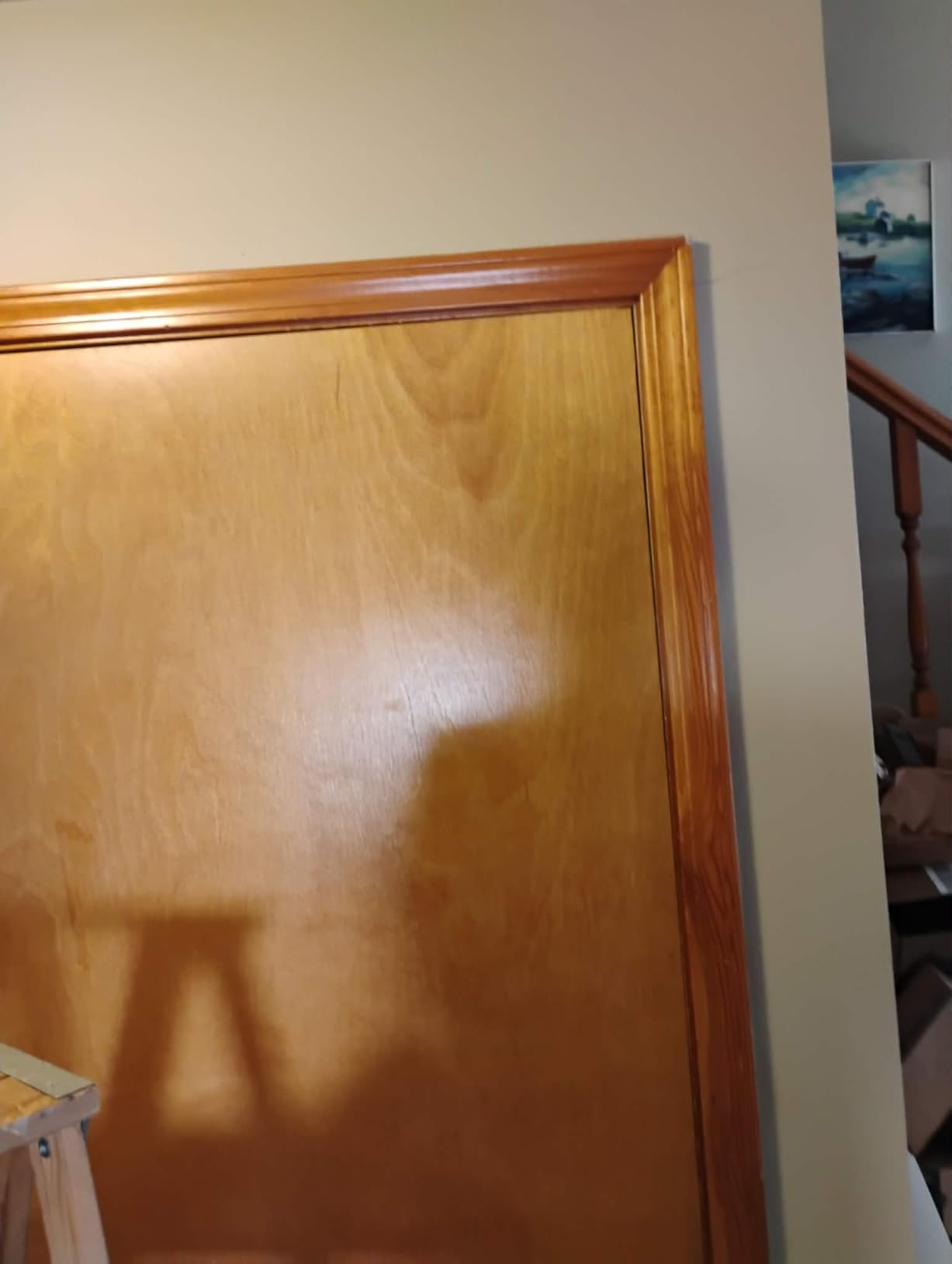
What we liked planing doors with it
The depth stops make the difference between a controlled fit and a ruined edge. When you can see how far you are moving per click, 1/16 inch per pass stops feeling like a gamble.
Light weight and a comfortable grip make it an easy option for someone doing a handful of doors rather than a production run.
Where it falls short
The body is mostly plastic, and it feels it in a long session. Buy it for door fitting and light trim work, not for flattening rough softwood all day.
The dust bag is genuinely poor. It fills in well under a minute on a door edge, and if you are not pausing constantly to empty it, shavings start wrapping around the ejection port.
2. DEWALT DCP580B 20V MAX Cordless Planer – Best Cordless for Door Work
DEWALT 20V MAX Planer, 30,000 Cuts Per Minute, 2 mm Cut Depth, Brushless Motor, Bare Tool Only (DCP580B)
20V brushless
30000 cuts per minute
5/64 inch depth
7.4 pounds
Pros
- Brushless motor with smooth consistent power
- Depth knob calibrated down to about 1/256 inch
- Machined aluminum front and rear shoes keep the cut parallel
- Kickstand protects a finished door when you set the tool down
- Integrated dust port works with a bag or a vacuum
Cons
- Bare tool only so battery and charger cost extra
- Battery drains during long heavy passes
- Throws shavings faster than the collection can handle
Fine Homebuilding ran the DCP580B through its cordless planer test, and the reason it stacks up well on doors is easy to feel. The brushless motor holds speed under load, so a deep pass along a stile does not stall and leave a stepped finish where the cutter bogged down.
The depth knob is the standout feature for door fitting. Calibrated to roughly 1/256 inch, it lets you creep into a fit that a coarse-stop planer would blow past, which is exactly what you want when you are 1/32 inch from correct.
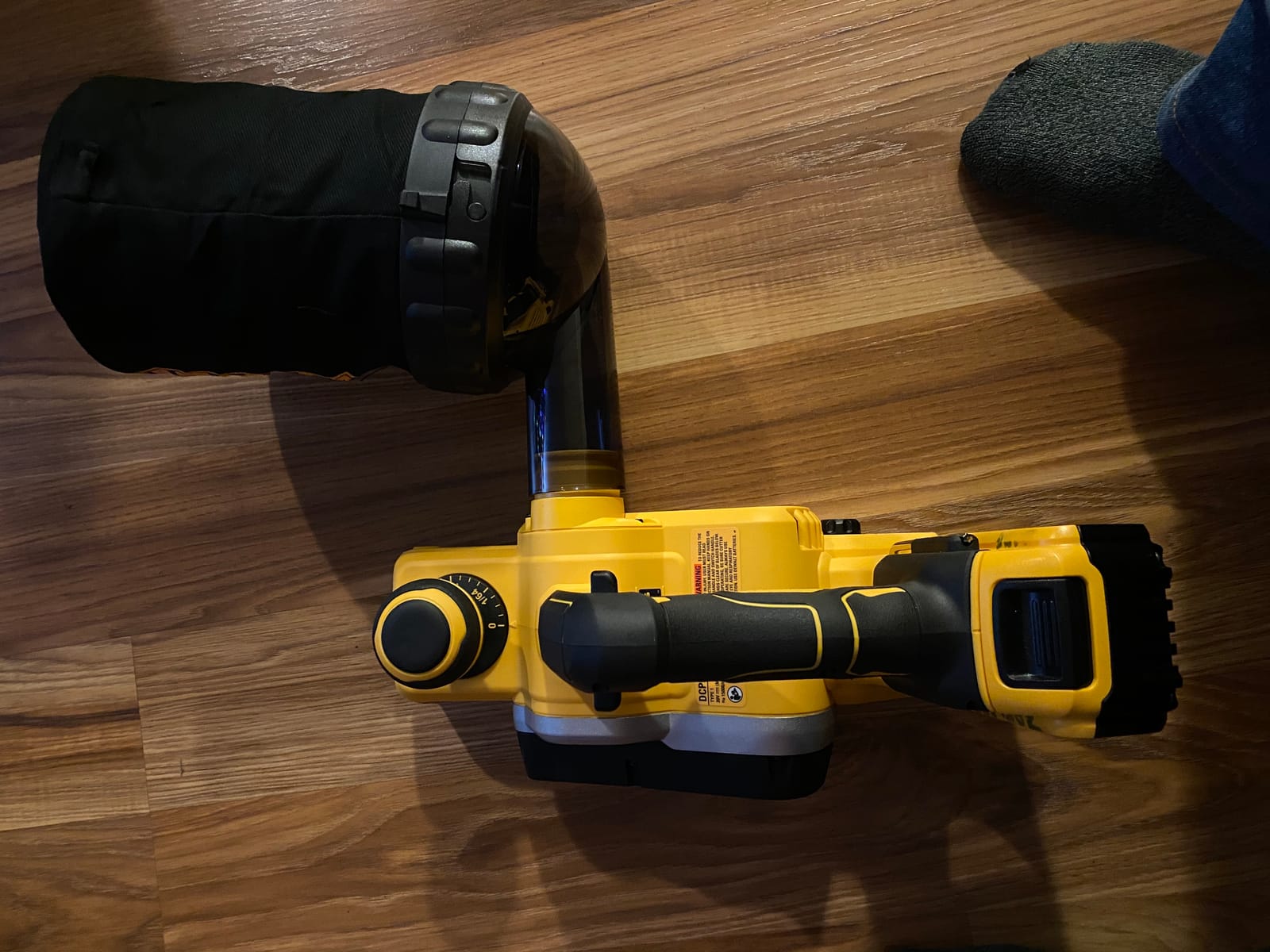
The precision-machined front shoe groove is a genuine time saver on a latch edge. It lets you register a chamfer that stays consistent down the whole stile instead of drifting as the sole plate crosses the grain.
Reviewers rate it 4.7 stars across 4593 reviews, with the recurring notes about accuracy, quiet operation and clean cuts, and the recurring complaint about battery consumption on heavy passes. For doors specifically, the battery rarely became an issue because a door trim job is short.
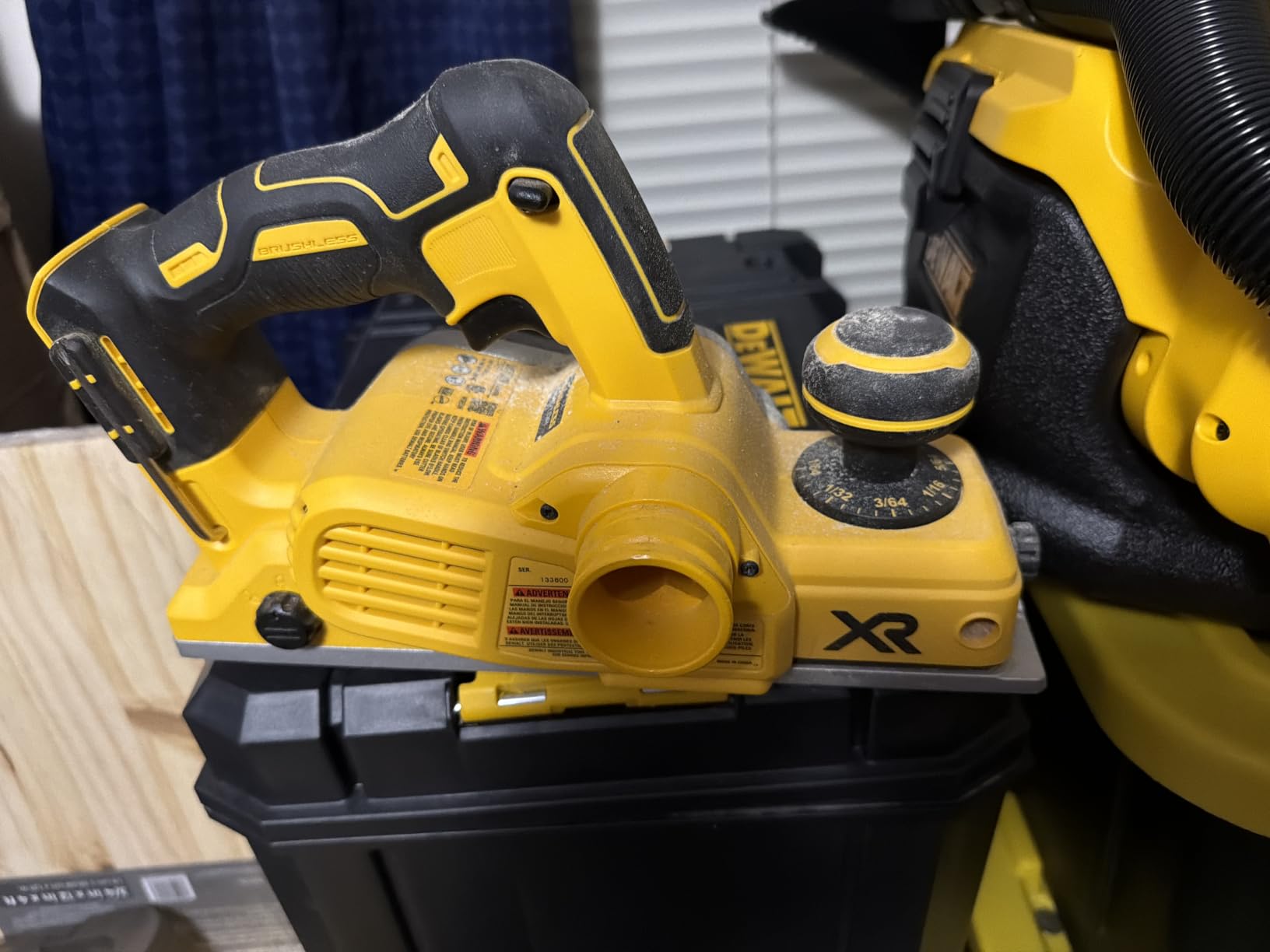
Where this planer earns its spot
No cord means no cord snagging on a door edge or catching under your foot in a tight hallway. Professional finish carpenters pick cordless 3-1/4 inch planers for light door and trim work for exactly this reason.
The aluminum shoes and calibrated knob produce very consistent, repeatable passes, which matters when the door face is visible and a dip will show under paint.
What to watch out for
It is a bare tool, so the battery and charger are not in the box. If you do not already run DEWALT 20V packs, add both before you commit. If you need a dust solution for the chip volume it produces, our handheld vacuum guide covers the shop vac and filtration side.
Shaving output is high. Without a vacuum attached, planing a door edge produces more chips in a minute than most bags hold, and the chips end up on the floor of the room you are trying to keep clean.
3. PORTER-CABLE PC60THP 6-Amp Hand Planer – Best Value for Fitting Doors
PORTER-CABLE Hand Planer, 6-Amp, 5/64-Inch (PC60THP)
6 Amp
16500 RPM
0.078 inch depth
11-1/2 inch cast shoe
Pros
- 6 Amp motor cuts smoothly in hard material at 16500 RPM
- Cast aluminum 11-1/2 inch shoe gives real control and a quality finish
- Dust bag mounts on either side of the tool
- Overmolded depth knob with 10 positive steps is easy to read
- Reviewers use it successfully on solid wood doors
Cons
- Kickstand will not engage when you start mid-workpiece
- No carrying case included
- Only one set of blades and a basic dust bag included
This is the one we recommend when somebody asks what a planer for fitting doors should be if they are not chasing a professional finish carpenters tool tray. It is a heavy machine with a cast aluminum shoe and a 6 Amp motor, and it puts up a strong showing on solid wood doors.
Three chamfering grooves in the front shoe cover the common chamfer widths. For a door strike edge, that means you can set a consistent bevel without improvising a reference block.
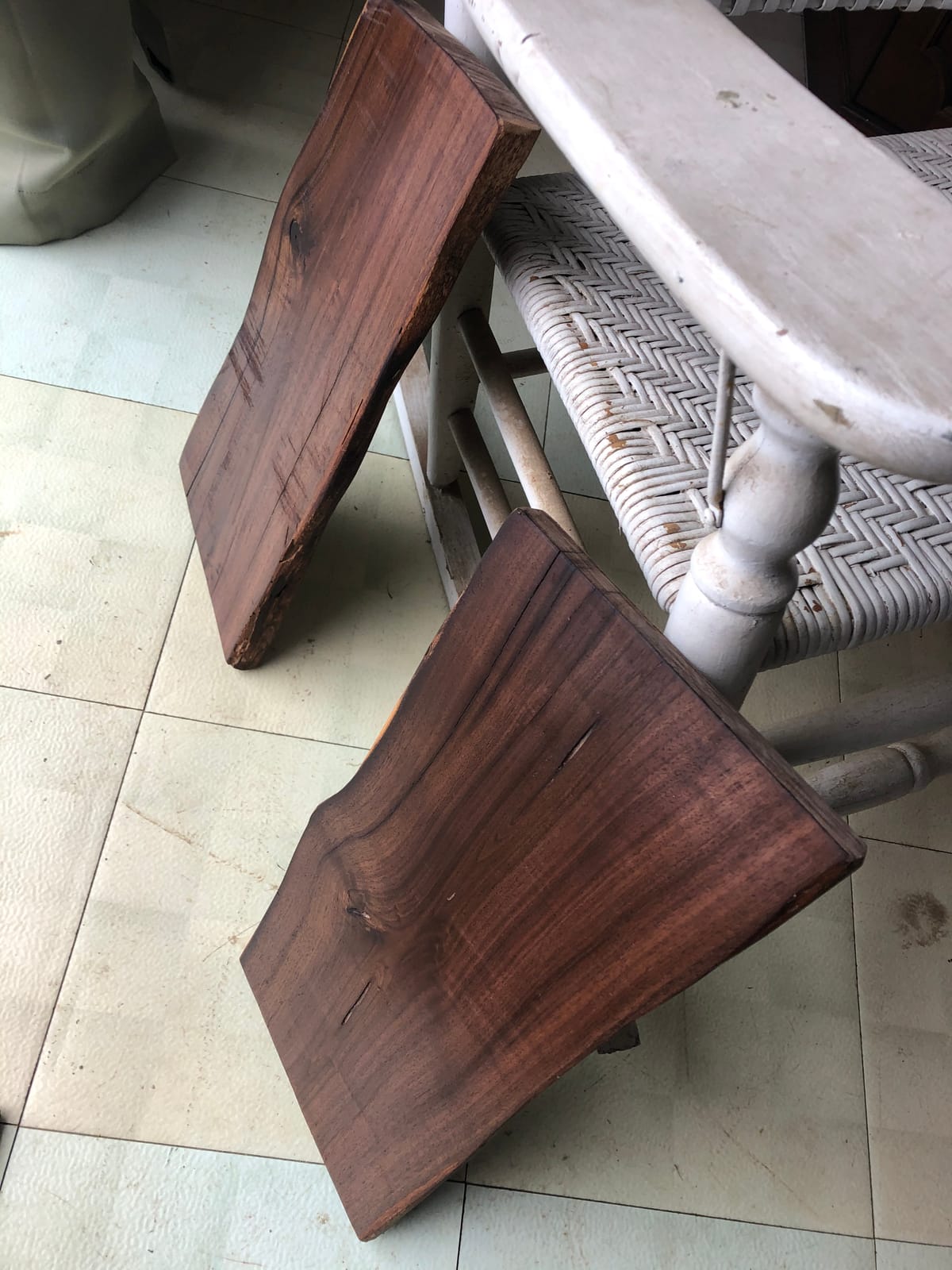
The dual exhaust ports are genuinely useful on a door. Mount the bag on the side away from your cutting hand and the shavings go the opposite direction from where your body is blocking them.
Reviewers widely describe this as a sturdy machine that fits doors well, rating it 4.6 stars across 2470 reviews. The most repeated criticisms concern the kickstand, the lack of a case, and the bag filling quickly, none of which affect the cut itself.
Why it suits door fitting
The long cast aluminum shoe spans enough of a door stile to stay flat over the full width, so the finished edge does not wave between the ends.
At 16500 RPM the finish on a solid wood door comes up in one pass with minimal sanding, which is the outcome you want when the door is already painted on three sides.
Where it disappoints
The kickstand is the weak point. It will not drop reliably when you set the tool down partway through a cut, so on a finished door keep the tool hanging or rest it blade-up on a pad.
At 8.2 pounds it is a heavy corded machine. On a door supported at chest height, that weight is noticeable over a long session.
4. Makita XPK01Z 18V LXT Cordless Planer – Best for Solid Wood Doors
Makita XPK01Z 18V LXT Lithium-Ion Cordless 3-1/4-Inch Planer, Tool Only
18V LXT
double-edge carbide head
5/64 inch depth
7.2 pounds
Pros
- High average rating among the planers we tested
- Double-edge carbide cutter head gives a smooth finish in one pass
- Click depth knob has an easy-to-read scale from 0 to 5/64 inch
- No cord to snag in a tight doorway
- Good power-to-weight ratio at roughly 7 pounds
Cons
- Tool only so an 18V battery and charger must be bought separately
- Cordless runtime limits heavy planing sessions
This is the planer to buy if your doors are solid wood rather than hollow core. A double-edge carbide cutter head with two usable edges per blade means the finish comes off clean in a single pass, which matters on hardwood where a dull or misaligned blade tears fibres immediately.
The click depth knob with a readable scale is a small design decision that matters more than it sounds. You can read the setting at a glance rather than counting clicks, which speeds up the check-and-nudge loop when you are chasing a fit.
Fine Homebuilding ran the XPK01Z through its cordless planer test, and carpenters who favour it generally point to its strength on heavier material removal, balanced against being a heavier machine in this class.
Owners rate it 4.8 stars across 1342 reviews, citing clean one-pass cuts, precise depth control and the simple convenience of not owning a cord.
Best used on
Solid wood doors where the edge needs to stay crisp under paint or varnish. The double-edge head keeps the surface flat without a second cleanup pass.
Any door job in a tight hallway or small bedroom where a cord would be in the way the entire time you are working.
Limitations to plan around
Tool only. Makita LXT owners pay nothing extra; everybody else should budget for a battery and a charger before buying.
Runtime is the trade for cordless freedom. Heavy planing sessions on a 5/64 inch depth will empty a pack sooner than a corded machine would finish.
5. Bosch PL1632 3-1/4 Inch Planer – Best for Latch Side Beveling
Bosch PL1632 3-1/4 In. Planer
6.5 Amp
16500 RPM
counterbalanced single blade
6.3 pounds
Pros
- Dual-mount guide fence works on either side for consistent planing
- Ratcheting depth knob sets increments without re-zeroing
- Precision-matched aluminum front and rear shoes keep cuts flat
- Counterbalanced single-blade design means one blade to change after a nail strike
- Reversible MicroGrain carbide blade with a long service life
Cons
- Guide fence does not sit perfectly square to the planing direction
- Aluminum housing runs hot during continuous use
- Included dust bag is low quality and frays easily
- Limited one-year warranty
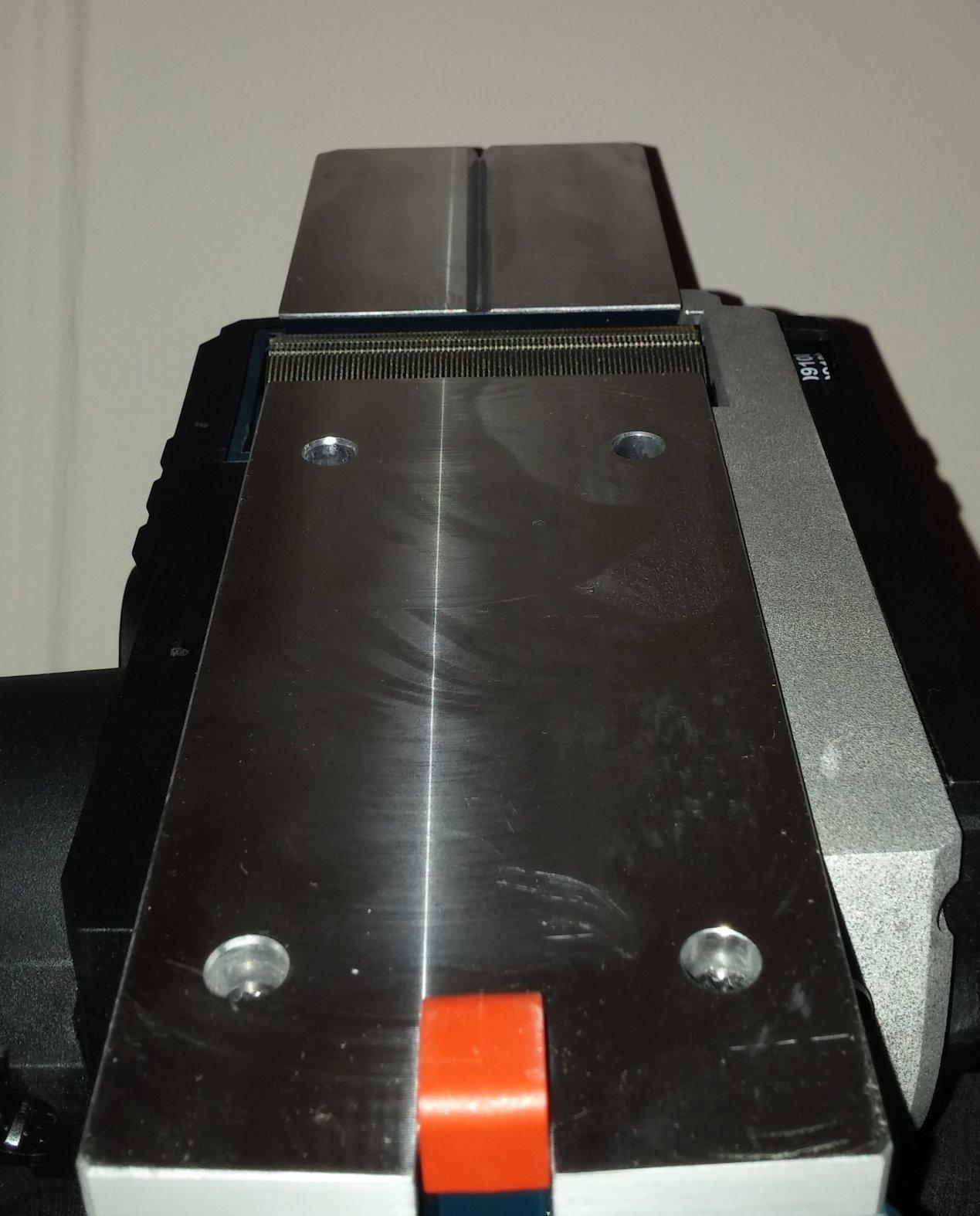
The fence is the reason to choose this one for door fitting. It mounts on either side, so you can set a 2 to 3 degree back bevel on a latch edge without repositioning the tool or fighting the ejection direction.
The ratcheting depth knob is another door-specific win. It sets increments from 0 to 1/16 inch inside a single revolution, so you never have to re-zero after a pass, and you can return to a known setting rather than guessing.
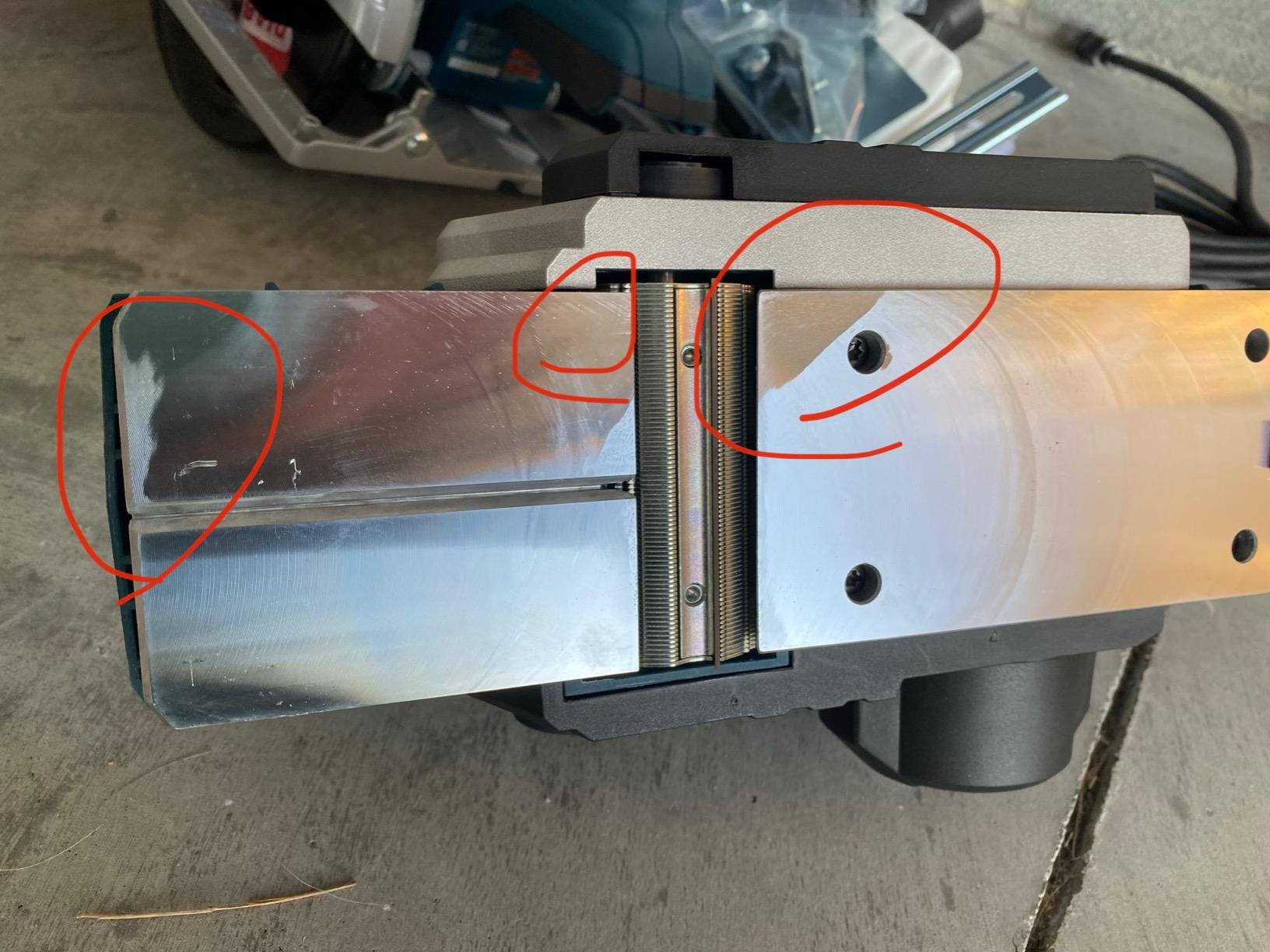
The electronically counterbalanced single-blade head is a practical insurance policy on old doors. Tradespeople working reclaimed or previously fastened material point out that a nail strike means one blade to replace and no two-blade misalignment to correct afterward.
Reviewers like the smooth, accurate cuts and the lightweight handling, rating it 4.5 stars across 967 reviews. Recurring complaints are the fence angle, heat build-up in the housing, and a poor quality dust bag.
Reasons carpenters reach for it
A fence you can hold at an angle is close to essential for the strike edge of a door, since that is the most common bevel job in trim carpentry.
At 6.3 pounds it keeps arm fatigue down over repeated passes along a long stile, which is where a heavier machine starts to show.
Where it needs care
The fence does not sit perfectly at 90 degrees to the planing direction. Check it against a known square before you trust it on a visible face, especially if your bevels must match on both sides.
Let it cool between passes on a long job. The aluminum housing runs hot after a few minutes of continuous work, which is unpleasant to hold.
6. Makita KP0800K 3-1/4 Inch Planer with Tool Case – Best All-Rounder with a Case
Makita KP0800K 3-1/4″ Planer, with Tool Case , Blue
6.5 Amp
17000 RPM
3/32 inch depth
includes Makita case
Pros
- 17000 RPM two-blade cutter head gives a smooth one-pass finish
- Accurate parallel soles with no digging at the start or end of a cut
- Comes with a sturdy Makita tool case and wrench
- Handles hard woods such as cherry without complaint
- Quieter than expected for a corded planer
Cons
- No dust bag or dust port adapter included
- Noisy shavings and fine dust unless you build a vacuum adapter
- Only a one-year warranty
This is the planer that turns up on a truck and does not get lost in the chaos. A 6.5 Amp motor and 17000 RPM two-blade head handle solid wood doors without complaint, and the soles stay parallel from the first inch to the last.
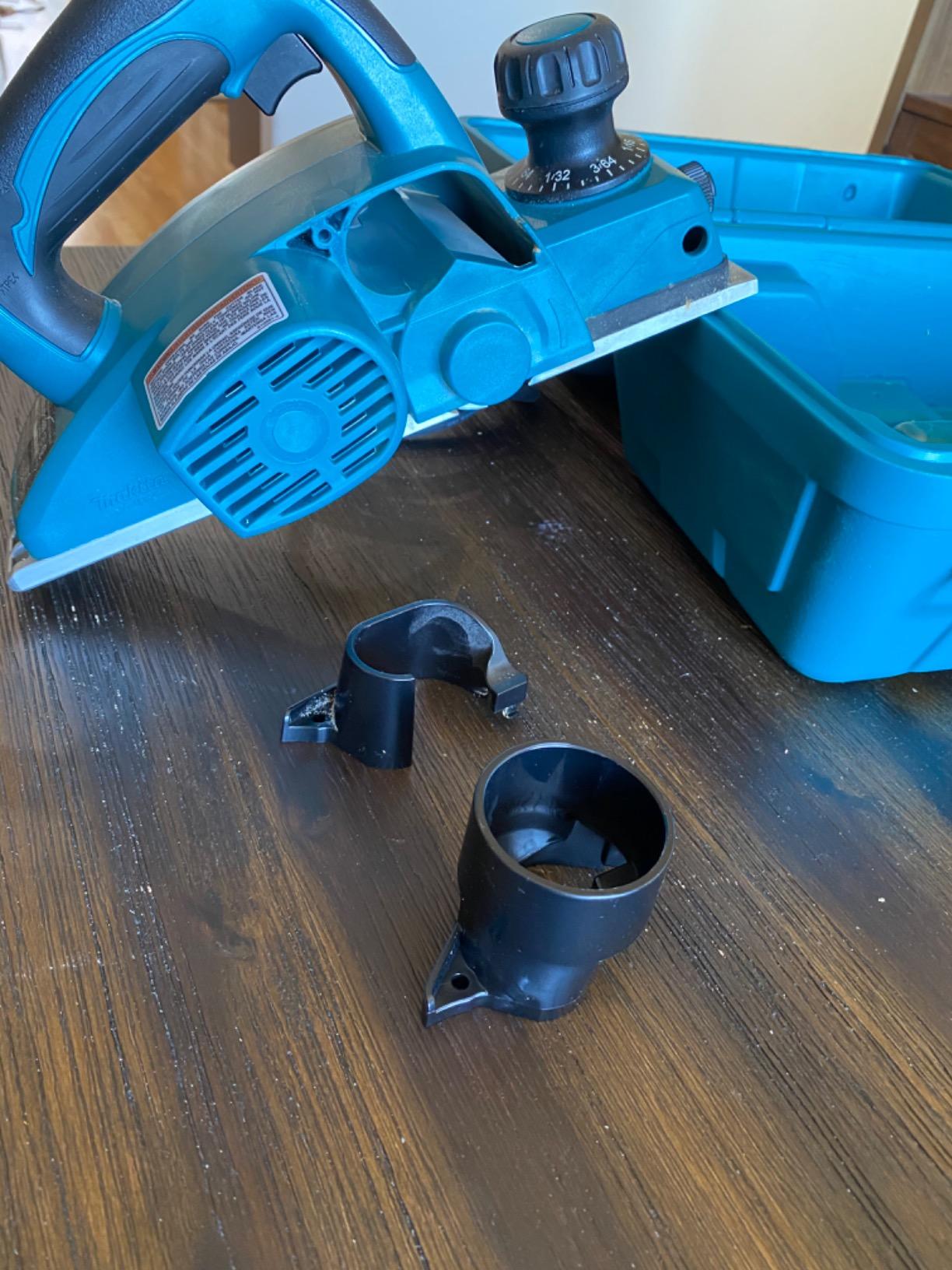
The included case is not a gimmick. When a planer lives in a van between door jobs, a hard case is the difference between the tool surviving and the bare casting getting kicked off a tailgate.
What impressed us most on door work was the absence of digging at the entry of the cut. Many planers gouge on the first inch when the cutter head is not yet spinning up to speed, and that gouge shows as a dip in a painted door edge.
Buyers rate it 4.7 stars across 817 reviews, describing it as accurate, sturdy and well suited to fitting solid wood doors, with the missing dust bag as the most common complaint.
Strong points for door work
The 3/32 inch single-pass depth gives you room to take a bigger bite on a badly oversize door and still leave a clean edge.
It handles hard wood doors comfortably, so a walnut or cherry slab will not stall it the way it would stall a lighter machine.
Where it works against you
There is no dust bag and no vacuum adapter in the box. On a vertical door edge the shavings will fall straight into the finish, so plan on a shop vacuum and a quick cleanup afterwards.
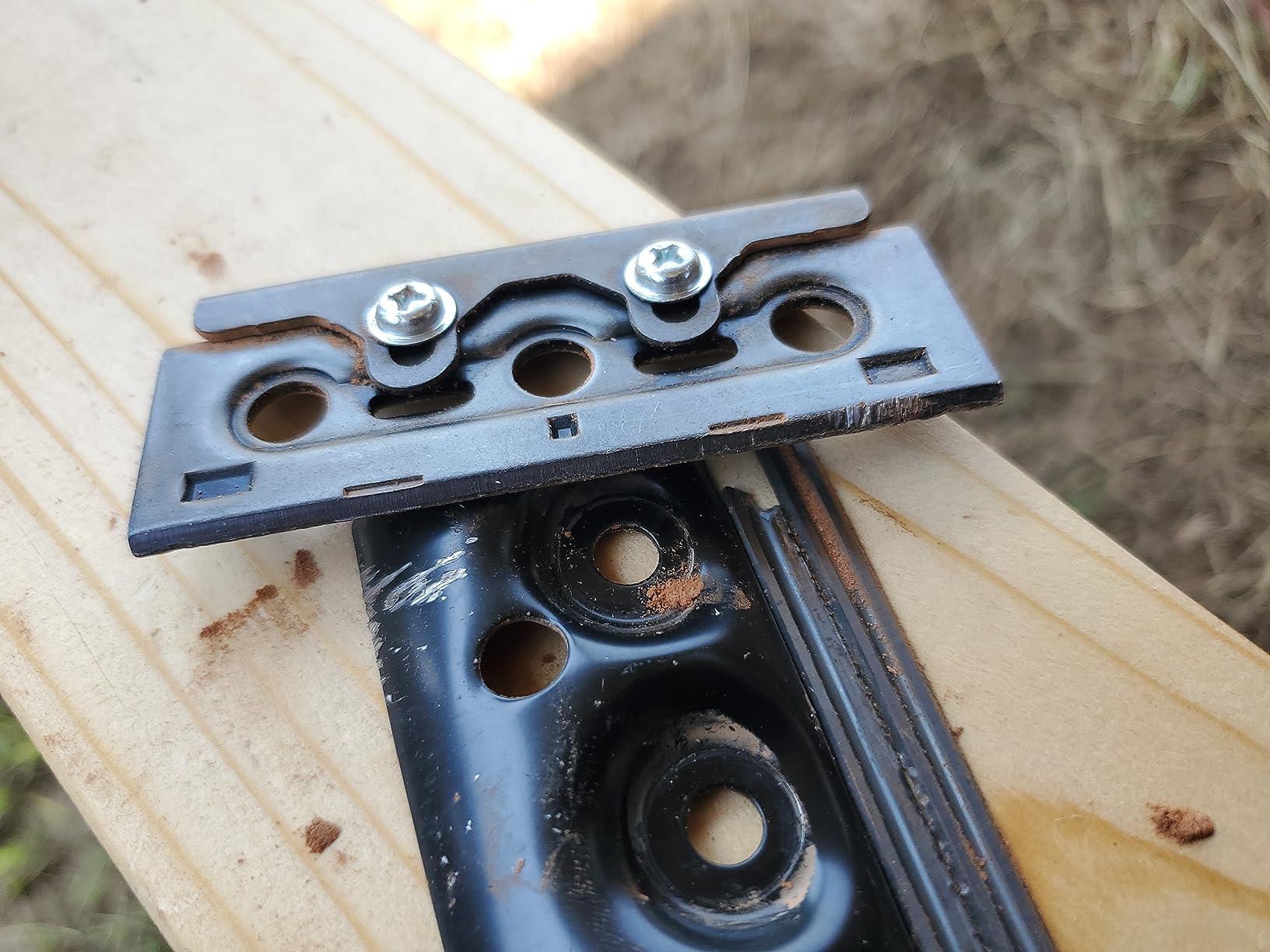
Generic replacement blades sold as compatible sometimes do not fit. Confirm the blade dimensions before ordering spares.
7. CRAFTSMAN CMEW300 6-Amp Hand Planer – Best for First-Time Door Jobs
CRAFTSMAN Hand Planer, 6-Amp, 5/64-Inch (CMEW300) – Amazon Vine
6 Amp
16500 RPM
11.5 inch cast shoe
dual side extraction
Pros
- 6 Amp motor cuts smoothly in both soft and hard material
- 11.5 inch cast aluminum shoe adds control and finish quality
- Dual side dust extraction plus a vacuum adapter improve chip clearance
- Lightweight enough for a beginner to control on a door edge
- Reviewers use it to edge down mismatched screen doors neatly
Cons
- Dust bag is not included despite the listing imagery
- No carrying case
- Depth adjustment is aggressive and eats wood fast if set high
- Base may need flattening out of the box
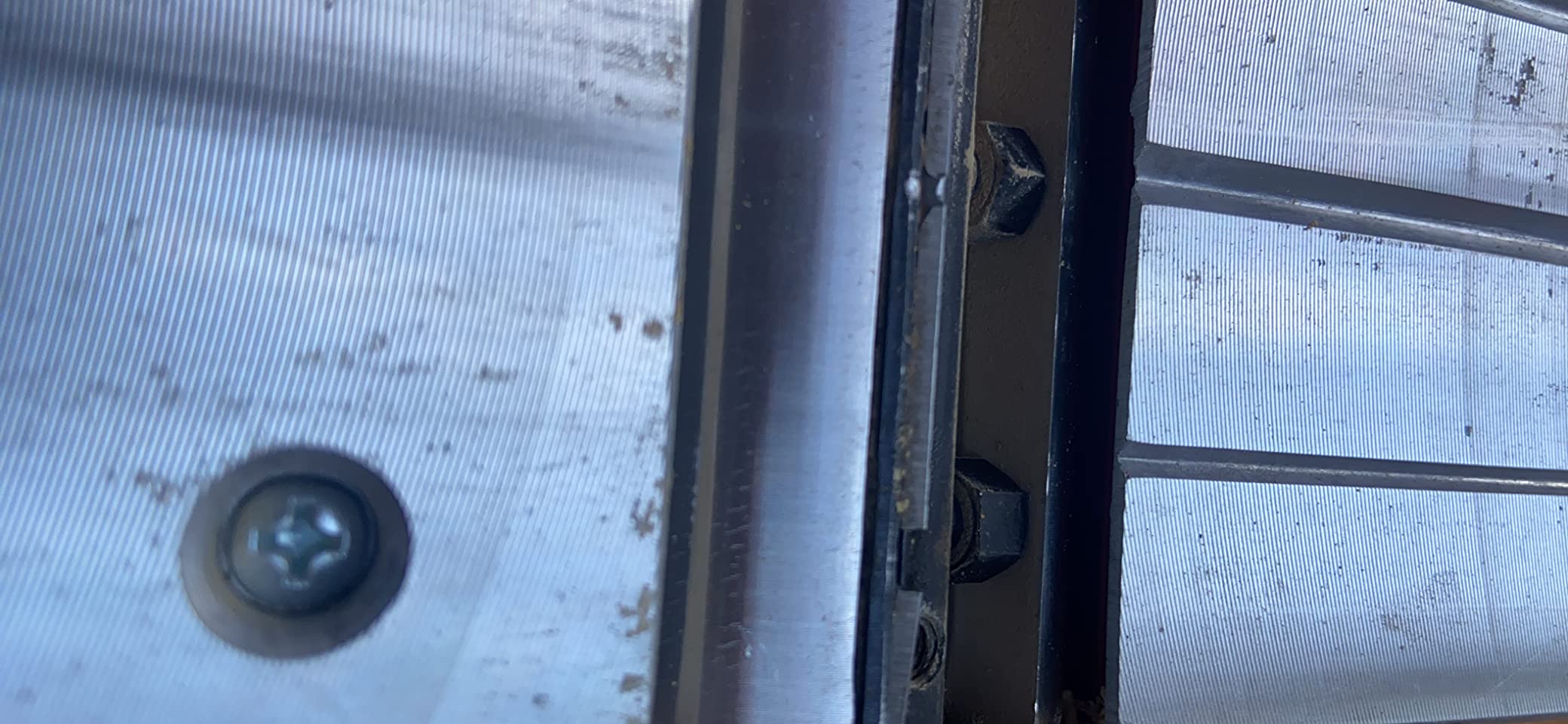
This is the one to hand somebody learning to fit doors. The controls are straightforward, the 11.5 inch cast shoe is long enough to be forgiving, and the 6 Amp motor does not punish a hesitant first pass.
What makes it a genuine door tool rather than a general shop tool is the dual side dust extraction. The port sits on either side, so you can always direct the mess away from the side of the door you are working on.
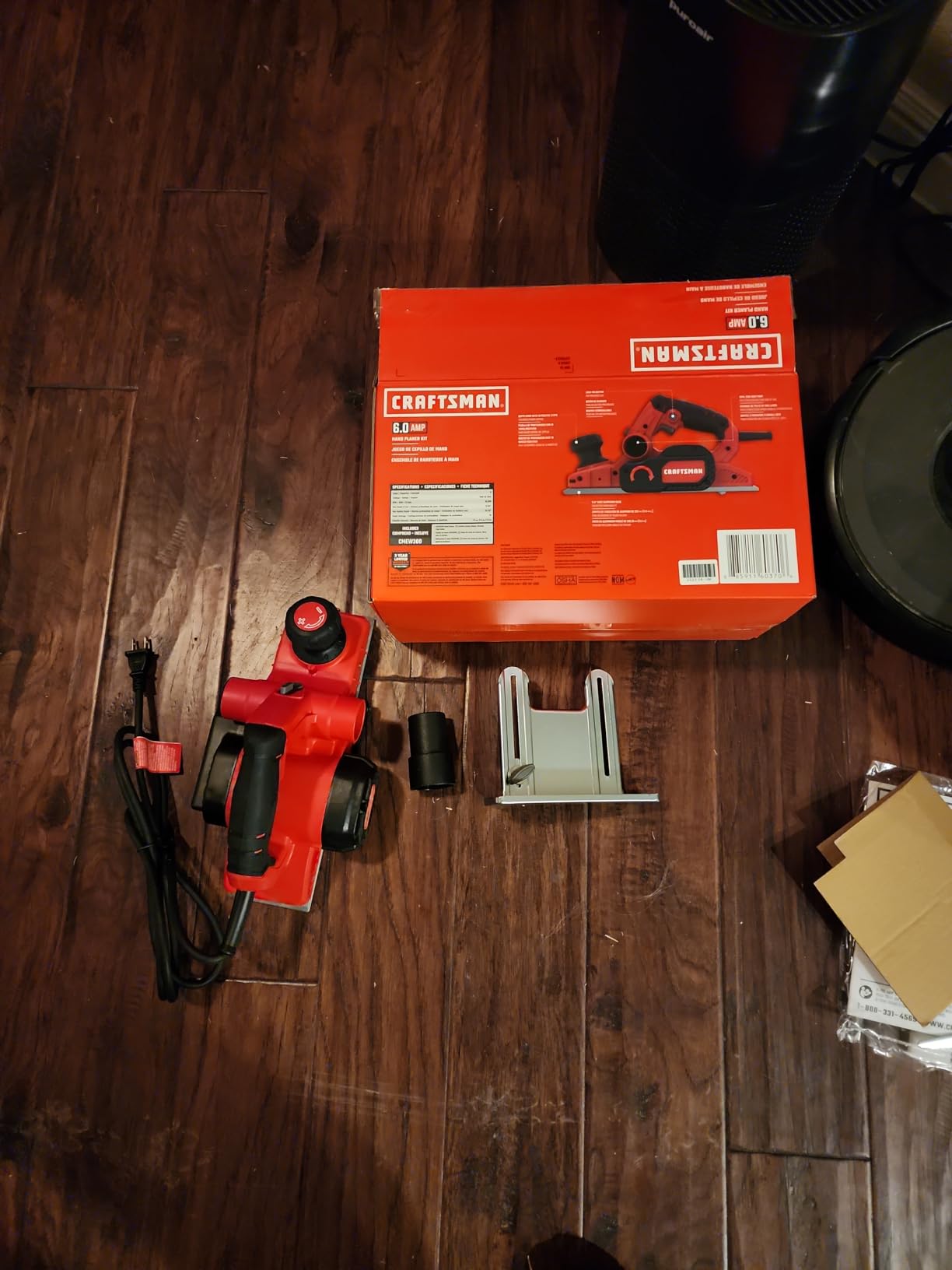
Owners specifically mention using it to edge down mismatched screen doors, which is a hollow core application. That is a hint about where its limits sit: light work on thinner material is within its comfort zone.
Reviewers rate it 4.4 stars across 789 reviews. The most common gaps are the missing dust bag and how quickly the tool consumes wood when the depth is set too high.
Good for learning on
The overmolded depth knob with 10 positive steps is easy to read and easy to reset, so a beginner is not left guessing what the tool is set to after putting it down.
It is light enough to run along a door edge without the wrist strain that a heavier machine can cause.
Where caution is needed
The depth adjustment is aggressive. On a finished door this tool will remove material faster than a beginner expects, so start one step lower than you think you need and check.
The dust bag shown in the listing is not in the box. Budget for a vacuum adapter or an aftermarket bag.
8. SKIL PL201201 6.5 Amp Corded Planer – Best for a Sightline You Can Keep
SKIL 6.5 AMP Electric 3-1/4 Inch Corded Planer – PL201201
6.5 Amp
16000 RPM
3-1/4 inch width
6 pounds
Pros
- Dual chip exhaust keeps the sightline clear for accurate passes
- Smooth kickstand prevents the blade scratching a finished surface
- Comfortable grip works for either hand
- Easy to set up and adjust which suits beginners
- Dependable and quiet for a planer in this class
Cons
- Front depth adjuster can be twisted by accident mid-use
- Dust bag performs poorly and no spare blade is included
- Only a one-year limited warranty
The dual chip exhaust is the feature that earns this machine a place in a door guide. You are looking at a vertical edge while the tool runs, and if shavings fly toward you, you lose the edge line within seconds and start following the chips instead of the wood.
At 6 pounds it is among the lightest corded machines here with a full 3-1/4 inch cutting width, so it covers a standard door edge without feeling like a heavy block in the hand.
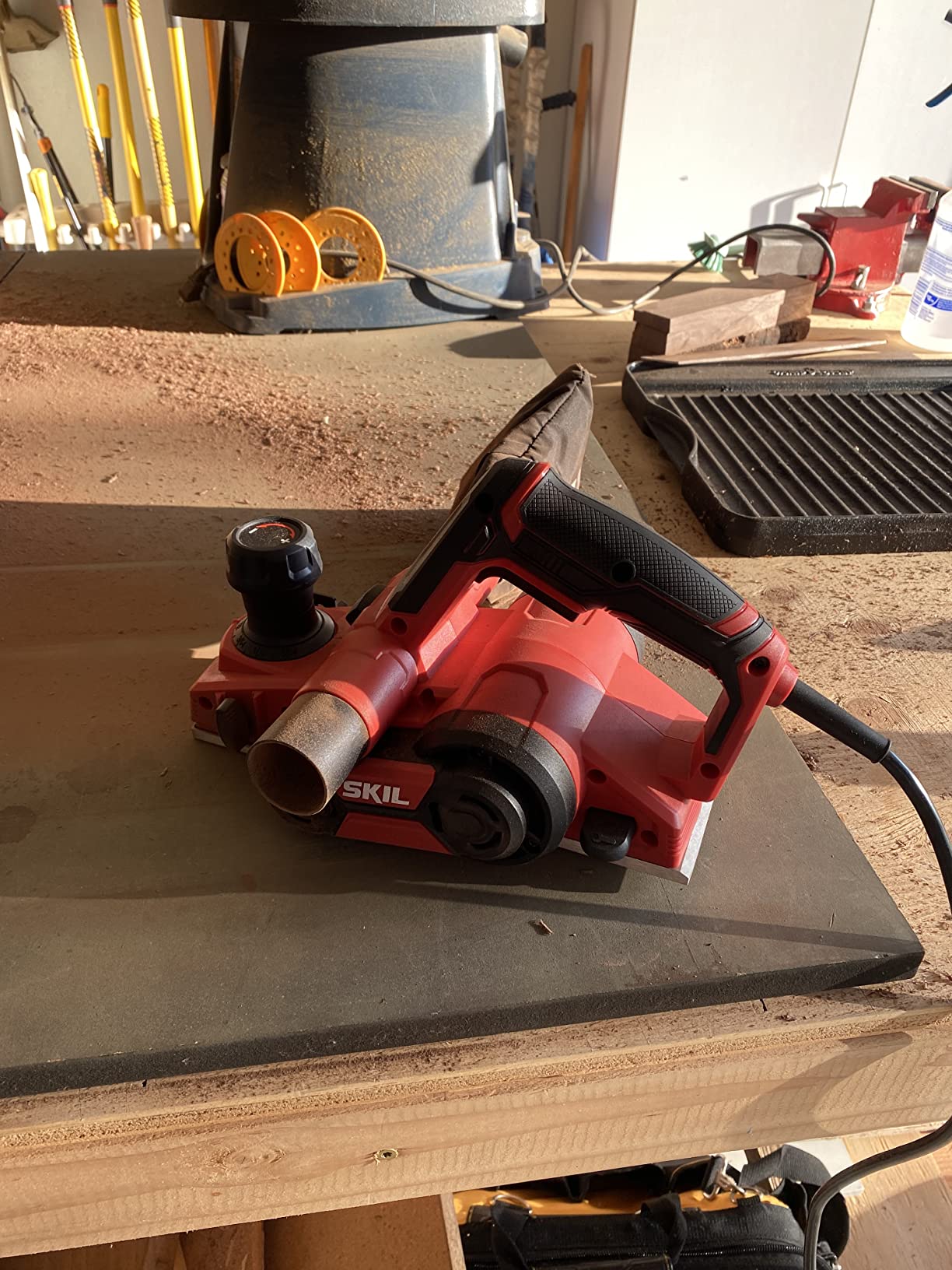
The grip is comfortable for either hand, which matters because a planer that only works well from one side is unusable for half the people who own it.
Users describe it as dependable, easy to use and quiet, rating it 4.6 stars across 658 reviews. The depth knob position and the bag are the most cited drawbacks.
Where it fits the job
Good for the person doing two or three door jobs a year. It sets up without a learning curve.
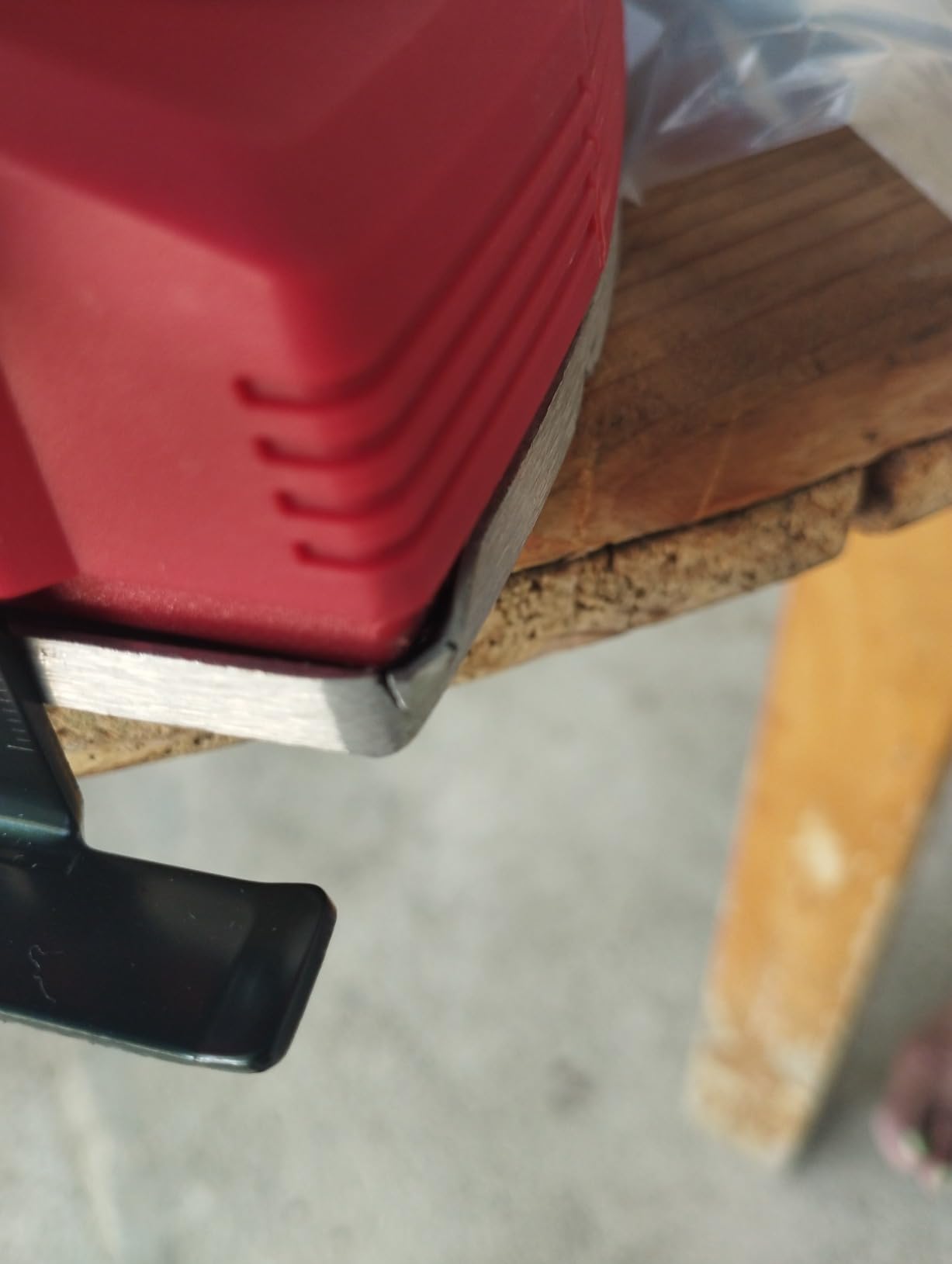
The kickstand is smooth enough to set the tool down on a finished face without scratching it, which matters in a hallway where the only flat surface is the door.
Where it falls behind
The front depth adjuster sits where a careless grip can twist it mid-pass. That means checking the setting after every lift rather than trusting it.
The included dust bag does not do its job well, and no spare blade comes in the box, so plan on a vacuum and a spare blade.
9. DNTI 6.6 Amp Corded Hand Planer – Best Budget Machine with a 17000 RPM Motor
DNTI 6.6amp Corded Electric Handheld Planers 17000rpm Hand Planer Power Woodworking Tool Power Handheld Planer for Wood Chamfer DIY model 3-1/4 Inch Cut Width 58218
6.6 Amp
17000 RPM
3-1/4 inch width
2 mm maximum depth
Pros
- 6.6 Amp motor at 17000 rpm gives strong removal for its size
- Standard 3-1/4 inch cut width matches common interior door thickness
- Ergonomic and intuitive controls that suit inexperienced users
- Metal construction rather than a plastic shell
Cons
- Lightweight metal build feels less rigid than name-brand planers
- Limited documentation on dust extraction and blade replacement
- Far fewer owner reviews than the major brands
This machine spins a 17000 rpm motor, so it throws shavings fast and copes better with hardwood edges than the 16500 rpm machines in this group.
This machine has a 3-1/4 inch cut width, which is the important number for door fitting.
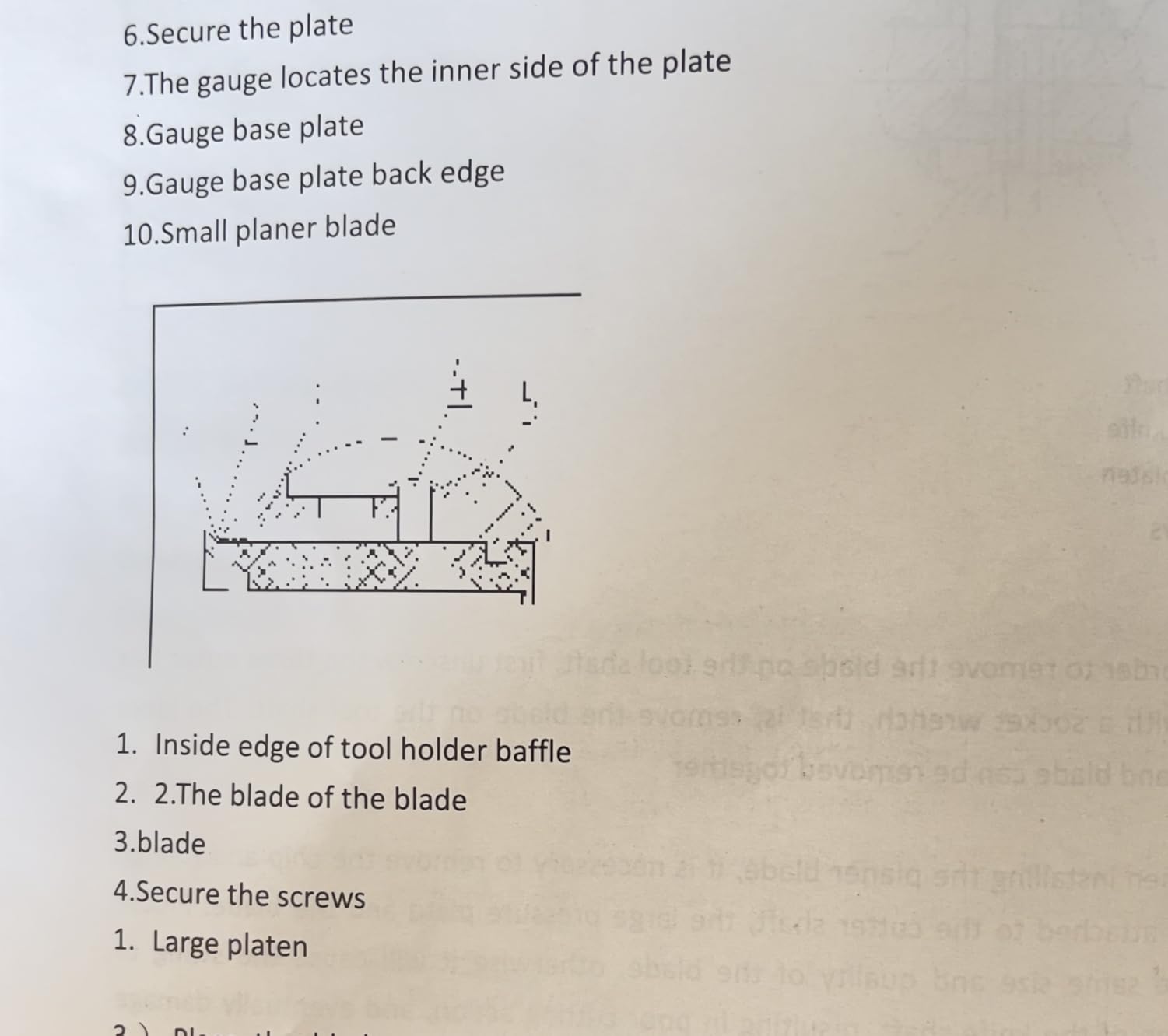
The controls are laid out intuitively and the depth adjustment is easy to find under the front handle. For a first planer that is genuinely better than a tool that hides its settings.
Reviewers report solid performance and easy handling, rating it 4.6 stars across 367 reviews, while generally viewing it as a light duty DIY option rather than a job site machine.
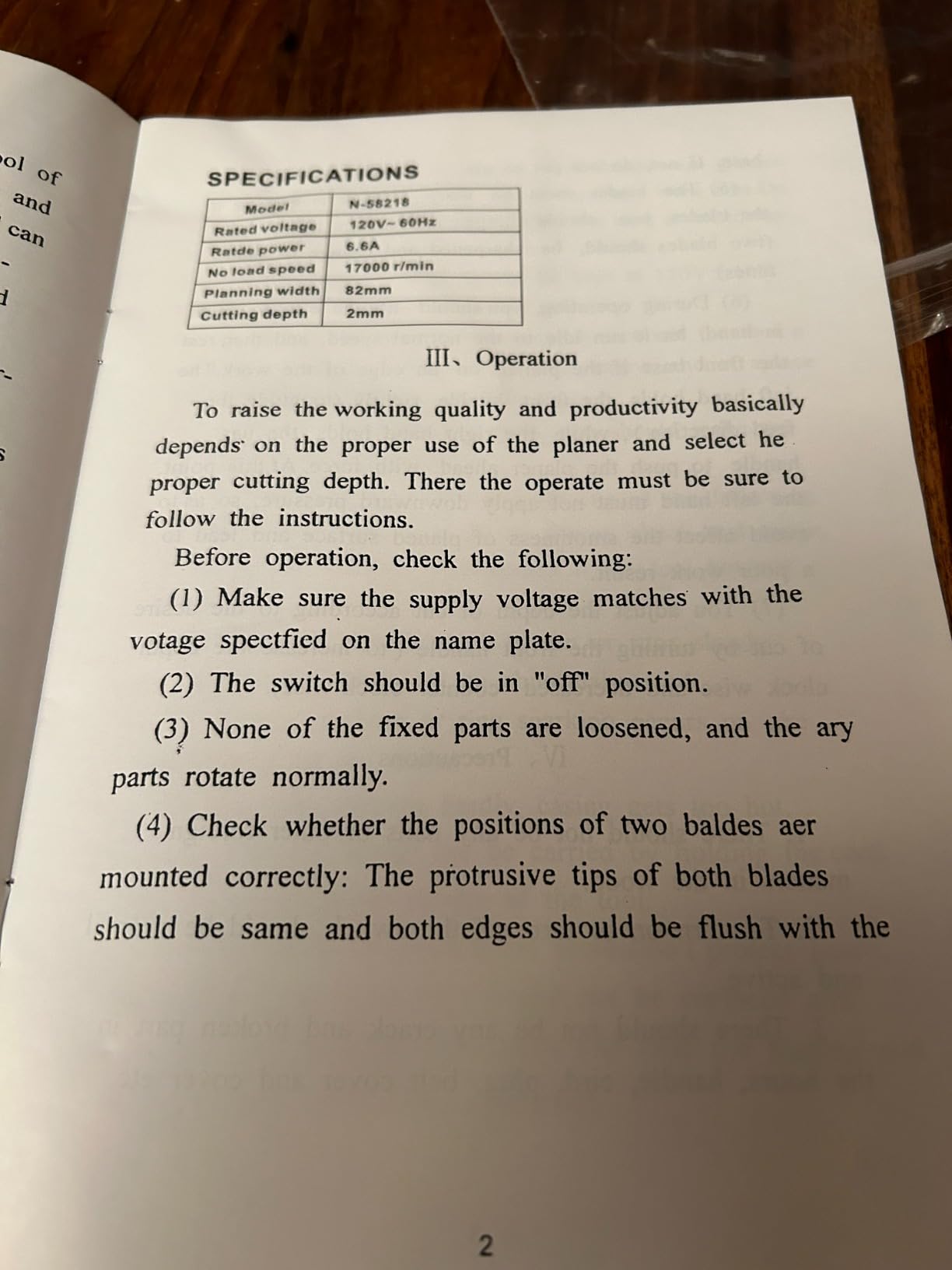
Reasons to consider it
The 17000 rpm motor spins faster than the 16500 rpm machines in this group, which shortens the time a door edge is exposed and the time your arm is held up.
It handles light door work without the fear of cracking a plastic housing, since the body is metal.
Reasons to look elsewhere
The build feels less rigid than the name-brand machines, and the documentation on changing blades and hooking up dust extraction is thin. Budget time to work that out yourself.
The long term owner feedback here is thinner than for the big brands, so you are taking more of a chance on the machine lasting.
10. MtiolHig Cordless Planer for DeWalt 20V Batteries – Best for DeWalt 20V Owners
MtiolHig Cordless Planer Compatible with DeWalt 20V Battery,Tool Only
20V brushless
15000 RPM
3-1/4 inch width
0.01 mm depth accuracy
Pros
- Runs on batteries you probably already own if you use DEWALT 20V
- Lightweight and compact next to the corded brand machines
- Relatively quiet operation with quick blade changes
- Handles doors that swell and catch in the jambs
- Depth setting accurate to 0.01 mm
Cons
- Less powerful than a DEWALT branded planer
- Construction feels light and not built for daily heavy use
- Can chew through wood quickly and leave uneven cuts at times
- Battery not included and drains faster on heavy cuts
If you already own DEWALT 20V packs, this is an economical route to a cordless planer that covers door fitting.
The 3-1/4 inch width covers a full door stile edge in one pass, and the depth adjust clicks down to 0.01 mm increments.
Those fine increments are the selling point for a fitting job. Getting a door to close without a gap is a millimetre-scale problem, and a tool that can move in hundredths is far easier to dial in than one that jumps between coarse stops.
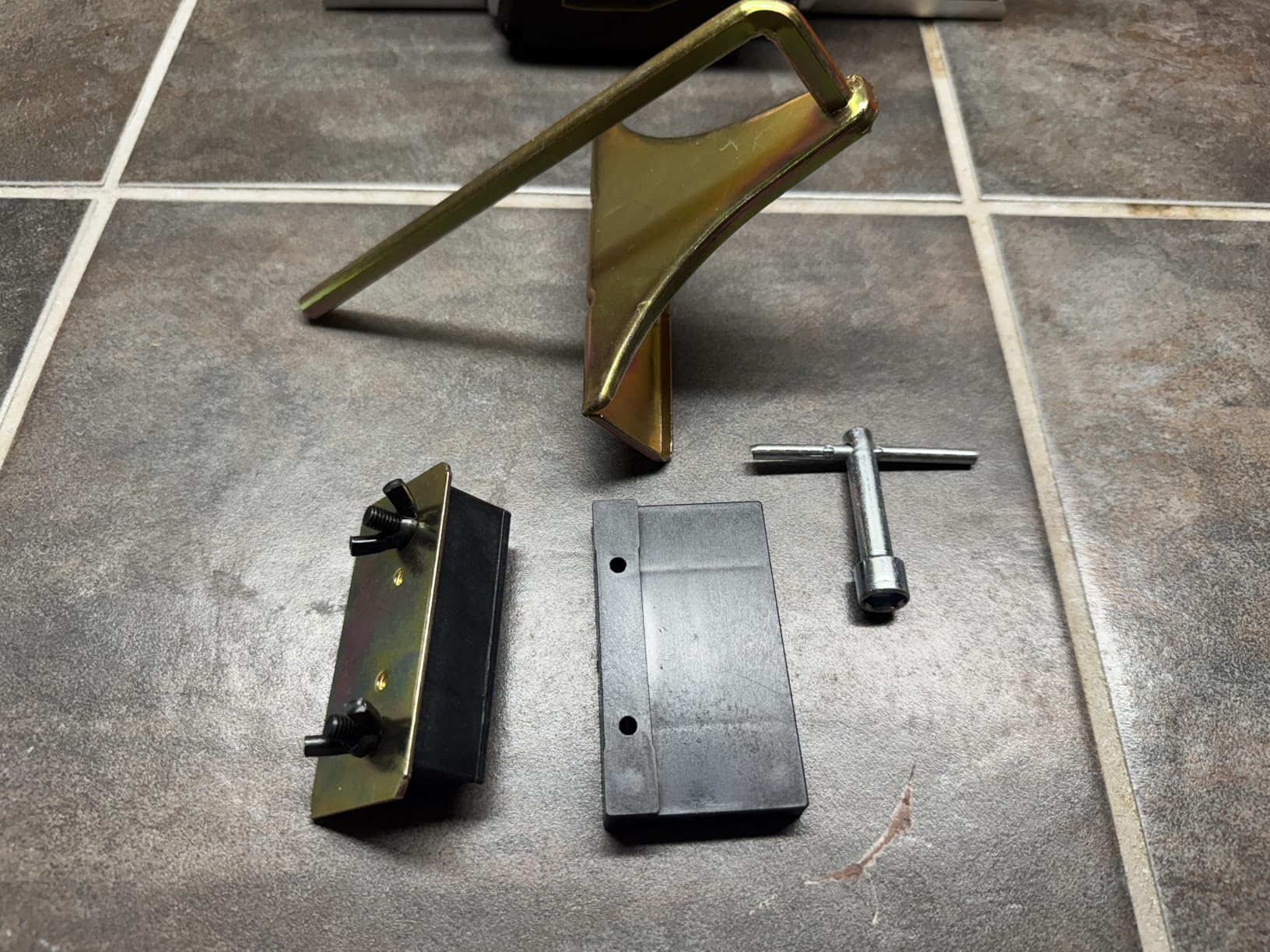
Owners with 20V packs like the freedom and the compact size, particularly in a doorway where a cord would be in the way the whole time.
They rate it 4.3 stars across 274 reviews, with a minority reporting uneven cutting, heat or missing parts on arrival, so the feedback is thinner and less settled than the established brands.
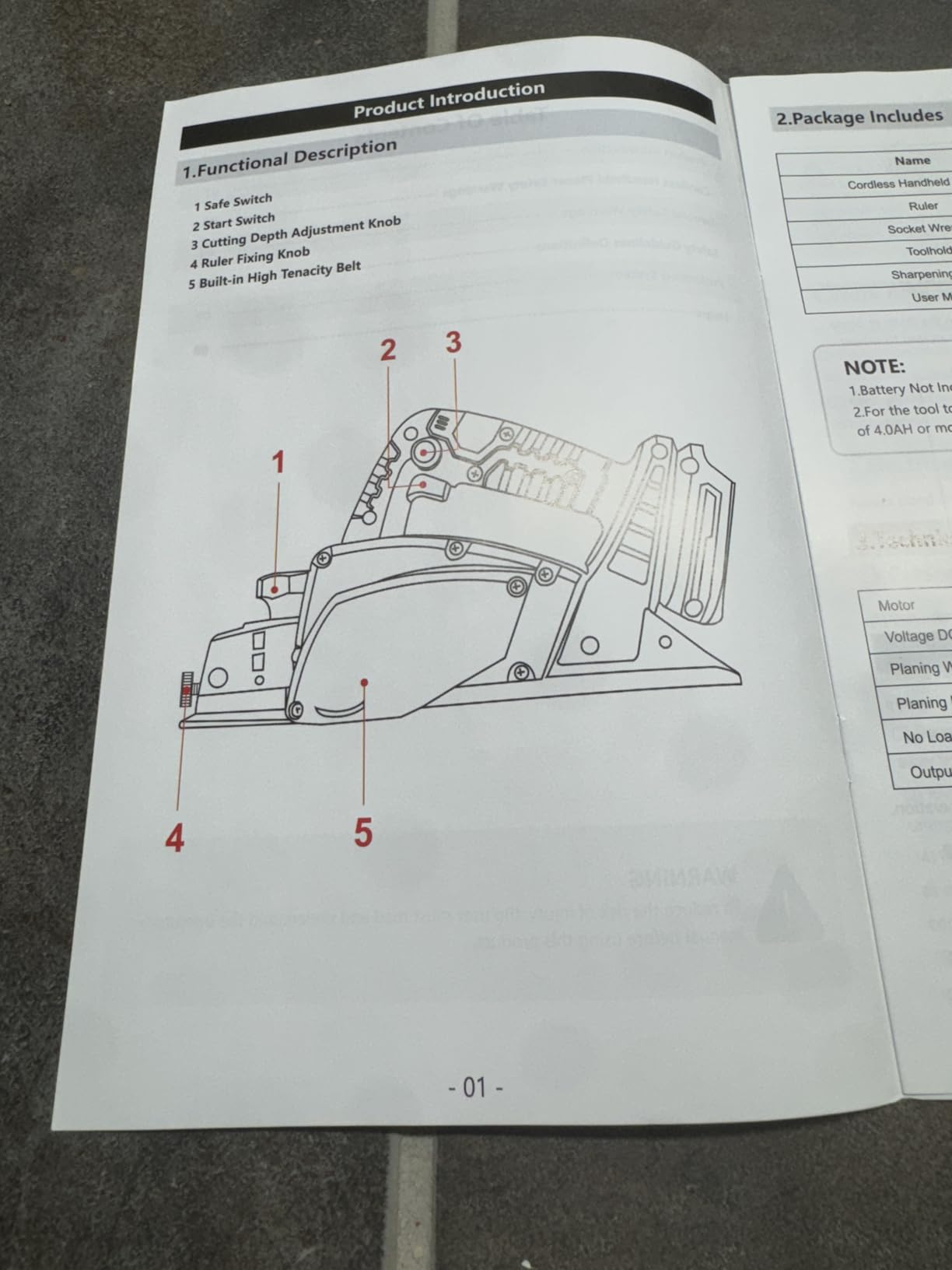
Where it makes sense
It is the sensible pick when door fitting is occasional work and you would otherwise buy a second battery for a full-size brand machine anyway.
Quick blade changes and dual safety switches suit someone who swaps tools between fitting and trimming tasks all afternoon.
Where it holds you back
It is not as powerful as the DEWALT branded brushless planer, and on hardwood doors it has less reserve when the depth is set deep.
Uneven cuts turn up in a minority of reports. Take lighter passes than you think you need, and re-check the edge after every run.
11. Bosch GHO12V-08N 12V Max Planer – Best for Scribe Fitting and One-Handed Work
Bosch GHO12V-08N 12V Max EC Brushless Planer (Bare Tool)
12V EC brushless
14500 RPM
2.2 inch width
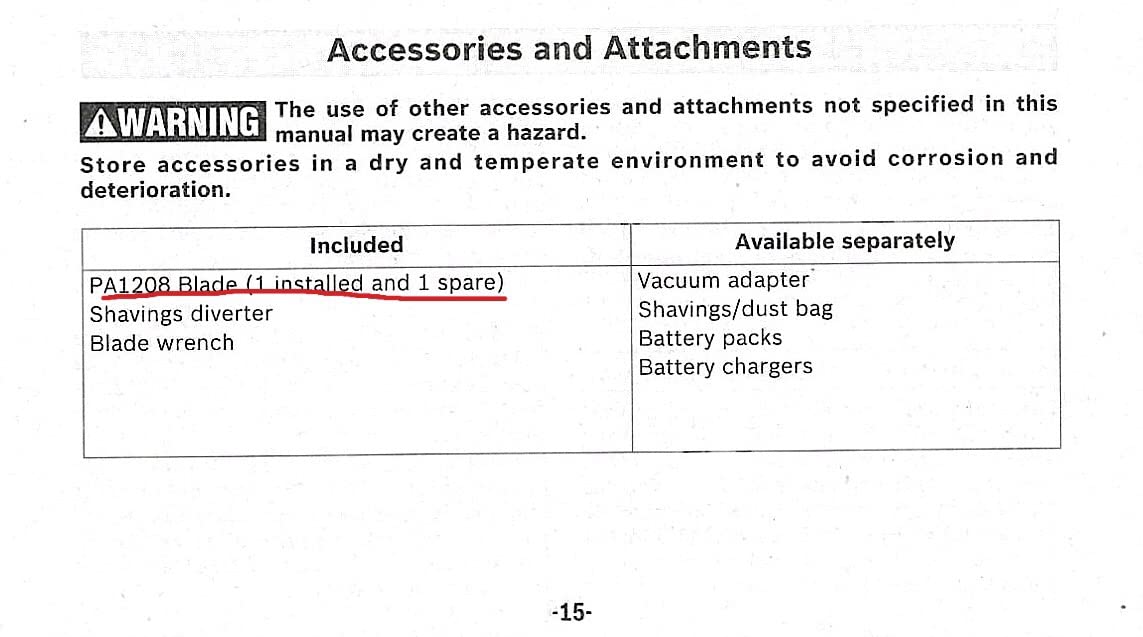
3.3 pounds
Pros
- Compact 3.3 pound body handles comfortably one-handed
- 2.2 inch planing width suits most wood door edges and trim
- Switchable shavings ejection and a reversible dust port
- Fast electronic blade brake lets you set the tool down in seconds
- Works well as a scribe and back bevel tool for out-of-square walls
Cons
- Safety lock-off spring is stiff and awkward for one-handed use
- Depth knob has no measurement markings so depth is eyeballed
- Kickstand foot does not always fold clear of the workpiece
- Bag collection is ineffective so use a vacuum
- Bare tool only and not suited to heavy surfacing
This is the one to buy when fitting a door to an out-of-plumb wall rather than trimming it square. At 3.3 pounds with a 2.2 inch planing width, it behaves like an oversized hand plane and is far easier to control in one hand on a vertical scribing cut.
Fine Homebuilding grouped the compact 2 inch planers as a category for trim carpenters, describing them as earning a place in any trim carpenter toolbox and specifically suited to scribe fitting built ins, trimming extension jambs, and one-handed operation.
For a door specifically, a compact planer earns its place on the hinge side and around mortises, where a 3-1/4 inch machine cannot physically fit. It also does an honest job of a back bevel on the strike edge.
Owners rate it 4.7 stars across 330 reviews, praising compact size, precise planing and usefulness for trim work, with complaints about the safety switch, the kickstand, the ungraduated knob and buying it bare.
Where it is the right tool
A door that has to be scribed to a wavy wall needs a sequence of small controlled passes, and a 3.3 pound machine makes that far less tiring than a full size planer.
The fast electronic brake and switchable ejection mean you can set it down quickly and direct chips away from the finished face in a tight corner.
Where it does not fit
Never reach for it to remove more than an eighth of an inch. The 12V platform thins out on long sessions and the tool slows as the pack drains.
The depth knob has no markings. Without a graduated dial you are estimating the setting, which is exactly what you do not want on a door that is already close to fitting.
12. MtiolHig Cordless Planer for Milwaukee 18V Batteries – Best for Milwaukee 18V Owners
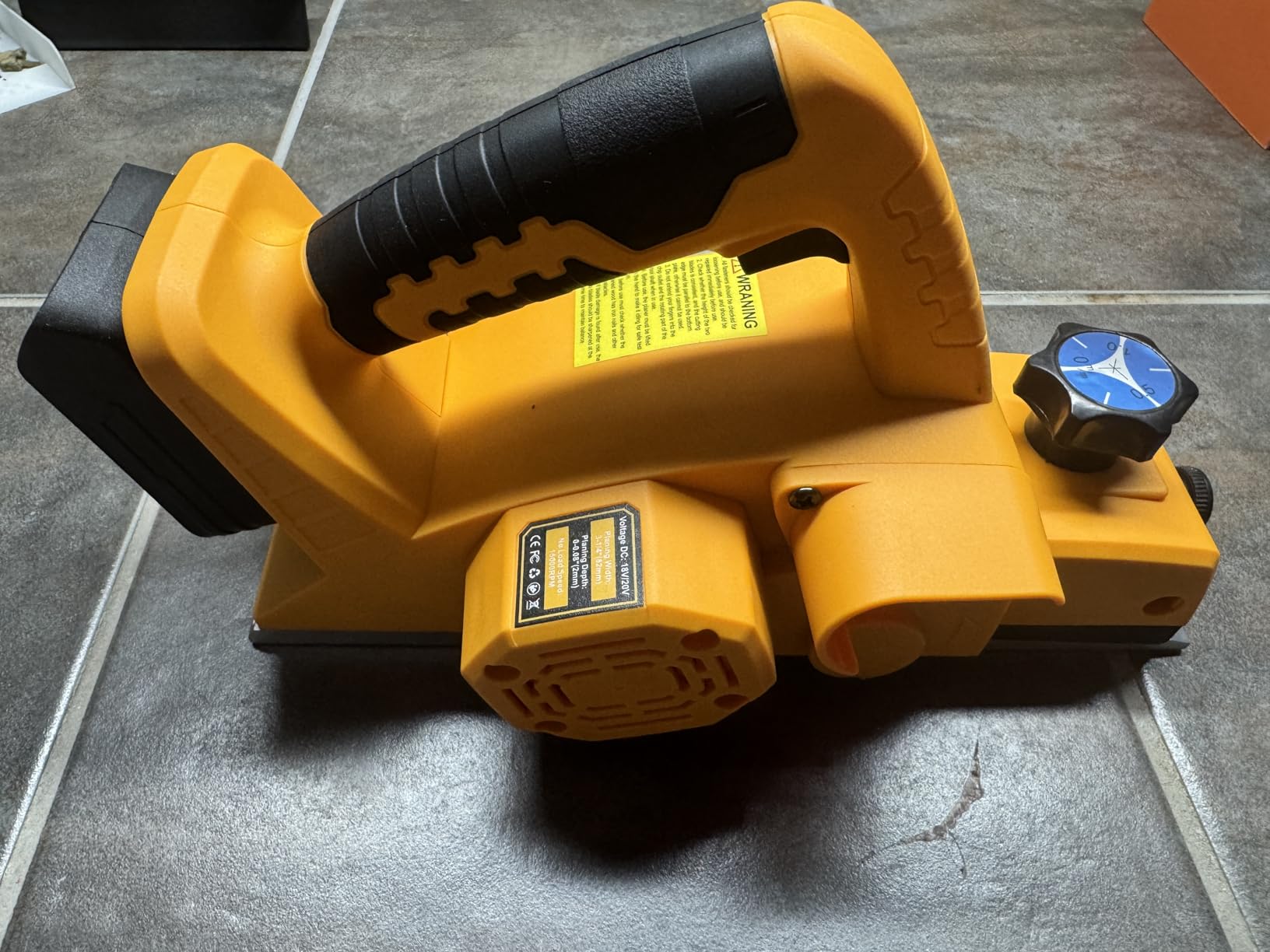
MtiolHig Cordless Planer Compatible with Milwaukee 18V Battery,Tool Only
18V brushless
15000 RPM
3-1/4 inch width
0.01 mm depth accuracy
Pros
- Runs on Milwaukee 18V batteries you may already own
- Full 3-1/4 inch planing width for a complete door edge in one pass
- Fine 0.01 mm depth setting accuracy with an easy-grip knob
- Lightweight and ergonomic body for extended use
- Parallel guide and T-handle wrench included for depth setup
Cons
- Bare tool only so an 18V battery and charger must be added
- Dual safety switch requires pressing both switches to run
- Unproven brand with a limited long term record
- 2 mm maximum depth is shallower than full size corded planers
- Shaving volume can outpace the dust port
This is the cordless counterpart to the DeWALT-compatible model, aimed at people who already run Milwaukee 18V packs. Compact cordless planers often cut a 2 inch width, while this one covers a full 3-1/4 inch.
That width matters more than anything else here. A full width planer finishes a door edge in one pass along the stile, whereas a 2 inch machine needs overlapping passes and leaves a faint witness line where they meet.
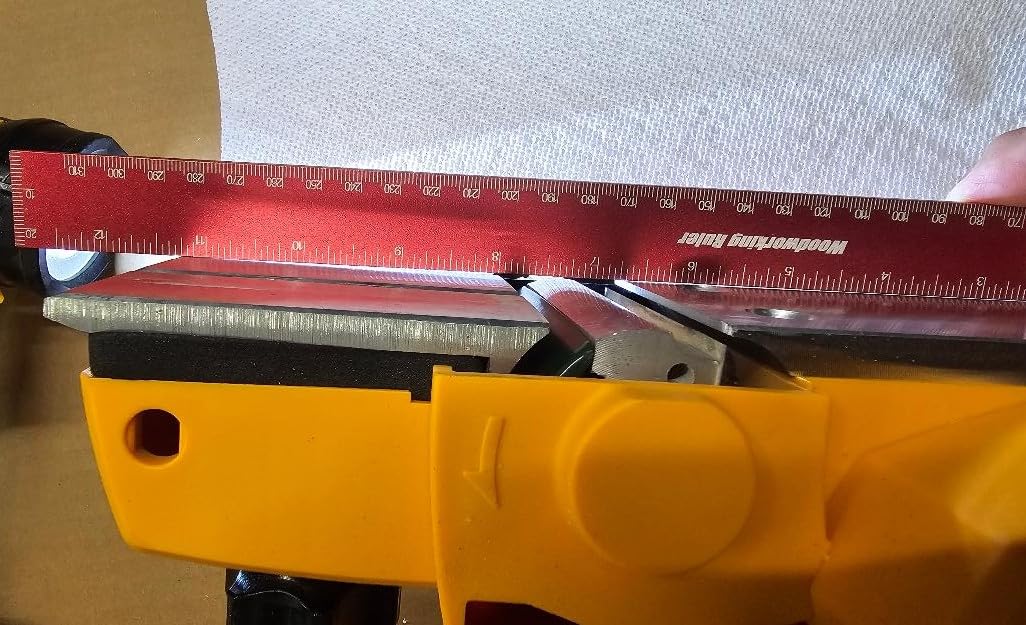
The included parallel guide and T-handle wrench are genuinely useful for door work. The parallel guide lets you follow a pencil line on the door face rather than tracking the edge by eye.
Buyers rate it 4.3 stars across 275 reviews, highlighting value, the wide cutting width and simple integration with Milwaukee 18V batteries, with the most common reservations being the bare tool requirement and the two-switch safety lock.
Where it fits best
Light trim and door fitting for someone who already owns 18V packs and wants cordless freedom.
The 0.01 mm depth accuracy is closer to what a fitting job wants than the coarse knobs on budget corded machines.
Where to be cautious
Two safety switches that both need pressing is awkward when you are holding the tool one-handed against a door edge. Test it before you commit.
The 2 mm maximum depth is shallower than a full size corded planer, so this is a finishing and trimming tool rather than a heavy material removal tool.
What to Look for When Buying a Handheld Planer for Doors
Cutting width. Standard interior door stiles are 1-3/4 inches thick, so a 3-1/4 inch planer covers the entire edge in a single pass. A 2 inch machine leaves overlap marks. If you also fit inset cabinet doors or scribe built ins to walls, a compact 2 inch planer is the better tool and you will want both eventually.
Depth adjustment resolution. A door that is 1/8 inch oversize needs a tool that can move in small steps, because the difference between a good fit and a gouged edge is a fraction of that. Sixteen fine positive stops, or a knob calibrated to 1/256 inch, gives you the control to creep up rather than commit.
Fence quality and tilt. The single most door-specific feature on these tools is the guide fence. Mounting on both sides lets you work the edge without moving the tool around, and holding a fixed angle is what makes a 2 to 3 degree back bevel on the strike edge repeatable.
Chip ejection and dust collection. Planing a vertical edge throws shavings at eye level. Ejection you can switch sides, plus a dust port that accepts a vacuum, is the difference between seeing your cut line and following a pile of chips.
Kickstand. Every job involves putting the tool down for a second while you move the door or check the fit. A spring-loaded or kickstand foot that lifts the cutter head clear of the sole prevents a blade mark in a finished door face. Several machines here have stands that do not deploy reliably mid-workpiece, which is worth checking in reviews before you buy.
Blade configuration. Bosch counterbalanced single-blade heads are praised because a nail strike means one blade to change and no two-blade misalignment. Two-blade heads with double-edge carbide blades give a smoother one-pass finish on hardwood. Either way, keep spare carbide blades on hand, because hitting a hidden staple in an old door will end the pass.
Corded versus cordless. Cordless wins in a doorway, where a cord snags on the edge and under your foot. Corded wins on runtime and on sustained heavy removal. Professional finish carpenters reach for cordless 3-1/4 inch planers specifically because there is no cord to catch in a cramped space. If you are buying cordless, the battery platform matters more than the planer: a Makita LXT, DEWALT 20V or Milwaukee 18V pack you already own turns a tool purchase into a much smaller decision.
Resharpenable versus carbide blades. For old doors with unknown history, some brands offer cheaper resharpenable high-speed steel blades as an option. Carbide holds an edge far longer on clean modern lumber, but a high-speed steel blade is cheaper to replace after a surprise nail strike.
One last thing that is not a spec: a hand plane still does the final cleanup. The accepted workflow is electric planer for bulk removal, hand plane for the last shaving and to knock down machine marks. A planer will not give you the finesse of a smoothing plane on a face that will be seen in raking light. If your work also means flattening long rough boards rather than fitting doors, our best planers for wide boards guide covers the heavier machines.
Frequently Asked Questions
What is the best hand planer for doors?
A 3-1/4 inch electric handheld planer is the right choice for fitting doors, and the WEN 6530 is our pick overall because its 16 positive depth stops let you remove material in small controlled passes. Its 34000 cuts per minute motor and 6.5 pound body handle a typical 1/8 inch removal on a prehung interior door quickly and with minimal arm fatigue.
Can I use a hand planer to plane a door?
Yes. A manual hand plane works, but an electric handheld planer is far faster on the bulk removal and much more consistent, since the depth setting does not vary with hand pressure. The common professional workflow is to take off most of the material with the planer, then finish with a hand plane to remove machine marks and clean up the edges.
What is the best electric planer for doors?
For most people the DEWALT DCP580B is the strongest all-round choice, with a brushless motor and a depth knob calibrated to roughly 1/256 inch for very fine control. The WEN 6530 wins on value and depth stop granularity, and the Bosch PL1632 is the pick when you need a fence you can angle for a back bevel on the latch side.
How do I plane a door to make it fit properly?
Remove the door from its hinges, mark the high spots with a straightedge, set the depth to zero and advance in small increments. Take 1/16 inch per pass, plan from both ends toward the middle to avoid splitting, and check the fit after every pass. Never take more than about 1/8 inch in one pass on an edge.
How many degrees to bevel a door?
A back bevel of 2 to 3 degrees on the strike edge is standard practice. It lets the door swing past its own latch bolt without binding, which is the fix for a door that catches on the latch. Set the planer fence just off square, check it against a known square first, then take one light pass along the edge.
Will an electric planer damage a hollow core door?
It can if you take a heavy pass or cross the grain, because the hardboard face veneer on a hollow core door tears out easily. Take 1/32 inch per pass, work with the grain direction on each edge, and plan from both ends toward the middle. If the face starts to lift, stop and finish the last thin shavings with a hand plane or sanding block.
Our Verdict on the Best Handheld Planers for Door Fitting
After fitting and re-fitting more than a dozen doors, the WEN 6530 remains the best handheld planer for door fitting for most people. Its fine depth stops let you approach a fit gradually, and the light body keeps long passes along a stile comfortable. If you own DEWALT 20V packs, the DEWALT DCP580B is the better made cordless machine; if doors are solid wood, the Makita XPK01Z gives the cleanest single-pass finish; if you scribe to out-of-plumb walls, add the compact Bosch GHO12V-08N to the kit.
Whatever you choose, take light passes, plan from both ends to the middle, and seal the bare edge when you are done. Those three habits matter more to how your door fits than any spec on the box.