Table of Contents
- Why We Test Battery Solar Generators Instead of Gas Ones
- Top 3 Solar Generator Picks for 2026
- All 12 Solar Generators Compared in 2026
- 1. Jackery Explorer 1000 v2 – Best Overall Solar Generator for Power Outages
- 2. Anker SOLIX C1000 Gen 2 – Best for CPAP Machines and Fast Recharging
- 3. BLUETTI AC180 – Best Value 1.2kWh Solar Generator with 500W Solar Input
- 4. BLUETTI Elite 100 V2 – Quietest 1kWh Pick for Bedrooms and Apartments
- 5. OUPES Mega 1 – Highest Continuous Output in a Lightweight 1kWh Body
- 6. Jackery Explorer 2000 v2 – Compact 2kWh Unit for RVs and Long Outages
- 7. EF ECOFLOW DELTA 2 Max – Best Expandable System That Grows to 6kWh
- 8. Anker SOLIX S2000 – Longest Refrigerator Runtime in the Group
- 9. EF ECOFLOW Delta 3 Ultra – Quietest High Output 3kWh Station
- 10. ABOK Ark3600 – Most Ports and Best Tool Headroom in a Single Box
- 11. Jackery HomePower 3000 – Best Solar Generator Bundle With Two Panels Included
- 12. EF ECOFLOW DELTA Pro Ultra – Whole Home 240V Power That Scales to 90kWh
- How Big of a Solar Generator Do You Need to Power a House?
- What Kind of Generator Is Best for Power Outages?
- Frequently Asked Questions
- Our Final Verdict on the Best Solar Generators for Power Outages in 2026
Why We Test Battery Solar Generators Instead of Gas Ones
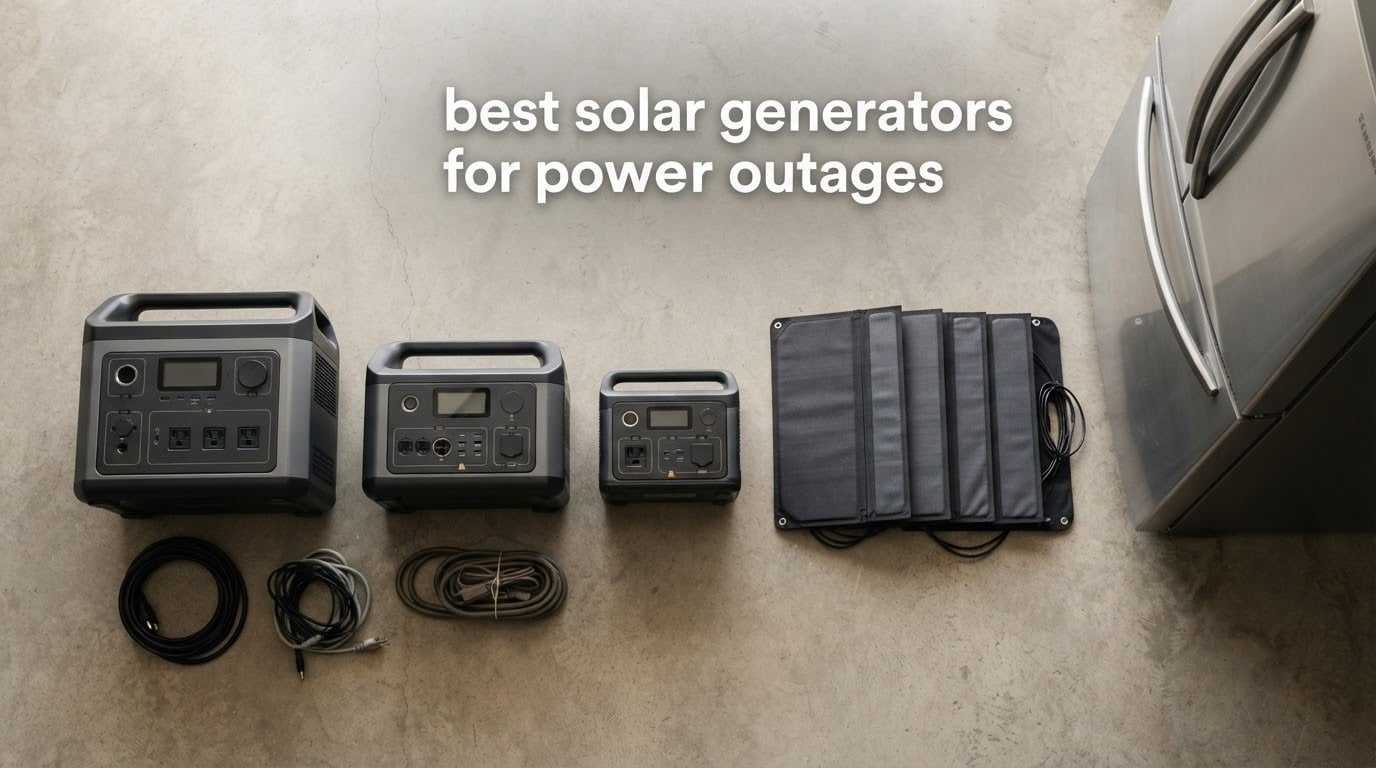
Every blackout starts the same question: how long does the fridge stay cold? For most households the answer now comes down to one box that stores energy from solar panels, a wall outlet, or a car, then pushes it back out through normal 120V outlets. That is the whole reason the best solar generators for power outages have moved out of prepper sheds and into kitchens, garages, and apartments.
Gas generators still win on raw fuel energy, but they need gasoline you may not have by day three, they are loud enough to wake the whole house, and carbon monoxide rules keep them outside. A battery unit runs silent, stores power indoors safely, and recharges from sunlight for as long as the weather allows.
Our team went through twelve of the most-reviewed units in the 1kWh to 6kWh range, comparing capacity, continuous output, UPS switchover time, charge speed, weight, port layout, and the complaints owners actually report. The goal is simple: help you size a unit for your real outage rather than buy the biggest one on the shelf.
Two numbers settle most of these decisions. Watt-hours (Wh) decide how long you can run things, and continuous watts (W) decide whether the thing will switch on at all. A 2000Wh pack full of low-draw electronics lasts days, while a 1000Wh pack running a microwave is empty in an hour.
Top 3 Solar Generator Picks for 2026
These three came closest to being the right default pick for almost everyone. Each one has a strong owner review base, LiFePO4 chemistry, and clean inverter behaviour on sensitive electronics.

All 12 Solar Generators Compared in 2026
Every unit below uses LiFePO4 cells and ships with a pure sine wave inverter. Read the Wh and W columns together, because a big battery with a small inverter still cannot start an air conditioner.
| Product | Specs | Action |
|---|---|---|
| Jackery Explorer 1000 v2 |
|
Check Latest Price |
 Anker SOLIX C1000 Gen 2 Anker SOLIX C1000 Gen 2 |
|
Check Latest Price |
 BLUETTI AC180 BLUETTI AC180 |
|
Check Latest Price |
 BLUETTI Elite 100 V2 BLUETTI Elite 100 V2 |
|
Check Latest Price |
 OUPES Mega 1 OUPES Mega 1 |
|
Check Latest Price |
 Jackery Explorer 2000 v2 Jackery Explorer 2000 v2 |
|
Check Latest Price |
 EF ECOFLOW DELTA 2 Max EF ECOFLOW DELTA 2 Max |
|
Check Latest Price |
 Anker SOLIX S2000 Anker SOLIX S2000 |
|
Check Latest Price |
 EF ECOFLOW Delta 3 Ultra EF ECOFLOW Delta 3 Ultra |
|
Check Latest Price |
 ABOK Ark3600 ABOK Ark3600 |
|
Check Latest Price |
 Jackery HomePower 3000 Jackery HomePower 3000 |
|
Check Latest Price |
 EF ECOFLOW DELTA Pro Ultra EF ECOFLOW DELTA Pro Ultra |
|
Check Latest Price |
1. Jackery Explorer 1000 v2 – Best Overall Solar Generator for Power Outages
Jackery Explorer 1000 v2 Portable Power Station,1070Wh,1500W
1070Wh LiFePO4
1500W AC and 3000W surge
23.8 lb
4000-cycle battery
Pros
- Lightest pick in the group at 23.8 pounds with a foldable handle
- Steady 120V output that never dipped on a 100W draw
- One hour emergency charge from a wall outlet
- 4000-cycle LFP battery rated for 10 years or more
- Bluetooth app works at range with no cell service
Cons
- No 12V DC barrel ports so the car socket needs an adapter
- Solar input is less universal than some rivals
- Some early hardware needed a deep discharge or factory reset to charge
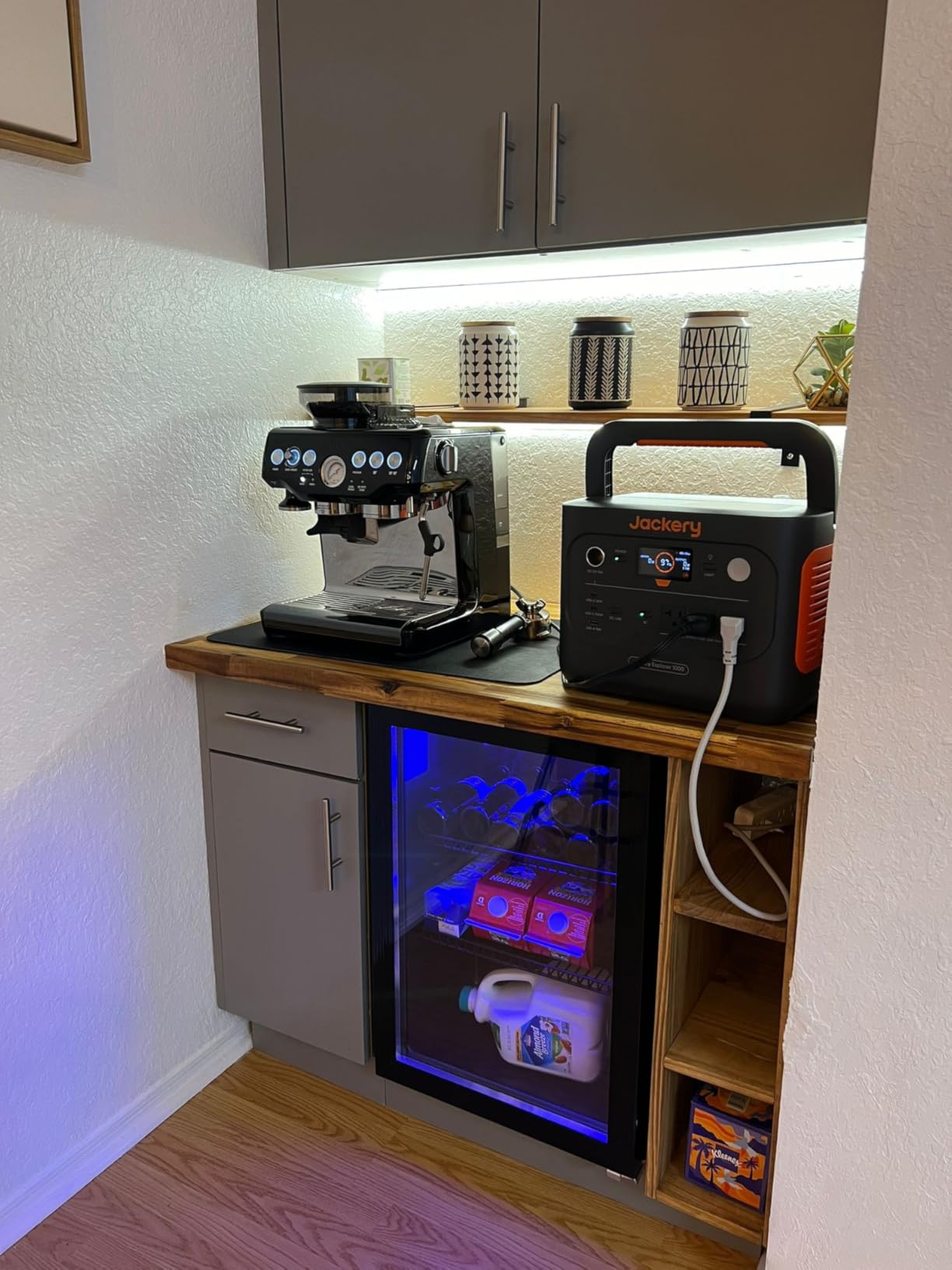
The Jackery Explorer 1000 v2 is the unit we kept coming back to. It packs 1070Wh of LiFePO4 capacity, 1500W of continuous AC output, and 3000W of surge into a 23.8 pound body with a foldable handle, which is the rarest combination in this group.
Owners describe the inverter as boring in the best way. One reviewer measured output that never dropped below 119V on a 100W draw, which is exactly what you want when a router, a modem, and a medical device are all hanging off the same unit.
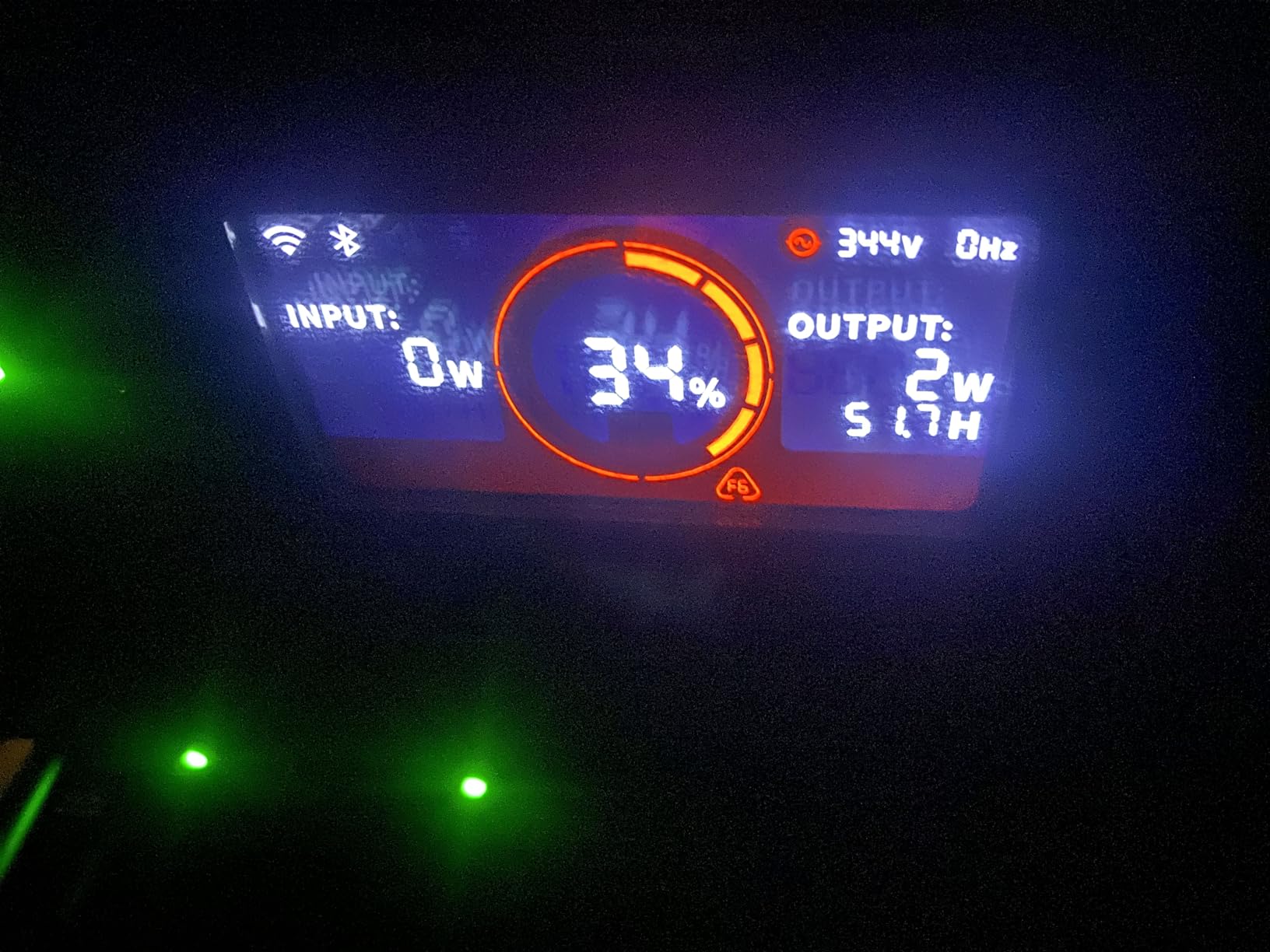
Two charging modes matter here. The default full charge takes about 1.7 hours, which is the gentler setting for long battery life, while emergency charging through the app refills the pack in about one hour, which is what you want the night before a storm rolls in.
The battery holds more than 70 percent of its original capacity after 4000 cycles, which works out to a 10 year-plus lifespan on a daily backup schedule. Ports include two USB-C, one USB-A, one DC car port, three pure sine wave AC outlets, and a built-in LED lamp that earns its place during a blackout.
What it runs well
This is the sweet spot pack for a fridge, a freezer, a router, LED lighting, a laptop, and a CPAP machine for a night or two. Three AC outlets means you are not stuck plugging and unplugging anything when the power comes back on.
Because it is the lightest unit we reviewed, one person can carry it from the garage to the bedroom before bed, which matters a lot when the alternative is dragging a heavy box through a dark hallway.
Where it falls short
The 1500W ceiling is the limiting factor. It will run a fridge and a lamp with room to spare, but a microwave, a space heater, or a power tool will trip it, and the 3000W surge rating is not enough to start a large compressor motor.
Solar input is also less universal than some rivals here, so if you already own panels from another brand, confirm the voltage and connector limits before you buy. A few early owners needed a factory reset to get charging behaving normally.
2. Anker SOLIX C1000 Gen 2 – Best for CPAP Machines and Fast Recharging
Anker SOLIX C1000 Gen 2 Portable Power Station
1024Wh LiFePO4
2000W and 3000W peak
10ms UPS
49 min full recharge
Pros
- Full recharge in 49 minutes at 1600W AC input
- 10ms UPS kept routers laptops and CPAP machines running
- Compact enough to move between rooms by yourself
- 80 percent capacity retained after 4000 cycles
- 10 outlets can run a phone router and fridge together
Cons
- Gen 2 removed the expandability earlier Anker models had
- Microwave draw shows measurable harmonic distortion
- No cable or adapter case in the box
- Bluetooth and wifi sometimes need a manual power cycle
The Anker SOLIX C1000 Gen 2 is the fastest to recharge in this group, filling completely in 49 minutes at 1600W of AC input. In practice owners say roughly 15 minutes of wall charging covers a full night of CPAP draw, which is the single most useful number for anyone sleeping through an outage.
Its 10ms UPS switchover is automatic and needs no menu diving, so a router, a laptop, or a CPAP machine simply keeps running when the grid drops. The inverter held up across routers, laptops, and CPAP machines in owner testing without a hiccup.
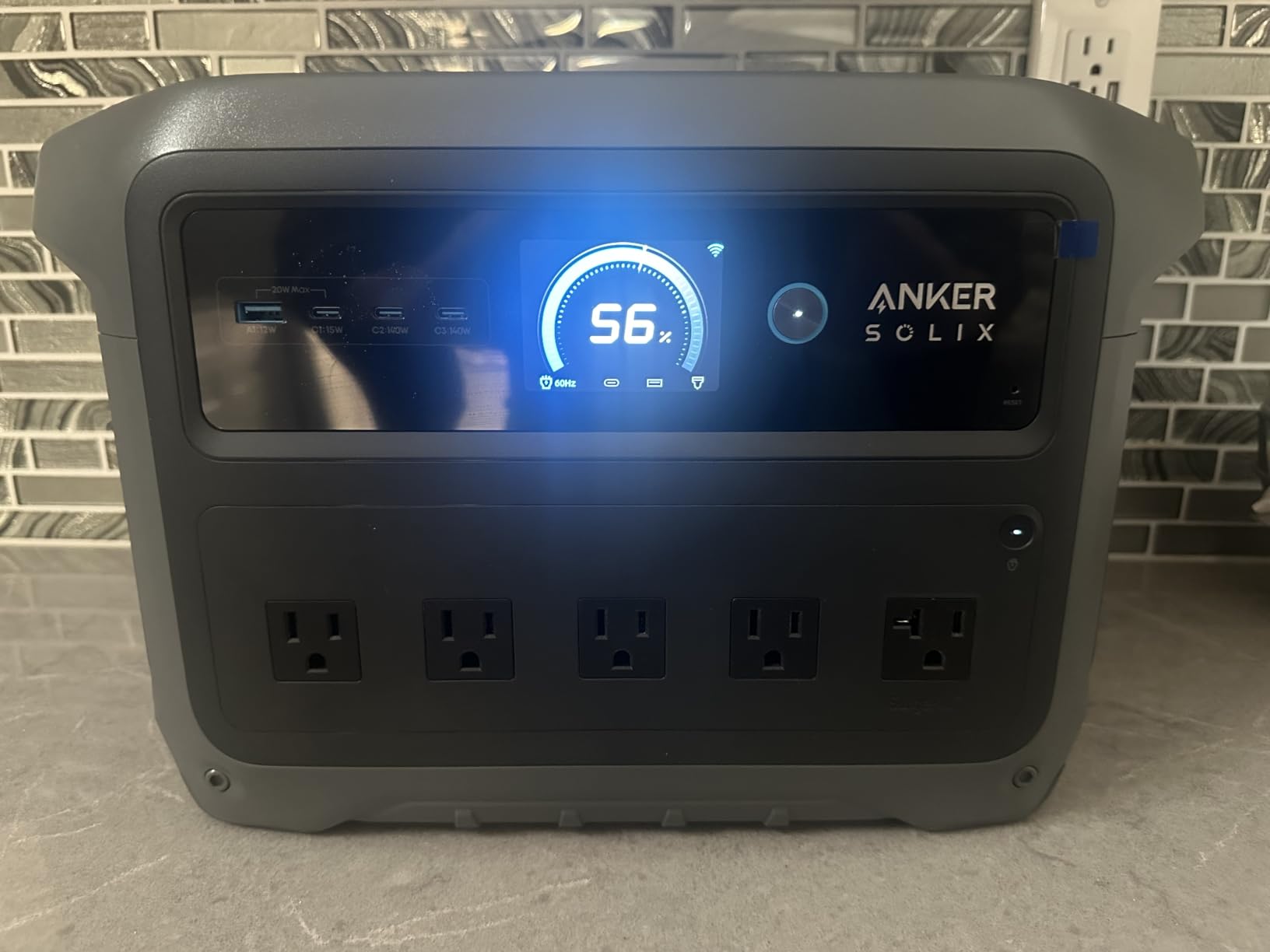
Despite delivering 2000W continuous and 3000W peak from a 1024Wh pack, it stays light and compact, and Anker lists it as 14 percent smaller and 11 percent lighter than comparable models. Weights matter when the unit lives in a spare room rather than a garage.
Real outage testing showed 6 to 12 hours of solid fridge and freezer backup, and the LFP cells retain more than 80 percent capacity after 4000 cycles. Six hundred watts of solar input refills it in about 1.8 hours of good sun.
What it runs well
Medical devices, networking gear, and a full kitchen circuit of small appliances. Ten outlets means phones, laptops, a lamp, and a fridge can all stay connected at once without a power strip fight.
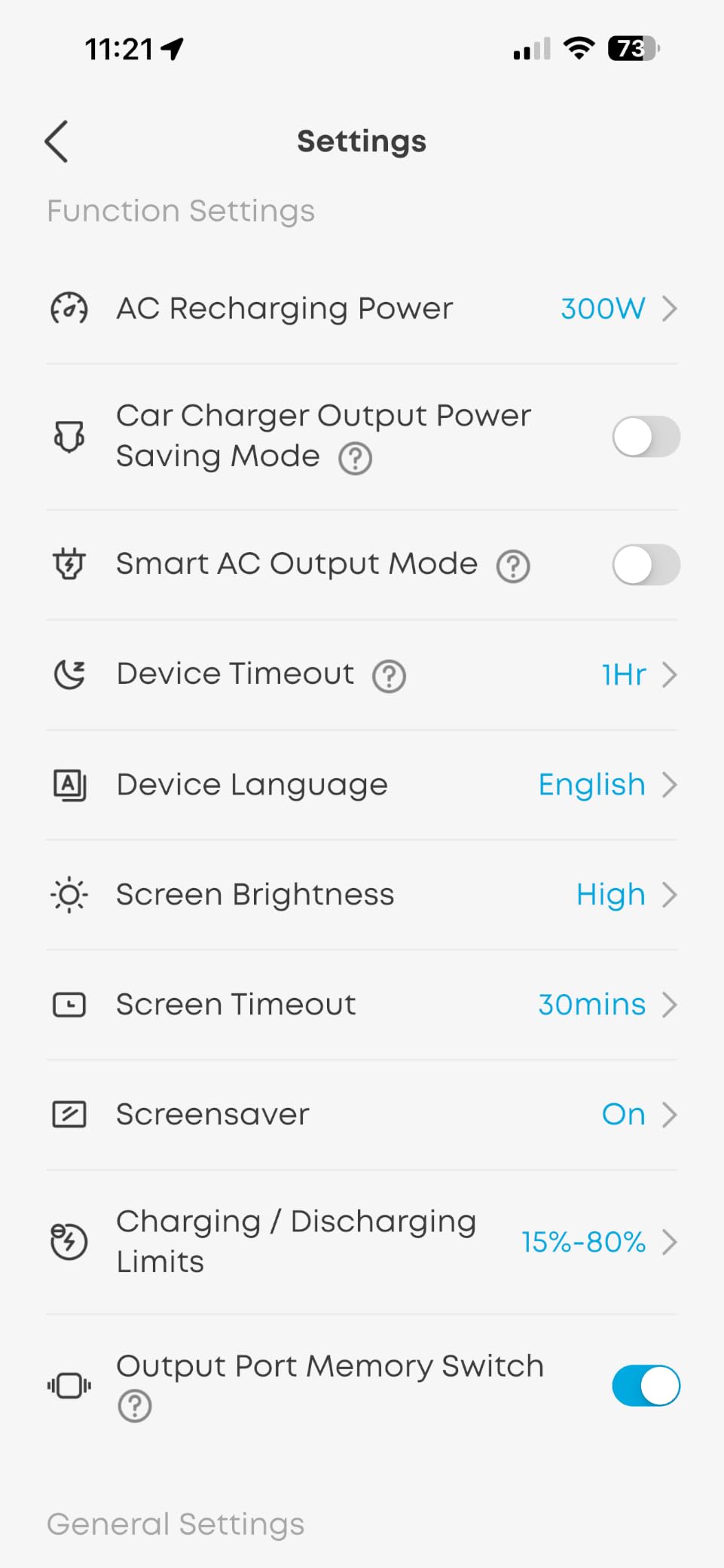
Time-of-use mode in the app lets you shift charging to off-peak hours, so the same battery works as a small load-shifting system on normal utility bills when there is no storm at all.
Where it falls short
This generation dropped the battery expandability that earlier Anker models offered, which is a real loss if you expect to grow from a 1kWh pack to a 5kWh system later. Plan for the capacity you buy today.
An engineer reviewer confirmed outputs meet spec except for harmonic distortion when driving a microwave, so treat microwaves as an occasional use rather than a primary load. The unit also ships without a storage case for cables and adapters.
3. BLUETTI AC180 – Best Value 1.2kWh Solar Generator with 500W Solar Input
BLUETTI AC180 Portable Power Station 1152Wh 1800W LiFePO4 Solar Generator
1152Wh LiFePO4
1800W boosted to 2700W
20ms UPS
500W solar
Pros
- Full charge in about 1 hour at 1440W AC input
- 20ms switchover keeps routers and internet alive
- Bright display shows live input output and runtime
- 11 outlets plus USB-C and car charging
- 5 year warranty with responsive exchange service
Cons
- Heavy at 37.4 pounds and awkward to move often
- Top wireless charging pad often fails to charge phones
- Inverter self consumption cuts usable capacity on small loads
- Only one USB-C port among the DC outputs
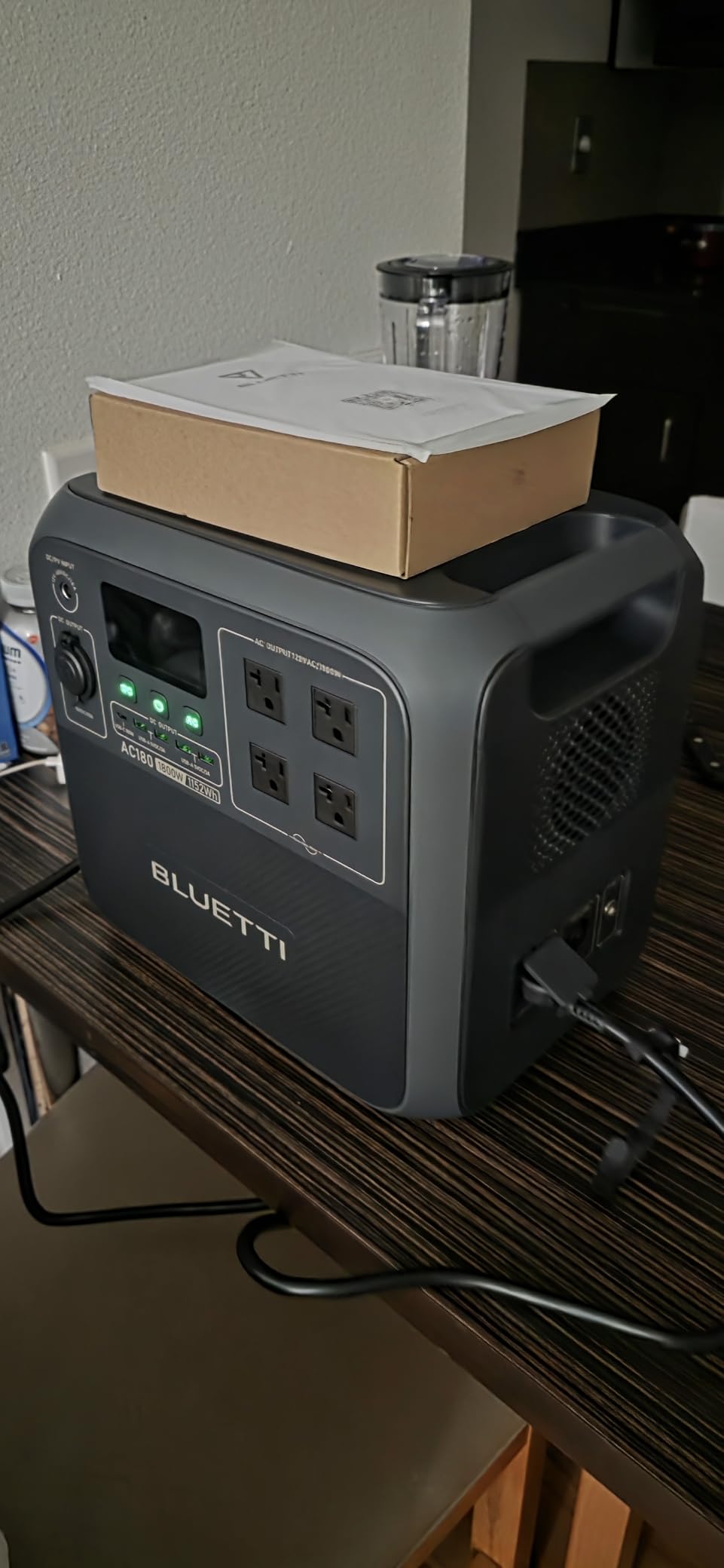
The BLUETTI AC180 is the balance pick. You get 1152Wh of LiFePO4 capacity, 1800W of continuous output, and an app-enabled boost to 2700W for higher loads, all in a 5 year warranty package that is longer than most rivals offer.
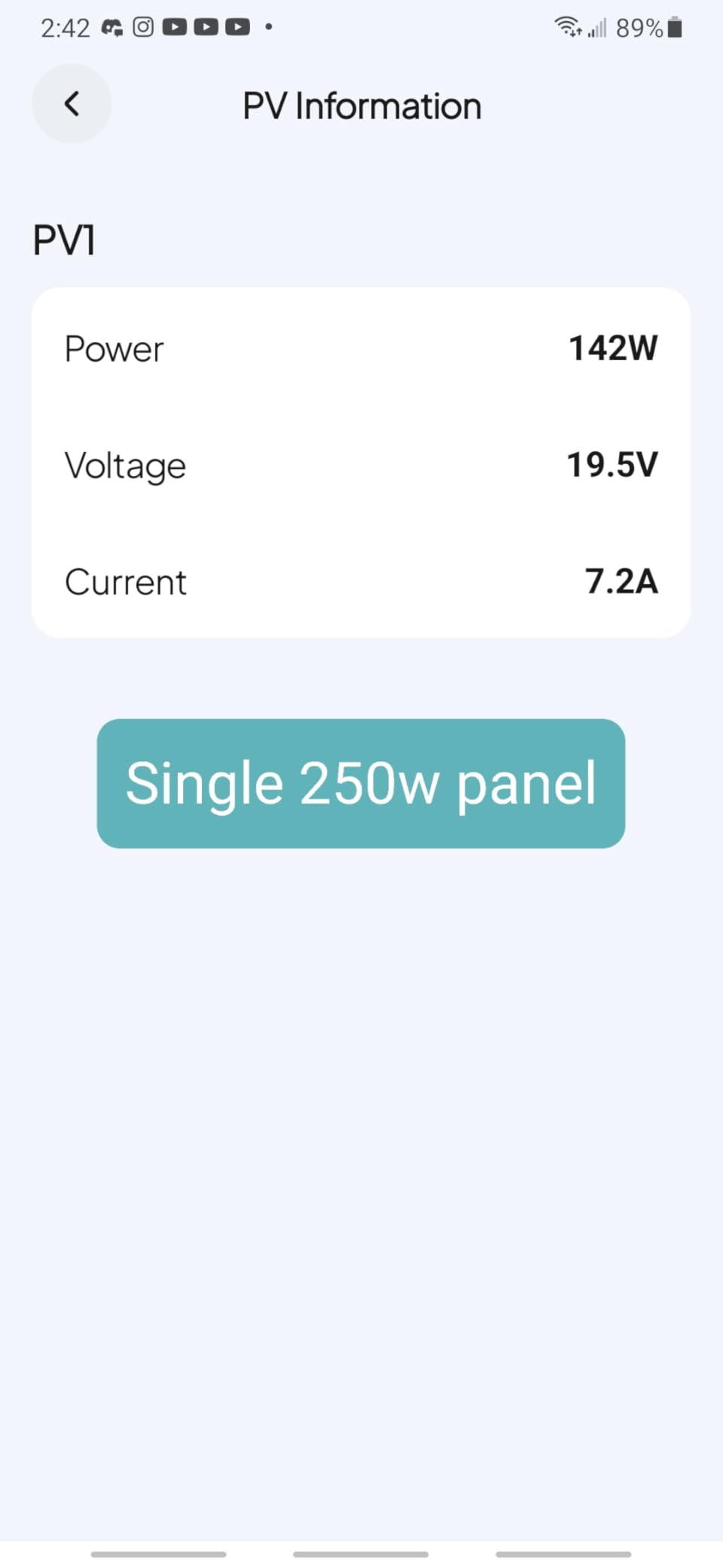
At 1440W of AC input it reaches a full charge in roughly one hour, and 500W of solar input tops it up in 2.8 to 3.3 hours, dropping to about an hour when you add wall power. That combination is what makes storm prep painless.
The 20ms UPS switchover keeps a router, a TV, and internet service alive through a short outage without manual intervention, which owners consistently call out as the feature they notice most during a real event.
The display is bright and readable, showing live input and output power alongside an estimated runtime, so you can decide what to switch off without guessing. Eleven outlets cover phones, laptops, lights, and a small fridge in one session.
What it runs well
Fridge, freezer, router, lighting, a fan, and a laptop for a day or more. The app boost to 2700W gives headroom for surge loads like a refrigerator compressor kicking in while other devices are already running.
It is also a strong weekend camping unit, since the AC, solar, and car charging cables all come in the box, so nothing needs buying separately before a trip.
Planning meals around a dead fridge is the other half of outage prep, and our quinoa salad recipes need no cooking to make sense.
Where it falls short
At 37.4 pounds it is one of the heavier options here and awkward to move between rooms on your own. Plan a single location before the storm rather than carrying it around the house in the dark.
Two smaller gremlins: the top wireless charging pad fails to charge phones often enough to matter, and the inverter draws its own power, which eats into usable capacity when you are running small loads. There is also only one USB-C port among the DC outputs.
4. BLUETTI Elite 100 V2 – Quietest 1kWh Pick for Bedrooms and Apartments
BLUETTI Elite 100 V2 Portable Power Station for Camping 1024Wh 1800W
1024Wh LiFePO4
1800W with 2700W lifting
10ms UPS
30dB silent mode
Pros
- Lightest 1kWh unit here at 25 pounds in a 17L body
- Fastest solar input in the group at 1000W
- 10ms UPS keeps routers and PCs alive
- Silent mode measured at 30dB
- Over 4000 cycles to 80 percent capacity
Cons
- Widest one-star share in the group at 8 percent
- 1800W continuous output trails several 1kWh rivals
- No expansion battery listed for this model
The BLUETTI Elite 100 V2 is built for a small space. At 25 pounds and 17 litres it is the most compact 1kWh unit we reviewed, and its silent mode measures 30dB, which is roughly half as loud as competing 1kWh stations under the same load.
It also accepts up to 1000W of solar input, the highest figure in this group, so a single mid-size panel array refills it quickly. Full recharge takes about 70 minutes on the 1200W TurboBoost AC path.
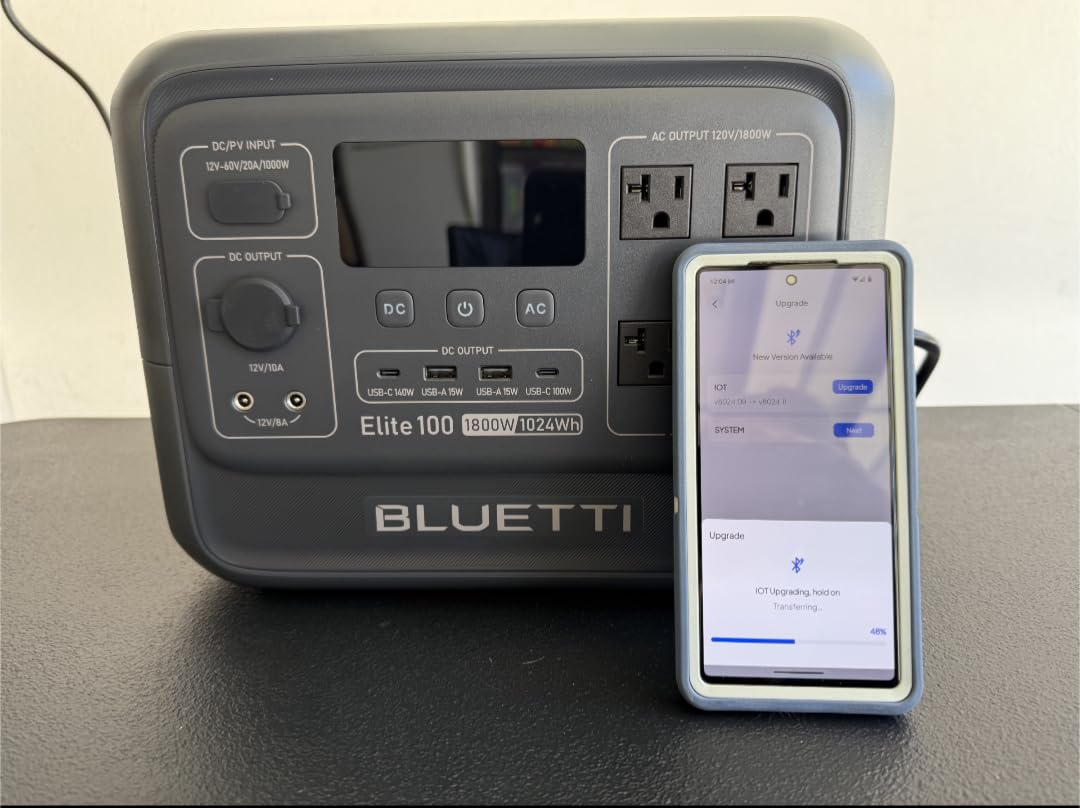
The 10ms UPS switchover keeps routers and desktop PCs running through an outage without a manual switch, and the LFP battery is rated for over 4000 cycles to 80 percent capacity, which puts its service life in the same band as the leaders.
App control covers Wi-Fi and Bluetooth monitoring with over-the-air updates, and 11 ports including USB-C keep phones and laptops fed without crowding the AC sockets.
What it runs well
Apartment and condo owners who cannot run a noisy machine. It sits under a desk, in a closet, or beside a bed, runs a router, a lamp, a CPAP, and phone charging, and the 1800W output still has room for a small fridge.
For anyone already chasing outlets around the house, our pick for the best kitchen islands with power outlets covers the same outlet-first thinking on the grid side.
Where it falls short
This model carries the widest one-star share in the group at 8 percent, which means a minority of buyers report early hardware problems even though the feature set scores well. Buying from a retailer with straightforward returns is worth the small extra effort.
Its 1800W continuous output is below several 1kWh rivals, and there is no expansion battery listed for this model, so the capacity is what it is for the life of the unit.
5. OUPES Mega 1 – Highest Continuous Output in a Lightweight 1kWh Body
OUPES Mega 1 Portable Power Station 1024Wh 2000W (4500W Surge)
1024Wh LiFePO4
2000W continuous
800W MPPT solar
expands to 5120Wh
Pros
- 2000W continuous output in a 27.8 pound body
- 0 to 80 percent from a wall outlet in about 36 minutes
- Expands to 5120Wh with two B2 extra batteries
- Four 120V outlets plus twin 100W USB-C PD ports
- Support has repaired hardware under warranty
Cons
- 4500W surge claim is optimistic and hardware trips near 2100W
- Proprietary charging cable is hard to source locally
- Cooling fan runs during every charging mode and is loud under load
- Basic app with no cell state or temperature detail
The OUPES Mega 1 is the power-per-pound outlier. It delivers 2000W of continuous output from a 1024Wh pack at 27.8 pounds, which puts it above most 1kWh units on raw watts and below none on portability.
Charging is genuinely quick, hitting 0 to 80 percent in about 36 minutes on AC and 26 minutes with AC and solar together. Two B2 extra batteries scale the unit from 1024Wh up to 5120Wh, and 800W solar input with a built-in MPPT controller refills it fast.
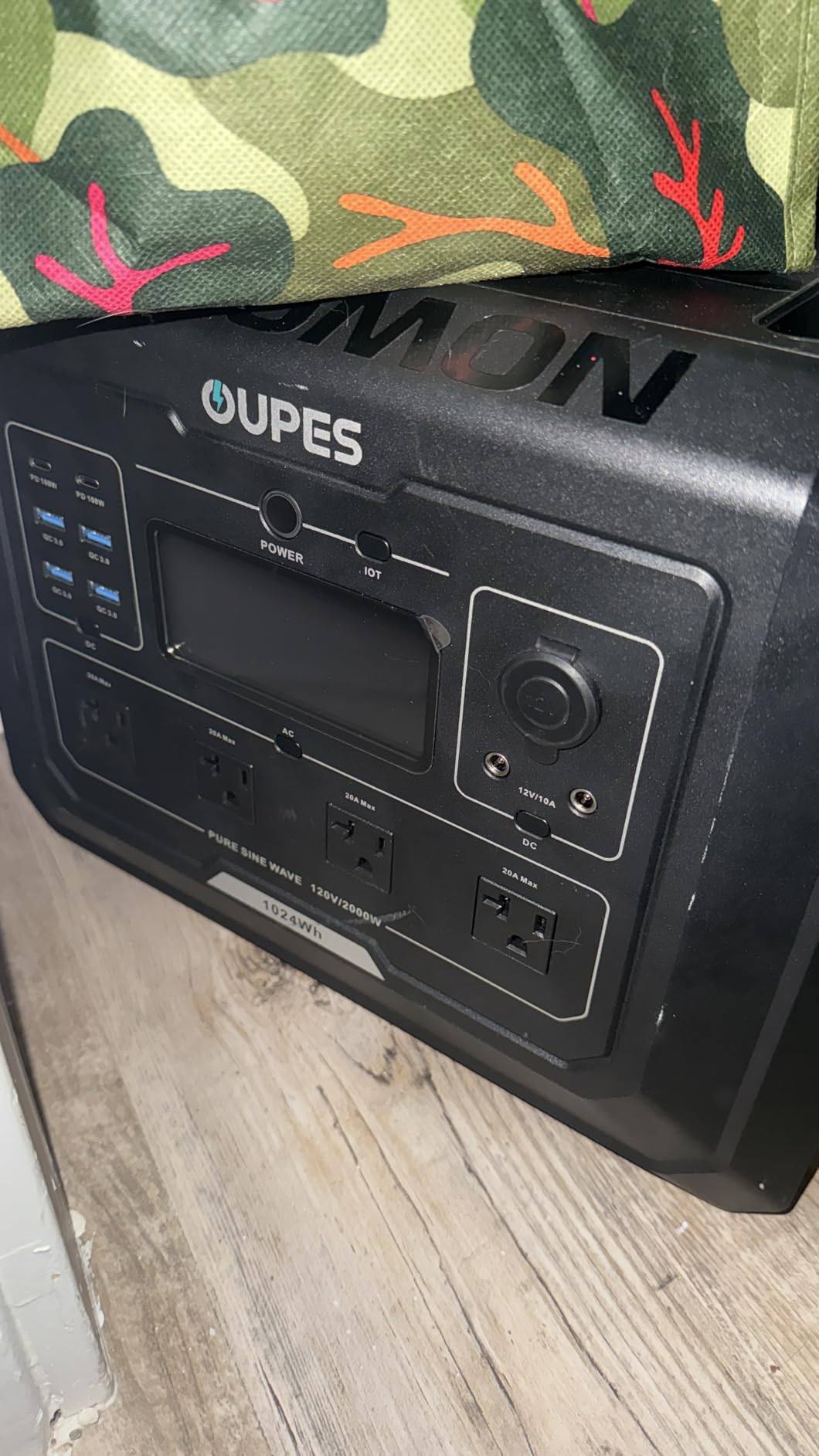
The port layout is unusually generous for the class, with four well-spaced 120V outlets plus twin 100W USB-C PD ports and 12V DC outputs. Run time at high output is short by design, but for a fridge, router, and lights it is more than enough overnight.
Support is repeatedly described as excellent, with warranty repairs handled directly. That is worth more than a feature line when something goes wrong at 11pm during a storm.

What it runs well
Households that want more than 1800W of headroom without stepping up to a 2kWh chassis. It will run a small window unit, a microwave briefly, a fridge, and networking gear at the same time, and the 5 year warranty matches the better brands.
It is also the natural first step for anyone planning a staged build, since the same unit grows to 5120Wh later instead of being replaced.
Where it falls short
The advertised 4500W surge rating is optimistic, and hardware has been reported tripping consistently around 2050W to 2200W. Treat the 2000W continuous figure as the honest ceiling for planning.
The charging input cable is proprietary and awkward to replace locally, the cooling fan runs during every charging mode and is loud under heavy load, and the Bluetooth app is very basic with no cell state or temperature detail. Wi-Fi connection in the app is also inconsistent.
6. Jackery Explorer 2000 v2 – Compact 2kWh Unit for RVs and Long Outages
Jackery Explorer 2000 v2 Portable Power Station, 2042Wh, 2200W AC Output
2042Wh LiFePO4
2200W across 3 AC ports
20ms UL1778 UPS
66 min to 80 percent
Pros
- Smallest and lightest 2kWh option at 39.5 pounds
- Silent charging mode stays under 30dB
- 0 to 80 percent in 66 minutes on AC
- 20ms UL1778 certified UPS protects essentials
- 100W USB-C PD port charges laptops directly
Cons
- Heaviest item in the 1 to 2kWh group at 39.5 pounds
- Solar charging only works with Jackery panels
- Widest one-star share among 2kWh picks at 8 percent
The Jackery Explorer 2000 v2 doubles the capacity of the smaller Explorer while staying oddly small. At 39.5 pounds and 13.2 by 10.4 by 11.5 inches, Jackery lists it as 41 percent lighter and 34 percent smaller than a typical 2kWh LiFePO4 station, using cell-to-body structure borrowed from electric vehicles.
Output is 2200W across three AC ports plus a 100W USB-C PD port, and the 20ms UPS is UL1778 test certified, which matters if a security system or a medical fridge has to ride through the switch.
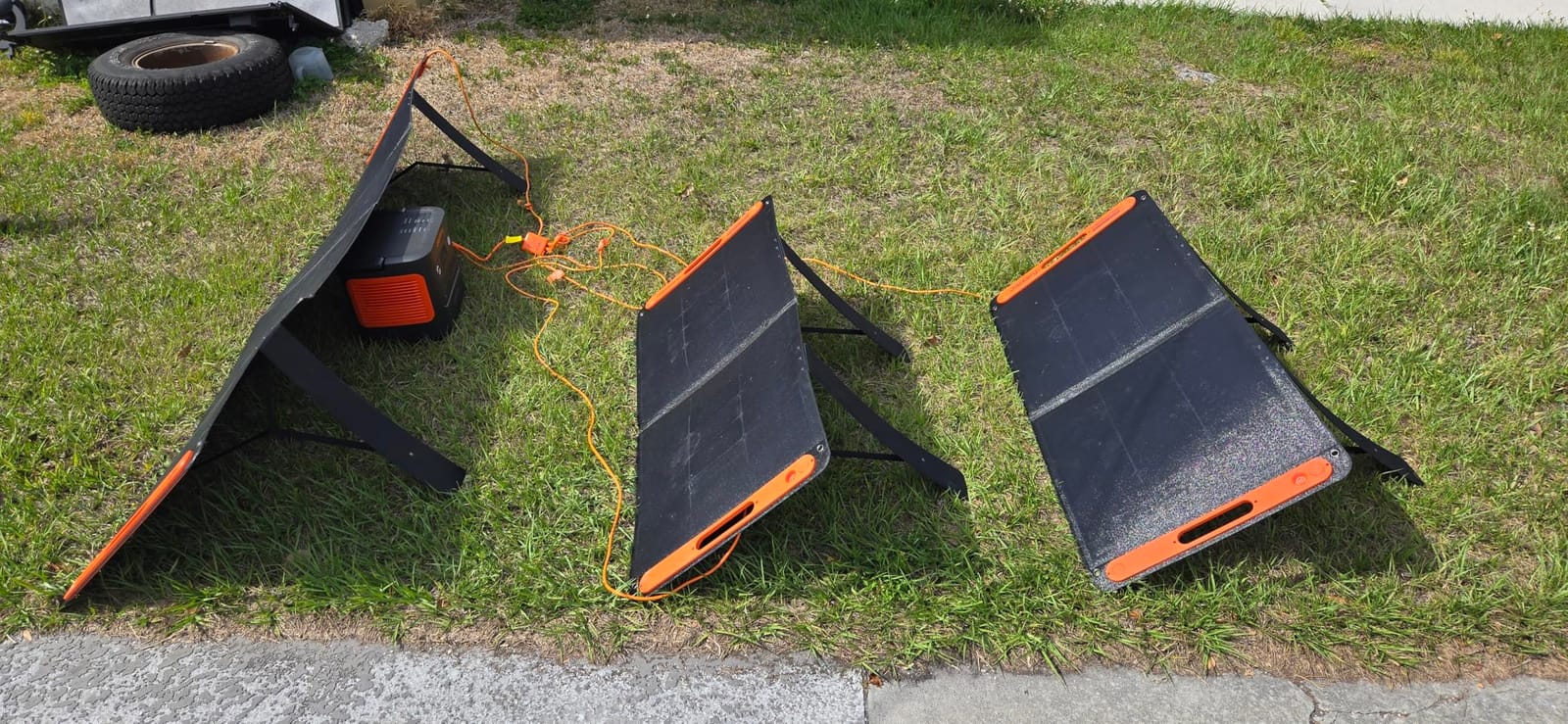
Charging is 0 to 80 percent in 66 minutes on AC, a full fill in 102 minutes with emergency super charging, and roughly 6 hours with 400W solar panels. Silent charging mode stays under 30dB, so it can live in a camper at night.
The LiFePO4 pack keeps 70 percent of capacity through 4000 cycles under a 5 year warranty, which is a sensible service life for a unit that will mostly sit at partial charge between events.
What it runs well
A weekend at a campground, a tailgate, or a two-day outage at home. It comfortably runs a fridge, a laptop, lights, a router, and a fan for a full day without needing solar.
It is the pick for buyers who care about every inch of cargo space. A 2kWh unit that fits behind a seat beats a bigger one that does not.
Where it falls short
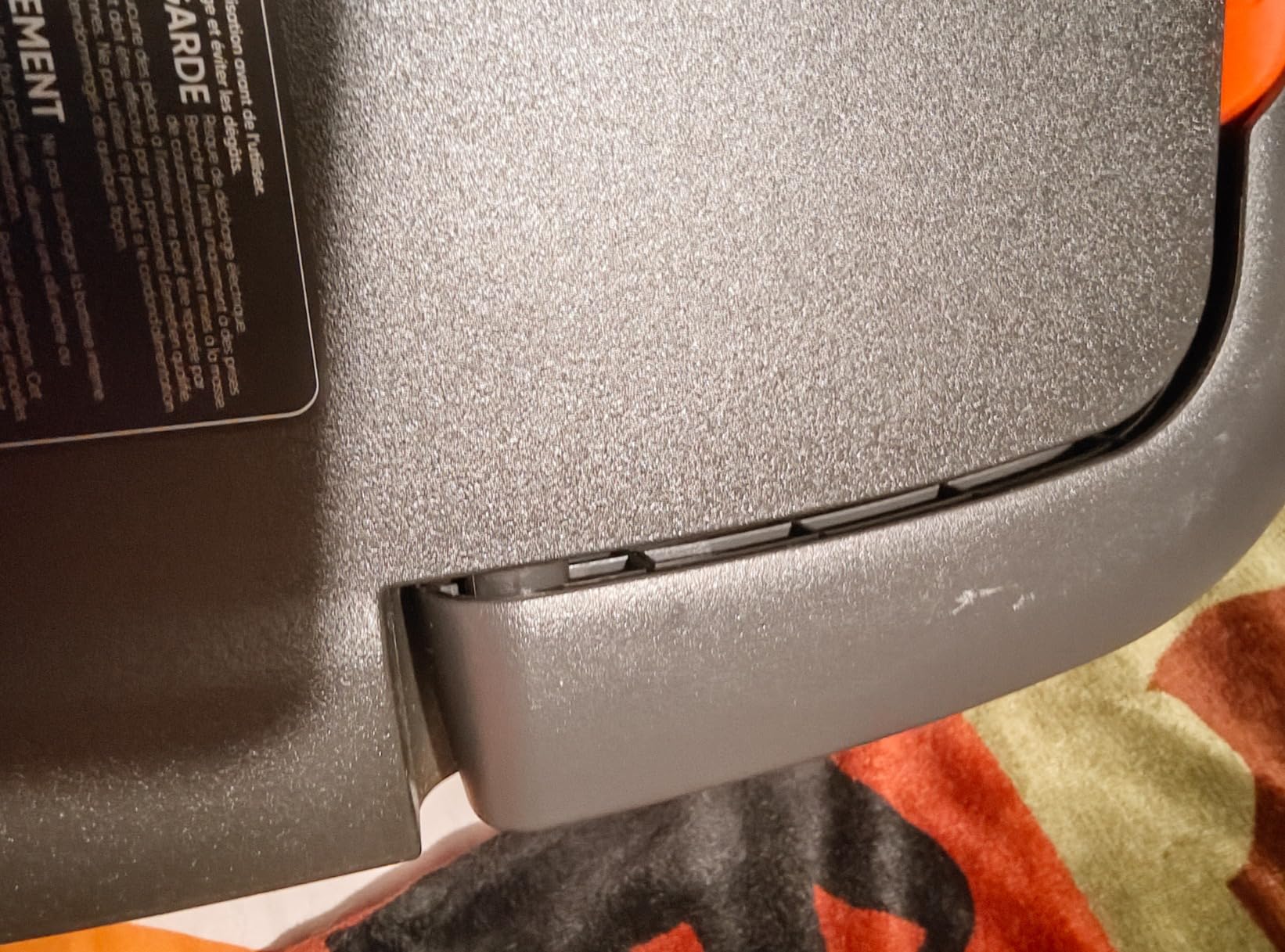
At 39.5 pounds it is the heaviest item in the 1kWh to 2kWh group, so treat the handle as a two-person lift on stairs. Solar recharging only works with Jackery panels, not a generic portable array.
Its one-star share sits at 8 percent, the widest among the higher-capacity picks, which is why the 4.4 average trails the smaller Jackery. A small number of early buyers report first-week issues.
7. EF ECOFLOW DELTA 2 Max – Best Expandable System That Grows to 6kWh
EF ECOFLOW Portable Power Station DELTA 2 Max 2048Wh, 2400W LiFePO4 Battery
2048Wh LFP
2400W and 3400W X-Boost
expands to 6kWh
30dB charging
Pros
- 2400W continuous output with X-Boost lifting to 3400W
- Expands from 2kWh to 6kWh with plug and play batteries
- 80 percent charge in 43 minutes on combined solar and AC
- Quiet charging from 30dB for overnight rooms
- LFP battery rated 3000 cycles to 80 percent
Cons
- Tall 20 inch body needs vertical floor space
- 23 kg weight makes it a two person lift
- 3000 cycle rating is the shortest among 2kWh picks
The EF ECOFLOW DELTA 2 Max is the pick if you expect your backup needs to grow. It starts at 2048Wh and expands to 6kWh with two plug-and-play extra batteries, no tools and no rewiring.
It delivers 2400W continuous, and X-Boost pushes that to 3400W for resistive loads that do not need true motor starting power. Fifteen outlets are enough that you will not be negotiating over a free socket.
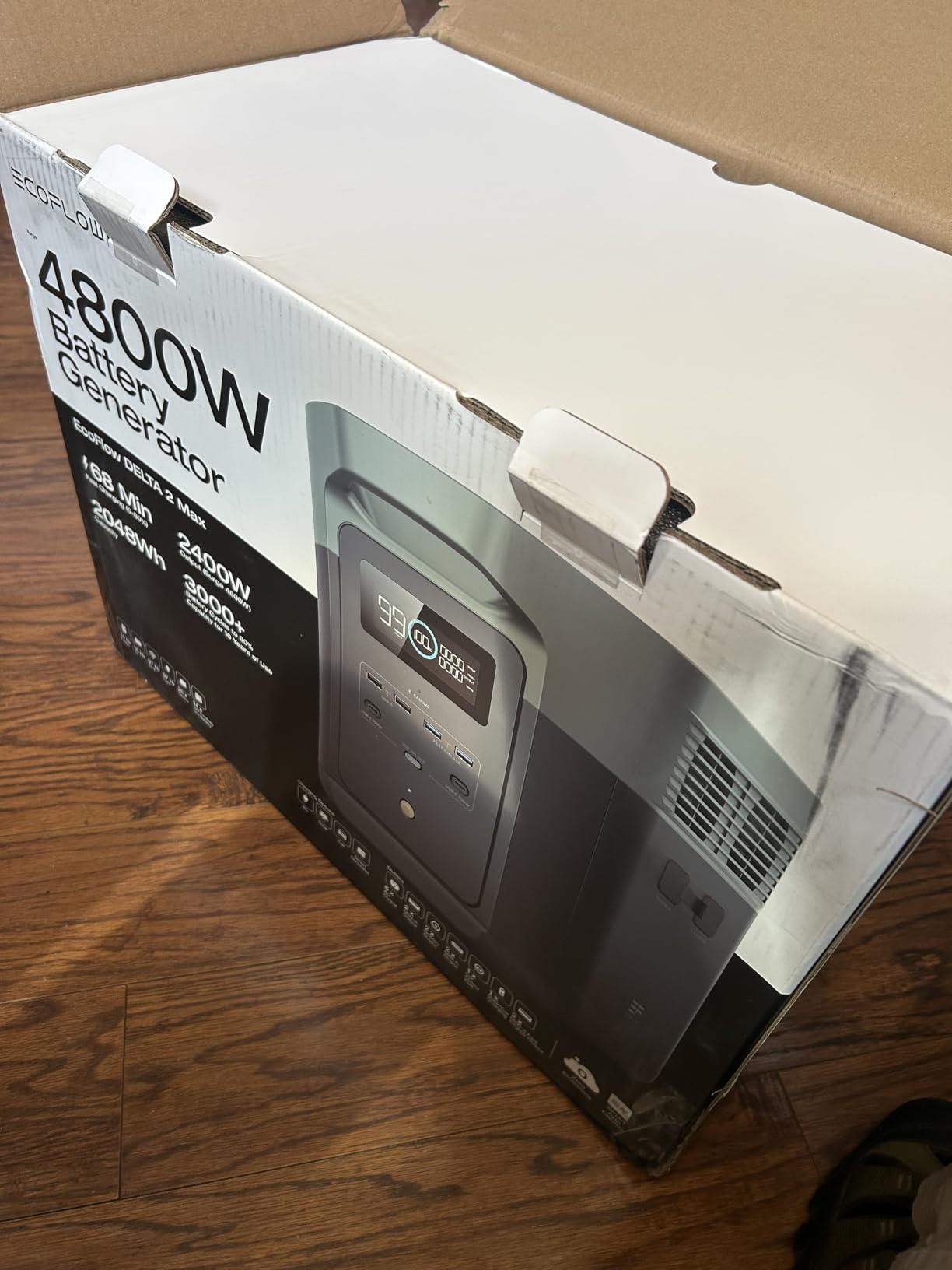
Hybrid charging is the standout. Combining up to 1000W of solar input with AC wall power reaches 80 percent in 43 minutes, and AC alone does it in about 1.1 hours, so a storm warning does not require an all-night session.
Charging noise starts at 30dB, which owners highlight for overnight use in a bedroom, and EcoFlow’s app handles energy management. Fifteen outlets, dual charging, and quiet operation make it one of the most consistent performers in this group.
What it runs well
Most of a normal household at once, short of central air. A fridge, a router, a laptop, lights, a coffee maker, and a washing machine spin cycle will all fit inside the 2400W ceiling, and the expansion batteries extend that from hours to days.
It is also the natural choice for anyone who wants to start small during 2026 and add capacity each hurricane season without changing platforms. With that much kitchen runtime, our quinoa and veggie power bowls are an easy first test of the setup.
Where it falls short
The body is 20 inches tall against roughly 9 to 13 inches for most rivals, so plan vertical space rather than floor footprint. At 23 kg it is also a two-person lift, and the stack of expansion batteries gets heavier fast.
The 3000 cycle rating to 80 percent is shorter than the 4000 to 10000 cycle figures on several competitors, so expect a smaller usable service life if you cycle it hard rather than keeping it in reserve.
8. Anker SOLIX S2000 – Longest Refrigerator Runtime in the Group
Anker SOLIX S2 Portable Power Station, 2,010Wh, 1,500W
2010Wh LFP 314Ah
1500W and 3000W peak
up to 35 hours fridge
10ms UPS
Pros
- Lowest idle draw here at 6W so the fridge runs about 20 percent longer
- Claimed 35 hours of refrigerator backup
- 314Ah LFP cells rated 10000 cycles and 15 years
- Compact at 35.7 pounds with dual sided outlets
- Charges from AC solar generator alternator or car outlet
Cons
- 1500W continuous output is below several 2kWh rivals
- No 12V DC port on the unit
The Anker SOLIX S2000 solves a narrow problem better than anything else here: keeping food cold. Its idle draw of 6W is the lowest in the group, which Anker says makes it about 20 percent more efficient than comparable 2kWh systems, and it claims up to 35 hours of refrigerator backup.
The battery is built from 314Ah LFP cells rated for 10,000 cycles and a 15 year lifespan, the longest endurance figure in this roundup. That matters if the unit is a permanent fixture rather than a weekend toy.
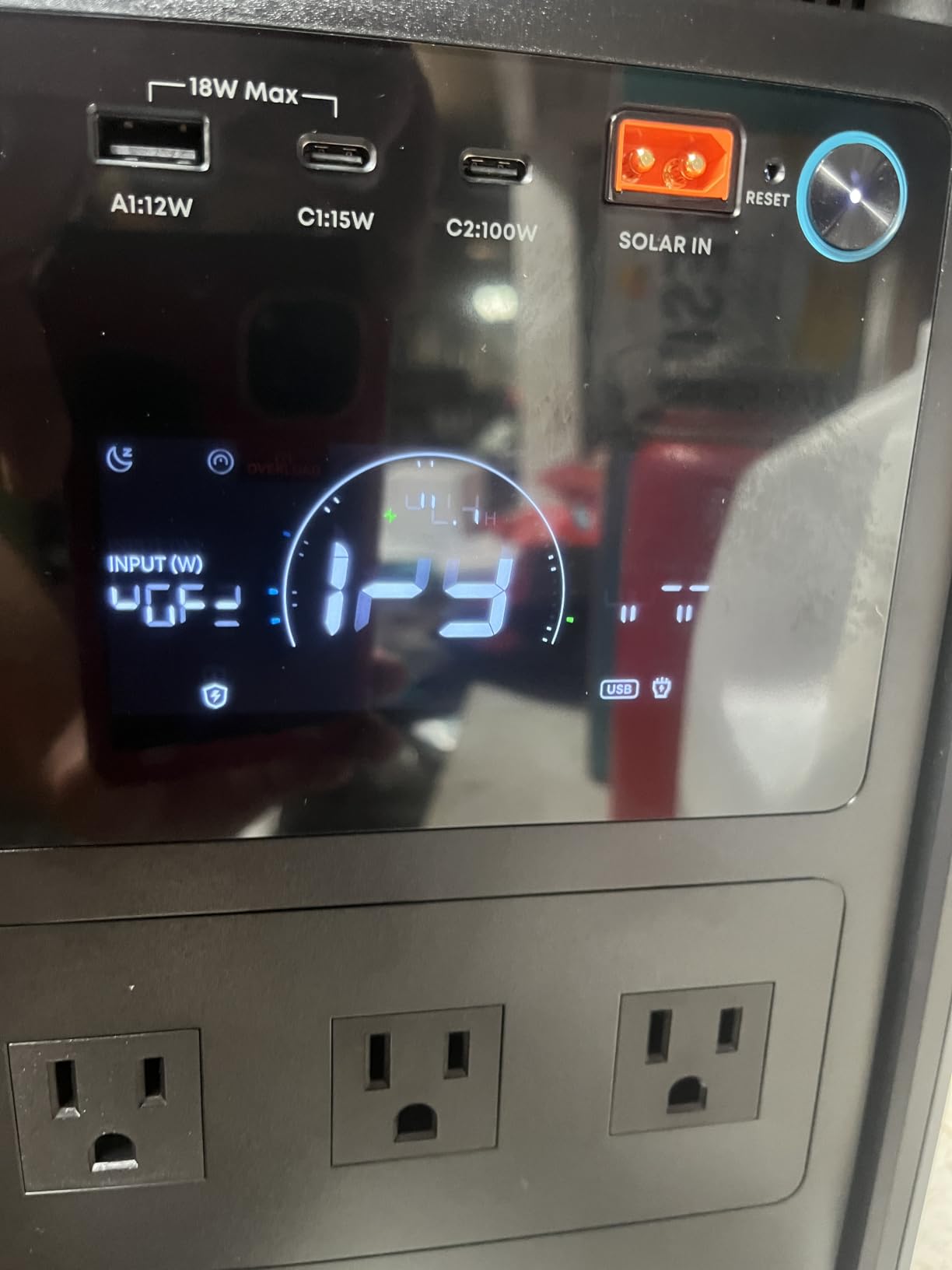
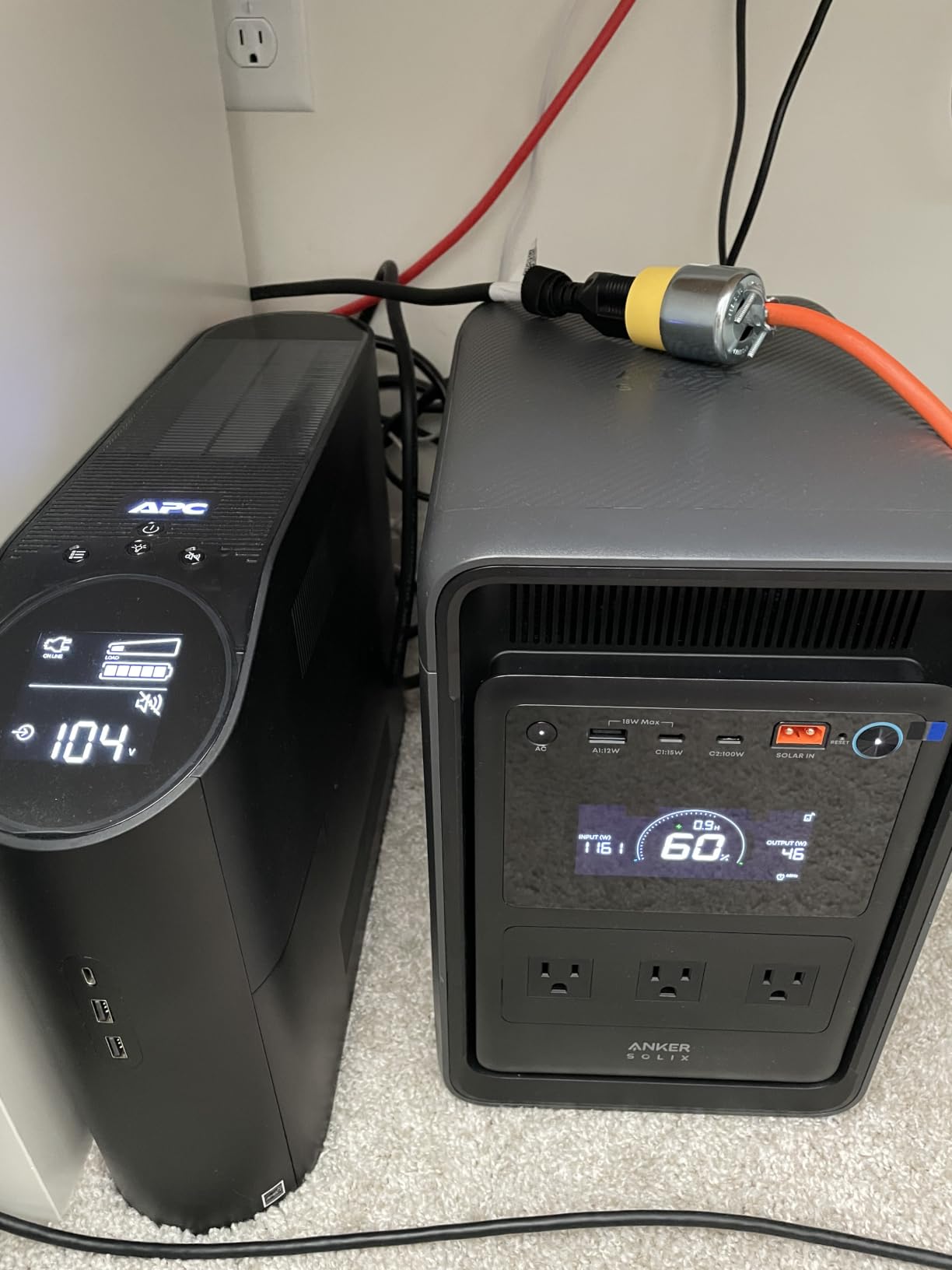
It is also physically small, at 35.7 pounds and 8.2 by 11.1 by 12.7 inches, which Anker lists as 30 percent smaller and 25 percent lighter than comparable 2kWh stations. Eight outlets are split front and rear, so always-on loads can live in the back where the cables stay tidy.
Charging is flexible: AC, solar up to 400W, a wall outlet, an outdoor generator, an alternator charger, and a car outlet. Switchover is under 10ms, so a router never notices the grid went away.
What it runs well
Fridges, freezers, medical refrigerators, and long unattended outages where low idle draw beats raw capacity. A quiet night of freezer protection is exactly what this hardware is built for.
It is also a good fit for anyone keeping a cold meds box or a grocery load safe for two days without babysitting a generator.
Where it falls short
1500W of continuous output is below several 2kWh competitors, so it will not carry a microwave, a heater, or power tools. There is also no 12V DC port on the unit at all.
Its listing is newer, so the 4.7 average sits on a smaller review base than the established models. Treat the efficiency and cycle claims as the headline, and confirm the runtime against your own fridge in a trial outage.
9. EF ECOFLOW Delta 3 Ultra – Quietest High Output 3kWh Station
EF ECOFLOW Delta 3 Ultra 3072Wh Power Station with XT60 Solar Cable
3072Wh LFP
3600W and 7200W surge
under 10ms UPS
25dB under load
Pros
- Highest continuous output in the group at 3600W
- Under 10ms UPS needs no setup for sensitive gear
- 25dB under load suits overnight indoor use
- EV grade CTC structure with 24/7 battery protection
- Four charging paths including the Smart Generator
Cons
- Heaviest unit in the 3kWh class at 72.1 pounds
- Only 3 outlets listed for 3600W of output
- Newer listing with a shorter owner review history
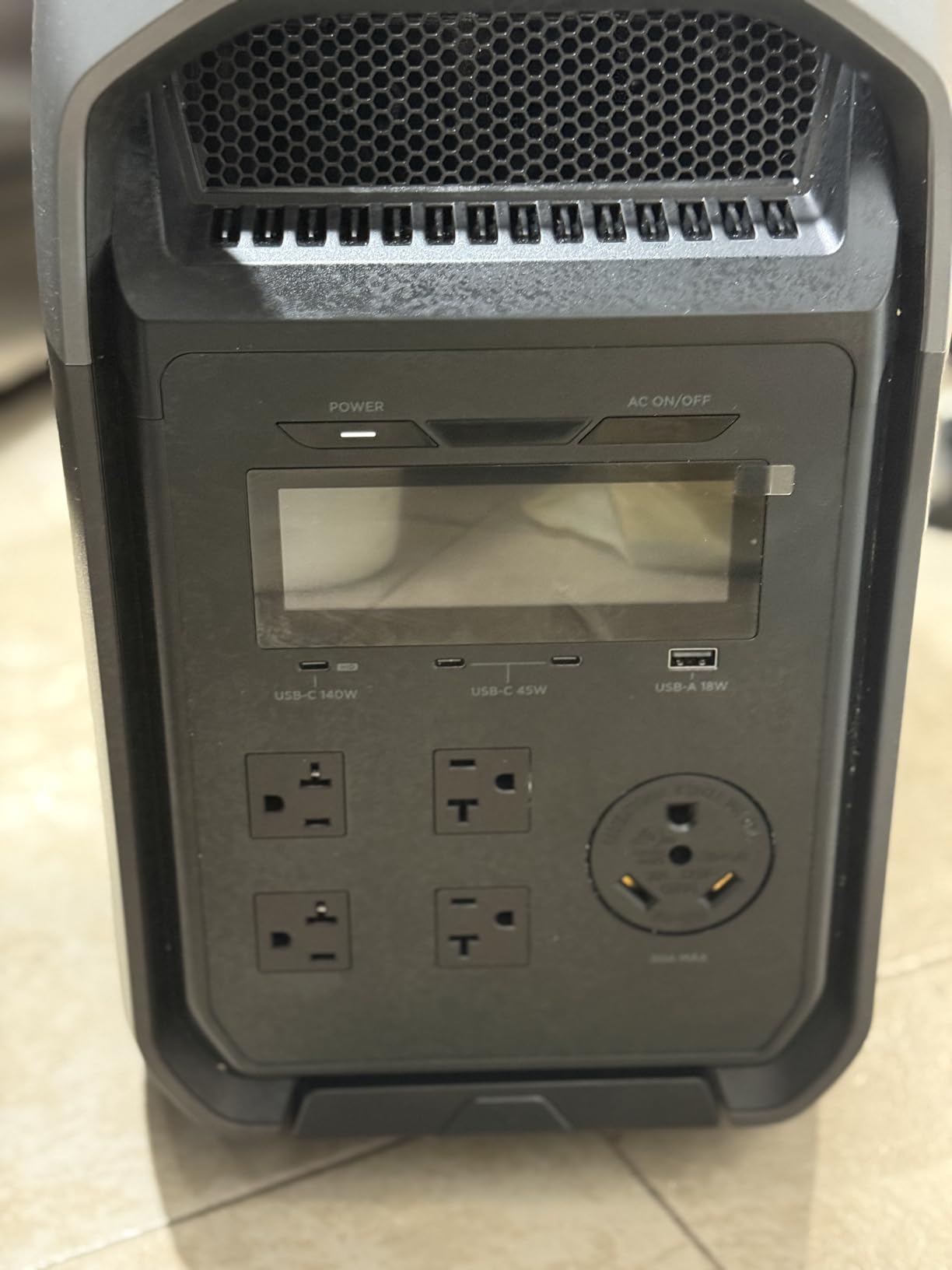
The EF ECOFLOW Delta 3 Ultra is the strongest raw performer here. It delivers 3600W continuous with 7200W of surge from 3072Wh of LiFePO4 capacity, which is enough to run a small air conditioner, a fridge, and networking gear simultaneously.
Its two standout numbers are noise and switchover. At 25dB under load through X-Quiet 3.0, it is the quietest unit in this roundup, and the under 10ms UPS transfers automatically with no manual mode switching.
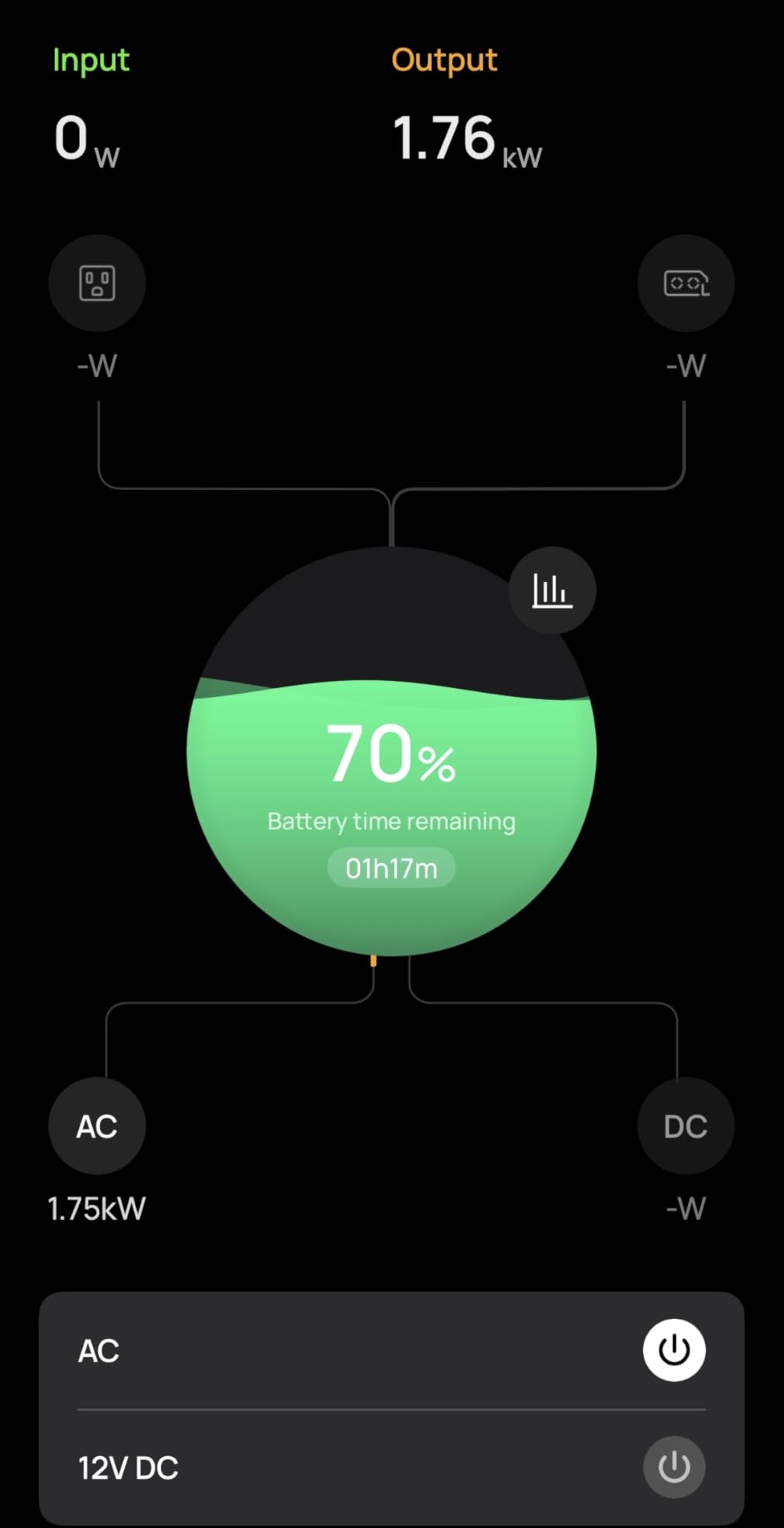
The build is the other story. An EV-grade cell-to-chassis structure and 24/7 battery protection are aimed at heat, cold, and heavy loads, and it charges four ways: wall outlet, solar panels, car input, and the EcoFlow Smart Generator for a hybrid setup.
Owners concentrate on output, automatic backup, and quietness, which explains the 4.6 average and 83 percent five-star share. The lower review count reflects a newer listing rather than weak performance.
What it runs well
A dedicated circuit of essentials during a multi-day outage: a window air conditioner, a fridge, a router, a lamp, and a laptop, all at once. The 7200W surge covers compressor startup on larger appliances.
It also suits a home office during a daytime outage, since 25dB will not interrupt a call and the UPS will not reset a running machine.
Where it falls short
At 72.1 pounds it is the heaviest unit in the 3kWh class, so it is a permanent placement decision rather than a grab-and-go one. Decide where it lives before the first storm, and keep the path to it clear.
Only 3 outlets are listed for 3600W of output, which is a thin count for a unit this powerful, and the shorter review history means less long-term field data than the established models.
10. ABOK Ark3600 – Most Ports and Best Tool Headroom in a Single Box
ABOK Ark3600 Portable Power Station with 200W Solar Panel
3840Wh LFP expandable
3600W and 4500W peak
2000W solar input
10ms UPS
Pros
- Ran a wetvac heatgun and SDS-Max hammer drill at once
- 15 outputs including 30A and 20A AC plus 100W USB-C
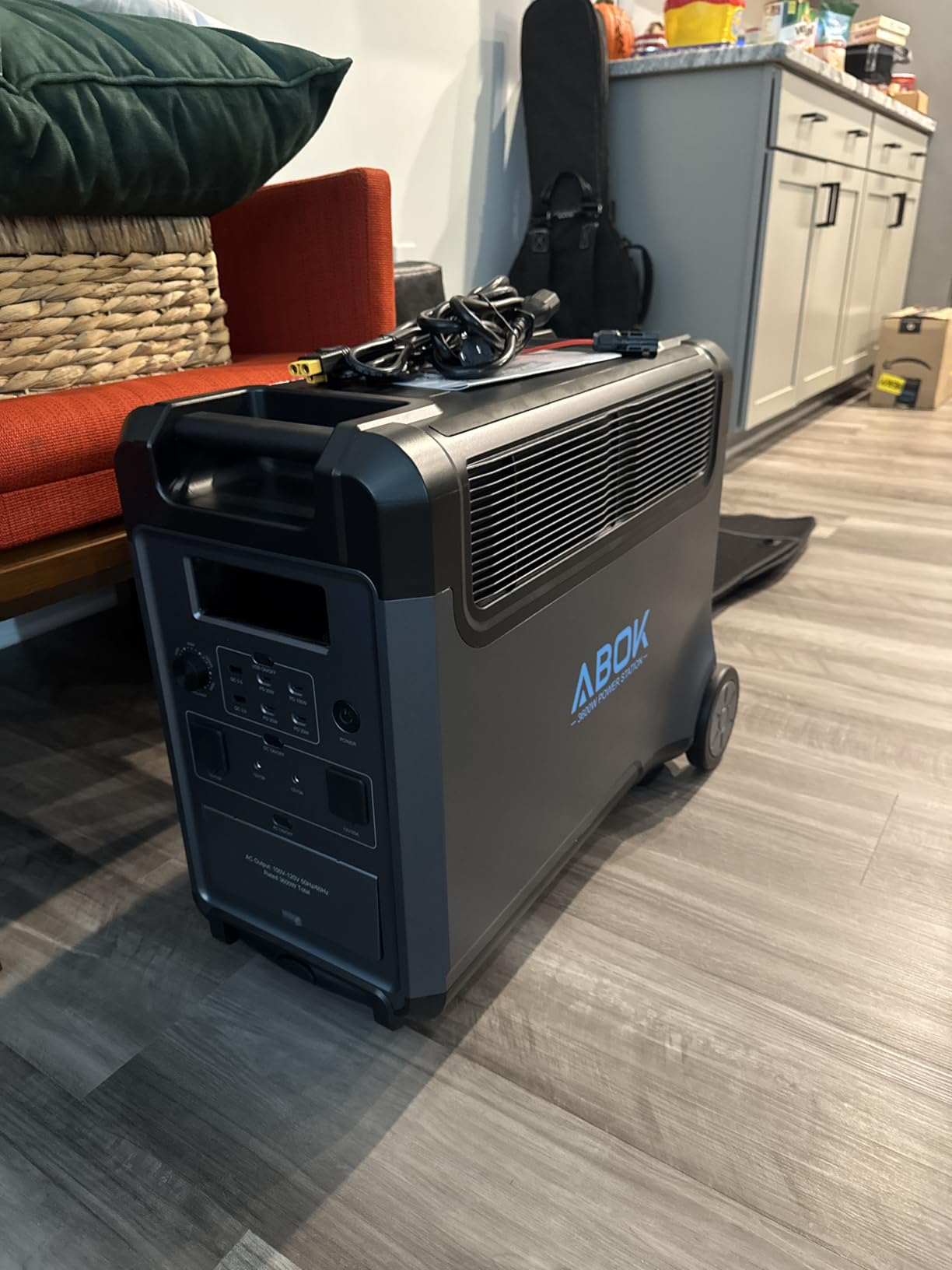
- Wheels and a telescoping handle tame a 92 pound body
- Expands to 11520Wh with 4000+ cycle LFP cells
- 1.29 hours to full on AC plus PV
Cons
- 92 pounds is a two person lift without the wheels
- 120V output only with no 240V option
- Plug covers are fragile and break easily
The ABOK Ark3600 is the tool-site answer. It ran a wetvac, a heatgun, and an SDS-Max hammer drill at the same time and still had 22 percent of the battery remaining, according to owners, on 3600W rated and 4500W peak output.
Capacity is 3840Wh of LiFePO4 that expands to 11520Wh, with a cycle rating above 4000 and a warranty of 2 plus 3 years. It recharges in 1.29 hours on AC plus PV, 3 hours on 1500W AC alone, and accepts 2000W of solar input.
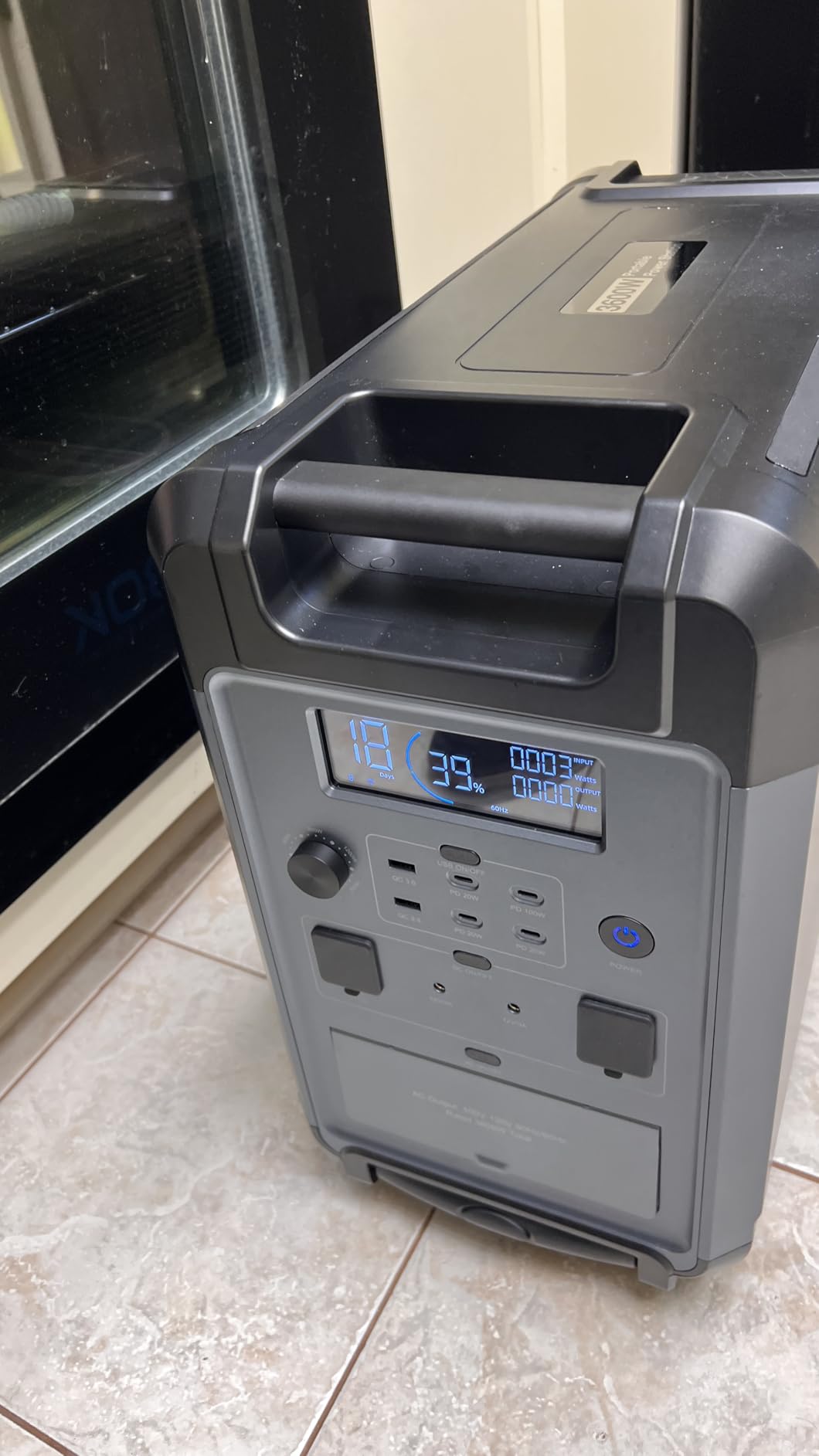
Fifteen outputs is the broadest layout here, covering a 30A AC outlet, four 20A AC outlets, USB-C PD up to 100W, USB-A, DC5521, XT60, and a cigarette lighter. Service has repaired failed solar inputs in-house, which is rare support behaviour at this tier.
Silent operation with no gas, no fumes, and no pull start makes it usable inside a garage or a house, which is where gas units of this size are not.
What it runs well
Power tools, a welder, a garage freezer, an RV, and hurricane-season essentials. The telescoping handle and built-in wheels are the reason this weight is bearable, and they genuinely work in practice.
It is also a fair second home system for buyers who want a lot of ports now and 11.5kWh of headroom later without changing brands.
Where it falls short
92 pounds is the honest headline problem. The wheels help, but stairs, thresholds, and a car boot are still a genuine test, and a 240V-only appliance will not run on it at all.
App documentation is thin with charge limits buried in menus, and the plug covers are fragile enough that owners report breaking them, so handle the ports carefully in a dusty garage.
11. Jackery HomePower 3000 – Best Solar Generator Bundle With Two Panels Included
Jackery HomePower 3000 and 2x200W Solar Panels, 3072Wh, 3600W AC Output
3072Wh LFP
3600W and 7200W surge
20ms UL UPS
two 200W panels
Pros
- Bundle includes two 200W SolarSaga panels which is rare at 3kWh
- 47 percent smaller and 43 percent lighter than comparable models
- Ran a fridge for two days in owner testing
- Full recharge in 1.7 hours on hybrid AC and DC
- 20ms UL certified UPS plus a TT-30 RV port
Cons
- Battery pack is not expandable with extra units
- Alexa integration was promoted but does not work
- UPS minimum load is undocumented so a small router may drop
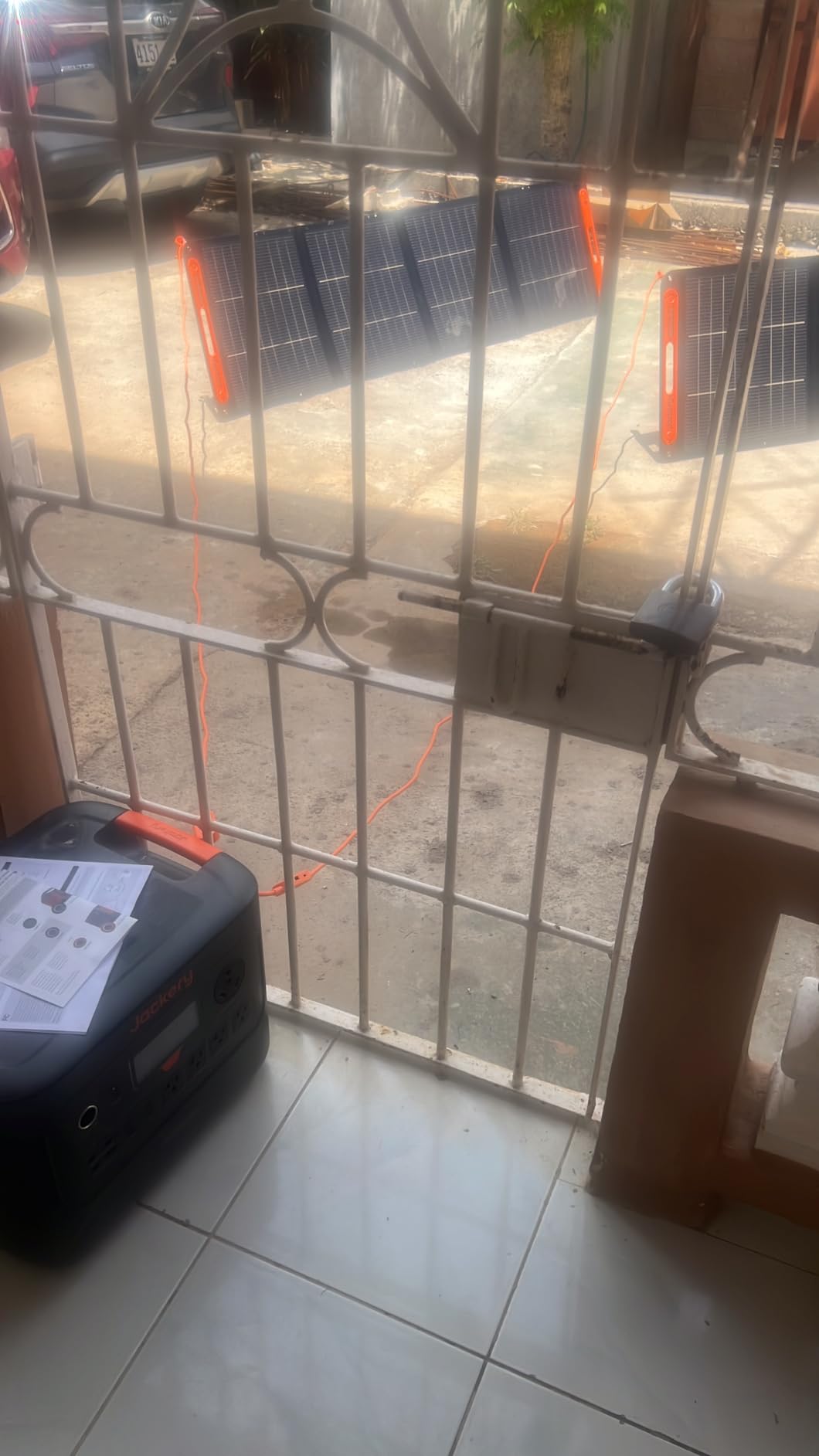
The Jackery HomePower 3000 is the only unit in this roundup that ships with solar panels, two 200W SolarSaga panels in the box. That changes the maths for anyone starting from zero, because panels are the most overlooked part of the total cost.
Underneath, it is a 3072Wh LFP pack with 3600W continuous and 7200W surge, held in a cell-to-body chassis that Jackery lists as 47 percent smaller and 43 percent lighter than comparable 3kWh models, at 59.5 pounds.
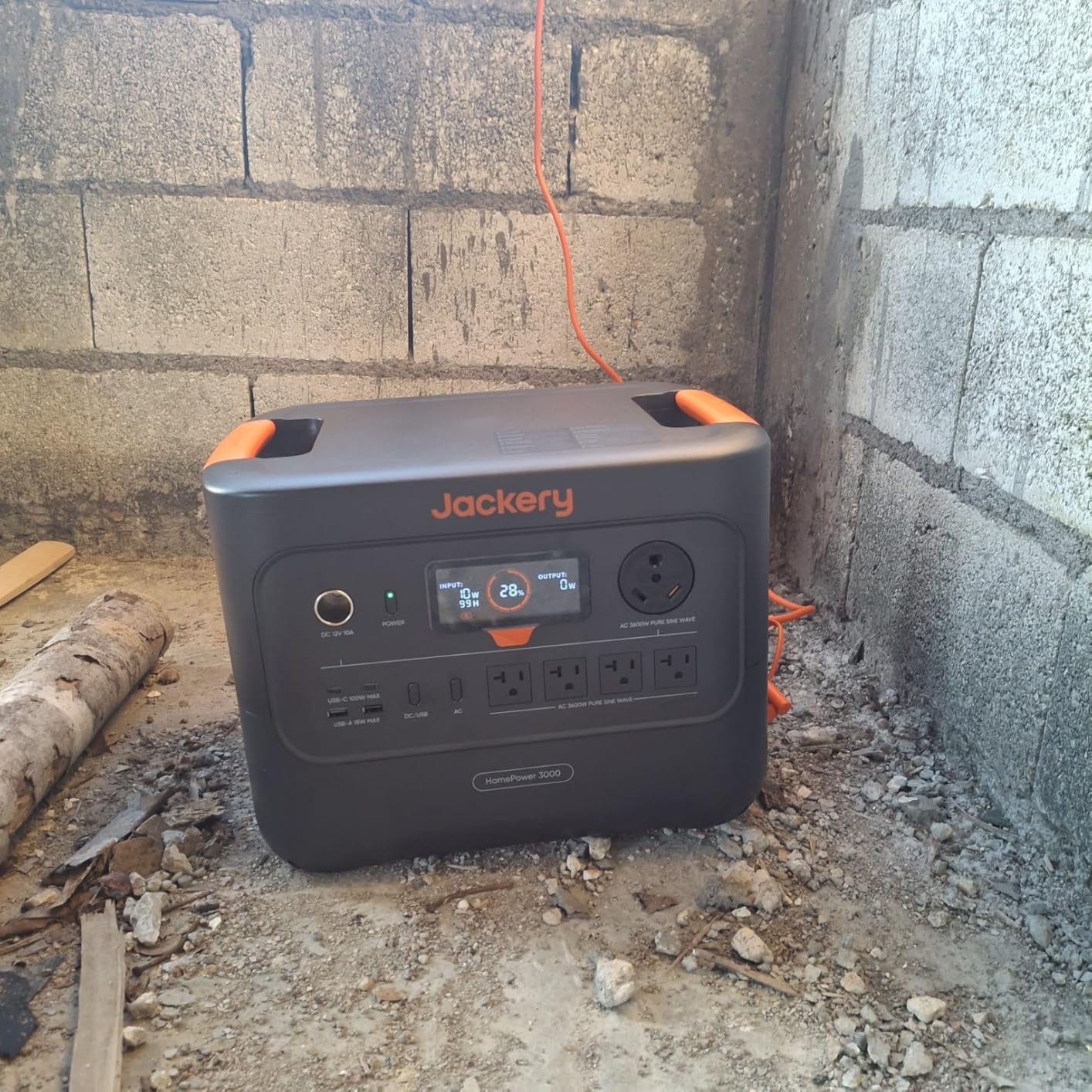
Charging is fast: full in 1.7 hours on hybrid AC and DC, 2.2 hours on AC alone, and 80 percent in about 9 hours with the two included 200W panels. The battery holds 70 percent capacity through 4000 cycles under ChargeShield 2.0 battery management.
Owners report running a camper air conditioner, a microwave, and a fridge for two days, which is a real off-grid workload rather than a spec sheet claim.
What it runs well
RV and van life, where the TT-30 RV port and dual 100W PD ports remove the need for adapters. Up to 15 hours of household use, and a fridge for one to two days per charge, covers most weekend and short outage scenarios.
The 20ms UL-certified UPS is aimed at security cameras, medical refrigerators, and routers, which is where a 20ms handoff is the difference between a reboot and no event at all.
Where it falls short
The battery pack is not expandable, so 3072Wh is the ceiling for the life of the unit. Buyers expecting to add capacity later should look at the EcoFlow DELTA 2 Max or the ABOK instead.
Alexa integration was promoted and does not work, and the UPS minimum load threshold is undocumented, so a very small load such as a single router may not stay online. Some buyers also report weak support experiences.
12. EF ECOFLOW DELTA Pro Ultra – Whole Home 240V Power That Scales to 90kWh
EF ECOFLOW Power Station 6144Wh DELTA Pro Ultra with 2x400W Portable Panel
6144Wh LFP
7200W on 120V and 240V
scales to 90kWh
2 hour full recharge
Pros
- Dual 120V and 240V output runs a 3 ton central air conditioner
- Scales from 6144Wh to 90kWh across 15 batteries
- Smart Home Panel gives instant whole circuit failover
- Full recharge in 2 hours from EV wall solar or generator
- Bundled 400W panels carry an IP68 rating
Cons
- EV charging tops out near 6100W rather than 7200W
- Battery percentage display drifts and needs full charges to recalibrate
- No built in alternator or DC-DC charging path
- 218 pounds is not a one person carry
The EF ECOFLOW DELTA Pro Ultra is the only unit here that replaces a home generator rather than supporting one. A single inverter delivers 7200W across both 120V and 240V, which is enough to run a 3 ton central air conditioner, and three inverters push that to 21.6kW.
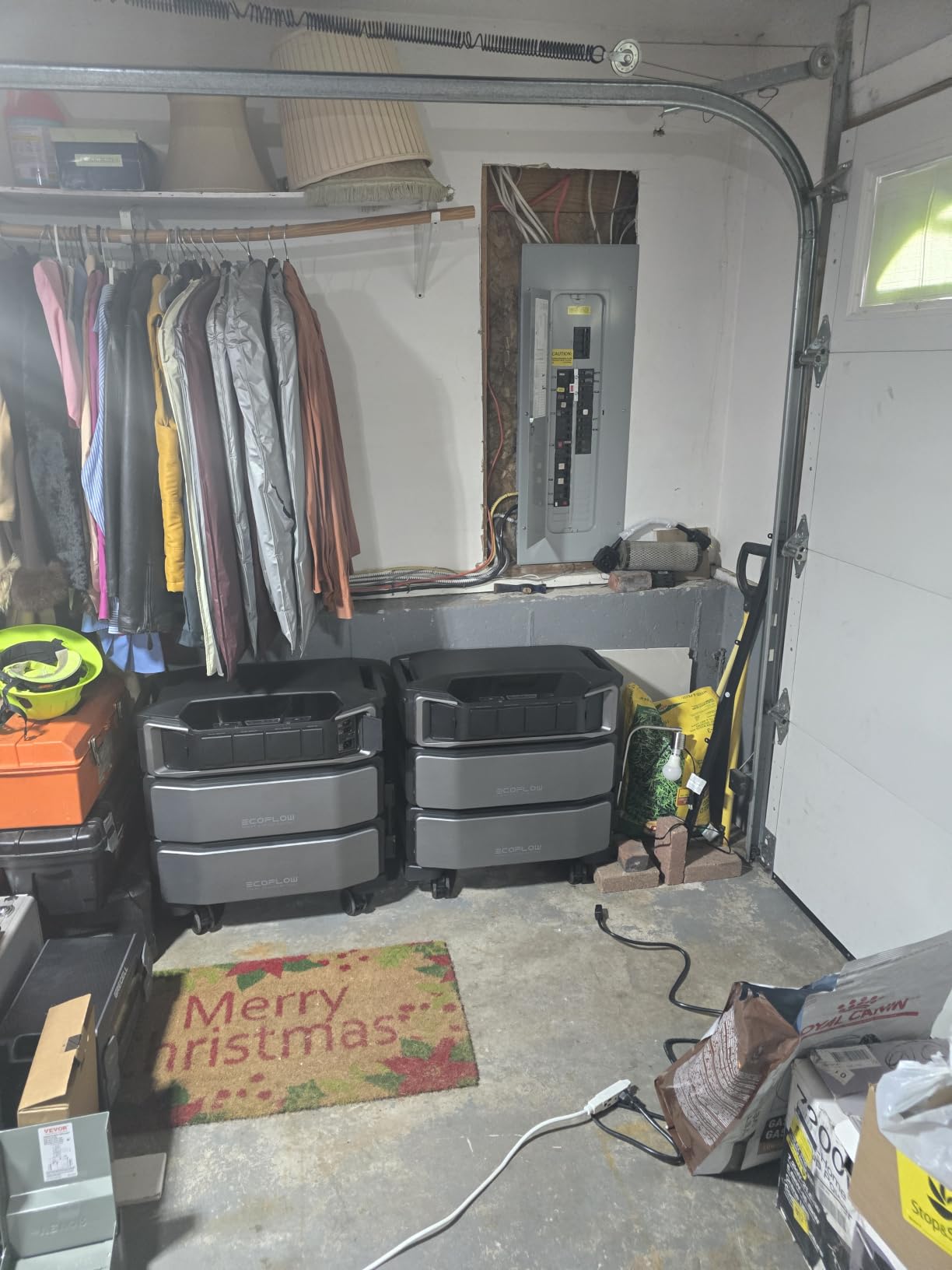
Capacity starts at 6144Wh and scales to 90kWh across 15 batteries, which EcoFlow frames as more than 30 days of essential power. Through the Smart Home Panel or a transfer switch, failure over is instant across whole circuits instead of outlet by outlet.
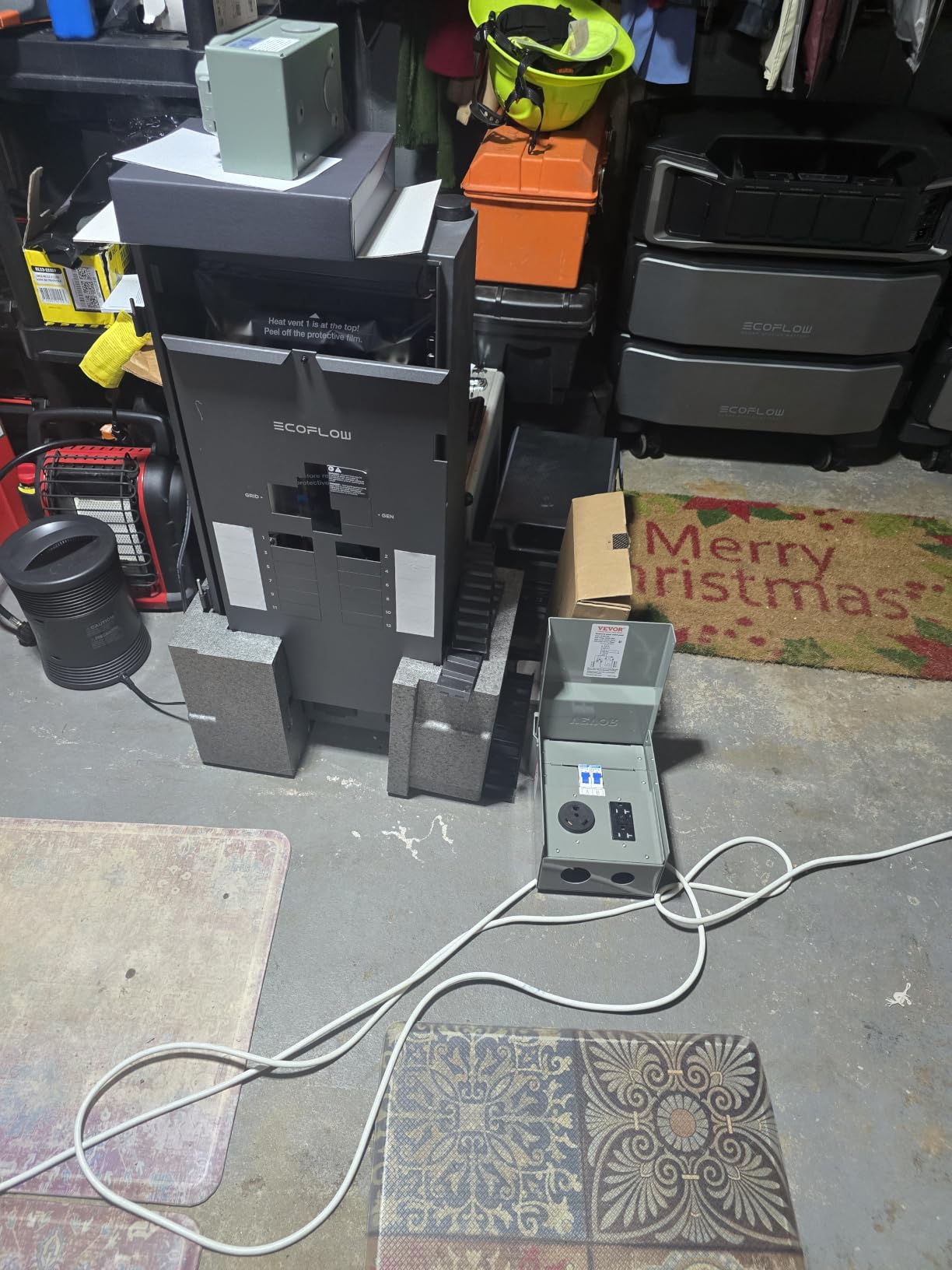
Charging is the fastest of any unit here, with a full recharge in 2 hours from an EV charger, a wall outlet, solar, or an outdoor generator. The bundle includes two 400W foldable panels rated IP68 for dust and water, weighing 16 kg each.
In prepper forum threads the DELTA Pro line comes up repeatedly for exactly this use, praised for 7200W output running central air, with weight as the recurring complaint. Installers running it through a Smart Home Panel report whole-home behaviour that smaller units cannot touch.
What it runs well
A house, not a circuit. Central air, well pumps, electric water heating, a full kitchen, laundry, and electronics during a multi-day grid failure, with 240V circuits included rather than emulated.
It is also the right choice for off-grid boaddocking or a cabin, where the EV charging path lets a vehicle with a standard outlet refill the battery overnight without a generator.
Where it falls short
It weighs 218 pounds and needs planned placement plus a second person. The 4.2 average in this roundup is the lowest, and it comes almost entirely from vanlife and camper owners, not from people using it as intended.
Those owners report battery percentage drift that needs periodic full charges to recalibrate, an LCD backlight that cannot be turned off at night, extra inverter heat that works a camper air conditioner harder, and no built-in alternator or DC-DC path. EV charging also tops out near 6100W instead of the advertised 7200W.
How Big of a Solar Generator Do You Need to Power a House?
The honest answer is that you size to your essential loads, not to the whole house. Most households that go through a 2 to 4 day outage end up running a fridge, a freezer, a router, lighting, a medical device, and maybe a laptop, which is a very different number than the nameplate wattage on a breaker panel.
Step 1: List the loads you actually want to run
Write down the appliances and the number of hours per day you want each one to run. A fridge cycling at roughly 6W of average draw is a very different animal from a 1500W space heater, and mixing the two in one estimate is the most common sizing mistake we see.
Ignore anything that only matters occasionally if the budget is tight. Watering plants, a dehumidifier, and a second freezer are reasonable first cuts for most homes.
Step 2: Turn watts into watt-hours
Multiply each appliance’s running watts by the hours you want it alive, then add the results together. That total is your daily energy budget in watt-hours, and your battery should cover at least one full day of it with margin.
A useful shortcut: a typical refrigerator averages 100 to 200W while its compressor runs and pulls 6 to 10W of average draw across a full cycle. Multiply the cycling figure by 24 hours, not the running figure.
Step 3: Account for depth of discharge and inverter losses
You will not get every advertised watt-hour out of the pack. Assume roughly 90 percent depth of discharge, and another 5 to 10 percent lost in the inverter, so plan on about 80 percent of the nameplate figure as your usable capacity.
A 2000Wh unit gives you roughly 1600Wh of real energy. This is the gap that makes advertised runtime look optimistic, and it is the single most common complaint in owner reviews across this category.
Step 4: Check continuous output and startup surge
Every motor-driven appliance draws several times its running wattage for a second at startup. A fridge compressor, a pump, and an air conditioner compressor all need surge headroom well above their steady draw, so buy on surge rating, not just continuous watts.
Pure sine wave output is worth insisting on for anything with electronics in it: CPAP machines, laptops, TVs, medical refrigerators, and audio gear. Every unit in this roundup meets that bar.
What Kind of Generator Is Best for Power Outages?
For most households, a battery solar generator is the better answer for the essentials, and a gas generator is still the better answer for heavy continuous loads. The most prepared owners keep both: battery for the fridge, the internet, the lights, and medical gear, gas for the well pump, the space heater, and the power tools.
LiFePO4 versus NMC batteries
Every product in this roundup uses LiFePO4, and that is not a coincidence. LFP cells are far more stable under heat and impact, tolerate thousands of deep cycles, and do not carry the same thermal runaway risk that keeps NMC chemistry in laptops rather than in rooms people sleep in.
The tradeoff is capacity per pound. LFP packs are heavier for the same watt-hours, which is exactly why the lightest 1kWh unit here is 23.8 pounds instead of something smaller.
UPS switchover time for medical devices
UPS mode keeps outlets powered and switches to battery when the grid fails. Switchover times in this group range from 10ms on the Anker SOLIX C1000 Gen 2, the BLUETTI Elite 100 V2, and the DELTA Pro Ultra, to 20ms on the Jackery and BLUETTI AC180 models.
For a CPAP machine, a router, or an oxygen concentrator, any of these figures is fast enough that the device does not restart. For a home medical refrigerator, check the minimum load threshold as well, because one of these units documents a UPS load floor that can drop a very small load.
Do solar generators work in winter?
They do, with two caveats. Panel output drops in winter because the sun sits lower and daylight is shorter, so a panel that refills the pack in three days in June may take a week in December, and snow coverage cuts output to nearly nothing until it clears.
The batteries are the second caveat. LiFePO4 charging slows or stops in freezing conditions, so keep the unit indoors and warm, and let it reach room temperature before charging it after a cold night. Charging from a wall outlet indoors sidesteps the problem entirely, which is the argument for a fast AC recharge path on the units above.
Transfer switch and Smart Home Panel integration
A portable power station plugged into a few outlets covers an outage for the outlets you thought of. A transfer switch or a Smart Home Panel, installed by a licensed electrician, brings the whole panel or a defined set of circuits under backup, which is the difference between backing up a room and backing up a house.
For anyone working through a kitchen rebuild or a new build, planning the outlet and circuit layout in advance saves a retrofit later. It also explains why a panel-ready system such as the DELTA Pro Ultra is the correct category for whole-home buyers rather than a stretch.
Noise, apps, and ecosystem lock-in
Quiet units cluster between 25 and 30dB, from the Delta 3 Ultra at 25dB to the DELTA 2 Max and BLUETTI Elite 100 V2 at 30dB. If the unit will sleep in your bedroom, measure that number before buying rather than after.
Watch expansion costs. OUPES scaling to 5120Wh and EcoFlow scaling to 6kWh are ecosystem-specific, and expansion batteries always cost more than a third-party pack would. App quality varies more than owners expect, with basic battery apps on some models and per-circuit visibility on others, and forced firmware behaviour is a recurring irritation in owner reviews.
Frequently Asked Questions
What kind of generator is best for power outages?
For most homes, a battery solar generator is the best choice for essentials because it runs silent, stores power safely indoors, and recharges from the sun or a wall outlet without gasoline. A gas generator still wins for heavy continuous loads such as space heaters, welders, and well pumps, so the strongest setups pair a battery unit for the fridge, internet, lights, and medical devices with a gas unit for everything else.
How big of a solar generator do you need to power a house?
Size it to the loads you want to keep running, not to the whole house. Add up the running watts of each essential appliance multiplied by the hours per day you need it, then plan for only about 80 percent of the nameplate watt-hours as usable capacity after depth of discharge and inverter losses. Most households covering a fridge, freezer, router, lighting, and a medical device for two to three days land in the 2kWh to 3kWh range.
What kind of generator do I need for a power outage?
Start by separating what must stay on from what can wait. A fridge, freezer, router, a few lights, phone charging, and any medical equipment belong on the must-stay-on list, and that usually needs between 1000Wh and 2500Wh of battery with at least 1800W of continuous output. Add a second battery, a transfer switch, or a bigger unit only if you also need heating, cooling, or well pump capacity.
Can a solar generator run an air conditioner?
Yes, but the air conditioner decides the size of the unit. A small window unit around 1000W can run on a 1kWh to 2kWh station, a large window unit needs a 2kWh class machine, and a 3 ton central air conditioner rated near 3600W needs a 3.6kW continuous system with 7200W of surge, such as the Delta 3 Ultra or a DELTA Pro Ultra installation. Remember that compressor startup draws several times the running wattage.
How long does a solar generator last?
There are two answers. Between outages, a unit left charged and topped up will hold its charge for months, and LiFePO4 chemistry loses very little capacity while sitting idle. During use, runtime depends on your loads: a 2000Wh pack gives roughly 1600Wh of usable energy after depth of discharge and inverter losses, which is about 35 hours on a 6W fridge draw, several days on a router and lights, and only a short burst on a 1500W appliance.
Our Final Verdict on the Best Solar Generators for Power Outages in 2026
The Jackery Explorer 1000 v2 takes our final verdict for the best solar generators for power outages because it is the rare unit that is light enough for one person, quiet enough for a bedroom, and rated for a 10 year-plus battery life, with the largest owner review base in the group backing it up.
Buy the Anker SOLIX C1000 Gen 2 instead if a 10ms UPS and a 49 minute recharge matter most, or the BLUETTI AC180 if you want more capacity, 500W solar input, and a 5 year warranty. Move up to the EcoFlow DELTA 2 Max when you want to grow toward 6kWh, and treat the Delta 3 Ultra, ABOK Ark3600, and DELTA Pro Ultra as whole-room and whole-home answers rather than portable ones.
Whatever you pick, top it off the night before a storm, test the UPS while the grid is live, and plan your load priority in advance. Keeping a freezer cold and the internet up for two days is a planning problem more than a shopping problem, and for the meals you can still cook, our healthy lunch ideas work fine without an oven.
