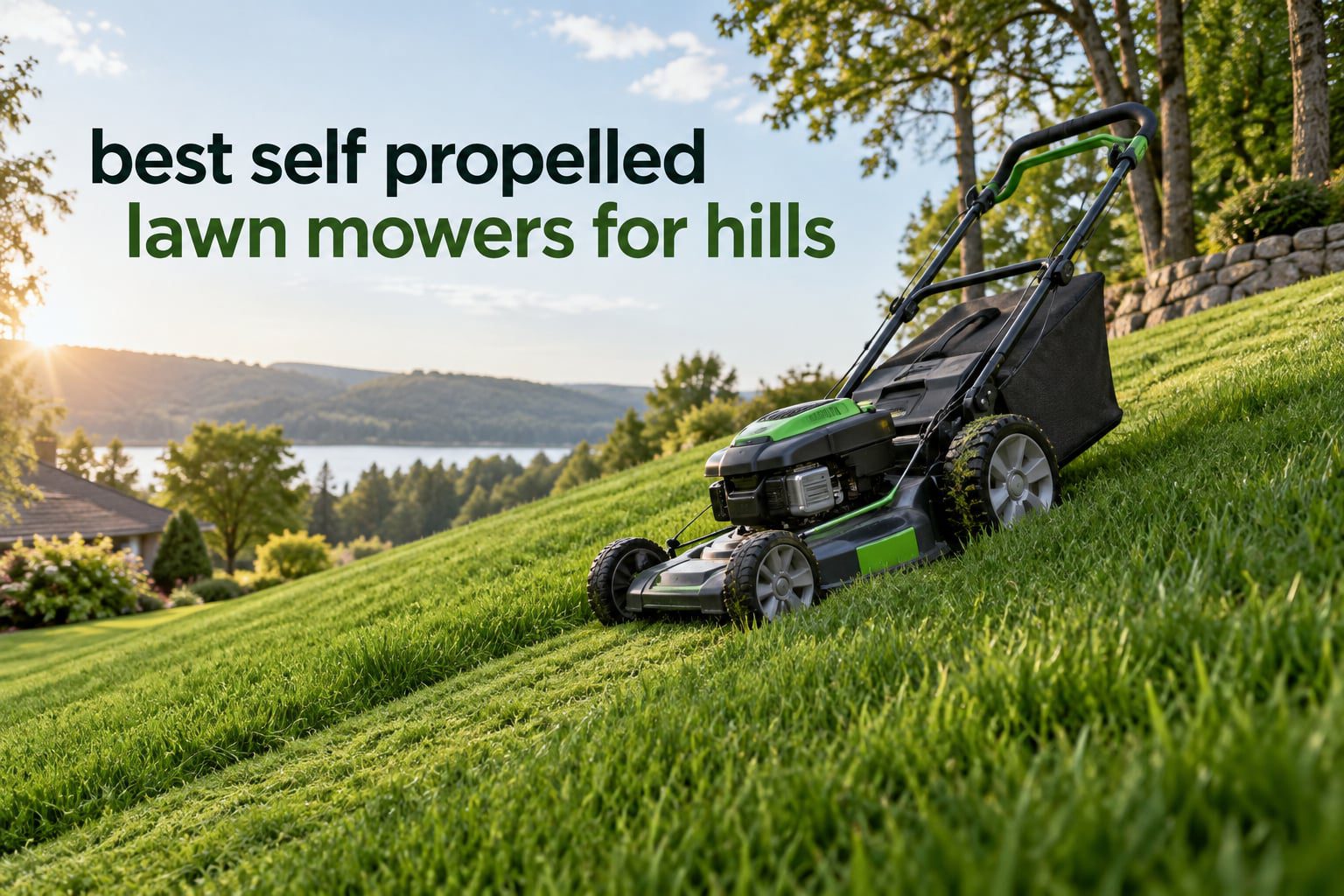
A self-propelled lawn mower is a walk-behind mower with a powered drive system that moves the machine forward at a speed you control, rather than relying on you to push it. On a hill, that drive force is the whole argument: the engine or motor has to keep the blades turning while gravity is pulling the machine back down the grade.
Most self-propelled mowers do that job well on a gentle rise and struggle on a serious one. The difference comes down to which wheels are driven, how much torque the drive system puts down, how much the machine weighs, and whether you can slow the drive to match your footing. We went through ten self-propelled mowers and graded every one on that basis.
One note on method. We built this list from manufacturer specifications and a large body of owner reviews, and we grade slope ability against how owners describe using each machine. None of the ten mowers we analyzed carries a published all-wheel-drive system, so the top of this list is rear-wheel drive done well, not AWD.
Table of Contents
- Top 3 Self-Propelled Mowers for Steep Hills in 2026
- Quick Comparison: Best Self Propelled Lawn Mowers for Hills in 2026
- 1. Greenworks 80V 21in Brushless Self-Propelled: Best Overall for Hills
- 2. EGO POWER+ LM2135SP: Best-Rated Mower for Sloped Yards
- 3. Greenworks 60V 21in Two-Battery Kit: Best Value for Slopes
- 4. YARDMAX 22in 201cc Select PACE: Best Gas Drive for Steep Slopes
- 5. SENIX 22in 201cc Rear-Wheel Drive: Best Torque for Big Hills
- 6. PowerSmart 22in 170cc: Best Budget Mower for Gentle Hills
- 7. EGO POWER+ LM2134SP-2: Best Long-Run Mower for Hill Days
- 8. EGO POWER+ LM2114SP: Best for Tight, Steep Hillsides
- 9. Greenworks 40V 21in Brushless: Best for Small Sloped Yards
- 10. SKIL PWR CORE 40 20in: Best for Narrow Hill Paths
- All-Wheel, Rear-Wheel or Front-Wheel Drive on Hills
- How to Mow a Hill Without Losing the Machine
- What to Check Before You Buy a Mower for Hills
- When a Walk-Behind Mower Is the Wrong Tool
- Frequently Asked Questions
- The Bottom Line for Hilly Yards in 2026
Top 3 Self-Propelled Mowers for Steep Hills in 2026
Here is the short answer first. For most hilly yards, the Greenworks 80V 21in brushless self-propelled mower is the pick, because rear-wheel drive and 80V torque handle climbs without pushing. If your hill is severe and you want the highest satisfaction score in the group, the EGO LM2135SP leads on owner ratings. For long uphill days and maximum control over pace, the EGO LM2134SP-2 gives you the widest speed range and the longest runtime here.

Greenworks 80V 21in Brushless
- Rear-wheel drive
- 80V brushless motor
- Up to 45 min runtime
- 21 inch steel deck


Greenworks 60V Two-Battery Kit
- Rear-wheel drive for slopes
- Two 4.0Ah batteries
- 4-in-1 with leaf pickup
- LED headlights
Quick Comparison: Best Self Propelled Lawn Mowers for Hills in 2026
All ten mowers below have a self-propelled transmission. The drive layout and torque figures are the two columns that decide whether each one can hold a slope, and they are the basis for the ordering of the reviews.
| Product | Specs | Action |
|---|---|---|
| Greenworks 80V 21in Brushless |
|
Check Latest Price |
| EGO LM2135SP |
|
Check Latest Price |
| Greenworks 60V Two-Battery Kit |
|
Check Latest Price |
 YARDMAX 22in 201cc Select PACE YARDMAX 22in 201cc Select PACE |
|
Check Latest Price |
 SENIX 22in 201cc Rear-Wheel SENIX 22in 201cc Rear-Wheel |
|
Check Latest Price |
 PowerSmart 22in 170cc PowerSmart 22in 170cc |
|
Check Latest Price |
 EGO LM2134SP-2 EGO LM2134SP-2 |
|
Check Latest Price |
 EGO LM2114SP EGO LM2114SP |
|
Check Latest Price |
 Greenworks 40V 21in Brushless Greenworks 40V 21in Brushless |
|
Check Latest Price |
 SKIL PWR CORE 40 20in SKIL PWR CORE 40 20in |
|
Check Latest Price |
1. Greenworks 80V 21in Brushless Self-Propelled: Best Overall for Hills
Greenworks 80V 21″ Brushless Cordless (Self-Propelled) Lawn Mower (75+ Compatible Tools), 4.0Ah Battery and 60 Minute Rapid Charger Included
80V brushless motor
Rear-wheel drive
Up to 45 min runtime
21 in steel deck
Pros
- Rear-wheel drive climbs steep banks reliably
- SmartCut ramps power in tall grass
- 45 minutes per 4.0Ah charge
- Vertical storage
- no oil or pull start
Cons
- Drive motor takes 2-3 seconds to spin up
- No genuinely slow self-propel speed
- Spring-loaded rear wheels can float over bumps
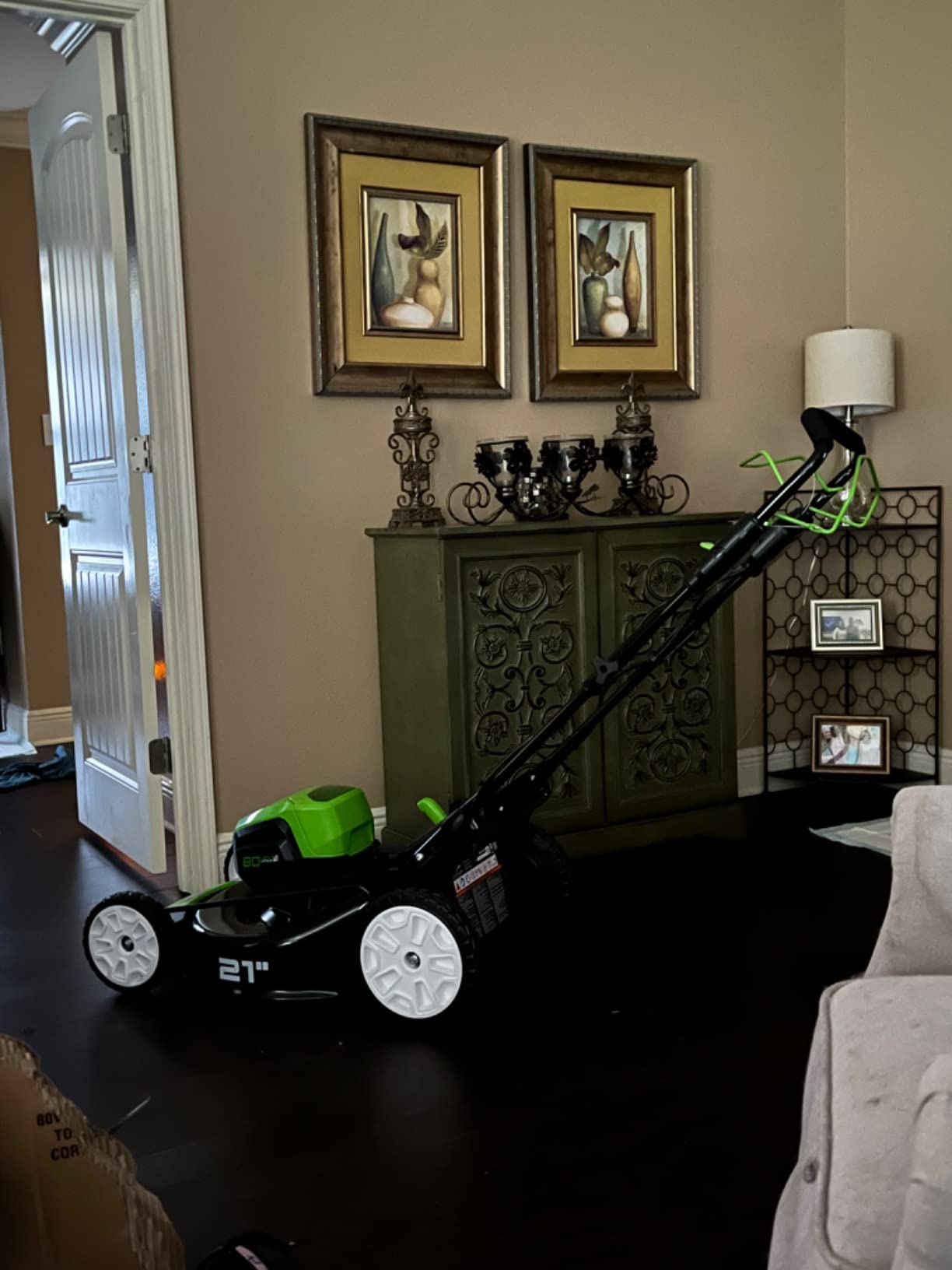
This is the mower we would put on a genuinely sloped yard first. The drive is rear-wheel with variable speed control, and owners repeatedly describe it powering up steep banks without a fight, including ditch banks other walk-behinds refused. The 80V brushless motor has gas-equivalent punch, and SmartCut senses grass load and raises power on the way up a grade instead of bogging down.
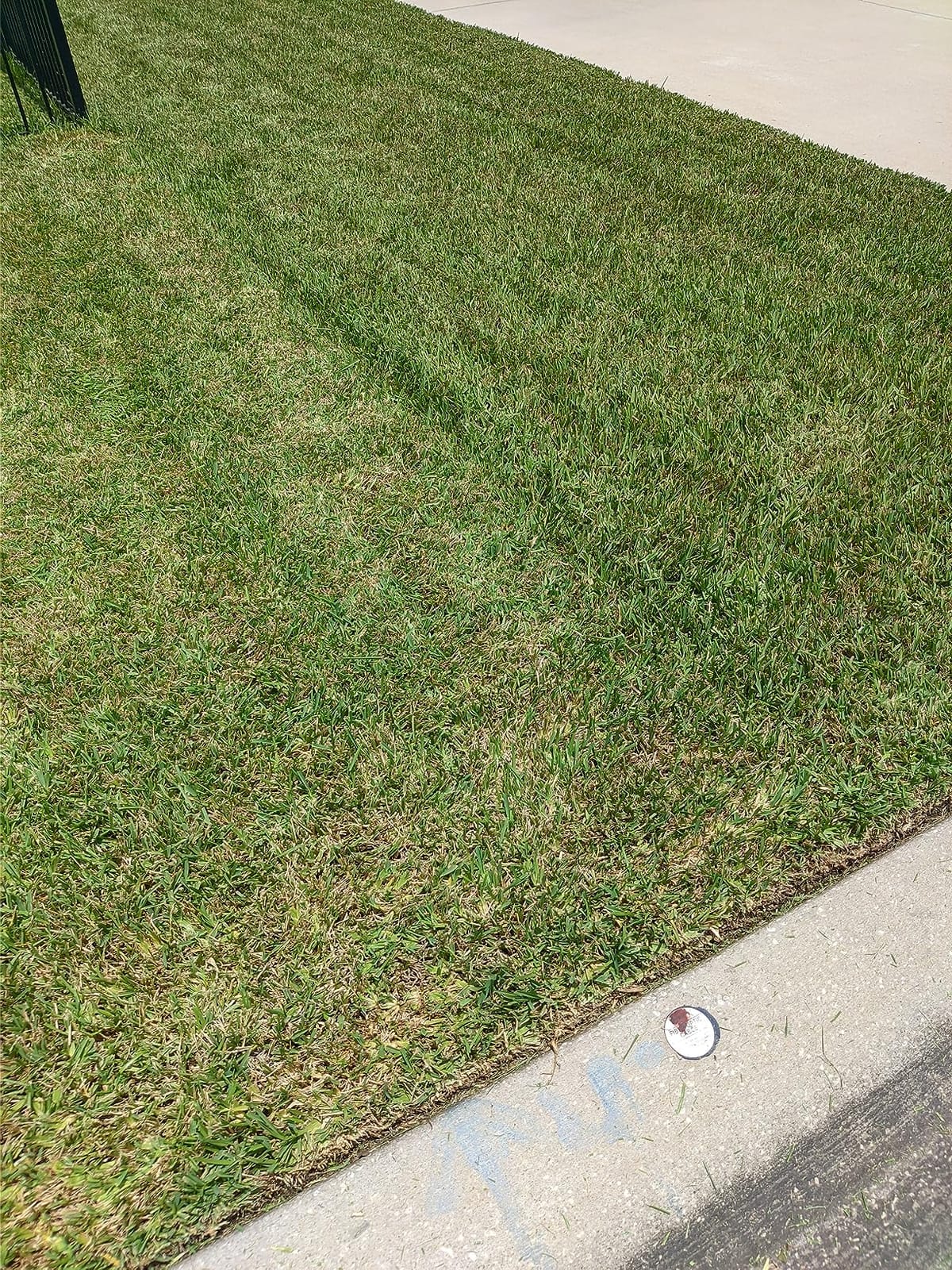
Rated 4.3 across 1701 reviews, this is the most-reviewed machine in our list, and long-term owners report dozens of mowings without a breakdown. The 21 inch steel deck takes mulch, rear bag or side discharge from a single height lever.
The honest weakness is control at walking pace. The slowest self-propelled setting is still faster than a slow walk, and the drive motor needs a couple of seconds to reach speed, which makes the start of a pass on a hill slightly less precise. Spring-loaded rear wheels are the other recurring complaint, letting the deck float over bumps.
What owners confirm about the drive
Across owner reviews the drive system, not the blade, is what gets praised. The rear wheels are what make the machine manageable on a grade, and one practical benefit is that the drive can power the machine with the blade off, so getting it back to the garage does not mean dragging 64 pounds uphill by hand.
Where it falls short on a hill
If your slope is wet grass or morning dew, traction drops for every mower here. The 45-minute runtime is also a manufacturer figure measured on level ground, so budget for a second pack on a full afternoon of hill work.
2. EGO POWER+ LM2135SP: Best-Rated Mower for Sloped Yards
EGO POWER+ Cordless Electric Lawn Mower, Self-Propelled, Includes 56V 7.5Ah Battery and Rapid Charger (LM2135SP) Plus Extra 5.0Ah Battery (BA2800T)
7.0 ft-lbs torque
56V 7.5Ah plus 5.0Ah
Select Cut blades
8 height positions
Pros
- Highest rating in the group at 4.7
- Self-propel called a lifesaver on sloped yards
- Two batteries cover a half acre
- Handles overgrowth well
Cons
- Self-propel does not always engage first press
- Battery life drops in tall or wet grass
- Extra battery sold separately
This is the highest-rated machine we analyzed. At 4.7 with 84 percent five-star ratings, there is very little owner disagreement about cut quality or build. The hill story is the model’s defining trait: owners on mountainous and badly sloped yards describe the self-propel as the feature that made the yard mowable.
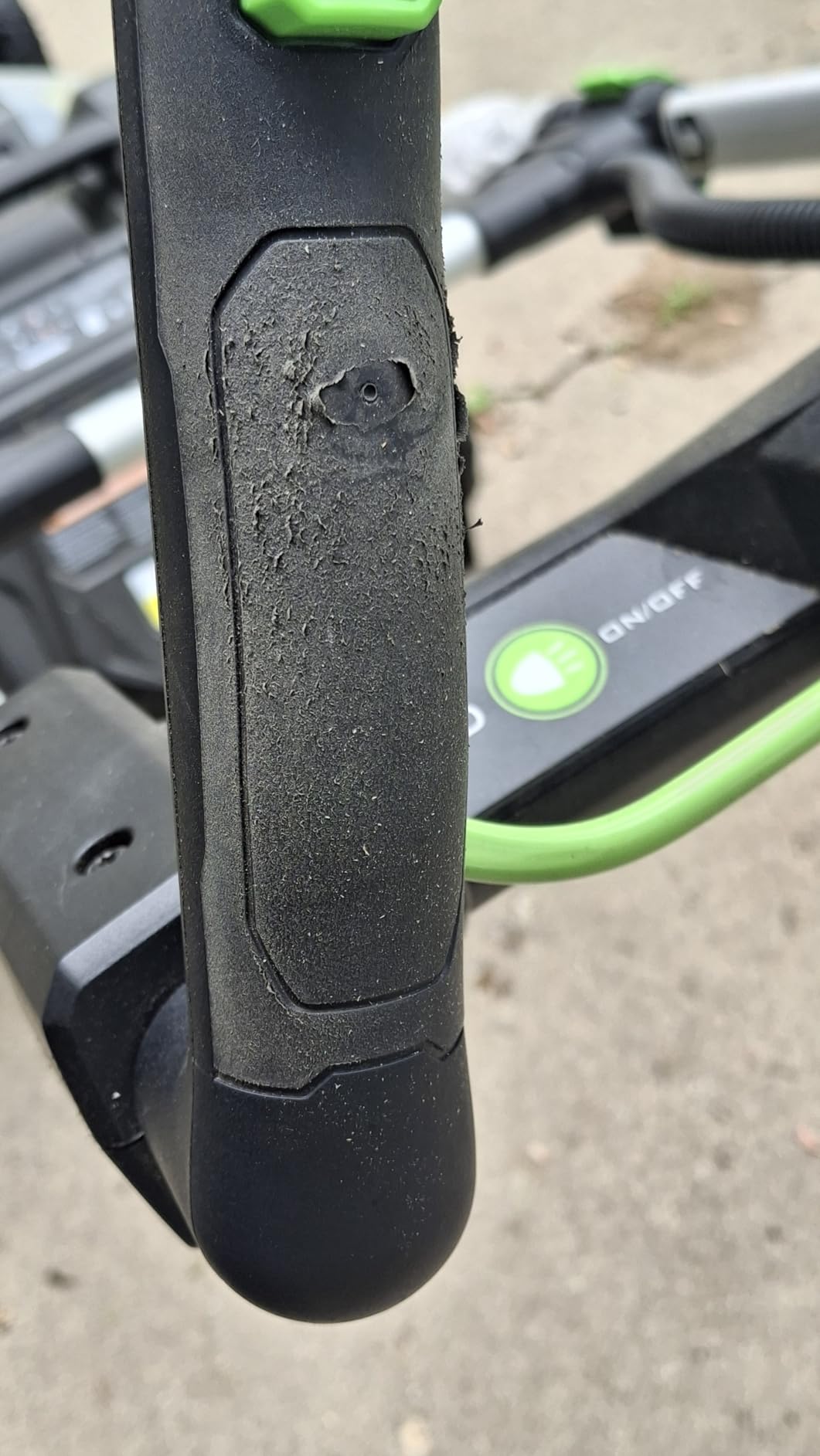
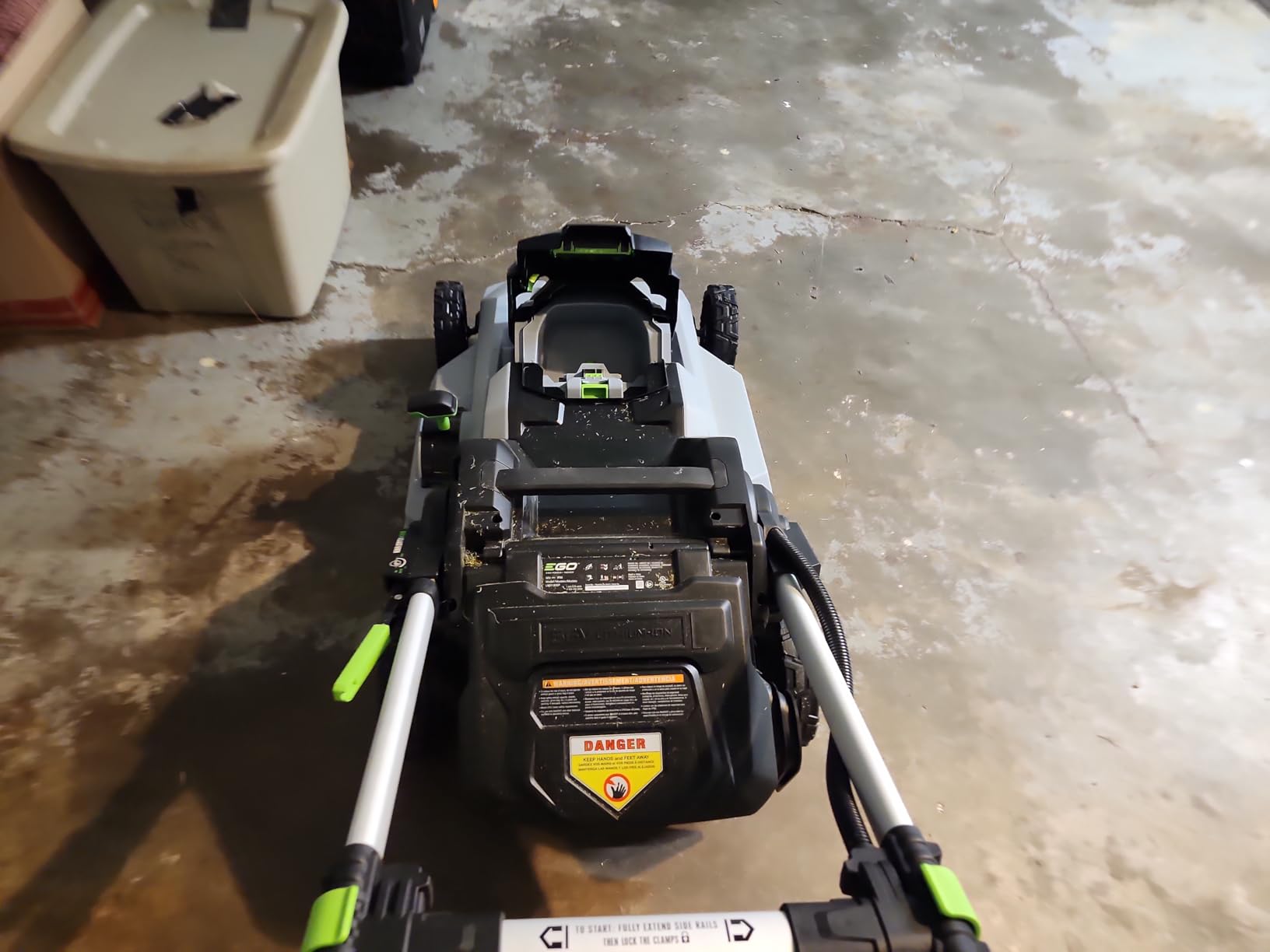
You get a 56V 7.5Ah battery plus a 5.0Ah pack, and two packs cover roughly a half acre on one charge cycle, which is most sloped suburban yards. Touch Drive self-propel engages with palm pressure and the speed is set on a dial, so you can creep up a steep pitch at a pace your feet can support.
Owners also like that it cuts better than the gas mowers they replaced, that the adjustable handle suits a range of operators, and that Select Cut lets you drop to extended-runtime lower blades when a high-lift bag fills too fast on a grade.
Why it earns the top rating
Consistency is the reason. When a machine has this few recurring complaints across hundreds of reviews, the daily experience is predictable, and predictability matters more on a slope than raw specification.
Where it disappoints
Some owners report the self-propel fails to engage on the first press, and you have to squeeze again. On a slope that is more irritating than it sounds, because you are already managing balance. Battery life also drops in high or wet grass, and the platform is EGO-specific, so expanding means buying into the same 56V ARC ecosystem.
3. Greenworks 60V 21in Two-Battery Kit: Best Value for Slopes
Greenworks 60V 21in Self-Propelled Lawn Mower, (2) 4.0 Ah Battery Kit
60V brushless motor
Two 4.0Ah batteries
Rear-wheel drive
4-in-1 with leaf pickup
Pros
- Drive designed for slopes and thick grass
- Two batteries cover up to 3/4 acre
- LED headlights for dawn mowing
- 4-year tool and battery warranty
Cons
- 65 pounds is heavy on uneven ground
- Plastic construction feels less durable than steel
- Two small packs need swapping for big jobs
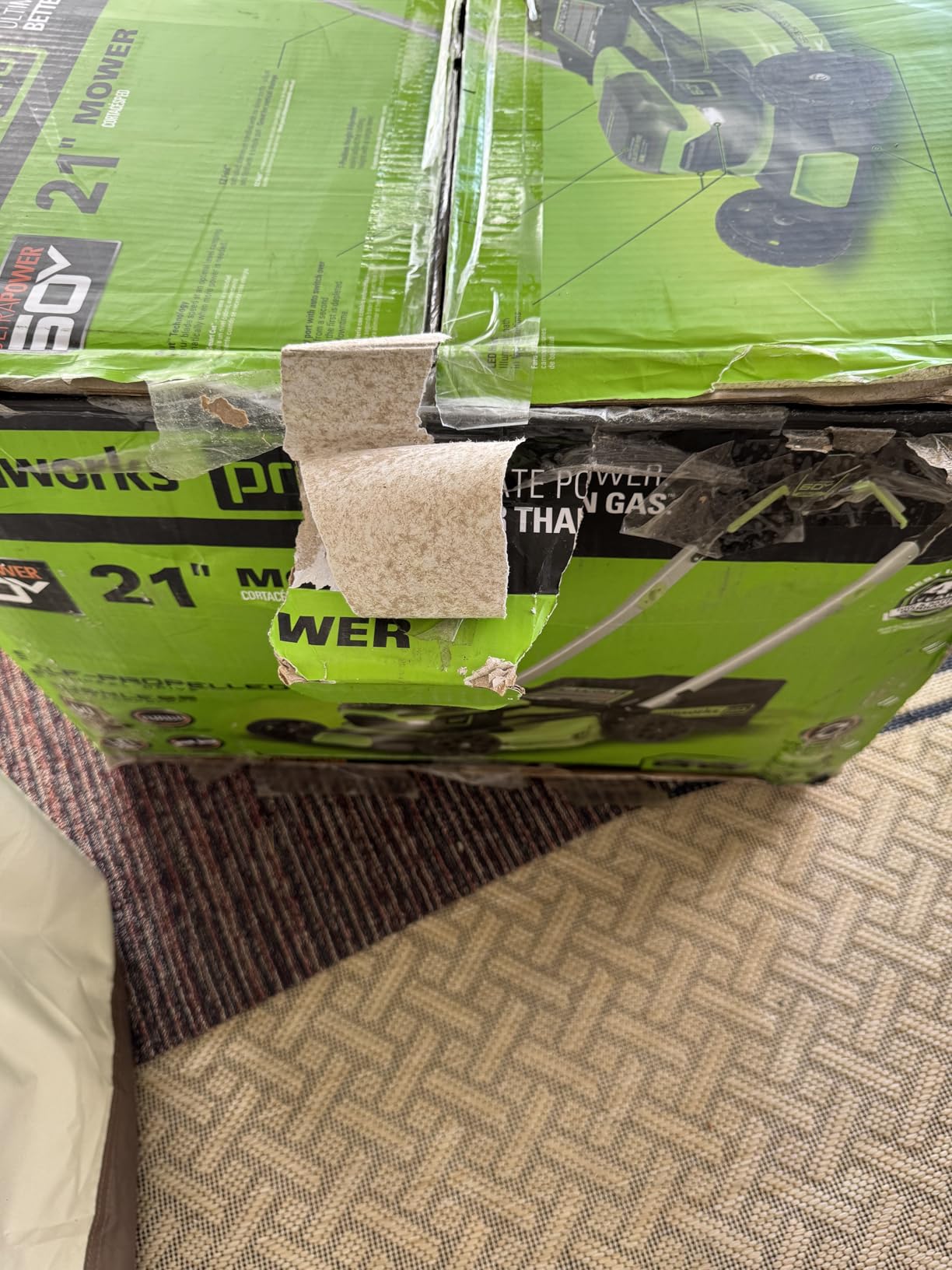
Leaf pickup on a slope is where this one separates from the other Greenworks. The 4-in-1 system adds a turbo leaf pickup mode, which is useful on a hillside where debris collects at the bottom of the grade. The rear-wheel drive is specified for traction on slopes and thick grass, with on-the-go speed adjustment so you can drop the pace as the grade steepens.
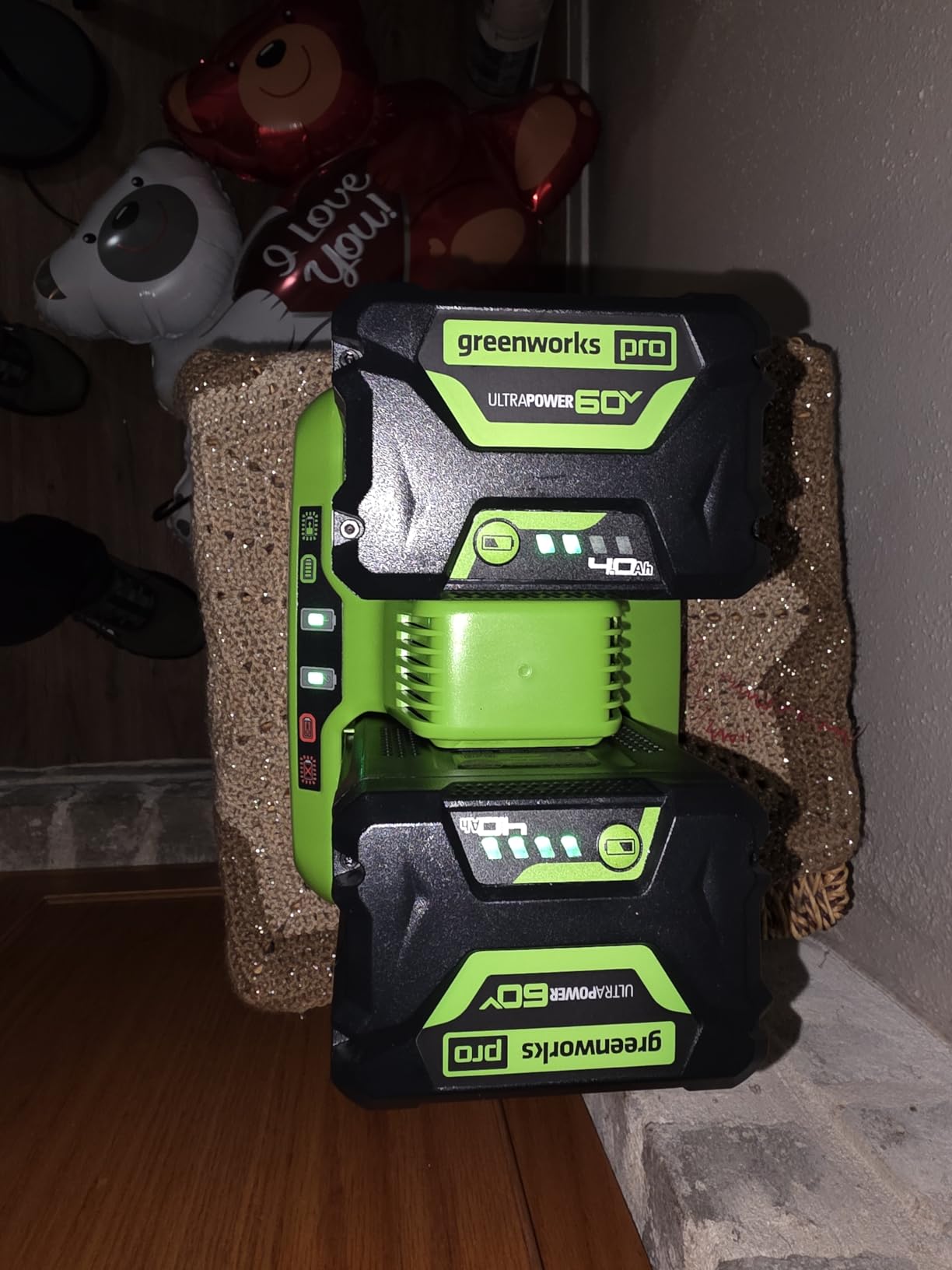
Two 4.0Ah batteries cover up to three-quarters of an acre per charge, LED headlights let you finish the shaded side of a slope at dusk, and the machine runs roughly three times quieter than a gas mower. At 4.4 from 619 reviews it sits near the top of our rating spread, with a 4-year tool and battery warranty behind the drive train.
How it handles a loaded bag on a climb
Bagging on an incline is where rear-wheel drive earns its keep, because the extra weight behind the axle gives the drive wheels something to push against. Keep your passes across the slope rather than pointing downhill, and use the leaf pickup mode in autumn when wet leaves turn the ground slick.
Where the weight works against you
At 65 pounds this is a heavy cordless mower, and on uneven ground the drive is not a convenience but a requirement. Turning on a side slope with the drive disengaged is the moment owners complain about most. Two small packs also mean a mid-session swap on a large property.
4. YARDMAX 22in 201cc Select PACE: Best Gas Drive for Steep Slopes
YARDMAX 22 in. 201cc Select PACE 6 Speed CVT High Wheel FWD 3-in-1 Gas Walk Behind Self Propelled Lawn Mower, Black (YG2860)
201cc gas engine
Select PACE CVT 6-speed
High-wheel front drive
Spiked tire tread
Pros
- Smoothest gas speed variation in the group
- Spiked high-wheel tires bite on slopes
- Automatic choke means no priming
- Deck cleanout port
Cons
- Lowest rated here at 4.0 with a 17 percent one-star share
- 84.9 pounds is a heavy load on a grade
- Spiked tread is rough on paths
This is the only high-wheel front-wheel drive mower in the group, and that changes how it behaves on a slope. Large front wheels roll over ruts and soft ground instead of dropping into them, and the spiked rubber tread is designed to bite. The Select PACE CVT with a 6-speed shift lever gives the smoothest speed variation of any gas machine here, and on a hill that matters more than raw engine size.
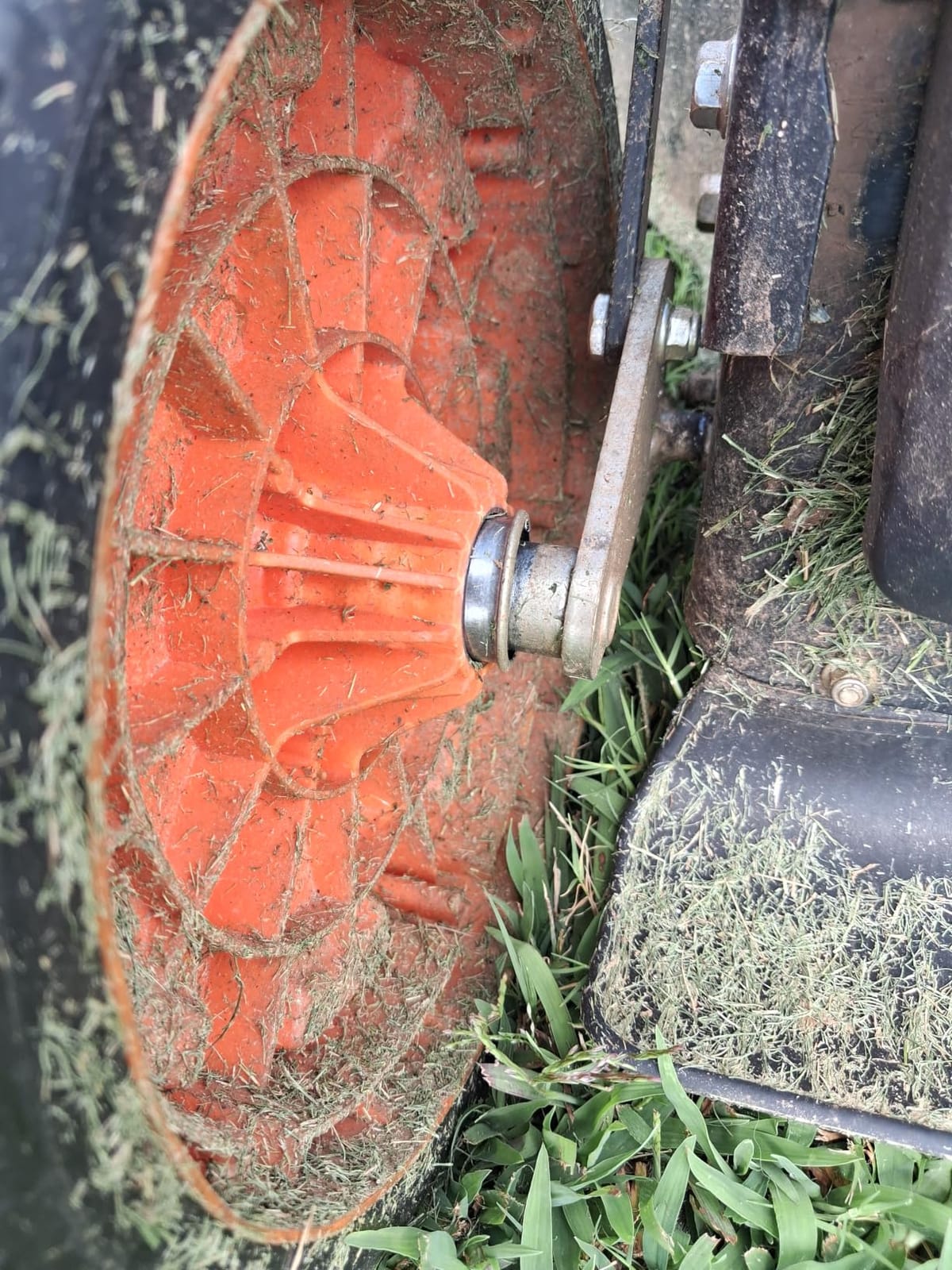
The 201cc engine runs an automatic choke, so there is no priming and no manual choke lever to fumble at the start of a pass. A deck cleanout port is a hill-specific convenience: when clippings pack into the underside of the deck on soft sloping turf, you can clear it without tipping the machine over. The trade for all that drive hardware is weight. At 84.9 pounds the self-propel is effectively mandatory.
Why front-wheel drive can still work uphill
Front-wheel drive has a reputation problem on hills, and the reason is usually a small caster wheel spinning in soft turf. The high-wheel design addresses exactly that: a tall front wheel has more contact patch and less tendency to climb out of the ground and slip. On a firm, well-drained slope it holds its line.
Where it is the wrong call
At 4.0 with a 17 percent one-star share, this has the widest rating spread in the group. Spiked tread that helps on a grade is aggressive on manicured lawns and paths, and on soft ground after rain an 84.9-pound machine on front drive is a harder setup than the same weight on rear wheels.
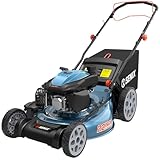
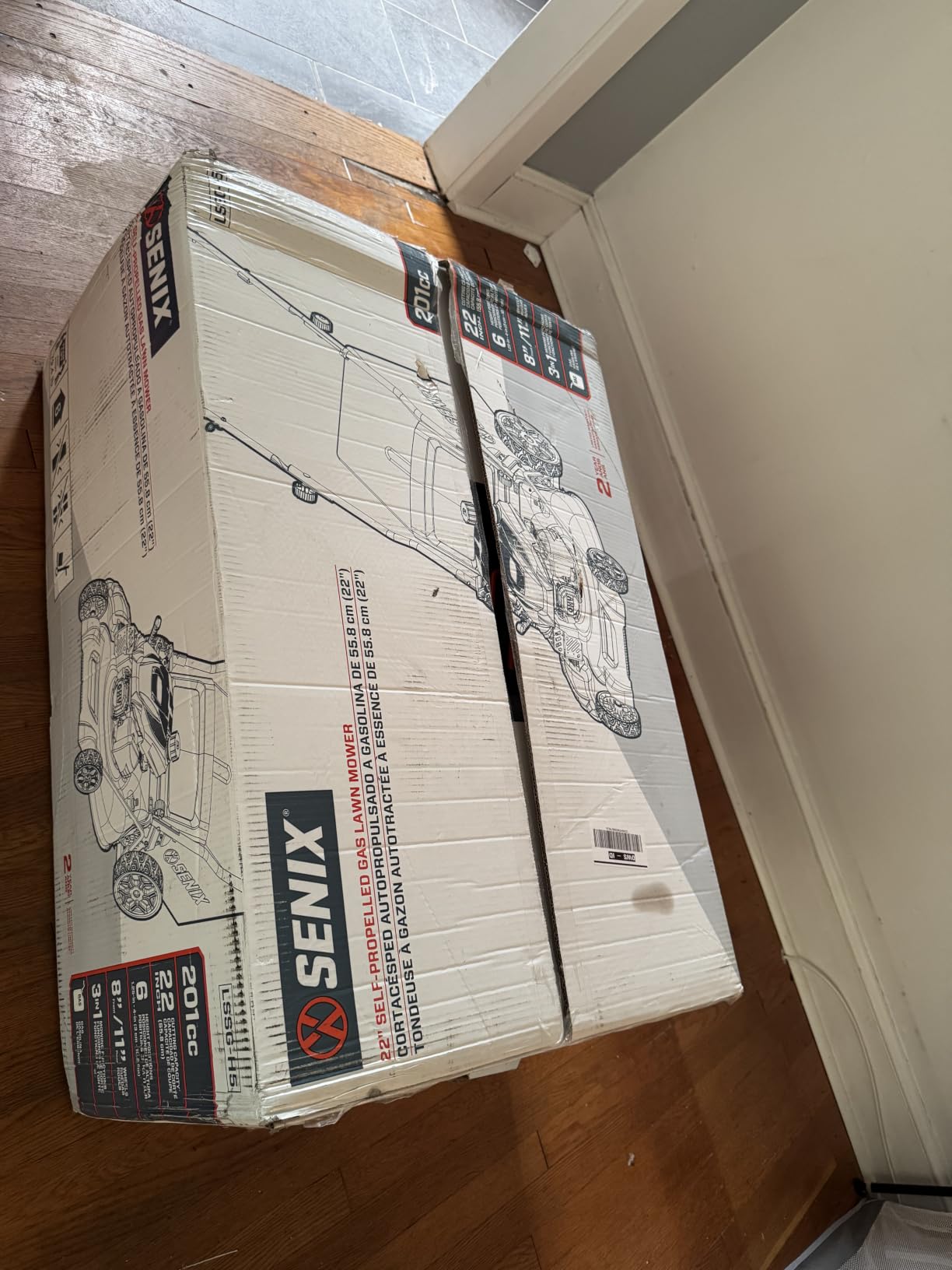
5. SENIX 22in 201cc Rear-Wheel Drive: Best Torque for Big Hills
SENIX 22Inch 201cc 3-in-1 Gas Lawn Mower, Rear Wheel Self-Propelled Mower
201cc OHV engine, 8.8 ft-lb
Rear-wheel drive to 2.9 MPH
22 inch steel deck
6 height positions
Pros
- 8.8 ft-lb of torque in thick uphill grass
- High-strength steel deck resists impact
- Vortex airflow cuts clumping
- 22 inch deck means fewer passes
Cons
- Single-speed drive gives no pace control
- Fuel and oil maintenance required
- 72 pounds is heavy for hill work
This is the torque play. A 201cc OHV four-cycle engine producing 4.7 horsepower and 8.8 ft-lb of torque is the most engine output in the group, and engine output is what pushes through a climb when the grass is long. The drive is rear-wheel, the layout we would want on a steep grade, because the driven wheels sit behind the center of gravity and take the weight as the machine leans back uphill.
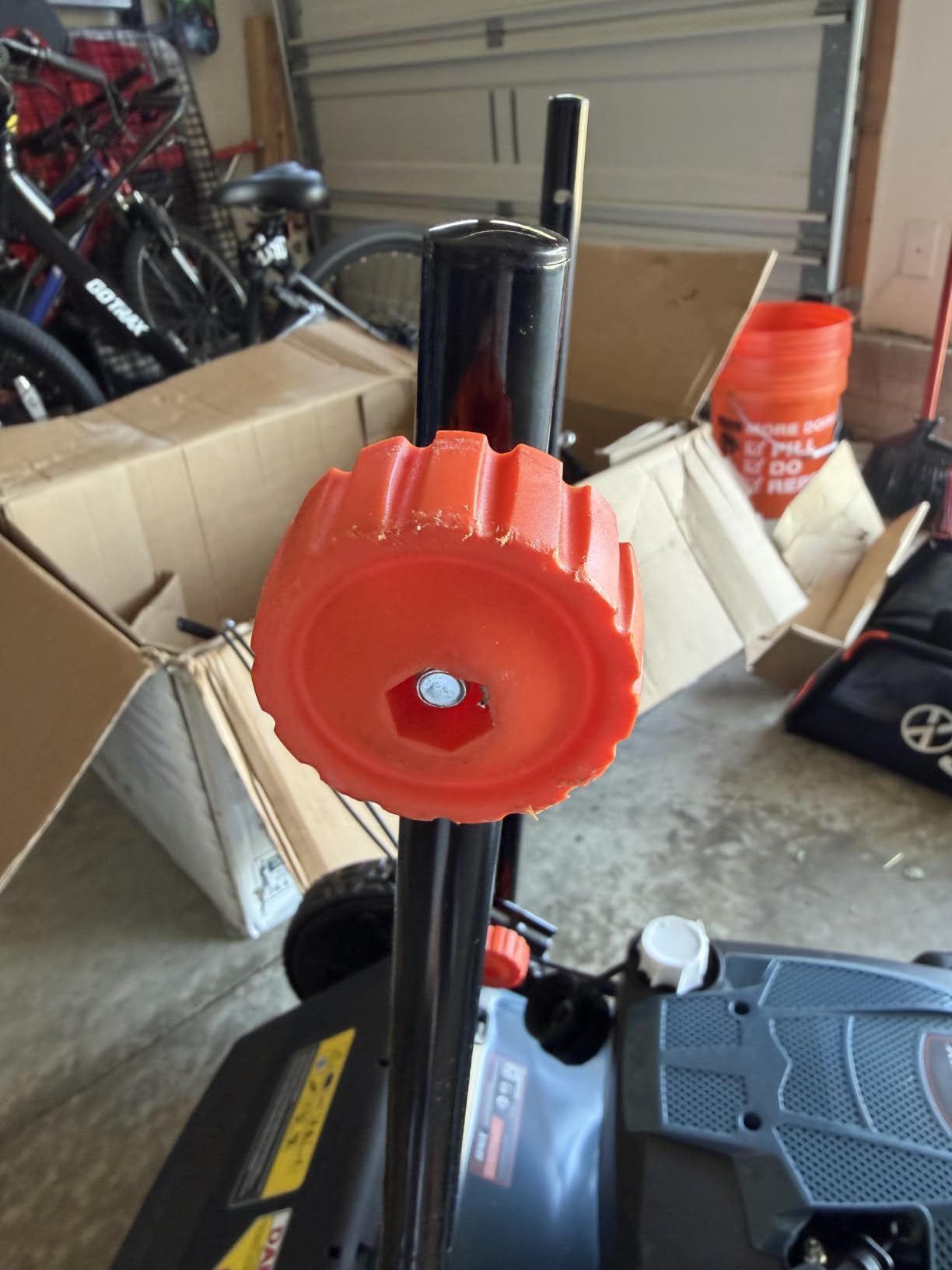
The deck is a high-strength steel design with a vortex tunnel airflow pattern, rated for lawns up to about 11/20 acre. Manganese steel alloy blades at 45 to 50 HRC hold an edge when grass has grown long over a wet week, and there is no battery to deplete halfway up a hill.
When raw torque beats a variable drive
On overgrowth and on a hill that has not been cut in weeks, torque decides the outcome. A high-torque engine keeps blade RPM up under load instead of bogging, so you make one clean pass rather than two slow ones. Fuel is also a logistics advantage: you refill in under a minute.
Where the single-speed drive hurts you
One speed is the main hill limitation here. When you need to creep down a steep face, a fixed 2.9 MPH cannot be slowed the way a CVT or a dial-controlled drive can, and at 72 pounds the gas package also means fuel storage, oil changes and a recoil start.
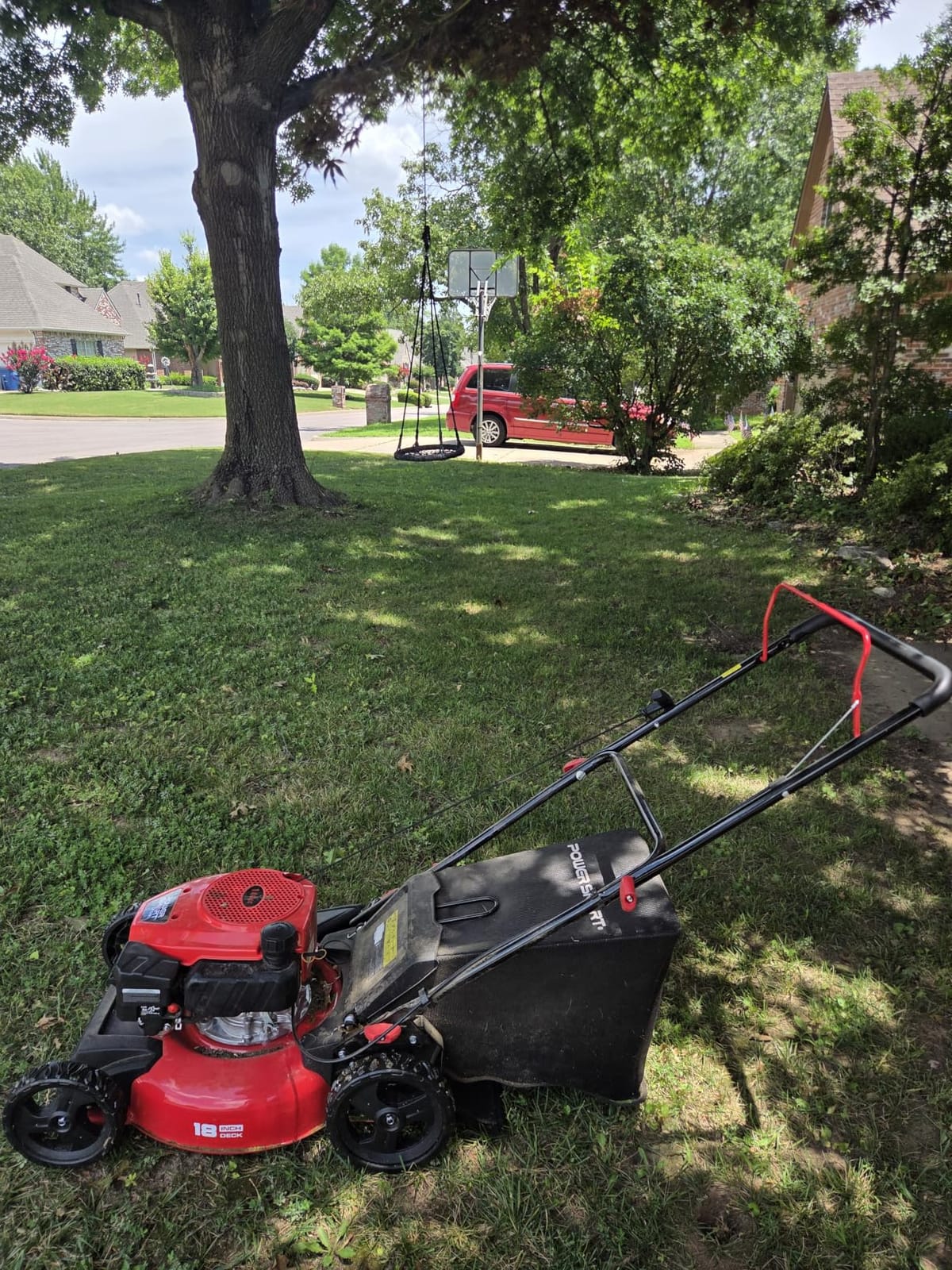
6. PowerSmart 22in 170cc: Best Budget Mower for Gentle Hills
PowerSmart 22-Inch 170cc Self Propelled Gas Lawn Mower
170cc OHV engine
Rear-wheel drive
22 inch steel deck
6 height positions
Pros
- Rear-wheel drive improves traction on slopes
- Large 60L bag means fewer stops on a climb
- Steel deck and heavy-duty blade
- Auto choke starting
Cons
- 170cc has less torque than the 201cc gas options
- Narrowest height range in the group
- 75 pounds is heavy for hill work
- Rear discharge only
This is the entry point for a yard with a moderate rise rather than a cliff. The rear-wheel drive is specified for traction on slopes and uneven terrain, and on a gentle grade that is all you need to make the machine feel self-propelled. The 22 inch steel deck with a heavy-duty blade is a sensible build for repeated seasons.
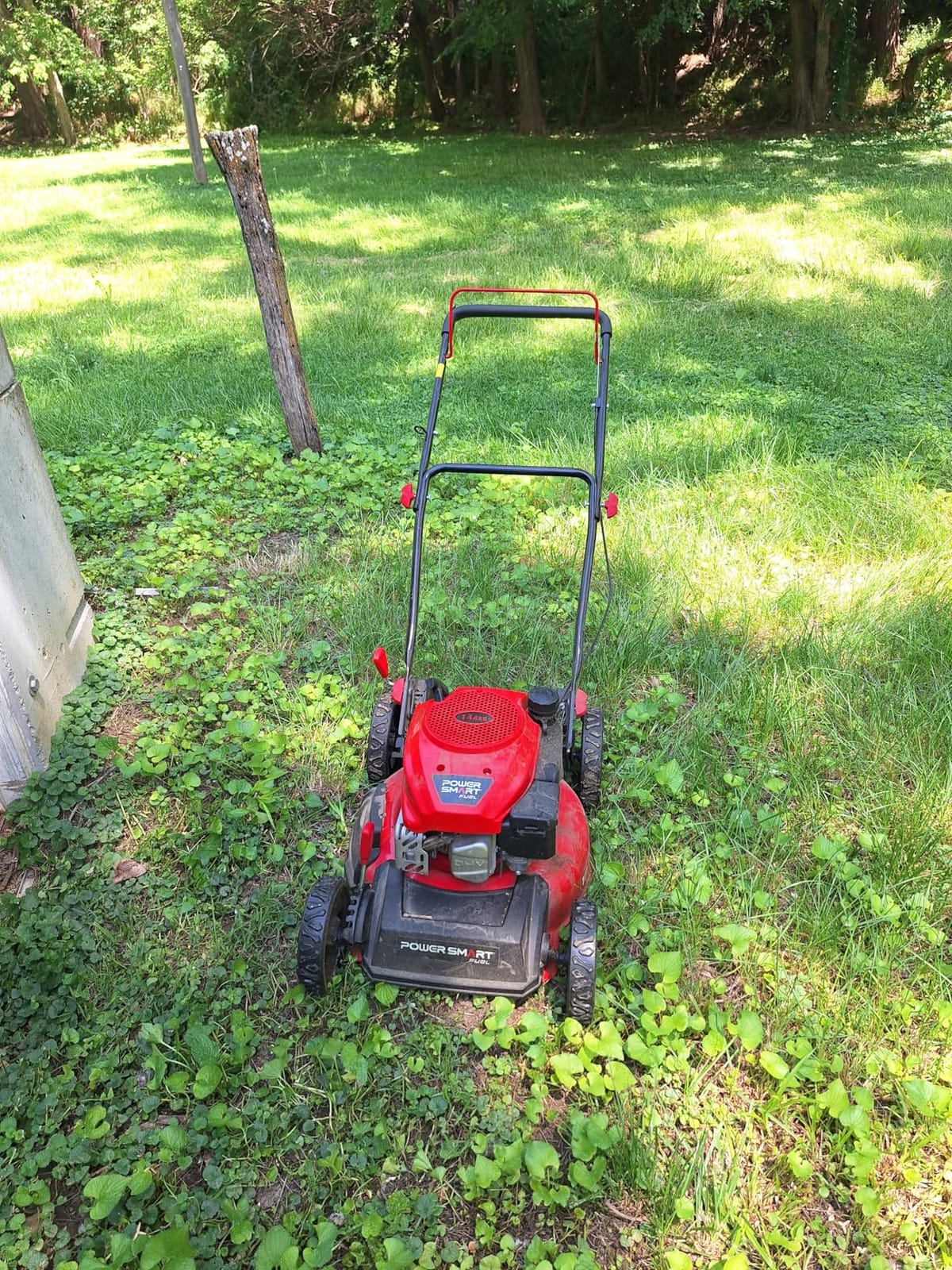
The 60L grass bag is unusually large for the class, and on a slope that is a genuine advantage. Fewer stops on a climb means fewer times you have to re-establish your footing with a heavy machine, and six-position height adjustment from 1.5 to 3.9 inches covers the taller cut you want on an area that has grown thick.
What a smaller engine means on a grade
Torque is the currency of hill climbing, and 170cc is the smallest engine in this group. On a gentle slope at a moderate grass height it is entirely adequate, but it cannot match the 201cc gas machines in long, wet, overgrown uphill passes.
Where it will not be enough
The 4.0 rating with a 14 percent one-star share points to a step down in power, and owners feel that most in thick grass. At 75 pounds it is heavy for hill work, the height range is the narrowest here, and rear discharge limits you on thick clippings.
7. EGO POWER+ LM2134SP-2: Best Long-Run Mower for Hill Days
EGO Power+ 21″ Cordless Electric Lawn Mower, Self-Propelled – LM2134SP-2
Up to 100 min on two 6.0Ah
0.9 to 3.1 MPH drive
7.0 ft-lbs torque
Select Cut blades
Pros
- Longest runtime here at up to 100 minutes
- Widest speed range for gentle and steep grades
- 5-year tool warranty
- LED headlights
Cons
- 96 pounds is heavy to reposition
- Touch Drive needs continuous palm pressure
- EGO-specific blades and batteries cost more
- Polypropylene build
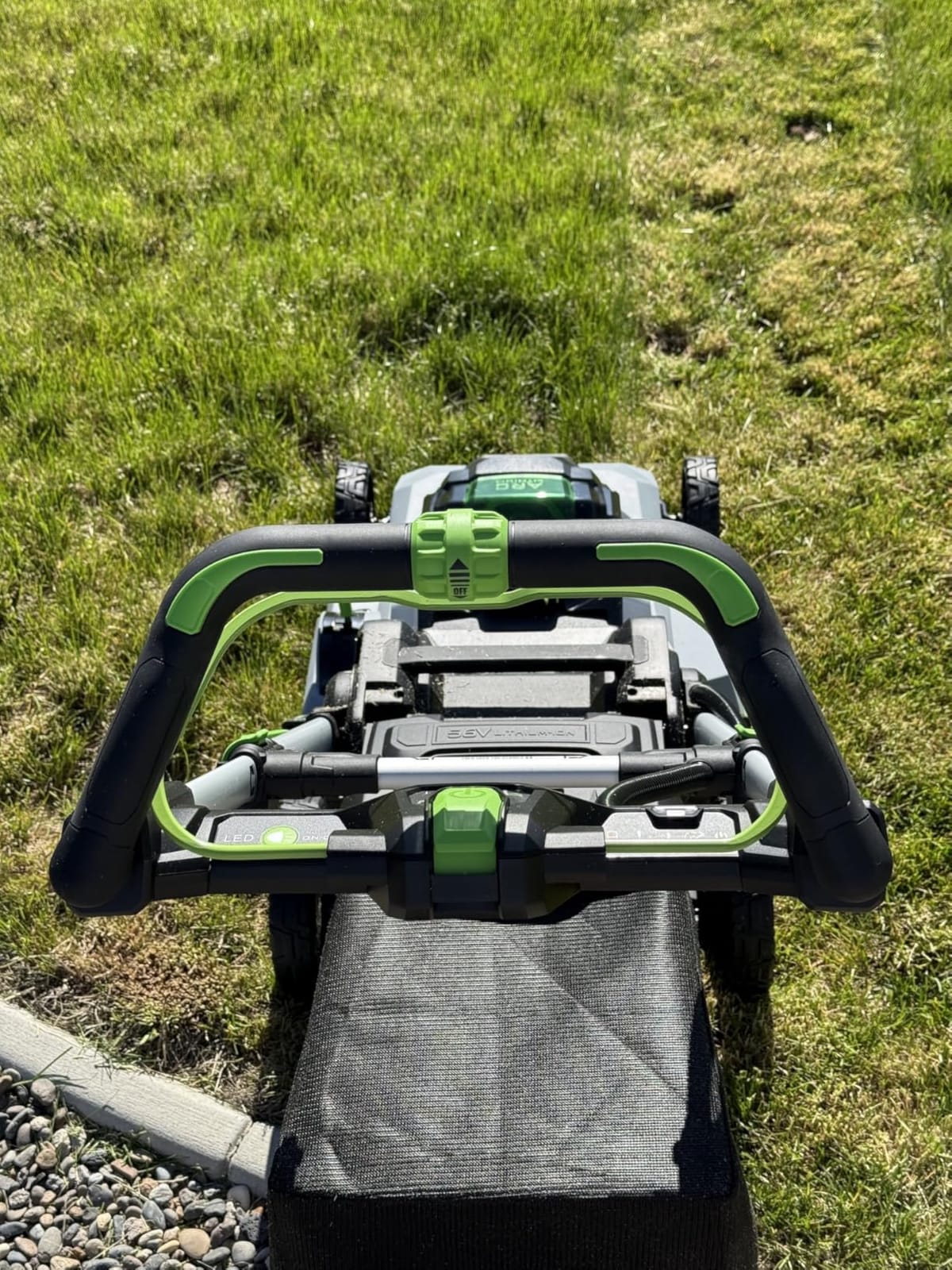
For a property where every cut is an uphill session, runtime and speed control matter more than they do on flat ground. This machine has both: up to 100 minutes on two included 56V 6.0Ah batteries, and a self-propel dial that adjusts from 0.9 to 3.1 MPH. That range is the most useful spec here for hills, because at the low end you move at a careful pace on a steep face and at the top you cover the flat runs quickly.
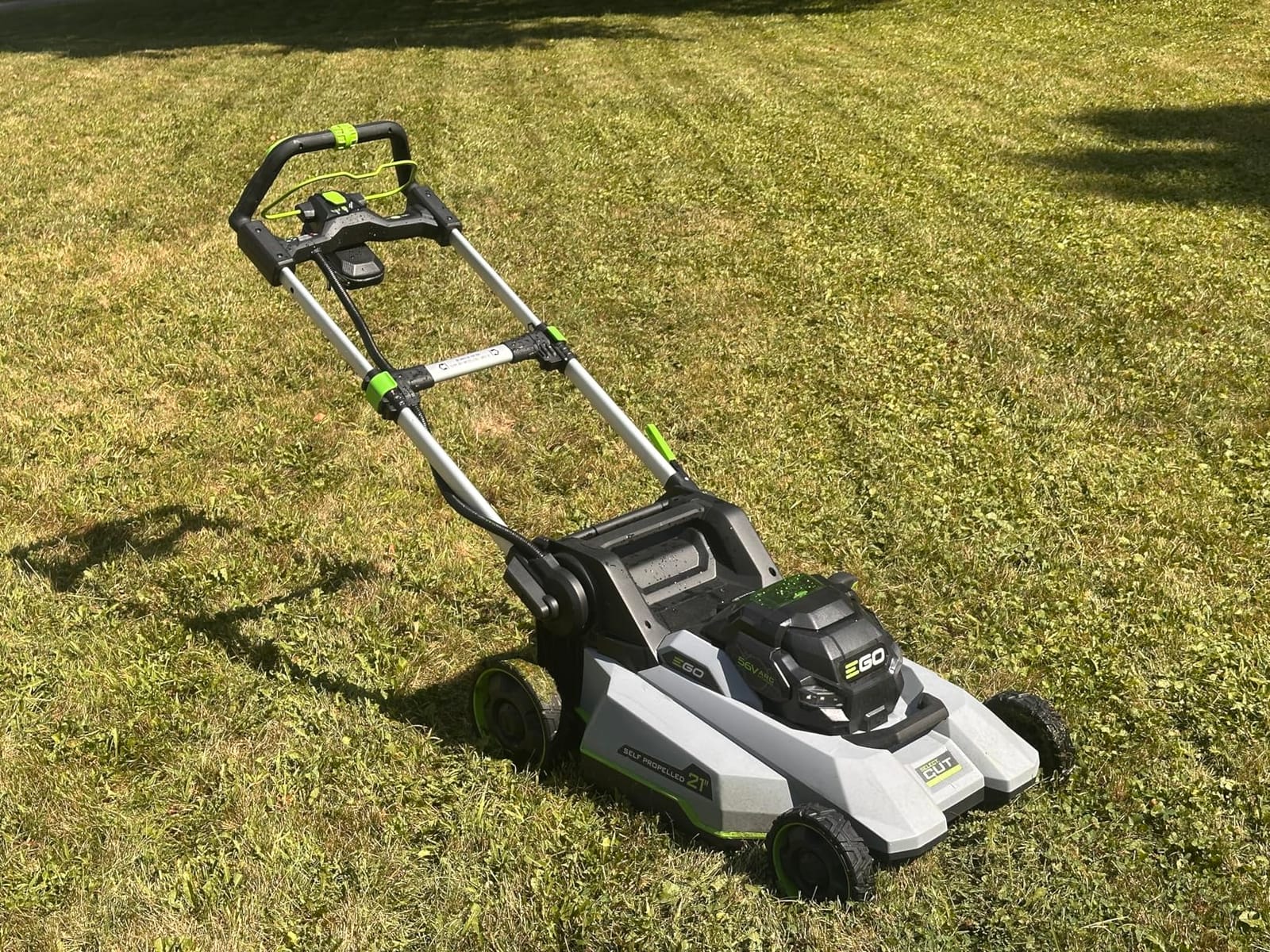
Cutting torque is 7.0 ft-lbs from the brushless motor, which holds up in overgrown uphill grass. Because it holds charge through a long climb-heavy day, you avoid the mid-slope flat battery that stops a lighter cordless machine halfway up a grade. Owners rate it 4.4 across 361 reviews.
Why runtime beats weight here
A mower that finishes the job on one charge does not have to be carried up a driveway at night, and that is the real reason a long-runtime machine suits a big hilly property despite its mass. The wide speed dial is the other quiet advantage, since a fixed-speed drive forces one compromise across flat and steep ground.
Where the weight becomes the problem
At 96 pounds this is the heaviest machine in the list, and that weight is mostly two batteries plus the drive system. Repositioning it on a slope requires real effort, and Touch Drive needs continuous palm pressure, which gets tiring over a long day.
8. EGO POWER+ LM2114SP: Best for Tight, Steep Hillsides
EGO POWER+ 21″ Cordless Electric Lawn Mower Kit, Self-Propelled – LM2114SP
6.0 ft-lbs torque
Dual-Toggle self-propel
50 min on 56V 6.0Ah
7 height positions
Pros
- Dual-Toggle engages drive with either hand
- Lightweight EGO at 50.9 pounds
- 6.0 ft-lbs of torque
- LED headlights and adjustable handle
Cons
- Only one battery included
- Shorter runtime than the dual-battery EGO
- Plastic build
- Highest minimum cut height at 1.25 inches
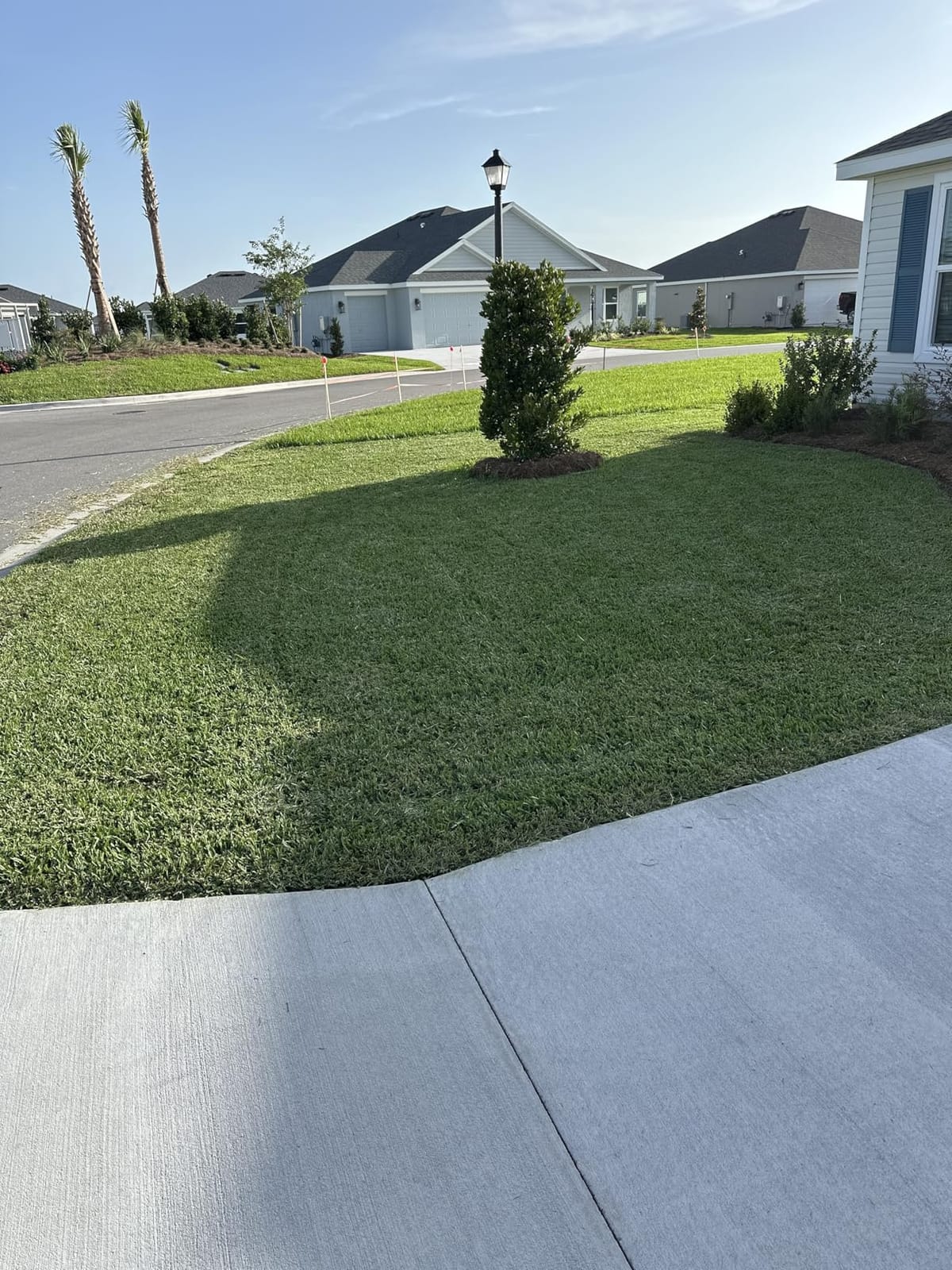
Hillsides that are tight, uneven and hemmed in by planting beds or paths are where this one earns its place. The Dual-Toggle Handleset engages the self-propel with either hand, which owners find easier than palm-pressure drive on uneven ground. On a narrow side slope you are constantly making small corrections, and a toggle is more forgiving than a control that needs sustained pressure.
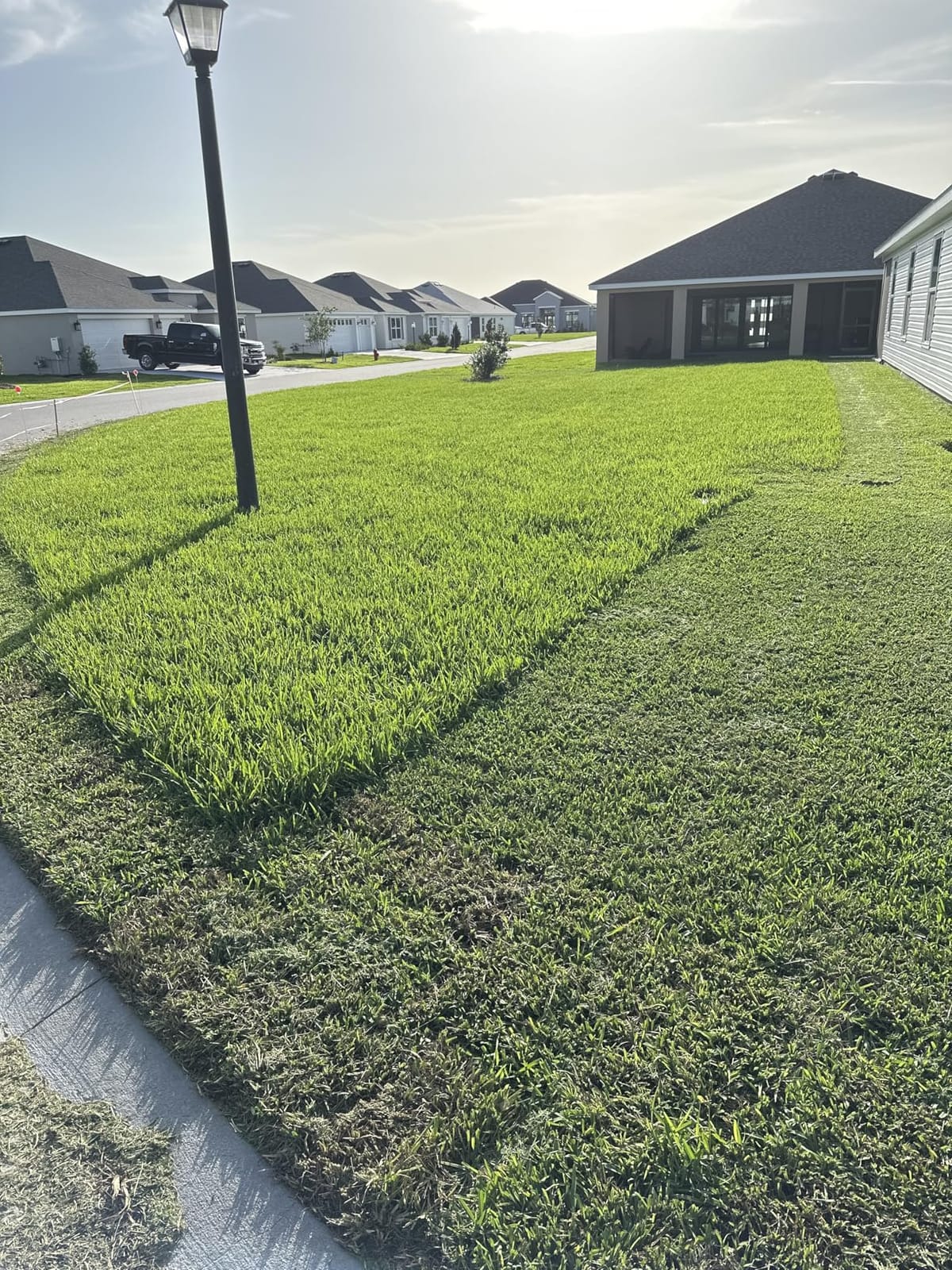
At 50.9 pounds it is the lighter of the EGO machines here, which is a real advantage when you need to turn the machine on a grade or lift it over an edge. Torque is 6.0 ft-lbs, with up to 50 minutes on the included 56V 6.0Ah battery, and it rates 4.4 from 351 reviews with 75 percent five-star.
Why a toggle beats palm pressure on a slope
Sustained palm pressure is fine on a long flat run and tiring on a long slope, because you hold the control down the whole time while managing balance. A toggle is held only for the moment of engagement, and that difference is amplified on rough ground where the deck follows the terrain.
Where the single battery bites
One battery means a recharge or a second 56V pack before a long hillside job, and climbing drains capacity faster than level mowing. It also has the highest minimum cut height in the 21-inch group at 1.25 inches, and the plastic body does not feel as solid as the metal-deck machines.
9. Greenworks 40V 21in Brushless: Best for Small Sloped Yards
Greenworks 40V 21″ Brushless Cordless (Self-Propelled) Lawn Mower (75+ Compatible Tools), 5.0Ah Battery and Charger Included
40V brushless motor
Rear-wheel drive
45 min on 5.0Ah
21 inch steel deck
Pros
- Rear-wheel drive adds traction on slopes
- Light at 21.7 pounds for one-hand control
- 45 minutes on the included 5.0Ah battery
- 3-year limited warranty
Cons
- 4.1 rating with a 10 percent one-star share
- Lightweight build feels less substantial
- Listed cut width is 20.28 inches
- Narrower height adjustment range
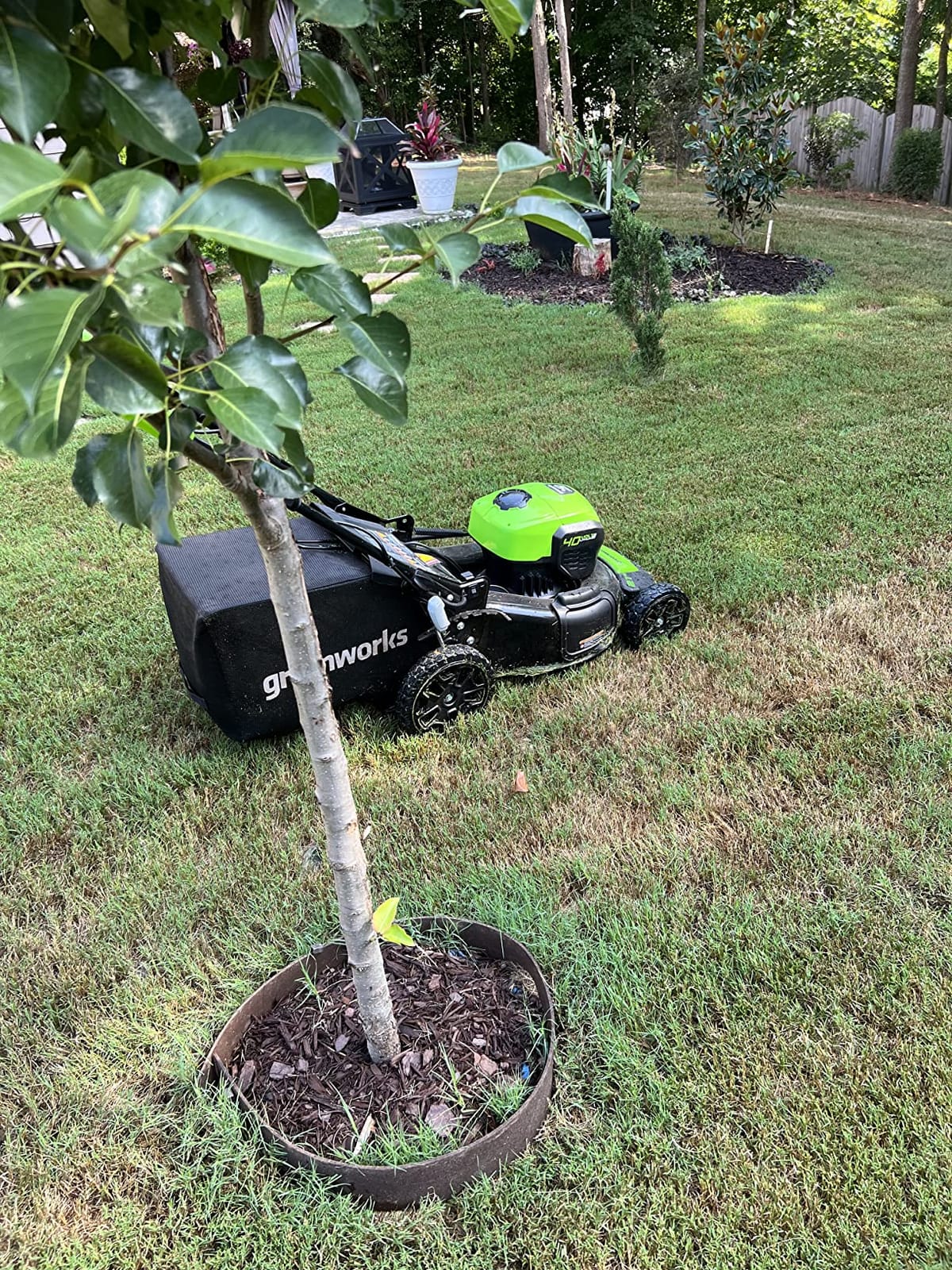
Sometimes the best hill mower is the one you can actually control. At 21.7 pounds this is by far the most manageable machine in the group, and on a small yard with a modest rise that weight is a genuine advantage. The drive is still rear-wheel, with the same traction logic as the larger Greenworks machines.
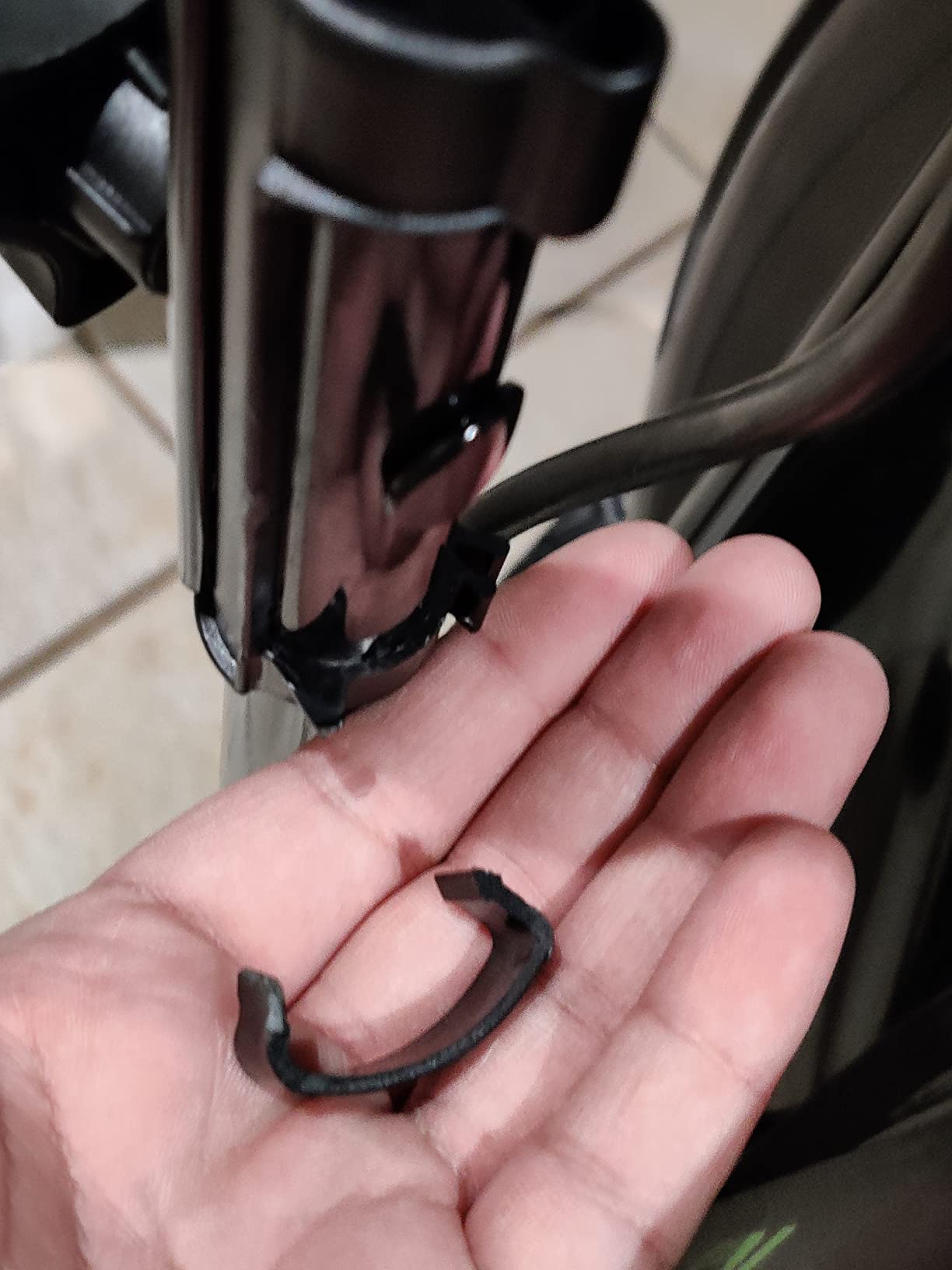
Up to 45 minutes from the included 5.0Ah battery covers a compact sloped yard in a single charge, and a single-lever 7-position height adjustment makes the deck quick to set between passes. It is the second most-reviewed machine here at 1521 reviews, on a platform shared with more than 75 other Greenworks 40V tools.
How low weight changes a hillside
On a grade, weight cuts both ways. More mass gives drive wheels something to push against, but it also means more momentum to control if something goes wrong. A 21.7-pound machine is far easier to stop or lift out of a soft patch, which is why this is a small-yard recommendation rather than a steep-slope one.
Where the lightness shows up as weakness
The 4.1 rating with a 10 percent one-star share reflects mixed cut and durability experiences. The listed cutting width is 20.28 inches rather than a full 21, the height range is narrower than some competing decks, and a lighter chassis follows dips in a rutted slope more readily.
10. SKIL PWR CORE 40 20in: Best for Narrow Hill Paths
SKIL PWR CORE 40 Brushless 40V 20-Inch Self-Propelled Mower Kit, Includes 6.0Ah Battery and Auto PWR JUMP Charger – SM4910C-11
Digital brushless motor
Variable-speed self-propel
50 min on 6.0Ah
7 deck settings
Pros
- Rated 4.5 with 75 percent five-star
- Light enough for owners to lift one-handed
- Variable drive used specifically for hills
- Handles uneven and mossy ground
Cons
- 20 inch deck is narrower than rivals
- Struggles with very tall wet overgrown grass
- Early battery recall on pre-December-2024 units
- Height settings feel similar
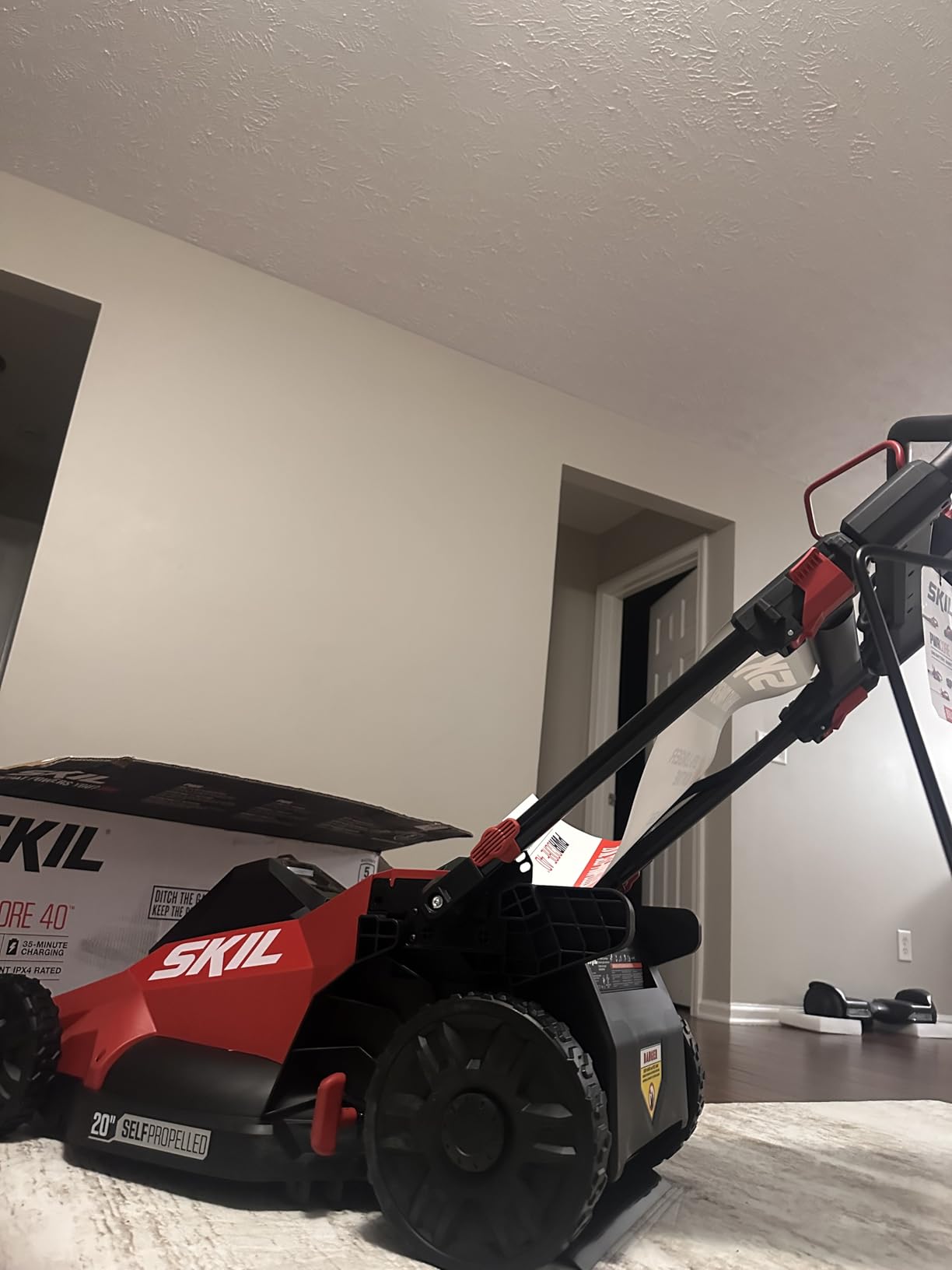
This is a narrow, light machine for constrained hillside routes, and at 4.5 with 75 percent five-star ratings it is the second-highest scoring product we analyzed. Owners describe the variable-speed self-propel as top notch, and several say they use it almost exclusively for uphill work on uneven, mossy ground, which is a hill-specific endorsement rather than a general one.
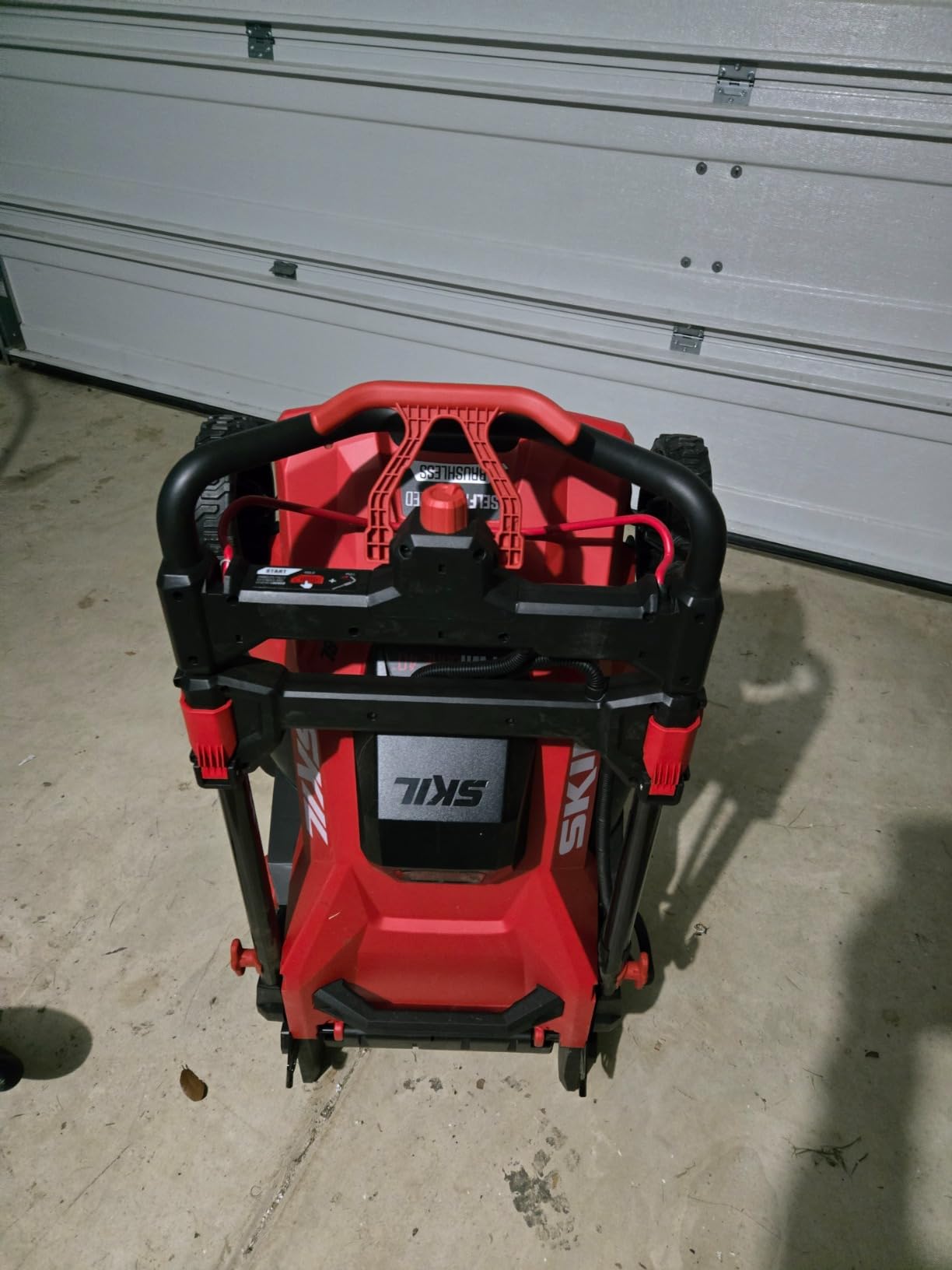
Runtime is up to 50 minutes on the included 40V 6.0Ah PWR CORE battery, with a fast charger that has indicator lights so you are not guessing at charge state between slope passes. One owner reports mowing three times per charge and another covers two adjacent homes plus part of a third.
Why a narrow deck helps on a path
A 20 inch deck is a disadvantage on a big open lawn, where you want fewer passes. On a narrow path between a retaining wall and a fence it is an advantage, because the machine fits where a 22 inch deck will not. Low weight compounds that, and owners report lifting it with one hand.
Where it falls short
The maker states it cannot cut 4-inch grass effectively, and owners report trouble with very tall, wet or overgrown growth. There was also an early battery recall in December 2024 affecting pre-recall units, and some owners find little difference between the lowest and highest height settings.
All-Wheel, Rear-Wheel or Front-Wheel Drive on Hills
The ranking is short: all-wheel drive for traction, rear-wheel drive as the versatile default, front-wheel drive only for flat lawns. That is the standard hierarchy, and it explains most of the ordering in this list.
All-wheel drive puts torque to every wheel, so a partly lifted or lightly loaded wheel does not eat the entire drive force. It is the setup you want when traction is genuinely marginal. It is also worth saying plainly that none of the ten mowers we analyzed has an AWD system, so this list is built entirely from the other two layouts.
Rear-wheel drive is why most of the picks here work on slopes. The driven wheels sit behind the center of gravity, so as the machine leans back on a climb, weight transfers onto the driven axle instead of off it. It also handles a loaded grass bag better, because the extra weight behind the rear wheels helps rather than hurts.
Front-wheel drive is the weakest of the three when the ground tilts, because weight shifts away from the driven wheels as the mower leans back uphill. The exception is a high-wheel front-drive design with aggressive tread, which is what the YARDMAX in this list uses. Speed control sits on top of the drive layout and matters just as much: a single-speed drive forces one compromise across flat and steep ground, while a variable drive lets you match the pace to the grade in front of you.
How to Mow a Hill Without Losing the Machine
No drive type makes a steep or slippery slope safe. Owners on lawn forums describe the same failure repeatedly: the drive bogging down under load, the mower stalling, and the machine rolling back down the grade. That is a runaway event, not an inconvenience.
Mow across the slope, not straight up and down it. Contour mowing keeps the weight of the machine working against gravity laterally, where your feet can correct it, rather than directly against gravity, where they cannot. Walk the ground before you mow it, because a slope that looks gentle can have a soft patch or a washout under the grass.
Do not mow wet grass or morning dew. Traction falls for every drive type when the surface is slick, so wait for the dew to lift.
Keep the bag emptier than usual on climbs. A full bag is extra weight behind the rear axle that you must drag up every pass, and it is the reason rear-wheel drive beats front-wheel drive most clearly. Mulch or side discharge on the steepest sections instead.
Wear shoes with grip and keep both hands available. On a grade, a run-away mower is controlled with balance and braking distance, and a smooth-soled shoe removes your ability to do either.
What to Check Before You Buy a Mower for Hills
Start with the drive layout, then torque, then weight. Drive layout decides whether the machine can hold a grade, torque decides whether it keeps cutting as the load rises, and weight decides how hard the package is to control once something goes sideways.
Then check speed control. If the drive is single-speed, ask whether you can comfortably walk at that pace on your steepest section. If the answer is no, the drive is a fixed compromise you will live with every pass. Measure your actual slope rather than estimating it, because a rise you walk up comfortably is a different problem from one that makes you lean forward.
For battery mowers, count the platform. Every brand here shares batteries across a range of tools, which is a genuine saving if you already own that platform and a real cost if you do not. On hills specifically, assume runtime is lower than the published figure, since every runtime number here is a manufacturer figure measured on level ground and climbing drains power faster.
Finally, weigh gas against battery honestly. Gas gives you torque, refuelling in under a minute and no battery platform decision. Battery gives you quiet operation, no maintenance and instant starts. On a steep yard where every cut is a climb, the torque and refuelling advantages of gas are harder to argue with than they are on flat ground.
When a Walk-Behind Mower Is the Wrong Tool
A walk-behind stops being the right tool when the slope is steep enough that you cannot walk it comfortably, or when there is not enough flat ground to turn the machine around. At that point you are no longer mowing, you are managing a runaway.
For slopes beyond that threshold, the categories to look at are all-wheel-drive ride-on mowers and zero-turn mowers with a low center of gravity. Ride-on AWD machines are sold explicitly for hills and slopes, and their deck width means fewer passes on every grade. Robotic mowers are worth considering on moderate slopes, since they remove the operator from the equation entirely.
For anything genuinely steep, a professional mowing service is a legitimate answer rather than a failure. Hand tools and a string trimmer for banks are correct for a slope too steep to hold a machine on, and terracing or planting the slope solves the problem permanently. Owners who have tried several machines generally report that no single mower handles every terrain case, so match the machine to the worst part of your yard rather than the average part.
Frequently Asked Questions
Which self-propelled mower is best for steep hills?
The Greenworks 80V 21in brushless self-propelled mower is our top pick for steep hills because its rear-wheel drive and 80V brushless motor climb reliably and SmartCut adds power as grass load rises. The EGO LM2135SP is the best-rated option at 4.7 from 699 reviews, and the EGO LM2134SP-2 offers the widest speed range and longest runtime for long uphill days. Rear-wheel drive matters most on a grade because weight transfers onto the driven wheels as the machine leans back uphill.
Do self-propelled mowers work on hills?
Yes, but the drive type decides how well. Hills multiply the resistance the drive system must overcome, so a mower that handles a gentle rise can stall and roll backward on a steeper one. Rear-wheel drive is the most versatile layout because the driven wheels sit behind the center of gravity and take the weight as the machine leans uphill. Always mow across the slope rather than straight up or down it, and wait for dew to dry before starting.
Do I need an all-wheel-drive mower for hills?
All-wheel drive gives the most traction because it puts drive force to every wheel, so a lightly loaded or slightly lifted wheel does not consume the whole drive. It is the right answer when traction is genuinely marginal. None of the ten mowers we analyzed here has an AWD system, so the best of this list rely on rear-wheel drive. A high-torque rear-wheel machine with variable speed control handles most residential hills very well.
Is rear-wheel drive better than front-wheel drive on a slope?
Yes. As a walk-behind leans back on a climb, its weight shifts off the front wheels and onto the rear axle. Front-wheel drive therefore loses the contact that rear-wheel drive gains, which is why front-drive mowers are usually recommended for flat lawns only. A high-wheel front-wheel design with aggressive tread, like the YARDMAX in our list, is the exception that competes on slopes. Rear drive also handles a loaded grass bag better on the way up.
Is a battery or gas mower better for hills?
Gas wins on torque and refuelling. A 201cc engine refuels in under a minute, so you never face a depleted battery halfway up a grade, and the SENIX in our list makes 8.8 ft-lb of torque. Battery wins on noise, maintenance and control: brushless motors like the EGO’s 7.0 ft-lbs deliver gas-class torque with dial speed control, and there is no oil or pull start. On a steep yard with long uphill sessions, gas is the harder argument to beat.
Why does my self-propelled mower stall going uphill?
The drive is being asked for more force than it can supply at that pace, and the load usually comes from three places: long or wet grass under the deck, a full grass bag adding weight behind the rear axle, and a slope steeper than the drive was designed for. Owners also report the drive motor simply taking two or three seconds to reach speed at the start of a pass. Set the deck higher for the climb, empty the bag more often, and drop the self-propel speed setting before you move up a grade.
The Bottom Line for Hilly Yards in 2026
For most hilly yards, the Greenworks 80V 21in brushless self-propelled mower is the one to buy, because rear-wheel drive and real torque headroom handle the climb without you fighting the machine. If owner satisfaction is your metric, the EGO LM2135SP is the best-rated of the ten, and for a full day of uphill work the EGO LM2134SP-2 gives you the runtime and speed control to finish in one session.
Two rules matter more than any spec sheet. Buy rear-wheel drive, and mow across the slope rather than straight up it. Get those right and most residential hills are straightforward. If your slope is steep enough that walking it feels wrong, move up to an AWD ride-on or hire it out, because no drive system makes a genuinely dangerous slope safe.