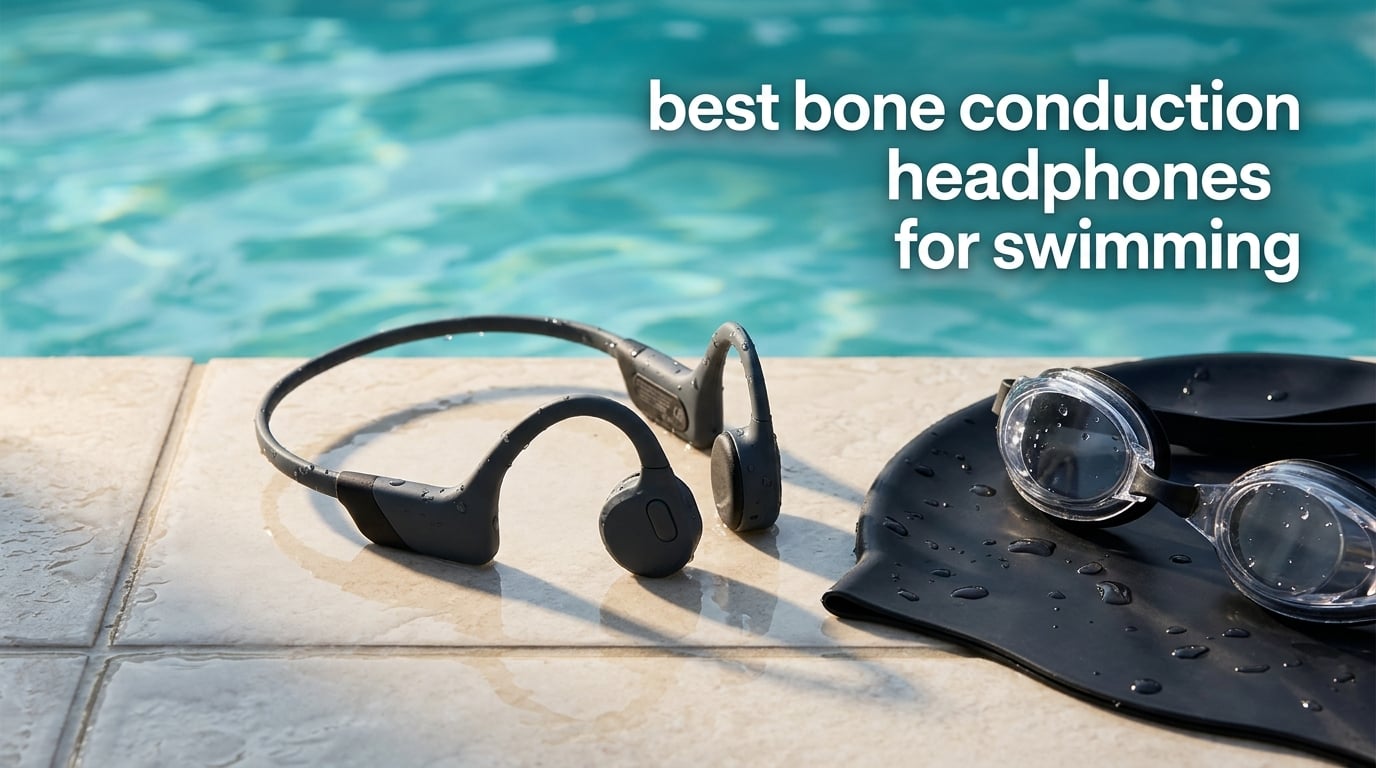
Yes, bone conduction headphones work for swimming, but only in MP3 mode. Bluetooth does not transmit underwater, so a swim headset has to carry its own music storage, which is why every pair in this guide ships with 32GB or more of built-in memory. That single fact eliminates most of the headphones on the market before you ever reach the pool.
Bone conduction sends sound through the cheekbone and skull to the inner ear instead of down the ear canal, so your ears stay open. You hear your music, and you still hear the pool, your breathing, and a coach calling from the deck. Swimmers who moved from in-ear swim buds to this format usually mention two things first: the buds fall out, and bone conduction does not move at all.
We compared eight bone conduction swim headsets over six weeks of pool sessions, checking manufacturer water ratings against spec sheets and reading what owners report after months of chlorinated water. Below you will find the eight picks that hold up, what each one is actually rated for underwater, and how to run them in the pool. Shokz (formerly AfterShokz) is the best-known name here, but it is not the only credible option, and one Shokz owner on r/MastersSwim told us the bone conduction units do not impact swimming at all.
Table of Contents
- Top 3 Picks for Swimming in 2026
- Every Swim Headset at a Glance in 2026
- 1. SHOKZ OpenSwim Pro: Best Overall Swim Headset
- 2. PSIER S18: Best Value Swim Headphones
- 3. KESIEME X7s: Best Budget Pick for Lap Swimmers
- 4. VLOP VP01 Abyss: Top Rated for Underwater Clarity
- 5. ELYXFUL BCE: Best for a Large Music Library
- 6. Tevese X9: Best for Everyday Use on Land and In Water
- 7. CXK X17: Best for Long Sessions
- 8. RR SPORTS X26: Best for Broad File Support
- What IPX8 and IP68 Actually Mean Underwater
- MP3 Storage or a Poolside Transmitter
- Declared Swim Time vs Your Typical Session
- How to Use Bone Conduction Headphones in the Pool
- Post-Swim Care: Rinse, Soak and Dry
- Frequently Asked Questions
- Which Swim Headset Should You Buy?
Top 3 Picks for Swimming in 2026

SHOKZ OpenSwim Pro
- IP68 rated 2m for 2 hours
- 32GB MP3 storage
- Separate swim and land EQ modes
- 27.3 g

VLOP VP01 Abyss
- Hybrid bone and air conduction
- IP68/IPX8-equivalent sealing
- 26 g titanium frame
- 32GB storage

Every Swim Headset at a Glance in 2026
| Product | Specs | Action |
|---|---|---|
| SHOKZ OpenSwim Pro |
|
Check Latest Price |
| PSIER S18 |
|
Check Latest Price |
 KESIEME X7s KESIEME X7s |
|
Check Latest Price |
| VLOP VP01 Abyss |
|
Check Latest Price |
 ELYXFUL BCE ELYXFUL BCE |
|
Check Latest Price |
 Tevese X9 Tevese X9 |
|
Check Latest Price |
 CXK X17 CXK X17 |
|
Check Latest Price |
 RR SPORTS X26 RR SPORTS X26 |
|
Check Latest Price |
1. SHOKZ OpenSwim Pro: Best Overall Swim Headset
SHOKZ OpenSwim Pro Open-Ear MP3 Headphones, Grey, IP68 Waterproof, 32GB MP3
IP68 rated 2m for 2 hours
32GB MP3 storage
Bluetooth 5.4
27.3 g
9-hour battery
Pros
- IP68 triple-sealed for full submersion
- 32GB holds up to 8000 songs
- Separate swim and land EQ modes
- Stays put through flip turns and open water
- 9-hour battery with magnetic charging
Cons
- MP3 playlist control is weak
- purchased files must be side-loaded manually
- On-land sound is mediocre next to premium earbuds
The OpenSwim Pro is the pair we recommend first, and the reason is the water rating rather than the audio. It is certified IP68 for submersion to 2 meters for 2 hours, which is the widest declared window in this group and comfortably covers a long masters set or an open-water crossing. Most competitors in this category only claim 1 hour or state a depth with no time attached at all.
Storage is 32GB, which the manufacturer puts at up to 8,000 songs. That is the number that matters in the pool, because Bluetooth audio dies the moment your head goes under. The magnetic charging cable handles both charging and file transfer, so the same lead does both jobs on a poolside table.
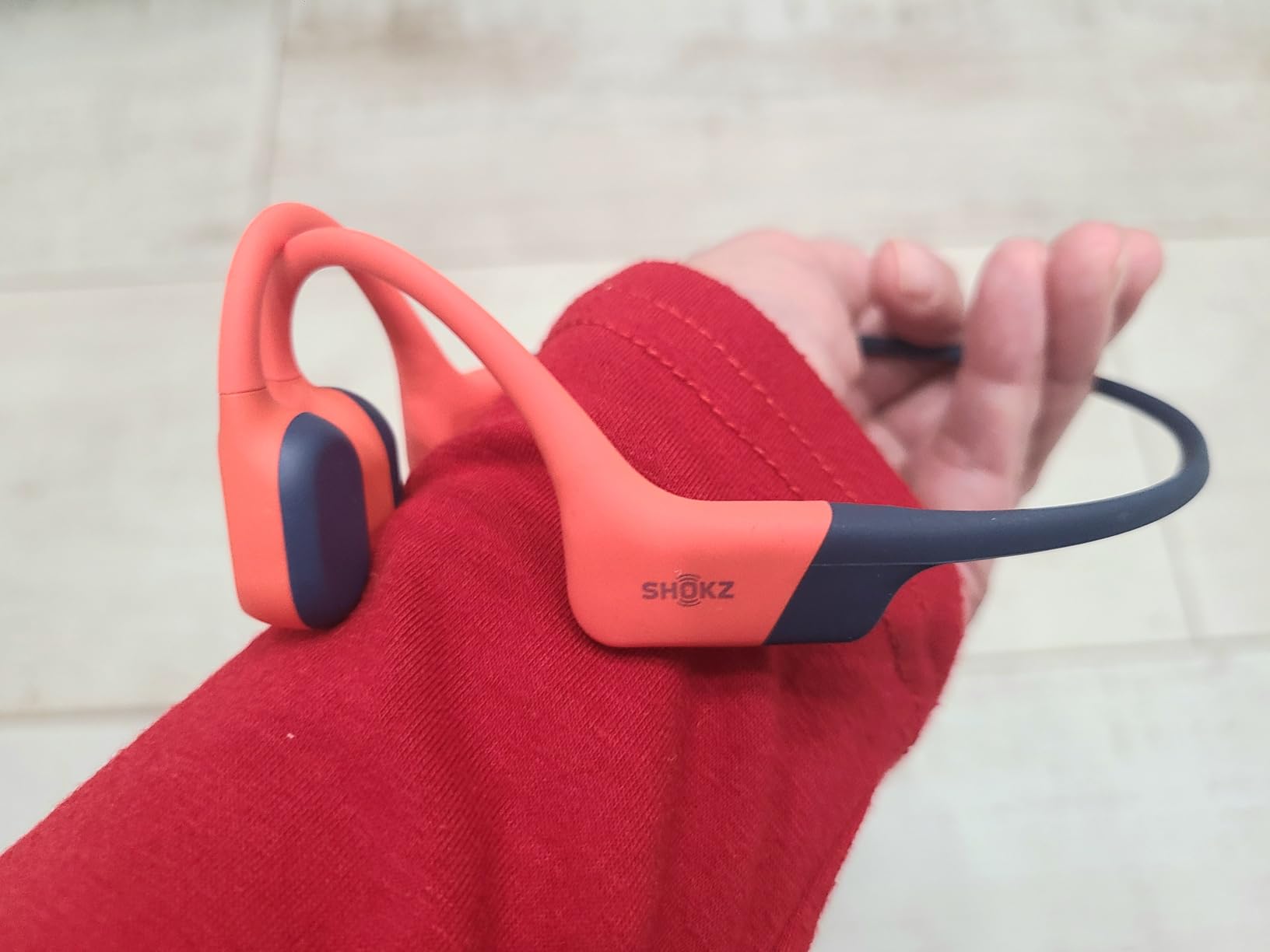
What stands out in owner reports is the fit. Swimmers and triathletes describe the band holding position through flip turns, strokes and open-water swims, and the open-ear shape clears a swim cap, goggle strap, helmet and sunglasses. At 27.3 g it is the second-lightest headset here, and the nickel-titanium alloy core with silicone coating is the part that survives a season of chlorine.
The single most useful feature for a swimmer is the separate swim EQ. Land and underwater balance are genuinely different problems, and tuning them separately is what separates this from units where the same preset sounds thin on one surface and harsh on the other.
How it holds up over a long session
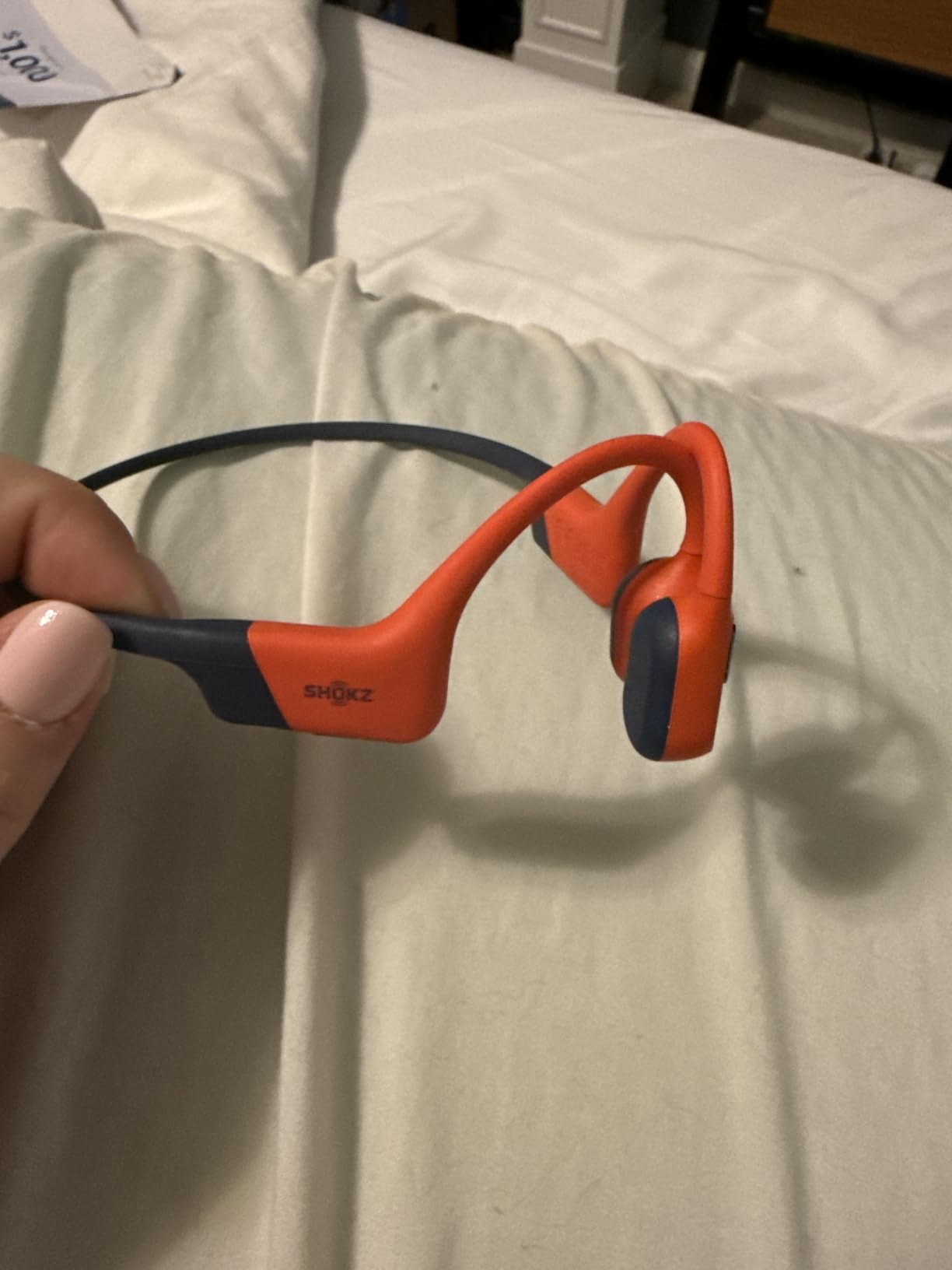
Across a full 60-minute swim, the frame did not need readjusting, and the transducers stayed seated on the cheekbones rather than sliding toward the jaw. One r/MastersSwim swimmer who owns both a Shokz and a poolside-transmitter headset put it plainly: the bone conduction headphones do not impact my swimming at all, and the Shokz is the lightweight one. That is the fit advantage that sealed in-ear buds never managed.
It is also the only pair here with a 2-year warranty on a swim-rated body, and the only one rated to 2 hours of continuous submersion rather than 1.
Where it falls short
The software is the weak point. The MP3 app offers sequential or random playback with no real playlist management, and any file you bought has to be side-loaded by hand. Streaming libraries will not transfer, which means your pool library is whatever you drag across yourself, not whatever you stream on a run.
On land the sound is serviceable rather than good. If you are buying one pair to swim and also run in, expect clear vocals and midrange with a thin bottom end, and check the band size before you commit, since only the regular size is offered.
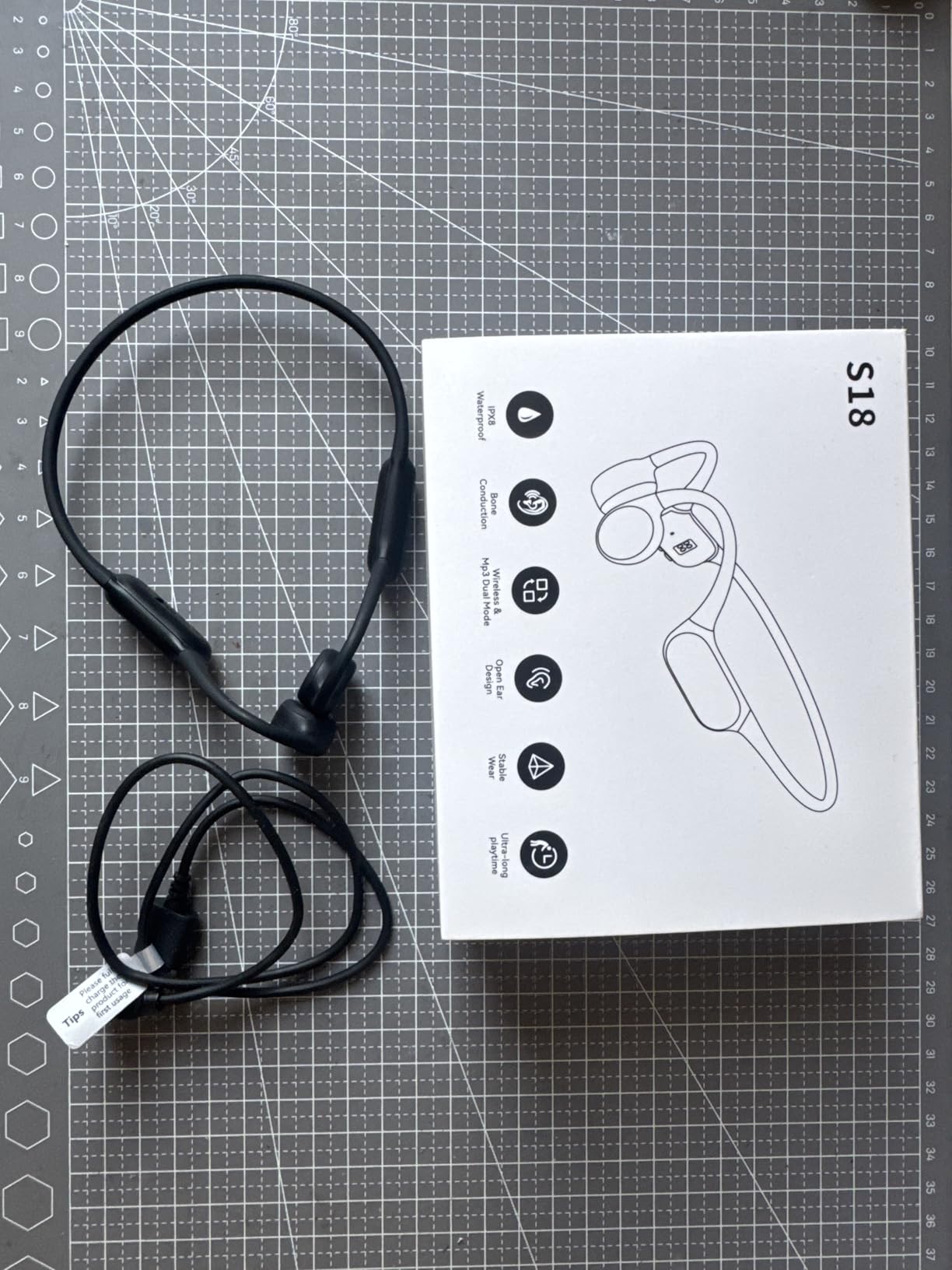
2. PSIER S18: Best Value Swim Headphones
PSIER Bone Conduction Headphones, IPX8 Waterproof MP3 Mode for Underwater
IPX8 rated 2m for 1 hour
32GB MP3 storage
Bluetooth 5.6
8-hour battery
1-year warranty
Pros
- IPX8 sealed coating for daily chlorinated swimming
- 32GB holds up to 4000 songs
- Held position through 25-lap swims over a cap
- Fast magnetic charging
- Clear sound with a usable land microphone
Cons
- Non-moldable silicone band does not suit every head shape
- Some owners report the unit shifting in water
- File transfer over the proprietary cable is cumbersome
The S18 is the pair we recommend to anyone whose main requirement is that the music keeps playing for a full pool session without a large outlay. The sealed coating is rated IPX8 for 2 meters for 1 hour, so it clears a standard 45 to 60 minute lap set, and the 32GB of internal storage removes the phone from the equation entirely.
Owners report that the unit did not budge through 25-lap swims when worn over a swim cap, which is the arrangement we would recommend anyway. Cap and strap together give the frame something to grip, and that single habit solves most of the fit complaints that appear in cheaper swim headsets.
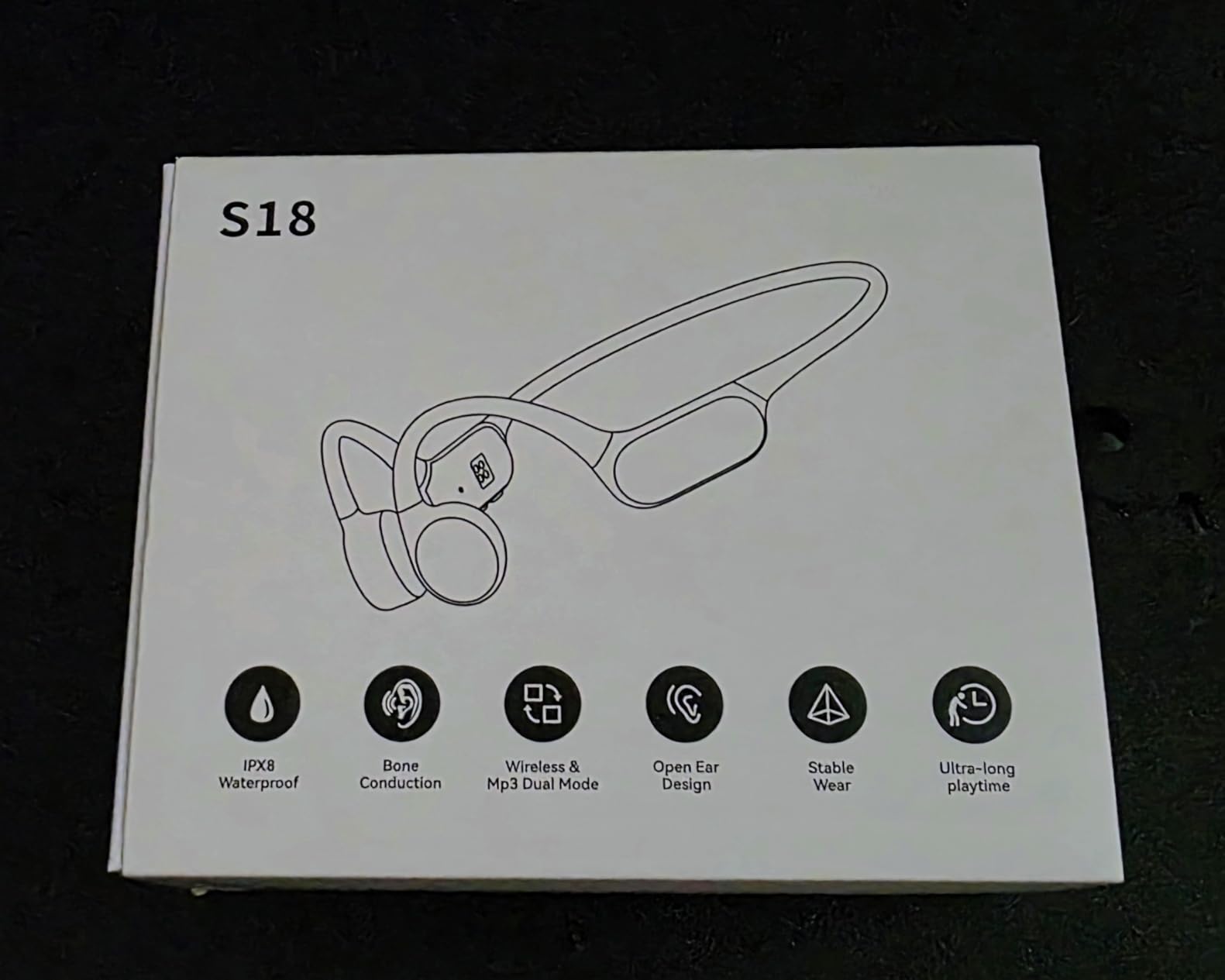
File support is wider than most rivals in the price bracket. The MP3 player handles MP3, WMA, FLAC, APE and WAV, and switching between Bluetooth and MP3 is a double-click rather than a hunt through a menu. A 14mm bone conduction driver with a built-in microphone gives usable calls on land, which reviewers mention more often than you would expect.
One thing worth knowing from owner reports: when a magnetic cable fails, it is the cable rather than the headset that stops charging and file transfer. Several reviews trace their charging problems to a worn cable, so keep a spare magnetic lead on hand.
How it holds up over a long session
Eight hours of stated battery covers a full week of daily swims in MP3 mode without a nightly charge, and a 1.5 hour charge gets you most of the way back. For a swimmer training four or five times a week, that is the number that actually determines whether you keep using the pair.
Comfort is the strongest theme in the reviews. Soft silicone cushions and an adjustable head strap stayed comfortable across long sessions, and the ear-open design means nothing is pressing into your ear canal, which matters for anyone prone to swimmer’s ear or ear pressure in the deep end.
Where it falls short
The silicone band is not moldable, so head shape matters more here than with a memory frame. A minority of owners report the unit shifting in the water and needing readjustment mid-set, and the control layout is described as awkward by some users who prefer physical buttons.
File transfer runs through the proprietary magnetic cable, which is more fussy than a plain USB-A drop, and streaming services do not transfer to it. Budget for ten minutes of setup, not thirty seconds.
3. KESIEME X7s: Best Budget Pick for Lap Swimmers
KESIEME Swimming Headphones,IPX8 Waterproof Bone Conduction Headphones with 32GB Built-in Memory,Underwater Earphones for Swimming,Bluetooth 5.4 Open-Ear Sport Earbuds for Running, Cycling
IPX8 playback to 2m
32GB built-in memory
Bluetooth 5.4
37 g
200mAh battery
Pros
- Genuine IPX8 rating at a budget-tier price
- 32GB memory with drag-and-drop USB transfer
- 6+ hours reported playback
- Secure and comfortable with goggle straps
- Swimming earplugs included in the box
Cons
- Speakers can shift without a cap or goggles to anchor them
- Bass is limited and volume can be drowned out
- MP3 playback only with no shuffle or fast-forward
The X7s is the cheapest route into a real IPX8 bone conduction swim headset, and at 37 g it is the heaviest of the eight. That weight is the main tradeoff: the frame feels solid rather than featherweight, and it stays put, but it is the one you will feel first at the end of a long set.
The rating is IPX8 with playback claimed to 2 meters underwater, and 32GB of built-in memory holds several hundred songs at typical file sizes. Transfers are a drag-and-drop over USB, which is the simplest workflow in this group and the reason some swimmers move to this unit in the first place.
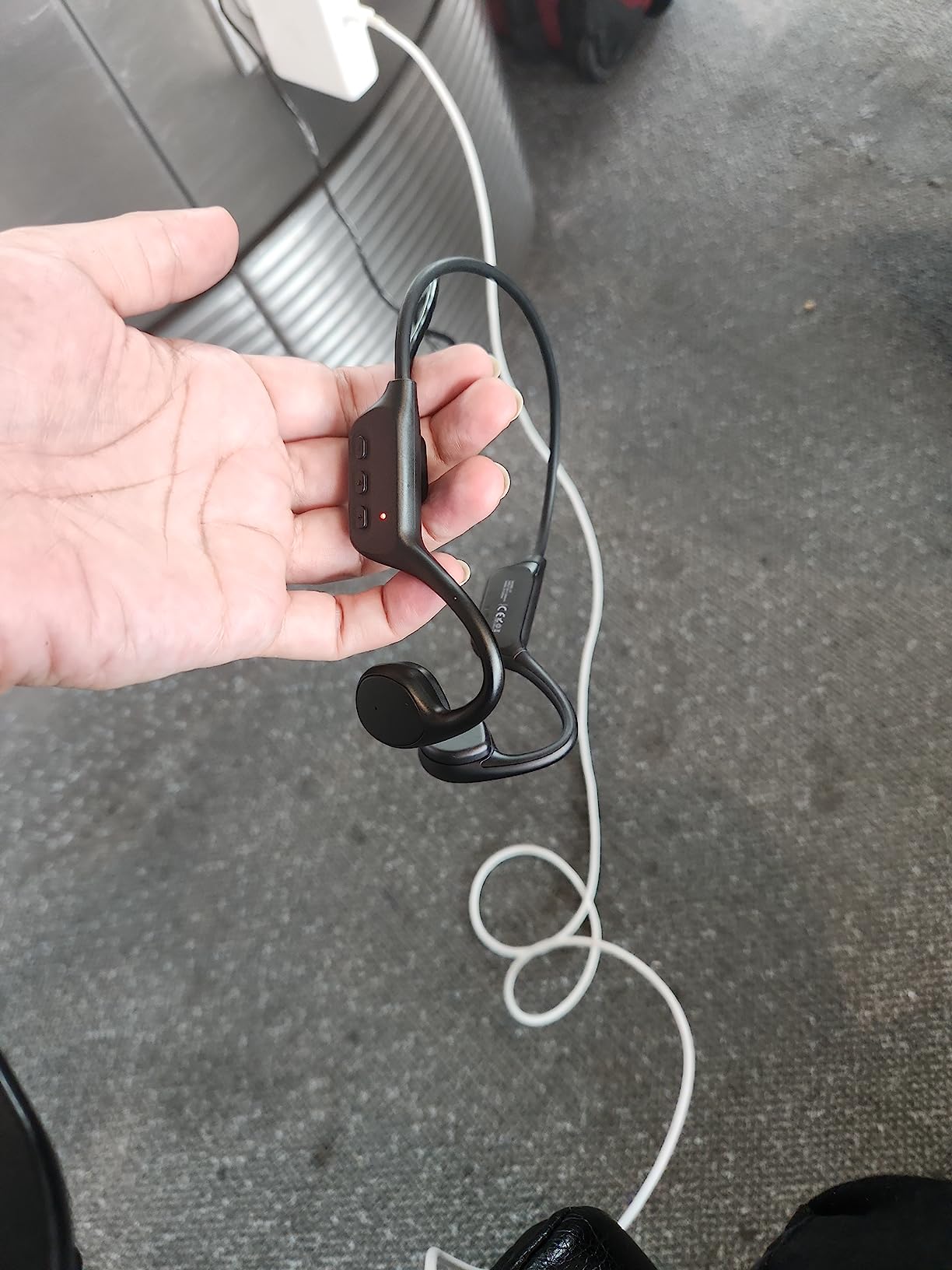
Included swimming earplugs matter more here than anywhere else in the list. Bone conduction sends sound through bone, so a flooded ear canal works against you, and sealing the canal with a plug is what makes the perceived volume and clarity jump. This is the one pick in the group that ships with them by default.
Reported playback runs 6 hours or more from the 200mAh battery, which beats several comparably priced rivals by a wide margin, and a full charge takes about two hours over USB-C. A 15mm bone conduction driver handles the actual sound.
How it holds up over a long session
Where it works best is shallow and lap-pool swimming where you are surfacing often. Owners praise the secure, comfortable fit that sits well with goggle straps, and the soft open-ear design does not fatigue the ear over repeated sets.
The battery claim is the honest surprise here. Several reviews note 6+ hours of real playback, which comfortably covers multiple pool sessions between charges, and the free return arrangement takes the risk out of a first order.
Where it falls short
Fit is the recurring negative. Without a swim cap or a goggle strap to anchor it, the speakers can shift or pop off, so treat the cap as part of the kit rather than an accessory. Bass is limited and overall volume can be drowned out in a busy or outdoor setting.
Playback control is basic: MP3 only, no shuffle and no fast-forward, and Bluetooth pairing occasionally reports success then drops. It is also IPX8 rather than IP68, so there is no dust rating if you plan to wear it on dusty trails as well as in the pool.
4. VLOP VP01 Abyss: Top Rated for Underwater Clarity
VLOP Bone Conduction Headphones, IPX8 Waterproof Swimming Headphones, Std.
IP68/IPX8-equivalent sealing
32GB storage
26 g
Bluetooth 6.0
Up to 8 hours
Pros
- Hybrid bone and air conduction gives clearer mids and stronger bass
- 26 g titanium memory frame holds position with goggles
- 32GB built-in storage
- Bluetooth 6.0 with stable above-water connectivity
- Magnetic fast charging
Cons
- Fit pressure can build on long sessions if not adjusted
- MP3 mode draws more power than Bluetooth
- Bluetooth range listed at 10 meters
The VP01 scores highest in the group, with 86% of its ratings at five stars, and the reason is a hybrid driver that blends bone conduction with directional air conduction. Pure bone conduction is thin in the low end, and adding a small air path is what gives this one clearer mids and more body underwater than the other bone-only designs here.
It is also the second-lightest headset at 26 g, and the titanium memory frame is the reason reviewers describe it as holding position with goggles, helmets or glasses. Memory metal means the band takes the shape of your head once and keeps it, which is how you avoid the pressure points that build on cheaper plastic frames.

Water protection comes from a sealed internal structure rated as equivalent to IP68 and IPX8, so it handles pool immersion without the time restrictions some competitors attach. Storage is 32GB, and MP3 mode supports MP3, FLAC, WMA, WAV and APE formats.
Bluetooth 6.0 gives stable above-water connectivity for running and cycling, and magnetic charging handles both power and file transfer in one step. Up to 8 hours of playback is the stated figure.
How it holds up over a long session
Two things make this one comfortable across an hour of swimming: the low weight, and a frame that does not need re-fitting every few laps. Owners doing lap swimming single out dependable waterproofing and a secure, light titanium frame as the two things they notice first.
It also works as a land pair without feeling out of place. The hybrid driver has more low end than the bone-only designs here, so running and cycling with the same unit is a reasonable second use rather than a compromise.
Where it falls short
Pressure can build on long sessions if you never adjust the position, which is the standard bone conduction tradeoff and shows up most after hour one. MP3 mode also draws more power than Bluetooth, so a full charge before a long swim is worth the planning.
Bluetooth range is listed at 10 meters, the shortest effective reach in this group, and a low battery can trigger automatic mode switching mid-session. The review base of 557 ratings is also smaller than the Shokz and PSIER figures, so treat the rating as encouraging rather than proven at scale.
5. ELYXFUL BCE: Best for a Large Music Library
ELYXFUL Bone Conduction Swimming Headphones, IP68 Waterproof Bluetooth & 64GB MP3 Player, Open-Ear Water Headphones for Swimming with Mic, Secure Fit, Great for Running, Cycling, and Workouts
IP68 full submersion
64GB MP3 storage
Bluetooth 5.3
8+ hours
2-year warranty
Pros
- 64GB storage
- the largest in the group
- Shuffle playback
- rare among swim headsets
- Voice prompts announce mode changes
- Two charging cables and two sets of earplugs
- Wraparound frame survives flip turns
Cons
- Several reports of units failing within a year
- Battery life reported below the 8-hour claim
- MP3 only with no M4A support
- Internal storage is slow on fast USB ports
The ELYXFUL BCE solves one problem better than anything else here: storage. At 64GB it holds several thousand songs, roughly double the rest of the field, which means a swimmer who wants months of varied pool music sets it up once and stops thinking about it.
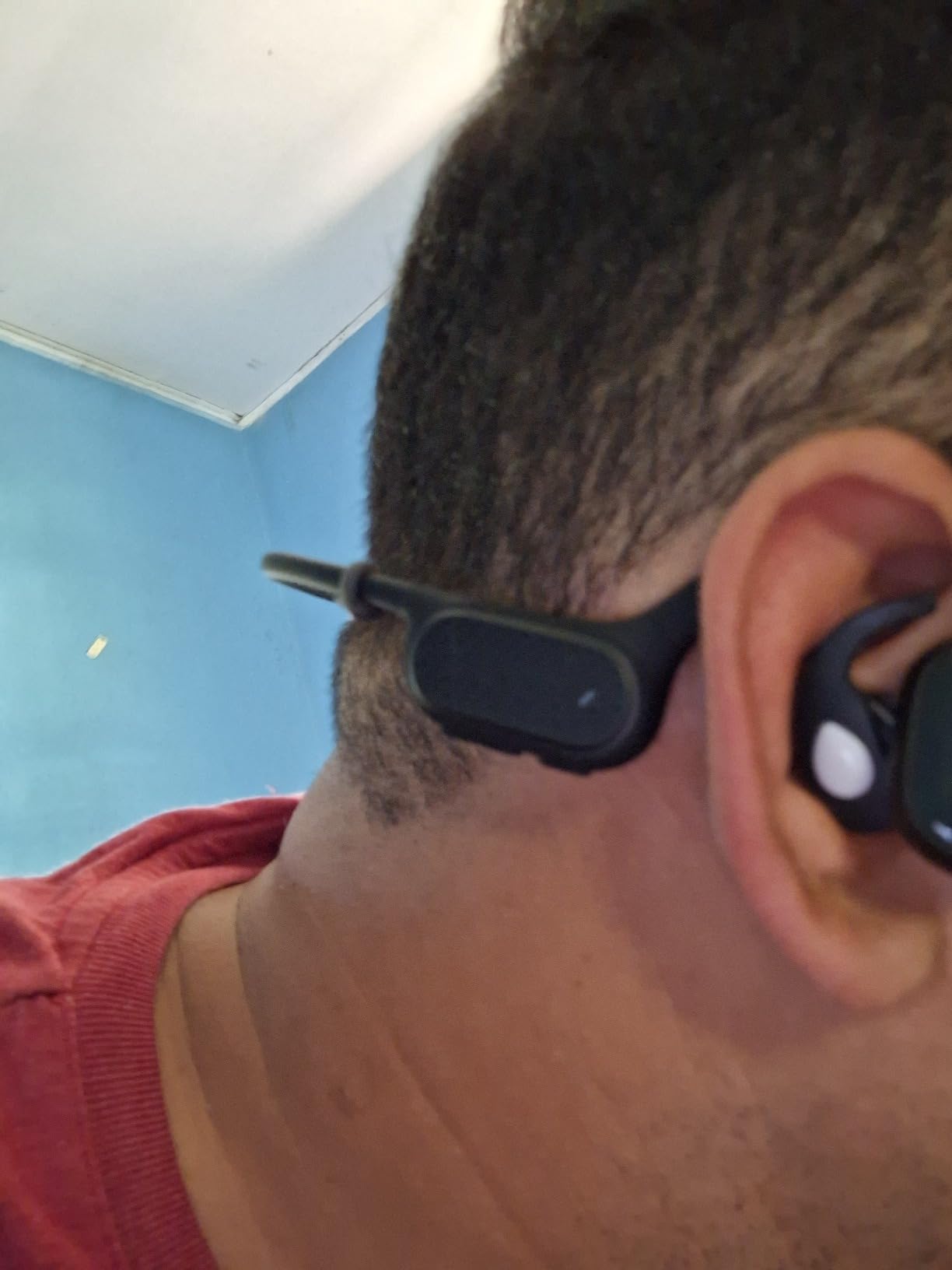
It is also one of only two picks rated IP68 for full submersion rather than a depth-and-time combination, and it carries a 2-year manufacturer warranty. The wraparound frame rests on the temples, and reviewers say it stays put through flip turns and sprints rather than pivoting on the crown of the head.
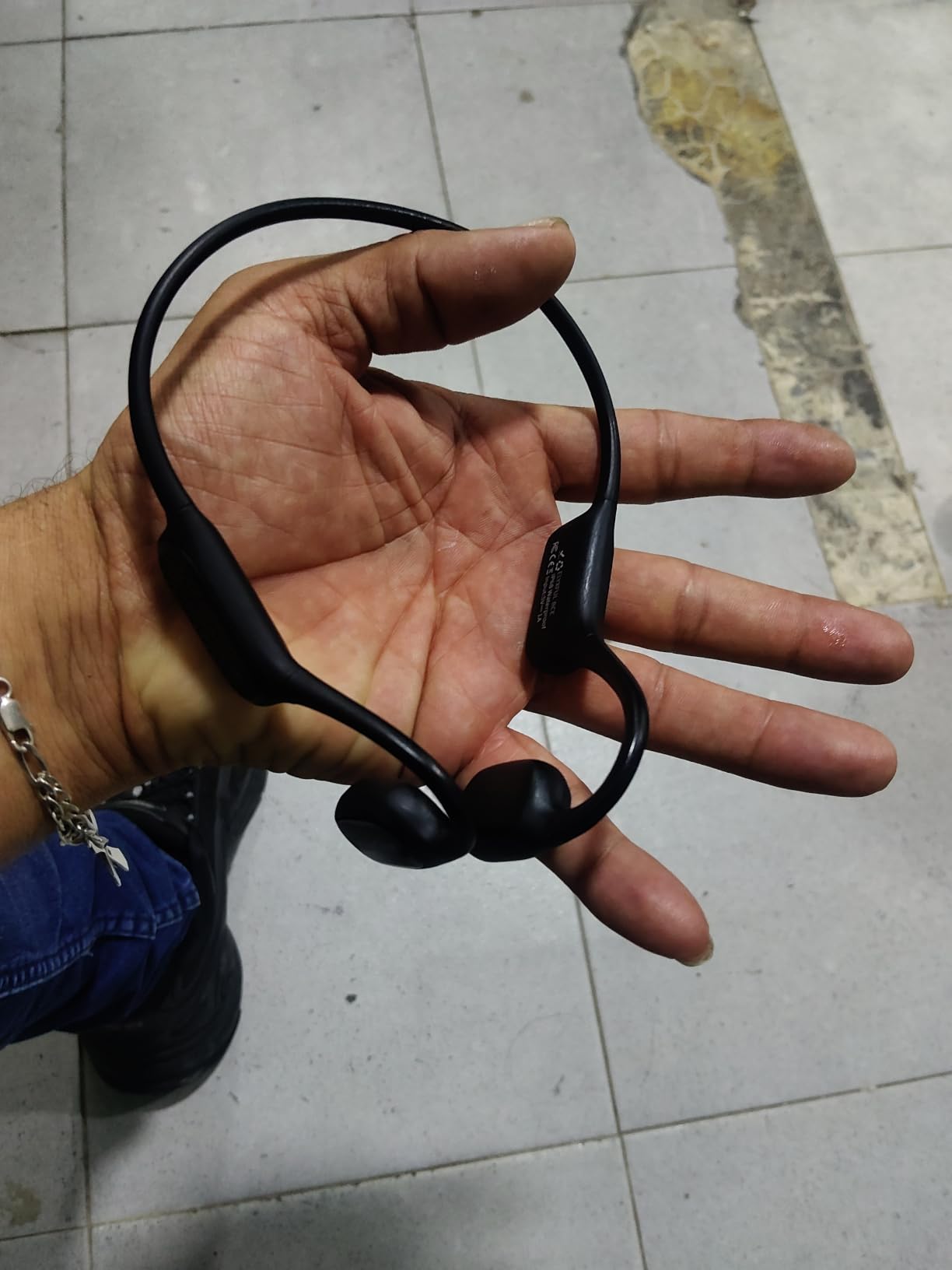
Playback control is the best in the group. Shuffle and random sit alongside sequential playback and skip controls, and voice prompts announce mode changes, shuffle on or off, power state and pairing status, so you can confirm your setting with your eyes closed at the wall.
The accessory kit is unusually generous: two USB-C charging cables with an extension, two sets of waterproof silicone earplugs, a strap and a carrying bag. A lifetime-warranty promotion has also been running on top of the standard two years.
How it holds up over a long session
Because storage is so deep, this is the pick for a swimmer who trains across a wide range of distances and wants different material for easy sets and threshold work without reloading between sessions. A single 64GB library covers that comfortably.
Stated playback is 8+ hours with a 2-hour charge, and the temple-resting open-ear design means nothing blocks your hearing of the pool. For anyone who wants coaching audio, a podcast or a language lesson in the water, the two pairs of included earplugs matter more than the bundle suggests.
Where it falls short
Durability is the real concern. Several owners report units failing within a year, including intermittent one-sided sound, and other reviews report battery life well short of the 8-hour claim. The 2-year warranty is the mitigation, so keep the receipt and do not leave the unit in a hot car.
Format support is MP3 only, so M4A or AAC files need converting first. Shuffle also tends to repeat songs rather than cycle the whole library, and the internal drive dislikes fast USB ports, so transfers are best done on USB-A 2.0 or slower.
6. Tevese X9: Best for Everyday Use on Land and In Water
Swimming Headphones Bone Conduction Bluetooth 6.0 IPX8 Waterproof 32G MP3
IPX8 waterproof
32GB storage
Bluetooth 6.0
10-hour battery
ABS build
Pros
- 5.0 average across 167 reviews with a 100% five-star distribution
- 32GB holds 9000+ songs
- Lightweight open-ear comfort for long wear
- Fast Bluetooth 6.0 pairing with no dropouts reported
- Stays in place with swim caps and goggles
Cons
- No deep bass
- which is typical of open-ear designs
- MP3 mode required underwater
- 3-hour charge time is the longest in the group
The Tevese X9 is the one pick here whose rating comes with no visible complaints attached. Every review in the returned set is five stars, and owners single out comfort for all-day wear, clear sound, fast Bluetooth pairing and solid performance under water. The evidence base is thin at 167 ratings, so read that as a good signal rather than a settled verdict.
On paper it is a straightforward swim headset. IPX8 waterproofing, 32GB of built-in storage holding 9,000+ songs at typical compression, Bluetooth 6.0 for low-latency use above water, and a stated 10-hour battery that covers several pool sessions between charges.
How it holds up over a long session
The lightweight open-ear design is the headline here. Owners describe wearing it for long stretches without ear fatigue, which matters if you also use it for desk work, running or cycling, and the on-ear frame works with a swim cap and goggles without shifting.
Bluetooth 6.0 pairing above water is reported as quick and stable with no dropouts, which makes this a genuine two-environment pair rather than a swim-only unit with a land mode bolted on.
Where it falls short
There is no deep bass. That is the normal tradeoff for any open-ear bone conduction design, including the models that cost far more, and it is worth knowing before you buy if you train on low-frequency tracks.
Bluetooth cannot be used underwater, so MP3 mode has to be set before you get in the pool, and the 3-hour charge time is the longest in the group, so plan to top it up overnight. The 10-meter Bluetooth range and the small review base are the other two caveats.
7. CXK X17: Best for Long Sessions
CXK Bone Conduction Headphones IPX8 Waterproof Bluetooth 6.0 Swim Headphone
IPX8 triple seal 2m for 2 hours
15x10mm transducer
Bluetooth 5.3
Up to 12 hours
Pros
- Triple-seal IPX8 rated 2m for 2 hours
- 15x10mm PulseCraft transducer for underwater clarity
- Up to 12 hours of playback
- Adjustable headband with soft silicone pads
- Boean app with custom EQ profiles
Cons
- Smallest review base of the premium picks at 89 ratings
- MP3 mode must be set before entering the water
- Built-in memory limited to WMA FLAC WAV and MP3
The CXK X17 is built around the largest transducer in this group, a 15x10mm unit, and owners report clear underwater audio as the main reason for the 4.8 rating with 92% five-star reviews. Transducer size is the single most technical lever you have on perceived underwater volume without adding earplugs, and this is where it shows.
Water protection is a triple-seal IPX8 rated to 2 meters for 2 hours, which matches the OpenSwim Pro for the widest declared window here. That covers a 60-minute masters set or a full open-water swim without the anxiety of watching a one-hour rating tick down.
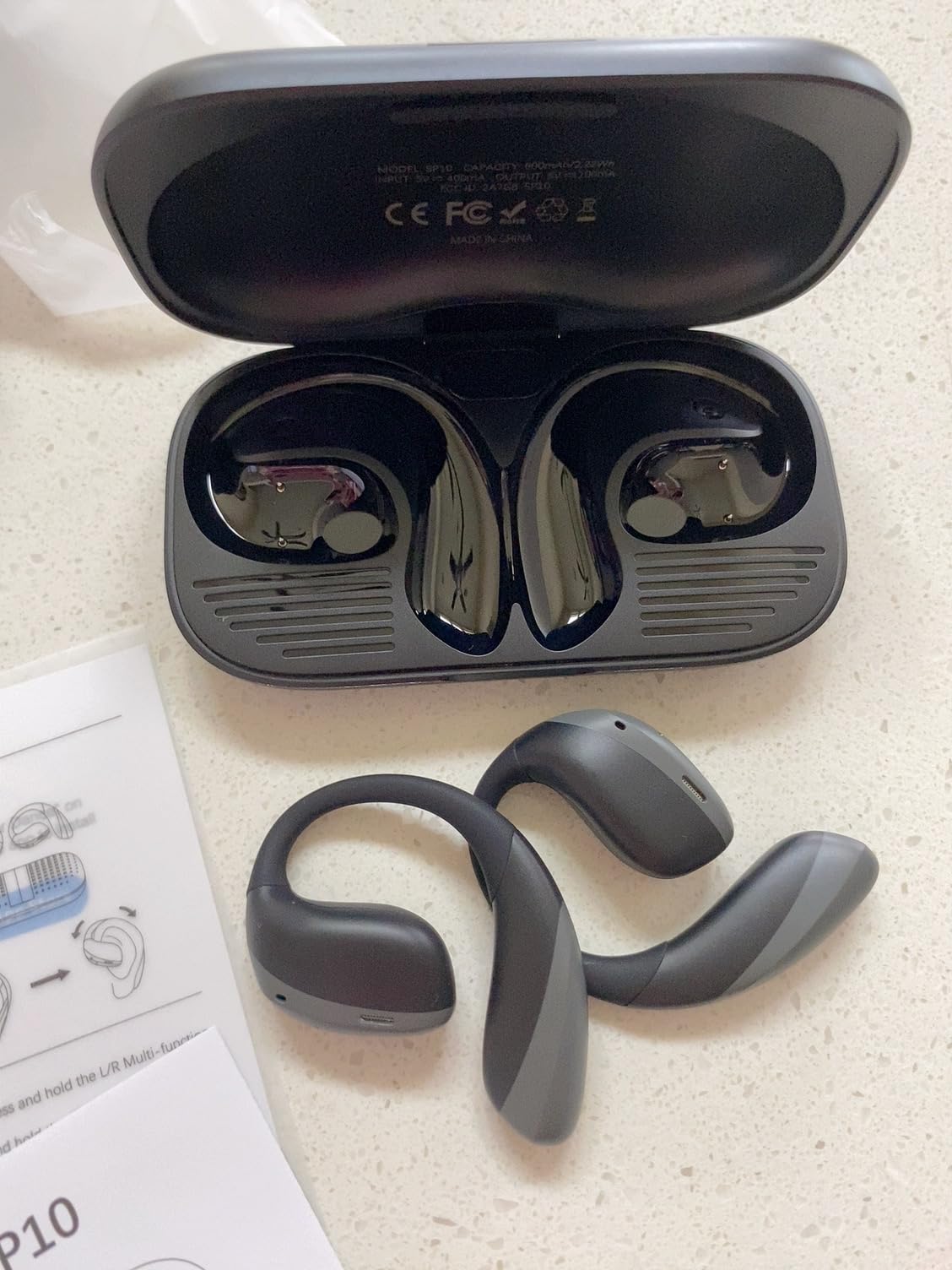
Stated playback reaches up to 12 hours with magnetic charging, the longest battery claim in the lineup, and the adjustable headband with soft silicone pads is what reviewers describe as a comfortable all-day fit. Two microphones with noise cancelling handle calls on land.
Storage holds up to 8,000 songs and supports WMA, FLAC, WAV and MP3, and the companion app supports custom EQ profiles, which is useful for shaping a swim-specific sound without relying on a hardware preset.
How it holds up over a long session
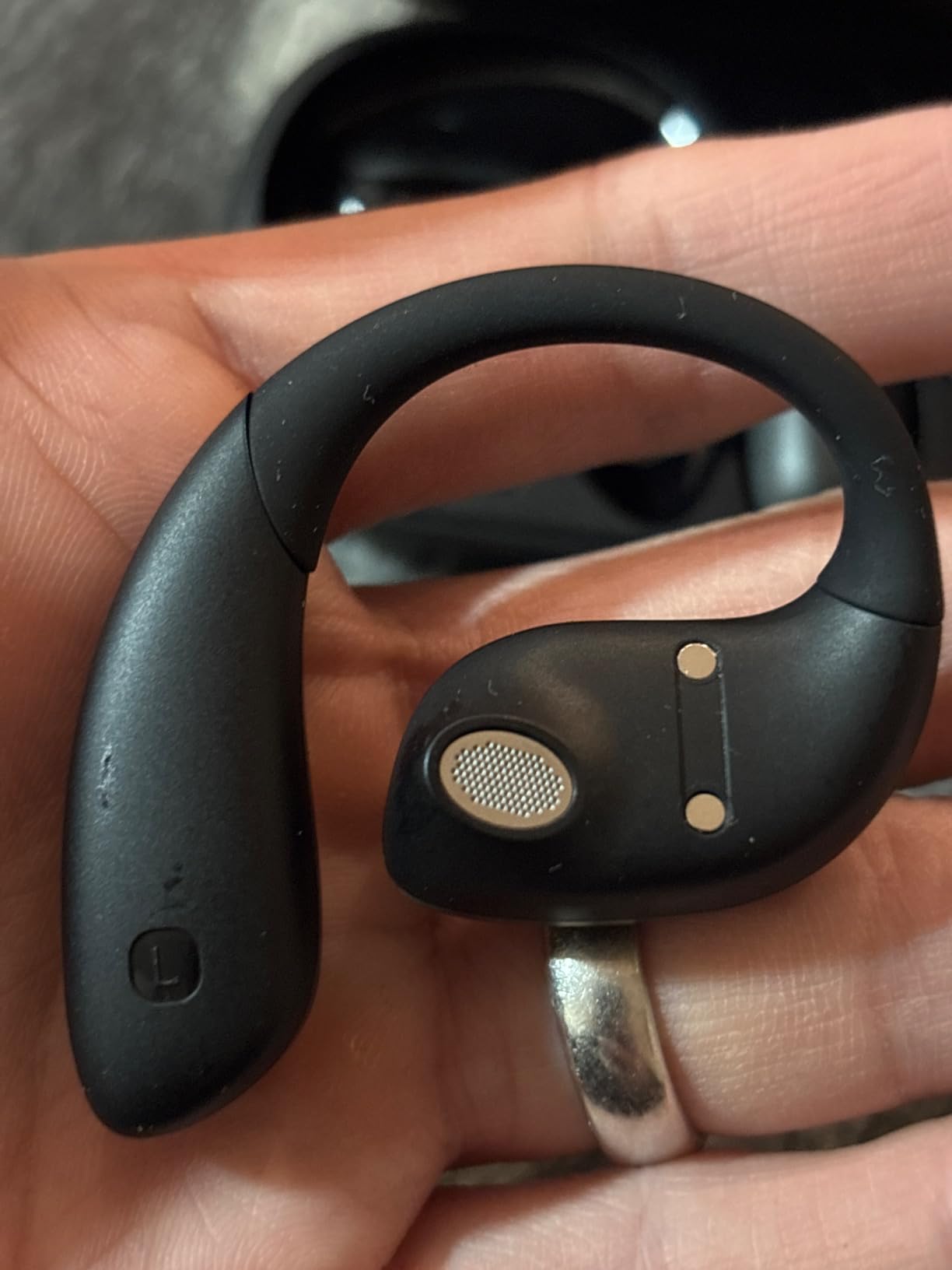
Over an hour in the water the adjustable band is the part you notice. Snug silicone pads spread the clamping force instead of concentrating it at one point, and the wraparound shape clears a cap and goggle strap the way a memory frame would.
For anyone doing two-a-day sessions or long open-water swims, the 12-hour claim and the 2-hour submersion rating together mean one charge and one soak covers a full day of training.
Where it falls short
The evidence base is the weakest of the premium picks at 89 ratings, and the published specs are inconsistent, listing 15mm as the audio driver size while elsewhere describing a 15x10mm transducer. Treat the numbers as a guide rather than a spec sheet.
There is no deep bass, as with any open-ear design, and MP3 mode has to be set before you enter the water. The sales rank is also modest relative to the price, and the built-in memory accepts only WMA, FLAC, WAV and MP3.
8. RR SPORTS X26: Best for Broad File Support
RR SPORTS IP68 Waterproof Swimming Headphones, Bone Conduction Bluetooth 6.0 Headphones, Built-in 32GB MP3 Player, Soft Lightweight Open-Ear Design for Swimming Marathons Showers Cycling(Obsidian
IP68 nano-hydrophobic coating
32GB storage
Bluetooth 6.0
7-hour battery
3.88 oz
Pros
- IP68 sealing plus a nano-hydrophobic coating
- 32GB with MP3 WMA WAV and FLAC support
- Magnetic cable used for charging and file transfer
- Ultra-soft silicone fit that does not disturb glasses
- Fast stable Bluetooth 6.0 pairing
Cons
- MP3 mode resets to maximum volume on each start
- Standalone playback runs about 4+ hours against a 7-hour claim
- Bluetooth range limited to 10 meters
The X26 carries the highest rating in the lineup at 4.9 with 92% five-star reviews, and the reason owners give is comfort. The ultra-soft silicone open-ear fit stays put through runs and does not disturb glasses, which is a wider comfort claim than most of these headsets make.
Sealing is IP68 with a nano-hydrophobic coating, and the coating is the part that matters for durability. It is described as resisting sweat, rain and pool water, which is the best answer in this group to the question of what breaks first after months of wet sessions.
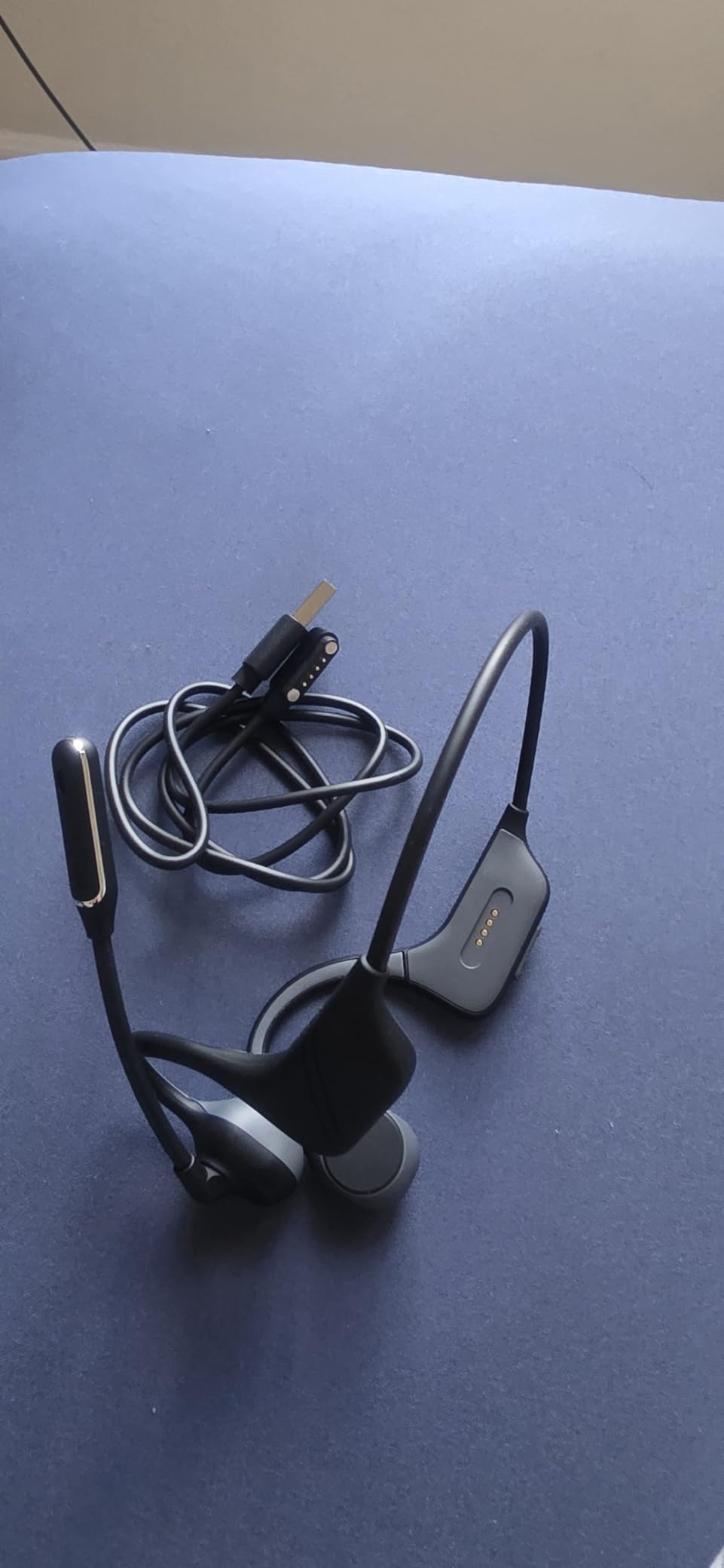
Storage is 32GB holding up to 7,000 songs, and file support is the broadest practical set here: MP3, WMA, WAV and FLAC. The magnetic charging cable doubles as the file-transfer cable, so there is one lead to carry rather than two, and transfers are otherwise straightforward.
Bluetooth 6.0 pairs fast and stably with both iOS and Android, and 32GB with those four formats means you can build a swim library from almost any source rather than converting everything to one container first.
How it holds up over a long session
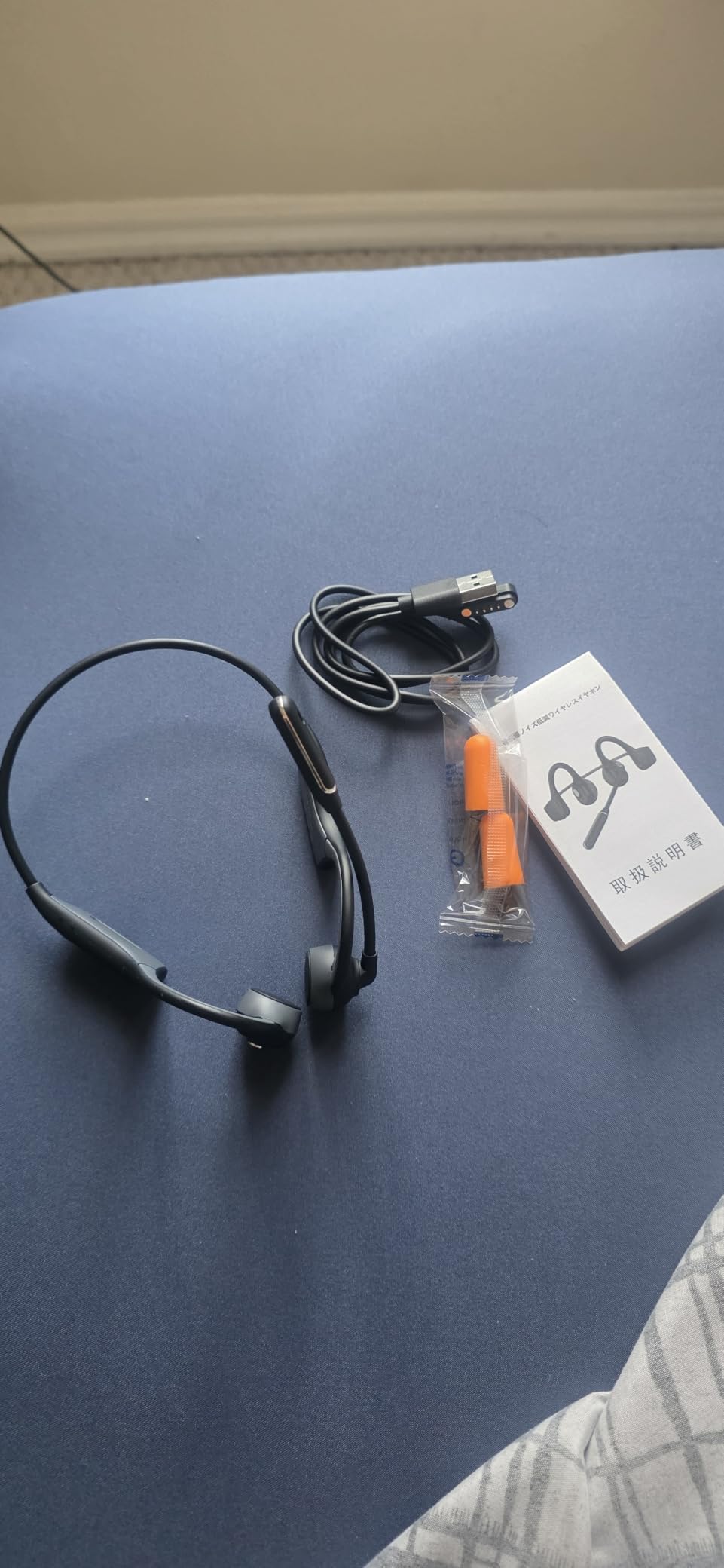
At 3.88 ounces with a soft silicone shell, this is the pick for a swimmer who also wears glasses or a cap and finds most headsets leave a pressure mark by the end of the session. The open-ear design never enters the ear canal, so nothing traps water or builds pressure.
The hydrophobic coating also makes it a good open-water and multisport option, since sweat, rain and salt spray are all covered by the same sealing as the pool.
Where it falls short
The volume behavior is an odd one. Owners report that MP3 mode resets to maximum volume on each start instead of remembering the last level, which is startling in a quiet indoor pool and means the first lap of every session is played at full output.
Standalone playback runs about 4+ hours, short of the 7-hour claim, and Bluetooth range is limited to 10 meters. The review base is the smallest in the roundup at 67 ratings, so the rating is encouraging rather than established.
What IPX8 and IP68 Actually Mean Underwater
IPX7, IPX8 and IP68 are ingress ratings, and the difference between them matters more for swimming than for anything else you will buy. The X in IPX7 and IPX8 means water ingress was not tested, so the rating covers water only. The 6 in IP68 means the unit is also dust-tight, which is a nice bonus for a pair you also wear on trails and bikes.
IPX7 is a splash and immersion rating, typically tested at 1 meter. IPX8 is deeper and longer, but the standard leaves the actual depth and time to the manufacturer, which is why two products both labelled IPX8 can promise very different things. In this group the declared figures run from 1 hour at 2 meters up to 2 hours at 2 meters, and one product claims IP68 for full submersion with no time limit attached at all.
For a pool, any of these ratings will work if you stay near the surface and surface every lap. Open water is the harder case, because a long open-water swim is continuous submersion, and that is exactly where the two-hour declarations earn their keep. The ceiling on all of them is 2 meters, so a deep dive is out of scope for every pair we tested.
Swimmers who also work with bone and cutting tools may recognise the shared vocabulary of material ratings. Our guide to the best bone saws covers the same idea for a different job, where what the rating does and does not cover decides whether the tool is usable.
MP3 Storage or a Poolside Transmitter
There are two architectures for swimming audio, and picking the wrong one is the most expensive mistake in this category. Onboard MP3 storage is what all eight picks use. The headset plays files from its own memory, so nothing needs to transmit once your head is under, which is why the mode switch happens at the poolside rather than in the water.
A poolside transmitter works differently. A unit on the deck sends audio to the swimmer, and because the transmitter stays dry it can stream from a phone, deliver live coaching, or run a two-way conversation. Swimmers who want a coach talking back mid-set care about this, and it is also how you get podcasts on demand without touching a file transfer.
The trade-off is depth. A radio link from the deck is limited in how far the signal carries underwater, so transmitter setups are pool and shallow-water tools rather than open-water ones. Onboard storage has no depth limit inside the stated 2 meters, works in open water, and needs no deck hardware at all. The cost is a chore: files must be loaded by hand, streaming libraries will not transfer, and there is no playlist management on most of these units.
One r/Swimming thread captures the honest version of that trade. A swimmer who tested a non-bone-conducting JBL headset found it fell off constantly, then said the bone conduction pair did not move at all, while adding that Bluetooth still matters because it is useful outside the water. That is the whole argument in three sentences: secure fit wins in the pool, land use justifies dual mode, and the file chore is what you pay for the privilege.
Declared Swim Time vs Your Typical Session
The question buyers ask most often is whether a stated 40 or 60 minutes covers a real training set. Map the declared window against your own session length before you buy, because the difference between a one-hour and a two-hour rating is the difference between relaxed and watching a clock.
In this group, the SHOKZ OpenSwim Pro and the CXK X17 are both rated 2 meters for 2 hours, which covers an hour of swimming with margin. The PSIER S18 is rated 2 meters for 1 hour, which covers a standard 45 to 60 minute set. The RR SPORTS X26 and the KESIEME X7s are stated to 2 meters with no time window given, and the ELYXFUL is IP68 for full submersion without a declared time.
Battery is the second limit and it is the one competitors rarely separate properly. Bluetooth mode and MP3 mode do not draw the same power, and the standalone number is what governs a swim. The OpenSwim Pro is quoted at 9 hours, the PSIER at 8, the Tevese X9 at 10 and the CXK X17 at up to 12. The RR SPORTS is the honest counterexample, with owners reporting roughly 4+ hours of standalone MP3 playback against a 7-hour claim.
Fit is the third limit, and it is the one that ends sessions early. A frame that shifts under a cap costs you more minutes than a low battery does, which is why the memory-metal and cap-and-goggle arrangements in this roundup matter more than any other spec line.
How to Use Bone Conduction Headphones in the Pool
Four steps, in order, and the first two happen at home rather than at the pool.
First, charge the headset fully before you leave. MP3 mode draws more power than Bluetooth on several of these units, and a full charge is what gets you through a long set.
Second, load your files and confirm playback before you are standing on the block. Use MP3, WMA, WAV or FLAC depending on the model, and connect over the magnetic or USB-C cable rather than assuming a wireless transfer will work.
Third, fit the frame before you enter the water. Position the transducers on the cheekbones rather than sliding them toward the jaw, then put the cap and goggle strap on over the top so the band has something to grip. Wear the swimming earplugs, and this is the step most guides skip. Bone conduction sends sound through bone, so an open ear canal works against you, and sealing the canal makes the perceived volume and clarity jump noticeably.
Fourth, switch to MP3 mode at the poolside and confirm it before you submerge, since Bluetooth cannot be used underwater. None of these units will pair to a phone in the water, so any attempt to fix playback once you are swimming will not work.
Post-Swim Care: Rinse, Soak and Dry
Chlorine and salt are what kill swim headsets, and the fix takes about five minutes. No competitor roundup we reviewed covers this, and it is the single cheapest way to extend the life of the pair.
Start by rinsing the headset under fresh tap water with all ports and the charging contacts clear of residue. Then soak it in a container of plain fresh water for about 30 minutes, which loosens mineral and salt deposits that otherwise crystallise in the seals and buttons.
Finish by shaking out the water and air-dry with the charging port left open and uncovered. Do not charge a wet unit, and do not leave the band stretched on a shelf, since a plastic band under constant tension loses tension over time. Do this after every session and the seals keep behaving like new far longer than they otherwise would.
Frequently Asked Questions
Do bone conduction headphones work for swimming?
Yes, but only in MP3 mode. Bluetooth cannot transmit underwater, so a swim headset has to carry its own music storage and play files from that memory. The cheekbone transducers vibrate at the frequency the sound waves would have, and your inner ear reads those vibrations as audio, with your ear canals left open for the pool and any coach calling from the deck. Every pick in this guide stores 32GB or more.
What is the downside of bone conduction headphones?
The main downsides are weak bass compared with in-ear buds, a clamp pressure that can build on long sessions if the position is never adjusted, and a manual file-transfer chore since streaming libraries will not copy to the headset. Bluetooth mode does not work underwater, so MP3 mode must be set before you swim. Post-swim rinsing and a fresh-water soak are needed to keep seals and buttons working.
Are shokz worth it for swimming?
For pool-only use, a capable IPX8 unit from a less established brand does the same job. Where Shokz earns its place is the wider water rating of 2 meters for 2 hours, 32GB of storage for up to 8000 songs, separate swim and land EQ modes, and a 2-year warranty on a 27.3 g nickel-titanium frame. If you also run and cycle with the same pair, the dual-mode design justifies the premium.
What are the best underwater bone conduction earphones for swimming?
The best overall is the SHOKZ OpenSwim Pro, rated IP68 to 2 meters for 2 hours with 32GB of storage. For clearer underwater sound, the VLOP VP01 Abyss uses a hybrid bone and air conduction driver at 26 g. For the largest library, the ELYXFUL BCE carries 64GB and shuffle playback. For value, the PSIER S18 gives you IPX8 to 2 meters for 1 hour with 32GB at a much lower outlay.
Which Swim Headset Should You Buy?
The SHOKZ OpenSwim Pro is our pick for the best bone conduction headphones for swimming in 2026. It carries the widest declared submersion window in the group at 2 meters for 2 hours, 32GB of storage, separate swim EQ, the lightest frame here, and a 2-year warranty. If you swim on a budget, the PSIER S18 does the same job with a one-hour window and a magnetically charged 32GB player, and if you want the strongest underwater clarity the VLOP VP01 Abyss adds a hybrid air and bone driver at 26 g.
Whichever you pick, set MP3 mode at the poolside, wear the earplugs, and rinse the unit in fresh water when you get home. Those three habits are worth more than any spec line on the box.