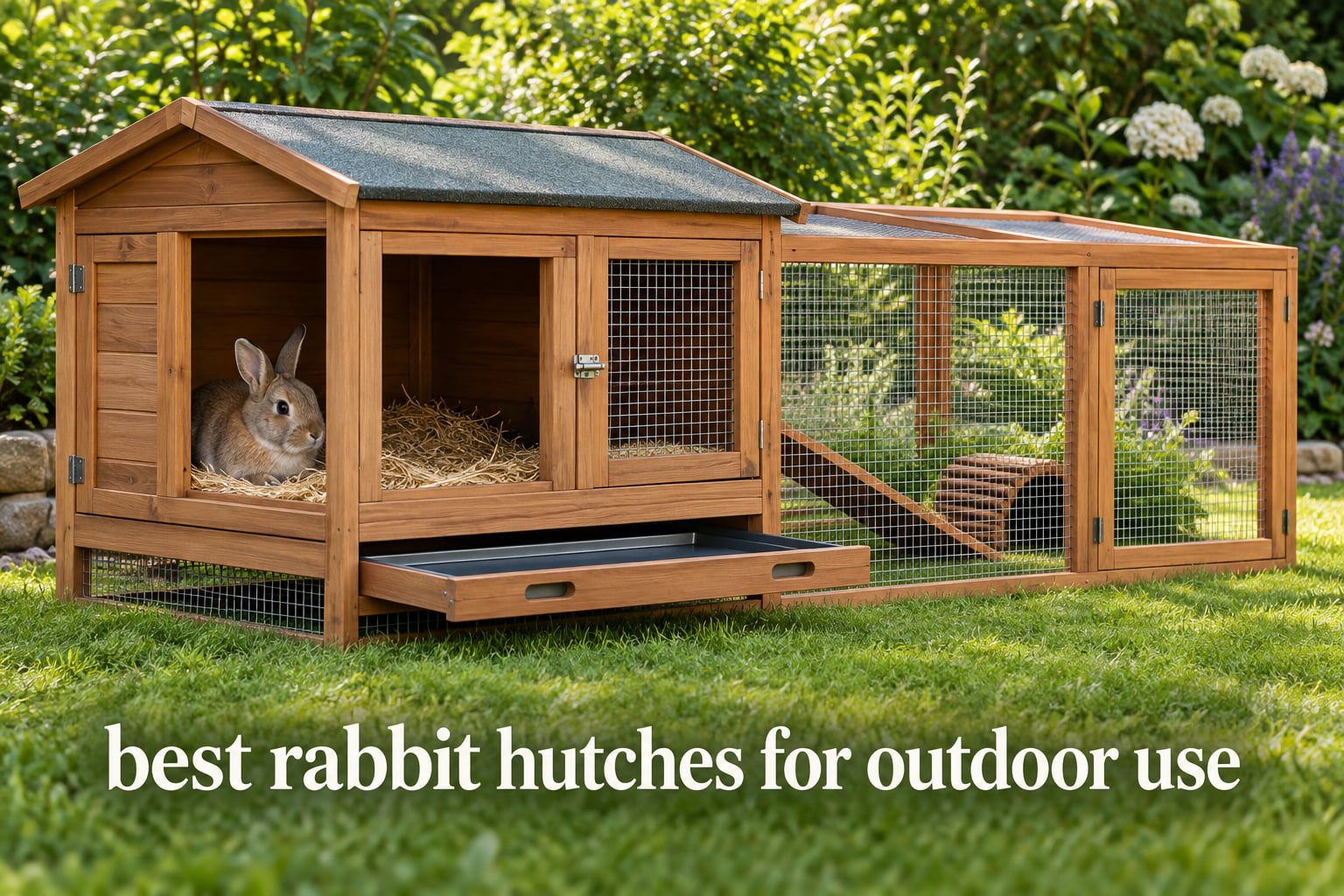
An outdoor rabbit hutch is a weatherproof, predator-resistant shelter that gives a rabbit a dry, private place to sleep and hide in the garden. It is a bedroom, not a full-time home, and it must be paired with a secure exercise run of at least 3 x 2 x 1 m. That distinction matters more than any brand name, and it is the one most roundups skip.
We spent weeks going through the specifications, the measurements and the owner feedback behind the 12 hutches below, weighing them against the standards welfare bodies such as the PDSA and the House Rabbit Society actually recommend. The result is a list that tells you plainly which units earn their place outdoors, which are only safe behind a covered patio, and which are really portable runs pretending to be hutches.
One warning before we start. Most wooden hutches sold as outdoor housing are built for rabbits that are shut in for a few hours at night, not for animals that live outside. Experienced owners on rabbit forums say the same thing over and over: a hutch on its own is too small, and the fix is a run around it, not a bigger box. Our picks below are the sleeping shelters that pair best with that run.
Table of Contents
- Top 3 Outdoor Rabbit Hutches for 2026
- All 12 Best Rabbit Hutches for Outdoor Use (October 2026)
- 1. Aivituvin Outdoor Hutch on Wheels – Editor’s Choice
- 2. Gutinneen Two-Story Hutch with Locking Trays – Best Value
- 3. Trixie Natura Two-Story Hutch with Run – Best for Small Breeds
- 4. GOOD LIFE USA 62 Inch Fir Hutch – Top Rated
- 5. PawHut A-Frame Outdoor Hutch – Best Portable A-Frame
- 6. PawHut 49 Inch Hutch with Fun Outdoor Run – Best for First-Time Owners
- 7. GEGURI Cedar Hutch with Waterproof Roof – Best Cedar Build
- 8. PawHut 62 Inch Hutch with Run Area – Best for Long Runs
- 9. COZIWOW Folding Portable Run – Best Folding Run
- 10. PetsCosset 93 Inch Double-Run Hutch on Wheels – Best Double-Run Layout
- 11. Gutinneen Large Two-Level Hutch – Best for Covered Spaces
- 12. Rockever Wire Rabbit Hutch and Run – Best Low-Profile Enclosure
- What to Look for in the Best Rabbit Hutches for Outdoor Use
- How to Predator-Proof an Outdoor Rabbit Hutch
- Size and Space Standards for Outdoor Rabbits
- Seasonal Care: Summer Heat and Winter Cold
- Hutch, Run, or Shed: Which Setup Do You Actually Need?
- Frequently Asked Questions
- What is the best outdoor rabbit hutch?
- How big should an outdoor rabbit hutch be?
- How do I protect an outdoor rabbit hutch from predators?
- Can I keep my rabbit hutch outside in winter?
- Is it cruel to keep rabbits in a hutch?
- How do I stop my rabbit hutch smelling?
- Where do outdoor bunnies sleep at night?
- Should my rabbit hutch be off the ground?
- Conclusion: Pair Every Hutch With a Proper Run
Top 3 Outdoor Rabbit Hutches for 2026

Aivituvin Outdoor Hutch on…
- Three deep pull-out trays
- Waterproof asphalt roof
- 6 casters with 2 locks

GOOD LIFE USA 62 Inch Hutch
- Fir wood with non-toxic varnish
- Removable plastic trays
- Sliding grid door
All 12 Best Rabbit Hutches for Outdoor Use (October 2026)
| Product | Specs | Action |
|---|---|---|
| Aivituvin Outdoor Hutch on Wheels |
|
Check Latest Price |
| Gutinneen Two-Story Hutch |
|
Check Latest Price |
 Trixie Natura Two-Story Hutch with Run Trixie Natura Two-Story Hutch with Run |
|
Check Latest Price |
| GOOD LIFE USA 62 Inch Fir Hutch |
|
Check Latest Price |
 PawHut A-Frame Outdoor Hutch PawHut A-Frame Outdoor Hutch |
|
Check Latest Price |
 PawHut 49 Inch Hutch with Run PawHut 49 Inch Hutch with Run |
|
Check Latest Price |
 GEGURI Cedar Hutch GEGURI Cedar Hutch |
|
Check Latest Price |
 PawHut 62 Inch Hutch with Run PawHut 62 Inch Hutch with Run |
|
Check Latest Price |
 COZIWOW Folding Portable Run COZIWOW Folding Portable Run |
|
Check Latest Price |
 PetsCosset 93 Inch Double-Run Hutch PetsCosset 93 Inch Double-Run Hutch |
|
Check Latest Price |
 Gutinneen Large Two-Level Hutch Gutinneen Large Two-Level Hutch |
|
Check Latest Price |
 Rockever Wire Hutch and Run Rockever Wire Hutch and Run |
|
Check Latest Price |
1. Aivituvin Outdoor Hutch on Wheels – Editor’s Choice
Aivituvin Rabbit Hutch Outdoor Indoor Rabbit Cage Chikcen Coop with Casters Guinea Pig Cage with 3 Deep No Leakage Pull Out Tray,Waterproof Roof
2 levels, 61.2 x 22.6 x 33.5 in
3 pull-out trays, asphalt roof
6 casters, 2 locking wheels
Pros
- Very spacious interior with two usable floors
- Three removable trays speed up deep cleaning
- Wheels make repositioning for shade easy
- Good door locks for separating a rabbit
Cons
- Strong out-of-box odor
- Thin chewable wood and mesh
- Prefilled screw holes often need re-drilling
The Aivituvin is the hutch we keep coming back to, and the reason is boring but decisive: cleaning. Three deep trays pull out from the front and the back, so you can strip every level in a few minutes without dismantling anything. Owners report that this is the difference between cleaning a hutch daily and cleaning it when you feel like it, which is the whole game when urine and ammonia are involved.
It is also genuinely big. At 61.2 x 22.6 x 33.5 inches with two usable floors and a lockable inner section, it is one of the larger two-story units here, and the six casters let you drag it into shade as the sun moves. Two locking wheels keep it steady when the ground is soft.
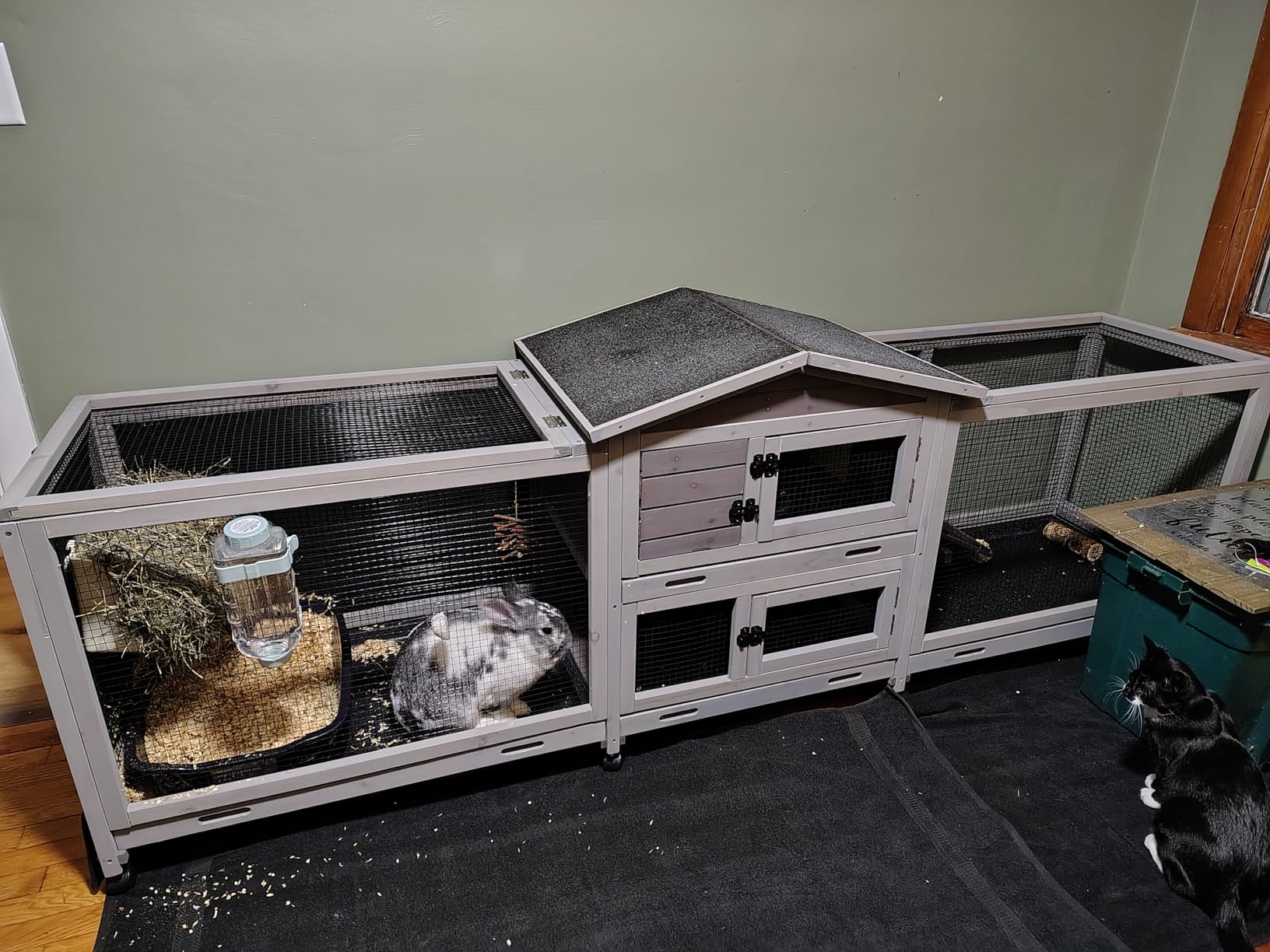
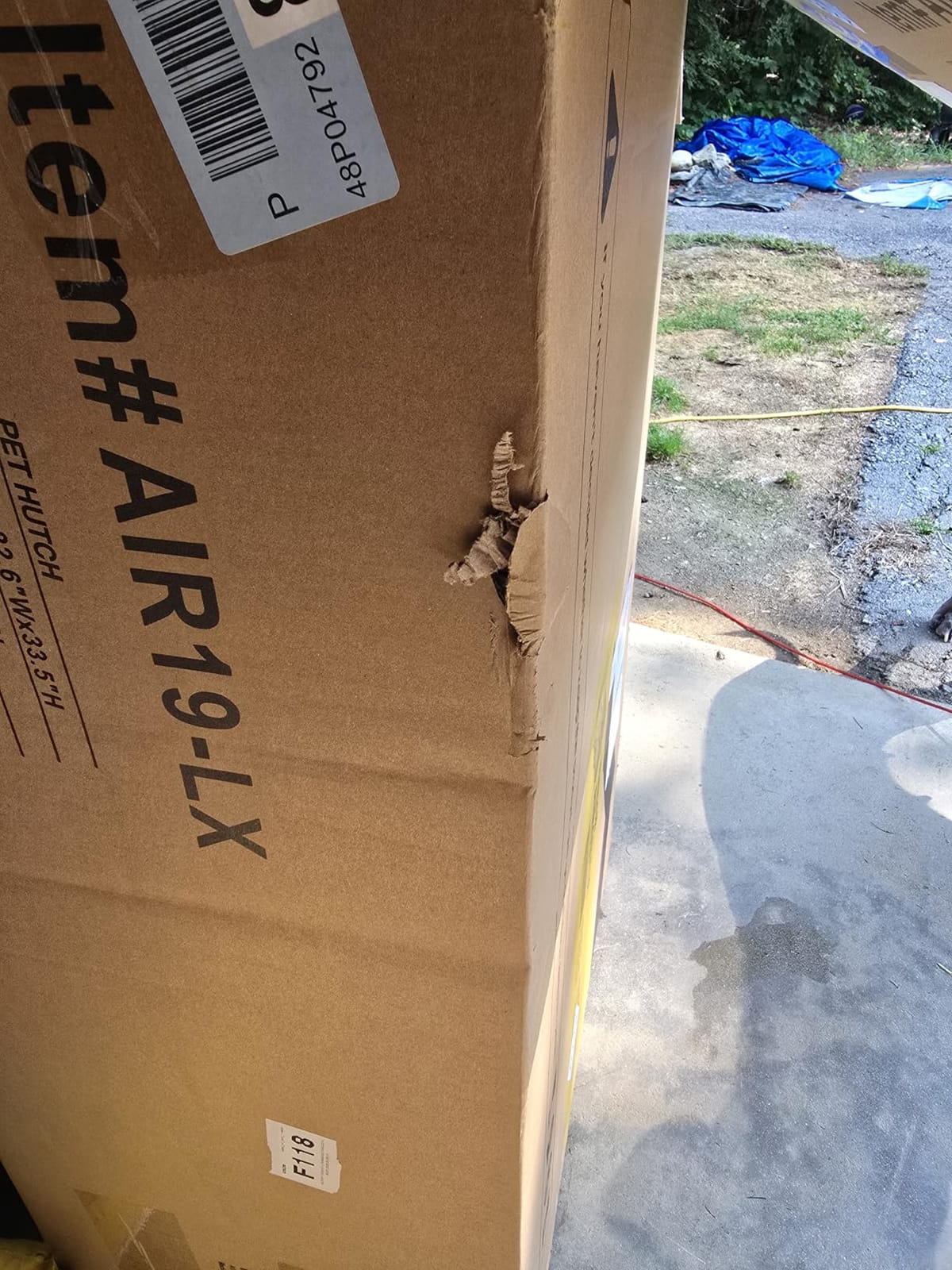
The honest weakness is build quality. Reviewers repeatedly report thin wood and thin mesh, gaps where bedding and urine fall through onto the level below, and prefilled screw holes that need re-drilling before anything will line up. Panels sometimes arrive warped, and the strong smell on unboxing means you want it aired out for a day before a rabbit goes near it.
The ramp is also steep and slick, so a small or young rabbit may need a traction strip added. At 41 pounds, it is not a one-person carry job, though the casters do most of the work.
Why owners keep this one
The tray system is the reason it holds its review count. Deep removable trays mean bedding changes take minutes, and the front-and-back access means you never have to reach into a dark corner with an arm.
Owners also like being able to roll the whole unit to a shaded wall at midday and back into morning sun later. That flexibility is what makes it workable in a yard that gets direct light.
Who should skip it
Skip it if your rabbit is an enthusiastic chewer or if you need a genuinely predator-proof enclosure. The mesh here is thin, and reviewers say it does not stand up to a determined fox or dog on its own.
It also needs two people and a drill to assemble properly, given the re-drilling most buyers report. Budget an afternoon rather than an hour.
2. Gutinneen Two-Story Hutch with Locking Trays – Best Value
Gutinneen 2-Story Rabbit Hutch with Chew-Proof Ramp & Leak-Proof Trays – Indoor/Outdoor 39.3″ Wooden Rabbit Cage with Wheels for Rabbits, Guinea Pigs
2 levels, 39.3 x 22 x 36.8 in
2 locked leak-proof trays
4 swivel casters, 2 locks
Pros
- Trays lock in place when a rabbit jumps on them
- Ramp has full-length metal edging against chewing
- Braked casters keep it stable and movable
- Five doors simplify cleaning and handling
Cons
- Lightweight wood that chews easily
- Inconsistent panel alignment on some units
- Compact footprint is tight for larger breeds
This is the newest listing in the group and the top-ranked product in its category, which is why it earns a place despite a middling 4.0 score. The design detail that wins people over is the locking tray. Two deep trays latch into place, so a rabbit bouncing on the level above cannot walk the tray out of frame and dump the contents across your patio.
The ramp is reinforced with metal edges along its full length, which directly answers the chewed-ramp problem that shows up in reviews of almost every wooden hutch. Four swivel casters with two brakes make the unit easy to drag into shade and lock in position once it is there.
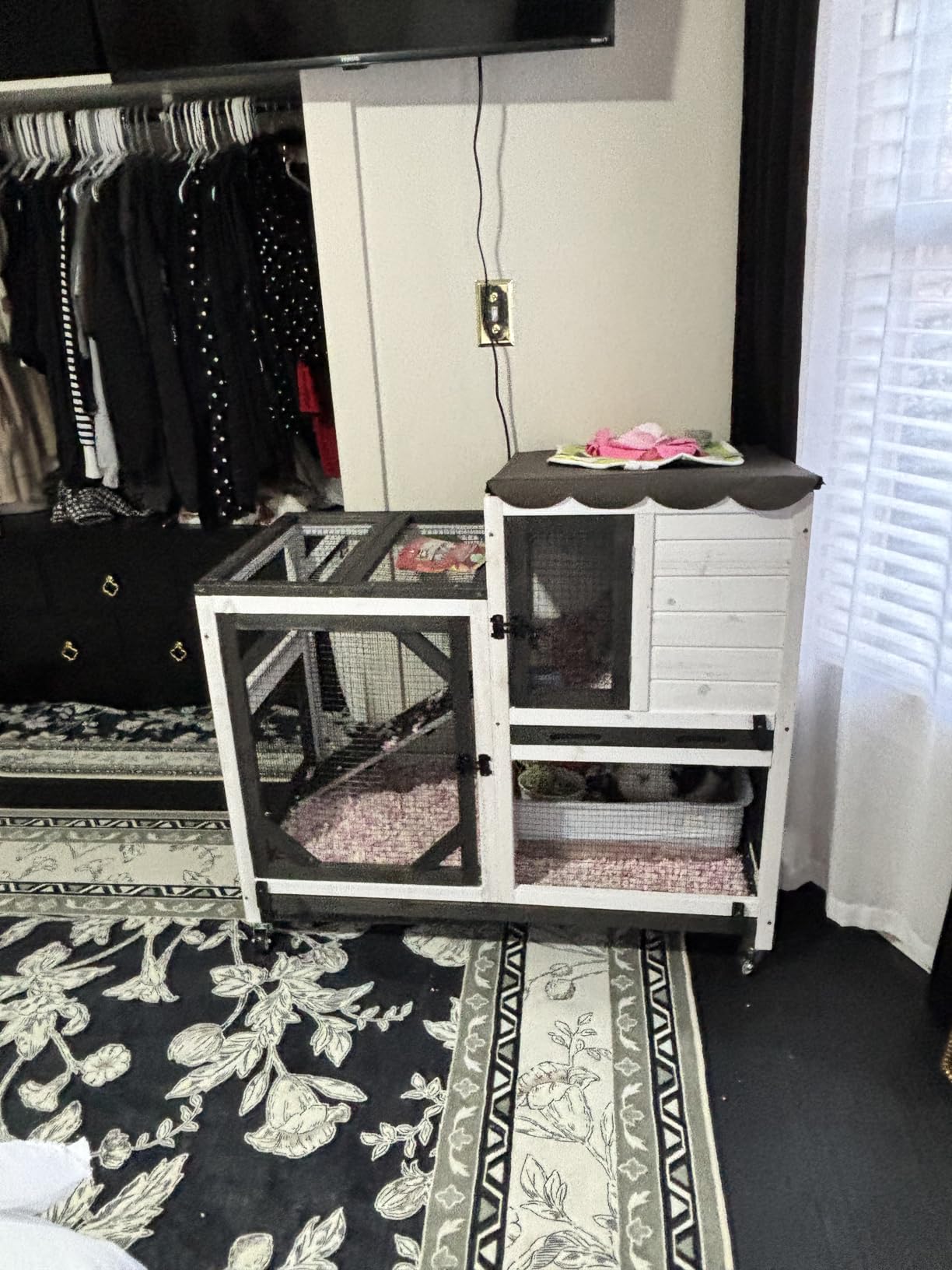
Five doors is generous for a hutch this size and it makes deep cleaning far less of a chore. You can reach every compartment without leaning over the top, which matters when you are handling a rabbit that does not want to be handled.
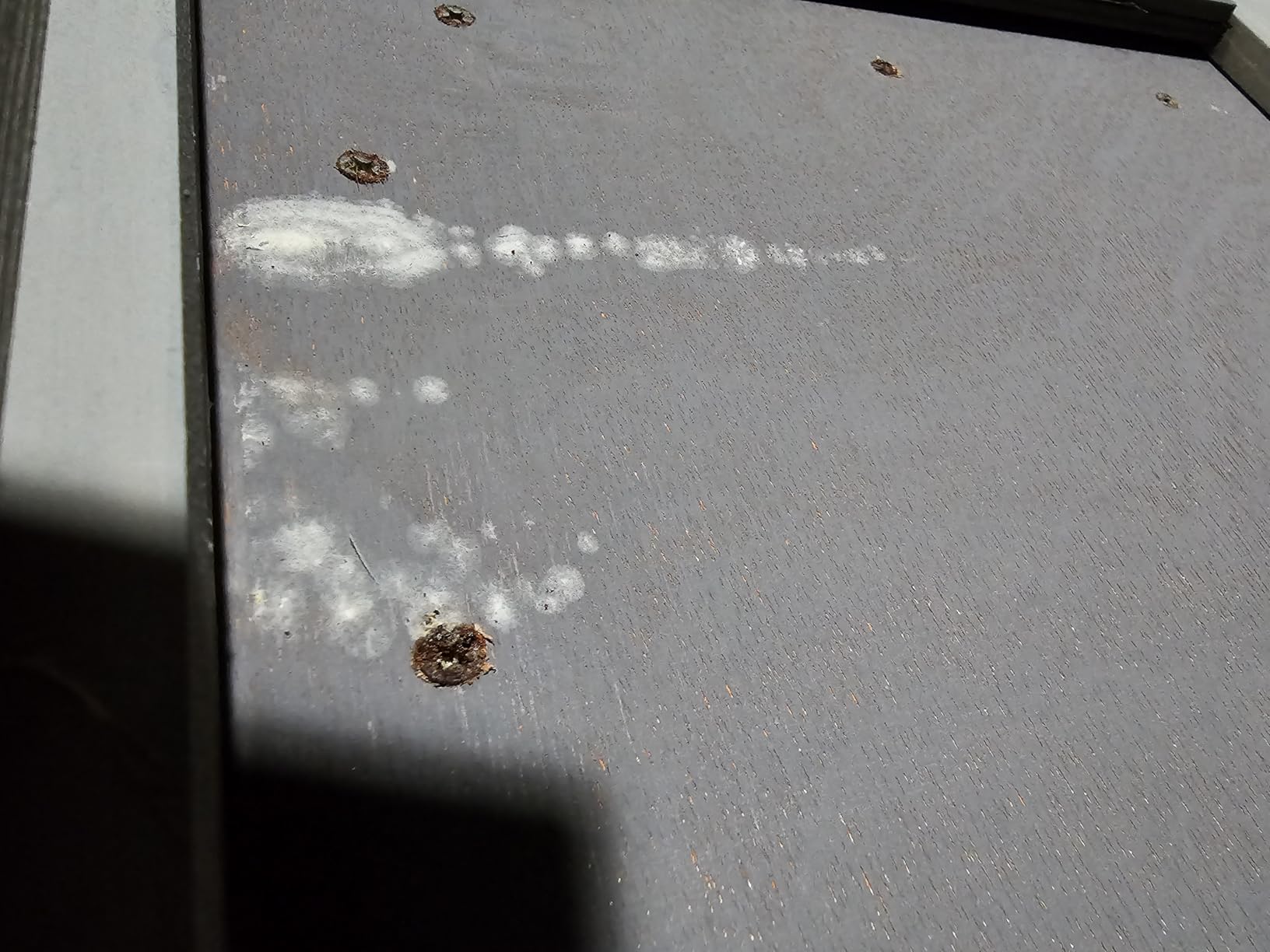
Pre-drilled holes mean assembly is quick, and owners report finishing well inside half an hour. The trade-off is that the wood is light and chewable, and some pieces arrive with panels that do not align cleanly.
What makes it good value
The locking trays and the metal-edged ramp are upgrades you would otherwise have to add yourself, and they address the two failure modes owners complain about most. That is real value in a wooden hutch.
It is also compact enough to fit a narrow side yard while still giving two levels and five access points, which is a combination most units in this price band cannot do.
Where it falls short
At 39.3 inches of length it is one of the smaller footprints here, and reviewers note it is tight for larger breeds. A Rex or a Lop will have less room than the two-level layout suggests.
Lightweight wood is not a long-term outdoor material for a rabbit with a working set of teeth. Expect to add metal edging yourself if chewing starts.
3. Trixie Natura Two-Story Hutch with Run – Best for Small Breeds
TRIXIE natura Outdoor Rabbit Hutch with Run – 2-Story Rabbit Cage with Non-Slip Ramp – Medium Elevated Small Animal House with Secure Playpen, Hinged Roof & Pull-Out Tray – in Brown
2 levels, 40.75 x 38 x 20.5 in
Pine with hinged roof
Pull-out tray, divider, non-slip ramp
Pros
- Established brand with a one-year manufacturer warranty
- Hinged roof gives fast top-down access
- Divider lets you separate or house two rabbits
- Weather-resistant coated pine
Cons
- Run area is floorless so it needs a mat indoors
- Compact size suits only small breeds
- Light duty tray and door hardware
Trixie has been building this natura line for years, and that continuity shows up in the details that matter. The hinged roof opens the whole top of the unit, so checking on a rabbit takes seconds rather than a wrestling match with a small side door. The pull-out tray beneath makes the daily clean quick.
Two levels sit over a covered run area, and a divider panel is included. That divider is the feature owners ask for most and rarely get: it lets you lock the rabbit into the upper sleeping section overnight while the run stays open, or use it to separate two bonded rabbits temporarily.
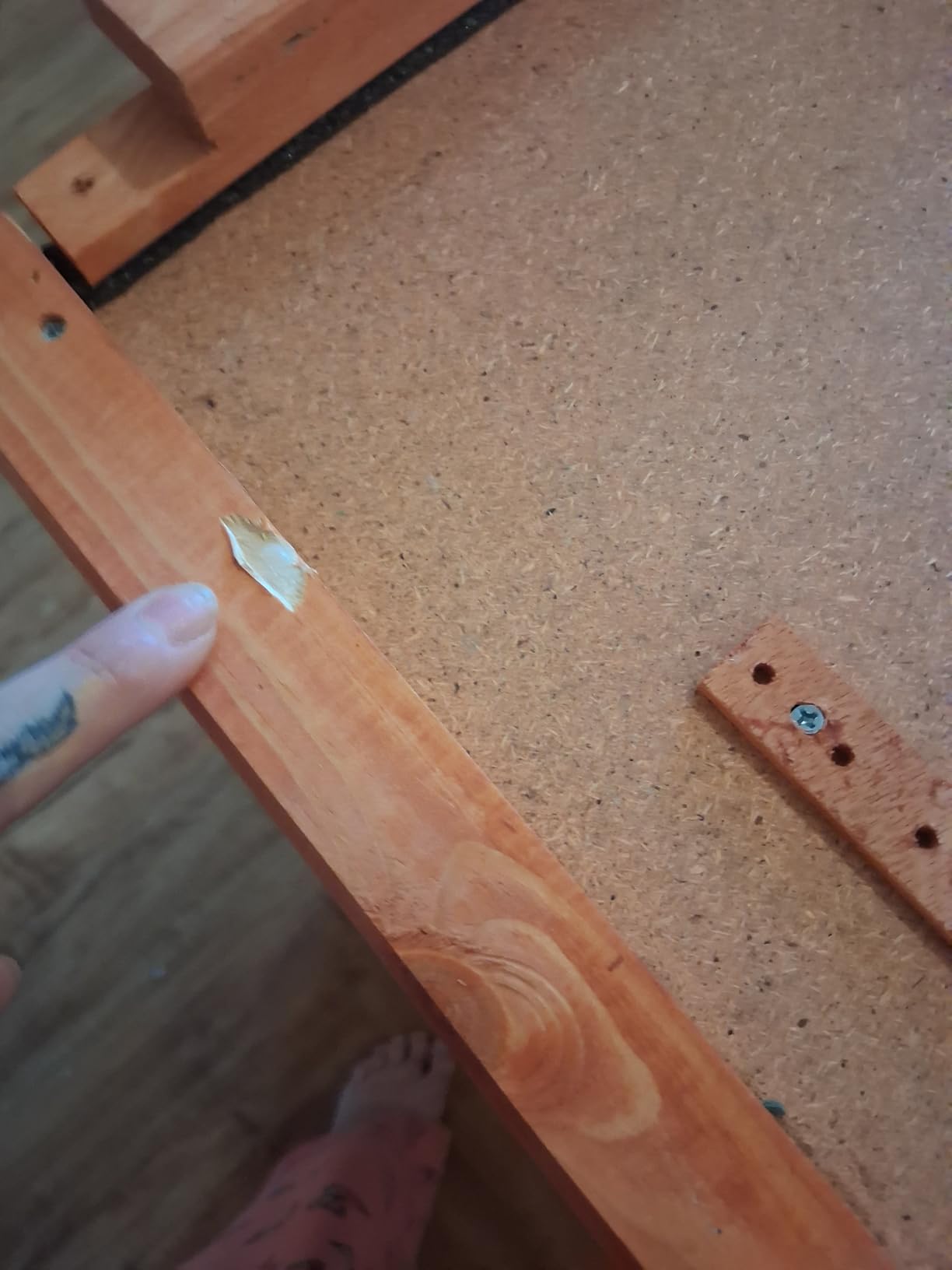
The non-slip ramp and the hatch door between levels give a small rabbit a safe route up and down without a jump, and the coated pine is built for a garden rather than a spare room. A one-year manufacturer warranty is a small but real mark of a company that expects repeat sales.
The drawback is scale. At 40.75 x 38 x 20.5 inches it suits one or two small rabbits, and reviewers are clear that anything larger will find it cramped. The run area is also floorless by design, so it needs a ground mat when used indoors.
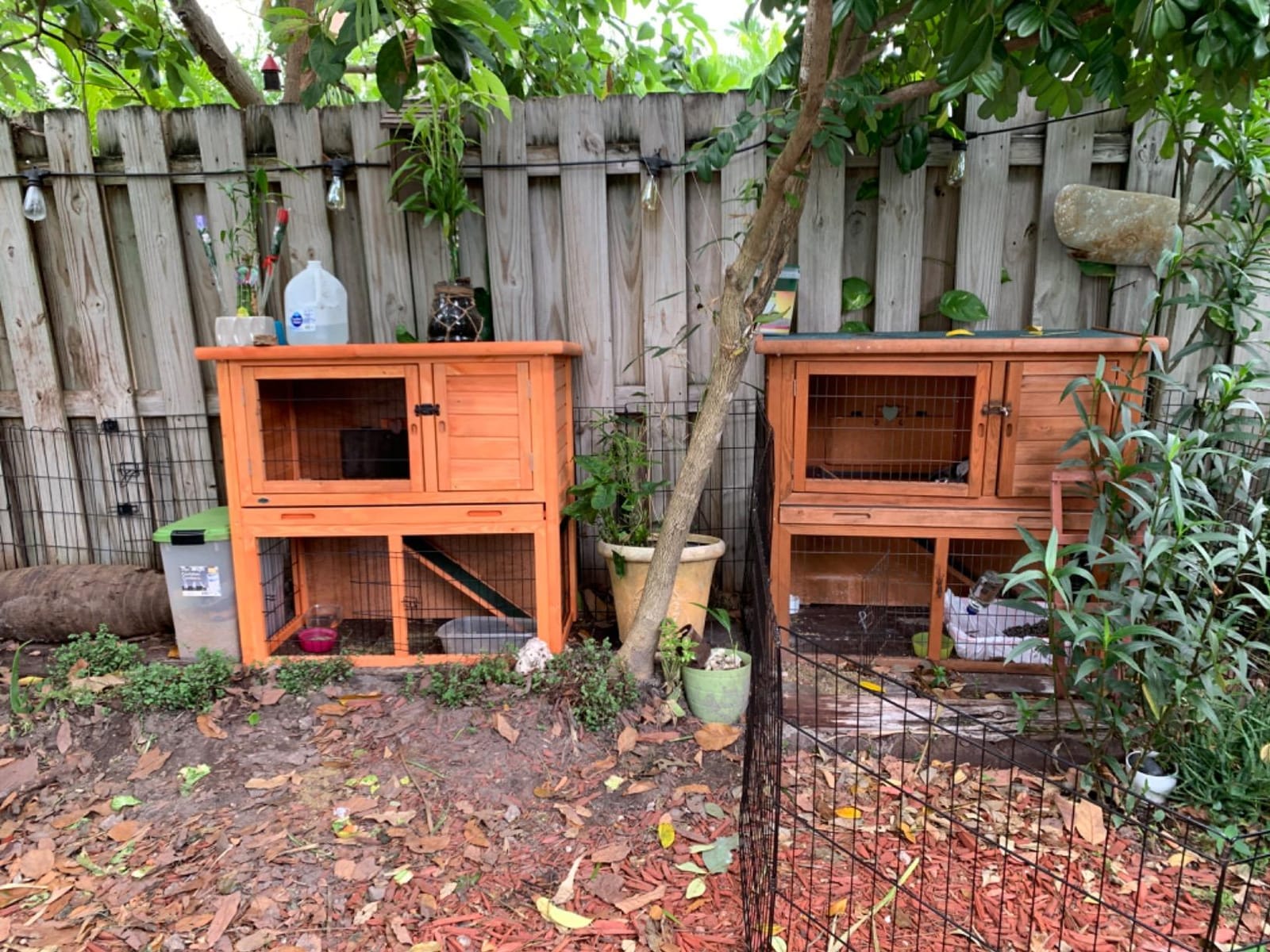
Why it suits small breeds
A low, gently ramped layout with a divider is exactly what a Netherland Dwarf, Mini Rex or Polish rabbit needs, and the hinged roof makes daily checks painless. The extra doorways help if you are housing a pair.
Because the model has been produced for so long, replacement parts and add-on runs from the same line are easier to come by than with newer designs.
What to watch out for
The 20.5-inch height is the constraint. A rabbit must be able to stand upright without its ears brushing the roof, and that is not guaranteed here for anything above roughly 4 pounds.
Tray and door hardware are light duty. Check the latches weekly in predator territory rather than assuming they hold.
4. GOOD LIFE USA 62 Inch Fir Hutch – Top Rated
GDLF 62″ Rabbit Hutch, Bunny Hutch Indoor Outdoor with Ramp, Cleaning Tray
Fir wood with varnish, 62 x 21 x 37 in
Removable plastic trays
Sliding grid door
Pros
- Highest average rating in this group
- Sliding grid door allows checks without opening
- Plastic trays wipe clean easily
- Ramp ridges reduce slipping
Cons
- Shorter and narrower than expected inside
- Picture-only instructions with misplaced holes
- Strong off-gassing odor and roof grit on assembly
This 62-inch fir hutch carries the highest average rating of any product we reviewed, and the reason shows in the reviews rather than the brochure. Buyers describe it as solid, good-looking and easy to move, and the plastic tray system is singled out again and again as a large improvement over earlier versions of the same hutch.
The natural fir is coated with an eco-friendly waterproof non-toxic varnish, which is the right call for a structure a rabbit will sleep in. The pitched asphalt roof sheds rain properly, and at 49.7 pounds the unit is light enough for one person to reposition.
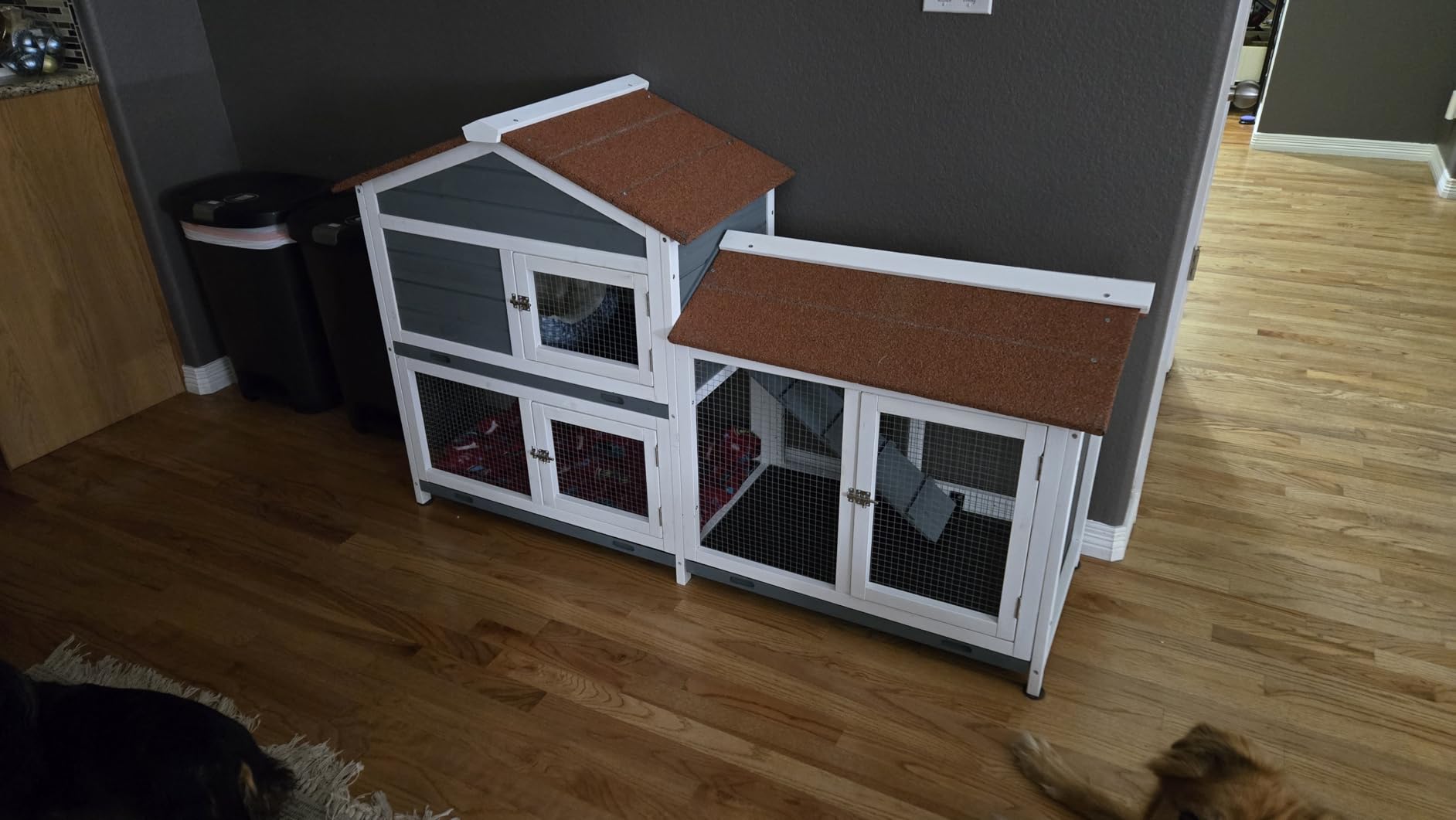
Two details make daily life easier. The sliding grid door lets you look at your rabbit without opening anything, so a nervous animal is not startled every time you check on it. The ramp carries timber ridges that help prevent a small rabbit sliding back down.
The negatives are consistent. Instructions are picture-only and some predrilled holes are misplaced, there is a strong odor on unboxing that needs airing out, and the asphalt roof sheds grit that you will vacuum up for a while. Mesh trays are not rust proof, and the ramp traction is modest without an added covering.
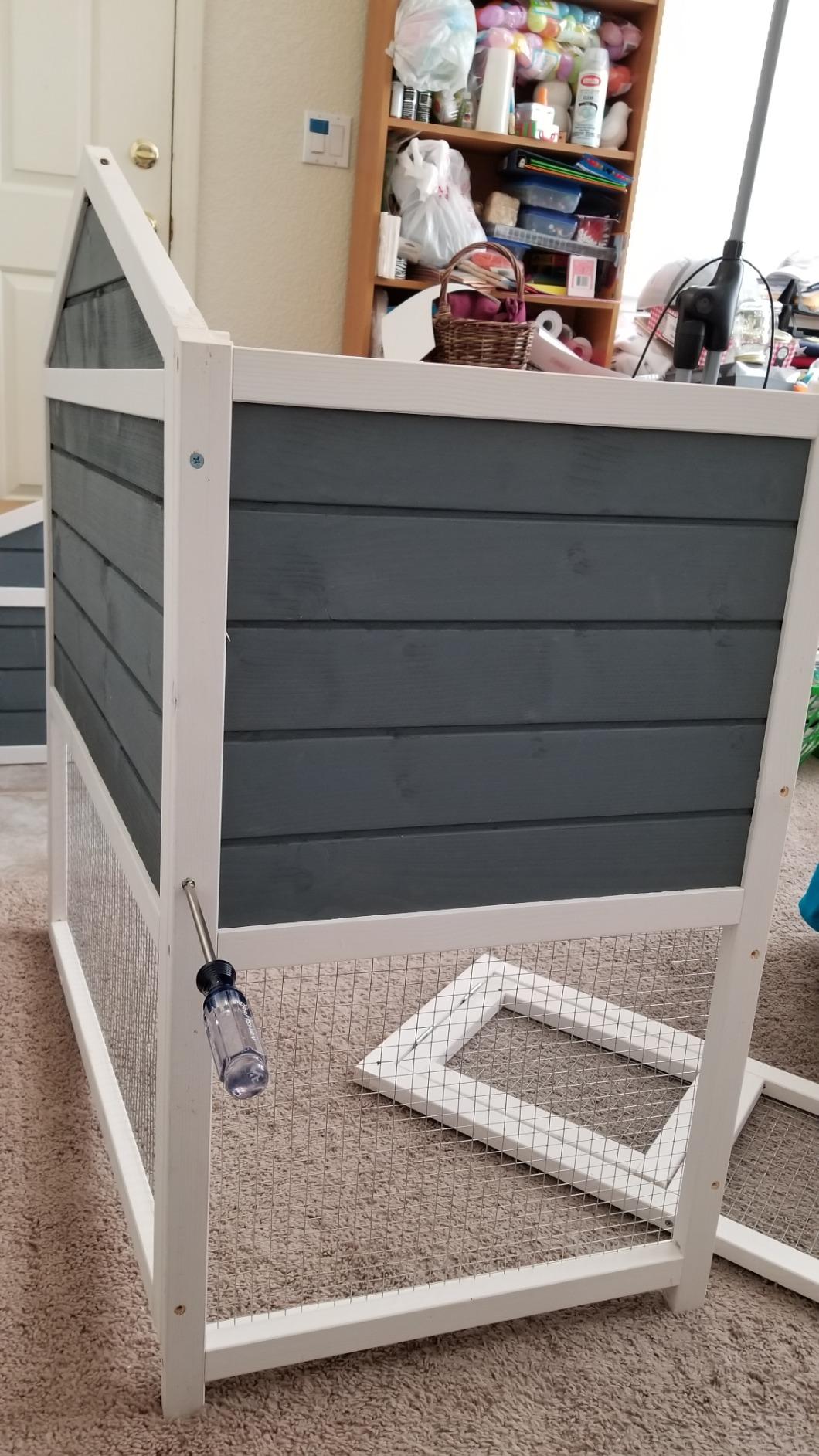
Where it earns its rating
Materials are the story here. Plastic trays wipe clean in seconds, where textured metal traps urine and odor, and non-toxic varnish is a genuine advantage over untreated wood.
Owners also value that the whole unit weighs under 50 pounds, so cleaning underneath and moving it for shade is a one-person job.
Where it disappoints
Internal space is narrower and shorter than the 62-inch length suggests, and buyers of larger breeds report it running out of room sooner than expected. Check the 27.5 x 18 x 20.5 inch upper house against your rabbit’s adult size.
Plan to seal the exposed predrilled holes with exterior sealant before you place it in a wet climate.
5. PawHut A-Frame Outdoor Hutch – Best Portable A-Frame
PawHut 46″ x 24″ Wooden A-Frame Outdoor Rabbit Hutch, Small Animal Cage, Bunny Hutch with Outside Run & Ventilating Wire, Yellow
A-frame, 45.75 x 24.5 x 20.75 in
19 lb portable
2 doors, wire screened walls
Pros
- Light enough to carry to fresh grass
- Assembles in about 20 minutes with hand tools
- Screened walls give airflow and visibility
- Some owners report three years outdoors without rust
Cons
- Thin wood that cracks and breaks down when chewed
- Not weatherproof without a cover
- Wire would not deter a dog or large cat
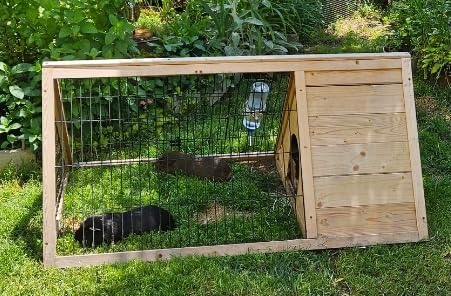
The A-frame profile is the cheapest way to get a rabbit off wet ground, and this PawHut does it at 19 pounds. Reviewers treat it as a portable pen or tractor rather than a permanent hutch, and at that job it does well: two people can move it to fresh grass in seconds.
Plated iron wire screened walls give excellent ventilation and let you see your rabbit without opening a door. Two access doors, one to the outer run and one to the inner loft, cover the usual tasks, and assembly takes about 20 minutes with hand tools.
Several buyers report it still looks good after three years outdoors and has not rusted, which is a fair test of the finish. The design itself is inherently stable, with no raised frame to flex or twist.
The compromises are serious if you want year-round housing. The wood is thin and can crack during assembly, screws sometimes snap, and the door latches are described as loose or wobbly. Owners recommend covering it or treating it as a seasonal unit.
Why it suits mobile use
Weight is the whole advantage. Nothing else in this list moves with one hand, so you can follow a rabbit around the lawn and stop it digging straight into a flower bed.
It also works as a quarantine or introduction pen, and as a temporary space while you build a permanent setup.
Why it is not a year-round hutch
There is no weatherproofing to speak of and the wire is light duty. A determined dog, a large cat or any serious predator would make short work of it.
It is also floorless by design, so it needs a ground mat or an added floor. Treat it as supplementary space, never as a rabbit’s home.
6. PawHut 49 Inch Hutch with Fun Outdoor Run – Best for First-Time Owners
PawHut 49″ Wooden Rabbit Hutch Bunny Cage with Fun Outdoor Run Brown
Solid fir, 48.6 x 24.6 x 36.4 in
Composite asphalt roof
Pull-out tray, lockable run door
Pros
- Paint and composite asphalt roof built for outdoor placement
- Lockable run door lets the rabbit return unaided
- Floorless run supports natural grazing
- Compact enough for a room or a yard
Cons
- Suits only one adult rabbit or two dwarf breeds
- Fir wood is chewable and wears at the edges
- Needs a floor mat when used indoors
The thing first-time owners like most here is the lockable door on the ground-level run. Your rabbit can hop back inside on its own at dusk instead of you chasing a loose animal across a lawn at nine at night. That single feature removes the most common source of stress for new owners.
Solid fir with a composite asphalt roof and paint rated for outdoor use means it belongs outside. The pull-out tray handles the daily clean, and the floorless run area lets a rabbit graze directly on grass when you place the unit on a lawn.
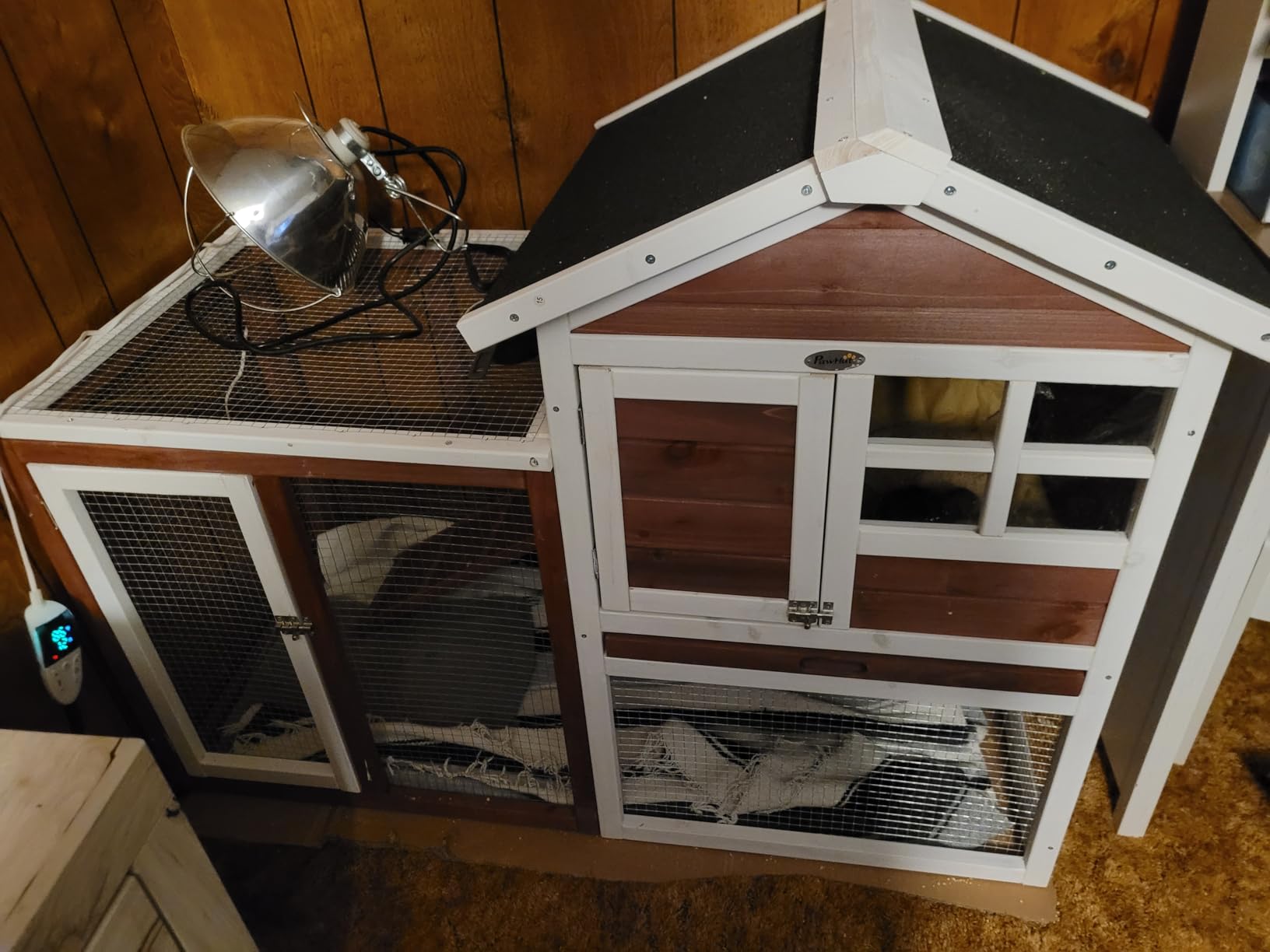
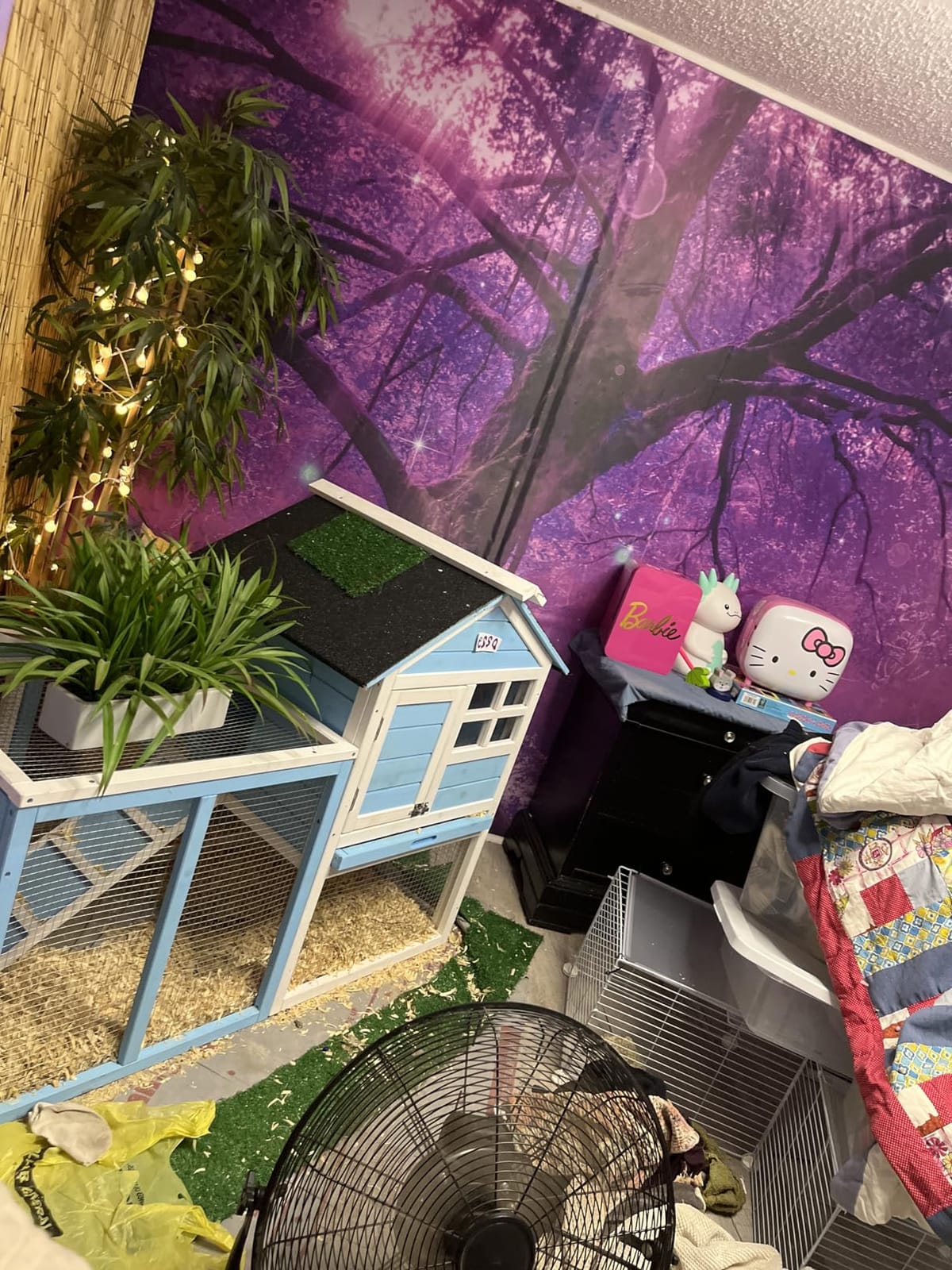
At 48.6 x 24.6 x 36.4 inches it is compact enough to move from a yard to a room, which makes it a useful first home while you work out what your rabbit actually needs long term.
Size is the honest limit. It is rated for one adult rabbit or two dwarf breeds, and reviewers are direct that anything larger outgrows it quickly. The fir wood is chewable, and enthusiastic rabbits wear the edges down faster than most owners expect.
Why it suits beginners
Every feature on this hutch reduces a decision a new owner has to get wrong. Outdoor-rated paint, a shingled roof, a pull-out tray and a self-service door cover the four most common beginner mistakes.
It is also small enough to place anywhere, so you can start outdoors and adjust as your rabbit grows and your yard layout becomes clearer.
When to move up
Move up as soon as a rabbit outgrows the 21.5 x 20.75 x 21.75 inch house section, which happens fast with Rex and Lop breeds. Breed mismatch is the most common regret owners report.
Add a ground mat if you bring it indoors, and expect to replace chewed fir edging within a couple of seasons.
7. GEGURI Cedar Hutch with Waterproof Roof – Best Cedar Build
GEGURI Wooden Rabbit Hutch, Indoor Outdoor Chicken Coop Bunny Cage with Waterproof Roof
Cedar with asphalt roof, 48 x 24 x 36 in
Deep leakproof pull-out tray
Metal slide bolt locks
Pros
- Cedar resists rot better than pine or fir
- Deep tray resists leaks and rust and wipes clean
- Slide bolt locks and welded mesh for containment
- Large panels speed up assembly
Cons
- Section under the house has no access door
- Very steep ramp with a gap at the bottom
- Soft wood with mesh staples inside the frame
Cedar is the best timber choice in this whole group, and it is the reason this hutch earns a slot. Cedar contains natural oils that resist rot and insects, so it holds up outdoors better than the pine and fir used almost everywhere else on this page. The asphalt roof shields both the house and the run from sun and rain.
The deep pull-out plastic tray is genuinely leak and rust resistant, and metal slide bolt locks hold better than the simple swivel latches used on cheaper units. Assembly is quick with large panels and pre-drilled holes, and some owners finish in about 30 minutes.
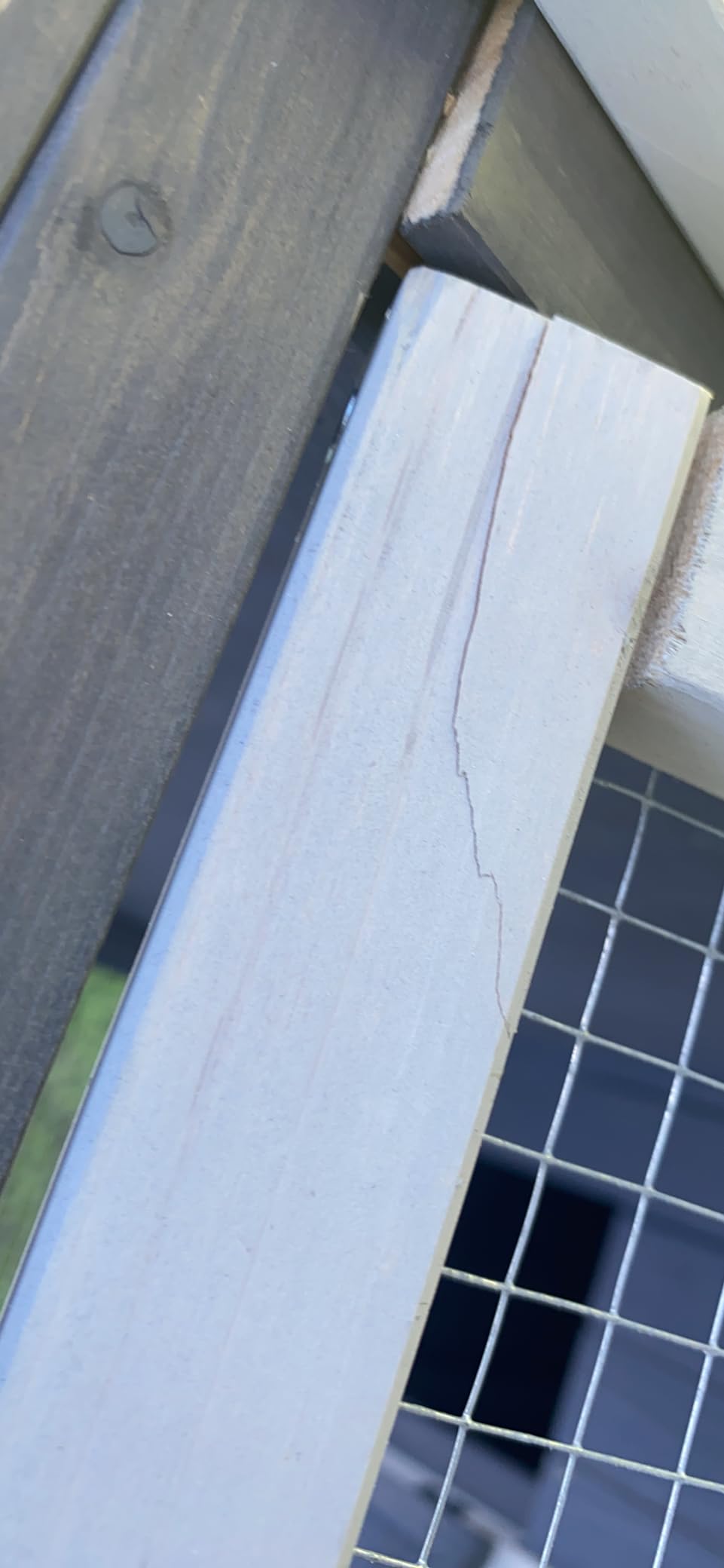
The most repeated complaint is structural. The area beneath the house has no access door, so a spilled tray or damp bedding in that section is awkward to reach. The ramp is also very steep with a gap at the bottom, which small animals struggle with.
Buyers also note the wood is soft and the mesh staples face inward, where a determined rabbit can push them loose. Several treat it as a daytime shelter or a home base paired with an exercise pen rather than full-time housing.
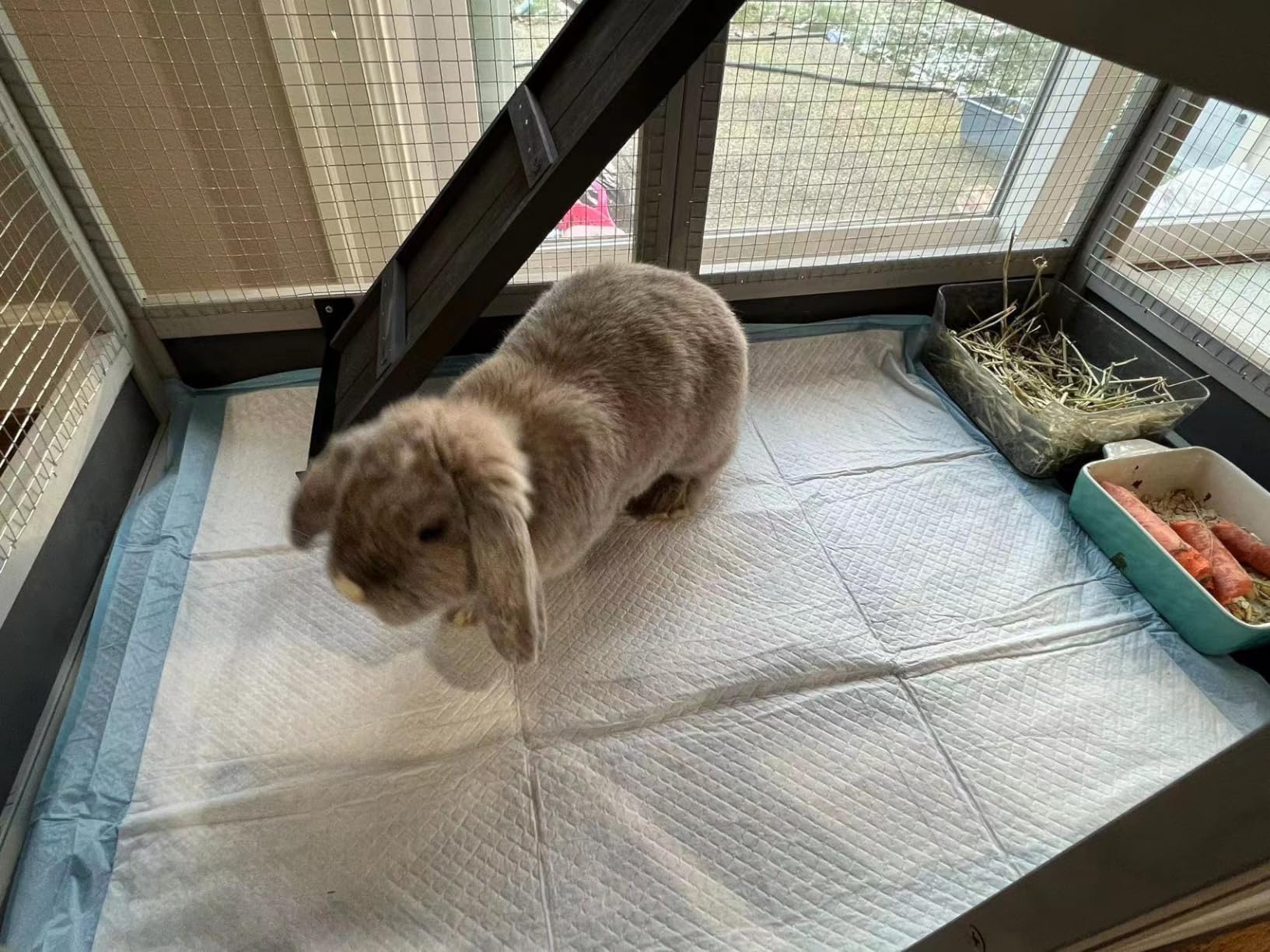
Why cedar matters outdoors
Cedar sheds water and resists fungal decay, which is exactly the failure that ruins cheap prefab hutches at the base after a couple of wet seasons. It also smells pleasant and does not need sealing as urgently.
The deep tray is the other quiet advantage. Deep trays mean a wetter week does not overflow, which is the single most common cause of the smell owners complain about.
What you will need to fix
Block or patch the gap at the bottom of the ramp before you introduce a small rabbit, and add traction to the steep run. A strip of mesh on the inside faces is cheap insurance against determined chewing.
You will also want a separate run, and a way to reach the space under the house, before this becomes a permanent home.
8. PawHut 62 Inch Hutch with Run Area – Best for Long Runs
PawHut 62″ Rabbit Hutch with Run Area for Rabbits, Chickens, White
62 x 20.75 x 36.75 in, 7 sq ft run
Solid fir with asphalt roof
4 doors and pull-out tray
Pros
- Large 62 inch footprint with a 7 sq ft run and 4 sq ft house
- End-to-end asphalt roof sheds weather
- Four doors make cleaning and handling easy
- Rated for 1 to 3 small to medium rabbits
Cons
- Only 20.75 inches wide so the run is shallow
- Light duty wire and chewable fir wood
- Not insulated or predator-proof against raccoons or dogs
Length is what this hutch offers. At 62 inches with a 7 square foot run area and a 4 square foot raised house, it is one of the few prefab options that comes close to the running space a rabbit actually needs during the day, without you bolting a separate pen to the side.
Four access doors is a genuine advantage over most single-door designs. You can reach both levels and the run without dismantling a panel, which makes the daily clean realistic rather than aspirational. The end-to-end asphalt roof covers the full length.
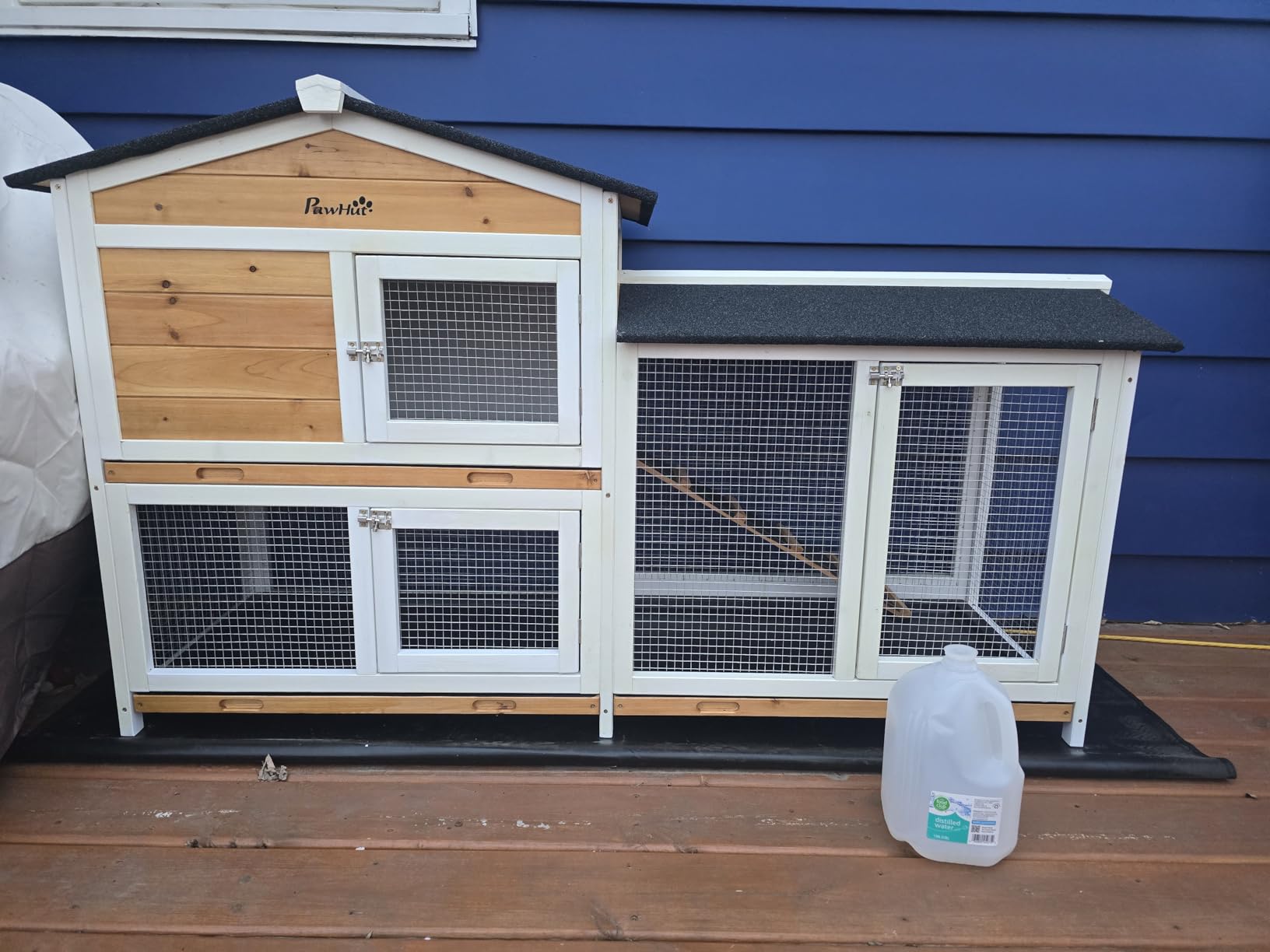
Solid fir is the standard frame material here, and the mesh walls give ventilation while keeping a rabbit in. It is rated for one to three small to medium rabbits, which is a useful specification to match against breed size before you buy.
The width is the real limit. At 20.75 inches, the run is a corridor rather than a space to hop about in, and reviewers point this out directly. The wire and fir are light duty and not built to withstand raccoons or dogs.
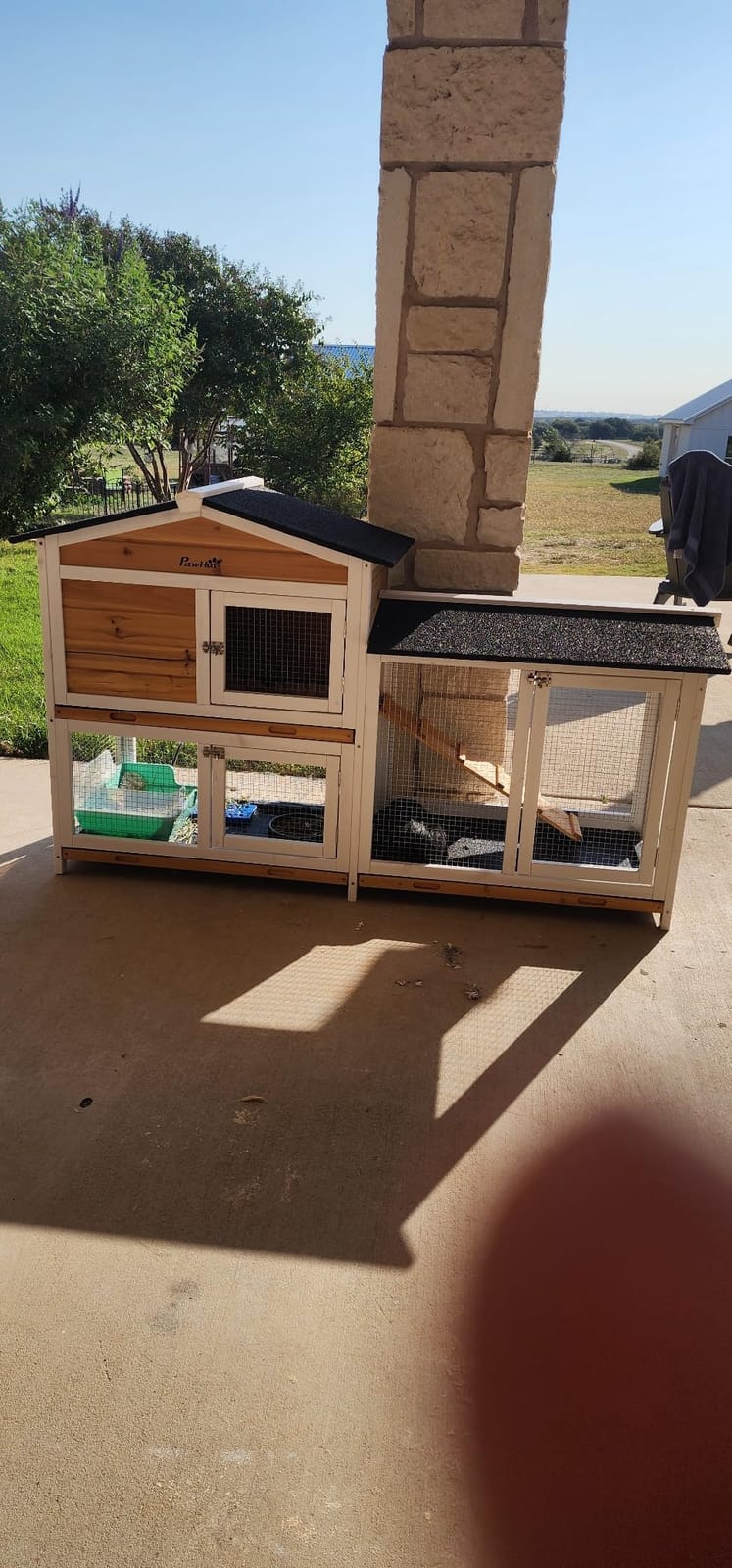
Why length beats depth
Rabbits use a long, straight run better than a small square one, and a 7 square foot run lets a rabbit stretch out and move rather than sit. That is a meaningful welfare difference in a prefab unit.
Four doors also mean you can clean it in sections, which keeps the job short enough to do daily.
What to upgrade before you use it
Line the run with half-inch hardware cloth over the existing mesh if you live anywhere with raccoons, rats or squirrels. The built-in mesh is not rated for them.
Add a separate exercise pen for true daytime space, and provide shade over part of the run in summer because the asphalt roof will heat up.
9. COZIWOW Folding Portable Run – Best Folding Run
COZIWOW Chicken Coop Run Portable Chicken Cage Pens Rabbit Hutch, Orange
Folds to 43.3 x 21.3 x 5.3 in
17.6 lb with carry handles
UV-resistant waterproof panels
Pros
- Folds flat like a suitcase for compact storage
- Only 17.6 pounds with built-in handles
- Waterproof panels instead of perishable wood
- 4 ground pegs keep it stable in wind
Cons
- This is a run
- not an enclosed shelter
- Fiddly assembly takes over an hour
- Floorless so bedding scatters and a mat is needed
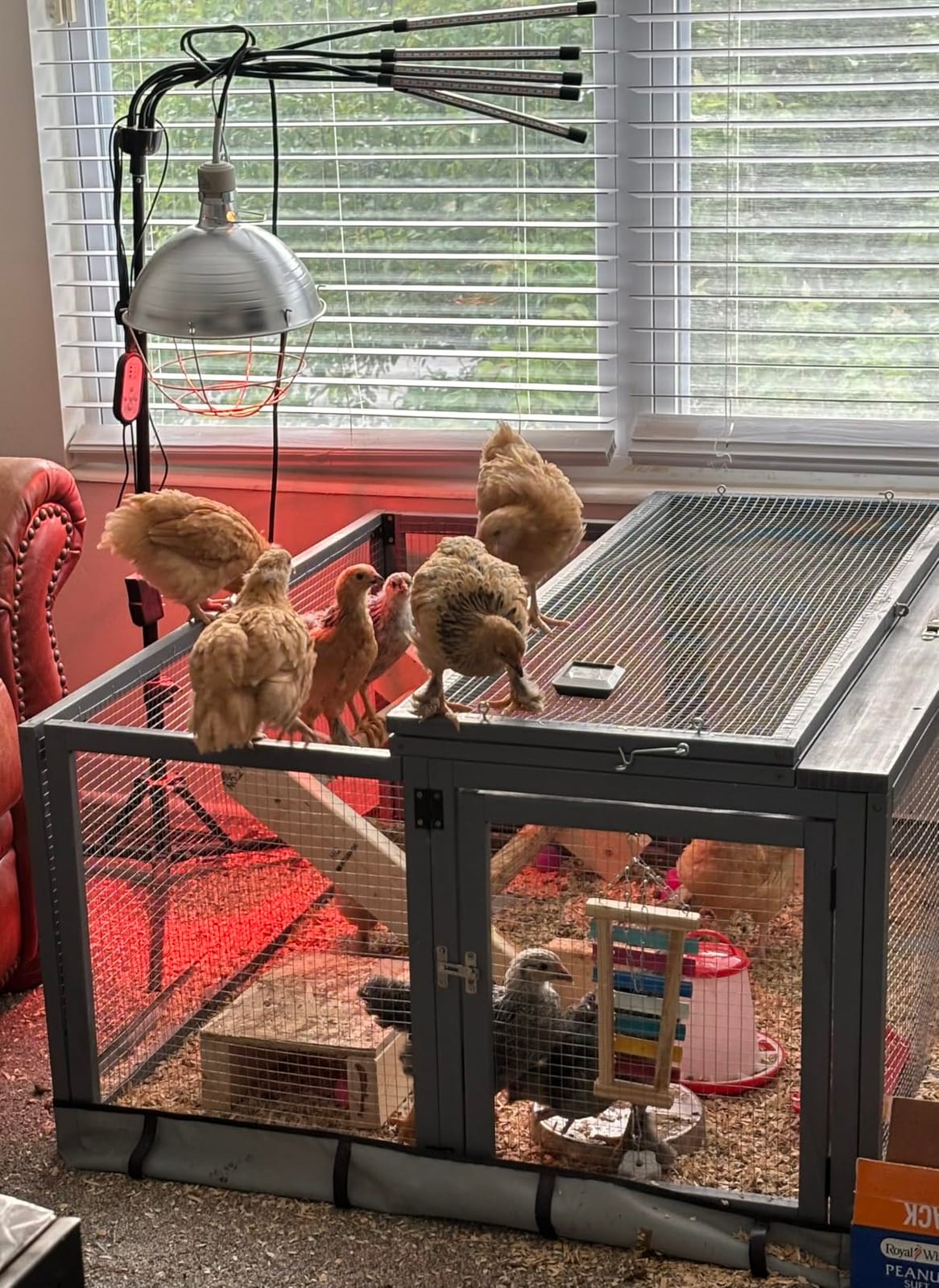
Be clear about what this is: a portable run, not a hutch. It has no enclosed sleeping compartment and no weatherproof shelter, so it needs to sit alongside a proper hutch or inside a covered run. What it does offer is something no other product here does: it folds down to 5.3 inches and carries at 17.6 pounds.
The UV-resistant waterproof panels are a genuine improvement over raw wood panels, which is why this unit tolerates sun better than a typical prefab hutch. Four reinforced ground pegs keep it from shifting in wind, and top and side doors allow feeding, cleaning and free-range time.
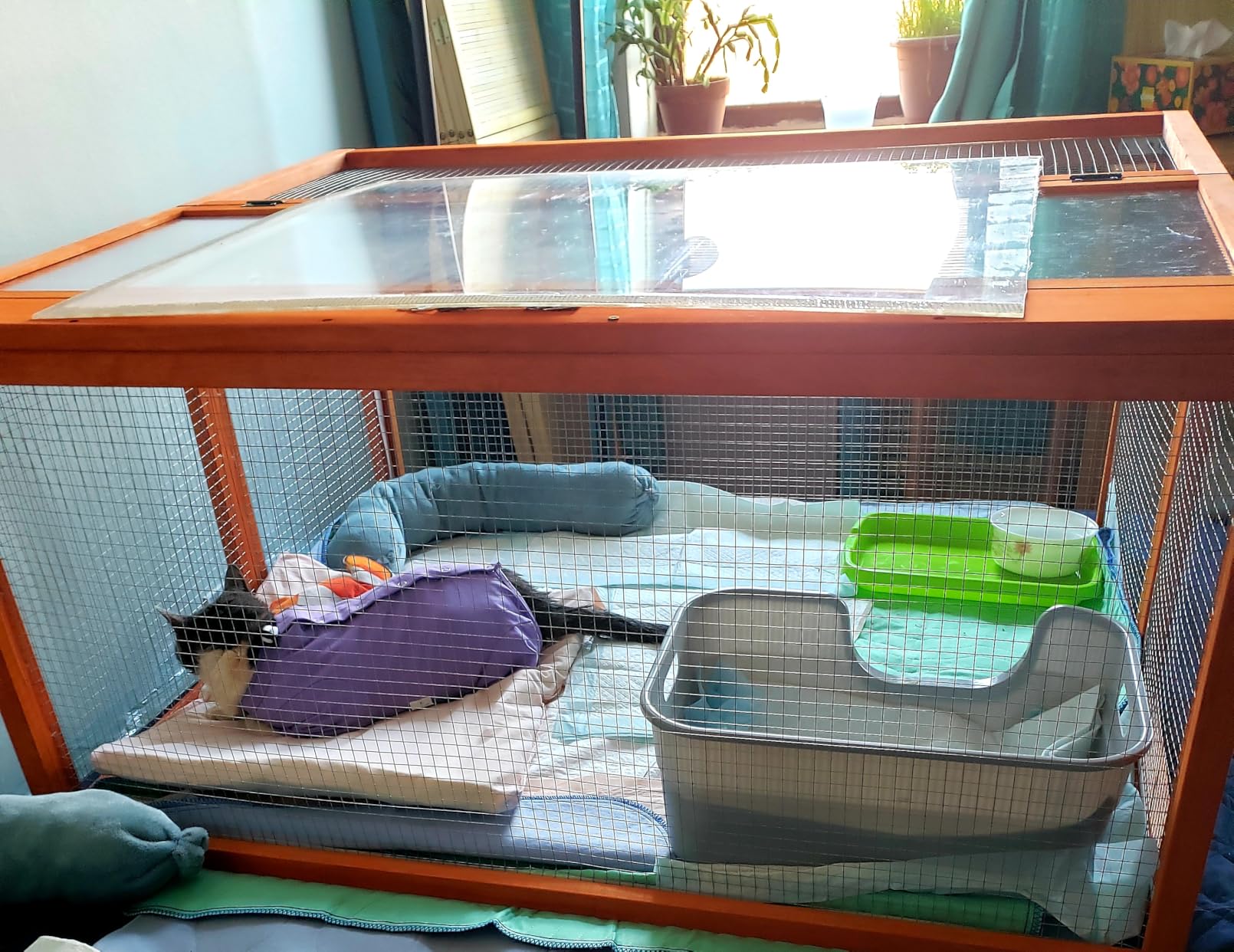
Owners like the built-in carry handles and the fact that a single person can move the whole unit to fresh grass. For a rabbit that needs supervised daytime grazing, that portability is the entire appeal.
The costs are real. Assembly takes over an hour with fiddly small screws, it is floorless so bedding scatters everywhere and a mat is needed, and the light wire only deters cats and birds of prey.
Why portability wins here
Moving a rabbit to fresh grass every day is the closest thing to natural behaviour most owners can offer, and a 17-pound folding unit makes that practical where a rigid hutch would not.
It also solves storage. If you only need daytime space, this folds into a closet between uses and leaves the hutch to do the night work.
Why it cannot stand alone
There is no enclosed area, so a rabbit left in it overnight is exposed to weather and every predator in the yard. Light wire will not stop a dog, raccoon or hawk.
Pair it with a hutch inside a secure run, and never use it as full-time housing.
10. PetsCosset 93 Inch Double-Run Hutch on Wheels – Best Double-Run Layout
Large Rabbit Hutch Outdoor Indoor Bunny Hutch with Double Runs on Wheels
93 x 21.7 x 35.4 in double run
Full-coverage asphalt roofs
Lockable leakproof tray, casters
Pros
- Very long double-run layout with generous ground-level space
- Full-coverage waterproof roofs over house and run
- Lockable leakproof tray keeps the base stable
- Acrylic windows allow monitoring without opening doors
Cons
- No solid base so a waterproof mat is needed
- Cheap casters can work loose when moved
- Flimsy wire mesh that chewing damages
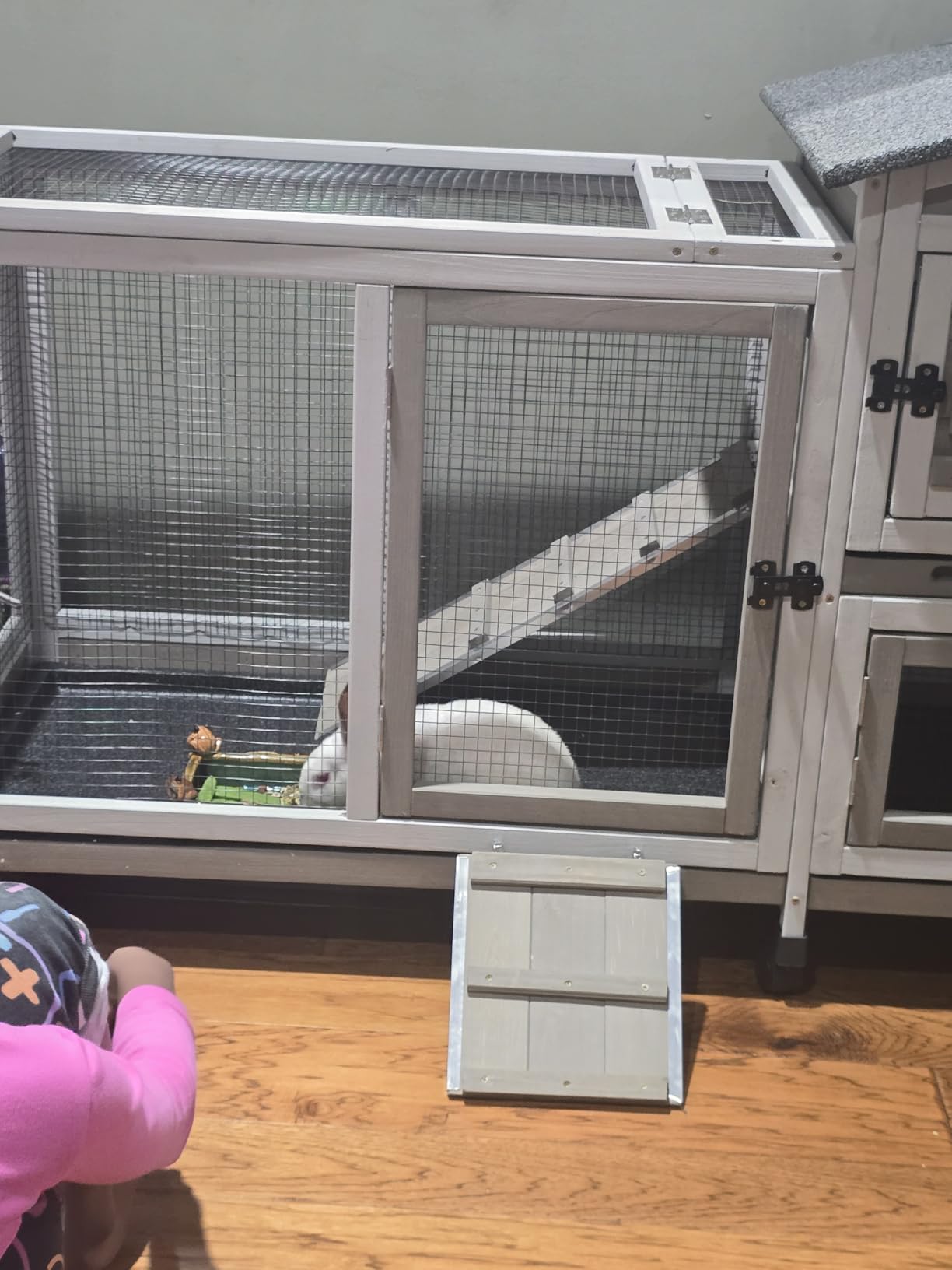
At 93 inches this is the longest unit we reviewed, and the double-run layout is the reason. Instead of one run beside the sleeping house, your rabbit gets two ground-level runs running the length of the structure, which means more usable hopping space and a better chance of finding a dry corner when it rains.
Full-coverage asphalt roofs over both the sleeping area and the runs are a genuine improvement, since most prefab designs leave the run open. Acrylic viewing windows let you monitor your rabbit without opening a door or startling it.
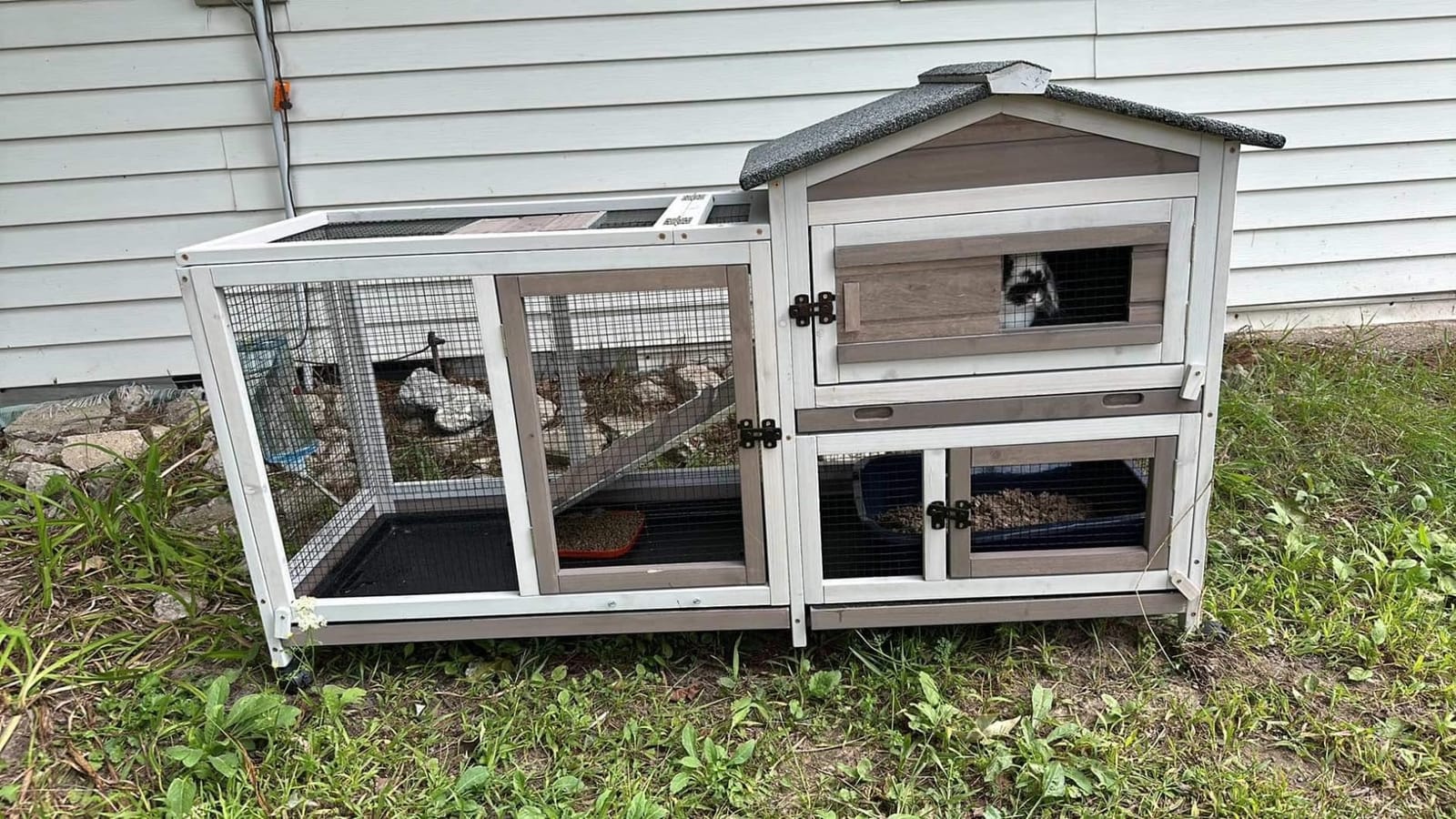
The deep lockable leakproof tray keeps the base stable and stops bedding sliding out when a rabbit jumps in. It is rated for two to three rabbits, and wheels let you reposition for shade.
There is no solid base, so a waterproof mat is needed if it sits anywhere you care about. Owners also report heat build-up in direct sun, cheap casters that work loose over time, and wire mesh that is easily damaged by chewing.
Why the double run works
Two runs mean a rabbit can choose sun or shade, dry or dry, and can move out of a dominant companion’s way. For a bonded pair, that choice reduces friction far more than a single shared run.
The length also lets you add a litter area at one end and a sleeping platform at the other, which most single-run units are too short to accommodate.
What to fix first
Budget for two people and about an hour, and check the casters before you move it. Cheap wheels are the most common part to fail on this design.
Provide shade over part of the run in warm weather, and upgrade the mesh if predators are a concern in your area.
11. Gutinneen Large Two-Level Hutch – Best for Covered Spaces
GUTINNEEN Large Rabbit Hutch Outdoor 2-Level Wooden Chicken Coop Indoor Weatherproof Bunny Cage Guinea Pig House with Waterproof Roof, Leak-Proof Pull Out Tray, Lockable Door for Small Animals (Grey)
51.6 x 25.2 x 36.2 in, 2 levels
Slanted waterproof roof
Solid pans, acrylic windows
Pros
- Slanted roof keeps the interior dry in rain
- Solid bottom pans are gentler on feet than mesh
- Deep plastic pans make cleaning straightforward
- Pre-drilled parts build fast
Cons
- Thin soft wood that splits if screws are over-driven
- Very thin mesh with occasional pre-torn holes
- Top roof panels do not lift
- limiting access
This hutch is genuinely good in the places most prefab units fail. The solid bottom pans rather than wire floors are the standout, because wire floors are a known cause of sore hocks and sore hocks are painful for a rabbit to live with for years. The slanted waterproof roof also stops rainwater pooling on top, which is what soaks through flat-roofed designs.
Deep plastic pans make cleaning straightforward, the fir frame is light enough to move easily, and acrylic viewing windows let you check on your rabbit without opening anything.
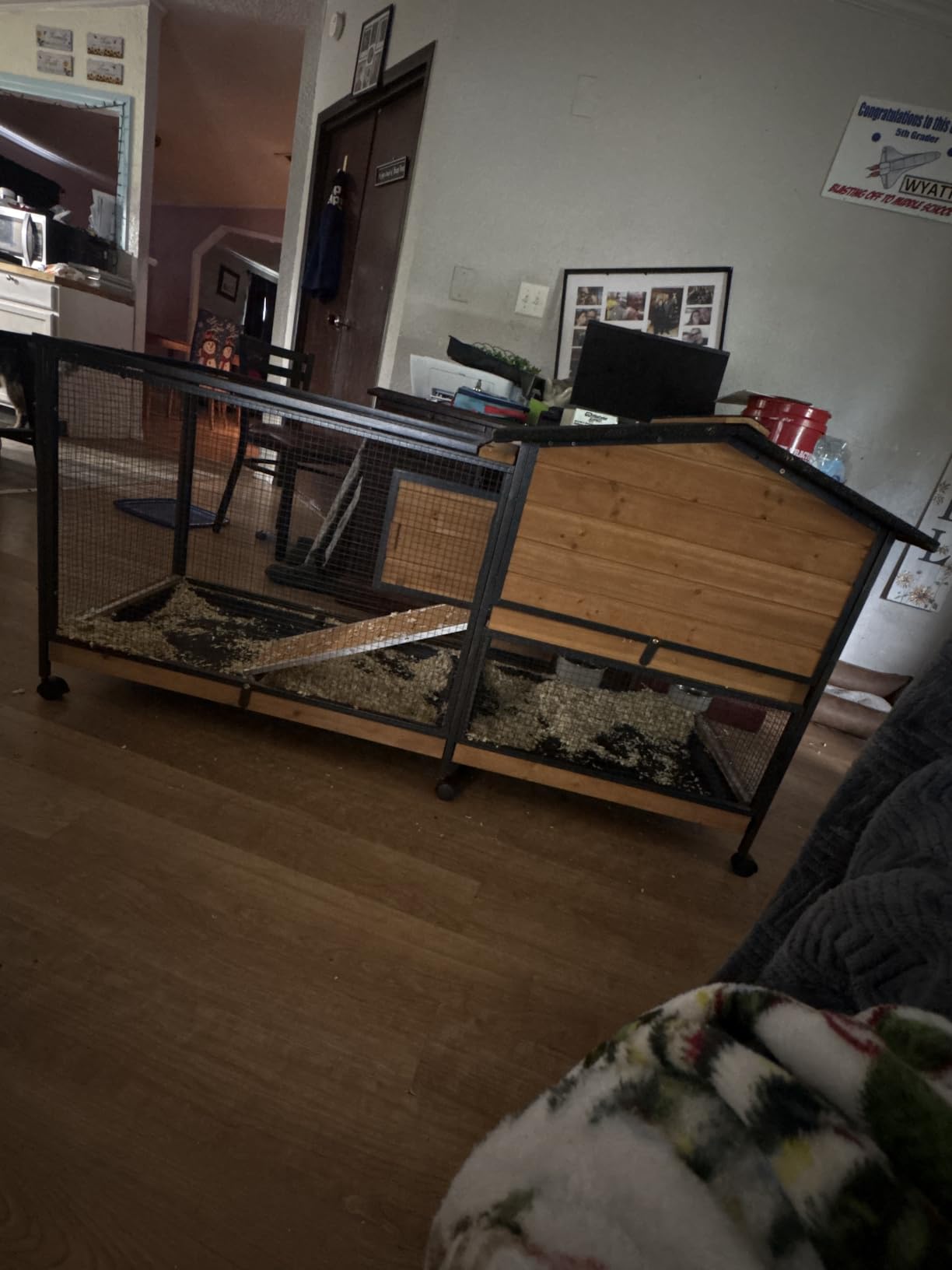
The two-level structure gives an upper sleeping area and a bottom run, and the elevated design keeps animals off damp ground and away from ground pests. Pre-drilled holes mean assembly is well under half an hour.
The trade-offs are consistent across reviews. The wood is thin and soft and can split if a screw is driven too hard, and the wire mesh is very thin, with several arriving with pre-torn holes. The top roof panels do not lift, so the house section is only reachable through small doors.
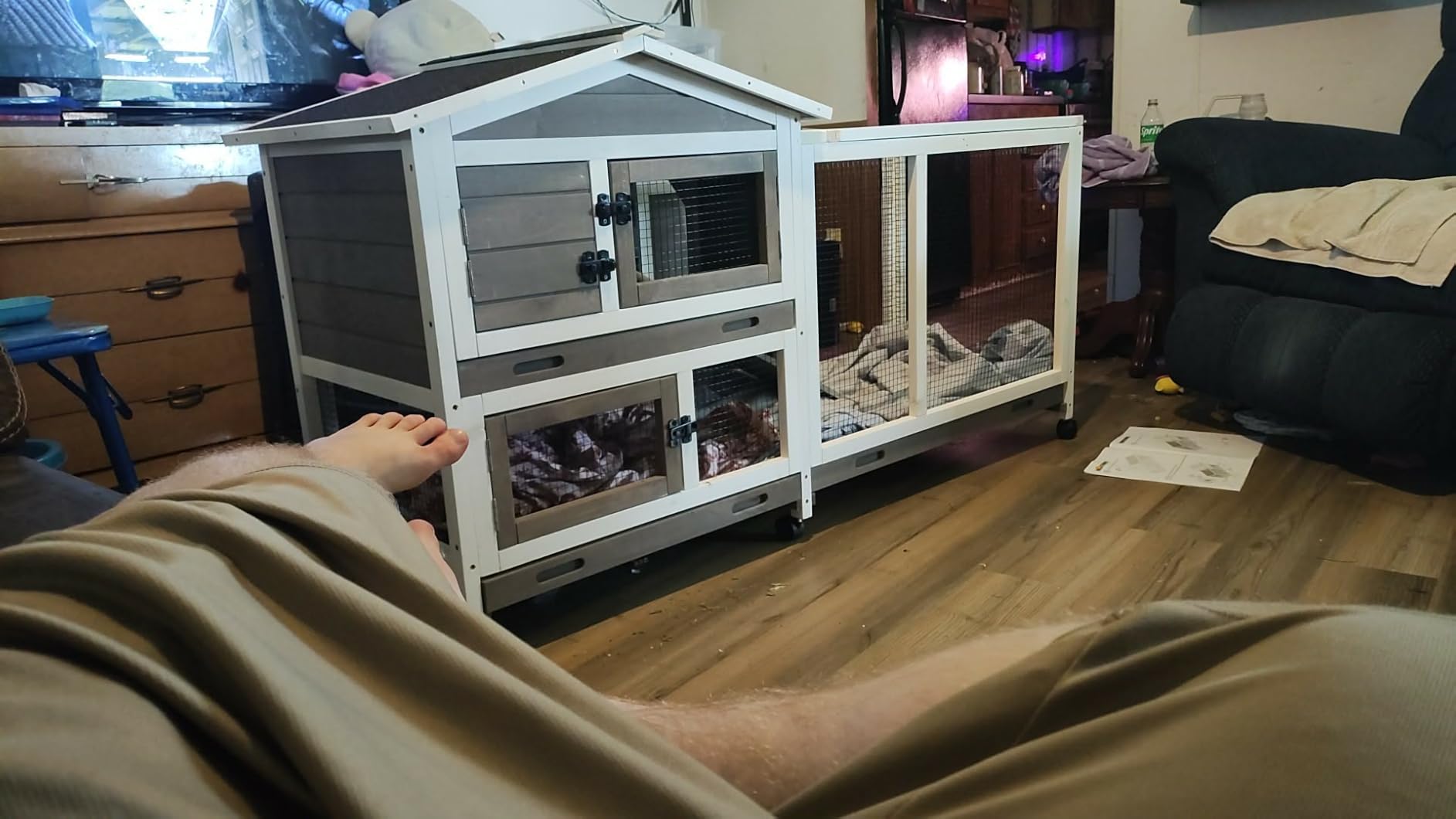
Why solid pans matter
A solid floor removes one of the hardest welfare trade-offs in outdoor housing. Wire mesh floors cause sore hocks; bare timber floors sit in urine and stay damp. A removable solid pan can be washed, dried and replaced.
The slanted roof and elevated frame also reduce damp, which is the other half of the same problem.
Why it is limited outdoors
Very thin mesh and soft wood are not predator-proofing. Several owners describe it as an indoor or covered-space hutch, and we would agree in a rural yard.
The foam-like roof covering flakes in sun and is not durable, and the non-lifting top panels make littering and deep cleaning harder than they need to be.
12. Rockever Wire Rabbit Hutch and Run – Best Low-Profile Enclosure
Wooden Rabbit Cage Outdoor Indoor, Bunny Cage Guinea Pig Cages Enclosure
About 49 x 36 x 14 in, floorless run
Removable hut floor
Plated wire, heavy-duty lock
Pros
- Floorless design lets animals graze directly on grass
- Removable hut floor makes cleaning quick
- All pre-drilled holes aligned for screwdriver-only build
- Nesting box gives rainy-day shelter
Cons
- Only about 14 inches high
- so it suits smaller animals
- No floor in the run means digging and escape risk
- Plated wire is not predator-proof
This is a wide, low enclosure rather than a conventional hutch, and for the right animal that is exactly right. At roughly 49 x 36 x 14 inches it gives a lot of floor area for its footprint, and the floorless run lets a small animal graze straight through to fresh grass.
The removable floor in the hut section lifts out for cleaning, and the heavy-duty lock on the enclosure is sturdier than the latches on most wooden units. The nesting box doubles as rainy-day shelter while the run catches the sun.
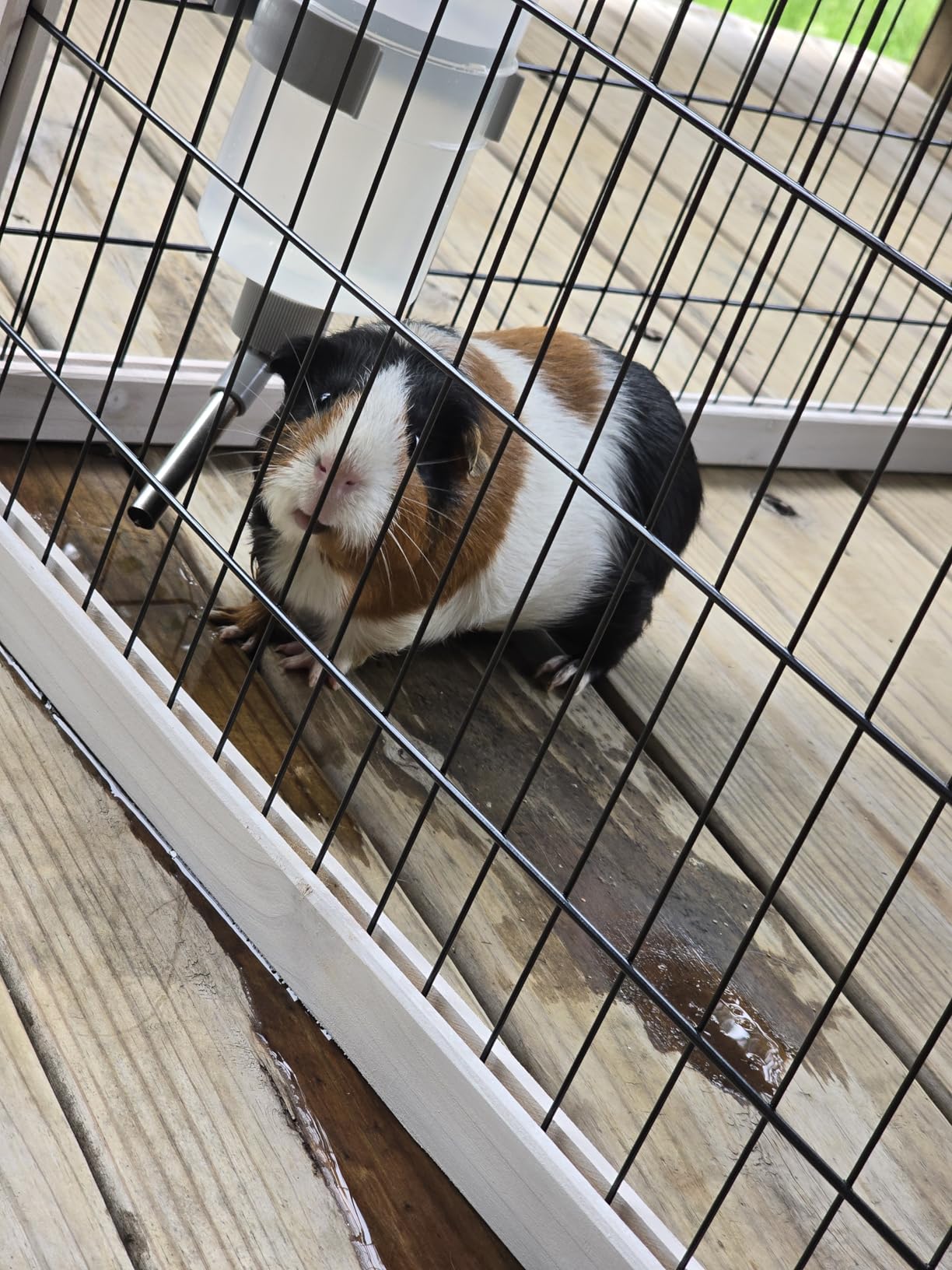
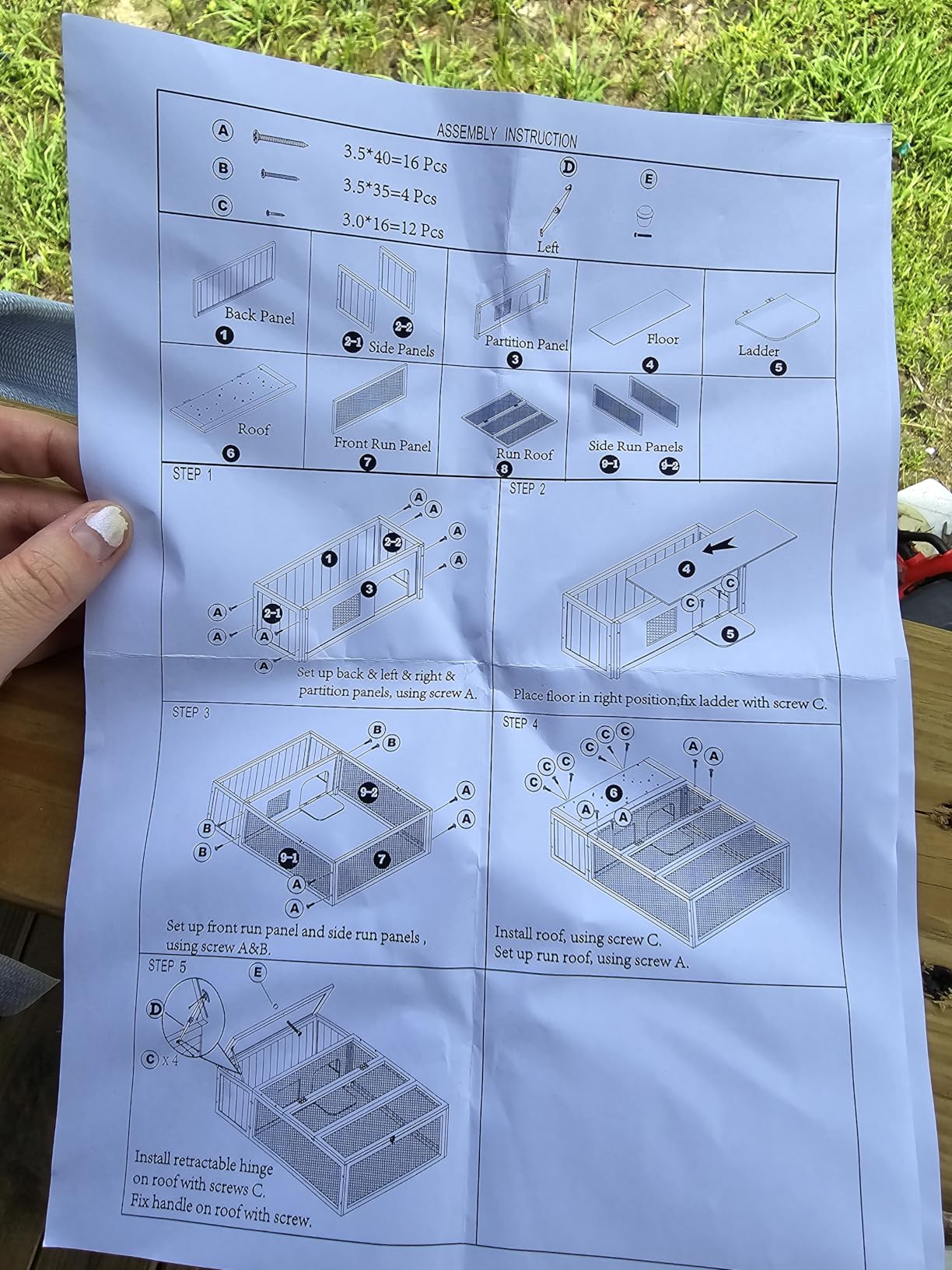
Assembly is genuinely easy. Owners report every pre-drilled hole lining up and a screwdriver being the only tool needed, which is rare in this category and saves an afternoon.
The 14-inch internal height is the deciding limitation. Reviewers are consistent that this profile suits guinea pigs, quail, chicks and tortoises better than full-size rabbits, and a rabbit needs far more headroom to stand upright and stretch.
Where a low profile works
For a young rabbit, a dwarf breed or a small animal housed alongside one, the wide floor area and the ability to graze in place are genuinely useful. The removable floor keeps cleaning manageable.
It also works well as a temporary or hospital space, and the low profile means you can slide it under a bench or into a sheltered corner.
Why it fails as a rabbit hutch
A rabbit cannot stand upright in 14 inches of height, and that alone rules it out as a sleeping shelter for an adult. The run has no floor, so a rabbit can dig out or tunnel under.
Plated wire is not heavy gauge, so it will not hold against a determined predator. Use it for supervised time, not overnight.
What to Look for in the Best Rabbit Hutches for Outdoor Use
Six criteria decide whether a hutch is fit for a garden, and price tells you almost nothing about any of them. Check all six before you buy.
1. Space. The hutch is the sleeping compartment only. Total living space including the run should be at least 3 x 2 x 1 m, and the hutch section inside it should be roughly 6 x 2 ft. A rabbit should be able to stand upright, stretch fully out and take three consecutive hops.
2. Predator security. Look for 14-gauge galvanized wire, not chicken wire, which a rabbit or a rat can chew through in weeks. Mesh spacing of one inch keeps rabbits in but does not stop rats or squirrels, so half-inch hardware cloth is the safer upgrade. Latches should be metal slide bolts or carabiner-style, not simple swivels.
3. Weatherproofing. An asphalt roof or a solid waterproof panel is essential. Many hutches sold as outdoor models have roofs that leak in driving rain, and owners regularly report water pooling inside. Sloped roofs beat flat ones because water runs off instead of sitting in the tray.
4. Materials. Cedar and FSC-certified timber outlast pine and fir in wet conditions. A non-toxic varnish or pet-safe paint matters because rabbits chew everything they touch. Avoid any bare untreated wood in a sleeping area.
5. Cleaning access. A pull-out tray is the single feature that decides whether you will clean the hutch daily. Deep removable trays that lock into place are better still. Look for multiple access doors so you never have to dismantle a panel, and a hinged roof where possible.
6. Chew resistance. Every wooden hutch will be chewed. Metal-guarded ramps, capped edges and replaceable floor panels are worth more than heavier timber, because heavy timber just takes longer to destroy. If the hutch has no solid base, plan to add a mat or a floor panel.
Our sister guides cover the other half of the picture if you are also sorting out indoor space: the kitchen hutch picks and the china hutch roundup both approach the same wayfinding and access questions from a different angle.
How to Predator-Proof an Outdoor Rabbit Hutch
Even a well-built hutch needs reinforcing before a fox, raccoon or hawk finds it. Owners on rabbit forums raise this constantly, and the fixes are mostly cheap.
1. Upgrade the mesh. Replace or overlay chicken wire with 14-gauge galvanized hardware cloth. For rats and squirrels, use half-inch spacing, because a determined rodent will get through one-inch mesh within weeks.
2. Fix the base. Buried mesh or an outward apron of wire laid flat on the ground and pegged down stops digging. Rabbits dig and predators follow them. Check the tray-to-frame joints weekly, because that is where bedding and urine escape and where animals find gaps.
3. Fit proper latches. Carriers, raccoons and squirrels work simple swivel latches. Metal slide bolts or carabiner clips cost little and stop most opportunistic attempts. Inspect them weekly, because a tired spring fails quietly.
4. Add a night lock-up. A lockable divider between the hutch section and the run is the feature most owners ask for and almost no product includes. Without one, you either leave your rabbit in a run all night or lift it in and out every evening. A divider panel solves it, and it doubles as temporary separation for two rabbits.
5. Cover from above and below. Shade cloth or a partial solid cover in summer blocks heat. A solid base board under the run blocks digging. Storm-rated covers in winter protect against driving rain without sealing off ventilation entirely.
6. Reduce the shock factor. Owners report that spotting a predator can stress a rabbit badly even when the hutch holds. Position the hutch away from high-traffic fence lines, and cover part of the run so a rabbit has somewhere out of sight to recover.
Size and Space Standards for Outdoor Rabbits
The 3-3-3 guideline is a useful shorthand: at least 3 x 2 x 1 m of combined living and exercise space, for up to 3 hours of exercise a day, and ideally 12 hours outside the hutch. It is a floor, not a ceiling.
Within that total, the sleeping hutch should be about 6 x 2 ft for a small to medium rabbit, rising for larger breeds. A practical rule used by experienced owners is one square foot of floor space per pound of adult body weight, so a 12-pound Rex needs considerably more than a 4-pound Netherland Dwarf.
Breed mismatch is the most common regret we see. A Mini Rex and a full Rex look similar and can differ by several pounds, and a hutch bought for the small one becomes inadequate within months. Check the adult weight of the breed, not the weight of the rabbit you currently own.
Height matters as much as footprint. A rabbit must be able to stand on its hind legs without its ears brushing the roof, and a 14-inch internal height will not allow it. This is the single clearest reason to rule a product out.
None of the hutches on this list meets the full 3 x 2 x 1 m standard on their own. That is a fact of the category, not a flaw in the picks. Every one of them works as the sleeping half of a setup with a run attached.
Seasonal Care: Summer Heat and Winter Cold
Rabbits tolerate cold far better than heat, and heat is the real emergency in most climates. Above roughly 80F a rabbit can overheat quickly because a dense fur coat does not cool itself and they do not sweat.
In summer, move the hutch into shade, add shade cloth over part of the run, and offer frozen water bottles or ceramic tiles for a rabbit to lie against. Asphalt roofs get hot, so the PetsCosset double-run design and the Gutinneen slanted-roof hutch both benefit from extra shade over the roof itself.
In winter, the sleeping area must be dry, well-bedded with hay and draught-free while still ventilated. A partial solid cover over the front blocks wind and rain while leaving an open section for airflow. A nesting area with plenty of hay does more for a rabbit’s warmth than any thin blanket.
Below roughly -20C outdoor housing stops being safe, particularly for young, elderly or thin rabbits. Below that threshold, bring the hutch into a sheltered porch, garage or outbuilding. Rabbits kept outdoors long term also need vaccination against RHD and myxomatosis, and most do better with a bonded companion than alone.
Hutch, Run, or Shed: Which Setup Do You Actually Need?
A hutch is a bedroom. The run is where the rabbit actually lives, and getting this backwards is the most expensive mistake an outdoor owner can make.
Hutch plus run is the standard. A secure run of at least 3 x 2 x 1 m, attached to a hutch that the rabbit can retreat into, covers daily exercise, shade, enrichment and night safety. The PawHut 62-inch and PetsCosset 93-inch models come closest to this in a single unit.
Hutch plus playpen is the flexible option. A folding playpen such as the COZIWOW unit gives you supervised grazing on fresh grass and folds away when you do not need it, but the wire only deters cats and birds, so it needs a secure perimeter.
A converted garden shed is what experienced owners recommend most. A shed with a solid floor, window mesh and a pop-hole to a secure run is more robust than most prefab hutches and often costs less than a hutch plus run. It is not in our ranked list because it is not a product, but it is the answer to the question of what actually keeps a rabbit safe outside.
Outdoor hutches as a daytime shelter work well as a weatherproof base inside a larger secure run, which is how many owners use the units we reviewed. That is a good, honest use of most of them.
For context on how we treat other outdoor and home hardware roundups, our outdoor pizza oven guide takes the same build-quality and weatherproofing approach.
Frequently Asked Questions
What is the best outdoor rabbit hutch?
The best outdoor rabbit hutch is one that combines a waterproof roof, a dry solid floor, raised legs, strong galvanized mesh latches and a deep pull-out cleaning tray. Among the 12 we compared, the Aivituvin two-level hutch on casters stands out for its three deep removable trays and its 61.2 x 22.6 x 33.5 inch footprint. It must still be paired with a secure exercise run of at least 3 x 2 x 1 m.
How big should an outdoor rabbit hutch be?
The hutch itself should be about 6 x 2 ft for a small to medium rabbit, but total living space including the exercise run should be at least 3 x 2 x 1 m. A useful rule is one square foot of floor space per pound of adult body weight. Internal height must also allow the rabbit to stand upright without its ears brushing the roof, which rules out very low profiles.
How do I protect an outdoor rabbit hutch from predators?
Replace chicken wire with 14-gauge galvanized hardware cloth, and use half-inch spacing if rats or squirrels are a problem. Fit metal slide bolt latches instead of swivel catches, bury mesh or lay an outward apron flat on the ground to stop digging, and add a lockable divider so the rabbit can be secured in the hutch section overnight. Inspect latches and mesh weekly.
Can I keep my rabbit hutch outside in winter?
Yes, provided the sleeping area stays dry, is well-bedded with hay, and is draught-free while still ventilated. Add a partial solid cover over the front and provide a nesting area with plenty of hay. Below roughly -20C outdoor housing stops being safe, particularly for young, elderly or thin rabbits, and the hutch should move into a sheltered outbuilding.
Is it cruel to keep rabbits in a hutch?
A hutch used as full-time housing is inadequate, because it does not allow enough daily exercise or space for natural behaviour. A hutch is a secure sleeping and hiding shelter, and it should be paired with a run giving at least 3 x 2 x 1 m of space. Rabbits kept outdoors also do better with a bonded companion than alone.
How do I stop my rabbit hutch smelling?
Use a deep removable tray and clean it daily, because shallow trays overflow and produce ammonia build-up. Choose plastic trays over textured metal, which traps urine and odor. Line the tray with hay bedding rather than wood shavings, and never use Lysol or other strong sprays, which are unsafe for rabbits. Deep locking trays such as those on the Gutinneen hutch help most.
Where do outdoor bunnies sleep at night?
Outdoor rabbits should sleep inside the closed hutch section rather than in an open run. A lockable divider between the hutch and the run lets you secure them overnight while the run stays open during the day. Without a divider you have to lift the rabbit in and out each evening. A solid dry sleeping area with deep hay bedding is what actually keeps them warm.
Should my rabbit hutch be off the ground?
Yes, raised legs keep the hutch off damp ground, which reduces rot at the base, keeps the sleeping area dry and deters ground pests. It also stops the whole structure sitting in a puddle after heavy rain. A solid removable floor pan on top of the raised frame gives the best combination of dryness and foot comfort, since bare timber stays damp.
Conclusion: Pair Every Hutch With a Proper Run
The best rabbit hutches for outdoor use in 2026 are the Aivituvin on casters for cleaning and space, the Gutinneen two-story unit for value and lockable trays, and the GOOD LIFE USA 62-inch fir hutch for build quality and the highest rating in the group. Below them sit a cedar option that resists rot, two PawHut hutch-and-run designs that get closer to usable space, and a handful of lighter units that are better on a covered patio than in an open yard.
Whatever you choose, treat it as a bedroom. Pair every hutch here with a secure run of at least 3 x 2 x 1 m, reinforce the mesh with half-inch hardware cloth, add a night lock-up divider, and check latches weekly. Get the setup right in 2026 and your rabbit will be safer, drier and far happier than most rabbits kept in a hutch alone.