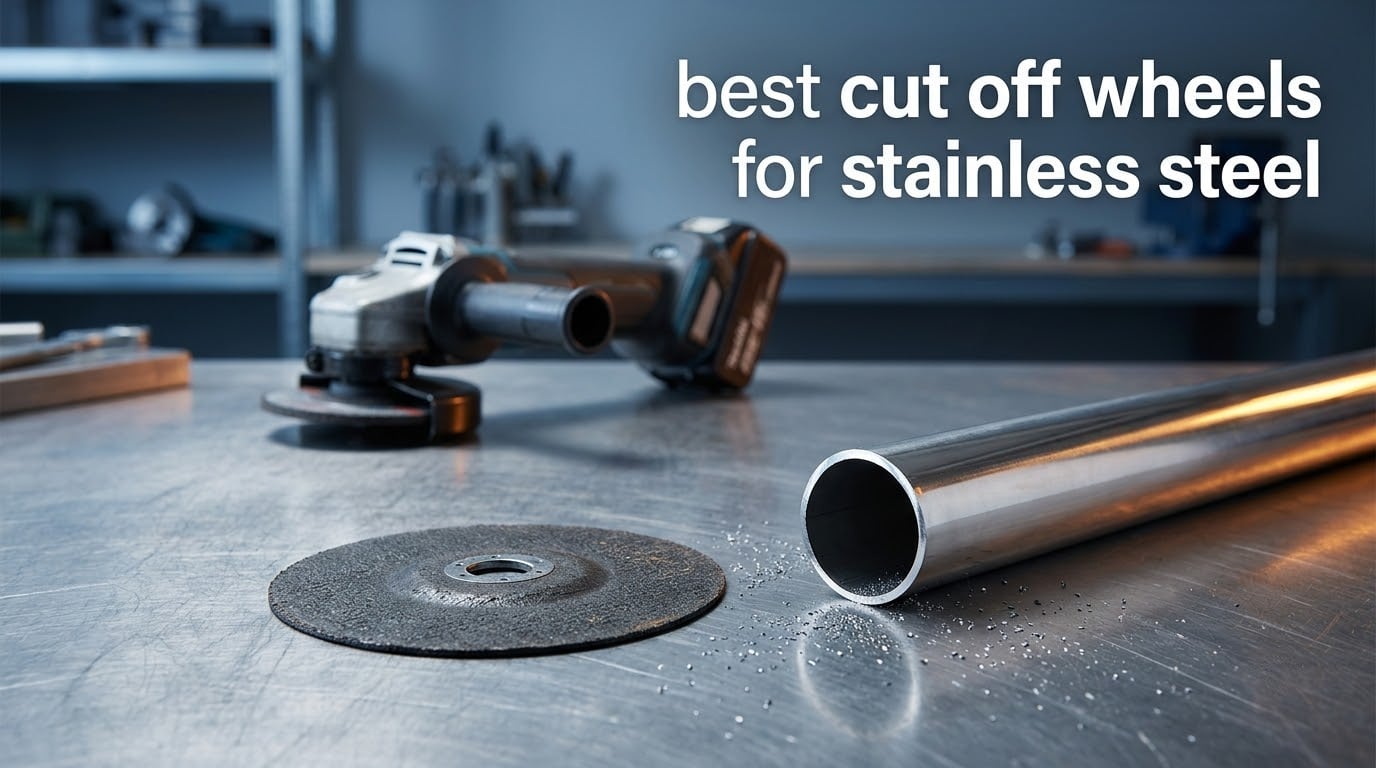
The best cut off wheels for stainless steel are thin discs, usually 0.040 to 0.045 inch, running on a 7/8 inch arbor, made from an INOX-rated grain that is free of iron, sulfur and chlorine. That iron-free wording is the whole reason stainless jobs go wrong with the wrong disc, and it is the filter I used first when ranking the 12 wheels below.
A general-purpose carbon steel disc will happily slice through stainless tubing. What it leaves behind is a smear of free iron dust on the cut edge, and that dust oxidizes into orange rust stains that show up a day or two later. On a handrail, a visible trim piece, or anything that touches food, that stain is the whole job. It is not a wear problem you can grind off later, because the free iron has been driven into the surface.
So the first question is never brand. It is whether the wheel says INOX, stainless, or contaminant-free on the packaging or the spec sheet. The second is kerf thickness, because a thin disc shears the material while a thick one grinds it away and wastes steel. The third is grain chemistry. I went through spec sheets and thousands of buyer reports across all twelve wheels here, and every pick below lists a diameter, thickness, arbor, RPM rating and abrasive type so you can match it to your grinder before you buy.
We also test stainless work in other contexts, and the same surface-care thinking shows up when we compare [stainless steel kegerators with wheels](https://cookcraftandcreate.com/best-stainless-steel-kegerators-with-wheels/) or [stainless steel pizza pans](https://cookcraftandcreate.com/best-stainless-steel-pizza-pans/). A wheel that contaminates stainless is the hand-tool equivalent of a finish that traps iron.
Table of Contents
- Top 3 Picks for Best Cut Off Wheels for Stainless Steel (October 2026)
- All 12 Wheels Compared Side by Side
- 1. DEWALT DW8062B5 – Best Overall for Stainless and Carbon Steel
- 2. SALI 50 Pack 4-1/2 in – Best Value for Shop Volume
- 3. Benchmark Abrasives 4.5 in Type 1 – Best for Die Grinders
- 4. Merryland 5 in INOX Wheel – Best Certified Stainless Pick
- 5. Truswe 3 in with Mandrel Kit – Best for Cordless Grinders
- 6. BHA 5 in x 0.040 in – Best for Ultra-Thin Kerf Work
- 7. PUOPOSTY 10 Pack – Best Starter Pack for a Home Shop
- 8. EZARC Diamond Wheel – Best Contaminant-Free Option
- 9. HAUTMEC 20 Pack – Best MPA Certified 5 in Disc
- 10. Benchmark Abrasives 6 in – Best for Heavy Plate
- 11. SALI 3 in 50 Pack – Best for High-Speed Small Tools
- 12. LINCONSON 4.5 in Flat Disc – Best for Low-Vibration Cuts
- Why INOX Matters: Stopping Rust Stains Before They Start
- Thickness Decides the Cut: 0.040 in vs 0.045 in vs 1/16 in
- Abrasive Grain: White Alumina, Zirconia and Dual-Chemistry Discs
- Type 1 vs Type 27 and Getting the Diameter and Arbor Right
- Matching the Wheel to Your Stainless Job
- Cut Fast or Slow: How to Avoid Loading and Work Hardening
- How We Picked and What Keeps Wheels From Breaking
- Frequently Asked Questions
- Can you use a cutoff wheel on stainless steel?
- What are the best cut-off wheels for stainless steel?
- What blade is best for cutting stainless steel?
- Is it better to cut stainless steel fast or slow?
- What is the best grinder wheel for grinding stainless steel?
- What are the different types of cutting wheels?
- Why does my cut off wheel leave rust marks on stainless steel?
- Can you cut aluminum with a cutting wheel?
- Conclusion
Top 3 Picks for Best Cut Off Wheels for Stainless Steel (October 2026)

DEWALT DW8062B5
- 0.045 in thin kerf
- Aluminum oxide grain
- Rated 13
- 300 RPM
- Two fiberglass sheets

SALI 50 Pack 4-1/2 in
- 50 discs in one pack
- Double fiberglass mesh
- Aluminum oxide grain
- 13
- 300 RPM rating

EZARC Diamond Wheel
- 100 percent contaminant-free
- Solid steel body
- Keeps full wheel diameter
- Rated 13
- 200 RPM
All 12 Wheels Compared Side by Side
| Product | Specs | Action |
|---|---|---|
| DEWALT DW8062B5 |
|
Check Latest Price |
| SALI 50 Pack |
|
Check Latest Price |
 Benchmark Abrasives 4.5 in Benchmark Abrasives 4.5 in |
|
Check Latest Price |
 Merryland 5 in Merryland 5 in |
|
Check Latest Price |
 Truswe 3 in Truswe 3 in |
|
Check Latest Price |
 BHA 5 in Thin BHA 5 in Thin |
|
Check Latest Price |
 PUOPOSTY 10 Pack PUOPOSTY 10 Pack |
|
Check Latest Price |
| EZARC Diamond |
|
Check Latest Price |
 HAUTMEC 20 Pack HAUTMEC 20 Pack |
|
Check Latest Price |
 Benchmark Abrasives 6 in Benchmark Abrasives 6 in |
|
Check Latest Price |
 SALI 3 in 50 Pack SALI 3 in 50 Pack |
|
Check Latest Price |
 LINCONSON 4.5 in LINCONSON 4.5 in |
|
Check Latest Price |
1. DEWALT DW8062B5 – Best Overall for Stainless and Carbon Steel
DEWALT 4 1/2 Cut Off Wheel, Angle Grinder Cutting Disc, 5 Pack, Aluminum Oxide Abrasive Chop with 7/8 Arbor for Metal Cutting, Grinding Wheels 4 1/2 in x .045 in (DW8062B5)
4-1/2 in x 0.045 in x 7/8 arbor
Aluminum oxide, 60 grit medium
13,300 RPM max
Type 1 cut-off wheel
Pros
- Tough temper point grain holds an edge across many cuts
- Two sheets of fiberglass reduce breakage
- Listed for carbon steel
- stainless and nickel alloys
- Very large verified review base
Cons
- Wears faster than expected on very thick stock
- Not labelled INOX on the box so watch for rust staining on visible work
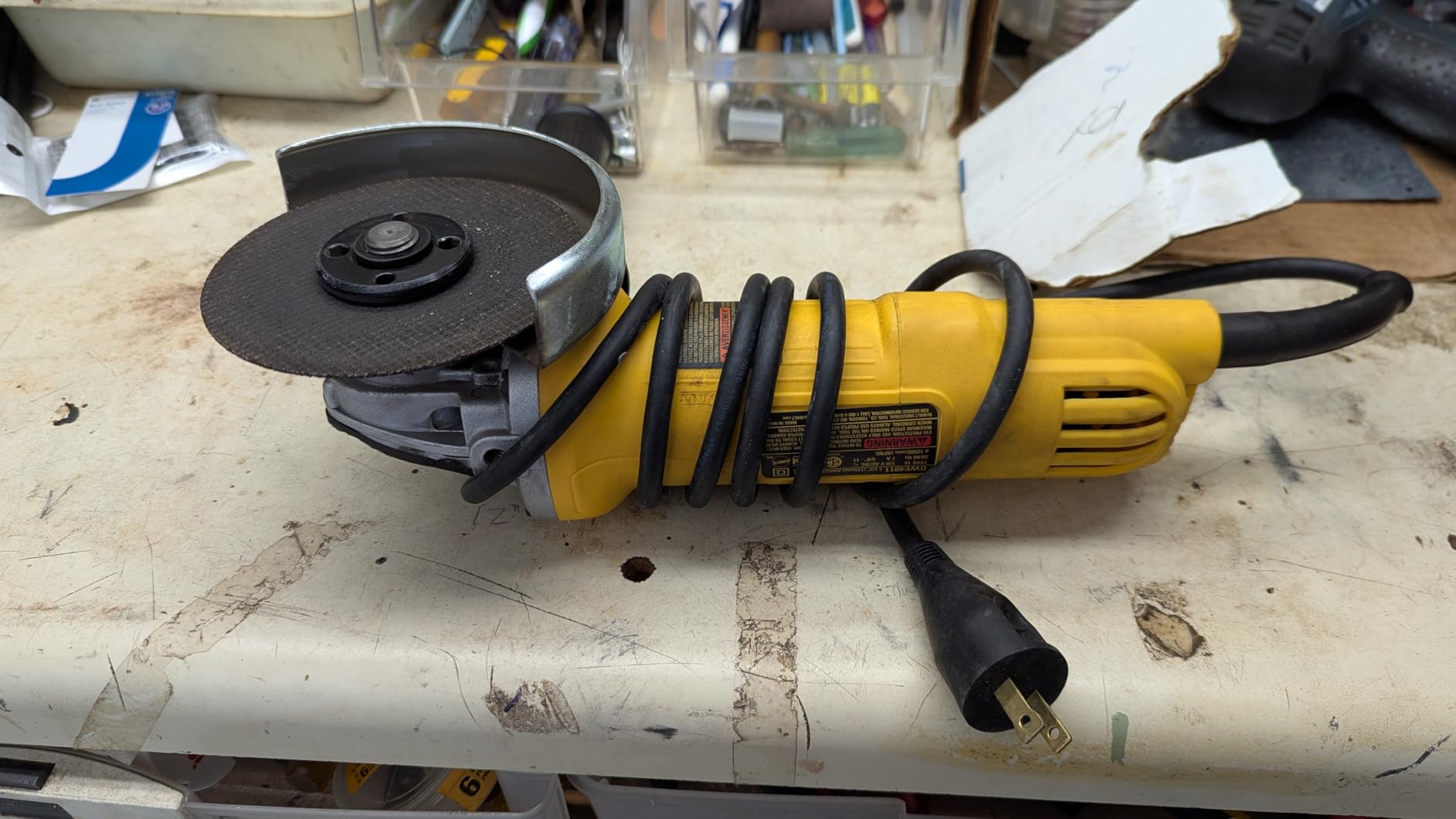
This is the wheel I keep reaching for first when the job is stainless mixed with carbon steel, because the listing names stainless explicitly among the compatible materials. It is a 4-1/2 inch Type 1 flat disc at 0.045 inch, on the standard 7/8 inch arbor, rated to 13300 RPM. That rating matches a typical corded 4-1/2 inch grinder’s no-load speed, which is the number people most often ignore and then regret.
The DEWALT design uses what the manufacturer calls temper point grains, sold as delivering roughly 50 percent longer life than a standard wheel, and the buyer reports line up with that claim on pipe, EMT, rebar and angle iron. Two sheets of fiberglass in the construction are the reason it tolerates the side-loading that snaps thinner discs. One small share of reviews reports faster wear on very thick stock, which tracks with a 0.045 inch profile rather than anything faulty.
What it does not do is advertise INOX or contaminant-free on the face of the wheel. On a hidden bracket that will never be seen, I would not think twice. On a stainless handrail or a food-contact panel, use this one only if you can neutralize free iron afterward with a pickling pass.
What you get cutting stainless with it
Buyer reports describe fast, clean cuts through stainless and carbon steel with an edge that holds across multiple cuts, which means fewer disc changes in the middle of a fit-up run. It suits notching tube for weld prep as well as trimming pipe, because a Type 1 flat disc can plunge to full depth.
The kerf is the quiet advantage. At 0.045 inch you remove very little material, so when you are trimming a tube to length for a tight weld, the extra sliver of steel stays in the part rather than becoming swarf.
Where it falls short
The honest weakness is the thickness, not the quality. Reviewers who push this disc into heavy plate report it wearing faster than they expected, and a minority note it is fractionally thicker than some competing cut-off wheels. It also carries no INOX claim, so it is a poor fit for visible stainless where staining would show.
If your work is mostly stainless trim rather than mixed fab work, the Merryland pick below is the safer contamination story even though it costs less in review volume.
2. SALI 50 Pack 4-1/2 in – Best Value for Shop Volume
SALI 50 Pack Cut Off Wheel 4 1/2 Inch Cutting Wheels 4-1/2″ x 3/64″ x 7/8″ for Metal & Stainless Steel, Angle Grinder Cutting Wheel,Cutting Discs with Aggressive Cutting
4-1/2 in x 0.047 in x 7/8 arbor
Aluminum oxide, 60 grit medium
13,300 RPM and 80 m/s
Double fiberglass mesh
Pros
- Fifty discs per pack suits fabrication volume
- 0.045 inch thin profile cuts fast and burr-free
- Double fiberglass mesh reinforcement
- Compatible with 4-1/2 inch grinders up to 13300 RPM
Cons
- Stainless is listed but the wheel carries no INOX marking
- Not specified for die grinders
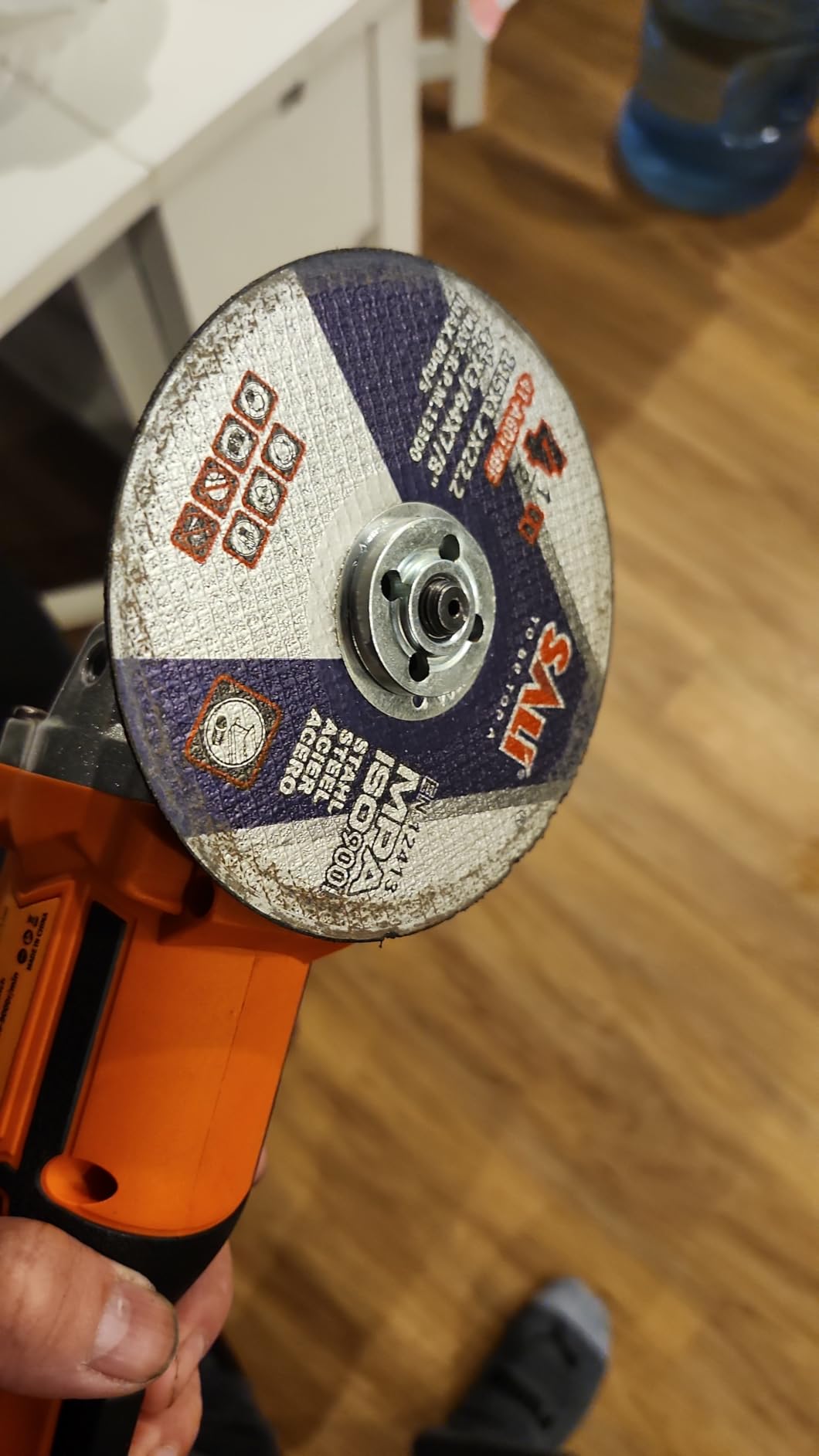
When a shop burns through consumables, the pack size matters more than the badge. Fifty discs at 4-1/2 inch with a 7/8 inch arbor means one order covers a long stretch of notching, trim and general steel work. The spec sheet lists stainless steel among the compatible materials, along with metal generally, and the disc runs to 13300 RPM at 80 m/s, which is the standard operating envelope for that grinder size.
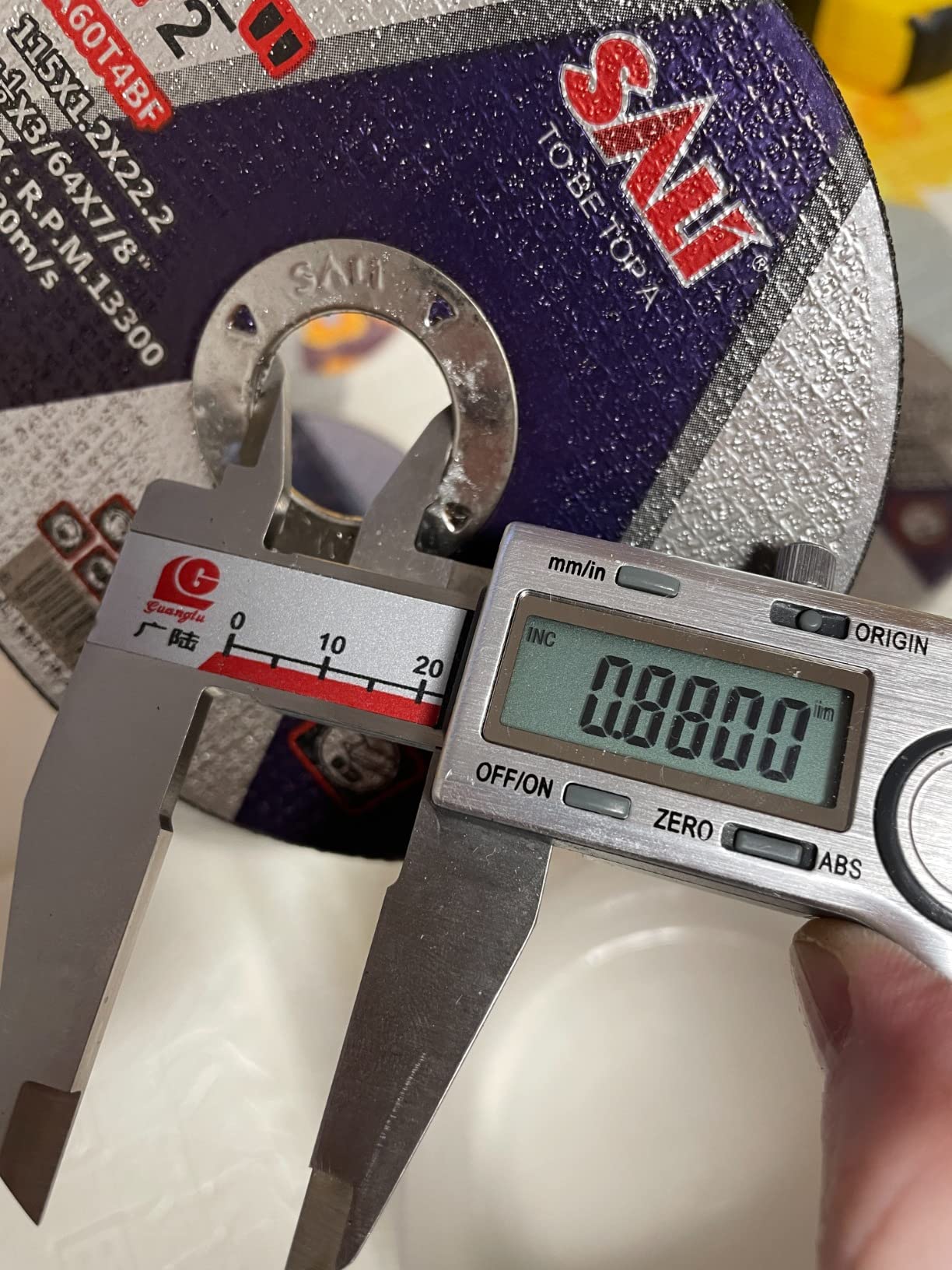
SALI uses a proprietary aluminum oxide grain and a thin profile the seller describes as 0.045 inch, with the listing dimension given as 0.047 inch. That rounding is normal in this category and it does not change the cut character. Buyers describe the cuts as fast and burr-free on both mild steel and stainless, with disc life that holds up well over a pack.
The reinforcement matters here. Double fiberglass mesh means that if the wheel does get nicked on a bolt head or a rebar chair, it tends to fray and shed rather than shatter into fragments. That behavior is why this one is a common shop choice.
Why shops buy this instead of five loose discs
The straight answer is that you stop handling five separate purchases and you stop running out mid-job. At the same time, feedback consistently mentions consistent fast cuts and good disc life across the whole pack rather than a few good discs and a run of duds. That consistency is what you are actually paying for.
It also fits the machines most home and shop users already own, since 4-1/2 inch with a 7/8 inch arbor is the near-universal angle grinder configuration in North America.
Where it falls short
Stainless is on the compatible materials list, but this wheel does not advertise an iron-free grain or an INOX rating. If you are cutting visible stainless that will be seen by anyone, know that you are relying on the general-purpose grain rather than a contamination-controlled one.
It is also a cutting disc, not a grinding disc, so it is not the right tool for cleaning a weld bead or removing heat tint. For that step you want a dedicated grinding wheel.
3. Benchmark Abrasives 4.5 in Type 1 – Best for Die Grinders
Benchmark Abrasives 4.5″ Aluminum Oxide Type 1 Cut Off Wheels, 50-Count
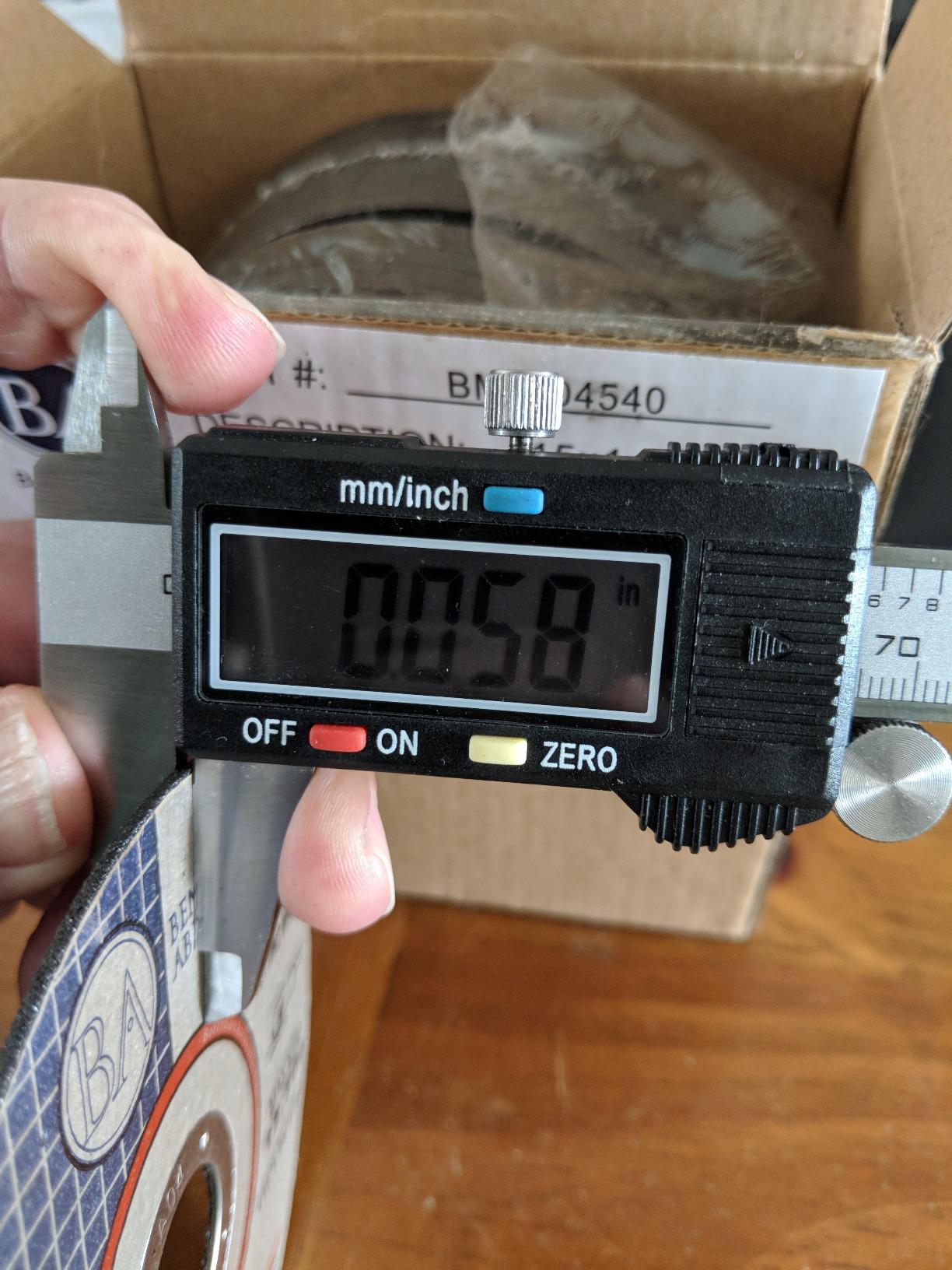
4.5 in x 0.04 in, 50 count
Aluminum oxide bonded wheel
13,000 RPM max
Type 1 flat construction
Pros
- Thinnest kerf in this group at 0.04 inch
- Flat Type 1 face for precise cuts
- Works on die grinders and chop saws
- Available in case and pallet quantities
Cons
- No INOX or contaminant-free claim on the listing
- Not listed for use on a 7 inch grinder
This is the one to buy if your stainless work happens at a bench on a die grinder or a chop saw rather than in your hand on an angle grinder. The listing names die grinder as a compatible device and also covers high-speed saws, stationary saws and chop saws, with a 13000 RPM ceiling. Compatibility is listed across the major grinder brands, from DeWalt and Milwaukee to Makita, Bosch, Metabo, Ryobi, Bosch, Skil and Ridgid.
The wheel is a flat Type 1 in bonded aluminum oxide at 0.04 inch, which makes it the thinnest kerf in this whole group. Buyers point to clean, low-vibration cuts with minimal burr, and the brand is available in 50-disc cases and 480-disc pallets if you run real volume. It also states it meets ANSI and EU standards, which is worth having on file for shop documentation.
Because it is a flat Type 1 rather than a depressed-center wheel, it can plunge to the full depth of the wheel and produce a square cut face. For cutting stainless tube to length for a weld fit-up, that geometry is the whole point.
What makes it different from the angle grinder discs
The 0.04 inch kerf is thinner than the 0.045 inch discs most angle grinder users buy. On stainless tube, that difference shows up as less material lost per cut, which matters when a job has a tight fit-up tolerance or when you are trimming a flange face.
It is also the only wheel here whose spec sheet explicitly lists aluminum alongside stainless. That wider material range is useful if your shop occasionally picks up non-ferrous work.
Where it falls short
Again the absence of an INOX or contaminant-free claim is the limitation to plan around. The grain is aluminum oxide, which cuts stainless perfectly well, but it is not advertised as iron-free, so post-cut staining is a possibility on visible parts.
It is also not a large wheel. If you routinely cut heavy plate, a bigger diameter means fewer passes, and this one will ask you to make more of them.
4. Merryland 5 in INOX Wheel – Best Certified Stainless Pick
Merryland 25 Pack Cut Off Wheel 5 inch Cutting Metal Iron Steel Craft-Line
5 in x 0.045 in x 7/8 arbor
White corundum on phenolic resin
12,250 RPM max
EN 12413 and MPA certified
Pros
- Listing names stainless and INOX explicitly
- Refined calcined white corundum grain resists loading
- Two layers of reinforced fiberglass mesh
- EN 12413 conformity and MPA certification stated
Cons
- 5 inch size will not fit a 4-1/2 inch grinder
- Small share of reviews report occasional breakage
This is the pick I trust when the stainless will be seen. The listing names stainless and INOX among the materials the wheel is suited for, and the grain is described as refined calcined white corundum on German phenolic resin. White alumina is a harder, cleaner grain than the general brown alumina used in budget discs, which is exactly why stainless-specific wheels are built around it.
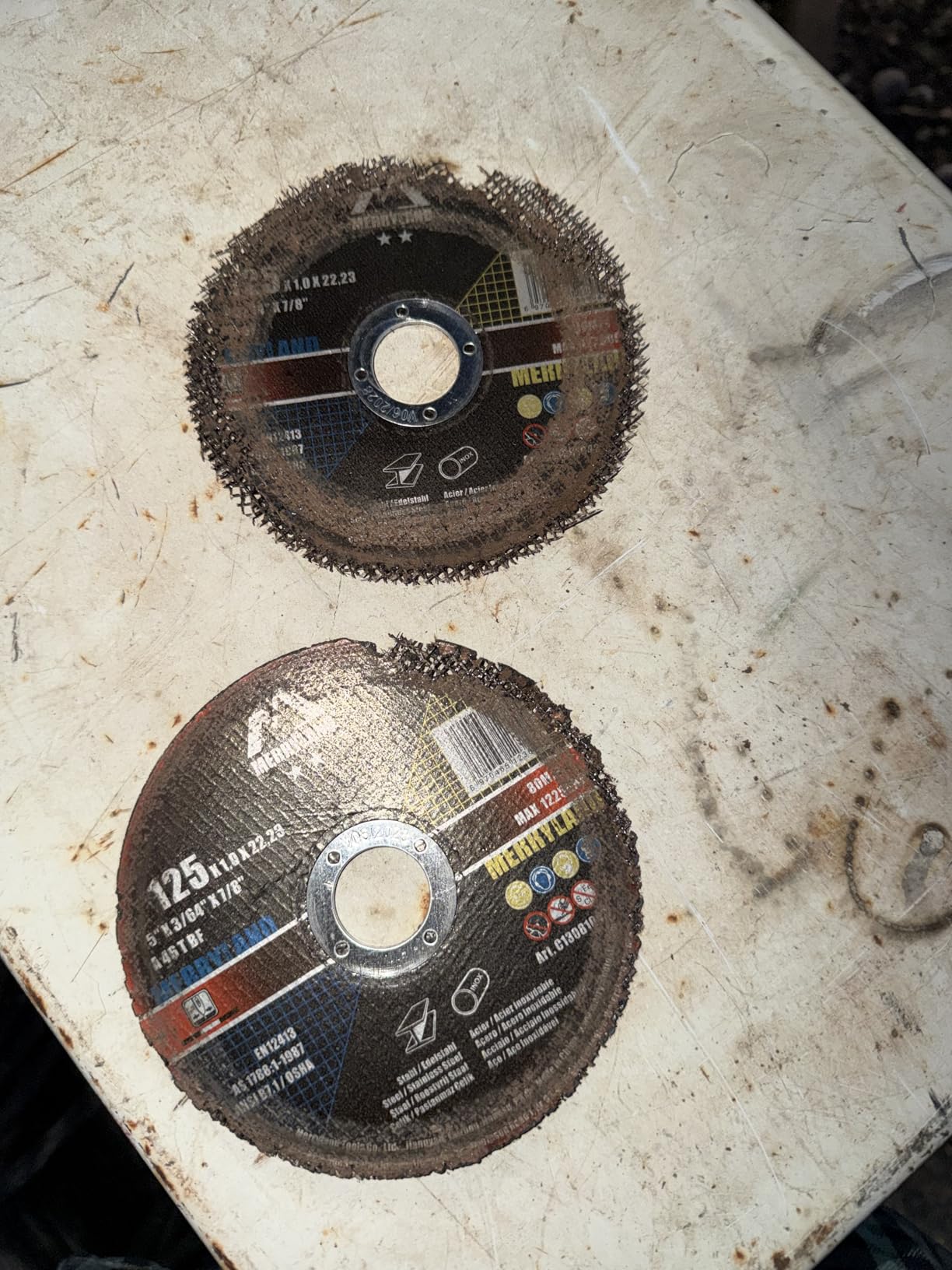
The wheel is 5 inch at 0.045 inch with a 7/8 inch bore and two layers of reinforced fiberglass mesh, rated to 12250 RPM. It conforms to European Standard EN 12413 and carries MPA certification, which matters if you work under a documented safety program rather than guessing at what a disc is rated for. A safety manual ships in the box.
Buyer feedback describes fast, accurate cuts with good disc life on 5 inch grinders, and the rating sits at 4.6 from more than four thousand reviews. A small slice of one-star ratings reflects occasional breakage, and thin discs are simply less forgiving of side pressure than thicker ones.
Why the certification list is not marketing filler
EN 12413 and MPA are the two labels that tell you a wheel has been tested to a defined bursting standard rather than just stamped with a speed number. When you are cutting stainless for a customer who cares about surface finish, being able to say your consumable is certified removes an argument.
The practical payoff is the white corundum grain itself. Harder grain keeps its cutting edge under the heat stainless generates instead of glazing over and loading up, which is the number one reason a general-purpose disc stops cutting on stainless halfway through a run.
Where it falls short
It is a 5 inch wheel, so it needs a 5 inch grinder. If your only machine is the 4-1/2 inch angle grinder that most people own, this is not the product to buy, no matter how well it fits the material.
There is also a small minority of one-star feedback about breakage. As with any thin disc, keeping it off side pressure during the cut is what prevents that.
5. Truswe 3 in with Mandrel Kit – Best for Cordless Grinders
Truswe 3 inch Cut Off Wheel – 25 Pack Cutting Disc with Mounting Mandrel Kit 1/4″ 3/8″ Arbor Stainless Steel Grinding Wheel for Angle Grinder
3 in (75mm) x 1.6 mm thick
3/8 inch arbor with mandrel kit
Corundum and white alundum grain
Rated 25,000 RPM
Pros
- Mandrel kit lets the small disc run on 1/4 and 3/8 inch arbors
- 1/16 inch profile for light/fast/precise cuts
- Double fiberglass mesh resists shattering
- Suitable for rebar/pipe/sheet and stainless
Cons
- Small diameter limits it to light and precision work
- No INOX marking despite stainless being listed
Small wheels earn their place in a kit bag because they can get into corners a 4-1/2 inch disc cannot reach. This one is a 3 inch, 1.6 millimeter disc sold in a 25 pack, and the standout feature is the included mounting mandrel kit, which lets the same wheel run on both a 1/4 inch and a 3/8 inch arbor. That flexibility matters on die grinders, where bore size varies so much between models.
The grain is aluminum oxide bonded with corundum and white alundum, double fiberglass mesh reinforced, rated to 25000 RPM. Stainless steel is one of the listed compatible materials, along with metal, iron, plastic, steel, rebar, pipe and sheet metal.
What a 3 inch disc does better than a big one
Control. On thin stainless strip, a small wheel tracks a straight line easier because the operator has less edge mass to manage. Buyers report fast, controlled cuts on metal and rebar with this size, and the 1/16 inch profile means almost no material is removed from the workpiece.
It is also the right disc for trimming the ends of stainless fasteners and bolts flush, where you are working close to another finished surface and cannot let a wheel wander.
Where it falls short
The diameter is the limitation. A 3 inch wheel needs more passes on anything heavy, and on thick plate the small cutting depth will make you work harder than you want to. If your cuts are long, this is the wrong size.
It also carries no INOX or contaminant-free claim despite listing stainless as compatible, so treat it as a general-purpose wheel for stainless rather than a contamination-controlled one.
6. BHA 5 in x 0.040 in – Best for Ultra-Thin Kerf Work
BHA Metal and Stainless Steel Thin Cut Off Wheels for Angle Grinders, 5” x .040” x 7/8” – 25 Pack
5 in x 0.040 in x 7/8 arbor
Aluminum oxide, 40 grit medium
Stainless and steel listed
25 pack
Pros
- Thinnest kerf option at this diameter
- Users report discs do not fly apart under heavy cutting
- Multiple diameter variants including 4 in/4.5 in and 6 in
- Fabricators report higher output per wheel than leading brands
Cons
- A few users note the discs wear faster and ravel more readily
- No INOX or contaminant-free claim
This wheel is built around one decision: go as thin as a resin-bonded cut-off wheel can reasonably go. At 0.040 inch on a 5 inch diameter, the kerf is narrow enough that you are shearing stainless rather than grinding it away, and the 7/8 inch arbor fits standard 5 inch grinders.
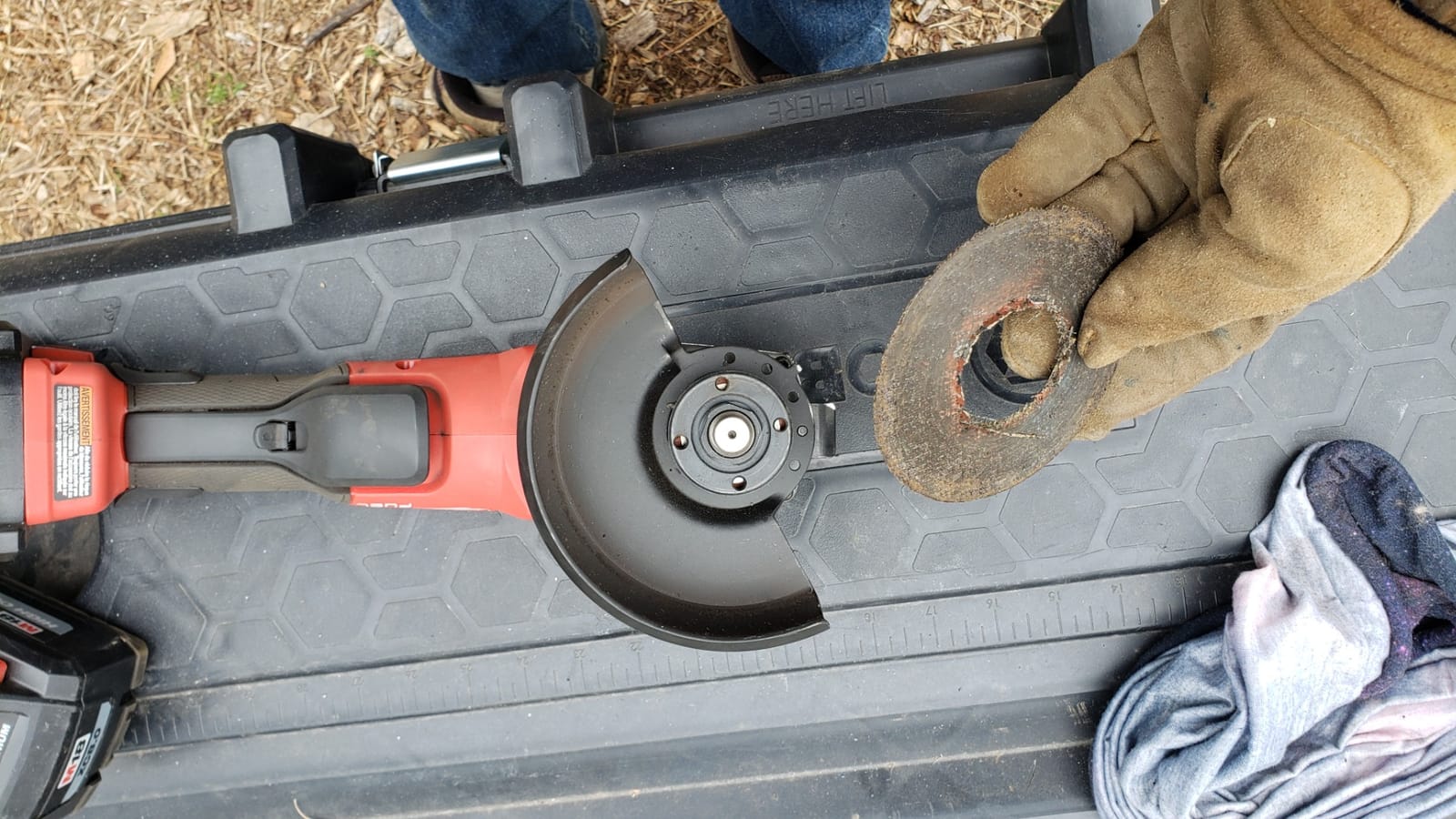
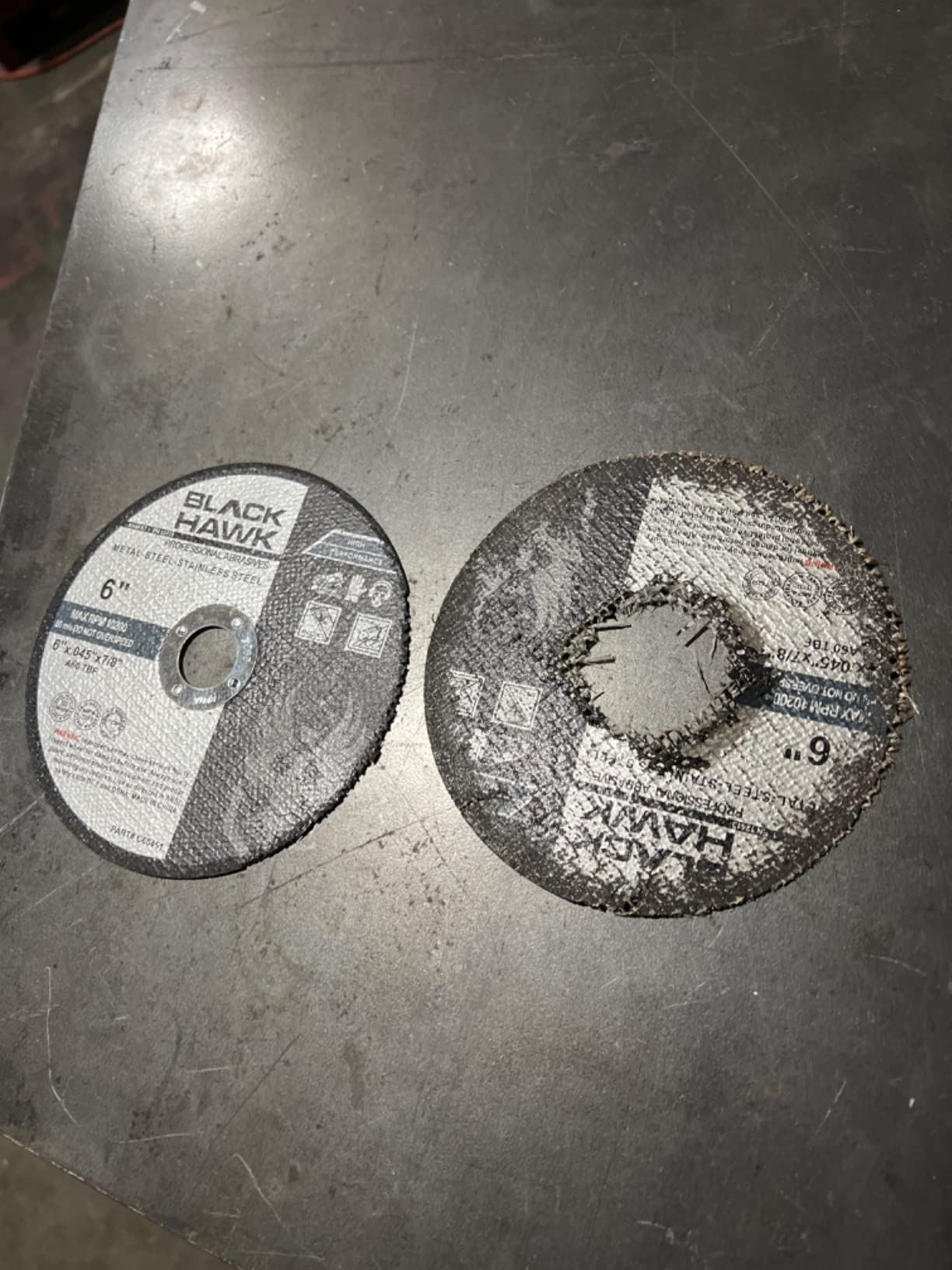
Stainless steel is named first in the compatible materials list, alongside steel, sheet metal and cast iron, and the wheel uses a proprietary aluminum oxide grain. Buyers in fabrication report cutting three galvanized panels for every one a competing brand managed, and several describe these as the strongest discs they have used because they do not break apart under heavy work.
The rating is 4.7 from 1128 reviews, with an 82 percent five-star share, so the positive pattern is consistent rather than anecdotal. This is also the only wheel here with a documented raveling complaint, which is the flip side of being this thin.
Where a 0.040 inch kerf actually pays off
On sheet metal and thin tube. When you are trimming a stainless strip to a marked line, the difference between a 0.040 and a 0.045 inch kerf shows up as material you keep instead of material you lose. On a visible trim piece, that is the difference between the part fitting and the part being short.
The other payoff is kerf loss. Less material removed means the wheel meets the stock with less resistance, which lowers both the effort you apply and the heat the workpiece absorbs.
Where it falls short
Thin wheels are less forgiving. A few users report faster wear and more raveling than on heavier discs, and raveled edges are where cut wheels start to chip. Side pressure from an impatient operator is the main cause, so keep the wheel in the cut and let it do the work.
It is also sold in a 25 pack rather than the 50-disc format some shops prefer, and again there is no INOX claim on the listing.
7. PUOPOSTY 10 Pack – Best Starter Pack for a Home Shop
PUOPOSTY 4 1/2 Cut Off Wheel Angle Grinder Cutting Disc for Metal & Stainless Steel, Max 13,300 RPM, 0.045″ Thin Grinding Wheel,10 Pack
4-1/2 in x 0.045 in x 7/8 arbor
Alumina grain, 60 grit fine
13,300 RPM max
10 pack
Pros
- Dual alumina grain mixes white alumina for stainless and brown alumina for steel
- 0.045 inch profile reduces material waste
- Reinforced construction resists wear
- Fits 4-1/2 inch angle grinders
Cons
- Smallest review base in this group
- Not specified for die grinder use
- No INOX marking
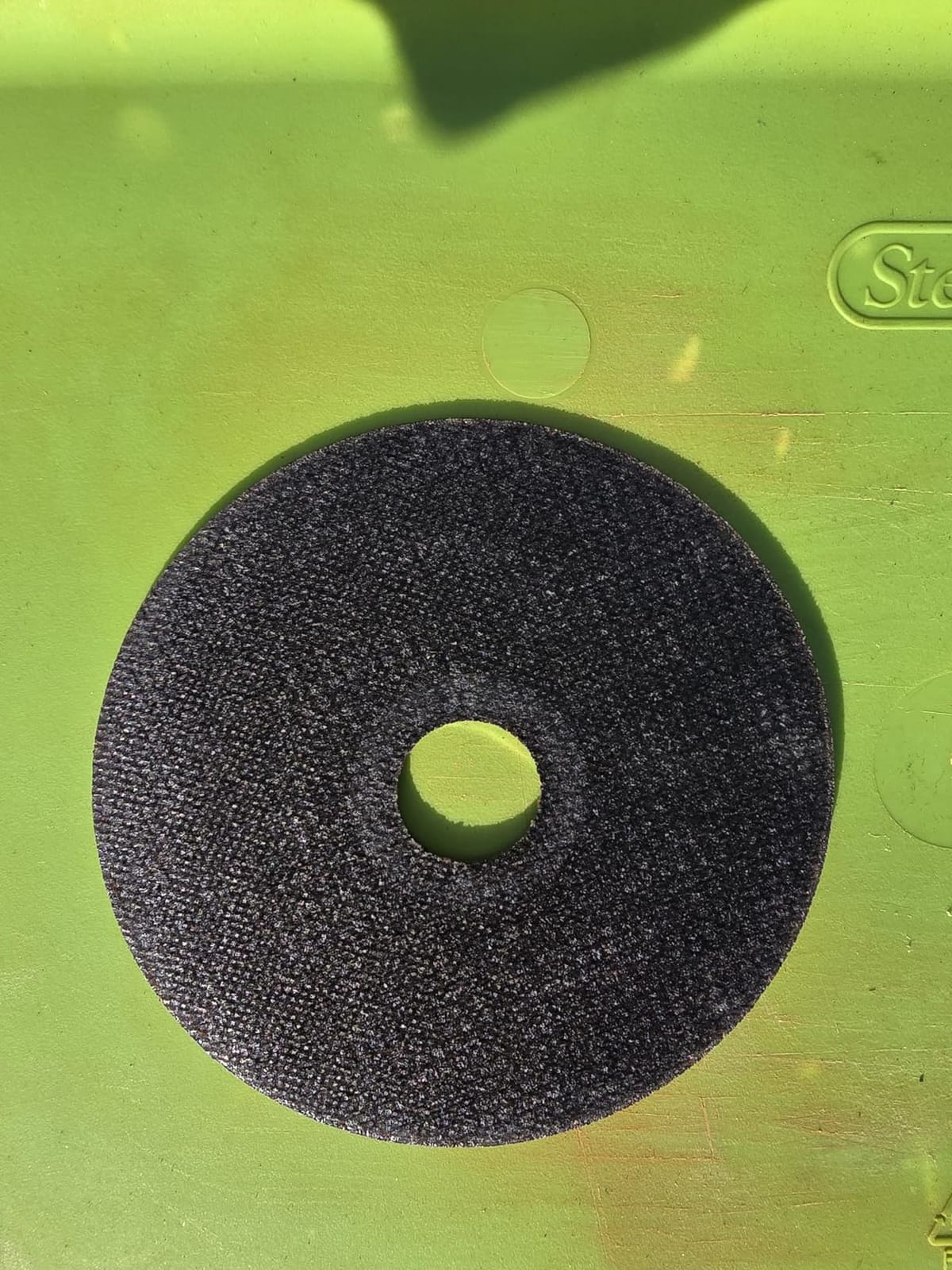
The idea I like most here is the dual-chemistry grain. This wheel mixes white alumina, the harder grain that holds up on stainless, with brown alumina, the tougher general-purpose grain for carbon steel. One disc, two materials, and the white fraction does the work on the stainless cuts while the brown fraction carries the rest of the job.
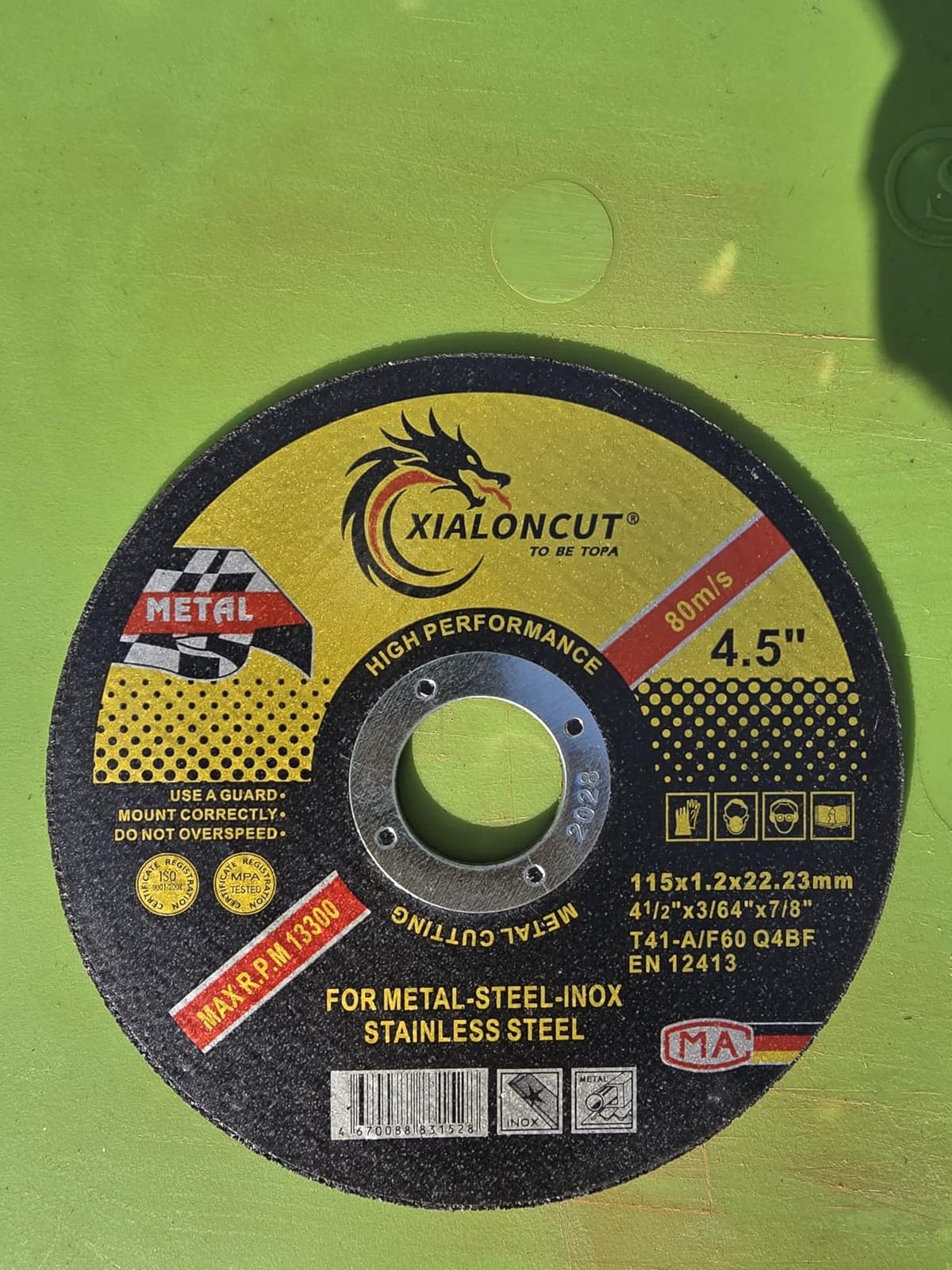
It is a 4-1/2 inch, 0.045 inch disc on a 7/8 inch arbor rated to 13300 RPM, in a ten pack. That ten count is deliberately small, which makes sense for a homeowner who does not know yet how many stainless cuts a year they will make. The reinforced construction is specified as resisting wear better than standard discs.
Buyer reports describe smooth, fast cuts on metal and stainless with good wear resistance for the pack. The rating is 4.7, though it comes from a smaller review base than the leaders in this list, so treat that number with more caution.
Why one disc for two metals works in a mixed shop
Carbon steel is what most general-purpose wheels are optimized for, and that is why they glaze on stainless. Blending in white alumina means the disc keeps an edge on both, which reduces the number of wheel types you have to track on the shop floor.
The 0.045 inch profile also means minimal material waste, which reviewers call out specifically as producing smooth, precise cuts on thin stock.
Where it falls short
Ten discs disappears quickly if you cut stainless regularly. If you know you will burn through them, the fifty-count SALI pick makes more sense per cut.
The construction is listed as non-woven and the review base is the smallest here at 412, so there is less long-term evidence behind it than the established names in this roundup.
8. EZARC Diamond Wheel – Best Contaminant-Free Option
EZARC Diamond Cutting Wheel 4 1/2 x 7/8 Inch for Metal, Cut Off Wheel with 5000+ Cuts on Rebar, Steel, Iron and INOX
4-1/2 in x 7/8 in arbor
Solid steel diamond wheel
13,200 RPM max
Cutting only, not for grinding
Pros
- 100 percent contaminant-free with no free iron to transfer
- Solid steel body resists shatter and injury risk
- Holds its original diameter for consistent control
- Available from 3 in through 7 in
Cons
- Slower than bonded wheels on light work
- Cutting only
- not designed for grinding
This one solves the contamination problem by removing the abrasive entirely. Instead of a bonded abrasive that sheds particles, it is a diamond-impregnated wheel with a solid steel body. That means there is no iron-bearing grain to transfer onto your stainless, and the listing states it is 100 percent contaminant-free. If rust staining is the thing that worries you most, this is the direct answer to it.
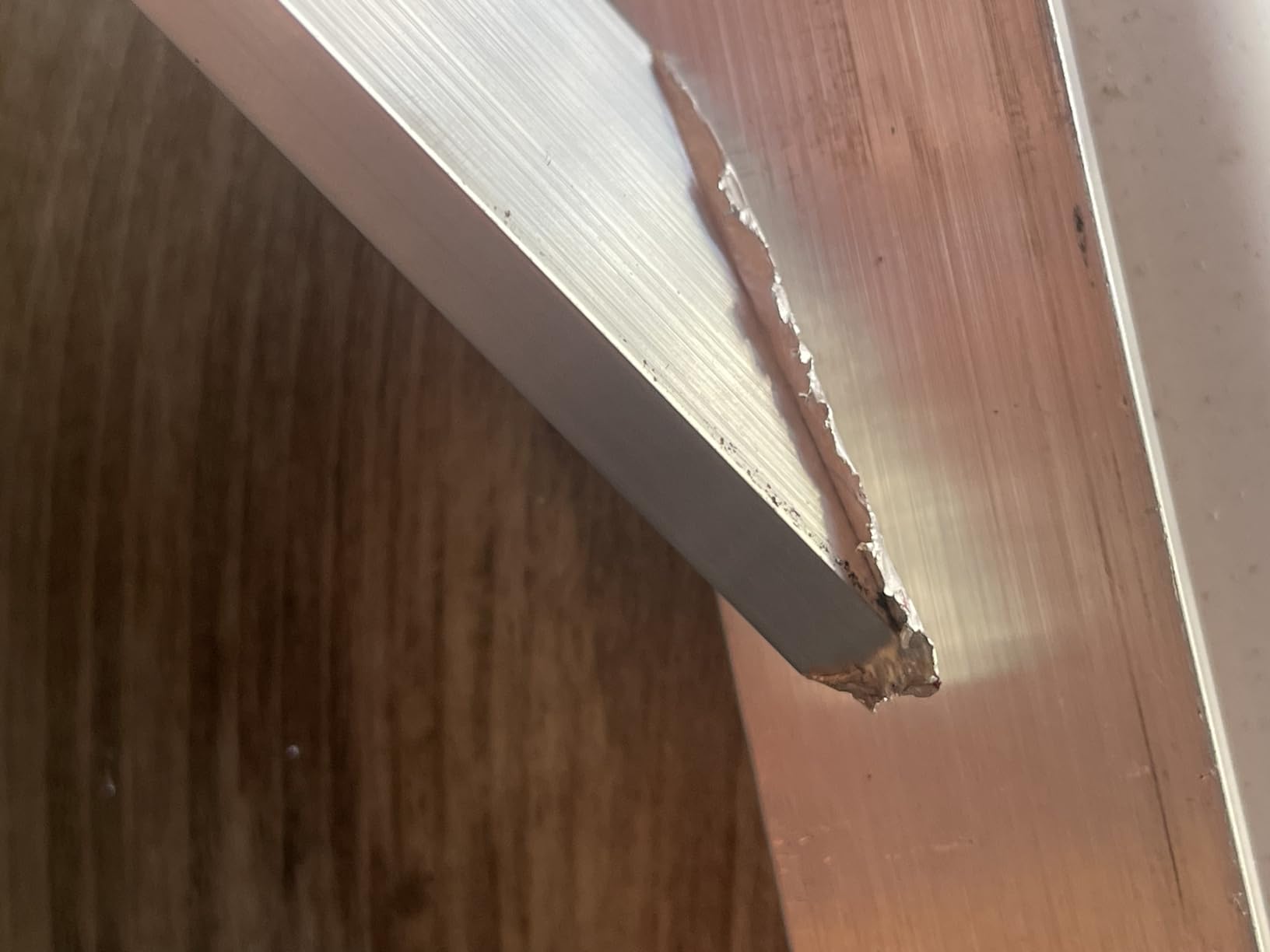
The safety story is the other half of the appeal. A solid steel wheel does not shatter into abrasive fragments the way a resin-bonded disc can, which is why fabricators reach for this on rebar and structural work where a snapped disc is a real hazard. The steel body also produces far less dust.
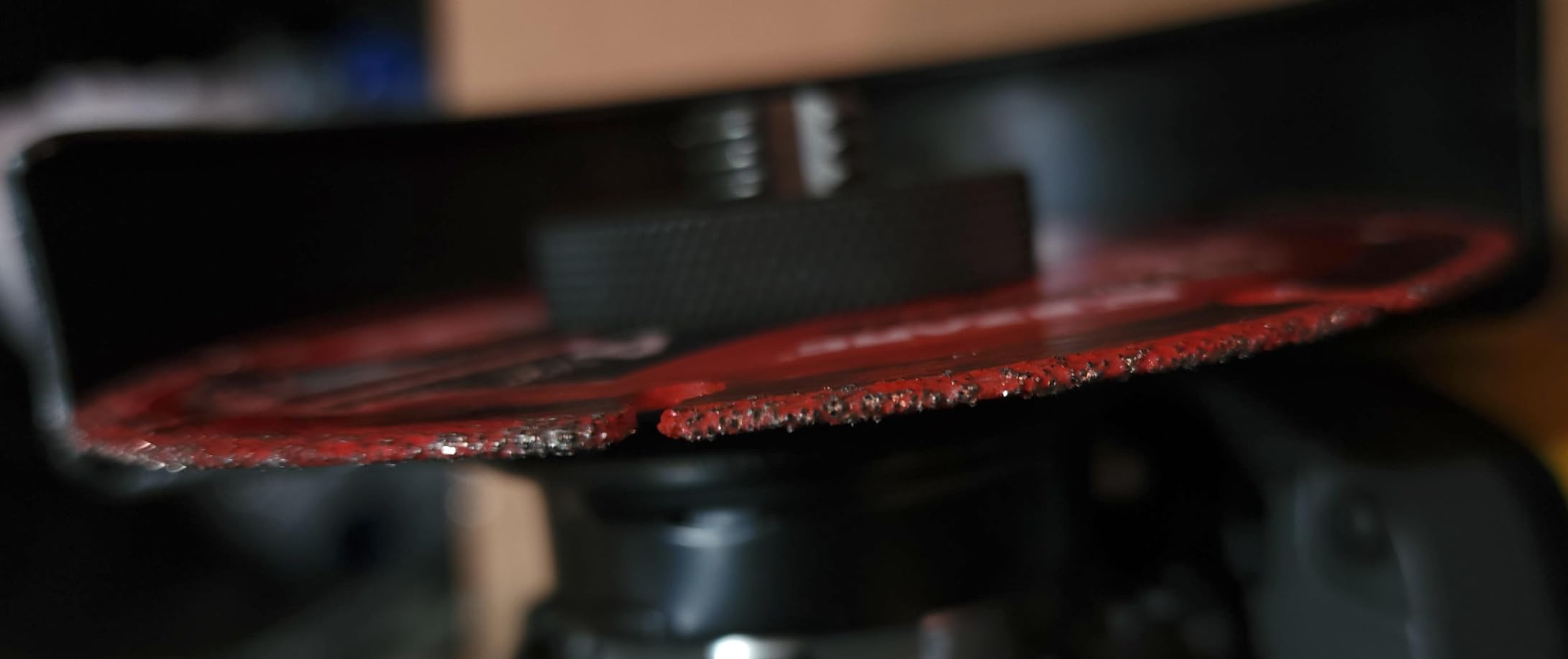
Because it does not wear down the way an abrasive wheel does, it maintains its original diameter, which means the cut geometry stays consistent for the life of the wheel. Buyers cite the cut count as the standout feature, with the manufacturer claiming 5000 or more cuts compared with a bonded wheel. It runs to 13200 RPM and comes in 3, 4-1/2, 5, 6 and 7 inch diameters.
When a solid wheel beats an abrasive one
On stainless work that will be left visible, the absence of free iron means no post-cut rust staining is likely. That is a real advantage over every resin-bonded wheel in this roundup, including the ones that advertise stainless in the compatible materials list.
It is also the right tool for long repetitive cuts through rebar and structural steel, where the constant diameter and shatter resistance pay for themselves quickly.
Where it falls short
This is a cutting wheel only. It is not designed for grinding, so it will not clean up a weld bead or remove heat tint, and attempting it risks damaging the diamond layer.
It is also the lowest-rated product here at 4.5, with a minority of users reporting slower cutting than bonded wheels on light work. For thin stainless trim where you want the fastest possible cut, a bonded disc is still faster.
9. HAUTMEC 20 Pack – Best MPA Certified 5 in Disc
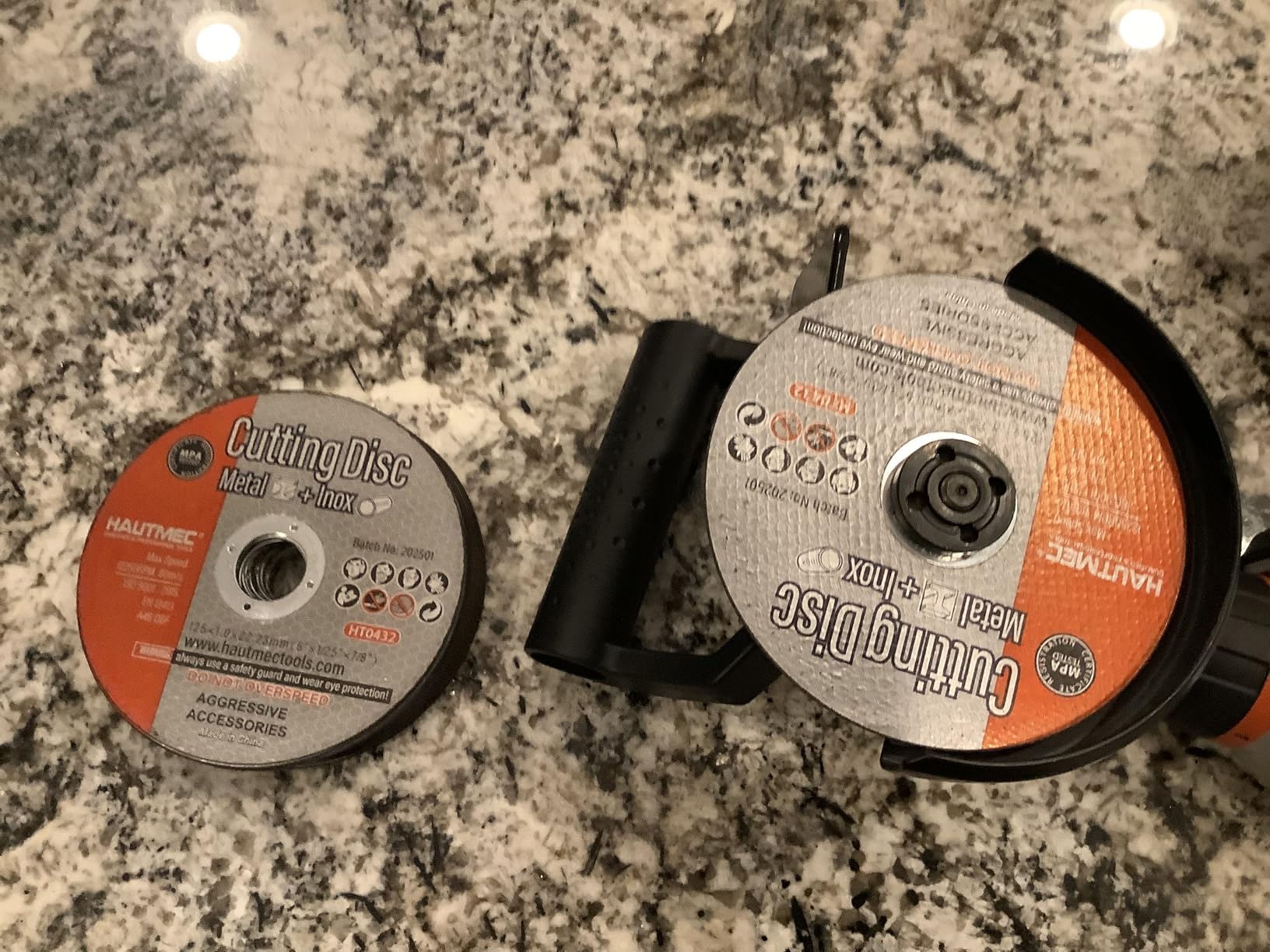
HAUTMEC 20 Pack Cut Off Wheels 5″ x .04″ x 7/8″, Metal Cutting Discs for Angle Grinder, Ultra-Thin Aluminum Oxide Abrasive Cut-Off Wheel for Steel, Stainless Steel & Metal, MPA Certified (HT0432)
5 in x 0.04 in x 7/8 arbor
Aluminum oxide, 36 grit ultra fine
12,250 RPM and 80 m/s
EN12413, MPA certified
Pros
- Manufactured to EN12413 with MPA safety approval
- Dynamically balanced for low vibration at 12250 RPM
- Multi-layer fiberglass with modified resin resists heat
- Ultra-thin 0.04 inch profile for low material loss
Cons
- Tin packaging is hard to open and may need prying
- Some users find it slower than budget 7 inch blades
- No INOX claim
The engineering story on this wheel is heat resistance. It uses a modified high-strength resin with multi-layer fiberglass reinforcement, which is the combination that decides whether a stainless cut ends in a clean edge or a blue, work-hardened one. Stainless generates more heat per cut than mild steel because it resists shearing, and heat is what kills a cut-off wheel.
It is manufactured to EN12413 and MPA safety approved, dynamically balanced to 12250 RPM at 80 m/s, and it fits all standard 5 inch grinders with a 7/8 inch arbor. The pack holds twenty wheels at a 0.04 inch profile.
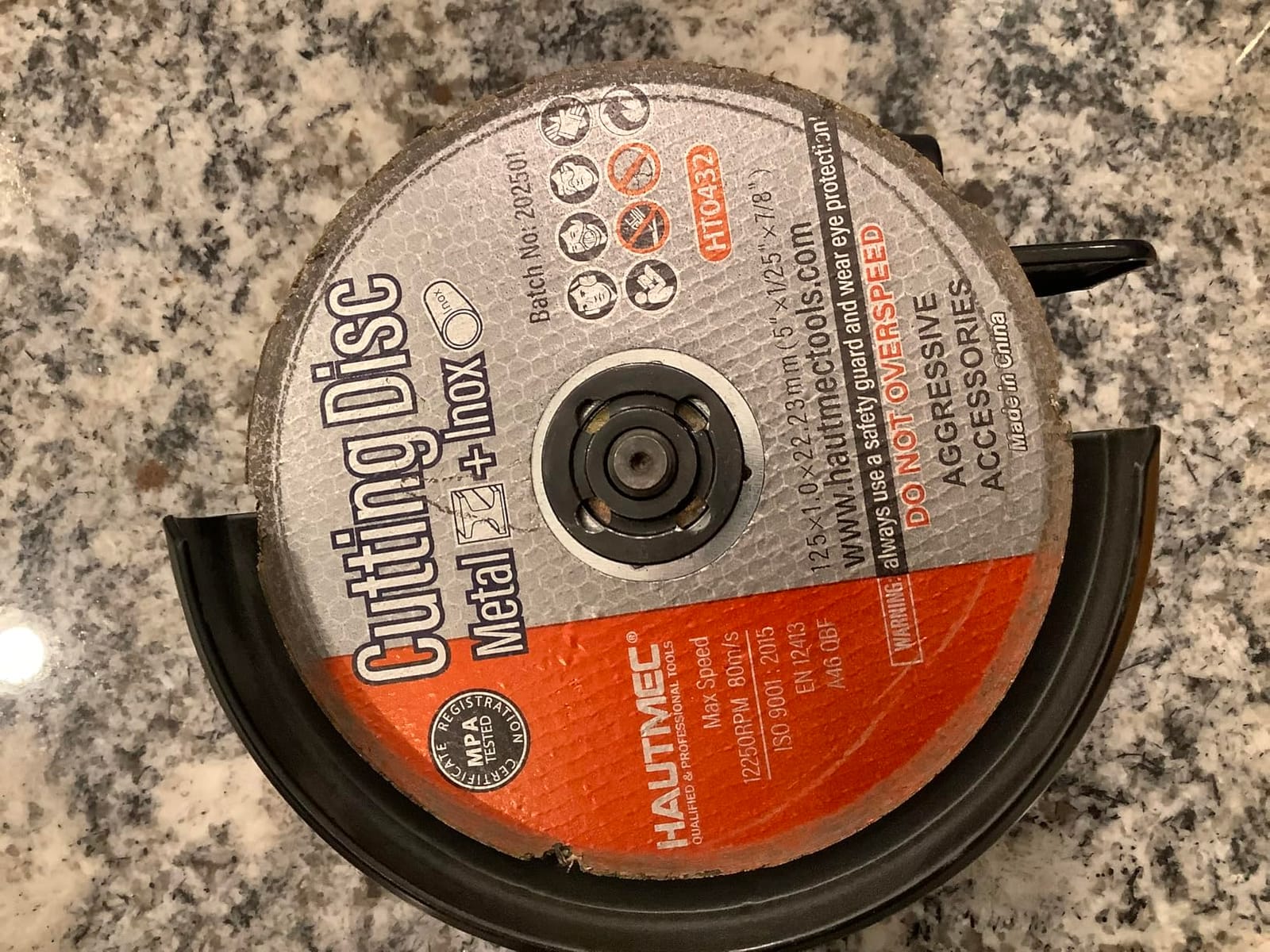
Reviewers repeatedly confirm that the discs do not shatter or fly apart in use, and they praise the disc life relative to the pack price. The rating is 4.5 from 1239 reviews with a 72 percent five-star share, the lowest proportion of five-star ratings among the well-reviewed products here, so expectations should be set accordingly.
The two recurring complaints are practical rather than performance related. The tin packaging is genuinely difficult to open and may need prying, and some users find the cutting speed slower than budget 7 inch blades from other brands.
Why balance matters on a thin stainless disc
Dynamically balanced means the wheel is manufactured so its mass is distributed evenly around the arbor. On a 0.04 inch thin disc running at 12250 RPM, a small imbalance shows up as vibration, and vibration translates into a wandering cut line on thin stainless strip.
For sheet metal work where the cut line is visible after finishing, that steadiness is worth more than raw cutting speed. The extra resin and mesh layers also buy heat tolerance, which keeps the wheel cutting instead of glazing mid-run.
Where it falls short
Its 12250 RPM ceiling means it is a 5 inch wheel for 5 inch grinders, and its cutting speed is not the fastest in this group. If you are chasing cuts per minute on light work rather than cut quality, a different disc fits better.
And despite listing stainless among the compatible materials, it makes no iron-free or INOX claim.
10. Benchmark Abrasives 6 in – Best for Heavy Plate
Benchmark Abrasives 6″ Aluminum Oxide Type 1 Cut Off Wheels, 25-Count
6 in x 0.045 in x 7/8 arbor
Aluminum oxide, 60 grit medium
11,000 RPM max
Type 1 flat construction
Pros
- Larger diameter means fewer passes on heavy plate
- Buyers report lasting three to five times longer than budget discs
- Does not chip/crack or fly apart in shop use
- Available in 25/100/250 and 12500-count packs
Cons
- Not as long-lived as premium pro brands
- 11000 RPM ceiling rules out larger grinders
- No INOX marking
Wheel diameter is a productivity decision, not just a physical one. A 6 inch disc cuts a 6 inch wide kerf, so a single pass takes care of stock that a 4-1/2 inch disc would need two passes to reach. On heavy stainless plate that difference is the difference between one cut line and two that have to be ground out level afterwards.
This one is a flat Type 1 wheel in aluminum oxide at 0.045 inch on a 7/8 inch arbor, rated to 11000 RPM. Stainless steel, steel and aluminum are all listed compatible, and the brand is compatible across DeWalt, Milwaukee, Makita, Bosch, Metabo, Ryobi, Craftsman, Skil and Ridgid grinders.
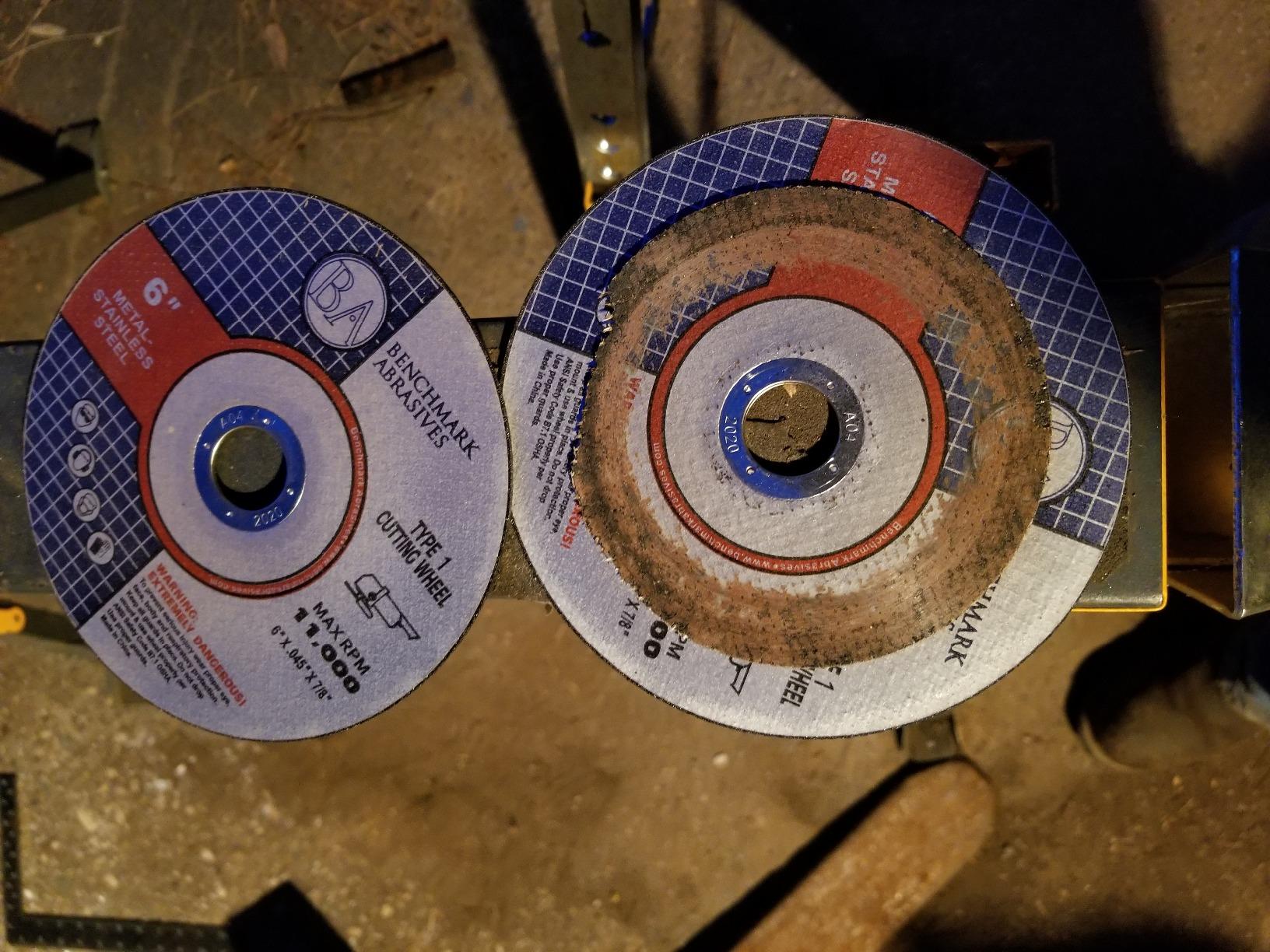
Farming and fabrication users describe these as the go-to disc, citing durability and value over budget imports, with buyers reporting roughly three to five times the life of cheap discs. The 83 percent five-star share here is the highest in this group. Feedback also notes they do not chip, crack or fly apart under shop use.
The honest counterpoint appears in the cons: a few reviewers note they are not as long-lived as premium pro brands. For someone who burns through premium-grade consumables daily, that gap is real.
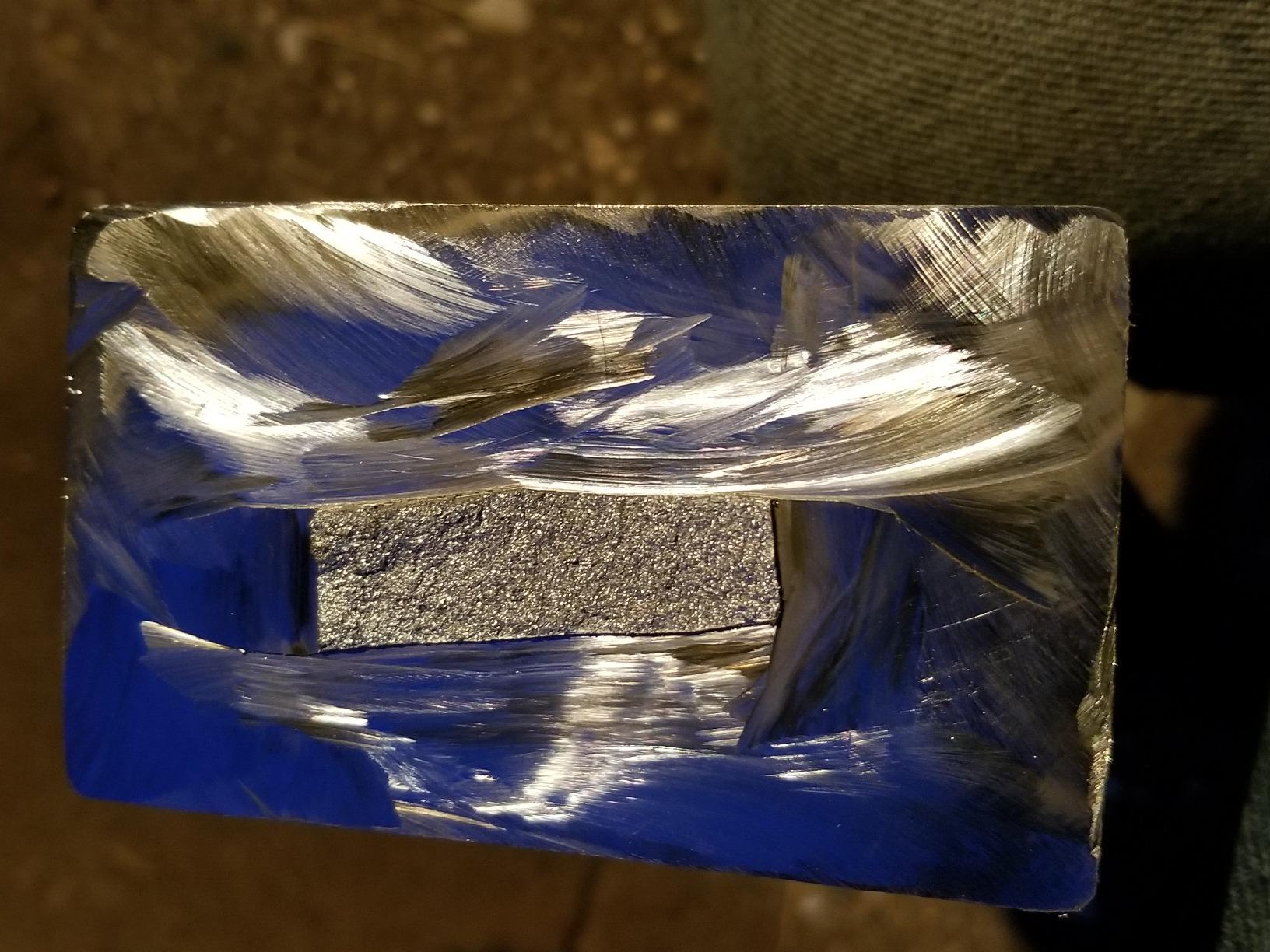
What a bigger wheel saves you on plate work
Fewer passes means less time backtracking to square the edge, and less total heat delivered to the plate because the wheel is not forced sideways to widen the cut. Both of those matter on stainless, where excessive heat work-hardens the edge and makes the material crack instead of bend.
The flat Type 1 face also plunges to full depth, which makes it straightforward to cut a notch without the wheel walking out of the line.
Where it falls short
The 11000 RPM rating is lower than the 4-1/2 inch wheels in this roundup, because it is a bigger wheel on the physics of rim speed. That means it fits medium-size grinders, not the largest ones.
And once again, stainless appears in the compatible list without any INOX or contaminant-free claim, so plan a neutralizing pass if the cut will be visible.
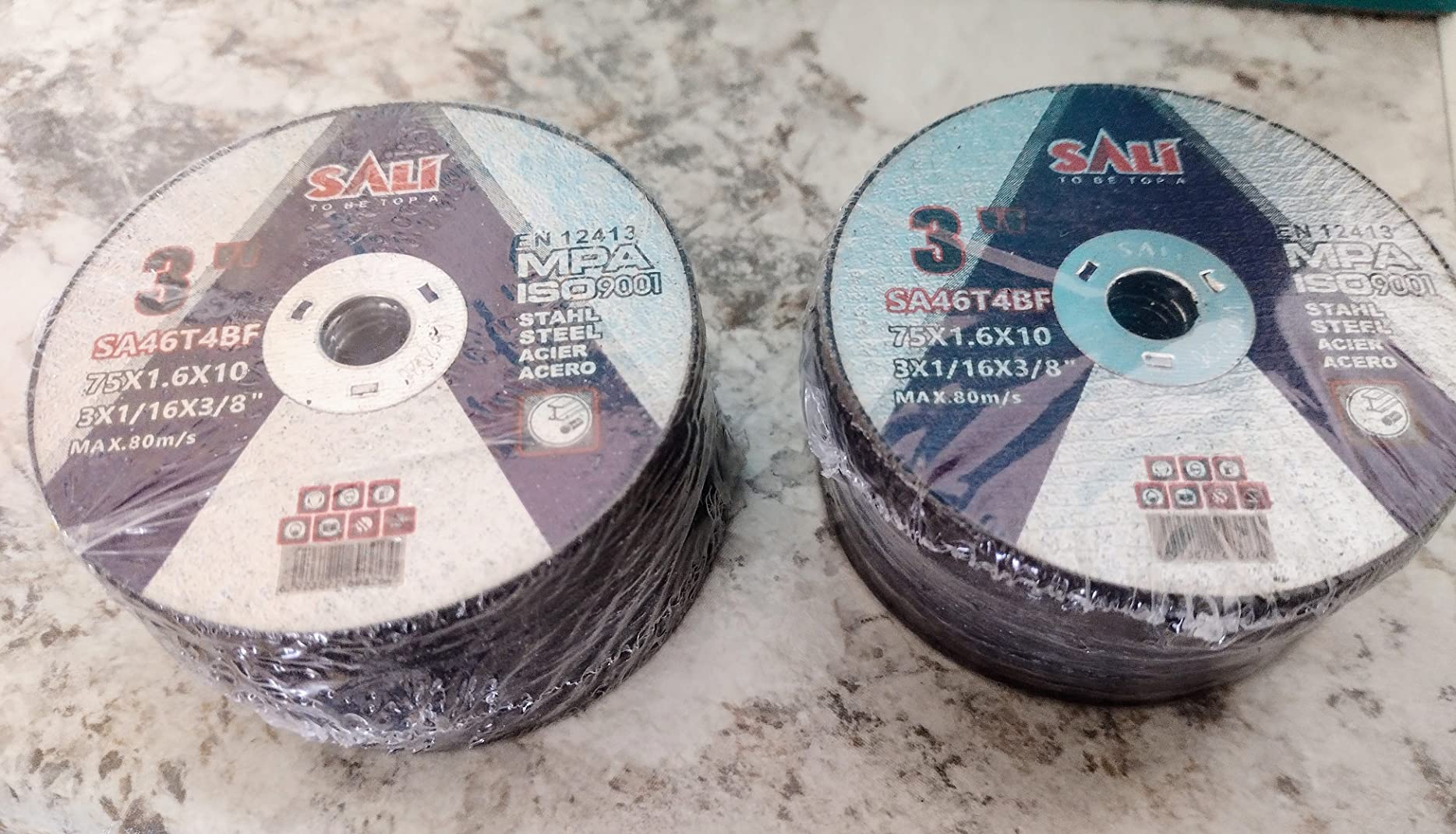
11. SALI 3 in 50 Pack – Best for High-Speed Small Tools
SALI 50 Pack Cut Off Wheels 3 Inch General Purpose Metal Cutting Wheel for 3 in Angle Grinders and Die Grinders- Cutting Disc Aggressive Cutting 3″ x 1/16″ x 3/8″ Operating Up to 20380 RPM and 80 M/S
3 in x 1/16 in x 3/8 arbor
Aluminum oxide, 46 grit coarse
Rated 20,380 RPM and 80 m/s
50 pack, double mesh
Pros
- Runs at 20380 RPM for high-speed die grinder work
- Fifty-disc pack suits die grinder consumables
- 46 grit raw sand gives a smooth clear cut surface
- Double mesh holds together if damaged rather than shattering
Cons
- 3 inch diameter suits light and precision work
- Some buyers report pack quantity not matching the listing
This is the small-wheel answer for die grinders and air or electric cut-off tools rather than angle grinders. It runs at 20380 RPM, which is a different speed class from every other wheel here, and it is sold in a fifty-disc pack sized for the volume a die grinder consumes.
The grain is aluminum oxide at 46 grit, described as proprietary for long life and fast cutting, with double fiberglass mesh reinforcement. The listed material range includes fiberglass, plastic, iron, steel, stainless steel and other ferrous metals, and the intended applications include shipbuilding, workshops, valve factories, power generation and auto maintenance.
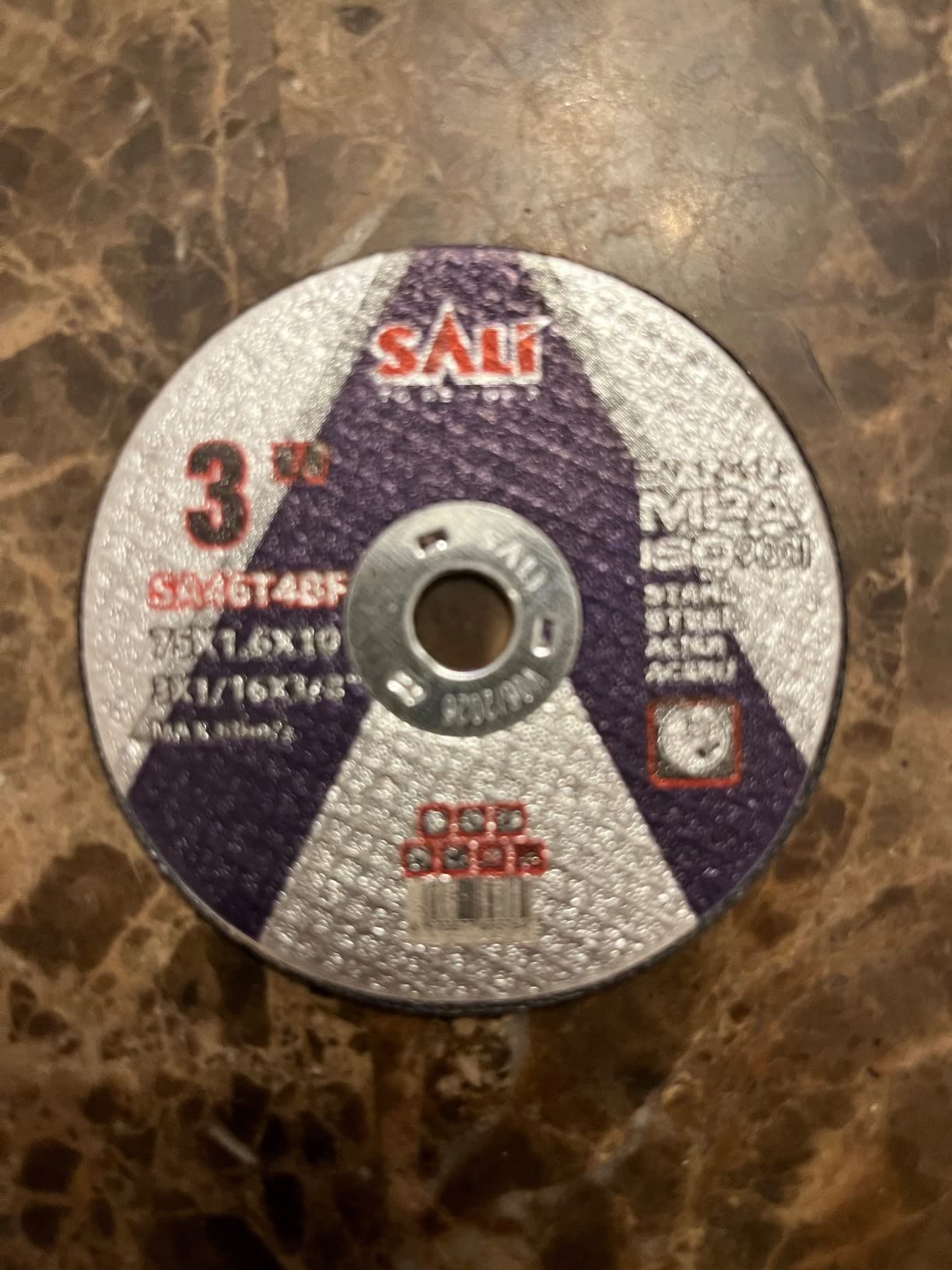
What stands out in buyer reports is the surface quality. The 46 grit raw material sand is credited with a smoother, clearer cutting surface that does not damage the workpiece, and reviewers note it cuts faster while using less of the disc than a brand they previously used. The reinforcement behavior is also called out: if the wheel is damaged it holds together rather than shattering.
One recurring complaint is quantity accuracy, with some buyers saying the delivered count did not match the stated pack size. Check the pack when it arrives.
Why the 20,000 rpm class matters on a die grinder
A die grinder runs faster than an angle grinder, so the wheel must be rated for that rim speed. Pairing a slower-rated disc with a high-speed tool is one of the ways discs fail, so matching the RPM class to the machine is not optional.
The 3/8 inch arbor on this disc fits many die grinders directly, which avoids the need for an adapter and keeps the wheel centered.
Where it falls short
Three inches is a light-duty and precision diameter. It is comfortable trimming small stainless components and cutting fasteners, but on anything heavy you will be making pass after pass.
It also lists stainless without an INOX claim, so treat it as a general-purpose disc rather than a contamination-controlled one.
12. LINCONSON 4.5 in Flat Disc – Best for Low-Vibration Cuts
LINCONSON 25 Pack 4.5 Inch Cut Off Wheel for Metal & Stainless Steel Used On Angle Grinder 4.5”x1/24”x7/8″ Flat Disc (SD 4520F)
4.5 in x 1/24 in x 7/8 arbor
Aluminum oxide with two mesh layers
13,000 RPM max
Flat cut-off disc
Pros
- Ultra-thin profile produces no burr and low vibration
- Flat design gives maximum depth of cut
- Two full layers of fiberglass mesh
- Compatible with DeWalt/Makita/Hilti and Milwaukee grinders
Cons
- Lowest review volume among the 4-1/2 inch options here
- No INOX or contaminant-free claim
At 1/24 inch this is the thinnest disc in the roundup, which is the entire design goal. When a wheel is that thin, the operator controls it with almost no edge mass to manage, and that produces the low vibration and burr-free result buyers describe on stainless and cast iron.
It is a flat cut-off disc, 4.5 inch by 1/24 inch on a 7/8 inch arbor, rated to 13000 RPM, built from premium aluminum oxide with two full layers of fiberglass mesh. The listing states compatibility with DeWalt, Makita, Hilti and Milwaukee grinders, plus other 4-1/2 inch machines.
What low vibration buys you on thin material
On thin stainless strip, vibration is what produces a wandering cut and a wavy edge. A wheel this thin transmits less feedback into your hands, so the cut line stays where you put it. It is also the reason the maximum depth of cut on a flat profile is useful, since you can plunge into a notch without the wheel binding.
Two full layers of mesh is more reinforcement than most discs in this list carry, which is a reasonable match for a thin profile.
Where it falls short
The evidence base is the thinnest here. With 661 reviews, the 4.6 rating is supportive but not as well established as the products with five-figure or four-figure review counts.
There is also no INOX marking. On visible stainless work, choose the Merryland or EZARC picks instead, and save this one for the cuts nobody will look at twice.
Why INOX Matters: Stopping Rust Stains Before They Start
Stainless steel resists rust because a thin chromium oxide film sits on its surface and blocks oxygen from reaching the iron underneath. Cut that film away and the iron beneath it will oxidize, which is the ordinary orange rust you see on mild steel.
A general-purpose carbon steel cut-off wheel is not iron-free. As it abrades stainless, it sheds iron particles that get driven into the freshly cut surface. That is free iron sitting on top of stainless, and it rusts within days. Sulfur and sulfur compounds accelerate it, and chloride contamination makes it worse still, which is why stainless-specific wheel labels specify grain that is free of iron, sulfur and chlorine.
This is why a wheel can slice stainless perfectly and still ruin the part. The cut quality is not the issue, the chemistry is. If you are cutting a handrail, a visible bracket, or anything that touches food, buy the wheel that says INOX or stainless or contaminant-free and treat that label as a requirement rather than a preference. The EZARC solid diamond wheel solves it by not using a bonded abrasive at all, and the Merryland pick solves it with refined calcined white corundum named on the spec sheet.
Thickness Decides the Cut: 0.040 in vs 0.045 in vs 1/16 in
The thin profile is the single biggest upgrade most people can make. A thin wheel shears material; a thick wheel grinds it away and turns the excess into swarf and heat. On stainless, less heat means less work hardening, and work hardening is what turns a cut edge that should bend into one that cracks.
At 0.040 to 0.045 inch you get the fast cut and the clean edge. At 1/16 inch, roughly 0.062 inch, you get more wheel strength and a longer life per disc, at the cost of removing noticeably more material and generating more heat. Heavy plate and structural work is where the thicker disc makes sense. Sheet, tube and thin bar are where the thin disc wins, and that is most of what people cut.
The tradeoff is forgiveness. Thin wheels are less tolerant of side pressure and will chip if you twist them in the cut. Keep the wheel in the kerf and let it do the work.
Abrasive Grain: White Alumina, Zirconia and Dual-Chemistry Discs
Grain type decides how long a wheel stays sharp and how it behaves when the cut gets hot. White alumina is the harder, purer grain and it holds its edge on stainless much better than brown alumina, which is why stainless-rated wheels name it explicitly. The Merryland disc is built on refined calcined white corundum, and the Truswe disc bonds corundum with white alundum.
Brown alumina is tougher and cheaper, and it handles carbon steel well, which is why general-purpose wheels use it. That is also why they glaze up on stainless: the softer grain rounds off under sustained heat and stops cutting.
Zirconia and ceramic grains are the premium answer, holding a much harder edge under load for longer. Dual-chemistry discs, like the PUOPOSTY pick mixing white and brown alumina, are a pragmatic middle ground that lets one wheel cover both stainless and carbon steel. Graded grit codes follow a similar pattern. A36 is a general-purpose cutting grit, A60T and A60TZ step finer and hold a cleaner edge, and A960TZ is the fine finishing end of the range.
Type 1 vs Type 27 and Getting the Diameter and Arbor Right
Two numbers decide whether a wheel fits before anything else does. Diameter has to be no larger than the grinder’s rated wheel size, and a larger wheel that overhangs the guard is a hazard, not an upgrade. The arbor has to match exactly: 7/8 inch for standard angle grinders, 3/8 inch for most die grinders, and adapters exist but a correctly sized wheel is always safer.
Type 1 wheels are flat. They can plunge to full depth and produce a square cut face, which is why they are the standard for cutting tube and bar to length. Type 27 wheels are depressed center, with the center pushed below the rim of the wheel, which lets you grind at an angle and is why they are used for surface work. Never put side pressure on a Type 1 cut-off wheel. That is exactly the load the flat profile cannot take, and it is the leading cause of snapped cut-off discs.
Match the RPM too. A 4-1/2 inch wheel is commonly rated to 13300 RPM, 5 inch wheels to 12250 RPM, and a 6 inch wheel to 11000 RPM, and the ratings drop as diameter rises because of rim speed. Never mount a wheel rated above your grinder’s no-load speed.
Matching the Wheel to Your Stainless Job
Form and grade both change the cut. Thin wall stainless tube, maybe 18 gauge, needs a thin wheel and a light hand because the wall collapses the moment the kerf is wider than the material. Heavy plate wants a larger diameter so you are not making six passes to get through it. Round tube and bar cut fastest with a flat Type 1 wheel that plunges and squares the end in one operation.
On grade, 304 stainless is the common structural and fabrication material and cuts readily. 316 is the marine and food grade version with molybdenum added, and it is tougher and more work-hardening, so it rewards the harder white alumina grains and a steadier feed. If you move from 304 to 316, upgrade the wheel before you change your technique.
We have covered surface care on stainless elsewhere too, including [outdoor kitchen cabinet sets with wheels](https://cookcraftandcreate.com/best-stainless-steel-outdoor-kitchen-cabinet-sets-with-wheels/), and the same rule applies: anything that puts free iron on a stainless surface is a problem, whether it is a cut-off wheel or a dirty rag. For the finish itself, once stainless has been exposed, [dishwashers with a stainless steel tub](https://cookcraftandcreate.com/best-dishwashers-with-stainless-steel-tub/) show how easily a good grain choice makes or breaks the look.
One practical note if you already cut stainless with a general-purpose wheel: passivate or pickle the part after the cut. That step dissolves the free iron back off the surface and restores the chromium oxide film. It is cheap insurance on a visible part and it cannot rescue a part you meant to leave raw.
Cut Fast or Slow: How to Avoid Loading and Work Hardening
Cut at a steady, moderate feed and let the wheel do the work. Pushing harder does not cut faster, it generates heat, and heat is what causes both problems people complain about on stainless.
Wheel loading, the gumming up that happens when a wheel glazes over and stops cutting, is usually a heat problem and sometimes a dull wheel problem. Back off the pressure, let it cut at the depth it can reach, and keep the wheel moving along the cut line rather than dwelling in one spot. If the wheel is genuinely worn down to the core, replace it, because a glazed wheel will keep generating heat at a smaller diameter.
Work hardening happens when the cut edge heats up enough to change its crystal structure, and then the next cut makes it crack instead of bend. Keeping the wheel sharp, keeping the cut cool, and not lingering are all ways to prevent it. If you see blue or straw heat tint along the cut face, you have already gone too far and should slow down or change the wheel.
And if you do use a non-inox wheel on stainless by mistake, do the passivation step above before you leave the part. It takes minutes and removes a problem you would otherwise find a week later.
How We Picked and What Keeps Wheels From Breaking
Every wheel here was ranked on published specifications first, then on buyer reports. The specs we compared were diameter, thickness, arbor, RPM rating, abrasive grain, reinforcement and safety certification. Where a listing named stainless or INOX explicitly, that was treated as a meaningful advantage rather than a marketing line.
This is spec-based and report-based evaluation rather than instrumented testing. We did not measure cuts per disc in a lab, so treat life claims as the manufacturer’s numbers and the buyer consensus, not as our own readings.
On safety, the rules are short and worth repeating. Use a wheel guard that covers the wheel and matches the grinder. Wear eye protection and a respirator, because abrasive dust is fine particulate regardless of how clean the cut looks. Never exceed the RPM rating, and never side-load a Type 1 cut-off wheel. Keep the grinder cord or battery clear of the workpiece so it cannot be pulled into the wheel. And let the wheel come to a full stop before you set the grinder down.
Frequently Asked Questions
Can you use a cutoff wheel on stainless steel?
Yes. A standard metal cut-off wheel will slice stainless without any problem. The catch is that most general-purpose wheels are not iron-free, so they can leave free iron on the cut edge that rusts into orange stains within days. For visible or food-contact stainless, use a wheel labelled INOX, stainless, or contaminant-free.
What are the best cut-off wheels for stainless steel?
The best cut off wheels for stainless steel are thin discs between 0.040 and 0.045 inch thick, on a 7/8 inch arbor for a 4-1/2 inch grinder, made from a grain that is free of iron, sulfur and chlorine. INOX-rated aluminum oxide or white corundum grain holds up under the heat stainless generates without loading up.
What blade is best for cutting stainless steel?
A thin cut-off wheel with a white alumina or zirconia grain is the best blade for stainless. Brown alumina general-purpose wheels round off under sustained heat and start glazing, while white alumina stays sharp. A thin kerf between 0.040 and 0.045 inch cuts faster and wastes less material.
Is it better to cut stainless steel fast or slow?
Cut at a steady, moderate feed and let the wheel do the work. Pushing harder generates heat rather than speed, and heat is what causes wheel loading and work hardening. Back off when the wheel gums up, keep it moving along the cut line, and avoid dwelling in one spot.
What is the best grinder wheel for grinding stainless steel?
For surface grinding on stainless, use a Type 27 depressed-center grinding wheel rather than a flat Type 1 cut-off wheel. The depressed center lets you work at an angle without side-loading the wheel, which is what breaks cut-off discs. Use a finer aluminum oxide or zirconia grit for finishing and heat tint removal.
What are the different types of cutting wheels?
Type 1 wheels are flat and can plunge to full depth for square cut faces, which makes them the standard for cutting tube and bar to length. Type 27 wheels are depressed center and are used for grinding and surface work. Thin wheels cut faster and waste less material, while thicker wheels last longer and handle heavy stock.
Why does my cut off wheel leave rust marks on stainless steel?
The wheel is almost certainly shedding free iron onto the freshly cut surface. Ordinary aluminum oxide and brown alumina grains contain iron, sulfur and sometimes chlorine. Use an INOX or contaminant-free wheel, or passivate or pickle the part after the cut with a non-inox wheel to dissolve the free iron back off.
Can you cut aluminum with a cutting wheel?
Yes, aluminum is soft enough for an aluminum oxide cut-off wheel and several of the wheels here list it as a compatible material. Non-ferrous metal is easy to cut, but use a dedicated wheel for it rather than a ferrous-loaded wheel, because a wheel that has cut steel can smear iron onto aluminum.
Conclusion
The best cut off wheels for stainless steel come down to two decisions: an iron-free grain and a thin kerf. Start with the DEWALT DW8062B5 if you want the proven all-round pick with a very large review base, and pick the Merryland 5 inch or the EZARC diamond wheel if the stainless you are cutting will be seen and rust staining is not an option you want to take.
For shop volume, the SALI 50 pack keeps consumable costs down. For heavy plate, the Benchmark 6 inch reduces the number of passes. For bench work on a die grinder, the Benchmark 4.5 inch Type 1 and the SALI 3 inch high-speed pack are the right shapes for the machine. Every wheel in this roundup lists its diameter, thickness, arbor and RPM rating so you can match it to your grinder first and worry about brand second.
Whichever one you choose, cut at a steady feed, keep side pressure off a Type 1 disc, and passivate the part if the wheel was not INOX-rated. That last step takes minutes and saves the piece.