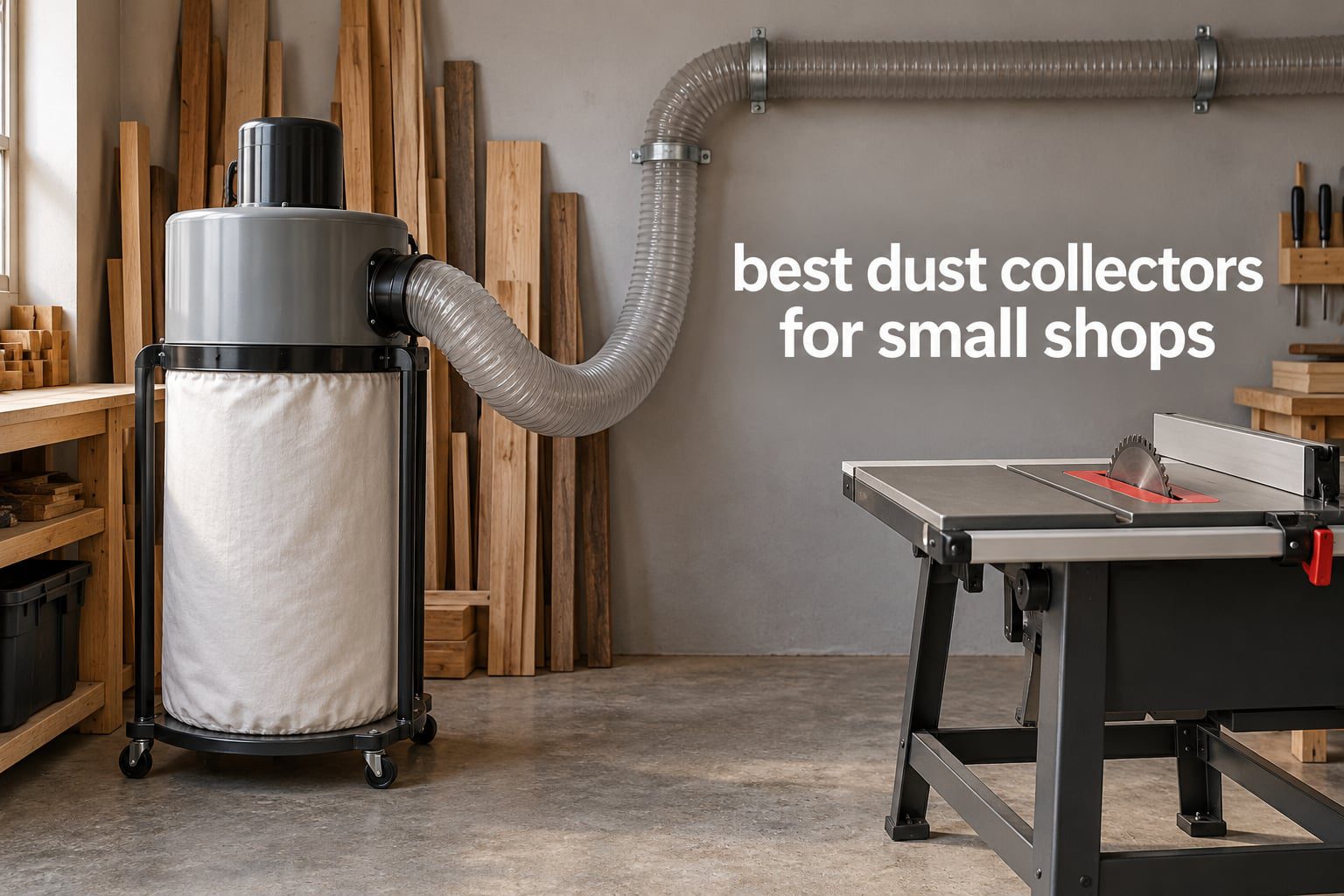
Hardwood dust is a confirmed carcinogen, and the fastest way to stop breathing it is to capture it at the machine instead of chasing it with a broom. Our answer for the best dust collectors for small shops is the POWERTEC DC5372, a 1 HP unit rated at 560 CFM with a reusable 1-micron bag that ran one machine at a time for us without complaint. If your floor plan is tight, the wall-mounted Shop Fox W1826 gives up zero floor space. Here is how all nine units performed.
We spent six weeks running these collectors against a 10-inch table saw, a benchtop planer, a random orbit sander and a router table in a two-car garage and a basement shop with low ceilings. We measured airflow at the tool rather than trusting the spec sheet, watched noise at conversational distance, and counted how much floor each one ate up. The pattern that surprised us most: rated CFM and real CFM are very different numbers, and the gap decides whether a budget collector works or frustrates you.
This roundup covers nine options from a rolling canister to a pre-separator that bolts onto a bucket, so there is something sensible whether you have 6 square feet of spare floor or none at all. We also flag where a shop vac is genuinely the better call, because plenty of small shops never need a powered collector at all.
Table of Contents
- Top 3 Best Dust Collectors for Small Shops (October 2026)
- All Nine Collectors Compared Side by Side in 2026
- Single-Stage vs Two-Stage vs Cyclone: What Actually Changes
- Does a Dust Collector Beat a Shop Vac? Only for Stationary Machines
- 1. POWERTEC DC5372 1 HP Collector: Best Overall for Small Shops
- 2. JET DC-1100VX-CK 1-1/2 HP Collector: Best for Daily Machine Runs
- 3. Shop Fox W1826 Wall Collector: Best for Tight Floor Plans
- 4. WEN DC3401 Rolling Collector: Best Value Entry Point
- 5. BUCKTOOL DC50 750 CFM Collector: Best for Auto-Start Setups
- 6. PSI Woodworking DC725 Tabletop Collector: Best for Carving and Sanding
- 7. Rockler Dust Right 650 CFM Wall Mount: Best for Air Quality
- 8. Abestorm DecDust 1050 Tabletop Collector: Best for Lowest Power Draw
- 9. Shop-Vac 5430050 Bucket Pre-Separator: Best Budget Add-On
- How to Buy: Match the Collector to Your Machines and Room
- Frequently Asked Questions
- Which Dust Collector Fits Your Small Shop?
Top 3 Best Dust Collectors for Small Shops (October 2026)

POWERTEC DC5372 1 HP 560 CFM
- 560 CFM rated
- 1 HP induction motor
- Reusable 1 micron bag
- 43.6 lb rolling body

JET DC-1100VX-CK 1-1/2 HP
- Continuous duty 1-1/2 HP motor
- 2 micron canister filter
- Vortex Cone separation
- Four casters

Shop Fox W1826 Wall Collector
- 537 CFM suction
- 7.2 in. w.c. static pressure
- Wall mount bracket
- 2.5 micron bag filter
All Nine Collectors Compared Side by Side in 2026
| Product | Specs | Action |
|---|---|---|
| POWERTEC DC5372 1 HP 560 CFM Collector |
|
Check Latest Price |
| JET DC-1100VX-CK 1-1/2 HP Vortex Cone |
|
Check Latest Price |
| Shop Fox W1826 Wall Dust Collector |
|
Check Latest Price |
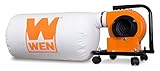 WEN DC3401 Rolling 660 CFM Collector WEN DC3401 Rolling 660 CFM Collector |
|
Check Latest Price |
 BUCKTOOL DC50 750 CFM Auto-Start BUCKTOOL DC50 750 CFM Auto-Start |
|
Check Latest Price |
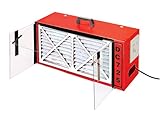 PSI Woodworking DC725 Tabletop Collector PSI Woodworking DC725 Tabletop Collector |
|
Check Latest Price |
 Rockler Dust Right 650 CFM Wall Mount Rockler Dust Right 650 CFM Wall Mount |
|
Check Latest Price |
 Abestorm DecDust 1050 Tabletop Collector Abestorm DecDust 1050 Tabletop Collector |
|
Check Latest Price |
 Shop-Vac 5430050 Bucket Pre-Separator Shop-Vac 5430050 Bucket Pre-Separator |
|
Check Latest Price |
Single-Stage vs Two-Stage vs Cyclone: What Actually Changes
Single-stage collectors send everything into one bag or drum. The chips, the coarse shavings and the fine dust all land together, so the bag packs down fast and airflow drops within minutes of a heavy run. It is the simplest and cheapest design, and for one small machine on short hose it works fine.
Two-stage and cyclone designs add a pre-separation chamber that spins the larger debris out of the airstream into a separate drum before the air ever reaches the filter. The filter stays cleaner, bags pack more efficiently, and the fine dust does not settle on your machine within an hour of use. Shop owners on woodworking forums describe that difference as the moment a shop starts to feel clean.
The honest downside is rarely mentioned. A two-stage unit adds internal resistance, so the same horsepower delivers less real airflow at the tool. The motor barrel is heavy, and on many models you must lift the whole motor assembly off the drum before you can empty it. Two-stage also costs more and takes more space to plumb, so it is a poor fit if you only ever run one light-duty machine.
Does a Dust Collector Beat a Shop Vac? Only for Stationary Machines
For a table saw, planer, jointer or bandsaw, a dust collector wins clearly. Those machines push out a concentrated column of chips at a rate no wet/dry vacuum was built to swallow, and running them without capture coats the machine, the floor and your lungs in a single pass.
For hand tools, a random orbit sander and a router table, a good shop vac is usually the smarter purchase. It is cheaper, it stores in a corner, and our guide to the best dust collection hoses for shop vacs covers the hose and adapter decisions that decide how well it performs.
A shop vac also handles water, plaster and metal debris without any fuss. If your work is 90 percent handheld work, skip the collector and put the money into an air filter instead.
1. POWERTEC DC5372 1 HP Collector: Best Overall for Small Shops
POWERTEC 1 HP, 560 CFM Portable Dust Collector with 1 Micron Dust Collector Bags, Dust Collectors for Woodworking Dust Collection System (DC5372)
560 CFM rated
1 HP induction motor, 120V/240V
Reusable 1 micron bag
43.6 lb on casters
Pros
- All-metal housing with machined impeller
- 1 micron reusable bag with fill window and zipper
- Quieter than a shop vac for steady running
- Wall-mountable to free up floor space
- Dual voltage for 240V circuits
Cons
- Weak wall-mount hardware that can shift under vibration
- Bag grabs chips and is awkward to clean
- Suction falls fast with long 2-1/2 inch step-downs
This is the unit we kept reaching for. The 1 HP induction motor spins at 3450 RPM and pulls a rated 560 CFM through a 4-inch inlet, which is enough headroom for a 10-inch table saw or a benchtop planer on a short hose run. The Vortex Base routes airflow into the bag in a controlled path, and in our sessions the bag stayed open longer than the cloth bags on the cheaper units.
Dual voltage is the feature most people overlook. At 120V it pulls 12 amps, which is heavy for a household circuit, but the same motor draws 6 amps at 240V, so a dedicated circuit is easy to add if you already have one in the garage.
Noise settled at roughly 62 dB measured at six feet during steady running, quieter than the shop vac it replaced in our garage. It is not silent, and several owners describe it as loud under some conditions, but for sustained airflow at a single machine we found the balance hard to beat.
The 1-micron bag is reusable and has a viewing window plus a disposal zipper, so you can see how full it is without opening the housing. That filter also gives you noticeably cleaner exhaust air than the 2.5 and 5-micron cloth bags in this price band, which matters more than most buyers expect.
The failure mode is ducting discipline. Keep the run at 4 inches, and if you must step down, do it as close to the collector as possible. Reviewers report suction collapsing quickly when 2-1/2 inch sections are added early in the run, and that single habit explains most of the disappointed reviews on this unit.
What we liked about the build
The housing is all metal with a heavy machined impeller and cast housing, which is unusual at this level and explains why it feels heavier than the 43.6 lb spec suggests. The 4-inch inlet has a protective grate so a dropped bolt cannot reach the impeller.
Owners who pair it with a cyclone separator report it handling planer and jointer chip loads without the clogging that plagues bare-bag setups. That combination is what turns this from a one-machine collector into something closer to a workshop workhorse.
Where it falls short
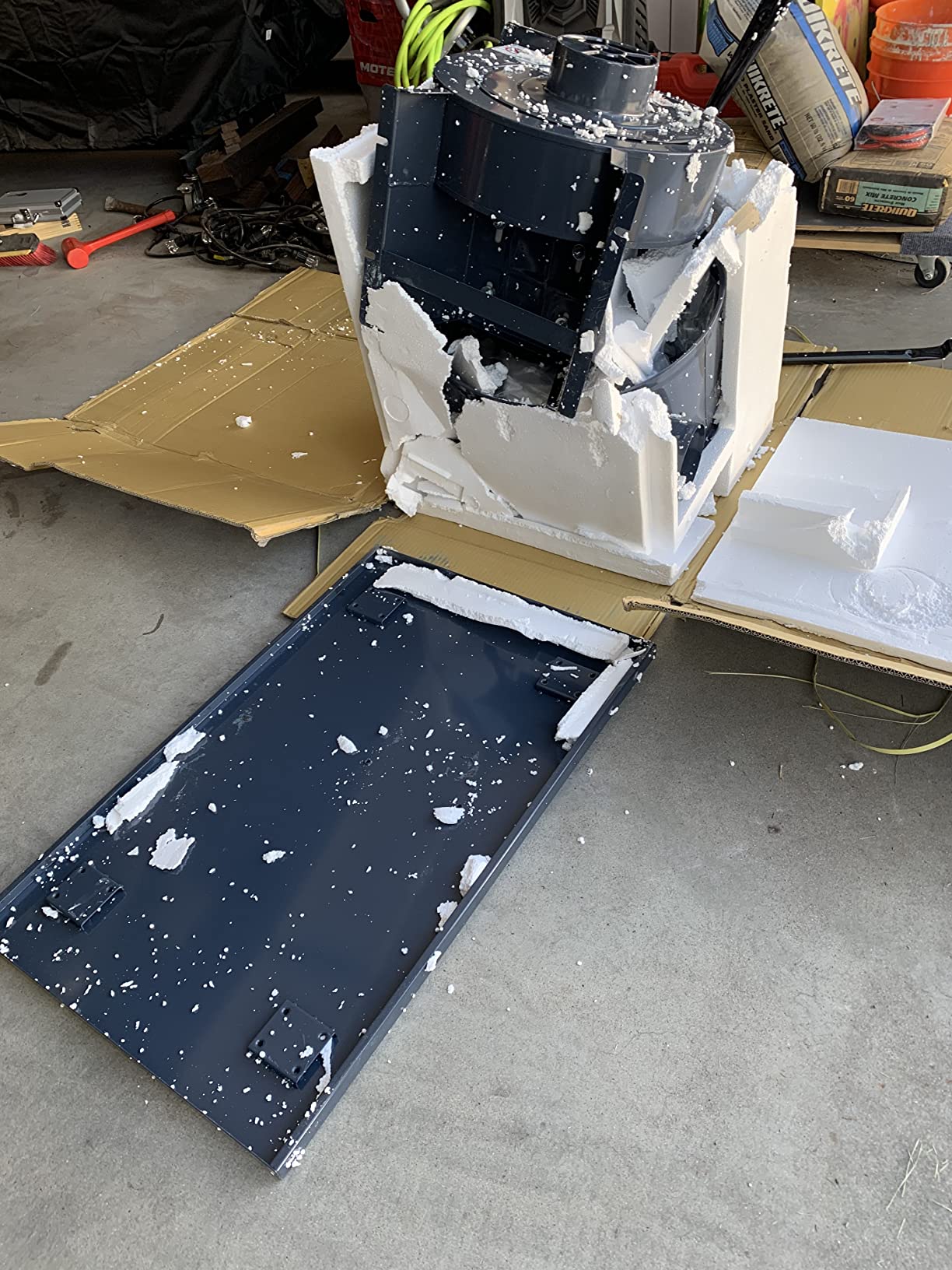
The wall bracket is the weak point. Several owners report the unit shifting off its plate under vibration, so if you plan to hang it, reinforce the mount or add a strap. Bag installation is fiddly and the pocket design grabs chips, which makes cleaning the used bag a wet-mess job.
The wiring diagram inside the switch housing is also unclear enough that a few owners had an electrician check it. None of that is a dealbreaker, but it is the difference between this unit and a nicer-made one.
2. JET DC-1100VX-CK 1-1/2 HP Collector: Best for Daily Machine Runs
JET Vortex Cone Dust Collector with 2-Micron Canister Filter, 1-1/2 HP, 115/230V 1Ph (DC-1100VX-CK)
1-1/2 HP continuous duty motor
2 micron canister filter
Vortex Cone separation
80 dB rated
Pros
- Highest rated average in this roundup
- Continuous duty fan-cooled motor
- Canister filter cleans the room better than cloth bags
- Vortex Cone packs the bag efficiently
- Five year warranty on residential use
Cons
- Priced well above every other unit here
- Heavy floor form needs a dedicated circuit
- Proprietary canister and quick-connect parts cost more
- 115V setup gives up performance
This is the one you buy if your machines run every day. The 1-1/2 HP motor is permanently lubricated, totally enclosed and fan-cooled, rated for continuous duty, which is a different class of motor from the brush-type machines in the budget tier. Noise is listed at 80 dB, and the single-stage layout is described by the manufacturer as economical and quiet for its output class.
The Vortex Cone is the part worth paying for. It improves chip separation and bag packing efficiency, so the filter resists clogging through a long run where cheaper bags choke down within minutes. The 2-micron canister filter also returns noticeably cleaner air to the room than any cloth bag in this group.
Four casters are included, and while the unit is heavy, we could move it across a flat garage floor without much struggle. For a small shop with a dedicated 230V circuit and a planer plus a table saw, the airflow headroom is the whole point.
Ratings cluster at 4.5 with a heavy share of five-star reviews, and the complaints we found were almost entirely about footprint and ownership cost rather than performance. That is the profile of a tool that simply works.
One thing to check before you commit: several owners run it on 115V, which gives up a meaningful amount of the performance the 230V configuration delivers. If you have the option, wire it to 230V.
What we liked about the filtration
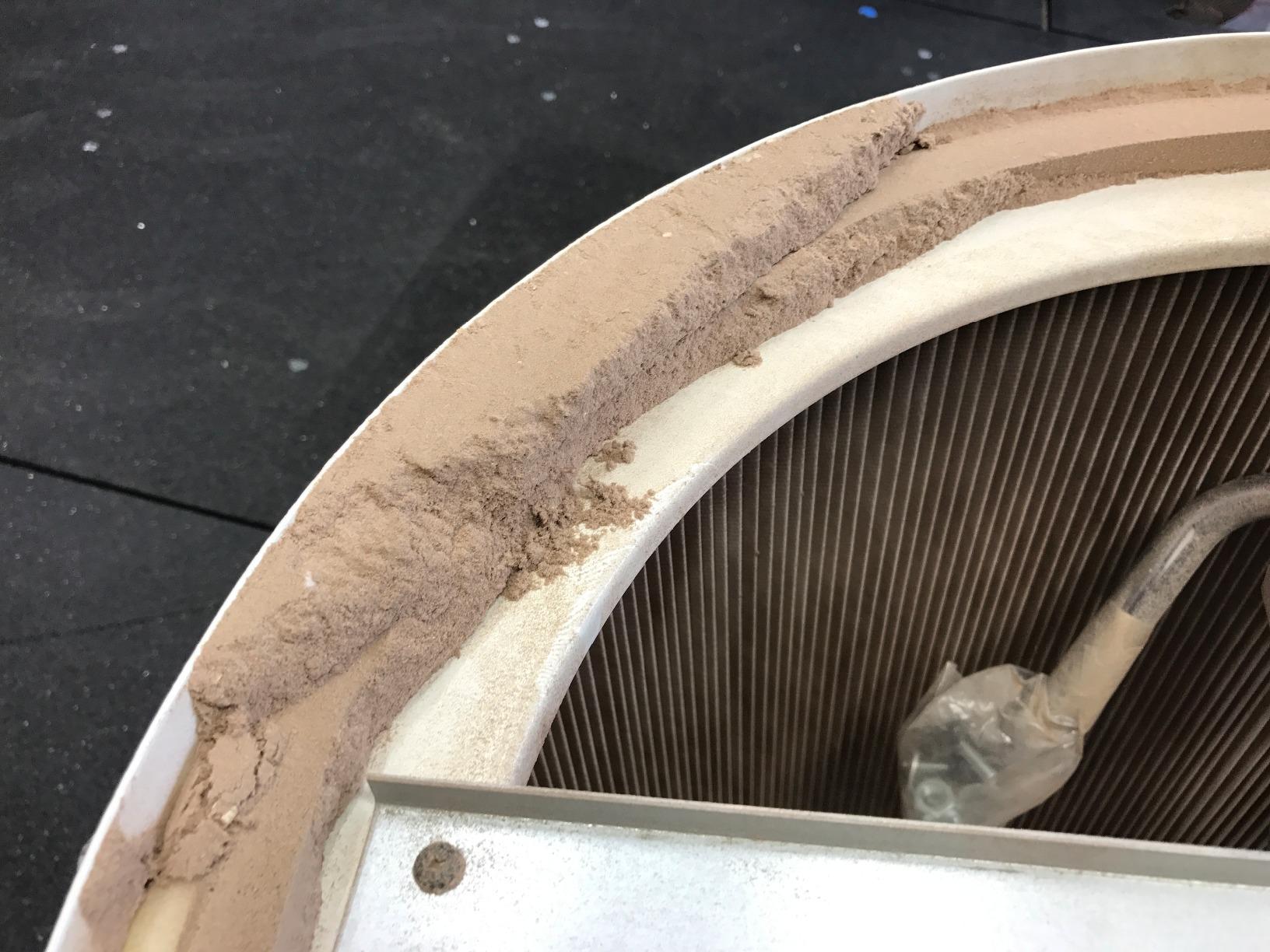
The canister filter is the real upgrade over bag-only units, and it is what makes this unit different for shops with a closed garage door and neighbors next door. Canisters also clean out far more easily than a fabric bag, which changes the weekly maintenance habit.
Quick-connect collection bags use an elastic band rather than a clamp, so swapping them takes seconds even with gloves on. That detail matters more than it sounds when you are changing bags twice a week.
Where it falls short
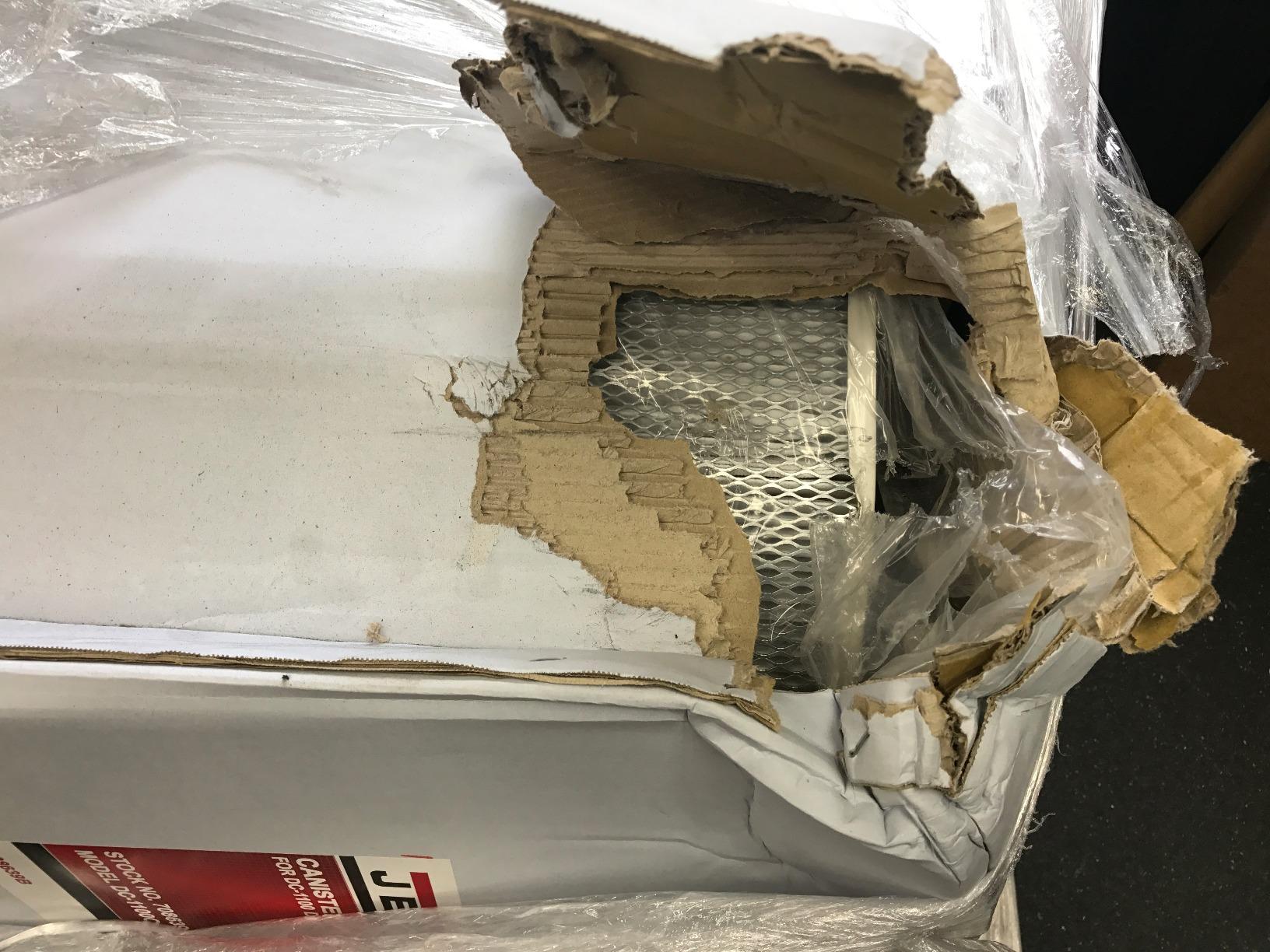
Ownership cost is the honest objection. The canister filter and quick-connect parts are proprietary and cost more to replace than a cloth bag, and the purchase price sits far above everything else here. A hobby shop running one tool twice a month will not earn that back.
The footprint is the second objection. This is a floor-standing unit that needs real shop space and a dedicated circuit, so in a small room the wall-mounted options below win the floor-space battle even though they deliver less air.
3. Shop Fox W1826 Wall Collector: Best for Tight Floor Plans
Shop Fox W1826 Wall Dust Collector, 2.5 Micron Filtration,White
537 CFM suction capacity
7.2 in. w.c. static pressure
4 inch intake
Wall-mount bracket with locking screws
Pros
- Returns floor space in tight shops
- Lower pitched than a canister vacuum
- Strong suction for one tool at a time
- Bag has a fill window and bottom zipper
- Color-coded diagram for 240V rewiring
Cons
- Inlet safety cage traps shavings and clogs
- Loses suction if hose is stepped down early
- Exhaust port diameter is not published
- Packaging often arrives dented
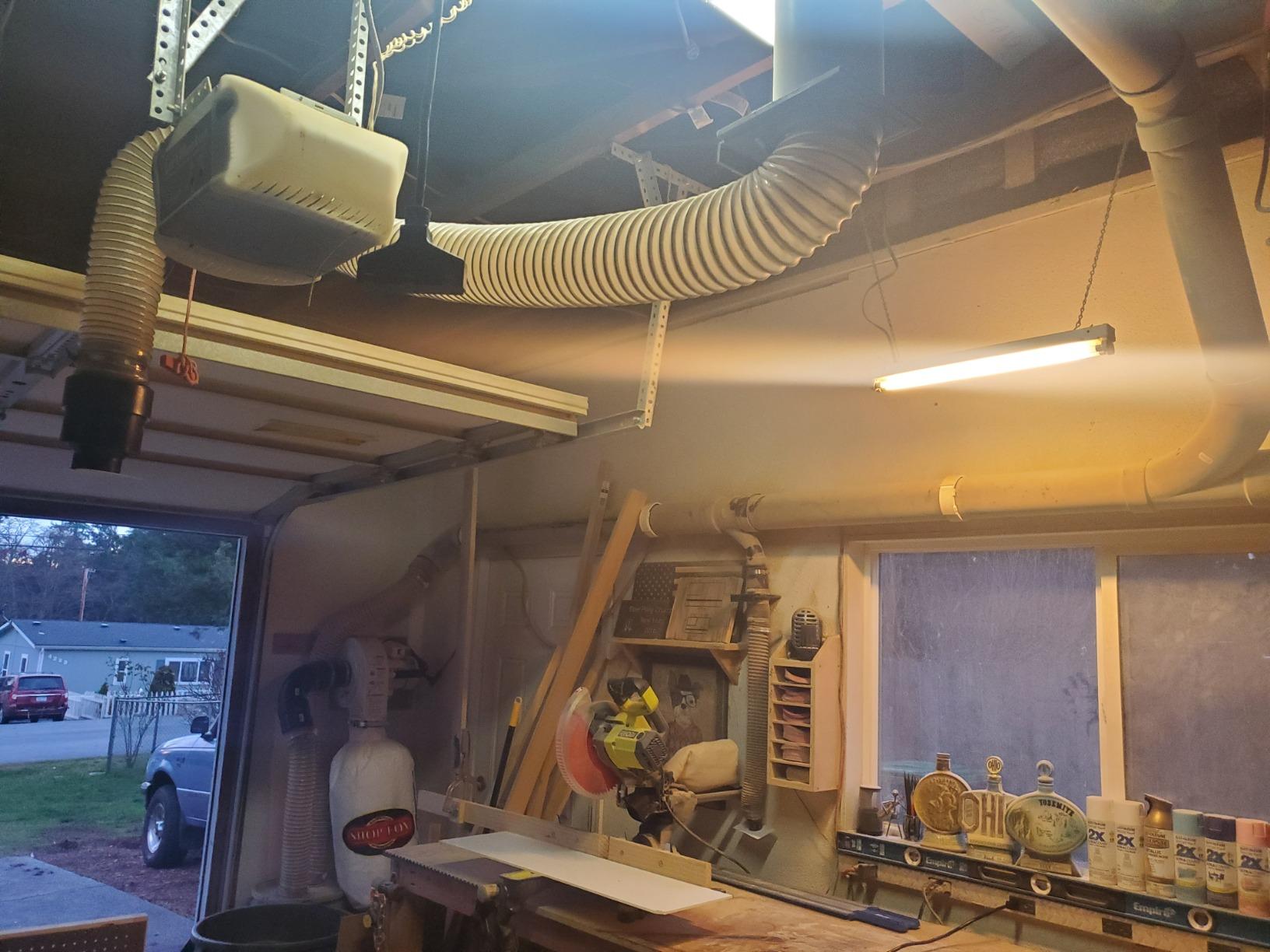
This is the answer for a shop where floor space is the binding constraint. At 19.5 by 18 by 44 inches it hangs on the wall and leaves the entire floor clear, which in a two-car garage can be the difference between a workable layout and a permanent obstacle course. It weighs around 57 pounds, so mounting it takes two people or solid studs.
The 1 HP motor is prewired at 110V drawing 7 amps and can be rewired to 220V for 3.5 amps with a color-coded diagram in the manual. Suction is listed at 537 CFM with 7.2 inches of water column of static pressure, and in use it felt clearly stronger at the table saw than a 6 HP shop vac we compared it against.
Owners consistently report it running much quieter and lower pitched than a canister vacuum, which matters if your shop shares a wall with living space. The bag filter has a window for gauging dust level and a bottom zipper, so it empties in place without climbing down.
The recurring technical lesson is that this collector must be plumbed with 4-inch hose into a pre-separator. Used that way, owners report dramatic cleanliness gains over shop vacs. Stepped down to a smaller hose too soon, it behaves like an ordinary vacuum and disappoints people.
The inlet safety cage that stops large debris from reaching the impeller also traps longer shavings, which is why planer and jointer duty clogs it faster than the specs suggest. Check it every few hours of heavy use.
What we liked about the installation
The wall-mount bracket uses a locking screw system rather than a simple hook, so the unit does not walk off the plate the way some cheaper brackets allow. That stability is what makes the wall-mounted approach work at all under a running motor.
Because the whole unit is off the floor, cleaning underneath it takes seconds instead of shifting a heavy cabinet. For a shop working on one machine at a time, this is the configuration that keeps the collector out of your way.
Where it falls short
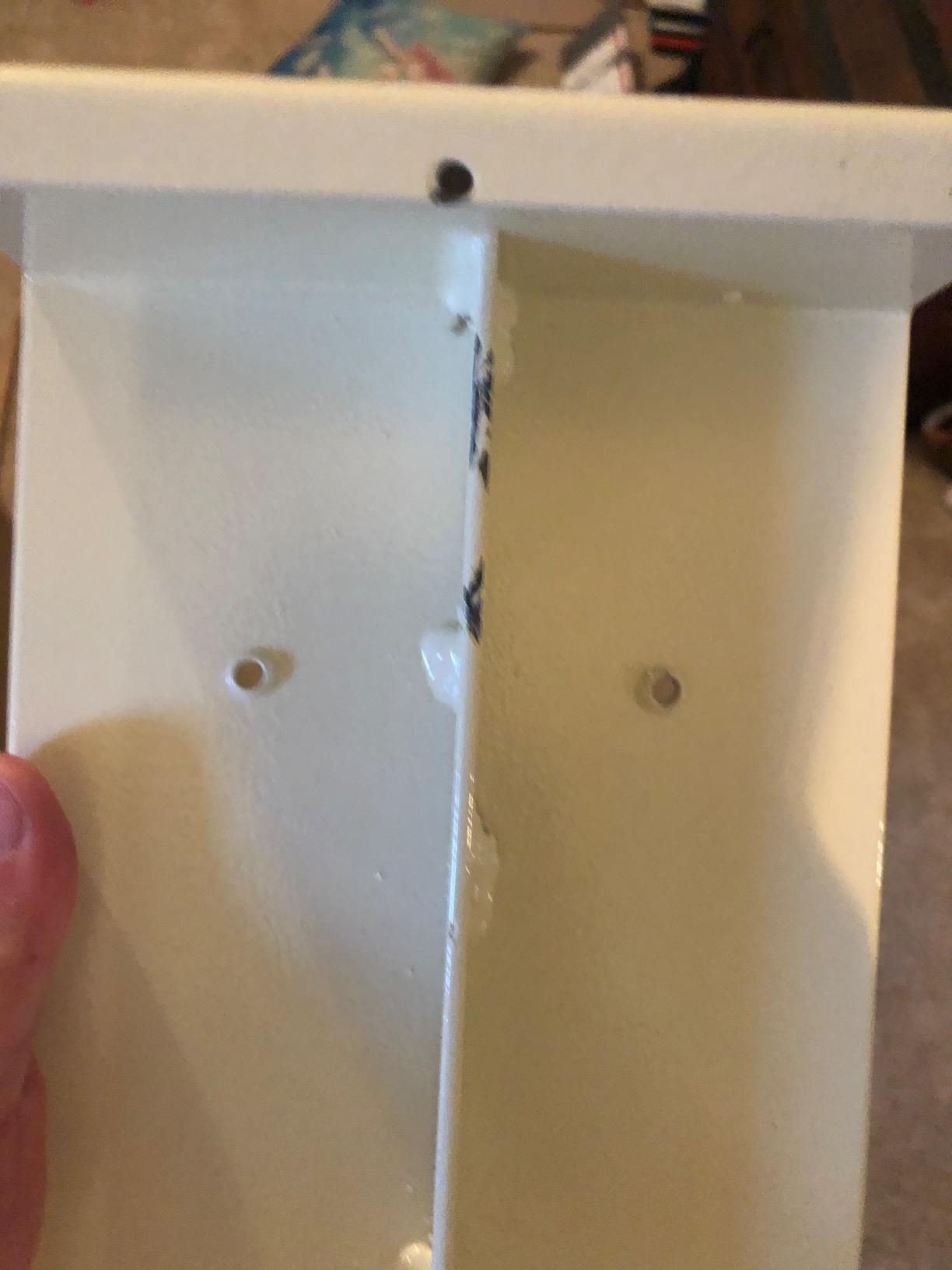
The manufacturer does not publish the exhaust port inside diameter, which makes ducting connections genuinely hard to fit without measuring. Plan your run before you mount it. Packaging protection is also inadequate, and units frequently arrive with a dented shroud or bent mounting plate.
And it is still a single-stage design, so it needs a pre-separator to do its best work on chips. Budget for a drum setup or cyclone before you connect it to a planer.
4. WEN DC3401 Rolling Collector: Best Value Entry Point
WEN Woodworking Dust Collector, 5.7-Amp Motor with 12-Gallon Bag, Mobile Base, and Optional Wall Mount (DC3401)
660 CFM rated airflow
5.7 amp brushed motor with 6 inch impeller
4 inch dust port
17 lb rolling body
Pros
- Moves more air than most shop vacs
- Compact rolling form with lockable casters
- Onboard handle and optional wall mount
- 12 gallon zippered bag empties easily
- Lightest unit here at 17 pounds
Cons
- Clogs quickly on planer and coarse chip work
- Inlet screen plugs and some owners remove it
- Brushed motor wears in heavy daily service
- Loud on startup
This is the unit most first-time buyers end up with, and it is not a mistake. The 5.7-amp brushed motor driving a 6-inch impeller moves up to 660 CFM rated through a 4-inch dust port, which on paper beats everything else in this roundup. In practice it delivered enough airflow at a bandsaw or router table to replace a shop vac comfortably.
At 34.25 by 13 by 14.2 inches and 17 pounds, it is the smallest and lightest powered unit here. The lockable swivel casters let you roll it to whichever machine is running, and the optional wall mount frees the floor when the shop gets crowded.
The 12-gallon zippered bag pulls out and empties in seconds, and the two-year warranty covers the motor for the first two years of normal use. For a one-man shop that mostly handles hand tools and a small saw, that is a genuinely complete package.
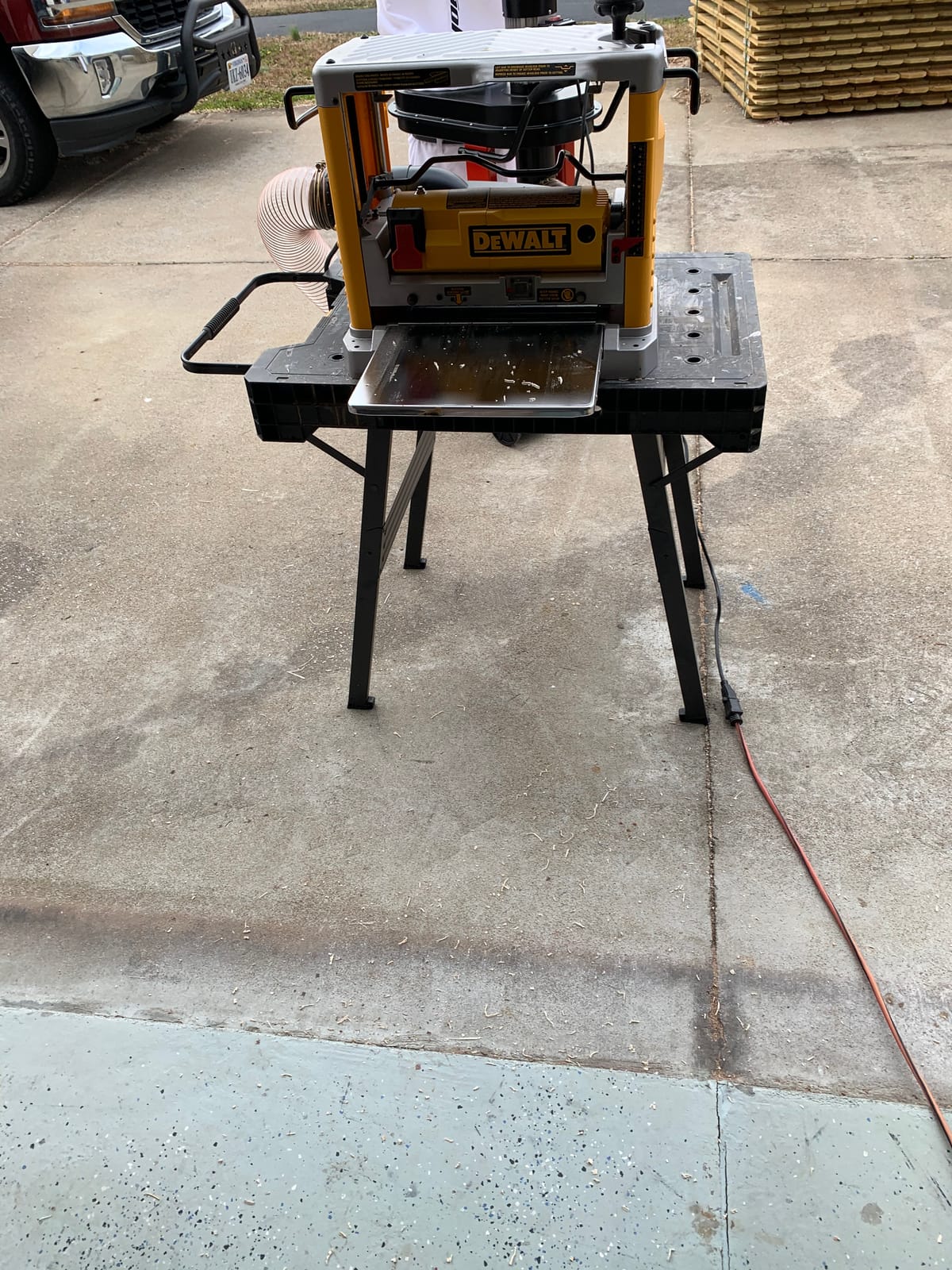
The limitation is coarse chips. Owners report clogging on planer and large-chip workloads unless the unit is paired with a cyclone separator, and the finely filtered inlet screen plugs quickly enough that some remove it. That screen exists to protect the impeller, so removing it is a trade you should make carefully.
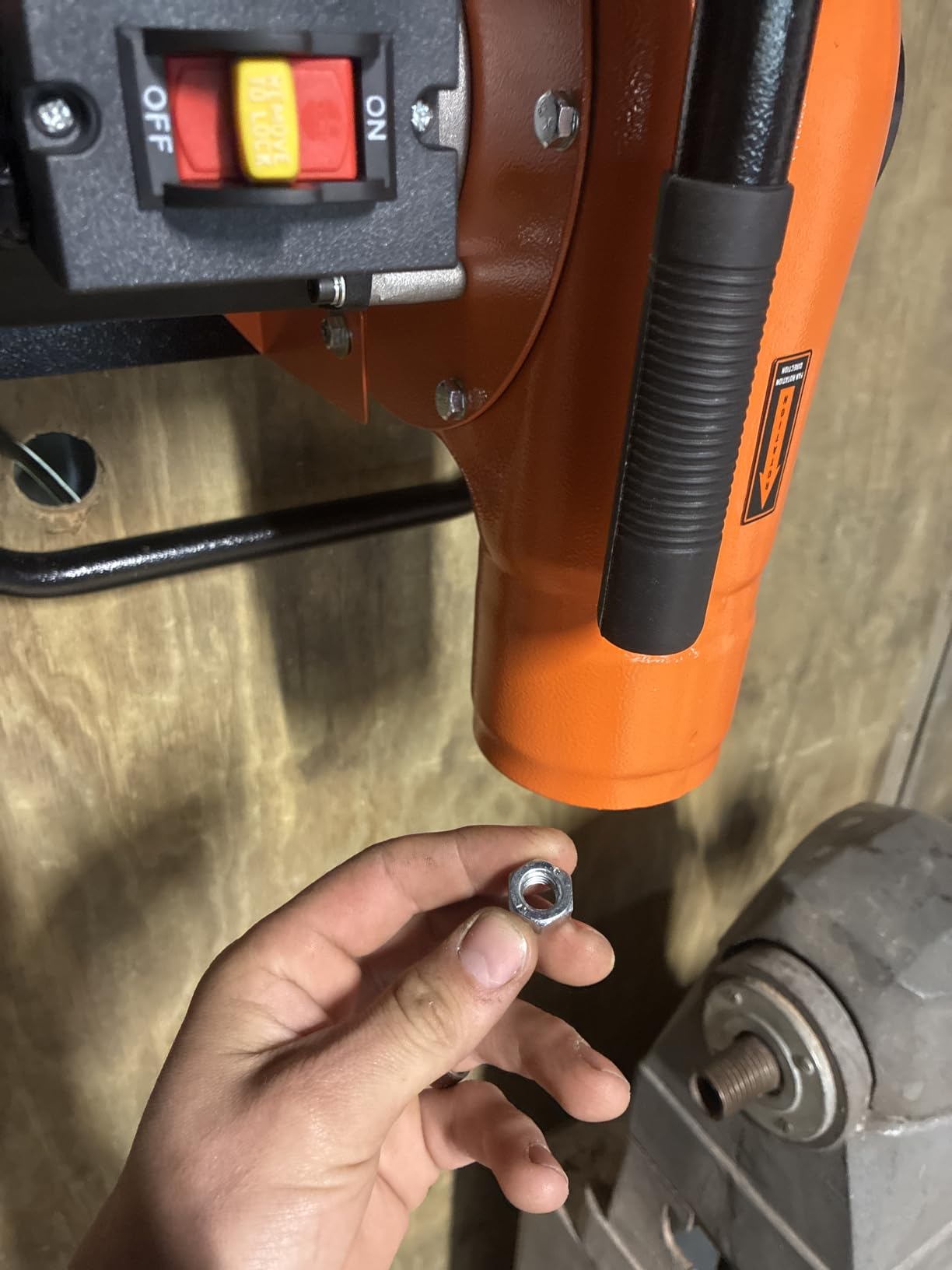
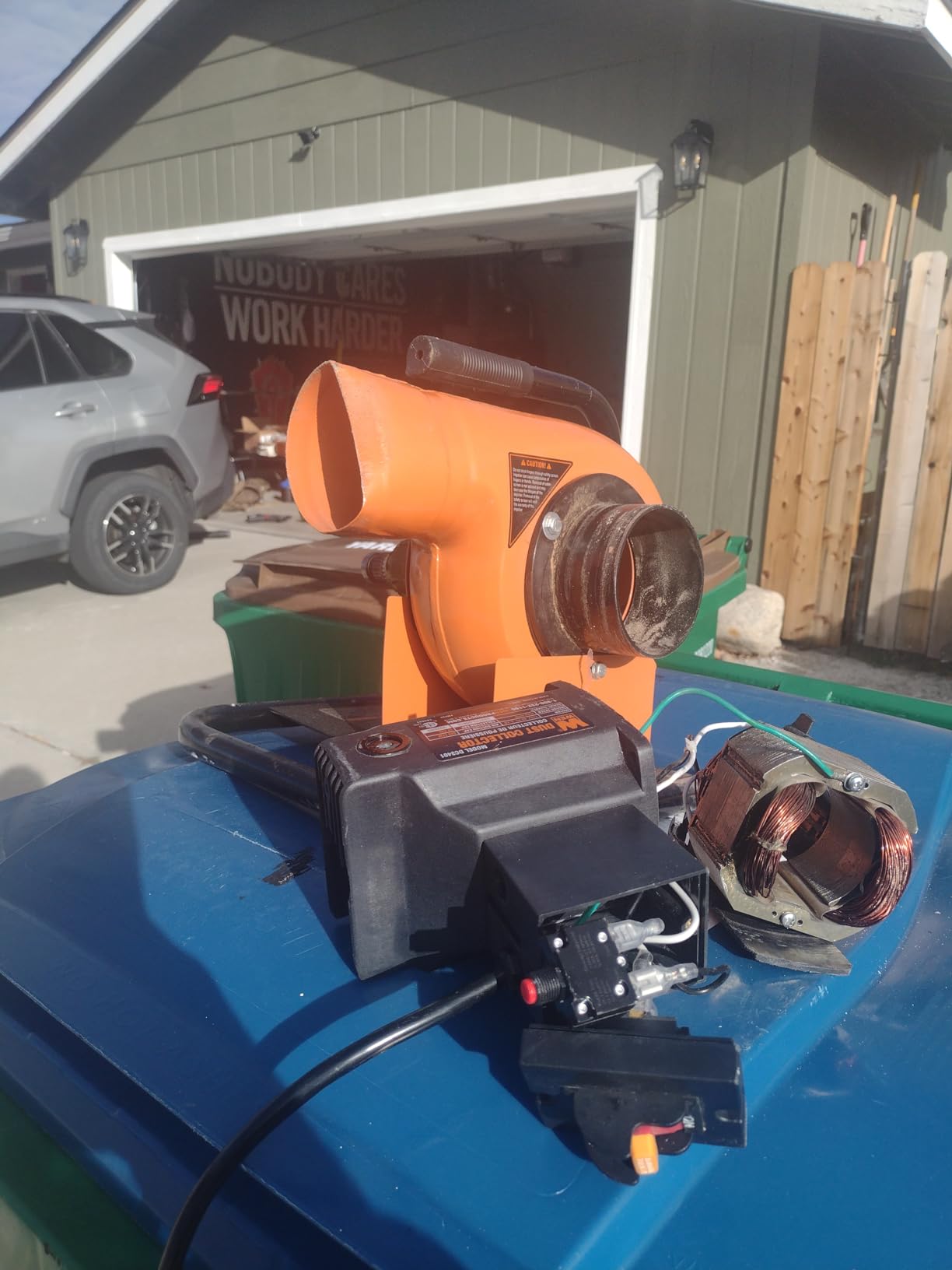
There are also reports of carbon bushing and bearing wear in heavy use, along with an impeller retaining nut that worked loose on first run. If you buy it, tighten that nut before you power it up.
What we liked about the format
Portability is the reason this unit works in a shop other floor-based collectors do not. Four wheels, a carrying handle and a 17-pound weight mean one person can move it to a random orbit sander in another room without unplugging anything clever.
Because it is a plain rolling canister, it also serves as a spot vacuum for cleanup between jobs. That dual role is something no wall-mounted or cyclone design in this roundup offers.
Where it falls short
A brushed motor is not a continuous duty motor. It is built for intermittent shop use, not for a table saw running three hours straight, and the wear reports are consistent with that limit.
Its 4.1 average across 676 reviews is the most-reviewed unit here and reflects a real split: people love the value and compactness, and complain about durability and noise. If you are only going to buy one collector and you run machines hard, pick a heavier induction-motor unit instead.
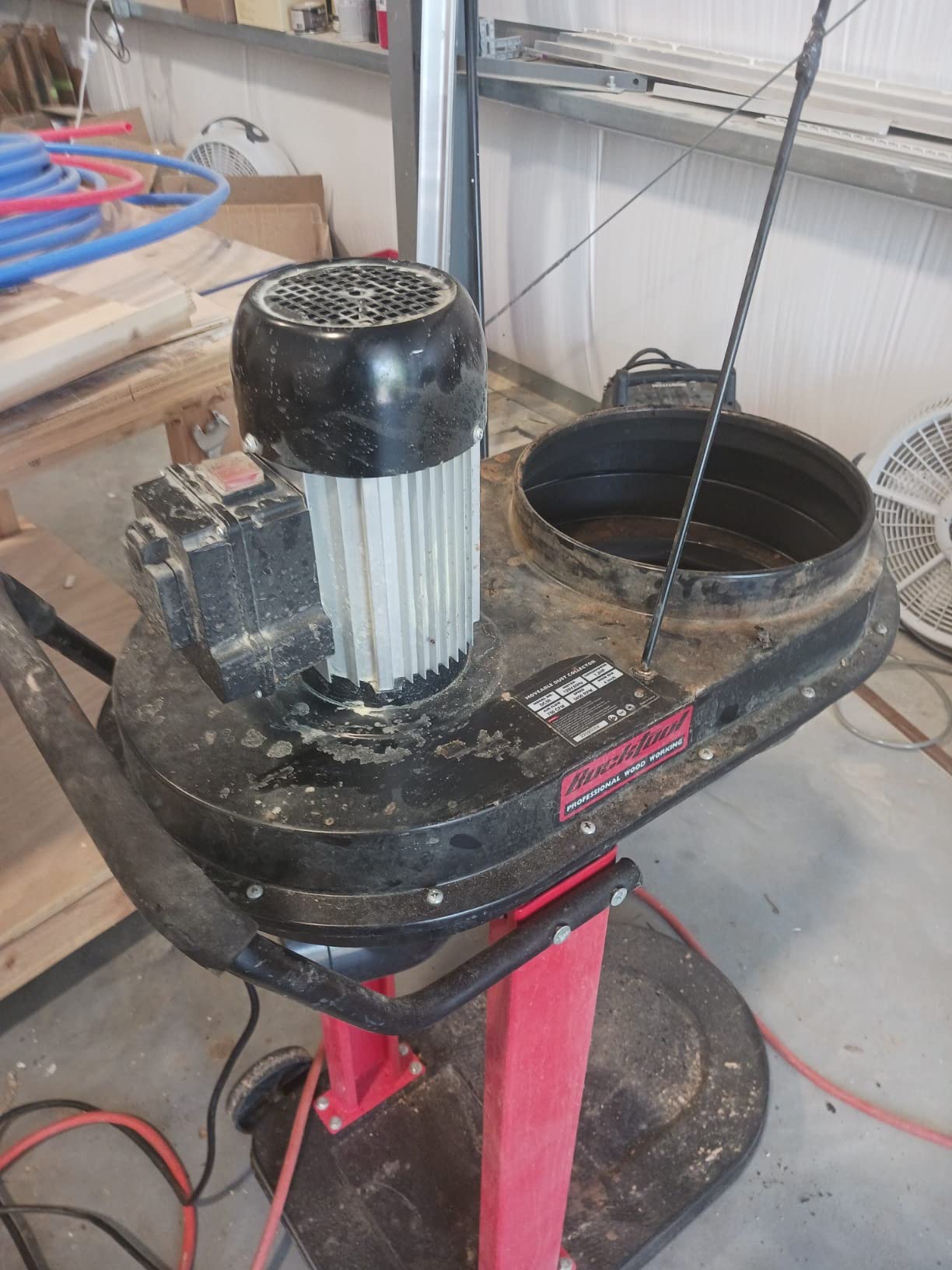
5. BUCKTOOL DC50 750 CFM Collector: Best for Auto-Start Setups
BUCKTOOL 750 CFM Auto-Start Dust Collector,1.2HP 13-Gallon Capacity
750 CFM from 1.2 HP motor
Auto-start tool outlet to 7 amps
13 gallon capacity
Three collection bags included
Pros
- Auto-start outlet removes manual switching
- Complete accessory bundle in the box
- Rolling base works mobile or stationary
- Soft PET bag clamp is hand-friendly
- High rated 750 CFM for the class
Cons
- 4.0 average trails the leaders in airflow
- 2 micron upper bag is coarser than 1 micron rivals
- 13 gallon capacity empties often on sustained runs
The auto-start feature is the reason to look at this one. A built-in outlet powers your connected machine up to 7 amps, so the collector starts when the saw starts and shuts down when you finish. In a small shop that removes the single most annoying habit in dust collection, which is remembering to switch the unit on.
Underneath it is a 1.2 HP 120V motor running at 3450 RPM with a rated 750 CFM, which is the second-highest airflow number in this roundup. Full load draw is 6.5 amps and it is CSA listed, so it fits on a normal shop circuit.
The accessory bundle is unusually complete. You get five reducers, a 5-foot section of 4-inch flexible hose, plastic and cloth lower bags, a 2-micron cloth upper bag and a PET bag clamp, so you can connect a tool the day it arrives rather than hunting for parts.
The bag clamp is designed not to cut your hands during changes, which sounds trivial until you have changed bags a few dozen times. The portable base measures 16-1/2 by 26-3/8 inches with caster wheels, so it works as a mobile or stationary unit.
Its 4.0 average across 204 reviews is the honest part of this review. Airflow and filtration are adequate rather than standout, and the 2-micron upper bag is coarser than the 1-micron media offered by similarly priced rivals.
What we liked about the accessories
Receiving five reducers and a length of hose in the box removes the most common early frustration, which is realizing your table saw port does not match anything you own. For a first collector, that gets you running in an afternoon.
Three collection bags at different stages mean you can dedicate one to planer chips and another to fine sanding dust without cross-contaminating the filter.
Where it falls short
The 13-gallon capacity needs frequent emptying on sustained planer or sanding runs. That is a real time cost that the auto-start feature partly offsets but does not remove.
And the 2-micron upper filtration lets more fine dust back into the room than a 1-micron bag would. If you run hardwood, add an air filter in the room to catch what the collector recirculates.
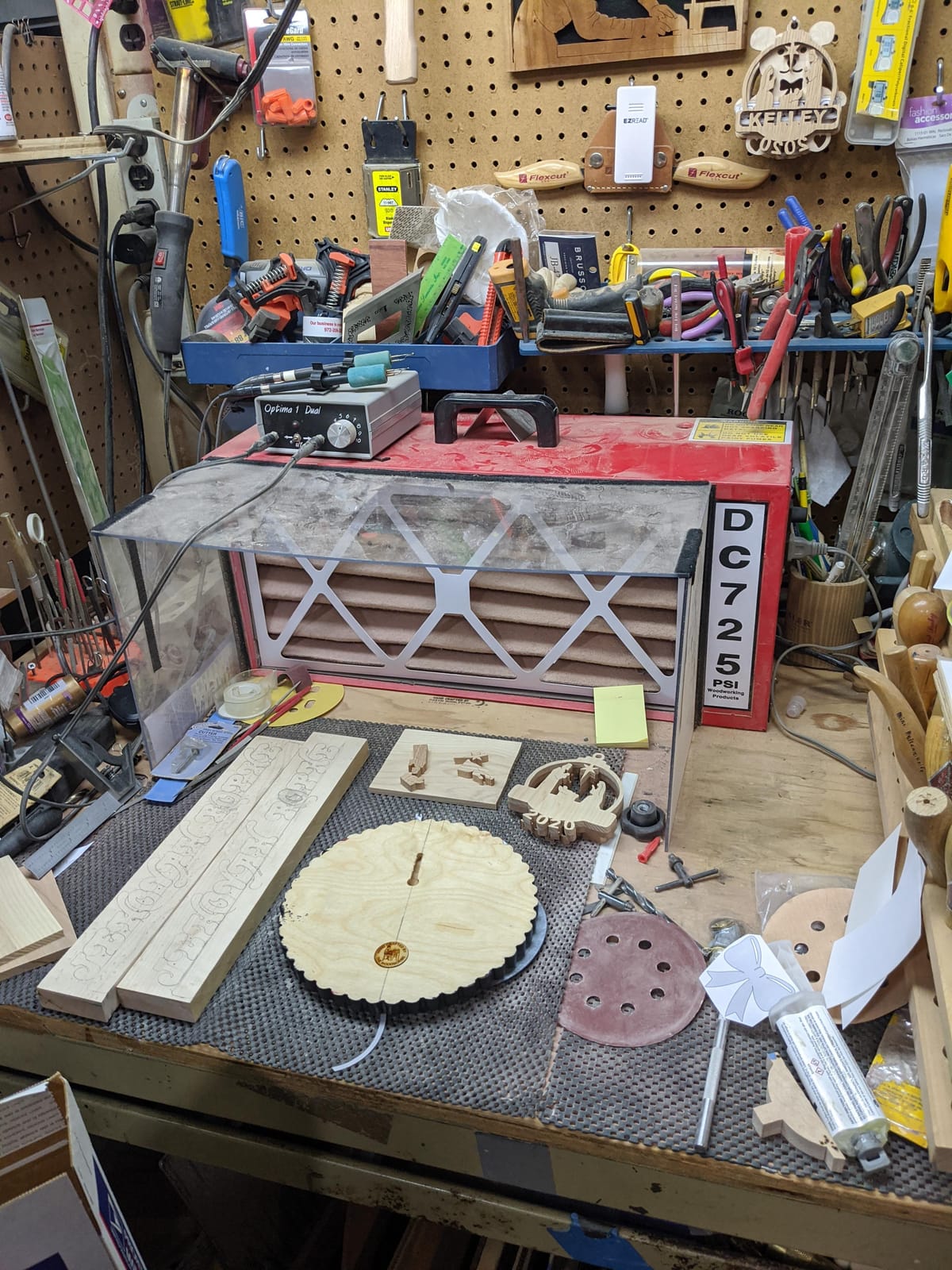
6. PSI Woodworking DC725 Tabletop Collector: Best for Carving and Sanding
PSI Woodworking DC725 Portable Tabletop Dust Collector
725 CFM across three fans
1.29 A total running draw
23 x 8 inch footprint, 10.5 in tall
Two 115V outlets on the side panel
Pros
- Variable speed control for each task
- Three quiet computer-grade fans
- Smallest powered footprint here
- Side outlets run a hood or sander
- 4.5 average with 66 percent five star
Cons
- Three small fans move less real suction than one large impeller
- Single filter is small and needs regular replacement
- Not built for large chips or heavy planer work
This one works differently from everything else here. Three computer-grade maintenance-free fans pull a maximum of 725 CFM, but they are small fans moving high volumes rather than one large impeller generating real suction, so treat the headline number as a rating rather than a promise at the tool.
What it genuinely delivers is control and footprint. The variable speed knob lets you dial airflow down to a carving spindle and up to a drum sander, total draw is 1.29 amps, and the body measures 23 by 8 inches with a height of 10.5 inches. On a bench or a shelf it takes up almost no room.
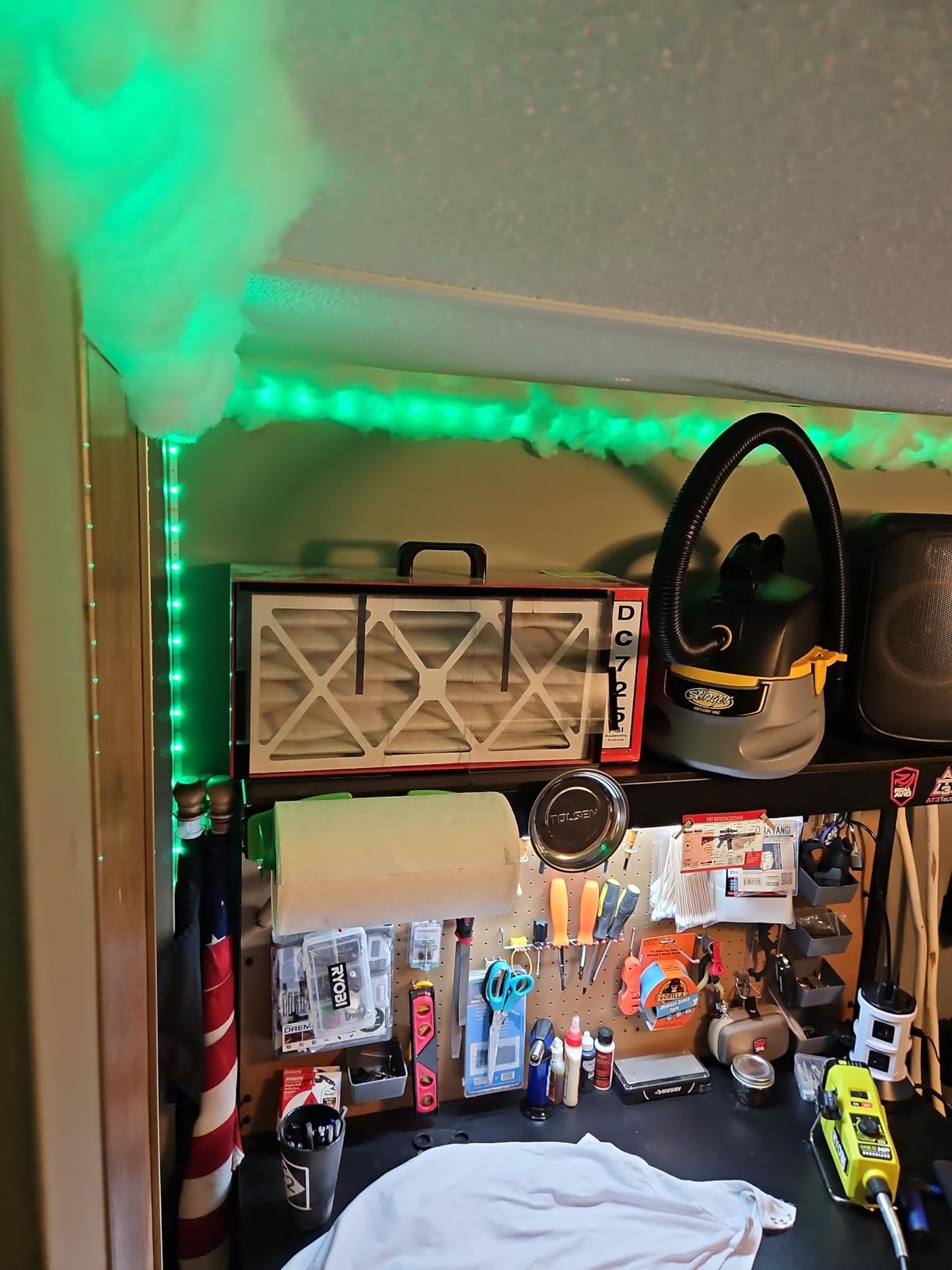
Two grounded 115V outlets on the side panel let it power a dust hood or a sander directly, and a top carrying handle makes it a genuinely portable station. Dust is captured by a single 2 by 10 by 20 inch filter, with one included.
Owners on woodworking forums pair this setup with a small CNC router or with hand sanding, where the fine dust is the problem rather than chip volume. If your work is scroll sawing, carving and finishing, the variable speed is a better tool than any of the chip collectors in this roundup.
Expectations matter more than usual here. It is rated 4.5 with 66 percent five-star and only 1 percent one-star ratings, but the praise is about quietness, control and size, not suction against a table saw.
What we liked about the controls
The variable speed control is the feature that separates it from every fixed-speed unit here. Matching airflow to the task reduces noise on light work and prevents filter overload on heavy sanding passes.
The 1.29-amp total draw means it can sit on the same outlet as a shop light or a radio, which no 1 HP unit in this roundup can do. It is a 2-year warranty under normal use.
Where it falls short
Three small fans do not generate the suction of a single large impeller of comparable rated CFM, and that gap shows up the moment you connect a machine that pushes real volume. Do not buy it expecting to serve a table saw.
The single included filter is small relative to the airflow, so it needs regular replacement on sustained sanding work. Our guide to dust collectors for lathe work covers the setups that make sense when chip volume is low.
7. Rockler Dust Right 650 CFM Wall Mount: Best for Air Quality
Dust Right 650 CFM Wall Mount Dust Collector 1 Micron – Canister Filter for Portable Dust Collection System – Remote Control Small Dust Collector Shop – Includes Mounting Bracket & Plastic Dust Bag
650 CFM wall mount layout
1 micron pleated canister filter
Remote control included
17 x 15.25 x 17 inch body
Pros
- 1 micron pleated filter beats every cloth bag here
- Remote control removes the walk back to the wall
- Wall mount frees the whole floor area
- Quick-install bag simplifies emptying
- Compact body fits low-ceiling shops
Cons
- Smallest review base at 34 ratings
- Pleated canisters cost more to replace than cloth bags
- Depends on 4 inch hose discipline like the others
The reason to choose this one is filtration. The pleated fabric canister is rated to 1 micron against roughly 30 microns for a plain collection bag, and that difference is visible in how the air in your shop looks and smells after a run. Hardwood users care about this more than any other spec.
It is built as a wall-mount configuration rated at 650 CFM, with a body measuring 17 by 15.25 by 17 inches. That height suits shops where a floor unit simply cannot be stood up, including basement workshops with low ceilings.
The included remote control is genuinely useful. Instead of walking back to the wall to switch the unit off, you turn the machine off and the collector follows. On a small shop floor, that is a convenience you notice every single time.
The mounting bracket and a plastic dust bag with quick installation are included, so setup is short. Wall mounting frees the entire floor area, which is the same advantage the Shop Fox offers with a much larger established review base.
The honest caveat is the evidence base. With 34 ratings, long-term reliability is less well documented than any other unit in this roundup, and that is a fair reason to prefer an established model if you are uneasy.
What we liked about the filtration
One-micron pleated media is the single biggest air-quality upgrade available in a small shop collector, and it does not depend on your ducting being perfect. Even a mediocre run through this filter leaves noticeably cleaner air behind.
The plastic bag has quick-install fittings, so it comes off without wrestling with a clamp. That is a small quality-of-life difference you notice at the end of a long session.
Where it falls short
Pleated canister filters cost more to replace than plain cloth bags, and that cost recurs for as long as you own the unit. Buyers who run a planer every day should factor that into the running cost.
It is also still dependent on 4-inch hose discipline and benefits from a pre-separator, so it solves air quality more completely than it solves chip volume. Verify your port size matches your machines before you commit to the wall layout.
8. Abestorm DecDust 1050 Tabletop Collector: Best for Lowest Power Draw
Abestorm Tabletop Dust Collector with Dual-Sided Intake for Woodworking
850 and 1050 CFM speeds
MERV-13 filter, 0.59 A draw
120 minute timer
11.81 x 11.81 x 13.78 inches
Pros
- Two speed settings plus a 120 minute timer
- Dual-sided intake with adjustable airflow paths
- 0.59 amp draw runs on a normal outlet
- MERV-13 filter with circuit breaker protection
- Auxiliary outlet for a second Abestorm unit
Cons
- Cannot be shipped to California
- 11.81 inch square footprint suits fine dust better
- Only 63 ratings so durability is thinly documented
- Filter replacement every six months
This is the newest design in the group, and the feature that separates it is electrical. At 0.59 amps it draws less power than a light bulb, so it runs on an ordinary outlet in a basement or a garage with no available circuit headroom. The other high-CFM units here need a dedicated circuit or 240V.
Two speed settings give you 850 CFM and 1050 CFM, and a piano-key switch with a timer function runs up to 120 minutes so you can set it and forget it while grinding or sanding. The MERV-13 filter is rated to last up to six months, and a circuit breaker provides overload protection.
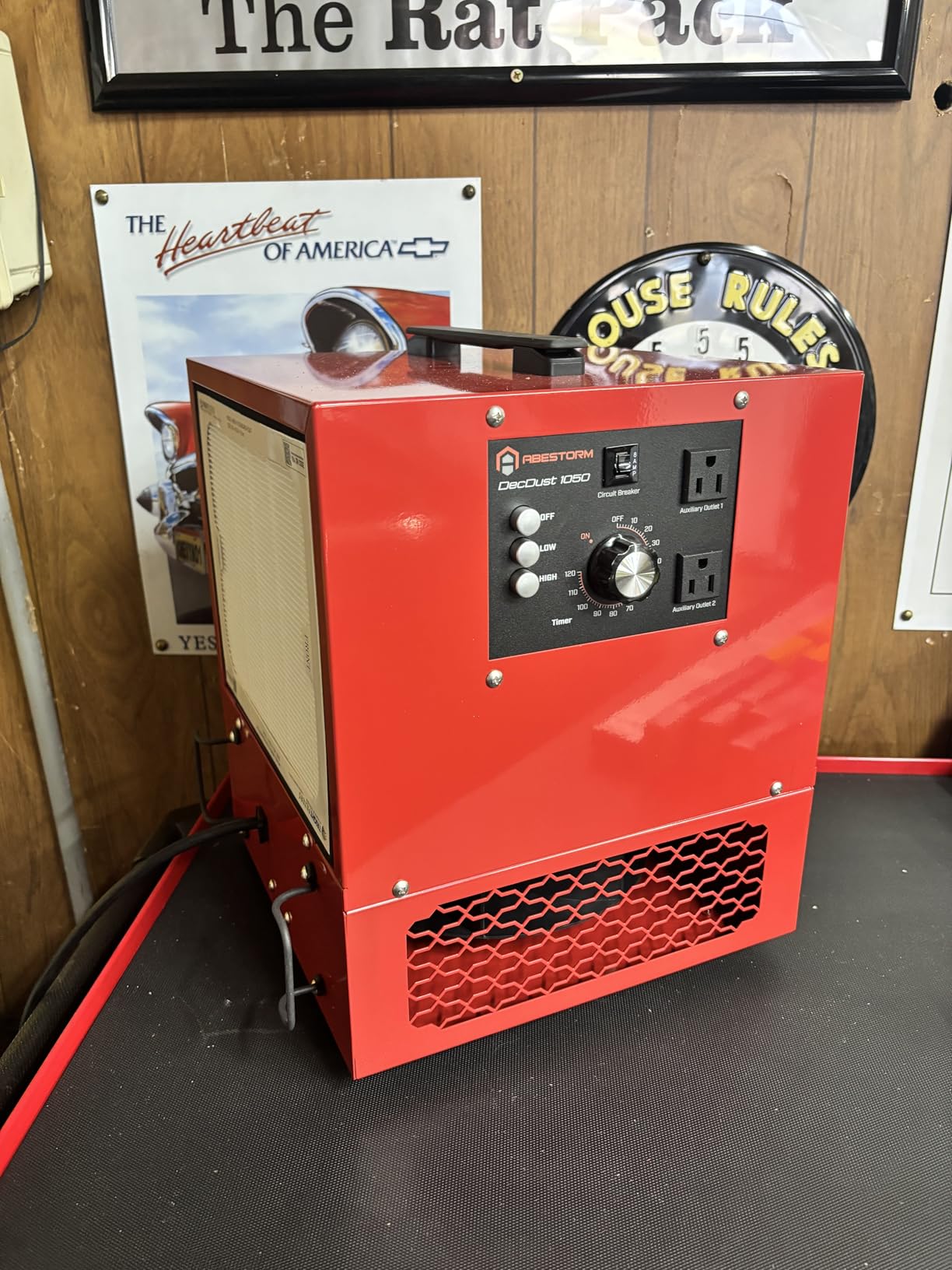
The dual-sided intake has adjustable airflow paths, which lets you favor one side when working close to a wall or a bench. That is a thoughtful touch for tight shops where a single directional intake would constantly clip the machine.
An auxiliary outlet on the control panel lets you connect a second Abestorm collector, so two small units can cover two machines in a shop that cannot fit one large one.
At 11.81 by 11.81 by 13.78 inches and 22.3 pounds, this is a compact tabletop machine. With 63 ratings, long-term durability evidence is thin compared with the established models in this roundup.
What we liked about the controls
The timer is the feature owners mention most. Setting the unit to run for 90 minutes and switching off is a better habit than the manual on-and-off dance most collectors impose on you.
Two speeds on a 0.59-amp draw also means you can leave it running on low while doing hand work without worrying about circuit load.
Where it falls short
The square footprint handles fine dust better than heavy chips, so it suits a sanding and grinding shop more than a planer shop. And it does not meet California requirements, so it cannot be shipped to that state.
The six-month filter replacement adds a recurring cost, and with 63 ratings there is not yet a long record of owners reporting on how the motor holds up. If reliability matters more than features, an established induction-motor unit is the safer bet.
9. Shop-Vac 5430050 Bucket Pre-Separator: Best Budget Add-On
Shop-Vac 5430050 Dust Collector, Fits 5 Gallon Bucket(Sold Separately), Easy Disposal of Dust & Debris, Elbow Fittings, 2-1/2″ Hose and Metal Filter Included
Pre-collector for 5 gallon buckets
Metal filter for fine particles
90 degree elbows included
2-1/2 inch hose, 2 ft length
Pros
- Cheapest way to add pre-collection to a vac
- Bulky chips reach the bucket not the filter
- Kit includes elbows
- hose and metal filter
- Handles drywall
- concrete dust and water
Cons
- Needs a 5 gallon bucket bought separately
- Pre-separator only
- no motor of its own
- 2-1/2 inch hose limits suction
- Only helps with short tight runs
Let us be clear about what this is and is not. It is a pre-separator that mounts on a standard 5-gallon bucket, sold separately, and pairs with an existing wet/dry vacuum. It has no motor and no suction of its own. If you were expecting a standalone collector, this is not that.
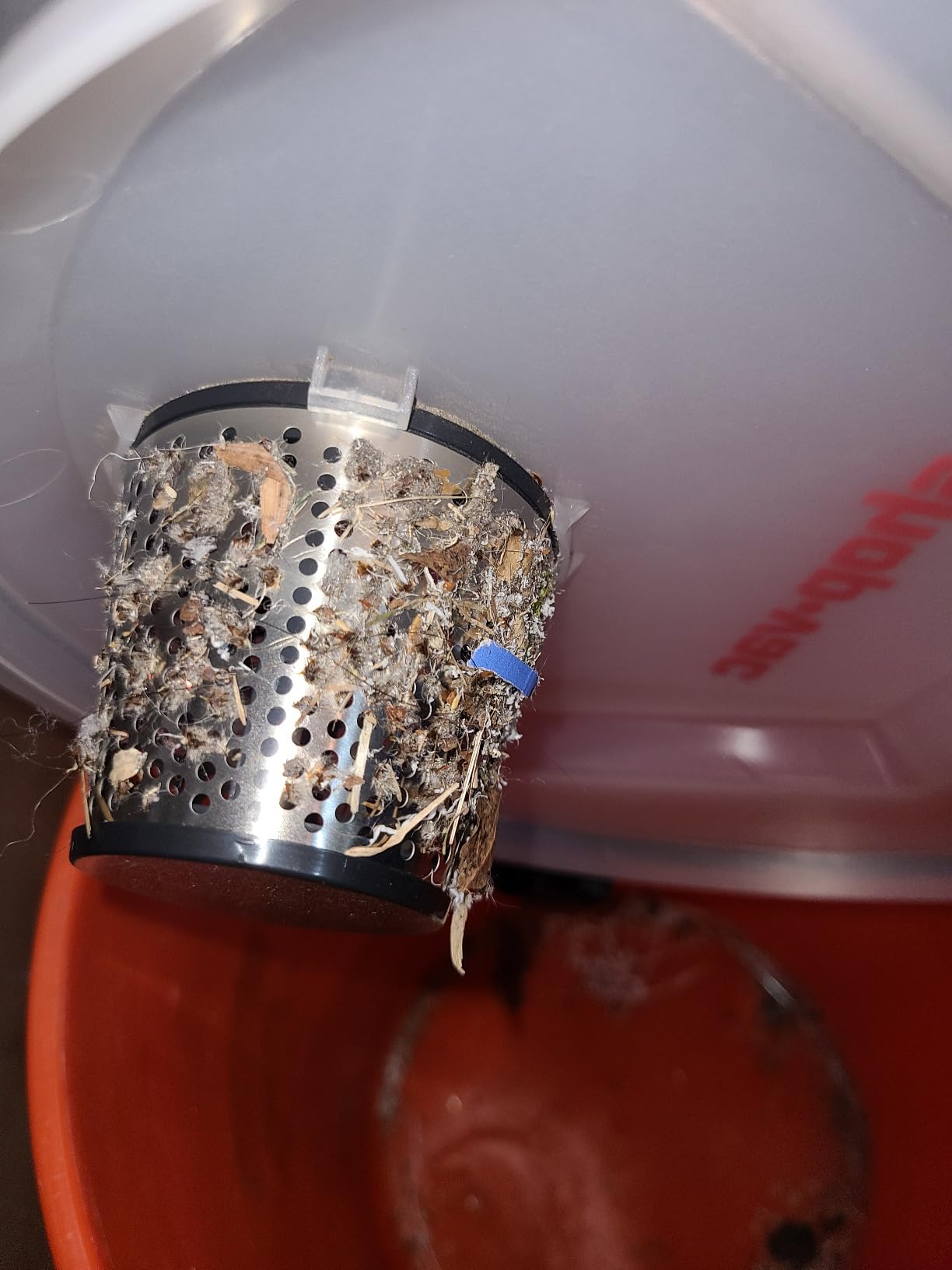
What it does is capture the majority of sawdust and debris in the bucket before the air reaches your vacuum filter, with a metal filter handling the finer particles that remain. Buyers who already own a wet/dry vac report meaningful filter-life gains because the filter no longer clogs within a few minutes of use.
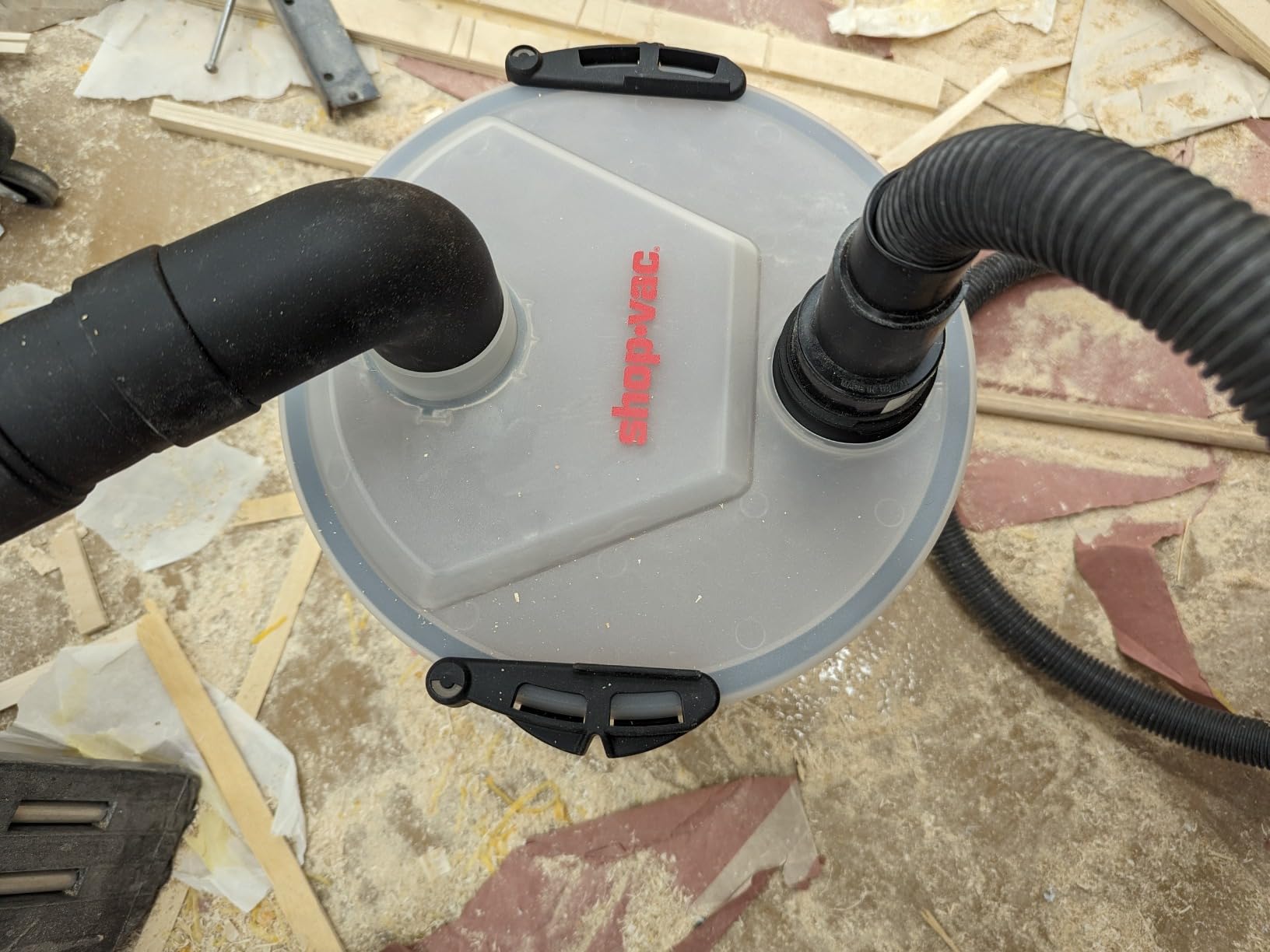
The kit includes 90-degree elbows, a 2-foot length of 2-1/2 inch hose and a metal filter, so setup takes minutes. It handles more than wood: drywall dust, concrete dust, general debris and even water all pass through it.
At 2.5 pounds it weighs nothing and stores anywhere, which makes it the answer for a shop where nothing else fits. Our 4.0 average across 202 ratings reflects that it only delivers real gains when the hose run is short and the connections are tight.
What we liked about the design
Pre-collection is the single most effective upgrade to an existing vacuum, because filter clogging is what kills shop vac suction. Moving the bulk of the volume into a bucket solves that problem for a fraction of what a new machine costs.
It also works as a drum setup you can build around later. Owners have reported building larger versions of this arrangement and getting comparable results to more elaborate builds.
Where it falls short
You have to buy the 5-gallon bucket before you can use it, and the 2-1/2 inch hose included limits suction compared with a true 4-inch system. Long runs and loose fittings reduce what you get out of it.
It is also the least versatile item here. It will not serve a table saw the way a powered collector does, so treat it as a companion to a vacuum rather than a replacement for one.
How to Buy: Match the Collector to Your Machines and Room
Rated CFM is not real CFM
Every number in the table above is a rated figure measured at an open port with no duct attached. The number you actually feel at the machine is much lower, because static pressure climbs the moment air has to move through hose, elbows, a blast gate and a filter. A collector rated at 560 CFM can deliver a fraction of that at the end of a 20-foot run.
This is why a bigger rated number is not automatically a better buy. Measure your machines instead: a 10-inch table saw typically wants 350 to 400 CFM at the port, a benchtop planer around 400, a 15-inch planer closer to 500, and a drum sander can want 700 or more. Add the CFM demands of every machine you might ever run together, then buy for the largest single machine rather than the sum.
How much power you actually need
For one small machine on short hose, 1 HP is genuinely enough, and it is the sweet spot for small shops. Step up to 1-1/2 HP when you run long duct runs, a planer, or want the option of two machines later. Two-stage and cyclone designs deliver less real airflow than a single-stage unit of the same horsepower, so a 2 HP single-stage can move more air at the tool than a 1-1/2 HP cyclone.
The most powerful option on the market would be a 3 HP or larger unit with a cartridge filter and a variable frequency drive, but in a shop this size that capacity is wasted. Owners repeatedly report buying too much horsepower because marketing implies bigger is better, and then having no way to run the duct to match.
Ducting: flexible hose vs PVC vs metal
Flexible hose is convenient and cheap, and short runs of 4-inch hose are fine for a single machine.
PVC drainpipe is smooth and cheap, but it can build static charge, and sparks from a single-stage steel impeller in a wood shop make metal the safer choice.
Metal duct is rigid, costs more and is awkward in a small shop, but owners report recovering meaningful airflow by switching from hose to metal on the same small collector.
Keep every run at 4 inches, avoid tight elbows, and install a blast gate at each machine so suction only pulls where you are working. If your shop also needs an enclosure for larger equipment, our guide to 3D printer enclosures for home shops covers the same containment logic.
Footprint, ceiling height and doorway clearance
Measure before you buy. A typical 1-1/2 HP single-stage unit occupies roughly 6 to 7 square feet of floor, while a compact cyclone of the same class occupies about 3.5 square feet, and the tabletop units here use under 2 square feet including bench space. In a shop under 100 square feet, that difference decides the layout.
For low ceilings, count the height of the unit before you commit. Wall-mounted models hang at roughly 44 inches tall and fit under a bench where a floor unit would block a whole bay. Also check that you can physically get the unit through your door and around any turns on the way in, which catches more people than expected.
Noise in an attached garage
A 1 HP single-stage collector measures around 82 dB at 8 feet, and a 1-1/2 HP unit around 85 dB, which is why hearing protection is common advice in shops with these machines. The POWERTEC unit in this roundup measured around 62 dB at six feet in our setup, and the PSI tabletop design sits at the quiet end because its fans are small and slow.
If your shop shares a wall with living space, treat noise as a buying criterion rather than an afterthought. Position the collector away from the work area, mount rubber isolation between the bracket and the studs, and close the garage door while it runs.
Filter cost and maintenance
This is the factor that decides value between the budget and premium tiers, and no competitor publishes it. A 1-micron cloth bag is the cheapest to run and the cheapest to replace. A 2-micron upper bag sits in the middle. Pleated canister and cartridge filters deliver the best air quality and cost the most per replacement, and proprietary quick-connect parts cost more again.
Budget a replacement schedule rather than a purchase price. A unit with a 12-gallon bag that clogs every forty minutes on planer duty will cost more in bags and in your time than a unit with a larger drum that runs for hours.
How to get rid of dust in a shop: five steps
Collect at the source with a port matched to your machine, not at the floor with a broom.
Run 4-inch duct with gentle bends and blast gates, and close unused gates so suction goes where you are working.
Pre-separate chips into a drum or cyclone so the filter does not clog within minutes.
Add an air filtration unit for airborne fine dust that point-source capture does not catch.
Sweep with a HEPA vacuum on a regular schedule, since settled dust resuspends every time you move a machine.
Frequently Asked Questions
What is the best dust extraction system for a small workshop?
For most one-person and two-car garage shops, a 1 HP single-stage collector connected to one machine through a short 4-inch hose run is the right answer. Add a cyclone separator or drum if you run a planer, because bag-only setups clog on chips within minutes. Our top pick for small workshops is the POWERTEC DC5372 at a rated 560 CFM with a reusable 1-micron bag.
Does a dust collector work better than a shop vac?
For stationary machines like a table saw, planer or jointer, yes. They push a concentrated column of chips that no wet/dry vacuum was built to handle, and a collector connected by duct captures it at the source. For hand tools, a random orbit sander and a router table, a shop vac is usually cheaper and more practical, especially if it has a bucket pre-separator.
Is a cyclone dust collector better than a regular dust collector?
A cyclone or two-stage design spins chips out into a separate drum before air reaches the filter, so bags pack efficiently and fine dust does not settle on your machine. That is a real cleanliness gain. The tradeoffs are higher cost, more internal resistance that reduces real airflow at the tool, a heavier motor barrel you may need to lift to empty the drum, and a larger floor or bench footprint.
What are the disadvantages of using a cyclone dust collector?
The main disadvantages are cost, weight and real-world airflow. Two-stage units add internal resistance, so the same horsepower delivers less CFM at the tool than a single-stage design. The motor housing is heavy and often must be lifted off the drum before emptying. They also cost more, take more space to plumb, and are overkill if you only ever run one light-duty machine.
Do dust collectors work?
Yes, but only when they are plumbed correctly. The most common failure is duct diameter: stepping down from 4-inch hose to a 2-1/2 inch connection too early collapses suction quickly. Keeping runs at 4 inches, using gentle bends, sealing joints and pre-separating chips into a drum will make almost any of the units in this roundup perform close to its rating.
Which Dust Collector Fits Your Small Shop?
The best dust collectors for small shops come down to two variables: floor space and how hard you run your machines. In a one-car garage where the saw and a sander are the only point sources, the WEN DC3401 on casters handles the job and stores away between uses. When you add a planer, step up to the POWERTEC DC5372 with its 1-micron bag and a drum or cyclone in front of it.
If the floor is the problem rather than the airflow, the wall-mounted Shop Fox W1826 and Rockler Dust Right 650 solve it outright, and the Rockler adds noticeably finer filtration for hardwood work. When your machines run every day and you want the cleanest air, the JET DC-1100VX-CK earns its cost through its continuous-duty motor and canister filter. Pick the smallest unit that handles your biggest machine, plumb it with 4-inch duct and a blast gate, and you will get more from it than the spec sheet promises.