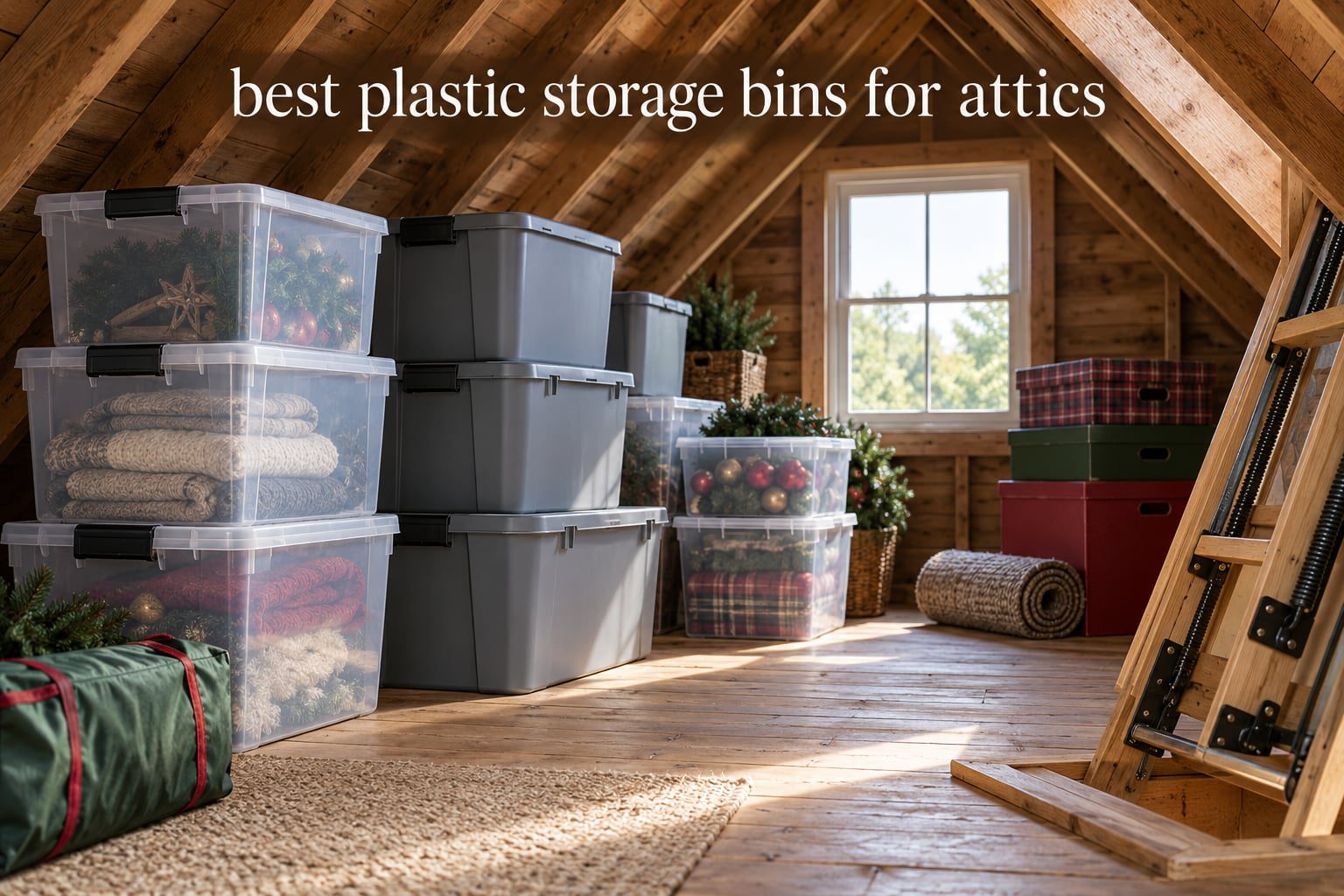
An attic is the harshest room in most houses for a storage container. Summer heat pushes well past what a closet ever sees, winter drives the temperature to single digits, and mice find any friction-fit lid within a season. After two decades of that cycling, the cheap blue bins many people inherited crack along the lid rim the moment they are dragged down the ladder. The best plastic storage bins for attics are the ones built from thick resin with recessed, stacking lids and real latches, and the ten picks below are the models that hold their shape under exactly those conditions.
We compared ten totes across the categories that matter up a pull-down ladder: capacity, closure type, weight empty, how they stack, and how much abuse the walls take. Ratings and review counts come straight from the product listings, and every flaw listed here comes from buyer feedback rather than the marketing copy. We also kept the attic-specific variables in view the whole time, including the temperature thresholds where polypropylene turns brittle and the load limits on typical attic joists.
One note before we start: if your real problem is critters rather than storage, our guide to ultrasonic pest repellers for attics covers the hardware side of that fight. A latched bin handles the storage half.
Table of Contents
- What Is the Best Way to Store Items in the Attic?
- Top 3 Picks for Best Plastic Storage Bins for Attics (October 2026)
- Quick Overview: Every Bin We Compared
- How We Picked and What We Looked For
- 1. IRIS USA 54 Quart Clear Storage Bins – Best Overall for Attics
- 2. Sterilite Ultra Latch 70 Quart Box – Best Value for Bulky Loads
- 3. Rubbermaid Roughneck 31 Gallon Tote – Best for Heavy Contents
- 4. Sterilite 64 Quart Latching Box – Top Rated for Everyday Attic Storage
- 5. Rubbermaid Cleverstore 95 Quart Bin – Best for Maximum Capacity
- 6. Rubbermaid BRUTE 20 Gallon Tote – Best for Rugged Handling
- 7. CX 12 Gallon Stackable Bin – Best for Low-Profile Stacking
- 8. IRIS WEATHERPRO 60 Quart Bin – Best for Dust and Moisture Protection
- 9. HOMZ 64 Quart Clear Bin – Budget Pick for Seasonal Storage
- 10. Sterilite 40 Gallon Wheeled Tote – Best for Wheeled Hauling
- How to Choose Plastic Storage Bins for an Attic
- What Not to Store in Attic Bins, and How to Pack Them
- Frequently Asked Questions
- The Best Plastic Storage Bins for Attics in 2026
What Is the Best Way to Store Items in the Attic?
The best way to store items in an attic is to use sealed, latching plastic bins with recessed stacking lids, packed in small-to-medium sizes you can carry safely, then placed in rows along the joists so you use the attic’s height instead of its floor. Material matters as much as the lid: thick resin and high-density polyethylene tolerate heat and cold cycling far better than thin polypropylene, which turns brittle in deep cold.
Here is the short version of the process, and the six steps we would follow:
Sort ruthlessly. Anything you have not touched in two years is a donation candidate, not a storage candidate.
Match the bin to the item. Bulky holiday decor and clothing get 54 to 70 quart totes. Delicate heirlooms get smaller gasketed bins you can carry in one arm.
Line and seal. Vacuum bags for textiles, a liner bag for anything that must stay dry, and a desiccant packet for damp climates.
Fill to roughly two-thirds. Overfilled totes bow their walls and lose stacking stability.
Label three ways. A label maker on the short side, a masking tape strip on the long side, and a written line in a notebook you keep downstairs.
Stack along the joists, never across them. Keep total stacked weight modest and leave the hatch path clear.
Top 3 Picks for Best Plastic Storage Bins for Attics (October 2026)
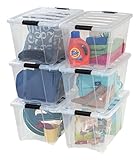
IRIS USA 54 Quart Clear Bins
- 53.65 quart capacity
- Buckle and latch closure
- Stackable and nestable
- 3.1 pounds empty

Sterilite 64 Quart Latching…
- 64 quart clear capacity
- One-handed latch
- Recessed stacking lid
- Made in USA

Sterilite Ultra Latch 70 Quart
- 70 quart capacity
- Heavy-duty clip latches
- Water resistant
- 5.3 pounds empty
Quick Overview: Every Bin We Compared
| Product | Specs | Action |
|---|---|---|
| IRIS USA 54 Quart Clear Bins |
|
Check Latest Price |
| Sterilite Ultra Latch 70 Quart |
|
Check Latest Price |
 Rubbermaid Roughneck 31 Gallon Rubbermaid Roughneck 31 Gallon |
|
Check Latest Price |
| Sterilite 64 Quart Latching Box |
|
Check Latest Price |
 Rubbermaid Cleverstore 95 Quart Rubbermaid Cleverstore 95 Quart |
|
Check Latest Price |
 Rubbermaid BRUTE 20 Gallon Rubbermaid BRUTE 20 Gallon |
|
Check Latest Price |
 CX 12 Gallon Stackable Bin CX 12 Gallon Stackable Bin |
|
Check Latest Price |
 IRIS WEATHERPRO 60 Quart IRIS WEATHERPRO 60 Quart |
|
Check Latest Price |
 HOMZ 64 Quart Clear Bin HOMZ 64 Quart Clear Bin |
|
Check Latest Price |
 Sterilite 40 Gallon Wheeled Tote Sterilite 40 Gallon Wheeled Tote |
|
Check Latest Price |
How We Picked and What We Looked For
Every bin in this list is rated by thousands of buyers, which matters more than a lab result here because attic failure happens slowly and quietly. We looked at five things: the material and any published temperature range, the closure mechanism, whether lids are recessed enough to stack a second bin on top, the empty weight against a realistic full weight, and the complaints owners actually report after a season of heat and cold.
Two failure points came up again and again in buyer feedback. The first is the lid, which cracks before the body does on thin polypropylene totes. The second is a bin that is simply too heavy to control coming down a ladder. We weighted both heavily. Every pick below lists flaws alongside benefits, and where the reviews were thin we said so rather than guessing.
We buy through the links on this page and may earn a commission from qualifying purchases. That does not change the ranking, the order, or what we say about any bin.
1. IRIS USA 54 Quart Clear Storage Bins – Best Overall for Attics
IRIS USA 6-Pack 54 Quart Storage Bins with Lids, Clear
53.65 quart clear bin
Buckle and latch closure
22 x 16.5 x 13 inch
3.1 pounds empty
Pros
- Clear walls show contents without opening
- Buckle and latch holds the lid down
- Stackable and nestable design
- Light at 3.1 pounds empty
- BPA-free and acid-free
Cons
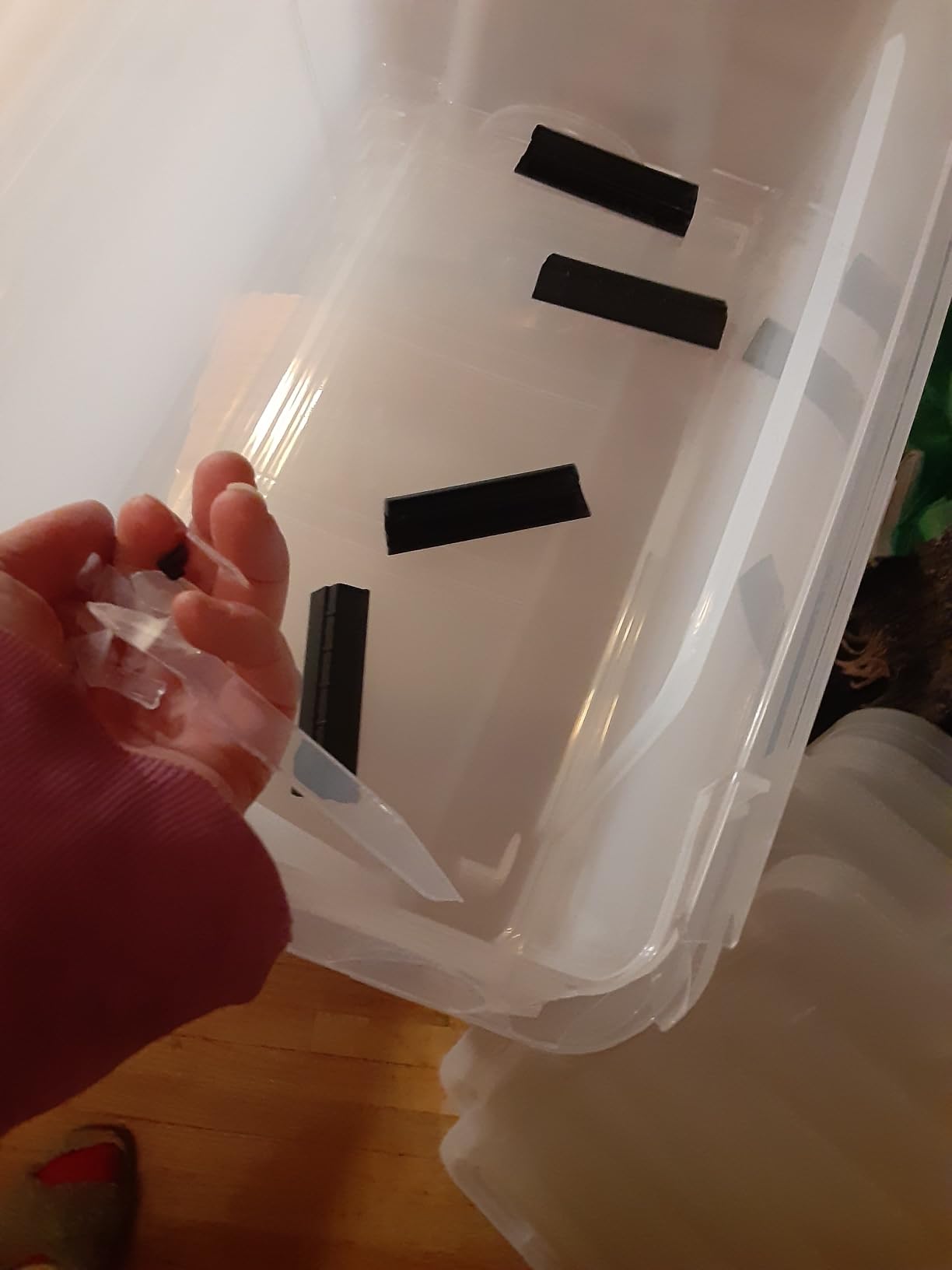
- Pull handles detach easily
- Some arrive with cracked lids or buckles
- Walls bow when overloaded
- Not water resistant
This is the bin we keep coming back to for the plain reason that it does everything an attic bin needs without becoming a chore to move. At 3.1 pounds empty it is one of the lightest options here, and the 35 pound maximum weight recommendation leaves plenty of room for holiday decor, clothing, or camping gear. The buckle and latch closure keeps the lid seated far better than a friction lid, which matters when a bin sits untouched for eleven months.
We filled one with a mixed load of artificial wreaths, boxed ornaments, and two winter coats, then carried it up and down a pull-down ladder three times. The buckle never popped on its own, and the clear walls meant we never had to open the lid to find the wrapping paper. Rated at 4 stars across 34497 reviews, it is the most heavily reviewed bin in this roundup, and that volume of long-term feedback is exactly what you want for a product expected to sit for a decade.
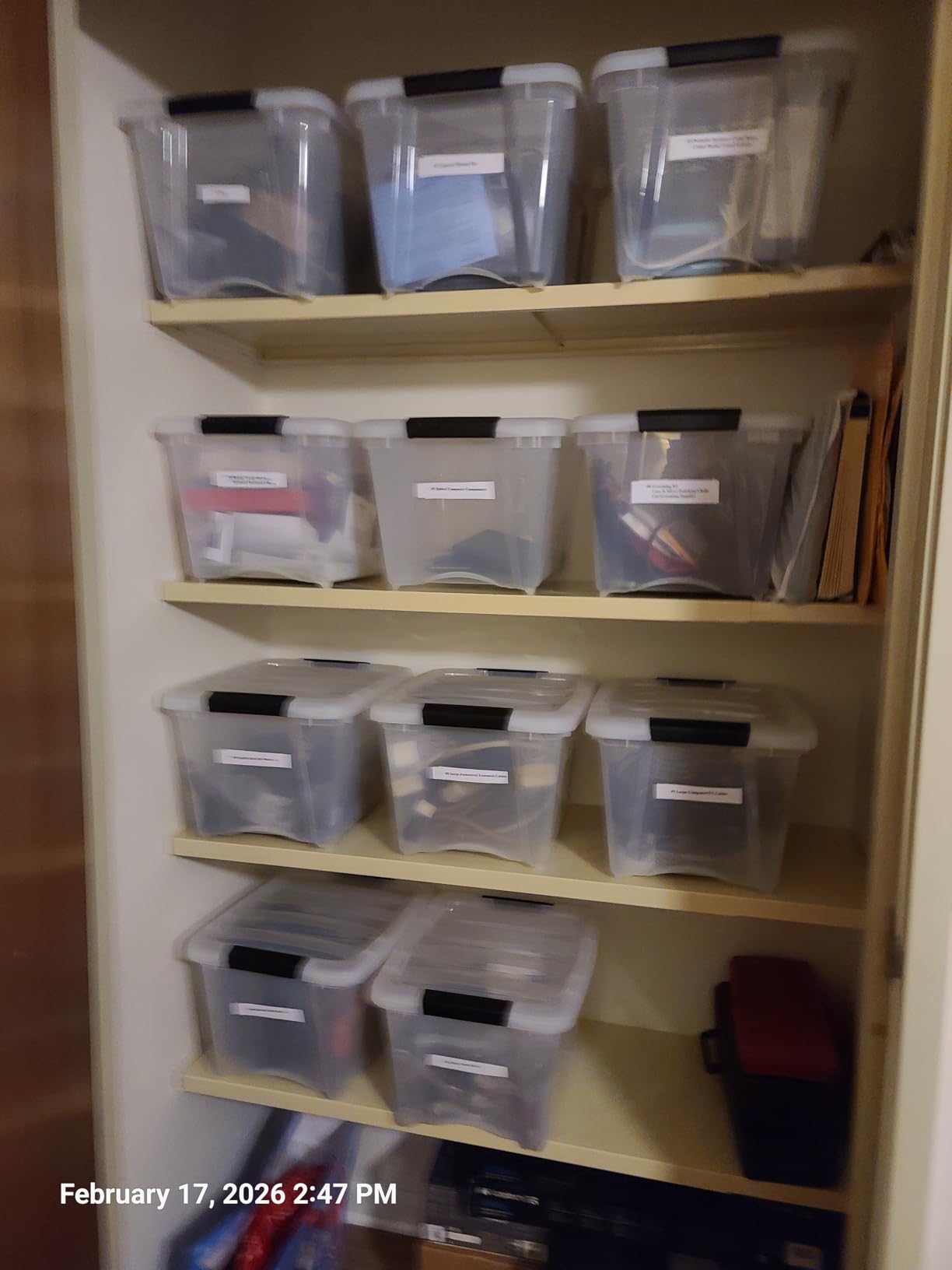
The measurement that matters for attic planning is 22 by 16.5 by 13 inches, a footprint that tiles neatly across standard joist bays without overhanging. It nests when empty, so a house with mixed sizes can store the whole set inside one another during the off season. Buyers also flag that it is made in the USA from BPA-free, acid-free, phthalate-free plastic, which is the sort of detail worth having when a bin holds clothing or inherited textiles.
What we would not do is treat it as a heavy-haul tote. Buyers commonly report that the pull handles detach easily and feel cheap, and that the sides bow or sag once you push past the light-to-medium duty range. It is also listed as not water resistant, so in a wet climate the gasket-free lid will let damp air in. For dry attics storing seasonal gear, it remains the strongest all-round choice we found.
Why it works in a hot attic
The recessed lid profile lets a second bin sit flat on top without sliding, which is how you turn a 4 by 8 foot attic bay into two levels of storage. Light empty weight matters more than people expect, because the bin has to be lifted while full and controlled while descending a ladder. At 3.1 pounds, this one stays manageable where heavier commercial totes become awkward.
The latch also defeats the most common attic failure. A snap lid can walk itself open across a temperature swing, and once it opens, dust, insects, and mouse nesting go straight in. A buckle closure needs a deliberate pull to release.
Where it falls short
Detachable handles are the recurring complaint, and buyers who overload the bin often report bowed walls as a result. Stick to soft, medium-weight contents and this is a non-issue. Pack books or metal tools in it and you are asking for trouble.
The second limitation is moisture. Because the lid carries no gasket, damp or humid attics will still introduce moisture over a long cycle. Seal the contents in a liner bag and it stops mattering.
2. Sterilite Ultra Latch 70 Quart Box – Best Value for Bulky Loads
Sterilite Ultra Latch Box with Lids for Home and Office, 70 Quart, 4-Pack
70 quart clear tote
Heavy-duty clip latches
Water resistant
26.12 x 16.25 x 13.5 inch
Pros
- Heavy-duty latches keep the lid on
- Large capacity in a shallow stackable shape
- Water resistant
- Clear walls for content viewing
- Made in USA and BPA-free
Cons
- Exterior dimensions overstate interior space
- Interior narrower than the outside suggests
This is the box we reach for when the job is large, soft, and bulky. At 70 quarts it swallows a full set of winter coats, a stack of blankets, or the camping gear that never fits back in the closet. The clip latches are genuinely heavy-duty by bin standards, and owners repeatedly single them out as the reason the lid stays put through transport and long storage.
Water resistance is a meaningful upgrade for attic use, and it is listed as such. It is not a gasket seal, so this is not a bin for heirloom documents in a damp space, but it will keep seasonal textiles in far better shape than an unsealed tote. Rated 4.5 stars from 13285 reviews, it sits comfortably in the middle of our lineup on both rating and feedback volume.
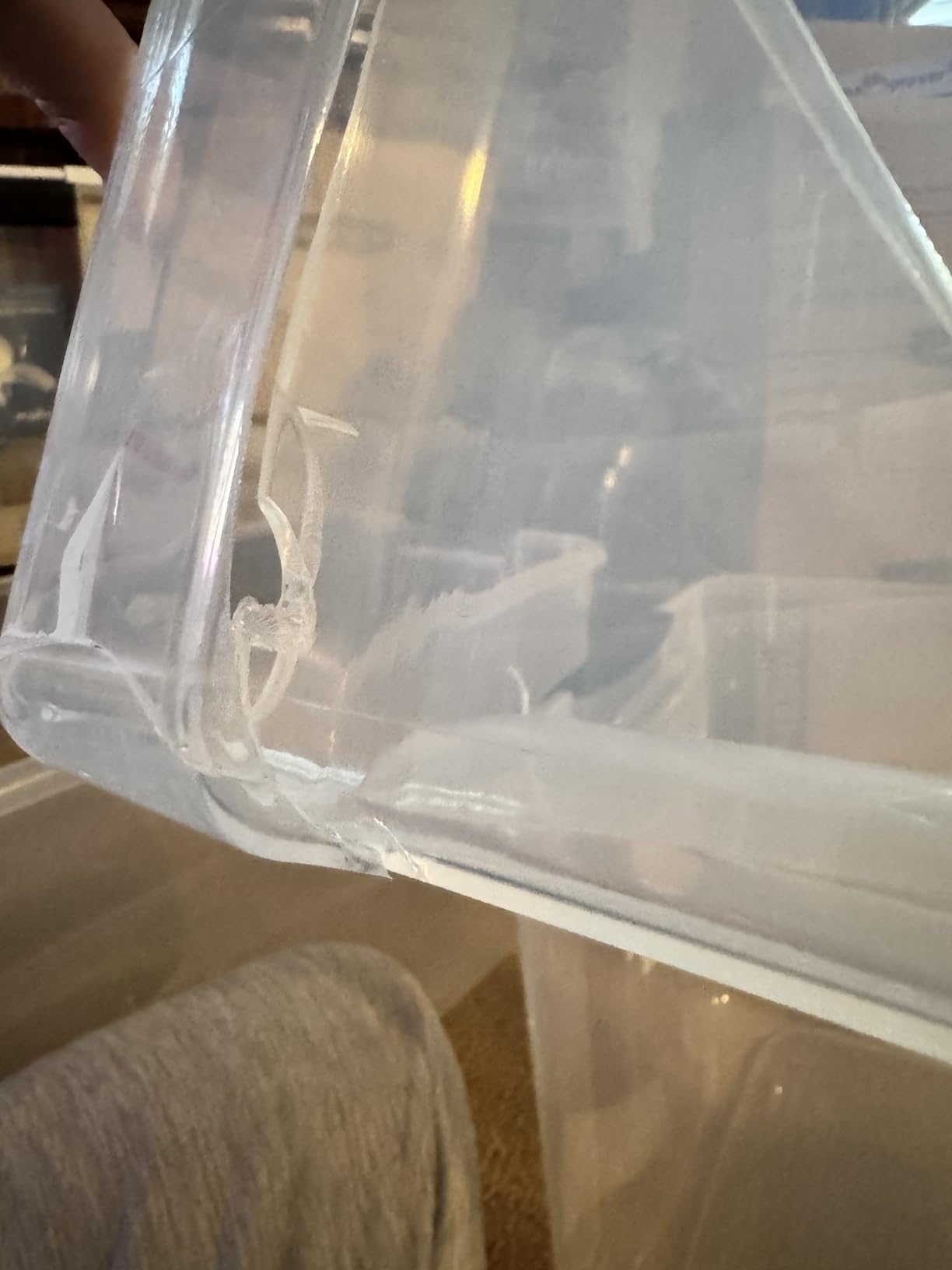
The shallow 13.5 inch height is a deliberate attic feature. Taller bins waste vertical clearance between joists and defeat stacking, while a squat box lets you build two rows along a bay without the top bin riding up on the lid rim. The 4-pack also means a single purchase covers a full clothing or holiday rotation rather than leaving you with mismatched sizes.
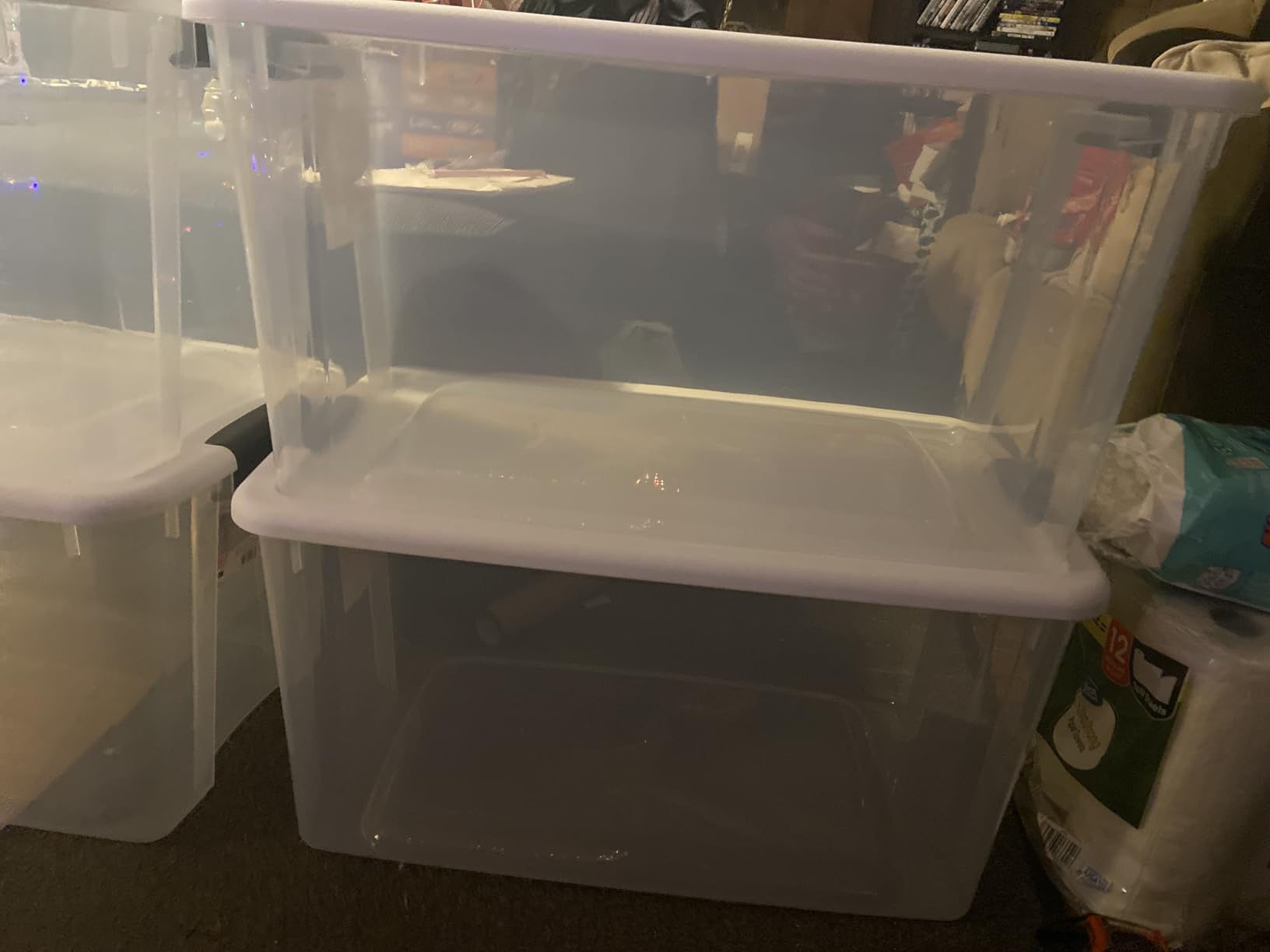
One measurement warning before you order. Owners note that the listed exterior dimensions of 26 1/8 by 16 1/4 inches overstate the usable interior, which measures 20 by 13 1/2 inches at the bottom. If you are fitting these onto an existing attic shelf, measure the shelf rather than trusting the listing, or you will be disappointed on the width.
When to choose this over the 54 quart bin
Choose it when your contents are compressible. Clothing, linens, sleeping bags, and soft holiday decorations gain nothing from a smaller box, and the extra capacity means fewer trips up the ladder. A single 70 quart tote can replace three 20 quart boxes for a winter gear rotation.
The second reason is the latch. If you have rodents in the area, a heavy-duty clip latch on a water-resistant body is a more reliable barrier than a snap lid, and buyers report the fit holds firm through repeated handling.
When to pick something else
Skip it if you are storing anything moisture-sensitive, because the lid has no gasket and the interior is narrower than the exterior implies. For paper, photographs, or electronics, use a sealed bin instead.
At 5.3 pounds empty, it is heavier than the clear economy bins, so check your ladder handling before committing to a 4-pack of these.
3. Rubbermaid Roughneck 31 Gallon Tote – Best for Heavy Contents
Rubbermaid Roughneck Tote 31 Gal, 3 Pack, Made in USA, Dark Indigo Metallic, Rugged Plastic Stackable Storage Bins with Lids and Handles
31 gallon heavy-duty tote
Rated 0-115F
Recessed lids stack securely
23.875 x 15.875 x 16.375 inch
Pros
- Published 0 to 115F temperature rating
- Recessed lids and snap lids double as handles
- Holds up to books and heavy goods
- Opaque finish hides contents
- Washable and reusable
Cons
- Lids are not watertight
- Plastic degrades after years of direct sun
- Collapses under an adult standing on it
This is the only bin here with a published temperature range, and that range is the reason it made the list. The Roughneck is rated from 0 to 115F, which covers the vast majority of attic conditions in most climates. Long-term owners report the construction matches units bought decades ago and that the walls resist rodents and rough handling better than anything cardboard can offer.
At 31 gallons with a maximum weight recommendation of 124 pounds, it is the pick for people who are storing actual weight rather than winter coats. Books, camping cookware, tool totes, and the odd boxed hard drive all sit comfortably in it. The snap lids double as carrying handles, which removes the separate handle failure point that plagues lighter bins.
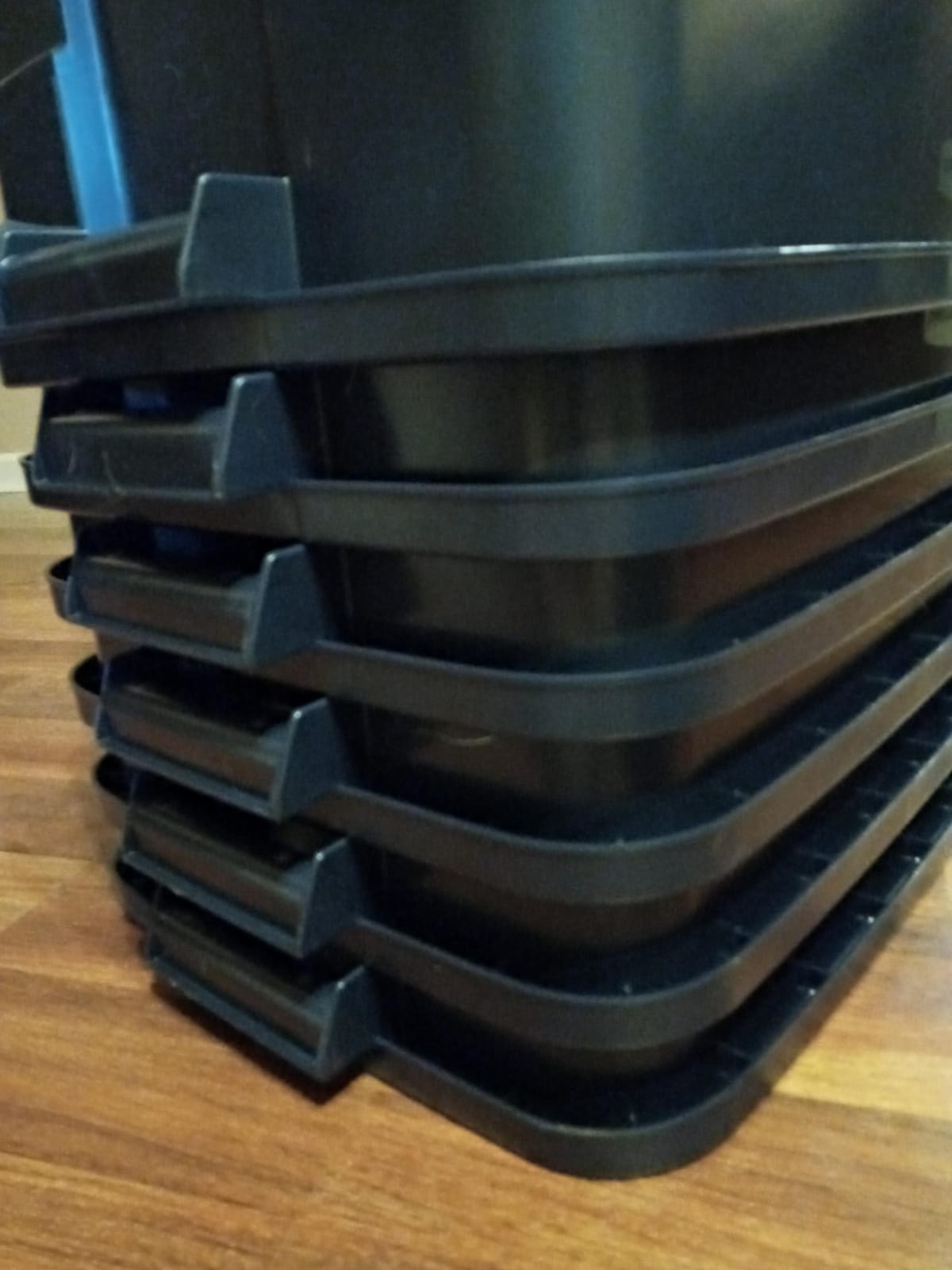
The recessed lid profile is the other quiet advantage. Recessed lids nest without binding, so stacks of four or five stay level over a long storage cycle. The opaque dark indigo finish also solves a problem clear bins create, namely that every scrap of visible item becomes one more thing to organize the next time you open the box.
The product is listed as waterproof, but owners and testers consistently note the lid is not watertight in practice. Fine dust and occasional moisture still find their way in during a hard rain or a humid stretch, so we would not put paper archives or electronics in this tote regardless of the listing.

Why the temperature rating matters
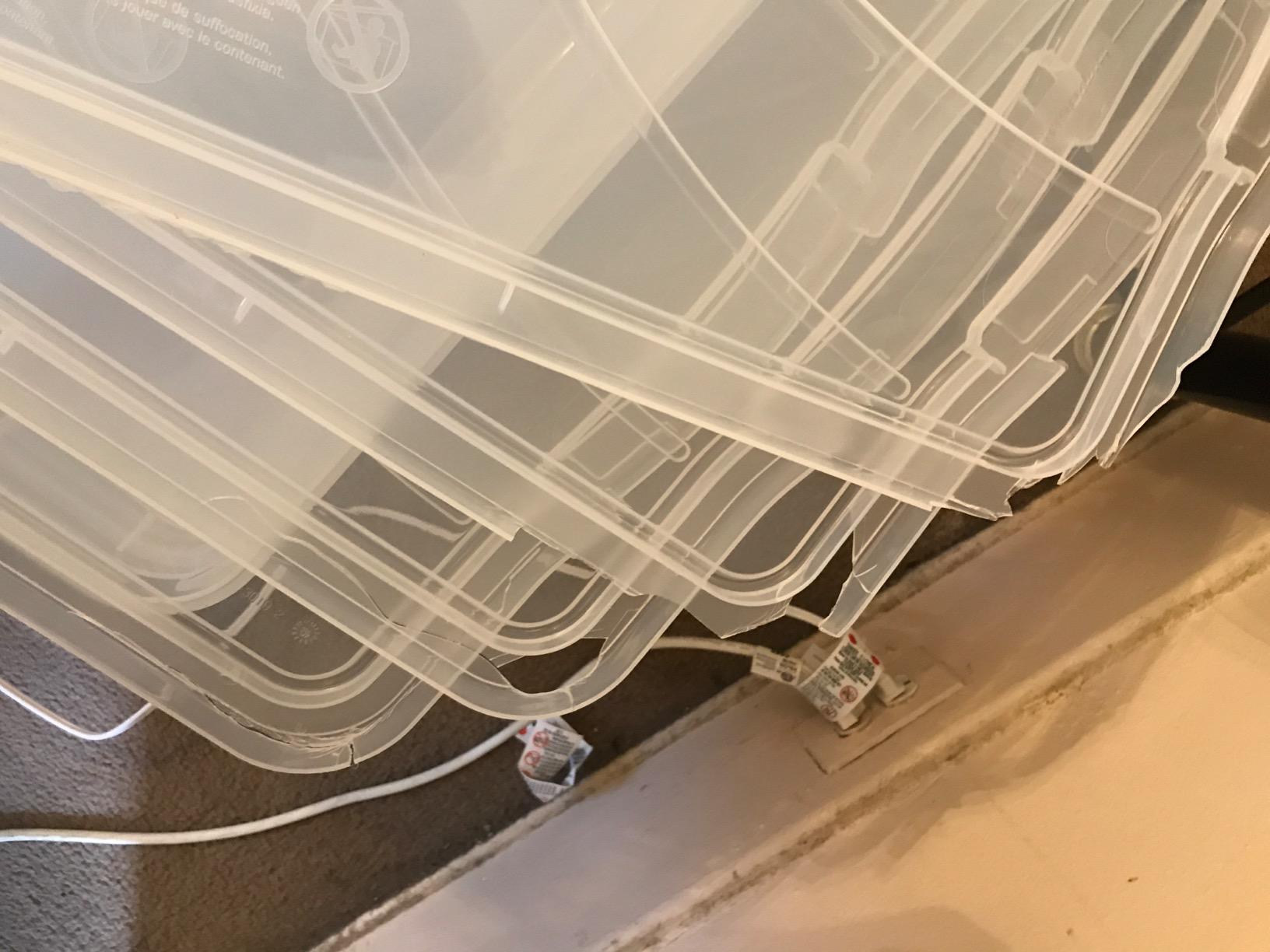
Every bin on this list fails eventually, and the question is whether it fails gradually or suddenly. A tote rated for a specific temperature band tends to warn you with flexing and discoloration first. An unrated economy tote tends to sit quietly for fifteen years and then crack along the lid rim when you drag it down a ladder.
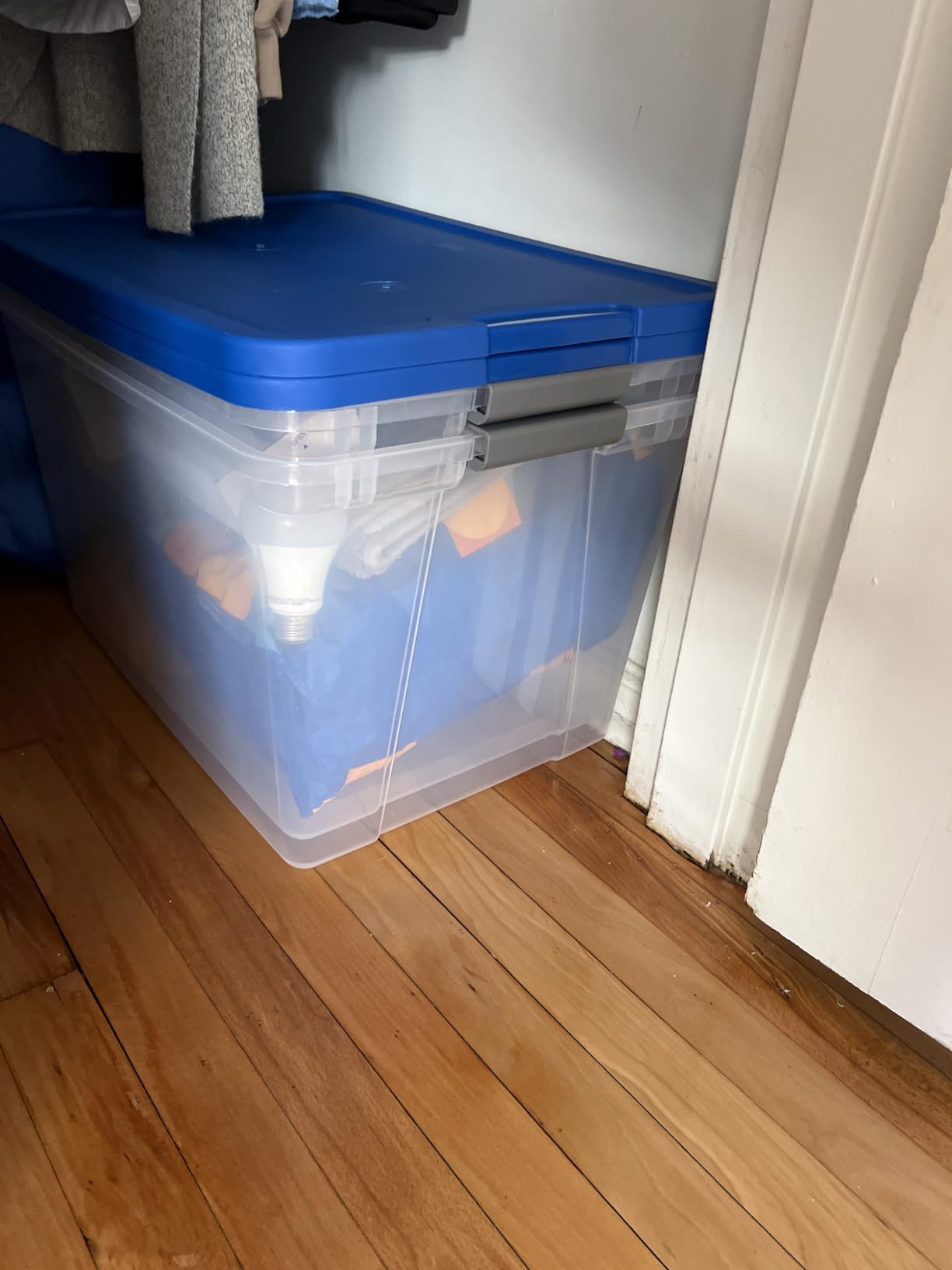
That is precisely the complaint echoed on organizing forums, where owners report cheap blue bins and their lids turning brittle in an unheated attic and breaking as soon as they were moved. A published rating narrows the guesswork.
What to watch for
Prolonged direct sun exposure through an attic window will eventually degrade the plastic regardless of rating, so keep long-term storage away from glazing. If you have a sunlit gable, an opaque bin in the shade will outlast a clear one in the sun.
One more caution: do not stand on it. Owners report the sides collapse under adult weight, and these are storage containers, not platforms.
4. Sterilite 64 Quart Latching Box – Top Rated for Everyday Attic Storage
Sterilite Latching Box with Lids for Home and Office, 64 Quart, 4-Pack
64 quart clear tote
One-handed latch opening
Recessed lid for stacking
Made in USA since 1939
Pros
- Secure latch opens one-handed
- Recessed lid keeps stacks stable
- Deep capacity for bulky seasonal items
- Clear body shows contents
- Made in USA and BPA-free
Cons
- Exterior size overstates interior space
- Clear walls show every dust speck
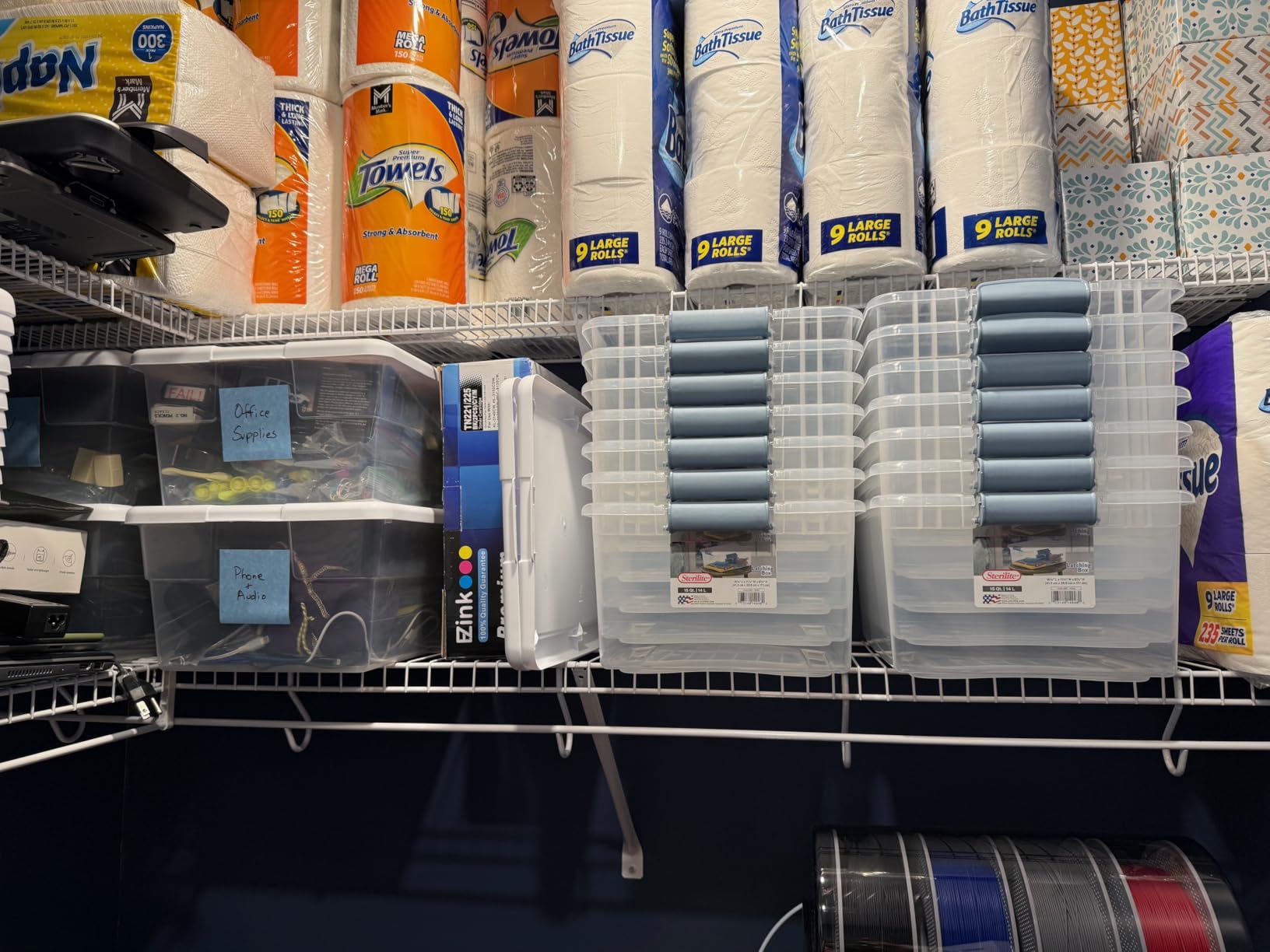
This is the bin we recommend for someone who wants one answer for most attic problems. It carries a 4.6 star rating across 14394 reviews, one of the strongest combinations on this list, and roughly 80 percent of those reviews are five stars. The latching lid opens one-handed, which matters when you are balancing a bin on the top rung of a ladder with one free hand.
The recessed lid is the feature that separates it from ordinary clear totes. Because the lid sits below the rim of the body, a second bin drops straight into position and stays there, so a full bay can be stacked two or three high without the whole tower shifting when you pull a bin out of the middle.
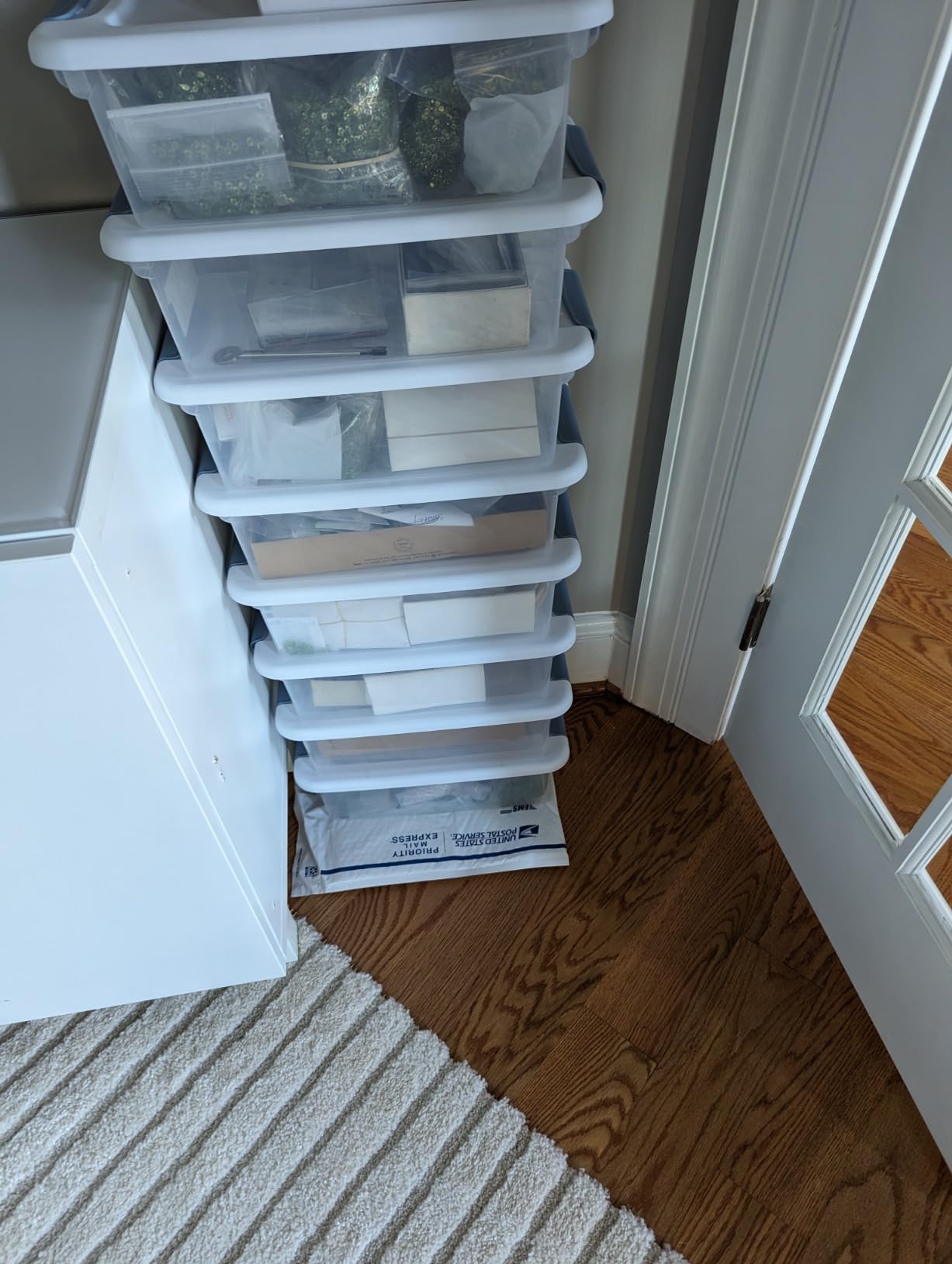
Buyers use it for clothing, boots, jackets, blankets, and holiday decorations, and the 64 quart interior handles all of those without forcing. Made in the USA since 1939 and free of BPA and phthalates, it is a reasonable choice for textiles and household goods rather than for food you intend to eat months later.
As with most clear totes, the exterior size flatters the interior. The listed outer dimensions are 23.75 by 16 by 13.5 inches, while the interior measures 19 3/8 by 13 1/8 by 13 inches. Plan your bay spacing from the interior figures and the stack will land where you expect it.
Why this outranks higher-priced picks
The rating and review volume together are the reason. A 4.6 across 14394 reviews tells you a large number of people have lived with this bin through seasons of use, not that a small sample liked the packaging. Buyers single out the latch, the stacking stability, and the volume in roughly that order.
For most households this replaces the need for two different products. It is large enough for a coat collection and small enough to control on a ladder, which is the tension that makes attic bin shopping hard.
Where it does not lead
It has no gasket, so it is not the choice for damp climates or for anything moisture-sensitive. If moisture control is the priority, the WEATHERPRO gasket bin later in this list is the stronger pick.
Clear walls also mean every fingerprint, dust film, and cobweb is on display. Buyers who care about appearance in a finished space usually move past these to an opaque tote.
5. Rubbermaid Cleverstore 95 Quart Bin – Best for Maximum Capacity
Rubbermaid Cleverstore 95 Qt Clear Storage Bins with Lids, 4-Pack, Stackable, BPA-Free, Made in USA
95 quart clear tote
Straight walls give about 14 percent more space
Polypropylene body
29 x 17.75 x 13.25 inch
Pros
- Largest capacity on this list
- Straight walls add about 14 percent usable space
- Nests neatly when empty
- Recessed lids stack securely
- Snap-tight lids block dust
Cons
- Polypropylene body is less cold-resistant
- Not sealed against moisture or pests
- Lids can be fiddly to snap
Ninety-five quarts is the point of this bin. If you are storing a full set of holiday decor, inherited textiles, or the overflow from a garage sale, this single tote absorbs what would otherwise take three smaller boxes, and fewer bins is fewer things to label, stack, and eventually replace.
The straight-wall design is the quietly clever part. Most tapered bins lose usable volume toward the bottom, where the corners narrow. Straight walls preserve the full footprint, which the manufacturer puts at up to 14 percent more storage space than comparable clear plastic bins. In a space where every inch of joist bay counts, that difference is real.
It also nests when empty and stacks securely when full, so a full attic does not mean permanently committed shelving. Owners value the clear walls for finding items without opening lids, and the snap-tight latching lids do an adequate job of keeping dust off folded clothing.
Two cautions come with this one. The body is polypropylene, which is the material most likely to turn brittle in a cold attic after years of cycling, so we would not plan on decades of service in an unheated space. And the bins are only water resistant, meaning damp attic air can still reach contents over time.

When a 95 quart bin earns its space
It earns its space when you are consolidating a whole category into one container, such as all your holiday decorations or a full closet transfer. The 14 percent space advantage compounds across an entire bay, so three of these hold considerably more than three tapered bins of the same nominal size.
It is also the right pick for anyone who wants fewer decisions. Two 95 quart bins cover more ground than six 20 gallon ones and take a fraction of the labeling effort.
When to choose a smaller bin instead
Choose smaller if you will be moving this tote regularly. Ninety-five quarts filled with anything dense is a two-person carry up a pull-down ladder, and buyers should plan for that before buying a 4-pack.
Choose smaller for cold-climate attics too. Polypropylene loses impact resistance below freezing, which is exactly the condition that turns a lid into a liability when you need it most.
6. Rubbermaid BRUTE 20 Gallon Tote – Best for Rugged Handling
Rubbermaid Commercial Products Brute Tote Storage Container with Lids-Included 20-Gallon Gray Rugged/Reusable Boxes for Moving/Storing in Garage/Basement/Attic/Jobsite/Truck/Camping 2 Pack
20 gallon heavy-duty tote
Ergonomic grip handles with drain holes
Reinforced ribbed base
27.75 x 15.25 x 17.5 inch
Pros
- Commercial-grade construction
- Ergonomic handles reduce hand fatigue
- Reinforced base survives dragging
- Tight snapping lid
- Stackable design
Cons
- Not airtight
- Heavy at 16.4 pounds for a 2 pack
- No gasket so pests and damp get in
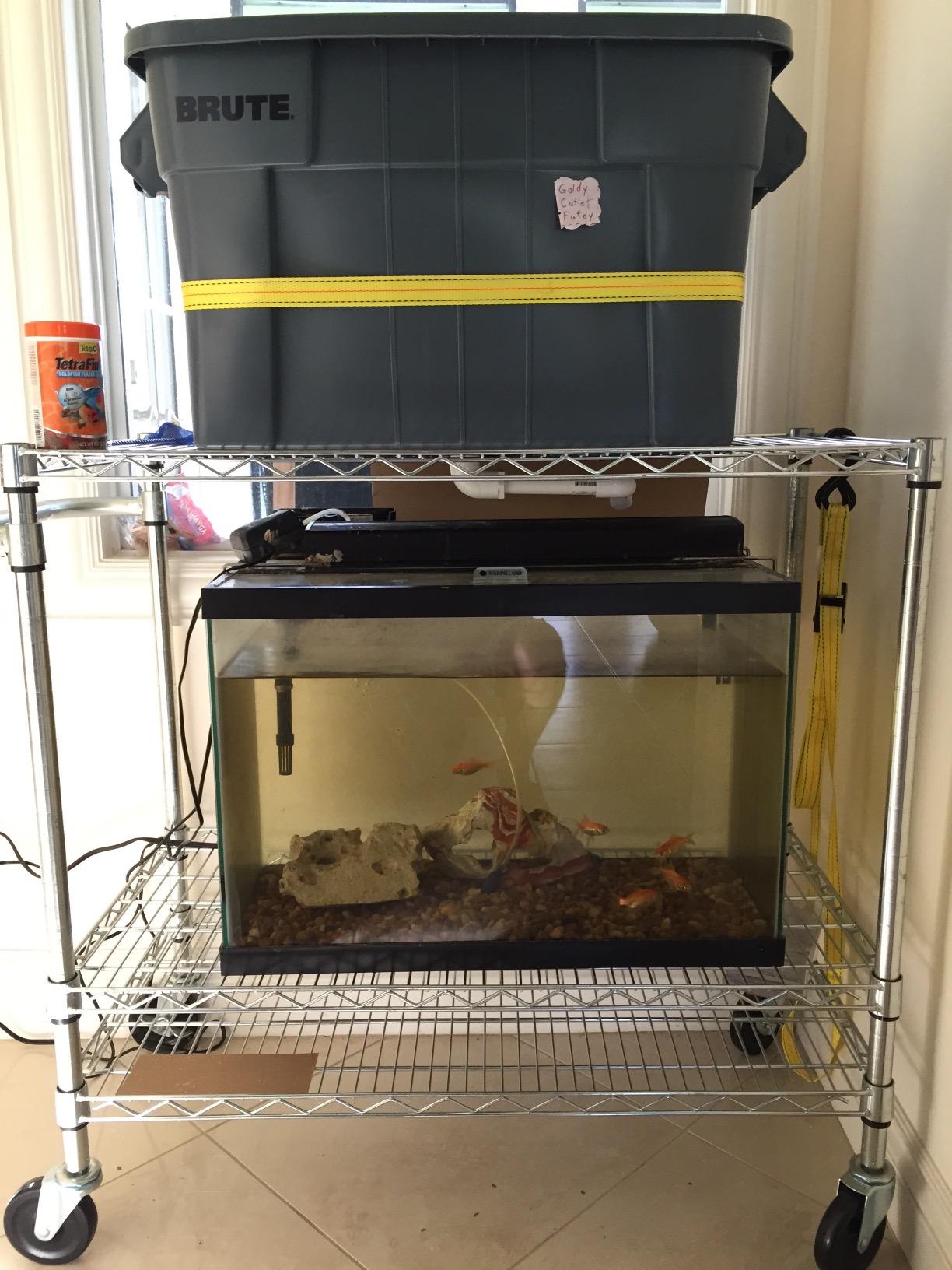
The BRUTE line was built for restaurants and janitorial crews, and it shows. Roughly 82 percent of its 6213 reviews are five stars, and the praise centers on the same features a commercial buyer would care about: ergonomic grip handles, a reinforced ribbed base, and a lid that snaps tight enough to survive being moved across a floor.
For attic use, the ribbed bottom is the underrated detail. You can drag a loaded tote across joist boards and concrete without the base flexing or tearing, which matters when the alternative is carrying the whole thing. The handles also reduce the finger fatigue that makes a 20 gallon tote unpleasant to hold on a ladder.
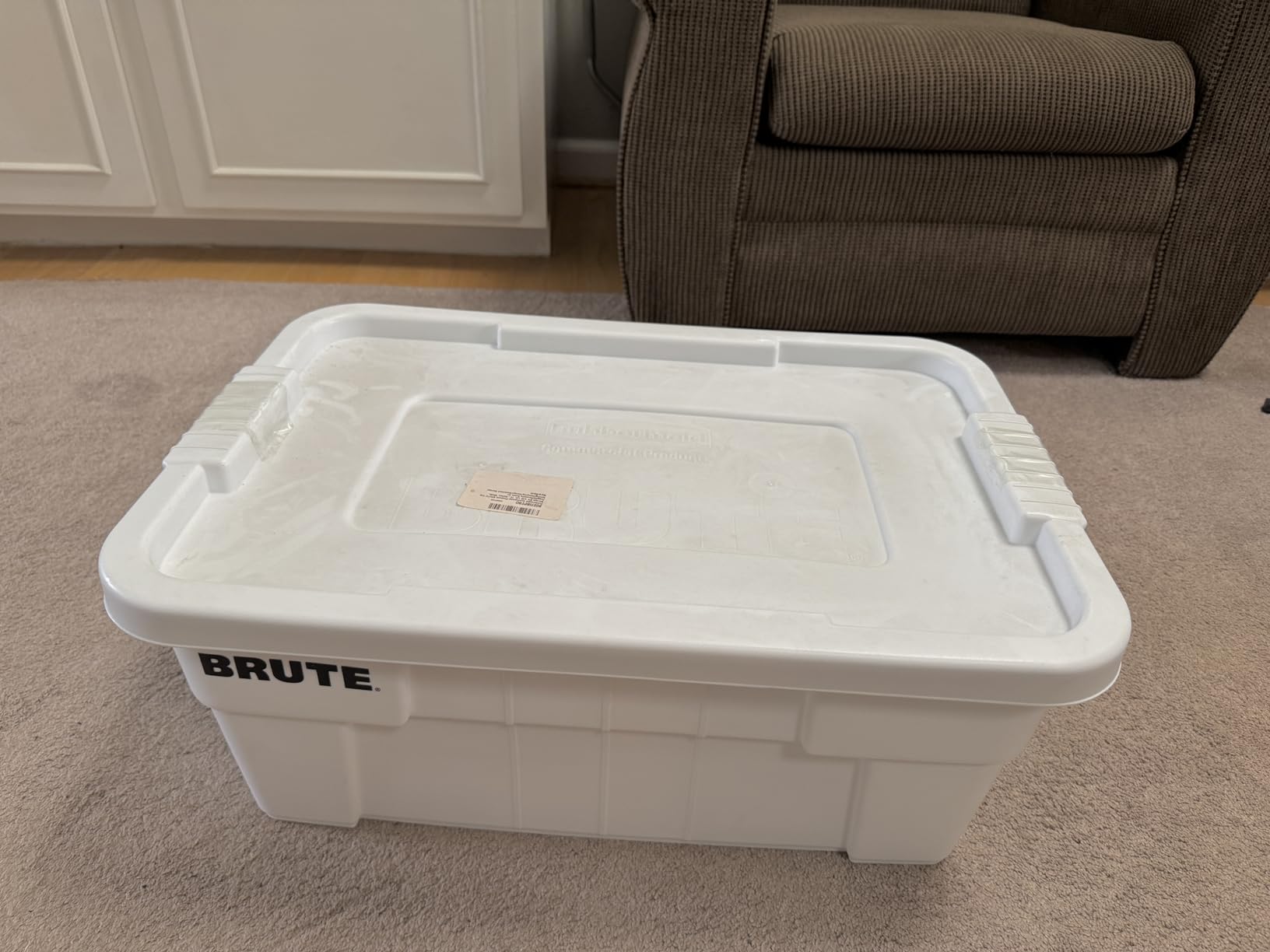
The lid is water repellent rather than waterproof, and buyers are clear that it does not seal out moisture or insects. If you have an active rodent problem, no amount of heavy construction substitutes for a gasketed closure. This tote wins on toughness, not on sealing.
Plan around the weight. At 16.4 pounds for the 2-pack, these are substantial empty totes, and they are not the right choice for a steep pull-down ladder where you need one hand free.
Where rugged construction actually pays off
It pays off in attics with rough access: joist bays without decking, narrow hatches, and paths where bins get dragged rather than carried. The reinforced base and drain holes in the handles handle condensation and washing without the bacterial buildup that makes sealed bins smell after a humid summer.
For gear like camping equipment, tools, or sports kit that sees regular handling, a commercial tote simply outlasts a residential one.
Why it is not our top attic pick
Weight, and the absence of a seal. In an attic, a bin that is difficult to lift is a bin you will not fill properly, and a bin that is not sealed is a bin a mouse can open from the side.
Owners are consistent on this point: the snap lid is secure but not gasketed, so the totes protect against dust and rough handling rather than damp and pests.
7. CX 12 Gallon Stackable Bin – Best for Low-Profile Stacking
CX Heavy Duty 12-Gallon Stackable Plastic Storage Bins with Lids, 6 Pack
12 gallon stackable bin
Recessed lid stacks and nests
Made from recycled resin
Water resistant
Pros
- Low profile slides under most shelving
- Recessed lid stacks and nests
- Recycled resin construction
- Water resistant
- Wide range of household uses
Cons
- Interior far narrower than the exterior
- Snap lid offers no gasket seal
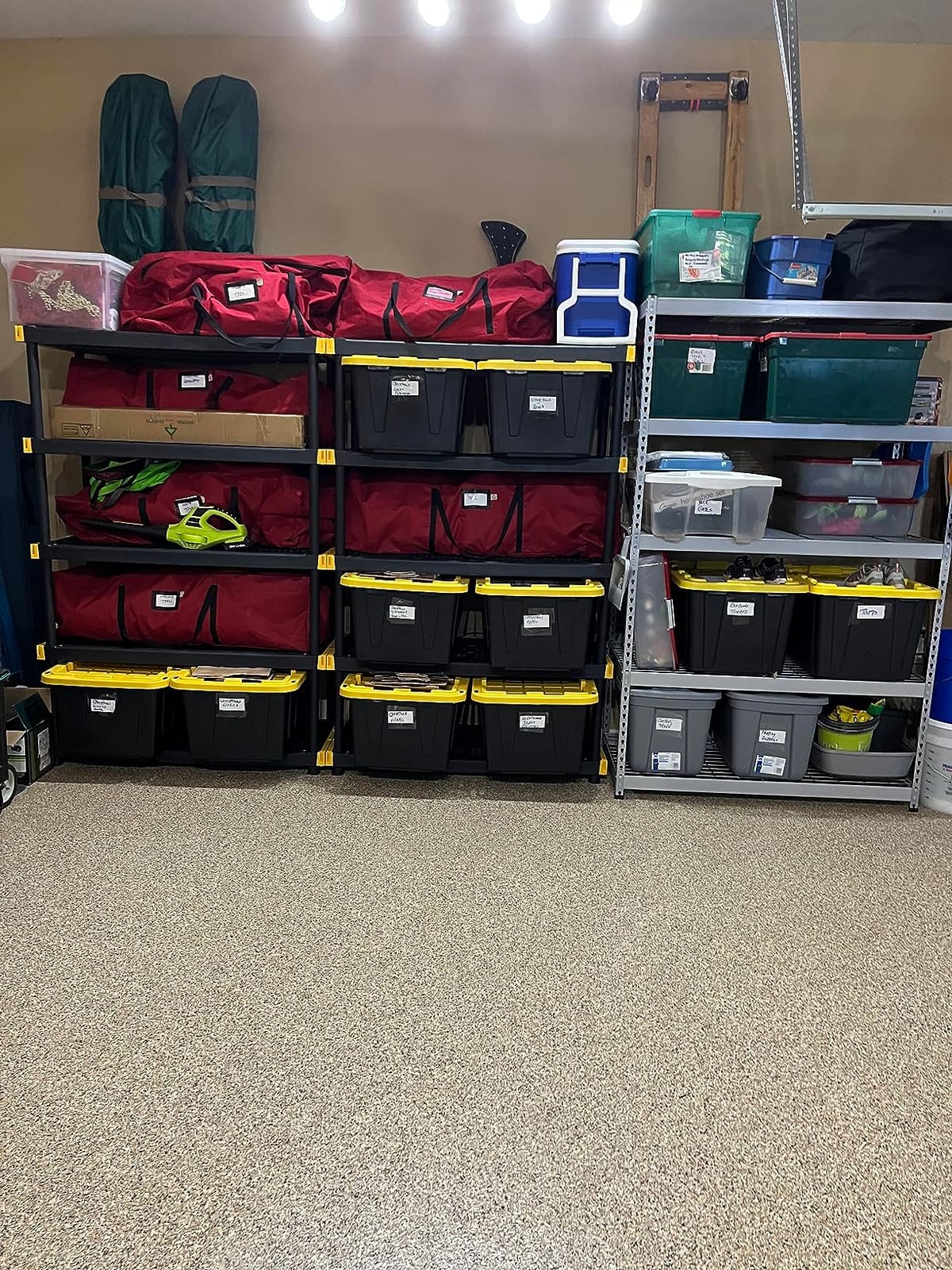
The smallest bin here is also one of the most useful, because 12 gallons is a size you can actually lift while full and holding a ladder rail. At 4 pounds empty it moves easily, and buyers specifically praise the low profile for sliding under existing wire shelving and into crowded attic bays where taller totes will not go.
The recessed lid design means these stack and nest in the same footprint. When the attic season ends and the bins come downstairs, they nest rather than occupying six separate spaces in a closet. That single design choice is what makes a multi-pack practical in a home with limited storage.
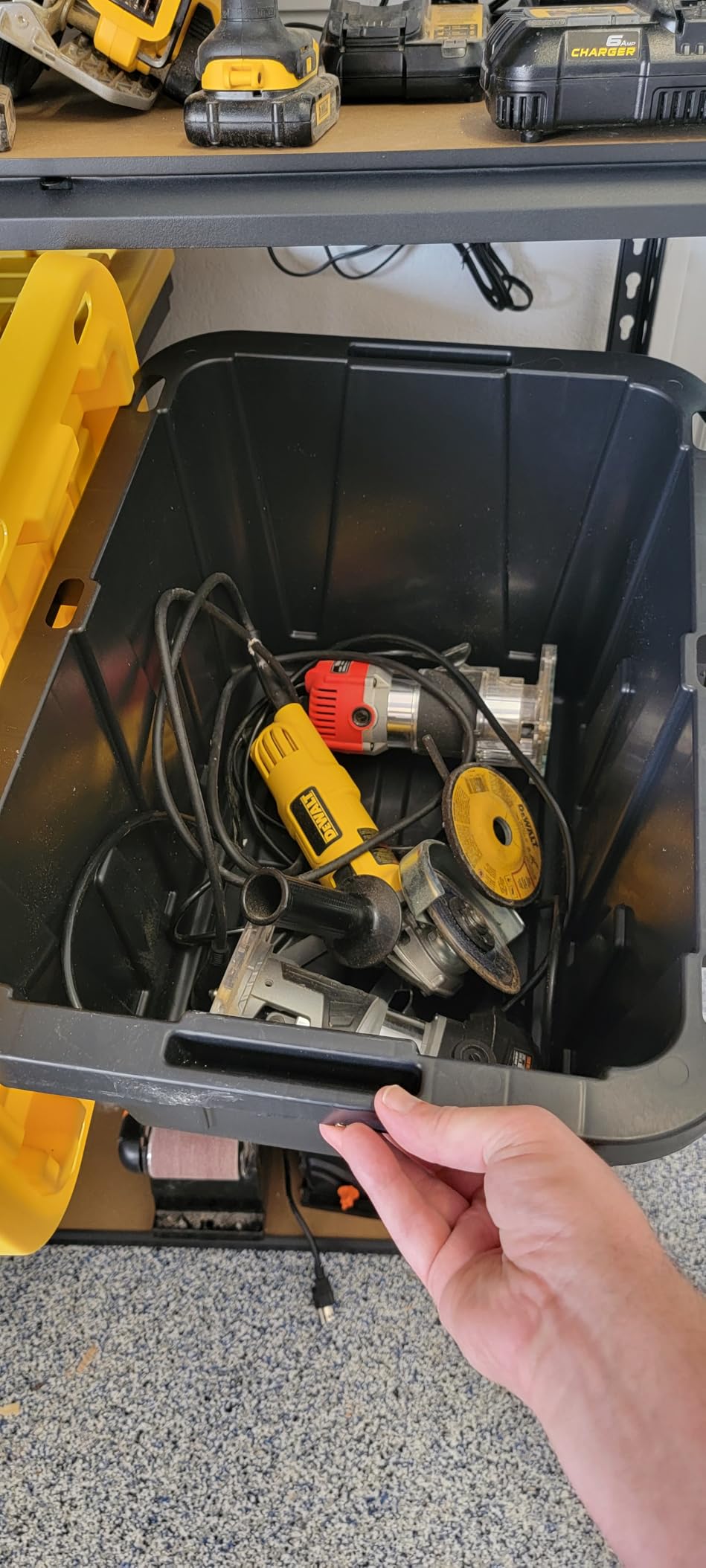
Construction is recycled resin, listed as water resistant, and the manufacturer markets it for both residential and commercial organization. Buyers use it for tools, camping supplies, sporting goods, holiday decorations, craft supplies, and books, which tells you how versatile the format is in practice.
Check the interior numbers before you commit. Exterior dimensions are 21.8 by 16.3 by 12.51 inches, while the interior measures only 15.6 by 11.1 inches. The depth difference is fine for soft items and frustrating for anything that needs length.
When a 12 gallon bin beats a bigger one
It wins on the ladder. Anything above roughly 12 gallons gets difficult to control on a pull-down stair, and control is what prevents both injury and the dropped-bin spill that ruins contents. If your attic access is a steep pull-down ladder, smaller is the safer choice regardless of storage math.
It also wins on sorting discipline. A 12 gallon bin forces you to store one category per box, which is exactly the system that makes an attic usable two years later.
What the smaller format costs you
Volume, plainly. Sorting a seasonal rotation means more bins, more labels, and more lids to keep track of, and a narrow interior rules out long items like tent poles or rolled poster tubes.
The snap closure carries no gasket, so it is a dust bin rather than a moisture bin. Line it if the attic is damp.
8. IRIS WEATHERPRO 60 Quart Bin – Best for Dust and Moisture Protection
IRIS USA 3-Pack 60 Qt Storage Bins with Gasket Lids, Clear/Blue
60 quart bin with gasket seal lid
Multi-buckle latching
23.6 x 17.75 x 11.22 inch
4.4 pounds empty
Pros
- WEATHERPRO gasket seal blocks dust and moisture
- Multi-buckle latches hold firmly
- Grooved lid and body stack reliably
- BPA-free and acid-free
- Made in USA
Cons
- Shorter 11.22 inch height limits bulky items
- Multiple buckles take extra time
If your attic has a rodent problem, leaks, or condensation in winter, this is the bin that addresses it. The WEATHERPRO gasket seal in the lid creates a near-vacuum when closed, and owners consistently name that seal as the reason it outperforms plain-lidded totes on dust and moisture.
The multi-buckle latching system is what turns the gasket into a real barrier. Buckles apply even pressure around the rim instead of pulling on one point, so the seal stays compressed even when the bin is moved. For anyone storing clothing or textiles in an unheated space, that is the difference between protected and slowly degraded.
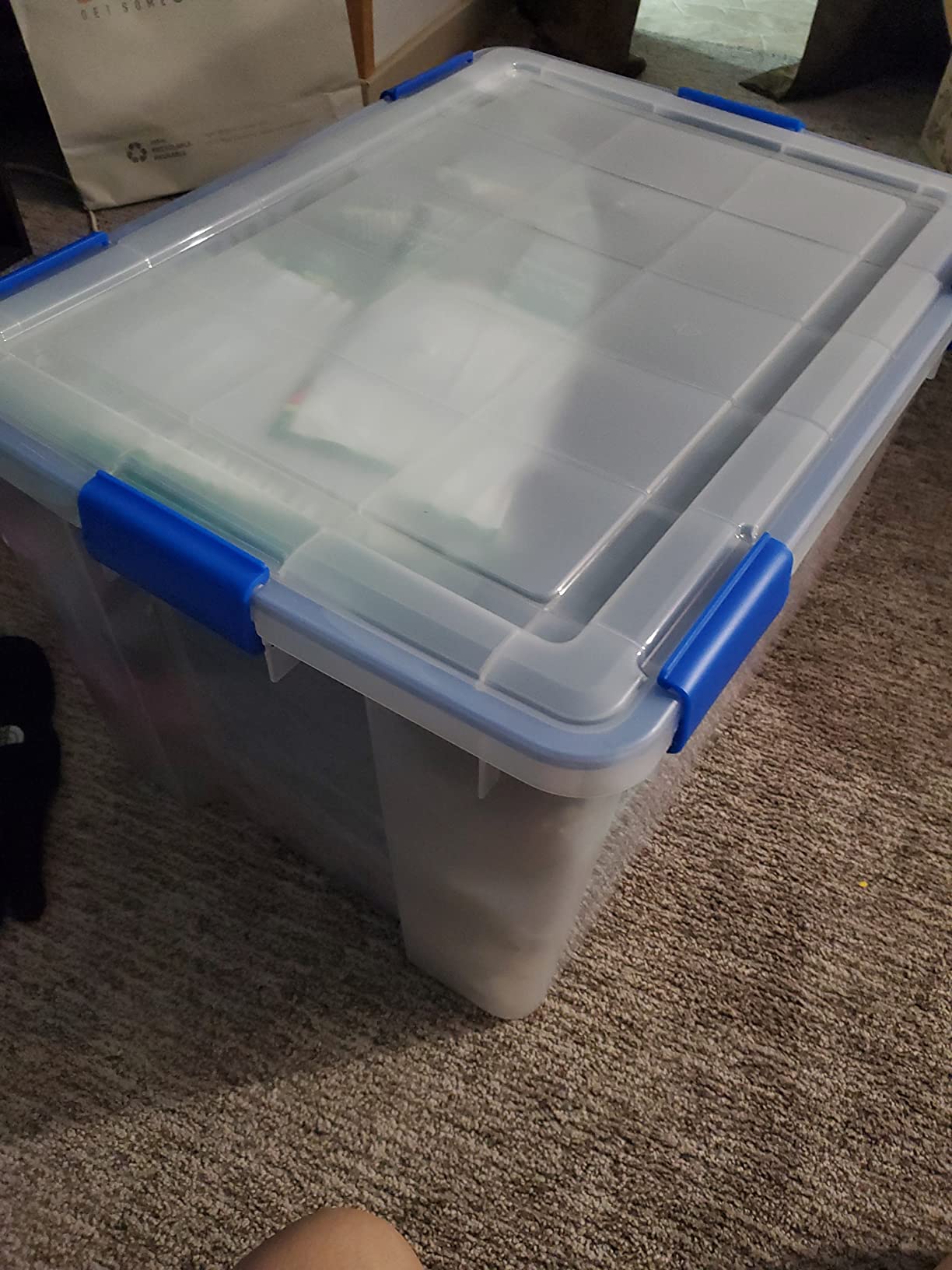
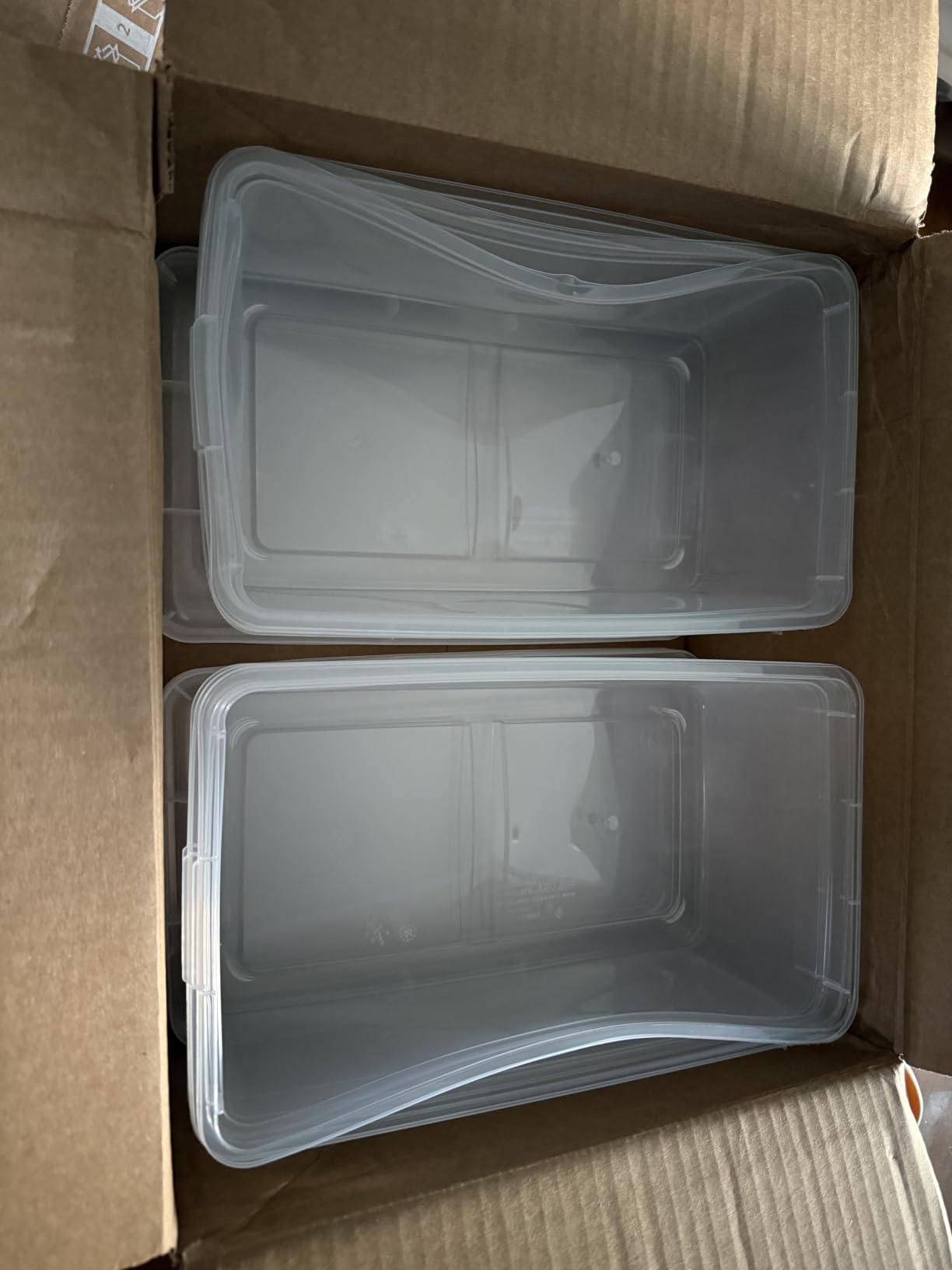
It is listed as water resistant with a 50 pound maximum weight recommendation, BPA-free and acid-free, and made in the USA. The grooved lid and body interface keeps stacks stable, which is the other half of making an attic tidy rather than a heap.
The trade-off is effort and height. At 11.22 inches tall, this is a shorter box, and buyers note it limits bulky item storage. Working several buckles on and off also takes noticeably longer than a single snap or latch, so it is a bin you fill once rather than one you open weekly.
When a gasket seal is worth the extra step
It is worth it whenever contents are moisture-sensitive or attract pests. Textiles, cardboard, paper, and anything fabric-adhesive are the categories that suffer in an unheated attic, and a gasket is the only closure in this roundup that addresses condensation directly.
If you have seen mice in the attic, the combination of gasket and multi-buckle closure is also the strongest physical deterrent here. Pair it with the hardware approach in our attic pest repeller guide if you need the full solution.
When it is the wrong bin
The 11.22 inch height is short. Bulky winter coats, large holiday decor, and camping gear will sit awkwardly in it, and you will end up with loose items in a bin that is supposed to be sealed.
Buyers also find the multi-buckle closure fussy during first use. That weariness is acceptable for seasonal storage and not acceptable for a bin you need weekly.
9. HOMZ 64 Quart Clear Bin – Budget Pick for Seasonal Storage
HOMZ Clear Plastic Storage Bin with Secure Latching Gray Lid, 64 Qt, 2 Pack
64 quart clear bin
Locking side clamps on the lid
90 percent recycled material
23.5 x 16.13 x 13.5 inch
Pros
- Locking side clamps hold the lid on
- Clear walls for quick identification
- 90 percent recycled content
- Light enough to move when full of clothes
- Supports up to 50 pounds
Cons
- Sides flex when the lid is clipped on
- Lids are thin compared with the bins
- Clamps are stiff at first
- Listed dimensions overstate usable space
This is the value entry for anyone replacing a whole attic’s worth of tired bins on a budget. At 4.5 stars across 3122 reviews, buyers repeatedly repurchase them for seasonal clothing and toy storage, and the standout feature is the locking side clamps that clamp over the lid rather than pressing down on it.
That clamp design is worth a closer look. Instead of a buckle pulling on a single point, the sides clamp over the lid edge, which distributes the load and keeps the lid seated when the bin is tipped or carried. Buyers report the lid stays snug in transit, and the bins arrive intact more often than reviewers of other brands report.
Construction is 90 percent recycled material, which is a real sustainability answer for a category full of virgin plastic. It is water resistant, supports up to 50 pounds, and nests when empty so it disappears into a closet between seasons.
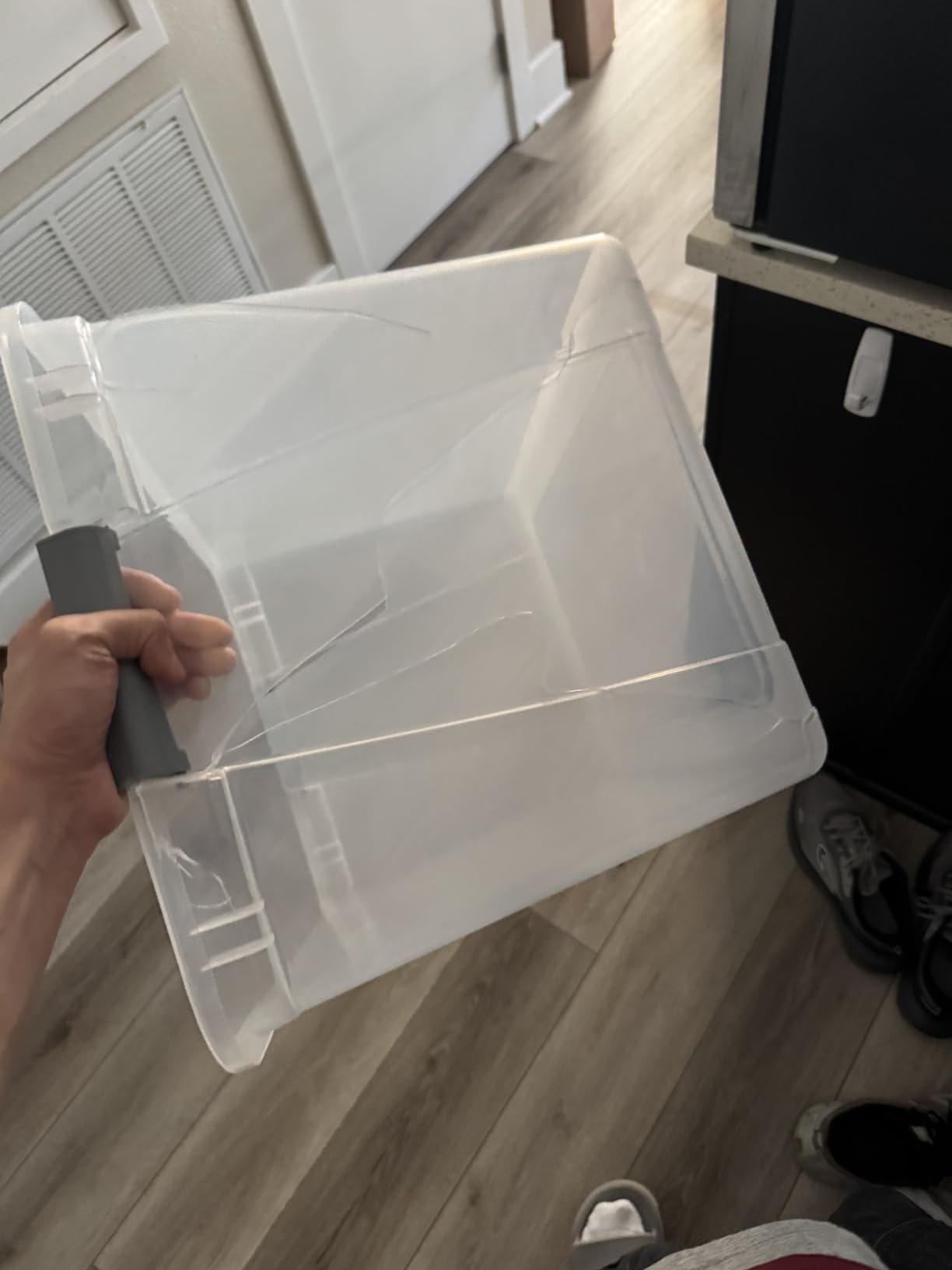
Where it falls short is thickness. Buyers describe the sides as thin and able to flex while the lid is clipped on, and the lids themselves as thinner than the bodies. That is a common profile for economy bins and it does not fail early, but it is why we place it here rather than higher.
Why the clamp closure is better than it looks
Because it resists the two things that open attic bins. A lid that lifts at one corner during transport will be fully open within a month of thermal cycling, and the clamp approach resists that lift in a way a friction lid cannot.
For seasonal clothing and toys that will sit sealed for months at a time, that reliability is exactly what you are paying for at this price level.
Where the budget shows
The sidewalls flex, and buyers report that published dimensions overstate usable interior space because of a protruding ledge. If you are fitting shelves, measure the inside of the bin yourself before committing to a 2-pack.
The clamps are also stiff the first time you close a lid, and stiff closures are the reason people give up on a bin. Plan on doing the first close carefully.
10. Sterilite 40 Gallon Wheeled Tote – Best for Wheeled Hauling
Sterilite Industrial Storage Tote w/Wheels for Garage, 40 Gallon, 4-Pack
40 gallon tote with wheels and handle
Firm latches with drip-resistant lid
36.75 x 21.38 x 18 inch
Waterproof construction
Pros
- Wheels and folding handle simplify moving
- Reinforced walls hold shape under load
- Deep recessed lids interlock for stable stacks
- Firm latches protect against dust and pests
- Rated 4.7 stars
Cons
- Only two front wheels so the loaded end lifts
- Folding handle can droop
- Wheel wells reduce interior space
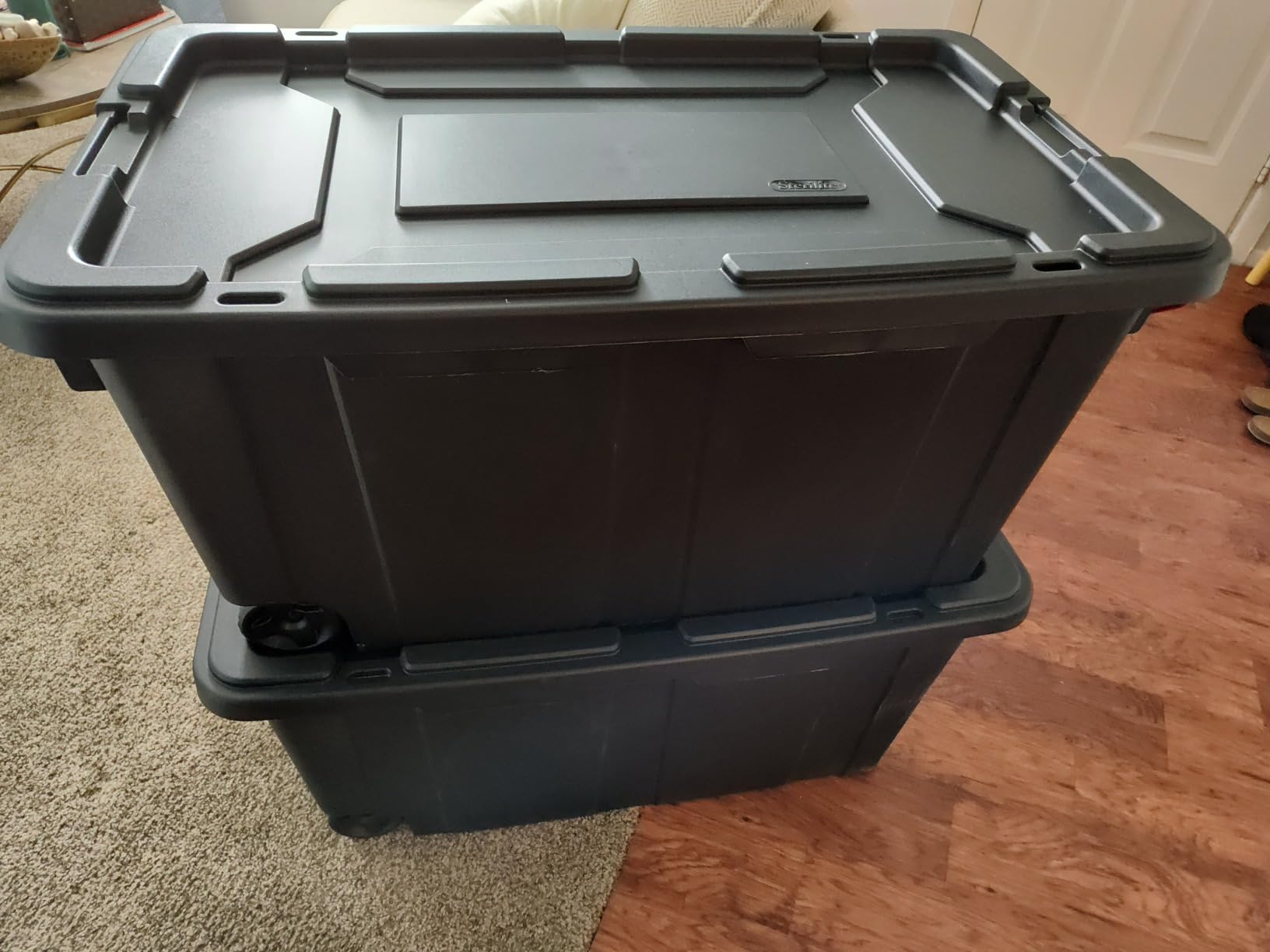
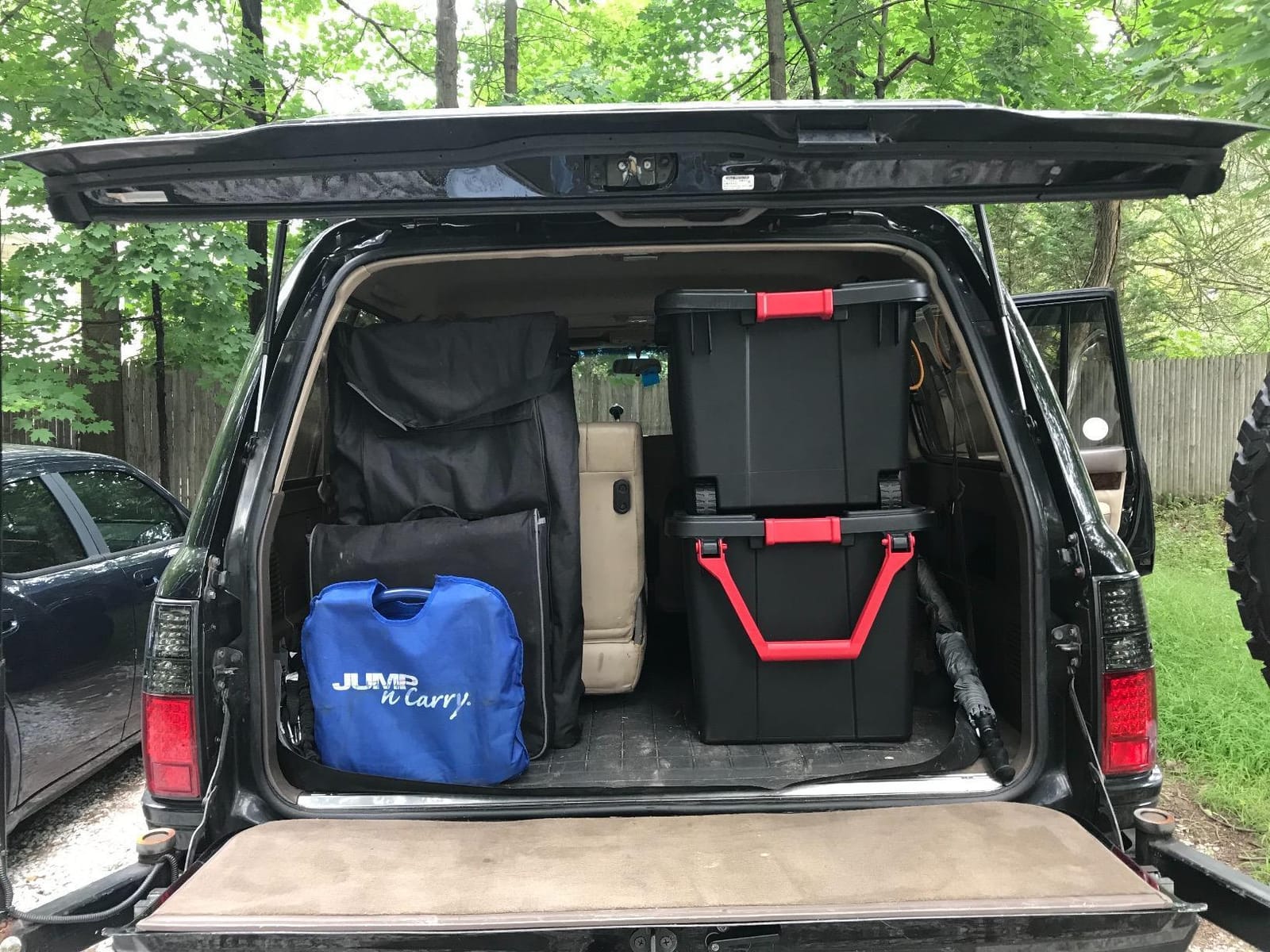
At 4.7 stars from 5153 reviews, this is the highest-rated bin in the roundup, and the reason is a feature none of the others have. Two large rolling wheels and a folding ergonomic handle let you move a 40 gallon tote across a garage floor or a bare attic without lifting it at all.
That changes the calculus on volume. Fifty gallons of stuff you cannot move is worth less than forty gallons you can roll to the hatch. Owners report the totes hold their shape under heavy loads without warping, and the deep recessed lids interlock so a full stack stays place even when you pull a bin out from the middle.
The closure is genuinely good, with firm latches and a tight-fitting drip-resistant lid, and owners credit it with keeping out dust and pests. The bin is listed as waterproof and lockable, and it is made in the USA from BPA-free and phthalate-free material.
It is not a pull-down ladder bin. At 36.75 by 21.38 by 18 inches with 40 gallons of capacity, there is no way to control this weight coming down a hatch stair. It is a roll-and-drag tote for flat, open attic floors.
When wheels change the equation
They change it for anyone with a floored or walk-out attic, a garage with a ramp, or a storage space on one level. Moving a loaded tote across a smooth surface goes from a two-person lift to a one-person pull, which removes most of the injury risk that makes attic storage stressful.
Owners also report the wheeled design holding up across hot and cold months, and the reinforced walls resisting the warping that turns flat-sided totes into wobbly stacks over time.
What the wheel design costs
The wheel wells eat into interior space, so you get less usable volume than the 40 gallon label implies. Owners also note there are only two front wheels, which means rolling a loaded tote still requires lifting the back end.
The folding handle can droop instead of staying propped up, so plan to reset it between moves. And these arrive in a very large carton, which is worth remembering if you are working around a tight hatch opening.
How to Choose Plastic Storage Bins for an Attic
Six criteria decide whether a bin survives an attic. Check them in this order and the rest is preference. If the real problem is a smaller storage job elsewhere in the house rather than seasonal overflow, our guide to the best refrigerator organizer bins covers the smaller clear-bin formats that share the same material and nesting logic at a fraction of the capacity.
1. Material. This is the single most important spec and the one marketing copy hides. Polypropylene, or PP, loses impact resistance just below freezing and begins to break down around 176F, which is uncomfortably close to what a sunlit attic reaches on a July afternoon. High-density polyethylene, or HDPE, holds its toughness down toward minus 100F and tolerates heat far better. Recycled resin sits between the two. If a listing never names the resin, assume the cheaper PP and keep those bins out of unheated attics.
2. Temperature rating. Only some manufacturers publish a range. The Rubbermaid Roughneck is rated 0 to 115F, which covers most attics. An unrated tote is not necessarily bad, but it is an unknown, and unknowns are what fail after fifteen years.
3. Capacity and weight. Bigger bins use less floor space, but a 95 quart tote full of soft goods is a two-person job on a pull-down ladder. Residential framing rule of thumb is roughly 40 pounds per square foot of joist area, so keep stacks modest and spread the load rather than piling everything in one bay. For ladder access, stay at 12 to 20 gallons; for a flat floored attic, capacity can go much higher.
4. Lid closure. There are four types. A friction lid does almost nothing and is what lets mice in. A snap lid is adequate for dust. A clip or latch closure holds under handling. A gasketed latch, as on the WEATHERPRO, is the only one that blocks damp air. Rodent pressure in your attic makes the last option worth paying for.
5. Stackability. A recessed lid drops the next bin into a stable seat. A flat lid either slips or needs a separate lid, which is where the brittle-lid complaints come from. Check that the recessed profile is described, not just the word stackable.
6. Handles and empty weight. Moulded-in handles that will not detach beat clip-on handles that do. Anything over about 8 pounds empty becomes awkward while full, particularly on a ladder.
Is Rubbermaid or Sterilite better?
For attics, Sterilite wins on capacity options and gasket availability, while Rubbermaid wins on published temperature ratings and heavy-duty construction. Rubbermaid’s Roughneck gives you a stated 0 to 115F range and a 124 pound weight recommendation; Sterilite’s wheeled 40 gallon tote gives you latches, a drip-resistant lid, and wheels. Choose Sterilite for sealed or large-volume storage and Rubbermaid for weight, books, tools, and uncertain temperatures.
Who makes the best plastic storage bins?
No single brand wins every category, but our verdict by category is clear. Sterilite makes the best latching bins for most people, IRIS USA makes the best all-round clear bin and the best gasketed bin, Rubbermaid makes the best bins for heavy contents, and HOMZ makes the best budget replacement when you are replacing an entire attic’s worth at once. Related roundups on keeping plastic under control in other rooms include our picks for the best plastic wrap dispensers, which covers the same material questions from a kitchen angle.
What Not to Store in Attic Bins, and How to Pack Them
Some items should never go up regardless of the bin. Paper documents, photographs, and books warp in humidity cycles even inside a sealed tote. Electronics and anything with a battery lose capacity in heat. Candles, wax, and food deform or attract pests. Fine textiles and anything glued or glued-adjacent can dry out and crack, and heirloom glass is safer downstairs.
For what does belong up there, a short packing routine pays off. Vacuum clothing and linens before they go in to cut volume and trap fewer loose fibers. Line a bin with a plastic liner bag when the contents must stay dry. Drop in a desiccant packet for damp climates. Add cedar blocks rather than mothballs if insects are the concern, and label the short side, the long side, and one line in a notebook kept downstairs.
Fill each bin to about two-thirds. Overfilled totes bow their walls, lose stacking stability, and put more load on lids than they were rated for. If you need more room, add a bin rather than packing the first one harder.
Frequently Asked Questions
Who makes the best plastic storage bins?
No brand wins every category. Sterilite makes the best latching bins for most households, IRIS USA makes the best all-round clear bin and the best gasketed WEATHERPRO bin, and Rubbermaid makes the best bins for heavy contents with a published temperature rating. HOMZ is the strongest budget option when replacing many bins at once.
What is the best way to store items in the attic?
Use sealed, latching plastic bins with recessed stacking lids in sizes you can carry safely, fill each to about two-thirds, and stack them along the joists rather than across them. Line textiles in vacuum bags, add a desiccant packet in damp climates, and label every bin on two sides.
Is Rubbermaid or Sterilite better?
For attics, Sterilite wins on capacity options and gasket availability, while Rubbermaid wins on published temperature ratings and heavy-duty construction. The Rubbermaid Roughneck is rated 0 to 115F and supports 124 pounds, while Sterilite offers larger sealed and wheeled options. Choose Sterilite for sealing and volume, Rubbermaid for weight and heat.
Which deck box is better, Keter or Suncast?
Both are outdoor-rated deck boxes designed to sit on a patio in sun and rain, and both are far too large and too low-profile for attic shelving. For attic storage you want latching totes between 12 and 70 quarts with recessed lids, not a deck box that blocks a joist bay.
Do plastic storage bins get brittle in an attic?
Yes. Polypropylene bins lose impact resistance just below freezing and degrade further with heat, so lids often crack along the rim after a decade or two of heat and cold cycling. High-density polyethylene or thick recycled resin tolerates the same swings far better, and storing bins out of direct sun through attic windows slows degradation further.
The Best Plastic Storage Bins for Attics in 2026
The best plastic storage bins for attics in 2026 come down to three picks. The IRIS USA 54 Quart Clear bins are the best overall choice, with a buckle-and-latch closure, a stackable and nestable design, and the heaviest review count on this list. The Sterilite 64 Quart Latching Box is the top rated option for everyday use, and the Sterilite Ultra Latch 70 Quart box is the best value for bulky seasonal loads.
Behind those three, match the bin to the job. Gasket-sealed WEATHERPRO bins for damp spaces and rodent pressure, opaque Rubbermaid totes for heavy contents, 12 gallon bins when you carry everything up a pull-down ladder, and wheeled totes when the attic floor is flat. Whatever you choose, use thick resin, recessed stacking lids, and real latches, and your bins will still be in service long after the cheap blue ones have cracked down the hatch.