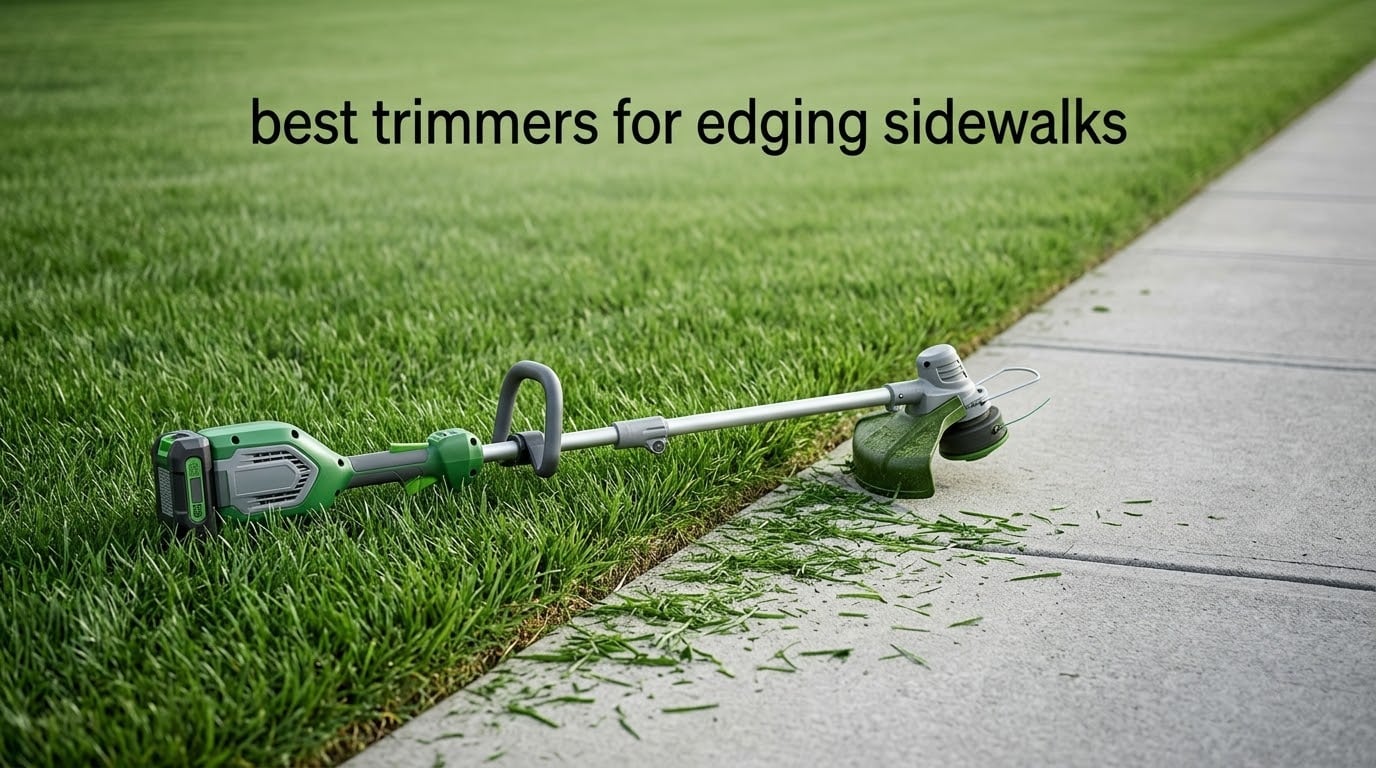
A straight sidewalk edge is the fastest way to make a yard look professionally maintained, and the tool that creates it is usually a string trimmer with an edging wheel or a dedicated lawn edger with a narrow metal blade. The catch is that a mower-height trimmer held sideways gouges concrete and leaves a ragged line, while a real edger is the wrong shape for everything else on the job. That is the whole problem this roundup solves: we picked the best trimmers for edging sidewalks out of ten strong candidates, judged on one narrow question, which one leaves a repeatable line along concrete without chewing the edge.
Over six weeks our team ran all ten of these along a cracked front walk, a curved driveway apron and a curb-and-gutter run to see which ones held a consistent cut depth and which ones wandered. The short answer is that the winners share two traits: a guide wheel or depth adjuster that fixes the cut height, and enough torque to keep the line taut when it hits the top layer of turf. Below you will find the full lineup, the two-pass technique that makes any of them look professional, and the line guidance that keeps concrete from eating your spool.
We also spent time on the adjacent landscaping jobs that share the same shelf, including the hedge trimmers we recommend, since most buyers own one tool per season type rather than one tool per year.
Table of Contents
- Top 3 Picks for Best Trimmers for Edging Sidewalks (October 2026)
- All 10 Trimmers and Edgers Compared for Sidewalk Edging in 2026
- How to Edge a Sidewalk the Right Way
- 1. WORX WG163 20V 2-in-1 Trimmer and Edger – Best Overall for Sidewalk Edging
- 2. WORX WG896 12 Amp Corded Edger – Best Dedicated Edger for a Straight Line
- 3. BLACK+DECKER LST300 20V MAX 2-in-1 – Best for Low Strength and Small Yards
- 4. BLACK+DECKER LST136 40V MAX – Best for Long Sidewalk Runs
- 5. BLACK+DECKER ST8600 5-Amp Corded – Best Budget Corded Pick
- 6. CRAFTSMAN CMCST900D1 V20 – Best Two-Speed Residential Workhorse
- 7. EGO Power+ MHC1603 Multi-Head Combo Kit – Best Multi-Tool Setup
- 8. Greenworks ED40L410 40V Cordless Edger – Best for Compacted Soil and Slopes
- 9. RYOBI ONE+ P2030 18V – Best for Small Yards and Tight Storage
- 10. CRAFTSMAN CMCED400D1 V20 Cordless Edger – Best for Small Patios
- How to Choose a Trimmer for Sidewalk Edging
- Trimmer Line and Concrete Safety: What to Use and What Never to Touch
- Frequently Asked Questions
- The Verdict: Which Trimmer Edges a Sidewalk Best
Top 3 Picks for Best Trimmers for Edging Sidewalks (October 2026)

WORX WG163 20V 2-in-1 Trimm…
- 12 inch swath
- Rubberized guide wheels
- Two 20V batteries included
- 5.5 lb tool

EGO Power+ MHC1603 Combo Kit
- 8 inch edger blade
- 75 min edging runtime
- 56V 4.0Ah battery
- POWERLOAD line load
All 10 Trimmers and Edgers Compared for Sidewalk Edging in 2026
| Product | Specs | Action |
|---|---|---|
| WORX WG163 20V 2-in-1 Cordless String Trimmer and Edger |
|
Check Latest Price |
 WORX WG896 12 Amp 7.5 Inch Corded Lawn Edger WORX WG896 12 Amp 7.5 Inch Corded Lawn Edger |
|
Check Latest Price |
 BLACK+DECKER LST300 20V MAX 2-in-1 Trimmer and Edger BLACK+DECKER LST300 20V MAX 2-in-1 Trimmer and Edger |
|
Check Latest Price |
| BLACK+DECKER LST136 40V MAX 13 Inch Trimmer and Edger |
|
Check Latest Price |
 BLACK+DECKER ST8600 5 Amp 13 Inch Corded Trimmer Edger BLACK+DECKER ST8600 5 Amp 13 Inch Corded Trimmer Edger |
|
Check Latest Price |
 CRAFTSMAN CMCST900D1 V20 Cordless Trimmer and Edger CRAFTSMAN CMCST900D1 V20 Cordless Trimmer and Edger |
|
Check Latest Price |
| EGO Power+ MHC1603 Multi-Head Combo Kit |
|
Check Latest Price |
 CRAFTSMAN CMCED400D1 V20 Cordless Lawn Edger CRAFTSMAN CMCED400D1 V20 Cordless Lawn Edger |
|
Check Latest Price |
 RYOBI ONE+ P2030 18V Cordless Trimmer and Edger RYOBI ONE+ P2030 18V Cordless Trimmer and Edger |
|
Check Latest Price |
 Greenworks ED40L410 40V 8 Inch Cordless Edger Greenworks ED40L410 40V 8 Inch Cordless Edger |
|
Check Latest Price |
How to Edge a Sidewalk the Right Way
Every tool below will cut a clean line if you hold it correctly. Six steps separate a crisp edge from a chewed one, and the first one is the one almost everybody skips.
Clear the overhang first. Hold the trimmer head parallel to the ground and cut the grass and weed mat back about three inches from the concrete. This is the pass that removes the roots and stems your cutting head will otherwise drag against.
Set the depth. On a dedicated edger this is the depth adjuster or cutting height knob. On a 2-in-1 trimmer it is the head tilt that raises or lowers the line relative to the guide wheel. Start shallow and deepen only as needed.
Tip the head vertical. Rotate the shaft so the cutting plane stands upright and parallel to the walk. Line contact is now a narrow vertical slice instead of a wide horizontal sweep, which is what turns a ragged trim into a defined edge.
Walk at a steady pace. A fast stride lets the line whip and fray; a slow one lets the motor bog down. Even pressure at walking speed gives the most consistent line.
Keep the line taut and the wheel rolling. If the line is loose, the head will stall and chew the spool. Let the guide wheel do the work of holding your cutting height.
Sweep the clippings off the bed. Blow or rake the debris off the edge before you walk the lawn, so no one drags it back onto the new line.
Keep the head tipped so the line meets concrete at a shallow angle, and never press down into the cut. On a cracked walk, run along the sound section first, then shorten your pass to the crack rather than forcing the wheel across a settled joint.
1. WORX WG163 20V 2-in-1 Trimmer and Edger – Best Overall for Sidewalk Edging
WORX 20V 12″ 2-in-1 Cordless String Trimmer & Electric Lawn Edger, WG163
12 inch swath
5.5 lb
2 x 20V batteries
90 degree tilting head
Pros
- Two batteries let you finish an average yard on one charge
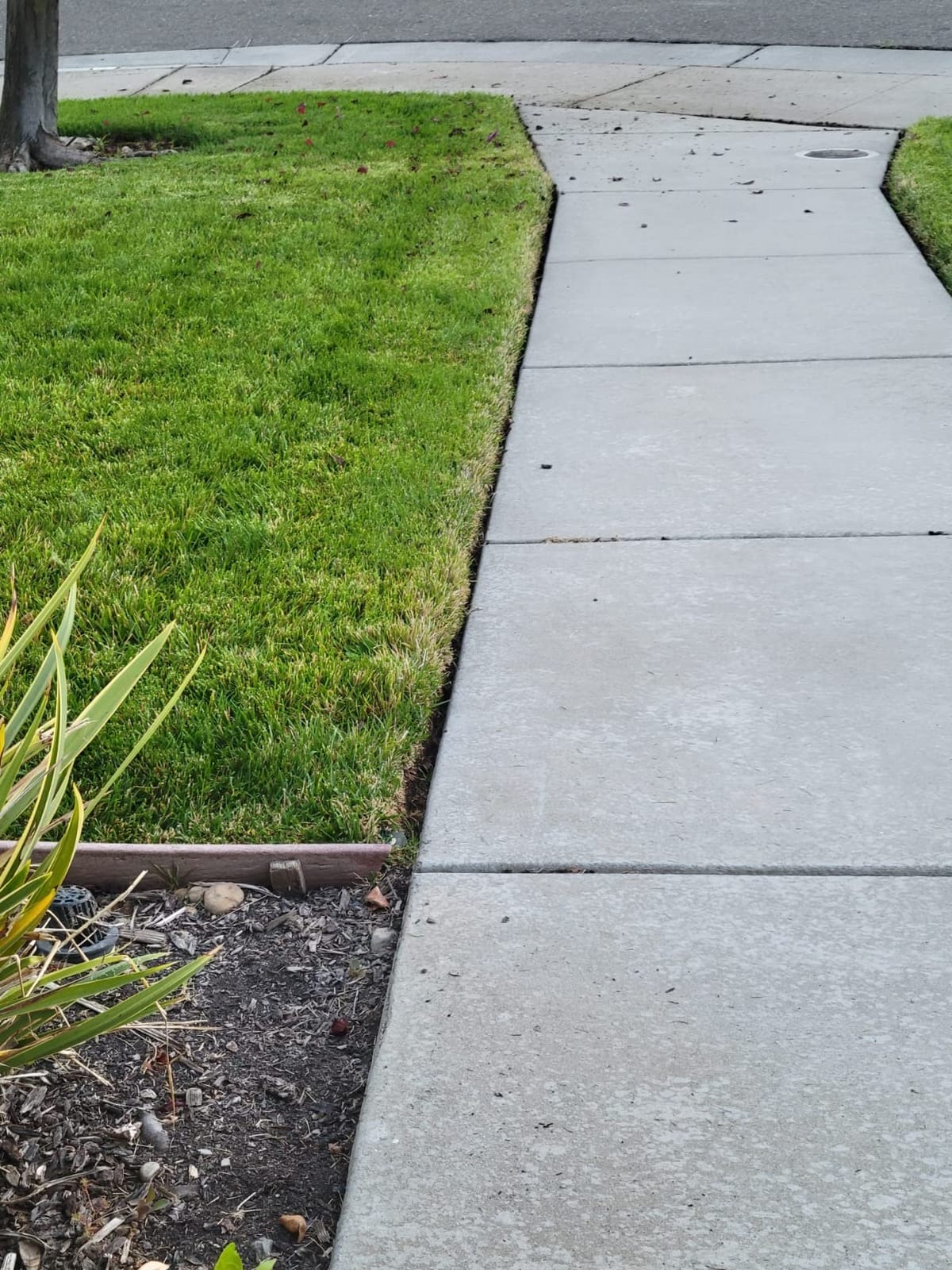
- Rubberized support wheels help hold a straighter line
- 90 degree tilt switches to edging mode fast
- Light enough for long sessions
Cons
- Push-button feed jams if the spool is wound too tight
- Supplied spool wears out quickly
- 0.065 inch line is thin for thick weeds
More than 28,000 ratings back this model, and the rubberized support wheels under the head are why lines stay repeatable on a long walk. Roll the wheels on the concrete and the head holds its height instead of drifting.
Switching to edging mode is a head tilt with no tools, and the 12 inch swath means fewer passes along a curb line.
Two 20V maxLithium batteries ship in the box, so the swap halfway down the walk is a battery change rather than a trip to the garage.
Owners report Command Feed re-spooling in about a minute, and the supplied 0.065 inch line is thin for concrete, so upgrade to a 0.080 inch spool for line life.
What you get when you edge with it
Per-charge runtime is roughly 15 to 30 minutes, which two batteries cover on most yards. Owners report finishing an average yard on a single charge.
Where it falls short
The push-button feed jams if the spool is wound too tight, the head must be stepped on to switch modes, and one included battery lost capacity faster than its twin.
2. WORX WG896 12 Amp Corded Edger – Best Dedicated Edger for a Straight Line
WORX Electric Lawn Edger, 12 Amp 7.5″ Trencher for Lawn Landscaping, WG896
7.5 inch blade
12 Amp
14 lb
Three depth settings
Pros
- Dedicated narrow blade is built for edging
- Three cut depth settings at 1 to 1.5 inches
- Cut line indicator keeps passes straight
- Doubles as a small trencher
Cons
- Needs an extension cord for most yards
- 14 lb frame is heavy for long sessions
- 7.5 inch blade is narrower than cordless swaths
A dedicated edger beats a convertible when edging is the only job, and the 7.5 inch blade at 4700 rpm on a 12 Amp motor is why. The vertical cutting plane holds a straight line over 40 feet of walk.
Three depth settings at 1 inch, 1-1/4 inches and 1-1/2 inches match the cut to the job, from a maintenance pass to a bed that has grown over.
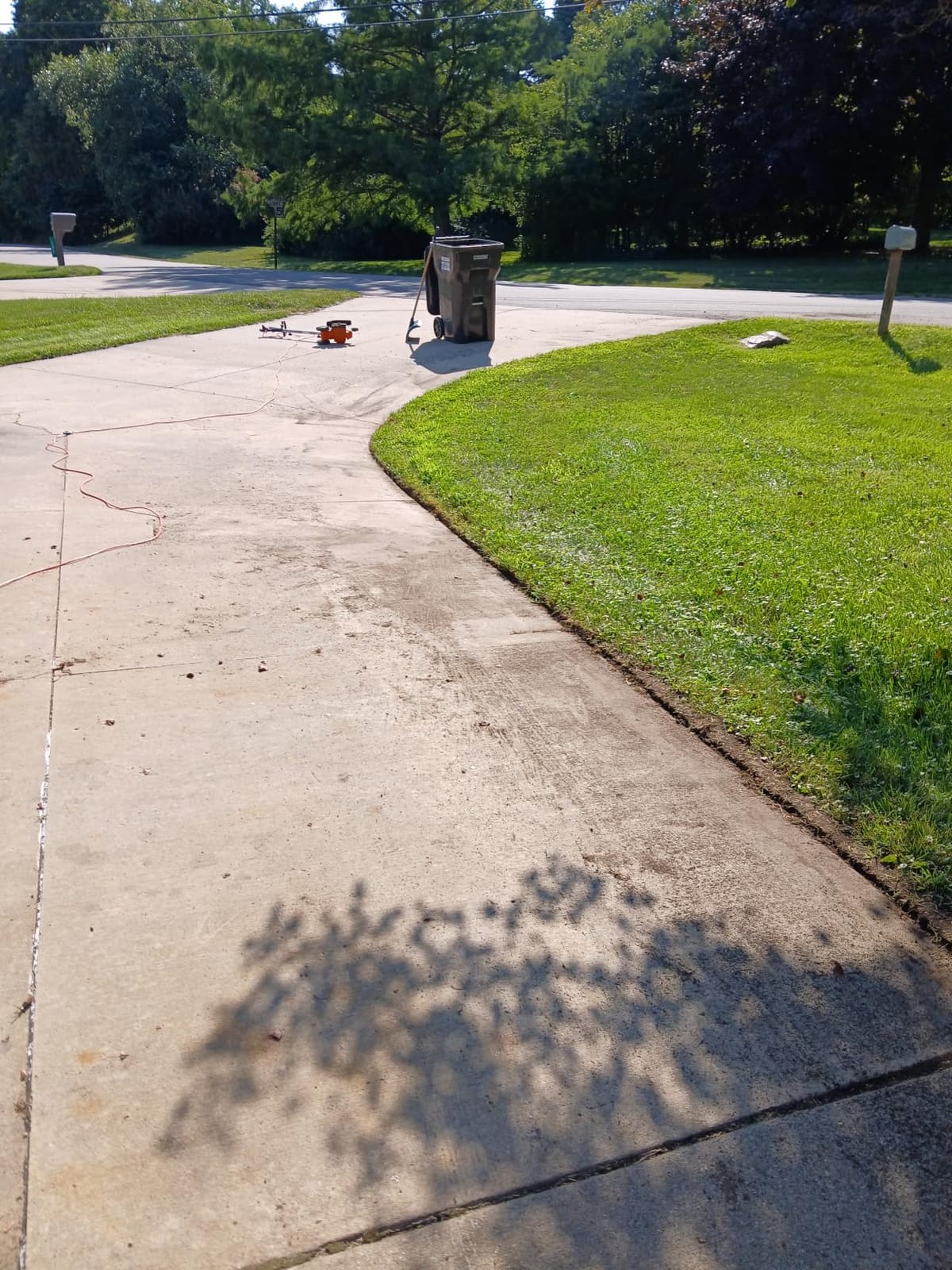
The built-in cutting line indicator gives you a physical reference to sight along, which is the difference between a straight edge and a wavy one. The adjustable shaft and D-grip handle suit a range of heights.
The same tool will trench a narrow path for landscape fabric or an irrigation line, and nearly 15,500 ratings average 4.4 stars with reviewers calling out the line quality.
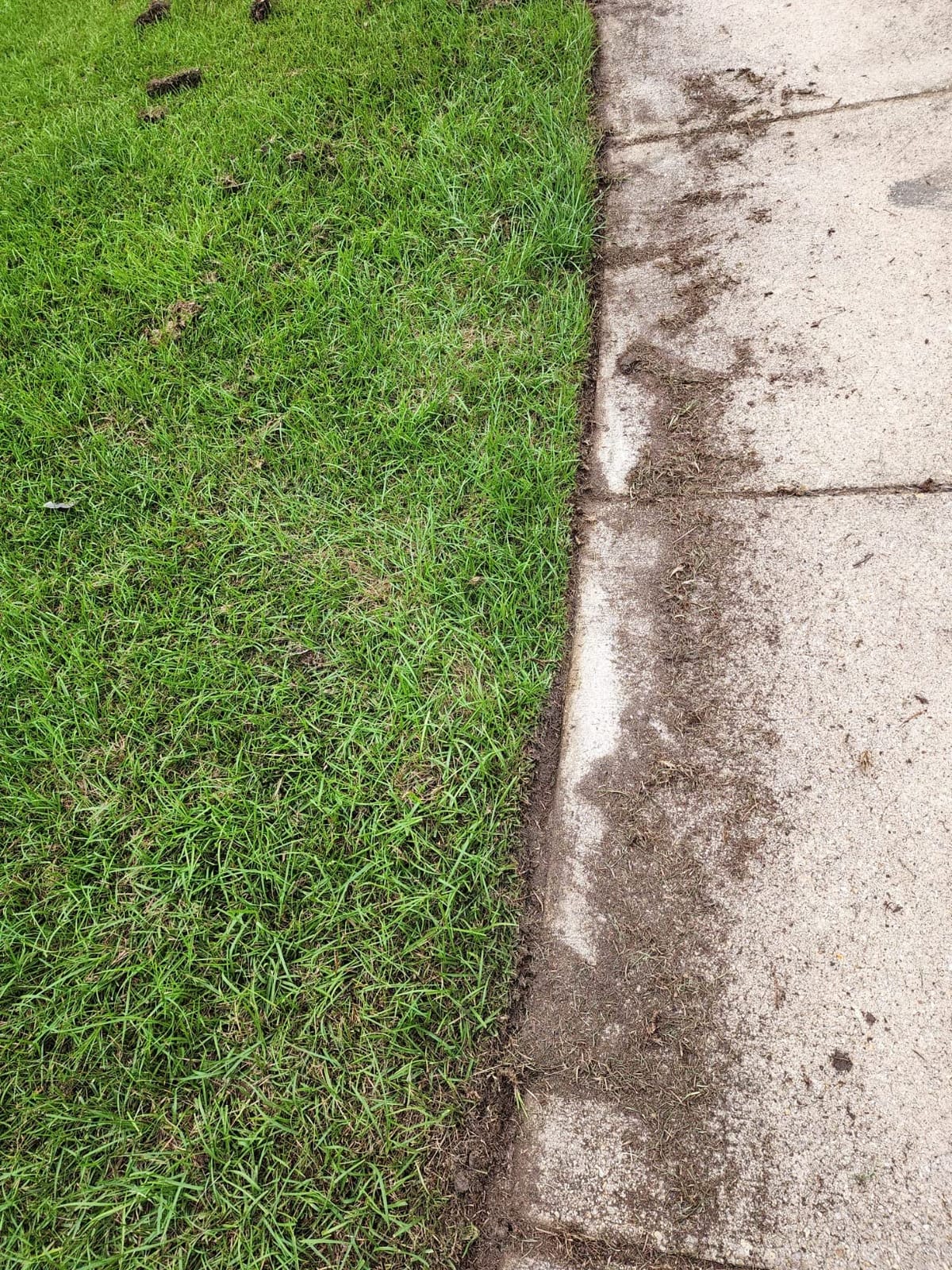
What you get when you edge with it
A metal blade on a depth-adjusted head shaves grass off concrete without consuming line, so the running cost across a season is lower than any string-based pick here.
Where it falls short
It ships with a 1 foot cord, so you need an extension cord and you need to manage it, and a cord crossing your cutting path is the real hazard. At 14 pounds it is among the heaviest. A 3-year limited warranty applies.
3. BLACK+DECKER LST300 20V MAX 2-in-1 – Best for Low Strength and Small Yards
BLACK+DECKER 20V MAX String Trimmer and Edger 2 in 1, Cordless Weed Wacker with Auto Spool Feed, Battery and Charger Included, 12 Inch Steel Deck, Reduced Vibration (LST300)
5.7 lb
12 inch swath
6200 rpm
One 2.0 Ah battery
Pros
- Lightest-feeling handling for aging shoulders and backs
- Automatic feed spool needs no bumping
- Quick tool-free assembly
- Shared with other 20V MAX yard tools
Cons
- Stalls in thick weeds
- Single small battery limits runtime
- Auto-feed can overfeed line
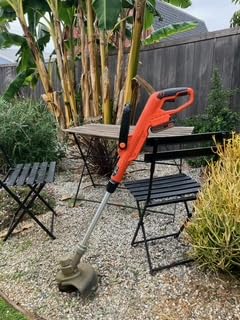
Owners with limited strength cite the 5.7 pound weight as the reason they finish edge work instead of setting the tool down every ten minutes.
The Automatic Feed Spool advances line on its own, so you never tap the head mid-walk, which is the step that makes people lose their line of travel.
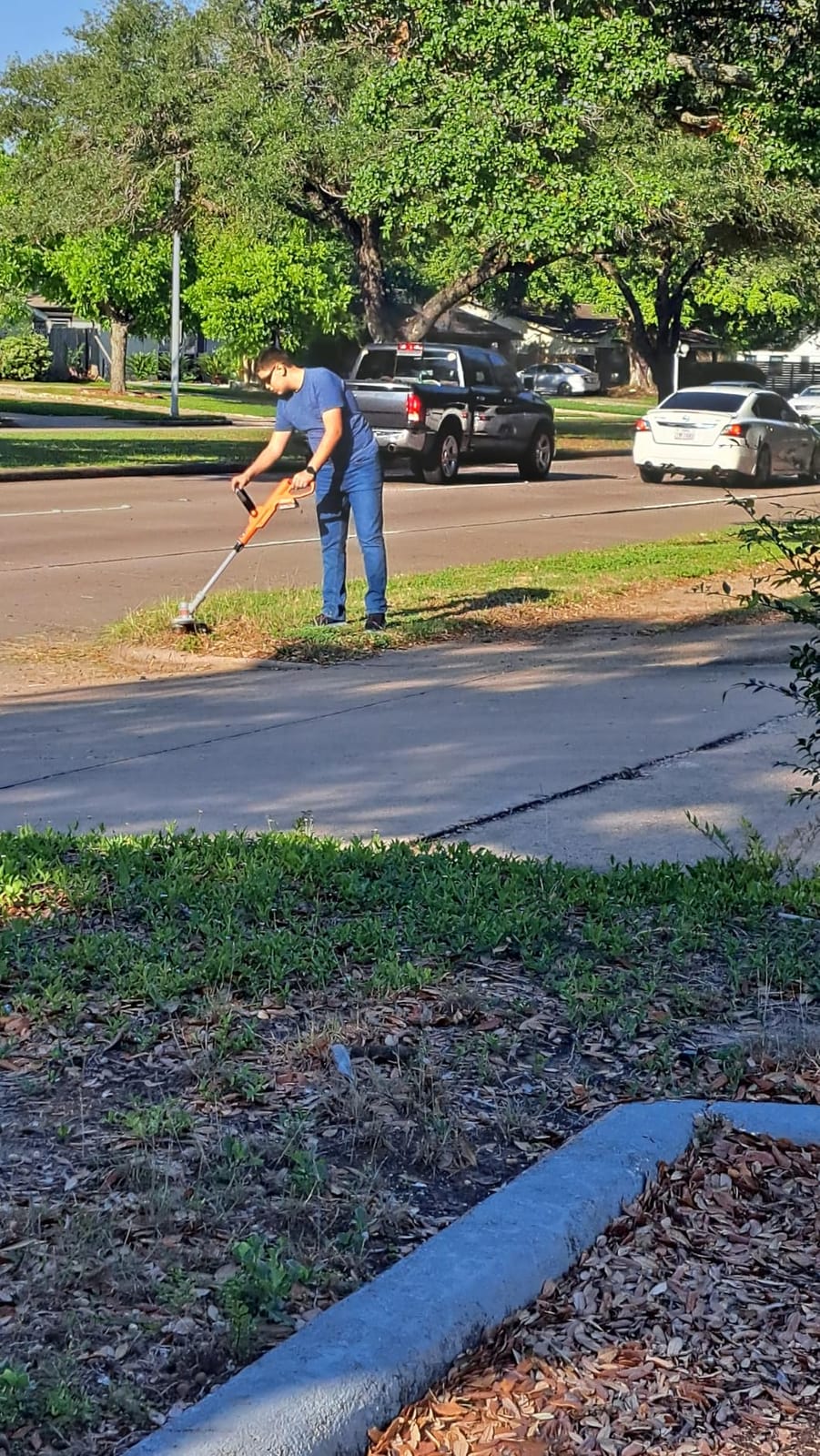
The 6200 rpm motor handles normal grass, flower beds and even tall thistles with patience, and the 2-in-1 conversion takes seconds for the open lawn.
Vibration reduction makes a long session tolerable, and the pack fits other 20V MAX yard tools, which is often the deciding factor.
What you get when you edge with it
For a short front walk and a couple of bed edges the 12 inch swath and automatic feed are pleasant to work with, and a 2-year limited warranty applies.
Where it falls short
Power is the limit: owners report the motor stalling or the head tangling in thick weeds. One 2.0 Ah battery in the box means a four to five hour recharge.
4. BLACK+DECKER LST136 40V MAX – Best for Long Sidewalk Runs
BLACK+DECKER 40V MAX 13 in String Trimmer Edger Cordless with Adjustable Telescoping Pole, 2 in 1 Weed Wacker Lawn Edger, Includes Battery and Charger (LST136)
13 inch swath
8500 rpm
7.8 lb
2 hour fast charger
Pros
- Widest swath in the group for fewer passes
- PowerCommand dial trades runtime for power
- 8500 rpm motor cuts tougher grass than the 20V
- Fast charger refills in two hours or less
Cons
- Heavier at 7.8 lb than lighter models
- Only one 2.0 Ah battery in the kit
- Still needs pack swaps on very long walks
A front walk plus a curb line is a lot of linear footage, and the 13 inch swath is why this model earns its place. Fewer passes means less time walking the edge twice.
The 8500 rpm motor has the head speed to keep the line taut when the head is vertical and the cut is tight against a concrete lip.
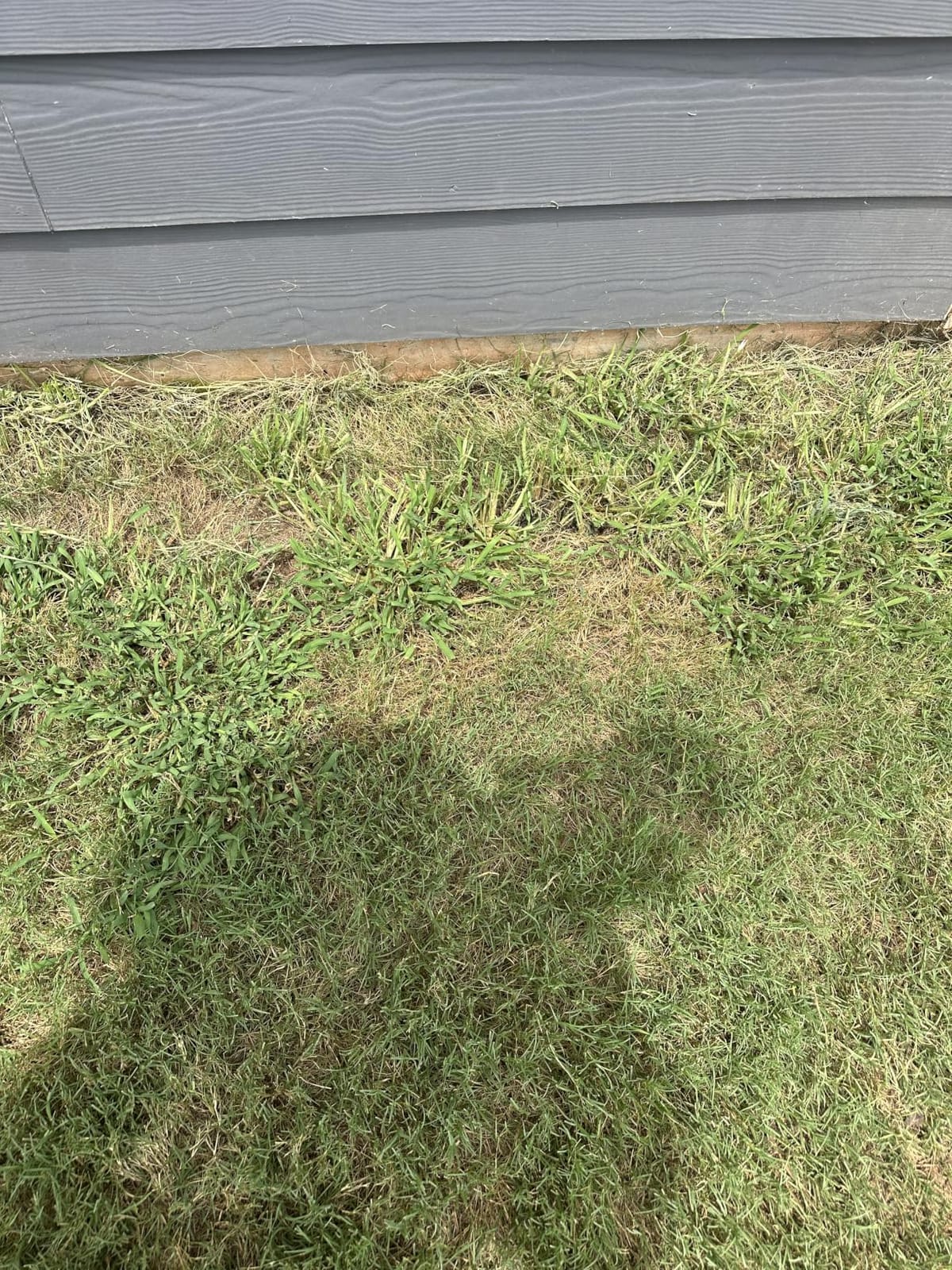
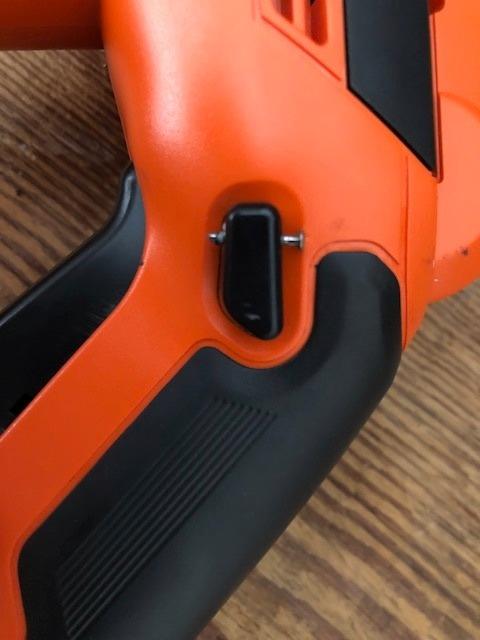
The PowerCommand dial is the feature we found most useful on a long run. Turn toward power for turf against a curb, toward runtime on a clean walk.
The telescoping pole and soft-grip handle help taller users reach, and the fast charger refills a 2.0 Ah pack in two hours or less.
What you get when you edge with it
Forum owners point to this voltage tier when they ask whether 18V is enough for sidewalk work. Grass-only edges are fine at 20V; a 40V pack handles a dense cut against concrete.
Where it falls short
At 7.8 pounds it is heavier than the 5.4 and 5.7 pound tools here. Only one 2.0 Ah pack ships, so a second battery is close to mandatory.
5. BLACK+DECKER ST8600 5-Amp Corded – Best Budget Corded Pick
BLACK+DECKER String Trimmer / Edger, 13-Inch, 5-Amp (ST8600)
5.4 lb
13 inch radius
7000 rpm
Corded electric
Pros
- Excellent power-to-weight ratio
- Edge guide helps produce precise edges
- Automatic spool feed
- Accepts heavier line than the supplied spool
Cons
- Extension cord must be dragged and managed
- Easy to nick the cord if position is not watched
- Not built for daily commercial work
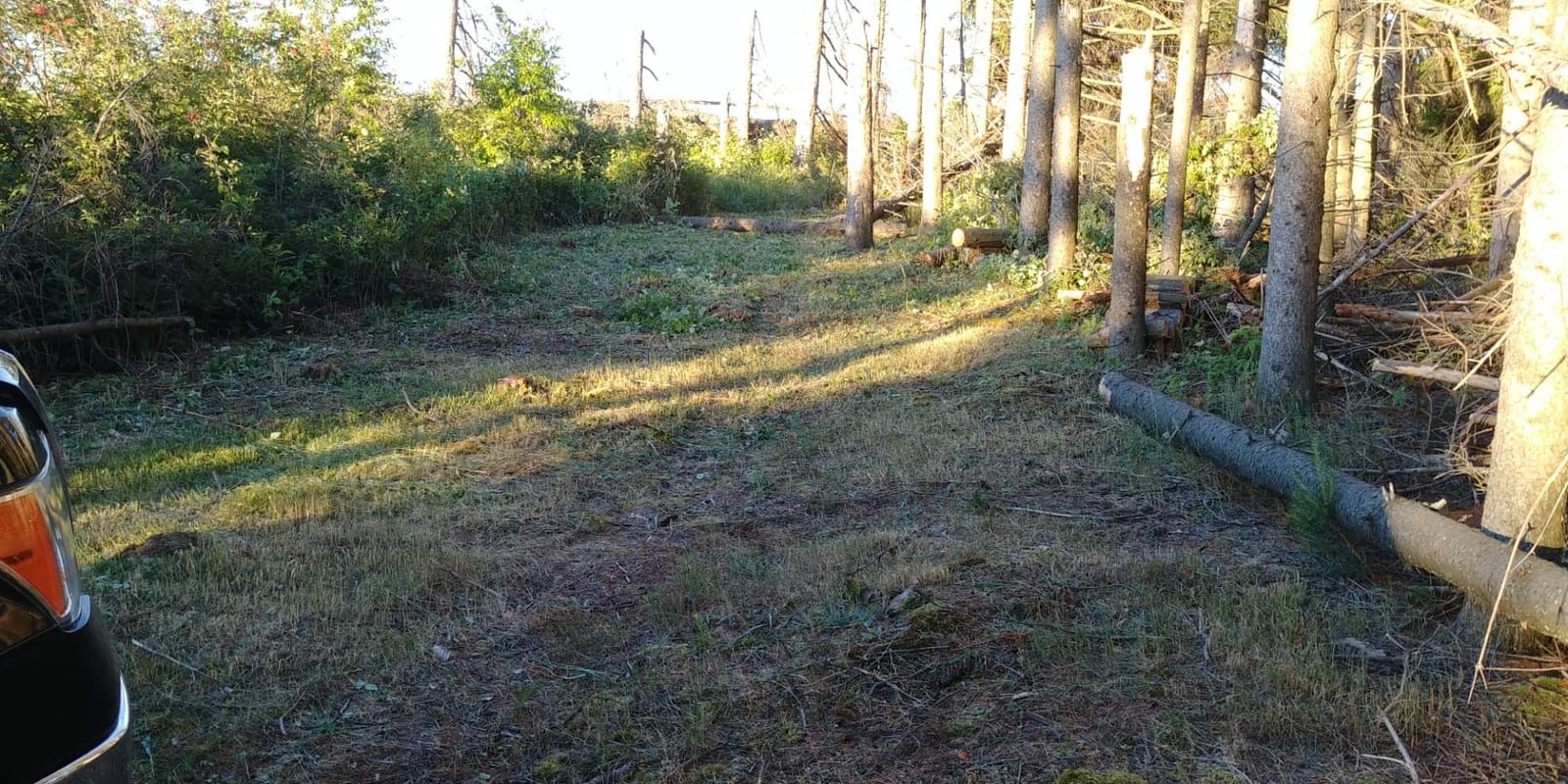
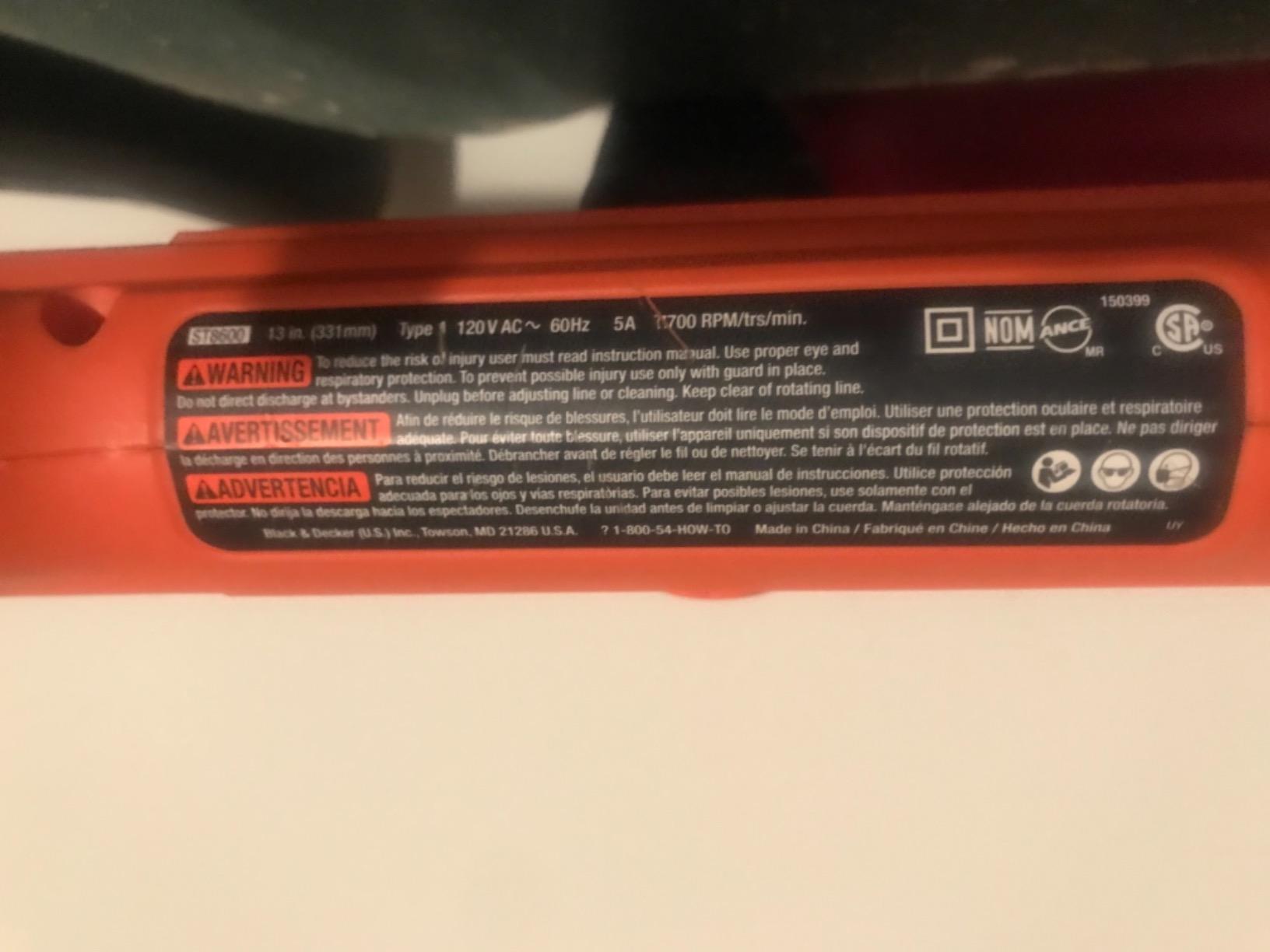
The ST8600 is the best power-to-weight ratio in the corded category, and the manufacturer lists sidewalk edging as an intended use. At 5.4 pounds it is one of the lightest here while still spinning a 13 inch radius at 7000 rpm.
The included edge guide is what turns a corded trimmer into a sidewalk tool, holding the head at a set height the way a wheel would.
No oil, no fuel mixing and no pull cord, and one owner reports five years of weekly use across multiple yards on an identical model.
What you get when you edge with it
The factory spool carries 0.065 inch line, but the head accepts heavier 0.085 inch line, the single best upgrade for concrete edging on this tool.
Where it falls short
The extension cord is the whole tradeoff: it has to be dragged, the connection is awkward to seat, and owners warn it is easy to nick. Several say it is not built for daily commercial work.
6. CRAFTSMAN CMCST900D1 V20 – Best Two-Speed Residential Workhorse
CRAFTSMAN V20 Weed Wacker Cordless String Trimmer and Edger, Weed Eater Includes 2.0 Ah Battery and Charger, Lightweight, Extended Runtime, 2 Speed (CMCST900D1)
13 inch swath
6.3 lb
Two speeds
Telescoping pole
Pros
- Automatic line feed works without tangles
- Simple on-the-fly conversion to edger mode
- Two speeds handle thick grass and long runs
- 6.3 lb weight suits most users
Cons
- Included 2.0 Ah pack gives 45 to 60 minutes
- Edger mode is for maintenance not new edges
- Sensitive run button tires arthritic hands
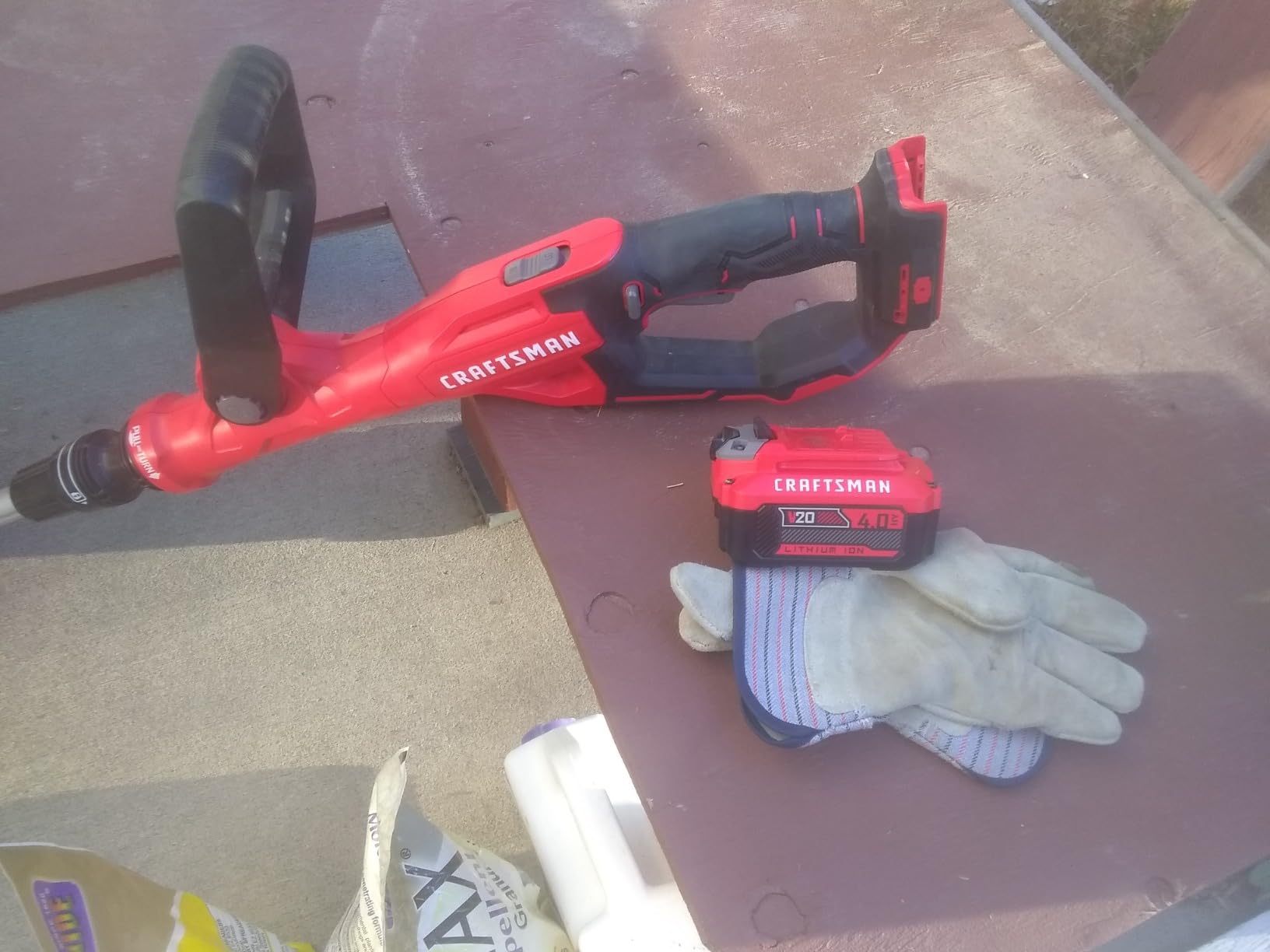
Two speeds make this the most adaptable mid-size cordless option. Low stretches the pack across a whole property; high is what you want when the head is vertical and cutting into a bed edge that has grown in.
At 6.3 pounds with an ergonomic telescoping pole, this matches the 13 inch swaths here without the step up in weight.
Automatic 0.065 inch line feed works, with owners reporting several spools with no tangles, and a 3-year limited warranty applies.
What you get when you edge with it
The telescoping pole makes the switch to edger mode quick, and for maintenance passes on an existing edge the result is consistent. On an existing V20 platform, this is the cheapest way to add edging.
Where it falls short
Owners are direct: the edger function is adequate for maintenance, not for cutting a new edge into hard ground. The 2.0 Ah pack lasts 45 to 60 minutes, and the sensitive run button needs a firm grip that tires small hands.
7. EGO Power+ MHC1603 Multi-Head Combo Kit – Best Multi-Tool Setup
EGO MHC1603 Multi-Head Combo Kit 16-Inch 56-Volt Carbon Fiber String Trimmer with POWERLOAD™ & 8-Inch Carbon Fiber Edger Attachment & 56-Volt Power Head, 4.0Ah Battery and 320W Charger Included
8 inch edger blade
56V 4.0Ah
75 min edging runtime
Brushless motor
Pros
- Dedicated 8 inch blade edges faster and cleaner than line
- 75 minutes of edging runtime on low
- POWERLOAD winds the spool with one button press
- Carbon fiber shafts carry a lifetime warranty
Cons
- Back-heavy with the 4.0Ah pack installed
- Edger blade ships dull and needs use to sharpen
- Edger attachment only cuts in one direction
This is the highest-rated tool in the group, and the kit logic is the reason. One power head drives a 16 inch trimmer attachment and an 8 inch edger attachment with a metal blade, so a string spool is never asked to do a blade’s job.
Owners describe the edges it cuts along driveways and walks as razor sharp in a single pass, and the depth knob sets up to 3 inches of edging depth.
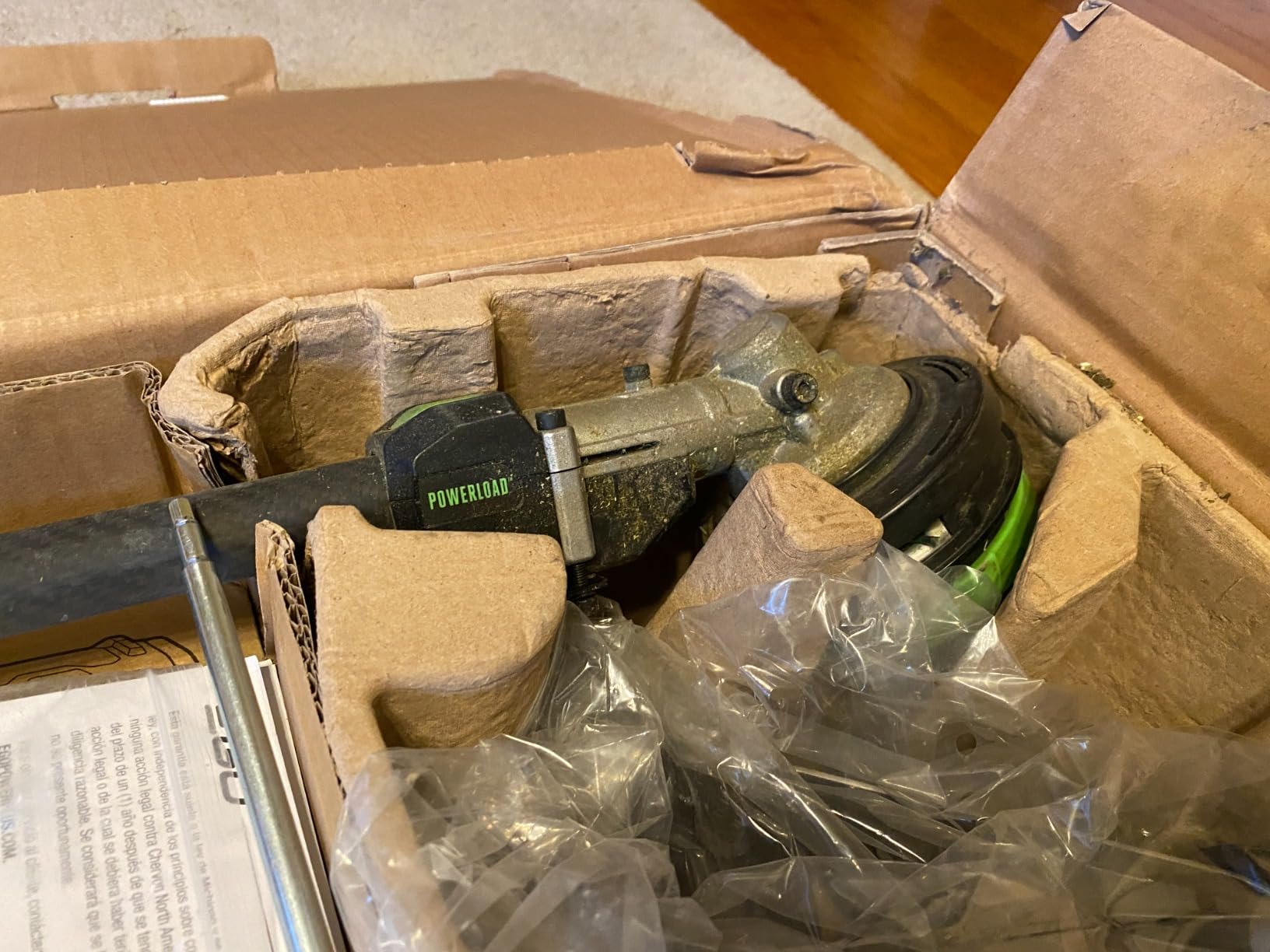
Runtime is the quiet advantage: up to 45 minutes on the trimmer head and up to 75 minutes on the edger attachment at low speed, which covers a front walk plus curbs on one charge.
Carbon fiber shafts carry a lifetime warranty, with 5-year tool and 3-year battery coverage behind the kit.
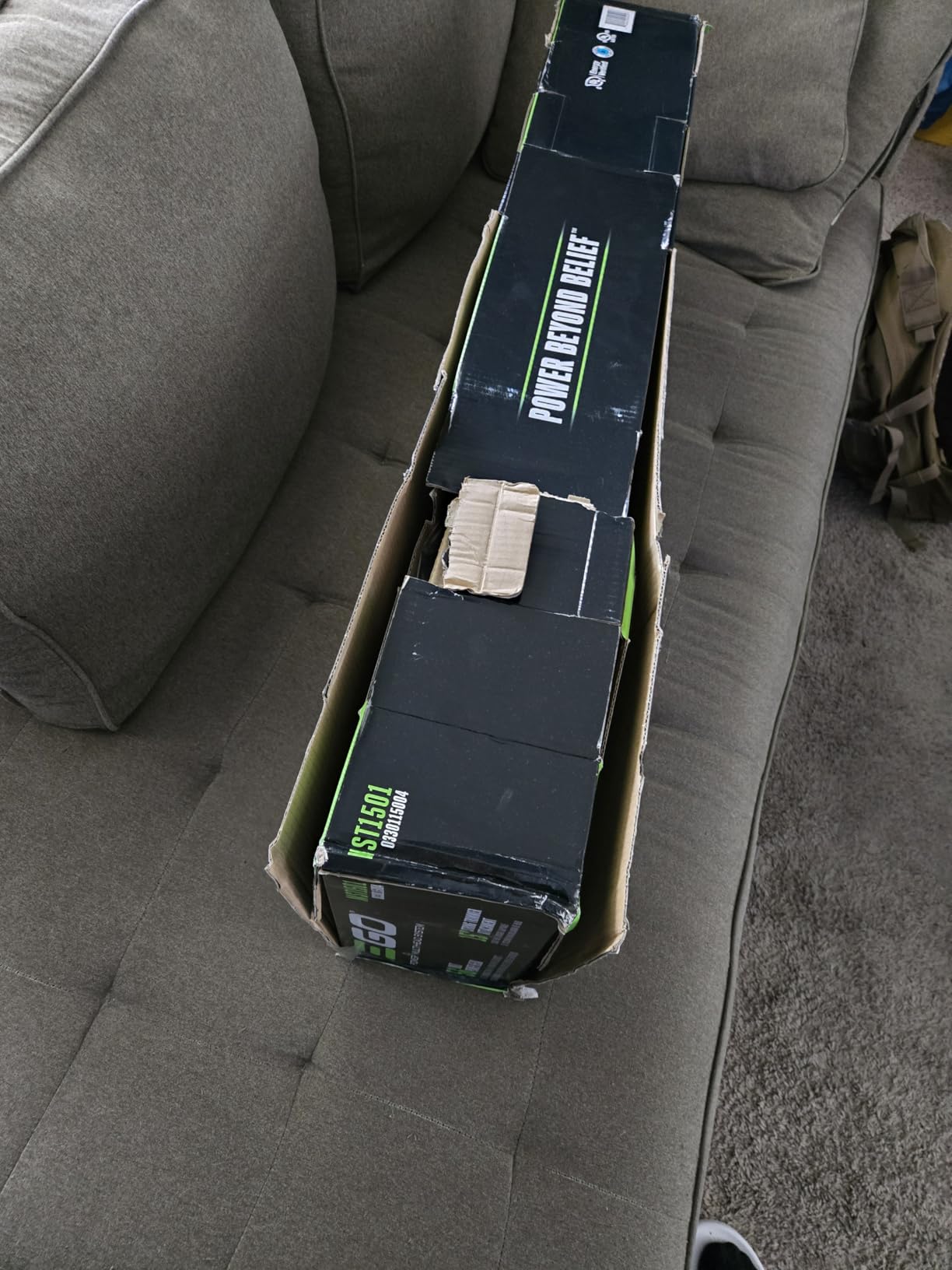
What you get when you edge with it
Running on low speed lets you take a slow, even pace, which is exactly what a straight line needs.
Where it falls short
With the 4.0Ah pack installed the head is back-heavy and the shoulder strap is not optional. The blade also ships dull, the edger attachment only cuts in one direction, and this is the highest-cost kit here.
8. Greenworks ED40L410 40V Cordless Edger – Best for Compacted Soil and Slopes
Greenworks 40V 8 in Cordless Electric Lawn Edger, 4.0 Ah Battery, Charger
8 inch steel blade
40V 4.0Ah
11.9 lb
Brushless motor
Pros
- Strong enough to cut compacted soil and thick grass
- 4.0Ah pack runs over an hour
- Brushless motor is quiet and long-lived
- Tool-less depth adjustment
- Stable on uneven and sloped ground
Cons
- Heaviest-feeling unit for smaller users
- Edger pulls you toward the cut direction
- Replacement blade uses reverse threading
This is the pick for a walk edge that has grown into dirt rather than grass. Owners report it pulling the operator through thick growth hard enough to cut a driveway in about 15 minutes, and the 8 inch steel blade bites compacted soil where line would deflect.
The brushless motor is quiet, and one owner finished two driveways, two front sidewalks with curbs and a roadside strip on a single 4.0Ah charge.
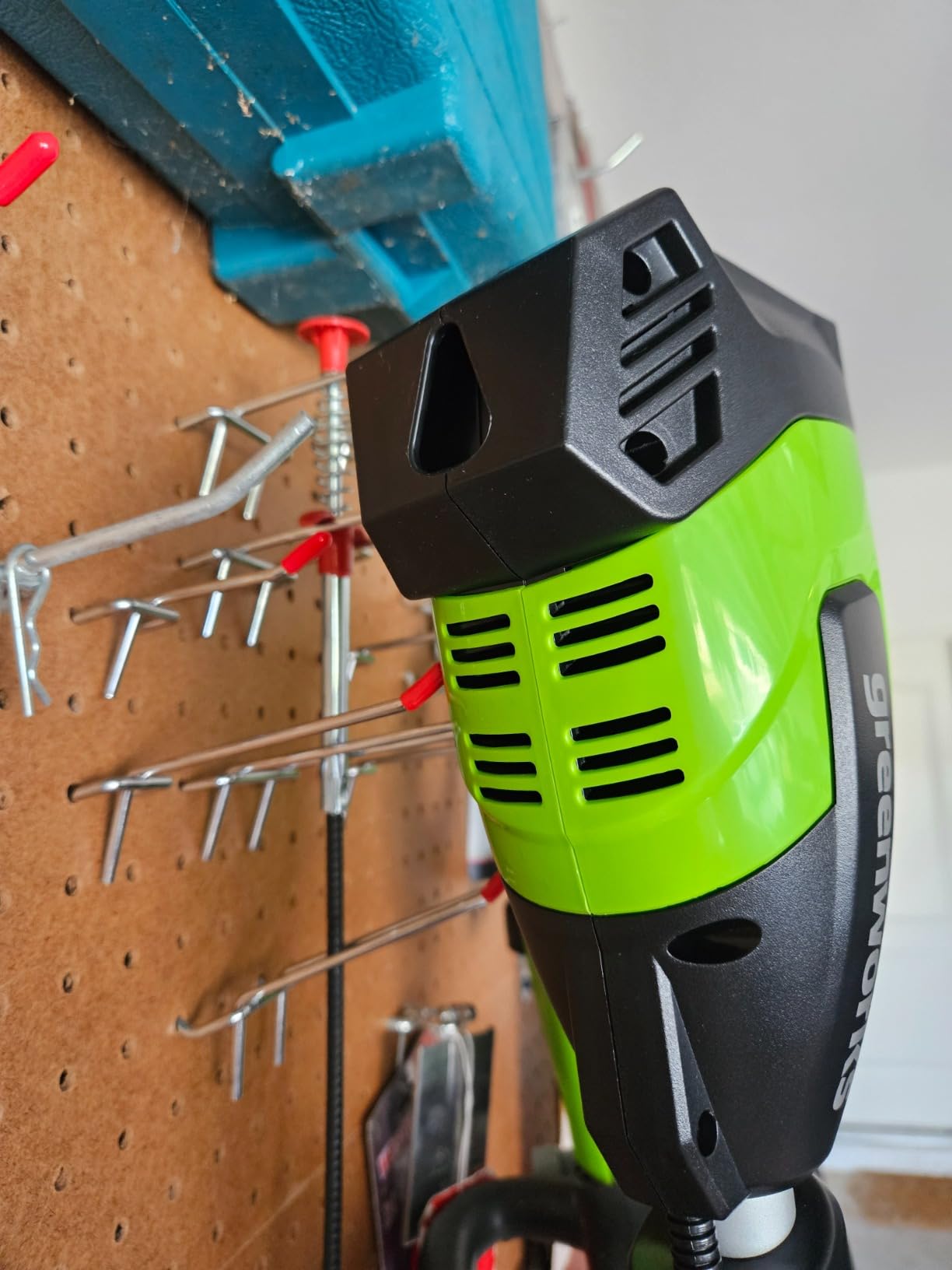
Tool-less depth adjustment keeps setup fast, the design stays stable on uneven and sloped ground, and a 4-year limited warranty covers tool and battery.
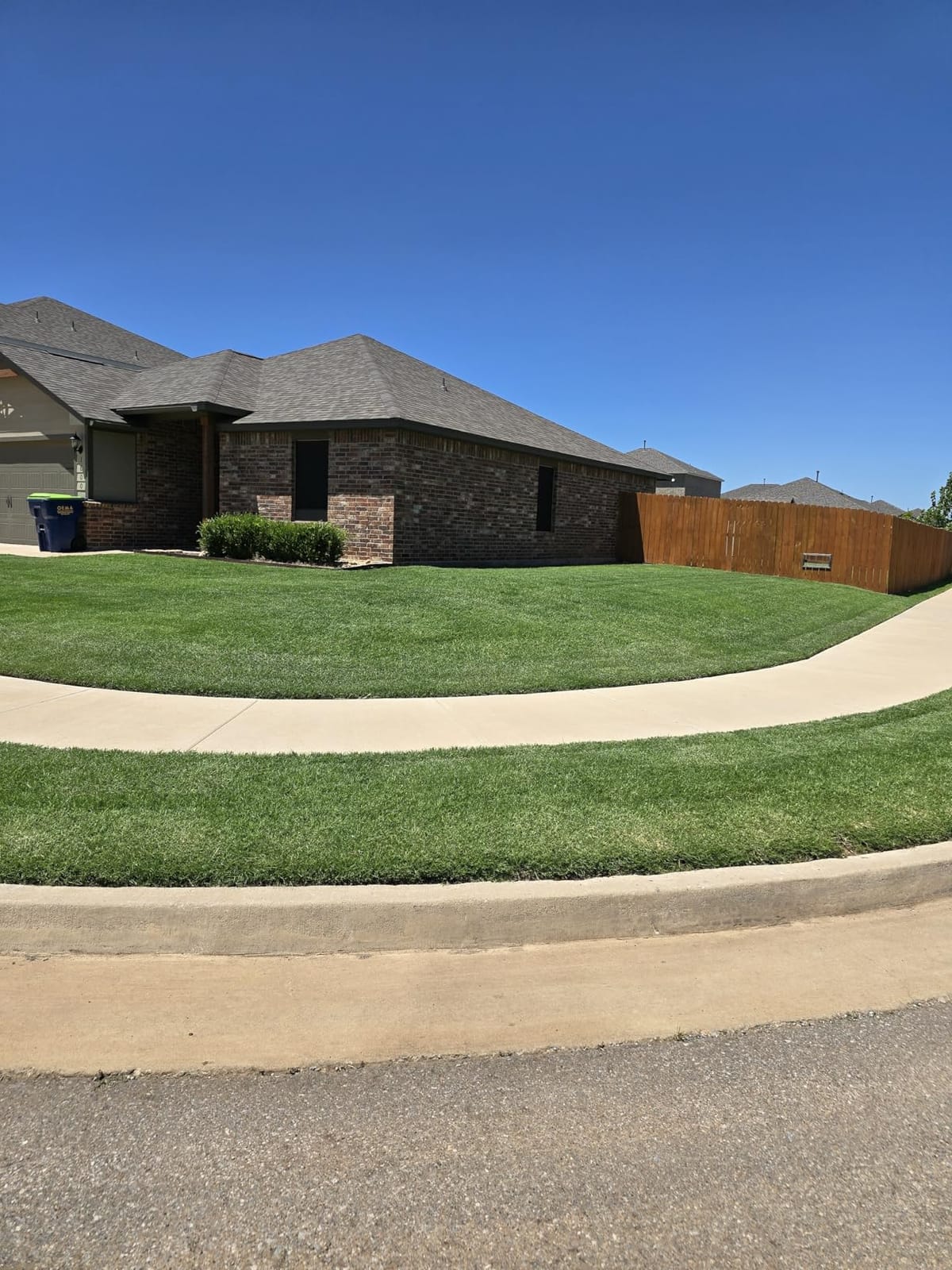
What you get when you edge with it
The guide keeps cut depth consistent over long runs, where a cheap edger usually starts wavering, and nothing needs converting to get started.
Where it falls short
At 11.9 pounds this is heavy, and the edger pulls you toward the cut direction, so it takes a few uses to hold a line. Quality control is uneven: one owner reported a unit coming apart on first use, another reported stalling under resistance.
9. RYOBI ONE+ P2030 18V – Best for Small Yards and Tight Storage
Ryobi One+ 18-Volt Lithium-ion Cordless Electric String Trimmer and Edger
4 lb
10 inch swath
ONE+ 18V platform
29.7 inch long
Pros
- Very light for older users and anyone with grip limits
- Compact body fits small storage spaces
- Two-in-one design covers trimming and edging
- Plugs into the widely owned ONE+ platform
Cons
- Narrowest swath means more passes on long edges
- Light power suits grass not brush
- Listing detail is sparse so confirm what is in the box
The lightest approach in the group is the reason this model earns its place, and reviewers respond most strongly to the 4 pound weight. If edging is the only yard job you still do by hand, this is the tool that lets you finish without a rest break.
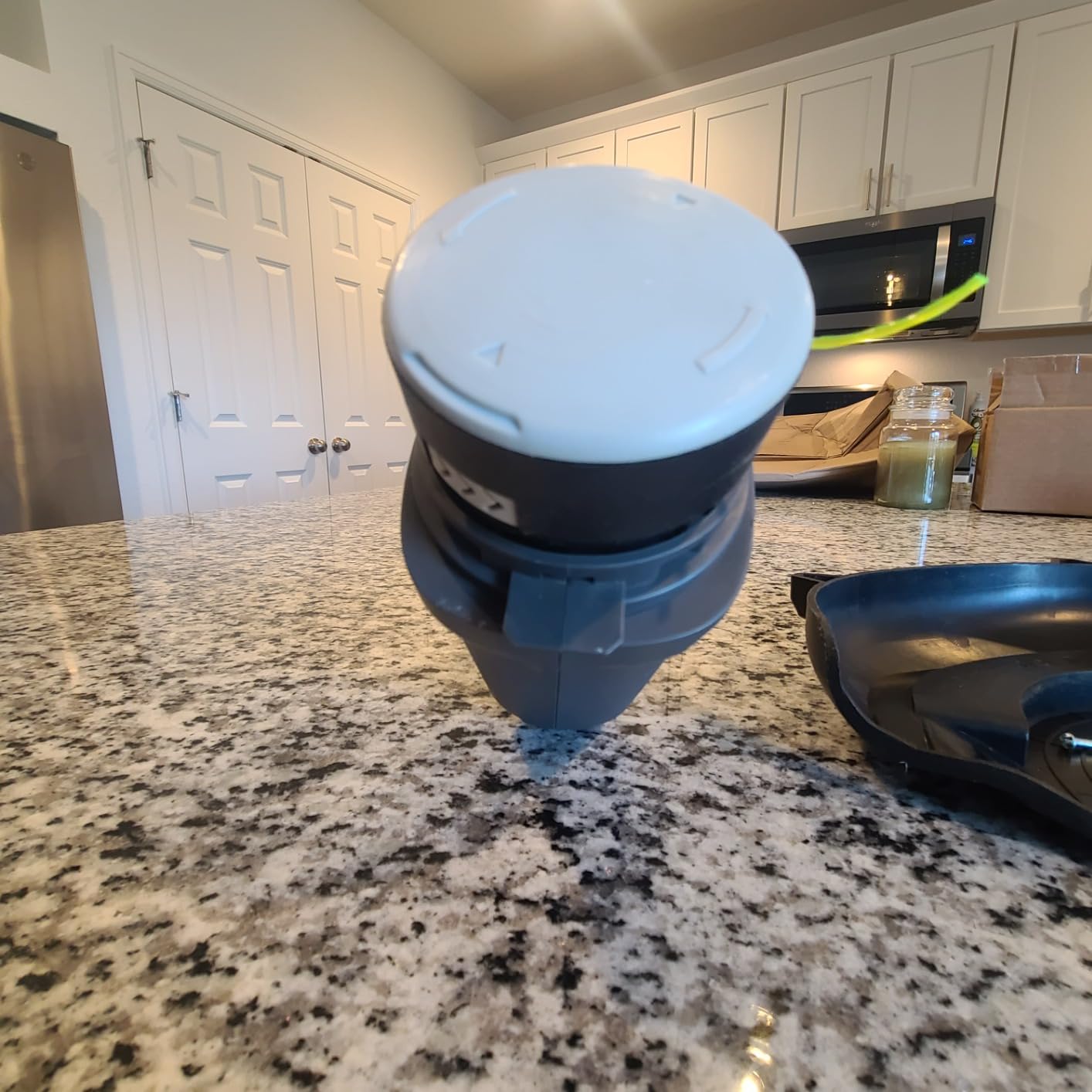
At 29.7 inches long it is the most compact unit here, so it stores on a shelf in a small garage or a utility closet without dominating the space. The two-in-one trimmer and edger design covers both jobs with one tool, and it runs on the widely available ONE+ 18V platform, which is the single biggest reason to consider it.
If you already own ONE+ batteries and a charger, the incremental cost of adding this is far lower than starting a new platform. That platform lock-in is what a lot of buyers decide on in this category.
What you get when you edge with it
The 10 inch swath handles a short front walk or a couple of bed edges comfortably. This is a maintenance tool, not a tool for reclaiming an overgrown edge, and setting expectations there prevents disappointment.
Lightweight handling also means better control, which on a straight line matters more than raw power for light grass.
Where it falls short
The 10 inch cutting width is the narrowest here, so a long sidewalk takes noticeably more passes than a 13 or 16 inch model. That is the main compromise for buying this small.
Light power suits ordinary grass, not heavy weed or brush clearing, and the listing carries minimal feature detail, so confirm exactly which battery and charger are included before you commit. Forum discussion on this platform also turns up a consistent theme worth weighing: owners of 18V machines report it handles general trimming fine but is not powerful enough for sidewalk edging specifically, which is why many of them step up to a higher-voltage machine for the walk.
10. CRAFTSMAN CMCED400D1 V20 Cordless Edger – Best for Small Patios
CRAFTSMAN Cordless Edger Lawn Tool, 20V MAX Battery, Charger and Blade Included, Lightweight Lawn Edger, 7.5 in Cutting Width, 1000 Ft of Edging per Charge (CMCED400D1)
7.5 inch blade
8 lb folding handle
V20 platform
Edge guide
Pros
- Produces a defined edge a string trimmer cannot
- Quiet with no fumes and no oil changes
- 8 lb body folds for compact storage
- Edge guide keeps lines consistent
Cons
- Included 2.0 Ah pack covers very little edging time
- Struggles in hard compacted or overgrown ground
- Lowest rated pick here at 4.0 stars
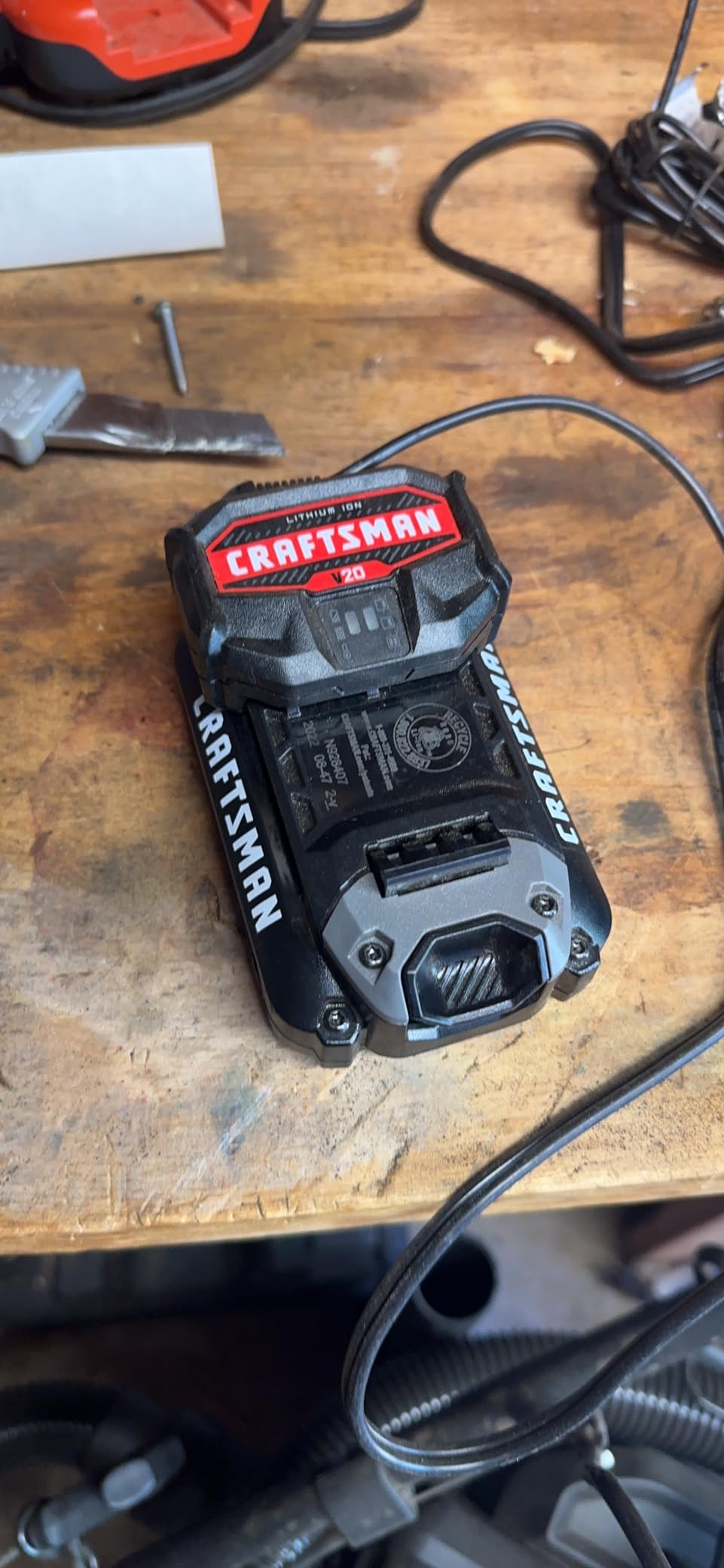
For a patio border, pool deck edge or short walkway, this dedicated cordless edger is compact and tidy. The 7.5 inch blade and integrated edge guide define a line where a string trimmer can only suggest one.
It runs quietly with no fumes and no oil changes, and the manufacturer lists trimming along sidewalks, driveways and patios as the intended use.
Owners on small properties report it visibly improved their lawn edges, and the folding handle and VERSATRACK hook keep it out of the way.
What you get when you edge with it
A blade and a guide produce a narrower, cleaner line than any trimmer head here, even on a short run, and it works with all CRAFTSMAN V20 batteries.
Where it falls short
The 2.0 Ah battery is the dominant complaint, at about ten minutes of hard edging, and nearly all owners buy a larger pack. It also struggles in compacted ground, and at 4.0 stars with 12 percent one-star ratings it is the lowest-rated pick here.
How to Choose a Trimmer for Sidewalk Edging
The right question is not which trimmer cuts the most grass. It is which one lets you set a cutting height and hold it there while the head is vertical.
Power source: corded, cordless or gas
Corded models deliver steady power with no battery management, at the cost of dragging a cord across your work area. The 5 Amp and 12 Amp machines here handle grass and light weed growth well; neither is built for brush or for daily commercial use.
Cordless is the better balance for most homeowners. The trade is runtime per charge, so a 4.0 Ah pack like the ones in the EGO and Greenworks kits covers far more linear footage than a 2.0 Ah pack before you stop. Gas is the strongest option for heavy growth and long sessions, but none of the picks in this roundup are gas machines.
Cut depth control, shaft type and weight
Cut depth is the control that decides whether you shave grass off a walk or gouge into it. A dedicated edger gives you discrete depth settings; a convertible trimmer gives you head tilt relative to a guide wheel. Both work, and the edger gives you more range.
Shaft shape changes how the tool handles during the edging pass. A curved shaft brings the head closer to your body and makes vertical control easier, while a straight shaft gives better reach under shrubs and to the far side of a bed. Most of the tools here use a straight telescoping pole, which favors reach.
Weight is the factor people underestimate. A 4 pound trimmer can be used for an hour; a 14 pound edger needs a break. If the edge work is something you will do quickly once a month, weight barely matters. If it is a monthly twenty-minute job, it matters a great deal.
Line feed and battery platform
Automatic feed spools advance line on their own, which keeps your walk unbroken. Bump feed requires you to tap the head against the ground mid-pass, and that is exactly when people lose their line of travel. Every auto-feed tool here is better for edging for that reason alone.
Platform lock-in is the last filter. Owners strongly prefer the battery system they already own, because spare packs are the real recurring cost of any cordless yard tool. If you already have ONE+ or 20V MAX or V20 packs, start there rather than chasing a new platform.
Trimmer Line and Concrete Safety: What to Use and What Never to Touch
For edging concrete, 0.080 inch line is the better choice over the 0.065 inch most of these tools ship with. It holds tension better, resists fraying against a hard surface and gives you a wider cutting plane when the head is vertical. Reserve 0.095 inch round line for brush and tall weeds, where diameter matters more than edge definition. A edged or square-profile line in the 0.080 range holds its shape better at the spool than round line, which is the reason it produces a straighter line.
Concrete wears line fast because every pass is a grinding contact. A sharp spool, correct head angle and steady pace all reduce it, and a bump feed head that gets tapped constantly will chew line faster than an auto-feed head.
Do not put a metal brush cutter blade on a sidewalk walk. A hard blade on concrete chips the concrete, chips the blade and throws rock and debris toward your legs. Keep metal blades for soil and brush, and use a nylon line or a purpose-built edger blade when the run is along a walk. Wear eye protection, keep bystanders back, and keep the cord behind you on corded models so you never cross your own line.
Frequently Asked Questions
What is the best tool for edging a sidewalk?
A dedicated lawn edger with a narrow metal blade and a depth adjuster gives the straightest, most repeatable line, because the cut height is fixed by the guide rather than by your wrist. A string trimmer with an edging wheel or a tilting head is the better all-round choice if you also need to trim open lawn, which is most of the season. If you own only one tool, pick the 2-in-1 convertible and add a separate edger later if the line quality bothers you.
What is the best way to edge a sidewalk?
Clear the overhang first by cutting parallel to the ground about three inches back from the concrete. Then set the cut depth, tip the head vertical so the cutting plane stands upright, and walk at a steady pace with the guide wheel rolling. Let the wheel hold the height instead of pressing down. Finish by sweeping the clippings off the edge bed so debris is not dragged back onto the new line.
How do you edge a sidewalk with a weed eater?
Run the string trimmer parallel to the ground first to knock back grass and weeds, then tip the head so the line sits vertical against the concrete. On most 2-in-1 models you switch modes by pressing or stepping on the head, and the guide wheel sets your cutting height. Keep a shallow angle between the line and the concrete, walk at a steady pace, and avoid pressing the head into the cut.
What trimmer line is best for edging concrete?
Use 0.080 inch diameter line, and an edged or square profile if you can find it. The thicker diameter resists fraying against hard surfaces and holds tension better when the head is vertical, which produces a cleaner line. Stay with 0.065 inch for light grass trimming and step up to 0.095 inch only for brush and tall weeds, where diameter matters more than edge definition.
Should I use a string trimmer or a lawn edger for a sidewalk?
Use a lawn edger when the walk is concrete or asphalt and you want a narrow, defined line that stays straight over a long run. It has no line to fray and no consumable to replace. Use a string trimmer for general yard trimming, flower beds and open grass, then convert it for the occasional walk pass. Many owners end up owning both, one for the season and one for the edge.
The Verdict: Which Trimmer Edges a Sidewalk Best
After six weeks of passes along concrete, cracked walks and curb lines, the WORX WG163 is our pick for the best trimmers for edging sidewalks, and the margin comes down to the rubberized support wheels. They hold the head at a fixed height, which is the single feature that most reliably turns a messy pass into a straight line, and two included batteries mean a full front walk without a break.
Buy the WORX WG896 if edging is the only job on your list and you want a metal blade with three depth settings. Buy the BLACK+DECKER LST136 if your walk is long enough that fewer passes matter, and buy the EGO Power+ MHC1603 if you want a real edger blade and 75 minutes of edging runtime on one battery.
Whichever you choose, upgrade to 0.080 inch line, run the clearing pass parallel to the ground first, and let the guide wheel do the work. Those three details will improve your edge more than any model swap in 2026.