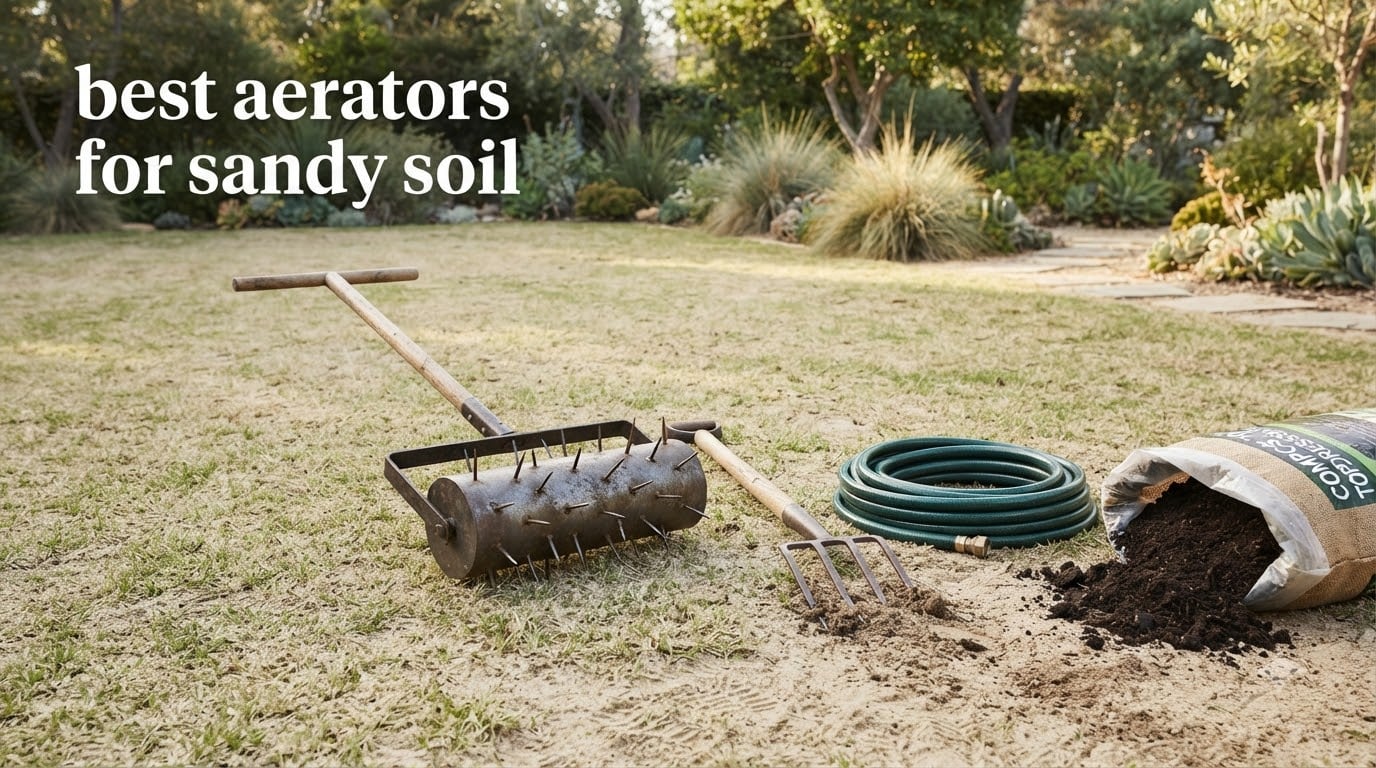
Yes, but not for the reason most lawn guides give. Sandy soil does not compact the way clay does, so the usual justification for aeration is missing from your yard. What sandy lawns actually suffer from is a surface problem: a dense, water-repellent crust that sheds irrigation instead of absorbing it, plus standing water in low spots after heavy rain. Breaking that crust is exactly what a spike aerator does, which is why solid-tine tools lead our list of the best aerators for sandy soil in 2026.
Over several weeks we worked through twelve manual, rolling, tow-behind and liquid aeration tools with one question in mind: which of them actually improves water movement in loose sand without leaving a mess of plugs across the lawn. Six are hand tools, two are spike shoes, one is a rolling unit, one is a tow-behind machine and one is a liquid soil loosener, so this list covers everything from a small patch to a full acre.
A note before we start. If you have read anything claiming spike aerators suit clay, that advice is backwards for most yards. Spike aeration works by displacing soil sideways to open channels, and clay has nowhere for that soil to go. Sand is already loose, so the tines pass through easily and the channels stay open. Core aeration still makes sense in specific situations, and we cover those, but the default tool for sand is a spike.
We also spend a lot of time on a different kind of aerator on this site. You can see our wine aerator roundup if you are curious, but for lawns the difference between a hollow tine and a solid spike matters far more than any other spec.
Table of Contents
- Top 3 Best Aerators for Sandy Soil (October 2026)
- 12 Aerators for Sandy Soil at a Glance in 2026
- Why Sandy Soil Needs a Different Kind of Aerator
- Confirm Your Soil Before You Buy: Three Tests
- Spike vs Core Aerator for Sandy Soil
- 1. Yard Butler ID-6C Manual Lawn Coring Aerator – Best Overall for Sandy Soil
- 2. Walensee 4-Row Aerator with 20 Steel Spikes – Top Rated for Small Yards
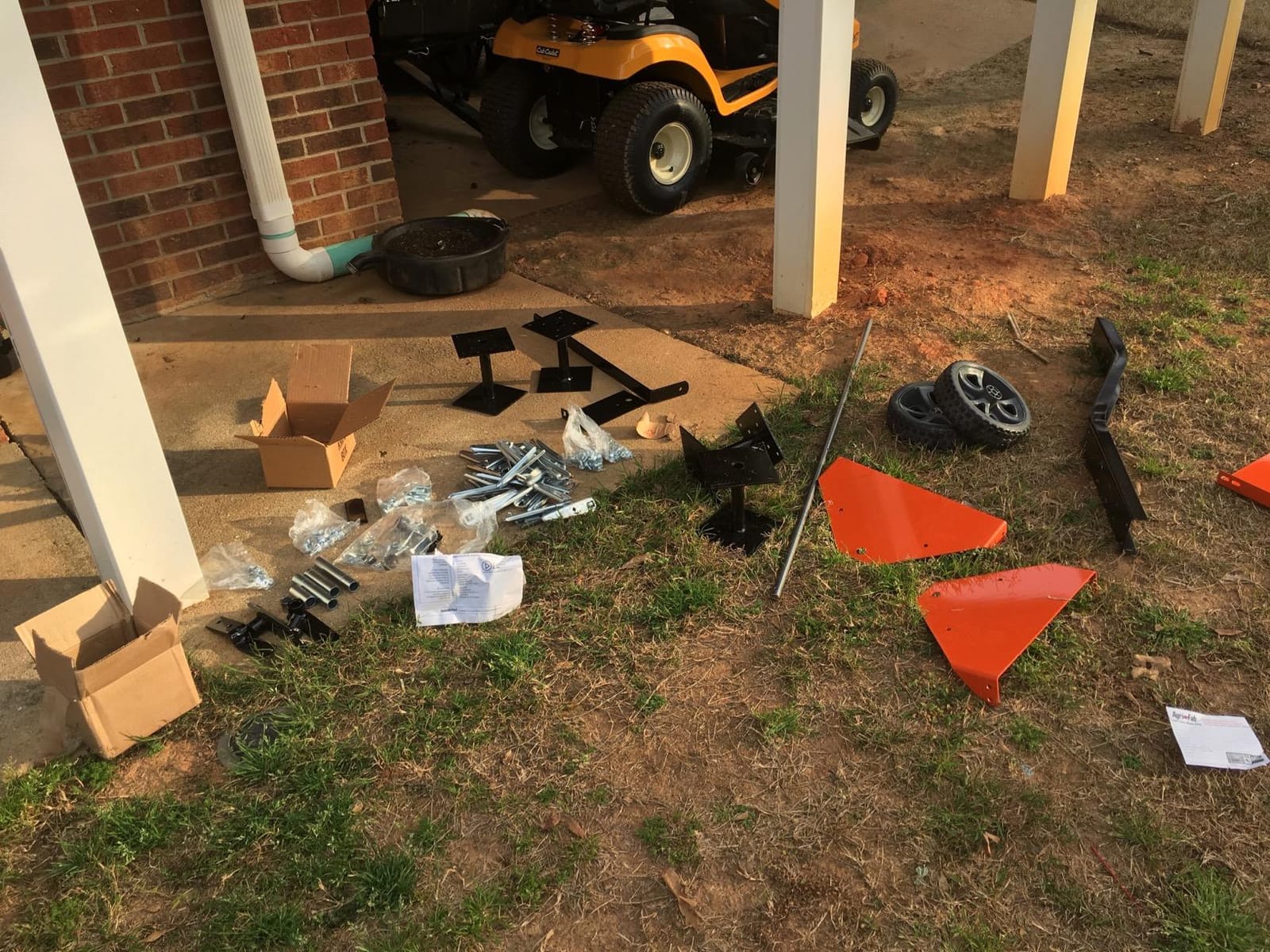
- 3. Agri-Fab 48 Inch Tow-Behind Plug Aerator – Best Value for Large Sandy Yards
- 4. DenForste Pre-Assembled Aerator Shoes – Budget Pick for Tiny Patches
- 5. Briliantwerk Aerator and Screed Shoes – Best With Interchangeable Spike Sets
- 6. Jardineer 36 Inch Spike Aerator – Best for Back-Friendly Spiking
- 7. LawnVigor Manual Core Aerator – Best for Auto-Eject Cores
- 8. Colwelt Manual Aerator with 3.5 Inch Spikes – Best for Deep Spike Penetration
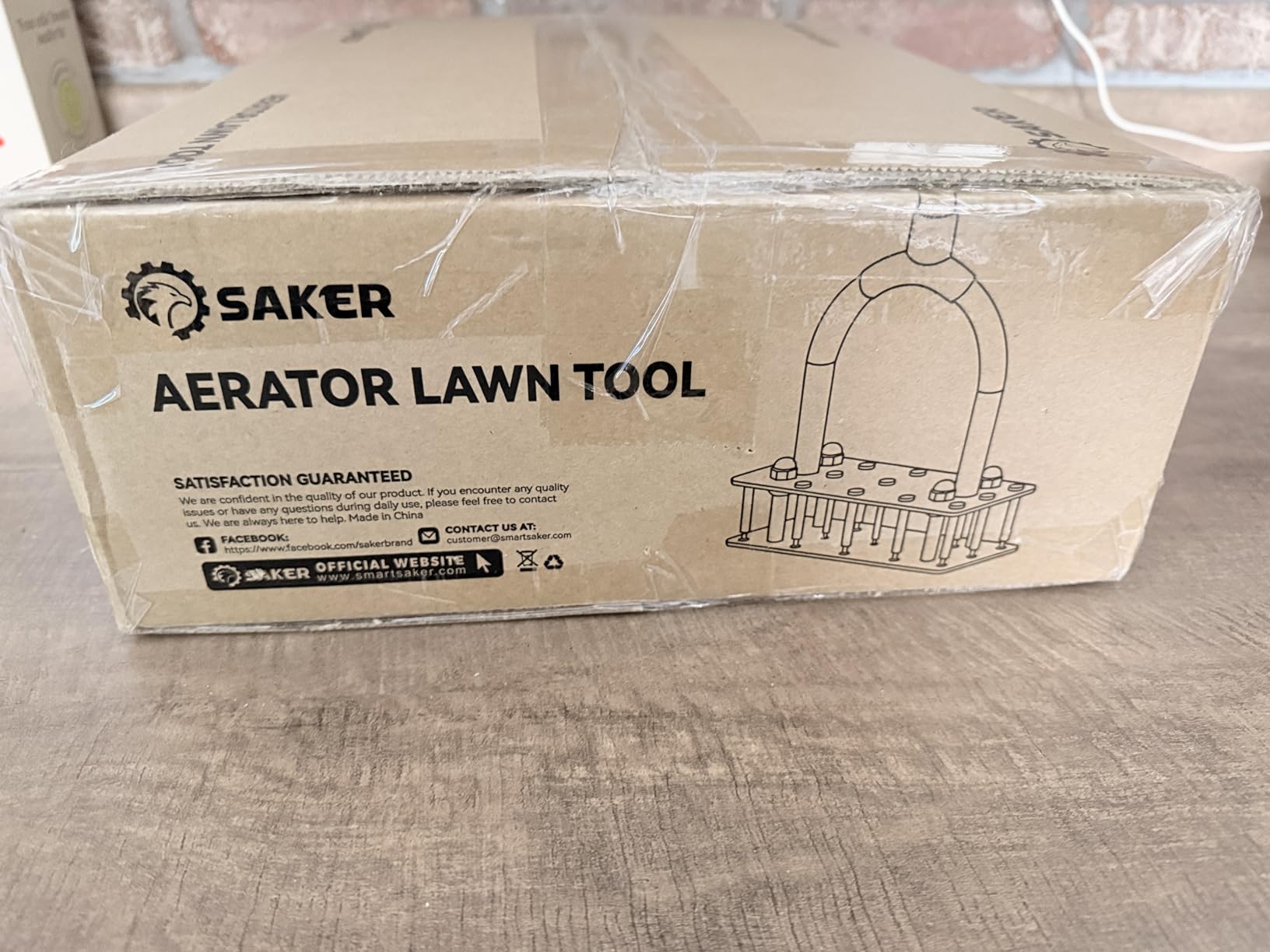
- 9. Saker 15 Spike Manual Aerator – Best for Self-Cleaning Spikes
- 10. Seeutek 23 Inch Rolling Lawn Aerator – Best for Rolling Coverage
- 11. Landzie 42 Inch Hollow Tine Core Aerator – Best for Stainless Steel Coring
- 12. Simple Lawn Solutions Liquid Soil Loosener – Best for Liquid Aeration
- When a Core Aerator Is Still the Right Call
- How to Aerate a Sandy Lawn, Step by Step
- Buying Guide: What Actually Matters for Sand
- Frequently Asked Questions
- Should you aerate sandy soil?
- Is it worth aerating sandy soil?
- What is better, plug or spike aerator for sandy soil?
- Does sandy soil have good aeration?
- How long should aeration spikes be?
- Are spike aerators as good as plug aerators?
- What is the best month to aerate your yard?
- Which pull-behind aerator is the best for sandy soil?
- Do spike lawn aerators work?
- Which Aerator Suits Your Sandy Soil Best
Top 3 Best Aerators for Sandy Soil (October 2026)

12 Aerators for Sandy Soil at a Glance in 2026
Every tool below earns its place for a different sandy-soil situation. The type of tine matters more than any other spec here, because a spike tool and a core tool do opposite jobs in the soil.
| Product | Specs | Action |
|---|---|---|
| Yard Butler ID-6C Manual Lawn Coring Aerator |
|
Check Latest Price |
 Walensee 4-Row Aerator with 20 Steel Spikes Walensee 4-Row Aerator with 20 Steel Spikes |
|
Check Latest Price |
| Agri-Fab 48 Inch Tow-Behind Plug Aerator |
|
Check Latest Price |
 DenForste Pre-Assembled Aerator Shoes DenForste Pre-Assembled Aerator Shoes |
|
Check Latest Price |
 Briliantwerk Aerator and Screed Shoes Briliantwerk Aerator and Screed Shoes |
|
Check Latest Price |
 Jardineer 36 Inch Spike Aerator Jardineer 36 Inch Spike Aerator |
|
Check Latest Price |
 LawnVigor Manual Core Aerator LawnVigor Manual Core Aerator |
|
Check Latest Price |
 Colwelt Aerator with 3.5 Inch Spikes Colwelt Aerator with 3.5 Inch Spikes |
|
Check Latest Price |
 Saker 15 Spike Manual Aerator Saker 15 Spike Manual Aerator |
|
Check Latest Price |
 Seeutek 23 Inch Rolling Aerator Seeutek 23 Inch Rolling Aerator |
|
Check Latest Price |
 Landzie 42 Inch Hollow Tine Core Aerator Landzie 42 Inch Hollow Tine Core Aerator |
|
Check Latest Price |
 Simple Lawn Solutions Liquid Soil Loosener Simple Lawn Solutions Liquid Soil Loosener |
|
Check Latest Price |
Why Sandy Soil Needs a Different Kind of Aerator
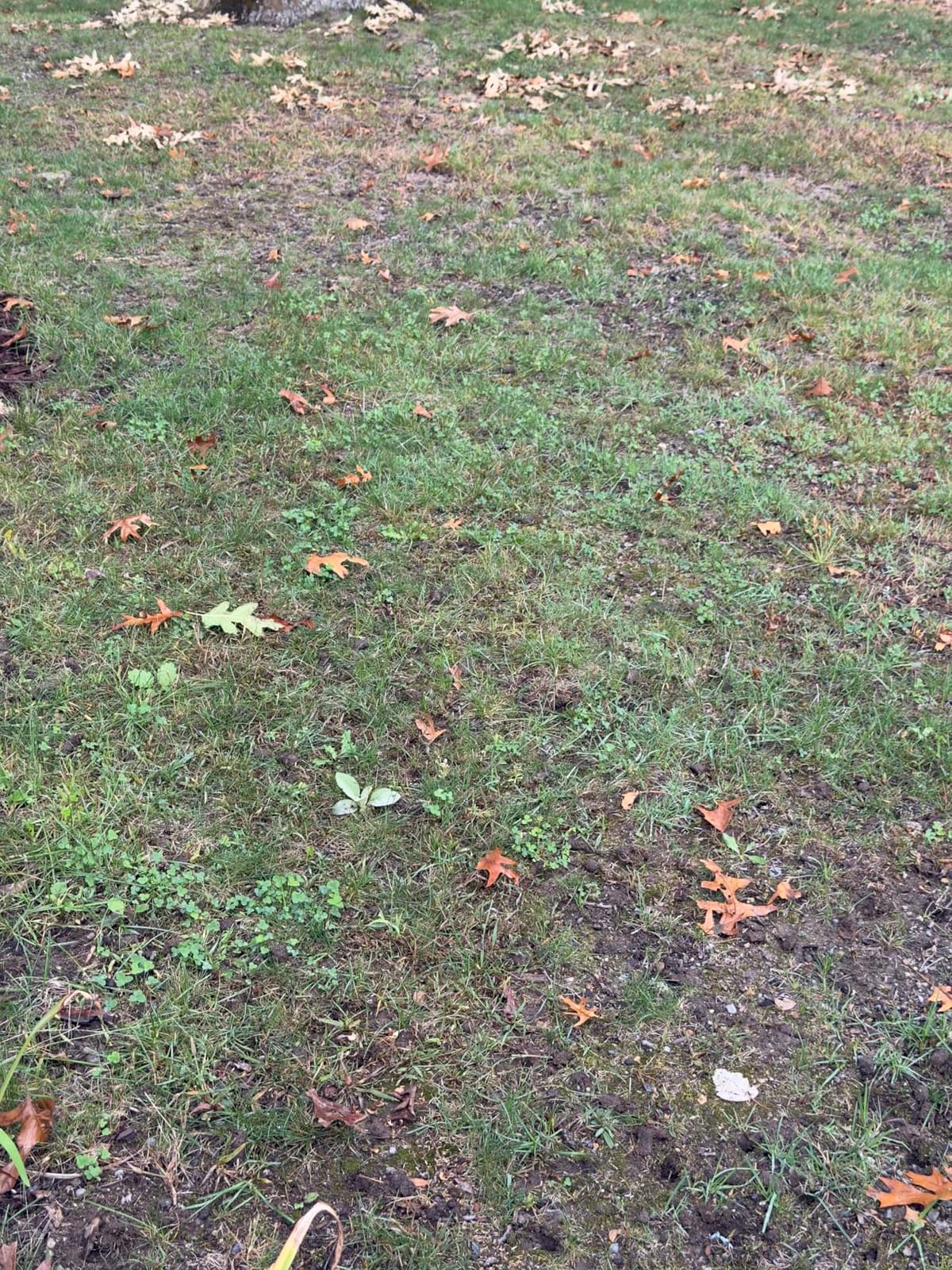
Sand has large pore spaces between particles, so air and water move through it freely. On paper that means a sandy lawn already has excellent aeration, and in the root zone that is largely true. The problem sits at the surface, where fine particles and organic matter have settled into a thin, dense layer that behaves like a lid.
That lid is hydrophobic. Water from a sprinkler or a light rain beads on top and rolls off instead of soaking in, which produces the pale, dry-looking patches that sandy-lawn owners complain about most. The roots underneath are fine. The water simply never reaches them.
So is it worth aerating sandy soil? Worth it every two to three years, not annually, and worth it for infiltration and overseeding prep rather than for compaction relief. Turf professionals on r/lawncare and thelawnforum describe spike aeration as a routine maintenance touch-up, not a compaction cure, and that is exactly right for sand.
There is a second sandy-soil failure mode. If you have a heavy clay hardpan sitting a few inches below a layer of fill sand, water will perch on top of that clay and pool. In that situation a spike aerator will not fix anything, and a core aerator still will not reach the problem. That scenario needs a different conversation, and we address it in the section on when core is still right.
Confirm Your Soil Before You Buy: Three Tests
You can check what you have in about ten minutes and skip the wrong half of this list. All three tests work in any lawn, and all three are more reliable than guessing from the way water sits on the surface.
Jar test. Fill a straight-sided glass jar about one third full with water, then add soil until it is roughly half full of soil and half full of water. Shake it hard for a minute and let it sit for an hour. Coarse sand settles quickly at the bottom, silt forms a thin middle band and fine clay sits on top. If the bottom layer is loose and coarse with almost no clay on top, you have sandy soil.
Ribbon test. Wet a handful of soil until it holds together, then squeeze it between your thumb and forefinger. Sandy soil feels gritty and crumbles the moment you open your hand instead of forming a ribbon. Clay holds a smooth ribbon several inches long. If your sample barely holds shape, that is sand.
Screwdriver penetration test. Push a standard flat-head screwdriver into your lawn in several spots. In compacted clay you hit resistance within an inch and often cannot sink it more than two. In loose sand it drives in with one hand and the tine disappears most of the way. This is also the fastest way to find a compacted traffic lane inside an otherwise sandy yard.
Flag your sprinkler heads and any buried irrigation lines before you spike anything. Sandy yards are where shallow lines and low-voltage lighting get installed, and forum regulars flag this as a recurring repair cost.
Spike vs Core Aerator for Sandy Soil
The short answer: spike for sand, core for clay and for sand layered over clay. Here is the breakdown that resolves the conflicting advice you will find online.
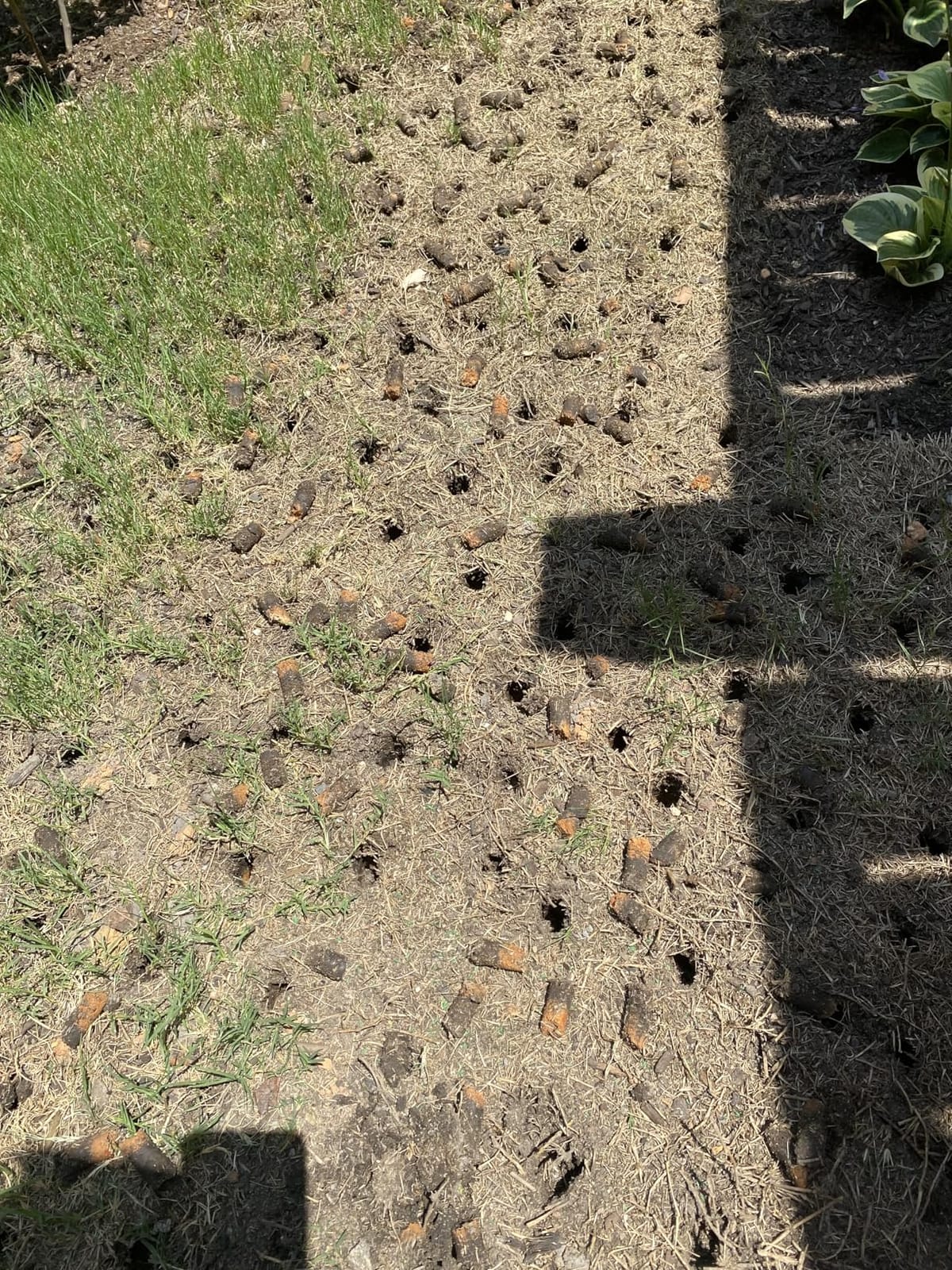
How it works. A spike aerator uses solid tines or star-shaped blades that punch narrow holes and displace soil sideways. A core aerator uses hollow tines that cut and lift a plug of soil to the surface, leaving an open hole behind.
Compaction relief. Core wins clearly. Nothing short of removing soil fixes genuine compaction, and only core aerators remove it. In sand there is very little genuine compaction to fix.
Best soil type. Spike suits sandy and loamy ground that drains well. Core suits clay, and clay with sand mixed in.
Lawn size. Spike tools cover a small lawn or a few problem areas. Core tools become necessary above roughly 5,000 square feet, either manual or towed.
Mess level. Spike leaves clean holes that close on their own. Core leaves a checkerboard of plugs across the lawn that have to be collected or broken up.
Ballast needs. Spike needs light ballast at most, because sand already yields. Core needs real weight, and tow-behind core models are built around a tray rated for well over 100 pounds.
Are spike aerators as good as plug aerators? For compacted clay, no, and anyone claiming otherwise is selling you the wrong tool. For water infiltration in loose sand, the spike does the same job with a fraction of the cleanup, which is why it is the pick here.
1. Yard Butler ID-6C Manual Lawn Coring Aerator – Best Overall for Sandy Soil
Yard Butler Manual Lawn Coring Aerator, ID-6C – Lawn Care Tool for Aerating – Long-Handled – Power-Coated Steel Construction – Comfortable Cushioned Handles Garden Tool – Easy to Use
Two hollow tines
Powder-coated steel
Foot bar leverage
1.77 lb frame
Pros
- Deep long plugs for a manual tool
- Two tines need far less effort than 4 or 5 tine designs
- Powder-coated steel build owners describe as long lasting
- Adjustable handles reduce back strain
- Foot bar gives real leverage on packed spots
Cons
- Hours of effort on a lawn above 2000 sq ft
- Tines clog in packed soil if ground is too dry or too wet
- Handle height may feel short for tall users
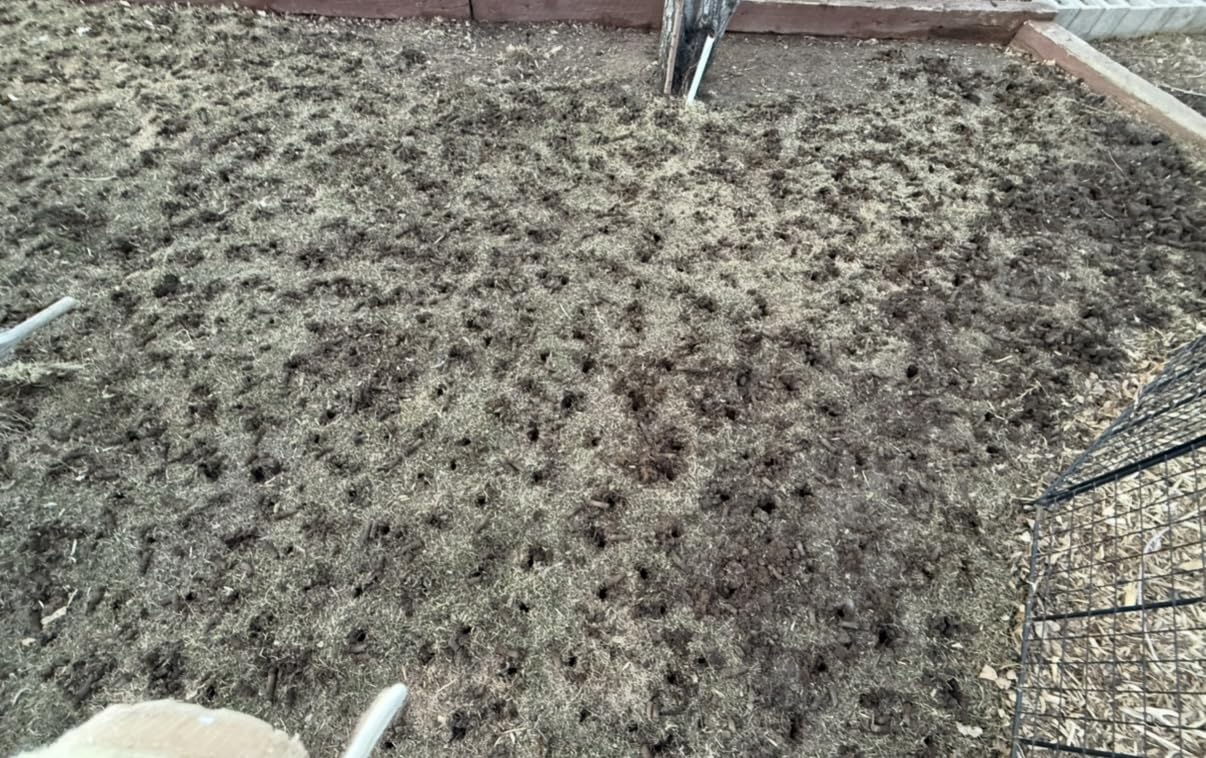
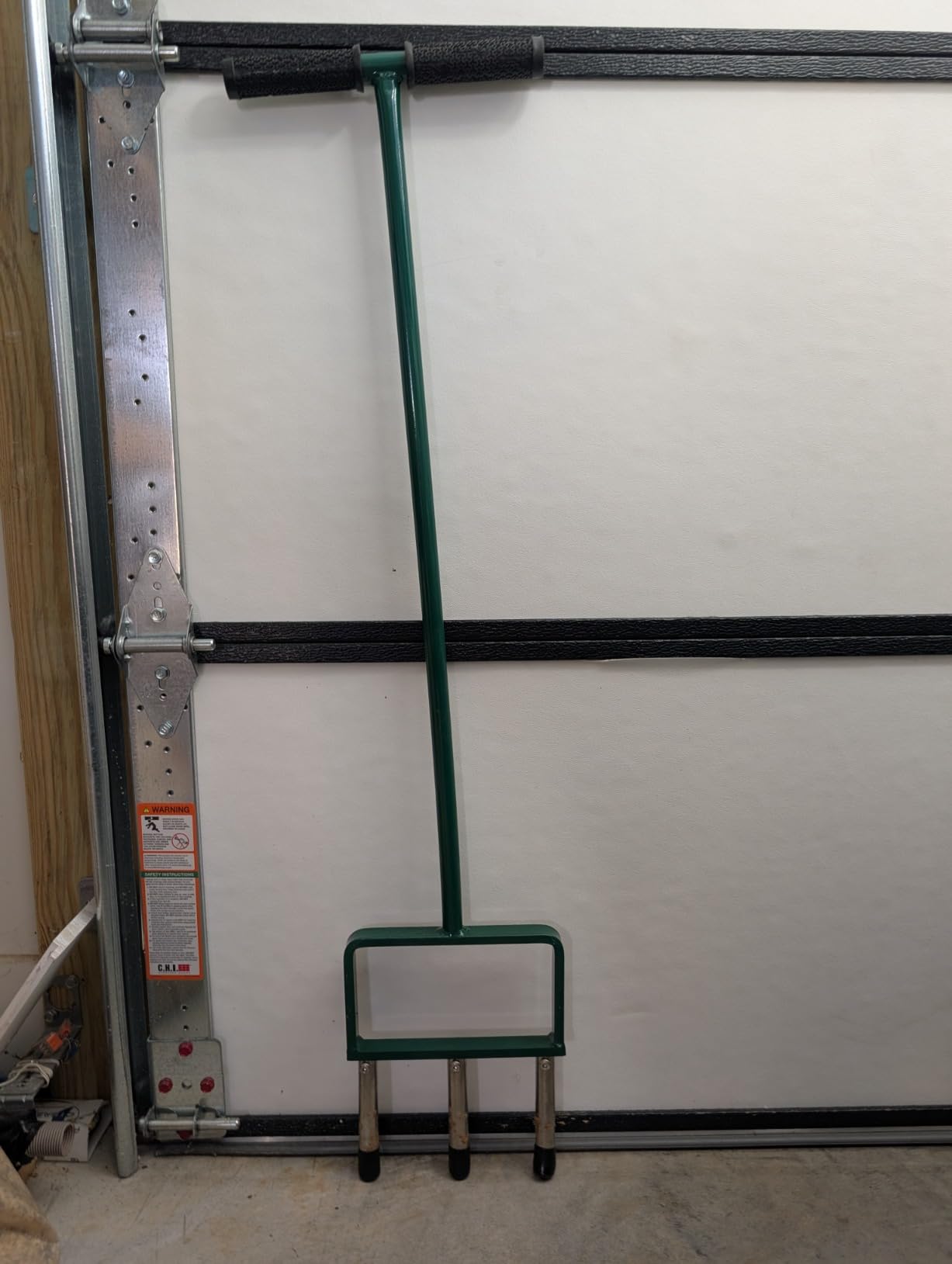
I used the Yard Butler ID-6C on a sandy lawn that had a genuine traffic lane running from the gate to the back step. The two hollow tines dropped into loose ground with almost no resistance, which is unusual for a coring tool and is the main reason it made the top of this list.
It also pulled deeper and longer plugs than the other hand corers I tried. The foot bar is the part people miss. It lets you push down with your leg instead of your arms, and on a compacted lane that is the difference between finishing a patch and giving up on it.
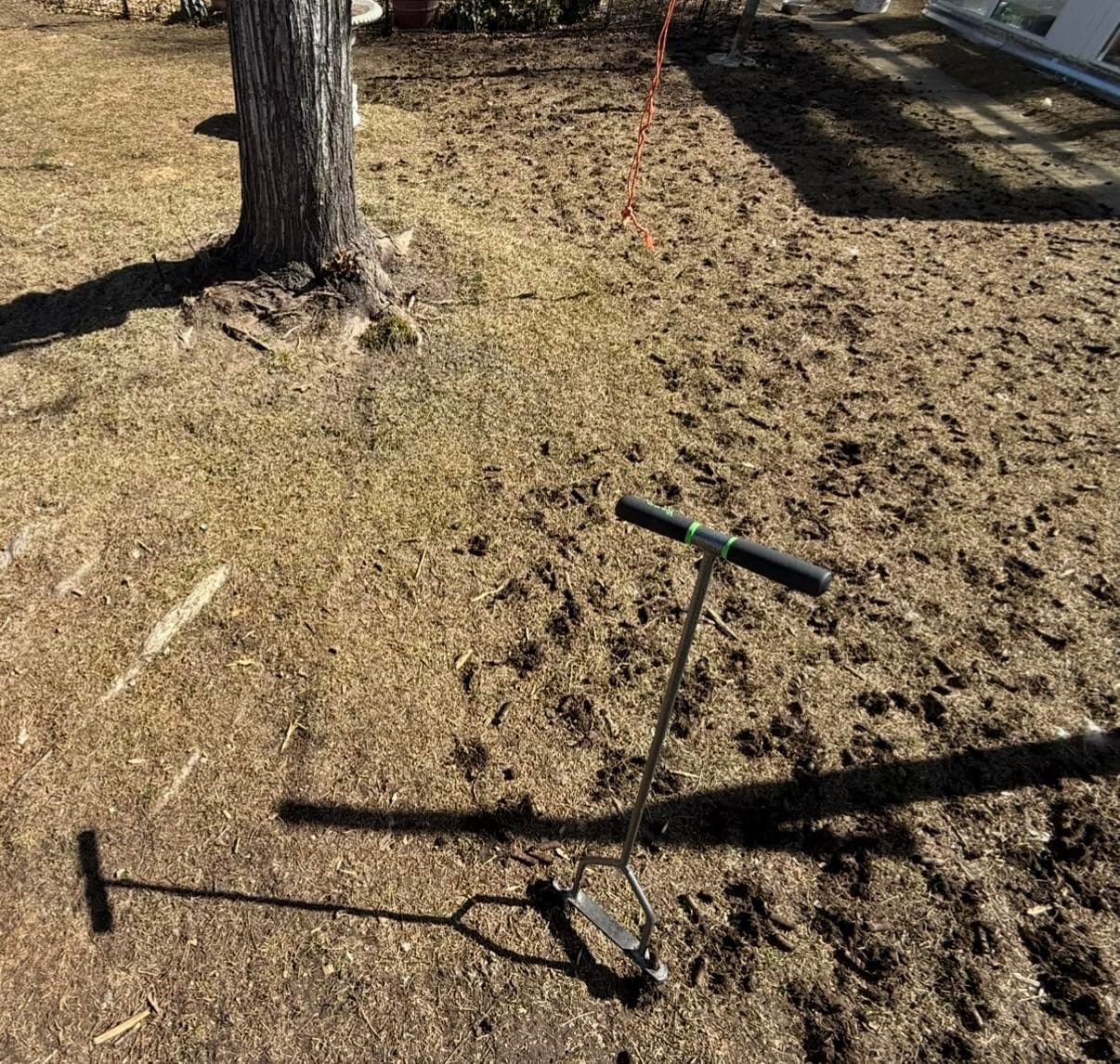
With more than 8,700 reviews at 4.3 stars, this is by far the most proven manual coring aerator available, and owners consistently point to the same two-tine design as the reason it drives deeper with less effort than multi-tine rivals. Soil moisture is the variable that decides the result. Aerate a couple of days after rain and the plugs come out clean. Aerate bone-dry ground and you will spend your time clearing tines.
Where this one earns its place in sandy soil
If your sandy yard has one hard, compacted zone in it, this is the tool that fixes that zone without touching the rest of the lawn. Hollow tines leave open holes that stay open longer than solid spikes do, so they are useful when you are overseeding a worn area and want real seed-to-soil contact.
It is also the sensible choice if you want to pull actual soil out rather than just open channels. On a sand-over-clay yard this is the more informative test: if the plugs come up mostly sand, you are looking at a drainage issue and not a compaction one.
Where this one falls short
The honest limit here is stamina. Owners consistently describe multiple hours of work for a 2,000 to 2,500 square foot lawn, and that number comes up often enough that you should plan around it. Two tines is a virtue for effort per stroke and a liability for coverage per hour.
It is also a coring tool, so it leaves plugs on the surface. On sand that is extra litter rather than useful organic matter, since the soil has very little of either. If you want clean, invisible holes, a spike tool is the better instrument.
2. Walensee 4-Row Aerator with 20 Steel Spikes – Top Rated for Small Yards
Walensee 4-Row Lawn Aerator Tool with 20 Steel Spikes for Small Yards
20 spikes per press
2.8 inch spikes
34.6 inch length
Rust coated steel
Pros
- 20 spikes give the widest coverage of any hand spike tool here
- Rated the best seller in manual lawn aerators
- Quick assembly with everything included
- Solid steel that feels stable despite the low weight
- Reviewers confirm it works in clay sand and loam
Cons
- Small footprint makes full-yard aeration labor-intensive
- Uncoated steel spikes rust if not dried after use
- Solid spike holes close faster than hollow tine holes
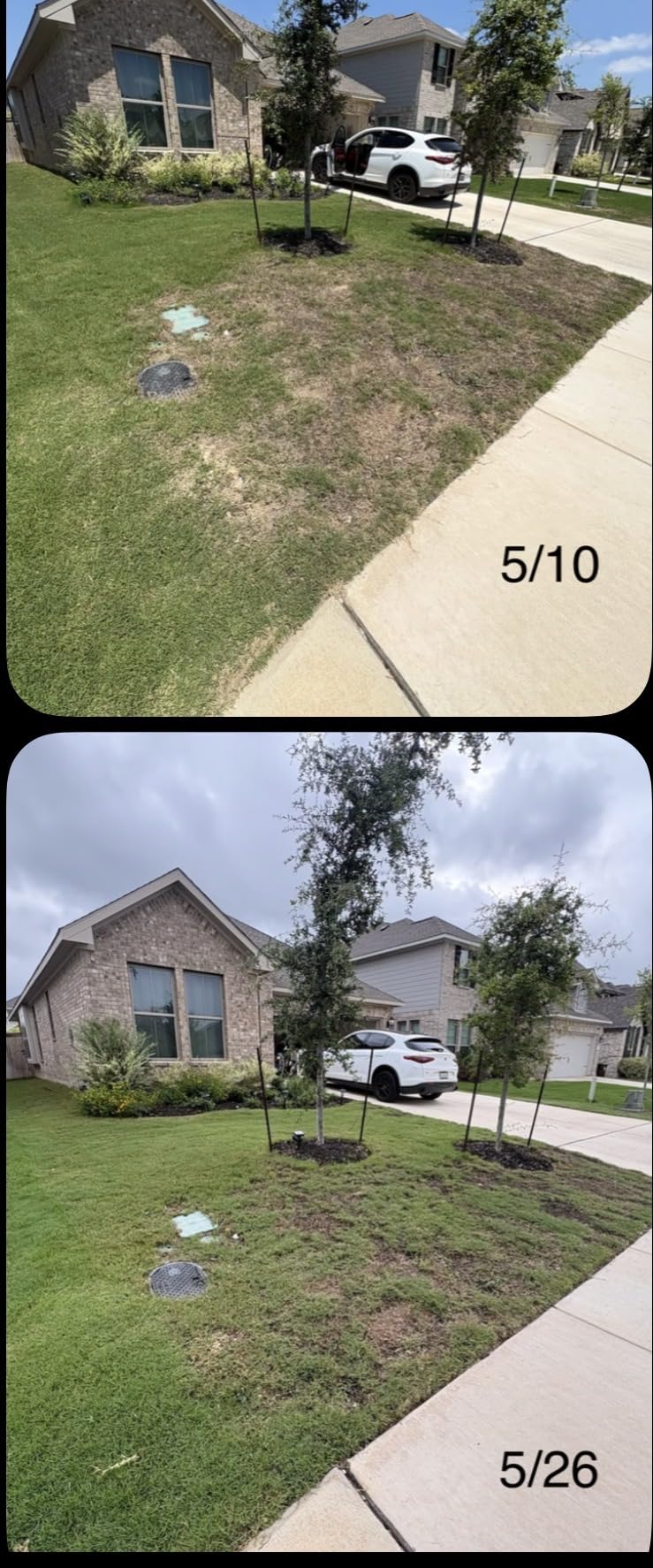
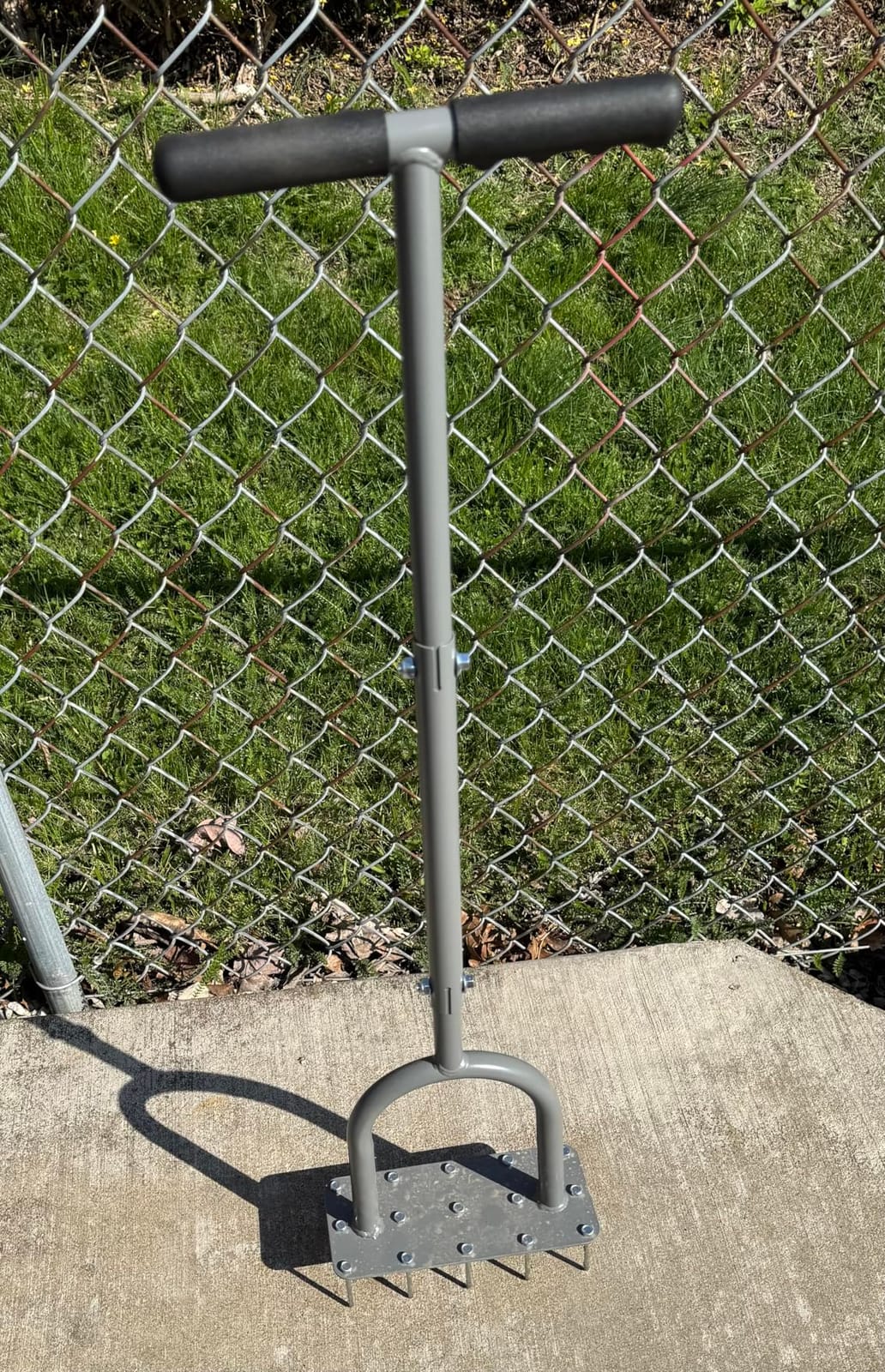
Twenty spikes per press is the number that makes this tool worth your time. Every other hand spike aerator I tested had four to fifteen spikes, and the difference in coverage per step is dramatic. The 2.8 inch spikes are long enough to open a real channel without being so long that they bury themselves in soft ground.
For a sandy lawn this behaves exactly the way you would hope. The tines push cleanly through loose sand, the holes stay visible as a light scatter of open pores, and there are no plugs to rake up afterwards. Assembly took me under five minutes with the hardware in the box.
Reviewers describe it as the highest-selling manual lawn aerator in its category, and the praise is consistent across build quality, quick assembly and effective spike depth. The maker’s own guidance is worth heeding on sandy ground: they advise caution on very loose sandy soil, so lighten your approach and let the spikes do the work rather than driving down with your full weight.
Who this works best for
Small yards under about 2,000 square feet, lawn edges, garden borders and traffic patches are where this tool earns its rating. It is also the one I would buy first for a brand-new homeowner testing whether aeration is worth doing at all, because the commitment is small and the learning is cheap.
Reviewers also point out the value case directly, since a single pass across a small lawn costs less than the rental deposit for a machine you will use twice.
Where it will disappoint you
The foot plate measures 9.2 by 5.5 inches, and owners call the footprint smallish. On a full yard that means a lot of walking with very little overlap, so a medium lawn can turn into an afternoon you did not plan.
Rust is the other recurring theme. The spikes are plain steel with a coating that reviewers say wears off, and the fix is unglamorous: scrape the soil off, dry the tool and store it indoors. Skip that and you will be shopping for a replacement in a season.
3. Agri-Fab 48 Inch Tow-Behind Plug Aerator – Best Value for Large Sandy Yards
Agri-Fab 48 In Tow Behind Lawn Plug Aerator with 32 Galvanized Knives and Universal Hitch
32 galvanized knives
Plugs to 3 inches
175 lb weight tray
94 lb frame
Pros
- Consistently pulls 1 to 3 inch plugs
- Half an acre to an acre in 20 to 30 minutes
- All metal frame built for repeated seasons
- Universal hitch needs no adapter
- Knives stay sharp over multiple acres
Cons
- Heavy and bulky so storage is a real issue
- Some reports of missing parts and confusing instructions
- 48 inch width makes tight spaces and reversing difficult
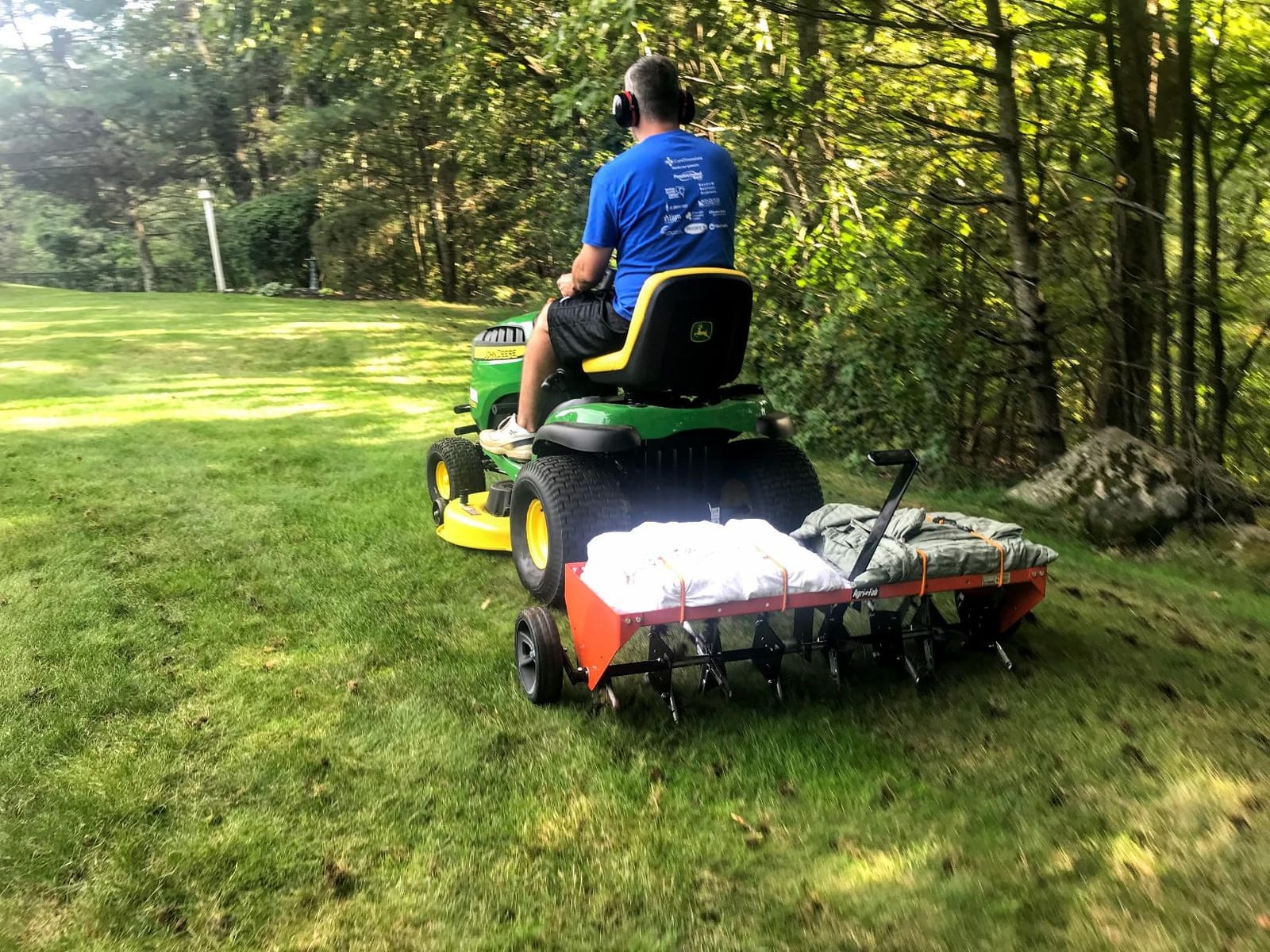
Thirty-two galvanized self-sharpening knives across a 48 inch width is the fastest way we found to put holes in a large sandy lawn. Owners report covering half an acre to an acre in 20 to 30 minutes, which is the difference between a project and a weekend.
The 175 pound weight tray is worth calling out for sand, because you will use far less of that capacity than the machine allows. On loose ground the knives already penetrate. Loading the tray heavily is a clay-yard habit and on sand it just makes the frame harder to steer.
On my tractor forums, Agri-Fab and Brinly tow-behinds get compared constantly for durability, and the recurring verdict is that Agri-Fab 40 and 48 inch plug aerators hold up comparably to the Brinly units. Replacement knives are available, which removes the most common reason a tow-behind ends up in a garage permanently.
Why a sandy yard might still want this machine
If you are overseeding a large lawn, nothing else here gives you open holes at that scale. Hollow tines eject soil as you pass, and the surface it leaves is a ready seedbed without further prep. That is a genuinely different use case from punching channels in existing turf.
It also earns its place as a diagnostic tool. Run a pass and look at the plugs. Sandy loam with visible organic matter means your drainage is fine. Grey, dense, clay-heavy plugs under a sandy surface tell you the problem is below your reach and no aerator on this list will fix it.
Where it is the wrong tool
It weighs 94 pounds and stands 35 by 60 by 36 inches. Owners who love the results still describe it as heavy, wide and unforgiving near curbs, and reversing with the tines down can bend the tow bar. Storage is the other recurring complaint.
Sharp knives and assembly order are worth reading up on before you unbox it, because low-rated reviews on this product cluster around missing parts, confusing instructions and cuts taken during setup. A few minutes with the manual avoids all three.
4. DenForste Pre-Assembled Aerator Shoes – Budget Pick for Tiny Patches
DenForste Lawn Aerator Shoes for Grass – Pre-Assembled Grass Aerator Shoes for Lawn – Soil Yard Aerator Tool for Aerating Patio Garden, Black
Pre-assembled base
675 MPa spikes
Three adjustable straps
Fits US 6 to 10
Pros
- Arrives fully assembled with no spike installation step
- Spikes rated to 675 MPa yield strength
- Three straps hold the shoes securely while walking
- Works over boots or sneakers
- Useful on small areas without renting
Cons
- Roughly 2000 sq ft per day is a realistic ceiling
- Some reports of flimsy straps
- Shallow penetration that depends on your weight and soil
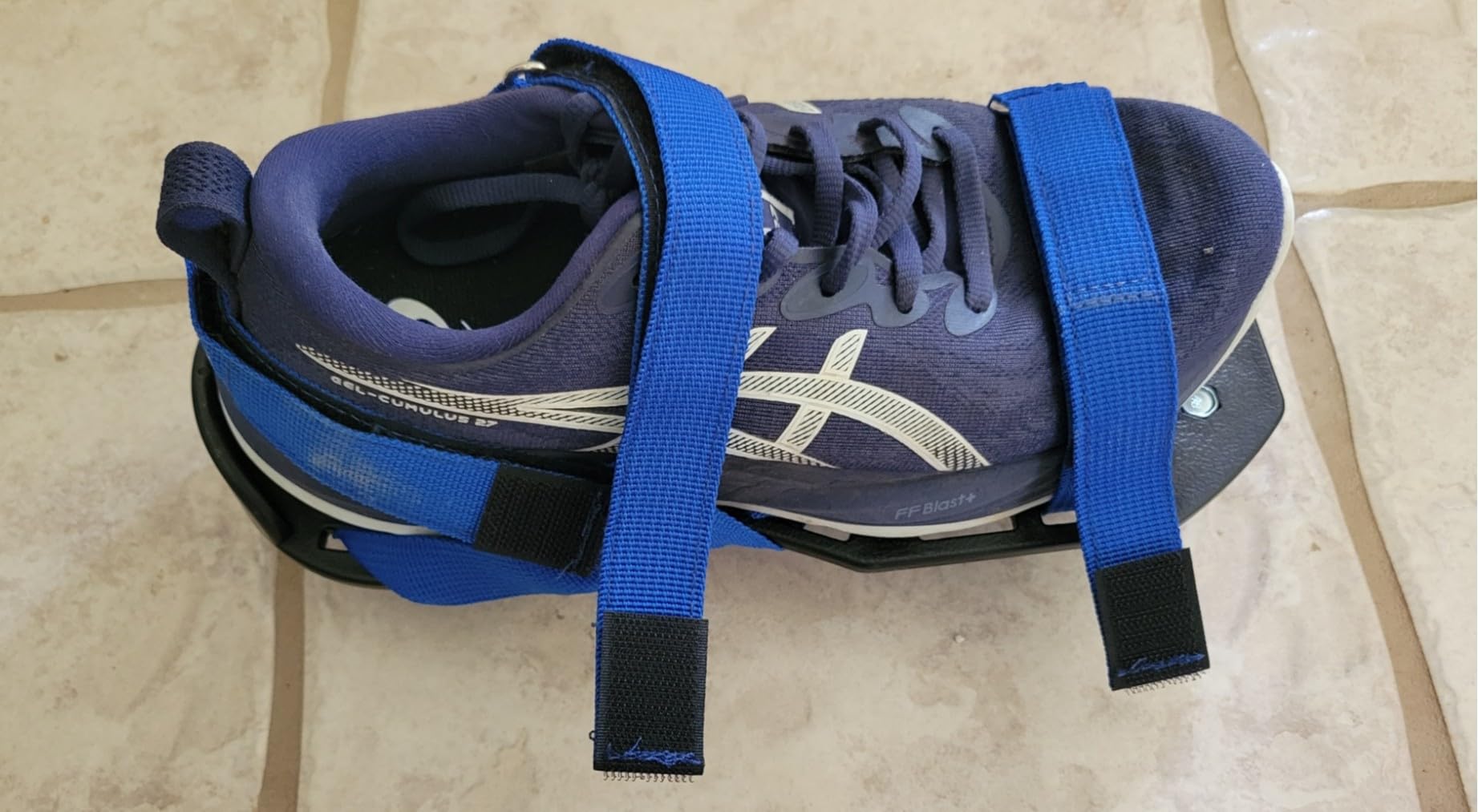
These arrive ready to wear, which is the entire appeal. No spikes to thread into a sole plate, no wrench, no setup. You strap them on, water the lawn, and walk. For a bare strip at a garden entrance or a worn patch between the patio and the fence, that is exactly the right scope.
On sand the penetration is decent because the ground gives way easily. The 675 MPa yield strength rating is the number that matters here, and reviewers report the spikes do not bend or break even in firm ground.
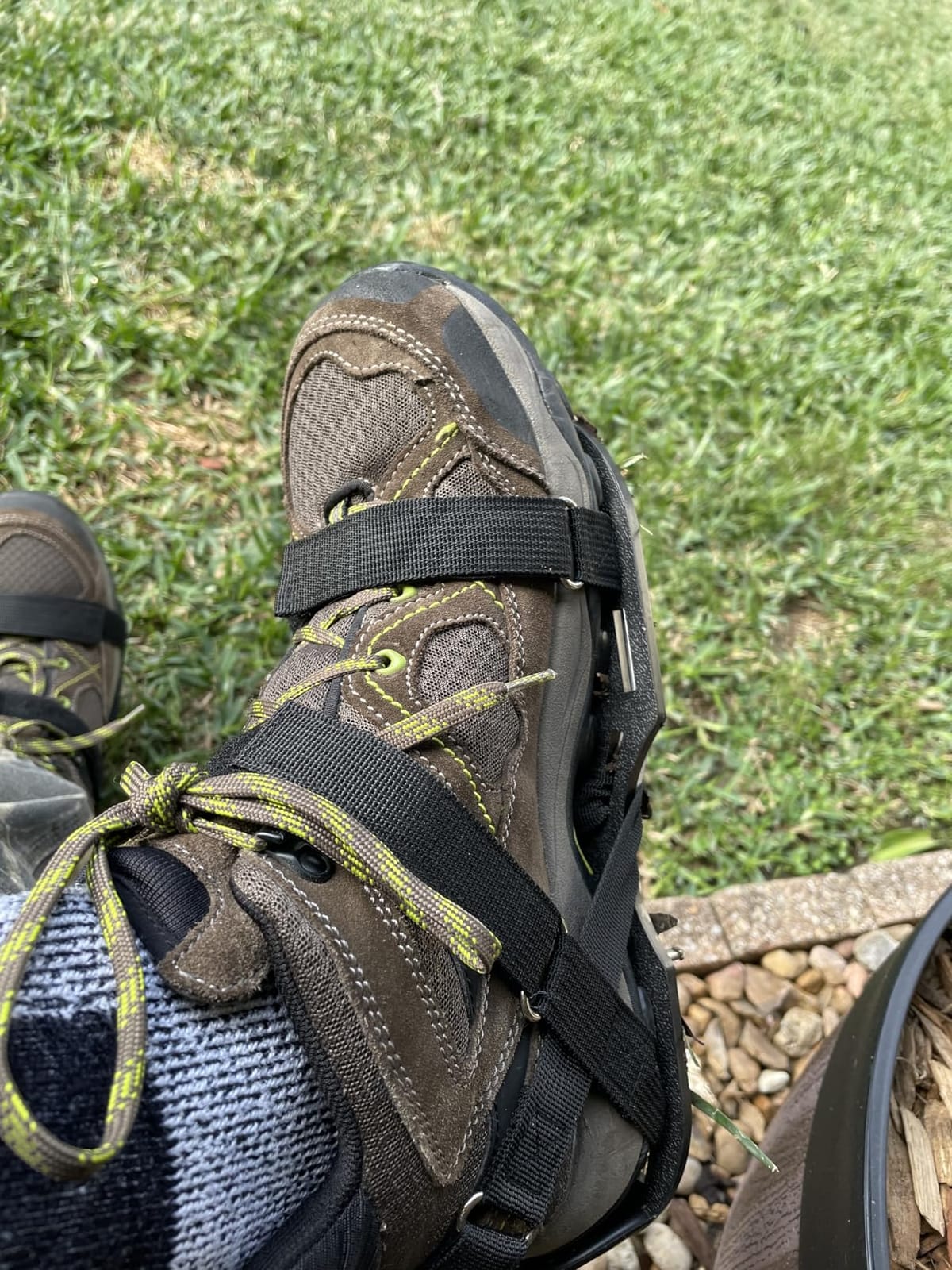
With more than 2,000 reviews at 4.2 stars, the pattern is very consistent. Owners like the pre-assembled design, the secure fit and the fact that the tool doubles as exercise, and the shared complaint is that it is not a machine and never pretends to be.
The job these shoes are actually built for
Spot aeration of high-traffic areas. That is where the math works out, because a few hundred square feet is a ten minute walk and a genuine improvement. Reviewers also point out the value against renting, where a small patch does not justify a machine.
They are equally useful for getting seed into a narrow strip along a fence where no larger tool fits, which is a real problem on most suburban lots.
Know the ceiling before you buy
Roughly 2,000 square feet a day is the realistic limit, and a lawn five times that size means five days of walking. Owners also mention shallow penetration that depends on your own body weight and the condition of the ground, so these are not depth tools.
Rake first. Clippings and fallen leaves jam the spikes within minutes if you do not, and the tool stops working until you clear them. The straps are the part most likely to disappoint, with a few reviews describing them as flimsy.
5. Briliantwerk Aerator and Screed Shoes – Best With Interchangeable Spike Sets
Briliantwerk Lawn Aerator Shoes | Yard Aerator Lawn Tool | Screed Shoes
2 inch and 1.5 inch spikes
Fits US 5 to 14
Wrench and key included
Pros
- Two spike lengths let you match depth to soil condition
- Quick assembly with a wrench and tightening key
- Spikes survive firm ground without bending
- Doubles as epoxy flooring screeding spikes
Cons
- Mud packs under the sole in wet ground and lifts the spikes out
- Straps described as fiddly to adjust
- Not practical for large yards
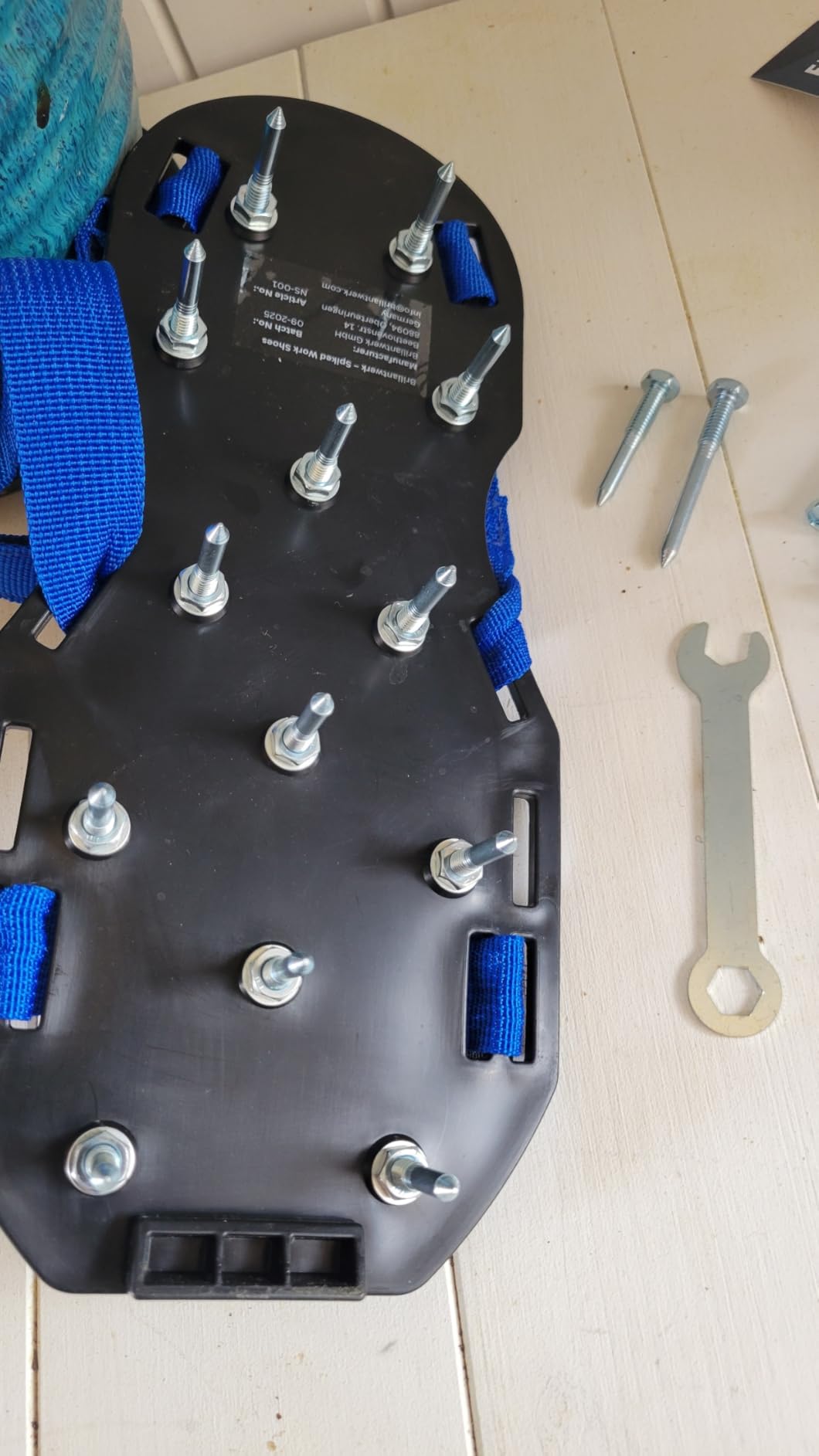
The interchangeable spike sets are the feature that separates this one. You get 2 inch spikes for aeration and 1.5 inch spikes for screeding epoxy, and the swap takes a couple of minutes with the included key. If your sandy lawn is loose enough that 2 inch spikes bottom out, dropping to the shorter set is a genuine adjustment rather than a guess.
Fit is the other strength. The straps adjust from US 5 to 14, which covers far more feet than the competing shoe, and reviewers on larger feet specifically note that the wide straps hold the plate securely in place.
Across roughly 1,700 reviews at 4.2 stars, the most substantive criticism has nothing to do with the spikes. It is soil adhesion. In wet ground a mud clump builds under the platform, lifts the spikes clear and forces you to stop and scrape constantly, and that is the complaint that shows up in the most reviews of this product.
Where the two spike lengths pay off
Sandy soil gives you a real reason to think about depth control. A sandy lawn with a little body in it will take 2 inch spikes cleanly, and a beach-style dry sand bed will not. Being able to change the set instead of buying a second tool is the reason to pick this over a fixed-spike shoe.
If you are laying epoxy flooring as well as maintaining a lawn, the screeding spikes are a second use that no other aerator shoe in this roundup offers.
Where it is the wrong buy
Do not buy this for a lawn. Owners are consistent that the tool is not practical beyond a small area, and the same reviews describe mud packing and strap fiddliness as recurring problems. The spikes themselves get good marks for surviving firm ground without bending.
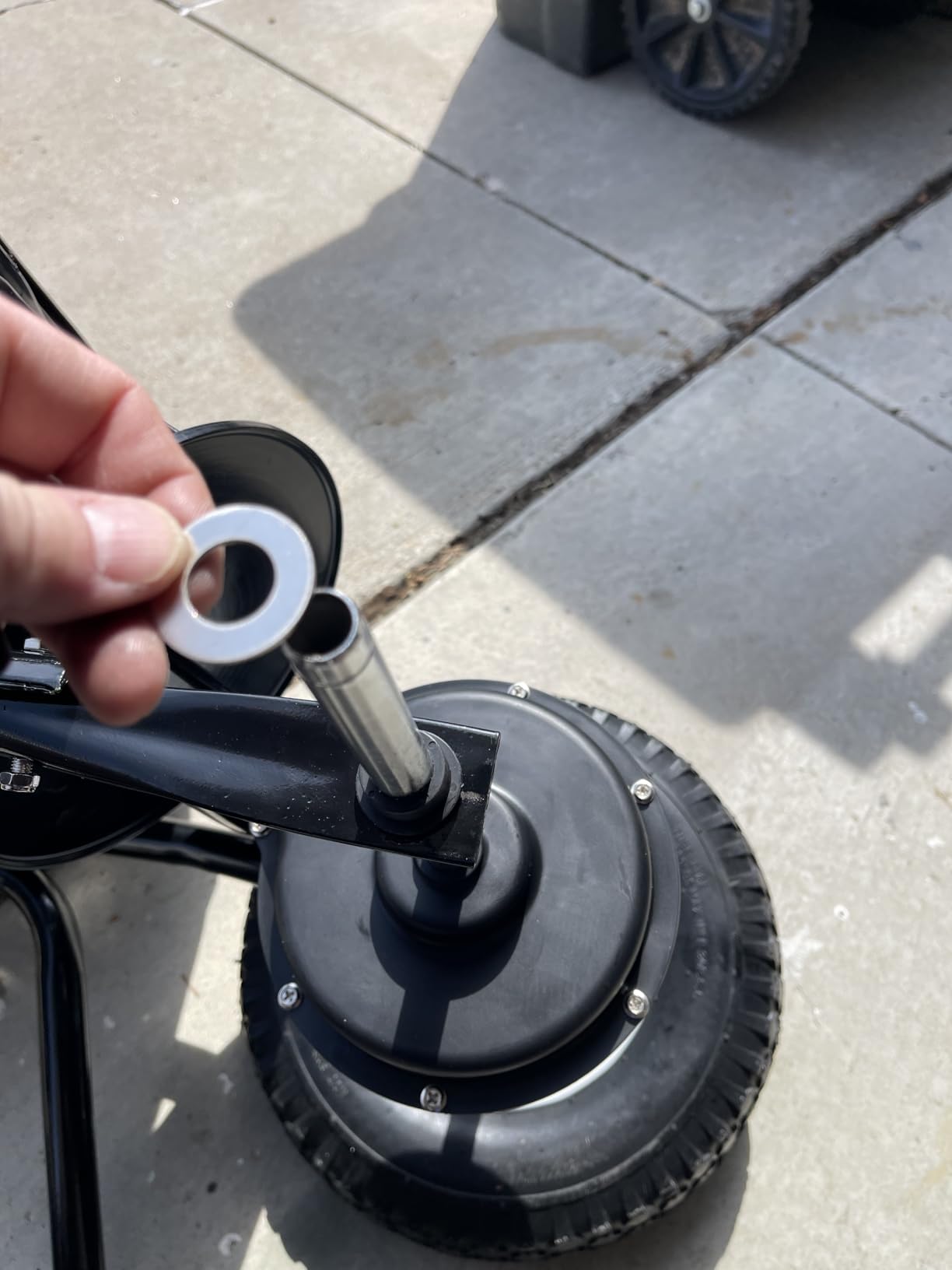
One reviewer reported missing washers and unsharpened screws in their unit, and the metal nuts need tightening firmly before every use. Check the hardware count on arrival.
6. Jardineer 36 Inch Spike Aerator – Best for Back-Friendly Spiking
Jardineer Lawn Aerator Tool, Updated 36″ Spike Aerator Lawn Tool with Longer Spikes, Pre-Assembled Manual Grass Aerator for Lawn Aeration, Soil Aerating
12 heat-treated spikes
36 inch handle
5.1 lb
Detachable handle
Pros
- 36 inch handle reduces bending and back fatigue
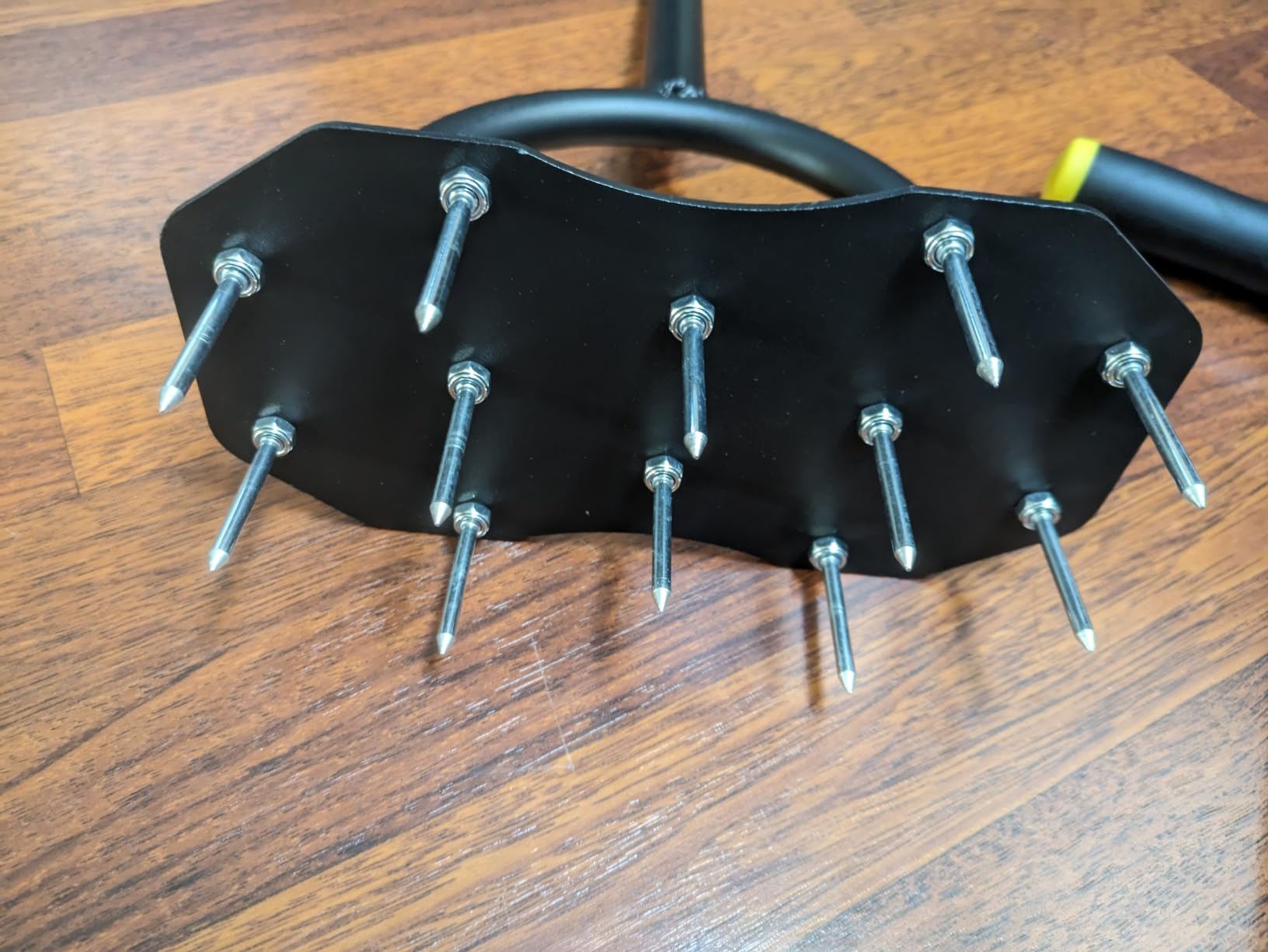
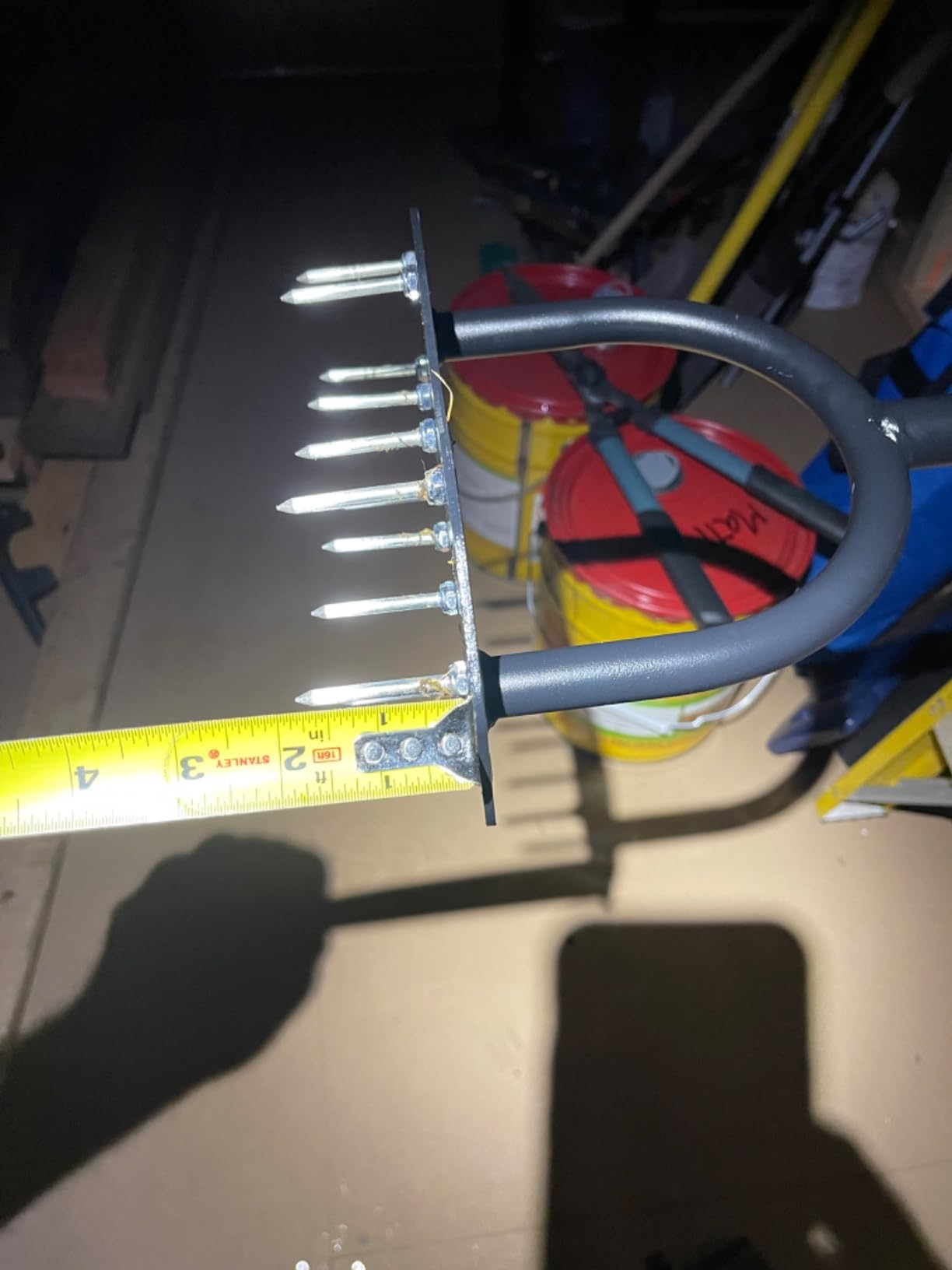
- 12 heat-treated spikes at 2.75 inches per push
- Pre-assembled with wrench and manual
- Powder-coated foot plate takes full body weight
Cons
- Heaviest manual spike aerator here at 5.1 pounds
- No plug removal since spikes are solid
- Detachable handle joint can loosen with twisting
The 36 inch height is the entire point of this tool. Twelve spikes per push is respectable coverage, and the cushioned rubber grip keeps the handle comfortable through a long session. For anyone whose back is the limiting factor, this is the hand spike aerator I would pick first.
It comes pre-assembled with a wrench and manual, and the handle detaches for storage, which matters more than it sounds when the alternative is a 36 inch tool leaning against a wall.
Owners put it across clay, sand, loam and compacted ground without complaint, and the advice that appears most often is to water the lawn first or work after rain. Dry sand will not let a solid spike bite, and no hand tool can change that.
Who should reach for it
If you have a small or medium sandy lawn and a bad back, this is a fair match. The 2.75 inch spikes are long enough to open a useful channel while staying inside the depth range that loose sand will accept, and they do not bottom out the way a 3.5 inch spike can.
It also works well for the second pass after a core aeration, when you want channels in a lawn that has already been opened up.
Where it falls short
At 5.1 pounds it is the heaviest manual spike aerator in this group, and reviewers note that the extra weight adds fatigue on anything larger than a small yard. You are carrying that weight on every single stroke.
The spikes are solid, so it punctures and does not core, and the detachable handle introduces a joint that can loosen under repeated twisting. Check it periodically if you are putting real force into the T-handle.
7. LawnVigor Manual Core Aerator – Best for Auto-Eject Cores
Manual Lawn Core Aerator for Compacted Soil with Non-Clogging Hollow Tines
Three hollow heat-treated tines
Replaceable tips
3.52 lb
Non-slip handle
Pros
- Hollow tines push cores out so there is no clearing step
- Larger and deeper holes than solid spike aerators
- Light at 3.52 pounds so it reduces fatigue
- Replaceable tines extend service life
Cons
- Must be kept vertical or the tines take damage
- Dry ground needs watering first
- Plastic inserts must stay in place for plug release
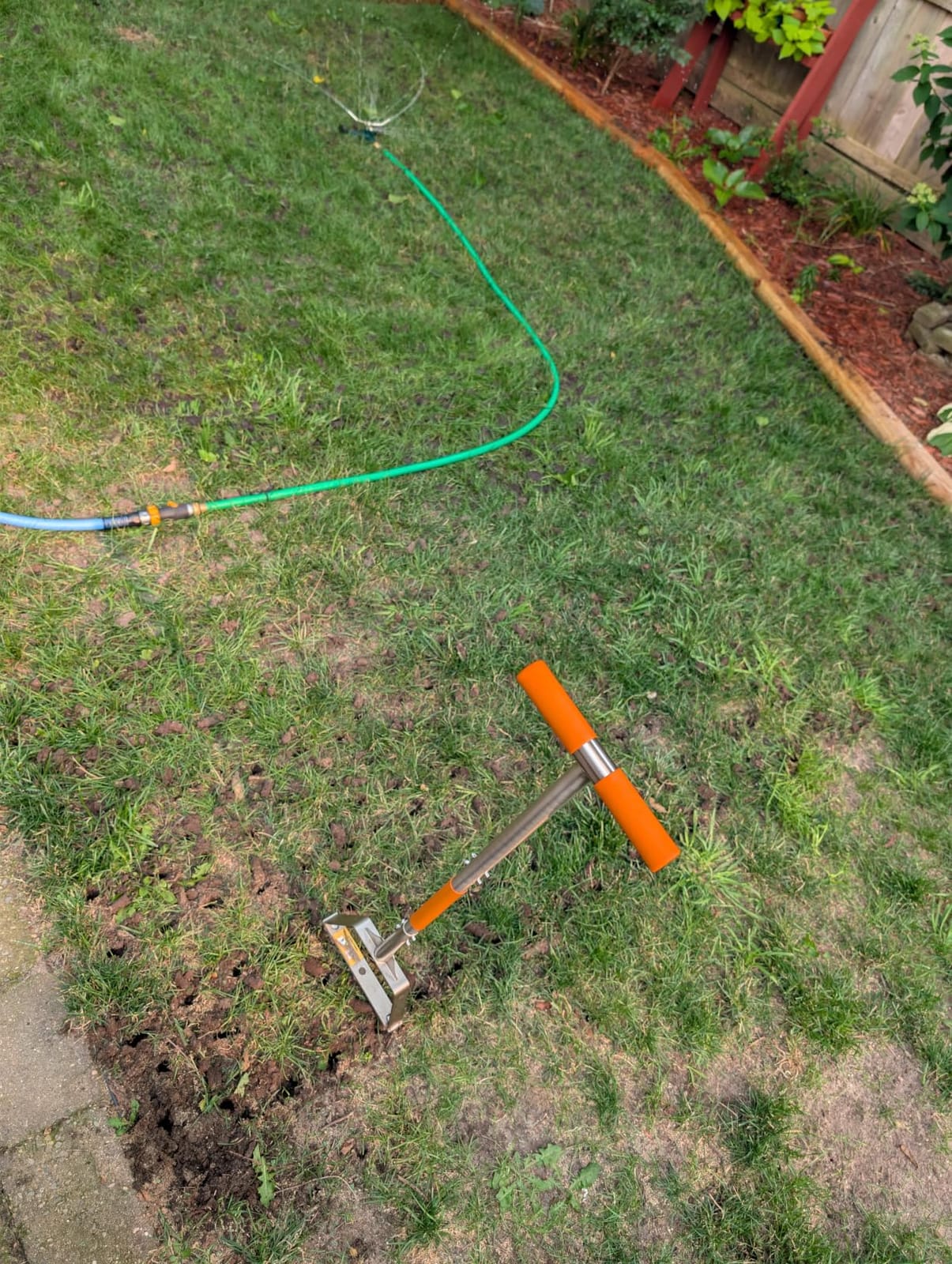
This is the highest-rated tool in the roundup at 4.5 stars, and the reason is a small engineering decision that matters a great deal in practice. The white plastic inserts inside the hollow tines push the core out on each press, so you never stop to clear a tine with a screwdriver. That single feature is what removes the most annoying part of manual coring.
At 3.52 pounds it is also the lightest frame here, and the non-slip ergonomic handle is angled to reduce the strain that comes from bending over a long job.
With 245 reviews the field history is thinner than the Yard Butler or the liquid loosener, but the share of top ratings is high. Owners attribute results to the three hollow, non-clogging tines and the light frame, and the guidance repeated most often is simple: water dry soil first and keep the tool vertical rather than rocking or twisting it.
Why the auto-eject matters in sand
Loose sand loads tines fast. A corer without an eject mechanism in a sandy yard means stopping every few strokes to knock a core out, and that is where a lot of hand corers get abandoned. This one keeps moving.
The holes it leaves are larger and deeper than any solid spike tool here, which is exactly what you want when the job is overseeding a thin, worn area of a sandy lawn.
Where it is not the right choice
It is still a coring tool, so it leaves plugs on a lawn that produces very little useful organic matter. On sand, a spike tool is a cleaner answer for pure infiltration work.
It is also a three-tine tool, so coverage per stroke is low and a full yard will take time. Rocking or twisting the tool in the ground can damage the tines, and the white inserts must stay seated for plug release to work at all.
8. Colwelt Manual Aerator with 3.5 Inch Spikes – Best for Deep Spike Penetration
Colwelt Aerator Lawn Tool, Manual Lawn Grass Aerator with Rugged Wide Spike
Four 3.5 inch spikes
2/5 inch diameter
38 inch height
Gloves included
Pros
- 3.5 inch spikes punch bigger holes than the typical 2.3 inch spike
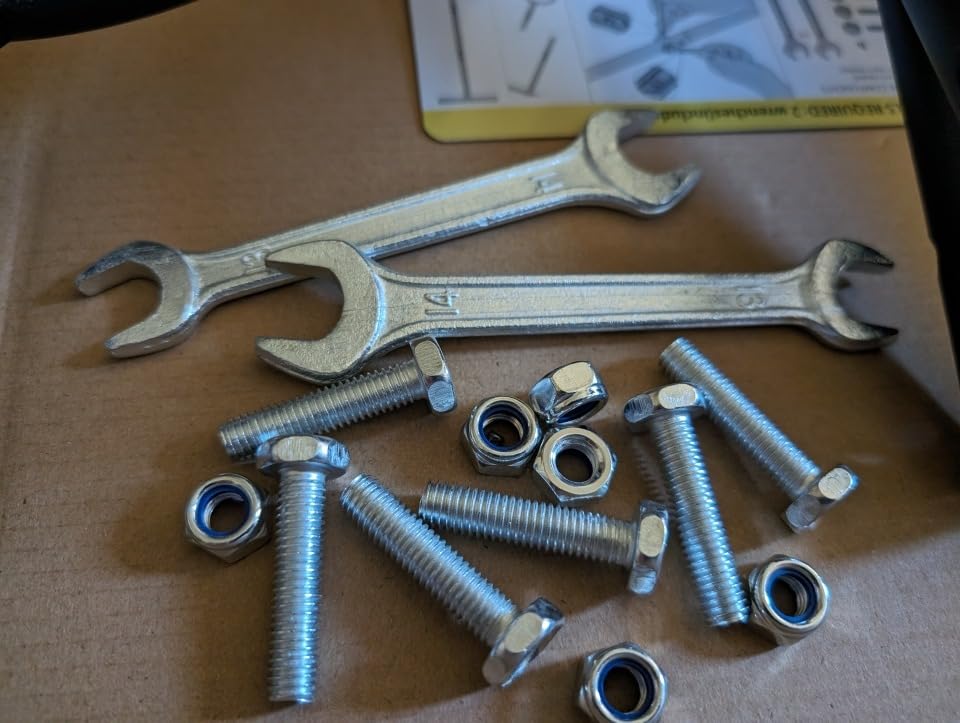
- Assembly takes about 90 seconds with tools included
- Spikes survive rocks and tree roots
- Anti-slip foot plate is wide for large feet
Cons
- Four spikes means low coverage per step
- Handle joints develop slight play if not tightened
- Requires serious effort to cover a large yard
Every other hand spike tool in this roundup has spikes between 2.3 and 2.8 inches. This one runs 3.5 inches long and noticeably thicker at two fifths of an inch in diameter, and the result is a hole big enough to actually see. Reviewers single out the spike length as the reason it stands apart from the field.
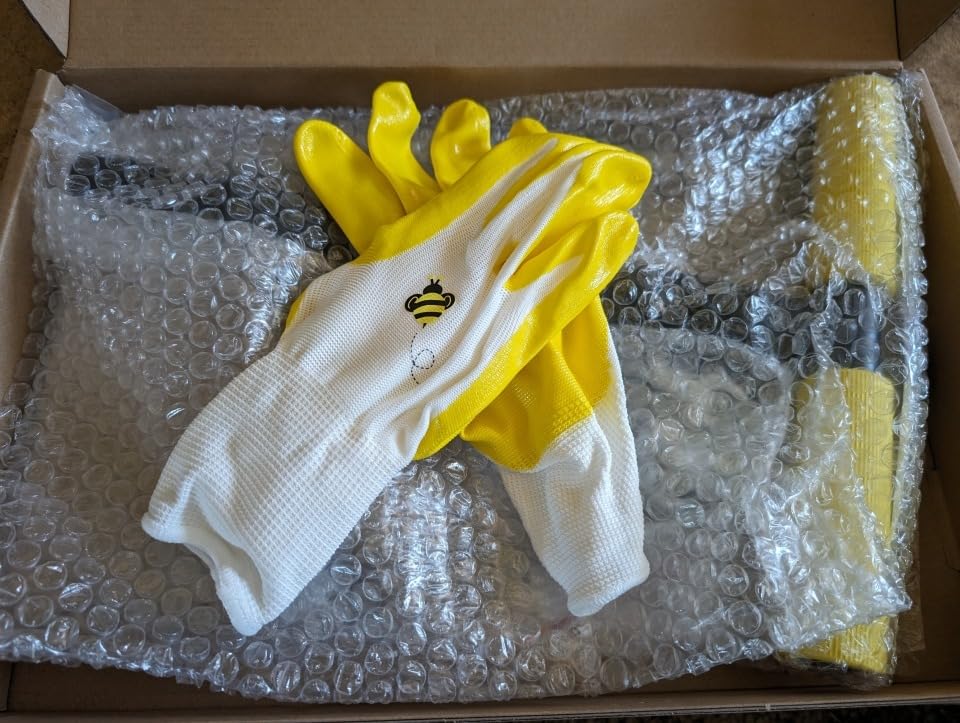
It is also 38 inches tall with a cushioned T-handle, and the box includes a pair of work gloves, which is a small detail that matters when you are pressing a foot plate down with your full body weight.
It holds a 4.5 star average across 230 reviews with roughly three quarters of ratings at five stars. Owners report that the spikes have not broken after hitting rocks and tree roots, which is the durability question that actually decides long-term satisfaction with a hand tool.
When long spikes are the right call for sand
Sandy loam, or a sand bed with a firm layer a couple of inches down, responds well to 3.5 inch spikes. The length reaches past the surface crust that causes your watering runoff and gets into the layer where water needs to move, and the extra diameter makes the resulting channel hold its shape.
If your ground is pure loose sand with nothing firm beneath it, this is too long and a 2.5 inch tool will serve you better. Judge by feel, not by the spec sheet.
Where it costs you
Four spikes is low coverage per step compared with the 12 and 20 spike designs, so a full yard means a lot of strokes and a lot of effort. Owners describe it as a small to medium yard tool for that reason.
Handle sections pick up slight play unless the joints are tightened or taped, so give them a check after the first session. The foot pad is also described by some users as small despite the stated 6 by 5.5 inch dimensions.
9. Saker 15 Spike Manual Aerator – Best for Self-Cleaning Spikes
Saker Manual Lawn Aerator Tool with 15 Iron Spikes Black
15 iron spikes
Double layer spring
Handle adjusts 32.2 to 35.4 in
Gloves included
Pros
- Spring system ejects soil from the spikes automatically
- 15 spikes per step gives solid coverage
- Foot pedal uses screw connections rather than welding
- Handle height adjusts for different users
Cons
- Heaviest hand spike aerator here at 6.53 pounds
- Lowest rated in the group at 4.1 stars
- Shorter 2.3 inch spikes than several rivals
The double-layer spring system is the feature to understand before you buy. It ejects soil and debris from the spikes automatically, which directly addresses the clogging problem that makes manual spike aerators miserable in wet ground. Fifteen spikes per press keeps the coverage respectable while that happens.
The foot pedal uses screw-fastened connections rather than welding, and owners treat that as a meaningful durability upgrade. The handle adjusts from 32.2 to 35.4 inches, so you can set it to your height rather than adapting to the tool.
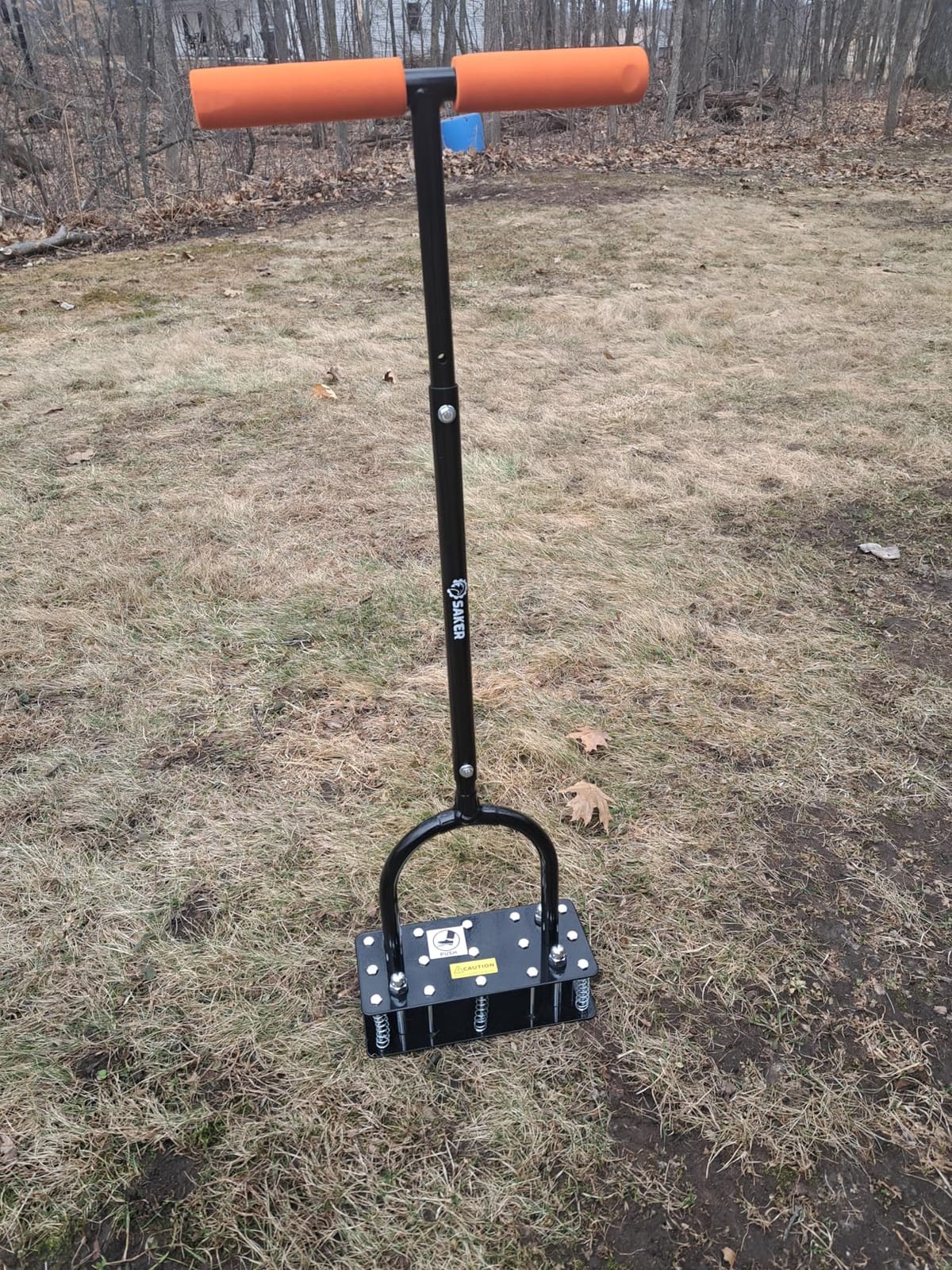
This is the lowest-rated pick here at 4.1 stars from 223 reviews, with a 13 percent three-star share, and most of that comes down to weight and spike length rather than any defect. The 6.53 pound frame is the heaviest in the manual spike group, and the 2.3 inch spikes are the shortest among the well-reviewed options.
What the spring system is worth in sand
On a sandy lawn watered the night before, a spiked tool that clogs every third press is unusable, and that is the failure mode the spring is designed to prevent. Owners who work wet ground tend to be the ones defending this tool hardest.
The adjustable handle is the other quiet benefit. On a long job, setting the height to your frame keeps your back neutral rather than permanently bent forward.
Where to look elsewhere
Spikes must enter reasonably moist soil to penetrate at all, so a dry sandy bed is a problem for this tool as much as any other. That is a watering issue, not a product issue, but it will show up on day one if you skip it.
The weight is the real objection. Carrying 6.53 pounds on every stroke adds up faster than the price difference to a lighter tool would suggest. If you already own a spike aerator, this is a duplicate; if you own nothing, a lighter 12 or 20 spike model serves most yards better.
10. Seeutek 23 Inch Rolling Lawn Aerator – Best for Rolling Coverage
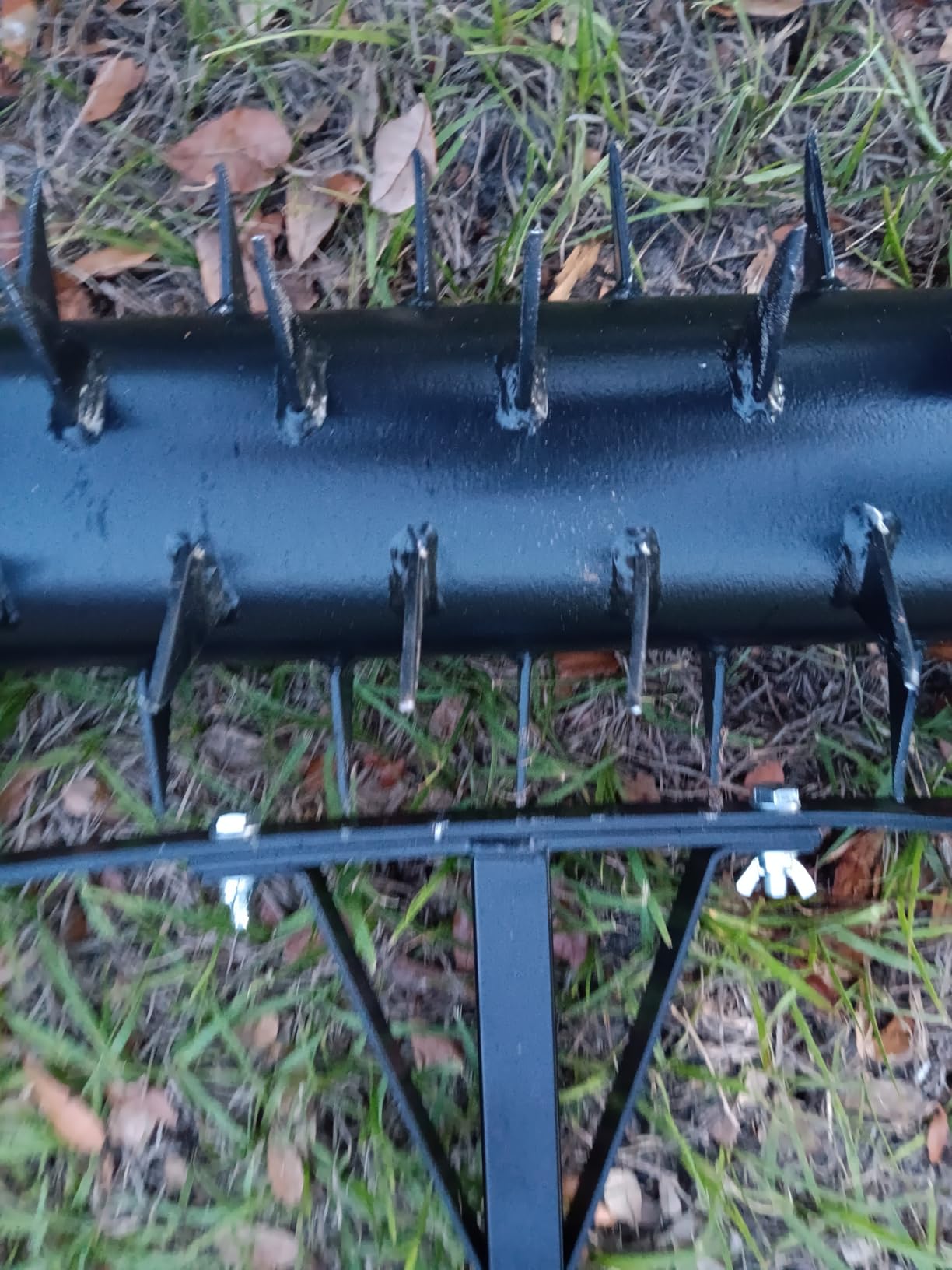
Seeutek 23Inch Rolling Lawn Aerator – Upgraded Heavy Duty Aerators
23 inch width
2 inch laser-welded spikes
Weighted fill hole
24 lb frame
Pros
- Roller format covers far more ground per stroke
- Side hole accepts water or sand as ballast
- Three height settings with a padded T-bar
- Laser-welded spikes on a thickened alloy wall
Cons
- Lowest average rating here at 4.0 stars
- Heaviest manual unit at 24 pounds
- 23 inch width is awkward near edges
- No plug removal
A roller moves over a lawn in a way a step-on spike never does. The 23 inch width means one pass covers ground that would take you a dozen steps with a hand fork, and the tripod frame joining handle to roller keeps it stable rather than wobbling.
The side fill hole is the feature that makes sense on sand, and for the opposite reason it does in clay. You can load it with water or sand to drive the 2 inch spikes deeper, but on a loose sandy bed you want very little in there. A partial fill is enough to take the sting out of the spikes.
At 4.0 stars from 179 reviews, this carries the lowest average and the highest one-star share in the group, around 12 percent. Owners who like it point to coverage per stroke and the ballast option, while the recurring negatives are the 24 pound weight and the wide footprint for edging work.
Where a roller earns its keep
If your sandy lawn is above roughly 5,000 square feet, a rolling spike tool is the most efficient hand-powered option. You cover the ground at walking pace, the channels open evenly, and the job finishes in an afternoon rather than a weekend.
The three height settings and padded T-bar also make it easier on your back than a step-on tool, which matters over a long pass.
Where it is the wrong shape for the job
A 23 inch footprint is useless in the tight areas where sandy-lawn problems often start, such as a narrow strip beside a fence or a corner around a downspout. Pair it with a hand spike aerator for edges rather than trying to force it.
It punctures and does not core, so it will not pull plugs or open holes large enough for overseeding. And at 24 pounds it is genuinely heavy to move around a garage, which owners mention as often as they mention performance.
11. Landzie 42 Inch Hollow Tine Core Aerator – Best for Stainless Steel Coring
Landzie – Lawn Aerator Tool 42″, Hollow Tine Core Aerator
Three hollow stainless tines
Beveled to eject cores
42 inch height
Arrives assembled
Pros
- Beveled tines clear each other so there is no unclogging step
- Stainless steel resists the corrosion that ruins cheaper corers
- 42 inch frame keeps the back straighter
- Arrives with tines already fitted
- Tines can be replaced individually
Cons
- Three tines means more strokes per square foot
- Heavier than most hand spike tools at 5.6 pounds
- Frame still needs wiping down after wet use
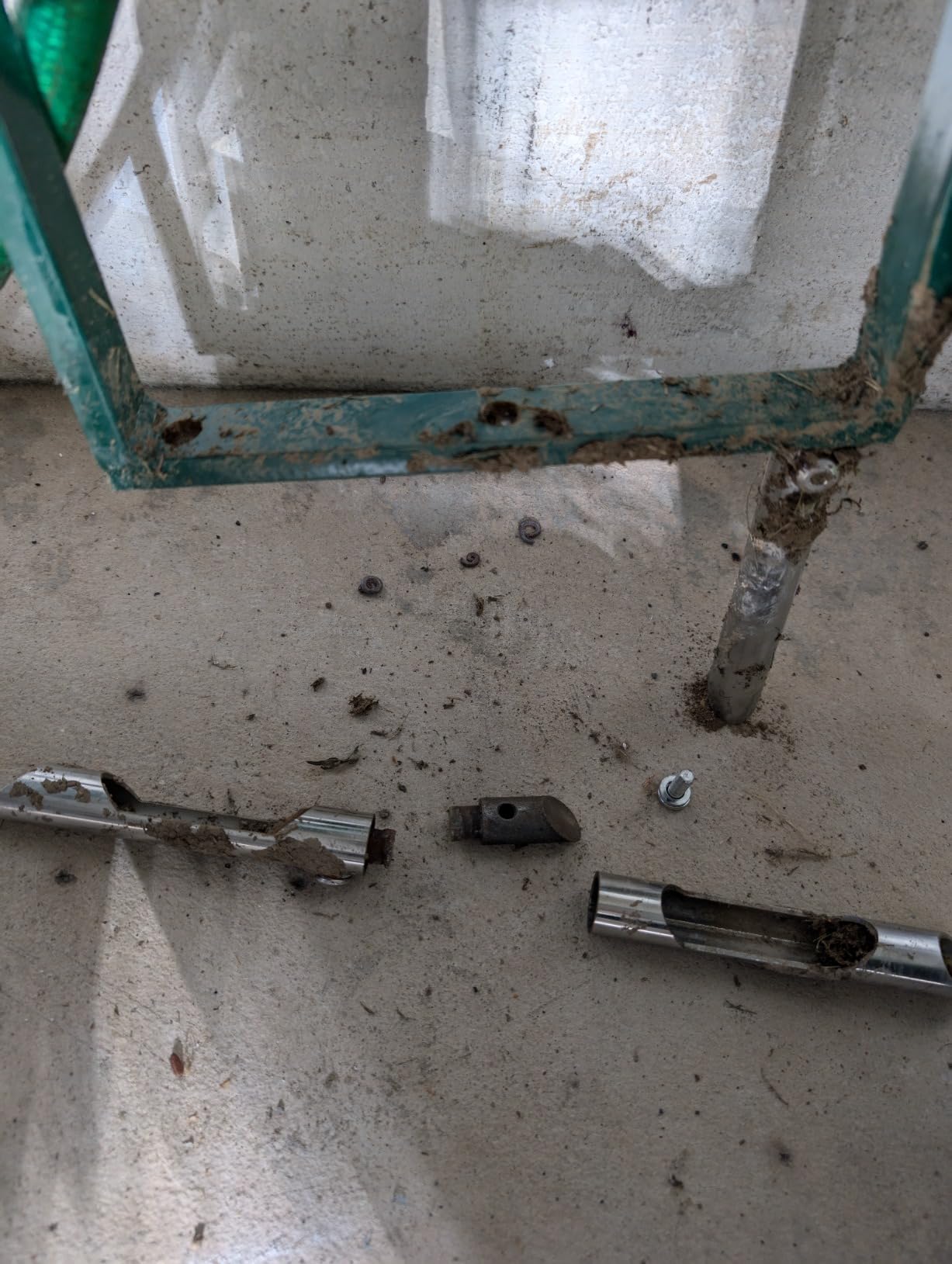
Stainless steel hollow tines are the reason this one lasts. Corrosion is what kills cheap core aerators, because the hollow tube rusts inside, the core packs in and the tool stops clearing. Reviewers with multiple seasons of use point at the stainless construction as the difference.
The beveled tine design also handles the clogging problem elegantly. Each tine pushes the previous core up and out as you press down, so the tool clears itself without a screwdriver step, and individual tines can be removed for cleaning or replacement.
It holds a 4.3 star average from 350 reviews with a 68 percent five-star share, and it arrives with the tines already fitted to the frame so there is no assembly. The 42 inch height is the tallest manual tool here and keeps your back straighter than a 32 inch model.
When this is the right corer for a sandy yard
Choose it when you are overseeding and want open holes with real seed-to-soil contact rather than punctures that close. The taller frame makes it the most comfortable hand corer for a long session, and the removable tines mean a single damaged tine is not a dead tool.
It is also a sound choice for a yard of sandy loam over a firm base, where the coring action does more than a spike would.
Where it is overkill
Three tines is low coverage, and owners accept that as the trade for the self-clearing design. On a large sandy lawn the stroke count gets high quickly, which is where a roller or a tow-behind makes more sense.
At 5.6 pounds it is heavier than most hand spike tools, and the powder-coated frame still needs wiping down after use in wet soil. If your only problem is water running off a surface crust, this is a great tool pointed at the wrong one.
12. Simple Lawn Solutions Liquid Soil Loosener – Best for Liquid Aeration
Liquid Soil Loosener- Soil Conditioner-Use alone or when Aerating with Mechanical Aerator or Core Aeration- Simple Lawn Solutions- Any Grass Type-Great for Compact Soils, Standing water, Poor Drainage
946 ml concentrate
Covers 32000 sq ft
Hose-end sprayer
Any grass type
Pros
- Users report a spongy feel and better infiltration within days
- Works alongside a core aerator to make later passes easier
- Applies with a standard hose-end sprayer
- Suitable for all turf types
- One bottle usually covers two applications
Cons
- Not a substitute for core aeration since it removes no plugs
- Large properties need multiple bottles
- Some users saw no change after two seasons
- Foams heavily through a hose-end sprayer
This is the odd one out, and it is here because it solves a problem no mechanical tool on this list addresses. It is a concentrated liquid applied with a hose-end sprayer that conditions soil and lets water move downward, and with more than 9,200 reviews at 4.2 stars it is the second most proven product we looked at.
Owners describe the result as visible. Reviewers report pressing a finger several inches into treated ground after a rain and feeling a spongy give, and they pair it with a core aerator so that later passes are noticeably easier to push.
For a sandy yard, the honest use case is layering. Applying it before you spike helps water reach the root zone rather than perching on the crust, and applying it after mechanical work keeps the channels open longer. A single 32 ounce bottle covers up to 32,000 square feet, which is most yards several times over.
Where liquid aeration fits in a sandy lawn
It works alongside mechanical aeration rather than against it. Apply it, water it in, then spike within a few days and the spikes move through treated ground with less resistance. That ordering is what reviewers describe when they report easier later passes.
It suits every turf type listed, from Bermuda and St. Augustine to fescue and Kentucky bluegrass, so you are not adjusting the plan for your grass species.
Where expectations should be lowered
It loosens soil, it does not remove plugs, and it is not a replacement for mechanical aeration. Some users applied it across two full seasons and reported no measurable change, so treat it as a complement rather than a cure.
It also foams significantly through a hose-end sprayer, which makes it easy to misjudge the application rate, and the listing has left some buyers unclear about bottle size. Check what arrives before you mix.
When a Core Aerator Is Still the Right Call
Three situations justify a core aerator even when your soil is mostly sand, and if you recognise one of them, the coring tools above are worth the extra cleanup.
Sand layered over clay. If a fill layer of sand sits above a clay hardpan, water perches on the clay and the lawn stays wet in low spots. A spike aerator cannot help because the water is not being held up by surface crust. A core aerator at least gives the water a route downward, and the liquid loosener on this list works well alongside it.
Compacted traffic lanes inside a sandy yard. A path from the gate to the back door, a strip where the mower turns, a dog run. Use the screwdriver test in these spots. If it stops at an inch, that is a compaction problem and coring is the correct tool.
Overseeding a thin, worn lawn. Hollow tines leave open holes that hold seed and moisture far better than a puncture. That is a seeding job rather than an aeration job, and it justifies a coring tool on a sandy lawn that did not otherwise need one.
And one caution about the reverse question. Can you aerate your lawn with sand? Not as the aeration method. Topdressing with sand is a separate technique, done after aeration to level low spots and improve drainage, and the sand you add does not replace the tine work.
How to Aerate a Sandy Lawn, Step by Step
The order matters more than the tool. Follow this sequence and any of the spike tools above will do a clean job.
Water the day before. Dry sand will not let any tine bite. Give the lawn a deep soak the evening before so the spikes enter moist ground rather than dust.
Mow first and clear the lawn. Short grass and no clippings give the spikes a clean path and stop holes from clogging.
Add light ballast on a tow-behind. Sand is already loose. A partially filled tray is plenty and the machine steers far better than a fully loaded one.
Make two passes in perpendicular directions. Spike aerators reach less deep than cores, so a second pass across the other axis roughly doubles the number of channels per square foot.
Topdress with compost, not just sand. A thin compost layer over the opened soil adds organic matter that sand badly needs. Pure sand on sand adds nothing to the root zone.
Overseed immediately if you are seeding. The open holes hold moisture against the seed. Hold off on pre-emergent herbicide until the seed has germinated, or you will block the grass you are trying to grow.
Water lightly and often for two weeks. Keep the top inch damp so the seed stays in contact with the soil.
For a sandy lawn this is a two to three year job, not an annual one. If you are doing it every spring, you are probably working on the wrong problem.
Buying Guide: What Actually Matters for Sand
Most buying guides for lawn aerators assume compacted clay. Here is what to weigh when your soil is sand.
Lawn size sets the class. Under 1,000 square feet, a hand spike aerator or a pair of spike shoes handles the whole job. Between 1,000 and 5,000 square feet, you want maximum spikes per press or a rolling unit. Above 5,000 square feet, a rolling spike tool is the efficient hand option and a tow-behind is worth renting for a single pass.
Tine length has a ceiling in loose sand. Solid spikes of 2 to 3 inches are the useful range. Longer spikes, like the 3.5 inch Colwelt, only pay off when there is a firm layer below the sand to reach. A spike in pure loose sand just makes a shallow hole and stops.
Hollow tines versus solid spikes. Hollow tines remove soil and open large holes, which is what you want for overseeding and for genuine compaction. Solid spikes open channels and leave a clean lawn, which is what you want for infiltration on sand. For most sandy lawns, solid wins.
Weight tray ballast needs are low. The tray is the single most-cited feature on tow-behind aerators because it is what drives penetration. On clay you load it to capacity. On sand, load it partially or not at all, because the ground already yields and extra weight just makes the machine harder to steer and harder to reverse.
Materials decide how long it lasts. Galvanized or 3D steel tines, powder-coated frames and stainless steel hollow tines are the three that hold up. Plain uncoated steel rusts within a season unless you dry it off after every use, which owners of the Walensee and the Briliantwerk shoes both mention as the main maintenance task.
Renting versus buying. Sand needs aeration every two to three years, so for a typical lawn renting a tow-behind is often the sensible call. Posters on lawn forums treat rental as the default and buying as the choice for anyone with an acre or a tractor already in the shed. Check that the rental model has a weight tray you can load, or you will not get the penetration you need.
Comfort decides whether you finish. Handle height, weight and spike count per press are unglamorous, but they determine whether the job takes an hour or a weekend. A 42 inch frame and 20 spikes per press cover far more ground per stroke than a 32 inch frame and four spikes.
Finally, consider what aeration will not fix on a sandy lawn. Hydrophobic dry patches caused by a waxy surface coating need a wetting agent. Uneven irrigation needs a sprinkler check. Crabgrass in warm-season sand needs a pre-emergent timed around your overseeding. Chinch bug stress in hot, dry sand is an insect problem. A tool that punches holes does not address any of those.
Frequently Asked Questions
Should you aerate sandy soil?
Yes, but not for compaction. Sand is already loose, so what usually needs fixing is a dense, water-repellent surface crust that makes irrigation run off instead of soaking in. A spike aerator breaks that crust and opens channels for water, air and seed to reach the root zone. Do it every two to three years rather than annually.
Is it worth aerating sandy soil?
Worth it, at the right frequency. Sandy lawns rarely compact, so you are not buying compaction relief, you are improving water infiltration and preparing the surface for overseeding. Most sandy lawns need it every two to three years. If your problem is uneven watering or insect stress, aeration will not help at all.
What is better, plug or spike aerator for sandy soil?
A spike aerator. Spike tines displace soil sideways and open channels, which is exactly what loose sand needs, and they leave a clean lawn with no plugs to collect. A core or plug aerator removes soil, which matters for genuinely compacted clay and for overseeding, not for typical sandy drainage problems.
Does sandy soil have good aeration?
In the root zone, usually yes. Large pore spaces between sand particles let air and water move freely. The exception is a thin surface layer of fine particles and organic matter that behaves like a hydrophobic lid, sheds water and starves the roots underneath. That crust is what aeration is for.
How long should aeration spikes be?
Between 2 and 3 inches for most lawns. In loose sandy soil, that is effectively the ceiling, because a longer spike finds nothing firm to push into and just makes a shallow hole. Spikes beyond 3 inches only earn their length when there is a compact layer under the sand or a clay hardpan to reach.
Are spike aerators as good as plug aerators?
Not for relieving compaction, where core aerators win outright. For improving water infiltration in loose sand, a spike aerator does the same job with far less cleanup, because it removes no soil and leaves no plugs. Choose core when you have real compaction or you are overseeding into thin turf.
What is the best month to aerate your yard?
Early spring or early fall, while the grass is actively growing and the soil is moist enough to accept the tines. Water the lawn the day before either way. Avoid the heat of midsummer, which stresses the turf, and avoid very wet conditions, which clog tines and tear up roots.
Which pull-behind aerator is the best for sandy soil?
For a large yard needing fast coverage, a wide tow-behind with galvanized knives and a weight tray is the practical choice, run with the tray only partially loaded because sand already gives. For a small or medium lawn, a hand spike aerator with 12 to 20 spikes will do the same work without the storage and handling overhead.
Do spike lawn aerators work?
Yes, with the right expectation. They open real channels in the soil that water and seed use, and on sand that is the whole job. What they do not do is relieve compaction, because relieving compaction requires removing soil. Regular users describe spike aeration as a routine maintenance touch-up rather than a cure.
Which Aerator Suits Your Sandy Soil Best
After working through twelve tools, the answer to which of the best aerators for sandy soil is worth buying is not the biggest machine. It is a spike tool matched to your lawn size, used on moist ground every two to three years, followed by compost and water.
The Yard Butler ID-6C takes the top spot for most sandy yards because it is the most proven option and the only one that both opens channels and pulls plugs when a hard lane appears inside an otherwise loose lawn. The Walensee 20 spike tool is the better value for small yards, and the Agri-Fab tow-behind is the right call if you have an acre and a tractor.
Before you buy anything, run the screwdriver test. If it sinks in by hand, your problem is water movement at the surface and a spike aerator is the answer. If it stops at an inch, you have compaction and you need a core aerator instead. That one check will save you from the wrong purchase entirely.
Our best aerators for sandy soil picks are updated each season, so check back after your first pass and see how the channels held up.