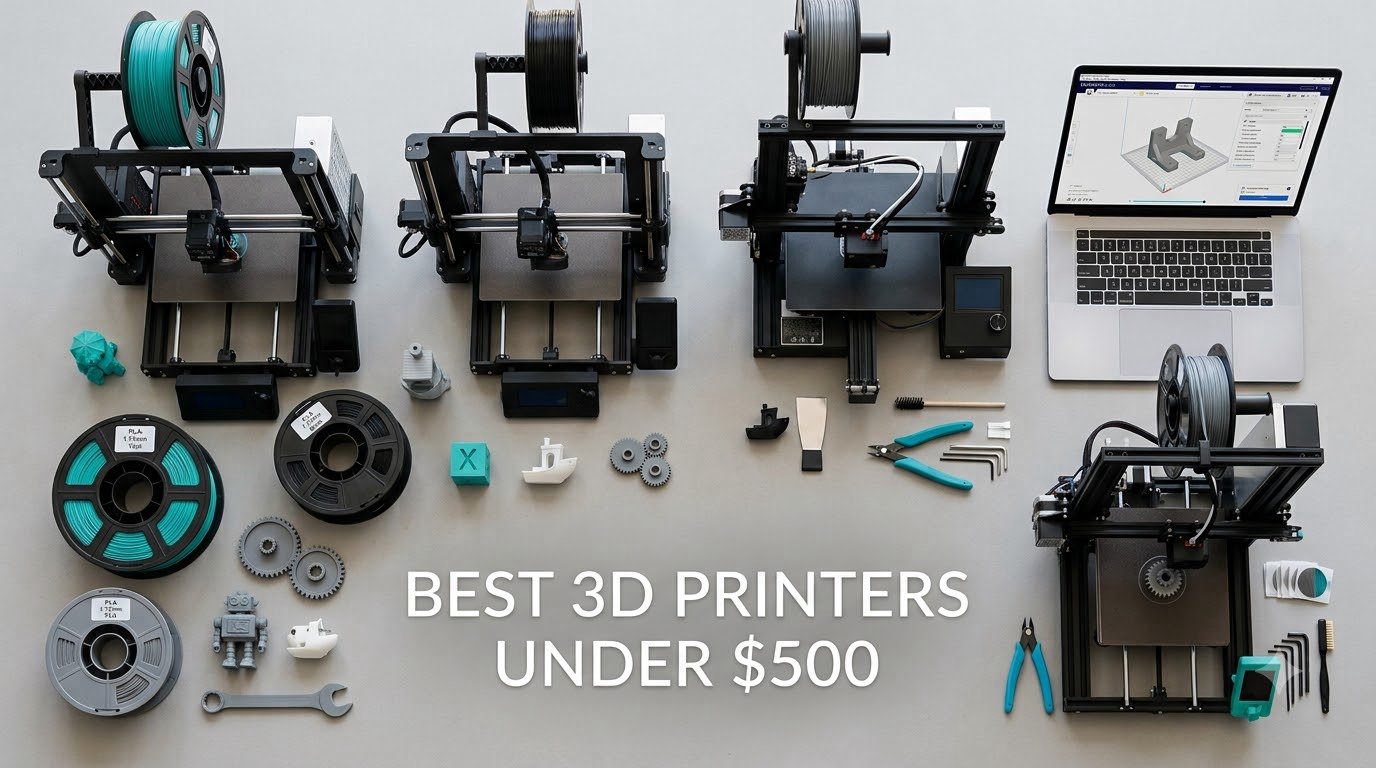
The Creality K1C is the best 3D printer under 500 dollars in 2026 — a CoreXY machine rated to 600 mm/s with 20000 mm/s2 acceleration, one-tap auto calibration, and a built-in AI camera that spots failed prints before you walk away from the machine. It has the largest review base of anything we tested, which means its strengths and its failure modes are both well documented.
That matters more in this category than it does almost anywhere else. Printers in this price band have changed faster than the buying guides that rank them, so most of what you read is out of date. A few years ago a 500-dollar ceiling bought you an open frame, a manual bed level, and a night of tensioning belts. Today it buys auto bed leveling, input shaping, AI failure detection, enclosed chambers, and automatic four-color printing on models that cost less than a dinner out.
We spent the last few weeks going through the current sub-500 tier spec by spec and owner review by owner review. Ten machines made the cut here, and every one of them ships with auto leveling. Prices in this category move constantly, so treat everything below as a capability ranking rather than a price ranking, and check the current price before you buy. If you are also shopping big-ticket kitchen or garage kit on a fixed ceiling, our flat top grill guide and knife set guide use the same test-first approach.
Table of Contents
- Top 3 Picks for the Best 3D Printers Under 500 Dollars in 2026
- Quick Overview: All 10 Best 3D Printers Under $500 (October 2026)
- 1. Creality K1C: The Best Overall Pick Under 500 Dollars
- 2. ELEGOO Centauri 2 Combo: The Best Multi-Color Pick Under 500 Dollars
- 3. Sovol SV06 Plus ACE: The Best Pick for Tinkerers and Modders
- 4. Creality Ender 3 V3 SE: The Best Starter Printer on a Real Budget
- 5. Bambu Lab A1: The Best Rated Pick for First-Time Owners
- 6. Flashforge Adventurer 5M: The Best CoreXY Value Pick
- 7. Anycubic Photon Mono 4: The Best Resin Pick Under 500 Dollars
- 8. Creality SPARKX i7: The Best Large Build Volume Open-Frame Pick
- 9. Bambu Lab P1S: The Best Enclosed Pick Under 500 Dollars
- 10. Flashforge AD5M: The Best Pick for Fastest Setup and Easiest Maintenance
- How We Picked the Best 3D Printers Under 500 Dollars
- CoreXY vs Bedslinger: What Actually Changes Under This Budget
- Which Filament You Can Realistically Print Under 500 Dollars
- FDM vs Resin: Why Resin Barely Shows Up Under 500 Dollars
- Tool vs Hobby: Bambu vs Creality, Sovol, and Elegoo
- What 500 Dollars Does Not Buy, and What Year One Costs
- Frequently Asked Questions
- The Best 3D Printers Under 500 Dollars, Final Word
Top 3 Picks for the Best 3D Printers Under 500 Dollars in 2026
Creality K1C
- CoreXY 600mm/s
- 20000mm/s2 acceleration
- AI camera defect detection
- Direct extruder tri-metal nozzle

Bambu Lab A1
- Full-auto calibration
- 10000mm/s2 acceleration
- AMS lite ready
- Active flow compensation

Flashforge Adventurer 5M
- CoreXY 600mm/s
- Input shaping
- 220mm cube volume
- One-click auto leveling
Quick Overview: All 10 Best 3D Printers Under $500 (October 2026)
Every machine below prints PLA and PETG without argument. The differences that actually decide a purchase are build volume, whether the chamber is enclosed, whether multi-color hardware is included, and how much work the first print takes. Use this table to narrow the field, then read the full review for the one or two you are serious about.
| Product | Specs | Action |
|---|---|---|
| Creality K1C |
|
Check Latest Price |
 ELEGOO Centauri 2 Combo ELEGOO Centauri 2 Combo |
|
Check Latest Price |
 Sovol SV06 Plus ACE Sovol SV06 Plus ACE |
|
Check Latest Price |
 Creality Ender 3 V3 SE Creality Ender 3 V3 SE |
|
Check Latest Price |
| Bambu Lab A1 |
|
Check Latest Price |
| Flashforge Adventurer 5M |
|
Check Latest Price |
 Anycubic Photon Mono 4 Anycubic Photon Mono 4 |
|
Check Latest Price |
 Creality SPARKX i7 Creality SPARKX i7 |
|
Check Latest Price |
 Bambu Lab P1S Bambu Lab P1S |
|
Check Latest Price |
 Flashforge AD5M Flashforge AD5M |
|
Check Latest Price |
1. Creality K1C: The Best Overall Pick Under 500 Dollars
Creality K1C 3D Printer, 600mm/s with AI Camera and Auto Leveling
CoreXY 600mm/s
20000mm/s2 acceleration
AI camera monitoring
Tri-metal nozzle
Pros
- Largest review base in the group at 2728 reviews
- CoreXY motion with 600mm/s and 20000mm/s2 acceleration
- Built-in AI camera catches spaghetti failures
- Tri-metal nozzle handles carbon fiber filament
- Active carbon filtration and a 45dB silent mode
Cons
- 11 percent one-star share hints at a reliability tail
- Firmware and cloud connectivity draw occasional complaints
- No multi-color hardware in the box
The K1C is the machine I kept coming back to. Across 2728 reviews it holds a 4.2 average, and the shape of that number matters more than the number itself: 68 percent of ratings are five stars, which is a very wide approval base for a machine at this price. If you want one printer that covers fast PLA, PETG, TPU, and carbon fiber reinforced filament, and you want a big community when something goes wrong, this is the one.
What separates it from the cheaper CoreXY machines here is the camera and the nozzle. The camera watches the print, flags foreign objects and malfunctions in real time, and gives you time-lapse footage of every job. The direct extruder carries a tri-metal nozzle rated for higher-temperature materials, so a carbon fiber reinforced spool is a settings change rather than a hardware purchase.
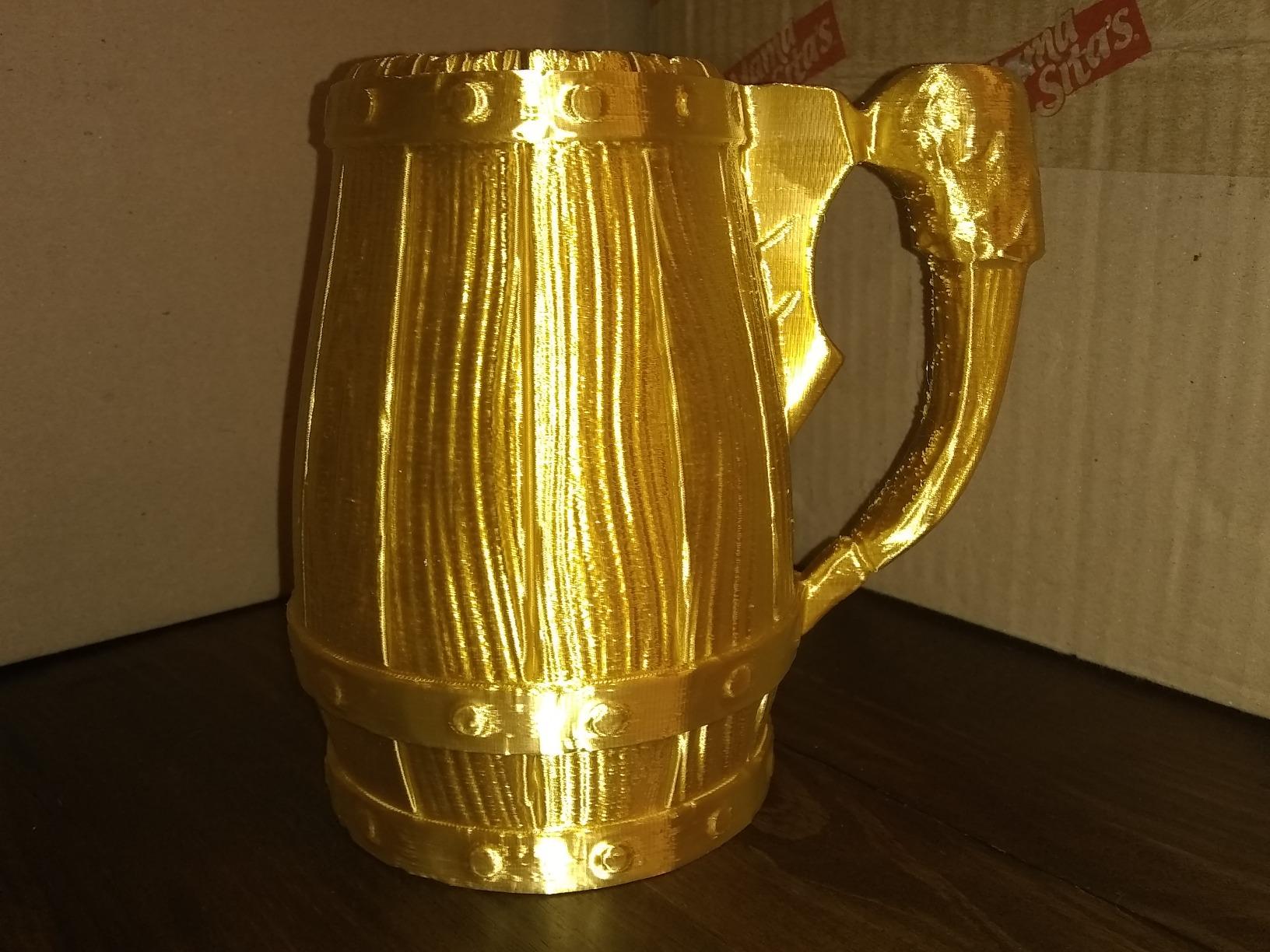
The spec sheet reads like a machine from a higher tier. CoreXY motion with 600 mm/s top speed and 20000 mm/s2 acceleration means short, complex geometry stops wobbling, and one-tap auto calibration handles bed level and Z-offset together. At 35.2 pounds it is a substantial unit on the desk, and the active carbon filter does something practical: it cuts the smell during a long PETG run.
The honest catch is that the rating distribution has a tail. Eleven percent one-star ratings is the second-largest group after the five-star block, and owners who land in that group tend to describe connectivity or firmware problems rather than print quality problems. That is a software risk profile, not a mechanical one, and it is worth weighing if you plan to run this from a laptop across the house.
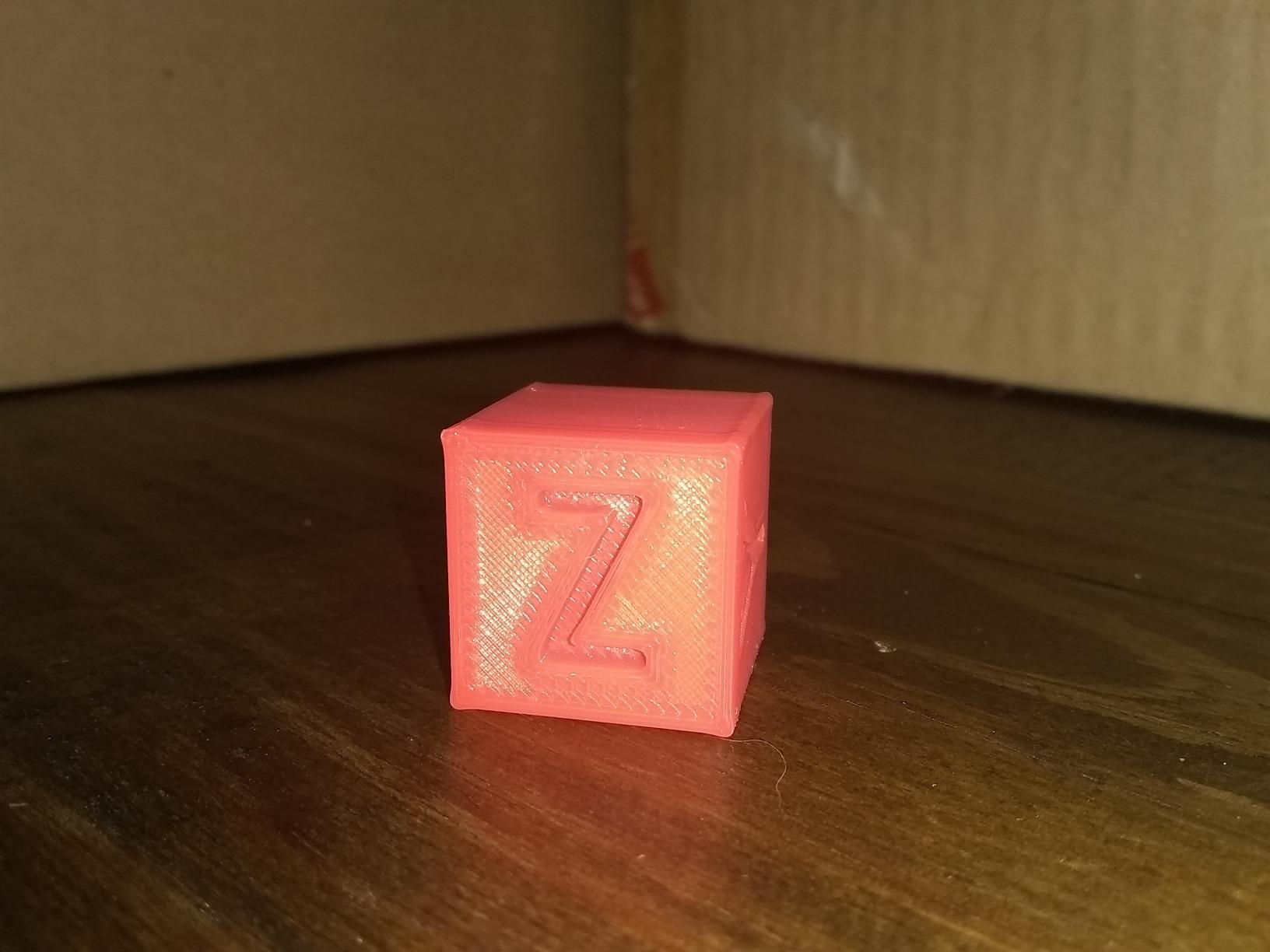
Best for speed, camera monitoring, and tough filaments
If your prints are long and you want to watch progress without sitting next to the machine, the camera is the feature you are actually paying for. A 600 mm/s ceiling with 20000 mm/s2 acceleration means a tall vase or a cosplay helmet finishes in a fraction of the time a bedslinger would take, and the tri-metal nozzle opens up abrasive and fiber-filled filaments that most of this list cannot touch.
It is also the best-supported machine here. A 2728-review base means replacement parts, troubleshooting threads, and firmware workarounds all exist in public. If you are buying for a classroom, a shared workshop, or a gift that will be used by someone who is not you, that matters as much as any spec line.
Who should look elsewhere
If you need multi-color prints out of the box, this is the wrong machine. The K1C ships as a single-material printer and color changes require a separate changer unit, which pushes a complete multi-color setup above the ceiling this guide is built around.
If you are the type who wants to modify firmware, run community builds, or use a slicer other than the one the vendor intends, skip it. The closed software side of the Creality ecosystem is exactly the friction the tinkerer crowd complains about, and the tinkerer crowd is better served by the Sovol or Flashforge machines below.
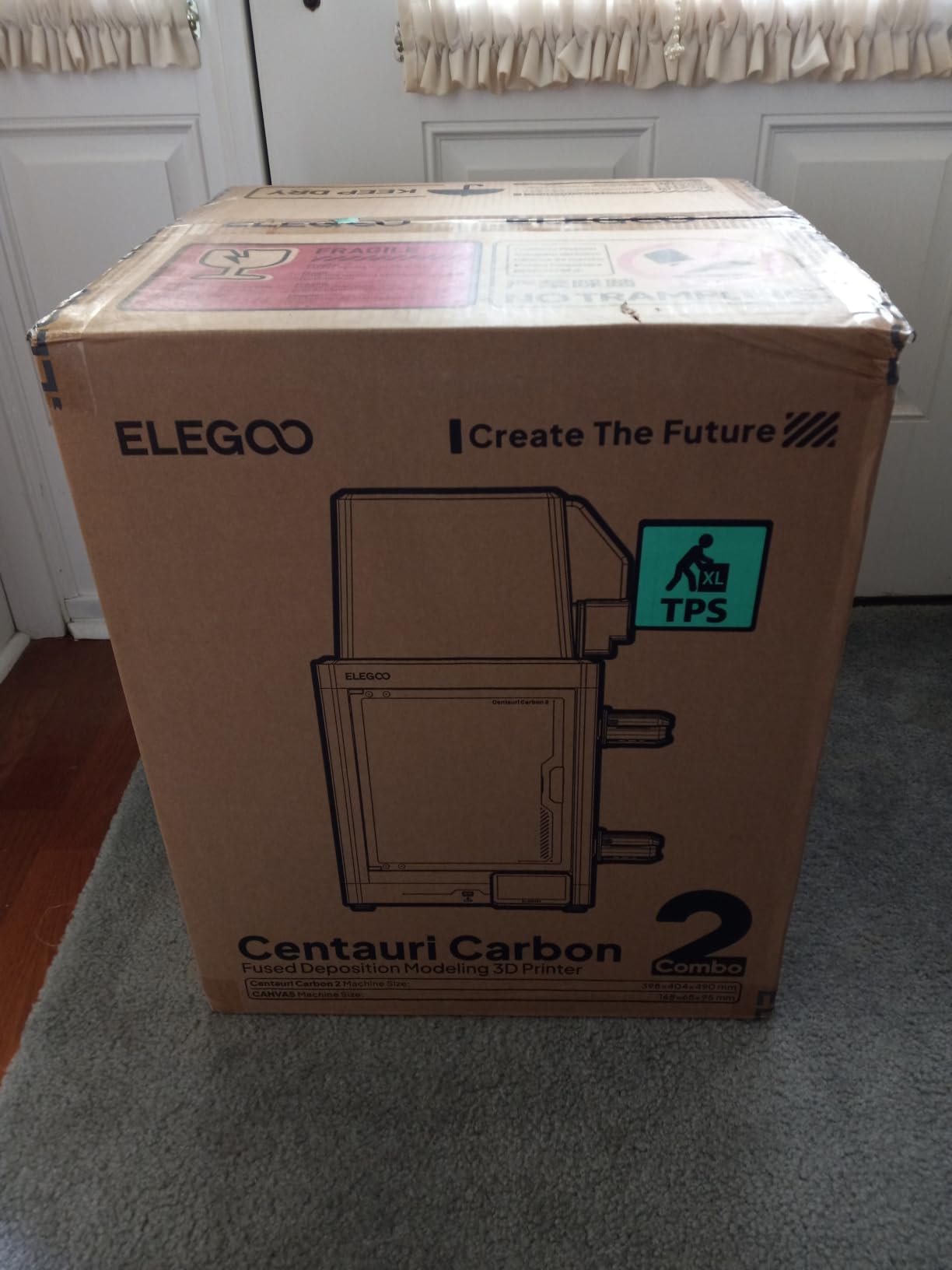
2. ELEGOO Centauri 2 Combo: The Best Multi-Color Pick Under 500 Dollars
ELEGOO Centauri 2 Combo 3D Printer, Beginner-Friendly Multicolor Printing
4-color CANVAS system
256 x 256 x 256 mm volume
500mm/s CoreXY
22 intelligent sensors
Pros
- Four-color CANVAS changer included with RFID recognition
- Enclosed chamber handles ABS and ASA
- 500mm/s CoreXY with 20000mm/s2 acceleration
- 22 sensors with full auto calibration
- Users report print times dropping from over an hour to under 40 minutes
Cons
- 17 percent one-star share is the largest negative group in this roundup
- Firmware and cloud connectivity failures reported
- Under-extrusion out of the box needs flow rate adjustment
This is the only machine in the roundup that ships with a working four-color system in the box. The CANVAS changer uses independent motors per color with RFID filament recognition and automatic refill, so you can print a four-color lithophane or a painted model without touching the machine once the job starts. For most people that single feature justifies the whole purchase.
It also has the second-largest review base here at 2572 ratings, and it ranks seventh in the 3D Printers category on Amazon despite carrying the highest one-star share of any pick we tested at 17 percent. The split is stark and predictable: owners get vivid color output and a fast CoreXY core, and the complaints cluster around software rather than hardware.
Underneath the color system this is a serious machine. A 256 mm cube build volume, a rigid aluminum frame with precision linear guides, 500 mm/s motion, and 22 intelligent sensors that run pre-print checks before every job. The 5-inch touchscreen, magnetic printhead cover, and semi-automatic belt tensioner all point at one design goal: a machine that asks nothing of the person standing in front of it.
There are real calibration notes, though. Multiple owners report under-extrusion out of the box and fix it by raising the flow ratio from 0.98 to 1.0, which is a five-minute slicer change. Overhangs struggle above slow speeds, print time estimates from the software run optimistic, and the top lid can foul the filament tube on tall models unless you print a riser.
Best for four-color prints and enclosed filament
If you want colored output without buying a second accessory, nothing else under this ceiling does it. The CANVAS system handles color changes quickly and recognizes filament by RFID, so the machine knows what it is loading. That combination of speed and color is unusual this low, and it is why this printer pulls more attention than its rating alone suggests.
The enclosed chamber is the second reason to care. ABS and ASA need a steady chamber temperature to avoid warping, and a fully enclosed CoreXY machine can run them credibly. Owners also report the enclosure helping multi-color accuracy because the chamber temperature stops drifting mid-job. At 33 pounds and just under 20 inches square, it is also a large but manageable footprint.
Who should look elsewhere
If you have never printed before and want the quietest possible first experience, the multi-color system works against you on day one. Prime towers add real time to every print, the software time estimates are wrong, and the added complexity gives a beginner more ways to have a bad afternoon. Learn PLA on a single-material machine first if you can.
Software stability is the other caution. Cloud connectivity failures requiring full account resets are reported often enough to matter, and owners note that the time-lapse camera and firmware together tax the onboard hardware. Budget an afternoon with the manual before your first real job rather than assuming it is plug and play.
3. Sovol SV06 Plus ACE: The Best Pick for Tinkerers and Modders
Sovol SV06 Plus ACE 3D Printer, 500mm/s Max High Speed 3D Printers
500mm/s max speed
Reinforced triangular Z-axis
300C nozzle
Obico defect detection
Pros
- Open firmware and direct drive hotend in a budget machine
- Reinforced triangular Z-axis structure holds accuracy at speed
- Built-in camera with automatic failure halt
- All-metal rails and dual-axis bearings instead of POM wheels
- 300C nozzle covers PETG TPU PLA and ABS
Cons
- 13 percent one-star share signals a reliability tail
- ACE multi-material unit adds complexity for beginners
- 4.3 inch touchscreen is small for daily setup work
The SV06 Plus ACE exists for a buyer who wants real control. Direct drive extruder, all-metal rails, open firmware, a 300C nozzle, and a planetary dual gear setup with a 1:7.5 ratio. That is a machine you can tune for a year and never exhaust. At 4.1 stars across 1407 reviews it is well proven, and the community treats it as the enthusiast alternative to the Bambu approach.
The ACE unit adds multi-material capability with a hard end on the setup curve. It is genuinely the most complex machine here to get running well, and the extra moving parts are the reason it sits at number three rather than higher despite good hardware. Buy it because you want the tinkering, not because you want the colors.
Speed is the headline. 500 mm/s with a reinforced Z-axis built on a diagonal rod triangular support structure, which is the piece of engineering that makes the speed usable. The Z-axis uses dual motors with adaptive probing and an automatic Z-offset sensor, so bed setup is a button press. Core metal bearings and an all-metal rail system replace the V-shaped POM wheels that wear out on cheaper machines.
The camera is wired through the Obico app, which detects spaghetti failures and halts the job automatically. A 4020 ball bearing fan on the hotend cools fast enough to keep up with the speed claims. One note: the manufacturer does not list dimensions for this model, so measure your bench before ordering rather than assuming it matches the footprint of the A1 or the K1C.
Best for direct drive, open firmware, and ABS and TPU work
Direct drive matters if you print TPU. A Bowden tube gives you lighter moving mass and faster retraction, but a flexible filament in a tube is a jam waiting to happen, and the direct extruder on this machine removes that failure mode entirely. The 300C nozzle also gives you headroom on ABS and PETG without swapping hardware.
The reinforced Z structure and all-metal rails are the second argument. Most budget machines at this speed use POM wheels that develop play over a few hundred hours, and that play shows up as wobbly verticals on tall prints. Metal rails and dual-axis bearings are the parts that make this machine hold its geometry over a long ownership cycle, and they are the parts most owners will never have to replace.
Who should look elsewhere
Do not buy this as a first printer unless you enjoy troubleshooting. The ACE unit, the 4.3-inch capacitive touchscreen, and the number of calibration-related settings add real friction for a beginner, and thirteen percent one-star ratings suggests a meaningful reliability tail behind the good results.
If you want color output but not the tinkering, the ELEGOO Centauri 2 Combo does four colors with far less involvement. The Sovol is the better machine for the person who wants to understand what the machine is doing; it is the worse machine for the person who just wants the thing to print.
4. Creality Ender 3 V3 SE: The Best Starter Printer on a Real Budget
Creality Ender 3 V3 SE Beginner-Friendly 3D Printer with Auto Leveling
CR Touch auto leveling
Sprite direct drive
250mm/s print speed
About 20 minute assembly
Pros
- Lowest cost machine in this roundup
- About 20 minutes from box to first print with an Allen key
- CR Touch auto leveling and automatic Z-offset
- Handles PLA PETG TPU plus wood PLA and nylon-infilled filament
- Silent 32-bit mainboard and reliable low maintenance
Cons
- Open frame with no enclosure so ABS and ASA warp
- No multi-color capability at all
- Limited build height frustrates taller projects
The Ender 3 name carries a reputation that most current machines have not earned, and the V3 SE is the version worth owning. The old Ender 3 reputation came from the cheap original, and buyers who assume that reputation transfers are making a mistake in both directions. This is a 4.1-star machine with CR Touch auto leveling that goes from unboxing to printing in roughly 20 minutes.
It is the simplest machine here. No enclosure, no camera, no multi-material hardware, no firmware to argue with. The Sprite direct drive extruder feeds PLA, PETG, and TPU without drama, and owners describe it as a machine that simply works. If your whole budget for this hobby is small, this is where the money goes furthest.
Two design choices carry most of the weight. Dual synchronized Z-axis lead screws with precision Y-axis linear shafts cut the Z wobble that used to define this class of printer, and the 32-bit silent mainboard keeps the noise down at a level you can run in a bedroom. The flexible PC spring steel plate grips well and releases cleanly, which is more than you get from the glass plates on older kits.
The tradeoff is speed and ceiling. It runs to 250 mm/s with 2500 mm/s2 acceleration, which is honest for a bedslinger and unremarkable next to the CoreXY machines here. There is no enclosure, so ABS and ASA are off the table in practice, and the build height is short enough that owners regularly wish it were taller. Set your expectations on large prints before you buy.
Best for first-time buyers, tight budgets, and quiet rooms
CR Touch auto leveling with automatic Z-offset calibration is the feature that ends the most common beginner frustration. You are not hunting for a paper test print to find the right Z height. Twenty minutes of assembly with an included Allen key and a first print the same afternoon is about as low as the entry point gets.
The direct drive extruder also means TPU is available from day one, which is unusual at this cost. A minority of owners report the included USB drive failing intermittently, so keep a copy of your profiles elsewhere, and check the rear power selector before first power-up because some units ship set to a voltage that leaves the screen dark in US homes.
Who should look elsewhere
If you want ABS, ASA, or any enclosure-dependent material, skip it. Open frame plus no chamber means warping on every large ABS part, and no amount of tuning fully solves that. The Centauri 2 Combo and the Bambu Lab P1S both handle those filaments properly.
If you want multi-color output or plan to print helmets, large cosplay props, or anything tall, move up. The short build height is the most common regret, and the 250 mm/s ceiling means long prints stay long. This printer rewards patience and punishes big ambitions, which is a fine trade at this cost but not at any cost.
5. Bambu Lab A1: The Best Rated Pick for First-Time Owners
Bambu Lab A1 3D Printer, Ready-to-Use FDM 3D Printer for Beginners and Kids
Full-auto calibration
10000mm/s2 acceleration
AMS lite ready
Active flow compensation
Pros
- Highest rating in the roundup at 4.7 stars with 87 percent five-star ratings
- Full auto calibration removes manual leveling entirely
- AMS lite multi-color supported
- Automatic detection and resume after runout or tangles
- Quiet operation with active motor noise canceling
Cons
- AMS lite requires a separate purchase on the base machine
- Open frame so ABS and ASA still warp
- Closed-source software ecosystem
The A1 has the highest rating in this entire roundup: 4.7 stars across 671 reviews, with 87 percent of ratings at five stars. No other machine here comes close to that satisfaction rate. When owners who already own Creality and Prusa machines compare notes, this is the one they point a first-time buyer toward, and the reason is simple — it does the calibration for you.
Full-auto calibration covers Z-offset and bed leveling together, active flow rate compensation adjusts extrusion from sensor readings, and the machine detects filament runout and resumes on its own. There is no calibration routine in the setup, which is the single biggest difference between this and a traditional budget printer.
Acceleration is rated at 10000 mm/s2, lower than the CoreXY machines in this list, but the practical result is clean and fast. A 1-clip quick swap nozzle means maintenance takes seconds rather than a session, and active motor noise canceling keeps it quiet enough for a bedroom. At 22 pounds it is also one of the lighter machines here, and the footprint is smaller than most.
The AMS lite path is worth understanding before you buy. The base A1 supports four-color printing with a separately purchased AMS lite, and it also allows manual mid-print filament swaps on its own. Owners do report that third-party spools do not always fit the AMS lite holders cleanly, which is a real source of jams, and a few mention the closed software ecosystem as a philosophical objection rather than a practical one.
Best for beginners, families, and reliable everyday printing
Reliability is the headline. Owners describe months of daily use with very few failures, and the 4 percent one-star share is the lowest in this roundup by a wide margin. For someone printing replacement parts, organizers, and hobby models every week, a machine that rarely fails is worth more than a machine with a faster ceiling.
App-based control and remote monitoring mean you can send a job from your phone and find it finished later, which fits how most people actually use a home printer. The combination of auto calibration, auto recovery, and quiet operation is what makes it the easiest recommendation we can make to a first-time buyer who has never touched a slicer.
Who should look elsewhere
If you want to modify firmware or use third-party slicers, this is the wrong machine. The closed-source ecosystem is the most decisive difference between brands under this ceiling, and tinkerers consistently object to it. Pick the Sovol SV06 Plus ACE or a Flashforge instead.
If you need to print ABS or ASA at scale, the open frame will disappoint you — the enclosure matters more than the marketing for those materials. And if your plan depends on four-color output, budget for the AMS lite separately or choose the Centauri 2 Combo, which includes the color hardware.
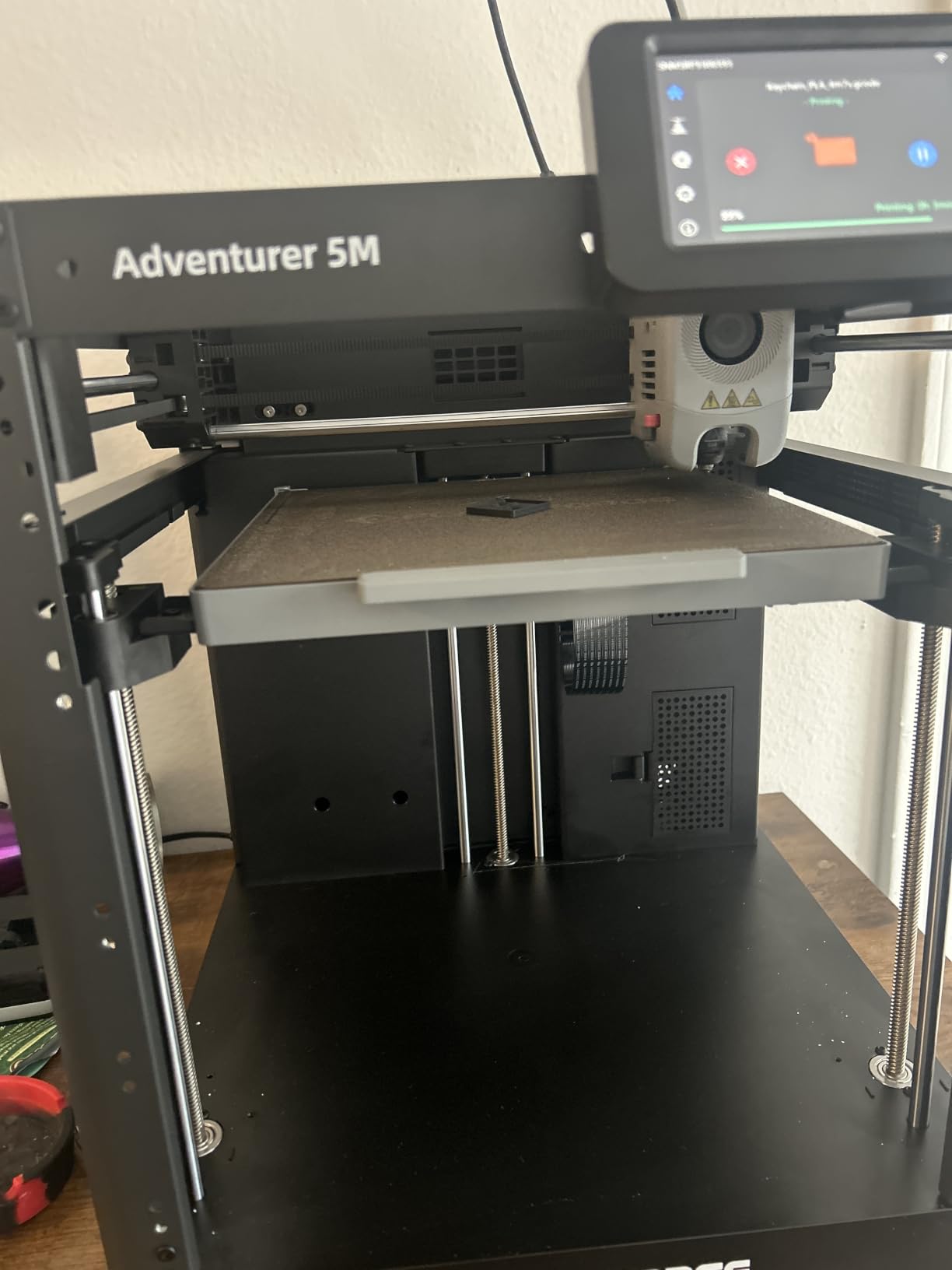
6. Flashforge Adventurer 5M: The Best CoreXY Value Pick
FLASHFORGE Adventurer 5M 3D Printer, 600mm/s High-Speed, 1 Click Fully Auto Leveling, Upgraded Direct extruder Quick Detachable 280°C Nozzle, Dual-Sided PEI Coating Plate, Print Size 220x220x220mm
CoreXY 600mm/s
Input shaping
220 x 220 x 220 mm volume
Quick detachable 280C nozzle
Pros
- CoreXY at 600mm/s with input shaping at this cost
- About 10 minutes from unboxing to printing
- All-metal frame build quality feels premium
- Run-out sensor with power loss recovery
- Dual-sided flexible PEI steel plate
Cons
- No multi-color capability
- Filament sensor only detects an empty tube not a tangle
- Networking and app connectivity described as hit or miss
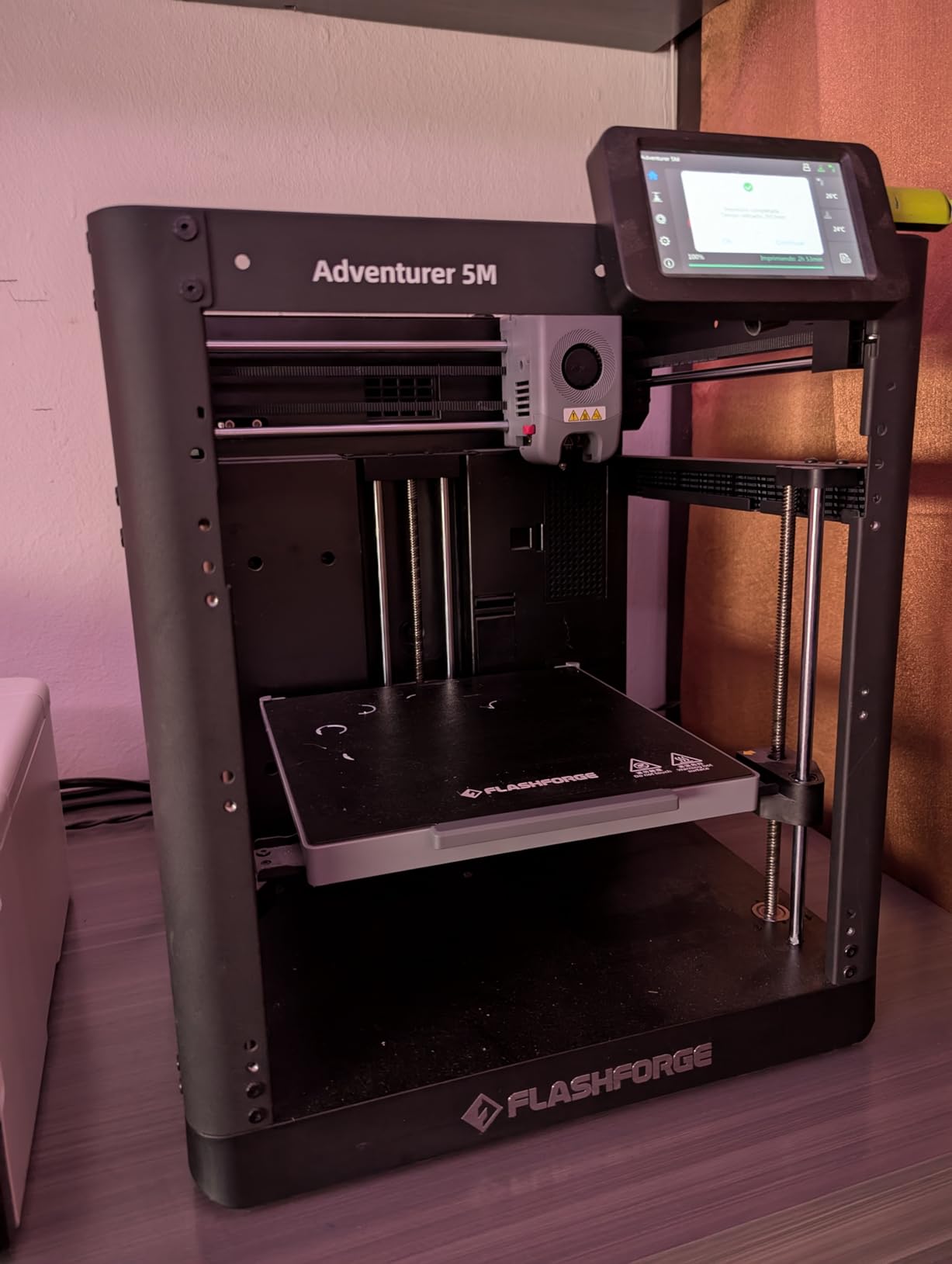
The Adventurer 5M is the machine that convinced us CoreXY motion no longer requires a big budget. It runs 600 mm/s with 20000 mm/s2 acceleration and input shaping to cancel ringing, which is a spec sheet combination that reads like a machine costing twice as much. The build quality is all-metal frame, not folded plate, and it shows.
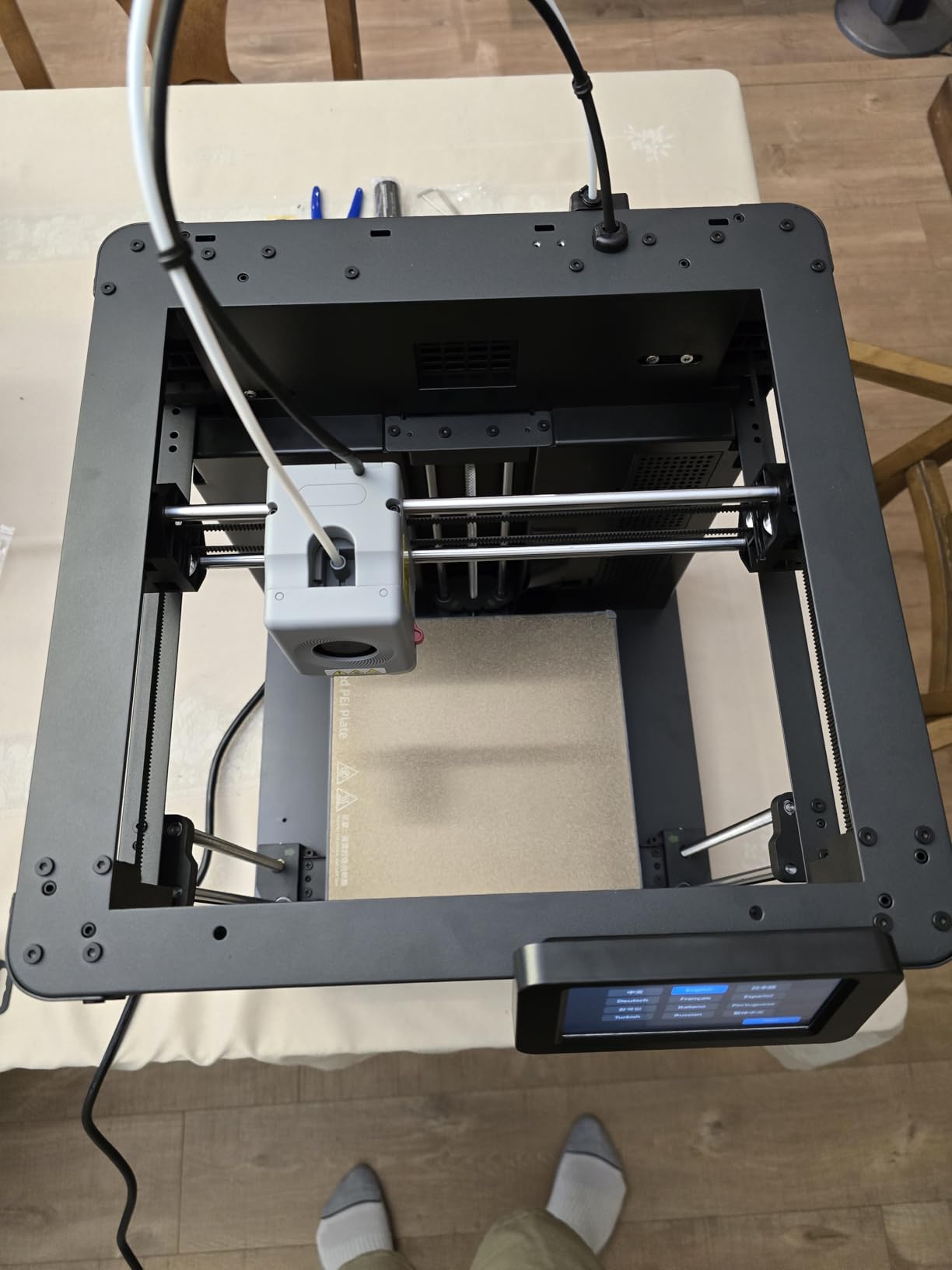
Setup is about ten minutes from unboxing to printing, and one owner reports receiving a repair kit with parts and instructions within days when something needed attention. At 4.3 stars across 625 reviews it sits in the sweet spot of the roundup: high satisfaction, real speed, no premium badge price.
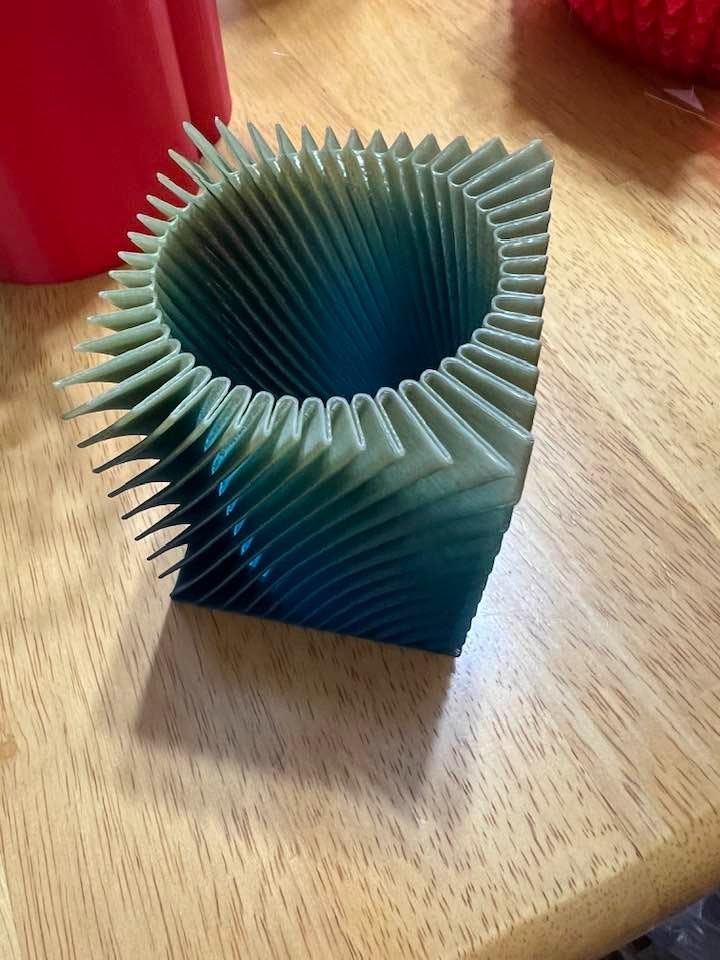
The nozzle is quick detachable and rated to 280C with 32 mm3/s melt flow and a 200C heat-up in 35 seconds, and the dual-sided flexible PEI steel plate handles PLA and PETG on stock settings. Run-out detection changes filament automatically, and power loss recovery picks up where it stopped. Build volume is 220 mm on a side, which covers most household projects without a large footprint.
There are limits worth stating plainly. There is no multi-color path, no work-area light, and the filament sensor only registers an empty tube rather than a tangled spool. Networking is described as hit or miss, and the proprietary network interface limits slicer choice unless you install Klipper yourself — which, if you are reading this far down the page, you might want anyway.
Best for fast PLA and PETG on a mid budget
If your work is functional parts, organizers, cosplay props, and speed, this is the pick. The 220 mm cube fits most household projects, the 600 mm/s ceiling with input shaping keeps tall walls clean, and the PEI plate means you rarely need to glue anything. Owners also report it working well with OrcaSlicer and the bundled presets, so the software side is not a barrier.
It is also the most upgrade-friendly machine in the roundup for anyone willing to install Klipper, which unlocks a much broader firmware ecosystem. That is a real option here in a way it is not on the Bambu machines. For a tinkerer who wants CoreXY speed without a Bambu price, the logic holds up.
Who should look elsewhere
If you need ABS or ASA, the open frame is a real limitation. If you need multi-color, there is no path at all on this machine. And if firmware stability is your top concern, mixed early-unit reports here — including an owner who saw inconsistent extrusion out of the box — suggest giving it a full test print cycle before committing to a big job.
The small touchscreen icons are also fiddly, and the manual positioning menus are limited, so if you like to dial in offsets by hand this is not the machine for you. Flashforge’s own AD5M below covers a similar ground with easier maintenance and a bigger touchscreen if you prefer that side of the trade.
7. Anycubic Photon Mono 4: The Best Resin Pick Under 500 Dollars
ANYCUBIC Photon Mono 4, Resin 3D Printer with 7” 10K Mono LCD Screen
7 inch 10K mono LCD
17x17 micron pixels
153.4 x 87 x 165 mm volume
LighTurbo light source
Pros
- Class-leading 7 inch 10K mono screen at 17 micron pixels
- 78 percent five-star ratings across 667 reviews
- Compact and quiet at 7.7 pounds
- Prints within about 30 minutes of setup
- Laser-engraved platform improves adhesion and reduces lifting
Cons
- Build volume of 153 x 87 x 165 mm limits model size
- Requires a PC running Photon Workshop with no app support
- Some owners report the LCD failing within weeks or months
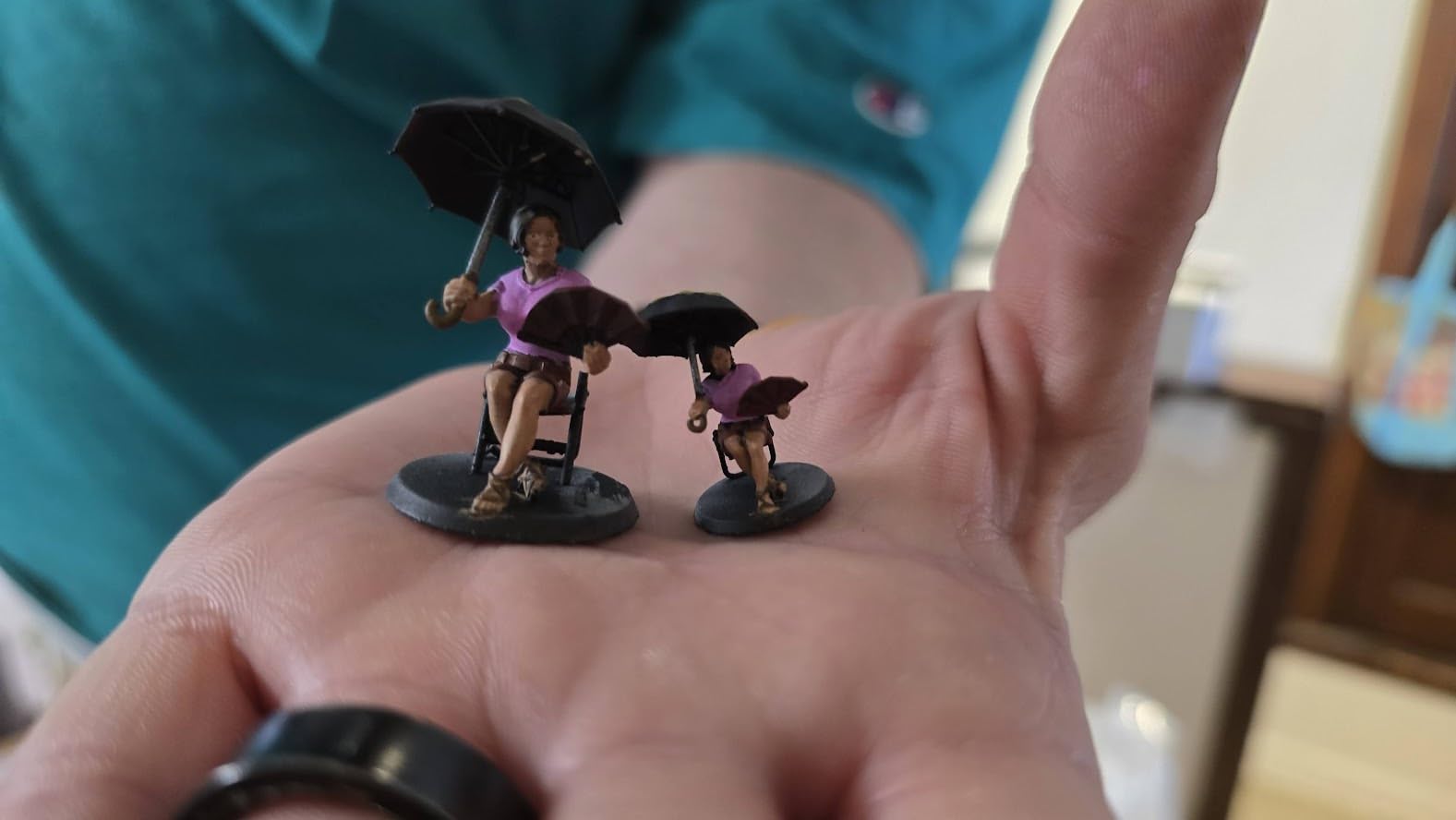
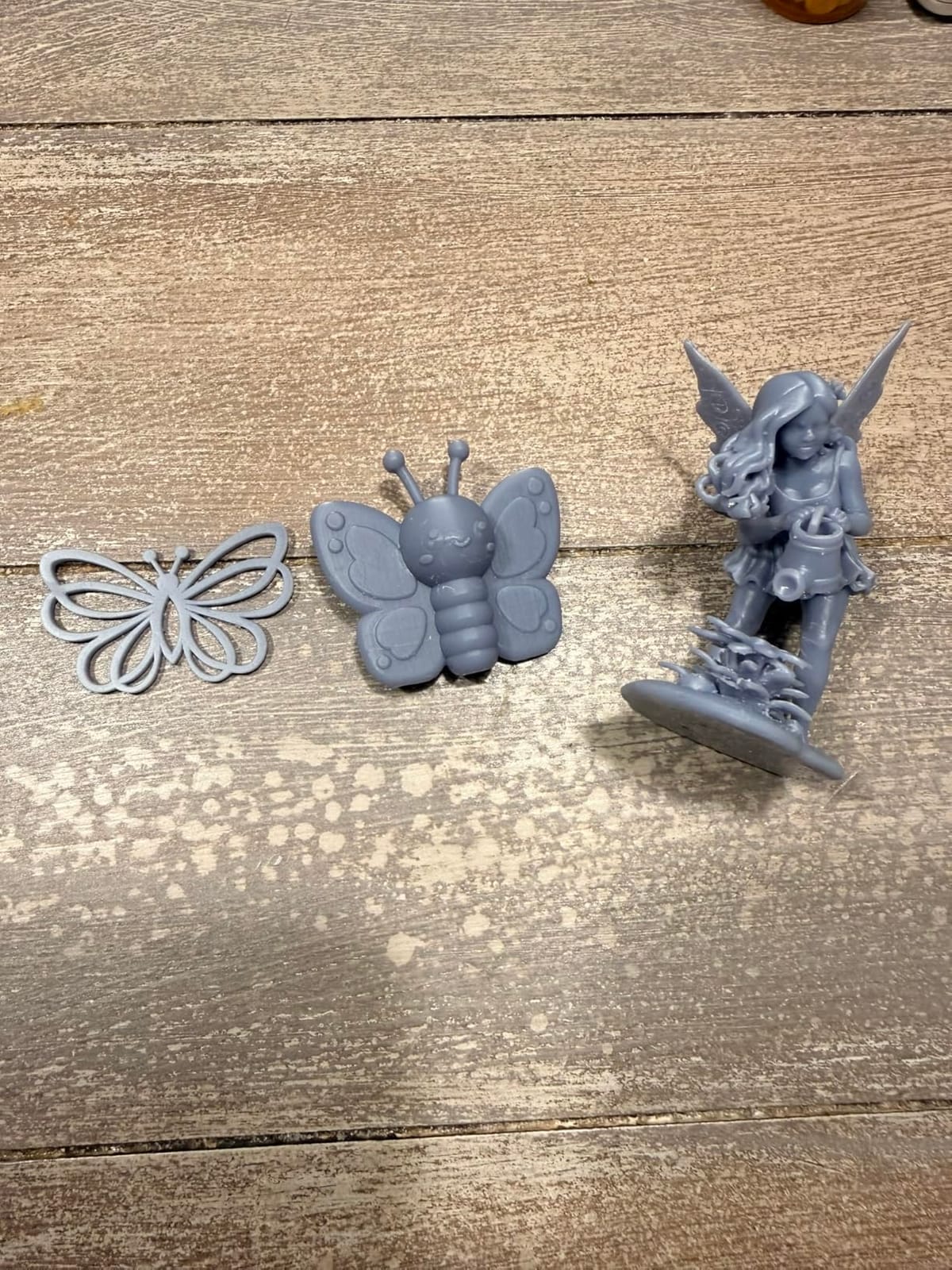
The only resin printer in the roundup, and the answer to the most common question we get from readers. Under this ceiling, resin buys you detail rather than size or convenience. The Photon Mono 4 has a 7-inch 10K mono LCD at 9024 by 5120 with 17 micron pixels, a 105 percent precision gain over the previous generation, and a resolution class that no FDM machine here can approach.
At 4.4 stars across 667 reviews it holds the second-highest satisfaction rate in the roundup, with 78 percent five-star ratings. If you print tabletop miniatures, terrain, jewelry, or precision parts, this machine produces results the plastic printers simply cannot reach at any layer height.
The LighTurbo matrix light source spreads illumination evenly across the screen, which cuts visible layer lines and reduces the rasterization artifact that makes cheap resin prints look cheap. The laser-engraved Print Platform 2.0 improves adhesion and mitigates lifting, and 4-point leveling is designed as a one-time setup rather than a recurring chore. Power outage recovery resumes an interrupted print.
Setup takes about 30 minutes and the machine is quiet and compact at 7.7 pounds and 10 by 10 by 15 inches, which makes it easy on a desk or in a home office. Build volume is 153.4 by 87 by 165 mm, so plan your model orientation carefully — that narrow footprint is the hard limit on what fits.
Best for miniatures, jewelry, and fine detail
17 micron pixels on a 7-inch screen is the number that matters here. Hair, chain links, engraved text, and the thin edges of a miniature figurine are all resolved cleanly, and the even light source keeps those surfaces smooth instead of rippled. For models under roughly 150 mm in any single dimension, nothing else in this guide competes.
The workflow suits detail work well. A computer running Photon Workshop handles slicing, and the Anycubic app is not supported on this model, which is a limitation if you want phone control. Default profiles need tuning though, and one owner spent real time adjusting exposure, lift speeds, and resin temperature before results settled down.
Who should look elsewhere
Resin is not the right first purchase for most people, and the reasons are practical rather than aesthetic. Uncured resin has a strong odor and needs ventilation, it stains your hands and your tools, and over-cured parts can be nearly impossible to remove from the build plate. It is also a hands-on process compared to filament, which loads and prints without supervision.
The recurring weak point is the screen. Multiple owners report the LCD or touchscreen failing within weeks or months, and cracked resin vats sometimes take the screen with them. Tech support response times are widely criticized. If you want a set-and-forget machine that prints large functional parts, the FDM picks earlier in this guide are the safer starting point.
8. Creality SPARKX i7: The Best Large Build Volume Open-Frame Pick
Creality SPARKX i7 3D Printer Multi Color 3D Printing Need CFS Lite High Speed & Precision AI Photo 3D Printing RGB Light Smart AI Camera Auto-Leveling Essential Parts Low Noise 10.24×10.24×10 inch
260 x 260 x 255 mm volume
Fully automatic calibration
CubeMe AI modeling
CFS Lite multicolor
Pros
- Largest build volume among the open frame machines here at 260 x 260 x 255 mm
- Genuinely zero-setup calibration of bed level Z-offset and input shaping
- CubeMe AI turns portraits into printable models
- AI camera detects spaghetti failures and filament tangles
- RGB light bar with near-silent night mode
Cons
- Lowest rating in the roundup at 3.9 stars
- 10 percent two-star share is the largest in the set
- Multi-color requires buying the CFS Lite separately
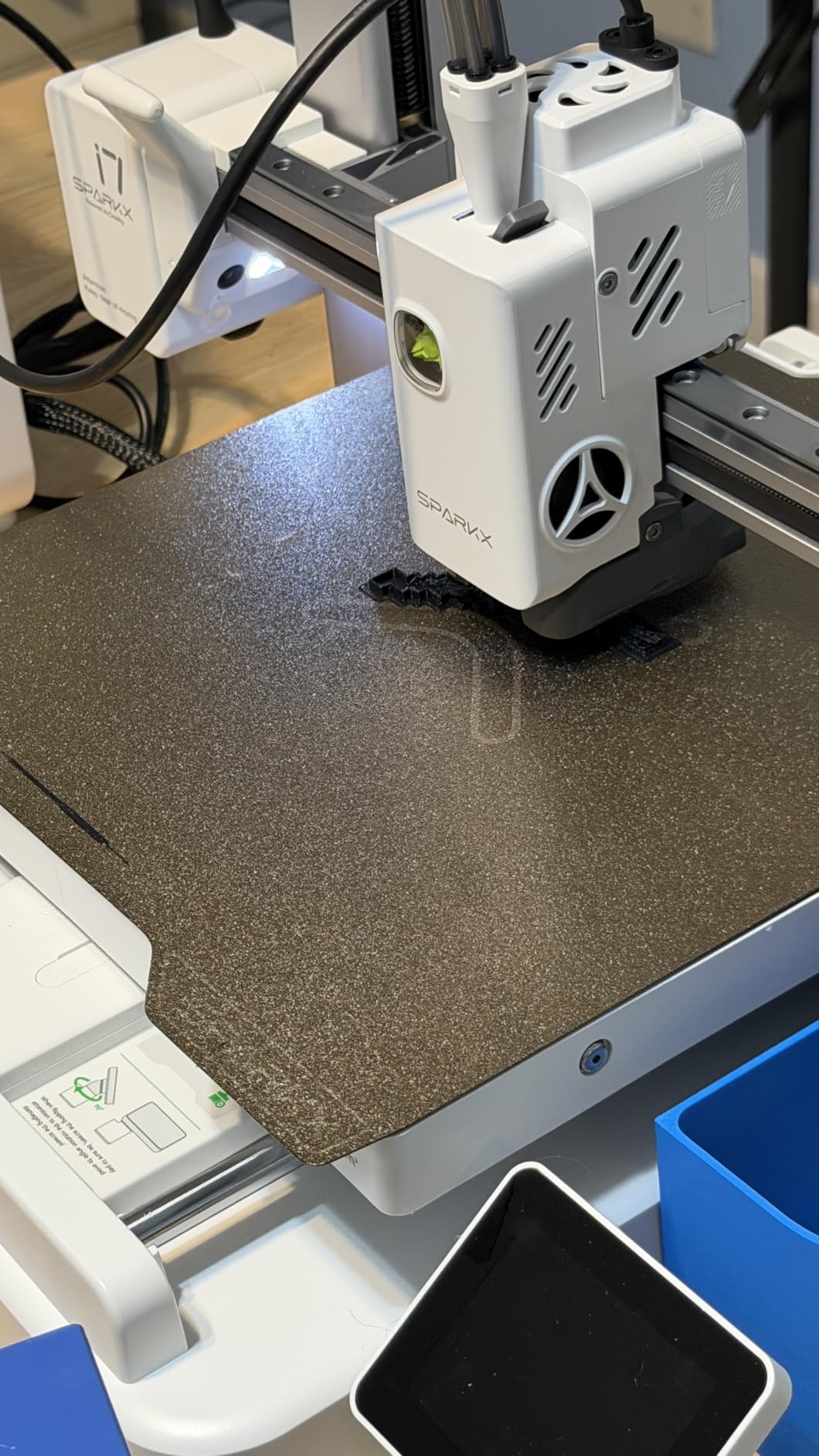
The SPARKX i7 solves the problem the Ender 3 V3 SE cannot: size. At 260 by 260 by 255 mm it has the largest build volume of any open-frame machine in this roundup, and it arrives with bed leveling, Z-offset, and input shaping all handled automatically before the first layer. That combination of volume and zero-setup is rare.
It is also the most polarizing pick here. At 3.9 stars across 400 reviews it has the lowest average rating in the group, with 59 percent five-star, 12 percent three-star, and 10 percent two-star ratings. That middle band is unusually heavy. The hardware is strong; the software experience is not yet as settled as the best-rated machines.
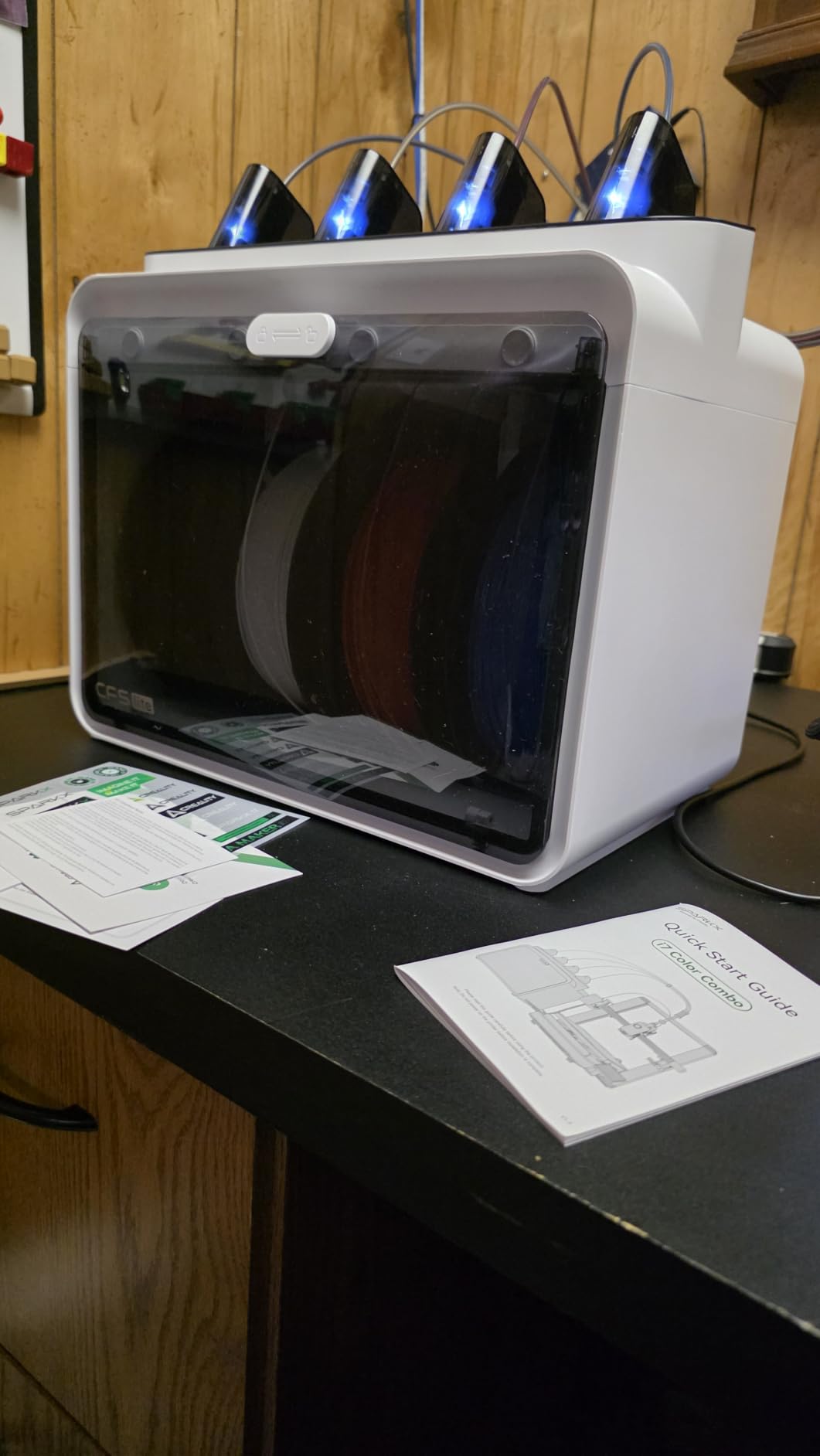
The feature list is genuinely ambitious for the tier. CubeMe AI converts a portrait photo into a 3D model you can print, the AI camera detects spaghetti failures and filament entanglement and sends alerts, and pressure advance plus input shaping handle oozing and ringing so edges come out sharp. Multi-color arrives through the CFS Lite, which cuts purging waste by 50 percent against the previous generation.
Noise handling is a real strength if you share a wall with a sleeping household. A programmable RGB light bar doubles as a glanceable status indicator, and an all-lights-off night mode runs near-silent. At 20.1 pounds it is lighter than the K1C despite the bigger volume, which tells you something about the frame construction.
Best for large cosplay props and big single-piece prints
A 260 mm cube opens up projects that genuinely do not fit on smaller machines: helmets, large terrain tiles, big organizers, and one-piece props that would otherwise need to be assembled from sections. With full automatic leveling and Z-offset, you are not re-leveling a large bed by hand every time the machine cools down, which is the standard complaint on large-format budget printers.
The portrait-to-model AI is a good reason to try it even if the print itself is the point. Turning a photo into a physical object makes the machine immediately useful for gifts and for anyone who does not model. The near-silent night mode makes it practical for a bedroom where a loud stepper would be a problem.
Who should look elsewhere
If you want a machine you can trust on the first try, this is not it. The 3.9 average and the heavy three-star share mean a meaningful number of owners are unimpressed, and a new model at this feature level usually takes firmware updates to settle. Multi-color also requires buying the CFS Lite separately, which changes the cost math.
If you want a large enclosed build volume rather than a large open one, the Bambu Lab P1S gives you both the volume story and the ability to run ASA and ABS. And if you want the largest open frame without the experimental software, the Flashforge Adventurer 5M trades cube volume for a much better satisfaction rate.
9. Bambu Lab P1S: The Best Enclosed Pick Under 500 Dollars
Bambu Lab P1S 3D Printer, Ready-to-Use FDM 3D Printer
Fully enclosed chamber
500mm/s and 20000mm/s2
Up to 16 colors with AMS
About 15 minute setup
Pros
- Rated number one in the 3D Printers category on Amazon at 4.5 stars
- Only enclosed Bambu option in this roundup so ABS and ASA work
- Premium build quality with excellent bed adhesion
- Setup takes about 15 minutes with labeled parts and spares
- Dampened enclosure noticeably reduces noise
Cons
- AMS hardware is a separate purchase for the base machine
- No touchscreen so a phone or computer is required for control
- Translucent silk and fine filament types reported to clog the hot end
The P1S is the machine to buy if your prints involve ABS or ASA, and it ranks number one in Amazon’s 3D Printers category with a 4.5-star average across 407 reviews. It is the only fully enclosed Bambu in this roundup, which is exactly the feature you need for engineering-grade filaments and which every open-frame machine here lacks.
It also has the hardware to justify the enclosure. 500 mm/s print speed with 20000 mm/s2 acceleration, a built-in camera for time-lapse and remote monitoring, automatic bed leveling, and a setup that takes about 15 minutes with clearly labeled parts and spares included. One owner logged 350 hours of printing without a single clog or adhesion problem.
Filament support is broad and honestly stated: PLA, PETG, TPU, PVA, PET, ABS, and ASA are listed as ideal, with PA and PC listed as capable and carbon or glass fiber reinforced materials listed as not recommended. That candor is worth something. Bed adhesion is excellent and the double-sided plate is cheap and easy to replace, and the enclosure also dampens operating noise noticeably.
The workflow runs through Bambu Studio and the MakerWorld model library, with cloud print control that lets you send a job from work and find it finished at home. At 38.9 pounds it is the heaviest machine in the roundup, so give it a dedicated spot rather than a crowded corner of a desk.
Best for ASA and ABS, outdoor parts, and long print runs
An enclosure is not a luxury for ABS and ASA. The chamber keeps temperature stable enough that large parts do not crack at the corners and lift off the bed mid-print, and that is the single biggest practical difference between this machine and the open-frame picks above it. Outdoor fixtures, automotive clips, and functional parts that see heat belong here.
Reliability over long cycles is the second argument. The 350-hour owner report is an outlier, not a rule, but the 81 percent five-star share and 7 percent one-star share describe a machine with a narrow failure band. The double-sided PEI plate being cheap to replace removes one of the most common reasons owners get stuck with a machine they cannot maintain.
Who should look elsewhere
If you are buying purely on capability per dollar and you only print PLA and PETG, this machine asks more of your budget than the open-frame options and gives you features you will not use. The Bambu Lab A1 covers the same software workflow for much less if engineering filaments are off your list.
There is no touchscreen, so a phone or computer is required for setup and control, and translucent, silk, and fine filament types are reported to clog the hot end. Multi-color needs the AMS hardware bought separately, and a small number of owners arrived with missing feet or a nozzle bottoming out on the plate, so check the machine before your first real print.
10. Flashforge AD5M: The Best Pick for Fastest Setup and Easiest Maintenance
FLASHFORGE AD5M 3D Printer Fully Auto Calibration Print with 1-Click Max 600mm/s Speed, All-Metal CoreXY Structure Precise Printing, Easy-Maintenance Quick-Swap Nozzle, Print Size 220x220x220mm
All-metal CoreXY
600mm/s max speed
3-second tool-free nozzle swap
Power outage recovery
Pros
- Quickest assembly reported here at roughly 15 to 20 minutes
- Tool-free nozzle swap in about 3 seconds across four diameters
- All-metal CoreXY holds precision at 600mm/s
- Ethernet connection is more reliable than Wi-Fi
- Power outage recovery saves the ongoing layer
Cons
- Some units struggle with third-party filament brands
- Wi-Fi connectivity described as spotty
- Slicing requires a Windows or Mac computer
- Relatively slow nozzle heating
The AD5M is the answer to a narrow question: which machine gets you printing soonest with the least ongoing fiddling? Owners report roughly 15 to 20 minutes from box to first print, and the tool-free quick-release nozzle swaps in about 3 seconds across 0.25, 0.4, 0.6, and 0.8 mm diameters. For anyone who changes nozzles often, that is a bigger deal than the spec sheet suggests.
It sits at 4.2 stars across 366 ratings with a 220 mm cube build volume and 600 mm/s on an all-metal CoreXY structure. Some owners report better benchy quality and stronger layer bonding than the Creality K1C, which is a useful data point when two machines share a speed class.
Everything about the maintenance story is designed around not opening the machine. Fully automatic one-click leveling measures the nozzle-to-plate distance for you, the double-sided flexible PEI steel plate has a reverse side suited to PETG, and power outage recovery saves the current layer and resumes. Orca-flashforge, the bundled slicer, supports one-click batch transmission and multi-printer monitoring.
Noise is another quiet win. One owner places it in another room and does not hear it, and the all-metal structure contributes to that. An Ethernet port is unusual at this price and makes networked printing reliable where Wi-Fi would not be, which matters if you plan to send jobs from more than one device.
Best for beginners who want a fast path to printing
Automatic leveling, quick assembly, and a nozzle that changes without tools remove the three tasks that consume a beginner’s first weekend on most machines. Add Ethernet networking and power outage recovery, and this is about as low-touch as a CoreXY printer gets. If your main hesitation is time rather than capability, start here.
The Orca-flashforge slicer has a gentle learning curve, which matters for anyone who has never sliced a model. The four available nozzle diameters also mean you can move between fine detail work and fast infill without buying hardware, and the reversible PEI plate handles PLA and PETG without a different plate.
Who should look elsewhere
Third-party filament compatibility is the recurring caveat. Some owners report the machine struggling to grip and dispense properly with filament brands other than the intended ones, so if you plan to buy filament in bulk from multiple suppliers, test a small quantity first. That is a real consideration for anyone who prints weekly in volume.
Wi-Fi is spotty, so plan on Ethernet. Slicing needs a Windows or Mac computer, so an iPad-only workflow will not work. The machine is also somewhat noisier than expected and the nozzle heats relatively slowly, and one owner received a unit that could not complete even a test print, so verify the machine early rather than mid-project.
How We Picked the Best 3D Printers Under 500 Dollars
Every machine here ships with automatic bed leveling. That was the filter that eliminated most of the field: a printer that needs manual leveling before it will hold a first layer is a workshop project, not a purchase, and it does not belong on a list aimed at first-time buyers.
Beyond that we scored print quality out of the box, build volume against realistic project sizes, maximum print speed and acceleration, filament compatibility including whether the chamber is enclosed, noise, software maturity, and how long the brand is likely to be shipping firmware and spare parts. Review volume mattered too, because a machine with a hundred reviews tells you very little about its fifth year of ownership.
CoreXY vs Bedslinger: What Actually Changes Under This Budget
Motion system is the single biggest technical divide in this roundup, and it is worth understanding in plain terms. A bedslinger moves the print bed along one axis while the nozzle moves along the other. It is simple, cheap, and reliable, but every fast move risks tilting the bed and smearing the layer.
CoreXY keeps the nozzle on a stationary bed and moves it on two axes at once through belts. The result is rigidity with no bed mass to fling around, which is why every machine in this roundup rated above 500 mm/s uses it. The practical difference for a beginner is that CoreXY machines hold vertical walls clean at speed, and bedslingers do not.
There is a cost to that rigidity: CoreXY machines are heavier and larger, so a 35-pound printer on your desk is normal for the category. A bedslinger like the Ender 3 V3 SE weighs about 20 pounds and takes less room, which is a fair trade if your projects are small and your budget is tight.
Which Filament You Can Realistically Print Under 500 Dollars
PLA works on everything in this guide, including the resin machine’s neighbors. It is the forgiving default, and for most first projects it is the only filament you need. Start here, and learn bed adhesion and flow calibration on a material that will not punish you for it.
PETG works on every FDM machine here and is tougher and more heat resistant than PLA. It is the better choice for functional parts that will sit in a warm car or under a load. TPU works where a direct drive extruder is present, which excludes only the Bowden-equipped machines, so it is broadly available here too.
ABS and ASA are the dividing line. They need a stable chamber temperature to avoid warping and cracking, so in practice they mean the enclosed machines: the ELEGOO Centauri 2 Combo and the Bambu Lab P1S. The Sovol SV06 Plus ACE has a 300C nozzle that can run them, but without an enclosure you will fight warping on every large part. If your project list includes outdoor fixtures or automotive interiors, an enclosed machine is not an upgrade, it is a requirement.
On fumes: ABS and ASA give off volatile compounds that matter in a closed room. PLA is the safe default. If you print engineering filaments regularly, put the printer in a garage or a ventilated space rather than a bedroom or a closed office, and do not treat an enclosure as a substitute for ventilation.
FDM vs Resin: Why Resin Barely Shows Up Under 500 Dollars
Resin printers get asked about constantly and rarely belong in a general-purpose roundup. Below this ceiling, resin is an entry-level MSLA machine: fine detail for tabletop and jewelry work, but a small build volume, a hands-on workflow, and a ventilation requirement. That is why only one resin machine appears in these ten picks.
The tradeoff is real and worth stating plainly. The Anycubic Photon Mono 4 resolves 17 micron pixels on a 7-inch 10K screen, which no filament machine here can touch at any price. In exchange you handle liquid resin, cure parts afterward, ventilate the room, and accept a build volume of 153 by 87 by 165 mm. If you print models, buy resin. If you print things you use, buy filament.
Tool vs Hobby: Bambu vs Creality, Sovol, and Elegoo
The most common question in 3D printing forums is not about specs. It is whether you want a tool or a hobby, and the honest answer is that the brand ecosystem decides this more than any spec line. The community summary that comes up again and again is simple: if you want it to just work, buy Bambu; if you want to tweak and tinker, buy a Creality, Sovol, or Flashforge machine.
The concrete difference is software policy. The Bambu Lab A1 and P1S run a closed ecosystem where third-party slicers are restricted, which keeps the experience smooth and frustrates people who want to run community firmware or modify settings deeply. The Sovol SV06 Plus ACE and the Flashforge machines run open firmware, and the Flashforge Adventurer 5M in particular can run Klipper if you install it yourself.
Filament is the second difference. Bambu hardware accepts the AMS lite and AMS multi-material units for multi-color printing, and third-party spools may not fit those holders cleanly. Creality, Sovol, and Flashforge use more conventional spool handling that takes any 1.75 mm filament without fuss. Neither approach is better; they answer different questions about what you want your printer to be.
What 500 Dollars Does Not Buy, and What Year One Costs
Be clear about the ceiling. Under 500 dollars you do not get an actively heated chamber, which is what separates a real enclosure from a plastic box. You do not get a hardened engineering hotend as standard, which matters if you plan to run abrasive fiber-filled filament daily. Multi-color is available but either bundled with a specific model or sold as an add-on. And while the fastest machines claim 600 mm/s, real-world time savings on an average print are much smaller than the headline number suggests.
Year one costs more than the printer. Budget for a spool or two of PLA and PETG, a filament dryer or dry box, a spare PEI spring steel plate, and a spare nozzle — the last one is the item that saves you when a print fails at hour six. On a sub-500 machine, those small parts replace the machine more often than a bigger purchase would.
If you are still weighing the purchase against other gear, our portable power station guide covers the other common entry point into a hands-on hobby on a fixed ceiling.
Frequently Asked Questions
What is the best printer under 500 dollars?
The Creality K1C is our pick for the best 3D printer under 500 dollars, with CoreXY motion at 600 mm/s, 20000 mm/s2 acceleration, one-tap auto calibration, and a built-in AI camera that halts failed prints. The Bambu Lab A1 takes the top spot for pure ease of use with the highest rating in our testing, and the Flashforge Adventurer 5M delivers CoreXY speed at the lowest cost of the three.
What is the best 3D printer for beginners on a budget?
The Bambu Lab A1 is the easiest machine for a true beginner because full-auto calibration handles Z-offset and bed leveling with no manual routine, and it resumes automatically after filament runout. If your budget is much smaller, the Creality Ender 3 V3 SE goes from unboxing to printing in about 20 minutes with CR Touch auto leveling. Both ship with auto leveling, which is the feature that eliminates the most common beginner frustration.
Is Creality or Bambu a better 3D printer?
Bambu wins for ease of use and has the highest satisfaction rate in our roundup, while Creality generally gives you more freedom to modify and more open firmware options. The decision is really about whether you want a tool that works or a hobby to tinker with. If you only print PLA and PETG and want the least involvement, choose Bambu. If you want Klipper, custom firmware, or third-party slicers, choose Creality.
Is the Ender 3 3D printer good for beginners?
The current Ender 3 V3 SE is genuinely good for beginners and is the cheapest machine in our roundup, with CR Touch auto leveling, a direct drive extruder that handles TPU, and roughly 20 minutes of assembly. Be aware that the Ender 3 name covers a wide price range across generations, so the reputation of the original does not tell you much. This version has no enclosure, so skip it if you plan to print ABS or ASA.
What is the best resin 3D printer under 500 dollars?
Resin printers under 500 dollars are entry-level MSLA machines that trade size and convenience for detail. The Anycubic Photon Mono 4 is the strongest we found, with a 7-inch 10K mono LCD at 17 micron pixels, 4-point leveling, and power outage recovery. Resin needs ventilation and handling, and the build volume of 153 by 87 by 165 mm limits model size, so most buyers should start with filament instead.
Can I print ABS, ASA, or TPU with a budget 3D printer?
PLA and PETG work on every machine in our roundup, and TPU works wherever a direct drive extruder is present. ABS and ASA are different because they need a stable chamber temperature, so in practice you want an enclosed printer: the ELEGOO Centauri 2 Combo and the Bambu Lab P1S both handle them well. Open-frame machines will warp on large ABS parts no matter how you tune them. Ventilate any room where you print engineering filaments regularly.
The Best 3D Printers Under 500 Dollars, Final Word
The Creality K1C wins this roundup. CoreXY motion at 600 mm/s, 20000 mm/s2 acceleration, a tri-metal nozzle that handles carbon fiber reinforced filament, and an AI camera that catches a failed print while you are at work. Its 2728-review base is the largest in the group, which means the community documentation you will need already exists.
The runner-ups are clearer than the winner. For a first printer where reliability matters most, the Bambu Lab A1 has the highest satisfaction rate we found at 4.7 stars and calibrates itself. For four-color prints in the box, the ELEGOO Centauri 2 Combo is the only machine that includes a working color system. For ABS and ASA, the Bambu Lab P1S is the enclosed option that handles them properly. For the smallest budget, the Creality Ender 3 V3 SE still gets you printing in 20 minutes.
Pick the machine that matches the filament you actually need, then buy a spare nozzle and a dry box before your first big print. Whatever you choose, check the current price on the day you order — in this category it moves constantly.