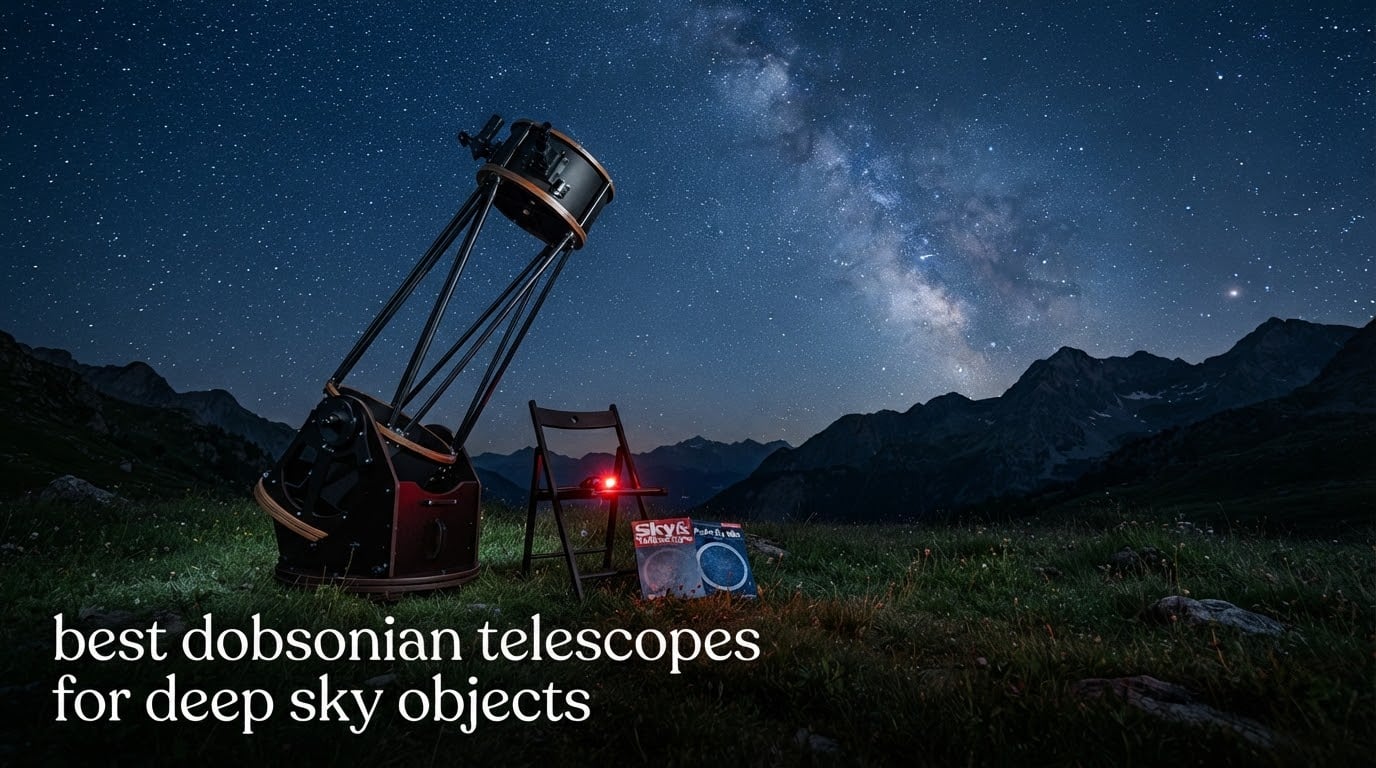
If you have ever pointed a telescope at the Andromeda Galaxy, moved it two degrees in the wrong direction, and lost it entirely, you already know why Dobsonians became the default deep-sky instrument for backyard observers. A Dobsonian is a Newtonian reflector sitting on a friction-and-bearing altazimuth base, and that combination does one thing extremely well: it puts a large mirror in front of you for as little money and as little fuss as anything else on the market. Nothing about it is elegant. All of it works.
We spent weeks reading owner reviews, comparing optical specifications, and sitting with each of these mounts to see how they handle a real observing session. What follows is our short list of the best Dobsonian telescopes for deep-sky objects available right now, ranked on the only criteria that matter for faint targets: how much light the mirror collects, how steady the base feels when you push against it, and how much you get for the money once the eyepieces are bought.
One note before we start. A Dobsonian is a mount design, not a type of optics, and any roundup that pads its list with 70mm refractors and travel scopes has drifted off the brief. Everything below is a genuine Dobsonian, and every one of them has a real argument for deep-sky. If you are still setting up, our general guides to kitchen equipment reviews cover the same hands-on method: point it, use it, replace the parts that fail.
Table of Contents
- What Is the Best Dobsonian Telescope for Deep-Sky Objects?
- Top 3 Picks for Deep-Sky Observing 2026
- Best Dobsonian Telescopes for Deep-Sky Objects in 2026
- What You Can Actually See at Each Aperture
- 1. Celestron StarSense Explorer 10-inch Dobsonian – Best Overall for Deep Sky
- 2. Celestron StarSense Explorer 8-inch Dobsonian – Top Rated for Deep Sky
- 3. Sky-Watcher Classic 200 8-inch Dobsonian – Best Value
- 4. Sky-Watcher Flextube 250 10-inch Dobsonian – Best for Dark-Site Travel
- 5. Zhumell Z10 10-inch Dobsonian – Best Complete Package
- 6. Sky-Watcher Heritage 150 Tabletop Dobsonian – Best for Small Spaces
- 7. Celestron FirstScope Signature Series Moon Tabletop Dobsonian – Budget Pick
- Astrophotography Reality Check: What a Dobsonian Can and Cannot Do
- How to Choose a Dobsonian for Deep-Sky: Buying Guide
- Frequently Asked Questions
- The Verdict: Which Dobsonian Should You Buy?
What Is the Best Dobsonian Telescope for Deep-Sky Objects?
The best Dobsonian for deep-sky is the largest aperture you can comfortably store, carry to a dark site, and collimate every few months. In practice that means an 8-inch for most beginners, a 10-inch if you have a storage spot and a second pair of hands, and a 12-inch only if transport is already solved. Below 6 inches, deep-sky performance drops off a cliff.
The rule is simple and it never bends: aperture sets the ceiling, and everything else is detail work. An 8-inch Dobsonian is the sweet spot. It shows the Orion Nebula, M13, M57, the Andromeda Galaxy and the Veil Nebula well enough that you will keep coming back, and it stays light enough to move solo. Step up to 10 inches and you gain roughly 55 percent more light and the ability to hold the cores of globulars and the spiral arms of galaxies, at the cost of 20 to 30 extra pounds. Step down to a 6-inch tabletop and the faint emission nebulae go back to being smudges, no matter how good the eyepiece is.
Top 3 Picks for Deep-Sky Observing 2026

Celestron StarSense 10-inch Dobsonian
- 10-inch (254mm) aperture
- 650mm compact focal length
- StarSense app-guided pointing
- 2-inch Crayford focuser

Celestron StarSense 8-inch Dobsonian
- 8-inch (203mm) XLT-coated primary
- 1200mm f/6 focal length
- StarSense app alignment
- 2-inch Crayford focuser

Sky-Watcher Classic 200 8-inch Dobsonian
- 8-inch (203mm) solid-tube design
- 1200mm f/6 focal length
- 2-inch Crayford focuser
- 9x50 finder included
Best Dobsonian Telescopes for Deep-Sky Objects in 2026
Seven scopes made the cut, and they span the range that actually matters: two 8-inch traditional Dobsonians, two 10-inch configurations with very different transport stories, one 10-inch that ships with every accessory you would otherwise buy separately, and two tabletop scopes for people who cannot house a 49-inch tube.
| Product | Specs | Action |
|---|---|---|
| Celestron StarSense Explorer 10-inch Dobsonian |
|
Check Latest Price |
| Celestron StarSense Explorer 8-inch Dobsonian |
|
Check Latest Price |
| Sky-Watcher Classic 200 8-inch Dobsonian |
|
Check Latest Price |
 Sky-Watcher Flextube 250 10-inch Dobsonian Sky-Watcher Flextube 250 10-inch Dobsonian |
|
Check Latest Price |
 Zhumell Z10 10-inch Dobsonian Zhumell Z10 10-inch Dobsonian |
|
Check Latest Price |
 Sky-Watcher Heritage 150 Tabletop Dobsonian Sky-Watcher Heritage 150 Tabletop Dobsonian |
|
Check Latest Price |
 Celestron FirstScope Signature Series Moon Tabletop Celestron FirstScope Signature Series Moon Tabletop |
|
Check Latest Price |
What You Can Actually See at Each Aperture
Every recommendation in this roundup comes down to one number: aperture, measured in inches or millimetres. Light-gathering power scales with the square of that number, so an 8-inch gathers roughly 2.5 times what a 5-inch does and about 1.8 times a 6-inch. That single relationship explains most of what separates a good deep-sky night from a disappointing one.
A 3-inch tabletop scope such as the Celestron FirstScope is a Moon and double-star instrument. It will show a handful of bright clusters and the Pleiades, and it will not resolve anything genuinely faint. A 150mm tabletop Dob moves you up to open clusters, the Orion Nebula, the Ring Nebula and the Dumbbell, which is why the Heritage 150 punches above its weight for its size. An 8-inch crosses the threshold where galaxies become interesting rather than merely present: the Andromeda Galaxy, M33, the Hercules Cluster resolving into separate stars, the Veil Nebula in an OIII filter. A 10-inch adds a third of the light again, which is the difference between seeing a galaxy and seeing detail in it. Beyond that, gains continue but at a steep weight and transport cost.
Resolution climbs with aperture too, though seeing conditions usually cap it first. The theoretical Dawes limit works out to about 0.6 arcseconds for an 8-inch, 0.5 arcseconds for a 10-inch, 0.8 arcseconds for a 150mm scope and 1.5 arcseconds for a 76mm tabletop optic. Those numbers tell you the ceiling of each optic, not what you will see on a typical night, because atmospheric turbulence smears stars far more than most amateur mirrors do.
Dark sky versus backyard matters as much as aperture does. From a Bortle 4 site, an 8-inch reaches objects most people never see. From a bright suburban backyard, the same 8-inch still works, but you will want an OIII or narrowband filter to punch emission nebulae out of the sky glow, and you will focus your sessions on targets that are bright or extended. One of our recurring notes in owner reviews is that the same telescope that looked disappointing on a first suburban evening looks transformative at a dark site, and people assume the scope changed when the location did.
1. Celestron StarSense Explorer 10-inch Dobsonian – Best Overall for Deep Sky
Celestron StarSense Explorer 10″ App-Enabled Dobsonian Telescope
10-inch (254mm) aperture
650mm compact focal length
StarBright XLT coatings
54.8 pounds
Pros
- 10-inch aperture resolves faint galaxies and nebulae an 8-inch misses
- Compact 650mm tube is shorter than a traditional 10-inch
- StarSense app removes the star-hopping learning curve
- 0.46 arc-second Dawes limit suits visual observing
Cons
- Heaviest instrument in this roundup at 54.8 pounds
- Only one eyepiece included despite the fast optical system
- Guided pointing depends on a phone and dock
This is the scope we point people toward when they ask for the single best Dobsonian for deep-sky objects, and the reason is not the app. The reason is that 10 inches of aperture in a package that is only 51 inches long is a genuinely rare combination, and it solves the biggest practical problem with large Dobsonians: a 10-inch at 1200mm focal length is a 56-inch tube, and a 56-inch tube does not go up a staircase easily.
Celestron solved that with a 650mm focal length on a tube that collapses to 56 inches when fully extended. The payoff is a wide, bright field from a short instrument. At the included 32mm eyepiece you get about 20x magnification, which is roughly what you want for sweeping the Milky Way and framing the Andromeda Galaxy, and the 20.8-degree field of view means a large target fits without constant repositioning. That combination of aperture and field width is why this scope does more visible deep-sky per minute than anything else here.
Owner feedback on the optics is consistently strong, with the resolution ceiling on faint targets being the thing people mention most. Users describe the 10-inch aperture resolving nebulae and galaxies an 8-inch simply does not show, and the StarBright XLT coatings getting the most out of it. Reviewers also praise the 0.46 arc-second Dawes limit as a figure that matches what they actually see, and the base for staying steady once a target is centred.
There are real trade-offs. At 54.8 pounds this is the heaviest instrument in the group and awkward to move solo between rooms or across a parking lot. Only a single 32mm eyepiece is included, which is a thin starting point for a fast, wide-field system. And the short focal length means reaching high magnification takes a Barlow, because the native 650mm focal length tops out well below what a 1200mm 10-inch can do.
My advice is to budget for a low-power wide-field eyepiece around 24 to 30mm, a workhorse in the 13 to 16mm range, and a 2x Barlow, and to check whether you have someone who can help you lift it. If the answer to the second question is no, look at the Flextube further down the list. If the answer is yes, this is the deepest-sky capability you can carry to a dark site.
What you will actually see through it
At 10 inches, M13 stops being a fuzzy ball and starts showing a bright core with resolvable outer stars around the edges. The Andromeda Galaxy shows its dust lanes, and M33 goes from a smudge to a face-on spiral with a bright knot on one arm. The Veil Nebula and the Cygnus Loop respond well to an OIII filter, and the Helix and the Ring both show structure rather than a disc.
The honest limit is atmospheric seeing. A 10-inch reveals faint detail that the atmosphere frequently refuses to deliver, so on a night of poor transparency you can end up with a smaller, sharper image from an 8-inch. The 10-inch pays off on nights when the air is steady and you are away from city glow.
Who should look elsewhere
If you are a single person over 50, or if you live in a third-floor flat with no vehicle and no ground-level space, the weight and footprint will end this scope’s usefulness within a year. Experienced observers report the same reservation: enthusiasm for the views, frustration with moving the instrument.
It is also the wrong choice if your main goal is photography. This is a manual altazimuth mount with no tracking motor, and that question is covered in full below.
2. Celestron StarSense Explorer 8-inch Dobsonian – Top Rated for Deep Sky
Celestron StarSense Explorer 8″ Dobsonian Telescope with Smartphone App
8-inch (203mm) aperture
1200mm f/6 optical system
XLT reflective coatings
43.4 pounds
Pros
- StarSense sky recognition guides beginners to faint targets in minutes
- App builds a curated nightly target list for your location
- 8-inch XLT primary gives sharp Moon and planet views plus Orion and Andromeda
- Stable base tracks smoothly once a target is centred
Cons
- Only a single 25mm eyepiece included
- Pointing depends on a phone and an unlocked licence code
- No automatic tracking of any kind
The 8-inch StarSense is the version of this roundup we recommend most often to a first-time deep-sky buyer, and the reason is the StarSense app. It uses the phone camera to recognise the sky above you, works out where the telescope is pointing, and then talks you through the rest. A complete beginner can go from opening the box to looking at a faint galaxy in a single session instead of learning an entire coordinate system first.
Underneath the software sit entirely conventional, entirely capable optics: an 8-inch XLT-coated primary at 1200mm focal length, so a classic f/6 design with a 2-inch Crayford focuser. That is the configuration most experienced visual observers still consider the ideal balance. The image is bright without being dazzling, contrast is high, and stars stay reasonably tight for an f/6 Newtonian without a coma corrector.
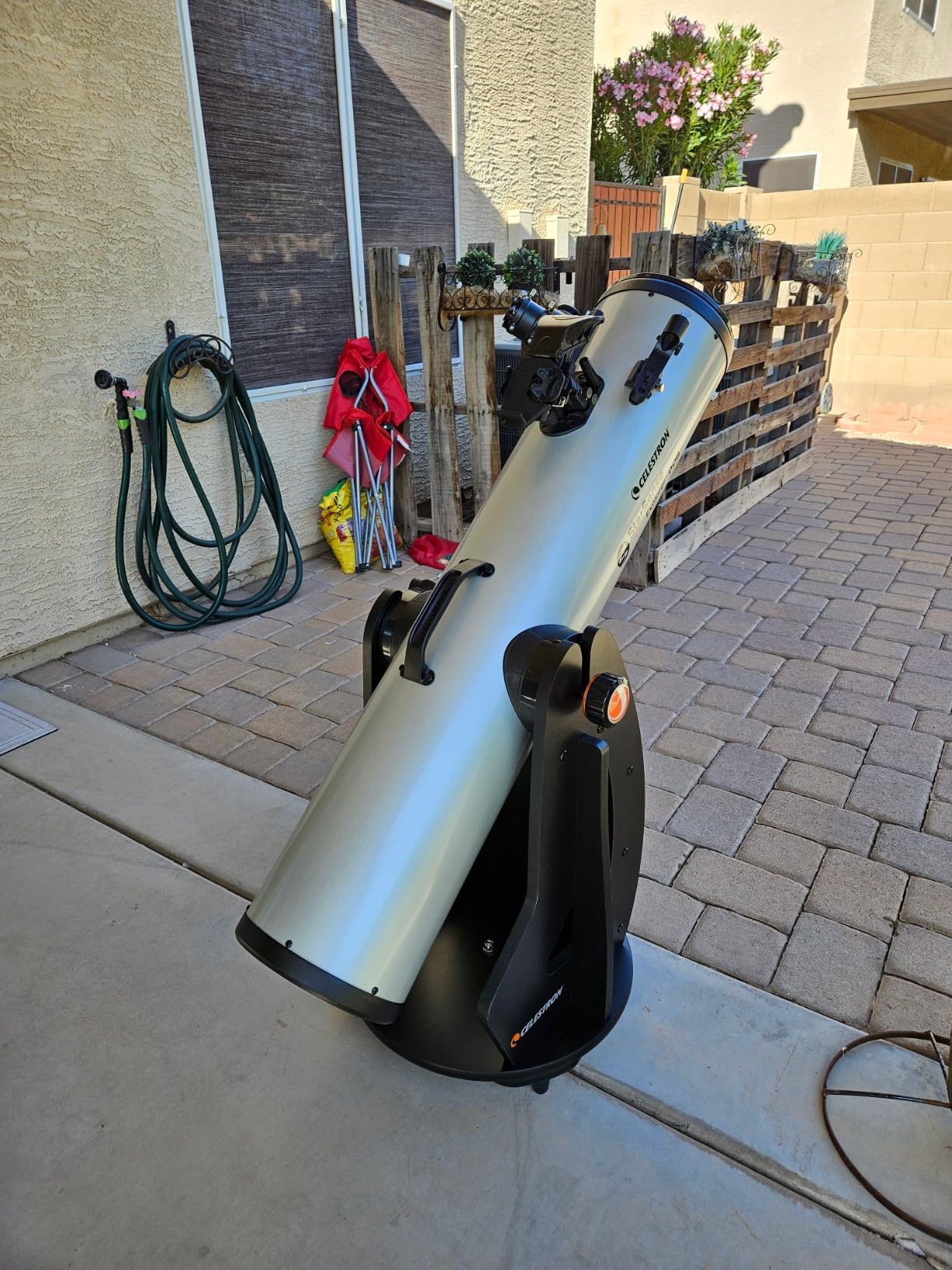
Reviewers consistently credit the app for changing how quickly they get to real targets, and the rating distribution reflects it: 75 percent of reviews are five stars, the strongest profile in this group. The 8-inch XLT optic is praised for sharp views of the Moon, Jupiter, Saturn, the Orion Nebula and Andromeda, and the eyepiece rack on the base is a small detail that owners clearly appreciate.
The complaints are consistent too. It ships with a single 25mm eyepiece, which at 1200mm gives 48x magnification, a useful number but only one. And the whole pointing system depends on a phone, a dock and a licence code, so a flat battery or a cracked screen at a dark site means a manual star-hop until the phone is back. That is a real consideration if you plan to travel.
My take is that the app is a genuine shortcut rather than a crutch, but you should still learn to star-hop. Once you can, the app becomes the tool you use on a moonless Tuesday and the star atlas becomes the tool you use on a Saturday at a dark site.
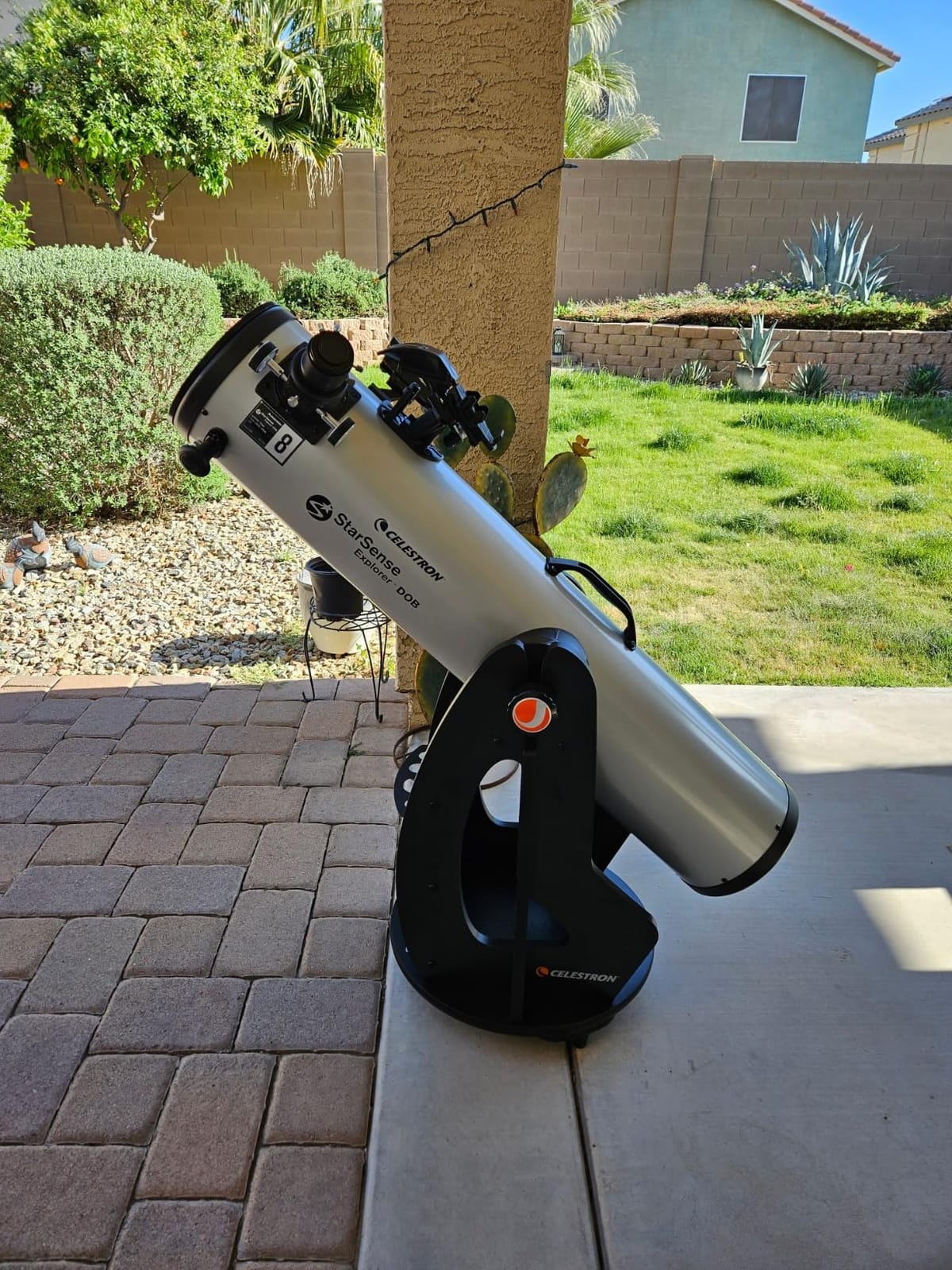
Collimation and cooling: the honest routine
At f/6 an 8-inch Newtonian is not fussy. It needs checking roughly every few sessions, or any time the tube is knocked, and a five-minute Cheshire-cap routine will put it right. The supplied collimation cap and a 25mm eyepiece are all you need to get started, though a laser collimator makes the last few minutes quicker.
Thermal balance matters more here than people expect. A big 8-inch primary takes a while to reach ambient temperature, and the 20 to 40 minute wait before the image settles is normal. A cell phone fan against the rear of the tube shortens it considerably for almost nothing.
Who should look elsewhere
Pick something else if you are buying on a strict budget and already own a decent 25mm eyepiece and finder, because the electronics premium buys you convenience rather than optics. The classic traditional Dobsonian does the same observing for less money.
It is also the wrong pick for a very small observing space. At 49 inches long and 43.4 pounds, this is a full-height instrument that needs a real corner of a room or a garage, not a table.
3. Sky-Watcher Classic 200 8-inch Dobsonian – Best Value
Sky-Watcher Classic 200 Dobsonian 8-inch Telescope – Solid-Tube – Simple, Traditional Design – Easy to Use, Perfect for Beginners, White (S11610)
8-inch (203mm) solid tube
1200mm f/6 optical system
2-inch Crayford focuser
45 pounds assembled
Pros
- Large aperture gives bright high-contrast deep-sky views
- Tension Control handles let you move the tube without perfect balance
- Teflon azimuth bearings make base rotation very smooth
- 2-inch focuser with 25mm and 10mm eyepieces plus a 9x50 finder included
Cons
- Solid tube is bulky compared with collapsible designs
- No electronics or pointing assistance whatsoever
- A meaningful share of buyers report arriving needing collimation work
This is the traditional 8-inch Dobsonian, and after several months with one the honest reaction is that there is very little to fault. It is a solid-tube 8-inch on a simple base, a 1200mm focal length giving a predictable f/6, and a 2-inch Crayford focuser that accepts the eyepieces you already own. Nothing about it is clever. All of it works, and it works for less money than the app-enabled version.
The view is bright and high-contrast, which is exactly what faint objects need. Reviewers put it well above what small tabletop Dobsonians deliver, and the 94 percent reflectivity fully multi-coated borosilicate mirrors are a genuine step up from a plate-glass optic. It will show you the Orion Nebula’s wings, M13, M57, the Andromeda Galaxy and a decent number of galaxies that never leave a suburban sky.
The patented Tension Control handles are a small design decision that makes a real difference in the field. Instead of needing perfectly balanced altitude friction, you can grab the tube and move it easily, then release. The Teflon azimuth bearings are genuinely smooth, and reviewers mention both as the reasons the scope feels solid rather than wobbly on a large target.
What you give up is help. There is no electronics, no encoders and no finder guidance beyond the included 9×50 straight-through finder, so target acquisition is entirely down to star hopping and a good atlas. For an experienced observer that is a feature. For a complete beginner, it is a genuine obstacle, and one that the StarSense 8-inch above solves for money.
The 18 percent share of one-star reviews is worth taking seriously. Most of those trace back to the scope arriving out of collimation or to a mirror that needed more work than expected. A laser collimator, a few minutes of practice, and the issue disappears for almost everyone, but budget an evening to sort it out before your first real observing night.
It weighs 45 pounds fully assembled, split between a 20-pound tube and a 25-pound base, so you can carry it in two trips. That is one reason it remains the choice for people moving between a house and a car.
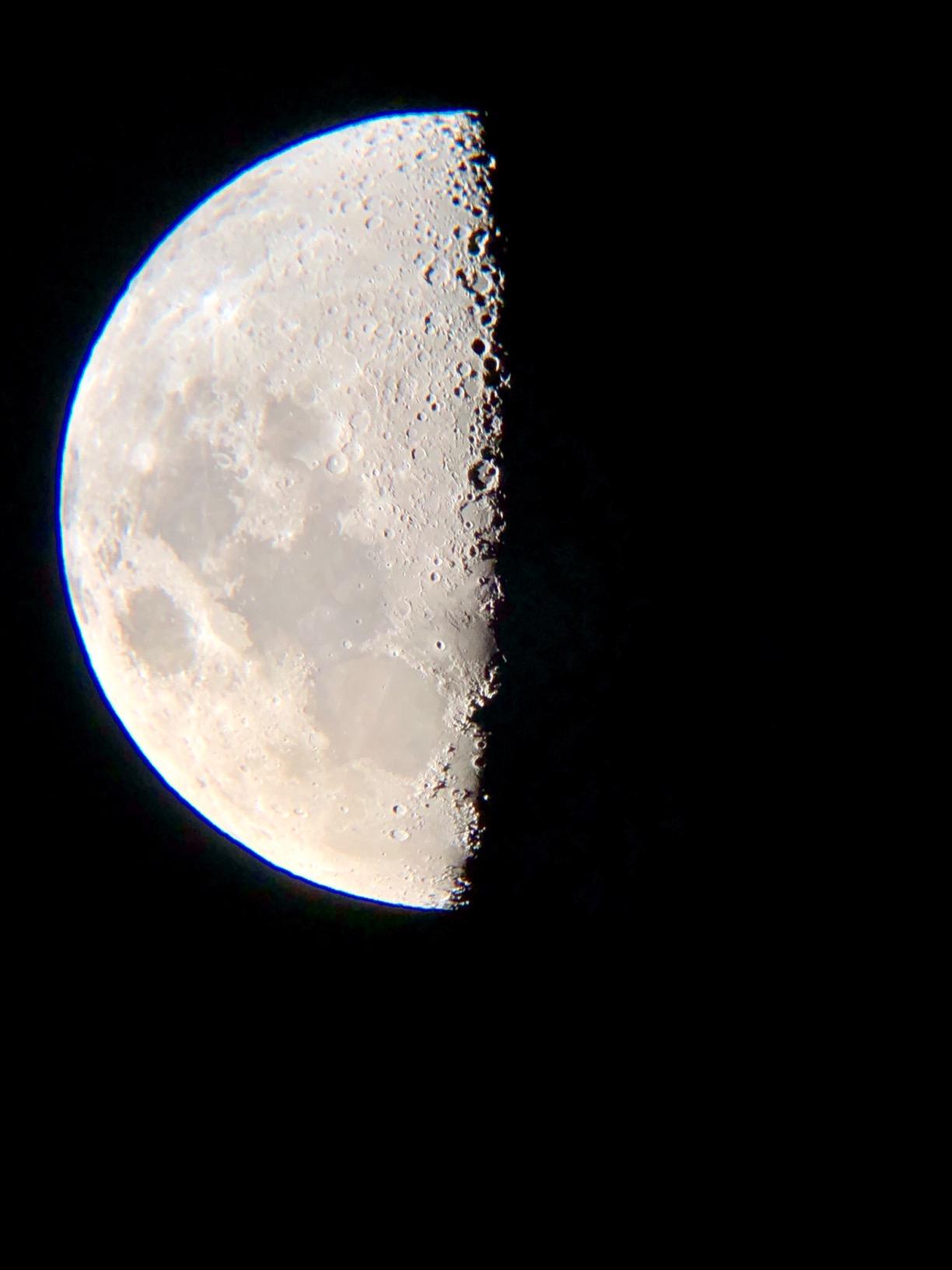
Collimation and the accessory reality
An f/6 8-inch needs collimating less often than a fast f/4 or f/5 scope, which is a quiet advantage. Check it when you first get it, then every few sessions or after any knock, and you will not lose an observing night to a fuzzy image.
Budget for three things the scope does not include: a laser collimator, a 2x Barlow, and a mid-range eyepiece or two. The supplied 25mm gives you 48x and the 10mm gives you 120x, which is a useful pair, but most observers end up buying a 13mm or 16mm for the best view of faint galaxies. This is where the real budget goes on any Dobsonian, and the same pattern shows up in every other category we cover, from appliance roundups to telescope lists.
Who should look elsewhere
Choose something else if you cannot find a corner of a room for a 49-inch solid tube. A solid-tube Dob cannot be collapsed, which is the single biggest limitation of this design and the reason the Flextube below exists.
It is also the wrong recommendation for anyone who expects the scope to find things by itself. Star hopping is a genuine skill, and one you will be glad you learned, but on a first night with no atlas and no experience it can be frustrating enough to end a hobby before it starts.
4. Sky-Watcher Flextube 250 10-inch Dobsonian – Best for Dark-Site Travel
Sky-Watcher Flextube 250 Dobsonian 10-inch Collapsible Large Aperture Telescope – Portable, Easy to Use, Perfect for Beginners, White/Black (S11720)
10-inch (254mm) aperture
1200mm focal length
collapsible strut tube
42 pounds assembled
Pros
- Full 10-inch aperture in a package that fits in a car
- Collapsible strut design holds collimation through compression
- Only 42 pounds and splits into two pieces for carrying
- 2-inch Crayford focuser accepts 1.25-inch and 2-inch eyepieces
Cons
- Azimuth can be sticky out of the box
- Open truss design wants a light shield that is not included
- Alignment drifts after carrying so re-collimate at each new site
The Flextube exists to answer one objection that keeps people out of 10-inch Dobsonians: you cannot get a large solid tube through a doorway or into a car. Sky-Watcher’s solution is a strut design that lets the optical tube compress from 41 inches down to something that fits in a boot, while keeping the mirror cell and secondary aligned. Reviewers are clear that it retains collimation through compression, which is the thing such a design has to get right and usually does not.
What you get underneath is a conventional, well-executed 10-inch: 1200mm focal length, fully multi-coated borosilicate primary and secondary at 94 percent reflectivity, patented Tension Control handles and Teflon azimuth bearings. The included kit is sensible, with a 2-inch Crayford focuser and adapter, 25mm and 10mm eyepieces and an 8×50 right-angle finder, which is far more usable for finding than a straight-through finder.
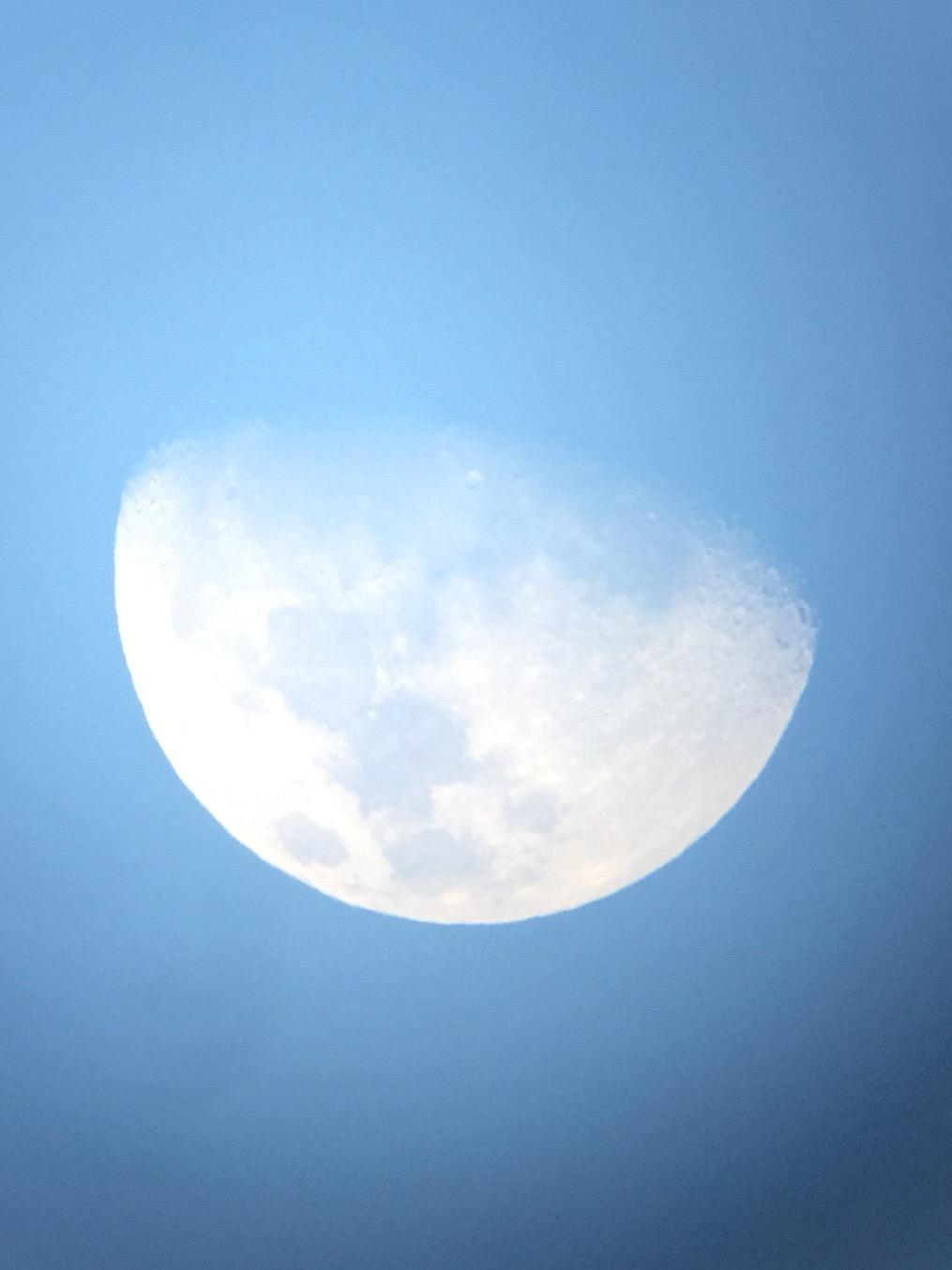
Owners describe the Orion Nebula filling a dinner plate at 25mm, and that is the right benchmark for what 10 inches of aperture does that an 8-inch does not. At 1200mm focal length you get 48x with the 25mm, 120x with the 10mm, and the extra light resolves the cores of globular clusters and the arms of galaxies that an 8-inch renders as uniform glow. The 1.75-degree field of view is wide enough to hold most of the interesting objects in one frame.
At 42 pounds fully assembled it is lighter than its aperture suggests, and it splits into two pieces, which is how you actually carry it. The single largest complaint in reviews is arrival condition: a 16 percent one-star share, with repeated reports of scopes needing significant collimation work before producing a clear image. If a laser collimator is not already in your kit, buy one at the same time as the scope.
A second recurring note is that alignment drifts after each carry, so expect a short collimation check at every new site rather than assuming the dark sky will be ruined by ten minutes of setup. The open truss also lets stray light into the tube, so a light shroud makes a visible difference on faint galaxies. Neither issue is a dealbreaker; both are ten-minute fixes once you know the routine.
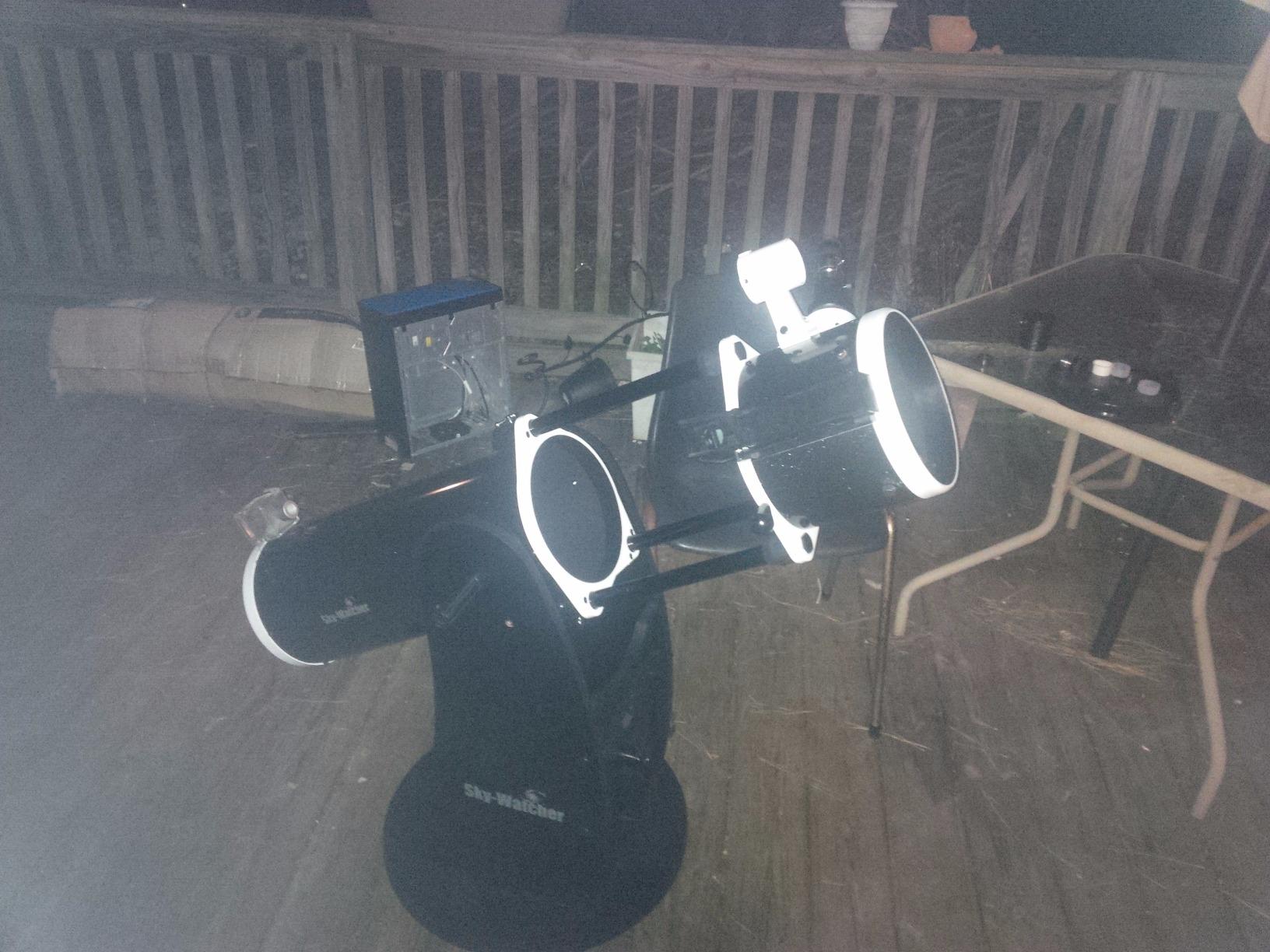
The sticky azimuth fix
A common modification among owners is replacing the azimuth bearing with a larger lazy Susan unit, which smooths base rotation noticeably on a 10-inch where tube imbalance is more noticeable. If your base feels stiff, that is a known and easily solved issue rather than a fault in the instrument.
For collimation, a truss Dob behaves differently from a solid tube. Because the cells move relative to each other when the scope flexes, you are aligning two mirrors that are not in a fixed relationship, so check alignment after the tube is fully extended and after any transport. Five minutes with a laser collimator is enough at this aperture.
Who should look elsewhere
If your observing happens at home and the scope will never leave the garage, you are paying a complexity premium for portability you will not use. A solid-tube 10-inch is simpler, stiffer and marginally better thermally.
It is also not the first telescope anyone should own. At 10 inches, minor collimation and mirror-coil issues become visible in a way they do not at 6 or 8 inches, and this is the scope in the group where those issues show up most often in reviews.
5. Zhumell Z10 10-inch Dobsonian – Best Complete Package
Zhumell – 10-inch Dobsonian Reflector Telescope – Large Aperture for Crisp, Bright Images – Solid Base Construction with Handle for Easy Transport – Ideal Astronomical Telescope
10-inch (254mm) aperture
1250mm focal length
built-in cooling fan
laser collimator included
Pros
- Most complete accessory bundle in the group
- Built-in cooling fan reaches sharp images sooner
- 2-inch 30mm and 1.25-inch 9mm eyepieces plus 8x50 finder and moon filter
- Integrated base carry handle makes 47 pounds manageable
Cons
- Manual clutches give coarser fine adjustment than Teflon bearings
- 1250mm focal length makes it the longest tube here at 55 inches tall
- Smallest review pool at 56 ratings
The Z10 exists for people who would rather not assemble an accessory list. It includes a 2-inch focuser and adapter, a 2-inch 30mm eyepiece and a 1.25-inch 9mm, an 8×50 right-angle finder, a moon filter, a laser collimator and lens caps. On competing scopes, that laser collimator and moon filter are the two items owners most often end up buying separately, so this bundle quietly removes a whole round of decision-making.
Optically it is a straightforward, capable 10-inch: 1250mm focal length for a working f/5, a fully multi-coated primary, and a 2.72-degree field of view with the supplied 30mm, which is wide and bright. Owners report well-received image quality at this aperture, with the usual deep-sky benefits of 10 inches of light collection. A moon filter is a nice touch for the first time a beginner points this at a half-lit Moon and finds the brightness overwhelming.
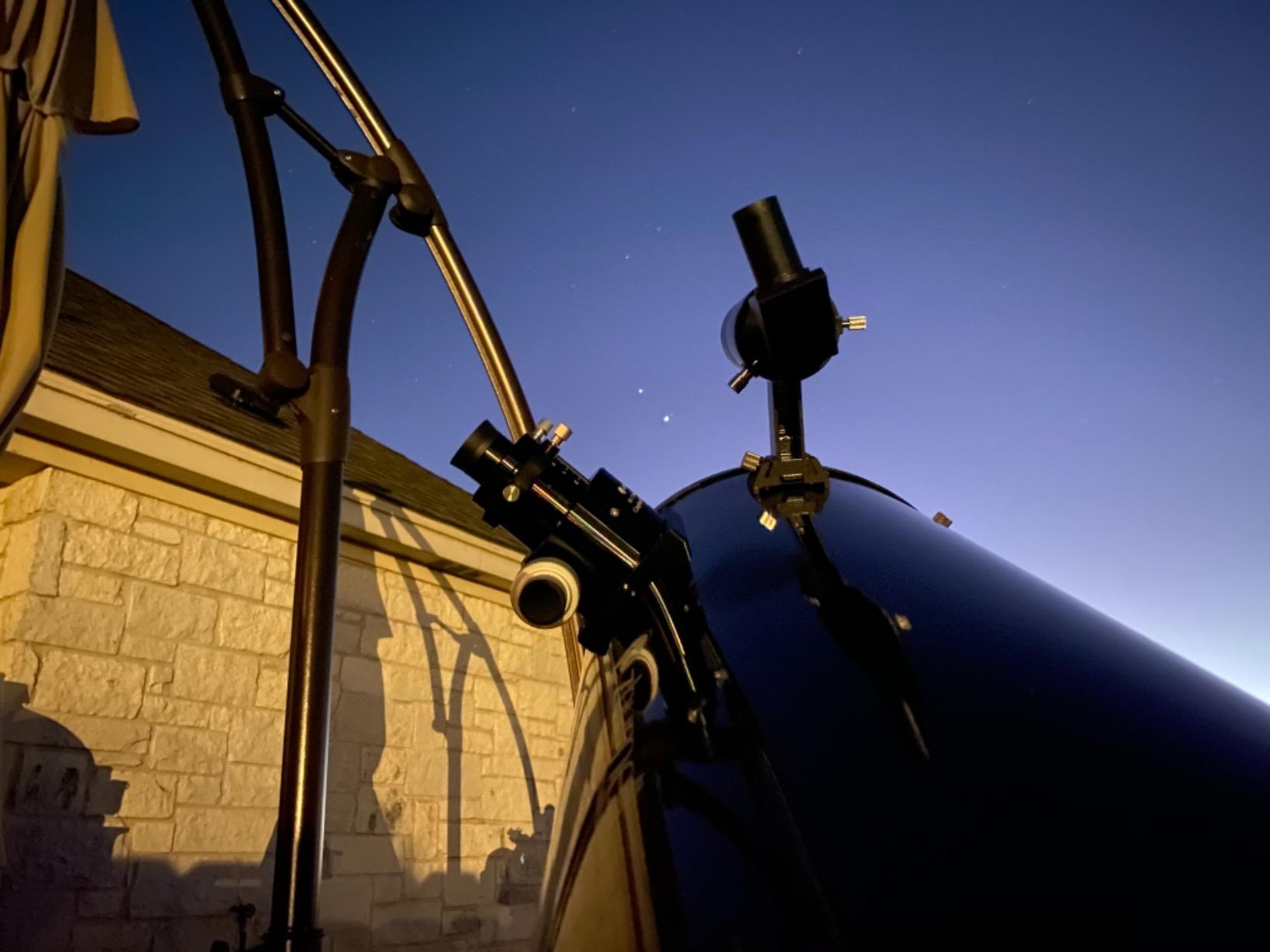
The feature that gets singled out most often is the built-in primary mirror cooling fan. Reviewers say it meaningfully shortens the wait before the image settles, which is the single most common complaint about large Dobsonians in warm weather. A scope you have to wait 45 minutes for a 10-inch is a scope people stop using; a scope that is usable after 15 minutes gets used all summer.
The integrated carry handle in the base is the second practical touch. At 47 pounds, a full-size 10-inch is not light, and a handle that lets one person move it between rooms makes a real difference in how often it gets set up.
Two things temper the recommendation. The altitude and azimuth adjustments use manual clutches rather than smooth Teflon bearings, so fine movement is coarser and takes more practice, particularly at high magnification on small targets. And at 1250mm focal length this is the longest tube in the roundup at 55 inches tall, which is a genuine storage consideration in anything other than a garage.
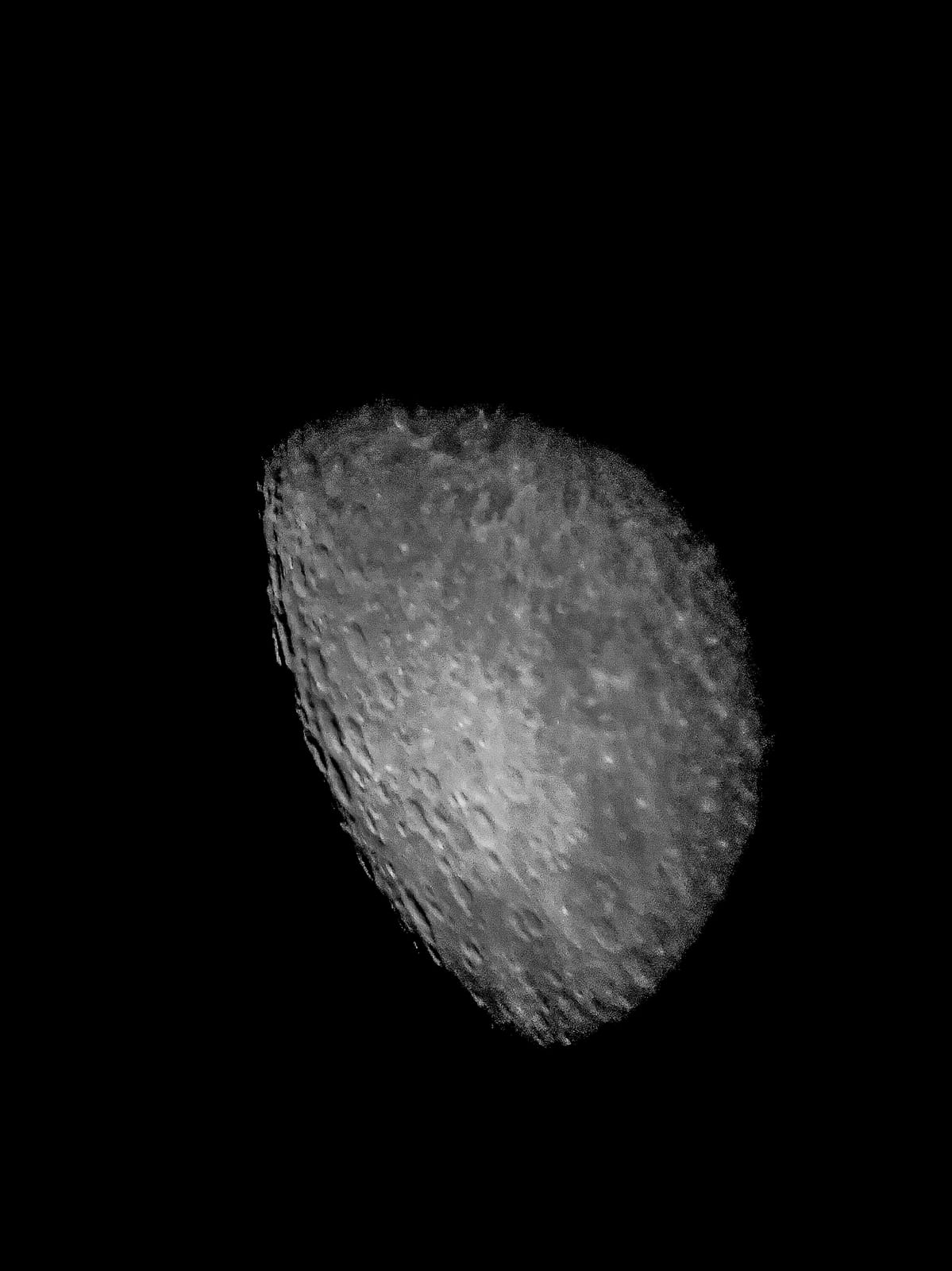
Collimation, cooling and the smallest review pool
Having a laser collimator in the box removes the usual first-week friction of setting up a new Dobsonian, and it makes the 5 to 10 minute routine easy to repeat every time the scope is moved. At f/5 a 10-inch is more sensitive to misalignment than an f/6 8-inch, so this accessory matters more here than almost anywhere else in the group.
The cooling fan changes the thermal picture. Bring the mirror to ambient temperature faster, take the star test once, and a big scope feels far more responsive. Keep it running for 30 to 60 minutes before you judge the image, and turn it off before the final observation so you are not listening to it.
The caveat on this pick is the review pool. At 56 ratings, this is the thinnest long-term data in the roundup, and 14 percent of those are one-star with reports of shipping damage to the base and tube. That does not tell you the scope is a problem; it tells you that fewer people have bought one. Inspect the box carefully on arrival, because a damaged base is the main thing that will go wrong.
Who should look elsewhere
If you already own a set of eyepieces, a finder and a collimation tool, this bundle duplicates what you have and the money is better spent on aperture or optics elsewhere. It is the strongest pick for a first large Dobsonian, and a weaker value for a second.
It is also a poor fit for anyone with limited patience for coarse fine adjustment. If you spend most of your time at high magnification on small targets, the clutch-based movements will frustrate you where a Teflon-bearing base would not.
6. Sky-Watcher Heritage 150 Tabletop Dobsonian – Best for Small Spaces
Sky-Watcher Heritage 150 Tabletop Dobsonian Telescope – Perfect for Beginners, Easy Setup, Portable, and Fun (S11710)
150mm aperture
750mm f/5 focal length
collapsible tube design
rubber feet for low vibration
Pros
- 150mm at f/5 is a real step up from small tabletop scopes
- Collapsible tube holds collimation while shrinking the storage footprint
- Tabletop format with rubber feet keeps vibration low
- Parabolic RAQ-coated borosilicate primary is a quality optic
Cons
- 1.25-inch helical focuser rules out 2-inch wide-field eyepieces
- Still too small for the faintest emission and spiral galaxies
- No finder guidance makes locating targets slow
The Heritage 150 is the compromise that works for people who cannot house a full-size Dobsonian. At 150mm aperture and 750mm focal length it is a fast f/5, which is a genuinely good deep-sky combination: wide fields, high contrast and a compact tube that collapses for storage. Owners position it as the step between a small beginner scope and a full-size Dob, and that framing is accurate.
Compared with the tiny 3-inch tabletop scopes it sits well above. You get a real parabolic borosilicate primary with Sky-Watcher’s Radiant Aluminum Quartz coating, not a plate-glass optic, and at f/5 the system shows the Orion Nebula, the Ring and Dumbbell nebulae, the Moon’s terminator in detail, and a decent number of open clusters. Reviewers consistently mention resolving the Trifid and Dumbbell as the moment the scope earns its place.
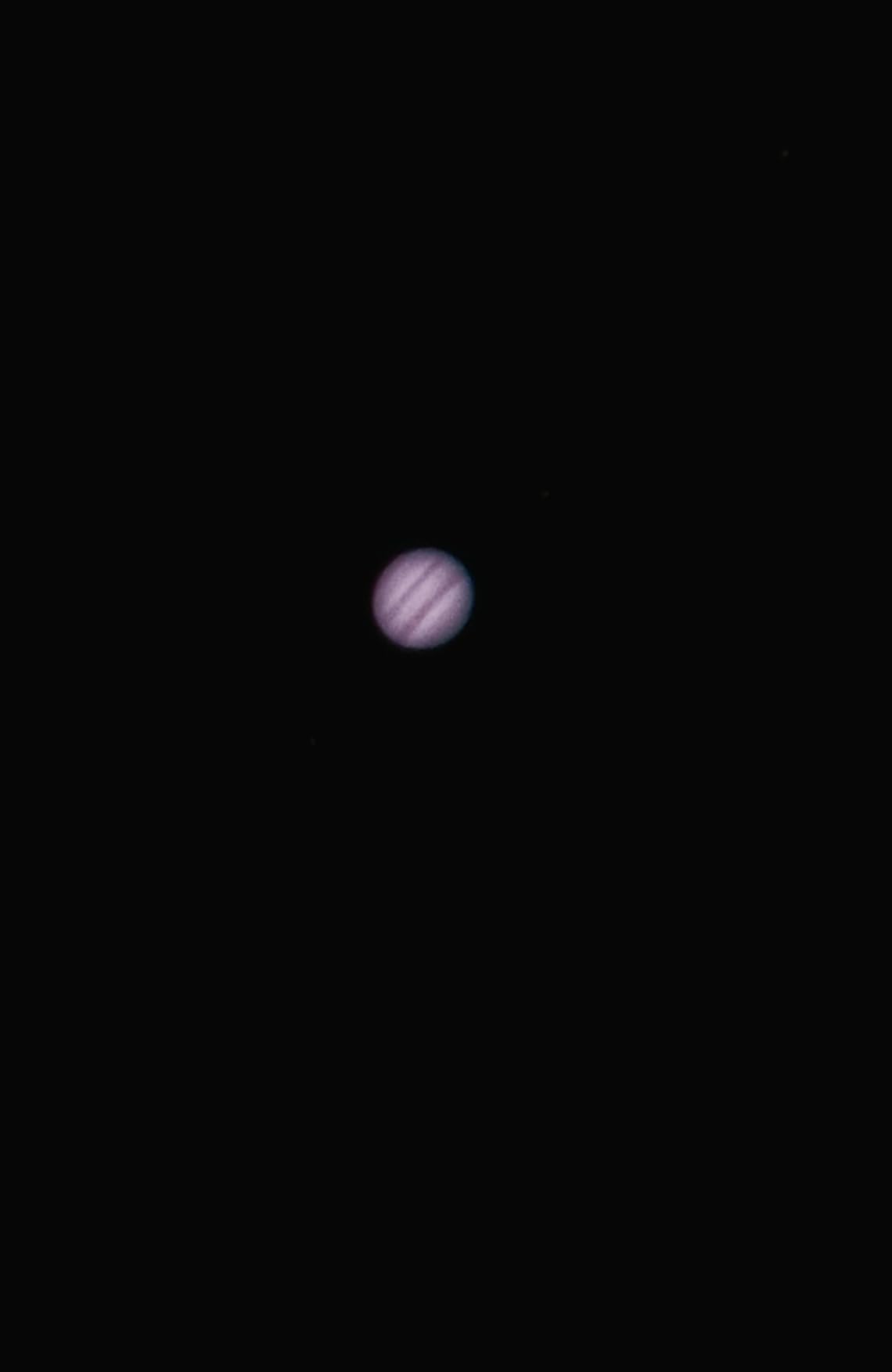
The collapsible tube is the feature that changes how you live with it. It retains collimation through compression, so collapsing it for storage does not mean re-collimating every time you set it up. That single design decision is what separates this from other tabletop scopes, and it matters more than any specification on the list.
The rubber feet on the base minimise vibration, which is a real benefit for a tabletop instrument that people use at a kitchen table or a desk. The 1.15-degree field of view is modest but appropriate, and the tabletop format means setup takes under a minute with no alignment ritual.
The ceiling is the aperture. Faint spiral galaxies and the fainter emission nebulae are simply out of reach, and while an OIII filter can help with planetary nebulae it cannot manufacture light that was never collected. If your ambition is galaxies, you will outgrow this scope in a year, which is not a criticism so much as a planning note.
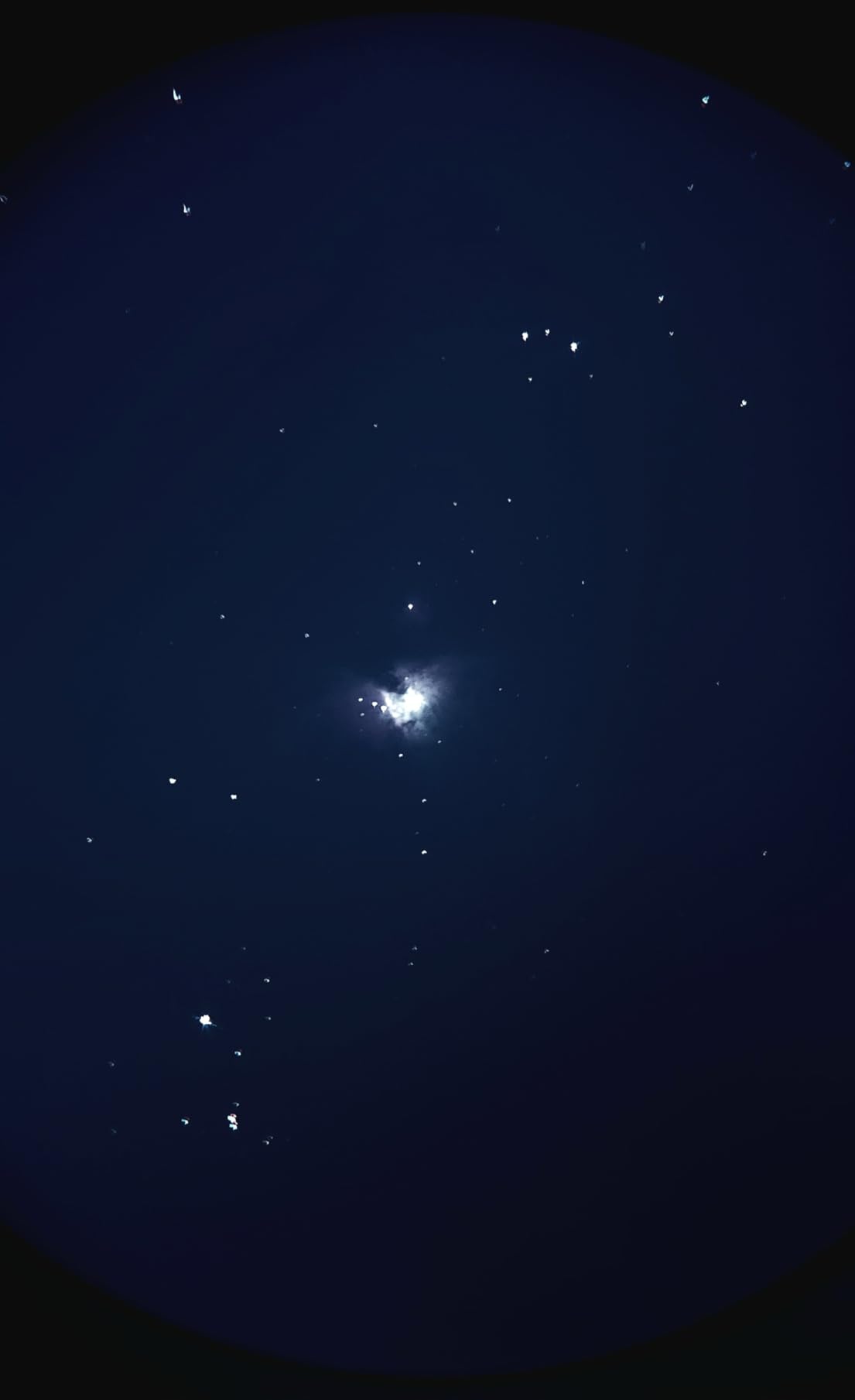
Eyepiece constraints on a 1.25-inch focuser
Most budget tabletop scopes are f/8 and paired with short eyepieces, which is a fine way to learn the sky. This one is f/5, and the combination with a 1.25-inch helical focuser means you have a fast system limited to small eyepieces. That works well, but it does mean you cannot use the 2-inch wide-field eyepieces that would make a 10-inch f/5 scope shine.
With 750mm focal length, a 25mm eyepiece gives 30x with a wide field, and a 10mm gives 75x for planetary and lunar work. That is a sensible pair, and most owners add a 12mm or 15mm wide-field Plossl to get the best view of clusters. Budget for a couple of 1.25-inch eyepieces and a 1.25-inch Barlow, which is cheaper than upgrading the focuser later.
Who should look elsewhere
If you have a garage, a basement or a closet deep enough for a 49-inch tube, buy the 8-inch instead and get twice the light for a similar amount of money. The Heritage 150 is the right answer to a space constraint, not to a budget constraint, because money saved by going smaller here is small.
It is also a poor astrophotography platform, given the fast f/5 ratio and the tracking problem, and it is not the scope to buy if your targets are galaxies rather than clusters, planetary nebulae and the Moon.
7. Celestron FirstScope Signature Series Moon Tabletop Dobsonian – Budget Pick
Celestron FirstScope Signature Series Moon Tabletop Dobsonian Telescope
76mm aperture
300mm f/4 focal length
manual tabletop base
3 inch primary mirror
Pros
- Compact and genuinely portable
- works handheld in your lap
- Good mirror alignment out of the box for the optic size
- Moon map wrap and labelled base make it a teaching tool
- Includes 4mm and 20mm eyepieces
Cons
- No finder scope included so pointing is slow for beginners
- Scope cannot be collimated if the mirror is out of alignment
- Faint deep-sky targets beyond the Moon are largely out of reach
At 4.3 pounds and 76mm aperture, the FirstScope is the smallest scope in the roundup by a wide margin, and it deserves to be here for a specific reason: it is the one product here that a child, a beginner or a renter can carry out to a lawn, set up in a minute and put away again. It is a genuinely first telescope, not a scaled-down compromise pretending to be more.
The optical design is a 300mm f/4 Newtonian with aluminium and silicon dioxide coatings, a 1.3-degree field of view and a 1.53 arc-second Dawes limit. It includes 4mm and 20mm eyepieces, giving 75x and 15x, which together cover the Moon from wide to close. The Robert Reeves Moon map wrap and the matching labels on the base are a lovely touch that turns a session into an introduction to lunar geography.
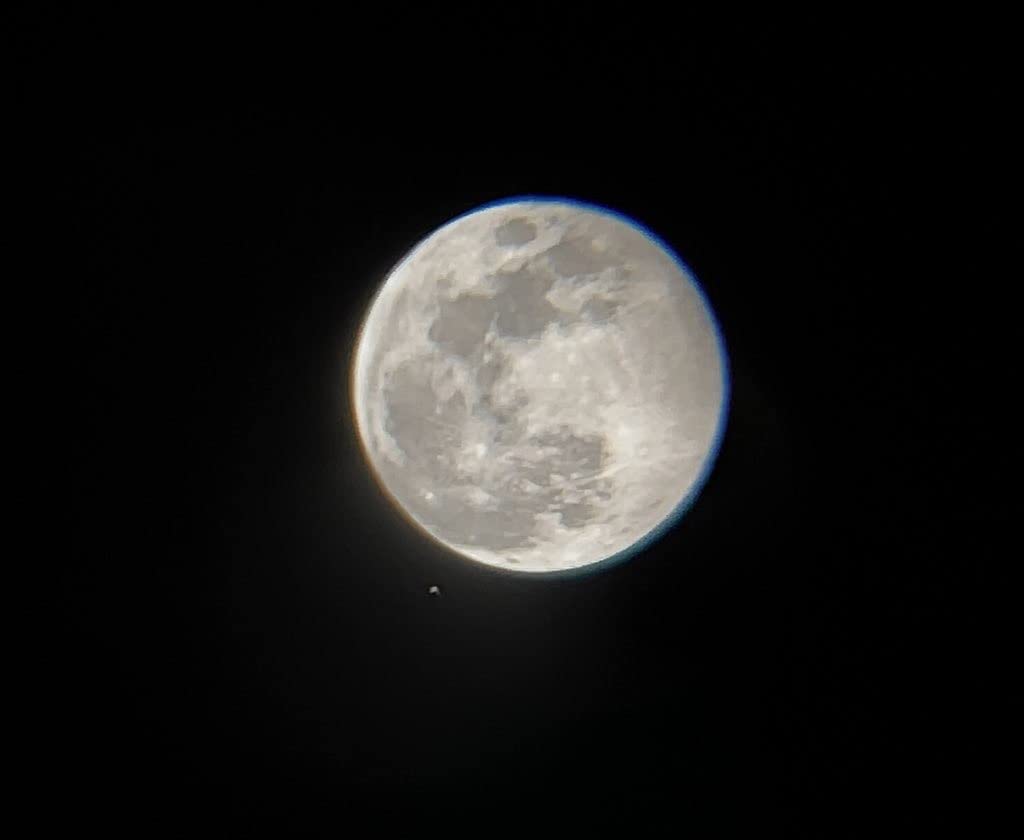
Owners consistently call it an excellent first telescope aimed at lunar and bright planetary viewing, and the 478 ratings are the largest pool in the roundup, so the picture is well tested. Enthusiasm for portability and value comes up constantly, and reviewers also note the mirror arrives well aligned for its size. At 4.3 pounds it is also the lightest instrument here by a wide margin, which is the one measurement it wins outright.
The single most common complaint is the absence of a finder, which makes target acquisition slow and tedious. The second is that the scope cannot be collimated at all, so if the mirror is ever knocked out of alignment there is no user-side fix. Both are real, and for a first-time buyer the finder is the accessory to buy first, alongside a red-dot unit that costs very little.
There is a technical limit to be honest about. The f/4 design is fast enough that a blurred central mirror zone is visible on a high-contrast daytime test, and the supplied eyepieces have essentially no eye relief, which becomes uncomfortable in a long session. For a first look at the Moon, neither matters much. For anything else, both do.
What a 3-inch aperture can and cannot reach
The honest list is short: the Moon in detail, Jupiter’s belts and moons, Saturn’s rings at moderate power, Venus at the right phase, the Pleiades, the Beehive cluster, a handful of bright double stars, and the Andromeda Galaxy as a faint fuzzy patch you can confirm rather than admire. Everything else is beyond it.
That is not a failure. A 3-inch scope is a first instrument, and the standard upgrade path is a red-dot finder, a 25mm Plossl and a Barlow, which together will keep someone engaged for months. Reviews consistently recommend exactly those three additions, which tells you the owner’s expectations are realistic.
Who should look elsewhere
Buy something else if deep-sky is your actual goal. The jump from 76mm to 150mm is the difference between seeing a target and resolving it, and no accessory closes that gap. For anyone whose ambition is the Orion Nebula’s shape or the Hercules Cluster breaking into stars, this scope will disappoint, however good it is at its real job.
It is also the wrong choice for sharing with a group, because there is one eyepiece and the views of the Moon are the only thing most people want to see through it. If you are buying a first scope to show other people the Moon, a slightly larger tabletop Dobsonian serves that better.
Astrophotography Reality Check: What a Dobsonian Can and Cannot Do
A Dobsonian is a manual altazimuth mount. There is no motorised tracking, no polar alignment and no clock drive, which means the field of view rotates around the object you are photographing as the Earth turns. For long exposures that is fatal, and for visual observing it is irrelevant. This is the single most misunderstood point in the hobby, so it is worth being direct about.
The reason long exposures fail is field rotation. Around 15 degrees per minute at a typical declination, the stars smear into trails within a minute or two at moderate focal length. Stacking more frames does not fix rotation, because every frame is rotated by a different amount relative to the last, and no alignment software corrects a rotating field without a derotator or an equatorial wedge. The number of sub-exposures does not matter, and neither does the total integration time.
This question comes up constantly on observing forums, and the thread that still ranks on page one for this topic asks whether manually tracking and stacking hundreds of frames in DeepSkyStacker can rescue it. The honest answer is that you will get a recognisable, low-noise result with careful technique, and it will not reach what an equatorial mount produces on a single long exposure. Stacking software can register frames well enough to combine them, but the geometry is wrong in a way that software cannot fix, and the result is soft at best.
What a Dobsonian is good for is snapshots. Planets and the Moon are bright enough for short exposures on a phone or a webcam, and those images stack beautifully. Bright nebulae like the Orion Nebula can also produce a decent short-exposure result for someone who wants to learn the craft rather than produce a publication image. If photography is a serious goal, plan on a tracking mount instead, and treat the Dobsonian as the visual instrument it was designed to be.
How to Choose a Dobsonian for Deep-Sky: Buying Guide
How big should it be?
Buy the largest aperture you will genuinely use. A 12-inch that lives in a garage you cannot reach in winter will be beaten every night of the year by an 8-inch that sits by the back door. Storage and transport are the gating factors, not money, and experienced observers consistently describe a 10-inch as a worthwhile addition only once they have somewhere to put it.
For a first scope, 8 inches is the answer for almost everyone. It is bright enough to hold faint galaxies, light enough to move solo and cheap enough that mistakes are cheap. Step up to 10 inches when you know you can carry and store it, and treat 12 inches as a specialist instrument for people who already know what they are looking at.
Solid tube, collapsible or truss?
Solid tubes are stiffer, quieter thermally and simpler, and they never lose collimation in transport. Their problem is size: a 49-inch 8-inch and a 55-inch 10-inch are real furniture, and you will move them less often than you expect. Collapsible designs solve the transport problem and, in a well-executed one, keep collimation through compression. Truss designs go further and let air flow around the tube, which helps cooling, but they flex in wind and want a light shroud.
Choose a solid tube if the scope lives in one place. Choose a collapsible or truss design if you travel to dark sites, because a dark sky is worth more than any optical difference between designs.
Does focal ratio matter?
Somewhat, for design reasons rather than image quality. Fast scopes give wide fields and brighter images per eyepiece, which suits sweeping. Slow scopes give tighter stars, need shorter eyepieces for the same field and are less sensitive to collimation. For visual deep-sky, f/5 to f/6 is the comfortable range, and that is where most of these scopes sit.
Aperture always wins over focal ratio. If you are choosing between an f/5 8-inch and an f/8 6-inch, take the 8-inch and put a Barlow on it.
Which eyepieces do you actually need?
Three eyepieces and a Barlow cover almost every deep-sky target. A low-power wide-field in the 24 to 32mm range gives you the sweeping view, a mid-range in the 13 to 16mm range gives the best view of galaxies and nebulae, and a longer one around 8 to 10mm handles smaller targets. Add a 2x Barlow and you have a full kit.
Check the focuser before you buy, because this is where people get caught. A 1.25-inch focuser rules out 2-inch wide-field eyepieces entirely, which is a genuine limitation on a fast telescope. A 2-inch Crayford focuser with a 1.25-inch adapter costs little extra and keeps every option open. While we are on accessories, our guides to standout kitchen buys follow the same principle: buy the single piece that makes the rest of the kit work, not the most accessories.
Collimation and mirror cooling
Collimation takes five to ten minutes once you know the routine: centre the secondary under the focuser, aim it down the focuser tube, then aim the primary at the secondary using a star test at high power. A collimation cap and a bright star are enough to start. A laser collimator makes the last stage faster, and on fast scopes like the 150mm f/5 and the 10-inch options it is worth having.
How often you need to do it depends on focal ratio. Slow scopes hold alignment for months; fast scopes and anything carried in a car need checking more often, and truss designs need it after every trip. On mirror cooling, allow 20 to 40 minutes before judging a large primary, and a small fan against the back of the tube shortens that considerably. A scope shipped with a built-in fan saves you the step entirely.
Finder, filters and the bits nobody mentions
Every Dobsonian needs a way to point at faint things. A red-dot finder is cheap and adequate for bright targets, a 9×50 or 8×50 finder makes deep-sky locating much faster, and an RACI unit for a few mm more shows a true field. For filters, an OIII or narrowband filter is what turns a washed-out suburban emission nebula into a recognisable object, and a light shroud does more for faint galaxies than any eyepiece upgrade.
Then there are the things that decide whether a large scope gets used at all: a chair, so you are not standing at the eyepiece for an hour, and a storage plan for a tube that will not fit in a closet. Check both before you buy.
Frequently Asked Questions
What is the best telescope for deep sky viewing?
For deep-sky objects, aperture matters more than anything else. An 8-inch Dobsonian is the best starting point for most people: it shows the Orion Nebula, M13, M57 and the Andromeda Galaxy clearly, and stays light enough to move solo. A 10-inch adds roughly 55 percent more light and resolves detail in galaxies and globular cluster cores, at the cost of extra weight and a larger storage footprint. No amount of eyepiece quality makes up for a smaller mirror.
Can you see Saturn with an 8 inch Dobsonian?
Yes, and comfortably. An 8-inch Dobsonian at 1200mm focal length gives you 120x with the 10mm eyepiece most scopes include, which resolves the Cassini Division in Saturn’s rings and shows the Titan and Rhea points. Steady seeing matters more than aperture for planetary detail, so a night of calm atmosphere will outperform a bigger scope on a turbulent one. Saturn is bright enough that even a 150mm tabletop Dobsonian shows the rings.
Why are Dobsonians not good for astrophotography?
Because they have no motorised tracking. A Dobsonian moves in two axes by hand, so the field of view rotates around your target as the Earth turns, usually around 15 degrees per minute. Long exposures therefore produce star trails, and stacking more frames does not fix it because every frame is rotated differently. A field derotator or an equatorial wedge solves the problem. Dobsonians remain excellent for planetary and lunar snapshots and short-exposure nebula images.
Do I need a coma corrector for a Dobsonian?
Only if your scope is fast. Coma becomes visible around f/4 and below, appearing as blurred stars toward the edge of the field. At f/6 or slower, which covers most 8-inch and 10-inch Dobsonians, stars stay reasonably tight near the edge and a corrector is a luxury. If you own a 150mm f/5 tabletop scope or a fast 10-inch, a 1.25-inch coma corrector is inexpensive and noticeably improves wide-field galaxy viewing.
How long does it take to collimate a Dobsonian telescope?
Five to ten minutes for an experienced observer, and longer the first time. The routine is three stages: centre the secondary under the focuser, aim the secondary down the focuser tube, then aim the primary at the secondary using a star test at high power. A collimation cap works, and a laser collimator makes the final stage quicker. Slow scopes such as an f/6 8-inch hold alignment for months, while fast and truss designs need re-checking after transport.
What is the best telescope for sky watching in general?
It depends on what you want to see. For the Moon, planets and deep-sky objects, a Dobsonian gives you the most aperture per unit of money of any telescope design, and an 8-inch is the standard recommendation. Refractors give sharper, higher-contrast images with no collimation and are better if your interest is planets and double stars. The answer for most beginners watching a wide range of targets remains a well-chosen 8-inch Dobsonian with two or three eyepieces.
The Verdict: Which Dobsonian Should You Buy?
If you read nothing else, this is the short version. The best Dobsonian telescopes for deep-sky objects come down to aperture and storage. Buy the Celestron StarSense Explorer 10-inch if you have a second pair of hands and a corner of a room, because it puts the most light in the smallest tube and its app gets a beginner to a faint galaxy on the first night. Buy the StarSense 8-inch if you want the same experience with less weight and more conventional optics, or the Sky-Watcher Classic 200 if you would rather spend the money on eyepieces and skip the electronics entirely.
Buy the Flextube 250 if you travel to dark sites and would rather not carry a 56-inch tube. Buy the Zhumell Z10 if you want everything in one box and would rather not assemble an accessory list. Buy the Heritage 150 if your space is a tabletop, and the FirstScope only if the Moon is the goal and portability is the deciding factor.
Whatever you choose, spend the money you saved on three eyepieces and a collimation tool. That combination will do more for your deep-sky nights than any upgrade inside the tube, and it is the step most first-time buyers skip. Clear skies, and enjoy 2026.
