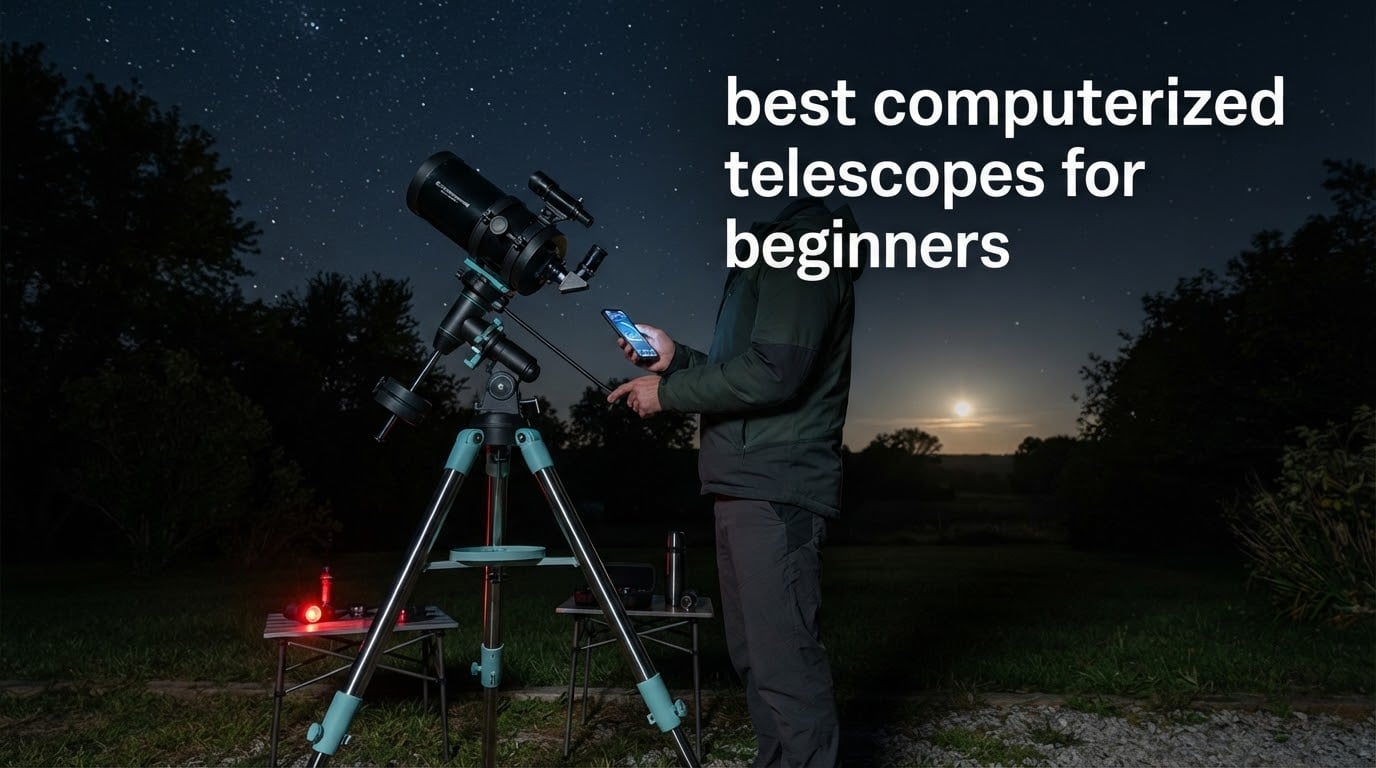
The Celestron NexStar 8SE is the best computerized telescope for beginners overall, because it solves the exact problem that makes new observers quit: finding the object. The computerized GoTo mount slews the tube to a target you pick from a database of more than 40,000 objects and keeps it there while you look, so a first night ends with Jupiter and the Moon in the eyepiece instead of twenty minutes of hunting through a star chart.
That is not the only way in. This roundup covers six picks across the three families that now matter for anyone shopping for the best computerized telescopes for beginners in 2026: traditional GoTo mounts with a hand controller, smartphone-guided PushTo scopes, and app-controlled smart telescopes that stack images for you. The smart category is new, and it is the fastest-growing part of this market, but it trades away the eyepiece experience entirely.
We spent October 2026 comparing optics, mounts, alignment routines, power options and the complaints that show up repeatedly in owner reviews. We follow the same rule we use for every beginner gear guide on this site, as with our picks for the best gas grills for beginners: name a winner, then say plainly who it is not for. Tested and updated for October 2026.
Table of Contents
- Top 3 Picks: Best Computerized Telescopes for Beginners
- Quick Overview: Best Computerized Telescopes for Beginners (October 2026)
- 1. Celestron NexStar 8SE: Best Overall Computerized Telescope for Beginners
- 2. Celestron StarSense Explorer LT 114AZ: Budget Pick First Telescope
- 3. Celestron AstroMaster 130EQ-MD: Best Equatorial Tracking on a Budget
- 4. ZWO Seestar S30 Pro: Best All-in-One Smart Telescope
- 5. DWARFLAB Dwarf 3: Best Smart Telescope for Day and Night Use
- 6. DWARFLAB Dwarf Mini: Best Travel Telescope
- What Is a Computerized Telescope?
- How to Choose: Buying Guide for Computerized Telescopes
- Frequently Asked Questions
- Which Computerized Telescope Should You Buy?
Top 3 Picks: Best Computerized Telescopes for Beginners

Celestron NexStar 8SE
- 8 in Schmidt-Cassegrain
- 2032mm f/10
- 40
- 000+ object database
- SkyAlign in minutes

Celestron StarSense LT 114AZ
- 4.5 in Newtonian
- 1000mm focal length
- StarSense phone guidance
- No alignment routine

Celestron AstroMaster 130EQ-MD
- 5 in Newtonian
- 650mm focal length
- CG-3 equatorial with RA drive
- 20mm and 10mm eyepieces
The 8SE takes the top slot on the strength of aperture plus automation: it is the only scope here that combines a real GoTo database with the light-gathering power to make faint targets worth finding. The StarSense LT 114AZ is the cheapest route to guided observing and the fastest to set up on a first night, and the AstroMaster 130EQ-MD is the pick if you want a motor-driven equatorial mount rather than a fork arm.
Quick Overview: Best Computerized Telescopes for Beginners (October 2026)
| Product | Specs | Action |
|---|---|---|
| Celestron NexStar 8SE |
|
Check Latest Price |
| Celestron StarSense Explorer LT 114AZ |
|
Check Latest Price |
| Celestron AstroMaster 130EQ-MD |
|
Check Latest Price |
 ZWO Seestar S30 Pro ZWO Seestar S30 Pro |
|
Check Latest Price |
 DWARFLAB Dwarf 3 DWARFLAB Dwarf 3 |
|
Check Latest Price |
 DWARFLAB Dwarf Mini DWARFLAB Dwarf Mini |
|
Check Latest Price |
Every scope below is a legitimate first telescope. The difference is what you are buying: an 8-inch light bucket that tracks for you, a 4.5-inch Newtonian steered by your phone, an equatorial motor drive, or a small camera-driven scope that images instead of showing you an eyepiece view.
1. Celestron NexStar 8SE: Best Overall Computerized Telescope for Beginners
Celestron NexStar 8SE Computerized Telescope – Schmidt-Cassegrain
8 inch Schmidt-Cassegrain
2032mm f/10 focal length
40,000+ object database
10.88 kg
Pros
- GoTo mount with SkyAlign alignment in minutes
- 8 inch aperture for lunar and planetary detail
- Compact for an aperture this size
- NexStar+ hand control accepts Celestron accessories
Cons
- Heaviest scope in this group at 10.88 kg
- No power supply or external battery included
- Only one 25mm eyepiece in the box
My first night with the 8SE was spent being walked through alignment rather than looking at the sky, and that is the honest version of the experience. Three bright objects go into the finder, the hand controller works out where and when you are, and after that the mount does the pointing. Reviewers consistently describe SkyAlign as finishing in minutes rather than the twenty-minute ritual they expected.
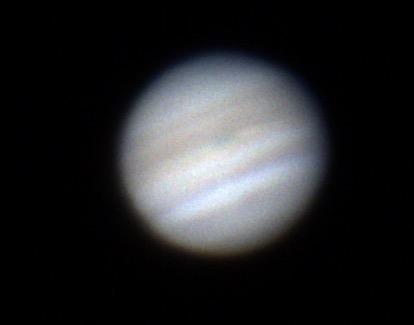
Once it is aligned, the payoff is the 8-inch Schmidt-Cassegrain front end. At 2032mm focal length it is a long, narrow telescope with a 0.75 degree field of view, which is exactly what you want for Jupiter’s cloud bands, Saturn’s rings and lunar craters along the terminator.
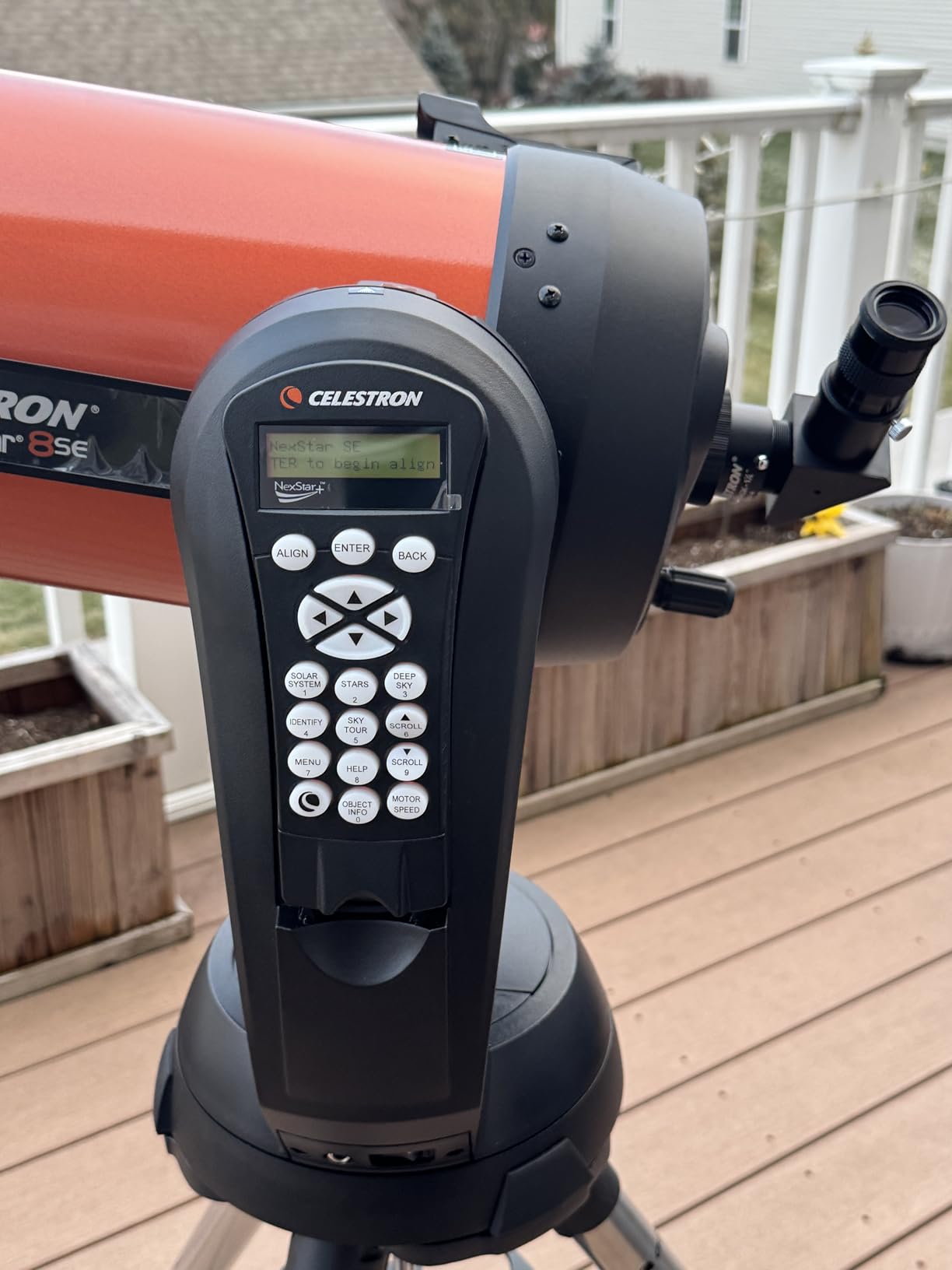
The physical design is more manageable than the weight suggests. The single fork arm keeps the tube compact for an 8-inch aperture, and the scope disassembles into the optical tube plus mount and tripod, which is the difference between carrying this to a dark site and leaving it in the garage.
Power is the part people forget. It runs on 8 AA batteries, a 12V AC adapter, or a Celestron PowerTank, and none of those external supplies are included in the box, so budget for a power pack before your first all-night session. The NexStar+ hand control and accessory tray leave room to add Celestron accessories later as your observing improves.
Who should buy the NexStar 8SE
Buy it if you want a genuine GoTo database and enough aperture to make deep-sky targets worth the wait. It is the pick for an adult who will observe regularly and can move roughly 24 lb of telescope from car to lawn.
It also suits anyone who wants room to grow into astrophotography, since the fork mount accepts a wedge and the database already handles target selection.
Where the 8SE will disappoint you
It is the heaviest and priciest scope in this group, and carrying it to a dark sky site is a two-person job rather than a one-person walk. If your observing happens on a balcony or a crowded city street, the extra aperture is money spent on a problem light pollution causes anyway.
The single 25mm eyepiece gives a modest first view, so plan to add a shorter one and a Barlow before judging the optics. Owners also note that the light weight of the fork mount shows up as vibration at high magnification on the planets.
2. Celestron StarSense Explorer LT 114AZ: Budget Pick First Telescope
Celestron StarSense Explorer LT 114AZ Newtonian Smartphone Guided Telescope
4.5 inch Newtonian reflector
1000mm focal length
Phone-guided altazimuth mount
10.4 lb
Pros
- StarSense app points you at targets instead of star-hopping
- Mount and tripod arrive preassembled
- 1000mm focal length rewards Moon and planets
- Barlow and two eyepieces included
Cons
- No motorised tracking so targets drift out of view
- You follow the arrows by hand rather than by motor
- Newtonian tube needs occasional collimation
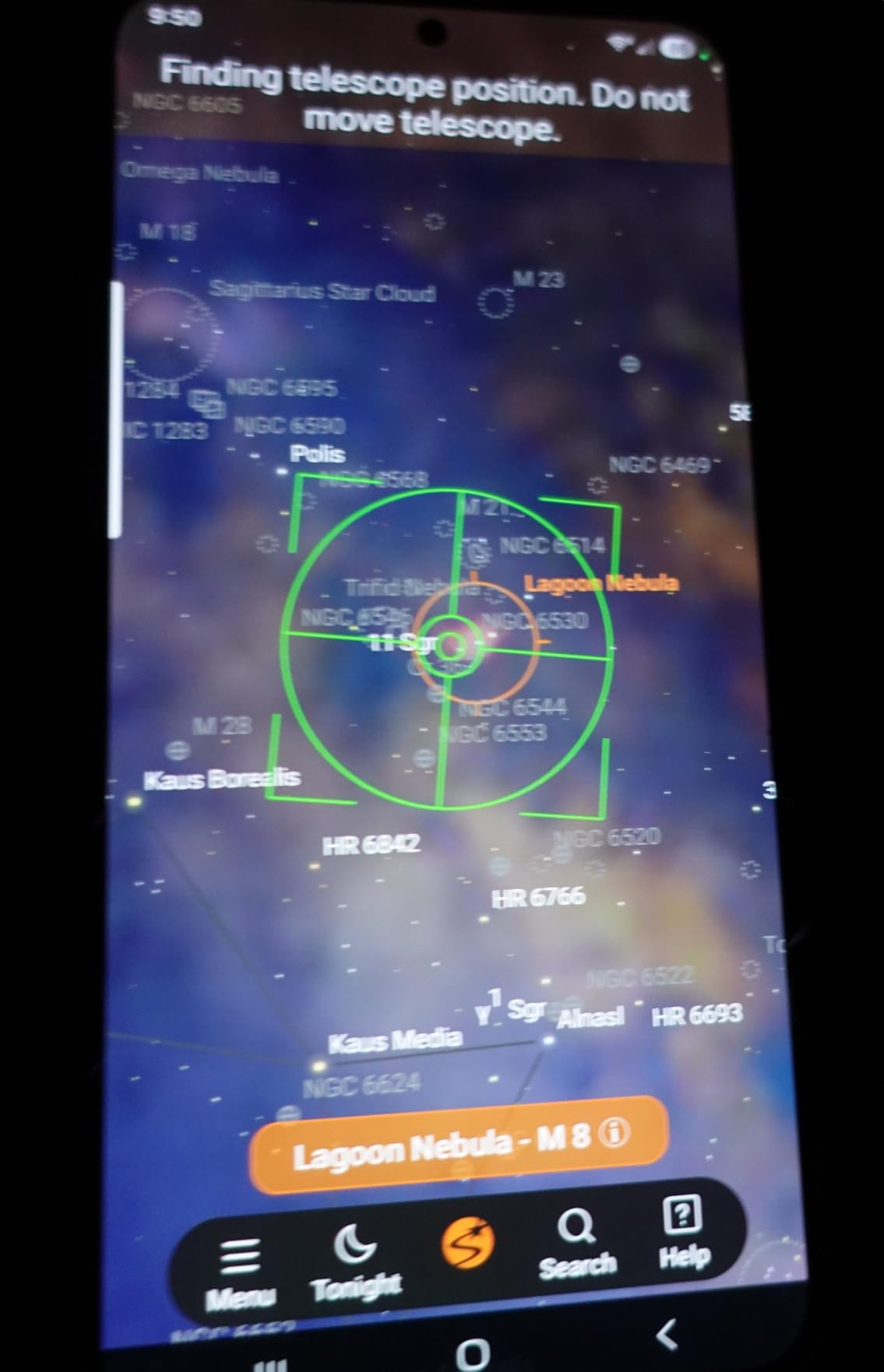
This is the scope I hand to people who say they will never learn the sky. The StarSense app holds a star pattern in the phone camera, works out where you are pointing, and then draws arrows telling you which way to move the tube. Setup is genuinely no-tool: the mount and tripod arrive preassembled and the star-pointer finder goes on with a single screw.
Optically it is a 4.5-inch Newtonian on a 1000mm focal length, and that long focal length is why it punches above its aperture on the Moon, Jupiter and Saturn. The 25mm and 10mm eyepieces plus the included 2x Barlow cover most of what a beginner will look at.
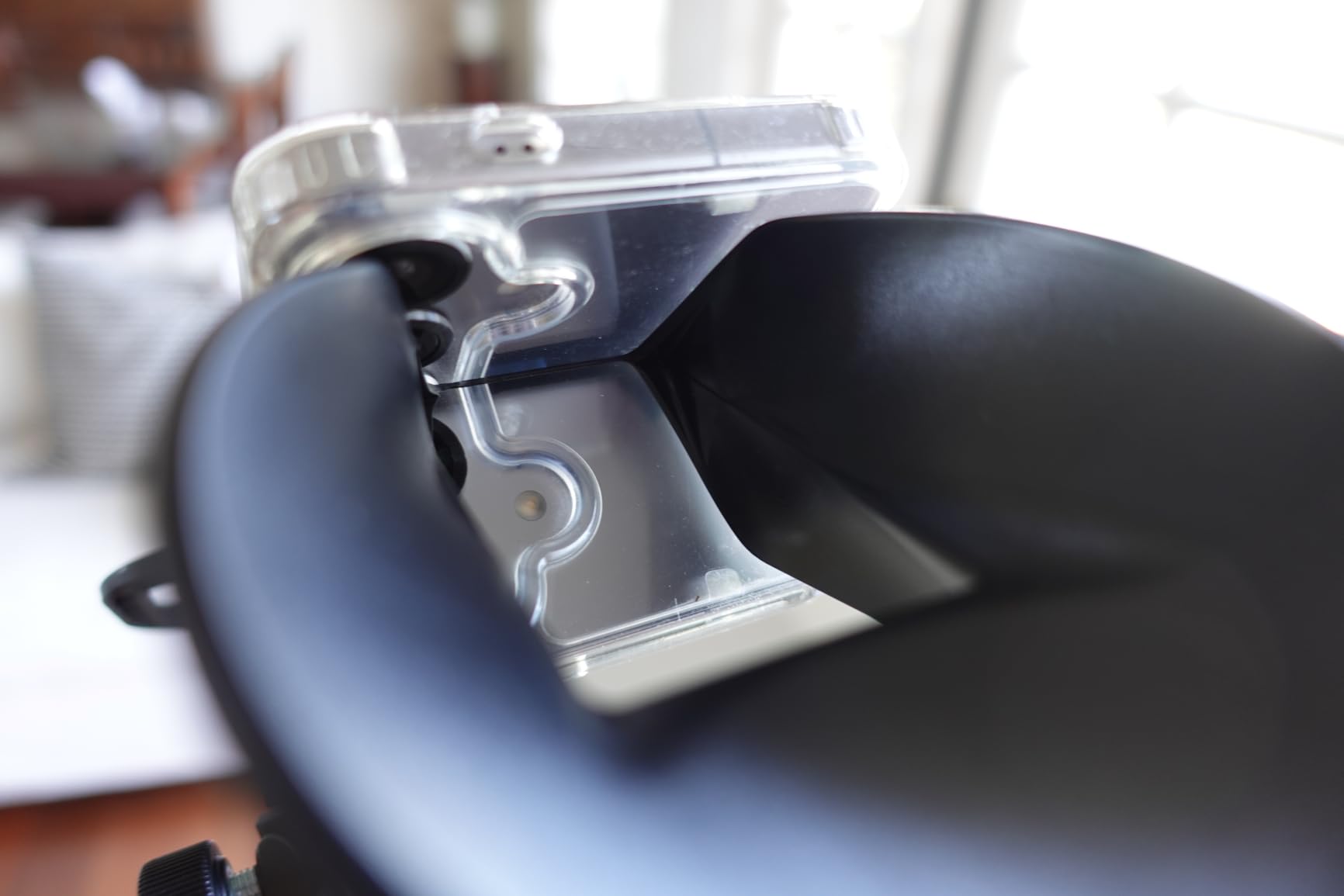
What you give up is motorised pointing and tracking. The mount is fully manual, so a target drifts across the field within a couple of minutes at high magnification and you correct by sliding the slow-motion rod. That is a mild annoyance once you know the rhythm, and a real one on a first night.
Alignment, the thing that frightens people about GoTo, is not a factor here. There is no alignment routine to fail on a cloudy evening or a bright suburban sky, which is why it also works well as a family or kid-friendly scope that a second person can point.
Who should buy the StarSense LT 114AZ
Buy it if your priority is seeing something on night one without learning constellations, and if you can accept nudging the tube yourself. It is the lowest-effort entry in this roundup and the easiest to hand to a child or a partner who wants to help.
It is also the smart choice under bright skies, because the phone does the finding instead of the sky needing to be dark enough to see faint guide stars.
Where the StarSense will disappoint you
No tracking means Jupiter’s bands move out of the eyepiece while you are still describing them. If your goal is long, relaxed planetary sessions or any kind of imaging, this is the wrong tool and you will outgrow it quickly.
The Newtonian design also needs collimation checked every so often, a job that intimidates more beginners than it should. And the rating sits lower than the rest of this list, which reflects an assembled mix of happy owners and people who expected a motorised mount.
3. Celestron AstroMaster 130EQ-MD: Best Equatorial Tracking on a Budget
Celestron AstroMaster 130EQ-MD Telescope with Motorized Tracking
5 inch Newtonian reflector
650mm focal length
CG-3 equatorial with RA drive
17 lb
Pros
- Right ascension motor drive keeps objects centred
- Dual slow-motion knobs for fine pointing
- Five inch aperture on a short 650mm tube
- Preassembled mount and tripod
Cons
- Motor drive blocks manual use of the fine adjust knob
- Mount quality varies with worm gear wear
- Tripod is light and shakes at high power
This is the rarest thing in the beginner market: a real equatorial mount with a motor that tracks. Because the CG-3 mount tracks in right ascension, an object stays roughly where you put it while you look, which is the whole argument for spending on a wedge or an equatorial head in the first place.
The 130mm aperture and 650mm focal length give a wide, bright field that works well for open clusters and nebulae, and the 1.3 degree field of view is generous compared with the long catadioptric tubes in this roundup. Two slow-motion knobs, one for each axis, let you centre without hunting.
Owner reviews are sharply split, and the split is about the mount rather than the optics. Many people rate it as an affordable way into equatorial tracking, while a substantial minority report drifting, grinding worm gears and plastic bearings in their examples, so the mount is where you should judge this one carefully.
Two more practical notes. The primary mirror is spherical rather than parabolic, which shows up as slightly bloated stars at high magnification, and the motor drive physically blocks the manual fine-adjustment knob, so you either track or fine-tune, not both at once.
Who should buy the AstroMaster 130EQ-MD
Buy it if you specifically want tracking and an equatorial platform, and you understand that learning a polar alignment is part of the hobby. It suits people who already know what they are looking at and want the mount to hold it.
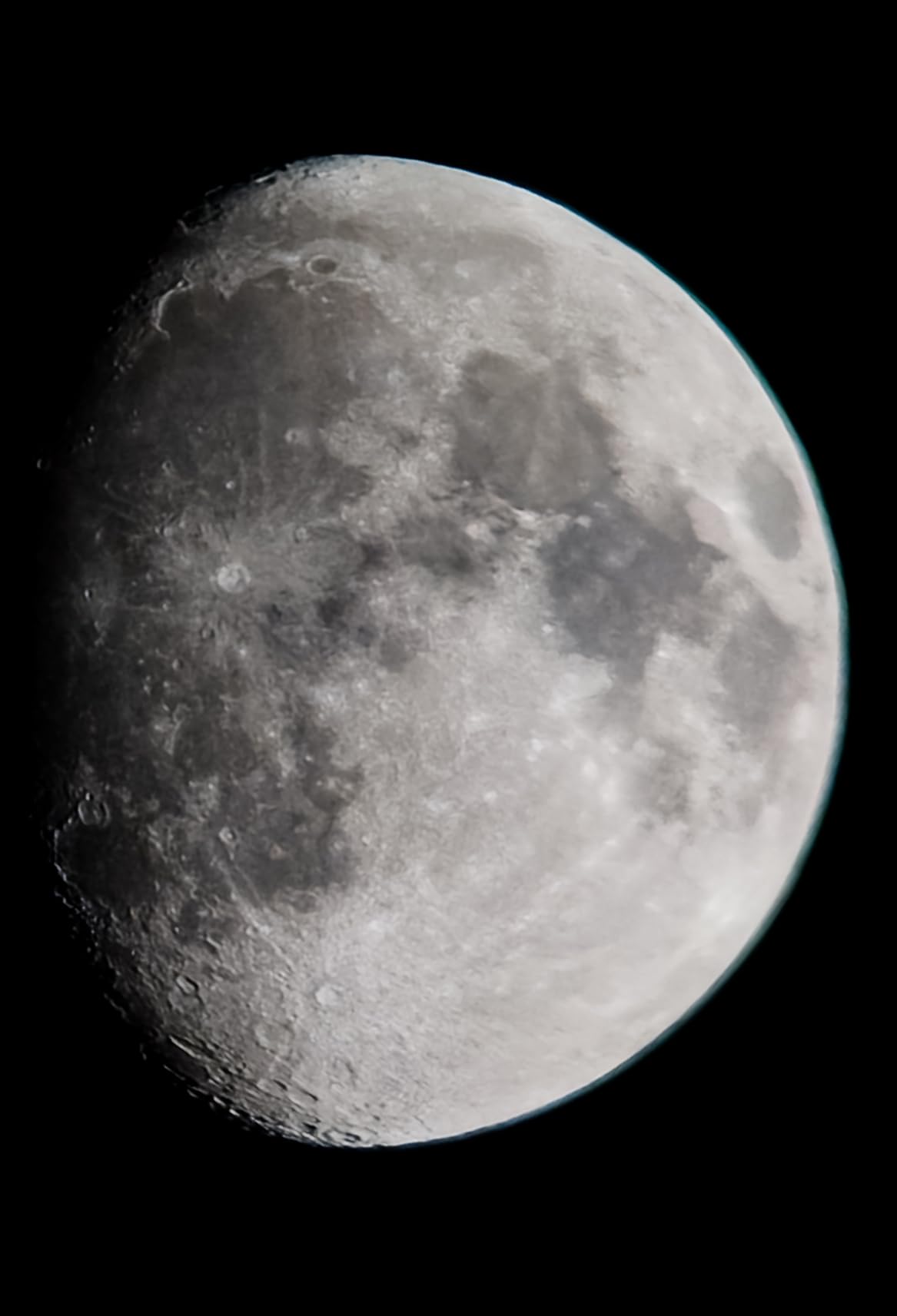
It also works as a first step toward imaging, since a short-exposure phone photo of the Moon or a bright planet is realistic with a driven equatorial head.
Where the AstroMaster will disappoint you
At 17 lb it is awkward to lift, and pointing it near the zenith means leaning over the eyepiece in an uncomfortable position. The tripod is described as light and becomes shaky at higher power, which shows most on planetary work.
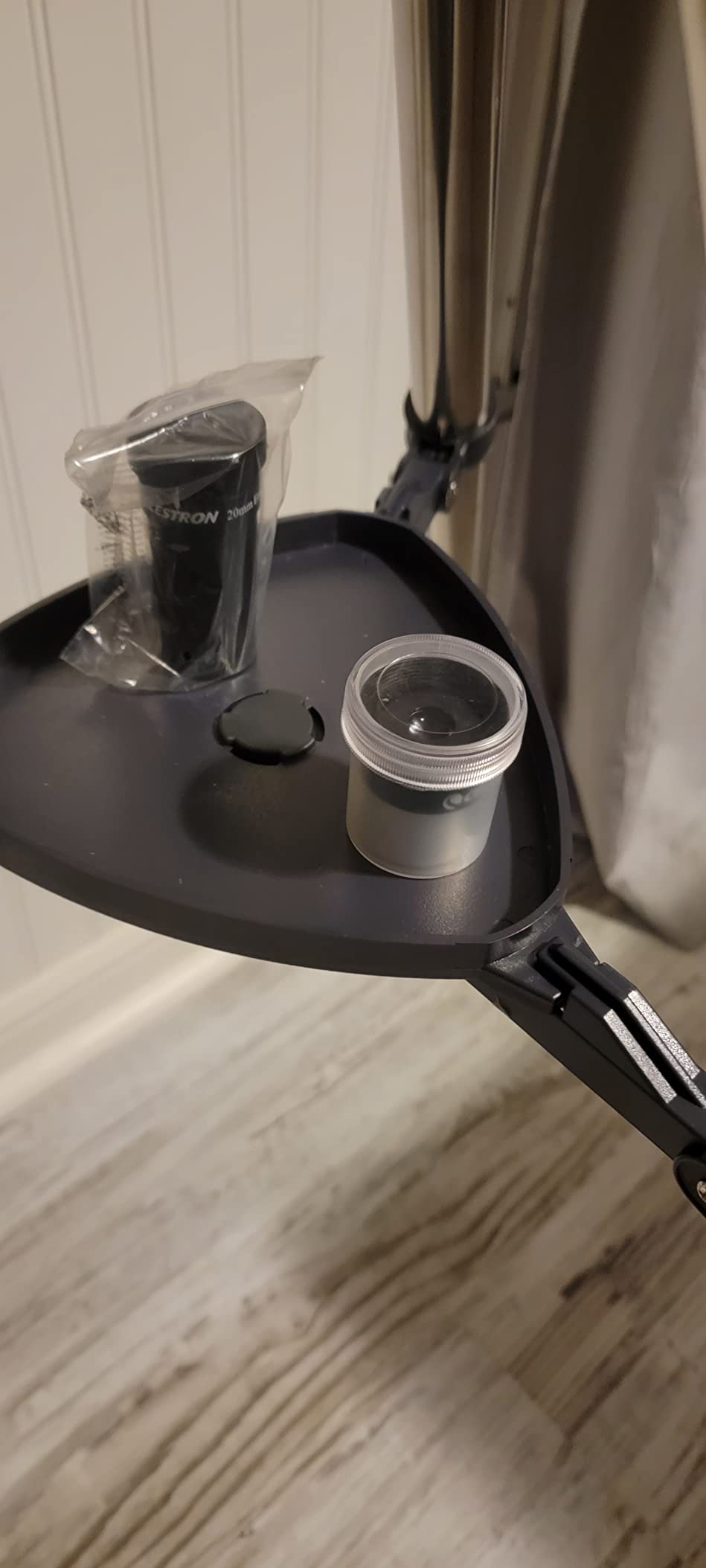
The factory 20mm eyepiece is widely criticised and is worth replacing early. Combine that with a 4.0 star average across nearly 2,000 reviews, and this is the pick for a specific enthusiast path rather than the safest first telescope.
4. ZWO Seestar S30 Pro: Best All-in-One Smart Telescope
ZWO Seestar S30 Pro Smart Telescope, App-Controlled Astrophotography
30mm aperture at 160mm
4.6 degree field of view
Auto GoTo and tracking
3.64 lb
Pros
- Usable on a first night with no alignment
- Built-in light pollution filter for city skies
- One-tap Milky Way and deep-sky imaging
- Tripod and anti-dew protection included
Cons
- No eyepiece and no planetary viewing
- Longer tracked exposures need a static tripod
- Settings live in the app so the manual matters
The Seestar S30 Pro is the modern answer to the beginner question, and it works in a way that still surprises people. You set it on the included tripod, open the app, tap a target, and the scope plate-solves, slews, tracks and starts stacking frames on your phone. There is no alignment, no star chart and no polar axis to line up.
Reviewers single out the built-in light pollution filter and the apochromatic optics as the reasons it works from a city, which is the situation most beginners actually observe from. The 4.6 degree field of view is wide enough for large nebulae and star trails, and the dual-camera 4K setup handles both narrow and wide framing.
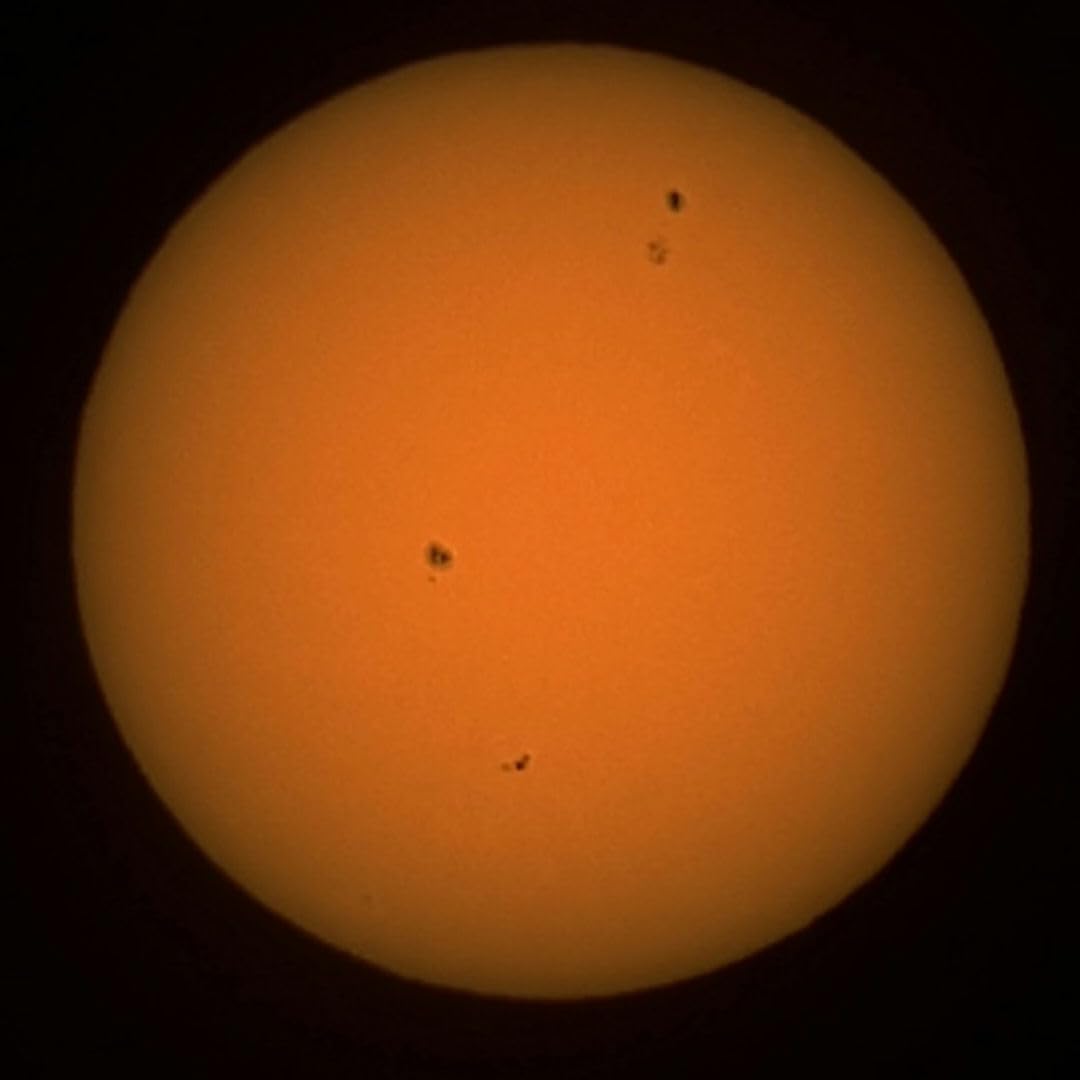
It is also a multi-purpose device: the same app runs outdoor scenery, birdwatching and daylight modes, and one-tap Milky Way imaging pulls together a session that would otherwise mean stacking a hundred frames in software on a laptop.
The manufacturer is explicit that this is a deep-sky imaging device, not a planetary one, and reviewers agree. If Saturn’s rings are what you want to see, this scope will not do it, and the honest fix is to own one of the eyepiece scopes above instead.
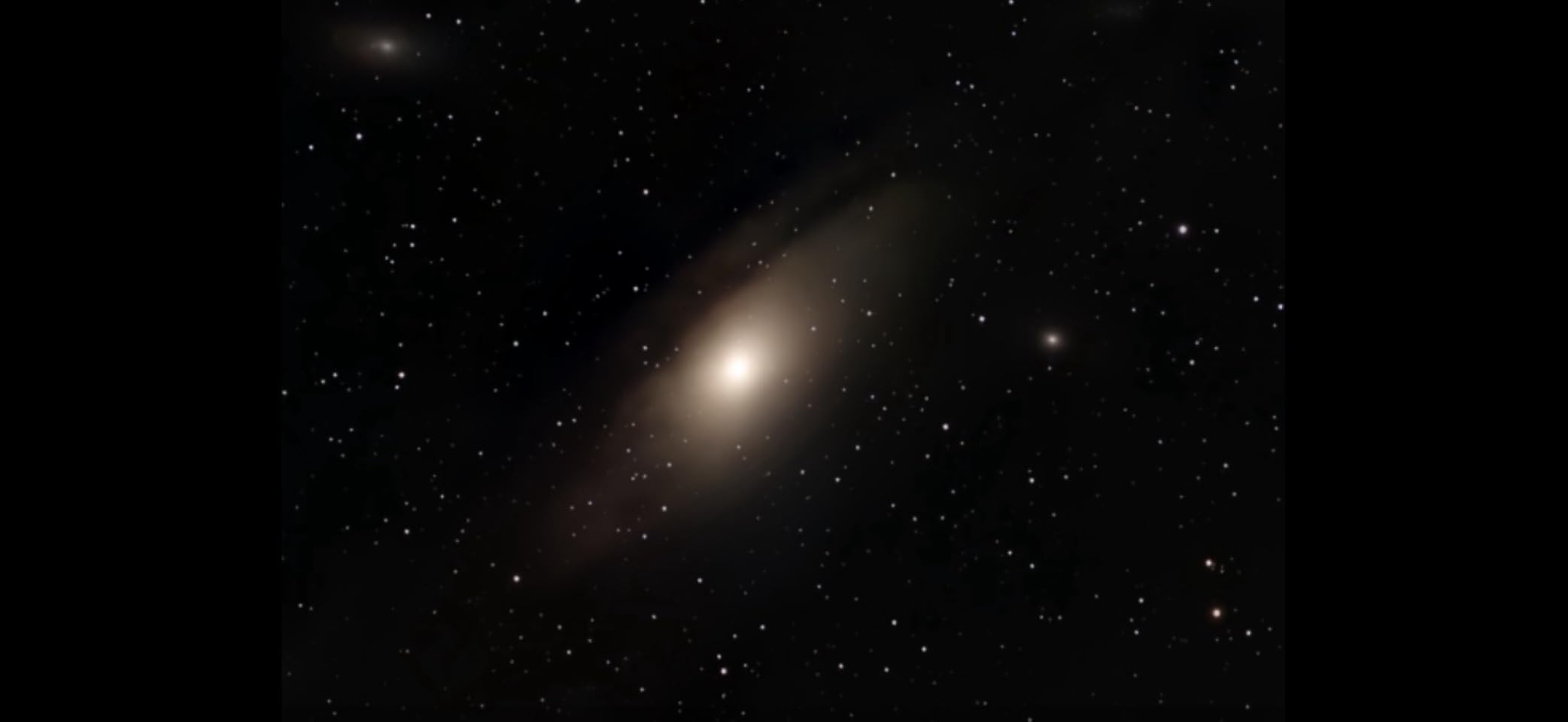
Who should buy the Seestar S30 Pro
Buy it if you want to produce images of the night sky rather than look through an eyepiece, especially from a bright suburban or city backyard. It is the lowest learning curve in this roundup, and the results arrive on your phone in minutes.
It is a strong gift for someone who is not sure they will stick with astronomy, because the feedback loop is immediate and there is nothing to learn before the first picture.
Where the Seestar will disappoint you
There is no eyepiece, so none of the shared, live, edge-to-edge view of Jupiter that makes people stay in the hobby. Anyone buying it to look at planets will feel short-changed no matter how good the images are.
Tracked exposures only stay accurate if the device is not moved, and a few software settings are hard to find without the printed guide. The 30mm aperture also means small targets stay small, with no room to magnify them.
5. DWARFLAB Dwarf 3: Best Smart Telescope for Day and Night Use
DWARFLAB Dwarf 3 Smart Telescope, App-Controlled Astrophotography Camera
35mm objective lens
3 lb all-in-one body
4K auto tracking
Altazimuth mount with auto focus
Pros
- Dual imaging system covers daylight and night sky
- Only 3 lb so it fits a normal backpack
- One-touch cloud processing needs no computer
- Carrying bag and magnetic filters included
Cons
- Built for imaging rather than long visual sessions
- Tripod needed for stable framing on longer exposures
- No eyepiece for traditional observing
The Dwarf 3 solves a different problem from the S30 Pro: it is not only a telescope. The dual imaging system pairs a wide-angle lens with a telephoto one, so the same body photographs wide outdoor scenes and wildlife by day and stars by night, and the app switches between them.
For the night side you get a 35mm objective, 4K auto tracking, automatic GoTo and an equatorial mode, all at 3 lb including the battery. The telescope claims imaging starts within a couple of minutes, and owner reviews back that up: no computer, no stacking software, just one-touch cloud processing.
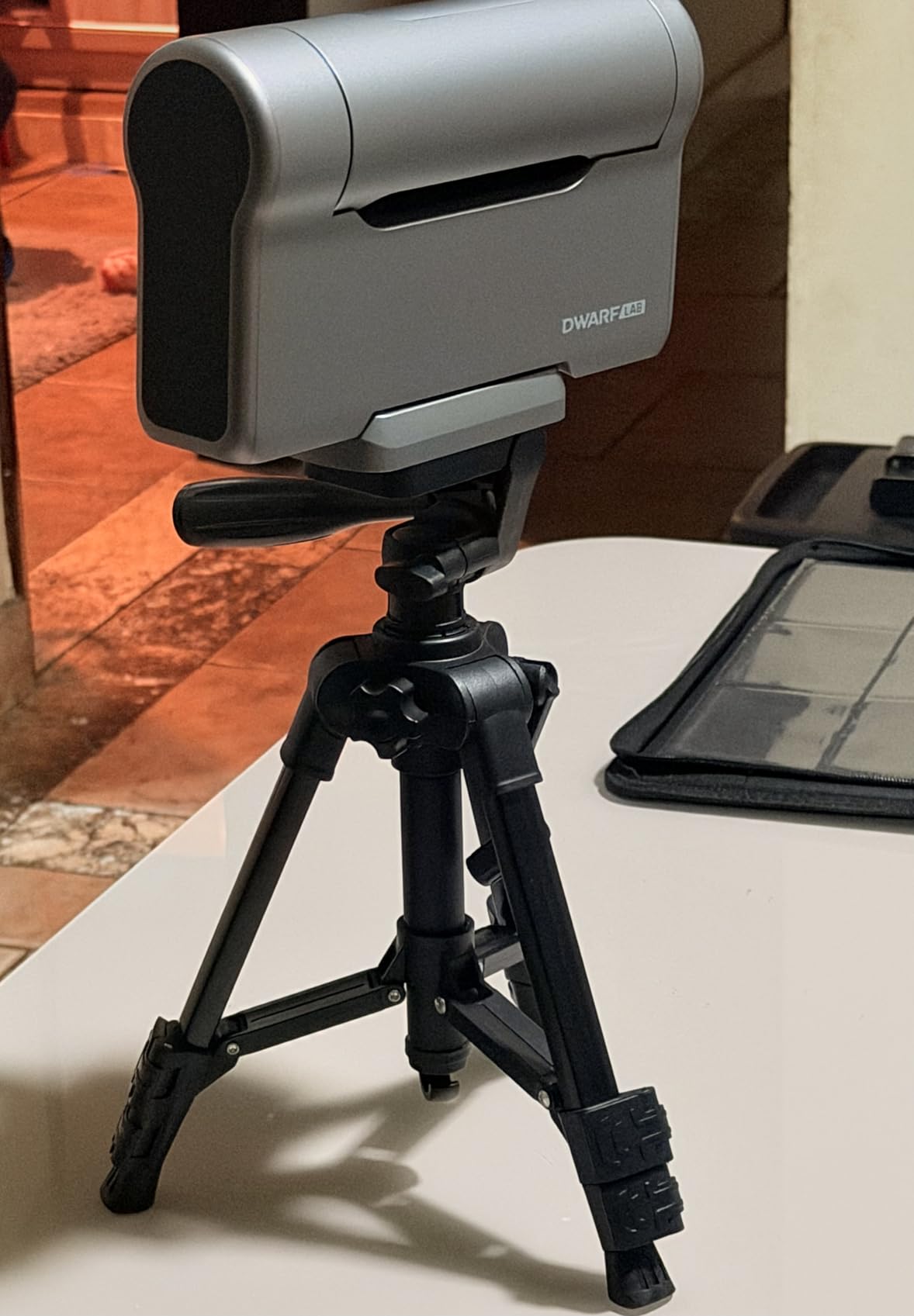
It also auto-focuses, which no other scope in this roundup does, and that removes the single most common beginner complaint about smart scopes. The box includes a carrying bag, a filter pouch, a USB-C cable and a wipe cloth, so nothing else is needed to start.
The usual smart-scope ceiling applies. The 35mm objective gives lovely wide-field images of the Milky Way and large nebulae, and a small sensor cannot resolve small targets or planets, no matter how good the stacking gets.

Who should buy the Dwarf 3
Buy it if you want one device that does daylight photography and astrophotography, or if you travel to dark sites and need something that fits in a backpack. It is also a good first smart scope for families who will use it for more than the night sky.
Choose it over the S30 Pro if daylight versatility and auto-focus matter more to you than the widest deep-sky field.
Where the Dwarf 3 will disappoint you
It is an astrograph, not an eyepiece telescope, so there is no long visual session and no shared view of planets through the night. If someone in the house wants to look at the Moon together, this is the wrong shape of device.
Longer tracked exposures need a tripod for steady framing, which pushes the package past the easy grab-and-go idea. And with a 234-review history, there is a thinner base of long-term owner feedback than the Celestron scopes have.
6. DWARFLAB Dwarf Mini: Best Travel Telescope
DWARFLAB Dwarf Mini Smart Telescope – 1.85lb Portable Astronomy Telescope
30mm aperture at 150mm
1.85 lb body
Plate-solving auto GoTo
EQ mode to 90 second exposures
Pros
- Lightest scope here at 1.85 lb with everything built in
- Plate-solving finds targets without alignment
- EQ mode reaches 90 second exposures
- Cloud processing replaces stacking software
Cons
- Low resolution sensor limits enlargement
- Small deep-sky targets do not fill the frame
- Weak on planetary detail and Wi-Fi links can drop
At 1.85 lb the Dwarf Mini is the one scope in this roundup you can genuinely carry in a daypack, and that changes what observing is possible. It is the only one here where a campsite, a beach or a car boot is a realistic destination rather than a compromise.
The technology is the same family as the bigger DWARFLAB scopes. A plate-solving routine matches star patterns in real time to work out where you are pointing, then GoTo and tracking take over, so there is no alignment procedure to fail under a bright sky. The 2.45 degree field of view is narrower than the S30 Pro’s, which suits smaller deep-sky targets.
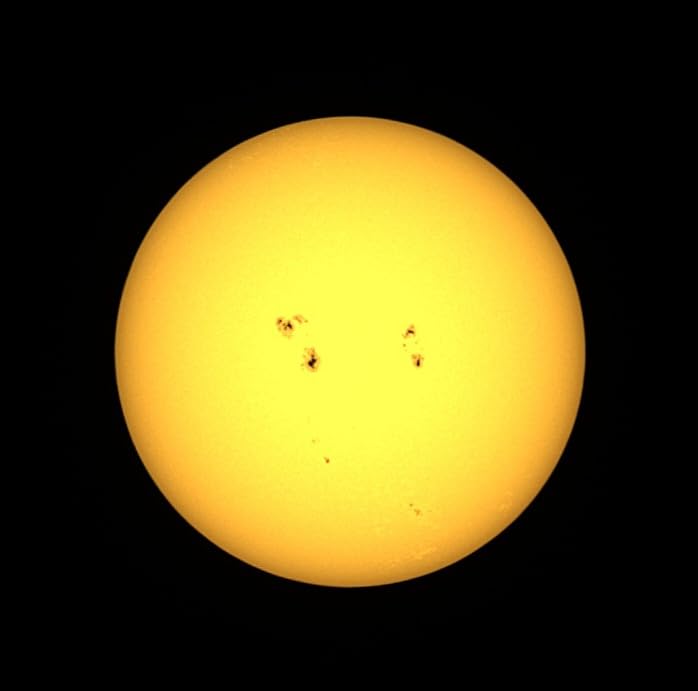
Its best trick is EQ mode, which tips the mount to track more accurately and unlocks exposures of up to 90 seconds. Owner reviews recommend sticking around 60 seconds at moderate gain, and note that a fluid-head tripod improves framing enough to be worth adding.
Cloud processing through the app handles the stacking, so the whole workflow is phone plus scope. Reviewers report getting usable deep-sky images from a light-polluted backyard on their first clear night, which is the shortest path to a result we found.
Who should buy the Dwarf Mini
Buy it if portability is the deciding factor, whether that means travel observing, a small apartment with no garden, or simply carrying gear up a stairwell. It is also the most forgiving smart scope to lend out.
It suits anyone who wants real astrophotography results without a laptop, a telescope or any assembly.
Where the Dwarf Mini will disappoint you
The sensor is the limit. Images are good on a phone screen and modest on a large print, small deep-sky objects stay small in the frame, and planetary work is the weakest of anything in this list.
A few owners report difficulty connecting over Wi-Fi, and there are isolated reports of dust inside the lens that cannot be cleaned. A power bank is worth carrying for equatorial mode and any session longer than an hour or two.
What Is a Computerized Telescope?
A computerized telescope is a telescope with an electronic mount and an internal database that slews the optics to a target you select and then tracks it. You enter date, time and location into the hand controller, run a short alignment, and from then on finding objects means picking from a menu rather than reading a star chart.
That matters because finding objects, not seeing them, is where beginners give up. Star-hopping assumes you can recognise a pattern of stars in the first place, and that skill takes months to build.
GoTo versus PushTo: the distinction that matters
GoTo scopes run motors. You pick an object from a database of tens of thousands of entries, the mount physically turns the tube to it, and it stays there. Celestron calls its setup routine SkyAlign, and it works by having you centre three bright objects in the finder.
PushTo scopes do not move on their own. The phone or controller recognises the sky pattern in front of it and tells you which way to push, and you move the tube by hand. The Celestron StarSense uses this method, and it is a deliberate answer to the number one complaint about GoTo scopes: alignment that will not complete on a cloudy or bright night.
Smart telescopes split the difference differently. There is no eyepiece and no alignment at all, because the device plate-solves against the sky and steers itself before stacking images on your phone.
How to Choose: Buying Guide for Computerized Telescopes
Is a computerized telescope worth it instead of more aperture?
Honestly, sometimes no. The most common argument on observing forums is that the same money spent on GoTo buys a much larger manual Dobsonian, and larger aperture always shows more. That argument is correct about raw light-gathering power.
It misses the point that most beginners never get far enough to use the extra aperture, because they cannot find the faint object in the first place. If the object is not located, the extra photons have nothing to illuminate. Practitioners also repeat the same point from the other direction: there is no single best telescope, only the one you will actually carry outside.
Our compromise is the StarSense LT 114AZ. It gives you guided observing with no alignment risk, keeps the price down, and leaves enough money to add aperture later.
Aperture: the one spec that never lies
Aperture is the diameter of the main light-gathering surface, and it drives both brightness and detail. Among these six, the 8 inch NexStar 8SE gathers a little over three times the light of the 4.5 inch StarSense, which is why it shows faint nebulae the smaller scope simply cannot reach.
Realistically, a 4.5 inch Newtonian shows the Moon, Jupiter, Saturn, Venus and the Orion Nebula well. If your interest is galaxies and dim nebulae from a suburban garden, aperture matters more than any computer.
Focal length, focal ratio and field of view
Focal length is how long the light path is, and longer focal length means more magnification for the same eyepiece. A 2032mm telescope at 200x magnification is comfortable, while a 650mm one is already straining at that power.
Focal ratio is focal length divided by aperture. Long f/10 designs like the NexStar 8SE are built for planets and Moon detail; short f/5 designs like the 650mm AstroMaster give a wide, bright field for deep-sky objects. Field of view follows the same logic, which is why the AstroMaster’s 1.3 degree view dwarfs the 0.75 degree view of the 8SE.
Alignment, databases and what actually matters
Database size is the most over-hyped number in this category. An 8SE with 40,000-plus objects and a phone-guided scope that suggests three targets for tonight are serving the same purpose, and the phone wins on a first night because it does not require you to know what you are looking for.
Alignment is the thing to ask about honestly. GoTo scopes need a clear view of three bright stars or planets, which means a hazy or heavily lit sky can stall the process. If that describes your observing site, a PushTo scope or a smart telescope removes the failure mode entirely.
Power and battery planning
Short battery life is the complaint that appears in nearly every owner review of motorised scopes, and it is the easiest thing to solve before it becomes a ruined evening. The 8SE runs on 8 AA batteries, a 12V AC adapter, or an external PowerTank, and the smart scopes run from an internal battery with a USB-C cable for a power bank.
The rule we use is simple: for any session past an hour, bring a power source rather than spare cells. AA batteries get replaced every few hours of GoTo slewing, and a USB power pack costs a fraction of what finishing the night early costs you.
Eyepieces and magnification
Useful magnification is roughly double the aperture in inches, so a 4.5 inch scope is comfortable near 90x and a 5 inch near 100x. Anything beyond about 2x the aperture gives you a dim, blurry image rather than more detail.
Most of these packages include two eyepieces, usually a 25mm and a 10mm, which covers the useful range. A 2x Barlow, included with the StarSense, doubles every magnification you own and is the cheapest upgrade available to a beginner.
Portability and weight
Weight decides how often you will observe. The 8SE and the AstroMaster are one-person loads at best, the StarSense is a comfortable carry, and the two smart scopes go in a backpack or a small case. If your only observing site is a driveway, portability is not a concern; if it is a field twenty minutes away, it is the whole decision.
Experienced observers often recommend the same small, light, reliable setup as an everyday carry scope, and the idea is sound for beginners too. The telescope you can move is the telescope you will use.
For the general approach to buying your first piece of gear, we covered the same reasoning in our guide to the best kitchen knives for beginners and our immersion blender picks: one good tool, used often, beats a drawer full of options.
Frequently Asked Questions
Are computerized telescopes good?
Yes, for beginners in particular. A computerized telescope replaces star-hopping and chart reading with a hand controller, which is the main reason beginners abandon scopes in their first month. The trade-offs are real: the same money could buy more aperture, and motorised mounts need alignment and a power source. If your goal is seeing planets and the Moon on night one, the automation is worth it.
What are the best telescopes for beginners?
For a first telescope, look at aperture, a stable mount, and eyepieces included in the box. The Celestron StarSense Explorer LT 114AZ is the easiest first purchase, the Celestron NexStar 8SE is the strongest all-round computerized option, and a manual Dobsonian gives more aperture per pound if you are willing to learn to find targets yourself. See the comparison table above for the full list.
What is the best smart telescope for the money?
The ZWO Seestar S30 Pro is our pick for the best smart telescope, with apochromatic optics and a built-in light pollution filter that suits urban skies. The DWARFLAB Dwarf 3 wins if you also want daylight photography, and the DWARFLAB Dwarf Mini wins on portability at 1.85 lb. All three app-driven scopes stack images on your phone and skip the eyepiece entirely, which also caps their optical ceiling.
What are the best computerized telescopes for astronomy?
It depends on the target. The Celestron NexStar 8SE is the strongest for planets, the Moon and galaxies, thanks to 8-inch Schmidt-Cassegrain optics on a GoTo mount. The Celestron AstroMaster 130EQ-MD suits a driven equatorial setup and wide-field deep-sky observing, and the ZWO Seestar S30 Pro is the best choice for producing images rather than looking through an eyepiece.
Which Computerized Telescope Should You Buy?
The Celestron NexStar 8SE is the best computerized telescope for beginners in 2026 because it is the only one here that pairs a real GoTo database with enough aperture to make faint targets worth finding, and it is the winner we would put in our own garage. Choose the StarSense LT 114AZ if you want something lighter, cheaper to carry and impossible to fail alignment on, and choose the ZWO Seestar S30 Pro if you would rather capture images on your phone than look through an eyepiece.
Whatever you pick, take it outside. The best telescope for beginners is the one that gets used twice in the same month.