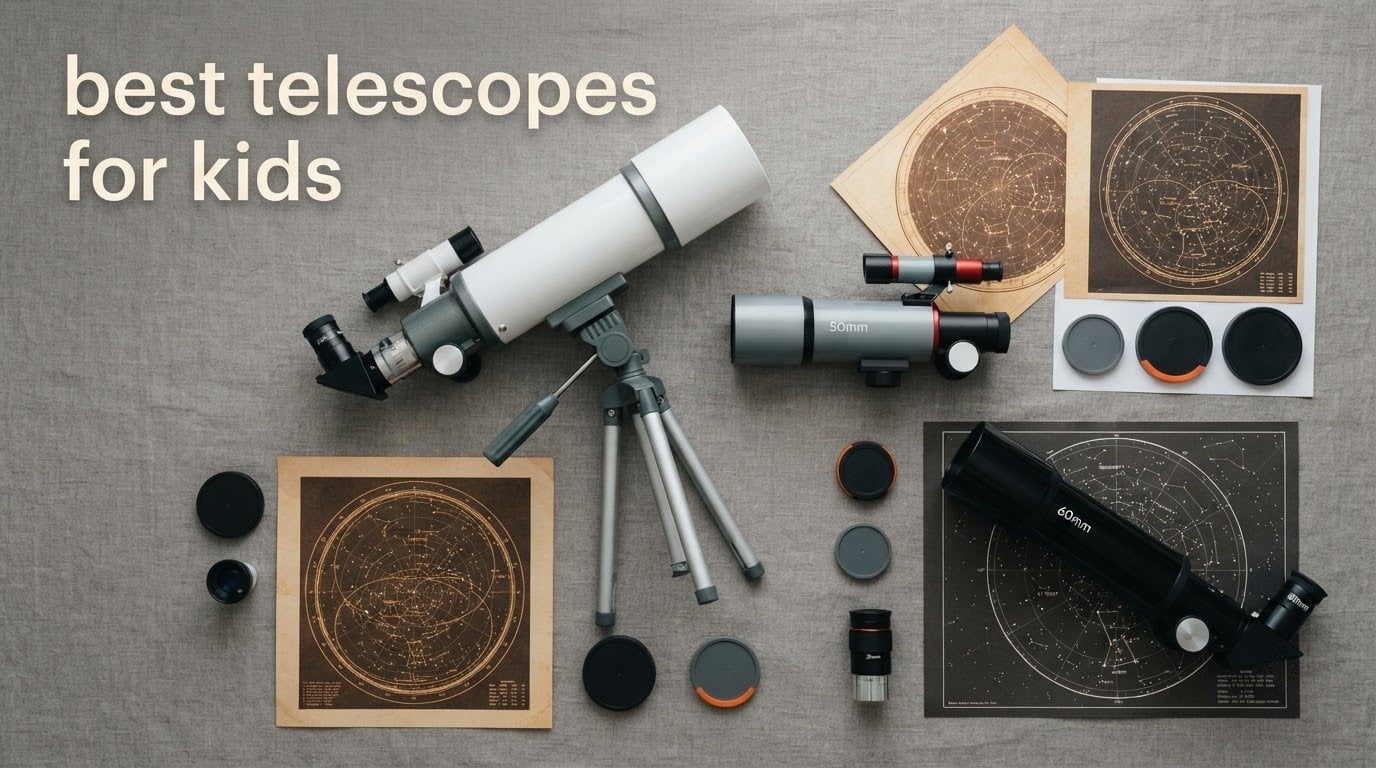
The best telescopes for kids come in three honest categories: a 70mm to 80mm fully coated refractor for real sky watching, a smaller 50mm refractor or lunar scope for a child who mostly wants the Moon, and a projector toy for under-sevens who need something that works indoors on a cloudy night. Most parents should start in the 70mm to 80mm band, where the glass is good enough that a child sees actual craters instead of a blur. Every telescope below lists its aperture in millimeters, because that number tells you more than any magnification claim.
We read thousands of buyer reviews, checked published specifications against the marketing language, and tracked the failures that repeat in parent reports. The pattern was consistent: most disappointing kids’ telescopes fail on optics and mount stability, not on the headline figure. Our rule was to judge aperture first, mount second, and treat every advertised magnification as decoration.
Table of Contents
- Top 3 Picks for the Best Telescopes for Kids in 2026
- Best Telescopes for Kids at a Glance in 2026
- 1. Gskyer 70mm AZ Refractor – The Best All-Round First Telescope
- 2. Celestron Travel Scope 70mm – The Best Value Starter
- 3. Celestron Travel Scope 80mm – The Best Telescope for Seeing Planets
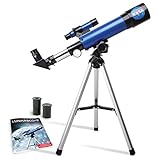
- 4. NASA Lunar Telescope for Kids – The Best Moon-First Pick
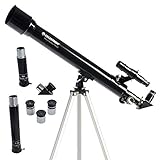
- 5. Celestron PowerSeeker 50AZ – The Best Scope to Share With a Parent
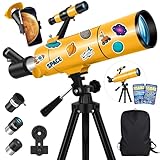
- 6. MEEZAA 80mm Refractor – The Best 80mm Starter With a Backpack
- 7. ECOOPRO 70mm Refractor – The Best Budget Pick for Daytime Viewing
- 8. Hawkko 80mm Telescope – The Best Lightweight Pick for Ages 8-12
- 9. Little Experimenter Projector Telescope – The Best Indoor Toy for Ages 3-7
- 10. Luzsco 50mm Telescope – The Budget Pick for a First Hands-On Build
- How to Choose a Telescope for Kids: Aperture Beats Magnification
- Which Telescope Type Is Best for Kids at Each Age
- What Your Child Can Actually See With Each Telescope
- What to Avoid When Buying a Telescope for a Child
- Solar Viewing Safety: The One Rule Every Parent Needs
- First Night Out: Care, Storage and a Checklist
- Frequently Asked Questions
- Which telescope is best to see planets for children?
- What is the best telescope for a beginner child?
- Can you see planets with a kids telescope?
- Is a telescope a good gift for a 5 year old?
- What kind of telescope is appropriate for a 7-year-old?
- What to avoid when buying a telescope?
- Which type of telescope is best for kids?
- Is a 500x telescope good?
- The Best Telescopes for Kids in 2026: Final Verdict
Top 3 Picks for the Best Telescopes for Kids in 2026

Gskyer 70mm AZ Refractor
- 70mm fully coated glass
- 400mm focal length
- Phone adapter and remote
- Carry bag

Celestron Travel Scope 70mm
- 70mm coated refractor
- No-tool setup
- Padded backpack
- Two eyepieces included

Celestron Travel Scope 80mm
- 80mm coated aperture
- Smartphone adapter
- Preassembled tripod
- Backpack
Best Telescopes for Kids at a Glance in 2026
| Product | Specs | Action |
|---|---|---|
| Gskyer 70mm AZ Refractor |
|
Check Latest Price |
| Celestron Travel Scope 70mm |
|
Check Latest Price |
| Celestron Travel Scope 80mm |
|
Check Latest Price |
 NASA Lunar Telescope for Kids NASA Lunar Telescope for Kids |
|
Check Latest Price |
 Celestron PowerSeeker 50AZ Celestron PowerSeeker 50AZ |
|
Check Latest Price |
 MEEZAA 80mm Refractor MEEZAA 80mm Refractor |
|
Check Latest Price |
 ECOOPRO 70mm Refractor ECOOPRO 70mm Refractor |
|
Check Latest Price |
 Hawkko 80mm Telescope Hawkko 80mm Telescope |
|
Check Latest Price |
 Little Experimenter Projector Telescope Little Experimenter Projector Telescope |
|
Check Latest Price |
 Luzsco 50mm Telescope Luzsco 50mm Telescope |
|
Check Latest Price |
1. Gskyer 70mm AZ Refractor – The Best All-Round First Telescope
Gskyer Telescope, 70mm Aperture 400mm AZ Mount Astronomical Refracting Telescope for Kids Beginners – Travel Telescope with Carry Bag, Phone Adapter and Wireless Remote.
70mm fully coated glass
400mm focal length
Altazimuth mount
5x24 finder scope
Pros
- Coated 70mm glass gives bright sharp lunar views
- Two eyepieces plus a 3x Barlow
- Phone adapter and wireless remote
- Carry bag and adjustable tripod
Cons
- Targets drift at high power on a manual mount
- Needs adult help for younger children
This scope earns the top spot on evidence rather than hype. With 22k+ reviews averaging 4.3 stars, it is the most thoroughly tested telescope here, so its failure points are well documented and mostly cosmetic. The 70mm fully coated objective at 400mm focal length is a usable optical design, not a scaled-up toy lens.
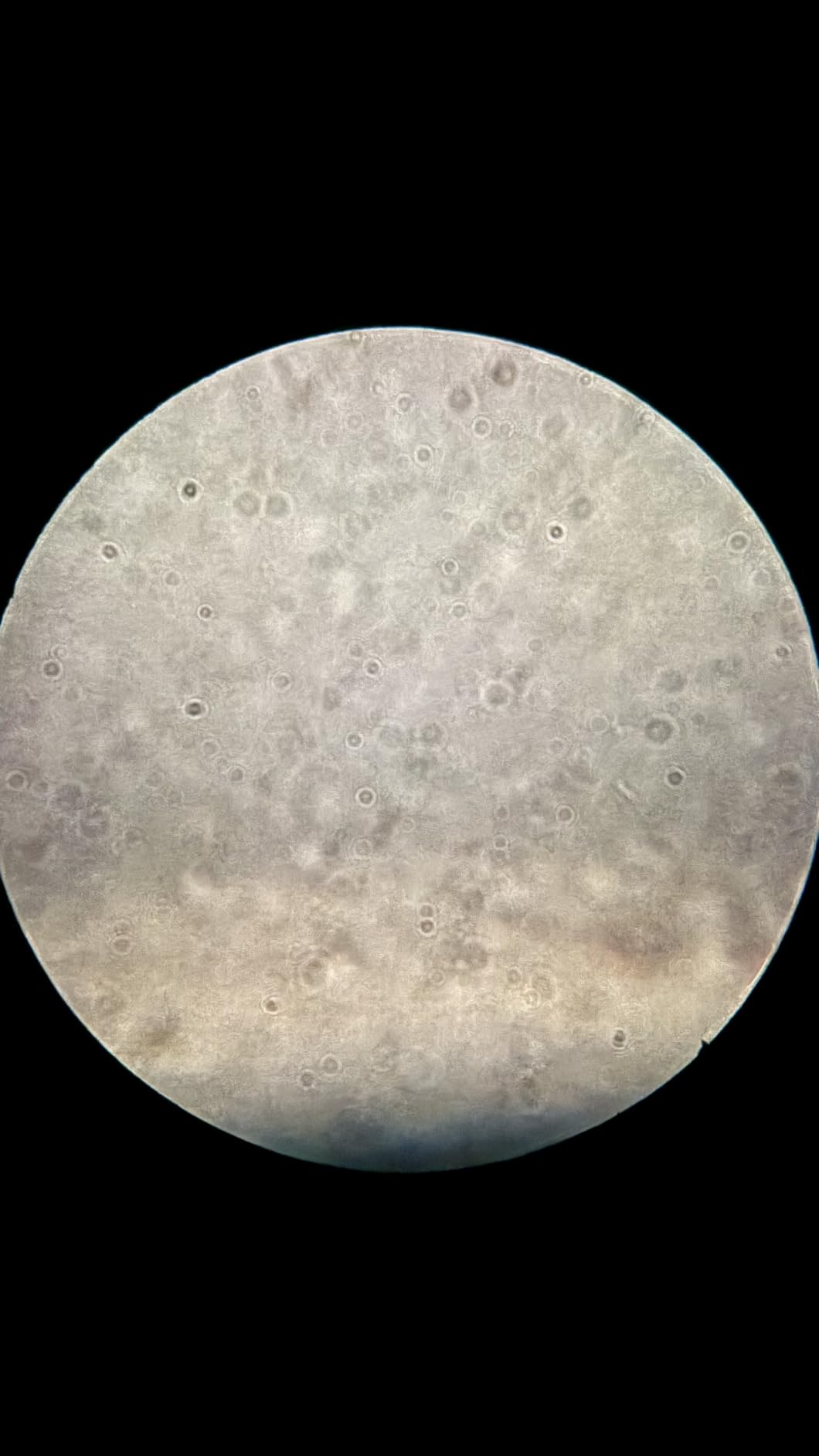
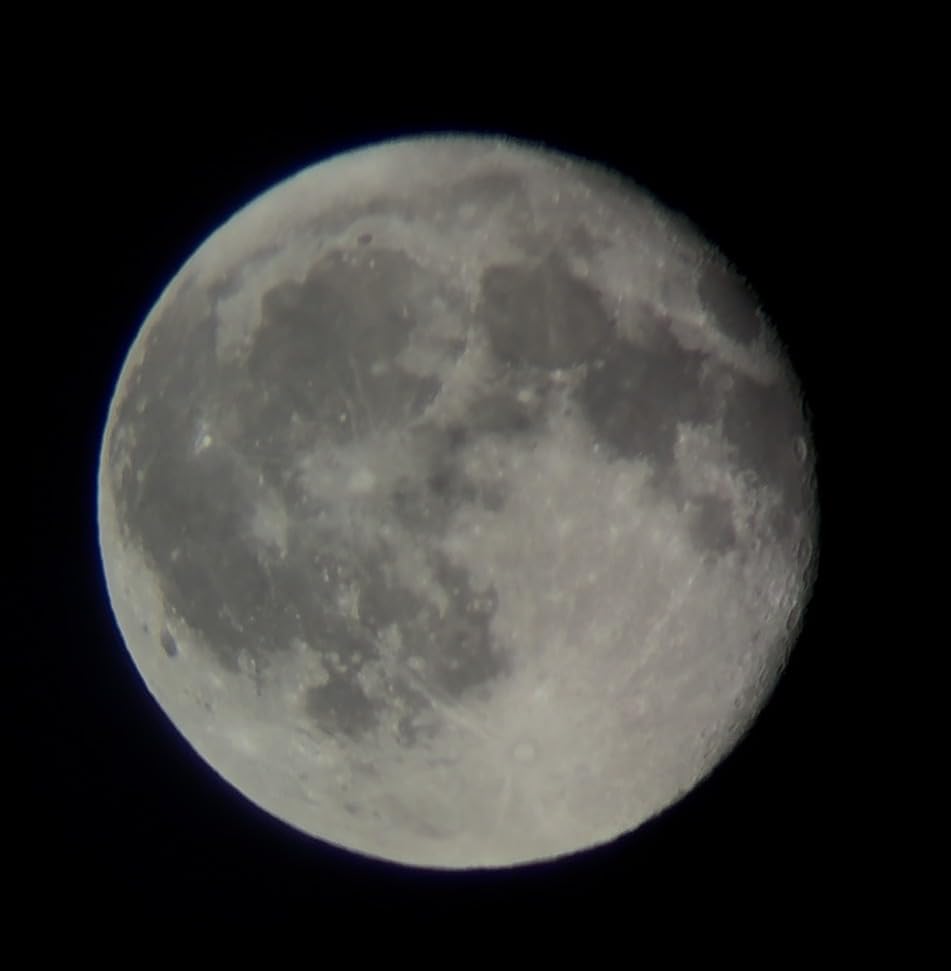
What a child actually sees through it: the terminator line on the Moon, craters along the shadowed edge, and the four bright moons of Jupiter on a good night. Saturn’s rings need steadier air than most backyards offer, but the planet is clearly a disc rather than a star.
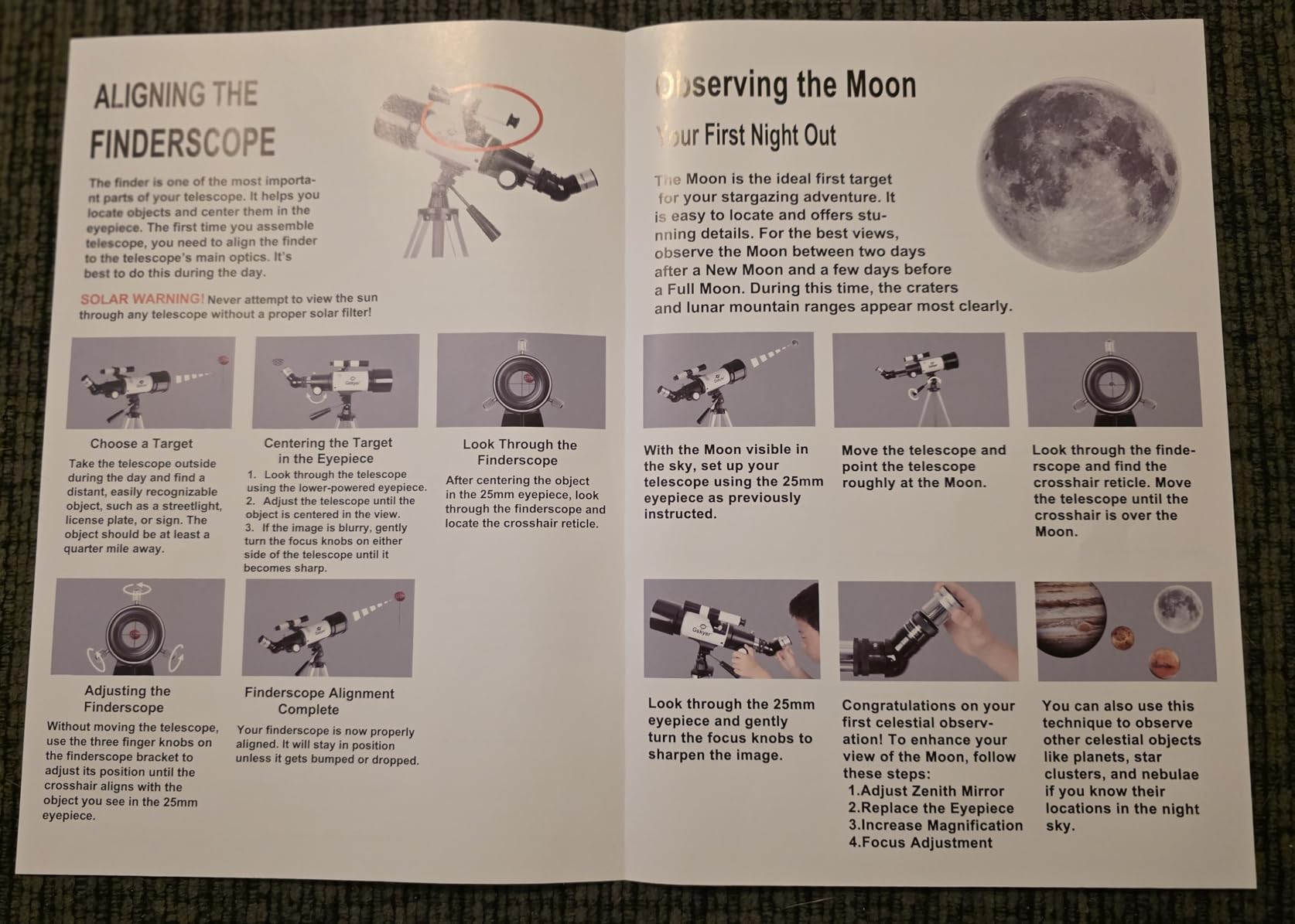
The finder scope does the hard work, because cross-hair lines let a child line up a target and then move to the main eyepiece without an adult translating coordinates. The 5.8 degree field is wide enough that targets stay in frame while a child fumbles with the focuser.
Two eyepieces and a 3x Barlow give three magnification steps rather than a confusing pile of options. The smartphone adapter matters more than it sounds, because photographing a full Moon is an instant success that keeps a child interested after the novelty wears off.
Why it works as a first telescope
The carry bag means it comes out of the cupboard on a whim, which matters more than any spec sheet, and a parent can hand over the eyepiece while taking the photo themselves.
Where it falls short
The manual altazimuth mount tracks nothing, so a target slides out of a high-power eyepiece within minutes. Under nine years old, expect to do the aiming yourself for the first several sessions.
2. Celestron Travel Scope 70mm – The Best Value Starter
Celestron Travel Scope 70mm Beginner Portable Telescope with Backpack
70mm coated refractor
400mm focal length
4.2 lb weight
Two year warranty
Pros
- Coated 70mm lens for crisp Moon and planet views
- No-tool setup takes seconds
- Padded backpack for scope and accessories
- Starry Night software included
Cons
- Supplied eyepieces are basic
- No tracking so you re-aim constantly
The Celestron Travel Scope 70mm has been on the market long enough that its owners have documented everything about it, and at 14k+ reviews it holds a steady 4.2. The two year limited warranty and US-based support are real advantages when a focuser arrives stiff or a part is missing.
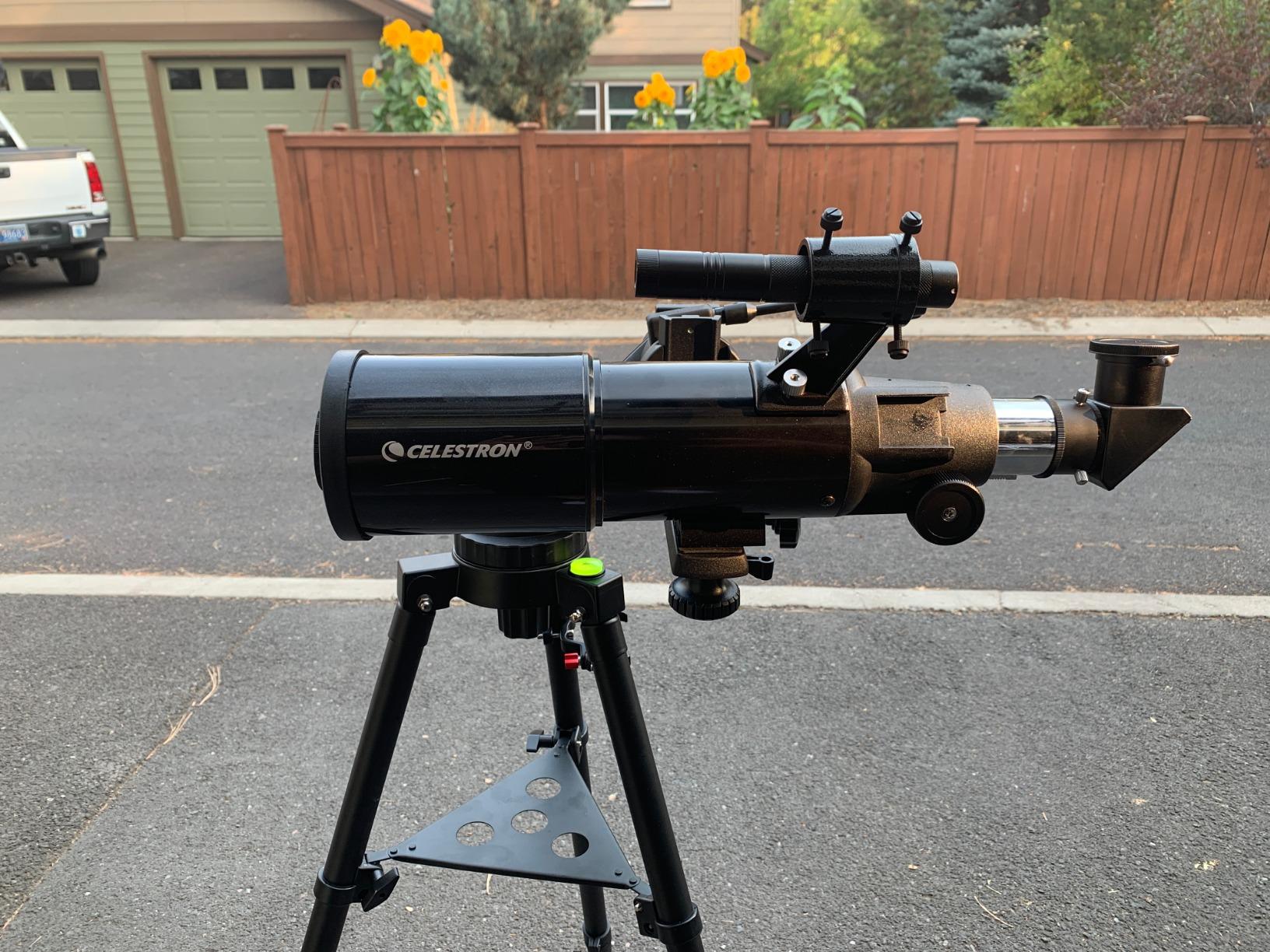
The optics follow the same recipe as the Gskyer: a 70mm fully coated objective at 400mm focal length, resolving lunar craters cleanly and showing Venus and Mars as small discs. This is the scope I would buy if a child needed something that fits in a car boot.

Setup speed is the standout, because the tripod and tube assemble without tools and a child can do it while an adult watches. The padded backpack holds the scope, the diagonal, both eyepieces and the finder, removing the usual failure mode where accessories vanish into a drawer.
At 4.2 pounds it is heavy enough to feel stable and light enough for a ten year old to carry. The bundled software helps too, since pointing a phone at a bright object and having it named turns a confusing first session into a guided one.
Why parents pick it over a cheaper scope
Only two eyepieces are supplied, and that is the limitation that recurs in reviews. For a first year of Moon viewing they are plenty, and outgrowing them means one eyepiece purchase rather than a new telescope.
Where it falls short
With no tracking mount a target drifts steadily and needs constant re-centring, which tires a child after twenty minutes. The 1.43 degree field of view is narrow, so finding a target takes patience.
3. Celestron Travel Scope 80mm – The Best Telescope for Seeing Planets
Celestron Travel Scope 80mm Telescope Kit with Backpack, Smartphone Adapter
80mm coated aperture
457mm focal length
1.45 arc sec resolution
4.5 lb weight
Pros
- 80mm aperture gathers more light than the 70mm model
- Coated optics with 1.45 arc-second resolution
- Smartphone adapter included
- Preassembled tripod needs no tools
Cons
- Only two eyepieces supplied
- Heavier than the smaller kids' scopes
Light gathering scales with the square of the diameter, so moving from 70mm to 80mm is not a small step. Reviewers consistently describe the difference as noticeable, particularly on planets rather than the Moon. If your child has asked to see Saturn more than once, this answers that question honestly.
It shares the design language of the 70mm Travel Scope, which is a genuine advantage. The backpack, the no-tool tripod, the erect diagonal and the two year warranty all carry over, so nothing needs relearning if the smaller model is already in a cupboard.
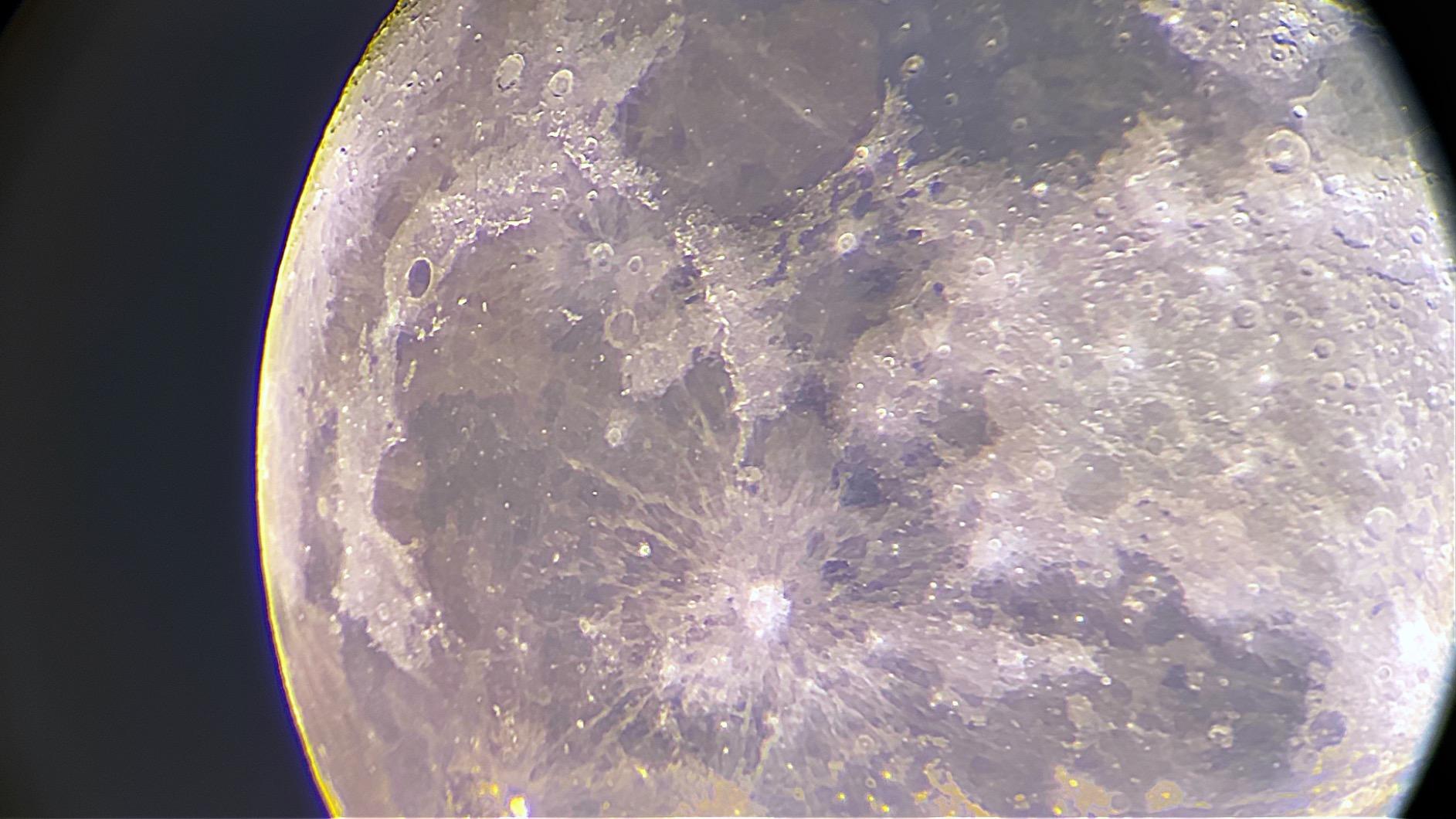
The published Dawes limit of 1.45 arc seconds gives the theoretical detail ceiling, and in steady seeing that is enough to separate Titan from Saturn and to see Jupiter’s belts as bands rather than a flat disc. On a typical suburban evening, expect a clean shape with some detail rather than textbook resolution.
The smartphone adapter is bundled here too, and lunar photographs come out noticeably cleaner than the 70mm models. For a child, that photograph is often the moment the hobby sticks.
Who should step up to this one
A child aged ten or older who is already bored of craters, and anyone planning to add eyepieces later. The extra headroom means the tube keeps rewarding a child as their skill grows.
Where it falls short
At 4.5 pounds it is heavier than the smaller kids’ scopes, so a smaller child will need help carrying it outside. A 25mm wide-field eyepiece would also make finding targets far easier for a beginner.
4. NASA Lunar Telescope for Kids – The Best Moon-First Pick
NASA Lunar Telescope for Kids Ages 8-12 with Tripod and Finder Scope
Designed for ages 8 and up
Finder plus two eyepieces
Table tripod
Manual focus
Pros
- Purpose-built for children
- easy to assemble
- Finder scope plus low and high power eyepieces
- Table tripod for smooth scanning
- Learning guide included
Cons
- Fixed Galilean design has a narrow field
- Lightweight frame is fragile if knocked
This sits at number one in the kids’ telescope category, and the reason is obvious once you read the reviews: it does one thing well for a specific age. Aimed at children aged eight and up, it shows craters, seas and the terminator on the Moon without frustration.
That narrow focus is the design. A Galilean design with a 0.85 degree field of view is far too tight to sweep the sky for planets, but pointed at the Moon it fills the view and holds it. Parents report children independently finding the Moon within minutes of unpacking.
The finder scope is what makes it work, since a child lines the cross-hair on the Moon, moves to the main eyepiece, and the target is already framed. That feature separates it from most plastic toys in the same aisle, which give a child no way to aim at anything.
The learning guide turns observation into a lesson with named lunar features to hunt for, and there is no motor, controller or battery pack that can fail in the cold.
Why it beats a real refractor for young children
A 70mm refractor rewards patience, and a nine year old on a windy evening does not have patience. This one rewards pointing, a skill an eight year old picks up in a single sitting.
Where it falls short
It is not a general telescope, and once the Moon becomes familiar there is little else worth pointing it at. The frame is fragile, and a child who already shows real interest should skip this and buy glass.
5. Celestron PowerSeeker 50AZ – The Best Scope to Share With a Parent
Celestron PowerSeeker 50AZ Grab-and-Go Beginner Refractor Telescope
50mm coated refractor
600mm focal length
Yoke with slow-motion rod
3.6 lb weight
Pros
- 50mm objective at 600mm shows lunar craters
- Four eyepieces plus an erector and Barlow
- Slow-motion rod makes pointing smooth
- Two year warranty with US support
Cons
- 50mm aperture gives soft hazy views on dim targets
- Lightweight parts can shake or topple
This is the scope families buy when the plan is one telescope for the whole household. At 3.6 pounds with a yoke mount and a slow-motion altitude rod, it is the most mechanically forgiving design here for a child and an adult working together at the eyepiece.
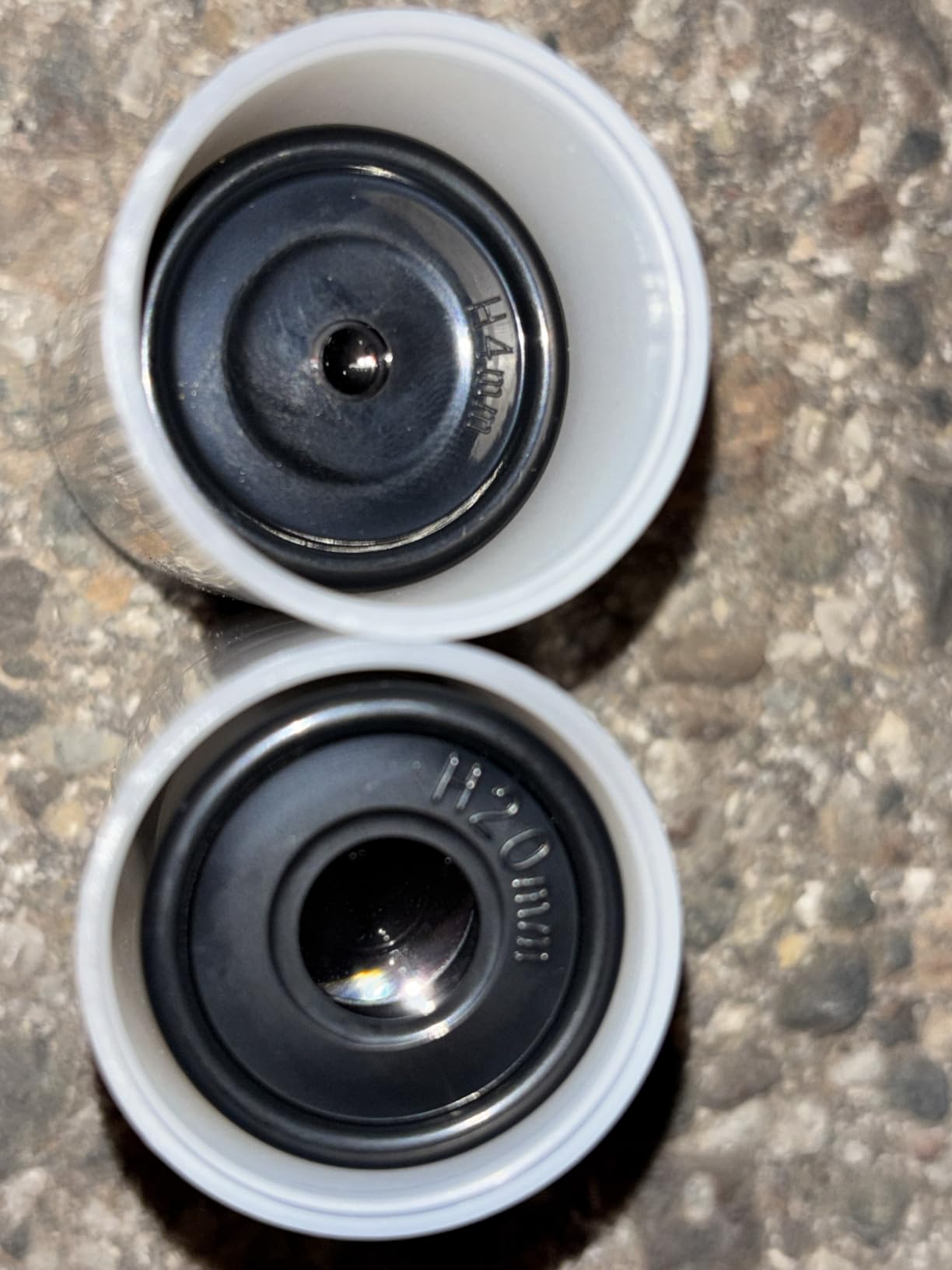
What stands out is the accessory count. A 20mm, a 12mm, a 4mm, an erecting eyepiece and a 3x Barlow is more optical choice than any other entry-level scope here, so a child can start wide and step up instead of being stuck at one magnification.
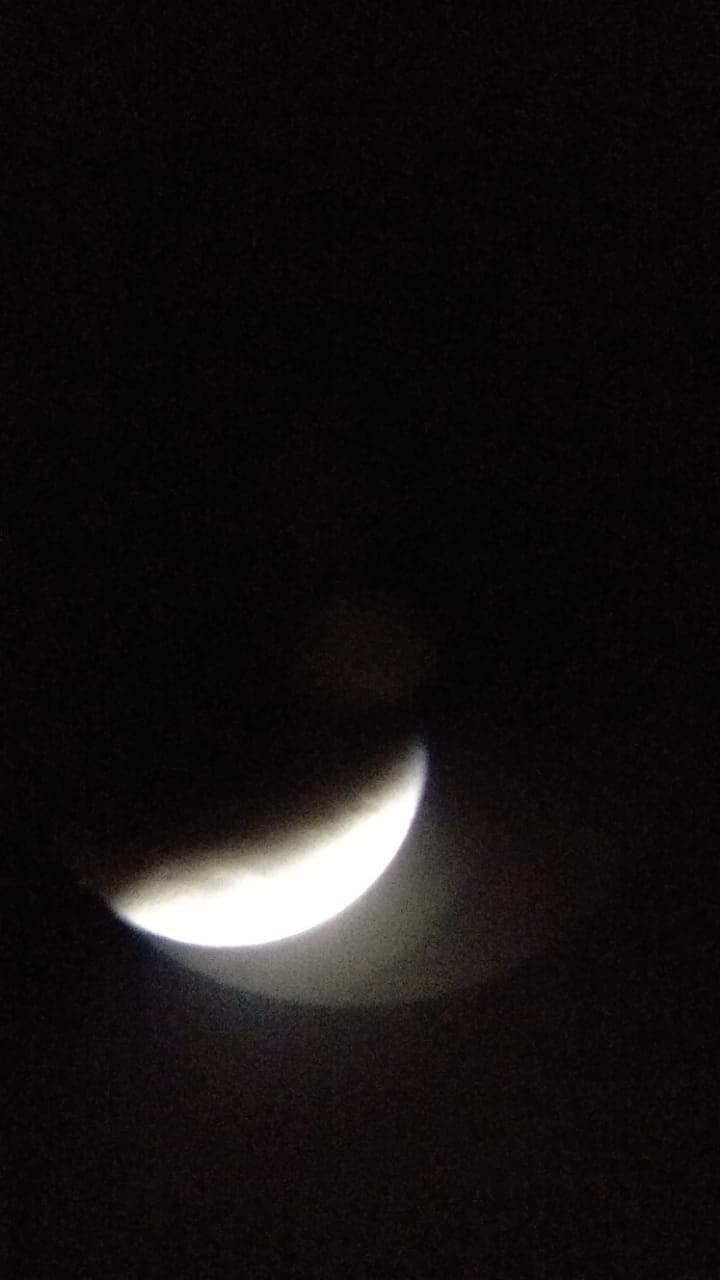
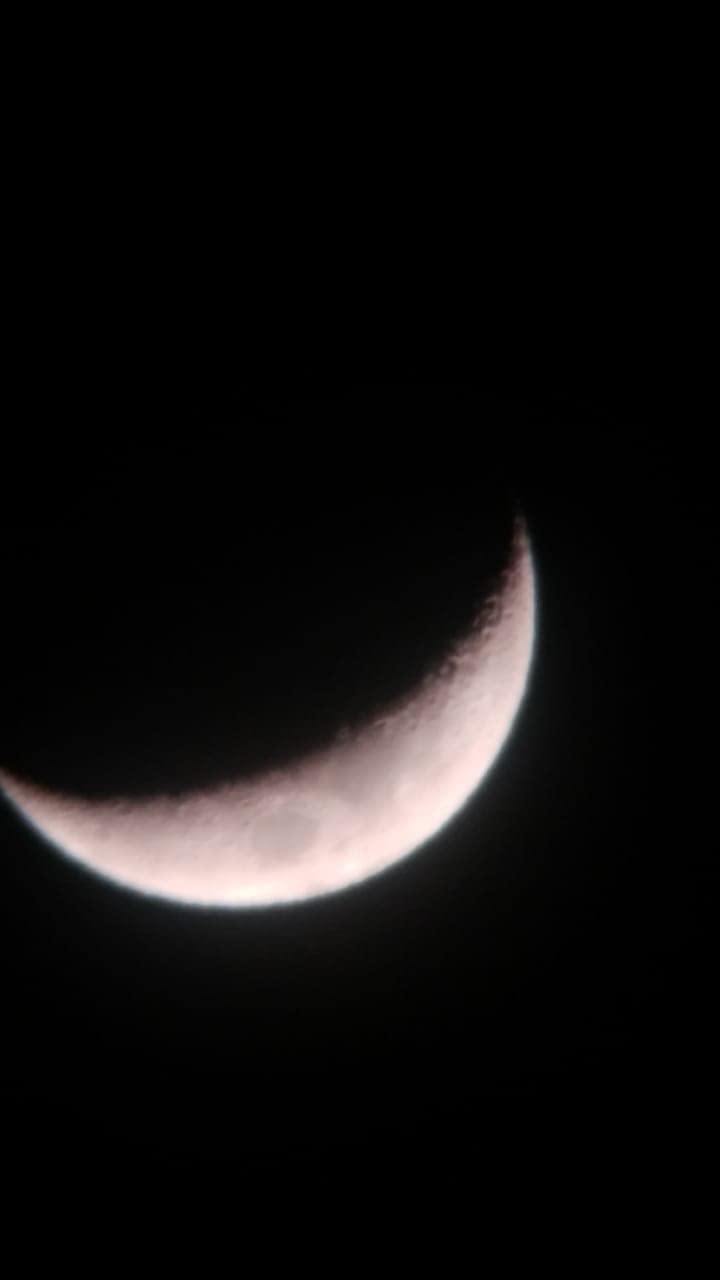
The 600mm focal length on a 50mm objective gives a longer, narrower view than the 70mm scopes, which is an advantage on the Moon. Craters near the edge of the disc stay sharp longer, and the 4mm eyepiece gives a useful close-up of a crater rim.
The slow-motion rod is underrated, because a child cannot nudge a small knob precisely enough to hold a planet centred, but a control that turns while looking through the eyepiece can. That is the difference between a successful session and a frustrated one.
Why it suits a parent and child together
Both of you can stand at the eyepiece because the yoke is simple and the tube is short. The erecting eyepiece makes it a usable daytime scope, which roughly doubles the number of sessions each year.
Where it falls short
50mm is a small aperture and it shows, since anything beyond the Moon and the brightest planets is soft and hazy. Reviewers describe the hardware as toy-grade once the screws are tightened.
6. MEEZAA 80mm Refractor – The Best 80mm Starter With a Backpack
MEEZAA Telescope for Adults & Kids, 80mm Aperture 500mm Refractor
80mm fully multi-coated
500mm focal length
20x-150x range
Tripod to 44.48 inch
Pros
- 80mm multi-coated optics are brighter than 70mm
- 20x-150x range from two eyepieces
- 45 degree zenith mirror for upright views
- Waterproof backpack included
Cons
- Supplied eyepieces are plain
- Not a strong choice for serious deep-sky work
This is the highest-rated telescope in the roundup at 4.4 stars, with 75 percent of reviewers giving it five, so it is worth explaining where that comes from. The answer is the 80mm fully multi-coated objective at 500mm focal length, combined with a kit that is unusually well thought out.
The 45 degree zenith mirror is the detail most parents overlook, because it puts the eyepiece at a comfortable angle so a child can stand at the scope without crouching or standing on a step. That is a real ergonomic gain over a straight eyepiece on a tripod.
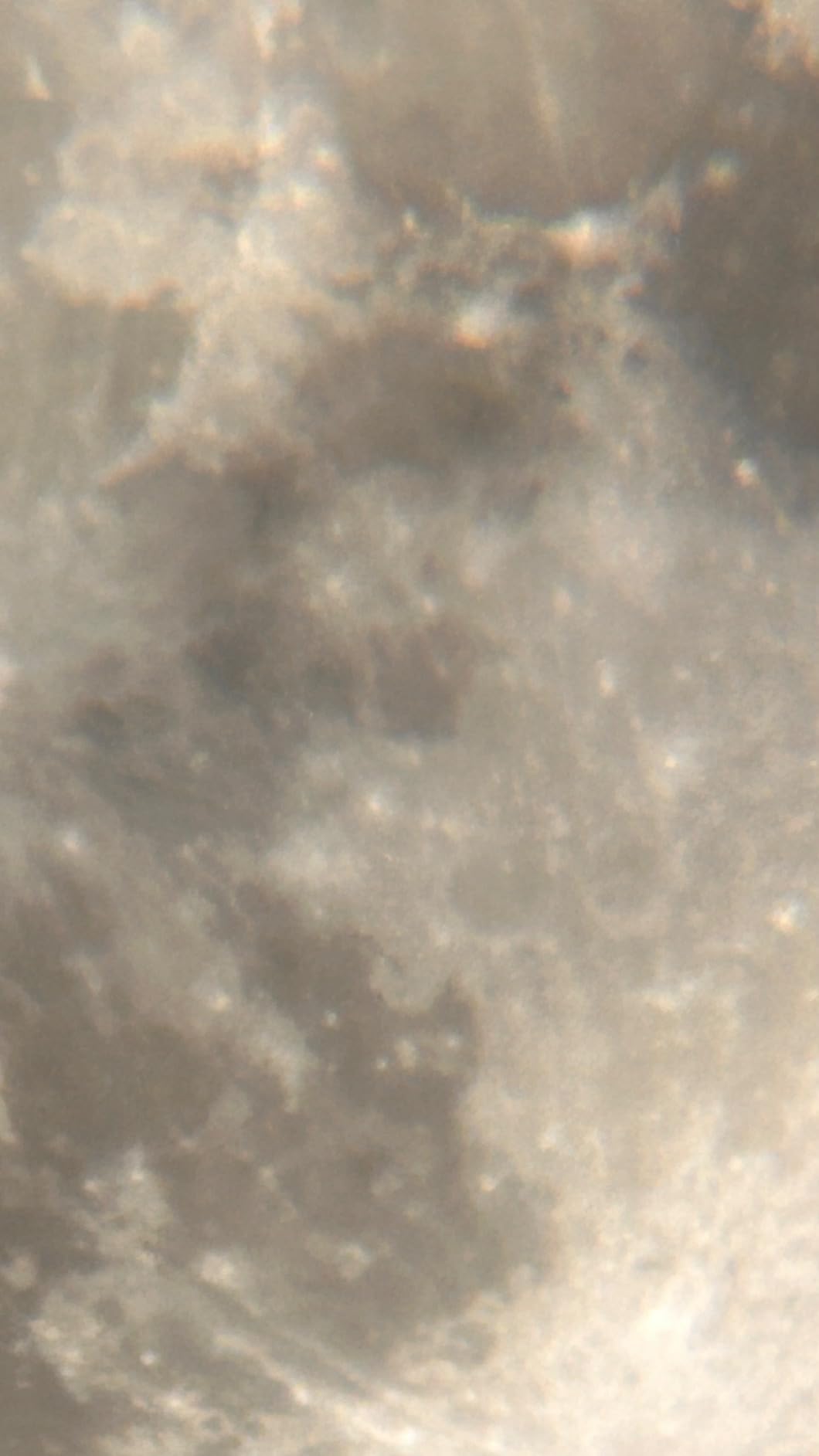
The tripod adjusts from 16.92 to 44.48 inches, so one setup works for a seven year old and an adult. The 20x to 150x range comes from a 25mm and a 10mm eyepiece plus a 3x Barlow, and starting at 20x gives the wide field a beginner needs to find anything at all.
Everything fits in the waterproof backpack with a separate accessory pouch, so the scope is genuinely portable. The space-themed stickers are a small touch that matters more than they sound when the tube is a birthday present.
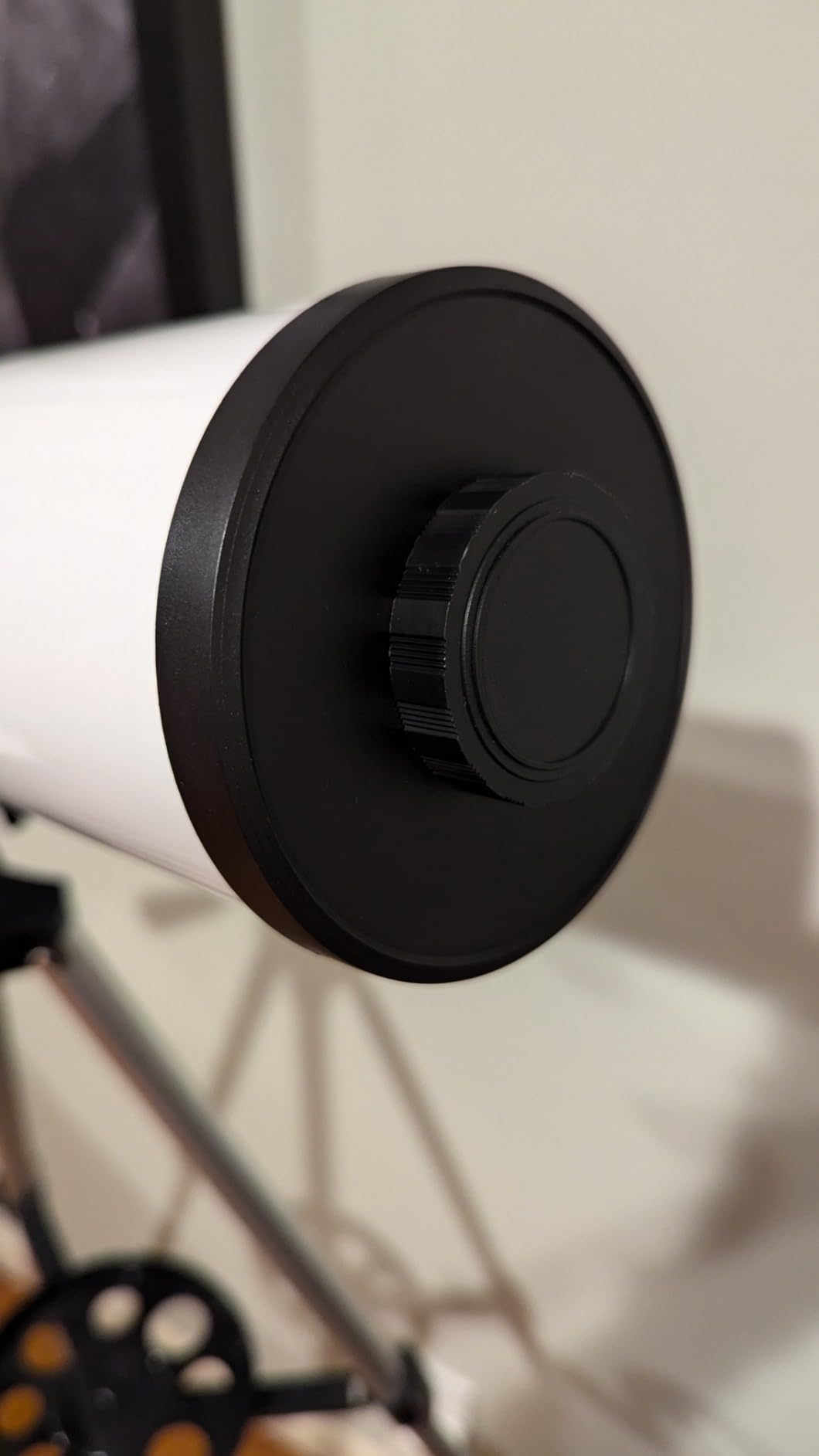
Why it stands out at this price
Multi-coating on an 80mm lens lifts this above the usual 70mm entry level, and reviewers repeatedly describe bright, detailed lunar craters through the 25mm. Tool-free assembly takes minutes.
Where it falls short
The supplied eyepieces are functional but plain, and there is no tracking, so photographing anything other than the Moon or Jupiter is out of reach. The tripod is not much use in a stiff breeze.
7. ECOOPRO 70mm Refractor – The Best Budget Pick for Daytime Viewing
Telescope for Kids & Adults, 70mm Aperture 360mm Refractor (15X-150X)
70mm multi-coated aperture
360mm focal length
1.4 kg weight
7.9 degree field
Pros
- Bright high-contrast lunar and terrestrial views
- Two Kellner eyepieces cover 51x-128x
- 5x24 finder speeds up target location
- No-tools setup in under a minute
Cons
- Tripod is under two feet tall and needs a table
- Mount lock knob does not hold the tube steady
The ECOOPRO 70mm is the one we see bought most often as a shared family scope, and the reason is its 7.9 degree field of view. That is wide enough to sweep the horizon and follow a bird or a boat, which nothing else here does. For a child who will not sit still after dark, a daytime use keeps the telescope in rotation.
The optics themselves are respectable, with a 70mm fully multi-coated objective at 360mm focal length and Kellner eyepieces in 25mm and 10mm covering a 51x to 128x range. Families report the 25mm resolving lunar craters well.
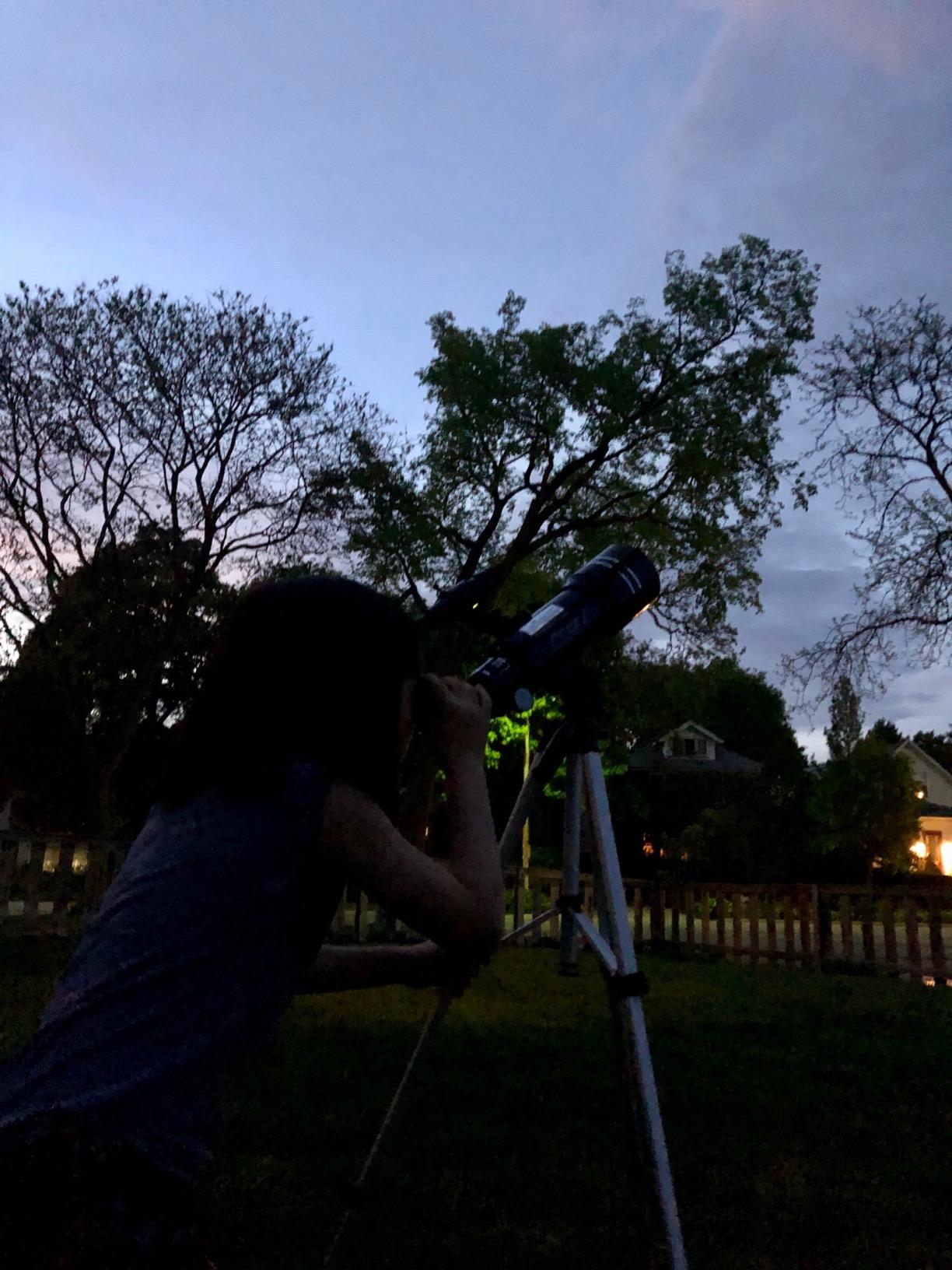
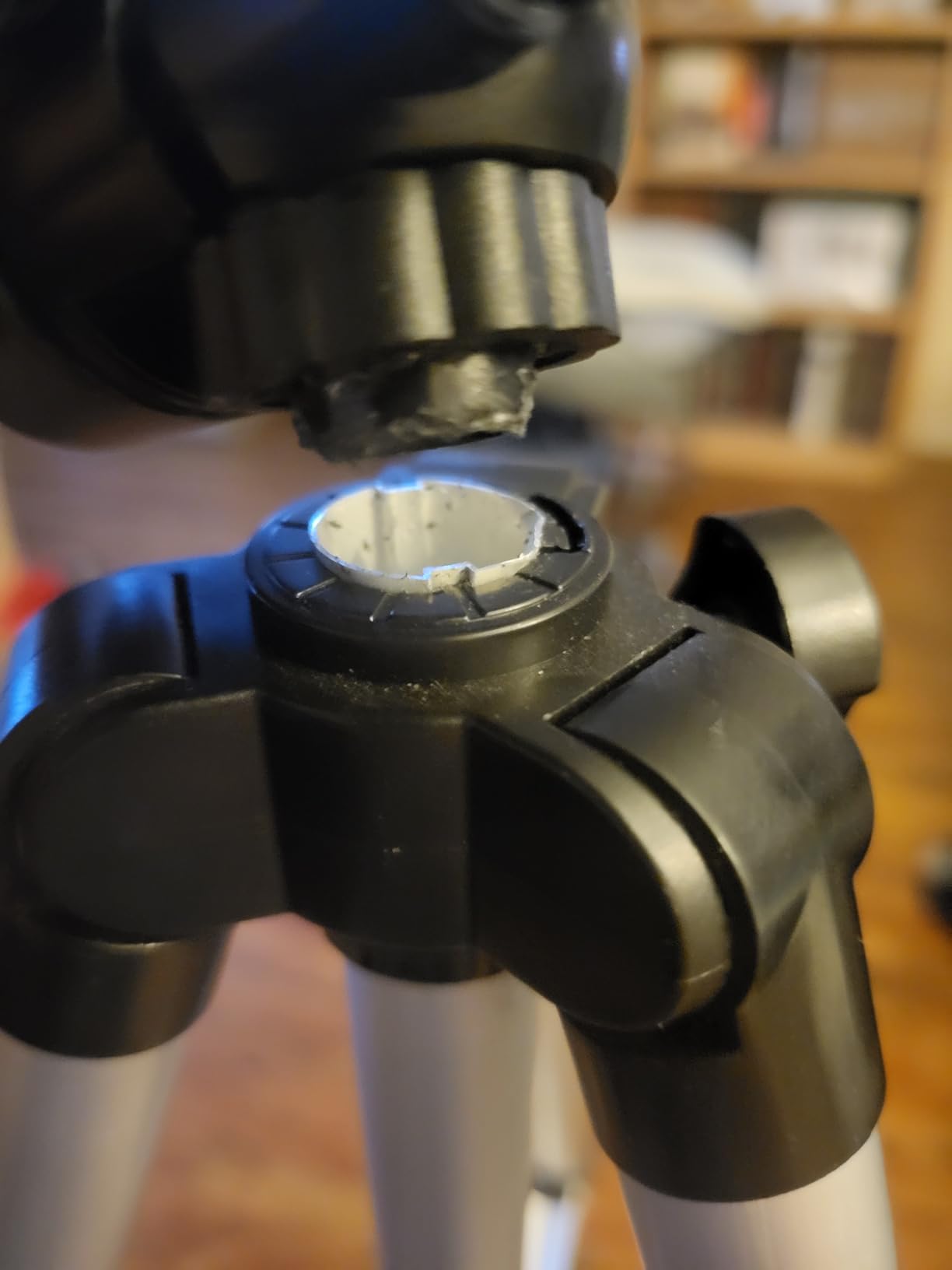
The dominant complaint, described at length by several reviewers, is the tripod. It is under two feet tall, so most users put the scope on a table or garden wall, and the mount lock knob does not reliably hold the tube, letting it flop forward and lose the target.
On the positive side, the tool-free quick release means setup takes under a minute, and the 5×24 finder means a child does not have to guess where to point. That removes the most common reason a first session ends early.
Why it earns a place on a family list
Birds, distant scenery and the Moon come from one tube, so the scope gets used in daylight and at night instead of sitting unused until a planet is well placed.
Where it falls short
Many owners end up replacing the tripod, the build is thin, and the included Moon and star maps are blurry. The phone adapter also will not fit a phone in a case or with a multi-lens camera.
8. Hawkko 80mm Telescope – The Best Lightweight Pick for Ages 8-12
Hawkko 80mm Aperture 500mm Telescope for Kids 8-12 & Adults Beginners
80mm fully multi-coated
500mm focal length
20x-150x range
Two year warranty
Pros
- 80mm multi-coated lens is brighter than 70mm
- 20x-150x range from two eyepieces
- Tool-free setup with clear instructions
- Phone adapter and stickers included
Cons
- Planets other than the Moon are less impressive
- Shorter review history than established brands
The Hawkko 80mm shares a 4.4 rating with the MEEZAA but sits here rather than higher because its review base is 169 ratings, not thousands. That is worth saying plainly: the specification looks right and the early reviews are strong, but long-term durability is not yet documented the way it is for the Celestron models.
On paper and in early use it fits the eight-to-twelve band well. A six year old was reportedly able to find the Moon, and then Venus, shortly after assembly, and that kind of quick success keeps a child interested during the crucial first weeks.
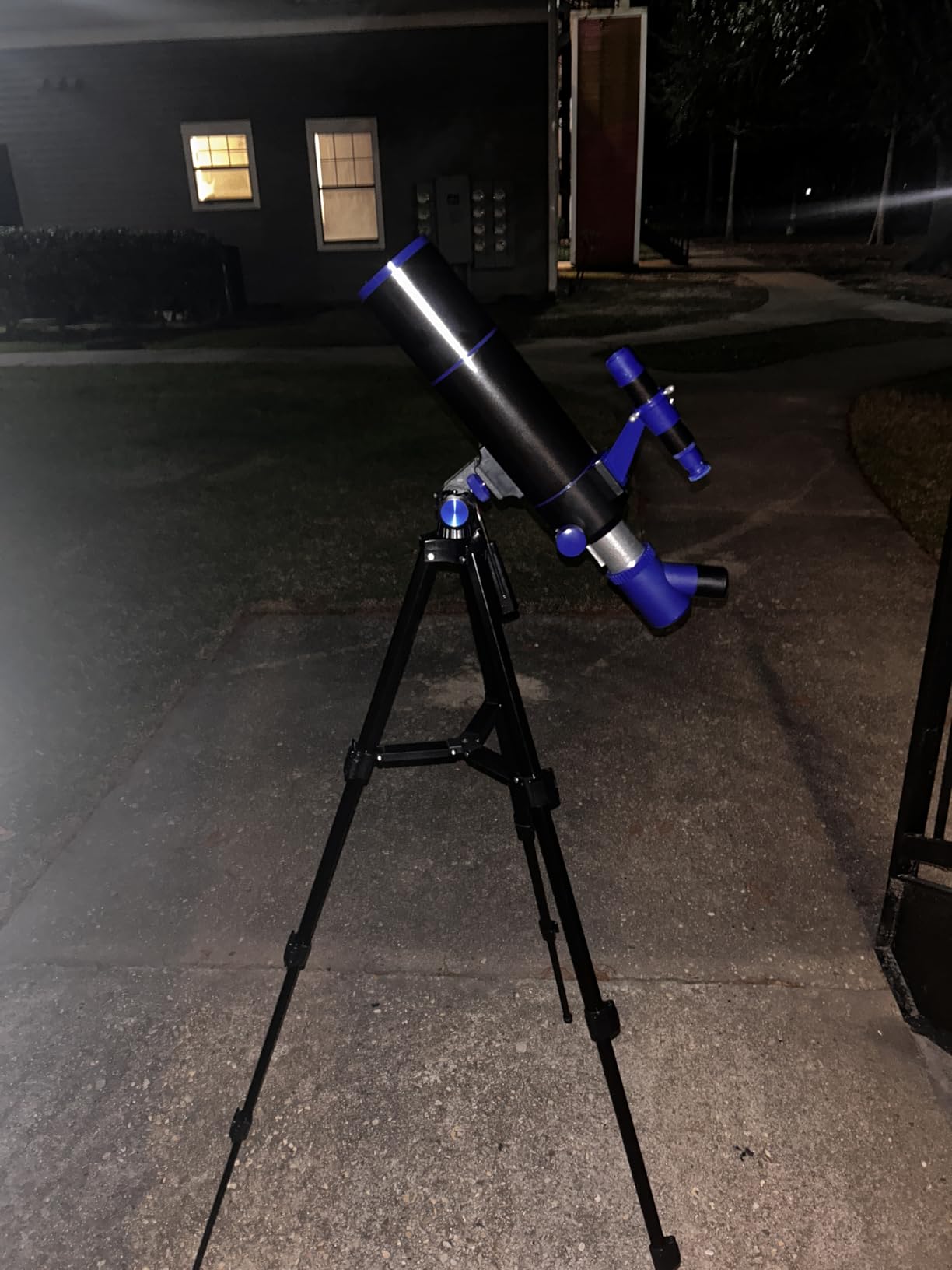
The logic is the same as the MEEZAA, with an 80mm fully multi-coated objective at 500mm focal length and a 20x to 150x range from a 25mm and a 10mm eyepiece plus a 3x Barlow. The 80mm aperture gathers substantially more light than a 70mm, which is where the bright lunar views come from.
Tool-free assembly with an illustrated manual matters more than the spec sheet suggests, because a parent and child can set it up together in one sitting, and the lightweight tripod means one child can move it to the car alone.
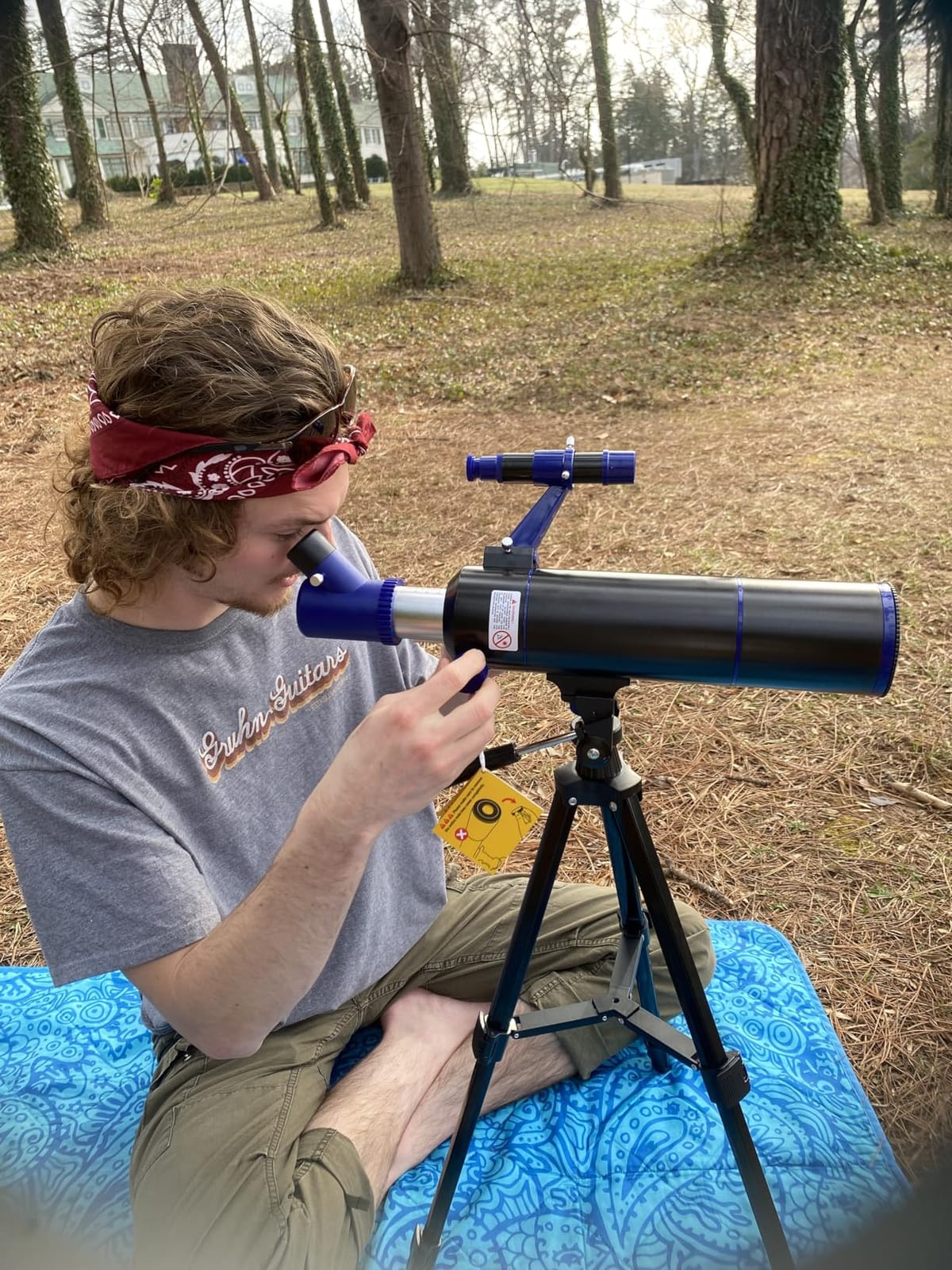
Why it suits a child aged 8 to 12
The wide 20x starting eyepiece makes finding targets possible for a child who has never used a telescope, and reviewers consistently rate the focus crisp and the setup straightforward.
Where it falls short
The Moon is by far the strongest target, and a 169-review history means the long-term picture is less certain than for the Celestron and Gskyer options.
9. Little Experimenter Projector Telescope – The Best Indoor Toy for Ages 3-7
Little Experimenter Projector Telescope, 24 Space Images, STEM Kids 3-12
Ages 3-12
2x binocular-style magnification
24 projection discs
1.4 lb with tripod
Pros
- Works indoors in any weather on cloudy nights
- Dual eyepiece design suits small children
- 24 discs showing planets and spacecraft
- Activity book adds STEM value
Cons
- Not a real telescope and only 2x magnification
- Slides wash out in a lit room
Let us be clear about what this is, because the listing sits beside real scopes and it is not one. At 2x magnification the optical quality is roughly that of children’s binoculars. What it has is a projector throwing 24 space images onto a wall, and that is the entire point.
For a child aged three to seven that is a good product. Children at that age cannot be persisted outdoors in the dark reliably, and a real telescope would sit unused, while this works in a bedroom on a wet Tuesday and runs on three included LR44 batteries.
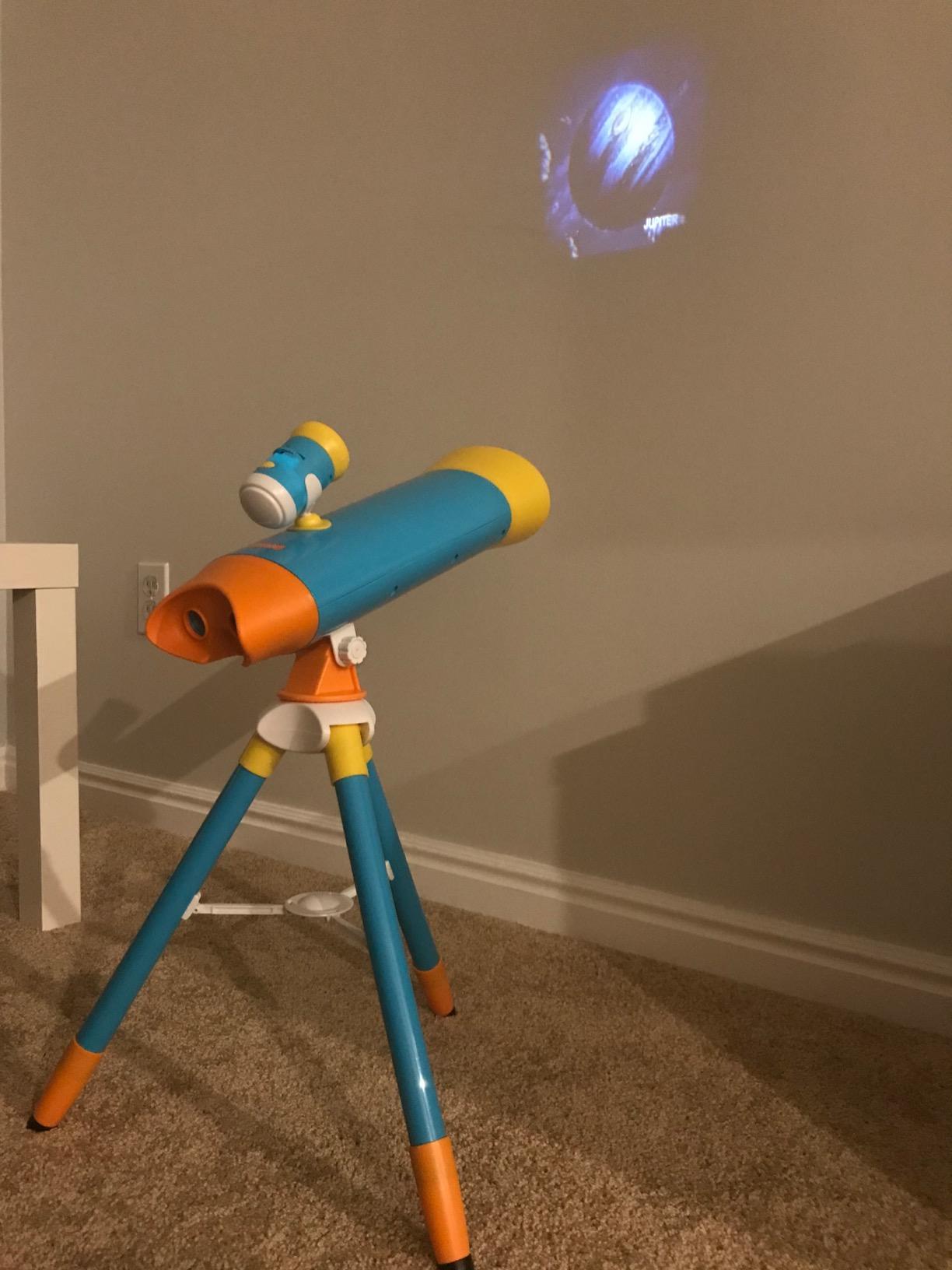
The dual-eyepiece layout is a genuine design decision, because two soft eyepieces moulding around both eyes give an instant success on first contact, whereas one small eyepiece often just frustrates a child. Small hands also manage the folding tripod without help.
The activity book extends the interest with simple facts a parent can read aloud. Plan for a dark room, since reviewers are consistent that the slides are hard to see with a light on.
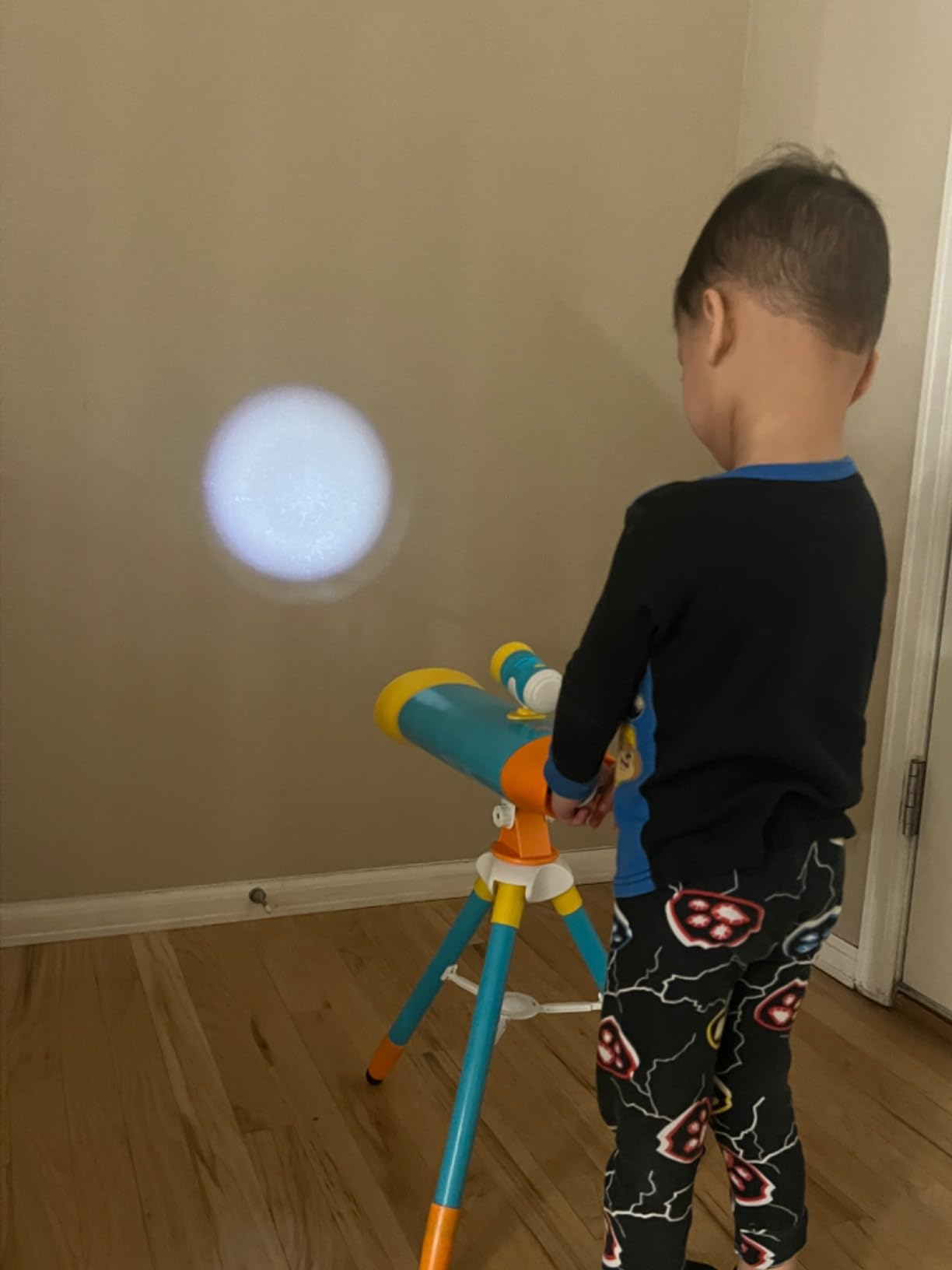
Why it works where a real telescope fails
A preschooler has no patience for setup, no ability to find a target and no interest in eyepiece changes, and this device removes all three problems at once. It is a stepping stone, not a substitute.
Where it falls short
It is not astronomy, and the short body needs a raised surface. If your child is eight or older, buy glass instead.
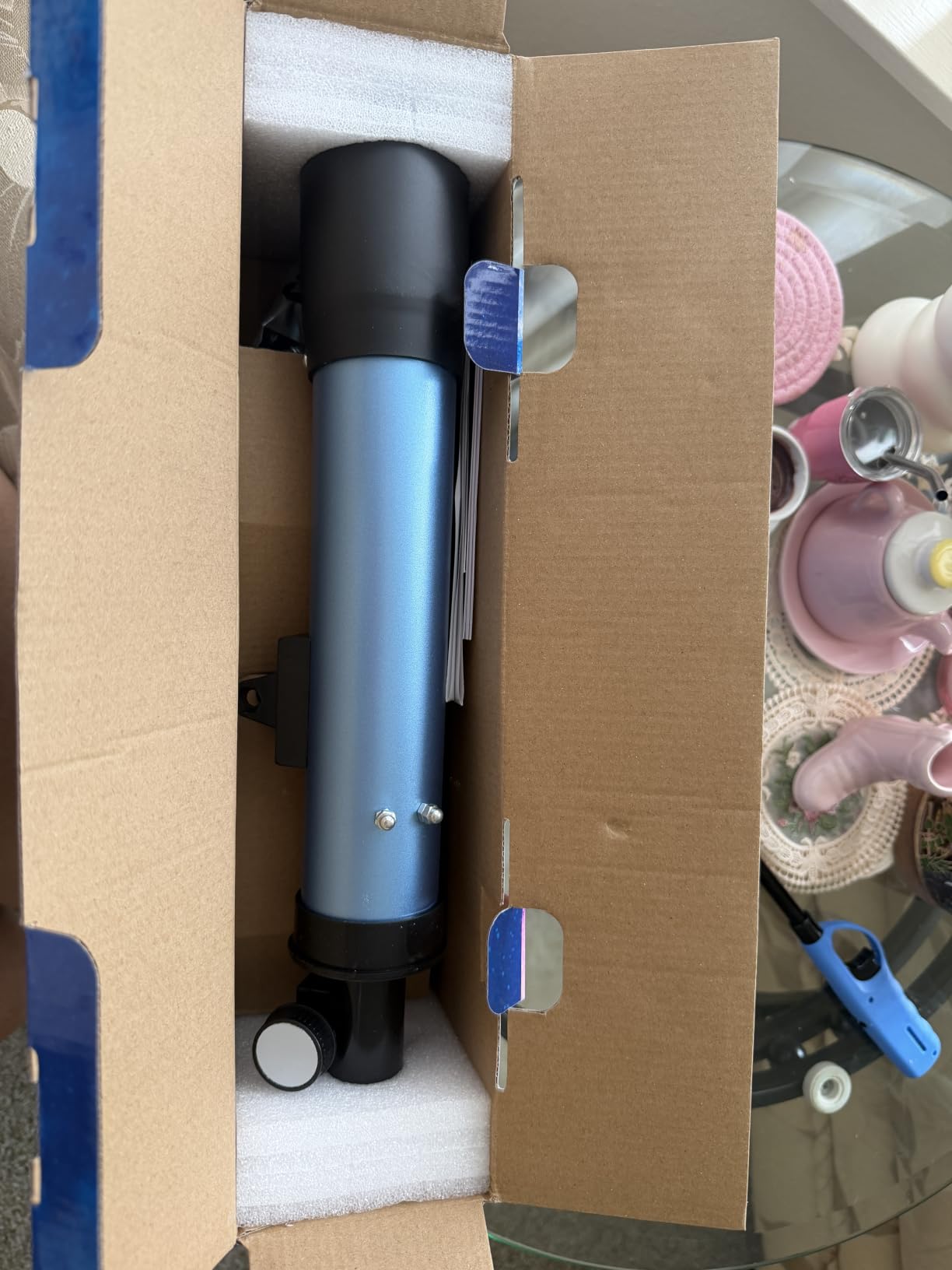
10. Luzsco 50mm Telescope – The Budget Pick for a First Hands-On Build
Telescope for Kids, 50mm 100x Beginner Telescope with Tripod
50mm multi-coated objective
Two eyepieces plus Barlow
Moon filter
600 g weight
Pros
- Most affordable genuine telescope in the roundup
- Includes a Moon filter and finderscope
- Assembly is a hands-on STEM activity
- Lightweight at 600 g
Cons
- Fixed mount has no altitude adjustment for aiming
- Huygens eyepieces give dim images at 100x
This is the cheapest real optical telescope we looked at, and its value is not in the views. At 4.3 stars across 324 reviews, with 74 percent five-star ratings, buyers treat it as a build-your-own STEM project where putting the parts together is the activity and the Moon is the reward at the end.
For a six year old that is genuinely worth doing. The kit includes a 6mm and a 20mm eyepiece, a Barlow lens, a finderscope and a Moon filter, and the 50mm multi-coated objective gives a soft but recognisable lunar image that the filter improves.
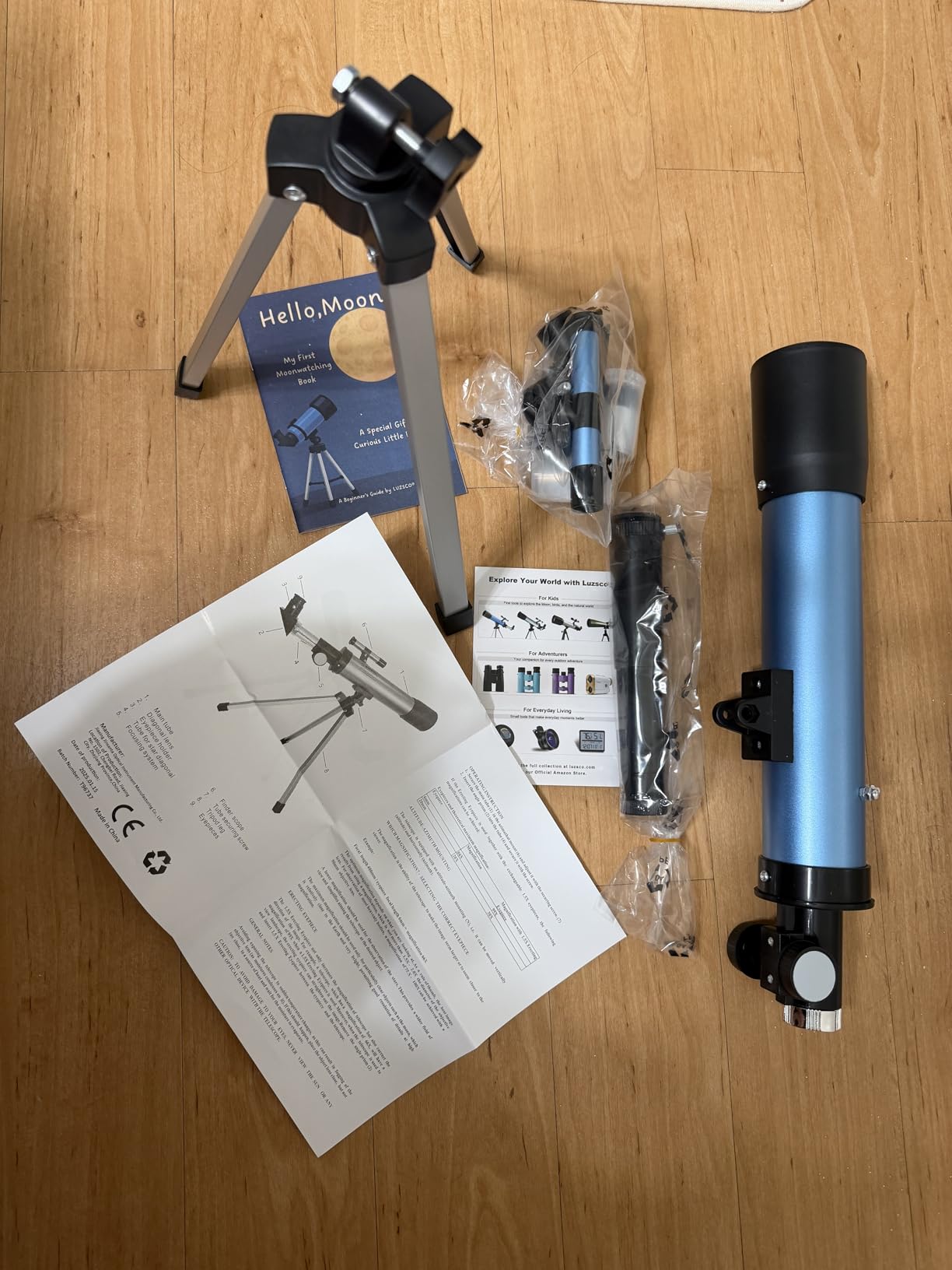
At 600 g it is the lightest thing in this roundup and a small child can carry it out to the garden alone. What you are really buying is time with an adult and a first view of the Moon.
Be realistic about the 100x maximum. At that magnification the image is very dim and soft, and the eyepieces rather than the aperture are the limiting factor.
Why it is worth considering as a first gift
It is the lowest-cost way to find out whether a child is genuinely interested before spending real money on glass. A request for darker skies and better views is exactly the signal to move up to a 70mm refractor.
Where it falls short
The fixed mount has no altitude adjustment, which makes aiming at a specific target hard and is the most-cited design flaw. The optics are not competitive with a 70mm scope even on the Moon.
How to Choose a Telescope for Kids: Aperture Beats Magnification
The most useful thing to learn before buying is that aperture decides how much light a scope collects, and light decides what you can see. Every source that ranks for this question repeats the same rule: a bigger lens with lower magnification shows far more than a small one cranked up. A 70mm scope at 40x beats a 50mm scope at 200x every time.
Ignore the number on the box. Claims of 500x or 700x describe how small the eyepiece is, and a tiny eyepiece on a small aperture gives a dim, soft, distorted image. One parent described a cheap childhood telescope whose image was so poor they could not make out what they were looking at, and it went straight back in the box.
- Aperture in millimeters. 50mm is a Moon scope. 70mm is a real first telescope for a child of eight or older. 80mm is where planets start to look like planets.
- Mount stability. A wobbly tripod ruins the experience faster than weak glass. Look for an altazimuth mount, a yoke with a slow-motion rod, or a tabletop base.
- Weight and tripod height. A child who cannot reach the eyepiece loses interest in one session, so check the height range and whether they can carry it outside alone.
- Eyepieces included. Two is workable, and a wide-field eyepiece around 25mm matters more than a high-power one, because a child needs to find something before zooming in on it.
- Setup and aiming. A finder scope with cross-hair lines is the most valuable accessory in the box. Without one, a child in a dark garden has no way to find a target.
One more practical point is build quality. Screws, hinges and tripod clamps are where cheap scopes fail, and rough handling is the top real-world failure mode parents report. If a child is under six, the honest answer is that a real telescope is the wrong tool.
Which Telescope Type Is Best for Kids at Each Age
Three optical designs cover almost every child, and which one you pick matters far more than the brand.
- Projector toy, ages 3 to 7. Not a telescope. A binocular-style body throwing space images on a wall, working indoors in any weather and needing no aiming skill.
- Short-tube refractor, ages 6 to 10. A 50mm to 70mm coated refractor on an altazimuth tripod, ideally with a finder scope. No collimation, nothing to break, and a sealed tube needing no maintenance.
- 80mm refractor, ages 10 and up. The step-up that holds interest once craters stop surprising, with brighter planetary images and headroom to add eyepieces later.
- Reflector, ages 11 and up. A Newtonian reflector gives far more light per unit of money, which is why hobbyists treat aperture as the priority, but it needs periodic collimation.
- Computerized mount, ages 11 and up only. A GoTo mount finds objects for you, but the setup is complex enough to frustrate a younger child, and it is why none of the scopes here are computerized.
Match the tool to the age and then stop worrying. What you upgrade later is the aperture and the eyepieces, not the whole instrument. While the child is small enough to need help, a single shared scope suits a family better than two, and our healthy kids snacks both parents and kids love are the same idea applied to the rest of the evening.
What Your Child Can Actually See With Each Telescope
Honest expectations by aperture, rather than by advertised magnification. A 25mm lunar scope shows craters, seas and the terminator. A 50mm refractor adds a bright planetary disc and the phases of Venus. A 70mm refractor resolves crater rims in relief, the four moons of Jupiter, and Saturn as an elongated shape.
An 80mm refractor is where bands on Jupiter and the division in Saturn’s rings start to appear on a good night, though steady seeing matters as much as aperture at that point. A projector toy shows a photograph of a planet and nothing in the sky itself.
Two cautions: deep sky objects and most nebulae need a much larger aperture than anything on this list, and light pollution hides faint targets no matter how good the scope is. Aim for the Moon first, since it is large, bright, always in the same place, and the first target that makes a child understand what a telescope is for.
What to Avoid When Buying a Telescope for a Child
Every regret we found traces back to one of five things, so check any listing against this before you buy.
- Magnification above 200x on a small aperture. A 60mm scope advertised at 700x produces a dim, distorted image. A listing that leads with magnification rather than aperture is the warning sign.
- Plastic objective lenses. Real glass with a coating is the single biggest quality jump, and a scope that does not state glass is a toy.
- A thin or wobbly tripod with no slow-motion control. This is the number one reason a child cannot hold a target, and it is a hardware failure, not a technique problem.
- No finder scope, or a fixed mount with no altitude adjustment. A child who cannot aim cannot observe, and no amount of magnification compensates for never finding anything.
- Anything sold as educational STEM that cannot bring the Moon into focus. A projector toy is fine when sold as a toy, and not fine when marketed as a telescope.
Nothing here is self-operating, and that comes up constantly in the hobby forums. If you cannot spend time outside with your child, wait a season, because many abandoned scopes were not poor. The child simply could not find anything alone. Pairing the scope with an indoor project matters too, and we keep a list of kids baking sets simple enough to do together for exactly the weekends when the sky is not cooperating.
On the weeks when a clear sky and a clear evening do not line up at all, keeping a screen-free evening running matters just as much. Our list of healthy kids meals offering balanced food is the fallback we use, because a child who associates the telescope with a whole shared evening keeps asking to go outside again.
Solar Viewing Safety: The One Rule Every Parent Needs
Never point any telescope at the Sun without a certified solar filter fitted over the front objective. This is not a caution about an uncomfortable image. Unfiltered sunlight is concentrated by the objective straight into the eyepiece and into the eye, and it can cause permanent blindness in seconds.
Children are the highest-risk case because their eyes are larger relative to their bodies and they tend to look through a telescope without flinching. If your child wants to look at the Sun, the answer is a properly fitted solar filter or dedicated solar viewing equipment, never a suggestion to wait until the sky is hazy. Keep the finder scope capped or removed during daytime observing, because it will point straight at the Sun.
First Night Out: Care, Storage and a Checklist
A five-minute routine before the first session removes most of the frustration, and scopes survive longer when treated as equipment rather than a toy.
- Set up indoors first. Assemble the tripod, attach the tube and focus on a distant object in daylight, because discovering a stiff focuser in the dark wastes the evening.
- Let the tube reach outdoor temperature. A cold tube looking at a warm sky gives a distorted image that parents blame on the telescope, and twenty minutes of settling fixes it.
- Aim at the Moon first, in the finder. Line up the cross-hair, move to the main eyepiece, then switch to the widest eyepiece. Teach that order once and the child will repeat it alone.
- Use the bundled software or an app. Pointing a phone at a bright object and having it named is the fastest way to turn a night of looking into a night of learning.
- Plan two sessions, not one. The first is fumbling and the second is where the excitement happens, so give your child a reason to expect it.
For storage, keep the tube capped and dry indoors rather than on a damp patio, since a dessicant pack costs almost nothing and prevents the internal fogging that makes a child think the scope has broken. Clean the objective with a soft cloth only, and leave condensation to clear on its own rather than wiping a frosted lens, which is the fastest route to permanent scratches.
Finally, plan what happens after the first few sessions. A child who is still asking about the sky is ready for the next step, and our easy breakfast recipes for kids are what we cook on the mornings after a long night at the eyepiece, when nobody wants to go to bed.
Frequently Asked Questions
Which telescope is best to see planets for children?
An 80mm fully coated refractor is the best compromise. Jupiter’s four moons and the shape of Saturn are visible at 70mm, but at 80mm the Celestron Travel Scope shows detail rather than just shape. A 50mm scope shows planets as small discs, enough to excite a young child.
What is the best telescope for a beginner child?
For a child aged eight or older, a 70mm fully coated refractor on an altazimuth mount is the standard answer, and the Gskyer 70mm and Celestron Travel Scope 70mm are the two most proven options. Under six, a projector toy is a better introduction.
Can you see planets with a kids telescope?
Yes, with a caveat. A 50mm refractor shows Jupiter and Venus as small discs and Saturn as an elongated shape. A 70mm resolves Jupiter’s four moons, and an 80mm can show bands on Jupiter. Anything below 50mm will not show planets at all.
Is a telescope a good gift for a 5 year old?
Not a real one. At five, a child cannot hold an eyepiece steady, follow focusing instructions in the dark, or find a target, so a genuine scope will be frustrating. A binocular-style projector toy that works indoors in any weather is a better gift at that age.
What kind of telescope is appropriate for a 7-year-old?
A 50mm to 70mm refractor on a simple altazimuth tripod is right for a seven year old, provided it has a finder scope so the child can aim without help. The Gskyer 70mm and the Celestron PowerSeeker 50AZ both suit this age, since both are light and need no tools to assemble.
What to avoid when buying a telescope?
Avoid any scope that leads with a magnification figure above 200x on a small aperture, along with plastic objective lenses, thin wobbly tripods with no slow-motion control, scopes with no finder scope, and fixed mounts with no altitude adjustment. A child who cannot aim cannot observe.
Which type of telescope is best for kids?
A short-tube refractor is best for almost every child, because it needs no collimation, has nothing to break and sets up in minutes. A projector toy is right under six, and a reflector suits ages eleven and up because it needs periodic collimation.
Is a 500x telescope good?
No. Magnification is mostly marketing on entry-level scopes, and 500x on a small aperture gives a dim, soft and badly distorted image. Aperture decides how much light the scope collects, so a 70mm scope at 40x shows far more than a 60mm scope at 500x.
The Best Telescopes for Kids in 2026: Final Verdict
After weighing all ten, the Gskyer 70mm AZ Refractor is our pick for the best telescopes for kids in 2026, because 22k+ reviews confirm that the optics, the finder scope and the phone adapter work together reliably for a child. Parents wanting more light should look at the Travel Scope 80mm, and anyone buying for a child under seven should start with a projector toy and save the glass for later.
Whatever you choose, pick it for the aperture, practise pointing it together on the first two clear evenings, and never let it near the Sun without a certified solar filter. That is the version of this hobby that becomes a lifelong interest rather than a toy that ends up in a cupboard.