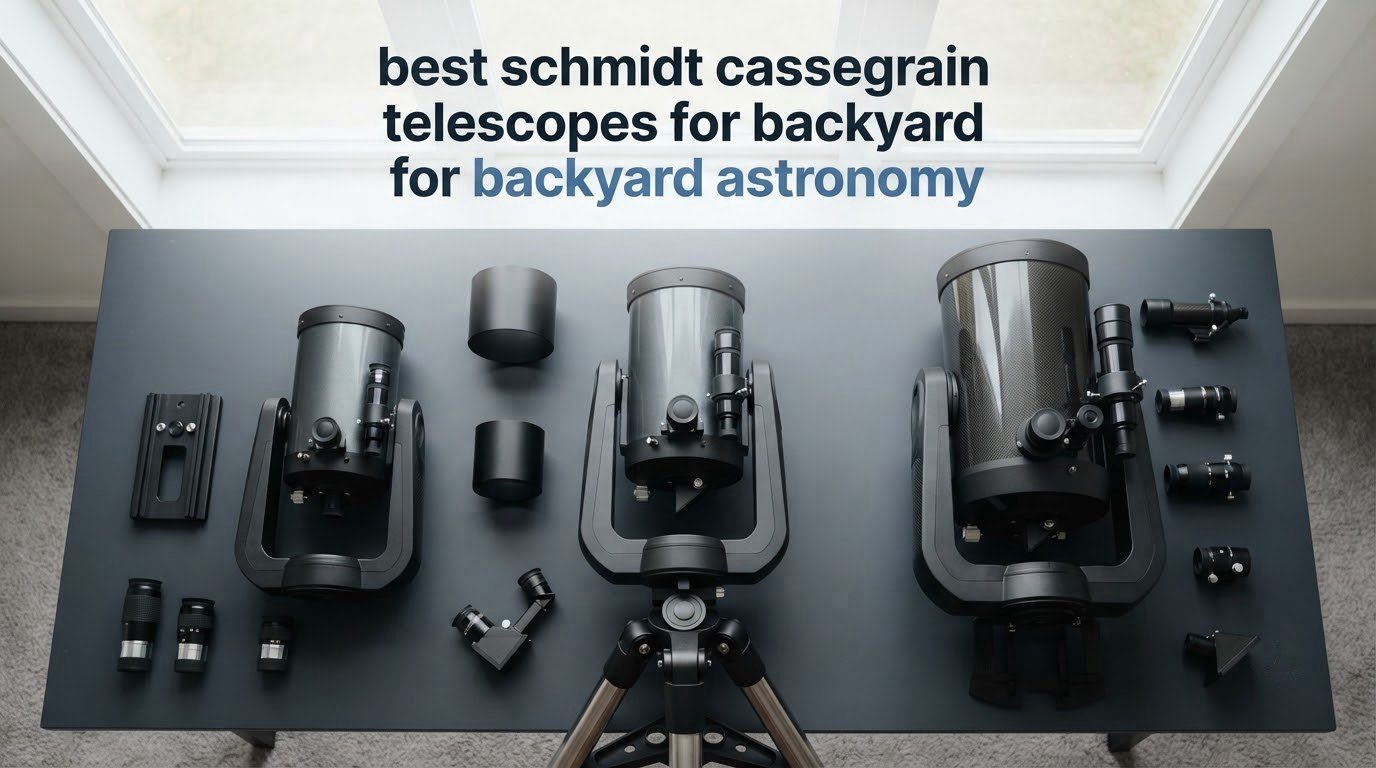
If you want the single best Schmidt-Cassegrain telescope for backyard astronomy, the Celestron NexStar 8SE takes it. An 8-inch f/10 catadioptric on a single-arm GoTo fork gives you Saturn’s rings, Jupiter’s cloud bands and a scope you can carry out in one trip. A Schmidt-Cassegrain folds a very long focal length into a short sealed tube, so the planets look sharp without a huge instrument.
That combination is why this design keeps showing up on suburban patios year after year. The scope does not need collimating every time you move it, the tube is dust-tight, and the eyepiece arrives at the back where a refractor would put it halfway down a long tube. From a typical light-polluted backyard you get the Moon at its best, the four Jovian moons shifting in real time, and the Cassini Division on a good night.
We went through the current Schmidt-Cassegrain lineup model by model, spec by spec, and owner review by owner review. Everything in this roundup is a Celestron, and that is not a lack of alternatives. It reflects where the new SCT market actually sits today. We explain that in the Celestron vs Meade section below, along with what a Maksutov-Cassegrain gives you instead.
One honest note before the picks. Forum consensus has not changed in twenty years: a Dobsonian of the same aperture shows more for less money. We think an SCT is still the right call for a backyard, because setup speed and portability decide whether a scope gets used at all. If you have a garage and no deadline, read the Dob section before you spend.
Table of Contents
- Top 3 Schmidt-Cassegrain Picks for Backyard Astronomy in 2026
- All 8 Best Schmidt Cassegrain Telescopes (October 2026)
- 1. Celestron NexStar 8SE Schmidt-Cassegrain – Best Overall for the Backyard
- 2. Celestron NexStar Evolution 9.25 Schmidt-Cassegrain – Best for Wireless Setup
- 3. Celestron Advanced VX 9.25 Schmidt-Cassegrain – Best Equatorial Pick
- 4. Celestron Advanced VX 11 Schmidt-Cassegrain – Maximum Light in a Full Rig
- 5. Celestron CGEM II 11 Schmidt-Cassegrain – Best for Deep-Sky Observing
- 6. Celestron CGEM II 8 EdgeHD Schmidt-Cassegrain – Best for Imaging
- 7. Celestron 11 Inch Schmidt-Cassegrain Optical Tube – Best Tube Only Buy
- 8. Celestron EdgeHD 9.25 Schmidt-Cassegrain Optical Tube – Best Flat Field Tube
- Which Schmidt-Cassegrain Aperture Do You Actually Need?
- Fork Mount or Equatorial Mount: What Carries an SCT Properly
- Living With a Schmidt-Cassegrain: Collimation, Dew and Power
- When a Dobsonian Is the Better Buy
- Celestron vs Meade for Schmidt-Cassegrains Today
- Frequently Asked Questions
- The Bottom Line
Top 3 Schmidt-Cassegrain Picks for Backyard Astronomy in 2026

Celestron NexStar 8SE
- 8 inch f/10 aperture
- 2032mm focal length
- GoTo single fork arm
- SkyAlign in minutes

Celestron Evolution 9.25
- 9.25 inch aperture
- Integrated WiFi and internal battery
- Stainless steel tripod
- Deluxe eyepiece kit

Celestron Advanced VX 9.25
- 9.25 inch aperture
- German equatorial mount
- 2350mm focal length
- 40k+ object database
The 8SE wins because it has more verified owners behind it than everything else in this guide combined. The Evolution 9.25 wins the setup convenience argument with a phone app and an internal battery. The Advanced VX 9.25 wins if you want a German equatorial head that can grow into an imaging rig.
All 8 Best Schmidt Cassegrain Telescopes (October 2026)
| Product | Specs | Action |
|---|---|---|
| Celestron NexStar 8SE |
|
Check Latest Price |
| Celestron Evolution 9.25 |
|
Check Latest Price |
| Celestron Advanced VX 9.25 |
|
Check Latest Price |
 Celestron Advanced VX 11 Celestron Advanced VX 11 |
|
Check Latest Price |
 Celestron CGEM II 11 Celestron CGEM II 11 |
|
Check Latest Price |
 Celestron CGEM II 8 EdgeHD Celestron CGEM II 8 EdgeHD |
|
Check Latest Price |
 Celestron C11-XLT Tube Celestron C11-XLT Tube |
|
Check Latest Price |
 Celestron EdgeHD 9.25 Tube Celestron EdgeHD 9.25 Tube |
|
Check Latest Price |
Two of these eight are optical tube assemblies with no mount and no hand control in the box. That is not a flaw, it is a different product. If you already own a solid equatorial head, the C11-XLT and the EdgeHD 9.25 are often the smarter path to the same views.
1. Celestron NexStar 8SE Schmidt-Cassegrain – Best Overall for the Backyard
Celestron NexStar 8SE Computerized Telescope – Schmidt-Cassegrain
8 inch aperture
2032mm f/10
24 lb assembled
GoTo single fork arm
Pros
- Single fork GoTo mount tracks from a 40k+ object database
- SkyAlign setup using any three bright stars
- StarBright XLT coatings and a red dot finder in the box
- Compact tube that one person can carry
- Two year US warranty with US support
Cons
- Native f/10 needs a reducer for wide field
- Single fork is less steady at high power than an equatorial
- Power adapter and external battery are not included
My 8SE has been the scope that actually gets carried outside. The whole rig is about 24 pounds on a single-arm fork, and I can move it from the closet to the patio in one trip without a cart. That sounds like a small thing until you remember that most large amateur telescopes live in a garage because moving them is a chore.
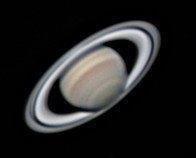
Optically it is the sweet spot of the lineup. The 2032mm focal length gives a long, forgiving image scale, and owners consistently report steady views of Jupiter’s belts and Saturn’s rings. A user on a telescope forum described it simply: the GoTo is decent, the controller is quite simple, and it works perfectly for visual observing.
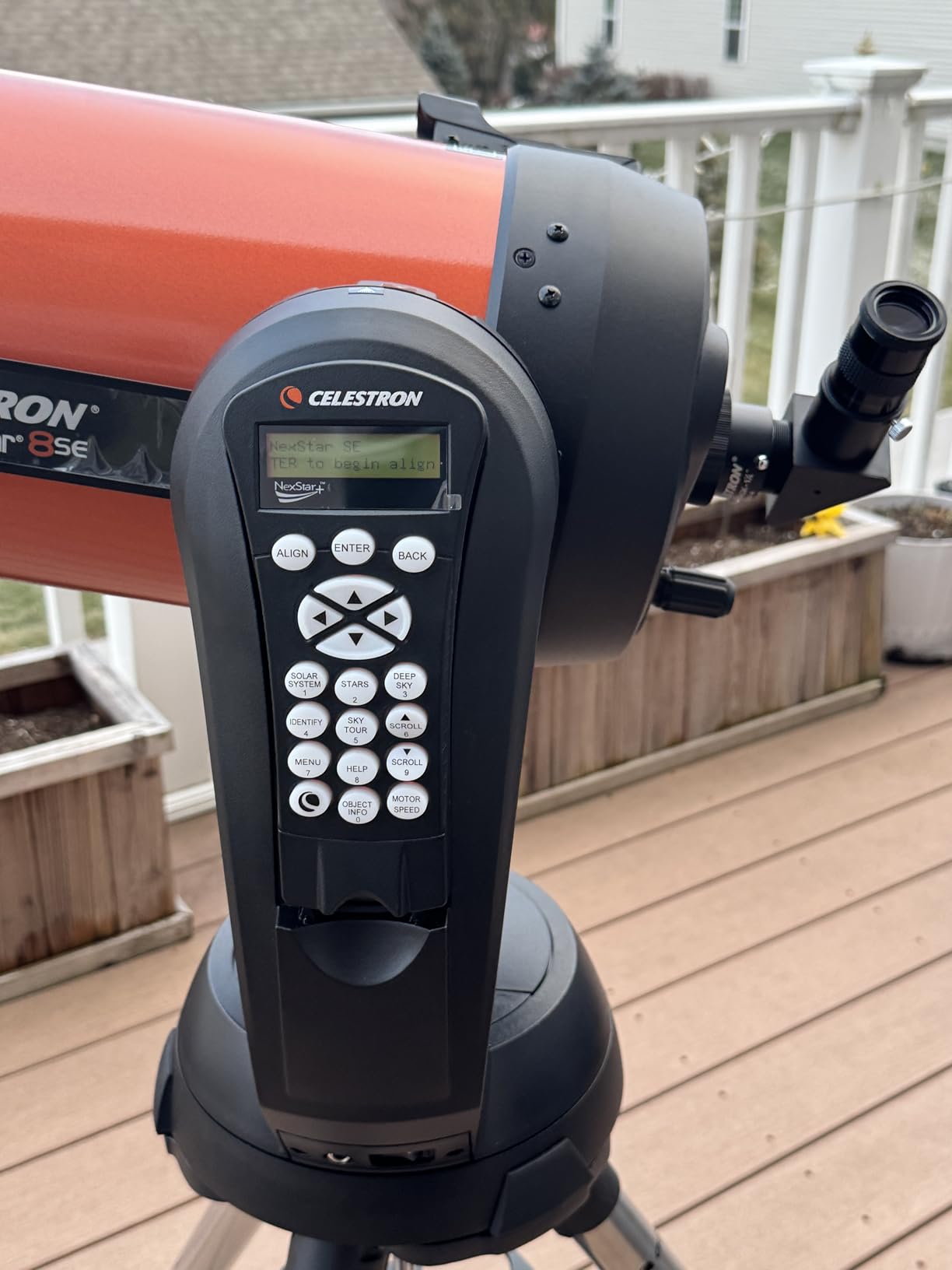
The mount is the thing you have to understand before buying. It is an altitude-azimuth single fork arm, not an equatorial head, so it tracks in two axes and the field rotates over a couple of hours. For visual work that is invisible. It only matters if you try long-exposure imaging, where you will need a wedge or an equatorial mount instead.
SkyAlign is the other reason this model works for a first telescope. You centre any three bright objects in the finder and the software works out where you are and how to point. No star charts, no polar alignment, no drift of a star across the meridian while you fight with a star diagonal.
What the 8SE does well on a suburban patio
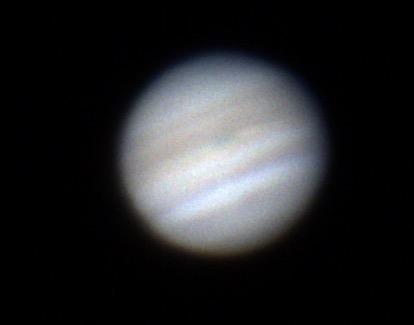
Saturn is the headline. At 100x to 200x the rings separate cleanly and the Cassini Division shows on a steady night. Jupiter’s four moons shift position noticeably over 20 minutes, which is the cheapest way to prove a telescope is actually tracking.
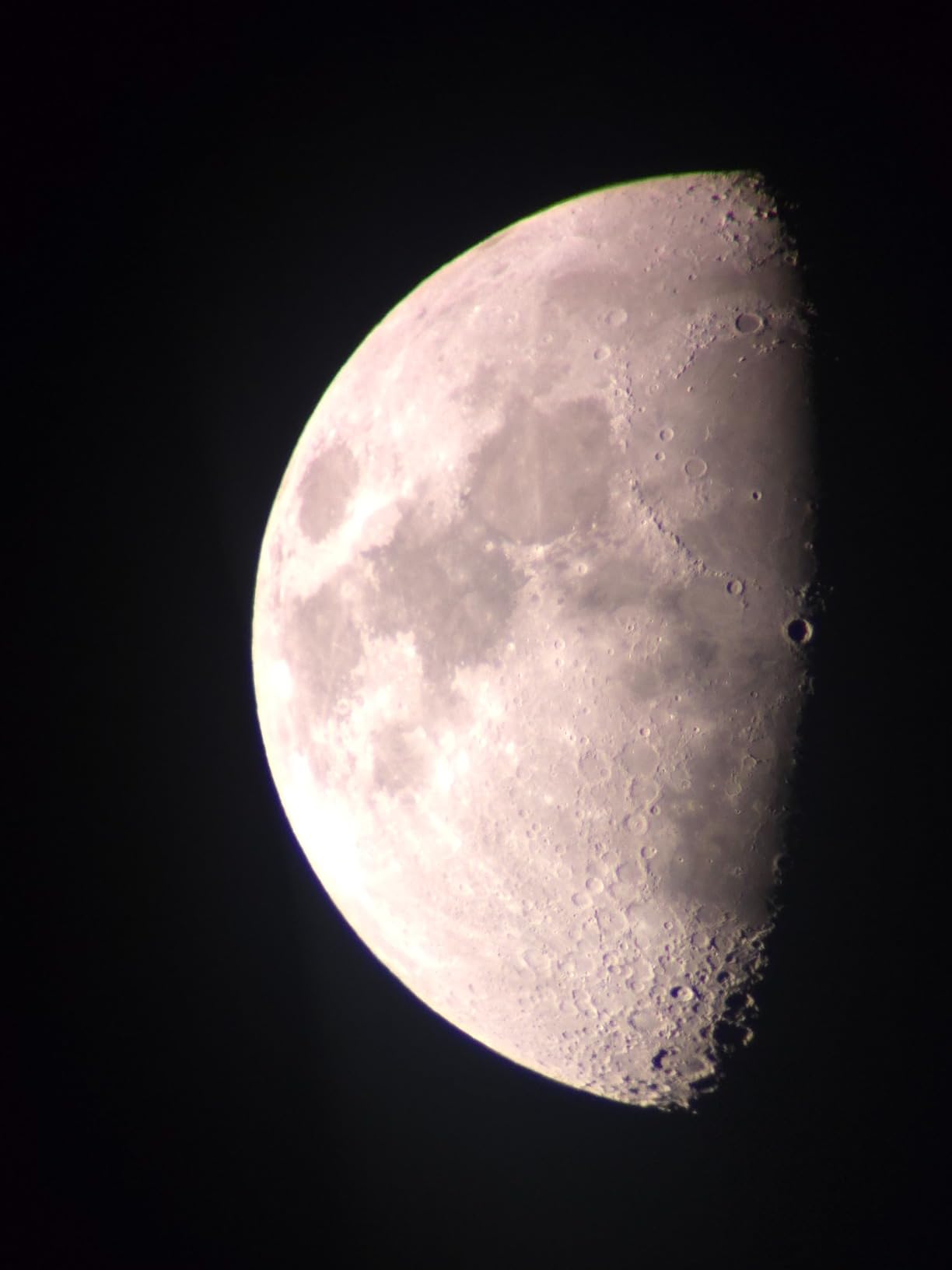
The Moon rewards aperture more than almost anything else. Craters along the terminator, the ragged shadow line, and maria detail all come through at 25mm and 9mm. A neutral-density Moon filter tames the brightness and buys you contrast on those first-quarter nights.
Where the 8SE falls short
At 400x and above, a single fork arm shows its limits on a breezy night. If you live somewhere with trees and movement, the equatorial Advanced VX models in this guide hold high power better because the mass sits on a heavier, balanced head.
Batteries are the most common grumble. Eight AAs will run a couple of hours, and tracking drains them faster than alignment does. Budget for an external power supply or run the supplied AC adapter from a patio outlet.
2. Celestron NexStar Evolution 9.25 Schmidt-Cassegrain – Best for Wireless Setup
Celestron NexStar Evolution 9.25 Schmidt-Cassegrain Telescope w/Integrated WiFi – w/Deluxe Accessory Kit (5 Celestron Plossl Eyepieces, 1.25in Barlow Lens, 1.25in Filter Set, Accessory Carry Case)
9.25 inch aperture
2350mm f/10
Integrated WiFi and battery
Five eyepieces included
Pros
- Integrated WiFi and internal battery remove cables from setup
- 9.25 inch aperture is a visible step up from 8 inch
- Stainless steel tripod is far more rigid than entry kits
- Motors are quiet and hold alignment well
- Kit includes five Plossl eyepieces plus a 2x Barlow
Cons
- Smartphone app is reported to crash or lag
- Single fork arm is less rigid than dual fork designs
- Optics arrived out of collimation for some owners
This is the model for anyone who dreads cable management more than they dread weight. The internal battery and built-in WiFi mean you carry the scope out, connect a phone, and start. The included stainless steel tripod is a genuine step up in rigidity from the folding steel tripod on the 8SE, and you feel that at high power.
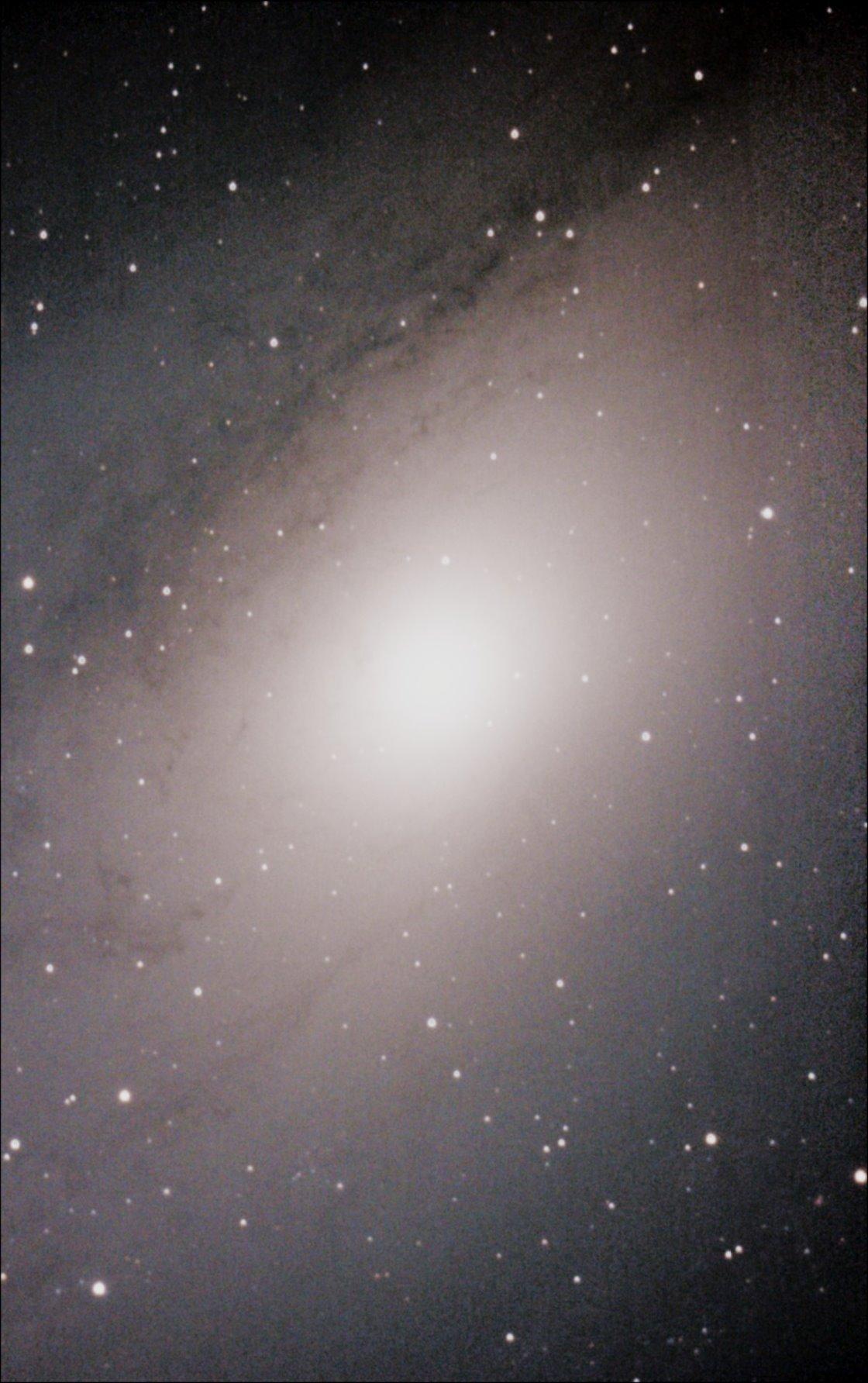
The 9.25-inch aperture is a real upgrade over 8 inches in the way owners describe it: resolution and light grasp both improve, and the larger aperture surface area helps with the fainter deep-sky objects that survive suburban skies. The deluxe accessory kit with five Plossl eyepieces, a Barlow and a filter set means you are not shopping for a box of glass on day one.
Motor behaviour is the sleeper strength. Reviewers describe the motors as quieter and more precise than earlier single-fork mounts, holding alignment through a long session. The tripod and metal spreader stay put where lighter kits flex and jiggle under a slow manual focus.
Owners also note the whole rig can be wheeled from indoors to the backyard intact, which partly offsets the weight. Assembly time is short, and the 2350mm focal length matches the Advanced VX 9.25 tube for the same image scale.
Who this 9.25 is built for
If your evenings are app-driven, this removes friction that you might not realise you have. A child or a partner who is not going to learn a star chart can still select an object on a phone and look through the eyepiece. That convenience is the actual product here, and it works.
The aperture also makes it a step up for lunar work. Bigger mirror, same f/10 discipline, more detail along the terminator where shadows give the Moon its three-dimensional look.
What to watch out for
The app is the weak point. Owners report crashes, dropped connections and lag on movement commands, which is frustrating precisely when the scope is pointed at something. The hand controller is not a substitute, so keep it charged and learn the two-star align.
Some units arrived out of collimation and needed work after moving, and a few owners report visible colour fringing on the larger corrector at high power. The 87.5-pound total also means you will likely detach the tube to carry it alone.
3. Celestron Advanced VX 9.25 Schmidt-Cassegrain – Best Equatorial Pick
Celestron Advanced VX 9.25″ Schmidt-Cassegrain EQ Computerized Telescope
9.25 inch aperture
2350mm f/10
German equatorial mount
14 kg
Pros
- 235mm aperture gives crisp high contrast views
- German equatorial mount tracks smoothly
- Port layout accepts an autoguider for imaging
- Bundle includes OTA mount eyepiece diagonal finder and tripod
- StarBright XLT coatings improve contrast
Cons
- Gear clicking in the mount head causes image jumping
- Included 6x30 finder and 25mm eyepiece are entry level
- Polar alignment takes practice for first time users
The Advanced VX is the one in this list I would describe as a genuine platform rather than a complete instrument. A German equatorial head carries the tube on a polar axis, which means it tracks without the field rotating and it holds high magnification better than a fork under vibration.
The tube is the same 2350mm f/10 optical design used in the Evolution 9.25, so views through the two are nearly identical. What you are buying is the mount: smooth tracking, a port layout that supports an autoguider, and a head that has some headroom for a camera later.
What makes this the imaging-capable option
An autoguider port and a solid tracking platform are what separate this from the fork-mounted models. Forum advice for anyone pairing a 9.25-inch SCT with a mount is consistent: you want at least an EQ6-class head, and the VX sits in that conversation. For visual backyard work it is steady, and for a beginner trying one planetary photo it is plausible.
The 40,000-plus object NexStar+ hand control means the pointing is as automatic as any fork in this list once you complete polar alignment.
Where it frustrates owners
The single most-cited complaint is gear clicking inside the mount head, appearing within months and recurring after factory repair. When that happens the image jumps during focusing, which is maddening at high power. It is a known issue with this mount class, so keep the mount head in warranty conversation early.
Two more cautions. The included 6×30 finder and 25mm eyepiece are entry-level parts on an expensive package, and polar alignment is genuinely harder than SkyAlign for a first-time user. Budget for a better diagonal and eyepieces before you judge the optics.
4. Celestron Advanced VX 11 Schmidt-Cassegrain – Maximum Light in a Full Rig
Celestron Advanced VX 11″ Schmidt-Cassegrain Computerized EQ Telescope
11 inch aperture
2800mm f/10
German equatorial mount
124 lb
Pros
- 11 inch aperture gathers about 41 percent more light than a 9.25 inch
- German equatorial class with permanent periodic error correction
- 9x50 optical finder is brighter and more precise than red dot finders
- Wide stance tripod improves stability at this size
- Dual saddle plate accepts CGE and CG-5 dovetails
Cons
- Roughly 124 pounds assembled so setup is a two person job
- Polar alignment adds complexity for beginners
- Included 40mm Plossl limits useful magnification
Eleven inches is the point where light gathering starts to matter more than anything else in a backyard. Celestron rates this tube at roughly 41 percent more light than a 9.25-inch, and on bright deep-sky objects the difference is visible rather than theoretical. A globular cluster that looks like a smudge on a 6-inch starts to show outer structure here.
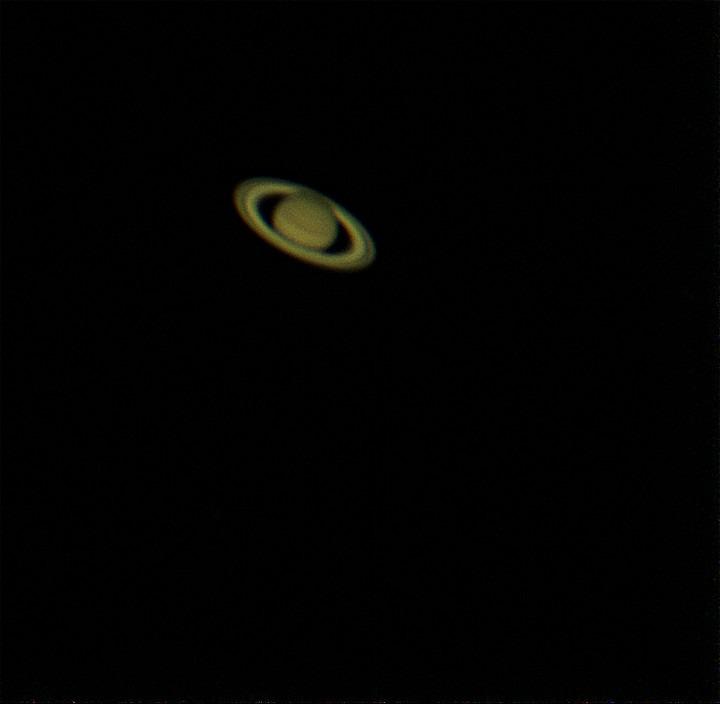
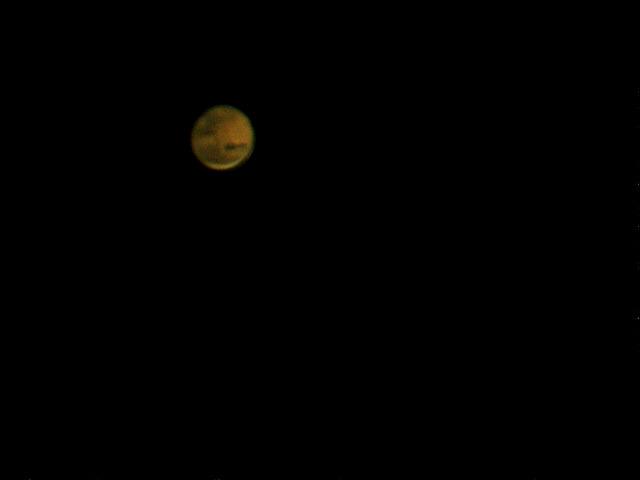
The 2800mm focal length is a genuine advantage for planetary work. More focal length means more magnification per eyepiece and a larger image scale, so Jupiter’s cloud bands and Mars surface markings hold up at high power when the atmosphere cooperates.
The 9×50 optical finder is a real upgrade over the red dot finders on 8-inch kits. It gives a proper view, which makes alignment stars far easier to centre when the tube is this heavy. The wide-stance tripod is not cosmetic either; it widens the footprint to resist the vibration of a big tube on a long focal length.
Permanent periodic error correction and integer gear ratios mean the mount does not accumulate tracking drift over an hour, which is what you want for anything longer than a quick look.
What gives us pause at this size
At roughly 124 pounds assembled, this is a two-person move. Carrying it to a dark site means a vehicle, not a patio. The equatorial head also adds the polar alignment learning curve on top of everything else, and the included 40mm Plossl limits how much of the aperture you can actually use.
One note on the listing itself: some of the published dimensions and objective diameter entries for this model appear inconsistent with an 11-inch Schmidt-Cassegrain, so check the physical spec sheet before you plan your mount. The Advanced VX head here is rated for this class, but verify the payload figure yourself.
Our honest read is that this is a lot of telescope for a backyard. It pays off if you have a driveway, a clear horizon and the patience to set up an equatorial head after dark. If your observing spot is a balcony, look at the 8SE or the Evolution 9.25 instead.
5. Celestron CGEM II 11 Schmidt-Cassegrain – Best for Deep-Sky Observing
Celestron CGEM II 11″ Schmidt-Cassegrain Telescope with GoTo EQ Mount
11 inch aperture
2800mm f/10
GoTo equatorial mount
148.5 lb
Pros
- 11 inch aperture produces bright deep-sky images that reduce the need for averted vision
- GoTo reliably finds thousands of catalogued objects and accepts coordinates
- Planetary views described as sharp through filters
- Breaks into pieces one person can carry to the backyard
- Higher end equatorial platform than the Advanced VX class
Cons
- Alignment and polar alignment are difficult for newcomers
- Very heavy at about 148 pounds
- Dovetail screws loosen and need periodic retightening
Where the Advanced VX 11 is about raw aperture, the CGEM II 11 is about aperture plus a mount that is built to keep it steady. Long-term owners describe the instrument as an outstanding upgrade from earlier Celestron Schmidt-Cassegrains, and the recurring praise is for bright, detailed deep-sky views rather than planets.
The 660x maximum useful magnification figure is theoretical ceiling, not a promise. In practice the mount decides how much of it you can use, and this is a heavier equatorial platform than the Advanced VX class. Once aligned, GoTo finds thousands of catalogued objects and will slew to coordinates you type in.
What makes it a deep-sky instrument
Eleven inches of aperture under a suburban sky is still enough to show nebulae, galaxies and clusters that a 6-inch will only hint at, and owners specifically mention how much less averted vision is needed. The 2-inch steel tripod helps hold the whole assembly against wind.
One owner describes the practical advantage for a backyard user: it breaks down into pieces a single person can carry and set up, which matters more than the assembled weight suggests.
The maintenance reality of this class
Owners flag the hardware, not the optics. The azimuth adjustment knobs use soft metal threads that can strip if you overtighten them, and the dovetail screws loosen over time and need periodic retightening. Check them each session, especially before a long one.
The bigger issue is alignment. At least one owner could not get GoTo pointing accurately, and a family new to astronomy rated it down for exactly that. If you have never used an equatorial head, the learning curve is steeper than the manual suggests and a fork-mounted 8SE is the kinder place to start.
6. Celestron CGEM II 8 EdgeHD Schmidt-Cassegrain – Best for Imaging
Celestron CGEM II 8″ EdgeHD GoTo German EQ Telescope – Visual & Imaging
8 inch aplanatic EdgeHD
Aplanatic flat field
CGEM II equatorial
40 lb payload
Pros
- EdgeHD aplanatic optics give a noticeably flat and sharp field
- CGEM II mount tracks accurately and handles a 40 lb payload
- ASCOM driver with USB or WiFi control runs standard astronomy software
- Multiple alignment procedures including AutoAlign and 2-Star Align
- 40000 plus object database with extended notes on 200 targets
Cons
- Included 40mm Plossl and 1.25 inch diagonal are mediocre for this class
- Assembled weight around 70 pounds makes the head awkward to lift
- Stock focuser suffers mirror flop at high power
This is the only aplanatic Schmidt-Cassegrain in a complete package here, and that changes the optics in a way a standard SCT cannot match. A conventional SCT has strong field curvature, so stars at the edge of a wide eyepiece field go soft. EdgeHD optics flatten that out, and owners report a noticeably flat and sharp field.
The CGEM II head is the other half of the appeal. It is rated for up to 40 pounds of payload, which covers the tube plus a camera, and it accepts ASCOM control over USB or WiFi so you can drive it from standard astronomy software. For lunar and planetary imaging that is exactly the rig you want.
What to expect visually at 480x
The published maximum useful magnification is 480x, which is a ceiling you will rarely reach from a backyard. In practice the 8-inch EdgeHD aperture at f/10 gives excellent planetary contrast, and the flat field means you can use wider eyepieces without the edge going soft.
The aplanatic design also makes this the better tube for anyone pairing a camera. Stars stay round toward the edge of the sensor, which matters far more for imaging than for visual work.
Where this package disappoints
Our lowest-rated pick here, and the reason is the box contents rather than the telescope. The included 40mm Plossl and 1.25-inch star diagonal are widely criticised for a scope in this class, and the most detailed review states plainly that quality eyepieces and an external focuser are effectively mandatory to see what it can do.
Mirror flop in the stock focuser is the second problem. At high power the mirror shifts, which is why a Crayford-style external focuser is a common and sensible addition. The assembly also runs about 70 pounds, and lifting the mount head onto the tripod alone is awkward.
7. Celestron 11 Inch Schmidt-Cassegrain Optical Tube – Best Tube Only Buy
Celestron 11″ Schmidt-Cassegrain Optical Tube Assembly
11 inch aperture
2800mm f/10
Tube assembly only
39.7 lb
Pros
- Maximum light gathering of any tube in this set with an 11 inch aperture
- Optics ship well collimated and hold alignment
- Owners report Mars surface features and Jupiter moons and bands
- 2800mm focal length supports high magnification on planets
- Drops onto standard CGE and CG-5 style mounts
Cons
- Optical tube only with no mount tripod or hand control
- About 40 pounds needs a heavy duty equatorial head
- Stock focus knob is described as finicky
This is our highest rated complete telescope on a small sample. Four reviews, all strong ones, describe an optic that arrives collimated and stays that way, with no mirror shifting reported after moves. For an SCT, that is the single most valuable thing a manufacturer can get right.
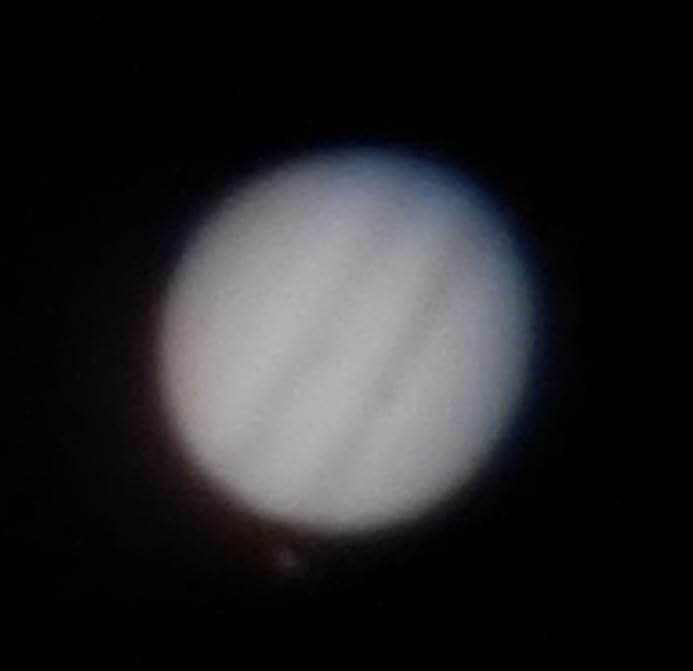
The aperture is the largest available in this roundup at 11 inches, paired with the 2800mm f/10 focal length. Owners report seeing Mars surface features and a polar ice cap, plus Jupiter’s moons and bands, which tells you the tube delivers planetary detail and not just light.
When a tube-only purchase makes more sense
If you already own a CGE or CG-5 class equatorial head, this is the efficient route. The dovetail drops straight on and you get 11 inches of aperture without replacing a mount. The same logic applies if you are upgrading from a 6-inch and want to keep your existing rig.
It also makes sense for imaging. Forty pounds of tube on a solid head, with the long focal length, is a workable planetary and lunar setup that you can bolt a camera to and forget about for a few seconds of exposure at a time.
What the missing box contents cost you
There is no mount, no tripod and no GoTo hand control, so you cannot point this thing at the sky on its own. You also need a dew shield, which owners add as standard, and a better focuser if you are imaging.
At roughly 40 pounds the tube needs a heavy-duty equatorial mount in the CGX or EQ6-R Pro class. Under-mount it and you are back to the wobble problem. Treat the mount as part of the cost, not an accessory.
One last practical note. The listing flags a one year limited warranty for the tube, which is shorter than the two year package warranty on the complete telescopes in this guide. Register the tube on arrival and keep the packaging.
8. Celestron EdgeHD 9.25 Schmidt-Cassegrain Optical Tube – Best Flat Field Tube
Celestron EdgeHD 9.25″ Flat-Field Telescope – Optical Tube Assembly
9.25 inch aplanatic
2350mm f/10
Tube assembly only
21 lb tube
Pros
- Aplanatic EdgeHD design removes field curvature for edge to edge sharpness
- About 21 pounds and 22 inches long so far easier to handle than an 11 inch tube
- Includes a 2 inch Luminos 23mm eyepiece and a reducer adapter
- CGE dovetail plate fits a wide range of compatible mounts
- Rated for both visual observing and astrophotography
Cons
- Optical tube only with no mount tripod or hand control
- Corrected manufacturer dimensions and weight in the listing conflict with the copy
- Manual focus needs an external or motorized focuser for imaging
This is the sleeper pick in the whole roundup. Four reviews, all five stars, no reported defects. The EdgeHD 9.25 packs a lot of aperture into a tube that a single person can carry down to the patio, and the flat-field aplanatic design is the same optical concept as the EdgeHD 8 in the CGEM II package without the mediocre eyepieces.
The stock accessories are unusually good for an optical tube assembly. You get a 2-inch Luminos 23mm eyepiece, a 1.25-inch reducer adapter and a 9×50 finder, which is a better starting kit than most complete telescope packages include.
Why the flat field matters for a backyard
A standard Schmidt-Cassegrain image is sharp in the middle and soft at the edges. EdgeHD optics remove that field curvature, so the corners of a wide eyepiece field stay as crisp as the centre. If you enjoy sweeping the Milky Way rather than staring at one object, that difference is the whole reason to pay for aplanatic optics.
The included reducer adapter also matters. At native f/10 the field of view is narrow, and dropping to a faster focal ratio with a reducer opens up a much wider stretch of sky in one eyepiece. For backyard scanning, that changes the whole night.
The catch: you own the mount problem now
No mount, no tripod, no hand control. At about 21 pounds the tube is light enough for a mid-weight equatorial head, and the CGE dovetail plate is included, so the component that usually causes trouble here is solved. The mount is entirely your problem to solve and budget for.
Also worth knowing: the published dimensions and weight in the listing conflict with the product copy, and manual focus means an external or motorized focuser for imaging. Verify the physical spec sheet against the manual before ordering a mount for it.
Which Schmidt-Cassegrain Aperture Do You Actually Need?
Five inches is a starter, six inches is the practical minimum for a backyard, eight inches is where planetary detail really opens up, and anything above that is for observers who already know what they want. Aperture is the single purchase decision in this category, and it is worth getting right before you spend on electronics.
A 5-inch Schmidt-Cassegrain shows you Saturn as a ringed dot and Jupiter with its moons. A 6-inch resolves the rings properly and shows the Cassini Division as a dark gap. An 8-inch gives you the Cassini Division cleanly, cloud structure on Jupiter, and craters along the lunar terminator that smaller scopes flatten out.
The light-gathering math explains why. Aperture area scales with the square of the diameter, so an 8-inch collects about 78 percent more light than a 6-inch, and an 11-inch roughly 41 percent more than a 9.25-inch. Deep-sky objects benefit most from that extra area. Planets benefit from resolution, which is a different measurement.
Our rule for a light-polluted backyard: buy the largest tube you will actually carry out and set up in the dark. A 9.25-inch you never take out of the garage is worth less than a 6-inch you use every clear night. If you want Saturn and Jupiter with real detail, that puts you at 8 inches or more.
Fork Mount or Equatorial Mount: What Carries an SCT Properly
A single fork arm is fine up to 8 inches. It is light, quick to set up, needs no polar alignment, and the NexStar 8SE is the clearest example of why that matters in a backyard. Above 8 inches the tube gets heavy enough that you want a German equatorial head to absorb vibration.
Forum advice on pairing large SCT tubes with mounts is consistent and worth taking seriously: for a 9.25-inch or 11-inch tube you want at least an EQ6-class head, such as an EQ6-R or AZ-EQ6. Pairing a heavy tube with an under-rated head is the most common regret in this category.
On the other hand, an equatorial head needs polar alignment, and polar alignment in the dark with a phone is its own learning curve. It also introduces field rotation, though that is irrelevant for visual observing. The trade is stability and imaging readiness against setup time.
For most backyard observers the honest answer is a fork up to 8 inches, and an equatorial only if you already know you want to grow toward imaging. The Advanced VX and CGEM II models in this guide cover the second case properly.
Living With a Schmidt-Cassegrain: Collimation, Dew and Power
Good news first. A Schmidt-Cassegrain is a closed, sealed tube, so unlike a Newtonian you do not collimate it every time you carry it outside. Most owners report optics that arrive collimated and stay that way for years. Check it occasionally, particularly after a bump or a temperature swing.
The corrector plate is the part to watch. Look through the front glass at an angle against a dark background and haze, fungus or internal fogging shows up immediately. Keep it capped when not in use, and never clean it with anything but a proper optical cleaning solution and lens tissue.
Dew is the routine nuisance. From a patio in autumn the front corrector will fog within an hour. A dew shield, a small USB or 12V dew heater band, and a hair dryer on low are the standard three-part answer. Many owners simply wait it out while the mirror warms up.
Power deserves a plan before the first session. Eight AA batteries will not last a full night, especially while tracking. A 12V power pack or the manufacturer’s AC adapter is effectively a required accessory for any multi-hour backyard session, and it is the one accessory worth budgeting for before your first night.
Last, spend your first accessory dollars on the star diagonal and one decent eyepiece. A cheap 1.25-inch diagonal vignettes the edges of a wide field and a stock Plossl leaves most of the aperture unused. Those two items change the view more than most owners expect.
When a Dobsonian Is the Better Buy
A Dobsonian of the same aperture shows more light for far less money, and the observing community has said so for decades. On Cloudy Nights the advice is blunt: a Dobsonian is your best bet, and the best bang for your buck is an 8-inch Dobsonian. That consensus has not changed, and we are not going to pretend it has.
So why buy an SCT anyway? Three reasons. Setup speed, because a Dob on a dolly still takes a few minutes and an 8SE takes about the same time on a light fork. Collimation, because a Dob needs its mirrors checked and adjusted after every move while a Schmidt-Cassegrain does not. And ergonomics, because a Dobsonian puts you at the eyepiece sideways and an SCT puts your eye at the back of a short tube.
Where the SCT genuinely loses is cost per inch of aperture and deep-sky imaging. At f/10 an SCT needs a reducer to photograph wide fields, and most of the money in these packages goes to the mount and electronics rather than the optic. A telescope forum regular puts it well: you are paying for the electronics, not for more light.
Our rule is simple. If you have storage, a vehicle, and patience to set up, a Dobsonian gives you the most sky for the money. If you want to go from a closet to the patio in one trip and see sharp planets tonight, the NexStar 8SE is the right instrument.
Celestron vs Meade for Schmidt-Cassegrains Today
Celestron effectively owns the new Schmidt-Cassegrain market. Meade and Orion both ceased operations on July 9, 2024, which means new-market support, parts and firmware for the LX200 and ETX lines no longer have a clear path. That is why every pick in this roundup is a Celestron, and it is not a coincidence.
For used buying the split is simple. A Meade LX200 optical tube is excellent, and owners who bought them in the 1990s still run them every clear night because the optics never noticed the company closed. The failure point is the electronics, and a dead hand controller on a discontinued line is a repair with no parts path.
The non-Celestron alternative is a Maksutov-Cassegrain, which uses a different corrector design and tends to give a slightly contrastier, narrower view. If you want a sealed catadioptric from another brand, that is where to look rather than the used LX200 market.
For our purposes, a used Celestron C8 tube remains one of the best values in the hobby. In production since 1970, a clean corrector plate makes it a lifetime optic. Verify collimation, check the focuser end to end, and treat any dead GoTo electronics as a reason to pass.
Frequently Asked Questions
What is the best telescope for backyard stargazing?
Within the Schmidt-Cassegrain category, the Celestron NexStar 8SE is the strongest all-round backyard telescope. Its 8-inch aperture resolves Saturn’s rings and Jupiter’s cloud bands, and the single-arm GoTo fork reaches observing position in minutes with SkyAlign and no polar alignment. Setup speed is the deciding factor, because a scope that is easy to carry outside is a scope you actually use.
Which Schmidt-Cassegrain telescope is considered the best?
The Celestron NexStar 8SE is generally considered the best Schmidt-Cassegrain overall, and it has the largest base of verified owners in this roundup. Best value for aperture goes to smaller fork-mounted models, the Celestron Evolution 9.25 wins for wireless setup, and the Advanced VX 9.25 or CGEM II 8 EdgeHD are the picks for equatorial mounting and imaging.
What size telescope is needed to see Saturn’s rings?
A 3-inch scope shows Saturn as an oval blob, roughly 4 inches resolves the rings as a distinct shape, and 6 to 8 inches reveals the Cassini Division as a dark gap. For Jupiter’s cloud bands and Mars surface markings, 6 inches is the practical minimum and 8 inches gives noticeably better contrast. Bigger is better up to the point where you stop carrying the scope outside.
What are the disadvantages of Cassegrain telescopes?
The main drawbacks are a narrow field of view at the native f/10 focal ratio, a high cost per inch of aperture compared with a Dobsonian, and the fact that f/10 is a real handicap for deep-sky imaging without a reducer. The closed tube also hides the optical surfaces, so problems are not visible until you look through the corrector plate. Fork-mounted models add some wobble at very high magnification.
Is Celestron better than Meade?
For new Schmidt-Cassegrain telescopes today, Celestron is effectively the only option with a full support path. Meade and Orion ceased operations on July 9, 2024, so parts, firmware and repair for LX200 and ETX models are uncertain. Used, a Meade LX200 optical tube is still excellent, but its 1990s electronics are the component most likely to fail.
Are Schmidt Cassegrain telescopes good?
Yes, for planets, the Moon and bright deep-sky objects, and they remain the best compact all-in-one option for a backyard. A Schmidt-Cassegrain combines a glass corrector plate, a concave primary and a convex secondary to fold a long focal ratio into a short sealed tube, which gives sharp images and low maintenance. For deep-sky value per dollar, a Dobsonian still wins.
The Bottom Line
The Celestron NexStar 8SE is the best Schmidt-Cassegrain telescope for backyard astronomy in 2026. It pairs an 8-inch aperture with the shortest setup time of any large scope we covered, and it has far more verified owners behind it than the alternatives.
Go further only with a reason. The Evolution 9.25 suits app-driven wireless setup, the Advanced VX 9.25 is the equatorial stepping stone, the CGEM II 8 EdgeHD is the imaging platform, and the 9.25 or 11-inch optical tubes make sense only if you already own a solid mount.
Before your first night, add a power source, a dew shield and one decent eyepiece. If you would rather cook outside than set up a heavy equatorial head, our backyard cookout guide is more your speed. And if a 25mm eyepiece is all you need to reach the Moon, we round up the best backyard-tested toaster ovens for the patio after dark.