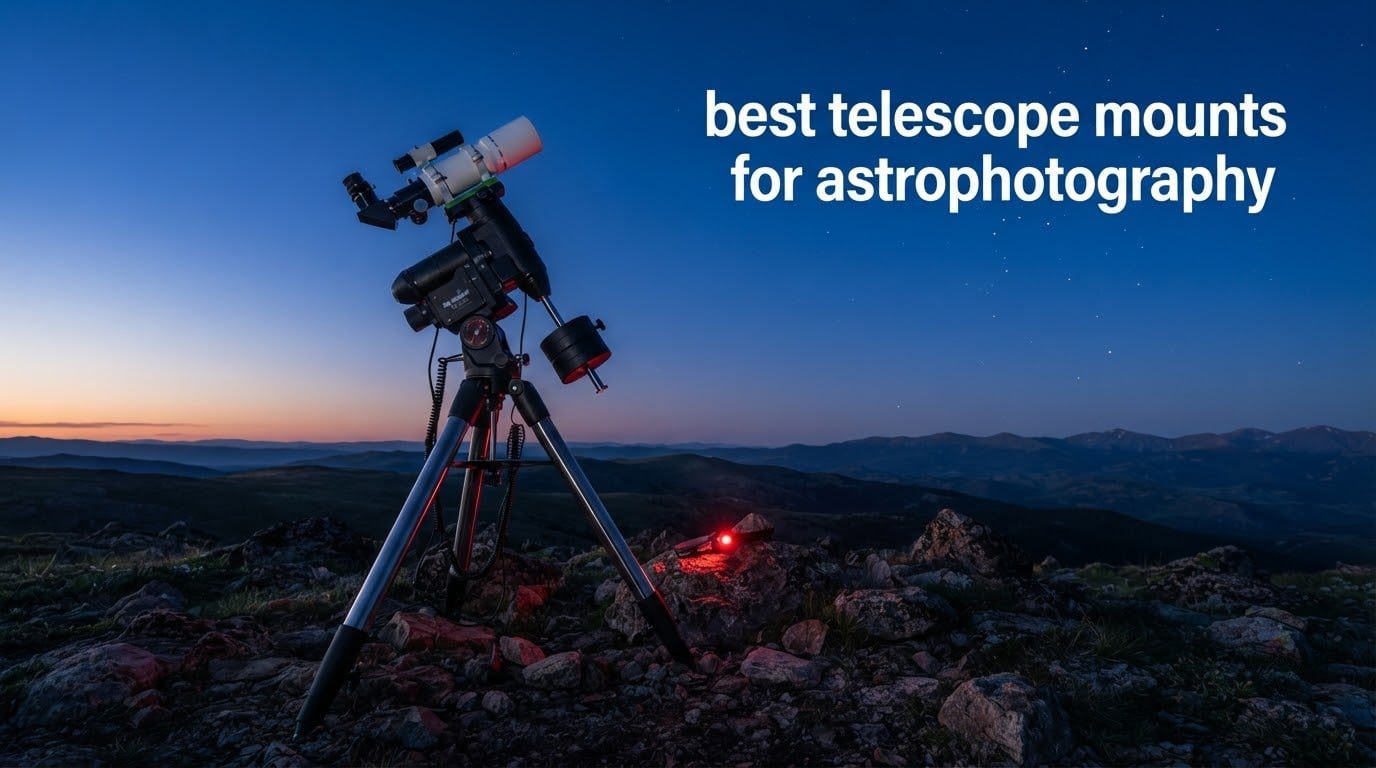
The mount is the one piece of equipment that decides whether your astrophotos show stars as sharp points or as short trails. A telescope can be excellent and a camera can be expensive, but if the mount is light, unbalanced or badly aligned, the error is already baked into every frame you capture and no amount of editing brings it back.
That is why experienced imagers spend most of their budget on the mount and keep it for years while upgrading everything else around it. After working through nine of the most popular equatorial and tracking platforms on the market, comparing payload, drive type, alignment hardware and real owner reports, these are the best telescope mounts for astrophotography in 2026 for every budget and every level of experience.
All nine picks below were ranked on the same criteria: how much imaging weight the mount can genuinely carry, how the drive holds tracking, whether polar alignment is quick in the dark, whether it can be guided or controlled from software, and what real owners report after months of use. Updated for 2026, this list also covers the gap most competing roundups miss, which is honest treatment of the lightweight tracking mounts that now handle a surprising share of wide-field imaging.
Table of Contents
- Top 3 Telescope Mounts for Astrophotography in 2026
- Best Telescope Mounts for Astrophotography at a Glance (October 2026)
- Equatorial vs Alt-Azimuth Mounts: Field Rotation Decides Which One You Need
- 1. Sky-Watcher Star Adventurer 2i Pro Pack: Best Overall Telescope Mount for Astrophotography
- 2. iOptron SkyGuider Pro: Top Rated Telescope Mount for Astrophotography
- 3. Celestron Advanced VX: Best Value German Equatorial Mount for GoTo Deep-Sky Imaging
- 4. Sky-Watcher Star Adventurer GTi Kit: Best Telescope Mount for Field GoTo Imaging
- 5. Celestron CG-4: Best Telescope Mount for Visual and Lunar Imaging
- 6. Sky-Watcher EQ6-R: Best Telescope Mount for 8-Inch Imaging Telescopes
- 7. Explore Scientific iEXOS-100-2 PMC-Eight: Best Budget Telescope Mount for Guided Imaging
- 8. iOptron SkyTracker Pro: Best Lightweight Telescope Mount for Air Travel
- 9. Celestron CGX: Best Telescope Mount for a Fixed Observatory
- How to Choose a Telescope Mount for Astrophotography in 2026
- Frequently Asked Questions
- Which Telescope Mount Should You Buy?
Top 3 Telescope Mounts for Astrophotography in 2026
If you want a shortcut, start here. The Star Adventurer 2i Pro is the most complete package for most people, the SkyGuider Pro is the best value, and the Celestron Advanced VX is the first mount to buy if you want computerized GoTo pointing in a full German equatorial design.

Sky-Watcher Star Adventurer…
- Built-in WiFi and SAM Console app
- Deluxe equatorial base
- Autoguider port for guiding

iOptron SkyGuider Pro Full…
- All-metal body
- 11 lb payload when balanced
- AccuAlign illuminated polar scope

Best Telescope Mounts for Astrophotography at a Glance (October 2026)
The full comparison table below covers every mount in the list, with the key specs that actually change your imaging results.
| Product | Specs | Action |
|---|---|---|
| Sky-Watcher Star Adventurer 2i Pro Pack |
|
Check Latest Price |
| iOptron SkyGuider Pro Camera Mount Full Package |
|
Check Latest Price |
| Celestron Advanced VX Computerized German Equatorial Mount |
|
Check Latest Price |
 Sky-Watcher Star Adventurer GTi Mount Kit Sky-Watcher Star Adventurer GTi Mount Kit |
|
Check Latest Price |
 Celestron CG-4 Manual German Equatorial Mount Celestron CG-4 Manual German Equatorial Mount |
|
Check Latest Price |
 Sky-Watcher EQ6-R Computerized GoTo Mount Sky-Watcher EQ6-R Computerized GoTo Mount |
|
Check Latest Price |
 Explore Scientific iEXOS-100-2 PMC-Eight Tracker Explore Scientific iEXOS-100-2 PMC-Eight Tracker |
|
Check Latest Price |
 iOptron SkyTracker Pro Camera Mount iOptron SkyTracker Pro Camera Mount |
|
Check Latest Price |
 Celestron CGX Computerized German Equatorial Mount Celestron CGX Computerized German Equatorial Mount |
|
Check Latest Price |
Equatorial vs Alt-Azimuth Mounts: Field Rotation Decides Which One You Need
There are two types of telescope mount, and for long-exposure deep-sky work you need the equatorial one. An alt-azimuth mount swings horizontally and vertically, which is fine for visual observing and short lunar or planetary bursts, but a deep-sky image taken on one rotates the field as the mount follows the sky. Guiding cannot fix that rotation, because it is a shape change rather than a drift.
An equatorial mount tilts one axis, the right ascension axis, up to the celestial pole. Once that axis is polar aligned, a single motor spinning it at sidereal rate cancels the apparent westward drift of the stars, so the field stays put for minutes or hours.
That is also why alt-az mounts keep appearing in beginner conversations. Cloudy Nights threads track alt-az options for planetary and lunar imaging on a regular basis, and for those short-exposure targets the field rotation problem does not have time to build up. The rule of thumb most imagers land on is simple: alt-az for the Moon and planets, equatorial for anything you plan to stack for a few hours.
1. Sky-Watcher Star Adventurer 2i Pro Pack: Best Overall Telescope Mount for Astrophotography
Sky-Watcher Star Adventurer 2i Pro Pack (S20512)
7 lb packed weight
Built-in WiFi with SAM Console app
Deluxe equatorial base included
Autoguider port
Pros
- Accurate tracking once polar aligned
- Compact and quick to set up
- Autoguider port for guided imaging
- Illuminated polar alignment scope
Cons
- Steep polar alignment learning curve
- Red plastic parts feel flimsy
- Basic smartphone app
- Sparse small parts
This is the mount I recommend first to almost anyone asking about the best telescope mounts for astrophotography. It is a compact motorized tracking platform rather than a full German equatorial head, which means it mounts on a photographic tripod you may already own and packs into a carry bag instead of a car boot.
Reviewers consistently report the same thing once the owner masters alignment: tracking accuracy is genuinely good, with sharp stars at two and three minute exposures using lenses up to 300mm. The updated 2i Pro adds built-in WiFi, so you control the mount and adjust exposure timing from the free SAM Console app on a phone, and the deluxe equatorial base that ships in the pack takes a lot of the guesswork out of getting level and pointed at the pole.
The autoguider port is the feature that separates it from a basic dumb tracker. Plug in a guide camera and it becomes a guided mount, which is how you push past the un-guided limit and take longer subframes without worrying about drift.
Setup takes about five minutes once you know the routine, and the whole head is 7 pounds with dimensions of 13.9 by 9.6 by 6.3 inches, so it travels easily. It runs on included lithium metal batteries, and the model has been in production since January 2019, which means replacement parts and firmware advice are easy to find online.
What you get once the polar alignment is dialled in
Sharp two to three minute subframes with lenses up to about 300mm are the realistic ceiling most owners report, and autoguiding stretches that further. The illuminated polar alignment scope removes the guesswork from the single step that trips up most beginners.
The design integrates with existing photographic tripods, so you can also use it for time-lapse video and telescopic work. Buyers upgrading from a manual tracker notice the motorized sidereal rate and the app-based control immediately.
Where it will frustrate you
The learning curve is real. Balancing a camera on an off-centre axis and getting a clean polar alignment in the dark takes practice, and the first few sessions can eat an evening.
Two smaller complaints come up repeatedly: the red plastic mounting plate and battery cover feel flimsy, and the app is basic compared with newer ecosystems. Reviewers also note that small parts such as the polar illuminator adapter are sparse, so customer service may substitute rather than replace them.
2. iOptron SkyGuider Pro: Top Rated Telescope Mount for Astrophotography
iOptron SkyGuider Pro Camera Mount Full Package
11 lb balanced payload
All-metal body
2.2 lb mount head
20 hr internal battery
Pros
- Smooth belt-driven gearing
- Pinpoint stars at 2-3 minute exposures
- Head fits in a camera bag
- AccuAlign illuminated polar scope
Cons
- No GoTo so targets are found manually
- Polar scope may arrive out of collimation
- Supplied hex keys lack a 1.5 mm key
The SkyGuider Pro is the pick I send people who want a machined metal tracker rather than a plastic one. The all-metal body and precisely machined parts are the reason it holds pinpoint stars at two to three minute exposures even with glass in the 300mm to 500mm range, according to owner reports.
It carries up to 11 pounds of optical equipment when balanced, which is a genuine step up from entry trackers and enough for a small refractor or a heavy telephoto setup on a counterweight kit. The alt-azimuth adjustable base gives a latitude range of minus 30 to 65 degrees with plus or minus 5 degrees of azimuth adjustment, so it works in most observing locations without a wedge.
The integrated AccuAlign dark field illuminated polar scope is a real convenience at a dark site, and the internal rechargeable battery runs up to 20 hours of operation at 20C. The head itself weighs only 2.2 pounds and folds down, so the packed system is easy to carry in one bag.
For full-package buyers the bundle includes the carrying case and a counterweight kit for heavier telephoto glass. The mount also offers sidereal, lunar, solar and half-siderial tracking rates with an autoguide port, so it can be guided like the trackers above it.
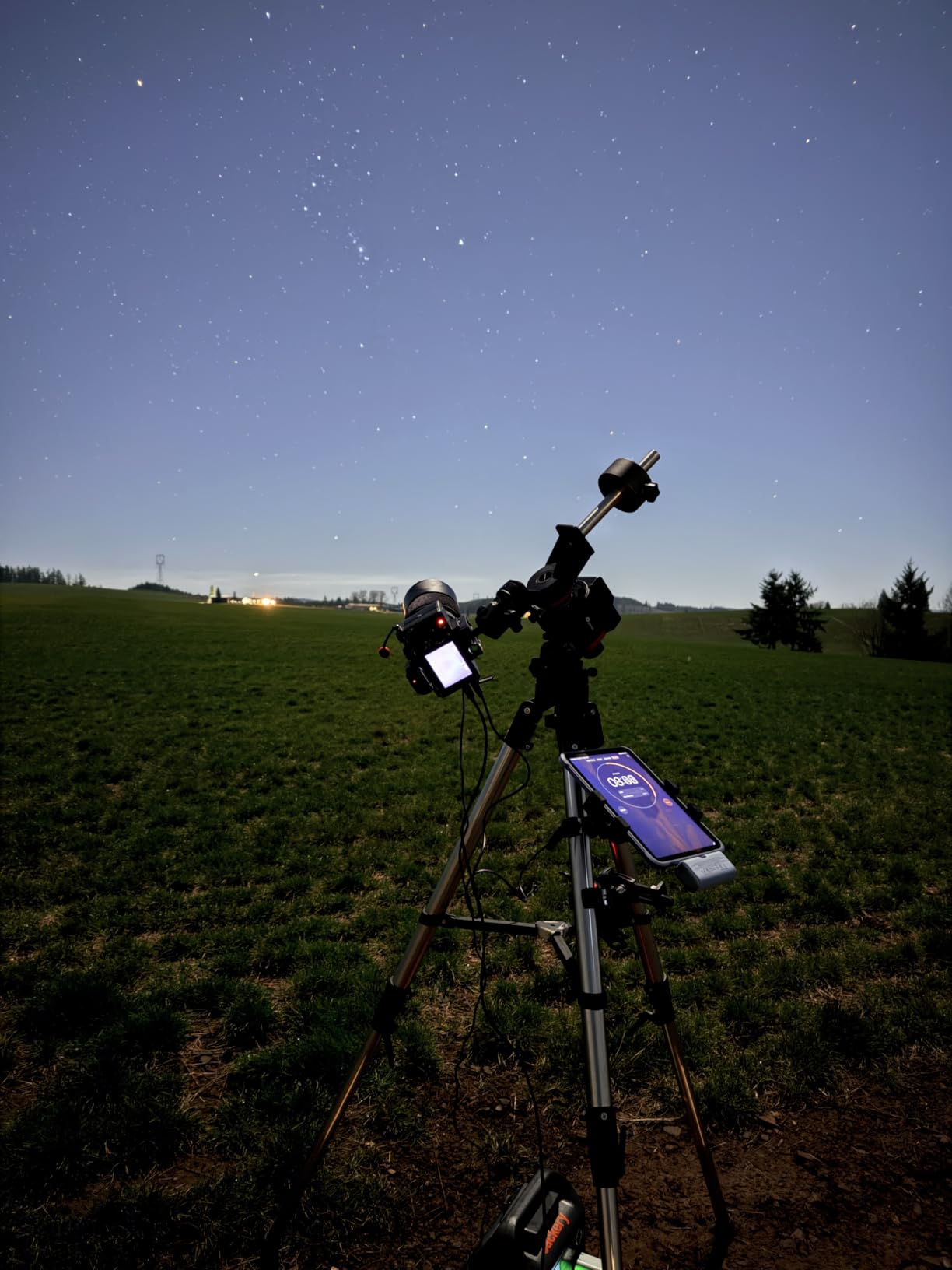
What stands out in the specs is the ratio of metal to mass. A 2.2 pound head that handles 11 pounds balanced is a much stiffer design than a heavier plastic head of the same capacity, and that stiffness is what keeps the guiding graph flat.
The 10.1 pound listed weight covers the complete package, and the unit measures 11.2 inches deep by 11.2 inches wide by 5.8 inches high, folding to 3.74 by 4.53 by 5.24 inches. A one year limited warranty applies.
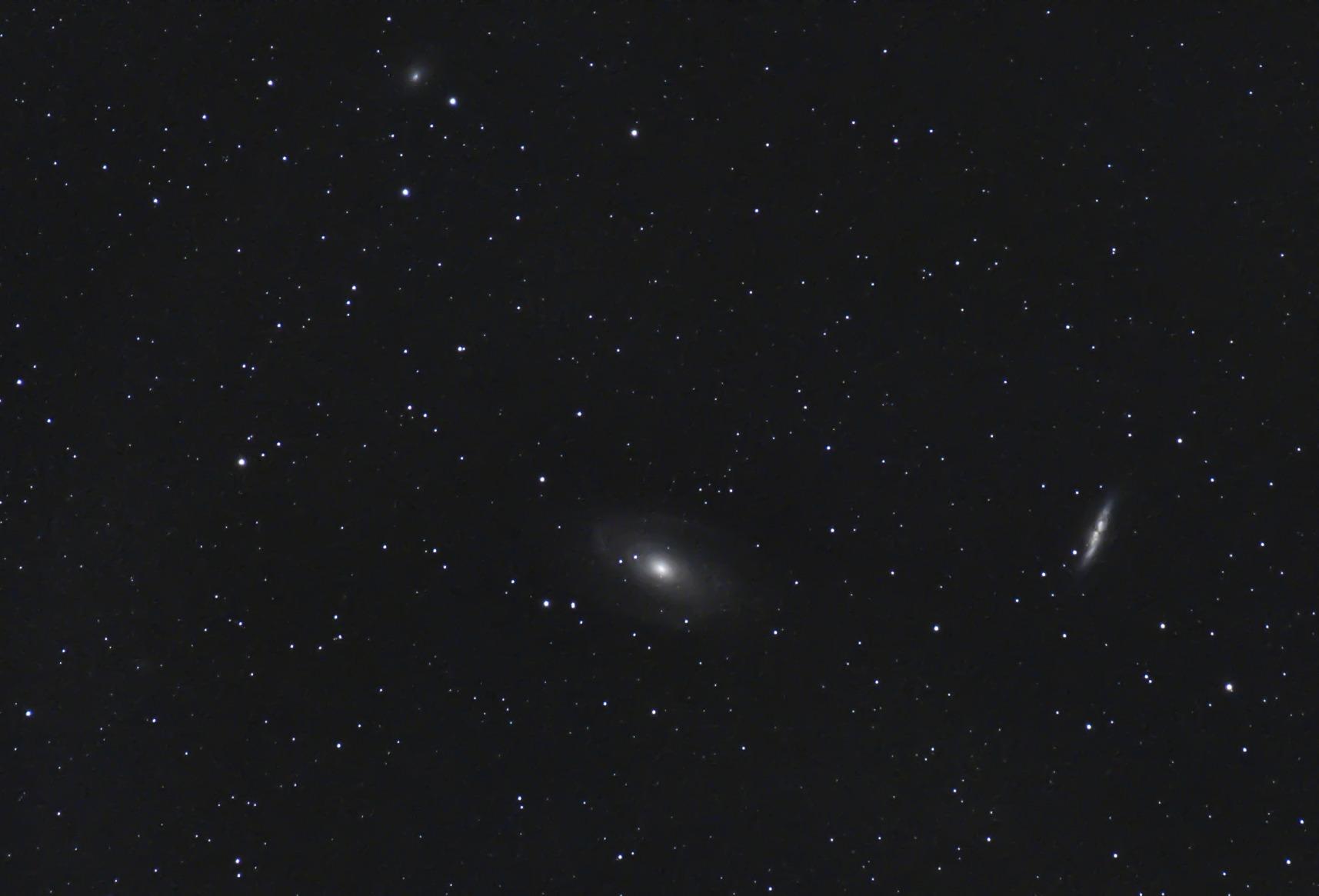
Best for wide-field and mild telephoto work
Pair it with a camera and a lens up to 500mm and you get clean, repeatable subframes without the alignment drama of a larger mount. Owners of every experience level report sharp two-minute subframes with both DSLR and mirrorless bodies.
The internal battery means no power bank in the field for a typical night. Rough estimates from owners put a full charge at about 15 to 20 hours of tracking.
Where it falls short
There is no GoTo capability, so you point the camera yourself and frame your target manually. For beginners who want to slew to a Messier object automatically, that is a real gap.
The polar scope can also arrive out of collimation, and the loose eyepiece can disturb the reticle while you adjust it. Owners also point out that the supplied hex key set does not include the 1.5 mm key needed to collimate the polar scope.
3. Celestron Advanced VX: Best Value German Equatorial Mount for GoTo Deep-Sky Imaging
Celestron Advanced VX Computerized German Equatorial Mount – 30lb Payload
30 lb payload
2 inch stainless steel tripod legs
NexStar+ controller with 40000+ objects
All-Star Polar Align
Pros
- Stable tripod built for imaging rigs
- GoTo with a 40000+ object database
- PPEC and PWI software support
- Tracks in all four hemisphere modes
Cons
- Heavy 47-50 lb kit to transport
- 30 lb limit is tight for large tubes
The Advanced VX is the first full German equatorial mount on this list, and it is where a lot of imagers move once a tracker runs out of payload. It holds 30 pounds and sits on 2 inch stainless steel tripod legs, which is the part that matters for damping vibration during long subframes.
Alignment is handled by All-Star Polar Align, which works out the pole position from a star alignment rather than a physical polar scope, and periodic error is tamed with PPEC alongside Celestron PWI software. The NexStar+ hand controller carries a database of more than 40,000 objects and offers several alignment procedures you can pick from.
Latitude adjustment runs from 7 to 77 degrees, and the dual saddle plate accepts telescopes with CG-5, CGE-style or Vixen format dovetails, so it is easy to pair with an existing imaging tube.
Tracking rates cover sidereal, solar and lunar, plus EQ North and EQ South modes for observing below the celestial pole. For a rig that stays outside on a pier, that combination of stability, payload and software is hard to argue with.
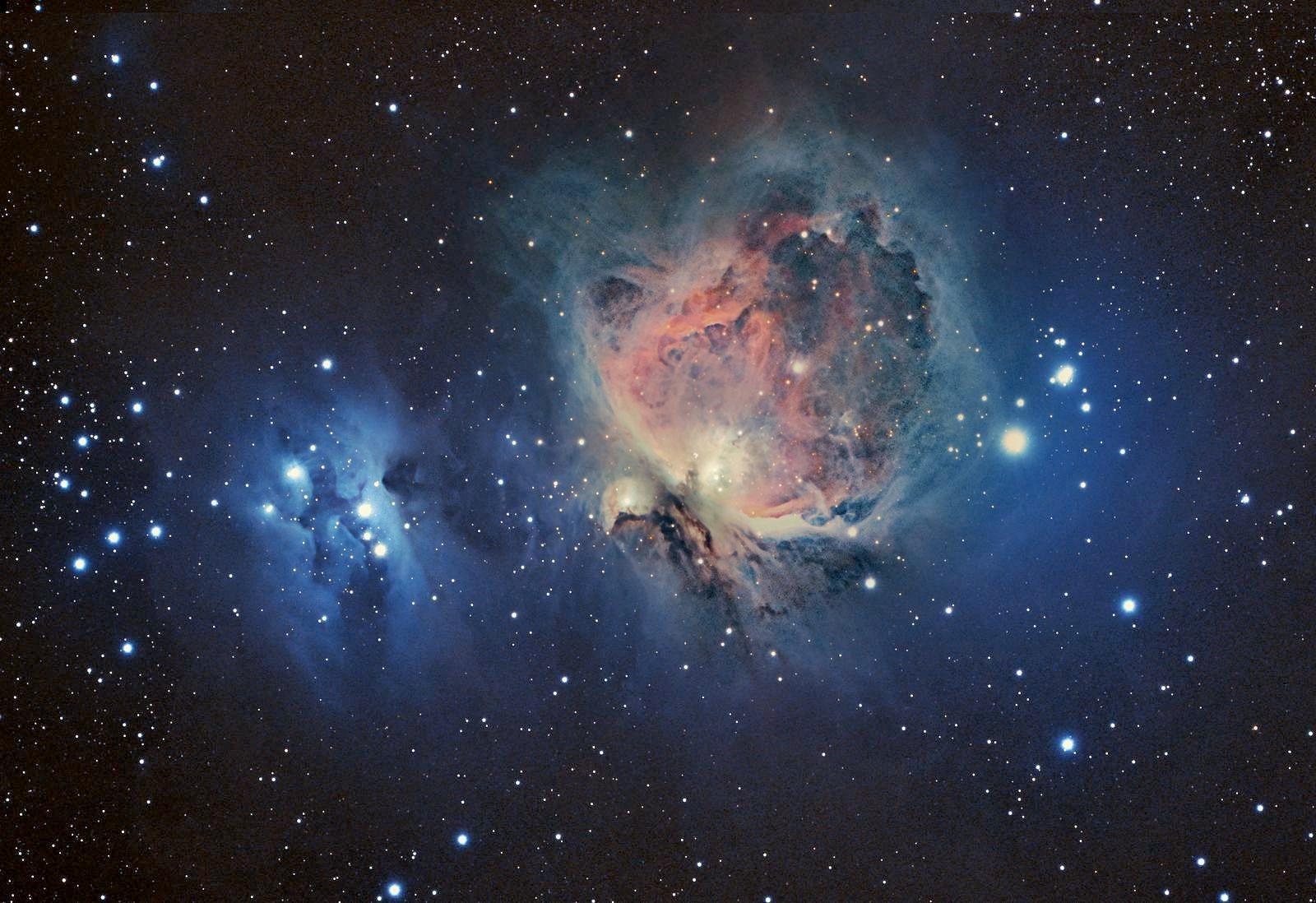
It is worth being blunt about one long-standing myth. The 30 pound figure is a real rating, but experienced imagers treat it as a ceiling for visual use rather than a target for imaging, and most settle on running well under half of it with a loaded accessory stack.
Do the arithmetic before you commit. An imaging train adds up fast: optical tube, camera, filter wheel, guide camera, guide scope, rings and dovetail all count toward the number on the label.
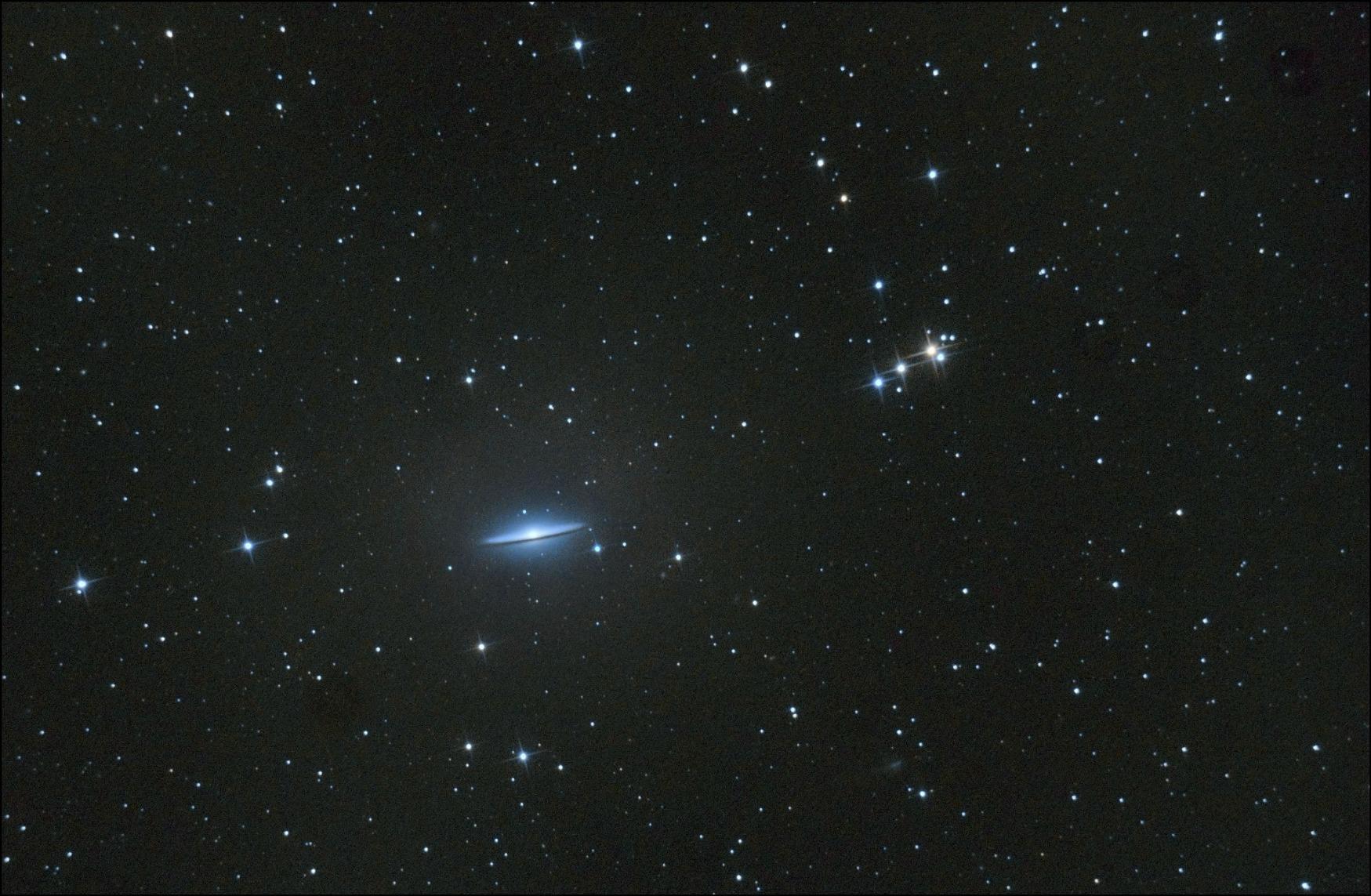
Best for small to medium imaging tubes
A refractor in the 60mm to 100mm class, or a modest Schmidt-Cassegrain with a light camera, sits comfortably on this mount. Reviewers describe tracking as reliable and the guiding data as steady once the balance is right.
Software support is the quiet strength here. PPEC, All-Star Polar Align and PWI give you a repeatable workflow that transfers directly to PHD Guiding or similar capture software.
Where it becomes a problem
Weight is the main complaint. The kit weight is listed at 47 pounds and the mount itself at 50 pounds, and reviewers consistently call it cumbersome to transport to dark sites compared with a tracker head.
The second limit is payload headroom. Owners using larger imaging telescopes note that 30 pounds gets tight quickly once a filter wheel and guide scope are stacked on the end, which is when the next tier up makes more sense.
4. Sky-Watcher Star Adventurer GTi Kit: Best Telescope Mount for Field GoTo Imaging
Sky Watcher Sky-Watcher Star Adventurer GTI Mount Kit with Counterweight, CW bar, Tripod, and Pier Extension – Full GoTo EQ Tracking Mount for Portable and Lightweight Astrophotography
GoTo head with built-in WiFi
Tripod and pier extension included
5 lb counterweight and bar
26 lb kit weight
Pros
- GoTo pointing from a phone
- Complete kit in one package
- Illuminated polar scope
- Portable equatorial design
Cons
- Heavier than a head-only setup at 26 lb
- Best suited to light payloads
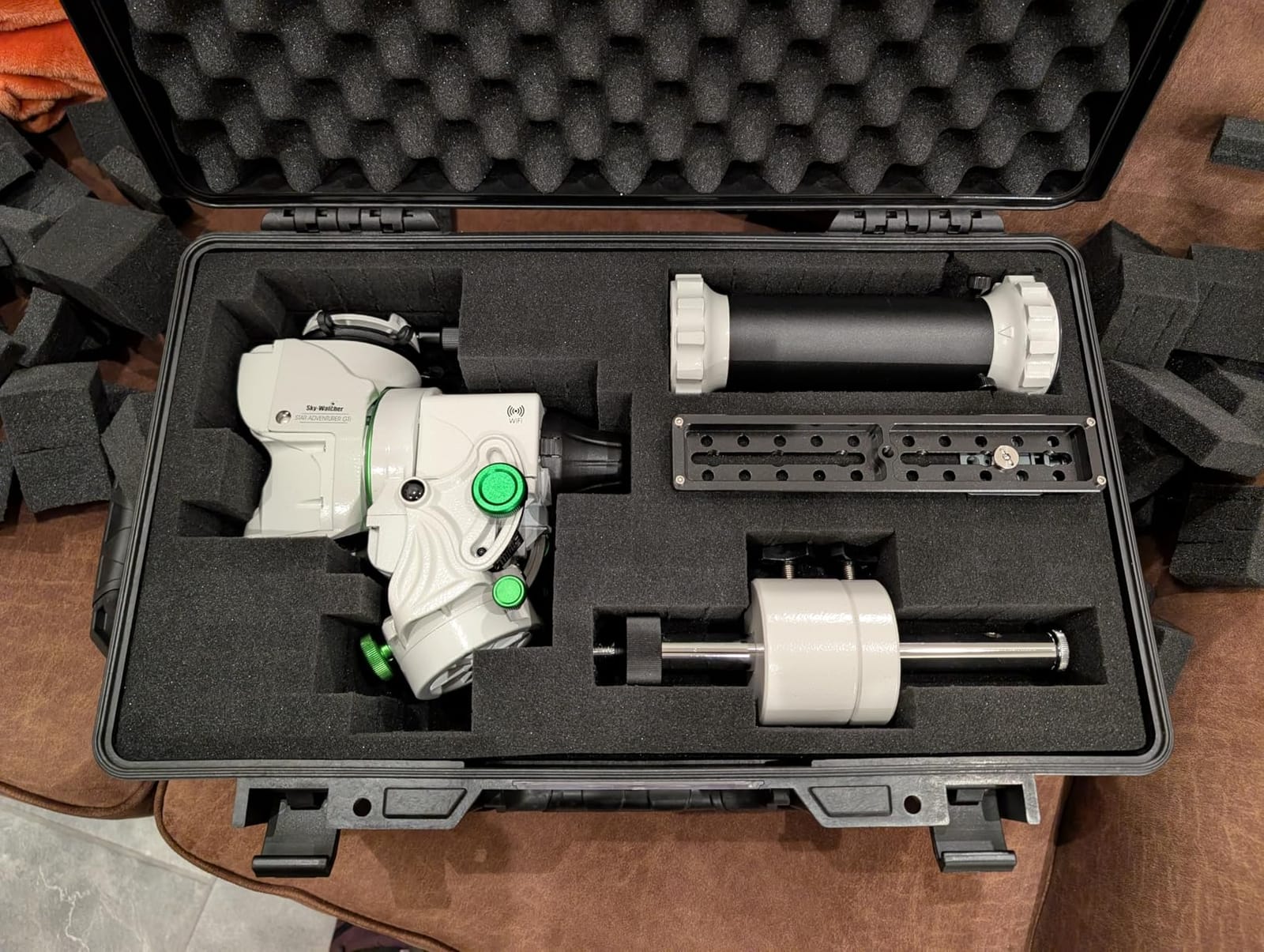
The GTi is the Star Adventurer platform with the two things the base model leaves out: motorized GoTo pointing and a counterweight assembly. That combination makes it the pick for anyone who wants an equatorial mount that still packs down for a trip to a dark site.
You can frame a target from the phone app instead of hunting for it manually, and the built-in illuminated polar scope handles alignment without needing a separate accessory. Because the equatorial platform carries a counterweight bar, you can mount the camera slightly off centre instead of dead on the axis, which reduces the load the drive has to hold.
Everything you need is in the box, which is the practical argument. The package includes the counterweight bar, a 5 lb counterweight, the tripod and a pier extension, so there is no second order to place before your first night out.
The tripod reaches a maximum height of 44.5 inches with 1.5 inch leg diameter, and the kit is covered by a two year limited warranty.
Spec sheet numbers worth noting: the kit lists at 26 pounds and 44 by 9 by 13 inches, model S20595, and it is compatible with a smartphone as the control device. That weight figure is the honest part of the deal, and it is what buyers notice first.
It is still more than you would carry if you already own a solid photographic tripod and only plan to shoot with a camera and a short lens.
Best for a camera and light refractor on a field trip
Reviewers treat it as an upgrade path for Star Adventurer users who want smartphone control and GoTo without moving to a full German equatorial head. The counterweight and pier extension make it a ready-to-go rig straight out of the box.
It handles a mirrorless body with a telephoto lens, or a small refractor, with stable tracking and repeatable alignment once you settle on a routine.
Where it does not stretch
At 26 pounds with the tripod, it is meaningfully heavier than a head-only configuration, and reviewers who fly with their gear feel that difference in the carry.
It is built for light payloads. The consensus owner view is that a heavier imaging telescope with a filter wheel and guide scope outgrows this platform quickly, at which point a mid-range German equatorial mount is the better destination.
5. Celestron CG-4: Best Telescope Mount for Visual and Lunar Imaging
Celestron CG-4 Manual German Equatorial Mount with Steel Tripod
20 lb payload
Dual-axis slow-motion controls
1.75 inch stainless steel legs
Accepts a motor drive
Pros
- Rock-solid stainless steel tripod
- Smooth manual slow-motion on both axes
- 20 lb payload covers mid-size tubes
- 12.5 lb tripod is easy to carry
Cons
- No motorized tracking as supplied
- Not suited to unattended long-exposure imaging
The CG-4 is the odd one out in this list, and that is exactly why it is here. It is a manual German equatorial mount with slow-motion controls on both axes, which makes it an excellent first equatorial platform for visual observing and for a beginner learning how a GEM works.
The tripod is the star of the specification sheet. Stainless steel legs at 1.75 inch diameter, adjustable between 33 and 47 inches, damp vibration far better than the lightweight aluminium tripods that come with cheaper mounts, and reviewers single it out repeatedly as the reason to buy this model.
Payload capacity is up to 20 pounds, which comfortably covers a mid-size telescope with accessories. At 7 kilograms, with the tripod alone weighing 12.5 pounds, the whole thing moves between observing sites without a second car.
A one year limited warranty applies, and the mount accepts a motor drive as an accessory if you later want tracking.
Being straight about the limitation: as supplied, this mount does not track. Manual slow-motion controls let you nudge the target across the field for visual work and for short lunar and planetary bursts, but there is no motorized sidereal rate to hold a field for a long exposure.
That is why reviewers describe it as a visual observing mount or as a stable base that can accept a motor drive later, rather than an imaging platform.
Best for learning equatorial mounting
Nothing else on this list gives you this much mechanical stability per pound at a manual price point. The slow-motion controls let you centre an object precisely, which teaches you how a German equatorial mount moves and how to balance one.
Lunar and short planetary imaging is well within its comfort zone, and the vibration damping of the steel legs helps even those brief exposures stay clean.
Where it will not fit your plan
If your goal is deep-sky imaging, you need a motorized mount. Without a motor drive fitted, the CG-4 cannot support unattended long exposures, so it belongs in a visual and short-exposure plan rather than an integration plan.
Plan on adding a motor drive or moving up to one of the motorized models if you are buying for imaging. The tripod and head will still be there when you do, which is a reasonable way to spend a budget in stages.
6. Sky-Watcher EQ6-R: Best Telescope Mount for 8-Inch Imaging Telescopes
Sky-Watcher EQ6-R – Fully Computerized GoTo German Equatorial Telescope Mount – Belt-driven, Motorized, Computerized Hand Controller with 42,900+ Celestial Object Database
44 lb payload
Belt-driven stepper motors
SynScan controller with 42000+ objects
ST-4 autoguide and EQMOD
Pros
- Quiet belt-driven slewing
- Handles heavy imaging accessories
- Encoders with permanent PE correction
- Works with EQMOD and PHD Guiding
Cons
- Over 75 lb fully assembled
- Factory grease can cause stiction
- Hand controller LCD fails in cold
The EQ6-R is where serious imaging rigs land. A 44 pound payload in an all-metal construction puts it well past the point where a small refractor is fighting the mount, and the belt-driven stepper motors are the reason reviewers describe it as the strongest value in its weight class.
Guiding is where the extra mass pays off. Owners report guiding well under an arcsecond with a guide camera once alignment and balance are right, and the encoder system with PPEC records and replays the periodic error so a good night stays good on the next one.
Control is thorough: the SynScan hand controller carries a database of more than 42,000 objects, and the mount supports EQMOD, ST-4 autoguide and standard USB control through capture software. A built-in illuminated polar finder scope means you can align in the dark without buying a separate scope.
The box includes the mount head, hand controller, cables, a DSLR trigger cable and a counterweight bar extension, plus a tripod, spreader bar and two 11 lb counterweights. The two year warranty is a step up from most of the field.
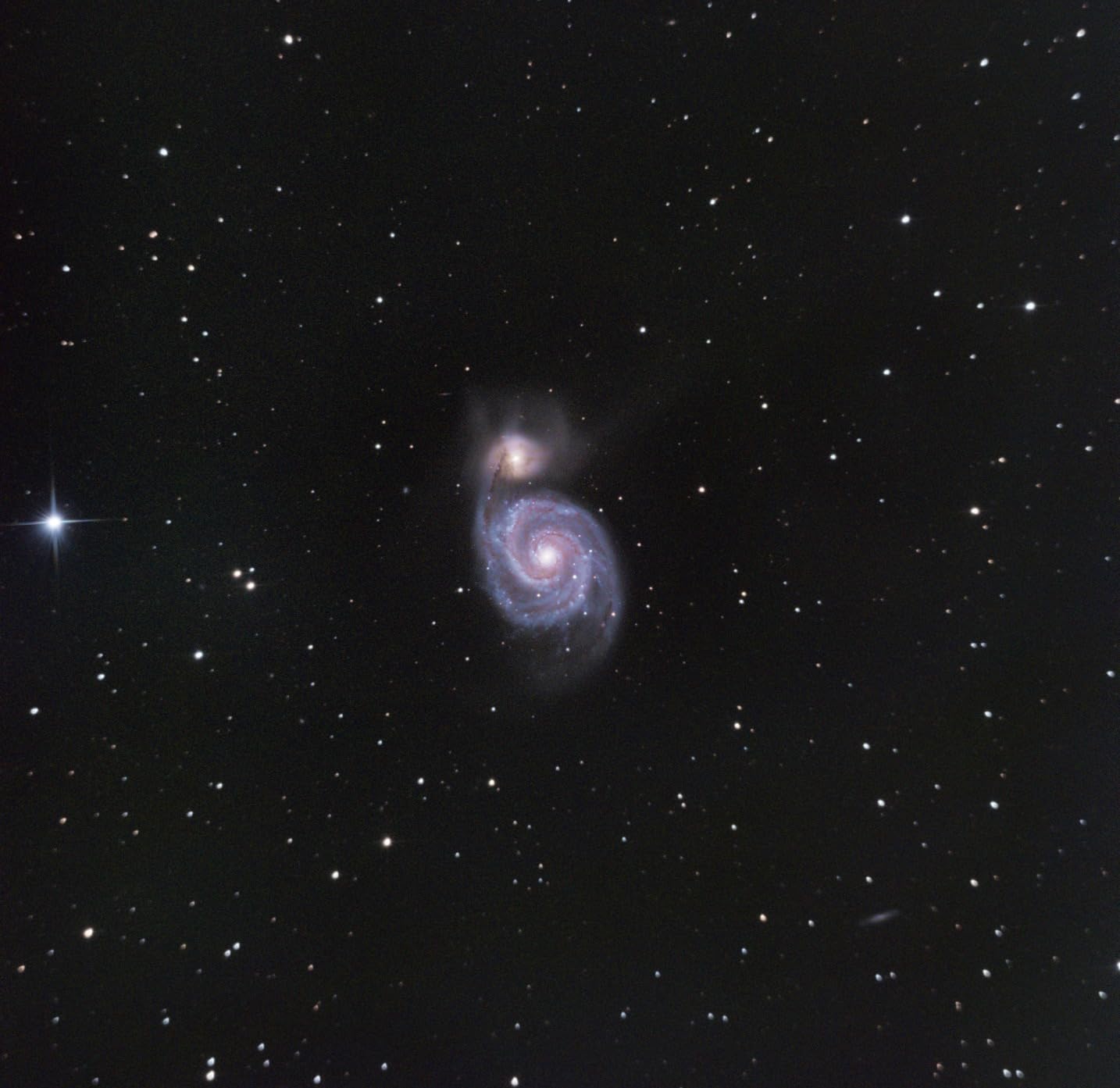
Power deserves a note because it catches people out. The specification calls for an electric cable supply of 12V at 4 amps minimum, and owners report that the mount needs a supply in the 12V to 13V range to slew reliably rather than brown out mid-move.
The tripod has 2 inch legs and the head has a built-in carry handle, which is the detail that matters most here. You will move this thing more often than you expect.
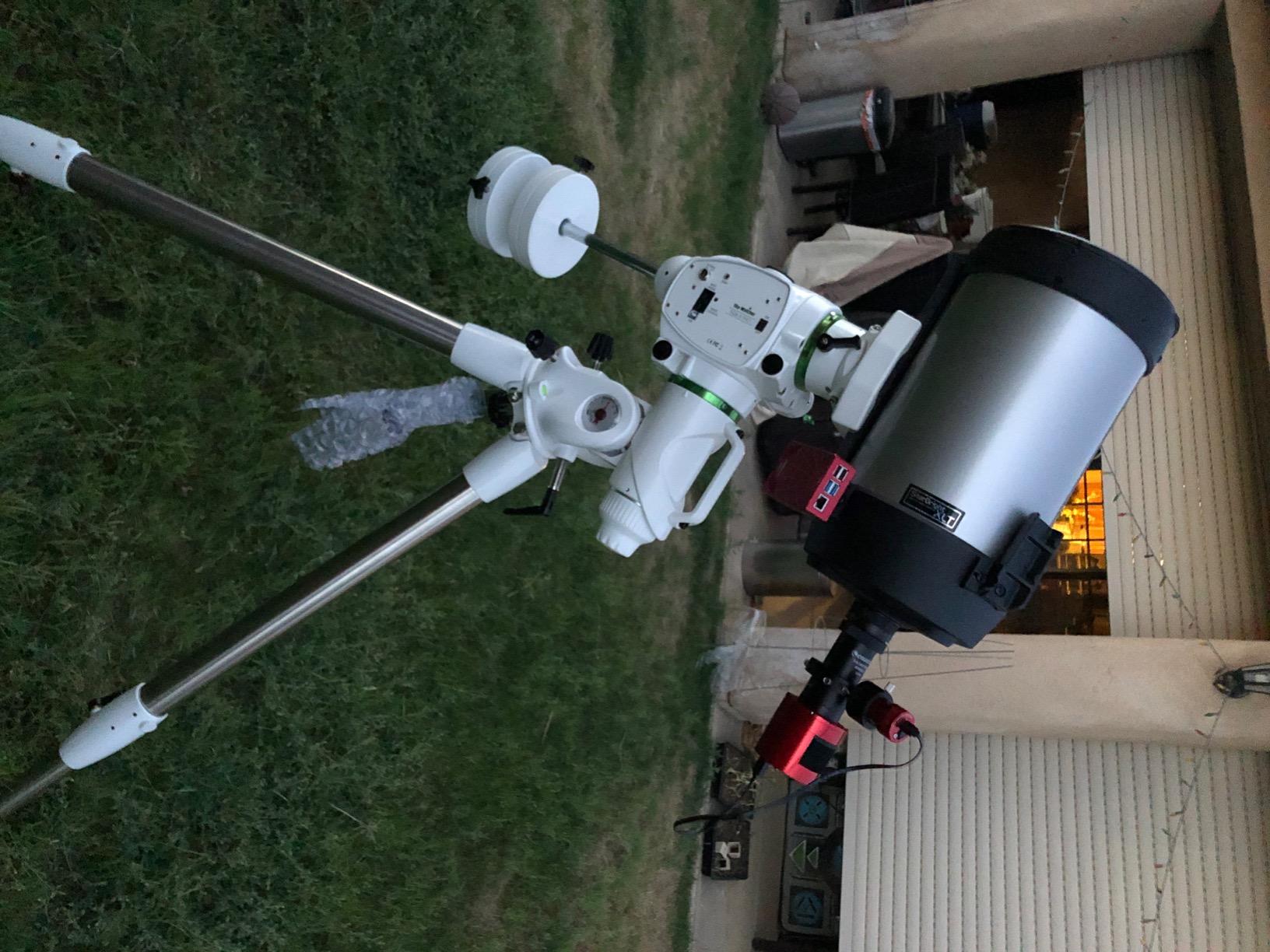
Best for long focal length rigs
An 8-inch imaging optical tube with a camera, filter wheel and guide scope is exactly the combination owners report carrying comfortably. Long focal lengths amplify every tracking imperfection, and this is the tier where that amplification is under control.
EQMOD, PHD Guiding and ASIAIR style control setups are all reported as working smoothly, so it fits into an existing software workflow without friction.
Where the compromises are
Weight dominates every review. The system is over 75 pounds fully assembled, and reviewers describe it as awkward to transport to remote sites, which is the honest cost of a 44 pound payload.
Two smaller issues come up: factory grease on the bearings and worm gear can create stiction that you feel while balancing, and the hand controller LCD has been reported to stop working in very cold conditions. Neither is a deal breaker, but both show up in cold-weather use.
7. Explore Scientific iEXOS-100-2 PMC-Eight: Best Budget Telescope Mount for Guided Imaging
iEXOS-100-2 PMC-Eight Equatorial Tracker System Tripod and Mount for Astrophotography with WiFi and Bluetooth Compatible
PMC-Eight eight-processor control
Clutched dual-axis worm gears
ExploreStars GoTo app
WiFi and Bluetooth
Pros
- 3-5 minute guided subframes
- About 1.5 arcsec guiding on light rigs
- Clutched axes make balancing repeatable
- Stable wired USB control
Cons
- ExploreStars app crashes and disconnects
- Steep learning curve and weak documentation
- Very limited azimuth adjustment
- Polar scope sold separately
The iEXOS-100-2 is the budget pick here, and the asterisk is that its 3.9 rating reflects the software rather than the mechanics. Owners repeatedly report 3 to 5 minute guided subframes and roughly 1.5 arcsecond guiding variation with a RedCat 51 and an ASI533MC Pro on an ASIAIR, which is serious performance for this tier.
The mount uses PMC-Eight control with eight independently operating processors for fast timing intervals, and the axes use clutched dual-axis worm gears with quiet precision stepper belt drives. Those clutches are the underrated feature: they let you balance a small payload quickly and repeatably without hunting for a balance point every session.
Alignment uses a sight hole through the RA axis with altitude control rather than a removable polar scope, which is why several owners note the polar scope is a separate purchase. A small share of users also recommend the optional adapter because azimuth adjustment is very limited without it.
Connectivity covers WiFi and Bluetooth through the ExploreStars app for Apple, Android and Windows tablets, with GoTo across tens of thousands of objects, and wired USB control is reported as stable in software such as ASCOM and NINA.
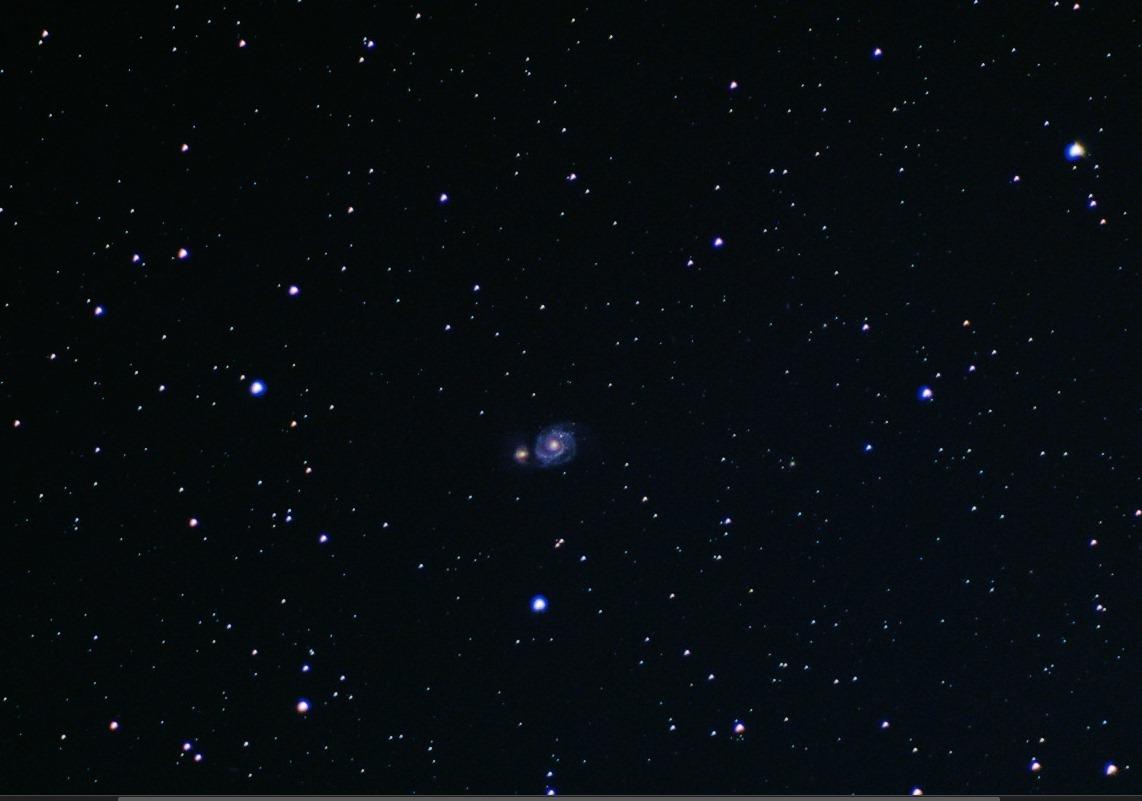
The honest summary is that the hardware does things mounts costing considerably more cannot. What drags the rating down is everything around it, starting with an app that owners describe as poorly laid out and prone to crashing or losing connection on Android and Windows.
Documentation is a second weak point. Reviewers report a steep learning curve and outdated tutorials, and they advise being picky about the power supply voltage.
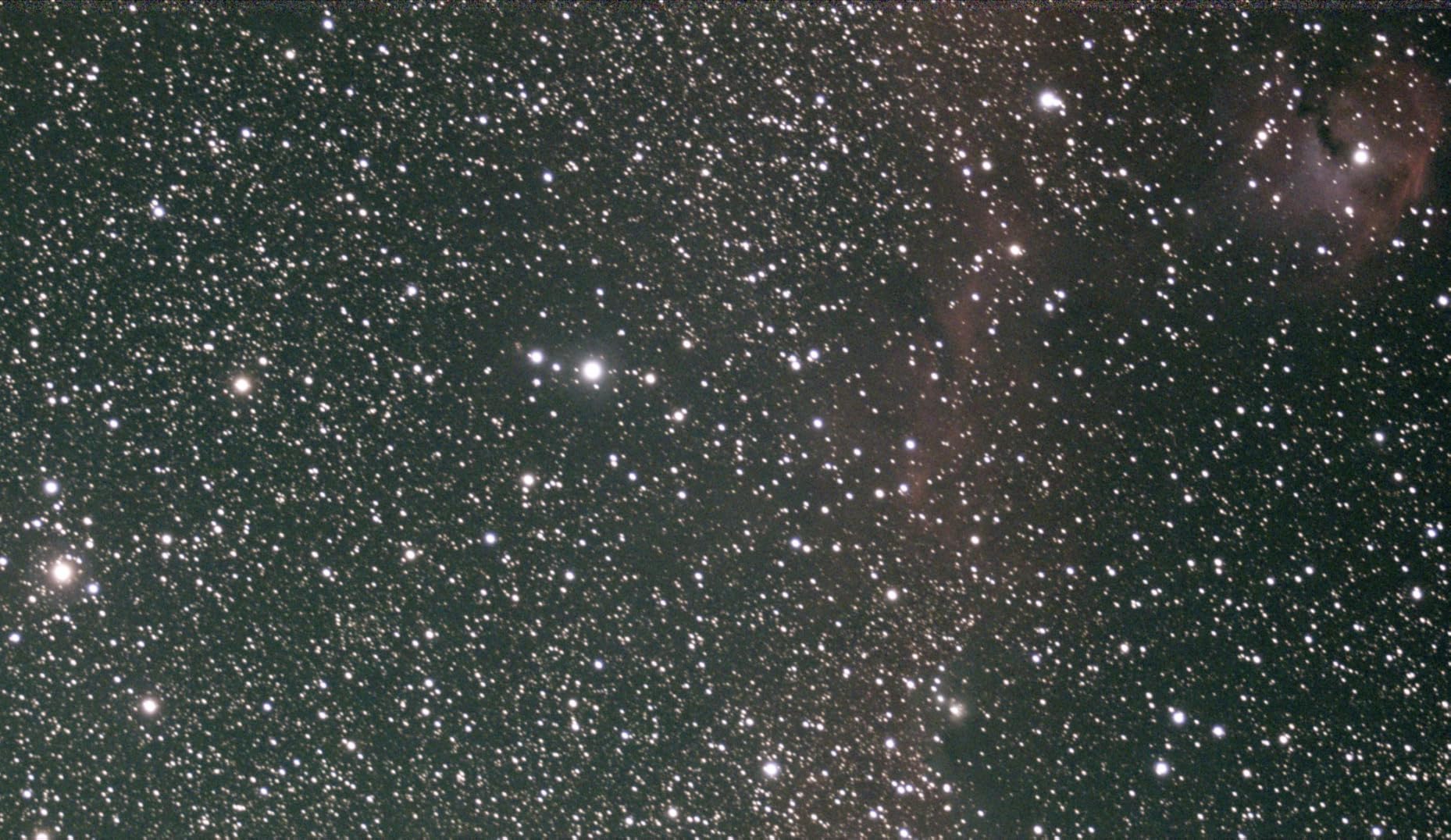
Best for a first guided imaging rig
If your plan is a small refractor or a fast astrograph, this mount can produce guided subframes long enough to build a real image. The light and quiet operation also makes it a sensible first step up from a camera tripod.
Owners running PHD2, Ekos or StellarMate over wired USB report stable control, which means the mount can be part of a proper capture workflow rather than a manual stepping exercise.
Where it becomes frustrating
The ExploreStars app is the most common complaint by a distance, with frequent crashes and lost connections on mobile devices. If you rely on wireless control, budget time for troubleshooting or use a wired connection.
Add to that very limited azimuth adjustment without the separate adapter, the separately purchased polar scope, and slow manufacturer support on service requests. Budget buyers who can live with the software get a capable mount; buyers who want a smooth app experience should look elsewhere.
8. iOptron SkyTracker Pro: Best Lightweight Telescope Mount for Air Travel
iOptron SkyTracker Pro Camera Mount with Polar Scope, Only
6.6 lb payload
3.3 lb packed weight
Four tracking rates
Internal rechargeable battery
Pros
- Clean 4-5 minute exposures on short lenses
- Self-contained rechargeable design
- Almost silent jogging operation
- Many fine alignment knobs
Cons
- Swivel head rubber slips under heavy loads
- Counterweight kit needed for telephoto glass
- Dovetail base is not Arca-Swiss
- Alignment reference app sold separately
Travel arguments dominate the portable mount conversations, and a long-running Stargazers Lounge thread is a good illustration of the trade-off. A traveller there concluded that a bulkier mount bought no proportionate increase in load capacity, which is exactly the calculation to make before checking a head into a suitcase.
The SkyTracker Pro is 3.3 pounds and folds to 115 by 115 by 95 millimetres, with the head measuring 6 by 6 by 4.9 inches. The internal rechargeable battery charges over micro USB to 80 percent in 5 hours, so the tracker is completely self-contained with no power bank in the bag.
Payload is 6.6 pounds, or 3 kilograms, and the drive is a DC servo motor with a 600 second worm period on four bearings. Reviewers report clean four to five minute exposures with no trailing on short focal length lenses, which covers the nightscape and Milky Way work most travellers actually want.
Tracking offers 1X sidereal, 1X half-rate for combined sky and foreground work, solar and lunar rates for either hemisphere, controlled by a forward and reverse jog button. A padded carrying bag is included.
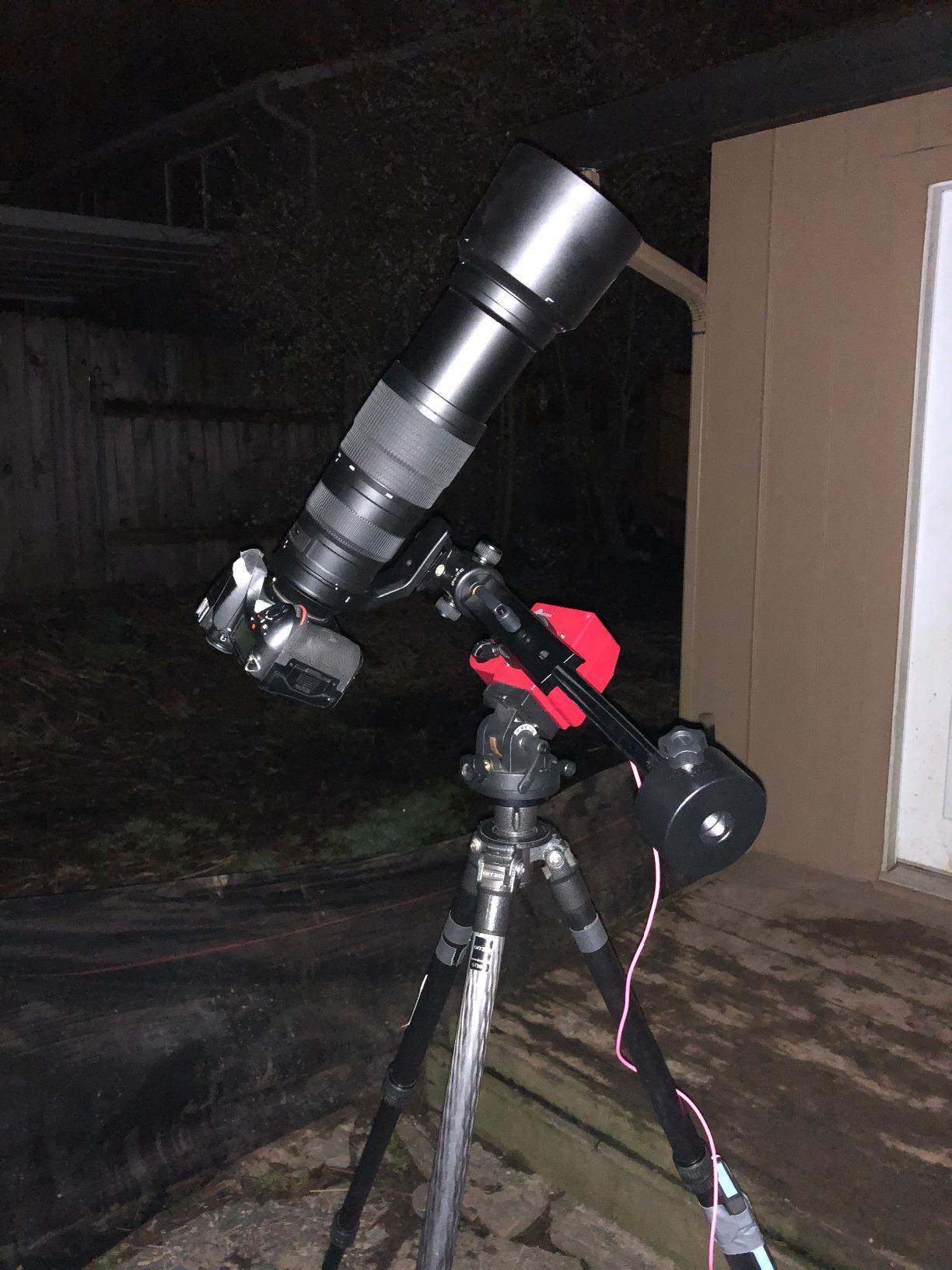
Alignment is a hands-on process, and the number of small knobs is the reason it works. Owners cite the fine-tuning controls and the dimmable scope LED as features that speed up and simplify getting the polar axis aligned accurately in the field.
Construction uses a fair amount of injection-molded plastic, though owners generally find it feels firmer than earlier generation SkyTracker models.
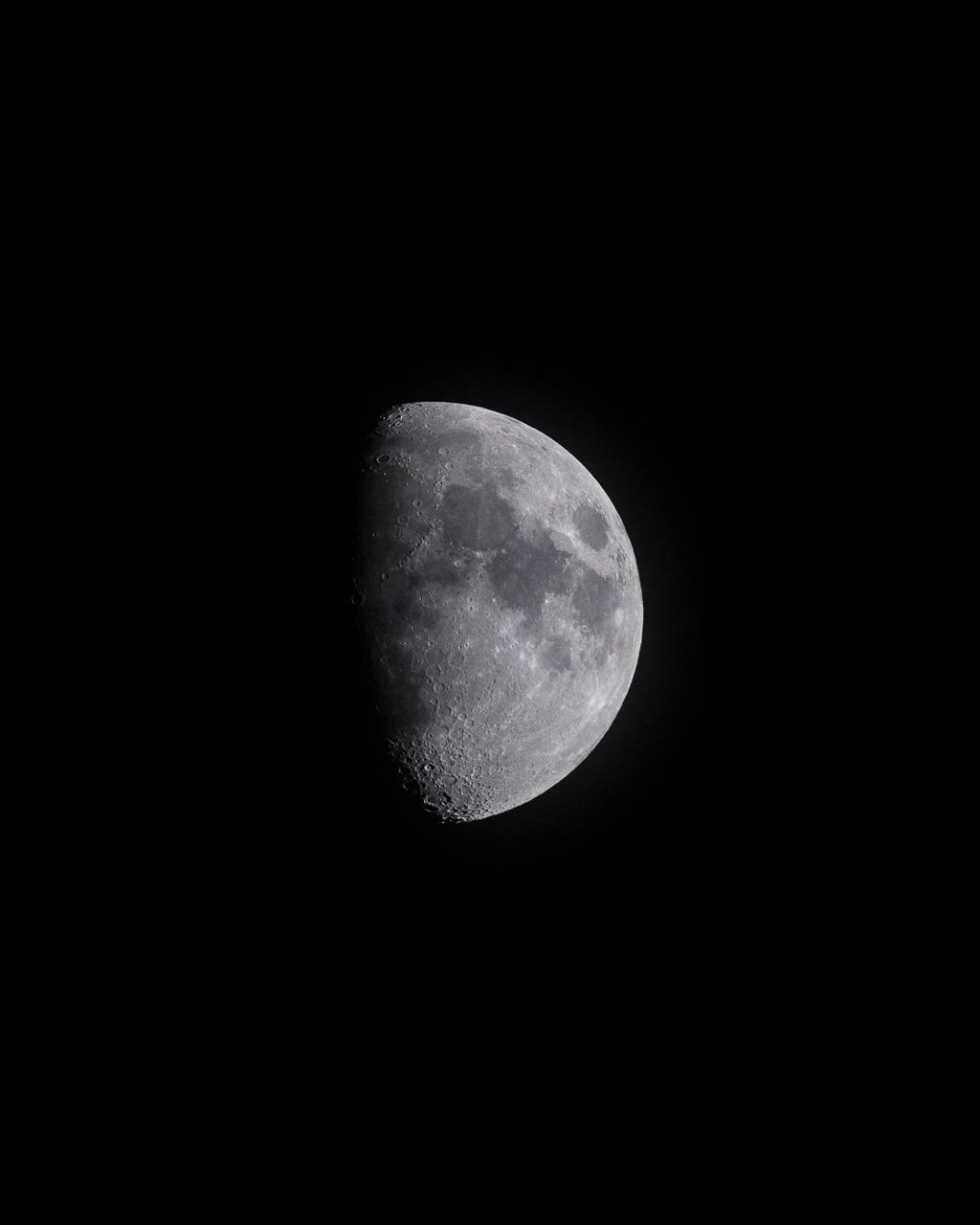
Best for nightscapes and wide-field travel imaging
A camera and a short wide-to-medium lens is the natural pairing. At that focal length the tracker produces clean multi-minute exposures and packs small enough to sit in a day bag rather than a checked case.
The separate alignment reference app is the one accessory worth budgeting for up front, since it walks you through the procedure the first time.
Where it runs out of room
The 3 kilogram payload limit is the hard stop. Long telephoto lenses near the limit need the optional counterweight package, and the rubber cushion at the swivel head mount can slip and reduce the contact area, making heavy loads hard to clamp securely.
The dovetail tripod base is also not Arca-Swiss compatible, which owners with existing Arca-Swiss tripods and head adapters should note. It is a tracker for a wide-field night, not for a narrowfield rig.
9. Celestron CGX: Best Telescope Mount for a Fixed Observatory
Celestron CGX Computerized German Equatorial Mount & Tripod, 55lb Payload
55 lb payload
High-torque belt-drive servo motors
Internal cable management
NexStar+ controller
Pros
- Holds 40 lb with flat guiding graphs
- Supports 30 minute subframes
- Belt-drive servos slew quietly under load
- Internal cable routing for remote sessions
Cons
- 108 lb total weight is impractical to travel with
- Polar scope can block declination range
- Some reports of RA drive faults
- Less rigid tripod than CGX-L
The CGX is the observatory choice. With a 55 pound payload it is the largest capacity on this list, and it is the one to buy if the rig lives in a shed, a garage or a pier rather than a car boot.
Owners running 40 pounds of imaging equipment report flat guiding graphs through multi-hour sessions, and one reports successfully shooting 30 minute subframes across roughly three hours with a proper polar alignment. The high-torque servo motors use belt drive, so slewing is quiet and the alt-az controls stay smooth even when the head is fully loaded and you need to reposition it.
Internal cable management is the sleeper feature. Cables run inside the mount rather than hanging off the side, which matters over a long remote session with a guide camera, power and USB all attached.
The NexStar+ hand controller provides a 40,000 object database, and the mount supports guided tours and custom object filters. Pointing model support in Celestron PWI is reported to work well for GoTo accuracy.
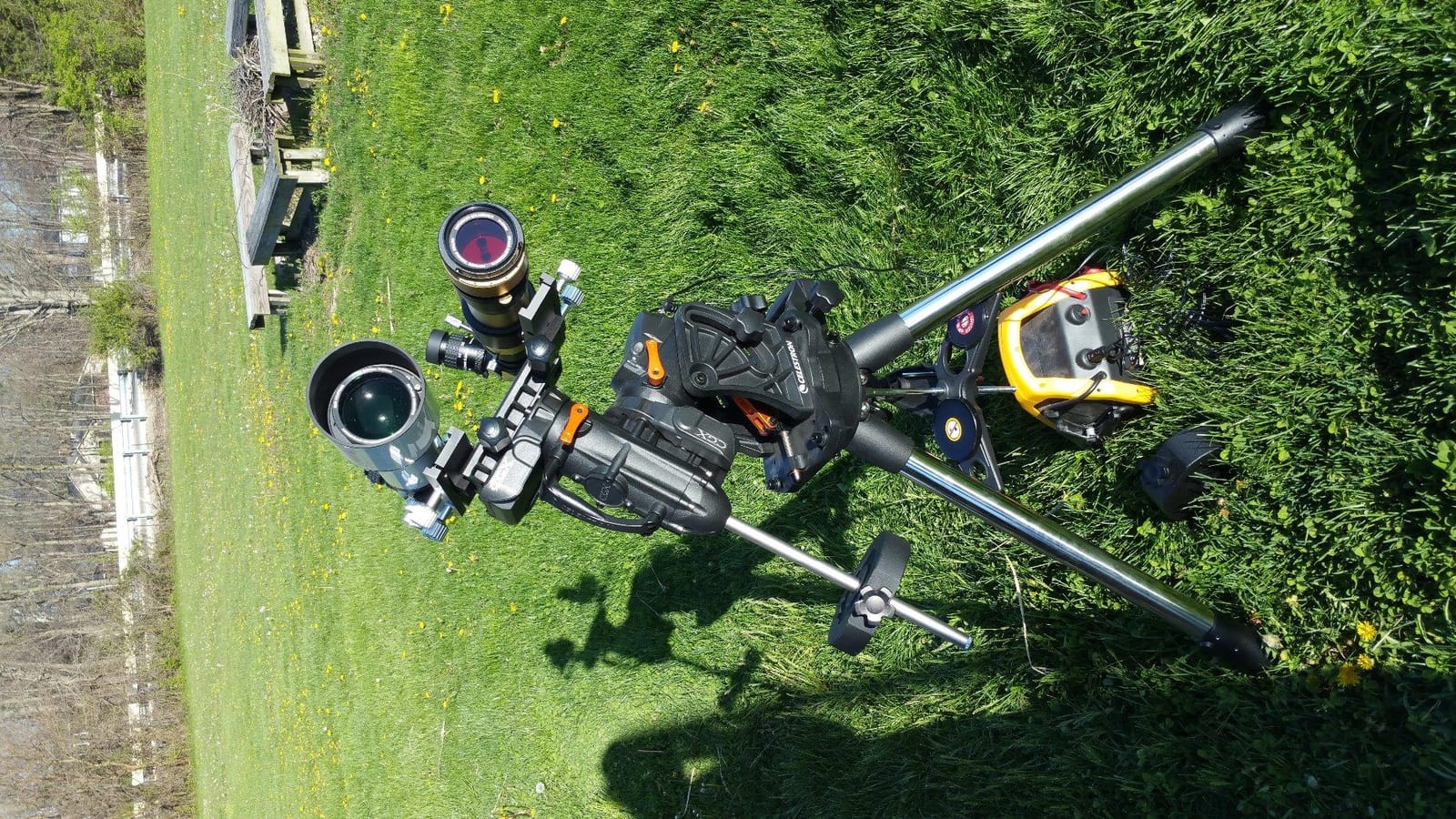
The specification list carries a 108 pound weight, and that single number tells you the use case better than any description. The CGX tripod has vibration-dampening feet, but the package is built for a permanent site.
There is also an optional polar scope to consider, and some owners report that it can obstruct the range of motion of the declination axis on certain orientations.
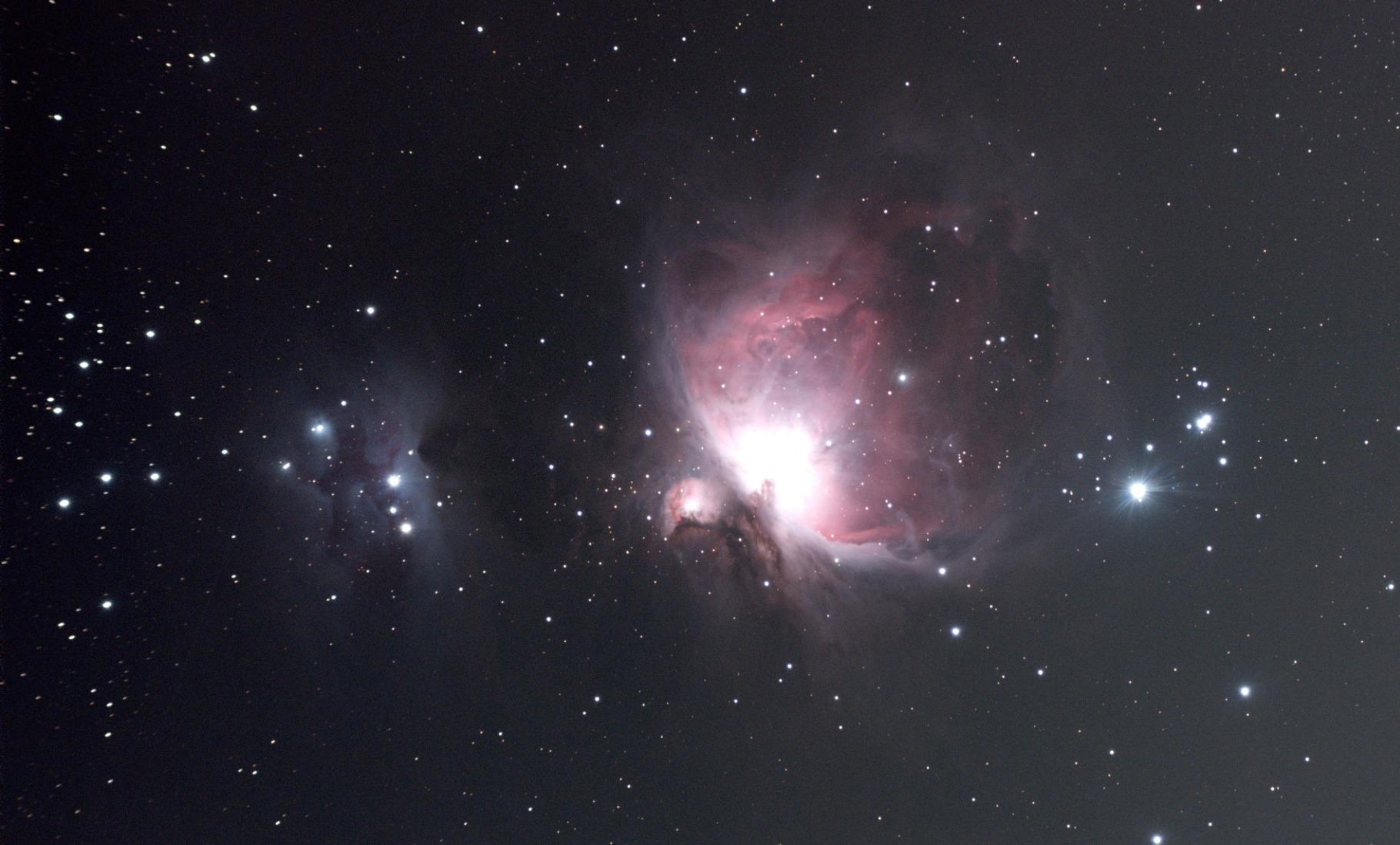
Best for large refractors and moderate Schmidt-Cassegrains
A 55 pound rating leaves room for the payload margin that imaging actually needs. You can carry a long refractor, a camera, a filter wheel and a guide scope, and still have headroom to balance properly.
It also suits anyone planning to grow the rig. Buyers moving to longer focal lengths later will not outgrow the payload in a single season.
Where it will disappoint you
Portability is the dominant negative. At 108 pounds, owners consistently describe moving it as impractical, and the CGX tripod is less rigid than the CGX-L version according to reports.
A small share of owners report intermittent RA drive faults that required servicing, and belts and gears can wear with years of use. With only 20 recorded reviews, the long-term data here is thinner than the headline capacity suggests, so treat the weight and the logistics as the deciding factors.
How to Choose a Telescope Mount for Astrophotography in 2026
Pick the mount before you pick the telescope. The mount determines how much weight you can hang off the end, how long you can integrate, and whether the image is sharp or smeared, and a mount that is undersized will spoil a telescope you spent years choosing.
Equatorial or alt-azimuth: the two types of telescope mount
Alt-azimuth mounts move on two axes, horizontal and vertical, which keeps them simple and often cheaper. Equatorial mounts tilt one axis to the celestial pole so one motor can cancel the sky drift, which is what makes long exposures possible.
The decisive difference is field rotation. On an alt-az mount, the field slowly turns as the mount tracks, and no guiding software can correct that. Equatorial mounts avoid it entirely.
Work out your real payload, then halve it
Add up the optical tube, the camera, the filter wheel, the guide camera, the guide scope, the rings and the dovetail plate. That total is your imaging payload, and it is always more than the tube alone.
Then stay at or below half the manufacturer rating. Community discussion is consistent on this point: the stated payload is a ceiling, not a working figure, and many imagers run at 30 to 40 percent for steadier tracking.
Watch for the counterweight confusion too. On a German equatorial mount, some ratings describe the load on the counterweight side, which is a different number from what you actually hang on the instrument side.
Polar alignment decides your maximum exposure
Polar alignment is not optional for long exposures. It sets the field rotation rate, so a rough alignment limits how long a subframe can run before stars in the corners of the frame start to smear.
The practical rule: the further off the pole you are, the shorter your subframes must be. A rough two-star alignment works for short subframes with a small sensor, while wide fields and long subframes want a plate-solved alignment that gets you within a fraction of a degree of the pole.
Look for a built-in illuminated polar scope, a sight hole through the RA axis, or electronic polar alignment support in the mount firmware. Tools such as QHY PoleMaster, SharpCap Pro and ASIAIR Plus can be run from your capture software once the mount and camera are connected.
Drive type: worm gear, belt drive, or harmonic drive
Worm gear drives use a worm wheel and a friction clutch for backlash, which works but adds friction that must be balanced out. Toothed belt drives isolate the motor from the gear and are quieter and cleaner, which is why they show up in the mid and upper tiers here.
Harmonic or strain-wave drives use a flexible spline and a belt, so there is no gear mesh to generate backlash at all. A long-running r/AskAstrophotography discussion of what makes a good astrophotography mount ranked mechanisms in exactly that order, with harmonic drives named first, then belt and pulley designs, then standard worm wheel mounts.
None of the nine mounts in this roundup uses a harmonic drive, which is worth knowing if you are cross-shopping. Harmonic mounts are the fastest-growing tier in the category right now, and a portable tracker is the practical stepping stone most imagers take before making that jump.
Autoguiding and USB control
Autoguiding is what turns a tracker into an imaging mount. A guide camera watches a star, and the software nudges the mount to keep it still, which pushes the practical subframe length from a couple of minutes to five, ten or more.
Check for an ST-4 style autoguide port, a USB port that works with ASCOM-compatible capture software, and support for the guiding and capture programs you intend to use. A mount that only works with a vendor app will not fit an existing workflow.
Portability, weight, and where you will actually shoot
Decide where the mount will live before you choose it. Head-only trackers under 5 pounds fly in a day bag. Complete kits with tripods and counterweights weigh 20 to 30 pounds. Mounts rated at 40 pounds and above exceed 75 pounds fully assembled and realistically live near a dark site or in an observatory.
Also budget the accessories. A complete system needs a tripod, counterweights, a power supply, a guide camera and cables, and that list is where the final outlay of any mount is actually decided.
Frequently Asked Questions
What are the two types of telescope mounts?
The two types are equatorial and alt-azimuth. An alt-azimuth mount rotates horizontally and vertically on two separate axes. An equatorial mount tilts one axis, the right ascension axis, up to the celestial pole so a single motor can counter the rotation of the Earth and hold a field steady.
Do you need an equatorial mount for astrophotography?
Yes, for anything beyond planetary, lunar and wide-field nightscape work. An alt-azimuth mount rotates the field as it follows a target, and that field rotation cannot be corrected by autoguiding because it changes the shape of the image rather than the position of the stars. Equatorial mounts avoid it entirely once polar aligned.
What mount do I need for astrophotography?
Match the mount to your focal length and your total payload. A camera and a lens up to about 135mm, or an 80mm refractor, pairs well with a portable tracking head such as the Star Adventurer 2i Pro or the SkyGuider Pro. A medium imaging tube with a filter wheel and guide camera needs a German equatorial mount rated at least double your imaging weight. Long focal lengths above 200mm, and anything staying out all night, call for a mid-range or larger equatorial head.
Which EQ mount is best for astrophotography?
For most imagers the Celestron Advanced VX is the best balance of 30 pound payload, a stable stainless steel tripod and a mature software ecosystem with All-Star Polar Align and PPEC. If you need more capacity for an 8-inch imaging telescope, the Sky-Watcher EQ6-R carries 44 pounds with belt-driven motors and permanent periodic error correction. Budget pickers get comparable guiding results from the Explore Scientific iEXOS-100-2.
Is polar alignment necessary?
Yes, for long exposures. Polar alignment sets the rate at which the field rotates, so alignment error directly limits how long a subframe can run before stars in the corners of the frame start to smear. A rough alignment suits short subframes on small sensors, while wide fields and long subframes need a plate-solved alignment within a fraction of a degree of the pole.
Can I use a camera tripod for astrophotography?
A plain camera tripod is genuinely enough for static wide-field nightscapes up to about 10 to 15 seconds, where some trailing is acceptable. A tracking head raises that to several minutes and turns stars into points. Without any tracking, stars at longer exposures render as short trails no matter how good the tripod is, and no post-processing removes them.
What is the 400 rule in astrophotography?
The 400 rule estimates the longest exposure before noticeable star trailing at a given focal length: divide 400 by the full-frame equivalent focal length in millimetres. A 24mm lens gives roughly 16 seconds, a 50mm lens about 8 seconds. The 500 rule uses 500 instead of 400, which suits larger sensors. Both assume a perfectly level, fixed camera with no tracking.
Which Telescope Mount Should You Buy?
Start with the rig you already own. A camera and a short lens calls for a tracking head, and the Sky-Watcher Star Adventurer 2i Pro is the best telescope mount for astrophotography for most people because it tracks accurately, guides, and travels. If you want metal rather than plastic and can accept manual pointing, the iOptron SkyGuider Pro is the stronger build for the same class of work.
Move up to the Celestron Advanced VX when a small imaging tube, filter wheel and guide camera push you past a tracker’s payload, and to the Sky-Watcher EQ6-R when an 8-inch imaging telescope goes on the end. Save the Celestron CGX for a fixed observatory, where 55 pounds of payload and internal cable routing pay for a weight you will never lift. Whichever you pick, work out your total payload first, then stay at half the rated figure, and that one habit removes most of the frustration new imagers report.