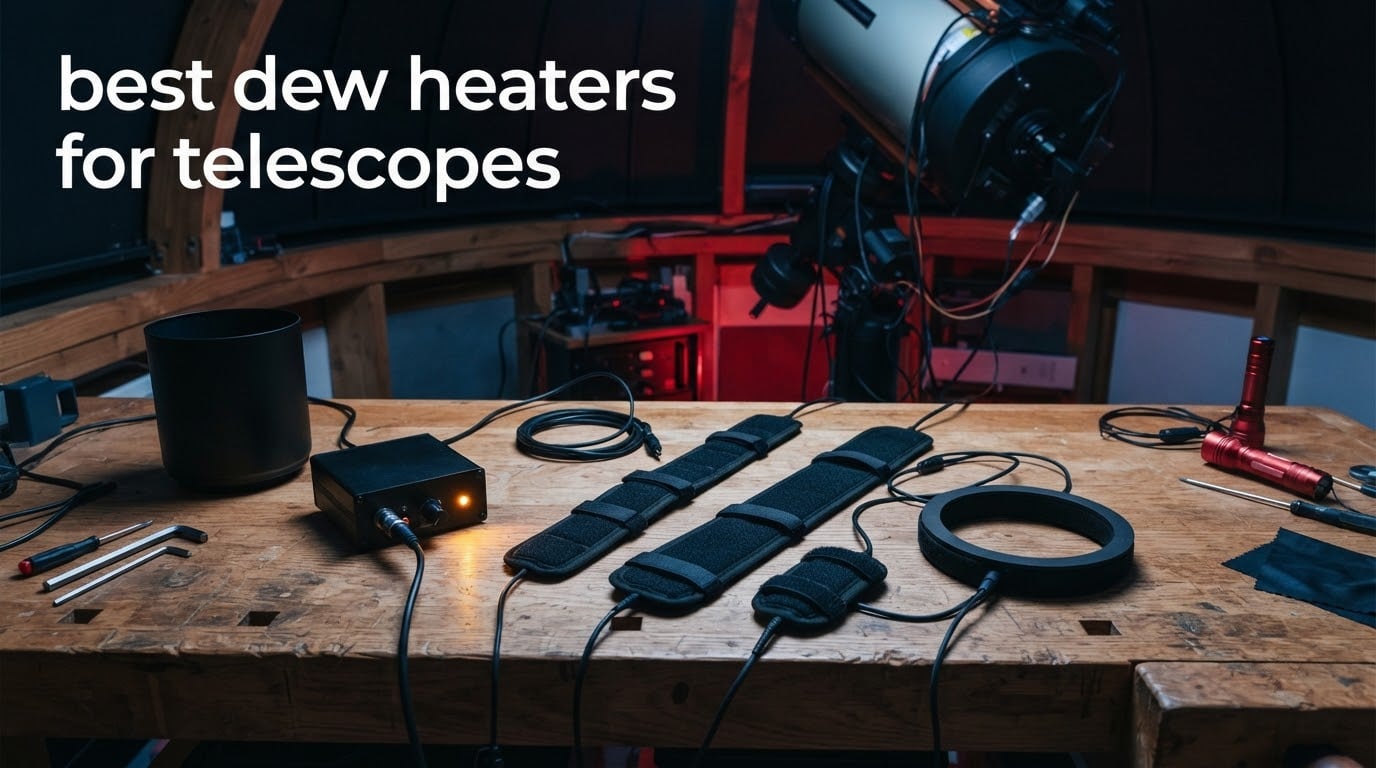
A telescope dew heater is a resistive heating band, strip or ring that wraps around the dew shield, lens cell or corrector plate and holds that surface just above the ambient dew point, so condensation never starts. That is the whole job: heaters prevent dew, they never remove dew that has already formed. A dew heater does not dry a wet lens, it simply keeps the glass from reaching the temperature where water wants to land on it.
Understanding why dew forms at all takes thirty seconds and saves you from buying the wrong thing. A telescope pointed at the night sky radiates heat into space far faster than the surrounding air can replace it, so the glass drops a few degrees below the air temperature. Once that surface temperature crosses the dew point, water condenses on it.
The gap between the two is the dew point differential, and a dew heater exists purely to close it. A commonly used rule of thumb from observers is to aim for a dew point 10 to 15 degrees below the current air temperature, because once the two numbers converge, everything in the sky and everything on your gear is soaking.
That is also why clear, calm nights dew up so badly. Cloud cover acts like a blanket and slows the radiative cooling that drives this whole process. Our picks below cover everything from finder scopes and eyepieces to 150mm class telescope dew shields, and each one covers a different diameter band, so there is a fit below whatever you own. If you are outfitting a full imaging rig, our portable heating picks cover the same keep-it-warm-with-the-least-power thinking in another part of the household.
Table of Contents
- Top 3 Picks for the Best Dew Heaters for Telescopes in 2026
- Best Dew Heaters for Telescopes in 2026
- 1. Celestron 8 Inch Corrector Ring: Best for 8 Inch Celestron Schmidt-Cassegrains
- 2. SVBONY SV172 320mm Strip: Best All-Rounder for Small Tubes
- 3. KIWIFOTOS 80mm USB Warmer: Best for Finder Scopes and Eyepieces
- 4. MOVE SHOOT MOVE 350mm Strip: Best for Winter Imaging
- 5. SVBONY SV192 480mm Strip: Best Heat Output for Big Tubes
- 6. Celestron Smart DewHeater Controller 2X: Best Automatic Control
- 7. Thousand Oaks Four-Channel Unit: Best Multi-Heater Rig
- 8. LOSHARP 42cm USB Warmer: Best Value for Eyepieces
- 9. Astromania 400mm DC Strap: Wide Diameter Coverage with Stepless Control
- 10. NEEWER 600mm USB Strip: Best for Large Scopes and Binoculars
- How to Choose a Dew Heater That Fits Your Telescope
- Frequently Asked Questions
- Which Dew Heater Should You Buy in 2026?
Top 3 Picks for the Best Dew Heaters for Telescopes in 2026

Celestron 8 Inch Ring
- Fits 8 inch Celestron SCT
- EdgeHD and RASA correctors
- Rigid aluminum ring
- 12V DC powered
- 2-year warranty

SVBONY SV172 320mm
- USB 5V powered
- Three-speed inline regulator
- 50mm narrow strip width
- Velcro attachment
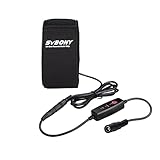
SVBONY SV192 480mm
- 12V DC powered
- 480mm strip for tubes under 152mm
- Three-layer insulation
- Three-speed regulator
Best Dew Heaters for Telescopes in 2026
| Product | Specs | Action |
|---|---|---|
| Celestron 8 Inch Schmidt EdgeHD RASA Dew Heater Ring |
|
Check Latest Price |
| SVBONY SV172 Dew Heater Strip 320mm |
|
Check Latest Price |
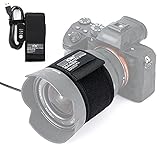 KIWIFOTOS USB Lens Warmer 80mm KIWIFOTOS USB Lens Warmer 80mm |
|
Check Latest Price |
 MOVE SHOOT MOVE 350mm Dew Heater Strip MOVE SHOOT MOVE 350mm Dew Heater Strip |
|
Check Latest Price |
| SVBONY SV192 Dew Heater 480mm Strip |
|
Check Latest Price |
 Celestron Smart DewHeater Controller 2X Celestron Smart DewHeater Controller 2X |
|
Check Latest Price |
 Thousand Oaks Four-Channel Digital Dew Heater Control Unit Thousand Oaks Four-Channel Digital Dew Heater Control Unit |
|
Check Latest Price |
 LOSHARP USB Lens Warmer 42cm LOSHARP USB Lens Warmer 42cm |
|
Check Latest Price |
 Astromania Dew Heater Strap 400mm DC Astromania Dew Heater Strap 400mm DC |
|
Check Latest Price |
 NEEWER 600mm USB Lens Heater HW-23B NEEWER 600mm USB Lens Heater HW-23B |
|
Check Latest Price |
1. Celestron 8 Inch Corrector Ring: Best for 8 Inch Celestron Schmidt-Cassegrains
Celestron 8” Schmidt, EdgeHD, RASA Aluminum Dew Heater Ring
Fits 8 inch Celestron SCT, EdgeHD and RASA correctors
Rigid aluminum ring
External 12V DC power
2-year warranty
Pros
- Heats the Schmidt corrector directly rather than the whole tube
- Rigid aluminum build carries the internal cable
- Integrated cable management clip included
- 316 reviews averaging 4.6
- 2-year US warranty
Cons
- Only fits 8 inch Celestron corrector diameters
- Needs an external 12V DC supply to run
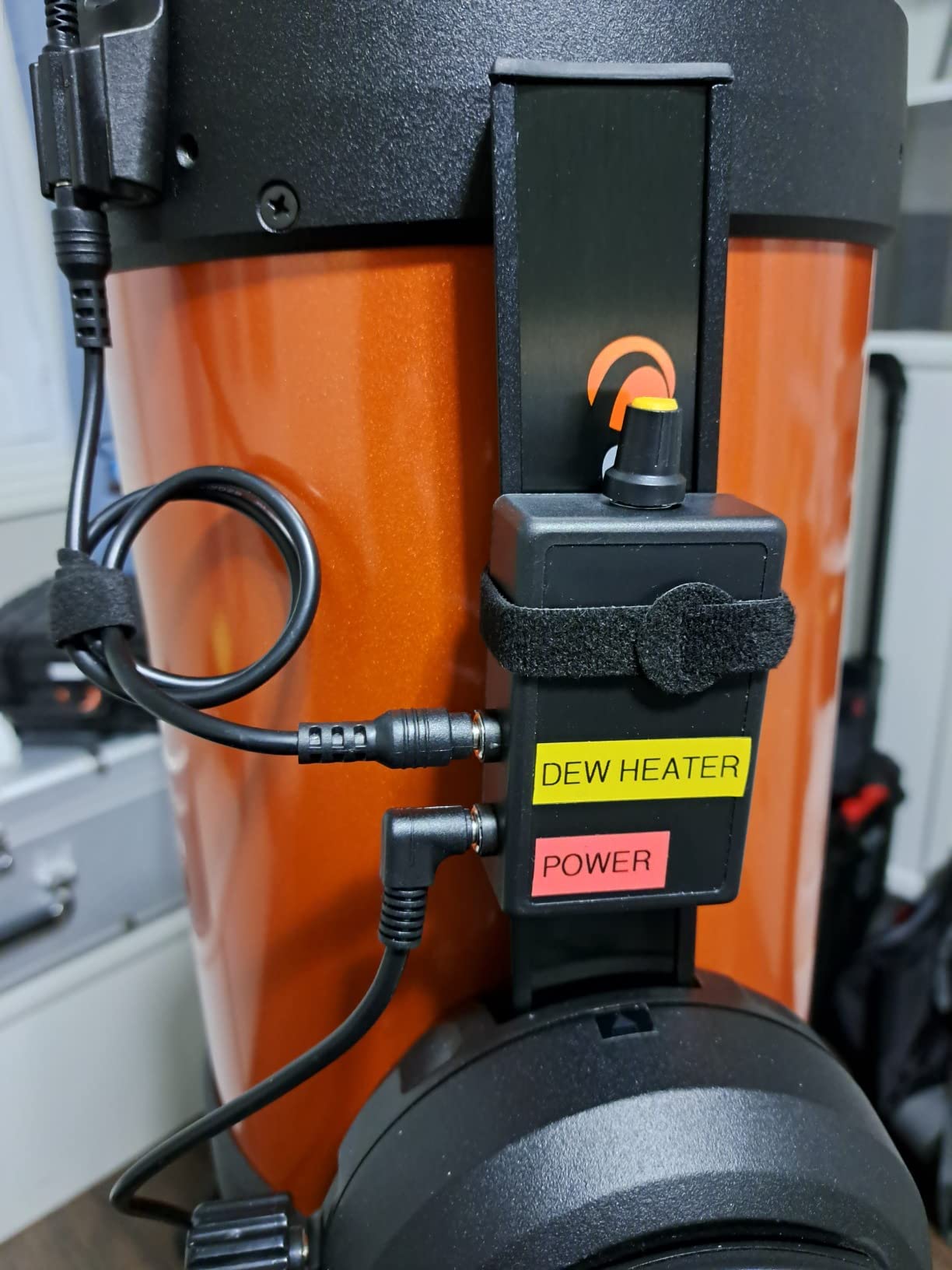
If your telescope is a Celestron 8 inch Schmidt-Cassegrain, an EdgeHD or a RASA, this ring is the correct answer and there is no measuring involved. The heater sits directly on the corrector plate rather than on the outside of the tube, so the watts go where dew actually forms. Over 316 reviews it averages 4.6 out of 5, with about three quarters of buyers giving it five stars, and the thing they praise most is simply that it works through a full night without adjustment.
The build is the other reason it sits at the top of our list. This is a rigid, lightweight aluminum ring rather than a floppy strap, which means the internal cable routing stays put and nothing shifts as the tube rotates in a fork mount. The included cable management clip keeps the lead from fouling the focuser or the fork arms, which is the small detail that separates a ring from a strip in a cramped fork base.
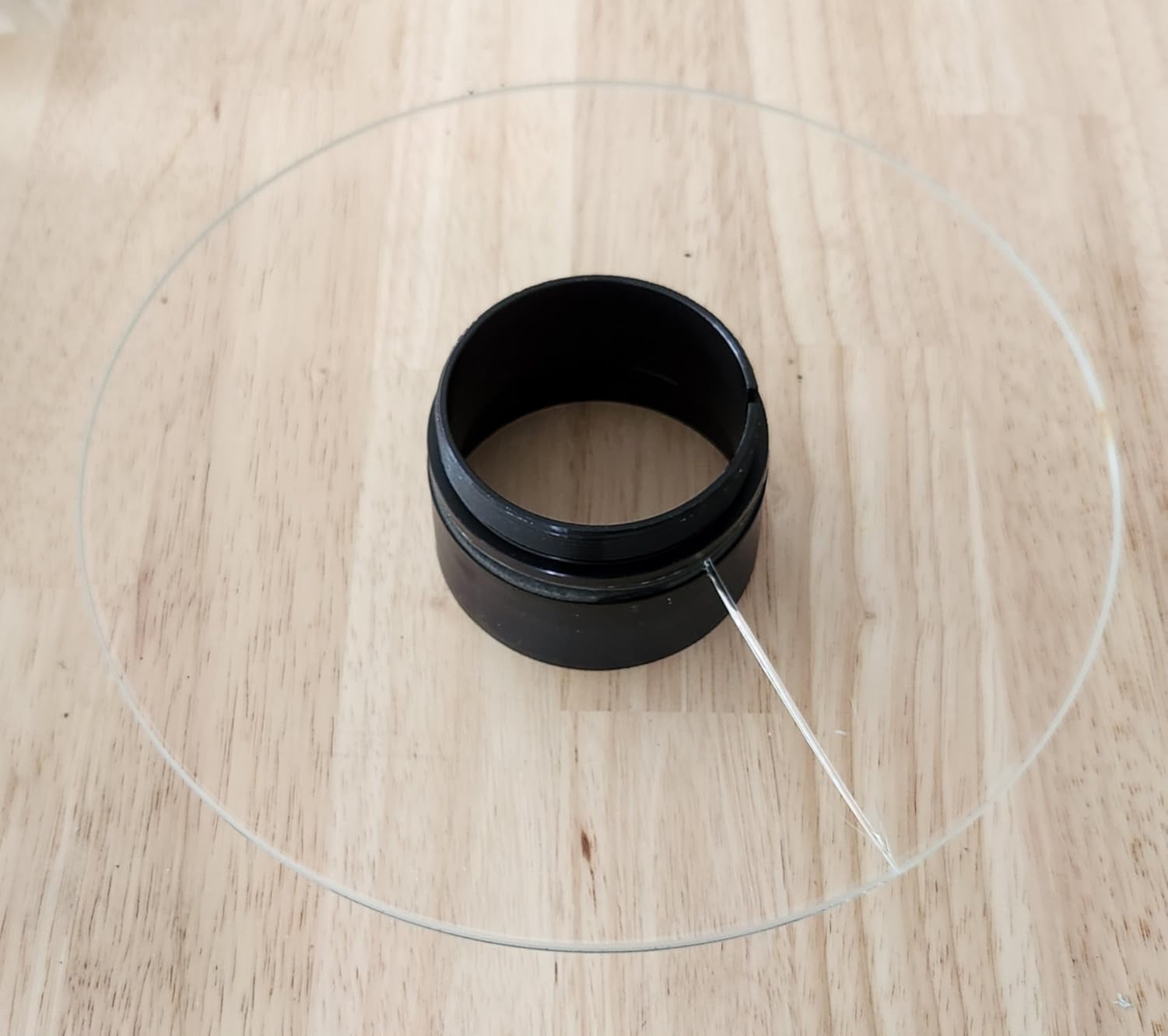
Roughly 76 percent of reviews are five star, and 15 percent are four star, so the dissatisfaction that exists is not about performance. It is about fit and about setup. Buyers with a 6 inch, 10 inch or 11 inch Celestron report the obvious: this ring is cut to one corrector diameter and will not stretch to another.
The second recurring caveat is power. Nothing runs this ring. It needs an external 12V DC source, which in practice means a controller, a battery pack or the auxiliary output of a control unit. If your rig already runs 12V for a GoTo mount, this slots straight into that ecosystem. If you are running everything off USB power banks for a field night, you will want one of the USB strips further down this list instead.
Is the fit right for an 8 inch Celestron?
Measure the corrector plate ring on your tube and compare it to the ring’s inner diameter before you order. The listing names the 8 inch Celestron Schmidt-Cassegrain, EdgeHD and RASA as the compatible devices, so if your serial-plate model matches one of those three, it fits and it fits properly.
If your optical tube is a Celestron but a different aperture, stop here and read the diameter-based section in our buying guide below. A strip with a Velcro closure will wrap almost any tube; a machined ring will not, and the mismatch is the single most common reason a corrector heater disappoints.
Will it stay on all night without overheating the corrector?
Yes, and the reason is that corrector plates are large thermal masses attached to a metal tube. A few watts spread across that area produces only a couple of degrees of lift, which is exactly the differential you want. Start on the lowest setting your controller offers, then step up only if dew starts forming at the edge of the field.
You do not need more than that. Running a corrector far above the dew point wastes battery, warps the focus as the tube heats unevenly and shortens the life of the anti-reflection coating. The 2-year warranty covers manufacturing defects, not cooking, so treat the low end of the dial as home.
2. SVBONY SV172 320mm Strip: Best All-Rounder for Small Tubes
SVBONY SV172 Dew Heater Strip 320mm Dew Heater for Telescope
320mm strip, 50mm wide
USB 5V powered
Alloy fiber wire with silicone insulation
Three-speed inline regulator
Pros
- Runs from a power bank/laptop/car charger or desktop
- Three-speed regulator for dialing heat to conditions
- 50mm width does not foul the focus ring or vignette the field
- Low draw means many hours on a modest hub
- Includes a padded mesh storage bag
Cons
- Does not stretch
- so sizing must match the target circumference
- Warms up more slowly than a 12V strip
- Regulator has a timed auto-shutoff for continuous heat
The SV172 is the strip we hand to people who do not yet know what they need. At 320mm long and 50mm wide, it wraps guide scopes, small refractors, eyepieces and short camera lenses, and it draws its power from any USB port you can find. Over 307 reviews it averages 4.6, with 80 percent five star, and the most common phrase in those reviews is that the low setting alone holds off dew for a whole session.
What makes it flexible rather than fragile is the heating element itself: an alloy fiber heating wire under silicone insulation, spread across a built-in aluminum film surface. That construction gives even warming with no dead angles along the strip, and the insulation is what lets you wrap it around cold glass without the sharp thermal shock that cracks cheaper pads.
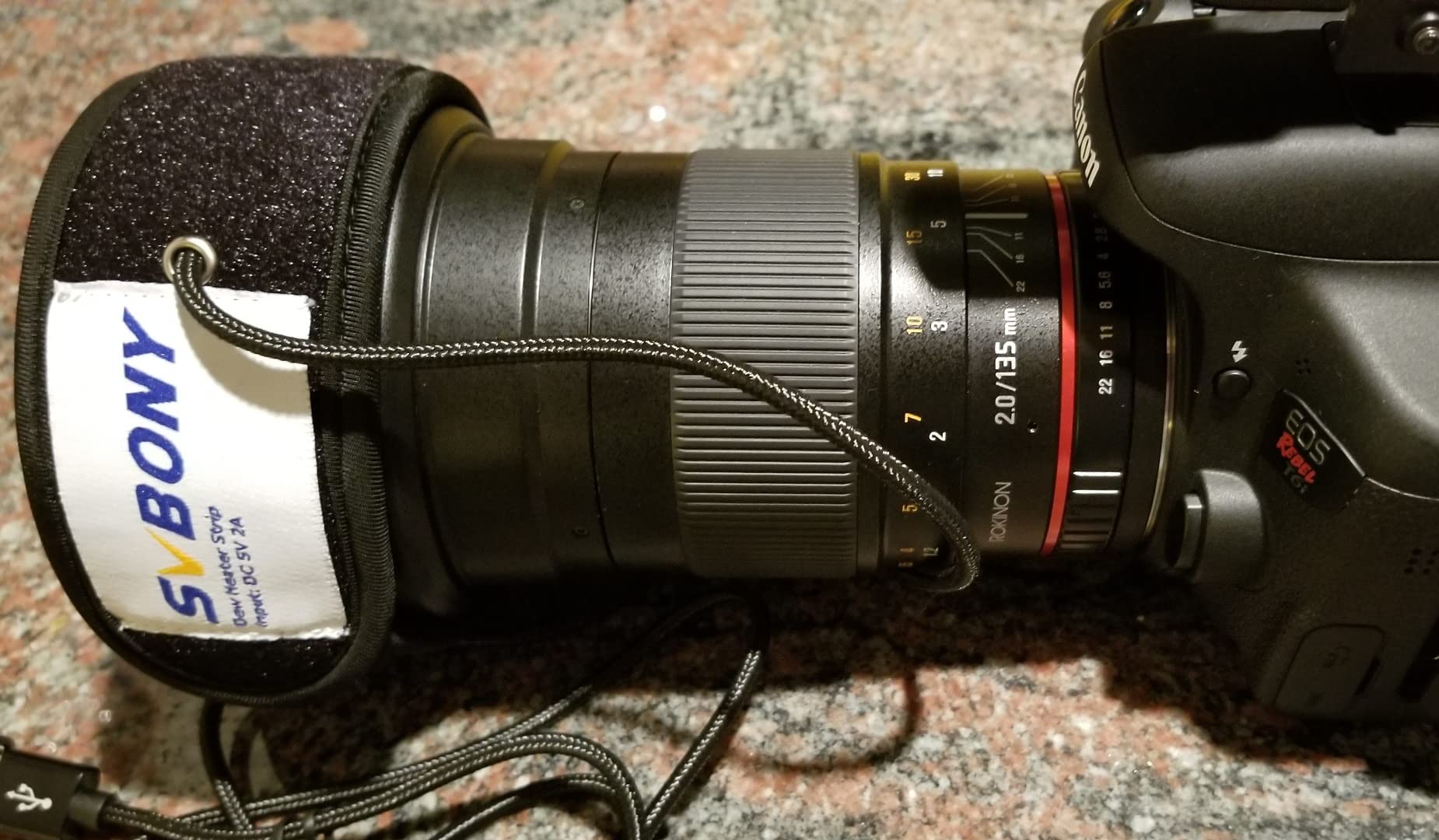
The strip is 50mm wide, and that number matters more than it looks. Wide straps are the reason dew heaters end up fouling focus rings, knocking into dovetails and vignetting the corners of a wide-field image. This one is narrow enough to sit behind the dew shield lip and out of the way.
Reviewers also point out the practical extras. The Velcro attachment system holds without tools and can be extended with additional Velcro when the target tube is wider than the strip, and the supplied padded mesh bag makes it easy to keep several sizes organised in one observing bag.
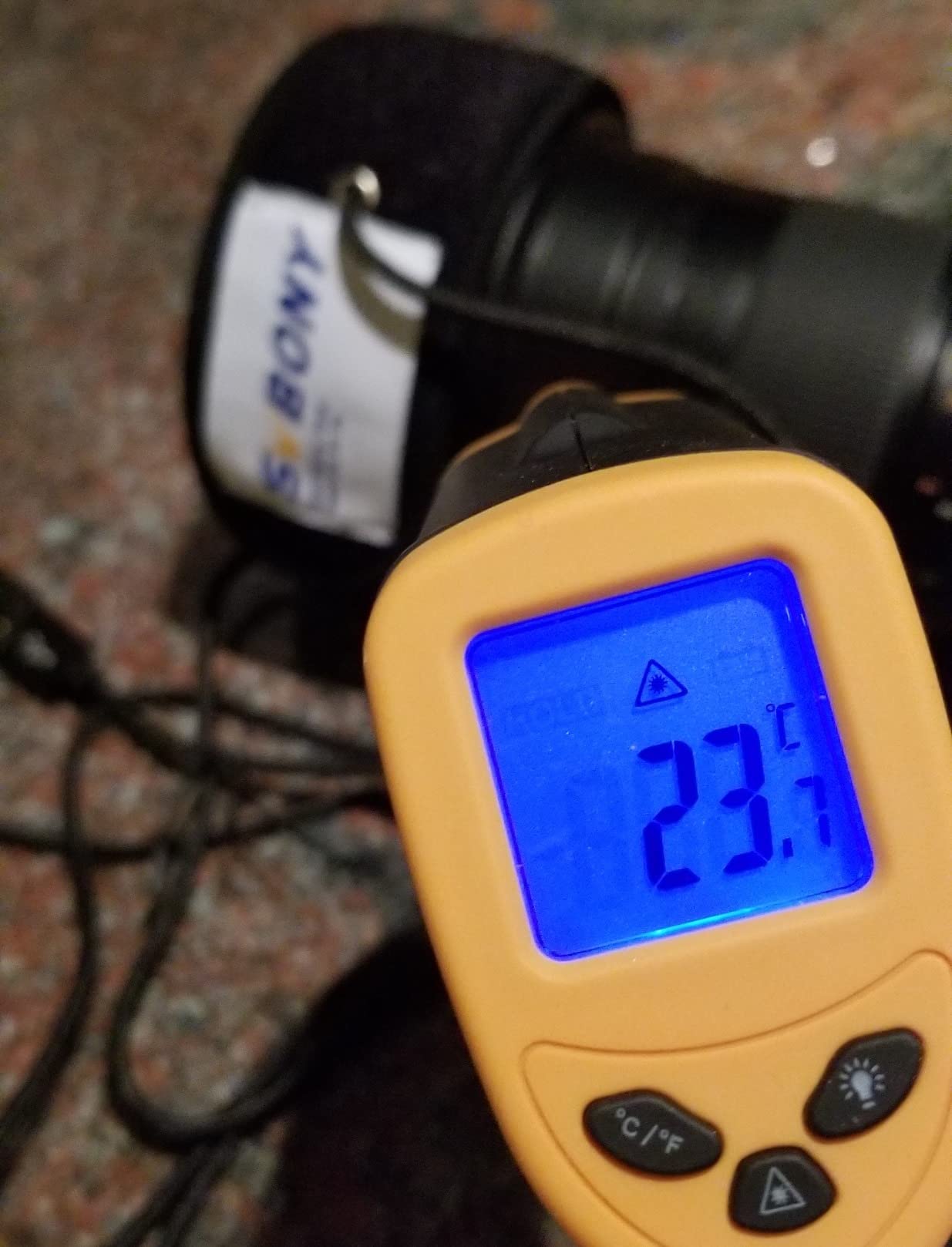
Will it run a whole night from a power bank?
For a visual session, comfortably. A USB strip at 5V draws a fraction of what a 12V band pulls, and this one is the reason the SV172 shows up on so many beginner imaging rigs. Bring a bank with real output, though, because a small pack will sag on the higher settings and the heat will drop with it.
Watch the auto-shutoff on the inline regulator. It is a safety feature that cycles the strip down after a set period, which is sensible for camera gear but a problem if you want the corrector heated continuously from dusk to dawn. Most owners end up driving it from a controller that bypasses the timer.
What size tube can the 320mm strip actually wrap?
Because it does not stretch, do the arithmetic before buying. A 320mm strip closed to a circle gives you roughly a 100mm circumference, so it suits tubes in the 30 to 35mm diameter range before you have to overlap the ends.
That covers most guide scopes, finders and short refractors comfortably. For anything wider, either move up to a longer strip or accept an overlap joint, which works fine as long as the Velcro tail is secured so it cannot lift and shed condensation onto the glass.
3. KIWIFOTOS 80mm USB Warmer: Best for Finder Scopes and Eyepieces
USB Lens Warmer, Lens Dew Heater Strip with Temperature Regulator, Condensation Prevention for Telescopes Camera DSLR Lens Telescope Eyepieces Less Than 3.15 inch (80mm) in Diameter
Fits optics under 80mm outer diameter
USB powered, 1.5m regulator cable
Low-temperature wire rated to -40C
Low, medium and high modes
Pros
- Velcro adjusts to fit many different lens sizes
- Low setting often enough for a 200mm lens through a session
- Cold-rated wire stays flexible in deep cold
- Cord long enough to reach a battery at the tripod base
- Storage pouch included
Cons
- Controller LEDs are very bright for visual observing
- Fixed non-modular USB cable can be too short
- Needs a reasonably sized power bank on the higher settings
Anything that measures under 80mm across the outside is what this warmer was made for. That is finder scopes, 2 inch eyepieces, small refractors, camera lenses and Telrad-style accessories, and the adjustable Velcro lets one strip move between all of them. It averages 4.5 out of 5 across 271 reviews, with 77 percent five star, and most owners buy it as a first heater.
The line that comes up again and again in those reviews is that the low setting is genuinely enough. On a 200mm camera lens through a normal evening, owners report no condensation forming at all on medium. That is the ideal outcome, because it means the heater is doing the minimum work and the battery lasts the night.
Two details stand out for anyone observing in winter. The wire is a low-temperature type rated to minus 40 degrees Celsius, so it stays flexible and does not stiffen or snap in deep cold, and the 1.5m regulator cable is long enough to run down to a power bank sitting at the base of the tripod instead of needing an extension right at the eyepiece.
It is also one of the few budget strips that weighs in under 60 grams, so it disappears on a small refractor without adding meaningful load to the focuser or shifting the balance of a travel scope.
Will the bright controller LED ruin dark adaptation?
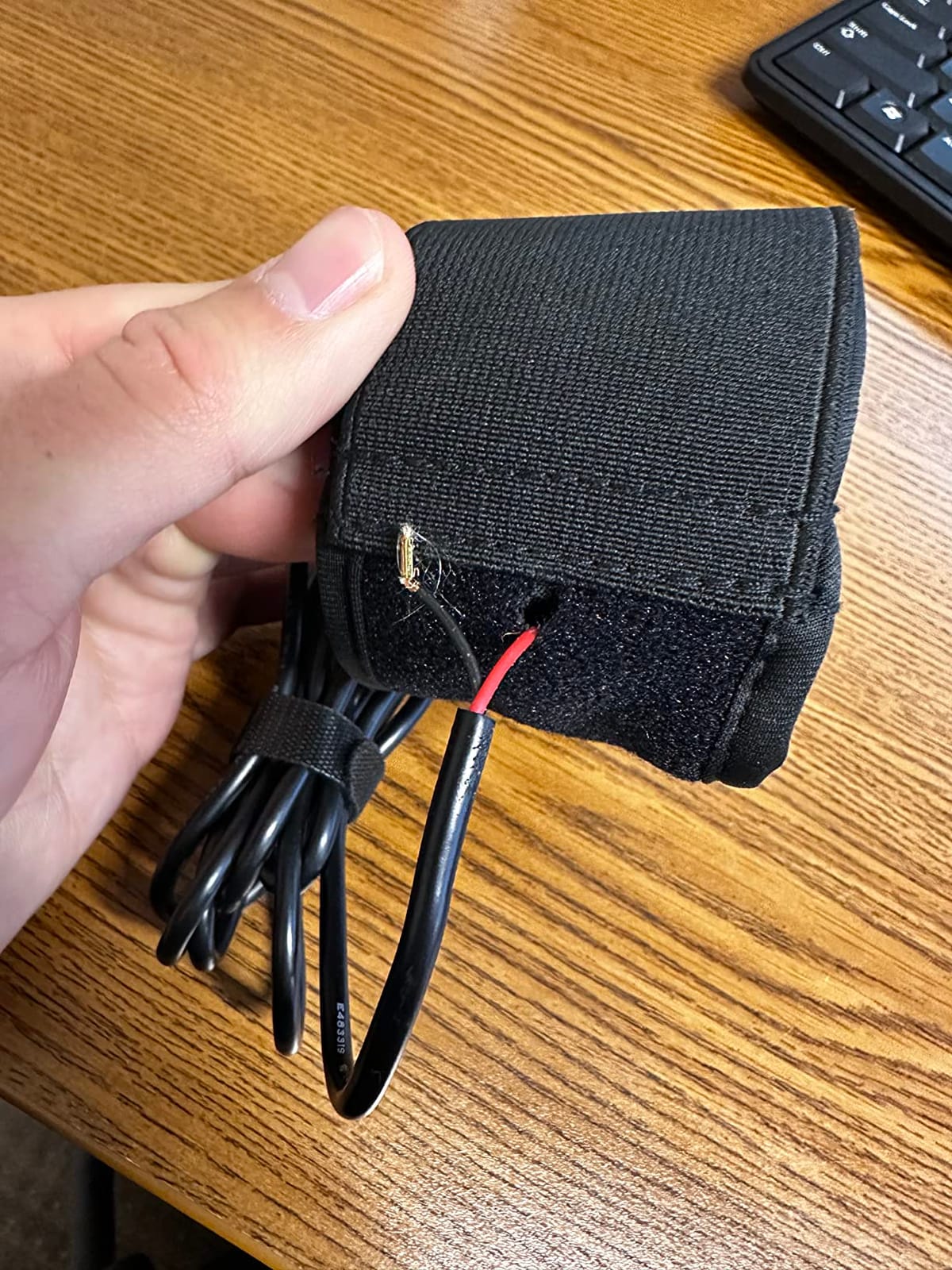
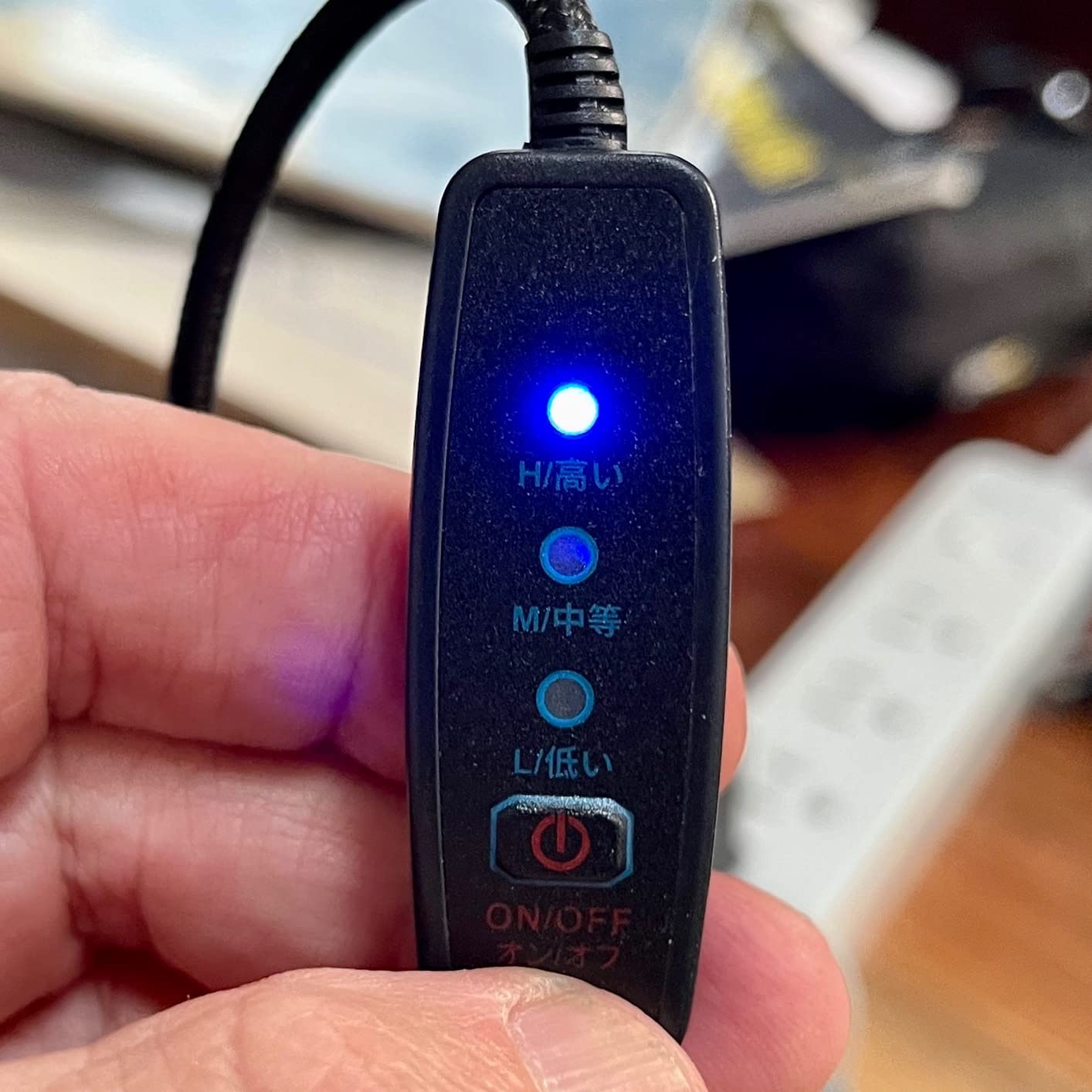
It can, and this is the most repeated complaint in the reviews. The indicator on the inline regulator is bright enough to be obvious on a first magnitude sky, so cover it with a strip of black electrical tape before you start an observing session. It costs nothing and it is the standard fix in this category.
The LEDs are only an issue for visual work at the eyepiece. Under imaging, where you are not trying to see faint detail with your own eyes, they are irrelevant. Leave the tape on permanently if that is your use.
Is the power bank sizing going to be a problem?
Only on the higher settings. A 5V USB heater that draws close to 2A needs a bank that can actually deliver that, and many small packs advertise a capacity but not the sustained output. Owners who run this on high report needing a larger bank than they expected.
Plan on the low or medium mode for a normal evening and the bank sizing stops being a concern. If you find yourself on high every night, you are fighting humidity that a longer dew shield would have solved for free.
4. MOVE SHOOT MOVE 350mm Strip: Best for Winter Imaging
Lens Warmer with Cold Flexible Cable Down to -25℃, 350mm Dew Heater Strip Prevents Lens from Dew, Fog and Condensation for Astrophotography, Lens Heater Compatible w/ Telescope and Camera in 4.26″
350mm neoprene strip, fits up to 4.26 inch
Cold-flex cable rated to -25C
USB 5V, 2.0A input, 60.23 inch cord
Three heat levels
Pros
- Strip and cable stay flexible down to -25C
- Neoprene construction cuts heat loss to the air
- 60 inch cord reaches a power bank at the tripod base
- Three heat levels for matching output to conditions
- Runs from ASIAir style controller outputs
Cons
- Runs warm to the touch
- shedding some heat away from the lens
- Maximum output can feel weak in heavy coastal dew
- Hook-and-loop strap is less elastic than some competitors
Cold is the enemy of most dew gear, and this strip is the one we would take to a January session. Both the neoprene band and the cable stay flexible down to minus 25 degrees Celsius, so there is no stiffening, no cracking and no managing a brittle lead in gloves.
Across 175 reviews it holds a 4.5 average with 70 percent five star, and owners in humid coastal climates specifically call out the cold-flex cable as the reason it kept working.
The construction is neoprene, the same diving suit material used on wetsuits, and that is not marketing language. A denser insulating jacket around the heating element means less of your wattage escapes into the air and more reaches the glass, which is the whole game when you are running from a finite battery.
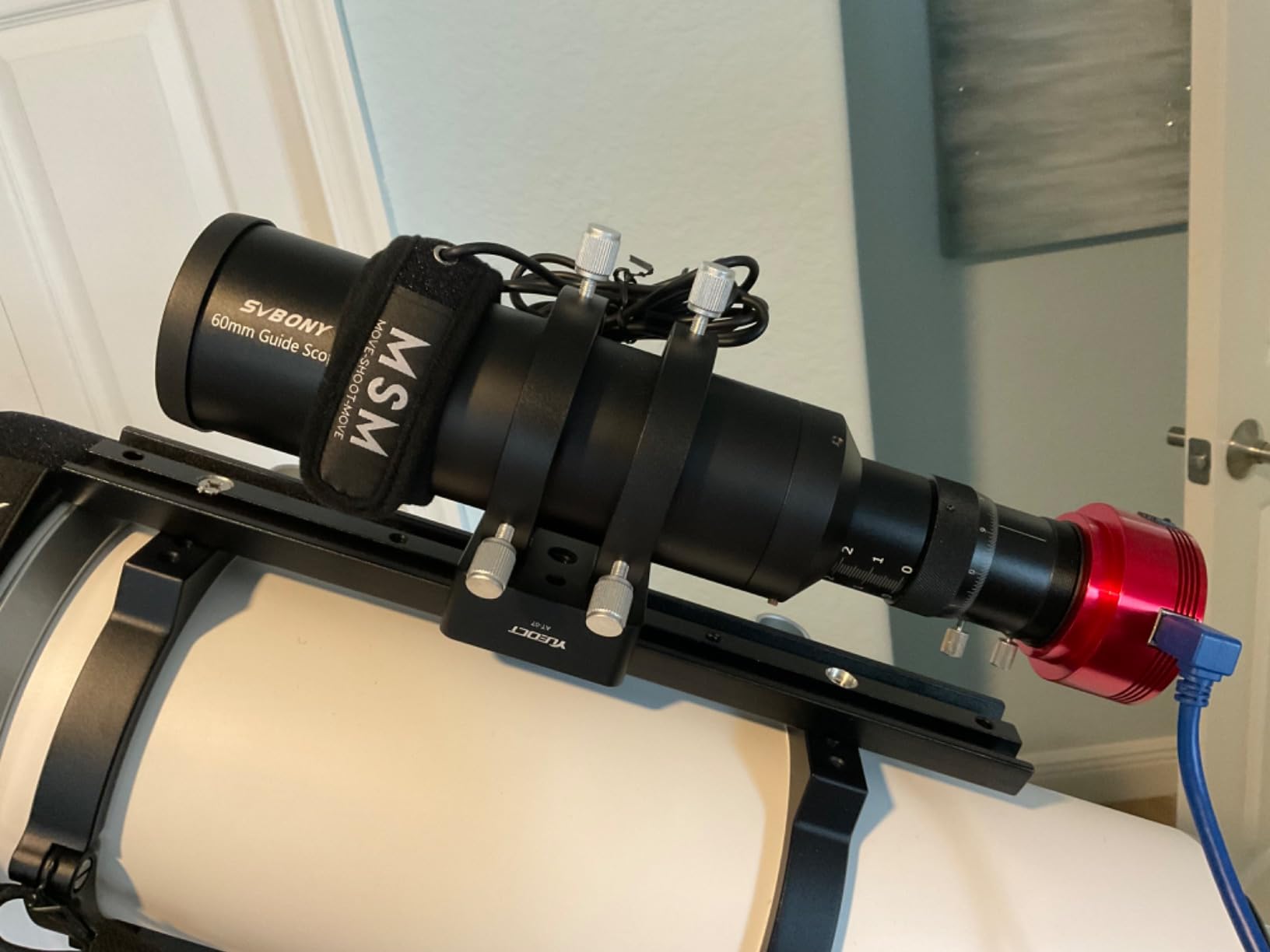
The strip is 350mm long with a maximum wrap diameter of 4.26 inches, so it covers camera lenses up to 80mm aperture and small refractors. The cable is 60.23 inches with 2.0A input at 5V output, and the inline controller offers three incremental heat levels rather than a single on-off switch.
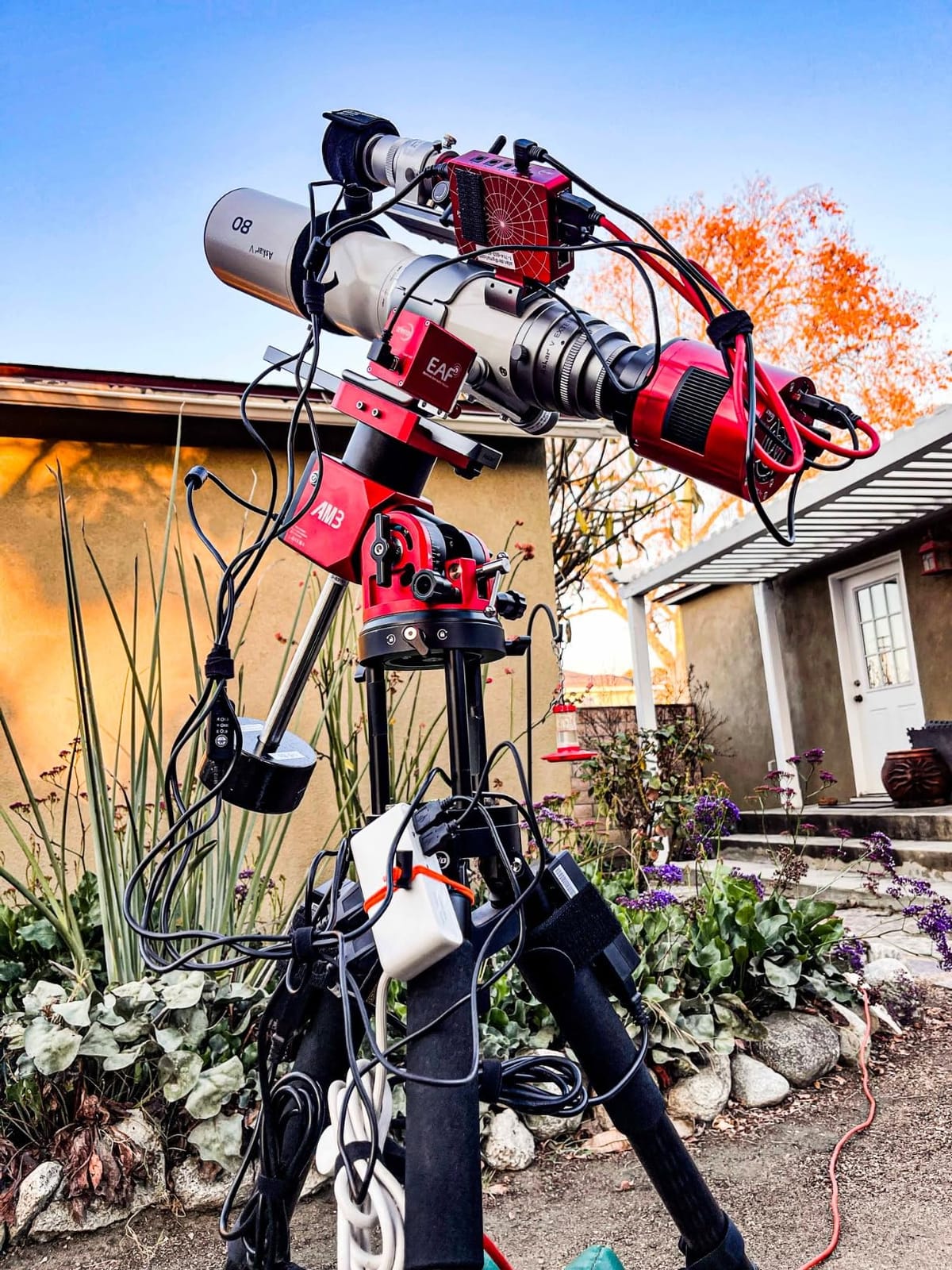
Owners running full imaging rigs report driving it from an ASIAir style controller, which makes this one of the easier strips to fold into an existing automated setup. AstroBin forum members running SVBONY strips on similar hardware suggest starting at around 40 to 50 percent power and adjusting from there, and the same advice transfers to this strip.
Is the maximum setting hot enough for coastal humidity?
Sometimes it is not, and that is the honest limitation here. Several reviewers note that on the top setting the strip feels only slightly warm, and in heavy dew near salt water that is not enough to hold a large lens above the dew point.
Before you treat that as a defect, extend the dew shield. A longer shield slows the radiative cooling that creates the problem in the first place, and the heater then runs at a lower setting drawing less power. The strip’s job is to top up a few degrees, not to outrun a badly shielded tube.
How much clearance do I need around the tube?
Plan for the overlap. Wrapped around smaller apertures the neoprene tail doubles back on itself, and that extra thickness can foul a lens dovetail or push against a focuser collar. On a small refractor, wrap the strip further back so the join sits behind the dew shield lip.
The hook-and-loop closure is also less elastic than some competing strips, so the fit around a small tube is looser than you would get from a stretchier strap. It holds, but it takes a second pass to settle it properly.
5. SVBONY SV192 480mm Strip: Best Heat Output for Big Tubes
SVBONY SV192 Dew Heater for Telescope, 480 mm Dew Heater Strip
480mm strip for mirrors under 152mm
12V DC 5.5x2.1mm female plug
Three-layer SBR insulation
Three-speed regulator
Pros
- Highest average rating in our set at 4.7 from 157 reviews
- 86 percent five star and ranks number one in Telescope Dew Caps
- 480mm covers large tubes in a single pass
- Three-layer insulation reduces heat loss and resists wrinkling
- Standard 5.5x2.1mm plug fits common 12V sources
Cons
- Requires 12V DC
- so a separate battery or controller is needed
- 480mm is far longer than a finder or eyepiece needs
- Less convenient than direct USB in the field
This is the highest rated product in our entire set at 4.7 out of 5 across 157 reviews, with 86 percent five star, and it also holds the number one sales position in Telescope Dew Caps. The reason the rating is that high is consistency: a 480mm strip covers a large optical tube in one pass, and the three-layer SBR insulation does not wrinkle after bending, so it stays flat against the glass for a whole night.
It is designed specifically for astronomical telescopes rather than generic lens warmers, and the compatibility note is explicit: telescope primary mirrors with an outer diameter below 152mm, or camera lenses. That is a genuine 6 inch class optical tube, not a token small diameter.
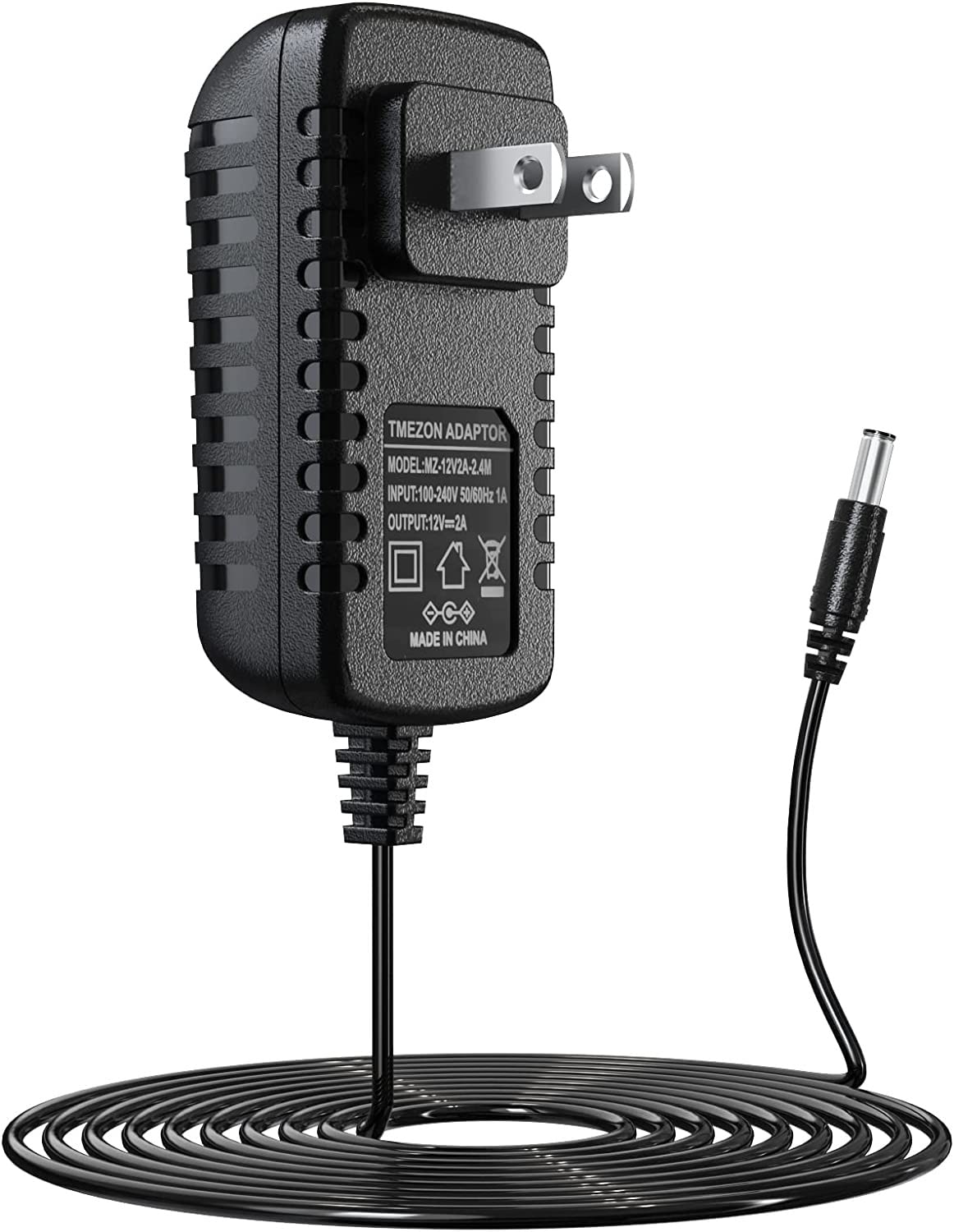
The interface is a 5.5×2.1mm female DC jack, which is the near-universal 12V telescope connector. If you already run a 12V battery pack for a GoTo mount, this strip plugs straight into the ecosystem you own, and if you are building a rig, this is the connector to standardise on rather than the proprietary alternative.
Three-layer insulation matters more than it sounds. Two-layer versions crease along the fold line, and a crease is an air gap, and an air gap is exactly where the heat you paid for escapes. Reviewers call out that this one stays smooth after repeated bending.
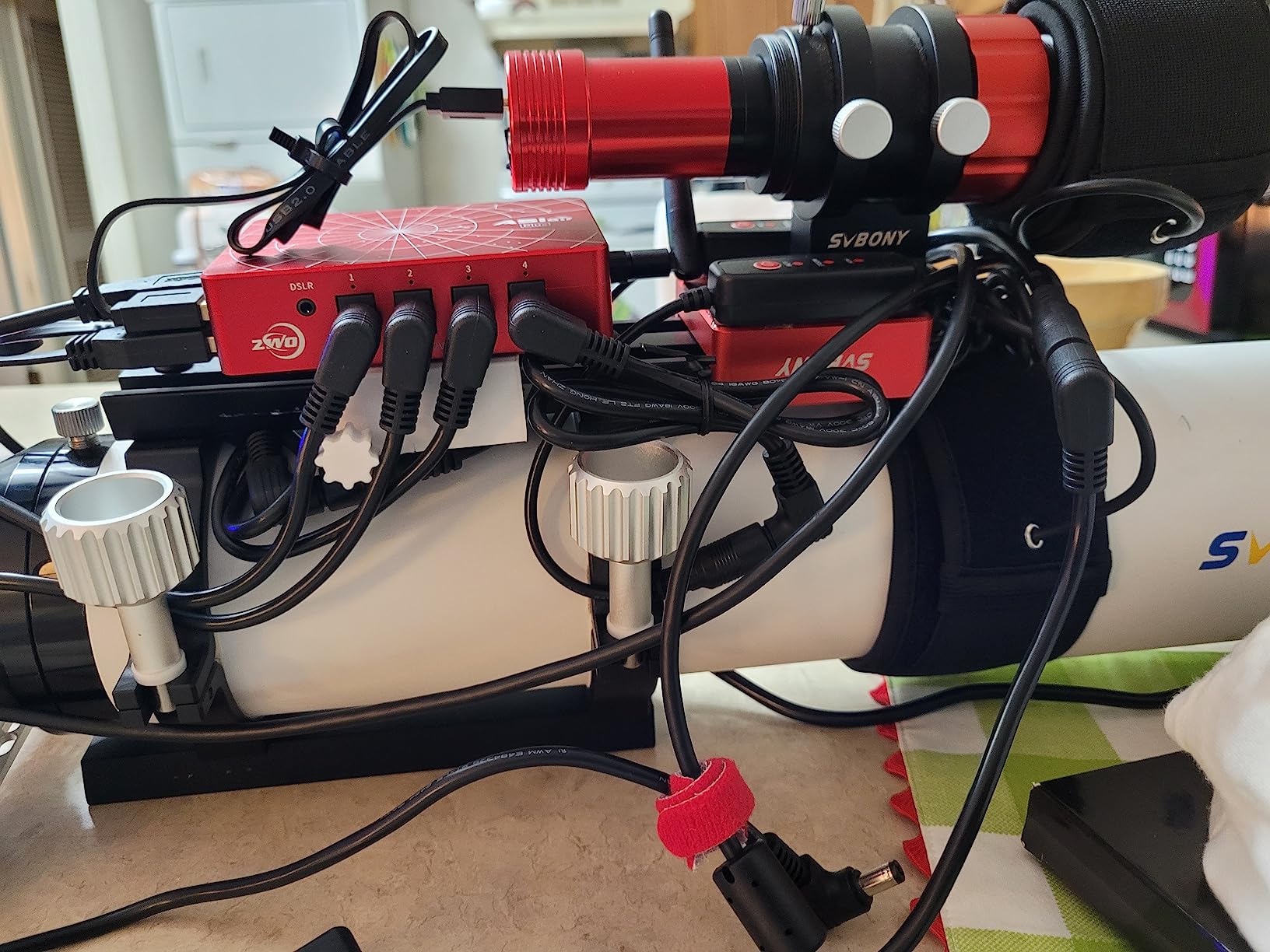
What does 12V buy me over a USB strip?
Simply more heat from the same wrap. A 5V USB strip is a gentle, slow heater, and on a large cold mirror it can take most of the night to climb. A 12V band under the same controller setting produces a faster, higher lift, which is what you want when the surface area is large and the dew is forming fast.
The trade-off is the ecosystem. USB runs off a power bank you already carry. 12V needs its own battery, a controller, or an adapter from an existing power station. If you are not running 12V already, this strip is a bigger commitment than it looks.
Is the 480mm length wasteful on a small telescope?
Yes, and there is no way around it. A 480mm strip has to be coiled or overlapped to fit anything much smaller than a 6 inch tube, and an overlapped strap on a finder scope is a hassle that gets you nothing the SV172 already does better.
Match the length to the job. This is the strip to buy when you have one large tube to keep clear. If you have four small surfaces, buy four smaller strips and a multi-channel controller instead of trying to make one long strip do everything.
6. Celestron Smart DewHeater Controller 2X: Best Automatic Control
Celestron Smart DewHeater Controller 2X for Telescopes – 2 Ports
Two heater ports plus one 12V DC output
Reads ambient temperature and humidity
Works with hand control and CPWI software
Reverse polarity protection
Pros
- Automatic adjustment means you stop babysitting a dial
- Just enough heat extends battery life
- Works with Celestron rings and third party bands via thermistor
- Spare 12V output can power an accessory device
- Reverse polarity protection on hookup
Cons
- Highest cost in our set and owners compare it to cheaper small computers
- Driving a mount from the auxiliary output can trigger over-current behaviour
- Only two heater ports limits large multi-scope rigs
Every other strip on this page asks you to make one decision and then not touch it. This one makes the decision for you. The Smart DewHeater Controller reads ambient temperature and humidity and adjusts output automatically, delivering just enough heat to prevent dew rather than the fixed blast a manual dial gives you. Across 57 reviews it averages 4.4, and owners consistently report that automatic control ended their dew problem and cut their cable clutter at the same time.
It drives up to two dew heaters plus one additional 12V DC device, and the compatibility is wider than the Celestron name suggests. With a thermistor accessory fitted, it works with third party heating bands and straps, so you are not locked into one heater brand.
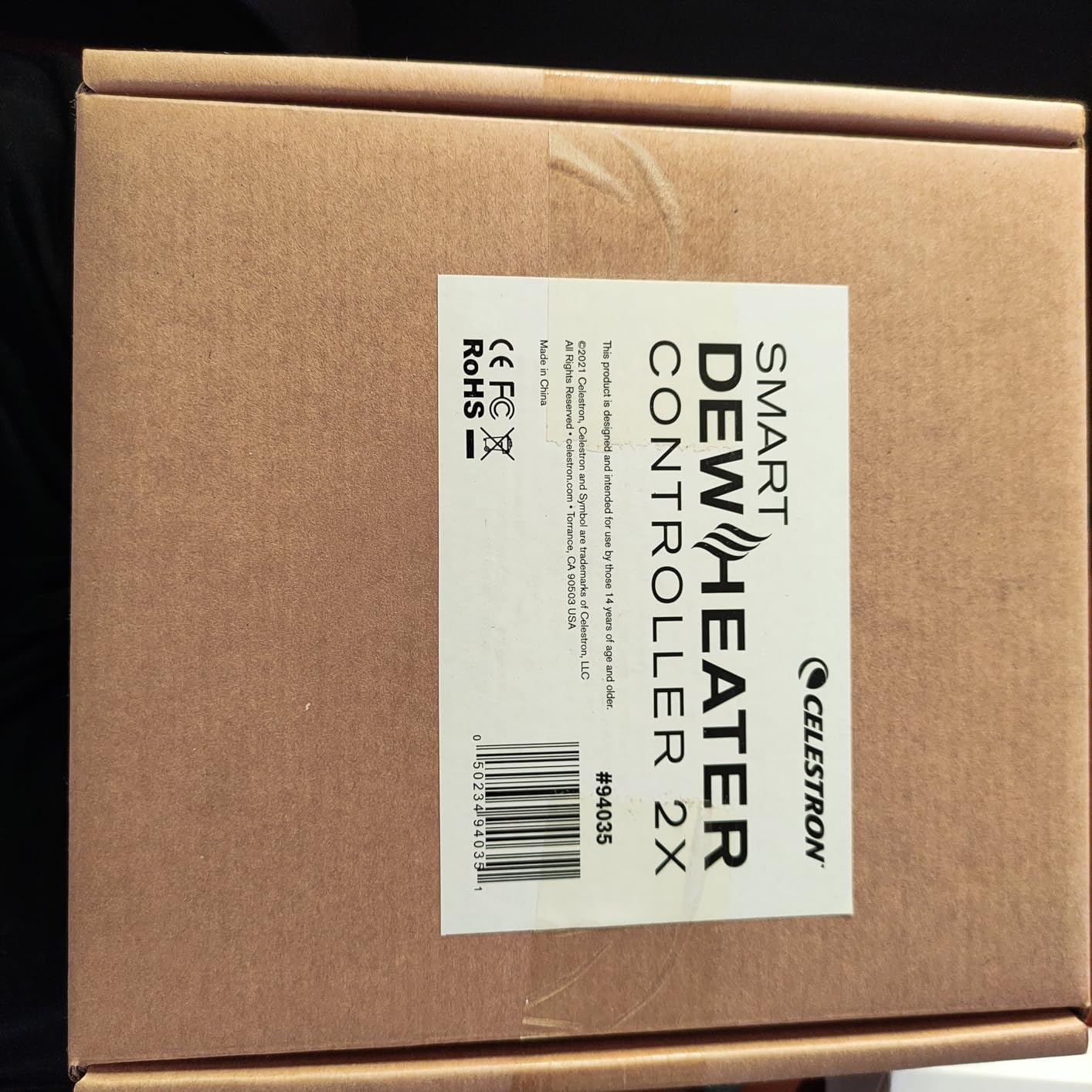
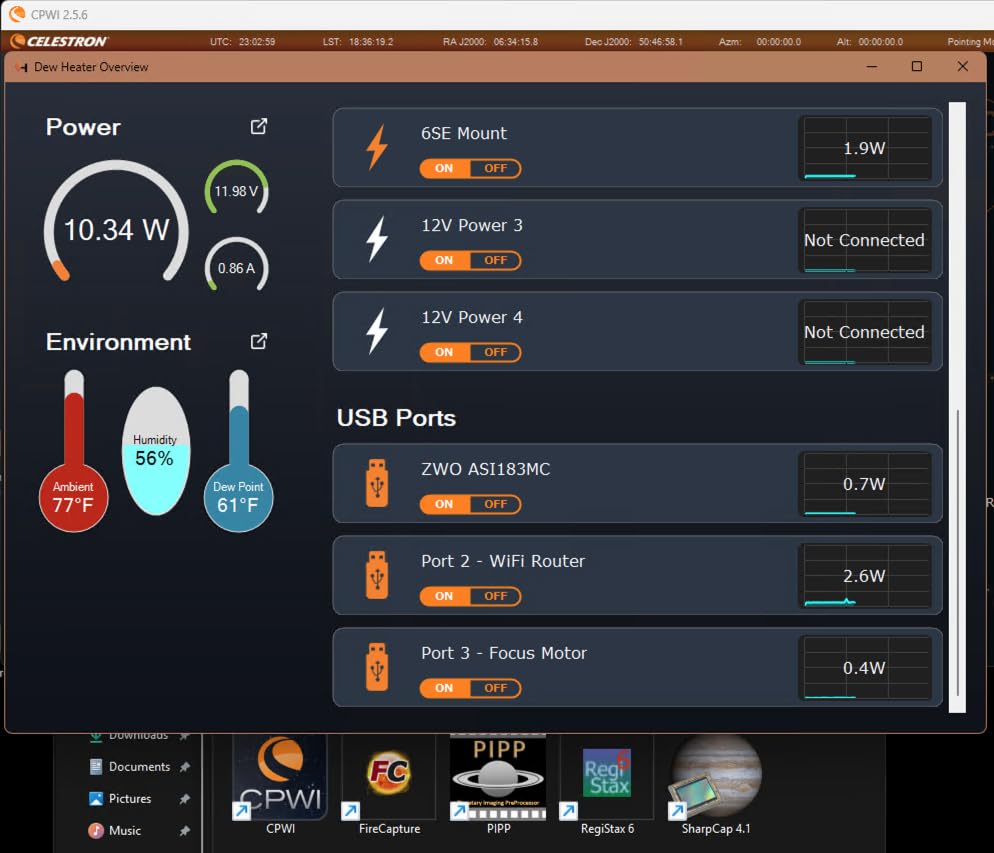
There is also a software angle that matters more than the hardware. The unit communicates with the telescope hand control and with CPWI software, displaying live temperature and humidity data and letting you make manual adjustments when conditions change. For a fixed observatory setup running unattended, that is a meaningful capability rather than a gimmick.
Reverse polarity protection is the small feature experienced imagers care about most. With bare DC connectors in the dark on a dew-prone night, a reversed plug is exactly the kind of mistake that happens, and this unit will not let you fry it.
Is the cost justified against a general purpose controller?
For most people, no, and the reviews say so directly. Several owners point out that a small general computer costs considerably less and can do dew control as part of a wider imaging package. That comparison is fair, and if you already run software-driven acquisition you may not need a dedicated unit.
What the money buys is integration and simplicity. If you observe visually, run one Celestron scope, and do not want to configure anything, the automatic sensor-driven control is worth the premium over a manual rheostat. Decide which of those two people you are before you order.
Can I power my mount from the spare 12V output?
It is designed to, and it will power a mount or a similar accessory. Several reviewers hit over-current behaviour when doing so, which suggests the auxiliary output is not comfortable with a heavy mount on top of two heaters running at once.
Test it with your specific combination before an all-night session, and if it faults, run the heaters and the mount from separate supplies. Dew control failing at two in the morning is a much worse night than carrying one more cable.
7. Thousand Oaks Four-Channel Unit: Best Multi-Heater Rig
Thousand Oaks Four-Channel Digital Dew Heater Control Unit – Requires Heater Band/s.
Four independently controlled RCA channels
Constant 12V DC output for accessories
Very low power draw
Compact 1 by 2.5 by 1 inch
Pros
- Four channels give finer per-band control than two-channel units
- Any single channel can be switched off completely
- Constant 12V output available for an accessory
- Low draw suits extended all-night sessions
- Same design as the higher priced Orion branded unit
Cons
- Heater bands and straps must be bought separately
- Open RCA sockets can admit condensation without blanking plugs
- No AC wall adapter included and most cheap adapters cannot supply enough current
Most people end up heating more than one surface. The main corrector, the finder, the guide scope and the eyepiece is four, and this four-channel unit is the simplest way to run all of them from one box. Long-time owners describe it working flawlessly across a whole night, controlling scope, finder, Telrad and eyepiece bands independently, and it averages 4.4 out of 5 from 53 reviews.
The value here is channel granularity. With four independent RCA outputs you can turn one band down while holding another up, and switch a channel off entirely when a surface does not need it. That flexibility is what a two-channel unit simply cannot give you, and it is why multi-scope imagers move up to this class.
Two further details make it easy to live with. The box is small, roughly one inch by two and a half inches and 12 ounces, so it mounts neatly on a telescope fork base without adding a bag of clutter. And the power draw is very low, which matters when it is feeding four heaters all night.
There is also a constant 12V DC output available for an accessory device, so the same box that drives your dew can hand out a spare rail for something small that needs power.
Why do the RCA sockets need blanking plugs?
Because an unused RCA socket is an open hole in a piece of electronics sitting in the exact conditions where moisture is condensing on your glass. Condensation reaching the board is a slow failure that shows up months later as a channel that will not turn on.
Owners report that blanking plugs are the direct fix, and that they are now included and were sent out free on request for earlier units. Buy a pack of them with the controller and fill every port you are not using, including the ones you think you will never need.
What power supply does this actually need?
It needs real current, and this is the most common setup mistake. No AC wall adapter is included, and most inexpensive wall-to-lighter adapters cannot deliver enough current to run four heater bands, which shows up as a controller that resets when you turn a channel up.
Plan on powering it from the 12V DC output of a battery pack or power station, and check the current rating of whatever you buy rather than assuming a barrel plug means it is adequate.
8. LOSHARP 42cm USB Warmer: Best Value for Eyepieces
Lens Warmer, USB Dew Heater Strip for Telescope Camera Lens with 3-Gear Temperature Controller, Anti-Fog Condensation Prevention for Astrophotography, DSLR, Finder Scope, Eyepieces up to 4.3 Inch
42cm folding strip, USB powered
Three heating modes
About 5 to 7 hours on a 10000mAh bank
Around 60g
Pros
- Becomes noticeably warm in under 15 seconds
- Three heat levels help manage battery life
- Long cord reaches a power bank away from the scope
- Adjustable diameter fits most telescopes and finder scopes
- 60g and folds down for easy carrying
Cons
- Heat output is weak next to similar priced alternatives
- Inline control switch has a track record of early failure
- One report of insulation failure near the wire entry
- Bright blue indicator is unwelcome for dark sky work
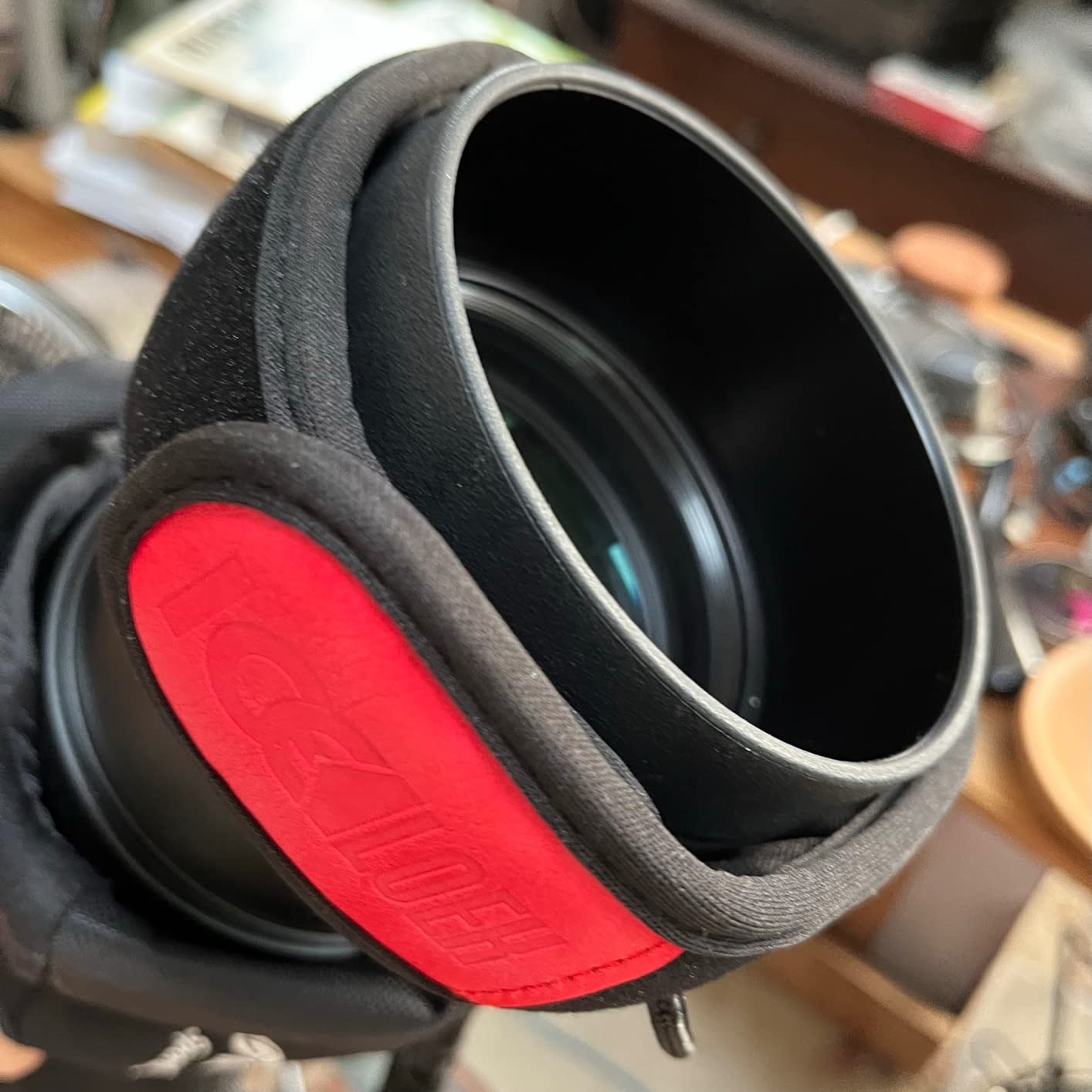
This is the simplest and most compact option here, and for one specific job it is a good one: keeping a 2 inch eyepiece or a small finder clear on a mild evening. It draws from any USB source, offers three heat modes, and reaches a noticeable temperature in about five seconds. At 60 grams it folds down into a bag without being noticed.
The rating is 4.2 out of 5 from 87 reviews, the second lowest here, and 62 percent of buyers still give it five stars. Many confirm it does prevent dew on eyepieces, DSLR lenses and small refractors, and they like the three settings and the long cord that lets the power bank sit away from the scope.
A published runtime of five to seven hours on a 10000mAh bank for a single strip like this one is the realistic benchmark for a USB warmer.
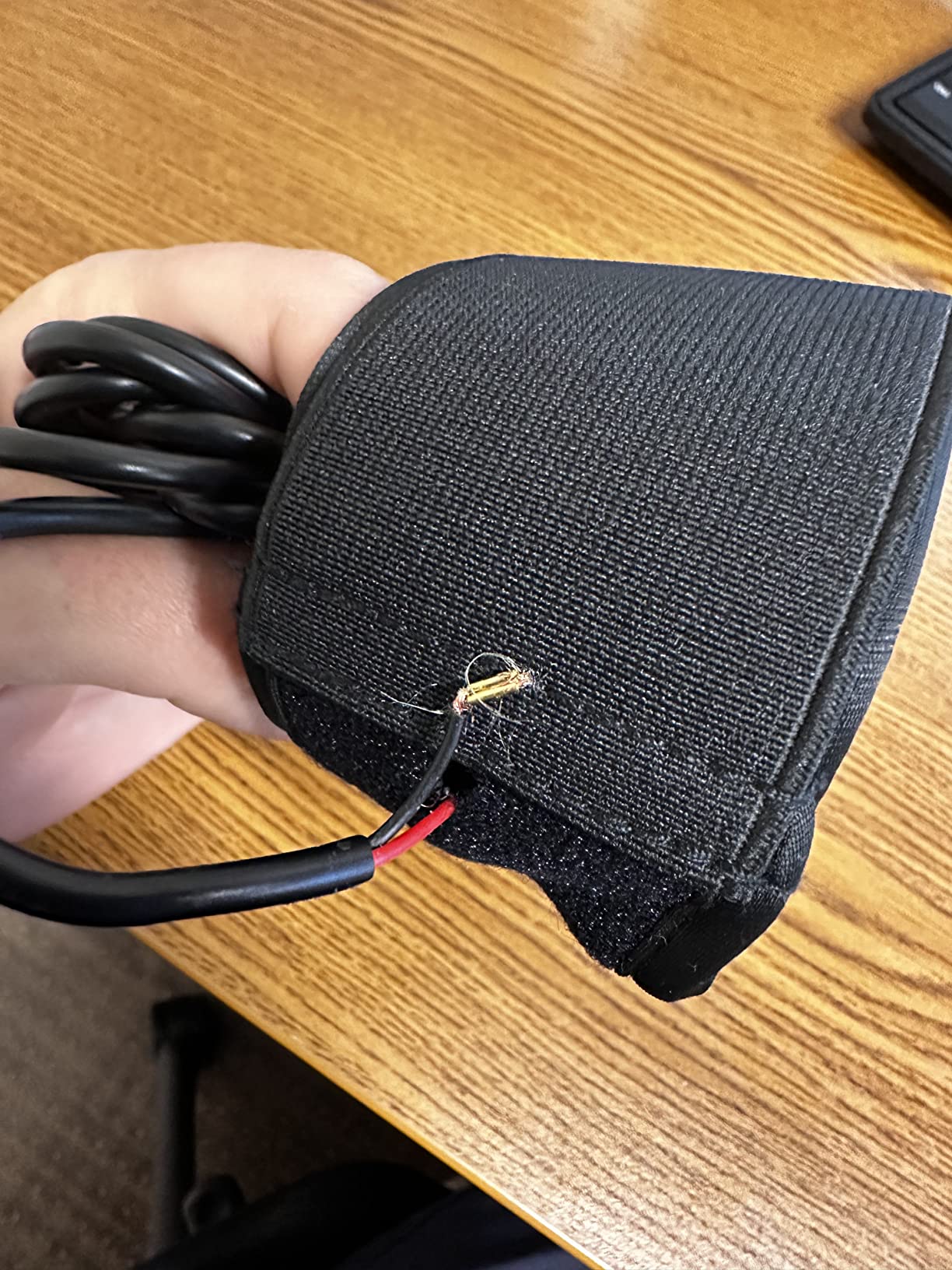
What drags the rating down is reliability rather than function. Reviews describe an inline control switch that failed after a few months in some of them, and there is an isolated report of insulation breaking down near the wire entry and melting the strap. Neither is universal, but both are the kind of failure that ends an all-night session quietly.
Output is the other complaint. Several users find the heat weak compared with strips in the same price bracket, which is unsurprising when you compare it to a 12V band running at twice the voltage.
How long does it run on a power bank?
The published figure is approximately five to seven hours from a 10000mAh bank, which covers most visual observing sessions comfortably on the low or medium setting. On high you will see considerably less, since the draw scales with the output.
For a full imaging night, budget a second bank or a larger capacity unit. It is also worth noting that the published runtime is a best case, and small banks rarely deliver their rated capacity at sustained output.
Is it worth the risk on a guide scope?
For a visual session on an eyepiece, yes. For a guide scope you are relying on for eight hours of sub-exposions, we would use something with a stronger track record of switch and insulation reliability instead, because a failed heater there shows up as trailed stars rather than as a visibly fogged lens.
Remember that a fogged guide scope is the quiet failure mode of this whole hobby. You will not notice it while it happens, and you will notice it when you stack the frames hours later.
9. Astromania 400mm DC Strap: Wide Diameter Coverage with Stepless Control
Astromania Dew Heater Strap, Dew Heater for Telescope 400mm DC Lens Warmer
400mm strap fits optics up to 125mm
Stepless sliding knob control
DC 5.5mm female port
3.2 ounces
Pros
- Stepless control is finer than the three position switches used by most of the other strips here
- Fits optics up to 125mm so one unit covers a 5 inch refractor dew shield
- Quick release fastening swaps between optics easily
- Light and compact at 3.2 ounces
Cons
- Lowest average rating here at 3.7 with 14 percent one star reviews
- DC power requires a 12V source rather than a USB bank
- Some users report it running cooler than the setpoint
- Wattage and cable length are not published
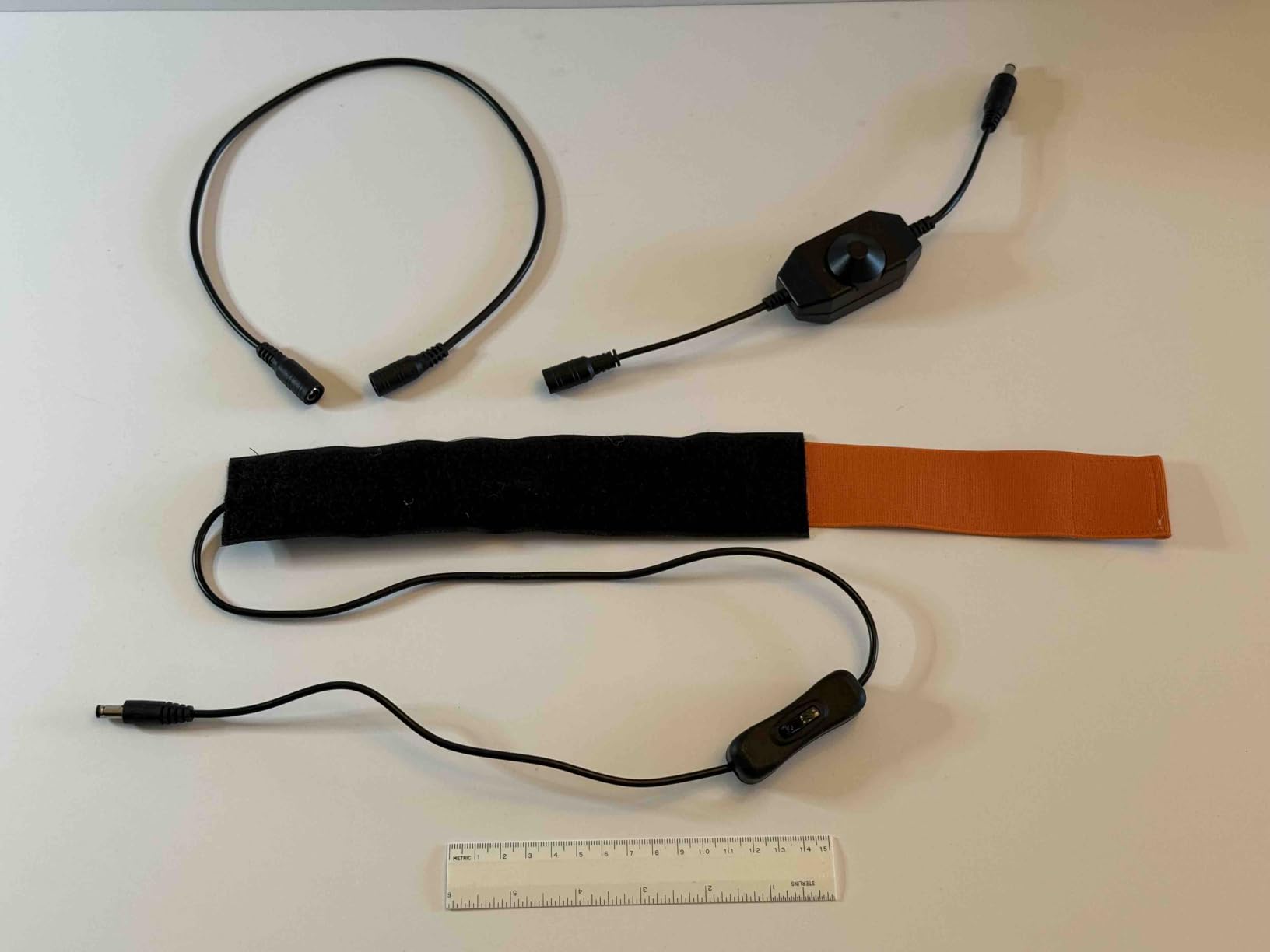
Two things set this strap apart from the other budget options. The first is diameter coverage: at 400mm it fits optics up to 125mm outer diameter, which is wider than the 80mm USB strips above it, so one unit handles a 5 inch refractor dew shield. The second is the stepless sliding knob controller, which gives finer adjustment than the three position switches almost everything else in this category uses.
At 3.2 ounces it adds almost no weight to the tube, and the quick release fastening lets you move it between optics without re-routing anything.
Now the honest part. It has the lowest average rating of the ten products here at 3.7 out of 5. Buyers who like it point to the stepless knob and the wide diameter coverage, which is exactly what we valued when picking it.
The criticism is consistent though: some users report the strip running cooler than the temperature the knob suggests. That is a bad combination in this category, because a heater that under-delivers leaves you turning the knob up with no confidence in what the setting means.
Is a 3.7 star product worth including?
Yes, because a roundup that only lists the obvious winners is not useful to someone whose optic falls in the gap the winners leave. There is a real diameter band between the 80mm USB strips and the 600mm NEEWER strip, and this is one of the few affordable ways to cover optics up to 125mm.
Our recommendation is to buy it for a visual scope rather than an imaging train, and to verify the output yourself on the first clear night rather than trusting the dial. If it under-delivers for you, the higher rated SVBONY 12V strips cover the same diameter range with a much larger review base.
Why does it need DC power instead of USB?
Because the port is a 5.5mm outside and 2.1mm inside DC female, the same connector used by most 12V telescope gear. That is a genuine benefit if you already run 12V, because you can feed it from a battery pack or controller without an adapter.
It is a genuine drawback if you planned to run everything from USB power banks, in which case this is the wrong product for your setup regardless of how well it fits. Match the connector ecosystem before you match the diameter.
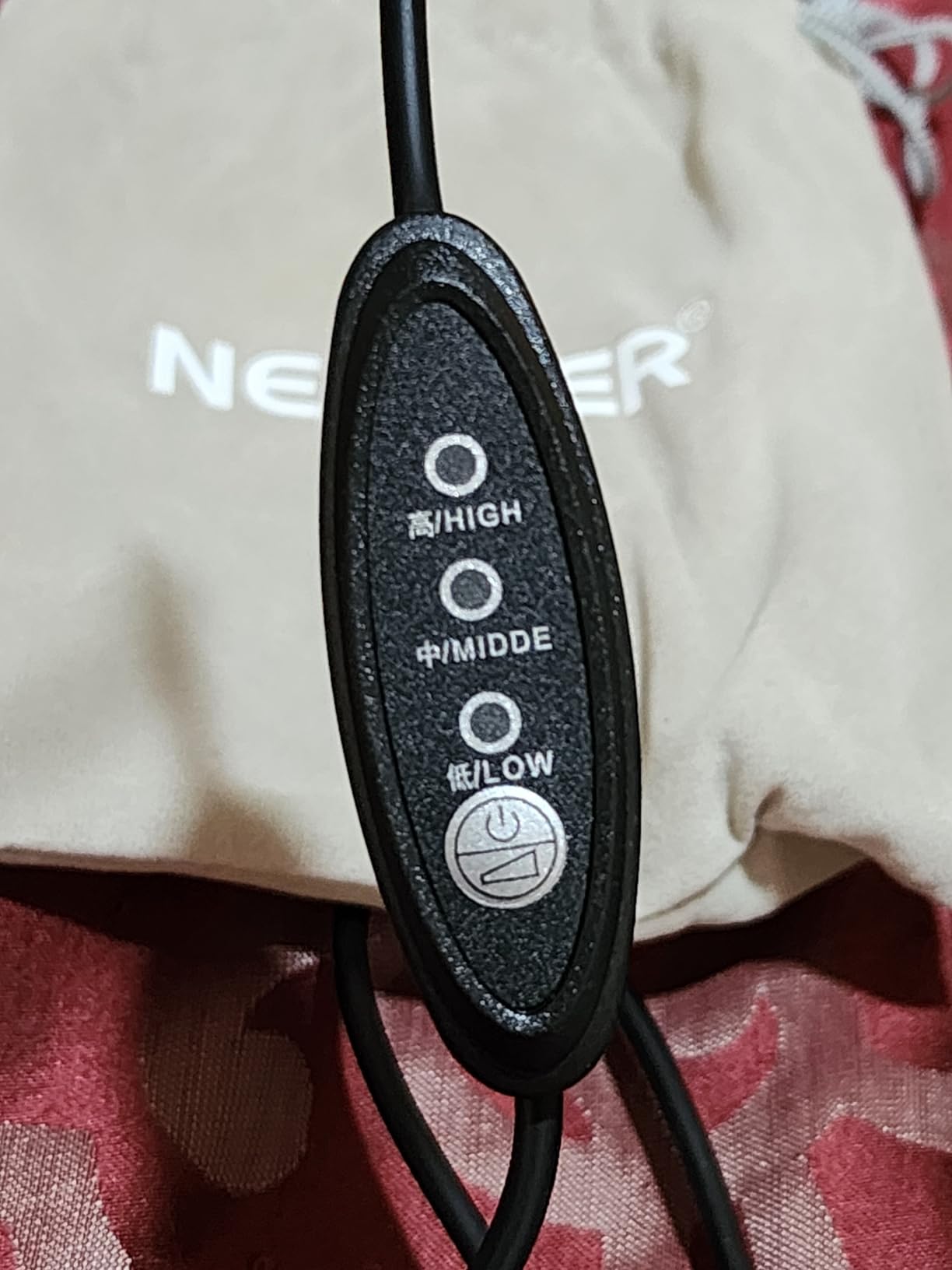
10. NEEWER 600mm USB Strip: Best for Large Scopes and Binoculars
NEEWER 23.6″/600mm USB Lens Heater Warmer with 3 Temperature Settings, Dew Heater Strip Prevents Dew Fog Condensation for DSLR Mirrorless Camera Telescope Binocular Astrophotography, HW-23B
600mm strip with 500mm effective heating length
Fits optics up to 150mm diameter
Three published temperature ranges
USB powered, 1.5m cable
Pros
- Publishes an actual temperature range for each of the three settings
- Wraps the largest optics in the set at 150mm diameter
- Upgraded element lifts the lens above dew point quickly
- Works with any 5V USB source
- Lightweight at 4.9 ounces with a simple touch fastener
Cons
- Smallest review base here at 30 reviews so long term reliability is unproven
- Effective heating length is 500mm despite the 600mm label
- 1.5m cable can be short when the power bank is at the tripod base
The widest wrap in our set, and the only one that publishes a temperature range for each of its three settings. This strip covers optics up to 150mm diameter, which is a 6 inch class telescope dew shield or a pair of large binoculars, and it publishes the temperature range of each setting: 35 to 45 degrees Celsius on low, 45 to 55 on medium and 55 to 65 on high.
That published data is more useful than it sounds. On a night where the dew point is near freezing you can choose a setting based on numbers rather than guessing at a dial position, and you can log what worked and reuse it next season.
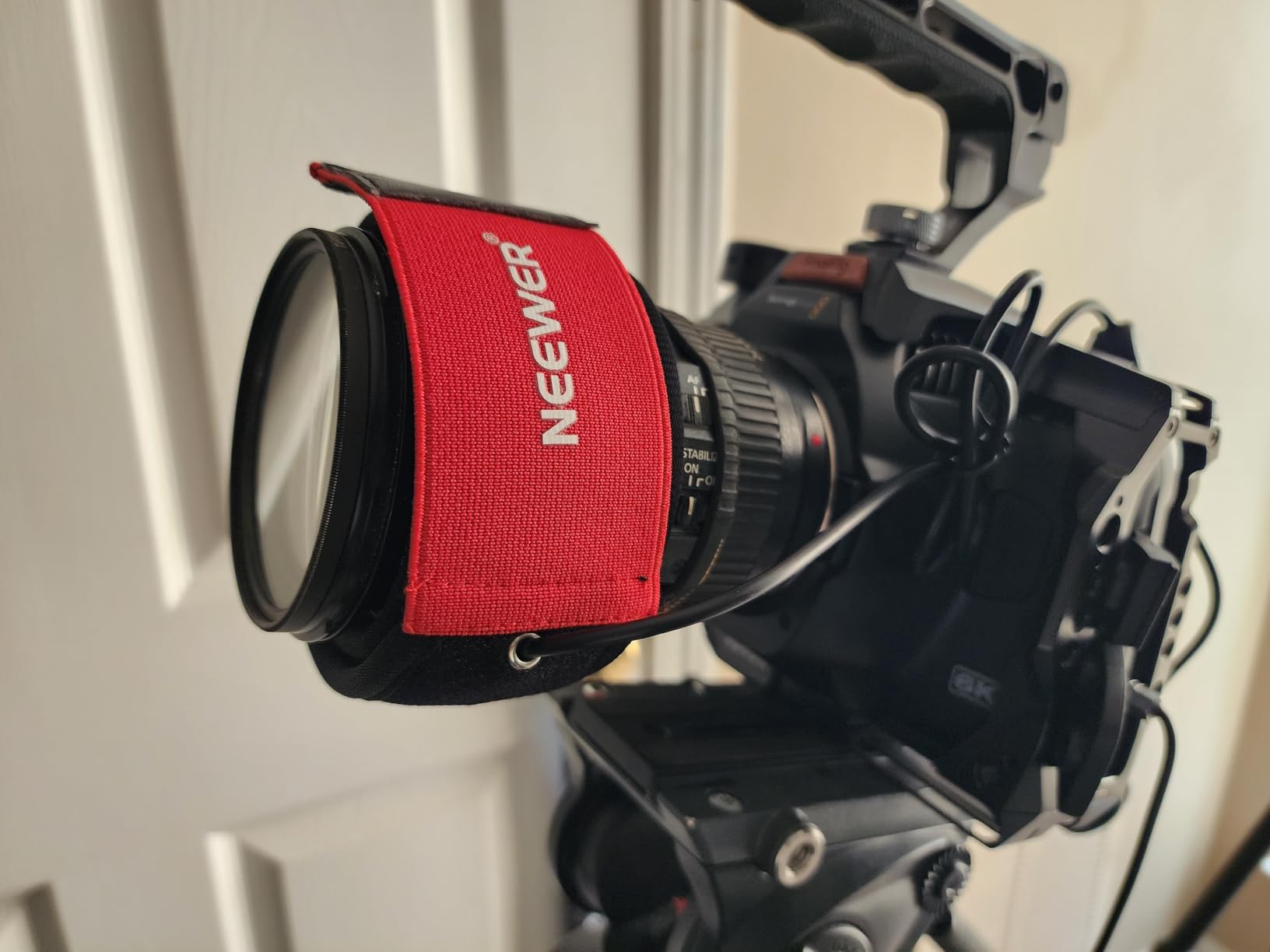
Note the gap between the label and the real dimensions. The strip is marketed as 600mm but the effective heating length is 500mm, and the compatibility figure is optics up to 475mm of circumference. Effective length rather than total length is the number that matters, because the ends of a strip are where the fastening overlaps sit.
It is also a recent listing, and that shows up in the feedback. Thirty reviews averaging 4.4, split 67 percent five star and 23 percent four star, tell you it works but tell you very little about how it will look after five seasons.
Should I trust a product with only 30 reviews?
For a visual session, yes, and the reason is the temperature data. Published ranges mean you can set it intelligently on the first night instead of learning by trial, and the 4.4 average with no one star reviews in the sample is a reasonable signal.
For an unattended all-night imaging run, we would pair it with a controller and a thermistor so the output is set by a sensor rather than by a setting you picked once. That is the sensible hedge when long term durability is unproven.
Is the 1.5m cable going to be a problem?
In a fixed setup at a desk, no. In the field, quite possibly, because most observers put the power bank on the ground at the base of the tripod while the scope sits well above it. A 1.5m cable rarely closes that gap once you account for the run down the tripod leg.
Budget for a USB extension or a longer lead, or choose one of the strips in this list that ships with a longer cord. The MOVE SHOOT MOVE 350mm has a 60 inch cable for exactly this reason.
How to Choose a Dew Heater That Fits Your Telescope
Measure the Dew Shield Outer Diameter, Not the Aperture
The single most repeated instruction across observer forums is also the one most often skipped: a heater wraps around the outside of the dew shield, so the dew shield outer diameter decides what fits. The aperture tells you how much glass there is, not how far the tube is from one side to the other. A 6 inch refractor with a wide dew shield can need a strip that would be absurd on a 6 inch Newtonian with a bare tube.
Run a caliper or a tape around the outside of the dew shield at the point where the strip will sit, note the circumference, and then pick a strip at least that long. If it is too short it will not close; if it is far too long the overlap will be bulky and can foul the focuser. Every strip in our list states either a strip length or a maximum wrap diameter, so match one of those numbers to your measurement.
If you like the sound of a general solution to keeping optics clear in bad weather, our infrared heating picks cover the same keep-it-warm principles for outdoor spaces.
Dew Shield First, Heater Second
Almost every dew problem is cheaper to fix with a longer dew shield. A longer shield delays the point at which the glass drops through the dew point, which means the heater runs at a lower setting, draws less power and can be smaller. Observers consistently recommend buying the shield before the heater, because every extra inch of shield means the heater can run at a lower setting and draw less power.
A rough rule of thumb is that a dew shield should extend at least a few inches beyond the front element, and considerably more than that in humid climates. If you are starting from a scope with no shield at all, fix that first and then measure again.
USB or 12V DC: Pick Your Power Ecosystem First
This decision constrains everything else, so it comes before the controller. USB 5V strips run straight from a power bank, a laptop or a car charger, which makes them the easiest choice for a field night or a visual session. They draw less current and warm more gently. 12V DC strips use the 5.5×2.1mm connector that almost all telescope gear already uses, and they deliver substantially more heat for the same wrap, which is what you want on a large cold mirror.
The mistake is buying a 12V strip and then discovering you have no 12V supply. The 5V USB strips on this list need nothing but a battery you already own. The 12V options need a pack, an adapter, or a controller that provides a rail. Decide which ecosystem your rig already runs, and buy inside it.
Rheostat, PWM or Smart Control, and How Many Channels
Three control types cover almost everything. A rheostat is a simple dial or three position switch that meters power, and it is what the inline regulators on most strips in our list are: cheap, reliable, and demanding only that you set it correctly once.
Pulse width modulation is a fast switching controller that holds a more consistent average output, which is what the multi-channel units in this category use. Smart control adds sensors, so a thermistor reads the surface temperature and the controller delivers only what the dew point gap requires.
Channel count is a separate axis and it is decided by how many surfaces you are heating. One surface needs no controller at all, since the inline regulator is enough. A corrector and a guide scope needs two. A full visual rig with a finder, a Telrad and an eyepiece is four, and that is the case a four-channel unit exists for. Count your heated surfaces first, then buy channels to match rather than more.
Power Budget and Power Station Sizing
Dew control is usually the second largest draw on an imaging rig, behind the camera and mount, and it is the one that surprises people. A single USB strip can pull close to 2A at 5V, and a 12V band draws more again. Plan in the range of a few watts per heater at a low setting, and a full multi-heater rig will sit in the dozens of watts.
Size the battery against the hours, not the capacity. If you run two USB strips for eight hours at 2A and 5V, that is 80 watt-hours of energy, so a 20000mAh pack at 3.7 volts is a comfortable match and a 10000mAh pack is marginal. Anything you add later comes off the same budget, so a second camera, a fan and a motorised focuser all eat into those hours.
Start at 40 to 50 percent power and adjust from there, which is the setting observers report using most often. If dew is forming at that level, the problem is usually a short dew shield rather than an underpowered strip.
Where to Actually Put the Heater
Put it on the surface that actually goes below the dew point. For a refractor and a Newtonian, that is the front of the tube, wrapped around the dew shield behind the lip so it cannot fog the objective itself. For a Schmidt-Cassegrain, that is the corrector plate, and a ring seated on the corrector is the most direct solution available. For a Maksutov, expect condensation on the secondary rather than the corrector, so the heater belongs near the top of the tube.
Wrap it snugly but not stretched, keep the fastening overlap away from the focuser and the dovetail, and route the cable down the tube so it cannot catch a finder or a dovetail as the scope swings. Leave the heater off while you are carrying the scope between locations and switch it on once you are set, so you are not dragging a warm strip across a desk.
What Not to Heat
Do not heat a Newtonian or Dobsonian primary mirror. This is the point experienced observers raise immediately, and the reasoning is simple: a primary sits deep in the tube, out of contact with the sky, and radiates far less heat outward than a corrector or an objective does. You would have to actively cool it to get dew on it, which is why primary heaters are almost never needed and why a big one strapped around a Dobsonian tube does more harm than good by heating the whole instrument.
Also avoid running any heater above a few degrees over the dew point. Excess heat starves the battery, causes thermal currents that soften star images in long exposures, and stresses anti-reflection coatings. Never leave a cheap unmonitored strip running unattended on a guide scope, and let a cold scope acclimatise for 30 to 60 minutes before applying power so the glass is at ambient temperature when you start.
Frequently Asked Questions
Is a dew heater supposed to remove dew or prevent it?
A dew heater only prevents dew. It adds a few watts of heat to hold the optical surface just above the ambient dew point, so condensation never starts forming. It cannot remove water that has already condensed, and once a lens is fogged you must let it dry naturally or warm it gently with airflow before the night is lost.
Where to put a dew heater on a telescope?
Wrap it around the outside of the dew shield, behind the lip, on whichever surface goes below the dew point. On a Schmidt-Cassegrain put it on the corrector plate, using a ring if one fits. On a refractor or Newtonian keep it clear of the focuser and dovetail, and route the cable down the tube so it cannot snag.
Do I need a dew heater for a guide scope?
If you are imaging, yes. A guide scope is small, exposed and sits in the worst of the airflow, so it fogs first and it fogs worst. A fogged guide scope is the quiet failure of this hobby: it does not alarm you, it just quietly trails every sub-exposure after it forms and you find out when you stack the frames hours later. A small USB strip is enough.
How much power does a telescope dew heater use?
A single USB 5V strip can draw close to 2A, and 12V bands draw more again. For a full imaging rig running two or three heaters expect a combined draw in the tens of watts, so size the power bank on watt-hours for the hours you need rather than on the milliamp label alone. Start heaters at 40 to 50 percent power and adjust from there.
Do dew heaters ruin telescope optics?
Not if you use them correctly. A heater should hold the glass only a few degrees above the dew point, so the optical surfaces barely change temperature. Running one far too hot wastes battery, causes thermal currents that soften long exposures and stresses coatings. Do not heat a Newtonian primary mirror, and never leave an unmonitored cheap strip running unattended.
Which Dew Heater Should You Buy in 2026?
Measure first, then buy. Pull a tape around the outside of your dew shield, decide whether your rig runs USB or 12V, and count how many surfaces you actually need to heat. The Celestron 8 inch ring is the right answer for 8 inch Celestron Schmidt-Cassegrains, the SVBONY SV172 covers most small tubes, and the SVBONY SV192 is the pick when you have one large mirror to hold above the dew point all night.
Everything else on this list is a fit question rather than a quality question. Whatever you choose, start at the low setting, watch for dew at the edge of the field, and adjust from there rather than turning the heat up out of caution.