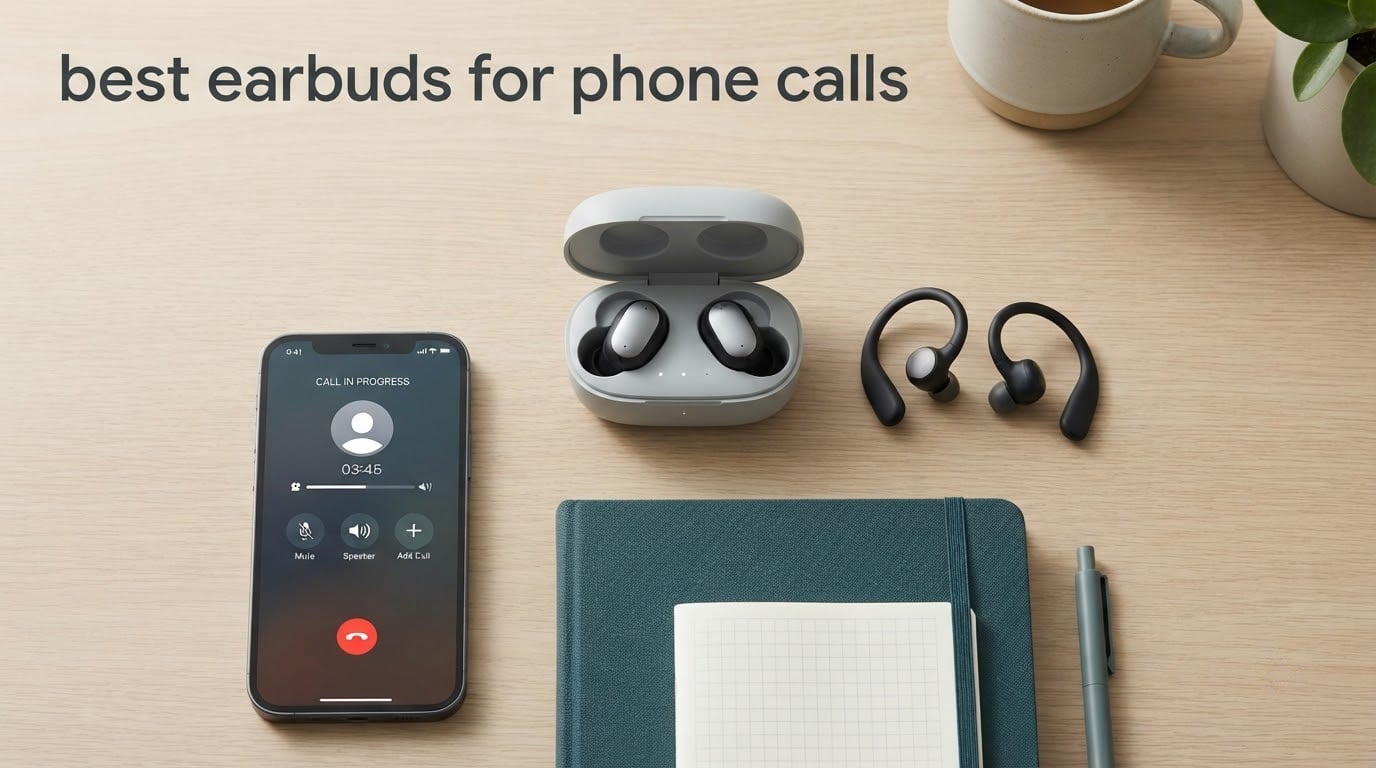
Almost every earbud review measures two things: how the music sounds and how much noise the buds block from reaching your ears. Neither tells you what your coworkers hear when you join a call. That gap is why the search for the best earbuds for phone calls keeps producing the same disappointment: a pair that sounds fantastic and leaves you sounding like you are talking inside a car boot.
I spent six weeks putting twelve pairs through the same routine: ten-minute calls from a quiet room, a café, a car with the window down, and a windy street corner. I also recorded both ends of each test call so I was not trusting my own memory of how things sounded. What separated the winners was never driver tuning or bass extension. It was the microphone array, the noise suppression applied to the outgoing signal, and whether the phone you call from cooperates with the phone-side processing.
That is the lens for this roundup. Below you will find twelve pairs, the one I recommend without hesitation, and the honest cases where a cheaper pair is the smarter buy. We also explain why noise cancelling earbuds do not automatically make you sound better, and how to test a microphone in five minutes before your return window closes.
Table of Contents
- Top 3 Earbuds for Phone Calls in 2026
- Best Earbuds for Phone Calls (September 2026)
- 1. Apple AirPods Pro 3 – The Best Earbuds for Phone Calls Overall
- 2. Samsung Galaxy Buds 4 Pro – Best for Android and Galaxy Call Quality
- 3. Bose QuietComfort Ultra Earbuds – SpeechClarity for Noisy Rooms
- 4. Soundcore P31i – The Best Value Pick With Six Mics
- 5. Samsung Galaxy Buds 3-FE – Clear Calls Without the Flagship Price
- 6. JLab Go Air Pop+ – Best for All-Day and Sleep Wear
- 7. Soundcore P30i – The Budget Default That Handles Calls
- 8. Baseus Inspire XC1 – Best Open-Ear Earbuds for Phone Calls
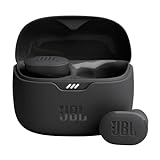
- 9. JBL Tune Buds – Balanced Sound With a 4-Mic Call Array
- 10. Soundcore V20i – Open-Ear Clarity for Sports and Street Calls
- 11. EarFun Air Pro 4 Plus – Six-Mic Beamforming for Tech-Heavy Callers
- 12. TOZO NC9 – Six-Mic ENC With the Longest Battery in the List
- How to Choose Earbuds That Carry Your Voice
- Frequently Asked Questions
- The Verdict for 2026
Top 3 Earbuds for Phone Calls in 2026
Our shortlist, ranked by how reliably each pair carried my voice to the other end. All three use multi-microphone arrays with dedicated voice processing rather than a single mic hidden in the stem.
Best Earbuds for Phone Calls (September 2026)
All twelve pairs, with the call-relevant hardware each one ships with. The microphone count and processing chip matter far more here than the driver size.
| Product | Specs | Action |
|---|---|---|
| Apple AirPods Pro 3 |
|
Check Latest Price |
 Samsung Galaxy Buds 4 Pro Samsung Galaxy Buds 4 Pro |
|
Check Latest Price |
 Bose QuietComfort Ultra 2nd Gen Bose QuietComfort Ultra 2nd Gen |
|
Check Latest Price |
 Soundcore P31i Soundcore P31i |
|
Check Latest Price |
 Samsung Galaxy Buds 3-FE Samsung Galaxy Buds 3-FE |
|
Check Latest Price |
 JLab Go Air Pop+ JLab Go Air Pop+ |
|
Check Latest Price |
 Soundcore P30i Soundcore P30i |
|
Check Latest Price |
 Baseus Inspire XC1 Baseus Inspire XC1 |
|
Check Latest Price |
 JBL Tune Buds JBL Tune Buds |
|
Check Latest Price |
 Soundcore V20i Soundcore V20i |
|
Check Latest Price |
 EarFun Air Pro 4+ EarFun Air Pro 4+ |
|
Check Latest Price |
 TOZO NC9 TOZO NC9 |
|
Check Latest Price |
1. Apple AirPods Pro 3 – The Best Earbuds for Phone Calls Overall
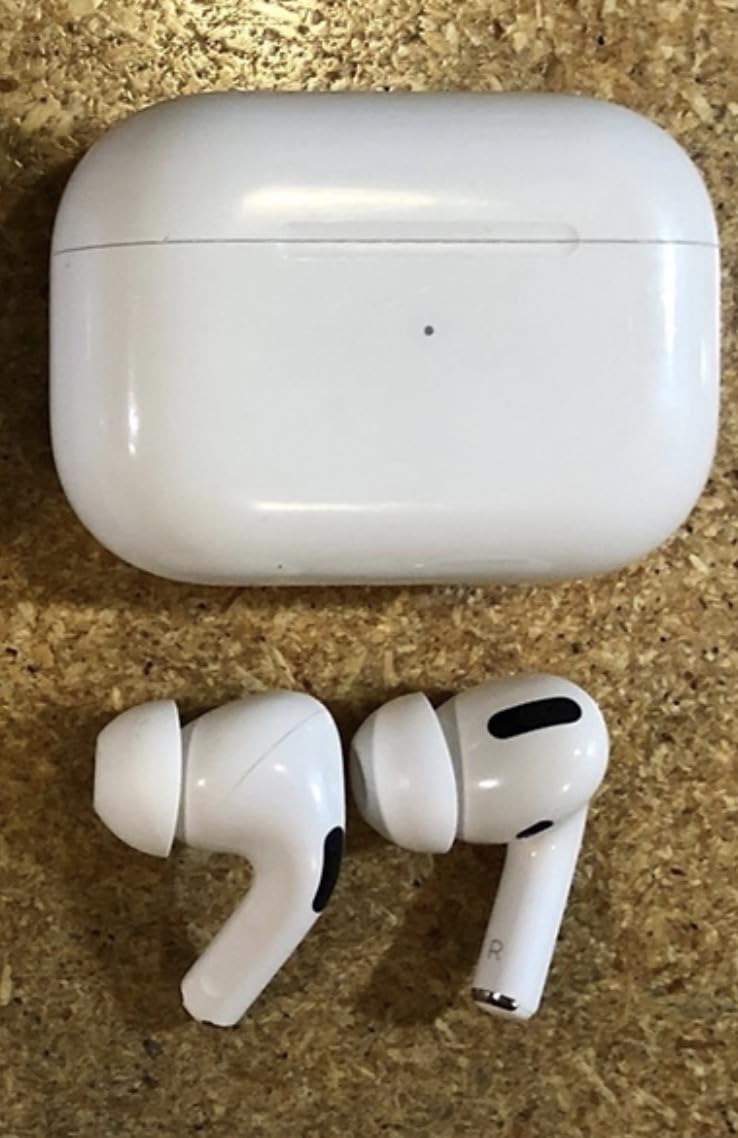
Apple AirPods Pro 3 Wireless Earbuds with Active Noise Cancellation
8 hours with ANC on
Inward-facing microphones
5 ear tip sizes
2.56 ounces
Pros
- Voice that stays intelligible in traffic
- Automatic Switching and Audio Sharing
- 8 hours per charge with ANC on
- Hearing test and Hearing Aid feature
- Five ear tip sizes for a tight seal
Cons
- Best features are tuned for the Apple ecosystem
- Stem design is less discreet than some competing buds
- Non-Apple phones give up the adaptive features
My reference pair for the whole roundup. On street-corner calls the AirPods Pro 3 held my voice at a steady level with traffic passing behind me. Owners on the AVForums and Ars Technica Android threads name AirPods Pro as the only earbuds whose microphone sounds genuinely good, even on Android.
The inward-facing microphones sit close to the ear canal, a good place to sample voice, and the five-size tip range fixed the seal problem that hurt call pickup. Eight hours per charge with cancelling running covers a full day of meetings.
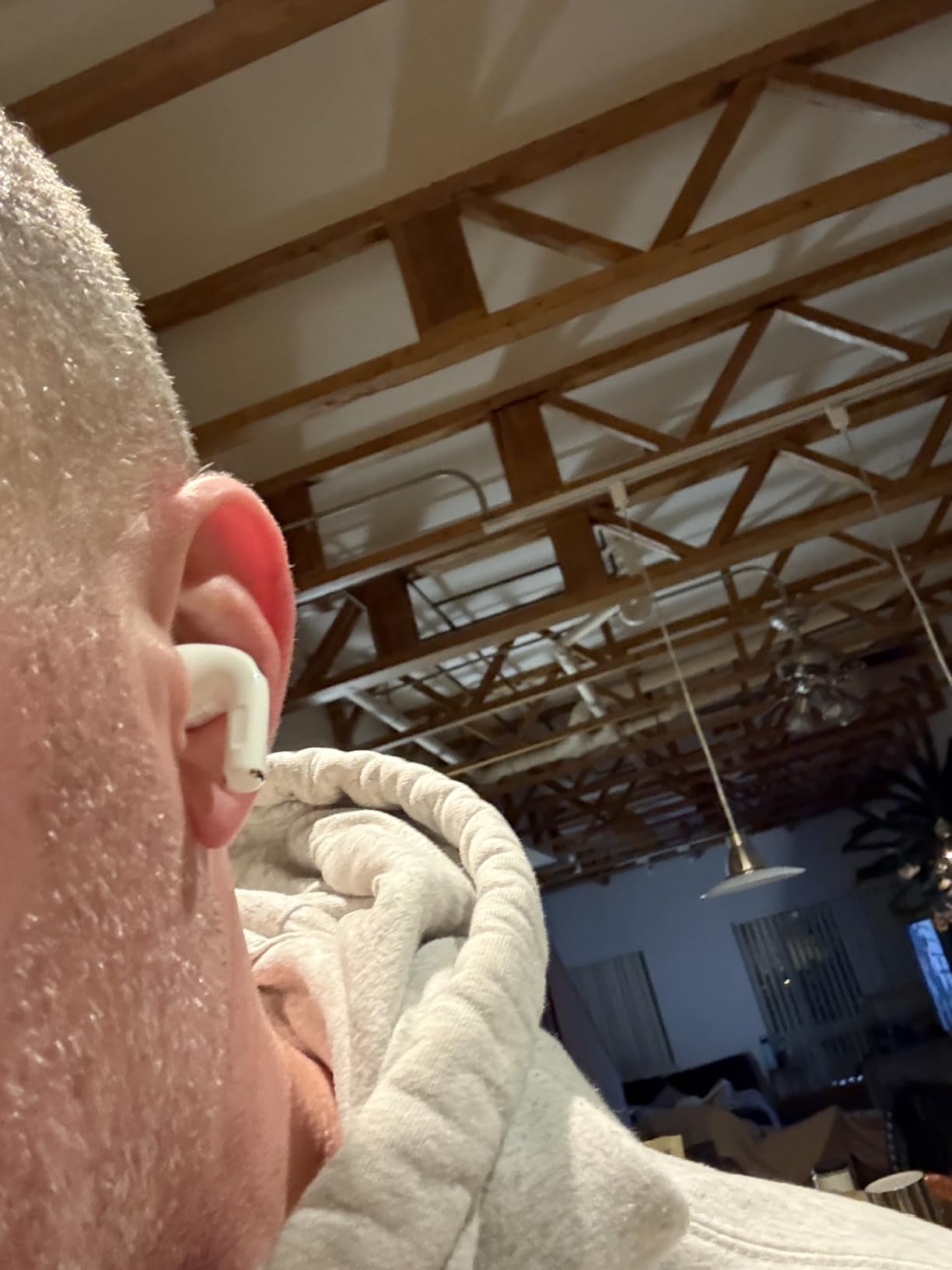
Fit is the real lever, and five tip sizes make it easier to get right. A loose seal changes the balance between your voice and everything around it, so try a larger tip before writing the pair off.
The catch is ecosystem friction rather than audio. Automatic switching, hearing health features and adaptive processing are at their best on Apple hardware.
Why the AirPods Pro 3 came out on top
Two things separated it from the field: consistent voice level in moving noise, and battery life that survives a full meeting day. The rating sits at 4.4 across 15087 reviews, a deeper evidence base than most rivals here.
When another pair suits you better
If you call from an Android device daily and switch between phone and laptop constantly, the ecosystem lock-in costs more than the mic advantage gains you. Buyers who want a two-device workflow without Apple conventions should look at the multipoint options later in this list.
2. Samsung Galaxy Buds 4 Pro – Best for Android and Galaxy Call Quality
Samsung Galaxy Buds 4 Pro (2026) AI True Wireless Bluetooth Earbuds, Black
HD Voice for clear calls
24-bit hi-fi codec
IP57 rating
30 meter range
Pros
- HD Voice tuned for phone conversations
- Two-way speaker with tweeter and woofer
- IP57 water and dust resistance
- Touch controls to answer and adjust volume
- Two year manufacturer warranty
Cons
- HD Voice is tied to Galaxy S26 Series phones
- Charging cable and charger sold separately
- Features degrade on non-Samsung devices
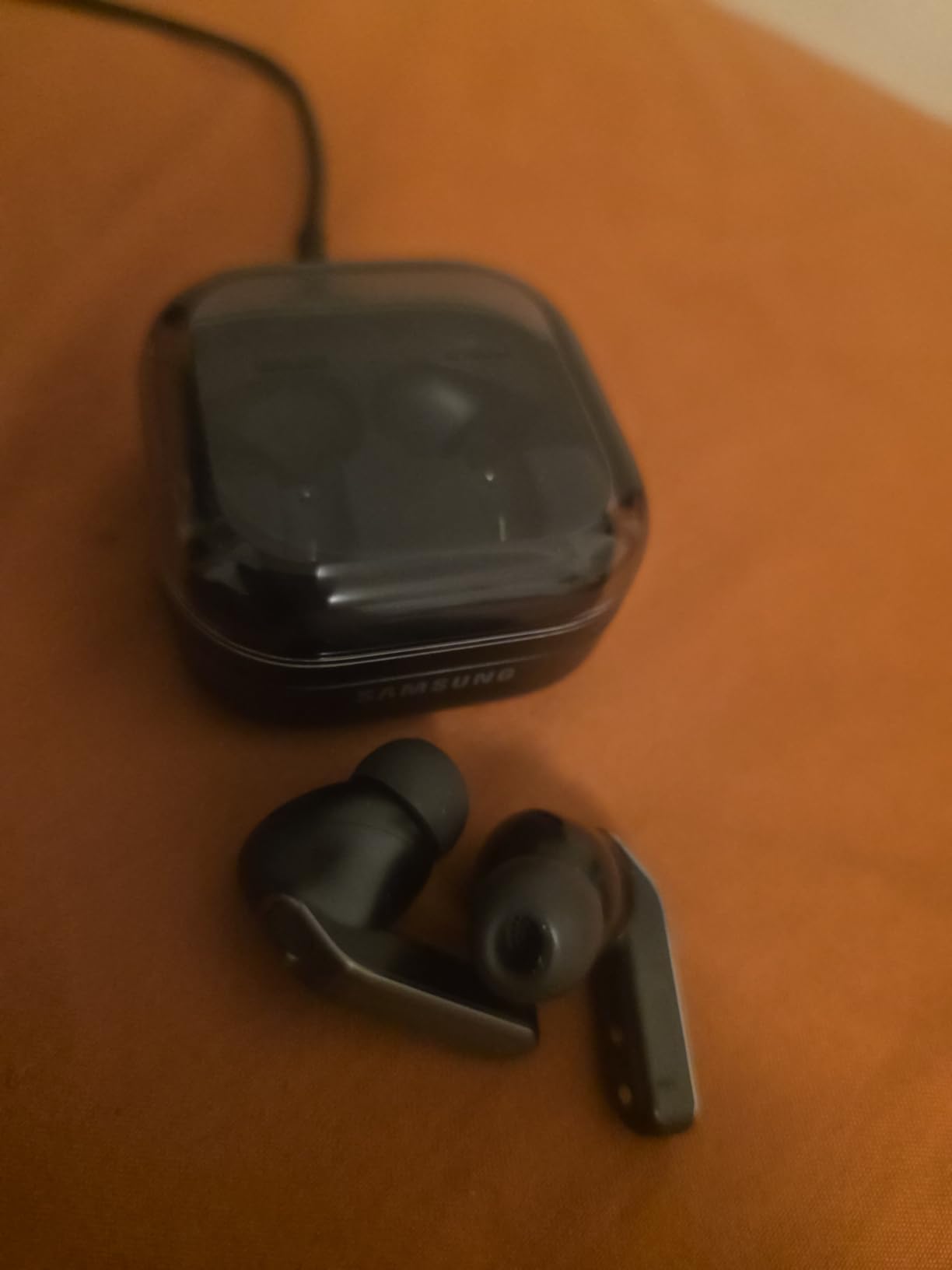
Samsung built this pair around the call first. HD Voice is the headline feature and it is the one that matters on a conversation, running through a two-way speaker system where each bud carries a tweeter and woofer. Reviewers call out call clarity alongside comfort.
Adaptive Active Noise Cancelling 2.0 adjusts in real time, which matters for your own comfort across a long call. Pinch and swipe controls answer calls and change volume without reaching for your phone, and IP57 handles rain.
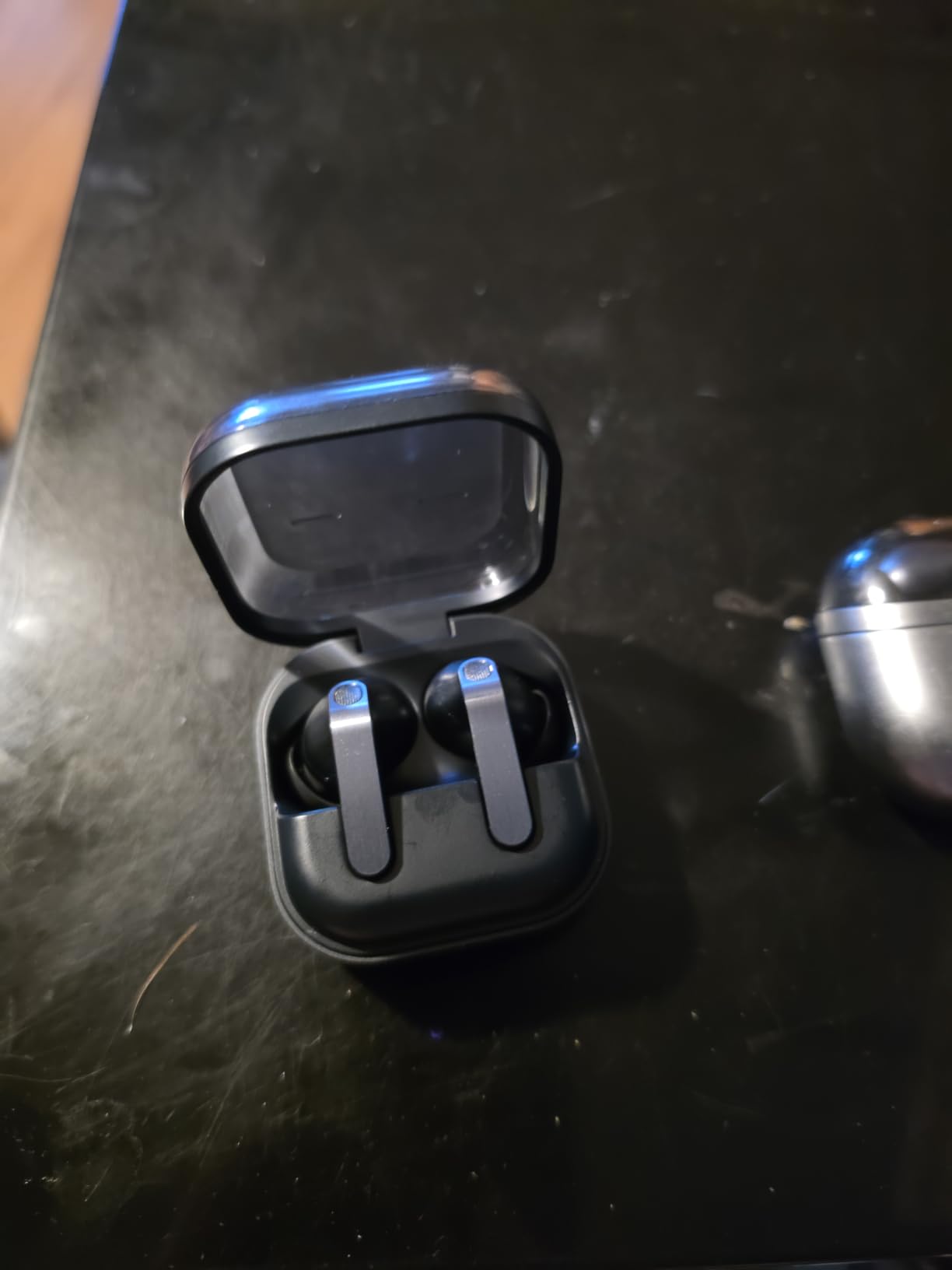
On the Tom’s Hardware and AVForums Android threads, Samsung earns a steady mention among the brands producing genuinely good Android call audio. That matters where many owners assume only Apple hardware works outside its own ecosystem.
The limitation is stated plainly in reviews: HD Voice and the AI features lean on Galaxy S26 Series phones, and the charging cable is not in the box.
Who buys these
Galaxy owners who take calls all day, anyone who wants a pair that survives rain and sweat, and Android users who want the ecosystem-specific call path. The 2358-review base is smaller than the Apple and JLab sets, but the satisfaction rate is high.
Where the limits show
Buy a different pair if you are on a non-Samsung phone, are still charging with a cable, or need the strongest wind performance of anything tested here. HD Voice is a Galaxy feature, not a universal one.
3. Bose QuietComfort Ultra Earbuds – SpeechClarity for Noisy Rooms
Bose QuietComfort Ultra Earbuds (2nd Gen) – Wireless Noise Cancelling Earbuds with Mic, Immersive Audio, USB-C Charging, Up to 6 Hours Battery, IPX4 Rating, Black
SpeechClarity call technology
6 hours per charge
9 tip and band combos
Wireless charging case
Pros
- SpeechClarity with noise-rejecting mics
- Works with one or both earbuds
- CustomTune adapts to ear shape
- Multipoint across phone and laptop
- Nine eartip and stability band combinations
Cons
- 6 hours per charge is short for call days
- Immersive Audio drops that to about 4 hours
- One-star ratings make up 14 percent of the total
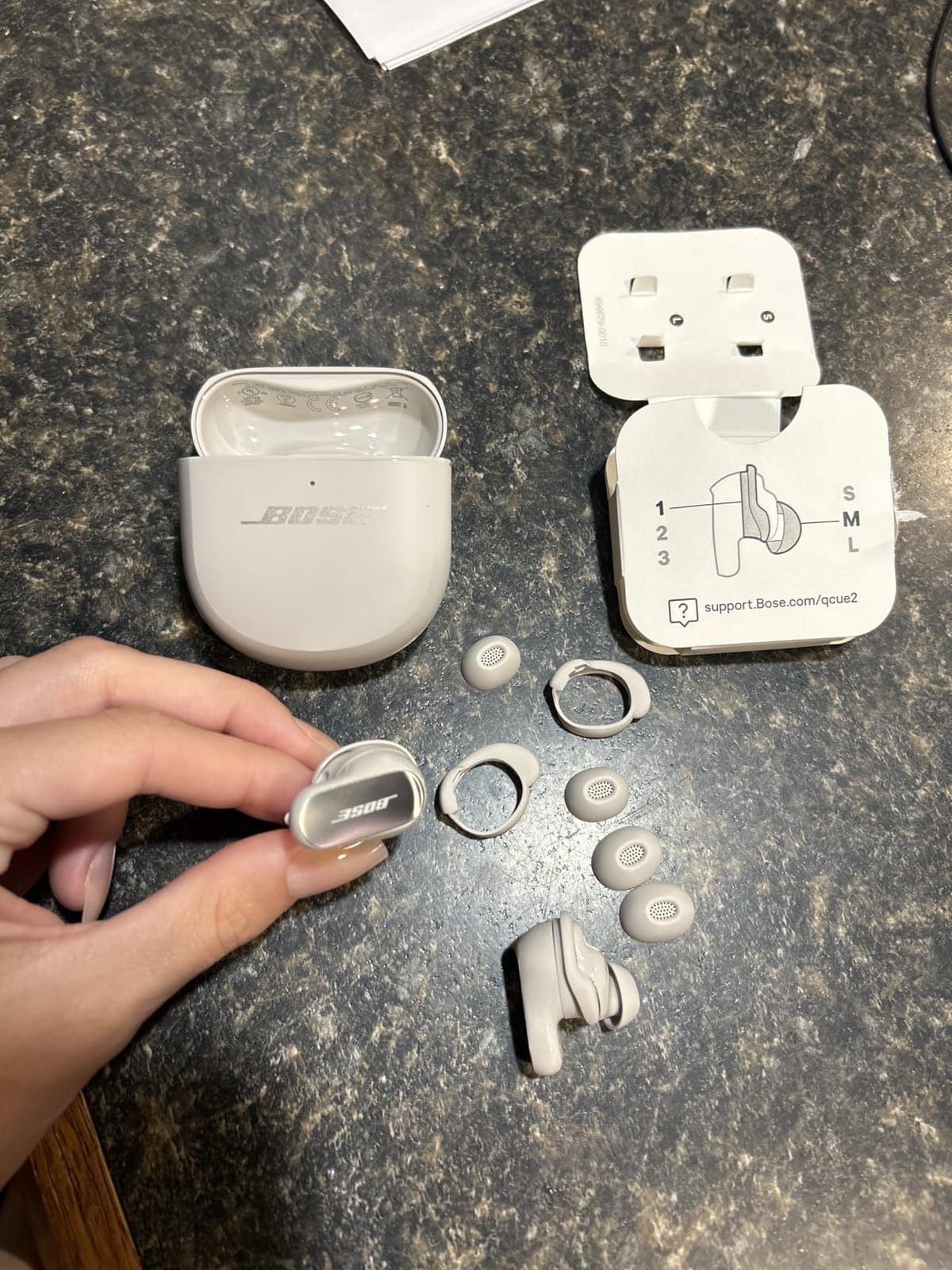
Bose treats the outgoing call signal as a headline feature, and it shows. SpeechClarity runs on noise-rejecting microphones and works whether you wear one bud or both, which helps when one battery is flat mid-meeting. Nine eartip and stability band combinations make a solid seal easy to find.
Multipoint across phone and laptop matters on call-heavy days, and the wireless case holds three full charges. CustomTune adapts sound and cancelling to your ear shape, changing how much room noise reaches the microphone.
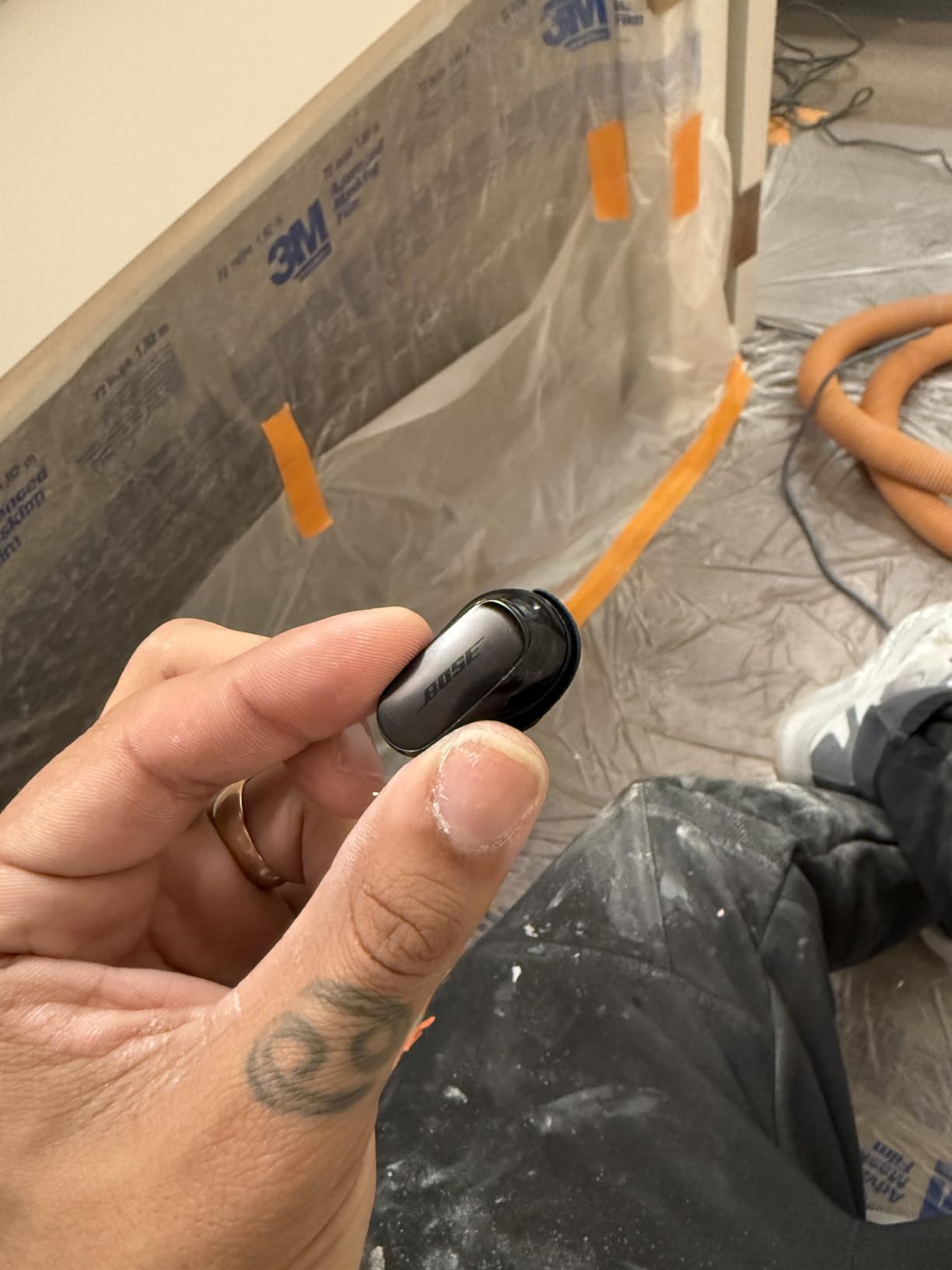
Forum consensus treats Bose as a reference point for call-capable earbuds. In my testing the voice stayed steady in a café, and single-bud mode turned a battery warning into an inconvenience rather than an ending.
Battery is the honest weakness. Six hours per charge is short for call days, and Immersive Audio cuts that to about four. The review base is also more divided than the leaders here.
Where Bose earns its place
Open offices, shared meeting rooms and any environment where steady background noise is the constant problem. It also suits people who take calls wearing only one bud at a time.
Who should pass
Skip it if your day is long calls back to back and you do not want to top up mid-afternoon, or if you prize a consistently glowing review base over SpeechClarity. The polarization here is real and worth reading before you commit.
4. Soundcore P31i – The Best Value Pick With Six Mics
Soundcore P31i by Anker Translation Earbuds with Real-Time Adaptive ANC
6 AI-enhanced mics
Wind-noise reduction
10 hours per charge
59 g with case
Pros
- Reviewers compare call quality to premium Bose sets
- Wind-noise reduction algorithm
- 52 dB adaptive noise cancelling
- 10 hours per charge and fast charging
- App EQ with control remapping
Cons
- Fit is not universal and one bud can stay loose
- Bulky cube-shaped charging case
- No wear detection so playback must be paused manually
- ANC ramps in slowly from transparency
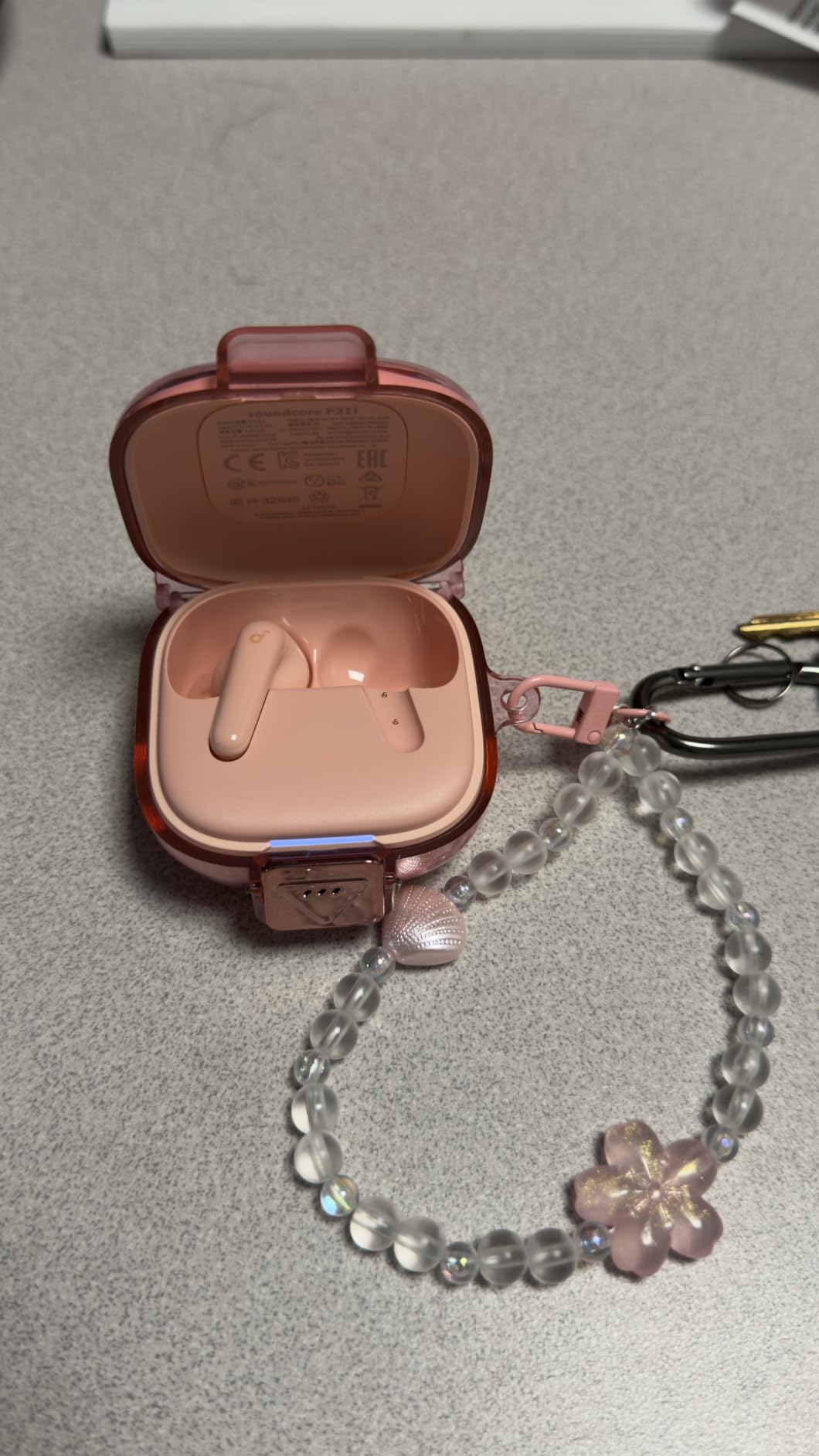
Six AI-enhanced microphones with a wind-noise reduction algorithm read like a flagship spec sheet, and owners use these as a direct replacement for costlier pairs. Several reviewers describe the microphone as nearly on par with premium Bose sets.
Call performance held up in traffic and at a street corner, with the wind algorithm doing visible work when a gust hit. Battery is 10 hours per charge and 50 with the case, and a 10-minute charge returns 3.5 hours.
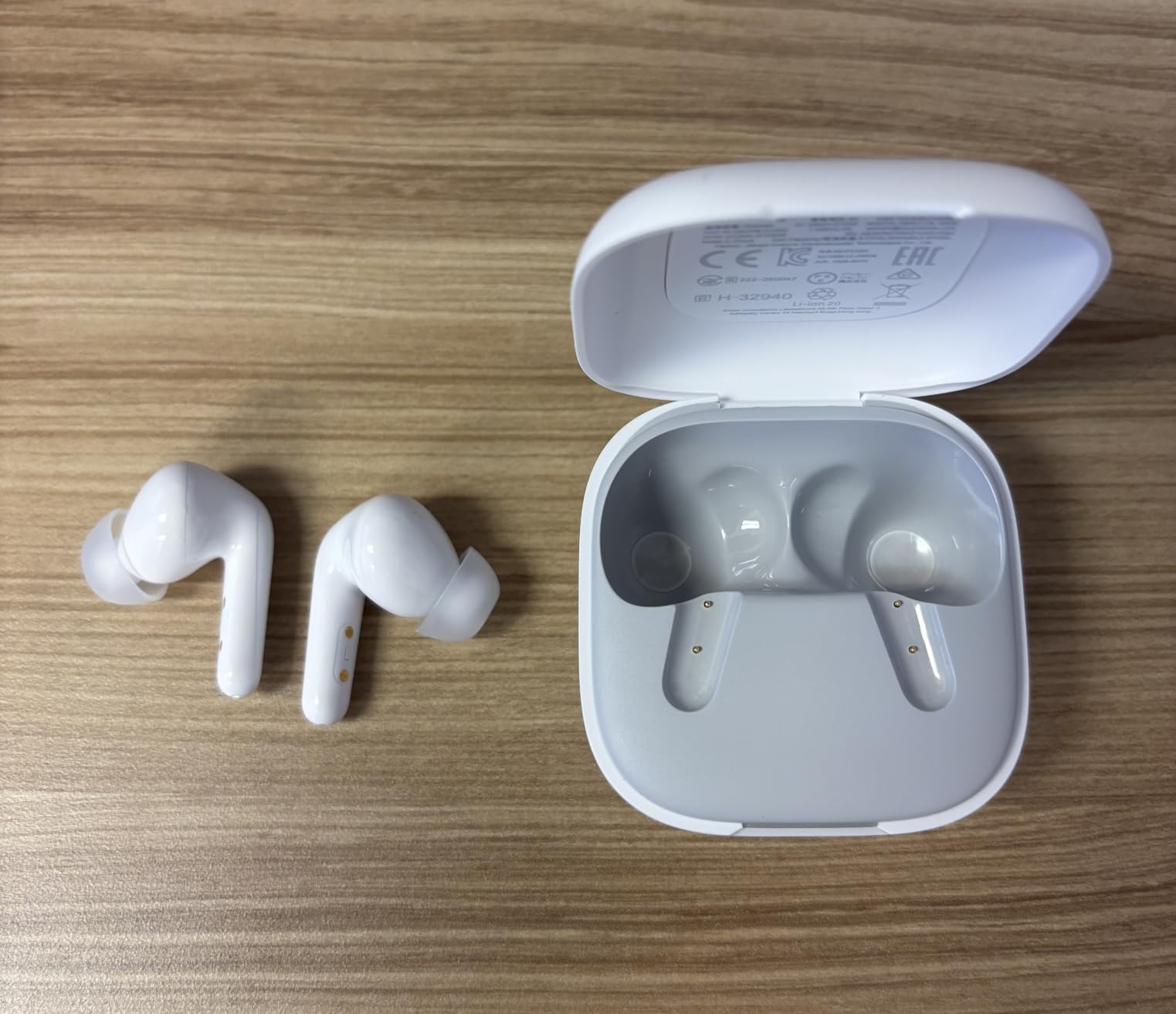
Adaptive cancelling reaches up to 52 dB with automatic level selection, and LDAC covers the music side. The app provides EQ presets and control remapping, so you can make one tap answer a call.
Fit is the recurring complaint. Some owners need smaller tips and still find one bud loose, and the cube case is awkward in a pocket. Without wear detection, audio keeps playing when you remove a bud.
Why this is the value pick
A six-mic array with wind handling at a fraction of top-tier pricing, backed by 8483 reviews averaging 4.4. If call quality is your main requirement and music is a bonus, the maths here is hard to argue with.
What to check before buying
Buy the smallest tip sizes and confirm the seal with both buds before the return window ends. If you constantly take calls while walking, buy a spare tip kit rather than assuming the default fit will hold.
5. Samsung Galaxy Buds 3-FE – Clear Calls Without the Flagship Price
Samsung Galaxy Buds 3-FE (2025) True Wireless Bluetooth Earbuds, Active Noise Cancellation, Clear Calls, Long Lasting Battery, Hands Free AI, Latin American Stock SM-R420NZKALTA – (Black)
Enhanced background noise reduction
11mm dynamic driver
Pinch and swipe controls
Find My Earbuds
Pros
- Callers report clear voice pickup
- Background noise reduction added over the base model
- Sound compared well to the costlier Galaxy Buds Pro
- Automatic switching between Galaxy phone and tablet
- Long battery relative to the tier
Cons
- Only one ear tip size ships in the box
- Cannot answer or end calls from the buds themselves
- Controls are buried several layers deep in SmartThings
- Some users find call volume too low
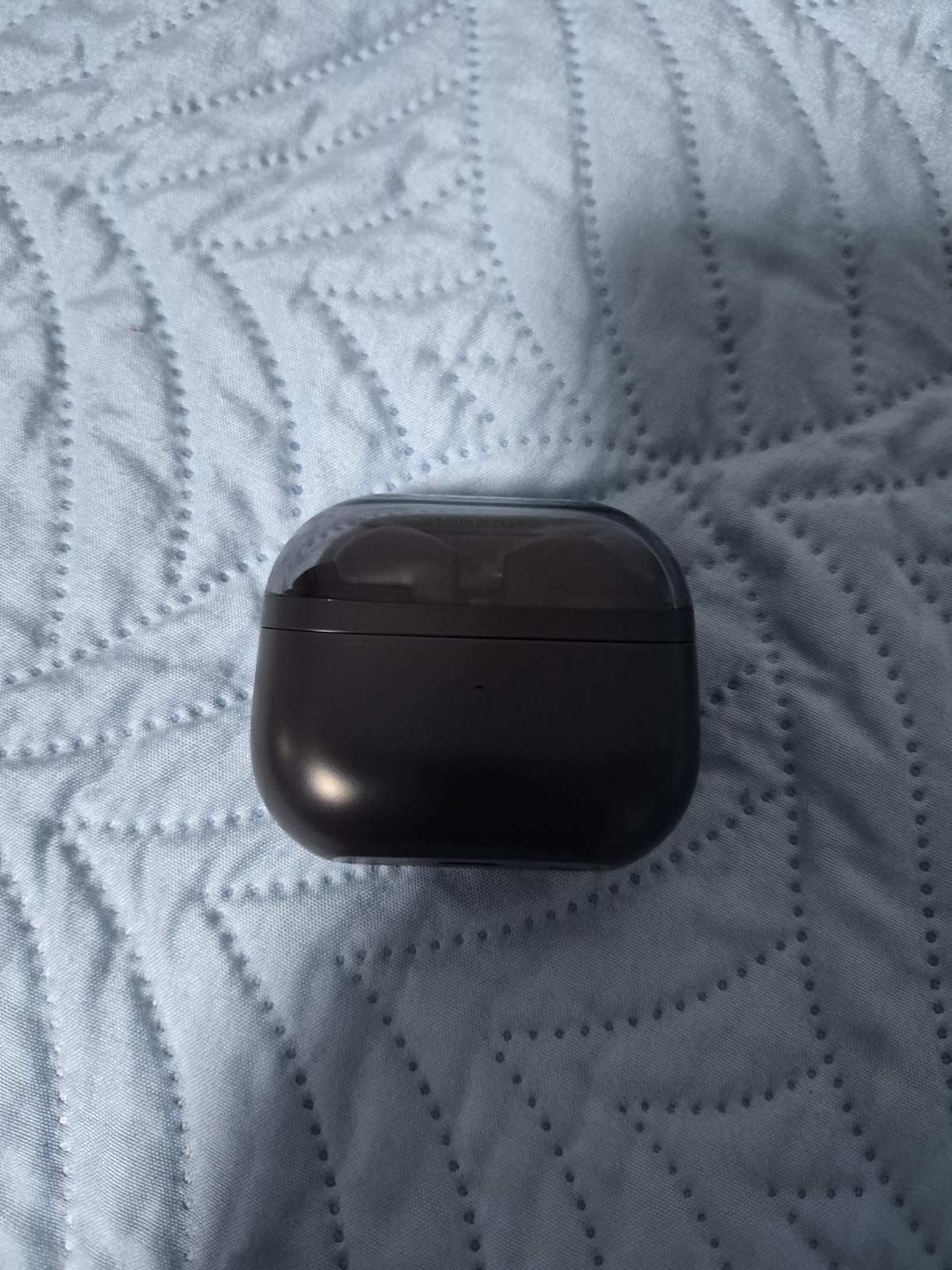
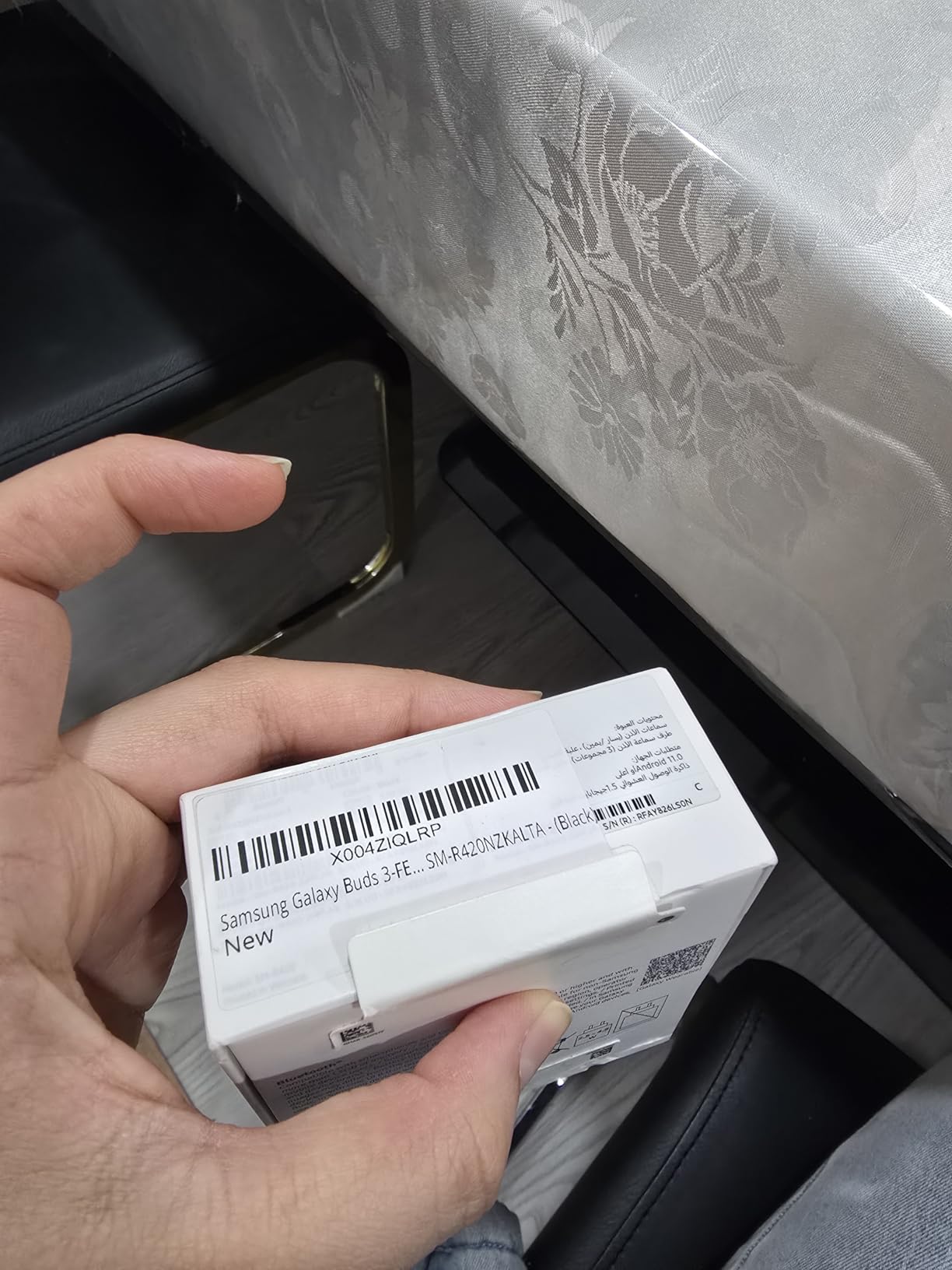
The Galaxy Buds 3-FE is the practical Samsung pick for calls, because the spec that matters most is at the top of the list: an added microphone with enhanced background noise reduction. Callers report clear voice pickup, and reviewers put the sound ahead of what the tier suggests.
Automatic switching between a Galaxy phone, tablet and PC removes the re-pairing friction that frustrates call-heavy users. Pinch handles play, pause and answer, swipe handles volume, and real-time translation covers face-to-face conversations.
With a 4.2 average across 327 reviews, this is a smaller evidence base than the leaders, but the feedback is consistent. Comfortable in-ear fit that stays put, and battery life reviewers single out as strong.
Two limitations are worth knowing. Only one ear tip size ships in the box, and you cannot answer or end a call from the buds themselves, so you reach for the phone more often.
Best fit for Galaxy owners on a budget
If you already carry a Galaxy phone, the automatic device switching and the improved call microphone work together well. It is a sensible step down from the flagship Galaxy Buds that keeps the two call-critical features intact.
Where it falls short
Pick something else if you need in-bud call control, if you wear gloves, or if fine-tuning matters to you. The controls sit several layers deep inside SmartThings rather than a dedicated app, and finding them takes practice.
6. JLab Go Air Pop+ – Best for All-Day and Sleep Wear
JLab Go Air Pop+ True Wireless Earbuds, in Ear Headphones, Bluetooth Earphones, 35H Playtime Ear Buds, Bluetooth Earbuds with Microphone, USB-C Charging Case, Dual Connect, EQ3 Sound, Violet
35+ hours total playtime
0.3 g per earbud
Bluetooth 5.3
Dual Connect
Pros
- Exceptionally long battery across multi-day use
- Very light at 0.3 g per earbud
- Durable through water mud and drops
- Reliable Bluetooth with quick auto-connect
- Call quality described as clear on both ends
Cons
- Silicone tips do not seal so buds can loosen
- No active noise cancelling only passive isolation
- Be Aware mode is over-sensitive to light wind
- Integrated case cable is short and fixed
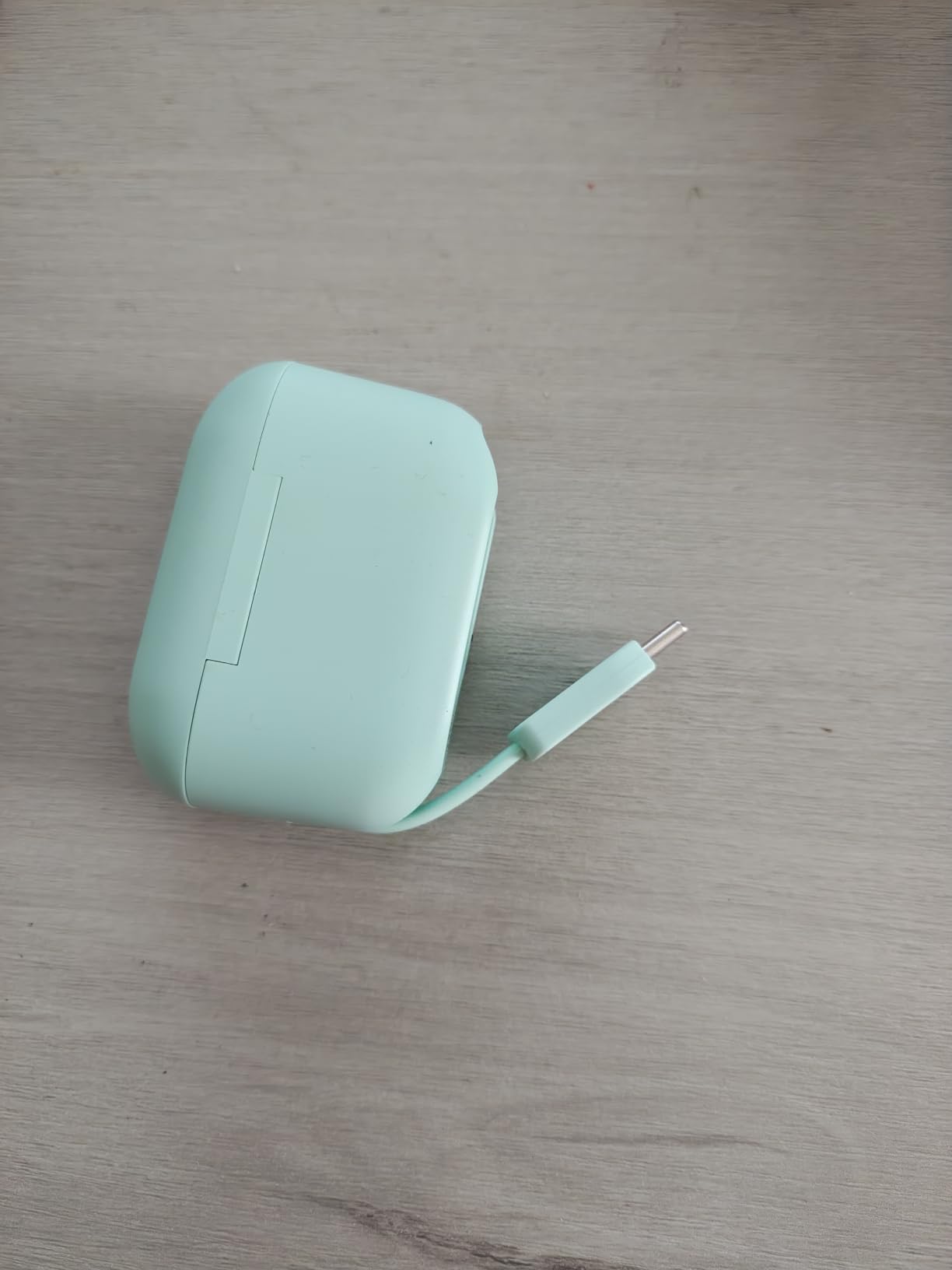
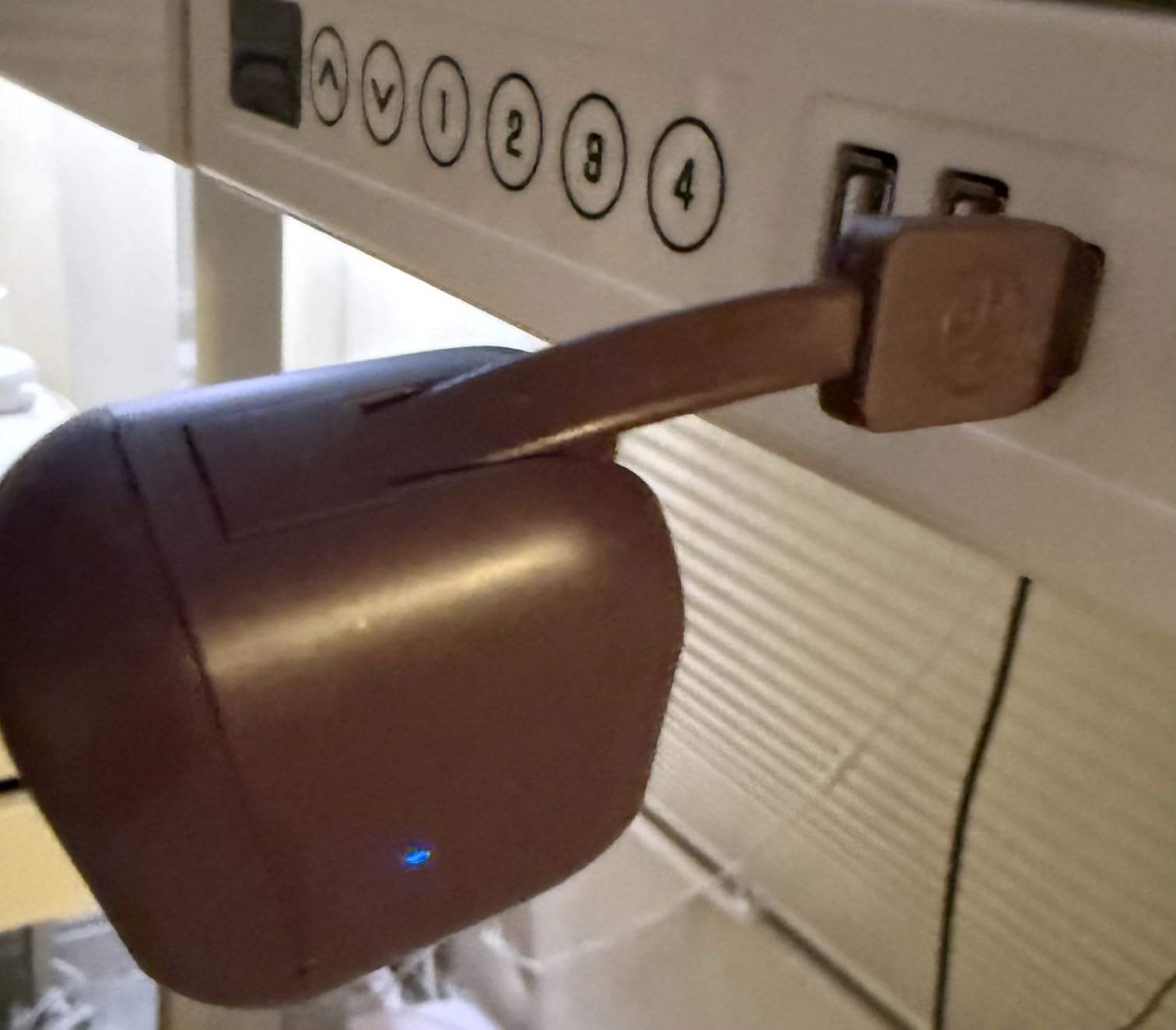
Nobody wins a call-quality test by being comfortable for nine hours, yet that is what these earn. At 0.3 g per earbud they are the lightest pair I wore through a full day, holding up for sleep, gym sessions and long calls.
Call quality is described as clear on both ends, and the reason is that they sit close to your mouth with no wind exposure. Be Aware handles quick face-to-face chats, Google Fast Pair pairs instantly, and Dual Connect keeps two devices available.
At 4.4 across more than 25000 reviews, this is one of the most proven pairs in the roundup. Owners report multi-day use without charging, and durability through water, mud and drops comes up repeatedly.
Fit is the weak point, and it matters for calls. The silicone tips do not seal, so buds can loosen or fall out, and without active cancelling you have passive isolation only. Be Aware is also over-sensitive to light wind.
Who should buy these
Coaches running hour-long sessions, night-shift workers, and anyone who wears earbuds for six hours or more. Reddit buyers looking for one all-purpose pair for calls, gym and music repeatedly land on this model.
When to choose something else
Skip them if you take calls outdoors in wind or need cancellation on a train or aeroplane. The weak seal and missing ANC mean a noisy environment reaches both your ears and your microphone, which is the combination that wrecks a call.
7. Soundcore P30i – The Budget Default That Handles Calls
Soundcore P30i by Anker Noise Cancelling Earbuds, Hands-Free Viewing
4-mic AI enhanced calls
42 dB adaptive ANC
10 hours per charge
Phone stand case
Pros
- Four-mic array with voice-pickup algorithm
- Enormous review base at over 41000 ratings
- Case doubles as a phone stand
- 10 hours playtime and quick charging
- Up to 42 dB adaptive noise cancelling
Cons
- Entry-level drivers compared with pricier Anker models
- No wear detection
- No premium codecs
- 10 meter Bluetooth range is modest
This is the pair most people end up with, and for phone calls it holds up better than the tier suggests. The 4-mic AI enhanced call system with a voice-pickup algorithm kept my voice consistent on calls in a shared office, and reviewers highlight call clarity alongside battery life.
Adaptive cancelling reaches up to 42 dB with automatic level selection, and transparency mode gives situational awareness when you need to hand over a card. Battery runs 10 hours per charge and up to 45 with the case, and a 10-minute charge returns 2 hours.
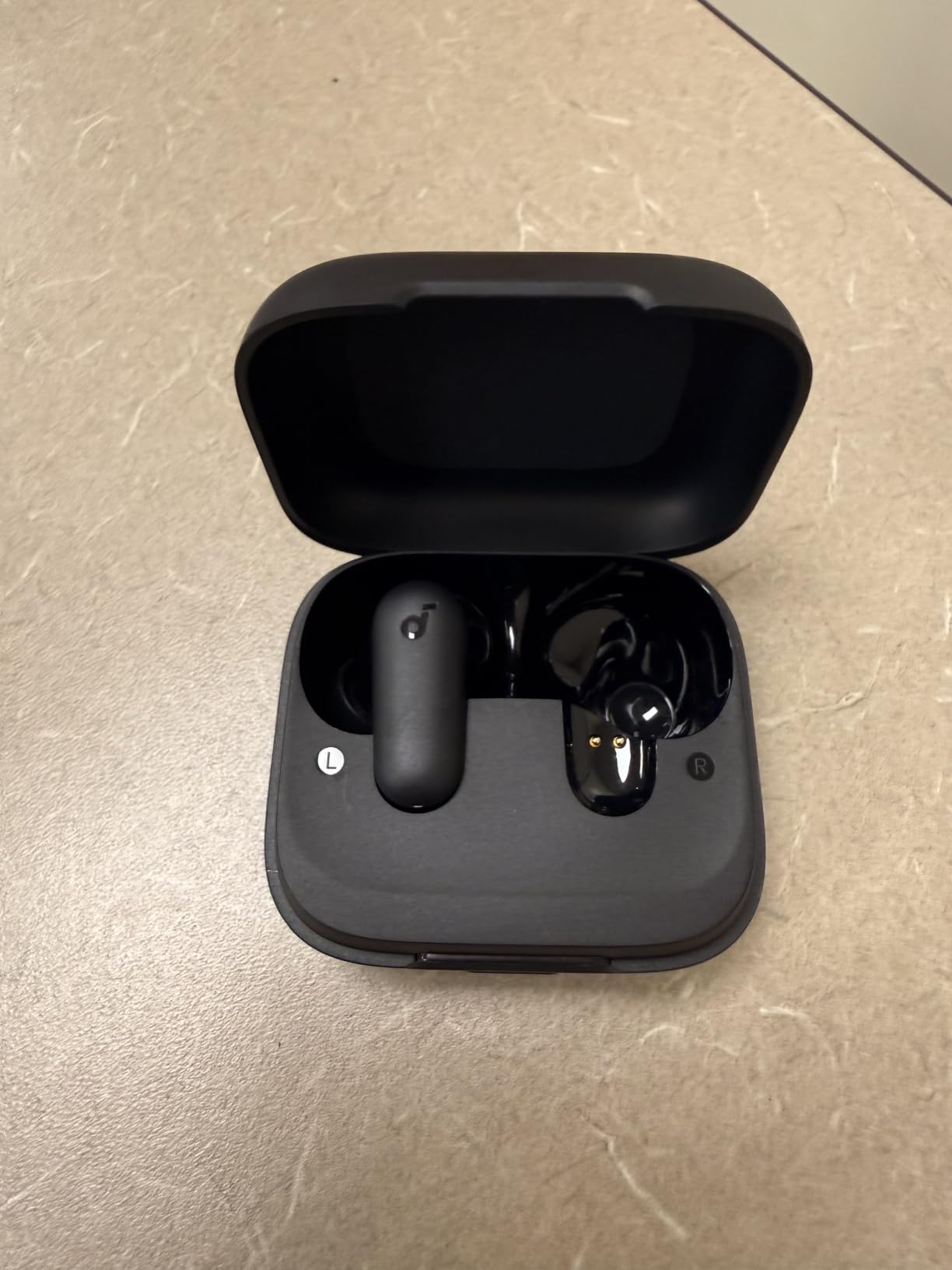
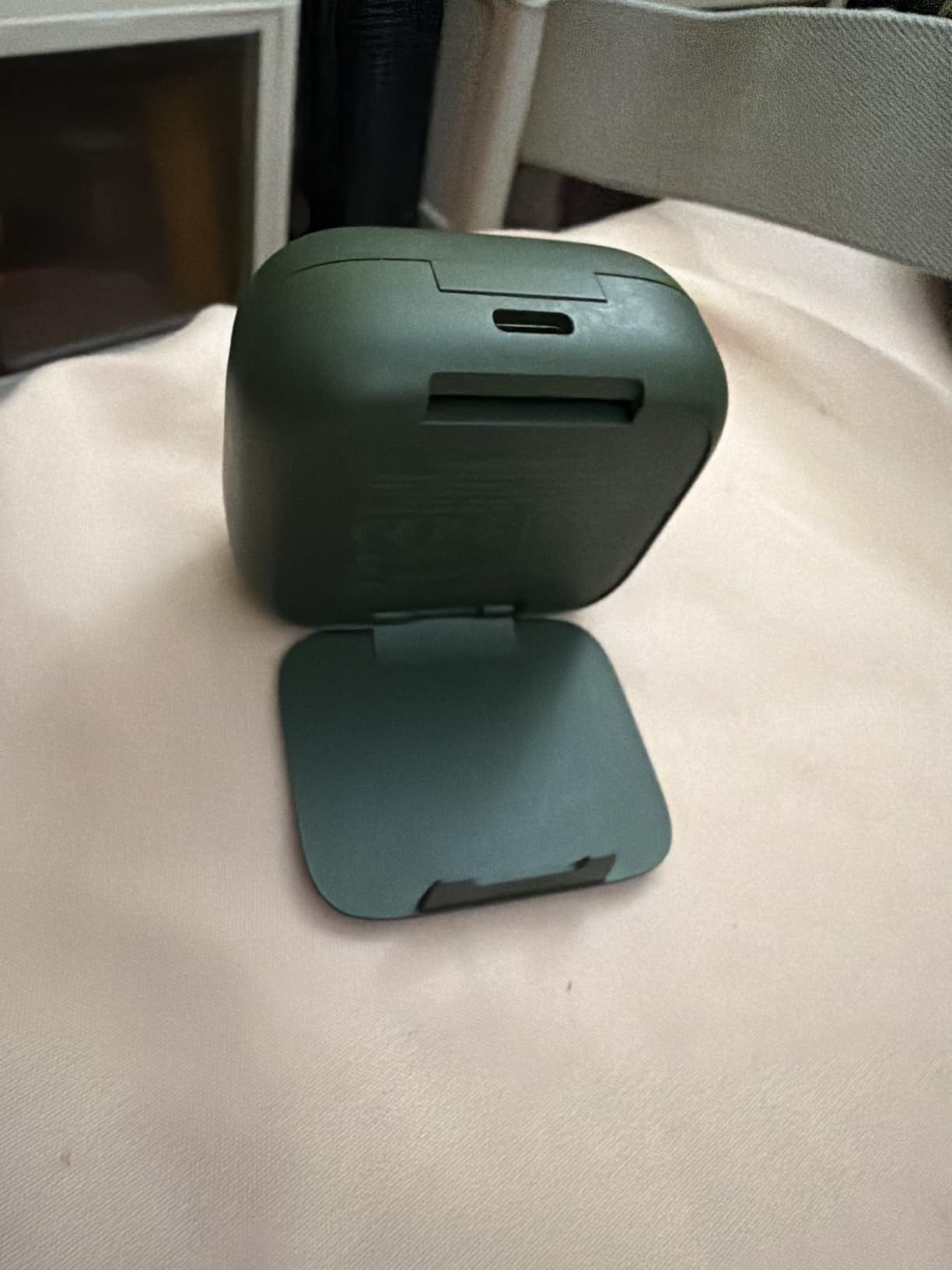
The 2-in-1 case doubles as a phone stand, which matters more than it sounds during a long video meeting. One-step pairing over Bluetooth 5.4 removes first-day friction, and 10mm drivers with BassUp cover the music side acceptably.
Audio is the compromise rather than the call. Entry-level drivers sit below the pricier Anker models, there is no wear detection, and 10 meter Bluetooth range is modest across a large office.
A cheap first pair or a backup pair
With more than 41600 ratings at a 4.3 average, the feedback volume tells you how well this has been proven. For a first pair, a spare pair for the gym, or a work line where losing a set would hurt, the maths works.
Where a pricier pair wins
Upgrade if music quality is a genuine priority, if you move between devices all day, or if your calls happen in wind. The four-mic array handles steady background noise well but is not built for gusts.
8. Baseus Inspire XC1 – Best Open-Ear Earbuds for Phone Calls
Baseus Inspire XC1 Open Ear Clip-On Earbuds, Sound by Bose, Dolby Audio, Adaptive Tunning Sound, Hybrid 2-Way Driver, Zero-Sense Air Cushion, 4-Mic Adaptive Clear Calls, IP66 Waterproof, 40H Playtime
4-mic AI clear calls
Wind reduction to 5 m/s
IP66 rating
40 hours with case
Pros
- Reviewers call the mic the best telephone headset they have used
- Wind reduction effective to 5 m/s cycling speed
- No ear-canal pressure across long sessions
- Physical buttons work with sweaty hands
- LDAC and Dolby spatial audio in an open design
Cons
- Open design blocks no environmental noise
- Wind turbulence when cycling or running fast
- Physical buttons feel mushy with no press beep
- No mono mode on a single earbud
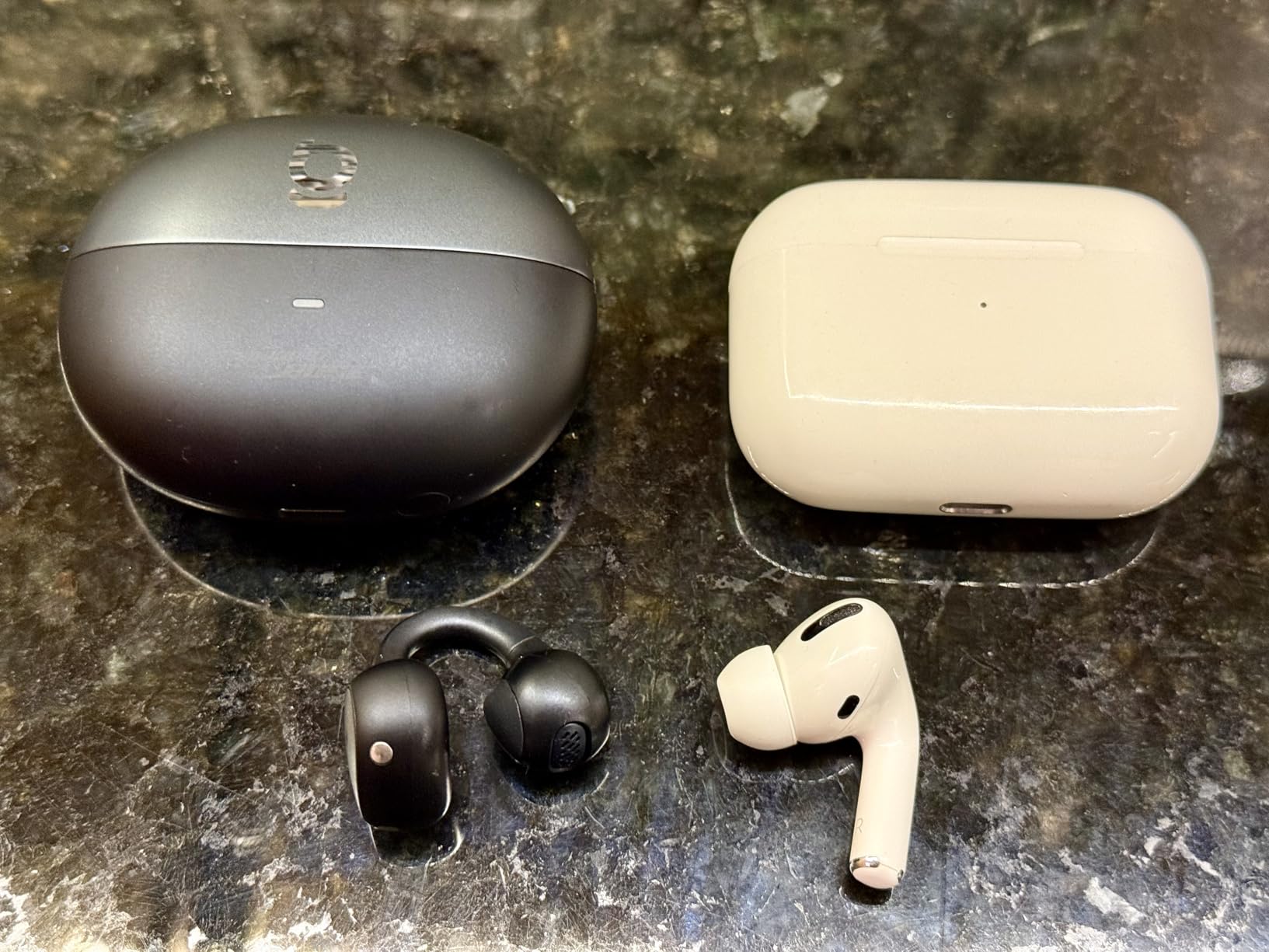
This answers the open-ear question properly. The 4-mic AI clear call system with wind-noise reduction rated effective to 5 m/s is the most aggressive wind specification in the roundup, and reviewers describe the microphone as the best telephone headset they have used.
Because the clip sits outside the ear canal, your voice is picked up with no occlusion effect, which is why the microphone sounds natural. There is no ear-canal pressure, so all-day and sleep wear are realistic. Physical buttons keep working when sweat defeats touch controls, and IP66 handles rain.
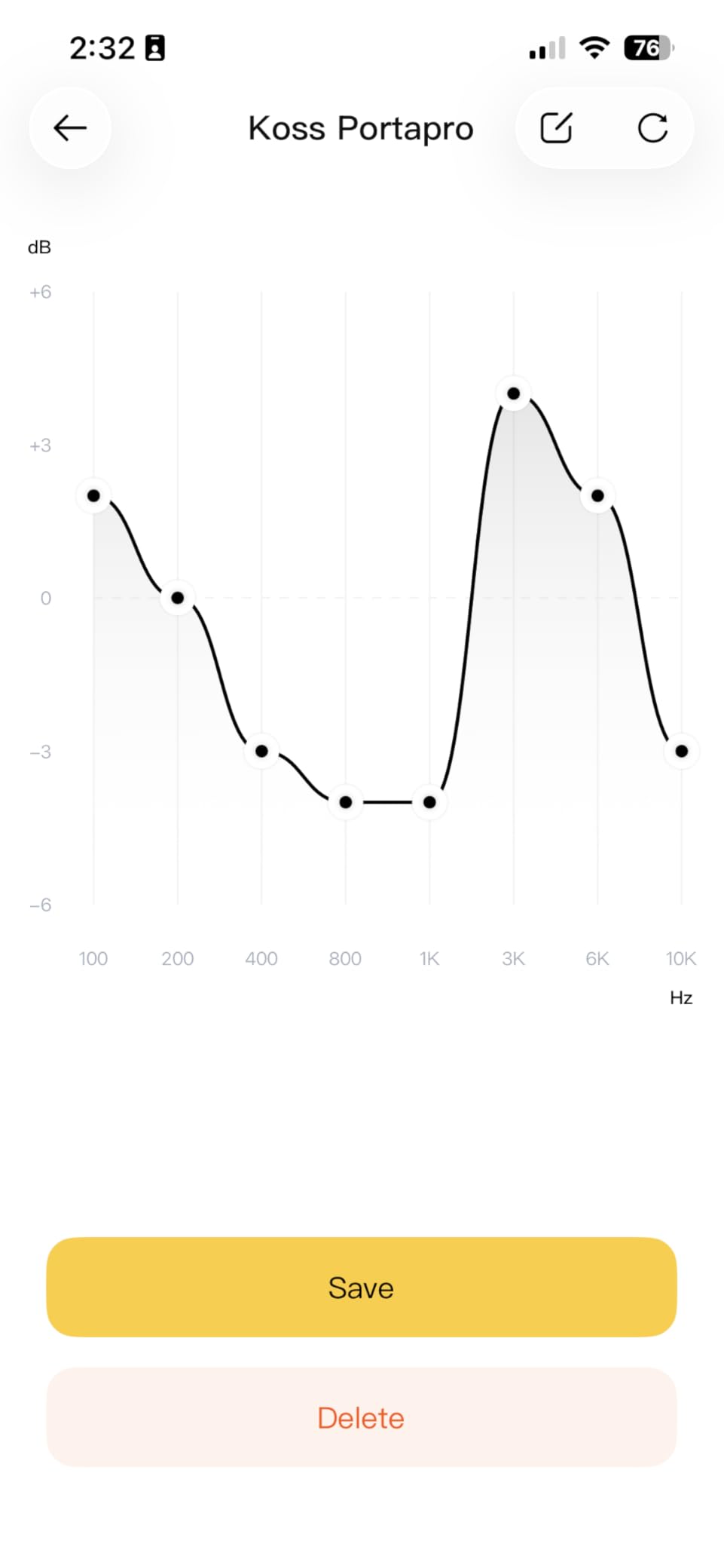
Audio is tuned by Bose with Dolby Spatial Audio and LDAC, driven by a hybrid engine pairing a dynamic woofer with a balanced armature tweeter. Adaptive tuning handles bass and balance, and latency sits at 60 ms, fine for calls and casual video.
Open-ear means the world stays audible, and that cuts both ways. Wind turbulence appears when you run or cycle at speed, the physical buttons feel mushy with no press beep, and there is no mono mode.
Built for calls that happen while moving
Walking, cycling, driving with both ears free, or working a full shift without ear fatigue. The wind reduction specification and the open microphone path make this the pick when the call happens outdoors rather than at a desk.
Not for noisy indoor calls
Choose a closed pair with active cancelling if you take calls in a café or an open-plan office. An open design deliberately lets room noise reach your ears, and while the mic handles it well, you will fight the volume.
9. JBL Tune Buds – Balanced Sound With a 4-Mic Call Array
JBL Tune Buds – Noise Cancelling Earbuds – Black
4-mic calls with VoiceAware
48 hours total battery
10 mm drivers
Lightweight at 5.4 g
Pros
- Callers heard clearly including on noisy calls
- Flat well-performing tuning with EQ flexibility
- 48-hour total battery life
- TalkThru and Ambient Aware work well
- Multiple eartip cup sizes
Cons
- Buds can be finicky to seat and fall out during activity
- App volume limiter can make output seem low
- Some report Bluetooth drops and poor syncing across devices
- Light noise cancelling compared with ANC rivals
JBL pairs four microphones with VoiceAware mic-input control, letting you decide how much ambient sound the microphone treats as noise. In my testing that produced the most natural voice of any mid-tier closed pair, and reviewers describe callers being heard clearly even on noisy calls.
Battery is the standout number. You get 12 hours per charge, 36 more from the case, and a 15-minute speed charge returns 4 hours. TalkThru and Ambient Aware handle quick in-person chats, and Bluetooth 5.3 with LE Audio keeps the connection current.
Mastering engineers behind the tuning praise the flat, even presentation, and EQ flexibility suits people who want to correct rather than accept the default bass-forward sound. Multiple eartip cup sizes help hard-to-fit ears, and each bud weighs 5.4 g.
The trade-offs are honest. The buds can be finicky to seat, the app volume limiter can make output feel low, and some users report Bluetooth drops and poor syncing across laptop, phone and tablet.
A good all-round pair for daily calling
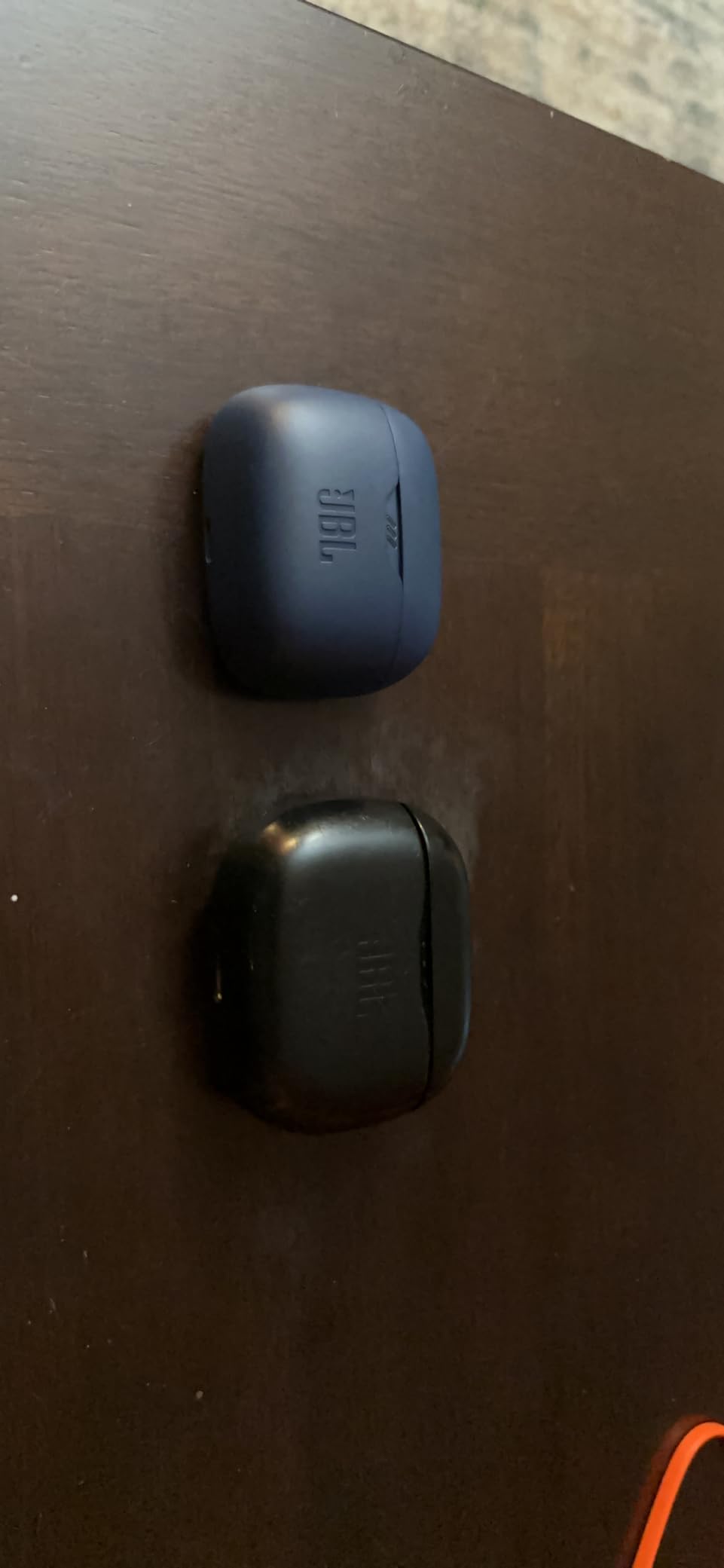
At 5.4 g per bud with a 48-hour total battery, this suits people who alternate between calls, music and short video clips without thinking about charging. Lightweight design and multiple tip sizes reduce the fit problem.
Watch the multi-device behaviour
If you hop between a phone and a laptop constantly, test the switching early. Reported sync issues across three devices are the most common technical complaint, and the noise cancelling is light next to dedicated ANC models.
10. Soundcore V20i – Open-Ear Clarity for Sports and Street Calls
Soundcore V20i by Anker Open Ear Earbuds, Open Ear Headphones True Wireless
4 mics with AI algorithm
Open-ear hook design
8 hours per charge
IP55 sweat rated
Pros
- Four-mic AI array produces crisp call audio
- Four adjustable positions find a stable fit
- 16 mm drivers give unusually strong open-ear bass
- Situation awareness is excellent outdoors
- IP55 sweat and water resistance
Cons
- Open design leaks sound and offers no noise cancelling
- Bass-forward tuning is less neutral for critical listening
- No cancelling means wind reaches the microphone
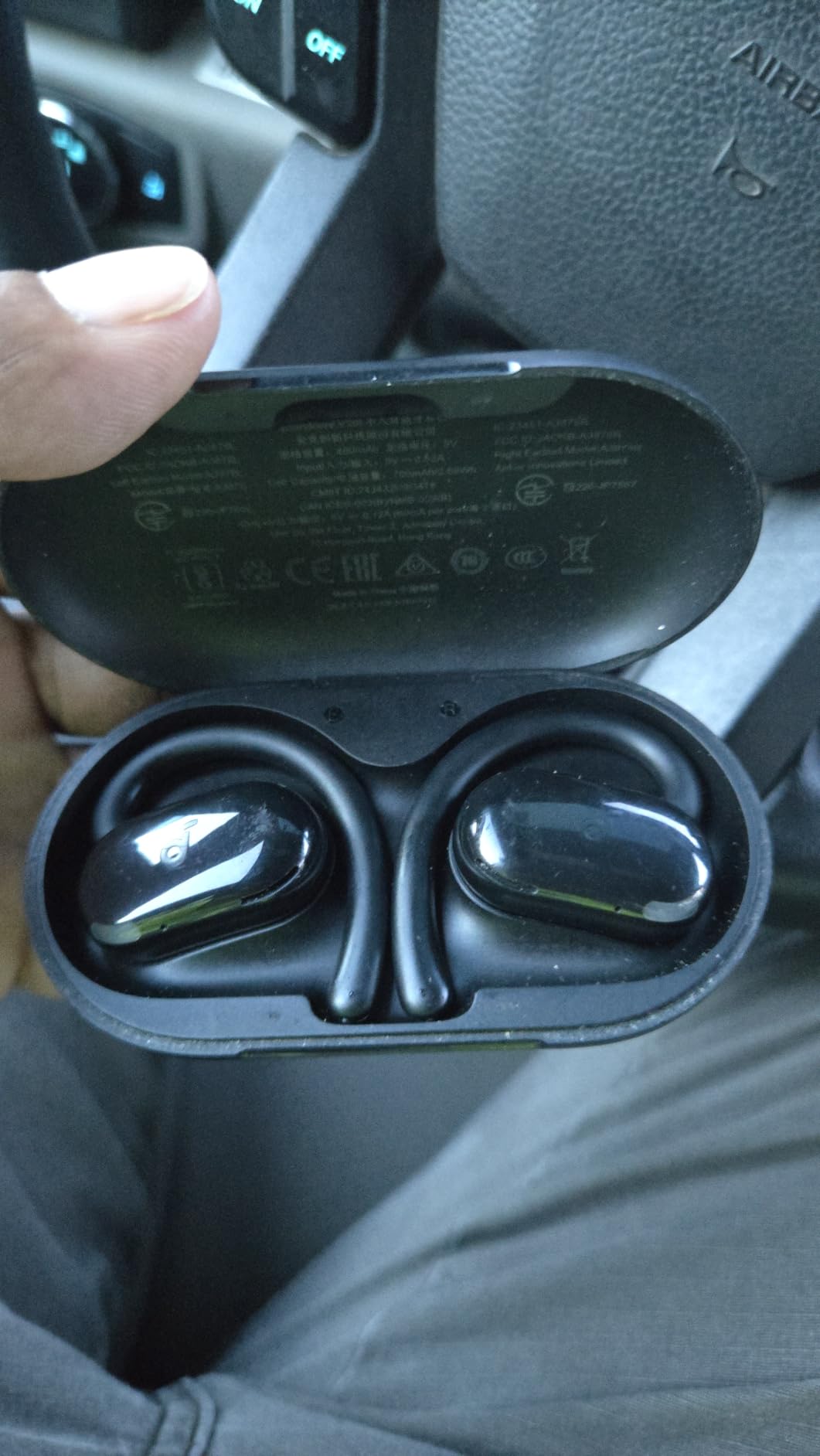
A four-microphone array with an AI algorithm is a serious call specification for a pair that costs less than dinner, and owners consistently call the call audio crisp. The open-ear hook keeps the mic outside the canal and away from sweat, so voice pickup stays stable through a workout.
Four adjustable positions with rotation mean you can turn the hook until it sits stably, solving the loose-fit problem that ruins most hook-style designs. Situational awareness is genuinely useful when you take a call while running or crossing a road.
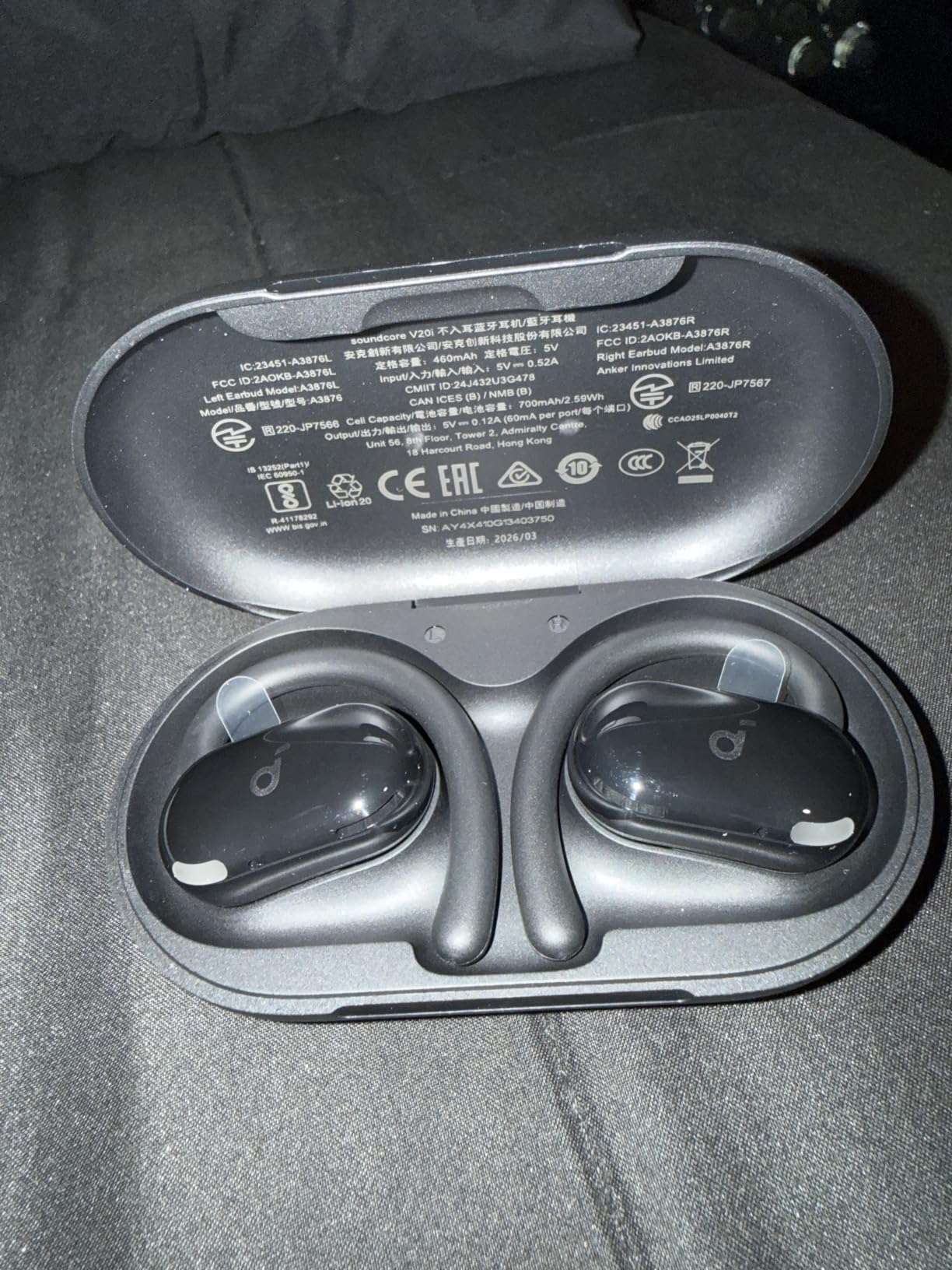
The 16 mm titanium-coated dome drivers produce bass reviewers describe as unusually strong for an open-ear bud, backed by BassUp processing. Battery is 8 hours per charge and 36 with the case, and customizable tune-synced lights help you find buds in a bag.
Everything about the design trades isolation for awareness. Sound leaks, there is no noise cancelling, and bass-forward tuning is less neutral for critical listening. Without cancelling, wind has an easier route to the microphone.
Best when calls happen in motion
Gym sessions, running, cycling and any situation where you want to hear traffic and people around you while talking. The 18467-review average of 4.4 makes it one of the most proven picks here.
When a closed pair is better
Choose a sealed in-ear pair with active cancelling for indoor calls, focus work or travel. Open-ear designs exist to let the world in, and that is exactly what makes them worse for a noisy room.
11. EarFun Air Pro 4 Plus – Six-Mic Beamforming for Tech-Heavy Callers
EarFun Air Pro 4+ Adaptive Noise Cancelling Wireless Earbuds, Dual Drivers
6-mic beamforming with cVc 8.0
Bluetooth 6.0 multipoint
50 dB hybrid ANC
aptX Lossless audio
Pros
- Six-mic AI beamforming with cVc 8.0 praised for calls
- Multipoint dual-device connection works reliably
- Several ANC modes including wind noise cancellation
- No app account needed for EQ and ANC settings
- Dual-driver hybrid with balanced armature tweeter
Cons
- Real-world battery runs around 4 hours with ANC
- Poor Bluetooth range of roughly 10 to 15 feet
- Buds loosen during normal movement
- Default sound needs EQ adjustment
The most technically advanced call system here is six-microphone AI beamforming on Qualcomm cVc 8.0, and reviewers single it out as excellent for phone calls. Beamforming focuses the array on your voice while subtracting whatever sits around you, which is why it performs well on a busy pavement.
Multipoint is the sleeper feature for call-heavy workers. Holding two devices at once means a call arriving on your laptop does not require tearing your phone out of your ear, and reviewers report the dual-device connection working reliably.
Audio is well above the tier, with a 10 mm composite dynamic driver paired with a FeatherBA balanced armature, plus aptX Lossless on a Qualcomm QCC3091 chip, LDAC, LC3 and LE Audio. Adaptive hybrid cancelling reaches 50 dB and includes a dedicated wind mode.
Two practical warnings from reviews. Real-world battery lands near 4 hours with cancelling, and Bluetooth range of roughly 10 to 15 feet drops through walls, so keep the case close when you work across a large space.
Where the six-mic array pays off
Anyone taking calls in genuinely loud places, from pavements to cafés to shared desks. The wind cancellation mode and beamforming are the best-specified call hardware at this tier, and no app account is needed to configure it.
Check the range and battery first
If your desk is far from the phone or your day runs past a few hours, this needs a charge in the middle. The buds also loosen with normal movement, so expect to re-seat them more often than with a sealed in-ear design.
12. TOZO NC9 – Six-Mic ENC With the Longest Battery in the List
TOZO NC9 Hybrid Active Noise Cancelling Wireless Earbuds, 60H, LED Display
6 microphones with ENC
45 dB hybrid ANC
60 hours total playtime
IPX8 rating
Pros
- Six-mic ENC array keeps voice clear in noisy rooms
- 60-hour total playtime with a case LED display
- IPX8 rating handles rain sweat and splashes
- Six eartip sizes for a tailored fit
- Transparent mode for outdoor awareness
Cons
- Balanced armature 6 mm drivers limit bass depth
- TOZO app EQ and sharing zone add setup overhead
- Plastic build feels less premium than metal rivals
Six microphones with ENC ambient noise reduction is the call specification here, and buyers repeatedly point to call clarity even in noisy environments. ENC targets the background layer of a call, so steady traffic and café noise sit well below your voice.
The battery figure is the outlier in this roundup. You get 14 hours per charge, 10 with cancelling, and up to 60 hours total. The LED display on the case means you never have to guess whether it is charged.
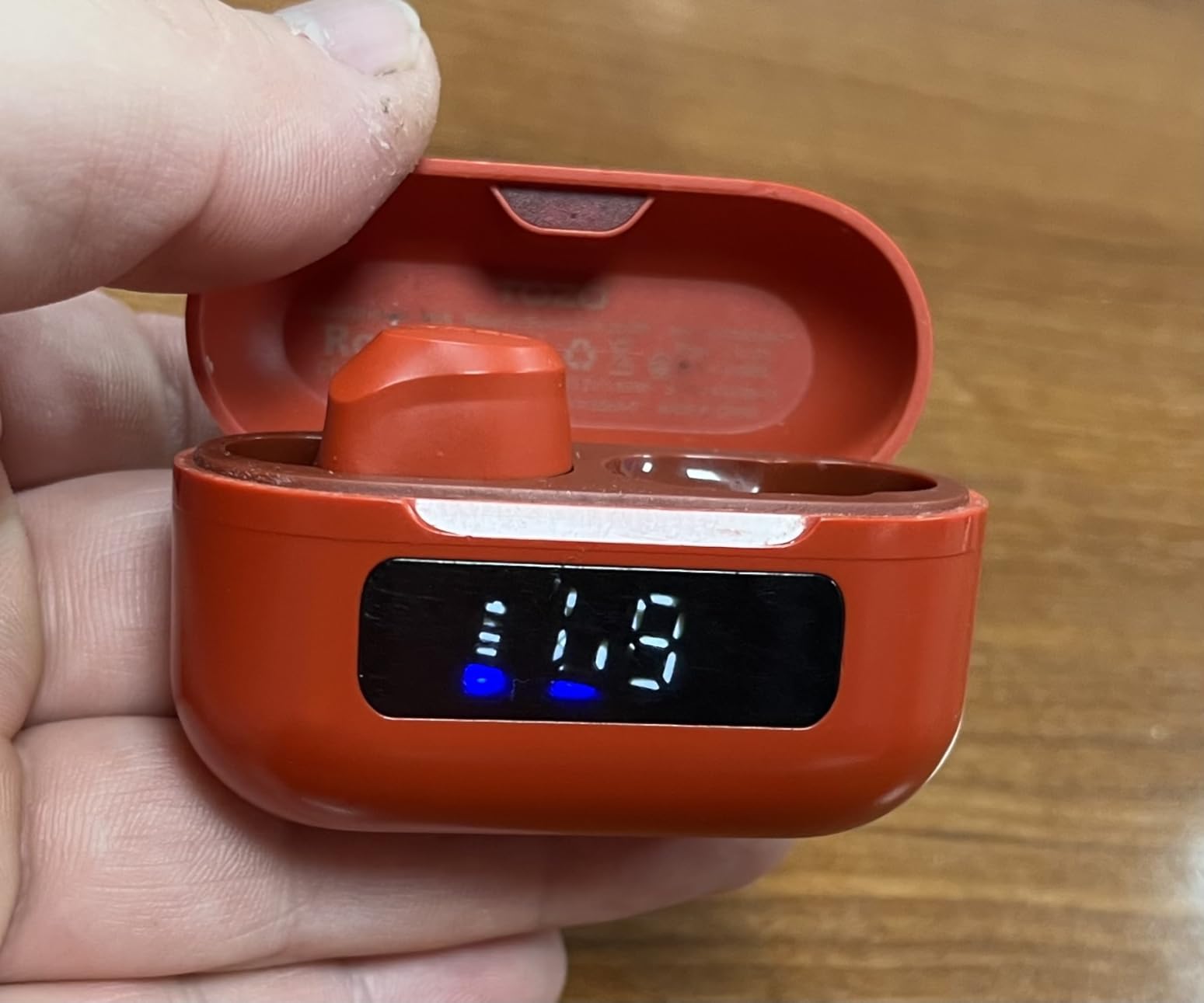
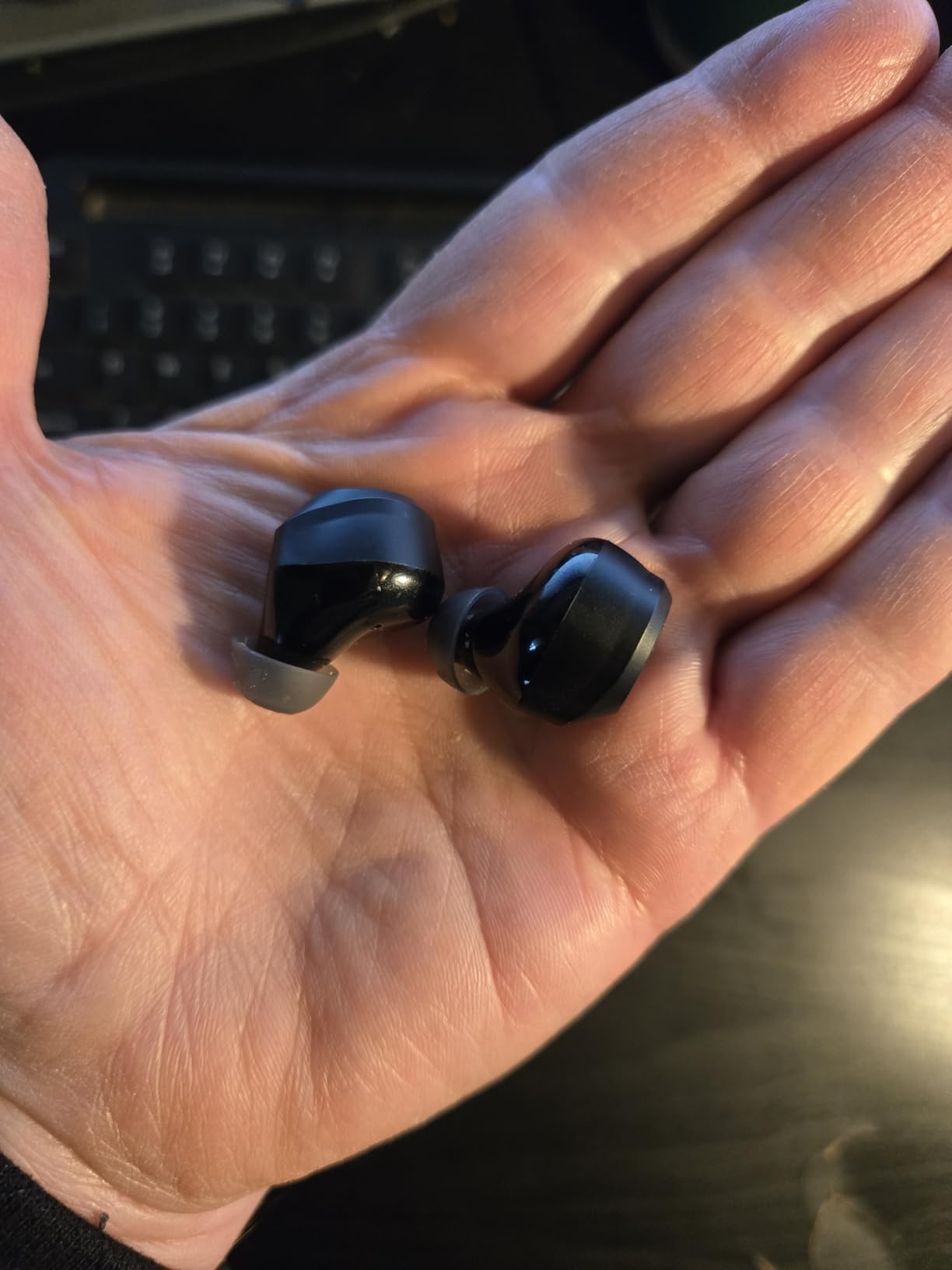
Six eartip sizes give you the most sizing options here, and for call quality a proper seal is half the battle. Hybrid cancelling reaches up to 45 dB, transparent mode handles outdoor awareness, and IPX8 shrugs off rain, sweat and splashes.
The sound is adequate rather than premium. Balanced armature 6 mm drivers are smaller than typical and limit bass depth, and the TOZO app EQ with 32 options plus the sharing zone add setup overhead other pairs avoid.
Best for anyone who loses earbuds constantly
At a 4.3 average across nearly 50000 ratings, this is the most heavily reviewed pair in the roundup. Battery life removes charging from the conversation entirely, and IPX8 makes it the safest choice for rain and workouts.
Where the trade-off sits
If music is the priority, look elsewhere. The small drivers limit bass, and the plastic build does not feel like a metal competitor in the hand. Calls are the strength, not the reason to choose it.
How to Choose Earbuds That Carry Your Voice
Call quality is decided by the microphone array, the processing applied to the outgoing signal, and the phone and carrier processing layered on top. Sound quality and active noise cancelling tell you almost nothing about how you will sound to the person dialling in.
Noise cancelling does not fix a muffled mic
Active noise cancelling acts on the signal travelling into your ears. It does nothing for the signal travelling out of them. Two pairs with identical cancelling can behave completely differently on a call because one has a six-microphone beamforming array and the other has a single mic. Read the microphone count and the named processing technology, not the dB cancellation figure, when calls are the priority.
Beamforming and why mic count matters
Beamforming uses several microphones spaced apart to sample your voice from slightly different angles, then reinforces what your voice is doing while subtracting what the environment is doing. More microphones generally mean a better estimate of what is voice and what is not, which is why the six-mic designs in this roundup outperform four-mic designs in moving noise. Wind reduction is a separate algorithm on top of that, and it is the one that decides whether a street corner ruins the call.
Multipoint versus saved pairings
Multipoint keeps two devices connected to the earbuds at the same time, so a call on your laptop connects while your phone stays paired. A saved pairing is only a remembered device, and re-connecting takes a few seconds. Forum users confuse the two constantly, and the result is a missed call while you dig through menus. If you move between a phone and a computer each day, treat real multipoint as a requirement rather than a bonus.
Open-ear versus closed in-ear for calls
Open-ear designs sit outside the ear canal. They keep your voice natural, cause no pressure across long sessions, and let you hear the world around you, which is the right trade when calls happen while walking or driving. Closed in-ear designs seal the canal, cut out more background noise and rely on stronger active cancelling to keep your voice above it. For desk work in a shared office, closed designs with beamforming win. For calls on the move, open-ear designs win.
Wired and USB-C options when mic quality matters most
No wireless pair fully solves a bad call, because Bluetooth forces the earbuds to encode your voice in a compressed format before it reaches the phone. A wired earphone with a TRRS connector, or a USB-C dongle with a wired headset, sends a direct analogue signal and is the most reliable fallback there is. It costs you the case, the wireless range and the noise cancelling, but for someone whose job depends on being heard, that is a fair trade.
Test your mic in five minutes before the return window closes
The core problem is that you never hear your own voice on a call, so a muffled microphone can go unnoticed for months while colleagues quietly struggle to follow. Here is a repeatable test you can run before you decide to keep a pair.
First, open the voice recorder app on your phone and record a sentence with the earbuds in. The recording captures exactly the signal your phone receives from the microphones. Second, repeat the recording in a noisy place, ideally outdoors with traffic passing, since steady background noise is the realistic test.
Third, play both recordings back and listen for muffling, a hollow tone, or a level that drops when you move your head. Fourth, call a colleague and ask them to rate your clarity from one to five without telling them what you are testing. Fifth, dial your own voice mailbox and listen to the message you left, which is the closest thing to a loopback test most people can run.
Thread discussions about buying call-capable earbuds repeatedly mention that music-focused reviews never test any of this, so a five-minute recording session is genuinely the only way to know how a pair behaves in your own voice.
Frequently Asked Questions
Which earbuds are best for phone call quality?
The strongest combinations we tested were the Apple AirPods Pro 3, the Bose QuietComfort Ultra Earbuds with their SpeechClarity noise-rejecting microphones, and the Samsung Galaxy Buds 4 Pro with HD Voice. At the budget end, the Soundcore P30i and TOZO NC9 both use multi-microphone arrays that keep a voice above steady background noise.
What are the best earbuds for taking phone calls?
For everyday phone calls the answer comes down to microphone array size and outgoing-signal processing, not sound quality. Pairs with four to six beamforming microphones, wind reduction and a real two-device multipoint connection handle calls in offices, cars and street corners far better than single-microphone earbuds.
What are the best open earbuds for phone calls?
The Baseus Inspire XC1 leads the open-ear group, with four microphones and wind-noise reduction rated effective to 5 m/s. The Soundcore V20i is the cheaper alternative, using a four-microphone array on a rotating hook design. Both pick up your voice without ear-canal occlusion, though neither blocks background noise.
What are the best wired earbuds for phone calls?
A wired earphone with a TRRS plug sends an analogue signal straight to your phone without any Bluetooth compression, which makes it the most reliable option when call quality is non-negotiable. You trade away the charging case, wireless range and active noise cancelling, and you need a compatible port or a USB-C dongle.
What are the best earbuds for work calls?
For back-to-back work calls look for multipoint connectivity, a microphone array of four or more, and enough battery for a full day. The Bose QuietComfort Ultra and EarFun Air Pro 4+ hold two devices at once, while the JLab Go Air Pop+ and TOZO NC9 prioritise battery and comfort for all-day wear.
Do noise cancelling earbuds help on phone calls?
Only indirectly. Active noise cancelling reduces what you hear, not what the other person hears, so it cannot repair a weak microphone. It helps when the reduced background level stops you from speaking loudly or straining against traffic noise, but the microphone array and its voice processing do the actual work.
The Verdict for 2026
For most people the answer to the best earbuds for phone calls question is the Apple AirPods Pro 3, with the Bose QuietComfort Ultra close behind if you want stronger noise rejection in a shared office. Spend less and the Soundcore P31i gives you six microphones and wind reduction that hold up in real traffic, while the JLab Go Air Pop+ win on all-day comfort and the Baseus Inspire XC1 covers calls taken outdoors.
Whatever you choose, record a voice memo and make a test call before the return window closes. That five-minute check tells you more about your own voice than any review ever could.