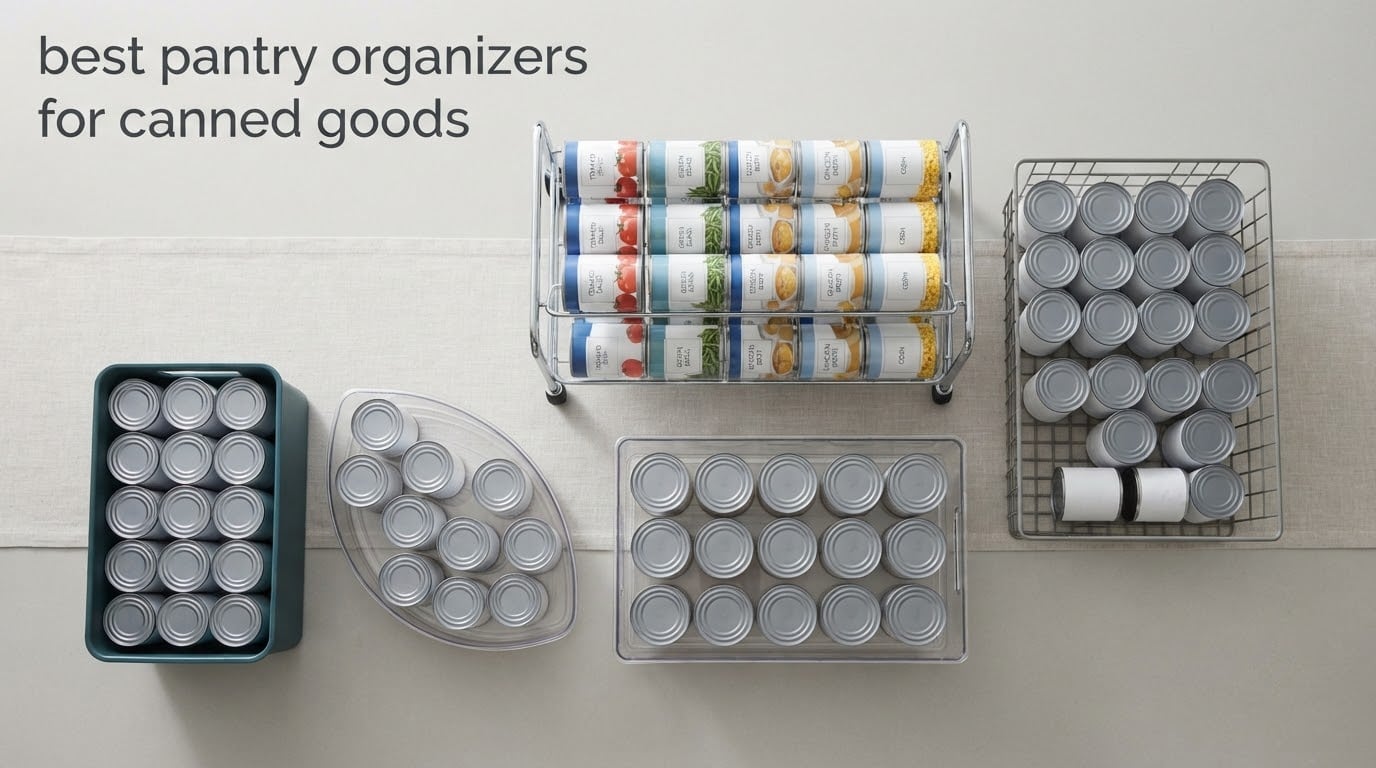
Cans are the easiest food to buy and the easiest food to forget. They slide to the back of a deep shelf, they stack three high behind the pasta, and six months later you find a dented tin of green beans whose date passed before you even moved into the house.
That is the whole problem this roundup solves. We looked through the can organizers on the market, read what buyers actually say after living with them, and picked the ten that earn shelf space in a real kitchen. Every pick below tells you its can capacity, its exact footprint, who it fits, and who should skip it.
If your pantry currently involves kneeling down and shuffling tins by hand, start with the verdict below. If you want the whole system rather than one rack, our [pull-out pantry organization systems guide](https://cookcraftandcreate.com/best-pull-out-pantry-organization-systems-for-kitchen/) covers the sliding drawers and pull-outs that pair well with can storage, and [pantry shelving systems](https://cookcraftandcreate.com/best-pantry-shelving-systems-under-100/) cover the shelves the organizers sit on.
Table of Contents
- What Is the Best Pantry Organizer for Canned Goods?
- Organizer Types for Canned Goods
- Top 3 Picks for Pantry Organizers for Canned Goods in 2026
- All 10 Best Pantry Organizers for Canned Goods (October 2026)
- 1. Simple Houseware 3-Tier Stackable Can Organizer Rack for 36 Cans
- 2. Simple Houseware Soda Can Organizer Dispenser Set of 2
- 3. Deco Brothers Stackable Can Rack Organizer for 36 Cans
- 4. FIFO Pantry Storage Organizer Dispenser Rack with 54-Can Capacity
- 5. AIYAKA 3-Tier Stackable Can Rack Organizer
- 6. Kitchen Details 3 Tier Can Organizer Chrome Steel Rack
- 7. Leeden Lazy Susan Wire Can Organizer for 24 Inch Turntables, 2 Pack
- 8. JKsmart 2 Pack Stackable Can Rack Organizer
- 9. Attelite 3 Tier Rolling Can Storage Organizer
- 10. Vrisa 7 Tier Can Organizer Rack for 84 Cans
- How to Organize Canned Goods Once the Right Organizer Is in Place
- How to Choose the Right Can Organizer
- Canned-Food Safety Checks Worth Doing Monthly
- Frequently Asked Questions
- What is the best pantry organizer for canned goods?
- What is the best way to organize canned food in my pantry?
- How many cans does a 3 tier can organizer hold?
- Do can organizers actually save space?
- What are the best airtight food storage containers for a pantry?
- How long does canned food last in 100 degree weather?
- Conclusion: Our Best Pantry Organizers for Canned Goods in 2026
What Is the Best Pantry Organizer for Canned Goods?
The Simple Houseware 3-Tier Stackable Can Organizer is the best pantry organizer for canned goods overall, because it holds 36 cans across three gravity-fed tiers, stacks vertically when you need more, and ships with adjustable dividers for mixed can sizes. For drinks and tight refrigerator corners, the Simple Houseware Soda Can Organizer set of two is the runner-up.
Both are rated by thousands of owners, both assemble without tools, and both solve the same underlying issue: cans that roll forward are cans you actually see and use.
Organizer Types for Canned Goods
Before the individual picks, it helps to know the six mechanisms you will run into. They store cans in completely different ways, and the wrong one for your shelf is the most common reason an organizer ends up in a closet.
Rolling and tiered FIFO racks. Shelves tilt downward so the can you pull from the front lets gravity roll the next one forward. You load new cans at the back and the oldest can stays at the front. This is the mechanism most can organizers use.
Stackable wire baskets. Open-front metal bins that clip together or screw together. They group cans by category rather than by date, and many of them fold flat when empty.
Lazy Susan wedges. Quarter-circle wire baskets that drop into a corner cabinet turntable, converting dead space behind the center post into usable storage.
Over-the-door and wall-mounted racks. Hooks or pre-drilled holes put cans on the back of a door instead of a shelf, which is the answer when vertical space is the only space left.
Cabinet-insert and modular trays. Clear or acrylic tray systems that interlock horizontally and vertically, so capacity grows as your pantry does.
Labeled bins and rolling carts. Open baskets grouped by food type with a label clip on each, often on casters so you can roll the whole category out to shop.
Two more vocabulary points before the list. Can capacity in this article means the number of standard 15 oz cans a unit holds, and wider soup or stew tins take more room, so a real count often runs below the printed number. FIFO means first in, first out: the oldest can leaves the shelf first, which is exactly what a tilted rail enforces for you.
Top 3 Picks for Pantry Organizers for Canned Goods in 2026


Simple Houseware Soda Set of 2
- Two layers per bin
- slanted base
- clear plastic
- fits fridge corners

All 10 Best Pantry Organizers for Canned Goods (October 2026)
Here is the short version. Capacity is the printed rating for standard cans, height is the number that actually decides whether it fits, and the mechanism column tells you how it stores what is inside.
| Product | Specs | Action |
|---|---|---|
| Simple Houseware 3-Tier Can Organizer Rack |
|
Check Latest Price |
| Simple Houseware Soda Can Organizer Set of 2 |
|
Check Latest Price |
| Deco Brothers Stackable Can Rack Organizer |
|
Check Latest Price |
 FIFO Pantry Storage Organizer 54-Can Rack FIFO Pantry Storage Organizer 54-Can Rack |
|
Check Latest Price |
 AIYAKA 3-Tier Stackable Can Rack AIYAKA 3-Tier Stackable Can Rack |
|
Check Latest Price |
 Kitchen Details 3 Tier Can Organizer Kitchen Details 3 Tier Can Organizer |
|
Check Latest Price |
 Leeden Lazy Susan Wire Can Organizer 2 Pack Leeden Lazy Susan Wire Can Organizer 2 Pack |
|
Check Latest Price |
 JKsmart 2 Pack Stackable Can Rack JKsmart 2 Pack Stackable Can Rack |
|
Check Latest Price |
 Attelite 3 Tier Rolling Can Storage Organizer Attelite 3 Tier Rolling Can Storage Organizer |
|
Check Latest Price |
 Vrisa 7 Tier Can Organizer Rack Vrisa 7 Tier Can Organizer Rack |
|
Check Latest Price |
1. Simple Houseware 3-Tier Stackable Can Organizer Rack for 36 Cans
Simple Houseware 3-Tier Stackable Can Organizer Rack Hold 36 Cans, Chrome
Holds 36 cans
11.5D x 17W x 13.75H inches
3.5 lb, metal with 6 dividers
Pros
- Holds 36 cans across three tilted tiers
- Stackable with included clips for extra height
- Six movable dividers handle different can and jar sizes
- Anti-slip rubber feet stay steady when full
- Assembles in about a minute with no hardware
Cons
- Large footprint needs 12 in depth and 17.5 in width of clearance
- Shelves can be fiddly to snap into place
- Some units arrive with bent parts
This is the rack that ends up on more pantry shelves than any other on this list, and it earns the top spot for one reason: it does three jobs at once. The three tiers tilt cans forward for first-in-first-out access, the plastic clips let you stack a second rack on top, and the six dividers keep rows straight when your cans are not all the same diameter.
Owners consistently report that the chrome-coated metal frame holds its shape under a full load, which matters more than it sounds. Cheap wire racks flex at the front rail exactly where you rest your hand when pulling a can out. Reviewers also like that assembly needs no tools, so you can put it together while standing in the pantry rather than at a workbench.
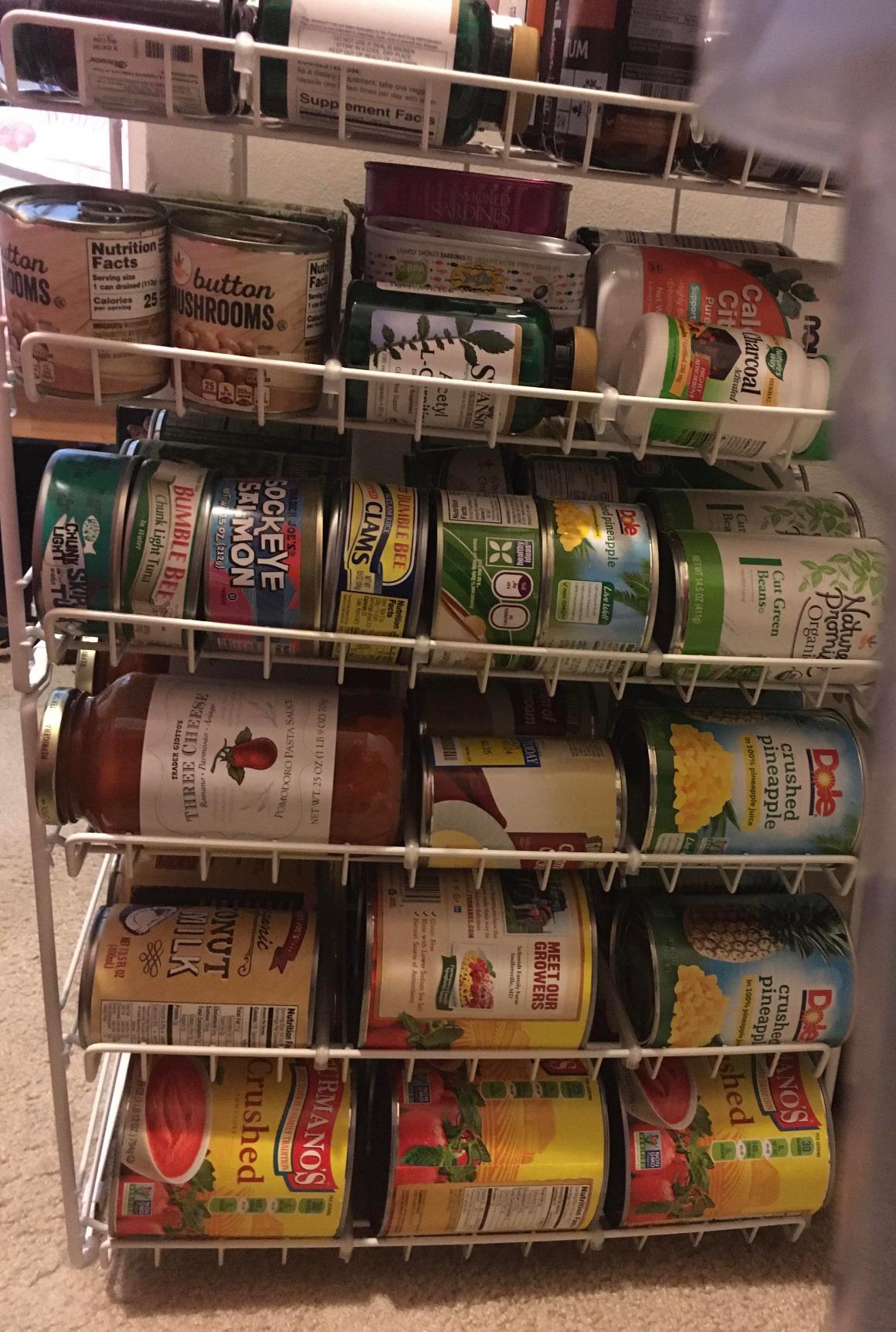
The number to know before you buy is the clearance requirement: 12 inches deep, 17.5 inches wide, and 16 inches tall for a comfortable fit. The unit itself measures 11.5 inches deep, 17 inches wide, and 13.75 inches tall. That is a genuinely large footprint, and the single most common complaint in reviews is that buyers measure their shelf after ordering rather than before.
Our advice is to treat the 17.5 inch width as a hard gate. If your cabinet opening is narrower, this rack will not sit flush and cans will catch on the frame, and no amount of assembly effort fixes a geometry problem.
What it is like to load and restock it
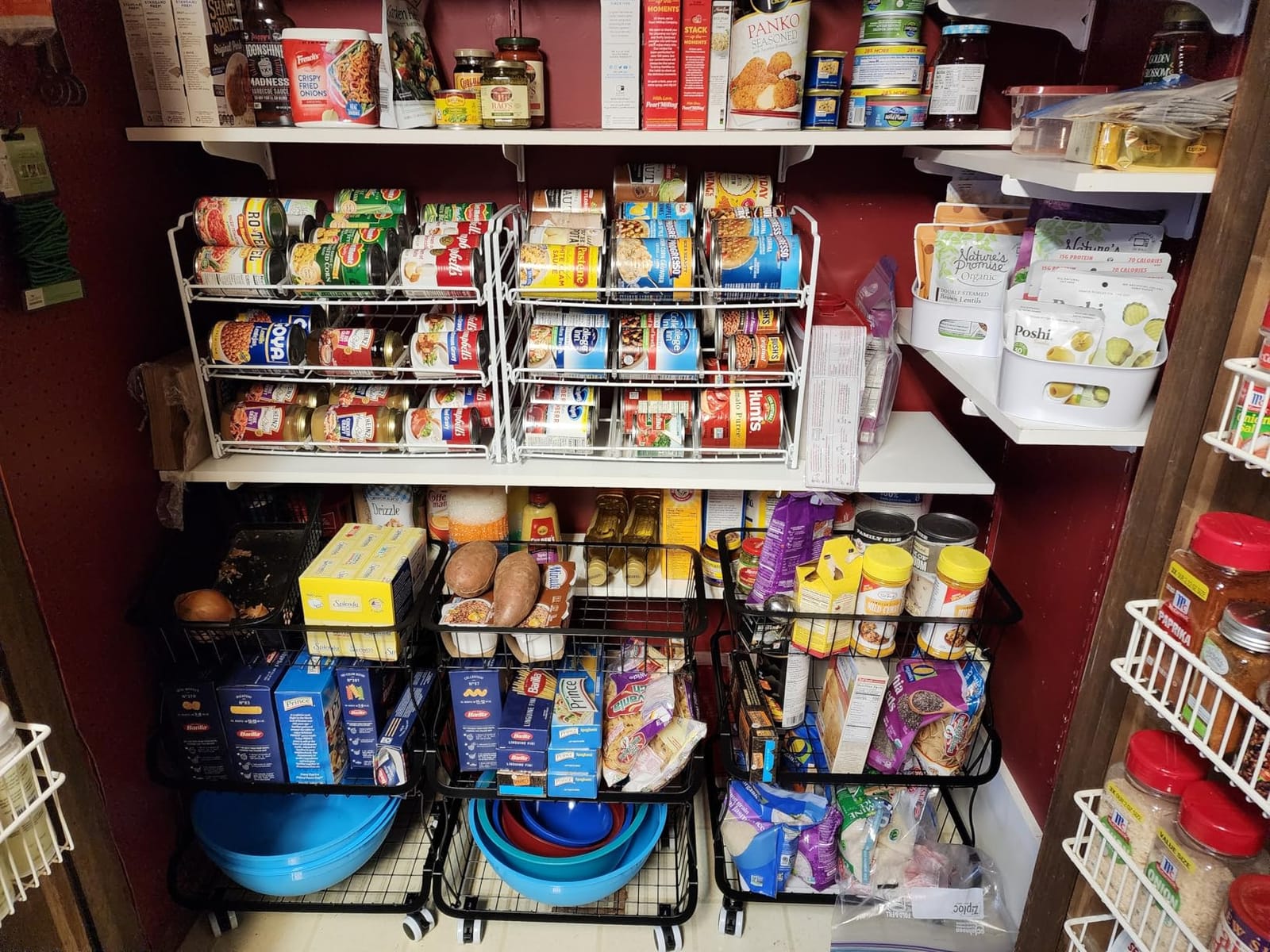
You add cans at the back of each tier and pull from the front. Because the shelf slopes, removing one can nudges the row forward, so the oldest can stays at the front by default rather than by intention. That is the whole mechanism, and it works well when your cans are close to standard diameter.
Stacking two units vertically roughly doubles your can count in the footprint of one. The clips that join them are the weak point to inspect first, since the top section can sway slightly when you move a fully loaded pair.
Who should skip it
Skip this rack if you have narrow cabinet openings, or if you mostly store large stew-size tins, since the middle and bottom shelf heights can run short. It also needs real counter or shelf area, so it is the wrong pick for a closet pantry or an RV galley.
If your cans are all drinks rather than food, the set-of-two plastic dispensers below handle the same job in a fraction of the depth.
2. Simple Houseware Soda Can Organizer Dispenser Set of 2
Simple Houseware Soda Can Organizer Dispenser Refrigerator/Pantry, Set of 2
Two layers of 12 oz cans
14L x 5.75W x 3.5H inches
Clear plastic, slanted base
Pros
- Highest average rating in the roundup at 4.6 stars
- Holds two layers of cans in a shallow 3.5 inch footprint
- Slanted base rolls cans forward automatically
- U-shaped thumb cutout gives a grip from either layer
- Clear plastic shows contents at a glance
Cons
- Only fits standard 12 oz and select skinny can sizes
- Not designed to be stacked with other units
- Not top-rack dishwasher safe
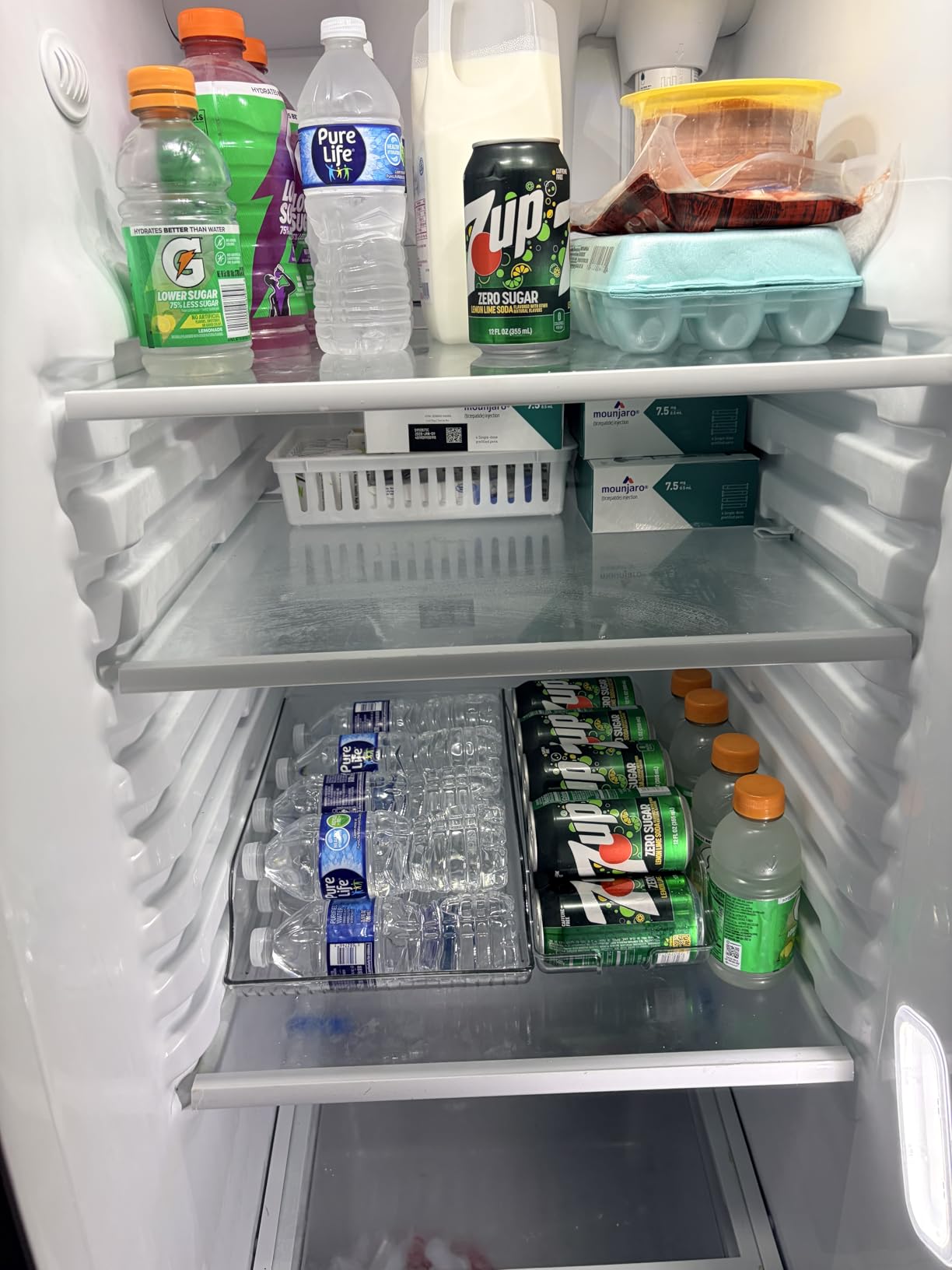
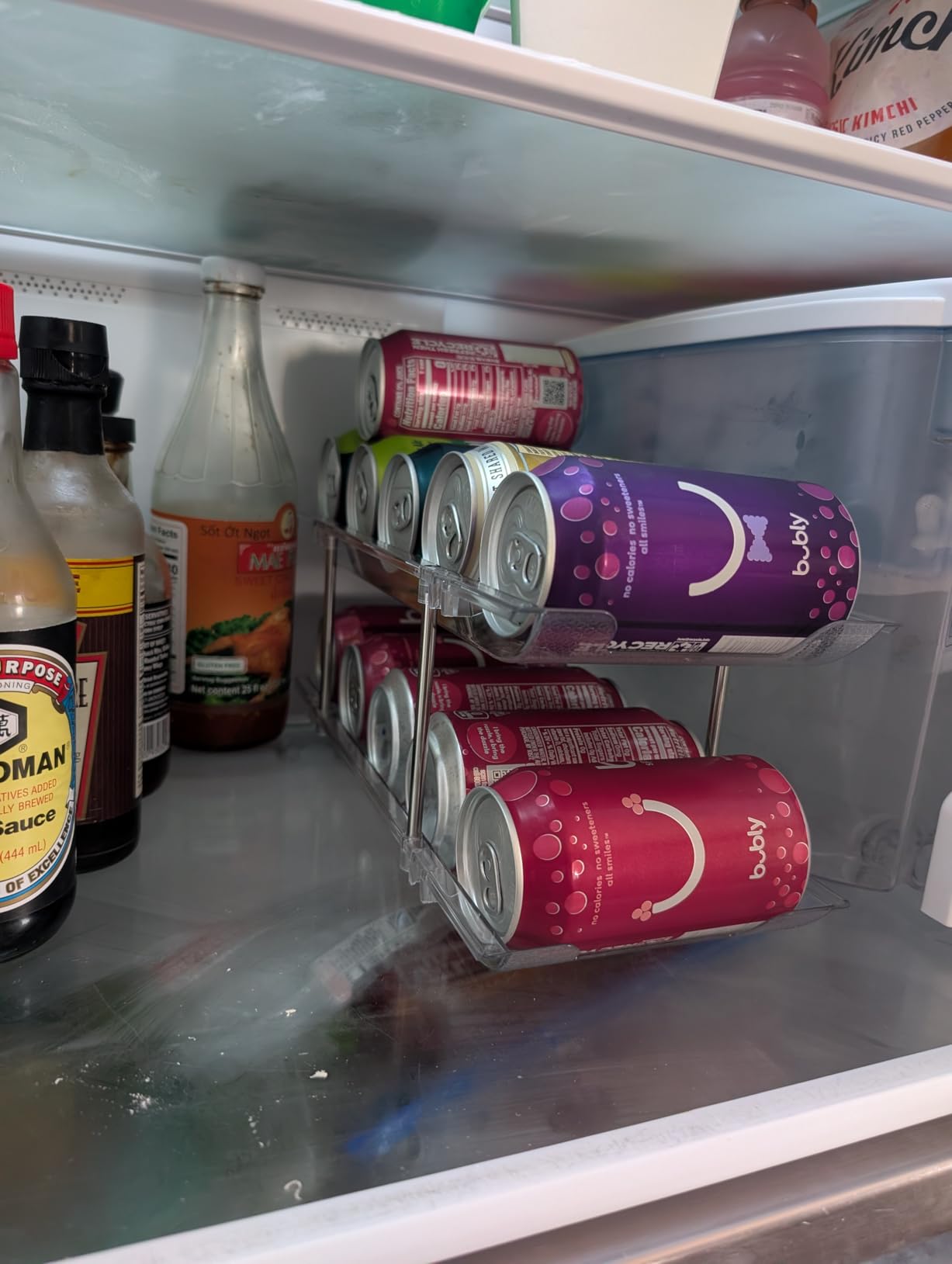
Most can organizers in this roundup are built for food tins. This one is built for drinks, and it does that job better than anything else here because it is only 3.5 inches tall and turns a dead strip of refrigerator or cabinet space into two rows of cans.
The elevated back feet create the tilt, so the front row rolls forward as you take one. The thumb cutout in the front lets you pull a can from either layer without tilting the bin, which sounds minor until you have done it with wet hands on a full bin.
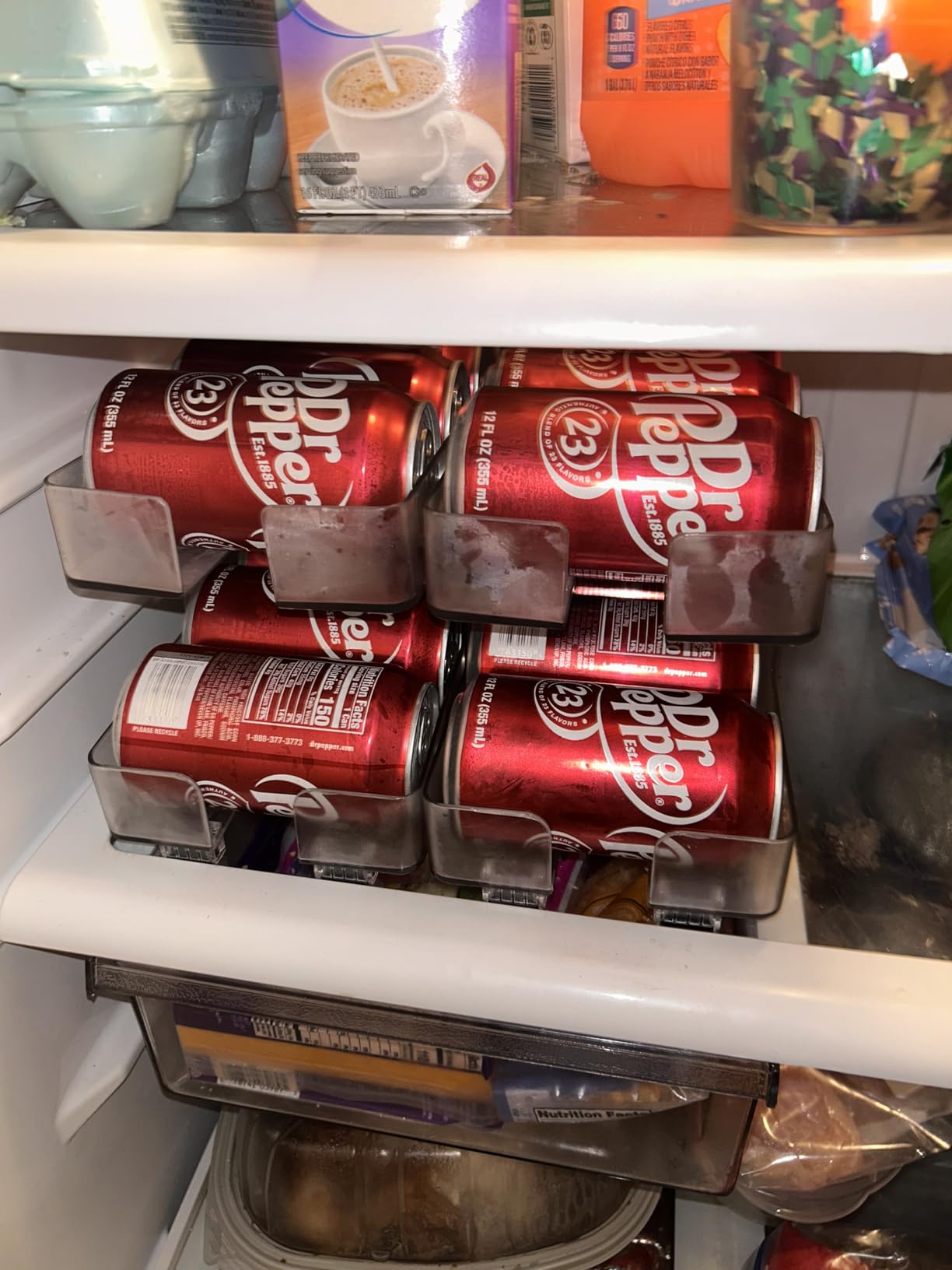
Clear plastic is the right call in a refrigerator, where lighting is poor and a wire rack turns into a tangle of shadows. Owners also note that the bins wash easily with dish soap and hot water, which matters because drinks leak.
The honest limitation is size compatibility. Reviewers consistently report this fits standard 12 oz cans and select skinny or tall sizes, and that anything wider will sit crooked or not seat properly. Measure one can before you commit.
Where these bins earn their space
The refrigerator corner is the classic spot. A bin that is 14 inches long and 5.75 inches wide fits where a shelf otherwise holds nothing but a bottle of mustard, and because it is clear you can see the count at a glance without pulling anything out.
Many owners buy several sets, and that is the pattern we would follow. Four bins means eight rows of cans, which is enough to cover a week of lunches for a household that cooks from cans constantly.
Who should skip it
Skip these bins if you store vegetables, soups, or anything wider than a standard can, and skip them if your refrigerator shelf is already crowded. They are explicitly not designed to be stacked with other units, so vertical stacking of these bins is off the table.
They also need hand-washing. If you only run a dishwasher, look at the wire racks instead.
3. Deco Brothers Stackable Can Rack Organizer for 36 Cans
Deco Brothers Stackable Can Rack Organizer Holds Up to 36 Cans, Chrome
Holds 36 cans
11.25D x 17.3W x 13.75H inches
Alloy steel with 6 dividers
Pros
- Rigid alloy steel frame does not bow under a full load
- Six dividers slide easily to match different can sizes
- Plastic end caps stop metal parts scratching and squeaking
- Stacks with included clips to expand capacity
- Seller sends follow-up assembly photos by email
Cons
- Needs real vertical clearance
- instructions are mostly pictures
- Front-only loading is not ideal for strict rotation
If the first rack on this list wins on review volume, this one wins on rigidity. The Deco Brothers frame is alloy steel rather than coated steel, and owners with racks that have been loaded for years report no sagging, wobbling, or bowing at the front rail.
That stiffness shows up most when you reach in and lean on the frame, which everybody does and nobody admits. It also means small cans can sit five per row instead of four, so a mixed inventory can be denser than the printed 36-can figure suggests.
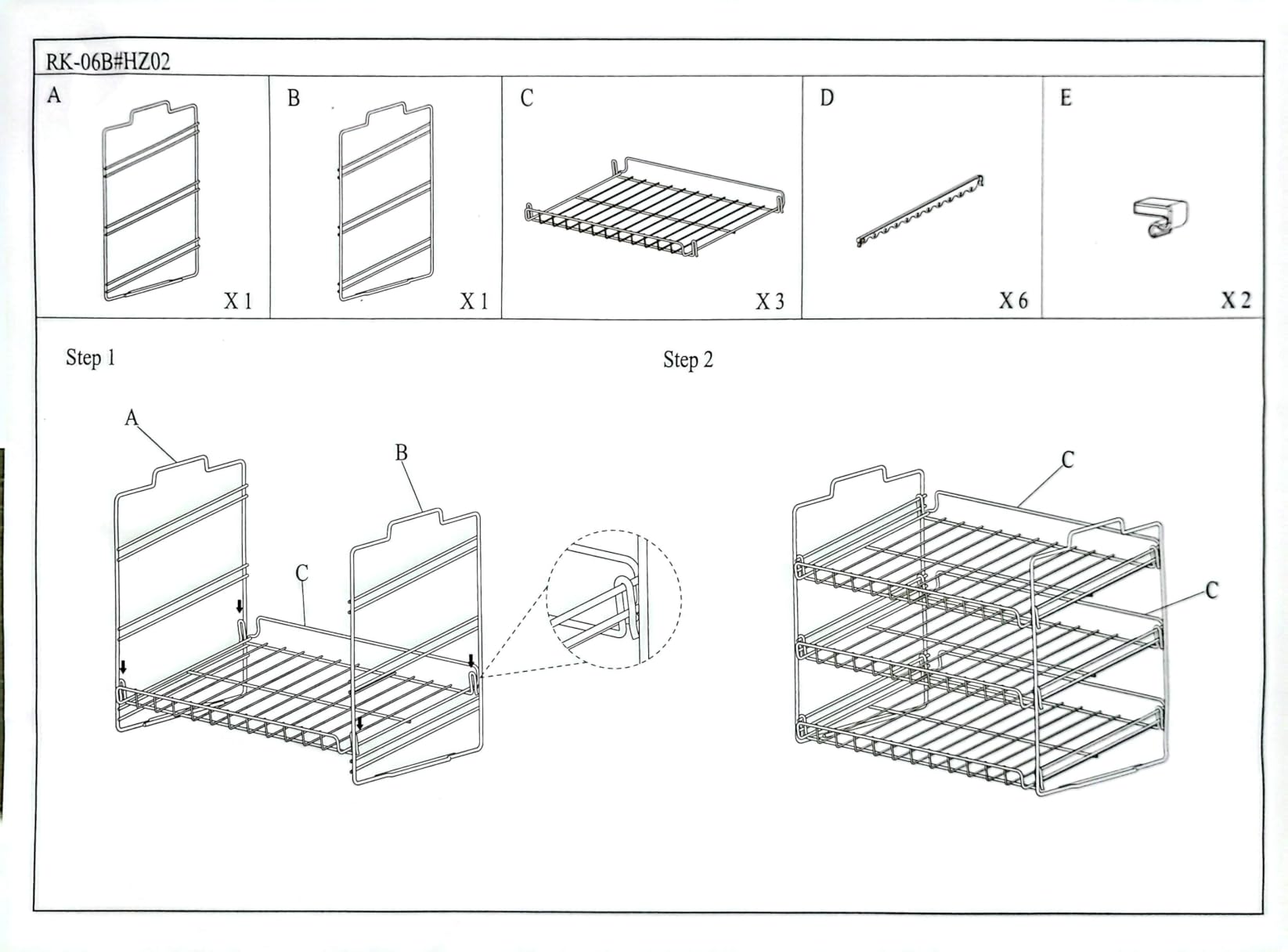
The six plastic dividers are a closer match to what owners describe as useful than the dividers on most competing racks. They slide smoothly and hold position once set, and the plastic covers over the hooks keep two racks from grinding against each other when you stack them.
Long-time owners also mention the seller sending a follow-up email with clearer assembly photos. It is a small thing, and it is the kind of detail that saves a first-time buyer an hour.
Why the front-loading design matters
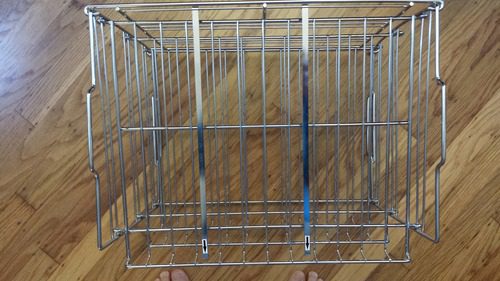
Cans load from the front on all three tiers, and that is the practical trade-off in this design. You can see everything without reaching, but you cannot restock the back row without pulling forward the cans in front of it.
For a family that shops weekly, front loading is fine. For a household that buys canned goods in bulk every few months, it is mildly annoying, and a true gravity-fed FIFO unit like pick four is a better fit.
Where buyers run into trouble
The rack needs about 13.6 inches of vertical clearance, and more than that if you plan to load 28 or 30 oz cans. Several reviewers also found the top shelf hard to fit because the lower shelves push the side panels outward during assembly.
Two fully stacked racks are described by some owners as feeling slightly rickety, so treat the stacking clips as a one-unit arrangement rather than a three-tier tower.
4. FIFO Pantry Storage Organizer Dispenser Rack with 54-Can Capacity
FIFO Pantry Storage Organizer Dispenser Rack for Canned Goods/Drinks, 54-Can Capacity
Holds up to 54 cans
16D x 16W x 12H inches
Two solid shelves, 20.5 lb per shelf
Pros
- Highest single-rack capacity here at up to 54 cans
- Patented first-in-first-out rails roll older cans forward
- Units connect together to expand storage
- Made in the USA from solid shelves
- Dowels fit smoothly for tool-light installation
Cons
- White plastic build feels less heavy-duty than steel wire racks
- Fixed shelf layout has no dividers for mixed can sizes
- Lowest average rating in the roundup at 4.4 stars
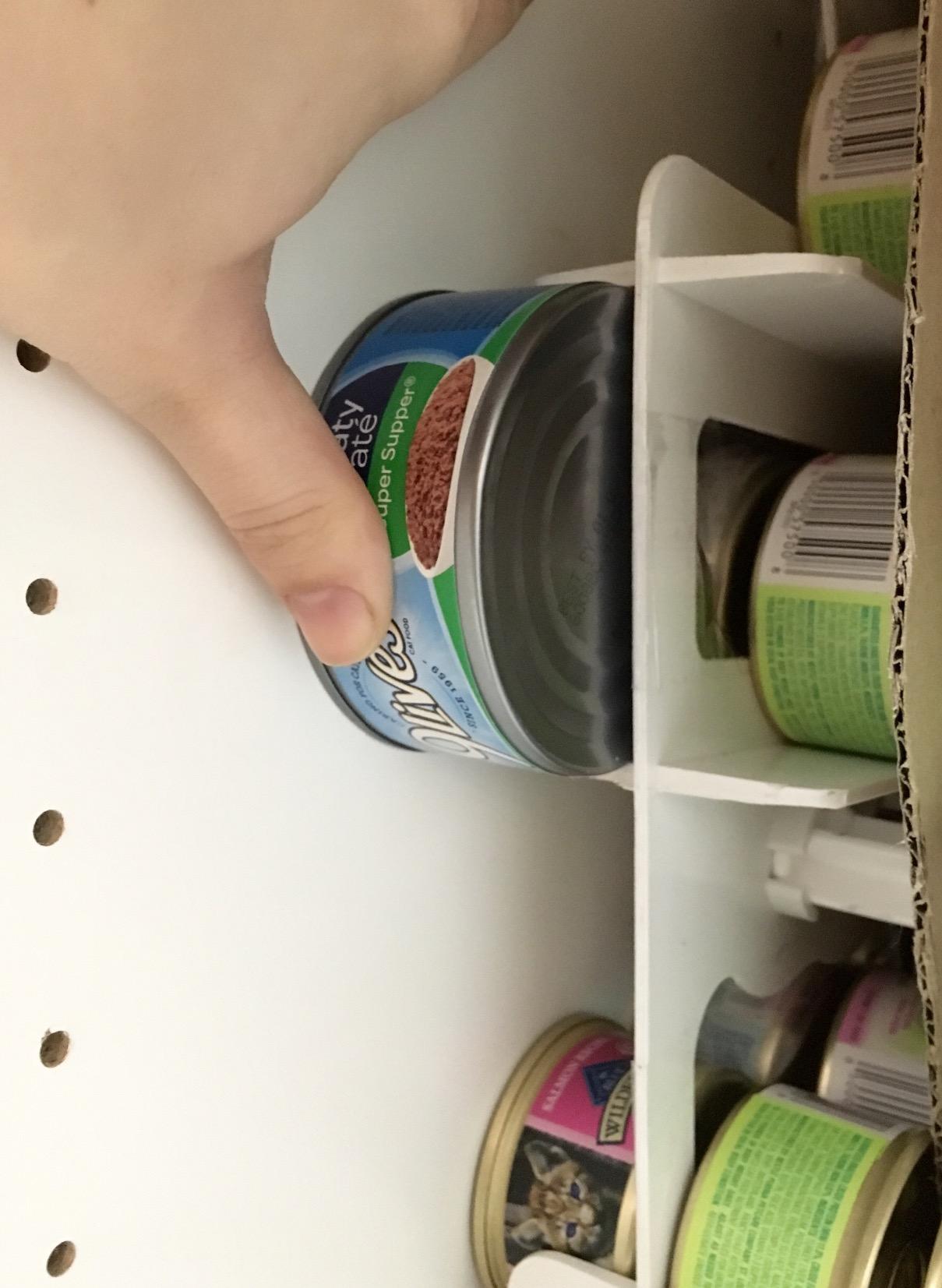
This is the unit to buy when you cook from cans every single day and want a real rotation system rather than a pile. The patented rail design rolls the front can forward when you pull one, so the oldest can is always the one nearest your hand. Owners say it visibly cuts down on food thrown away.
Capacity is the headline number here. Fifty-four cans in a 16 by 16 by 12 inch footprint is a lot of food in a small square, and the units connect to each other so you can grow the system without buying a new footprint.
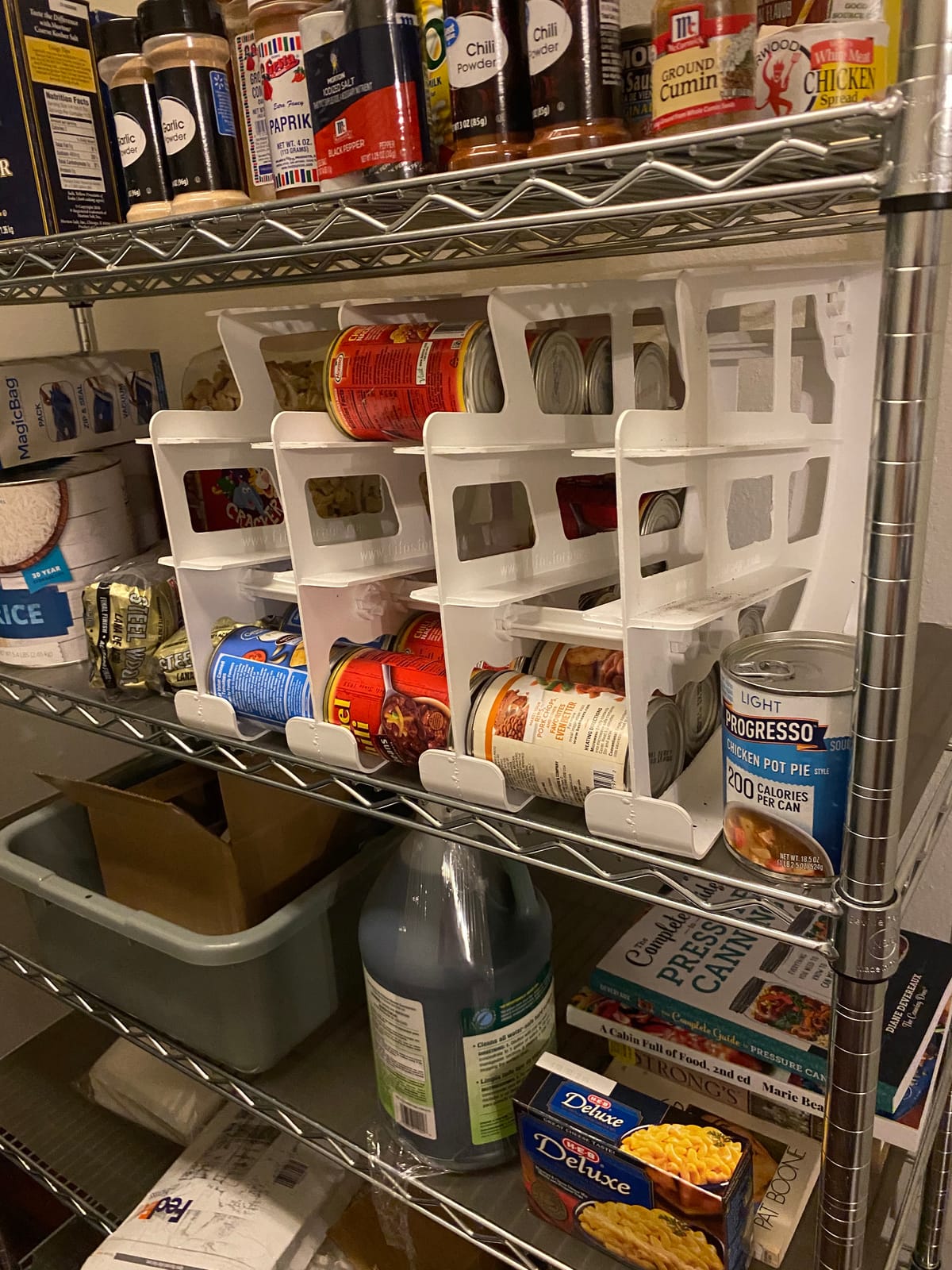
It is also the only pick in the roundup that states a shelf load rating, at 20.5 pounds per shelf, which lets you sanity-check your own shelving rather than guessing. It also works in a refrigerator or cupboard, not just a pantry, because the footprint is square and self-contained.
Assembly is dowel-based. The dowels fit into the panels without hardware, which reviewers call smooth and quick, and the solid shelves do not flex when you load them.
Who this rack is built for
Think of this as the household that goes through a case of soup cans in two weeks. For that pattern, rotation beats category sorting every time, because the mechanism handles the discipline you would otherwise forget.
It is also a good fit for a walk-in pantry where you want one clean block of cans instead of five mismatched bins.
What you give up for the capacity
The trade-off is material and adjustability. The white plastic construction feels less heavy-duty to owners than the steel wire racks, and there are no dividers, so every can occupies the same lane whether it is a 15 oz bean can or a wide stew tin.
It also carries the lowest average rating in this group at 4.4 stars. The complaints are about build feel and fixed sizing, not about the rotation mechanism, which is what most buyers bought it for.
5. AIYAKA 3-Tier Stackable Can Rack Organizer
AIYAKA Can Rack Organizer,3 Tier Stackable Can Storage Dispenser,Black
Holds up to 36 cans
13.4D x 16.6W x 14.8H inches
30-degree tilt, powder-coated metal
Pros
- 30-degree tilt reliably rolls rear cans forward
- Holds a lot of cans in a relatively small footprint
- Powder-coated metal stays sturdy when fully loaded
- Multiple finish options including black and silver
- Works in a cabinet/on a counter or on a balcony
Cons
- Taller than buyers expect so measure first
- Some screw holes were not well predrilled
- Frame struggles under a full 36-can load
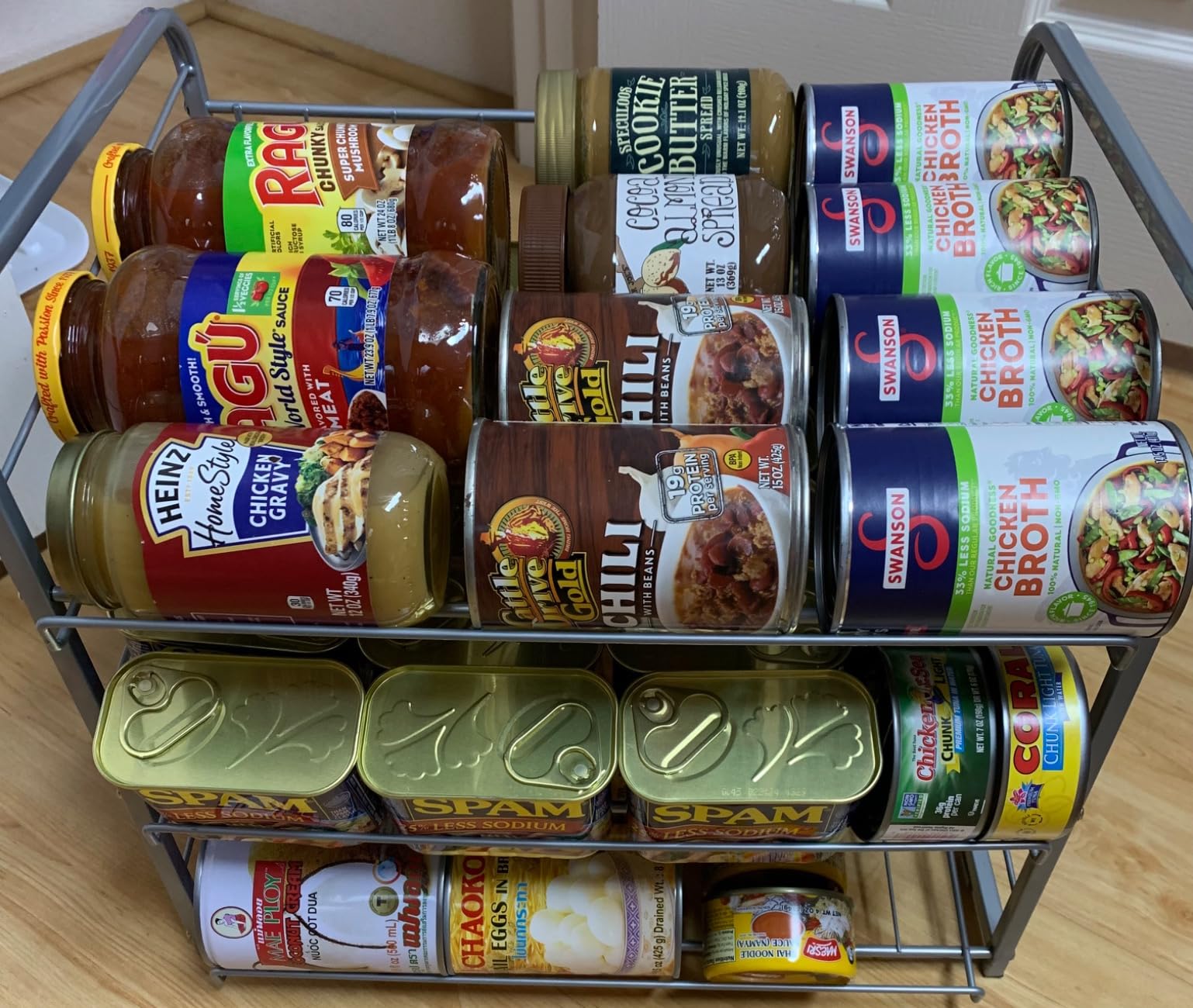
The tilt angle is the story with this rack. Thirty degrees is steeper than most competing racks, and reviewers consistently describe rear cans rolling forward without a nudge. If your pantry problem is cans disappearing two rows deep, a steeper rail solves it faster than better discipline.
It also stacks. That matters in a tall pantry where you have height to spare but not floor area, because a second rack on top roughly doubles the can count without widening the footprint.
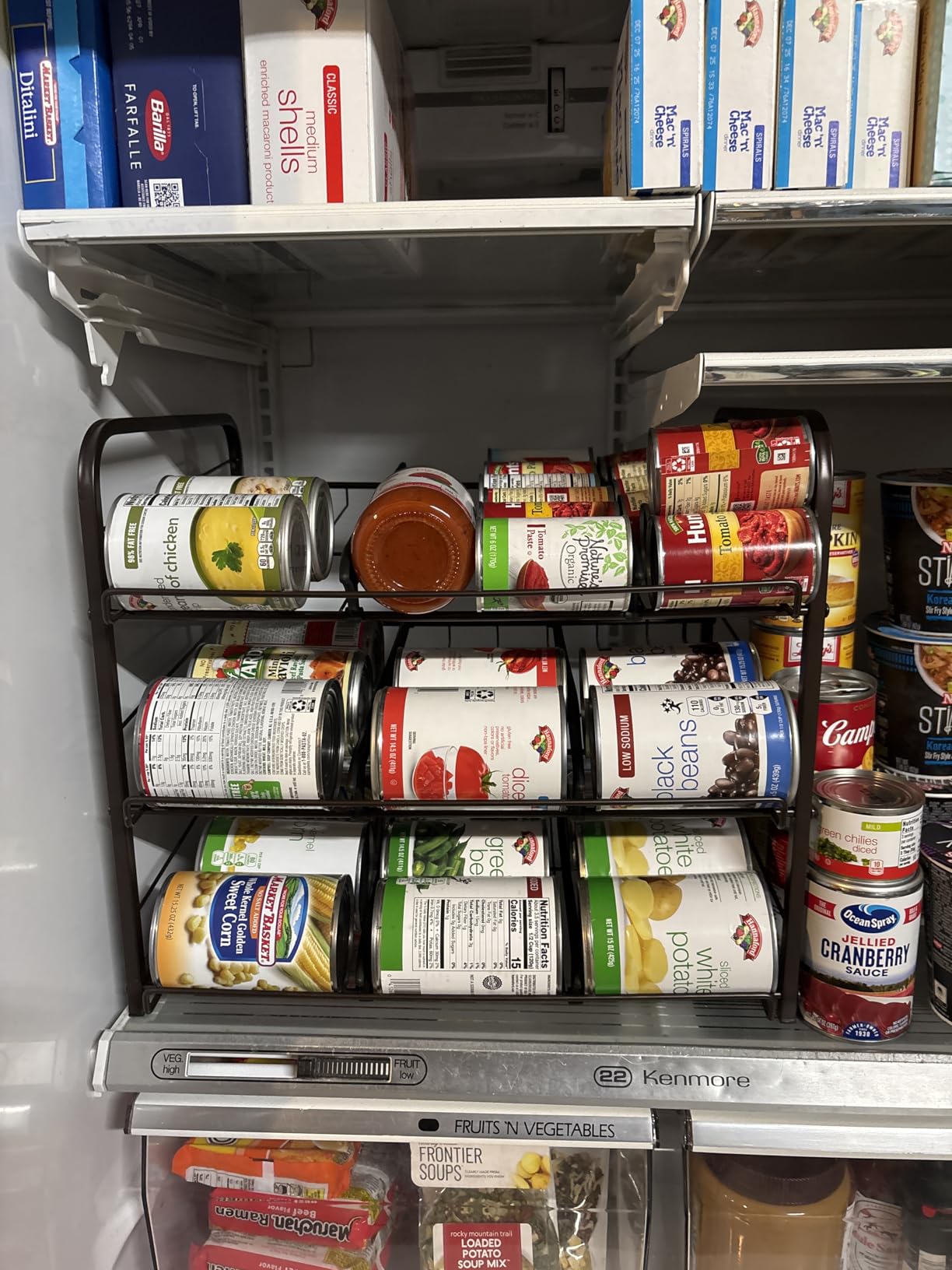
The six adjustable dividing lines let you plan the shelf space rather than just dividing it evenly. Owners who store a mix of standard cans, taller jars, and snack packs rearrange them freely, and the powder-coated finish holds up well in a damp pantry.
Assembly is the one place this pick asks more of you. It includes an Allen wrench and takes roughly five to ten minutes, which is longer than the no-tool racks in this roundup.
When a steeper tilt changes the outcome
A shallow tilt only rolls cans when the whole row is already lined up tightly. A thirty-degree ramp keeps the row moving on its own, so the front can stays where you expect it even after a week of nobody tidying the shelf.
This is the rack we would pick for a deep cabinet where the back of the shelf is genuinely unreachable without pulling everything out.
What to check before ordering
Height is the number that trips people up. The unit is 14.8 inches tall and the manufacturer asks for at least 15 inches of clearance, which is taller than several competing three-tier racks.
A few owners also report screw holes that were not well predrilled, so a bolt will not fully tighten, and a handful report the frame working hard under a complete 36-can load. Load it in two passes rather than filling every tier at once.
6. Kitchen Details 3 Tier Can Organizer Chrome Steel Rack
Kitchen Details 3 Tier Can Organizer | Chrome Steel Canned Food Storage Rack | Holds 36 Cans | Space-Saving Pantry & Cabinet Storage Solution | Easy Access to Canned Goods | Freestanding Design
Holds up to 36 cans
14.5D x 11.5W x 11H inches
Chrome steel wire, 36 lb shelf rating
Pros
- Compact footprint suits tight cabinets and counters
- Assembles in about a minute with no tools
- Open front makes cans visible and grabbable
- Frees real shelf space versus free-stacking
- Ships in five finishes including chrome and gold
Cons
- Wire frame feels light when fully loaded and cans snag on rims
- No adjustability for family-size tins
- Can be slightly too tall for low-clearance shelves
- Small rubber feet pop off easily
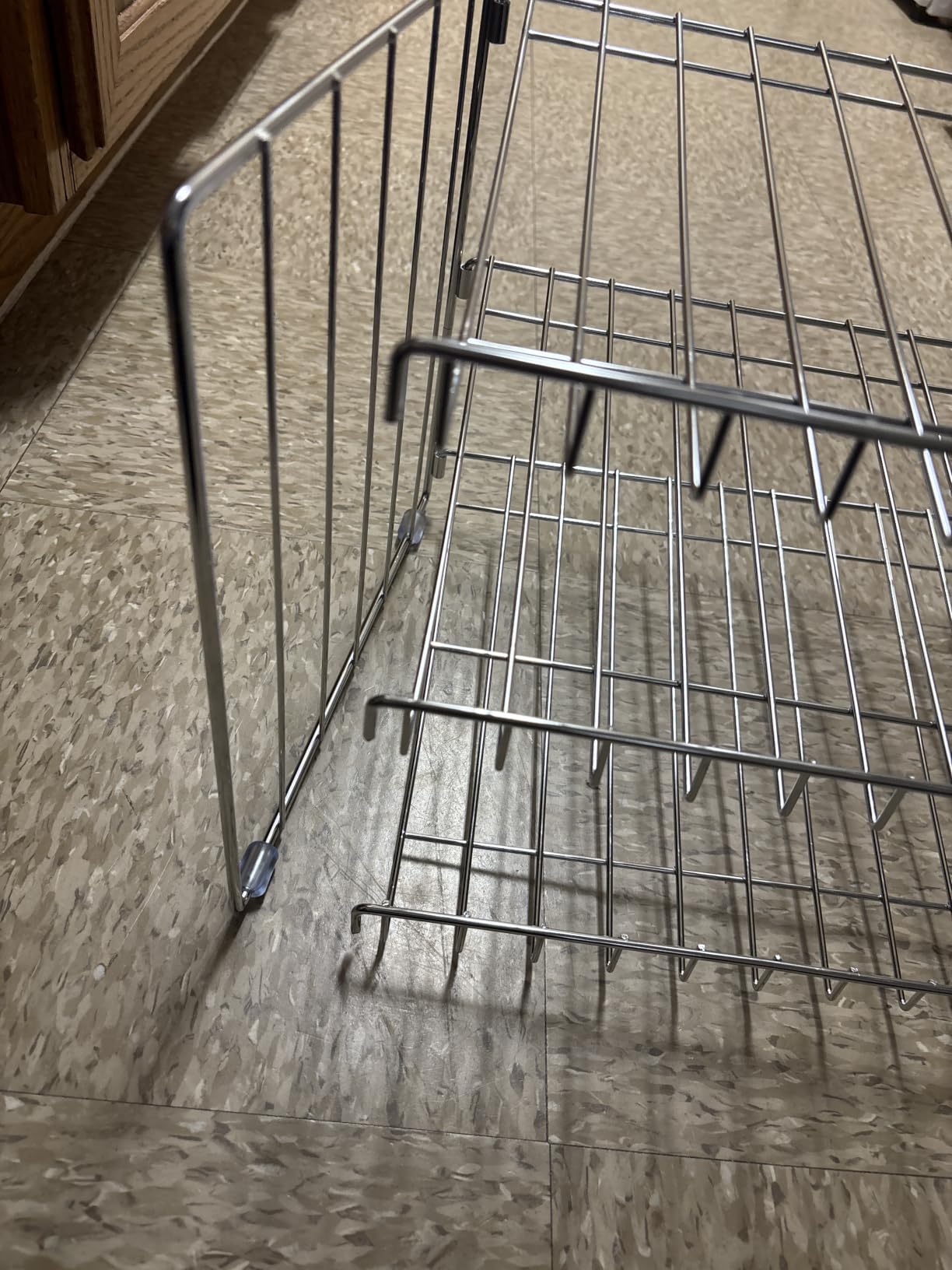
At 11 inches tall and 11.5 inches wide, this is the narrowest footprint in the roundup, and that is the entire argument for it. If your shelf is 12 inches of usable width, most competing racks will not fit and this one will.
The open front means you see every can without pulling anything out, which is a bigger daily quality-of-life difference than it sounds. Owners describe turning a messy pull-out pantry into something they can inventory in seconds.
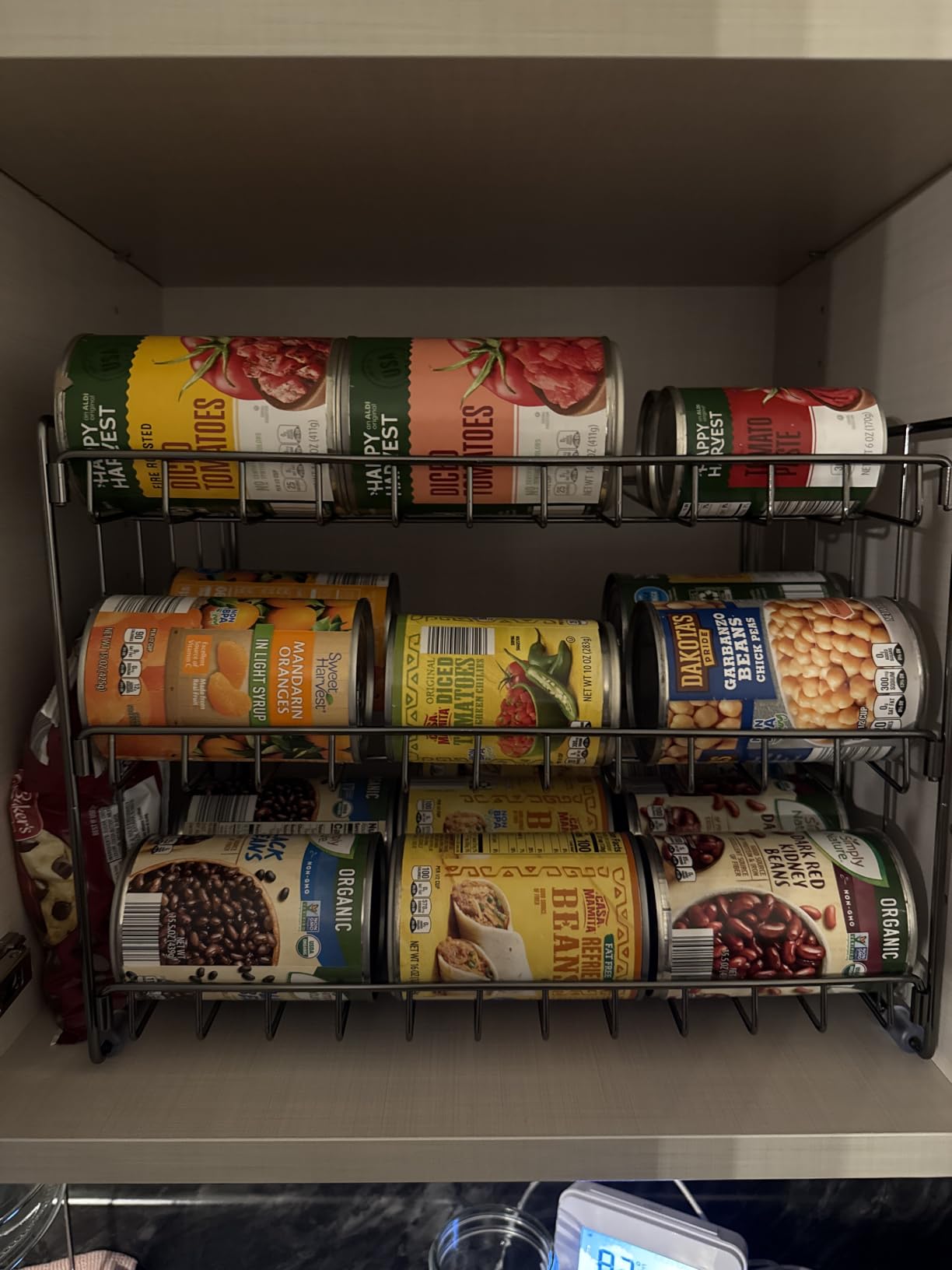
It is also unusually well specified for a wire rack. The stated shelf weight capacity is 36 pounds, and it is freestanding, so you can put it on a counter, a cabinet floor, or a pantry shelf without mounting anything.
One thing worth noting: buyers use this rack for more than cans. Tuna tins, spice jars, oils, snack bars, and even wine bottles all fit, which extends its usefulness well beyond a single category.
Where compact size pays off
This is the pick for a kitchen cabinet that currently holds one row of cans and a lot of nothing. It also suits a rental or dorm kitchen where you want storage that needs no installation and no permanent footprint.
The five finish options matter more than expected in a visible cabinet, because chrome on an open shelf reads as intentional rather than utilitarian.
Where the budget build shows
The wire is the trade-off. Owners report the frame feeling light under a full load, and cans snagging on the wire rims as they roll, which is a small irritation that adds up in daily use.
There is also no adjustability, so family-size tins take more room than the photo suggests, and the unit can be slightly taller than low-clearance pantry shelves allow. Measure twice here specifically.
7. Leeden Lazy Susan Wire Can Organizer for 24 Inch Turntables, 2 Pack
Leeden Lazy Susan Wire Can Organizer for 24in, 1/4 Wedge, 2 Pack
Fits 24 in diameter turntables
4D x 10.3W x 4H inches
Steel wire, 4 in side walls, 2 pack
Pros
- Converts unreachable corner space into usable storage
- Strong steel wire holds heavy cans without bowing
- 4 inch side walls keep cans in place as the turntable spins
- Built-in handle makes each wedge easy to pull out
- Four wedges per turn effectively double capacity
Cons
- Sized only for 24 in turntables and not 26-28 in ones
- Baskets can slide around on the turntable
- Heavy to remove when loaded with soup cans
Corner cabinets are the most wasted space in most kitchens, and these wedges are the fix. A quarter-circle basket sits in one quadrant of a lazy Susan, so cans roll around the turntable with the shelf instead of sliding into the dead corner behind the center post.
Owners with 24 inch corner cabinets are the group that loves this most, and the reason they describe is simple: they can finally see and reach what they own. That is the same problem as the rolling rack, solved with a turntable instead of a slope.
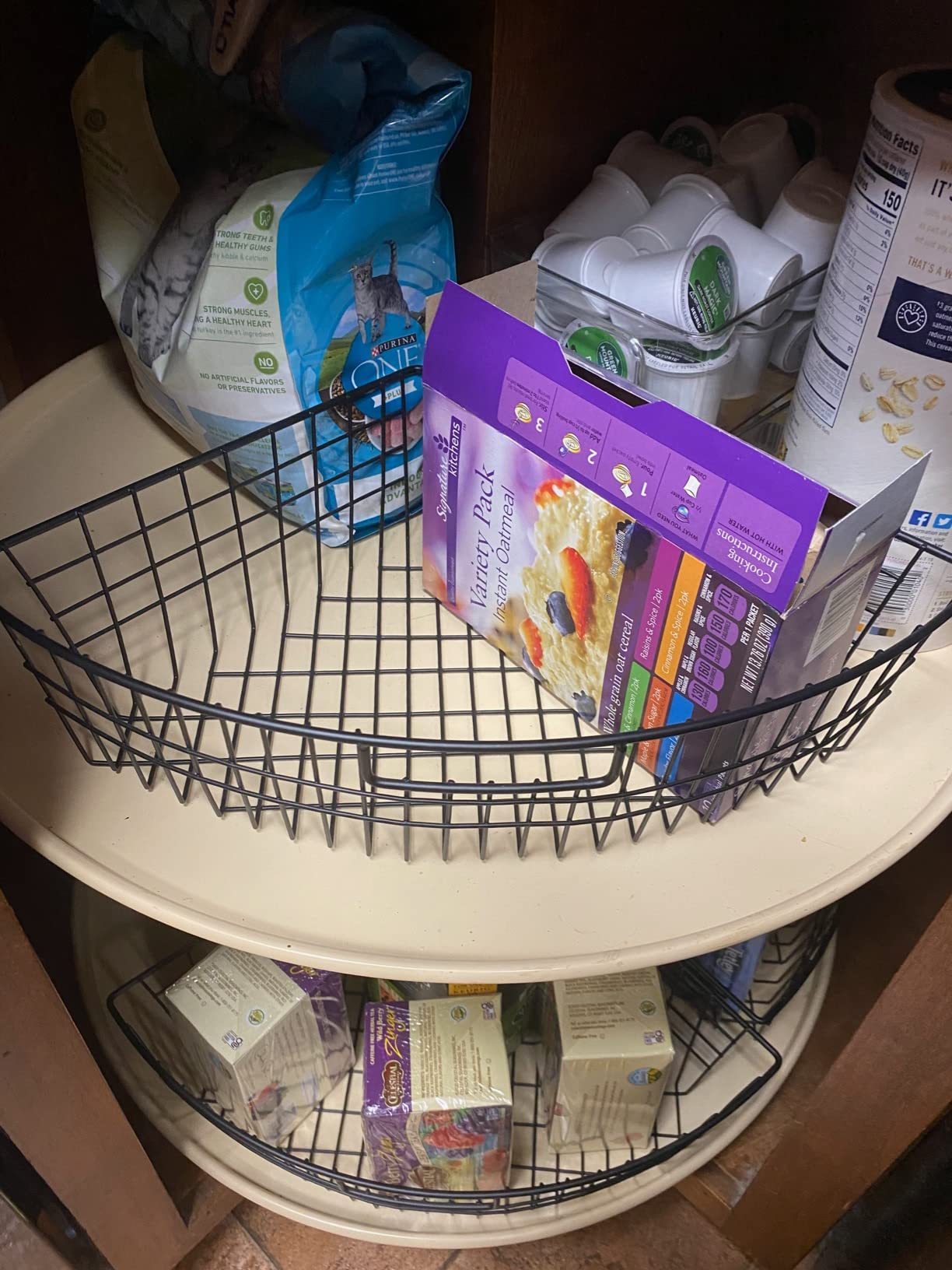
The 4 inch side walls are doing real work. When you spin the turntable, taller cans would otherwise lean and slide, so the walls keep everything seated. The built-in handle lets you lift a loaded wedge out to clean underneath, which you will want to do at least twice a year.
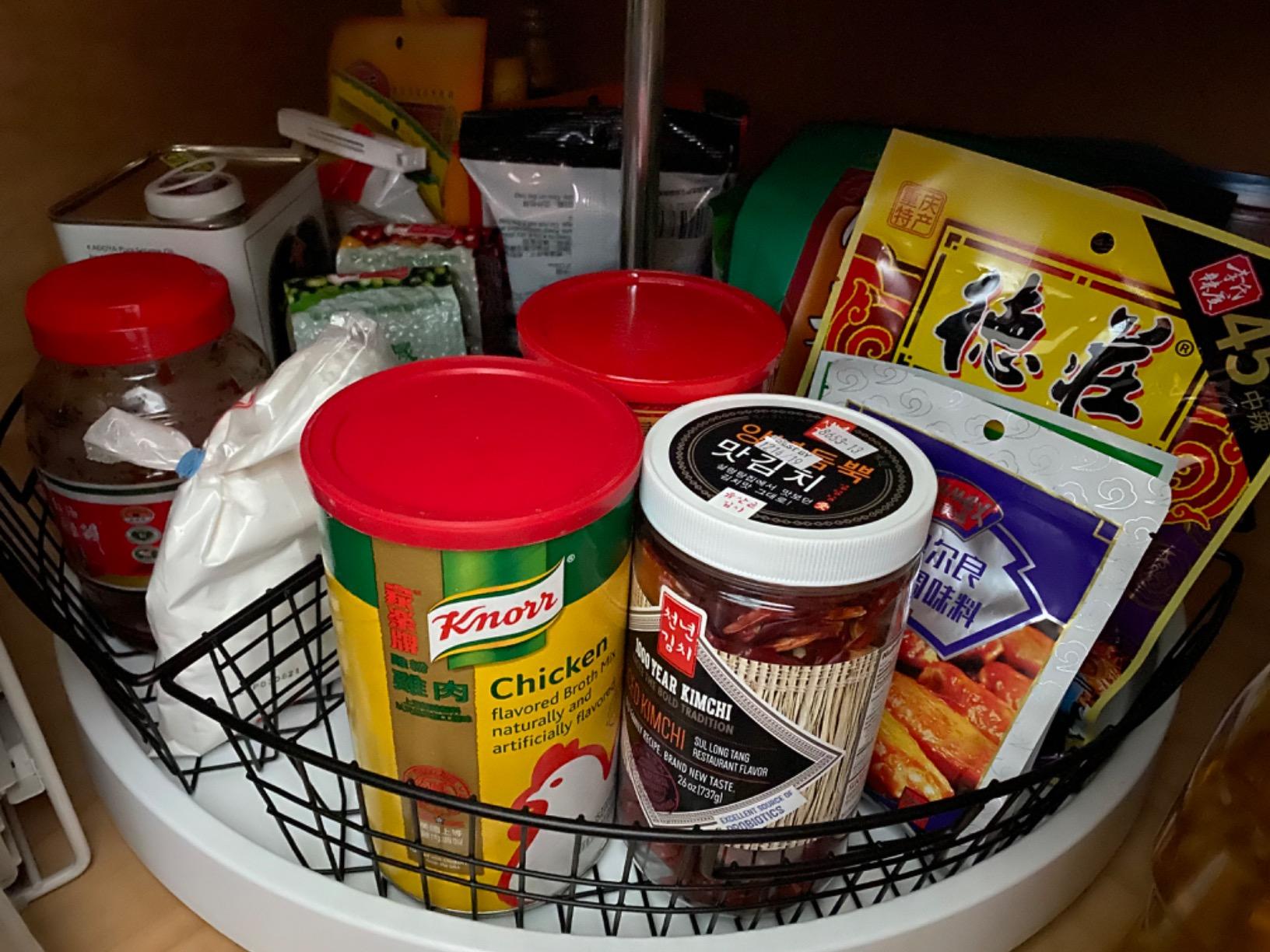
Two packs give you four wedges per turntable, filling it completely. The steel wire has a rust-resistant black finish, which reviewers specifically call out for humid rooms and for washing the baskets.
Measure from the center post, not the cabinet door
This is the one pick in the roundup where a single measurement decides success or failure. Measure from the center post to the shelf edge, because the baskets are sized to a 24 inch diameter turntable and will sit wrong in anything larger.
Lower and upper cabinets frequently have different turntable sizes in the same kitchen, so measure each one separately. Owners with 26 to 28 inch turntables report the baskets are simply too small.
Who should pass
Skip this pick if you do not have a lazy Susan corner cabinet, and skip it if your turntable has no lip for the basket to sit against, since the wedges can slide around during rotation.
Loaded with soup cans, these are heavy to lift out, and awkward to reach if the corner cabinet is above counter height. For a low corner cabinet, they are excellent.
8. JKsmart 2 Pack Stackable Can Rack Organizer
JKsmart 2 Pack Stackable Can Rack Organizer for Pantry Storage,Can Dispensers with 4 Adjustable Dividers, 2-Tier Metal Wire Basket Beverage Pop Soda Rack for Kitchen Cabinet Pantry, Black
Stack or split into two baskets
9.44D x 15.74W x 16.92H inches
Carbon steel, 4 adjustable dividers
Pros
- Two baskets stack as a 2-tier rack or split into singles
- Four removable dividers match different can sizes
- Side screws lock the tiers together without wobble
- Pre-drilled holes and hardware allow wall mounting
- Only 16 ounces per basket despite the steel build
Cons
- Taller and narrower than most 3-tier wire racks
- Wall mounting requires the included accessories and some drilling
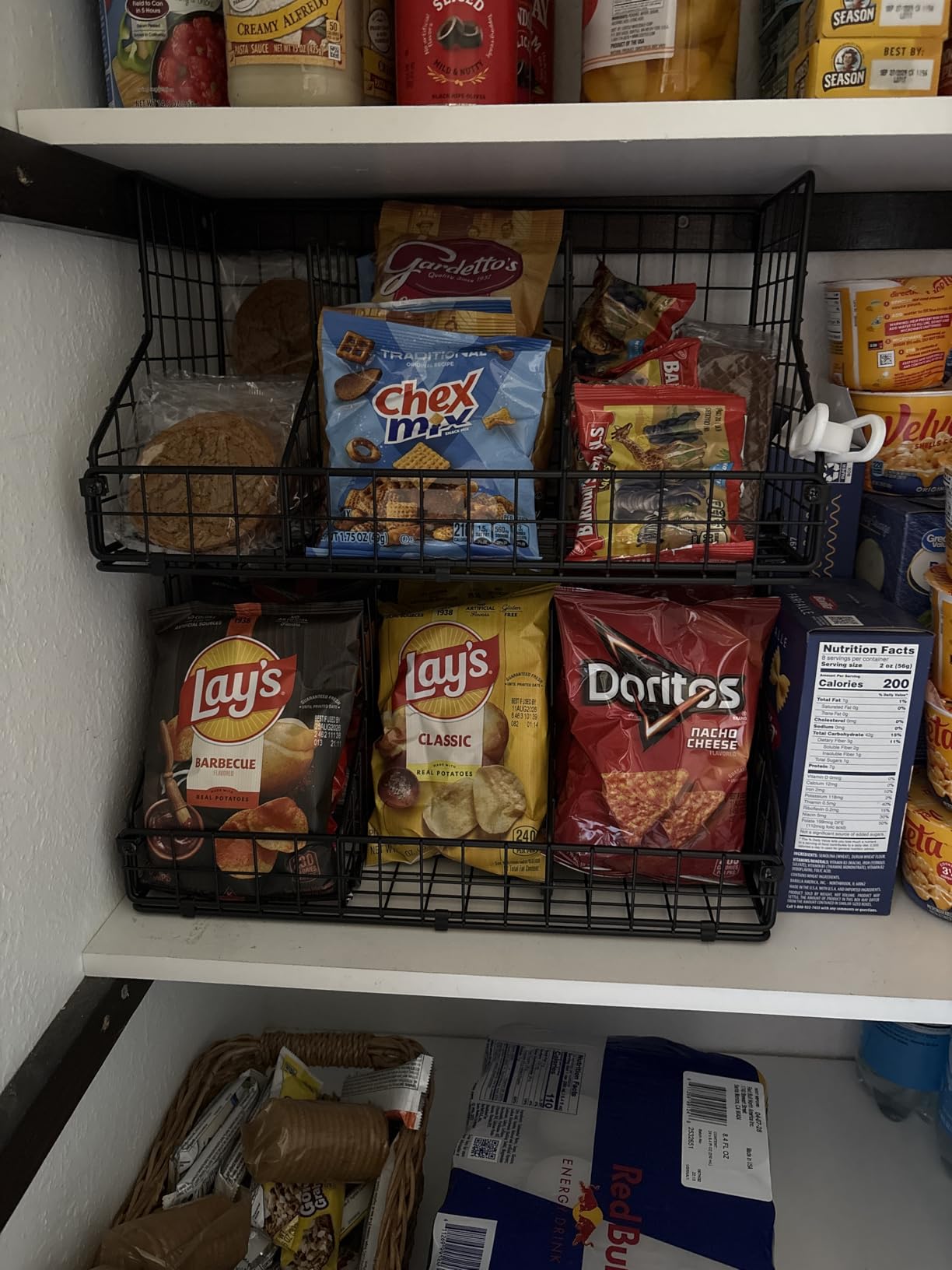
This rack is built around a decision instead of a fixed design. You get two baskets that stack into a two-tier rack for dense storage, or split into two separate baskets for two shelves or two rooms. Reviewers describe that flexibility as the main reason to buy it rather than a fixed three-tier unit.
The carbon steel is thinner wire than the racks earlier in this list, but the side screws that lock the tiers together are what owners point to when they talk about stability. Stack them and they do not shake.
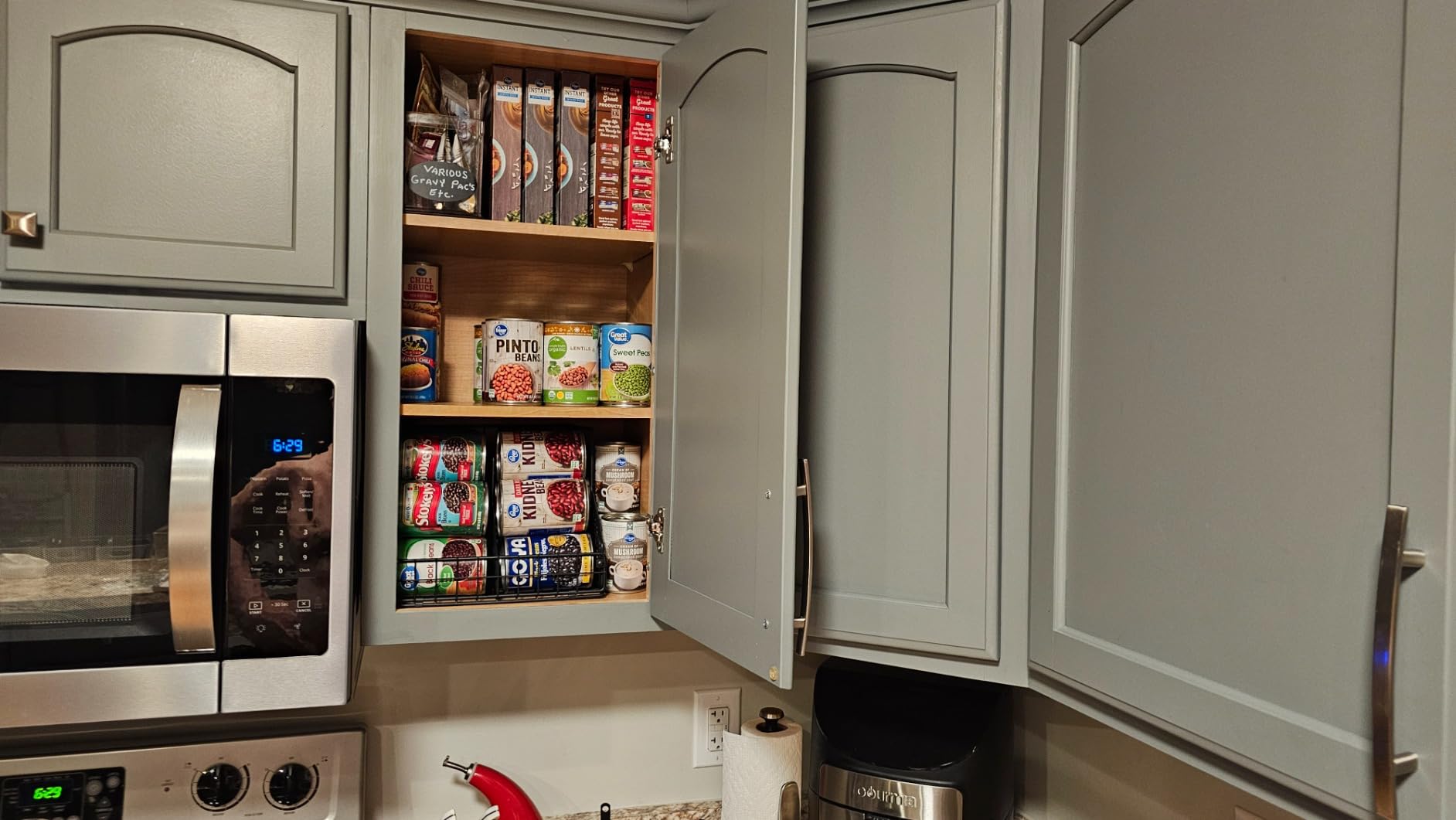
The four dividers are removable as well as adjustable, so you can drop them all and get a clean open basket for bulky items, or set them tightly for rows of matching cans. That is a small feature that makes the rack work for snacks and pet food as well as cans.
The pre-drilled holes on the back let you hang the baskets on a wall when shelf space runs out, which turns unused vertical surface into can storage without any floor area at all.
When splitting beats stacking
Split them when your cans fall into two unrelated categories, such as soup and ingredients. Two separate baskets on two shelves keep the categories apart and make both of them visible, which is better than one tall stack you have to reach into.
Stack them when you have height to spare and one crowded shelf. The screws on the side make the combined unit rigid enough to load fully.
What to measure first
Height is the catch here. The unit is 16.92 inches tall, taller than most three-tier wire racks in this roundup, and owners flag clearance as the main practical caveat.
The second caveat is that wall mounting needs the included hardware and a drill. If you are in a rental and cannot drill, the cabinet-insert trays further down are the better route.
9. Attelite 3 Tier Rolling Can Storage Organizer
Can Organizer for Pantry, 3 Tier Rolling Can Storage Organizer Pantry
Up to 36 cans per set
13.35D x 17.56W x 9.45H inches
Clear acrylic, interlocking trays
Pros
- Trays interlock horizontally and vertically as your pantry grows
- Each layer has a ramp that rolls cans forward automatically
- Clear acrylic shows exactly what is in every layer
- Assembles without tools and stays firm
- Trays are washable and collapsible
Cons
- Sized for cans around 4.52 inches long so many tins will not fit
- Clear acrylic scratches and shows marks over time
- Interlocking sets take more shelf footprint than one metal rack
This is the only modular system in the roundup, and that is genuinely different from the rest. You get three sets of three-layer trays that snap together horizontally and stack vertically, so capacity grows in whichever direction your pantry has room.
Each layer has its own ramp, so cans roll forward when you take one. The clear acrylic is the practical advantage in a dark pantry or a closed cabinet, where a wire rack hides the second and third rows behind the first.
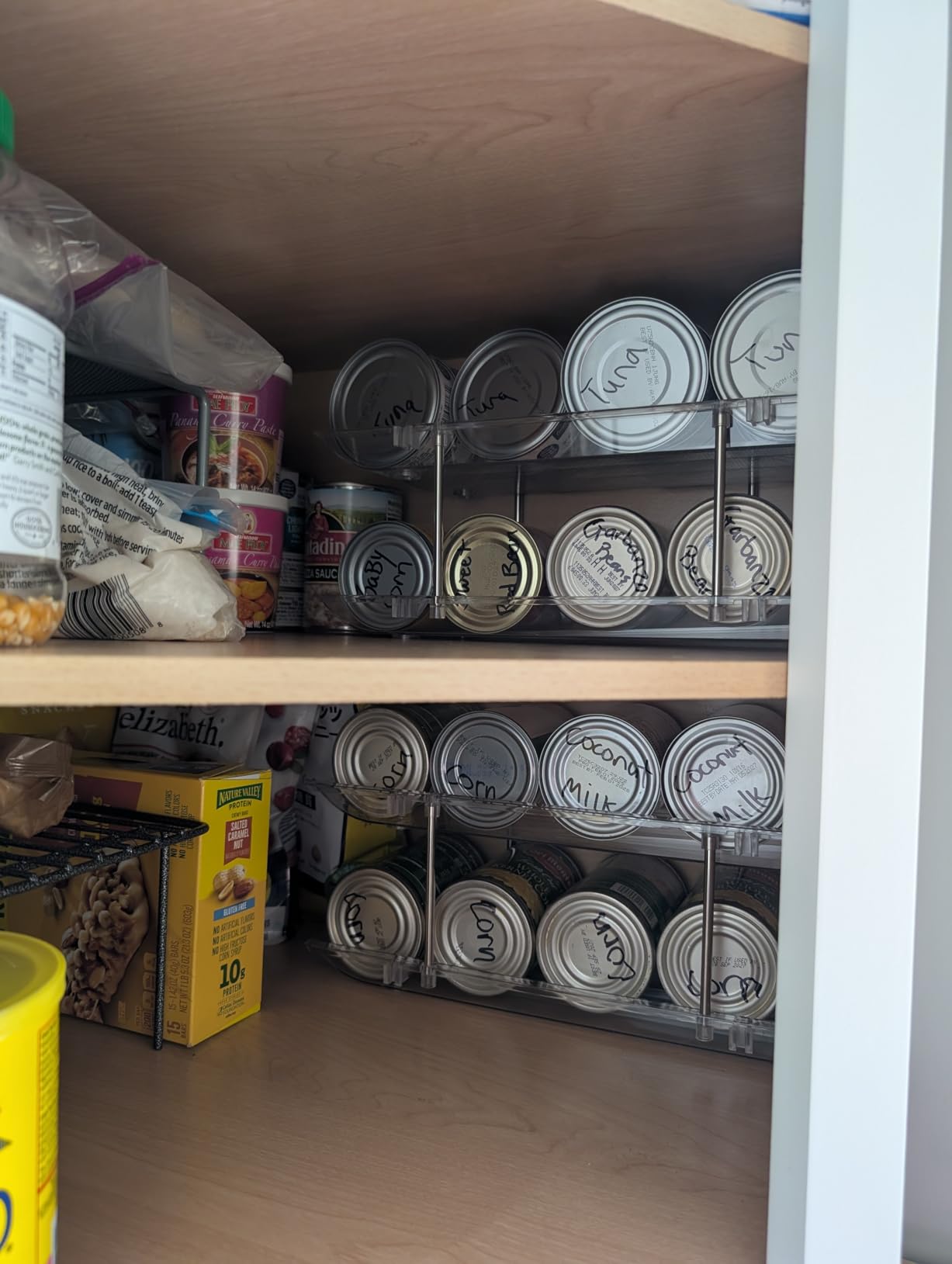
Owners like that assembly needs no tools and the unit stays firm afterward, and that the trays collapse and wash. Collapsing matters if you move apartments or if the pantry doubles as a recycling staging area for half the year.
This pick carries the highest average rating among the smaller-reviewed options in the group, which suggests people who buy it tend to like it.
Modular versus single-rack thinking
A single rack is a fixed decision. You pick a capacity and live with it. A modular tray system is an ongoing one, so it suits a household where can volume is about to change, growing with a new baby or shrinking after a move.
The interlocking design also lets you build horizontally across one long shelf, which is the shape most pantries actually are, rather than vertically into a corner.
The sizing check that decides it
Each layer is 4.2 inches high and 4.9 inches wide, built for cans around 4.52 inches long. Owners repeatedly flag that many standard soup and vegetable tins will not fit, so measure a can before ordering.
Acrylic is also the softest material in this roundup. It scratches, it marks, and it shows fingerprints, so if you want something that still looks new in five years, the steel racks are the better buy.
10. Vrisa 7 Tier Can Organizer Rack for 84 Cans
Vrisa Can Organizer for Pantry Soda Can Storage Dispenser Holder, Silver
Up to 84 cans, 12 per tier
12.44D x 16.87W x 35.35H inches
Round metal tube frame, 7 tiers
Pros
- Largest capacity here at up to 84 cans across 7 tiers
- Round metal tube frame handles a full load without bending
- Tall narrow shape uses vertical space most racks waste
- 15-degree tilt rolls back cans forward
- Adjustable feet stop the unit teetering
Cons
- Very tall at 35.35 inches so it needs a dedicated spot
- Assembly takes about 20 minutes and misaligned holes are common
- Shelves are not adjustable beyond two dividers per tier
This is the pick for a household that buys canned goods in bulk, or for a garage or basement pantry where volume matters more than appearance. Seven tiers at twelve cans each takes the capacity to 84 cans, roughly double a standard three-tier rack, in a footprint barely wider than one.
The tall narrow shape is the reason. Most wire racks are wide and short, and they waste the vertical gap between shelves. This one is built for the tall empty space that sits above a stack of bins or in a floor-to-ceiling pantry cabinet.
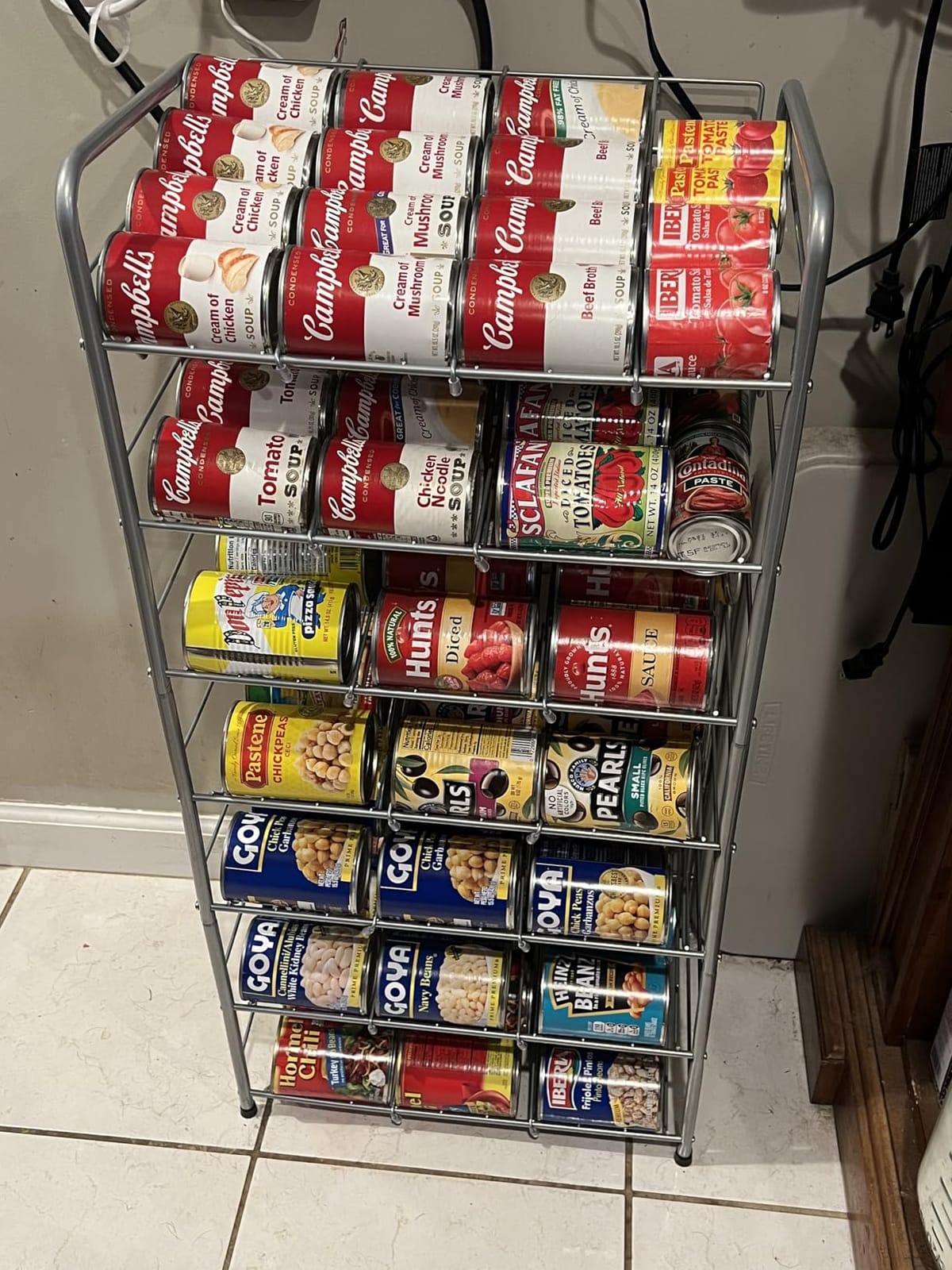
Despite the grumbling about assembly, buyers who finish it describe the result as sturdy and easy to read at a glance, with several owning multiple units. The frame is round metal tube with a silver electroplated finish, and adjustable feet keep it level on an uneven floor.
Each tier carries two adjustable dividers, and the fifteen-degree tilt rolls the back row forward when you take one from the front. It is a shallower angle than the racks earlier in the list, so it depends on cans sitting in a tight row.
Who actually needs 84 cans of storage
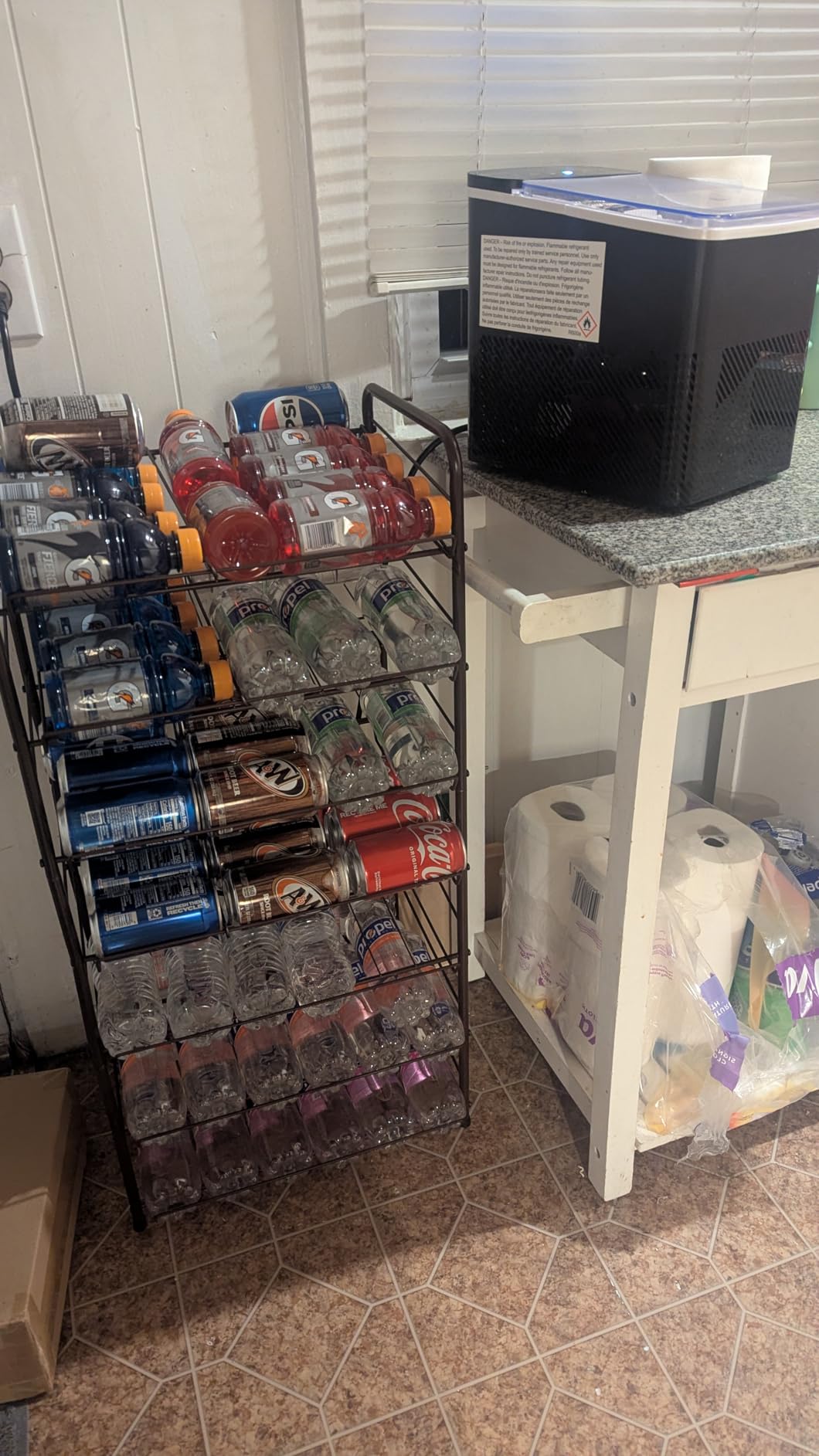
Think bulk buying, a large family, or emergency food storage where cans are the shelf-stable backbone. In those cases the height is an asset, and a pantry that can hold the same inventory on one rack instead of four is a real gain.
If your household cooks from a weekly shop, this is more capacity than you will use, and the height becomes the obstacle.
The assembly reality
Plan on about 20 minutes with a screwdriver, and know that misaligned screw holes are the most repeated theme in reviews. The shared workaround is to thread every bar loosely first and tighten them fully at the end, which straightens the frame.
At 35.35 inches tall it needs a dedicated floor space or a low shelf, and it is not a fit for a standard upper cabinet.
How to Organize Canned Goods Once the Right Organizer Is in Place
A new rack does nothing on its own. The value comes from a routine that keeps the oldest can at the front, and the routine takes about five minutes a week once it is a habit.
Do an expiry-date sweep first. Pull every can out, check dates, and discard anything dented, swollen, leaking, or past date. Do this before organizing, not after, because moving cans around hides damage.
Sort into categories. Group into soups, beans, vegetables, tomatoes, sauces, and desserts. Five or six groups is plenty; more groups than shelf width defeats the purpose.
Load newest at the back. On a tilted rack, the can at the front rolls forward and the can behind it takes its place. Putting the oldest at the front means the rotation runs itself.
Label each zone. One label per shelf or per basket, facing the aisle. Label the shelf rather than the cans, so you relabel once instead of every restock.
Restock from the back. The habit that keeps FIFO working is putting new cans at the back of the row every time, not on top of the pile in the middle.
Reset weekly, audit monthly. Five minutes each Sunday to pull expired cans to the front. Once a month, check for dents, swelling, and leaks.
If the budget is the deciding factor, a DIY version works. Building a stepped dispenser from scrap wood is a common project, and owners on woodworking forums report being happy with the result because they sized it to their own shelf rather than to a product listing.
For the shelves these organizers sit on, our [freestanding pantry cabinets guide](https://cookcraftandcreate.com/best-freestanding-pantry-cabinets/) covers units that give you a full height to fill, and [tall pantry cabinets for vertical storage](https://cookcraftandcreate.com/best-tall-pantry-cabinets/) covers the tall spaces where a seven-tier rack fits and a three-tier rack does not.
How to Choose the Right Can Organizer
Most organizer regrets come down to two measurements and one material choice. Work through these before you add anything to a cart.
Measure the opening, not the shelf
Check the narrowest point, which is the opening behind the cabinet door or the cabinet frame, and not the wider shelf board. A rack that measures 17 inches wide needs roughly 17.5 inches of opening to sit flush. The Kitchen Details rack at 11.5 inches wide is the pick here for narrow openings.
Then check height. Three-tier racks in this roundup run from 11 inches to nearly 15 inches tall, and the seven-tier option is 35.35 inches, which is a floor unit rather than a shelf unit.
Match the rack to your can sizes
Capacity claims assume standard 15 oz cans. Wide soup and stew tins, tall jars, and slender drink cans all change the real count. Six adjustable dividers is the feature that lets one rack handle a mixed inventory, and both pick one and pick three include six.
Fixed-lane racks like the 54-can unit hold more cans precisely because nothing adjusts. That is a fair trade if your household eats one kind of food out of cans.
Check clearance math before capacity
Ask whether rolling racks really save space. They do not use less area than stacking, since the rack occupies the same shelf. What they save is access and rotation, which means fewer cans expire and fewer cans get bought twice.
If your real constraint is area, the honest answer is that a rack will not create shelf space. A wall-mounted basket or a door rack creates space, because it uses a surface that is currently empty.
Think about weight and shelf loading
A full rack of cans is heavy. Loaded cans belong on the lowest shelf, not overhead, and thin wire shelving can bow under a concentrated load of that weight. Only one pick here states a shelf rating: the 54-can unit at 20.5 pounds per shelf and the chrome wire rack at 36 pounds.
If your shelving is particle board or thin wire, buy the narrower two-tier stackable rather than a wide three-tier, and distribute cans across two shelves instead of filling one.
Match material to the room
Coated or plated steel is the most durable and the easiest to wipe clean. Plastic is cheapest and lightest but scratches and can flex. Acrylic is see-through and modular, which is useful in a dark cabinet, but it marks over time. Wire suits high humidity better than plastic if the finish is rust-resistant.
Check the assembly before you commit
No-tool racks assemble in about a minute and suit renters or anyone without a workbench. Screw-together racks like the seven-tier unit take around twenty minutes, and the recurring complaint on those is screw holes that do not line up on the first attempt.
Finally, check the stacking claim. If a rack stacks and you plan to stack, confirm the clips or screws are included, because a stack without hardware is a collapse risk with fifty pounds of cans in it.
Canned-Food Safety Checks Worth Doing Monthly
Organizing cans is only useful if the cans in them are still good. A monthly five-minute check covers almost everything that matters.
Discard any can with a deep dent along a seam, a bulge at either end, rust that has broken the surface, or any sign of leaking. A swollen can can indicate bacterial growth, and a leaking can contaminates its neighbors on the shelf, which is why cans do not belong in an enclosed plastic bin where you cannot see them.
Heat is the other half of the picture. In a garage or uncooled space, high temperatures shorten canned food shelf life and accelerate rust on the seam, and a fluctuating temperature is harder on the seal than steady moderate warmth. Keep bulk cans in the coolest dark space you have, off concrete, and check the date on anything you are keeping for a supply rather than a meal.
For opened and part-used cans, transfer the contents to an airtight container rather than resealing the tin. Airtight glass or plastic food storage containers keep air and moisture out, which is what stops the contents from going off, and they stack in a way that a set of dented tins never will.
On the question of which canned food is least nutritious, it is not one brand or one food. Choose based on sodium, added sugar, and how often you eat it, and remember that a diet heavy in any single canned item has its own problem regardless of the can.
Frequently Asked Questions
What is the best pantry organizer for canned goods?
The Simple Houseware 3-Tier Stackable Can Organizer is the best overall. It holds 36 cans across three tilted tiers that roll cans forward for first-in-first-out access, stacks vertically with included clips, and includes six dividers for mixed can sizes. For drinks in tight refrigerator corners, the Simple Houseware soda can organizer set of two is the better shape.
What is the best way to organize canned food in my pantry?
Sweep every can for dates first and discard anything dented, swollen, leaking, or expired. Sort the rest into a few categories, then load the oldest cans at the front of each tilted tier and new cans at the back so gravity keeps the oldest one facing you. Label each shelf rather than each can, and spend five minutes each week pulling forward anything close to expiring.
How many cans does a 3 tier can organizer hold?
Most 3-tier racks in this roundup are rated at up to 36 standard 15 oz cans, across roughly 12 cans per tier. Real counts run lower when you store wider soup or stew tins. The exceptions are the 54-can FIFO unit and the 7-tier rack that reaches up to 84 cans across seven tiers.
Do can organizers actually save space?
Not in area. A rolling rack occupies the same shelf as a stack of cans, so it does not create space. What it saves is access and rotation, because tilted rails keep the oldest can at the front where you can see it, which reduces food waste and duplicate purchases. If area is your real constraint, a wall-mounted or over-the-door rack adds space instead.
What are the best airtight food storage containers for a pantry?
For opened or part-used cans, airtight glass or plastic containers with snap lids work better than resealing the tin, because they keep air and moisture away from the contents. Match the container to the shelf: clear containers for a dark cabinet, stackable lidded bins for dry goods, and keep cans themselves in an open organizer so nothing hides.
How long does canned food last in 100 degree weather?
High heat shortens the shelf life of canned food and speeds up seam rust, and a space that swings between hot and cool is harder on the seal than steady moderate warmth. Store bulk cans in the coolest dark area you have, off concrete floors, and check dates on anything you are keeping for a supply rather than a meal. Discard anything swollen, deeply dented, or leaking.
Conclusion: Our Best Pantry Organizers for Canned Goods in 2026
For most households, the Simple Houseware 3-Tier Stackable Can Organizer is the right buy. Thirty-six cans, a stackable frame, six dividers, and enough review history that its weaknesses are known rather than discovered. Measure your cabinet opening for 17.5 inches of width before you order it, because that is the one thing that cannot be fixed later.
Go with the 54-can FIFO unit if rotation matters more to you than sturdiness, with the Kitchen Details rack if your opening is narrow, and with the seven-tier rack if you buy in bulk and have floor space to spare. Once it is loaded, load oldest at the front and the shelf will do the rest.
We keep testing shelves, drawers, and pantry furniture, and we update this roundup as we go.