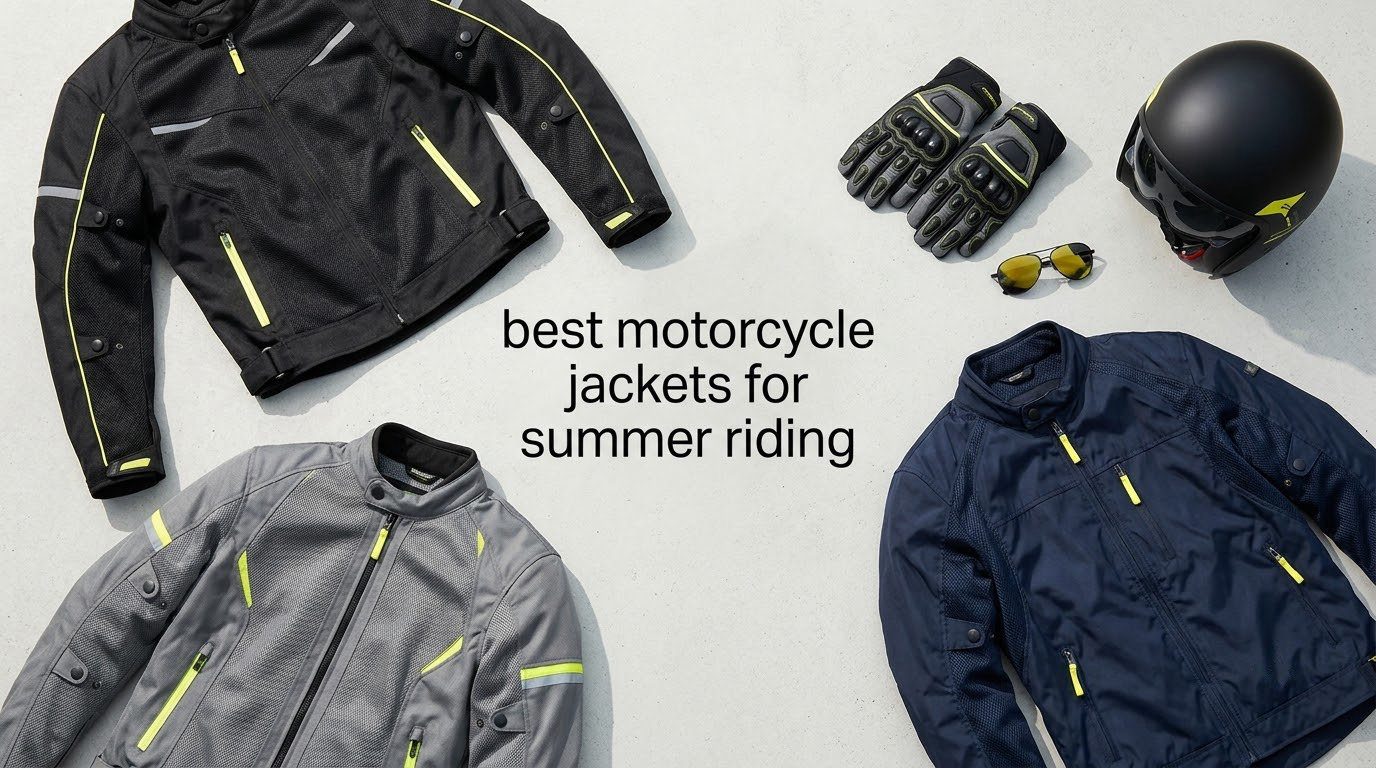
A summer motorcycle jacket works when it moves air through the garment instead of insulating you, while still carrying CE-rated armor at the shoulders, elbows and back. In practice that means 3D mesh panels, ventilation you can open and close, and removable armor you can reposition — not a light cotton shirt with a logo on it.
Heat is the single biggest reason riders skip protective gear in July, and a t-shirt on a bike is a bad trade. The good news is that the best motorcycle jackets for summer riding have gotten far better at the airflow-versus-abrasion balance, so you can keep full armor on through a 95F commute in 2026. This roundup covers twelve of them, from budget mesh shells to a sport-cut premium jacket, with real rider feedback on fit, sweat, and how they hold up.
We also leaned on what riders actually say in our other summer gear roundup and long-running motorcycle forums: the recurring theme is that the best jacket is the one you will still wear in August, not the one with the longest spec sheet. Sizing, back protection, and whether the vents sit in the right places matter more than any brand badge.
Table of Contents
- Top 3 Best Motorcycle Jackets for Summer Riding (October 2026)
- All 12 Summer Motorcycle Jackets at a Glance
- 1. HWK Mesh Motorcycle Jacket — Best Overall
- 2. WICKED Mesh Summer Jacket — Best Value
- 3. BYKR Dual Sport Mesh Jacket — Budget Pick
- 4. IRON JIA’S Summer Riding Jacket — Best for Beginner Riders
- 5. ILM Mesh Jacket with Detachable Thermal Liner — Best 3-Season Jacket
- 6. Milwaukee Performance Mesh Racing Jacket — Best for Touring
- 7. ScorpionEXO Cargo Air Mesh Jacket — Best for Commuting
- 8. Zyxformis Summer Riding Jacket — Best for Extreme Heat
- 9. ChoCho Mesh Motorcycle Jacket — Best for Night Visibility
- 10. JAG High Visibility Mesh Jacket — Best for Larger Sizes
- 11. REV’IT! Eclipse 2 Mesh Jacket — Best Branded All-Rounder
- 12. Alpinestars T SPS Air V2 Jacket — Best for Sport Bikes
- How to Choose a Summer Motorcycle Jacket
- Frequently Asked Questions
- Which Summer Jacket Should You Buy
Top 3 Best Motorcycle Jackets for Summer Riding (October 2026)
The HWK takes the top slot for one reason: the most proven combination of airflow and protection in this group, with the largest review base behind it. WICKED comes second for riders who want preinstalled armor and a practical pocket layout at a low ticket. BYKR rounds out the top three as the cheapest way to get five CE-approved armor pieces into a ventilated shell.

HWK Mesh Motorcycle Jacket
- 100% 3D macro and micro mesh
- Removable CE armor at back elbows and shoulders
- 600D Cordura at high-impact zones

WICKED Mesh Summer Jacket
- CE Level 1 armor preinstalled
- Unlined mesh for hot weather
- Reflective piping and pant connection zippers

BYKR Dual Sport Mesh Jacket
- Five CE-approved armor inserts
- Multi-point adjustability
- Wide size run up to 5X-Large
All 12 Summer Motorcycle Jackets at a Glance
The table below is the fastest way to see which of the twelve matches your riding. Every jacket below is a ventilated or perforated design with CE-rated armor somewhere in the package — the differences come down to armor level, back protection, liner, and how much adjustability you get.
| Product | Specs | Action |
|---|---|---|
| HWK Mesh Motorcycle Jacket |
|
Check Latest Price |
| WICKED Mesh Summer Jacket |
|
Check Latest Price |
| BYKR Dual Sport Mesh Jacket |
|
Check Latest Price |
 IRON JIA’S Summer Riding Jacket IRON JIA’S Summer Riding Jacket |
|
Check Latest Price |
 ILM Mesh Jacket with Thermal Liner ILM Mesh Jacket with Thermal Liner |
|
Check Latest Price |
 Milwaukee Performance Mesh Racing Jacket Milwaukee Performance Mesh Racing Jacket |
|
Check Latest Price |
 ScorpionEXO Cargo Air Mesh Jacket ScorpionEXO Cargo Air Mesh Jacket |
|
Check Latest Price |
 Zyxformis Summer Riding Jacket Zyxformis Summer Riding Jacket |
|
Check Latest Price |
 ChoCho Mesh Motorcycle Jacket ChoCho Mesh Motorcycle Jacket |
|
Check Latest Price |
 JAG High Visibility Mesh Jacket JAG High Visibility Mesh Jacket |
|
Check Latest Price |
 REV’IT! Eclipse 2 Mesh Jacket REV’IT! Eclipse 2 Mesh Jacket |
|
Check Latest Price |
 Alpinestars T SPS Air V2 Jacket Alpinestars T SPS Air V2 Jacket |
|
Check Latest Price |
1. HWK Mesh Motorcycle Jacket — Best Overall
HWK Mesh Motorcycle Jacket Riding Air Motorbike Jacket Biker CE Armored Breathable (Large, Black) – Motorcycle Gear
3D macro and micro mesh
Rovable CE armor at back, elbows, shoulders
600D Cordura at high-impact zones
S-38 to 5XL-52 chest
Pros
- Excellent airflow in 80s-90F heat
- Armor sits flat and does not fight a backpack
- Heavy-duty zippers and solid stitching
- Comfortable arm mobility for larger riders
Cons
- Runs small so size up
- Front main zipper is a known weak link
- Body length is short without the waist strap tightened
This is the jacket I keep coming back to after reading a few thousand reviews on ventilated summer gear. The shell is 100 percent breathable 3D macro and micro mesh with a front-to-back airflow design, and the abrasion story is handled by 600D Cordura placed at the high-impact areas rather than across the whole body. Removable CE armor covers the back, elbows and shoulders, and there is high-density foam padding in the back panel.
What stands out is how rarely it gets returned. Owners in the 80s and 90F range describe it as genuinely cool without feeling unprotected, and several mention that the armor profile is slim enough to wear under a hydration pack on longer rides. Adjustability at the arm, cuff, elbow and waist is unusually thorough for a mesh shell, which is what keeps the airflow from turning into a sail at highway speed.
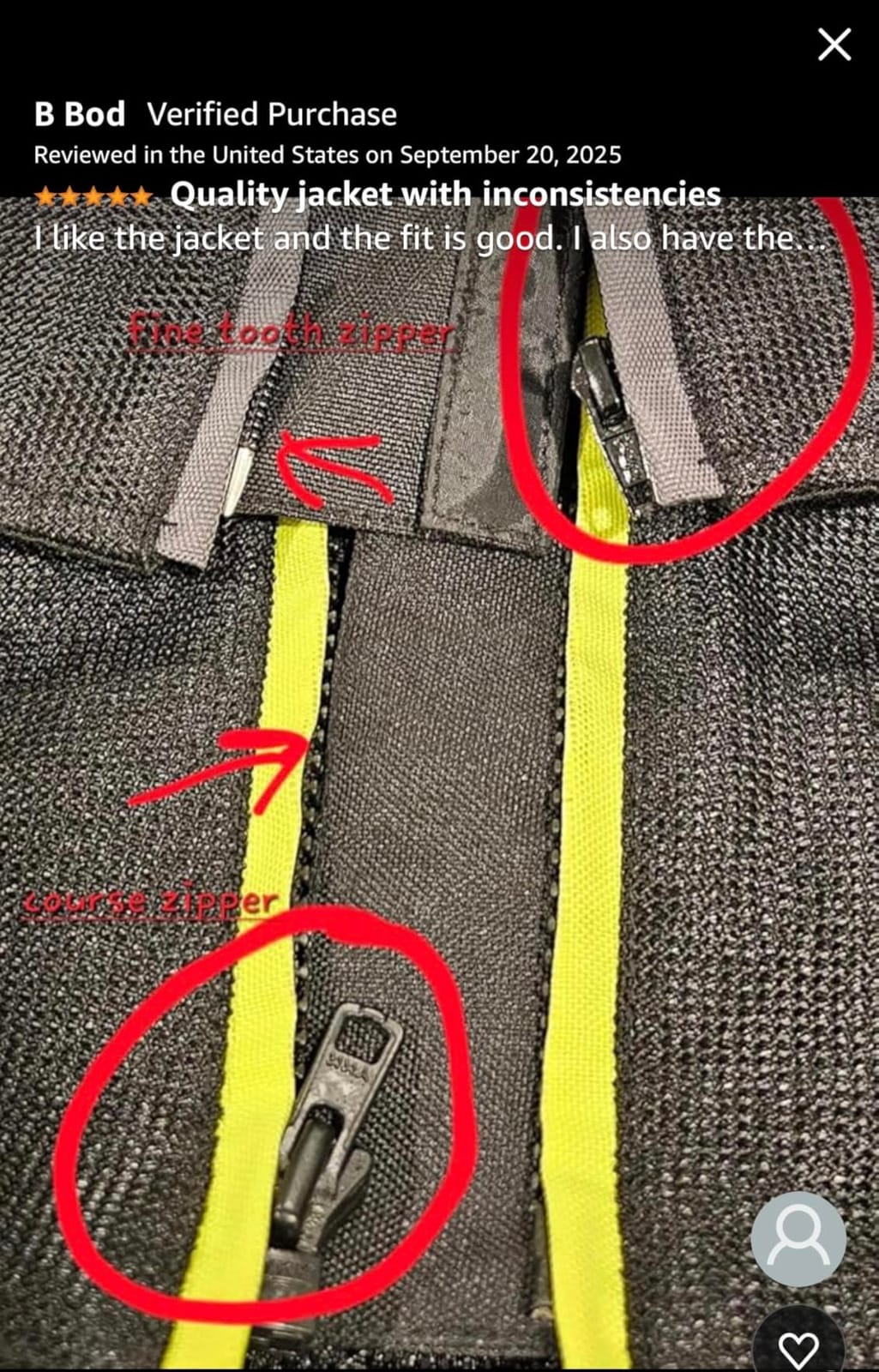
The fit is the one thing to get right. It runs small, and a good number of owners tell you to order a size up — that guidance is consistent enough to act on. The second recurring complaint is the front main zipper, which a few buyers have had repaired within days of riding in it. The third is body length: without the waist strap cinched, the jacket can creep up when you are seated.
Collar design is a small detail that matters more than expected. The soft Velcro-closure collar works fine for most neck sizes, but riders with thicker necks report the tab being too short to close comfortably. Hi-vis logos and reflective elements are present for low-light riding, which matters if your commute ends after dark.
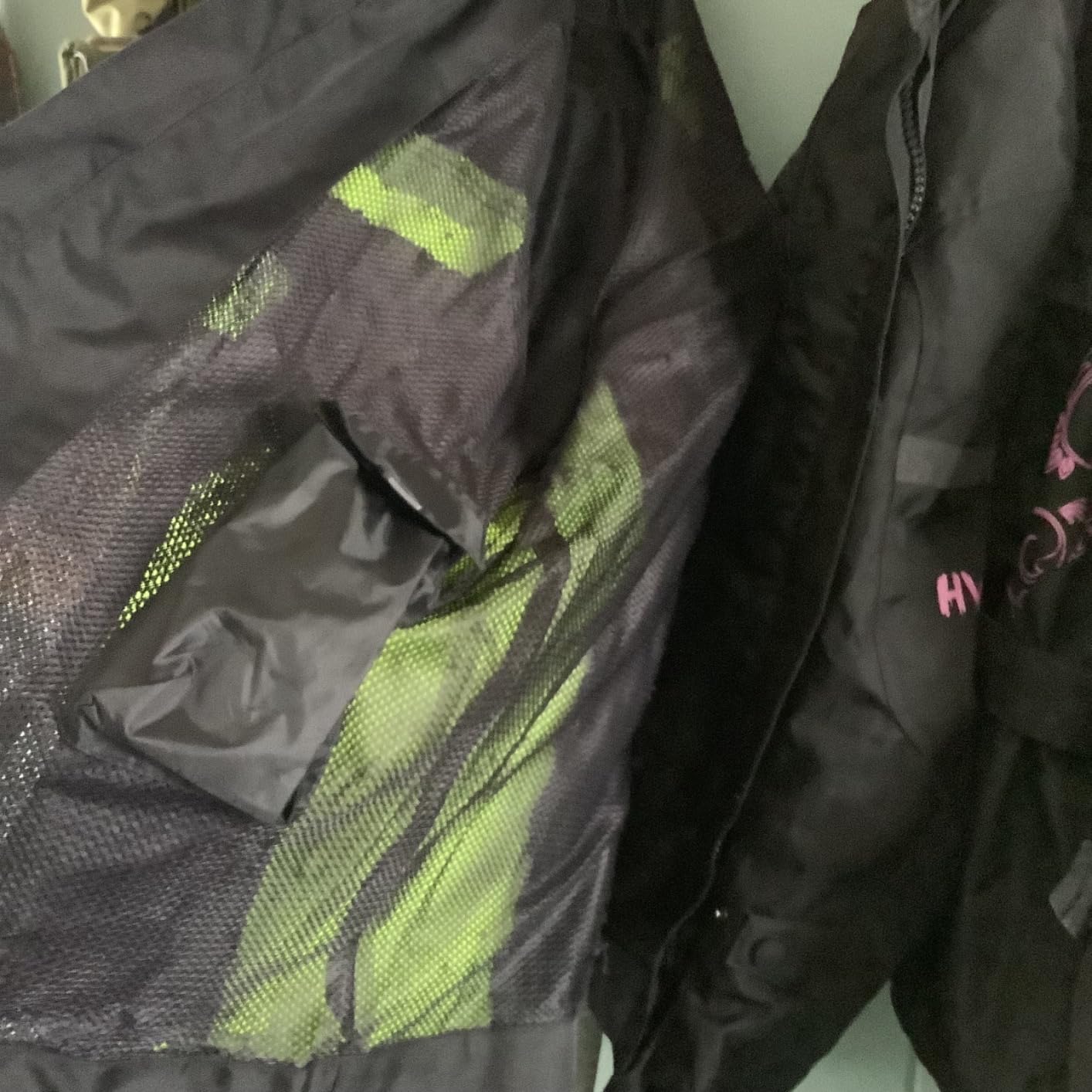
How the fit holds up at 95F and above
Because the mesh is 3D rather than flat, air moves between your torso and the outer shell instead of just passing through two layers of fabric. Riders report that the front-to-back ventilation design keeps the chest and upper back from saturating, which is the failure point for most summer jackets.
It is not a substitute for airflow in genuinely humid air, where sweat has nowhere to evaporate. A moisture-wicking base layer makes the biggest practical difference here.
What you give up versus a leather jacket
A mesh shell has no slide protection. In a low-speed tip-over the 600D Cordura zones will likely survive, but a highside onto asphalt at highway speed is a different conversation, and that is exactly the scenario a leather jacket exists for.
Riders who do both often keep a leather jacket for trips and wear this for the daily 90F commute. The waist adjustment and cuff closures also stop the flapping that comes with an oversized mesh panel at speed.
2. WICKED Mesh Summer Jacket — Best Value
WICKED STOCK Motorcycle Jacket – CE Level1 Reflective Summer Biker Jacket with Adjustable Cuffs & Waist Belt – Lightweight & Comfortable Mesh Motorcycle Jacket with Armor for Men
600D mesh and textile build
CE Level 1 armor preinstalled
Five pockets
Unlined for warm weather
Pros
- Armor already installed so no setup
- Lightweight unlined build for summer heat
- Five pockets including two zipped up front
- Reflective piping for night visibility
Cons
- Fit feedback is mixed so sizing needs care
- Waterproof claim is not backed up in practice
The reason this one keeps selling is simple: the armor arrives installed. CE Level 1 pads sit at the shoulders, elbows and back, so there is no Velcro juggling in a parking lot before a ride. The shell is 600 denier mesh and textile with front and back mesh panels, and it is unlined, which is what makes it feel light in real summer heat.
Storage is the sleeper feature. Three inside pockets plus two zipped up front give you room for a phone, a wallet, and a bike-alarm remote, which is more practical than most jackets at twice the tier. Reflective piping is integrated into the seams, and the zipper at the hem connects to matching pants.
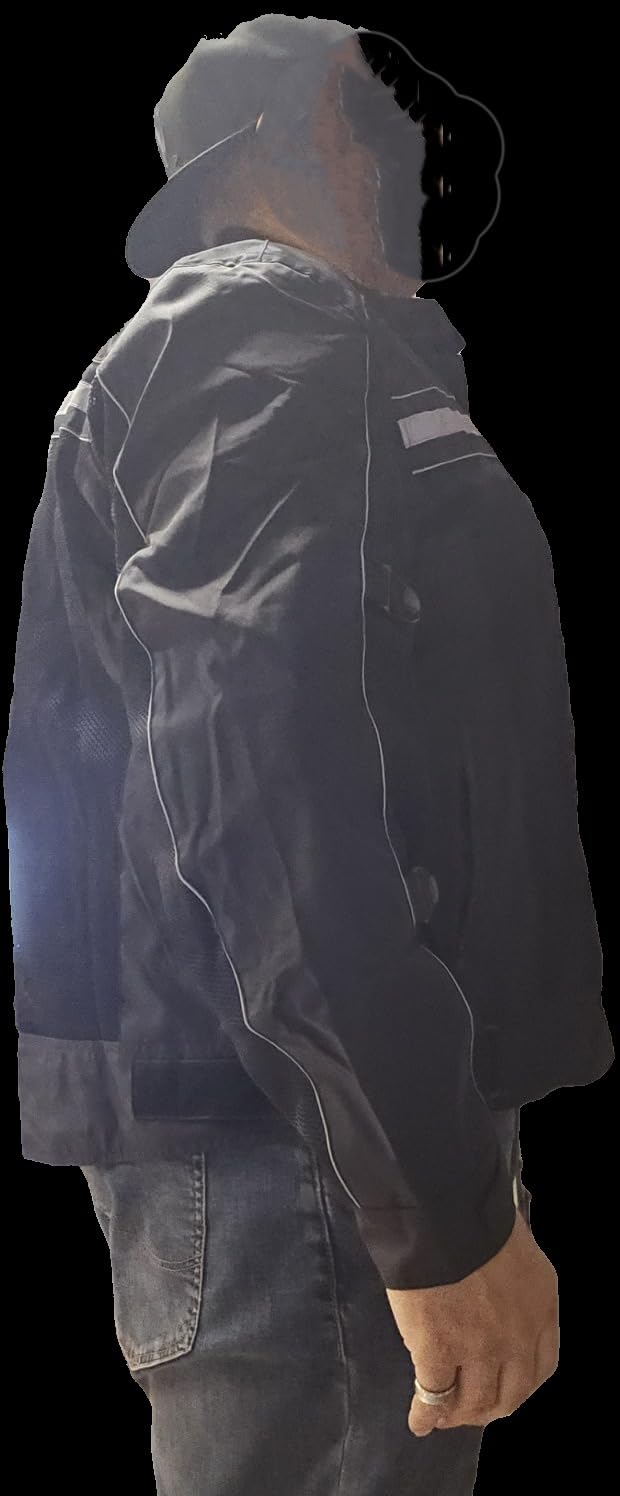
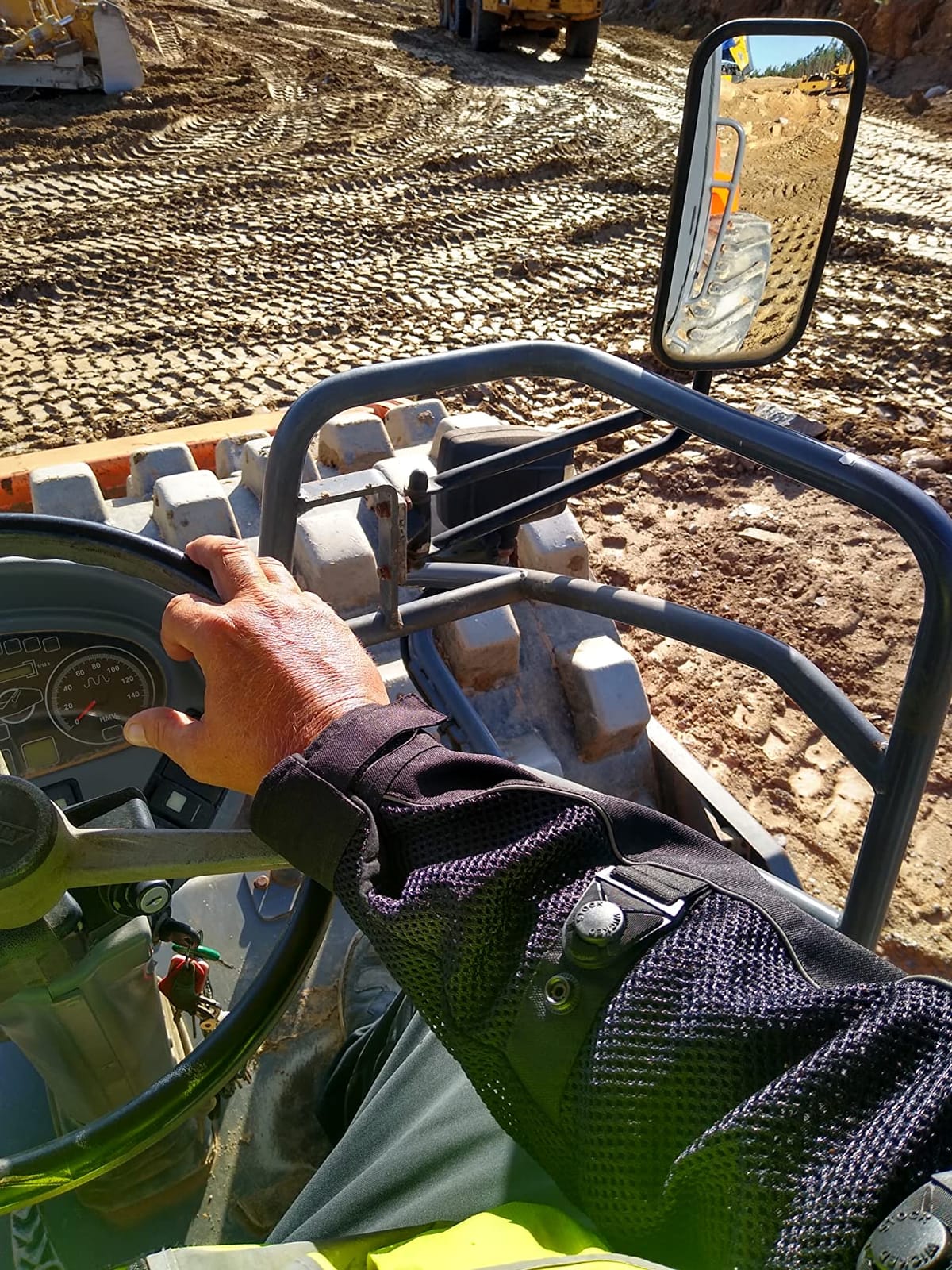
Fit is the variable to watch. Reviews describe adjustable arms, cuffs and waist, and part numbers in the MBJ051 line, but sizing feedback is genuinely mixed — some riders wear their usual size, others recommend going up. It weighs about two pounds, so it disappears under a backpack on a commute.
The listing calls it waterproof, and that is the claim to treat carefully. Buyers testing it in actual rain report mixed results, so if you ride in summer thunderstorms, carry a pack cover rather than trusting the rating. There is a one-year warranty, which is a better baseline than most budget mesh shells offer.
Whether the pocket layout earns its place
For a commuter, yes. Having a dedicated zipped pocket for the alarm remote and one for a phone changes how you leave the house, and neither pocket sits over the big mesh panels where it would choke airflow.
For a touring rider the layout is less relevant than the fact that the jacket is unlined and offers no weather protection. Plan on a layer underneath on cool mornings.
How it handles stop-and-go traffic
Mesh feels coolest at speed, which is exactly backwards from the conditions that make riders sweat most. The unlined construction helps in city heat, but at a standstill the jacket cannot move air, so venting quality is what you are relying on.
That makes the base layer decision more important here than on a heavier jacket. Riders who pair this with a moisture-wicking layer report arriving much drier than those wearing cotton.
3. BYKR Dual Sport Mesh Jacket — Budget Pick
BYKR Mesh Motorcycle Jacket For Men Dual Sports Adventure Breathable Air Racing Bikers Riding Powersports Protective Motorbike Jackets Enduro CE Armored Grey XL
Five CE-approved armor inserts
Lightweight ventilated shell
Adjustable at cuffs forearm bicep collar waist
Pros
- Five CE-approved armor pieces included
- Very wide size run up to 5X-Large
- Adjustable at five different points
- Reflective accents on shoulders and arms
Cons
- No lining so it is a warm-weather jacket only
- Brand is less established than the big names
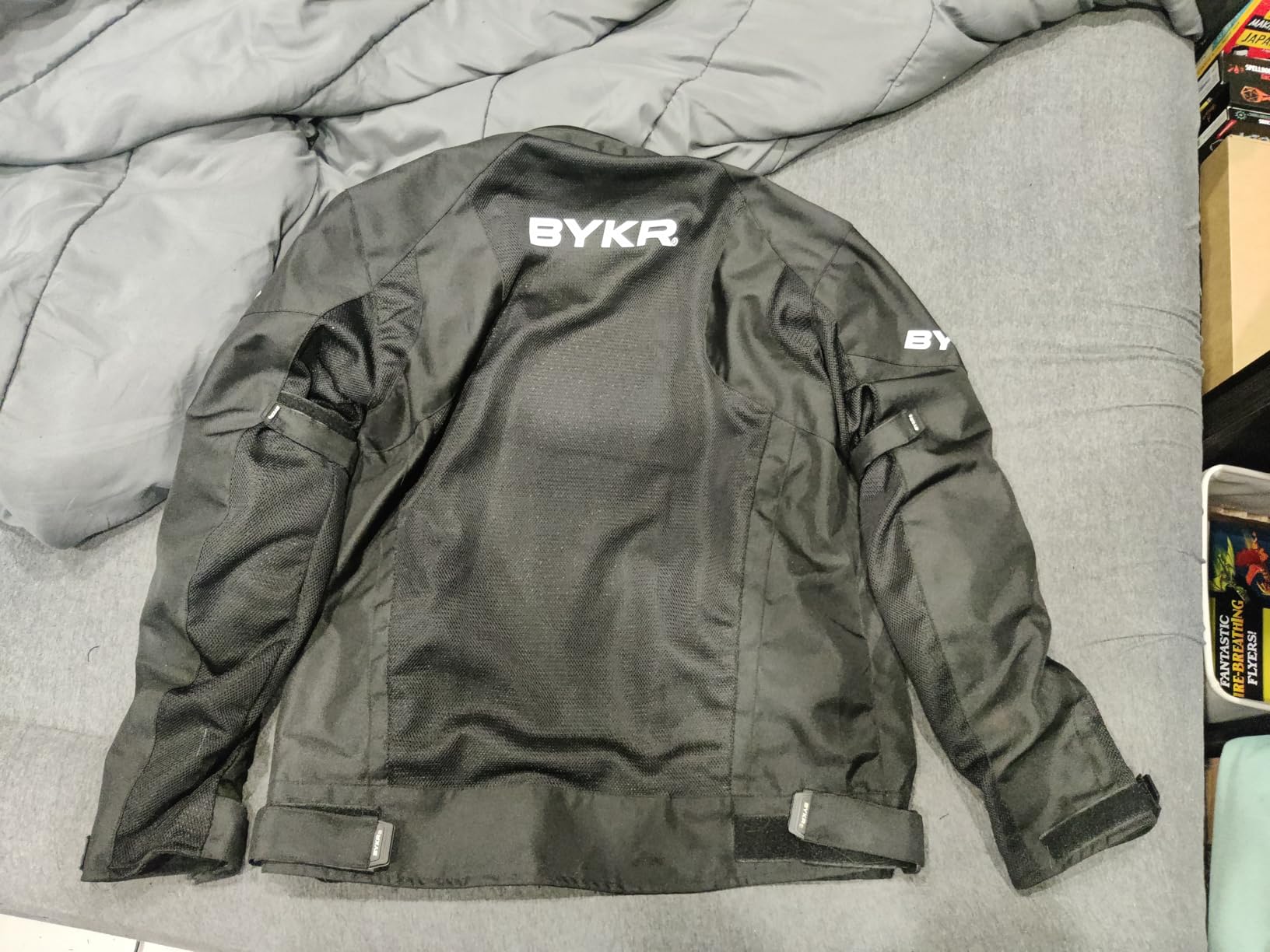
Five CE-approved armor inserts for a jacket that costs less than a tank of fuel is a hard combination to argue with. The inserts cover both shoulders, both elbows, and the back, and the shell uses lightweight ventilated materials aimed squarely at hot climates. Reflective accents and piping sit on the shoulders and arms for evening visibility.
Adjustability is where budget jackets usually cut corners, and this one does not. Cuffs, forearm, bicep, collar and waist all adjust, which is what keeps the armor seated on your body instead of sliding toward your armpit on a long ride. The size run extends to 5X-Large, which matters more for a wide range of body types than any other spec on this list.
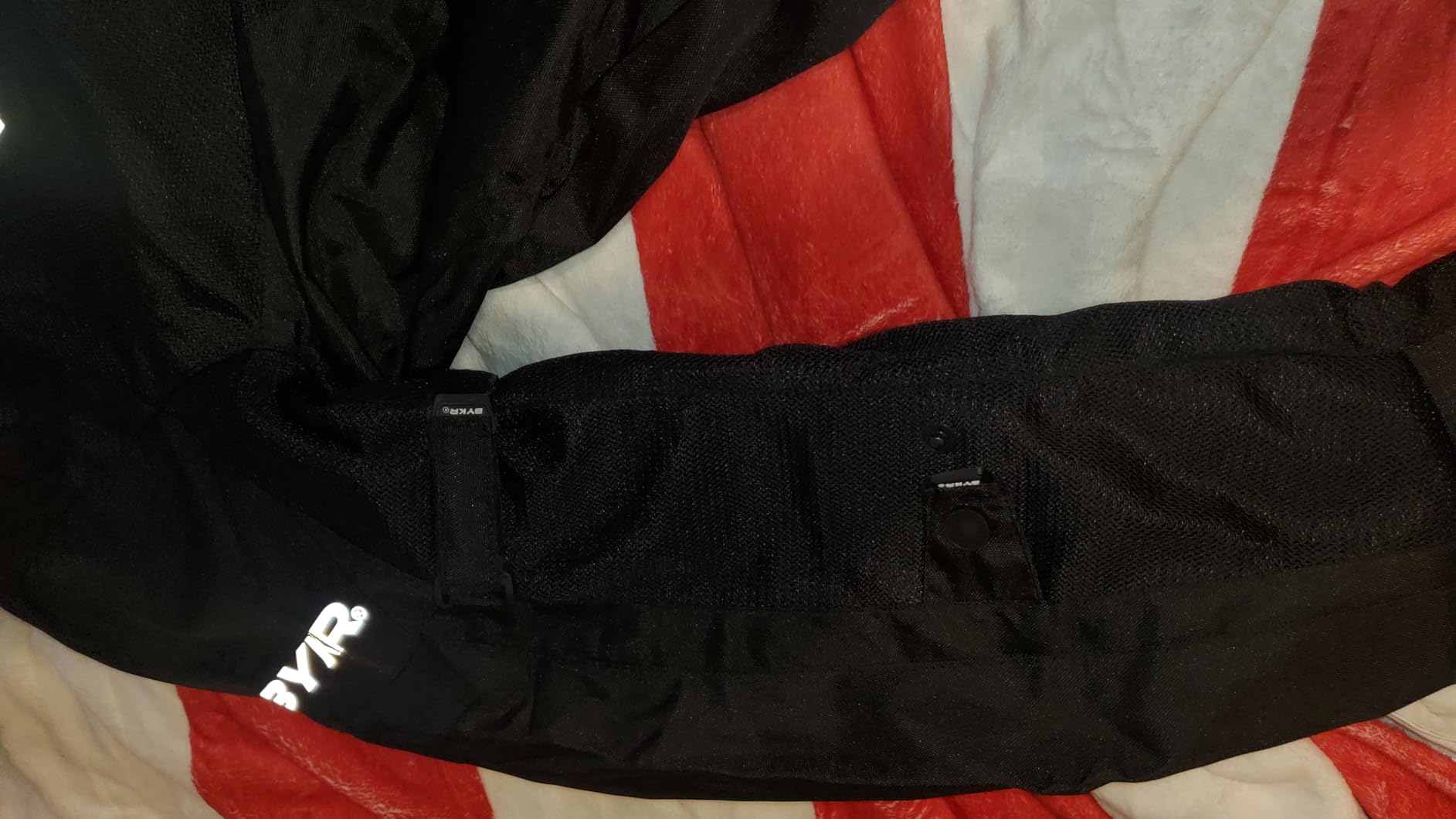
It has ranked in the top tier of Powersports Protective Jackets for some time now, and buyers consistently describe it as a complete protection package for very little. Seven color options including fluorescent green and orange are available, and it is listed for street, dual sport, dirt bike, touring, cruiser, adventure and scooter riding.
The limitation is structural: there is no lining, so this is a warm-weather-only jacket. There is also no waterproofing to think about, which keeps the spec sheet simple but means sudden summer rain goes straight through the mesh.
Who gets the most out of this jacket
Riders doing short warm-weather commutes, light sport riding, or errands on a bike see the best return. The full armor package removes the usual budget compromise, and the broad size run is a real advantage if you are between standard sizes.
If you ride through winter, you are buying a second jacket. A mesh-only shell has no way to add insulation without a layering system underneath.
Why the adjustment points matter more than they look
Armor that shifts off the shoulder is the deal-breaker most riders complain about, and it is a fit problem rather than a brand problem. Forearm and bicep adjusters let you shorten the sleeve without shortening the armor, and a snug waist keeps the back insert from riding up when you are seated.
Once you have those points dialled in, the jacket holds position well. Reviews mentioning fit frustration on other budget models almost always trace back to missing adjustability in these same areas.
4. IRON JIA’S Summer Riding Jacket — Best for Beginner Riders
IRON JIA’S Summer Motorcycle Riding Jacket with CE Certified
600D Oxford with mesh construction
CE shoulder and elbow armor
Removable EVA back protector
Slim fit
Pros
- Very breathable in 90-110F heat
- Shoulder and elbow armor reposition with interior Velcro
- Sleeves reach the bars without a gap
- Subtle reflective shoulder strips
Cons
- Back protector is thin foam
- Collar snaps flap in the wind
- Runs small so size up for layering
This is the jacket most often recommended to new riders in rider forums, and the reason is the balance rather than any single spec. The body is 600D Oxford fabric built around mesh for breathability, with CE-certified armor at the shoulders and elbows and a removable EVA protector at the back. Hook-and-loop adjusters at the upper arms, cuffs, collar and hem let you dial the fit from the bike.
Owners in Southern California and Midwest summer heat rate it very highly on ventilation, and several note the interior Velcro lets them reposition the elbow and shoulder armor where it actually sits on their body. The sleeve length is a genuine strength — it reaches the handlebars without leaving a gap, which is a common complaint on slimmer-cut jackets.
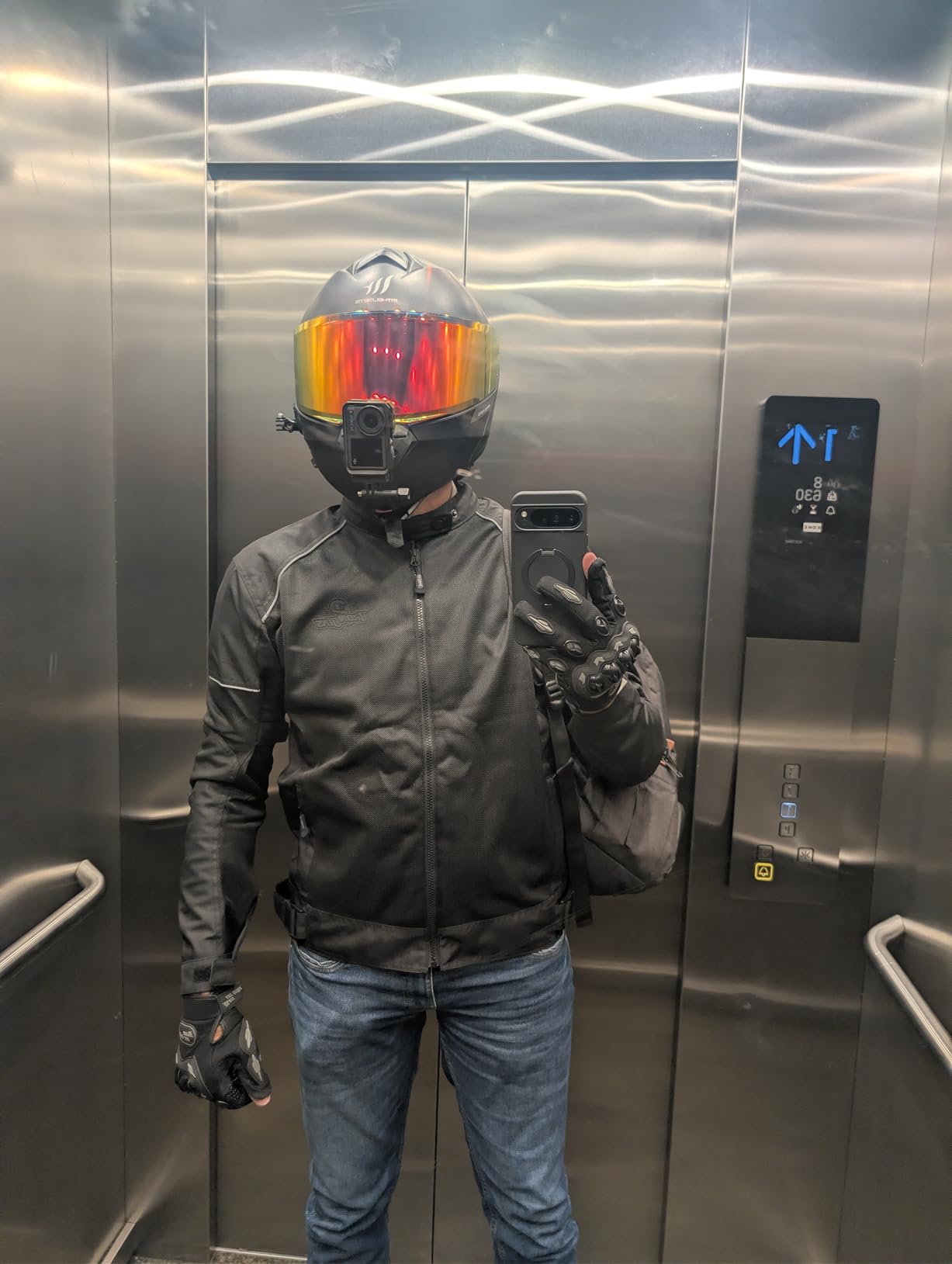
The back protector is where the ratings split. It is a thin EVA foam pad, and several owners replace it or remove it entirely once they understand what it does. Shoulder and elbow protection is the more important pair in a low-speed fall anyway, and that is where this jacket performs well.
Two other reported issues: the collar snap flaps in the wind and can hit your helmet, and the jacket is cut slim, so it has limited room for a base layer. Multiple reviewers strongly advise sizing up. Some buyers also question the age of the CE certification, which is a fair thing to check before you rely on it.
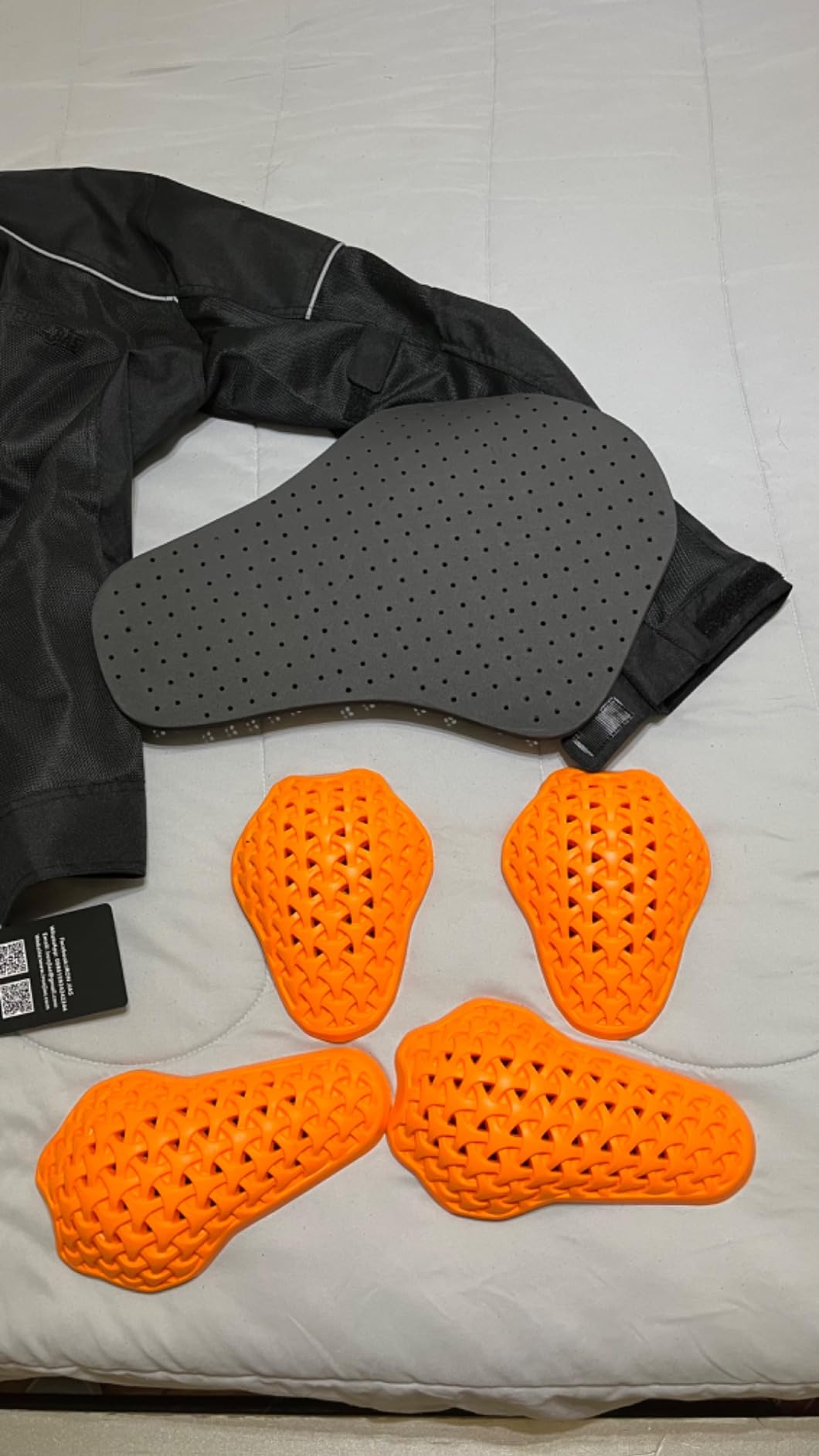
How the armor repositions in real use
Interior Velcro on the shoulder and elbow pads means you can set them once, on your body, rather than fighting generic placement every ride. Riders report this holds through a full season, which is the difference between armor that protects you and armor that sits a few centimetres off the impact zone.
If you have broad shoulders or a longer torso, this is worth doing at first fitting. It takes five minutes and it fixes most of the fit complaints people post about this jacket.
Why beginner riders keep landing on this one
You get CE-certified armor at the two joints that matter most, a breathable shell for real summer heat, and a reflective detail for evening visibility, without committing to a single-purpose summer jacket. That combination is what moves it up the list for new riders and for anyone riding in an MSF-style class.
Add a real back protector if your riding involves anything beyond slow-speed neighborhood trips. The pocket system here is not a back protector, and the foam pad will not do the job in a real impact.
5. ILM Mesh Jacket with Detachable Thermal Liner — Best 3-Season Jacket
ILM Motorcycle Jacket with Mesh CE Armor and Detachable Thermal Liner JAM1
Extensive mesh with 600D Oxford overlays
Removable CE armor
Detachable waterproof thermal liner
2 outer and 2 inner pockets
Pros
- Airflow and abrasion balanced by 600D overlays
- Liner extends the jacket into spring and fall
- Reflective strips front back and shoulders
- Four pockets with adjustable cuffs and hem
Cons
- Warmer than a pure mesh shell on the hottest days
- Heavier in the saddle
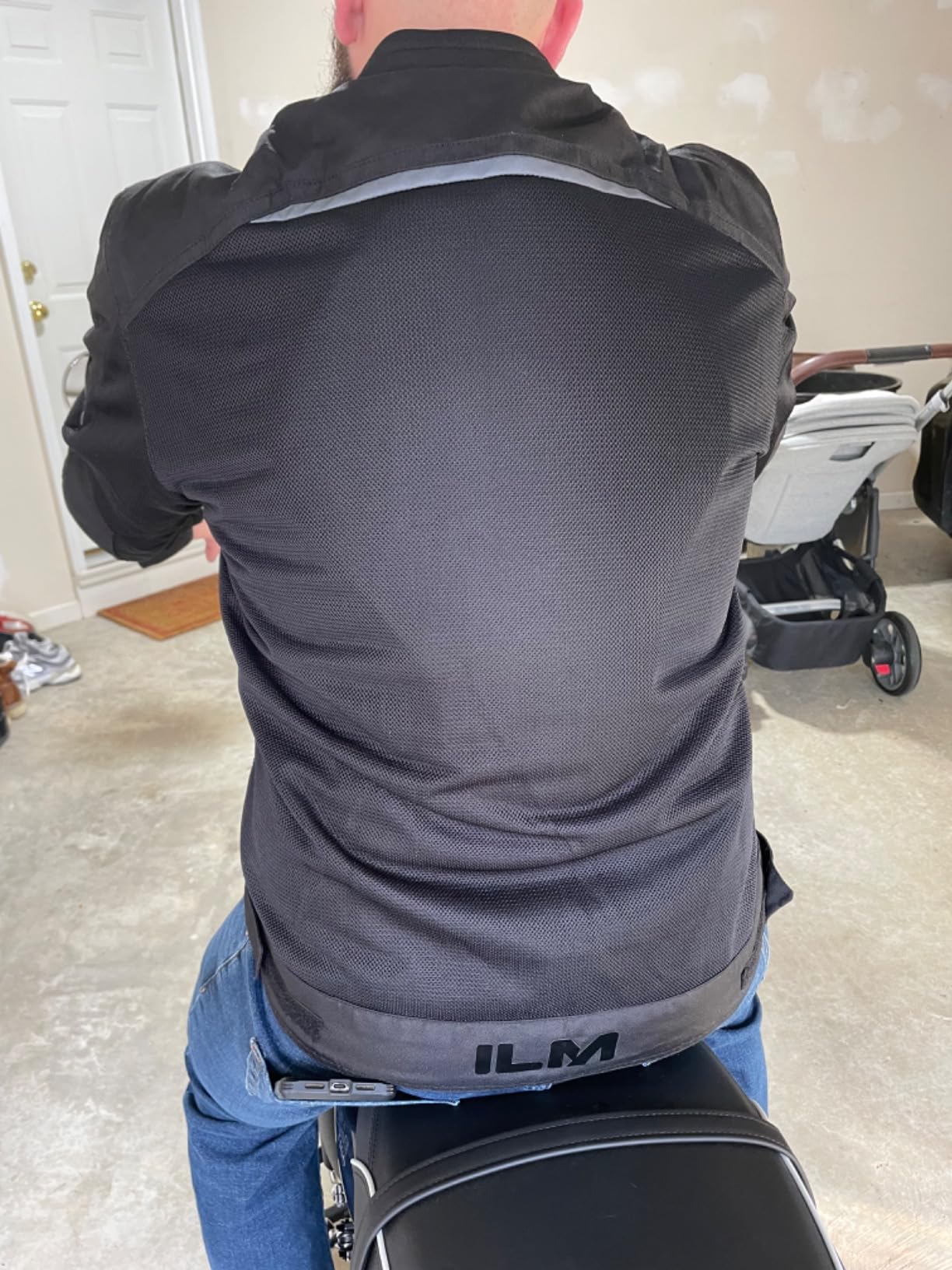
The ILM solves the problem that trips up a lot of summer-only jackets: what do you do at 6am in May. Extensive mesh fabric across the body handles summer airflow, while 600D Oxford reinforcement at the shoulders and elbows takes the abrasion hits that a bare mesh panel cannot. CE armor at the shoulders, elbows and back is removable.
The liner is the reason to buy it. Zip it in and you have a waterproof, insulating layer that turns a warm-weather shell into a three-season jacket; leave it out and the same jacket is a breathable summer ride. For riders with one garage and one jacket, that versatility is worth more than a marginally cooler shell.
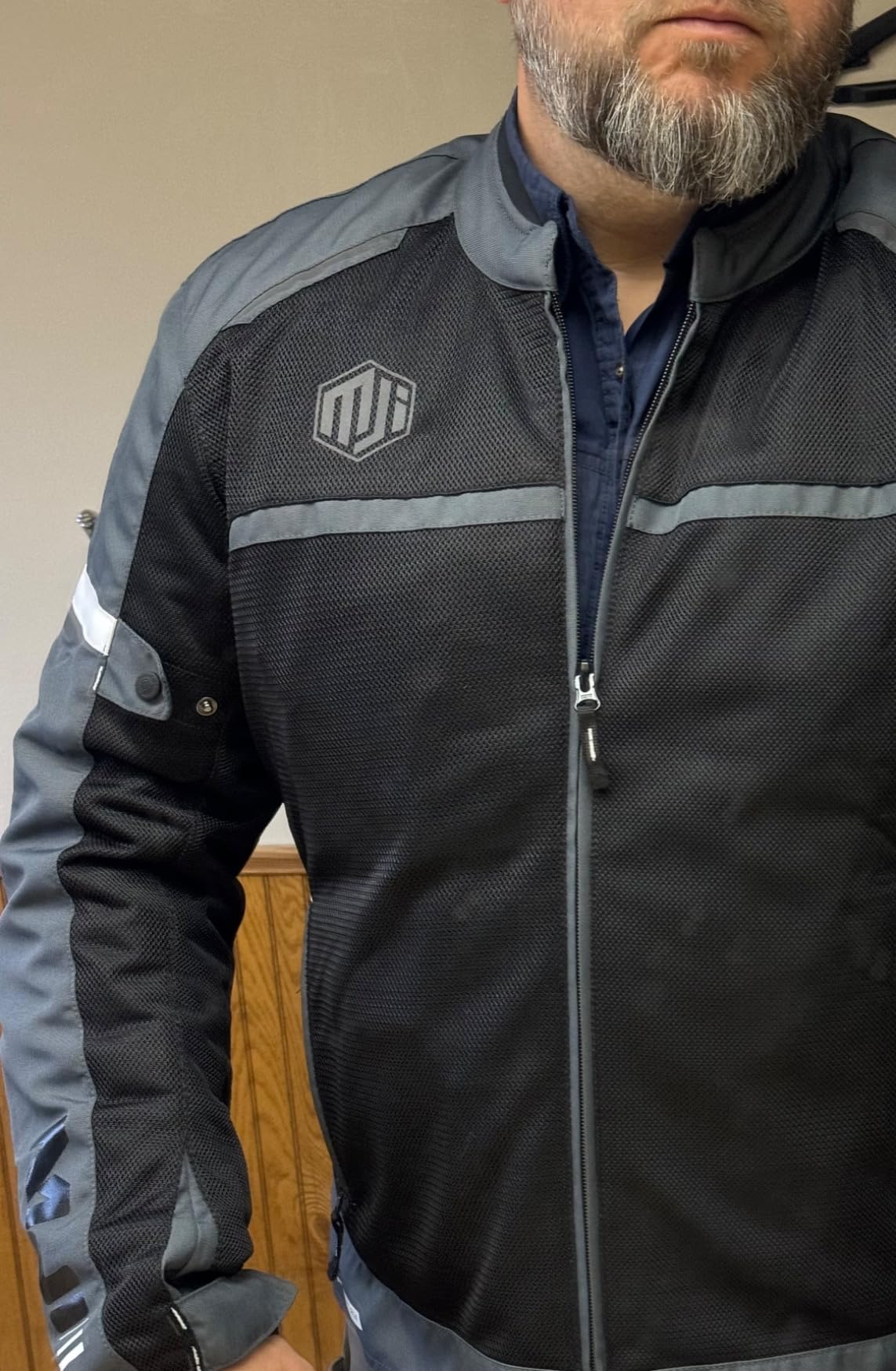
Storage is generous with two outer and two inner pockets, and adjustable cuffs and a cinchable hem keep the shell from flapping. Reflective strips sit on the front, back and shoulders, so evening visibility does not depend on the jacket being a bright color. The JAM1 model is available in five colorways including a fluorescent option.
The honest downside shows up on the hottest days of the year. The 600D overlays and the presence of a liner pocket make it heavier and warmer than a pure mesh shell, and riders running in triple-digit heat say so plainly. Sizing tends to run small in this style as well.
Whether the liner adds heat on a 95F day
With the liner out, the difference is noticeable but not dramatic — the 600D overlays are limited to the shoulders and elbows rather than the whole torso. If your riding is at 80 to 90F, the liner costs you almost nothing and you get rain protection as a bonus.
At 100F and above, riders report preferring a pure mesh shell. Think of this as the jacket for spring, summer, and shoulder season, not as the answer to desert heat.
Why one versatile jacket beats two seasonal ones
Owning separate jackets means storage, memory, and a second adjustment period every spring. A liner system means the shell is fitted once and the warmth changes with a zipper.
It also makes the jacket more useful in the shoulder season, which is where many riders get more wet than they do in midsummer. Reflective strips and four pockets are quiet bonuses on a commuter.
6. Milwaukee Performance Mesh Racing Jacket — Best for Touring
Milwaukee Performance MPM1792-BLK-3XL
Nylon mesh outer shell
CE armor passing EN1621-1 and EN1621-2
Removable zip-out liner
2 exterior and 3 interior pockets
Pros
- Genuine full-arm mesh airflow
- Zip-out liner adds early morning flexibility
- Armor tested to EN1621-1 and EN1621-2
- High-visibility color with reflective piping
- Holds a large amount of gear
Cons
- Runs small so most buyers order up one to two sizes
- Front pocket panels cut airflow on the hottest days
- Liner snap tabs are fragile
The Milwaukee is built around full-arm mesh, and owners consistently describe the airflow as the best in its class for warm-weather touring. The outer shell is 100 percent nylon mesh with a full-length front zipper, and the armor at both shoulders and elbows passes both EN1621-1 and EN1621-2 impact tests, which is the certification detail most worth checking.
The removable full-sleeve zip-out liner is what makes it work beyond July. Touring means early starts and long days, and the liner lets you start cold and strip down as the temperature climbs. Reflective piping on the front and back handles the evening miles, and the collarless design avoids the chafing some collars cause under a helmet.
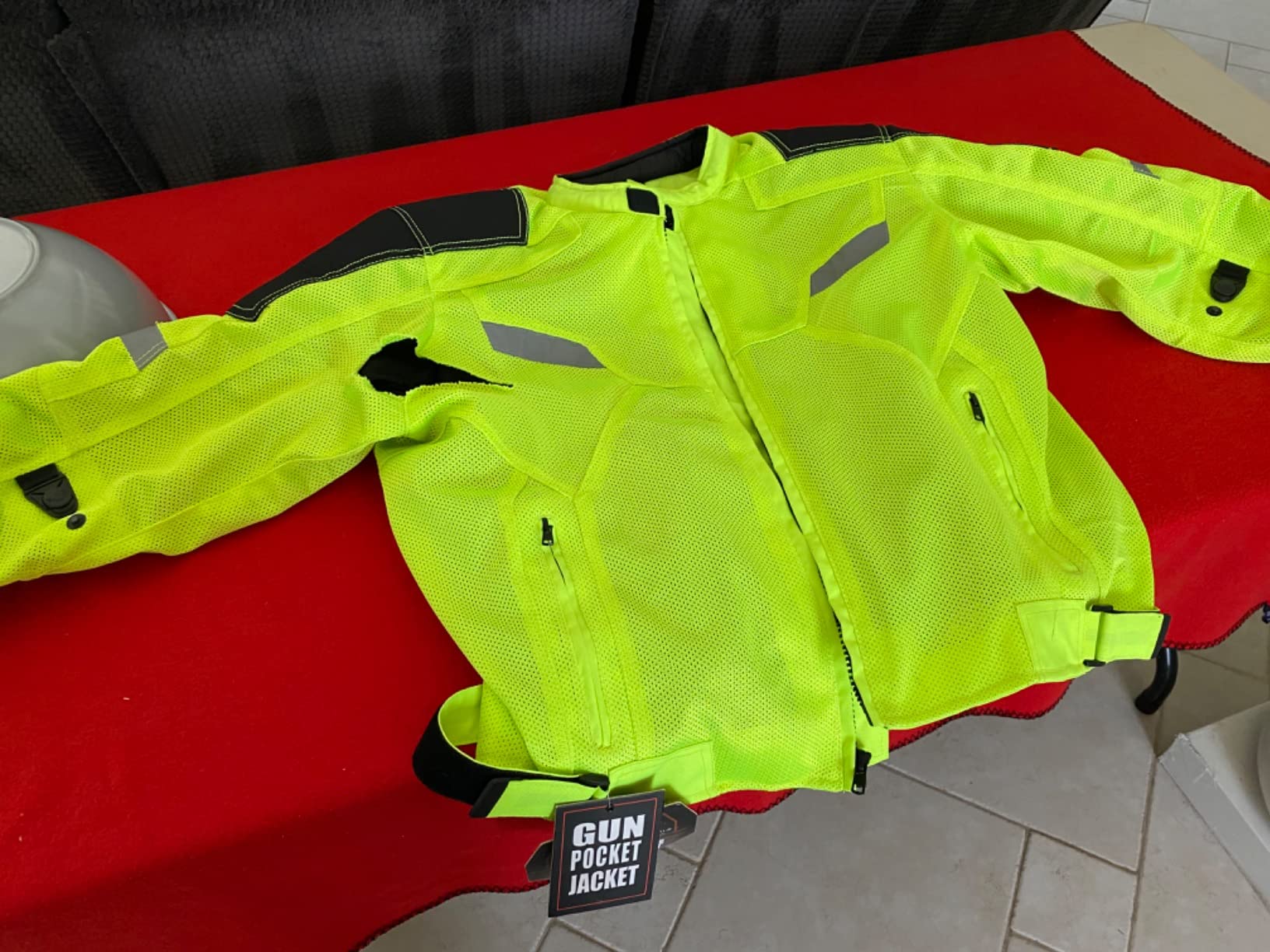
Storage is the practical highlight. Two exterior and three interior pockets, including a concealed-carry pocket, give it a pocket volume several riders compare to a small tank bag. Adjustable side straps and cuff closures control the mesh panels at speed so the jacket does not balloon behind you.
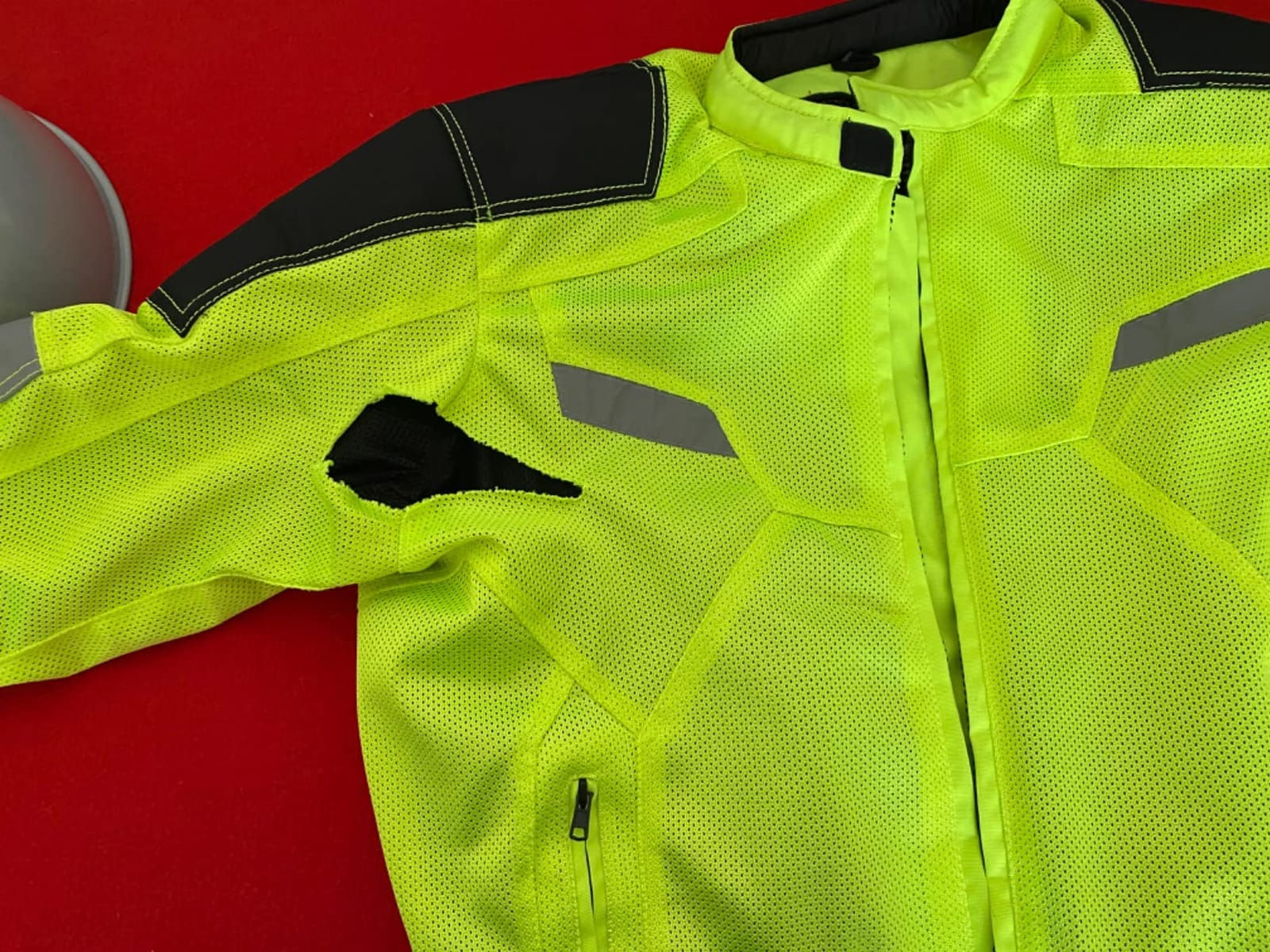
Size up. The recurring note across reviews is that it runs small, and most buyers who are happy ordered one or two sizes larger. Two other honest drawbacks: the front pocket panels block some of the airflow on the hottest days, and the liner attachment uses weak cotton ribbon snaps that tear out quickly.
What the EN1621 armor testing tells you
EN1621-1 and EN1621-2 are the European impact test standards for shoulder and elbow protectors, and this jacket is specified against both rather than against the older 1621-1 alone. Riders who care about verifiable protection treat that as a stronger signal than a brand name.
One housekeeping note: it is listed for professional dry cleaning only, which is a hassle for a jacket you will want to wash often in summer.
How it behaves on a full day of riding
Full-sleeve mesh moves air continuously, which is what stops the torso soak that ends a hot ride. The concealed pocket and three interior compartments mean you can carry a full day’s kit without a tank bag, and the side straps keep the shell quiet at highway speed.
On the negative side, it weighs around seven pounds with the liner in, and the collarless design means a cold wind finds your neck in the morning. The reflective piping and neon color make it the most visible jacket in this roundup after dark.
7. ScorpionEXO Cargo Air Mesh Jacket — Best for Commuting
ScorpionEXO Cargo Air Men’s Lightweight Mesh Motorcycle Riding Jacket Abrasion Resistant with CE-Rated Armor and Cargo Bag (Black – X-Large)
600D polyester with Rhino-Mesh panels
Safe-Tech CE Level 1 armor
Removable expandable cargo bag
5 pockets with YKK zippers
Pros
- Highest average rating in the group at 4.7
- Cargo bag expands and disappears when not needed
- CE Level 1 armor plus a back protector pocket
- NightViz reflective shoulders and back piping
Cons
- Back protector is not included and must be bought separately
- YKK zippers and mesh add weight
This is the highest-rated jacket in the roundup, and the reason is a rare combination: real mesh airflow with abrasion resistance that does not depend on a full textile shell. The chassis pairs 600D premium polyester with Rhino-Mesh panels, and the armor is Safe-Tech CE Level 1 at the shoulders and elbows. There is a pocket for an optional CE back protector.
For a daily commute the cargo system is the reason to notice it. A removable expandable stretch bag sits in a zippered pocket and swallows a lunch, a laptop, or a rain layer, then vanishes when you do not need it. Five pockets including two internal, NightViz reflective shoulders and back piping, and YKK zippers throughout round out a build that feels considered rather than assembled.
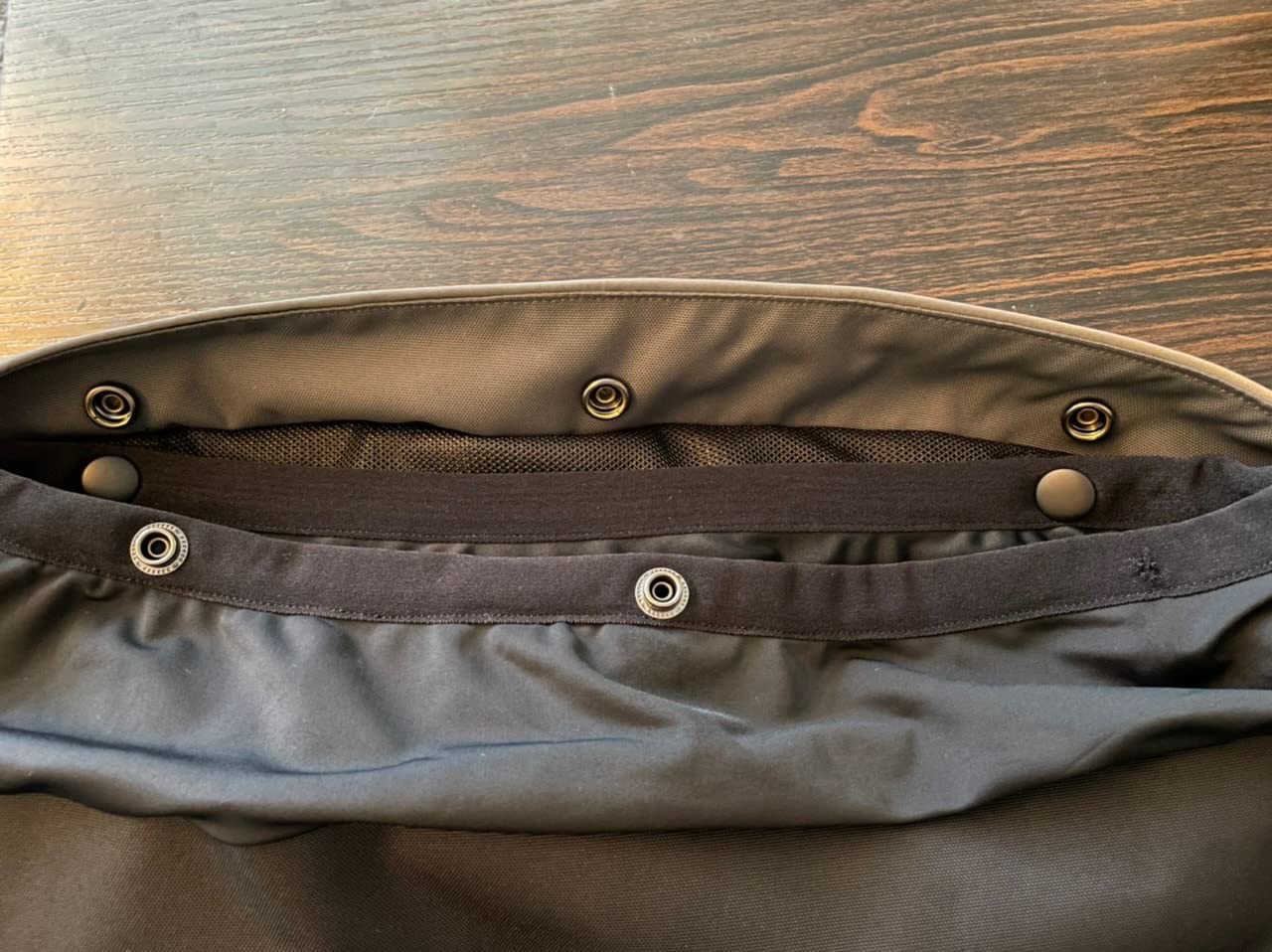
Riders also point out that an optional windproof hoodie can be stored in the cargo bag, so the same jacket covers an unexpected cold commute without a second layer. The Rhino-Mesh chassis moves air well in stop-and-go traffic, which is the condition most summer jackets fail in.
Plan on one extra purchase: the back protector is a pocket only, and it is not included. Budget riders compare the result to a full package with armor at three zones out of the box, and that comparison is where the ScorpionEXO gives ground.
What the rating reflects
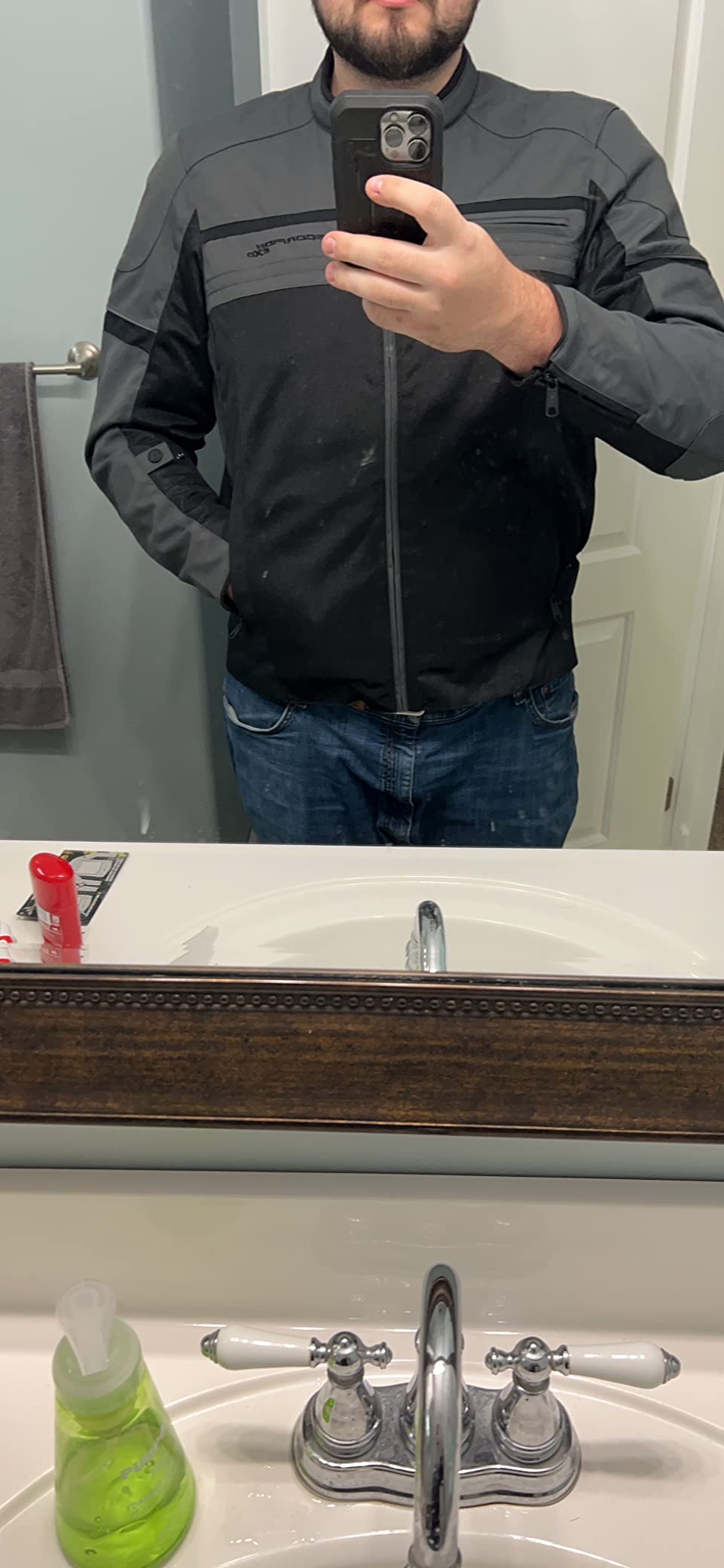
A 4.7 average across more than 200 reviews with a large share of five-star ratings is unusual for a mesh jacket, and it maps to a specific set of compliments: genuine airflow, armor that stays put, and a cargo bag that earns its space rather than adding bulk.
The single most common negative note is the missing back protector. Add one and the package is complete; skip it and the most serious gap in the jacket is exactly where a back impact would land.
Why commuting rewards this design
Commuting is stop-and-go, short-distance, and repeated, so pocket access and low-speed airflow matter more than top-speed performance. The expandable bag and the five-pocket layout suit that use, and the reflective detailing pays off on the trip home after dark.
Riders carrying a laptop or a full change of clothes report that the bag holds more than they expected. If your commute is a single 20-minute hop, the bag is still useful for a folded rain layer.
8. Zyxformis Summer Riding Jacket — Best for Extreme Heat
Zyxformis Summer Motorcycle Riding Jacket for Men with CE Armor
Over 70 percent of the surface is mesh
CE Level armor at shoulders and elbows
Removable back protector included
Adjustable at waist collar arms cuffs hem
Pros
- Highest mesh coverage here for 90-115F riding
- Back protector included as standard
- Runs true to size for most buyers
- Sleeves reach the bars with no gap
- Bright color options for visibility
Cons
- Main zipper sits on the side and feels awkward
- Ventilation cannot defeat extreme humidity
- Sizing runs small for some
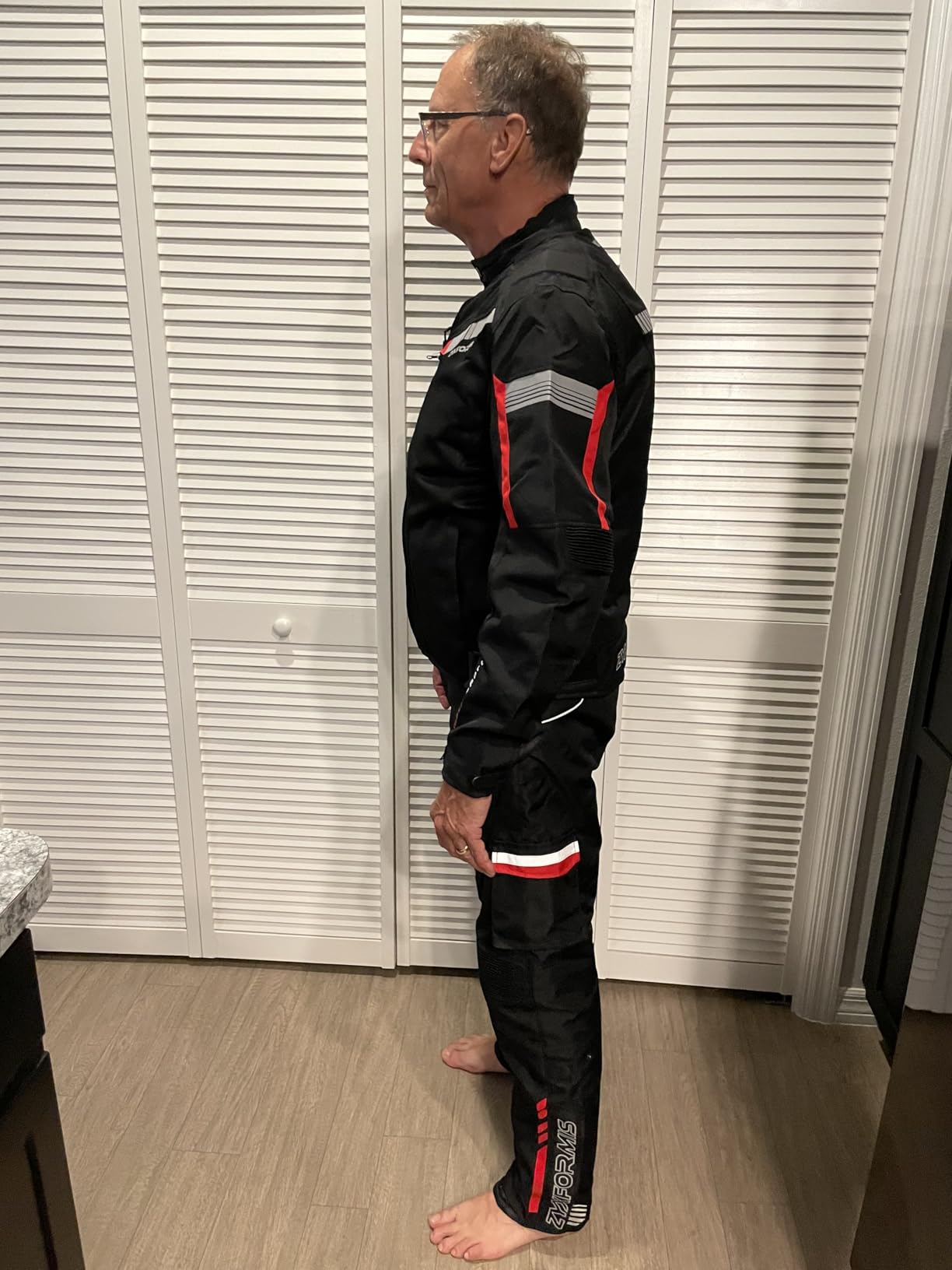
This is the jacket for genuinely hot climates. More than 70 percent of the jacket surface is mesh, which is the highest mesh ratio of anything we tested in this group, and owners in Florida and other 100 to 115F locations report it running cooler than standard full riding jackets — including cooler than expected for a black jacket.
Protection is handled by CE Level certified armor at the shoulders and elbows plus a removable back protector that is actually included, which removes the extra purchase most premium mesh jackets force on you. Adjustability covers the waist, collar, arms, cuffs and hem, so you can close off the airflow at the neck when a bug hits you at highway speed.
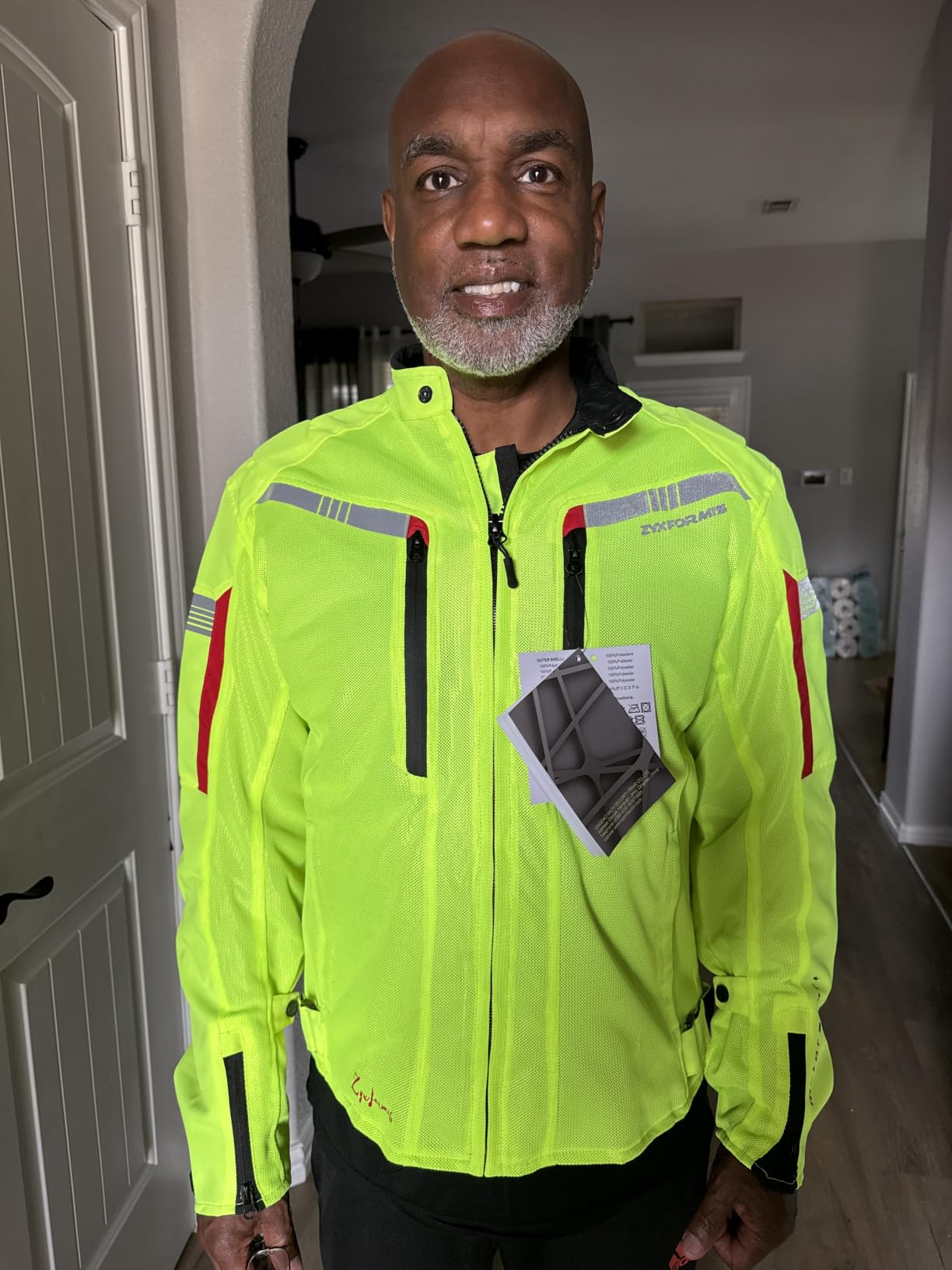
The build feels well finished for the tier, and the multi-angle reflective strip placement improves roadside visibility in ways a single chest strip does not. Pockets are sized to hold a phone, and sleeves are long enough to reach the handlebars without leaving your wrists exposed, which is a safety point rather than a style point.
Two honest limitations. The main zipper is mounted on the side, which some riders find awkward to work one-handed, and no amount of ventilation fully compensates in extreme humidity, where sweat has nowhere to go. Fit is true for most buyers, but some still size up.
How much mesh actually matters
Mesh percentage is the number that predicts cooling best, because the non-mesh areas are the ones trapping heat against your body. Pushing past 70 percent means the remaining fabric is limited to high-abrasion zones rather than spread over the torso.
The catch is that a high mesh ratio means a high abrasion ratio too. Riders who crash at speed on a public road should treat this as a city and commuting jacket, not a slide suit.
Handling humidity honestly
Mesh moves air; it does not evaporate sweat. In dry desert heat a high mesh ratio produces a large cooling effect because the air has capacity to absorb moisture. In Gulf-coast humidity the same jacket keeps air moving but the sweat stays on your skin.
That is the argument for a moisture-wicking base layer, and for a pack that holds extra water in humid conditions. No jacket design fixes that physics.
9. ChoCho Mesh Motorcycle Jacket — Best for Night Visibility
Chocho Mesh Motorcycle Jacket for Men Summer Motorbike Riding Jacket with Armor Racing Protection Jacket (XX-Large, Black)
Cordura 600D with micro mesh
Large side mesh panels
Removable CE armor
3M Scotchlite reflective material
Pros
- Large side mesh panels move real air
- Cordura 600D in the abrasion zones
- CE armor at back elbows and shoulders
- 3M Scotchlite reflective material throughout
Cons
- Not waterproof at all
- Limited size range against similar jackets
The ChoCho is a straightforward budget mesh jacket, and the useful detail is where the mesh sits. Large side panels plus micro mesh across the body move air through the torso, while Cordura 600D handles the abrasion zones. CE-approved armor at the back, elbows and shoulders is fully removable, so you can cool down further on a stopped bike.
Its real strength is visibility. Reflective material is 3M Scotchlite rather than a generic printed strip, and the fluorescent green colorway plus reflective trim makes this the most obvious choice for riders whose commute ends after sunset or who ride unlit roads. Adjustable waist straps and cuff closures keep it settled at speed.
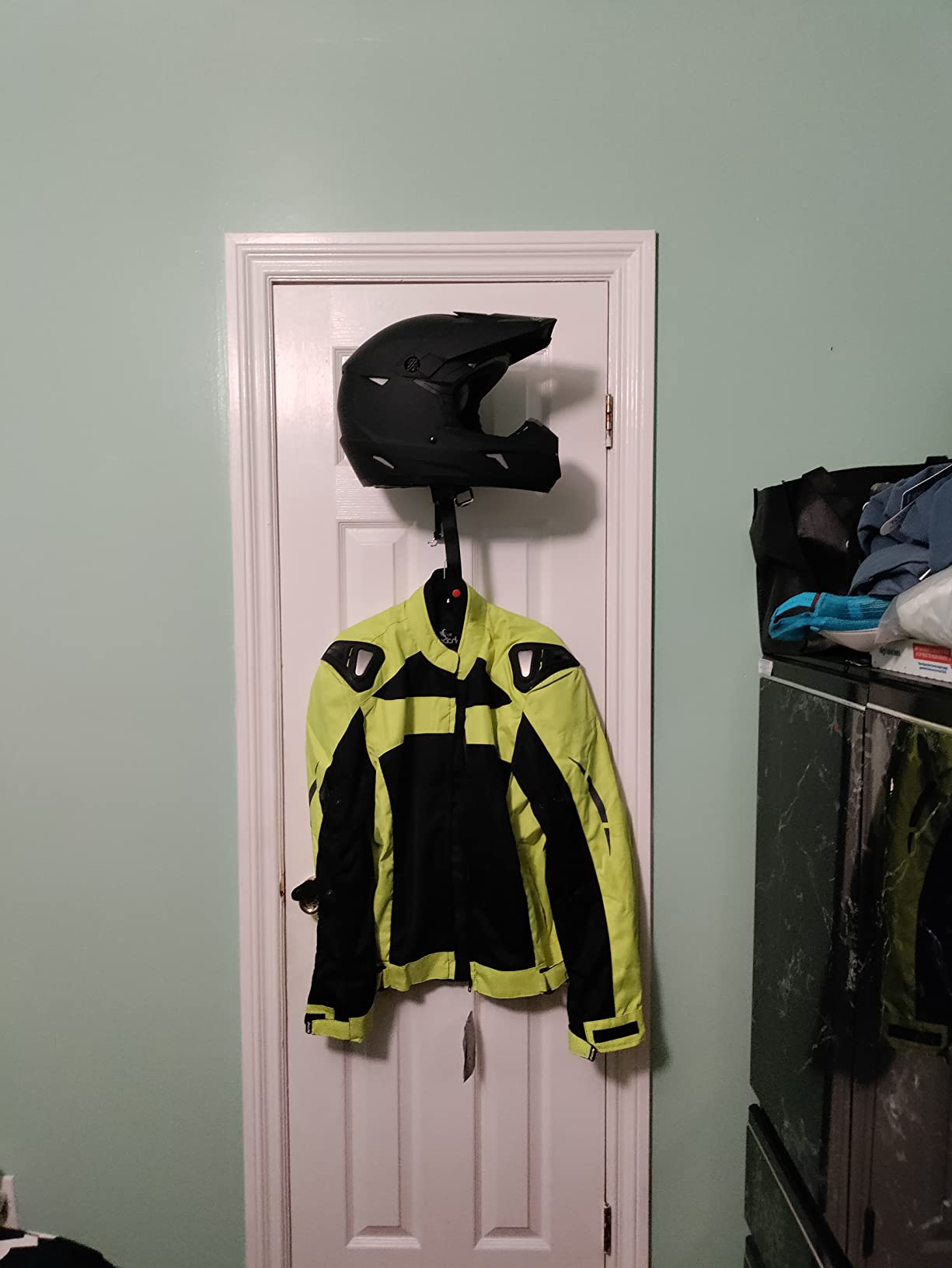
Owners describe it as soft and comfortable for summer riding, with two hand pockets and one interior pocket for essentials. The waist straps are more useful than they look, since they stop the body panel from ballooning over a tank at speed.
Two things to know before you commit. It is explicitly not waterproof, so a summer storm goes straight through the mesh, and the size range is narrower than most of the jackets here, which is worth checking against your measurements before ordering.
Whether reflective trim is enough for night riding
Reflective material only works when light hits it, which means it helps most at intersections and when something is aimed at you. It does nothing for a car pulling out from beside you in an unlit stretch.
Adding a helmet with a visor light and a bright fluorescent colorway covers the gap better than any jacket can. Riders doing a lot of after-dark miles usually keep a light-colored jacket in the bag rather than relying on one layer.
How it compares to the other budget options
Against other mesh jackets in the same tier, the ChoCho trades adjustment points for simplicity. You get waist and cuff adjustability, but not the five-point system on the BYKR, and the size run is the limiting factor for larger riders.
What it does offer is 3M-branded reflective material, which is rarer at this tier than it should be. If night visibility is your main concern, that is the reason to pick it.
10. JAG High Visibility Mesh Jacket — Best for Larger Sizes
J.A.G. JAG Mesh Motorcycle Biker Jacket-CE Level 1 Armor Motorbike Jacket Men-High Visibility Riding Jacket with Armor (US, Alpha, XX-Large, Regular, Regular, Blue)
Five removable CE Level 1 protectors
Large mesh panels with stretch inserts
Adjustable neck arms cuffs and hem
Five high-visibility colors
Pros
- Five removable CE Level 1 protectors standard
- Large airflow mesh with stretch panels for movement
- Adjustable at the neck arms cuffs and hem
- Five high-visibility color options
- Dedicated phone storage
Cons
- Bright colors are hard to find in the largest sizes
The JAG is the one to look at if you are in a large size and tired of thin mesh panels stretched over a bigger frame. Large airflow mesh panels are paired with stretch panels at the movement points, and the shell is Cordura for abrasion resistance. It weighs about 2.1 pounds, which keeps it light despite the full protection package.
Five removable CE Level 1 protectors come standard at the shoulders, elbows and back, so nothing needs buying to complete it. Dual neck snaps and snap-button arm adjusters, plus zip and hook-and-loop cuffs and an adjustable hem, let you dial the fit so the jacket does not flap or ride up at the bars.
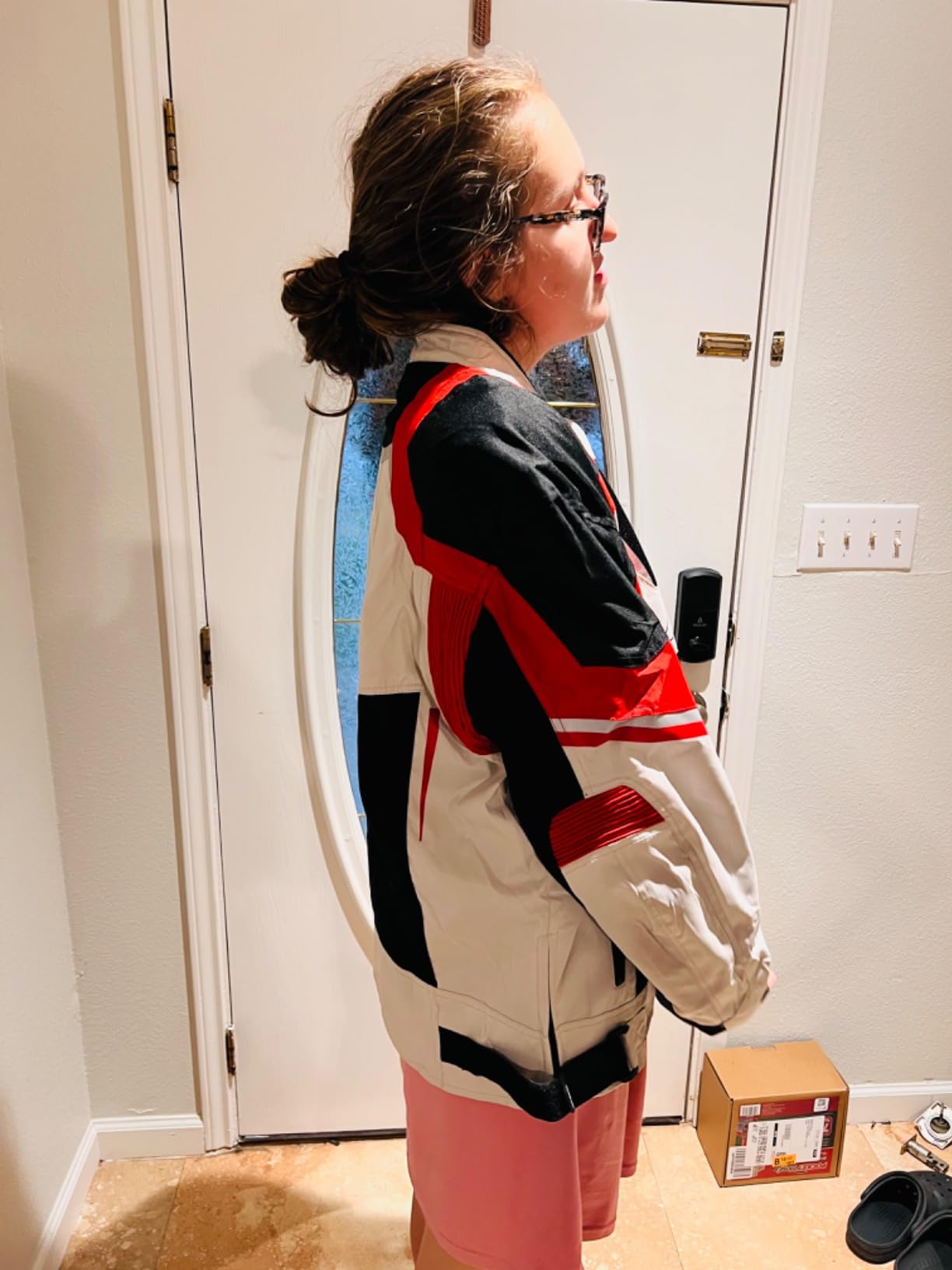
Storage is above average for this tier, with multiple internal and front pockets including dedicated phone storage and a hidden inner compartment. Five high-visibility colors — green, red, orange, blue and black — give more choice than most mesh jackets offer, and reflective strips handle the light that color alone cannot.
The one practical limitation worth checking: the brighter colors are not consistently offered in the largest sizes, so black is the safer bet if you need an XXL or above. Otherwise the adjustability at the neck, arms, cuffs and hem is the feature buyers praise most.
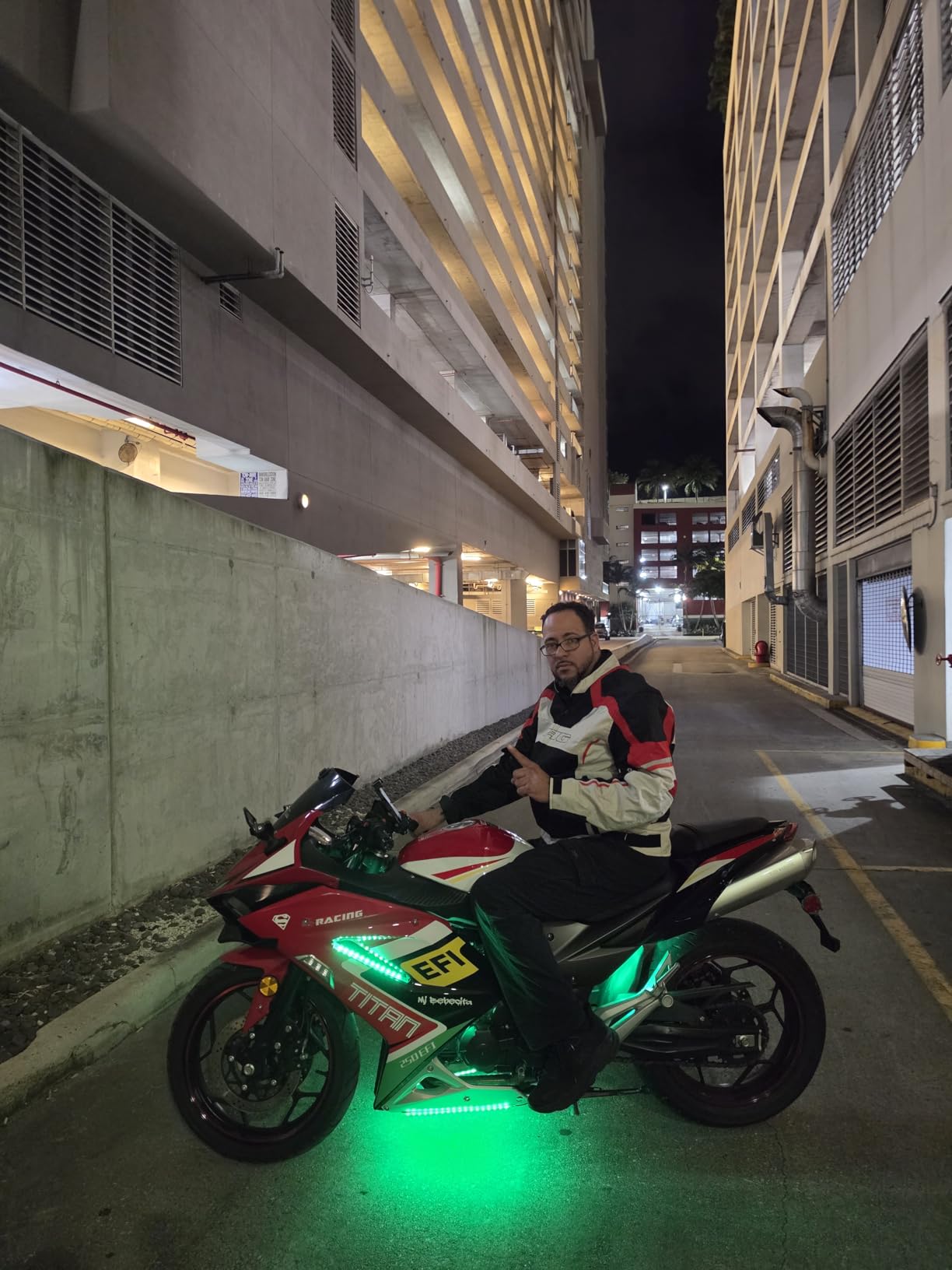
Why adjustability at the hem matters
A long jacket rides up when you are seated on a bike, exposing a strip of lower back to wind and leaving a gap in coverage. An adjustable hem closes that off, and it is one of the few cheap fixes for a fit problem that costs nothing to solve.
Combined with the arm adjusters, it also keeps the shoulder armor seated on your body rather than sliding toward your neck on a long ride, which is the fit complaint that shows up most often in rider forums.
How stretch panels change the ride
Mesh alone is stiff and uncomfortable in a riding position because it does not give when you reach for the bars. The stretch inserts on this jacket change that, and riders mention natural upper-body movement as a genuine improvement over pure mesh shells.
If you ride a cruiser or a standard bike with a laid-back position, that comfort difference is more noticeable than it is on a sport bike with a lot of clearance built in.
11. REV’IT! Eclipse 2 Mesh Jacket — Best Branded All-Rounder
REV’IT! Men’s Eclipse 2 Mesh Motorcycle Jacket (Silver – X-Large)
Strategic mesh on front back and inner arms
SEESMART CE Level 1 armor
SEESOFT back protector pocket
600D polyester
Pros
- Mesh placed on the front back and inner arms
- Recognizable brand with SEESMART armor
- 600D polyester holds up to abrasion
- Adjustable tabs at waist cuffs and biceps
- Wind-blocking front zipper and jeans loop
Cons
- Heaviest mesh build here at 3.09 pounds
- Back protector sold separately
- Lowest average rating in the group
The Eclipse 2 is the most conventional branded mesh jacket here, and for a lot of riders that is exactly the appeal. Mesh panels sit on the front, back and inner arms rather than being scattered, and SEESMART CE Level 1 armor covers the shoulders and elbows. The back is prepared for a SEESOFT CE Level 2 protector, which is a higher-rated back option than most of this list.
Construction is 600D polyester, which holds up to abrasion while staying flexible, and the details are the ones a name-brand jacket should have: a wind-blocking front zipper, a jeans connection loop, zipped pockets, and reflective elements. Adjustable tabs at the waist, cuffs and biceps let you tune airflow where you need it.
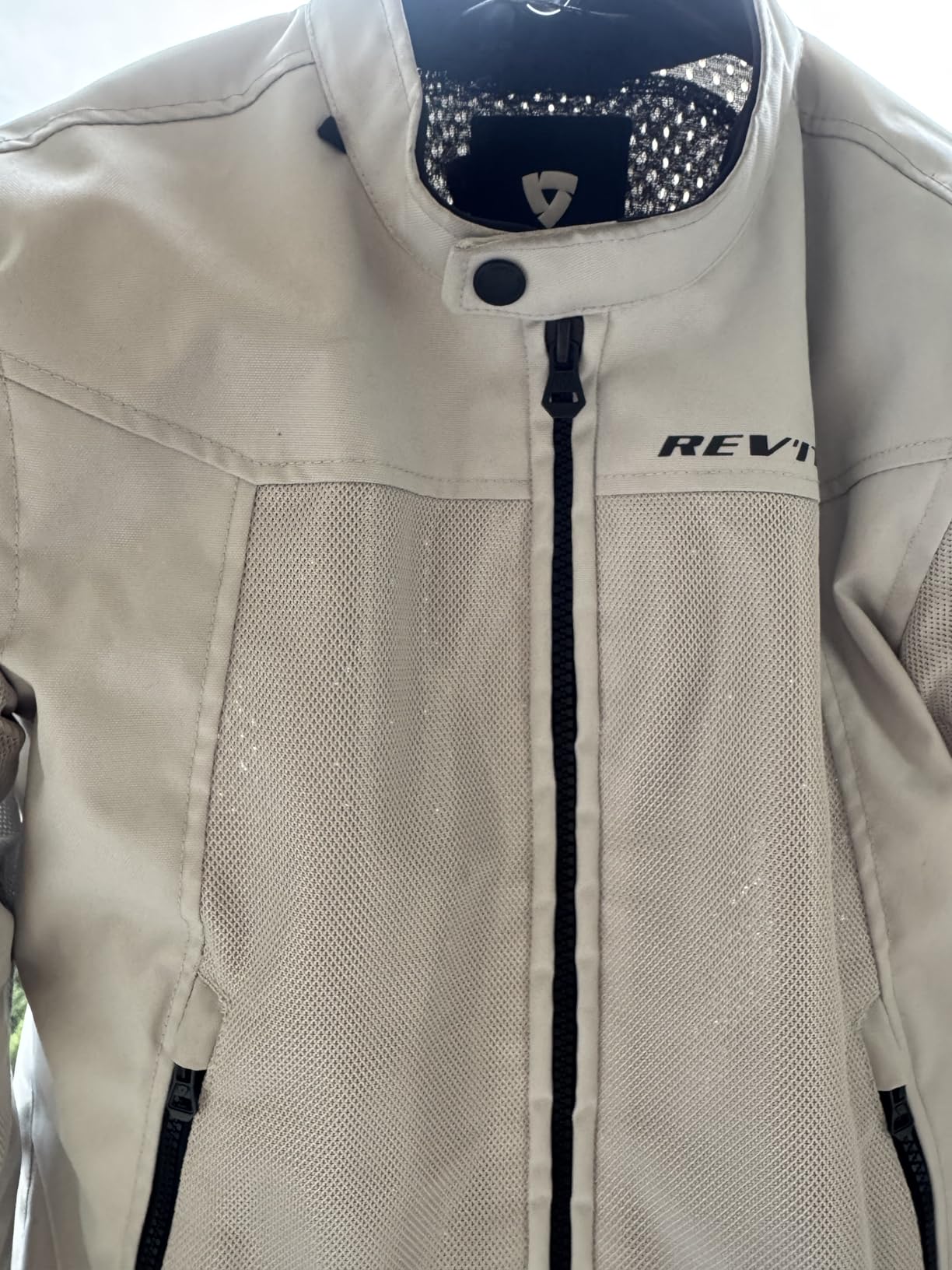
It is also the heaviest mesh build in the group at about 3.09 pounds, and that weight shows up in summer heat. Riders who want the brand name and the SEESOFT back protector option should accept that they are buying a sturdier shell, not the coolest one on this list.
Scores are the lowest here at a 4.2 average, and the complaints are specific: a 10 percent three-star share is high among these jackets, and the recurring themes are weight, bulk in the shoulders, and a back protector that is not included. It comes in black, blue, sand, silver and tarmac.
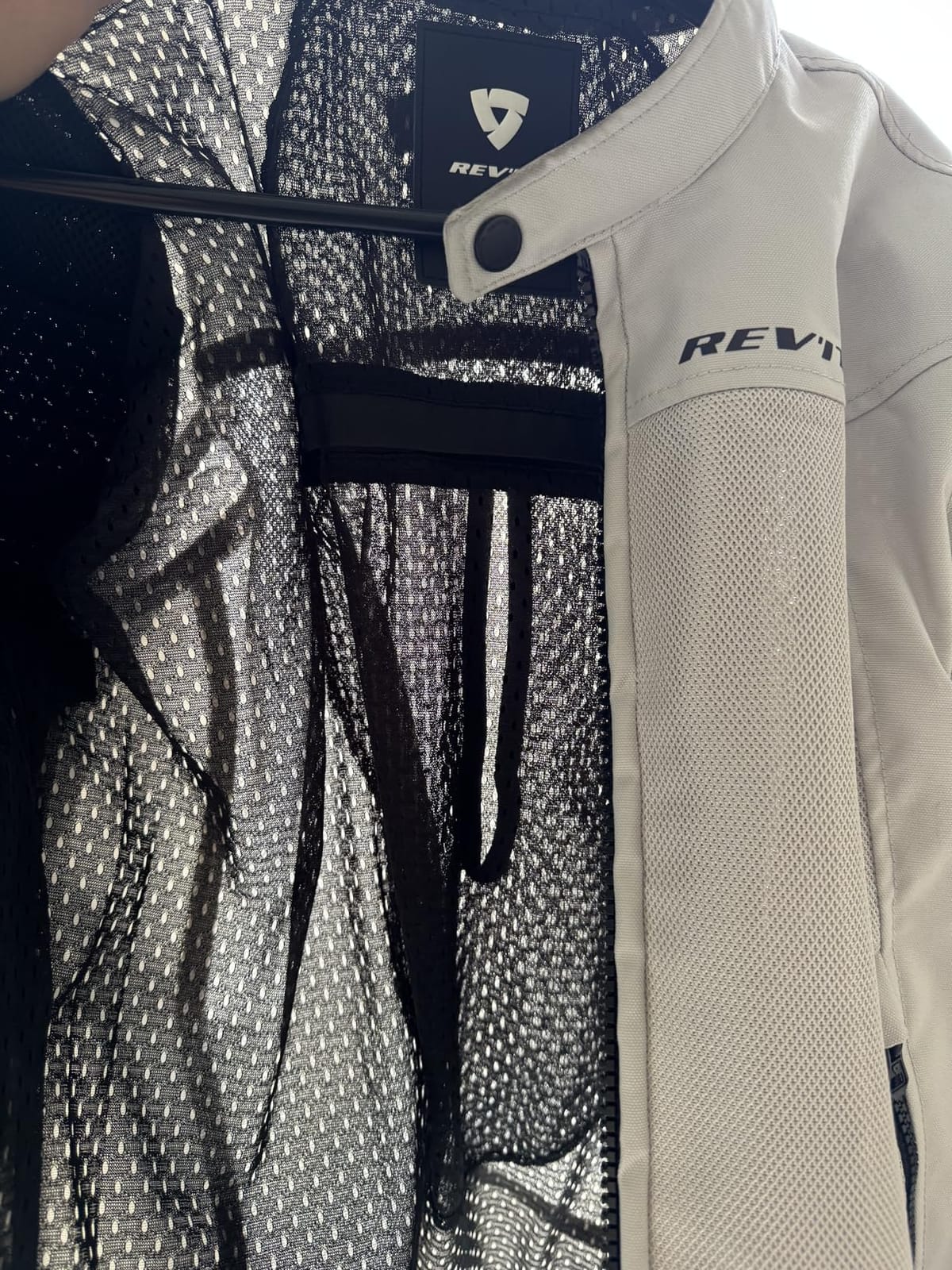
When a brand name is worth paying for
Recognizable brands matter in two places: warranty and resale, and if you ever want to add a compatible back protector or airbag system later. The SEESOFT CE Level 2 back pocket is a real upgrade path that budget jackets in this list do not offer.
If neither of those applies to you, lighter and better-reviewed options in this roundup give you more jacket for the money.
What the mixed reviews actually say
The panel ventilation and the adjustability at the waist, cuffs and biceps are the consistent positives. The consistent negatives are the 3.09-pound weight in summer, bulk around the shoulders, and the separate purchase needed for a back protector.
Riders who move past those three things rate it well. Riders who do not, and there are a fair number, end up frustrated at a jacket that should be straightforward.
12. Alpinestars T SPS Air V2 Jacket — Best for Sport Bikes
Alpinestars T-Sps Air V2 Jacket L, Black/White
Perforated 600D zoning
2D tech mesh upper body
Inner reinforcements at exposed areas
Sports cut with ergonomic panels
Pros
- Tech mesh and perforated zoning built for maximum airflow
- Sports cut with ergonomic panels for a forward position
- Inner reinforcements at the highest-wear points
- Multiple high-visibility colorways
Cons
- Narrower sport cut than touring mesh jackets
- Highest price in the roundup
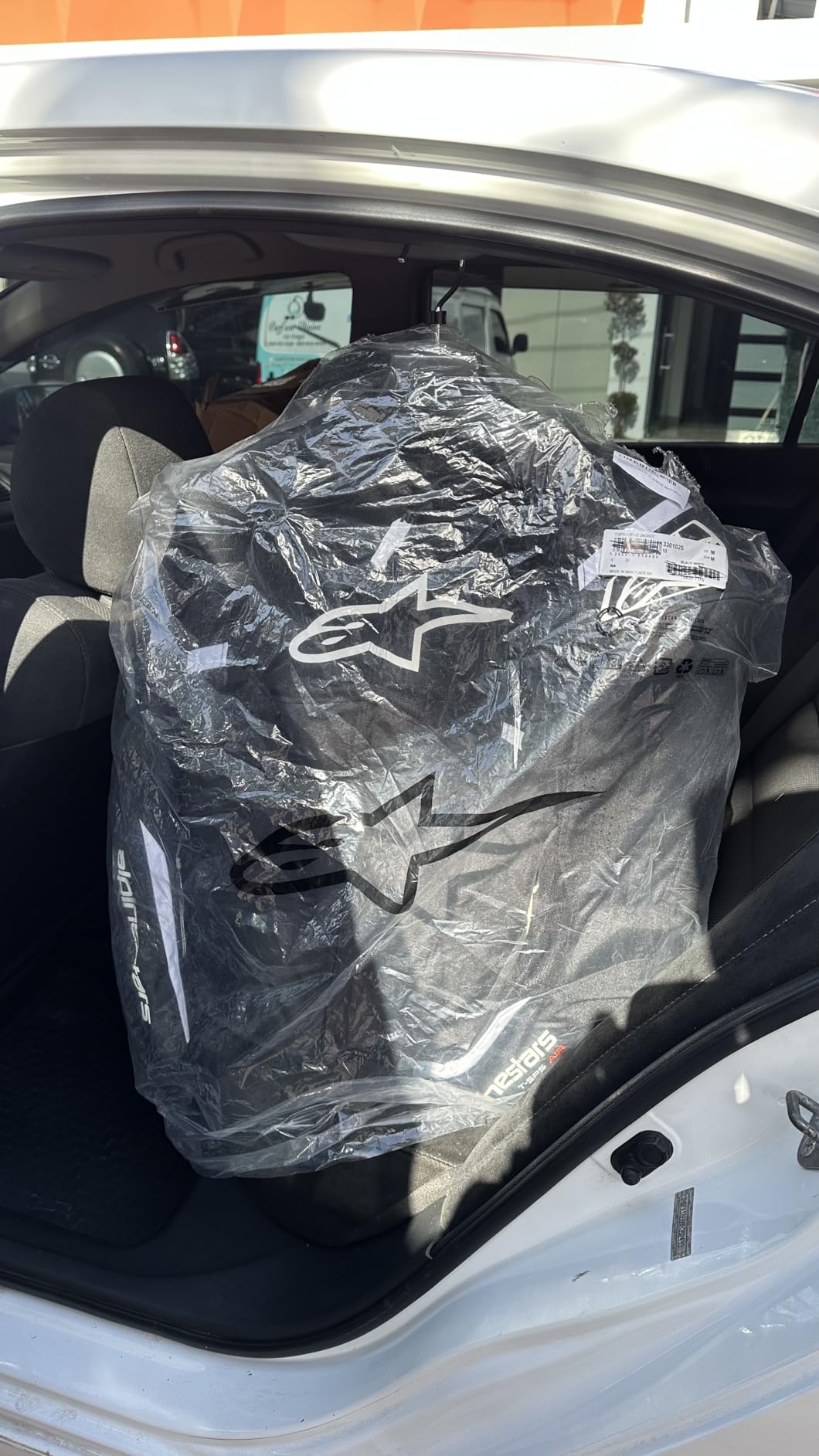
The Alpinestars is the sport-bike answer. The shell combines strategically perforated 600D zoning across the main body with 2D tech mesh paneling over the upper body, which is an airflow-first layout for a rider folded forward over a naked bike. Inner reinforcements sit at the most exposed areas, which is where a sport bike actually puts you in a tip-over.
The sports cut and ergonomic panels are the differentiator. Touring-style mesh jackets are drafted for an upright position and leave slack at the shoulders when you lean in, so they bunch and restrict. This one is drafted for the position you actually ride in, and owners rate the ventilation and build quality highly.
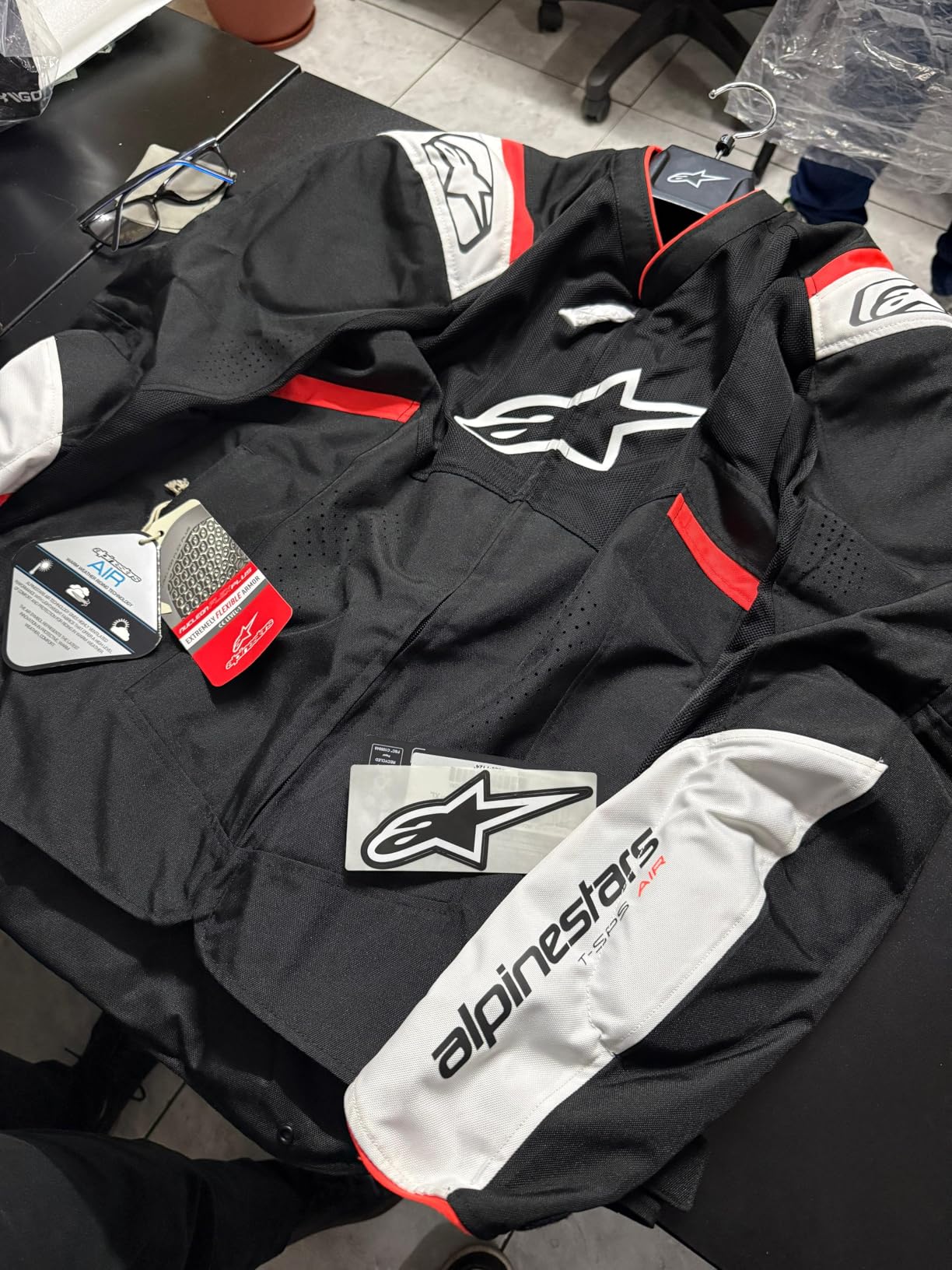
Colorways include black with red, white and yellow fluorescent elements, which matters for sport bikes that sit in a line of traffic where a driver’s mirror only catches color and shape. The 600D polyfabric is hard-wearing rather than light, which is the deliberate trade against a pure mesh shell.
Two caveats. The cut is narrower than touring mesh, so if you wear a base layer or have a broader build, check the sizing carefully. It is also the most expensive jacket in this roundup, and the value case rests on build quality and cut rather than on included armor volume.
Why the cut matters more than the mesh
On a sport bike you are reaching forward and down, and a jacket drafted upright develops slack at the shoulders and rides up at the waist. That slack becomes the layer of warm trapped air you were trying to avoid, and it also leaves the armor sitting away from your body.
Ergonomic panels solve it by cutting the fabric where you bend. Riders moving from a touring jacket to this one typically report a noticeable improvement in airflow at speed, not because the mesh changed but because the shape stopped trapping air.
Whether perforated zones and mesh are the same thing
They are not. Perforated panels are solid fabric with holes cut in them, so you keep more of the material’s structure and lose some airflow. Mesh is an open weave or a 3D air-channel knit, so you get far more airflow and less abrasion coverage.
Alpinestars uses both deliberately: tech mesh across the upper body for cooling and perforated 600D zoning elsewhere for durability. That combination is why it holds up to a sport bike’s abrasion-prone contact points.
How to Choose a Summer Motorcycle Jacket
The single most important decision is how much airflow you need versus how much abrasion coverage you will keep on. Get that trade-off right and the rest of the spec sheet is refinement. Here is how the categories actually compare, and where riders most often go wrong.
Mesh vs textile vs perforated leather
Mesh is the airflow winner and the abrasion loser. Full 3D mesh creates air channels between your torso and the outer shell, and it is the only construction that stays genuinely cool in 90F-plus riding. Textile in a 600D polyester or Cordura weave resists abrasion far better and is quieter at speed, but it holds heat even when perforated.
Perforated leather sits in the middle: it breathes more than solid leather surprises people, and it still gives real slide protection. Every jacket in this roundup is a mesh or textile summer design, because that is what wins the extreme-heat end of the market. Riders who want a middle ground keep a leather jacket for trips and one of these for the daily commute.
CE Level 1 vs CE Level 2 armor
CE Level 1 armor passes lower-velocity impact tests and CE Level 2 passes higher-velocity tests, both under EN 13595. Level 1 is the standard on most summer jackets and is appropriate for urban and highway riding. Level 2 shows up most often in back protectors, where the spine has no muscle to absorb the hit.
Check that the armor is certified and removable, and that the pockets are sized so the pads sit over your actual shoulder and elbow rather than floating. Riders who reposition their armor on the first ride report far fewer fit complaints later.
Back protector: included or pocket only
Several jackets here prepare a back protector pocket and leave the protector as a separate purchase, and that is the most common gap in a summer package. Mesh back panels offer no meaningful impact protection on their own, so check whether the back pad is in the box before you consider the jacket complete.
For stop-and-go commuting and town riding, a back protector is the single highest-value addition you can make to a budget jacket. Treat a pocket without a pad as an open item on your list.
Where the vents should sit
Competitors say “lots of mesh” and leave it there, which is not much help. The vents that matter are the ones you can open and close: underarm zippers, side-panel zippers, and a collar vent. Underarm vents work in stop-and-go traffic where the bike is not generating airflow, side vents dump hot air from the lower back, and a collar vent helps most in humid conditions.
Also look at adjustment points at the waist, cuffs and biceps. Tying the waist in stops hot air pooling at your lower back, which riders describe as the place the jacket seals against the body and traps heat.
Humidity and sweat management
No competitor in this space covers moisture properly, so here is the short version. Mesh moves air, which cools you by evaporation — and in high humidity the air cannot absorb much more moisture, so sweat sits on your skin. A moisture-wicking base layer is the highest-return purchase after the jacket itself, and it is the difference between arriving damp and arriving merely warm.
Change base layers on a multi-day trip. Salt from evaporated sweat in a fabric layer is what makes a liner start to smell permanently, and the quick fix is carrying two cheap shirts rather than a complicated care routine.
Which jacket for which temperature
At 80 to 88F, nearly anything on this list works, and you can run a light long-sleeve under it. At 90 to 97F, mesh with a high mesh ratio is the right answer, and this is the range where the HWK, WICKED, BYKR and Zyxformis all separate from the crowd. At 98 to 105F, prioritize mesh percentage and open a base layer that wicks rather than one that insulates. Above 105F, nothing substitutes for airflow and hydration, and a vest or an armored shirt is what some riders switch to.
Riders moving to a hot climate often abandon a daily leather jacket entirely and commit to a dedicated mesh jacket. That is a reasonable trade, and it is why mesh sales spike in the first hot weeks of summer.
Fit: sizing up or sizing down
Size up enough to wear a base layer, but no further. Nearly every jacket in this roundup runs small to some degree, and reviewers repeatedly advise ordering up. The counter-argument is that an oversized mesh panel flaps at speed, and a jacket riding up above the waist leaves a strip of back exposed.
The fix is the adjustability. Waist tabs, bicep straps, and cuff closures let you size the body for layering and then pull the excess in, so a jacket that runs small is usually a better buy than a baggy one with no adjustment. Try it seated on the bike with your arms forward, not standing.
Caring for a mesh jacket
Mesh is the one riding garment most likely to be left in a hot car or a garage, and mesh does not forgive it. Sweat and salt in a polyester mesh panel stiffen the fabric, clog the weave, and shorten its life faster than abrasion does.
Hand wash in cool water with a mild detergent, or use a laundry bag on a gentle cycle if the care label allows it, and let it air dry away from direct sun. Never put mesh in a dryer, and never dry clean it unless the label specifically says to. If a removable liner is included, wash it separately and dry it flat, since the common failure is the snap or Velcro attachment tearing before the liner itself wears out.
If you are shopping for gear that lives in the heat, our summer protective gear roundup covers the same sweat-and-heat problem from a different angle.
Frequently Asked Questions
What is the best motorcycle jacket for hot weather riding?
The best motorcycle jacket for hot weather is a full mesh jacket with CE-rated armor at the shoulders, elbows and back, plus vents you can open in stop-and-go traffic. In this roundup the HWK leads for proven airflow and the most owner feedback, while the Zyxformis has the highest mesh coverage above 70 percent. The key is that the armor stays on: heat is the number one reason riders ride unprotected in summer.
What to wear in the summertime while riding a motorcycle?
Wear a ventilated armored jacket over a moisture-wicking base layer, full-finger gloves, and breathable riding pants. Choose a light color where you can, since light jackets reflect direct sun. A mesh shell is the core piece; add a light arm and leg base layer for sun coverage without insulation. On evenings and early mornings, a thin layer underneath a mesh jacket handles the temperature drop without needing a different jacket.
What kind of jacket is best for summer?
A mesh textile jacket is best for summer because it moves air through the garment instead of insulating you. Full 3D mesh beats flat polyester mesh, and perforated panels are a compromise that keeps more durability and less cooling. Textile in a 600D weave with ventilation zippers is the best middle ground for riders who still want meaningful abrasion resistance, while perforated leather suits riders who want slide protection and accept more heat.
Are mesh motorcycle jackets safe?
A mesh jacket is as safe as any textile jacket for impact protection if the armor is genuinely CE certified, correctly sized, and positioned over your joints. What mesh does not provide is slide protection, because an open weave abrades in a highside. That is why riders keep a leather or textile jacket for higher-speed trips and use mesh for commuting and town riding. Check the certification, and add a back protector if the jacket does not include one.
Should I wear a leather jacket in summer?
You can, but most riders find solid leather unbearable above roughly 90F and stop wearing it, which is the safety problem. Perforated leather breathes considerably more than expected and gives real slide protection, so it suits riders who do long highway trips in moderate heat. For hot-weather commuting, a mesh jacket worn consistently protects you more than a leather jacket left on a hook at home.
Which Summer Jacket Should You Buy
If you want one jacket for daily riding in real summer heat, the HWK is the safest pick in this group: proven airflow, armor that stays put, adjustability at the joints, and the largest body of owner feedback behind it. Riders who want the most mesh surface area above 100F should look at the Zyxformis, and sport-bike riders should take the Alpinestars for the cut.
Match the jacket to your climate instead. Commuters in stop-and-go heat want mesh ratio and a phone pocket. Touring riders want a zip-out liner and reflective piping. Night riders want 3M reflective material and a bright colorway, and anyone riding above 100F wants the highest mesh percentage the section carries.
Whatever you choose, buy it in a size you can layer over a base layer, add a back protector if one is not included, and wear it. The best motorcycle jackets for summer riding are not the ones with the longest spec sheet, they are the ones still in your bag in August. When the rides are done, our late-summer recipe ideas are a better use of the afternoon than hanging wet gear in a closet.