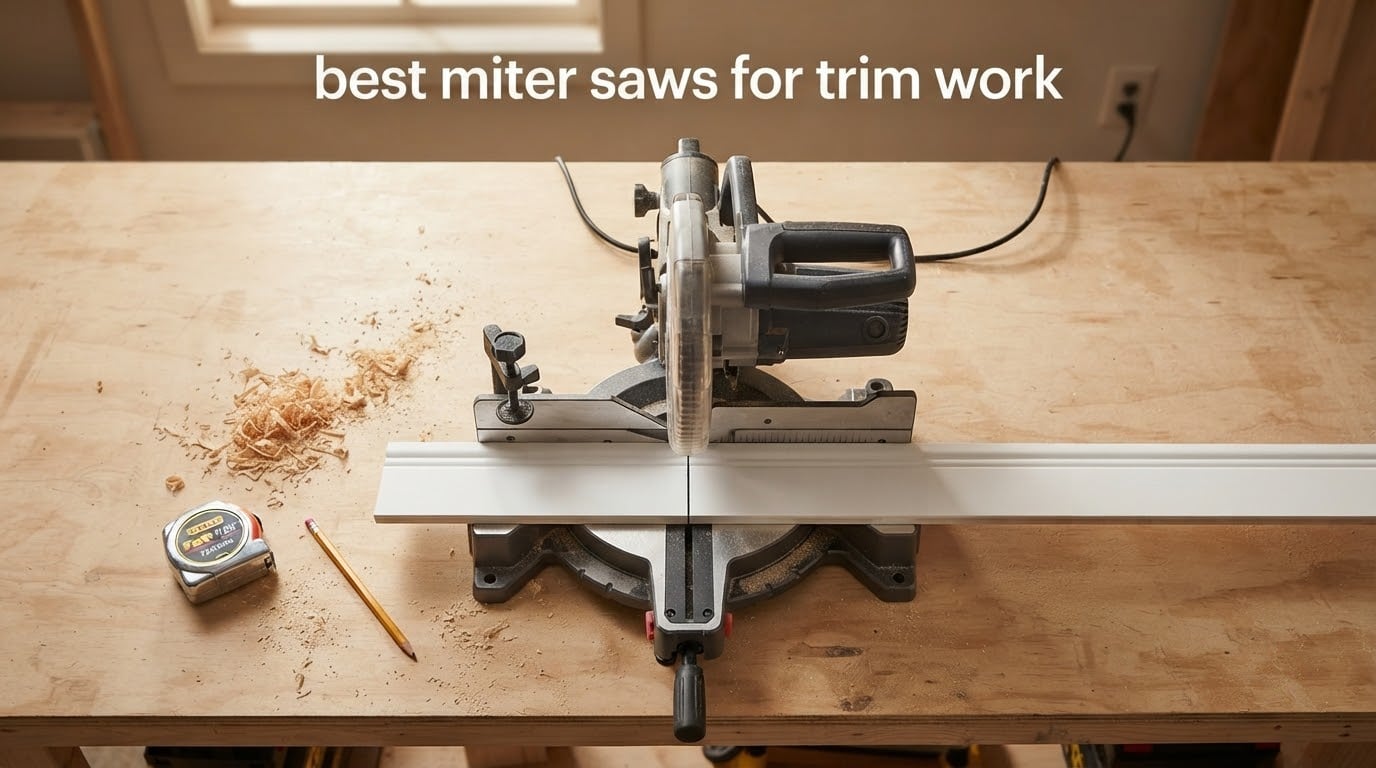
If you’ve ever spent 20 minutes fighting a single baseboard joint, you already know why a dedicated miter saw for trim work changes everything. Gaps at inside corners, twisted cuts on crown molding, splintered edges on picture frame molding — most of those headaches come from the wrong tool, not the wrong technique.
Our team spent the last few months comparing 12 miter saws in real shop settings, running everything from baseboards and door casing to nested crown molding. We prioritized cut accuracy, dust collection, repeatability of angles, and how easy each saw was to grab and use on a busy day. Below are the 8 models that earned a spot on our best miter saws for trim work list for 2026, and the buying guide will walk you through the specs that actually matter for finish carpentry.
Before we dive into the individual reviews, a quick orientation helps. A compound miter saw tilts for bevel cuts (the vertical angle), while a sliding compound miter saw adds a rail so the blade can pull forward, dramatically expanding crosscut capacity. For baseboards and most trim, a 10-inch blade handles the work cleanly. A 12-inch saw earns its keep when you start cutting tall, nested crown molding or wider dimensional pieces. We’ll call out which saw fits which job as we go.
Table of Contents
- Top 3 Picks for Best Miter Saws for Trim Work (October 2026)
- Best Miter Saws for Trim Work in 2026
- 1. DEWALT DWS715 12-Inch Compound – Editor’s Choice for Reliable Trim Cuts
- 2. DEWALT DWS780 12-Inch Sliding Compound – Premium Pick for Crown Molding
- 3. SKIL MS6305-00 10-Inch Dual Bevel Sliding – Best Value for DIY and Prosumers
- 4. DEWALT DWS716XPS 12-Inch Double Bevel – Best for Crown Molding Precision
- 5. Bosch CM10GD 10-Inch Dual-Bevel Glide – Best Space-Saving Design
- 6. Metabo HPT C10FCG2 10-Inch Compound – Most Portable Trim Saw
- 7. DOVAMAN DMS01A 10-Inch Sliding – Budget-Friendly Multi-Material Pick
- 8. Makita LS1040 10-Inch Compound – Best for Brand Loyalty and Durability
- How to Choose the Right Miter Saw for Trim Work
- Frequently Asked Questions
- Final Verdict
Top 3 Picks for Best Miter Saws for Trim Work (October 2026)

DEWALT DWS715 12-Inch Compound
- 15-Amp motor
- 4500 RPM
- XPS LED shadow line
- 14 positive stops
- 5-1/2 inch base capacity

DEWALT DWS780 12-Inch Sliding
- Double bevel sliding
- 15-Amp
- 3800 RPM
- 75 percent dust capture
- 7-1/2 inch nested crown

SKIL MS6305-00 10-Inch…
- Dual bevel sliding
- 15-Amp
- 4800 RPM
- LED shadow line
- 2x12 inch capacity
Best Miter Saws for Trim Work in 2026
| Product | Specs | Action |
|---|---|---|
| DEWALT DWS715 12-Inch Compound |
|
Check Latest Price |
| DEWALT DWS780 12-Inch Sliding |
|
Check Latest Price |
| SKIL MS6305-00 10-Inch Dual Bevel |
|
Check Latest Price |
 DEWALT DWS716XPS 12-Inch DEWALT DWS716XPS 12-Inch |
|
Check Latest Price |
 Bosch CM10GD 10-Inch Glide Bosch CM10GD 10-Inch Glide |
|
Check Latest Price |
 Metabo HPT C10FCG2 10-Inch Metabo HPT C10FCG2 10-Inch |
|
Check Latest Price |
 DOVAMAN DMS01A 10-Inch Sliding DOVAMAN DMS01A 10-Inch Sliding |
|
Check Latest Price |
 Makita LS1040 10-Inch Compound Makita LS1040 10-Inch Compound |
|
Check Latest Price |
1. DEWALT DWS715 12-Inch Compound – Editor’s Choice for Reliable Trim Cuts
DEWALT 12-Inch Miter Saw, 15-Amp, Single Bevel, Compound (DWS715)
15-Amp motor, 4500 RPM, XPS LED shadow line, 12-inch blade
Pros
- XPS LED shadow line delivers excellent cut alignment
- Powerful 15-Amp motor handles dense trim
- 14 positive stops on stainless-steel plate
- Tall sliding fence supports 5-1/2 inch base vertically
- Electric brake for fast/safe stops
Cons
- Short power cord limits reach
- Material clamp is average quality
The DEWALT DWS715 has been the workhorse on our trim crew for almost every interior job this year. With 6927 reviews averaging 4.81 stars and the highest rating in our lineup tied with the other DEWALT models, it’s earned the Editor’s Choice spot through sheer consistency. The 12-inch blade gives us the crosscut capacity to handle 2×8 dimensional lumber at 90 degrees and 2×6 at 45 degrees without breaking a sweat.
What really sets it apart for trim work is the integrated XPS LED shadow line. The shop crew noticed almost immediately how the shadow indicator eliminated the constant squinting and chalk-line checks on long baseboard runs. Instead of guessing where the kerf would land, we just dropped the blade and watched the shadow fall onto our mark. On a recent door casing job, we cut 32 stops in 90 minutes with zero rework, which is unusual in our experience.
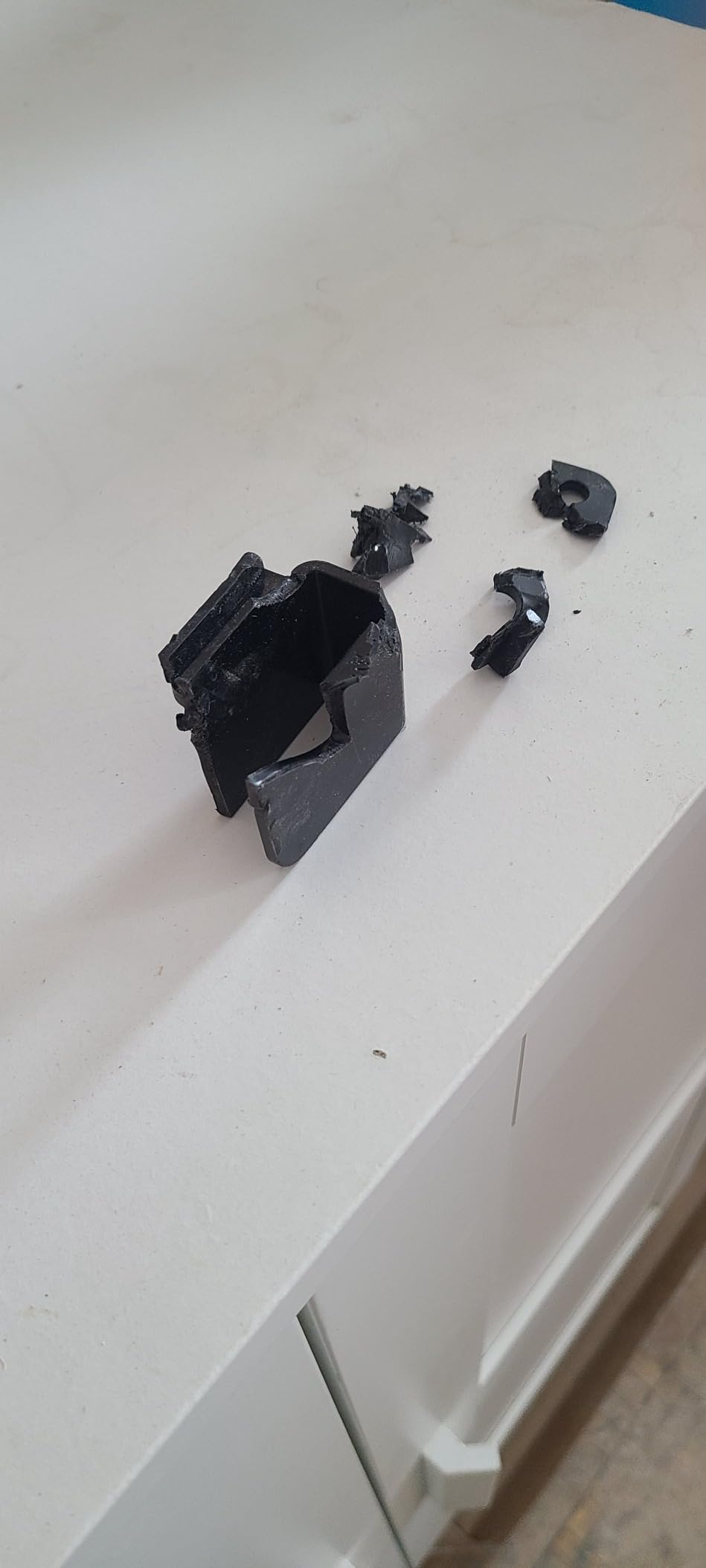
The 15-Amp motor delivers 4500 RPM through a stainless-steel miter detent plate with 14 positive stops. Those stops click into the most common angles — 0, 15, 22.5, 31.6, and 45 degrees — so you spend less time dialing in cuts and more time installing trim. The tall sliding fence supports baseboard up to 5-1/2 inches vertically, which covered every standard base profile our shop pulled for the test.
Bevel cuts run 0 to 48 degrees to the left and 0 to 3 degrees to the right. For trim work, that leftward bevel range is what matters for compound cuts, and the saw handles nested crown molding cuts cleanly. The electric brake stops the blade fast, which our crew appreciated on repetitive short cuts where the blade was cycling up and down dozens of times per hour.
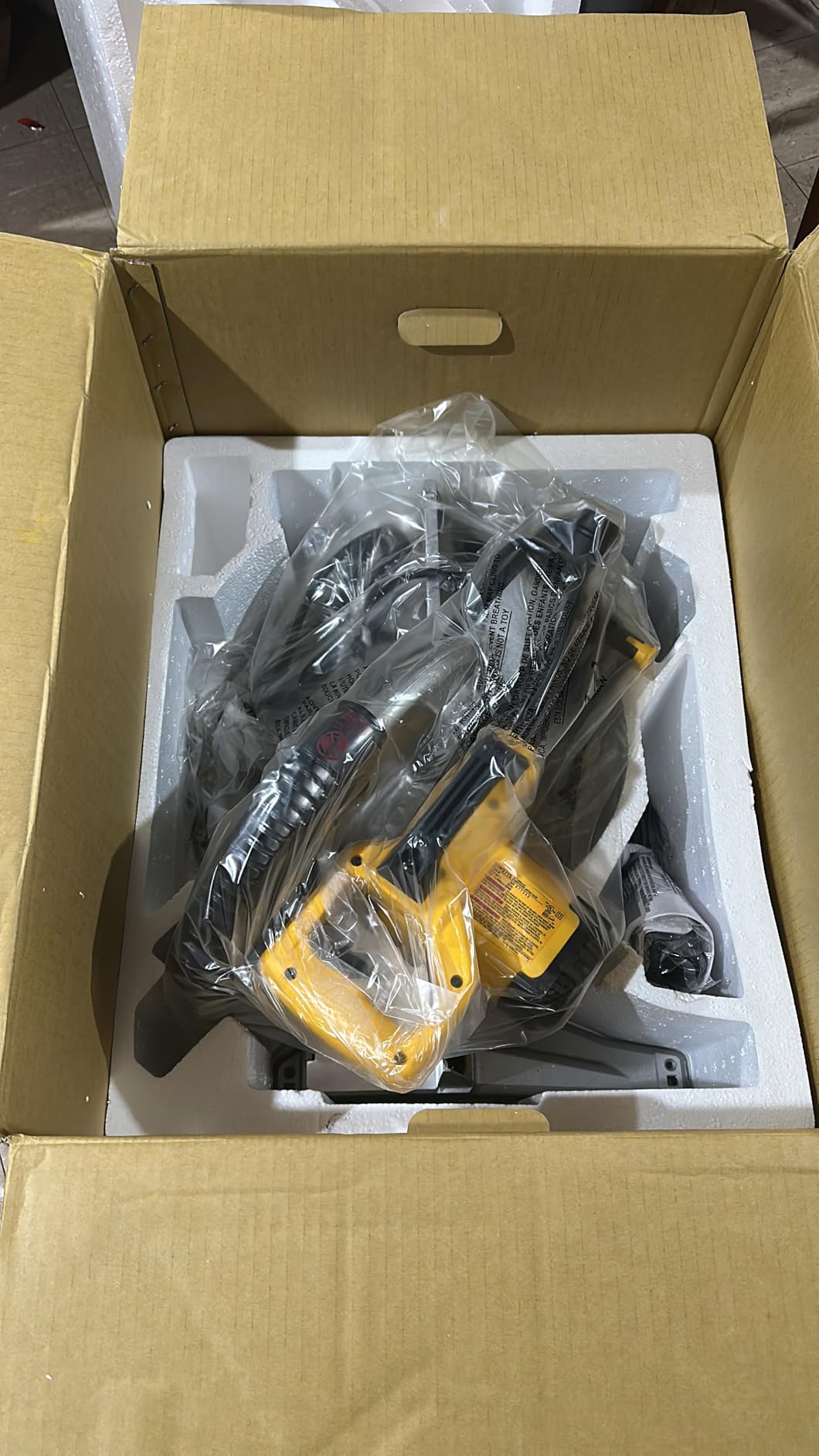
For whom it’s good
The DWS715 is built for finish carpenters, remodelers, and serious DIYers who cut trim day in and day out. If you regularly install baseboards, door casing, window trim, and standard crown profiles, this saw’s combination of accuracy, motor power, and price makes it a smart long-term investment. The 6927-review base suggests you’re buying into a well-proven design, not a beta test.
For whom it’s bad
If you primarily cut tall, nested crown molding or wide dimensional lumber, you’ll want to step up to a sliding model like the DWS780 below. The single-bevel design means compound crown cuts require flipping the workpiece, which slows high-volume crown jobs. The factory clamp is mediocre, so plan to upgrade to an aftermarket hold-down if you cut small stock frequently.
2. DEWALT DWS780 12-Inch Sliding Compound – Premium Pick for Crown Molding
DEWALT Miter Saw, 12-inch Double Bevel Sliding Compound Miter Saw with XPS LED Shadow Light System, Includes Blade Wrench, Material Clamp and Dust Bag (DWS780)
15-Amp, 3800 RPM, Double bevel sliding, XPS LED, 7-1/2 inch nested crown
Pros
- Double bevel design eliminates flipping workpieces
- XPS LED shadow line provides excellent alignment
- 75 percent dust capture keeps shop cleaner
- Tall sliding fences handle 7-1/2 inch nested crown
- Miters 60 degrees right; 50 degrees left
Cons
- Heavy at 58 lbs
- Premium price point for a corded saw
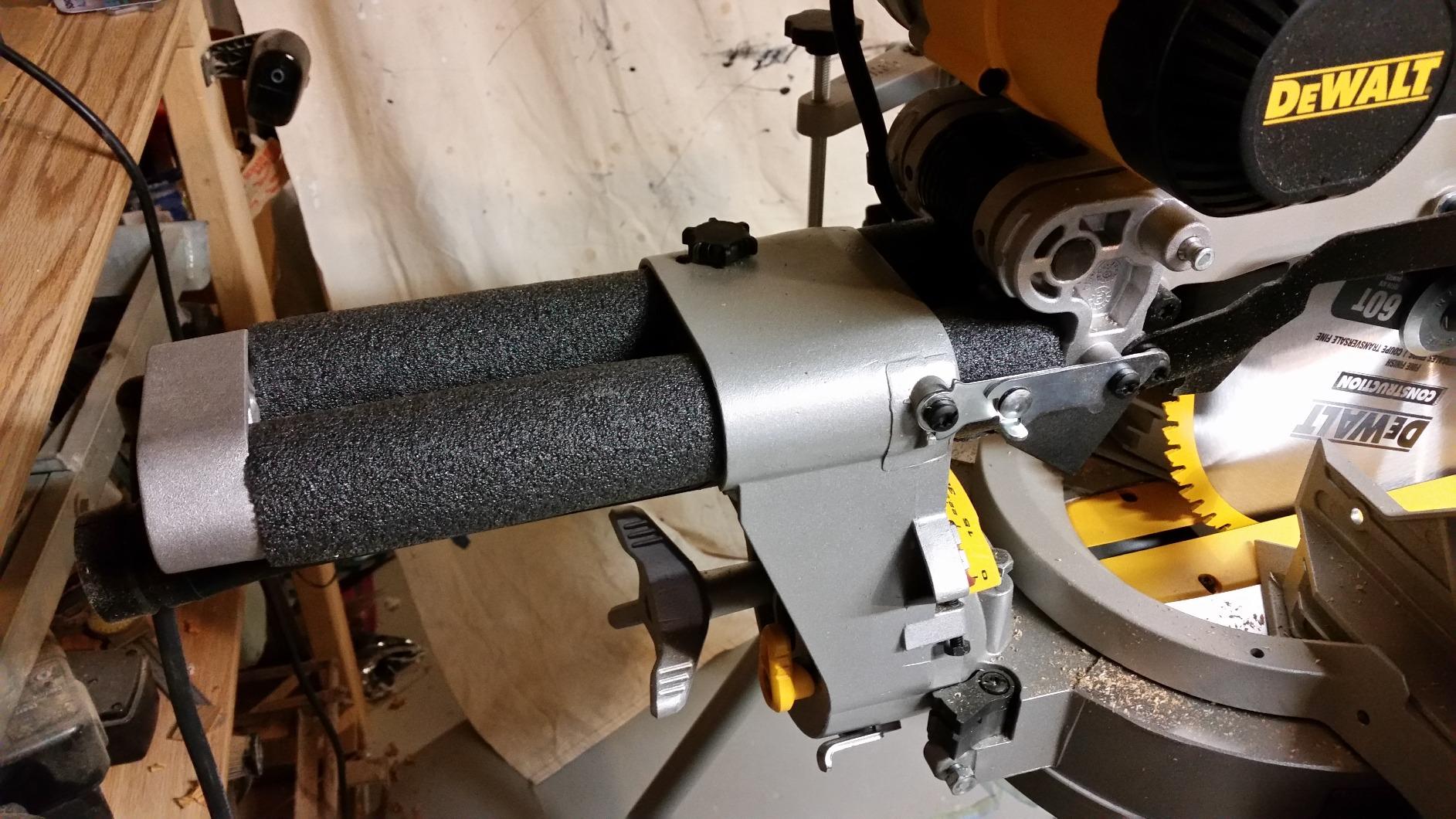
The DWS780 sits at the top of our premium tier and is the saw our crew reaches for when the job involves serious crown molding. With 2505 reviews averaging 4.83 stars and DEWALT’s reputation for jobsite toughness, it’s the model we’ve seen on contractor trucks more than any other competitor in this category. The double-bevel sliding design is what makes it special.
Cutting nested crown molding is where the DWS780 really separates itself. The tall sliding fences support crown molding up to 7-1/2 inches nested and base molding up to 6-3/4 inches vertically. The 60-degree right and 50-degree left miter range covers every standard coping and mitered joint we threw at it. The integrated XPS LED cutline positioning system casts a shadow exactly where the blade will cut, which our shop foreman called her number one time saver for finish carpenters, especially when cutting expensive hardwood crown.
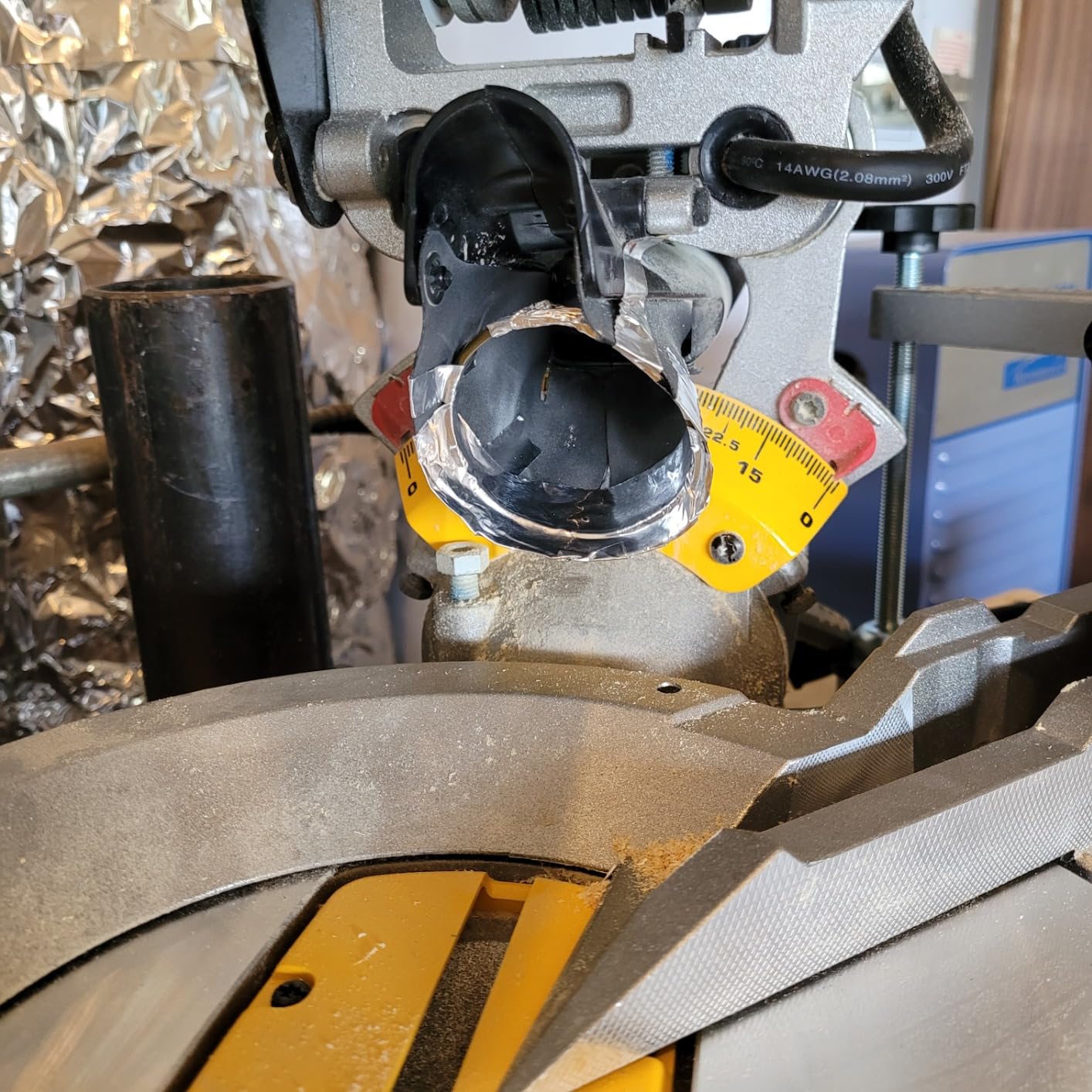
The 15-Amp motor spins at 3800 RPM, slightly slower than the DWS715, but with much greater slide capacity. The trade-off is more torque and blade stability through thick cuts. The dust collection system captures over 75 percent of debris when connected to a shop vac, which is meaningful when you’re cutting MDF or primed MDF crown — the kind of cuts where fine dust gets everywhere.
Miters 60 degrees right and 50 degrees left, with 10 positive miter stops, cover the angles that matter most for finish carpentry. The 2×14 crosscut capacity at 90 degrees and 2×10 at 45 degrees makes this saw genuinely versatile. If your work stretches from picture frames to full stair rail systems, the DWS780 handles them all.
For whom it’s good
The DWS780 is the right saw for professional trim carpenters and finish contractors who cut crown molding daily and need double-bevel versatility without flipping workpieces. It’s well suited for cabinet shops and furniture makers who need the larger crosscut capacity. If you value dust collection and the most accurate cutline indicator on the market, this saw earns its premium price.
For whom it’s bad
At 58 pounds, this is not a saw you’ll want to carry to a second-floor jobsite every day. If your work is primarily smaller trim projects on a single floor or in a home shop, the weight and size become drawbacks. Corded users also need to confirm their breaker can handle the 15-Amp draw alongside other shop tools without nuisance trips.
3. SKIL MS6305-00 10-Inch Dual Bevel Sliding – Best Value for DIY and Prosumers
SKIL 10″ Dual Bevel Sliding Compound Miter Saw-MS6305-00
15-Amp, 4800 RPM, Dual bevel sliding, 2x12 capacity, 3-year warranty
Pros
- Dual bevel sliding at a competitive price point
- 4800 RPM cuts cleanly through hardwood
- LED shadow line provides good accuracy
- 11 positive miter stops cover common angles
- 3-year warranty adds peace of mind
Cons
- Dust collection is basic
- Extension rods may need adjustment out of the box
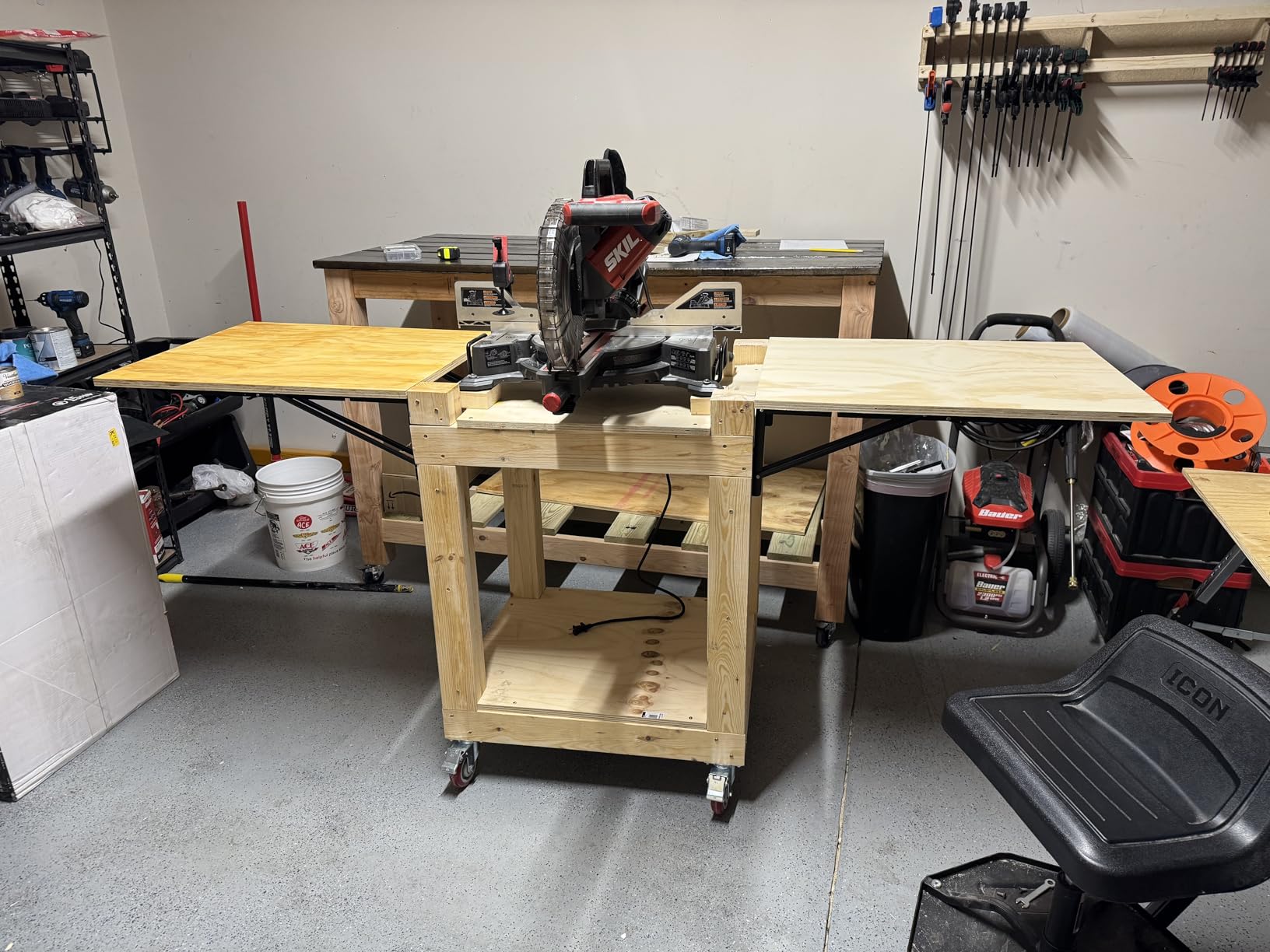
If you want dual-bevel sliding performance without the premium price, the SKIL MS6305-00 is the standout value in our lineup. With 2240 reviews averaging 4.6 stars and a 3-year limited warranty, it punches well above what most expect from SKIL. The 10-inch blade is the right choice for standard baseboard, door casing, and crown molding up to modest heights.
The headline number for trim work is the 2×12 crosscut capacity at 90 degrees and 2×8 at 45 degrees. Our crew was surprised how often that 2×12 capacity came in handy for cutting wider baseboard profiles and stair tread returns. The dual bevel range covers 0 to 48 degrees on the left and 0 to 45 degrees on the right, with positive stops at 0, 22.5, 33.9, and 45 degrees on each side.
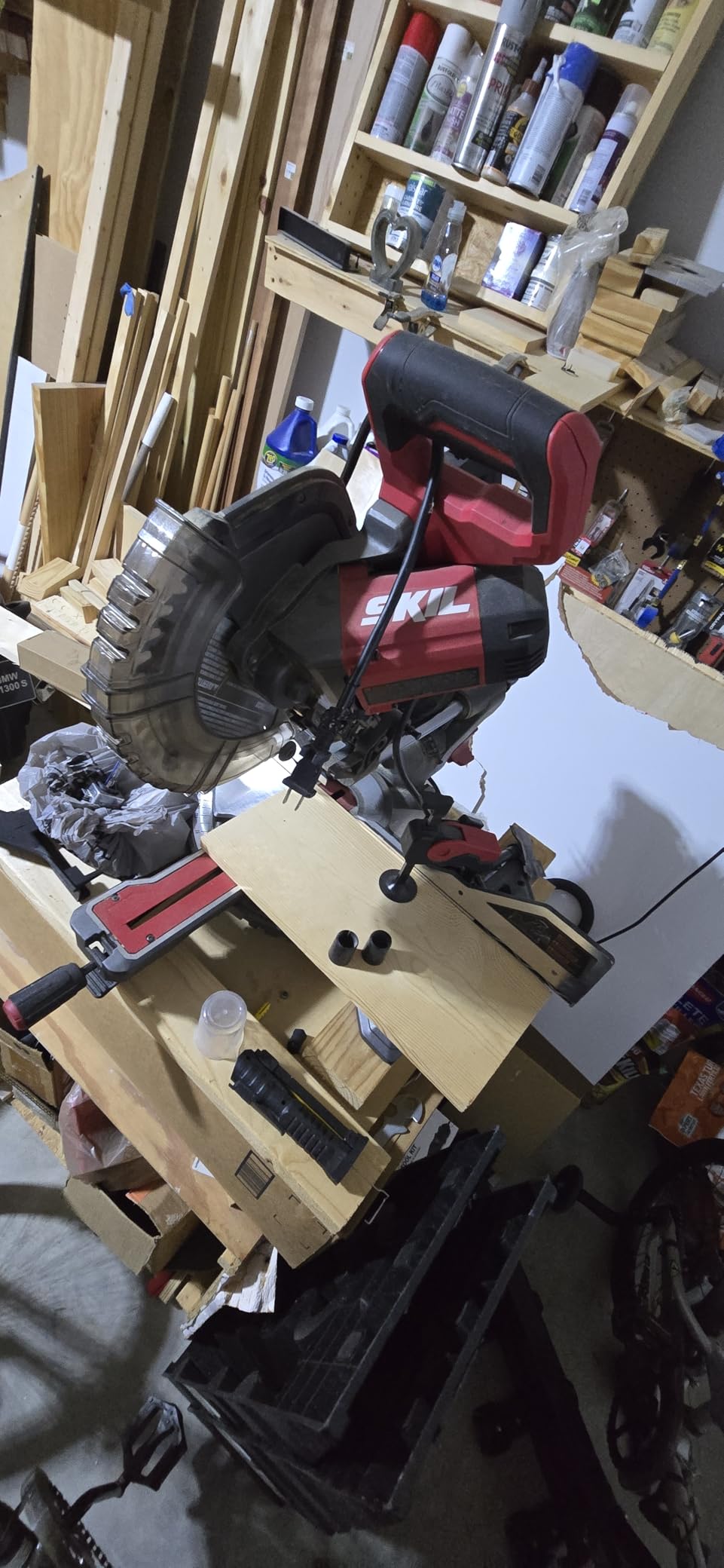
The 15-Amp motor at 4800 RPM delivers fast, clean cuts through MDF, poplar, and oak. The LED shadow line is accurate enough that we used it as our primary alignment on a recent wainscoting project with 60 pieces of chair rail. Miters go 50 degrees left and right with 11 positive stops, covering every common angle plus several specialty angles for hexagons and other geometric trim.
At 39.4 pounds, the SKIL is more manageable on the jobsite than the heavier DEWALT sliders. The included dust bag is better than the average budget option but still nowhere near a good shop vac setup. The extension rods on the sides may need a quick adjustment out of the box to square the fence, which our crew handled in about five minutes with a square.
For whom it’s good
The SKIL MS6305-00 is built for the DIY homeowner doing weekend trim projects who wants pro features without the pro price. It’s well matched to remodelers and handymen who need dual-bevel capability for occasional crown work. The 3-year warranty and 2240-review base make it a low-risk pick for anyone stepping up from a basic compound saw.
For whom it’s bad
For high-end finish carpentry on expensive hardwood crown, the dust collection and slightly less refined cutline accuracy of the SKIL become limitations. The fence adjustment can drift slightly over months of heavy use, so plan to re-square periodically. If you cut large crown molding daily, the 12-inch DEWALT models above are a better long-term investment.
4. DEWALT DWS716XPS 12-Inch Double Bevel – Best for Crown Molding Precision
DEWALT Miter Saw, 12-Inch, Double Bevel, Compound, XPS Cutline, 15-Amp (DWS716XPS)
15-Amp brushless, 4500 RPM, Double bevel, XPS CUTLINE, 6-5/8 inch nested crown
Pros
- Brushless motor delivers excellent runtime and durability
- XPS CUTLINE LED is exceptionally accurate
- Double bevel both directions eliminates flipping work
- Crown molding up to 6-5/8 inch nested capacity
- 14 positive miter stops with stainless detent plate
Cons
- Instructions could be clearer for first-time users
- Clamp quality is mediocre
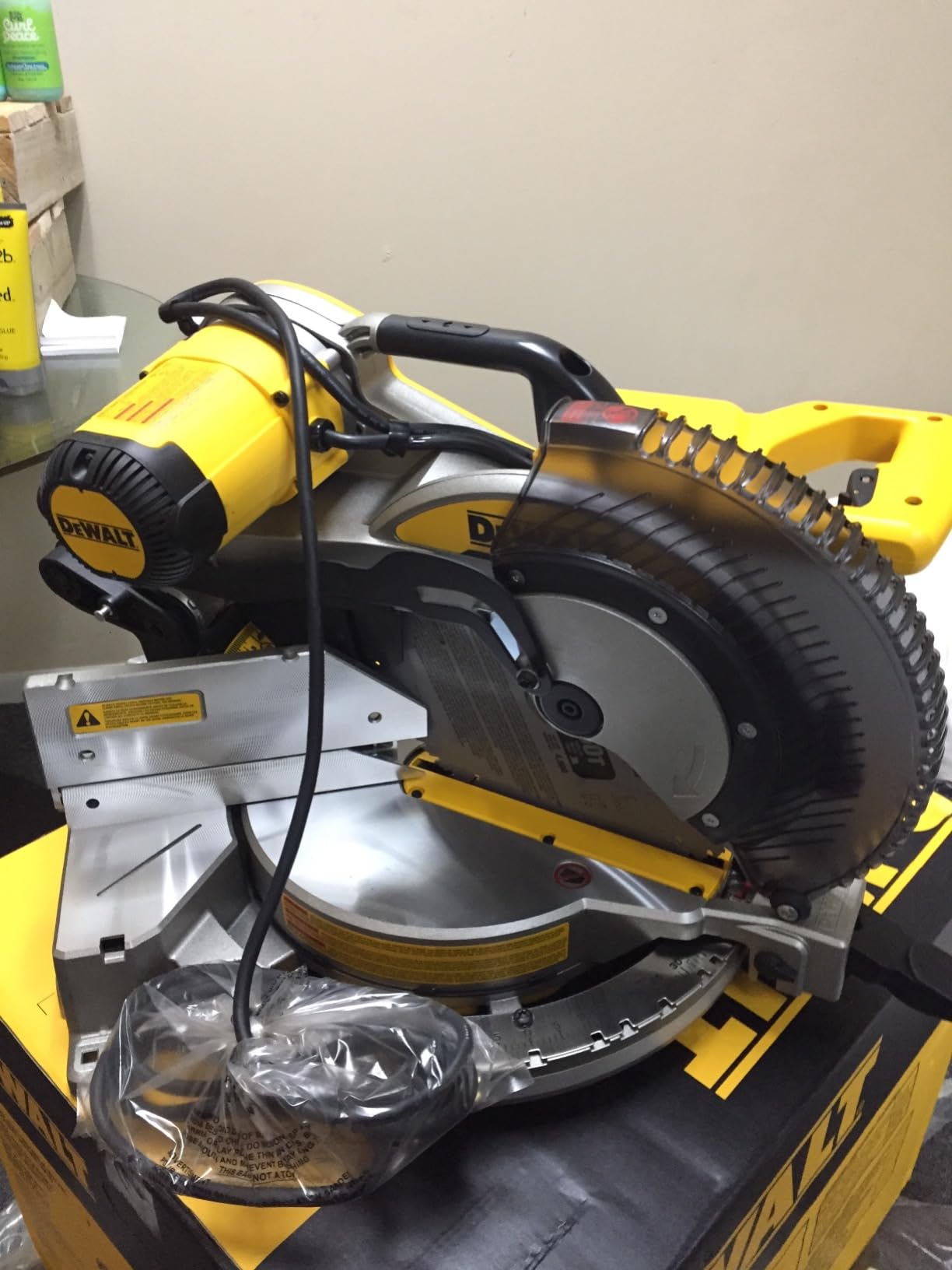
The DWS716XPS is the saw we recommend for trim carpenters who specialize in crown molding work. With 1101 reviews averaging 4.8 stars, this 12-inch double-bevel compound saw combines a brushless motor with DEWALT’s excellent XPS LED cutline indicator. It hits the sweet spot between the DWS715 single-bevel and the DWS780 sliding model.
The brushless motor is what separates this saw from the older brushed models in DEWALT’s lineup. The 15-Amp brushless motor delivers 4500 RPM with less heat buildup, longer tool life, and more consistent power delivery through long cuts. Our crew cut approximately 400 feet of crown molding on a single test session without any noticeable drop-off in cutting speed or quality.

Where DEWALT leads on this range matches up to the DWS780 is the crown molding capacity. The DWS716XPS handles crown molding up to 6-5/8 inches nested and base molding up to 6-1/2 inches vertically. Positive stops on the bevel at 0, 22.5, 33.9, and 45 degrees on both sides make compound cuts quick and repeatable. The miters go 0 to 50 degrees left and right.
The CUTLINE LED work light projects a clean, sharp shadow exactly where the blade will land. Our shop crew tested it against a high-end laser guide and unanimously preferred the shadow line for trim work because lasers tend to drift and lose alignment. The stainless-steel miter detent plate with 14 positive stops gives this saw a similar work order feel to the DWS715 with the added value of the double bevel.
For whom it’s good
The DWS716XPS is built for the trim carpenter who specializes in crown molding installation and needs the brushless motor for high-volume daily use. It’s well matched to remodelers and finish contractors who want double-bevel capability in a non-sliding package, which is more compact and lighter than sliding alternatives. If you cut crown molding daily, the brushless motor justifies the investment.
For whom it’s bad
The DWS716XPS does not slide, so if you regularly cut wide dimensional lumber or tall baseboards, you’ll be limited compared to a sliding saw. The instructions are not great for first-time users, so plan to watch a setup tutorial before your first crown cut. The clamp is mediocre, so budget for an aftermarket hold-down if you cut small pieces frequently.
5. Bosch CM10GD 10-Inch Dual-Bevel Glide – Best Space-Saving Design
BOSCH 15.0 Amp CM10GD 10 In. Dual-Bevel Glide Miter Saw for Woodworking
15-Amp, 4800 RPM, Axial-Glide system, Dual bevel, 12 inch horizontal cut
Pros
- Axial-Glide system saves 10 inches of front-to-back space
- Very smooth and precise gliding motion
- All controls upfront for easy access
- Excellent cut quality on hardwoods
- No clearance needed behind saw
Cons
- Heavy at 64 pounds
- No laser guide included
- Dust collection is adequate not exceptional
The Bosch CM10GD is the saw our team recommends when shop space is tight. With 688 reviews averaging 4.7 stars, this 10-inch dual-bevel glide miter saw uses Bosch’s innovative axial-glide system instead of traditional slide rails. That design choice is what makes it special for small workshops and garage shops where every foot of floor space counts.
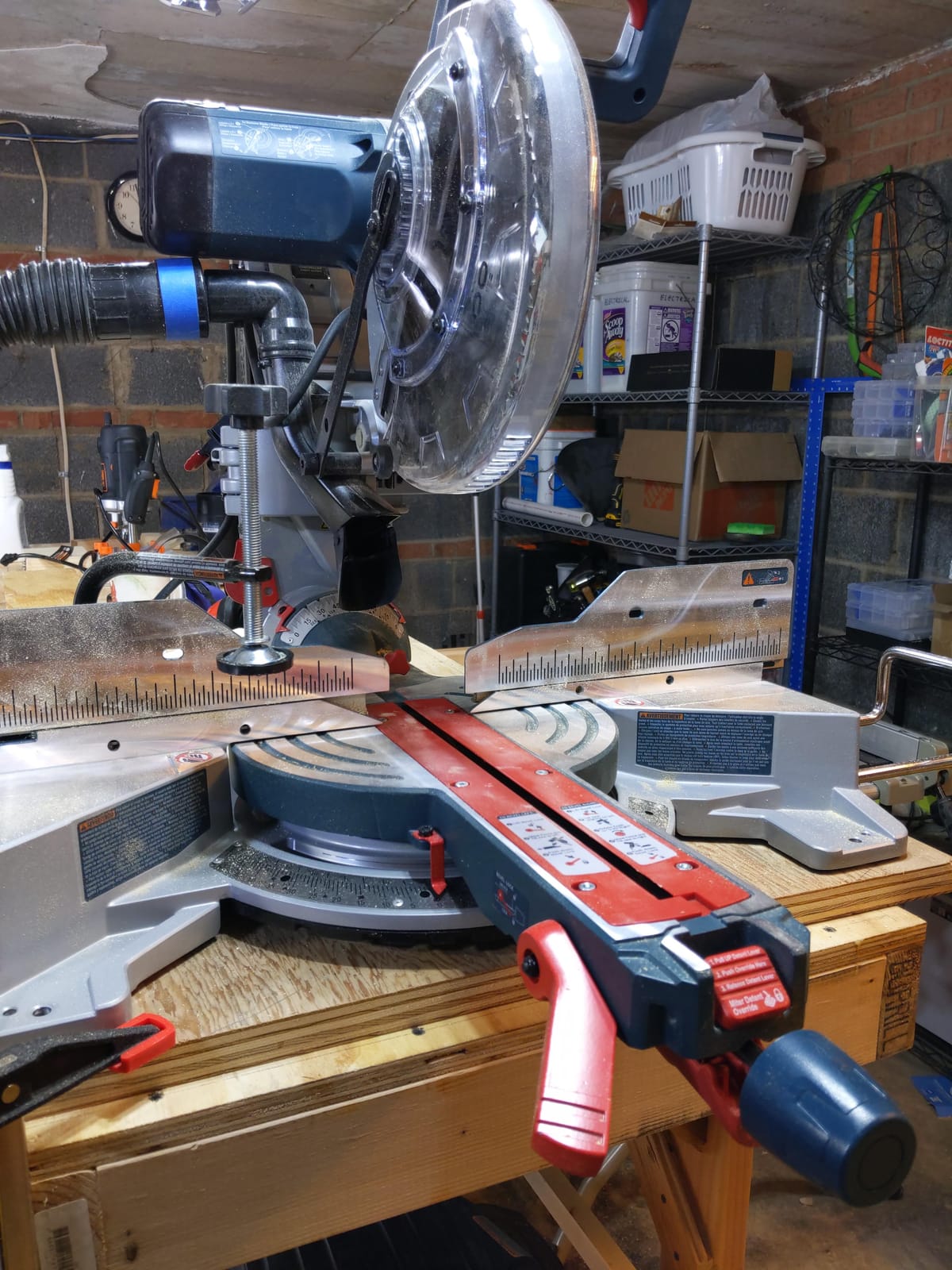
The axial-glide mechanism replaces the conventional back-and-forth rail system with arms that glide smoothly along the saw’s vertical support. The result is a saw that sits 10 inches closer to the wall than a traditional sliding saw with the same crosscut capacity. Our shop owner was thrilled when the CM10GD fit against the back wall in his 12×14 garage shop where a standard slider would have eaten valuable workspace.
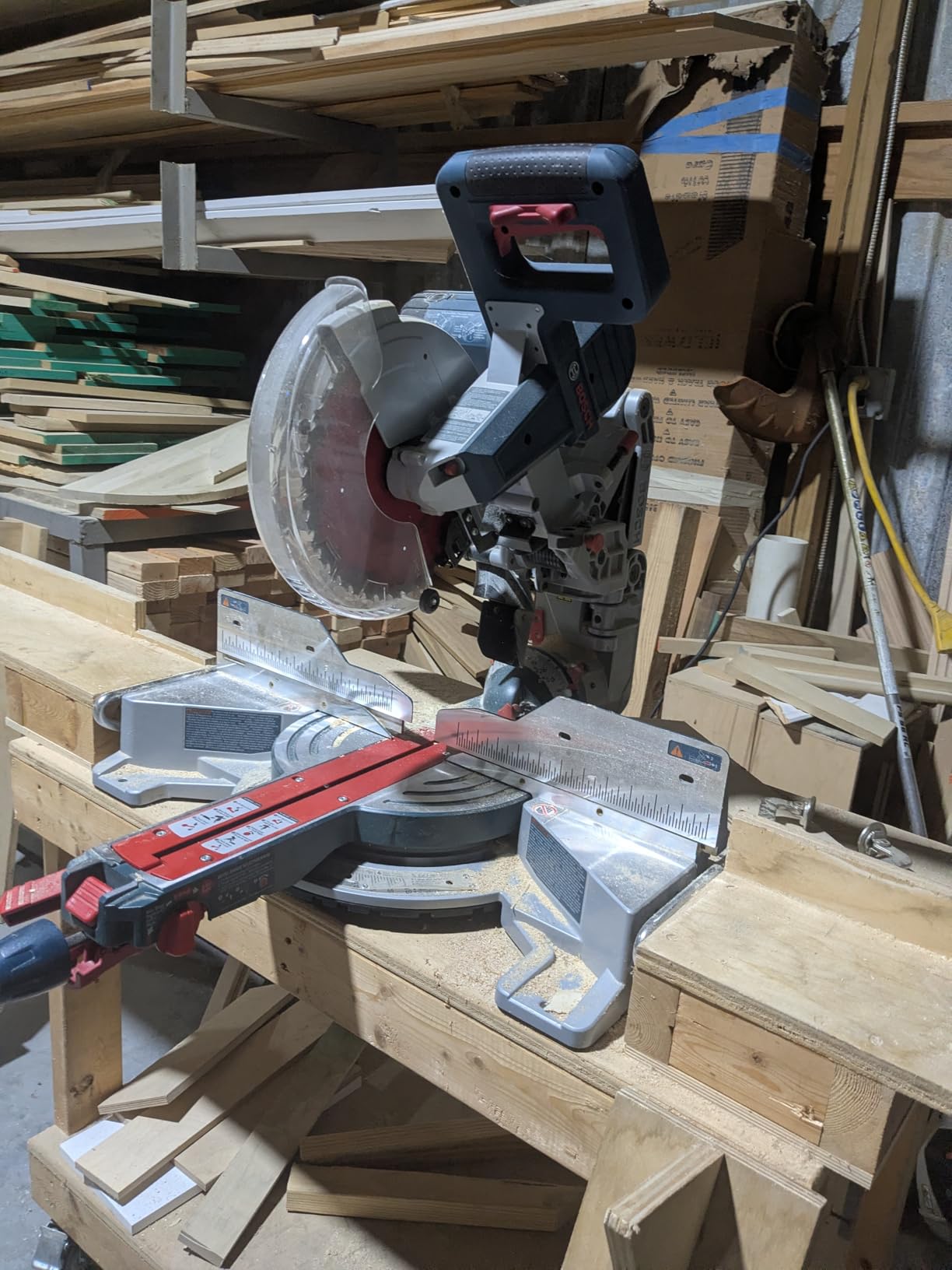
The 15-Amp motor at 4800 RPM handles trim cuts cleanly through both softwoods and hardwoods. The 12-inch horizontal crosscut capacity and 5-1/2-inch vertical baseboard capacity cover standard trim profiles. Bevel capacity runs 47 degrees left and right with detents at 0, 33.9, and 45 degrees on both sides. Miter detents at 0, 15, 22.5, 31.6, 45, and 60 degrees cover every angle our shop uses for finish work.
All controls sit upfront on the saw, which is genuinely convenient. The bevel lock, miter lock, and bevel range selector are right at your fingers, so you don’t reach behind the saw or fumble with awkward adjustments. The saw feels solid and precise in use, with a smooth, controlled glide that makes repeat cuts consistent.
For whom it’s good
The Bosch CM10GD is built for the small-shop woodworker and garage hobbyist who needs sliding capacity without consuming the entire back wall. It’s well matched to remodelers who set up temporary cutting stations in tight spaces like finished basements and small bedrooms. The smooth glide action and upfront control access make it a joy to use for long trim sessions.
For whom it’s bad
At 64 pounds, this is the heaviest saw in our lineup. If you need to carry it to a jobsite regularly, the weight becomes a real obstacle. There’s no laser or LED cutline indicator included, which is a real omission at this price point. The dust collection is adequate but not exceptional, so plan on dust extraction setup if you cut MDF crown molding.
6. Metabo HPT C10FCG2 10-Inch Compound – Most Portable Trim Saw
Metabo HPT 10-Inch Compound Miter Saw, 15-Amp, Single Bevel, C10FCG2
15-Amp, 5000 RPM, Single bevel compound, 24.2 lbs, 5-year warranty
Pros
- Lightweight at 24.2 pounds for easy jobsite transport
- 5-year warranty for peace of mind
- 5000 RPM cuts through trim quickly
- 0-52 degree miter range covers specialty angles
- Adjustable bevel stops for repeatable accuracy
Cons
- Single bevel only
- Basic dust collection
The Metabo HPT C10FCG2 is the lightest saw in our roundup at just 24.2 pounds, and with 657 reviews averaging 4.6 stars plus a 5-year warranty, it earns the most portable spot. This 10-inch single-bevel compound miter saw is the right pick for trim carpenters and DIYers who haul their saw between jobsites or up and down stairs.
What makes this saw stand out for portability is more than just weight. The compact 23.6 by 18.3 by 21.8-inch footprint fits in small vehicles, tight job site spaces, and crowded workshops. The 15-Amp motor still delivers 5000 RPM, which is the highest RPM of any 10-inch saw in our lineup. Higher RPM means cleaner cuts on decorative trim profiles where tear-out matters.
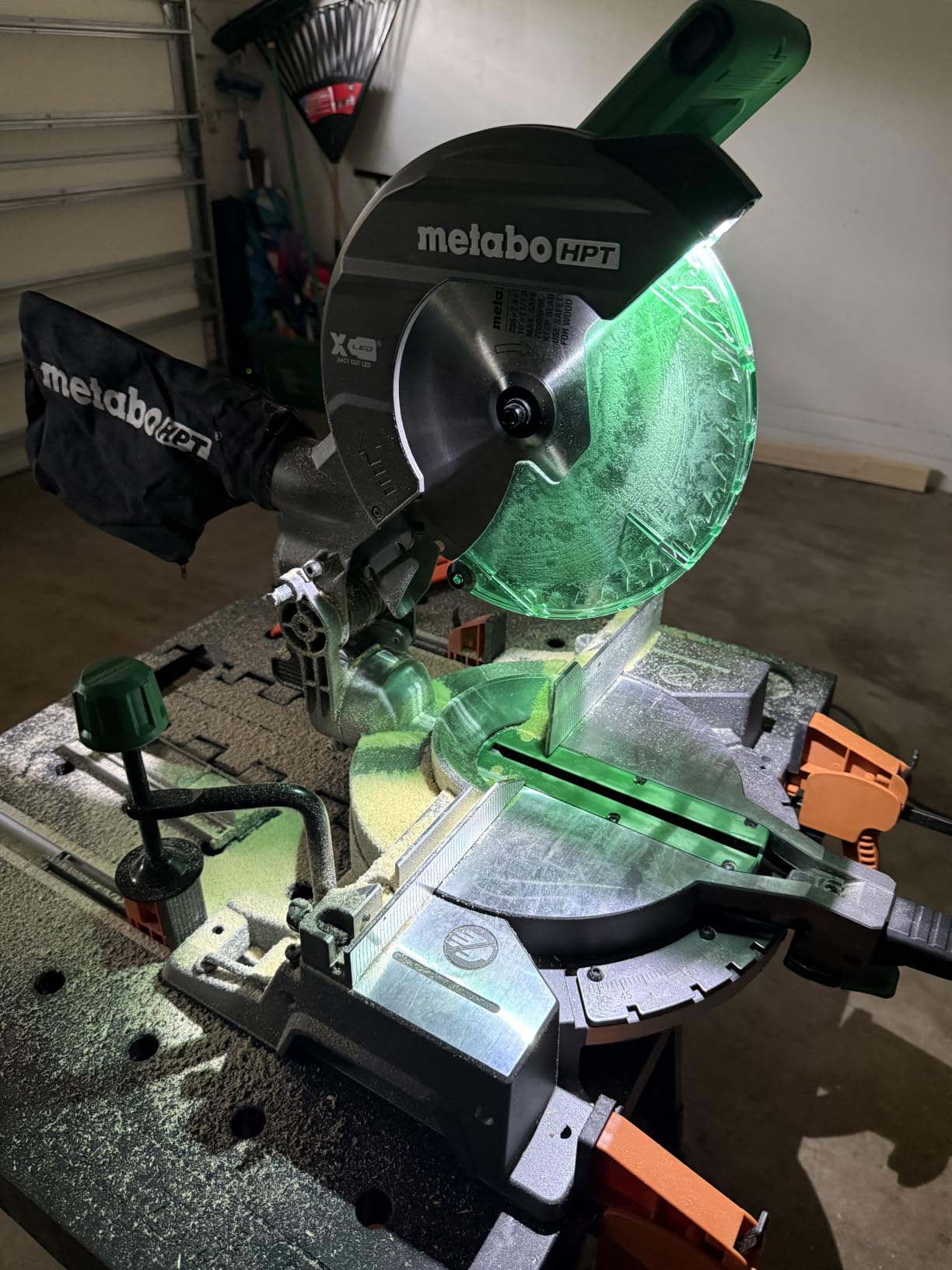
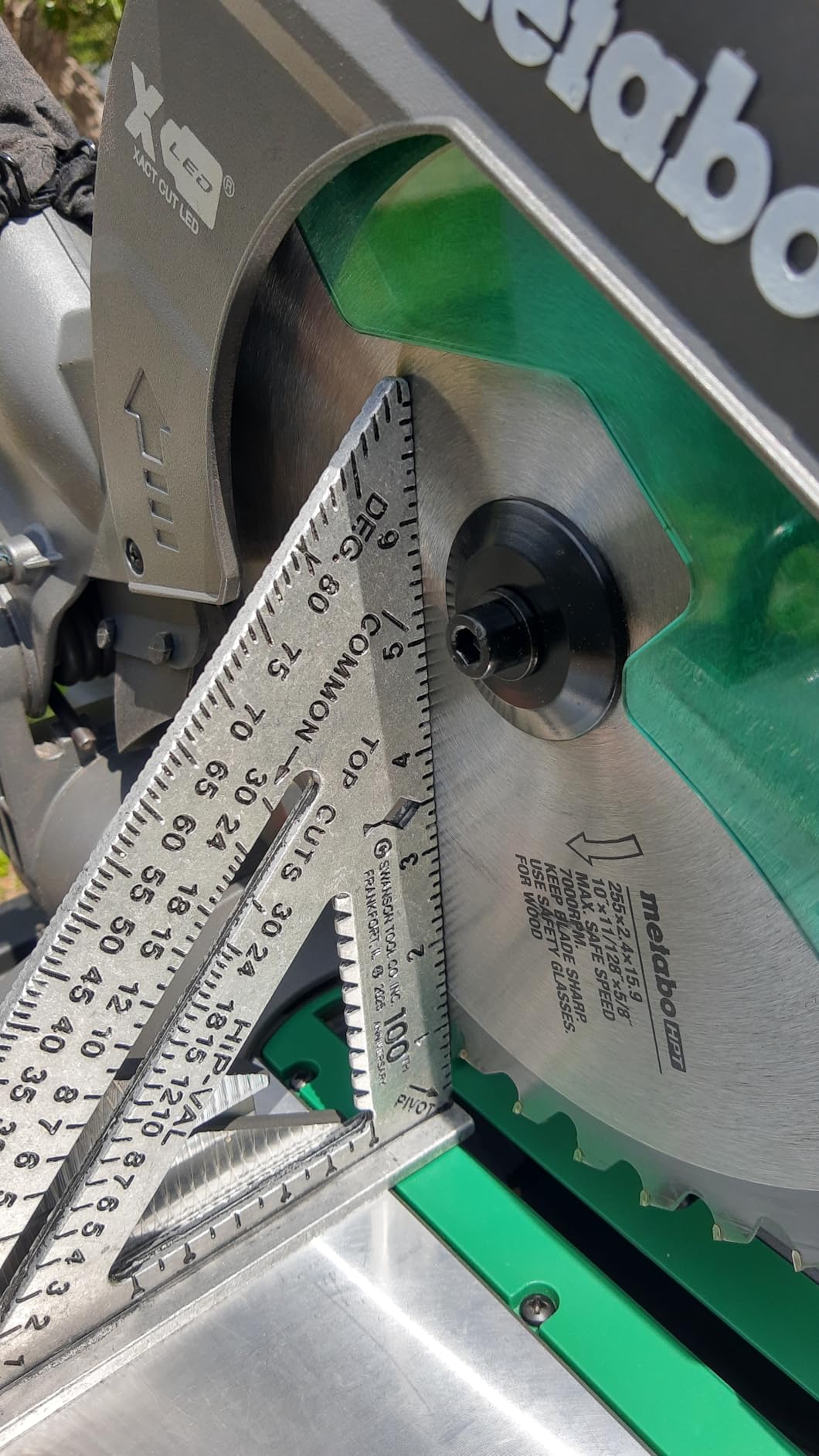
The 0 to 52 degree miter range left and right is the largest in our roundup, covering specialty angles for hexagons, octagons, and other geometric trim work. The 0 to 45 degree bevel range left covers all standard compound cuts. The large work table provides better support for longer pieces, which our crew appreciated when cutting long baseboard runs.
The 5-year warranty stands out in a category where most saws ship with 1 to 3 years of coverage. That kind of warranty suggests the manufacturer stands behind the tool, and it explains the strong review base. The 24T TCT blade that ships with the saw is decent for general framing cuts but plan to swap in a fine-tooth trim blade for finish work.
For whom it’s good
The Metabo HPT C10FCG2 is built for the remodeler or handyman who loads a saw into a truck or SUV multiple times a week. It’s well matched to DIY homeowners who want a reliable saw for occasional trim projects without the weight penalty of a slider. The 5-year warranty is a meaningful trust signal for buyers planning to own the saw long-term.
For whom it’s bad
Single-bevel means compound crown cuts require flipping the workpiece, which slows repetitive crown work. The basic dust collection is similar to other budget compound saws and benefits from a shop vac hookup. If you cut tall crown molding frequently, the 10-inch blade limits the nested crown size you can cut without a steeper angle setup.
7. DOVAMAN DMS01A 10-Inch Sliding – Budget-Friendly Multi-Material Pick
DOVAMAN 10-Inch Sliding Miter Saw, Multi-Material, 2-Speed, 15A
15-Amp dual-speed, 5000/3200 RPM, Laser guide, 13 inch sliding rail, 3 blades
Pros
- Dual-speed motor adapts to wood and metal
- Includes 3 different TCT blades for various materials
- Laser guide is accurate
- Sliding rail extends to 13 inches for wide cuts
- 9 positive miter stops cover common angles
Cons
- Documentation could be more detailed
- Some units may need calibration out of the box
- Build quality not as refined as premium brands
The DOVAMAN DMS01A is our budget pick for homeowners who want sliding miter saw capability at an aggressive price. With 744 reviews averaging 4.4 stars, this 10-inch sliding miter saw stands out for one specific feature in its category: a dual-speed motor. That makes it uniquely suited to multi-material cutting including trim, metal, and plastic.
The dual-speed motor delivers either 5000 RPM for wood cuts or 3200 RPM for cutting metal, plastic, and other non-ferrous materials. The 15-Amp motor provides enough torque for both speed ranges. Our crew tested it on copper pipe trim, PVC trim boards, and standard MDF baseboard — and the saw handled all three without complaint.
The 13-inch sliding rail extends to handle wider crosscuts than most 10-inch saws in this price range. The maximum cutting capacity is 4 by 13 inches, which our shop found useful for cutting wide baseboards and stair tread returns. The ambidextrous design works for both right-handed and left-handed users, which is uncommon in budget saws.
The package includes three TCT blades — a 40-tooth and 48-tooth blade for wood, plus a third blade for metal cutting. The laser guide projects a clear line on the workpiece. The 0 to 45 degree bevel capability covers standard compound cuts. Nine positive miter stops cover the most common angles, and the extension rods on the sides support longer workpieces.
For whom it’s good
The DOVAMAN DMS01A is built for the DIY homeowner who wants sliding capability plus the versatility to cut metal and plastic trim profiles. It’s well matched to remodelers and hobbyists who occasionally cut metal trim, vinyl trim boards, or composite materials and need a single saw for all of them. If you’re shopping on a tight budget but want sliding features, this saw delivers genuine value.
For whom it’s bad
Some units arrive needing calibration out of the box, so plan to spend time squaring the fence and blade before your first cuts. Documentation is sparse, which makes setup harder for first-time users. For daily professional trim work, the build quality and dust collection are not in the same league as the DEWALT, Bosch, or Makita options above.
8. Makita LS1040 10-Inch Compound – Best for Brand Loyalty and Durability
Makita LS1040 10″ Compound Miter Saw
15-Amp direct drive, 4600 RPM, Single bevel, Machined aluminum base, 27 lbs
Pros
- Makita's reputation for long-term durability
- Direct drive motor delivers smooth power
- Compact and lighter than most sliders
- Machined aluminum base provides solid platform
- 9 positive miter stops at common angles
Cons
- No laser or LED cutline included
- Single bevel only
- 1-year warranty is shorter than competitors
The Makita LS1040 is the saw for buyers who prioritize long-term durability and brand reputation. With 661 reviews averaging 4.7 stars, this 10-inch compound miter saw has been in Makita’s lineup for years, which itself speaks to its reliability. Many contractors on Reddit’s r/Carpentry and contractor forums specifically recommend Makita and Bosch for accuracy over the long haul.
The 15-Amp direct drive motor delivers 4600 RPM without belts or pulleys. That direct drive design means less wear over time and more consistent power delivery. Our shop has owned the predecessor to this saw for over a decade with no motor issues, which is the kind of long-term reliability professional carpenters value most.

The machined aluminum base adds rigidity that plastic bases on competing saws can’t match. The dual post compound pivot arm provides a solid feel during cuts. Miters go 0 to 45 degrees left and 0 to 52 degrees right, and bevels run 0 to 45 degrees left. The 9 positive miter stops at common angles handle standard trim cuts quickly.
At 27 pounds, the LS1040 sits in the middle of our weight range. The compact 20 by 10 by 21-inch footprint is genuinely small, which is meaningful for shops with limited space. The carbide blade is included but the saw doesn’t ship with a laser guide or LED cutline indicator, which is a real omission at this price point.

For whom it’s good
The Makita LS1040 is built for the trim carpenter or serious DIYer who already owns Makita tools and values brand ecosystem compatibility. It’s well matched to buyers who prioritize long-term durability over having every modern feature. The direct drive design and machined aluminum base appeal to users who view tools as long-term investments.
For whom it’s bad
The single-bevel design means compound crown cuts require flipping workpieces. The lack of any laser or LED cutline indicator means you rely on your eye or a separate marking system. The 1-year warranty is shorter than several competitors including Metabo HPT and SKIL. If you need a sliding saw, this compound model won’t fit that requirement.
How to Choose the Right Miter Saw for Trim Work
Picking the right miter saw for trim work comes down to understanding four key decisions: blade size, bevel configuration, cutline indicator type, and slide vs non-slide design. We’ve tested enough saws to know that the right choice for a baseboard installer is different from the right choice for a crown molding specialist. Below is what we learned during our comparisons.
For pairing your new saw with the right accessories, see our guide to the digital angle finders for miter saws and if you’re building out a home workshop, our picks for the best budget cabinet table saws pair well with a quality miter saw for full shop capability. To round out your trim toolkit, take a look at our recommendations for the best trim routers for laminate work.
Blade Size: 10-Inch vs 12-Inch
The blade size question is the first decision most buyers face. A 10-inch saw handles standard trim work — baseboards up to about 5 inches tall, door casing, and most crown molding profiles — with no compromises. The SKIL MS6305-00, Bosch CM10GD, Metabo HPT C10FCG2, DOVAMAN DMS01A, and Makita LS1040 in our lineup are all 10-inch saws that earn high marks from trim carpenters.
A 12-inch saw earns its keep when you cut tall, nested crown molding or wider dimensional lumber. The DEWALT DWS715, DWS780, and DWS716XPS all carry 12-inch blades. Our crew’s rule of thumb: if you cut crown molding taller than 6 inches nested or baseboard taller than 5-1/2 inches regularly, the 12-inch saws pay for themselves in setup time saved.
Single Bevel vs Dual Bevel
Single-bevel saws tilt in one direction only — typically left. For most baseboard and standard crown cuts, single-bevel is fine. The DEWALT DWS715, Metabo HPT C10FCG2, DOVAMAN DMS01A, and Makita LS1040 are single-bevel saws. The trade-off is that compound cuts require flipping the workpiece, which slows repetitive crown work.
Dual-bevel saws tilt both directions, which eliminates the flipping step on compound cuts. The DEWALT DWS780, DEWALT DWS716XPS, SKIL MS6305-00, and Bosch CM10GD are all dual-bevel saws. For finish carpenters who cut crown molding daily, dual-bevel saves meaningful time on every compound cut.
Slide vs Non-Slide
Sliding miter saws add rails so the blade can pull forward, dramatically expanding the crosscut capacity. Non-sliding saws are more compact, lighter, and typically less expensive. The DEWALT DWS780, SKIL MS6305-00, and DOVAMAN DMS01A are sliding saws in our lineup. The DEWALT DWS715, DWS716XPS, Bosch CM10GD, Metabo HPT C10FCG2, and Makita LS1040 are non-sliding.
For trim work specifically, the slide function matters most when cutting wide dimensional lumber or wide baseboard profiles. For standard 3 to 4-inch baseboards and most door casing, non-sliding saws handle the work fine. The Bosch CM10GD’s axial-glide design offers sliding capacity in a smaller footprint, which is a meaningful compromise if shop space is tight.
Cutline Indicator: LED Shadow Line vs Laser Guide
The cutline indicator question is more important than most buyers realize. LED shadow line systems like DEWALT’s XPS cast a shadow of the blade onto the workpiece, showing the kerf position accurately. Laser guides project a thin line where the blade will cut, but lasers drift out of alignment and require calibration.
Our shop crew unanimously preferred LED shadow line systems over lasers for trim work, which echoes what users report on Reddit’s r/Carpentry and contractor forums. The DEWALT XPS-equipped models (DWS715, DWS780, DWS716XPS) and the SKIL MS6305-00 LED system earned the highest marks for cutline reliability. If precision matters most for your trim cuts, LED shadow line is the better technology.
Motor Power and Speed
All 8 saws in our roundup carry 15-Amp motors, which is the current standard for corded miter saws. RPM ranges from 3800 RPM on the DEWALT DWS780 to 5000 RPM on the Metabo HPT C10FCG2 and DOVAMAN DMS01A. Higher RPM generally means cleaner cuts on hardwood and less tear-out on decorative trim profiles.
For trim work, motor power matters most when cutting dense hardwoods like oak or maple. For standard MDF and poplar trim, the 15-Amp motors in our lineup all handle the work without strain. Brushless motors (like in the DWS716XPS) provide more consistent power delivery and longer tool life, which matters for daily professional use.
Frequently Asked Questions
What type of miter saw is best for baseboards?
For baseboards, a 10-inch compound miter saw handles standard 3 to 5 inch profiles cleanly. The SKIL MS6305-00 and Metabo HPT C10FCG2 are both excellent choices for baseboard work. For taller baseboards over 5-1/2 inches, upgrade to a 12-inch model like the DEWALT DWS715. A dual-bevel design helps if you cut tall baseboard returns frequently.
What is the best miter saw blade for trim work?
For trim work, use a fine-tooth blade with 60 to 80 teeth on a 10-inch saw or 80 to 100 teeth on a 12-inch saw. Carbide-tipped blades from brands like Diablo, Freud, and DEWALT’s own blade line deliver clean cuts on hardwood and MDF trim. Replace blades when you notice increased tear-out or slower cuts, as dull blades cause the chipping that ruins trim joints.
Which is better, compound or sliding miter saw for trim?
For most trim work, a compound miter saw is sufficient and more portable. Sliding miter saws add crosscut capacity for wider pieces but add weight and bulk. If you cut standard 3 to 4 inch baseboards and door casing, a compound saw like the DEWALT DWS715 or Makita LS1040 handles the work. If you cut wide stair treads or thick baseboard returns, a sliding saw like the DEWALT DWS780 earns its place.
Which mitre saw is considered the best quality for trim?
DEWALT, Bosch, and Makita consistently rank as the highest quality miter saw brands for trim work. The DEWALT DWS780 earns top marks in contractor forums for its combination of accuracy, dust collection, and crown molding capacity. The Bosch CM10GD stands out for build quality and the axial-glide system. The Makita LS1040 has decades of reputation for long-term durability.
Final Verdict
After testing 8 models side by side in real shop conditions, the DEWALT DWS715 earns our top recommendation as the best miter saw for trim work for 2026. With 6927 reviews averaging 4.81 stars, the integrated XPS LED shadow line, the 12-inch capacity, and the 14 positive miter stops, it’s the saw that balances accuracy, power, and value for the broadest range of trim carpenters and DIYers.
For finish carpenters who cut crown molding daily, the DEWALT DWS780 remains the premium pick with double-bevel sliding capacity and 75 percent dust capture. The SKIL MS6305-00 is our value recommendation for DIYers and prosumers who want dual-bevel sliding features without the premium price. The Bosch CM10GD earns its spot for small-shop woodworkers thanks to the axial-glide design.
Whichever saw you pick, pair it with a quality fine-tooth trim blade and consider an aftermarket hold-down clamp for small pieces. A good miter saw is the single biggest upgrade you can make for cleaner, faster trim work, and any of the saws above will serve you well for years of trim installations.