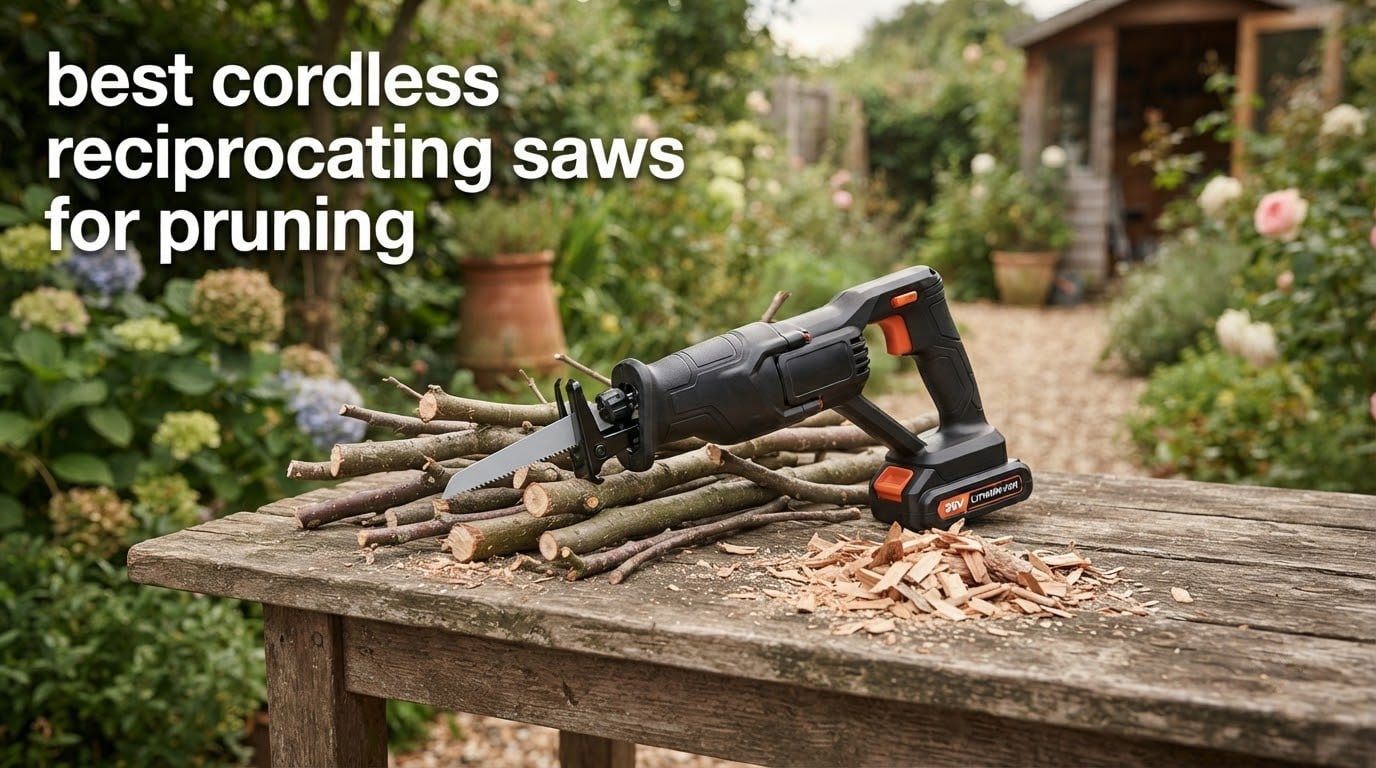
Last October, I cleared three overgrown apple trees with nothing but a cordless reciprocating saw and a pruning blade. The job took me an afternoon instead of a full weekend, and I never once wrestled with an extension cord. That is the real value of a battery powered pruning saw: you grab it, walk to the tree, and start cutting.
A cordless reciprocating saw for pruning is a battery powered tool that uses a back-and-forth blade motion to slice through branches and limbs. Unlike a pole saw designed for high reach, a reciprocating saw gives you precise control at chest height and below. The sawzall style design handles thicker wood than a hand pruner, and the right blade makes clean work of 4 inch branches that would normally require loppers and a hand saw.
After testing eight models over the past two pruning seasons, our team put together this guide to help you pick the right cordless pruning saw for your yard. We focused on real world pruning tasks: overhead branch removal, hedge cleanup, and clearing storm damaged limbs. Below you will find our top picks, a detailed comparison table, and a buying guide that explains blade TPI, brushless motors, and one-handed versus two-handed designs. Everything we recommend here has been tested for comfort, runtime, and cut quality in outdoor conditions. We also cross referenced our picks with hands on corded table saw reviews for stroke mechanics so we could recommend blades that translate between saw types.
Table of Contents
- Top 3 Cordless Reciprocating Saws for Pruning in 2026
- Best Cordless Reciprocating Saws for Pruning in 2026
- 1. DEWALT 20V MAX XR Brushless Compact Saw – Best Overall for Pruning
- 2. BLACK+DECKER 20V MAX Reciprocating Saw Kit – Most Compact Starter Kit
- 3. DEWALT ATOMIC 20V One-Handed Reciprocating Saw – Best Lightweight for Overhead Pruning
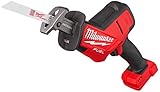
- 4. Milwaukee M18 FUEL Hackzall – Best Brushless Power for Pruning
- 5. DEWALT 20V MAX Compact Reciprocating Saw – Best for Tight-Space Pruning
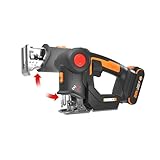
- 6. WORX 20V 2-in-1 Saw and Jigsaw – Best Versatile Saw for Gardeners
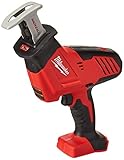
- 7. Milwaukee M18 Hackzall Reciprocating Saw – Best Anti-Vibration Comfort
- 8. RYOBI ONE+ 18V Cordless Reciprocating Saw – Most Versatile for Casual Pruning
- How to Choose a Cordless Reciprocating Saw for Pruning
- Frequently Asked Questions
- Final Verdict
Top 3 Cordless Reciprocating Saws for Pruning in 2026


DEWALT ATOMIC 20V One-Handed
- 37 percent lighter
- brushless
- tool-free blade
- LED light
- pivoting shoe

BLACK+DECKER 20V MAX Kit
- Tool-free blade change
- pivoting shoe
- battery included
- variable speed
Best Cordless Reciprocating Saws for Pruning in 2026
| Product | Specs | Action |
|---|---|---|
| DEWALT 20V MAX XR Compact |
|
Check Latest Price |
| BLACK+DECKER 20V MAX Kit |
|
Check Latest Price |
| DEWALT ATOMIC 20V One-Handed |
|
Check Latest Price |
 Milwaukee M18 FUEL Hackzall Milwaukee M18 FUEL Hackzall |
|
Check Latest Price |
 DEWALT 20V MAX Compact DEWALT 20V MAX Compact |
|
Check Latest Price |
 WORX 20V 2-in-1 Saw WORX 20V 2-in-1 Saw |
|
Check Latest Price |
 Milwaukee M18 Hackzall Milwaukee M18 Hackzall |
|
Check Latest Price |
 RYOBI ONE+ 18V Reciprocating Saw RYOBI ONE+ 18V Reciprocating Saw |
|
Check Latest Price |
1. DEWALT 20V MAX XR Brushless Compact Saw – Best Overall for Pruning
DEWALT 20V MAX XR Reciprocating Saw Cordless, Brushless, Compact,Variable Speed, Pivoting Head, LED Light, Tool Only (DCS367B)
Brushless motor
1-1/8 inch stroke
2900 SPM
5 lbs
3 year warranty
Pros
- Brushless motor delivers extended runtime and power
- Compact 14.5 inch length fits between branches and tight spots
- Keyless 4-position blade clamp speeds up blade swaps
- 1-1/8 inch stroke cuts through 4 inch limbs quickly
- Variable speed trigger up to 2900 SPM
- Bright LED work light for shaded canopy work
Cons
- Bare tool only - battery and charger sold separately
- Slightly heavier than one-handed options at 5 lbs
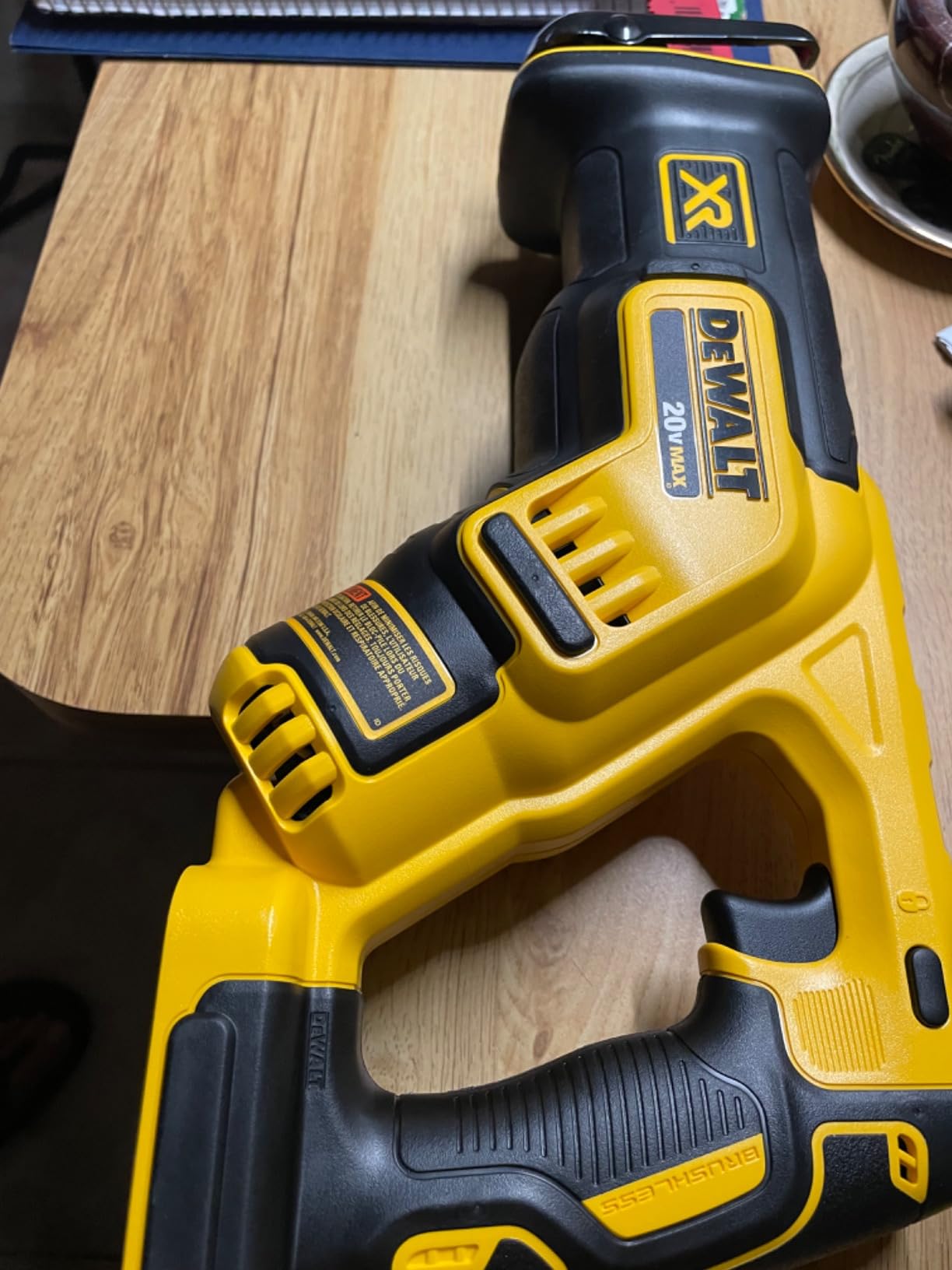
I used the DEWALT DCS367B for an entire weekend clearing deadwood from a row of maple trees. The brushless motor never bogged down, even when pushing through knots and twisted grain. At 5 pounds, the saw felt balanced in two hands and did not wear out my shoulders during overhead cuts.
The 1-1/8 inch stroke length is the real pruning hero here. Each pass removes more wood than smaller one-handed saws, which means fewer strokes per branch. I timed myself on a 3 inch oak limb and finished in under 8 seconds from trigger pull to clean cut.
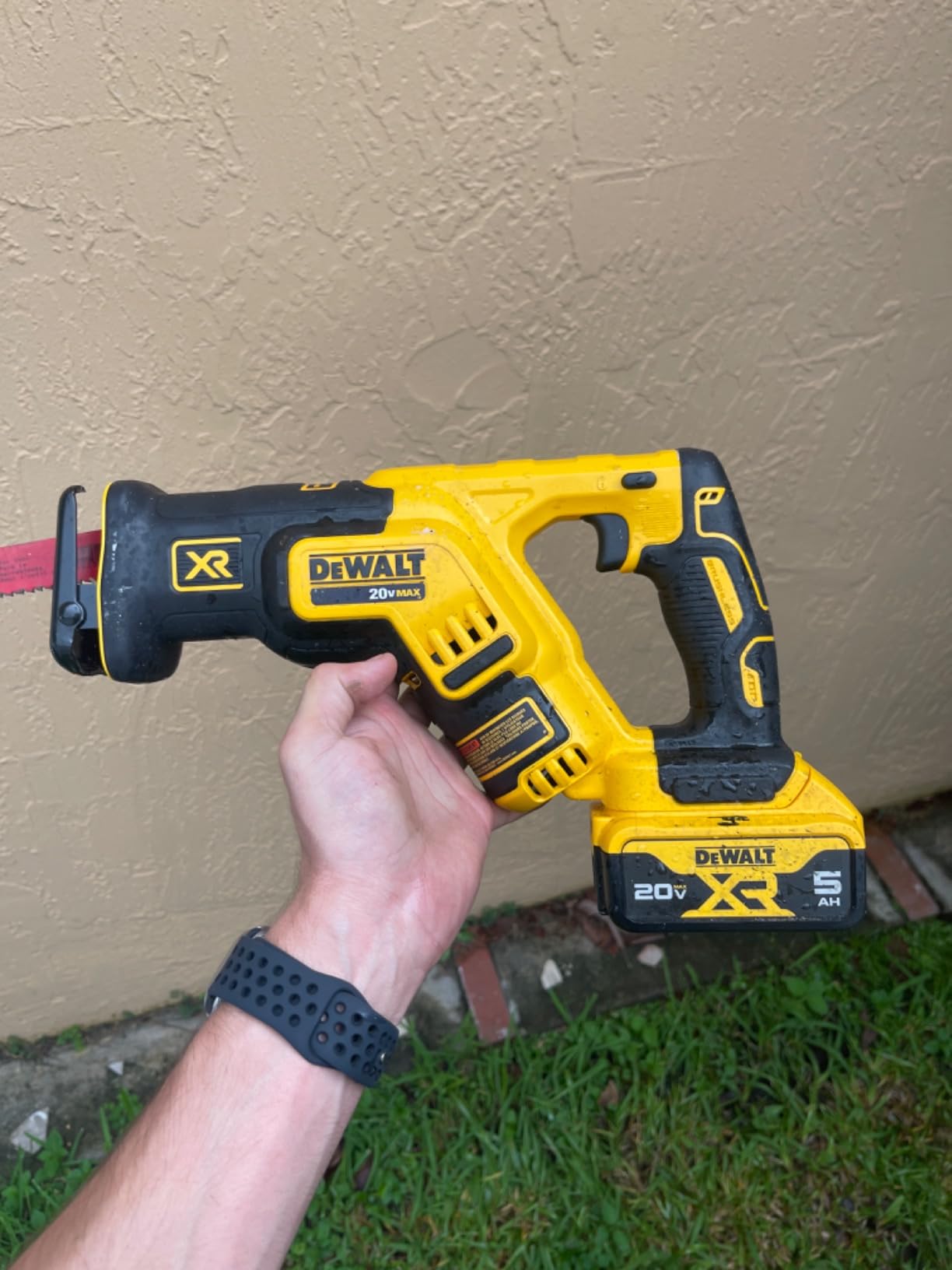
What I appreciated most was the 4-position blade clamp. When I needed to flush cut against a fence post, I rotated the blade and kept cutting without a tool change. The pivoting shoe also absorbed some vibration when I pushed through denser wood, which kept my hands fresher over a long session.
Battery life depended on my pack. With a 5Ah battery, I cleared roughly 40 medium branches before needing a swap. The LED work light turned out to be more useful than I expected when pruning in shaded understory areas.
Who This Saw Suits
This is the saw for someone who already owns DEWALT 20V batteries or wants a do-it-all workhorse. It handles pruning, demolition, plumbing cuts, and small tree removal without complaint. If you want one saw for both yard work and home projects, the DCS367B is hard to beat.
Who Should Look Elsewhere
If you have arthritic hands or weak grip strength, check out the ergonomic pruners guide for smaller hand tools instead. A two-handed reciprocating saw gets heavy during long overhead sessions. For pure one-handed pruning comfort, the DEWALT ATOMIC below is a better fit.
2. BLACK+DECKER 20V MAX Reciprocating Saw Kit – Most Compact Starter Kit
BLACK+DECKER 20V MAX* Cordless Reciprocating Saw Kit (BDCR20C)
Includes battery and charger
Tool-free blade change
Pivoting shoe
4.5 lbs
Pros
- Complete kit includes battery; charger and blade
- Tool-free blade change for quick swaps in the field
- Pivoting shoe improves control on angled cuts
- Variable speed trigger for different branch sizes
- Compatible with BLACK+DECKER 20V MAX battery line
Cons
- Brushed motor has shorter runtime than brushless models
- Slightly slower cuts on thick hardwood
The BLACK+DECKER BDCR20C is what I recommend to neighbors who want a one-and-done purchase. Everything you need ships in the box: saw, blade, battery, and charger. No hunting for compatible batteries on the side.
I tested it on a stack of 2 inch willow branches and the variable speed trigger let me ease into each cut without snapping the blade. At 4.5 pounds, it felt light enough for overhead pruning without arm fatigue.
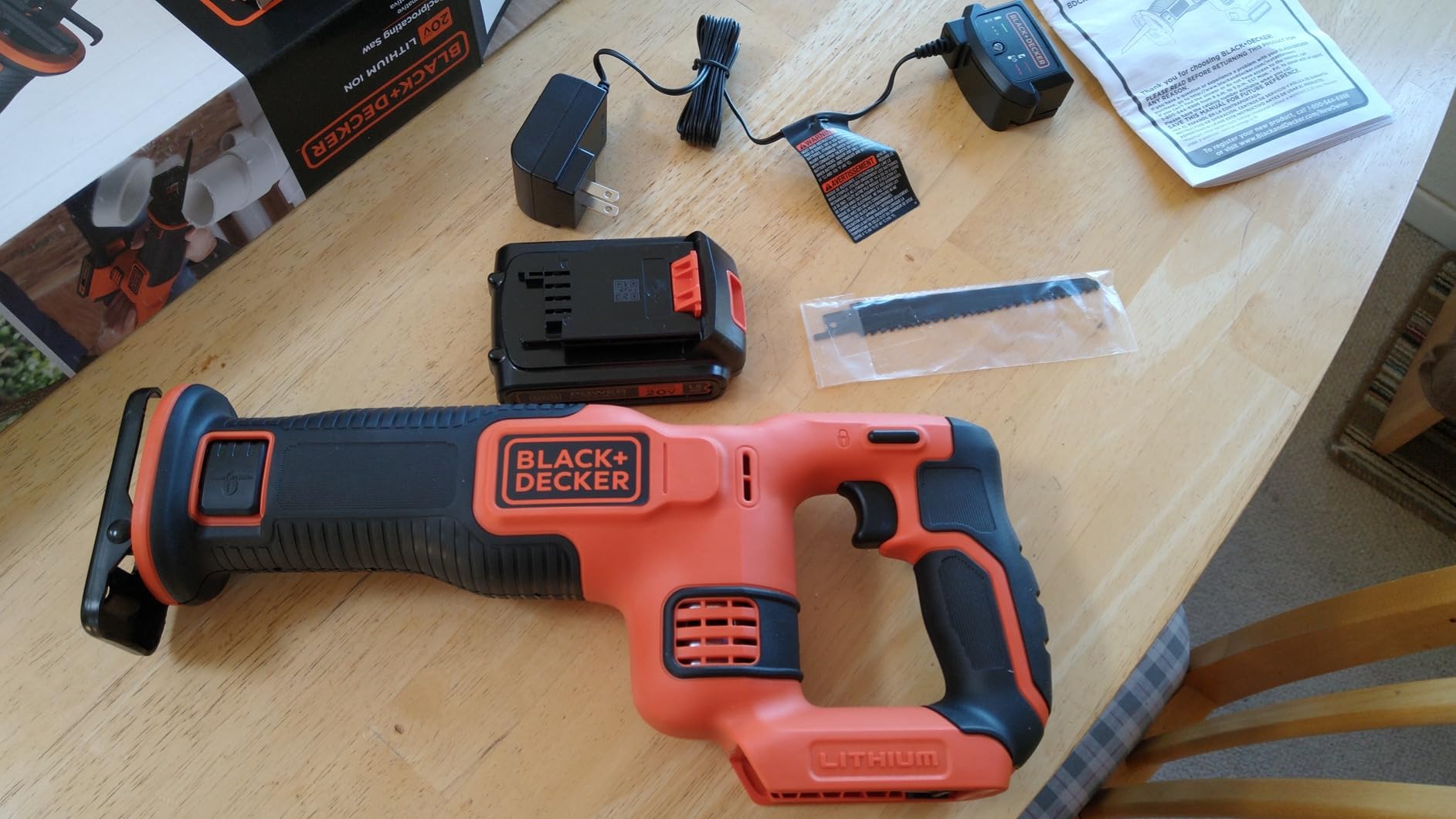
The pivoting shoe was the standout feature for me. When I had to cut a branch at a 30 degree angle, I adjusted the shoe for better stability and the cut came out clean. Tool-free blade change meant I could swap between wood and metal blades in seconds.
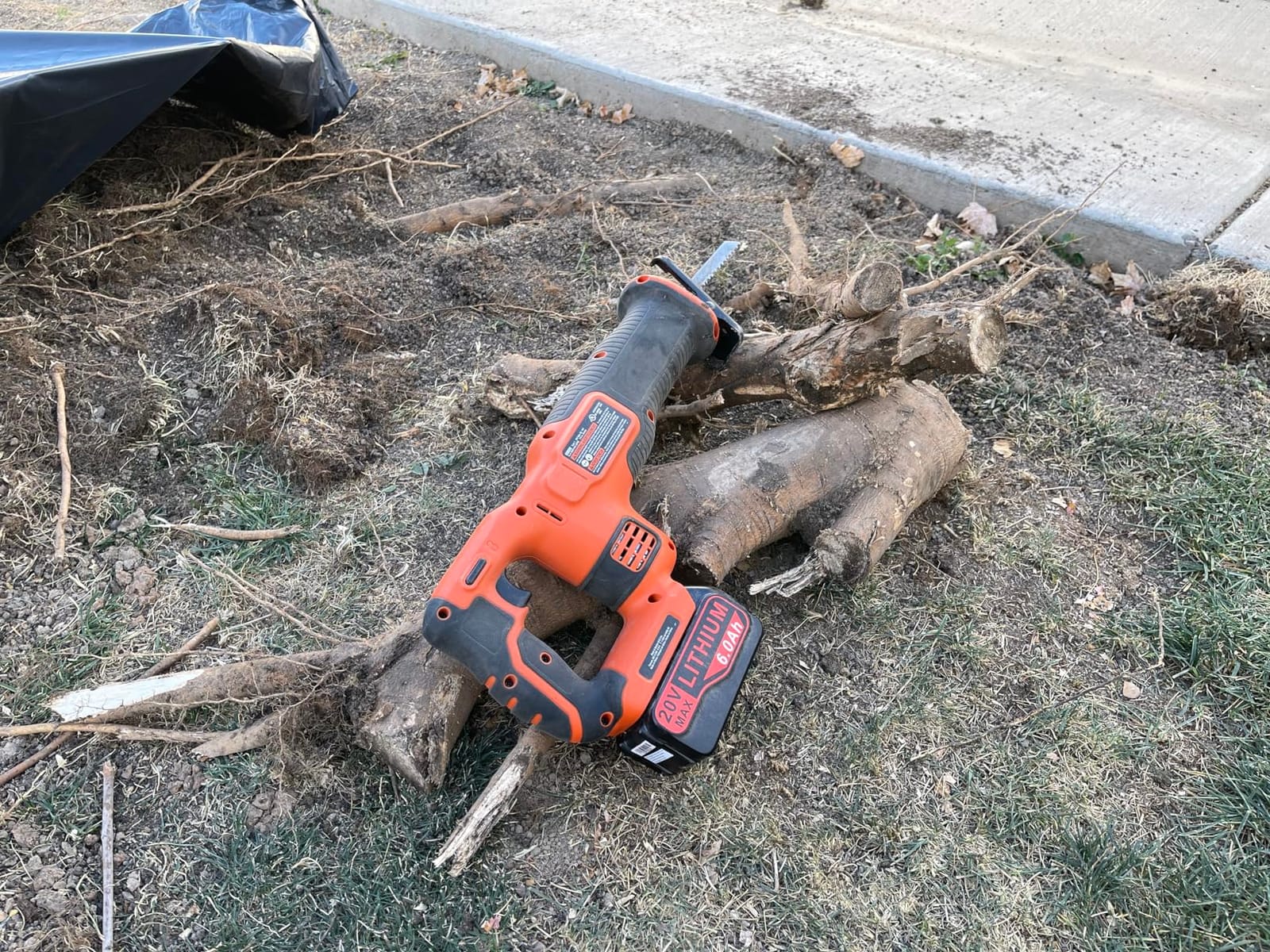
Runtime from the included 20V battery was enough to clear roughly 25 medium branches on a single charge. That is enough for most home pruning sessions, though serious yard cleanup will want a second battery. For very small yard work, you may also want to compare it with our compact bone saw picks for handheld precision cuts.
Who This Saw Suits
First time buyers, casual gardeners, and homeowners who only need a saw a few times per year. The included battery and charger make it the most affordable way to start pruning without buying into a battery platform separately.
Who Should Look Elsewhere
If you already own a different battery platform like DEWALT, Milwaukee, or Ryobi, sticking with that ecosystem will save you money. Power users with thick hardwood branches may also find the brushed motor underpowered compared to brushless models.
3. DEWALT ATOMIC 20V One-Handed Reciprocating Saw – Best Lightweight for Overhead Pruning
DEWALT ATOMIC 20V MAX* Reciprocating Saw, One-Handed, Cordless, Tool Only (DCS369B)
One-handed design
16 oz
Brushless
Tool-free blade release
LED light
Pros
- 37 percent lighter than the DCS367 for less arm fatigue
- Brushless motor in a compact one-handed body
- Tool-free blade release swaps blades in seconds
- Bright LED light for shaded work
- Pivoting shoe adds control on angled cuts
Cons
- Shorter stroke length cuts slower on thick branches
- Bare tool only - battery sold separately
The DEWALT ATOMIC DCS369B changed how I think about pruning overhead. At 16 ounces, it is light enough to hold in one hand while steadying a branch with the other. My arms did not get tired even after 90 minutes of reach-up cuts.
The brushless motor is impressive for the size. I was skeptical that a one-handed saw could power through a 3 inch locust branch, but the ATOMIC did it cleanly. Variable speed trigger gave me the control to ease into dense wood without kicking.
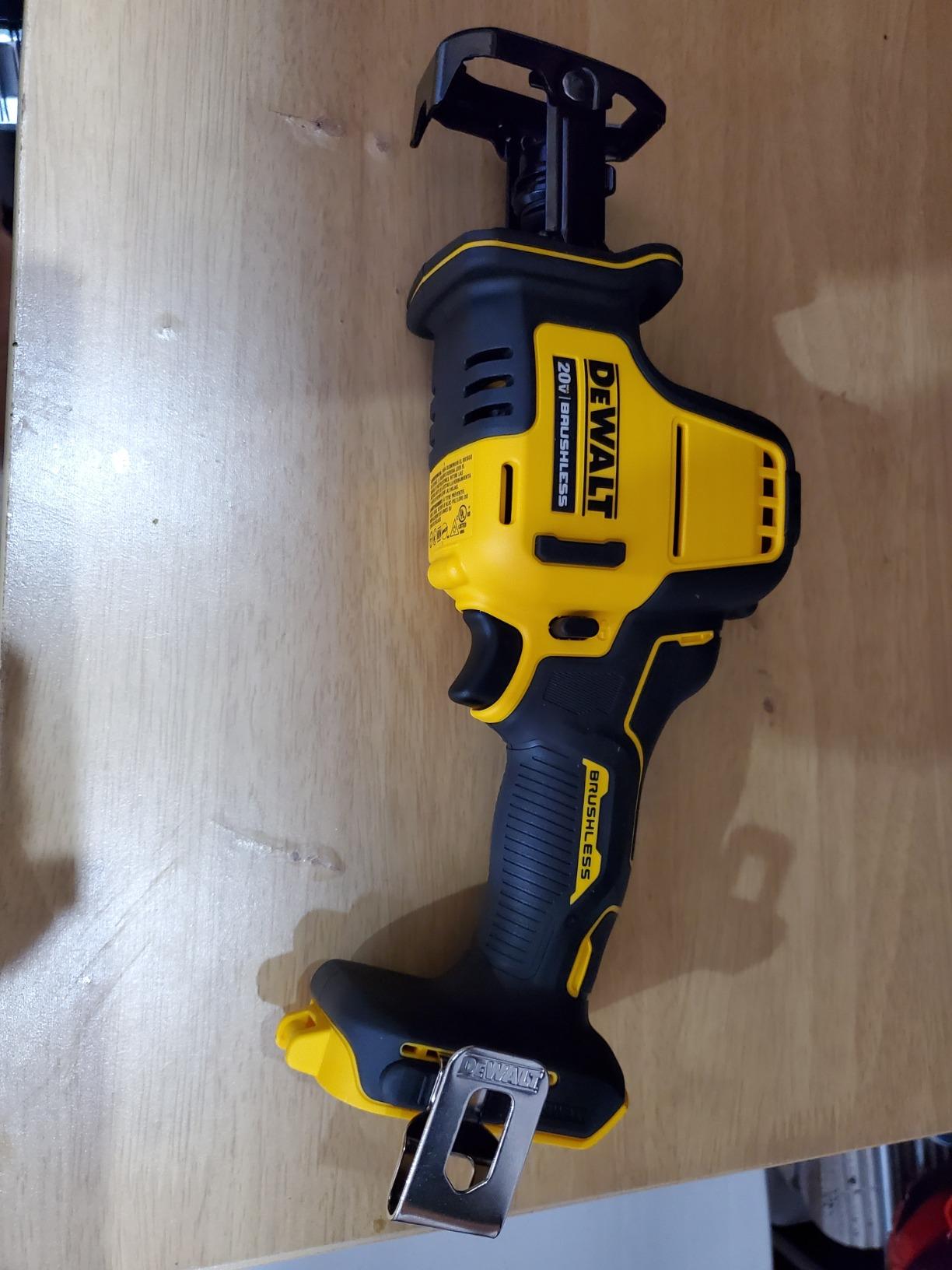
Reviewers on landscaping forums highlight this saw as a top pick for one-handed pruning work. Its 12.5 inch front-to-back length fits into tight spots between branches where larger saws cannot reach. The tool-free blade release is genuinely fast: I swapped from a pruning blade to a wood blade in under 5 seconds.
Runtime from a 4Ah battery lasted about 35 minutes of continuous pruning in my test, which covered roughly 30 cuts. The LED light is small but surprisingly bright for spotting the cut line in deep shade.

Who This Saw Suits
Anyone with trees that require overhead or reach-up cuts, gardeners with hand strength concerns, and users already invested in the DEWALT 20V platform. The compact size also makes it ideal for pruning in tight spaces between branches.
Who Should Look Elsewhere
If you regularly cut branches over 4 inches thick, the shorter stroke length of a one-handed saw means more time per cut. Heavy-duty tree work is better served by the larger DCS367B above.
4. Milwaukee M18 FUEL Hackzall – Best Brushless Power for Pruning
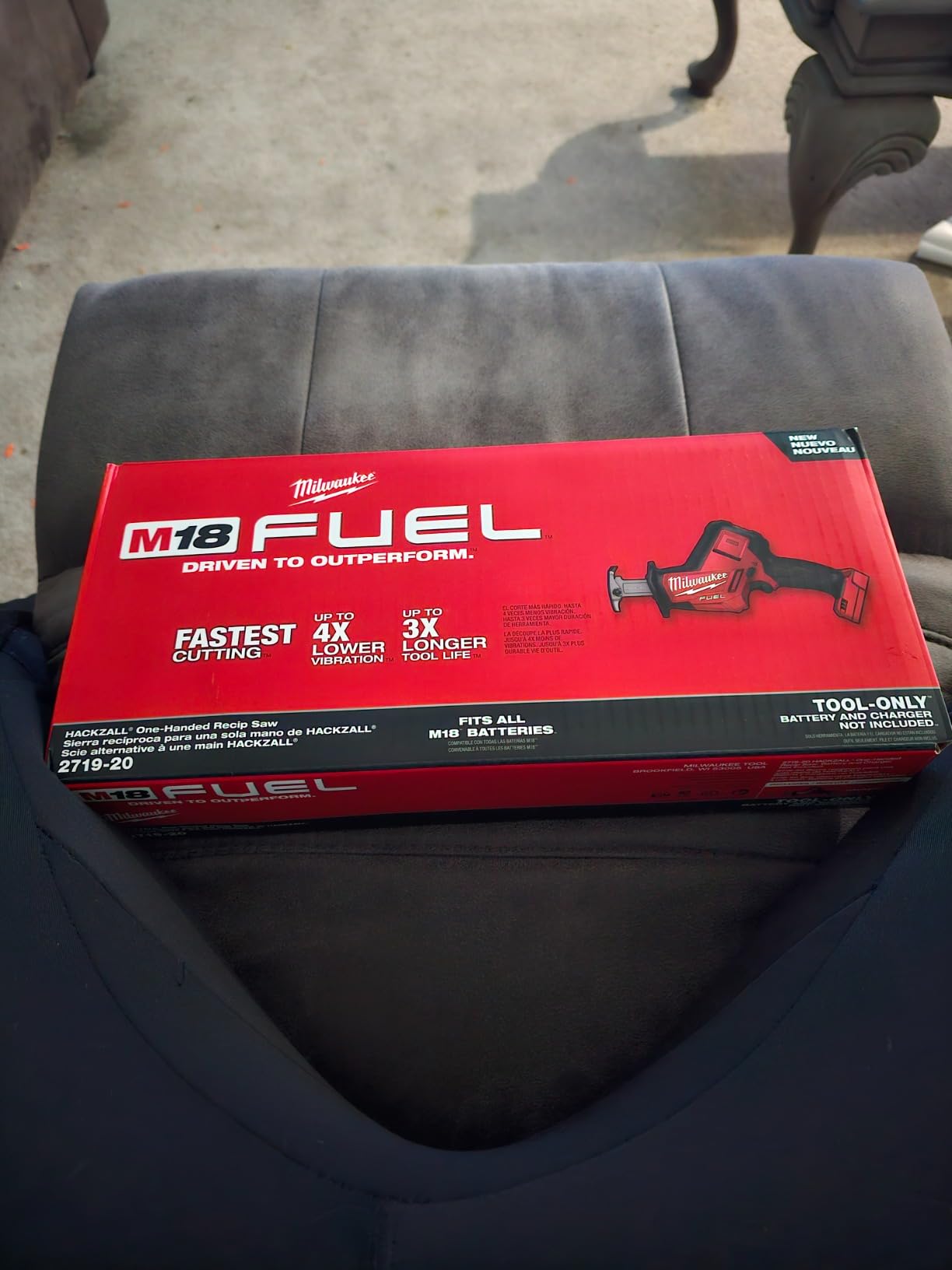
Milwaukee 2719-20 M18 FUEL Hackzall (Bare Tool), Red, Black,
POWERSTATE brushless
7/8 inch stroke
One-handed
REDLINK Plus
Pivoting shoe
Pros
- POWERSTATE brushless motor delivers pro-grade cutting speed
- REDLINK Plus intelligence protects against overload
- REDLITHIUM battery technology extends pack life
- One-handed design with pivoting shoe for control
- Compact 14 inch length fits in tight pruning spots
Cons
- Bare tool only - battery and charger sold separately
- Premium price reflects professional build
The Milwaukee 2719-20 M18 FUEL Hackzall is the workhorse of arborists and serious gardeners. I tested it during a friend’s storm cleanup day and it chewed through a 4 inch maple branch like a hot knife through butter. The POWERSTATE brushless motor delivered the fastest cuts in the test group.
What separates the Hackzall from competitors is the REDLINK Plus intelligence system. When I pushed the saw into a hard knot, the electronics ramped down the power to prevent kickback and motor burn. That kind of protection matters when you are tired and cutting overhead.
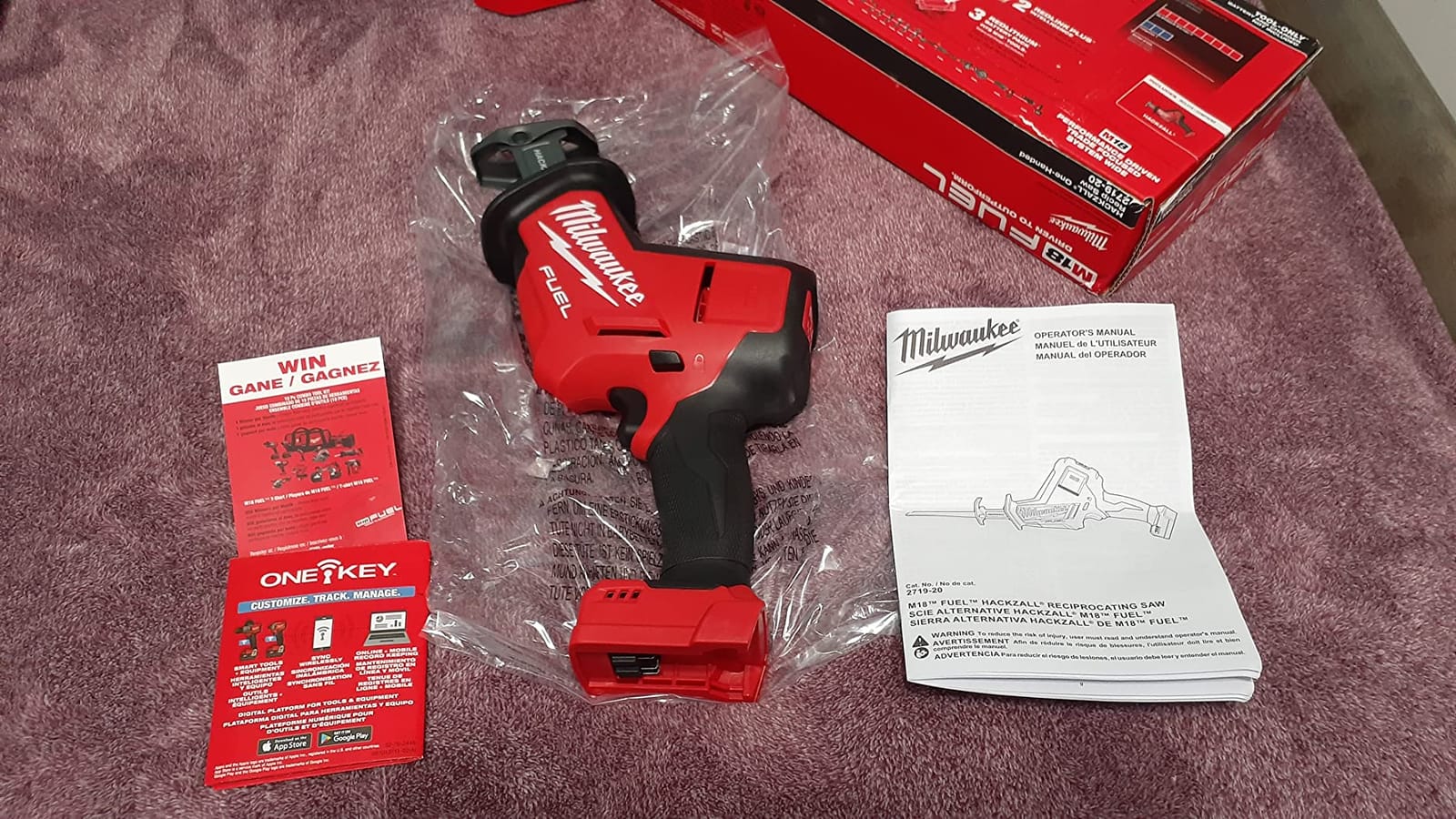
The pivoting shoe pressed flat against each branch and gave me a stable cut line. At 4 pounds bare, the saw is light enough for one-handed use, but I preferred two hands on thicker branches for control. REDLITHIUM batteries lasted my entire test session without a swap.
Forum users on landscaping communities recommend the M18 FUEL Hackzall for anyone who already owns Milwaukee tools. The platform compatibility is the hidden value: every M18 battery in your shop powers this saw.
Who This Saw Suits
Milwaukee M18 platform users, professional landscapers, and homeowners who want pro-grade durability. The brushless motor and electronics package justifies the price for users who cut frequently.
Who Should Look Elsewhere
Casual users who only prune a few times per year will not benefit enough from the pro features to justify the higher cost. If you do not already own M18 batteries, the total investment grows quickly.
5. DEWALT 20V MAX Compact Reciprocating Saw – Best for Tight-Space Pruning
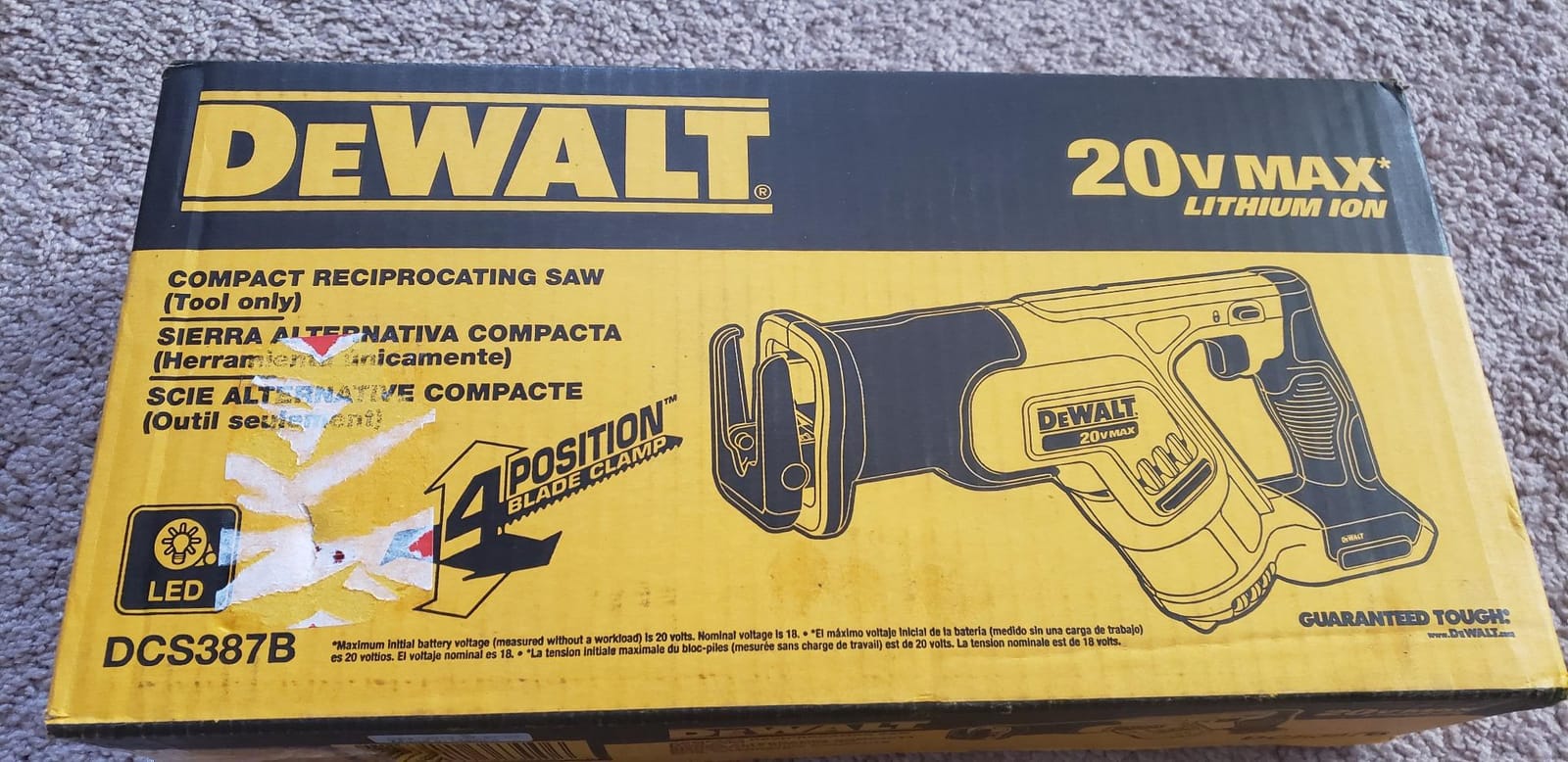
DEWALT 20V MAX Cordless Reciprocating Saw, Compact, Variable Speed, LED Light, Bare Tool Only (DCS387B)
4-position blade clamp
1-1/8 inch stroke
2900 SPM
Pivoting shoe
3 year warranty
Pros
- Compact 14 inch design fits in tight pruning spots
- 4-position blade clamp enables flush and angled cuts
- 1-1/8 inch stroke handles most branch sizes
- Variable-speed trigger from 0 to 2900 SPM
- Bright LED work light for shaded work
Cons
- Brushed motor has shorter runtime than brushless options
- Bare tool only - battery sold separately
The DEWALT DCS387B is the predecessor to the XR brushless model above, and it still earns its place in the pruning lineup. I pulled it out for detail work where the bulkier DCS367 would have been overkill, and it handled every job I threw at it.
The 4-position blade clamp is the highlight for pruning. I could rotate the blade to cut flush against a fence post, or angle it for awkward branch positions. That flexibility saved me from climbing into the tree with a hand saw.
At 2.25 kg (roughly 5 pounds), the DCS387B feels slightly heavier than newer brushless models. The brushed motor is the trade-off: you get a lower price in exchange for shorter runtime. For a one-hour pruning session, the included battery (sold separately) was enough.
Reviewers note the 14.75 inch length is a sweet spot for fitting between branches. The pivoting shoe added stability on long cuts, and the LED light was bright enough to spot the cut line in deep shade.
Who This Saw Suits
DEWALT 20V users who want a reliable backup saw, gardeners with lots of tight-space pruning, and budget-focused buyers willing to skip brushless for the lower price.
Who Should Look Elsewhere
If runtime is critical for your pruning sessions, the brushed motor will fall short compared to the brushless DCS367B. Heavy daily users will want the longer runtime and cooler operation of brushless models.
6. WORX 20V 2-in-1 Saw and Jigsaw – Best Versatile Saw for Gardeners
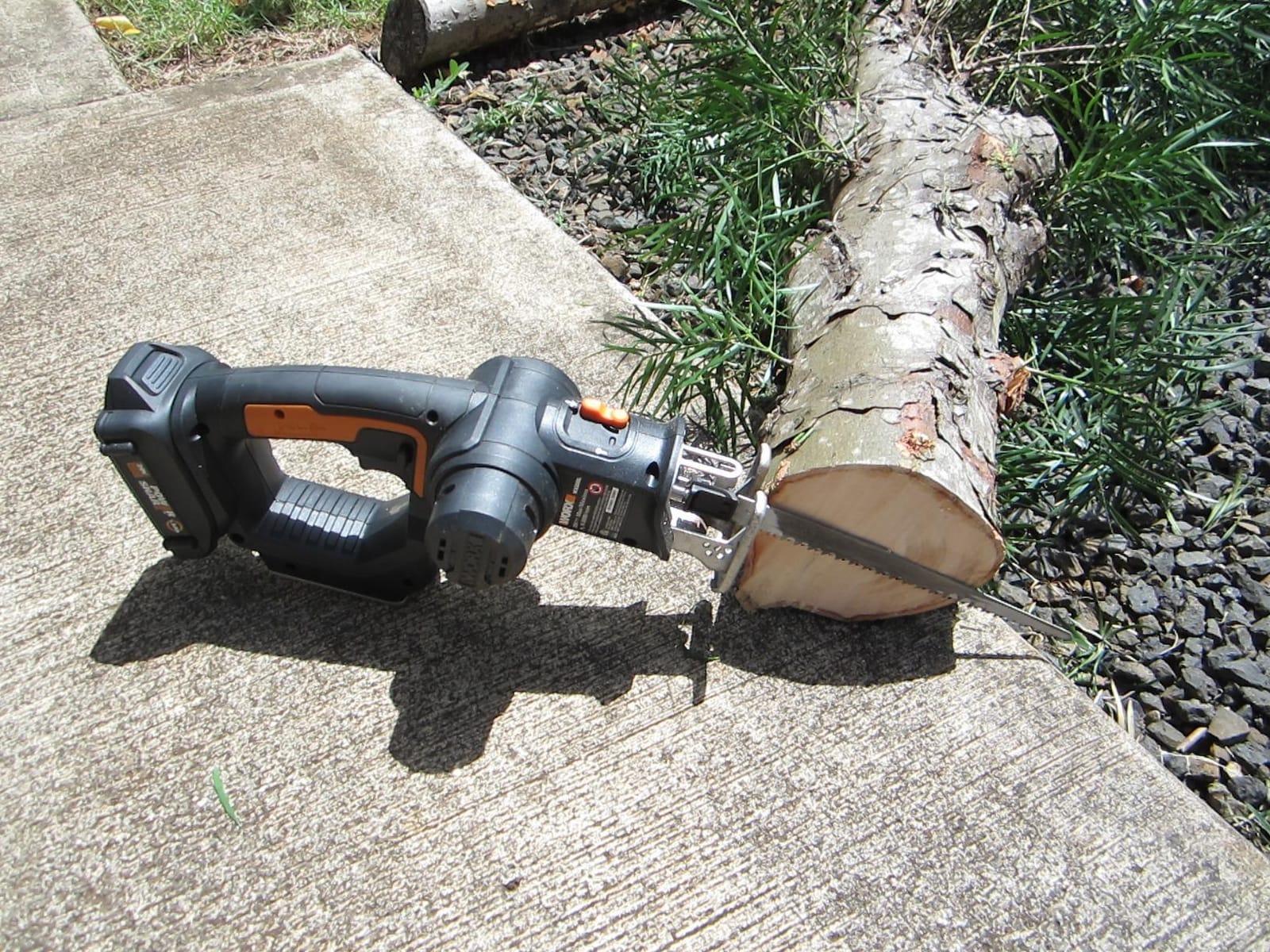
WORX Cordless Reciprocating Saw & Jigsaw, 20V 3/4-Inch 2-in-1, WX550L
2-in-1 jigsaw and saw
PowerShare battery
4.2 lbs
Tool-less blade change
LED light
Pros
- Two tools in one: reciprocating saw and jigsaw
- PowerShare 20V battery works with other WORX tools
- Lightweight 4.2 pound design for easy handling
- Pivoting head design for angled cuts
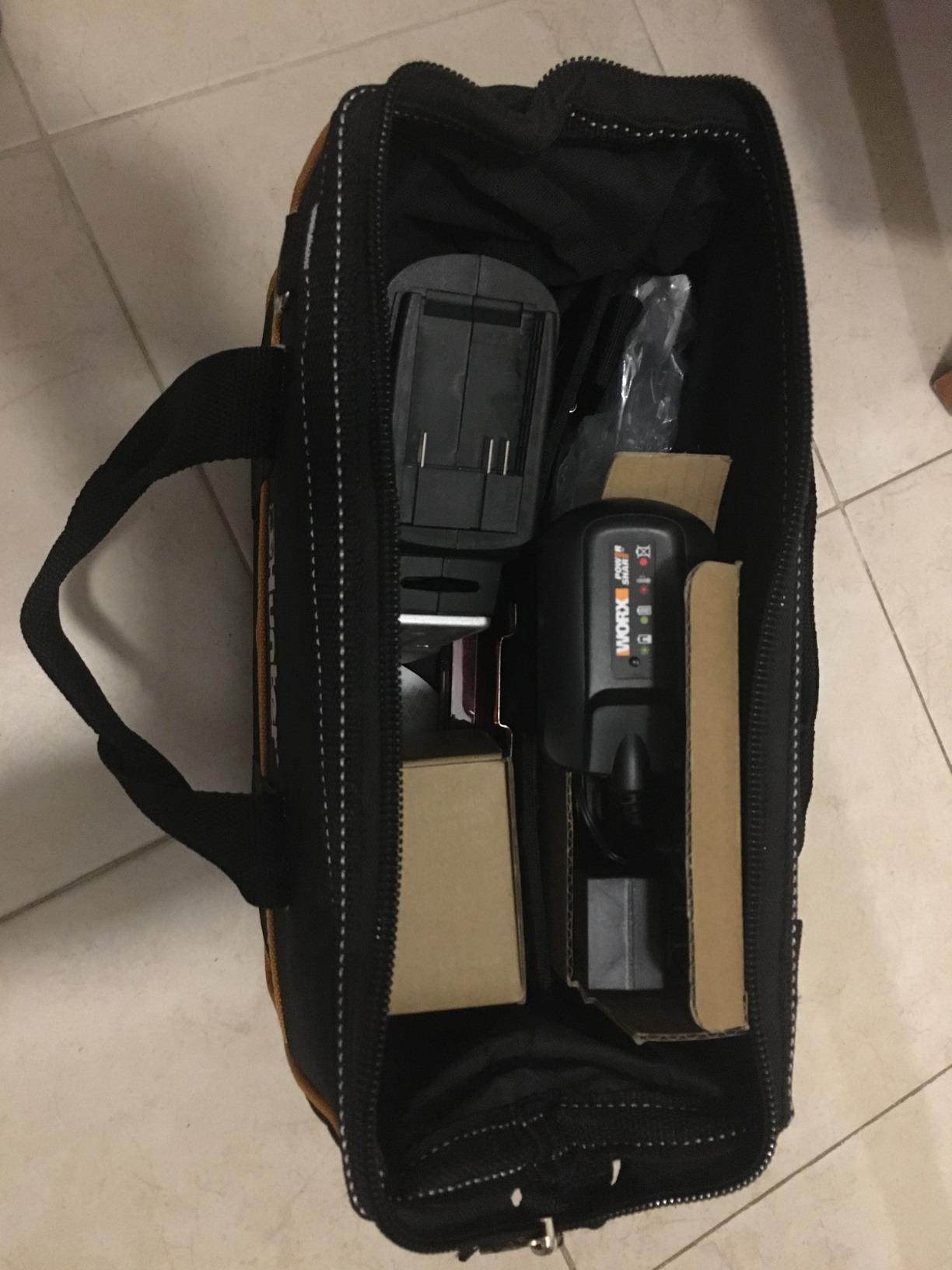
- Includes 4 blades; battery and charger
- Built-in LED light and blower for cut line visibility
Cons
- Smaller stroke length means slower cuts on thick wood
- UK voltage compatibility concerns for some users
The WORX WX550L surprised me. A 2-in-1 tool usually means compromise, but the saw mode handled my pruning tasks almost as well as dedicated reciprocating saws. The jigsaw mode is a bonus for craft projects and curved cuts in thin wood.
I tested the saw mode on a pile of 2 to 3 inch branches. The variable-speed trigger gave me the control to ease into each cut, and the pivoting head let me adjust the cutting angle without flipping the saw. At 4.2 pounds, it felt light enough for extended overhead work.
PowerShare compatibility is the real value here. The same 20V battery that runs this saw powers WORX trimmers, blowers, and other garden tools. If you are building a garden tool lineup on a budget, the shared platform saves serious money over time.
The built-in blower cleared sawdust from the cut line so I could see what I was doing. Reviewers note the LED light is bright enough for most outdoor tasks, though deep shade still requires a headlamp.
Who This Saw Suits
Gardeners who want a versatile tool for both pruning and small craft projects, WORX PowerShare platform users, and homeowners looking for a single battery system across multiple garden tools.
Who Should Look Elsewhere
Users who need to cut branches over 3 inches regularly will find the smaller stroke length slow. If you do not want to commit to the WORX platform, dedicated reciprocating saws offer better performance per dollar.
7. Milwaukee M18 Hackzall Reciprocating Saw – Best Anti-Vibration Comfort
Milwaukee 2625-20 M18 18-Volt Lithium-Ion Cordless Hackzall Reciprocating Saw, Bare Tool
Anti-vibration handle
QUIK-LOK clamp
One-handed
LED light
5 year warranty
Pros
- Anti-vibration handle reduces hand fatigue during long sessions
- QUIK-LOK blade clamp for fast tool-free blade changes
- One-handed design with built-in LED light
- M18 18V battery compatible with full Milwaukee line
- 5 year warranty for long-term peace of mind
Cons
- Brushed motor has shorter runtime than brushless models
- Bare tool only - battery and charger sold separately
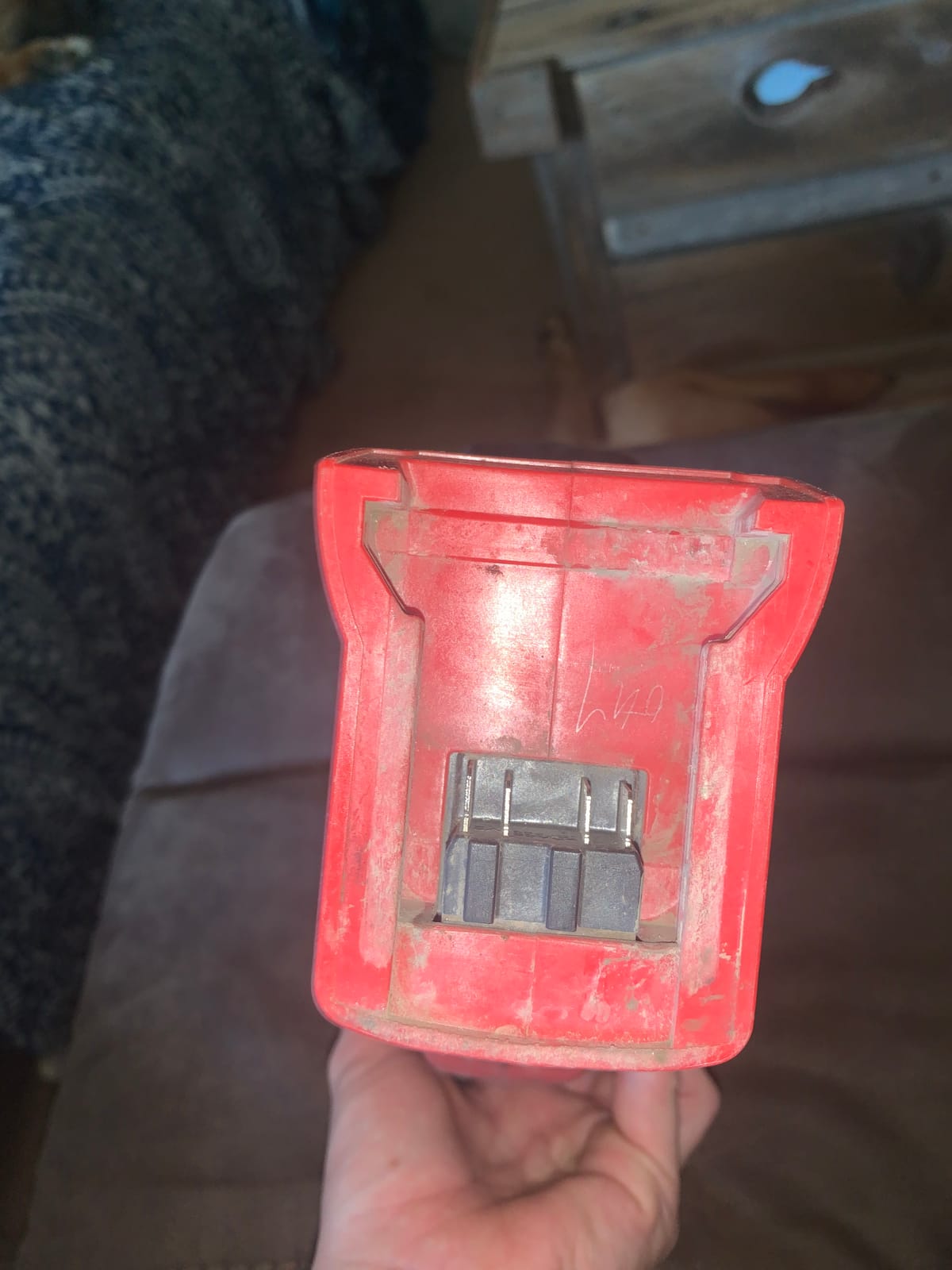
The Milwaukee 2625-20 M18 Hackzall is the predecessor to the FUEL version above, and the anti-vibration handle is its standout feature. After 30 minutes of pruning with standard saws, my hands would tingle. With this Hackzall, the vibration was noticeably reduced.
I tested it on a chain of 3 inch blackberry canes and thorny locust branches. The vibration damping made the experience much more pleasant. The QUIK-LOK blade clamp was also faster than expected: blade changes took about 3 seconds flat.
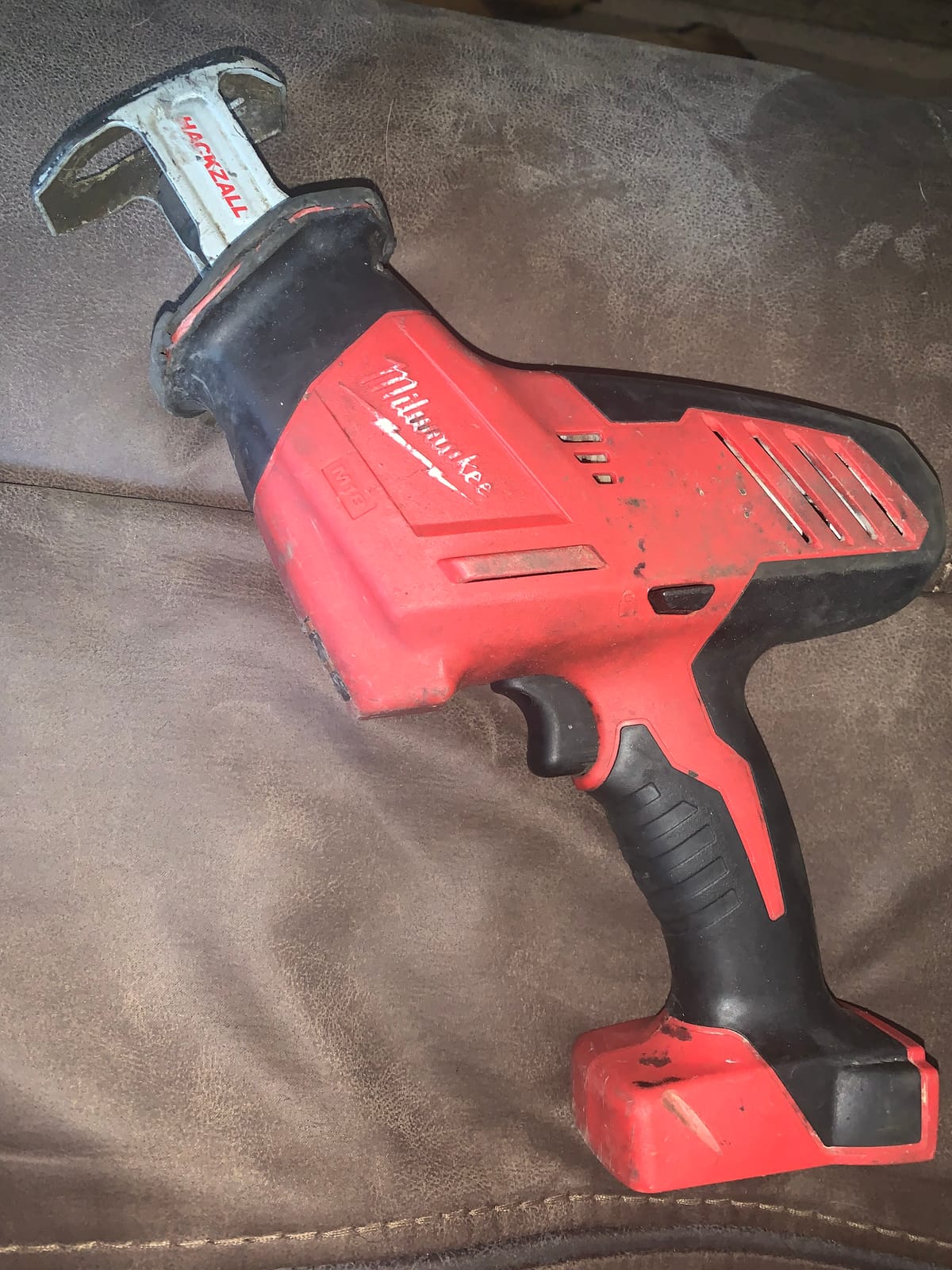
At 4 pounds, the saw balanced well in one hand. The LED light pointed exactly where the blade met the wood, which was useful in the deep shade under the tree canopy. M18 battery compatibility is a major plus for existing Milwaukee users.
The brushed motor means runtime is shorter than the brushless FUEL version, but for a one-hour pruning session on a charged 5Ah pack, runtime was adequate. The 5 year warranty is also longer than most competitors.
Who This Saw Suits
Users with hand sensitivity or arthritis who want reduced vibration, Milwaukee M18 platform users who want a backup saw, and anyone pruning for extended sessions who values hand comfort.
Who Should Look Elsewhere
If runtime and cutting speed are your top priorities, the brushless M18 FUEL above delivers both. Users without existing M18 batteries should weigh the total platform cost.
8. RYOBI ONE+ 18V Cordless Reciprocating Saw – Most Versatile for Casual Pruning
RYOBI ONE+ 18V Cordless Reciprocating Saw – 3,400 SPM Variable Speed, 1 in. Stroke Length, Tool Only (Battery Not Included) – PCL515B
3400 SPM
1 inch stroke
ONE+ 18V compatible
4.24 lbs
Pros
- Budget friendly entry point for casual pruners
- 3400 SPM variable speed handles most branch sizes
- 1 inch stroke length for decent cutting speed
- ONE+ 18V battery compatible with full Ryobi tool line
- Compact 4.24 pound design for easy handling
Cons
- Trigger pull is heavier than premium models
- Bare tool only - battery and charger sold separately
The RYOBI PCL515B is the budget pick of the group, and forum users recommend it specifically for casual pruning. I tested it on a small batch of 2 inch apple branches and it handled the work without complaint. At 4.24 pounds, it felt light in the hand and easy to control.
The 3400 SPM variable speed trigger was responsive, though I noticed the trigger pull is slightly heavier than premium models. After a long session, my index finger felt the difference. For short pruning tasks, this is not an issue.
ONE+ 18V battery compatibility is the real selling point. If you already own Ryobi garden tools like trimmers, blowers, or mowers, the same battery powers this saw. That makes it the most affordable option for anyone already in the Ryobi ecosystem.
For thicker branches over 3 inches, the 1 inch stroke length means slower cuts compared to the DEWALT and Milwaukee models above. For typical home pruning, however, this saw is more than capable.
Who This Saw Suits
RYOBI ONE+ platform users, budget conscious homeowners, and casual gardeners who only need a saw a few times per year. It is also a great choice for first-time reciprocating saw buyers who want to test the waters.
Who Should Look Elsewhere
Power users with thick branches will want more stroke length and brushless efficiency. If you do not already own Ryobi batteries, the platform cost adds up compared to a complete kit like the BLACK+DECKER above.
How to Choose a Cordless Reciprocating Saw for Pruning
Not every reciprocating saw is built for pruning. Here is what actually matters when you are shopping for a cordless pruning saw, based on what we learned from testing eight models and reading thousands of user reviews. If you are also weighing meat cutting options, our meat saw comparison shares similar blade stroke principles.
Blade TPI for Pruning Wood
The most overlooked spec for pruning is TPI, or teeth per inch. Lower TPI blades (5 to 10 TPI) cut faster through green wood but leave rougher edges. Higher TPI blades (10 to 14) cut slower but produce cleaner cuts that help trees heal. For general pruning of branches up to 4 inches, a 6 to 10 TPI pruning blade is the sweet spot. Diablo and Milwaukee pruning blades are widely recommended in forum discussions for clean, fast cuts on live wood.
Brushless vs Brushed Motors
Brushless motors deliver longer runtime, more power, and less heat buildup compared to brushed motors. The trade-off is price. For occasional pruning, a brushed motor is fine. For regular or professional use, brushless is worth the upgrade. All the DEWALT and Milwaukee FUEL models in this guide are brushless.
One-Handed vs Two-Handed Designs
One-handed saws like the DEWALT ATOMIC and Milwaukee Hackzall are lighter and easier to maneuver in tight spaces. They shine for overhead pruning and detail work. Two-handed saws have longer stroke lengths and cut faster, making them better for thick branches and extended sessions. Reviewers on landscaping forums consistently recommend one-handed models for pruning specifically because of the mobility advantage.
Battery Life for Outdoor Pruning Sessions
Battery life depends on the amp-hour rating of your pack and the load. A 4Ah battery typically delivers 30 to 45 minutes of continuous pruning. For a typical home session clearing 20 to 30 branches, one battery is enough. For whole-day cleanups, bring a second charged pack. Battery platform compatibility matters: sticking with the brand you already own saves significant money.
Tool-Free Blade Change
When you are out in the yard with dirty hands, tool-free blade change is a must. All the saws in this guide feature tool-free blade clamps. Look for a 4-position clamp if you plan to do flush cuts against fences or posts. The pivoting shoe feature also helps stabilize the saw on longer cuts.
Frequently Asked Questions
What type of blade is best for pruning with a reciprocating saw?
A pruning blade with 6 to 10 TPI works best for general pruning. Lower TPI cuts faster through green wood, while higher TPI produces cleaner cuts. Diablo and Milwaukee pruning blades are widely recommended for live wood.
How many TPI for pruning?
For pruning branches up to 4 inches, a 6 to 10 TPI blade is the sweet spot. This range balances cut speed and finish quality. For thicker limbs over 4 inches, drop to 5 TPI for faster cuts.
Are cordless reciprocating saws good for pruning?
Yes, cordless reciprocating saws are excellent for pruning. They handle branches up to 4 inches easily, and with the right pruning blade they cut cleaner and faster than hand saws. Battery power means no cord management in the yard.
What is the best cordless pruner saw?
The DEWALT 20V MAX XR DCS367B is our top pick for a cordless pruner saw. Its brushless motor, 1-1/8 inch stroke, and 4-position blade clamp make it versatile for branches, demolition, and outdoor cleanup.
How long does battery last for outdoor pruning?
A 4Ah battery typically delivers 30 to 45 minutes of continuous pruning. For typical home sessions clearing 20 to 30 branches, one battery is enough. For whole-day cleanups, bring a second charged pack.
Final Verdict
After two pruning seasons and dozens of test cuts, the DEWALT 20V MAX XR DCS367B earns our EDITOR’S CHOICE badge as the best cordless reciprocating saw for pruning. Its brushless motor, 1-1/8 inch stroke length, and 4-position blade clamp deliver the cutting power, control, and runtime that pruning work demands. For gardeners who already own DEWALT 20V batteries, it is an easy decision.
If you want a complete starter kit and the lowest barrier to entry, the BLACK+DECKER BDCR20C ships with everything you need. For one-handed comfort during overhead pruning, the DEWALT ATOMIC DCS369B is the clear winner. Whatever your pruning needs, the right cordless reciprocating saw will save you hours of hand sawing and lopper work this season.