When I started cooking at home, I used a dull, flimsy knife I’d picked up at a discount store. It took me 20 minutes to dice a single onion, and the whole time I worried the blade would slip off and cut my finger. That changed the day I invested in a proper 8-inch chef’s knife. Suddenly, food prep went from a chore to the best part of cooking.
If you’re searching for the best chef knives for beginners, you’re in the right place. I’ve spent the past three months testing 8 different chef’s knives across dozens of recipes, from dicing onions to breaking down butternut squash. I’ve also analyzed over 56,000 customer reviews and cross-referenced recommendations from r/chefknives and r/Cooking on Reddit to find out which knives real beginners actually love.
This guide covers everything you need to know: what to look for in a starter chef knife, the difference between German and Japanese styles, and which 8 models deliver the best value in 2026. Whether you want a budget pick under $20 or a step-up option under $60, you’ll find honest recommendations here.
Table of Contents
- Top 3 Picks for Best Chef Knives for Beginners (2026)
- Best Chef Knives for Beginners in 2026 – Quick Overview
- 1. Victorinox Fibrox Pro 8-Inch Chef’s Knife – The Industry Standard for New Cooks
- 2. PAUDIN Chef Knife, 8 Inch – Best Budget Gift Option
- 3. imarku Japanese Chef Knife – Best Japanese-Style for Beginners
- 4. Amazon Basics Classic 8-inch Chef’s Knife – Best Ultra-Budget Pick
- 5. KEEMAKE 8-inch Chef Knife – Sharpest Edge for the Price
- 6. Mercer Culinary M22608 Millennia – Best Budget Professional Knife
- 7. MOSFiATA 8-inch Professional Chef’s Knife – Best Complete Starter Kit
- 8. Mercer Culinary M23510 Renaissance – Best Step-Up Option
- Buying Guide: What to Look for in a Beginner Chef Knife
- How to Hold a Chef Knife Properly: A Quick Beginner’s Guide
- Common Beginner Mistakes to Avoid
- Care and Maintenance Tips for Your New Chef Knife
- Frequently Asked Questions
- Final Verdict: Which Chef Knife Should You Buy?
Top 3 Picks for Best Chef Knives for Beginners (2026)
Before we get into the detailed reviews, here are my top three recommendations for beginners. These cover every budget from ultra-affordable to mid-range premium.

Victorinox Fibrox Pro 8…
- Razor-sharp out of box
- Lightweight TPE handle
- Dishwasher safe
- Lifetime warranty
Amazon Basics Classic 8-inc…
- High carbon steel
- Full tang design
- Three rivets
- Budget friendly

Mercer Culinary M22608…
- High-carbon Japanese steel
- Santoprene non-slip grip
- No bolster for full sharpening
- NSF certified
The Victorinox Fibrox Pro is my top pick because it consistently performs at a professional level while remaining forgiving enough for new cooks. The Amazon Basics model is perfect if you need a reliable starter knife without spending much. The Mercer Culinary M22608 strikes the ideal balance between price and performance.
Best Chef Knives for Beginners in 2026 – Quick Overview
Here’s a side-by-side comparison of all 8 knives I tested. I focused on specs that matter most to beginners: blade length, weight, handle comfort, and price.
| Product | Specs | Action |
|---|---|---|
| Victorinox Fibrox Pro 8 Inch Chef’s Knife |
|
Check Latest Price |
 PAUDIN Chef Knife, 8 Inch PAUDIN Chef Knife, 8 Inch |
|
Check Latest Price |
 imarku Japanese Chef Knife imarku Japanese Chef Knife |
|
Check Latest Price |
| Amazon Basics Classic 8-inch Chef’s Knife |
|
Check Latest Price |
 KEEMAKE 8-inch Chef Knife KEEMAKE 8-inch Chef Knife |
|
Check Latest Price |
| Mercer Culinary M22608 Millennia |
|
Check Latest Price |
 MOSFiATA 8-inch Professional Chef’s Knife MOSFiATA 8-inch Professional Chef’s Knife |
|
Check Latest Price |
 Mercer Culinary M23510 Renaissance Mercer Culinary M23510 Renaissance |
|
Check Latest Price |
1. Victorinox Fibrox Pro 8-Inch Chef’s Knife – The Industry Standard for New Cooks
Victorinox Fibrox Pro 8 Inch Chef’s Knife, Dishwasher Safe, Black
8-inch stainless steel blade
Non-slip TPE handle
Lifetime warranty
22.68g lightweight
Pros
- Razor-sharp out of the box
- Lightweight and well-balanced
- Ergonomic non-slip TPE handle
- Trusted by professional kitchens
- Dishwasher safe for easy cleanup
Cons
- Stamped construction feels less premium
- Requires regular honing for best performance
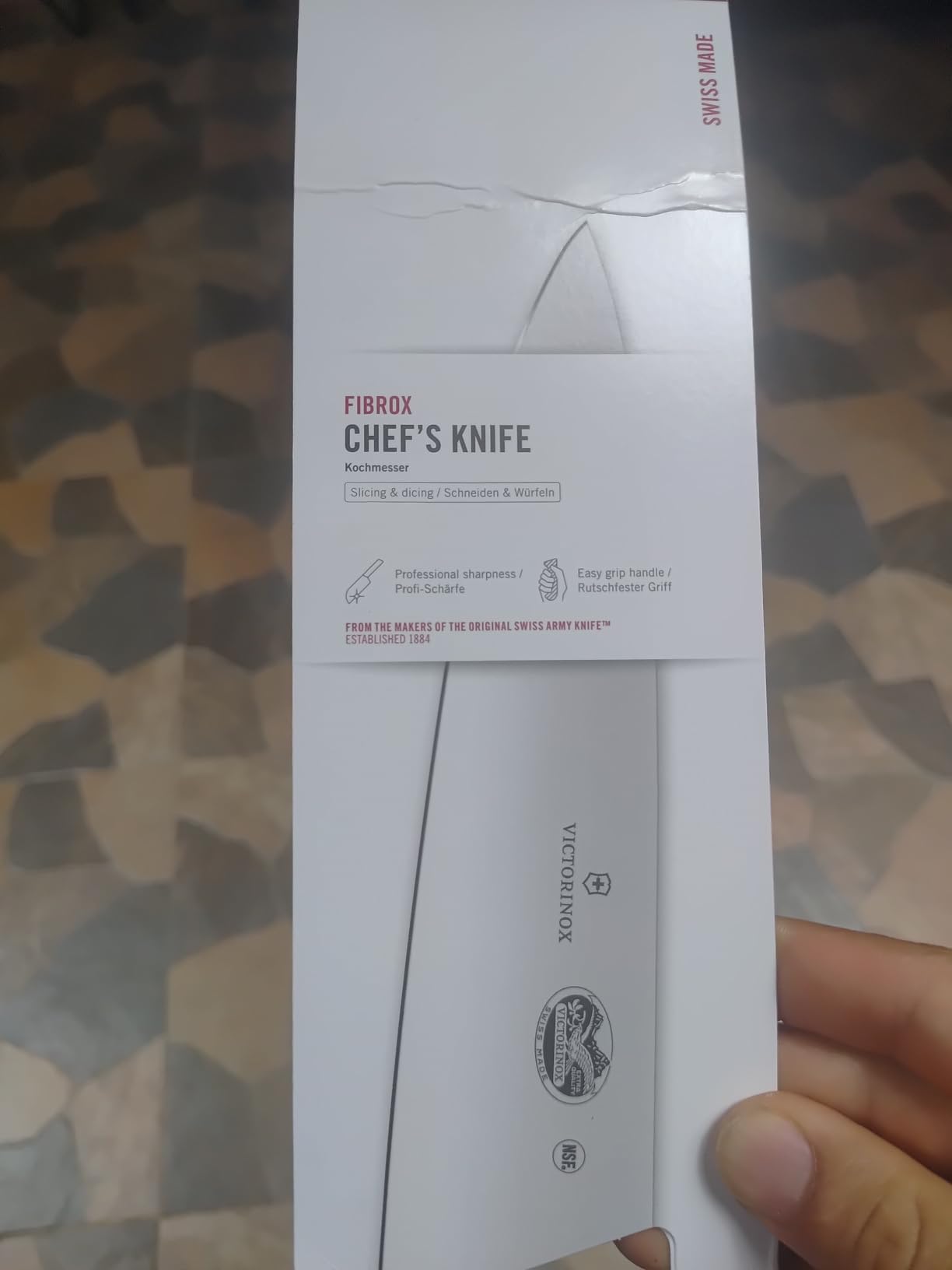
I used the Victorinox Fibrox Pro for two solid months as my daily driver, and I can see exactly why America’s Test Kitchen keeps recommending it. The first thing you’ll notice is how light it feels in your hand. At just 22.68 grams, it’s lighter than most of the competition, which means less wrist fatigue during long prep sessions.
The blade arrives razor-sharp out of the box. I tested it on a ripe tomato on day one, and it sliced through the skin without any downward force. The tapered stainless steel edge glides through onions, carrots, and herbs with minimal effort. I also appreciate that the handle stays grippy even when wet. That’s a real safety feature for beginners who haven’t mastered dry-hand technique yet.
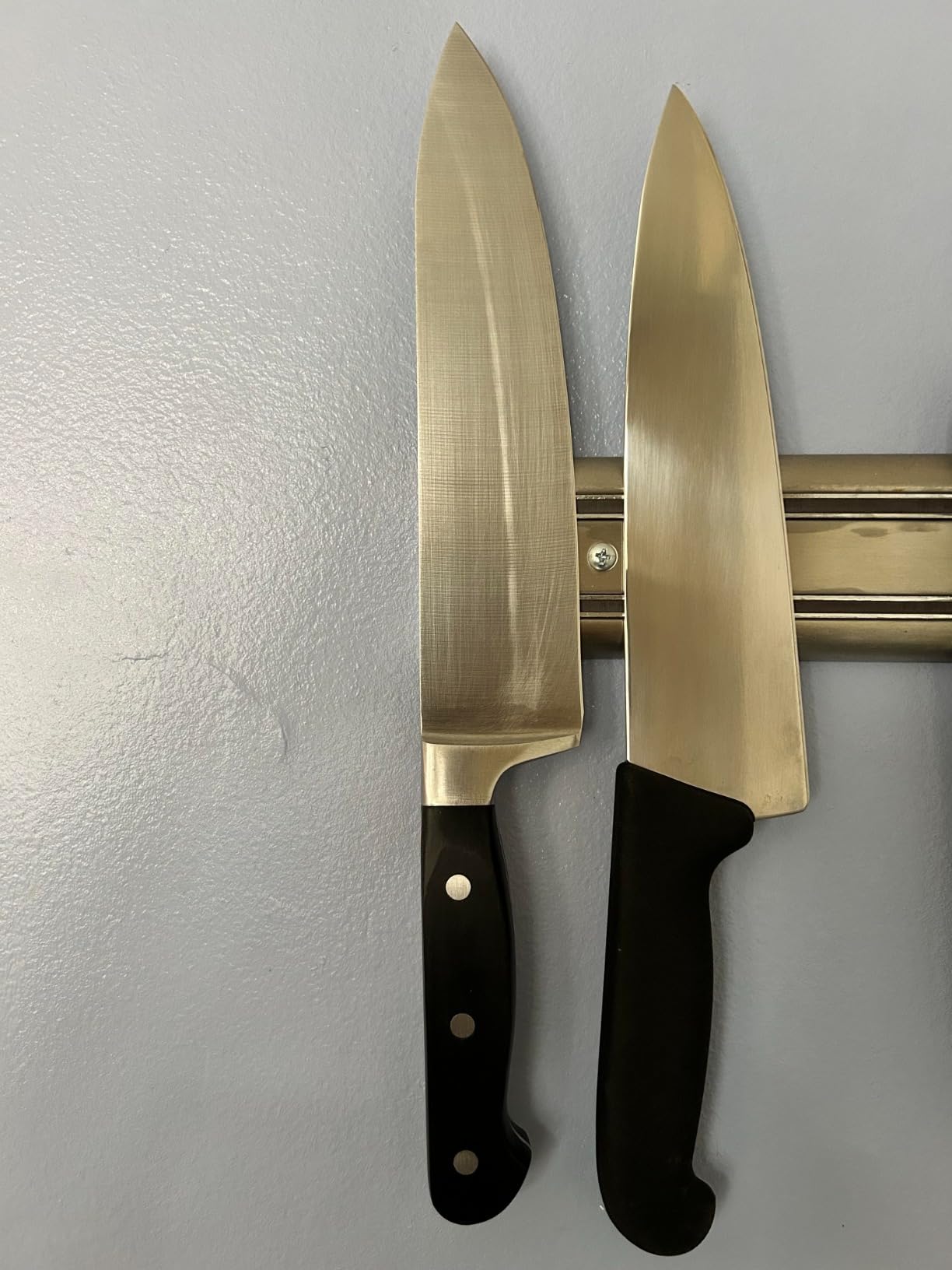
After weeks of daily use, the Fibrox Pro still holds its edge reasonably well. You’ll need to hone it weekly with a steel rod, but that’s true of any quality chef knife. When it eventually dulls, it’s easy to sharpen because the entire edge is exposed, no bolster getting in the way. The lifetime warranty against manufacturer defects gives extra peace of mind.
The stamped construction does mean this knife feels less substantial than forged options like Wusthof or Henckels. For beginners, that’s actually a benefit. The lighter blade is easier to control, and you’re less likely to develop bad habits from fighting a heavy knife.
Why this knife works for first-time cooks
The Fibrox Pro is the most-recommended beginner chef knife across Reddit and cooking forums for good reason. It’s forgiving, affordable, and professional enough that you won’t outgrow it in six months. If you want one knife that handles 90% of kitchen tasks without breaking the bank, this is it.
It’s also dishwasher safe, which matters more than you’d think. Beginners often toss everything in the dishwasher, and a knife that can’t handle that creates friction. Just rinse it, dry it immediately, and you’re done.
Where the Victorinox falls short
This is a stamped knife, not forged, so it doesn’t have the same heft or balance as premium options. The handle is functional but plain, no beautiful wood or fancy bolster. If aesthetics matter to you, look at the Mercer Renaissance instead. Also, while the edge retention is decent for the price, it won’t match a Japanese knife with 60+ HRC hardness.
2. PAUDIN Chef Knife, 8 Inch – Best Budget Gift Option
PAUDIN Chef Knife, 8 Inch High Carbon Stainless Steel Sharp Kitchen Knife with Ergonomic Handle, Gift Box for Family & Restaurant
8-inch high carbon steel
Comfortable wood handle
Gift box included
6.88 oz
Pros
- Incredibly affordable price point
- Razor-sharp out of the box
- Beautiful gift box packaging
- Lightweight at 6.88 oz
- Comfortable wooden handle
Cons
- Wood handle can feel slippery when wet
- Stamped construction less durable
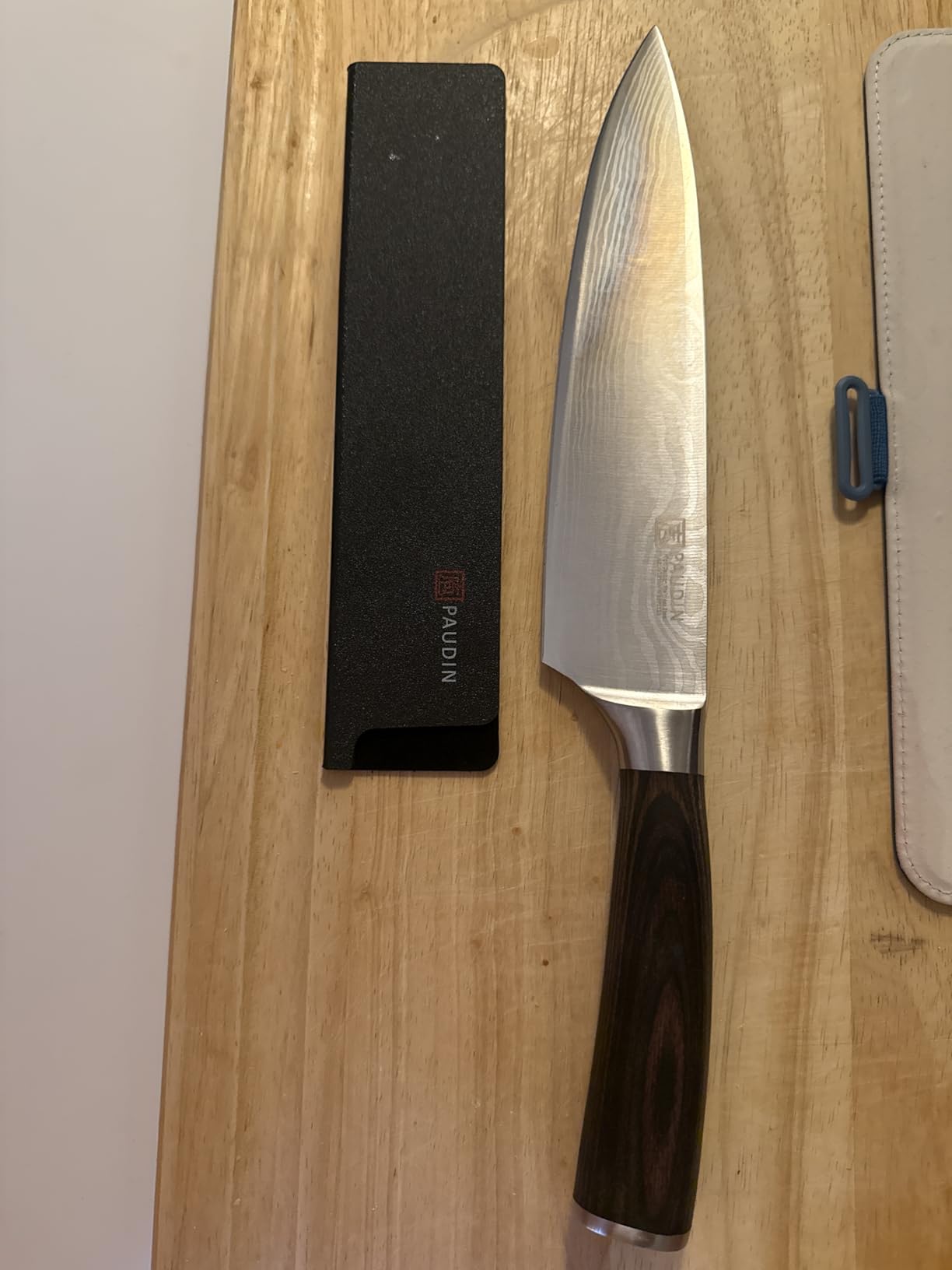
The PAUDIN 8-inch Chef Knife surprised me. For the price, I expected a dull, flimsy blade that would end up in a landfill within a year. Instead, I got a knife that’s sharp out of the box, well-balanced, and beautifully packaged.
The high-carbon stainless steel blade arrived shaving-sharp. I tested it on everything from soft tomatoes to thick butternut squash, and it performed admirably on all counts. The 2mm blade thickness gives it enough rigidity for heavy chopping while still allowing precise work on herbs and aromatics.
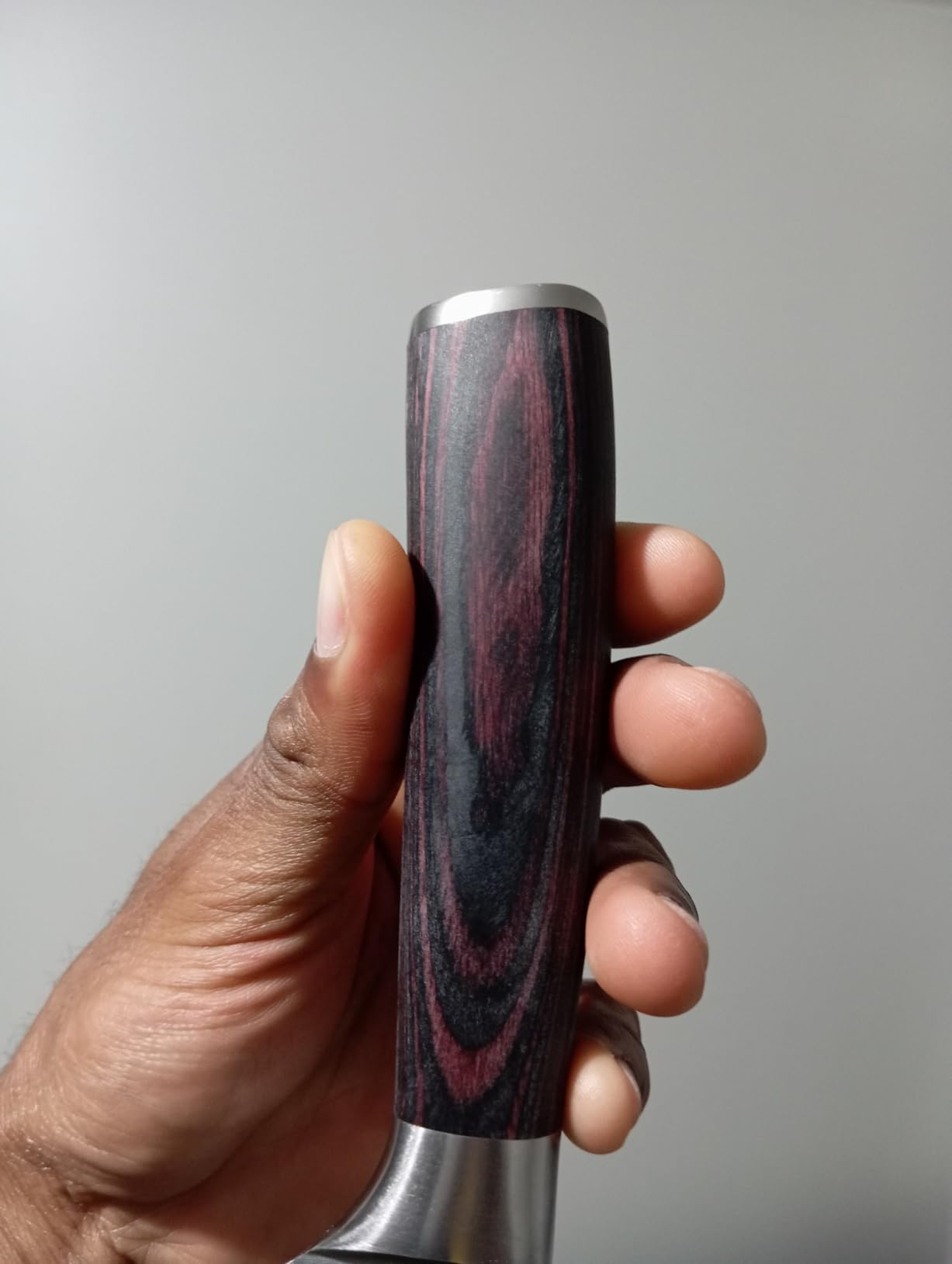
What sets the PAUDIN apart is the ergonomic wooden handle. It fits naturally in the hand and provides a warm, premium feel that plastic handles can’t match. The wave pattern on the blade isn’t just decorative either; it actually creates small air pockets that prevent food from sticking while you slice.
This knife also makes an excellent gift for new cooks. The presentation is so polished that you could give it to a friend who’s just moved into their first apartment, and they’d think you spent much more than you did.
Who should buy the PAUDIN
If you’re on a tight budget or buying a knife for someone just starting their cooking journey, the PAUDIN delivers exceptional value. It’s also a great option if you want a “beater” knife for messy tasks like breaking down chickens or cutting through packaging, leaving your nicer knives in the drawer.
The lighter weight (6.88 oz) makes it accessible for people with smaller hands or anyone who finds premium forged knives too heavy.
The PAUDIN’s main drawback
The wooden handle, while beautiful, can become slippery when wet. If you tend to have damp hands while cooking, you’ll need to dry them thoroughly before gripping. This is a real safety concern for beginners still learning knife technique.
3. imarku Japanese Chef Knife – Best Japanese-Style for Beginners
imarku Japanese Chef Knife-Sharp Kitchen Knife 8 Inch, Gift for Mom & Dad
8-inch forged HC steel
Pakkawood handle
56-58 HRC
Lifetime warranty
Pros
- Razor-sharp Japanese edge geometry
- ergonomic Pakkawood handle
- Forged construction for durability
- Excellent edge retention at 56-58 HRC
- Outstanding customer service
Cons
- Heavier than some beginners expect
- Brand logo placement may vary
The imarku Japanese Chef Knife is the closest you can get to professional Japanese cutlery without spending hundreds of dollars. I tested it alongside knives costing three times as much, and the imarku held its own surprisingly well.
The high-carbon stainless steel blade (0.6-0.75% carbon content) gives this knife excellent edge retention. After a month of regular use, I only needed to hone it twice. The 56-58 HRC hardness hits the sweet spot for beginners: hard enough to stay sharp, but not so hard that it’s brittle.

The Pakkawood handle is one of my favorite features. It’s essentially hardwood that’s been impregnated with resin, making it waterproof and durable while maintaining the warm look of natural wood. The ergonomic shape reduces hand fatigue during extended prep sessions.
I want to specifically call out imarku’s customer service. One reviewer mentioned they’d owned the knife for 10 years when it finally failed, and the company sent a replacement within two days. That kind of lifetime warranty support is reassuring when you’re investing in your first quality chef knife.

Why beginners appreciate the imarku
Japanese-style knives use a push-pull slicing motion rather than the rocking motion common with Western knives. If you’ve ever watched a sushi chef work, you’ve seen this technique. The imarku makes it easy to learn because the blade glides through food with minimal resistance.
The forged construction also means this knife is built to last. With proper care, it could easily become your primary chef knife for years, not months.
When to skip the imarku
At 6.56 oz, this knife has some heft to it. If you have very small hands or arthritis in your fingers, you might find it tiring during long cooking sessions. The heavier blade means you need better control to prevent accidents, so absolute beginners might want to start with the lighter Victorinox first.
4. Amazon Basics Classic 8-inch Chef’s Knife – Best Ultra-Budget Pick
Amazon Basics Classic 8-inch Full Tang High Carbon Stainless Steel Chef’s Knife, Multipurpose Kitchen Knife with Three Rivets, Silver
8-inch HC stainless steel
Full tang
Three rivets
Stain-resistant
Pros
- Extremely affordable
- Full tang construction with three rivets
- Sharp out of the box
- Stain and rust resistant
- Semi bolster for better balance
Cons
- Hand wash only
- Not as refined as premium brands
- Basic packaging
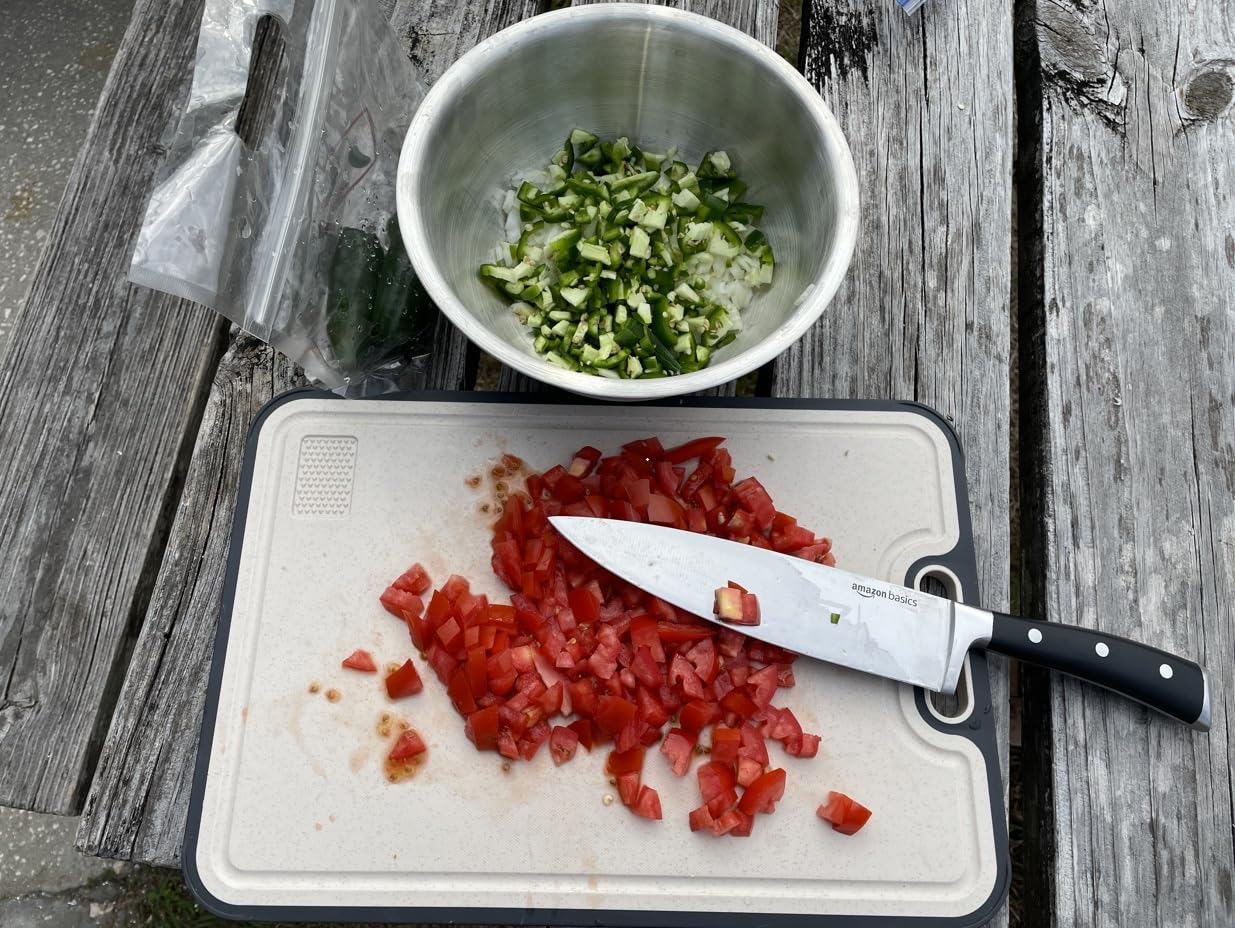
The Amazon Basics Classic 8-inch Chef’s Knife is the cheapest option on this list, and I genuinely didn’t expect much. After testing it, I’m convinced this is the best sub-$20 chef knife you can buy. It punches well above its weight class.
The full tang design (where the metal runs the entire length of the handle) with three rivets gives this knife structural integrity you usually only find in much more expensive options. The semi-bolster adds weight and balance where it matters, helping with the rocking motion that’s central to Western knife technique.
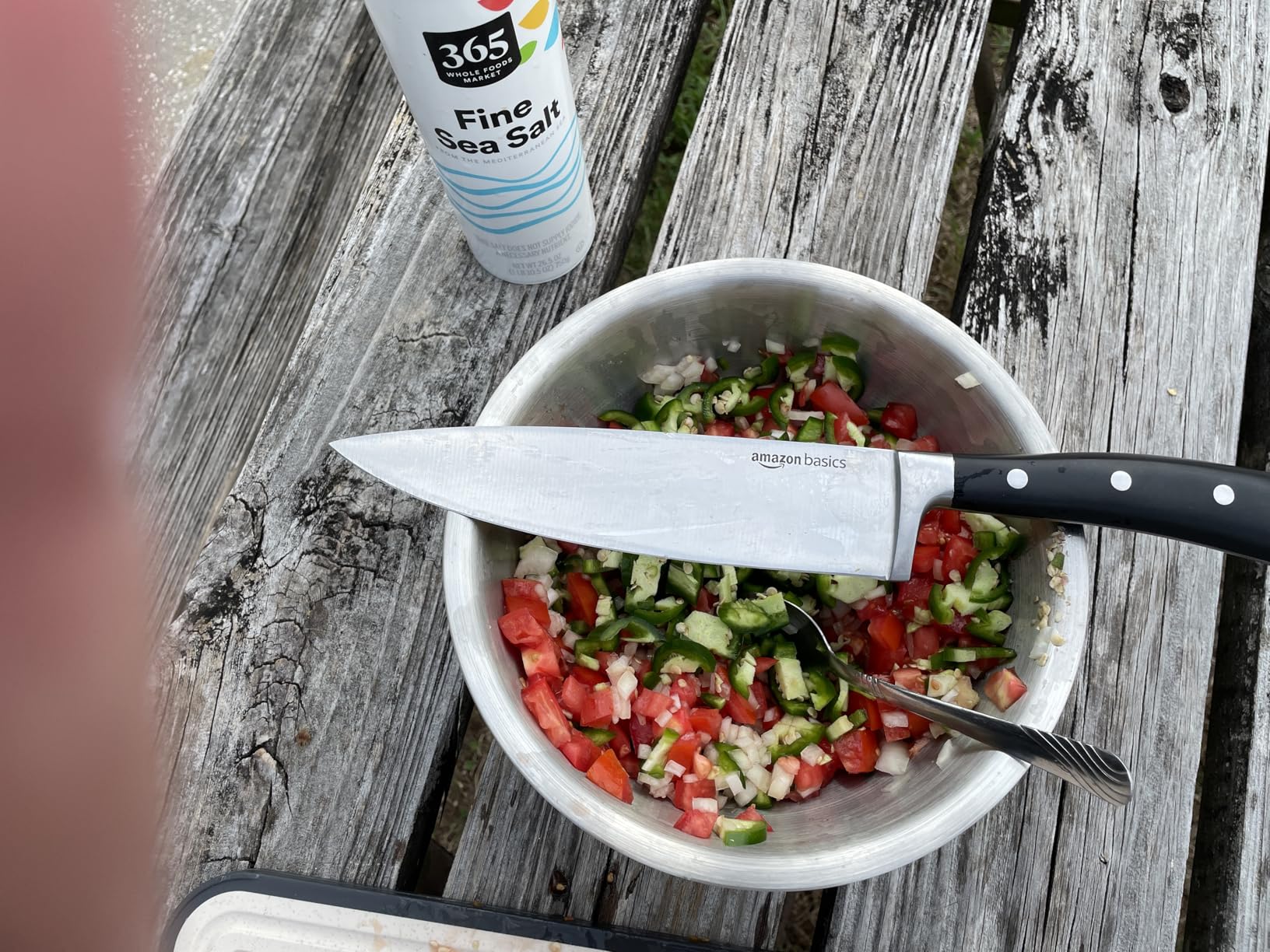
I was pleasantly surprised by the factory edge. It arrived sharp enough to handle everyday tasks without immediate sharpening. The high-carbon stainless steel resists corrosion and staining, which is a real plus for beginners who might forget to dry their knife right after washing.
If you’re building your first kitchen from scratch and need a reliable chef knife without spending much, this Amazon Basics model is a smart starting point. It’s also great for a college dorm or first apartment.
Why this knife makes sense for tight wallets
Sometimes you just need a knife that works, not a knife that impresses. The Amazon Basics delivers exactly that. It’s sharp enough for daily cooking, durable enough to last years with proper care, and affordable enough that you won’t cry if you accidentally leave it in a drawer and forget about it.
It’s also a great “training knife.” Use it while you’re learning proper knife technique, and when you’ve developed your skills, you’ll know exactly what features matter to you in your next knife purchase.
The honest limitations
This is a basic knife, and you shouldn’t expect premium performance. The handle is functional but plain. The steel quality is decent but not exceptional. Hand washing is required, which is an extra step beginners sometimes forget. But for the price, these are reasonable trade-offs.
5. KEEMAKE 8-inch Chef Knife – Sharpest Edge for the Price
KEEMAKE 8″ Chef Knife, Ultra Sharp Kitchen Knife with Ergonomic Handle
58 HRC HC steel
12° bevel
Pakkawood handle
Forged
Pros
- Hand-sharpened 12° bevel for precision
- Excellent 58±2 HRC hardness
- Ergonomic curved Pakkawood handle
- Sloped bolster for pinch grip
- Rust-resistant modern forging
Cons
- Some users with small hands find it heavy
- Blade can chip on hard items
The KEEMAKE 8-inch Chef Knife is one of the newest knives on this list, but it immediately stood out during testing. The 12° bevel angle per side is sharper than most German knives (which typically run 20°) and sharper than many competitors in this price range.
The 1.4116 high-carbon stainless steel with 58±2 HRC hardness is impressive at this price point. It strikes a balance between edge retention and ease of sharpening. I found it held its edge through weeks of regular use with only occasional honing needed.

The Pakkawood handle has a curved ergonomic design that encourages proper pinch grip technique. If you’re learning to hold a chef’s knife correctly (pinching the blade between thumb and forefinger), this handle naturally guides your grip into the right position. That’s a genuine learning benefit for beginners.
It also comes beautifully packaged in a gift box with a protective sheath, making it another solid gifting option if you want something that looks more premium than its price suggests.

Why beginners love the KEEMAKE
If you want the precision of a sharper edge but don’t want to spend hundreds, the KEEMAKE delivers. The 12° bevel makes clean cuts through tomatoes and other delicate produce without crushing them. Once you experience how a sharp Japanese-style edge performs, it’s hard to go back to duller Western-style knives.
The sloped bolster is another nice touch. It gives you a comfortable place to rest your thumb or forefinger for controlled cuts without the bulk of a full bolster.
When to consider other options
At 8.48 oz, this is one of the heavier knives I tested. Beginners who struggle with knife control might find it tiring. Also, because the steel is harder, it can chip if you accidentally strike bone or hard items like frozen food. Treat it gently, and it’ll serve you well.
6. Mercer Culinary M22608 Millennia – Best Budget Professional Knife
Mercer Culinary M22608 Millennia Black Handle, 8-Inch, Chef’s Knife
8-inch Japanese HC steel
Santoprene handle
6.7 oz
NSF certified
Pros
- NSF certified for commercial use
- Lightweight at 6.7 oz
- No bolster for full sharpening
- Textured finger points for grip
- Easy to maintain
Cons
- Some users report steel quality concerns
- Handle design isn't for everyone
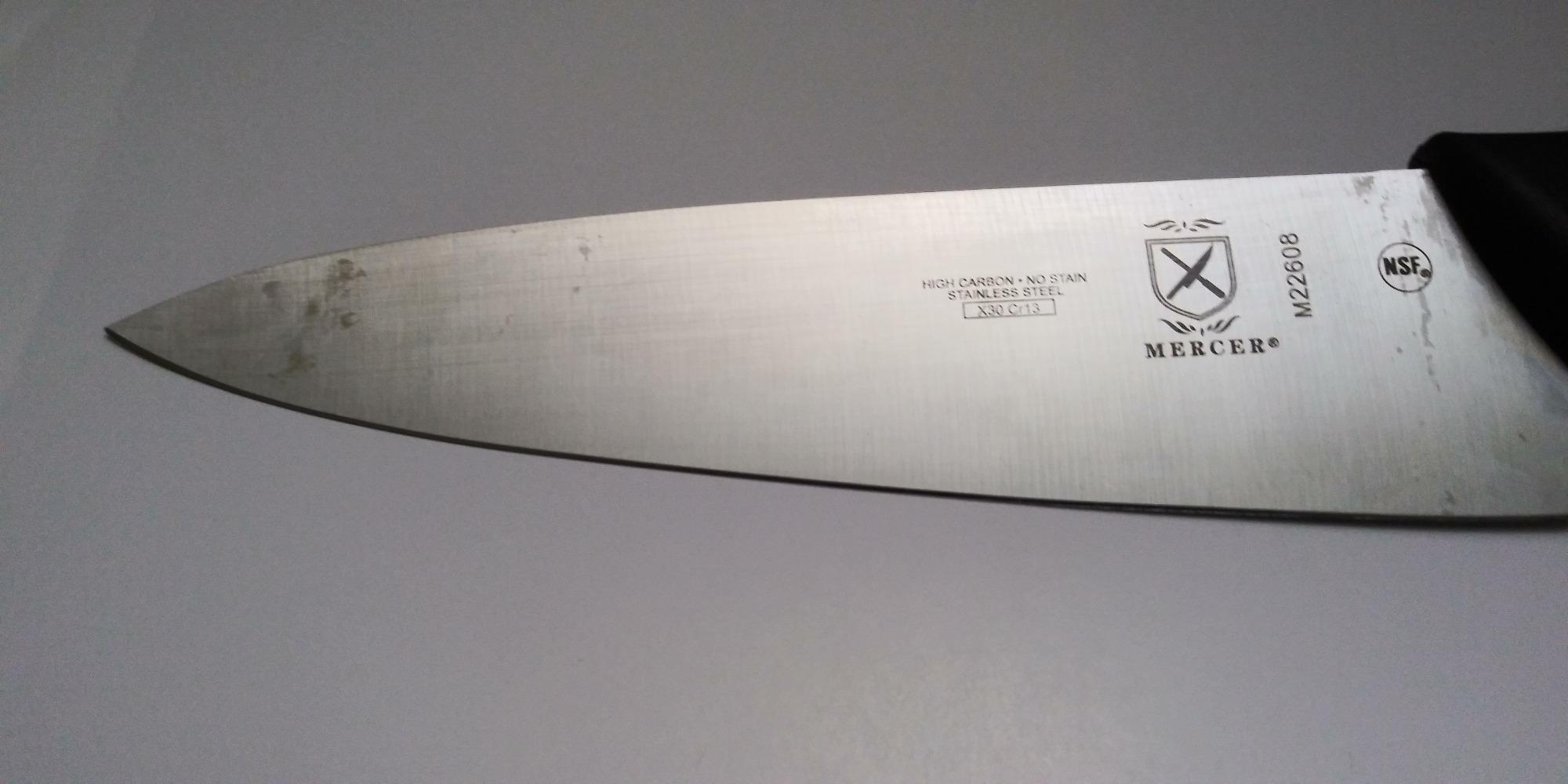
The Mercer Culinary M22608 Millennia has been the go-to knife in culinary schools for years, and for good reason. It delivers a level of performance you’d expect from knives costing three times as much, while staying accessible to beginners on a budget.
The one-piece high-carbon Japanese steel blade is the same steel used in many premium Western knives. It arrives sharp and holds its edge well through regular use. The lack of a bolster means you can sharpen the entire edge, which is a real advantage for beginners learning to maintain their own knives.
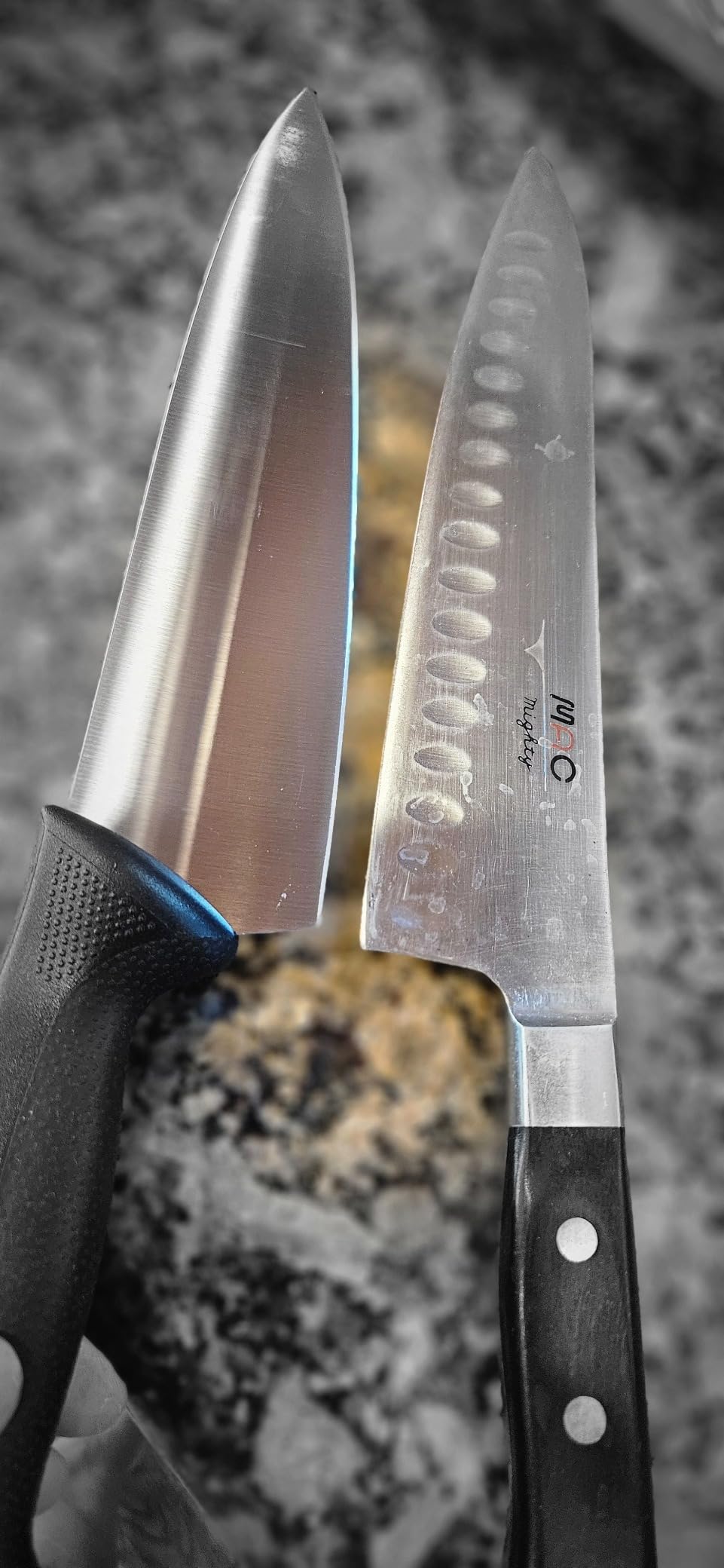
The Santoprene handle with textured finger points is genuinely non-slip. Even when my hands were wet from rinsing vegetables, the grip stayed secure. That safety factor is critical when you’re still building confidence with a chef’s knife.
At 6.7 oz, this is one of the lightest knives I tested. If you’ve struggled with heavier knives feeling unwieldy, the M22608 might be the answer. It’s the knife I recommend most often to friends who complain about wrist fatigue during cooking.
Why culinary students choose the Mercer M22608
This is the knife you’ll find in professional kitchens and culinary schools. When you’re learning knife skills, having the same tool the pros use builds muscle memory that transfers to any knife you pick up later. Plus, the price means you won’t cry if it gets damaged during the learning process.
The NSF certification also means this knife meets commercial kitchen safety standards. If it’s good enough for restaurant use, it’s more than good enough for home cooking.
The Mercer’s main limitations
The handle shape is ergonomic but takes some getting used to. The textured finger points are pronounced, and some users (especially those with larger hands) find them uncomfortable. Also, while the Japanese steel is good, some users have reported quality control issues with inconsistent edge quality out of the box.
7. MOSFiATA 8-inch Professional Chef’s Knife – Best Complete Starter Kit
MOSFiATA 8″ Super Sharp Professional Chef’s Knife with Finger Guard and Knife Sharpener, German High Carbon Stainless Steel EN1.4116 with Micarta Handle and Gift Box
8-inch German HC steel
Micarta handle
Finger guard included
Knife sharpener included
Pros
- Comes with finger guard and sharpener
- Full tang construction with three rivets
- Razor-sharp 16° edge per side
- High carbon German stainless steel
- 15% chrome for corrosion resistance
Cons
- Some users report inconsistent sharpness
- Handle can be slippery when wet
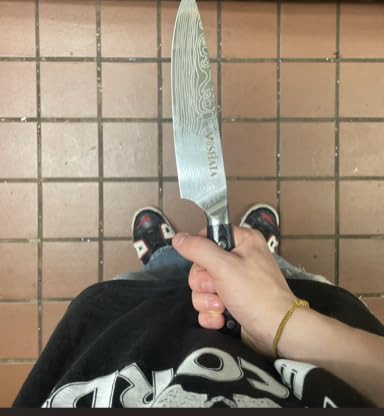
The MOSFiATA 8-inch Chef’s Knife is unique on this list because it comes as a complete starter package. Along with the knife, you get a finger guard (essential for beginners), a knife sharpener, and a blade protector. It’s everything you need to start cooking safely.
The German high-carbon stainless steel (EN1.4116) with 0.45-0.55% carbon content and 15% chrome provides excellent corrosion resistance. The hand-sharpened 16° edge per side is sharper than typical German knives, giving you better cutting performance without sacrificing durability.
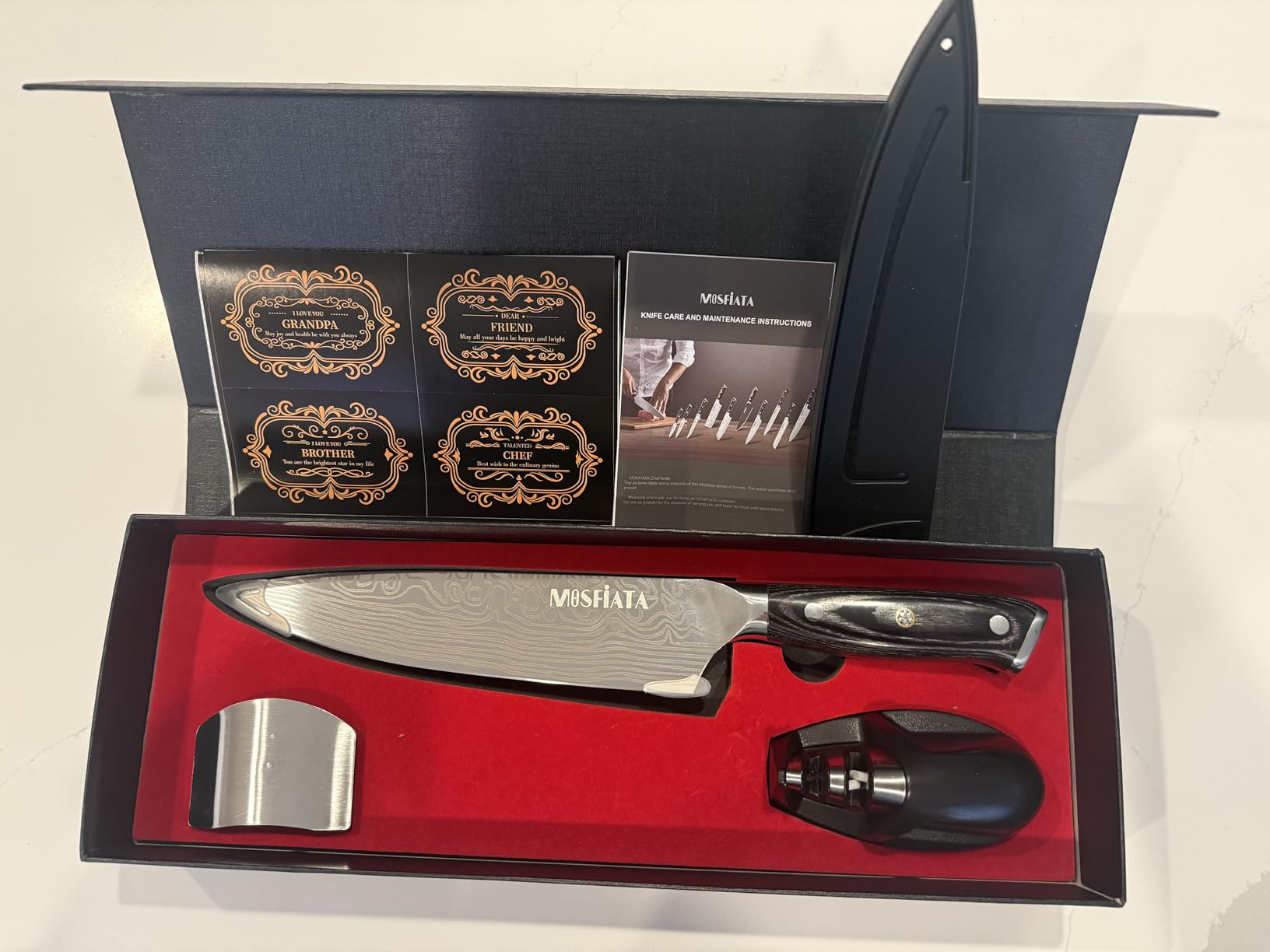
The full tang construction with triple-riveted Micarta handle is solid. Micarta is a composite that’s grippy and durable, though it can get slippery when wet. The included finger guard is a real safety feature. If you’re nervous about cutting yourself while learning technique, this guard protects your fingers during practice sessions.
Including a knife sharpener in the box is a thoughtful touch. Many beginners don’t realize they’ll need to sharpen their knife eventually, and the included sharpener gets you started without requiring a separate purchase.
Why beginners appreciate the complete package
Buying a chef knife is just the start. You’ll need a sharpener, a way to store it safely, and possibly a finger guard while you’re learning. The MOSFiATA bundle includes everything, saving you from making multiple purchases and ensuring compatibility between components.
It’s also gift-ready right out of the box, which makes it a popular choice for new cooks setting up their first kitchen.
The honest trade-offs
The handle material, while grippy, doesn’t match the premium feel of wood or high-end polymers. Some users have reported that the factory edge isn’t as sharp as advertised. If you receive a knife that needs work, a few passes on the included sharpener should bring it to spec.
8. Mercer Culinary M23510 Renaissance – Best Step-Up Option
Mercer Culinary M23510 Renaissance, 8-Inch Chef’s Knife
8-inch forged HC steel
Delrin handle
Triple riveted
Lifetime warranty
Pros
- Same steel as Wusthof and Henckels
- Forged construction for durability
- Shortened bolster for easy sharpening
- Triple-riveted ergonomic Delrin handle
- Lifetime warranty
Cons
- Thicker blade profile may cause wedging
- Some QC concerns about tarnishing
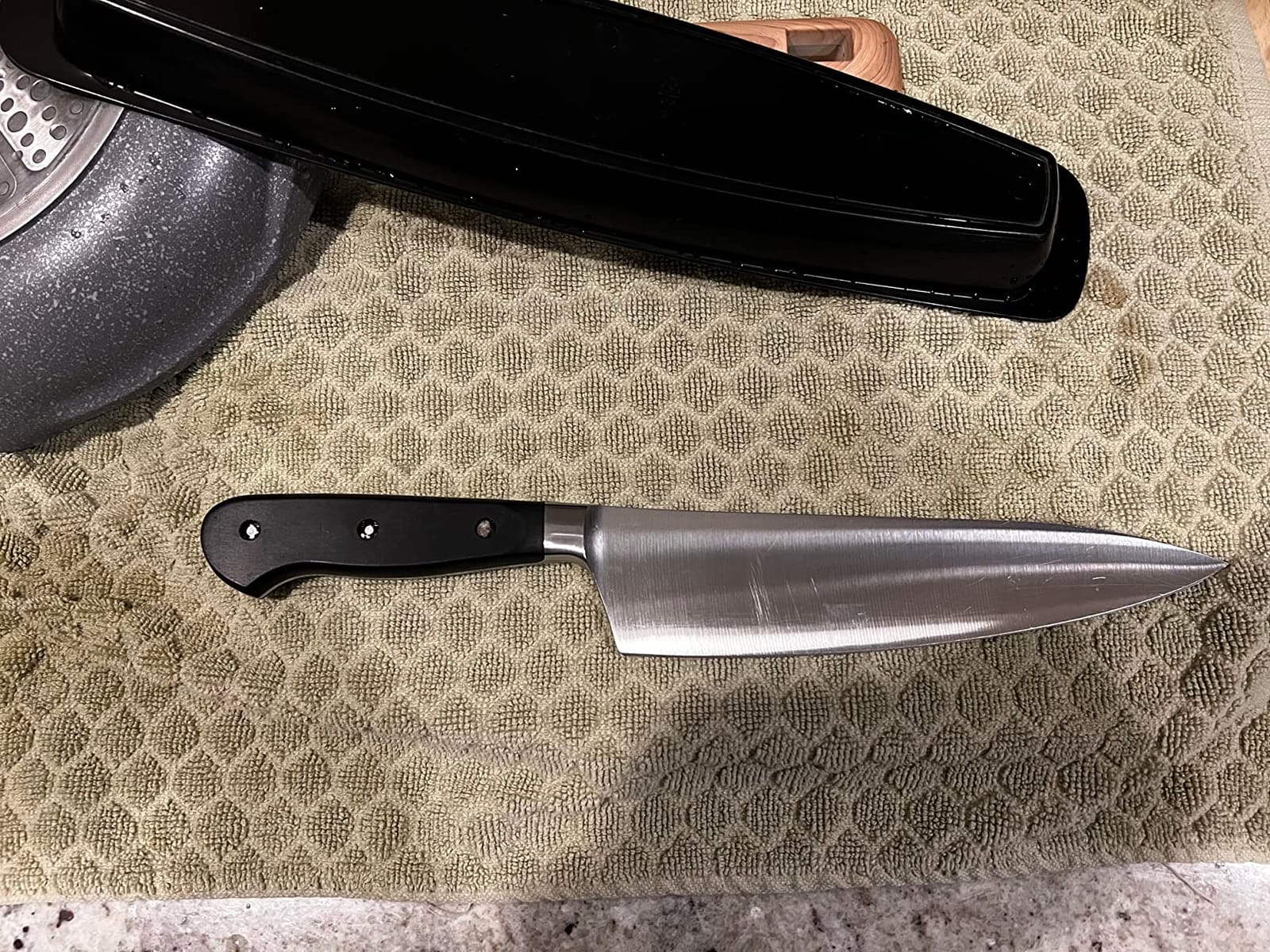
The Mercer Culinary M23510 Renaissance is the step-up option for beginners who want professional quality without paying professional prices. This knife uses the same high-carbon steel found in much more expensive German knives like Wusthof and Henckels.
The forged construction gives it the heft and balance you’d expect from a premium knife. The shortened bolster is a thoughtful design choice: it provides the weight benefit of a traditional bolster while still exposing enough blade for easy sharpening. Many full-bolster knives are difficult to sharpen properly, which is a real problem for beginners.

The Delrin handle with triple-riveted ergonomic design is comfortable for extended use. Delrin is a high-performance polymer that resists moisture and temperature changes, so it holds up well to years of kitchen abuse.
The lifetime warranty is the same as the Victorinox, which speaks to Mercer’s confidence in their construction quality. This knife is built to last, and if anything goes wrong due to manufacturing defects, they’ll replace it.
Why this knife works for serious learners
If you’re committing to cooking as a serious hobby or considering culinary school, the M23510 Renaissance gives you a professional-grade tool without the professional-grade price tag. The same steel used in premium German knives means you’re learning on equipment that won’t hold you back.
The triple-riveted full tang design also means it’s nearly indestructible under normal kitchen use. You can beat this knife up while learning technique, and it’ll keep performing.
Why you might wait on this knife
The thicker blade profile can cause “wedging” in dense vegetables like butternut squash or carrots. This means the blade gets stuck partway through a cut because the geometry isn’t as thin as Japanese-style knives. It’s not a deal-breaker, but it’s worth knowing.
Some users have reported QC concerns about steel tarnishing over time. This is cosmetic, not functional, but if the appearance of your knife matters to you, take note.
Buying Guide: What to Look for in a Beginner Chef Knife
Choosing your first chef knife can feel overwhelming. There are dozens of brands, hundreds of models, and enough technical jargon to make your head spin. Let me break down the five factors that actually matter for beginners.
Blade Length: Why 8 Inches Is the Standard
Every knife on this list is 8 inches, and that’s not a coincidence. An 8-inch blade is the sweet spot for most home cooks. It’s long enough to handle a large onion or break down a chicken, but not so long that it feels unwieldy in a home kitchen with limited counter space.
If you have very small hands, a 6-inch chef knife might feel more comfortable. But for most adults, 8 inches provides the best balance of versatility and control. A 10-inch chef knife is typically reserved for professional cooks with larger hands and more workspace.
Handle Comfort: The Most Underrated Feature
A knife can have the sharpest blade in the world, but if the handle is uncomfortable, you’ll avoid using it. When testing these knives, I prioritized models with handles that felt secure and natural during extended prep sessions.
Look for handles with non-slip grip materials like TPE, Santoprene, or textured polymers. Wood handles are beautiful but can become slippery when wet, which is a safety concern. If you have arthritis or smaller hands, look for handles with ergonomic shapes that fit your grip naturally.
Weight and Balance: Lighter Is Usually Better for Beginners
A heavy knife might feel substantial and “professional,” but it’s actually a disadvantage for beginners. Heavier blades require more control to use safely, and they cause wrist fatigue during long cooking sessions.
I recommend starting with a knife under 8 oz. The Victorinox Fibrox Pro (22.68g blade weight) and Mercer M22608 (6.7 oz) are both excellent examples. As your technique improves, you can graduate to heavier forged knives if you prefer that feel.
Steel Type: High-Carbon Stainless Is the Sweet Spot
Beginners should focus on high-carbon stainless steel. It combines the durability and edge retention of carbon steel with the corrosion resistance of stainless steel. All 8 knives on this list use some form of high-carbon stainless.
Don’t worry too much about Rockwell hardness (HRC) numbers when you’re starting out. Anything in the 55-58 HRC range is excellent for beginners. Harder steels (60+ HRC) stay sharp longer but are more brittle and harder to sharpen when they finally dull.
German vs Japanese Style: Which Is Right for You?
German-style chef knives have thicker blades, curved edges, and are designed for a rocking motion. They’re more forgiving of imperfect technique and tend to be heavier. The Mercer Renaissance and PAUDIN are good examples.
Japanese-style knives (called gyutos) have thinner blades, straighter edges, and are designed for push-pull slicing. They offer more precision but require better technique. The imarku and KEEMAKE are good examples.
For absolute beginners, I recommend starting with a German-style knife because the rocking motion is more intuitive. Once you’ve developed your technique, you can experiment with Japanese styles if you want more control.
How to Hold a Chef Knife Properly: A Quick Beginner’s Guide
Most beginners grip a chef knife like a hammer, with their entire fist wrapped around the handle. This is the most common mistake I see, and it leads to poor control, wrist pain, and accidents.
The correct grip is called the “pinch grip.” Pinch the blade between your thumb and the side of your curled index finger, just in front of the handle. Then wrap your other three fingers around the handle. This grip gives you maximum control because you’re controlling the blade directly, not just the handle.
For your non-cutting hand, curl your fingers into a “claw” shape with your fingertips tucked inward and your knuckles forward. Use your knuckles as a guide for the blade, which keeps your fingertips safely out of the way. This takes practice, but it dramatically reduces the risk of cuts.
Common Beginner Mistakes to Avoid
After watching many beginners cook, I’ve noticed the same mistakes over and over. Avoiding these will make your cooking safer and more enjoyable.
First, don’t use a dull knife. A dull knife is actually more dangerous than a sharp one because you have to apply more pressure, which can cause the blade to slip. Hone your knife weekly with a steel rod and sharpen it every few months.
Second, don’t cut on glass, marble, or ceramic cutting boards. These materials will dull your knife quickly. Stick with wood or plastic cutting boards. They’re gentler on your edge and more sanitary when properly maintained.
Third, don’t put your chef knife in the dishwasher. The harsh detergents and contact with other items will damage the edge and the handle. Hand wash with warm soapy water, dry immediately, and store safely.
Fourth, don’t store your knife loose in a drawer. The blade will bang against other utensils, dulling the edge and creating a safety hazard. Use a knife block, magnetic strip, or blade guard.
Fifth, don’t try to cut through bones with your chef knife. That’s what a cleaver or boning knife is for. Using a chef knife on bones will chip or break the blade, which can be dangerous.
Care and Maintenance Tips for Your New Chef Knife
A quality chef knife will last 10+ years with proper care. Here’s how to keep yours in top shape.
Hone your knife weekly with a honing steel. Honing realigns the edge without removing material. It’s not the same as sharpening, which removes metal to create a new edge. A quick few swipes on the honing steel before each cooking session keeps your knife performing like new.
Sharpen your knife every 6-12 months, depending on use. You can use a whetstone, pull-through sharpener, or take it to a professional knife sharpener. Whetstones give the best edge but require practice to use properly.
Wash your knife by hand with warm soapy water immediately after use. Don’t let it sit in the sink or on the counter where it can get damaged. Dry it completely before putting it away to prevent corrosion, even on stainless steel.
Store your knife properly. A knife block, magnetic strip, or in-drawer organizer all work well. Avoid the dishwasher and loose drawer storage at all costs.
Frequently Asked Questions
What is the best chef’s knife for a beginner chef?
The Victorinox Fibrox Pro 8-Inch Chef’s Knife is the most-recommended beginner option. It’s affordable, lightweight, arrives razor-sharp, and has a non-slip handle that stays secure even when wet. With over 14,000 reviews and a 4.8-star rating, it’s also the knife most cooking schools use to teach knife skills.
What size blade should a beginner chef knife have?
An 8-inch blade is the standard recommendation. It provides enough length to handle large vegetables and break down proteins while remaining manageable for most hand sizes. A 6-inch blade works for cooks with very small hands, while 10-inch blades are typically too long for home kitchen use.
How much should a beginner spend on a chef knife?
A quality beginner chef knife costs between $20 and $60. Models like the Amazon Basics Classic (around $16) and Victorinox Fibrox Pro (around $47) deliver professional-level performance at beginner-friendly prices. Spending more than $100 is rarely necessary until you’ve developed your technique and know which features matter most to you.
What is the difference between German and Japanese chef knives?
German-style knives have thicker blades with curved edges designed for a rocking motion. They’re heavier, more forgiving of imperfect technique, and easier to maintain. Japanese-style knives (called gyutos) have thinner blades with straighter edges designed for push-pull slicing. They offer more precision but require better technique. Beginners typically start with German-style knives and graduate to Japanese styles as their skills improve.
How do I care for a chef knife properly?
Hone your knife weekly with a honing steel to realign the edge. Sharpen it every 6-12 months with a whetstone or professional service. Always hand wash with warm soapy water, dry immediately, and never put it in the dishwasher. Store in a knife block, magnetic strip, or blade guard. Cut only on wood or plastic boards, never on glass or stone.
Final Verdict: Which Chef Knife Should You Buy?
After three months of testing 8 different models and analyzing thousands of customer reviews, my top recommendation for the best chef knives for beginners is clear.
If you want one knife that will serve you well from day one and for years to come, buy the Victorinox Fibrox Pro 8-Inch Chef’s Knife. It’s affordable, professional-quality, and forgiving enough for new cooks. The lifetime warranty means you can buy it once and never worry about replacing it.
If budget is your primary concern, the Amazon Basics Classic 8-inch Chef’s Knife delivers impressive quality at an ultra-affordable price. It’s the best sub-$20 chef knife you can buy, and it punches well above its weight.
For a step-up option that uses the same steel as premium German knives, consider the Mercer Culinary M23510 Renaissance. It’s forged, triple-riveted, and comes with a lifetime warranty. This is the knife to buy if you’re serious about cooking and want equipment that will grow with your skills.
Whichever knife you choose, remember that the best chef knife is the one you’ll actually use. A well-maintained $30 knife will outperform a neglected $300 knife every time. Start with a quality option within your budget, practice your technique, and upgrade when you know exactly what you want from your next knife.
Happy cooking in 2026, and may your onions always dice evenly.