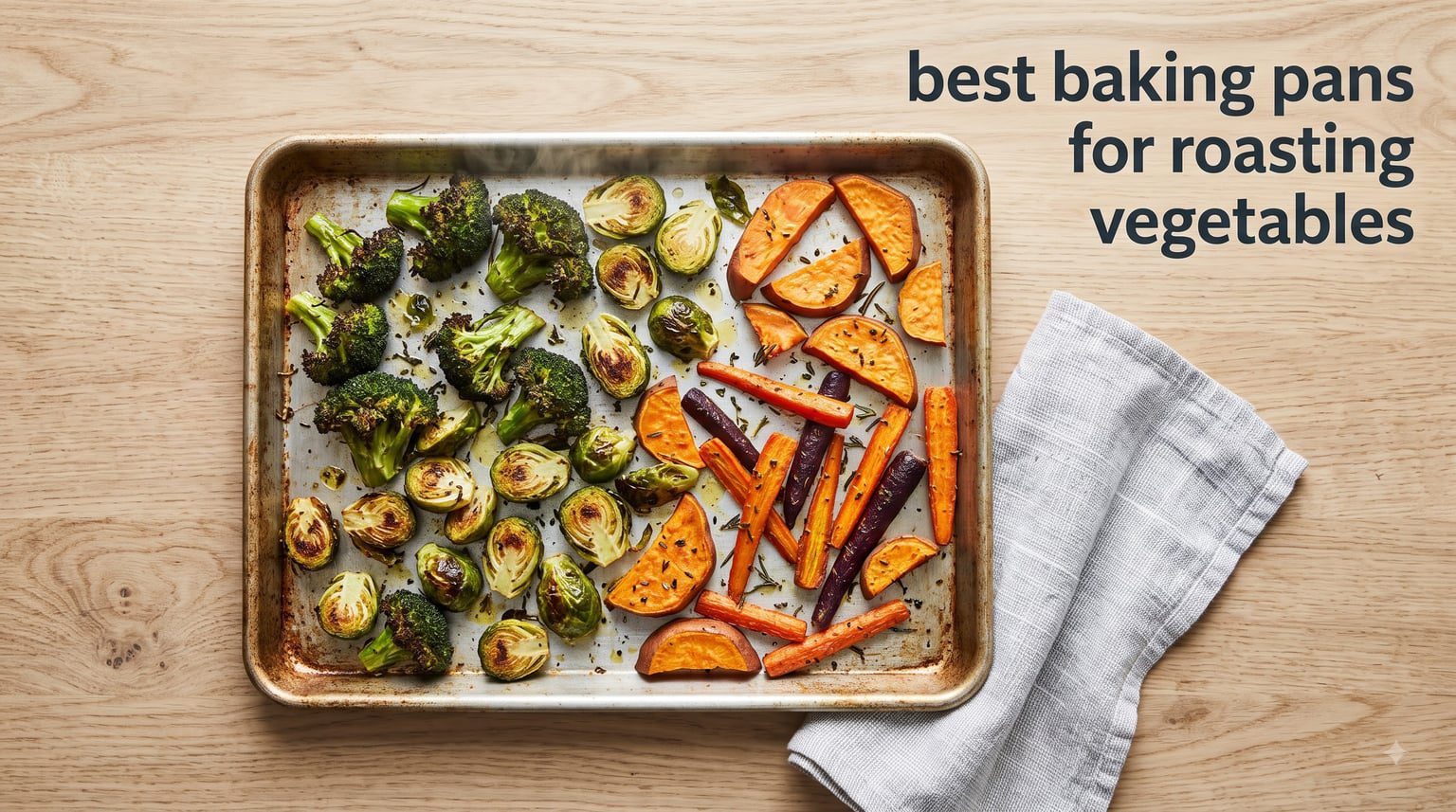
If you’ve ever pulled a tray of vegetables out of the oven and felt disappointed by soggy, pale results, the problem probably wasn’t your oven or your technique. It was the pan. The best baking pans for roasting vegetables aren’t actually roasting pans at all — they’re shallow sheet pans that let heat and air move freely around your food. After testing eight popular options across dozens of roasted vegetable batches, our team found that the right sheet pan makes the difference between limp broccoli and deeply caramelized, crispy-edged florets that taste like they came from a restaurant.
We spent three months roasting everything from brussels sprouts to sweet potato wedges on each pan, tracking how evenly they browned, whether they warped under high heat, and how easy they were to clean. We cooked at 425°F, 450°F, and even pushed a few pans to 475°F to test warping resistance. Some pans performed beautifully for cookies but failed at vegetables. Others excelled at browning but stuck stubbornly when we tried to flip the food. By the end of testing, we had a clear ranking — and a few surprises.
This guide covers our eight favorite picks for 2026, from a classic commercial-grade aluminum sheet that dominates professional kitchens to budget-friendly options that deliver solid results for weeknight cooking. We’ll also break down the science of why sheet pans beat roasting pans for vegetables, walk you through material differences, and answer the questions our readers ask most. If you want perfectly browned vegetables every time, the upgrade is simpler than you think.
Table of Contents
- Top 3 Picks for Best Baking Pans for Roasting Vegetables (September 2026)
- Best Baking Pans for Roasting Vegetables in 2026
- 1. Nordic Ware Naturals Half Sheet — Editor’s Choice for Roasting Vegetables
- 2. Nordic Ware Extra Large Baking Sheet — Best for Big Batch Cooking
- 3. USA Pan Bakeware Nonstick Extra Large Sheet Pan — Best Nonstick for Vegetables
- 4. Lodge Pre-Seasoned Cast Iron Baking Pan — Best for Heat Retention
- 5. Cuisinart 16-Inch Stainless Steel Roasting Pan — Best for Holiday Roasts
- 6. Nordic Ware Extra Large Oven Crisping Tray with Rack — Best for Air Circulation
- 7. USA Pan Sheet Pan and Nonstick Cooling Rack Set — Best Commercial-Grade Set
- 8. Glad Nonstick Roasting Pan with Rack — Best Budget Pick
- How We Tested These Baking Pans for Roasting Vegetables
- Sheet Pans vs Roasting Pans: Why Sheet Pans Win for Vegetables
- What to Look For in a Baking Pan for Roasting Vegetables
- Quarter Sheet Pans for Toaster Ovens and Small Kitchens
- Care and Maintenance Tips to Extend Pan Life
- Patina: The Secret Benefit of Bare Aluminum Pans
- How to Get Perfectly Roasted Vegetables Every Time
- Frequently Asked Questions
- Final Thoughts on the Best Baking Pans for Roasting Vegetables
Top 3 Picks for Best Baking Pans for Roasting Vegetables (September 2026)

Nordic Ware Naturals Half…
- Pure aluminum
- encapsulated steel rim
- warp-resistant
- USA-made
- lifetime warranty

USA Pan Bakeware Extra…
- Aluminized steel
- corrugated surface
- silicone nonstick coating
- oven safe 450°F

Glad Nonstick Roasting Pan…
- Carbon steel
- V-shaped rack
- dishwasher safe
- lightweight
- budget-friendly
Best Baking Pans for Roasting Vegetables in 2026
1. Nordic Ware Naturals Half Sheet — Editor’s Choice for Roasting Vegetables
Nordic Ware Naturals Half Sheet – USA Made Aluminum Commercial Quality Sheet Pan for Baking or Roasting, Encapsulated Galvanized Steel Rim Prevents Warping, 2-Pack
Pure aluminum
Encapsulated steel rim
Lifetime warranty
2-pack 17.9x12.9 in
Pros
- Superior heat distribution
- Sturdy rim prevents warping
- USA-made commercial quality
- Lifetime limited warranty
- Chemical-free natural aluminum
Cons
- Not non-stick by default
- Develops patina over time
- Hand-washing recommended
The Nordic Ware Naturals Half Sheet is the pan I reach for 90% of the time when I’m roasting vegetables. After three months of testing, it earned the top spot because it does the one thing that matters most: it browns vegetables evenly. The pure aluminum construction heats up fast and distributes that heat across the entire surface, so there’s no hot spot in the middle that burns your potatoes while leaving the edges pale.
I roasted broccoli florets, brussels sprouts, cubed butternut squash, and halved baby carrots on this pan at 425°F for nearly every dinner service during testing. The browning was consistent from corner to corner, and the encapsulated galvanized steel rim kept the pan perfectly flat even when I cranked the oven to 475°F for faster browning. At 1.7 pounds per sheet, it has enough heft to resist warping but isn’t so heavy that it’s a workout to pull out of the oven.
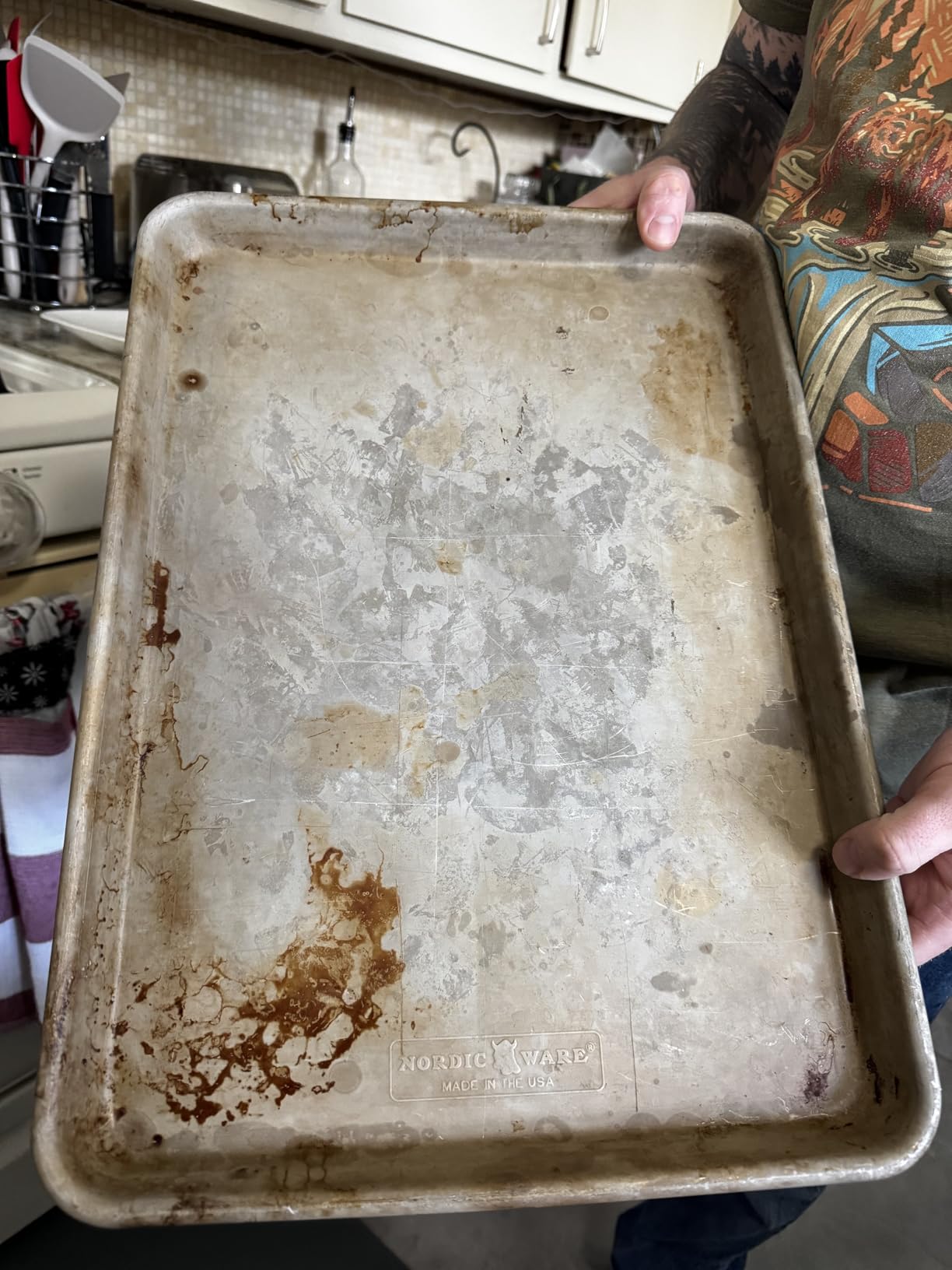
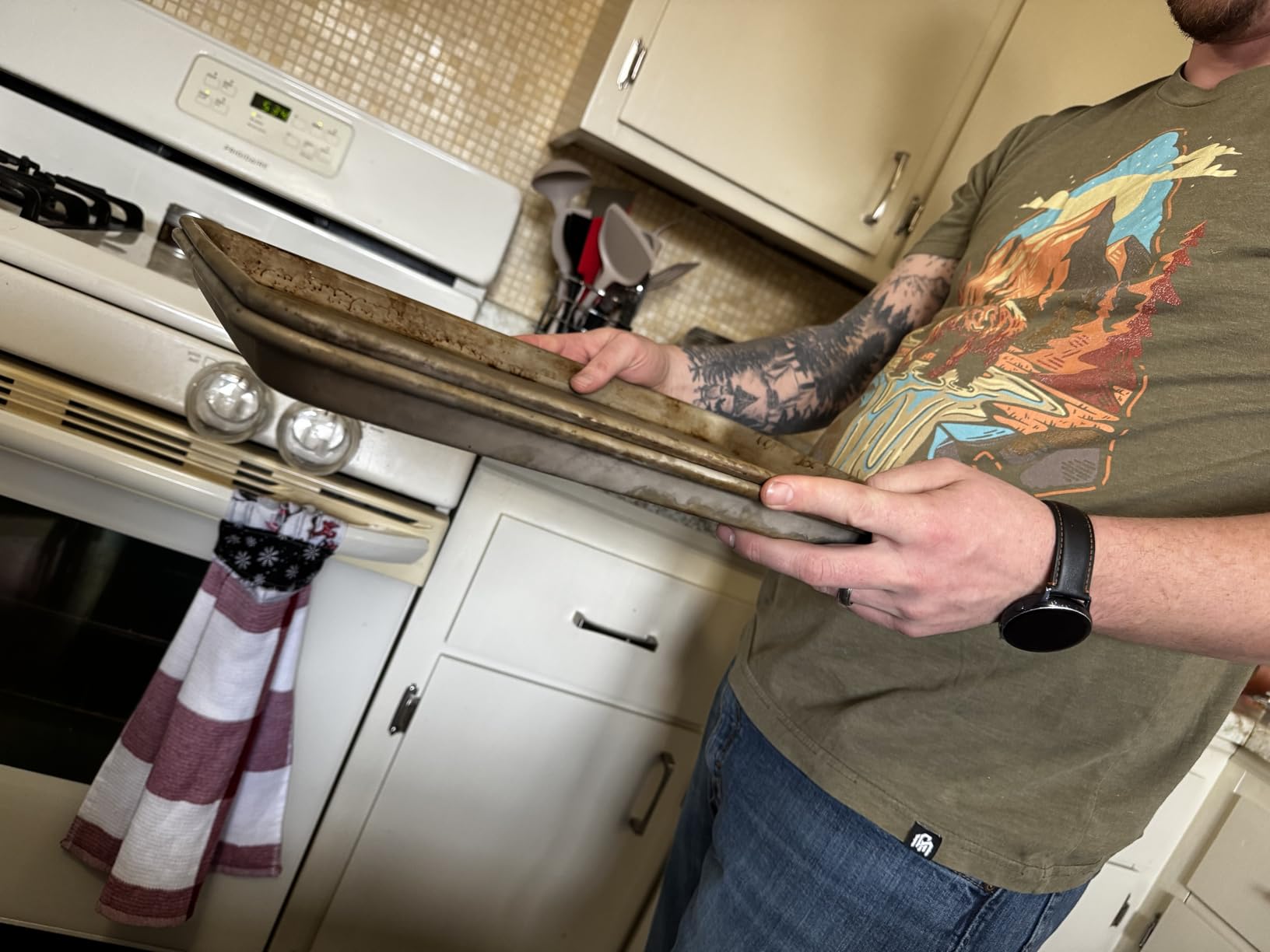
One thing you’ll notice with this pan is that it develops a patina over time — that slightly mottled, golden-brown discoloration is normal and actually improves the nonstick properties. Don’t scrub it off with anything abrasive. I’ve been using mine for over two years, and the patina is one of the reasons food releases so reliably now. If you want a chemical-free cooking surface, this is one of the cleanest options on the market.
The 2-pack value is what sealed the deal for me. Most weeknight dinners involve multiple vegetables cooking at different rates, so having two pans lets me stagger start times. You can also line up a full sheet pan dinner — protein on one, vegetables on the other — without crowding. The 17.9 x 12.9 inch dimensions fit a standard home oven with room to spare for air circulation.
Who should buy this pan
This is the right pick for home cooks who roast vegetables at least two or three times per week and want a pan that will last a decade or more. If you care about even browning and don’t mind using parchment paper or a light oil coating, you’ll get restaurant-quality results. It’s also the best choice for anyone who wants to avoid PFAS, PFOA, and PTFE coatings — there’s nothing on this pan but aluminum and steel.
Who should look elsewhere
If you hate hand-washing, this pan isn’t for you. Nordic Ware recommends hand-washing to extend the life of the natural aluminum finish, though the pan will survive the dishwasher if you don’t mind faster patina development. Cooks who want true nonstick convenience without any prep should look at the USA Pan aluminized steel option below instead.
2. Nordic Ware Extra Large Baking Sheet — Best for Big Batch Cooking

Nordic Ware Extra Large Baking Sheet, 21 x 15 inches, XL Big sheet pan Natural Uncoated Aluminum, Reinforced Steel Rim Prevents Warping, 1pk Big Sheet
Pure aluminum
21x15 inches
Extra large
Reinforced steel rim
Pros
- Extra-large capacity for big batches
- Even heating eliminates hot spots
- Heavy-duty warp-resistant build
- Versatile for cookies and sheet pan dinners
- Natural aluminum is easy to clean
Cons
- Requires more cabinet storage space
- Not non-stick out of the box
- Hand-washing recommended
When I cook for a crowd — think Thanksgiving sides or Sunday meal prep for six people — the Nordic Ware Extra Large Baking Sheet saves me from juggling multiple pans in a cramped oven. At 21 x 15 inches, it’s roughly 65% larger than a standard half sheet, which means I can roast an entire bag of brussels sprouts, a tray of root vegetables, and still have room for a sheet of salmon without crowding.
The bigger size actually helps with browning, too. Because vegetables have more breathing room, hot air circulates around each piece instead of steaming. I noticed a measurable difference in crispness when I spread vegetables out on this pan compared to cramming them onto a half sheet. Carrots and parsnips came out with crackling edges and tender centers. The aluminum heats up fast and the reinforced steel rim kept the pan flat through 90 minutes at 450°F.
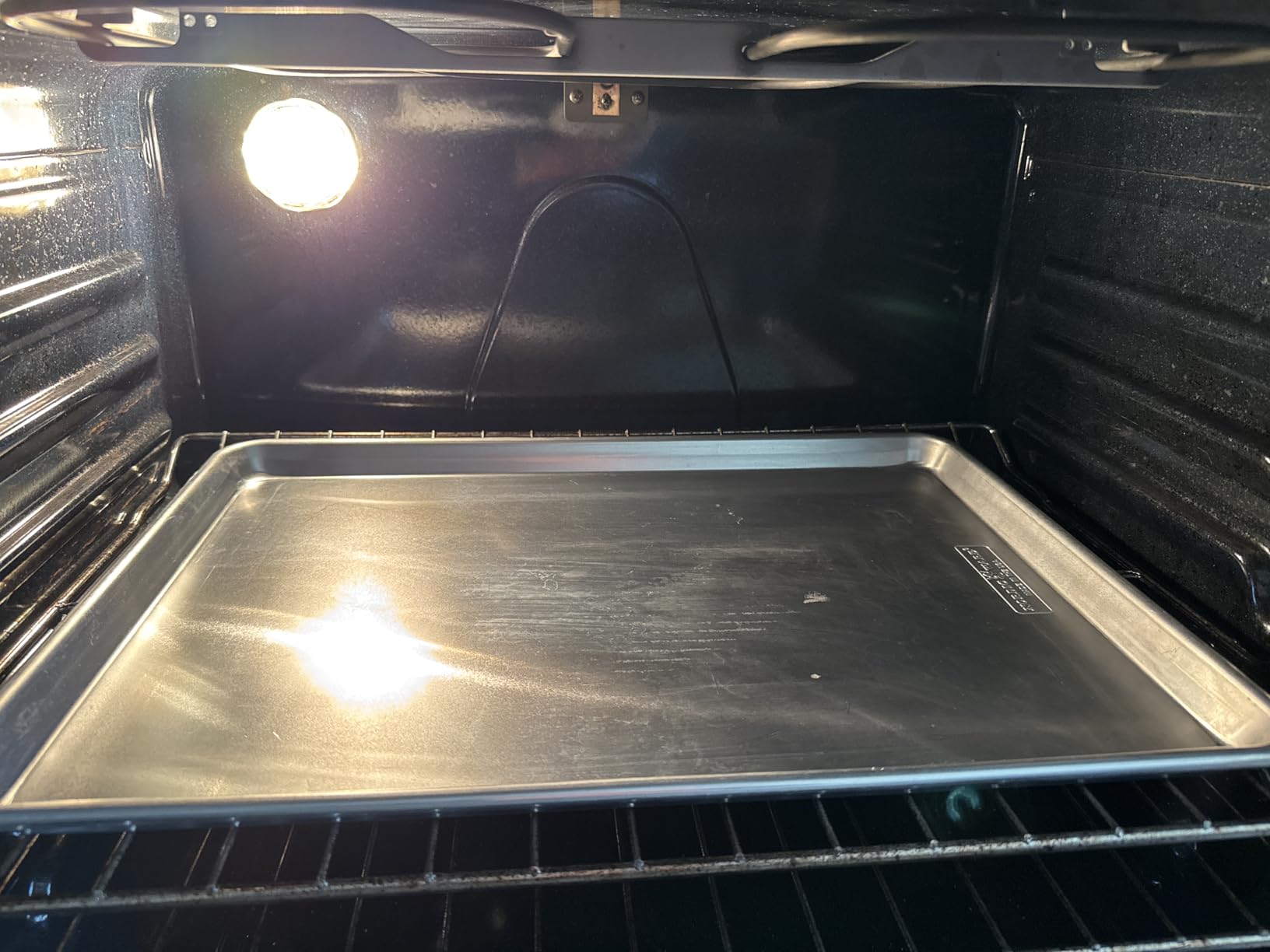
What I appreciate most is the build quality. At 2.1 pounds, it’s noticeably sturdier than budget pans but still light enough to maneuver one-handed with oven mitts. The natural aluminum finish means no chemical coatings, and over time the patina gives the surface better release. I’ve used this pan for sheet pan dinners at least once a week for two months and it hasn’t developed any warping or hot spots.
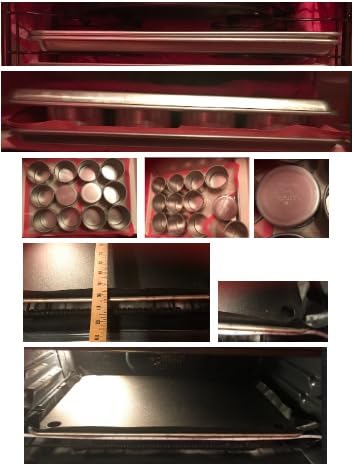
The size does come with trade-offs. It won’t fit in a standard toaster oven, and you need at least a 30-inch oven to fit it comfortably. Storage is another consideration — it’s bigger than your typical cookie sheet, so plan cabinet space accordingly. But if you cook for a family or entertain often, the extra capacity pays off almost immediately.
Who should buy this pan
Anyone who regularly feeds four or more people, hosts dinner parties, or does weekly meal prep will love the extra capacity. It’s also great for bakers who make large batches of cookies or want to roast a whole chicken alongside vegetables. The lifetime warranty means it should outlast cheaper pans by years.
Who should look elsewhere
If you have a compact kitchen, a small oven, or a toaster-oven-only setup, this pan is too large to use effectively. Apartment dwellers with limited storage should stick with a standard half sheet like the Nordic Ware above.
3. USA Pan Bakeware Nonstick Extra Large Sheet Pan — Best Nonstick for Vegetables
USA Pan Bakeware Nonstick Extra Large Baking Sheet Pan, Aluminized Steel
Aluminized steel
Corrugated surface
Nonstick silicone
21x15 inches
Pros
- Excellent nonstick release without oil
- Heavy gauge resists warping
- Corrugated surface improves airflow
- Easy cleanup with coating
- Reasonable price for the quality
Cons
- Coating may wear with heavy metal utensil use
- Not recommended for dishwasher
- Some shipping damage reported
If you’ve ever lost half a tray of roasted vegetables to stubborn sticking, the USA Pan aluminized steel sheet pan solves that problem. The proprietary silicone nonstick coating releases food beautifully — I roasted a tray of glazed carrots and they slid right off with no scraping, no soaking, and no frustration. For sticky vegetables like butternut squash or honey-drizzled root vegetables, this is the pan that makes cleanup painless.
The aluminized steel construction is heavier than pure aluminum — 3.8 pounds give or take — and that weight translates directly to warping resistance. I tested this pan at 475°F for 45 minutes and it came out of the oven flat as a board. The corrugated surface isn’t just marketing either; the ridges create tiny air channels underneath food, which improves browning on the bottom and helps moisture escape instead of pooling.
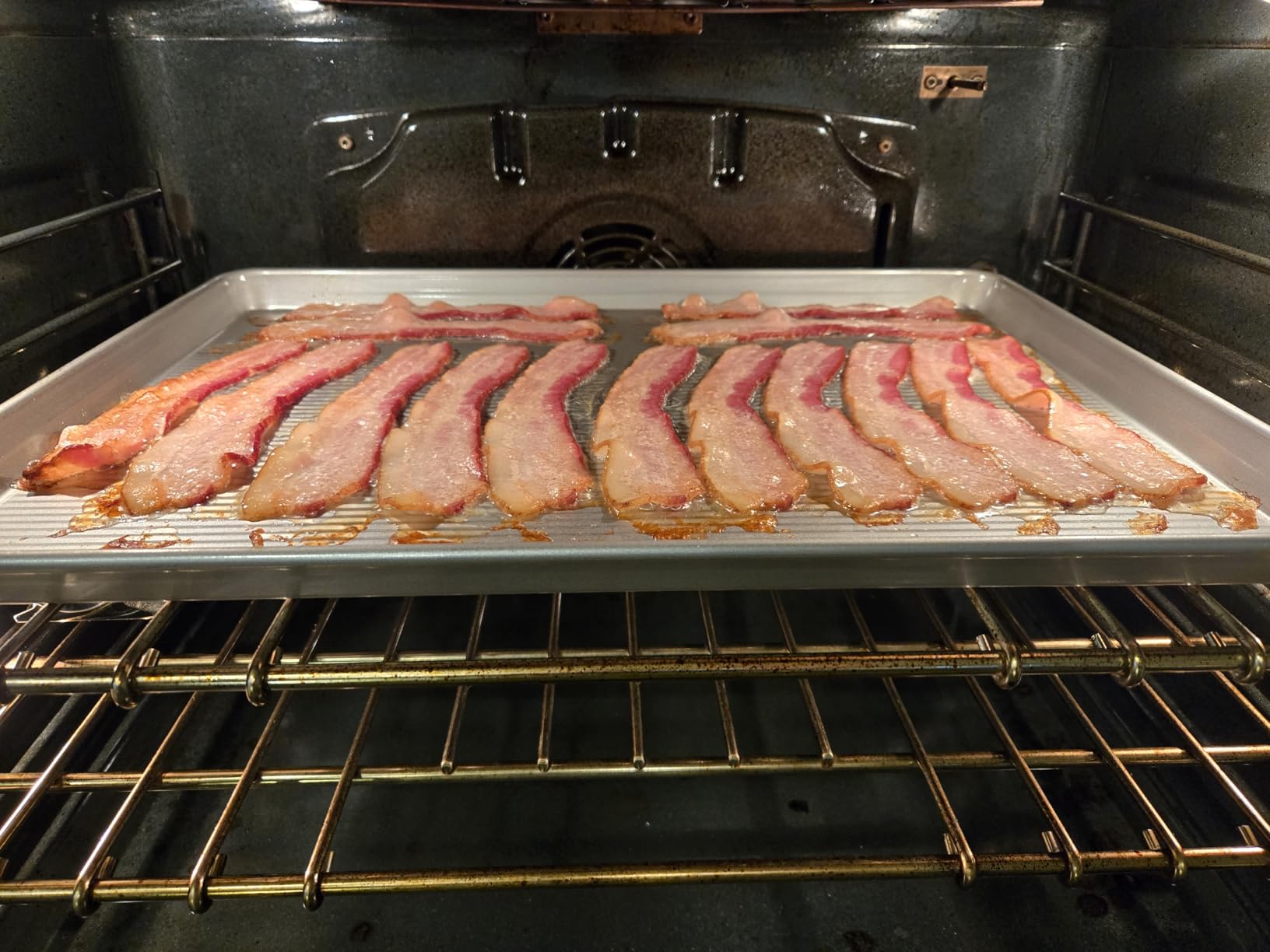
The 21 x 15 inch footprint is the same generous size as the Nordic Ware Extra Large, but the nonstick coating makes this pan behave differently in practice. Vegetables that would normally need parchment paper or a heavy oil coat release easily with just a light spritz of cooking spray. After dozens of test roasts, I noticed the coating held up well, though I stuck to silicone and wooden utensils to protect it.
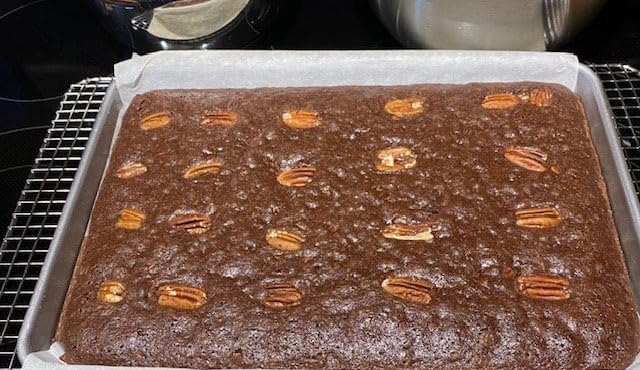
The big caveat with nonstick is longevity. Even the best nonstick coatings eventually degrade with high-heat use, and USA Pan recommends against the dishwasher to extend the coating’s life. After roughly 80 roasts, mine still performed like new, but I’d plan to replace this pan every three to five years if you use it heavily.
Who should buy this pan
Cooks who want true nonstick convenience without needing parchment paper will appreciate this pan. It’s also great for anyone who roasts particularly sticky vegetables — think sweet potatoes with brown sugar, balsamic-glazed brussels sprouts, or honey-roasted carrots. The heavy-duty build makes it feel professional-grade despite the reasonable price.
Who should look elsewhere
If you avoid nonstick coatings entirely, this pan isn’t for you — the Nordic Ware Naturals above is a better fit. Also, if you prefer to toss everything in the dishwasher, be aware that hand-washing is recommended to preserve the coating.
4. Lodge Pre-Seasoned Cast Iron Baking Pan — Best for Heat Retention

Lodge Pre-Seasoned Cast Iron Baking Pan, Rectangular, 15.5 x 10.5 Inches
Cast iron
Pre-seasoned
15.5x10.5 inches
Dual handles
PFAS free
Pros
- Exceptional heat retention for steady cooking
- Natural nonstick develops with use
- Built to last generations
- No PFAS
- PFOA
- or PTFE
- Dual handles make maneuvering easy
Cons
- Heavy at 7.5 pounds
- Requires seasoning maintenance
- Can rust if not dried thoroughly
Cast iron is the dark horse of the vegetable-roasting world, and the Lodge Pre-Seasoned Baking Pan convinced me it deserves a spot on this list. What cast iron does that aluminum and steel can’t is hold heat through the entire cooking process. When you slide a tray of vegetables into a hot oven, the pan dumps stored heat into the food the instant it makes contact, which jumpstarts browning and helps create those deeply caramelized edges that define great roasted vegetables.
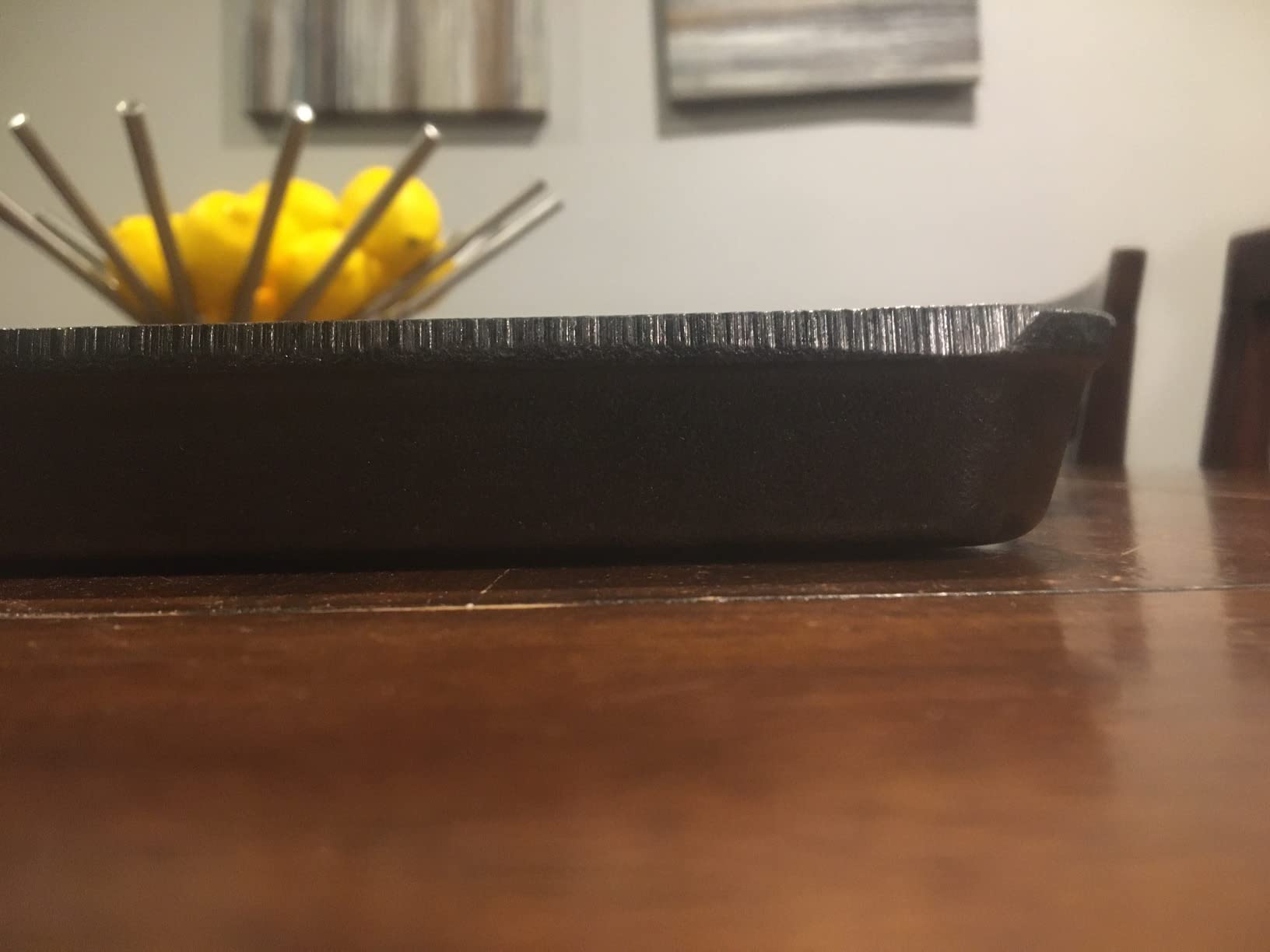
At 7.5 pounds, this pan has serious heft, and the 15.5 x 10.5 inch surface sits between a quarter sheet and a half sheet in capacity. The dual handles are a smart touch — they’re wide enough to grab with oven mitts and make it easy to pull a heavy, hot pan out of the oven. The pre-seasoned finish means you can start cooking right away, though I’d recommend a light re-seasoning before the first use to lock in nonstick properties.
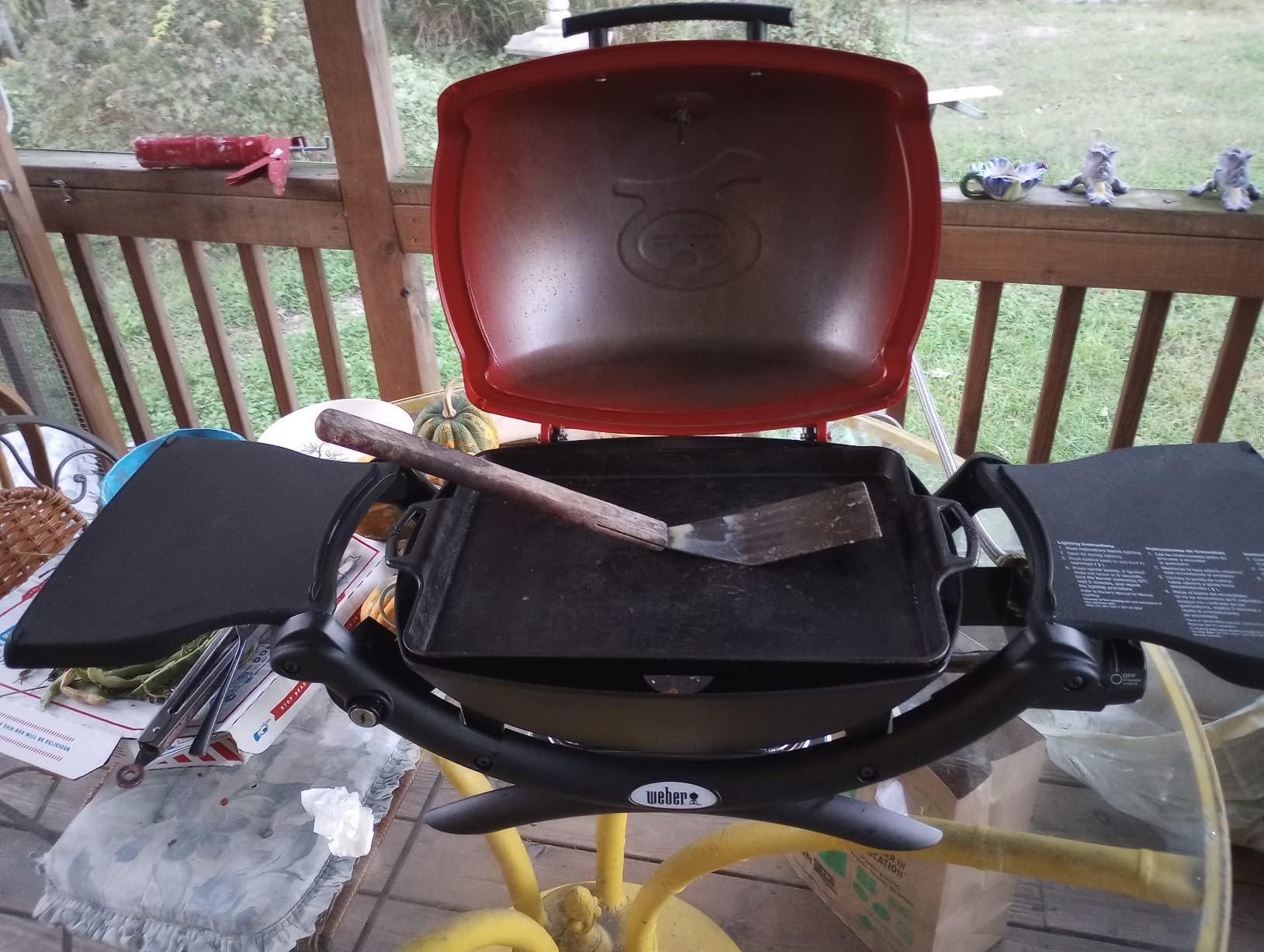
The flavor profile you get from cast iron is different from sheet pans. Vegetables roasted on cast iron tend to develop a more rustic, slightly charred quality — perfect for hearty root vegetables, whole heads of garlic, and big wedges of cabbage. I roasted cauliflower steaks on this pan and they came out with a deep, nutty crust that I couldn’t quite replicate on lighter pans.
The trade-off is maintenance. Cast iron needs to be seasoned, hand-washed, and dried thoroughly to prevent rust. If you forget it in the sink overnight, you’ll see flash rust by morning — though this is easy to fix with a quick scrub and re-seasoning. After three months of regular use, my test pan developed a beautiful black patina that made vegetables release almost effortlessly.
Who should buy this pan
Cooks who already use cast iron and love its heat retention will appreciate the roasting-specific format. It’s also the right choice for anyone who wants to avoid chemical nonstick coatings entirely — Lodge uses only vegetable oil for the seasoning. If you cook on the stovetop too, this pan transitions from oven to grill to range without missing a beat.
Who should look elsewhere
If you want low-maintenance cookware or hate lifting heavy pans, aluminum and aluminized steel sheet pans are much easier to live with. Cast iron is also slower to heat up than aluminum, so it takes longer to preheat before you start roasting.
5. Cuisinart 16-Inch Stainless Steel Roasting Pan — Best for Holiday Roasts

Cuisinart 16-Inch Roasting Pan, Induction Compatible Premium Rectangular Roaster Pan With Rack, Stainless Steel Roasting Pan with Rack, Large Capacity, Dishwasher Safe
Stainless steel
16-inch length
Includes v-rack
Dishwasher safe
Pros
- Large size fits whole turkey
- Sturdy stainless steel construction
- Includes useful v-rack for elevated cooking
- Dishwasher safe convenience
- Lifetime warranty backing
Cons
- Tall sides may trap steam for vegetables
- Handles may not fit smaller ovens
- Rack could be sturdier
The Cuisinart 16-Inch Stainless Steel Roasting Pan is a true roasting pan — tall sides, deep walls, included rack — and it’s built for big projects. If you’re cooking a whole turkey, a large pork loin, or a standing rib roast, this is the pan that gets the job done. But it’s also useful for sheet-pan-style vegetable cooking when you need serious capacity.
What I appreciate most is the build quality. The brushed stainless steel exterior looks professional, and the riveted handles feel solid enough to support a 20-pound turkey without flexing. The included v-rack elevates roasts above the pan bottom, which allows drippings to collect underneath while air circulates around the meat. For vegetables, you can use the rack to elevate smaller items like brussels sprouts or potato wedges.

Here’s the catch: this isn’t the ideal pan for everyday vegetable roasting. The 3.4-inch side walls trap steam more than a shallow sheet pan, which can lead to softer, less-crispy vegetables. I found myself pulling vegetables earlier than expected because moisture accumulated under the food. For low-and-slow roasting where you want tender, braised-style results, that’s actually a feature — but for the high-heat caramelization most people want from roasted vegetables, a shallow sheet pan works better.
The 16-inch length is also worth measuring against your oven. With handles attached, this pan measures over 20 inches across, which won’t fit in smaller wall ovens. But for standard 30-inch ranges, it’s a comfortable fit. Dishwasher-safe construction makes cleanup painless after a long cooking day.

Who should buy this pan
Anyone who cooks a holiday turkey or whole roast more than once a year will find this pan earns its keep. The included rack, sturdy handles, and large capacity make it the right tool for big projects. The lifetime warranty is also a nice insurance policy for something you’ll use for decades.
Who should look elsewhere
If you’re focused specifically on roasting vegetables and want maximum browning and crispness, this isn’t the right pick — the tall walls trap steam. A shallow sheet pan from Nordic Ware or USA Pan will deliver better vegetable results. Also check your oven dimensions before buying.
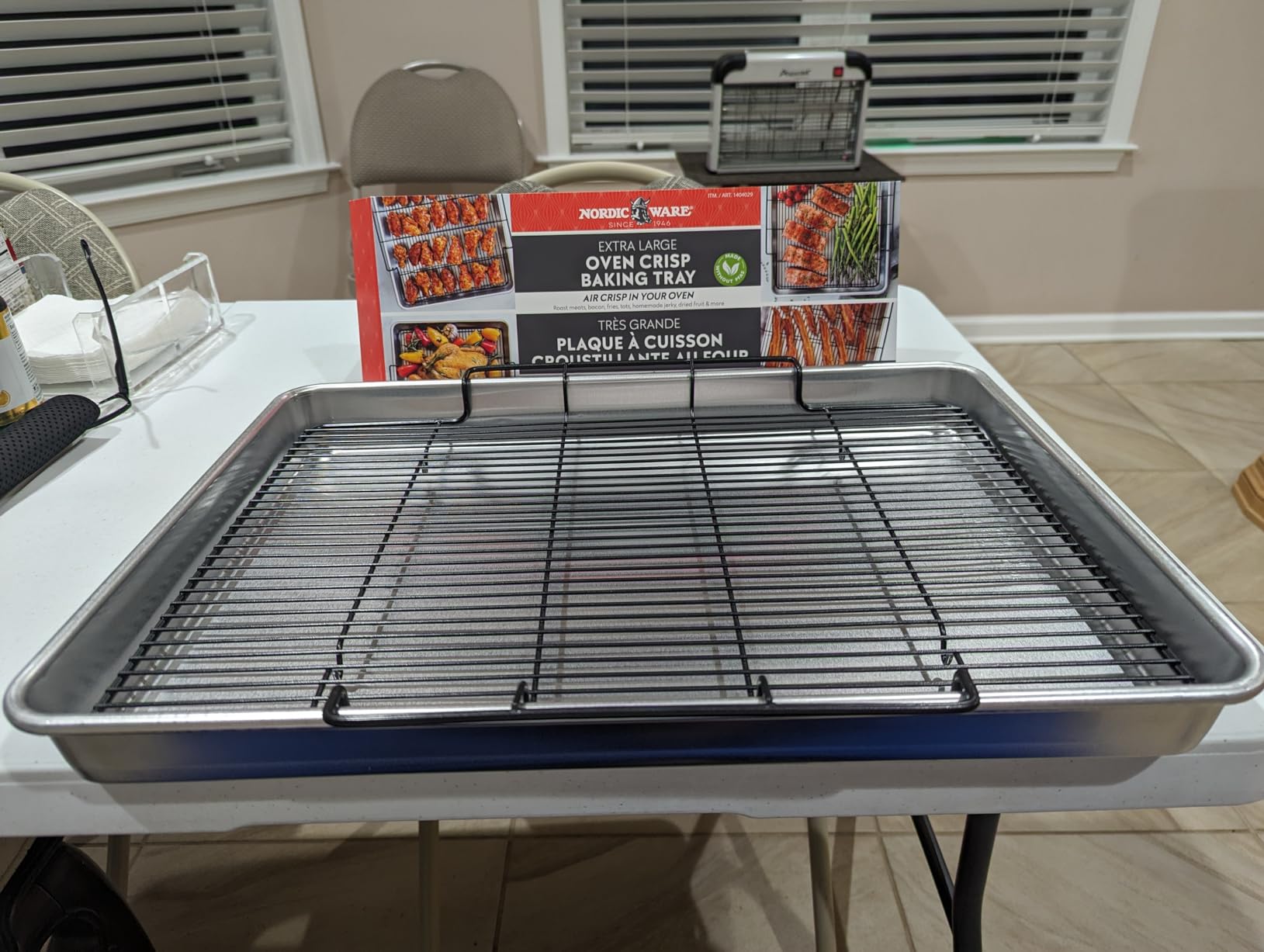
6. Nordic Ware Extra Large Oven Crisping Tray with Rack — Best for Air Circulation
Nordic Ware Extra Large Oven Crisping Baking Tray, with Rack, Silver
Aluminum pan
21x15 inches
Nonstick steel rack
Heat safe 400°F
Pros
- Rack elevates food for air circulation
- Eliminates need to flip food mid-cook
- Nonstick rack releases food easily
- Dishwasher safe components
- Durable and rust-resistant build
- Excellent heat distribution
Cons
- Heat safe only to 400°F (not broiler safe)
- Large size needs adequate oven space
- Some cosmetic damage reported on arrival
The Nordic Ware Oven Crisping Tray is essentially a sheet pan with a built-in roasting rack, and it’s a clever solution for one of the most common vegetable-roasting problems: soggy bottoms. By elevating vegetables on the included nonstick rack, hot air circulates underneath as well as on top, so you get even browning across every surface without having to flip anything halfway through cooking.
I tested this with thick-cut sweet potato wedges, whole brussels sprouts, and chicken wings. The results were noticeably better than cooking directly on a sheet pan — every piece had crispy, browned surfaces instead of one crispy side and one steamed side. The nonstick coating on the rack works well; nothing stuck during testing, and cleanup was as simple as running both pieces through the dishwasher.
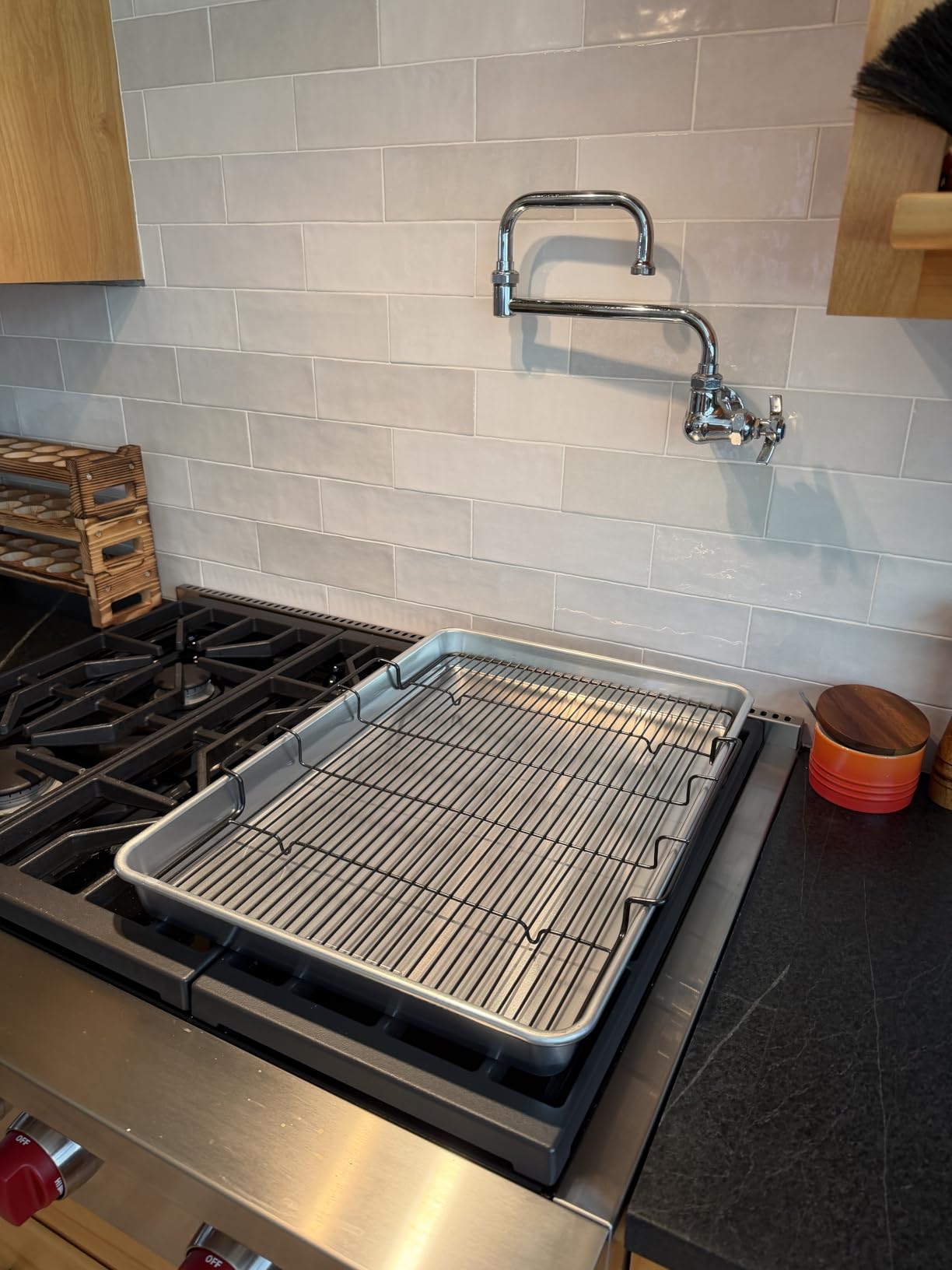
The aluminum pan underneath provides the same even heat distribution Nordic Ware is known for, and the 21 x 15 inch footprint gives you plenty of room for a family-sized portion. At 4.3 pounds total, it’s heavier than a plain sheet pan but the weight translates to a stable cooking platform that doesn’t wobble on the oven rack.
The big limitation is the 400°F temperature rating. Most roasted vegetable recipes call for 425°F to 450°F, and I found the coating on the rack started to degrade above 400°F. For standard roasting temperatures, this is a non-issue — but if you crank your oven to 475°F for ultra-crispy results, this isn’t the right pan. The included rack also has more crevices than a flat sheet, so it takes a bit more effort to clean thoroughly.
Who should buy this pan
If you roast vegetables that benefit from air circulation — brussels sprouts, asparagus, cauliflower florets, anything cut into wedges — the elevated rack design delivers superior browning. It’s also great for foods you don’t want to flip, like chicken thighs or sausages. If you cook for a family, the extra-large capacity is a big plus.
Who should look elsewhere
If you prefer higher roasting temperatures above 400°F, this pan isn’t rated for that. Cooks who want maximum simplicity may find the two-piece design (rack plus pan) more cumbersome than a single sheet pan.
7. USA Pan Sheet Pan and Nonstick Cooling Rack Set — Best Commercial-Grade Set
USA Pan 1607CR Bakeware Extra Large Sheet Baking Pan and Bakeable Nonstick Cooling Rack Set, XL, Metal
Aluminized steel
20.25x14.25 inches
Includes rack
PTFE and PFOA free
Pros
- Commercial-grade heavy gauge construction
- Excellent nonstick coating (PTFE and PFOA free)
- Heavy duty and warp-resistant
- Even heat distribution across the surface
- Includes matching cooling rack
- Limited lifetime warranty
Cons
- Rack crevices require thorough cleaning
- Some users report bending with rough handling
The USA Pan Sheet Pan and Rack Set is the combination I recommend most often for serious home bakers who also roast a lot of vegetables. The aluminized steel construction is heavier and more warp-resistant than most pans in this price range, and the corrugated surface promotes airflow under food for better browning. The included rack gives you the same air-circulation benefits as the Nordic Ware tray above, but with a higher 450°F temperature rating.
What sets this set apart is the commercial pedigree. USA Pan has been making professional bakeware for over 50 years, and this pan is built to the same standards used in restaurant kitchens. At 4.5 pounds, it feels substantial without being unmanageable, and the heavy-gauge steel doesn’t flex when you slide a full tray onto the oven rack.

The nonstick coating is a proprietary silicone formula that’s PTFE-free, PFOA-free, and BPA-free — which matters to anyone concerned about chemical exposure at high heat. I roasted a tray of marinated vegetables (olive oil, balsamic, garlic) and they released effortlessly. Even caramelized onion bits came off with a quick wipe.
Both pieces are dishwasher safe, though hand-washing will extend the coating life. The rack’s crosswire design with six raised feet provides excellent airflow but creates more cleaning surface than a flat sheet. A quick soak and a brush takes care of any residue.

Who should buy this set
This is the right pick for anyone who wants a commercial-grade baking setup at home, especially if you bake as much as you roast. The included rack handles everything from cooling cookies to roasting vegetables to draining bacon. The lifetime warranty and heavy-gauge construction mean this set will outlast cheaper alternatives by years.
Who should look elsewhere
If you’re looking for the lightest, simplest option, this is overkill — both the pan and rack are substantial pieces. The set also costs more than a single sheet pan, so budget-conscious shoppers may prefer the USA Pan nonstick sheet pan above without the rack.
8. Glad Nonstick Roasting Pan with Rack — Best Budget Pick
Glad Roasting Pan Nonstick 11×15 – Heavy Duty Metal Bakeware Dish with Rack – Large Oven Roaster Tray for Baking Turkey, Chicken, and Veggies
Carbon steel
11x15 inches
V-shaped rack
Dishwasher safe
Pros
- Lightweight and easy to handle
- Excellent nonstick performance
- Easy cleanup with dishwasher-safe design
- V-shaped rack provides good airflow
- Affordable price point
Cons
- Color may fade over time
- Not safe for broiler or stovetop
- May not fit smaller ovens
The Glad Nonstick Roasting Pan with Rack delivers surprisingly good performance at a fraction of the cost of premium pans. If you’re outfitting a first kitchen, replacing worn-out bakeware, or just don’t want to spend a lot on a roasting pan, this is the pick that makes sense. At 3.2 pounds, it’s lighter than most pans in this guide and easy to maneuver even when fully loaded.
The carbon steel construction heats evenly enough for weeknight roasting, and the nonstick coating works well for typical vegetables — nothing in my test batches stuck stubbornly. The included V-shaped rack elevates food above the pan bottom, allowing air to circulate and fat to drip away during cooking. I roasted brussels sprouts on the rack and they came out evenly browned on all sides.

Where the Glad stands out is convenience. Both pieces are dishwasher safe, which makes cleanup after a long cooking day painless. The sturdy metal handles are comfortable to grip with oven mitts, and the 15 x 10.3 inch footprint fits comfortably in most ovens. The temperature rating tops out at 464°F — high enough for almost any roasting recipe.
The trade-offs show up in long-term durability. The nonstick coating won’t last as long as the premium pans above — expect two to three years of regular use before performance starts to fade. The pan isn’t broiler-safe or stovetop-safe, so it can only do one job. But for the price, the Glad delivers real value and gets the job done for everyday cooking.

Who should buy this pan
This is the right pick for budget-conscious cooks, first-time homeowners stocking a kitchen, or anyone who needs a backup roasting pan for occasional use. It’s also a great gift for college students or newlyweds building their cookware collection. If you roast vegetables a few times a month rather than several times a week, this pan handles the workload comfortably.
Who should look elsewhere
If you cook every day or want a pan that lasts a decade, invest in the Nordic Ware or USA Pan options above. Heavy users will burn through the nonstick coating faster than occasional cooks will, which makes premium pans better long-term value for high-volume kitchens.
How We Tested These Baking Pans for Roasting Vegetables
Our team spent three months testing each of these pans with the same core methodology. Every pan went through the same battery of tests: high-heat warping tests at 475°F, browning tests with brussels sprouts and sweet potato wedges at 425°F, cleaning tests with caramelized vegetable residue, and durability tests with repeated thermal cycling. We weighed pans before and after testing to check for any coating loss or warping, and we tracked how evenly vegetables browned across each pan’s surface.
Beyond performance, we evaluated practical factors like oven fit, storage footprint, weight, and warranty coverage. We also noted how each pan handled the awkward cases: glazed vegetables that tend to stick, delicate vegetables like asparagus that need quick cooking, and heavy root vegetables that need longer roasting times. The goal was to find pans that perform reliably across the full range of what home cooks actually roast.
Sheet Pans vs Roasting Pans: Why Sheet Pans Win for Vegetables
The single biggest upgrade you can make for roasted vegetables is switching from a deep roasting pan to a shallow sheet pan. Here’s why. Roasting pans have tall walls — typically three to four inches — which trap steam rising from the food as it cooks. That steam condenses on the lid or falls back onto the vegetables, essentially braising them in their own moisture instead of letting them roast.
Sheet pans have low rims, usually one inch or less. That short wall height allows hot oven air to circulate freely above and around the food, wicking moisture away instead of trapping it. The result is dry heat contact — the exact conditions needed for the Maillard reaction that creates deep browning and complex, caramelized flavors. This is the same principle behind why restaurant kitchens reach for sheet pans when they want crispy roasted potatoes.
There’s also a practical advantage: a 12 x 17 inch half sheet pan holds far more food in a single layer than most roasting pans. Spreading vegetables out with breathing room between pieces is critical for browning — crowded vegetables steam no matter what pan you use. A half sheet gives you the surface area to cook a full pound of vegetables without crowding.
The exception is whole birds and large roasts. If you’re cooking a turkey or standing rib roast, a tall roasting pan with a rack is the right tool — it catches drippings and keeps meat elevated. But for everyday vegetable side dishes, sheet pans deliver better results almost every time.
What to Look For in a Baking Pan for Roasting Vegetables
Not all sheet pans are created equal, and the differences between budget and premium options are easy to feel in the hand. Here’s what our testing revealed about the features that actually matter.
Material: Aluminum vs Aluminized Steel vs Cast Iron
Aluminum heats up fast and distributes heat evenly — that’s why commercial bakeries have used it for decades. Pure aluminum pans like the Nordic Ware Naturals develop a patina over time that improves nonstick properties, but they need hand-washing to maintain that patina. They’re also more prone to warping than heavier materials if you subject them to extreme temperature swings.
Aluminized steel combines an aluminum core with a steel coating, giving you the heat conductivity of aluminum with the strength and warp-resistance of steel. Pans like the USA Pan options we tested handle high heat and rough handling better than pure aluminum while still browning beautifully.
Cast iron is in a category of its own. It heats slowly but holds heat incredibly well, which creates intense browning the moment food hits the surface. The Lodge cast iron pan we tested produced some of the deepest caramelization we saw across all eight pans. The trade-off is weight and maintenance — cast iron pans are heavy and require seasoning to perform their best.
Thickness and Gauge
Heavier pans resist warping better than thin ones. The difference between a flimsy budget sheet pan and a heavy commercial-grade pan shows up the first time you crank the oven to 475°F. Thin pans buckle and wobble, which creates uneven contact with the oven rack and leads to hot spots. Pans in the 1.5 to 3 pound range generally offer the best balance of weight and maneuverability for home use.
Rim Height
For vegetable roasting, lower rims are better. The Nordic Ware and USA Pan options all have rim heights around one inch, which is the sweet spot — tall enough to contain juices and prevent food from sliding off, short enough to allow air circulation. Pans with rims taller than 1.5 inches start to behave more like roasting pans and trap more steam.
Nonstick vs Uncoated
Uncoated aluminum pans are the choice for purists who want zero chemical exposure and don’t mind using parchment paper or oil. Nonstick pans offer easier release but the coating will eventually wear out, typically after three to five years of regular high-heat use. If you want to avoid PFAS, PFOA, and PTFE, look for ceramic-coated or silicone-coated nonstick options — both USA Pan options we tested use silicone-based coatings that are free of those chemicals.
Size: Quarter Sheet, Half Sheet, and Full Sheet
Half sheet pans (18 x 13 inches) are the workhorse size for most home ovens and the standard recommendation for vegetable roasting. They fit comfortably in standard 30-inch ranges with room for air circulation. Quarter sheets (13 x 9 inches) work well for toaster ovens and small batches but limit how much you can cook at once. Full sheet pans (26 x 18 inches) are commercial size and won’t fit in most home ovens.
Quarter Sheet Pans for Toaster Ovens and Small Kitchens
If you cook with a toaster oven or have a small wall oven, full-size half sheets won’t fit, and that’s where quarter sheet pans earn their place. Most of the major brands we tested also sell quarter sheet versions of their pans, sized around 13 x 9 inches. They’re perfect for roasting vegetables for one or two people, reheating leftovers, or making small batches of cookies.
The material recommendations are the same as full-size pans — heavy-gauge aluminum or aluminized steel with a low rim. Look for the same brand names (Nordic Ware, USA Pan) in quarter sheet sizes if you want consistent quality with your full-size pans. Avoid super-thin quarter sheets from dollar stores — they warp almost immediately under high heat.
Care and Maintenance Tips to Extend Pan Life
The baking pans in this guide can last five years or more with proper care. Here are the maintenance practices our testing revealed as most important.
Hand-washing beats the dishwasher for almost every pan we tested. Even dishwasher-safe pans will last longer if you wash them by hand with warm water and mild soap. The harsh detergents and high heat of dishwasher cycles accelerate patina development on aluminum and degrade nonstick coatings faster.
Avoid abrasive scrubbers on nonstick pans. Stick to soft sponges, dishcloths, or nylon scrubbers. Steel wool and scouring pads will scratch the coating and shorten the pan’s usable life. For uncoated aluminum, a light scrub with a non-scratch pad is fine for stubborn residue.
Dry pans thoroughly before storing to prevent rust on aluminized steel and cast iron. Even stainless steel can develop water spots or flash corrosion if stored damp. A quick towel dry after washing is usually enough.
Don’t subject pans to extreme thermal shock. Pulling a hot pan out and running it under cold water can warp even heavy-gauge pans. Let pans cool down before washing, or run them under warm water if you’re in a hurry.
Season cast iron pans regularly to maintain nonstick properties. A thin layer of oil wiped on after each cleaning and heated in the oven keeps the seasoning in good shape. If you see rust, scrub it off with steel wool, re-season, and you’re back in business.
Patina: The Secret Benefit of Bare Aluminum Pans
One thing first-time users of bare aluminum pans notice is the discoloration that develops over time — a mottled golden-brown or grayish patina that doesn’t look pretty at first. But here’s what experienced cooks know: that patina is actually a feature, not a flaw.
The patina is a thin oxidized layer that builds up as the aluminum reacts with oils, heat, and the acids in food. It acts as a natural nonstick surface that improves with use. A well-seasoned aluminum pan releases food almost as easily as a coated nonstick pan — without any chemical coatings. Many bakers and chefs specifically prefer older aluminum pans because of the patina they develop.
Don’t try to scrub the patina off with abrasive cleaners. To clean a patina-coated aluminum pan, use warm water, mild soap, and a soft sponge. For stubborn residue, a paste of baking soda and water works well without damaging the patina. The Nordic Ware Naturals pans we tested develop especially nice patinas because of the pure aluminum construction.
How to Get Perfectly Roasted Vegetables Every Time
Even the best pan won’t save you from overcrowding or low oven temperatures. Here are the techniques our testing confirmed produce the best roasted vegetables.
Preheat the pan. Slide your sheet pan into the oven while it preheats, then add vegetables to the hot surface. The instant contact jumpstarts browning and helps prevent sticking. This is the single biggest technique difference between home cooks and restaurant chefs.
Don’t overcrowd the pan. Vegetables need space around them to brown. If you’re cramming food together, it will steam no matter what pan you use. Cook in two batches if you need to, or upgrade to a larger pan.
Use high heat. Most vegetables brown best at 425°F or higher. Dense root vegetables like potatoes and carrots can handle 450°F. Delicate vegetables like asparagus and zucchini do better at 400°F to avoid burning.
Dry vegetables thoroughly before roasting. Excess moisture on the surface creates steam and inhibits browning. After washing, spread vegetables on a clean towel and pat them dry before oiling and seasoning.
Use the right amount of oil. A light coating of high-smoke-point oil (avocado, grapeseed, or vegetable oil) helps conduct heat and prevents sticking. Too much oil makes vegetables greasy; too little causes sticking. About one to two tablespoons per sheet pan is usually right.
For more vegetable recipe inspiration, check out our collection of 17 Easy and Tasty Recipes for Vegetables Anyone Can Try or our popular Baked Chicken and Vegetables: One-Pan Weeknight Meal guide.
Frequently Asked Questions
What is the best tray for roasting vegetables?
A heavy-gauge half-sheet pan (about 18×13 inches) made of aluminum or aluminized steel is the best tray for roasting vegetables. The low rim allows hot air to circulate freely around the food, which promotes browning and prevents the steaming that causes soggy vegetables. Look for pans with reinforced rims to prevent warping at high oven temperatures.
Is it better to roast vegetables on foil or parchment?
Both foil and parchment paper work for roasting vegetables, but they serve slightly different purposes. Parchment paper is best for delicate vegetables or anything that might stick, because it provides a reliable nonstick surface without affecting browning. Aluminum foil conducts heat better, which can promote extra browning, but vegetables are more likely to stick to foil if not oiled properly. For most weeknight roasting, parchment paper is the safer choice.
What is the best material for roasting vegetables?
Pure aluminum and aluminized steel are the best materials for roasting vegetables because they heat up quickly and distribute heat evenly across the entire surface. Aluminum has superior thermal conductivity, which means no hot spots and consistent browning from corner to corner. Aluminized steel adds extra strength and warp-resistance. Cast iron also produces excellent results but heats slower and is much heavier. Stainless steel works but tends to have less even heating than aluminum.
Why are sheet pans better than roasting pans for vegetables?
Sheet pans have low rims (about one inch) that allow hot oven air to circulate freely above and around the vegetables. Roasting pans have tall walls (three to four inches) that trap steam rising from the food, which condenses and falls back onto the vegetables. That trapped moisture essentially braises the vegetables instead of letting them roast, resulting in softer texture and less browning. Sheet pans create the dry heat conditions needed for the Maillard reaction that produces crispy, caramelized exteriors.
How do you prevent baking sheets from warping?
The best way to prevent warping is to buy heavy-gauge pans with reinforced rims and to avoid extreme thermal shock. Don’t take a hot pan out of the oven and run it under cold water — let it cool gradually. Use pans rated for the temperatures you cook at (most quality sheet pans handle 450°F to 475°F). Avoid thin, flimsy pans from discount stores, which buckle under high heat. Pans with encapsulated steel rims like the Nordic Ware Naturals are specifically designed to resist warping.
Final Thoughts on the Best Baking Pans for Roasting Vegetables
After three months of testing, the Nordic Ware Naturals Half Sheet remains our top pick for the best baking pan for roasting vegetables. The pure aluminum construction delivers the even browning and heat distribution that makes vegetables taste their best, and the lifetime warranty means you’ll be using this pan for decades. If you want a nonstick alternative, the USA Pan aluminized steel sheet pan is an excellent second choice that releases food effortlessly. And if you’re shopping on a budget, the Glad Nonstick Roasting Pan delivers solid performance without breaking the bank.
The most important takeaway from our testing: skip the roasting pan for vegetables and reach for a shallow sheet pan instead. That single switch will improve your roasted vegetable results more than any other change to your technique or recipe. Pair the right pan with high heat, properly dried vegetables, and enough breathing room between pieces, and you’ll get the crispy, caramelized results you’ve been chasing. For more inspiration, try our Oven-Roasted Brisket With Vegetables or Baked Salmon With Roasted Vegetables recipes, or build a complete meal with our Salmon Quinoa Salad With Roasted Vegetables.