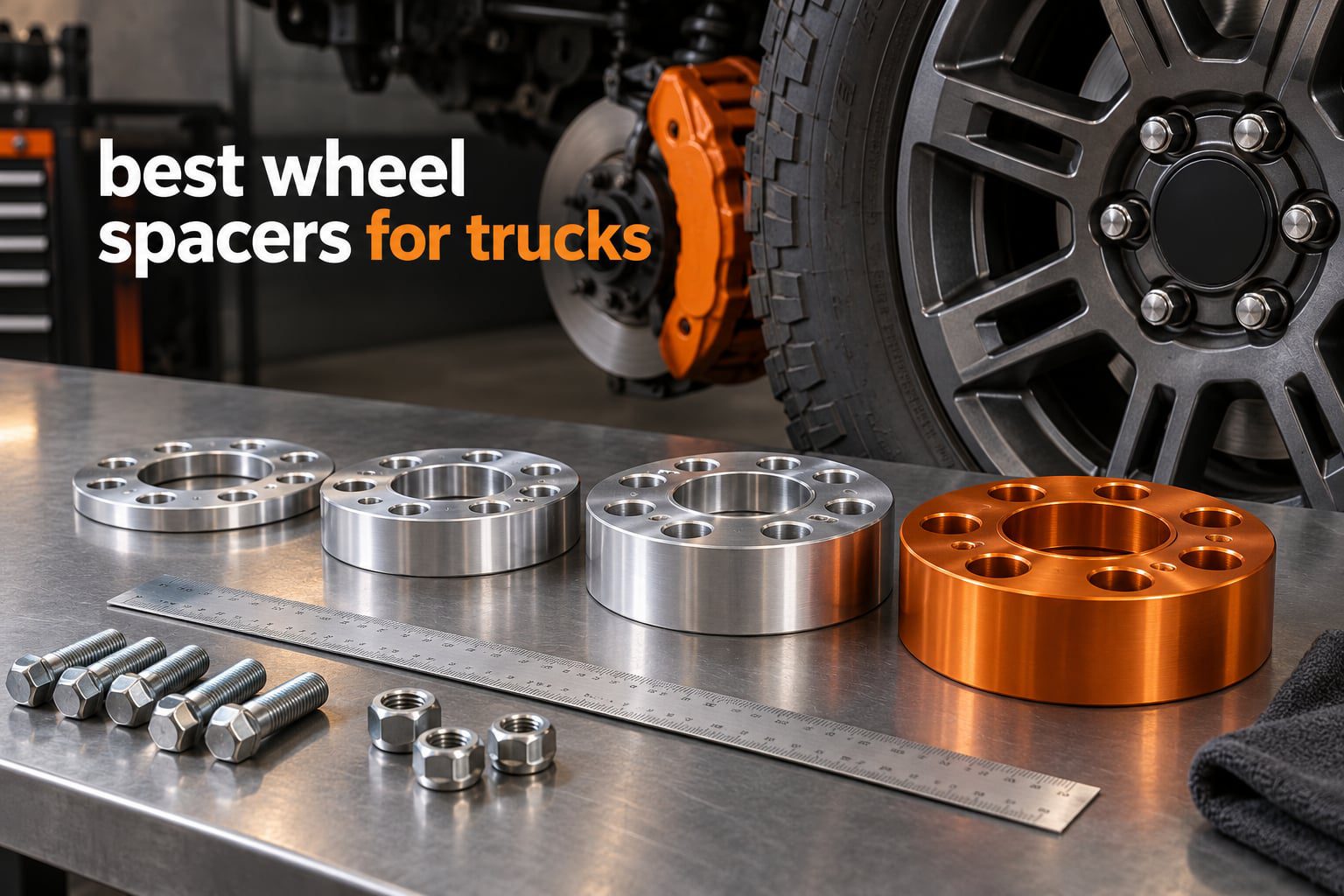
The best wheel spacers for trucks are hubcentric spacers machined from forged or billet 6061-T6 aluminum, with pressed-in extended studs and Grade 8 or higher hardware in the box. That single sentence decides most of the buying decision, because a truck wheel carries its load through the hub pilot bore, not through the studs. Everything else on this list is a variation on that theme, sorted by bolt pattern, thickness and how much extra offset you actually need.
We spent weeks comparing spec sheets, owner reviews and fitment notes across half-ton and heavy-duty applications to build this list for 2026. Ten sets made the cut, and each one carries a verified rating, a real review count and a published fitment range, so you can match it to your own truck before you spend a weekend in the driveway.
Two numbers decide whether a spacer works on your truck before any brand name does: the bolt pattern and the center bore. Get those wrong and nothing bolts up. Get them right and the choice comes down to thickness, material and whether the spacer is genuinely hubcentric. We explain how to verify each of those further down, plus the 1.75 inch stud limit that catches out most first-time buyers.
Table of Contents
- Top 3 Best Wheel Spacers for Trucks (October 2026)
- Best Wheel Spacers for Trucks in 2026
- 1. KSP 1.5 Inch Hubcentric Spacers for 2015-2026 Ford F150
- 2. dynofit 2 Inch Hubcentric Spacers for Silverado and Sierra 1500
- 3. Rough Country 2 Inch Spacers for Chevy and GMC 1500 Trucks
- 4. Richeer 2 Inch Spacers for Silverado and Sierra 1500
- 5. FLYCLE 2 Inch Hubcentric Spacers for Silverado and Sierra 1500
- 6. dynofit 2 Inch Spacers for 2004-2014 Ford F150
- 7. ECCPP 2 Inch Hubcentric Spacers for 1999-2016 Chevy Trucks
- 8. SCITOO 1 Inch Spacers for Silverado and Sierra 2500 and 3500 HD
- 9. KSP 2 Inch Spacers for Ford F250 and F350
- 10. Rough Country 0.25 Inch Spacers for Chevy Ford GMC and Ram 1500
- What Wheel Spacers Do on a Truck and Why Owners Use Them
- Hubcentric vs Lug-Centric, and Bolt-On vs Slip-On
- How to Choose the Right Thickness, Including the 1.75 Inch Stud Limit
- How to Match Your Truck’s Bolt Pattern and Center Bore
- How to Install Wheel Spacers Safely and Re-Torque Them
- Frequently Asked Questions
- Which Wheel Spacers Are Worth Buying in 2026
Top 3 Best Wheel Spacers for Trucks (October 2026)

KSP 1.5 inch 6×135 F150…
- Forged 6061-T6 billet aluminum
- 1.5 inch thickness
- 87.1mm hubcentric bore
- M14x1.5 studs for 2015 and newer F150

dynofit 2 inch 6×5.5 Spacers
- Forged 6061-T6 billet aluminum
- 2 inch thickness
- 78.1mm hubcentric bore
- 2 piece set
Rough Country 2 inch GM…
- Machined 6061-T6 aluminum
- 2 inch thickness
- 6x5.5 pattern
- preinstalled M14x1.5 studs
The KSP set takes the top slot because it is the rare combination that works as a daily driver: hubcentric, forged rather than cast, and only thick enough that stock studs clear without any cutting. The dynofit 2 inch set gets the value call for anyone who wants the bigger stance change in the most common GM bolt pattern. The Rough Country pair earns a tied-highest owner rating from buyers who care most about a recognized off-road name and a limited lifetime replacement warranty behind it.
Best Wheel Spacers for Trucks in 2026
| Product | Specs | Action |
|---|---|---|
| KSP 1.5 inch Hubcentric Spacers for 2015-2026 F150 |
|
Check Latest Price |
| dynofit 2 inch Hubcentric Spacers for Silverado Sierra 1500 |
|
Check Latest Price |
| Rough Country 2 inch Spacers for Chevy and GMC 1500 |
|
Check Latest Price |
 Richeer 2 inch Spacers for Silverado Sierra 1500 Richeer 2 inch Spacers for Silverado Sierra 1500 |
|
Check Latest Price |
 FLYCLE 2 inch Hubcentric Spacers for Silverado Sierra 1500 FLYCLE 2 inch Hubcentric Spacers for Silverado Sierra 1500 |
|
Check Latest Price |
 dynofit 2 inch Spacers for 2004-2014 Ford F150 dynofit 2 inch Spacers for 2004-2014 Ford F150 |
|
Check Latest Price |
 ECCPP 2 inch Hubcentric Spacers for 1999-2016 Chevy Trucks ECCPP 2 inch Hubcentric Spacers for 1999-2016 Chevy Trucks |
|
Check Latest Price |
 SCITOO 1 inch Spacers for Silverado and Sierra 2500 3500 HD SCITOO 1 inch Spacers for Silverado and Sierra 2500 3500 HD |
|
Check Latest Price |
 KSP 2 inch Spacers for Ford F250 and F350 KSP 2 inch Spacers for Ford F250 and F350 |
|
Check Latest Price |
 Rough Country 0.25 inch Spacers for Chevy Ford GMC Ram 1500 Rough Country 0.25 inch Spacers for Chevy Ford GMC Ram 1500 |
|
Check Latest Price |
Every spacer below is listed at the thickness, pattern and bore that its manufacturer states, so treat that table as a fitment filter first and a preference list second. Five of these ten are 2 inch sets for the GM 6×5.5 pattern, which tells you how common that combination is on half-ton builds.
1. KSP 1.5 Inch Hubcentric Spacers for 2015-2026 Ford F150
KSP 6×135 to 6×135 Wheel Spacers for F150, 1.5in 38mm Hubcentric 6 Lug Wheel Adapters for 2015-2026 F150 Expedition,Navigator with M14x1.5 Studs and 87.1mm Hub Bore, 4pcs Black
Forged 6061-T6 billet aluminum
1.5 inch (38mm)
6x135 pattern
87.1mm hub bore
M14x1.5 studs
Pros
- Forged and CNC machined 6061-T6 aluminum with a black anodized finish
- True hubcentric design with an 87.1mm bore and centering lip
- Heat treated 10.9 grade bolts supplied with thread locker
- Box includes four spacers and 24 open ended lug nuts
- Laser engraved size and part number markings on the face
Cons
- Does not fit pre-2015 F150 and Expedition trucks with M14x2.0 studs
- Vibration is common if the 85-95 FT/LBS torque spec is skipped
This is the set we kept coming back to while building the list. It is 1.5 inch thick, forged 6061-T6 billet aluminum, and genuinely hubcentric, with an 87.1mm bore and a centering lip that sits on the hub pilot. At 1.5 inch, stock studs on a 2015 or newer F150 still carry enough thread to hold the wheel properly, which is the whole reason this thickness sits just under the common limit.
Owner reviews describe precise machining and a clean bolt-on fit, with the black anodizing holding up to winter road salt. The recurring note across those reviews is about installation rather than the product: follow the 85-95 FT/LBS torque figure and use the supplied thread locker, and the vibration complaints disappear. Set weight for the four-piece set is 19.52 pounds, which is normal for 1.5 inch forged aluminum.
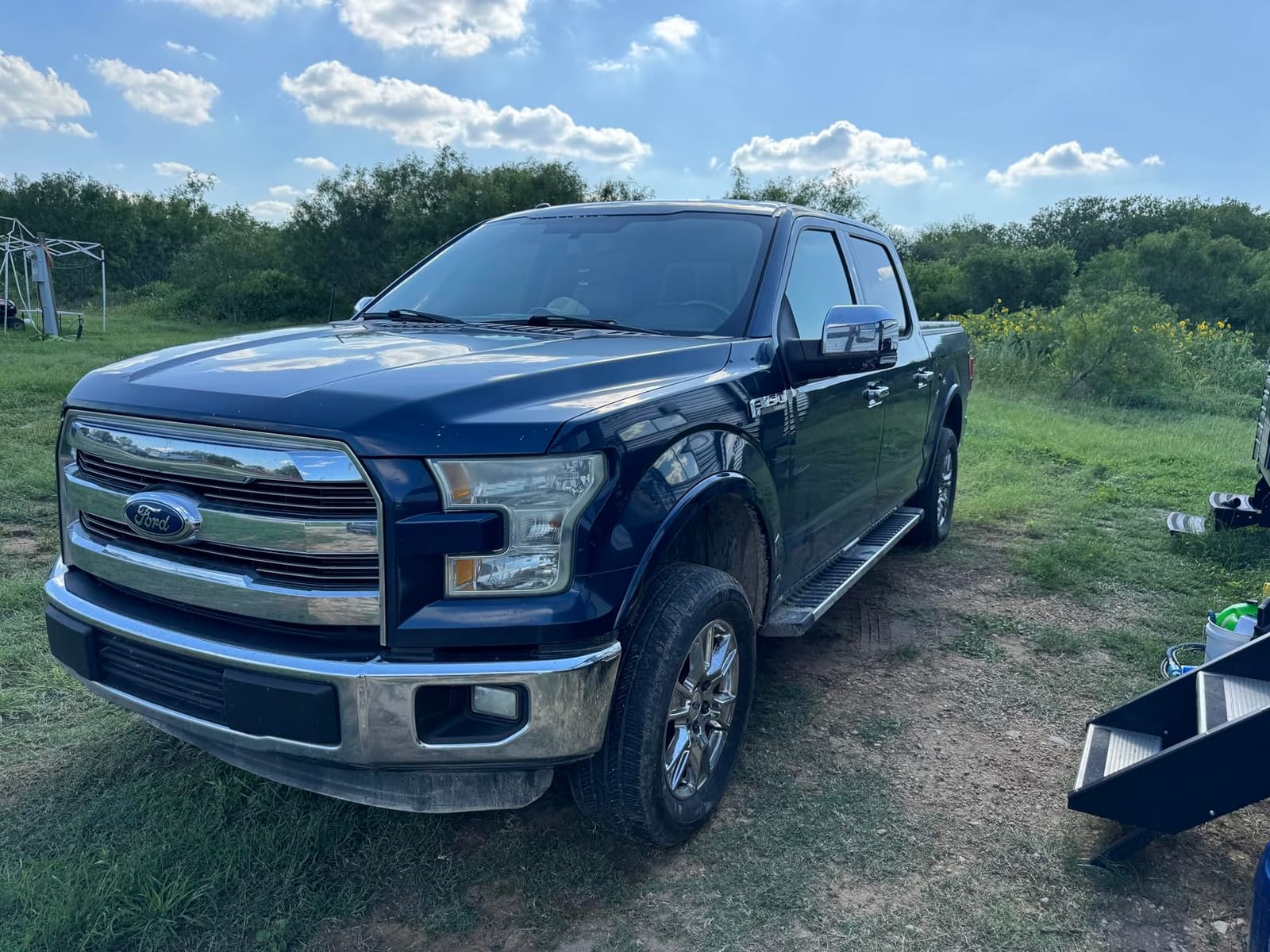
The fitment window is specific and worth reading twice. It covers 2015-2025 F150, 2015-2024 Expedition and 2015-2025 Navigator, and it explicitly excludes pre-2015 trucks running M14x2.0 studs. That stud pitch change is the single most common ordering mistake on 6×135 trucks, and the second dynofit set on this list exists specifically for the older thread pattern.
What you get in the box is complete: four spacers, 24 open ended lug nuts and an instruction manual. No second purchase needed, no hunting for matching hardware. The model number is KS-6008K, and KSP sells the same hubcentric design in several thicknesses and vehicle patterns, so the same fitment check applies if you decide you want more offset later.
When this spacer is the right call
Choose this set if your truck is a 2015 or newer F150, Expedition or Navigator and you want a stance change you can live with every day. At 1.5 inch it is thick enough to clear a caliper or strut that was rubbing and thin enough that you keep stock studs, stock wheels and a normal steering feel.
It also suits anyone who plans to run a leveling kit later. Moving the wheel out 1.5 inch solves a lot of leveling-related rub before you ever change tire size, and the hubcentric bore means you are not gambling on stud centering for a part that will be on the truck year round.
When it is the wrong call
Skip it if your F150 is a 2014 or older. Those trucks use M14x2.0 studs, so the 1.5 inch spacer will not thread up correctly, and the mismatched hardware is the kind of thing that fails on the highway rather than in the driveway.
It is also the wrong pick for a 2007-2014 F250 or F350, which needs the 8×170 pattern covered further down. And if your goal is the maximum stance change from stock, 1.5 inch is a modest move, so pair it with a wheel that has a tucked-in offset to make the difference visible.
2. dynofit 2 Inch Hubcentric Spacers for Silverado and Sierra 1500
dynofit 2 inch Wheel Spacers 6×5.5 for Silverado Sierra 1500, 6×139.7 Hub Centric Spacers 78.1 Hub Bore M14x1.5 Studs Fits Tahoe, Suburban, Yukon, Escalade, Avalanche, 2-Pack Forged Aluminum Spacers
Forged 6061-T6 billet aluminum
2 inch (50.8mm)
6x5.5 pattern
78.1mm hub bore
Set of 2
Pros
- Forged rather than cast aluminum
- which resists cracking under cornering load
- Lowest set weight in this roundup at 10.48 pounds for two pieces
- Hubcentric 78.1mm bore centers the wheel on the hub
- SGS test approved rust resistant bolts
- Backed by 12-month after-sales service
Cons
- Two piece pack only
- so a second set is needed for the rear axle
- Early model year compatibility needs confirming before ordering
This is the strongest value pick on the list and the one we would put on a daily-driven Silverado that needs real clearance. It is forged 6061-T6 billet aluminum, CNC machined, black anodized, and hubcentric with a 78.1mm bore that centers on the GM hub pilot. At 2 inch it moves each wheel two inches further out, so a pair adds 4 inches of width to an axle.
Reviews praise the light weight and the accurate machining, and buyers report a smooth, vibration-free installation once the bolts are torqued to spec. At 10.48 pounds for two 2 inch forged spacers, it is the lightest set here, which matters more than most people expect on an unsprung corner carrying a half-ton truck.
The listed fitment covers 1999-2026 Silverado and Sierra 1500, plus Tahoe, Suburban, Yukon, Escalade, Avalanche, Express 1500 and Savana. That range is broad because the 6×5.5 pattern and 78.1mm bore stayed consistent across those platforms, but confirm your own year before ordering, particularly on early models.
The studs are M14x1.5, which matches modern GM trucks. On older setups the thread pitch can differ, and a spacer that looks correct on paper can still refuse to thread, so measure before you commit. The 2 inch thickness also means you must confirm your wheel studs do not protrude past the spacer face.
Who should buy this set
Buy it if you run a GM half-ton with wider tires or an upgraded brake package and you want the widest stance change available without leaving billet aluminum. Two inch is the practical ceiling for a bolt-on spacer on a stock-studded half-ton, and this set reaches that ceiling without cast material or cut studs.
It is also a sensible trail truck choice. Forged aluminum handles rock strikes better than the thin cast kits that crack, and the lighter weight keeps unsprung mass down compared with steel alternatives in the same thickness.
Who should look elsewhere
Do not buy this if you need four spacers and only read the pack size. This is a two-piece set, so the rear axle needs a second order. Buyers who expect a full axle of spacers in one box are the most common source of one-star reviews on this type of product.
It is also not a fit for heavy-duty GM trucks. The 2500 and 3500 run 8×180, covered by the SCITOO set later in this list, and forcing a 6 lug spacer onto an 8 lug hub is not a modification, it is a mistake.
3. Rough Country 2 Inch Spacers for Chevy and GMC 1500 Trucks
Rough Country 2″ Wheel Spacer (fits) 88-20 Chevy Silverado GMC Sierra 1500 | 92-20 Tahoe | Yukon Suburban | 6×5.5 | 1101,Aluminum
Machined 6061-T6 aluminum
2 inch thickness
6x5.5 pattern
3.08 inch center bore
Preinstalled M14x1.5 studs
Pros
- Owner rating of 4.7 stars/tied with one other set here
- Vehicle specific part number rather than a universal listing
- Wheel studs come preinstalled so no stud pressing is needed
- Limited lifetime replacement warranty from a recognized suspension brand
- Center bore of 3.08 inch matches GM 1500 hubs
Cons
- Sold as a pair
- so two sets are needed for all four wheels
- Break-in re-torque is needed after roughly 100 miles
- On some Avalanche models the front track ends up wider than the rear
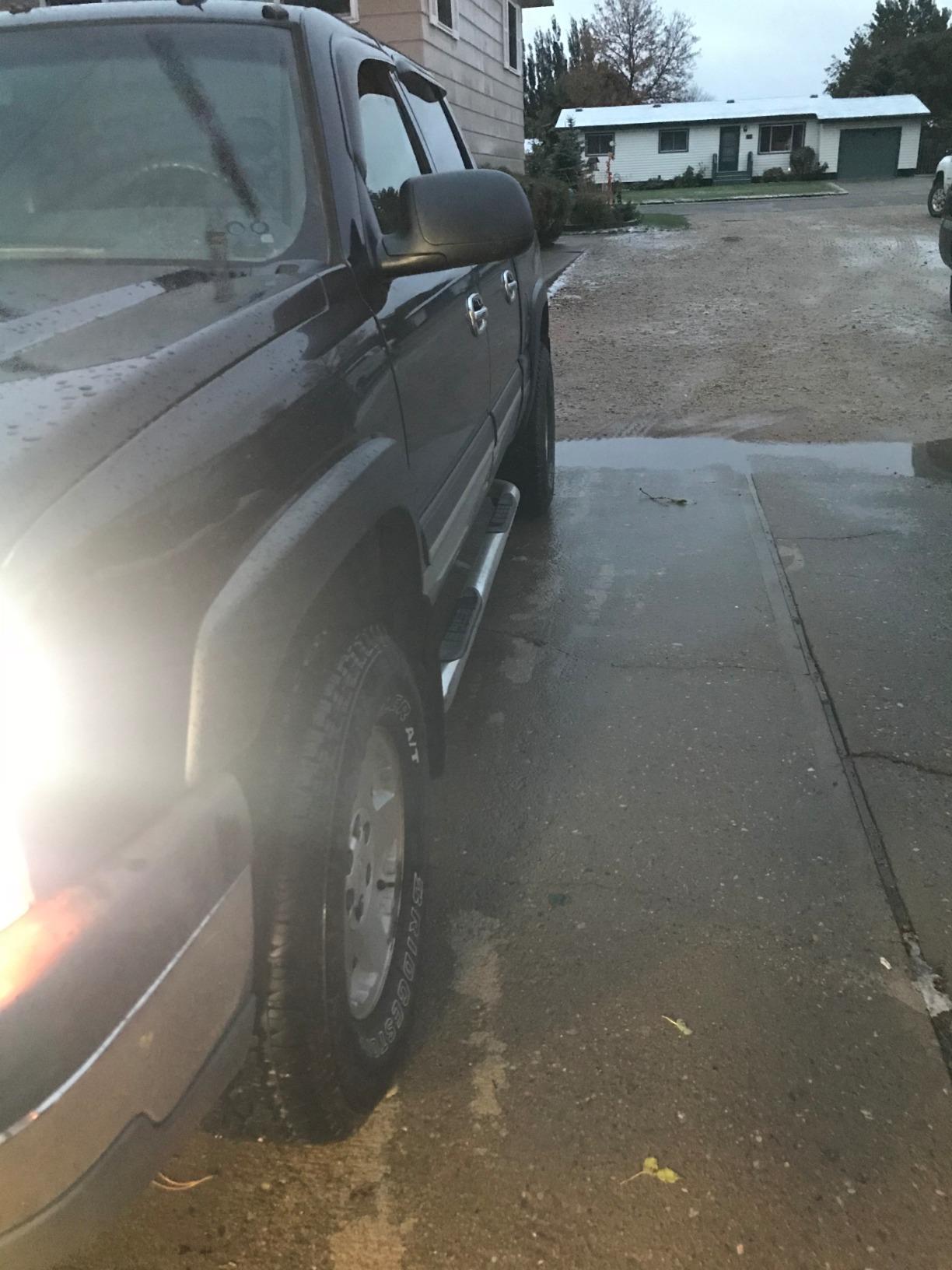
Rough Country earned a 4.7 star owner rating, tied for the highest of any set on this list, and the reason is consistency rather than one standout spec. Owners report a tight, clean fit and an instantly more aggressive stance on GM half-tons, with the centering ring cited as a safety plus rather than a styling detail.
The spacer is precision machined 6061-T6 aluminum, 2 inch thick, on the 6×5.5 pattern with a 3.08 inch center bore and M14x1.5 thread pitch. Wheel studs are preinstalled, which removes the single most labor-intensive step from a spacer install and means you are not pressing studs on a driveway.
Fitment is vehicle specific and stretches wide: 1988-2020 Chevy Silverado and GMC Sierra 1500, plus 1992-2020 Tahoe, Yukon and Suburban. A part number-specific listing like this is easier to verify than a generic universal spacer, and it is the reason we are comfortable recommending a 2 inch thickness on trucks this old.
The catch that catches people out is quantity. Two spacers arrive per box, so a full axle needs two orders, and two trucks need four. The most common complaint in reviews is not about quality at all, it is about arithmetic at the checkout.
Why this one earns the rating
The limited lifetime replacement warranty is the standout. Most competitors in this category offer 12 months or 24 months of coverage, and a lifetime warranty on a machined aluminum part signals confidence in the material and the machining tolerance.
It is also the easiest of the 2 inch sets to install. Preinstalled studs plus vehicle specific fitment means fewer variables between the box and the hub, and fewer variables is where most vibration and wobble problems come from in the first place.
Where it falls short
The 2 inch thickness still runs into the stock stud length problem on some wheel and tire combinations, and the pack quantity is the other limitation. Owners also note that the set needs a re-torque after roughly 100 miles of break-in driving, which is good practice on any spacer rather than a fault specific to this one.
If you want the thinnest possible spacer for light rub clearance on a lifted truck, the quarter inch Rough Country pair later in this list solves that with far less added offset and no stud concerns.
4. Richeer 2 Inch Spacers for Silverado and Sierra 1500
Richeer 2 Inch 6×5.5 Hubcentric Wheel Spacers for Silverado Sierra 1500
Forged 6061-T6 billet aluminum
2 inch thickness
6x5.5 pattern
78.1mm hub bore
Grade 12.9 studs
Pros
- Grade 12.9 studs rated to 1000MPa tensile strength
- Forged billet aluminum with an anodized corrosion coating
- Hubcentric 78.1mm bore for stable wheel centering
- Available in several thicknesses including 1.25 inch/1.5 inch and 2 inch
Cons
- Heavier set than some two-piece alternatives at 24.8 pounds
- Fitment requires confirming the 6x5.5 pattern and 78.1mm hub bore
The Richeer set stands out for its hardware rather than its aluminum. The studs are Grade 12.9 and rated to 1000MPa tensile strength, a genuine step up from the 10.9 grade hardware most competitors ship, and for a truck that carries payload or tows that is a meaningful difference.
At 2 inch thick on the 6×5.5 pattern with a 78.1mm hubcentric bore, it fits 1999-2025 Silverado and Sierra 1500 trucks along with Tahoe, Suburban, Yukon and Escalade. Reviews describe the 2 inch option as producing the most noticeable appearance change of the sets in this bolt pattern.
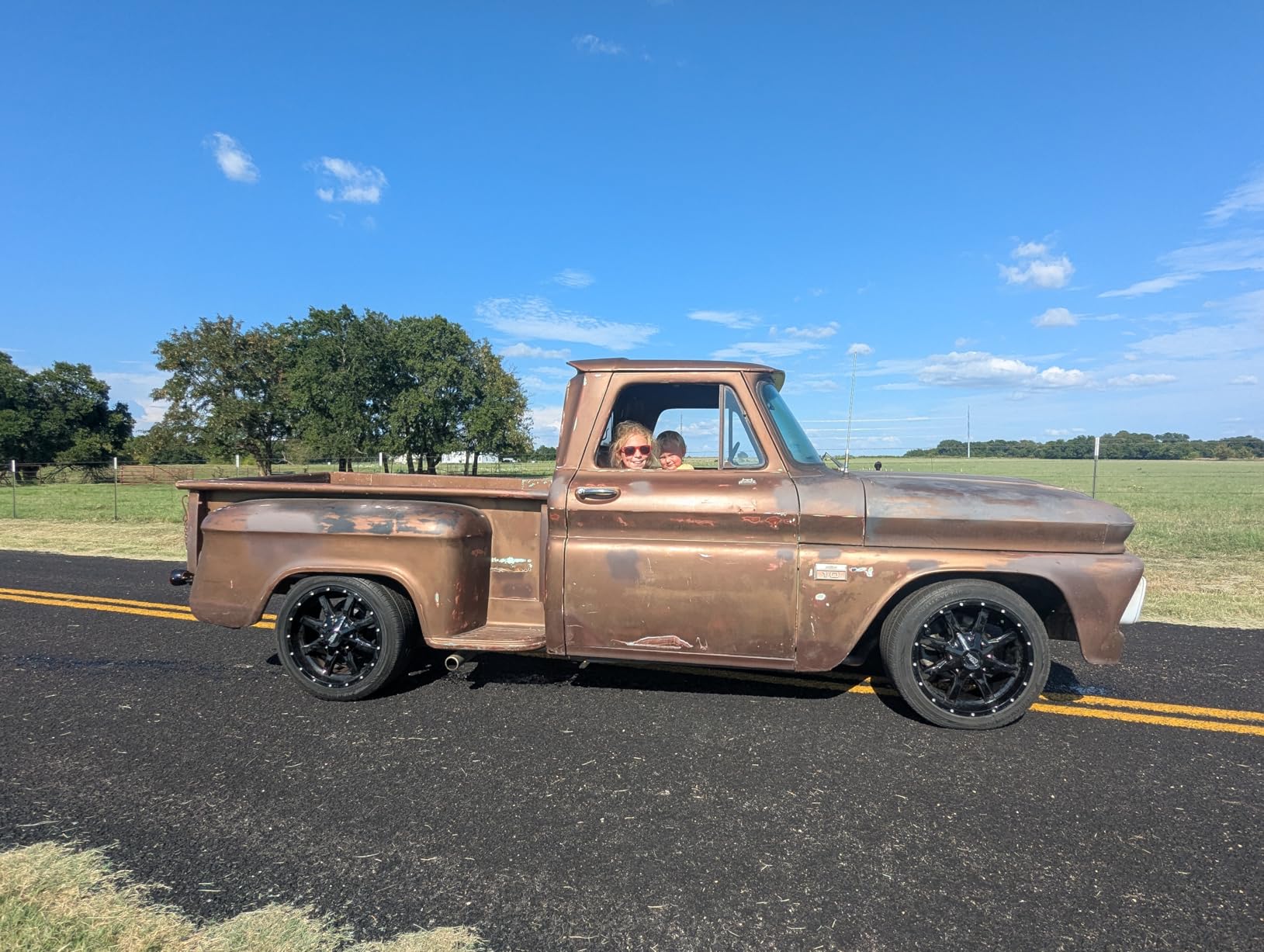
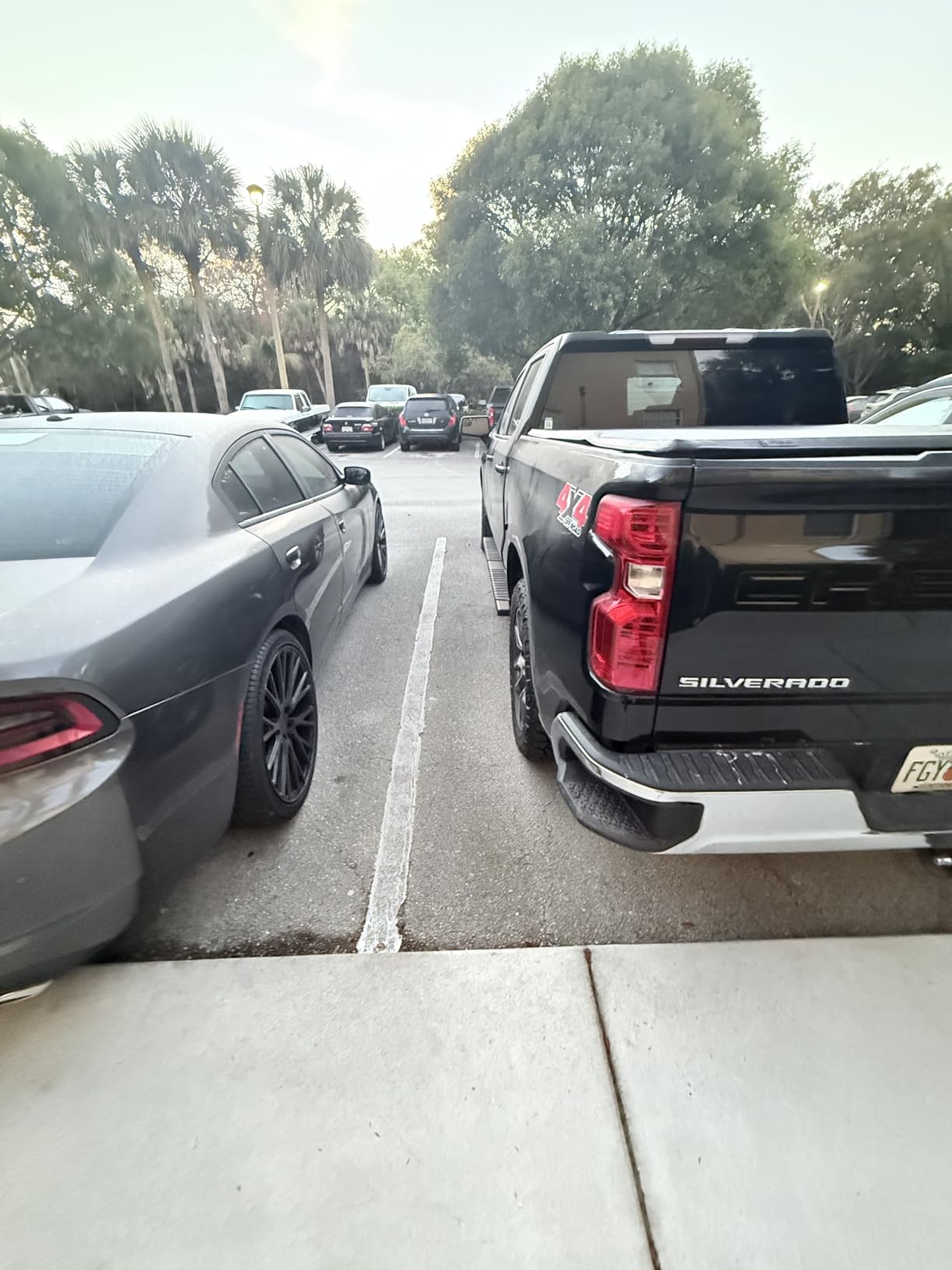
Buyer reviews focus on solid forged construction, the strong stud grade and a clean, wide stance on GM half-tons. The most repeated practical note is that stud length has to clear the wheel face, which is the same 1.75 inch constraint that shows up in owner discussions on GM truck forums as the practical ceiling for a bolt-on spacer on stock studs.
Set weight is 24.8 pounds, which is the heaviest of the 2 inch four-piece sets here. That is the cost of thicker, harder studs, and it is the tradeoff we would accept on a work truck rather than on a build where unsprung weight is the priority.
When the heavier hardware earns its weight
Payload and towing are the reasons to pick this one. Higher tensile studs tolerate repeated load cycles and heat cycles better than 10.9 grade hardware, and the forged billet body with an anodized coating handles winter salt exposure on a daily-driven work truck.
Owners on r/ram_trucks report running 2 inch hubcentric spacers on newer trucks with no issues, which matches what we see in the Richeer reviews: the stance improves and nothing else changes if the torque spec is followed.
When lighter matters more
If your truck is a daily driver where unsprung weight and fuel use matter more than stud strength, the dynofit set at half the weight is the better-balanced choice. Forged aluminum this heavy is noticeable at the wheel, and on a street-only truck that extra mass buys little.
Also confirm your bolt pattern and hub bore before ordering. This set is 6×5.5 with a 78.1mm bore, so it will not fit early GM trucks that used a different pattern, nor the 8 lug 2500 and 3500 platforms.
5. FLYCLE 2 Inch Hubcentric Spacers for Silverado and Sierra 1500
FLYCLE 2 inch 6×5.5 Hubcentric Wheel Spacers for Silverado Sierra 1500
Forged 6061-T6 aluminum
2 inch thickness
6x5.5 pattern
78.1mm hub bore
85-90 FT/LBS torque
Pros
- Forged 6061-T6 aluminum with 12.9 grade heat-treated studs
- CNC machined hub fit for accurate centering
- Two high strength threadlockers supplied in the box
- Broad GM 1500 fitment covering trucks and full size SUVs
Cons
- One of the heavier four piece 2 inch sets in this roundup at 23.3 pounds
- Costs more than most competing 2 inch sets in the same pattern
FLYCLE is the one on this list that ships threadlocker in the box. That detail matters more than it sounds, because anti-loosening compound on a 2 inch spacer with 12.9 grade studs is the difference between a wheel that stays put and one that develops a hum after a few thousand highway miles.
The spacer itself is forged 6061-T6 aluminum, CNC machined for hub fit, 2 inch thick, on the 6×5.5 pattern with a 78.1mm hubcentric bore and 14×1.5 thread pitch. The stated torque figure is 85-90 FT/LBS, and the package contains four spacers, two threadlockers and an instruction manual.
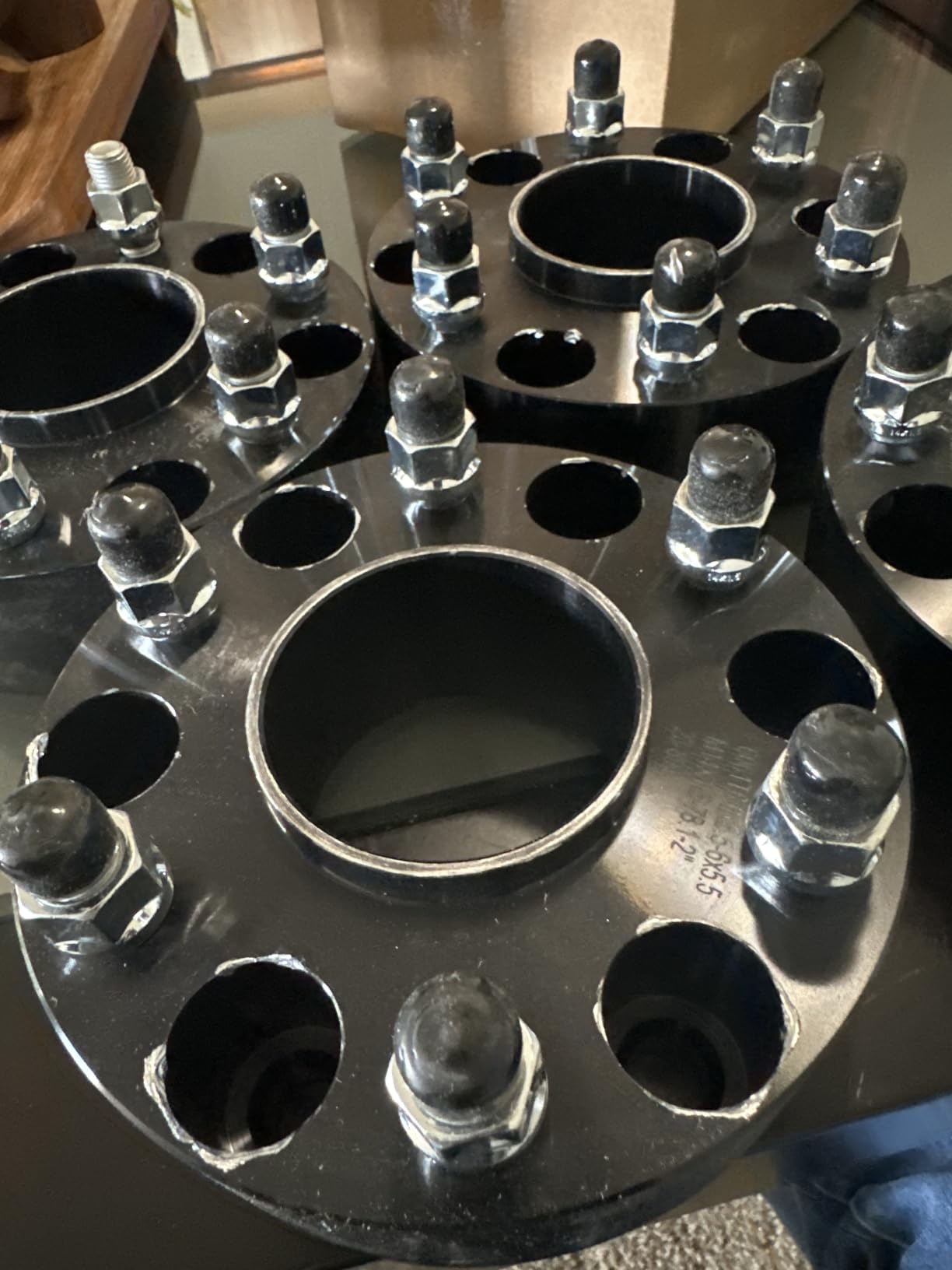
Reviews reflect a solid, well-finished set that bolts up cleanly and delivers the expected wider stance on GM half-tons. Buyers single out the CNC hub fit and the 12.9 grade hardware as the quality differentiators, and the recurring downside is weight and price rather than function.
Fitment listed covers 1999-2026 Silverado and Sierra 1500, Tahoe, Avalanche, Suburban, Yukon and Escalade. That is one of the wider published ranges on this list, which is helpful if your truck has been swapped or if you are matching a donor axle.
What you get that the others leave out
The included threadlockers are the headline. On a 2 inch spacer, especially with 12.9 grade studs torqued into a 6061-T6 aluminum body, pre-applied thread locking is cheap insurance that also removes the temptation to skip the compound entirely.
For a truck that tows or carries a bed of material, the 12.9 grade heat-treated studs add durability under repeated torque cycling. Combined with the forged body, it is a well-specified set for a work truck.
When it is more than you need
Weight is the honest drawback. At 23.3 pounds, this is a heavy four piece 2 inch set, and for a truck that spends its life on pavement that mass is dead weight at four corners. The dynofit set is less than half the weight for the same thickness and the same bolt pattern.
It is also the wrong choice for heavy-duty GM trucks. The 78.1mm bore and 6 lug pattern will not match an 8×180 hub, so if you own a 2500 or 3500 the SCITOO set is the correct starting point.
6. dynofit 2 Inch Spacers for 2004-2014 Ford F150
dynofit 2inch 6×135 Wheel Spacers for 2004-2014 Ford F150, 87.1mm HubCentric, M14x2.0 Thread Tire Spacers for 2003-2014 Expedition/Lincoln Navigator, 2005-2014 Lincoln Mark LT, 4Piece
Forged 6061-T6 aluminum
2 inch (50mm) thickness
6x135 pattern
87.1mm hub bore
M14x2.0 studs
Pros
- Owner rating of 4.7 stars from F150 builders
- Forged 6061-T6 aluminum resists fracture better than cast kits
- True hubcentric 87.1mm bore minimizes wobble
- Full length Grade 10.9 Dacromet studs resist loosening
Cons
- M14x2.0 studs only fit 2004-2014 F150 and not newer trucks
- Not compatible with dually rear setups
This is the spacer for a Ford truck that is old enough to have M14x2.0 studs, which is exactly the population that cannot use the KSP set at the top of this list. The stud pitch changed partway through the F150 run, and getting that wrong is the most common reason a 6×135 spacer refuses to thread on.
At 2 inch (50mm) on the 6×135 pattern with an 87.1mm hubcentric bore, the body is forged 6061-T6 aluminum with full-length Grade 10.9 Dacromet studs. Owners of 2004-2014 builds rate it highly for forged construction, precise hubcentric centering and the elimination of brake caliper rub.
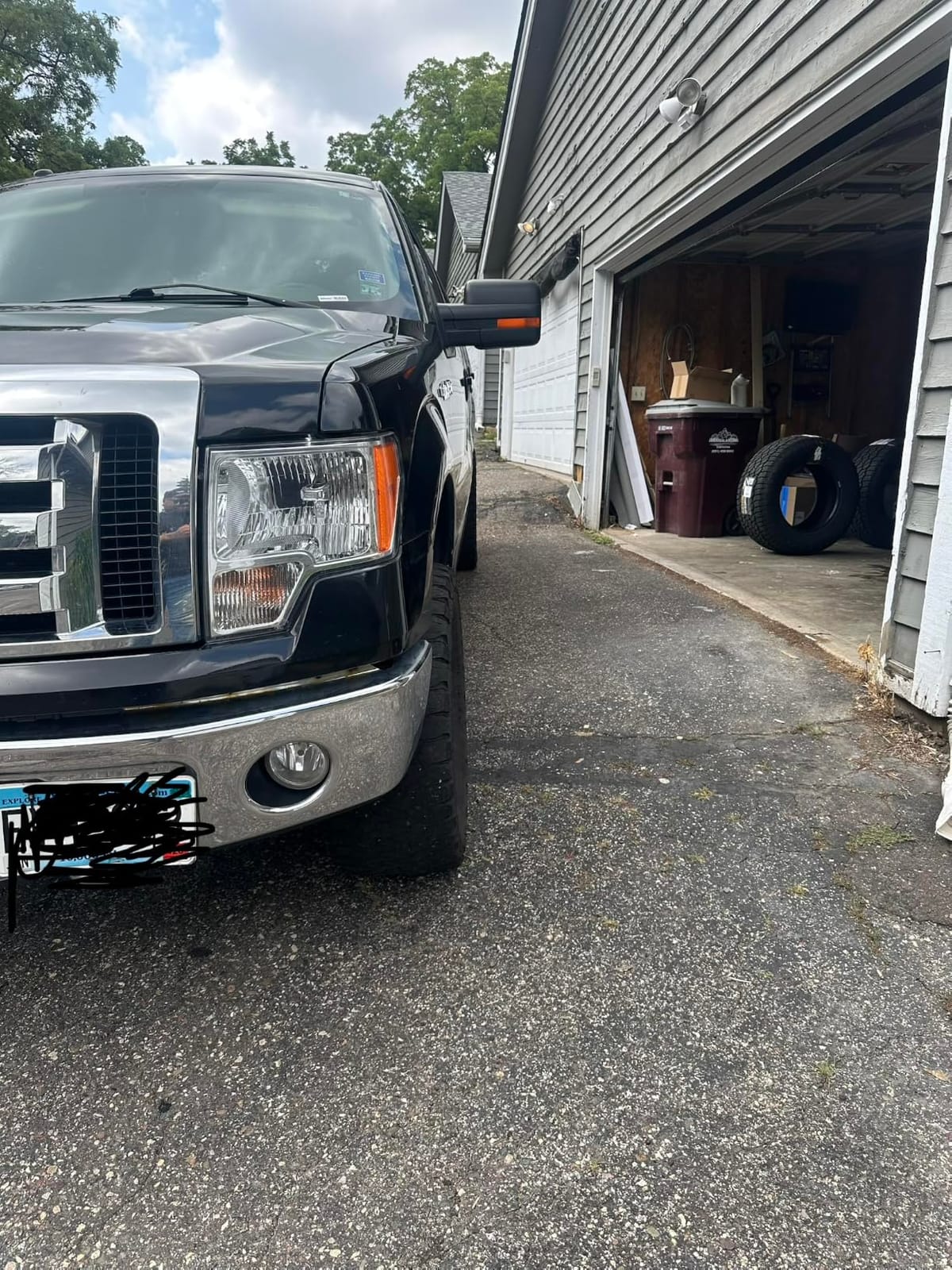
The fitment list is explicit: 2004-2014 F150, 2003-2014 Expedition, 2005-2014 Lincoln Mark LT and 2003-2014 Navigator. Dually models are excluded, which is called out in the product specifications rather than buried in the fine print, and dually rear setups use a different spacer entirely.
Set weight is 18 pounds for four pieces, so this is a four-spacer set that covers a full axle. That packaging detail puts it ahead of several competitors that sell only two, and it removes the second-order decision of whether you need to buy twice.
Why the older Ford gets its own pick
The M14x2.0 stud pitch is the entire reason this set exists. A spacer is not a universal part, and on 6×135 trucks the stud thread changed across model years, so a listing that names the pitch precisely saves you from a return shipping trip.
Forged aluminum with a true hubcentric bore is also the right combination on a truck that gets used. Reviewers of this kit specifically note the removal of caliper rub as the practical win, with the wider stance as the visual bonus.
When it does not apply to your truck
Do not fit these to a 2015 or newer F150. Those trucks moved to M14x1.5, and the KSP 1.5 inch set at the top of this list is built for that window. Similarly, dually owners are excluded by the manufacturer.
If your F150 is already lifted and you are chasing a small rub fix rather than a stance change, 2 inch is more offset than you need. A quarter inch spacer solves clearance without changing the truck at all.
7. ECCPP 2 Inch Hubcentric Spacers for 1999-2016 Chevy Trucks
ECCPP 4PCS 2 inch Hubcentric Wheel Spacers 6×5.5 to 6×5.5 Fits for 1999-2016 for Chevy Silverado 1500| 2000-2012 for Chevy Suburban 1500| 1995-2016 for Chevy Tahoe
Forged 6061-T6 billet aluminum
2 inch (50mm) thickness
6x5.5 pattern
78.1mm hub bore
95 FT/LB torque
Pros
- Forged billet aluminum with tight CNC tolerances
- Four piece set covers all four wheels in one order
- Clear torque spec of 95 FT/LB plus written installation guidance
- Hubcentric design centers the wheel on the hub to reduce vibration
Cons
- 2 inch thickness can require grinding or trimming factory studs on some wheels
- Fitment list stops around 2016 model years
- Heavier than lighter forged sets for the same thickness at 19.91 pounds
ECCPP has been making this spacer since 2016, and the age shows in the best possible way: published torque specs, written installation guidance and a fitment list that names model years rather than gesturing at compatibility. Reviewers note that following the 95 FT/LB torque spec kept their setups vibration free.
The spacer is forged 6061-T6 billet aluminum, CNC machined, 2 inch (50mm) thick, on the 6×5.5 (6×139.7mm) pattern with a 78.1mm inner diameter and 14×1.5 thread pitch. It is a full four piece set, so one order covers a complete axle change on both axles.
Fitment runs 1999-2016 Silverado 1500, 1992-2016 Tahoe, 2000-2016 Suburban and 1988-1998 1500 and 2500 pickups. That last group is useful if you are building an older body-on-frame truck, though the model year ceiling means newer GM trucks should look at one of the sets with a longer published range.
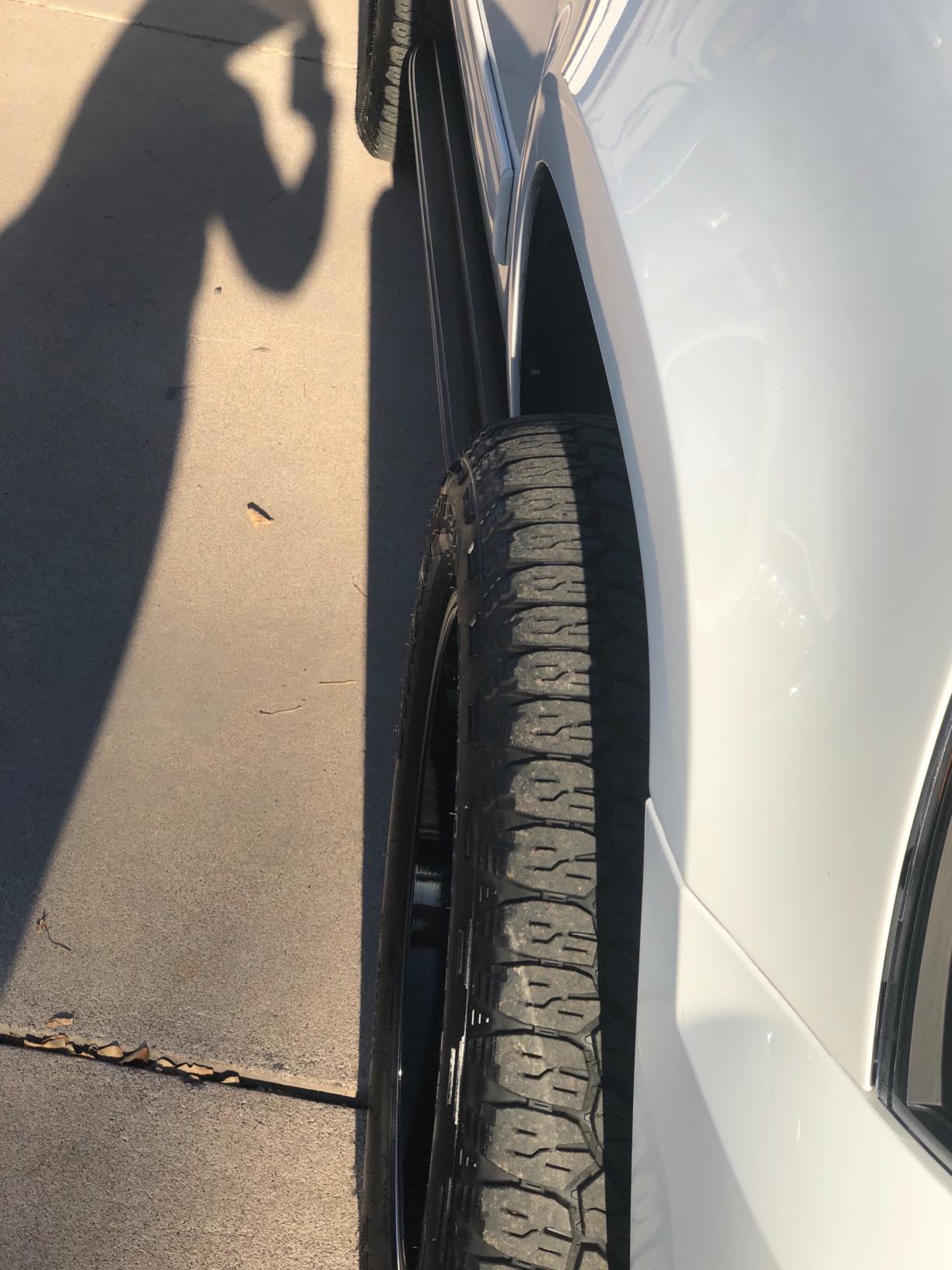
The installation notes are unusually clear: the back of the wheel must sit flush against the spacer, and studs must not protrude past the adapter face. If they do, they need grinding or trimming. That is the honest limitation on any 2 inch spacer and this listing states it outright.
When this older set is still the right buy
It suits trucks that fall inside the published window and owners who want everything in one box. Four spacers plus a written torque figure is a simpler install than assembling hardware from two separate orders, and the guide removes the guesswork that causes most vibration complaints.
Hubcentric construction is the other reason. The 78.1mm bore centers the spacer on the hub pilot, so vehicle weight travels through the hub the way the truck was designed to handle it, rather than into the studs alone.
When to pick a different set
If your Silverado is a 2017 or newer model, the fitment window does not reach it. Choose the dynofit or Richeer 2 inch set instead, both of which publish fitment through 2025 and 2026 respectively.
Also weigh the stud grinding note. On wheels where factory studs already protrude, a thinner spacer or a set with confirmed stud clearance saves you the grinding step. On a 2 inch spacer that tradeoff is real, and it is why we would not call 2 inch bolt-on spacers a fit for every wheel and tire combination.
8. SCITOO 1 Inch Spacers for Silverado and Sierra 2500 and 3500 HD
SCITOO 4Pcs 8×180 Wheel Spacers 1″ Bore 124.1mm Studs 14×1.5 Fit for GMC Sierra 2500 HD Sierra 3500 HD for Chevrolet Silverado 2500 Silverado 2500 HD Silverado 3500 Silverado 3500 HD
Hot forged aircraft grade aluminum
1 inch thickness
8x180 pattern
124.1mm center bore
14x1.5 studs
Pros
- Hot forged aircraft grade aluminum body
- Covers the 8x180 pattern used by 2500 and 3500 HD trucks
- Model specific engineering for clean fit and wheel balance
- Straight knurled edges for grip during installation
- Over one thousand owner reviews
Cons
- Only 1 inch thick so the stance change is subtle
- Fitment is limited to specific heavy-duty model years
Heavy-duty trucks get less spacer coverage than half-tons, and this set is one of the few 8 lug options with a large body of owner feedback. At 1 inch it is a clearance spacer rather than a stance spacer, which is exactly what most 2500 and 3500 owners actually need.
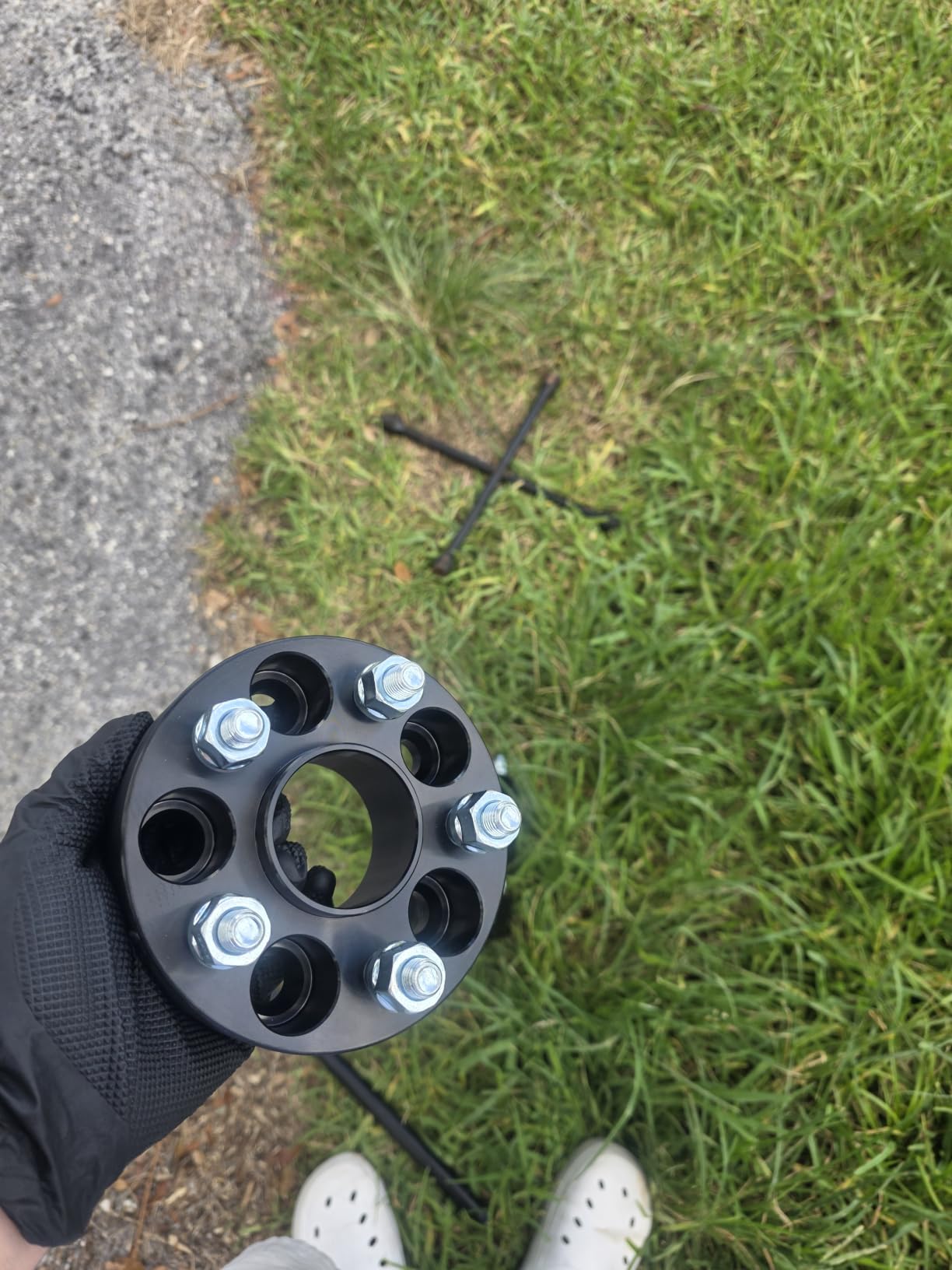
The body is hot forged aircraft grade aluminum with forged heat-treated ISO/DIN 10.175 studs, on the 8×180 pattern with a 124.1mm center bore and 14×1.5 thread pitch. Straight knurled edges on the outer diameter give you grip when handling eight of them on a shop floor.
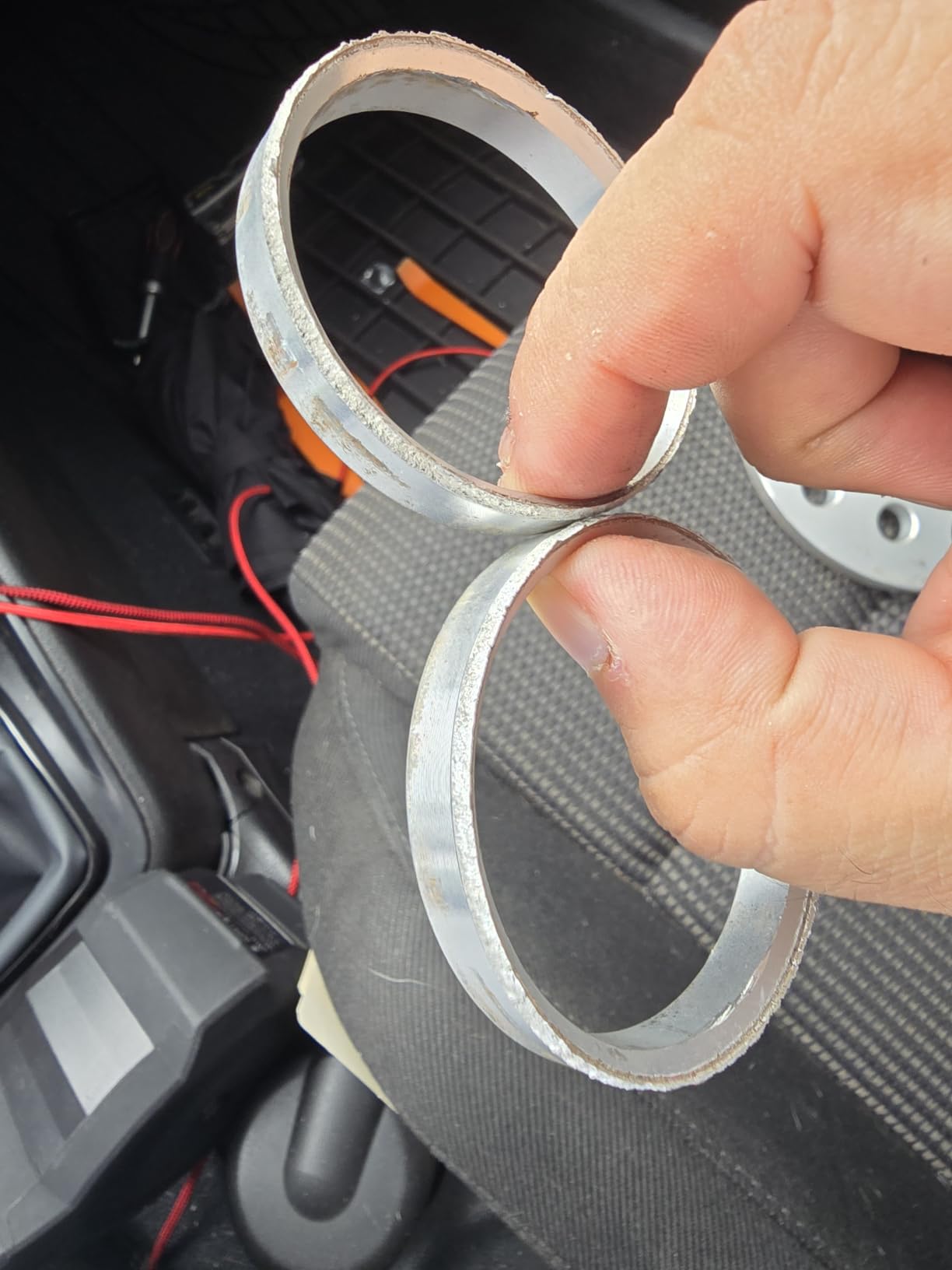
Fitment covers GMC Sierra 2500 HD and 3500 HD for 2011-2022, Chevrolet Silverado 2500 for 2011-2018, Silverado 2500 HD for 2011-2022, and Silverado 3500 and 3500 HD. Buyers generally report a clean install and correct fit, with the recurring comment that 1 inch produces only a subtle visual change.
That subtlety is a feature on a work truck. DuramaxForum users describe the handling nuance of adding offset to only one axle, so a smaller, uniform change across all four corners avoids the track mismatch that comes from fitting 2 inch spacers on a single axle.
Why heavy-duty owners pick 1 inch
Eight-lug trucks are used for payload and towing, and added offset on every corner increases the lever arm on the wheel bearings. One inch across the board fixes fender and control arm rub without meaningfully changing suspension geometry or axle alignment.
Forged aircraft grade aluminum also handles the heat cycle of a heavily loaded truck braking to a stop repeatedly. Reviews describe the construction as solid and installation as straightforward, which is the standard you should hold any spacer to.
When 1 inch is not enough
If your goal is a wider stance rather than clearance, 1 inch will disappoint. On a half-ton the difference reads clearly on the street; on a 2500 or 3500 with factory wheels it barely registers, and you would be adding offset for no visible return.
Fitment is also limited to specific model years, so check your year against the list before ordering. And if you are chasing a 2 inch stance on a heavy-duty truck, understand that you are moving well past the range most bolt-on spacers on stock studs can reach safely.
9. KSP 2 Inch Spacers for Ford F250 and F350
KSP 8×170 Wheel Spacers for F250 F350 2003-2026, 2″(50.8mm) Heavy Duty Tire Spacers with 14mmx1.5 Studs 125mm Center Bore, Forged Lug-Centric Wheel Spacer Fit 8 Lug F250 F350, Not Hub Lip
6061-T6 aluminum billet
2 inch (50.8mm)
8x170mm pattern
125mm hub bore
14x1.5 studs
Pros
- Machined 6061-T6 aluminum billet with a black anodized finish
- 2 inch thickness gives a clear stance change on heavy-duty trucks
- Removes tire and caliper rub on F250 and F350 builds
- Hardware includes heat treated 10.9 grade bolts
- 12-month free replacement backing
Cons
- Lugcentric rather than hubcentric so centering relies on the studs
- Factory studs may protrude past the spacer face on certain rims
- One isolated report of highway vibration after installation
This set takes a different approach from everything else here. It is explicitly lugcentric, with a 125mm hub bore but no hub lip, so the wheel and spacer are located by the studs rather than by the hub pilot. On a truck that is a real tradeoff, and we would only pick it when a hubcentric option is unavailable for your bolt pattern.
The body is 6061-T6 aluminum billet, black anodized, 2 inch (50.8mm) thick, on the 8x170mm pattern with 14mmx1.5 studs. The stated torque figure is 85-95 FT/LBS, and the hardware uses heat-treated 10.9 grade bolts. Fitment covers 2003 onward F250 and F350.
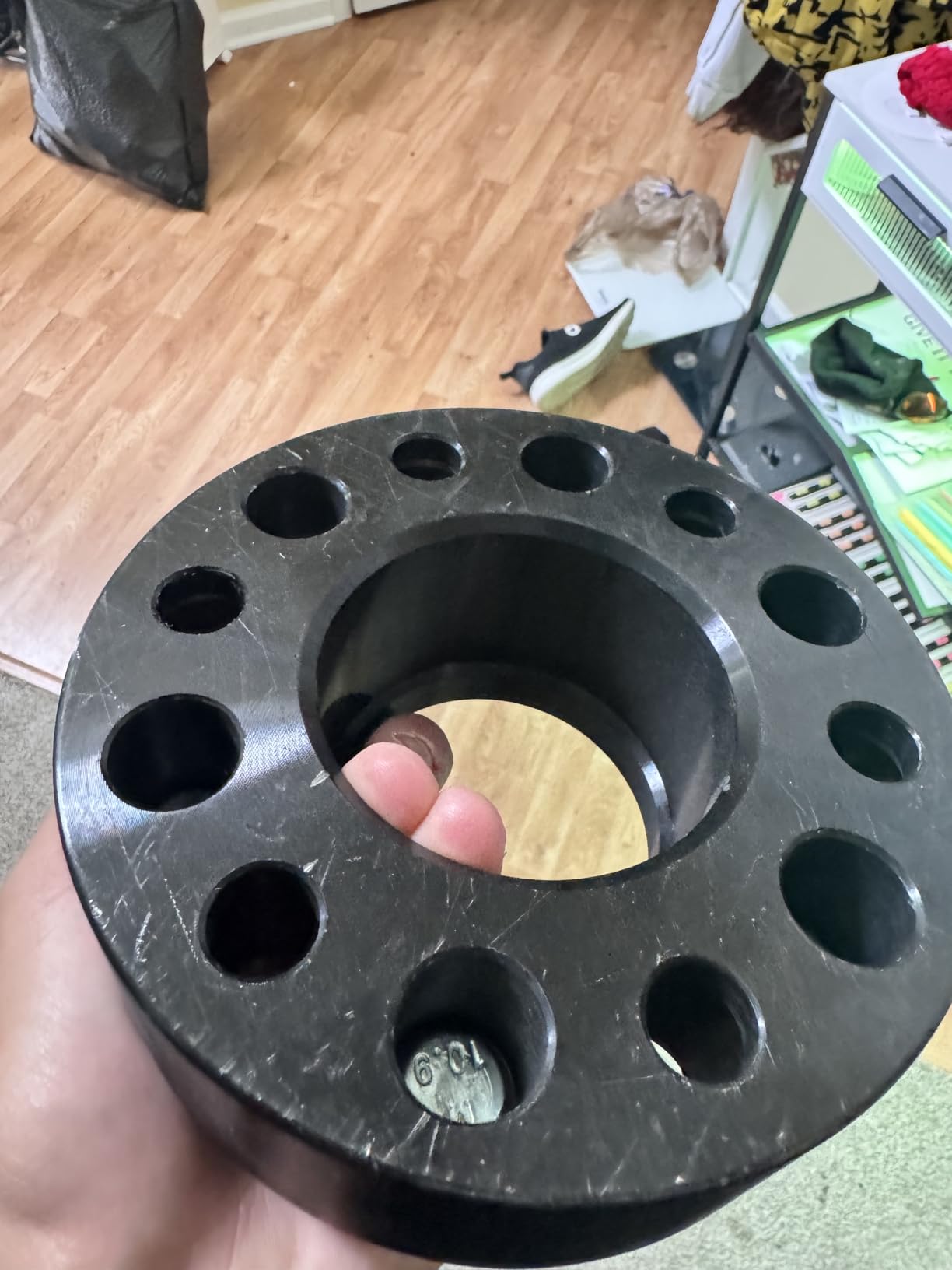
Owners of F150, F250 and F350 builds report precise machining, solid hardware and a noticeably improved stance, with many confirming no vibration once torqued to spec with thread locker. The vibration complaints that do appear are attributed to install technique or to the lugcentric construction itself.
Set weight is 13.73 pounds for two pieces, so a full axle takes two orders. Note that PRCForum discussion of spacers and bearing load focuses on added hub bearing stress rather than CV axle stress, which is the more common concern people raise about offset on a heavy-duty truck.
When lugcentric is an acceptable trade
On a heavy-duty truck that already carries tall tires and works for a living, the hubcentric lip is nice to have but not the deciding factor. The 2 inch thickness here solves tire and caliper rub on 8×170 builds where thinner spacers have not been enough.
The billet aluminum body and 10.9 grade hardware are the right specification for the job, and the 12-month free replacement backing means a defective part is replaced rather than argued with.
When we would choose something else
If a hubcentric spacer exists for your bolt pattern, choose it. Centering on the hub pilot is the mechanism that reduces coaxial runout on a truck, and lugcentric designs depend entirely on stud condition and straightness to hold position.
Check stud protrusion before ordering, because the listing notes that factory studs can extend past the spacer face on certain rims, and that is a grinding job. For a street-driven F250 that never leaves the pavement, 1 inch would likely serve you better than 2 inch.
10. Rough Country 0.25 Inch Spacers for Chevy Ford GMC and Ram 1500
Rough Country 0.25 Inch Wheel Spacers for Chevy/Ford/GMC/Ram 1500 – Fits 6 x 135mm and 6 x 5.5″ Bolt Pattern, Corrosion Resistant, 2-Pack
Corrosion resistant alloy steel
0.25 inch thickness
Fits 6x5.5 and 6x135
Lugcentric design
2 piece set
Pros
- Least expensive way to fix caliper or control arm rub
- Alloy steel feels more heavy duty than aluminum alternatives
- Quarter inch offset clears leveling kit and control arm rub
- Limited lifetime warranty from a recognized brand
- Works across two common 6 lug bolt patterns
Cons
- Lugcentric rather than hubcentric which several owners did not expect
- Center bore is loose on some setups
- Only two spacers per pack
- The stance change is very small
Not every spacer job is about stance. When a leveled truck’s control arm or caliper starts rubbing on stock wheels, a quarter inch spacer is the entire fix, and this set does that job across two of the most common 6 lug bolt patterns on half-ton trucks.
Construction is alloy steel with a corrosion resistant finish, 0.25 inch thick, and the design is lugcentric. The stated use case is letting 2007 and newer GM 1500 trucks with 3.5 inch or 4.75 inch lift kits keep factory wheels without rubbing. Hardware is included, and the warranty is a limited lifetime replacement.
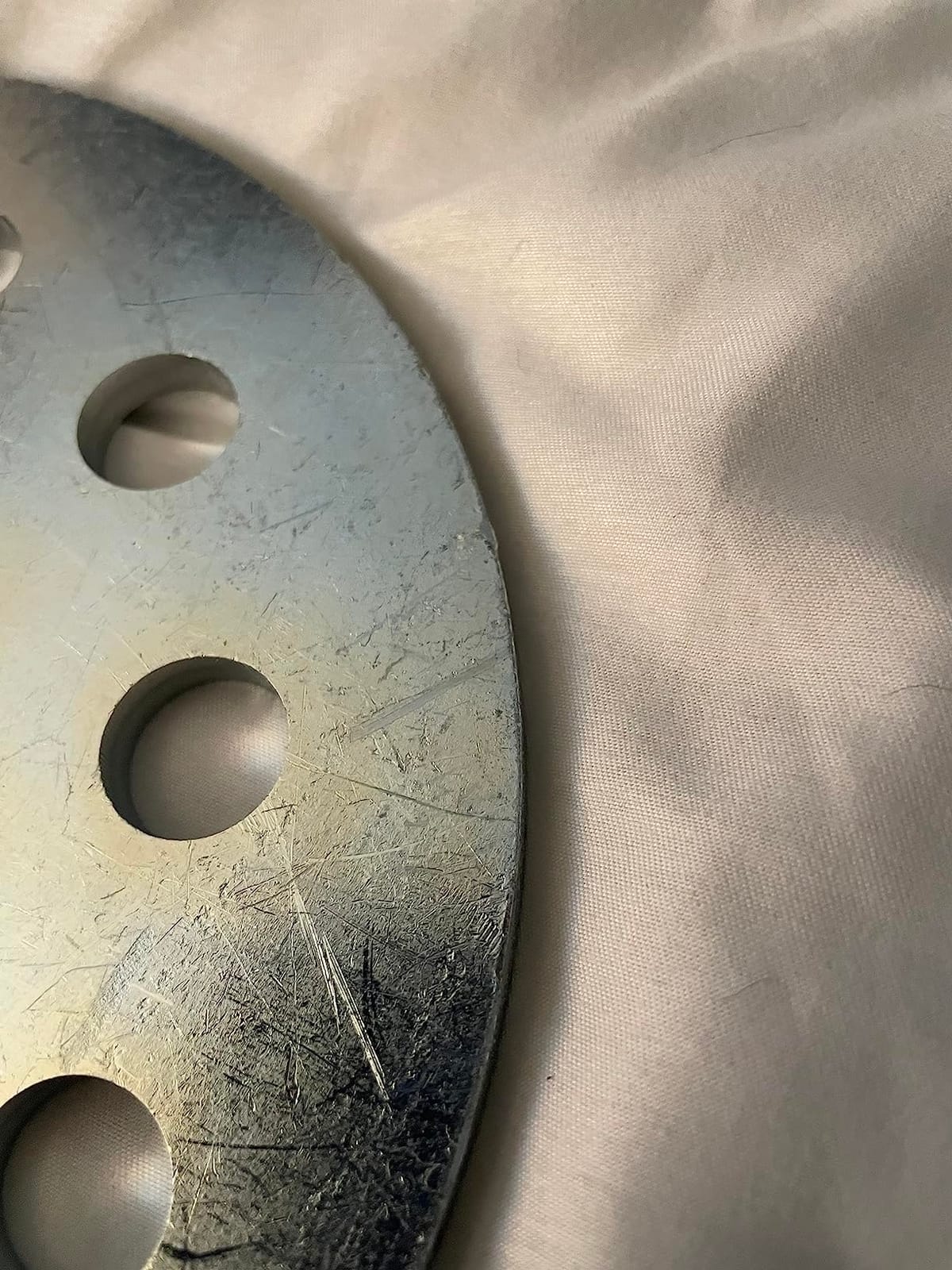
Owners report no highway shake when the set is torqued properly, and the alloy steel body is noticeably more substantial than thin aluminum spacers of the same diameter. That is a fair trade for a part doing a clearance job rather than a styling job.
The most common complaint in reviews is buyers assuming hubcentric construction. Several owners expected a hub fit and got studs doing the locating instead, which shows up as a looser center bore on some setups. Know what you are buying before you order it.
When quarter inch is exactly right
Lifted and leveled trucks with factory wheels are the classic case. The lift kit changes geometry, the wheel moves in relative to the fender, and 0.25 inch restores clearance without adding enough offset to alter handling or bearing load noticeably.
It is also a good first-time spacer buy because the stakes are low. Nothing gets taller, nothing needs stud modification, and if you install it and the rub disappears you have a working solution in an afternoon.
When you are wasting the part
If you want a wider stance, this spacer will not deliver. A quarter inch on each corner reads as roughly half an inch of track width per side, which is invisible on a truck with factory-looking wheels and tire size.
It is also the wrong choice for off-road or heavy use, where lugcentric steel at low thickness gives up both centering precision and weight savings. For that, go back to one of the forged 6061-T6 sets earlier in this list.
What Wheel Spacers Do on a Truck and Why Owners Use Them
Wheel spacers move the wheel outward from the hub to correct wheel offset, which is why they are worth buying for trucks that rub, sit tucked inside the fenders, or cannot fit the tire size you want. They add negative offset to the wheel, and that single change widens track width and creates clearance for larger brake calipers and suspension components.
Wheel offset is measured in millimeters from the wheel mounting surface to the wheel centerline. A 44 offset wheel on a truck with 0 offset stock pushes the wheel inward, toward the suspension, and a spacer pushes it back out. The arithmetic is simple: every inch of spacer subtracts one inch from your effective offset, so a 44 offset wheel with 2 inches of spacer moves toward the 20 offset position.
The second reason is clearance. A lifted or leveled truck changes the relationship between the wheel and the control arm, the sway bar and the brake caliper. Spacers restore the spacing so factory wheels can stay on the truck rather than forcing a tire size change you did not want.
Because they change where the wheel sits relative to the axle, spacers alter handling slightly. Owners describe added stability from the wider track on a straight line, and r/4Runner consensus is that done correctly spacers simply add negative offset with no meaningful downside for a truck used normally.
Hubcentric vs Lug-Centric, and Bolt-On vs Slip-On
Hubcentric is the only type we recommend for a truck. A hubcentric spacer has a precision bore that centers on the hub pilot, so vehicle weight transfers through the hub rather than through the studs, and it is identified by a step or lip on the inner diameter that matches your truck’s hub.
Lugcentric spacers have a plain inner hole and locate on the studs alone. That is acceptable on a lightweight passenger car and not acceptable on a truck that carries load, because runout and vibration risk go up and the studs become the primary structural path. Two of the sets on this list are lugcentric, and both are described that way in their listings.
Bolt-on spacers include longer studs that press into the spacer body, so you remove your factory studs and press new ones in. Slip-on spacers reuse factory studs and only work if enough thread still protrudes past the spacer. Most of the sets here are bolt-on, which is why they specify included studs and lug nuts.
The practical test when reading a listing is simple. Look for a stated center bore that matches your hub pilot diameter, look for a lip or centering step in the product photos, and check whether studs are included. A listing that gives none of those is a universal spacer, and universal spacers are not what you want on a truck.
How to Choose the Right Thickness, Including the 1.75 Inch Stud Limit
For a truck on stock studs, 1.5 inch is the safe maximum and 2 inch is the practical ceiling. GM truck forums and SilveradoSierra discussions consistently describe 1.75 inch as the thickest spacer possible without grinding or replacing factory studs, and that number is the whole decision boundary.
Beyond roughly 1.75 inch, you must either grind your factory studs or press new longer ones, and grinding reduces thread engagement below what the stud was designed to deliver. Owners on TacomaWorld treat 2 inch as the wide end of the range, and an r/4×4 poster running an off-road build deliberately chose the smallest thickness that cleared at 1 to 1.25 inch to limit the bending load on the hub.
Choose 1.5 inch for daily driving. It fixes most caliper and strut rub, keeps stock studs usable, and is the thickness we would put on a truck that tows, carries a bed, or sits in traffic. Choose 2 inch when the goal is stance and your wheels have enough negative offset to show it.
One more consideration for 2 inch: confirm your wheel studs do not protrude past the spacer face before you install. If they do, the wheel cannot seat flush and you need studs trimmed to a shorter replacement set, which is a shop job, not a driveway job.
How to Match Your Truck’s Bolt Pattern and Center Bore
Match the bolt pattern by counting studs, then measuring the circle between two opposite stud centers. Common truck patterns include 6×139.7 (6×5.5) on GM half-tons, 6×135 on Ford half-tons, and 8×180 on Chevrolet and GMC 2500 and 3500 HD trucks.
Match the center bore to the hub pilot diameter, not to a number that looks close. GM 1500 hubs use a 78.1mm bore, Ford 6×135 hubs use 87.1mm, and heavy-duty 8×180 hubs use 124.1mm. A spacer with a bore slightly larger than your hub pilot will not center properly and will feel vague through the steering wheel.
Third, verify the stud thread pitch, because it changes across model years within the same bolt pattern. Ford 6×135 trucks ran M14x2.0 on 2004-2014 models and M14x1.5 afterward. GM half-tons are generally M14x1.5, and heavy-duty sets here use 14×1.5 as well.
Fourth, confirm pack quantity. Two-piece sets need a second order for a full axle. Three of the sets on this list come as pairs, and that is the most common reason a buyer ends up with a truck that looks correct on one side only.
How to Install Wheel Spacers Safely and Re-Torque Them
Install in this order: support the vehicle, remove the wheel, remove the factory studs if the spacer is bolt-on, clean the hub face and stud holes, press in the new studs, fit the spacer, torque the spacer to the hub, refit the wheel, then torque the wheel to spec. Never mount a wheel over a spacer that is held only by a few turns of a bolt.
Torque figures on this list range from 85 to 95 FT/LBS depending on the spacer, and the value printed on your spacer wins over any general guidance. Most of these sets supply thread locker, and you should use it exactly as directed. Under-torqued or un-compounded studs are the most commonly reported cause of vibration after installation.
Re-torque after roughly 50 to 100 miles of break-in driving, then re-check at every routine tire service. Owners consistently confirm that a second pass at the specified torque eliminates the vibration complaints that appear right after a first install.
Finally, recheck wheel alignment after installing spacers. Moving the wheel outboard changes toe and camber geometry, and a set of spacers on an otherwise stock truck deserves an alignment afterward to keep tire wear even.
Frequently Asked Questions
Are wheel spacers worth it?
Yes, when you have a specific clearance or offset problem. Spacers push the wheel outboard to correct negative wheel offset, clear brake calipers and suspension components, and let you keep factory wheels on a leveled truck. They are not worth buying purely for looks on a truck with no rubbing, because the added offset changes bearing load for a visual change only.
What kind of wheel spacers are best?
Hubcentric spacers machined from forged or billet 6061-T6 aluminum are the best choice for trucks. Hubcentric means the spacer centers on your hub pilot so load transfers through the hub instead of the studs. Bolt-on designs with pressed-in extended studs and included Grade 8 or higher hardware are better than slip-on designs that rely on leftover factory stud thread.
Are 2 inch spacers safe for trucks?
Two inch is the practical ceiling for a bolt-on spacer on a truck with stock studs, because roughly 1.75 inch is the thickest spacer possible before factory studs need grinding or replacement. Above that, thread engagement drops below what the studs were designed to deliver. Two inch spacers are widely used on half-tons when the studs and hardware are correct and the torque spec is followed.
Do wheel spacers void warranty?
Not automatically. Spacers are a common accessory and their presence alone does not void a vehicle warranty, but a spacer that causes damage, such as loose hardware, cracked components or incorrect torque, can give a manufacturer grounds to deny a related claim. Keeping your torque records and using a shop that will install them helps if you ever need to document the install.
Are 1.5 inch wheel spacers safe?
Yes. At 1.5 inch, stock studs on most trucks still have enough thread engagement to hold the wheel safely, which is why 1.5 inch is the daily-driver recommendation in this roundup. It is comfortably under the 1.75 inch stud limit, requires no stud modification, and fixes most brake caliper and suspension rub on a stock-height or leveled truck.
Which Wheel Spacers Are Worth Buying in 2026
The best wheel spacers for trucks in 2026 are the hubcentric forged 6061-T6 sets, and the KSP 1.5 inch 6×135 spacer leads this list because it keeps stock studs usable while still solving caliper and strut rub on a 2015 or newer F150. If you drive a GM half-ton and want the biggest stance change without leaving billet aluminum, the dynofit 2 inch set is the value pick, and Rough Country’s 2 inch pair earns a tied-highest owner rating on the strength of preinstalled studs and a limited lifetime replacement warranty.
Match the bolt pattern and center bore before anything else, then pick your thickness by how the truck is used: quarter inch for lifted-truck rub, 1.5 inch for daily driving, 2 inch for stance. Torque to the printed figure, re-check after 100 miles, and get an alignment afterward.
If you tell us your truck’s make, model and year, the reason you need spacers, and the thickness you are targeting, we can point you to the one set on this list that actually fits your hub.