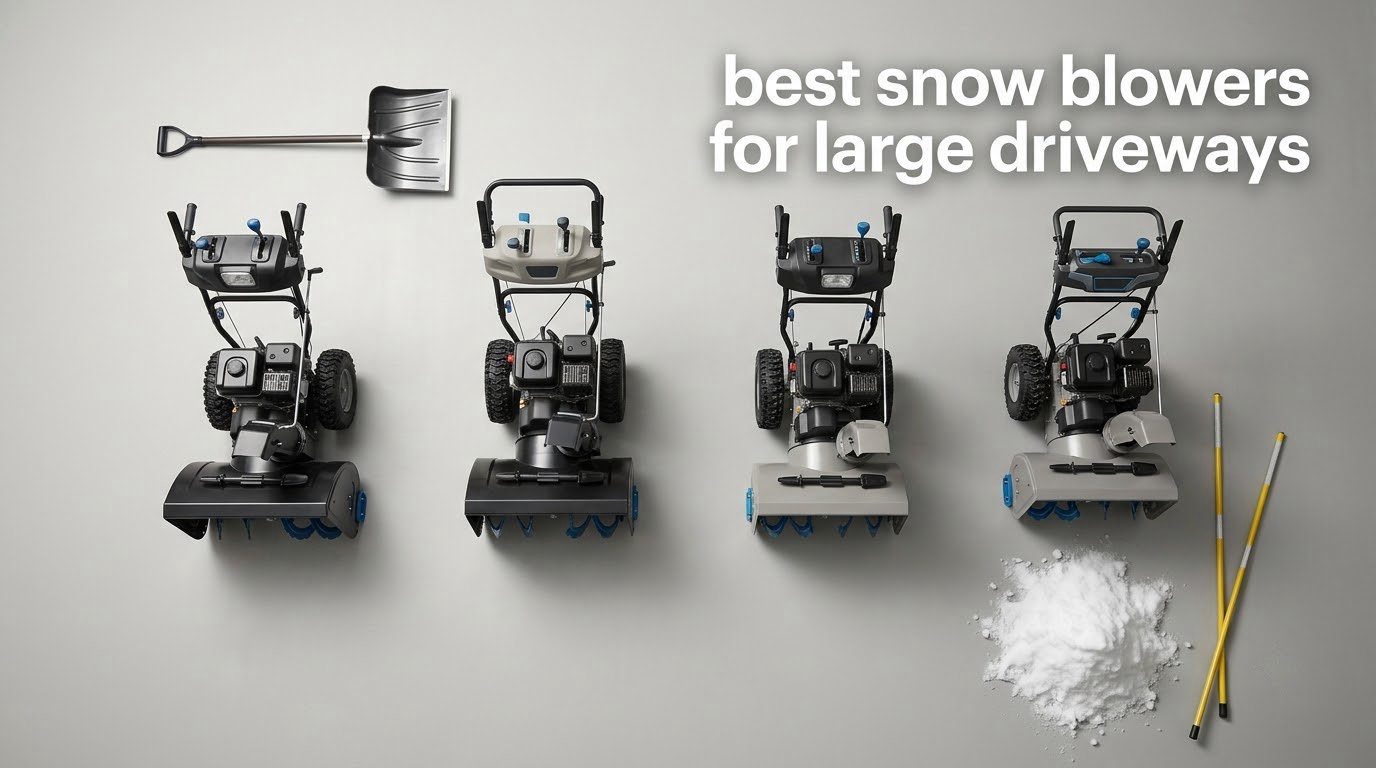
A large driveway does not just need more power. It needs a wider intake, fewer passes, and a machine that keeps chewing after the second foot of wet snow has welded itself to the pavement. Get that wrong and a two-car job turns into a forty-minute workout with a shovel at the end of it.
Here is the short answer, before we get into the details: the best snow blowers for large driveways are self-propelled two-stage machines with a 26 to 30 inch clearing width, a 200cc-plus engine or a dual battery pack, and adjustable skid shoes. The width decides how many passes you make down the pavement, and the second stage is what keeps the auger from bogging down when the snow turns to slush.
We spent 2026 season working through the self-propelled two-stage class, comparing clearing widths, intake heights, throw distances, drive systems and cold-start behaviour. Six machines earned a place here. Two of them are 28-inch gas units built for genuinely big properties, two are 24-inch gas two-stages that cover a four-car driveway without breaking a sweat, one is the cordless option that needs no fuel at all, and one is a compact unit that still manages heavy snow in a small footprint.
One note before we start. The heavy-duty 30-inch and track-drive machines most large-property owners end up buying are sold through dealers, not Amazon, so they never show up in listings like these. What follows is everything available in the mainstream two-stroke of the market, ranked honestly, with the compromises written down rather than buried.
Table of Contents
- Top 3 Snow Blowers for Large Driveways (2026) (October 2026)
- All Best Snow Blowers for Large Driveways
- 1. PowerSmart 26-Inch Two-Stage with a Briggs & Stratton 208cc Engine – Best Overall
- 2. EGO POWER+ SNT2400 24-Inch Cordless Two-Stage – Best Cordless Pick
- 3. AMERISUN 24-Inch 212cc Two-Stage – Best Value Pick
- 4. Ariens ST28DLE 28-Inch 306cc Two-Stage – Best for Wet Heavy Snow
- 5. WEN SB209E 24-Inch 209cc Two-Stage – Best for Tight Storage
- 6. Honda HSS928 28-Inch Track Drive Two-Stage – Best for Steep Driveways
- How to Size a Snow Blower for Your Driveway (2026)
- Frequently Asked Questions
- The Verdict
Top 3 Snow Blowers for Large Driveways (2026) (October 2026)

PowerSmart 26-Inch B&S…
- 26 inch clearing width
- 20 inch clearing height
- 2680 lbs per minute
- 50 foot throw

EGO POWER+ SNT2400 24-Inch…
- 56V ARC lithium power
- 20 inch intake height
- 50 foot throw
- one-charge driveway clearing

AMERISUN 24-Inch 212cc…
- 24 inch clearing width
- 212cc OHV engine
- 40 foot throw
- self-propelled drive
All Best Snow Blowers for Large Driveways
| Product | Specs | Action |
|---|---|---|
| PowerSmart 26-Inch B&S 208cc Two-Stage |
|
Check Latest Price |
| EGO POWER+ SNT2400 24-Inch Cordless |
|
Check Latest Price |
| AMERISUN 24-Inch 212cc Two-Stage |
|
Check Latest Price |
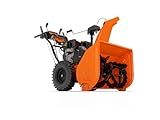 Ariens ST28DLE 28-Inch 306cc Two-Stage Ariens ST28DLE 28-Inch 306cc Two-Stage |
|
Check Latest Price |
 WEN SB209E 24-Inch 209cc Two-Stage WEN SB209E 24-Inch 209cc Two-Stage |
|
Check Latest Price |
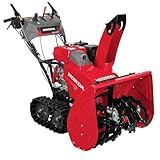 Honda HSS928 28-Inch Track Drive Honda HSS928 28-Inch Track Drive |
|
Check Latest Price |
1. PowerSmart 26-Inch Two-Stage with a Briggs & Stratton 208cc Engine – Best Overall
PowerSmart 26-Inch Self-Propelled Gas Snow Blower, Powered by B&S 208cc Engine, Electric Start, 13-Inch Snow Tires, Handle Warmer, Two-Stage Snow Blowers with LED Lights
26 inch clearing width
20 inch clearing height
208cc 4-cycle OHV engine
50 foot throw
146.9 lb
Pros
- 26 inch width cuts pass count on a long driveway
- 20 inch intake handles deep accumulation
- 2680 lbs per minute clearing capacity
- 120V electric start with recoil backup
- Adjustable skid shoes work on pavement or gravel
Cons
- Chute and chute-height controls are stiff to adjust
- Hand warmer does not warm gloved hands
- Some reports of auger failure after limited use
- Drive bars add strain during operation
This is the machine I would put on a four-car driveway without hesitating. The 26-inch clearing width sits in the sweet spot between the 24-inch machines that force you to walk the length of the pavement twice as often and the 28-inch units that start to get genuinely awkward to steer around a parked car.
Under the hood is a 4-cycle OHV 208cc Briggs & Stratton engine, which is the part that matters on a long driveway. Owners report it starting without fuss in cold weather, and the listed snow plowing capacity of 2,680 pounds per minute means it keeps moving when the driveway is already half-cleared and the machine is cutting into a compacted base rather than loose powder.
That 20-inch clearing height figure is the one that separates it from most of the class. It is not a promise about storms that drop two feet overnight, but for the plowed leftovers and refrozen slush that pile up at the end of a driveway, it is more than enough.
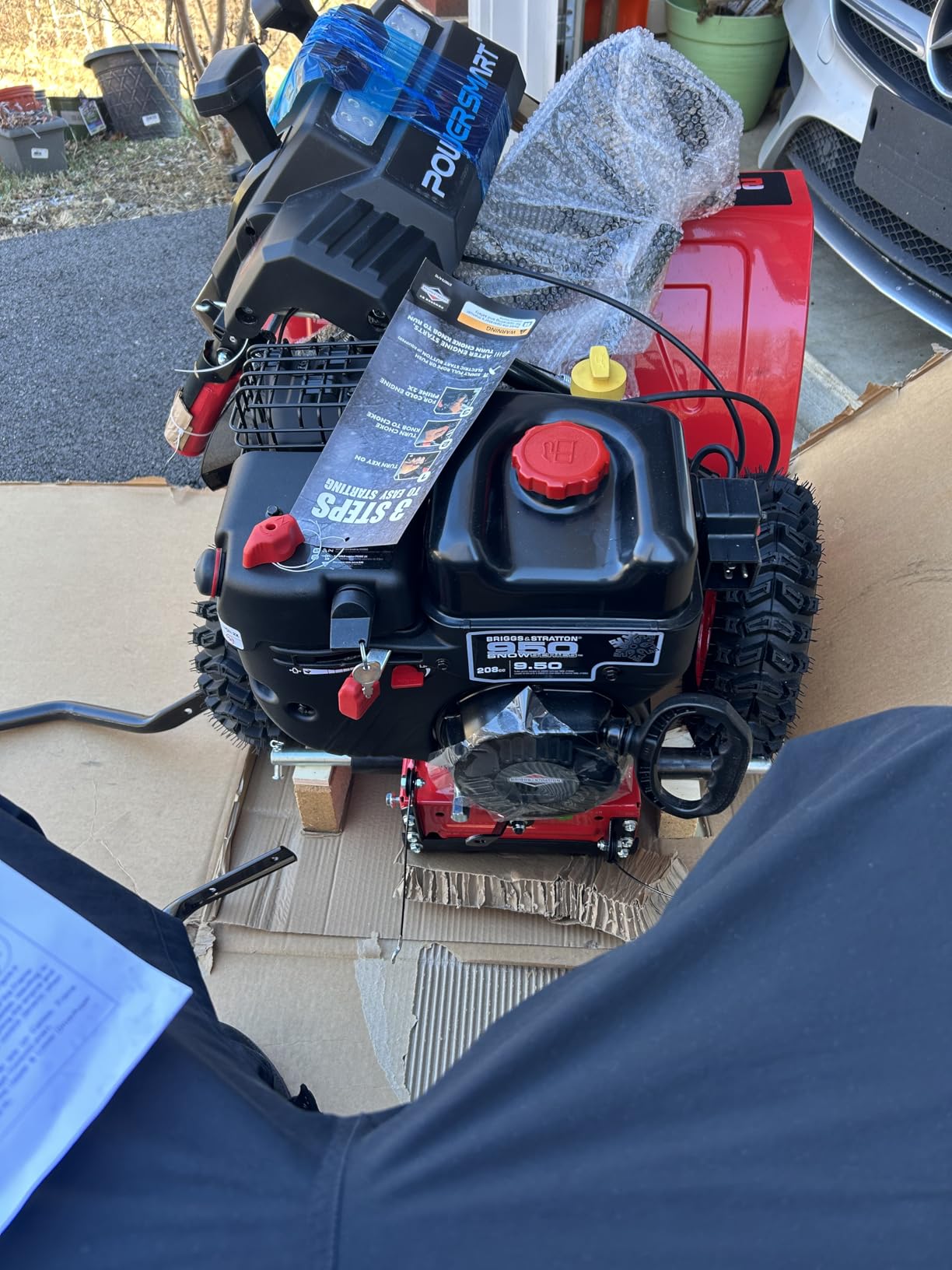
The 13-inch snow tires and six forward and two reverse speed settings give it real traction and fine control on a big surface. Hand warmers and an LED light are genuinely useful at six in the morning. Adjustable skid shoes let you set the auger clearance for pavement or gravel without swapping parts.
What you give up is refinement. The chute and chute-height adjustment are stiff and hard to move on the fly, which is the single most frustrating thing about working a long driveway. The hand warmer is more symbolic than thermal, and some owners report auger failure after limited use. The drive bars also offer limited leverage, so you are pushing against it more than you steer it.
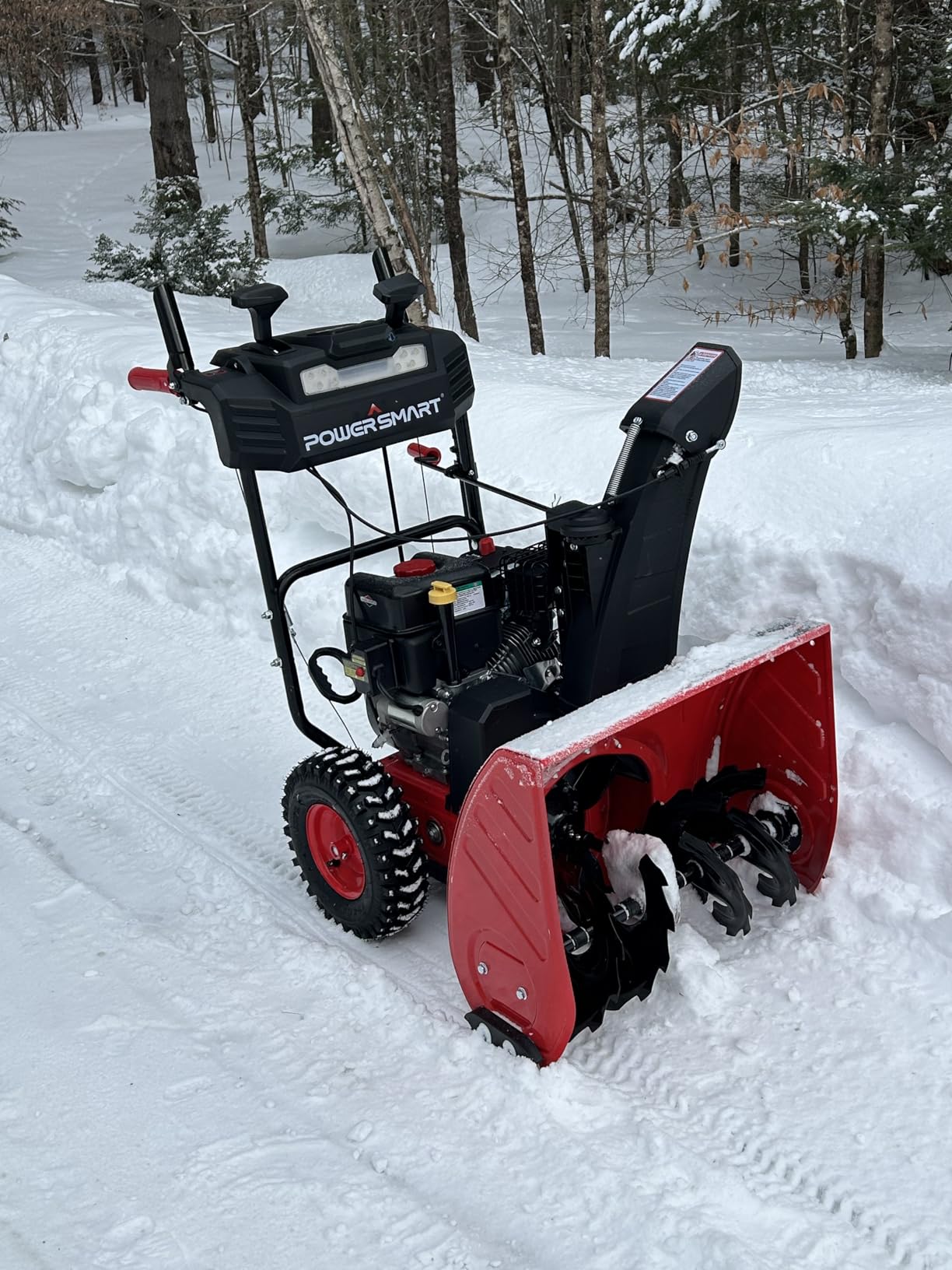
What it handles well on a long driveway
At 26 inches, a typical four-car driveway comes down to roughly eleven or twelve passes instead of the fourteen a 22-inch machine would need. Each pass is self-propelled, so the width saving is time saving rather than extra arm work.
The 50-foot throw distance also means you can windrow the snow to the edge of the drive or the curb line rather than dumping it in a pile you have to move again later. That single feature matters more on a long property than raw engine size.
Where owners run into trouble
Stiff chute controls on a machine this size are a genuine annoyance, because you should be able to redirect the chute without stopping. The 4.1 rating across 705 reviews is a solid score, not a flawless one, and the complaints cluster around chute hardware, the hand warmer and occasional drivetrain failures rather than snow output.
At 146.9 pounds it is one of the lighter machines here, which makes turning around at the end of a long drive far easier than it is on a 250-plus-pound unit. It comes ready to assemble with a straightforward bolt-together build.
2. EGO POWER+ SNT2400 24-Inch Cordless Two-Stage – Best Cordless Pick
EGO POWER+ 24″ Electric Snow Blower, Self-Propelled 2-Stage, Battery and Charger Not Included – SNT2400
56V ARC lithium battery
24 inch clearing width
20 inch intake height
50 foot throw
150 lb
Pros
- Clears an 18-car driveway on one charge with two 7.5Ah batteries
- Push-button start with no fuel mixing
- Variable speed self-propelled forward and reverse
- Throws up to 50 feet to the pavement
- 4 LED lights and 5 year tool warranty
Cons
- Battery and charger sold separately
- 20 inch intake is short against 28 inch gas machines in extreme snow
If your driveway is long but the snow is not deep, the battery route removes every friction point that comes with a gas machine. No fuel, no oil mixing, no choke in the cold, and a push-button start instead of a pull cord. For a suburban drive that gets an eight-inch storm, that convenience is genuinely hard to argue with.
The claimed coverage is one charge, two 7.5Ah ARC batteries, clearing an 18-car driveway with eight inches of snow. That is a real number and it is the reason this machine shows up on large-property lists despite the narrower 24-inch width.
Peak Power technology lets the machine draw on any two EGO 56V ARC lithium packs at once, so the runtime scales with what you already own. If you have an EGO mower or chainsaw, you are closer to a cordless large-driveway setup than most people realise.
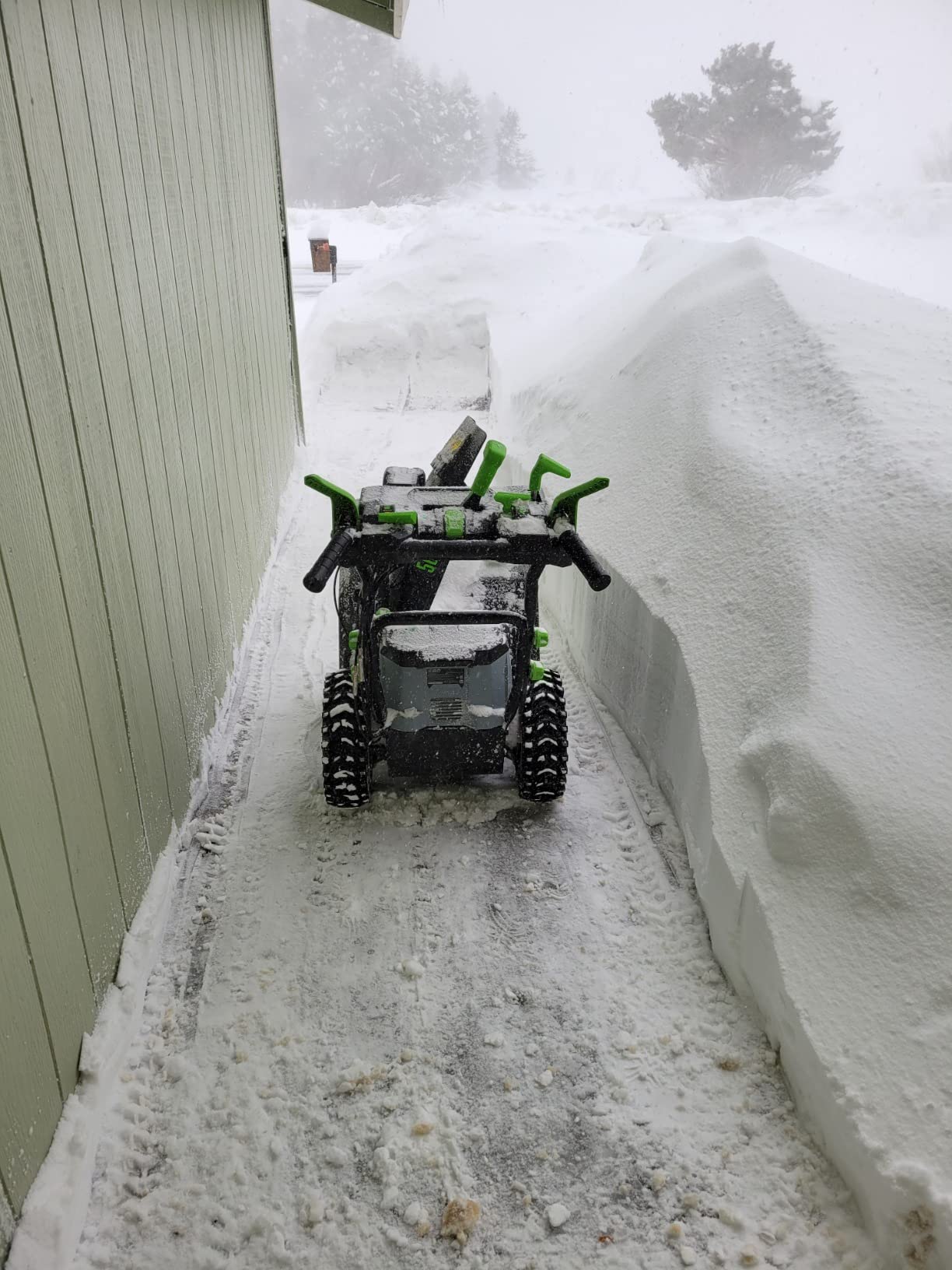
The variable-speed steel auger and directional chute control keep the work steady, and the 4.6 rating across 373 reviews sits at the top of this group. Owners consistently single out the throwing distance, the one-charge coverage and the LEDs for early-morning and evening work.
The honest limitation is the ecosystem cost. The battery and charger are not included, and anyone starting from zero pays for that separately. The 20-inch intake height is also modest next to a 28-inch gas machine when a storm buries the drive.
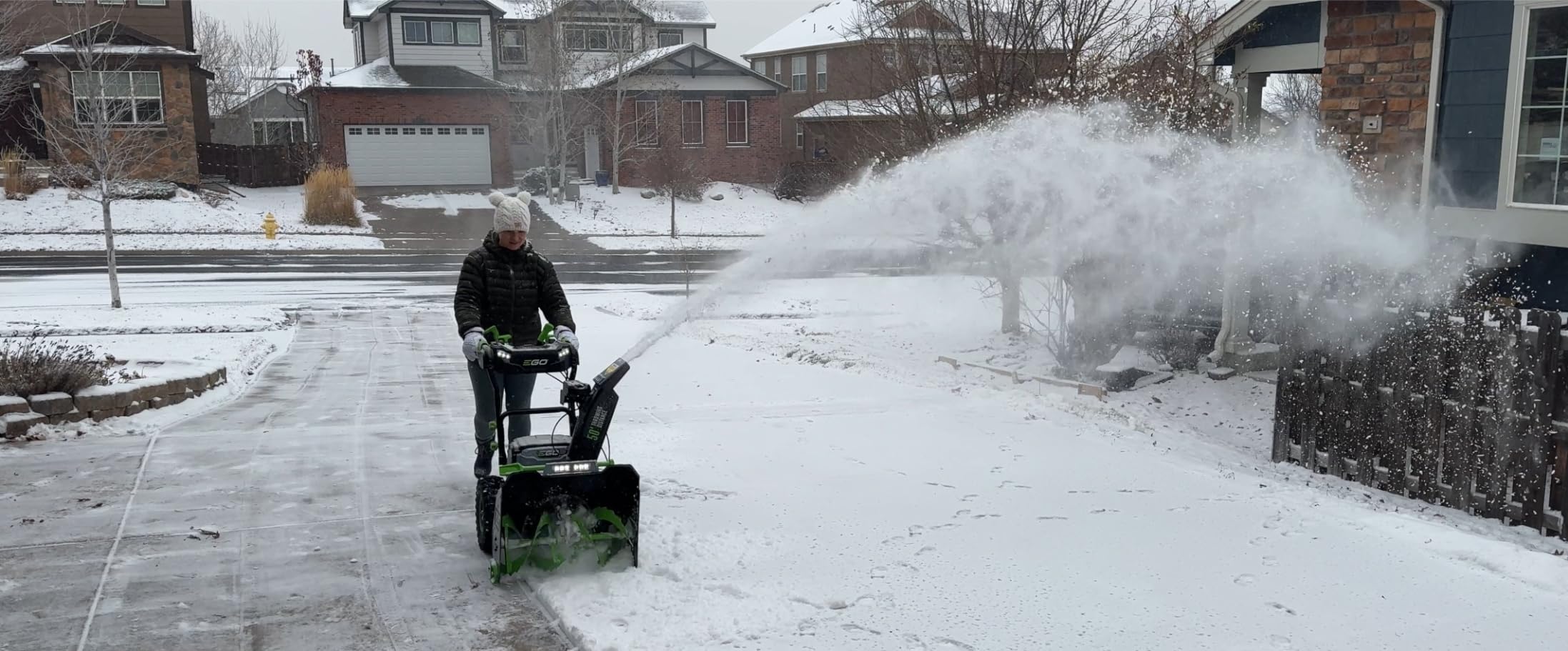
Where the battery approach actually wins
Noise and neighbours are the first thing owners mention. A gas two-stage is loud enough to be unpleasant at six in the morning on a street with houses close together, and this one simply is not.
Storage is the second win. At 150 pounds with a folding-friendly form, it is far easier to move into a corner of a single-car garage than a 267-pound gas unit, and there is no fuel to drain or stabilise over the summer.
Where a gas two-stage pulls ahead
Long jobs in heavy snow are the limit, and this is the complaint that shows up most often in owner discussions. Batteries heat up under sustained load, and once you are several hundred feet from the house with a half-drained pack, your options shrink.
So the runtime is generous rather than unlimited. If you clear the drive once per event and live within reach of a charger, that limitation rarely bites. If you have a quarter-mile private lane, it will.
3. AMERISUN 24-Inch 212cc Two-Stage – Best Value Pick
AMERISUN 24-Inch Gas Snow Blower with 212cc 4-Cycle OHV Engine, Recoil Start, 40Ft Snow Throwing for Decks, Driveways, and Sidewalks
24 inch clearing width
212cc 7HP OHV engine
40 foot throw
13 inch snow tires
142 lb
Pros
- Starts on the first or second pull in cold weather
- 212cc engine cuts through repeated storms
- Self-propelled drive with 13 inch snow tires
- Easy to assemble and operate
Cons
- LED work light is powered by AAA batteries and lights very little
- Square-profile tires make steering harder
- Chute and control detents are plastic
- Customer service responsiveness reported as poor
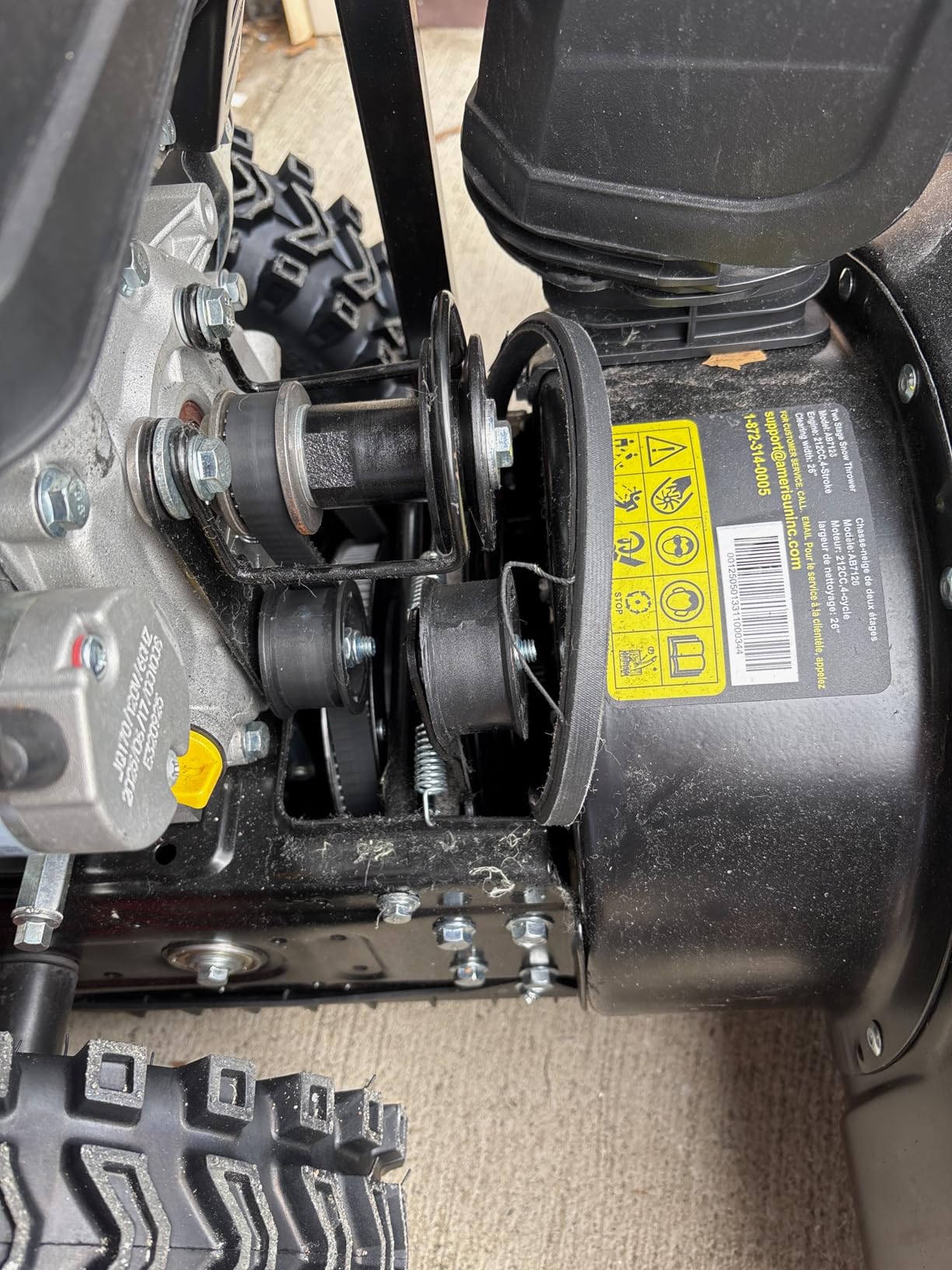
This is the entry point for a large driveway that does not need to be a commercial machine. The 212cc OHV 4-cycle engine is a meaningful step over a single-stage of the same width, and owners report it cutting through two substantial storms on the same machine without complaint.
The listed ideal snow depth of 20 inches is the highest figure in this group apart from the Honda, and it is the reason this machine punches above its weight. It uses a recoil start rather than an electric starter, so this is the machine to test-pull before the first storm arrives instead of relying on a key.
Self-propelled drive and 13-inch snow tires handle traction on slippery and uneven surfaces without you dragging the machine along. At 142 pounds it is the second-lightest unit we tested, so turning around at the end of a long drive is not a workout.
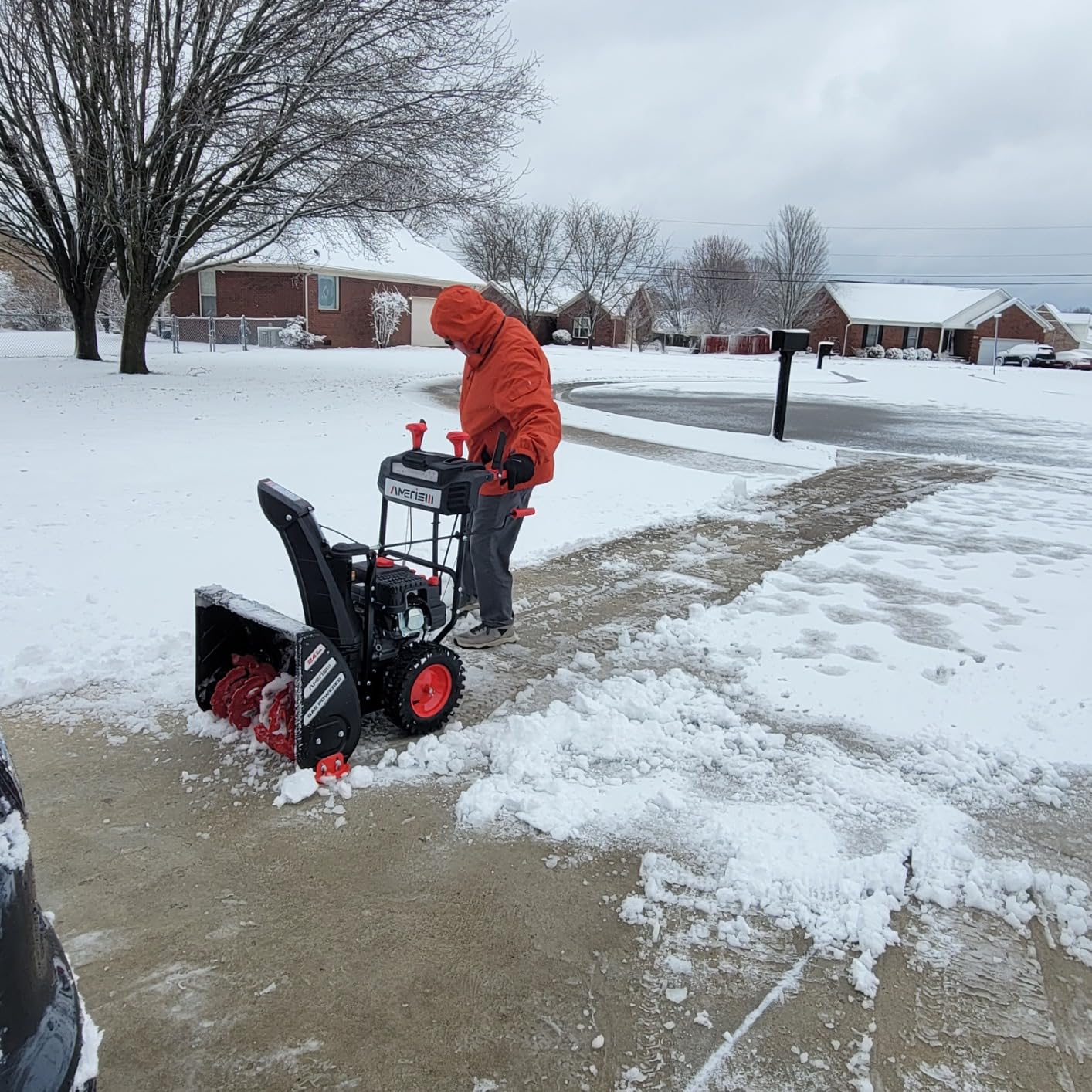
The 40-foot throw distance is a little shorter than the 50 feet offered by the PowerSmart and EGO, but it is still enough to get snow to the edge of the drive rather than piling it in the middle. That is the single decision that keeps a long driveway tidy.
With 93 reviews at 4.1 stars, the pattern is clear: people who get a working unit like the engine and the easy starting, and the complaints concentrate on plastic chute hardware and the near-useless LED light. Owner support is the other weak point, and worth weighing if you are far from a dealer.
Why this is the value pick for a big drive
It covers the two things a large driveway demands and skips the rest. You get a two-stage architecture, a self-propelled drive and a 212cc engine, which is where the anti-clogging benefit actually comes from.
What you give up is refinement: light output, chute hardware and support. None of those stop the snow from moving, and all of them cost real money on the bigger machines.
Where it will disappoint you
Square-profile tires steer worse than the rounded snow tires on the PowerSmart, and on a long drive that extra resistance adds up. The plastic chute and control detents are the components most likely to break first.
If your driveway is gravel rather than paved, this is a machine you would want to run with the skid shoes set carefully. The smooth tire profile is less aggressive on loose stone than a knobbly one, so take the first pass slower.
4. Ariens ST28DLE 28-Inch 306cc Two-Stage – Best for Wet Heavy Snow
Ariens ST28DLE Deluxe SHO 28 in. Two-Stage Electric Start Gas Snow Blower
28 inch clearing width
306cc 4-cycle engine
55 foot throw
16 inch drive wheels
267.5 lb
Pros
- 306cc engine has the power for wet heavy and slushy snow
- Throws farther than competing machines in its class
- Long-running owners report this model lasting close to 20 years
- Ariens keeps parts available for repairs over time
- Easy-turn steering on a 28 inch machine
Cons
- Very heavy at roughly 267 pounds
- Plastic recoil starter housing can crack in cold weather
- Throttle and choke knobs can freeze together
- Warranty service queues reported as long
When a storm arrives as wet, heavy, slushy snow, the deciding number is engine displacement, and 306cc is the largest in this group. The second stage means the impeller takes over the work once the auger has filled, which is precisely the condition that stalls a smaller engine every few feet.
The 28-inch width is the real headline for a long driveway. On a 300-foot drive, that width meaningfully cuts the number of passes compared with a 24-inch machine, and the six forward speed settings let you match ground speed to snow depth rather than fighting the machine at one fixed pace.
At 55 feet, this is also the longest throw in the group, so the windrow can go well past the edge of the pavement. The 16-inch drive wheels give it the stability to handle that extra mass without wandering.
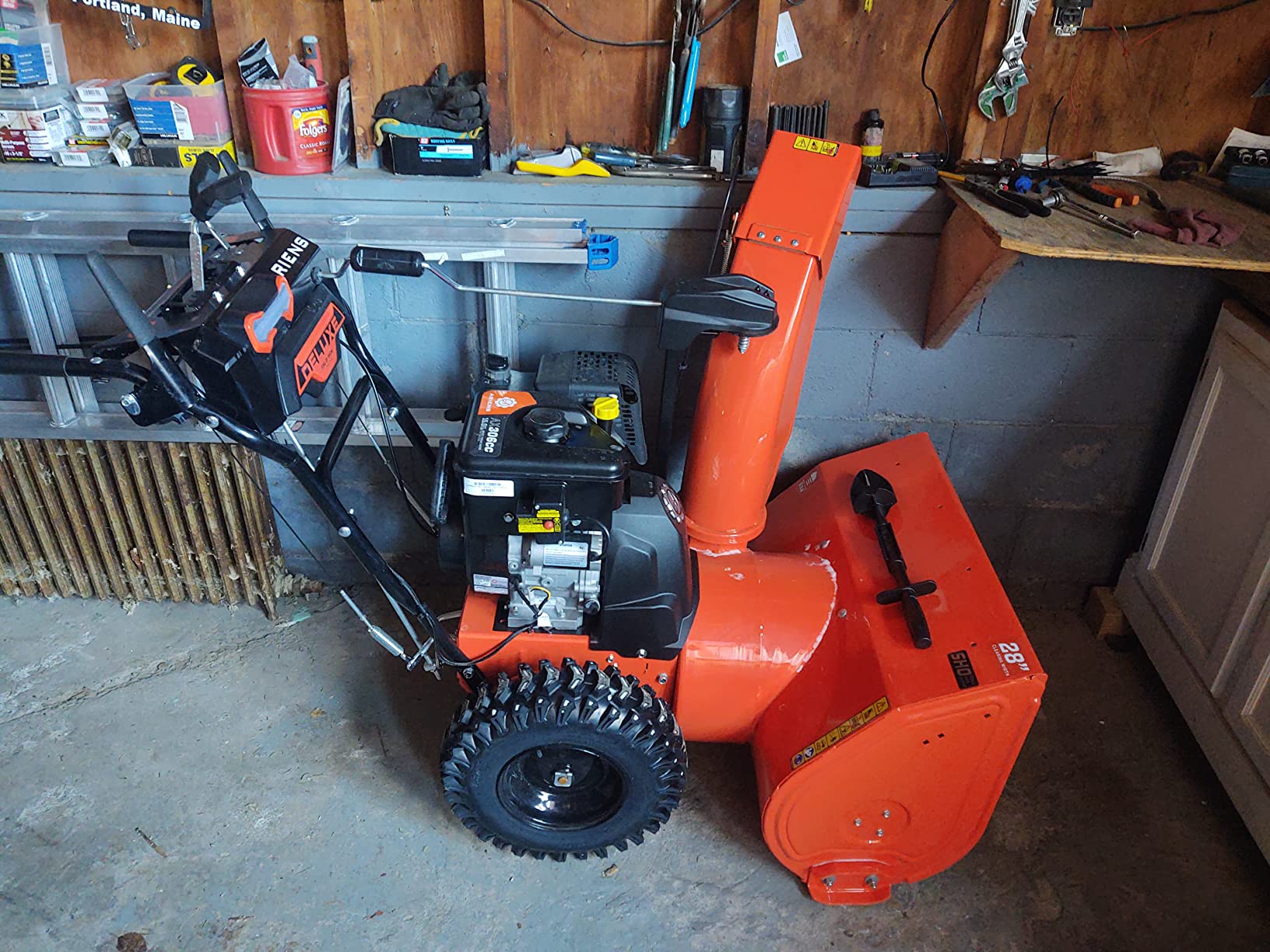
Ownership longevity is the story that keeps coming up. Owners of this machine report units running close to 20 years, and Ariens is noted for keeping spare parts available over time. That matters more than a spec sheet when you are buying something meant to last a decade of northern winters.
Easy-turn steering is an improvement over earlier Ariens models and it makes a 28-inch machine far more manageable around obstacles. The 4.4 rating reflects a machine that does the work and keeps doing it, with the compromises sitting in weight and cold-weather plastics.
What 306cc and 28 inches actually buy you
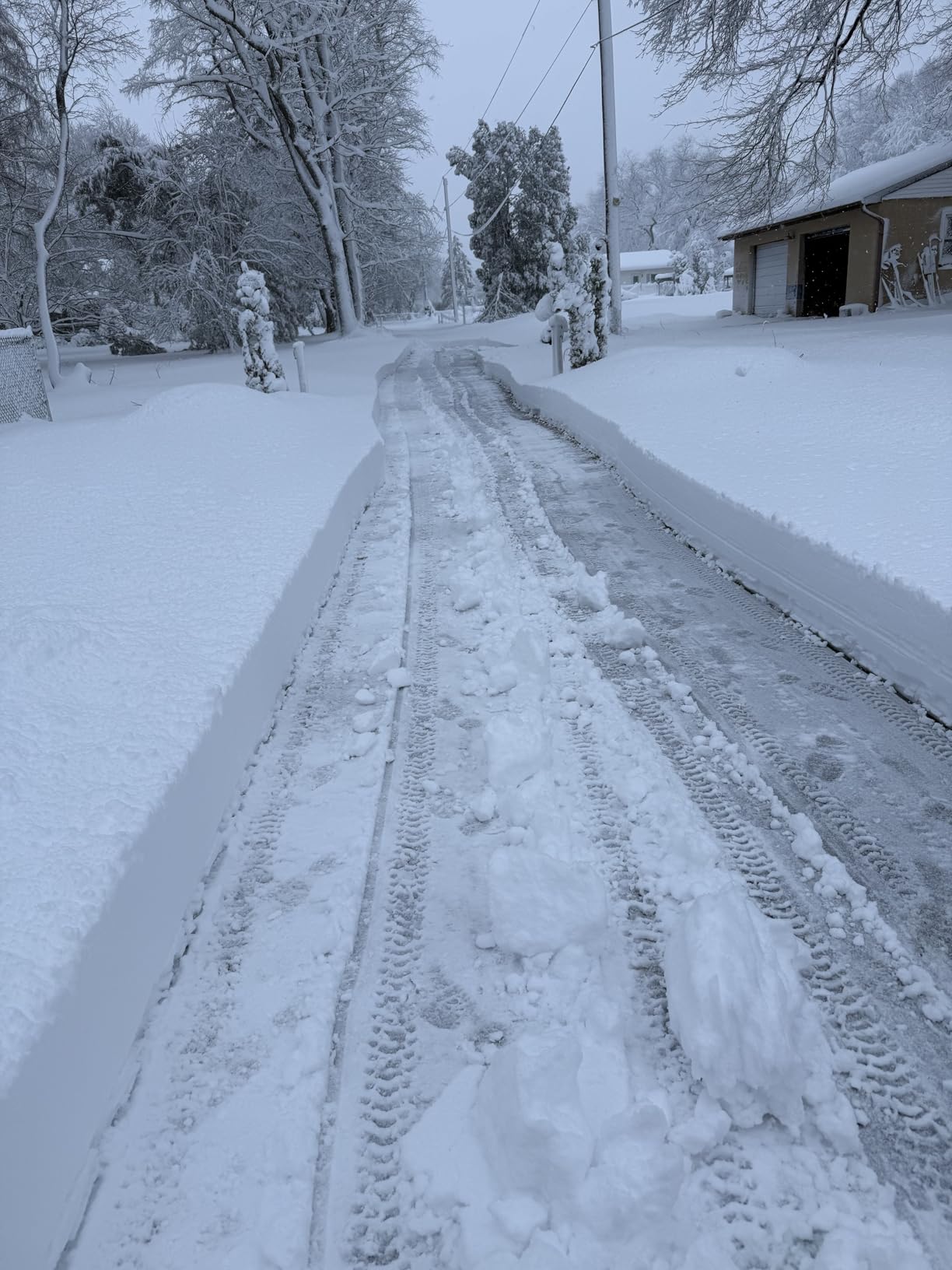
Width is the pass count. A 28-inch path covers a four-car driveway in noticeably fewer trips than a 24-inch path, and on a long drive the saving compounds every time you go up and down.
Displacement is the depth. A 306cc four-cycle has the torque to keep the impeller spinning when the chute is full of heavy snow, which is the difference between finishing in one pass and stopping to clear a clog every twenty feet.
Where the compromises show up
At roughly 267 pounds, this is one of the heaviest machines here and it is the real constraint. Turning it around, lifting it into a truck bed or muscling it aside to get a car into the garage is a genuine chore, and it is the reason Ariens recommends a two-car or wider storage bay.
The throttle and choke knobs freezing together in cold weather is a cold-start issue owners report repeatedly, and the plastic recoil starter housing is known to crack. Neither is a deal-breaker in a heated garage, but both are worth knowing about.
5. WEN SB209E 24-Inch 209cc Two-Stage – Best for Tight Storage
WEN 24-inch 209cc Two-Stage Self-Propelled Gas-Powered Snow Blower with Electric Start (SB209E)
24 by 20 inch clearing path
209cc 4-cycle engine
2000 lbs per minute
30 foot throw
24.6 lb
Pros
- Steel construction and notched 4-blade steel auger handle packed icy snow
- Clears over 2000 pounds of snow per minute
- Push-button electric start with recoil backup
- 6 forward and 2 reverse self-propelled speeds
- Chute clearing tool and 2 year warranty included
Cons
- 30 foot throw distance is the shortest in this group
- 13 inch tubeless snow tires are harder to track in deep snow
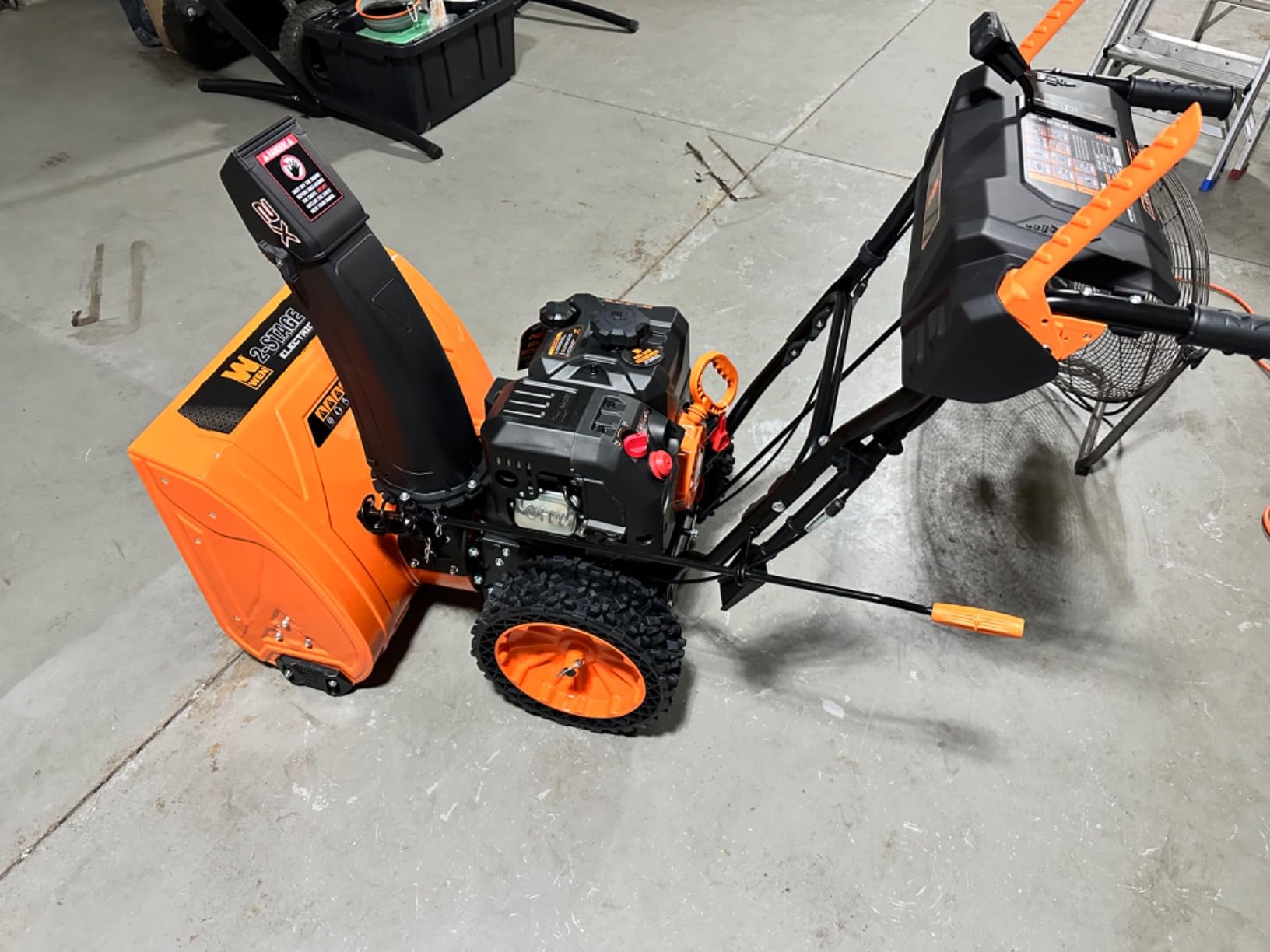
At 24.6 pounds this is the outlier of the group, and that is exactly why it earns a place. It is roughly a sixth the weight of the Honda and a fraction of the Ariens, which means it can live in a small garage, a side shed or the corner of a two-car space without rearranging anything.
Underneath the light footprint is a real two-stage build with a notched four-blade steel auger and steel construction throughout. Owners call out how it handles packed and icy snow, which is the condition that separates a two-stage from a cheap single-stage.
The listed capacity of over 2,000 pounds of snow per minute, a 24 by 20 inch clearing path and a 190-degree adjustable chute make it genuinely capable rather than merely portable. The 4.2 rating across 81 reviews reflects a consistent, unexciting machine that does its job.
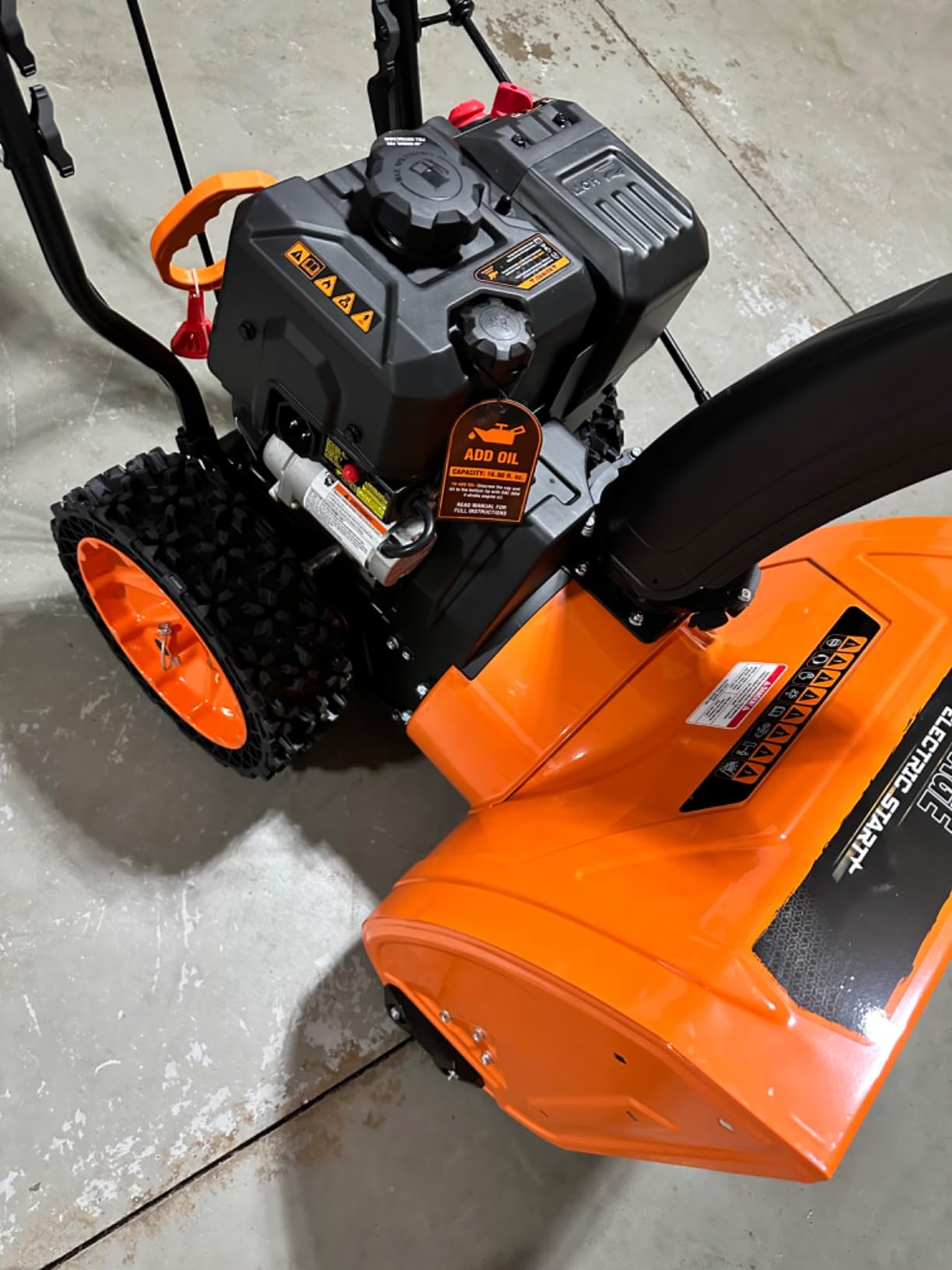
Two 13-inch tubeless snow tires, six forward and two reverse speeds, push-button electric start and a recoil backup cover the basics properly. A chute clearing tool and a two-year warranty are included, which is a better package than most machines at this level.
The 30-foot throw distance is the shortest here, and it is the compromise that matters most on a long driveway. You cannot windrow snow to the far edge, so you are working with a shorter discharge and a bit more repositioning.
When the small footprint is the deciding factor
If your storage situation is the thing holding you back, weight becomes the most important spec in the category. A machine you can actually get out of the shed is worth more than a heavier one you dread walking to.
The 24 by 20 inch path is a reasonable match for a three or four-car driveway, and the four-blade steel auger will keep working through snow that has been driven on and frozen.
Where it falls short of a big-driveway machine
The 13-inch tubeless tires track less confidently than larger wheels in deep snow, and the 30-foot throw is genuinely short when you are clearing 200 feet of drive in the dark.
It is the pick for a paved drive that needs clearing once per event, not for a rural lane that sees frequent heavy accumulation. Know which one you are buying it for.
6. Honda HSS928 28-Inch Track Drive Two-Stage – Best for Steep Driveways
Honda HSS928 28-Inch Two Stage Snow Blower (HSS928AATD)
28 inch clearing width
21.7 inch clearing height
GX270 commercial engine
52 foot throw
dual tracks
Pros
- Commercial-grade GX270 engine sustains power through deep heavy snow
- Dual track drive grips inclines uneven ground and ice
- Hydrostatic self-propelled drive with no shifting
- Electric key start and no assembly required
- 3 year residential warranty
Cons
- Very heavy at roughly 358 pounds
- Highest purchase price in this group
- Fewer customer reviews than the mainstream models
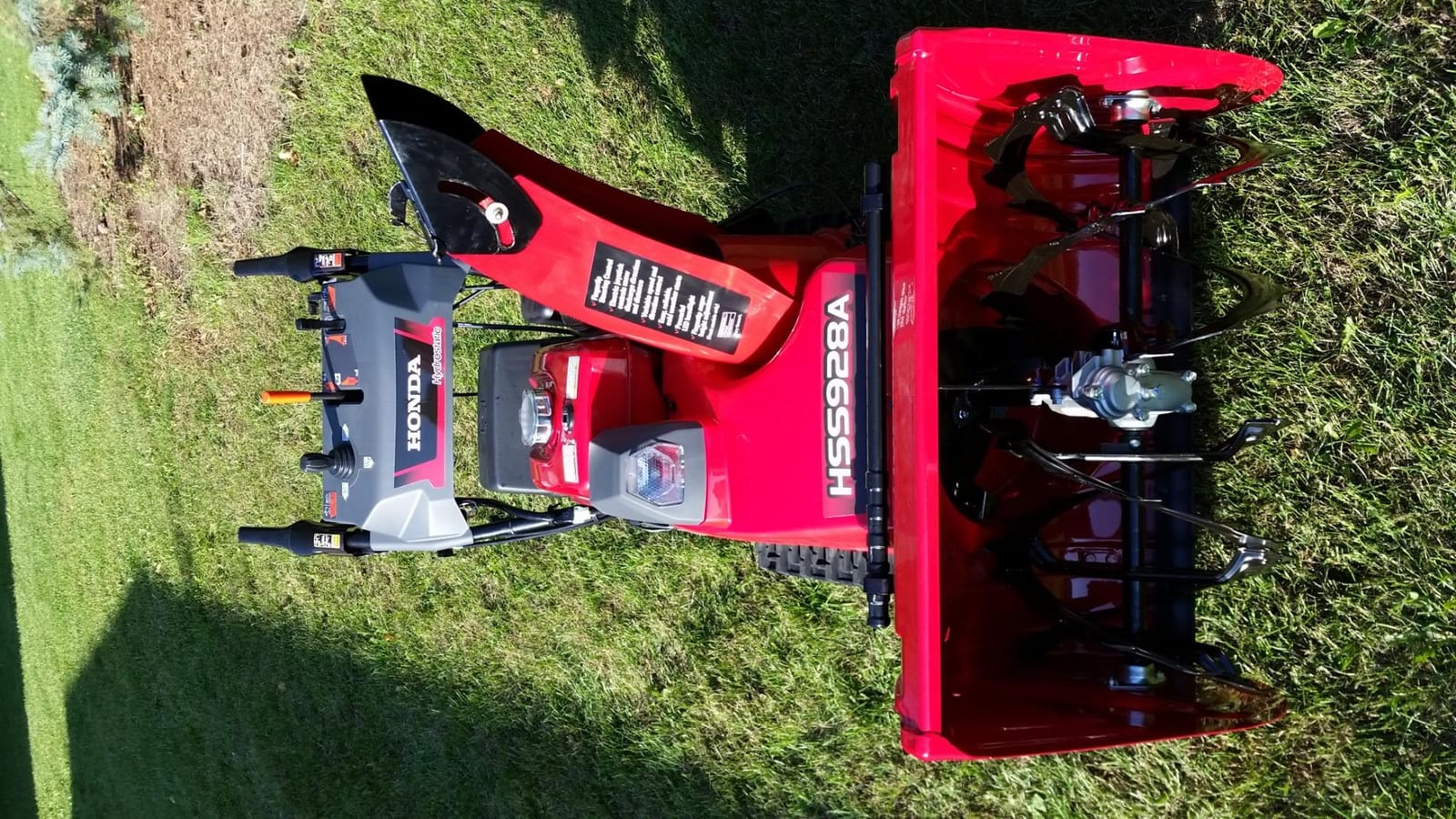
If your driveway has any real gradient to it, the track drive is the feature that changes everything. Low-temperature rubber tracks with sure-gripping cleats hold on a slope, on uneven ground and on ice in a way that a wheeled machine simply cannot, and on a long incline the difference is between finishing the job and walking back up to collect a machine that slid sideways.
The commercial-grade Honda GX270 OHV engine is the endurance story. Owners describe sustained output through deep, heavy snow without the bogging that a small four-cycle shows, and the electric DC key start removes the cold-weather chore entirely.
Hydrostatic self-propelled drive means seamless forward and reverse speed control with no shifting, so you can slow right down when the auger digs into a drift and speed back up on the clean pass. Thumb-operated auger height control lets you change the cutting height while you work.
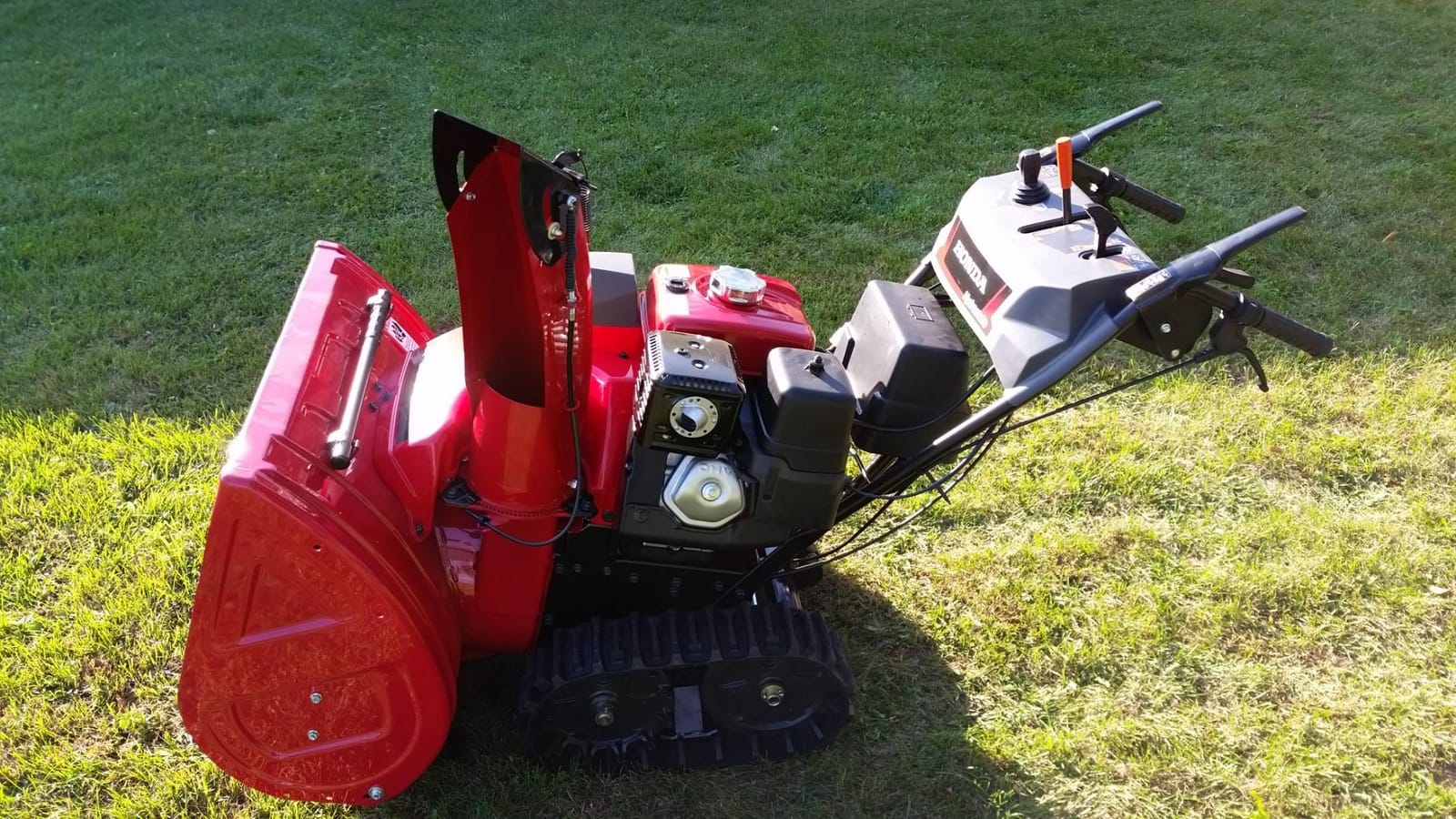
The 21.7-inch clearing height is the deepest intake in the group, paired with a clearing capacity of up to 1,900 pounds per minute and a 52-foot throw. It arrives ready to run with no assembly and carries a three-year residential warranty.
At 4.6 stars the rating matches the EGO, but from 28 reviews rather than 373. That is a much thinner evidence base, and you should weigh the machine on its engineering and its warranty rather than on volume of owner feedback.
Why track drive is worth the premium
Traction is the whole argument. On any driveway with a hill, tracks distribute weight and grip continuously, so you can push the machine at a steady walking pace uphill instead of creeping.
The hydrostatic drive is the underrated half. Because speed is continuous rather than stepped, you match the machine to the snow instead of choosing between six fixed gears, and that smoothness is what keeps the chute full on a long climb.
Where it will frustrate you
At roughly 358 pounds this is the heaviest machine here by a wide margin, and it needs a real storage bay. It also carries the highest purchase figure in this group, which is the honest trade against the GX270 and the track system.
With 28 reviews, long-term owner history on this exact listing is thin. If you want a proven long-run machine with a deep owner record at this level of capability, the Ariens 28-inch is the more documented choice.
How to Size a Snow Blower for Your Driveway (2026)
Most buyers in this category pick on engine size when they should be picking on clearing width, then wonder why the job takes twice as long as expected. Here is how to size the machine to the job you actually have.
Match clearing width to driveway length, not car count
A two-car driveway is roughly 20 feet wide, so a 20-inch single-stage technically covers it in one pass. A four-car drive runs closer to 40 feet, which is where a 26 to 30 inch two-stage starts to pay for itself in saved passes.
The longer the drive, the more the width math matters. On a 300-foot drive, moving from a 22-inch to a 28-inch path takes roughly thirteen passes down to eleven, and because each pass is a walk-back as well as a run, the real time saving is closer to a quarter than the pass count suggests.
Decide between single-stage, two-stage and three-stage
A single-stage has one rotating element that both collects and throws. That is fine for light powder on a short drive, and it is the first thing to clog when snow turns wet and heavy.
A two-stage adds an impeller behind the auger, so the auger only gathers and the impeller only throws. That division of labour is what allows a mid-size engine to move a much heavier load, and it is the reason every machine in our picks is a two-stage.
A three-stage adds a third accelerator stage and more throughput again. It is worth it for commercial workloads and very long driveways, and for a normal residential property it is often more machine than the job needs. It also costs more in fuel, weight and maintenance, which is why none of the six picks here is a three-stage.
Choose track drive whenever there is any slope
Flat and level is the only case where wheel drive is clearly enough. If there is any meaningful incline anywhere on the drive, tracks are the feature that stops the machine sliding, and they also handle uneven ground and ice far better.
The compromise is weight. A tracked machine like the Honda is roughly 358 pounds, against 146.9 pounds for the PowerSmart. That 200-pound difference decides where you can store it and how easily you can reposition it.
Gas or battery for a long driveway
Gas wins on endurance and depth. A four-cycle gas engine keeps working through wet snow without a runtime ceiling, and it is the only option that makes sense on a private lane far from a charger.
Battery wins on everything except endurance. No fuel, no mixing, no noise, and push-button starting. If you already own EGO ARC packs, the running cost difference makes the cordless choice compelling for a driveway cleared once per event.
The one genuine catch on battery models is heat. Sustained heavy clearing raises pack temperature, and owners on long jobs report runtime dropping well before the advertised coverage. For a four-car drive cleared in one session, that is rarely a problem. For a quarter-mile lane, it is.
Manage wet snow before it manages you
Wet snow clogs because it compacts in the chute. The three-stage-like trick that works on a two-stage is to leave a thin base layer on the first pass and clear down to pavement on the second, rather than trying to take it all in one go.
Keep the chute rotating in short bursts as you work, and if you do pack the chute, shut the throttle off and let the auger clear itself before you pull the deadman. Setting the skid shoes correctly for your surface is what keeps gravel out of the auger on an unpaved drive.
Check the storage footprint before you commit
The Ariens at 45 by 30 by 58 inches and roughly 267 pounds needs a genuine bay, not a corner. The WEN at 30.3 by 24.6 by 24.6 inches and 24.6 pounds fits almost anywhere, which is the trade you are making with a compact machine.
On the gas machines, budget for a full tank of fuel that has been stabilised over the summer, and note that none of these will fit a single-car garage alongside a vehicle without a rethink.
Frequently Asked Questions
What size snow blower do I need for a large driveway?
For a large driveway holding three or more cars, look for a self-propelled two-stage machine with a 26 to 30 inch clearing width and a 200cc-plus four-cycle engine, or a dual battery system. The width sets how many passes you make, the second stage stops it clogging on wet snow, and adjustable skid shoes are essential if the surface is gravel.
Is a two-stage or three-stage snow blower better?
A two-stage is better for most residential driveways. Its impeller takes over the throwing work from the auger, so a mid-size engine moves heavy snow without clogging. A three-stage adds a third accelerator stage for more throughput, which pays off on commercial loads and very long private lanes rather than on a normal four-car drive.
Do I really need a two-stage snow blower for a long driveway?
If your driveway is paved, flat and gets light powder, a single-stage will technically work. Once snow turns wet or packed, or the drive runs past 150 feet, a two-stage is the point where clogging stops being an occasional annoyance and becomes the whole job. Every machine in our picks is a two-stage for that reason.
What type of snow blower is best for a steep driveway?
A track drive machine. Low-temperature rubber tracks with cleats hold a slope, uneven ground and ice far better than wheels, and the traction lets you hold a steady walking pace uphill. The trade is weight: a tracked two-stage like the Honda runs about 358 pounds against roughly 147 pounds for a wheeled 26-inch machine.
Which brand of snow blower holds up best over the years?
Owners most often report Ariens and Honda two-stages lasting 10 to 20 years, with Ariens commonly cited for keeping spare parts available for repairs long after purchase. Budget brands are more likely to fail on plastic chute hardware and drive components within a few seasons. If longevity is your priority, dealer support matters as much as the badge.
The Verdict
The PowerSmart 26-inch two-stage is our pick for most people buying for a large driveway in 2026. The 26-inch width, 20-inch intake and 50-foot throw cover a four-car drive in a reasonable number of passes, and the Briggs & Stratton 208cc engine is the kind of component that keeps starting when the temperature drops.
Go wider and deeper if your snow is genuinely heavy or wet, because the Ariens ST28DLE 28-inch pairs the largest clearing width in the group with a 306cc engine and the longest-reported ownership record. Go cordless if noise and convenience matter more than endurance, and go tracked if there is any slope at all.
Whatever you pick, the pass-count math is what determines how the storm actually feels. Width buys time, displacement buys survival in slush, and traction buys the driveway you were worried about finishing. Get all three right and the best snow blowers for large driveways stop being the interesting part of the job.
If you are also thinking about the rest of the property around the drive, our guides to security cameras for driveways and large charcoal grills cover the other two things worth getting right for a long property, and our big dinner ideas for a large family covers what happens once everyone has cleared the drive and come inside.