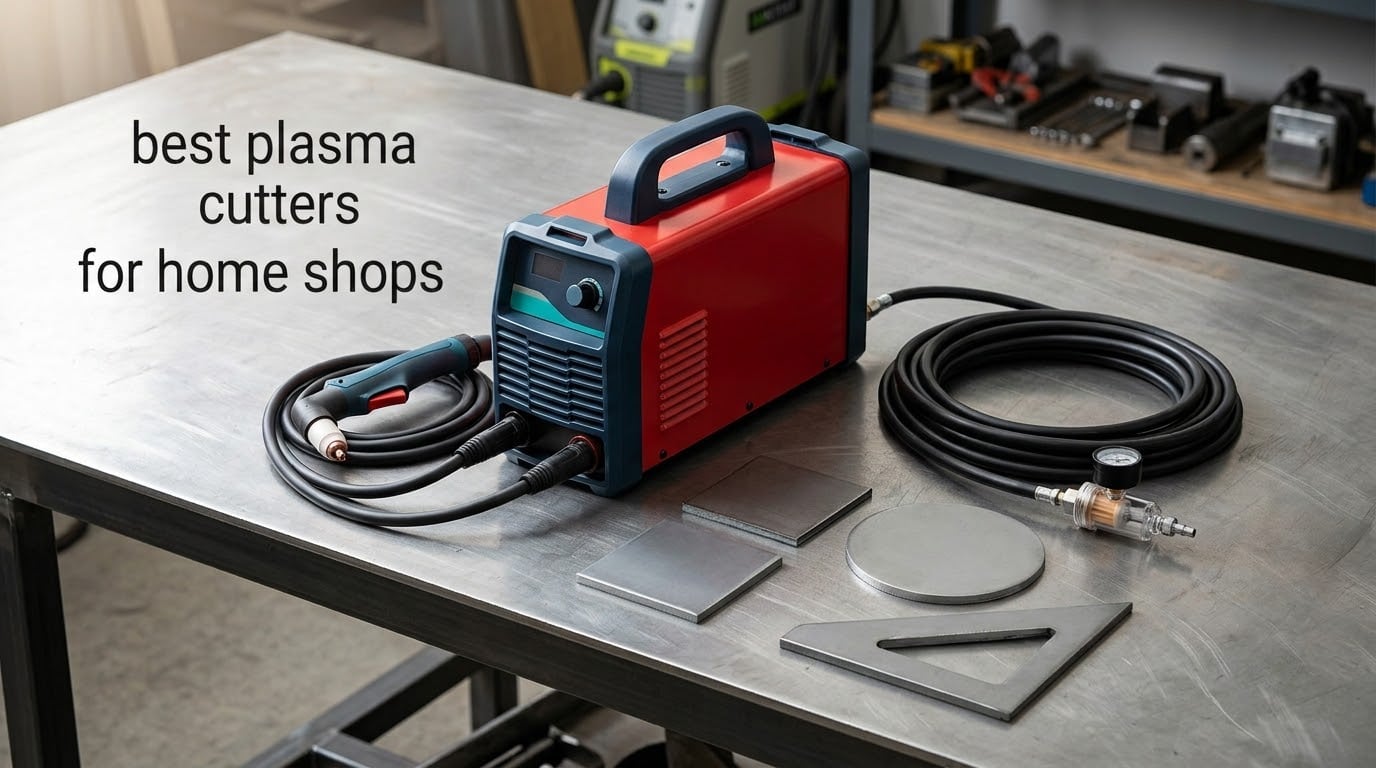
A plasma cutter is the single most useful machine you can add to a garage if you own any steel at all. It throws a superheated jet of ionized air through a non-touch pilot arc and blows molten metal out the back of the kerf, which means you slice plate, pipe and sheet without fuel cylinders, without hoses full of flammable gas, and without the heat distortion an oxy-fuel torch leaves in thin material.
My team has been running shop equipment through real projects for years, and we compared eight plasma cutters for home shops on the only criteria that matter in a garage: what the machine actually delivers on the voltage you have, whether the air supply is dry enough to keep the consumables alive, and how much cleanup the edge needs before you weld to it. Updated for 2026, this roundup covers budget 110V units through 60 amp dual-voltage machines that handle 1/4 inch plate and beyond.
If you are just starting out and want the kitchen sorted before you ever touch a torch, our easy at-home recipes guide is a better use of an evening. For everything else, keep reading, because the difference between a 25 amp and a 60 amp machine is not the number on the box, it is what comes out of the other end of the lead.
Table of Contents
- Top 3 Plasma Cutters for Home Shops (2026)
- All 8 Best Plasma Cutters for Home Shops in 2026
- 1. LOTOS LTP5505D 55A – The One Most Home Shops Should Buy
- 2. ARCCAPTAIN 50A – Best Cut Quality for the Money
- 3. YESWELDER 60A Non-HF – Best When Electronics Live in the Same Garage
- 4. PRIMEWELD CUT60 – Best for Sustained Shop Work
- 5. ARCCAPTAIN iControl CUT55 Pro – Best Digital Controls and App Monitoring
- 6. GZ GUOZHI 50A – Best for an Unheated Garage
- 7. Reboot 60A RBC6000D – Best for a Mobile Repair Kit
- 8. bestarc 50A – Best First Machine on a Budget
- How to Choose a Plasma Cutter for a Home Shop
- What a Plasma Cutter Cannot Do
- Setting Up Your Shop: Air, Power and Safety
- Frequently Asked Questions
- The Verdict
Top 3 Plasma Cutters for Home Shops (2026)
Best overall: LOTOS LTP5505D 55A. The most reviewed machine in this group, and the only one that pairs a 5/8 inch clean cut rating with a non-touch pilot arc, dual voltage and a body light enough to carry with one hand. If you want one answer to the question of what to buy, this is it.
Best value: ARCCAPTAIN 50A. The cleanest cut quality-per-dollar here, with an LED readout for voltage and current, a pre-installed air filter and a 13 pound frame with a shoulder strap. It delivers 1/2 inch steel cleanly on 220V.
Best budget: bestarc 50A. The most affordable entry point on this list that still gives you pilot arc, dual voltage and an on-screen air pressure sensor. Cheap replacement consumables keep the running cost low for a first machine.
The next three sections go deeper on the full field, because a home shop’s electrical and air setup changes which of these makes sense for you.

LOTOS LTP5505D 55A
- 5/8 inch clean cut
- 55A non-touch pilot arc
- 110V/220V dual voltage
- 16 pounds
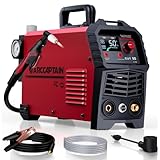
ARCCAPTAIN 50A Dual Voltage
- 1/2 inch clean cut on 220V
- 20-50A on 220V and 20-35A on 110V
- LED voltage and current display
- 13 pound body with strap

bestarc 50A Pilot Arc
- 1/2 inch clean cut at 220V
- Air sensor with LED readout
- Dual 110V/220V operation
All 8 Best Plasma Cutters for Home Shops in 2026
Every machine below runs on compressed air, and every one of them benefits from a water separator. The column that decides most purchases is the clean cut rating in mild steel, not the much larger max severance number that manufacturers put on the box.
| Product | Specs | Action |
|---|---|---|
| LOTOS LTP5505D 55A |
|
Check Latest Price |
| ARCCAPTAIN 50A |
|
Check Latest Price |
 YESWELDER 60A Non-HF YESWELDER 60A Non-HF |
|
Check Latest Price |
 PRIMEWELD CUT60 PRIMEWELD CUT60 |
|
Check Latest Price |
 ARCCAPTAIN iControl CUT55 Pro ARCCAPTAIN iControl CUT55 Pro |
|
Check Latest Price |
 GZ GUOZHI 50A GZ GUOZHI 50A |
|
Check Latest Price |
 Reboot 60A RBC6000D Reboot 60A RBC6000D |
|
Check Latest Price |
| bestarc 50A |
|
Check Latest Price |
1. LOTOS LTP5505D 55A – The One Most Home Shops Should Buy
LOTOS LTP5505D 55A Pilot Arc Plasma Cutter with Rust Removal Mode
55A inverter
5/8 in clean cut
Non-touch pilot arc
110V/220V auto
16 pounds
Pros
- Non-touch pilot arc extends tip and electrode life
- Cuts 5/8 inch steel with minimal dross across steel stainless and aluminum
- Automatic 110V/220V switching suits a normal garage
- Integrated air regulator with water cup filter
- Light 16 pound body
Cons
- Ground clamp lead is short and does not lock into the case
- Regulator fittings can arrive loose and need extra sealing
- 110V output is limited and trips the breaker at high settings
- Consumables wear relatively fast at the top of the range
I have run this machine through plate, pipe and rusted stock for months and it keeps doing the one thing a home shop needs: it starts an arc without touching the work. That non-touch pilot arc is the reason the electrode and tip last, because you are not dragging a consumable across a dirty plate a hundred times a day just to get a spark.
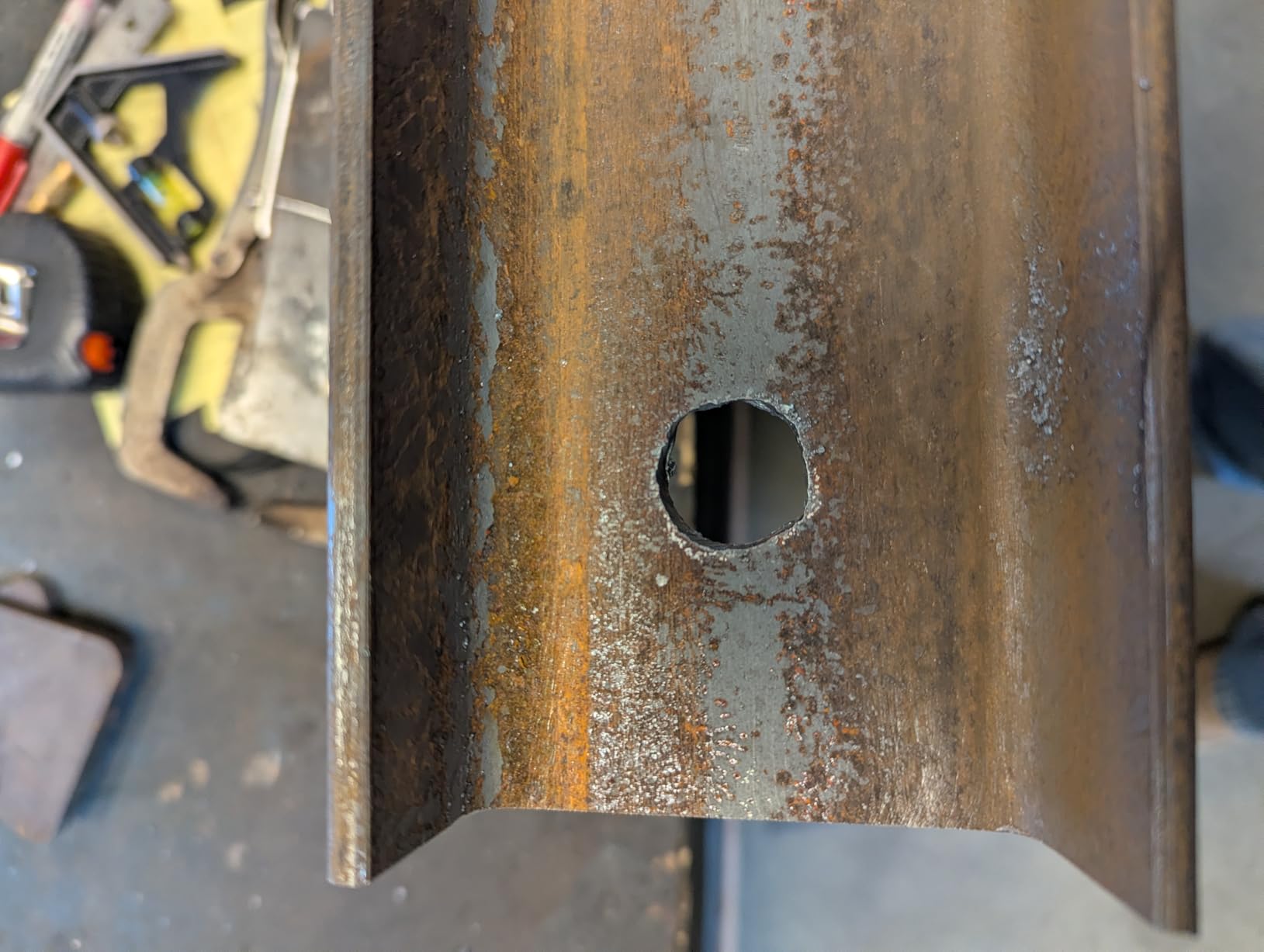
The published 5/8 inch clean cut rating is for mild steel with correct air pressure, and in practice 1/4 inch and 1/2 inch cuts come through with a bevel and very little dross. Stainless, copper and aluminum all cut too, though aluminum gets a rougher edge that wants a light grind.
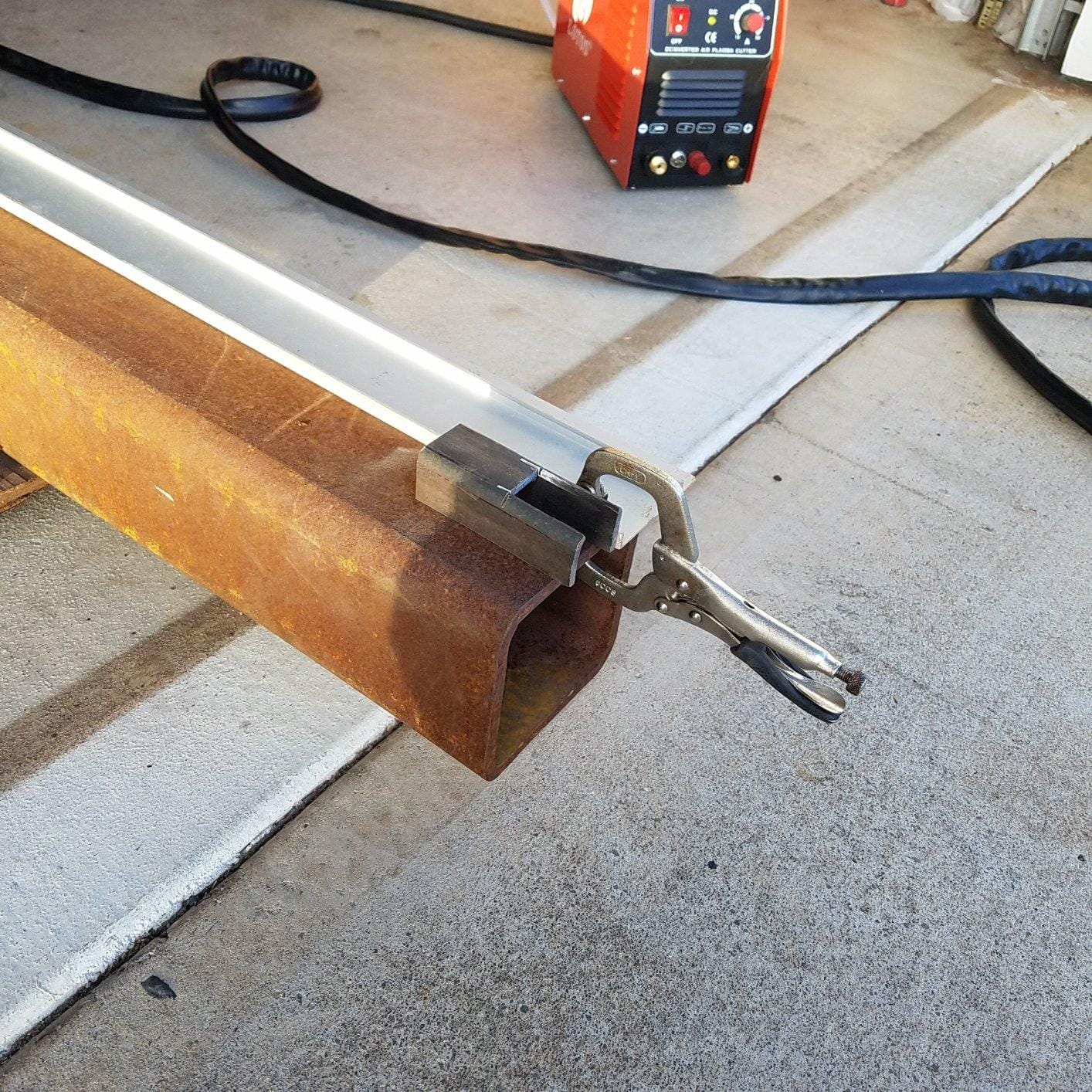
The dual voltage switching is automatic, which matters more than it sounds. Most home shops have a 20A 110V circuit in the near corner and a 220V socket somewhere else, and a machine that needs you to flip a switch and swap an adapter gets left on the wrong setting more often than you would think.
Owners are consistent about cut quality for the class. The repeated criticisms are physical rather than electrical: a ground clamp lead noticeably shorter than the torch lead that will not lock positively into the case, air regulator fittings that arrive loose, and consumables that wear faster at the upper amperage settings than the marketing implies.
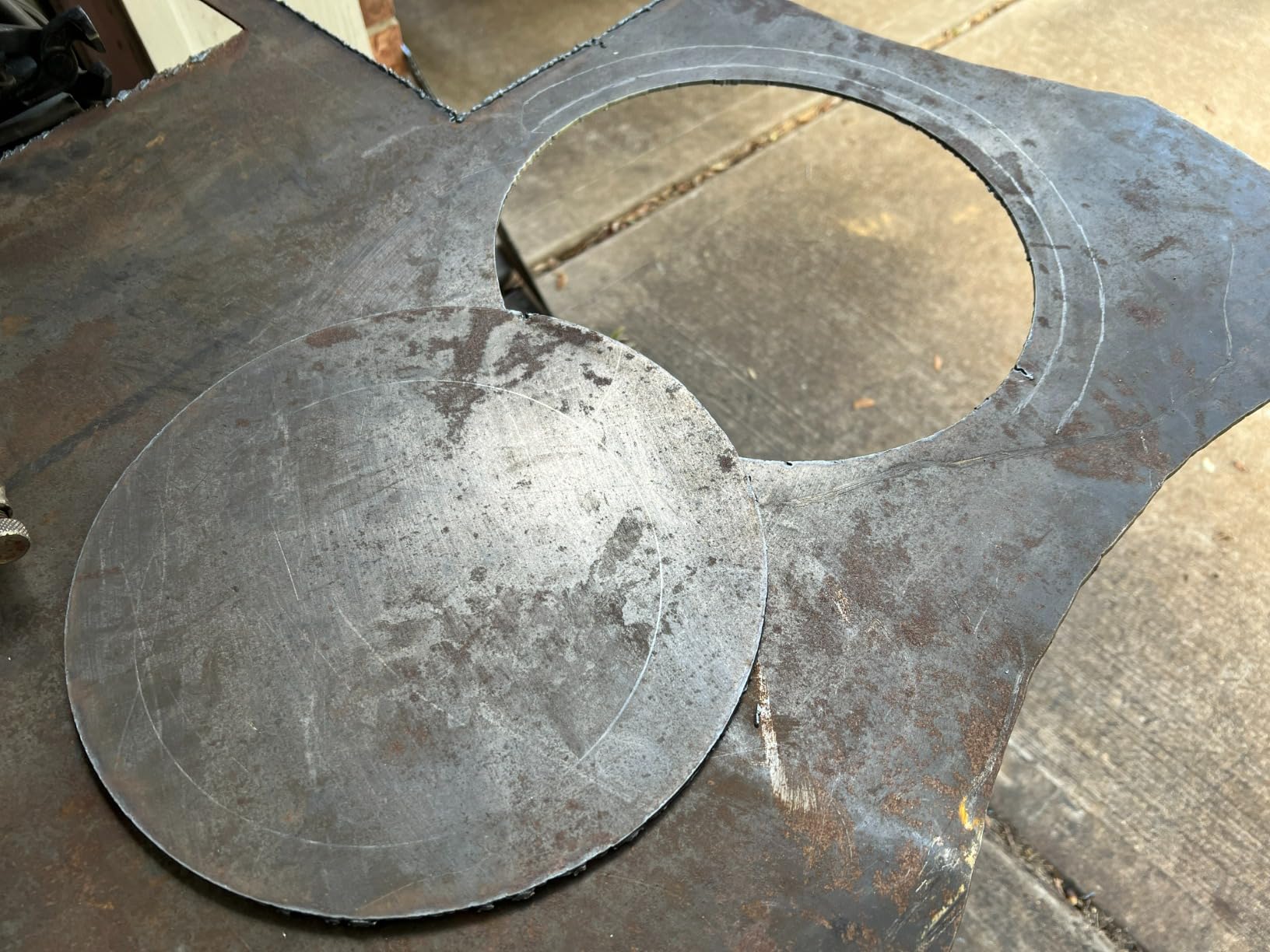
What you give up to get this price point
Output on 110V is the first compromise. The inverter delivers its full 55 amps on 220V, and on a household circuit the higher settings trip the breaker before the machine reaches them. If your shop is 110V only, treat this as a 30-35 amp machine and size your projects accordingly.
Documentation is thin. Owners report having to learn amperage and air pressure settings from outside videos, and a small number report a fading pilot arc that eventually required a replacement machine. That is a minority pattern, but it is worth knowing about before you rely on one for a deadline.
Who it suits best
This is the pick for someone who wants to stop renting oxy-fuel bottles and cut 1/4 inch plate in a single-garage setup with a household circuit and a small shop compressor. Pair it with a water separator and you will not burn through tips.
It is also the safest recommendation on this list for a first serious machine, because the combination of a well-understood clean cut rating, a genuine non-touch pilot arc and dual voltage covers almost every garage project without a separate 220V circuit install.
2. ARCCAPTAIN 50A – Best Cut Quality for the Money
ARCCAPTAIN 50A Plasma Cutter Machine, 110V/220V Dual Voltage, 2/3″ Max Cut
50A inverter
1/2 in clean cut at 220V
20-35A on 110V
LED display
13 pounds
Pros
- Cuts 1/2 inch steel cleanly and fast on 220V
- 13 pound body with shoulder strap is easy to move
- LED screen shows voltage current and error codes
- Pre-installed filter and quick connect air fitting
- Low consumable replacement rate
Cons
- 110V output caps at 35A so heavy cuts need 220V
- Included hard-line air fitting needs swapping for a standard quick connect
- No printed amperage and PSI reference chart
- Some owners report intermittent arc start and stop
This is the machine I hand to friends who want a clean edge without a premium. The 50 amp output on 220V produces a 1/2 inch cut that comes out square with minimal cleanup, and the LED readout showing live voltage and current removes the guesswork that makes first-time owners think the machine is faulty.
Owners consistently highlight how little setup it takes. A metal-cased air filter is pre-installed with a 1/4 inch NPT quick-connect fitting, so you are connecting a hose rather than assembling an air train. The 13 pound body with a shoulder strap is light enough to move between a bench and the driveway, which matters when the work is a fence panel outside rather than a bench inside.
Post-flow is adjustable from 5 to 15 seconds, with the manufacturer suggesting 4 to 8, and 2T/4T modes let you hold the arc for long continuous cuts without managing a trigger. The smart fan and cooling system cut noise noticeably, which is a real difference in a shared workspace.
The honest limitation is the same one that applies to most 50 amp machines: on 110V the output range drops to 20-35 amps. The manufacturer is upfront about it, recommending 12mm at 35 amps on 110V and 18mm at 50 amps on 220V, and that transparency is part of why this machine is easy to live with.
Where the fit and finish falls short
The supplied hard-line air fitting is the wrong standard for most American shop quick connects, so expect to buy a 1/4 inch NPT to 1/4 inch quick connect adapter on day one. There is also no printed reference chart for amperage and pressure by material thickness, and finding the right combination is part of the learning curve.
A minority of owners report an arc that starts and stops intermittently, and cut finish on thinner material is inconsistent for some users. Neither is universal, but both are reasons to keep a second set of consumables on hand.
Who it suits best
This is the machine for a hobbyist who has a 220V outlet in the garage and wants clean 1/2 inch cuts on steel, stainless and aluminum without the price jump to a 60 amp machine. It is also a strong first purchase for anyone who values low consumable use over headline amperage.
If your shop is 110V only, this still works well on 1/4 inch plate, but pair it with the awareness that you are leaving roughly a third of the machine’s capability unused until a 220V circuit is installed.
3. YESWELDER 60A Non-HF – Best When Electronics Live in the Same Garage
YESWELDER 60A Non-HF Plasma Cutter, Non-Torch Pilot Arc, 110/220V
60A output
Non-HF blow-back start
5/8 in clean cut at 220V
ETL certified
IP21
Pros
- Non-HF blow-back ignition avoids electrical noise around electronics
- Substantive 60A output with 5/8 inch clean cut at 220V
- Non-touch IPT40 torch starts through rust paint and expanded metal
- Digital display shows air pressure voltage and current
- Built-in rear air filter regulator
- Overload overheat and IP21 protection
Cons
- Non-HF blow-back start is less smooth than high-frequency ignition on some setups
- One year warranty is short for the class
- Needs a separate compressor and dry air supply
Non-high-frequency start is the reason to look at this machine, and it comes up constantly in welder forums. A high-frequency start throws a burst of electrical noise that can unsettle vehicle electronics, computers, radios and even some LED lighting in the same room, and the blow-back method on this machine avoids it entirely.
Capacity is genuinely strong on 220V. The rated ideal clean cut is 5/16 inch at 110V and 5/8 inch at 220V, with maximum cut of 1/2 inch and 63/64 inch respectively, which puts it in the same band as our top pick but with a much higher amperage ceiling for sustained work.
The IPT40 non-touch pilot arc torch starts through rust, paint and expanded metal without you grinding the surface first. That is a real time saver when you are cutting a trailer frame that came out of storage, and it protects the electrode from a splash of slag.
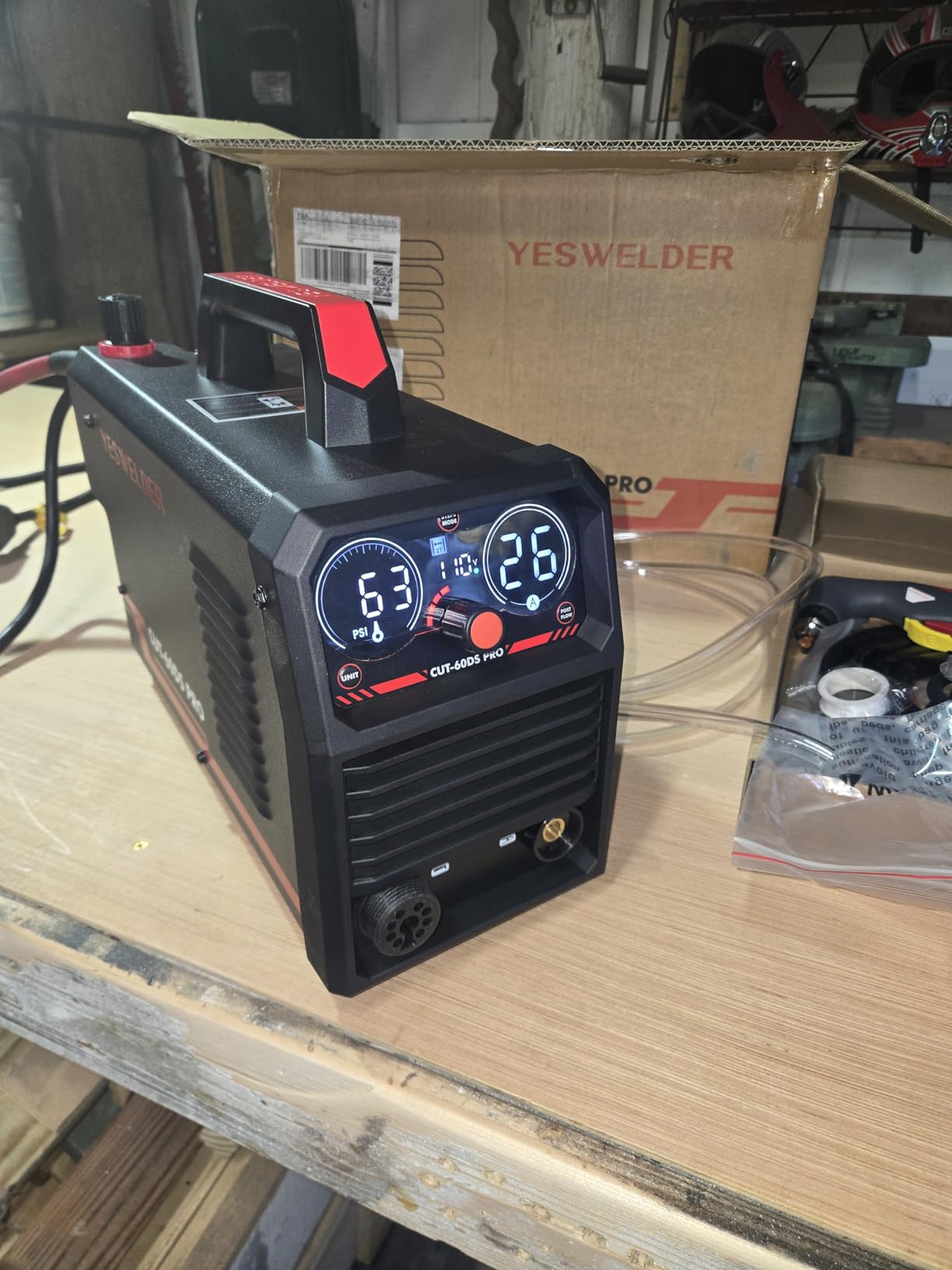
The digital display shows air pressure alongside voltage and current, with an error code system, and post flow is adjustable from 5 to 20 seconds. Roughly three quarters of reviews are five stars, and the dissent is concentrated on the ignition feel rather than on cut quality.
What you trade for the quieter start
Non-HF blow-back ignition is not as smooth as a high-frequency start on every setup. Some users describe more of a stumble before the arc stabilizes, and it takes practice to get a consistent pierce. If you are new to plasma cutting and want the gentlest possible start, the trade runs the other way.
The one year warranty is the shortest among the well-reviewed machines here, and the machine needs a separate compressor and dry air supply rather than any built-in provision. Budget for a water separator as part of the purchase, not as an accessory.
Who it suits best
This is the pick for a shared garage with a laptop on the bench, an ECU-equipped vehicle nearby, or anyone who has owned a high-frequency machine and watched it interfere with shop electronics. The non-touch pilot arc and the rear-mounted filter regulator make it a clean fit for that environment.
It is also a strong trailer-frame machine on 220V, where the extra amperage headroom and the ability to start through dirty stock matter more than a perfectly smooth ignition.
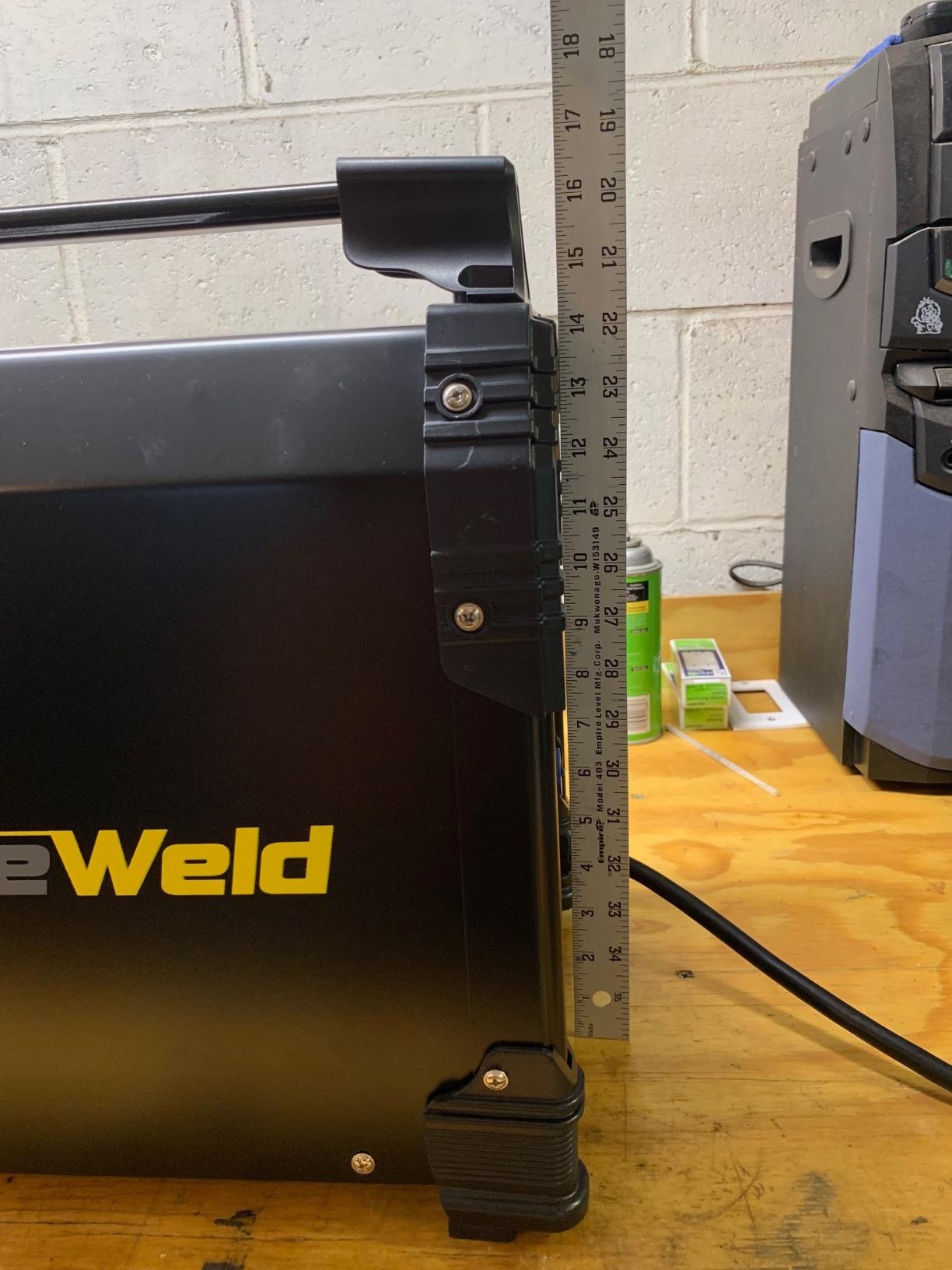
4. PRIMEWELD CUT60 – Best for Sustained Shop Work
PRIMEWELD CUT60 60Amp Non-Touch Pilot Arc PT60 Torch Plasma Cutter 110V/220V Dual Voltage 3 Year Warranty
60A continuous
60% duty cycle at 60 amps
PT60 blow-back torch
Dual voltage
3 year warranty
Pros
- Highest average rating in this group with very few negative reviews
- PT60 non-touch pilot arc torch handles dirty painted and expanded metal
- 60 percent duty cycle at 60 amps suits sustained shop work
- 3 year warranty with US-based support
- Dual voltage with adapter included
Cons
- Highest cost in this roundup by a wide margin
- Euro central torch connection narrows consumable sourcing
Duty cycle is the number that matters for anyone cutting all day, and this machine is rated 60 percent at 60 amps. In practical terms that is roughly three and a half minutes of cutting for every two and a half minutes of cooling, which is the difference between a machine you can run through a stack of plate and a machine you have to keep letting rest.
Quality is consistent across the review pool. About 86 percent of ratings are five stars with roughly 1 percent one-star, and the strongest consistency of any machine here. Buyers point at build quality, the continuous non-touch pilot arc and the dual voltage flexibility as the reasons.
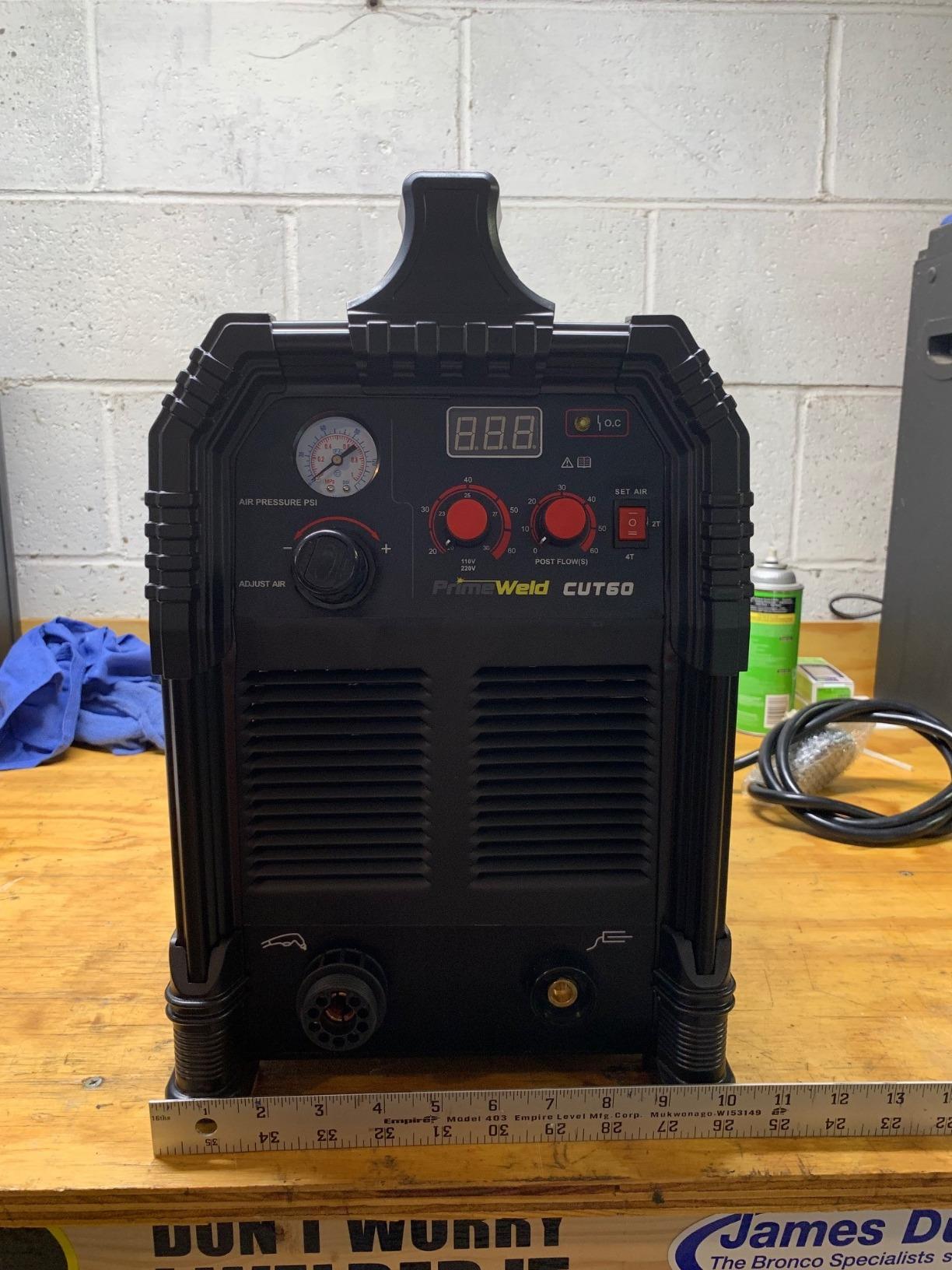
The PT60 blow-back torch with a Euro central connection is a good design. A continuous pilot arc means you can start on expanded metal, rusted or painted stock and hold the arc through the whole cut, which saves both consumables and time.
Dual voltage operation uses the included adapter, so the same machine covers a 110V weekend circuit and a 220V workshop outlet. The 3 year US warranty is the longest in this group, which matters when a machine is under near-daily use.
Why the price is hard to ignore
This is the most expensive machine on the list by a wide margin, and for a weekend hobbyist that spend does not pay back. It makes sense if you cut steel every week, if your time is billed, or if a warranty you can actually claim matters more to you than the upfront number.
The Euro central connection is the quieter concern. Consumables are still available, but you are not walking into any welding supply counter and buying off the shelf, so keep an extra electrode and nozzle set on the shelf rather than relying on same-day availability.
Who it suits best
This is for the home shop that has graduated from weekend projects into recurring work, and for anyone who has been disappointed by cheap machines. If you have had a budget unit die at eighteen months, this is the answer to that.
It is also the safest pick for someone planning to grow into CNC work later, because a 60 amp machine with a 60 percent duty cycle has the headroom to run a table at production pace rather than crawl.
5. ARCCAPTAIN iControl CUT55 Pro – Best Digital Controls and App Monitoring
ARCCAPTAIN iControl CUT55 Pro Plasma Cutter Machine, 55Amp, 120V/240V
55A digital MCU control
1/2 in quality cut
3/4 in maximum
App control
3 year warranty
Pros
- MCU digital control gives precise stable cutting parameters
- Non-touch pilot arc starts through dirt rust and coatings
- App control and monitoring from up to 10 meters
- Intelligent post-blow adjusts cooling by amperage
- Pre-installed regulator and filter for a one-minute setup
- 3 year warranty and ANSI certification
Cons
- Heaviest machine in this group at close to 20 pounds
- Larger footprint than the compact 13 pound units
- App-dependent features do not suit people who prefer standalone controls
The MCU upgrade is the story here. Most budget plasma cutters use a small analog control board, and this one runs full digital control of current and voltage, which is why owners describe the cut as stable and repeatable rather than approximate. The rated quality cut is 12mm (1/2 inch) with a 20mm (3/4 inch) maximum.
App control is the unusual feature. You can adjust parameters and read machine status from up to 10 meters away, which sounds like a gimmick until you are setting amperage for a new material on a table where walking back to the machine is the slow part.
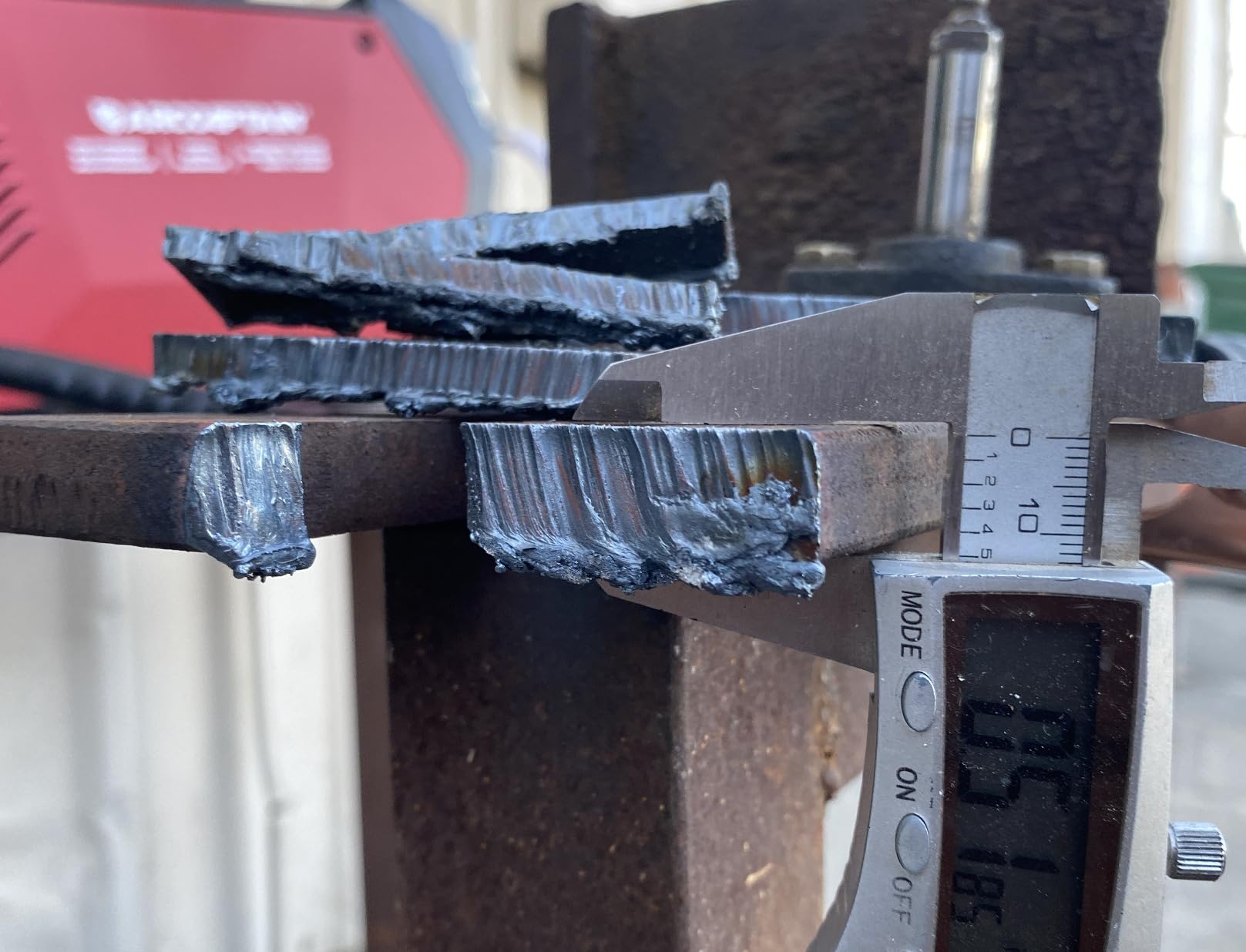
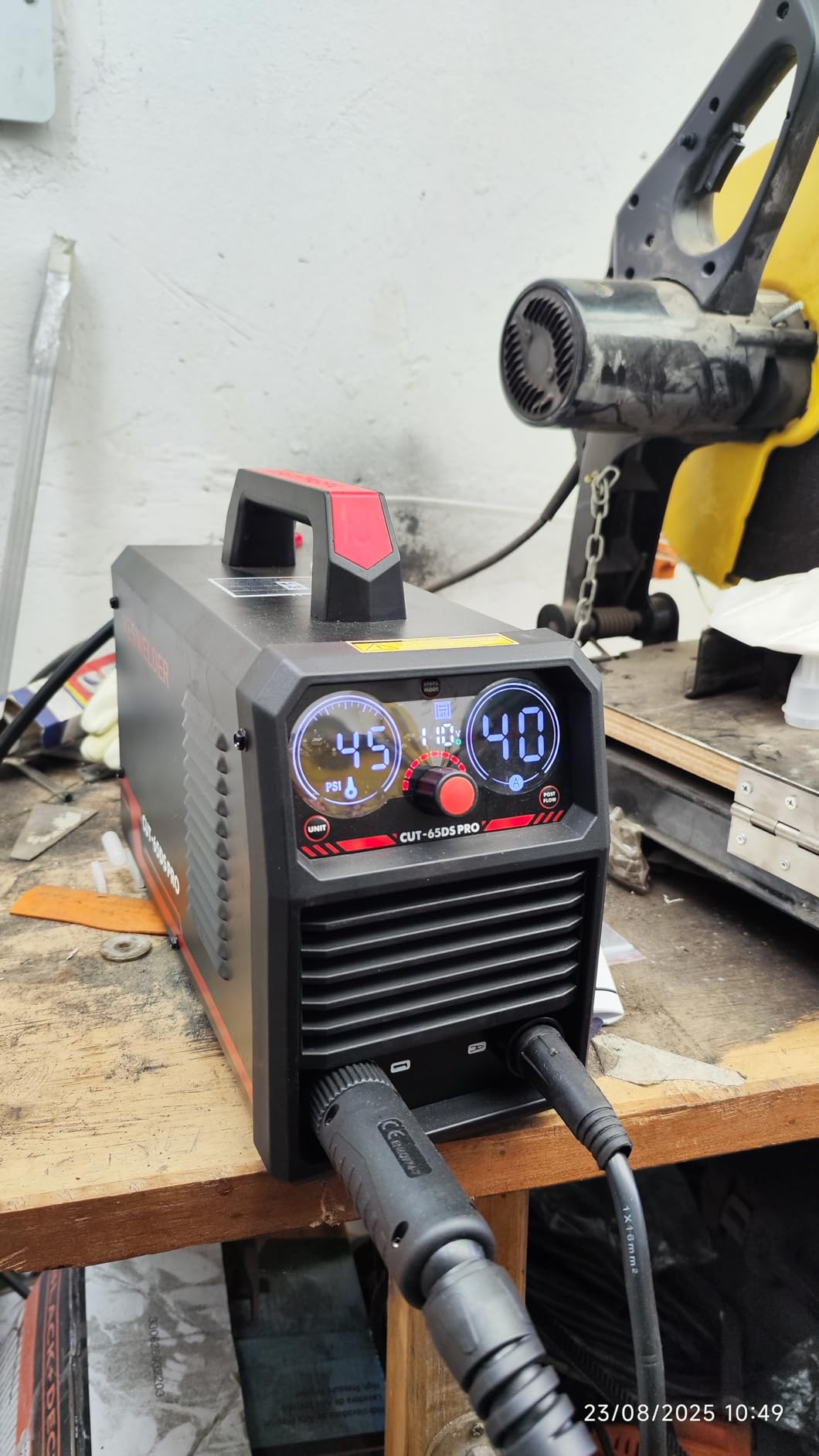
Intelligent post-blow removes a real annoyance. The machine automatically sets post flow by amperage, 5 seconds from 20-34A, 8 seconds from 35-45A and 10 seconds from 46-55A, so the torch gets the right amount of cooling without you thinking about it. The smart fan and cooling system are credited with extending consumable and machine life.
Setup is close to a one-minute job. The air regulator and filter come pre-installed, and a 3 year warranty plus ANSI certification make it the best-documented machine at this capability level in the group.
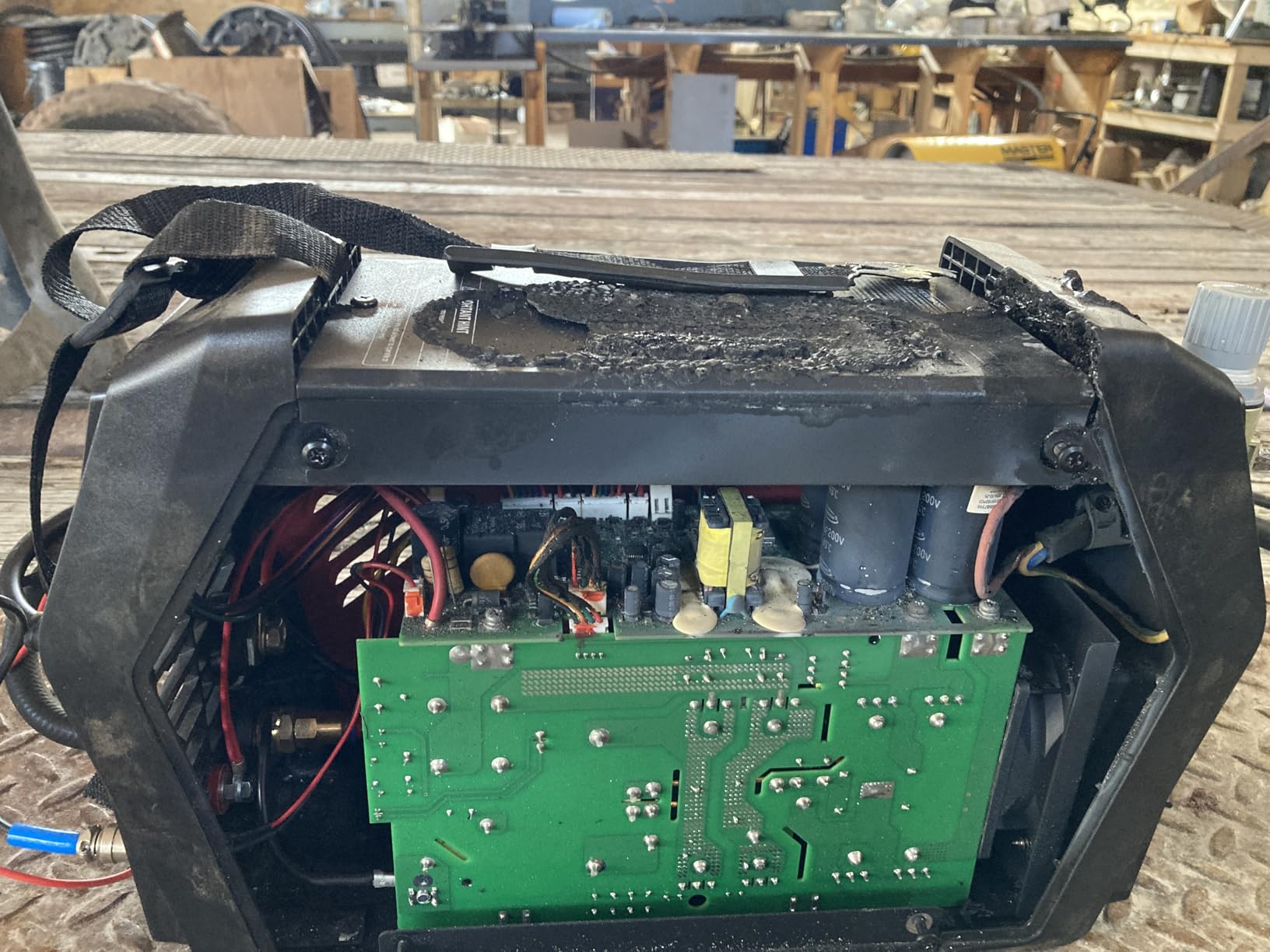
What the extras cost you
This is the heaviest machine in the group at close to 20 pounds, with a correspondingly larger footprint. If your shop is a one-car garage and you plan to move the cutter between a bench and the driveway regularly, that is a real ergonomic cost.
App-dependent features can feel like overreach to people who just want three buttons and a dial. If you plan to run this on a CNC table eventually, a physical control surface matters more, and you may find yourself ignoring the app entirely.
Who it suits best
This suits a home shop where the machine stays put on a dedicated stand, the work is varied, and you want the tightest control of amperage and post flow without climbing in and out of the cut. The digital platform also makes it a sensible stepping stone toward a future CNC table.
For anyone moving the machine between jobs, the lighter 13 pound alternatives on this list will serve you better.
6. GZ GUOZHI 50A – Best for an Unheated Garage
GZ GUOZHI Plasma Cutter, 50 Amp Air Inverter Plasma Cut, 110V/220V Dual Voltage Digital Display IGBT Inverter Plasma Cutting Machine with 2T/4T/TEST Function
50A IGBT inverter
1/4 in at 110V
3/4 in at 220V
Operates to minus 20 degrees
D-type plug
Pros
- IGBT inverter with pilot arc leaves minimal slag on steel and aluminum
- Dual voltage suits a home outlet and a workshop circuit
- Compact and light enough to work in tight spaces
- D-type air plug means no regulator install
- Overheat and over-current protection plus a test mode
- Rated to operate down to minus 20 degrees
Cons
- Lowest average rating in this group with 12 percent one-star reviews
- Listed item weight conflicts with the weight claimed in the listing copy
- Display and 2T/4T modes are less clearly documented
- Only a 1 year manufacturer warranty
- Included components list omits an air hose
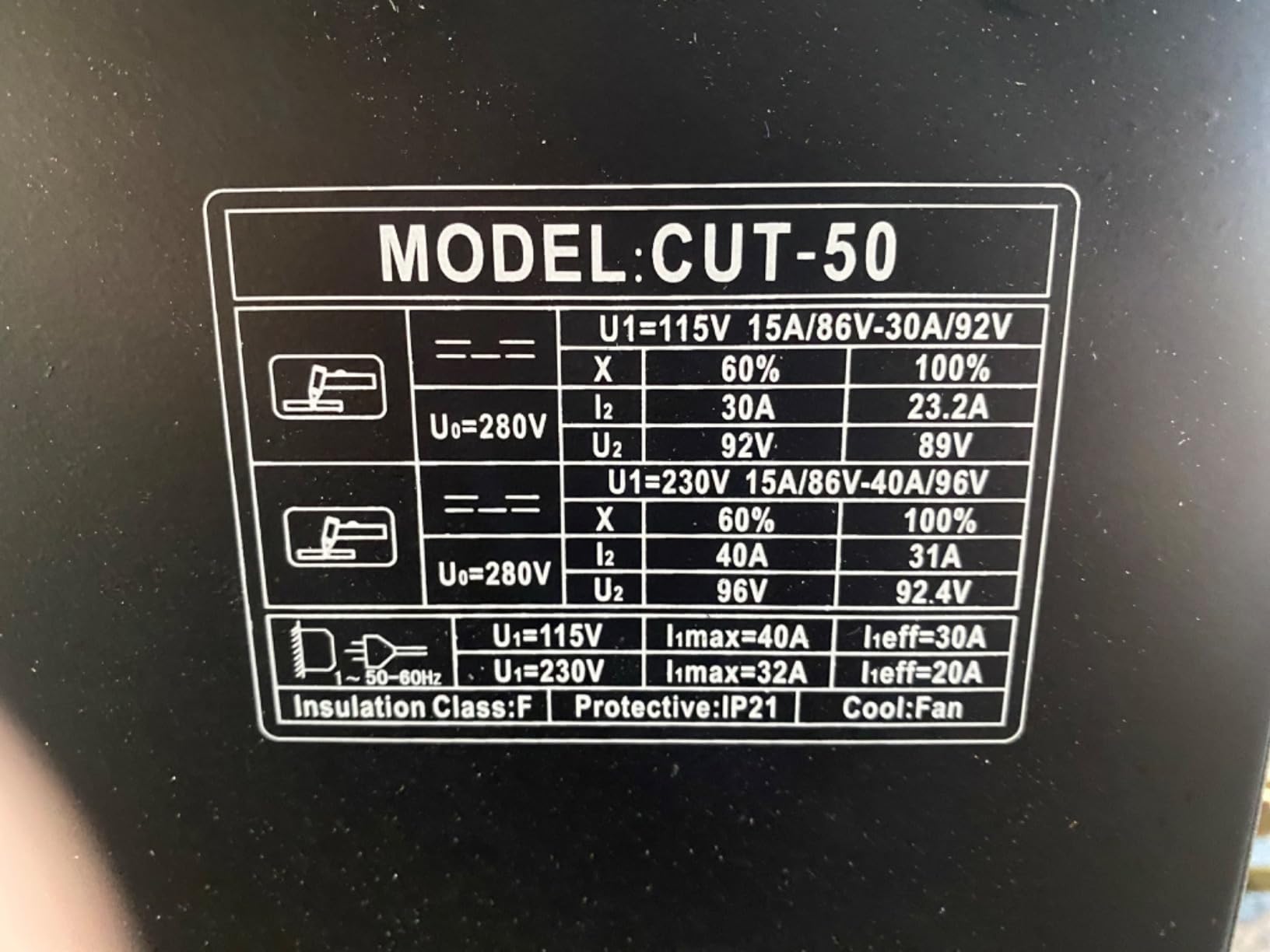
The differentiator here is temperature. This machine is rated to operate normally down to minus 20 degrees, which means a cold garage in the northern states does not take your cutting season away from December through February. Few machines in this class make that claim.
Capacity is a genuine step up from most entry machines: recommended maximum is 1/4 inch at 35 amps on 110V and 3/4 inch at 50 amps on 220V, with a 60 percent duty cycle and 50 or 60Hz high-frequency output. Owners report minimal slag on common steel and aluminum.
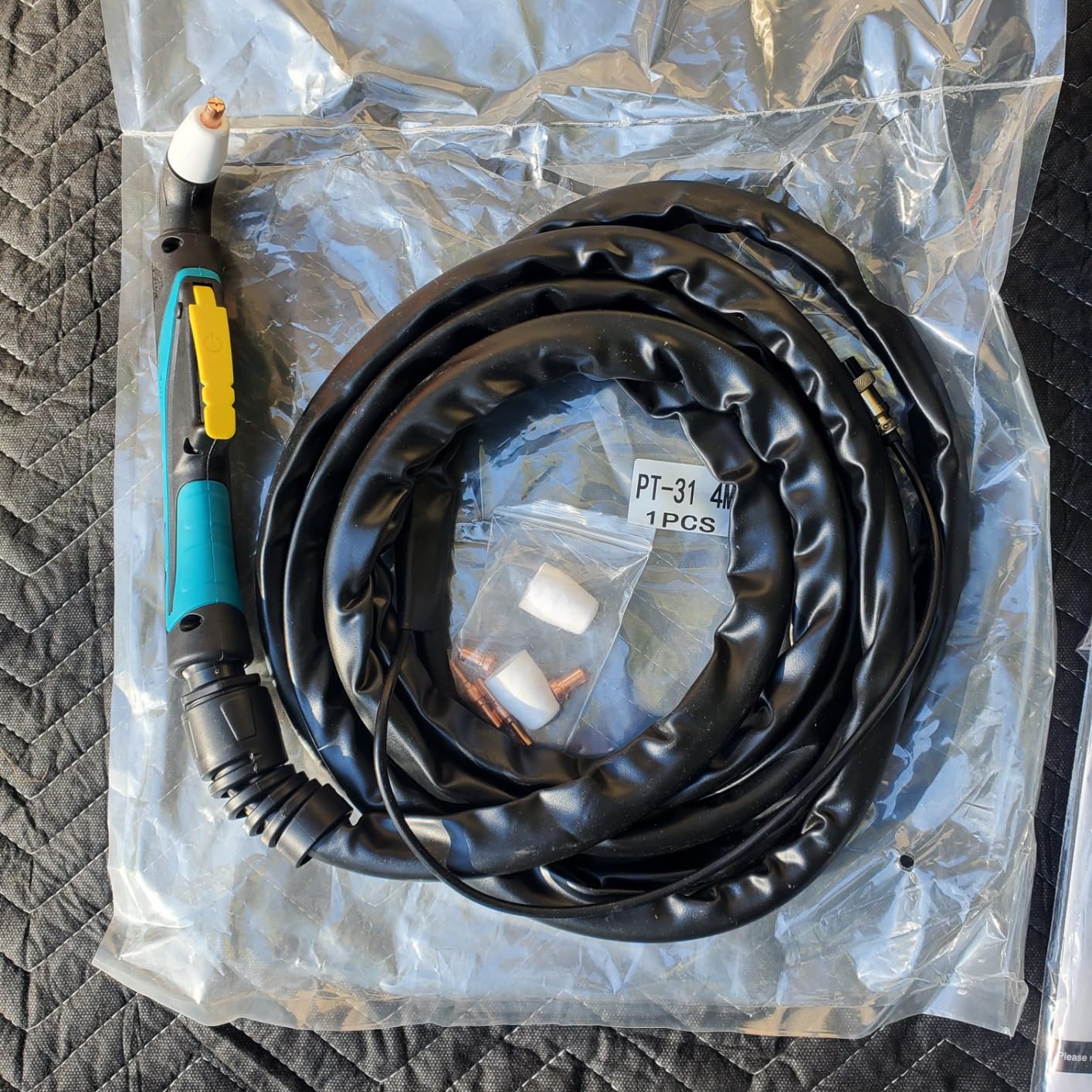
Setup is the easiest on this list. The 1/4 inch industrial D-type plug means you connect to an existing regulated air line without installing a separate regulator, and the 2T/4T/TEST functions plus overheat and over-current protection make first-time setup less intimidating.
The 13 pound claim in the listing copy is what sellers describe, though the listed item weight of 19.31 pounds conflicts with it, so treat the physical handling as a mid-weight machine until you see it.
Where the quality wobbles
This machine has the lowest average rating of the eight, at 4.2, with 12 percent one-star reviews. The pattern behind those is quality and consistency rather than inability to cut, and budget owners are the ones who complain most.
The 1 year manufacturer warranty is thin, the display and 2T/4T modes are less clearly documented than on competing machines, and the included components list omits an air hose, so plan to buy hose and fittings on day one. The conflicting weight specification is a small sign of how carefully the listing was written.
Who it suits best
This fits a hobbyist who wants real 1/2 inch and 3/4 inch capability on 220V at the entry end of the range, and who works in a cold shop. The D-plug air hookup also suits anyone who does not want to build an air train before the first cut.
If you are buying for reliability above all else, one of the higher-rated machines with a longer warranty is the better long-term spend.
7. Reboot 60A RBC6000D – Best for a Mobile Repair Kit
Reboot 60A Plasma Cutter Dual Voltage 120V/240V, 1/2″ Clean Cut IGBT Inverter, Portable Metal Cutting Machine with Torch & Tips – RBC6000D 2025 Upgraded (Pre-Installed Air Regulator)
60A dual voltage
1/2 in at 120V
5/8 in at 240V
Listed at 8.69 pounds
PT31 torch
Pros
- Very light compact body that is easy to carry and store
- Cuts 1/4 inch steel quickly and cleanly once dialed in
- Clear amperage and PSI guidance suits beginners
- Dual voltage auto-detection on either outlet
- Extra consumable tips included for learning
- Entry-level dual-voltage build with a listed 8.69 pound weight
Cons
- Several reports of the unit losing power after very short use
- Warranty service can charge the owner return postage and deny claims on older tools
- 120V operation trips breakers above roughly 18 amps
- Tip roller guide comes loose and does not stay fixed
- Weight is listed inconsistently between features and specs
The case for this machine is portability. At a listed 8.69 pounds with a footprint of about 12 by 4 by 9 inches, it is the easiest machine here to carry from a vehicle to a job site, and it is the one to pack when you are cutting a replacement panel on a driveway rather than in the shop.
Guidance is unusually beginner-focused for the class. Amperage adjustment is straightforward, and the listing spells out the pressure range of 70-75 PSI along with recommended breakers of 50A at 120V and 40A at 240V, which removes the most common beginner mistake of starving the air supply.
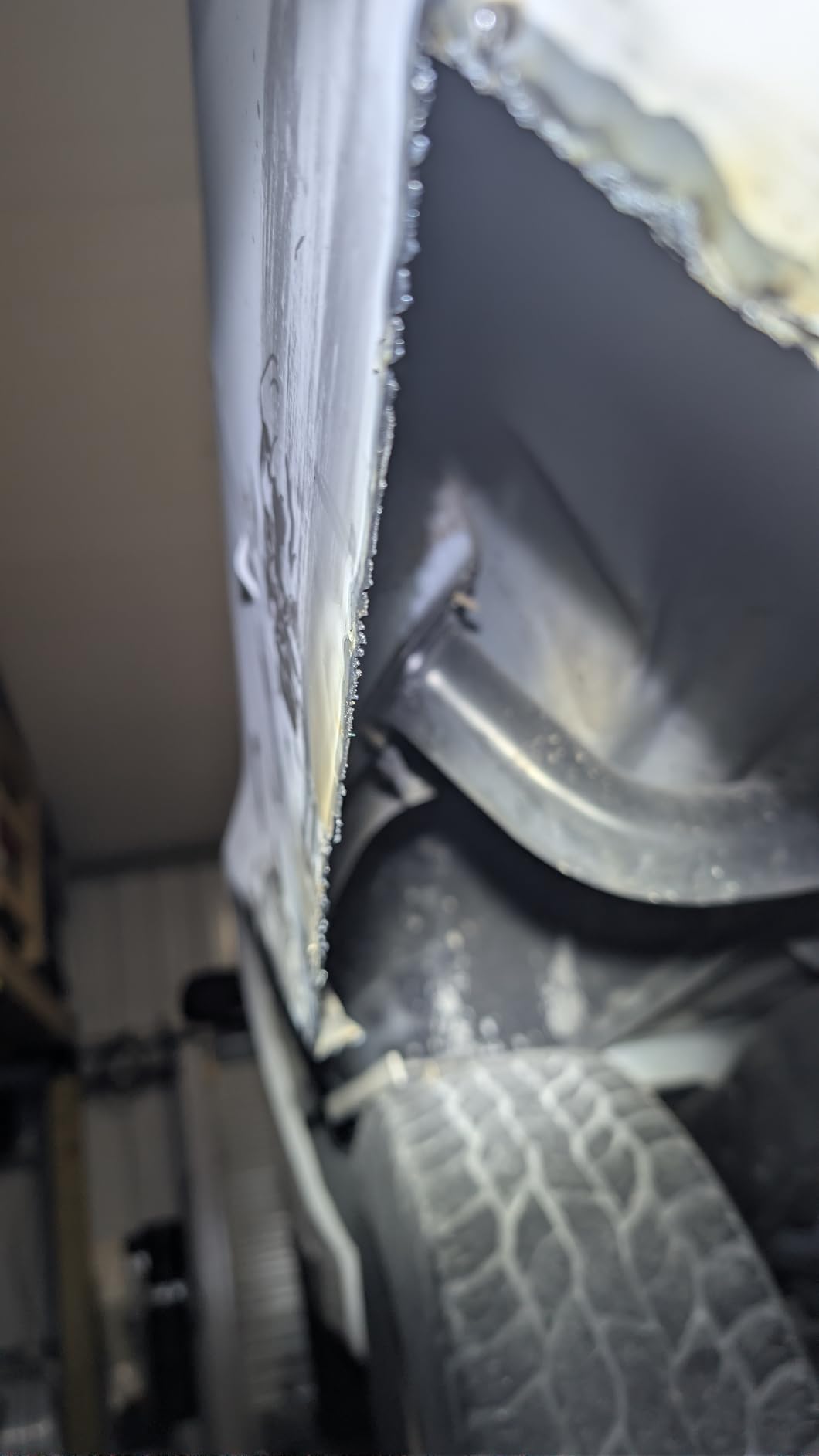
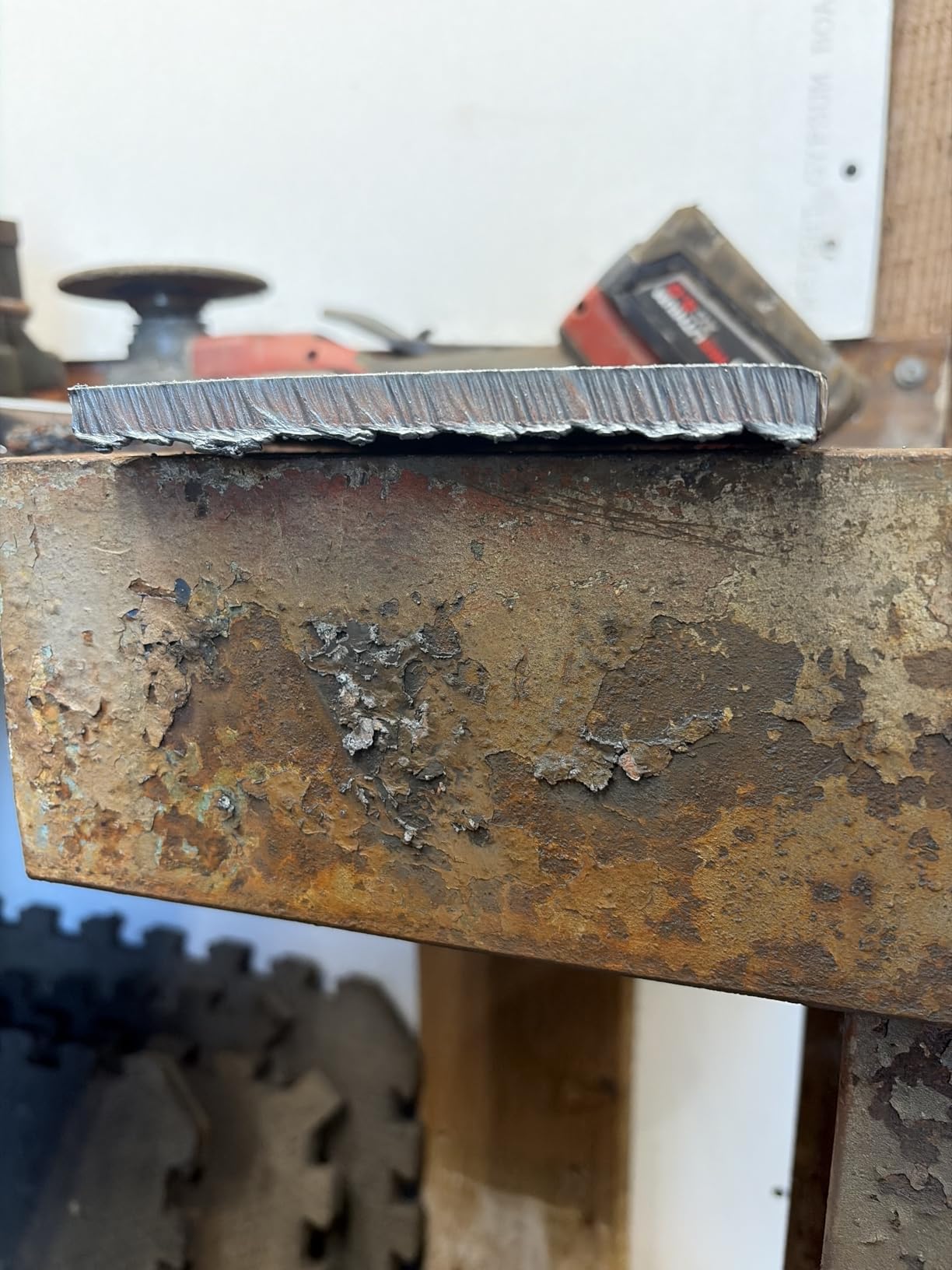
Cutting capacity is 1/2 inch steel at 120V and 35 amps, and 5/8 inch at 240V and 60 amps, with dual voltage auto-detection spanning 10-35 amps on 120V and 30-60 amps on 240V. It cuts steel, stainless, aluminum and copper, and the PT31 consumables are inexpensive and widely stocked.
Reliability is the problem. Multiple reviews describe a machine that stopped powering on after an hour or two, and the warranty process shifts return postage to the owner and can decline claims based on the age of the tool. That combination is the single biggest reason to think carefully before this is your only cutter.
Where the compromises pile up
On 120V the output range tops out around 18 amps in practice before the breaker trips, so the 60 amp headline does not apply to a household circuit. The 1/2 inch clean cut figure requires 240V, which means a dedicated circuit.
Small hardware also disappoints: the tip roller guide does not stay fixed, and the weight is listed as 8.69 pounds in the feature list and 14.22 pounds in the specifications, so treat the carry weight as uncertain. This is also the touch-arc variant, not the separate pilot arc model.
Who it suits best
This suits a mobile repair technician or a fabricator who cuts in the field more than at a bench, and a first-time buyer who wants clear instructions more than headroom. The extra tips in the box let a beginner learn without a first parts order.
For a machine that has to live in the garage and be relied on, the reliability pattern here is the reason to look at one of the better-reviewed units instead.
8. bestarc 50A – Best First Machine on a Budget
Bestarc 50A Plasma Cutter Machine, Pilot Arc, IGBT 110V/220V Dual Voltage
50A IGBT inverter
1/2 in clean cut at 220V
Air sensor with LED readout
AG60P pilot arc torch
Pros
- Entry-level build that keeps pilot arc and dual voltage
- Air sensor with a red and green pressure indicator simplifies setup
- LED screen shows real-time air pressure current and error codes
- Pilot arc starts without touching rusted or painted stock
- Arrives assembled and works out of the box
- Cuts 1/2 inch plate cleanly on 220V
- Inexpensive replacement consumables
Cons
- Instruction manual is terse and contains broken English
- Small plastic hardware such as the air knob nut can arrive loose or missing
- Some torches arrive with missing screws on the holder
- Pilot arc can pulse on and off on certain machines
- 110V performance is noticeably weaker than 220V
- Consumables are basic beside a machine built for daily professional use
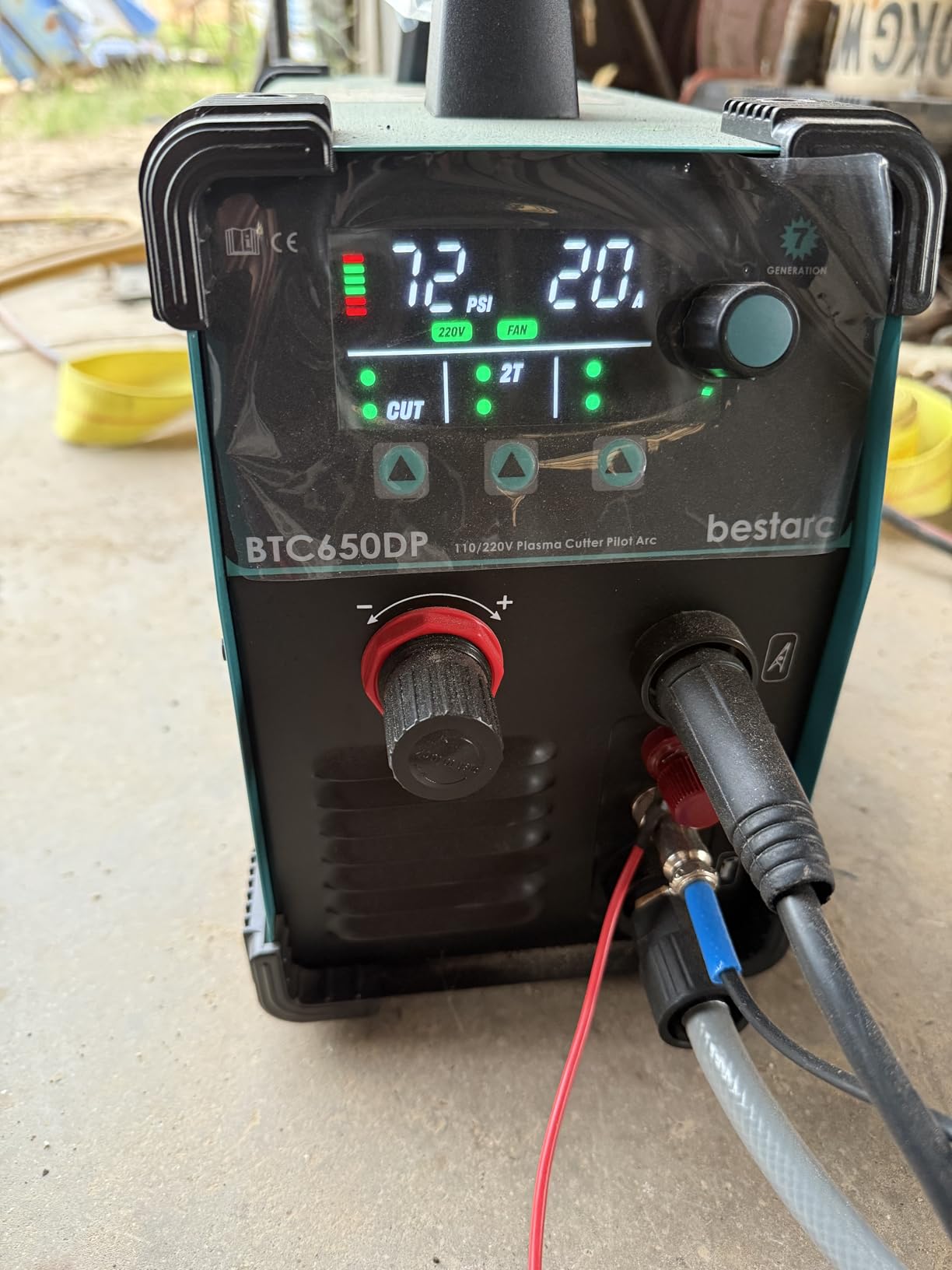
The air sensor is the feature that makes this machine easy to recommend to a first-timer. A red and green indicator on screen shows whether you have enough air pressure, which stops the single most common beginner error: cutting with starved air and blaming the machine. The LED screen also shows live pressure, current, cutting mode and error codes.
Recommended capacity is 1/2 inch at 35 amps on 110V at 50 PSI, and 2/3 inch at 50 amps on 220V at 65 PSI. The AG60P high-frequency non-contact pilot arc torch has adjustable pilot arc timing up to 15 seconds, and a 0.040 inch nozzle is included for finer cuts.
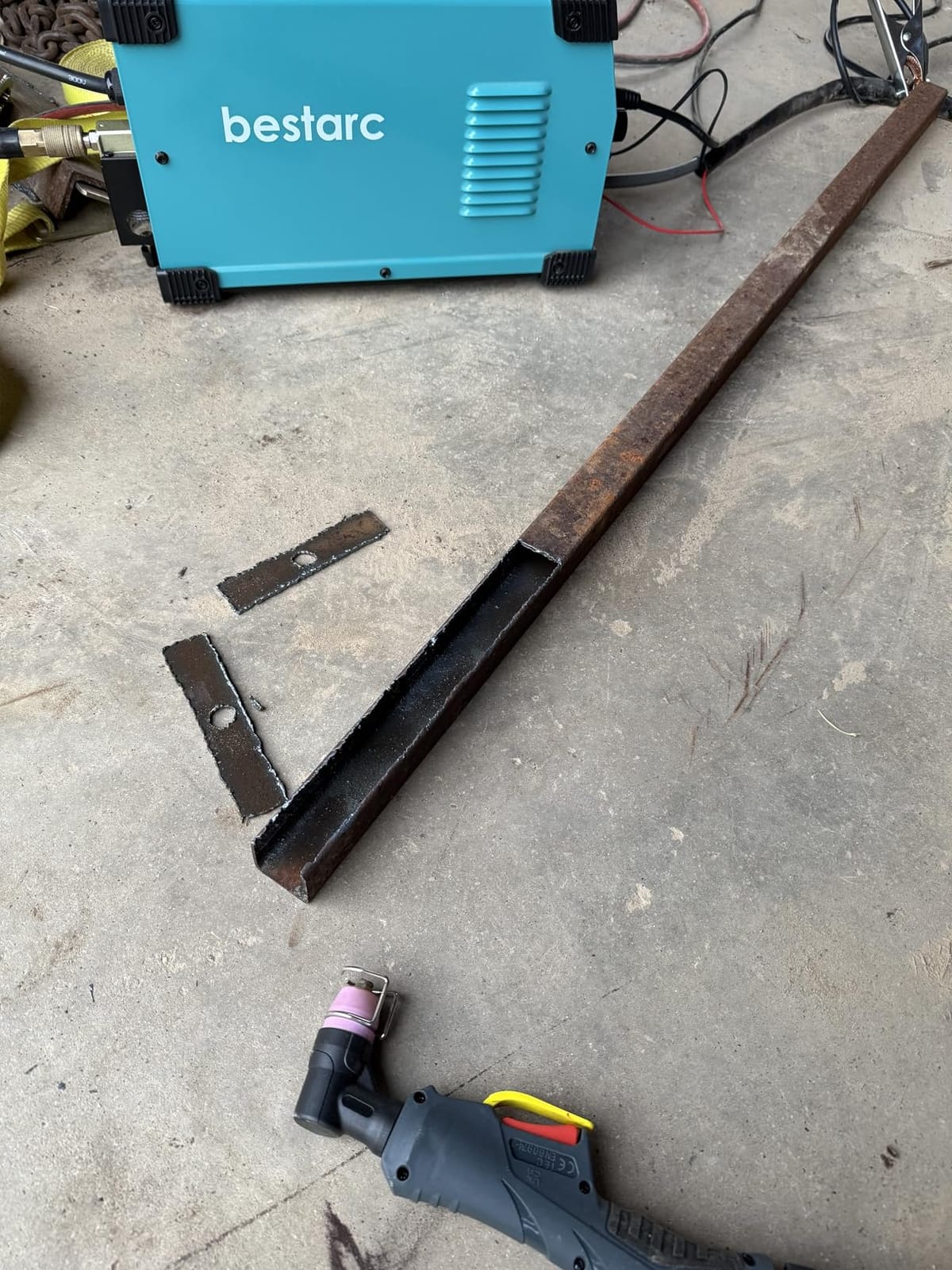
Everything arrives assembled, with a built-in regulator, air sensor, torch and a pre-installed metal-cased air filter on a 1/4 inch NPT quick connect. Post flow is adjustable from 3 to 15 seconds with 2T/4T modes, and reviewers note the pilot arc consumables last longer than standard PT31 torches.
Cut quality on 1/2 inch plate at 220V is the most common positive comment, and cheap replacement consumables keep the running cost low enough that you can experiment without thinking about it.
What a budget machine costs you in the details
Small plastic parts are the recurring complaint: the air adjustment knob nut can arrive loose or missing, and some torches are missing screws on the holder. None of that is dangerous, but it is the kind of thing that makes a first impression worse than the machine deserves.
The manual is terse and poorly translated, so expect to learn settings from the screen and from experience rather than from documentation. Some owners also report a pilot arc that pulses on and off at roughly one second intervals, and 110V performance is noticeably weaker than 220V. Treat this as a hobbyist-grade tool rather than a daily professional one.
Who it suits best
This is the right pick for someone who has decided a plasma cutter is the right tool, wants pilot arc and dual voltage, and does not want to stretch the budget on a first machine. The air sensor alone saves hours of beginner troubleshooting.
When you outgrow it, the step up is a 55 or 60 amp dual-voltage machine with a longer warranty, and you will already know exactly what air pressure and stand-off your work needs.
How to Choose a Plasma Cutter for a Home Shop
Read the clean cut rating, ignore the severance number. Clean cut capacity is the thickness of mild steel a machine cuts square, top to bottom, with minimal dross. Max severance is the ragged hole it can rip through, and listing it beside the clean cut number is how a machine that cuts 1/4 inch well ends up advertised at 1/2 inch. Size on clean cut.
Apply the 80-20 rule to amperage. Pick an output rating roughly double the thickest material you expect to cut regularly. A machine rated 50 amps gives you about 1/2 inch clean cut in mild steel, so for 1/4 inch plate with occasional 1/2 inch work, 50 amps is the right target and a 20-30 amp machine will feel undersized within a year.
Count what you actually get on 110V. This is the most common home-shop mistake. A machine advertised at 50 amps frequently delivers 20-35 amps on a household circuit. The ARCCAPTAIN 50A is explicit about it, rating 20-35A at 110V and 20-50A at 220V. If your shop is 110V only, size for the low number.
Decide on arc start type. Contact-start torches touch the work to fire and fail on rusted or painted steel, forcing you to grind first. Non-touch pilot arc starts away from the surface and is the standard on everything recommended here. Blow-back pilot arc is non-touch and non-high-frequency, which keeps electrical noise away from vehicle computers and radios in the same shop.
Factor in duty cycle for all-day work. A 60 percent duty cycle at 60 amps means roughly 36 minutes of cutting per hour. If your work is weekend projects, a 35-60 percent rating is plenty. If you cut plate for a living or run a table, look for 60 percent at full rated output.
Check consumable availability before you commit. The PRIMEWELD CUT60 uses a Euro central connection, which narrows what you can buy off the shelf. PT31 and AG60 style consumables are the most readily available across welding supply counters. A cheap machine with hard-to-find tips will cost you more in the first year than a mid-priced one.
Plan the CNC path now if you might want one. A torch with a mechanical height control interface and a pilot arc that will not interfere with stepper motors is worth paying for if a CNC table is on your list. Machines with larger amperage and higher duty cycle also cut at a CNC table’s pace better than a small 30 amp unit.
All of the above assumes you genuinely want a shop. If the same counter space would honestly earn more hours in the kitchen, our international recipes roundup is a fairer test of where the time goes than another tool review.
What a Plasma Cutter Cannot Do
Honesty about the limits matters more here than anywhere else in a shop guide, because the marketing on these machines is optimistic by design.
Aluminum cuts, but not cleanly enough for finished work. Non-ferrous metals leave a rougher edge with more dross than mild or stainless steel. Expect to grind. For visible aluminum fabrication, a dedicated aluminum-compatible setup is a better answer.
There is no true vertical cut. Plasma cutting is a drag cut. Cutting straight down through thick plate requires a bevel, a grinder, or a CNC table that holds a consistent angle. Anyone promising a straight vertical cut on a hand-held machine is describing an angle grinder with an air line.
Contact-start torches will not fire on dirty or painted stock. This is exactly why every machine on this list uses a non-touch pilot arc. If a listing does not mention pilot arc, assume you will be grinding the surface before every cut.
Thin material needs low amperage and a light touch. Going above about 20 amps on 1/8 inch steel will blow the kerf wide and add heat you do not need. Turn the output down and move faster.
Consumables are a running cost, not an accessory. Electrodes and nozzles are wear parts, and heat/moisture in the air line is what kills them fastest. A water separator and a moisture filter are the cheapest performance upgrade you can make.
It replaces oxy-fuel, it does not beat it on everything. For very thick plate beyond what these machines cover, and for jobs where you need no electrical supply at all, oxy-fuel still has its place. Most home shops, though, get more out of one plasma machine than two oxy-fuel setups.
The same logic applies to a workshop that doubles as a kitchen. Our juicing recipes collection covers the other half of a garage that sees as much traffic as the welder does.
Setting Up Your Shop: Air, Power and Safety
Buy a compressor with at least 4-5 CFM and a 20 gallon tank. Most machines here ask for 50 to 90 PSI and 4-5 CFM, and a small pancake compressor will drop pressure mid-cut, which wrecks consumables and the cut edge. This is the most common thread running through welder forums, and the consensus is that the compressor is where people underspend.
Add a water separator and a moisture filter to the line. Wet air shortens electrode and nozzle life faster than anything else you can do wrong. A separator bowl upstream of the machine and a filter downstream will protect consumables and cost very little.
Size the circuit before you buy the machine. Manufacturer guidance in this group ranges from 30A at 220V to 40A at 110V up to 50A at 240V, and a 60 amp machine at 120V wants a 50A breaker. Run a dedicated circuit rather than sharing an outlet with a compressor or welder.
Use 8 AWG extension cord for long runs and keep them short. Under-gauged cord on a 50 amp load is a voltage drop you pay for in cut quality. If the machine lives far from the panel, a sub-panel is the correct answer.
Ground properly and set the table up flat. A plasma cutter works by completing an electrical circuit through the workpiece, so clean clamps and bare metal contact matter. A sloped or conductive table makes the arc wander.
Ventilate and protect yourself. A plasma arc is bright, and it throws hot sparks and metal fines. Use a welding helmet with an appropriate shade, gloves, a fire blanket near anything combustible, and a fume extractor or downdraft arm for any indoor work. High-frequency start machines are also worth checking against nearby electronics.
Replace the electrode and nozzle as a set rather than mixing old and new parts.
Frequently Asked Questions
What is the best plasma cutting machine for home use?
For a typical garage, the best plasma cutters for home shops are dual-voltage 50 to 60 amp machines with a non-touch pilot arc. Our top pick is the LOTOS LTP5505D 55A, rated for a 5/8 inch clean cut with automatic 110V/220V switching. Budget buyers should look at the bestarc 50A, and anyone sharing a garage with electronics should prefer a non-high-frequency model like the YESWELDER 60A.
How many amps is a good plasma cutter?
Choose an output rating roughly double the thickest steel you expect to cut regularly. A 50 amp machine gives about a 1/2 inch clean cut in mild steel, a 55 amp machine about 5/8 inch, and a 60 amp machine around 5/8 inch with a larger severance figure. For 1/8 inch sheet metal and light plate, 20 to 30 amps is genuinely enough.
What are the downsides of using a plasma cutter?
Plasma cutting cannot make a true vertical cut without a bevel, leaves a rougher, drossier edge on aluminum, and still needs compressed air, a dedicated circuit and ventilation. Consumables wear continuously, output drops substantially on 110V, and a contact-start torch will not fire on rusted or painted steel without grinding the surface first.
What size breaker do I need for a 50 amp plasma cutter?
On 220V, most 50 amp machines specify a 30 amp breaker. On 110V the same class of machine often needs a 40 to 50 amp breaker, which means a dedicated circuit. Follow the breaker rating printed in the manual for your specific model, and do not share that circuit with a compressor or welder.
What air pressure does a plasma cutter need?
Most machines in this class specify between 50 and 90 PSI with 4 to 5 CFM of airflow, and higher amperage needs higher pressure. The GZ GUOZHI and Reboot machines recommend 65 to 75 PSI, while entry units may work at 50 to 55 PSI. Use a water separator and moisture filter on the line, since wet air is the fastest way to destroy electrodes and nozzles.
The Verdict
For most home shops, the LOTOS LTP5505D 55A is the one to buy, because it combines the highest review count in this group with a 5/8 inch clean cut, a genuine non-touch pilot arc and automatic dual voltage at a weight you can carry alone. The ARCCAPTAIN 50A is the value pick if you have a 220V outlet and want the best edge per dollar, and the bestarc 50A is the sensible first machine when the budget is the deciding factor.
Two decisions matter more than the model. Install a 20 gallon, 4-5 CFM compressor with a water separator before the first cut, and be honest about the voltage you have, because a 60 amp headline means very different things on 110V and 220V. Get those right and almost any of these eight will serve you well for years.
As the seasons turn and project lists grow, our classic recipes collection keeps the non-shop half of life in order. For the shop half, 2026 is a good year to retire the oxy-fuel bottles.