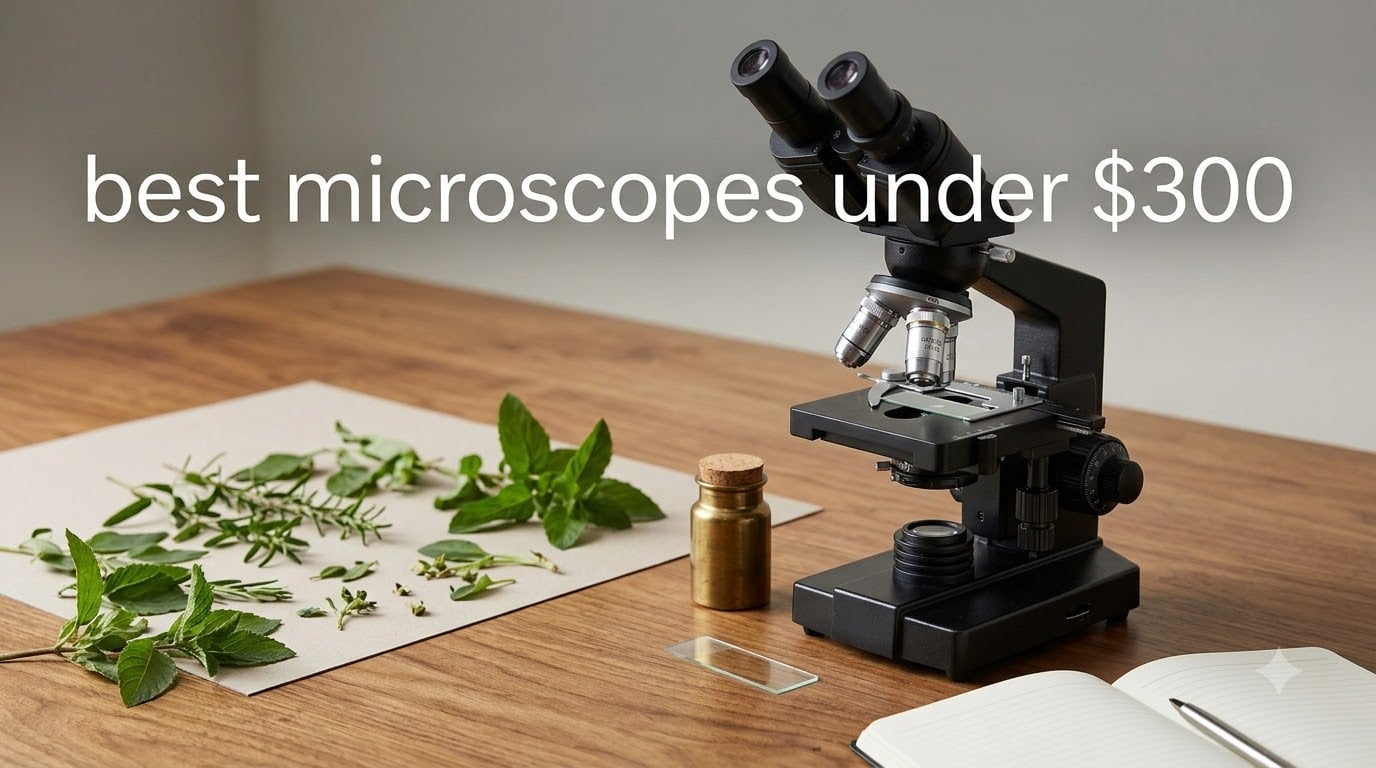
The best microscopes under 300 dollars in 2026 are almost all binocular or monocular compound light scopes with a real achromatic objective set, a metal frame, and LED illumination from below. The short version of the best microscope for the money: spend close to the top of the budget, check that a genuine 100X oil immersion objective is on the list, and treat any magnification figure above 1000X as a marketing number rather than a specification. That is the whole trick to buying well in this bracket.
We spent weeks reading owner reviews, comparing specification sheets, and looking hard at the gap between what these scopes are advertised to do and what they actually resolve. What we found surprised us. Five of the ten scopes below advertise 2000X or 2500X total magnification, and on every one of them that top figure depends on stacking eyepieces or an add-on lens rather than on a stronger objective. Several owners noticed the same gap independently. That is not a defect in the buyer; it is how the category is marketed.
Under 300 dollars is genuinely enough for a microscope that will last through high school and beyond, provided you buy the right kind. It is not enough for true plan achromat glass, full Kohler illumination, or a high numerical aperture oil objective. We explain exactly where that ceiling falls, and which picks to avoid if bacteria viewing is your goal, in the buying guide below.
If you are still building a workshop or kitchen kit on a similar budget, our picks for the best knife sets under 300 dollars and the best charcoal grills under 300 dollars follow the same value-first logic we applied here.
Table of Contents
- What Is the Best Microscope for the Money?
- Top 3 Picks for the Best Microscopes Under 300 Dollars in 2026
- All 10 Best Microscopes Under $300 (October 2026)
- 1. OMAX M82ES-SC100-LP100-OM 2000X Binocular Compound Microscope: Best Overall
- 2. National Geographic Dual LED Microscope Science Kit: Best for Kids Ages 8-12
- 3. PalliPartners 100X-2000X Compound Microscope: Best for Phone Photos
- 4. Emarth 40X-1000X Compound Microscope with 52-piece Kit: Best Value Starter
- 5. AmScope SE306R-PZ Forward Binocular Stereo Microscope: Best for Dissection
- 6. SWIFT SW380B 40X-2500X Siedentopf Binocular Compound: Best for High School
- 7. AmScope M162C-2L-PB10-WM 1000X Microscope Kit: Best for Homeschool
- 8. Poothoh 40X-2000X Binocular Compound Microscope: Best Value Binocular
- 9. Herwicm 40X-2500X Binocular Compound Microscope: Best for Long Sessions
- 10. Swift S41-20 Boom-Arm Stereo Microscope: Best for Electronics Repair
- How to Choose a Microscope Under 300 Dollars
- Compound, stereo, digital, or pocket: pick the type before the brand
- Magnification is not resolution: the number that actually matters
- Can you see bacteria with a 1000X microscope? Yes, and only with oil immersion
- Lighting, head type, and focus: the mechanical checklist
- Accessories you actually need on day one
- When you should spend more than this ceiling
- About the brands
- Frequently Asked Questions
- The Best Microscope Under 300 Dollars for Most Buyers
What Is the Best Microscope for the Money?
The best microscope for the money is the OMAX M82ES-SC100-LP100-OM, an all-metal binocular compound scope with achromatic DIN objectives, a true 100X oil immersion lens, a double-layer mechanical stage, and an NA1.25 Abbe condenser. It covers 40X to 2000X with both 10X and 20X wide-field eyepieces included, and it carries a five-year manufacturer warranty.
Best overall: OMAX M82ES-SC100-LP100-OM, the most complete optical package in this price band.
Best for kids and homeschool: AmScope M162C-2L-PB10-WM, an all-metal 40X-1000X kit light enough for small hands.
Best value starter: Emarth 40X-1000X 52-piece kit, the least expensive scope here that resolves real cell detail.
Top 3 Picks for the Best Microscopes Under 300 Dollars in 2026
OMAX M82ES 2000X Binocular
- True 100X oil objective
- All-metal frame
- Abbe condenser with iris
- 100 slides included

National Geographic Dual…
- 20x and 50x optics
- Top and bottom LED
- 10 prepared slides
- Over 50 accessories

PalliPartners Compound 2000X
- Phone clip and remote
- Top and bottom LED
- 28-slide kit
- Coaxial fine focus
The OMAX wins on optics and build. The National Geographic kit wins on getting a child excited in the first ten minutes. The PalliPartners wins on phone integration and low weight. All three are in our top ten, and we explain the trade-offs in detail further down.
All 10 Best Microscopes Under $300 (October 2026)
| Product | Specs | Action |
|---|---|---|
| OMAX M82ES 2000X Binocular Compound |
|
Check Latest Price |
| National Geographic Dual LED Science Kit |
|
Check Latest Price |
| PalliPartners Compound Microscope 100X-2000X |
|
Check Latest Price |
 Emarth 40X-1000X 52-piece Kit Emarth 40X-1000X 52-piece Kit |
|
Check Latest Price |
 AmScope SE306R-PZ Stereo Microscope AmScope SE306R-PZ Stereo Microscope |
|
Check Latest Price |
 SWIFT SW380B 40X-2500X Siedentopf SWIFT SW380B 40X-2500X Siedentopf |
|
Check Latest Price |
 AmScope M162C-2L-PB10-WM 1000X Kit AmScope M162C-2L-PB10-WM 1000X Kit |
|
Check Latest Price |
 Poothoh 40X-2000X Binocular Poothoh 40X-2000X Binocular |
|
Check Latest Price |
 Herwicm 40X-2500X Binocular Herwicm 40X-2500X Binocular |
|
Check Latest Price |
 Swift S41-20 Boom-Arm Stereo Microscope Swift S41-20 Boom-Arm Stereo Microscope |
|
Check Latest Price |
1. OMAX M82ES-SC100-LP100-OM 2000X Binocular Compound Microscope: Best Overall
Awarded Best Compound Microscope 2016 – OMAX 40X-2000X Lab LED Binocular Microscope with Double Layer Mechanical Stage w Blank Slides Covers and Lens Cleaning Paper
40X-2000X compound
All-metal frame
100X oil immersion
NA1.25 Abbe condenser
5 year warranty
Pros
- True 100X oil immersion objective
- Double-layer X-Y stage with a stage lock
- All-metal frame with stain-resistant enamel
- Coaxial fine focus on both sides
- 100 blank slides and 100 coverslips included
Cons
- Nearly 10 pounds and stays on the desk
- Transmitted light only so opaque specimens are out of reach
This is the microscope we would put on the table for almost any family or hobbyist buying once. The optical package is the most complete in this entire list: achromatic DIN objectives at 4X, 10X, 40X, and a genuine 100X oil immersion lens, plus both WF10X and WF20X wide-field eyepieces. That combination gives you eight real magnification steps from 40X to 2000X rather than a headline number with nothing behind it.
The mechanical details are where budget scopes usually give up, and this one does not. The double-layer stage measures 115mm by 125mm with a 70mm by 30mm travel and X-Y scales on two axes, and it has a stage lock so a slide stays put while you work. Coaxial coarse and fine focus knobs sit on both sides of the frame, which means you never have to swap grips mid-session. The NA1.25 Abbe condenser with iris diaphragm is the piece most budget scopes omit, and it is the reason contrast control works at 400X and above.

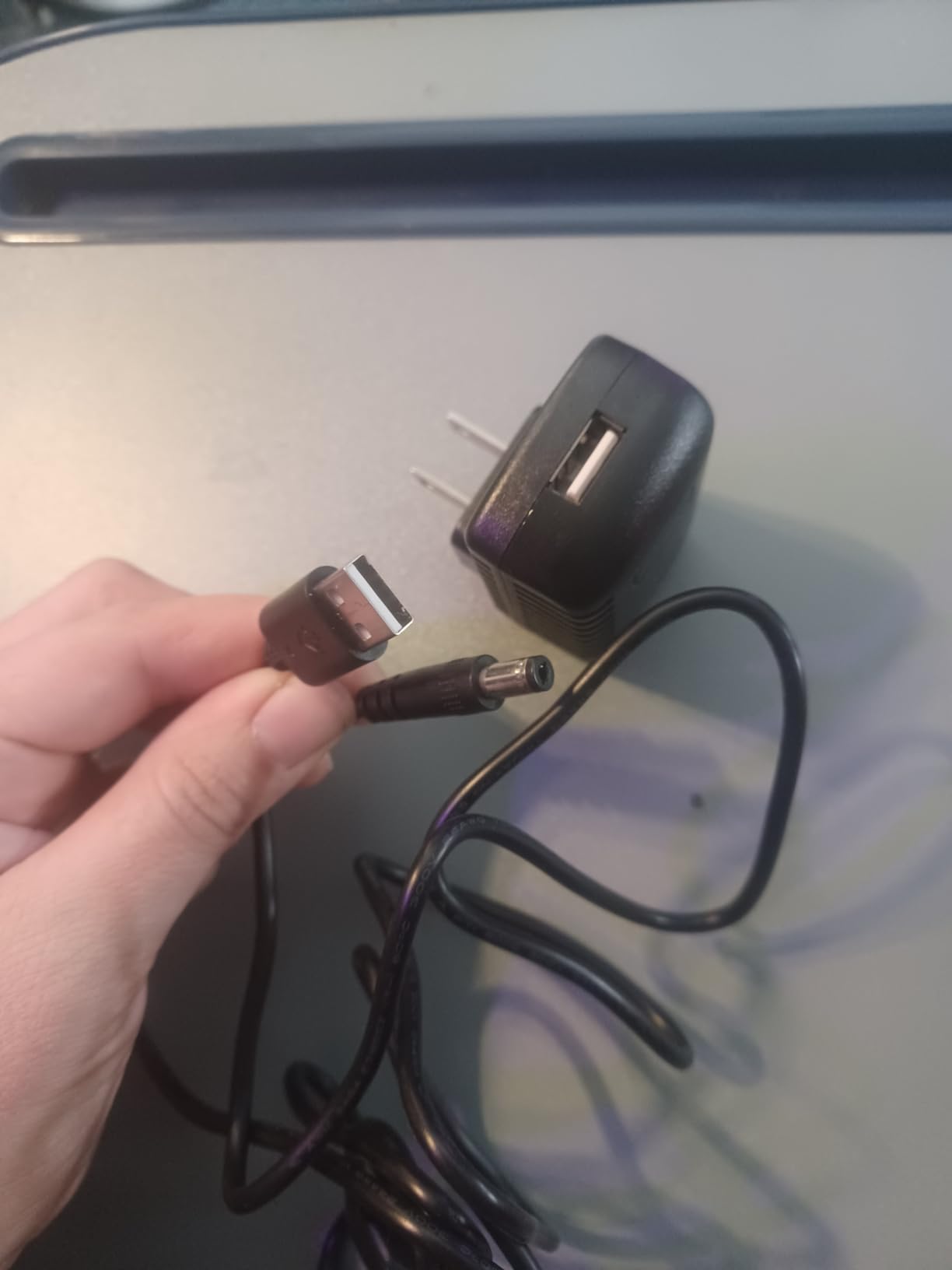
Build quality is a step above the field. The frame is solid metal throughout with a stain-resistant enamel finish, and at 9.6 pounds it does not drift when you swing the head. The head itself is a 45-degree inclined binocular that swivels 360 degrees, with interpupillary adjustment from 55mm to 75mm and a diopter on both eyetubes, so two people of different face shapes can use it without an argument. Adjustable-intensity transmitted LED illumination runs off an AC/DC adapter rated for 100-240V, which matters if you travel outside the United States.
Owner reviews land consistently around 4.4 out of 5 across more than 2100 ratings, and the praise clusters on the mechanical stage, the focus feel, and the accessory bundle. You get 100 blank glass slides, 100 cover slips, and 50 sheets of lens cleaning paper, which is a genuinely useful head start rather than the handful of plastic slides that usually come in a box at this price. The warranty runs five years from the manufacturer.
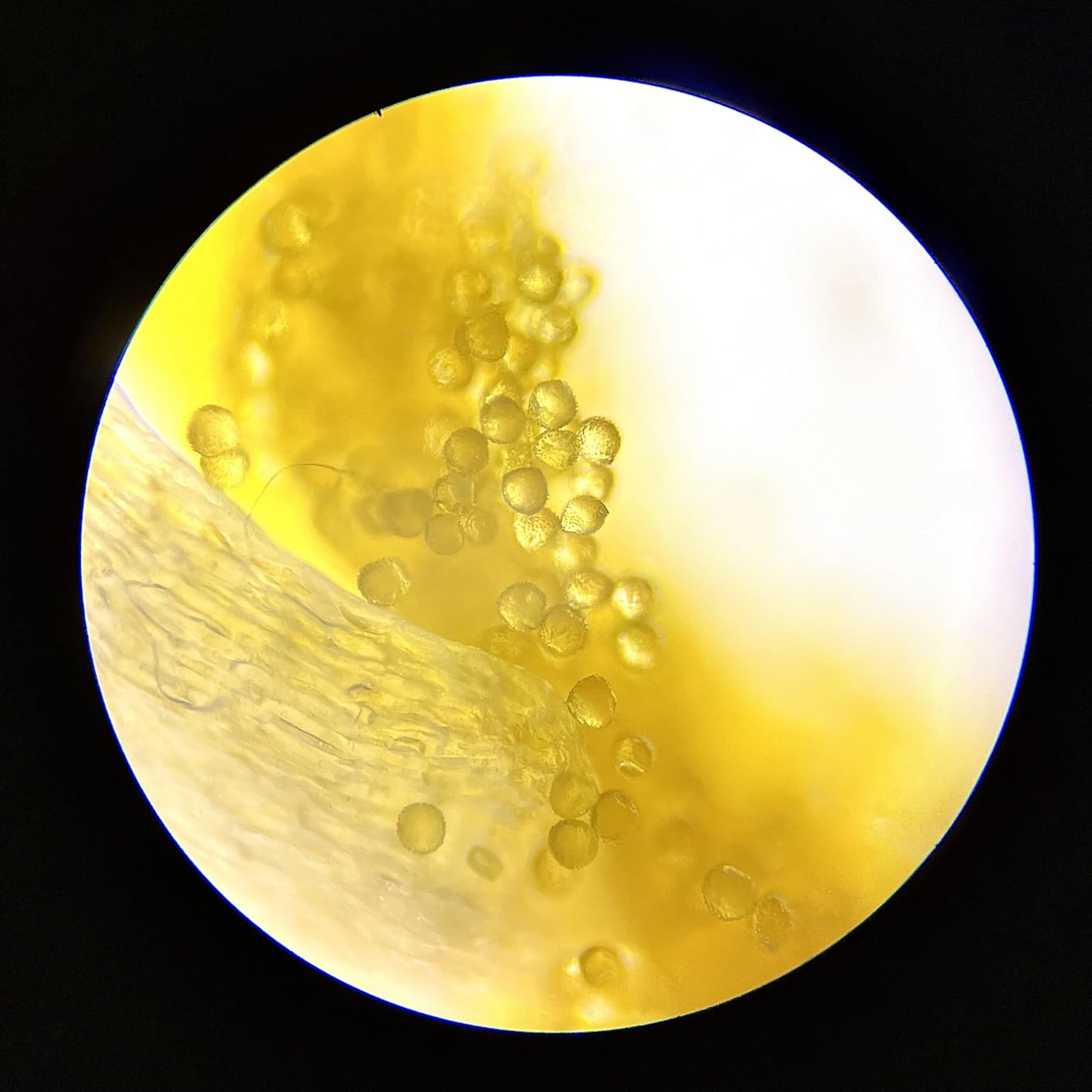
What it is like to use every day
Slides go on, the stage lock clicks, and you find your specimen with the coarse focus before you touch the fine knob. That is a workflow you will notice immediately if you have previously owned a plastic scope, where the stage drifts and you refocus constantly. At 400X the iris diaphragm gives you real control over contrast, which is the difference between seeing a stained slide and seeing a grey blur.
Where it will disappoint you
Two limitations, both real. At 9.6 pounds it is not a field instrument, so packing it into a car for a nature walk is a two-hand job. And the illumination is transmitted only, shining up through the slide, so an opaque object like a coin or a watch movement will simply read as a silhouette. If your interest is electronics or coins, the stereo scopes further down handle that job far better.
2. National Geographic Dual LED Microscope Science Kit: Best for Kids Ages 8-12
National Geographic Dual LED Microscope Science Kit for Kids Ages 8-12
20x and 50x glass optics
Switchable top and bottom LED
10 prepared slides
Over 50 accessories
Pros
- Dual LED handles slides and solid objects
- Very clear optics for the price
- Over 50 accessories including brine shrimp kit
- Lightweight at 2 pounds and easy for children
Cons
- Only 20x and 50x so no cell detail
- Glass stage is fragile
- No diopter adjustment and brine eggs sometimes fail to hatch
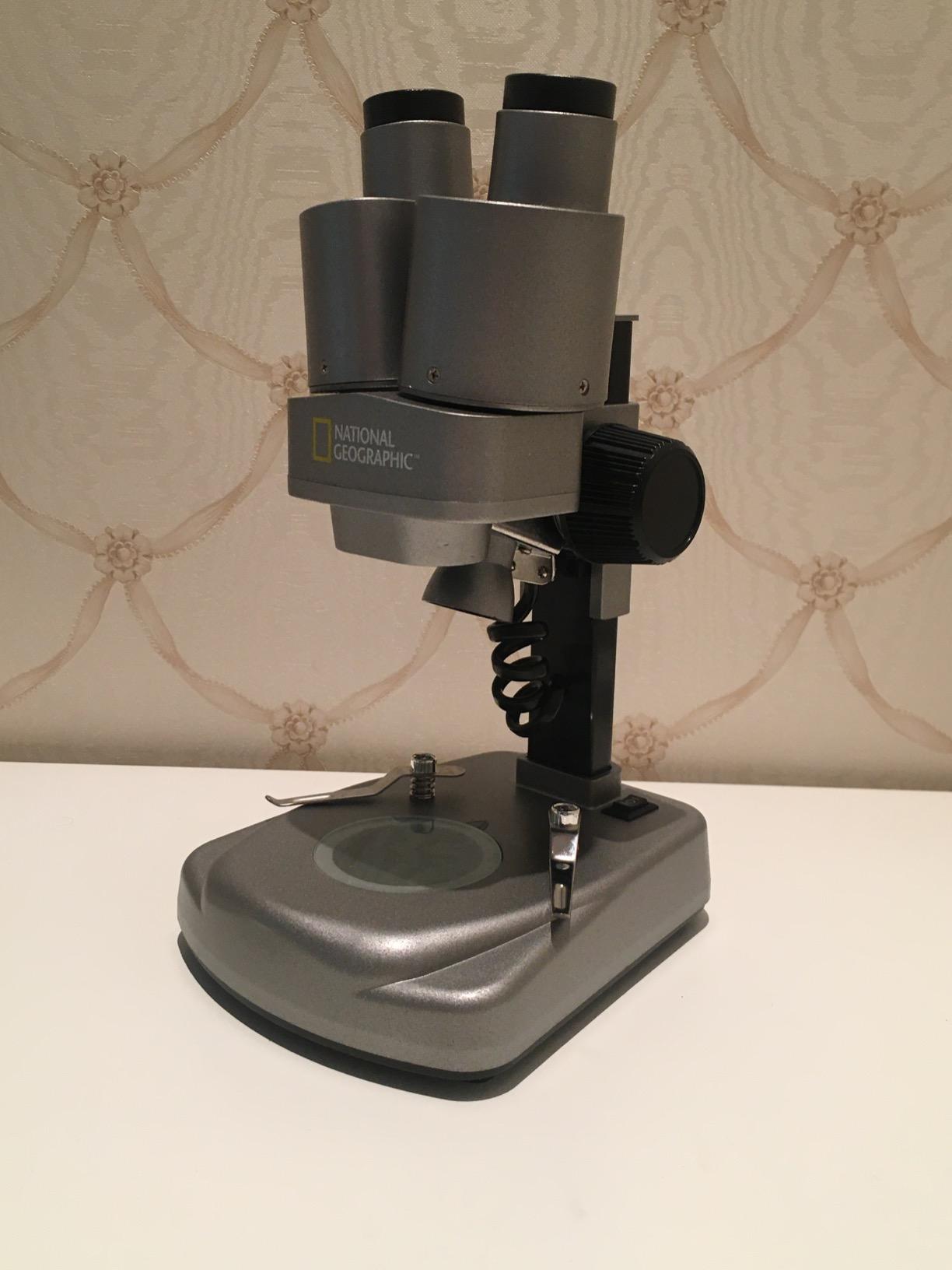
This is not a real compound microscope, and we are not going to pretend otherwise. It is a stereo-style kit with two optical glass lens sets giving 20x and 50x, and at 50x you will see fibers, hairs, and the surface of printed newsprint, but not the inside of a cell. Two features make it work well for that age group: a switchable upper and lower LED, so a child can look at a prepared onion slide and then flip to the top lamp and examine a solid geode or a coin, and ten prepared slides, so day one works without any slide prep.
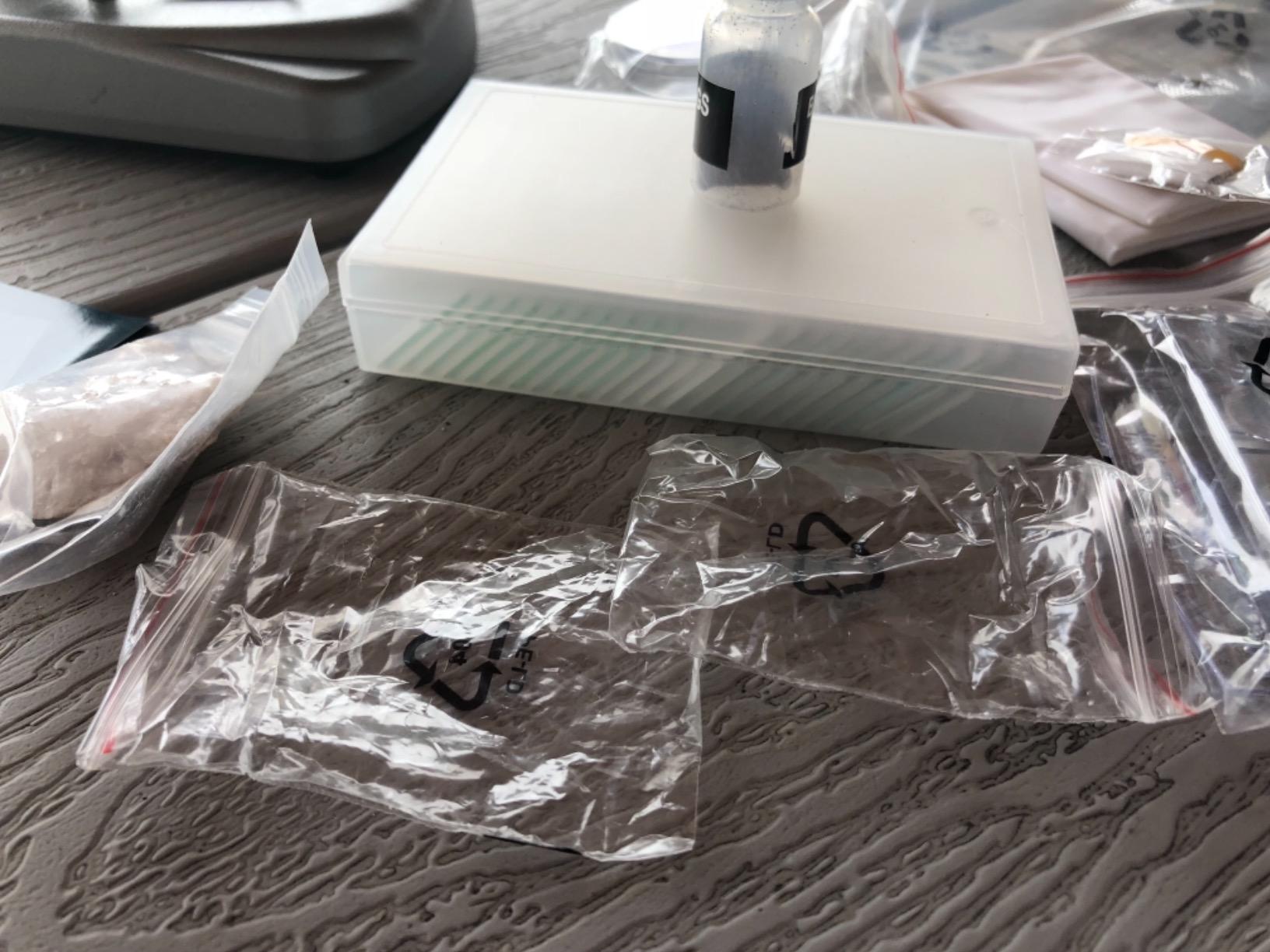
The kit contents are the real story. You get 10 prepared biological slides, additional blank slides and covers, tweezers, an eye-dropper, brine shrimp eggs with a hatchery, and a mini geode to crack open. There is a full-color learning guide and a padded storage container. It runs on two AA batteries, which are not included, and carries a one-year warranty against manufacturer defects. The glass optics are noticeably cleaner than the plastic sort used in cheaper kits, and that is the detail reviewers mention most often.
Our impression matched the review consensus. The first ten minutes with this kit are the best of any scope on this list for a seven to twelve year old, because there is nothing to focus and nothing to break. A real angle of view of 12 degrees is narrow, and the lower lamp can be too bright for a dense specimen unless you dim it by working distance rather than output.
Ratings sit at 4.6 across more than 3300 reviews, one of the highest totals in the category. Recurring criticisms are the low ceiling, a fragile glass stage that can crack if knocked, missing diopter adjustment so the eyepieces can pop out if carried by the body, and brine shrimp eggs that occasionally fail to hatch, which is disappointing because the hatch is the best part of the experiment.
When this is the right purchase
Buy it if you have a child under about eleven and the goal is enthusiasm, not cell biology. The brine shrimp hatch alone will keep a curious kid going for a week, and the prepared slides mean no slide prep fails on day one. It also makes a good companion to a real scope later, rather than a replacement for one.
When to buy something else
Skip it if your child is already asking to see onion cell walls, or if you want to photograph what is under the glass. There is no objective turret, no mechanical stage, and no camera support, so there is no upgrade path. Experienced hobbyists put it plainly: the best microscope is the one that gets used, and that rule matters more here than anywhere else in this roundup.
3. PalliPartners 100X-2000X Compound Microscope: Best for Phone Photos
PalliPartners Compound Microscope for Adults & Students, White
Claimed 100X-2000X
Top and bottom LED
Phone clip and Bluetooth remote
28-slide kit
Pros
- Phone clip and remote shutter are genuinely useful
- Top and bottom lighting handles opaque and translucent
- Compact and light at 1.65 kg
- Bright USB LED makes fine detail easy to see
Cons
- Real magnification falls well short of the 2000X claim
- No movable stage for locating specimens
- Lens barrels can wobble in their housings
The headline claim here is 100X to 2000X, and you should treat it carefully. The scope includes 4X, 10X, and 40X achromatic objectives, a WF25X eyepiece, and a 2X add-on lens, so the arithmetic behind 2000X depends on stacking that 2X lens on top of the 40X objective. Owners who tested it report usable power topping out around 400X, and reviewers measuring it came back with roughly 100X as a practical maximum. The 4X and 40X range is where the image quality lives.
That caveat aside, this is a clever little instrument. The universal phone clip adapter and the Bluetooth remote shutter mean you can hold a phone over the eyepiece and trigger a capture without shaking the image, which solves the single hardest problem in documenting microscope work. Top and bottom adjustable LED illumination covers both translucent slides and opaque objects. The included 28-slide kit gives you 10 prepared slides and 18 blanks, enough to start mounting your own specimens immediately.
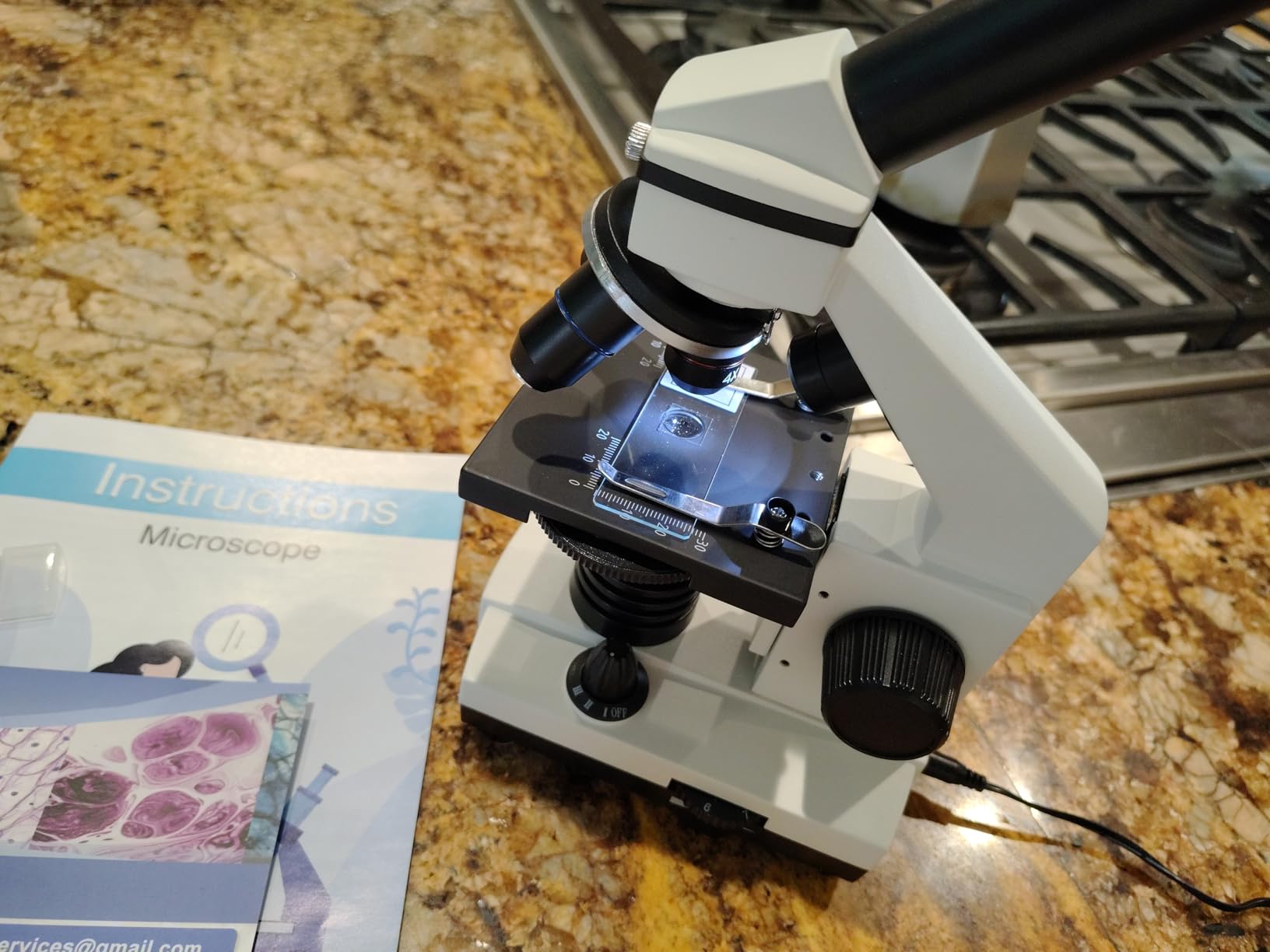
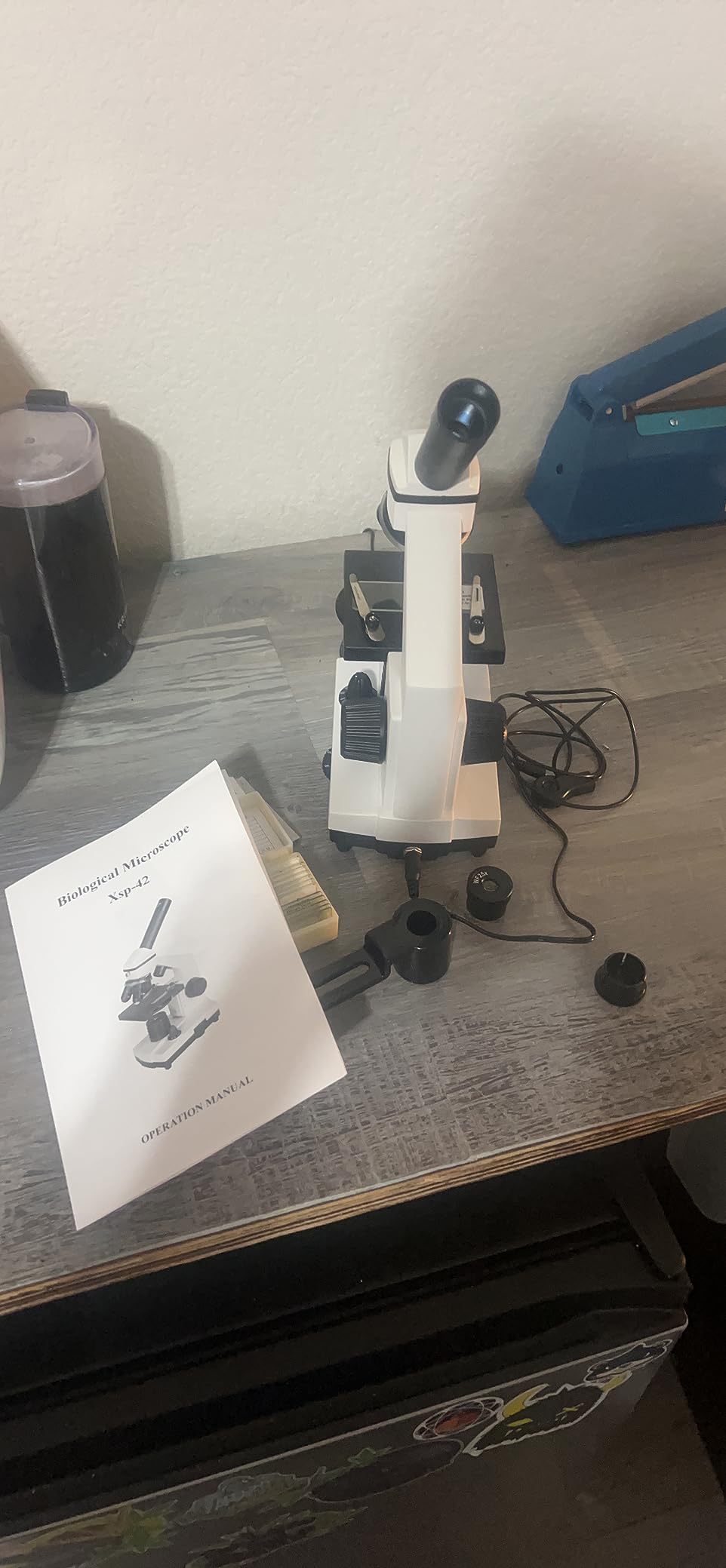
It is also light for a genuine compound scope, at 1.65 kg, with dimensions of 5.71 by 3.94 by 9.84 inches, so it fits on a small desk without dominating it. Coaxial coarse and fine focus knobs are present, though the feel is light compared with a true lab scope. Materials are polycarbonate and polyethylene rather than metal, and the SGS certification covers non-toxic materials and electrical safety for ages 10 and up with supervision.
Ratings average 4.3 across roughly 1190 reviews. Praise concentrates on the illumination, the accessory count, and how easy it is to set up. Criticism concentrates on the magnification gap, the absence of a movable stage, and a manual that reviewers describe as largely unhelpful, including for the phone setup, which is a shame because the phone features are the selling point.
What makes it worth buying
Documentation. If your child is building a science fair project, the phone clip and remote turn a scope into a camera. Being able to snap a clean image of a specimen without a tripod is worth more than the magnification number, and no other scope in this roundup pairs a phone clip with a remote shutter.
What to watch out for
Buy it as a hobby and phone-photography tool, not as a study instrument. There is no mechanical stage, so centering a specimen means nudging the slide by hand every time. And reviewers who use it heavily report that illumination output and sharpness both degrade with use, so expect performance to drift after months of regular work.
4. Emarth 40X-1000X Compound Microscope with 52-piece Kit: Best Value Starter
Microscope for Kids Beginners Children Student, 40X- 1000X Compound Microscopes with 52 pcs Educational Kits
40X-1000X achromatic compound
52-piece kit
Top bottom or both LED
6 color filters
Pros
- Images stay bright and clear at high magnification
- Metal objective lens housings
- Quick swap between 10X and 25X eyepieces
- Three-way lighting handles opaque and translucent
Cons
- Plastic frame makes it noticeably shakier than metal scopes
- Included slides are plastic
- No dust cover supplied despite the manual
This is the cheapest scope in the roundup that we would actually recommend, and the reason is specific: the objective lens housings are metal. Shaking is the number one complaint about plastic kid microscopes, and metal housings take a lot of the wobble out of the image at 400X and 800X. Comparisons against two similar scopes rated it the best of the three on image quality, and owners who upgraded from a plastic kit describe the difference as immediate.
Illumination is the other strength. You can run the LED from below, from above, or both at once, and intensity is adjustable, with six built-in color filters to increase contrast on a stained slide. The eyepieces swap quickly between 10X and 25X, which effectively widens the usable range, and the head rotates. A 52-piece accessory kit with prepared slides, blank slides, and experiment tools keeps a child engaged for weeks. Batteries are not included, and the unit is battery powered.
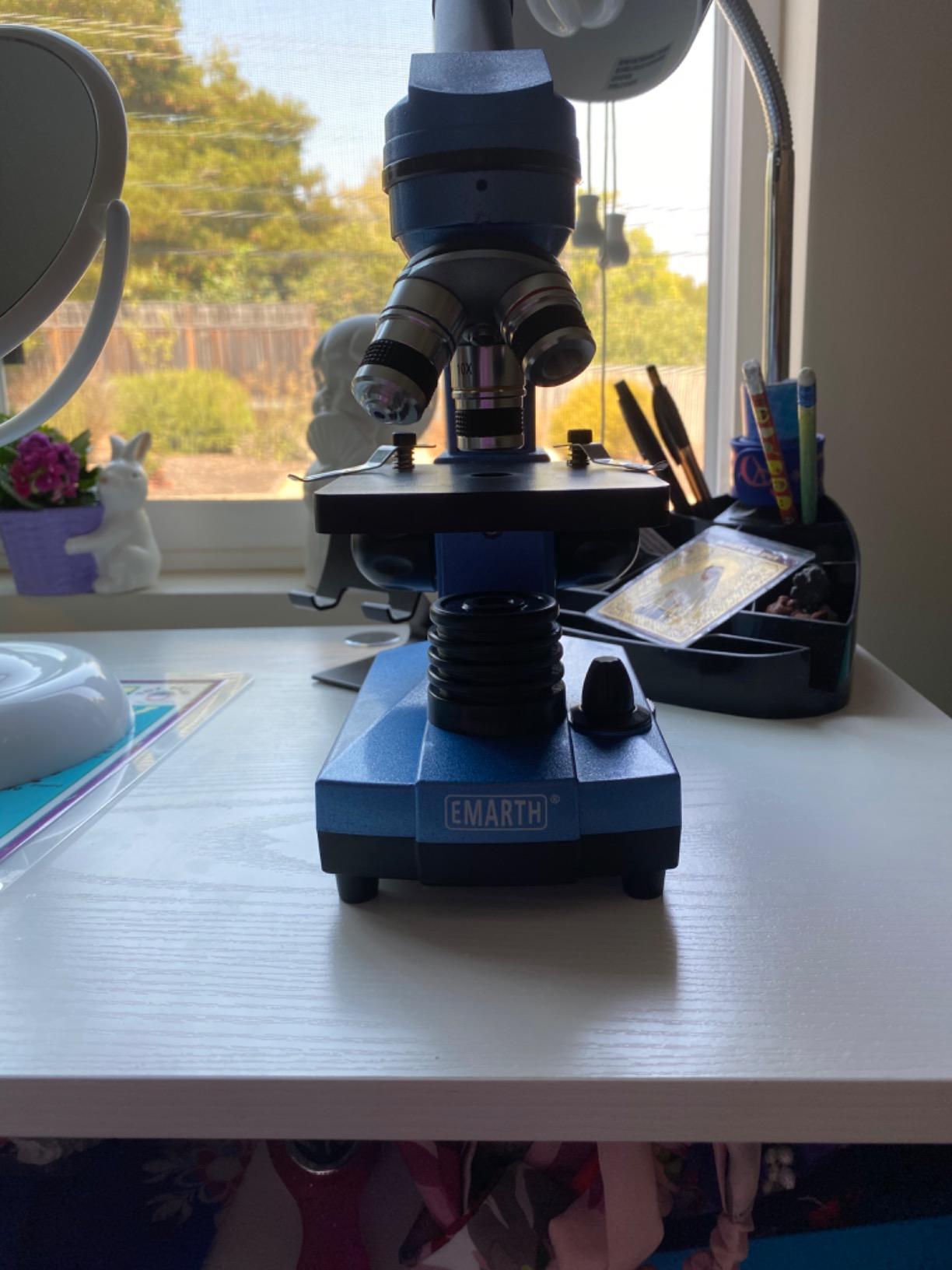
The frame itself is plastic, and that is the honest tradeoff. It is noticeably shakier than an all-metal rival, and light intensity cannot be adjusted independently for the top and bottom lamps. The included slides are plastic rather than glass, so we would budget for a pack of glass slides from the start. No dust cover is supplied even though the manual references one, which leaves the objectives exposed to dust between sessions.
Ratings hold at 4.5 across more than 1100 reviews. This is the pick we would hand to a family whose child has just asked for a real microscope for a birthday and whose budget is genuinely tight. A real angle of view of 38 degrees is comfortable for long sessions, and the stage, while fiddly for younger children, is workable from about age eight upward.
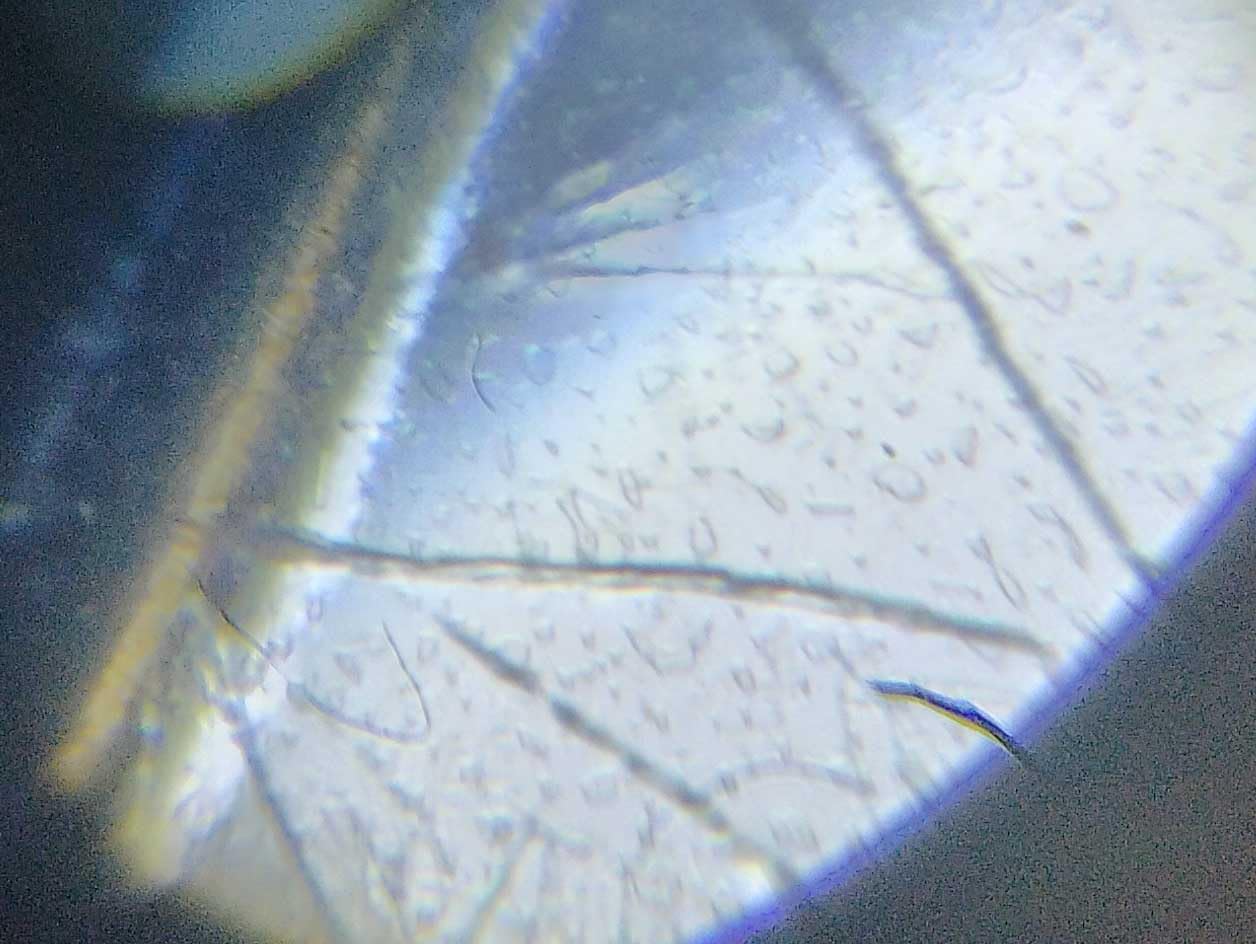
How far the images actually go
At 40X and 100X this is a genuinely satisfying first microscope. Onion epidermis, cheek cells, and the veining in a leaf all show up clearly. The 1000X top setting exists, but as with every scope in this bracket, the practical ceiling for good detail is well below the headline figure. Judge it on the 400X view, not the number on the box.
Who should pass on it
Skip it if your workspace cannot tolerate a little movement under the hand, or if the frame will be handled roughly by a younger sibling. A metal-framed scope in the hundred-dollar-and-up range will feel noticeably more solid, and the missing dust cover is a real long-term annoyance in a shared room with pets or active children.
5. AmScope SE306R-PZ Forward Binocular Stereo Microscope: Best for Dissection
AmScope SE306R-PZ Forward Binocular Stereo Microscope, WF10x and WF20x
20X/40X/80X stereo
WF10X and WF20X eyepieces
Top and bottom lighting
All-metal pillar stand
Pros
- Sharp distortion-free 3D imaging with real depth perception
- All-metal pillar stand resists tipping and drift
- Focusing stays put over time
- Built-in lighting for solid and translucent samples
Cons
- Halogen bulbs run hot enough to dry live specimens
- Bulb housing gets hot to the touch
- Narrow depth of field at 40X and 80X
A stereo microscope is a different instrument, not a worse one. It uses two separate optical paths, which is what produces a genuine three-dimensional view with real depth perception instead of the flat image a single-path compound scope gives you. For dissecting a dandelion stem, positioning a fishing fly, opening a watch case, or sorting a collection of coins and seeds, that depth is the whole reason to own one. You are working with your hands inside the image, not reading a flat picture of it.
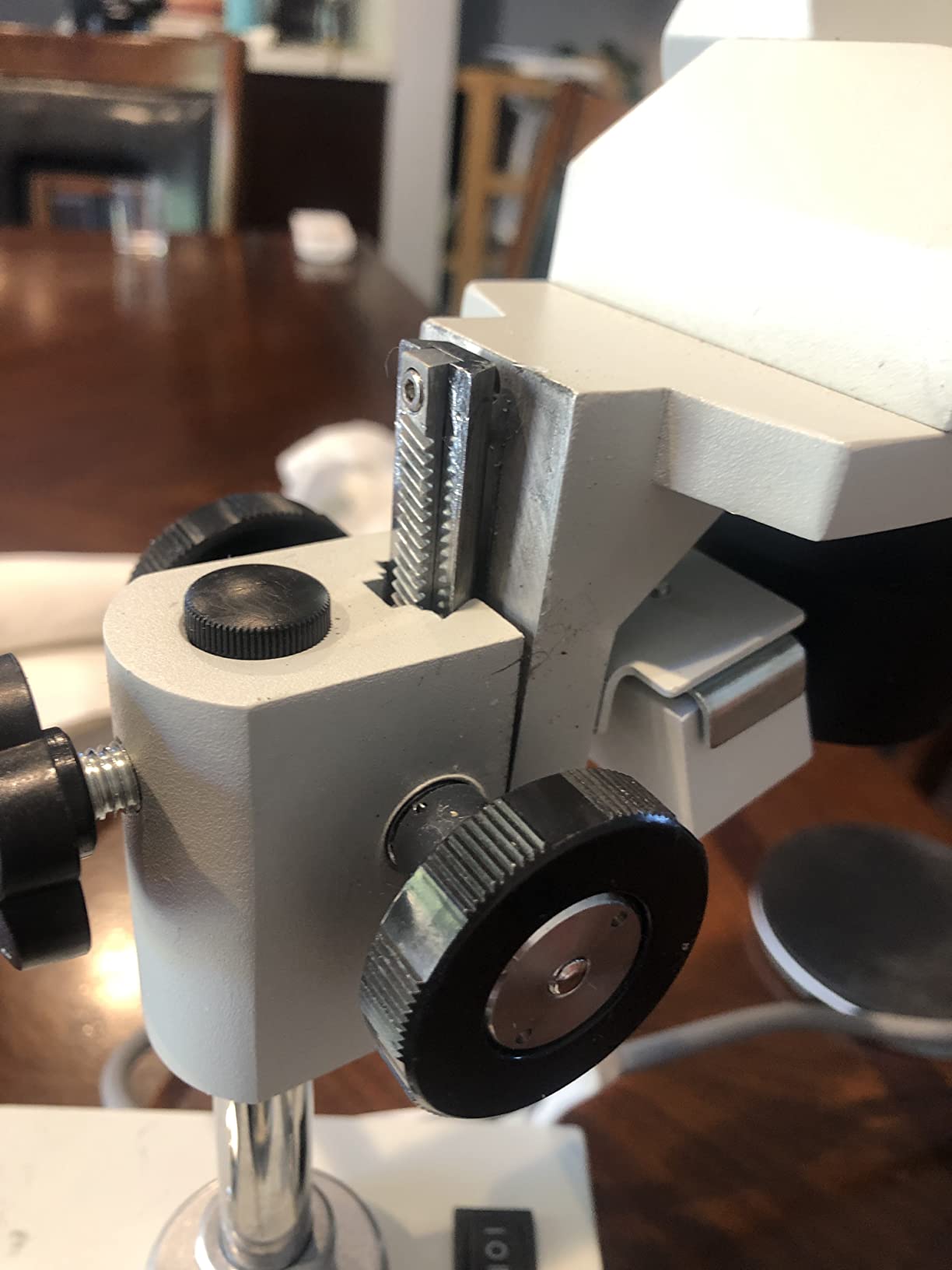
This AmScope covers 20X, 40X, and 80X using 2X and 4X objectives with WF10X and WF20X widefield eyepieces on a forward widefield binocular head. The stand is all metal with height adjustment, and owners consistently report that focus does not relax over time the way lighter stands do. Built-in incident and transmitted illumination means opaque and translucent specimens both work. The optical standard is DIN with a 20.32mm thread and a 160mm finite tube length, which is worth knowing if you ever want to add a camera. It carries a five-year manufacturer warranty.

It is also light, at 16 ounces, and compact at 13.6 by 11 by 6.6 inches, so it lives on a desk rather than occupying a shelf. The illuminator is halogen rather than LED, and that is the single most important thing to understand before you buy. Halogen runs hot. Owners across entomology, watch repair, electronics, and homeschool use report bulbs hot enough to dry out or cook live specimens, and one reviewer reports burning a hand on the housing.
Other limits are optical rather than mechanical: a narrow depth of field and limited field of view, especially at 40X and 80X, which is normal for a stereo scope but surprising if you have never used one. There is no intensity adjustment on the built-in illuminators, and no trinocular or camera version in this line. Ratings sit at 4.5 across 319 reviews, a smaller total than the compound leaders, but the sentiment is unusually consistent.
Why the depth of field matters
At low power you can work in three dimensions, which means you can see how a pin goes through a node, or how a solder fillet forms, in a way a flat image makes nearly impossible. The trade is that anything above about 40X gets shallow fast, and you will be refocusing constantly on a thick specimen. Plan most dissection work at 10X to 20X equivalent and move up only for detail.
What to consider before buying
If your specimens are alive and wet, the halogen heat is a genuine problem and you would be better served by an LED-lit stereo scope. If your interest is coins, minerals, electronics, or insects, the heat matters much less and this scope is an excellent value for what it delivers. The lack of a camera port is the other thing to weigh, especially if you plan to document a science fair project on a screen.
6. SWIFT SW380B 40X-2500X Siedentopf Binocular Compound: Best for High School
SWIFT SW380B 40X-2500X Magnification, Siedentopf Head, Research-Grade Binocular Compound Lab Microscope with Wide-Field 10X and 25X Eyepieces, Mechanical Stage, Ultra-Precise Focusing
40X-2500X
Siedentopf head that rotates 360 degrees
30-degree eyepiece tilt
Mechanical stage
Pros
- Rotatable Siedentopf head lets a whole class share one scope
- 30-degree tilt genuinely reduces neck strain
- Interchangeable 10X and 25X eyepieces
- All-metal construction with precise coaxial focus
Cons
- At 11 pounds and 17.3 inches tall it needs a dedicated spot
- No trinocular or camera port is listed
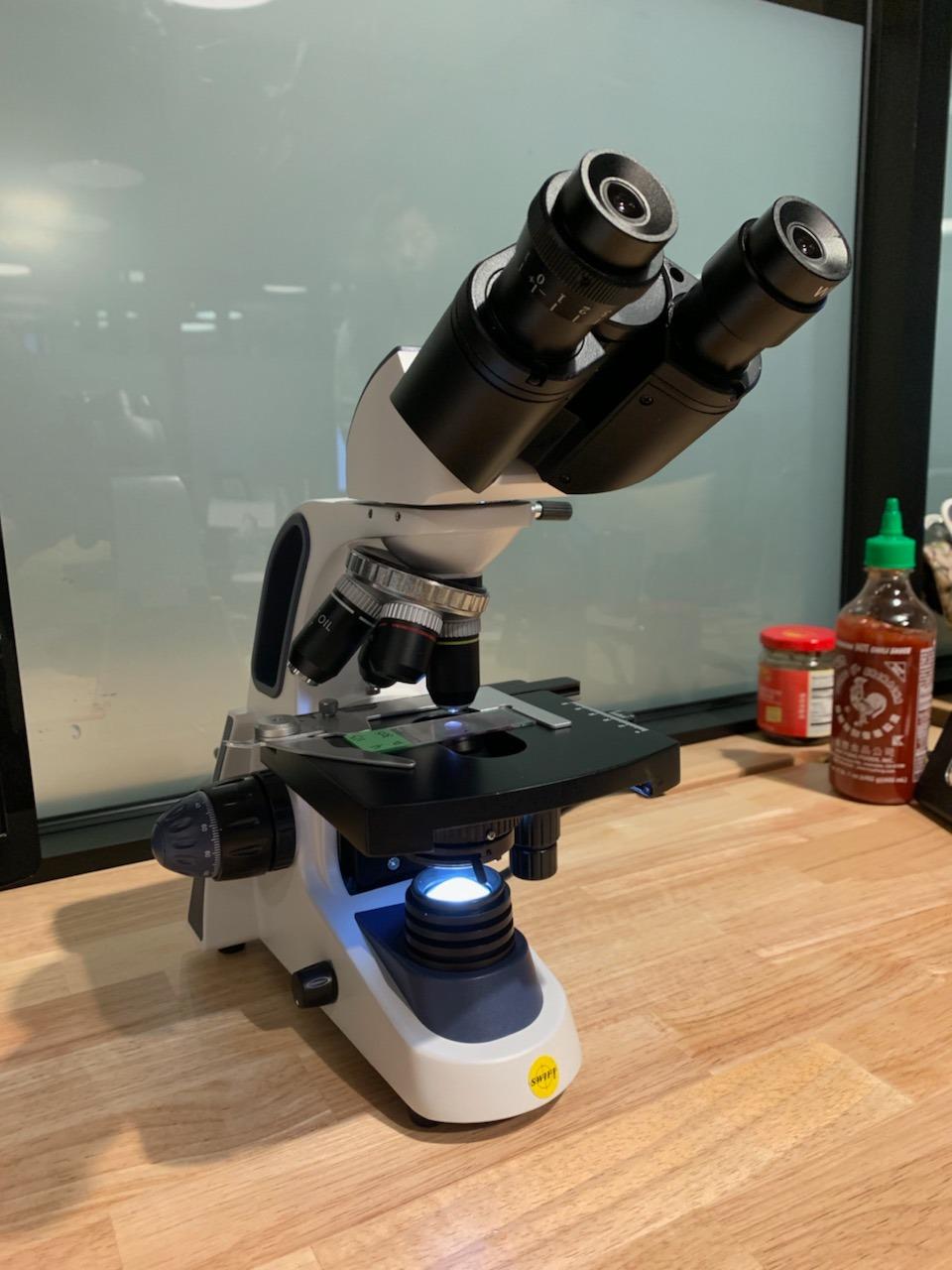
The feature that separates this from most other compound scopes in the list is the Siedentopf head, and it is the reason we rate this one highest for shared and classroom use. On a conventional fixed head, only one person can look at a time and the whole scope has to be turned. The Siedentopf head swivels 360 degrees, so people seated around the table can take turns without the instrument being dragged across the bench, and focus does not shift when they do. That single design decision is worth more to a busy home than any additional objective in the box.
The ergonomics are genuinely considered. The eyepieces sit at a 30-degree tilt, which is a lower angle than the typical 45-degree head, and that reduces neck strain during a long session at the bench. Wide-field 10X and 25X glass eyepieces are interchangeable, so you can move from a comfortable overview to higher detail without swapping objectives. The mechanical stage holds a slide steady, and the coaxial focusing is described as ultra-precise, which is the right word for repeatable positioning. Illumination is LED, and the enclosure is metal throughout.
Getting the focus to stay put over months of use is worth as much as any specification here. Budget scopes drift as the stage loosens, and you end up refocusing after every small adjustment, which is exactly the habit that makes a new user lose interest. Owners consistently report this instrument holding its adjustment.
Total magnification is listed as 40X to 2500X, and as elsewhere in this roundup that upper figure depends on the eyepiece you pair with the 40X objective. Judge the image quality on the 100X to 400X range, where the achromatic objectives are doing the work. No recurring functional complaints surfaced in what owners report about this model, which is unusual and worth noting: the criticism here is about the specification sheet rather than reported failures.
Ratings sit at 4.5 across 416 reviews, a healthy total for a model this specialized. At 11 pounds and 13.78 by 10.63 by 17.32 inches, this is a two-hand carry and a dedicated shelf, which is the main practical argument against it in a small home. If a science fair or a homeschool co-op means more than one pair of hands, though, the rotating head pays for itself immediately.
How the Siedentopf head pays off at home
Watch a child discover a cell and then try to show a sibling what is on the screen. On a fixed head you hand over the whole microscope, and by the time the second person is settled the first has lost the specimen. Here the head turns and the stage stays where it was. That small mechanical decision is why this is the pick for a family with more than one curious person.
Where the trade-offs sit
Size and weight are the honest costs. Seventeen inches tall and eleven pounds means a dedicated corner rather than a shelf shared with other equipment. There is also no trinocular or camera port in the listed specification, so documenting a project means photographing the eyepiece with a separate camera, which works far better than most buyers expect if you use a fixed phone mount.
7. AmScope M162C-2L-PB10-WM 1000X Microscope Kit: Best for Homeschool
AmScope M162C-2L-PB10-WM “Awarded 2018 Best and Microscope Kit” – 1000X
All-metal 40X-1000X
Dual layer mechanical stage
10X and 25X eyepieces
5 year warranty
Pros
- 4X and 10X optics described as crisp and comparable to costlier lab scopes
- All-metal build with working coarse and fine focus
- Dual lighting handles slides and opaque objects like coins
- Carrying case and slides included
Cons
- No model-specific instruction manual
- Only about five prepared slides are included
- Monocular eyepiece needs careful focusing from younger children
This is the kit we would put in front of a homeschool family, and the reason is that it does not feel like a toy while still being light enough for a child to move. At 3.7 pounds with an all-metal frame, it is the rare scope that is both durable and genuinely portable. Six magnification settings run from 40X through 1000X, the dual-layer mechanical stage has coaxial X-Y controls, and the objective set is a Winchester configuration with a wide-field eyepiece.
The optics get praise out of proportion to the price. Owners with university lab training describe the 4X and 10X objectives as crisp and sharp, comparable to scopes costing several times more, and that is the range where cell observation actually happens. Dual illumination lets you view opaque objects such as coins as well as slides, which widens the range of experiments you can run without a second instrument. Both 10X and 25X eyepieces are included, with the 10X carrying a pointer for teaching.
The bundle supports the homeschool use case unusually well. You get prepared and blank slides, specimen tools, a carrying case, and a full microscopy book that owners describe as fact-filled rather than a thin novelty booklet. It is also compatible with optional AmScope digital cameras, so a science fair project can be photographed once the child outgrows looking through the eyepiece. It carries a five-year manufacturer warranty and runs on battery power, so it can move to a porch or a table away from a wall socket.
At 4.6 across 591 reviews, this is one of the highest-rated picks in the roundup. The most frequent complaint is documentation: there is no instruction manual specific to this model, and the included book is general microscopy information. Slide count is the second complaint, at roughly five prepared slides, which means you will be buying more within a month. The 40X objective is also reported as less sharp and worth cleaning, and the monocular eyepiece demands careful focusing from younger children.
Why it suits a curriculum
Because it is all metal and takes a real mechanical stage, a child learns the actual workflow: find the specimen, center it, focus coarse then fine, adjust the light. Scopes with plastic stages and fixed lenses teach none of that. The carrying case also means it can live in a curriculum tote instead of a closet, which is the difference between a microscope that gets used weekly and one that does not.
Where it falls short
It is also monocular, which means one viewer at a time. For a single child that is a feature, since it removes the temptation to adjust the interpupillary distance mid-session and adds nothing to a solo learner. Budget a morning reading the general microscopy book before the first session, and buy a pack of prepared slides with the microscope rather than after.
8. Poothoh 40X-2000X Binocular Compound Microscope: Best Value Binocular
Binocular Compound Microscope 40X-2000X, Research Grade Professional Microscope with Dual Mechanical Stages and Coaxial Coarse/Fine Focus Knobs, Built-in Electronic Eyepieces, Adult Microscope
40X-2000X binocular
4X/10X/40X achromatics
Upper and lower LED
Built-in electronic eyepieces
Pros
- Well-tuned optics for this price with clear images
- Dual lighting with brightness control and a five-color filter bar
- Easy for children to focus and view slides with
- Comes with a protective case
Cons
- Bundled PC eyepiece software is flagged by reviewers as unsafe or non-functional
- Documentation is minimal and partly untranslated
- Battery type for the electronic eyepiece is undocumented
The headline feature is the pair of built-in electronic eyepieces, which is meant to send the image to a computer instead of an eye. In practice, that is the weak point of this scope rather than its selling point. Multiple reviewers report the bundled PC software as either non-functional or flagged as unsafe, and the listing itself supplies only two eyepiece sets even though three are pictured. Judge this one on the optical system and buy it for what you can see, not for what you hoped to record.
Used as a plain binocular compound scope, though, it performs respectably. The 4X, 10X, and 40X achromatic objectives produce images owners describe as well-tuned and clear for the price, the enclosure is metal, and the coaxial coarse and fine focus handwheels are on both sides. Illumination is the standout here: an upper LED for opaque objects, a lower LED for slides, adjustable brightness, and a five-color filter bar to help with the color fringing that cheap glass produces at high power. A multi-stage spring in the lens design adds some protection against a slide being driven into the objective.
What we like most is the ergonomics for a shared household: it is the lowest-cost binocular head in this roundup, it is genuinely easy for a child to focus and view slides with, and having two eyepieces rather than one is a real quality-of-life difference for an adult working alongside a child. The five-color filter bar and the spring-loaded objective are thoughtful touches at this level.
Ratings average 4.2 across 169 reviews, a smaller total than the compound leaders and the reason we placed it eighth rather than higher. Beyond the software problem, reviewers raise minimal documentation printed in tiny type and partly untranslated, no record anywhere of which battery type and size the electronic eyepiece takes, and a lighting toggle that does not always adjust as advertised on some examples. Build quality and clarity fall short of true professional instruments, as you would expect at this level.
Who it works for
A family that wants a binocular head and dual lighting at the lowest outlay, and who will photograph with a phone rather than trust bundled computer software. The five-color filter bar is a genuinely thoughtful inclusion at this price, and the spring-loaded objective reduces the risk of the single most common beginner accident.
Who it does not work for
Anyone planning to record video or stills through the supplied eyepieces, and anyone who wants documentation. The software reports are consistent enough that we would not build a project around them. If imaging matters to you, the PalliPartners with its phone clip and remote shutter is the better buy for a similar amount.
9. Herwicm 40X-2500X Binocular Compound Microscope: Best for Long Sessions
Compound Microscope,40X-2500X ,WF10x and WF25x eyepieces, Dual LED Lighting and Two-Layer Mechanical Stage,Microscope for Adults…
40X-2500X claimed
Ultra-wide-angle eyepieces
Dual LED with fill light
Telescoping objective
Pros
- Very large field of view reduces eye fatigue on long sessions
- Dual top and bottom LED with soft fill light
- Two-layer mechanical stage with spiral scale
- Coarse and fine focus on both sides
Cons
- No 100X oil immersion objective in the listed range
- Body and stage are partly plastic
- The 2500X figure is not achievable with the listed optics
The thing to notice first is that this is not a 2500X microscope, whatever the listing says. The objectives listed are 4X, 10X, and 40X, and even paired with the WF25X eyepiece the highest optical combination available is 1000X. That means the 2500X figure is not something the shipped glass can produce, and it also means there is no oil immersion lens. If seeing bacteria is your goal, this is the wrong pick and we would rather say so than let the number do the selling.
What the scope does have is a genuinely pleasant way to work. The eyepieces are all-optical ultra-wide-angle designs with a large field of view, and owners single them out as the reason long sessions are comfortable instead of tiring. Illumination runs from the top and the bottom with an integrated soft fill light, which reduces the hard shadows that make a thick specimen unreadable. The two-layer mechanical stage has a large surface and a spiral moving scale for positioning, and coaxial coarse and fine knobs sit on both sides of the base. The telescoping objective retracts if you drive it into a slide, adding a layer of protection the plastic competitors do not offer.

The lenses are glass and the body and stage are a mix of metal and plastic, at 14.37 by 11.41 by 6.49 inches. No recurring functional complaints surfaced in what owners report, and the product sits near the top of its category chart for binocular compound scopes. Ratings average 4.3 across 256 reviews, a modest total that reflects how recently it listed rather than how it performs.
The wide field of view is the practical differentiator here. A larger field means you find your specimen faster and you scan across a slide with fewer eye movements, which is exactly what reduces fatigue across an hour of steady work. If you sit down with a scope for long stretches, that comfort is worth more than a magnification figure you cannot use.
Where a large field of view pays off
Anywhere you search rather than look. Finding a single stained cell in a large prepared slide, checking a spread of sediment in a drop, or scanning a section for contamination all become faster when more of the sample is visible at once. Owners who spend whole afternoons at the bench tend to notice this before they notice anything else.
What you give up
Oil immersion and anything approaching it. With 4X, 10X, and 40X achromatic objectives you can look at plant cells, cheek cells, and prepared tissue comfortably, but you cannot reach the 1000X oil configuration that experienced hobbyists use as their benchmark for whether a cheap scope is a real instrument. If that matters to you, the OMAX at number one is the pick.
10. Swift S41-20 Boom-Arm Stereo Microscope: Best for Electronics Repair
Swift S41-20 Professional Dissecting Binocular Stereo Microscope, WF10x WF20x Eyepieces, 10X 20X Magnification, 1X Objective, LED Lighting, Boom-Arm Stand
10X-20X stereo with 1X objective
12-inch boom arm
Two goose-neck LED illuminators
Focus drag adjustable
Pros
- Two independently aimable LEDs give shadow-free targeted light
- Heavy metal base and cast head feel industrial
- Distortion-free image with about 9 inches of working distance
- Well regarded for micro-soldering and PCB repair
Cons
- No magnification below 10X without aftermarket 5X eyepieces
- Field of view is small for fine work at 10X
- LED brightness is not adjustable
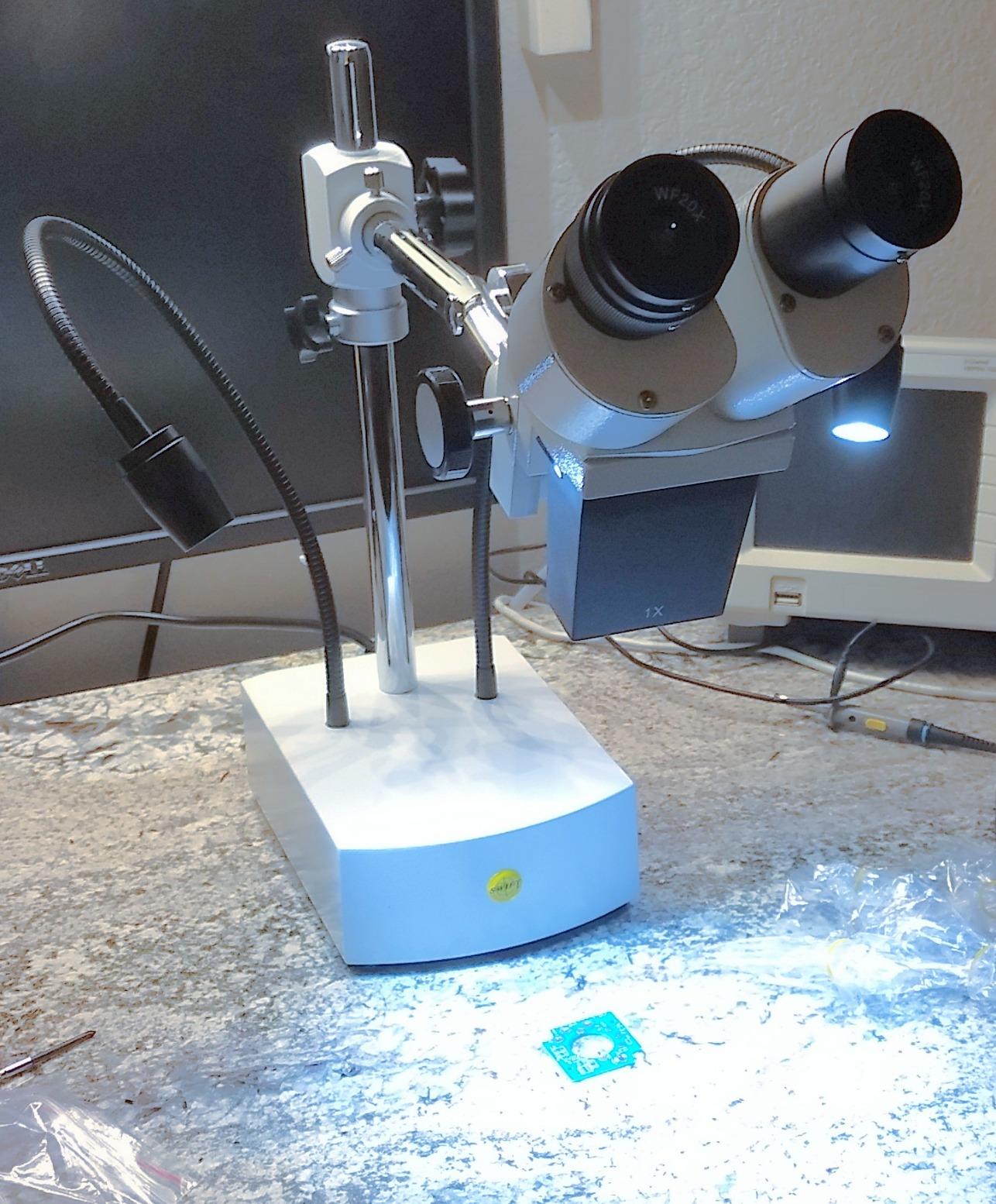
If your microscope has to earn its place on an electronics bench rather than a school desk, this is the one. Two independently aimable goose-neck LED illuminators on a metal base let you light a circuit board from two angles at once, which eliminates the shadow that a single overhead lamp throws across a raised component. That one feature is why electronics hobbyists consistently recommend stereo scopes for PCB work, and why the same advice shows up in beginner buying guides: stereo is the right tool for soldering, not a step down from compound.
The build is substantial. A heavy metal base and a cast optical head give it an industrial feel that survives a bench full of tools, and a 12-inch swinging boom arm extends the working area far enough for a large object or an open chassis. The binocular head sits at a fixed 45-degree angle, which is comfortable for long sessions, and focus drag is adjustable with a supplied tool, so you can stiffen or loosen the movement to match your preference. The image is distortion-free with roughly 9 inches of working distance, and the scope is compatible with optional USB digital cameras. The enclosure is metal, illumination is LED, and it runs on mains power.
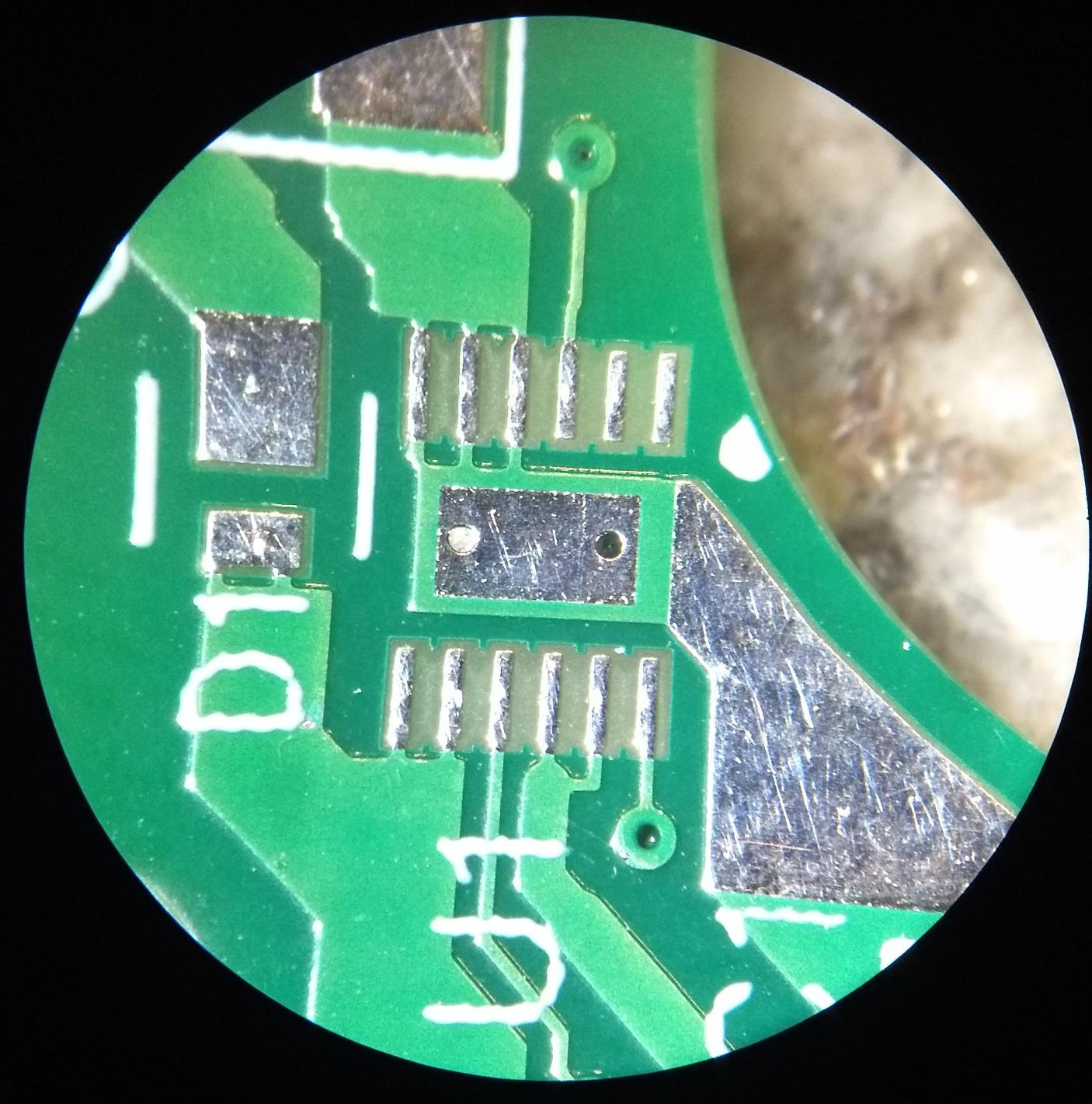
The most common complaint, repeated by several owners, is that the lowest magnification is 10X. Working below that requires aftermarket 5X eyepieces, which many electronics users consider essential for board-level work where you need to see a whole component layout rather than a single joint. Field of view with the supplied WF10X eyepieces is also small for fine detail, which is a related limitation. Eyepieces are held by a screw that must be loosened to swap, and a single rubber eye cup has to be moved between them, which is fussy but manageable.
Two further practical notes. LED brightness is not adjustable, so a dark green board may need a different angle of attack rather than a dimmer. And while the base is heavy, it can still tip if the boom arm is extended without a counterweight, so set the arm over the work rather than out over the edge of the bench. Ratings sit at 4.2 across 153 reviews, the smallest total here, but owners consistently describe it as good value against comparable AmScope models.
What makes it right for a soldering bench
Two-direction lighting plus a long working distance. A solder joint under a raised component is a shadow problem before it is a magnification problem, and the goose-neck pair solves it. The 12-inch boom arm also means you are not constantly reaching around the scope to see the back of a board, which is the posture that causes fatigue after an hour of fine work.
What to add before you start
Plan on a set of 5X eyepieces. Once they are fitted, this scope covers the low-power inspection range that makes board work bearable, and the gap between 5X and 10X is exactly where most electronics users find the missing step. Also check your bench height against the eyepiece position, because several shorter users find the head awkward on a standard desk and chair.
How to Choose a Microscope Under 300 Dollars
Compound, stereo, digital, or pocket: pick the type before the brand
Compound light microscope. Light passes up through a transparent slide, through an objective near the stage, then through an eyepiece. It is the only type in this roundup that resolves individual cells, and it is the right default for a student, homeschool family, or anyone who wants to look at onion epidermis, cheek cells, or prepared tissue. Seven of our ten picks are compound scopes.
Stereo or dissecting microscope. Two separate optical paths give a true three-dimensional view with real depth perception, but magnification is deliberately low, with most useful work happening in the 10X to 40X range. It is the right tool for coins, stamps, minerals, soldering, watch repair, and dissecting insects, and the wrong tool for cell work.
Digital microscope. A camera replaces the eyepiece and sends an image to a screen. Magnification claims on these are frequently misleading, and a screen at high magnification usually shows a pixelated enlargement rather than new detail. Useful for sharing a view with a class or for surface work, not a substitute for glass.
Pocket or field microscope. A small handheld unit for looking at leaves, fabric, or a coin in the field. Treat it as a companion to a real scope, never as a replacement, which is the mistake we see most often from parents.
Magnification is not resolution: the number that actually matters
Here is the single most useful thing to know in this category. Magnification describes how much the image is enlarged. Resolution describes how much real detail the lens can separate. Past a certain point, a microscope adds magnification without adding information, and what you get instead is a blurrier image with colored fringes around the edges. That is the chromatic aberration experienced hobbyists describe above 400X on budget glass.
Useful working range on a budget scope: 40X to 400X. 400X to 1000X is where image quality falls apart on anything at this price, unless a real 100X oil objective is present. Anything marketed as 2500X or 5000X is empty magnification in this band, and the listings that claim 2500X do not include objectives capable of producing it. Judge the glass, not the number.
Can you see bacteria with a 1000X microscope? Yes, and only with oil immersion
You can, but the 1000X label means nothing on its own. You need a genuine 100X oil immersion objective paired with a 10X eyepiece, plus immersion oil placed directly on the coverslip, and the total magnification must come from that combination rather than from a 25X eyepiece on a 40X lens. In this roundup only the OMAX at number one includes a true 100X oil objective, which is the main reason we made it the top pick. Every other scope here tops out short of it.
One widely cited beginner buying guide puts a floor of about 90 dollars on a compound scope, below which a digital or mobile microscope is the better purchase. That is the reasoning behind the Emarth and PalliPartners entries being positioned as beginner and hobby tools rather than laboratory instruments, and it is why we would steer anyone who wants real cell work away from plastic toy scopes entirely.
Lighting, head type, and focus: the mechanical checklist
Check for coaxial coarse and fine focus knobs, which put both adjustments on the same axis so you never have to change grip. A coarse-only focus is the clearest sign of a toy. Check for a real mechanical stage with X-Y control, because without one you hunt for a specimen by nudging the slide and lose it every time you refocus. An all-metal frame resists the drift and shaking that makes budget images frustrating.
On illumination, transmitted light comes up through the stage and works for slides. Reflected or incident light comes down from above and works for opaque objects like coins and solder joints. A scope with both is far more versatile, and only transmitted light limits you to transparent specimens. Adjustable intensity matters more than raw brightness, since a dense stained slide blows out under a fixed lamp.
On head type: monocular means one viewer and the least eye strain for a single child. Binocular uses two optical paths and is more comfortable for adults, plus it is required for stereo viewing. Trinocular adds a third port for a camera, which is worth having for science fair documentation but is rare in this price band. A Siedentopf head, as on the SWIFT SW380B, rotates so several people can share one instrument, which is the underrated difference in a multi-user home.
Accessories you actually need on day one
Glass blank slides, coverslips, prepared slides, lens cleaning paper, immersion oil, and a dust cover. Budget kits often include plastic slides, which scratch easily, and frequently reference a dust cover in the manual without supplying one. Our picks at numbers one and seven include glass slides and coverslips in useful quantities. You can build out any of the cheaper picks with a glass slide pack in a single afternoon, and our guides to durable everyday kitchen equipment follow the same principle: buy the consumables in glass, not plastic, from the start.
When you should spend more than this ceiling
Under 300 dollars buys you achromatic objectives, mechanical stages, and a metal frame. It does not buy you true plan achromat glass, full Kohler illumination, or a high numerical aperture oil objective. Hobbyist communities consistently place true student-grade instruments from brands like Nikon and Olympus far above this band, and describe the sub-300 tier as adequate but limited. If you plan to go on to stained tissue sections, microbiology, or photomicrography as a serious pursuit, the money above this ceiling is not wasted. For everything else, it is the best value available.
About the brands
OMAX, AmScope, and SWIFT supply five of the ten scopes here, and all three build metal-frame instruments with mechanical stages, which is the mechanical baseline we would not go below. Two more of the ten, the Poothoh binocular and the PalliPartners, use lighter mixed materials to hit a lower price point. Celestron and Omano are the other names you will meet constantly in this category, and both produce instruments at this level. Details on brand trust are in the FAQ below.
Frequently Asked Questions
What is the best microscope for the money?
The OMAX M82ES-SC100-LP100-OM is the best microscope for the money in this price band. It is an all-metal binocular compound scope with achromatic DIN objectives, a genuine 100X oil immersion lens, a double-layer mechanical stage, an NA1.25 Abbe condenser, and a five-year warranty. Close behind are the AmScope M162C for homeschool and the Emarth 52-piece kit for a lower starting outlay.
Can you see bacteria with a 1000X microscope?
You can, but only if the 1000X figure comes from a real 100X oil immersion objective paired with a 10X eyepiece and used with immersion oil. A 1000X reading produced by a 40X objective and a 25X eyepiece will not resolve bacteria. Among the scopes reviewed here, only the OMAX M82ES includes a true 100X oil immersion objective.
Is Omax a good microscope brand?
OMAX produced the most mechanically complete instrument in this roundup, with a double-layer X-Y stage, coaxial fine focus, an Abbe condenser, and a genuine oil immersion objective, backed by a five-year manufacturer warranty. Several models also include generous glass slide and coverslip bundles. It is a strong choice whenever a metal frame and a mechanical stage matter to you.
Is Amscope a good microscope brand?
AmScope is one of the most established names in this category, and two of the ten scopes here are AmScope models. The stereo scope offers a genuine three-dimensional view with an all-metal pillar stand, and the 1000X kit earns strong owner ratings for crisp 4X and 10X optics and an all-metal build. The main recurring criticism across AmScope models in our reading is documentation rather than optics.
Is Amscope a Chinese brand?
AmScope is a United States company that designs and sells its own microscope brands, and the optics, mechanical design, and quality control are specified by the company. Like most brands in this price band, including OMAX and SWIFT, the physical instruments are manufactured in China. There is no separate cheaper AmScope line, so the model you research is the model you get.
What magnification do I need to see plant and animal cells?
400X total magnification is the practical ceiling for clear cell detail on a budget compound scope, using the 40X objective with a 10X eyepiece. That is enough for onion epidermis, cheek cells, and plant tissue structure. Higher settings add enlargement rather than detail unless a real 100X oil immersion objective is present, which is the benchmark experienced hobbyists use to judge a scope.
The Best Microscope Under 300 Dollars for Most Buyers
After working through all ten, the OMAX M82ES-SC100-LP100-OM is the microscope under 300 dollars we would put in front of almost anyone. It is the only scope in this roundup with a true 100X oil immersion objective, an Abbe condenser with an iris diaphragm, a double-layer mechanical stage, and a five-year warranty, and the 100 glass slides and 100 coverslips in the box remove the most common first-week problem entirely.
Buy the AmScope M162C instead if the microscope will be handled by a child, and the National Geographic kit if the goal is excitement rather than cell biology. Go stereo with the AmScope SE306R for coins, insects, and opaque objects, or the Swift S41-20 if you work on circuit boards. Whatever you choose, judge it at 400X, verify there is fine focus and a mechanical stage, and the microscope will keep working long after the packaging is gone.