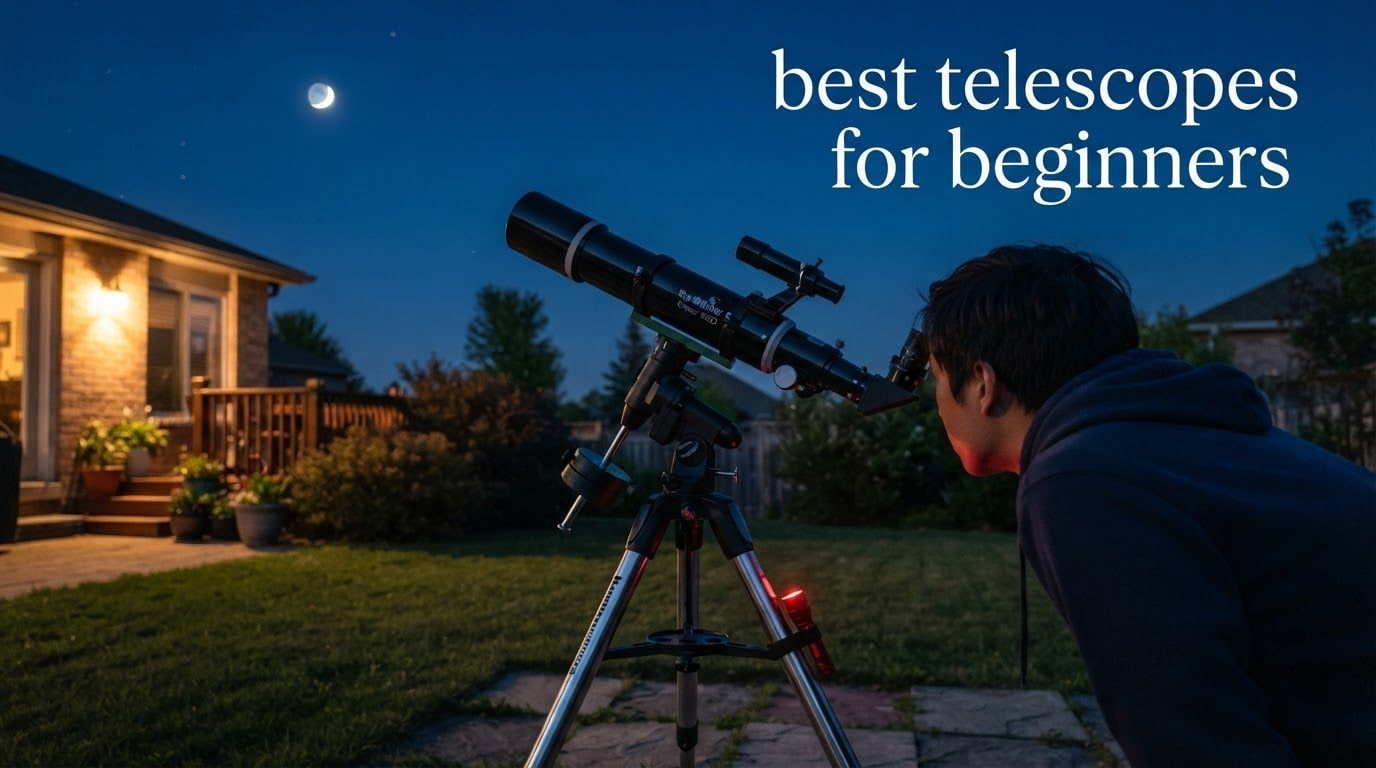
Most first telescopes get returned for the same reason: somebody bought magnification instead of aperture. Aperture is the width of the lens or mirror that gathers light, and it alone decides how much detail you can pull out of the Moon, how many of Jupiter’s moons you can count, and whether Saturn reads as a ringed planet or an orange dot. A scope advertised at 500 power on a 50mm lens will show you a dim, blurry version of what a 130mm scope shows sharply at far lower power.
So the rule for the best telescopes for beginners in 2026 is simple: buy the largest aperture you can comfortably carry outside, put it on the simplest mount, and skip anything that leads with “power” on the box. I have spent a lot of evenings with these scopes on driveways and back lawns, and the pattern holds every time. The right first scope is the one that gets carried out of the closet a second time, and a third.
This roundup covers ten beginner scopes across the whole range, from a 50mm grab-and-go refractor to a 150mm reflector and one robotic smart telescope. Every entry below is judged on aperture first, then mount simplicity, then how forgiving the scope is to a first-time user. If you are still working out what kind of gear suits a complete beginner, our beginner kitchen knife guide runs on the same principle: buy the tool that fits the job, not the one with the biggest number printed on the handle.
Table of Contents
- Top 3 Picks for the Best Telescopes for Beginners in 2026
- All 10 Telescopes at a Glance in 2026
- What You Can Actually See by Aperture
- 1. Gskyer 70mm AZ Refractor – The Most Reviewed First Scope
- 2. Celestron Travel Scope 70 – Built for the Car and the Closet
- 3. Celestron PowerSeeker 50AZ – The Smallest Aperture Worth Buying
- 4. Koolpte 80mm Refractor – A Complete Kit Out of the Box
- 5. Celestron AstroMaster 70AZ – Long Tube, Red Dot Finder
- 6. Celticbird 80mm – A Kit That Grows With a Child
- 7. MEEZAA 90mm Refractor – The Widest Lens in the Refractor Group
- 8. DWARFLAB Dwarf Mini – The Smart Telescope That Skips Alignment
- 9. MEEZAA 150EQ Reflector – the Step Up in Light
- 10. Gskyer 130EQ Reflector – Tracking That Holds an Object Still
- How to Choose Your First Telescope
- Frequently Asked Questions
- Which Telescope Should You Buy First
Top 3 Picks for the Best Telescopes for Beginners in 2026

Gskyer 70mm AZ Refractor
- 70mm fully coated aperture
- 400mm focal length
- Phone adapter and remote
- Carry bag included
Celestron AstroMaster 70AZ
- 70mm aperture with 900mm focal length
- StarPointer red dot finder
- Altazimuth panhandle mount

DWARFLAB Dwarf Mini
- 1.85 lb all-in-one design
- Auto GOTO with plate solving
- Up to 90-second exposures in EQ mode
These three cover the three genuinely different ways a beginner starts out. The Gskyer 70mm is the one most people end up with, because it is simple, well reviewed and does not ask you to learn anything before the first night. The AstroMaster 70AZ is the same idea with a longer tube and a much easier finder, so planetary images come out larger. The DWARFLAB Dwarf Mini skips the eyepiece world entirely and does the pointing and tracking for you.
Each of them is a strong pick for a different reason, and none of them is wrong. The Gskyer wins on simplicity and volume of owner experience, the AstroMaster on optical design for planets, and the Dwarf Mini on automation. Pick the one that matches how you want to spend an evening outside.
Everything else we considered for this roundup sits further down the list, and we have ordered them by how much aperture you get for the effort rather than by any one brand. Reflectors from 130mm and up appear at the end because they need more from you, not because they are worse.
All 10 Telescopes at a Glance in 2026
| Product | Specs | Action |
|---|---|---|
| Gskyer 70mm AZ Refractor |
|
Check Latest Price |
 Celestron Travel Scope 70 Celestron Travel Scope 70 |
|
Check Latest Price |
 Celestron PowerSeeker 50AZ Celestron PowerSeeker 50AZ |
|
Check Latest Price |
 Koolpte 80mm Refractor Koolpte 80mm Refractor |
|
Check Latest Price |
| Celestron AstroMaster 70AZ |
|
Check Latest Price |
 Celticbird 80mm Refractor Celticbird 80mm Refractor |
|
Check Latest Price |
 MEEZAA 90mm Refractor MEEZAA 90mm Refractor |
|
Check Latest Price |
| DWARFLAB Dwarf Mini Smart Telescope |
|
Check Latest Price |
 MEEZAA 150EQ Newtonian Reflector MEEZAA 150EQ Newtonian Reflector |
|
Check Latest Price |
 Gskyer 130EQ Reflector Gskyer 130EQ Reflector |
|
Check Latest Price |
Two things stand out in that list. Seven of the ten are refractors, which need no collimation and are the least likely to end up in a closet after a bad first experience. The two largest apertures in the group are both reflectors, and they are the ones that show you faint galaxies and nebulae from a suburban backyard rather than just the Moon and the bright planets.
Two of the 4.4 rated scopes here sit at opposite ends of what a first telescope can be: the Celestron AstroMaster 70AZ is a straightforward optical tube on a tripod, and the DWARFLAB Dwarf Mini is a robotic camera that does the pointing for you. Which one suits you depends on whether you want to look or to photograph, and each section below covers that in more detail.
What You Can Actually See by Aperture
This is the section most beginner buying guides leave out, and it is the one that prevents disappointment. Here is roughly what each aperture tier delivers on a decent night away from city lights.
- 50mm (2 inch): a crisp, shadowed Moon with the largest craters visible, the phases of Venus, and the four Galilean moons of Jupiter as points of light. Nothing else.
- 70 to 80mm (2.8 to 3.2 inch): lunar craters and mountains, cloud bands on Jupiter, Saturn as a small oval with the ring visible, and the brighter clusters and double stars. This is the honest beginner floor.
- 90mm (3.5 inch): more surface detail on the Moon at the same time, clearer separation of Saturn’s rings from the planet, and the first hint of nebula shape.
- 130 to 150mm (5 to 6 inch): Saturn’s rings resolve as rings, Mars shows colour contrast, and a handful of the brighter deep-sky objects such as the Orion Nebula become recognisable shapes rather than fuzzy patches.
Magnification is the other number on the box, and it is the one to distrust. Doubling power halves the brightness and narrows the field, so the honest maximum on any of these scopes is roughly two times the aperture in millimetres. On a 70mm lens that is around 140x, on a 130mm reflector about 260x.
1. Gskyer 70mm AZ Refractor – The Most Reviewed First Scope
Gskyer Telescope, 70mm Aperture 400mm AZ Mount Astronomical Refracting Telescope for Kids Beginners – Travel Telescope with Carry Bag, Phone Adapter and Wireless Remote.
70mm fully coated aperture
400mm focal length f/5.7
Altazimuth tripod mount
Pros
- Fully coated 70mm glass lens gives bright sharp views of the Moon and stars
- Two eyepieces plus a 3x Barlow for flexible magnification
- Smartphone adapter and wireless camera remote included
- Adjustable aluminum tripod and carry bag make it easy to travel with
- 5x24 finder scope with cross-hairs helps beginners locate objects
Cons
- Manual altazimuth mount means targets drift out of view as Earth rotates
- Included eyepieces are basic plastic Kellner-type
- A short 400mm focal length limits magnification on smaller targets
The Gskyer 70mm has more owner reviews than anything else on this list, and reading them makes the reason obvious: people keep it. Several owners describe a first purchase that still lives in the car or on the porch and comes out whenever there is a clear night.
It is a 70mm fully coated refractor with a 400mm focal length, so it is wide and bright rather than powerful. That combination suits the Moon better than almost anything here, and the 5×24 finder with cross-hairs is a genuine help once you learn to scan along the cross-hair until the target slides into the field.
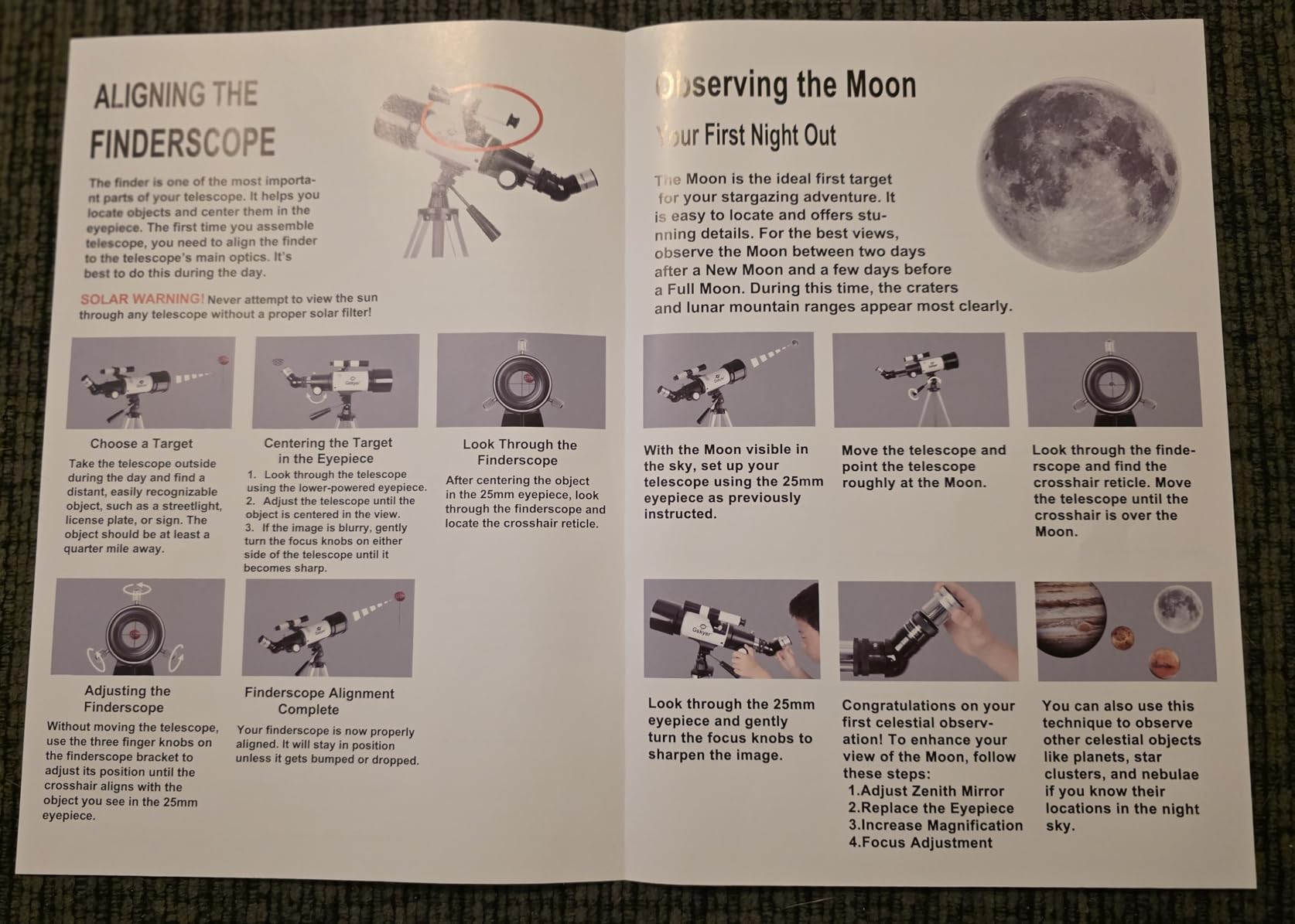
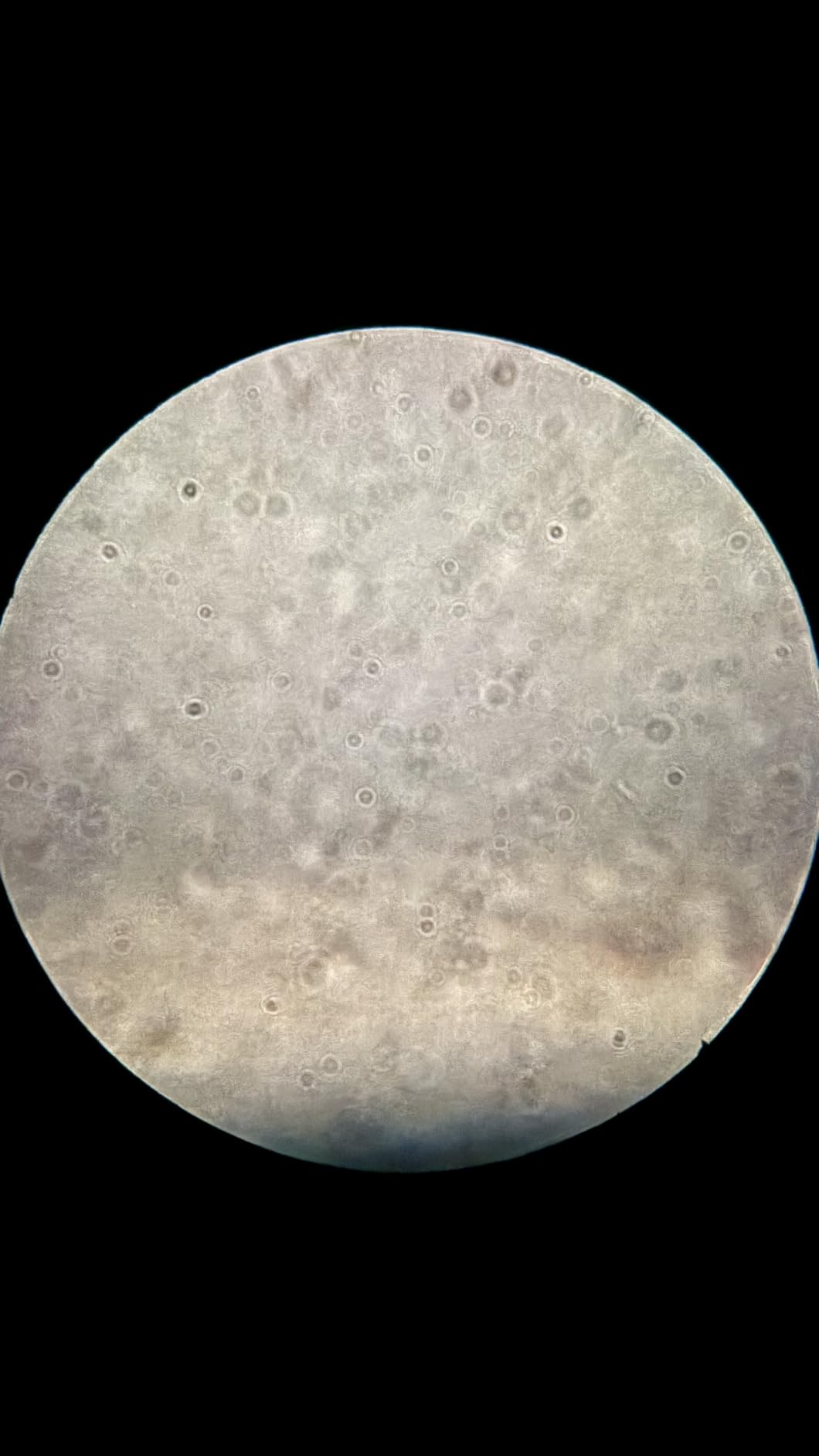
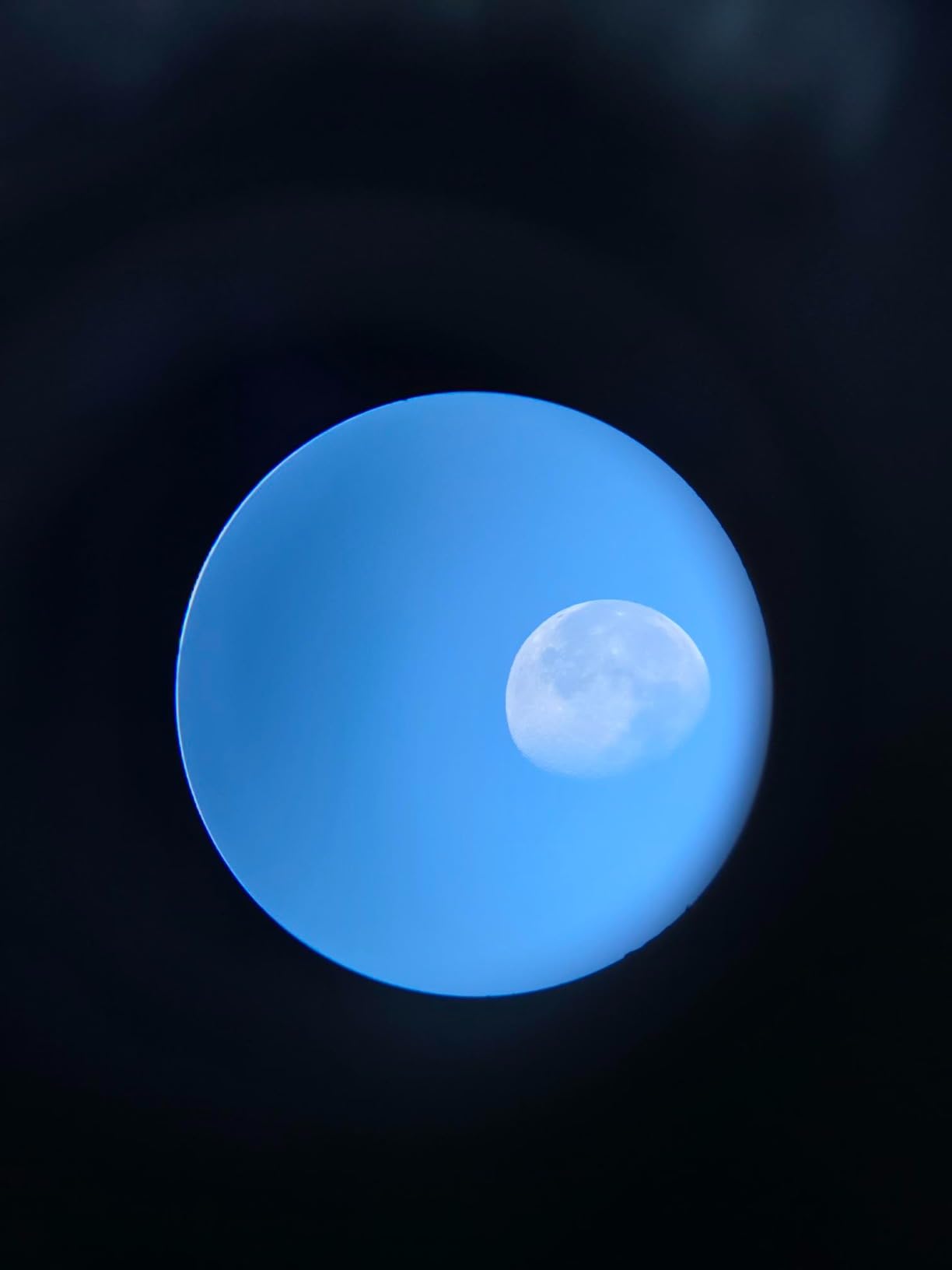
Two eyepieces and a 3x Barlow come in the box, more than several competitors at this aperture include. The phone adapter with a wireless shutter remote also lets you take Moon photos through the eyepiece, and owners regularly post close lunar shots taken that way.
The honest limitation is the mount. It is a light altazimuth tripod, so a planet drifts across the field within a couple of minutes and you nudge it back constantly. Irritating for an hour, fine for a family sitting down to look at the Moon.
Who this scope suits
Families with children roughly eight and up, and any adult who wants a first telescope that assembles without instructions. The tripod adjusts, the tube is light, and the carry bag means it lives in the closet until the next clear evening rather than becoming hallway furniture.
Who this scope is wrong for
If you want Saturn’s rings to resolve as rings, or you want tracking so you can study a target without constant corrections, a 70mm refractor on this mount will frustrate you. It is a Moon and Jupiter scope, and honest about that.
2. Celestron Travel Scope 70 – Built for the Car and the Closet
Celestron Travel Scope 70mm Beginner Portable Telescope with Backpack
70mm fully coated refractor
400mm focal length
4.2 pounds total weight
Pros
- Fully coated 70mm glass optics give crisp views of the Moon and daytime scenery
- No-tool setup that assembles in seconds
- Padded backpack holds the scope and every accessory
- 20mm and 10mm eyepieces cover wide and close-up views
- Backed by a two year warranty and US-based support
Cons
- Short 400mm focal length limits planetary detail
- Altazimuth mount with slow-motion controls only
- Finder scope needs careful calibration
Storage is the quiet reason so many beginners end up with a Celestron Travel Scope. It weighs a little over four pounds, comes with a padded backpack sized for the tube and accessories, and can be carried to a dark site in one hand. Owners mention weekend trips specifically because it is the only scope that fits the car easily.
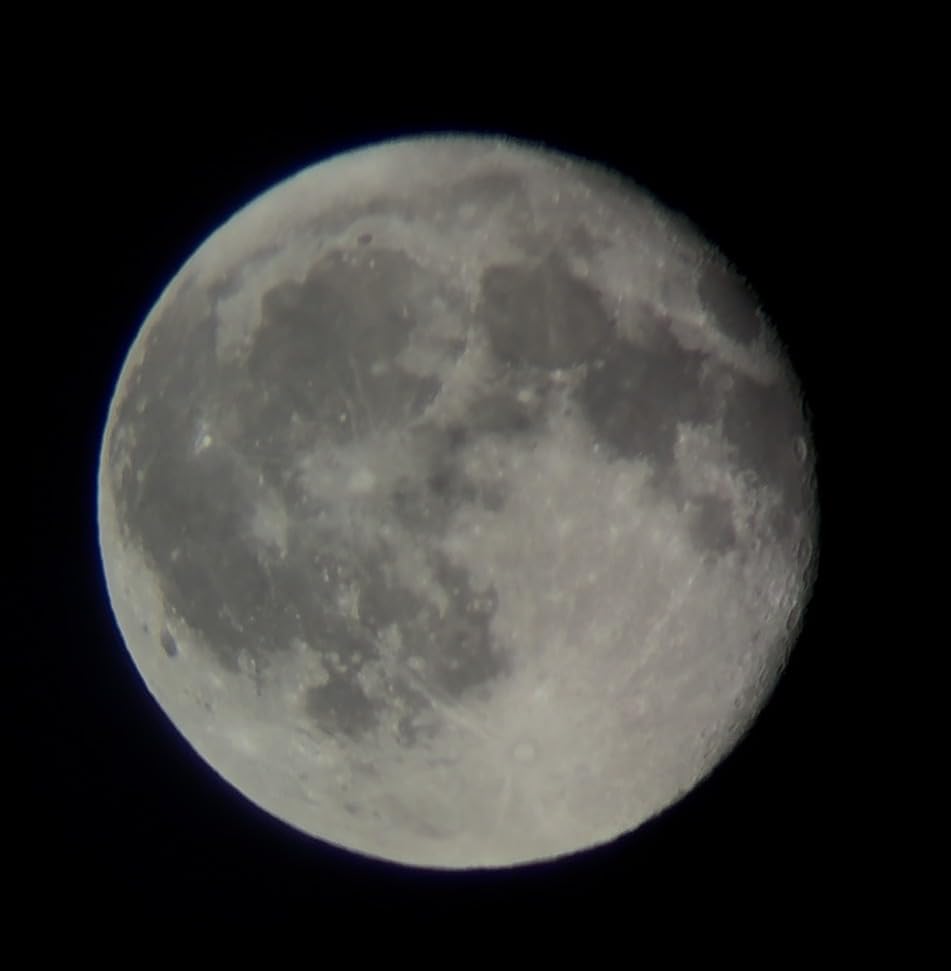
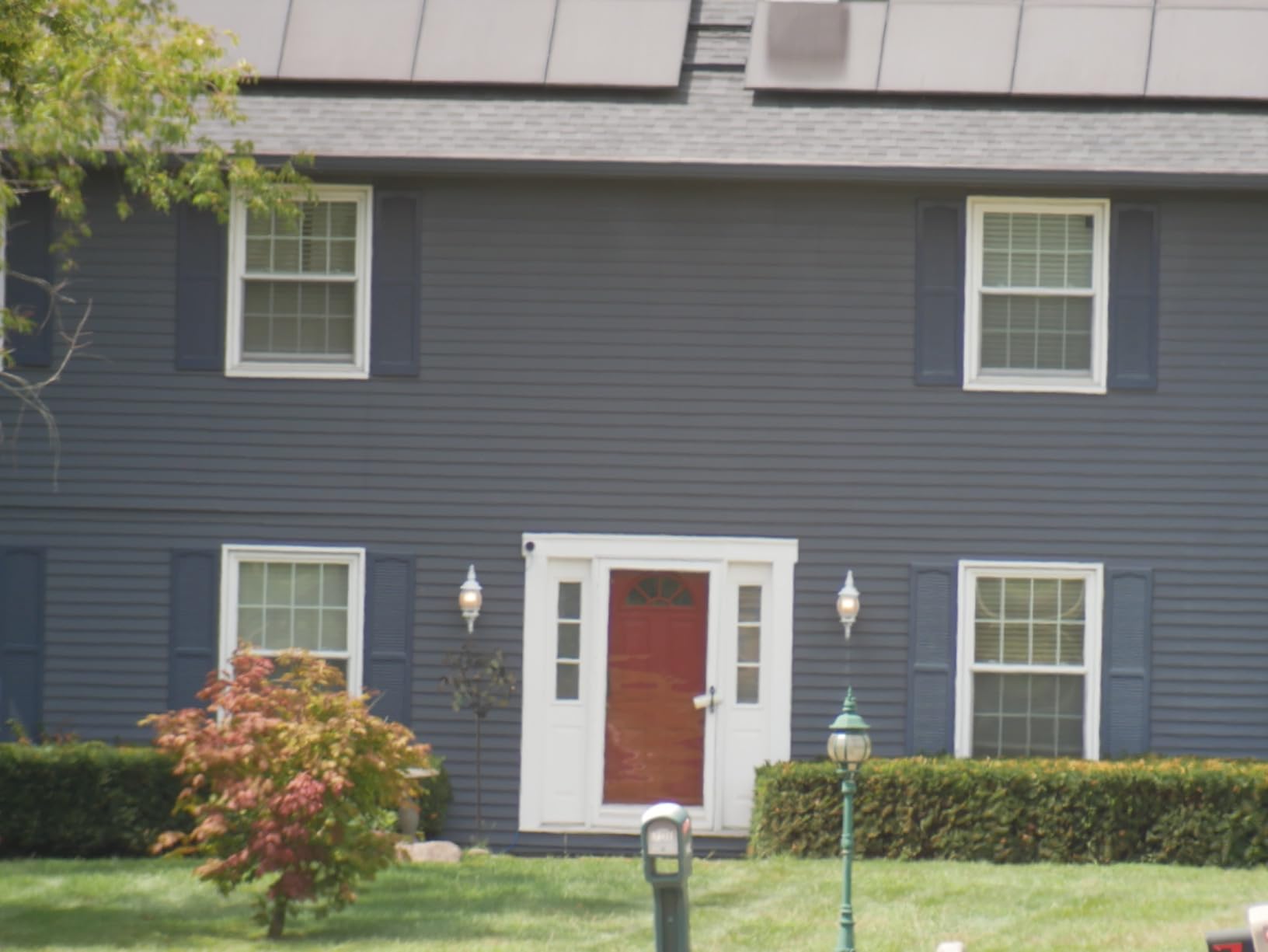
Optically it is a 70mm fully coated refractor with a 400mm focal length, so the same trade-off as the Gskyer applies: bright, contrasty lunar views and modest planetary magnification. The 20mm and 10mm eyepieces plus a 45 degree erect image diagonal make daytime viewing of distant scenery a real possibility rather than a novelty.

The 45 degree diagonal is a small decision that pays off enormously for kids and anyone with neck trouble. Instead of bending over a straight eyepiece at an awkward angle, the eyepiece sits somewhere comfortable, and on a long evening of Moon watching that is worth more than extra magnification.
The recurring complaints are predictable. The finder scope is fiddly to align, so practise it in daylight before the first night, and the 70mm aperture cannot deliver the planetary detail a longer tube would. Neither breaks a portable first scope.
Who this scope suits
Travellers, campers and anyone without a garage. If the question is whether this will ever leave the house, the backpack answers it. It is also forgiving enough to hand to a child who will be dragging it around a garden.
Who this scope is wrong for
Skip it if your nights are short and you want maximum detail before the planets set. A 400mm focal length caps useful magnification and the manual mount means constant re-centring. It is also no help for astrophotography, since nothing here is designed to hold a camera steady.
3. Celestron PowerSeeker 50AZ – The Smallest Aperture Worth Buying
Celestron PowerSeeker 50AZ Grab-and-Go Beginner Refractor Telescope
50mm fully coated refractor
600mm focal length
3.6 pounds
Four eyepieces plus 3x Barlow
Pros
- Low-cost entry point that still shows real lunar craters and Jupiter moons
- Four eyepieces plus a 3x Barlow exceed what rivals include at this tier
- Light enough for backyard
- campsite or carry-out observing
- Two year warranty with US-based support
Cons
- 50mm aperture produces dim soft views of anything beyond the Moon
- Tripod and hardware feel cheap and can topple if bumped
- Yoke mount jiggles
- making high power viewing difficult
I include the PowerSeeker 50AZ with a warning attached, because it is the scope most often given to a child and the one most often quietly disappointed with. A 50mm aperture is genuinely marginal. It resolves the largest lunar craters, the phases of Venus and the Galilean moons, and beyond that the image is dim and soft no matter which eyepiece you use.
What it does offer is a 600mm focal length on a 3.6 pound body, four eyepieces including a 1.5x erecting eyepiece, and a 3x Barlow. That is more in the box than most scopes at twice the size, and the erecting eyepiece gives an upright image for daytime viewing, which most refractors at this level do not.
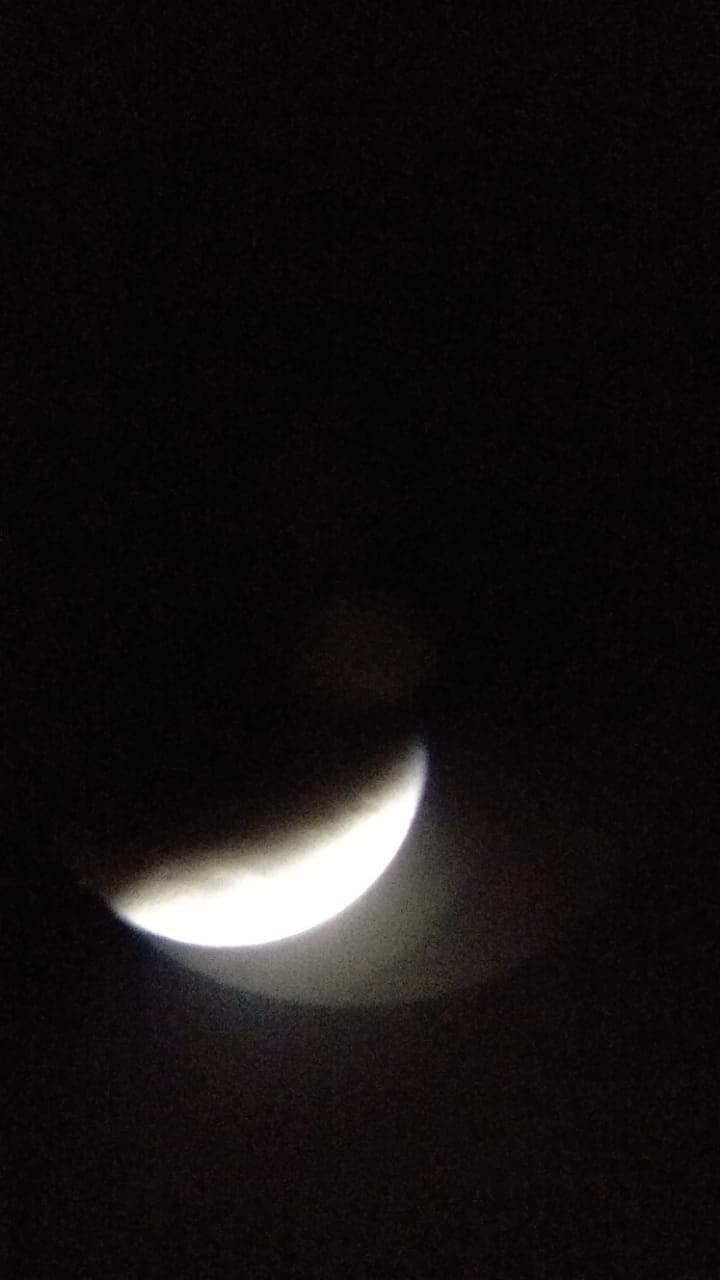
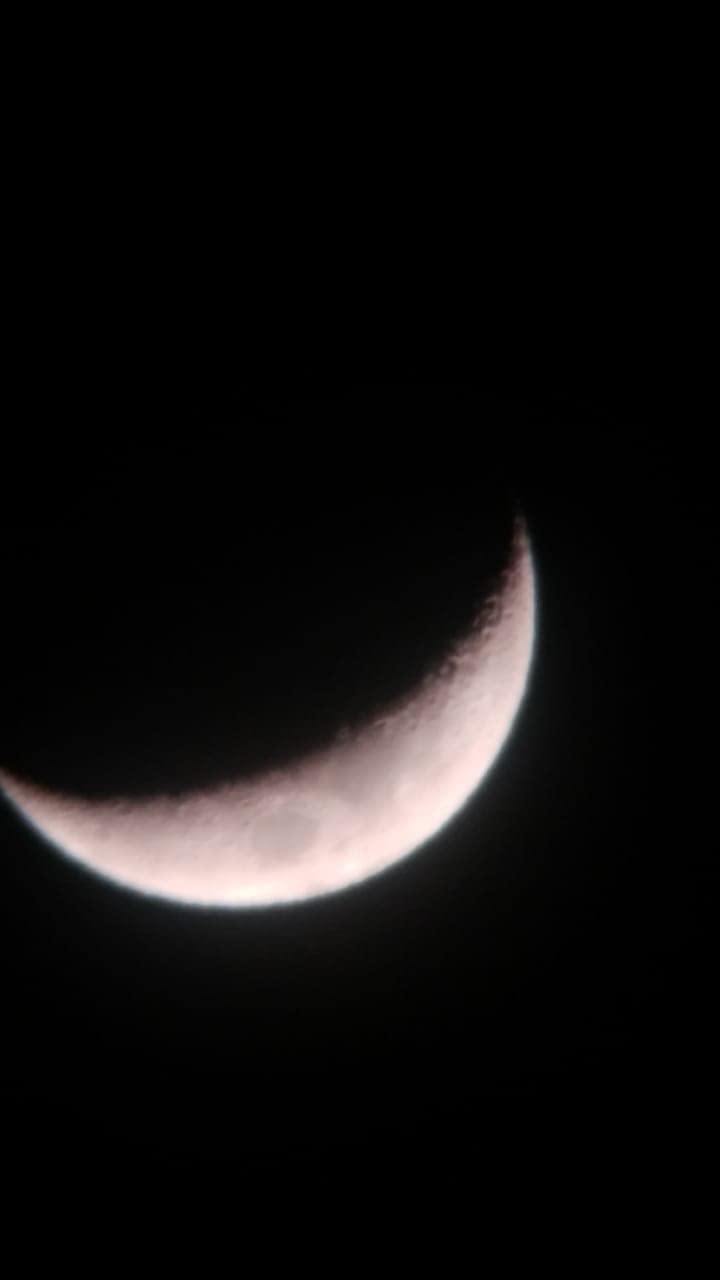
Owners fall into two camps, and reading both is useful. Plenty of beginners and families say it assembled in minutes and showed real lunar detail, with several multi-year owners still using it. Others call it a toy with cheap screws and a shaky stand. The difference is usually the mount, a simple yoke that jiggles when you touch the focuser.
Community consensus on first telescopes lands in the same place: below about 70mm of aperture you are better served by 10×50 binoculars and money saved for a second telescope. As a gift for a child who is certain to love it, it will do that job. It is not the first telescope I would buy with my own money.
Who this scope suits
Gift buyers on a tight budget, and families who want an activity rather than an instrument. A child looking at the Moon through this with an adult has a genuinely good night, and four eyepieces give you plenty to talk about.
Who this scope is wrong for
Anyone whose ambition reaches past the Moon. A 50mm aperture will never resolve Saturn’s rings or show a nebula, and no amount of magnification changes that. Buying this to avoid spending too much often ends with a second purchase.
4. Koolpte 80mm Refractor – A Complete Kit Out of the Box
Koolpte Telescope for Adults & Beginner Astronomers – 80mm Aperture 600mm Fully Multi-Coated High Transmission Coatings with AZ Mount Tripod Phone Adapter, Carrying Bag, Wireless Control.
80mm multi-coated aperture
600mm focal length f/6.7
25mm and 10mm eyepieces
Pros
- 80mm multi-coated aperture gathers more light than 70mm entry scopes
- No-tool setup that a novice can complete unaided
- Phone adapter and wireless remote and carrying bag all included
- Adjustable tripod and quick-focus design suit beginners
- 25mm and 10mm eyepieces plus a 3x Barlow included
Cons
- Altazimuth mount means targets drift out of the field of view
- Fully manual operation with no tracking
- Entry-level eyepieces limit detail at high power
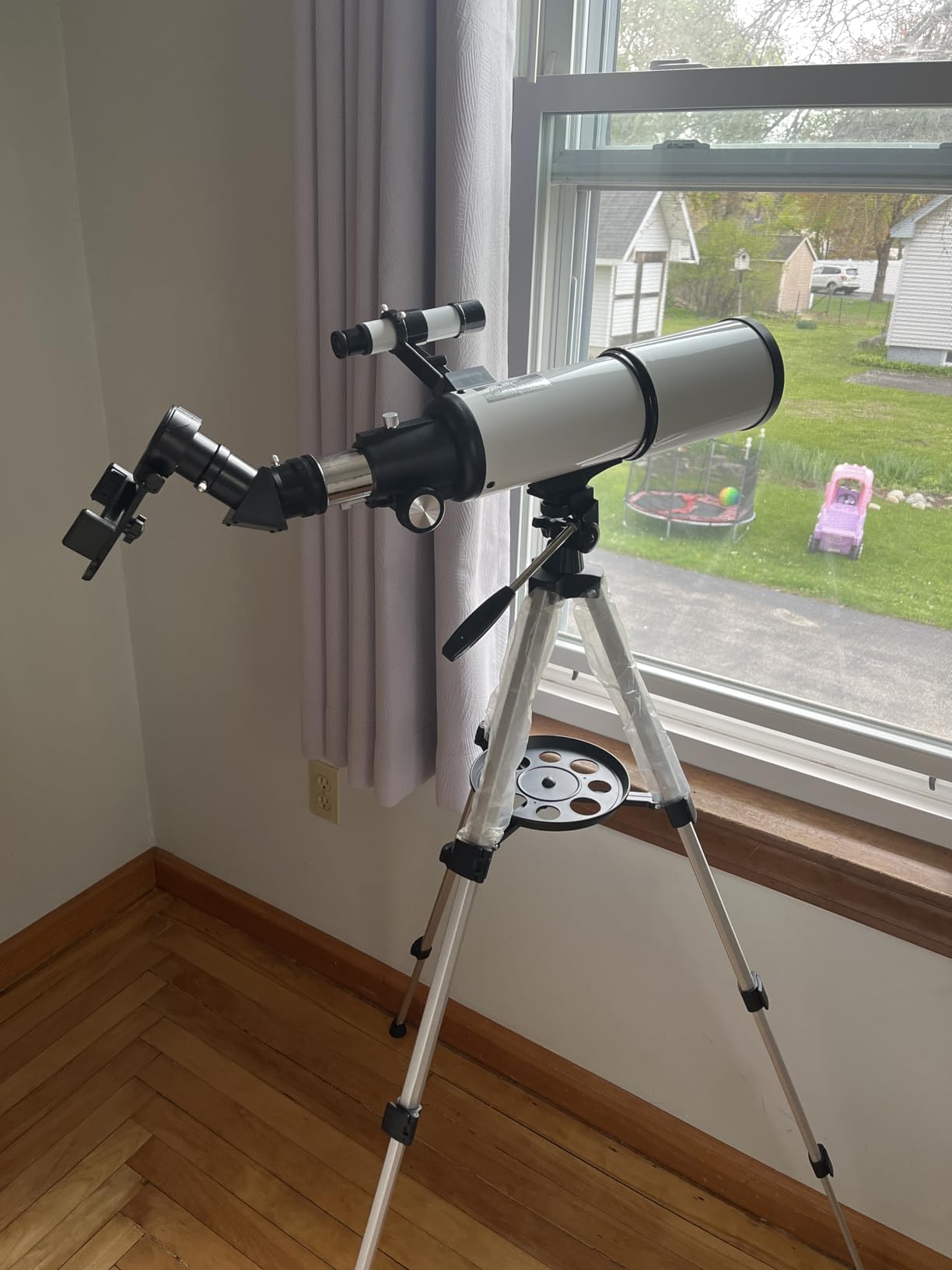
Stepping up one tier from the 70mm scopes changes the view more than most people expect, and the Koolpte 80mm is the cheapest place to feel that. Eighty millimetres of fully multi-coated glass on a 600mm focal length gives a noticeably brighter image than a 70mm/400mm tube, and the extra aperture lets Saturn show a hint of ring separation rather than a single oval.
The bundle is unusually complete: 25mm and 10mm eyepieces for 24x and 60x, a 3x Barlow, a 5×24 finder scope, an adjustable aluminum tripod, a phone adapter, a wireless remote and a carry bag. The no-tool assembly means a first-time owner can be running before the sky is dark.
The 5 degree field of view is wide, which helps beginners because finding a target takes longer in a narrow field. It also means this scope rewards short, focused sessions: twenty minutes on the Moon and Jupiter beats an hour of nudging the altitude knob.
The limit is the one shared across this whole group of manual mounts: no tracking, so the target leaves. And while the aperture is respectable, the bundled Kellner eyepieces do not extract everything it can show. A 6mm or 9mm eyepiece is the most common upgrade among owners and the cheapest way to get more from this tube.
Who this scope suits
An adult buying a first telescope who wants one box that arrives complete, with nothing essential to add before the first night. It also suits anyone wanting a grab-and-go scope for a balcony or a campsite.
Who this scope is wrong for
It is not for you if you want deep-sky objects. At 80mm with basic eyepieces the sky beyond the Moon and planets stays dim, and it is a poor fit for anyone who wants to sit on a single target without re-centring.
5. Celestron AstroMaster 70AZ – Long Tube, Red Dot Finder
Celestron AstroMaster 70AZ Refractor Telescope for Moon & Planet Viewing
70mm coated achromatic refractor
900mm focal length
StarPointer red dot finder
Pros
- Long 900mm focal length gives noticeably higher magnification than typical beginner scopes
- Coated achromatic refractor delivers crisp Moon and planet detail
- Red dot finderscope far easier to align than a traditional finder
- Altazimuth panhandle makes pointing intuitive for newcomers
- Two year US warranty with unlimited support
Cons
- 10.8 pounds makes it one of the heavier beginner scopes here
- Altazimuth mount has no tracking so targets drift quickly
- Single lithium battery included for the red dot finder only
The AstroMaster 70AZ is the same aperture as the entry-level 70mm scopes with roughly twice the focal length, and that single choice is why owners report sharper planetary images. A 900mm focal length spreads the same 70mm of glass over a longer tube, which pays off when you point at Jupiter or Saturn rather than the Moon.
The other thing that sets it apart is the StarPointer red dot finder. Instead of an inverted optical tube you have to focus and align carefully, it projects a red dot you line up with the target. That removes the most common point of frustration in the first ten minutes, and reviewers mention it more than any other feature.
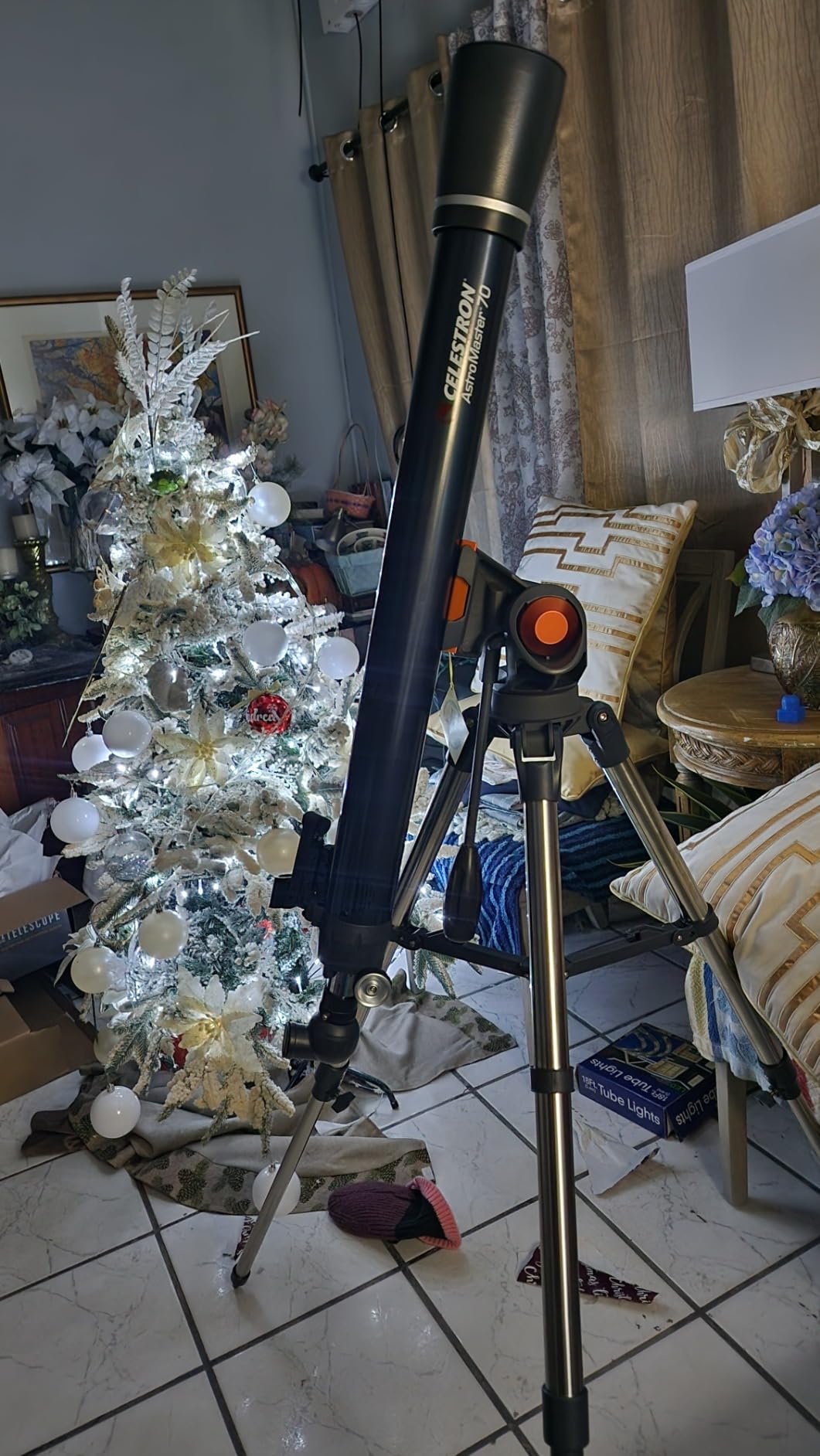
The panhandle altazimuth mount works like a camera panhandle, with one axis on the handle and one on a knob. Combined with the red dot, it is the easiest of the 70mm options to point, which is why it is the one we would put in front of a nervous beginner.
Against that, it is heavy. At 10.8 pounds it is the bulkiest 70mm refractor here, which matters if your observing spot is a staircase or a field at the end of a dark path. There is no tracking, and the erect image diagonal is not what you want if you ever attach a camera.
Who this scope suits
A beginner who already knows they want planets rather than the Moon, and who values a straightforward setup over portability. It is also a good choice for a fixed observing spot such as a patio or garden, where weight matters much less.
Who this scope is wrong for
If you have to carry it any distance, or live where there are stairs and no storage, the weight and the 68 centimetre tube are real drawbacks. Choose the Travel Scope or the Gskyer 70mm instead and accept a softer planetary image.
6. Celticbird 80mm – A Kit That Grows With a Child
Celticbird Telescope for Adults High Powered, 80mm Aperture 600mm AZ Mount Refractor Telescope for Kids Beginners – Portable Telescopes for Adults Astronomy with Backpack, Phone Adapter, Moon Filter
80mm multi-coated aperture
600mm focal length f/6.7
5.8 pounds
Moon filter included
Pros
- 80mm multi-coated lens gives bright clear images
- Moon filter included and it visibly improves lunar contrast
- Everything packs into the included backpack for travel
- Tripod adjusts from 17.7 to 52 inches for kids and adults
- Tool-free assembly with a manual and setup video
Cons
- Altazimuth mount drifts so targets leave the field of view
- Included eyepieces limit magnification to 30x and 66x
- Phone adapter alignment is fiddly at first
The Celticbird 80mm is built around a simple idea: everything a beginner might need is in one bag. The 80mm multi-coated optics, moon filter, phone adapter, finder scope and tripod all pack into the included backpack, which removes the two things that most often end a beginner’s enthusiasm, losing a component and storing something awkward.
The moon filter is the detail worth flagging. A full Moon is genuinely uncomfortable at high magnification, and a filter over the eyepiece makes the difference between a twenty minute session and an hour. It is a small part most competitors at this tier leave out.
The tripod adjusts from 17.7 to 52 inches, which sounds minor until you realise a seven year old and an adult can both use the same scope without standing on a crate. At 5.8 pounds it is light enough for a child to carry out to the garden alone once they know what they are doing.
The included eyepieces give 30x and 66x, and plenty of owners add a 6mm to push further. Reviewers also note the finder is inverted and takes some aligning, so the first ten minutes are better spent in daylight than under a dark sky.
Who this scope suits
Families with a child between six and fourteen who want a scope that grows with them. The adjustable tripod, the light weight and the complete kit make it easy to hand over and let a young observer run the session. It also travels well, since everything lives in one bag.
Who this scope is wrong for
Not the scope to buy if you want much beyond the Moon and the brighter planets. Eighty millimetres with basic Kellner eyepieces has a hard ceiling, and it is a poor choice for a long session on a single drifting target.
7. MEEZAA 90mm Refractor – The Widest Lens in the Refractor Group
MEEZAA Telescope for Adults High Powered, 90mm Aperture 800mm Refractor
90mm multi-coated aperture
800mm focal length f/8.88
10mm and 25mm eyepieces plus 3x Barlow
Pros
- Widest aperture among the beginner refractors here at 90mm
- Long 800mm focal length with a 3x Barlow reaches 240x
- Light enough for a ten year old to carry but steady once set up
- Assembly takes about 20 minutes with illustrated instructions
- Phone adapter works for casual Moon and planet snapshots
Cons
- Finder scope is inverted and misaligned with the main tube out of the box
- Phone adapter weight knocks the finder out of alignment
- Touching the focus knob makes the tube wobble
- Advertised high power lunar detail is not achievable with the included eyepieces
At ninety millimetres this is the biggest lens in the refractor group, and that is a real step up rather than a marketing one. A 90mm aperture on an 800mm focal length gives lunar craters at the centre of the field with shadow detail across them, and Jupiter’s belts begin to band rather than sit flat. Owners consistently call it the first scope that felt like a proper instrument.
It arrives with a straight-through finder, a zenith mirror, an accessory tray, a phone adapter, a carry bag and a stainless steel tripod running from 28 to 46 inches. The 10mm and 25mm eyepieces plus a 3x Barlow cover 32x to 240x, and for most owners the sweet spot sits well below the maximum.
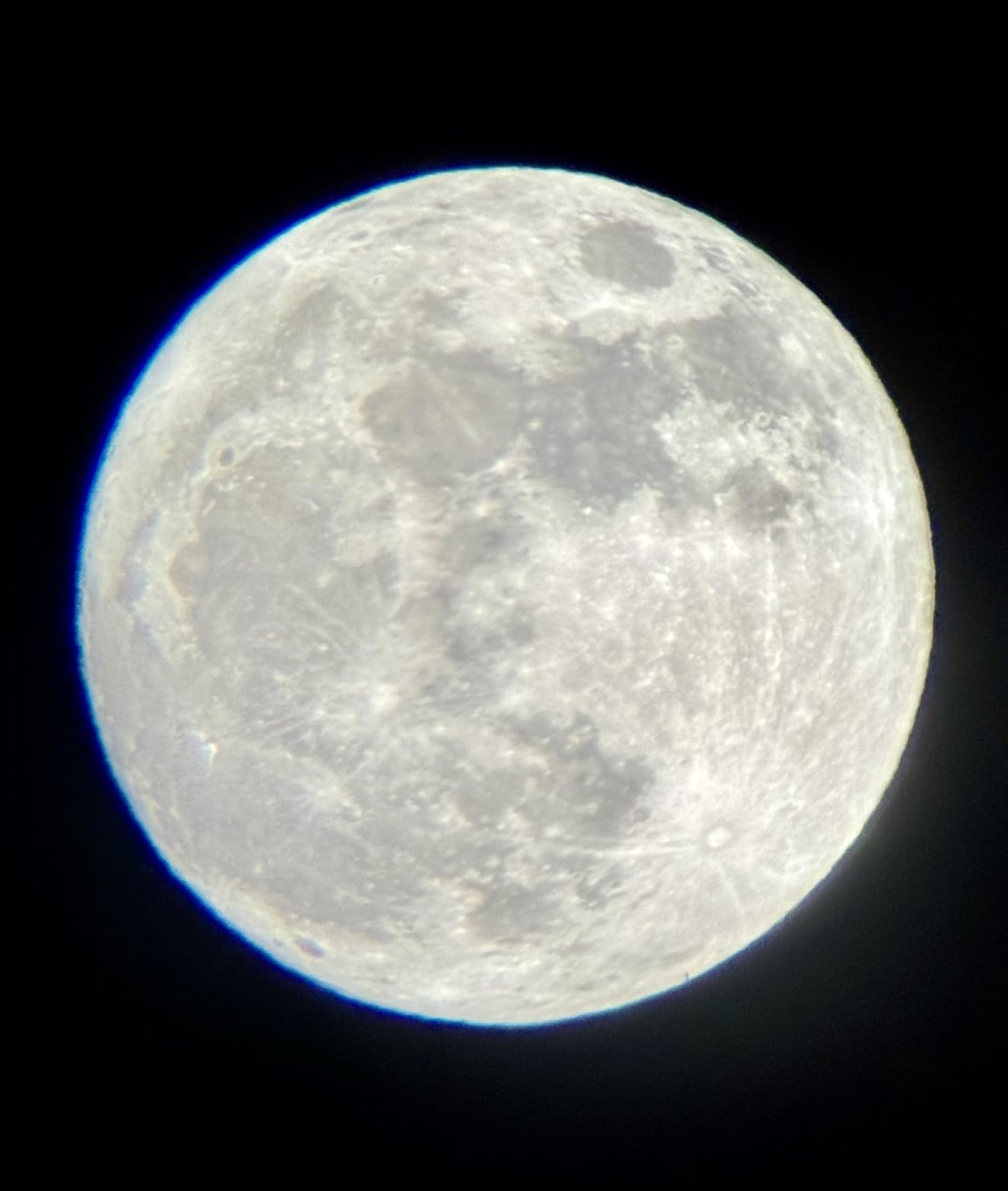
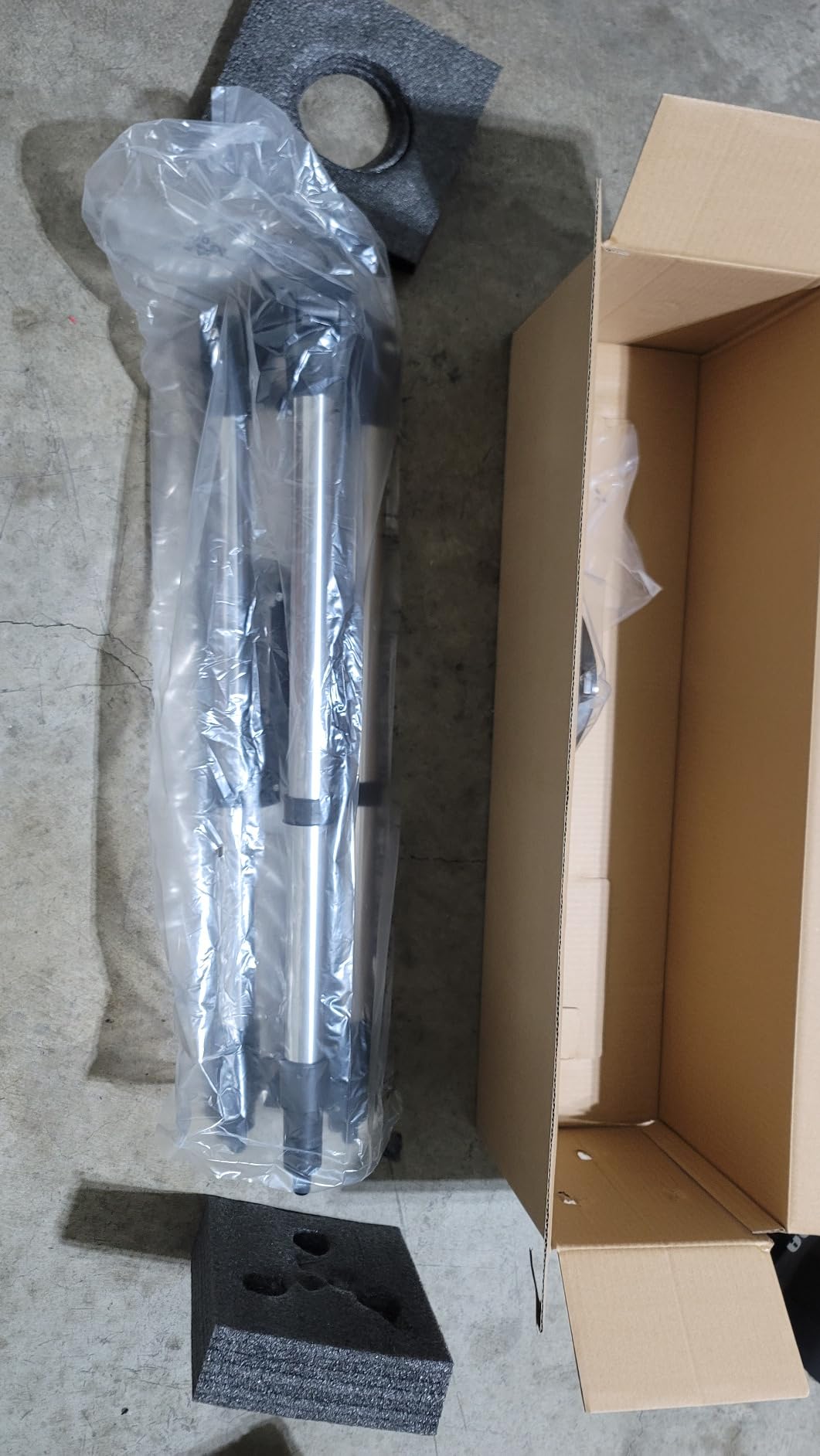
Assembly takes around twenty minutes with the illustrated instructions, and owners describe the packaging approvingly, with each part individually cushioned, which sounds trivial until something arrives damaged.
The complaints are practical rather than optical. The finder is inverted and usually needs realigning out of the box, and the phone adapter adds enough weight at the back to knock it off again. Several buyers note that the lunar detail in the listing photos needs a 6mm eyepiece, which is not included. Budget for that one accessory.
Who this scope suits
A beginner who wants the most an eyepiece can give without jumping to a reflector and learning collimation. Ninety millimetres of refractor is a rare middle ground: big light grasp, no maintenance, sealed optics. It also suits older children who will spend hours on the Moon rather than ten minutes.
Who this scope is wrong for
A very young child on their own, because the finder needs adjusting and the tube is 80 centimetres long. Have an adult set it up and align the finder first. It is also a poor astrophotography platform.
8. DWARFLAB Dwarf Mini – The Smart Telescope That Skips Alignment
DWARFLAB Dwarf Mini Smart Telescope – 1.85lb Portable Astronomy Telescope
1.85 lb all-in-one body
App control with sky atlas
Auto GOTO with plate solving
Pros
- At 1.85 lb it fits in a backpack as genuinely portable astronomy gear
- Auto GOTO with plate solving finds and tracks targets with no finder alignment
- App control with a built-in sky atlas gets a first image in about 3 minutes
- Equatorial mode supports up to 90-second exposures for stacking
- Built-in light pollution filters let it work from suburban skies
- Internal stacking and cloud processing handle the imaging work
Cons
- Sensor resolution is too low for large prints or fine planetary detail
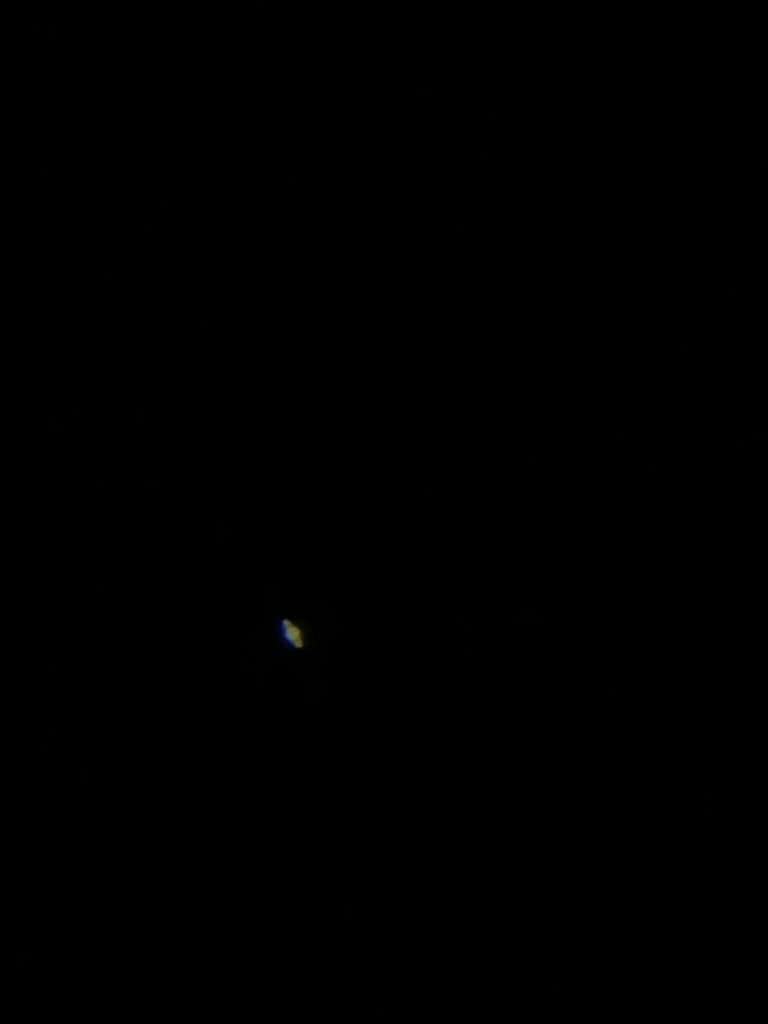
- Not suited to planetary viewing since planets appear as plain discs
- Small deep-sky objects look tiny and do not enlarge well
- EQ mode needs a separate tripod with a pan and tilt head
- Internal battery runs a few hours so a power bank is needed for long runs
This is the one scope here that is not primarily an eyepiece instrument, and that changes what a first telescope can be. The Dwarf Mini weighs 1.85 pounds, points itself, tracks the sky and captures through a Sony IMX662 sensor, with processing handled in the app and in the cloud. There is no finder to align and no polar alignment ritual, which removes the two steps that cause most beginners to give up.
In practice the experience is closer to a camera than a telescope. You put it on a tripod, open the app, tap a target in the built-in sky atlas, and plate solving finds and centres it. A first usable image arrives in a few minutes, and equatorial mode allows exposures up to 90 seconds, enough to stack faint objects a conventional setup would need a tracking mount and a laptop to capture.
The built-in light pollution and dual-band filters are what make it viable from a suburban or even urban backyard. Several owners with expensive conventional astrophotography gear describe matching images they struggled to get from an 8 inch Dobsonian with a DSLR, which tells you where the ceiling is.
That ceiling is real. Planets come out as small plain discs, small deep-sky objects do not enlarge, and the sensor will not support large prints. You also need a separate tripod with a pan and tilt head for equatorial mode, and the internal battery runs a few hours, so an all-night session needs a power bank.

Who this scope suits
Anyone who wants to photograph the sky rather than look through an eyepiece, and would rather spend an evening on imaging than learning to collimate mirrors. It is also the most genuinely portable option here and the only one that works from a packed city, because the filters do the work a dark site would.
Who this scope is wrong for
If you love looking through an eyepiece, this is the wrong tool. There is no eyepiece, so no view of Saturn and no sense of standing at the glass looking into the distance, which is the part most beginners fall in love with. It is also a one-way door, since this is an imaging camera rather than an optical tube.
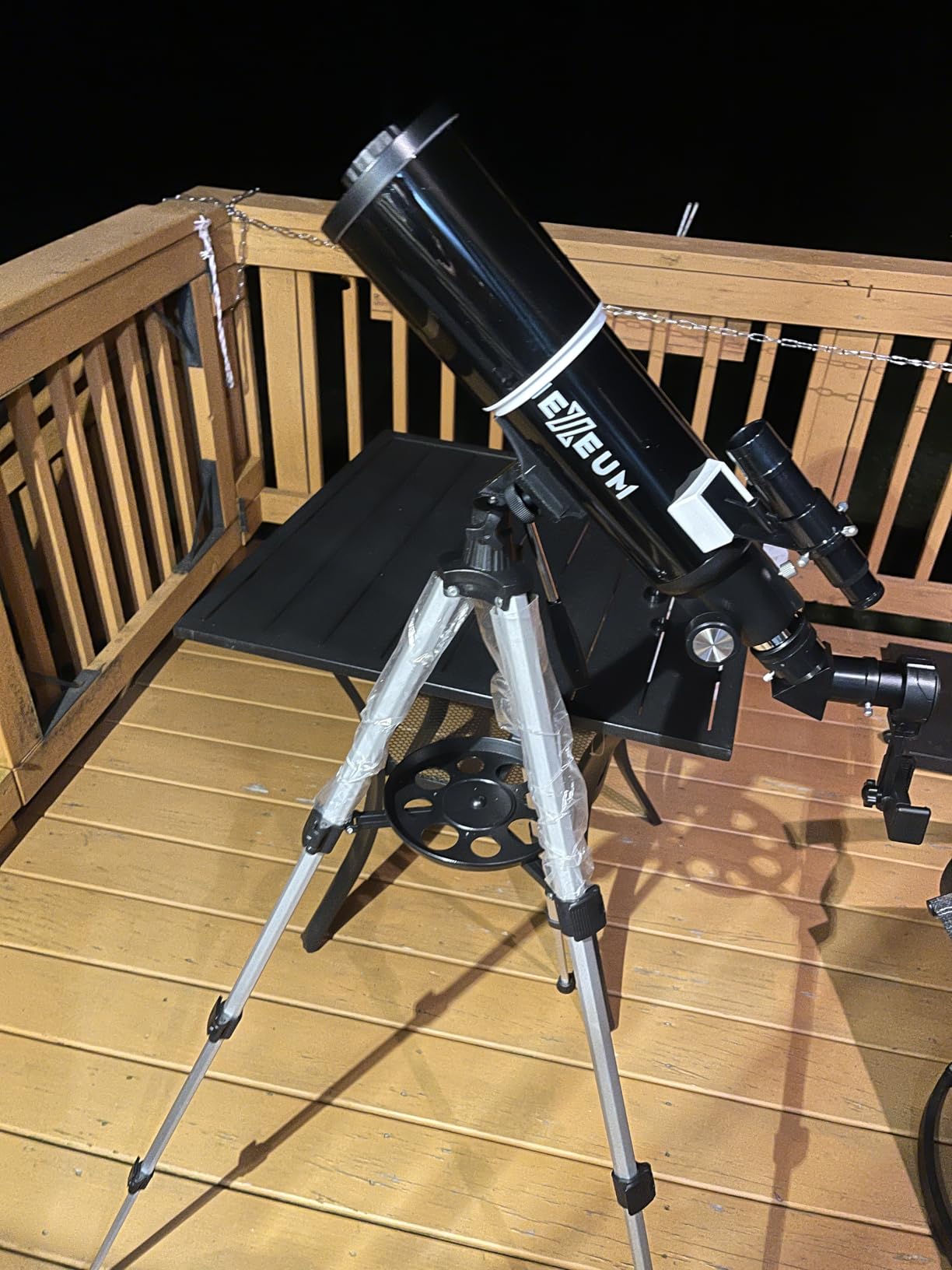
9. MEEZAA 150EQ Reflector – the Step Up in Light
MEEZAA Telescope, 150EQ Newtonian Reflector Telescope for Adults Astronomy Beginners, Professional Astronomical Telescopes with Equatorial Mount, Tripod, Phone Adapter, Moon Filter and Large Carry Bag
150mm aperture Newtonian reflector
650mm focal length
German equatorial mount
Pros
- 150mm aperture gathers far more light than any refractor here
- German equatorial mount with slow-motion knobs makes tracking easy
- Large accessory bundle including moon and solar filters plus a Barlow
- Stable mount and heavy tripod hold steady at high power
- Owners report Jovian bands
- the Great Red Spot and Orion from a backyard
Cons
- A verified buyer measured 130mm instead of the listed 150mm
- Heavy and complex enough that assembly may need two people
- Bundled Kellner eyepieces are entry-level and many owners upgrade
- Newtonian reflectors need periodic collimation
- Phone holder is difficult to align and the plastic focuser limits camera use
This is where the roundup stops being about a starter scope and starts being about the best value in light gathering. A 150mm aperture is more than twice the light of a 70mm refractor, and that is the difference between the Moon and planets and a sky full of galaxies, globular clusters and nebulae. Owners who have used larger instruments describe it as the point where astronomy became a hobby rather than a demonstration.
The mount matters here. It is a German equatorial mount with precision dials and slow-motion controls, so once the target is centred you can hold it with a knob instead of chasing it around. The counterweight arrangement balances the tube, and the heavy stainless steel tripod and accessory tray hold everything steady at higher magnification.
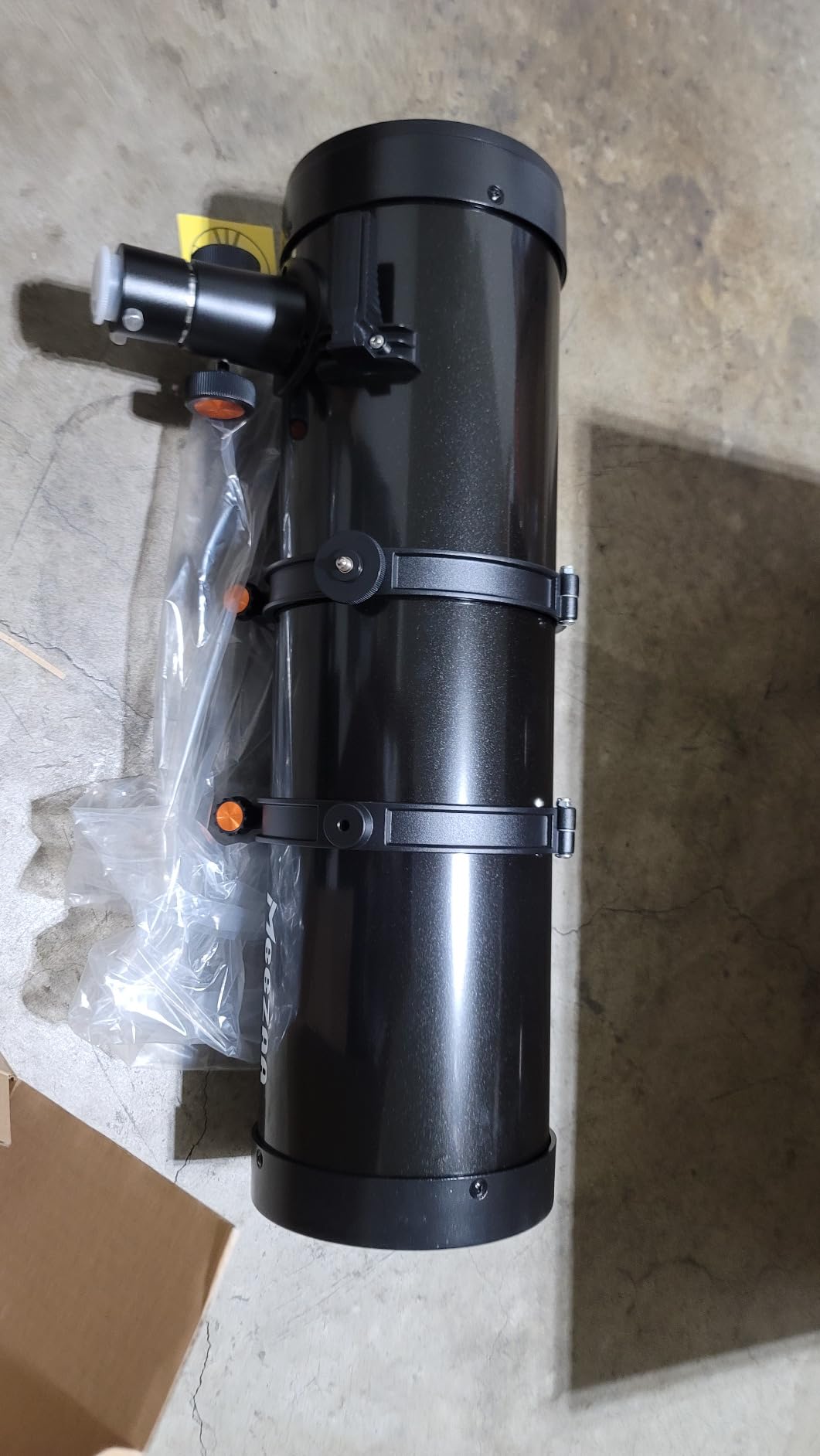
The bundle is generous: 25mm and 10mm eyepieces, a 2x Barlow for 26x to 130x, a red dot finder, a moon filter, a phone adapter and a large carry bag. For a beginner assembling a first setup, the extras are the part of the purchase that is easy to forget, and here they are simply included.
Two cautions. One verified buyer measured the aperture at 130mm rather than the listed 150mm, so treat the figure as a class rather than a guarantee. And a Newtonian reflector needs periodic collimation, a ten-minute job once you have watched somebody do it and a genuinely daunting prospect if nobody has.
Who this scope suits
A beginner who has already spent time on a small scope and now wants to see faint objects. This is the upgrade step that keeps people in the hobby, because the jump in light gathering at this size is dramatic rather than incremental. It suits anyone whose sky is bright and who wants the best chance of seeing something rather than nothing.
Who this scope is wrong for
It is too heavy and too many steps for a first telescope bought on impulse. Assembly may take two people, and the equatorial concept takes an evening to understand. Many owners call it a second telescope, and we would agree. It is also wrong for a small home with no storage, because it does not get carried out and put away casually.
10. Gskyer 130EQ Reflector – Tracking That Holds an Object Still
Gskyer 130EQ Professional Astronomical Reflector Telescope
130mm multi-coated aperture
650mm focal length at f/5
German equatorial mount
Pros
- 130mm aperture with all-glass multi-coated optics gives a bright image
- German equatorial mount provides real tracking so objects stay centred
- Short 24-inch f/5 tube and toothless focusing base are beginner-friendly
- Three eyepieces plus a 3x Barlow and a finder scope are all included
- Bluetooth wireless remote pairs with a phone with no app download
Cons
- 30.1 pounds makes this the heaviest scope in the roundup and awkward to move
- Reflector design requires occasional collimation
- Manual equatorial mount still needs polar alignment before tracking works
- Equatorial setup is more involved than an altazimuth mount
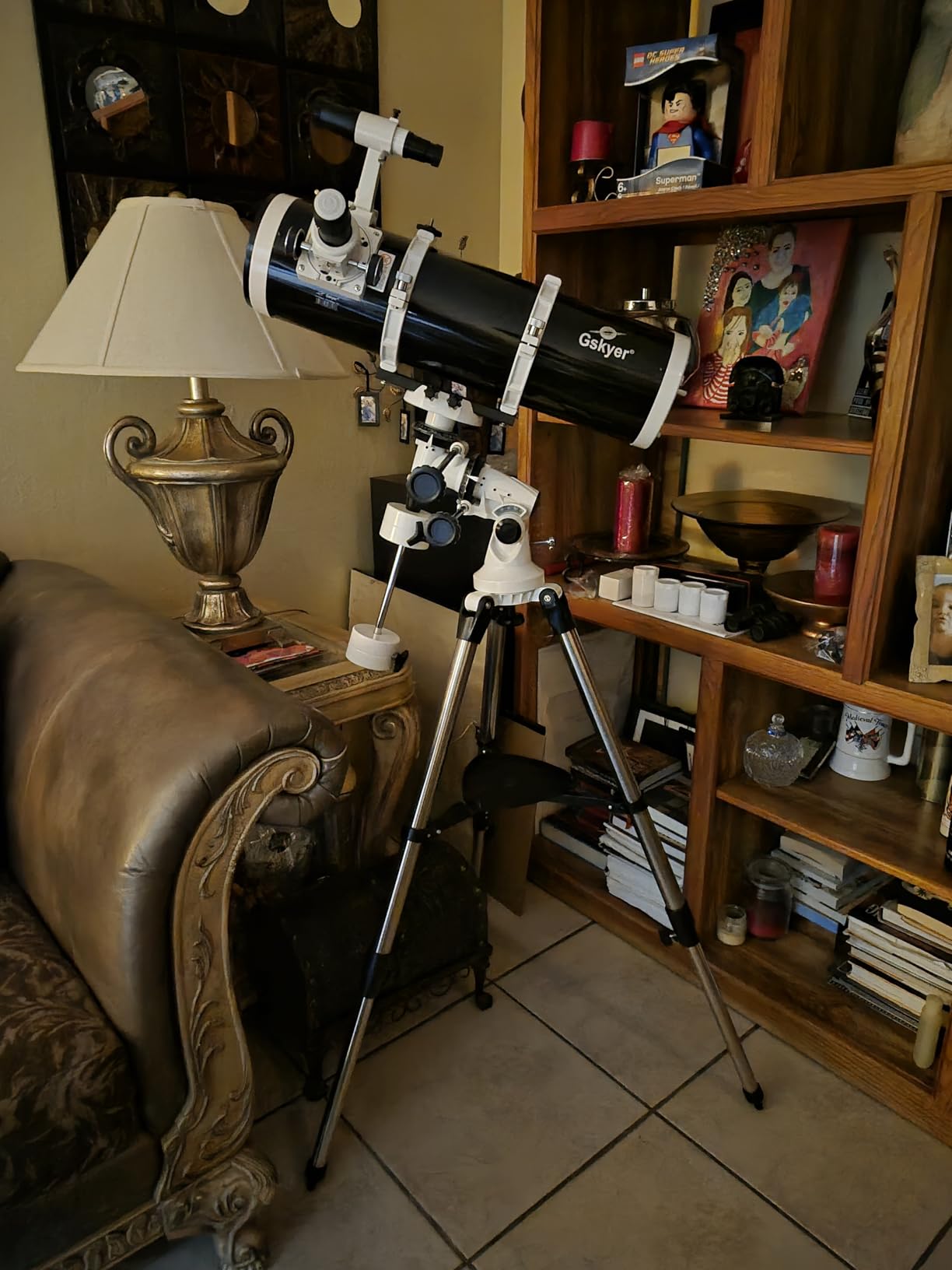
The Gskyer 130EQ solves the problem that annoys people about every scope above: drift. A German equatorial mount, once aligned, tracks the sky and keeps a target in the eyepiece while you watch it, turning a 30 second glance into a five minute study. On a 130mm aperture that is a genuinely different experience from the manual altazimuth scopes earlier in this list.
The f/5 design is the other clever part. A fast focal ratio means a short 24 inch optical tube for the aperture, and short tubes are far easier for one person to carry, mount and balance on an equatorial head. The toothless focusing base removes the fiddly fine-focus knob that puts beginners off, and three eyepieces plus a 3x Barlow cover everything from low power to around 300x on paper.
It is also well equipped for its tier, with a reflex finderscope, a Bluetooth wireless camera remote that pairs with a phone with no app download, an adjustable tripod, and a one year warranty backed by lifetime support.
The weight is the drawback nobody understates. At 30.1 pounds this is the heaviest scope in the roundup, and it is genuinely awkward to move from storage to car to field. Polar alignment also has to be done before tracking behaves, and the reflector design means occasional collimation as well.
Who this scope suits
A patient beginner who has someone to help with setup, or who is willing to spend an evening learning one new skill. Tracking turns observing from a party trick into something you can sit with, and this is the one scope in the roundup that pairs a tracking mount with a genuinely beginner-friendly tube.
Who this scope is wrong for
Do not start here. If you cannot yet point a scope at the Moon, an equatorial mount with polar alignment is the wrong first lesson, and the weight will put you off before the optics win you over. It is also a poor fit for anyone who travels with their observing gear.
How to Choose Your First Telescope
Aperture decides what you see. Everything else in this guide is a preference, but aperture is physics. A larger lens or mirror collects more light, resolves finer detail and shows fainter objects, and no eyepiece or mount can make up the difference. If you can only remember one rule, remember this one, and ignore every number on the box that is not an aperture.
Refractor or reflector is the second decision, and it is mostly about maintenance. A refractor uses a solid glass lens, needs no alignment after it leaves the factory, and is sealed against dust, which makes it the reliable choice for families and for anyone who will use the scope intermittently. A reflector uses a mirror at the back of the tube, gives you more aperture for the same money, and needs collimating every so often. Collimation is not difficult, but it is a step that puts beginners off if they hit it alone.
Altazimuth or equatorial is the third decision, and this is where beginners most often overcomplicate things. An altazimuth mount moves in two directions, up and side to side, which is exactly how your head works and requires no setup beyond putting the scope on a tripod. An equatorial mount tracks the rotation of the sky, holds a target steady once aligned, and demands polar alignment first. For a first scope, altazimuth wins. Our beginner grill guide makes the same argument about controls: a feature that needs calibrating before it works is a feature that ends up unused.
Weight and storage deserve more attention than they get. A telescope you cannot lift is a telescope that stays in a closet, and that is the most common reason first scopes are sold second-hand within a year. Ask yourself where it will live and how far you will walk with it. Anything under about 10 pounds can be carried one-handed from a door. Anything over 25 pounds needs a plan, because the heaviest scope in this roundup comes in at just over 30 pounds and needs two people to move comfortably. Our beginner mixing bowl picks follow the same rule, and list only the sets that actually come out of the cupboard.
The first night matters as much as the purchase. Align the finder in daylight before it gets dark, because finding a target through an unaligned finder in the dark is the moment most beginners give up. Let the tube sit outside for half an hour so the optics acclimate to the temperature and stop fogging, then start on the Moon. It is the brightest, largest, easiest target in the sky and it rewards a beginner instantly, which is exactly what a new hobby needs. Keep sessions short at first: twenty focused minutes beats an hour of fiddling, and tomorrow night is always there.
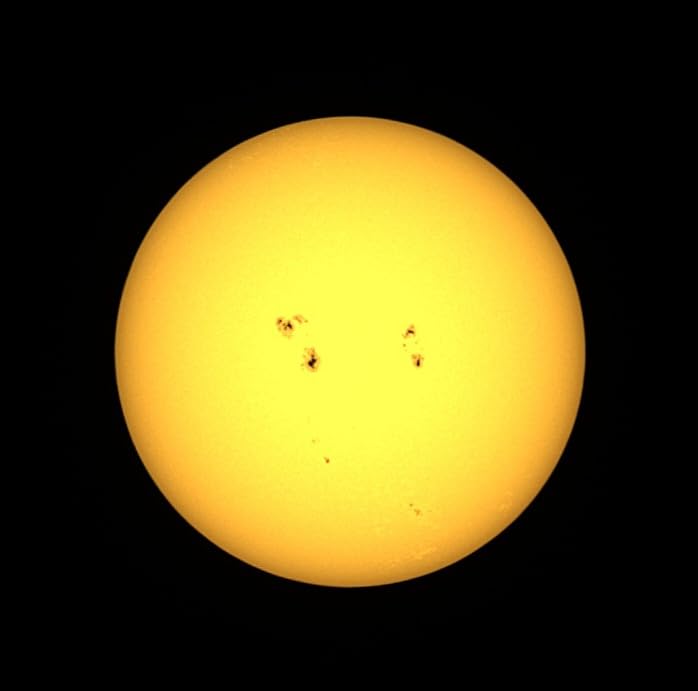
One safety note that belongs in every buying guide. Never point any telescope at the Sun without a proper solar filter fitted over the front aperture. An unfiltered Sun will damage your eye instantly and permanently, and a standard eyepiece filter does not make it safe. The DWARFLAB Dwarf Mini includes a magnetic solar filter, which is the easiest way to observe sunspots and eclipses safely, and it is a good reason to consider a smart scope if eclipse watching is on your list.
Frequently Asked Questions
Which telescope is best to see planets for beginners?
For planets, a 70mm to 90mm refractor on a manual altazimuth mount is the beginner sweet spot. It shows Jupiter’s four Galilean moons as distinct points, banding on the disc, and Saturn as a small ringed oval. A 130mm reflector resolves the rings properly and adds Mars colour, but costs more and needs collimation. Avoid anything advertised mainly by magnification. A useful rule is that the maximum honest power is roughly twice the aperture in millimetres, so a 70mm lens is at its limit around 140x.
How much should I spend on a beginner telescope?
Spend at least a few hundred dollars on a genuinely usable first telescope, which is the number most club advice and expert guidance converges on. Below that entry band you are buying a 50mm or 60mm refractor that shows the Moon and little else. Those cheap scopes are fine for a child on a gift list, and the accessories bundled at the top of the range are worth paying for, but the aperture difference is what you really buy.
What size telescope is needed to see Saturn’s rings?
At least 60 to 70mm of aperture shows Saturn with its rings visibly separated from the planet. A 4.5 inch reflector around 114mm resolves the ring as a ring and starts to show the division in the ring plane, while 6 inches at 150mm begins to reveal banding and the Cassini division under steady seeing. Anything smaller than 70mm gives you an orange dot with a hint of a ring, which disappoints more beginners than any other object in the sky.
What to avoid when buying a telescope?
Avoid department-store and marketplace telescopes marketed on magnification, especially anything claiming 500 power from a small lens. Avoid 50mm and 60mm refractors, which sit below the useful beginner aperture. Be careful with equatorial mounts on budget reflectors, since polar alignment and collimation arrive as two hard tasks at once. And skip unknown brands that quote no aperture, no focal length and no warranty, because there is nothing to judge.
Can beginners use smart telescopes instead of eyepieces?
Yes, and for some people they are the better first instrument. A smart telescope points itself, tracks the sky and stacks images from a phone, which removes finder alignment and polar alignment from the learning curve entirely. The tradeoff is that you never look through an eyepiece, planets appear as small plain discs, and equatorial mode needs a separate tripod with a pan and tilt head. Beginners who want images tend to do well with them; beginners who want to look at Saturn should buy optics.
Which Telescope Should You Buy First
The best telescopes for beginners in 2026 come down to one variable: how much aperture you are willing to carry outside. Start with the Gskyer 70mm if you want the simplest possible first night, the Celestron AstroMaster 70AZ if you want sharper planets and the easiest finder on the market, and the DWARFLAB Dwarf Mini if you would rather photograph the sky than look through an eyepiece. All three are covered in more detail above, along with the seven other scopes we compared against them.
If your budget stretches further, the reflectors in the second half of this list are where the real observing is. A 130mm or 150mm aperture opens the sky to globular clusters, brighter nebulae and a genuine sense of depth, and the tracking mounts hold a target still while you look at it. Just accept the extra weight and the extra setup steps, and buy one as your second telescope rather than your first.
Take whichever route you choose, and take it outside. The best telescope in 2026 is not the one with the biggest specification sheet, it is the one that gets set up on a clear evening and again the next clear evening. It is the same reason our beginner immersion blender guide stays short: the gear that fits the habit beats the gear that wins an argument. Read the aperture, ignore the magnification, and the hobby takes care of itself.